Saturday, 7/13/24

Democrats’ “revealed preference”

[I]t’s always been clear that the Democratic Party in the age of Trump isn’t as NeverTrump as the truest NeverTrump believers, that it usually chooses “mundane imperatives” and self-interest over emergency measures geared to existential stakes.

Time and again, from 2016 to the present, the Democratic Party has treated Trumpism not as a “civic emergency” but as a political opportunity, a golden chance to win over moderate and right-leaning voters with the language of anti-authoritarianism while avoiding substantive concessions to these voters and actually moving farther to the left.

I’m not saying that you can’t find moments here and there where Democrats moderated on some issue or made a patriotic concession for the anti-Trump cause. But the overarching pattern is better represented by the various times when Democrats deliberately boosted MAGA candidates in Republican primaries on the theory that they’d be easier to beat — or for that matter by the fact that right now, as Biden teeters on the brink, his vice president and natural successor is a figure chosen entirely for the “mundane imperatives” of Democratic interest groups, rather for a scenario where she might be called upon to face Trump with democracy supposedly at stake.

The idea of an anti-Trump “coalition of all democratic forces” has been prominent in the media and the commentariat, and there you have seen big shifts and concessions. But these have mostly been made by anti-Trump conservatives and ex-conservatives moving leftward, not by the political coalition that they’re joining.

Ross Douthat

Douthat goes on to concede some ways in which the Democrats’ approach may not be cynical and deceptive, but I’ve quoted enough. For the rest, my link gets you past the paywall.

Smart people swapping stupid barbs?

It seems that for Roberts, the criminal prosecution of Donald Trump is so transgressive as to demand the immediate intervention of the Supreme Court.

Jamelle Bouie, proving that smart people with blind spots can write stupid things.

If only Bouie had written

It seems that for Roberts, the criminal prosecution of Donald Trump, combined with Trump’s pledge to prosecute Joe Biden and lower court rulings that President’s have no immunity from criminal prosecution, are so transgressive as to demand intervention of the Supreme Court

I wouldn’t have bothered writing my own stupid things.

Lies in service of “higher truths”

This past week, a Pennsylvania man was arrested for the murder and dismemberment of a 14-year-old boy. The man allegedly lured the boy to his death through Grindr, a gay hookup app. The boy’s last Snapchat image was posted at 2:30 in the morning, on a dark road, with the comment that he was just out for a late-night walk. Nobody ever heard from him again.

Several grim and (one would think) obvious lessons should immediately present themselves to all concerned adults here. However, it appears that the adults are determined not to learn them, because this particular boy believed he was a girl. Consequently, all their energy has been spent on making sure nobody “misgenders” him in death, using him as a mascot of “anti-trans” violence, and taking the opportunity to lobby for new “hate-crime” legislation.

[The Free Press sent Ben Kawaller to Laramie, Wyoming, to talk to people about Matthew Shepard, murdered there in 1998 and lionized ever since.]

One resistant young gay man asks Ben what’s to be gained by reassessing the crime. Ben asks whether he would agree that it’s worthwhile simply because the reassessment might be true. The young man pauses for a moment, then stutters a bit, casting about. “There’s a point when you as a person should look around and see, like…read the room. And what has happened, this is really important, the, the…understanding of what happened to Matthew means a lot to a lot of people. So just leave it alone.”

Notice that this young man isn’t even bothering to debate the history or discredit Jimenez. He is saying that even if Jimenez were right, it wouldn’t matter. The truth wouldn’t matter.

Bethel McGrew, What is Truth?

After careful consideration, I decided last fall not to sit out a performance of Considering Matthew Shepard by a chorus I’ve been in for more than two decades now.

Considering Matthew Shepard is a sort of cantata on the murder of young Shepard. I carefully scrutinized the libretto for any explicit perpetuation of the Matthew Shepard myth (i.e., that it was the quintessential anti-gay hate crime) and found none. I considered the feelings of my fellow-choristers and the Artistic Director who programmed it. I also considered the “meta” point that the piece never would have been composed (and nobody would attend if it had been composed) were it not for the prevalence of the myth, and that performing it probably perpetuates the myth tacitly. My decision to go ahead and sing may have been sub-optimal. I’m still not sure.

But I want people to know that there’s almost zero truth to the myth — the standard Matthew Shepard narrative that gave us the federal “Matthew Shepard Hate Crimes” law — and almost no poetry to the truth. If you want to know the grimier and better-substantiated counter-narrative, it’s readily available.


I suffer more from the humiliations inflicted by my country than from those inflicted on her.

Simone Weil, from a letter to Georges Bernanos.

I don’t do any of the major social media, but I have two sub-domains of the domain you’re currently reading: (a) You can read most of my reflexive stuff, especially political here. (b) I also post some things on the only social medium I frequent, because people there are quirky, pleasant and real.

Friday, 7/12/2

Culture

Anti-Christian, anti-religion, anti-tradition

The modern West is said to be Christian, but this is untrue: the modern outlook is anti-Christian, because it is essentially anti-religious; and it is anti-religious because, still more generally, it is anti-traditional; this is its distinguishing characteristic and this is what makes it what it is.

René Guénon Guénon, The Crisis of the Modern World.

Creepier than frank laxity

Just don’t do it again, promise? Remember those kids who got suspended from Harvard after setting up encampments on the lawn and then harassing other students? Well, the Harvard College Administrative Board has reversed the decision, a win for the “student intifada,” which I thought was slanderous but is actually just what they call themselves. And then over at Columbia, the administrators who texted each other vomit emojis during a panel discussing a rabbi’s op-ed about his fears for Jews on campus—they were fired, right? Well, actually they were just put on leave and will be assigned to different jobs later. And remember the Columbia students who were arrested after they occupied a campus building? Most of their charges were dropped. There’s something way creepier about punishing people in the moment only to reverse it as soon as the zeitgeist moves on to the next thing versus not punishing them at all.

Suzy Weiss

Prescient

This was not written of Team Biden, but it sure seems to fit:

The elites who manage the system no longer believe in a way forward. Stuck in the muck, they strive simply to endure: après moi le deluge.

Martin Gurri, The Revolt of the Public and the Crisis of Authority in the New Millennium

Not a flattering juxtaposition

  • In The Guardian, Marina Hyde: “It’s incredible to think that only a short while ago we thought we’d eradicated measles and Nigel Farage. Both have now been brought back, largely by the same people.”

Via Frank Bruni. (I didn’t call this “Politics” because it’s foreign politics.)

Enemies of Article III

Federal Court critics

Never forget, most commentary about the Supreme Court is performative. Critics have a vested interest in making the decisions seem so much worse than they really are.

Josh Blackman, Everyone Needs To Take A Deep Breath About Trump v. United States

AOC, ever-performative, is “trying” to impeach Justices Alito and Thomas — a kind of performative commentary uniquely available to congress-critters.

The Consumer Financial Protection Bureau, supported by left-wing interest groups, demanded that Judge Don Willett of the Fifth Circuit U.S. Court of Appeals recuse himself from a case challenging the CFPB’s rule on credit-card late fees. One of Judge Willett’s child college savings accounts held around $2,000 of stock in Citigroup, which wasn’t a party to the case.

Normally, parties to a lawsuit have a strong incentive not to provoke judges with baseless recusal demands. That makes it surprising the CFPB would join in such an unwarranted demand. But the bureau seems to be more an extension of certain Democratic politicians these days than a federal agency respectful of the rule of law. Several members of Congress, led by Sen. Elizabeth Warren, responded to the committee’s opinion with a hyperbolic letter declaring that the opinion and Judge Willett’s decision not to recuse himself “represent ongoing threats to the integrity of the judicial system.”

Recusal tactics have become more outrageous. Normally, only parties directly involved in the litigation can file a motion to recuse a judge for an alleged conflict of interest. But we now see coordinated campaigns to pressure recusals. Left-wing interest groups are submitting demands for recusal, coupled with press releases and press conferences. This practice should stop. There is no formal mechanism for outsiders to file such recusal demands, and for good reason. They clog courts with additional briefings and hearings, causing delays and distorting outcomes. Courts should refuse to entertain these ill-intended requests, and the lawyers and litigants responsible should be subjected to sanctions.

Theodore B. Olson, Proliferating Recusal Demands Threaten the Judiciary

Politics, more or less

What liberal democracy sounds like

In America, it can be easy to forget what liberal democracy sounds like. But it used to sound something like this:

Whilst he has been my political opponent, Sir Keir Starmer will shortly become our prime minister. In this job, his successes will be all of our successes and I wish him and his family well. Whatever our disagreements in this campaign, he is a decent public-spirited man who I respect. He and his family deserve the very best of our understanding as they make the huge transition to their new lives behind this door, and as he grapples with this most demanding of jobs in this increasingly unstable world.

Those are the words of former British prime minister Rishi Sunak in his farewell speech last week outside Number 10, Downing Street. This is how Keir Starmer responded:

I want to thank the outgoing Prime Minister Rishi Sunak, his achievement as the first British-Asian prime minister of our country. The extra effort that that will have required should not be underestimated by anyone, and we pay tribute to that today. And we also recognize the dedication and hard work he brought to his leadership.

He went on:

If you voted Labour yesterday, we will carry the responsibility of your trust as we rebuild our country. But whether you voted Labour or not, in fact, especially if you did not, I say to you directly, my government will serve you.

And, if you listen to them say these words, they even seemed to mean it. That’s what it takes to put a toxically divided country back on track toward liberal democracy, after a woundingly divisive period centered on Brexit.

No one claimed fraud. No one derided the lopsided unfairness of the parliamentary results, where Labour got 34 percent of the vote and a whopping 63 percent of the seats, and where the new rightist Reform Party won 14 percent of the vote and got only 5 seats. Those were the rules ahead of the game, and they were the rules everyone had agreed to.

There is one reason and one reason only why this kind of conciliatory exchange cannot happen any time soon in America, and that is Donald J. Trump ….

Andrew Sullivan, pitch-perfect.

I wish it were true that Trump is the whole problem, but he tapped into something that won’t go away just because he sheds this mortal coil.

Art of the Deal

  • “That the sheep are still on the air, dispensing undiminished certitudes, is evidence of two things. That — outside of a few bastions of meritocracy and accountability, such as professional sports — there is no penalty for failure in contemporary America. And that many prominent people have the scary strength that comes from being incapable of embarrassment.” (George Will on the Dem/MSM bunker)
  • “If Trump is elected again, Dems should get over it and try to do more deals with him like they did on the USMCA and First Step Act. Trump isn’t an ideologue and just has an enormous ego anyone can exploit,” – Zaid Jilani.
  • “Some will say now that I am calling America a Christian Nation. So I am. And some will say that I am advocating Christian Nationalism. And so I do,” – Josh Hawley.

Via Andrew Sullivan.

Comments:

  • Zaid Jilani’s advice is brilliant! We need more like that!
  • There is all kinds of play in the joints of “Christian Nationalism,” but any politician of Josh Hawley’s intelligence who demagogues the term is playing with fire and is going to find me unmoved when he tries to disambiguate it into something benign. Once a bright hope for the GOP, he’s gone shamelessly whoring after Trump.

You can have my delegates when you pry them from my cold, dead fingers

In his selfish desperation to retain control of his party, the president has resorted to political hostage-taking. His pitch to Democrats for sticking with him has nothing to do with sketching out a compelling plan to win or demonstrating his mental agility by holding numerous live events or even outlining a policy program for a second term. It’s simply this: The delegates he earned by winning this year’s primary (under false pretenses about his fitness) are pledged to him and he’s not giving them up.

Nick Catoggio, The Return of the Smoke-Filled Room

The window into Trump’s id

The best window into Trump’s ignorant and destructive id is often his Truth Social account. While normal Americans were making plans for Independence Day, an obsessive on Truth Social was declaring, “Elizabeth Lynne Cheney is guilty of treason. Retruth if you want televised military tribunals.” “Retruth,” in the idiom of Truth Social, means “to repost.” Trump of course retruthed. The former president also took time to retruth a post calling for Mike Pence, Mitch McConnell, Cheney, and a dozen prominent Democrats to be jailed because they saw fit to tell the American people the truth that the 2020 “elections were fair.” Republicans would be wise to remember that character is destiny and that Trump has never had any.

National Review, The Week


I suffer more from the humiliations inflicted by my country than from those inflicted on her.

Simone Weil, from a letter to Georges Bernanos.

I don’t do any of the major social media, but I have two sub-domains of the domain you’re currently reading: (a) You can read most of my reflexive stuff, especially political here. (b) I also post some things on the only social medium I frequent, because people there are quirky, pleasant and real.
Independence Day

Public Affairs

The Immunity Ruling

The mark of an iconic Supreme Court decision is timelessness. With every read, the opinion teaches new insights and provides new lessons on our Constitution. Each semester when I prepare a case like Marbury or McCulloch, I learn something new.

Opinions from Chief Justice Roberts, however, are just the opposite. They are best read once. After the first read, you will come away entirely persuaded that Roberts’s analysis was not only the best answer (to use the Loper Bright framing), but the only conceivable answer, as any contrary positions are unfounded. That’s the first read.

But when you read a Roberts decision a a second, a third, and a fourth time, all of the fancy veneers and window dressing start to come off ….

Josh Blackman.

On Trump v. United States, people I trust who’ve taken the time to work through the case (I was never a prosecutor, rarely a criminal defense attorney) say it’s going to be very hard to prosecute a President for anything. That is not the impression Justice Roberts created on first reading of his opinion.

That means, in essence, that “the President is not above the law” is substantially false now.

And that means that Trump may soon no longer be a convicted felon (because Judge Merchan admitted testimony of a sort that Justice Roberts dubiously says may not be admitted).

I guess we’ll just have to elect someone else. What crueler punishment for Trump than an emphatic electoral drubbing? (But what crueler punishment for the USA than to re-elect the zombie currently in the Oval Office?)

Some thoughts, though:

  1. I just about freaked out when, in law school, I learned that “immunity” was a thing. Lots of people are “above the law” in various circumstances, including crooked prosecutors, judges, policemen (“qualified immunity” in too many circumstances), trash-talking Congressmenpersons. I’ve even figured out why that’s often the lesser evil compared to no immunity. So get it out of your head that keening about “they made him above the law” communicates anything salient.
  2. This isn’t just about Trump. It’s about all Presidents. Good luck prosecuting Joe Biden, Cheeto Benito — or Mike Pence, or Barack Obama, for that matter.
  3. Do you really think that none of the Presidents in your lifetime until Trump has crimed — if only to protect the country from, for instance, terrorists whose location we knew?
  4. That we have an ex-President who is almost certainly guilty of vile, self-serving, delusional crimes is a very, very, very sorry commentary. That his crimes commend him to so many voters is even worse.
  5. Just about everyone agreed that the court would extend, and should extend, some measure of immunity from criminal prosecution to our Presidents. The decisions of the lower courts that Presidents have zero immunity were surprising (likelier, shocking) and unlikely to stand. But few expected the court to give Presidents the extensive practical immunity that emerges from the weeds when you get deeply enough into them.
  6. The lack of constitutional language making the President immune to criminal prosecution is barely interesting, let alone dispositive. There’s no “separation of powers” clause, either and for instance, but it’s fundamental to our system and implied by what is specified.
  7. If and when Trump issues a lawless order, the people he orders should consider refusing to carry it out because I don’t believe they’ll ride his immunity coat-tails. I can only hope that Project 2025 hasn’t vetted a full slate of Trumpist sociopaths who’ll never threaten mass walkouts.
  8. We need to get it through our heads that our Presidents are, pretty much, above the law and that we should try to elect people who aren’t, for instance, promising a retributive crime spree against their adversaries.
  9. When Trump crimes in his second term, I hope we’ll have a Congress willing to impeach, because the Senate will no longer have the excuse that the criminal justice system can deal with it.

I don’t mean to say it will all work out okay. We’re in unchartered territory with Zombie Joe v. Cheeto Benito and his merry band of Project 2025 vandals. I’ve been bearish on the USA for quite a while now, heaven help me — the cultural equivalent of “the financial doomsayers who has correctly predicted 10 of the last three recessions” (see below).

The Unitary Executive

Not unrelated to the matter of Presidential immunity is the “unitary executive” theory.

I thought I was fairly sophisticated on matters of Constitutional Law, but an article in the New York Times lays out with unusual clarity a sort of meta-battle going on in the legal ether above some recent SCOTUS decisions: Charlie Savage, Conservative Legal Movement’s Agenda Unites Court’s Rulings on Executive Power. That’s freebie “shared link,” by the way.

It leaves me feeling freshly conflicted about the independent regulatory agencies we have. They’re “a headless fourth branch of the U.S. government” as Justice Kavanaugh once put it in his pre-SCOTUS days. But the Project 2025 vandals are not at all conflicted; they want to domesticate all regulatory agencies. That would mean that we would have even wider swings in policy from Administration-to-Administration, as far fewer career civil servants would carry over, and far fewer good people would be willing to go into low-profile career governmental service.

I highly recommend the article, and plan to re-read it at least once in a few weeks.

UPDATE: A recommended companion read for Savage is from Josh Blackman again, The Goal Of The “Architects of the Supreme Court” Was Always Overruling Chevron, and not Overruling Roe.

Bare-faced lies

Earlier this year, New York Times columnist Paul Krugman was boasting of the personal time he spent with Biden, who he proclaimed to be “completely lucid and with excellent grasp of detail”. After the debate, Krugman called on Biden to step down. Senile dementia is a clever disease. Or maybe Krugman didn’t like the face he saw in the mirror the morning after Biden’s debate performance.

What astounded Krugman and his fellow bold-faced journalist types about Biden’s rotten debate performance wasn’t the obviousness of Biden’s mental decline, but the fear that they were now publicly shown to have been lying. Krugman’s fellow in-house NYT author of Soviet state propaganda, Thomas Friedman, who fancies himself an “old friend” of Biden’s, was writing fibs about Biden as late as last month while boasting of his long off-the-record conversations with the President about the future of the Middle East. It took Friedman less than 24 hours to proclaim that Biden’s debate performance had made him “weep”. Poor man — no doubt it did. David Remnick of The New Yorker, who authored a door-stopper-sized hagiography of Barack Obama during the President’s first year in office, was equally quick to go public with his discovery that Joe Biden was maybe not exactly up to sorting marbles by size or colour, just in time to become a virgin for the next election.

It’s hard to be revealed as a fibber — especially when your job is ostensibly to tell the truth. But the sight of journalistic worthies suddenly grabbing hand towels to cover their proximity to power was not by itself enough to explain the Night of the Journalistic Long Knives.

David Samuels

Whataboutism comes home

On the center-left, Mark Leibovich isn’t pulling his punches in a piece on the Democrats sticking with Biden: “Since President Joe Biden’s debate debacle on Thursday, I’ve learned two things for sure: first, that Republicans are not the only party being led by a geriatric egotist who puts himself before the country. And second, that Republicans are not the only party whose putative leaders have a toxic lemming mindset and are willing to lead American democracy off a cliff.” (The Atlantic)

The Free Press

History will, if necessary, judge between the harm wrought by the two geriatric egotists.

Without comment

Lighter fare

One movie is worth how many words?

The shocking decline of the city—driven by any number of factors, but most certainly liberal policies high among them—drove massive white flight and deindustrialization of the city. Vast numbers of New Yorkers moved to the suburbs in Long Island, New Jersey, or in enclaves in the outer boroughs.

(An interesting exercise is to look at the movies set in the Big Apple in the early sixties compared to those in the early 70s and you can see the suddenness of the decline. From Breakfast at Tiffanys, That Touch of Mink, and Barefoot in the Park_to _Death Wish, Taxi Driver, Dog Day Afternoon, and Serpico in about a decade.).

Jonah Goldberg

Past its sell-by date

MoveOn is the textbook example of an organization that has outlived its purpose. Founded more than a quarter-century ago to argue that the country needed to “move on” from Bill Clinton’s intern-diddling impeachment drama, it had two things that confer a very long life in American politics: office space and a good fundraising list. And so, while the country has moved on, MoveOn hasn’t. Which is weird, but this is America.

Kevin D. Williamson.

Frank Bruni’s beloved sentences this week

  • In The New Yorker, Susan B. Glasser reflected on a micro-tussle toward the end of last Thursday night’s presidential debate: “Is this how democracy dies, in a shouting match between two seniors about their golf game?” (Thanks to Mike Greenwald of Melville, N.Y., for nominating this.)
  • In The Connecticut Post, Colin McEnroe pondered the president’s proper course: “I’m guardedly a ‘replace him’ guy. Some of you may recall that in 2019, I compared Biden to a Subaru with 310,000 miles on the odometer … But Thursday night was 90 minutes of the ‘check engine’ light flashing desperately in the darkness.” (Holly Franquet, Fairfield, Conn.)
  • In The Atlantic, Caitlin Flanagan evaluated Americans’ attitudes toward NATO … NATO is the rotary phone of geopolitical alliances.” (Richard Reams, San Antonio)

Frank Bruni

Quickies

a matryoshka doll of mendacity

George Conway’s description of Trump, apropos of the New York records falsification case.

one of those financial doomsayers who has correctly predicted 10 of the last three recessions.

The Free Press

Slate, which, as we all know, employs lab monkeys escaped from federal cocaine experiments as fact-checkers

Kevin D. Williamson

An aphorism can never be the whole truth; it is either a half-truth or a truth-and-a-half

Karl Kraus

(Economist World in Brief)

Plaintiff Accused of Being “Litigious” Sues for Slander

Eugene Volokh

Male and female

This view would understand the division of man into male and female as, of course, a biological actuality; i.e., this is the way it is. It seems to be a necessity; it is at least a convenience; and it is certainly a delight.

Thomas Howard, Chance or the Dance?, written before gender ideology was a thing.


I suffer more from the humiliations inflicted by my country than from those inflicted on her.

Simone Weil, from a letter to Georges Bernanos.

I don’t do any of the major social media, but I have two sub-domains of the domain you’re currently reading: (a) You can read most of my reflexive stuff, especially political here. (b) I also post some things on the only social medium I frequent, because people there are quirky, pleasant and real.

July already! Sheesh!

Steve Bannon

Last month, I shared Ross Douthat’s long interview with J.D. Vance. July 1, the Times published a long interview of Steve Bannon by David Brooks. I’m going out on a limb here with a wager that this is one of the ten most shareworthy I’ll read this month in the Times.

For my response, let’s just say I have a presumption against all revolutions; they seldom elevate, frequently immiserate. But they’ll happen when enough people think it couldn’t get any worse.

Bring back frank established religions?

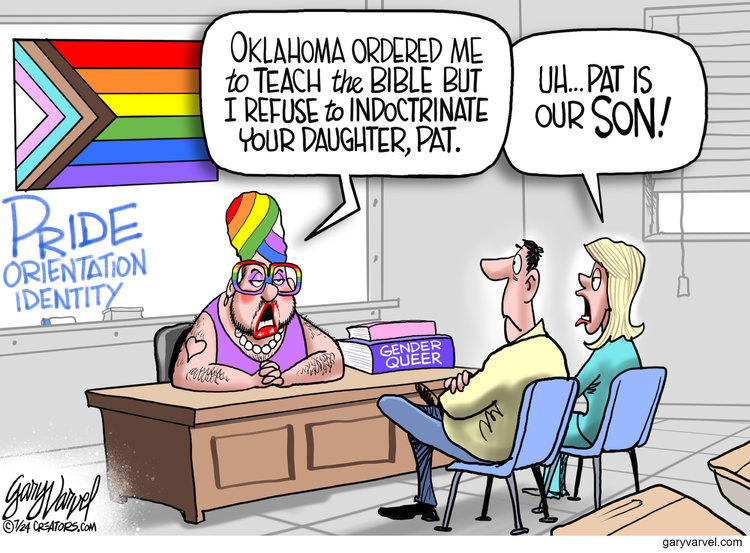
Thoughts as we close out “Pride Month:”

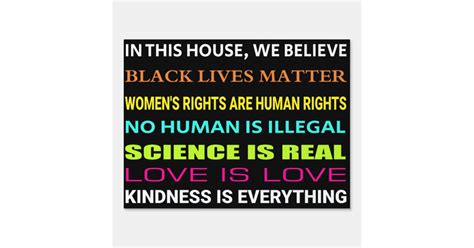
(In my house, we believe the Nicene Creed)

Instead of a naked public square, we see one festooned today with every imaginable image of the rainbow and associated symbology: from flags to backlighting, from crosswalks to entire murals on the sides of buildings. The public square went briefly from being a space where one might once have found images of the Ten Commandments or, during the holidays, a Christmas crèche, to one where the White House might be lit up by the rainbow celebrating a judicial fiat declaring a right to marriage of homosexuals in a constitution written in the 1780s, to public libraries where praise of cross-dressing, transexuality, and gay sex would become run-of-the-mill children’s programming.

When religion in any traditional or recognizable form is excluded from the public square, it does not mean that the public square is in fact naked. When recognizable religion is excluded, the vacuum will be filled by ersatz religion, by religion bootlegged into public space under other names.

The high priests of the new religion insist upon enthusiastic public expressions of support—especially during the holy month of June—lest one’s relative lack of fervency be taken as an indication of disbelief and grounds for being purged from the ranks of the elect. In nearly every respect, expressions of Pride are deployed in identical ways to traditional religious symbols and belief, in the eyes of many constituting a replacement religion. The inescapable, even overbearing presence of Pride symbology thus today bears all the unmistakable features of a “comprehensive doctrine,” the prevention of which earnest liberals of yesteryear insisted was their sole, modest aim.

Any war of “comprehensive doctrines” also brings attendant dangers. However, only someone not paying attention could believe that those dangers have been absent in recent years. My hope is that forthrightness about the terms of the debate may lead not to renewed “wars of religion,” but to a new settlement. A more pacific settlement might arise from acknowledgment that the actual “fact of pluralism” may require increased acceptance and acknowledgement of various state establishments. Such a settlement would return us to the original arrangement of the constitutional order, in which various religious traditions could coexist with robust internal unity amid relative proximate concord. California might thus retain its de facto established religion of Pride, and Alabama would establish some form of broadly nondenominational Protestant Christianity.

Patrick Deneen, inluding a prophetic insight of Richard John Neuhaus.

Comments:

  1. I think Deneen is correct that “Pride” has become a Rawlsian comprehensive doctrine — i.e., a de facto religion. (That doesn’t mean I think it will endure.)
  2. Deneen’s suggestion of permitted state establishments of religion is America’s original pattern (for what it’s worth). The First Amendment’s prohibition of Congress making any “law respecting an establishment of religion” was indeed a restriction on Congress, not the states. Massachusetts (of all places) had a state establishment until the 1830s and abandoned it voluntarily, not because some court declared it unconstitutional.
  3. I suspect I could formulate an argument that a state establishment of religion, unlike a limit on free exercise of religion, ought not be barred by the 14th Amendment “incorporation.” So long as a citizen is not coerced, I question whether their 14th Amendment “rights” are violated by an establishment.
  4. I’m under no illusion that I will like the religion established by any state: While I differ from him in details, I concur with Ross Douthat’s daring book title Bad Religion: How We Became a Nation of Heretics, and the best state establishment I could realistically hope for is mainstream Protestant (i.e., moralistic therapeutic deism).

Progressives verus liberals

You know you’ve touched a nerve with progressive activists when they tell you not just that you’re wrong but that you’re on the other side.

Such is the fate of any old-school liberal or mainstream Democrat who deviates from progressive dogma …

If this was just about our feelings, these denunciations could be easily brushed aside. But the goal and the effect is to narrow the focus of acceptable discourse by Democrats and their allies. If liberals are denounced for “punching left” when they express a reasonable difference of opinion, potentially winning ideas are banished.

In the run-up to a tight election with a weak Democratic candidate and a terrifying Republican opponent, pushing liberals and centrists out of the conversation not only exacerbates polarization, it’s also spectacularly counterproductive.

Those on the left who’ve been dumbstruck as Donald Trump has intimidated his most vociferous Republican critics (see: Chris Sununu, Nikki Haley) into falling in line might exert a little more self-awareness of similar moves by the left.

The goal of progressives may be solidarity, but their means of achieving it are by shutting alternative ideas down rather than modeling tolerance.

Pamela Paul, Who You Calling Conservative?

Note that I am not denying a similar Trumpist lock-step on the Right, nor does Ms. Paul.

Understanding the 2024 Roberts Court

If you really want to understand the conservative-dominated Supreme Court, it’s important to realize that all the Republican nominees who sit on it formed their legal philosophy and forged their legal reputations long before Donald Trump was elected president. This is no less true of Trump’s three nominees than of the three justices who were nominated by previous Republican presidents. Neil Gorsuch, Brett Kavanaugh and Amy Coney Barrett all possessed a robust legal identity and a considerable body of work before their selection to the high court. In fact, each has his or her own maverick streak, with Gorsuch perhaps most notable in his steadfast defense of Native Americans and the rights of criminal defendants.

When you understand this reality, what can seem to be a confounding, surprising Supreme Court term is actually predictable. The Trumpist right is lobbing a number of novel cases presenting aggressive legal theories to justices with pre-Trump legal philosophies, and the pre-Trump justices are rejecting them, repeatedly.

David French (emphasis added).

The Trumpist right is especially getting aggressive in Mississippi, Louisiana and Texas, part of the 5th Circuit U.S. Court of Appeals. The 5th Circuit has become where conservatives play out their fantasies to an obliging court as the 9th Circuit used to be the playground for progressives. You could say the 5th is the new 9th.

Republicans Pounce

A politically inconvenient rape and murder: Two migrants who’d crossed the border illegally have been charged with the rape and murder of 12-year-old Jocelyn Nungaray in Houston. The Associated Press managed to not once mention the status of the killers. The NYT eventually covered it, only in the context of how darned politically inconvenient it is: “The killing of Jocelyn Nungaray in Houston has become the latest crime seized on by Republicans to attack President Biden over his immigration policies.” Right. That 12-year-old, so rude of her to be murdered by the wrong type and letting Republicans “seize on” it. 

Nellie Bowles.

I’ll give the New York Times credit for disguising the usual formulation wherein the real story is “Republicans pounce” instead of what detestable thing they pounce on.

Tradition

Most of the things in our lives are not of our own making – they were given to us. Our language, our culture, the whole of our biology and the very gift of life itself is something that has been “handed down” to us. In that sense, we are all creatures of “tradition” (traditio=“to hand down”). Of course, these things that are not of our own making and are the least controllable are also those things that we take most for granted. We may hate our culture and our biology, but will still have to use our traditioned language (or someone’s traditioned language) to say so. Tradition is simply the most foundational, inescapable aspect of human existence.

Fr. Stephen Freeman, Things You Can’t Invent


So: where did all my mockery of Trump go? Well, first, I resolved to stop harping on it. But then, I just moved it off to my reflexive blog, trying to keep this one relatively reflective.

I suffer more from the humiliations inflicted by my country than from those inflicted on her.

Simone Weil, from a letter to Georges Bernanos.

I don’t do any of the major social media, but I have two sub-domains of the domain you’re currently reading: (a) You can read most of my reflexive stuff, especially political here. (b) I also post some things on the only social medium I frequent, because people there are quirky, pleasant and real.

Juneteenth

I have nothing to say about Juneteenth except that emancipation was a legitimately huge landmark in our nation’s history and worthy of annual commemoration.

Public affairs

Indiana’s GOP Lieutenant Governor nominee

Indiana over last weekend nominated as its Lieutenant Governor candidate, Micah Beckwith, a pastor of some sort who:

  • Thinks that the “progressive left has taken over the Republican Party in Indiana,” and that some Republicans today are “champions of Communism.”
  • Said on a Christian(ish) podcast “We are in a season of war right now … People need to wake up, or else this mental and heart battle that we find ourselves in culturally, it will lead to bullets and bombs. It’s just a matter of time.”
  • Said God had told him, on January 7, 2021: “Micah, I sent those riots to Washington. What you saw yesterday was my hand at work.” (This is what every story on him seems to pick up.)

Those quotes are from Michelle Goldberg at the New York Times. Goldberg also says, sans quote, that he’s a “self-described Christian Nationalist.”

Beckwith was forced onto the ticket against the wishes of the Gubernatorial nominee, retiring U.S. Senator Mike Braun.

Yeah, I guess it’s national news.

I didn’t support Braun for Governor. I was unenthusiastic about him when he ran for Senate in a GOP primary whose theme was “Mirror, mirror on the wall, who’s the Trumpiest of them all?” (but I preferred him to Todd Rokita, now our Attorney General and a truly loathsome person). I’m not certain I’ll vote for him in the General Election.

My decision will hinge to some degree on how effective he is at keeping a reassuring distance from Beckwith without, of course, repudiating him so firmly as to hand the election to Democrats. So far, his pointed message “I’m in charge” seems about right.

I’ve noted repeatedly that I repudiated any loyalty to the Republican Party on Inauguration Day 2005. But I still have a reflex to vote Republican over Democrat, and to mourn what already has become of the Republican party, and what one likely future holds.

On Christian Nationalism

Having noted Micah Beckwith’s purported Christian Nationalism, I’m reminded that I may not have staked out my own position openly.

First, I define it narrowly. There have been ridiculous accusations of Christian Nationalism based on undisclosed or untenable definitions. Real Christian Nationalists are still pretty rare, I think (but what do I, a contrarian, know?).

I’m not unaware that American pluralism is an experiment. I’m not sure whether it will succeed or fail. I’m familiar with and friendly toward the phrase “worst form of government except for all the others.” I’m not ready to abandon it.

At the risk of ad hominem, I don’t trust the “Christians” who expressly advocate for Christian Nationalism. One of my older blogs, on what we then called “culture wars,” remains relevant, but I’ll paraphrase excerpts rather than do direct quotes.

My distrust of Christian Nationalists stems fairly directly from my disagreements with their form of our putatively shared faith — disagreements that lead me to chronic use of scare-quotes around the word Christian or the use of “Christianish.”

The pious Protestants among them tend functionally believe that God’s only presence in the world is His rules, so they “honor” Him by keeping his rules. But the age of Trump has brought many to profess that they’re Evangelicals even if, in the extreme case, they’re Muslims or even atheists, because of something they like about the politics now associated with that label.

The most coherent, maybe the only, Protestant theorists of Christian Nationalism are theonomists, or more specifically Reconstructionists. If these Calvinist intellectuals had their way, there would be 18 Old Testament Capital Crimes in our law books – including sassing parents. They’d shut down my Church and desecrate its icons. They might, for all I know, execute me for idolatry for the icons in my home prayer corner.

Ummmm, no thanks.

The Catholic theorists of Christian Nationalism (Integralism, they call it) are much better — not okay, but less bad. But I don’t think their side would get the levers of power anyway.

There is no remotely viable Orthodox version of Christian Nationalism, Byzantium being long-gone. And we’d lack the numbers to staff government if there were.

So I think “Christian Nationalism” in America would be, in ascending order of likelihood:

  1. Catholic Integralism
  2. Calvinistic Reconstructionism
  3. A blasphemous mish-mash of right wingnuttery in the name of God. (Like Indiana’s GOP Lietenant Governor nominee or the yard sign “Make Faith Great Again: Trump 2020.”)

I reject them all. I think all of them would be hostile to Orthodox Christianity. I prefer to continue our flawed experiment with pluralism. But I suspect I’ll live to see one of them.

We Orthodox have survived similar or worse circumstances before.

America’s enemies

American leaders have a great need to identify an enemy or group of enemies that the U.S. can define itself against in order to justify the dominant position that they want the U.S. to have. It doesn’t occur to these leaders that the pursuit of dominance itself is what creates so many enemies or that the U.S. would be far more secure by renouncing the pursuit.

Losing the Soviets as an enemy created a hole in U.S. foreign policy that Washington desperately tried to fill with anything our leaders could find, but the substitute villains (Saddam Hussein, Milosevic, etc.) were so weak by comparison that the threats had to be massively inflated.

Daniel Larison (who had fallen off my radar)

We seem hellbent on creating intractible enemies in at least three corners of the world. Depending on their political stripe, American politicians speak as if Russia, China, and/or Iran pose existential threats to us. Yes, we do have substantive differences with all, but I can make a case for all three that they simply wish to live their lives in their own ways in their part of the world without our interference. Look at the flash points with each: Ukraine, Israel, Taiwan. All are American dependencies; all are projections of our hegemony into the very heart of their respective spheres. Regardless of your sentiments, the fate of none of those areas have any existential meaning to the U.S.; and yes, I am including Israel in that. They do, however, have existential meaning to our supposed adversaries.

Terry Cowan

J.D. Vance

I commented on June 13 about Ross Douthat’s interview with J.D. Vance.

There doubtless have been many commentators weighing in on the interview, but I’ve read only one so far: Andrew Sullivan. He made some excellent observations about places where Vance was tap-dancing around the unvarnished truth (to stay in Trump’s good graces?) or omitting crucial facts that eviscerate his argument.

Of the changes in voting rules to deal with Covid?:

The new pandemic rules, moreover, were endorsed by the Congress, which passed $400 million in the CARES Act for the election’s unique challenges, which Trump himself signed into law. If the rules were rigged, Trump helped rig them!

Vance’s case is completely undermined by Trump himself. Trump, after all, did not say after the election that the Covid rules were why he’d lost. He said he’d lost because votes were stolen, stuffed, and hidden, and the voting machines had been rigged. He’s saying the same things today. And the reason for all of it was not some genuine concern about easier mail-in and absentee voting (he endorsed absentee voting, after all), but Trump’s basic, characterological inability to function in a system that doesn’t guarantee him victory every single time.

That is not the system’s fault. It’s the fault of the party that nominated a malignant, delusional loon.

Putin

This week in Budapest, I met with an American academic active in the struggle for international religious freedom. We spoke about the Russia-Ukraine war, and established that we both believe Russia ought not to have invaded its neighbor. I added that as an Orthodox Christian, it grieves me how Putin has instrumentalized the Church to advance his war aims.

Then the American, a conservative Christian, posed a provocative question, that went something like this: For all his thuggishness, do you think that Vladimir Putin is on the right side of broad civilizational trends? My interlocutor brought up Putin’s harsh criticism of Western secularism and its emptiness, contrasting it to a Russia built on traditional values, including religion. Yes, Russia is in deep social and demographic trouble, and yes, Putin might be a colossal hypocrite, but, said the American, on the deep civilizational questions, isn’t Putin, you know … right?

I knew the answer, but as a man of the West, was too depressed by the question to admit it ….

Rod Dreher in the European Conservative

Degrowth

The case for degrowth is not about martyred self-denial or constraining human potential; it is about reorienting socioeconomies to support collaborative and creative construction of lives that are pleasurable, healthy, satisfying, and sustainable for more people and more places. End goals of degrowth – dignified work, less selfish competition, more equitable relationships, identities not ranked by individual achievement, solidary communities, humane rhythms of life, respect for natural environments – are also the means through which people exercise and embody, day by day, the lifestyles, institutions, and politics of degrowth worlds to come.

The Cauldron of Degrowth – Front Porch Republic

Euro-skepticism

The European Union began as a trading bloc, but by the early 1990s, it had evolved into a moral project fueled by elite distaste for (even revulsion against) the nationalistic sentiments these elites had become convinced were the source of all the crimes of the European past, including imperialism, racism, fascism, and genocide. What Europe needed was an inoculation against these sentiments, and the EU would be the vaccine, giving the continent a collective goal of striving to overcome particularistic attachments and the cruelty, suffering, and oppression they supposedly implant and encourage. Nationalistic sentiments would be sublimated into the transnational idea of the EU, with the EU itself eventually expanding without limit as the leading edge of a world without borders or walls impeding trade, the free movement of people, products, capital, and labor.

Damon Linker

I am enthusiastically European; no informed person could seriously wish to return to the embattled, mutually antagonistic circle of suspicious and introverted nations that was the European continent in the quite recent past. But it is one thing to think an outcome desirable, quite another to suppose it is possible. It is my contention that a truly united Europe is sufficiently unlikely for it to be unwise and self-defeating to insist upon it. I am thus, I suppose, a Euro-pessimist.

Tony Judt

Matters of Opinion

The continuing siege of Samuel Alito

I’m a journalist. We’re journalists. There are certain things we do. When we interview somebody, we make it clear that I work for the New York Times, the “NewsHour,” the Washington Post. Like, we make it clear who we are. We don’t lie. We don’t misrepresent ourselves. We don’t hide a tape recorder somewhere, and we don’t lead people on with a bunch of ideological rants. And this person did all that. It’s a complete breach of any—the basic form of journalistic ethics. And I was, frankly, stunned that all of us in our business just reported on it, just like straight up. And to me, this information is so doctored by her attitudes, the way she’s leading on Alito and his wife. It’s just—it’s unfair to them, frankly, to treat this as some major news story. We should be treating it as somebody, a prankster. And there’s a right-wing version of this called Project Veritas, where they lie too—as some prankster who’s creating distorted information.

David Brooks, on the Journalist who plied Justice Alito with a red-meat rant and got only a very anodyne response.

I found myself hoping that she will forever be known as the journalist who engaged in sleaze and then made it worse by publishing the nothingburger results. And then I remembered an incident in my past, when I may have been older than she is now, when I broke the rules to get the true story — not as a journalist, but as a lawyer. I, too, came up dry — and exposed for my wrongdoing.

I’m glad that did not follow me the rest of my life. I hope she has learned her lesson as I learned mine.

Worst Matter of Opinion podcast ever?

With Ross Douthat on vacation, Michelle Cottle, Carlos Lozada and Lydia Polgreen invited their hardcore colleague Jesse Wegman to join them.

Synopsis: Some justices blame the press for distrust of the U.S. Supreme Court. But that’s not it. It’s really Justice Alito’s [first exaggeration about Justice Alito] and [generalization built on exaggeration] and Clarence Thomas [Oh, hell, let’s just lump him with Alito] and dismissing Alito’s version of flag-gate and laughing out loud at Justice Alito saying [garbled version of he has a duty to deliberate if he’s not required to recuse, which is true] and Mitch McConnell, who played unprecedented political hardball to defeat Merrick Garland (by delay) and confirm Justice Barrett (by contrasting haste), so that Trump’s two appointees have cooties-by-association.

I will give Carlos Lozada credit for pushing back. The bias, dishonesty, and inexcusable ignorance of the other three make me want to cancel my Times subscription.

Intuition

“I have the feeling that I understand it.” But then he adds, “In fact, it is not ‘understanding,’ and it is not ‘knowledge.’ It is a direct awareness, or intuition. It’s not the kind of thing you ‘understand.’ It’s like I said before to you: one grain of rice, and the whole earth, they are the same. You can’t learn that from a book.”

Andy Couturier, The Abundance of Less

Mordant observation

The more people came to know gay people and understand the aims of the movement for gay marriage, the more accepting they became of it. The more people come to know trans people and understand the aims of the transgender moment, the more skeptical they become of its claims.

Wesley Yang on new polling. (Via Andrew Sullivan)

Books

There are 10,000 books in my library, and it will keep growing until I die. This has exasperated my daughters, amused my friends and baffled my accountant. If I had not picked up this habit in the library long ago, I would have more money in the bank today; I would not be richer.

Pete Hamill via Robert Breen on micro.blog.

I know what Hamill means.


So: where did all my mockery of Trump go? Well, first, I resolved to stop harping on it. But then, I just moved it off to my reflexive blog, trying to keep this one relatively reflective.

I suffer more from the humiliations inflicted by my country than from those inflicted on her.

Simone Weil, from a letter to Georges Bernanos.

I don’t do any of the major social media, but I have two sub-domains of the domain you’re currently reading: (a) You can read most of my reflexive stuff, especially political here. (b) I also post some things on the only social medium I frequent, because people there are quirky, pleasant and real.

Notebook Dump 6/13/24

Culture

Incentivizing misery (bad urbanism)

There is nothing economically or socially inevitable about either the decay of old cities or the fresh-minted decadence of the new unurban urbanization. On the contrary, no other aspect of our economy and society has been more purposefully manipulated … to achieve precisely what we are getting. Extraordinary governmental financial incentives have been required to achieve this degree of monotony, sterility and vulgarity. Decades of preaching, writing and exhorting by experts have gone into convincing us and our legislators that mush like this must be good for us, as long as it comes bedded with grass.

Jane Jacobs, The Death and Life of Great American Cities

“Assignable Curiosity” — ouch!

As Jeff Schmidt writes in Disciplined Minds (Rowman & Littlefield, 2001), academia and the other high-ranking professions are good at maintaining “ideological discipline” within their ranks, and people who do well in the academy tend to have “assignable curiosity,” which is to say, they are obediently interested in the things they’re told to be interested in.

Alan Jacobs, How to Think

By what authority?

The newest [Covid conspiracy theory] I’ve heard is that Covid is ravaging people’s immune systems on a mass scale comparable to that of H.I.V. On what authority can such a falsehood now be debunked?

As the expression goes, trust is built in drops and lost in buckets, and this bucket is going to take a very long time to refill.

Zeynep Tufekci, A Lesson From Covid on How to Destroy Public Trust (emphasis added)

And then there’s the National Security officials who prostituted themselves to declare Hunter Biden’s laptop a made-in-Russia hoax.

If I were on the Left, I hope I’d have the objectivity to reject most of what comes out of HRC and SPLC, both of them media-coddled bullshit factories, dependent on fear to stay in business. (By all rights, HRC should have declared victory and closed up shop after Obergefell; instead, it took up a version of transgender rights that many gays and lesbians reject.) But the Media lap up their stuff.

I don’t know who’s trustworthy any more. Whereas I formerly read stuff regularly from sources on the fairly far Left and Right, I now try to stick to sane-seeming, more-or-less-centrist sources, the fairly far Left and Right having become chronic liars. But I have no conclusive reason to think the center isn’t lying, too.

Any glimmers of absolute certainty I saw in the past were probably unwarranted, but these days it’s hard to find “beyond reasonable doubt.”

Elusive higher purposes

L.M. Sacacas attempts to disenthrall us from a subtle delusion:

Implicit in the promise of outsourcing and automation and time-saving devices is a freedom to be something other than what we ought to be. The liberation we are offered is a liberation from the very care-driven involvement in the world and in our communities that would render our lives meaningful and satisfying. In other words, the promise of liberation traps us within the tyranny of tiny tasks by convincing us to see the stuff of everyday life and ordinary relationships as obstacles in search of an elusive higher purpose—Creativity, Diversion, Wellness, Self-actualization, whatever. But in this way it turns out that we are only ever serving the demands of the system that wants nothing more than our ceaseless consumption and production.

Perhaps the best expression I know of the sentiment I’m trying to convey is from a poem by Marylin Chandler McEntyre, “Artists at Work,” from her collection inspired by Vermeer’s women:

The craftsman who made the rose window at Chartres
rose one morning in the dead of winter,
shivered into what layers of wool he owned,
and went to his bench to boil molten lead.
This was not the day to cut the glass or dye it,
lift it to the sun to see the colors dance
along the walls, or catch one’s breath
at peacock shades of blue: only, today,
to lay hot lead in careful lines, circles,
wiping and trimming, making
a perfect space for light.

When Wren designed St. Paul’s, he had to turn away
each day from the vision in his mind’s wide eye
to scraps of paper where columns of figures measured
tension and stress, heft and curve, angle and bearing point.
Whole days he spent considering the density
of granite, the weathering of hardwoods,
the thickness of perfect mortar; all
to the greater glory of God.

And Vermeer with his houseful of children
didn’t paint some days, didn’t even mix
powders or stretch canvasses, or clean palettes,
but hauled in firewood, cleaned out
a flue, repaired a broken cradle, remembering,
as he bent to his task, how light shone gold
on a woman’s flesh, and gathered
in drops on her pearls.

Teflon Sam

A liberal (maybe even left-wing) provocateur named Lauren Windsor attended a dinner of the Supreme Court Historical Society and, with hidden recording device and pretending to be a fervent Catholic conservative, tried to bait Justices John Roberts and Samuel Alito into saying something inflammatory. She utterly struck out with Roberts but got an polite, anodyne response from Alito. The liberal media are now dishonestly engaged in trying to distill something sinister, even theocratic, from the weak tea of what he said.

But …

To start with the question of judicial ethics: Where was the justice’s error? He did not mention any pending case or litigation. He did not name any person or party. He did not discuss any specific political or moral matter. Most of the exchange consists of the filmmaker’s own goading remarks, followed by the justice’s vague and anodyne affirmations and replies. About what you might expect when cornered at a boring cocktail party.

Setting aside judicial ethics, I can think of two possible objections to what Justice Alito said: that he should not hold these views; or that he should not express them in public.

As to whether he should hold these views, I would suggest that they are not so extreme as to merit denunciation. On the contrary, they are reasonable, even commonplace.

Marc O. DeGirolami. And:

Alito wasn’t wrong. What’s wrong is what this Windsor woman did: misrepresented herself in an attempt to bait these Justices into saying something she could weaponize on social media.

To be fair, the right-wing activists of Project Veritas have famously done the same kind of thing. I’ve praised it before, but on reflection, I regret that. It is a bad thing to turn even private life into an ideological battleground. When activists of either Left or Right go picket outside a public figure’s house, they claim that their cause (pro-life, gay rights, whatever) is so morally urgent that it justifies violating the unwritten taboo that separates public from private. Both sides do it, and it’s wrong. They’re making life together impossible.

Project Veritas has landed some excellent scoops with its undercover activism, and has exposed some bad actors, for sure. Yet I have come to believe the price for doing so is too high. If we lose the ability to socialize with each other out of fear that the stranger we have just met might not be who he or she claims to be, and that they might be leading us into a trap, then we have lost something fundamental to civilized life, haven’t we?

Rod Dreher.

Errata

In March, I wrote:

IVF is in fact popular … (I’d say “nobody would dare try to outlaw IVF” except that people are daring some pretty bizarre things these days.)

I stand at least semi-corrected:

The Southern Baptist Convention, the nation’s largest and most politically powerful Protestant denomination, voted Wednesday to oppose in vitro fertilization. The move may signal the beginning of a broad turn on the right against IVF, an issue that many evangelicals, anti-abortion advocates and other social conservatives see as the “pro-life” movement’s next frontier — one they hope will eventually lead to restrictions, or outright bans, on IVF at the state and federal levels. (Source: politico.com)

Via John Ellis, whose daily new curation I recently discovered.

I note that the SBC resolution does not call for legislation, but I’m placing no bets on this being the end of the subject.

If you have no idea why anyone might opposed IVF, you need to get out more. As an oblique reminder, I again dig into my archives:

When the industry makes promises to prospective parents about in vitro fertilization, it leans on images of cherub-cheeked babies. And when it pitches to egg donors, it speaks the language of altruism: You can help make a family. But when something goes wrong, the liability-shy industry is quick to retreat to the language of cells and property. IVF relies on treating the embryos it creates, freezes, and often discards as Schrödinger’s persons: we cannot make a moral pronouncement about what they are until we know whether they’re intended for life or death.

Leah Libresco Sargeant

Beginning with the paragraph “The media’s manipulations …”, Ryan Anderson critiques IVF more directly.

Politics

Trading Power for Liberty

So why are parts of the right so discontent? The answer lies in the difference between power and liberty. One of the most important stories of the last century — from the moment the Supreme Court applied the First Amendment to state power in 1925, until the present day — is the way in which white Protestants lost power but gained liberty. Many millions are unhappy with the exchange.

David French, MAGA Turns Against the Constitution

Western Hegemony has ended

Five hundred years of Western hegemony has ended, while the global majority’s aspiration for a world order based on multipolarity and sovereign equality is rising. This incisive book addresses the demise of liberal hegemony, though pointing out that a multipolar Westphalian world order has not yet taken shape, leaving the world in a period of interregnum. A legal vacuum has emerged, in which the conflicting sides are competing to define the future order.

NATO expansionism was an important component of liberal hegemony as it was intended to cement the collective hegemony of the West as the foundation for a liberal democratic peace. Instead, it dismantled the pan-European security architecture and set Europe on the path to war without the possibility of a course correction. Ukraine as a divided country in a divided Europe has been a crucial pawn in the great power competition between NATO and Russia for the past three decades.

The war in Ukraine is a symptom of the collapsing world order. The war revealed the dysfunction of liberal hegemony in terms of both power and legitimacy, and it sparked a proxy war between the West and Russia instead of ensuring peace, the source of its legitimacy.

The proxy war, unprecedented sanctions, and efforts to isolate Russia in the wider world contributed to the demise of liberal hegemony as opposed to its revival. Much of the world responded to the war by intensifying their transition to a Eurasian world order that rejects hegemony and liberal universalism. The economic architecture is being reorganised as the world diversifies away from excessive reliance on Western technologies, industries, transportation corridors, banks, payment systems, insurance systems, and currencies. Universalism based on Western values is replaced by civilisational distinctiveness, sovereign inequality is swapped with sovereign equality, socialising inferiors is replaced by negotiations, and the rules-based international order is discarded in favour of international law. A Westphalian world order is reasserting itself, although with Eurasian characteristics.

The West’s defeat of Russia would restore the unipolar world order while a Russian victory would cement a multipolar one. The international system is now at its most dangerous as the prospect of compromise is absent, meaning the winner will take all. Both NATO under US direction and Russia are therefore prepared to take great risks and escalate, making nuclear wan increasingly likely.

Summary blurb for Glenn Diesen, The Ukraine War & the Eurasian World Order, recommended by cyberfriend and blogger Terry Cowan.

Although Diesen, even Cowan, pay closer attention to such things than I do, this is very much my view as well. So do I buy the book to confirm my priors or move on to another topic? If the Russia-Ukraine war ends before I buy it, I’ll probably move on.

But first, a key quote, from 1987 and from an eminent source, to keep and ponder:

George Kennan:

Were the Soviet Union to sink tomorrow under the waters of the ocean, the American military-industrial complex would have to go on, substantially unchanged until some other adversary could be invented. Anything else would be an unacceptable shock to the American economy.

Via Diesen and Terry Cowan

Nothing has changed. It is literally true that we invent enemies to justify feeding what Dwight Eisenhower presciently called “the military-industrial complex.”

J.D. Vance (see below) also thinks the world is becoming multipolar.

J.D. Vance

Ross Douthat has an important interview: J.D. Vance on Where He’d Take the Republican Party. I’m sharing an unlocked version which, if you wonder, as I do, “What happened to the never-Trump author of Hillbilly Elegy?” is worth reading.

I’ll probably wrestle with it more if he becomes Trump’s running mate. For now, I’m slightly less cynical about his change(s) over eight years than I was before, and I find that I’m of one mind with him substantively on a few things.

Balancing Sociopathy against policy

I don’t apologize for the votes I cast after careful (indeed, searching) consideration. However, I do have to apologize for my view of the never Trumpers whom I found to be histrionic and unrealistic. They saw further that there were significant risks involved with Donald Trump that could very well outweigh the policy outcomes. They were right about that, and they deserve an apology from me (and perhaps others who saw it the way I did) for not perceiving that their concerns were grounded in reality, not merely some idealistic moral fragility. They perceived a legitimate threat, which did come to significant fruition.

Hunter Baker, When Pragmatic Politics Goes Bad: An Apology to the Never-Trumpers

This, published 9 days after the January 6 insurrection (or whatever you want to call it, except “patriot rally” or its cognates) remains worth reading — if only for his rationale for voting as he did. I consider his rationale incoherent; one need not vote for a menace who might do some good things in order avoid being a “free rider” if the menace actually does them. One can say “I think the menace outweighs the possible benefits.”

Reminder …

I’ve moved most political stuff to another blog, but if you’re curious, they’re just a click away.


So: where did all my mockery of Trump go? Well, first, I resolved to stop harping on it. But then, I just moved it off to my reflexive blog, trying to keep this one relatively reflective.

I suffer more from the humiliations inflicted by my country than from those inflicted on her.

Simone Weil, from a letter to Georges Bernanos.

I don’t do any of the major social media, but I have two sub-domains of the domain you’re currently reading: (a) You can read most of my reflexive stuff, especially political here. (b) I also post some things on the only social medium I frequent, because people there are quirky, pleasant and real.

4/30/24

The Surprising Truth About Handmaids

The heart of Gilead is not religious extremism, but social engineering.

Nowhere is this more apparent than in the Handmaids themselves, and the Ceremony that defines their role. The idea that women can be used outside of the confines of marriage as incubators for strongly desired children would be abhorrent to the vast majority of religious conservatives who seem to be The Handmaid’s Tale‘s targets. But it is all the rage in certain secular and progressive circles—and by no means is it limited to the fringes. It has become especially popular among homosexual couples, many of whom pay top dollar for Handmaids who serve a purpose they cannot fulfill themselves.

Not original with me, but I’ve lost the original source.

Schrödinger persons

On a related note:

When the industry makes promises to prospective parents about in vitro fertilization, it leans on images of cherub-cheeked babies. And when it pitches to egg donors, it speaks the language of altruism: You can help make a family. But when something goes wrong, the liability-shy industry is quick to retreat to the language of cells and property. IVF relies on treating the embryos it creates, freezes, and often discards as Schrödinger’s persons: we cannot make a moral pronouncement about what they are until we know whether they’re intended for life or death.

Leah Libresco Sargeant

A cautionary tale

Argentina, for all it’s faults, is a Democracy, and the people keep electing very flawed politicians. They keep electing tumult, and choosing short term satisfaction. They keep voting for the candidate that promises to give them the most things, while also taking stuff away from others. They keep doing that because now, after a century of disarray, part of their national identity is a cynicism that’s reached nihilistic levels.

Chris Arnade

That sounds like the trajectory of another country I know well. I noticed a report this morning that Trump is 6 points ahead in (some) polls.

I can relax but I’m not going to enjoy it.

Aaron Burr = DJT

Charlie Sykes, The choice Republicans face is too good for me to just pull excerpts. I didn’t know what kind of low, narcissistic character Aaron Burr was, and how close he came to being President. We need some Alexander Hamiltons in the GOP (but I fear the GOP is too far gone).

David Frum painstakingly explains why Even Bill Barr Should Prefer Joe Biden by gaming out what’s likely to happen if Trump is elected. Maybe that will prove persuasive to a handful of Trump voters, but it suffices for me that Trump, like Aaron Burr, is a “dangerous, narcissistic mountebank and ‘a man of extreme & irregular ambition.’”

POTUS candidate age disparity

At the White House Correspondents Dinner on Saturday, Joe Biden joked that age is an issue in the election, because “I’m a grown man running against a six-year-old.” (New York Post)

The Free Press

Presidential immunity

Hungry for coverage of last Thursday’s SCOTUS arguments on Presidential criminal immunity, I was nauseous as most of my sources were doing the usual “we know this Court is corrupt; let us now find proof in the hypothetical questions they ask on this case we’re afraid might not go our way.”

Then finally I found sanity:

As several of the justices pointed out, they aren’t making a rule for Donald Trump. They’re making “a rule for the ages,” as Justice Neil Gorsuch put it—one that has to apply to good presidents and bad ones, Republicans and Democrats, high-minded prosecutors and partisan ones. It can be easy to focus on “the needs of the moment,” as Justice Brett Kavanaugh said.

And here’s the fear. If the high court gives presidents too much immunity, the White House could turn into a “crime center,” as Justice Ketanji Brown Jackson said. Too little immunity, and there’s an endless cycle of prosecutions. The ability to find some vague statute will “be used against the current president or the next president,” Kavanaugh said, “and the next president and the next president after that.”

So how will this all shake out? I can’t say for sure, of course. And oral arguments—even a two-hour and 40-minute session—can tell you only so much. But I predict this will be a unanimous ruling instructing the district court to determine which of the charged acts were clearly outside the authority of the president, whether it was an official act or not.

Sarah Isgur

Nellie’s miscellany

  • Every time you see the word disinformation, remember that The New York Times said it was “a conspiracy theory” that Covid came from a lab.
  • In Santa Monica, a new 122-unit homeless housing project is moving ahead; it’s projected to cost $1 million per unit to build. That’s the optimistic projection! And in San Francisco, the city built special housing just for the middle class. The result: 80 percent of units in some of these buildings are empty. Why? “A city bureaucracy so convoluted that qualifying for an apartment involves a tortured and time-consuming process,” according to a great San Francisco Chronicle story. I promise that if you let capitalism work, supply will meet demand. Alternatively, we can keep trying these government scams, raise taxes to 70 percent, and build more empty construction and overpriced pot shops and Sombritas and a single charging station.

Nellie Bowles

(See comment below, which puts )

Wordplay

  • the Daily Stormer of gender woo
  • ostracism by every desirable dinner-party hostess in medialand
  • the chattering-class two-step of moral groupthink masquerading as science
  • people who care less about being right than looking virtuous
  • “communicators” … whose job is to make consensus look sciency

Mary Harrington, Why the centrists changed their trans tune – UnHerd

dire normalization

David Frum’s odd characterization of a televised Biden-Trump Presidential debate: “The networks want their show, but to give the challenger equal status on a TV stage would be a dire normalization of his attempted coup.

Xitter

Someone’s (Charlie Sykes? coinage for X, formerly known as Twitter. I like it for the rich possibilities of how to pronounce it.

Could a child ever dream about a Lucid or Rivian? These are generically good-looking, low-emissions vehicles that only a cyborg could lust over. They are songs sung through Auto-Tune, with clever and forgettable lyrics composed by ChatGPT.

Thomas Chatterton Williams, Touch Screens Are Ruining Cars – The Atlantic


I suffer more from the humiliations inflicted by my country than from those inflicted on her.

Simone Weil, from a letter to Georges Bernanos.

You can read most of my more impromptu stuff here and here (both of them cathartic venting, especially political) and here (the only social medium I frequent, because people there are quirky, pleasant and real). All should work in your RSS aggregator, like Feedly or Reeder, should you want to make a habit of it.

Midweek dump (3/28/24)

Culture

The most gruesome conversion therapy

Discussing the new free documentary Lost Boys: Searching for Manhood, about boys who apparently were pressured toward “transitioning”:

The irony hasn’t gone unnoted that while trans activists position themselves in the same stream as gay and lesbian activists, this gruesome “treatment” functions as the most extreme form of “conversion therapy,” more nightmarish by far than the silliest South Park caricature of a “pray the gay away” evangelical …

For Alex, insight has gradually dawned that his more sensitive interests in poetry and music simply made him “a romantic type.” They didn’t make him “effeminate” per se. Nor, he adds, did they make him “gay.”

Bethel McGrew, The Island of Lost Boys

The insight behind that second paragraph has haunted me ever since “gender confirmation surgery” became a public phenomenon.

“Is there no room left for tomboys and sissies?”, asks the old cisgendered white guy (who isn’t exactly an exemplar of all manly stereotypes)? Who decided that tomboys are really boys and that sissies are really girls?

Not my kind of guy

The Journalism Herd seems to have decided it’s time for a reprise of Christine Blasey Ford, which reminds me that my lightly-held position at the time of the Ford-Kavanaugh face-off was that Brett Kavanaugh might have done what she said (tried to remove her swimsuit, as I recall) because he was drunk on beer as was so usual for him and his pals at the time. (I also read a high-level hatchet-job on Ford that made a decent case that she was lying.)

I didn’t consider a drunken adolescent mistake reason enough to disqualify him for SCOTUS after many years of responsible adulthood. But I made a mental note that he’s not my kind of guy.

(Side note: Parents winking at teen boozing is a major reason we didn’t send our son to a Catholic High School, and why he won’t send our grandchildren there, either.)

American multiculturalists

The American multiculturalists similarly reject their country’s cultural heritage. Instead of attempting to identify the United States with another civilization, however, they wish to create a country of many civilizations, which is to say a country not belonging to any civilization and lacking a cultural core. History shows that no country so constituted can long endure as a coherent society. A multicivilizational United States will not be the United States; it will be the United Nations.

Samuel P. Huntington, The Clash of Civilizations and the Remaking of World Order

Restlessness

Where you come from is gone, where you thought you were going to never was there, and where you are is no good unless you can get away from it.

Flannery O’Connor, born on the Feast of Annunciation in 1925. Garrison Keillor has anecdotes.

Abroad

It’s barbaric — and it’s working

Before the war, Israelis estimated Hamas had dug around 100 miles of tunnels. Hamas leaders claimed they had a much more expansive network, and it turns out they were telling the truth. The current Israeli estimates range from 350 to about 500 miles of tunnels. The tunnel network, according to Israel, is where Hamas lives, holds hostages, stores weapons, builds missiles and moves from place to place … in this war, Hamas is often underground, the Israelis are often aboveground, and Hamas seeks to position civilians directly between them. As Barry Posen, a professor at the security studies program at M.I.T., has written, Hamas’s strategy could be “described as ‘human camouflage’ and more ruthlessly as ‘human ammunition.’” Hamas’s goal is to maximize the number of Palestinians who die and in that way build international pressure until Israel is forced to end the war before Hamas is wiped out. Hamas’s survival depends on support in the court of international opinion and on making this war as bloody as possible for civilians, until Israel relents.

David Brooks

Hate

When people say they want to ban hate speech, what they really mean is that they want to ban hate. And you may as well say that we should ban jealousy, or anger, or greed, or fear. Hate is an endemic part of the human experience and so hate speech always will be too, even after they implant behavior-modification chips in our brains. Ban all the words you like; people will find new ways to express hate.

Freddie deBoer, ‌You Can’t Censor Away Extremism. Scotland replies: Hold my beer.

Domestic Politics

Be it remembered …

In a court filing Tuesday, failed Arizona gubernatorial candidate Kari Lake chose not to contest allegations that she defamed Maricopa County Recorder Stephen Richer when she accused him of committing election fraud during the state’s 2022 elections. She had failed to file a response to Richer’s June lawsuit, which accused her of baselessly claiming Richer stuffed ballot boxes with fake ballots and intentionally made the ballot confusing for voters in an effort to “rig” the election. Lake has asked the court to convene a jury to decide the damages she owes Richer in the case.

The Morning Dispatch

Two from Thomas

Ban the Bland!

Newt Gingrich believed that the brand of politics Bob Michel practiced had contributed to House Republicans’ 40-year sojourn in the political desert. Gingrich decided to change this, starting with Republicans’ vocabulary and tactics. This proved effective, but at the cost of rising incivility and declining cooperation between the political parties. Once the use of terms such as “corruption,” “disgrace” and “traitor” becomes routine in Congress, the intense personal antipathy these words express is bound to trickle down to rank-and-file party identifiers.

Thomas B. Edsall, Lean Into It. Lean Into the Culture War

What’s the point of electing Republicans if they’re not barbarians?

On Nov. 5, North Carolina will determine whether a slate of Republican candidates who believe that the 2020 election was stolen, who dismiss Trump’s 91 felony charges and who are eager to be led by the most prodigious liar in the history of the presidency, can win in a battleground state.

Pope McCorkle, a Democratic consultant and professor at Duke’s Sanford School of Public Policy, argued in an email that the results of this year’s Republican primary election on March 5 demonstrate that “the North Carolina G.O.P. is now a MAGA party. With the gubernatorial nomination of Mark Robinson, the N.C. G.O.P. is clearly in the running for the most MAGA party in the nation.”

As they are elsewhere, MAGA leaders in North Carolina are confrontational.

In February 2018, Robinson, the first Black lieutenant governor of the state, described on Facebook his view of survivors of school shootings who then publicly call for gun control. They are “media prosti-tots” who suffer from “the liberal syndrome of rectal cranial inversion mixed with a healthy dose of just plain evil and stupid permeating your hallways.”

In a March 2018 posting on Facebook, Robinson declared: “This foolishness about Hitler disarming MILLIONS of Jews and then marching them off to concentration camps is a bunch of hogwash.”

In an October 2021 sermon in a North Carolina church, Robinson told parishioners, “There’s no reason anybody anywhere in America should be telling any child about transgenderism, homosexuality, any of that filth. And yes, I called it filth.”

There are many ways to express MAGA extremism.

On May 13, 2020, Michele Morrow, the Republican nominee for North Carolina Superintendent of Public Schools, responded on X (formerly Twitter) to a suggestion that Barack Obama be sent to the Guantánamo Bay detention camp on charges of treason. Morrow’s counterproposal?

I prefer a Pay Per View of him in front of the firing squad. I do not want to waste another dime on supporting his life. We could make some money back from televising his death.

In Morrow’s world, Obama would be unlikely to die alone. Morrow’s treason execution list, according to a report on CNN, includes North Carolina’s current governor, Roy Cooper, former New York governor, Andrew Cuomo, Representative Ilhan Omar, Hillary Clinton, Senator Chuck Schumer, Anthony Fauci, Bill Gates — and President Biden.

Thomas B. Edsall, One Purple State Is ‘Testing the Outer Limits of MAGAism’

  • [ ] Vulgar attacks? Check (“prosti-tots” and “rectal cranial inversion”)
  • [ ] Holocaust denial? Check
  • [ ] Crazed charges of “treason” with proposed mass public executions? Check

You know what North Carolina needs. It needs “bloodbath” of MAGA jackasses on November 5.

But truth told, I’m not sure that these freshly-minted MAGA/populist “Republicans” will care about a massive voter repudiation so long as meanwhile they performatively own the libs.

Explain this one away

Fuggedabout “bloodbath” blather:

“A Massive Fraud of this type and magnitude allows for the termination of all rules, regulations, and articles, even those found in the Constitution.” Those are Trump’s words, verbatim. He wasn’t talking about Chinese automotive imports.

Kevin D. Williamson, Giving Permission to Political Violence


So: where did all my mockery of Trump go?

I suffer more from the humiliations inflicted by my country than from those inflicted on her.

Simone Weil, from a letter to Georges Bernanos.

You can read most of my more impromptu stuff here and here (both of them cathartic venting, especially political) and here (the only social medium I frequent, because people there are quirky, pleasant and real). All should work in your RSS aggregator, like Feedly or Reeder, should you want to make a habit of it.

Wednesday, 3/20/24

I grew up on “March 21 is the start of Spring,” but we’re not there yet and it nevertheless has been Spring for going on a day.

A trained physicist of my social media acquaintance explains:

Sunrise and sunset are defined as the time when the sun’s upper edge crosses the horizon; if you timed them from the crossing of the sun’s center, day and night should be equal today. Astronomical calculations equinoxes go by the center. Also, in practical terms, the atmosphere refracts light, so you can see the sun when it’s actually a little bit below the horizon. I believe most posted sunrise/sunset times take refraction into account? though refraction angle varies with air pressure. Anyhow, enjoy your extra 6 or 7 minutes!

So now you know until we both forget again.

Political

Too political

Justice Sonia Sotomayor will turn 70 in June. If she retires this year, President Joe Biden will nominate a young and reliably liberal judge to replace her. Republicans do not control the Senate floor and cannot force the seat to be held open like they did when Scalia died. Confirmation of the new justice will be a slam dunk, and liberals will have successfully shored up one of their seats on the Court—playing the kind of defense that is smart and prudent when your only hope of controlling the Court again relies on both the timing of the death or retirement of conservative judges and not losing your grip on the three seats you already hold.

Josh Barro in the Atlantic

I generally like Josh Barro, and this misguided piece won’t make me hate him. But it’s fraught with problems, starting with how it encourages a starkly partisan politicization of the Supreme Court — a politicization that Barro regularly exhibits on his Serious Trouble podcast with his snotty and unjustified treatment of Trump appointees as servile to Trump.

The “Trump Court” isn’t all that Trumpy? They’re conservatives, but not partisan Republican hacks. For that matter, the three “liberals” are not partisan Democrat hacks, witness the 14th Amendment Section 3 decision of a few weeks ago. A Biden “reliably liberal” Justice will disappoint the Democrats periodically because the Justices are, first of all, Judges, with a weighty sense of their importance at the top of that co-equal branch. Republicans learned that for decades under Eisenhower’s appointments.

But you wouldn’t know that from press coverage. The press feeds an unrealistic narrative of slavish partisanship on the bench, especially about Republican nominees. A Sotomayor resignation in the next few months, after public calls like Barro’s, will justify this heretofore largely unjustified narrative. (Maybe that’s why actual politicians, who Barro calls “gutless,” are importuning Sotomayor privately, not loudly and openly.)

And, of course, it invites tit-for-tat response. If Donald Trump wins the election, there would be calls for Clarence Thomas to retire. Never mind that Donald Trump will not be working off a Federalist Society-type* list because his first-term nominees have not been servile, as he expects everyone to be. I suspect that Thomas would resist such calls, but since he seems to enjoy real life, he might succumb.

I used to say “If you don’t like the Religious Right, wait ’till you see the Irreligious Right.” I think I’ve been largely vindicated in that, but it’s hard to prove my vindication because Irreligious Right barbarians these days often adopt an “evangelical” label, so their lack of Christian bona fides is harder to demonstrate than I care to undertake. (If you deny that someone who calls himself “Christian” really is Christian, you’re being mean in today’s muddled minds.)

But I’d now add, fully aware that it fuels calls like Barro’s, “If you don’t like FedSoc-type* justices, just wait ‘till you see who Trump nominates if he gets a second term.”

(* Re: “FedSoc-type”: The 2016-2020 list, which Trump campaigned on, was from John Leo, a FedSoc Founder, but not from FedSoc itself, as it doesn’t do that sort of thing institutionally.)

The hidden costs

I wrote here recently to the effect that the dollar amounts of our military aid the Ukraine should be deeply discounted, since Ukraine turns around and buys from us (insofar as the aid is not “in kind” weaponry). I fear I was too superficial, and the all-in cost is potentially greater than the nominal amount:

When the Pentagon decided to send weapons to Kyiv, these were mostly taken from already existing stocks. This was unavoidable, for at least two reasons. First, US munitions production was wildly inadequate to cover wartime demands. Second, the lead time for new production was simply too long: many of the weapons ordered for Ukraine in 2022 would realistically only be ready for use after the war had concluded. And so, the United States stripped its own warehouses of equipment — and it didn’t stop there. In some cases, it looted ammunition and weapons from its own combat formations. In others, it stripped many of its allies, such as South Korea, of a large amount of their equipment, too.

Malcom Kyeyune, The deception behind America’s support for Ukraine

I guess focusing on dollars misses the full picture, huh?

GOP’s conscientious objectors to Trump

A lot of my Never Trump allies on the center-right feel sure that Pence refusing to endorse the man he served for four years points the way (or “creates a permission structure”) for Republican voters to abandon the former president. By joining Nikki Haley, Mitt Romney, Dick Cheney, Dan Quayle, William Barr, Mark Esper, John Kelly, Mick Mulvaney, John Coats, John Bolton, H.R. McMaster, Liz Cheney, and a long list of additional Cabinet members, present and former GOP members of Congress, and state officials in opposing Trump’s bid to become president again, Pence supposedly helps to guarantee his loss in November.

But it’s also possible that the refusal to endorse hastens the GOP’s transformation into the party Trump and Bannon originally hoped to build eight years ago—a “workers party” that’s actually (or more precisely described as) a cross-racial coalition of voters who haven’t graduated from college.

… The policies favored by those old-line Reagan-Bush Republicans are no longer especially popular with less-educated voters, and the highly ideological and inauthentic way in which the old-guard talks and thinks also diverges from what Trump is teaching many of these voters to look for in a political tribune: unapologetic brashness, braggadocio, and bullshit.

Damon Linker

I have a blog category for “Zombie Reaganism.” If you think about it for a moment, you’ll be unsurprised that it has fallen into disuse.

TikTok

I have zero firsthand experience with TikTok, but you may have noticed that it’s in the news.

[I]n one of the more astonishing public relations blunders in modern memory, TikTok made its critics’ case for them when it urged users to contact Congress to save the app. The resulting flood of angry calls demonstrated exactly how TikTok can trigger a public response and gave the lie to the idea that the app did not have clear (and essentially instantaneous) political influence.

Trump’s flip-flop demonstrates once again the futility of ascribing any kind of coherent ideology to the former president. Before Trump’s change of heart, one could argue that being “tough on China” was one of the fixed stars of his MAGA policy constellation …

Second, the flip-flop indicates that Trump’s positions may well be for sale, even when they threaten national security …

Finally, Trump’s reversal reveals that his real enemy is always the domestic enemy. As The Dispatch’s Nick Catoggio wrote last Thursday: “Populist-nationalism is about asserting tribal preeminence over other domestic tribes. And so it prioritizes fighting the enemy within.” In this context, the “enemy within” is Mark Zuckerberg and the “deep state.”

Catoggio correctly observed, “It speaks volumes” that “Trump felt safe politically allying himself with China on a pressing issue in an election year so long as he framed his position in terms of greater antipathy to one of the right’s domestic enemies, Big Tech.”

Last week, I wrote a column urging Reagan conservatives and Haley Republicans to vote for Joe Biden. The withering reaction from some on the right demonstrated the extent to which many Republicans still possess the mistaken belief that Trump possesses conservative convictions. How many times does he have to demonstrate that his personal grievances and perceived self-interest will always override ideology or policy?

David French

As I’ve written before, I think I’ll again be spared the indignity of having to vote for either of the major-party candidates, but French has made a fairly good case for Republicans and conservatives holding their noses and crossing over this year.

Conservatism

Dreher proposed the best way forward for the Republican Party when he wrote Crunchy Cons. In case anyone has forgotten the manifesto, here it is again in brief: Conservatism should focus more on the character of society than on the material conditions of life found in consumerism. Big business deserves as much skepticism as big government. Culture is more important than politics and economics. A conservatism that does not practice restraint, humility, and good stewardship—especially of the natural world—is not fundamentally conservative. Small, local, old, and particular are almost always better than big, global, new, and abstract. Beauty is more important than efficiency. The relentlessness of media-driven pop culture deadens our senses to authentic truth, beauty, and wisdom. The institution most essential to conserve is the traditional family.

Arthur Hunt III, Live Not by Lies from Neither the Left nor Right – Front Porch Republic

I doubt that the GOP could have more completely rejected this advice than it has since, say, 2005.

The biggest threat to traditional values

Last night I was having drinks with a Catholic friend visiting the city from western Europe. He is pretty demoralized about politics and everything else. He told me how pathetic the institutional church is in his country, as well as the political parties his side usually votes for. He complained that it is so difficult to rouse the conservatives in his country to recognize how insane the situation is. They want desperately to pretend that everything’s fine, that if they just keep voting for the mainstream conservative party, it’s all going to work out in the end.

He told me that one of the most difficult things for him to come to terms with is how his view on America has changed. He said he has no love for Russia or China, but it was a bitter red pill for him to swallow to realize that as bad as those countries’ governments are, they aren’t the biggest threat to him. No, he said, the forces that are destroying the things I cherish most in the world — faith, family, nation, tradition — all originate in the United States.

Rod Dreher, Revolution & The Call To Bravery

I initially found the second paragraph more arresting; now I’m not so sure that the first isn’t just as salient.

(Note: I’m unsubscribed from Rod Dreher’s Substack in the sense that I no longer pay. I believe I wrote about why I unsubscribed at the time of the decision. But he still has many public posts that get mailed to me.)

Cultural

Google’s Ideological Echo Chamber Hothouse

In August 2017, James Damore, then a twentysomething Google software engineer, sent a memo to all employees called “Google’s Ideological Echo Chamber.” Damore argued that the company’s political bias toward the left “has created an ideological echo chamber where some ideas are too sacred to be honestly discussed.” Damore suggested, among other things, that “discriminating just to increase the representation of women in tech” was “misguided and biased.” Within a month, Google fired him for “advancing harmful gender stereotypes.” 

Google has long been a progressive company—in 2020, for example, 88 percent of donations by Google employees went to Democrats (almost $5.5 million) while only 12 percent (some $766,000) went to Republicans. But after Damore was ousted, Google’s corporate culture became even more radical, according to Maguire. “Damore’s firing emboldened them to push a more open ideological agenda,” he said.

Francesca Block, Olivia Reingold, Google’s Woke AI Wasn’t a Mistake. We Know. We Were There.

Ban the “book banning” grift!

The ALA releases its annual report every April (which is common enough) in which it releases figures on how many challenges to library holdings were made the preceding year. But it runs its “Banned Books Week” every October, which gives it two instances every year to issue a press release lamenting the grave danger to democracy that these challenges pose. Almost every major media outlet—and I do mean almost every single one—follows suit, wondering how long American democracy will last if elementary students can’t continue to check out Gender Queer.  

What’s the problem with the ALA’s report on “challenges”? As I argued here last year, the numbers are misleading …

This year, the ALA is highlighting the total number of books challenged whereas last year they were highlighting the total number of unique challenges. Why? Because the number of single challenges has actually gone down from 1269 in 2022 to 1247 in 2023. (The ALA notes that several challenges contained as many as a hundred books.) That doesn’t help advance the narrative that right-wing parents are a serious threat to democracy, so the ALA is touting the 4,240 figure.

At root, my problem with the ALA is the lack of transparency. They leave out important contextual information in order to raise money by fear-mongering (there is always a link to give to the ALA’s supposed defense of free speech with every press release). How many libraries reported challenges? How many books were actually removed from shelves? Were these at city libraries or school libraries (the ALA doesn’t distinguish between the two)?

Micah Mattix

Andrea Long Chu’s says the quiet part out loud

Spending even one minute responding to Andrea Long Chu’s recent provocation feels like a defeat. It is such an ill-conceived, careless piece of writing, and one that exhibits so little genuine concern for the group it is supposedly written on behalf of — trans kids — that its own thesis statement is basically self-debunking: “We must be prepared to defend the idea that, in principle, everyone should have access to sex-changing medical care, regardless of age, gender identity, social environment, or psychiatric history,” argues Chu. 

Alas, this argument wasn’t printed on some random blog, but as a cover story in New York magazine, where I worked as an online editor and writer-at-large from 2014 to 2017. Chu is given almost 8,000 words to defend her radical argument, but she just. . . doesn’t. I don’t quite understand why this article was printed, in this form, in the pages of a great magazine staffed by some of the best editors in the country. The counterarguments to her position are so blazingly obvious to anyone who has ever interacted with a child or a teenager that it’s an act of willful editorial neglect to simply ignore them entirely. The whole thing comes across much more as an act of high-profile trolling than a meaningful contribution to the discourse about trans kids. Along the way, as is Chu’s habit, she smears the work of a bunch of journalists, myself included, by cherry-picking quotes, sleazily writing that things we have written could be seen as arguing X, where X is something offensive we never would endorse, and so on. 

Andrea Long Chu won a Pulitzer for her literary criticism. Maybe she’s brilliant at it. But her attempts at actual real-world policy arguments are remarkably lazy. Her editors let her down here.

Jesse Singal.

I’m nearing the end of a one-month paid subscription to New York. Even apart from Chu’s piece (which I skipped when I saw how insane his/her thesis was), I’ve been too unimpressed to continue.

Impervious to the Evidence

Despite sociological evidence to the contrary, it remains to all appearances virtually axiomatic that the acquisition of consumer goods is the presumptive means to human happiness-and the more and better the goods, the better one’s life and the happier one will be.

Brad S. Gregory, The Unintended Reformation


So: where did all my mockery of Trump go?

I suffer more from the humiliations inflicted by my country than from those inflicted on her.

Simone Weil, from a letter to Georges Bernanos.

You can read most of my more impromptu stuff here and here (both of them cathartic venting, especially political) and here (the only social medium I frequent, because people there are quirky, pleasant and real). All should work in your RSS aggregator, like Feedly or Reeder, should you want to make a habit of it.

March 9, 2024

Fiat justitia ruat caelum

One thing always catches my eye in the Morning Dispatch: Items captioned “Presented without Comment.”

So here’s a few of my own:

Okay, I can’t resist a little comment. The three are grousing about the Colorado ballot exclusion case, Trump v. Anderson.

George Conway, author of the third listed column, sums up what I think happened:

It may be noble-minded for someone like me, sitting in the cheap seats, to incant my favorite Latin legal maxim, Fiat justitia ruat caelum—“Let justice be done though the heavens may fall.” But I don’t hold a lifetime appointment to decide how justice is to be done. And however much I’d like to think that judges really believe … that they “cannot allow [their] decisions to be affected by any extraneous influences such as concern about the public’s reaction to [their] work,” the fact is that judges are human. Their decisions are affected at times by their perception of what the public reaction may be.

I could go on picking apart the weaknesses and inconsistencies in the Court’s opinion, and legions of law professors will do so for ages to come, but the Court’s lack of convincing reasoning is, frankly, beside the point. The Court’s decision wasn’t about law. It was about fear.

I think SCOTUS reached the right conclusion on the wrong rationale. You can make fun of me, but I think the theory is correct that the President is not an “officer” subject to section 3. I think that for having read some of the history around section 3, which I find more persuasive than one Senator’s (disingenuous?) assurance to another that the amendment indeed “hid an elephant (POTUS) in a mousehole” (“other officers”). And I return to that ideé fixe after feeling, as I recall, some passing doubt about it during the oral argument.

Well, at least SCOTUS was “unanimous.” Now I can only hope that never-Trump Republicans, who Trump has disinvited from his party, will oblige him in sufficient numbers to assure his defeat, fair and square, in the November balloting.

Political

On not feeding the Christian Nationalist beast

After a longform survey of the Christian Nationalist landscape, Jake Meador delivers the potent point:

What worries me now, though, is not the Christian Nationalists themselves. Frankly, many of them are too reckless, undisciplined, and reactive to be able to accomplish the revolutionary change they seek. What worries me is that there are a great many socially conservative evangelical voters who love the democratic life who are constantly being called “Christian Nationalists” by the likes of Heidi Przybyla for believing things that are utterly unremarkable in Christian history. If our secular media outlets continue to tell them that “Christian Nationalism” is the belief in things virtually all Christians across history have believed, I fear they will listen. And they will find these ethno-nationalist totalitarian aspirants and, not realizing what they are doing, they will make common cause with them.

After all, they’ve already been told that they are ‘Christian Nationalists,’ haven’t they? They’ve been told that protecting the unborn makes them a Christian nationalist, that wishing to promote natural marriage makes them a Christian nationalist, that wanting men to support their children makes them a Christian nationalist. They’ve even been told that believing our rights come from God makes one a Christian nationalist.

Eventually they will start to believe it.

Here is my request: If you are a secular person who wants Christian Nationalism to lose, you should stop helping the Christian Nationalists win.

(One hyperlink added)

It was quite adolescent of me, with my actual adolescence a mitigating factor, but there were several times in my younger life when I was falsely accused of things and reacted by actually doing them.

So I hope you can forgive me for agreeing heartily with Jake Meador on this one.

White Rural Rage

White Rural Rage: The Threat to American Democracy
By Tom Schaller and Paul Waldman
Random House, 320 pages, $32

Why does a book like this exist? For one thing, it exists to serve the demand for books among people who lack the patience for reading literature. These books are some of the many consumer items that serve as tokens of college education. By visiting the front-most display table at Barnes & Noble and picking up a copy of The Sixth Extinction or Freakonomics, one affirms one’s place among the civilized few who “read.” With White Rural Rage: The Threat to American Democracy, Paul Waldman and Tom Schaller toss another forkful of silage into the troughs of the book-club class. 

Of course, a book like this is also intended to provoke a reaction from its targets. The authors are counting on it, as they make clear when they predict that some will conclude that “as two coastal cosmopolitans, we have no right to offer this critique of White rural politics.” The anticipated backlash is an essential part of the marketing strategy.

It is the third part of their thesis on which I would like to raise some points of information. Waldman and Schaller assert that, despite their ruling stature, rural whites “paradoxically” fail to demand anything of their political leaders. The authors admit that rural whites have some legitimate sources of anger, particularly the economic hollowing out of their regions by “late-stage capitalism.” However, having despaired of correcting this, rural whites lend their electoral clout to Republicans, who offer a program of cultural vengeance without any redress of rural whites’ material grievances. There is a lot of truth to this. I would just add that pretty much all Americans have seen their communities hollowed out by capitalism, and pretty much all of them have despaired of receiving very much from their representatives. Those who plan to trudge submissively to the polls for President Biden in November are hardly more demanding subjects than those who will cast a vote for Donald Trump.

Consider this remark from the authors, in reference to a 2023 conference in Nebraska about preventing agricultural monopolies: “Rural folks are gradually realizing that corporate consolidation, not socialism, is destroying their economies.” Judging by the record of the Grangers, the People’s Party, William Jennings Bryan (who is briefly cited in the book as a typical rural bigot) the Non-Partisan League, the American Society of Equity, Robert LaFollette, the National Farmers’ Organization, Estes Kefauver, the American Agriculture Movement, the National Save the Family Farm Coalition, Tom Harkin, Paul Wellstone, and others, I would suggest that rural people made some hesitant advances toward this insight before 2023. Indeed, a poll conducted by Open Markets Institute in 2018 showed that 54 percent of Trump voters favored the government breaking up monopolies, and only 28 percent were opposed. Moreover, some of the most visible MAGA firebrands are thoroughgoing antimonopolists. Perhaps some of the “gradual realization” Waldman and Schaller delight in when it is expressed in small activist conferences is also reflected in the far more formidable MAGA movement.

Hamilton Craig, The Truth About ‘White Rural Rage’

Sully’s take on SOTU

Not everyone was totally bowled over by Joe Biden’s Thursday SOTU. Andrew Sullivan had the most colorful, detailed neutral take I’ve seen:

Yes, he did. That’s the core headline. Biden had to convince the American public, and to some extent the world, that he retains the vigor and marbles of his former self. And this he largely accomplished.

He still looks very old though. The first thought I had watching him emerge into the House was that he looks less like Biden than someone wearing a Biden Halloween mask. The features are all there in some kind of uncanny valley, buoyed by fillers, stretched by Botox into a mask whose weirdness hovers somewhere between Joan Rivers and John Kerry, the pure black raisin-eyes peering from within the carved carapace of what was once a face. The Botox is so severe that he has a habit of looking and listening to someone without any measurable change in expression, as if frozen until his mouth can prove he’s not a mannequin. That gives him the open-mouthed squint expression that makes him seem angry at something and yet clueless about why at the same time.

And the vigor was achieved by shouting half the address at about twice the speed required for it to be fully intelligible. The unholy pace made it inevitable he would slur his words as well, so at times, I felt like I was trapped in an Irish pub with a drunk unintelligibly yelling at me for some reason, and I couldn’t get away. And then there was the occasional tone of a fierce, marital squabble: the sudden rising cadence and rhetorical stamp of the foot, as he expressed his volcanic displeasure at something or other. In time, as the adrenaline (or something else) wore off a bit, he became more understandable, but I confess I kept turning the volume down. The Abraham Simpson vibe was strong.

Ouch!

Conservatives and Republicans

[T]he overlap in a Venn diagram of conservatism and capital-R Republicanism has never been smaller.

The Dispatch, in its fourth-ever editorial: * https://thedispatch.com/article/the-american-people-deserve-better/*.

What is a sound foreign policy?

Nuland shows no sign of rethinking her ideological commitments, however. A few weeks ago, in a speech at the Center for Security and International Studies marking the second anniversary of Vladimir Putin’s invasion, she declared: “Our continued support for Ukraine tells tyrants and autocrats everywhere … that we will defend the rights of free people to determine their own future … and that the world’s democracies will defend the values and principles that keep us safe and strong.”

Such rhetoric shouldn’t be dismissed as pure posturing. Rather, proponents of realism and restraint in foreign policy must reckon with the fact that statements like these reflect the hawks’ deep-seated, immensely consequential convictions about America and its place in the world. Put another way: Nuland & Co. really do mean it when they say such things—and that lack of cynicism is precisely what makes them so terrifying. Their conception of foreign policy as an endless international crusade against ideological enemies, rather than a tool for realizing state interests, fails the American people and risks bringing the world to the precipice of catastrophe.

Mark Episkopos, The False Religion of Unipolarity

WPATH

Carcinogenic transitions

→ WPATH Files: This week, the leading organization for doctors who perform gender transitions on minors is reeling from a major leak of internal documents, emails, and conference calls. What the leak mostly shows: doctors really had no idea about a lot of the long-term impact of these interventions. Would the kids put on blockers and then cross-sex hormones ever be able to orgasm? Wow, we’re finding out that they can’t, because they’re saying they can’t. Will puberty blockers followed by cross-sex hormones (the yellow brick road of medical transition) stunt a kid’s growth, one clinician asks? Answer seems like yes: “Blockers, by suppressing puberty, keep growth plates open longer, so younger teens have a potential to grow longer, however their growth velocity is typically at prepubertal velocity, without typical growth spurt.” Or watch this video of clinicians trying to figure out how to get their 14-year-old patients to do informed consent to lifetime sterility (often starting at age 9 with puberty blockers). From the video: “It’s a real growing edge in our field to figure out how we can approach that. I’m definitely a little stumped on it.” I am also stumped on how to get gender-dysphoric children to consent to sterility—maybe we can wait till they’re 18? Just an idea. Just a thought. One practitioner talks about meeting former patients now in their 20s who want to start families, and he jokes that when they find him, he responds: “Oh, the dog isn’t doing it for you?”

The biggest news is that these groups knew that the hormone therapies were causing cancer. I’ve said it before, but as a one-time butch teenager with rabid political opinions and the knowledge that I was Correct About Everything, now a happy gay adult with no political opinions and the knowledge that I am Usually Wrong: thank god this movement wasn’t around when I was 14. That said, when I’m done having kids, given the state of things post-breastfeeding, a double mastectomy sounds sort of nice. 

Nellie Bowles

Monsters

Newly released internal files from the World Professional Association for Transgender Health (WPATH) prove that the practice of transgender medicine is neither scientific nor medical.

I’ve downloaded the files but have only heard excerpts from critics of WPATH. The files are so damning that WPATH has not admitted their authenticity nor, to my knowledge, have they denied it. Since mainstream media don’t like to be shown up as gullible, they’ve embargoed stories on the WPATH files for now.

Andrew Sullivan, a gay writer, has an unusual beef with WPATH. It might be distilled thus: “Doctors who medically transition adolescents are doing so with disregard for autism, mental health comorbidities, and questionably “informed consent. The consequence is that countless kids who have translated their homosexual urges into ‘I’m in the wrong body’ are being sexually mutilated and rendered non-orgasmic.”

But that’s how I would have distilled it last week. Now, with the release of the WPATH files, he’s white-hot:

What does one say of medical professionals who experiment on children in this fashion, and then publicly lie about it? One thing we can say is that they are not medical professionals. And WPATH is not a medical professional outfit, like, say, the American Medical Association. It has many activists and nutballs as members who have no medical or mental health expertise. But in so far as its “guidelines” are used by real medical groups and real doctors, and taken as gospel by woke MSM hacks, it has huge influence and no guardrails. What we are discovering is a grotesquely unethical experiment on vulnerable gender-dysphoric (and often gay) children, performed without meaningful consent, based on manipulative lies (the suicide canard), and defended by a conscious campaign of rank misinformation and ideological bullying.

I used to think there was some good in some of this, and that these experiments were being conducted with entirely good intentions by ethical doctors, who would never violate the Hippocratic Oath to “do no harm.” We all know better now. These quacks treat informed consent as optional, deploy emotional blackmail to alter a child’s endocrine system for life, and care little about the long-term consequences for the victims of their lucrative craft. They have never seen a guardrail protecting children that they didn’t want to remove — and recently abolished any lower limits on the ages at which children can be transed.

At some point the perpetrators of this unethical abuse of vulnerable, troubled kids need to face consequences, and not just in the broken, mutilated bodies of the children they have so callously abused.

Lawyers with the balls to buck the narrative and sue these monsters for malpractice deserve the rich financial rewards they’ll work so very hard to get.

Lost in the Cosmos

Assume that you are quite right. You are depressed because you have every reason to be depressed. No member of the other two million species which inhabit the earth—and who are luckily exempt from depression—would fail to be depressed if it lived the life you lead. You live in a deranged age—more deranged than usual, because despite great scientific and technological advances, man has not the faintest idea of who he is or what he is doing.

Walker Percy, *Lost in the Cosmos


So: where did all my mockery of Trump go?

I suffer more from the humiliations inflicted by my country than from those inflicted on her.

Simone Weil, from a letter to Georges Bernanos.

You can read most of my more impromptu stuff here and here (both of them cathartic venting, especially political) and here (the only social medium I frequent, because people there are quirky, pleasant and real). All should work in your RSS aggregator, like Feedly or Reeder, should you want to make a habit of it.