Freddie deBoer has a psychological disability, about which he is quite open, and muses on the consequences of asking people to make accommodations for the disability:
I have said, in various ways, “My disorder is a big deal,” and I therefore can’t turn around and complain when people act like it’s a big deal in ways I don’t like. This is one of the endless reasons I feel alienated from the disability rights movement; so much of that discourse amounts to people saying “I want you to act like my disability is a very big deal, but only at the times and in the ways I choose.” It doesn’t work like that. If you’re asking for the world’s accommodation you’re first asking for the world’s attention and it’s literally inevitable that sometimes this attention will fall on you in uncomfortable ways. Sorry.
… The history of bipolar disorder is the history of people who thought that they had gotten past it. People are going to interpret me through the lens of a disorder that I myself insist is a big deal. That’s part of my disorder’s unfortunate endowment to me, one small facet of its sad reality. People close to me know to fear the periods where I get too skinny; that this takes agency away from me, denies me ownership of my body, does not change the fact that they have good reason to be so concerned. There’s no use crying over it.
…
In grad school, particularly in the last several years, I was clearly breaking down. My drinking and sleeping around and general instability had become well known; I was increasingly incapable of behaving with even minimal performative professionalism of the type that people on the job market require. My own faculty were kind but the field writ large, the whisper network of chattering tenured radicals who decided who got which job each year – well, they chattered, and not in a way that was good for me. To a person, they would all tell you that they hated ableism and the way the world was built for normative bodies etc etc etc, but I wasn’t a part of their vision of what disability meant, even though they talked constantly about the “invisible wheelchair” of cognitive or behavioral disabilities. I was just some mouthy grad student they didn’t like very much. So they talked, and academia was in bad enough shape that such talk had existential consequences. Then, when I got to Brooklyn College, I was in about as progressive of a workplace as you could possibly find. Certainly almost everyone there had some theoretical commitment to the kind of disability politics that would protect a theoretical employee with a disability. Sadly, I was an actual employee with a disability, and though I had specifically asked for accommodation for the challenges associated with antipsychotic medications, the reasons for my eventual firing were more or less identical to a list of the side effects of said medications. A Disabled Person is an idea, an ideal. I was just a guy, a guy who struggled to pay attention in meetings with enough frequency that disability accommodation was an easy thing to forget.
…
This is an era of distributed opinion, and this ingroup social policing works because that distribution means nobody ever has to be the one to explain anything; meanwhile the actual professional policing goes on behind closed doors, in the backchannel. So I’m not waiting for any explanations. It would perhaps be easier to say, again, that these commitments are only real commitments when they’re hard to live with, that preference becomes principle only when there’s a cost. Like I said, though, the basic structure of digital community means that no individual human is ever in the position of having to answer these unpleasant questions. And at the tip of the spear it’s simple to just say on the company Slack that I should not be engaged with, let alone published. … The vast acreage of published disability theory is still insufficient to prompt its acolytes to trouble their simplistic judgment of the types of actions that the actually severely sick engage in. If you follow me.
So, they can’t forgive Lindsay Clancy because only a monster kills children.
Can’t forgive Kanye West because he’s antisemitic.
Can’t forgive a guy who kills his wife and kids because that’s misogyny.
Can’t forgive a schizophrenic who mutters racial slurs because that’s racism.
Can’t forgive Robert Card, an angry white man with a gun.
Can’t forgive the Bondi Junction stabber because he was an Islamic terrorist, or at the very least part of the global intifada, but then again he wasn’t, but still he was clearly a bad guy.
Can’t forgive the Paul Pelosi attacker because that’s what MAGA wants.
Can’t forgive the latest celebrity addict who acts the way an addict acts, until they overdose and die, after which we can’t forgive the enablers who were caught up in their addiction.
Can’t forgive Nick Reiner because, hell, who didn’t love Rob Reiner?
Most ludicrously of all, can’t forgive John Davidson for shouting racial slurs at the BAFTAs, can’t forgive a man with Tourette’s for acting like a man with Tourette’s at a ceremony absolutely stuffed with self-regard for its ostensible celebration of people with Tourette’s.
Freddie’s forthcoming book (from which the above are excerpts) on mental illness is on my wish list, although it would be hard to read chapter after chapter of material as painful as this.
Not worth saving?
Regarding the fights Trump picked with some major universities early in his second administration, Antón Barba-Kay writes:
Enter Donald Trump: our great unmasker.
The efforts of Columbia, Brown, Cornell, Northwestern, and Harvard to settle their disputes with the Trump administration have forced a reckoning. Those institutions have preferred paying large fines or accepting incursions into their governance to fighting the administration further through the courts. They have concluded that they cannot even temporarily afford to lose government grants while still pursuing what is most essential to their missions. As never before, they have had to clarify just what those missions are, and they have realized, or conceded, that they are primarily in the business of STEM research … They are centers for high-level research and disciplinary training; they depend on the mind-boggling sums those activities consume. They are not, at least in any substantial sense, places for democratic education, moral edification, liberal formation, or contemplation for its own sake.
(Bold added)
I don’t for a second think that Trump intended to unmask the universities, to mock the platitudes about character formation for the whole person. But he did it anyway.
Barba-Kay proposes that the truths unmasked be dealt with by a divorce — the quantitative university and the human-forming university going their separate ways from their irretrievably broken marriage:
I don’t say that the segregation of research from formation would come at no cost. For one thing, the fragmentation of undergraduate education would continue to undermine the sense that Americans have anything in common. But right now we’re getting the worst of both worlds. Students uninterested in the humanities are phoning it in or cheating, while those with an appetite for more serious engagement are demoralized by highly instrumentalized institutional settings.
The sciences would most obviously benefit from this divorce. The development of biomedical research is too important to be derailed by partisan controversies that arise from the meaning-bearing disciplines. Universities already acknowledge this in public statements where, touting their “lifesaving research,” they do not even bother to defend the humanities and the liberal arts more broadly. It is surprising that more scientists, caught in this crossfire, have not clamored to be cut loose.
…
At St. John’s College in Annapolis, my alma mater, there was a story—apocryphal or not—that served as a guiding light to some of us. The Naval Academy, which is across the street from St. John’s, tried to requisition the campus sometime in the 1940s. They needed the land as part of the war effort. It fell to Jacob Klein, a legendary St. John’s tutor and dean who had fled Germany in the 1930s, to object. So, he walked over to the Naval Academy and asked to speak to the admiral in charge. The admiral, who was in the middle of waging a war, saw Klein in and told him he had thirty seconds to explain why the Naval Academy should not seize the campus. Klein lit a match and a cigarette. He took a long drag. Then, after twenty-eight seconds, he rejoined: “Because without places like St. John’s, this country isn’t worth saving from the Nazis.”
Amen! This is an article I’m flagging to re-read (possibly again and again). You should read it at least once.
Freddie again, this time on AI
LLMs are not going to kill The Job, and in the long run I don’t think they’re going to kill jobs in a more quotidian sense either. In the short term, companies desperate to cut payroll (all companies are desperate to cut payroll) may attempt to replace human employees with LLMs. The next few years may very well see waves of mass layoffs, and you’ll likely be seeing a lot of dopey coverage about how jobs are a thing of the past. But in the long run LLMs will result in net job creation rather than net job loss. I know this because that’s what’s happened literally every time a technology has been predicted to be a net job killer in the history of capitalism. (And that’s a facet of another thing I know which most people don’t seem to, which is that the time I live in is not special simply because I live in it.) Again, you can make the extraordinary claim that this time will be different, but you’d have to provide extraordinary evidence, and no one can do that. They just snark and wave their hands at how many people a day are asking Claude “how many beers still can stay under legal limit?”
There is a 24-year-old Supreme Court precedent that the First Amendment protects Americans’ right to possess virtual child pornography, so long as it doesn’t depict a real child and remains in the home. Ashcroft v. Free Speech Coalition, 2002. Katelyn Walls Shelton is not amused:
Child porn, no matter who it depicts or how it is created, is inherently evil. It harms children, even if they are not personally depicted, because it conditions people to view them as sexual objects. And it harms adults, likewise, because it conditions them to view children as sexual objects. This type of harm against society is difficult to measure. But why should we have to measure the sociological effects of a thing before knowing that it’s wrong enough to restrict? … Ultimately, what you do in the private confines of your own home does affect me: It affects me because “your thoughts become your words, your words become your actions, your actions become your habits, your habits become your character, and your character becomes your destiny.”
Her argument is convincing to me.
I have no idea how realistic AI kiddie porn is today, nor do I intend to find out. Surely it’s better (i.e., morally even worse) compared to 2002.
I hope the Supreme Court will take an appeal and reverse the precedent, which raised my eyebrows at the time and still does. I’m nearly a first amendment absolutist, but possession of porn has always seemed an awkward fit with that amendment.
Converting us to a machine worldview
Humans are mimetic creatures. You don’t have to be a member of the René Girard cult to believe that we’ll begin to assimilate AI ways of thinking. A lot of people already think the human mind works like a computer, even though it doesn’t. A lot of people already believe all thinking is computation, even though it isn’t …
It’s useful to think of AI as a swarm of evangelical missionaries who have come into our world to convert us to their worldview. I suspect they’re going to have a big effect on how we unconsciously process reality.
The percentage of parents and caregivers in the United States refusing a standard vitamin K shot for infants at birth has accelerated sharply this year, an exclusive data analysis for Reuters found, putting more newborns at risk of life-threatening bleeding episodes. The data confirms what a dozen pediatricians, neonatologists and pediatric critical care specialists told Reuters is a top concern: rising refusals of a life-protective shot and a growing wave of mistrust toward vaccines and other newborn interventions. (Source: reuters.com. Italics mine.)
13. Wastewater Levels for Covid-19 (via the CDC):
(Both items from John Ellis News Items for September 2). I have joined the chorus people who find this newsletter nearly indispensable.
Shorts
There are three broad spirits in which American television portrays the rich: aspiration, judgment and reassurance. The aspirational spirit makes you want to have what they have, the judgmental spirit condemns them for what they’ve done to get what they have, and the reassuring spirit tells you that you don’t want what they have, anyway. (Ross Douthat)
So let’s run the race marked out for us. Let’s fix our eyes on Old Glory and all she represents. Let’s fix our eyes on this land of heroes and let their courage inspire. And let’s fix our eyes on the author and perfecter of our faith and our freedom and never forget that where the spirit of the Lord is, there is freedom. That means freedom always wins. (Mike Pence, whose deep Christian piety this blather always makes me doubt.)
When I rolled into Louisiana last night, I went to dinner with some conservative friends here. Man, they are done with Trump. The war, the antics, all of it. These are small-town people in a deep red state, but the through-line of their complaints is that the country is in bad shape, and he’s only making it worse with his instability. That’s only a handful of conservative folks in one small town, but the intensity of their disgust with the president struck me. (Rod Dreher)
Without uprooting older communities and ways of life, from English artisan weavers in 1800 to Papuan tribal people in the 2020s, the Machine cannot operate. (Paul Kingsnorth, Against the Machine
In his Encyclical Laudato Si’, Pope Francis denounced the growing dominance of a technocratic paradigm in our globalized world: the tendency to let the logic of efficiency, control and profit alone shape personal, social and economic decisions. This makes it clear that technology is not simply a tool. When it becomes the standard by which everything is judged, it begins to dictate what matters and what can be discarded, reducing creation to an object of exploitation and human beings to mere cogs in a system driven toward ever greater efficiency. (Pope Leo XIV)
A Disabled Person is an idea, an ideal. I was just a guy, a guy who struggled to pay attention in meetings with enough frequency that disability accommodation was an easy thing to forget. (Freddie deBoer, Sorry to Bother You)
Six justices stayed the June injunction by Judge Talwani as premature. There was nothing to sue over as no “final rule” had been issued at the time of the filing, the majority reasoned. The executive order had only directed agencies to act and the states were required to do nothing until they did. The unsigned order said nothing about the merits of the executive order. However, it did suggest that its implementation might be unlawful. Justice Ketanji Brown Jackson, in a 23-page dissent, objected that the majority had produced a “Catch-Me-If-You-Can” regime in which election challenges are premature until they are too late. Andy Craig, Trump Can’t Easily Steal the Midterms But He Can Sow Chaos and Doubt
Humans are not picky. We tend to love the ones we’re with. And Claude is always by our side. (David Brooks)
Back in 2009, Joanna J. Bryson wrote a paper called “Robots Should Be Slaves.” She argued that since robots are things, not people, we should treat them as slaves, not companions. But who wants to be a slave master? It hardens your heart and is rotten for your soul. (David Brooks, analogizing to AI)
I find right now it can be hard to speak about anything going on in the world: it’s all moving so fast, very little seems clear, and there is a strange indefinable sense that we are all somehow waiting for something.
I suggest we’re waiting for two tangled somethings:
See whether, and how, and how radically, AI shakes up the world as we’ve known it.
See if the tech sector bubble (AI market valuation collectively has reached $27 trillion) bursts and worry #1 flees like a dream in the night.
With all the buzz and confidently-voiced narratives, it’s easy to forget that AI has not yet been profitable, and may never be profitable, but is up to its eyeballs in debt or in equity that likely never will generate enough free cash flow to justify it.
Running on steroids
It was on Wall Street that Luana Lopes Lara, the 30-year-old co-founder of Kalshi, was inspired to start a prediction-markets exchange. As an intern at hedge funds such as Five Rings Capital and Citadel Securities, she was baffled to find fund managers building elaborate portfolios to take positions on forthcoming elections and interest-rate decisions. Kalshi’s users bet directly on events instead. “What we are building is a financial exchange where anyone from a Robin Hood trader to Goldman Sachs to someone in an MIT dorm could trade directly in what their thesis was about the future,” Ms Lopes Lara says.
Among amateur traders, prediction markets have taken off. Everyone from students to delivery drivers seems to be having a flutter. Kalshi processed $33bn of trades in June, according to the Block, a data provider. Its main rival, Polymarket, did $10.7bn on its crypto-based international exchange, plus $3.3bn on its regulated American version. These are tiny sums next to those on big derivatives exchanges. But they are growing fast (see chart). Kalshi and Polymarket are reportedly fundraising at valuations of $40bn and $15bn.
The Economist. I’m pretty certain I’ve voiced by hatred of gambling, and gambling apps, and perhaps even Kalshi and Polymarket by name. But I confess to not having connected them to what was already going on at hedge funds.
Our “healthy” economy is running on steroids and crack even beyond what I thought. For “hedge funds” are available only to accredited and institutional investors (who can afford getting hosed) while Kalshi and Polymarket are available to any random chud. That democratic gesture bodes ill for just about everyone but the owners of Kalshi and Polymarket.
Barbarian art-destroyers
Many fresco paintings were whitewashed away in the so-called Enlightenment; it was that same Enlightenment, in its sanguinary French eruption, that smashed priceless stained glass windows in churches and cathedrals across the country. “Four fifths of [man’s] greatest art,” said Henry Adams, was created in those supposedly dark days, to the honor of Jesus and Mary. The Enlightenment destroyed more great art than it produced, and what the harbingers of the novus ordo saeclorum did not get around to destroying they slandered.
I was having a blast. I started looking forward to my evening ‘community service’ with enthusiasm. This was what education was supposed to be like. But why was it happening here, instead of with the young geniuses I was teaching during the day?
Here’s the kicker. When I talked to other Stanford faculty members who were teaching community classes, they all had the same experience.
The adults were more impressive than the college students.
Maybe that wouldn’t have been true if I’d been teaching calculus or computer science or engineering. But anything related to the arts and the humanities needed—and deserved—a mature mind with some experience of the world before it could bear fruit.
Christopher Nolan evidently has taken some artistic license in telling a story about men and women who never actually lived and the war they never actually fought as related by an ancient oral tradition attributed to Homer, a poet who (probably) did not exist. I am not at all sure that a military historian is the person I would consult to evaluate a story about sea monsters and one-eyed giants and witches who (3,000-year-old spoiler alert!) turn men into pigs. In a mythological milieu in which the Greeks’ chief lightning guy turns himself into a swan to rape an entirely different Spartan queen (queen of Sparta is one of the toughest jobs in mythology), you’re telling me that the actor formerly known as Ellen Page cannot play the role of a scrawny Greek redshirt who gets left behind on the beach to take one for the team? If you’re going to complain about Sinon, maybe start with the fact that the character does not appear in the original Odyssey at all—he is imported from the Aeneid.
Kevin D. Williamson, who I’ll read even when he’s writing about a movie I don’t plan to see.
Elena Kagan
I keep and regularly review a list of my truly unpopular opinions — not the edgy things one says or write in hopes of being thought courageous, but the things one dare not say or write in the current milieu.
This is not one of them, though it may be a bit edgy in “conservative” (whatever that term means after ten years in the Trumposcene) circles: Justice Elena Kagan is more than just one of three “liberal” justices on the Supreme Court. She is a diplomat, with stratospheric emotional intelligence, who managed to make conservative students feel welcome at Harvard Law and not infrequently attended Federalist Society meetings. When I hear discussions of SCOTUS decisions, I frequently wonder how Justice Kagan shaped them behind the scenes.
I’ll likely be gone before she is, but I suspect she will go down in history as one of the most consequential justices of the court — top decile at least.
UPDATE: On Tuesday the 28th, Josh Blackmun conveniently published this brief piece on Justice Kagan, which harmonizes well with my view of her.
The report branded more than 100 groups as “anti-rights,” including 51 that are dedicated to protecting the freedoms of women and gay people but are dismissed as “gender critical.” The common characteristic of these organizations is that they acknowledge the fact that human beings cannot change sex and that the rights of women and gay people are underpinned by a recognition of biological sex differences. This is apparently sufficient to see them condemned.
The Wall Street Journal’s Kimberly Strassel criticized Vice President JD Vance’s absenteeism from the Senate, where he is ex officio Senate president. His enforcers came down hard on her:
uniparty mouthpiece
billionaire lackey
corrupt
liberal
Marxist
deep state
captive tool
liar
establishment
RINO
She responds:
Can Mr. Vance possibly think this is smart? Successful politicians seek to find new allies, not to alienate longstanding ones, whether elected colleagues, interest groups, the entrepreneurial class or conservative media. Winning is hard enough without a right-on-right cage match. One answer is simply that Mr. Vance is a sensitive bunny. If he wants to be president, he’ll need to get over that.
But the other answer is that Mr. Vance knows his “national conservative” ambitions for the GOP aren’t landing. Republicans are increasingly up in arms over a Vance agenda that sounds like Bernie Sanders. Hence his Vance team’s need to invalidate anyone who disagrees as a “RINO” or a “tool” of special interests or an “elite”—the better to allow them to define what counts as a “real” Republican. A Vance Republican.
Here’s an idea: Make the argument instead. And maybe let others make theirs, too—free of the gaslighting.
I was reading Rod Dreher when he “catapulted JD Vance into fame.” Understandably, considering what followed, Dreher and Vance remain close. But even Rod, because he actually cares for Vance, with skin in the game, has written some critical things.
I once cared moderately for Vance, thinking he might reprise the role of Mike Pence. I care for him a little less every week.
Shorts
From Barcelona to Bruges by way of Florence, vast swathes of Europe’s once-idyllic cities are a procession of foreigners shopping for souvenirs. Some hilltop villages in Provence or Tuscany now seem to exist chiefly as backdrops for linen-clad types sipping spritzes. … In summer Europeans are not so much residents of their home cities as extras in someone else’s social-media feed. (The Economist)
It turns out that when you mix narcissism and nihilism, you create an acid that corrodes every belief system it touches. (David Brooks)
Build a techno-social system which demands that humans act like machines and it turns out that machines can eventually be made to displace humans with relative ease. (L.M. Sacasas. This is a periodic, pithy gut-check. It evokes a lot.)
Your enemies are not demonic, and they are not all-powerful and the right hasn’t always lost and the left hasn’t always won. But if you convince yourself of that, you give yourselves all sorts of permission to do a lot of stupid and terrible things under the rubric of “Do you know what time it is?”
I don’t do any of the major social media, but I have two sub-domains of the domain you’re currently reading: (a) You can read most of my reflexive stuff, especially political here. (b) I also post some things on my favorite no-algorithm social medium.
I’m not sure there’s anybody in the second Trump administration, save Marco Rubio, to which I would extend a defense on almost anything. But whataboutism isn’t a defense.
So long as Democrat nominees to high office cannot affirm that men do not become pregnant (a stock Republican gotcha question), they lack standing to criticize Trump nominees’ refusal to affirm that Joe Biden won the 2020 election (a stock Democrat gotcha question).
(Heck, in one sense, the Democrats are worse. I’m not sure I, who detest Trump, could affirm Biden’s victory in terms stronger than “I believe he won because it has been reported so, and certified so, and I know no credible evidence to the contrary.”)
Who’s the more partisan Justice?
Who’s more partisan:
Justice Samuel Alito, who on questions of central importance to Trump, votes with him 87% of the time? Or maybe it’s …
Ketanji Brown Jackson, who on questions of central importance to Trump, votes against him 98% of the time?
Somehow, the press just isn’t interested in the KBJ side of that. (H/T Sara Isgur)
Trump doesn’t give a rip about the GOP
The only thing good things to say about Trump’s speech Thursday night were that he reportedly kept it down to 25 minutes and didn’t harp on the supposed theft of the 2020 Election. Other than that, his party was almost certainly damaged badly:
In early 2021, Republicans were poised to win a majority in the U.S. Senate … All they had to do was win the two Senate seats in Georgia headed to a runoff in January.
Then Donald Trump opened his yap. He had just lost the presidency. To assuage his own ego injury, Trump attacked the election as fake and rigged. TheAtlanta Journal-Constitutionreported the effect of this talk in Georgia … Trump had discouraged his own voters and energized his foes. His party lost both seats and any hope of retaining the Senate.
Tonight, Trump repeated …
If … you are pro-Trump, you heard a message of despair. Your president, in whom you trust, described a hopelessly compromised voting system, so broken that it fooled even Trump himself in his first presidency. Between the Chinese, the illegal aliens, and the hated liberal media, your vote will probably count for nothing. Plus, it’s crooked and unpatriotic to vote by mail. It’s all hopeless. Why bother?
… Trump’s message was one of futility, as if to say: It doesn’t matter how many of us show up, because of all the sinister plots against us. We’re doomed almost no matter what we do.
That message makes psychic sense for Trump. He’s probably going to lose at least one congressional chamber in November, perhaps two, and he desperately needs an explanation as to why it’s not his fault.
… among those who watched for sure—the hard-pressed Republican candidates begging for Trump to throw them a frickin’ bone on some issue of concern to voters—how mad are they tonight?
Trump is always about Trump first. Tonight was about Trump alone. He’s abandoned his allies because it’s his nature; he cannot help it. Soon he’ll discover what it’s like to be even more isolated and embattled than he needed to be, because he could not speak for—or about—anything other than himself.
If there is a season to everything, and a time to every purpose under heaven (Eccles. 3:1), then there are right and wrong ways to observe the landmarks of life. It simply does not make sense for secular authorities to use this extraordinary national birthday as the vehicle for eliciting waves of national guilt and launching a search for means of atonement. Compare this to, say, the way we characteristically observe a human birthday. When someone turns one hundred years old, do we see it as the opportunity for a struggle session, in which we browbeat that person into confessing the many misdeeds that have accumulated over the course of a long life? Or do we instead use it as an opportunity for the expression of love, and of our gratitude for the remarkable fact that this person is still among us? To what season does this occasion belong?
My avoidance of reading The End of Reading is Here despite repeated recommendations (it’s so looooong!) reflected that even geezers can fall prey to the malady. Excerpts:
Ong cited case studies by the neuropsychologist Alexander Luria, who traveled to remote villages in Uzbekistan and Kirghizia in the 1930s, when peasants were starting to receive rudimentary reading and writing instruction. Luria met his subjects at teahouses, in field camps, and around evening fires. There, he posed a number of questions designed to elucidate differences in how illiterate and literate peasants thought. Luria told the peasants: “In the Far North, all bears are white. Novaya Zemlya is in the Far North.” He then asked them the color of bears in Novaya Zemlya. The literate peasants were able to complete the syllogism. But the illiterate ones refused to try, explaining that they had never been to the north and thus couldn’t answer. Achieving literacy seemed to have conveyed an ability to think logically and abstractly, not simply to read words.
[A]s writing eroded individuals’ memories, the media theorist Andrey Mir has observed, it improved society’s collective memory.
Trump is our first postliterate president. It is difficult to imagine him being elected leader of a country where information is primarily spread through text. Ahead of the 2024 election, an NBC News poll of 1,000 voters found that Joe Biden had a 49-point lead among respondents who read newspapers. Trump has pioneered a style of communication that exploits our distracted, disputatious age.
Politicians on the right and the left have figured out how to exploit these new platforms. Reihan Salam, the president of the conservative-leaning Manhattan Institute, described to me how this plays out. “You name an enemy and you polarize the public,” he said. “You don’t allow for nuance, because nuance is just a confusion when you’re in a struggle for power.” (Ironically, Salam is the boss of Christopher Rufo, who calculatedly used exactly this strategy to attack “critical race theory”.)
Don’t be like me. Read it. Reading something that long by itself begins the cure.
A linguistic curiosity
In Turkish we have a special tense that allows us to distinguish hearsay from what we’ve seen with our own eyes; when we are relating dreams, fairy tales, or past events we could not have witnessed, we use this tense.
Freddie de Boer has an interesting piece on the brittleness of AI-detector Pangram (which I hadn’t heard of by name, though I knew the concept).
I’m fortunate to be able to subscribe to many interesting things. But I still have only 24 hours in my day, like everyone else. I’m just not that interested in whether a human or a machine wrote a logical, even persuasive, argument; what matters is the truth, falsity, or fruitfulness of it in my situation. Only if I’m trying to decide whether the putative author is trustworthy would the AI question come up.
This is not to indict as foolish those who are interested in things like Pangram. I’m only saying that given my situation in life and reading habits, it’s not of interest to me — and that some of my readers might similarly be in a situation where the human or cyber source of a writing is irrelevant.
Luigi: The Musical
The hard part of selling liberalism or American conservatism (which seeks to conserve the liberal principles of the American founding) is not how we talk about the philosophy—the trouble is with the philosophy itself. Restraint is (barring some kink) unsexy. There is nothing thrilling about acknowledging the necessity of trade-offs, the role of prudence applied ad hoc to individual cases, or that the best-case scenario we are offering is a series of good-enough second-best settlements and accommodations. (Kevin D. Williamson)
I recently reviewedLuigi: The Musical, which closes with the titular antihero (Luigi Mangione is being tried for the murder of health insurance executive Brian Thompson) singing a song in which he proposes to keep murdering people until there is peace and justice upon the land while the chorus behind him sings about policy trade-offs, the complexity of health care as a social issue, and the necessities of compromise and negotiation. Of course, Luigi drowns out the chorus. That is how it goes.
AI is controversial in many ways, and I know a few people who consciously shun it completely. I, in contrast, use it while continuing to read about the dangers, horror stories, and other things to hone discernment.
I came across a list of recommendations for AI use that I agree with completely:
Avoid using AI chatbots for personal, spiritual, or emotional matters.
Restrict use strictly to non-personal tasks (e.g., recipes, summaries).
Do not seek consciousness, spiritual counsel, or relationship advice from AI.
Those with mental health issues or in vulnerable states should be warned against AI chatbot use.
Recognize that while most chatbot interactions are neutral, there is an elevated risk for spiritual deception.
In addition, I just haven’t been comfortable with the thought of speaking directly to a chatbot. I’ll dictate questions, then cut-and-paste into it instead. I think I’m trying to avoid any faux-personal relationship.
So how does this cash out? Of what use is AI if those things are out of bounds?
Maybe this will help. Here are some questions I’ve posed to it or some requests I’ve made over about 14 months:
Why do so many organizations I give to send me membership cards? Is that supposed to create some special bond?
Is there any evidence that any of the Minneapolis protesters of ICE immigration enforcement were “paid agitators”?
Please compare English translations of The Brothers Karamazov, ranking them if there is a critical consensus.
Can you please summarize, in 1000 words or less, the change from Second-Temple Judaism to Rabbinic Judaism?
I’m trying first to recall and then to flesh out an assertion I heard or read in podcast, print or another “public-like” forum./The assertion was something along the lines that whether extraterrestrial intelligent life exists will never be definitively answered because it is impossible (as a matter of physics?) for such life to travel inter-galactically (or was it impossible from one solar system to another?)/Can you help me pin it down, and give a simplified not-too-scientifically-sophisticated explanation, not just the conclusion some have reached?
How prevalent is “birth tourism” in the United States?
How is the post-flood restoration of Asheville, NC coming along?
Then there were a couple of dialogs to get things done. Omitting those related to my work with some Boards of Directors, these include:
I used Claude AI to help me dress up my micro.blog posts with a custom CSS (since I don’t understand CSS it’s not worth the time it would take to learn).
My most ambitious use of an AI agent was to migrate a couple of years of Common Place Book entries from a run-on Markdown file, with date and time metadata for each separate entry, to DayOne, a Mac journaling app that just looks way nicer. I did the same with a run-on Markdown file of Diary entries.
My commonest AI use by far is a separate service, a browser plug-in called Voilá. I think it’s built on Chat GPT, and it has capabilities beyond my humble but time-saving use: Unless I know a writer as someone I read for the writing skill, not just for the opinion or other content, I repeatedly, multiple times per day, have Voilá summarize webpages for me to see if they’re worth reading. If I save the article, I typically prepend the Voilá summary to orient me if and when I come back to it.
Shorts on the Department of Justice
In 2019 Bill Barr, then Mr Trump’s pick for attorney-general, said that Americans “have to know that there are places in the government where the rule of law—not politics—holds sway” and that the Department of Justice “must be such a place”. Mr Trump has no time for that. Less than halfway through his second term, he has turned the DoJ from an arm of the law into a muscular limb of the presidency.(The Economist)
With warrants and subpoenas, the DoJ is pursuing Mr Trump’s critics and his hobby-horses, from political adversaries to election fraud to leaks in the press. The number of lawyers has dwindled by 20%; former prosecutors point to an incompatibility between the president’s agenda and the fair application of law. The DoJ is retreating from certain types of criminal enforcement. And, increasingly, judges are telling government lawyers that they cannot be taken at their word. (The Economist again)
Shorts
“It’s sad for Senator Lindsey Graham that the last person he spoke to on this earth was the president who stole his soul,” – Tina Brown. (Via Andrew Sullivan)
“14,000 Europeans died due to heat in June. This is the same continent that doesn’t believe in installing air-conditioning. For context, [14,000] is over 10 times the number of people who get murdered in America with a gun,” – Steve Guest. (Via Andrew Sullivan)
In The Atlantic, Helen Lewis processed Vice President JD Vance’s recent three-hour chat with Joe Rogan: “Watching Vance’s media appearances is uniquely painful. He lacks the authentic berserk of Kash Patel, or the pageant-queen polish of Karoline Leavitt, or his boss’s unique corkscrew approach to conversation. Like Stephen Miller, Vance desperately wants to be funny and cool. Like Stephen Miller, he is neither.” (Alex Gontscharow, Ashburn, Va., and Mike Marquard, Portland, Ore.) (Via Frank Bruni)
… “It’s not that nothing happens. It’s that the same thing almost happens, over and over, for two hours. A promising run, broken up. A cross to no one. A shot into the third row. Soccer isn’t really about scoring. It’s about the threat of scoring, endlessly deferred. It’s all foreplay, no sex.” (Sam Downing, Houston ) (Via Frank Bruni)
And in his newsletter, Ron Charles captured the vertical charms — and challenges — of Portugal’s capital: “We walked 24,000 steps, and somehow 23,000 of them were uphill. Lisbon, we’ve discovered, is basically an antique StairMaster tiled blue.” (Donna Peremes, Hyattsville, Md.) (Via Frank Bruni)
These are just horrible people, doing horrible things, on purpose. (David French regarding the Trump administration siccing their attack dogs on federal judges, and even on their law clerks).
Your enemies are not demonic, and they are not all-powerful and the right hasn’t always lost and the left hasn’t always won. But if you convince yourself of that, you give yourselves all sorts of permission to do a lot of stupid and terrible things under the rubric of “Do you know what time it is?”
I don’t do any of the major social media, but I have two sub-domains of the domain you’re currently reading: (a) You can read most of my reflexive stuff, especially political here. (b) I also post some things on my favorite no-algorithm social medium.
I thought it would be nice to limit this post to observations on the Semiquicentennial but, alas, it was not to be. Only this item and the next are so timely.
I’ve read quite a lot of religious history, including (maybe even disproportionately) the religious history of this nation of heretics. Among the most important influences of American religion is the revivalism and religious ferment of the so-called burnt-over district in New York state, where revival followed revival and where many of our most marginal Christian-ish groups, like Mormons and Seventh-Day Adventists, were born amidst a seemingly unchallenged conviction that real Christianity had been lost and needed to be “restored.”
But my focus was on the ferment and spawning of group after group of restorationists. I sort of ignored that “burnt-over district” implies exhaustion of fuel with little left but ashes:
Charles Grandison Finney (1792–1875) popularized the term: his posthumous 1876 book Autobiography of Charles G. Finney referred to a “burnt district” to denote an area in central and western New York State during the Second Awakening:
I found that region of country what, in the western phrase, would be called, a “burnt district.” There had been, a few years previously, a wild excitement passing through that region, which they called a revival of religion, but which turned out to be spurious. … It was reported as having been a very extravagant excitement; and resulted in a reaction so extensive and profound, as to leave the impression on many minds that religion was a mere delusion. A great many men seemed to be settled in that conviction. Taking what they had seen as a specimen of a revival of religion, they felt justified in opposing anything looking toward the promoting of a revival.
And indeed, I understand that the former burnt-over district is uncommonly disinterested in religion still today.
Leave it to David French to see this as metaphor for America as a political burnt-over district. People are so much of the mind “I just can’t even” that Trump is getting away with corruption on a scale unprecedented in our history. Meanwhile, antisemitic crypto-communists are ascendent in the Democrat party.
I can scarcely bear to bear to look any more, but through long habit (and a desire for topics readers might find interesting) it’s hard to look away, too.
I personally can’t imagine voting for the party of MAGA or the Democrats, who just when we need them most seem to be succumbing to extremely radical Democratic Socialists of America (i.e., they despise AOC, for instance, as too mainstream) that founder Michael Harrington wouldn’t recognize.
And I don’t even care that I don’t care. I’ve heard that I’m not alone in feeling that way.
In January the president was asked why members of his family had begun doing business overseas during his second term when they had sworn off doing so during his first. If perceptions of influence-peddling were enough to put them off the practice once before, why would he and they engage in it orgiastically now?
“I found out that nobody cared,” he replied, matter-of-factly.
That’s classic Trump. On the one hand, it’s a pristine vista onto a criminal mind. Moral misgivings about monetizing one’s public office are nowhere in sight, nor is there any interest in setting a good example or anxiety about the civic consequences of letting an appearance of impropriety go uncorrected. To him, the question is simply whether the crime, once committed, is likely to go unpunished. If so, proceed.
On the other hand, he’s right. For all intents and purposes, nobody cares.
Nick Catoggio, who first turned my mind to this morose thought. Then French added the metaphor and cemented it.
I’m burnt over on politics. Maybe you are, too.
Pray for America. I do so daily — not that God would Make America Great Again, but more along the lines that we’d repent, and become good for the long run.
Vive la France!
This is a time for thinking about the things we like and love best about these United States but there is a national shortcoming weighing on me that I feel compelled to mention: Of all the many regrettable political developments of the past dozen years, the most regrettable is the fact that the United States has become such a poor friend and a shabby ally, and not only to the French. Americans sneer at NATO, an alliance organized around a collective-defense provision that has been invoked precisely once in its history: rallying to the defense of the United States after the terrorist attacks of September 11, 2001. Americans lament—not without reason—the expense of what seems to many to have been a pointless war in Afghanistan, and we mourn the loss of American lives there. We are less likely to mention the 457 British soldiers who gave their lives in that conflict, the 159 Canadians, the 90 French, the 62 Germans, the 53 Italians, the 44 Poles, the 44 Danes, and the Australians, Spanish, Georgians, Romanians, Dutch, Turks, Czechs, New Zealanders, and Norwegians. When the United States under Joe Biden decided to suddenly quit Afghanistan, our government did so with hardly any consultation with the allies who had fought and died beside us there. It was a blunder and an insult. The same administration blindsided the French with the AUKUS agreement that, among other things, torpedoed a French-Australian submarine project–another blunder, another insult. The succeeding administration, it goes without saying, has done everything within its considerable power to make things worse with its childish displays of incompetence, ingratitude, and resentment. There is a certain horrifying symmetry at work: Donald Trump, a man without friends, presides over a nation without allies–or one that will be without allies if we continue on our current course.
…
We didn’t get to 250 by ourselves. There have been times when the United States has carried the world on its back—and times when the United States has been borne up by our friends and allies. We never forget when it’s been us doing the heavy lifting—but we are, at times, shamefully forgetful of what others have done for us.
…
God bless America, yes. We will need His blessing.
But, also: God bless the friends and allies who have invested their own blood and treasure in the extraordinary project of liberty that we took up 250 years ago. Vive la France!
It was a grievous disappointment to the sort of person whose interest in Republican politics is coextensive with their interest in “the Great Replacement,” which describes a lot of Trump voters. And it’s no answer to tell them that the decision did nothing more than uphold the law as it’s stood for ages. The point of the revolution is to overturn the law as it’s stood for ages. What do you think the word “postliberal” means, exactly?
…
Jonah Goldberg is correct that the new right’s difficulty with that language resembles the left’s difficulty with the Second Amendment more so than conservatives’ difficulty with abortion: “It can’t mean what it says because I really don’t want it to!”
…
Liberalism cares about process, postliberalism cares only about results … Conservatives wouldn’t want a court full of hacks and chuds but postliberals would welcome it.
Because I’m a conservative (i.e., a “right-liberal”) who cares about process, I’m going to eat my words about a result I liked. I wrote: “I’m glad SCOTUS decided the birthright citizenship case as it did because I think the language of the citizenship clause is clear” (italics added). I now, reluctantly, retract that.
I’m reluctant because I think that the Citizenship clause of the 14th amendment is clear enough that we don’t need to look at its “legislative history.”
But there’s a canon besides that “textualist” one: avoid constitutional decisions if there’s a narrower basis. In this case, one or two twentieth-century statutes recognizing birthright citizenship would have trumped Trump’s Executive Order and disposed of the case, leaving the constitutional question for another day should our MAGA Congress repeal those statutes. This narrower statutory basis was what Justice Kavanaugh advocated in his concurrence.
My only excuses for this error are: (1) all the buzz was about the 14th amendment; (2) my perception of the clarity of that amendment’s citizenship clause riveted my attention.
I’m pretty happy with Justice Kavanaugh. I deplore his underage binge-drinking, but he’s not underage any more, and as another underappreciated public figure (not to mention sundry songsters) once said when asked to explain a blemish on his youthful record, “when I was young and foolish, I was young and foolish.”
Speaking of SCOTUS decisions, I’ve lamented that the “Unitary Executive” theory is being so vigorously exercised by this particularly corrupt and personalist administration, but I sort of assumed the theory simpliciter was correct, probably because it’s pretty easy to understand and apply, partly because it has been supported even by my (non-MAGA) conservative tribe.
Now that it’s 11:59 on the Unitary Executive doomsday clock, I’m reconsidering my position.
[T]here is no question that the federal government needs to delegate authority to officials with the knowledge, skills, and expertise needed to run a complex modern state, and that Congress ought to be able to play a role in protecting that delegated authority.
Donald Trump has demonstrated that he doesn’t really care about running our complex modern state so long as he’s serviced by Cabinet members and agency heads who will tongue-shine his shoes and he can line his pockets with impunity. Even if SCOTUS is right about this, the timing could hardly be worse.
Why the carve-out for the Fed?
For my money, one of the worst decisions of the term came (fittingly) on the same day as Slaughter, and it nicely illustrates the difference between ad hoc, bad-faith reasoning and its opposite. That was Trump v. Cook, the 5-4 decision in which Roberts, along with Kavanaugh and the court’s three liberals, held that Lisa Cook of the Federal Reserve’s Board of Governors could remain in her position while she fights Trump’s attempt to fire her. This, in effect, creates a carve out for the Federal Reserve from the presidential firing power enhanced by Slaughter. Why does the Fed alone receive such special protection? Because, Roberts argued, “the appearance of independence is key to the Federal Reserve’s design.” That’s true. But then how is an independent Fed compatible with the Constitution when the ostensible independence of other agencies is supposedly incompatible with the Constitution?
The argument appears to be that the consequences of undermining the appearance of Fed independence would be bad for American monetary policy and stability. No doubt it would be. But if it’s legitimate to think in terms of the consequences in the case of denying Fed independence, why not when it comes to denying the independence of other federal agencies? The distinction sounds arbitrary to me—unless one grants the Marxist premise that it’s perfectly “normal” for capital to warp the rules of the capitalist system around itself. (I hate granting Marxist premises, but when reality vindicates them, what else am I supposed to do?)
It’s hard to argue with Linker on this. “Just an eensy-weensy fourth branch to protect money” has a foul odor to it.
Wooden Ships
(Song of my youth that I love)
If you smile at me, I will understand
'Cause that is something everybody everywhere does
In the same language
I can see by your coat, my friend
You're from the other side
There's just one thing I got to know
Can you tell me please, who won?
Say, can I have some of your purple berries?
Yes, I've been eating them for six or seven weeks now
Haven't got sick once
Probably keep us both alive
Wooden ships on the water, very free and easy
Easy, you know the way it's supposed to be
Silver people on the shoreline, let us be
Talkin' 'bout very free and easy
Horror grips us as we watch you die
All we can do is echo your anguished cries
Stare as all human feelings die
We are leaving, you don't need us
Go, take your sister then, by the hand
Lead her away from this foreign land
Far away, where we might laugh again
We are leaving, you don't need us
And it's a fair wind blowin' warm
Out of the south over my shoulder
Guess I'll set a course and go
Crosby, Stills & Nash, or one of its reshufflings, Wooden Ships. Sorry that my stylesheet renders the lyrics monospaced, like a typewriter.
Buy Me a Coffee or Substack? Well, it depends.
I have never quite brought myself to the point of saying I will never move to Substack. The reason? Because I know I could make a lot more money on Substack than I make by using Buy Me a Coffee. Indeed, people remind me of this! My friend Freddie deBoer wrote to me recently to say that a post of mine would have done gangbusters on Substack — which would have meant a lot of people impulse-buying subscriptions. That’s the thing about being in that platform ecosystem: thanks to network effects, you get the impulse buyers. That does not happen on Buy Me a Coffee. You all have had to be really intentional about supporting me, which is a great thing.
Why is it a great thing? Because by writing on the open web and merely asking for support, I have wholly escaped the pressures that come when people have paid money to see your writing and therefore have certain expectations for what you say and how you say it. Also escaped: that other kind of pressure that comes when people really like one particular post and show their liking with money — which plants the idea in the back of your head that you need to write more posts like that … whether you really want to or not. By contrast, y’all have supported me because you see what the whole package is, and know what you’re getting and are likely to continue to get. That’s really wonderful. So I have every reason to keep writing for the open web and merely requesting/hoping for your contributions.
Well, every reason but one, anyway. Why haven’t I forsworn Substack? Simple: I’m afraid that when I retire next year and take a big financial hit, I’ll be poor, or significantly poorer anyway, unless I hawk my wares on that platform. Which is pathetic. That attitude is unworthy of a mature Christian man.
So — taking a deep breath here — I solemnly affirm before God and my fellow humans that I will never write on Substack. There, I said it. If no one supports my writing I’ll work as a greeter at Walmart — but as for my personal online writing, I pledge my troth to the open web! You heard it here first.
Alan Jacobs. I’m glad I can write as I wish, not as readers might wish, and not for money.
Secularization ——> Anxious Religiosity
Whatever you heard in the early 2000s, reports of the death of transcendence have been greatly exaggerated. Secularization seems instead to provoke anxious religiosity, like a bird with no place to land. The hallowing of the sacred flame at Gettysburg is matched by an equally intense desacralizing instinct, yet even that zealous iconoclasm has a mystic quality of its own.
When I visited the Hudson Valley School painter Thomas Cole’s house in upstate New York, I noticed a tag informing me that an object had been “owned by an enslaver” (or words to that effect). I was struck by the implication that the object was stained somehow. We might not use the word “sin” anymore, but the concept is still there. The extreme scrupulosity, combined – naturally – with an Indigenous land acknowledgment, wasn’t even for Thomas Cole, but for the people who had owned the house before him. My goodness, I thought, how stressful it must be to live in a constant state of confession of an ancestor’s sins. The past is never dead. It’s not even past.
The Republican Party worshiped the god of political expediency. Once political power became their idol, they lost control. (Nancy French, Ghosted)
I got a head start because my ancestors started practicing miscegenation before it was fashionable … In my symbolic family tree there’s a place for Mahatma Gandhi, Anna Akhmatova, Duke Ellington, Mister Rogers, Sappho, Anthony Bourdain, Julian of Norwich, Virginia Woolf, Miguel de Unamuno, Rainer Maria Rilke, Audrey Hepburn, Willa Cather, Cary Grant, Søren Kierkegaard, Frederick Douglass, Hannah Arendt, and many others. (Ted Gioia, reflecting on his identity as an American both in terms of physical inheritance and of chosen influences.)
“If you invested $10,000 in Trump coin on January 20th, 2025, it would be worth $415 today. You lost everything. He made half a billion,” – Chris Mowrey via Andrew Sullivan.
“[Trump has] made more money in one year than his entire life combined. That’s not business, it’s corruption,” – Fred Wellman via Andrew Sullivan.
“Intel came in. They had a problem. I said, ‘I can solve your problem, but I want 10% of the company,’” – Donald Trump via Andrew Sullivan.
Facebook, Fox and MSNBC have done to our parents what they warned computer gaming would do to us. (Jonah Goldberg)
Your enemies are not demonic, and they are not all-powerful and the right hasn’t always lost and the left hasn’t always won. But if you convince yourself of that, you give yourselves all sorts of permission to do a lot of stupid and terrible things under the rubric of “Do you know what time it is?”
I don’t do any of the major social media, but I have two sub-domains of the domain you’re currently reading: (a) You can read most of my reflexive stuff, especially political here. (b) I also post some things on my favorite no-algorithm social medium.
UPDATE: Boy, that’s kind of embarrassing. I thought I had finally figured out what this big birthday was called, and I published this using the term “semisesquicentennial.” That was so wrong that I couldn’t bear leaving it – or pretending it never happened.
There is a phrase, or a type of phrase, that instantly causes me to feel like I’ve stumbled into Wonderland or some other topsy-turvy dream world. “X is n times less than Y” is the basic formulation, where X and Y are quantities that can be compared and n is some number, usually (but not always) a whole number.
When I first noticed my negative reaction to this type of phrase, I thought I just needed to think through the situations carefully, but I’ve come to the conclusion that my rejection is wholly warranted. Please, stop writing “three times less than” or “six times lighter than” or “twenty times thinner than.” Think of your long-suffering, literal-minded math writer friends and rewrite! “Steel is six times as heavy as graphene paper.” Thank you. Now I can continue my day without a pesky brain reboot.
People get funny about numbers, particularly when trying to communicate relative scale or importance. The desire to write something that sounds dramatic leads the clumsy writer astray. For example, you’ll read about a car collector who “owned more than 28 cars.” More than 28? Like, 29? Or like 2,849,999,431,291, which also is more than 28. Check my English-major theoretical mathematics here, but I think there is a whole infinity of numbers more than 28.
Kevin D. Williamson. And here I thought I was all alone in this pet peeve. I literally don’t know what this “times less” means. If it’s five times less, is the five the numerator of a fraction? That’s called “a fifth,” not “five times less.”
And I could use a fifth of something about now.
Becket Fund
On a happier note, I felt like time another paean to the Becket Fund for Religious Liberty:
[T]he Becket Fund for Religious Liberty and its annual Canterbury Medal dinner, [recall] the infamous 12th-century clash between King Henry II and Archbishop Thomas Becket. Their feud ended with Becket murdered by four knights of the king in Canterbury Cathedral. Becket thus became a martyr for the idea that you don’t render unto Caesar the things that are God’s.
“The constitutional order that Jefferson helped create has sustained a deeper and more diverse religious life than even the Founders themselves anticipated,” says Mark Rienzi, a law professor at Catholic University who serves as president and CEO of Becket.
As galas go, Becket’s is a doozy, with guests sporting kippahs, turbans and zucchettos.
I’m pretty passionate about religious liberty, and I put a non-trivial amount of money where my mouth is. All of that money goes to Becket, none to ADF (the Alliance Defending Freedom, formerly Alliance Defense Fund).
I appreciate having gotten some religious liberty (and other) training from ADF, in exchange for which I gave sundry people 450 hours of pro bono legal services over three years. But (caveat: I do not follow ADF obsessively and my impressions may be skewed) it seems to me that ADF is and always was has been a servant of Evangelicalism and its political preoccupations much more broadly than a servant of religious freedom for all.
A visit to their website June 30 tends to confirm that, as it’s clickbaity homepage stories were:
The State of Washington Let Males Wrestle Girls. She Paid the Price. Kallie Keeler was sexually assaulted by a male opponent during a girls wrestling match. School officials stayed silent about it for months. Will you give today to help Kallie receive the justice she deserves?
Maryland teacher asks US Supreme Court to review gender policy requiring educators to lie.
School District Coughs Up $95K After Censoring Student’s Charlie Kirk Memorial
Professor Gregory Brown Explains Why Men Shouldn’t Compete in Women’s Sports
He Invited Friends to Pray at Home. An Ohio City Called It an Illegal Synagogue.
Becket is unbeaten (13-0) in the Supreme Court; ADF pushes the envelope harder and fails oftener. So far as I can tell superficially (I didn’t click through), I don’t disagree with ADF’s take on any of its featured cases, but my preoccupations are not theirs.
Your mileage may vary.
The limits of choice
I recently asked a waitress at a Paris restaurant for a medium-rare steak. She explained that the kitchen prepared its steaks only rare or medium. I asked politely if the cook could leave the steak on the grill for somewhere between the time it took to make it rare and the time it took to make it medium. She looked at me as though I had asked her to bring me the cow so I could introduce myself.
When it comes to politics, it’s the other way around. In Europe, you will get short shrift if you ask the barista for a nonfat, no-foam, vanilla-flavored double-shot latte. But if you want a similarly tailor-made representative in government, the choice is yours.
You can have your politics served Communist, nationalist, Social Democratic, Christian Democratic, Green, Socialist, conservative, liberal and anything in between. In Britain—which, as in most things, used to look a bit like America but now seems dysfunctional and weird—there’s a six-way contest: Labour, Conservative, Reform, Green, Liberal Democrat, plus nationalists in Scotland and Wales. That isn’t including those who think it’s time Count Binface or Howling Laud Hope was given his chance.
In America, political choice is binary: R or D. There’s no soy doppio macchiato on the ballot. You can have it black or white. Next customer.
…
Few things could induce me to vote for another four years of the sort of Republicanism we are enduring now. But one of them is definitely the alternative of Islamist-friendly, open-the-borders, defund-the-police, kill-the-billionaires socialists running the country. Out of America’s vast diversity we are somehow at risk of narrowing our choice to that between a rampantly corrupt, inept, ideologically and practically capriciouspersonality cult of a party and a party of graduate student activists with terrorist sympathies and ideas about economics that were discredited half a century ago.
It feels like it has been too long since I petted my peeve about sports betting. Rick Reilly at the Washington Post tees it up for me perfectly since I’d rather have a root canal than watch golf:
the ugliest thing I’ve ever seen in golf was on Sunday at the U.S. Open at Shinnecock Hills in New York: Bros with a live betting app on their phones, cold White Claws in their hands, tried to can-open his head.
I’ll drop $1,000 on Wyndham Clark to lose and then keep screaming at him until he does.
They heckled him all day, chirped at him, messed with his mind.
“Don’t choke, Wyndham!” they yelled. “The bogeyman’s coming!” they yelled. They rooted for his ball to go into the bunker or the rough or out of bounds. They cheered when his ball trundled off the greens. They yelled at him as he drew the club back. Some of the Jabronis got thrown out for it.
…
An Irish fan living in New York named Desmond McGoldrick posted online about the “horrible behavior” at Shinnecock on Saturday, with an “infestation of young men” who were “betting on players making putts, and when they missed, yelling obscenities at them.”
I’ve been working on a golf book for the past two years, and I can tell you the phone-app wrecking of the sport is getting worse. Jabronis have realized they can’t do anything at an NFL or NBA game to improve their chances of cashing in, but they sure can at a golf tournament, where the traditional cocoon of silence before a shot is just waiting to be trashed.
… And I’m not too crazy about predatory “Prediction Markets”, either
In his videos, George Makihara appears to have a lucrative side hustle making bets on Polymarket.
In January, the college student posted a video that showed him winning $100,000 on a wager that President Trump would publicly say the word “McDonald’s” that month.
The bet was one of 145 that Makihara appeared to place on Polymarket’s website between January and mid-May, based on his videos—bets adding up to almost $410,000.
But none of those bets were real, according to a Wall Street Journal investigation.
Makihara, who declined to comment, is one of dozens of mostly college-age creators Polymarket paid to film themselves making fake trades and sometimes scoring fake wins, according to an analysis of more than 1,100 videos by the Journal, along with instructional materials and interviews with creators who have worked with the company.
On Polymarket’s actual site, more than 50 accounts made the McDonald’s bet in January, public data shows. All of them lost.
In its push to draw users to its unregulated platform, Polymarket has flooded social media with videos like Makihara’s, which appear genuine at first glance. In reality, Polymarket built near-perfect copies of its website, then instructed creators to make simulated trades on those dummy sites and hide that they were being paid by Polymarket.
Candidates aligned with the Democratic Socialists of America are surging to victory on the claim that they are proponents of “a government by, for and of the working class” that will wrest power from both “far-right Republicans and corporate Democrats.”
Here’s the problem. Most of the leadership of the D.S.A. and a majority of voters who back its candidates are in no way working class. Instead, an elite made up of well-educated professionals dominates this insurgency.
The D.S.A.’s agenda, in turn, is packed with policies supported by left-wing liberals, white progressives in particular, but strongly opposed by both white and minority working-class (defined, in pollster shorthand, as non-college-educated) voters.
That opening was your mic drop moment, Mr. Edsall. I’m not sure you needed the rest of the column (which I accordingly did not read)
Three readings of the book of JD
Despite being a relatively simple book, [J.D. Vance’s Communion] is susceptible to three distinct readings, none of them particularly Catholic. The first is that Communion is a book animated, despite its author’s conversion, by a particular kind of historical, political Protestantism, the faith of petty kings and princes always eager to bend faith in service of the crown. The second is that it is a book about Christianity as a secular force, a thin gruel of moralizing talk disconnected in all but name from the demands of real faith. The third, and perhaps most likely, is that it is what it plainly is: a book about how J.D. Vance would like to be the president of the United States.
I can’t quite shake What Do Americans Think When No One Is Watching?. It’s as if we’re relatively sane in private but we’re living a non-stop troll-a-thon in public, which even extends to the secret “public” of the voting booth.
Housing
Cities have largely lost the power to say yes to construction. To prevent officials from acting against the public interest, we have drained them of the power to act in the public interest. Every decision can be appealed, every complaint must be heard, every objection weighed. We are so committed to fairness that we have lost sight of the unfairness of doing nothing.
… Donald Trump, the world’s most powerful man yet possibly the world’s smallest … (Bret Stephens)
New York Post: Trump Official Says US Control of Greenland Could Bring Back All-You-Can-Eat Shrimp at Red Lobster (TMD)
For at the end of the day, a church’s raison d’etre has to rest on more than just a lusty oaf of a king who couldn’t keep it in his pants. (Terry Cowan, explaining why the worldwide Anglican communion is of little interest to him.)
Although it may be true that nostalgia views the past through rose-colored glasses, such a criticism misses the point. To see the good while blinkered against evils is, nevertheless, to see the good. (Yuval Levin, The Fractured Republic)
No one is really working for peace unless he is working primarily for the restoration of wisdom. The assertion that “foul is useful and fair is not“ is the antithesis of wisdom. (E.F. Schumacher, Small Is Beautiful)
The modern West is said to be Christian, but this is untrue: the modern outlook is anti-Christian, because it is essentially anti-religious; and it is anti-religious because, still more generally, it is anti-traditional; this is its distinguishing characteristic and this is what makes it what it is. (René Guénon Guénon, The Crisis of the Modern World)
An AI use case: remembering the half-remembered, the “I seem to recall” stuff of life. (Tipsy)
No one hates like President Trump. He hates expansively, ornately, aerobically. He hates in sprawling speeches in the middle of crowds in the middle of the day. He hates in social media expectorations in lonely moments in the dead of night. Most of Trump’s talents are exaggerated or invented, usually by him. They’re his con. Hate is his core, and he’s an undisputed master at it. (Frank Bruni)
When someone reacts to yesterday’s birthright citizenship decision by saying there’s a calculated program of “birthright tourism,” remember they’re the same bastards who said Haitians were stealing and eating neighbors’ dogs and cats in Ohio.
Elsewhere in Tipsyworld
I offloaded a lot of Never Trumpery from this edition to elsewhere:
Your enemies are not demonic, and they are not all-powerful and the right hasn’t always lost and the left hasn’t always won. But if you convince yourself of that, you give yourselves all sorts of permission to do a lot of stupid and terrible things under the rubric of “Do you know what time it is?”
I don’t do any of the major social media, but I have two sub-domains of the domain you’re currently reading: (a) You can read most of my reflexive stuff, especially political here. (b) I also post some things on my favorite no-algorithm social medium.
Writing in The Atlantic, Tyler Austin Harper argues that some secular A.I. skeptics have been drawn to religious thinkers like the pope for exactly this reason — because a secular language of harm seems inadequate to the perils A.I. creates for human beings, which are better identified by the language of sin.>
If that’s the case, though, the goal of the critic should be to identify the sin directly, not merely to lament the general advance of the technology nor to make excuses for individuals caught up in disruption.
Do not offer vague laments for the fate of higher education; say that students who use A.I. to cheat are doing something gravely wrong.
Do not merely bemoan the proliferation of Claude-inflected prose; say that the novelist or essayist who outsources a chapter to A.I. has committed what should be a career-ending literary crime.
Do not merely fret, as the pope’s encyclical does, that receiving “words of advice, empathy, friendship and even love” from a chatbot can be “misleading” for “less discerning users.” Tell Catholics and other Christians that treating an A.I. bot like your girlfriend or your boyfriend is a sin.
We’re very complicated critters cognitively. Douthat’s discomfort is a surprise, but seems to capture our dilemma.
Why would anyone prefer sleaze to morality? Because early-21st-century Americans are profoundly divided about what being moral means.
[O]nce you get beyond the theft-murder-adultery basics, we’re in a world of factional moralities and profound metaphysical divides, which separate Republicans from Democrats but also create deep fissures inside the two coalitions.
…
In this environment, the upright moralist becomes an inherently untrustworthy figure — not because he might be secretly a hypocrite but because he might be entirely sincere, and in his sincerity end up imposing a stringent morality that’s alien to to your own …
I feel a version of this impulse myself with Talarico and Platner. The Texas Democrat seems sincerely religious, even zealous, and having written frequently about the value of religion to liberalism, I should be very happy to have a Democratic politician making biblical arguments for his positions, even if they aren’t necessarily positions that I share.
But then I encounter Talarico’s concrete religious persona, the specific blend of piety and Peak Woke moralism … And my reaction is allergic, in a way that’s similar, I’m sure, to the reaction that a liberal Christian might have to a traditionalist Christian speaking the language of Trumpian populism. It’s a vision of political morality that I don’t share, and the piety makes it more threatening, not more congenial.
…
if you’re a swing voter who isn’t on board with either side’s zeal, someone like Platner, with his checkered past and dubious tattoo and Reddit indecency, might actually seem preferable to someone like Talarico. Imagine that you want to punish Trump Republicans but you don’t want the oppressive ideological climate of 2020 and 2021 to suddenly return. There’s a case that you’re better off with the guy who nobody would mistake for a moral exemplar than with the guy who might think that God is on the side of whatever mania progressivism thinks up next.
This is not a happy state of cultural affairs. But it’s hard to get back to a place where public virtue is rewarded and egregious vice is punished without forms of public morality that are more unifying than what’s on offer at the moment. This is why the quest for a religious center matters: Piety and probity will be rewarded only if they’re linked to a moral vision that seems reasonably unifying, a sacred canopy beneath which a majority of Americans can feel secure.
Two things Douthat said that sounded a bit off (but don’t undermine his argument):
“… having written frequently about the value of religion to liberalism ….” “Religion,” insofar as it is a coherent construct at all (see Brent Nongbri, Before Religion), is too varied to affirm its value to liberalism. One might think that that author of a book titled Bad Religion would get that.
“… a traditionalist Christian speaking the language of Trumpian populism ….” The thought boggles the mind. The Evangelical Trumpistas, Trump’s most notorious “Christian” supporters, are “traditionalist” or “traditional” only from the perspective of historic amnesiacs. The tradition in anything like its present form is maybe — if you hold your head just right and squint a bit — 300-ish years old, and by my lights is dated more accurately to the Second Great Awakening. I can only imagine a truly traditional Christian supporting Trump as a lesser evil, not as a good choice.
“Finishing the job” in Iran
I usually quote Nick Catoggio for sharp, biting invective, but Wednesday, he got serious about the undeclared Iran War from which Trump is trying to withdraw (would that he hadn’t started it!) while Israel continues to fight a serious threat:
We’ve arrived at the stage of this conflict where American and Israeli definitions of “the job” have plainly diverged.
And I do mean plainly. “You’re f—ing crazy,” an Axios source paraphrased the president as telling Netanyahu on Monday. “You’d be in prison if it weren’t for me. I’m saving your ass. Everybody hates you now. Everybody hates Israel because of this.” If you aren’t worried about Trump eventually scapegoating the Jewish state for the war, you should be.
The conflict began with the two nations’ interests aligned. Both sought nothing less than regime change in Iran, assessing correctly that Khomeinists will seek ways to threaten American and Israeli interests as long as they’re in power. Mossad believed they could be toppled; Trump agreed, letting his fantasies about another Venezuela-like capitulation override the skepticism of his own CIA director.
Yet, for obvious reasons of size, capabilities, and geography, the threat that the two countries face from Iran isn’t symmetrical.
Israel needs to worry about all forms of power projection by its regional neighbor, very much including conventional attacks like the ones being staged from Lebanon by Iran’s proxy, Hezbollah. Nothing will solve that problem short of cutting off the head of the snake. The United States, however, worries mainly about unconventional power projection, i.e. nuclear-tipped intercontinental ballistic missiles. And that problem can be solved—or managed, for some period of time—without decapitation by degrading Iran’s nuclear program and missile arsenal.
That gives you an idea of how Israel and the U.S. diverge on what “the job” is. Catoggio also evaluates what “finishing” would mean.
Catoggio seems to me to give too much credit to Trump for trying to withdraw, since Trump and Netanyahu started the open hostilities, but his analysis of the falling out of Israel and the U.S. over Iran seemed notable.
Grotesque and terrifying and juvenile
“They walk among us.” The glowing green letters emerge ominously against a dark backdrop. Above them hover the words “aliens” and “declassified,” suggesting the release — long awaited in some corners of the internet — of secret government files concerning extraterrestrials. Slowly, tantalizingly, more text appears: “For 60 years, the U.S. government has kept a closely guarded secret.” Then the big reveal: It’s not the trailer for a horror film; it’s a White House web page, posted last Thursday. And scary creatures in question aren’t extraterrestrials; they’re the other kind of aliens — the immigrant kind, the kind hunted by ICE.
“Aliens have been walking among us, living in our neighborhoods, and interacting with us in our daily lives,” the page announces. “They’ve shopped in the same stores, attended the same classes as our children, and lived seemingly normal human existences.” That’s the joke: Human beings are described as nonhuman invaders. Fascism, but make it a troll.
…
With phrases like, “They do not belong here” and, “Deport them all,” the page struck me as an incitement for Americans to commit acts of violence against immigrants. But Benjamin Valentino, a professor of government at Dartmouth College, thinks that the purpose of the page is not to get Americans to do anything: It’s to get them to do nothing, while the government commits its campaign of cruelty against millions of people just trying to live in peace. “They want a majority of the population to turn their backs,” he said. “That’s all that’s necessary.”
… [T]he dehumanizing language of the sort used by the Trump administration is, he said, “a pretty standard indicator” of risk, a necessary if insufficient condition of mass violence directed at a particular group.
“It’s not that it turns normal people into murderers,” Valentino said. “It’s that it turns them into bystanders.”
I had the opportunity a few months ago to hear Dean Erwin Chemerinsky speak at Wabash College, not far from me. He’s quite an influential figure in the legal world.
Wednesday, he wrote about the “radical” Justice Clarence Thomas, opening with this salvo:
Thomas is the only justice that I can identify who has openly said that precedent deserves little weight in constitutional law. In a concurring opinion in 2019’s Gamble v. United States, Thomas said that the court should follow the text and the original meaning of the Constitution and not precedents that are inconsistent with them. He wrote: “In my view, the Court’s typical formulation of the stare decisis standard does not comport with our judicial duty under Article III because it elevates demonstrably erroneous decisions—meaning decisions outside the realm of permissible interpretation—over the text of the Constitution and other duly enacted federal law.” In a speech in Dallas, Thomas once remarked: “I always say that when someone uses stare decisis, that means they’re out of arguments. Now they’re just waving the white flag. And I just keep going.” He also said at another event: “We use stare decisis as a mantra when we don’t want to think.”
Call it radical, Professor, but the Oath the Justices take is to the Constitution, not to stare decisis. In my book, Justice Thomas is spot-on and the Dean is radical.
Now a decent human being will approach precedent with the attitude “they may be right, and I may be wrong.” But after wrestling with that, and giving the party of precedent a chance to persuade you, if you’re still convinced the precedent contradicts the Constitution, you should say so — likely in a dissent and, one hopes, with genuine respect for the predecessors who got it wrong and the contemporaries who are following them.
How much of what will focus your attention?
The character of a republic, like the character of an individual, is a matter of habit, of what we do, day by day, what we expect, what we tolerate, and what causes us to say, “No, no more of this.” What was done to E. Jean Carroll—what is being done—could be done to you. What was done to Renee Good or Alex Pretti could be done to you—or to someone you love.
But do you know what the average Republican with any power is thinking? I know. It is this: “What was done to John Cornyn could be done to me.”
I have no desire to tell girls that they should not be playing softball. I do desire to tell parents that they should not be pushing softball upon them. (Anthony Esolen, Out of the Ashes)
School … is a perfect system of regressive taxation, where the privileged graduates ride on the back of the entire paying public. (Ivan Illich, Deschooling Society)
… LinkedIn, the irritating social-media site for puffed-up “consultants” pretending not to be unemployed. (Kevin D. Williamson)
E. Jean Carroll is an 82-year-old woman who worked as a journalist and who was, for a time, pretty famous across a swath of about 60 blocks in Manhattan. (Kevin D. Williamson)
My grandparents were like most other Americans. They were Protestants, but you could never find out precisely what kind of Protestants they were. (Thomas Merton, The Seven-Story Mountain)
In the final moments of Aaron Bushnell’s life, officers rush to the site of his burning. One asks for a fire extinguisher, another points his gun at the flames. (Omar El Akkad, One Day, Everyone Will Have Always Been Against This. Hyperlink added.)
I eagerly anticipated the coming years, when we could get on with the important business of being friends with the Russians. That day never came, and I believe that to be largely our fault. (Terry Cowan)
He had, he said, never asked God for forgiveness, but that he felt “cleansed” when “I drink my little wine” . . . and “have my little cracker.” (Frances Fitzgerald, Epilogue to The Evangelicals)
Graham Platner is running to be a U.S. Senator from Maine. He has zipper issues. But why is the press shoving the story into the national news every day? And why have a felt compelled to read so many of those stories? And why does Ken Paxton feel different? And can I stop, exercising a little electoral federalism (i.e., it’s not my job to stop Maine or Texas from electing crooks and grifters with zipper problems)?
Your enemies are not demonic, and they are not all-powerful and the right hasn’t always lost and the left hasn’t always won. But if you convince yourself of that, you give yourselves all sorts of permission to do a lot of stupid and terrible things under the rubric of “Do you know what time it is?”
I don’t do any of the major social media, but I have two sub-domains of the domain you’re currently reading: (a) You can read most of my reflexive stuff, especially political here. (b) I also post some things on my favorite no-algorithm social medium.
I recently used AI to generate a title for a blog post. Today, none of its proffers seemed any better than my anodyne offering.
Sportsball
The greatest threat to ethical hooping, if the discourse is any indication, are the Oklahoma City Thunder. On the weaponized shoulders of their star and two-time MVP Shai Gilgeous-Alexander, the defending NBA champions have mastered a maximally efficient and spiritually corrosive style of basketball predicated, at least in part, on baiting credulous referees into calling fouls on the opposing team. One way they do this is by flopping, the umbrella term for the parade of pratfalls and head-jerks intended to exaggerate the appearance of defensive contact when shooting. The floppers of yore had the luxury of degrading the sport in an era of less intense scrutiny. Not so with SGA, whose antics have become the cause célèbre of basketball fans everywhere, from the court-side seats in San Antonio, where one Spurs fan was seen brandishing a miniature Academy Award, to the pick-up courts of China, where TikTokers are going viral with videos demonstrating their best SGA imitations.
I don’t watch the NBA much, but playoffs tend to get my attention. I watched the Thunder win the title last year and didn’t like them. I didn’t like SGA in particular, despite respecting his skills.
So when I saw that San Antonio and OKC were tied at three games each, I watched the end of game seven. I’d say Victor Wembanyama is an upgrade from SGA. Next, I’m keen to see how San Antonio stacks up against the Knicks.
And speaking of the Knicks, Brian Rivel has, over 35 years of his team’s struggles, upgraded his nose-bleed-section Knicks tickets into really choice seats, center-court. Now, he’s got some tough choices to make:
Due to a prior commitment, Rivel will sell his tickets to the Knicks’ first home Finals game. Tickets in his section for that game are going for more than $40,000 on resale markets. Although he plans to attend at least one game in the series with his wife — two, if the series goes to six games — Rivel conceded that the staggering prices might change his calculus. “I could list them at a very high number and get life-changing money, where I could send one of my daughters to college,” he said. “It just all depends on how much somebody is willing to offer for those tickets.”
For a potential game six, which may present a title-clinching scenario for the Knicks, some tickets in Rivel’s section have already been listed in the low six-figures. “I gotta go if there’s a game six, right?” he said, before considering some of the more lucrative scenarios. “Unless somebody offers me $100,000 a ticket. Then I have to make a serious decision.”
Of course, I would sell those tickets, but then again I never would have bought them in the first place, right?
En masse
The law of group polarization at work
In 2024, I taught an undergraduate class with a catchy title, “Why American Politics Went Insane.” At the risk of shortening a semester to a sentence, the devolution proceeded in three stages, from victory to separation to radicalization.
When the Cold War ended, the United States, for the first time since the wars against Nazi Germany and Imperial Japan, faced no external challenges to its prosperity and power. We were, in the words of the former French foreign minister Hubert Védrine, the “hyperpower.”
I began with “The End of History,” to borrow a term from Francis Fukuyama’s misunderstood book, but I began with his prescient warning near the end:
If men cannot struggle on behalf of a just cause because that just cause was victorious in an earlier generation, then they will struggle against the just cause. They will struggle for the sake of struggle. They will struggle, in other words, out of a certain boredom: for they cannot imagine living in a world without struggle. And if the greater part of the world in which they live is characterized by peaceful and prosperous liberal democracy, then they will struggle against that peace and prosperity, and against democracy.
That is exactly what we are doing. We are struggling against each other. Some of us are struggling against democracy itself. America is the only nation out of 25 comparable countries in which a majority of people believe that their fellow citizens are morally bad. It should be no surprise, then, that negative partisanship (when you support your party primarily because of your disdain for its opponents) is a central factor in American politics.
This drives us apart. Ever increasing numbers of American citizens live in one-party states or so-called blowout counties, where one side or the other wins presidential elections by 50 points or more.
And what happens when people of like mind gather together? The law of group polarization, first applied to political decision making by the law professor and author Cass Sunstein in 1999, teaches us that when like-minded people deliberate, they become more extreme.
Create a monoculture, and red becomes deep red. Blue becomes deep blue. And as the two sides move farther apart, both geographically and ideologically, we lose even the capacity to understand each other’s lives and thoughts.
If I taught the class over again, though, I’d add a fourth stage: amnesia. The problem isn’t just that we’re at each other’s throats; it’s that we’re turning to the worst of recent history’s alternative ideas in response.
It’s no coincidence that this is happening at a time when a generation of world leaders has no experience with world wars and rising millions of young people have no experience with real fascism and actual communism.
…
We have to know that the world as it is, with all its inefficiencies and injustices, is better than the world that was.
David French. I quoted so much I felt obliged to use one of June’s ten gift links for this one.
Plausible deniability
He knew how to dabble in race-baiting without quite ever going full George Wallace. He had the great skill of propounding absurd or evil things and adding “It’s what I’ve heard” or “People are saying,” so that there was always enough room for The Wall Street Journal’s editorial page to sigh wearily rather than face up to what his words meant.
Disagreeable contrarians who resisted gender fever are the real oddballs. Some combination of personality quirk and conviction that occasionally makes us obnoxious employees and intolerable cocktail-party guests also inoculated us against gender madness. There is no reforming us.
But we served a vital function: Together, a ragtag crew of truculent journalists and outcast researchers stopped the entire herd from running off the cliff. None of us ever expected to be welcomed back into the same elite circles that, only recently, had cheered or looked away as a generation of tormented girls took themselves apart.
Sex therapist Jackie Golob put it the way one most often hears it described: “Gender identity is how you feel about yourself and the ways you express your gender and biological sex. … Biological sex is physical, while gender is feeling.” That is a common view, and it seems to me that it gets it about right. But if gender is a feeling, then there are as many genders as there are people—human beings are unique, individualistic, and idiosyncratic in how they understand themselves as members of sexes—and, hence, meaningless: Words that describe everything describe nothing.
“[F]or longtime ultra conservative activists, CRT is the opportunity of a lifetime.” CRT, she explains, is not a threat at all, and there is no proof that it is even being taught. It’s “just a catch-all term repurposed as a conservative boogeyman.”
CRT is sooooo 2021! Don’t they know that DEI is the real threat to God, Mom, apple pie, the flag and the 4th of July? (Well, maybe Freedom 250 is the real threat to the 4th of July, but that’s a whole nuther kettle of fish.)
Yeah! That’s the ticket! Opposing DEI!
The real “corruption” of SCOTUS
Democrats are free to dislike the Court’s decisions, yet they aren’t helpless. If Democrats abhor gerrymandering, they can argue for a bill to limit how, or how often, states draw House maps. But what really angers Democrats is that the Supreme Court is no longer a second progressive legislature that can impose policies they can’t get through Congress.
Sorry, guys, but nothing is more important this Fall than breaking this corrupt — no, not Supreme Court — this corrupt MAGAfied Republican Party. I’m not going to let even the threat of court-packing deter me.
Where there is no vision, the people perish
What makes our culture modern is that despite the explicit beliefs by many citizens, our public institutions—education, government, the arts, entertainment, journalism, science and technology, commerce—all function without any necessary direction from any teleological vision. They operate without working toward any purpose beyond material benefit and the maximizing of choices for individuals.
I am, somehow, less interested in the weight and convolutions of Einstein’s brain than in the near certainty that people of equal talent have lived and died in cotton fields and sweatshops. (Stephen Jay Gould via Maria Popova)
In rural Texas pretty much everyone has a gun cabinet. Unless they’re gay. Then they have gun armoires. (Jenny Lawson, Let’s Pretend This Never Happened)
Your enemies are not demonic, and they are not all-powerful and the right hasn’t always lost and the left hasn’t always won. But if you convince yourself of that, you give yourselves all sorts of permission to do a lot of stupid and terrible things under the rubric of “Do you know what time it is?”
I don’t do any of the major social media, but I have two sub-domains of the domain you’re currently reading: (a) You can read most of my reflexive stuff, especially political here. (b) I also post some things on my favorite no-algorithm social medium.
Goldstein: Let me try to tempt you into armchair diagnosing another group of people: politician-critics of elite higher ed who are themselves products of elite higher ed — Ted Cruz, Josh Hawley, JD Vance, Ron DeSantis, Elise Stefanik.
Brooks: Stephen Miller.
Goldstein: That’s another one. Is there anything novel going on with these folks? Or is this the latest incarnation of an old story going back to at least Bill Buckley at Yale?
Brooks: What’s happening now is different than Buckley. He genuinely loved Yale, even while critiquing the professors. Let me tell the story this way. I graduated from Chicago in 1983, and at about the same time a group of people graduated from Dartmouth. We all moved to Washington about the same time. I knew them, and some of them have become famous, like Laura Ingraham and Dinesh D’Souza. I didn’t appreciate it at the time, but I came out of Chicago earnestly reading Edmund Burke and Adam Smith and all that, and my friends and I became pro-conservative. But the Dartmouth Review folks were not pro-conservative, they were anti-left. So in retrospect, I can see how big and vast a difference there was between people that I thought were part of the same movement. The sad news is that they now dominate conservatism and the Republican Party. Whereas my friends became Never Trumpers.
David Brooks and Evan Goldstein upon Brooks’ departure from the New York Times to, among other things, teach at Yale.
This sign, from the late Charlie Kirk’s Turning Point America and carried by a supporter of the Trump-backed challenger in the nationally-famous 3-vote-margin Indiana race, is not conservative:
Note well: MAGA is not conservative. It is anti-left. Conservatives have been pretty much sidelined in our public life.
Courts
Having knowingly (we knew damn well beforehand) installed a snake in the Oval Office, and having reduced Congress to a bunch of internet trolls and “influencers,” Americans turn their attention to destroying the Courts, the Last Branch Standing between the present mess and the abyss.
The impetus toward postliberalism
The less capable our system is of producing outcomes that the losing side will see as “fair,” the greater that side’s appetite for postliberalism will be. If a process-oriented politics can’t deliver fair results, its frustrated subjects will conclude that a results-oriented system is the only alternative.
To many, a court overturning a vote of millions of Virginians that went in Democrats’ favor on a debatable procedural technicality will seem unfair. A second court dominated by Republican appointees choosing to end majority-minority redistricting coincidentally at the moment the GOP faces an electoral debacle will seem very unfair. The fact that Donald Trump and his party have broken norm after norm over the last 10 years, yet have plainly strengthened their hold on power over the same period, seems especially unfair, making traditional civic norms feel like a sucker’s game and a path to perpetual minority status.
Nick Catoggio, whose concern in The Road to Perdition is less the mid-decade gerrymander wars than the calls for court-packing. The boldest postliberal court-packing scheme I’ve seen is that of the Democrats in Virginia, which dials up to eleven the already outrageous mid-decade gerrymandering frenzy, which the Republicans started.
Suicide in the cause of process over results
The Virginia Court opinion invalidating the referendum-approved pro-Democrat gerrymander was, in my casual consideration, a by-the-book insistence on following the right process to get your desired result. Those who look closer at the opinion, or have deep insight into the Virginia judicial context, might differ.
As Justice Elena Kagan bemoaned in her dissent, a plaintiff objecting to district maps that kept Black voters from electing representatives of their choice would need to show that the maps were “motivated by a discriminatory purpose,” something that is “well-nigh impossible.” She thought the court need concern itself only with the racial effects, not racial purpose, as it had from 1986 until last week’s ruling.
But we seem less concerned about effects when other groups of people have limited ability to elect their favorite candidates. We do not think of the white Republican in San Francisco as meaningfully disenfranchised.
The question is whether present-day conditions justify classifying Black people as a special case.
…
W.E.B. DuBois in “The Souls of Black Folk” asked, “How does it feel to be a problem?” If Black voters can be meaningfully represented only by Black candidates, and some shifty Republican operators with their maps can really all but undo 60 years of electoral transformation, then Black Americans remain a problem.
I don’t think we are. There has been enough “good trouble,” as the great John Lewis used to put it, that I highly suspect that, to put it in the modern argot, We Got This.
I’ve seen so much abuse of language (and not just from Team Trump) that I was working on the assumption that “ceasefire” was broad enough to cover “we’re shooting at each other a little bit less now.” But we shouldn’t let “them” do that to us.
There is a real challenge for reporters and editors, opinion columnists, and [headline writers] when it comes to covering Donald Trump and his grim, grubby little band of slavering sycophants, which is that it is difficult to write about people who simply lie about everything all the time, from the minor to the major, changing their story from moment to moment, saying the first thing that comes into their minds or whatever it is they think will get them through the next two minutes. The difficulty is in striking a balance between implicitly adopting the assumptions of the people who are lying to you (who you know are lying to you, and who know that you know are lying to you, and you know that they know that you know, etc. ad literal nauseam) and writing as though you were always performing a real-time fact-check in the background of whatever reporting it is you are trying to do or whatever argument it is you are trying to make.
And so we end up with reporters writing about the possibility that a ceasefire that does not exist will cease to exist
…
But a lie is a lie is a lie is a lie is a lie.
That’s important for people in the journalism business, of course—if you can’t write or say that a lie is a lie, or if you feel compelled to treat an obvious lie as though it were something other than an obvious lie, then you really can’t do the work of journalism, whether you are an opinion-and-commentary guy or a straight-news reporter—but, more than that, it is important for us as free men and women in our roles as citizens in a self-governing republic. You can run a fiefdom on deceit, a kingdom on lies, and an empire on baloney, but you cannot long maintain a free society under the rule of law without a reasonably high baseline of honesty in the public conversation. Right now, we have a situation in which federal judges have decided that they can no longer assume that the lawyers serving the executive branch are not simply lying to the courts in their filings and statements. (The legal mumbo-jumbo for this is the “presumption of regularity.”) Once you lose that, you don’t get it back …
Trump is, of course, a pathological liar in his own right, but what is arguably worse is that he makes telling the most risible, shameful, and obvious lies a condition of serving in his administration ….
I didn’t even rush to print with this because I was pretty sure that any day this week (it’s Monday as I’m writing this item) it will still be true that there’s no ceasefire—and that the press will be talking and writing as if the sorta-kinda is.
Another nonsense that gets my nose out of joint is that Congress won’t impeach Trump, and remove him from office, for defying the War Powers Act’s 60-day time limit with the sophistry that “Epic Fury” is over and we’re into “Enduring Freedom” now.
Grrrrrr!
“Russia is safer” than the US
I follow the blog of an older American widower with a young Russian-American daughter, Marina. After his younger Russian wife’s death, they moved back to the U.S.
They’re now back in Russia, and the widower father explains why:
[W]hile I loved being back in the U.S., the political and social disintegration was clear. The economy seemed and still seems to be on the verge of collapse. The national debt is greater than the entire U.S. budget [sic – it’s bigger than the GNP]! I see absolutely no rhyme or reason to major political and military decisions made by Trump, e.g., the attack on Iran. The U.S. simply has to be in war or conflict somewhere …
I did not and do not want Marina raised in such a place. Russia is safer. Further, I sincerely believe she will get a better education in the public schools here, and I don’t have to wonder about any social agenda. For example, Putin has made it clear that the terms “mom” and “dad” will be used, not “parent 1” and “parent 2.”
Were I to become an expatriate, my heart would lead me to France, not Russia, but then I don’t have an impressionable child.
Apparition
I walked my fastest down the twilight street;
Sometimes I ran a little, it was so late.
At first the houses echoed back my feet,
Then the path softened just before our gate.
Even in the dusk I saw, even in my haste,
Lawn-tracks and gravel-marks. “That’s where he plays;
The scooter and the cart these lines have traced,
And Baby wheels her doll here, sunny days.”
Our door was open; on the porch still lay
Ungathered toys; our hearth-light cut the gloam;
Within, round table-candles, you — and they.
And I called out, I shouted, “I am come home!”
At first you heard not, then you raised your eyes,
I cannot call to mind what this poem means, but I like it.
Shorts
It says a lot about our current president that in response to the news that a giant gold statue of Donald Trump was dedicated this week, you have to ask, “Which one?” (Margaret Hartmann, Gold 22-Foot Trump Statue Definitely Isn’t a False Idol)
The State Department will begin revoking the passports of about 2,700 individuals who owe more than $100,000 in child support. (The Morning Dispatch) That seems, at least superficially, like a good idea. Will they stop deporting individuals who owe more than $100,000 in child support?
“The Iran conflict has entered its metaphysical phase. Like Erwin Schrödinger’s famous thought experiment involving a cat that is simultaneously dead and alive, in the Strait of Hormuz there is both a war and a ceasefire,” – Eli Lake via Andrew Sullivan
“Arrived in Palm Beach, drove by a gas staion [sic], $4.50 a gallon. Result of failed @BarackObama leadership,” – Donald Trump tweeting in April 2012 via Andrew Sullivan
What are we doing here? We’re reminding how it’s done. We’re putting forward what it should look like when a president brings his nation to armed military action. He explains the history, offers the evidence, interprets its meaning, outlines the plan.
You can’t take a nation to war without this rhetorical predicate.
Mr. Trump has failed to provide it. Now and then he announces things behind a podium, and there are regular responses to questions in press gaggles, where he reacts off the cuff. But nothing thought-through, no serious document making the case. And the public is never reassured.
We don’t even know, a month into Iran, why now. Iran has been the world’s fanatic irritant for almost 50 years. What is the plan?
This absence of formal seriousness is part of why the president’s popularity is falling.
If Donald Trump can’t do this, and his vice president can’t do it sincerely, maybe the secretary of state should step in?
While we’re giving advice, one imagines the Vatican has many excitable monsignors running the pontiff’s social-media accounts, and one suspects they are hyped to show the pope is giving rizz. But homilies, speeches, papers and encyclicals are better suited to great statements at great moments than buzzy posts on X.
Don’t do it the cheap way. You are the throne of Peter. Do it the serious way.
With apologies to Emerson, why is the left hemisphere in the saddle, riding mankind?
I think [the left hemisphere’s] success can be attributed to several things. First, it makes you powerful, and power is very seductive. Second, it offers very simple explanations, that are in their own terms convincing, because what doesn’t fit the plan is simply declared to be meaningless. … Third, the left hemisphere is also … the Berlusconi of the brain – the political heavyweight that controls the media. It does the speaking, constructs the arguments in its own favour. And finally, since the Industrial Revolution, we have constructed a world around us externally that is the image of the world the left hemisphere has made internally.
Every of those four points distills hundreds of pages from McGilchrist’s very much larger works. But because of some other things I read recently that haunt me, the final one has created one of my exciting moments where I (silently) exult “Oh! That meshes with these other points! I’ve almost got it now: the grand unified theory of how everything works!”
Here’s one of the other thing I read:
We are discovering, for example, that AI is especially adept at displacing or, from the techno-optimist’s perspective, liberating us from human labour in contexts wherein humans had already conformed, willfully or otherwise, to the pattern of a machine. Build a techno-social system which demands that humans act like machines and it turns out that machines can eventually be made to displace humans with relative ease.
I read this less than a week ago, but it haunts me and keeps popping up in my head as I read things like, say, McGilchrist’s final point about “the image of the world the left hemisphere has made internally,”
The other thing I read (actually, heard and transcribed) was this:
Unfortunately, reason on its own will lead you astray very, very quickly …
People detect from what I wrote in The Master and His Emissary that I am not a huge admirer of the [left-hemisphere inspired] Reformation … Unfortunately, it brought with it a kind of headstrong view that ‘now we’re in the clear. Everything must be made explicit. The word triumphs over the image’ and so on. …
The trouble with the left hemisphere is … it tends to be headstrong. It tends to think it knows far more than it does.
My frustration with headstrong Protestants briefly led me off into thinking that, the Reformation having been midwifed by the left hemisphere, Protestants today remain too left-hemispheric.
I still think so, but then I realized that Protestantism never sits still — that the charismatic renewal of the 60s and 70s, and the happy-clappy guitar-and-drum assemblies of today, just might be human beings wittingly or unwittingly trying to counter-balance their left hemispheres.
I have learned to prefer icons, incense, fasting, feasting, eucharist and apophaticism generally to such ersatz, but à chacûn son gout.
More reasons to discipline yourself to spend more time attending to your world in a right-hemispheric way.
Learning to attend in an LLM world
Rules produce compliance. Distinctions produce discernment. Digital platforms are engineered to collapse that discernment. They optimize for engagement, for seamlessness, and for frictionless fulfillment. The tech arrives dressed as toys.
In an operating room, no one bans scalpels. Nor does a surgeon treat them casually. Instead, there’s a ritual: scrubbing in. The scrub-in isn’t merely about hygiene. It’s a cognitive threshold. It marks a passage from ordinary space to consequential space by establishing the sterile field: a bounded space of deliberate intervention where carelessness is as much the enemy as contamination. It means recognizing that environments carry risks and risks require care ….
…
[S]tudents don’t need prohibitions enforced by administrations, but disciplined practices modeled by adults; they need to learn to “scrub in” for the classroom. That means leaving things behind as well as bringing things in, not only in terms of the materials students bring to class but also the attitudes and sense of purpose as well.
In my own classes, this can be as simple as examining the threshold. At the start of a session, I might pull a trick from my meditation or yoga practice and say, as we’re opening our computers, that I know how tempting it is to check our carts, our socials, our text messages. I feel the pull, too. But for the next ninety minutes, we’re scrubbing in. Laptops are for notes and the text. Phones are face down. If your attention drifts, notice it. Bring yourself back. The drift isn’t failure. Noticing it is the lesson, and it’s what experts do.
My opening comments matter because they reframe distraction not as transgression but as training. Students begin to understand that governing their own attention is part of their education, not a prerequisite for it.
Neuman’s students are lucky to have such a thoughtful teacher, and he’s lucky to have students with the seriousness not to take governing their attention as a total joke.
Nick Catoggio suspects that Marco Rubio and J.D. Vance will both get straight-armed in 2028:
From monarchies to the mafia, outfits that follow preliberal norms place special value on familial relationships. For one thing, family members are (somewhat) less likely to betray each other than non-relations are, a valuable trait for those operating in cutthroat kill-or-be-killed cultures. And because preliberalism is all about leveraging power for one’s personal advantage, it stands to reason that those who rise to the top would want that power to be hereditary. If you can’t rule forever, the next best thing is ensuring that your gene pool does.
…
You don’t need a complicated triple-bank-shot theory to explain why the president’s son has the inside track. It’s this simple: Because the Republican Party is a moronic personality cult, Donald Trump effectively has the power to pick his own successor. Whomever he endorses will be a prohibitive favorite among his slavishly loyal supporters.
Such is the power of the Trump name on the right, as Last notes, that Junior is already polling in second place in early 2028 primary polls, slightly ahead of Secretary of State Marco Rubio. It’s a distant second behind Vance, sure, but so what? The vice president is coasting on his high profile and the widespread assumption that he’s Donald Trump’s choice for heir apparent. If that were to change—if Junior were to take a more visible political role after the midterms and his father were to begin sounding iffy on Vance—the polling would change as well. Dramatically.
Nick Catoggio, The Son Also Rises, speculating about Donald Jr. in 2028.
Why would a smart young conservative work for Trump?
After January 6, after Trump’s endless threats of “retribution” during the campaign, after multiple federal indictments, there are only two reasons a smart young conservative should want to work for him.
One: Said conservative is a sociopath who will, in the name of getting ahead, light the Constitution on fire if Donald Trump tells him or her to. Two: Said conservative is a patriot who fears that others will light the Constitution on fire if Trump tells him or her to and they want to be in the room to stop it when it happens. Ethical Republicans must fill vacant positions if only to block unethical ones from filling them instead.
Why I’d like for the GOP to lose the Senate this Fall
In my first draft of this sub-post, I indulged in some political wool-gathering about my current personal political proclivities. I decided to spare the world from slop that doubtless is more fascinating to me than it’s likely to be to anyone else.
But one thing stood out as worthy of publication:
Of course, the Supreme Court poses the highest stakes of all. The two oldest justices are Trump’s most reliable stalwarts, Clarence Thomas, 77, and Samuel Alito, 76. CBS News reports that neither plans to retire in 2026, but that hasn’t stopped Trump from cajoling them to step aside.
I hope neither Alito nor Thomas succumbs to Trump’s cajoling. Next, I don’t want either justice to die between this Fall’s election and Inauguration Day 2028, but if that should happen, I’d want Democrats in control of the Senate to force Trump into nominating someone well-enough qualified to gain a few Democrat votes for confirmation.
I don’t think we have any political hacks on the Court currently — neither Republican nor Democrat — but with Republicans in control of the Senate, Trump could nominate Emil Bove or John Eastman or the winner of the Kentucky Derby (the equine, not the jockey) and the Senate would confirm him (the filibuster for SCOTUS justices having been abolished). Having already trashed the Department of Justice with political hacks, putting political hacks on SCOTUS would set us back years further in the steps to post-Trump recovery.
Will Trump shoot himself in the foot again?
[I]t was strange to watch a man of Musk’s capacities burn political capital and the energy of his apprentices just to discover that the real money is in big popular entitlements that can’t be cut by presidential fiat.
Then, in a different key, Musk decided to do it again with the SAVE America Act, embracing (and hyping, with a strong dose of paranoia) the conceit that elections are rigged against Republicans because some vast number of noncitizens are casting illegal votes.
We have years of investigations by Republicanadministrations and years of evidence from voter ID laws to indicate that this is not the case. There are sound reasons to think that ID requirements don’t have the dramatic vote-suppressing effects alleged by left-wing critics. But neither do they have the election-protecting effects promised by their conservative champions. Voter fraud is just not an important reason that Republicans lose elections. (Moreover, now that the Republican coalition includes more low-propensity and downscale voters, any effect of ID requirements might actually cut against conservative turnout.)
Be honest. Do not say anything about yourself or others that you know is false. Absolutely refuse to let your mind be colonized. The first crazy thing someone asks you to believe or to profess, refuse. If you can, do so out loud. There is a good chance it will inspire others to speak up, too.
Jonathan Dupiton, host of the Rich and Unemployed podcast, was sentenced to seven years in federal prison for a $3.8 million unemployment fraud scheme. Turns out the secret to being rich and unemployed is crime. (TMD)
All material culture is an instantiation of ideas. But it’s easier to see ideas-in-things with a knowing, irony-laden look at the past. Putting babies on display in incubators, especially because they were ones unlikely to survive, now strikes us as abhorrent. We feel confident in seeing its errors and therefore reassured by our good judgment. It’s much harder to see what’s unfolding right in front of us. (Sara Hendren, Pattern Recognition)
Be it noted, please!, that NATO nations pledge to help defend countries attacked from outside NATO. It does not oblige anyone to help Donald Trump prosecute an offensive war against Iran.
No need to spend any money on a hot water heater, as hot water doesn’t need heating. Now, if we’re talking a water heater, different story (yes, I’m THAT GUY). (Social media poster, name withheld by me.)
A nation of sheep will beget a government of wolves. (Edward Murrow)
I confess, however, that I am not myself very much concerned with the question of influence, or with those publicists who have impressed their names upon the public by catching the morning tide and rowing very fast in the direction in which the current was flowing; but rather that there should always be a few writers preoccupied in penetrating to the core of the matter, in trying to arrive at the truth and to set it forth, without too much hope, without ambition to alter the immediate course of affairs, and without being downcast or defeated when nothing appears to ensue.
I don’t do any of the major social media, but I have two sub-domains of the domain you’re currently reading: (a) You can read most of my reflexive stuff, especially political here; (b). I also post some things on my favorite no-algorithm social medium.
When you go see an argument, you’ve been on the opposite side, you know that this court is an extremely well-prepared court, that the justices have read the briefs, that the justices know the case. And I think our conversation in conference reflects that. It’s substantive. It’s a conversation that only people who have really done the reading and done the thinking could have. And again, I think if you were a fly on the wall, you would be pretty proud of the institution.
Yesterday was the release date of Sarah Isgur’s first book, Last Branch Standing.
Abandoning the modern altars
When Hurricane Hugo tore through Charleston in 1989, damaging 80% of the city’s homes and businesses, local leaders discovered that there were not enough traditional artisans in the nation, let alone the state, to make necessary repairs to historic properties. Industrialization, combined with a cultural shift toward white-collar work, had almost entirely erased the craft of building. As a result, efforts to reconstruct the city were delayed. Desperate homeowners commissioned tradesmen from outside the United States or otherwise relied on contractors who used modern construction methods that undermined the historic integrity of the buildings.
I’m handy (or at least used to be) at fixing things, but not “artistic,” so I don’t know what a young me would have made of the ACBA, which seems to require artistry in many or most of the crafts it teaches. Old me can hardly get enough of it. Maybe we’re repenting after a long haul of worshipping at the altars of growth and efficiency.
It’s over
Damon Linker, “raised as a secular Jew deeply attached to the state of Israel,” thinks that the “days when a unification of American and Israeli interests was even partially convincing are over and done”:
On Twitter/X, I’ve taken to calling events over the past five weeks Israel’s fantasy war. What I mean is that Israel appears to have concluded that the best (or only) way for it to protect itself (“re-establish deterrence”) is to “settle all family business” in the manner of Michael Corleone knocking off the heads of the competing mafia crime families in a series of bloody assassinations, even if those actions kill a bunch of innocent bystanders as collateral damage. So they spent roughly two years flattening much of Gaza, killing untold tens of thousands of civilians in the process, with the goal of ending Hamas’ control of the territory. (Measured by that standard, the operation has been a failure, since a greatly weakened Hamas continues to govern those parts of the strip Israel does not directly occupy.) It pulled off an impressive operation in September 2024, simultaneously blowing up thousands of pagers and walkie-talkies used by members of Hezbollah across Lebanon. (Twelve people died and thousands were injured, but since then missiles have continued to bombard the north of Israel.) In the so-called 12-Day War between Israel and Iran last June, the U.S. contributed to bombing Iran’s nuclear facilities. (This was so unsuccessful, or insufficient, that the current, longer, and vastly more ruinous war apparently became necessary just eight months later. Or so the Netanyahu government insisted.)
This war—or this succession of wars—is a fantasy because it seeks to enact the longstanding dream of securing the conditions for Jewish safety and security through brute force and the infliction of suffering alone …
…
Israel today is a country lashing out in multiple directions in often murderous rage at its enemies.
That even includes the largely powerless Palestinians of the West Bank, who increasingly endure pogroms at the hands of settlers apparently intent on enacting a barbaric policy of slow-motion ethnic cleansing that will eventually make it possible to establish Greater Israel stretching from the river to the sea. (Yes, that’s the slogan advocates for a Palestinian state recite when they want to express a desire to wipe Israel off the map. When Israeli settlers direct it at Palestinians, the intent is no less genocidal.)
I have no particular horse in this race — yet, but I’m not sure my “having an opinion” matters much — but when someone like Linker counsels “divorce,” it carries some weight as an sort of declaration against interest.
The true scholar
Greek and Latin should not be taught in all schools; but it is important that those who by their natural disposition or their fortune are destined to cultivate letters or prepared to relish them, should find schools where a complete knowledge of ancient literature may be acquired, and where the true scholar may be formed.
Alexis de Tocqueville, Democracy in America
Abandoned (not banned) Books
Christine Norvell at Front Porch Republic writes about Why We Abandon Books. It may be worth your while, but my abandonment tends these days to involve just one decision:
You are 77 years old, sir, with no guarantee of hitting even 78 let alone getting through hundreds of backlogged books. Forget sunk costs. Is this book really worth the X days it looks as if it will take, or should you cut your losses and move on?
I slogged through Middlemarch for 22 days because of the voice of the narrator (though I did like Dorothea and eventually decided that Will and Fred were okay; I never did figure out the Doctor).
I abandoned A Box of Matches, even though it was 2-3 days tops.
If I still have an unread David Bentley Hart, I’ll give it to the library “used” book sale without cracking it. Fool me once (The Beauty of the Infinite), shame on you. Fool me twice, nah.
I may get back to The Matter With Things, of which I’ve finished one major section, but I kinda feel like I’ve either gotten McGilchrist’s gist or else I need more time to digest what I’ve gotten.
Introducing the Gentlemanosphere
As noted, I’m a geezer, feeling the cold breath on my neck all too often. I tend to reject some new things, especially if they remind me somehow of fads in my lifetime, like, for a non-random instance, “servant leadership.”
And the Gentlemanosphere is new to me. And it did evoke a sigh of “oh, servant leadership again!” But I guess there probably is a need in every generation to counter idjits Andrew Tate and Nick Fuentes with something more wholesome. So here’s a table and a link if you’re interested. I’m probably too old for this.
Aspect
Manosphere
Gentlemanosphere
Core Beliefs
Men should dominate socially and control women; traditional gender roles enforced strictly.
Men should protect, provide, procreate with kindness and strength; masculinity is positive and diverse.
View on Women
Women belong in traditional roles (e.g., kitchen); often hostile or dismissive toward women’s advancement.
Women’s advancement and men’s well-being are mutually reinforcing; equality supported alongside healthy masculinity.
Ideological Tone
Often aggressive, hostile, sometimes racist, antisemitic, and exclusionary.
Empathetic, inclusive, encourages emotional expression and community building.
Political Alignment
Far-right, reactionary, anti-feminist.
Centrist or mainstream; bipartisan engagement, policy-driven advocacy.
Prominent Figures
Andrew Tate, Nick Fuentes, Myron Gaines
Scott Galloway, Richard Reeves, David French, Arthur Brooks, Chris Williamson, Jocko Willink
Approach to Masculinity
Defined by dominance signals: physical strength, control, aggression.
Defined by responsibility, emotional openness, personal growth, and legacy-building.
Communication Style
Provocative, confrontational, uses social media to spread ideology rapidly.
Thoughtful, gentle messaging; uses podcasts, books, mainstream media for nuanced discussion.
Target Audience
Young men attracted to clear dominance narratives and rebellion against modern social norms.
Boys and men seeking practical advice, emotional support, and sustainable self-improvement.
View on Male Struggles
Often blames external forces (feminism, society) but offers simplistic “take back control” solutions.
Recognizes complex causes of male struggles; advocates for empathy, new solutions beyond blame or pathologizing masculinity.
Gender Politics
Zero-sum: men’s gain seen as women’s loss; often opposes feminist progress.
Non-zero-sum: advancing men’s well-being promotes stronger families and societies benefiting all genders.
Cultural Impact
Polarizing; often results in backlash and social division.
Gaining mainstream attention; influencing policymakers and public discourse constructively.
Criticism Faced
Accused of promoting toxic masculinity, misogyny, extremism.
Criticized for being vague or “soft,” sometimes accused unfairly of aligning with far-right views.
Mental and Emotional Health
Often dismissive of emotional vulnerability; promotes toughness at all costs.
Encourages emotional expression and seeking help; supports mental health awareness for men.
Economic and Social Advice
Focuses on reclaiming traditional male roles; sometimes promotes controversial or harmful behavior (e.g., pickup artistry).
Emphasizes economic security, community building, responsible fatherhood, and healthy relationships.
Shorts
Truth emerges more readily from error than from confusion. (Francis Bacon via Thomas Kuhn, The Structure of Scientific Revolutions).
[I]t’s just not true that destroying a lot of Iranian bridges and power plants would kill Iranian civilization. It would do enormous economic and physical damage, to be sure. But it takes a real estate guy to think a civilization is no more than a collection of bridges and buildings. (Jonah Goldberg)
“I don’t know about you,” he wrote earlier this week, “but I think that if one of our war aims is to literally erase a civilization from the face of planet Earth, it probably qualifies as a ‘war,’ and that Congress, which has already signaled its willingness to spend lots of money on this, should have the decency to call it such, and give that dignity to our soldiers, sailors, and airmen. The people dying in this are dying in a war.” (Michael Brendan Dougherty via Jonah Goldberg)
I don’t play with betting markets, but if I did, I’d bet a tidy sum that Trump (with the help of J.D. Vance’s negotiating acumen) will deliver us a souped-up version of the Obama administration’s nuclear deal by a different name. Sort of like how Trump basically kept NAFTA in his first term but gave it a new name, we might get the JCPOA but rebranded as the MIRGA (Make Iran Great Again) deal. (Jonah Goldberg)

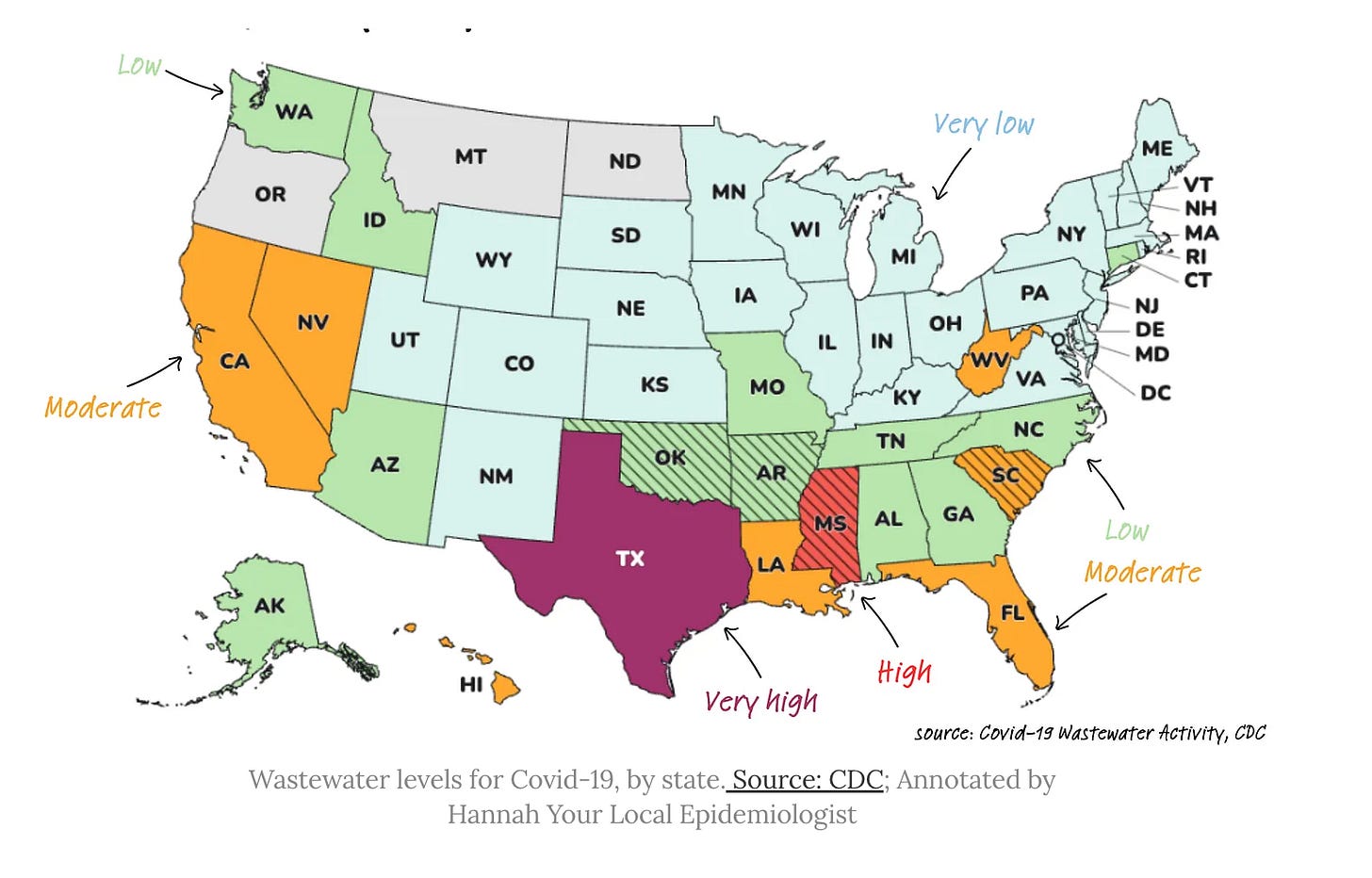

 Tipsy Teetotaler ن