What if the Furies came for America?

In the political sphere

What if the Furies came for America?

What if the Furies came for America? What does the karma of an entire nation look like in anthropomorphic form?

If Trump is ushering us toward some sort of critical defining moment, perhaps even an apocalypse as so many seem to believe, it’s worth remembering that the definition of an apocalypse is a revealing of previously hidden truths. If we look at President Trump through a symbolic lens, what previously hidden truths are being revealed about America? What does his particular character tell us about our collective character?

Trump, in his crude way, is forcing us to confront the false stories we have told ourselves about who we are.

W. Aaron Vandiver, Trump and the Furies of Empire (Front Porch Republic)

This hit me harder, again and again, than anything I’ve read in a long while on the political state of the world. It’s chock-full of quotable stuff (some of which you’ll be seeing in due course), but the quote above is could be an epigraph.

If you think these days are our nadir, remember that Trump is more the eventuality than the cause of our flaws. 77 million voted for him.

I began saying almost a decade ago that “Trump v. Clinton has God’s judgment written all over it.” I wan’t wrong, but if you prefer “furies” or “Karma incarnate,” well you do you.

There’s only one sour note I noticed in this piece: Vandiver tries to shame Christians out of supporting Trump, which is well and good, but he comes across as a guy who was raised in a mainline Church that taught “be nice” as the heart of the Gospel. So I take his Christian bona fides with a grain of salt. With his makeweight “Christian” argument gone, it’s still a very solid piece.

Sophomoric trickery

[Congressman Don] Bacon recalls that his great-great-great-grandfather John lived near Thomas Jefferson’s Monticello. John’s uncle helped maintain it while Jefferson was away being president. John moved to Illinois and in 1861 enlisted in the Union Army. So, in 2020 it seemed like familial piety for Bacon to be a one of two prime movers of legislation to remove from Army bases (Forts Bragg, Hill, Pickett, Hood, Benning and others) the names of Confederate soldiers who did their damnedest to dismember the nation.

The legislation, which included a stipulation that no base would ever again have a Confederate’s name, inspired a provision in the 2021 defense authorization bill that became law over President Donald Trump’s veto. In 2025, however, the second Trump administration, practicing what it evidently considers sophisticated trickery, restored the names. Sort of.

Fort Bragg, which briefly was Fort Liberty, is now renamed back to Fort Bragg. Not, however, for Confederate Gen. Braxton Bragg, but for Pfc. Roland L. Bragg, who won a Silver Star in World War II. Fort Pickett, which briefly became Fort Barfoot, is again Fort Pickett. This time, however, the name (we are supposed to believe) honors not the Virginian who led Pickett’s Charge at Gettysburg, but Vernon W. Pickett, a lieutenant who in World War II won a Distinguished Service Cross.

This sophomoric trickery — the cleverness of the dim-witted — by the commander in chief is intended to mock the law. This is what now passes for fulfilling the president’s constitutional duty to “take care that the laws be faithfully executed.”

George Will, Serious. Has a spine. No wonder he’s leaving Congress.

“Republicans” and “Democrats” today

We still have teams that we call Republican and Democrat, but that’s not what a political party actually was, or used to be, at least. It used to be a cohesive group around some policies and principles that would support candidates that supported those policies or principles, and the party existed separate from its candidates. Because of campaign finance reform and the law that was passed in 2002, we basically ended having separate political parties. And so, instead, again, it’s actually increased partisanship. But it’s vibes-based. It’s this sense that you belong to, like, you know, the Starbucks, Trader Joe’s tote bag, matcha latte group. Or you belong to the pickup truck, “Yellowstone”-watching, Walmart group. And it’s not policy based.

Sarah Isgur.

Speaking of political parties, I’m really, really missing the days when they assembled in smoke-filled rooms and came up with candidates who they thought could win elections to advance their ideas. Now we have primary elections wherein the President of the United States sends out his zombie voters to politically assassinate distinguished incumbents who did something that made him mad, as GOP Senators shrug and say, in effect, “Well, it’s his party; he can kick out whoever he wants to.”. The Republican party and incumbency mean nothing to Trump.

Trump took revenge on Senator Bill Cassidy over the weekend and will unseat Thomas Massie on Tuesday. May the instruments of his revenge go down in flames in November.

And may we once again discover the importance of functioning political parties.

Thucydides trap

[On Thursday,] Xi Jinping warned Donald Trump to his face about a “Thucydides trap” potentially unfolding between our two countries.

Like everyone else, my first thought when I heard the news was, “There’s no way Trump knows what a Thucydides trap is.”

A “Thucydides trap” refers to the rising probability of war when a long-dominant power is at risk of being usurped by a rising one. America is in decline and everyone knows it, Xi was implying, and the White House should take care not to let its anxiety about that lead it to foolishly assert itself in defense of Taiwan.

Someone must have explained that to the president following the summit. “When President Xi very elegantly referred to the United States as perhaps being a declining nation, he was referring to the tremendous damage we suffered during the four years of Sleepy Joe Biden and the Biden Administration,” Trump clarified afterward on Truth Social, not at all defensively.

That was cute spin, but it ain’t Joe Biden whom Chinese nationalists have been moved to publicly thank for destroying U.S. global supremacy. Trump’s “tariffs, attacks on allies, anti-immigration policies and assaults on the American political establishment had inadvertently strengthened China while weakening the United States,” the New York Times reported earlier this week, summarizing the analysis of one Beijing think tank.

Nick Catoggio

Somehow, this resonates

“You do know that the party has two kinds of functionaries, right?” “Yes, Father, you’ve told me before.” “The good-for-nothings and the stop-at-nothings. So which are you, Alyosha?”

Giuliano da Empoli and Willard Wood, The Wizard of the Kremlin

Outside the political sphere

Tech just blows my mind sometimes

China has unveiled its latest photonic quantum computer, Jiuzhang 4.0, with researchers saying it can outperform the world’s fastest classical supercomputer by a vast margin … The results, published on May 13 in the peer-reviewed journal Nature, mark the latest milestone in China’s rapidly advancing quantum program led by a team of scientists at the University of Science and Technology of China headed by Chinese quantum physicist Pan Jianwei. Jiuzhang 4.0 completed a Gaussian boson sampling task in just 25 microseconds – a calculation they estimated would take the world’s most powerful supercomputer, El Capitan in the United States, more than 10⁴² years to finish, according to the university in the eastern city of Hefei.

John Ellis News Items.

Lingua franca

Classical music is now a special taste, like Greek language or pre-Columbian archeology, not a common culture of reciprocal communication and psychological shorthand. Thirty years ago, most middle-class families made some of the old European music a part of the home, partly because they liked it, partly because they thought it was good for the kids. University students usually had some early emotive association with Beethoven, Chopin and Brahms, which was a permanent part of their makeup and to which they were likely to respond throughout their lives. This was probably the only regularly recognizable class distinction between educated and uneducated in America.

Ken Myers, All God’s Children and Blue Suede Shoes

Where’s the poverty?

In America, the land of the free, you can earn a billion bucks and then live however you’d like so long as you wouldn’t like to live as humanely as a middle-class Parisian.

I’m not, alas, in Paris right now. But I can certainly imagine myself in a Parisian cafe, enjoying some steak frites and a glass of wine while taking in the glorious streetscape. What’s harder to imagine is soaking in all that ambiance and thinking, “Yeah, this place is definitely poorer than Mississippi.”

Megan McArdle, Europe has the grandeur. But America has economic abundance.

See also Josef Pieper, Leisure: the Basis of Culture

Shorts

  • … Ethical Capital Partners, the private equity firm that owns Pornhub. (The Morning Dispatch)
  • “Once somebody’s proven they’re too frightened of being called ‘bigot’ to defend the most vulnerable, they’ve shown who they are,” – JK Rowling via Andrew Sullivan.
  • “I don’t think about Americans’ financial situation. I don’t think about anybody. I think about one thing: We cannot let Iran have a nuclear weapon. That’s all,” – Donald Trump, who “obliterated” the nuclear sites last year via Andrew Sullivan.
  • “[Biden] has one ability I don’t have: he sleeps. … He has an ability to fall asleep while on camera. … You’ll never see me sleeping in front of a camera,” – Trump in 2024 via Andrew Sullivan.
  • “2019: Donald Trump calls on China to investigate Joe Biden for having son Hunter fly to China on Air Force Two as he sought business in China. 2026: Donald Trump flies son Eric to China on Air Force One as company linked to him explores a deal with a Chinese chipmaker,” – Matt Viser via Andrew Sullivan.
  • “One of the enduring Two Americas truisms of the decade: Repubs convinced Obama is behind every tree and Dems wishing he would show up in the forest at all,” – Jonathan Martin via Andrew Sullivan.
  • Pressure on journalists has risen exponentially since the turn of the century. Many media companies require their journalists to produce up to a dozen stories a day – all in pursuit of clicks and likes. Maintaining high standards is impossible. (Rolf Dobelli, Stop Reading the News)
  • Never have I witnessed a White House so devoted to surfaces. Surfaces caked with makeup. Surfaces puffed up with hair spray. Surfaces glossed with gold. Surfaces that glitter blue — or someday might, if the over-budget overhaul of the Lincoln Memorial Reflecting Pool ever works out as promised. (Frank Bruni)
  • In The Hollywood Reporter, Daniel Fienberg surveyed television shows inspired by a classic William Golding novel: “It’s easy to recognize that ‘The White Lotus’ has always been ‘Lord of the Flies,’ with turndown service.” (Via Frank Bruni)
  • Microsoft has rebranded its famed gaming division, Xbox. It will now be called XBOX. We salute the marketing team for their risk-taking, creativity, and awareness of the caps lock key. The Morning Dispatch
  • Epitaph for Modernity: I came, I shopped, I died. (Fr. Stephen Freeman).
  • You can no more win a war than you can win an earthquake. (Jeannette Rankin)

Elsewhere in Tipsyworld

Thursday May 14

Pig-in-a-poke

At the heart of the US retirement industry, underpinning the later-life plans of millions of Americans, is a set of financial products that hardly anyone can tell you a thing about. No one knows exactly how much money they control. No one can say how it’s all allocated. No single financial regulator is in charge of them. Yet Collective Investment Trusts are now a multi-trillion dollar business to rival mutual funds or ETFs — and are poised to become the backdoor through which more private assets are added to Americans’ retirement savings. (Source: bloomberg.com)

Via John Ellis. But don’t forget cryptocurrency, Mr. Ellis; its opacity is baked into its very name.

I’m uneasy, by the way, about allowing private assets in Americans’ retirement savings, but if you’re going to insist on its permissibility, professional management and selection of those private assets by something like Collective Investment Trusts seems one of the less bad ways of doing it.

Deep worries

Congress’s weakness is our deepest constitutional problem, because it is not a function of one man’s whims and won’t pass with one administration’s term. It is an institutional dynamic that has disordered our politics for a generation. It results from choices that members of Congress have made, and only those members can improve the situation. It is hard to imagine any meaningful constitutional renewal in America unless they do.

Yuval Levin, The Missing Branch (May 6, 2025)

Man versus myth

Thoreau’s cabin, it turns out, was not in the woods, but in a clearing near the woods that was in sight of a well-traveled public road. Thoreau was only a thirty-minute walk from his hometown of Concord, where he returned regularly for meals and social calls. Friends and family, for their part, visited him constantly at his cabin, and Walden Pond, far from an untrammeled oasis, was then, as it remains today, a popular destination for tourists seeking a nice walk or swim.

Cal Newport, Digital Minimalism

In principle and in practice

In a Press Release, ADF (the “Alliance Defending Freedom”) announced that Ohio Attorney General Dave Yost has resigned, effective June 7, in order to take a position with them.

From 2002 and a few years after, I provided a few hundred hours of pro bono legal services to “pay ADF back” for training they provided, free of charge, at the Ritz Carlton Kapalua. (It was memorable partly for the return flight, Honolulu to Houston, after which I understood how people can develop dangerous circulatory problems on long flights and vowed never again to fly a Redeye flight other than in an Aisle seat, and certainly not in the center seat of the center section of an L1011, with two sleeping people between me and an aisle. Another memorable part was figuring out ways to “get around” Employment Division v. Smith in pursuing religious freedom claims.) So I’ve kept an eye on ADF.

ADF described itself in the Press Release as “the world’s largest legal organization committed to advancing every person’s God-given right to live and speak the truth” (italics added).

I’m not sure why they chose that italicized part. I suspect it has to do with keeping things vague as they try to attract more donors. I’m pretty sure that ADF and I no longer see exactly eye-to-eye on “truth” (they’re de facto evangelical). I don’t recall any ADF Press Release trumpeting how they vindicated the religious freedom of, say, a Jehovah’s Witness or a Sikh, or even an Orthodox Christian; that isn’t, or at least wasn’t, the kind of case that appeals to their donors. They’re mostly into eccentric evangelicals and devout Catholics.

That’s why my donations for the cause of religious liberty go to Becket Fund. Becket is tightly focused on core religious liberty interests, avoiding peripheral culture warrior battles. And comparing its home page to ADF’s accurately reflects contrasting, public-facing construals of “every person.” And as Becket says, perhaps pointedly, “Becket defends religious liberty for all—in principle and in practice.

I’m not saying ADF is hypocritical. Other groups with broad mandates, be they “civil liberties” (ACLU) or “free speech” (FIRE) walk a tightrope with their donors, who don’t always appreciate that government threats to people they dislike threaten them as well. I am just saying that, for understandable if somewhat mercenary reasons, ADF falls short of what I want from a religious liberty defender.

Religion (and politics)

As a preliminary matter, I want to record an objection that I feel the need to record from time to time: I do not accept the premise, common in the popular press and pervasive at the New York Times, that religion is just away for people to feel more righteous about their political commitments; that religion is really all about politics.

I don’t buy it because my personal experience tells me it’s a facile falsehood — at least some of the time. It persists because it’s true often enough, especially in the most visible religiopreneurs, to tempt nonreligious reporters into assuming a categorical rule.

Time to change sides?

Dad seemed lost in a depressed daze. He had recently been saying privately that the evangelical world was more or less being led by lunatics, psychopaths, and extremists, and agreeing with me that if “our side” ever won, America would be in deep trouble. But by then Dad was dying and knew he had very little time left. There was no time to change his life or his new “friends.” All I could do was to bitterly regret what I’d gotten him into. I still do.

Frank Schaeffer, Crazy for God, of the late Evangelical icon Francis Schaeffer, his father.

Frank, who was an angry Evangelical, became an angry Orthodox Christian. I’ve written written about him before and really have nothing new since I’ve lost all track of what he’s currently doing.

Partisanship/Binary Collapse

Ted Gioia moved an essay (which I don’t think I had seen before) from behind the Substack paywall. It’s very timely stuff, I think, even if it doesn’t give a detailed roadmap to the end of America’s vicious tribalism.

How can you tell when you’re living in a binary collapse? Here are seven warning signs:

1. All conflicts are channeled into a single binary opposition between two teams. There is never a third team—if someone tries to create it, one or both of the two teams will work fervently to destroy the third option.

2. Each team is obsessed with punishing the other—and this becomes more important than taking steps that might help their own supporters.

3. The common good turns into an empty concept, and is only mentioned as a rhetorical device in attacking the other team (which is always opposed to the common good). Policies that might help everybody are ignored (as in the Roman example), because they can’t be used to energize team supporters—which is where all power and resources reside.

4. Even institutions and vocations that have no direct connection with the two teams get drawn into the battle. Everything becomes part of the conflict—science, entertainment, math, medicine, architecture, etc.

5. The fault of the other team is never a simple matter, but always involves a long list of extreme accusations. As Rene Girard shows in his book The Scapegoat, the same charges are invariably lodged against the other team—violence, sexual transgressions, greed, ethical abuses, moral corruption, violation of taboos, and a litany of other abuses. Even if the conflict begins with a single difference (class, religion, race, etc.), it soon expands to encompass every one of society’s most feared transgressions. It sounds absurd but, in periods of binary collapse, the opposing team is always accused, sooner or later, of incest, rape, murder, devil worship, profanations of all sorts.

6. Despite their espoused hatred, the two teams repeatedly imitate each other—in fact the hated enemy is also the main role model. Like warring Mafia gangs, they engage in tit-for-tat behavior. Hence, the exact same accusations are made, back and forth. Threats, excuses, reprisals are always identical; even promises for the future (after the victory) are eerily similar. These mirror-like reflections merely increase the polarization and escalate the conflict.

7. People who try to operate outside this binary conflict have no impact. They are literally individuals without a team—which in a binary crisis is always the worst possible situation. They are the weakest of all parties. To have any influence, they must join one of the two teams…and so the cycle continues.

Having rejected the Republican party in 2005 and unable thus far to accommodate myself to Democrat foibles, I am now 21 years politically homeless. So that 7th point isn’t one I instinctively like. But Gioia continues:

Anybody who dares suggest a remedy outside the binary conflict will be attacked by the now massive forces of the two teams.

And they will get lectured endlessly about the “lesser of two evils” theory. (When you start hearing that argument constantly, pay close attention—because it identifies the source of a potential structural shift in the situation.)

This oft-stated theory declares that you must always limit yourself to the best of two bad options—because anything else is EVIL.

Maybe that’s true. But there’s another theory, perhaps even more persuasive. This other theory states that a system which only offers lesser-of-two-evil choices is already broken, and people deserve more and better options.

(Bold added) Yeah! Politically, my placeholder “better option” is the American Solidarity Party. But there’s a hint at still another route:

When athletes play, they turn against a common enemy—the opposing team. But when musicians play, they operate in a purer realm—and the audience still packs into the arena or stadium (the same venues!) for this peaceful way of forming into teams.

Yay, music! “Beauty will save the world.” (Dostoevsky)

Block quotes all from Gioia’s *How to Tell If You’re Living in a Binary Crisis8.

A story on NPR’s All Things Considered on the 13th suggested that what used to be known as American liberal democracy is now American competitive authoritarianism. It seems to fit observed fact and to be congruent with Gioia.

I’m filled with dread that it takes two or more to compete, so we may not get back to liberal democracy any time soon.

Political Evangelicalism

Political evangelicalism is a system that is deeply influenced by depraved men, and it has exactly the features that depraved men will demand of an institution they control.

First, the depraved man will alter the very definition of virtue. He’ll place a higher premium on his thoughts than his actions, so that the goal is theological or ideological purity rather than, say, the fruit of the spirit, which includes kindness, peace, patience, gentleness and self-control.

In this formulation, the absolute worst thing you can be is a heretic, with heresy defined according to the leader’s inflexible interpretation of Scripture.

You can see this temptation across the length and breadth of American religion and politics. How many people see themselves as good because their theology or ideology is pure? How many of the same people then feel righteous even as they inflict extreme cruelty on their theological or ideological foes? To them, cruelty in the name of truth isn’t cruelty at all; it’s a form of tough love.

The modern history of political evangelicalism is riddled with [this] kind of story: A powerful man gains a following by casting himself as the heroic warrior against the heretical and the godless. When he uses his power and fame to indulge his basest desires, he treats exposure as an attack and justice as persecution.

And because he’s built a following, he has an army of people ready to leap to his defense. After all, if they stay silent, then the liberals will win, and no one can let the liberals win. Ever.

Against this backdrop, President Trump wasn’t an aberration; he was an inevitability. When he asked evangelicals for their political support, little did he know that he was walking into the house that Paul Pressler built.

David French, primarily about the Southern Baptist Convention’s winking at the homosexual ephebophilia of the late Paul Pressler — but with, I think, broader application.

I’m starting to think that muckraker David French either has exceptionally thick skin against the barbs of his fellow-evangelicals or else he “has had it” with them and is on the cusp of leaving, or prepared to leave if pushed, for another Christianish tradition.

One lame cheer for Russian Victory Day

A day (Victory Day) that was meant to epitomize the military might of Mr Putin’s Russia instead signaled its vulnerability and weakness. In this, at least, it was an accurate reflection of Russia’s battlefield setbacks, and of Russia’s fear of the growing effectiveness of Ukraine’s long-range strikes. For the first time in nearly three years the initiative in the war appears to have shifted in favour of Ukraine. Having got through a harsh winter, when its cities and energy grid were pummelled almost nightly by massed Russian drones and missiles, Ukraine is now turning the tide. It is imposing increasing costs on Russia by almost every measure.

“Overall, it feels like an inflection point in the war,” says Sir Lawrence Freedman, an emeritus professor of war studies at King’s College London. “If the Russians have nothing to show for their efforts I would not be surprised if in some places things start crumbling.” Losses of soldiers, running at 35,000 a month, exceed the pace at which Russia can recruit replacements. And behind the raw numbers—nearly 1.4 million killed and seriously wounded since Russia’s invasion—is a grimmer new development. Until last year, the ratio of killed to wounded Russian soldiers may have been between 1:2 and 1:3, poor by modern standards but roughly in line with past conflicts. In March Mr Zelensky said that Russia was suffering almost two dead soldiers for every one wounded. “The stoicism and fatalism of Russian soldiers must be wearing thin,” says Sir Lawrence. (Source: economist.com)

Via John Ellis.

I certainly would not have predicted Ukraine beating Russia. I fully expected Russia to win eventually, and may have written that down in front of God and everybody. Drones and other ingenuity thwarted that.

I have both Ukrainians and Russians in my parish, Russian immigrants in my near family, and some understanding of both nations, so I’m not going to be despondent about either side winning or some stalemate. It has seemed to me a logical treaty concession for Ukraine to give up heavily-Russian regions like Donetsk, which reportedly was ill-treated by Ukraine before hostilities broke out. Sounds close to a win-win solution.

Dependence on the written word

Obviously, here is a paradox, and the present writer is aware of risking another in a book which calls attention to the sin of writing. The answer to the problem seems to be that written discourse is under a limitation and that whether we wish to accept that limitation to secure other advantages must be decided after due reference to purposes and circumstances. In the Good Society it is quite possible that man will not be so dependent on the written word.

Richard Weaver, Ideas Have Consequences.

Pick one: laissez-faire capitalism or family-friendly morality

There is among Republicans little if any appreciation of how the party’s enthusiasm for laissez-faire capitalism—and the idea that economic growth is the raison d’être of our common existence—undermines the communal and social bonds necessary to support the traditional family-centered morality Republicans claim to esteem.

Mark Mitchell and Nathan Schlueter , The Humane Vision of Wendell Berry

Shorts

  • Mundus vult decipi, ergo decipiatur.
  • In an attention economy, one is never not on, at least when one is awake, since one is nearly always paying, getting or seeking attention. (Michael Goldhaber quoted in Charlie Warzel, I Talked to the Cassandra of the Internet) (gift link)
  • Students and professors at elite universities have a long track record of targeting the free speech rights of their conservative colleagues, and Republicans are rationalizing their own constitutional violations as fighting fire with fire. (David French)

Elsewhere in Tipsyworld

In tempore belli

A vast bureaucracy in the service of appetite

In order to ameliorate the resulting clash of commitments to divergent, incompatible preferences and pursuits, political leaders and other elites rely heavily and increasingly on platitudinous rhetoric and consumerism, the latter involving citizens’ widespread conformity to a seemingly insatiable acquisitiveness regardless of their income level. Were the flow of prosperity’s spigot seriously to wane, however, citizens’ clashes would likely intensify, reversing the dominant trajectory through which Westerners have willingly permitted their self-colonization by capitalism since the seventeenth century. Hence the necessary ideological commitment of modern Western states to unending economic growth, which perpetuates “the notion of the state as a vast bureaucracy in the service of appetite, aimed above all at the promotion of economic life and comfort.

Brad S. Gregory, The Unintended Reformation

SPLC

Even more than two things can be true at the same time:

  1. Southern Poverty Law Center did good work on civil rights decades ago;
  2. Instead of declaring victory and closing up shop, SPLC became a grifting media darling with lazy leftwing slop like its “Hatewatch”;
  3. Had you asked me if SPLC used moles to infiltrate right-wing groups, I probably would have paused for a few seconds and then answered “Why, yes; I suppose they do.” Were I an SPLC donor, I don’t think that would have deterred me.
  4. To all appearances, the criminal indictment of SPLC is, if not garbage, at least garbage-adjacent. It looks like a typical Trump DoJ stunt.
  5. The criminal indictment will cost SPLC not just defense costs, but lost revenue: This week, Fidelity Charitable and Vanguard Charitable said they had paused grants from Donor-Advised Funds to the Southern Poverty Law Center.
  6. Karma is real. OR “paybacks are hell” if you prefer.

I encourage you to contemn SPLC2026 and stop filling its ample coffers, but don’t expect that a criminal conviction is very likely.

Trolls and bootlickers — of the Left!

How quickly the winds have shifted! Yesterday’s elites promulgated ideas that I scorned, but it never occurred to me that the Successor Ideology was foreshadowing the populist trollery of today’s MAGA Right, albeit to opposite tribal effect. James Howard Kunstler distills some of it:

Are you against reason itself? For all your talk about the primacy of science, your agenda militates furiously against it: Math is “racist,” there’s no biological basis for understanding sex, all science is a “white colonial way-of-knowing,” masculinity is “toxic,” women can have penises and men can menstruate. Do you really believe these absurd fantasies manufactured in the graduate schools in the service of academic careerism at all costs — or do you just go along with them for the sake of protecting your own careers and perquisites?

James Howard Kunstler, Round-up at the Wokester Corral.

(Pointless aside: I sing in a quite good choir and I use voice recognition a lot for writing in short bursts. Voice recognition has never gotten “chorale” right, always rendering it “corral,” regardless of context.)

Trump

I apologize for so much focus on Donald Trump. His unlawful and idiotic war against Iran (as I understand it, military war gamers always knew Iran would close the Strait of Hormuz in a war with the U.S.) makes it urgent to push back.

We’ve probably already lost “America as we knew it,” but that doesn’t mean it couldn’t get worse.

Time’s up on your stupid war, sir

For years, America’s cowardly political leadership class has pretended that the War Powers Act entitles the president to bomb whoever the hell he wants for 60 days without approval from Congress. Only after those 60 days have run does he have an obligation to seek authorization from the legislature.

Three seconds of thought about why the law was written will reveal why that’s stupid.

The War Powers Act was passed in 1973 to rein in Richard Nixon after he expanded the war in Vietnam by secretly bombing neighboring Cambodia. The point of the law, obviously, wasn’t to justify that bombing retroactively by granting Nixon a 60-day free pass. The point was to affirm that, with very limited exceptions, the president can’t engage in hostilities with a country unless Congress says so.

Nixon vetoed the bill when it reached his desk, but lawmakers felt so strongly about it that they overrode his veto by bipartisan supermajority margins. It was a bold play by the legislature to claw back its rightful war-making authority under Article I—not to create a massive two-month exception to it for the executive branch.

Nick Catoggio

World Historical

Publicly, Trump compares himself to Washington and Lincoln. Privately, it’s Alexander the Great, Julius Caesar and Napoleon Bonaparte.

I always recognized the narcissism, but I pretty much missed the delusions of grandeur.

And they are “delusions,” considering the eulogistic connotations of “grandeur.”

But I think I’ve already acknowledged that Trump is an extremely consequential President, and “consequential” carries no eulogistic connotations. Under that rubric, he may indeed prove world historic. How could a chaos agent who has seized semi-dictatorial power over the world’s hegemon not have a shot at “world historic” if he’s willing to stoop low enough?

Conservatives versus power-seekers

As the conference went on, I noticed a contest of metaphors. The true conservatives used metaphors of growth or spiritual recovery. Society is an organism that needs healing, or it is a social fabric that needs to be rewoven. A poet named Joshua Luke Smith said we needed to be the seeds of regrowth, to plant the trees for future generations. His incantation was beatitudinal: “Remember the poor. Remember the poor.”

But others relied on military metaphors. We are in the midst of civilizational war. “They”—the wokesters, the radical Muslims, the left—are destroying our culture. There were allusions to the final epochal battles in The Lord of the Rings. The implication was that Sauron is leading his Orc hordes to destroy us. We are the heroic remnant. We must crush or be crushed.

David Brooks, I Should Have Seen This Coming. I don’t know that there’s a single real conservative in Trump’s administration. I once thought J.D. Vance was conservative, but Trump’s reverse Midas Touch hexed him.

Shorts

  • Pete Hegseth didn’t appreciate one congressman’s questions about the Iran war last Wednesday, so he accused him of “false equivolation.” (My own ears from CBS news)
  • [I]n Washington this past week, Charles came into his own. Forty years after Diana’s Cinderella turn, Charles got to be Cinderfella … In a country rife with No Kings protests, this king was a tonic. He presented himself with elegance, intelligence and wit — everything that has been wanting in Washington during the Trump era. Maureen Dowd

Elsewhere in Tipsyworld


I confess, however, that I am not myself very much concerned with the question of influence, or with those publicists who have impressed their names upon the public by catching the morning tide and rowing very fast in the direction in which the current was flowing; but rather that there should always be a few writers preoccupied in penetrating to the core of the matter, in trying to arrive at the truth and to set it forth, without too much hope, without ambition to alter the immediate course of affairs, and without being downcast or defeated when nothing appears to ensue.

T.S. Eliot

I don’t do any of the major social media, but I have two sub-domains of the domain you’re currently reading: (a) You can read most of my reflexive stuff, especially political here. (b) I also post some things on my favorite no-algorithm social medium.

Saturday, 8/23/25

Public Affairs

Ted Cruz knows better

[Ted] Cruz was an intellectually serious politician of the kind who would quote Hayek and reference Milton Friedman off-the-cuff in private conversation until he discovered—and this is a thing with Texas politicians—that there was more juice to be had from pretending to be the good ol’ boy that he is not than in simply being the Ivy League lawyer he is. Cruz’s current position in American public life is that of a piteous and contemptible figure. … [F]or the moment, he is still a senator caught between the fringeward push of his radicalizing party and the centerward pull of his state’s urbanizing electorate. 

Cruz is (or should be) smart enough to have figured out by now that he is never going to be president, and he ought to allow himself to be liberated by this and take on a new role—one that the genuine Ted Cruz, if there is anything left of him inside the chrysalis of grotesque opportunism and self-degradation in which he has enveloped himself, would be well-suited to undertake: defending the Constitution and the American order from a sustained assault that is coming from within his own party.

It would not take very much: “No, Mr. President, you may not willy-nilly create a new national sales-tax regime with rates based on how you’re feeling that day, even if you call it a tariff; no, you may not federalize the Philadelphia police department or deploy troops in U.S. cities based on whatever phony emergency pretext occurs to you in between social media posts; no, the states are not your ‘agents,’ and they most certainly do not have to do ‘whatever the president of the United States tells them’ to do, even if you put ‘FOR THE GOOD OF OUR COUNTRY’ in capital letters. And if you refuse to honor the constitutional limits on your office, then you can be removed from that office—with my vote, if necessary, though I would regret it and would probably lose my Senate seat as a result. But there are things more important than winning the next election.” 

No, I do not think Cruz has it in him. 

But he is starting to reach the stage of life when, to borrow David Brooks’ formulation, it is time to stop thinking about one’s résumé and start thinking about one’s eulogy.

Kevin D. Williamson, Ted Cruz Knows Better.

In which I reveal an unpopular opinion

Almost everything I knew about him, and particularly his professional accomplishments and opinions, made me think that Brett Kavanagh would be a good Supreme Court justice, and I haven’t been disappointed.

Why “almost”? It wasn’t really the Christine Ford Blasey accusations, but it was related to them: Brett Kavanaugh was an underage, binge-drinking party boy.

That was never in dispute. And I hate that. From him, there wasn’t so much as a “when I was young and foolish, I was young and foolish” acknowledgment. I don’t care if his parents winked at it or even bought the beer.

Now I don’t recall anyone else who was bothered enough even to shrug it off with “boys will be boys.” I seemingly stood alone in thinking underage binge drinking a blot on his character and fitness to uphold the law — all of it, including the parts that inconvenience him.

It’s not okay, and if that makes me a prig, so be it.

There is no possible religious neutrality in schools. So there!

J Budziszewski wants to make Catholic education more widely available without the governmental “strings attached” of Charter School (or presumably vouchers):

Please let’s not blather about religious “neutrality.”  So called secular education is not neutral, but reflects a bias against faith in favor of irreligion.

In fact, even that way of putting it is not precisely accurate. It isn’t that public schools have no god; in fact they place many gods before God. Superficial thinkers suppose that unconditional loyalties – whether of the “woke” or another variety — don’t count as religion just because they don’t use the word “god” for their gods. But the crux of the matter does not lie in the words they use.

I take a different minor issue with the first paragraph quoted than Budziszewski himself does. What “secular education” does is inculcate indifference. Purporting to teach children what they need to know without telling them anything about religion tacitly tells them that they need not know anything about it.

And this is not a straw man. The two-hundred-page course guide for Advanced Placement (AP) course in U.S. government and politics “doesn’t mention Christianity or the Bible—not once, even though it professes to cover ‘the intellectual traditions that animated our founding.’” (Mark Bauerlein)

But that’s not the same as teaching hostility toward religion (“irreligion”).

On the point about unconditional loyalties I couldn’t agree more. I just don’t know what we do about it. Deschooling Society?

DOGE

I have had a faint hope that we would discover that DOGE has begun modernization of software and strategic use of AI in the agencies they blitzkrieged immediately after our latest Presidential inauguration.

But they appears at this point to have been engaged in pure, nihilistic destruction — a style that, along with vengeance-destruction, appears to be what this 47th Presidency is all about.

Capitalist Economy

Pay no heed to the man in the management handcuffs

Ted Gioia was writing a book and looking for a publisher:

This person ran a legendary publishing house, and was also a jazz lover. He was a fan of my writing. We exchanged some emails, and then had a phone conversation.

“Ted, I love the book you’re writing,” he told me. “The sample chapters you sent are outstanding. You’re a special writer, and I’d love to sign you a contract. But…”

My head was already spinning. These people typically pay out big advances. I could finish the book and pay all my bills—no sweat! But before I could pursue these daydreams any further, this famous editor went on:

“I’d love to sign you to a contract. But I can’t.”

“Why not?” I asked—and even I could hear the plaintive note in my voice.

“Well, I’m sure your book would sell. But we evaluate books on their projected sales during the three years following release. If a book doesn’t have a three-year payback, we don’t do it.”

“I don’t think I understand this,” I whimpered in reply. “What are you saying?”

“It’s simple. Your book will probably sell for the next ten years or more. But I can only consider the first three years in making an offer—that’s why I have to turn you down.”

Okay, I understood discounted cash flow even better than this editor. I could give you a lecture on the Capital Asset Pricing Model in my sleep. In my early days, I made a living doing this kind of analysis.

But this way of thinking is wrong in the world of arts and culture.

When I tell editors that my books demonstrably sell for 25-50 years and longer, this is a turn-off. They actually hate it when I say it.

They won’t be around that long—editors constantly change jobs. They don’t give a hoot what sales will be like in the year 2050. They want something with cocktail party buzz for the six weeks following publication.

That’s the world they live in. But I don’t—and I refuse to move there.

How I Learned to Stop Worrying About Short-Term Results in My Career (bold added)

There’s a lot more where that came from because Ted Gioia is a freakin’ polymath. His has become (probably) my favorite Substack that doesn’t focus on religious subjects.

Work-life balance

I’m 22 and I’ve built two companies that together are valued at more than $20 million. I’ve signed up my alma mater as a client, connected with billionaire mentors and secured deferred admission to Stanford’s M.B.A. program. When people ask how I did it, the answer isn’t what they expect—or want—to hear. I eliminated work-life balance entirely and just worked. When you front-load success early, you buy the luxury of choice for the rest of your life.

… I averaged 3½ hours of sleep a night and had about 12½ hours every day to focus on business. The physical and mental toll was brutal: I gained 80 pounds, lived on Red Bull and struggled with anxiety. But this level of intensity was the only way to build a multimillion-dollar company.

Emil Barr, ‘Work-Life Balance’ Will Keep You Mediocre

So that’s the world he lives in. I don’t, never have, and I refuse to move there — or to recommend it to anyone I care about.

Culture

Gay race communism

Now, Cracker Barrel is updating its décor and branding—slightly. The bulk of the update is a brighter, less cluttered interior design, but the “controversial” decision is to change its logo. The company removed the old white guy in overalls sitting by a barrel, and now just has a text-only sign that reads “Cracker Barrel.” 

And people are losing their minds, claiming that it has gone “woke.” What seems to have sparked this brouhaha is a tweet saying that the store has “scrapped a beloved American aesthetic and replaced it with sterile, soulless branding.” 

This prompted an outraged “WTF is wrong with @CrackerBarrel??!” tweet from Donald Trump Jr., that loyal guardian of all that is homey and traditional in American life. The very popular End Wokeness Twitter account proclaimed: “Cracker Barrel CEO Julie Masino should face charges for this crime against humanity.”

Chris Rufo then came out with a Cracker Barrel delenda Est pronunciamiento:

Alright, I’m hearing chatter from behind the scenes about the Cracker Barrel campaign and, on second thought: we must break the Barrel. It’s not about this particular restaurant chain—who cares—but about creating massive pressure against companies that are considering any move that might appear to be “wokification.” The implicit promise: Go woke, watch your stock price drop 20 percent, which is exactly what is happening now. I was wrong. The Barrel must be broken.

Now, it’s true that Cracker Barrel has done some LGBT marketing stuff, probably as a result of being criticized for alleged discriminatory policies in the 1990s. But maybe also because gay people—and people who aren’t particularly horrified by gay people—might like good, affordable breakfasts, too. They’ve also tried to cultivate Hispanic customers. I’m not sure this means they’ve been taken over by the Latinx reconquista

I am also, shall we say, skeptical that a few old website screenshots of these efforts are proof that, in the words of Federalist co-founder Sean Davis, “Cracker Barrel’s CEO and leadership clearly hate the company’s customers and see their mission as re-educating them with the principles of gay race communism.”

Jonah Goldberg. It’s enough to make me want to try to remember that I keep forgetting to eat at Cracker Barrel.

What nihilists can’t believe

It’s hard enough to get people to believe something, but it’s really hard to get people to believe in belief — to persuade a nihilist that some things are true, beautiful and good.

David Brooks, The Rise of Right-Wing Nihilism (gift link)

I just can’t root for a guy who looks like Caligula

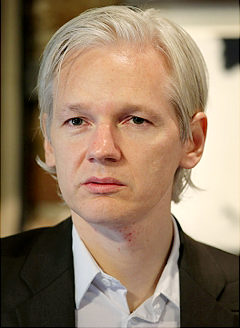
My libertarian and anti-state impulses incline me to be favorable toward Julian Assange, but I’ve never been able to shake how much he looks like John Hurt’s Caligula.

Technology

The technologies we use to try to “get on top of everything” always fail us, in the end, because they increase the size of the “everything” of which we’re trying to get on top.

Oliver Burkeman, Four Thousand Weeks

Brought to you by the letter “D”

Dust and decay,
ditherers upon the doorstep
of death itself; dried-
up ghosts of daisy-chain
days that were once dappled
with dew and delight.

R.S. Thomas, Anybody’s Alphabet, Collected Later Poems 1988-2000.

The Los Alamos Sin

As Freeman Dyson put it, the “sin” of the scientists at Los Alamos was not that they made the bomb but that they enjoyed it so much.

Walker Percy, Lost in the Cosmos


I don’t do any of the major social media, but I have two sub-domains of the domain you’re currently reading: (a) You can read most of my reflexive stuff, especially political here. (b) I also post some things on my favorite social medium.

Bright Monday (with clouds)

Cultural

Learning

The normative approach to learning draws the analytical after it, whereas the analytical approach repels the normative. The fragmentation of arts and letters into academic disciplines (literature, history, philosophy, religion, social studies, and so forth) answers an analytical need that pushes normative inquiry into the interstices between disciplines. This is the strongest argument for reuniting the arts and letters.

David Hicks, Norms and Nobility

What capitalist society requires

A capitalist society required not just capitalist practices among urban elites, but a demographically widespread social acceptance among Christians of the counter-biblical notion that the good life was the goods life.

Brad S. Gregory, The Unintended Reformation

Empty gestures

Playing the “The Star-Spangled Banner” at sporting events has become an empty gesture of patriotism—so empty that, when the NBA’s Dallas Mavericks quietly began skipping the ritual, 13 preseason and regular-season games passed before anyone noticed. On Tuesday, The Athletic reported that the Mavericks had abandoned the national anthem, making them the first team in the recent history of major professional sports to take such a stance. The next day, the National Basketball Association issued a statement declaring that every team must play the song, in accordance with league rules. Inevitably, the Mavericks reversed course.

Why Pro Sports Should Skip the National Anthem

A new, and very revealing, locution

Over the past decade a new, and very revealing, locution has drifted from our universities into the media mainstream: Speaking as an X . . . This is not an anodyne phrase. It tells the listener that I am speaking from a privileged position on this matter. (One never says, Speaking as a gay Asian, I feel incompetent to judge this matter.) It sets up a wall against questions, which by definition come from a non-X perspective. And it turns the encounter into a power relation: the winner of the argument will be whoever has invoked the morally superior identity and expressed the most outrage at being questioned.

Mark Lilla, The Once and Future Liberal

MAGA-lite

“Sad to agree [that] the Free Press (for which I had high hopes) has ‘descended into MAGA-lite.’ Yes, PC-SJW-Critical-Woke-Intersectionality is bad, but some perspective, please: Blowing up the international order, sucking up to autocrats, wrecking the world economy, sowing doubt about vaccines, spreading medical quackery, strangling lifesaving foreign aid, pardoning violent rioters, preventing data collection, spewing nonstop lies, & extorting the press, law firms, and universities is worse,” – Steven Pinker.

I haven’t cancelled yet, but it’s getting close. Part of it is the MAGA-lite vibe, but another part is that it’s trying to be too much like a full-blown newspaper, right down to the culture vultures fluff.

On the other hand, it’s not terribly expensive — if one excludes the “cost” of wading through some of it.

My visit to the Xitter

I wanted to communicate something positive to a restaurant chain, and couldn’t find a way to do it other than @ing them on X.com:

@Wendys Your Panko fish sandwich is easily the best in the fast food biz. Could you find in your hearts to have it all year, not just in Lent?

Then I made the mistake of looking around, finding tons of tacit confirmation of Fr. Stephen Freeman’s advice:

Quit arguing about politics as though the political realm were the answer to the world’s problems. It gives it power that is not legitimate and enables a project that is anti-God.

I’m not going to get more specific than that advice because that would be like the kid at the table who says “Mom! Joey had his eyes open while Dad was praying!”: You can’t fault someone for anti-God politics without arguing about politics.

Political

To see ourselves as others see us

4. The US needs to “stop whining” about being a victim after “taking a free ride on the globalization train”, China’s official state media said, as the trade war between the two countries continued to spiral. Last week’s tit-for-tat tariff rises appear to have paused, but the conflict between the two biggest economies is showing no signs of letting up. On Tuesday evening, China Daily, the ruling Chinese Communist party’s (CCP) English-language mouthpiece, published an editorial saying Donald Trump’s frequent claims of the US being “ripped off” were “hoodwinking the US public”. “The US is not getting ripped off by anybody,” it said. “The problem is the US has been living beyond its means for decades. It consumes more than it produces. It has outsourced its manufacturing and borrowed money in order to have a higher standard of living than it’s entitled to based on its productivity. Rather than being ‘cheated’, the US has been taking a free ride on the globalization train.” (Source: theguardian.com)

News Items

Deep American Impulse

Religious populism, reflecting the passions of ordinary people and the charisma of democratic movement-builders, remains among the oldest and deepest impulses in American life.

Nathan O. Hatch, The Democratization of American Christianity (1991)

To see ourselves as others see us

4. The US needs to “stop whining” about being a victim after “taking a free ride on the globalization train”, China’s official state media said, as the trade war between the two countries continued to spiral. Last week’s tit-for-tat tariff rises appear to have paused, but the conflict between the two biggest economies is showing no signs of letting up. On Tuesday evening, China Daily, the ruling Chinese Communist party’s (CCP) English-language mouthpiece, published an editorial saying Donald Trump’s frequent claims of the US being “ripped off” were “hoodwinking the US public”. “The US is not getting ripped off by anybody,” it said. “The problem is the US has been living beyond its means for decades. It consumes more than it produces. It has outsourced its manufacturing and borrowed money in order to have a higher standard of living than it’s entitled to based on its productivity. Rather than being ‘cheated’, the US has been taking a free ride on the globalization train.” (Source: theguardian.com)

News Items

Judicial

Payback Lawfare

Political persecution this, political persecution that: The Trump administration is seeking criminal charges against New York attorney general Letitia James, Trump’s public enemy number one. Federal Housing Finance Agency head William Pulte accused James of mortgage fraud, saying she misrepresented her building to get a better loan deal. He also accused James of claiming a Virginia property as her primary residence while she was New York’s AG in order to secure a lower interest rate on a loan.

You’ll recall that Letitia James literally campaigned for attorney general on a platform of prosecuting Trump on anything she could. Here she was back in 2018: “We will use every area of the law to investigate President Trump and his business transactions, and that of his family as well.” But now, with the shoe on the other foot, James is accusing Trump of politically persecuting her. Her team said that Trump was weaponizing “the federal government against the rule of law and the Constitution.” Such are the consequences of lawfare: always in litigation, always filing briefs, never settling, never quite winning.

Nellie Bowles

Not mincing words

It is difficult in some cases to get to the very heart of the matter. But in this case, it is not hard at all. The government is asserting a right to stash away residents of this country in foreign prisons without the semblance of due process that is the foundation of our constitutional order. Further, it claims in essence that because it has rid itself of custody that there is nothing that can be done.

This should be shocking not only to judges, but to the intuitive sense of liberty that Americans far removed from courthouses still hold dear.

The Executive possesses enormous powers to prosecute and to deport, but with powers come restraints. If today the Executive claims the right to deport without due process and in disregard of court orders, what assurance will there be tomorrow that it will not deport American citizens and then disclaim responsibility to bring them home? {See, e.g., Michelle Stoddart, ‘Homegrowns are Next’: Trump Doubles Down on Sending American ‘Criminals’ to Foreign Prisons, ABC News (Apr. 14, 2025); David Rutz, Trump Open to Sending Violent American Criminals to El Salvador Prisons, Fox News (Apr. 15, 2025).}

And what assurance shall there be that the Executive will not train its broad discretionary powers upon its political enemies? The threat, even if not the actuality, would always be present, and the Executive’s obligation to “take Care that the Laws be faithfully executed” would lose its meaning.

The basic differences between the branches mandate a serious effort at mutual respect. The respect that courts must accord the Executive must be reciprocated by the Executive’s respect for the courts. Too often today this has not been the case, as calls for impeachment of judges for decisions the Executive disfavors and exhortations to disregard court orders sadly illustrate.

It is in this atmosphere that we are reminded of President Eisenhower’s sage example. Putting his “personal opinions” aside, President Eisenhower honored his “inescapable” duty to enforce the Supreme Court’s decision in Brown v. Board of Education II to desegregate schools “with all deliberate speed.” Address by the President of the United States (Sept. 24, 1957). This great man expressed his unflagging belief that “[t]he very basis of our individual rights and freedoms is the certainty that the President and the Executive Branch of Government will support and [e]nsure the carrying out of the decisions of the Federal Courts.” Indeed, in our late Executive’s own words, “[u]nless the President did so, anarchy would result.”

Now the branches come too close to grinding irrevocably against one another in a conflict that promises to diminish both.

Judge J. Harvie Wilkinson, conservative icon Reagan appointee, mincing no words. Via Eugene Volokh.

Article III

Remember, courts cannot solve all of society’s ills. Some problems can only be resolved through the political process.

Josh Blackman.

This is true. Blackman’s Trump-era meta-theme seems to be that federal courts are getting out of their proper constitutional lane trying to solve ills wrought by Velveeta Voldemort.

The reality that the Bill of Rights is deliberately counter-majoritarian doesn’t always mean that the courts can beat back “populist” majoritarian idiocies. In the political process, it has pleased the sovereign will of the American people to well and truly screw the pooch.

On the other hand …

Perhaps the federal courts are incited to action by the pugilistic stance this Administration takes in the lower courts, its demands for impeachment of judges who rule against it, and its murmurs about maybe defying the courts:

Yesterday Justice Alito published a fiery statement explaining his dissent from the Supreme Court’s early Saturday morning order directing the U.S. government “not to remove any member of the putative class of detainees [subject to Alien Enemy Act removal] from the United States until further order.”

Alito’s statement highlighted the rushed and unusual nature of the Court’s order. What it neglected to mention was that the Court probably acted so quickly because the U.S. government cannot be trusted to comply in good faith with the Court’s April 7 order that the “AEA detainees must receive notice . . . within a reasonable time and in such a manner as will allow them to actually seek habeas relief in the proper venue before such removal occurs.”

Jack Goldsmith (bold added)

Bearing witness against Mafia Don

I’m trying to keep our contemptible President out of this blog. If you want to see what I’m reading (and thinking) about him, I’m keeping them here.)

But I’ve got to call attention to his Easter Greeting. (Trigger warning: blasphemy) “Christian” Trumpists take note.


NEW!

Your enemies are not demonic, and they are not all-powerful and the right hasn’t always lost and the left hasn’t always won. But if you convince yourself of that, you give yourselves all sorts of permission to do a lot of stupid and terrible things under the rubric of “Do you know what time it is?”

Jonah Goldberg.

I don’t do any of the major social media, but I have two sub-domains of the domain you’re currently reading: (a) You can read most of my reflexive stuff, especially political here. (b) I also post some things on the only social medium I frequent, because people there are quirky, pleasant and real.

Saturday. 3/29/25

Our third-leading export

Much of what Illich had to say to those bright-eyed students preparing to spend their summer volunteering in Mexico are summed up in these early lines:

“I do have deep faith in the enormous good will of the U.S. volunteer. However, his good faith can usually be explained only by an abysmal lack of intuitive delicacy. By definition, you cannot help being ultimately vacationing salesmen for the middle-class ‘American Way of Life,’ since that is really the only life you know.”

Illich recognized that “development” work, as it was happening in the 1960s, was, in fact, a vehicle by which a whole complex nexus of values and systems was being exported to and imposed upon the “under-developed” world, and ultimately in such a way that the recipients of this aid would be subjected to new forms of poverty and dependence—“modernized poverty,” as Illich called it elsewhere.

Illich tells his audience that “next to money and guns, the third largest North American export is the U.S. idealist, who turns up in every theater of the world: the teacher, the volunteer, the missionary, the community organizer, the economic developer, and the vacationing do-gooders”—to which list, of course, we can add the tech evangelist. It is then that he drops this devastating line:

Perhaps this is the moment to instead bring home to the people of the U.S. the knowledge that the way of life they have chosen simply is not alive enough to be shared.

L. M. Sacasas, To Hell With Good Intentions, Silicon Valley Edition

On “going home again”

‘Young man,’ he said, ‘don’t you know you can’t go home again?’ And he went on to speak of the advantages, for a young writer, of living in New York among the writers and the editors and the publishers.

The conversation that followed was a persistence of politeness in the face of impossibility. I knew as well as Wolfe that there is a certain metaphorical sense in which you can’t go home again – that is, the past is lost to the extent that it cannot be lived in again. I knew perfectly well that I could not return home and be a child, or recover the secure pleasures of childhood.

But I knew also that as the sentence was spoken to me it bore a self-dramatizing sentimentality that was absurd. Home – the place, the countryside – was still there, still pretty much as I left it, and there was no reason I could not go back to it if I wanted to.

Wendell Berry, The World-Ending Fire

More from the same source:

Our model citizen is a sophisticate who before puberty understands how to produce a baby, but who at the age of thirty will not know how to produce a potato.

Extremisms

Knee-jerk whataboutism—citing left-wing extremism to brush away concerns of right-wing extremism—is a way of saying, effectively, “I don’t actually care about right-wing extremism. Left-wing extremism is so overwhelmingly bad it’s okay to turn a blind eye to the conspiracy theorists, thugs, and terrorists on my side.”

Paul D. Miller, The Deer, the Lion, the Beast, and the Serpent

Capital rights, human rights

Slavery was never less than a statement about the sovereignty of capital, and its rights, in relation to human rights. In the South, economic restrictions on religious organization by black Christians was part and parcel of the racial system undergirding slavery and the marginalization of free African Americans.

Mark A. Noll, America’s God

Terribly prophetic

When you have attention, you have power, and some people will try and succeed in getting huge amounts of attention, and they would not use it in equal or positive ways.

Daniel Goldhaber, “the Cassandra of the Internet Age.”

The big tech platform debates about online censorship and content moderation? Those are ultimately debates about amplification and attention. Same with the crisis of disinformation. It’s impossible to understand the rise of Donald Trump and the MAGA wing of the far right or, really, modern American politics without understanding attention hijacking and how it is used to wield power … the attempted Capitol insurrection in January [2021] was the result of thousands of influencers and news outlets that, in an attempt to gain fortune and fame and attention, trotted out increasingly dangerous conspiracy theories on platforms optimized to amplify outrage.

Charlie Warzel

Laying waste to cynicism

Unlike cynicism, hopefulness is hard-earned, makes demands upon us, and can often feel like the most indefensible and lonely place on Earth. Hopefulness is not a neutral position either. It is adversarial. It is the warrior emotion that can lay waste to cynicism.

Nick Cave via Annie Mueller via Dense Discovery 331


I suffer more from the humiliations inflicted by my country than from those inflicted on her.

Simone Weil, from a letter to Georges Bernanos.

[N]one of the things that I care about most have ever proven susceptible to systematic exposition.

Alan Jacobs, Breaking Bread With the Dead

I don’t do any of the major social media, but I have two sub-domains of the domain you’re currently reading: (a) You can read most of my reflexive stuff, especially political here. (b) I also post some things on the only social medium I frequent, because people there are quirky, pleasant and real.

Thursday, 1/16/25

American Meritocracy

For most of my professional career, I’ve been a skeptic of the American meritocracy. Not a skeptic of the basic idea that competent and intelligent people should fill positions requiring competence and intelligence, but a skeptic of the idea that a system of frantic adolescent hoop-jumping and résumé-building, designed to skim the smartest kids from every region and segregate them from the rest of society for college and beyond, has actually created an elite that’s more responsible, effective, morally grounded and genuinely cosmopolitan than the more quasi-aristocratic upper class that it displaced.

Ross Douthat

NAR

I’ve spent most of my life thinking that I was well-informed on the American religious scene — especially Evangelicalism. For a long time, that self-regard may have been warranted.

No more. I recently passed the 27th anniversary of my reception into the Orthodox Christian faith. And it may be time to admit that I’ve lost track of what’s going on in the American Evangelical world.

Stephanie McCrummen of the Atlantic has recently published two articles on the New Apostolic Reformation (NAR) and those who share its outlook with or without conscious acknowledgement of NAR.

I’ve had my eyes on NAR for a few years, but here’s where McCrummen floored me:

What was happening in the barn in Lancaster County did not represent some fringe of American Christianity, but rather what much of the faith is becoming. A shift is under way, one that scholars have been tracking for years and that has become startlingly visible with the rise of Trumpism. At this point, tens of millions of believers—about 40 percent of American Christians, including Catholics, according to a recent Denison University survey—are embracing an alluring, charismatic movement that has little use for religious pluralism, individual rights, or constitutional democracy.

What she’s describing in NAR That 40% figure got my back up as absurd until I realized that I was basing it on the typical doctrinal commitments of Evangelicalism more than 27 years ago. In fact, it’s been 45 years since I unequivocally identified as Evangelical, being for 18 subsequent years (before my Orthodox reception) only Evangelical-adjacent.

So I can’t say she’s wrong. I also can’t say she’s right, but if she’s right, it would go fairly far in explaining the great Evangelical murmuration from “character matters” (Bill Clinton) to, in effect, “he may be a rapist sonofabitch but he’s our rapist sonofabitch.” So the NAR “prophets” have spoken.

Metaphors: Choose Wisely

Metaphors matter. They can elucidate, but they can also elide and confuse. For a long time, the conservative metaphor for the Left’s tactics has been “slippery slope.” It’s a bad metaphor. It suggests that radical efforts to harm American families are all just the result of the gravitational pull of the earth, or the inevitability of logical progression. That isn’t the case. The tactics used against American families are far more clever. And they invariably involve a “Bait and Switch.” Sell the American people on a principle we can all agree on: “inclusivity,” “tolerance” and “anti-bullying.” Then, smuggle in an entirely different program under its name. That is how gender ideology ended up part of the mandatory “anti-bullying” curriculum, as opposed to the “sex education curriculum,” which is subject to parental opt out.

Abigail Shrier

Greenland, Canada and the Canal

When an authoritarian-minded leader poised to control the world’s most powerful military begins overt saber-rattling against neighbors, the most obvious and important question to ask is whether he intends to follow through. That question, unfortunately, is difficult to answer. On the one hand, Trump almost certainly has no plan, or even concepts of a plan, to launch a hemispheric war. Seizing the uncontrolled edges of the North American continent makes sense in the board game Risk, but it has very little logic in any real-world scenario.

On the other hand, Trump constantly generated wild ideas during his first term, only for the traditional Republicans in his orbit to distract or foil him, with the result that the world never found out how serious he was about them. This time around, one of his highest priorities has been to make sure his incoming administration is free of officials whose professionalism or loyalty to the Constitution would put them at risk of violating their loyalty to Trump. We cannot simply assume that Trump’s most harebrained schemes will fizzle.

An easier question to answer is why Trump keeps uttering these threats. One reason is that he seems to sincerely believe that strong countries have the right to bully weaker ones. Trump has long insisted that the United States should seize smaller countries’ natural resources, and that American allies should be paying us protection money, as if they were shopkeepers and America were a mob boss.

Jonathan Chait, Donald Trump’s Performative Imperialism

We’ll know he’s a Christian by his blasphemy

So let’s run the race marked out for us. Let’s fix our eyes on Old Glory and all she represents. Let’s fix our eyes on this land of heroes and let their courage inspire. And let’s fix our eyes on the author and perfecter of our faith and our freedom and never forget that where the spirit of the Lord is, there is freedom. That means freedom always wins.

Mike Pence, at the 2020 Republican National Convention, via William T. Cavanaugh, The Uses of Idolatry. Compare this the Hebrews 12:1-2 and ask yourself “just how low is the bar for being considered a devout Christian Republican?”

Cui bono?

Cui bono? Whom did this new story serve? Who benefits from a world of consequence-free sex, weak ties, the putting off of childbearing and family? Today, the pharmaceutical and medical industries benefit, by selling decades-long prescriptions for contraceptives, and then various attempts at ART [Assisted Reproductive Technology] later on. Corporations and employers benefit: they gain a new labor force unsaddled by commitments to family, place, or other less-than-profitable concerns.

Christine Emba quoted by Alan Jacobs

Pathetic wankers get their day at SCOTUS

On Wednesday America’s Supreme Court examined a Texas law mandating age verification for websites where a third or more of the material is “sexual” and “harmful to minors”. A district judge blocked the law, which is similar to measures recently passed by 18 other states, but an appeals court reinstated it last year.

A trade association of adult entertainers, known as the Free Speech Coalition, is arguing that the law restricts adult Texans’ access to protected speech and violates the First Amendment. The Supreme Court struck down a similar law (the federal Child Online Protection Act) in 2004, the plaintiffs point out. Texas’s defence relies on a high-court ruling from 1968 that upheld a law banning erotic bookstores from selling their wares to children. But online commerce, the plaintiffs retort, is a world apart: adults may be reluctant to reveal their identities to porn sites because they worry about “identity thieves and extortionists”.

Economist World News in Brief for 1/15/25.

That last sentence should be a real eye-opener. Paraphrasing: “We’re such pathetic wankers that we do business with identity thieves and extortionists. We have a right to be pathetic wankers, so to hell with the kids who get exposed.”

That’s not the whole case the “Free Speech Coalition” could make against the Texas law (and about the logic of the 5th U.S. Circuit Court of Appeals) but it’s got to be among the most risible.

Glimmers

Woke retreat

Recently, [Mark] Zuckerberg ordered tampon machines to be taken out of men’s bathrooms in all of Meta’s offices. Commenter Richard Hanania said,

This is like pulling down the statue of Saddam. Now you know wokeness is dead.

… Nobody could have imagined that a vulgar, orange billionaire from New York and an anti-woke South African immigrant in Silicon Valley might be the champions Europe needs to find its own courage and Make Europe Great Again. But then again, despite the false faith of the left-wing ideologues and their bureaucracies, the march of history follows no predictable path.

Rod Dreher

Cabinet of the Cancelled

[F]or those of us who have run afoul of the Left’s dogma, particularly in public, it’s harder to worry over the Trump cabinet’s failure to harmonize with the views of credentialed bureaucrats.

Abigail Shrier, Trump’s ‘Cabinet of the Cancelled’

Devouring one another

Look no further than MAGA mega-toady Steve Bannon declaring war on MAGA mega-toady Elon Musk.

Bannon has had a bee in his bonnet about Musk for the better part of a month, ever since Elon went to the mat in support of H-1B visas for highly skilled immigrants. “He is a truly evil guy, a very bad guy. I made it my personal thing to take this guy down,” he told an Italian newspaper recently, vowing to have Musk “run out of here by Inauguration Day.” Turning to Silicon Valley’s habit of hiring migrants instead of Americans, Bannon took the gloves off—and sounded a little, well, woke in the process:

“No blacks or Hispanics have any of these jobs or any access to these jobs,” Bannon said.

“Peter Thiel, David Sachs, Elon Musk, are all white South Africans,” Bannon observed. “He should go back to South Africa. Why do we have South Africans, the most racist people on earth, white South Africans, we have them making any comments at all on what goes on in the United States?”

Well then.

Pity poor Elon, who spent Christmas week defending Indian engineers from Groypers calling them sewage-drinking subhumans only to have Groyper-adjacent nationalist Steve Bannon turn around and accuse him of being racist. The rift over immigration policy developing between red-pilled tech bros, color-blind nativist ideologues, and gutter white supremacists will be a fun one to follow over the next four years.

But it won’t be the only one. There are numerous rifts opening on the right as Donald Trump prepares to take office. The GOP caught the proverbial car on Election Day and now each of its factions wants to drive; watching them tear each other apart will be one of the small silver linings of a second Trump presidency.

Nick Catoggio


I suffer more from the humiliations inflicted by my country than from those inflicted on her.

Simone Weil, from a letter to Georges Bernanos.

[N]one of the things that I care about most have ever proven susceptible to systematic exposition.

Alan Jacobs, Breaking Bread With the Dead

I don’t do any of the major social media, but I have two sub-domains of the domain you’re currently reading: (a) You can read most of my reflexive stuff, especially political here. (b) I also post some things on the only social medium I frequent, because people there are quirky, pleasant and real.

Friday, January 10, 2025

Trump 47

I’m leading with Trump because his coronation is imminent and I’ve encountered a few unfamiliar worthy “takes” on him.

The Solzhenitsyn test

In his 1970 Nobel lecture, Aleksandr Solzhenitsyn said, “You can resolve to live your life with integrity. Let your credo be this: Let the lie come into the world, let it even triumph. But not through me.” The problem presently before the United States is that the Trump administration will be staffed in its upper reaches by political appointees who, without exception, have failed this test.

To get their positions, these men and women have to be willing to declare, publicly if necessary, that Donald Trump won the 2020 election and that the insurrectionary riot of January 6, 2021, was not instigated by a president seeking to overturn that election. These are not merely matters that might be disputed, or on which reasonable people can disagree, or of which citizens in the public square can claim ignorance. They are lies, big, consequential lies that strike at the heart of the American system of government, that deny the history through which we have all lived, that reject the unambiguous facts that are in front of our noses. They are lies that require exceptional brazenness, or exceptional cowardice, or a break with reality to assert.

Whatever the defenses they come up with, however, the senior appointees of the Trump administration will have to enter public service having affirmed an ugly lie, or several. No matter what other qualities they have to their credit, that will remain with them. That, in turns, means that we can never really trust them: We must always suppose that, having told an egregious lie to get their positions, they will be willing to tell others to hold on to them. They can have no presumption of truthfulness in their government service.

That in turn will change them fundamentally. In Robert Bolt’s marvelous A Man for All Seasons, Sir Thomas More explains to his daughter why he cannot yield to Henry VIII’s demand that he declare the king’s first marriage invalid, allowing Henry to marry Anne Boleyn, and hopefully get the male heir the kingdom desperately needs. More knows that that declaration is in the public interest. He also knows that his refusal will sooner or later lead him to the execution block.

When a man takes an oath, Meg, he’s holding his own self in his own hands. Like water. And if he opens his fingers thenhe needn’t hope to find himself again.

To land a top job with Donald Trump, you have to open your fingers. It is, as Solzhenitsyn suggested, the end of your integrity.

Eliot A. Cohen, The Solzhenitsyn Test

The imbecilic clown show 1/6/21 was the least of it

We use “January 6” as a shorthand to talk about what Trump did after losing the 2020 election, but it is important to understand—and I think historians will agree about this—that the imbecilic clown show at the Capitol was the least important and least dangerous part of that episode. Trump’s attempt to suborn election fraud—which is what he was up to on that telephone call with the Georgia secretary of state on January 2, 2021—was the more serious part of the attempted coup d’état. Some coup-plotters are generalissimos who just march their troops into the capital and seize power, but many of them—many of the worst of them—take pains to come up with some legal or constitutional pretext for their actions. Often, the pretext is an emergency, as it was with Indira Gandhi, Augusto Pinochet, the coup that brought Francisco Franco to power, etc. You’ll remember that Donald Trump called for the termination of the Constitution as an emergency measure: “A Massive Fraud of this type and magnitude allows for the termination of all rules, regulations, and articles, even those found in the Constitution,” Trump wrote in his trademark kindergartner’s prose. “Our great ‘Founders’ did not want, and would not condone, False & Fraudulent Elections!”

John Adams knew the secret in the heart of democracy: a death wish. “There never was a democracy yet that did not commit suicide,” he wrote. And so the American people, in their belligerent stupidity, have again given the awesome power of the presidency to the man who attempted to overthrow the government the last time he was entrusted with that power. Trump has, of course, promised to pardon those who carried out the violence and chaos of January 6, which is no surprise: The riot was conducted on his behalf, and that is the kind of riot he likes. His contempt for the law is utter and complete, and the only law that he honors is the one inscribed on his heart: “I should get whatever I want.”

Kevin D. Williamson

Cheap date

Trump is the CCP’s cheapest date: Trump is scrambling to save TikTok. He’s filed an amicus brief to the Supreme Court asking them to treat him like he’s already president and to stop this terrible ban of his favorite piece of Chinese spyware. As The Wall Street Journal editorial board puts it: “The brief is extraordinary in several ways, none of them good.”

As background, Trump was against TikTok until. . . TikTok investor Jeff Yass and his wife Janine dropped about $100 million into Republicans in recent years. And then, what do you know, he’s all in for TikTok! Trump asked the Supreme Court not to act all sus on TikTok’s rizz.

Shadow president Elon Musk has deep business entanglements with China, so it’s a given he’s going to be compromised on this. But Trumpo—Mr. CHYNA—made nationalism his whole thing. And all it took was one Republican donor with cash, but not even that much for China, to continue the colonization of teenage American minds through the infectious disease known as TikTok. Democrats at least genuinely believe in the CCP. Like, they prefer it on an intellectual level. Republicans don’t; they’re just for sale, and cheap.

Meanwhile, the White House confirmed this week that a ninth American telecommunications firm has been hacked by China. Per the AP: “Though the FBI has not publicly identified any of the victims, officials believe senior U.S. government officials and prominent political figures are among those whose communications were accessed.” China just reads all our texts and no one even cares. To explain this in a way you TikTok-addled people might understand: America is the unconscious patient in surgery, and our lawmakers are the surgeons and nurses doing a viral dance around our slack-jawed body.

Nellie Bowles. Remember: This is part of Bowles’ weekly sardonic news wrap-up. Take it seriously, not literally.

Simon won his bet with Ehrlich

Be it remembered that Julian (“The Ultimate Resource Simon, in my younger lifetime, made a wager with Paul (“The Population Bomb”) Ehrlich about what would happen to five key commodity prices over the period of the wager. Ehrich predicted that the prices would rise, Simon that they would fall.

As I read The Ultimate Resource, I thought “surely this is some very clever sophistry.” But Simon won the wager. All five commodities fell in real price.

Infinite growth in a finite world still seems impossible (though Simon probably would say the world isn’t finite in any economically significant way because of human ingenuity). There’s also the matter of externalities, about which “human ingenuity” seems kind of cavalier.

But Simon won the wager. That’s not nothing, and it doesn’t fit the left narrative.

Northstar

Dreher proposed the best way forward for the Republican Party when he wrote Crunchy Cons. In case anyone has forgotten the manifesto, here it is again in brief:

* Conservatism should focus more on the character of society than on the material conditions of life found in consumerism.
* Big business deserves as much skepticism as big government.
* Culture is more important than politics and economics.
* A conservatism that does not practice restraint, humility, and good stewardship—especially of the natural world—is not fundamentally conservative.
* Small, local, old, and particular are almost always better than big, global, new, and abstract.
* Beauty is more important than efficiency.
* The relentlessness of media-driven pop culture deadens our senses to authentic truth, beauty, and wisdom.
* The institution most essential to conserve is the traditional family.

Live Not by Lies From Neither the Left Nor Right (Front Porch Republic)

This is the version of Rod Dreher that first caught my so favorable attention. I’m keeping a wary eye on the current version.

UBI

→ UBI really doesn’t work: It pains me to write this. But yet another study was published that shows universal basic income (UBI) doesn’t work.

Researchers gave $500 a month to a group of California households and compared them to a control group who received no money—quite the short straw to draw. The households that received the stipend ended up only $100 richer and actually purchased more cigarettes. So basically, UBI makes people French. They found that UBI had no positive effect on psychological or financial well-being. It didn’t even improve food security. Except that cigarettes make it so you don’t need lunch, so I guess food security is relative.

I was hoping universal basic income would become a reality nationwide. Then I could pursue my true passions: horseback riding, debutante balls, and cyberbullying.

Nellie Bowles, TGIF

Title IX

The entire point of Title IX is to prevent discrimination based on sex. Throwing gender identity into the mix eviscerates the statute and renders it largely meaningless.

Chief Judge Danny C. Reeves of the Eastern District of Kentucky, rejecting the Biden administration’s novel interpretation of Title IX through federal rule-making.

First-world problems

The FBI has issued a formal warning to sports leagues about organized robberies of professional athletes. Since September, nine pro athletes have had their homes broken into, including Kansas City Chiefs stars Patrick Mahomes and Travis Kelce, Dallas Mavericks guard Luka Dončić, and Bengals quarterback Joe Burrow. According to the FBI, organized crime groups from South America have used high-tech surveillance and hacking methods to spy on athletes and disable their security systems. (It also helps to know when a team is playing an away game.)

Madeleine Kearns, The Free Press

Terrifying Parenting advice

What answer did writer Fyodor Dostoevsky give a concerned mother about how to teach her son the difference between good and evil? “His answer both eased my anxiety and terrified me,” Vika Pechersky wrote for Christianity Today. “On the one hand, Dostoevsky gives simple advice to a set of very complex questions. There is no need to master elaborate philosophical systems and social theories to teach my children the meaning of good and evil. According to Dostoevsky, people have a natural yearning for truth, and this yearning comes to our aid in the work of parenting. Herein lies the terrifying part, for the work of parenting starts with my own self—my love of truth, rectitude, goodness of heart, freedom from false shame, and constant reluctance to deceive. I have to embody the love of truth and goodness and live them out in my daily life if I want to teach my children to love what is good.”

Happy New Year From The Dispatch!

In my anecdotal experience, he’s right.

AI Update

I am, relatively speaking, a grouch about AI, so I’m happy to pass along the bad news.

AI is losing money faster than any technology in human history.

I was stunned when OpenAI said it would charge $200 per month for an AI subscription.

That adds up to $2,400 for a full year. Who pays that much for a chatbot?

But the story gets crazier. OpenAI CEO Sam Altman now admits that the company still loses money at that price—the cost of providing AI to premium subscribers is more than $200 per month.

Ted Gioia

Traffic congention

An online forum was getting slower and slower, and users were complaining. An investigation found that the traffic was not coming from users.

Dennis Schubert, who discovered this, shared his irritation in a testy post:

Looks like my server is doing 70% of all its work for these fucking LLM training bots that don’t to anything except for crawling the fucking internet over and over again.

Oh, and of course, they don’t just crawl a page once and then move on. Oh, no, they come back every 6 hours because lol why not. They also don’t give a single flying fuck… [about making] my database server very unhappy, causing load spikes, and effective downtime/slowness for the human users.

I guess this is the new role for human beings in the digital economy. We teach the bots how to replace us.

Those greedy bots will come back again in a few hours—they always do. So get busy and start posting.

Ted Gioia again.

Why would anyone want to read that?

AI F1 A -FRIEND of mine who sings the praises of AI has suggested that I might farm out Touchstone fundraising letters to Al or perhaps even have it write an article or two for the magazine. What could I say? I shook my head in silence. Failing to catch my meaning, he assured me that improvements to Al over the past year have it writing at a professional level.

“So what?” I said. “Why would anyone want to read it?”

“Because,” he said, “it writes well.”

Again I said, “So what?”

I have all but given up trying to explain my opposition to Al to those who seem to think that, if Al can be programmed to mimic the best writing of which men are capable, then why wouldn’t I want to use it? I tell them that I presume Al is now every bit as capable as they say and will be doubly so six months from now. And still I say, “So what?” And still they earnestly try to convince me that Al writes every bit as well as I just conceded it does.

My friend is a Formula 1 racing fan, so I tried a new angle: “I am certain that if they took the men out of the cars (and the pit crews out of the pits), Al drivers could churn out better lap times than their human counterparts every time.”

He found my suggestion ridiculous. “Who would want to watch that?”

-J. Douglas Johnson, Touchstone magazine, January/February 2025

Patience takes a lot out of you

His father said, “Kindness takes more strength than I have now. I didn’t realize how much effort I used to put into it. It’s like everything else that way, I guess.” … “Maybe I’m finding out I’m not such a good man as I thought I was. Now that I don’t have the strength—patience takes a lot out of you. Hope, too.”

Marilynne Robinson, The Gilead Novels (I can’t way which Gilead novel; I have a Kindle version including all three.)


I suffer more from the humiliations inflicted by my country than from those inflicted on her.

Simone Weil, from a letter to Georges Bernanos.

[N]one of the things that I care about most have ever proven susceptible to systematic exposition.

Alan Jacobs, Breaking Bread With the Dead

I don’t do any of the major social media, but I have two sub-domains of the domain you’re currently reading: (a) You can read most of my reflexive stuff, especially political here. (b) I also post some things on the only social medium I frequent, because people there are quirky, pleasant and real.

Wednesday, 10/16/24

Not Politics

Iatrogenic Customer Dissatisfaction

I took my Lincoln into the dealer last week because wiper fluid wouldn’t spray. They fixed it and suggested wiper blades, too.

I of course got a Customer Satisfaction Survey afterword because — well, this is Weimar America 2024.

In my value system, a 3 out of 5 means this was a perfectly okay experience, no problem. I don’t expect bliss or epiphanies from a car repair.

But to Ford-Lincoln, anything less that straight 5s triggers a message to the dealer that it desperately needs to call me to fix things. So the dealer called, and I told him his corporate overlords are idiots.

And then, incredibly, another survey came to ask whether the dealer called me, and now what are my answers to the other questions (how likely are you to recommend, etc.)? I couldn’t just say the dealer called me; the other questions were mandatory so I couldn’t submit the form without answering them.

But, aha!, they had a field for free-form comments, which I filled and submitted thus:

I am never going to answer another customer satisfaction survey. You won’t be satisfied until I’ve lied and given you all fives, so I’m going to lie like a dog and give them to you. But the truth is that Ford-Lincoln has burnt some goodwill by the refusal to accept “this was a satisfactory service call.” You won’t even let me say the dealer followed up and leave it at that, because I can’t say that (which is true) without answering all the other questions and risking another round of fawning attention if the answers are less than 5.
I DON’T WANT FAWNING ATTENTION. I WANTED MY CAR FIXED. I GOT MY CAR FIXED. NOW LEAVE ME ALONE! WHAT KIND OF IDIOTS ARE TELLING YOU THAT THIS HARASSMENT IS A WAY TO BUILD CUSTOMER SATISFACTION?!

(That felt good, but I’m not sure my pulse and blood pressure are back down yet. I claim no copyright on this, and you can substitute another “f-word” for “fawning.”)

Gratitude Grievance

I beam with pride when I see companies like Shopify, GitHub, Gusto, Zendesk, Instacart, Procore, Doximity, Coinbase, and others claim billion-dollar valuations from work done with Rails. It’s beyond satisfying to see this much value created with a web framework I’ve spent the last two decades evolving and maintaining. A beautiful prize from a life’s work realized.

But it’s also possible to look at this through another lens, and see a huge missed opportunity! If hundreds of billions of dollars in valuations came to be from tools that I originated, why am I not at least a pétit billionaire?! …

This line of thinking is lethal to the open source spirit.

The moment you go down the path of gratitude grievances, you’ll see ungrateful ghosts everywhere. People who owe you something, if they succeed. A ratio that’s never quite right between what you’ve helped create and what you’ve managed to capture. If you let it, it’ll haunt you forever.

Thou shall not lust after thy open source’s users and their success.

David Heinemeier Hansson

The Meaning of Existence

Everything except language
knows the meaning of existence.
Trees, planets, rivers, time
know nothing else. They express it
moment by moment as the universe.

Even this fool of a body
lives it in part,
and would have full dignity within it
but for the ignorant freedom
of my talking mind.

Les Murray, New Selected Poems

Religion (whatever that is)

Papering over an abyss of waste and horror

[T]he 2024 presidential campaign is a type of tragedy. For many Evangelicals, choosing between the two is a near-existential psycho-intellectual crisis. Because we lack an understanding of the tragic, we tend to think that everything we do must somehow be “redemptive.” …

Evangelical treatment of politics as nearly sacramental, rather than a part of temporal or natural life, has left them unable to conceive of political tragedy. Greg Wolfe in Image sees this as an essentially American failing, and he’s probably right. “My youthful, earnest religiosity” Wolfe writes, papered over “an abyss of waste and horror with innocuous pieties.”

Evangelicals seem convinced that they could never be a part of a national political tragedy, and their refusal to concede the essentially tragic nature of American politics is to their peril. Every succeeding generation of evangelicals, left right and center, seem convinced that salvation lies in their own political exertions, seemingly unaware that they too could be a part of a national political tragedy, wherein God’s judgment comes on the moral and immoral, on the pious and impious. There are cases, I am sure, to be made for voting for Trump, and that is who most of my tribe will tend towards. Maybe it is necessary. Maybe it is prudent. But don’t tell me it is anything other than tragic that either of the two leading candidates for the presidency will eventually govern the American republic.

Miles Smith at Mere Orthodoxy.

“Charismatics” didn’t used to be “Evangelicals”

There was in fact a strange mix of Evangelicalism clericalism and charismatic political action that Trump effectively harnessed in unique ways.

It is not coincidental that many, if not most, exvangelical memoirs are written by people who have had some background with charismatic influence, and why the specific Cold War confluence of legacy Evangelicals and charismatics created the conditions for the exvangelical movement. In their Washington Post piece Erica Ramirez and Leah Payne rightly note that while the “Pentecostal-Charismatic movement overlaps with evangelical traditions in many ways, especially in their conservative ideas about political issues such as abortion, marriage and prayer in schools,” evangelicals and Pentecostals are “historically distinct — until the mid-20th century, Pentecostals and their Charismatic descendants weren’t routinely grouped with their evangelical counterparts.”

There was in fact a strange mix of Evangelicalism clericalism and charismatic political action that Trump effectively harnessed in unique ways.

Miles Smith, Reading the Exvangelicals

It’s tempting to muse about why both “sides” consented to the conflation of pentecostal/charismatic and evangelical.

Perhaps another day. If I tried it today, I’d be neglecting other things and my take would probably be too cynical.

Politics

New Nadir

The Rutherford County, North Carolina, Sheriff’s Office said on Monday that police officers arrested a 44-year-old man on Saturday suspected of threatening violence against Federal Emergency Management Agency (FEMA) disaster workers. The Washington Post reported over the weekend that FEMA ordered its employees to temporarily evacuate the county after National Guard service members reported seeing a truck of armed militants who were “out hunting FEMA,” though law enforcement said the suspect acted alone. The man—carrying a handgun and rifle at the time of his arrest—was charged with “going armed to the terror of the public” and released later that day on $10,000 bail.

Via The Dispatch.

Militants hunting for FEMA workers in hurricane devastation because — why, in God’s name!? Can we sink any lower?

Kamala’s best case?

Bret Stephens, Harris Needs a Closing Argument. Here’s One. is very appealing.

With Harris I’m pretty sure there will be another Election in four years; I’m not at all sure with Trump. But with Trump at +16 in my state, I have the luxury of voting for neither of them.

Poetic justice

Less than four weeks from the election, Michigan’s Democratic governor made an in-kind contribution to Donald Trump’s campaign. Gretchen Whitmer appeared last week in a video featuring her placing a Dorito chip on the tongue of a kneeling social-media influencer. After Michigan’s bishops denounced the clip as “specifically imitating the posture and gestures of Catholics receiving the Holy Eucharist,” Ms. Whitmer apologized.

The kicker: She was wearing a Harris-Walz campaign hat in the video.

The swing-state governor says she had no idea people might find the post offensive, which speaks to how out of touch Democratic elites are ….

William McGurn

This may qualify as poetic justice. Kamala Harris deserves to be outed as anti-Catholic (see this as well as the McGurn column) quite apart from Gretchen Whitmer’s mockery of the eucharist.

But I’m kind of waiting for the rest of the Whitmer story. What’s above is suspiciously weird; I just don’t know how Whitmer could have blundered her way into that highly-scripted gaff unless it was some kind of Borat or Project Veritas entrapment. Maybe that kneeling social-media influencer was a conservative provocateur, in which case I’d fault her (him?) equally with Whitmer in staging the mockery.

Russian 1988, China 2024

So: Why didn’t Gorbachev’s reforms succeed and save an empire?

Regarding the key figure, opinion was split at least five ways: some said it had been Ukrainian President Leonid Kravchuk; others, Russian President Boris Yeltsin; still others, Soviet President Mikhail Gorbachev or KGB Chairman Vladimir Kryuchkov. Finally, one or two passed the credit (or guilt) back to Leonid Brezhnev.

Each had a cogent reason for his answer. Moscow’s Mayor Gavriil Popov and Alexander Yakovlev fingered Kravchuk because his action in leading Ukraine to complete independence had removed an essential component of any possible union. Without Ukraine, their argument went, a union would be unworkable, since the discrepancy in size between Russia and each of the other republics was so great. At least one unit of intermediate size was needed to create the sort of balance a federation, or even confederation, would require.nov Others, such as Anatoly Sobchak and Konstantin Lubenchenko, the last speaker of the USSR Supreme Soviet, did not agree with this logic.

Russia, Belarus, the countries of Central Asia, and perhaps one or two from the Transcaucasus could have formed a viable union even without Ukraine, they argued. Only one republic was irreplaceable, and that was Russia. Ergo, Yeltsin had been the key figure. If he had not conspired with the leaders of Ukraine and Belarus to form the Commonwealth of Independent States, some form of confederation could have been cobbled together to the benefit of all.

“No,” said others, including Vladislav Starkov and Sergei Stankevich, who felt that Gorbachev’s stubbornness, his failure to understand the force of nationalism, his devotion to a discredited socialism, and the authoritarian streak in his personality had prevented him from voluntarily transferring the sort of power to the republics that their leaders demanded. His failures in leadership, in short, had determined the collapse of the state he headed, and no other political figure could have saved it.

Anatoly Chernyayev, ever loyal to his boss, would have none of that. He felt that a union treaty would have been signed if the attempted coup had not occurred in August. This implied that Vladimir Kryuchkov had been the key figure. He, after all, had organized the coup, and nobody else could have done it without his cooperation.

Starkov, who named Gorbachev as the principal culprit, also pointed out that Leonid Brezhnev had shared much of the responsibility, for he was the Soviet leader who had set the stage for collapse by neglecting the country’s economic, social, and ethnic problems and by permitting local “mafias” under the guise of the Communist Party to obtain a hammerlock on power in many of the union republics.

Jack Matlock, Autopsy on an Empire

This stuff’s complicated and most of us Americans haven’t got a clue what Russia is about. Gobachev tried major reform, but there were too many moving pieces and personalities — so he got collapse in the end.

China seems to be in similar bind as Gorbachev: economic dysfunction, the cure of which might bring down the CCP.


I suffer more from the humiliations inflicted by my country than from those inflicted on her.

Simone Weil, from a letter to Georges Bernanos.

I don’t do any of the major social media, but I have two sub-domains of the domain you’re currently reading: (a) You can read most of my reflexive stuff, especially political here. (b) I also post some things on the only social medium I frequent, because people there are quirky, pleasant and real.

Thursday, 9/5/24

Culture

A key moment in modernity

One of the key moments in the creation of modernity occurs when production moves outside the household. So long as productive work occurs within the structure of households, it is easy and right to understand that work as part of the sustaining of the community of the household and of those wider forms of community which the household in turn sustains. As, and to the extent that, work moves outside the household and is put to the service of impersonal capital, the realm of work tends to become separated from everything but the service of biological survival and the reproduction of the labor force, on the one hand, and that of institutionalized acquisitiveness, on the other. Pleonexia, a vice in the Aristotelian scheme, is now the driving force of modern productive work.

Alasdair MacIntyre, After Virtue

Why essays?

Of all the literary genres, I am fondest of the essay, with its meandering course that (we hope) faithfully represents the meanderings of the human mind … certain images in advance and people will recur throughout this book, returning perhaps when you think we’re done with them. I write this way because none of the things that I care about most have ever proven susceptible to systematic exposition.

Alan Jacobs, Breaking Bread with the Dead (emphasis added)

Interrogating “Self-expression”

[A]lthough everything we do is self-expression, we normally describe an action as self-expression only to say “this is good.” Used that way, the term is powerful. For example, foul pictures and language weren’t formerly counted as free speech because they didn’t communicate ideas and arguments. Today, though, they are counted as free speech, just because we say they “express” the “self.” And of course, logically, they do. If I spout a stream of profanities, I may be expressing nothing more of myself than an urge to blow off steam. But I may also be divulging my desire for attention, my craving to sound tough, my enjoyment of filthiness, or even my inability to express a cogent argument.

But why should the term “self-expression” have such power to connect itself with our approval? Probably for at least two reasons. The first is that the idea of expressing ourselves validates our narcissism. The second is that it shields us from criticism.

J Budziszewski

Modern finance is a shell-game

John Lanchester:

Lending money where it’s needed is what the modern form of finance, for the most part, does not do. What modern finance does, for the most part, is gamble. It speculates on the movements of prices and makes bets on their direction. Here’s a way to think about it: you live in a community that is entirely self-sufficient but produces one cash crop a year, consisting of a hundred crates of mangoes. In advance of the harvest, because it’s helpful for you to get the money now and not later, you sell the future ownership of the mango crop to a broker, for a dollar a crate. The broker immediately sells the rights to the crop to a dealer who’s heard a rumour that thanks to bad weather mangoes are going to be scarce and therefore extra valuable, so he pays $1.10 a crate. A speculator on international commodity markets hears about the rumour and buys the future crop from him for $1.20. A specialist ‘momentum trader’, who picks up trends in markets and bets on their continuation (yes, they do exist), comes in and buys the mangoes for $1.30. A specialist contrarian trader (they exist too) picks up on the trend in prices, concludes that it’s unsustainable and short-sells the mangoes for $1.20. Other market participants pick up on the short-selling and bid the prices back down to $1.10 and then to $1. A further speculator hears that the weather this growing season is now predicted to be very favourable for mangoes, so the crop will be particularly abundant, and further shorts the price to 90 cents, at which point the original broker re-enters the market and buys back the mangoes, which causes their price to return to $1. At which point the mangoes are harvested and shipped off the island and sold on the retail market, where an actual customer buys the mangoes, say for $1.10 a crate.

Notice that the final transaction is the only one in which a real exchange takes place. You grew the mangoes and the customer bought them. Everything else was finance – speculation on the movement of prices. In between the time when they were your mangoes and the time when they became the customer’s mangoes, there were nine transactions. All of them amounted to a zero-sum activity. Some people made money and some lost it, and all of that cancelled out. No value was created in the process.

That’s finance. The total value of all the economic activity in the world is estimated at $105 trillion. That’s the mangoes. The value of the financial derivatives which arise from this activity – that’s the subsequent trading – is $667 trillion. That makes it the biggest business in the world. And in terms of the things it produces, that business is useless. (Source: lrb.co.uk)

John Ellis News Items

Word-of-the-day

Word of the day: coprophagia

Definition: gobbling up Tucker Carlson other than for a detailed exposé. (Note that there are three hyperlinks in the preceding sentence.)

I don’t think Carlson has lost his mind, or at least no more so than anyone who’s been politically radicalized has. He’s been engaged in a coherent, if despicable, ideological project for years. As far back as 2017, he was airing segments in Fox News prime time on the gypsy infiltration of America. He surrounded himself at the network with white-nationalist chuds. He’s become a committed postliberal. It was inevitable that he’d start pulling his chin one day about the supposed moral complexity of World War II.

There’s nothing unusual about populists Nazi-pilling themselves with historical revisionism in search of their next contrarian high. What’s unusual about Tucker is that he’s maintained a degree of national popularity and even mainstream acceptance as he goes about trying to make the world unsafe for democracy. 

How? He’s taking advantage of a leadership vacuum on the right.

Creeping fascism on the right has been a-creepin’ since at least 2016. If you’re shocked, shocked to find that there’s gambling going on in here in 2024, it can only be because you went out of your way for tribal reasons not to notice.

Nick Catoggio

Covering what others don’t

If there is a criticism I’ve gotten over the past several years it’s that I pay too much attention—and apply too much scrutiny—to the excesses of the illiberal left at the expense of the illiberal right. Wasn’t I ignoring the elephant and allowing myself to get distracted by the gnat?

My response to that is twofold.

The first is that there is no shortage of writers, reporters, and outlets focusing on the dangers of the far right. I saw the far left as conspicuously overlooked by people who otherwise take a great interest in political extremism. And I understand why they were averting their gaze: The social cost of noticing this subject is very high. Given that the job description of a journalist is to observe the world, uncover things in the public interest, and then tell the plain truth about it, choosing topics where others fall silent seems wise to me. It still does.

The second is that I have been concerned for years now that the illiberal ideology that has become increasingly mainstream on the political left—one that makes war on our common history, our common identity as Americans, and fundamentally, on the goodness of the American project—would inspire the mirror ideology on the right. 

And that is exactly where we find ourselves, with an illiberal left that defaces Churchill statues—and an illiberal right that defaces Churchill’s legacy. With a left that insists 1619 was the year of the true founding of America—and a right that suggests the Greatest Generation was something closer to genociders. With a left that sympathizes with modern-day Nazis in the form of Hamas—and a right that sympathizes with the original ones.

Bari Weiss

Public affairs

Military valor

[Adam] Kinzinger’s political stance—his willingness to criticize the most popular and feared figure in his party, when the overwhelming majority of his colleagues have either gone silent or defended the ex-president’s indefensible actions—can’t be understood apart from his military service.

“Because we ask [service members] to die for the country, we have to be willing to do the same thing. But”—here he turned incredulous—“we’re too scared to vote for impeachment, because we’re going to lose our job? Like, seriously?”

For most of Kinzinger’s colleagues, the answer is: Yes, seriously. When I asked Kinzinger how many Republican votes there would have been in favor of impeachment if it had been a secret ballot, he told me 150. Instead, there were only 10.

The Man Who Refused to Bow

Richard Lugar

Tuesday, a bronze statue of Richard Lugar was unveiled in Indianapolis, with considerable ceremony including a speech by, appropriately, Condoleeza Rice.

I recall when I first was awed by Lugar. At our County’s Lincoln Day dinner (the closest I ever got to being a partisan activist) around 1982 or 1983, he was the featured speaker. He spoke for a very long time, without notes, mostly about his trip to the Phillipines, which had just ended. He shot straight, eschewing the B.S. about Ferdinand Marcos. One of the “conservative” talking points of the day was that Marcos’ only opponents were communists. “Don’t you believe it,” Lugar essentially said. “His only supporters are the oligarchs of the country. Small business, the Chamber of Commerce types, oppose him strongly.”

It all seemed to cohere. I couldn’t give such a speech even with notes. That he’d been a Rhodes Scholar showed.

Lugar was the kind of statesman who’d have voted to convict Trump on the Articles of Impeachment. If more Republicans had his balls, Trump would be behind us by now.

Understudy to Russia’s role as whipping boy

Yesterday Politico dropped a story about how “former GOP officials are sounding the alarm over Trump’s Orban embrace.” Gosh, where would we be without Former GOP Officials, eh? The story attempts to demonize anyone who has anything to do with the Hungarian prime minister. Excerpt:

The Conservative Partnership Institute, a nerve center for incubating policies for a second Trump administration, co-sponsored a discussion in October 2022 about how to bring “peace in Ukraine” featuring Hungarian Minister of Foreign Affairs Peter Szijjarto.

Audience members included conservative policy and national security officials and GOP strategists, according to a person familiar with the meeting. Once seated, they were given pamphlets pushing unabashedly pro-Russia talking points.

“Russia has the will, strength, and patience to continue war,” warned the document, which was given to POLITICO by a participant. “U.S aid to Ukraine must be severely constricted and Ukrainian President Zelensky should be encouraged by U.S. leadership to seek armistice and concede Ukraine as a neutral country.”

“If the U.S. continues to enable war, it will result in the destruction of Ukraine and provoke further Russian aggression toward the West, with the potential for nuclear conflict,” it said.

You see what Politico is doing here? We are not supposed to evaluate these claims; we are supposed to reject them out of hand as “pro-Russian talking points.”

This is the same kind of manipulation the Blob used to manufacture consent of the American people to support the Iraq War. What, you think Arabs don’t deserve democracy? You want Iraq to create a mushroom cloud over an American city? You want the terrorists to win?!

The Orban government might be wrong in its analysis of the Ukraine war, but characterizing it as nothing more than “pro-Russian talking points” does a profound disservice to democratic publics in the US and Europe, who are financing NATO’s participation in this war. If Orban’s government is wrong, then explain how they’re wrong. Don’t talk to people like we’re morons.

Rod Dreher (who you can safely ignore because he just channels pro-Russian talking points).

The Best fall outcome, in the long-term, for the GOP

For the GOP, might the ingredient for long-term success be its defeat in the 2024 election? “The best possible outcome in November for the future of the Republican Party is for former President Donald Trump to lose and lose soundly,” Jonathan Martin wrote for Politico. “Trump will never concede defeat, no matter how thorough his loss. Yet the more decisively Vice President Kamala Harris wins the popular vote and electoral college the less political oxygen he’ll have to reprise his 2020 antics; and, importantly, the faster Republicans can begin building a post-Trump party,” Martin continued. “For most Republicans who’ve not converted to the Church of MAGA, this scenario is barely even provocative. In fact, asking around with Republicans last week, the most fervent private debate I came across in the party was how best to accelerate Trump’s exit to the 19th Hole. … Yes, moving past Trump in the aftermath of another defeat will hardly be easy. But it’s essential if Republicans want to become a viable national party once more.”

The Morning Dispatch

Politics more narrowly

Kamala Harris is an enemy of free speech

In 2019, well before the January 6 riot that ultimately led to President Trump’s Twitter ban, then–Senator Harris publicly and repeatedly called on Twitter to ban him. On October 1, 2019, in a letter to Dorsey, Senator Harris called Trump’s tweets “blatant threats,” and claimed that other users “have had their accounts suspended for less offensive behavior.” She tweeted at Twitter’s then-CEO Jack Dorsey, pleading with him “to do something about this.”

Apparently surprised by Harris’s casual use of her pulpit to call for Twitter to ban a sitting president, CNN’s Jake Tapper asked Harris in an interview: “How is that not a violation of free speech? The president has the same rights that you have, that I have. How would that not be a slippery slope to ban half the people on Twitter?” 

Harris doubled down: “I’ve heard that argument, but here’s the thing, Jake. A corporation—which is what Twitter is—has obligations and in this case, they have terms of use policy. Their terms of use dictate who receives the privilege of speaking on that platform and who does not. And Donald Trump has clearly violated the terms of use, and there should be a consequence for that,” she said [emphasis mine]. “Not to mention the fact that he has used his platform, being the president of the United States, in a way that has been about inciting fear and potentially inciting harm against a witness to what might be a crime against our country and our democracy.”  

In case Twitter had somehow failed to notice the directive, then–Senator Harris said: “And I am asking that Twitter does what it has done on previous occasions, which is revoke someone’s privilege because they have not lived up to the advantages of the privilege.”

Two weeks after the Tapper interview, at the Democratic primary debate on October 15, 2019, Harris repeated her call for Twitter to ban President Donald Trump from its platform. Harris claimed that the mass shooter at an El Paso Walmart had been “informed by how Donald Trump uses that platform.” She several times urged Elizabeth Warren, “Join me in saying his Twitter account should be shut down.” Even

Even Elizabeth Warren seemed appalled. She refused with a simple “No.” She is a law professor, after all. 

After that debate, Harris told Tapper flatly:  “The bottom line is you can’t say you have one rule for Facebook and another rule for Twitter. The same rule has to apply which is that there has to be a responsibility placed on social media sites to understand their power. They are directly speaking to millions of people without any level of oversight or regulation and that has to stop.” [empahsis mine]

Did you get that? It’s worth watching: Harris said social media sites should not be able to communicate information directly with the public without government oversight.

Abigail Shrier, Elon Musk, Mark Zuckerberg, and Our Government Censors

This item via Bari Weiss’s Free Press, as she does indeed cover what others don’t. (See above.)

Swing states

I don’t believe we have the luxury of writing in candidates’ names, particularly in swing states … As a conservative, as someone who believes in and cares about the Constitution, I have thought deeply about this and because of the danger that Donald Trump poses, not only am I not voting for Donald Trump, but I will be voting for Kamala Harris.

Liz Cheney

I have just one question: Is Wyoming really a swing state?

Trump’s off his game

I get the sense that the assassination attempt spooked him more than he’s willing to admit and also slowed him down. And yes, there are those niggling details about him being a nut, a narcissist, a boor, a bigot, a blowhard, a tornado of baloney — a man who, to borrow from an old joke, could commit suicide by leaping from his ego to his I.Q.

Bret Stephens


I suffer more from the humiliations inflicted by my country than from those inflicted on her.

Simone Weil, from a letter to Georges Bernanos.

I don’t do any of the major social media, but I have two sub-domains of the domain you’re currently reading: (a) You can read most of my reflexive stuff, my primal screams, here. (b) I also post some things on the only social medium I frequent, because people there are quirky, pleasant and real.