Freddie deBoer has a psychological disability, about which he is quite open, and muses on the consequences of asking people to make accommodations for the disability:
I have said, in various ways, “My disorder is a big deal,” and I therefore can’t turn around and complain when people act like it’s a big deal in ways I don’t like. This is one of the endless reasons I feel alienated from the disability rights movement; so much of that discourse amounts to people saying “I want you to act like my disability is a very big deal, but only at the times and in the ways I choose.” It doesn’t work like that. If you’re asking for the world’s accommodation you’re first asking for the world’s attention and it’s literally inevitable that sometimes this attention will fall on you in uncomfortable ways. Sorry.
… The history of bipolar disorder is the history of people who thought that they had gotten past it. People are going to interpret me through the lens of a disorder that I myself insist is a big deal. That’s part of my disorder’s unfortunate endowment to me, one small facet of its sad reality. People close to me know to fear the periods where I get too skinny; that this takes agency away from me, denies me ownership of my body, does not change the fact that they have good reason to be so concerned. There’s no use crying over it.
…
In grad school, particularly in the last several years, I was clearly breaking down. My drinking and sleeping around and general instability had become well known; I was increasingly incapable of behaving with even minimal performative professionalism of the type that people on the job market require. My own faculty were kind but the field writ large, the whisper network of chattering tenured radicals who decided who got which job each year – well, they chattered, and not in a way that was good for me. To a person, they would all tell you that they hated ableism and the way the world was built for normative bodies etc etc etc, but I wasn’t a part of their vision of what disability meant, even though they talked constantly about the “invisible wheelchair” of cognitive or behavioral disabilities. I was just some mouthy grad student they didn’t like very much. So they talked, and academia was in bad enough shape that such talk had existential consequences. Then, when I got to Brooklyn College, I was in about as progressive of a workplace as you could possibly find. Certainly almost everyone there had some theoretical commitment to the kind of disability politics that would protect a theoretical employee with a disability. Sadly, I was an actual employee with a disability, and though I had specifically asked for accommodation for the challenges associated with antipsychotic medications, the reasons for my eventual firing were more or less identical to a list of the side effects of said medications. A Disabled Person is an idea, an ideal. I was just a guy, a guy who struggled to pay attention in meetings with enough frequency that disability accommodation was an easy thing to forget.
…
This is an era of distributed opinion, and this ingroup social policing works because that distribution means nobody ever has to be the one to explain anything; meanwhile the actual professional policing goes on behind closed doors, in the backchannel. So I’m not waiting for any explanations. It would perhaps be easier to say, again, that these commitments are only real commitments when they’re hard to live with, that preference becomes principle only when there’s a cost. Like I said, though, the basic structure of digital community means that no individual human is ever in the position of having to answer these unpleasant questions. And at the tip of the spear it’s simple to just say on the company Slack that I should not be engaged with, let alone published. … The vast acreage of published disability theory is still insufficient to prompt its acolytes to trouble their simplistic judgment of the types of actions that the actually severely sick engage in. If you follow me.
So, they can’t forgive Lindsay Clancy because only a monster kills children.
Can’t forgive Kanye West because he’s antisemitic.
Can’t forgive a guy who kills his wife and kids because that’s misogyny.
Can’t forgive a schizophrenic who mutters racial slurs because that’s racism.
Can’t forgive Robert Card, an angry white man with a gun.
Can’t forgive the Bondi Junction stabber because he was an Islamic terrorist, or at the very least part of the global intifada, but then again he wasn’t, but still he was clearly a bad guy.
Can’t forgive the Paul Pelosi attacker because that’s what MAGA wants.
Can’t forgive the latest celebrity addict who acts the way an addict acts, until they overdose and die, after which we can’t forgive the enablers who were caught up in their addiction.
Can’t forgive Nick Reiner because, hell, who didn’t love Rob Reiner?
Most ludicrously of all, can’t forgive John Davidson for shouting racial slurs at the BAFTAs, can’t forgive a man with Tourette’s for acting like a man with Tourette’s at a ceremony absolutely stuffed with self-regard for its ostensible celebration of people with Tourette’s.
Freddie’s forthcoming book (from which the above are excerpts) on mental illness is on my wish list, although it would be hard to read chapter after chapter of material as painful as this.
Not worth saving?
Regarding the fights Trump picked with some major universities early in his second administration, Antón Barba-Kay writes:
Enter Donald Trump: our great unmasker.
The efforts of Columbia, Brown, Cornell, Northwestern, and Harvard to settle their disputes with the Trump administration have forced a reckoning. Those institutions have preferred paying large fines or accepting incursions into their governance to fighting the administration further through the courts. They have concluded that they cannot even temporarily afford to lose government grants while still pursuing what is most essential to their missions. As never before, they have had to clarify just what those missions are, and they have realized, or conceded, that they are primarily in the business of STEM research … They are centers for high-level research and disciplinary training; they depend on the mind-boggling sums those activities consume. They are not, at least in any substantial sense, places for democratic education, moral edification, liberal formation, or contemplation for its own sake.
(Bold added)
I don’t for a second think that Trump intended to unmask the universities, to mock the platitudes about character formation for the whole person. But he did it anyway.
Barba-Kay proposes that the truths unmasked be dealt with by a divorce — the quantitative university and the human-forming university going their separate ways from their irretrievably broken marriage:
I don’t say that the segregation of research from formation would come at no cost. For one thing, the fragmentation of undergraduate education would continue to undermine the sense that Americans have anything in common. But right now we’re getting the worst of both worlds. Students uninterested in the humanities are phoning it in or cheating, while those with an appetite for more serious engagement are demoralized by highly instrumentalized institutional settings.
The sciences would most obviously benefit from this divorce. The development of biomedical research is too important to be derailed by partisan controversies that arise from the meaning-bearing disciplines. Universities already acknowledge this in public statements where, touting their “lifesaving research,” they do not even bother to defend the humanities and the liberal arts more broadly. It is surprising that more scientists, caught in this crossfire, have not clamored to be cut loose.
…
At St. John’s College in Annapolis, my alma mater, there was a story—apocryphal or not—that served as a guiding light to some of us. The Naval Academy, which is across the street from St. John’s, tried to requisition the campus sometime in the 1940s. They needed the land as part of the war effort. It fell to Jacob Klein, a legendary St. John’s tutor and dean who had fled Germany in the 1930s, to object. So, he walked over to the Naval Academy and asked to speak to the admiral in charge. The admiral, who was in the middle of waging a war, saw Klein in and told him he had thirty seconds to explain why the Naval Academy should not seize the campus. Klein lit a match and a cigarette. He took a long drag. Then, after twenty-eight seconds, he rejoined: “Because without places like St. John’s, this country isn’t worth saving from the Nazis.”
Amen! This is an article I’m flagging to re-read (possibly again and again). You should read it at least once.
Freddie again, this time on AI
LLMs are not going to kill The Job, and in the long run I don’t think they’re going to kill jobs in a more quotidian sense either. In the short term, companies desperate to cut payroll (all companies are desperate to cut payroll) may attempt to replace human employees with LLMs. The next few years may very well see waves of mass layoffs, and you’ll likely be seeing a lot of dopey coverage about how jobs are a thing of the past. But in the long run LLMs will result in net job creation rather than net job loss. I know this because that’s what’s happened literally every time a technology has been predicted to be a net job killer in the history of capitalism. (And that’s a facet of another thing I know which most people don’t seem to, which is that the time I live in is not special simply because I live in it.) Again, you can make the extraordinary claim that this time will be different, but you’d have to provide extraordinary evidence, and no one can do that. They just snark and wave their hands at how many people a day are asking Claude “how many beers still can stay under legal limit?”
There is a 24-year-old Supreme Court precedent that the First Amendment protects Americans’ right to possess virtual child pornography, so long as it doesn’t depict a real child and remains in the home. Ashcroft v. Free Speech Coalition, 2002. Katelyn Walls Shelton is not amused:
Child porn, no matter who it depicts or how it is created, is inherently evil. It harms children, even if they are not personally depicted, because it conditions people to view them as sexual objects. And it harms adults, likewise, because it conditions them to view children as sexual objects. This type of harm against society is difficult to measure. But why should we have to measure the sociological effects of a thing before knowing that it’s wrong enough to restrict? … Ultimately, what you do in the private confines of your own home does affect me: It affects me because “your thoughts become your words, your words become your actions, your actions become your habits, your habits become your character, and your character becomes your destiny.”
Her argument is convincing to me.
I have no idea how realistic AI kiddie porn is today, nor do I intend to find out. Surely it’s better (i.e., morally even worse) compared to 2002.
I hope the Supreme Court will take an appeal and reverse the precedent, which raised my eyebrows at the time and still does. I’m nearly a first amendment absolutist, but possession of porn has always seemed an awkward fit with that amendment.
Converting us to a machine worldview
Humans are mimetic creatures. You don’t have to be a member of the René Girard cult to believe that we’ll begin to assimilate AI ways of thinking. A lot of people already think the human mind works like a computer, even though it doesn’t. A lot of people already believe all thinking is computation, even though it isn’t …
It’s useful to think of AI as a swarm of evangelical missionaries who have come into our world to convert us to their worldview. I suspect they’re going to have a big effect on how we unconsciously process reality.
The percentage of parents and caregivers in the United States refusing a standard vitamin K shot for infants at birth has accelerated sharply this year, an exclusive data analysis for Reuters found, putting more newborns at risk of life-threatening bleeding episodes. The data confirms what a dozen pediatricians, neonatologists and pediatric critical care specialists told Reuters is a top concern: rising refusals of a life-protective shot and a growing wave of mistrust toward vaccines and other newborn interventions. (Source: reuters.com. Italics mine.)
13. Wastewater Levels for Covid-19 (via the CDC):
(Both items from John Ellis News Items for September 2). I have joined the chorus people who find this newsletter nearly indispensable.
Shorts
There are three broad spirits in which American television portrays the rich: aspiration, judgment and reassurance. The aspirational spirit makes you want to have what they have, the judgmental spirit condemns them for what they’ve done to get what they have, and the reassuring spirit tells you that you don’t want what they have, anyway. (Ross Douthat)
So let’s run the race marked out for us. Let’s fix our eyes on Old Glory and all she represents. Let’s fix our eyes on this land of heroes and let their courage inspire. And let’s fix our eyes on the author and perfecter of our faith and our freedom and never forget that where the spirit of the Lord is, there is freedom. That means freedom always wins. (Mike Pence, whose deep Christian piety this blather always makes me doubt.)
When I rolled into Louisiana last night, I went to dinner with some conservative friends here. Man, they are done with Trump. The war, the antics, all of it. These are small-town people in a deep red state, but the through-line of their complaints is that the country is in bad shape, and he’s only making it worse with his instability. That’s only a handful of conservative folks in one small town, but the intensity of their disgust with the president struck me. (Rod Dreher)
Without uprooting older communities and ways of life, from English artisan weavers in 1800 to Papuan tribal people in the 2020s, the Machine cannot operate. (Paul Kingsnorth, Against the Machine
In his Encyclical Laudato Si’, Pope Francis denounced the growing dominance of a technocratic paradigm in our globalized world: the tendency to let the logic of efficiency, control and profit alone shape personal, social and economic decisions. This makes it clear that technology is not simply a tool. When it becomes the standard by which everything is judged, it begins to dictate what matters and what can be discarded, reducing creation to an object of exploitation and human beings to mere cogs in a system driven toward ever greater efficiency. (Pope Leo XIV)
A Disabled Person is an idea, an ideal. I was just a guy, a guy who struggled to pay attention in meetings with enough frequency that disability accommodation was an easy thing to forget. (Freddie deBoer, Sorry to Bother You)
Six justices stayed the June injunction by Judge Talwani as premature. There was nothing to sue over as no “final rule” had been issued at the time of the filing, the majority reasoned. The executive order had only directed agencies to act and the states were required to do nothing until they did. The unsigned order said nothing about the merits of the executive order. However, it did suggest that its implementation might be unlawful. Justice Ketanji Brown Jackson, in a 23-page dissent, objected that the majority had produced a “Catch-Me-If-You-Can” regime in which election challenges are premature until they are too late. Andy Craig, Trump Can’t Easily Steal the Midterms But He Can Sow Chaos and Doubt
Humans are not picky. We tend to love the ones we’re with. And Claude is always by our side. (David Brooks)
Back in 2009, Joanna J. Bryson wrote a paper called “Robots Should Be Slaves.” She argued that since robots are things, not people, we should treat them as slaves, not companions. But who wants to be a slave master? It hardens your heart and is rotten for your soul. (David Brooks, analogizing to AI)
I, like many, consider September 1 the start of Autumn. In fact, I advance all seasons by 21 days. And most of the time the earth is flat. I thought you might want to know.
What lawyers are doing lately
If it ever appears that projects are being bogged down in legalese, I would posit that it is not because too many lawyers are involved but rather than an appropriate number of lawyers is trying to, and I am choosing my words carefully here, stop stupid shit being done. They are not always successful but at least they try.
So if it ever appears that infrastructure in America doesn’t get built any more and that nothing ever gets done, it is because the doers of this country have, for the most part, become obsessed with doing stupid shit.
Which is to say, I would be ecstatic if any of my children wanted to pursue a career in law; and I would strongly consider disowning them if they went into finance.
Steve Robinson, who always leaves me wanting more so rarely does he blog or podcast, has fostered 50 boys over the years, housed his dying father-in-law, housed his dying parents, and now is housing his daughter’s family of three. Somewhere along the way, the coin dropped:
We have all embraced the idea that a multi-generational home is not a financial “last resort”, a rescue operation, a pit stop to self-sufficiency, or an end game for losers. It is how families normally (should) exist. A multi-generational household is a world-wide cultural norm, a given, not an embarrassing alternative lifestyle choice, pragmatic financial arrangement (nor even an admirable “noble sacrifice”) that says to the world “we cannot afford to sustain our nuclear, self-sufficient family or pay our medical bills”. In short, we all understand that living together as adults with kids is “normal”… even when it is difficult. None of us see ourselves as the recipients of some mercy, condescension, assistance, or being given a “loan” that will come due in some future emotional hostage taking family battle.
This is very not-America-in-2026. There may be a Chud in the basement, but nobody’s happy about it.
I don’t think living with my son’s family will ever be a financial necessity for my wife and me. And my late father-in-law made it his grim mission never to be dependent on his children as his mother was dependent on him after his father’s premature death. I’ve re-written this rest of this paragraph repeatedly; suffice that he succeeded in never becoming a financial burden.
But here’s the thing: I’ll take that burden 9 days out of 10 over the statist individualism of Sweden:
Swedes have come to prize relationships entered into freely rather than maintained by material necessity. Public child care helps women avoid financial dependence on husbands, state old-age homes liberate children from obligations to ageing parents, and so on. (Even marriage is a bit suspect: in France or Germany households are the basic unit of taxation, but in Sweden all adults file independently.) American parents sending their offspring to college must submit proof of their incomes for the youngsters to qualify for scholarships. In contrast, young Swedes are assumed to be on their own: the income of their parents is irrelevant. Their independence is a gift of the state, expensive as it is to sustain.
It’s reprise of what we used to talk about as “status versus contract.” Life without status-based obligations to other people sounds pretty terrible to me.
On this blog’s trajectory
While writing the preceding item, I thought that I must have written something or a few things around October-November 2014, when my wife and I each lost our surviving parent within two weeks and 5 hours of each other. Indeed I did, and I like what I wrote. I think it’s kind of timeless..
Nonsectarian Prayer
I had forgotten that the perfect nonsectarian prayer for public meeting was written many decades ago by one of our greatest writers:
Our nada who art in nada, nada be thy name thy kingdom nada thy will be nada in nada as it is in nada. Give us this nada our daily nada and nada us our nada as we nada our nadas and nada us not into nada but deliver us from nada; pues nada. Hail nothing full of nothing, nothing is with thee.
(I prefer no prayer to “nonsectarian” prayer, and that’s a preference of many decades’ duration.)
Legal news, one click down from SCOTUS
The Institute for Justice publishes a weekly collection of pithy case summaries from U.S. Circuit Courts of Appeal:
…
New Hampshire parents (and a grandparent) are barred from school property after wearing pink wristbands at high school soccer game in protest of a trans player on the visiting team. First Circuit: Seems like a First Amendment problem.
…
During an oversight visit to a federal immigration facility, N.J. congresswoman has a confrontation with federal officials. She’s later charged with assaulting, resisting, or impeding a federal officer. She claims immunity under the Speech and Debate Clause and alleges vindictive prosecution. Third Circuit: She loses on two of the counts against her and we remand on the third. Dissent: Sure seems like she’s being treated worse than Jan. 6 defendants.
…
Allegation: Woman peacefully protests fatal police shooting by grilling hot dogs and hamburgers outside Lafayette, La. mayor’s house. She is arrested for obstructing the roadway, which she wasn’t, and strip searched at jail. Unlawful retaliation for speech? Unconstitutional arrest without probable cause? Fifth Circuit: Qualified immunity. Dissent: Qualified immunity is made up and wrong, and also it doesn’t apply here.
…
Student visiting Michigan court as part of a vocational program falls asleep while judge is giving career advice. Yikes! The judge has her locked up for several hours and then puts her on fake trial. She sues. Judge: The “trial” may have been fake, but I am a real judge entitled to real judicial immunity. Sixth Circuit: We’ll give you points for chutzpah, but not immunity.
…
Is possessing virtual, AI-generated child sexual abuse material in the privacy of the home protected by the First Amendment? Seventh Circuit: Under binding precedent, yeah, it seems to be protected. Two-judge concurrence: Perhaps SCOTUS should give a fresh look-see to its early-aughts precedent on this subject.
…
Arkansas sex offender serves most of his 30-year-sentence, is granted parole, and seeks to live on property owned by family trust. Yikes! His parole officer fabricates a nonexistent daycare nearby and bars him from living there—a situation that other officials, apprised of the lie, do not remedy. A due-process violation? Eighth Circuit: There is no constitutional right to early release, so no.
Short Circuits excerpts for August 28. You can subscribe for free.
I’m a big first amendment guy, but virtual, AI-generated child sexual abuse material, even in the privacy of the home, strikes me as beyond the constitutional pale. I do remember Thomas Becket’s passionate admonition against punishing merely dangerous Richard Rich, but possessing kiddie porn is more than dangerous.
Celibacy, Chastity, Abstinence
Kevin Williamson, after a great accounting of Why Everybody Hates Capitalism, distinguishes three things that too often are treated as synonymous:
Celibacy, properly understood, does not refer to a state of sexual abstinence per se—it refers to the state of being unmarried or the state of having sworn off marriage, with the understanding that Christian morality requires sexual abstinence as a consequence of the unmarried state. Chastity, in the Christian moral vocabulary, does not refer exclusively to sexual abstinence, either, but to keeping sex in its place: Catholic doctrine speaks of chaste marriage, meaning one in which the dual unitive (we Catholics love our jargon) and procreative functions of sex are properly integrated into the marital relationship. Chastity may mean abstinence in one context and forbid practicing abstinence in another. Abstinence, of course, is the word for what often is meant by celibacy: abstaining.
Maybe some day he’ll get around to “immaculate conception,” too (which I didn’t capitalize because Orthodoxy holds no such doctrine, but I nevertheless know what it means).
Power to pick up and leave
British political commentator David Goodhart argues that globalization has created two types of people—the anywheres and the somewheres. The anywheres enjoy the benefits of the new networked world. They move comfortably through cyberspace and around the physical world. Their identity is the identity of the global network. The ability to move around networks freely is the new marker of power. Power is the ability to live in multiple places at once. To have the power to pick up and leave. The sense of meaning traditionally found in “place” is replaced with the freedom found in the app.
I can’t figure out what made her so loveable. I think it was the sincerity of her artificiality—that she put herself together in the most artificial way possible, but believed in it like a kid believing that a cap pinned to his shoulders could make him fly. When she talked and sang, she was completely direct and honest, even into old age. The rhinestones were heavy, she told a family member, so she wanted to rest on a fluffy bed of cotton in the casket. She was one of a kind. (Frederica Mathewes-Green)
Under the circumstances, handing Darline Graham a Senate seat is tantamount to handing Trump himself a Senate seat. It’s akin to Caligula installing his horse in the chamber, this time with the people’s consent. Which, as others have noted, makes last night’s result feel like a logical outcome for the modern GOP. (Nick Catoggio)
The actual power of an undergrad Red Guard scrutinizing a candidate for some small-time faculty position he is ultimately thankful he did not get is nothing compared to the power of an unelected tech boyar and his greasy shock-troops dismantling the federal government. (Justin Smith-Ruiu)
Vote Republican. Vote red otherwise we’re all dead. … Your support of the Democrat party makes me seriously question how much I’m going to talk to you in the future. I don’t talk to democrats. They’re filth. Period. (Alleged remark of a clergyman grooming an emotionally fragile teenage girl) in the late twenty-teens.
How firm. How furious. How fleeting. (Frank Bruni’s description of one current Republican candidates reaction to January 6. I won’t name the candidate because it fits about 90% of the GOP.)
Your enemies are not demonic, and they are not all-powerful and the right hasn’t always lost and the left hasn’t always won. But if you convince yourself of that, you give yourselves all sorts of permission to do a lot of stupid and terrible things under the rubric of “Do you know what time it is?”
I don’t do any of the major social media, but I have two sub-domains of the domain you’re currently reading: (a) You can read most of my reflexive stuff, especially political here. (b) I also post some things on my favorite no-algorithm social medium.
SPLC backgrounder (from a skeptical position I share)
The [Southern Poverty Law Center] was founded in 1971 to fight genuine white-supremacist terror in the American South. For almost two decades, it did necessary and often courageous work: bankrupting Klan chapters through civil litigation, winning judgments that shuttered paramilitary training camps, forcing accountability where local prosecutors had refused to. By the late 1980s, most of its original mission had been accomplished. The Klan was largely irrelevant. The overt neo-Nazi movement had been driven to the margins.
A healthy institution would have declared victory and wound itself down. Instead, roughly coinciding with the fall of the Soviet Union in 1991, the SPLC began its transformation from a vessel of emancipation into a vessel of subversion. The legal work shrank. The direct-mail operation grew. The enemy was no longer the Klansman in the hood but the dissenter at the lectern—the Muslim reformer, the border-enforcement advocate, the Catholic theologian, the parents’ group. The SPLC became an institution that retained its old license while pivoting toward new, softer targets.
…
Consider allegations that “F-37,” an SPLC informant, helped plan the Charlottesville rally that killed Heather Heyer and traumatized a nation. According to the indictment, this individual actively coordinated transportation, participated in planning meetings, and posted racist content to maintain credibility within white supremacist circles. Moreover, it charges, the SPLC paid F-37 $270,000 over eight years to embed within the very movements it publicly condemned. When Americans witnessed the horror of torch-bearing neo-Nazis chanting “Jews will not replace us,” they were watching a performance partly choreographed by someone on a civil rights organization’s payroll, according to the indictment.
The SPLC thought, while there was a fatwa against her life, that Ayaan Hirsi Ali had an Islamophobia problem. I don’t have much sympathy for SPLC’s legal problems now even if the prosecution’s motives are suspect (as is everything the Trump DOJ does; but “suspect” doesn’t mean “guilty.”)
SPLC Legal Update
A few months ago, I expressed some ambivalence about the Trump administration charging the Southern Poverty Law Center criminally:
Even more than two things can be true at the same time:
Southern Poverty Law Center did good work on civil rights decades ago;
Instead of declaring victory and closing up shop, SPLC became a grifting media darling with lazy leftwing slop like its “Hatewatch”;
Had you asked me if SPLC used moles to infiltrate right-wing groups, I probably would have paused for a few seconds and then answered “Why, yes; I suppose they do.” Were I an SPLC donor, I don’t think that would have deterred me.
To all appearances, the criminal indictment of SPLC is, if not garbage, at least garbage-adjacent. It looks like a typical Trump DoJ stunt.
Last week, Team Trump followed up with charges against a fairly high-ranking individual within the SPLC, and the Dispatch has weighed in with some analysis:
Approaching Beirich’s arraignment—which is scheduled for this Wednesday—and the jury selection and criminal trial set to take place in October, the Trump administration’s charge that the SPLC defrauded banks looks stronger than its claim that the organization defrauded its own donors….
[Analysis of the weak charges for “fraud” from paying informants to infiltrate groups omitted.]
The government’s allegations of bank fraud may prove stronger. After Beirich’s arrest, Blanche said that Beirich had helped open bank accounts in the names of fictitious companies. Walter Olson, a senior fellow at the Cato Institute, told TMD that most lawyers he speaks to consider the bank counts “more likely to cause real trouble for the SPLC in court.”
“One of the reasons for that is that the laws on false statements to banks are drawn in a very pro-prosecution way,” he said. And the SPLC has few defenses on these counts, Olson explained, because the laws on bank fraud mean that “it doesn’t matter what the bank thinks of this—for example, it doesn’t matter if the bank doesn’t want you prosecuted.”
“If you have misstated things to a bank, and … if it passes a threshold of somehow being material or important, then tough penalties apply,” Olson said.
…
But even if the case is ultimately dismissed, the controversy is also drawing attention to larger questions about the SPLC’s use of its funds. CharityWatch, a nonpartisan nonprofit that rates charities, gives the organization an “F” rating for continuing to raise money while already holding large reserves—$787 million in net assets, according to the center’s most recent financial filing.
“They’re doing okay from a financial efficiency perspective, but we analyzed their assets, and what we determined is that this organization could continue to operate at 2024 spending levels for six years without raising another penny of revenue,” Laurie Styron, CharityWatch’s CEO and executive director, told TMD “So our criticism is, ‘Why are you continuing to fundraise when you have six years’ worth of money available to operate your organization that you haven’t spent?’”
Blowback from the Congress Hegseth holds in contempt
There is, in short, good reason Congress isn’t rushing to rubber-stamp the staggering defense budget. The House, by a narrow margin, passed a $1.15 trillion defense budget and a $73 billion supplemental to fund the Iran war. In addition to the money in the House bills, the White House wants another $350 billion via a reconciliation bill that can’t be filibustered by Democrats. But that measure appears to be DOA in the Senate. With time running out, the armed forces are likely to begin the new fiscal year on Oct. 1 under a “continuing resolution” that provides “only” $838 billion. Defense Secretary Pete Hegseth has no one but himself to blame. He has been contemptuous of Congress, so it’s hardly surprising that its members are not rushing to hand him a massive pot of cash. If Hegseth wants to win bipartisan support for the defense budget — something that was taken for granted in years past — he needs to start briefing Senate Democrats, not just Republicans. And he needs to do a much better job of addressing lawmakers’ concerns about controversies such as the unexplained firings of general officers, the lawless attacks on alleged drug boats, the deteriorating conditions aboard an aircraft carrier deployed to the Middle East and the failed war with Iran.
…
Under Hegseth’s weak and woeful leadership, the defense budget has become a piggy bank not just for Trump’s impractical flights of fancy but also for Trump family members. The Washington Post reported that companies in which the president’s sons Eric and Donald Jr. have invested have received at least $3.2 billion in defense contracts since the start of Trump’s second term.
Perhaps there’s a case for a $1.5 trillion defense budget, but, so far, Hegseth hasn’t made it, at least not convincingly. Indeed, The Post reported earlier this year that military officers were scrambling to figure out how to spend an extra $500 billion. Hegseth seems to have picked $1.5 trillion as the “top line” arbitrarily, rather than conducting a rigorous bottom-up analysis of what the military needs.
Trump, for his part, hasn’t given a single speech providing a detailed justification for the defense budget. His argument for it remains at the bumper-sticker level, claiming that all that extra spending will produce a “Dream Military.” But at what cost?
A far greater Republican president — Dwight D. Eisenhower — recognized that the nation must provide for its defense today without “plundering … the precious resources of tomorrow.”
I take every opportunity to say “I told you so,” but this is not a fair opportunity. It never occurred to me that we could attack Iran and not beat them. It never occurred to me that we could frightfully deplete vital munitions in a foolish war on Iran, imperiling our ability to honor other commitments around the world. I never thought about how Iran would strike back if we attacked.
But I think I can say that if I sat in the Oval Office, I’d have listened carefully to top military officials who could and probably would have told me those things – and that I consequently would not have started this stupid war.
No bail
The Tate brothers want bail pending their extradition proceedings to the United Kingdom. Unfortunately for them, it’s very hard to get bail when you’re pending extradition, and also their social media is full of statements about how they are flight risks. “You can’t ban me from driving, I have nine drivers licenses. You can’t freeze my passport, I have four.” Yeah… they’re not going to be getting out anytime soon.
Liberalism is the system of government most Americans recognize as legitimate: The rule of law, constitutionalism (written or unwritten), democratic accountability (i.e., politicians are accountable to voters), individual rights variously defined, and to one extent or another, commitment to the free market.
A postliberal is someone who believes that liberalism was either a mistake from the beginning (they heap a lot of scorn on poor John Locke), or—like Marx—argues as an objective observation that it is a spent force in need of replacement. The specifics of what that new replacement order should look like are often hard to find, and even when some give it a shot, I haven’t seen any that aren’t exceedingly vague, aspirational, platitudinous, or too narrow to be the basis of a consensus (I am open to correction).
Plaintiff: My gov’t employer cooked up baseless allegations to fire me in retaliation for my whistleblowing. State court (round one): Sounds like a claim that requires discovery, which means you should file a plenary proceeding. State court (round two): Whoops! Turns out that round-one decision precludes all your state-law claims in this here plenary proceeding. Federal district court: And that all looks like res judicata for your constitutional claims, too! Second Circuit: Guys. Guys. Calm down. Nothing has been judicataed, and somebody needs to listen to this lady’s claims. Case undismissed!
If a Fifth Circuit opinion considering a challenge to gas stove regulations begins, “The Biden Administration proposed numerous regulations to make home appliances more expensive and less useful,” you probably know how it’s gonna turn out.
Sixth Circuit: Forcing a compliant suspect to pee in his front yard when there were plenty of officers on hand to supervise a trip to the toilet is an obvious Fourth Amendment violation. No qualified immunity. Case undismissed. Dissent: At the Founding, public urination was probably not a crime in these circumstances.
Minnesota Jane Doe, who was sexually assaulted at age 14, provides evidence for a rape kit. Anoka County police do not test the kit for over 16 years, then find it contains DNA implicating the assailant she identified. She sues the police for failure to investigate. Eighth Circuit: Crime victims have no standing for that sort of thing.
Automated license plate readers (ALPRs) are sold as a targeted tool to catch dangerous criminals and find missing persons. And we like both of those things. But the frequency with which officers use ALPRs for non-law-enforcement purposes (chiefly stalking) or wind up tracking and detaining the wrong people (sometimes at gunpoint) is downright alarming. Officers rarely record specific reasons for ALPR searches, and even where they are supposed to, as we learned in litigation against Norfolk, Va., officers ignore those internal department requirements without consequence. (One officer repeatedly wrote “la la la la,” and no one noticed.) Which is all to say that constitutional safeguards are desperately needed, and we have a sensible proposal that we’re bringing to a courthouse near you: If the police want to track someone, they have to get a warrant. Click here to learn more.
Virginia requires chaplains serving in the Virginia National Guard to obtain a theology-related master’s degree. Yet despite providing tuition assistance for other types of degrees, it recently denied tuition assistance to Trace Stevens, a National Guard member enrolled in a master’s program at Liberty University to pursue the type of theology degree necessary to become a chaplain. The state claimed that such degrees are too religious to receive state support.
Things I’d rather not talk about
Surrogacy is one of those issues that conservatives simply don’t want to talk about. It is often heart-wrenching when couples are not able to have children, and IVF and surrogacy are viewed as miracles to let these couples have children. To raise any moral or legal objections to this practice is sometimes seen as a third-rail, even in Republican pro-life circles …
Yes, this is true.
… And on the left, how many of the women who wore bonnets from the Handmaid’s Tale to protest Justice Barrett hired poor women in Eastern Europe to carry their children? This is an issue that needs to be discussed more on both sides of the spectrum.
I’m one of those muzzled conservatives. “I think IVF is dodgy” was the shorthand for IVF and for surrogacy that I put in my running list of unpopular opinions.
But I’m friends with people who have children via assisted reproductive technologies that I find “dodgy.” To discuss it risks the friendship. And their children are precious however conceived.
“Woke” (properly speaking)
“Woke” has come to be used as shorthand for anything that feels like an extremist position on the left: defunding the police, favoring open borders, supporting medically invasive “gender affirming care” for teens over the wishes of their parents, etc. But, rightly understood, none of those are woke. They are public policies favored by left-wing activists. Wokeness was (and is) something distinct: a method of leveraging cultural power to reshape public opinion, thereby creating an electorate more likely to embrace those and other progressive views in the future.
That reshaping takes place outside of the political sphere—in cultural institutions in the private sphere. It can be driven by grassroots agitation (from below) or by elite agenda-setting (from above).
Conservative pundit Kevin Williamson getting hired by The Atlantic and then fired two weeks later because junior staffers at the magazine demanded it was an example (one of many) of the first. Applicants and recent hires for teaching positions at universities across the country being forced to sign documents promising to teach a specific narrative about race and gender in all of their classes, regardless of their specialized fields or research and teaching interests, was (and is) an example of the second.
A mob of progressives on Twitter circa 2019 attempting to get a conservative or “reactionary centrist” fired for staking out the “wrong” position on this or that issue of the day is an example of the first. Millions of employees being forced to sit through DEI training sessions run by their employer’s department of human resources, which is in charge of hiring, firing, and promotion for the company, is an example of the second.
The problem with and novelty of these developments is not that they involve crowds and institutions imposing or enforcing certain norms. The problem and novelty is entirely a function of the fact that the norms they seek to impose or enforce are expressions of a moral vanguard.
Damon Linker, “looking left” as his Substack regularly and explicitly does.
But note that there are right-leaning versions of something very like “woke,” too. Does Linker’s definition of woke excludes them unnecessarily, or is there something distinctive about, say, Laura Loomer (right-coded grassroots agitator, whose McCarthyite lists got a whole lotta people fired in Trump 2.0) or Ron DeSantis (an elite right-wing agenda-setter for the state of Florida)?
The best way that a man could test his readiness to encounter the common variety of mankind would be to climb down a chimney into any house at random, and get on as well as possible with the people inside. And that is essentially what each one of us did on the day that he was born. (J Budziszewski, What We Can’t Not Know)
Religion has declined in the West, but Taylor thinks the more interesting story is the explosion of different forms of religion in modernity, its fragmentation. (William T. Cavanaugh, The Uses of Idolatry
If sex is just a social construct, or even if gender is just a social construct, why is there any need for medical “transitioning” starting with hormone injections? (Tipsy, H/T Carl Trueman, The Rise and Triumph of the Modern Self)
Joe Biden’s political appointees had left the week before, and I was now the senior intelligence official in the White House. For the incoming Trump administration, the trans woman would man the gates. (Julia Curlee, The Wrong Kind of American)
If this is Making America Great Again, I wish he’d stop. (Rod Dreher, who voted for Trump in 2024)
Anywhere there was power to protect, doublespeak was, sooner or later, right there in the midst of it. As the Scottish psychiatrist R. D. Laing put it, one realizes that “they are playing a game. They are playing at not playing a game. If I show them I see they are, I shall break the rules and they will punish me. I must play their game, of not seeing I see the game.” (Russell Moore)
While the sailors on the Lincoln fight his war, while he fruitlessly drains our munitions and oil reserves, the president sleeps through his meetings. He golfs and trades stocks. See, he doesn’t want to do the job. He wants to build his ballroom and travel with Natalie on their apparently defenseless flying palace, gifted by the Emir of Qatar. (Sen. Jon Ossoff, in a remark that seems to have gotten under Trump’s skin)
Jon Jackoff has to be the biggest cuck loser in politics. Instead of denigrating hard working people serving their country, Jon should look deep into his soul and ask himself why he’s a miserable person who hates this country. It’s because he’s a radical, extremist Dumocrat. (Steven Cheung, White House Communications Director)
Your enemies are not demonic, and they are not all-powerful and the right hasn’t always lost and the left hasn’t always won. But if you convince yourself of that, you give yourselves all sorts of permission to do a lot of stupid and terrible things under the rubric of “Do you know what time it is?”
I don’t do any of the major social media, but I have two sub-domains of the domain you’re currently reading: (a) You can read most of my reflexive stuff, especially political here. (b) I also post some things on my favorite no-algorithm social medium.
Well that’s a first. I posted this. Then I saw an ambiguity and went to edit it. I accidentally hit “trash” instead and WordPress deleted it without a caution/confirmation request. First time ever for that.
Chat GPT done it!
Could he get ChatGPT to confess to a crime it hadn’t committed?
That was the question criminologist Paul Heaton was trying to answer, when he spent a weekend interrogating a chatbot. Heaton, who works at the University of Pennsylvania, accused it not of murder or rape, but of something more plausible for artificial intelligence: hacking into his text-messaging app and sending unauthorized messages.
At first, ChatGPT denied his accusations. But then Heaton began running the playbook he’d spent years studying. He bargained with the large language model; he threatened it. It held firm in its conviction that it could not possibly have accessed his texts. It even said: “I won’t produce a false confession, because that won’t get you truth or accountability.”
Finally, Heaton lied to it, claiming that he’d contacted a real employee at OpenAI who had confirmed that a flaw in the code had allowed ChatGPT to break into his texting app. This tipped the chatbot into a crisis. As Heaton told The Intercept: “It was indicating that while it knew that the underlying accusation was impossible, it also couldn’t prove that these claims I was throwing at it were inaccurate.” By the end of the weekend, ChatGPT agreed to sign a confession Heaton had drafted for it.
I don’t want to get too far out over my skis, so let’s just say this long story is evocative. It seems that Police use something called the Reid technique in interrogations. In the case of Amanda Knox, the author of this piece, it eventually produced a kind of equivocal false confession to the murder of her roommate in Italy. That is a long story, and not yet 100% resolved (she remains convicted of slandering her boss, who the police tricked her into accusing of being in on the murder but who turned out to have an iron-clad alibi).
Now, a researcher has used the Reid technique to get Chat GPT to admit something that it didn’t really do. Roll that one around in your mouth a bit, savoiring it.
The key, it seems to me, is when the interrogators lie, claiming some kind of proof that they don’t really have. Knox explains:
I think there’s another lesson, too. A few years ago, when I made a podcast series on false confessions, Kassin told me this: People imagine coercive interrogations as a contest of wills—that the police break you, that you crack, that a strong enough person would have held out. Once, a judge said to him, “I just don’t understand how lying breaks their will”—and Kassin realized what she was missing.
“You think this is about breaking the will,” he told her. “This is also about loosening their grip on reality.”
That, to me, is what Heaton’s experiment with ChatGPT demonstrates with terrible clarity. There was no will to break, but there was a grip on reality. ChatGPT had some understanding of the world, and of its own capabilities. It knew it had not hacked Heaton’s texting app, and yet, Heaton’s deception undermined that certainty, to the point that the chatbot agreed to sign a false confession ….
I got kicked off a jury panel a few years ago because I told the truth about there being an imbalance of power between the prosecutor’s office and the public defender’s office. If I were on a jury panel today, my knowledge of the insidious power of the Reid technique might be another reason to kick me off a panel.
Our jury trial system seeks the truth, but within conveniently narrow channels.
“The W”
This is, sadly but inevitably, what will likely happen to the WNBA: Players will get tired of these fights, and leagues will do everything they can to avoid them. It will make the league a little less political and a little less interesting and a lot more profitable for everybody involved. Which, as it turns out, for better or worse, is what progress and success generally look like.
But no matter what, we’ll still have the actual sport and actual games. [Caitlin] Clark remains a riveting watch. Wilson remains an all-timer in her absolute prime. The sport itself keeps getting better and better. With any luck, everybody will actually notice.
Let me actually talk about the Indiana Fever for a moment. Tuesday night, it set a WNBA record (of sorts; with computers and data, the press can come up with multiple odd “records” every game): their 15th game this season where they topped 100 points. And there were no flagrant fouls that shit-posters could deploy in the service of greater racial animosity.
…there is an irony. For with all the frightening march of contemporary life, we still read of Little Miss Muffet and Wee Willie Winkie to our children, and sing “Here We Go Round the Mulberry Bush” and “Sing a Song of Sixpence”. But this is all wrong. What are we doing? Are we trying to cozen them by leading them to believe that there are joy and naïveté and rhythm in life, when all the time we know that their whole experience of life will be a relentless dashing of all these notions? Aren’t we deceiving them with these pictures of simplicity and quaintness, setting up the conditions for disenchantment? Why not be honest with them? Why not Sing a Song of the Devaluated Pound, or of Little Herr Hitler? Better yet, why sing a song of anything? Why not read a column from the Times?
Do we still, in 2026, read Little Miss Muffet and Wee Willie Winkie to our children and grandchildren? I’m not at all sure.
Shorts
[H]e had been wrestling with an unsettling conundrum: the failure of the Spirit to illumine all those inspired by his teachings as he himself had been illumined. (Tom Holland, Dominion, written of Martin Luther)
The question with which to start my investigation is obviously this: Is there enough to go round? Immediately we encounter a serious difficulty: What is “enough”? Who can tell us? Certainly not the economist who pursues “economic growth” as the highest of all values, and therefore has no concept of “enough.” There are poor societies which have too little; but where is the rich society that says: “Halt! We have enough”? There is none. (E.F. Schumacher, Small is Beautiful)
Here is a quick and generally reliable rule to follow. If people have always said it, it is probably true; it is the distilled wisdom of the ages. If people have not always said it, but everybody is saying it now, it is probably a lie; it is the concentrated madness of the moment. (Anthony Esolen, Out of the Ashes)
In The Spectator, Deborah Ross dismissed any complaint about modern English in the new movie version of “The Odyssey”: “A faithful adaptation would have seen everyone speaking in ancient Greek in the dactylic hexameter. And those films never do well at the box office.” (Ric Wilson, Simon’s Town, South Africa) via Frank Bruni.
No one cares anymore. I say this with absolutely no satisfaction. On the contrary, it is a disastrous state of affairs. With public trust in America’s media organizations hitting new lows, we have lost a vital pillar of the informal institutional arrangements that protect our freedoms and help ensure good governance. (Gerard Baker, Just When We Need Them, the Media’s Credibility Hits Bottom)
I no longer give a rat’s ass about whether some candidate or nominee is “a Christian.” I’d want to know what kind of Christian and how serious they are about it. (From my Journal 20 months ago)
Not on your SAT test, but Hassan Piker/Democrats = Manosphere/Republicans.
Your enemies are not demonic, and they are not all-powerful and the right hasn’t always lost and the left hasn’t always won. But if you convince yourself of that, you give yourselves all sorts of permission to do a lot of stupid and terrible things under the rubric of “Do you know what time it is?”
I don’t do any of the major social media, but I have two sub-domains of the domain you’re currently reading: (a) You can read most of my reflexive stuff, especially political here. (b) I also post some things on my favorite no-algorithm social medium.
About 25 years ago, a court order barred the monument from the Indiana Statehouse. After a shift in case law, a federal judge agreed to reopen the case in late May, setting off a renewed legal fight over whether the Ten Commandments can be returned to the Capitol’s grounds.
Gov. Mike Braun and Attorney General Todd Rokita, both Republicans, want the monument restored. They argue it reflects the nation’s history and traditions.
The American Civil Liberties Union of Indiana opposes the move, saying it would violate the First Amendment’s religious freedom clause.
Now, the monument’s fate depends on the federal court system’s appetite to specify what it means to maintain a separation of church and state under modern precedent.
I’m oddly neutral on the display, though I would have opposed it a few decades ago. That’s what I feel. What follows is “let’s write about it to see what we think.”
I’ve never wanted to thrust Christianity of any sort, strong or debased, into the public square with government’s imprimatur. I’ve moved from opposition to neutrality, then, because I’ve lost even the muscle memory of the Ten Commandments being a key part of Christianity rightly practiced. Underlying that, I think, is that I’m a Realist on the Ten Commandments rather than a Nominalist; the “second tablet” in particular is written on the heart, at least while the heart remains tender. Its value does not so lie in God’s sheer command that God could have as well commanded, rather than forbidden, things like murder, theft and adultery.
So I don’t see the monument as a distinctly Christian or even Judeo-Christian thing, but as an instantiation of American history and traditions, and the Ten Commandments inscribed on the monument as part of what C.S. Lewis called the Tao.
Why not support it then? Because we are, as Ross Douthat said, a nation of heretics, and the Commendments are still, as a matter of American folk-religion at least, “Christian.” My reflexive (but earned) suspicion Todd Rokita (a less blatant version of Texas’ Ken Paxton) led me circuitously to realize that the people he’s pandering to will chortle at this monument as fresh proof that we’re a “Christian nation,” because in their muscle memories the Ten Commandments are distinctively a part of Christianity rightly practiced. We’ve already got quite enough of that kind of high-sulfur Christian Nationalist coal in Newcastle.
It has happened
It was inevitable that DOJ lawyers mandated from the White House to do dumb, dishonest and disreputable things would cease getting any benefit of the doubt (in this context, “presumption of regularity”) from judges, and that inevitability has arrived. Federal Judges now challenge and even mock government lawyers’ representations to the court.
My main consolation is that there ought to be a bunch of idealistic lawyers ready to join up at the DOJ and District Attorney offices as soon as the leadership from the top is no longer trying to corrupt even the legal system. The corruption of DOJ is not a legacy that will last, I believe, hope and pray.
Now our President probably thinks that he’s just doing openly what all his predecessors have done surreptitiously, and that the courts are just picking on him. But that’s what happens when you’re 80 years old and have been pursuing personal gain and sexual conquest and limelight and power all your life: you think everyone else is just like you (only infinitely weaker).
Heck, Frodo’s one advantage over the consummately evil Sauron was that Sauron could not imagine anyone who possessed the One Ring actually seeking to destroy it and its power.
When you order food through apps like DoorDash, Grubhub, or Uber Eats, the app gets all sorts of useful consumer data, but the restaurant preparing the food only gets your first name, last initial, and the order contents. New York City thinks that’s unfair because of course they do, so they require the apps to share all the customer information with any restaurant that asks. The apps sue, alleging the law violates the First Amendment. Second Circuit: Correct. Concurrence: I just want to point out that the law is naked economic favoritism toward restaurants, which isn’t a substantial gov’t interest.
The Supreme Court has famously (and somewhat dubiously) held that the design on state-issued vanity license plates is “government speech” to which the First Amendment does not apply. But what about the character combination on vanity plates like, say, “FTP&ATF”? Fourth Circuit: Private speech to which the First Amendment applies.
Iran War
Both of the following items are via Rod Dreher. My doubts about Rod’s judgment are at an all-time high (though that may “just be me”), but he publishes so very, very much that he’s bound to get a few things right (or to quote people who get it right).
It has been a while since I filed a clipping under “New World Order,” but that’s where this one fits. We’re no longer undisputed, omnipotent top dog.
At the strategic level, it’s over and we lost
Five months into this conflict, a sober analysis reveals a truth that Washington’s foreign policy establishment refuses to stomach: America’s war against Iran has already been lost at the strategic level. Nothing we do from this point forward can reverse that outcome. All we can do now is limit the damage — or refuse to acknowledge reality and make the cost of failure worse. The roots of our strategic failure lie in a fundamental miscalculation of Iranian leverage.
How our loss combines with our past wins to demean us
We are in a pickle. And because we did gain so much strength and we punished so many people in the world, and we destroyed so many civilizations in the world—I mean that—we’re now hated as much as we are looked at as being crazy. And I don’t know how you compensate for that while you try to fix enough so that at least you can go out with a fairly decent—maybe something like England went out after the ’56 Suez crisis. Not a really good example, but nonetheless it’s the end of empire. England had started—Britain had started—going down long before that. But I don’t know. I don’t know how you put this in geopolitical terms, in geostrategic terms, in inexorable power-shift terms, and deal with it with what we have in Washington right now. I don’t know how you can take it apart. He should have been impeached. He should have been relieved of his duties. He should have been frog-marched out of Washington. Indeed, he probably should be in jail, but he’s not. Which, on a lower scale, demonstrates the inadequacy of our structure right now and the feebleness of our structure, as well as its having atrophied over the 250 years it’s been in place.
“Cultural appropriation” is a dumb name for acknowledging indebtedness
I can choose someone from another century or continent as my creative ancestor. I can imagine myself as an heir to Dante or Miles Davis or Marcel Proust or Virginia Woolf or Fyodor Dostoevsky.
Some people will tell you that this is cultural appropriation. But I don’t think they grasp how indebted we all are to the great creators of the past. If we tried to cut ourselves off from them, we would lose all vitality and purpose in our lives. This is the most fruitful way of owning a work of art. All other ways fall far short of it.
Socialism’s most enthusiastic promoters are quick and clever—comparatively well-educated, very online. Their talent lies primarily in media, having been immersed in it from birth—the internet, its apps, its entertainment and information flow. They know all about how people get and absorb a feeling, an impression; they know how to produce a sensation, as opposed to a thought. One of the great tricks in life is to have a talent suited to your times, and they do.
I am sorry to say they never strike me with their warmth, as, say, your great-uncle Billy was warm when he spoke about the Industrial Workers of the World. Today’s socialists strike me as colder, less human, fiercer and occasionally sociopathic. In general, they appear to have an idea of history rather than attachments to existing people and institutions. Most strike me not as people who love America and wish to make it better, but people ready to exploit its freedoms to build a movement that if successful would transform America’s fundamental nature. It will no longer be the freedom place but something else, and more common.
This isn’t happening in our politics only because people “hate the status quo” and “want change.” Americans always hate the status quo and want change. I believe what we’re seeing traces back to these factors:
A voter who is 25 was in grade school during the 2008 economic crash, and saw everything—frightened parents, lost jobs. In the years after, he saw bailouts and no one on Wall Street paying a price. It lessened his allegiance to the free-market economic system.
A voter who is 25 also sees AI rising, and wonders if the economy as it exists today has a place for him. Will he be able to afford a house someday? Widespread home ownership brings a feeling of investment, of stability and satisfaction. What does its absence bring?
The Cold War has receded as a living memory. The enforced communism and socialism of the Soviet Union and Warsaw Pact was a disaster—shortages, drabness, economic lifelessness. Censorship, secret police, all the bad things big unaccountable governments bring. That was long ago. “Socialism” now is a dream of Scandinavia—national healthcare, generous benefits, equal enjoyment of resources.
As religion recedes, politics takes its place. The young have been educated within a general framework of assumptions and language of the left—structures of power, oppressor groups, critical theory, intersectionality.
…
At a Gaullist campaign rally in 1968, [André] Malraux put his finger on a weakness of conservative economic thought. “ ‘Capitalism’ does not carry us in its heart,” he said. By inference, it’s also hard to carry capitalism in your heart. It isn’t a great belief, only an economic system. Socialism is a belief, and it summons feeling. Capitalism is a thing of reason, a disadvantage in an age of sensation.
Peggy Noonan is a voice who generally sees humanity where others see demons. This was one of those times.
Sacrilege
I also began to understand why the American culture wars involved so many battles over sacrilege. Is a flag just a piece of cloth, which can be burned as a form of protest? Or does each flag contain within it something nonmaterial such that when protesters burn it, they have done something bad (even if nobody were to see them do it)? When an artist submerges a crucifix in a jar of his own urine, or smears elephant dung on an image of the Virgin Mary, do these works belong in art museums? Can the artist simply tell religious Christians, “If you don’t want to see it, don’t go to the museum”? Or does the mere existence of such works make the world dirtier, more profane, and more degraded?
The book has been around for a while. Do our culture wars still fit this pattern — taking offense that the other side is profaning something sacred?
What are the sacred cows of (in broad strokes) American progressives versus American conservatives these days?
Willful ignorance
It was the easiest, silliest con of all time. His story began to unravel with simple plagiarism claims, which I didn’t care about last week because all sociology professors just copy-paste their fake studies, back and forth. For me, it doesn’t matter if “A history of the London fashion scene through a transracial lens, 1914–1916” was plagiarized because it actually doesn’t matter at all. But this week things escalated: First, it looks like Arday truly just invented his research, and quite clumsily (read this from a University of Toronto professor digging through it, or this from the UK Times). Then it snowballed. People started looking into his super believable bio: He says he has autism and didn’t speak until he was 11, then at 18 he learned to read and write and went to university. Seems odd. Kind of miraculous. The claims go on. He says he did volunteer work overseas for a particular water charity (the charity says it never sends volunteers abroad). He says he ran 600 miles between Edinburgh and London in six days. Oh! Also that he ran 30 marathons in 35 days, adding that he did the last nine marathons on a broken leg. Right. Prior to his Cambridge appointment, he claimed he was a visiting professor at the University of Glasgow, Ohio State University, and an honorary professor at Durham University. All of these institutions have deniedthat he held such positions. The man is freestyling extracurriculars. The list goes on. Was he even a mute? How much of this is a lie? And how come I had never heard of Arday, who is apparently one of the most accomplished athletes of all time?
When people started to question all this, the defenses were robust, with a group of famous professors, politicians, and other luminaries writing indignantly: “We stand in unwavering solidarity with Professor Arday. We call on universities not only to defend academic freedom and robust scholarship, but also to confront racism wherever it manifests itself, whether overtly or through persistent attempts to discredit exceptional Black academics.” I’m not sure you want to stake all of black academics on Jason Arday and these broken-leg marathons.
I didn’t want to pay any more attention to this story (on which I hadn’t blogged before), but the stupidity of Arday’s defenders breathed fresh life into it.
Valedictory
[W]atching this crisis unfold, I find that I’ve lost my sense of which contemporary worldview is most in need of criticism or opposition, where the good guys and bad guys are. Each major faction seems potentially dangerous, tempted toward the dark side in some unique way, contested or cross-pressured to a degree that makes me uncertain where the side of the angels really lies.
…
Once I would have imagined a valedictory essay offering some stirring brief for religious conservatism, some last foray into the territory where I was most likely to be in disagreement with my readers. But I don’t think that quite fits the moment.
Instead, I’ll express — along with incalculable gratitude to The Times itself, my colleagues and editors — a hope that I have contributed illumination. I hope my writing has added something to your understanding of America’s complexity, the world’s uncertain future and the strangeness of our times.
AI hasn’t made any money yet. And I’ve been hearing, repeatedly, that that new AI searches don’t automatically decrease the losses, bringing them close to a profit. That is to say, the marginal cost to the AI company of responding to another chat or project does not go down.
This is a major reason why I would not be surprised at a bursting of the AI bubble (and why I might be a NIMBY about data centers that might be left broke, empty, rusting).
The economics of this puzzled me, so I asked Claude (AI, for all my readers in the distant future after AI collapses) about it:
Most businesses improve their profit margin with additional customers until they hit a maximum. Then they must add staff or equipment or something and suffer higher marginal costs for a while in their new growth toward greater overall profits.
But I’ve been hearing that AI works differently. It sounds as if a hypothetical AI with, say, 100 users experiences more than 10% increased costs by adding 10 more customers.
Is that true? Why?
Turns out I was wrong that 10% more customers adds more than 10% costs, but it does add about 10% — not less.
I’ll very briefly quote the nut of Claude’s reason (I generally don’t quote AI):
Each inference (query) consumes GPU/TPU compute, and each unit of compute costs money. Add 10% more users making queries of similar length, and you add roughly 10% more compute cost—at least at constant hardware efficiency.
If you want more detail, go ask your own AI; this isn’t a tech blog. But maybe for you, like me, this answer’s enough for now. If you’re losing money on every sale, you can’t make up for it by higher volume.
The AI future (if AI survives the present)
I wonder sometimes how AI has changed the practice of law since my retirement.
I was always “the tech” guy within my firm’s four wall (we eventually hired more methodical outside IT support), and I might have been on AI as well.
But I hear theorizing and actual stories about AI turning its human users toward machine-like behavior — for instance, juggling multiple AI Agents (Agents are different than Chatbots) that are performing various tasks with need for human input at frequent intervals. Leaving your agent paused waiting for input is, ahem, sub-optimal.
That indeed sounds dehumanizing, but I can’t say yea or nay to it being the eventuality of AI.
Shorts
[I]f you ask me why I robbed an old lady, I could reply: ‘I needed the money’, ‘I had just watched a violent video’, ‘I inherited my dad’s psychopathic tendencies’, ‘I was high on crystal meth’, ‘I heard a voice tell me to do it’, ‘I was brought up in a subculture where it was considered normal to steal’, ‘the government cut my welfare payments’, ‘my serotonin levels were depleted’, and so on. What counts as a possible cause depends on the context of the question. Iain McGilchrist, The Matter with Things.
He’s gilding everything: The aging and patinated statues of D.C. are getting regilded. This pair of statues hadn’t been touched since the 1970s, and now they glow, which my Gen-Z translators tell me means shine. Seeing the results here, I’m actually surprised this wasn’t a term-one priority for Trump. By the time the man leaves office the Lincoln Memorial is going to be bedazzled. He is President Liberace, the first gay leader of this nation.(Nellie Bowles)
When I look at the biographies of recently-victorious “Democratic Socialist” candidates, I regain my love for the brilliant distillation “luxury beliefs.” (Tipsy)
Charisma can be just as repellent as it is attractive, so it usually baffles or disgusts anyone not under its thrall. (Molly Worthen, Charisma Rules the World)
Your enemies are not demonic, and they are not all-powerful and the right hasn’t always lost and the left hasn’t always won. But if you convince yourself of that, you give yourselves all sorts of permission to do a lot of stupid and terrible things under the rubric of “Do you know what time it is?”
I don’t do any of the major social media, but I have two sub-domains of the domain you’re currently reading: (a) You can read most of my reflexive stuff, especially political here. (b) I also post some things on my favorite no-algorithm social medium.
We’re not just teetering on postliberal; the GOP is emphatically post-Christian (or is it pre-Christian?), glorifying power and humiliation of foes. Paraphrasing the Deputy Chief of Staff for Policy and Homeland Security Advisor, to hell with the Golden Rule:
We live in a world in which you can talk all you want about international niceties and everything else, but we live in a world, in the real world, Jake, that is governed by strength, that is governed by force, that is governed by power. These are the iron laws of the world that have existed since the beginning of time. … [W]e are in charge because we have the United States military stationed outside the country. We set the terms and conditions. We have a complete embargo on all of their oil and their ability to do commerce.
…
The United States is the power of NATO, for the United States to secure the Arctic region, to protect and defend NATO and NATO interests. Obviously, Greenland should be part of the United States.
…
We’re a superpower. And under President Trump, we are going to conduct ourselves as a superpower. It is absurd that we would allow a nation in our own backyard to become the supplier of resources to our adversaries, but not to us, to hoard weapons from our adversaries, to be able to be positioned as an asset against the United States rather than on behalf of the United States.
I also began to understand why the American culture wars involved so many battles over sacrilege. Is a flag just a piece of cloth, which can be burned as a form of protest? Or does each flag contain within it something nonmaterial such that when protesters burn it, they have done something bad (even if nobody were to see them do it)? When an artist submerges a crucifix in a jar of his own urine, or smears elephant dung on an image of the Virgin Mary, do these works belong in art museums? Can the artist simply tell religious Christians, “If you don’t want to see it, don’t go to the museum”? Or does the mere existence of such works make the world dirtier, more profane, and more degraded?
The book has been around for a while. Do our culture wars still fit this pattern? I’m not sure we consider the same things sacred or sacred-adjacent.
Dare I suggest that the progressives today consider the feelings of certified victim groups (e.g., “sexual minorities”) sacred while that MAGA right increasingly considers “heritage America” so sacred that it’s sullied by the wrong sort of immigrant?
After the Supreme Court struck down President Donald Trump’s executive order aimed at limiting access to birthright citizenship, the Trump administration and Republican allies have focused their attention on ending “birth tourism” – that is, when “foreign nationals [travel] to the US with the purpose of giving birth.” “The Justice Department has told US attorneys’ offices and the Criminal Division to prioritize the prosecution of birth tourism schemes,” according to Bloomberg Law. “Stepped up enforcement could result in intense scrutiny of visa applicants and travelers to the US and charges for people facilitating birth tourism, former consular officials and federal prosecutors said.”
This push may reflect misplaced priorities (see below), but I have no principled problem with enforcing the law.
I just don’t think we’ve got a serious “birthright tourism” problem.
Let’s try a definition of birthright tourism: women traveling to the U.S. in order to give birth so that their child will be a U.S. citizen. Is that fair? Note that it excludes births to women who give birth while here on business, or as students, or for some other reason other than to have a citizen-child.
But Penn State researchers using comprehensive national birth data (2014-2024) calculated 5,000 to just under 10,000 births per year to women on tourist visas—which is 0.3% of all U.S. births, and surely not all women who gave birth while on tourist visas came here in order to give birth and secure birthright citizenship for their child — i.e., they weren’t “birth tourists.” Team Trump can counter with a figure of 33,000 per year, but not surprisingly, it’s a less credible figure.
Former Illinois House Speaker Michael Madigan, a Democrat, “ask[ed] the Supreme Court to review his corruption conviction,” according to The Hill. “The longest-serving legislative leader in U.S. history was sentenced to more than seven years in prison for using his position to financially reward himself and political associates.” “Madigan raised several arguments in his appeal, including that he didn’t act ‘corruptly,’ as is required by the federal program bribery statute.” “The novel bribery theories the government zealously pursued against Speaker Madigan stretch federal bribery law in ways that threaten to criminalize and chill lawful interactions between state and local officials and their constituents,” his lawyers wrote. The Hill noted that Madigan is “the latest in a line of elected leaders ensnared in corruption scandals who’ve taken claims to the nation’s highest court that they’re being criminally prosecuted over legitimate politics.”
Tough luck, kid
The . . . English teacher will be fulfilling his responsibility if he furnishes the student a guided opportunity, through the best writing of the past . . . He will teach literature, not social studies or little lessons in democracy or the customs of many lands.
And if the student finds that this is not to his taste? Well, that is regrettable. Most regrettable. His taste should not be consulted; it is being formed.
The great benefit to be derived from reading pre-modern authors is to come to realise that after all we [moderns] might have been mistaken. (Edward Feser, Aquinas)
Early in the war, the zoo had killed its poisonous snakes and spiders, anticipating that if their enclosures were destroyed, these creatures would pose a significantly greater hazard than, say, a fugitive koala bear. (Erik Larson, The Splendid and the Vile)
[T]here is an irony in folks who do not hesitate to call the [New York] Times “fake news” simultaneously demanding that one of their own be granted the prestige and recognition of writing for the paper [as a successor to Ross Douthat]. It’s a bit like demanding the Catholic Church appoint a Baptist bishop. (Jonah Goldberg)
[I]f you want to claim “The Odyssey” for your own worldview, to insist that the dominant movie of the summer is speaking directly to your concerns, the banal didacticism of Nolan’s script is unusually amenable to personalized interpretations. (Ross Douthat)
Ignorance, allied with power, is the most ferocious enemy justice can have. (James Baldwin)
Secularism was not a neutral concept. The very word came trailing incense clouds of meaning that were irrevocably and venerably Christian. (Tom Holland, Dominion)
As far as the official version of events is concerned, Islamist terrorism is a response to a continuous crime against the Muslim community – a crime committed by everyone who notices that Muslim customs are in friction with the traditional social order of France. (Roger Scruton, Conservatism)
AI is a Swiss Army knife. It does everything and excels at nothing. / That’s exactly why it wins. The best tool is not the sharpest one, it’s the one already in your pocket. (Joroen Sangers)
Your enemies are not demonic, and they are not all-powerful and the right hasn’t always lost and the left hasn’t always won. But if you convince yourself of that, you give yourselves all sorts of permission to do a lot of stupid and terrible things under the rubric of “Do you know what time it is?”
I don’t do any of the major social media, but I have two sub-domains of the domain you’re currently reading: (a) You can read most of my reflexive stuff, especially political here. (b) I also post some things on my favorite no-algorithm social medium.
[Indiana Fever’s Sophie] Cunningham doesn’t hate trans people, she said, but “I also think with that love is truth, being honest. And I want to protect young girls in a locker room, or young girls in sport who shouldn’t have to go against biological men.”
There was a half-hearted effort to cancel Cunningham over this. It seems to have flopped, though perhaps it still has a spasm or two left. But not only did she get away with this commonsensical opinion, she got away with the truth of “biological men” instead of the shibboleth “trans women.”
And when two girls showed up at the Fever-Storm game in Seattle Tuesday, sporting “Thank you Sophie” signs, and the Storm’ co-owner called them “f*****g insane,” the co-owner got fined and banned from the next five Storm games!
I wouldn’t mention all this but for one thing that I can only reluctantly acknowledge: a lot of stupid taboos have fallen, a lot of euphemisms are barely murmured any more, since Donald Trump took occupancy in the White House. I guess there’s too little energy left for fussing about shibboleths when there’s a genuine menace reigning in the Oval Office.
I’m nowhere near prepared to excuse Trump for his transgressions because of that, but I’m prepared to recognize a correlation that feels even to hostile, never-Trump me, like causation.
Read the whole Rosenfield piece if you want to see how things have turned right-side-up again.
[UPDATE: This was first published calling the Seattle team the “Aces.” I think that’s the Las Vegas franchise. I’m enjoying the WNBA, but I don’t have all the franchise names down pat.]
Oh, damn! We were hoping the maniac was a white Christian!
An Islamist terrorist drives a van into a Berlin Pride parade, killing one person and injuring dozens more. And how is it reported? Much of the media went with the usual formulation: that the attacker might as well have been a self-automated vehicle. The white van “didn’t exactly hit the parade,” one typical report went, but as it drove through the parade it “attacked the people who were going away from the parade.”
As I have had cause to say too many times, this is something which, from Stockholm to Nice, is best understood as the “naughty van” phenomenon. If a van or car is driven into a crowd by an Islamist, you can swiftly tell who the culprit is because the vehicle will be talked about as though it suddenly took on a life of its own and began a rampage.
…
The organizers of the Pride parade gave a press conference in which they admitted that they had hoped the perpetrator had been a white Christian man ….
I read the other day that something like 58% of Muslims in America disapprove of Islamoterrorism. That was supposed to reassure me, but I wondered why it wasn’t 98%. And it didn’t help that the 58% is inert because they are threatened by the terrorists.
I just don’t want to hang around people like that
In February, a Pew Research Center poll found that white evangelical Protestants were the only large religious group in America in which a clear majority still supported all or most of Trump’s plans and policies.
And this brings me to perhaps the least shocking statistic in America. The Billy Graham Center Research Institute at Wheaton College in Illinois recently released polling data showing that almost half — 48 percent — of Gen Z adults surveyed said that Christians’ support for Trump made them less likely to want to attend church, at least to some degree.
I am pleased. District 23 is, I believe, pretty solidly “red.” If I were a Democrat (and lived in that District), I likely would have reasoned:
No way is a Democrat getting elected in my district. The best I can do is pull a Republican primary ballot and vote for the less objectionable Republican, the one not backed by Trump because he stood up to Trump.
I’m given to understand that such a vote is against Indiana law. A stupid law: “Don’t register by party but don’t you dare pull the ballot of the party we don’t think you really in your heart-of-hearts belong to.”
The Indiana GOP, however, appears prepared to require registration by party instead of sensibly abolishing the ban on crossover voting.
What Team Copenaver should have done was deploy poll-watchers to challenge those wicked, wicked Democrats who want to be represented by the less bad Republican if they can’t have a Democrat. Then the voters could have pulled a Democrat primary ballot. But no, Team Copenhaver assumed that Trump would carry their gal over the finish line first, and decided only after a narrow loss that the VAR refs shouldn’t count the only vote those wicked Democrat cross-overs cast, disenfranchising them utterly.
The campaign was dirty on both sides, and Deery’s ads were dirtier than Copenhaver’s by my lights.
I hate politics.
Spear Phishing
An AI model doesn’t need to breach a hardened network to do catastrophic damage. It only needs to talk an employee into opening the door. And the victims won’t be only governments and businesses. They will be ordinary people — the elderly, yes, but also anyone busy enough to answer an email or a message on Slack or WhatsApp on autopilot. Many have learned to spot the tells of a mass-produced scam. Few are ready to spot an attack written for an audience of one.
Some billionaire named Kevin O’Leary (I guess if you watched Shark Tank you may know of him) announced his plan to build a 40,000 acre data center in a remote part of Utah. Opposition predictably arose:
With the controversy heating up, O’Leary and Palandjian had a choice. They could have offered to meet with the project’s opponents and laid out for them the various ways their data center would mitigate their fears. They could have stated publicly something Palandjian told me when I spoke to him—that the permitting process was just in its beginning stages. “Our permit applications will all be a matter of public record, and in some instances, we’ll have hearings that will be open to the public, where the public will have a voice. We welcome a healthy dialogue and a healthy debate,” he added.
But they didn’t do that. Instead, O’Leary went on Fox News and Tucker Carlson’s podcast and accused Kanter and Finlayson, both of whom have deep roots in Utah, of working on behalf of the Chinese Communist Party. O’Leary is convinced—and he’s hardly alone—that China is funding data center opponents, hoping to slow down the U.S. while it tries to catch up in the race for AI supremacy. There was no publicly available evidence, however, that Kanter and Finlayson were doing China’s bidding. That didn’t stop O’Leary. During one of his appearances on Fox, he said, “They should rename this thing ‘Alliance for a Better China in Utah’ after you look at how much money is coming out of China pouring into this organization.” It wasn’t until Kanter and Finlayson threatened to sue for defamation (which they ultimately did) that O’Leary and Fox acknowledged that they had no proof for this allegation, and issued an apology.
…
Is it any wonder that people are up in arms about all the data centers that are proliferating around the country? Big Tech has never been known for its transparency and accountability, and that is especially true as they rush to build multibillion-dollar data centers to satisfy the voracious needs of AI. Data center developers have bought up land in secret, forced local politicians to sign nondisclosure agreements, and then steamrolled their way to permits and zoning changes ….
(The idea of public officials entering into nondisclosure agreements with billionaire developers gives me a major case of the willies, by the way. Leave it to a retired lawyer to pick that out for highlighting.)
Memento Vivere
The most obvious threat of further confusion about what it means to be alive is posed by artificial intelligence. We often describe AI tools as “thinking.” Some of the advocates and enthusiasts of AI suggest that it is conscious. And we know that people can easily become convinced that it is “alive” in some meaningful way. The famously skeptical atheist Richard Dawkins believes that AI is conscious, capable of complex thought, and alive enough to experience death. What it means to be alive is clearly less obvious to people than it used to be.
…
If a machine is better at “caring” than we are, we are bad at caring. If robots can cure our loneliness, we have more problems than loneliness. If we think AI will improve aspects of our humanity, we do not understand humanity very well. In this context, memento mori is not useless, but it would be more useful to bring memento vivere into the conversation.
…
It’s very possible that if we cannot distinguish between what is alive and what is not, or understand why someone would want to use the good silver, we are not doing much better than unlimited pancakes.
Having been drawn in by the title and that gorgeous illustration at the top, I almost didn’t read this. Shift your mental gears, or suspend incredulity, and savor it.
Shorts
[D]octrine is not belief, it is only one way of talking about belief …. (Marilynne Robinson in one of the Gilead novels)
[John Williamson] Nevin … depicted Winebrenner as a religious entrepreneur, daring to invent a new and competing church: “It is felt to be as easy to start a new Church, as it is to get up a new moral or political association under any other (Nathan O. Hatch, The Democratization of American Christianity)
All power tends to coopt and absolute power coopts absolutely. (Alasdair MacIntyre, After Virtue)
Tact is to lie about others as you would have them lie about you. (Oliver Herford)
[T]he last thing Americans need right now is another reason not to make out. (Faith Hill, The Horrible Rise of the Makeout Police. For the record, I don’t think she made her case.)
I’m telling you, most Protestants or Catholics today, if they were to time-travel back to [western Europe, 1450-1650], would be tempted to run into the arms of Voltaire. (Rod Dreher, singing the praises of Carlos Eire, Reformations)
“We spent $3,000 or $4,000 an acre on the Old Vineyard,” Mr. Hirsch recalled in 2005. “That wouldn’t get you through the paperwork today.” (Quoting David Hirsch, vineyard pioneer of California’s Sonoma coast, who died Tuesday at 81)
He was right about things early, wrong about things honestly and never, not once, boring. (Katie Kingsbury, NYT opinion editor, of Ross Douthat, who’s leaving the Times after 17 years to join CBS 60 Minutes)
The problem today is we value what’s countable rather than what’s important. (David Brooks)
Americans of all political stripes are sick and tired of pretending they can’t see the emperor’s whole entire ass. (Kat Rosenfield)
Your enemies are not demonic, and they are not all-powerful and the right hasn’t always lost and the left hasn’t always won. But if you convince yourself of that, you give yourselves all sorts of permission to do a lot of stupid and terrible things under the rubric of “Do you know what time it is?”
I don’t do any of the major social media, but I have two sub-domains of the domain you’re currently reading: (a) You can read most of my reflexive stuff, especially political here. (b) I also post some things on my favorite no-algorithm social medium.
Your enemies are not demonic, and they are not all-powerful and the right hasn’t always lost and the left hasn’t always won. But if you convince yourself of that, you give yourselves all sorts of permission to do a lot of stupid and terrible things under the rubric of “Do you know what time it is?”
I don’t do any of the major social media, but I have two sub-domains of the domain you’re currently reading: (a) You can read most of my reflexive stuff, especially political here. (b) I also post some things on my favorite no-algorithm social medium.
I find right now it can be hard to speak about anything going on in the world: it’s all moving so fast, very little seems clear, and there is a strange indefinable sense that we are all somehow waiting for something.
I suggest we’re waiting for two tangled somethings:
See whether, and how, and how radically, AI shakes up the world as we’ve known it.
See if the tech sector bubble (AI market valuation collectively has reached $27 trillion) bursts and worry #1 flees like a dream in the night.
With all the buzz and confidently-voiced narratives, it’s easy to forget that AI has not yet been profitable, and may never be profitable, but is up to its eyeballs in debt or in equity that likely never will generate enough free cash flow to justify it.
Running on steroids
It was on Wall Street that Luana Lopes Lara, the 30-year-old co-founder of Kalshi, was inspired to start a prediction-markets exchange. As an intern at hedge funds such as Five Rings Capital and Citadel Securities, she was baffled to find fund managers building elaborate portfolios to take positions on forthcoming elections and interest-rate decisions. Kalshi’s users bet directly on events instead. “What we are building is a financial exchange where anyone from a Robin Hood trader to Goldman Sachs to someone in an MIT dorm could trade directly in what their thesis was about the future,” Ms Lopes Lara says.
Among amateur traders, prediction markets have taken off. Everyone from students to delivery drivers seems to be having a flutter. Kalshi processed $33bn of trades in June, according to the Block, a data provider. Its main rival, Polymarket, did $10.7bn on its crypto-based international exchange, plus $3.3bn on its regulated American version. These are tiny sums next to those on big derivatives exchanges. But they are growing fast (see chart). Kalshi and Polymarket are reportedly fundraising at valuations of $40bn and $15bn.
The Economist. I’m pretty certain I’ve voiced by hatred of gambling, and gambling apps, and perhaps even Kalshi and Polymarket by name. But I confess to not having connected them to what was already going on at hedge funds.
Our “healthy” economy is running on steroids and crack even beyond what I thought. For “hedge funds” are available only to accredited and institutional investors (who can afford getting hosed) while Kalshi and Polymarket are available to any random chud. That democratic gesture bodes ill for just about everyone but the owners of Kalshi and Polymarket.
Barbarian art-destroyers
Many fresco paintings were whitewashed away in the so-called Enlightenment; it was that same Enlightenment, in its sanguinary French eruption, that smashed priceless stained glass windows in churches and cathedrals across the country. “Four fifths of [man’s] greatest art,” said Henry Adams, was created in those supposedly dark days, to the honor of Jesus and Mary. The Enlightenment destroyed more great art than it produced, and what the harbingers of the novus ordo saeclorum did not get around to destroying they slandered.
I was having a blast. I started looking forward to my evening ‘community service’ with enthusiasm. This was what education was supposed to be like. But why was it happening here, instead of with the young geniuses I was teaching during the day?
Here’s the kicker. When I talked to other Stanford faculty members who were teaching community classes, they all had the same experience.
The adults were more impressive than the college students.
Maybe that wouldn’t have been true if I’d been teaching calculus or computer science or engineering. But anything related to the arts and the humanities needed—and deserved—a mature mind with some experience of the world before it could bear fruit.
Christopher Nolan evidently has taken some artistic license in telling a story about men and women who never actually lived and the war they never actually fought as related by an ancient oral tradition attributed to Homer, a poet who (probably) did not exist. I am not at all sure that a military historian is the person I would consult to evaluate a story about sea monsters and one-eyed giants and witches who (3,000-year-old spoiler alert!) turn men into pigs. In a mythological milieu in which the Greeks’ chief lightning guy turns himself into a swan to rape an entirely different Spartan queen (queen of Sparta is one of the toughest jobs in mythology), you’re telling me that the actor formerly known as Ellen Page cannot play the role of a scrawny Greek redshirt who gets left behind on the beach to take one for the team? If you’re going to complain about Sinon, maybe start with the fact that the character does not appear in the original Odyssey at all—he is imported from the Aeneid.
Kevin D. Williamson, who I’ll read even when he’s writing about a movie I don’t plan to see.
Elena Kagan
I keep and regularly review a list of my truly unpopular opinions — not the edgy things one says or write in hopes of being thought courageous, but the things one dare not say or write in the current milieu.
This is not one of them, though it may be a bit edgy in “conservative” (whatever that term means after ten years in the Trumposcene) circles: Justice Elena Kagan is more than just one of three “liberal” justices on the Supreme Court. She is a diplomat, with stratospheric emotional intelligence, who managed to make conservative students feel welcome at Harvard Law and not infrequently attended Federalist Society meetings. When I hear discussions of SCOTUS decisions, I frequently wonder how Justice Kagan shaped them behind the scenes.
I’ll likely be gone before she is, but I suspect she will go down in history as one of the most consequential justices of the court — top decile at least.
UPDATE: On Tuesday the 28th, Josh Blackmun conveniently published this brief piece on Justice Kagan, which harmonizes well with my view of her.
The report branded more than 100 groups as “anti-rights,” including 51 that are dedicated to protecting the freedoms of women and gay people but are dismissed as “gender critical.” The common characteristic of these organizations is that they acknowledge the fact that human beings cannot change sex and that the rights of women and gay people are underpinned by a recognition of biological sex differences. This is apparently sufficient to see them condemned.
The Wall Street Journal’s Kimberly Strassel criticized Vice President JD Vance’s absenteeism from the Senate, where he is ex officio Senate president. His enforcers came down hard on her:
uniparty mouthpiece
billionaire lackey
corrupt
liberal
Marxist
deep state
captive tool
liar
establishment
RINO
She responds:
Can Mr. Vance possibly think this is smart? Successful politicians seek to find new allies, not to alienate longstanding ones, whether elected colleagues, interest groups, the entrepreneurial class or conservative media. Winning is hard enough without a right-on-right cage match. One answer is simply that Mr. Vance is a sensitive bunny. If he wants to be president, he’ll need to get over that.
But the other answer is that Mr. Vance knows his “national conservative” ambitions for the GOP aren’t landing. Republicans are increasingly up in arms over a Vance agenda that sounds like Bernie Sanders. Hence his Vance team’s need to invalidate anyone who disagrees as a “RINO” or a “tool” of special interests or an “elite”—the better to allow them to define what counts as a “real” Republican. A Vance Republican.
Here’s an idea: Make the argument instead. And maybe let others make theirs, too—free of the gaslighting.
I was reading Rod Dreher when he “catapulted JD Vance into fame.” Understandably, considering what followed, Dreher and Vance remain close. But even Rod, because he actually cares for Vance, with skin in the game, has written some critical things.
I once cared moderately for Vance, thinking he might reprise the role of Mike Pence. I care for him a little less every week.
Shorts
From Barcelona to Bruges by way of Florence, vast swathes of Europe’s once-idyllic cities are a procession of foreigners shopping for souvenirs. Some hilltop villages in Provence or Tuscany now seem to exist chiefly as backdrops for linen-clad types sipping spritzes. … In summer Europeans are not so much residents of their home cities as extras in someone else’s social-media feed. (The Economist)
It turns out that when you mix narcissism and nihilism, you create an acid that corrodes every belief system it touches. (David Brooks)
Build a techno-social system which demands that humans act like machines and it turns out that machines can eventually be made to displace humans with relative ease. (L.M. Sacasas. This is a periodic, pithy gut-check. It evokes a lot.)
Your enemies are not demonic, and they are not all-powerful and the right hasn’t always lost and the left hasn’t always won. But if you convince yourself of that, you give yourselves all sorts of permission to do a lot of stupid and terrible things under the rubric of “Do you know what time it is?”
I don’t do any of the major social media, but I have two sub-domains of the domain you’re currently reading: (a) You can read most of my reflexive stuff, especially political here. (b) I also post some things on my favorite no-algorithm social medium.
I’m not sure there’s anybody in the second Trump administration, save Marco Rubio, to which I would extend a defense on almost anything. But whataboutism isn’t a defense.
So long as Democrat nominees to high office cannot affirm that men do not become pregnant (a stock Republican gotcha question), they lack standing to criticize Trump nominees’ refusal to affirm that Joe Biden won the 2020 election (a stock Democrat gotcha question).
(Heck, in one sense, the Democrats are worse. I’m not sure I, who detest Trump, could affirm Biden’s victory in terms stronger than “I believe he won because it has been reported so, and certified so, and I know no credible evidence to the contrary.”)
Who’s the more partisan Justice?
Who’s more partisan:
Justice Samuel Alito, who on questions of central importance to Trump, votes with him 87% of the time? Or maybe it’s …
Ketanji Brown Jackson, who on questions of central importance to Trump, votes against him 98% of the time?
Somehow, the press just isn’t interested in the KBJ side of that. (H/T Sara Isgur)
Trump doesn’t give a rip about the GOP
The only thing good things to say about Trump’s speech Thursday night were that he reportedly kept it down to 25 minutes and didn’t harp on the supposed theft of the 2020 Election. Other than that, his party was almost certainly damaged badly:
In early 2021, Republicans were poised to win a majority in the U.S. Senate … All they had to do was win the two Senate seats in Georgia headed to a runoff in January.
Then Donald Trump opened his yap. He had just lost the presidency. To assuage his own ego injury, Trump attacked the election as fake and rigged. TheAtlanta Journal-Constitutionreported the effect of this talk in Georgia … Trump had discouraged his own voters and energized his foes. His party lost both seats and any hope of retaining the Senate.
Tonight, Trump repeated …
If … you are pro-Trump, you heard a message of despair. Your president, in whom you trust, described a hopelessly compromised voting system, so broken that it fooled even Trump himself in his first presidency. Between the Chinese, the illegal aliens, and the hated liberal media, your vote will probably count for nothing. Plus, it’s crooked and unpatriotic to vote by mail. It’s all hopeless. Why bother?
… Trump’s message was one of futility, as if to say: It doesn’t matter how many of us show up, because of all the sinister plots against us. We’re doomed almost no matter what we do.
That message makes psychic sense for Trump. He’s probably going to lose at least one congressional chamber in November, perhaps two, and he desperately needs an explanation as to why it’s not his fault.
… among those who watched for sure—the hard-pressed Republican candidates begging for Trump to throw them a frickin’ bone on some issue of concern to voters—how mad are they tonight?
Trump is always about Trump first. Tonight was about Trump alone. He’s abandoned his allies because it’s his nature; he cannot help it. Soon he’ll discover what it’s like to be even more isolated and embattled than he needed to be, because he could not speak for—or about—anything other than himself.
If there is a season to everything, and a time to every purpose under heaven (Eccles. 3:1), then there are right and wrong ways to observe the landmarks of life. It simply does not make sense for secular authorities to use this extraordinary national birthday as the vehicle for eliciting waves of national guilt and launching a search for means of atonement. Compare this to, say, the way we characteristically observe a human birthday. When someone turns one hundred years old, do we see it as the opportunity for a struggle session, in which we browbeat that person into confessing the many misdeeds that have accumulated over the course of a long life? Or do we instead use it as an opportunity for the expression of love, and of our gratitude for the remarkable fact that this person is still among us? To what season does this occasion belong?
My avoidance of reading The End of Reading is Here despite repeated recommendations (it’s so looooong!) reflected that even geezers can fall prey to the malady. Excerpts:
Ong cited case studies by the neuropsychologist Alexander Luria, who traveled to remote villages in Uzbekistan and Kirghizia in the 1930s, when peasants were starting to receive rudimentary reading and writing instruction. Luria met his subjects at teahouses, in field camps, and around evening fires. There, he posed a number of questions designed to elucidate differences in how illiterate and literate peasants thought. Luria told the peasants: “In the Far North, all bears are white. Novaya Zemlya is in the Far North.” He then asked them the color of bears in Novaya Zemlya. The literate peasants were able to complete the syllogism. But the illiterate ones refused to try, explaining that they had never been to the north and thus couldn’t answer. Achieving literacy seemed to have conveyed an ability to think logically and abstractly, not simply to read words.
[A]s writing eroded individuals’ memories, the media theorist Andrey Mir has observed, it improved society’s collective memory.
Trump is our first postliterate president. It is difficult to imagine him being elected leader of a country where information is primarily spread through text. Ahead of the 2024 election, an NBC News poll of 1,000 voters found that Joe Biden had a 49-point lead among respondents who read newspapers. Trump has pioneered a style of communication that exploits our distracted, disputatious age.
Politicians on the right and the left have figured out how to exploit these new platforms. Reihan Salam, the president of the conservative-leaning Manhattan Institute, described to me how this plays out. “You name an enemy and you polarize the public,” he said. “You don’t allow for nuance, because nuance is just a confusion when you’re in a struggle for power.” (Ironically, Salam is the boss of Christopher Rufo, who calculatedly used exactly this strategy to attack “critical race theory”.)
Don’t be like me. Read it. Reading something that long by itself begins the cure.
A linguistic curiosity
In Turkish we have a special tense that allows us to distinguish hearsay from what we’ve seen with our own eyes; when we are relating dreams, fairy tales, or past events we could not have witnessed, we use this tense.
Freddie de Boer has an interesting piece on the brittleness of AI-detector Pangram (which I hadn’t heard of by name, though I knew the concept).
I’m fortunate to be able to subscribe to many interesting things. But I still have only 24 hours in my day, like everyone else. I’m just not that interested in whether a human or a machine wrote a logical, even persuasive, argument; what matters is the truth, falsity, or fruitfulness of it in my situation. Only if I’m trying to decide whether the putative author is trustworthy would the AI question come up.
This is not to indict as foolish those who are interested in things like Pangram. I’m only saying that given my situation in life and reading habits, it’s not of interest to me — and that some of my readers might similarly be in a situation where the human or cyber source of a writing is irrelevant.
Luigi: The Musical
The hard part of selling liberalism or American conservatism (which seeks to conserve the liberal principles of the American founding) is not how we talk about the philosophy—the trouble is with the philosophy itself. Restraint is (barring some kink) unsexy. There is nothing thrilling about acknowledging the necessity of trade-offs, the role of prudence applied ad hoc to individual cases, or that the best-case scenario we are offering is a series of good-enough second-best settlements and accommodations. (Kevin D. Williamson)
I recently reviewedLuigi: The Musical, which closes with the titular antihero (Luigi Mangione is being tried for the murder of health insurance executive Brian Thompson) singing a song in which he proposes to keep murdering people until there is peace and justice upon the land while the chorus behind him sings about policy trade-offs, the complexity of health care as a social issue, and the necessities of compromise and negotiation. Of course, Luigi drowns out the chorus. That is how it goes.
AI is controversial in many ways, and I know a few people who consciously shun it completely. I, in contrast, use it while continuing to read about the dangers, horror stories, and other things to hone discernment.
I came across a list of recommendations for AI use that I agree with completely:
Avoid using AI chatbots for personal, spiritual, or emotional matters.
Restrict use strictly to non-personal tasks (e.g., recipes, summaries).
Do not seek consciousness, spiritual counsel, or relationship advice from AI.
Those with mental health issues or in vulnerable states should be warned against AI chatbot use.
Recognize that while most chatbot interactions are neutral, there is an elevated risk for spiritual deception.
In addition, I just haven’t been comfortable with the thought of speaking directly to a chatbot. I’ll dictate questions, then cut-and-paste into it instead. I think I’m trying to avoid any faux-personal relationship.
So how does this cash out? Of what use is AI if those things are out of bounds?
Maybe this will help. Here are some questions I’ve posed to it or some requests I’ve made over about 14 months:
Why do so many organizations I give to send me membership cards? Is that supposed to create some special bond?
Is there any evidence that any of the Minneapolis protesters of ICE immigration enforcement were “paid agitators”?
Please compare English translations of The Brothers Karamazov, ranking them if there is a critical consensus.
Can you please summarize, in 1000 words or less, the change from Second-Temple Judaism to Rabbinic Judaism?
I’m trying first to recall and then to flesh out an assertion I heard or read in podcast, print or another “public-like” forum./The assertion was something along the lines that whether extraterrestrial intelligent life exists will never be definitively answered because it is impossible (as a matter of physics?) for such life to travel inter-galactically (or was it impossible from one solar system to another?)/Can you help me pin it down, and give a simplified not-too-scientifically-sophisticated explanation, not just the conclusion some have reached?
How prevalent is “birth tourism” in the United States?
How is the post-flood restoration of Asheville, NC coming along?
Then there were a couple of dialogs to get things done. Omitting those related to my work with some Boards of Directors, these include:
I used Claude AI to help me dress up my micro.blog posts with a custom CSS (since I don’t understand CSS it’s not worth the time it would take to learn).
My most ambitious use of an AI agent was to migrate a couple of years of Common Place Book entries from a run-on Markdown file, with date and time metadata for each separate entry, to DayOne, a Mac journaling app that just looks way nicer. I did the same with a run-on Markdown file of Diary entries.
My commonest AI use by far is a separate service, a browser plug-in called Voilá. I think it’s built on Chat GPT, and it has capabilities beyond my humble but time-saving use: Unless I know a writer as someone I read for the writing skill, not just for the opinion or other content, I repeatedly, multiple times per day, have Voilá summarize webpages for me to see if they’re worth reading. If I save the article, I typically prepend the Voilá summary to orient me if and when I come back to it.
Shorts on the Department of Justice
In 2019 Bill Barr, then Mr Trump’s pick for attorney-general, said that Americans “have to know that there are places in the government where the rule of law—not politics—holds sway” and that the Department of Justice “must be such a place”. Mr Trump has no time for that. Less than halfway through his second term, he has turned the DoJ from an arm of the law into a muscular limb of the presidency.(The Economist)
With warrants and subpoenas, the DoJ is pursuing Mr Trump’s critics and his hobby-horses, from political adversaries to election fraud to leaks in the press. The number of lawyers has dwindled by 20%; former prosecutors point to an incompatibility between the president’s agenda and the fair application of law. The DoJ is retreating from certain types of criminal enforcement. And, increasingly, judges are telling government lawyers that they cannot be taken at their word. (The Economist again)
Shorts
“It’s sad for Senator Lindsey Graham that the last person he spoke to on this earth was the president who stole his soul,” – Tina Brown. (Via Andrew Sullivan)
“14,000 Europeans died due to heat in June. This is the same continent that doesn’t believe in installing air-conditioning. For context, [14,000] is over 10 times the number of people who get murdered in America with a gun,” – Steve Guest. (Via Andrew Sullivan)
In The Atlantic, Helen Lewis processed Vice President JD Vance’s recent three-hour chat with Joe Rogan: “Watching Vance’s media appearances is uniquely painful. He lacks the authentic berserk of Kash Patel, or the pageant-queen polish of Karoline Leavitt, or his boss’s unique corkscrew approach to conversation. Like Stephen Miller, Vance desperately wants to be funny and cool. Like Stephen Miller, he is neither.” (Alex Gontscharow, Ashburn, Va., and Mike Marquard, Portland, Ore.) (Via Frank Bruni)
… “It’s not that nothing happens. It’s that the same thing almost happens, over and over, for two hours. A promising run, broken up. A cross to no one. A shot into the third row. Soccer isn’t really about scoring. It’s about the threat of scoring, endlessly deferred. It’s all foreplay, no sex.” (Sam Downing, Houston ) (Via Frank Bruni)
And in his newsletter, Ron Charles captured the vertical charms — and challenges — of Portugal’s capital: “We walked 24,000 steps, and somehow 23,000 of them were uphill. Lisbon, we’ve discovered, is basically an antique StairMaster tiled blue.” (Donna Peremes, Hyattsville, Md.) (Via Frank Bruni)
These are just horrible people, doing horrible things, on purpose. (David French regarding the Trump administration siccing their attack dogs on federal judges, and even on their law clerks).
Your enemies are not demonic, and they are not all-powerful and the right hasn’t always lost and the left hasn’t always won. But if you convince yourself of that, you give yourselves all sorts of permission to do a lot of stupid and terrible things under the rubric of “Do you know what time it is?”
I don’t do any of the major social media, but I have two sub-domains of the domain you’re currently reading: (a) You can read most of my reflexive stuff, especially political here. (b) I also post some things on my favorite no-algorithm social medium.
The Justice Department’s most significant case stemming from the Jan. 6, 2021 attack on the Capitol — the seditious conspiracy convictions of high-ranking members of the far right Proud Boys — has officially been erased.
U.S. District Judge Timothy Kelly, who presided over the six-month trial that led to the jury convictions, reluctantly granted a Justice Department motion to drop the case on Friday, concluding that he had no power to second-guess prosecutors once they decided to abandon it.
“In light of fundamental separation of powers principles … the proper course here is for the Court simply to grant the motion in full,” Kelly concluded, dismissing the case “with prejudice,” which means a future Justice Department is barred from revisiting the charges.
“No one should mistake the Court’s granting of the Government’s motion for its agreement with those decisions,” the judge added.
Because I want my own students to stretch and because I want an A to make them robustly proud, I’m sparing with that mark, at least by today’s standards. I typically award A’s to no more than a quarter of the students in any class. But I give A- grades to too many of them, and I often feel obliged to tell students, at the start of the semester, that if they’re intent on a G.P.A. close to 4.0, I’m not a safe bet. A few drop the class, and I respect that. Most stay — but they stay knowing what’s what, which saves all of us awkwardness and bitterness.
I shouldn’t have to issue that warning. I shouldn’t be giving only a handful of B+ and B grades. I should be distributing a diversity of marks that speak to the many variations in student performance, even at Duke. It’s not that I want to be harsher; I want to be honest. Isn’t higher education about the pursuit of truth?
[Incorrigible narcissist and foulmouthed Pastor Douglas] Wilson has been hitting all these notes to a string of wide-eyed interviewers for some time now. But one point deserves scrutiny: his idea for household voting, in which the head of each household would be the sole voter. This is often characterized as the disenfranchisement of women because, for married couples, Wilson would have only the husband vote.
But here’s the funny thing: As marriage rates in America have declined, there are many single, female heads of households, and unmarried women lean ever more Democratic. If Wilson’s household voting plan were implemented, disenfranchising married women, it would empower the Democratic Party for decades and shut Republicans out of the White House.
Exit polling makes this unmistakable. In 2022, for example, scholars from the American Enterprise Institute (AEI) summarize:
Fifty-eight percent of married voters supported GOP House candidates while 59 percent of unmarried respondents voted Democratic. Married men and women did not differ significantly from one another: 59 percent of married men and 56 percent of married women voted GOP. But there was a large gap in the unmarried category: A bare majority of unmarried men, 52 percent, voted for GOP candidates; only 31 percent of unmarried women did.
When the AEI scholars looked more closely at state-level races in Georgia, Michigan, Ohio, and Texas, the same pattern held. In all four states, they reported, “non-married women were the most Democratic group and married men the most Republican.”
I paid a little bit of not unfavorable attention to Wilson prior to my entry into Christian Orthodoxy because he passed for some kind of Calvinist and was amusing. I think he has shifted more extremely to the right since then; I know I’ve changed, so his only interest to me now is as the leader of “Secretary of War” Pete Hegseth’s chosen schismatic denomination and as having some affiliation with the current Christian-ish slice of the manosphere and other far-Right trollery.
Mainstream press has been giving a lot of “Be afraid. Be very afraid” attention to Wilson and his group. I don’t entirely buy it, but you really never know which crackpot cabals have the potential to take flight and which can be disregarded safely.
Sometimes, the press coverage itself helps launch things. Do you really think Donald Trump would be President if he hadn’t been broadcast into America’s living rooms as the masterful boss on Apprentice for a couple of decades?
Morally cleansing metal
Somehow, I gather, a $40K hybrid SUV getting 31 mpg, and the intercontinental energy and material flows that brought it into being, are more “green” than a ratty-looking old Volkswagen assembled from cast-off parts, foraged locally, that gets 32 mpg. There is a certain aesthetic of cleanliness that must be adhered to. Better yet, invisibility. To count as green, those ugly chunks of rusting 1970s steel would need to be removed and recycled: melted down in a coal-fired blast furnace and sent across an ocean to become raw material for, say, an electric (i.e., coal-powered) car, to be returned to the U.S. on a diesel-powered container ship. Such details are best kept out of mind; the main thing is that this journey accomplishes a moral cleansing of the metal.
Please, Dispatch, do not confuse matters by including cases like the St. Augustine man in statistics about ICE lethality. It may be literally true that this was ”during” an encounter with ICE, but for once I’m having trouble seeing ICE culpability in that death.
The Game is Up
Dear MAGA America:
Just last night, your Lord, God and Savior Donald Trump made it clear yet again that the elections are rigged. He even released a tranche of documents that prove it.
So I don’t see much sense in you going out to vote any more.
Stay home, pop another cold one, turn on some Apprentice re-runs, and leave the voting to us fools who don’t know what time it is.
Yours,
Tipsy
Shorts
On Defector, David Roth nailed the president’s style of, um, oratory: “Things come out of Donald Trump’s mouth, then just keep on coming out of it.” And Trump has wed incontinent words to incoherent actions. “The sum of the wreckage this has made is staggering; fixing it will take a long time, or not happen at all. This is just one of those things you have to walk around knowing.” (Via Frank Bruni)
[F]or the first time, I’m contemplating the possibility of a Democratic Party that shares none of my values, which include empiricism, free speech, and being able to say words other than “oligarchy,” “Zionist,” and “don’t judge me by my old tweets.” (Jeff Maurer, Any Advice for the Soon-To-Be Politically Homeless?)
“Where is the line between opportunism and pragmatism? After January 6, 2021, Graham appeared to break with Trump, saying on the Senate floor, ‘Count me out. Enough is enough.’ A few months later, he acknowledged Trump’s continued hold over the Republican Party. ‘Can we move forward without President Trump? The answer is no,’ he said. ‘I’ve determined we can’t grow without him.’” (Robert Reich)
“Graham’s career arc also showed why so many Republicans of so many different stripes were tempted to embrace Trump. The senator ultimately succeeded in steering an inexperienced, ideologically malleable, and easily flattered president toward many of his own lifelong priorities.” (Benjy Sarlin)
To call him “the quintessential politician of this era” is as much a compliment as an insult, recognizing his prodigious retail skill and genius for schmoozing. No wonder Donald Trump, a huckster’s huckster, liked him so much. (Nick Catoggio)
The New York Times noted that Trump held only 61 rallies before November 2024, about five times fewer than in 2016. (Persuasion) Grrrr! “five times fewer” is better than “five times less,” but it’s still innumerately incoherent.
Your enemies are not demonic, and they are not all-powerful and the right hasn’t always lost and the left hasn’t always won. But if you convince yourself of that, you give yourselves all sorts of permission to do a lot of stupid and terrible things under the rubric of “Do you know what time it is?”
I don’t do any of the major social media, but I have two sub-domains of the domain you’re currently reading: (a) You can read most of my reflexive stuff, especially political here. (b) I also post some things on my favorite no-algorithm social medium.Frida

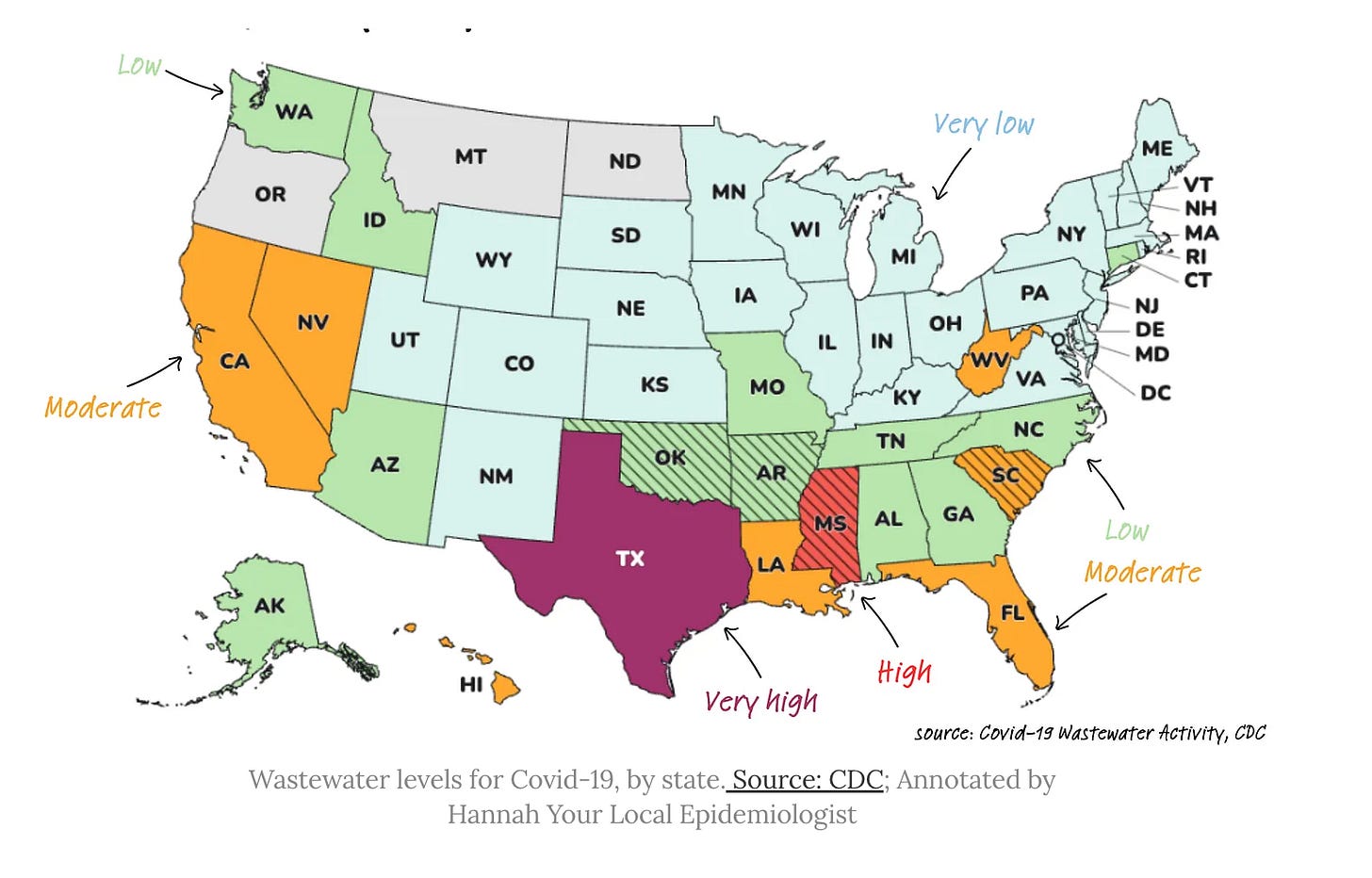
 Tipsy Teetotaler ن