Will we destroy the Last Branch Standing?

Conservative versus anti-left

Goldstein: Let me try to tempt you into armchair diagnosing another group of people: politician-critics of elite higher ed who are themselves products of elite higher ed — Ted Cruz, Josh Hawley, JD Vance, Ron DeSantis, Elise Stefanik.

Brooks: Stephen Miller.

Goldstein: That’s another one. Is there anything novel going on with these folks? Or is this the latest incarnation of an old story going back to at least Bill Buckley at Yale?

Brooks: What’s happening now is different than Buckley. He genuinely loved Yale, even while critiquing the professors. Let me tell the story this way. I graduated from Chicago in 1983, and at about the same time a group of people graduated from Dartmouth. We all moved to Washington about the same time. I knew them, and some of them have become famous, like Laura Ingraham and Dinesh D’Souza. I didn’t appreciate it at the time, but I came out of Chicago earnestly reading Edmund Burke and Adam Smith and all that, and my friends and I became pro-conservative. But the Dartmouth Review folks were not pro-conservative, they were anti-left. So in retrospect, I can see how big and vast a difference there was between people that I thought were part of the same movement. The sad news is that they now dominate conservatism and the Republican Party. Whereas my friends became Never Trumpers.

David Brooks and Evan Goldstein upon Brooks’ departure from the New York Times to, among other things, teach at Yale.

This sign, from the late Charlie Kirk’s Turning Point America and carried by a supporter of the Trump-backed challenger in the nationally-famous 3-vote-margin Indiana race, is not conservative:
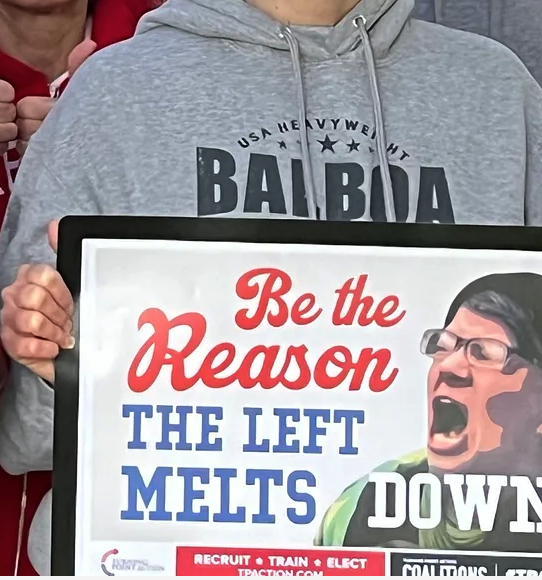
This is anti-left, not conservative

Note well: MAGA is not conservative. It is anti-left. Conservatives have been pretty much sidelined in our public life.

Courts

Having knowingly (we knew damn well beforehand) installed a snake in the Oval Office, and having reduced Congress to a bunch of internet trolls and “influencers,” Americans turn their attention to destroying the Courts, the Last Branch Standing between the present mess and the abyss.

The impetus toward postliberalism

The less capable our system is of producing outcomes that the losing side will see as “fair,” the greater that side’s appetite for postliberalism will be. If a process-oriented politics can’t deliver fair results, its frustrated subjects will conclude that a results-oriented system is the only alternative.

To many, a court overturning a vote of millions of Virginians that went in Democrats’ favor on a debatable procedural technicality will seem unfair. A second court dominated by Republican appointees choosing to end majority-minority redistricting coincidentally at the moment the GOP faces an electoral debacle will seem very unfair. The fact that Donald Trump and his party have broken norm after norm over the last 10 years, yet have plainly strengthened their hold on power over the same period, seems especially unfair, making traditional civic norms feel like a sucker’s game and a path to perpetual minority status.

Nick Catoggio, whose concern in The Road to Perdition is less the mid-decade gerrymander wars than the calls for court-packing. The boldest postliberal court-packing scheme I’ve seen is that of the Democrats in Virginia, which dials up to eleven the already outrageous mid-decade gerrymandering frenzy, which the Republicans started.

Suicide in the cause of process over results

The Virginia Court opinion invalidating the referendum-approved pro-Democrat gerrymander was, in my casual consideration, a by-the-book insistence on following the right process to get your desired result. Those who look closer at the opinion, or have deep insight into the Virginia judicial context, might differ.

But even if Virginia Democrats don’t nuke their courts, it will also be the end of the judicial career of the opinion’s author, as I noted elsewhere. You can’t blame the author of doing something that was cheap professionally.

A calming voice

As Justice Elena Kagan bemoaned in her dissent, a plaintiff objecting to district maps that kept Black voters from electing representatives of their choice would need to show that the maps were “motivated by a discriminatory purpose,” something that is “well-nigh impossible.” She thought the court need concern itself only with the racial effects, not racial purpose, as it had from 1986 until last week’s ruling.

But we seem less concerned about effects when other groups of people have limited ability to elect their favorite candidates. We do not think of the white Republican in San Francisco as meaningfully disenfranchised.

The question is whether present-day conditions justify classifying Black people as a special case.

W.E.B. DuBois in “The Souls of Black Folk” asked, “How does it feel to be a problem?” If Black voters can be meaningfully represented only by Black candidates, and some shifty Republican operators with their maps can really all but undo 60 years of electoral transformation, then Black Americans remain a problem.

I don’t think we are. There has been enough “good trouble,” as the great John Lewis used to put it, that I highly suspect that, to put it in the modern argot, We Got This.

John McWhorter

There is no d*mn#d ceasefire!

I’ve seen so much abuse of language (and not just from Team Trump) that I was working on the assumption that “ceasefire” was broad enough to cover “we’re shooting at each other a little bit less now.” But we shouldn’t let “them” do that to us.

There is a real challenge for reporters and editors, opinion columnists, and [headline writers] when it comes to covering Donald Trump and his grim, grubby little band of slavering sycophants, which is that it is difficult to write about people who simply lie about everything all the time, from the minor to the major, changing their story from moment to moment, saying the first thing that comes into their minds or whatever it is they think will get them through the next two minutes. The difficulty is in striking a balance between implicitly adopting the assumptions of the people who are lying to you (who you know are lying to you, and who know that you know are lying to you, and you know that they know that you know, etc. ad literal nauseam) and writing as though you were always performing a real-time fact-check in the background of whatever reporting it is you are trying to do or whatever argument it is you are trying to make.

And so we end up with reporters writing about the possibility that a ceasefire that does not exist will cease to exist

But a lie is a lie is a lie is a lie is a lie. 

That’s important for people in the journalism business, of course—if you can’t write or say that a lie is a lie, or if you feel compelled to treat an obvious lie as though it were something other than an obvious lie, then you really can’t do the work of journalism, whether you are an opinion-and-commentary guy or a straight-news reporter—but, more than that, it is important for us as free men and women in our roles as citizens in a self-governing republic. You can run a fiefdom on deceit, a kingdom on lies, and an empire on baloney, but you cannot long maintain a free society under the rule of law without a reasonably high baseline of honesty in the public conversation. Right now, we have a situation in which federal judges have decided that they can no longer assume that the lawyers serving the executive branch are not simply lying to the courts in their filings and statements. (The legal mumbo-jumbo for this is the “presumption of regularity.”) Once you lose that, you don’t get it back …

Trump is, of course, a pathological liar in his own right, but what is arguably worse is that he makes telling the most risible, shameful, and obvious lies a condition of serving in his administration ….

Kevin D. Williamson.

I didn’t even rush to print with this because I was pretty sure that any day this week (it’s Monday as I’m writing this item) it will still be true that there’s no ceasefire—and that the press will be talking and writing as if the sorta-kinda is.

Another nonsense that gets my nose out of joint is that Congress won’t impeach Trump, and remove him from office, for defying the War Powers Act’s 60-day time limit with the sophistry that “Epic Fury” is over and we’re into “Enduring Freedom” now.

Grrrrrr!

“Russia is safer” than the US

I follow the blog of an older American widower with a young Russian-American daughter, Marina. After his younger Russian wife’s death, they moved back to the U.S.

They’re now back in Russia, and the widower father explains why:

[W]hile I loved being back in the U.S., the political and social disintegration was clear. The economy seemed and still seems to be on the verge of collapse. The national debt is greater than the entire U.S. budget [sic – it’s bigger than the GNP]! I see absolutely no rhyme or reason to major political and military decisions made by Trump, e.g., the attack on Iran. The U.S. simply has to be in war or conflict somewhere …

I did not and do not want Marina raised in such a place. Russia is safer. Further, I sincerely believe she will get a better education in the public schools here, and I don’t have to wonder about any social agenda. For example, Putin has made it clear that the terms “mom” and “dad” will be used, not “parent 1” and “parent 2.”

Were I to become an expatriate, my heart would lead me to France, not Russia, but then I don’t have an impressionable child.

Apparition

I walked my fastest down the twilight street;
Sometimes I ran a little, it was so late.
At first the houses echoed back my feet,
Then the path softened just before our gate.
Even in the dusk I saw, even in my haste,
Lawn-tracks and gravel-marks. “That’s where he plays;
The scooter and the cart these lines have traced,
And Baby wheels her doll here, sunny days.”
Our door was open; on the porch still lay
Ungathered toys; our hearth-light cut the gloam;
Within, round table-candles, you — and they.
And I called out, I shouted, “I am come home!”
At first you heard not, then you raised your eyes,
Watched me a moment — and showed no surprise.
Such dreams we have had often, when we stood
Thought-struck amid the merciful routine,
And distance more than danger chilled the blood,
When we looked back and saw what lay between;
Like ghosts that have their portion of farewell,
Yet will be looking in on life again,
And see old faces, and have news to tell,
But no one heeds them; they are phantom men.
Now home indeed, and old loves greet us back.
Yet — shall we say it? — something here we lack,
Some reach and climax we have left behind.
And something here is dead, that without sound
Moves lips at us and beckons, shadow-bound,
But what it means, we cannot call to mind.

John Erskine via Poems Ancient and Modern.

I cannot call to mind what this poem means, but I like it.

Shorts

  • It says a lot about our current president that in response to the news that a giant gold statue of Donald Trump was dedicated this week, you have to ask, “Which one?” (Margaret Hartmann, Gold 22-Foot Trump Statue Definitely Isn’t a False Idol)
  • The State Department will begin revoking the passports of about 2,700 individuals who owe more than $100,000 in child support. (The Morning Dispatch) That seems, at least superficially, like a good idea. Will they stop deporting individuals who owe more than $100,000 in child support?
  • “We’re 9 weeks into a 4 week war we won 8 weeks ago,” – Ron Shillman via Andrew Sullivan
  • “The Iran conflict has entered its metaphysical phase. Like Erwin Schrödinger’s famous thought experiment involving a cat that is simultaneously dead and alive, in the Strait of Hormuz there is both a war and a ceasefire,” – Eli Lake via Andrew Sullivan
  • “Arrived in Palm Beach, drove by a gas staion [sic], $4.50 a gallon. Result of failed @BarackObama leadership,” – Donald Trump tweeting in April 2012 via Andrew Sullivan
Elsewhere in Tipsyworld

Friday, May 8

Trump’s secret sauce (and where it falls flat)

I don’t plan anything else pointedly about Trump today, but David French’s latest (gift link) struck me as surprising and unusually powerful. And actually, it’s as much or more about the Republican politicians who now dance to Trump’s pipe and the 77 million voters who put him back in the Oval Office even after January 6.

Trump’s central political insight (and perhaps his key political advantage) is that he understood that Americans weren’t quite cynical enough about many of our politicians. As much as we already thought they placed power over principle, we didn’t know the half of it. He could see our politicians more clearly than we could — perhaps because he’d spent a lifetime in their presence, writing them large checks while hearing their empty promises.

And he showed it by placing a big carrot and a giant stick in front of the Republican political class, and then we watched as virtually everyone fell in line.

Trump is not a man who values dissent, to put it mildly. The idea of a “team of rivals” is completely alien to him. Talk to virtually any prominent person who breaks with Trump, and they can tell you stories of terrifying days and sleepless nights as MAGA’s minions made their lives a living hell.

At the core of Trump’s worldview is a belief that the world is a fundamentally transactional place, and that everyone has a price.

The Republican Party has done nothing to disabuse him of the notion. Even the religious leaders around him are fundamentally transactional. As they’ve demonstrated, they’ll put up with virtually any behavior from Trump so long as he delivers on a few, simple promises. And now — especially when it comes to abortion — he doesn’t even have to deliver on those. For some it seems as if access to power alone is compensation enough.

The key to Trump’s power isn’t just that he accurately sensed that much of the Republican establishment paid lip service to principle but really cared about power — it’s that he knew millions upon millions of voters possessed similar values. Their commitments to character or ideology took a back seat to the simple desire to defeat their opponents. The most important thing was to win. Anything else was a luxury.

Like calls out to like, and over time Trump has built one of the most purely transactional coalitions in politics. It should surprise no one that prosperity gospel pastors were among the first Christians to answer Trump’s call. Their entire religion is transactional — with God dispensing health and wealth in direct response to the financial donations of the faithful.

But [n]ot everyone is transactional. Some people — for better and for worse — actually have beliefs that they’re willing to die for, and Trump is painfully, obviously baffled when he encounters belief like that.

It’s embarrassing, for example, to watch him flail his way through the Iran war …

Trump plays the only cards he knows how to play — alternating between threatening death and destruction and proposing business deals. Remember when he considered a “joint venture” to control the Strait of Hormuz with Iran?

It turns out that there is an immense difference between your median South American autocracy and Twelver Shi’ism, the dominant religion of the Iranian regime. Threatening death to people who are willing to die for their cause doesn’t have the same effect as threatening people who seek mainly wealth and power. They are also quite willing to make other people die for their cause as well — and that means the Iranian regime (like Putin’s Russia) will endure catastrophic casualties without shaking its commitment or tempting it to yield.

Why hasn’t Trump been able to force an end to the Ukraine war? There are true believers on both sides. The Ukrainians won’t willingly yield an inch to the man who wants to destroy them, and Vladimir Putin is infused with his own sense of religious purpose and historic destiny.

At home, Trump has obviously been flummoxed by judges who stubbornly stick to principle and seem immune to his bluster. Constitutional fidelity is alien to him. He cannot understand why the justices he appointed will not do exactly what he wants.

At the same time, it’s no coincidence that the members of the MAGA coalition who are most apt to break with him are the cranks and conspiracists — people like Marjorie Taylor Greene, Alex Jones, and even Tucker Carlson. They came into the MAGA coalition as true believers, and they’re the ones who seem genuinely outraged when Trump breaks his promises and betrays their trust.

One of the most fascinating aspects of the last 10 years of American political life has been the way that Trump has exposed layers of differences in American life beyond right versus left. In fact, in many ways right versus left has been the least consequential aspect of the American divide. The Republican Party bears little ideological resemblance to the G.O.P. of even the very recent past.

Instead, it’s been between decent and indecent. Honest and dishonest. Transactional and principled.

(Bold added)

Read the whole thing: True Believers Blow Trump’s Mind (gift link).

I cannot think of a more elegant solution to the mystery of how putative conservatives and professing Christians turned into, well, whatever the hell it is that they’ve become: they were just waiting to be bought.

This does not bode well for post-Trump America; the problem is pandemic, not confined to the White House.

The new calendar of Saints

I don’t think this readily reads as rage-bait, but just in case: I intend it as a light change of pace from the real rage-bait all around us. I don’t even intend to “own the libs” by posting it.

[C]onsider a recent Substack post by Ed West, a British conservative writer I enjoy reading. West is the kind of conservative who treats social-justice progressivism as a form of religion. I’ve done the same at times, agreeing with those who treat the trend as a post-Protestant moral crusade. But West goes much further in his post, pointing out just how many special days and months every year are now set aside in the UK for celebrating this or that protected or privileged group—and likening these celebrations to the feast days that comprised the liturgical calendar back during eras of Christian cultural dominance. Hence the tongue-in-cheek title of West’s post: “The New Calendar of Saints: Do you know your World Mental Health Day from your International Pronouns Day?”   

In addition to those two, West highlights:

International Women’s Day

Zero Discrimination Day

Equal Pay Day

The International Day to Combat Islamophobia

The International Day for the Elimination of Racial Discrimination

The International Day of Remembrance of the Victims of Slavery and the Transatlantic Slave Trade

And the International Transgender Day of Visibility

If you’d like to see more, West provides a link to an organization based in Washington DC that compiles these and many more progressive feast days, including the International Day Against Homophobia, Transphobia, and Biphobia on May 17, the International Nonbinary People’s Day on July 17, and many others.

It’s certainly possible to go about your life without giving such culturally mandated celebrations much thought. But in public schools and many workplaces in the United States, they will be announced, sometimes with programming added to ensure everyone within earshot learns proper moral lessons about each group and its mistreatment at the hands of … those who aren’t members of the group.

The question, once again, is who devised these occasions, proclaiming them into existence? And why did others in positions of authority and influence decide to go along with it, expecting that the rest of us would welcome the conjuring of a novel series of public celebrations of various multicultural-intersectional victim groups? Did I miss the election in which we cast ballots for this? Was even an opinion poll taken beforehand to gauge support for it? Or did someone simply decide for us, for our own good? And what about the “international” aspect to so many of these special days and months? That raises a slew of additional questions, including: Is there a committee at the United Nations or the Hague where such things are decided and imposed upon the nations, and through them the citizens, of the world?

Damon Linker, Mar 15, 2024

Abortion politics

There was a time when I was very much in the abortion fray on the pro-life side. I even was paid some legal fees to help. How I came to disengage is not worth telling, even assuming that I could tell the story with fly-on-the-wall accuracy, but it wasn’t because I switched to the pro-choice/abortion side.

I continued to watch developments, though, and the current kerfuffle over interstate distribution of mifepristone is a nice chance for me to say “I told you so.” I knew that the overruling of Roe v. Wade would not remotely lay the abortion issue to rest, and not just because 50 years of readily available abortion would not be relinquished without a fierce fight. What too many people didn’t seem to understand was that reversal of Roe would merely return abortion law to the political realm, where “chemical (pharmaceutical) abortions” via interstate mails was most definitely foreseen as a battle field.

We’re on that battle field now, even if other public affairs overshadow it for most of us.

Insatiable

What makes this sin so strange, counterproductive, and perhaps unforgivable, is that popular views on basic issues of tolerance and equality have become much more liberal over the years. The very things the Left was originally fighting for have become less controversial and more accepted—from gay marriage to women’s and racial equality to opposition to discrimination. The Left won.

Ruy Teixera, The Five Deadly Sins of the Left

This reminds me of a quip, from William F. Buckley, I think, about a liberal being the kind of person who cannot say what social improvements would be enough to turn him into a conservative.

Shorts

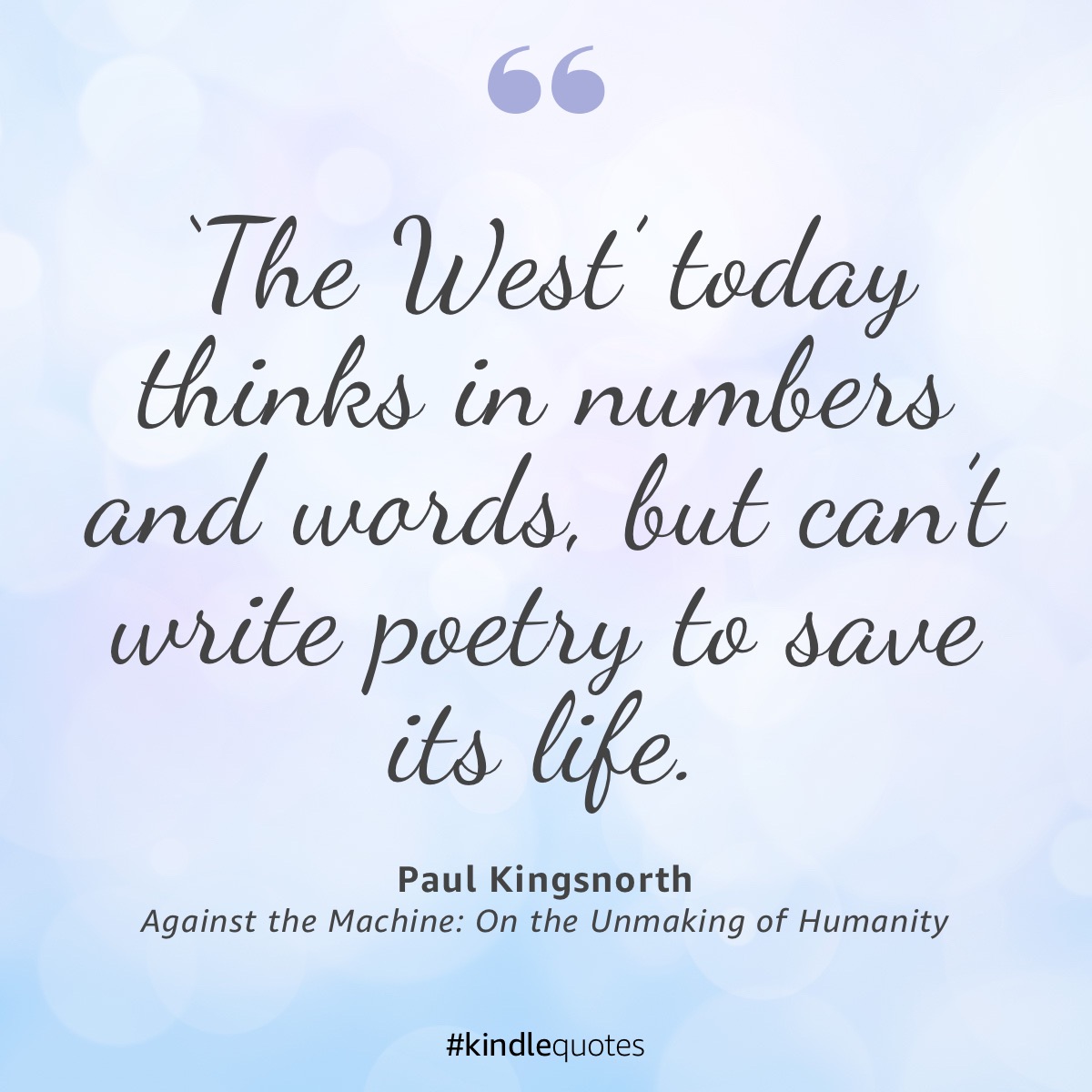
  • St Seraphim of Sarov, who lived at the turn of the 19th century, observed, “We condemn others only because we shun knowing ourselves.” (Peter Bouteneff, How to Be a Sinner)
  • Spoken of a post-op patient in Waco, TX, by her nurse — a grizzled Jerry Garcia with a thick Texas accent — “You’ve probably had a good many more drugs today than you have in a typical day. I don’t want to rush to judgment, but your tooth-to-tattoo ratio suggests that you’re not a heavy drug user.” (Alan Jacobs)
  • In the late 1970s, I was a teenager in Winona, Minnesota, a sleepy Mississippi River town defibrillated by three colleges and a few residual hippies. (Kevin Fenton)

Elsewhere in Tipsyworld


I don’t do any of the major social media, but I have two sub-domains of the domain you’re currently reading: (a) You can read most of my reflexive stuff, especially political here. (b) I also post some things on my favorite no-algorithm social medium.

Impeach Trump

As I reviewed my latest draft weekday blog, I found it full of politics and war. So I decided to hold back everything else for another post and to put a trigger warning on this one: I give Donald J. Trump and his minions no quarter.

Missing a functioning democracy

[I]n those tense, polarized months of 2002 and 2003, we had hashed out the case for war thoroughly beforehand, as democracies do. A thousand op-eds bloomed; critical votes were taken in the Congress; political careers were weighed in the balance; and Colin Powell went to the UN to present the “evidence.”

Seems like a wholly different world, doesn’t it?

Come with me a little further back in time to the Persian Gulf War of 1991. That was a war started by Saddam Hussein, not us. How did we go about a new war in the Middle East back then? Well, we had another big public debate, another trip to the UN, and then another vote in the Congress. It was closer than we remember: just 52-47 in the Senate (with one abstention). We then went to war with a very precise aim — ending the occupation of Kuwait — after amassing a coalition of 35 countries, and did so to cement the status of international law in the post-Cold War world.

Seems like another planet, doesn’t it?

And there’s a reason for that. We had a functioning liberal democracy then, a constitutional system that was imperfectly but actually followed, a responsible president, and international law on our side.

Today, we have precisely none of the above.

We’ve had no debate; we’ve had no search for international support or allies; we’ve ignored the UN entirely; the Congress didn’t debate, let alone vote, in advance; and the American people were told about the war after it had already begun. All of this renders this war illegal and unconstitutional and outrageous, and the fact that most people have just accepted it is proof, if we still needed it, that the extinction-level event I predicted in 2016 is now well in the rearview mirror.

In plain English, this is what is in front of our nose: a corrupt, deranged monarch pursuing an illegal and immoral war primarily to benefit a foreign country. This war makes us a textbook case of how democracies stagger into tyranny and endless war.

Andrew Sullivan

Not reassuring

The Military Religious Freedom Foundation, an advocacy organization dedicated to assuring church-state separation in the armed forces, reported yesterday that it has received numerous complaints from military personnel that, in briefings, their commanders are describing the military operations against Iran in Christian eschatological terms. According to a report on Substack by journalist Jonathan Larsen:

A combat-unit commander told non-commissioned officers at a briefing Monday that the Iran war is part of God’s plan and that Pres. Donald Trump was “anointed by Jesus to light the signal fire in Iran to cause Armageddon and mark his return to Earth,” according to a complaint by a non-commissioned officer.

From Saturday morning through Monday night, more than 110 similar complaints about commanders in every branch of the military had been logged by the Military Religious Freedom Foundation (MRFF).

The complaints came from more than 40 different units spread across at least 30 military installations, the MRFF told me Monday night.

Religion Clause: Advocacy Group Says Military Commanders Are Describing Iran Operations in Christian Biblical Terms.

I thought dispensationalist bullcrap was dying, but I guess the self-styled Secretary of War didn’t get the message.

Politics as Ritual Humiliation

Republicans … continue to practice politics as a form of ritual humiliation for the remains of the old guard, compelling Sen. John Cornyn to stand as an equal to Ken Paxton, the morally depraved and intellectually vacant grotesque who currently serves as attorney general of Texas. Sen. Cornyn barely topped Paxton in the three-man primary and now must face him again in a runoff.

Some Democrats have in mind the success Democratic Senate leader Chuck Schumer and his allies had—and continue to have—meddling in Republican primary elections to elevate extremists and kooks (more extreme and kookier than the Republican average, I mean) on the grounds that such nut-cutlets are easier to beat in general elections, and quietly are talking up the idea of working to help secure the GOP nomination for Paxton.

Kevin D. Williamson

The bellicose through-line from neocons to Trump

The best essay for understanding right-wing support for Donald Trump’s war against Iran was published in National Review in 2023, at the 20th anniversary of the Iraq invasion. Written by Tanner Greer, a conservative writer and China analyst, it argued that the official populist repudiation of George W. Bush and neoconservatism masked a deep continuity between the Iraq-era conservative mainstream and the Trump-era new right.

The famous quote from a Bush official about how “when we act, we create our own reality” directly anticipated the Trump-era belief that “you can just do things.”

[T]he idea that America can go into a rough neighborhood, hit our enemies hard, kill some of their leaders and force them to RESPECT OUR HEGEMONY is not some brilliant innovation of the based Trump era. It was the dominant right-wing perspective on the Iraq war (and, indeed, sometimes a centrist perspective as well), especially in the run-up to the invasion, with democracy promotion very much a minor theme.

Ross Douthat

Barbarism nukes nihilism

In liberating Western Europe and Asia, the United States military for its part firebombed German cities into virtual nonexistence. Then, on the feast of Christ’s Holy Transfiguration (August 6) in 1945, it annihilated a hundred thousand unarmed Japanese civilians at Hiroshima with the dropping of a single atom bomb. Unperturbed by the unprecedented carnage, America dropped a second bomb on Nagasaki three days later. Defeating the most nihilistic powers to threaten Christendom since the Mongol invasions provoked, in turn, acts of barbarity.

John Strickland, The Age of Nihilism

His own morality

When asked in January by the New York Times “if there were any limits on his global powers,” President Trump responded: “Yeah, there is one thing. My own morality. My own mind. It’s the only thing that can stop me.”

I’m afraid those are the only constraints on Trump’s use of nuclear weapons in Iran.

Jack Goldsmith, Trump, Iran, Nuclear Weapons.

Would it be rude to say I’ve been unimpressed with Trump’s personal morality?

Funnies

The “targeted strike” in Iran

When I hear people saying that the U.S. is not fighting a war against Iran I find myself remembering Rex Mottram and the priest charged with catechizing him: 

“Yesterday I asked him whether Our Lord had more than one nature. He said: ‘Just as many as you say, Father.’ Then again I asked him: ‘Supposing the Pope looked up and saw a cloud and said ‘It’s going to rain’, would that be bound to happen?’ ‘Oh, yes, Father.’ ‘But supposing it didn’t?’ He thought a moment and said, “I suppose it would be sort of raining spiritually, only we were too sinful to see it.’” 

I suppose what’s happening now in Iran is merely a targeted strike, only we’re too sinful to see it.

(Alan Jacobs, political Mottramism)

Obituaries

Every day, a shabbily dressed man pauses at the same newsstand to scan the front pages. He then moves on without buying anything. At last the news seller confronts him.

“I know times are tough, but you must be able to afford at least one single newspaper.”

“I don’t need to buy the whole paper. I only care about the obituaries.”

“You do need to buy the paper, because the obituaries are in the back pages.”

“Not the one I’m looking for. That one will be right up front.”

David Frum

Shorts

  • Pete Hegseth is “something between an excitable morning TV anchor and the rooster who thought he brought the dawn. ‘We’re playing for keeps.’ ‘We’re punching them while they’re down.’ He brags about our ‘lethality.’ Stop talking like that! Don’t feed the stereotypes, don’t tempt the gods.” (Peggy Noonan)
  • Trump’s Department of Justice tacitly admits that it is too corrupted to withstand ethical inquiry.
  • Cheering for epistemic humility gets you no television interviews, no requests for op-eds, and no invitations to conferences. … But in the early phase of a war, above all, it should be the prudent observer’s battle cry. (Eliot Abrams)

Elsewhere in Tipsyworld


I confess, however, that I am not myself very much concerned with the question of influence, or with those publicists who have impressed their names upon the public by catching the morning tide and rowing very fast in the direction in which the current was flowing; but rather that there should always be a few writers preoccupied in penetrating to the core of the matter, in trying to arrive at the truth and to set it forth, without too much hope, without ambition to alter the immediate course of affairs, and without being downcast or defeated when nothing appears to ensue.

T.S. Eliot

I don’t do any of the major social media, but I have two sub-domains of the domain you’re currently reading: (a) You can read most of my reflexive stuff, especially political here. (b) I also post some things on my favorite no-algorithm social medium.

Pulling out all the stops

Trigger warning: Although I have taken to posting my criticisms of Trump 2.0 elsewhere (and then offering links to those interested), this post is all criticism of Trump 2.0.

Are careful legal arguments irrelevant?

This past Friday afternoon, President Trump openly attacked the Supreme Court majority for failing to side with him in Learning Resources and praised the three dissenting conservatives by name for doing exactly that. … Vice President JD Vance also accused the SCOTUS majority of “lawlessness.”

It should be obvious to everyone, but just in case it isn’t: This is a purely nihilistic way to treat a branch of the federal government that justifies its decision in lengthy, reasoned opinions. It presumes that good-faith arguments and competing forms of legal interpretation are irrelevant in the work of the courts—and that justices picked by a given president are expected to serve as loyal supporters of anything that president (or another of the same party) might do in office, regardless of what the Constitution and/or the statutory record might say. There are six conservatives on the high court; therefore Trump should have won Learning Resources by a vote of 6-3. It’s that simple, and anything that diverges from a thoughtless display of partisan fealty is supposed to stand as transparent evidence of corruption.

In a world where most voters view the judiciary this way, there really is no place for a judicial branch at all ….

Damon Linker, Seven Observations About the Supreme Court’s Tariff Decision.

Linker’s first observation (what the court holds) is inaccurate, but I thought this excerpt from his fifth observation was pretty sharp, and as a “courts man” I wanted to pass it along.

Are we the baddies?

On a note not unrelated to the prior item:

[W]ith fleeting exceptions, every one before Trump 2.0 accepted two core principles: There is space between the president’s every wish and what the law permits. And, relatedly, executive branch lawyers should not merely rubber stamp presidential initiatives.

The system has always been imperfect because the law is often unclear and government lawyers face pressure to approve presidential action. But the basic arrangement has been that government lawyers interpret law with some independence from the president, and that some policies are blocked or modified when lawyers identify clear legal problems. Presidents embraced this arrangement because legal compliance demands it and because systemic inattention to law leads to bad policy or undesirable political or legal risk.

Until Trump 2.0, that is. The Trump administration since January 2025 has rejected this system root and branch.

First, it has sought to ensure that the senior ranks of lawyers are filled with loyalists. I don’t mean loyalists in the sense in which past administrations typically hired people supportive of the president’s program and in line with the president’s outlook and politics. I mean lawyers who are willing to do whatever the president (or a senior proxy) asks, including in legal decision making, despite what law and professional norms say.

Second, the administration has issued formal directives to eliminate lawyers’ independence judgment. The most important one says:

No employee of the executive branch acting in their official capacity may advance an interpretation of the law as the position of the United States that contravenes the President or the Attorney General’s opinion on a matter of law, including but not limited to the issuance of regulations, guidance, and positions advanced in litigation, unless authorized to do so by the President or in writing by the Attorney General.

Since the president is indifferent or hostile to law, and since the attorney general is a sieve for the president, this directive makes the president’s policy whims—which he thinks by definition are lawful (“I . . . have the right to do anything I want to do”)—the governing rule.

Third, the administration has fired, threatened, or sidelined lawyers in the government who express disagreement with the party line established in the White House (or who were connected to past legal actions against Trump). Every lawyer not directly subject to this regime gets the message.

Jack Goldsmith

How does this cash out in Pete Hegseth’s “Department of War”?

TopicSummary
Military Legal CultureTraditionally strong post-Vietnam; lawyers integral to lawful military conduct.
Hegseth’s ApproachSeeks to reduce lawyers’ independence; prioritizes loyalty; hostile to existing legal culture.
Trump 2.0 Legal ModelPresidential interpretations override traditional legal checks; lawyers must follow party line.
Boat StrikesLegally questionable strikes justified by dubious administration definitions of “armed conflict.”
CongressLargely inactive in oversight; failed to challenge changes weakening DOD’s legal integrity.
OutlookPossible future exposure of legal violations; need for Congressional accountability.

This is a scandal, but if it lies, as I think it does, at the intersection of Absolute Presidential Immunity and the Unitary Executive, I don’t readily see a legal remedy. Trump is immune because SCOTUS says so. His minions are immune because Unitary Executive.

So suck it up, America, and get used to us being the baddies.

Kinsley gaffes

Chief Justice John Roberts does Thomas the courtesy of a very thoughtful response to his dissent in the recent tariffs case, a response that contains what I think we might consider a “Kinsley gaffe,” i.e., stating a truth that is more than one meant to say. The chief justice writes:

Suppose for argument’s sake that Congress can delegate its tariff powers to the President as completely as Justice Thomas suggests. Even then, the question remains whether Congress has given the President the tariff authority he claims in this case—or whether the President is seeking to exploit questionable statutory language to aggrandize his own power.

Chief Justice Roberts is a very careful writer, and his words here, while couched in the form of a question, are plainer than I am accustomed to reading from him or from any other member of the court: “the President is seeking to exploit questionable statutory language to aggrandize his own power.” One need not be an esoteric Straussian to assume that the word whether should be omitted to access the sentence’s true meaning. 

Of course “the President is seeking to exploit questionable statutory language to aggrandize his own power.” He also seeks to exploit imaginary statutory language to aggrandize his own power, and seeks to exploit phony emergencies to aggrandize his own power, to exploit imaginary Venezuelan fentanyl to aggrandize his own power, to exploit imaginary Haitian cat-eaters in Ohio to aggrandize his own power, to exploit an absolutely ignorant misunderstanding of trade deficits to aggrandize his own power, etc. The president of these United States is not an aspiring autocrat but an actual autocrat acting outside of the constitutional powers of his office in matters ranging from imposing illegal taxes on Americans to carrying out massacres of civilians in the Caribbean. Speaking with his trademark stroke victim’s diction, Trump insisted: 

I am allowed to cut off any and all trade or business with that same country. In other words, I can destroy the trade. I can destroy the country! I’m even allowed to impose a foreign country-destroying embargo. I can embargo. I can do anything I want, but I can’t charge $1. Because that’s not what it says, and that’s the way it even reads. I can do anything I wanted to do to them but can’t charge any money. So I’m allowed to destroy the country, but it can’t be a little fee.

Kevin D. Williamson

U.S. humanitarian aid

A year after the Trump administration began the dismantlement of USAID, it is initiating a new round of significant cuts to foreign assistance. This time, programs that survived the initial purge precisely because they were judged to be lifesaving are slated for cancellation.

… Each of them is classified as lifesaving according to the Trump administration’s standards.

The administration had already canceled the entire aid packages of two nations, Afghanistan and Yemen, where the State Department said terrorists were diverting resources. The new email, sent on February 12 to officials in the State Department’s Bureau of African Affairs, makes no such claims about the seven countries now losing all U.S. humanitarian aid: Burkina Faso, Cameroon, Malawi, Mali, Niger, Somalia, and Zimbabwe. Instead, according to the email, these projects are being canceled because “there is no strong nexus between the humanitarian response and U.S. national interests.”

Hana Kiros, The Trump Administration Is Ending Aid That It Says Saves Lives

Like I said, get used to us being the baddies.


I don’t do any of the major social media, but I have two sub-domains of the domain you’re currently reading: (a) You can read most of my reflexive stuff, especially political here. (b) I also post some things on my favorite no-algorithm social medium.

Feast of St. Stephen …

… in the Christian East, that is. The West commemorated him yesterday.

A profitable political pairing

Two Right-coded voices, Glenn Loury and Ilya Somin, take up recent events, emblemized by Tucker Carlson’s softball interview of Nick Fuentes, and reach similar conclusions: a fundamental rift in the Right is between universalists and particularists/nationalists.

For figures such as Robert P. George, McCormick Professor of Jurisprudence at Princeton University and perhaps the single most influential moral philosopher within conservative intellectual circles, conservatism begins with the claims of natural law. Its founding premise is the inherent dignity of every human being—an anthropology that descends from classical philosophy, Christian theology, and the Enlightenment. For George, conservatism is first a moral project: It safeguards life, liberty, marriage, family, and religious freedom because these institutions reflect universal truths about the human person. George has spent his career articulating these principles in philosophy, public policy, and constitutional thought. His is an approach to conservatism that emphasizes the primacy of the permanent things, the universals that transcend time and place.

Opposing this universalist strand is the ascendant nationalist wing of the right—a coalition influenced by the populist energies that surged after 2016 and represented by Tucker Carlson, Kevin Roberts of the Heritage Foundation, and polemicists such as John Zmirak. This faction sees conservatism less as an expression of moral philosophy than as a defense of Western civilization: a concrete culture, a historical inheritance, with its own people, faith, memories, and vulnerabilities. This conservatism is particularist rather than universalist. It begins not with abstract principles but with cultural loyalties. Whereas George begins with human dignity, Carlson begins with civilizational survival. Whereas George sees imperatives and violations of the moral law, Carlson sees a beleaguered West beset by global elites, porous borders, and cultural disintegration.

Glenn C. Loury, Tucker and the Right

[T]he root of the problem is the Trump-era shift of most of the American right towards ethno-nationalism. For reasons outlined in detail in my recent UnPopulist essay on this topic, nationalist movements are inherently prone to anti-Semitism and other forms of racial and ethnic bigotry. It is not surprising that anti-Semitism among MAGA conservatives has risen alongside nativism and bigotry towards other minority groups, such as Indian-Americans.

As I explained in the UnPopulist article, the only sure way to avoid this problem is to reject ethnic nationalism and instead recommit to the universalist principles of the American Founding, which the Heritage Foundation once claimed to stand for, but has more recently betrayed ….

Ilya Somin, Lessons of the Heritage Foundation’s Implosion

As I skimmed Lourie’s article (which I’m pleased to see in First Things, which under R.R. Reno has been leaning increasingly toward particularist nationalism), I felt a flush of shame (or was it the shiver of a near-miss?) as I looked back on my admiration of “paleoconservative” thinkers and commentators — guys who now appear to be the ancestors of today’s ethno-nationalist types.

Even now, I sense the fortress America appeal of the nationalist appeal. But when I watch ICE trying to evict putative undesirables from the fortress before we pull up the drawbridge, and see antisemitism rising among the nationalists as well, I can’t help coming down on the side of human dignity: Fiat justitia ruat caelum.

Slouching Toward Something Worse

[Ben] Shapiro originally hired [Candace] Owens at The Daily Wire, thereby helping to launch her career into the stratosphere. The fact that he now feels the need to try and drive a stake through her heart “contains the entire story of the conservative movement within it,” in the words of Substacker John Ganz.

[Rod] Dreher longs for Vance to take a firm stand against Fuentes and his followers. But will he?

So far, there’s no sign of it. And yes, that includes in the recent UnHerd interview, where Vance told Fuentes (in the debased public rhetoric favored by populists) to “eat shit.” The vice president made clear that his rightward volley was provoked, not by any of Fuentes’ political views, but by him insulting Vance’s (South Asian) wife. “Anyone who attacks my wife,” Vance declared, will be attacked in turn, “whether their name is Jen Psaki or Nick Fuentes.”

That’s right: the sitting vice president of the United States made clear he was equally inclined to rise up in defensive anger against a former White House Press Secretary from the mainstream opposition party and a man who regularly proclaims his admiration for Adolf Hitler and loathing for Jews.

I’m afraid anyone placing their hopes in Vance serving in the role of gatekeeper or force for moderation is going to be sorely disappointed.

It’s not clear a right-populist political movement needs policy intellectuals at all. After all, intellectuals are elites who think they sometimes know better than the elected Leader of the People. That is unacceptable. What a right-populist political movement needs, instead, is propagandists to justify what the Leader already intends to do.

Damon Linker

In case you’ve forgotten, do not trust any high-generality assessment of JD Vance by Rod Dreher. Dreher “discovered” Vance’s book, Hillbilly Elegy, and his discovery elevated mediocre sales to stratospheric sales. He and Vance are now friends, Rod feels a personal investment in him, and Vance probably feels a debt of gratitude to Rod for launching his explosive political rise.

So Dreher is just not capable of objectivity about his friend, and that’s probably to his credit; dissecting friends is kinda reptilian — and certainly is a deviation from the conservative tendency on Jonathan Haidt’s Loyalty/betrayal moral foundations axis.

Too ad hoc to be fascist

Take the word fascism, properly applied to Franco’s Spain or Mussolini’s Italy, and to some extent beyond. The fasces were the bundles of rods carried by Roman lictors: symbols of punishment and magisterial authority, but in modern times also of a tightly unified society controlled from above, and organized in corporate form. The desire of totalitarians everywhere is to achieve harmonization, with all of society marching in military cadence under the guidance of an omnipresent government.

But the Trump administration is more interested in blowing up the state than in extending its power.

He is, to be sure, cruel and malicious, but unlike the others, has no real governing vision.

Trump himself is not Mussolini, or Hitler, or Orbán ….

Eliot A. Cohen, America Needs a Mirror, Not a Window

French Integrity

The headline read, “What It’s Like to Experience the 2016 Election as Both a Conservative and a Sex Abuse Survivor.”

Nancy French, Ghosted. As the book blurb has it, “when she was unwilling to endorse an unsuitable president, her allies turned on her and she found herself spiritually adrift, politically confused, and occupationally unemployable.”

Part of the reason for David French and Nancy French becoming personae non grata in much of the North American white Evangelical world was candor, like in the cited article Nancy wrote, and their various relatively unflinching looks at topics like sexual abuse at a very popular Evangelical summer camp for kids. I learned recently that they fairly quietly have moved out of their deep red part of Tennessee to the Chicago area (I was aware that Tennessee Evangelicalism exhibited pretty unrelenting and vocal antipaty to Frenches). That move won’t do much for Nancy’s work as a ghost-writer in Evangelical and Conservative circles, but they should at least be able to find a Church whose Christianity matches theirs (Reformed-tinged Evangelical) without the political tribalism. (That’s my read on it.)

(I have speculated that David might be on the road to Rome, too.)

The differences between their Evangelical/Reformed piety and my Orthodoxy manifests in my ill-ease with some of their takes on things (I will never again trust a David French endorsement of a movie or television series, for instance), but I’ll give them high marks for trying to act with integrity (which endears them to me despite reservations).

Quantum physics

Quantum entanglement blows my mind. How do they even find the entangled needles in the cosmic haystack to study entanglement?

That they manage to find and study them makes me sympathetic to the predictions that we’re going to figure out everything — predictions I nonetheless think are ultimately delusional.

Trying to deal with things like this has sent me back to Iain McGilchrist for a second round of mind-bending, this time via The Matter with Things.

I’m outvoted

A few days ago, I objected to the emerging cult of Charlie Kirk.

For what it’s worth, one of America’s top religious news experts, Terry Mattingly, thinks Kirk’s assassination was the top (American) religion story of the year, even higher than the selection of an American Pope (because, if I understood Mattingly, Kirk’s death liberates sinister tendencies on the political Right, like antisemitism and political violence, that Kirk was restraining).

The mixture of politics and religion in this theory makes my head hurt, and my eyes avert, but I suspect that Mattingly knows more about Kirk, and about the consequences of his assassination, than I do.

Jingoists and Patriots

The worst jingoes do not love England, but a theory of England. If we love England for being an empire, we may overrate the success with which we rule the Hindoos. But if we love it only for being a nation, we can face all events: for it would be a nation even if the Hindoos ruled us.

G. K. Chesterton, Orthodoxy

Shorts

Elsewhere in Tipsyworld


We are all gatekeepers now.

Peggy Noonan

Your enemies are not demonic, and they are not all-powerful and the right hasn’t always lost and the left hasn’t always won. But if you convince yourself of that, you give yourselves all sorts of permission to do a lot of stupid and terrible things under the rubric of “Do you know what time it is?”

Jonah Goldberg.

[A] critical mass of the American people … no longer want[s] to govern themselves, … are sick of this republic and no longer want to keep it if it means sharing power with those they despise.

Nick Catoggio

I don’t do any of the major social media, but I have two sub-domains of the domain you’re currently reading: (a) You can read most of my reflexive stuff, especially political here. (b) I also post some things on my favorite no-algorithm social medium.

Saturday, 11/29/25

As December impends, we have our first substantial snowfall of the year in my fair city. I am belatedly thankful for snow blowers.

Right Relativism

Jonah Goldberg, who I don’t read that often, grabbed my attention with the title of his Thanksgiving Day post: The Truth, the Whole Truth, Everything but the Truth. It was good enough for promotion to my lead item today.

Just one little snip:

It’s amazing to me how many people on the right can (rightly!) denounce the 1619 Project … but yawn at the … tendentious denunciations of the American regime by conservative intellectuals and various “influencers.” As shoddy as the 1619 Project was, it was vastly more serious and grounded in facts than “the Jews did Pearl Harbor” or the idea peddled on Carlson’s show that the Holocaust was an accident of poor planning by the Nazis.

When I was in university, Saul Alinsky didn’t come to my attention (neither did Foucault, Derrida and other figures now widely blamed for various ills). But some on the right, tired of losing and convinced that the Left’s tactics were giving them victories, have now embraced Alinsky for their own purposes. For instance:

We have successfully frozen their brand—”critical race theory”—into the public conversation and are steadily driving up negative perceptions. We will eventually turn it toxic, as we put all of the various cultural insanities under that brand category.

That’s “national conservative” Alinskyite Christopher Rufo, boasting in 2021. He’s my personal “Exhibit A” in indicting the Right. Compare Alinsky (via Goldberg):

“Pick the target, freeze it, personalize it, and polarize it,” and “Ridicule is man’s most potent weapon. It is almost impossible to counterattack ridicule. Also it infuriates the opposition, who then react to your advantage.”

I didn’t recognize the echo of Alinsky when I first read Rufo’s Tweet back in ’21, but I knew immediately that Rufo was being dishonest and thus was not my idea of a conservative. (Yeah, I guess I’m one of those “beautiful losers.”) He still isn’t my idea of a conservative, and remains one of my top two or three least favorite “respectable” conservatives. (I will grant that he’s “consequential”—my favorite way of damning with pseudo-praise.)

It may not be pas d’ennemis à droite, but I don’t recall any other conservatives condemning him. So I will: Lines must be drawn somewhere, and Rufo belongs on the same side of the respectability line as Tucker2025.

Rant over.

Goldberg (without citing Rufo, though I absolutely couldn’t help going there) explains some of the bad metaphysics of it. I recommend his piece to everyone, but I implore people who think of themselves as American conservatives (a habit I can’t shake) to read it carefully, because it hit bullseye after bullseye on the intellectual defeat of what passes for conservatism in the U.S. these days. Would that Rufo were one of his targets.

The American Right

Even apart from the widespread dishonesty on the American Right, I don’t hold out much hope for it to cohere rather than falling into civil war with one another.

Damon Linker made that point, outlining the multiple factions:

FactionPersonalitiesCore Beliefs
National ConservativesYoram Hazony, Josh Hammer, Christopher Rufo, Kevin Roberts, R.R. Reno, Viktor Orbán, JD Vance (honorary)Nationalism modeled on Israeli Zionism; view liberalism as imperialist and neo-Marxist; anti-wokeness; hawkish realism or restrained foreign policy.
PostliberalsSohrab Ahmari, Patrick Deneen, Adrian Vermeule, Gladden Pappin, JD VancePolitics oriented toward a theological “Highest Good”; critical of U.S. liberal founding; push for social conservatism combined with pro-family/worker policies; skeptical of foreign military aid.
ClaremonstersMichael Anton, Thomas Klingenstein, John Eastman, Charles Kesler, Larry Arnn, JD VanceStrongly defensive of a traditionalist interpretation of the American founding; view modern progressive changes as heretical; advocate aggressive opposition to “leftist” forces.
Hard Right UnderbellyCurtis Yarvin, Costin Alamariu (Bronze Age Pervert), Charles Cornish-Dale (Raw Egg Nationalist), Darren Beattie, Nick Fuentes, Steve Bannon, Tucker Carlson.Reactionary extremism; engage with fascist and anti-establishment conspiracy theories often ironically.
Silicon Valley Tech BrosPeter Thiel, Elon Musk, Marc AndreessenWealth-driven influence on right-wing politics; skepticism about democracy; interest in economic monopolies and authoritarian tendencies; cultural dynamism and natalism.
Foreign Policy RestrainersStaff of The American Conservative, Quincy Institute, Tucker Carlson (partially), JD Vance (occasionally)Oppose hawkish neoconservative foreign policy; skeptical of U.S. support for Ukraine and Israel in current conflicts.
Make America Healthy AgainRobert Kennedy Jr., writers linked to Tablet magazine and The Free Press, novelist Walter Kirn.Anti-vaccine skepticism; anti-establishment public health stance arising from pandemic distrust.
Zombie ReaganitesChristopher Long, Thomas Lynch (former ISI leaders)Opposition to federal government expansion since the New Deal; radical libertarian Old Right ideas

In addition to the inconsistent core beliefs, there are temperamental tendencies to further complicate things.

If you noticed one name over and over again, though, you’re right. JD Vance is enough of a chameleon (my characterization) that he might be capable of unifying most of the larger factions.

On avoiding information bubbles

I wrote some time previously (probably years ago) about my catholic reading habits, spanning a very wide spectrum of Left, Right and Center. I realized recently that I’ve narrowed my reading since then.

I haven’t narrowed my Overton Window—my conception of what opinions are admissible in a good society—but I’ve lost interest in reading some admissible opinions.

This narrowing is partly from a rather recent forsaking of political controversy. If I can barely be roused to rail against Donald Trump (from a truly conservative, not populist or progressive, promontory), then what else should rouse me?

But I think a bigger part is that I’m getting old and I have a fairly fixed vision of the world—a constrained vision, in the distinction made by Thomas Sowell.

For my reading habits, the constrained vision leaves me viewing writings from an unconstrained vision as at best tending toward delusion. For my politics, the constrained vision led me to repudiate my identification with the GOP when George W. Bush declared in his second inaugural an American goal of ending tyranny in the world, an unconstrained vision.

I’m just not interested any more in reading things that are incompatible with my vision of the world. Nothing has fundamentally shaken my vision during my long adult lifetime, and I don’t reasonably expect that anything ever will. I don’t (necessarily) hate opinions from a unconstrained vision, but I think there are better things to do with what time remains to me than to read them just to avoid the charge of living in an information bubble.

Call that “hydebound” if you must, but I prefer to think of it as stopping the search for the truth now that I think I’ve found that. C.S. Lewis and G.K. Chesterton would approve.

An Open Note to My Congressmen

To: Jim Baird, Todd Young, Jim Banks

I only joined AARP to get discounts on stuff. I’ll let you know when I really care about you supporting an AARP position. Don’t assume it.

Very truly yours,
Your cantakerous constituent
(who just got a letter asking him to lobby you along the AARP party line)

Shorts

  • As Bette Midler once said: “When it’s 3 o’clock in New York, it’s still 1938 in London.” (Keith McNally)
  • Silence, remember, is violence — perhaps the most profoundly anti-liberal slogan ever invented. (Andrew Sullivan)

Elsewhere in Tipsyworld


We are all gatekeepers now.

Peggy Noonan

Your enemies are not demonic, and they are not all-powerful and the right hasn’t always lost and the left hasn’t always won. But if you convince yourself of that, you give yourselves all sorts of permission to do a lot of stupid and terrible things under the rubric of “Do you know what time it is?”

Jonah Goldberg.

[A] critical mass of the American people … no longer want[s] to govern themselves, … are sick of this republic and no longer want to keep it if it means sharing power with those they despise.

Nick Catoggio

I don’t do any of the major social media, but I have two sub-domains of the domain you’re currently reading: (a) You can read most of my reflexive stuff, especially political here. (b) I also post some things on my favorite no-algorithm social medium.

Tuesday, 10/7/25

Epigrams

Dig in obituaries long enough and you may hit pay-dirt. Ashleigh Brilliant, Prolific ‘Pot-Shots’ Phrasemaker, Dies at 91. (Gift link)

Brilliant wrote such gems as “I may not be perfect, but parts of me are excellent.”

He wrote epigrams full-time. The most his business ever made was $100,000 per year.

We owe him.

Legal unethics

The strike suit is a pernicious business practice: It is deployed to extract cash, not to resolve a dispute. Its target must decide whether to pay the costs of legal defense or the costs of settlement. Essentially, the defendant must play a hand of poker against an opponent who pushes out a large and menacing raise: The options are to match the bet—and face the prospect of even more raises in the future—or fold. The settlements produced by strike suits are of little social value—they’re just one of the costs of doing business. 

Such a tactic is even more pernicious when the litigant is the president of the United States, because its target now faces even weightier reasons to settle: presidential control over federal bureaucracies with immense regulatory power. This new business model is lawfare on steroids.

Earlier this year, Paramount Global agreed to cut a settlement check for roughly $16 million to Trump’s future presidential library and his lawyers. That payment was the culmination of Trump’s suit last year accusing CBS News, a Paramount subsidiary, of broadcasting a deceptively edited interview of then-Vice President Kamala Harris. Trump’s complaint alleged that the edits were designed to “tip the scales in favor of the Democratic Party” in last year’s election. The theory was questionable: Trump argued that the broadcast edits had violated a Texas consumer protection statute and had caused him personal financial harm. 

The ultimate settlement was also questionable, and not just because of the cramped view of the First Amendment that Trump’s argument implied. Paramount’s sale to Skydance Media was on the horizon—a sale that the Federal Communications Commission (dominated by Trump-friendly Republicans) could either approve or scuttle. The pending merger made the specter of litigation significantly more costly for Paramount; a $16 million payoff is a small price to ensure an $8 billion sale.

Dan Greenburg.

I quote this not, for a change, to berate the President directly, but to ask a different question: Why has no lawyer been disbarred (or merely sanctioned) for filing these frivolous lawsuits?

There is a rule being breached:

(b) Representations to the Court. By presenting to the court a pleading, written motion, or other paper—whether by signing, filing, submitting, or later advocating it—an attorney or unrepresented party certifies that to the best of the person’s knowledge, information, and belief, formed after an inquiry reasonable under the circumstances:

(1) it is not being presented for any improper purpose, such as to harass, cause unnecessary delay, or needlessly increase the cost of litigation;

(2) the claims, defenses, and other legal contentions are warranted by existing law or by a nonfrivolous argument for extending, modifying, or reversing existing law or for establishing new law;

(3) the factual contentions have evidentiary support or, if specifically so identified, will likely have evidentiary support after a reasonable opportunity for further investigation or discovery; and

(4) the denials of factual contentions are warranted on the evidence or, if specifically so identified, are reasonably based on belief or a lack of information.

Federal Rule of Civil Procedure 11(b). Most state court rules mirror this Federal rule.

Trump’s strike suits are designed to harass and impose cost of litigation. They are frequently unwarranted by law or good faith arguments for changing the law.

So again: Why has no lawyer been punished for filing them? Why are the rules so toothless?

Please don’t tell my I’m majoring in minors. I’ve had plenty about the majors, and I’m a retired lawyer, son of a lawyer, and father of a lawyer, who oddly enough cares about the devolution of the legal profession. So sue humor me.

Progressive illiberalism, populist illiberalism

Progressivism in the last 10 years has pursued increasingly radical measures through complex, indirect and bureaucratic means, using state power subtly to reshape private institutions and creating systems that feel repressive without necessarily having an identifiable repressor in chief — McCarthyisms without McCarthy, you might say.

Over the same period, populism has consistently rallied around charismatic outsider politicians who attack the existing political class as hopelessly compromised and claim to have a mandate to sweep away any rule or norm that impedes their agenda.

There are exceptions to this pattern, but it’s pretty consistent across Western countries. Whether with Trump or Nigel Farage in Britain or Marine Le Pen in France or Viktor Orban in Hungary or Giorgia Meloni in Italy, the drama of postliberal populism is intensely personal, serving up figures who become the focus of profound loyalty and intense opposition, who present themselves as champions of the forgotten man while they’re attacked as strongmen in the making.

The drama of postliberal progressivism, in contrast, is a drama of ideological influence and institutional power, in which activists and elites effect dramatic change outside the democratic process and then try to survive or sidestep backlash from the voters. It’s a drama where sudden changes seem to just happen — unprecedented waves of immigration on both continents, a radical shift in official American norms around race or sex, a new regime of euthanasia in Canada — without having a singular progressive leader who claims responsibility and provides the policy with a charismatic face.

Ross Douthat, Can Left and Right Understand the Other Side’s Fears?. This is not an adequate summary, so I’m providing a gift link for you to get the rest.

Birthright citizenship

[Friday], the US Court of Appeals for the First Circuit issued a decision that Donald Trump’s executive order denying birthright citizenship to children of undocumented immigrants and non-citizens present on temporary visas is unconstitutional. It also ruled that it violates a 1952 law granting naturalization to children born in the United States, and upheld a nationwide injunction against implementation of the order. This is the second appellate court decision ruling against Trump’s order, following an earlier Ninth Circuit decision. Multiple district court judges (including both Democratic and Republican appointees) have also ruled that the order is illegal, and so far not a single judge has voted to uphold it.

Judge David Barron’s opinion for the First Circuit runs to 100 pages. But he emphasizes that this length is the product of the large number of issues (including several procedural ones) that had to be considered, and does not mean the case is a close one:

The analysis that follows is necessarily lengthy, as we must address the parties’ numerous arguments in each of the cases involved. But the length of our analysis should not be mistaken for a sign that the fundamental question that these cases raise about the scope of birthright citizenship is a difficult one. It is not, which may explain why it has been more than a century since a branch of our government has made as concerted an effort as the Executive Branch now makes to deny Americans their birthright.

I won’t try go to through all the points in the decision in detail. But I think Judge Barron’s reasoning is compelling and persuasive, particularly when it comes to explaining why this result is required under the Supreme Court’s ruling in the 1898 Wong Kim Ark case, and why the 1952 naturalization statute provides an independent ground for rejecting Trump’s order.

Ilya Somin, First Circuit Rules Trump’s Birthright Citizenship Executive Order is Unconstitutional

Giving the Devil his due

If I keep my perspective through this Administration’s deliberate sowing of chaos, its flooding of my zone with B.S., I will from time to time acknowledge something they’ve gotten more or less right. I’ll especially look for things that don’t require a parenthetical caveat along the lines of “but of course they should have done it this other way.”

Entry Number 1, not because it’s necessarily the most important: The purpose of our Armed Forces is to defend us through an obvious ability to win wars. It is not to conduct sociological experiments or to redress internal structural injustices.

I could indeed elaborate on that or insert caveats, but I’ll let it stand.

Oh, heck, I do need one caveat: I was (and believe I remain) a conscientious objector, so I don’t like it that nations keep stocks of sabers and rattle them menacingly at each other. But it’s futile to tell them to stop, and we’re still at a place where I’m not waiting for the barbarians.

Prediction

There is no serious doubt in my mind that Donald J. Trump fully intends to make his deportation efforts so odious that they will provoke mass protests (which probably will include some violence by the protestors – and there will be undercover provocateurs to assure that they do), to give himself an excuse for imposing martial law in many blue cities.

I’m not sure of his endgame, but utter corruption of the 2026 Election (a signature of authoritarianism) and suspension of 2028 no longer seems like a leftist fever-dream.

Deadening the creative spark

Loathing is hard to make interesting or readable. It’s one of the flattest emotions, and it deadens the creative spark.

Gareth Roberts. Fortunately for me, I’m generally satisfied with letting others express our shared loathing.


We are all gatekeepers now.

Peggy Noonan

Your enemies are not demonic, and they are not all-powerful and the right hasn’t always lost and the left hasn’t always won. But if you convince yourself of that, you give yourselves all sorts of permission to do a lot of stupid and terrible things under the rubric of “Do you know what time it is?”

Jonah Goldberg.

[A] critical mass of the American people … no longer want[s] to govern themselves, … are sick of this republic and no longer want to keep it if it means sharing power with those they despise.

Nick Catoggio

I don’t do any of the major social media, but I have two sub-domains of the domain you’re currently reading: (a) You can read most of my reflexive stuff, especially political here. (b) I also post some things on my favorite no-algorithm social medium.

Independence Day

We hold these truths to be … awfully inconvenient. 

We are coming up on Independence Day, when those of us dumb enough to be innocently going around in public places across these fruited plains are going to be treated to the ghastly spectacle of a great many Donald Trump sycophants in dopey red caps reading aloud from the Declaration of Independence. 

And I am going to throw up in my mouth a little bit. 

The founding generation more or less ignored the Declaration, for reasons that are easy to understand (no sense waving around a manifesto for revolution while you’re trying to set up a new state), but the Trump cultists approach that inspired document the way certain superstitious ignoramuses treat the Bible, i.e., venerating the object itself as a kind of magical totem while ignoring, inverting, or perverting what the text actually has to say. As they do with the Constitution, they treat the Declaration of Independence the way the German composer Max Reger treated hostile assessments of his musical works: “I am sitting in the smallest room of my house,” he wrote to one unimpressed critic. “I have your review before me. In a moment it will be behind me.”

The people who most loudly proclaim themselves “patriots” are, in point of fact, adherents of a politics that is fundamentally opposed to the principles spelled out in the Declaration, hewing to a vaguely articulated ideology that is not only illiberal but anti-liberal, autocratically personalist to a degree that would have made poor old King George puke from anxiety, and entirely hostile to the revolutionary document’s universalism. Above all, they reject its theology, operating from the assumption that liberty is not an endowment from the Creator but the gift from patron to client, from the powerful man to his abject petitioners. 

It is a Caesarist politics, not an American politics. It is gross, low, and atavistic. 

Whom do I mean? There is in our politics at the moment something that calls itself the “new right” or MAGA or “national conservatism,” and one name is as good as another for a movement that does not quite exist: In practice, there is only Donald Trump and his concentric circles of sycophancy, and everything else is intellectual pretense. 

But even pretense can be revealing: The Trump world’s leading intellectual (“tallest building in Wichita”) is probably Patrick Deneen, author of Why Liberalism Failed and Regime Change: Towards a Postliberal Future, and the school of thought (“thought”) associated with him is sometimes called “postliberalism.” Deneen castigates the pantheon of classical liberal thinkers from Adam Smith to John Locke, whose prose Thomas Jefferson freely plagiarized when writing the Declaration: “Long train of abuses”? “More disposed to suffer … than right themselves”? All that jazz? Quotations from Locke, the grand poohbah of Anglo-American liberalism. Locke’s famous list of basic rights—“life, liberty, and property” became “life, liberty, and the pursuit of happiness” under the editorial quill of Thomas Jefferson, relying on George Mason’s earlier adaptation. But the mark of Lockean liberalism cannot be missed. 

It is not only a few phrases here and there that marks the Declaration as a quintessentially liberal document. Mike Huckabee and the other Elmer Gantry-type figures of the Evangelical world talk of Trump as divinely appointed in approximately the same way European kings understood themselves to be selected by God with His favor; the Declaration rejects that monarchical pretense: “Governments are instituted among Men, deriving their just powers from the consent of the governed.” Trump treats the powers of the presidency as a kind of personal fief, handing out financial favors and pardons to friends and donors while using the awesome powers of the national state to target political enemies ranging from Harvard to the City of Los Angeles, a personalist and might-makes-right approach that cannot be squared with the notions that “all men are created equal, that they are endowed by their Creator with certain unalienable Rights.” American liberalism, as attested to by the Declaration of Independence, is founded on the notion that rights reside in the individual—not in the nation as a whole, in the race, in a class, or in a caste or a guild—and that these rights are both inherent and non-negotiable rather than subject to ad hoc revision as demanded by the vagaries of political reality or the national situation. Trumpism is all adhoc-ism all the time.

The thing that calls itself the “new right” rejects liberalism partly out of illiterate linguistic habit (in U.S. political jargon, liberal long meant the left wing of the Democratic Party rather than the British liberty tradition, George McGovern rather than Adam Smith) but also, in its more intelligent (and, hence, more blameworthy) quarters in full knowledge of what is being rejected—which is the American proposition itself as expressed most famously in the Declaration of Independence. Free trade, a liberal immigration policy, due process—these are not mere policy preferences appended to some Völkisch ethno-nationalist uprising in New England, but the foundation of the thing itself. 

Everybody knows the preamble. But have you dug lately into the specific complaints the Founders catalogued? If Mark Twain was correct that history doesn’t repeat but rhymes, then there’s a whole sonnet lurking in the text of the Declaration for anybody who will bother to read it. 

“To prove this, let Facts be submitted to a candid world.” 

King George was faulted for setting aside duly enacted laws and frustrating their intents; Donald Trump simply refuses to enforce the law when it doesn’t suit him, as in the matter of the TikTok ban, laws that remain effectively “suspended in their operation till his Assent should be obtained.” Trump may not have “called together legislative bodies at places unusual, uncomfortable, and distant from the depository,” but who can deny that he has usurped congressional power at every turn, from unilaterally enacting tariffs with no legal authorization to creating new executive “departments” such as DOGE ex nihilo (“he has erected a multitude of new offices”) with no legal power to do so, gutting legally authorized programs, abusing “acting” appointments to avoid confirmation hearings, etc.? The colonists condemned King George for going to great lengths to prevent immigration and for seeking to make “judges dependent on his will alone for the tenure of their offices,” etc. The Founders blamed the English king “for cutting off our trade with all parts of the world, for imposing taxes on us without our consent,” which is Trump’s go-to economic policy. For now, it is mostly only immigrants that Trump is engaged in “transporting … beyond seas, to be tried for pretended offenses,” but give him time. 

What else did the Founders say about rotten, batty old George? “He has excited domestic insurrections amongst us.” Well, there’s that, sure. And they proclaimed that a national leader “whose character is thus marked by every act which may define a tyrant is unfit to be the ruler of a free people.” 

Indeed—well said.

With the Declaration of Independence, the American Founders elevated themselves from a lower state—that of subjects—to a higher state: that of citizens. Americans in our time—too many Americans—have devolved from citizens to subjects and then all the way down to beggars: “Please, Mr. President, may we have your permission to buy some lumber from the Canadians to build our houses? Without incurring ruinous taxes that have no legal basis? Pretty please?”

When they write the history of the Trump years, it will be “a history of repeated injuries and usurpations, all having in direct object the establishment of an absolute tyranny over these States.” The tyrannical project will fail, not because we are such firm and unwavering patriots but because Donald Trump is too lazy and stupid to make himself into a Napoleon, and the worst of those around him mainly care about making a little easy money and playing big shots on social media rather than becoming a proper junta

Our hope is not in our virtues but in their vices. 

The Founders set down their objections to the king in writing out of a “decent respect to the opinions of mankind.” Never mind the whole of mankind: We cannot even muster the self-respect to tell ourselves the truth about our situation.

Kevin D. Williamson


Your enemies are not demonic, and they are not all-powerful and the right hasn’t always lost and the left hasn’t always won. But if you convince yourself of that, you give yourselves all sorts of permission to do a lot of stupid and terrible things under the rubric of “Do you know what time it is?”

Jonah Goldberg.

Trumpism can be seen as a giant attempt to amputate the highest aspirations of the human spirit and to reduce us to our most primitive, atavistic tendencies.

David Brooks

I don’t do any of the major social media, but I have two sub-domains of the domain you’re currently reading: (a) You can read most of my reflexive stuff, especially political here. (b) I also post some things on my favorite social medium.

Summer Solstice

Israeli ingenuity

As news circulated about the stupendous success of Israel’s attack on Iran, my first thought was that if you told me Mossad had figured out a way to part the Red Sea, at this point I’d believe you. The feats of intelligence and ingenuity that Israel has managed over the past year at the expense of Iran and its proxies would seem far-fetched as fiction, but here we are. It’s reassuring to see a Western nation demonstrate such competence as the United States descends into malevolent dark-age populist anarchy.

Nick Catoggio

Speed-reading

60 or so years ago, I took “Evelyn Woods Reading Dynamics” (a current version here) to increase my reading speed. After teaching us a technique for dragging our eyes down a page via a hand movement, they said “Resolve that from now on you’ll never read without this.”

I said to myself “The day I speed-read the Psalms that way would be a very sad day.”

I recently installed a browser extension to generate AI summaries of the current browser tab. It is saving me quite a bit of time on humdrum news and opinion.

But the day I settle for a structured outline of Nick Catoggio (or Kevin D. Williamson) instead of reading their own sprightly writing will be pretty sad, too.

Skrmetti

Experts

The Court rightly rejects efforts by the United States and the private plaintiffs to accord outsized credit to claims about medical consensus and expertise. The United States asserted that “the medical community and the nation’s leading hospitals overwhelmingly agree” with the Government’s position that the treatments outlawed by SB1 can be medically necessary. … The implication of these arguments is that courts should defer to so-called expert consensus.

There are several problems with appealing and deferring to the authority of the expert class. First, so-called experts have no license to countermand the “wisdom, fairness, or logic of legislative choices.” … Second, contrary to the representations of the United States and the private plaintiffs, there is no medical consensus on how best to treat gender dysphoria in children. Third, notwithstanding the alleged experts’ view that young children can provide informed consent to irreversible sex-transition treatments, whether such consent is possible is a question of medical ethics that States must decide for themselves. Fourth, there are particularly good reasons to question the expert class here, as recent revelations suggest that leading voices in this area have relied on questionable evidence, and have allowed ideology to influence their medical guidance.

Taken together, this case serves as a useful reminder that the American people and their representatives are entitled to disagree with those who hold themselves out as experts, and that courts may not “sit as a super-legislature to weigh the wisdom of legislation.” … By correctly concluding that SB1 warrants the “paradigm of judicial restraint,” … the Court reserves to the people of Tennessee the right to decide for themselves.

Justice Clarence Thomas, concurring in U.S. v. Skrmetti, via Eugene Volokh (citations omitted).

Strategic error

Representative Sarah (formerly Tim) McBride (D., Del.), the first transgender member of Congress, has admitted that the Democratic Party moved too quickly on pushing transgender issues. The lawmaker believes the left “went to Trans 201, Trans 301, when people were still at a very much Trans 101 stage.” Yet the representative still fails to understand the root of the problem: The left’s strategy on transgenderism failed because the left is wrong on transgenderism. Men cannot become women. Pretending like accepting the most outré claims of transgenderism is achievable through taking higher-level classes won’t change that. Besides, Americans are increasingly uninterested in enrolling in such courses. Polls show that support for so-called gender-transition procedures for children has declined, and Americans believe that trans people should use the bathroom that matches their sex, not their “gender identity.” The activists’ problem isn’t that they have failed to finesse their message; it’s that they have failed biology.

National Review Weekly email

The Barbarian Right

For many of the conservatives who embraced it—myself included—the Trumpian moment promised a more populist, pro-worker GOP. Yet the latest iteration of Donald Trump has dashed these hopes, playing down the themes that propelled his 2016 campaign, and sounding more and more like a conventional Republican nominee—only more erratic.

In the realm of right-wing ideas, meanwhile, something far grimmer is afoot: the rise of a cohort of writers, pseudo-scholars, and shitposters dedicated to reviving some of the darkest tendencies in the history of thought, including the idolatry of strength (as cartoonishly personified by the likes of Andrew Tate); the notion of supposedly “natural” hierarchies; IQ-based eugenics; overt racism and antisemitism.

Call them the Barbarian Right: The master subject of this worldview is the Nietzschean barbarian or “aristocrat of the spirit” who overthrows the egalitarian—and essentially feminine—structures that have long shackled him, restraining his yearning for adventure and excellence. Nazi apologia is par for the course.

Sohrab Ahmari

Christian Nationalist crackup

“Political idolatry,” he observes, “assumes worship, and worship assumes some kind of confidence in the thing being worshiped,” but few of the people obsessively following politics have much real faith in it anymore. It has become for many a kind of spectator sport, or live-action role-playing, far easier to participate through digital media, yet harder to take seriously. There is a performativity to our culture wars now that I suspect was not there in the 90s.

Over the past six months, I have observed two communities of discourse. One, which I’ve observed as a bemused spectator, is the increasingly inane conversation of Very Online Christian Nationalism. Much of this discourse had long since descended into self-parody, but the loss of a clear and present common enemy after Trump’s victory swiftly accelerated the splintering of the movement. At time of writing, many of the movements principles were publicly devouring one another over whether, and to what extent, one should blame the Jews for the moral rot of modernity.

Brad Littlejohn, The Resilience of America’s Hybrid-Enlightenment, Mere Orthodoxy (magazine) Winter 2025.

I’m reminded of how the New Atheists, having gathered around the non-existence of God, found that they had nothing else in common and dispersed again. I suspect the MAGA Right has nothing in common beyond worship of our Orange Sun King.

Golden Age

Kevin Roberts (Heritage Foundation, Project 2025) and Kellyanne Conway went north to Canada to take the affirmative on the debate question “Is this America’s Golden Age?.” It was shared with permission on the Ezra Klein show because Ezra was one of the debaters taking the negative.

Roberts and Conway beclowned themselves and offended the audience (e.g., mentioning Canada’s possible status as a 51st state) and then complained that the debate was rigged when they drew audible disapproval and contempt.

In my estimation, the negative side “chewed them up and spit them out,” but I grew too impatient and mortified at our national debasement to wait for the audience’s verdict.

Whence innovation?

Musical innovation tends to happen at crossroads and port cities. It’s spurred by outsiders not insiders. It rises from centers of multiculturalism and diversity—where different ideas come together.

The ruling class recognizes this, but it takes about 40 or 50 years. So fifty years elapse from Bob Dylan emerging as a rebel critic of the system, to becoming a Nobel Prize laureate. Almost fifty years elapse between Mick Jagger getting censored and becoming Sir Mick Jagger, an honored knight.

You eventually have this process of legitimization but the new style always starts on the outskirts—in the port cities and border cities.

Because of the internet, every place is now a port city.

Ted Gioia. So Ted thinks the venture capitalists in entertainment are at a dead end with sequels, prequels, and every other “do-it-again-and-again” strategy.

The slippery euthanasia slope

[A] justification for suicide that emphasizes the cry for help that medicine can’t answer, the need for control over the uncontrollable, the desire to cure suffering that doctors can’t relieve, will struggle to maintain terminal illness as a special category. There are just too many people in this exceptional position but with no endpoint to their pain.

Ross Douthat, Why the Euthanasia Slope is Slippery

Nellie snippets

  • Meanwhile, in the U.S. of A., Whoopi Goldberg says that being black in America is worse than being a woman in Iran. Here was The View co-host Alyssa Farah Griffin: “I think it’s very different to live in the United States in 2025 than it is to live in Iran.” Whoopi retorted: “Not if you’re black.” Alyssa, have you possibly considered sitting your ass down and letting Whoopi speak her truth? The only place worse than Iran to be a woman might well be the panel on The View. I’ll take the veil over fighting with Joy Behar about DEI any day of the week.
  • Asked about Tulsi’s earlier testimony on Iran, Trump said simply: “I don’t care what she said.” All jobs under Trump are fake. All titles are fake. He makes decisions alone, meditating in the comforting glow of Fox News, turned up to the highest volume. He gets vibes off Truth Social. He asks an empty Diet Coke can if she ever heard the wolf cry to the blue corn moon. He throws a groundhog in the air and sees if it lands on the bunker buster button. He shakes Marco Rubio and turns him upside down, and if the coins that fall out of his pockets land on heads, we’re going in.
  • Fascinating new scams: The Trump Organization announced it plans to sell a $499 smartphone, with a gold-colored, T-engraved case, set to be released this year. Trump Mobile will also offer a phone plan for $47.45 per month. The 47 Plan. What will the Golden Trump phone do? How bad will reception be? Who will it call? Will it automatically block my lib friends (Bari)? When it comes out, we’ll do an unboxing just for TGIF. In some ways, the Trump family are artists, true creatives. Week after week they come up with scams I’ve never imagined.
  • Obsessed with this mysterious Trump aide: Sergio Gor, director of presidential personnel, is one of the most powerful figures in the White House, responsible for vetting all potential employees—around 4,000 executive branch staff. But a recent report found that he himself was never vetted. Gor has not submitted Standard Form 86, or SF-86, a set of questions required of all those government employees who, like him, need security clearances. The form inquires into foreign connections and birth countries—and Gor, who claims to be from Malta (though Maltese officials could not confirm this), has mysterious origins and declined to provide his birthplace when the New York Post asked, which is apparently something people working in government can do. He also advocated to end the use of the SF-86 when hiring government employees. The man in charge of vetting new Trump admin employees is not vetted (poetic, isn’t it?). And he’s in the job now, specifically campaigning against vetting government employees. I desperately need to know more about Sergio. I need a movie about Sergio (which is absolutely not his real name).

Nellie Bowles, TGIF

Miscellany

Prerequisite

In order for a boy to believe he is a girl, he must first be taught that there is a wrong way to be a boy.

Sam Morgan via Andrew Sullivan

Schooling

In a schooled world the road to happiness is paved with a consumer’s index.

Ivan Illich, Deschooling Society

Obsessives

Henry Longfellow, who made a return visit to Paris in 1836, loved the crowds as much as anything about the city. When a friend from home, accompanying him on a walk, showed no interest in the passing parade, but insisted on talking about predestination and the depravity of human nature, it was more than Longfellow could bear.

David McCullough, The Greater Journey


Your enemies are not demonic, and they are not all-powerful and the right hasn’t always lost and the left hasn’t always won. But if you convince yourself of that, you give yourselves all sorts of permission to do a lot of stupid and terrible things under the rubric of “Do you know what time it is?”

Jonah Goldberg.

Trumpism can be seen as a giant attempt to amputate the highest aspirations of the human spirit and to reduce us to our most primitive, atavistic tendencies.

David Brooks

I don’t do any of the major social media, but I have two sub-domains of the domain you’re currently reading: (a) You can read most of my reflexive stuff, especially political here. (b) I also post some things on my favorite social medium.

Pure politics, 6/5/25

The Courts

Petulant Trump disavows his signature success (1)

Mr. Trump lashed out at the Federalist Society, blaming it for bad advice on whom to appoint to judgeships. He singled out Leonard Leo, a former longtime leader of the Federalist Society who helped recommend his first-term nominees and who exemplifies the conservative legal movement.

“I was new to Washington, and it was suggested that I use the Federalist Society as a recommending source on judges,” the president wrote. “I did so, openly and freely, but then realized that they were under the thumb of a real ‘sleazebag’ named Leonard Leo, a bad person who, in his own way, probably hates America, and obviously has his own separate ambitions.”

Mr. Leo and Mr. Trump had a falling out in 2020, but the personal attack was a sharp escalation. In a statement, Mr. Leo said, “I’m very grateful for President Trump transforming the federal courts, and it was a privilege being involved.”

Still, Mr. Trump’s tirade strained an already uneasy relationship with traditional legal conservatives.

Many share the president’s goals of strengthening border security, curbing the administrative state and ending “diversity, equity and inclusion” programs, said John Yoo, a conservative law professor. But, he added, they dislike some of Mr. Trump’s methods, whether that is prolifically invoking emergency powers or insulting judges who rule against his administration.

And Professor Yoo, who wrote memos advancing sweeping theories of presidential power as a Bush administration lawyer, said Mr. Trump’s attacks on Mr. Leo were “outrageous.”

“Calling for the impeachment of judges, attacking Leonard Leo personally and basically calling him as traitor as far as I can tell — Trump is basically turning his back on one of his biggest achievements of his first term,” he added, referring to the reshaping of the federal judiciary.

Charlie Savage, Trump, Bashing the Federalist Society, Asserts Autonomy on Judge Picks

For what it’s worth, Trump’s pledge to appoint federal judges from a list compiled by Leonard Leo (not the Federalist Society, which doesn’t do endorsements) was pivotal to his 2016 Election victory, especially among abortion foes who understandably did not trust a twice-divorced narcissist playboy with gambling and porn connections. Charlie Savage hasn’t forgotten that, but I shouldn’t quote his whole article.

If the Senate has a couple of Republicans with integrity, hack appointees like Emil Bove will not be confirmed. C’mon, guys! Save him from himself!

Petulant Trump disavows his signature success (2)

There are many stories in literature about people making deals with the devil. Weirdly, in most of them the devil is a square dealer.

That is, he keeps up his end of the bargain. He offers the protagonist wealth or power in exchange for something ethereal, like their immortal soul, and when they agree he delivers. The Prince of Lies turns out not to be a swindler. Most of the drama happens after he makes good on his promise and comes to collect.

The moral of those stories isn’t that you’re a fool to trade with Beelzebub because you’ll be cheated. It’s that you’re a fool to sacrifice your noblest self for something as fleeting as worldly power.

Conservatives made a deal like that in 2016. Donald Trump offered to stock the federal judiciary with their favorite judges, beginning with the vacancy left by Antonin Scalia on the Supreme Court; in return they would set aside their moral, civic, and ideological objections to him and support him in virtually anything he wanted to do, even if it affronted their conservative beliefs. Or basic decency.

The bargain was struck—and he delivered. Three eminent conservative jurists were added to the Supreme Court. Hundreds more were confirmed to federal appellate and district courts. The great white whale of social conservatism, Roe v. Wade, was harpooned in 2022 after a 50-year chase. Many other landmark legal victories for the American right have accumulated since Trump took office in 2017.

Conservatives weren’t cheated. The devil made good.

Fast-forward to last night …

[Leonard] Leo spent many years as the Federalist Society’s sherpa on judicial nominees, advising Republican presidents on whom to appoint and helping to shepherd candidates through the confirmation process. With the exception of Mitch McConnell, no one has done more this century to build a federal bench of originalist judges. But Trump didn’t want originalists—he wanted flunkies—and so Leo’s influence, and the influence of the organization he serves, have gone up in smoke …

Conservatives got the judiciary they wanted in exchange for supporting a man who radiates contempt for the constitutional order. In doing so, they empowered a postliberal movement that despises judges who do their jobs conscientiously instead of dutifully midwifing a Trumpist autocracy. As the Republican Party proceeds further down the path to fascism that those conservatives enabled, eventually the federal judiciary will consist entirely of believers in the “living Constitution,” half authoritarian and half progressive. In the long run, as Reaganites age out and are replaced by younger Trumpists, conservative judges as we’ve known them will go mostly extinct.

That’s what conservatives got for their bargain. The devil has come to collect.

Nick Catoggio

Pardons

The concept of a pardon, of course, is extremely hard for Trump to understand. Traditionally, a pardon is due to someone who has completed (or nearly completed) their sentence, expressed remorse, and turned their life around — and thereby been the recipient of mercy. But remorse is a concept unknown to a pathological narcissist. Mercy is even stranger. After all, who wins and who loses in an act of mercy? It’s one of those acts defined by grace — another literally meaningless concept for Trump. For him, all human conduct is built on a zero-sum, winner-vs-loser foundation. So a pardon is always instrumental — a way to reward allies, win credits, and enlarge his power by announcing to the world that he alone is the ultimate rule of law, and can intervene at any point to ensure his version of justice is the dispositive one. A monarch, in other words.

But Trump is the real outlier (and Biden, in his defense, used Trump’s abuse as a justification for his own self-dealing). In recent times he’s out in front in numbers: more than 1,700 full pardons so far, and we have three-and-a-half years to go. Nixon’s 863, Carter’s 574, Clinton’s 396, W’s 189, and Obama’s 212 put it in perspective. But these previous presidents abused the power occasionally — it’s an absolute power after all — while largely respecting the contours of the rule of law.

Trump has dispensed with any pretense of that. He is an instinctual tyrant — see his immigration overreach and his unilateral tariff mania — and the pardon power was almost made for him. The weakness of any constitution is the virtue — or, more often, the lack of it — in its office-holders. And Trump has the civic virtue of Jeffrey Epstein. The pardon power was always going to be a loaded gun in his tiny, careless hands.

… [H]e is using the pardon power all the time, rather than waiting till the end of his term. It replaces the rule of law with monarchical discretion. That’s why he could not tolerate Jeff Sessions all those years ago. Because Sessions, for all his passionate partisanship, still understood the system he was operating in and still believed that the appearance of impartial justice was integral to liberal democracy’s survival. Sessions was an American.

A majority of the American electorate, mind you, endorsed this lawlessness last November. It’s hard to pity them, as they absorb or ignore all the corruption they voted for and are still content to tolerate. They love crypto-monarchy as long as their king is on the throne. They do not seem to understand that this version of monarchy is still an elected one, and that another king from the other tribe may wear the crown some day. They may miss the benefits of liberal democracy once they have succeeded in killing it.

Andrew Sullivan, Pardon The Death Of Liberal Democracy

TACO

I’m not an active investor. I tend to buy and hold Mutual Funds and ETFs. (That’s just me; you do you.) But it did not escape my notice, even before the term was coined, that what’s now dubbed “TACO trades” could be profitable.

Wall Street is all over the “TACO trade,” another instance of people realizing they shouldn’t take the president at face value. “TACO” is short for “Trump always chickens out.” Markets have tended to go down when Trump announces new tariffs, but investors have recognized that a lot of this is bluffing, so they’re buying the dip and then profiting off the inevitable rally.

A reporter asked Trump about the expression on Wednesday, and he was furious. “I chicken out? I’ve never heard that,” he said. “Don’t ever say what you said. That’s a nasty question. To me, that’s the nastiest question.” The reaction demonstrates that the traders are right, because—to mix zoological metaphors—a hit dog will holler. The White House keeps talking tough about levying new tariffs on friends and geopolitical rivals alike, but Trump has frequently gone on to lower the measures or delay them for weeks or months.

Foreign leaders had figured out that Trump was a pushover by May 2017, and a year later, I laid out in detail his pattern of nearly always folding. He’s a desirable negotiating foil, despite his unpredictable nature, because he doesn’t tend to know his material well, has a short attention span, and can be easily manipulated by flattery. The remarkable thing is that it’s taken this long for Wall Street to catch on.

David A. Graham, The TACO Presidency

Now that the cat’s out of the bag, the profitability will diminish and what’s left will mostly be the pleasure of annoying Velveeta Voldemort.

The most incompetent administration ever

A federal appeals panel ordered officials not to deport a 31-year-old to El Salvador. Minutes later, it happened anyway. The government blamed “administrative errors.”

Alan Feuer, NYT

Will Trump pay any price for this fishy string of “administrative errors”?

Among his voters, I doubt it. But with the courts, the toll is steep and rising. They just cannot believe anything Administration lawyers promise. And they shouldn’t.

DJT, the anti-conservative

[I]t’s hard to think of a more anti-conservative figure than President Donald Trump or a more anti-conservative movement than MAGA. Trump and his supporters evince a disdain for laws, procedures, and the Constitution. They want to empower the federal government in order to turn it into an instrument of brute force that can be used to reward allies and destroy opponents.

Trump and his administration have abolished agencies and imposed sweeping tariffs even when they don’t have the legal authority to do so. They are deporting people without due process. Top aides are floating the idea of suspending the writ of habeas corpus, one of the most important constitutional protections against unlawful detention. Judges, who are the target of threats from the president, fear for their safety. So do the very few Republicans who are willing to assert their independence from Trump.

In one of his first official acts, Trump granted clemency to more than 1,500 people charged in connection with the violent attack on the Capitol on January 6, 2021, including those convicted of seditious conspiracy. The president and his family are engaging in a level of corruption that was previously unfathomable. And he and his administration have shown no qualms about using the federal government to target private companies, law firms, and universities; suing news organizations for baseless reasons; and ordering criminal probes into former administration officials who criticized Trump.

The Trump administration is a thugocracy, and the Republican Party he controls supports him each step of the way. Almost every principle to which Republicans once professed fealty has been jettisoned. The party is now devoted to the abuse of power and to vengeance.

The significance of this shift can hardly be overstated. A party that formerly proclaimed allegiance to the Constitution and the rule of law, warned about the concentration and abuse of power, and championed virtue, restraint, and moral formation has been transmogrified. The Republican Party now stands for everything it once loathed.

Peter Wehner

Thugocracy update

And she has been frank about the dilemma faced by Republicans like her who are dismayed about the president’s policies and pronouncements but worried that speaking out about them could bring death threats or worse.

“We are all afraid,” she told constituents in April, adding: “I’m oftentimes very anxious myself about using my voice, because retaliation is real. And that’s not right.”

Catie Edmondson, Lisa Murkowski Isn’t Using ‘Nice Words’ About Life Under Trump

I do acknowledge threats against Trump’s life, too. Several isolated nuts have been arrested and charged. But it seems to me that a President and his supporters holding Congress hostage for fear of their lives is an order of magnitude worse.

No laughing matter

Next month will be the first anniversary of Tim Walz’s branding of Donald Trump, JD Vance and, by implication, some of their political associates as “weird,” and it’s obvious now that Walz spoke too soon, before Trump won in November and his administration turned weirdness into a credential and an operating principle, before weirdness started afflicting Trump allies who seemed a little less weird in the past, before episodes of Trump-adjacent weirdness proliferated.

… [T]his pageant of peculiarity isn’t a laughing matter. It reflects Trump’s confusion of nonconformity with boldness. It speaks to his love of performance, even if it’s the fruit of a loopy performer. It demonstrates his desire to rattle, no matter how infantile the rattling.

Frank Bruni

Same column, change of topic:

If I’m subjected to one more lamentation, one more rant, about how lost and pitiable and shameful the Democratic Party is, my head is going to explode. Not because the Democratic Party is in good shape — it isn’t. Not because it can make do with only minor adjustments — it can’t. It’s guilty of the arrogance and incompetence of which it’s accused. And the country’s future as a reasonably healthy and prosperous democracy depends on Democrats’ recognition and remedy of that.

But some of the extravagant lashing of the party carries the implicit suggestion that Republicans, by contrast, have their act together. Excuse me? If success at the polls is the only metric for that, then sure, yes, they’re in an enviable spot. But it’s a wretched (and, I have to believe, vulnerable) one. Republican lawmakers who rightly gaped in horror at the events of Jan. 6, 2021, later developed collective amnesia, putting power several light-years above principle. They then indulged or outright applauded Trump’s laughable cabinet picks and his adoration of Musk and his cockamamie tariffs and his abandonment of due process and his swag from Qatar and his sadistic humiliation of President Volodymyr Zelensky of Ukraine and so many other cruelties and outrages that this sentence could go on forever. I struggle to admire Republicans’ political chops. I’m too distracted by their moral rot.

For love of sentences

In Esquire, Dave Holmes marveled at Senator Lindsey Graham’s suggestion, in a social media post before the conclave, that cardinals consider the idea of Trump as the next pope: “I guess he had not yet closed the day’s humiliation ring on his Apple Watch.” Holmes added that while Graham was probably joking, “You can’t be tongue-in-cheek when you are actively licking the boot. There is just not enough tongue for both jobs.” (Susan Fitzgerald, Las Cruces, N.M.)

Frank Bruni (a prior week)

Dissing the Dems

I confess that my laser-focus on Trump can sound like excusing the Democrats’ problems. It really isn’t. I’m just madder at my former party than at the I party whose Presidential nominee I voted for only once, 53 years ago.

An Andrew Sullivan podcast this week with the authors of Original Sin reminded me of just how screwed we are in the other of our major-party choices, the Dems, and how Joe Biden fooled me with his “nice guy” schtick. Though I didn’t vote for him, I would have done so if my fair state hadn’t been a lock for Trump.

Hypocrisy

Hypocrisy is the tribute paid to virtue by vice.

I will give Trump 2.0 credit for not adding hypocrisy to its countless other sins.

On second thought, his attacks on Ivy League universities for suffering antisemites gladly may qualify.

The best jokes

It has been said that the best jokes are dangerous because they are in some way truthful.

On Wednesday, a dangerous joke was told in the Oval Office. The South African president turned to the American president and said: “I’m sorry I don’t have a plane to give you.”

NYT

FWIW

  • Trump lost 96% of federal court cases in May. Even GOP-appointed judges ruled against him 72% of the time,” – Jack Hopkins.
  • “The Washington Post has now confirmed that it was Trump who asked the Qataris to gift him the plane for free (rather than the Qataris offering it), and that Qatar is demanding a written memo from the White House to this effect before the deal is finalized,” – Tom Malinowski.

Andrew Sullivan, Pardon The Death Of Liberal Democracy

PBS

… and by the numbers 86 and 47.


Your enemies are not demonic, and they are not all-powerful and the right hasn’t always lost and the left hasn’t always won. But if you convince yourself of that, you give yourselves all sorts of permission to do a lot of stupid and terrible things under the rubric of “Do you know what time it is?”

Jonah Goldberg.

Trumpism can be seen as a giant attempt to amputate the highest aspirations of the human spirit and to reduce us to our most primitive, atavistic tendencies.

David Brooks)

I don’t do any of the major social media, but I have two sub-domains of the domain you’re currently reading: (a) You can read most of my reflexive stuff, especially political here. (b) I also post some things on my favorite social medium. I am now exploring Radiopaper.com as well.