Downers and uppers

Afghanistan

This week has been a real downer, but I can’t not mention Afghanistan. Rest assured that I picked four that don’t seem to be echo-chamber fare:

1

Back in 2001 and 2002, Pat Buchanan was warning against the Iraq War, and against nation-building in Afghanistan. He was marginalized as a heretic by the official gatekeepers of the Right. Because Pat Buchanan has objectionable opinions about some things — he was “far right,” in their estimation — he was not to be taken seriously in anything.

But Pat Buchanan was right. He was right about Iraq, and he was right about Afghanistan. The same people who denounced him as a heretic then are leading the chorus of denunciation against Viktor Orban and Hungary. And you know, maybe they’re right. I don’t think they are, but you can make up your own mind about that. I would just strongly urge you to keep an open mind about Hungary, because the anti-Buchananites are the same ones now fashioning themselves as anti-Orbanites. Are you sure you should trust their judgment? Are you sure you should trust their construal of what Hungary is like? Keep that in mind.

Rod Dreher, Andrew Sullivan Vs. Viktor Orban

2

[W]hen faced with a choice of a U.S. style democracy and medieval sharia state the local people chose a sharia state. It’s not like the U.S. didn’t try. Under effective U.S. rule the GDP of Afghanistan grew 500%, women’s rights were improved and vast amount of infrastructure was built. America was putting down the infrastructure to integrate Afghanistan into the globohomo system.

And remember, the U.S. has been in Afghanistan for 20 years.

The speed and rapidity of the Taliban advance–most of the time with hardly any fighting at all–showed that American values had completely failed to "take" in Afghan society. The modern American way of life was an unwanted product. As it was in Vietnam.

The bottom line is that institutional America, homo secularis, was taking on the Taliban, homo religiosus and the Taliban won. The point here is that most men are motivated by more than dollars and cents and that sometimes the intangibles are far more important. But what’s also important to note here is that Islam reinforced identity. America was caught in a a rather interesting bind. To be tolerant, it had to allow Islam to flourish but Islam was opposed to America. There was a fundamental incompatibility that doomed the US project from the outset.

The Social Pathologist: Taliban 1: Woke Empire 0

"Globohomo" is not in my vocabulary, and I don’t plan to add it. It is such very short shorthand that I don’t know whether it even communicates much to peripheral members of the author’s tribe.

But it has been reported by at least semi-credible sources that our Embassy in Kabul was recently flying the rainbow flag in celebration of something-or-other, and it’s safe to assume that Afghans are broadly aware of what all it stands for. It’s not really surprising if Afghans chose the Taliban (they gave up awfully easily; maybe a better explanation than "willing surrender" is forthcoming) again over the cosmology of which that flag serves as a condensed symbol — which cosmology they have some reason to believe is the eventuality of liberal democracy.

3

The withdrawal plan always seemed abrupt and arbitrary. Why did the White House think the 20th anniversary of 9/11 was the right date for a pullout? What picture of America do they carry in their heads that told them that would be symbolically satisfying? It is as if they are governed by symbols with no understanding of what the symbols mean.

Peggy Noonan

4

Prophecy for a nation of wankers:

In the next few days, another girl foolish enough to think she can keep going to school will take another bullet to the head, and when that happens, the left is going to lose its mind. … Melinda Gates and MacKenzie Scott will go 12 rounds in Madison Square Garden to determine which one of them gets to fund girls’ education in Afghan refugee camps. The winner will fund beautiful schools — air-conditioned, STEM-centered schools. And there might even be time for the winner to private-jet herself to the Aspen Ideas Festival to explain the importance of girls’ education before those schools are blown up, along with the girls inside them …

Caitlin Flanagan.

Collect for the Feast of St. Jonathan Swift

A decade ago, when I thought things were getting bad — oh how naïve I was in those days — I wrote an essay “Against Stupidity” in which I argued for the canonization of St. Jonathan Swift and even wrote a collect for his feast day.

Gather around, friends … and let’s bow our heads and say together,

Almighty and most wrathful God, who hate nothing You have made but sometimes repent of having made Man; we thank you this day for the life and work of Your faithful servant Jonathan Swift, who constantly imitated and occasionally exceeded Your own anger at the folly of sin, and who in his works excoriated such folly with a passion that brought him nigh unto madness; and we pray that You may teach us to be imitators of him, so that the follies and stupidities of our own time may receive their proper chastisement; through Christ our Lord, who reigns with You and the Holy Spirit, one God, now and forever. AMEN.

Alan Jacobs.

Politics as fashion

I’m frequently surprised that bog-standard lefty shit now attracts shock and pushback. The most obvious of these is free speech. I don’t support free speech despite being a leftist, I support free speech because I’m a leftist … I’m not interested in giving the pro-free speech case here, but I am asserting the simple fact that free speech has always been a leftist priority … But there has been little opportunity to fight for those values because people seem to have just sort of woken up one morning and decided free speech was out. When did we vote on that? Was there a meeting I missed? If we’re going to make massive changes to basic commitments, we better have a serious process of working that out. Instead free speech is out like mom jeans. It’s politics as fashion.

Same thing with deference to the establishment media. I criticize the NYT or other big-shot MSM property on Facebook and people react in horror. “Criticizing the media?!? Who are you, Tucker Carlson?” But distrust of the media has been a leftist stance since before I was born. The media is the propaganda arm of capitalism and empire. Yes, reporting serves a vital function, but commies like me have distrusted the corporate media for ages. If you think that should change, fine, then argue that. But don’t act like I’m the weird one for not suddenly adopting a dramatically different attitude towards the media out of fear of appearing to be a Republican.

Freddie deBoer, When Nothing is Worked Through, Nothing is Explained, Nothing is Understood

What crooked timber we are!

I think I first saw this nearly three weeks ago, but its weirdness lingers:

Something very strange has been happening in Missouri: A hospital in the state, Ozarks Healthcare, had to create a “private setting” for patients afraid of being seen getting vaccinated against COVID-19. In a video produced by the hospital, the physician Priscilla Frase says, “Several people come in to get vaccinated who have tried to sort of disguise their appearance and even went so far as to say, ‘Please, please, please don’t let anybody know that I got this vaccine.’” Although they want to protect themselves from the coronavirus and its variants, these patients are desperate to ensure that their vaccine-skeptical friends and family never find out what they have done.

Brooke Harrington, ‌Vaccine Refusers Don’t Want Blue America’s Respect

Degenerate natural law

When the Supreme Court announced a “right to define one’s own concept of existence, of meaning, of the universe, and of the mystery of human life”, some thought it was rejecting the very idea of natural law. Really it was asserting a degenerate theory of natural law, one widely held in the culture—or at least in those parts of it which our controllers choose to recognize, such as law schools, abortion facilities, and liberal seminaries. It was propounding a universal moral right not to recognize the universal moral laws on which all rights depend. Such liberty has infinite length but zero depth.

J Budziszewski, What We Can’t Not Know

Hillsong just doesn’t cut it any more

I received an e-mail the other day from a longtime reader of my blog, a megachurch Protestant who quit going to his normal church when the congregation became defiantly committed to the idea that Covid is a hoax. He and his wife are both medically compromised, so they couldn’t take the risk of attending services there anymore. He wrote:

Based on your writings, I decided to give the Greek Orthodox Church a try.  I’ve been attending on and off for 8 months.  Now that we are vaccinated, I am also back at my old church, but after a service that opens a window to Heaven so the congregation can sing the Trisagion [“Holy God, Holy Mighty, Holy Immortal, have mercy on us”] with the angels, Hillsong pop music falls flat.  Having seen the members participate in the last supper with the Lord, passing around a tray of sliced up pie crust to "commemorate" the event doesn’t cut it.  Bottom line, I’m likely on my way to Orthodoxy.

This is what “come and see” means.

Rod Dreher

Rinsing one book off with another

I am re-reading Kyriacos C. Markides, The Mountain of Silence. After reading Frances FitzGerald’s The Evangelicals: The Struggle to Shape America, I feel the need for something clean and wholesome.

Most of this book was about events during my lifetime. I caught the author in a few trivial factual mistakes and, as she warmed to the task of demolishing religious right leaders, unwarranted or even absurd interpretations and commentary.

But the arc of her account rings true, and she’s right far oftener than she’s wrong.

The big-name Religious Right leaders — Falwell, Robertson, Dobson particularly — loved the limelight (Robertson denied it) and eventually came to instantiate the folk-definition of a fanatic: one who, having forgotten his goal, redoubles his efforts. Such redoubling too often involved wild-ass hyperbole, apocalyptic predictions about Democrat rule, over-promising and, in general, neglect of the very religious precepts they were supposed to be defending.

In the end, their discreditable behavior discredited them, the GOP, the Conservative cause, and worst of all, the reputation of the Christian faith.

Fr. Maximos, a young but advanced Athonite monk ordered to go to a monastery on Cyprus, is nothing like that.

Food news

I’ve taste-tested it twice now and can confirm that the Strawberry Brie Burger at Bryant, just outside of West Lafayette, Indiana, is one of the best burgers on the face of the earth.

Get it medium-rare. Salty, sweet, creamy, unctuous and smoky. What more could you ask?


You can read most of my more impromptu stuff at here. It should work in your RSS aggregator, like Feedly, should you want to make a habit of it.
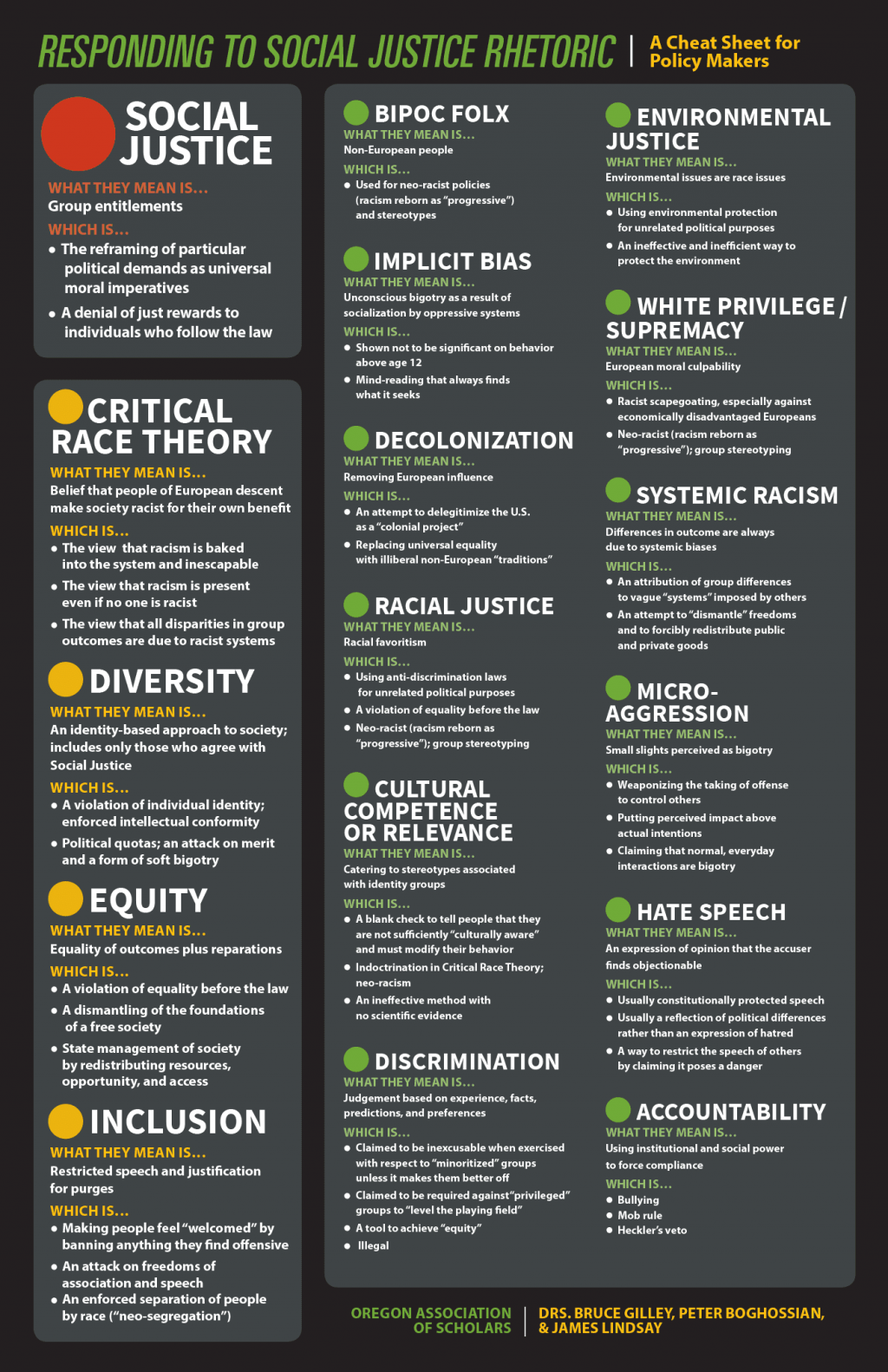

When will we say “Enough!”

When will we say "Enough!"

The women with whom I spoke – currently and formerly incarcerated at “Chowchilla” prison (as the Central California Correctional Facility is colloquially known), this state’s highest security women’s prison – are watching as biological males begin to self-identify as females and transfer in. Washington state, which has a similar policy, has already allowed a rapist and serial killer of women to transfer into the women’s prison. As is true in Washington state, California requires no sex reassignment surgeries or hormones for men to become eligible for transfer to the women’s prison. Self-identification is enough. With good reason, these women are terrified.

Abigail Shrier, ‌Incarcerated Women Brace for Influx of Male Inmates

This is insanity imposed on us by a tiny minority of highly-educated ideologues and idiots. I’m sick of it. I’ll never knowingly vote for an unhinged, narcissistic Donald Trump-type, but I’ll vote for sane people who will try intelligent ways of stopping this sort of thing.

Helpful glossary

Populist worries

We worry desperately about money—not because of obsessive acquisitiveness, but because constructing a bulwark against a failing culture requires heaps of it. (How much is private security, in the absence of a police force? Private school, in the absence of non-racist public ones? Non-woke doctors, who will fulfill their oath to heal us? How much is all this going to cost, and how will we possibly afford any of it?)

Abigail Shrier, Don’t Judge Me

Interesting point. The overall article, though, is a defense of Ohio Senatorial candidate J.D. Vance against a wild screed in The Atlantic (which journal I didn’t renew, though I might some day).

Rod Dreher, too, vouches for Vance. As a Hoosier, I have no horse in this race.

Young ideologues

The youth is an intellectual merely, a believer in ideas, who thinks that ideas can overcome the world. The mature man passes beyond intellectuality to wisdom; he believes in ideas, too, but life has taught him to be content to see them embodied, which is to see them under a sort of limitation. In other words, he has found that substance is a part of life, a part which is ineluctable.

Richard Weaver, Ideas Have Consequences

I highlighted it, but apparently didn’t take it readily to heart.

The Enlightenment

The Enlightenment not only helped us to discover the Atom bomb but also gave us the intellectual means to use it without great guilt.

Stanley Hauerwas, Resident Aliens

I’m pretty bearish on "the Enlightenment," starting with the congratulatory name. I may write at greater length on this some day.

A crack in qualified immunity

"[W]hy should university officers, who have time to make calculated choices about enacting or enforcing unconstitutional policies, receive the same protection as a police officer who makes a split-second decision to use force in a dangerous setting?"

Justice Clarence Thomas, via Jonathan Adler.

Justice Thomas got his tacit wish very recently in the 8th U.S. Circuit Court of Appeals. Arrogant University of Iowa Administrators once again (yes, the University is a recidivist) decided that relatively conservative Christian groups should be brought to heel by stripping them of recognition until they stopped being, well, relatively conservative.

The 8th Circuit held that the individual administrators cannot shield their pocketbooks from individual liability for dollar-damages by claiming "qualified immunity" — because qualified immunity requires that the law be at least a bit murky, and the law against public institutions’ viewpoint discrimination is crystal clear.

Yay for the 8th Circuit!

Affective primacy

You can feel affective primacy in action the next time you run into someone you haven’t seen in many years. You’ll usually know within a second or two whether you liked or disliked the person, but it can take much longer to remember who the person is or how you know each other.

Jonathan Haidt, The Righteous Mind. I experience that regularly, but I didn’t know there was a name for it.

How the BoBos Broke America

Third, [the BoBos have] come to dominate left-wing parties around the world that were formerly vehicles for the working class. We’ve pulled these parties further left on cultural issues (prizing cosmopolitanism and questions of identity) while watering down or reversing traditional Democratic positions on trade and unions. As creative-class people enter left-leaning parties, working-class people tend to leave. Around 1990, nearly a third of Labour members of the British Parliament were from working-class backgrounds; from 2010 to 2015, the proportion wasn’t even one in 10. In 2016, Hillary Clinton won the 50 most-educated counties in America by an average of 26 points—while losing the 50 least-educated counties by an average of 31 points.

… In 2020, Joe Biden won just 500 or so counties—but together they account for 71 percent of American economic activity, according to the Brookings Institution. Donald Trump won more than 2,500 counties that together generate only 29 percent of that activity. An analysis by Brookings and The Wall Street Journal found that just 13 years ago, Democratic and Republican areas were at near parity on prosperity and income measures. Now they are divergent and getting more so. If Republicans and Democrats talk as though they are living in different realities, it’s because they are.

[T]he educated elite tended to be the most socially parochial group, as measured by contact with people in occupational clusters different from their own. In a study for The Atlantic, Amanda Ripley found that the most politically intolerant Americans “tend to be whiter, more highly educated, older, more urban, and more partisan themselves.” The most politically intolerant county in the country, Ripley found, is liberal Suffolk County, Massachusetts, which includes Boston.

With their amazing financial and convening power, blue oligarchs move to absorb any group that threatens their interests, co-opting their symbols, recruiting key leaders, hollowing out their messages. “Woke capitalism” may seem like corporations gravitating to the left, but it’s also corporations watering down the left. Members of the blue oligarchy sit atop systems that produce inequality—and on balance their actions suggest a commitment to sustaining them.

David Brooks, How the BoBos Broke America

Great article to read and argue with. I say that as someone who almost certainly qualifies as a BoBo. The second paragraph in particular was an eye-opener.

Da Press

I have finally internalized the lesson that the press is too biased to merit reliance. All of them.

So how is one to know what’s going on in the world? Curate the least unreliable?

Next lesson: we’re not meant to know what’s going on far, far from kith and kin.

UPDATE: Someone who apparently feels as I do about this suggests that BBC World News is still reliable. I’m going to try it.

Viktor Orbán week

Tucker Carlson is in Budapest this week, which is the worst thing about Budapest I can think of off-hand. (I tried watching him to see what he had to say about Hungary, but I couldn’t get past his initial, dishonest, manipulative demagoguery about other things.) This has given the usual suspects an occasion to publicly affirm that they’re still on the left-liberal team, and gives Rod Dreher yet another chance to push back.

[W]hat sets [Viktor Orbán] apart from American conservative leaders is that he recognizes the nature of the crisis, and is prepared to act boldly to address it. He believes that contemporary Western liberalism has surrendered to a civilizational death wish. I prefer the (possibly flawed) ways that Orban is meeting the crisis than the ways that the American Right is failing to do same.

Which is the only power capable of standing up to Woke Capitalists, as well as these illiberal leftists in academia, media, sports, cultural institutions, and other places? The state. That’s it. This is disorienting to Anglo-American conservatives, who are accustomed to seeing the state as the enemy, and institutions of civil society, especially business, as friends of freedom. It’s no longer true, and people on the Right who want to fight soft totalitarianism had better start to understand this. This is why American conservatives ought to be beating a path to Hungary and Poland (as well as to Spain, to talk to the Vox party, and to other European countries to learn from non-Establishment populist parties).

Rod Dreher.

Yes, I do include Rod in the unreliable sources. I could qualify that assessment, but suffice for now that he has backed up his "on balance" defense of Hungary with facts, whereas its foes have shown me no more than hand-waving, epithets, hyperbole, and "everybody-knows-ism." I’m more inclined to credit Rod.

The Spectator is closer to the situation than I am, and here’s its take:

Brussels’s problem is not really with Poland or Hungary. More fundamentally, ‘unity in diversity’ has become anathema to it. It cannot accept that the geographical borders of Europe do not neatly overlap with the European Union’s ideological fault lines.

‌Hungary, Poland and the EU’s ‘diversity’ problem

Ack-bassward

I’m not going to get into the history or beliefs of Orthodox Christians, beyond saying that the tradition began with the Schism of 1054 when millions of Christians who were unhappy with the direction of the Catholic Church (on theological and political grounds) broke away to form their own tradition.

Ryan Burge, Orthodox Christians Are More Republican Today than Twelve Years Ago. Why? – Religion in Public.

You’d have done better to say nothing at all, Ryan, since what you said is ass-backward. Here’s a more accurate account:

The unity of the universal church was disrupted over the 11th through 13th centuries as an increasingly willful Patriarch of Rome broke away from the other four great Patriarchates, taking the West into schism from the rest of the Church.

Little, nutritious bites

…they trained students to be spelunkers of their personal identities and left them incurious about the world outside their heads.

Mark Lilla, The Once and Future Liberal

Even the man we nailed on a tree for a lookout said little about it; he told us evil would come.

Les Murray, New Selected Poems

Adiaphora

The essential point I want to make here is this: elite liberals, as a class used to comfortable and orderly lives, were massively freaked out by the election of Donald Trump, and what they have demanded in turn is not a new and better political movement but for everyone else to be freaked out too … Feel the way that we feel or you will be exiled.

Liberal Democrats want the bad things they say they fear to happen; that much is obvious. They would rather the bad things happen and be proven right about the threat than for the bad things not to happen at all. This is porn. It’s all porn.

Freddie deBoer, ‌Orange Cheeto Man Bad?


The Spectacle of Latinx Colorism
The idea of sameness can devastate as much as it can connect.
By Karla Cornejo Villavicencio

They lie awake at night at the New York Times worrying about different things than I worry about.


open letter from a distinguished surgeon – Snakes and Ladders


I was gratified to read Federal Judge Imposes Sanctions on Lawyers Who Filed Frivolous Election Suit – Reason.com

May this be the first of many sanctions against rogue lawyers who joined in spreading manure about Election 2020.

I know that a lawsuit is preferable to riots in the streets, but you can’t just throw any crap on paper and call it a good faith legal claim. There’s junk law just as there’s junk science.


You can read most of my more impromptu stuff at here. It should work in your RSS aggregator, like Feedly, should you want to make a habit of it.

Biggest sinner on the block

Roosh V was a nasty piece of work, but it’s all cool now

Rod Dreher distills the story of Daryush Valizadeh, a/k/a Roosh V, a red-pill manosphere pickup artist and social media personality who in 2019 stopped all that crap cold turkey, returned to Christianity and eventually (May 2021) entered the Russian Orthodox Church. Valizadeh is full of zeal and has found other men who are full of zeal as well — almost a baptized religious version of the manosphere but without the misogyny.

I found the tale sorta interesting, but found one thing creepily evocative about it: “I was the biggest sinner on the block” testimonies were tiresomely common in Evangelicalism, and this brought back those memories. Those big-sinner-who-got-born-again types seemed to turn into creeps of various sort with suspicious regularity. Part of it was that Evangelicalism just could not help itself; as soon as some celebrity announced getting born again, they’d thrust them in front of their congregations (later their cameras) in contradiction of scriptural warnings.

His history is what it is, and I don’t know how much the foregrounding of his sleazy history is his doing and how much is just thrust upon him by others. I hope it’s the latter and I wish they’d stop.

For Dreher, the tale evoked his own triumphalist zeal for Roman Catholicism — which zeal and faith he lost calamitously 16+ years ago covering the clergy sex abuse scandals as a journalist. Those were not fun, liberating times for Rod, and he cautions Valizadeh to be careful of triumphalism lest he face a similar crisis of faith when first he encounters an Orthodox scandal.

I guess Rod and I share a common theme of concern for Roosh, still a relative novice in a 2000-year-deep faith, that he gets formed well and isn’t exploited for his celebrity.

After lamenting how his personal story dissuades him from aggressively proselytizing for Orthodoxy, or even for Christianity generally, Rod concludes:

Still, there is a particular reason I recommended Orthodox books to the visionary writer Paul Kingsnorth when he first began to inquire about Christianity — and there is a reason he embraced Orthodoxy quickly. There is a reason why Dr. Iain McGilchrist, the author of The Master And His Emissary: The Divided Brain and the Making of the Western World, told me that he is not a believer, but if he were, he would be Orthodox, because of all forms of Christianity, it is the one that has … maintained the best balance between logical and intuitive modes of knowing). There is a reason why, after sixteen years (next month) of worshiping and praying as an Orthodox Christian, faith in Christ is sedimented into my bones in a way it never was before.

Rod Dreher. I am not surprised at McGilchrist’s observation, having fairly recently finished ‌The Master And His Emissary.

I have no reason to think Rod reads my blog, and there’s no way to comment on his Substack offerings, but I’d like to point out to him that it is difficult to speak eloquently, truthfully and adequately about Orthodox Christianity precisely because of the extent to which it relies on intuitive modes of knowing. Speech is largely a left-hemisphere creation that relies on logic and analysis to make its persuasive points, and intuition translates poorly into the left-brain’s dialect.

Or as Dr. McGilchrist notes in the book:

one feels so hopeless relying on the written [or spoken – Tipsy] word to convey meaning in humanly important and emotionally freighted situations.

and again

It is precisely its accuracy and definiteness that make speech unsuited for expressing what is too complex, changeful and ambiguous.

That, I think, emphasizes why the invitation “Come and see” is as important for making Orthodox Christians today as it was for making disciples at the beginning.

“What we believe” pages

I’ve been off Facebook for several years now (I’ve lost track).

I’m not bragging. I got on for honorable reasons (to reconnect with high school friends, who since I went to boarding school, were more important to me by far than college friends) and got off it for honorable reasons as well (I didn’t like Facebook turning some of my family members into trolls, nor did I like lining Mark Zuckerberg’s pockets).

But while I was on, I hurt somebody a bit. A high school fried was deeply involved in an Evangelical megachurch in a major city. I visited its website, found a page on “what we believe,” and found a roll-your-own substitute for the historic creeds of the Church. The net effect imbalanced if not heretical. I critiqued it without naming the church or why I’d visited the site.

Unfortunately, my friend figured it out and was wounded by what seemed like a gratuitous insult — even trolling her — the reason for which utterly escaped her.

That incident came back to me recently, and though I regret hurting my friend, I don’t regret calling out the arrogance of churches that think themselves entitled to create bespoke religions for their respective clienteles and call them all “Christian.”

Okay, that was a bit harsh. But consider:

  • First Baptist Church of Dallas (friend of Trump, and of Sean Hannity, it created a choral anthem Make America Great Again) is so big that they have both a “What We Believe” and a “Articles of Faith.”
  • Willow Creek Community Church, imitation of which was a major fad 25 years or so ago (I don’t know if it continues) has a Beliefs and Values page and a lengthy Elder Statements pdf.
  • Joel Osteen’s Lakewood Church in Houston has, at least on paper, beliefs far less vacuous than what comes out of Osteen’s mouth every time he opens it.
  • The Wheaton Bible Church, where I was baptized about 55 years ago (and where my wife and I worshipped as newlyweds in the Chicago area), has become a full-blown megachurch, and it, too, has an “About” page.

I’m not going to stop to try to analyze and critique these. My point is they inherently confirm that there is no single “Evangelicalism.” Without a strong denominational identity, each local church must decide for itself, and publish, what it thinks the Bible clearly teaches.

The inability of denominations, let alone independent churches/fiefdoms, to agree on that clear (“perspicacious”) message is one of the things I saw one day, can never unsee, and made me forever non-Protestant.

Of course, my Church has a statement of faith, too, which we recite (oftener, sing) every Sunday Liturgy: The Nicene-Constantinopolitan Creed, written not by us but by two Ecumenical Councils of the Church in the Fourth Century (when some heresies (Arianism, Apollinarianism, Macedonianism and Chiliasm) were riling the church and it was imperative to define the true faith in contrast with those heresies).

If you’d care to compare the Nicene Creed to these ersatz “What We Believe” statements, you’ll note that at least one thing in all the ersatz statements gets nary a mention by the historic Church. Can you spot it?

It’s sola scriptura (in today’s hyperbolic marketspeak, “we’re all about the Bible”) and its corollaries, the bedrock of Protestantism.

Interesting, huh? And yet somehow there remains one Orthodox Church and countless big and little churches, each marching to its own drum.

Anti-Promethean conservative

Americans have always had a thing for Prometheus — the Titan god in Greek mythology credited with (or blamed for) stealing fire and giving it to humanity … Today, those ambitions have moved to the private sector, with Promethean billionaire entrepreneurs like Elon Musk and Jeff Bezos working to make space travel far more commonplace … Is Promethean dynamism a good thing for human beings? … But which end is more compatible with happiness understood as human flourishing?

Damon Linker

One big dispositional difference between me and David French is that he applauds, enraptured, these Promethean stunts.

He needs to look more closely at what drives Jeff Bezos, and to re-read Out of the Silent Planet and Perelandra. Heck, finish the trilogy: read That Hideous Strength, too, David.

I may have just found the perfect label for my kind of conservatism: anti-Promethean.

[T]he fantasy that humans can somehow shift ‘offworld’ and recreate such systems on Mars or the Moon when we can’t or won’t live with Earth anymore, is just that: a fantasy, peddled as we saw in the last essay, by the likes of Jeff Bezos and his fellow techno-apostles.

Paul Kingsnorth.

Last acceptable bigotry is alive and well and living just about everywhere in the USA

Martin: Cries of anti-Catholicism are too frequent. Anti-Catholicism is nowhere near as prevalent as racism, homophobia, or anti-Semitism. Not every critique of the Church is an offense against religious liberty. And The New York Times is not anti-Catholic. But from time to time, it’s important to remind people that anti-Catholicism is not a myth.

Green: I wonder if there are instances where this has become politically complicated for you. For example, when now–Supreme Court Justice Amy Coney Barrett was in her hearing for the Circuit Court of Appeals, Democratic senators questioned her about how her Catholic faith would affect her rulings on issues like abortion. Senator Dianne Feinstein famously told her, “The dogma lives loudly within you.”

A lot of people thought that was open anti-Catholic bigotry—a U.S. senator expressing fear that an accomplished legal scholar couldn’t be a fair judge because of her faith. Did you think they had a point?

Martin: Well, first of all, I thought that that phrase was inherently funny. The dogma lives loudly within you. It was just strange—almost nonsensical. But I think it was appropriate for Senator Feinstein to ask, “To what extent will your religious beliefs influence your legal decisions?” That’s not unreasonable.

Green: Do you think so? I mean, the Constitution says that no religious test should be required as a qualification for public office. It’s a founding principle of our country that Americans don’t consider religion when we vet people as public servants.

Martin: I think the difference is that Justice Barrett is well known as a devout Catholic. I didn’t think that was an offensive question. The way it was put was a little ham-handed.

Emma Green, Father Jim Martin on Anti-Catholic Prejudice (the springboard was an issue of the New York Times that “deferentially cover[ed] a language shift meant to show respect for Roma people but … also print[ed] a story that relished a film scene in which a holy Catholic object is defiled.”)

Not a fan of Fr. James Martin, so it’s tempting to add “In other words ….” But I’m going to resist the temptation. You can do your own critical reading (no paywall).

Standpoint

There is no greater barrier to understanding than the assumption that the standpoint which we happen to occupy is a universal one.

H. Richard Niebuhr via Lance Morrow

Which reminds me of “what you see depends on where you stand.”

Christian athletes

Soccer

[T]he future of Christianity is going to be black and brown — at least in the UK. The other day I was somewhere in this Central European region, can’t remember exactly where, and was talking to a group of fellow white Christians about migration to Europe. I asked them if they had to choose, would they prefer to live in a Europe that was predominantly black but faithfully Christian, or predominantly white, but atheist. Everyone agreed: black and Christian.

Black Christians, British Football – by Rod Dreher – Daily Dreher

Basketball

‌Giannis Antetokounmpo As An Orthodox Christian And Star Of The 2021 NBA Champion Milwaukee Bucks.

Who knew? Or rather, who knew the first part?


You can read most of my more impromptu stuff at here. It should work in your RSS aggregator, like Feedly, should you want to make a habit of it.

Irresistible forces and immovable objects

Two serious blogs in one day is unusual, but here’s the second.

Liberalism versus the Successor Ideology

Liberalism leaves you alone. The successor ideology will never let go of you. Liberalism is only concerned with your actions. The successor ideology is concerned with your mind, your psyche, and the deepest recesses of your soul. Liberalism will let you do your job, and let you keep your politics private. S.I. [The Successor Ideology] will force you into a struggle session as a condition for employment.

Look how far the left’s war on liberalism has gone.

Due process? If you’re a male on campus, gone. Privacy? Stripped away — by anonymous rape accusations, exposure of private emails, violence against people’s private homes, screaming at folks in restaurants, sordid exposés of sexual encounters, eagerly published by woke mags. Non-violence? Exceptions are available if you want to “punch a fascist.” Free speech? Only if you don’t mind being fired and ostracized as a righteous consequence. Free association? You’ve got to be kidding. Religious freedom? Illegitimate bigotry. Equality? Only group equity counts now, and individuals of the wrong identity can and must be discriminated against. Color-blindness? Another word for racism. Mercy? Not for oppressors. Intent? Irrelevant. Objectivity? A racist lie. Science? A manifestation of white supremacy. Biological sex? Replaced by socially constructed gender so that women have penises and men have periods. The rule of law? Not for migrants or looters. Borders? Racist. Viewpoint diversity? A form of violence against the oppressed.

[Ibram X] Kendi, feted across the establishment, favors amending the Constitution to appoint an unelected and unaccountable committee of “experts” that has the power to coerce and punish any individual or group anywhere in the country deemed practicing racism. Intent does not matter. And the decisions are final. An advocate for unaccountable, totalitarian control of our society is the darling of every single elite institution in America, and is routinely given platforms where no tough questioning of him is allowed.  He is as dumb as Obama is smart; as crude as Obama is nuanced; as authoritarian as Obama is liberal.

We are going through the greatest radicalization of the elites since the 1960s. This isn’t coming from the ground up. It’s being imposed ruthlessly from above, marshaled with a fusillade of constant MSM propaganda, and its victims are often the poor and the black and the brown. It nearly lost the Democrats the last election. Only Biden’s seeming moderation, the wisdom of black Democratic primary voters, and the profound ugliness of Trump wrested the presidency from a vicious demagogue, whose contempt for our system of government appears ever greater the more we find out about his term in office.

… one reason to fight for liberalism against the successor ideology is that its extremes are quite obviously fomenting and facilitating and inspiring ever-rising fanaticism in response. I fear the successor ideology’s Kulturkampf is already making the 2022 midterms a landslide for a cultish, unmoored GOP. In fighting S.I., we are also fighting Trump.

Andrew Sullivan, ‌What Happened To You?. I’m marking this as a favorite. It’s just devastatingly effective demonstrating that the Left is the aggressor in the current Culture Wars, and just how damaging those wars are (the Left just might give us Trump 2024).

And, by the way, Trump’s baaaaaaack (at CPAC)!

Why “critical race theory” is a decent approximation for the Successor Ideology

[The New York Times] is the media hub of the “social justice movement.” And the core point of that movement, its essential point, is that liberalism is no longer enough. Not just not enough, but itself a means to perpetuate “white supremacy,” designed to oppress, harm and terrorize minorities and women, and in dire need of dismantling. That’s a huge deal. And it explains a lot.

The reason “critical race theory” is a decent approximation for this new orthodoxy is that it was precisely this exasperation with liberalism’s seeming inability to end racial inequality in a generation that prompted Derrick Bell et al. to come up with the term in the first place, and Kimberlé Crenshaw to subsequently universalize it beyond race to every other possible dimension of human identity (“intersectionality”).

A specter of invisible and unfalsifiable “systems” and “structures” and “internal biases” arrived to hover over the world. Some of this critique was specific and helpful: the legacy of redlining, the depth of the wealth gap. But much was tendentious post-modern theorizing.

Again, Andrew Sullivan, ‌What Happened To You?. This felt worth extracting from his general discussion of successor ideology radicalization because it gives the “critical race theory” moniker its due.

J.D. Vance finds his inner Winston Smith

“It was all right, everything was all right, the struggle was finished. He had won the victory over himself. He loved Donald Trump,” – Robby Soave, on J.D. Vance’s volte-face over Trump now that he’s seeking the cult leader’s endorsement for the Ohio Senate race.

Via Andrew Sullivan, ‌What Happened To You?.

The cardinal problem

C. S. Lewis describes the premodern view as one in which “the cardinal problem had been how to conform the soul to reality, and the solution had been knowledge, self-discipline, and virtue.” According to the modern view—unwittingly set in motion by Bacon, Descartes, and others—”the problem is how to subdue reality to the wishes of men.” And there is no reality—no truth of things—to order our wishes.

Ken Myers, All God’s Children and Blue Suede Shoes

This book is at least 19 years old, and I think the original publication is further back than that. And up it pops in Readwise with another insight that converges on what I’m currently focusing on. (I needn’t posit divine intervention: what you’re thinking about and looking for shapes what you see.)

Conservatives are the counterculture now

Because the larger culture has drifted away from the traditional norms of family life, for instance, mere persistence in those norms is becoming a countercultural statement—and a community consciously built around them becomes, almost by default, a subculture with a moral life of its own, provided it is given the freedom to try.

Yuval Levin, The Fractured Republic.

Is Levin’s premise true? Upperclass liberals live boringly conventional and bourgoise marital lives.

MAGA Anger Explained

Sometimes, I’m surprised how long it takes for gossip to reach me. This time, it was 5 days.

Last Thursday, a Twitterstorm began issuing shortly before noon, from one @MartyrMade. I missed it because I’m utterly neglecting my Twitter account.

That night, Tucker Carlson took 7 minutes to read it on air. I missed it because life is too short to fit in Tucker Carlson.

Donald Trump read from it during his 90-minute CPAC therapy session (I think that was Sunday). Need I explain that I don’t follow CPAC?

@MartyrMade’s Twitter account surged from 7,000 followers to 70,000. Good for him. But crickets were all I heard.

But today, Glen Greenwald turned over his Substack to @MartyrMade, a/k/a Darryl Cooper, “to elaborate on his influential thread, with a focus on what led him to these observations ….” The observations were a sharp and plausible “general theory” about why so many Trump supporters distrust the 2020 Election.

Spoiler alert: they distrust the Election because they’ve come to distrust many of our major institutions, and not without reason.

Here’s one of Cooper’s many observations, to my mind one of the best:

GOP propaganda still has many conservatives thinking in terms of partisan binaries. Even the dreaded RINO (Republican-In-Name-Only) slur serves the purposes of the party, because it implies that the Democrats represent an irreconcilable opposition. But many Trump supporters see clearly that the Regime is not partisan. They know that the same institutions would have taken opposite sides if it had been a Tulsi Gabbard vs. Jeb Bush election. It’s hard to describe to people on the Left, who are used to thinking of American government as a conspiracy and are weaned on stories about Watergate, COINTELPRO, and Saddam’s WMD, how shocking and disillusioning this was for people who encouraged their sons and daughters to go fight for their country when George W. Bush declared war on Iraq.

They could have managed the shock if it only involved the government. But the behavior of the press is what radicalized them. Trump supporters have more contempt for journalists than they have for any politician or government official, because they feel most betrayed by them. The idea that the corporate press is driven by ratings and sensationalism has become untenable over the last several years. If that were true, there’d be a microphone in the face of every executive branch official demanding to know what the former Secretary of Labor meant when he said that Jeffrey Epstein “belonged to intelligence.” The corporate press is the propaganda arm of the Regime these people are now seeing in outline. Nothing anyone says will ever make them unsee that, period.

‌Author of the Mega-Viral Thread on MAGA Voters, Darryl Cooper, Explains His Thinking

Pointing out what may be obvious

I didn’t set out to follow a common theme, but I seem at least halfway to have found one.

  • The successor ideology is totalizing
  • MAGA American doesn’t want to be totalized by anyone but Donald Trump
  • MAGA America, famously if formally leaning Evangelical, isn’t all that faithful in Church attendance, and they’re not letting some preacher totalize them with knowledge, exhortations to self-discipline and virtue. No, they’re going to try to subdue reality to their wishes.
  • This is not a formula for healthy civic life. Left-liberals, center-liberals and right-liberals need to make common cause against the toxic extremes.

You can read most of my more impromptu stuff at here. It should work in your RSS aggregator, like Feedly, should you want to make a habit of it.

CRT! (and some other stuff)

I’m trying out a new theme for the appearance of this blog. I often want to do quotes-within-quotes, and my current theme not only doesn’t do that (at least with Markdown files as the source), but makes the attempt look amateurish. I hope the new theme does better.

Mediocrities everywhere!

The 1984 film, Amadeus, tells the story of the child genius, Mozart. IMdB describes it in this manner:

The life, success and troubles of Wolfgang Amadeus Mozart, as told by Antonio Salieri, the contemporaneous composer who was insanely jealous of Mozart’s talent and claimed to have murdered him…

Mozart’s genius is so profound that it is little more than a toy in the hands of a very spoiled and immature boy/man. Salieri feels that, in Mozart’s existence, God is mocking him. He has dedicated his life to his work, even “to the glory of God,” and nothing he produces can be compared to the slightest trifle of Mozart’s irreverent gift. In the last scene of the film, Salieri, now confined to a mental institution (from where he is relating the tale) blesses the world:

“Mediocrities everywhere! I absolve you!”

Salieri implicates the whole of the world in his crime, describing himself as the “patron saint of mediocrities.” It is one of the most deeply affecting scenes I have ever encountered.

His crime is driven by envy. It is a story that brilliantly exposes the reality that envy is the product of shame and our inability, or unwillingness, to bear it …

[M]ost of the time throughout history, there is a slow and steadfast persistence of grace that, on the one hand, sustains us in our existence, and, on the other, constantly makes the fruit of our lives exceed the quality of our work. We offer him what is mediocre, at best, and He yields back to us thirty-fold, sixty-fold, a hundred. Indeed, we fail to understand that what some might judge to be “mediocre” is itself a work of grace.

… We are beloved mediocrities who have been commanded to become gods (by grace).

Fr. Stephen Freeman, ‌Mediocrity, Envy, and Grace

CRT! CRT! CRT!

CRT is far from the most important topic in this blog installment (see above for something far more important), but it seems to be click-baity.

Seriously, I’m trying for more than click-bait here. We have too much of that on this topic.

The “zero-sum” race mistake

Virulent racists and anti-racist activists would seem to have little in common, but in fact they tend to agree on one mistaken premise: Race relations are a zero-sum game. If whites are doing well, it’s at the expense of members of other races. If members of other races are doing well, it’s at the expense of whites.

On the racist (or “white nationalist”) side, this assumption means that members of other groups need to be subordinated so that whites can thrive. For anti-racists, this means that since whites have benefited at the expense of other groups, whites will now have to give up their “privilege” and reduce their own standard of living to allow other groups to thrive.

In fact, whites, as a group, don’t benefit from discrimination against, or oppression of, other groups, except perhaps psychologically if such discrimination and oppression make them feel superior and such feelings of superiority make them happy. But from a purely economic perspective, wealth comes from gains from trade, and the wealthier your trading partners, the more wealth you can accrue.

David Bernstein, Racists and (Many) Anti-Racists Make the Same “Zero Sum” Mistake – Reason.com

Stumbling over their own anti-CRT feet

I think my point is clear at this point. The defenses of anti-CRT laws are time and again running aground on the rocky shoals of … the actual anti-CRT laws. Welcome to the incredible difficulty of drafting speech codes. For decades, some of the smartest minds in higher education, Big Tech, and elsewhere have been trying hard to draft laws that ban the ideas they don’t like without sweeping too broadly or creating unintended consequences.

The allure is obvious. If we have the power to ban harmful speech, why not ban harmful speech? But the execution is always clumsy and dangerous if it’s broad, and narrow to the point of irrelevance if it’s precise. Another National Review pal, Ramesh Ponnuru, put things well in his own contribution to the debate in Bloomberg. “But regulation can be defensible in principle,” he says, “without a particular regulation being wise in practice. Some of the provisions in these bills are vague and sweeping.”

Yes, yes they are. But then Ramesh makes this vital point: “The more precisely these laws are written, though, the less they will proscribe and the easier they will be to evade.”

Yup. And that’s exactly why I circle back to my proposal—better curriculums and civil rights litigation. Thus you give teachers the confidence to teach something concrete and real without creating a fear that even their own course materials might suddenly be illegal …

David French, Even the Defenses of Anti-CRT Speech Codes Show the Problems With Anti-CRT Speech Codes

What’s really inflaming the CRT fights?

Again, I want to start with what the new progressivism is interested in changing. One change involves increasingly familiar terms like “structural” and “systemic” racism, and the attempt to teach about race in a way that emphasizes not just explicitly racist laws and attitudes, but also how America’s racist past still influences inequalities today.

In theory, this shift is supposed to enable debates that avoid using “racist” as a personal accusation — since the point is that a culture can sustain persistent racial inequalities even if most white people aren’t bigoted or biased.

… [T]he basic claim that structural racism exists has strong evidence behind it, and the idea that schools should teach about it in some way is probably a winning argument for progressives. (Almost half of college Republicans, in a recent poll, supported teaching about how “patterns of racism are ingrained in law and other institutions.”) Especially since not every application of the structural-racist diagnosis implies left-wing policy conclusions: The pro-life and school choice movements, for instance, regularly invoke the impact of past progressive racism on disproportionately high African-American abortion rates and underperforming public schools.

What’s really inflaming today’s fights, though, is that the structural-racist diagnosis isn’t being offered on its own. Instead it’s yoked to two sweeping theories about how to fight the problem it describes.

First, there is a novel theory of moral education, according to which the best way to deal with systemic inequality is to confront its white beneficiaries with their privileges and encourage them to wrestle with their sins.

Second, there is a Manichaean vision of public policy, in which all policymaking is either racist or antiracist, all racial disparities are the result of racism — and the measurement of any outcome short of perfect “equity” may be a form of structural racism itself.

The first idea is associated with Robin DiAngelo, the second with Ibram X. Kendi, and they converge in places like the work of Tema Okun, whose presentations train educators to see “white-supremacy culture” at work in traditional measures of academic attainment.

Ross Douthat, ‌The Excesses of Antiracist Education (bold added)

CRT dissent

I don’t even think the far left’s attempt to dismantle liberal democracy through critical race theory has been entirely a bad thing. It has revealed a consensus too: that we need to do better in telling the brutal truth about our white supremacist past. It’s been encouraging that even Republicans now agree that the Tulsa Massacre, one of the darkest moments in American history, should be taught without any attempt to disguise its evil. If this helps historians — and not critical race theorists — to uncover more of this shame, and to reckon with it, we will be a stronger country for it. It’s a real gain to have bipartisan support for a new federal holiday celebrating Juneteenth. And it’s also clear that the stealth campaign to indoctrinate children in the methods of CRT has begun to meet a real obstacle: parents of all races and backgrounds appalled by its racism.

Andrew Sullivan, Reasons To Be Cheerful, Part III. This one was near the top for me personally: Boring news cycle deals blow to partisan media – Axios

Angels on the head of a pin

A glib speaker in the Brains Trust once entertained his audience (and reduced the late Charles Williams to helpless rage) by asserting that in the Middle Ages it was a matter of faith to know how many archangels could dance on the point of a needle. I need not say, I hope, that it never was a “matter of faith”; it was simply a debating exercise, whose set subject was the nature of angelic substance: were angels material, and if so, did they occupy space?

Dorothy L. Sayers, The Lost Tools of Learning

Elusive expression

The humanists felt that literature was closer to life, that it provided a better lens onto the moral and spiritual life of man. In short, they elevated imagination to its rightful place alongside faith or reason as one of the fundamental faculties of human nature. Erasmus often vented his frustration when his comic and satirical works were attacked and misunderstood. Those “whose ears are only open to propositions, conclusions, and corollaries” are deaf to the more subtle literary techniques of irony and ambiguity.

Gregory Wolfe, Beauty Will Save the World

Propositional truth, once a hallmark of evangelicalism, is making way for more elusive means of expression, such as narrative, image, and symbol.

Hans Boersma, Heavenly Participation

Trump’s legacy

Wehner: What do you think is the most important legacy that Trump will leave?

Rauch: In the world I’m thinking and writing about, it’s that he has modeled for all time to come how to apply Russian-style disinformation in U.S. politics. And although he may have particular genius at doing that, this is an art that lots of people can practice. The KGB practiced it very successfully for a long time, not because they were geniuses, but because they had technicians who knew how to do it.

So it’s not just Trump anymore. I think he’s transformed the Republican Party into an institutionalized propaganda outlet; I think he’s had the same effect on conservative media, and that’s very hard to pull back in. Because once people start doing that, and they know it works, they continue to do it. And also the Republican base is in on it. They like it.

Disinformation is a participatory sport, not a spectator sport. It’s fun to tell yourselves narratives about how you really won; the other side cheated; you’re heroically taking back democracy; you’re in an existential fight against evil; you’re saving the country. This is way more fun than the boring truth. So the base now has picked up this style of spinning conspiracy tales, telling them to itself, acting on it; and the base is now leading the politicians. I don’t know how you put that genie back in the bottle. I think that’s maybe his most important contribution.

Peter Wehner, Jonathan Rauch on America’s Competing Totalistic Ideologies

Politics of loneliness

Work more often involves analysis of symbols (ideas and numbers) and takes place mostly within our own heads, mediated by technology, with remote work also becoming more common in recent years.

Damon Linker, ‌The politics of loneliness is totalitarian.

Linker lists several likely culprits for the surge of friendlessness over the past 30 years, but this one converged (I think) with other reading I’m currently doing.

Giving up on prohibition

Michael Pollan, whose writing about food I’ve admired, is turning to the “D” in FDA these days, advocating (with some nuance) for legalization of may currently illicit drugs. He’s especially fascinated by hallucinogenics, but hasn’t overlooked opioids:

Many people (myself included) are surprised to learn that the overwhelming majority of people who take hard drugs do so without becoming addicted. We think of addictiveness as a property of certain chemicals and addiction as a disease that people, in effect, catch from those chemicals, but there is good reason to believe otherwise. Addiction may be less a disease than a symptom — of trauma, social disconnection, depression or economic distress. As the geography of the opioid and meth crises suggests, one’s environment and economic prospects play a large role in the likelihood of becoming addicted; just look at where these deaths of despair tend to cluster or the places where addiction to crack cocaine proliferated.

Two findings underscore this point, both described in Johann Hari’s 2015 book on drug addiction, “Chasing the Scream.” Much of what we know, or believe we know, about drug addiction is based on experiments with rats. Put a rat in a cage with two levers, one giving it heroin or cocaine, the other sugar water, and the rat will reliably opt for the drug until it is addicted or dead. These classic experiments seemed to prove that addiction is the inevitable result of exposure to addictive drugs, a simple matter of biology. But something very different happens when that experimental rat is sprung from solitary confinement and moved to a larger, more pleasant cage outfitted with toys, good food and companions to play and have sex with. This is the so-called rat park experiment, devised by a Canadian psychologist named Bruce Alexander in the 1970s. He and his colleagues found that in this enriched environment, rats will sample the morphine on offer but will consume a small fraction of the amount consumed by rats living in isolation, in some cases five milligrams a day instead of 25. Dr. Alexander came to see that drug abuse isn’t a disease; it’s an adaptation to one’s environment and circumstance — to the condition of one’s cage.

The second phenomenon Mr. Hari recounts took place at the end of the Vietnam War. Some 20 percent of U.S. troops became addicted to heroin while in-country. With the war coming to an end, experts worried about tens of thousands of addicts flooding America’s streets. But something unexpected happened when the addicted service members got home: Ninety-five percent of them simply stopped using. It made no difference whether or not they received drug treatment. This is not to minimize the harm done by heroin to those who couldn’t quit; it is only to suggest that there is much more to addiction than exposure to an addictive drug

Michael Pollan, How Should We Do Drugs Now? (The New York Times)

I think Pollan is right that legalization of a lot of drugs is where the country is headed. I’m far from convinced that it’s a good trend, but am leaning toward “opposed but not distraught”.

Pollan:

We shouldn’t forget that two of the most destructive drugs in use today — alcohol and tobacco — have long been perfectly legal. Having wisely given up on prohibition, we’ve worked hard as a society to regulate their use, deploying both laws and customs. Recognizing the dangers of tobacco, we’ve desocialized its use over the past 50 years, devising rules and taboos about when and where one may smoke. Along with high taxes, these expressions of cultural disapproval have substantially reduced tobacco use …

There’s enough libertarian in me for that to sound pretty good, and that’s without getting into how enforcement of drug laws disparately affects some minority groups — part of the “systemic racism” that’s hard to deny.

New construct: “Luxury Surveillance”

I am not without sin when it comes to Luxury Surveillance, the willingness, if not eagerness, to adorn oneself and one’s life with tools of surveillance capitalism.

On the good side, I shut off the microphone on my Amazon Echo so Alexa can’t listen in on daily life. (A lot of people say Amazon started sending ads for things that had been discussed in Alexa’s hearing.) On the bad side, I was drooling over Apple Watch this week — an itch I ended up scratching with a $30 Casio dumb watch.

But really, read the article Luxury Surveillance and see if you want to play in this game. Or if you can’t change your life without getting furious, you can read ‌Delete Your Amazon Prime Account. Now..

Debriefing Covid

The last thing I would say is sort of a core failure is Zoom. I think many people think Zoom is what liberated us—were it not for Zoom, how bad would this pandemic have been? But my counterfactual is different. Zoom allowed a lot of upper-middle-class white-collar people the ability to work and make money and not lose their jobs, and to exclude themselves from society. That fundamentally changed the pandemic. If you went back 15 years ago, and you didn’t have Zoom, you would be facing unprecedented layoffs of wealthy, upper-middle-class people. I think a lot of businesses would have had staggered schedules and improved ventilation. Schools would have pushed to reopen. Amazon Prime and Zoom and all these things in our lives allowed a certain class of people to be spared the pains of COVID-19, taking them out of the game, and making them silent on many of the issues that affected other communities.

The closing of those schools doesn’t have a relationship to the spread of the virus, or the hospitalizations, or the deaths. It’s only really related to the political valence of the town, and the strength of the teachers union. Strong union towns that are left-leaning were far more likely to be closed than right-of-center places that have weaker unions. What sense does that make? That’s certainly not a virus driving that decision. It’s a policy decision. It’s playing politics with kids.

Vinay Prasad, associate professor in Epidemiology and Biostatistics at the University of California San Francisco, interviewed (along with others) by Emily Yoffe in ‌What We Got Wrong (and Right) About COVID-19

Orbital obliquity

SciTech Daily:

Planets which are tilted on their axis, like Earth, are more capable of evolving complex life. This finding will help scientists refine the search for more advanced life on exoplanets. […]

“The most interesting result came when we modeled ‘orbital obliquity’ — in other words how the planet tilts as it circles around its star,” explained Megan Barnett, a University of Chicago graduate student involved with the study. She continued, “Greater tilting increased photosynthetic oxygen production in the ocean in our model, in part by increasing the efficiency with which biological ingredients are recycled. The effect was similar to doubling the amount of nutrients that sustain life.”

“Orbital obliquity” is one of those scientific terms — like “persistence of vision” and “angle of repose” — that just cries out for metaphorical application.

All of the writers and thinkers I trust most are characterized by orbital obliquity. They are never quite perpendicular; they approach the world at a slight angle. As a result their minds evolve complex life.

(Alan Jacobs, orbital obliquity – Snakes and Ladders)

Weary of hearing what he has never heard

The worst judge of all is the man now most ready with his judgements; the ill-educated Christian turning gradually into the ill-tempered agnostic, entangled in the end of a feud of which he never understood the beginning, blighted with a sort of hereditary boredom with he knows not what, and already weary of hearing what he has never heard.

G.K. Chesterton, The Everlasting Man


You can read most of my more impromptu stuff at here. It should work in your RSS aggregator, like Feedly, should you want to make a habit of it.

Three from today

Schrodinger’s victims

For the moment, at least, Jews are Schrodinger’s victims; they may or may not be deserving of sympathy, depending on who’s doing the victimizing. When a group of tiki torch-wielding white nationalists chant “Jews will not replace us!,” the condemnation is swift. But replace the tiki torch with a Palestinian flag, and call the Jews “settler colonialists,” and the equivocations roll in: Maybe that guy who threw a firebomb at a group of innocent people on the street in New York was punching up, actually?

April Powers naively believed that American Jews should get the same full-throated defense as any other minority group in the wake of a vicious attack, without ambivalence, caveats and whataboutism. That belief cost her the security of a job.

… This is America, guys.

Kat Rosenfield, April Powers Condemned Jew-Hate. Then She Lost Her Job. (guest-written at Common Sense with Bari Weiss)

De mortuis nil nisi bonum

For decades and decades my view of the Episcopal Church in the United States has been “unfaithfully liberal.” And having started in the essentially fundamentalist wing of Evangelicalism, I was baffled at how a Real Christian®️ could stay in such a Church. (I felt much the same way about the unfaithfulness of some other denominations, but the Episcopal Church had the additional strike of descent from a bastard child of Henry VIII.)

Well, at least as to the Episcopal Church, I’ve figured out over the last five years or so why a believing orthodox Christian might decamp to, or stay in, that Church: worship. You know, the kind of stuff that’s addressed to God or to reposed saints rather than to oneself or one’s friends in the pew. I starved for such worship in Evangelical and Calvinist Churches, with sporadic respite (a great hymn accidentally replacing a praise song, for instance).

But a mid-sized Episcopal Church probably conducts its liturgies and other services more punctiliously than the Roman Catholic Churches in its city. And they are worshipful, or at least not a distraction from worship. The heterodoxy outside formal services was too big an ask for me, but it hasn’t been for others.

And now, The Death of the Episcopal Church is Near (Religion in Public). I will, somewhat, miss it.

“That’s not a thing”

The retiring Rep. Kevin Brady—the top Republican on the House Ways & Means Committee—pointed to some of these concerns in a tweet on Friday. “MORE TROUBLING SIGNS: June jobs report,” it reads. “Long-term unemployment worsened. Unemployment for ALL MINORITIES & LESS EDUCATED worsened. Construction jobs shrank. Labor-force rate: still poor.”

But Tony Fratto—a top Treasury Department and White House official in the George W. Bush administration—argued naysayers were straining a little too hard to criticize the report: “I know it’s fun to find the dark clouds behind every silver lining, but there’s no such thing as a bad jobs report that adds 850k jobs. That’s not a thing.”

The Morning Dispatch: A Strong June Jobs Report – by The Dispatch Staff – The Morning Dispatch


You can read most of my more impromptu stuff at here. It should work in your RSS aggregator, like Feedly, should you want to make a habit of it.

“Legal Technicalities” (and much more)

Legal technicalities

I need periodic reminders that I’m a human, not a rational computing machine. My feelings about the Pennsylvania Supreme Court’s reversal of Bill Cosby’s rape conviction is the latest reminder.

Never has the unmasking of a sexual predator disconcerted me more than the unmasking of Bill Cosby. It seemed impossible that he could be a serial rapist. I could hardly bear his conviction even though the unmasking seemed complete and convincing (more from press coverage of the context than from trial testimony about the particular case).

Sarah Isgur of the Advisory Opinions podcast is vehement that his release from prison is not based on a “technicality,” because freedom from self-incrimination is fundamental, not technical. I still call it a “technicality” as a reminder to myself that the “evidence” against Cos (in a sense broader than what improperly was admitted in court) seems convincing — bitterly, disappointingly, convincing.

If you want to hear more about this twist in the Cosby case, check out Why Bill Cosby is a Free Man – by David French and Sarah Isgur – Advisory Opinions‌. Spoiler Alert: The prosecutor of Cosby dunnit.

CRT redux

I mentioned recently an exchange with an old friend on Critical Race Theory. I wouldn’t change a word of that.

But my friend sent me a link (he reads this blog) and an implied invitation to further discussion.

So I set about collecting some articles on CRT and I now expand my comments.

My suspicion that there’s no agreed definition of Critical Race theory was confirmed. I think the author of the article he sent me implied a straw man definition of CRT. My knowledge that some on The Right are creating and exploiting confusion in waging culture war was confirmed.

The confusion makes it hard to say “what I think about CRT” in much the same way I hesitate to say I’m “conservative” these days: “conservative” by whose definition? “CRT” by whose definition?

But I’ll cobble together a “steel man” definition from two sources: Alan Jacobs of Baylor (and formerly of Wheaton) and an anonymous lefty reader of Rod Dreher’s blog:

Critical theory (of which CRT is a subset) is a discipline based on the conviction that the ways we think about our humanistic subjects are not self-evidently correct and require investigation, reflection, and in some cases correction. Critical Race Theory is a tendency to make race the central device in such investigation, reflection, and correction.

I have no problem with “Critical theory” as I’ve defined it. Far from it. Quite a bit of what I write here tacitly adopts it, albeit in a relatively undisciplined way.

But it is dangerous to pursue Critical Race Theory if that means that race is the sole, or even the primary, device for analysis. It’s dangerous because it’s imbalanced, but I also oppose it because I still aspire to “color-blind, melting pot” America, and racializing everything impedes that. Anyone using CRT should be prepared to code-switch before they get way out on a limb of implausibly racial explanations of injustices or social anomalies that have plausible non-racial explanations.

Convergences

I’ve Heard people talking about “convergences“ quite a bit lately, and I have to say I am experiencing a lot of convergence myself. Unfortunately, it doesn’t make for a very spritely blogging, because the convergence I’m getting points toward the important things in life being right hemisphere, and sometimes ineffable without a kind of violence.

I’ve been reading ‌The Master and His Emissary: The Divided Brain and the Making of the Western World and the last line of this stanza keeps coming back to me:

Sweet is the lore which Nature brings;
Our meddling intellect
Mis-shapes the beauteous forms of things:—
We murder to dissect.

(From Wordsworth, The Tables Turned.) “Murdering to dissect” is the gist of what the left hemisphere sometimes does to comprehend the right hemiphere’s more holistic apprehensions.

BLM

Freddie de Boer caught fire. I quote extensively to give the context of his concluding indictments:

[W]hen people are asked to contribute to a cause a natural and indeed necessary instinct is to ask about the honesty of the do-gooder in question and the efficacy of their program. Otherwise there’s no point, there’s no progress. Why would we bother to empower people to fix things if we hadn’t asked whether they were honest and effective?

Those absolutely basic requirements of positive change have been completely evacuated from the public discussion of social justice politics, due to the fact that most people are afraid of the consequences of engaging in adult discrimination about these politics and also because they don’t really respect the people who espouse them … [N]one of us have (sic) any … reason to trust the people panhandling for money, clout, and fame through the auspices of social justice … We are all being told, by progressive consensus, that we have to mindlessly donate, ask no questions, never wonder about motives, and never, ever consider the efficacy of their efforts. We either blindly fall in line when they say to give them whatever they want, including the adoption of extremely contentious policies in a polarized democratic country, or we’re on the other side, the bad side, and we have to live with the black mark of being “part of the problem.”

Nowhere is this dynamic more obvious than concerning BlackLivesMatter.

There is no mainstream media criticism of BlackLivesMatter. There isn’t. There’s explicitly conservative criticism and “Intellectual Dark Web” stuff …

When a politician comes out with a tax plan, journalists and analysts look at it and say, “does this tax plan add up? Does it have the markings of an effective tax plan?” They’ll poke holes in it – yes, if it’s from the other party, but also if it’s from their own. Because they know we need tested and robust tax plans. But when Ibram Kendi says, “all of my vague recriminations and radical-sounding racialist woowoo is the solution to racism,” every journalist and analyst you know scratches their beard and says, “ah yes, indeed,” and they don’t even say that very loudly. But where’s the proof that any of Kendi’s rhetoric actually leads to any action at all? That such action does/could prompt positive change? Who is checking his work? What has Ibram Kendi’s ideology accomplished, beyond enriching Ibram Kendi? Can we point to, like, a graph that shows the outcome of his good works? It certainly seems that we can’t. Since this is the case, why does 95% of the journalism that references Kendi make literally no mention of the basic concept of efficacy?

Media and academia are controlled by white liberals and white liberals live their lives in absolute petrifying fear of being called racist. Or transphobic or ableist … But … talking about honesty and efficacy is how you make sure progress is happening. If you actually care about any political movement, you dedicate yourself to the task of critical engagement. The way adults do for other adults … That’s what love requires. What respect requires. The policy on lefty Twitter is that you never ask hard questions about #BlackLivesMatter, ever, and most people in establishment media write for the approval of lefty Twitter above and beyond any other motivation. $10.6 billion dollars1 were sucked up into a vague and amorphous social movement that has no defined boundaries or parent organization, and yet many of the biggest players in the media haven’t once asked where it went!

The most obvious fact about this horseshit “great awokening” we’re going through than that it’s all powered by condescension … You know why the immense numbers of white liberal journalists on Twitter who cheered on the movement last year and put “BLM” in their Tinder profiles never ask hard questions about the movement and whether it was using its political capital and economic resources wisely? Because they think Black people are the [expletive deleted] junior varsity of politics. Their unwavering “support” for BLM functions, in practice, as an exercise in patronizing head patting, an expression of contempt dolled up as political solidarity. Supporters ask questions and make criticisms. And it is the media’s job to investigate all notable political movements, even if its members are fundamentally supporters of those movements. That responsibility has been almost totally abdicated in regards to BLM.

Where did that $10.6 billion go? If the mainstream media has any credibility at all – and if anyone involved has any respect for the goals of BlackLivesMatter, rather than fear of appearing to oppose them – they’d perform a major, critical, skeptical, hard-nosed investigation. The public interest demands it … [C]heck this fact: BlackLivesMatter has existed for seven years and it’s resulted in more new houses for Patrisse Cullors than pieces of national legislation. Media, do your [expletive deleted] job. Prove me wrong.

Something tells me they won’t!

Accountability is a Prerequisite of Respect (likely paywall)

If you admire his courage, consider subscribing. He “nails it” like this quite regularly, and is followed by smart prominent thinkers left, right and center. “Their unwavering “support” for BLM functions, in practice, as an exercise in patronizing head patting, an expression of contempt dolled up as political solidarity.” That alone is worth an annual subscription!

Performance-enhancing drugs

U.S. sprinter Sha’Carri Richardson has been suspended for one month after testing positive for marijuana, the U.S. Anti-Doping Agency announced Friday morning.

(USA Today network)

Some social media acquaintances, quoting Robin Williams, helped me pin down what’s annoying about this: marijuana is a performance-enhancing drug only if there’s a Hershey bar waiting at the finish line.

Masculinizing

Aaron Renn, a veteran researcher and writer, began relatively recently, to publish a newsletter (The Masculinist) and then added a podcast by the same name. (See here.)

I moderately enjoyed the newsletter and greatly enjoyed the podcast — until the past two weeks, when Renn seems to have lost some coherence and has resorted to insider chit-chat about North American Evangelicalism (like most Evangelical commentators, he reflexively equates that to “the Church”). I stand so far outside Evangelicalism these days that I barely recognize the players’ names, let alone Renn’s allusions to what they’ve been up to lately.

He may become one of the few paid subscriptions I drop.

Getting Trumpy

From here to the end, it’s witty and insightful, but all Trump-related, should you wish to abstain.

Trump’s legacy

It went on like that for the whole interview. Romney knew the infrastructure bill in detail. He praised President Joe Biden and Secretary of State Antony Blinken. He differed with Democrats about social spending and taxes. He stated unequivocally that the election was free and fair. In short, he was completely out of step with modern “conservatism” and the Republican party.

Some said that the permanent change Trump would effect in the Republican party would be a heightened attention to the needs of the working class. That may or may not materialize. Some Republicans are making noises about being a “worker’s party,” but there doesn’t appear to be anything concrete there yet.

No, the biggest post-Trump change is the eager embrace of indecency …

Do you remember—eons or five years ago—when it was considered beneath contempt to attack a politician’s family? Bring the heat for the man in the arena, but by all that is holy, leave his wife and kids out of it? It seems antique now. When one of the Biden family dogs passed away a couple of weeks ago, a National Review writer tweeted, “Champ Dies. Major lives on. The Biden family tragedy in miniature.”

Mocking a family when they’ve lost a beloved pet, which was the way some on Twitter interpreted this, would have been tasteless and cruel. But this was much more sinister. The implication was that Biden’s “good son,” Beau, had died while his brother Hunter lived on. Who does that? And especially those who call themselves conservative and constantly rant about threats to civilization. How can they not see that undermining basic civility and decency is itself an attack on civilization?

Well, at least we have Romney, and a few more, to remind Republicans of what they once were and could be again.

Mona Charen, Decency, R.I.P.

The indictment

Everybody seems to agree that prosecuting his CFO is prosecutors’ way of trying to flip him and get to Trump. But what do they think Trump did?

A grand-jury indictment of Donald Trump’s business and its chief financial officer, Allen Weisselberg, unsealed this afternoon in New York, alleges tax evasion arising from an attempt to pay Weisselberg and other Trump Organization executives extra money “off the books.” Prosecutors charge that Weisselberg and others received rent payments and other benefits without paying the appropriate taxes on them. Weisselberg and the Trump Organization have said they will plead not guilty.

So far, the danger is to Trump’s friends and his business, not the former president himself. But the danger could spiral, because Trump knew only so many tricks. If Trump’s company was bypassing relatively moderate amounts of tax on the income flows to Trump’s friends, what was it doing with the much larger income flows to Trump and his own family? Even without personal testimony, finances leave a trail. There is always a debit and a credit, and a check issued to the IRS or not.

David Frum

The Big Steal in a nutcase – ummm, nutshell

In our country today, a considerable minority of our fellow citizens believe that the 2020 election was stolen in plain sight by left-wing mathematicians in Venezuela who devised algorithms to rig voting machines to overturn a landslide Republican victory and elect a senile Democrat and his communistic base to run the government who want to confiscate your guns and make everyone ride bicycles and live on tofu and kale and who invented a fake Chinese influenza so they could force immunization with a vaccine that makes people passive and accepting of state control, which allows vampires to move freely and drink the blood of small children, but in August, when the rightful president is reinstated and our borders are secure, we can breathe freely again and make America great.

I take no position on that. Strange things happen every day. I am only an observer; I don’t make the rules. As I have said on so many occasions, “You kids work it out among yourselves.”

The truth of the Fourth: a minority report | Garrison Keillor

January 6 distilled

I’m not sure I’ve heard a better summary of the events of January 6 than a text early that afternoon from my younger brother – the text that first alerted me that something big had happened: “It’s official. Trump has turned us into 3rd World shithole.”


You can read most of my more impromptu stuff at here. It should work in your RSS aggregator, like Feedly, should you want to make a habit of it.

Potpourri, 6/30/21

Woke Capitalism

The birth of wokeism was a godsend to corporations, Mr. Ramaswamy says. It helped defang the left. “Wokeism lent a lifeline to the people who were in charge of the big banks. They thought, ‘This stuff is easy!’ ” They applauded diversity and inclusion, appointed token female and minority directors, and “mused about the racially disparate impact of climate change.” So, in Mr. Ramaswamy’s narrative, “a bunch of big banks got together with a bunch of millennials, birthed woke capitalism, and then put Occupy Wall Street up for adoption.” Now, in Mr. Ramaswamy’s tart verdict, “big business makes money by critiquing itself.”

Mr. Ramaswamy regards Klaus Schwab, founder and CEO of the World Economic Forum in Davos, Switzerland, as the “patron saint of wokeism” for his relentless propagation of “stakeholder capitalism”—the view that the unspoken bargain in the grant to corporations of limited liability is that they “must do social good on the side.”

Davos is “the Woke Vatican,” Mr. Ramaswamy says; Al Gore and Larry Fink, CEO of BlackRock, are “its archbishops.” CEOs “further down the chain”—he mentions James Quincey of Coca-Cola, Ed Bastian of Delta, Marc Benioff of Salesforce, John Donahoe of Nike and Alan Jope of Unilever —are its “cardinals.”

Can Vivek Ramaswamy Put Wokeism Out of Business? (WSJ)

“Guarding the Chalice”

Ross Douthat on the rumors that American Catholic Bishops are (were?) considering “a document on the proper reception of communion that might propose, or at least suggest (the document does not actually exist yet), that the Eucharist be withheld from Catholic politicians who favor or vote to fund abortion”:

Withholding communion from politicians who are particularly implicated in those abortions, then, is both a political and a pastoral act. Political, because it establishes that the church takes abortion as seriously as it claims — seriously enough to actually use one of the few disciplinary measures that it has at its disposal. Pastoral, because the politicians in question are implicated in a uniquely grave and public sin, and taking communion in that situation is a potential sacrilege from which not only the Eucharist but they themselves need to be protected.

This kind of straightforward logic does not, however, make the plan to withhold communion from Joe Biden a necessarily prudent one. The first problem is that it is pastorally effective only if the withholding takes place, and in the structure of the church only Biden’s bishops (meaning the bishop of Wilmington, Del., or the archbishop of Washington, D.C.) and the priests under their authority can make that kind of call. So the most likely consequence of the United States Conference of Catholic Bishops issuing some sort of document is that Biden continues to attend Mass and receive communion from friendly priests and prelates, and the bishops as a corporate body, already weak and scandal-tarnished, look as if they’ve made a partisan intervention with no meaningful effect.

Which points to the second problem — that a direct attempt at a communion ban will inevitably be interpreted as a partisan intervention, at a time when the partisan captivity of conservative Christianity, Protestant and Catholic alike, is a serious problem for the witness of the church.

By this I mean that however reasonable the bishops’ focus on abortion as a pre-eminent issue, in a polarized nation it’s created a situation where Republicans can seemingly get away with a vast accumulation of un-Catholic acts and policies and simple lies — many of them on display in Donald Trump’s administration, which was amply staffed with Catholics — and be perpetually forgiven because the Democrats support Roe. v. Wade.

Ross Douthat, ‌The Bishops, Biden and the Brave New World

Rod Dreher weighs in in several ways, but this especially caught my eye:

I don’t know how Orthodox bishops have reacted in similar situations. I do know this: that in the Orthodox Church, when I’ve been traveling, I have been refused communion by priests who did not know me when I presented myself for communion. This is how I learned not to do so unless I have been able to speak to the priest before services to let them know that I am an Orthodox Christian who has had a recent confession. Generally speaking, Orthodox priests are zealous about what they call “guarding the chalice”. They do this because of their high view of what Holy Communion is — a view shared by Catholic teaching. They do this in part to protect the laity from receiving communion unworthily. You might not get this, but if you believe what Orthodoxy and Catholicism says about the Eucharist is true, then it should make logical sense to you.

It comes down to this: in this moment, is the Church (not just the Catholic Church) called to be prophetic, or therapeutic? I think that only by being prophetic — calling the world out — can it be therapeutic, and heal the world of its brokenness.

Surveillance capitalism. For instance …

The Sleep Number bed is typical of smart home devices, as Harvard business school professor Shoshana Zuboff describes in The Age of Surveillance Capitalism. It comes with an app, of course, which you’ll need to install to get the full benefits. Benefits for whom? Well, to know that you would need to spend some time with the sixteen-page privacy policy that comes with the bed. There you’ll read about third-party sharing, analytics partners, targeted advertising, and much else. Meanwhile, the user agreement specifies that the company can share or exploit your personal information even “after you deactivate or cancel” your Sleep Number account. You are unilaterally informed that the firm does not honor “Do Not Track” notifications. By the way, its privacy policy once stated that the bed would also transmit “audio in your room.” (I am not making this up.)

Matthew Crawford in testimony to Congress.

If there were no existential threats, we’d invent one

The post-WW2 military posture of the U.S. has been endless war. To enable that, there must always be an existential threat, a new and fresh enemy that can scare a large enough portion of the population with sufficient intensity to make them accept, even plead for, greater military spending, surveillance powers, and continuation of permanent war footing. Starring in that war-justifying role of villain have been the Communists, Al Qaeda, ISIS, Russia, and an assortment of other fleeting foreign threats.

According to the Pentagon, the U.S. intelligence community, and President Joe Biden, none of those is the greatest national security threat to the United States any longer. Instead, they all say explicitly and in unison, the gravest menace to American national security is now domestic in nature. Specifically, it is “domestic extremists” in general — and far-right white supremacist groups in particular — that now pose the greatest threat to the safety of the homeland and to the people who reside in it.

Within that domestic War on Terror framework, Gen. Milley, by pontificating on race, is not providing cultural commentary but military dogma. Just as it was central to the job of a top Cold War general to embrace theories depicting Communism as a grave threat, and an equally central part of the job of a top general during the first War on Terror to do the same for Muslim extremists, embracing theories of systemic racism and the perils posed to domestic order by “white rage” is absolutely necessary to justify the U.S. Government’s current posture about what war it is fighting and why that war is so imperative.

Whatever else is true, it is creepy and tyrannical to try to place military leaders and their pronouncements about war off-limits from critique, dissent and mockery. No healthy democracy allows military officials to be venerated to the point of residing above critique. That is especially true when their public decrees are central to the dangerous attempt to turn the war posture of the U.S. military inward to its own citizens.

Glenn Greenwald, ‌What is Behind Gen. Mark Milley’s Righteous Race Sermon? Look to the New Domestic War on Terror.

Gen. Milley From another angle:

You have this pampered man-child trust fund baby calling a decorated veteran a pig and stupid.

Charlie Sykes on Tucker Swanson McNear Carlson on Gen. Mark Milley (Chairman of the Joint Chiefs of Staff). See also here.

Slightly sinister boy scouts then …

Elsewhere, in a single observation, Leigh Fermor captures the essentially hysterical nature of Nazism better than any philosophical analyst. Watching people salute one another in the street, he writes:

“People meeting … would become performing seals for a second. This exchange, soon to become very familiar, seemed extremely odd for the first few days, as though the place were full of slightly sinister boy scouts.”

‌Patrick Leigh Fermor and the Tensions of Travel

… and now

Rod Dreher hits a grand slam:

“A reader in Madrid sends me this photo from the Spanish city of Valencia. It’s a poster put up by the city government:

“It reads: “In Valencia, there are men with a vulva and women with a penis. Yes.”

“Well, no. This is a lie. This is a lie that the government of the city of Valencia is telling with big street signs. Yet to the European Union elites, Hungarian PM Viktor Orban is the real problem.

(Emphasis added)

Yeah. The real problem is the ones who won’t salute. That’s the ticket.

Orbán is not “far right”

“A hero to Europe’s far right, Mr. Orban says he wants to overhaul education and reshape his country’s society to have a more nationalistic, conservative body politic. But his critics argue that the donation is legalized theft, employed to tighten Mr. Orban’s grip on power by transferring public money to foundations run by political allies.”

That “far right” smear again. The New York Times, like most Western journalism outlets, is incapable of telling the truth about Orban and his party. They are not “far right.” Fidesz is center-right. Hungary actually has a far-right party. It’s called Jobbik, and it’s openly anti-Semitic — or was, until it underwent some kind of strange makeover, and now says its Jew-hating is in the past. Last December, Jobbik formally teamed up with the left-wing opposition, in hopes of beating Orban in the 2022 race. Yes, the left-wing parties are now formally allied with a party whose stars have called their capital city “Judapest,” and called for making a list of Hungarian Jews who pose national security threats. But please, New York Times, tell us another story about Viktor Orban being mean to George Soros.

Rod Dreher, Head East, Conservative Intellectual.

More:

Among US journalists, you often hear bitter complaints about the bias of Fox News, and sometimes you hear expressed a grudging belief that the existence of Fox means there is balance in the American media. This is because journalists are so overwhelmingly liberal that they can’t perceive how far to the left, and how unbalanced, their viewpoint is. I’ve written before about a study, now over 20 years old, by two professors at Baruch College, who demonstrated that the US media did a good job of reporting on the rise of the religious right as a force within the Republican Party, but missed entirely the parallel rise of the secular left as a force within the Democratic Party. Their thesis was that the media didn’t see what was right in front of their eyes because to them, it was only natural that secular liberals would grow more dominant within the Democratic Party. It wasn’t news; it was nature.

Progressophobia

Last week Bill Maher of HBO’s “Real Time” did a commentary on something he believes deeply destructive. Maher, who has described his politics as liberal, libertarian, progressive and practical, is a longtime and occasionally brave foe of wokeness in its extreme manifestations. He zeroed in on one aspect that fuels a lot of grievance, and that is the uninformed sense that America has largely been impervious to improvement.

Mr. Maher called this “progressophobia,” a term coined by the cognitive psychologist Steven Pinker. Mr. Maher defines it as “a brain disorder that strikes liberals and makes them incapable of recognizing progress. It’s like situational blindness, only what you can’t see is that your dorm in 2021 is better than the South before the Civil War.”

His audience laughed uncertainly. You could tell they didn’t want to get caught laughing at the wrong thing and weren’t certain what the wrong thing was. Normally they’re asked to laugh at right-wing idiocy, which is never in (sic)

“If you think that America is more racist now than ever, more sexist than before women could vote, you have progressophobia,” Mr. Maher said. Look at the changes America has made on disputed issues like gay marriage and marijuana legislation. “Even something like bullying. It still happens, but being outwardly cruel to people who are different is no longer acceptable. That’s progress. Acknowledging progress isn’t saying, ‘We’re done,’ or, ‘We don’t need more.’ And being gloomier doesn’t mean you’re a better person.”

“The ‘Friends’ reunion we just had looked weird, because if you even suggested a show today about six people all of whom were straight and white, the network would laugh you out of the room and then cancel you on Twitter. And yet there is a recurrent theme on the far left that things have never been worse.”

Peggy Noonan, Bill Maher Diagnoses Liberal ‘Progressophobia’

Protestant Clergy Sex Abuse

[C]ompared with evangelicals, Mainline churches have “seemingly” been “less susceptible to pervasive sexual abuse,” and related cover-ups or minimizing of the problem.

Reporters should seek to eliminate the “seemingly” hedge word and figure out whether their performance is in fact superior. If so, are Mainliners simply more moral?

Tooley finds the explanation in church structures and cultures.

First, Mainline groups are rapidly aging and often lack the thriving youth ministries that supply ample targets for predators.

Second, Mainline churches have “a genuine institutional advantage with wider systems of accountability” whereas the bulk of evangelicalism is “congregationalist,” so each local church governs itself without oversight and accountability …

Richard Ostling, ‌Mainline Protestants and Sexual Abuse Scandals

I think Tooley is spot-on in both observations, though I had only thought of poor “accountability” of independent founders/pastors before he pointed out the “youth ministry” angle.

Postscript: The Vaccines

I’m starting to regret, at least a little, trusting the government that Covid vaccines were safe:

So somehow there’s enough bias in the system to shut down anything generic, cheap, and safe and to amplify things that are dangerous, new, still under patent.

If there is an argument to be made about our economic and political system, it is that our system can allow you to evaporate trillions of dollars of wealth in the pursuit of billions of dollars of wealth. And that’s what we’re seeing here.

‎Bret Weinstein, DarkHorse Podcast: How to save the world, in three easy steps.

A fuller description of the participants in the podcast, which is very long (3 hours 16 minutes):

Dr. Robert Malone is the inventor of mRNA Vaccine technology.
Mr. Steve Kirsch is a serial entrepreneur who has been researching adverse reactions to COVID vaccines.
Dr. Bret Weinstein is an evolutionary biologist.
Bret talks to Robert and Steve about the pandemic, treatment and the COVID vaccines.

So these are not some random crackpots.

They got me thinking about my own vaccine experience, but if I were to write about it, it would be:

  • unreliable (I’m not sure that this problem emerged after the vaccine)
  • anecdotal and
  • maybe just a denial that I’m a fat old man, and that age catches up with people like me quite brutally.

You can read most of my more impromptu stuff at here. It should work in your RSS aggregator, like Feedly, should you want to make a habit of it.

Contrariness

Correcting the Record

Over the weekend, I had coffee with a Hungarian friend who spent a lot of time in America as a kid and teenager, because his father is an academic. He has a critical view of the US system because of its tolerance for economic precarity for so many. He supports the Orban government, and agrees with me about how totally biased and distorting the news media are, based on the kinds of things that middle and upper middle class reporters care about. For example, said my friend, in the long wake of the 2008 global economic crash, Viktor Orban’s government passed a law forbidding banks from expelling people who had defaulted on their mortgages from their homes. “Barack Obama didn’t do that,” said my friend. And then we talked about how with the US left, as long as you fly the rainbow flag and say “Black Lives Matter,” you can do whatever you want with the economy, and you won’t hear a word of protest from the supposed champions of the little guy versus Capital.

Rod Dreher, Who Is Viktor Orban, Really? (emphasis added)

Assaulting Hades

[A] liturgical practice … in Orthodoxy … is a frontal assault on Hades.

The traditional name for these celebrations is “Soul Saturdays.” They are celebrations of the Divine Liturgy on Saturday mornings offered for the souls of the departed … They make a fitting prelude for Holy Week and Pascha. At Pascha, Christ Himself “tramples down death by death and upon those in the tombs bestows life.” This is the Great and Holy Sabbath – the true and Great Soul Saturday. This is the great theme of Pascha itself. Christ’s Resurrection is, strangely, not so much about Christ as it is about Christ’s action. Many modern Christians treat Pascha (Easter) as though it were a celebration of Jesus’ personal return after a tragic death. Orthodoxy views Christ’s Holy Week, Crucifixion, Descent into Hades and Resurrection as one unending, uninterrupted assault on Hades. This is the great mystery of Pascha – the destruction of death and Hades. Death is the “last enemy.” Those who forget this are like soldiers who have forgotten the purpose of the war in which they fight.

And so the battle forms a significant part of the liturgical effort of the Church. The boldness of the third prayer is quite striking …

I can recall the first time I offered this prayer in my priesthood. I had a copy in front of me, but had not read it before the service, nor had I ever heard it. I trembled as I offered the words … astounded by their boldness. I had never heard such boldness before the Throne of God within the walls of the Church itself. It is also a reminder of the weakness and infirmity of the legal imagery of salvation. The legal view requires of God that He be the enforcer of Hades. To such a prayer He could only reply: “I cannot grant such things because of my Justice!”

Fr. Stephen Freeman, Pentecost and the Liturgy of Hades (emphasis added).

Bait-and-Switch

If there are alternative solutions, like finding another baker, why force the point? Why take up arms to coerce someone when you can easily let him be—and still celebrate your wedding? That is particularly the case when much of the argument for marriage equality was that it would not force anyone outside that marriage to approve or disapprove of it …

One reason we won that debate is because many straight people simply said to themselves, "How does someone else’s marriage affect me?" and decided on those grounds to support or acquiesce to such a deep social change …

It seems grotesquely disingenuous now for the marriage-equality movement to bait and switch on that core "live and let live" argument. And it seems deeply insensitive and intolerant to force the clear losers in a culture war into not just defeat but personal humiliation.

Andrew Sullivan, quoted by William McGurn

CRT

An old friend we visited Saturday en route to our favorite vacation spot asked my thoughts on Critical Race Theory, and I think I shocked him with my mild dismissiveness, which I couldn’t explain all that well on the spot. "Well, the reported excesses, like telling white school kids that their skin tone makes them irredeemable oppressors, already constitute racial harassment or a racially hostile environment under Title VII, so why do we need new laws?" was the gist of my answer. Very lawyerly.

The incompleteness of that answer has bothered me, and I’ve surfaced two more reasons:

  • Laws banning ideas are a bad idea, especially when the ideas sought to be banned are ill-defined or mis-defined, which is the case with most or all of the anti-CRT laws. Similarly, the inability to define CRT suggests that much of the murmuring about it is mostly Shibboleth.
  • The reported excesses of CRT exemplify progressive overreach, which generates its own cultural backlash. I don’t need to enter that fray.

Reading Between the Lines

There were three kinds of evangelical leaders. The dumb or idealistic ones who really believed. The out-and-out charlatans. And the smart ones who still believed—sort of—but knew that the evangelical world was shit, but who couldn’t figure out any way to earn as good a living anywhere else. I was turning into one of those, having started out in the idealistic category.

Frank Schaeffer, Crazy for God. I don’t really recommend Schaeffer, but it doesn’t take a whole lot of reading between the lines here to explain how Schaeffer became the equivocally-Christian author of kiss-and-tell Exvangelical books and Huffington Post columns.


You can read most of my more impromptu stuff at here. It should work in your RSS aggregator, like Feedly, should you want to make a habit of it.

Miscellany, 6/19/21

“The ‘Friends’ reunion we just had looked weird, because if you even suggested a show today about six people all of whom were straight and white, the network would laugh you out of the room and then cancel you on Twitter. And yet there is a recurrent theme on the far left that things have never been worse.”

The comedian Kevin Hart had recently told the New York Times, “You’re witnessing white power and white privilege at an all-time high.” Mr. Maher: “This is one of the big problems with wokeness, that what you say doesn’t have to make sense or jibe with the facts, or ever be challenged, lest the challenge itself be conflated with racism.”

He added: “Saying white power and privilege is at an all-time high is just ridiculous. Higher than a century ago, the year of the Tulsa race massacre? Higher than when the KKK rode unchecked and Jim Crow unchallenged?” …

Bill Maher, quoted by Peggy Noonan (Bill Maher Diagnoses Liberal ‘Progressophobia’ – WSJ)


In essence, [Employment Division v.] Smith demoted the Free Exercise Clause of the First Amendment to a glorified nondiscrimination doctrine. Rather than granting Americans an affirmative right to practice their religion absent compelling governmental reasons to restrict that practice, the Free Exercise Clause becomes almost entirely defensive—impotent against government encroachment absent evidence of targeted attack or unequal treatment.

David French, Four Things You Need to Know After a Huge Day at SCOTUS


The Obamacare battle created an unwritten Roberts rule. The fight against Obamacare has never been the GOP’s finest hour. The party hated the law yet couldn’t repeal the law, even when it controlled the presidency, House, and Senate. It hated the law, yet it couldn’t agree on a replacement for the law. There was never a realistic plan. It’s over, and Obama won.

But I’d also add that the Obamacare trilogy has not represented the Supreme Court’s finest hour …

[I]f you step back and look at the entire trilogy, the contortions … tell me that something was going on, that an unwritten rule might be in play. Remember that Justice Roberts always has one eye on the institutional credibility of the Supreme Court. Overturning an immense piece of social legislation passed by a filibuster-proof legislative majority would create a cultural and political convulsion. Roberts doesn’t want a convulsive court.

So what’s Roberts’s unwritten rule? Perhaps it’s something like this: When the elected branches of government enact truly significant social reforms, opponents should focus on winning elections more than winning cases. Any other approach degrades the cultural and political capital of the court.

David French, Four Things You Need to Know After a Huge Day at SCOTUS


Antifa did it. And it was totally peaceful. And we were expressing our righteous and justified indignation at the Democratic vote steal. And Portland was worse. And the FBI entrapped us.

David Frum, H/T Andrew Sullivan


Discretion to grant exceptions makes a law less than generally applicable, even if no exception has ever been granted, because discretion creates the potential for discrimination. Some lower courts have said that, but this is the first time in the Supreme Court. The Court has long invalidated standardless discretion in free speech cases, and the same rule should apply to free exercise, but they had never said that before.

There is no compelling interest in protecting same-sex couples here, because they are fully served in Philadelphia. And the liberals joined that. This passage clearly implies that the fact that gays are angry and offended by the continued existence of CSS does not give rise to a compelling interest. Here too, they had repeatedly so held in free speech cases, and the same rule should apply to free exercise, but whether it does has been disputed.

Douglas Laycock, via National Review, on Fulton v. City of Philadelphia (emphasis added).


In recognizing the Church’s role in providing moral leadership, we acknowledge and accept the tension that comes with being in disagreement with the Church in some areas. We recognize that no political party is perfectly in accord with all aspects of Church doctrine. This fact speaks to the secular nature of American democracy, not the devotion of our democratically elected leaders. Yet we believe we can speak to the fundamental issues that unite us as Catholics and lend our voices to changing the political debate – a debate that often fails to reflect and encompass the depth and complexity of these issues.

We believe the separation of church and state allows for our faith to inform our public duties and best serve our constituents.

Excerpt from Statement of Principles by nearly 60 Catholic Democrats in the U.S. House of Representatives. The occasion of the statement was the reported progress of the U.S. Bishops’ Conference toward denying communion to politicians who support legal abortion, with our current President serving as Exhibit A.

But I can’t find anything objectionable in this excerpt — and I note that the same sort of logic about "the depth and complexity of issues" gives Catholic neocons clear consciences about opposing the Church on capital punishment and economic policy that seems contrary to Catholic Social Teaching.

(By the way: one signer was Congressman Frank Mrvan, who in the Indiana legislature was foremost among pro-life Democrats.)


You can read most of my more impromptu stuff at here. It should work in your RSS aggregator, like Feedly, should you want to make a habit of it.