Friday, 7/12/2

Culture

Anti-Christian, anti-religion, anti-tradition

The modern West is said to be Christian, but this is untrue: the modern outlook is anti-Christian, because it is essentially anti-religious; and it is anti-religious because, still more generally, it is anti-traditional; this is its distinguishing characteristic and this is what makes it what it is.

René Guénon Guénon, The Crisis of the Modern World.

Creepier than frank laxity

Just don’t do it again, promise? Remember those kids who got suspended from Harvard after setting up encampments on the lawn and then harassing other students? Well, the Harvard College Administrative Board has reversed the decision, a win for the “student intifada,” which I thought was slanderous but is actually just what they call themselves. And then over at Columbia, the administrators who texted each other vomit emojis during a panel discussing a rabbi’s op-ed about his fears for Jews on campus—they were fired, right? Well, actually they were just put on leave and will be assigned to different jobs later. And remember the Columbia students who were arrested after they occupied a campus building? Most of their charges were dropped. There’s something way creepier about punishing people in the moment only to reverse it as soon as the zeitgeist moves on to the next thing versus not punishing them at all.

Suzy Weiss

Prescient

This was not written of Team Biden, but it sure seems to fit:

The elites who manage the system no longer believe in a way forward. Stuck in the muck, they strive simply to endure: après moi le deluge.

Martin Gurri, The Revolt of the Public and the Crisis of Authority in the New Millennium

Not a flattering juxtaposition

  • In The Guardian, Marina Hyde: “It’s incredible to think that only a short while ago we thought we’d eradicated measles and Nigel Farage. Both have now been brought back, largely by the same people.”

Via Frank Bruni. (I didn’t call this “Politics” because it’s foreign politics.)

Enemies of Article III

Federal Court critics

Never forget, most commentary about the Supreme Court is performative. Critics have a vested interest in making the decisions seem so much worse than they really are.

Josh Blackman, Everyone Needs To Take A Deep Breath About Trump v. United States

AOC, ever-performative, is “trying” to impeach Justices Alito and Thomas — a kind of performative commentary uniquely available to congress-critters.

The Consumer Financial Protection Bureau, supported by left-wing interest groups, demanded that Judge Don Willett of the Fifth Circuit U.S. Court of Appeals recuse himself from a case challenging the CFPB’s rule on credit-card late fees. One of Judge Willett’s child college savings accounts held around $2,000 of stock in Citigroup, which wasn’t a party to the case.

Normally, parties to a lawsuit have a strong incentive not to provoke judges with baseless recusal demands. That makes it surprising the CFPB would join in such an unwarranted demand. But the bureau seems to be more an extension of certain Democratic politicians these days than a federal agency respectful of the rule of law. Several members of Congress, led by Sen. Elizabeth Warren, responded to the committee’s opinion with a hyperbolic letter declaring that the opinion and Judge Willett’s decision not to recuse himself “represent ongoing threats to the integrity of the judicial system.”

Recusal tactics have become more outrageous. Normally, only parties directly involved in the litigation can file a motion to recuse a judge for an alleged conflict of interest. But we now see coordinated campaigns to pressure recusals. Left-wing interest groups are submitting demands for recusal, coupled with press releases and press conferences. This practice should stop. There is no formal mechanism for outsiders to file such recusal demands, and for good reason. They clog courts with additional briefings and hearings, causing delays and distorting outcomes. Courts should refuse to entertain these ill-intended requests, and the lawyers and litigants responsible should be subjected to sanctions.

Theodore B. Olson, Proliferating Recusal Demands Threaten the Judiciary

Politics, more or less

What liberal democracy sounds like

In America, it can be easy to forget what liberal democracy sounds like. But it used to sound something like this:

Whilst he has been my political opponent, Sir Keir Starmer will shortly become our prime minister. In this job, his successes will be all of our successes and I wish him and his family well. Whatever our disagreements in this campaign, he is a decent public-spirited man who I respect. He and his family deserve the very best of our understanding as they make the huge transition to their new lives behind this door, and as he grapples with this most demanding of jobs in this increasingly unstable world.

Those are the words of former British prime minister Rishi Sunak in his farewell speech last week outside Number 10, Downing Street. This is how Keir Starmer responded:

I want to thank the outgoing Prime Minister Rishi Sunak, his achievement as the first British-Asian prime minister of our country. The extra effort that that will have required should not be underestimated by anyone, and we pay tribute to that today. And we also recognize the dedication and hard work he brought to his leadership.

He went on:

If you voted Labour yesterday, we will carry the responsibility of your trust as we rebuild our country. But whether you voted Labour or not, in fact, especially if you did not, I say to you directly, my government will serve you.

And, if you listen to them say these words, they even seemed to mean it. That’s what it takes to put a toxically divided country back on track toward liberal democracy, after a woundingly divisive period centered on Brexit.

No one claimed fraud. No one derided the lopsided unfairness of the parliamentary results, where Labour got 34 percent of the vote and a whopping 63 percent of the seats, and where the new rightist Reform Party won 14 percent of the vote and got only 5 seats. Those were the rules ahead of the game, and they were the rules everyone had agreed to.

There is one reason and one reason only why this kind of conciliatory exchange cannot happen any time soon in America, and that is Donald J. Trump ….

Andrew Sullivan, pitch-perfect.

I wish it were true that Trump is the whole problem, but he tapped into something that won’t go away just because he sheds this mortal coil.

Art of the Deal

  • “That the sheep are still on the air, dispensing undiminished certitudes, is evidence of two things. That — outside of a few bastions of meritocracy and accountability, such as professional sports — there is no penalty for failure in contemporary America. And that many prominent people have the scary strength that comes from being incapable of embarrassment.” (George Will on the Dem/MSM bunker)
  • “If Trump is elected again, Dems should get over it and try to do more deals with him like they did on the USMCA and First Step Act. Trump isn’t an ideologue and just has an enormous ego anyone can exploit,” – Zaid Jilani.
  • “Some will say now that I am calling America a Christian Nation. So I am. And some will say that I am advocating Christian Nationalism. And so I do,” – Josh Hawley.

Via Andrew Sullivan.

Comments:

  • Zaid Jilani’s advice is brilliant! We need more like that!
  • There is all kinds of play in the joints of “Christian Nationalism,” but any politician of Josh Hawley’s intelligence who demagogues the term is playing with fire and is going to find me unmoved when he tries to disambiguate it into something benign. Once a bright hope for the GOP, he’s gone shamelessly whoring after Trump.

You can have my delegates when you pry them from my cold, dead fingers

In his selfish desperation to retain control of his party, the president has resorted to political hostage-taking. His pitch to Democrats for sticking with him has nothing to do with sketching out a compelling plan to win or demonstrating his mental agility by holding numerous live events or even outlining a policy program for a second term. It’s simply this: The delegates he earned by winning this year’s primary (under false pretenses about his fitness) are pledged to him and he’s not giving them up.

Nick Catoggio, The Return of the Smoke-Filled Room

The window into Trump’s id

The best window into Trump’s ignorant and destructive id is often his Truth Social account. While normal Americans were making plans for Independence Day, an obsessive on Truth Social was declaring, “Elizabeth Lynne Cheney is guilty of treason. Retruth if you want televised military tribunals.” “Retruth,” in the idiom of Truth Social, means “to repost.” Trump of course retruthed. The former president also took time to retruth a post calling for Mike Pence, Mitch McConnell, Cheney, and a dozen prominent Democrats to be jailed because they saw fit to tell the American people the truth that the 2020 “elections were fair.” Republicans would be wise to remember that character is destiny and that Trump has never had any.

National Review, The Week


I suffer more from the humiliations inflicted by my country than from those inflicted on her.

Simone Weil, from a letter to Georges Bernanos.

I don’t do any of the major social media, but I have two sub-domains of the domain you’re currently reading: (a) You can read most of my reflexive stuff, especially political here. (b) I also post some things on the only social medium I frequent, because people there are quirky, pleasant and real.
Sunday July 7

Why classical education? Why ecclesial Christianity?

(Sorry if this item feels a bit stream-of-consciousness. If you can’t get into my stream, it’s probably my fault. Skip to the next item if you get lost.)

A cyberfriend, who is both an Anglican rector and a classical school headmaster, posted this as an audio file, which I have (with a little help from VR) transcribed:

I occasionally find myself talking to folks who know that I moved into the classical Christian tradition from other educational models and they’re curious what the draw was into the classical Christian world.

Similarly, I find myself talking to many people who know that I moved into the Anglican tradition from the beginning of the century. from other Christian traditions and they have similar questions. What was it that drew you into the Anglican tradition?

Every once in a while, I also encounter people who are curious about both at the same time. Kind of what moved you into the classical Christian world while you were being moved into the Anglican world as it were, and in conversations with folks like that, I’ve begun to pinpoint some movements, some understandings of who God is, that moved me along in both of those worlds, the worlds of education and the world of Anglicanism.

Here’s one example. Seeing God as infinitely grand was one of those movement moments for me. Once I saw God as infinitely grand, I realized he could no longer be contained to a religion class or a Bible class, and all other disciplines just carry on as usual.

If God is infinitely grand, he must appear pretty thoroughly and visibly and noticeably across all disciplines, and that’s something that the classical Christian movement has focused on for some time. Seeing God in all disciplines.

Similarly, if God is infinitely grand, then he cannot be contained by words alone. We can’t worship him with just words if he’s infinitely grand. Our worship must capture more of the human person than just our words. We can’t fully grasp him, though we can sometimes helpfully describe him with words, but we can’t fully grasp him through doctrine alone. There has to be an element of mystery involved, and when we capture God in some ways through words, we do our best to be as broad as possible with those words. So a preference, for example, for something as broad and ancient as and as ecumenical as the Nicene Creed as a statement of faith, as opposed to some later post-enlightenment, more detailed statements of faith.

… Once I saw God as infinitely grand, that vision moved me both into the world of classical Christian education, where God is throughout all disciplines. It moved me more into a Catholic or Anglican tradition that is going to describe and understand and participate in worship of that infinitely grand God in ways that go beyond mere cognition and mere words.

Things like this make me feel much closer to Anglicans than I do to most Western Christian traditions — some of which I’ve been having trouble seeing even as authentically Christian, so far down Nathan Hatch’s Democratization road have they gone. (But then I go to the website of a Mount Pleasant, South Carolina Anglican parish, pastored by the newly-elected Anglican Presiding Bishop for North America, and find what looks like a cringey megachurch. If I had no Orthodox option, I personally would prefer a dignified Episcopal liturgy to any plexiglas-podium, praise-band “Anglican” operation.)

I don’t remember how far I’d gone along the road into Orthodox Christianity before I internalized that it didn’t have anything equivalent to, say, the massive and detailed Catechism of the Catholic Church, and that wasn’t just because they were too lazy to prepare one.

That was a surprise. I’d previous identified “orthodoxy” as detailed doctrinal rectitude. Now I was finding that it was like a high plateau, with dangerous cliffs all around it. The Nicene Creed was a fence to keep people from careening unwittingly over any of the cliffs; but the plateau was large, and diverse. The residents were not clones. Our priests and confessors may prescribe individual conduct on the plateau, but that can vary from person to person according to the discernment of priests and confessors.

Fr. Jon hints at why this is proper: God’s infinity makes Him apprehendable, but incomprehensible. We can’t fully define Him or cabin him, although doing so would make Him ever so more convenient and comforting. And it’s a fearful responsibility to be a spiritual guide who needs discernment, not just a rulebook with a good table of contents.

In fact, Orthodox (and orthodox) Christianity can feel kind of wild. Coincidentally, or likelier providentially, I’ve been getting a lot of exposure to that wildness lately in ways that I’m not (yet?) ready to articulate.

[John] Moriarty spoke of himself as a singing Christian. I would also suggest we may need to be grieving Christians, earthy Christians, happy Christians, and yes, on occasion, troublesome Christians. How did this Middle-Eastern mystery religion get so corralled?

Martin Shaw

Democratized heresies

Despite the variety of Christian idioms that flowered in the early republic, most seemed to spring from the common conception that Christian tradition since the time of the apostles was a tale of sordid corruption in which kingcraft and priestcraft wielded orthodoxy to enslave the minds of the people. Ties with Catholic and Protestant traditions were severed, with a heady sense that a restoration of the primitive church was at hand.

Nathan O. Hatch, The Democratization of American Christianity

21st Century Rabbinic Judaism isn’t New Testament Judaism

As explained at the outset of this chapter, scholars today commonly presume that a form of Rabbinic Judaism that uniformly promoted a form of unitarian monotheism predated Christianity. New Testament scholars who have accepted this incorrect presupposition and marginalized the Old Testament evidence to the contrary have produced all manner of conjectures to explain how a supposed “transition” to belief in the Holy Trinity must have come about.

Fr. Stephen DeYoung, Religion of the Apostles.

At least two things gave rise to Rabbinic Judaism in the centuries after Christ:

  1. Christ and Christians. From a controversial sect within the worship of the first century synagogue and temple, to the casting out of Christians therefrom, to the growth of Christianity and its eventual embrace by the emperor, Christ and Christianity haunted and bedeviled the Scribes and Pharisees and Rabbis.
  2. The final destruction of the Jerusalem temple in A.D. 70. No temple means no sacrifice. So what do we do now? That, along with “how do we repudiate these Christians?”, led to a refashioning along the lines we see today (though not in final form).

I am told that well-educated modern Rabbis will readily admit this, but cannot confirm it.

Not the only, or last, amnesiac

He was a pure product of the postwar period; his heroes were the post-Left French who suffered for their apostasies, like Aron and Furet and Revel. He was right to honor them.

Right, I say, in what he honored, but wrong in what he ignored. Even on his own terms, [Clive] James should have read, memorialized, and found profit in Dostoevsky, Kierkegaard, Maritain, Eliot, Belloc, Knox, Greene, Undset, Bonhoeffer, Barth, Weil, Mauriac, Bernanos, de Lubac, Auden, Lewis, Tolkien, Fermor, Solzhenitsyn, Ratzinger, Percy, Illich, Berry, MacIntyre, Taylor, Levertov, and so many others. Instead, it’s as if religion in any form except the severely private disappears from the world by the end of the long nineteenth century. You certainly wouldn’t know that theists of any kind put pen to page in the twentieth, much less that it was good, sometimes, and that their words and deeds regularly made a difference on the public stage.

A writer like James, for all his erudition, has amnesia of his own, both in the immediate past and in the distant past. It’s a deficit common to most of his peers: highbrow journalists and elite critics who can’t bother to glance in the direction of the pious (at least, not without cringing). The deficit may be understandable, but it’s not defensible. It renders all that they write incomplete from the outset, by definition. Not just their knowledge but their love is circumscribed artificially by choice, and this alienates them from every human culture of which we have evidence.

Brad East. I’ve quoted most of it, but it would be worth your time to read the rest. Clive James wasn’t the only, or the last, amnesiac.

IVF reconsidered

If you are uneasy about IVF, as am I, you may benefit from reading this brief against it on Christian grounds. I hope I’m not just being contrarian, pushing against a pro-IVF consensus whose “arguments” I find unpersuasive.

Miracles and science

Given the assumptions and endeavor of the modern natural sciences, the profound irony is that science precludes any possible verification of the claim that miracles worked by a transcendent God are impossible. Only a transgression of science understood as an empirical investigation of the natural world could rule out the possibility of miracles. The philosophical belief that natural laws are necessarily exceptionless is not empirically verifiable in our own or any conceivable configuration of human knowledge, because verification would require the observation of all natural events in all times and places.

Brad S. Gregory, The Unintended Reformation

America’s Puritanism

America’s Puritan …, while possessed of many virtues, also brought about deformations of central Christian themes and ideas. The danger of Puritanism lay not just in the incipient utopianism of the “city on a hill” metaphor, but in an excessively low view of nature and creation.

Gregory S. Wolfe, Beauty Will Save the World


… that Christ may dwell in your hearts through faith; that you, being rooted and grounded in love, may be able to comprehend with all the saints what is the width and length and depth and height — to know the love of Christ which passes knowledge; that you may be filled with all the fullness of God.

Ephesians 3:17-19 (NKJV)

You can read most of my more impromptu stuff here and here (both of them cathartic venting, especially political) and here (the only social medium I frequent, because people there are quirky, pleasant and real). All should work in your RSS aggregator, like Feedly or Reeder, should you want to make a habit of it.

July already! Sheesh!

Steve Bannon

Last month, I shared Ross Douthat’s long interview with J.D. Vance. July 1, the Times published a long interview of Steve Bannon by David Brooks. I’m going out on a limb here with a wager that this is one of the ten most shareworthy I’ll read this month in the Times.

For my response, let’s just say I have a presumption against all revolutions; they seldom elevate, frequently immiserate. But they’ll happen when enough people think it couldn’t get any worse.

Bring back frank established religions?

Thoughts as we close out “Pride Month:”

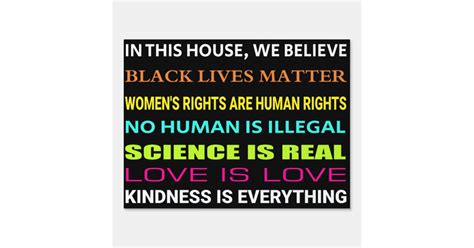
(In my house, we believe the Nicene Creed)

Instead of a naked public square, we see one festooned today with every imaginable image of the rainbow and associated symbology: from flags to backlighting, from crosswalks to entire murals on the sides of buildings. The public square went briefly from being a space where one might once have found images of the Ten Commandments or, during the holidays, a Christmas crèche, to one where the White House might be lit up by the rainbow celebrating a judicial fiat declaring a right to marriage of homosexuals in a constitution written in the 1780s, to public libraries where praise of cross-dressing, transexuality, and gay sex would become run-of-the-mill children’s programming.

When religion in any traditional or recognizable form is excluded from the public square, it does not mean that the public square is in fact naked. When recognizable religion is excluded, the vacuum will be filled by ersatz religion, by religion bootlegged into public space under other names.

The high priests of the new religion insist upon enthusiastic public expressions of support—especially during the holy month of June—lest one’s relative lack of fervency be taken as an indication of disbelief and grounds for being purged from the ranks of the elect. In nearly every respect, expressions of Pride are deployed in identical ways to traditional religious symbols and belief, in the eyes of many constituting a replacement religion. The inescapable, even overbearing presence of Pride symbology thus today bears all the unmistakable features of a “comprehensive doctrine,” the prevention of which earnest liberals of yesteryear insisted was their sole, modest aim.

Any war of “comprehensive doctrines” also brings attendant dangers. However, only someone not paying attention could believe that those dangers have been absent in recent years. My hope is that forthrightness about the terms of the debate may lead not to renewed “wars of religion,” but to a new settlement. A more pacific settlement might arise from acknowledgment that the actual “fact of pluralism” may require increased acceptance and acknowledgement of various state establishments. Such a settlement would return us to the original arrangement of the constitutional order, in which various religious traditions could coexist with robust internal unity amid relative proximate concord. California might thus retain its de facto established religion of Pride, and Alabama would establish some form of broadly nondenominational Protestant Christianity.

Patrick Deneen, inluding a prophetic insight of Richard John Neuhaus.

Comments:

  1. I think Deneen is correct that “Pride” has become a Rawlsian comprehensive doctrine — i.e., a de facto religion. (That doesn’t mean I think it will endure.)
  2. Deneen’s suggestion of permitted state establishments of religion is America’s original pattern (for what it’s worth). The First Amendment’s prohibition of Congress making any “law respecting an establishment of religion” was indeed a restriction on Congress, not the states. Massachusetts (of all places) had a state establishment until the 1830s and abandoned it voluntarily, not because some court declared it unconstitutional.
  3. I suspect I could formulate an argument that a state establishment of religion, unlike a limit on free exercise of religion, ought not be barred by the 14th Amendment “incorporation.” So long as a citizen is not coerced, I question whether their 14th Amendment “rights” are violated by an establishment.
  4. I’m under no illusion that I will like the religion established by any state: While I differ from him in details, I concur with Ross Douthat’s daring book title Bad Religion: How We Became a Nation of Heretics, and the best state establishment I could realistically hope for is mainstream Protestant (i.e., moralistic therapeutic deism).

Progressives verus liberals

You know you’ve touched a nerve with progressive activists when they tell you not just that you’re wrong but that you’re on the other side.

Such is the fate of any old-school liberal or mainstream Democrat who deviates from progressive dogma …

If this was just about our feelings, these denunciations could be easily brushed aside. But the goal and the effect is to narrow the focus of acceptable discourse by Democrats and their allies. If liberals are denounced for “punching left” when they express a reasonable difference of opinion, potentially winning ideas are banished.

In the run-up to a tight election with a weak Democratic candidate and a terrifying Republican opponent, pushing liberals and centrists out of the conversation not only exacerbates polarization, it’s also spectacularly counterproductive.

Those on the left who’ve been dumbstruck as Donald Trump has intimidated his most vociferous Republican critics (see: Chris Sununu, Nikki Haley) into falling in line might exert a little more self-awareness of similar moves by the left.

The goal of progressives may be solidarity, but their means of achieving it are by shutting alternative ideas down rather than modeling tolerance.

Pamela Paul, Who You Calling Conservative?

Note that I am not denying a similar Trumpist lock-step on the Right, nor does Ms. Paul.

Understanding the 2024 Roberts Court

If you really want to understand the conservative-dominated Supreme Court, it’s important to realize that all the Republican nominees who sit on it formed their legal philosophy and forged their legal reputations long before Donald Trump was elected president. This is no less true of Trump’s three nominees than of the three justices who were nominated by previous Republican presidents. Neil Gorsuch, Brett Kavanaugh and Amy Coney Barrett all possessed a robust legal identity and a considerable body of work before their selection to the high court. In fact, each has his or her own maverick streak, with Gorsuch perhaps most notable in his steadfast defense of Native Americans and the rights of criminal defendants.

When you understand this reality, what can seem to be a confounding, surprising Supreme Court term is actually predictable. The Trumpist right is lobbing a number of novel cases presenting aggressive legal theories to justices with pre-Trump legal philosophies, and the pre-Trump justices are rejecting them, repeatedly.

David French (emphasis added).

The Trumpist right is especially getting aggressive in Mississippi, Louisiana and Texas, part of the 5th Circuit U.S. Court of Appeals. The 5th Circuit has become where conservatives play out their fantasies to an obliging court as the 9th Circuit used to be the playground for progressives. You could say the 5th is the new 9th.

Republicans Pounce

A politically inconvenient rape and murder: Two migrants who’d crossed the border illegally have been charged with the rape and murder of 12-year-old Jocelyn Nungaray in Houston. The Associated Press managed to not once mention the status of the killers. The NYT eventually covered it, only in the context of how darned politically inconvenient it is: “The killing of Jocelyn Nungaray in Houston has become the latest crime seized on by Republicans to attack President Biden over his immigration policies.” Right. That 12-year-old, so rude of her to be murdered by the wrong type and letting Republicans “seize on” it. 

Nellie Bowles.

I’ll give the New York Times credit for disguising the usual formulation wherein the real story is “Republicans pounce” instead of what detestable thing they pounce on.

Tradition

Most of the things in our lives are not of our own making – they were given to us. Our language, our culture, the whole of our biology and the very gift of life itself is something that has been “handed down” to us. In that sense, we are all creatures of “tradition” (traditio=“to hand down”). Of course, these things that are not of our own making and are the least controllable are also those things that we take most for granted. We may hate our culture and our biology, but will still have to use our traditioned language (or someone’s traditioned language) to say so. Tradition is simply the most foundational, inescapable aspect of human existence.

Fr. Stephen Freeman, Things You Can’t Invent


So: where did all my mockery of Trump go? Well, first, I resolved to stop harping on it. But then, I just moved it off to my reflexive blog, trying to keep this one relatively reflective.

I suffer more from the humiliations inflicted by my country than from those inflicted on her.

Simone Weil, from a letter to Georges Bernanos.

I don’t do any of the major social media, but I have two sub-domains of the domain you’re currently reading: (a) You can read most of my reflexive stuff, especially political here. (b) I also post some things on the only social medium I frequent, because people there are quirky, pleasant and real.

June 30

Theology is mystery

Ultimately, theology is not a set of definitions or theories. Theology is mystery since it transcends the rational mind and attempts to express the inexpressible. In schools of theology and seminaries, theology is indeed an academic subject and, as such, it requires accuracy and embraces a certain “intellectual rigour,” as Met. Kallistos remarks. This does not conflict with Orthodoxy, since “we do not serve the Kingdom of God through vagueness, muddle and lazy thinking.” But he also notes that in other sciences or areas of investigation, the personal sanctity of the scientist or inquirer is irrelevant. This is not the case with theology, which requires metanoia (repentance), catharsis (purification), and askesis (spiritual struggle).

Dr. Eugenia Scarvelis Constantinou, Thinking Orthodox

The Christian revolution

Only a few peoples—the odd German tribe and, inevitably, the Jews—had stood aloof from the exposure of unwanted children. Pretty much everyone else had always taken it for granted. Until, that was, the emergence of a Christian people.

Tom Holland, Dominion

Inevitability

Looking back, it seems inevitable that I would find a career in writing. Marks on a page are less overbearing than the shrill voices I heard in church revival meetings and in Bible college. They give me a quiet space in which to make up my own mind, to decide what should be salvaged and what jettisoned.

Philip Yancey, Where the Light Fell. Not my story, but very relatable. (And Phil Yancey has been a fairly big-name Evangelical writer for, I’m fairly sure, more than five decades.)

The Great Integrity-Maker

Walking backwards into our own graves, so filled with denial because we lived not really once thinking that such a thing could one day happen to us. We miss the needed consciousness that sitting with a dead body will sober and sanctify us into. We haven’t been done a favour by having the end of life ushered out of sight.

Part of getting made into a human is the final part. Getting un-made. That preparing for death is not the same as what was before it … It’s not my time is not the appropriate mantra of a grown up. One day, any day, it will be my time, is better.

Death is the great integrity maker of us all, if we agree to bend our heads. There is some terrible deficit in the way many of us are born into this world, and it seems there is an equal absence in many of our departures.

Martin Shaw.

UPDATE: I failed to say initially that Shaw’s whole post is excellent.

Avoidance

McLuhan has said that religion dies when it becomes “concept,” not “percept.” The interviewer asks, “If I were to say that the traditional Christian doctrine of the Incarnation can be expressed in the phrase, ‘Christ is the medium and the message,’ is that a percept or a concept?” McLuhan answers:

It is a percept because, as Christ said over and over again, it is visible to babes, but not to sophisticates. The sophisticated, the conceptualizers, the Scribes and the Pharisees — these had too many theories to be able to perceive anything. Concepts are wonderful buffers for preventing people from confronting any form of percept.

Rod Dreher, ’A Serious House On Serious Earth’

Denial

Team Trump’s in denial about January 6.
Team Biden is already moving into denial about June 27.
How long will America remain in denial about the need for deep repentance, individual and national?


… that Christ may dwell in your hearts through faith; that you, being rooted and grounded in love, may be able to comprehend with all the saints what is the width and length and depth and height — to know the love of Christ which passes knowledge; that you may be filled with all the fullness of God.

Ephesians 3:17-19 (NKJV)

You can read most of my more impromptu stuff here and here (both of them cathartic venting, especially political) and here (the only social medium I frequent, because people there are quirky, pleasant and real). All should work in your RSS aggregator, like Feedly or Reeder, should you want to make a habit of it.

Another notebook dump

Wisdom Generally

Willie Mays

The Say Hey Kid was that rarity who played a boy’s game with a boy’s joy and a man’s discipline and shrewdness.

National Review, The Week. That’s got to be the best “in a nutshell” on Mays. One consolation of being 75 most of this year is the memory of Willie Mays playing live, not just on highlight reels. You kids have no idea ….

Even the secularists have rituals

The “acme” of religious secularism in the West—Masonry—is made up almost entirely of highly elaborated ceremonies saturated with “symbolism.”

Alexander Schmemann, For the Life of the World

Apple acquiesces in reality

I became an “Apple guy” at home before retirement, though I still had to use Windows at work. Now our house is all Apple (or nearly so). (I confess to brief side-eyed looks at Linux, but it’s never stuck; I’ve just got my Apple gear set up to do what I want, quickly, so why change?)

Still, VisionPro was a bridge or two too far — way too much money for a novelty. Now:

Apple has told at least one supplier that it has suspended work on its next high-end Vision headset, an employee at a manufacturer that makes key components for the Vision Pro said. The pullback comes as analysts and supply chain partners have flagged slowing sales of the $3,500 device. The company is still working on releasing a more affordable Vision product with fewer features before the end of 2025. (Source: theinformation.com)

Via John Ellis

Freud

In his fanciful narrative, religion and the civilization that springs from it are reducible to a primordial event of psychosexual violence. … For Freud, at the dawn of human civilization a group of brothers, desiring sexual gratification with their mother, spontaneously rise up against their father and commit parricide. They then devour his body in a ritual act, joining incest to cannibalism. Because of their guilt, however, they internalize their absent father’s authority, which takes the place of a collective superego. From that moment on, human civilization has worked to suppress the libidinal will to power in men by repressing desire and transferring it to more “sublimated” activities. All religions—but especially Christianity with its doctrine of God the Father—are compensations for this primordial act of parricide. They can all be traced back to this scientifically formulated (and completely theoretical) act of original sin.

John Strickland, The Age of Nihilism

Essentially, Professor Crews came to regard Freud as a charlatan. In a debate with the psychoanalyst and author Susie Orbach in 2017, published in The Guardian, he maintained that Freud had “contradicted, discomfited and harangued his patients in the hope of breaking their ‘resistance’ to ideas of his own — ideas that he presumptuously declared to be lurking within the patients’ own unconscious minds.” In the process, he said, Freud created a myth about himself and his findings that failed to live up to empirical scrutiny.

His polemical broadsides vaulted him to the forefront of a group of revisionist skeptics loosely known as the Freud bashers.

“Freud: The Making of an Illusion” was his most ambitious attempt to debunk the myth of Freud as a pioneering genius, drawing on decades of research in scrutinizing Freud’s early career. Writing in The New York Times Book Review in 2017, George Prochnik found the book to be provocative if exhaustingly relentless: “Here we have Freud the liar, cheat, incestuous child molester, woman hater, money-worshiper, chronic plagiarizer and all-around nasty nut job. This Freud doesn’t really develop, he just builds a rap sheet.”

Obituary for Frederick Crews: “A literary critic, essayist and author, he was a leading voice among revisionist skeptics who saw Freud as a charlatan and psychoanalysis as a pseudoscience.”

It does not matter that the strictly scientific status of Freud’s theories is now methodologically and materially discredited. The central notion—that human beings are at core sexual and that that shapes our thinking and our behavior in profound, often unconscious, ways—is now a basic part of the modern social imaginary.

Carl R. Trueman, The Rise and Triumph of the Modern Self

Best and brightest besliming themselves

Cultural deregulation

Recent dustups over the supposedly racist implications of advocating marriage, thrift, and a good work ethic reveal the logic of cultural deregulation. The goal is to strip society of norms, leaving unsheltered those who cannot afford to live in well-appointed enclaves that covertly sustain modified bourgeois norms for the rich and their children. In the open culture, the lives of ordinary people become more disordered and less functional.

R. R. Reno, Return of the Strong Gods

Scientific consensus

[I]t has become increasingly obvious that science functions as much as an ideology as it does as a method of inquiry. The “scientific consensus” is now frequently invoked to settle not just scientific questions, but public-policy ones as well. Call this scientism. One of its most striking features is just how vacuous it is. Contemporary scientism doesn’t necessarily entail anything beyond uncritical deference to experts. This became clear enough over the course of the Covid pandemic. Within a month in early 2020, all right-thinking people went from ridiculing the idea that masks could stop the spread of a respiratory virus to believing it was of paramount importance to wear a mask at all times. This reversal wasn’t due to people weighing new evidence, but the empty assurance of the “scientific consensus.”

[U]nlike the creationists Wright might have been confronting a generation ago, proponents of “gender-affirming care” don’t appeal to sources of authority other than science. On the contrary, they point to the fact that major US medical institutions have endorsed these practices. The “scientific consensus,” then, has proved capable of giving public legitimacy to even the most outré belief systems.

[I]t’s clear by now that those who purport to speak in the name of science aren’t as neutral and objective as I once assumed. Often, science’s would-be spokesmen are bent on imposing their own dogmas. In hindsight, I should have been more concerned about scientism becoming an official state ideology. Science has many impressive discoveries to its credit, but we shouldn’t let it think and make political decisions on our behalf. Nor ought we to uncritically adopt the metaphysical views of the majority of scientists as our own. The question of God’s existence, for instance, remains as open today as at any other time in human history.

David Moulton, Two Cheers for ‘Intelligent Design’

At war with the human race

So it is that the gendered nature of the body is under attack, from the Left and Right, as is the connection between sex and babies. Left and Right alike resent the limitations of the human body. There’s just one small problem: sex does make babies and men and women are different. An ideology that cannot make room for the basic facts of human reproduction and sex differences is an ideology that will end up at war with the human body, with nature itself, and ultimately with the entire human race. In that war, it will go looking for allies where it can find them. It finds its most powerful, its indispensable, ally in the State.

Jennifer Roback Morse, The Sexual State.

By quoting, I’m not endorsing this book. I read it in preparation for a Symposium where the author was to be one of three keynote speakers. Based partly on the book, which did make a few points in a temperate register, I decided not to register for the symposium.

Self-delegitimation

As Harvard Law school professor Adrian Vermeule has said, liberal institutions “will have to become systematically undemocratic in order to remain liberal and, even where they do so, that will be but a stopgap measure in light of their systematic self-delegitimation.”

Rod Dreher in the European Conservative

Ruso-Ukrainian war

So: Why did Russia invade Ukraine?

WordPress unfortunately has been “improving” things again, so I cannot figure out how to embed a YouTube video, but I recommend the video at this link.

Theory 1: Putin is a revanchist, with many screws loose, who wants to rebuild the USSR in toto.
Theory 2: Putin would not tolerate NATO being extended to its very border with Ukraine (which the US promised it would not allow), kinda like our Monroe Doctrine.

Expats

“I hate Russia, for forcing me to leave her.”

It was an apt summary of what waves of émigrés from Russia and the Soviet Union since the early 20th century have felt: a sorrowful sense of loss for a motherland — what Russians call “toska po rodine” — coupled with resentment at the autocratic powers that forced them out. My grandparents were among the “White” Russians who fled the Revolution and moved to Paris in the 1920s. A second wave of emigrants left in World War II. The third, Soviet Jews, started leaving in the 1970s. Vladimir Putin has now created another wave of people fleeing Russia, and many of them may still believe, as my forebears did, that they will one day return to the homeland.

Most probably will not.

That is the tragic irony of Mr. Putin’s war. His attempt to “restore Russian greatness” through violence and hatred has tainted Russia’s real greatness for years to come ….

Serge Schmemann

Front lines of the LGBTTTIQA+, etc. revolution

Another bridge too far

One thing I think we can rule out right away is that the drop in support for same-sex marriage and acceptance of homosexuality is a function of religion. I’m aware of no evidence that the United States is undergoing a religious Great Awakening, at least when it comes institutional forms of worship handed down from the past. As sociologist Samuel Perry recently put it in a useful summary for Time magazine:

According to data from GallupPew, and PRRI, the percentage of Americans who identify with any religion is in steady decline, as are those who believe in God, the devil, Heaven, Hell, or angels; who say religion is a very important part of their life; maintain membership in a church or synagogue; or attend church regularly.

Why, then, might Republicans have begun turning against same-sex marriage and acceptance of homosexuality in the past two years?

This is just speculation, but I’d wager it has something to do with the way left-wing activists have taken up the cause of transgender rights as the next front in the now-decades-long cultural revolution. To be clear: I don’t think such a backlash, if there’s been one, has arisen over calls to protect the civil rights of the tiny number of transgender people in the country. Rather, the backlash would come from opposition to the ideology of transgenderism promulgated by the most militant activists on the left—and the extraordinary rapidity with which that ideology’s assumptions and assertions have come to be treated as conventional wisdom among many of those who run government bureaucracies, public and private schools and universities, medical institutions, and the business sector.

If I’m right that declining support for same-sex marriage and homosexual acceptance among Republicans derives (at least in part) from a backlash against transgender activism, that would likely mean that more conservative-minded Americans have concluded the gay-rights movement was a Trojan Horse for something far more extreme and destabilizing. It’s not inevitable that they would conclude this, since as Andrew Sullivan and other champions of gay rights have persuasively argued, the interests of homosexuals stand in considerable tension with those asserted by the most radical transgender activists. But the Activist and Donor Complex on the left has made it natural for the rest of the country to make the leap from one to the other by bundling the two movements together in an ever-expanding, alphabet-soup abbreviation: LGBTTTIQA+, etc.

Damon Linker

March of Dimes Syndrome

Why, last year, did the Human Rights Campaign declare a “national state of emergency” for LGBT people? Why was the election of the first black American president followed by the Black Lives Matter movement? Why have reports of “hate groups” risen during the same decades that racial prejudice has been plummeting? Why, during a long and steep decline in the incidence of sexual violence in America, did academics, federal officials, and the #MeToo movement discover a new “epidemic of sexual assault”?

These supposed crises are all examples of the March of Dimes syndrome, named after the organization founded in the 1930s to combat polio. The March helped fund the vaccines that eventually ended the polio epidemics—but not the organization, which, after polio’s eradication, changed its mission to preventing birth defects. Its leaders kept their group going by finding a new cause, just as antiwar activists did after achieving their goal of ending the Vietnam War. The Three Mile Island accident offered new fund-raising opportunities and a new platform for veterans of the antiwar movement such as Jane Fonda and her husband Tom Hayden, who both addressed the crowd at that first antinuke rally.

For career activists, success is a threat. They can never declare mission accomplished.

So activists have moved the goalposts once again. It is no longer enough for conservative Christians to tolerate same-sex marriage—now they must be legally required to bake cakes and design web pages for the weddings. It is no longer enough to protect gay students from harassment—now these students must have access in elementary school libraries to how-to manuals for anal sex. Public schools must encourage prepubescent students to explore the many possible gender identities without their parents’ knowledge. Biological males self-identifying as females must be allowed to compete against females in sports. These new causes have been wildly unpopular, arousing opposition from homosexuals as well as heterosexuals, and have led to a decline in public support for the gay rights movement. But however much the backlash has hurt the original cause, the controversies keep activists in business.

As the civil rights movement searched for new causes, no group shifted as adroitly as the Southern Poverty Law Center. The group launched in the 1970s to offer legal representation to individual victims of discrimination but then switched to filing lawsuits against chapters of the Ku Klux Klan. In 1986, the SPLC’s entire legal team resigned in protest—they’d signed up to help poor people, not sue an organization whose national membership barely eclipsed 10,000. But the Klan made an ideal villain for fund-raising appeals to northern liberals, and the SPLC prospered from the publicity about lawsuits that bankrupted chapters of the Klan.

By the 1990s, virtually nothing was left of the Klan to sue, so the SPLC pivoted again. It changed the name of its “Klanwatch” project to “Hatewatch,” and began issuing reports listing a growing number of “hate groups” and “extremists” across America. Scholars, journalists, and nonprofits have repeatedly denounced SPLC’s blacklists, noting that its tallies include many “hate groups” that don’t exist, or are harmless (such as a Confederate memorabilia shop that made the list), or are mainstream conservative and Christian organizations that simply oppose progressive policies. The SPLC’s lists of dangerous “extremists” have included respected conservatives such as Charles Murray, Rand Paul, and Ben Carson … The SPLC’s appeals to combat a “rising tide of hate” have brought in so much donor money that its endowment has soared above $600 million.

John Tierney, The March of Dimes Syndrome

Politics

Tribal conformity

I personally know progressives who are absolutely furious that GOP figures don’t speak out against Trump, but those same individuals are petrified of the intolerant elements of their own political tribe. They wouldn’t dream of speaking against the most-woke elements of the radical left. After all, their jobs are at stake. Their reputations hang in the balance. Remember the now-famous Vox essay, “I’m a liberal professor, and my liberal students terrify me”? I’ve heard that sentiment many times.

David French, Let’s Talk About Fear

The Donilon strategy: All About ‘Dat Coup

If the sudden prospect of electing the first president who is a convicted felon hasn’t put Americans off Trump, why would Joe Biden, Mike Donilon, or anyone else think that reminding them of his coup plot and the insurrection it led to will do so?

On the other hand, how can one run against Donald Trump and not make his authoritarian ambitions the centerpiece of the campaign? He’s not shy about expressing those ambitions; should he win in November, the next four years will in fact be defined by his attempts to subvert the constitutional order. The right’s hostility to Western liberalism is the elephant in the room of this election. How can the president resist making a spectacle of it?

I think his and Donilon’s strategy of making the race about democracy is simultaneously weak and quite possibly the strongest one available to them.

There’s another case for the Donilon strategy. Namely, it’s worked before. And I don’t just mean in 2020.

Five days before the 2022 midterms Biden delivered a speech warning Americans that, with so many Trump-backed post-liberal populist Republicans running for major offices, “democracy is on the ballot.” He called on voters to ask themselves this question when considering a candidate: “Will that person accept the legitimate will of the American people and the people voting in his district or her district? Will that person accept the outcome of the election, win or lose?”

Some pundits called the address “head-scratching” in light of polling that showed the economy, not democracy, dominating when voters were asked what the most important issue in the election was. Yet five days later Republicans ended up underperforming badly in a midterm in which the out-party typically cleans up. One Trump-endorsed MAGA acolyte after another fell short in key races, holding the GOP to modest gains in the House and helping Democrats gain a seat in the Senate.

For me, the great virtue of the Donilon strategy is that it’ll leave America with no excuses if Trump wins. An election framed around the economy or immigration that ends in Republican victory will let denialists about the country’s decline insist that things would have been different if only Biden had taken a different approach. “He should have emphasized the coup attempt and January 6,” they’ll say. “Surely Americans wouldn’t have reelected Trump if the election had been about that.”

I’m not sure of that at all, personally. I’d like to test the proposition. And if Trump is returned to power, I’d find comfort in knowing that we maximized our collective shame by approaching the race as a referendum on the constitutional order—and chose the other option. If we do this, let’s be clear-eyed about it. No excuses. Trump 2024: Maximum Shame.

Nick Catoggio

The Machiavelli IQ test

The first method for estimating the intelligence of a ruler is to look at the men he has around him.

Niccolo Machiavelli

After Trump’s guilty verdicts, the popular sports talk radio host Colin Cowherd, who’s not a usual Trump critic, treated his listeners to an inventory of the criminals around Trump: “His campaign chairman was a felon. So is his deputy campaign manager, his personal lawyer, his chief strategist, his national security adviser, his trade adviser, his foreign policy adviser, his campaign fixer and his company C.F.O. They’re all felons. Judged by the company you keep. It’s a cabal of convicts.”

Frank Bruni

We knew damn well he was a snake before we took him in.

Populism anticipated

For the success of our restoration it cannot be too often said that society and mass are contradictory terms and that those who seek to do things in the name of mass are the destroyers in our midst. If society is something which can be understood, it must have structure; if it has structure, it must have hierarchy; against this metaphysical truth the declamations of the Jacobins break in vain.

Richard M. Weaver, Ideas Have Consequences.

Past their “Sell By” Dates

Also Presented Without Comment

Former House Speaker Nancy Pelosi, asked by Anderson Cooper whether she has “confidence” in the Supreme Court: 

“No, I think they’ve gone rogue. It’s most unfortunate.”

Also Also Presented Without Comment

New York Post: Trump Camp Claims He Was ‘Tortured’ in Fulton County Jail—as It Peddles Coffee Cups With His Mugshot

Australia can have him

Julian Assange on his leaking of the names of hundreds of Afghan civilian informants into the hands of the Taliban: “Well, they’re informants. So, if they get killed, they’ve got it coming to them. They deserve it.”

Jim Ellis, News Items


I suffer more from the humiliations inflicted by my country than from those inflicted on her.

Simone Weil, from a letter to Georges Bernanos.

I don’t do any of the major social media, but I have two sub-domains of the domain you’re currently reading: (a) You can read most of my reflexive stuff, especially political here. (b) I also post some things on the only social medium I frequent, because people there are quirky, pleasant and real.

Pentecost …

(at least in the Eastern Church)

For the very first time, I vetted this post with AI. I didn’t change so much as a jot or a tittle.

Evangelicals

Overlooking the obvious

In the past year I have visited the Middle East, India, Africa, Latin America, and Europe as the guest of churches and ministries. In each place, evangelicals exude life and energy. While staid churches change slowly, evangelicals tend to be light on their feet, adapting quickly to cultural trends.

The Jesus movement, the house-church movement, seeker-friendly churches, emergent churches—evangelicals have spawned all of these. In their wake, worship bands have replaced organs and choirs, PowerPoint slides and movie clips now enliven sermons, and espresso bars keep congregants awake. If a technique doesn’t work, find one that does.

Although I admire the innovation, I would caution that mimicking cultural trends has a downside …

Perhaps we should present an alternative to the prevailing culture rather than simply adopt it. What would a church look like that created space for quietness, that bucked the celebrity trend and unplugged from surrounding media, that actively resisted consumerist culture? What would worship look like if it were directed more toward God than toward our entertainment preferences?

While writing a book about prayer, I learned more from Catholics than from any other group. They have, after all, devoted entire orders to the practice. I learn mystery and reverence from the Eastern Orthodox. In music, in worship, in theology, they teach me of the mysterium tremendum involved when we puny human beings approach the God of the universe.

As I survey evangelicalism I see much good, but also much room for improvement. Our history includes disunity—how many different denominations do this magazine’s readers represent?—and a past that includes lapses in ethics and judgment.

Phil Yancey’s 2009 farewell column for Christianity Today (illustration added). I don’t understand why the farewell wasn’t because he was going somewhere more conducive to prayer or reverence. Does it not occur to him that one decision for Christ plus good works does not a complete Christian make, that emotion is not the same as the Holy Spirit?

Biblicist Guruism

Reflecting on a story about exvangelicals:

So how do you help address the problem that Miles is describing in his review, a culture of biblicist guruism in which the churches do not even look recognizably Protestant in any real way? How do you address the massive gaps and holes in a person’s Christian discipleship that result from sustained exposure to such churches?

If the Gospel was not clear or was not preached, then what you had was more a religious assembly than a church. If the sacramental life of the church was non-existent, you had a religious assembly, not a church. And if there was no aid in Christian discipline… well, you know the drill.

When I came to Grace Chapel in 2007, a small PCA church that was at the time located in central Lincoln, I didn’t know that I’d not really been part of a church before, at least as the church was traditionally understood. What I found at Grace was something I hadn’t even known to look for because I didn’t know it existed. I found something obviously and unapologetically Christian—the Gospel was clear in every sermon, and clear in a way I’d never heard it from a pulpit before, the Eucharist was celebrated regularly, and the pastor at the church actually seemed to know the people in his church and to think it was his job to care for them and aid them in their discipleship. I’d never seen anything like it before.

And the services themselves helped to reenforce the basics of Christian belief and practice: We prayed the Lord’s Prayer corporately. We confessed our sins corporately. We sang old hymns. Every week we received a benediction. The grammar and vocabulary of Christianity pervaded the liturgy; it wasn’t just a guy in a pulpit pontificating, loudly proclaiming his own loosely assorted thoughts about life and expecting you to take him seriously because he attempted to root them in scripture.

Jake Meador (italics added).

The non-church “church” Jake came from may have been an example of what he calls “biblicist guruism.”

Second Great Awakening

While Methodists, Disciples, and Mormons disagreed radically on what constituted belief in the gospel, they all shared an intense hostility to the passive quality of Calvinist religious experience, and they all made salvation imminently accessible and immediately available.

Nathan O. Hatch, The Democratization of American Christianity

I have alluded to this antipathy toward Calvinism previously, having first encountered it in Hatch’s book (I’m pretty sure). When I moved from frank Evangelicalism to Calvinism, it felt as if I was moving to a much different worldview, and I guess my intuitions were sound.

Protestants

… [Luther] had been wrestling with an unsettling conundrum: the failure of the Spirit to illumine all those inspired by his teachings as he himself had been illumined.

Tom Holland, Dominion

It seems fair to distinguish Protestants from Evangelicals, contrary to lifelong habit. I’m not positive that Evangelicals circa 2024 AD are no longer Protestant, but along with Jake Meador, I’m entertaining that possibility quite a lot lately. If they’ve left Protestantism, it strikes me as a continuing outworking of Luther’s conundrum.

Catholics

According to Catholic doctrine, sin offends God, disrupts the moral order, and deprives God of His glory and majesty. Punishment for the sin restores order and the glory of God.

Dr. Eugenia Scarvelis Constantinou, Thinking Orthodox

When I first read that, it made me a bit nauseous. The Orthodox mind is quite different from that.

Orthodoxen

Start with the Psalms

It came to me a few days ago, during morning devotions, that it would be very easy for a 21st century convert to Orthodox Christianity, from Protestantism or Evangelicalism, to overlook one very important and durable tradition of the church.

Perhaps because the Anglophone church has gained so many converts, and because those converts were accustomed to regular preaching from a wide range of scripture, we have available to us, notably on Ancient Faith “Radio,” an array of Orthodox versions of Bible studies. One of them even bears the title “The Whole Counsel of God,” and has progressed through all books of the Old and New Testaments and started over again.

In my mind, those podcasts risk obscuring from the view of converts that the basic scripture for Orthodox Christians is the Psalter — the book of Psalms. As Father Jonathan Tobias emphasized,

Chant the Psalms every morning and every evening. Two kathismata in the morning, one in the evening as appointed. This will form your mind into prayer and life.

There’s nothing wrong with going beyond that, and I should do more of general Bible study than I do, but start with the Psalms. Always start with the Psalms.

(Weird historic fact: Back in the day, Evangelicals would do some Evangelistic spadework by distributing inexpensive copies of the Gospel According to John — not the whole New Testament, but just that one Gospel account. In contrast, the Orthodox Church didn’t expose converts to the Gospel According to John, the most profoundly theological of the four Gospels, until after significant preliminary catechesis and baptism. See text at fns. 2 & 3.)

Thanks but No Thanks

Without entering into particulars, we say that as long as the Church of the Saviour shall stand upon earth, we cannot admit that there is in her bosom a Bishop Supreme other than our Lord Himself; or that there exists an infallible Patriarch, who can speak, ex cathedra, superior to Ecumenical Councils – to which Councils alone belongs infallibility, because they have always conformed to the Sacred Scriptures and apostolical tradition. Nor can we admit that the Apostles were unequal, inasmuch as they were all illuminated by the Holy Ghost up to the same measure; or that to this or that Patriarch a precedence has been given, not by any synodal or human resolution, but by right Divine, as you assert.

Ecumenical Patriarch Gregory VI, firmly refusing to attend Vatican I, which was poised to declare papal infallibility at the behest of Pope Pius IX. Via Matthew Namee. The Orthodox Patriarch of Alexandria was no less firm, but pointed out (though the Pope surely knew it) what the Pope needed to do:

But not to prolong this discussion let me repeat once, and for all, that as this new attempt on the part of his Holiness the Pope has miscarried, it is necessary, if he sincerely desires the unity of the Universal Church that he should write to the patriarchs individually, and acting in concert, endeavor to come to an understanding with them respecting the course to be adopted – renouncing every dogma on which opinions may clash in the church. By so doing his efforts might perchance be crowned with some degree of success.

Involuntary sin

According to Scripture, the cause of all sin that is involuntary lies in what is voluntary.

Dee Pennock, God’s Path to Sanity


… that Christ may dwell in your hearts through faith; that you, being rooted and grounded in love, may be able to comprehend with all the saints what is the width and length and depth and height — to know the love of Christ which passes knowledge; that you may be filled with all the fullness of God.

Ephesians 3:17-19 (NKJV)

You can read most of my more impromptu stuff here and here (both of them cathartic venting, especially political) and here (the only social medium I frequent, because people there are quirky, pleasant and real). All should work in your RSS aggregator, like Feedly or Reeder, should you want to make a habit of it.

Juneteenth

I have nothing to say about Juneteenth except that emancipation was a legitimately huge landmark in our nation’s history and worthy of annual commemoration.

Public affairs

Indiana’s GOP Lieutenant Governor nominee

Indiana over last weekend nominated as its Lieutenant Governor candidate, Micah Beckwith, a pastor of some sort who:

  • Thinks that the “progressive left has taken over the Republican Party in Indiana,” and that some Republicans today are “champions of Communism.”
  • Said on a Christian(ish) podcast “We are in a season of war right now … People need to wake up, or else this mental and heart battle that we find ourselves in culturally, it will lead to bullets and bombs. It’s just a matter of time.”
  • Said God had told him, on January 7, 2021: “Micah, I sent those riots to Washington. What you saw yesterday was my hand at work.” (This is what every story on him seems to pick up.)

Those quotes are from Michelle Goldberg at the New York Times. Goldberg also says, sans quote, that he’s a “self-described Christian Nationalist.”

Beckwith was forced onto the ticket against the wishes of the Gubernatorial nominee, retiring U.S. Senator Mike Braun.

Yeah, I guess it’s national news.

I didn’t support Braun for Governor. I was unenthusiastic about him when he ran for Senate in a GOP primary whose theme was “Mirror, mirror on the wall, who’s the Trumpiest of them all?” (but I preferred him to Todd Rokita, now our Attorney General and a truly loathsome person). I’m not certain I’ll vote for him in the General Election.

My decision will hinge to some degree on how effective he is at keeping a reassuring distance from Beckwith without, of course, repudiating him so firmly as to hand the election to Democrats. So far, his pointed message “I’m in charge” seems about right.

I’ve noted repeatedly that I repudiated any loyalty to the Republican Party on Inauguration Day 2005. But I still have a reflex to vote Republican over Democrat, and to mourn what already has become of the Republican party, and what one likely future holds.

On Christian Nationalism

Having noted Micah Beckwith’s purported Christian Nationalism, I’m reminded that I may not have staked out my own position openly.

First, I define it narrowly. There have been ridiculous accusations of Christian Nationalism based on undisclosed or untenable definitions. Real Christian Nationalists are still pretty rare, I think (but what do I, a contrarian, know?).

I’m not unaware that American pluralism is an experiment. I’m not sure whether it will succeed or fail. I’m familiar with and friendly toward the phrase “worst form of government except for all the others.” I’m not ready to abandon it.

At the risk of ad hominem, I don’t trust the “Christians” who expressly advocate for Christian Nationalism. One of my older blogs, on what we then called “culture wars,” remains relevant, but I’ll paraphrase excerpts rather than do direct quotes.

My distrust of Christian Nationalists stems fairly directly from my disagreements with their form of our putatively shared faith — disagreements that lead me to chronic use of scare-quotes around the word Christian or the use of “Christianish.”

The pious Protestants among them tend functionally believe that God’s only presence in the world is His rules, so they “honor” Him by keeping his rules. But the age of Trump has brought many to profess that they’re Evangelicals even if, in the extreme case, they’re Muslims or even atheists, because of something they like about the politics now associated with that label.

The most coherent, maybe the only, Protestant theorists of Christian Nationalism are theonomists, or more specifically Reconstructionists. If these Calvinist intellectuals had their way, there would be 18 Old Testament Capital Crimes in our law books – including sassing parents. They’d shut down my Church and desecrate its icons. They might, for all I know, execute me for idolatry for the icons in my home prayer corner.

Ummmm, no thanks.

The Catholic theorists of Christian Nationalism (Integralism, they call it) are much better — not okay, but less bad. But I don’t think their side would get the levers of power anyway.

There is no remotely viable Orthodox version of Christian Nationalism, Byzantium being long-gone. And we’d lack the numbers to staff government if there were.

So I think “Christian Nationalism” in America would be, in ascending order of likelihood:

  1. Catholic Integralism
  2. Calvinistic Reconstructionism
  3. A blasphemous mish-mash of right wingnuttery in the name of God. (Like Indiana’s GOP Lietenant Governor nominee or the yard sign “Make Faith Great Again: Trump 2020.”)

I reject them all. I think all of them would be hostile to Orthodox Christianity. I prefer to continue our flawed experiment with pluralism. But I suspect I’ll live to see one of them.

We Orthodox have survived similar or worse circumstances before.

America’s enemies

American leaders have a great need to identify an enemy or group of enemies that the U.S. can define itself against in order to justify the dominant position that they want the U.S. to have. It doesn’t occur to these leaders that the pursuit of dominance itself is what creates so many enemies or that the U.S. would be far more secure by renouncing the pursuit.

Losing the Soviets as an enemy created a hole in U.S. foreign policy that Washington desperately tried to fill with anything our leaders could find, but the substitute villains (Saddam Hussein, Milosevic, etc.) were so weak by comparison that the threats had to be massively inflated.

Daniel Larison (who had fallen off my radar)

We seem hellbent on creating intractible enemies in at least three corners of the world. Depending on their political stripe, American politicians speak as if Russia, China, and/or Iran pose existential threats to us. Yes, we do have substantive differences with all, but I can make a case for all three that they simply wish to live their lives in their own ways in their part of the world without our interference. Look at the flash points with each: Ukraine, Israel, Taiwan. All are American dependencies; all are projections of our hegemony into the very heart of their respective spheres. Regardless of your sentiments, the fate of none of those areas have any existential meaning to the U.S.; and yes, I am including Israel in that. They do, however, have existential meaning to our supposed adversaries.

Terry Cowan

J.D. Vance

I commented on June 13 about Ross Douthat’s interview with J.D. Vance.

There doubtless have been many commentators weighing in on the interview, but I’ve read only one so far: Andrew Sullivan. He made some excellent observations about places where Vance was tap-dancing around the unvarnished truth (to stay in Trump’s good graces?) or omitting crucial facts that eviscerate his argument.

Of the changes in voting rules to deal with Covid?:

The new pandemic rules, moreover, were endorsed by the Congress, which passed $400 million in the CARES Act for the election’s unique challenges, which Trump himself signed into law. If the rules were rigged, Trump helped rig them!

Vance’s case is completely undermined by Trump himself. Trump, after all, did not say after the election that the Covid rules were why he’d lost. He said he’d lost because votes were stolen, stuffed, and hidden, and the voting machines had been rigged. He’s saying the same things today. And the reason for all of it was not some genuine concern about easier mail-in and absentee voting (he endorsed absentee voting, after all), but Trump’s basic, characterological inability to function in a system that doesn’t guarantee him victory every single time.

That is not the system’s fault. It’s the fault of the party that nominated a malignant, delusional loon.

Putin

This week in Budapest, I met with an American academic active in the struggle for international religious freedom. We spoke about the Russia-Ukraine war, and established that we both believe Russia ought not to have invaded its neighbor. I added that as an Orthodox Christian, it grieves me how Putin has instrumentalized the Church to advance his war aims.

Then the American, a conservative Christian, posed a provocative question, that went something like this: For all his thuggishness, do you think that Vladimir Putin is on the right side of broad civilizational trends? My interlocutor brought up Putin’s harsh criticism of Western secularism and its emptiness, contrasting it to a Russia built on traditional values, including religion. Yes, Russia is in deep social and demographic trouble, and yes, Putin might be a colossal hypocrite, but, said the American, on the deep civilizational questions, isn’t Putin, you know … right?

I knew the answer, but as a man of the West, was too depressed by the question to admit it ….

Rod Dreher in the European Conservative

Degrowth

The case for degrowth is not about martyred self-denial or constraining human potential; it is about reorienting socioeconomies to support collaborative and creative construction of lives that are pleasurable, healthy, satisfying, and sustainable for more people and more places. End goals of degrowth – dignified work, less selfish competition, more equitable relationships, identities not ranked by individual achievement, solidary communities, humane rhythms of life, respect for natural environments – are also the means through which people exercise and embody, day by day, the lifestyles, institutions, and politics of degrowth worlds to come.

The Cauldron of Degrowth – Front Porch Republic

Euro-skepticism

The European Union began as a trading bloc, but by the early 1990s, it had evolved into a moral project fueled by elite distaste for (even revulsion against) the nationalistic sentiments these elites had become convinced were the source of all the crimes of the European past, including imperialism, racism, fascism, and genocide. What Europe needed was an inoculation against these sentiments, and the EU would be the vaccine, giving the continent a collective goal of striving to overcome particularistic attachments and the cruelty, suffering, and oppression they supposedly implant and encourage. Nationalistic sentiments would be sublimated into the transnational idea of the EU, with the EU itself eventually expanding without limit as the leading edge of a world without borders or walls impeding trade, the free movement of people, products, capital, and labor.

Damon Linker

I am enthusiastically European; no informed person could seriously wish to return to the embattled, mutually antagonistic circle of suspicious and introverted nations that was the European continent in the quite recent past. But it is one thing to think an outcome desirable, quite another to suppose it is possible. It is my contention that a truly united Europe is sufficiently unlikely for it to be unwise and self-defeating to insist upon it. I am thus, I suppose, a Euro-pessimist.

Tony Judt

Matters of Opinion

The continuing siege of Samuel Alito

I’m a journalist. We’re journalists. There are certain things we do. When we interview somebody, we make it clear that I work for the New York Times, the “NewsHour,” the Washington Post. Like, we make it clear who we are. We don’t lie. We don’t misrepresent ourselves. We don’t hide a tape recorder somewhere, and we don’t lead people on with a bunch of ideological rants. And this person did all that. It’s a complete breach of any—the basic form of journalistic ethics. And I was, frankly, stunned that all of us in our business just reported on it, just like straight up. And to me, this information is so doctored by her attitudes, the way she’s leading on Alito and his wife. It’s just—it’s unfair to them, frankly, to treat this as some major news story. We should be treating it as somebody, a prankster. And there’s a right-wing version of this called Project Veritas, where they lie too—as some prankster who’s creating distorted information.

David Brooks, on the Journalist who plied Justice Alito with a red-meat rant and got only a very anodyne response.

I found myself hoping that she will forever be known as the journalist who engaged in sleaze and then made it worse by publishing the nothingburger results. And then I remembered an incident in my past, when I may have been older than she is now, when I broke the rules to get the true story — not as a journalist, but as a lawyer. I, too, came up dry — and exposed for my wrongdoing.

I’m glad that did not follow me the rest of my life. I hope she has learned her lesson as I learned mine.

Worst Matter of Opinion podcast ever?

With Ross Douthat on vacation, Michelle Cottle, Carlos Lozada and Lydia Polgreen invited their hardcore colleague Jesse Wegman to join them.

Synopsis: Some justices blame the press for distrust of the U.S. Supreme Court. But that’s not it. It’s really Justice Alito’s [first exaggeration about Justice Alito] and [generalization built on exaggeration] and Clarence Thomas [Oh, hell, let’s just lump him with Alito] and dismissing Alito’s version of flag-gate and laughing out loud at Justice Alito saying [garbled version of he has a duty to deliberate if he’s not required to recuse, which is true] and Mitch McConnell, who played unprecedented political hardball to defeat Merrick Garland (by delay) and confirm Justice Barrett (by contrasting haste), so that Trump’s two appointees have cooties-by-association.

I will give Carlos Lozada credit for pushing back. The bias, dishonesty, and inexcusable ignorance of the other three make me want to cancel my Times subscription.

Intuition

“I have the feeling that I understand it.” But then he adds, “In fact, it is not ‘understanding,’ and it is not ‘knowledge.’ It is a direct awareness, or intuition. It’s not the kind of thing you ‘understand.’ It’s like I said before to you: one grain of rice, and the whole earth, they are the same. You can’t learn that from a book.”

Andy Couturier, The Abundance of Less

Mordant observation

The more people came to know gay people and understand the aims of the movement for gay marriage, the more accepting they became of it. The more people come to know trans people and understand the aims of the transgender moment, the more skeptical they become of its claims.

Wesley Yang on new polling. (Via Andrew Sullivan)

Books

There are 10,000 books in my library, and it will keep growing until I die. This has exasperated my daughters, amused my friends and baffled my accountant. If I had not picked up this habit in the library long ago, I would have more money in the bank today; I would not be richer.

Pete Hamill via Robert Breen on micro.blog.

I know what Hamill means.


So: where did all my mockery of Trump go? Well, first, I resolved to stop harping on it. But then, I just moved it off to my reflexive blog, trying to keep this one relatively reflective.

I suffer more from the humiliations inflicted by my country than from those inflicted on her.

Simone Weil, from a letter to Georges Bernanos.

I don’t do any of the major social media, but I have two sub-domains of the domain you’re currently reading: (a) You can read most of my reflexive stuff, especially political here. (b) I also post some things on the only social medium I frequent, because people there are quirky, pleasant and real.

Sunday of the Fathers

This “Fathers Day” in the USA also happens to be the Sunday of the Fathers of the First Ecumenical Council in the Orthodox Church. That was the Council that dealt with Arianism, the heresy of Arius, who taught that Christ was a creature — very special and exalted, but a creature nonetheless.

That council responded that Christ was “very God of very God, begotten not made, of one essence with the Father,” words of the Nicene Creed, so called because that Council met at Nicea.

Theological definitions

Theological definitions were declared only reluctantly by the Church, only if absolutely necessary, and only to the extent necessary to oppose specific heresies.

Dr. Eugenia Scarvelis Constantinou, Thinking Orthodox.

Such was the practice of the early church, before the Great Schism. It’s still that way in Orthodoxy, although the whole story now is a bit more complicated. An Orthodox cyberfriend summarized it: If it weren’t for heretics, we would have no theology.

Reminiscenses

The Red Shoes

There are many versions of The Red Shoes, but it basically tells of a young girl without much money who is entranced by a pair of red shoes she sees a princess wearing. They are so different to the heavy black shoes that everyone tramps in and out of church with. They all seem so serious, so weighed down. Through various kindnesses she gets a similar pair of red shoes.

One day outside the church she meets a man returning from a great war, far away. He has a long white beard and very bright eyes. He starts to play a fiddle. While others disapprove, he coos and simpers over the girl’s shoes, even asking her to give him a little twirl, a little dance. Feeling shamed by the churchgoers and affirmed by his gaze, she starts to dance. For a while it’s quite wonderful, even liberating. She twirls past the villagers, round the graves, laughing and in wild excitement. She hollers and pirouettes, all the time with the old man playing his fiddle and making her feel seen. For a few minutes this is quite the spectacle, but after a while, the crowd grow bored, gather their kids and go home for Sunday dinner.

Point made, the laughing girl tries to stop dancing and finds she can’t. As the panic grows in her eyes, this excites the old man even more. He starts to play faster and leads her out of the graveyard and onto the moors and through the woods. For many hours she splashes through streams and over hills, growing more and more crazed, more exhausted. Under a full moon she spasms and twists as the fiddling man keeps pace. The ecstasy has descended into nightmare, the passion into enchantment. Her feet are bleeding and somehow twined to the shoes.

Finally she dances into the arms of an angel who frees her from the ghastly parade and liberates her feet. The old man melts away into the trees. The angel washes her feet in a stream and over time she recovers. She is never going to wear those big heavy black shoes of the others, but she finds gentler, sweeter rhythms to move to. When she wants to stop, she simply sits down and takes her handmade shoes off.

In more brutal versions of the story, the girl meets not an angel but villagers, who, at her prompting, cut her feet off to stop the dance. She is now crippled but safe, being wheeled in and out of church for the rest of her life, chastened but wiser.

Martin Shaw, On Sex: Dancing With The Passions

Martin Shaw is a storyteller, but he upacks this story, with two of its alternate endings, nicely for the hard of hearing, including:

This grotesque scenario just exaggerates further the juxtaposition of rabid licentiousness and morbid ideas of purity. There is a distinct lack of imagination in both forms of acting out.

I’d never heard this story until last Sunday. Today’s blog is so full (too full?) of personal reminiscences that I’ve deleted an awkward one here.

The Refrigerium

Did ye never hear of the Refrigerium? A man with your advantages might have read of it in Prudentius, not to mention Jeremy Taylor.

The name is familiar, Sir, but I’m afraid I’ve forgotten what it means.

It means that the damned have holidays—excursions, ye understand.

Excursions to this country?

For those that will take them. Of course most of the silly creatures don’t. They prefer taking trips back to Earth. They go and play tricks on the poor daft women ye call mediums. They go and try to assert their ownership of some house that once belonged to them: and then ye get what’s called a Haunting. Or they go to spy on their children. Or literary ghosts hang about public libraries to see if anyone’s still reading their books.

This forgotten passage from C.S. Lewis, The Great Divorce popped up recently.

The Great Divorce is one of the most important books in my spiritual biography. There’s not a single word of explicit theology that I remember, but the tacit theology that struck me — that one might, by indulging habitual sins (including distortions of things like the maternal instinct, or pride), make his soul unfit for heaven and even repelled by it — shook me out of a dangerous rut. Since I didn’t think that God would hold an unwilling soul hostage in heaven, just because he’d once said “the sinner’s prayer” in a fit of pious enthusiasm, I in due course left Calvinism (which suggested something like that) for Orthodox Christianity (which decidedly does not).

(That’s not the whole story. There have been 26 or 27 intervening years as I’ve lived an active corporate life in Orthodoxy, and my thinking doesn’t exactly run along those lines any more. But an effort to put the change into words has failed me.)

Proto-exvangelical

When I left evangelicalism, it certainly was not because I was disillusioned with the faith of my early childhood. I have sweet (if somewhat nutty) memories of all those days … I think my problem with remaining an evangelical centered on what the evangelical community became. It was the merging of the entertainment business with faith, the flippant lightweight kitsch ugliness of American Christianity, the sheer stupidity, the paranoia of the American right-wing enterprise, the platitudes married to pop culture, all of it . . . that made me crazy. It was just too stupid for words.

Frank Schaeffer, Crazy for God

I do not recommend books by Frank Schaeffer, but I read them “back in the day” for reasons not worth going into again. This quote popped up recently and seemed on point to some other things I’ve been thinking about.

Specifically, I’ve been thinking about how much Evangelicalism has changed since my youth. It really shouldn’t have surprised me; Evangelicalism is built on shifting sands, because the Bible they claim (or claimed in Evangelicalism1967) as their sole authority is easily twisted and manipulated.

The nondenominational Evangelical/Charismatic/Clericalist syncretism described in this piece would have been recognized, back in my Evangelical days, as cultic and outside Evangelical boundaries. Apparently it’s not so recognized any longer, but some people, God bless ‘em, become “exvangelical” by abandoning it.

IVCF & CCC

… on many campuses the InterVarsity Christian Fellowship flourished and became a locus for evangelical dissent. Founded in Britain and rooted in the tolerant English evangelical tradition, the ministry emphasized fellowship and religious studies. It published books, encouraged critical thinking, and gave students leave to raise the issues of their generation, such as racism and the Vietnam War.

Frances FitzGerald, The Evangelicals.

I was an IVCF kind of Christian, not a Campus Crusade for Christ (now “Cru”) kind of Christian, I found when I left Evangelical hothouses and entered a secular university. (Navigators wasn’t much of a thing on my campus.) Now a great chasm lies between me and both, as both are Western and Protestant, but I can say with some confidence that IVCF prepared me in many ways for Orthodoxy, and I still feel kindly toward it.


… that Christ may dwell in your hearts through faith; that you, being rooted and grounded in love, may be able to comprehend with all the saints what is the width and length and depth and height — to know the love of Christ which passes knowledge; that you may be filled with all the fullness of God.

Ephesians 3:17-19 (NKJV)

You can read most of my more impromptu stuff here and here (both of them cathartic venting, especially political) and here (the only social medium I frequent, because people there are quirky, pleasant and real). All should work in your RSS aggregator, like Feedly or Reeder, should you want to make a habit of it.

Notebook Dump 6/13/24

Culture

Incentivizing misery (bad urbanism)

There is nothing economically or socially inevitable about either the decay of old cities or the fresh-minted decadence of the new unurban urbanization. On the contrary, no other aspect of our economy and society has been more purposefully manipulated … to achieve precisely what we are getting. Extraordinary governmental financial incentives have been required to achieve this degree of monotony, sterility and vulgarity. Decades of preaching, writing and exhorting by experts have gone into convincing us and our legislators that mush like this must be good for us, as long as it comes bedded with grass.

Jane Jacobs, The Death and Life of Great American Cities

“Assignable Curiosity” — ouch!

As Jeff Schmidt writes in Disciplined Minds (Rowman & Littlefield, 2001), academia and the other high-ranking professions are good at maintaining “ideological discipline” within their ranks, and people who do well in the academy tend to have “assignable curiosity,” which is to say, they are obediently interested in the things they’re told to be interested in.

Alan Jacobs, How to Think

By what authority?

The newest [Covid conspiracy theory] I’ve heard is that Covid is ravaging people’s immune systems on a mass scale comparable to that of H.I.V. On what authority can such a falsehood now be debunked?

As the expression goes, trust is built in drops and lost in buckets, and this bucket is going to take a very long time to refill.

Zeynep Tufekci, A Lesson From Covid on How to Destroy Public Trust (emphasis added)

And then there’s the National Security officials who prostituted themselves to declare Hunter Biden’s laptop a made-in-Russia hoax.

If I were on the Left, I hope I’d have the objectivity to reject most of what comes out of HRC and SPLC, both of them media-coddled bullshit factories, dependent on fear to stay in business. (By all rights, HRC should have declared victory and closed up shop after Obergefell; instead, it took up a version of transgender rights that many gays and lesbians reject.) But the Media lap up their stuff.

I don’t know who’s trustworthy any more. Whereas I formerly read stuff regularly from sources on the fairly far Left and Right, I now try to stick to sane-seeming, more-or-less-centrist sources, the fairly far Left and Right having become chronic liars. But I have no conclusive reason to think the center isn’t lying, too.

Any glimmers of absolute certainty I saw in the past were probably unwarranted, but these days it’s hard to find “beyond reasonable doubt.”

Elusive higher purposes

L.M. Sacacas attempts to disenthrall us from a subtle delusion:

Implicit in the promise of outsourcing and automation and time-saving devices is a freedom to be something other than what we ought to be. The liberation we are offered is a liberation from the very care-driven involvement in the world and in our communities that would render our lives meaningful and satisfying. In other words, the promise of liberation traps us within the tyranny of tiny tasks by convincing us to see the stuff of everyday life and ordinary relationships as obstacles in search of an elusive higher purpose—Creativity, Diversion, Wellness, Self-actualization, whatever. But in this way it turns out that we are only ever serving the demands of the system that wants nothing more than our ceaseless consumption and production.

Perhaps the best expression I know of the sentiment I’m trying to convey is from a poem by Marylin Chandler McEntyre, “Artists at Work,” from her collection inspired by Vermeer’s women:

The craftsman who made the rose window at Chartres
rose one morning in the dead of winter,
shivered into what layers of wool he owned,
and went to his bench to boil molten lead.
This was not the day to cut the glass or dye it,
lift it to the sun to see the colors dance
along the walls, or catch one’s breath
at peacock shades of blue: only, today,
to lay hot lead in careful lines, circles,
wiping and trimming, making
a perfect space for light.

When Wren designed St. Paul’s, he had to turn away
each day from the vision in his mind’s wide eye
to scraps of paper where columns of figures measured
tension and stress, heft and curve, angle and bearing point.
Whole days he spent considering the density
of granite, the weathering of hardwoods,
the thickness of perfect mortar; all
to the greater glory of God.

And Vermeer with his houseful of children
didn’t paint some days, didn’t even mix
powders or stretch canvasses, or clean palettes,
but hauled in firewood, cleaned out
a flue, repaired a broken cradle, remembering,
as he bent to his task, how light shone gold
on a woman’s flesh, and gathered
in drops on her pearls.

Teflon Sam

A liberal (maybe even left-wing) provocateur named Lauren Windsor attended a dinner of the Supreme Court Historical Society and, with hidden recording device and pretending to be a fervent Catholic conservative, tried to bait Justices John Roberts and Samuel Alito into saying something inflammatory. She utterly struck out with Roberts but got an polite, anodyne response from Alito. The liberal media are now dishonestly engaged in trying to distill something sinister, even theocratic, from the weak tea of what he said.

But …

To start with the question of judicial ethics: Where was the justice’s error? He did not mention any pending case or litigation. He did not name any person or party. He did not discuss any specific political or moral matter. Most of the exchange consists of the filmmaker’s own goading remarks, followed by the justice’s vague and anodyne affirmations and replies. About what you might expect when cornered at a boring cocktail party.

Setting aside judicial ethics, I can think of two possible objections to what Justice Alito said: that he should not hold these views; or that he should not express them in public.

As to whether he should hold these views, I would suggest that they are not so extreme as to merit denunciation. On the contrary, they are reasonable, even commonplace.

Marc O. DeGirolami. And:

Alito wasn’t wrong. What’s wrong is what this Windsor woman did: misrepresented herself in an attempt to bait these Justices into saying something she could weaponize on social media.

To be fair, the right-wing activists of Project Veritas have famously done the same kind of thing. I’ve praised it before, but on reflection, I regret that. It is a bad thing to turn even private life into an ideological battleground. When activists of either Left or Right go picket outside a public figure’s house, they claim that their cause (pro-life, gay rights, whatever) is so morally urgent that it justifies violating the unwritten taboo that separates public from private. Both sides do it, and it’s wrong. They’re making life together impossible.

Project Veritas has landed some excellent scoops with its undercover activism, and has exposed some bad actors, for sure. Yet I have come to believe the price for doing so is too high. If we lose the ability to socialize with each other out of fear that the stranger we have just met might not be who he or she claims to be, and that they might be leading us into a trap, then we have lost something fundamental to civilized life, haven’t we?

Rod Dreher.

Errata

In March, I wrote:

IVF is in fact popular … (I’d say “nobody would dare try to outlaw IVF” except that people are daring some pretty bizarre things these days.)

I stand at least semi-corrected:

The Southern Baptist Convention, the nation’s largest and most politically powerful Protestant denomination, voted Wednesday to oppose in vitro fertilization. The move may signal the beginning of a broad turn on the right against IVF, an issue that many evangelicals, anti-abortion advocates and other social conservatives see as the “pro-life” movement’s next frontier — one they hope will eventually lead to restrictions, or outright bans, on IVF at the state and federal levels. (Source: politico.com)

Via John Ellis, whose daily new curation I recently discovered.

I note that the SBC resolution does not call for legislation, but I’m placing no bets on this being the end of the subject.

If you have no idea why anyone might opposed IVF, you need to get out more. As an oblique reminder, I again dig into my archives:

When the industry makes promises to prospective parents about in vitro fertilization, it leans on images of cherub-cheeked babies. And when it pitches to egg donors, it speaks the language of altruism: You can help make a family. But when something goes wrong, the liability-shy industry is quick to retreat to the language of cells and property. IVF relies on treating the embryos it creates, freezes, and often discards as Schrödinger’s persons: we cannot make a moral pronouncement about what they are until we know whether they’re intended for life or death.

Leah Libresco Sargeant

Beginning with the paragraph “The media’s manipulations …”, Ryan Anderson critiques IVF more directly.

Politics

Trading Power for Liberty

So why are parts of the right so discontent? The answer lies in the difference between power and liberty. One of the most important stories of the last century — from the moment the Supreme Court applied the First Amendment to state power in 1925, until the present day — is the way in which white Protestants lost power but gained liberty. Many millions are unhappy with the exchange.

David French, MAGA Turns Against the Constitution

Western Hegemony has ended

Five hundred years of Western hegemony has ended, while the global majority’s aspiration for a world order based on multipolarity and sovereign equality is rising. This incisive book addresses the demise of liberal hegemony, though pointing out that a multipolar Westphalian world order has not yet taken shape, leaving the world in a period of interregnum. A legal vacuum has emerged, in which the conflicting sides are competing to define the future order.

NATO expansionism was an important component of liberal hegemony as it was intended to cement the collective hegemony of the West as the foundation for a liberal democratic peace. Instead, it dismantled the pan-European security architecture and set Europe on the path to war without the possibility of a course correction. Ukraine as a divided country in a divided Europe has been a crucial pawn in the great power competition between NATO and Russia for the past three decades.

The war in Ukraine is a symptom of the collapsing world order. The war revealed the dysfunction of liberal hegemony in terms of both power and legitimacy, and it sparked a proxy war between the West and Russia instead of ensuring peace, the source of its legitimacy.

The proxy war, unprecedented sanctions, and efforts to isolate Russia in the wider world contributed to the demise of liberal hegemony as opposed to its revival. Much of the world responded to the war by intensifying their transition to a Eurasian world order that rejects hegemony and liberal universalism. The economic architecture is being reorganised as the world diversifies away from excessive reliance on Western technologies, industries, transportation corridors, banks, payment systems, insurance systems, and currencies. Universalism based on Western values is replaced by civilisational distinctiveness, sovereign inequality is swapped with sovereign equality, socialising inferiors is replaced by negotiations, and the rules-based international order is discarded in favour of international law. A Westphalian world order is reasserting itself, although with Eurasian characteristics.

The West’s defeat of Russia would restore the unipolar world order while a Russian victory would cement a multipolar one. The international system is now at its most dangerous as the prospect of compromise is absent, meaning the winner will take all. Both NATO under US direction and Russia are therefore prepared to take great risks and escalate, making nuclear wan increasingly likely.

Summary blurb for Glenn Diesen, The Ukraine War & the Eurasian World Order, recommended by cyberfriend and blogger Terry Cowan.

Although Diesen, even Cowan, pay closer attention to such things than I do, this is very much my view as well. So do I buy the book to confirm my priors or move on to another topic? If the Russia-Ukraine war ends before I buy it, I’ll probably move on.

But first, a key quote, from 1987 and from an eminent source, to keep and ponder:

George Kennan:

Were the Soviet Union to sink tomorrow under the waters of the ocean, the American military-industrial complex would have to go on, substantially unchanged until some other adversary could be invented. Anything else would be an unacceptable shock to the American economy.

Via Diesen and Terry Cowan

Nothing has changed. It is literally true that we invent enemies to justify feeding what Dwight Eisenhower presciently called “the military-industrial complex.”

J.D. Vance (see below) also thinks the world is becoming multipolar.

J.D. Vance

Ross Douthat has an important interview: J.D. Vance on Where He’d Take the Republican Party. I’m sharing an unlocked version which, if you wonder, as I do, “What happened to the never-Trump author of Hillbilly Elegy?” is worth reading.

I’ll probably wrestle with it more if he becomes Trump’s running mate. For now, I’m slightly less cynical about his change(s) over eight years than I was before, and I find that I’m of one mind with him substantively on a few things.

Balancing Sociopathy against policy

I don’t apologize for the votes I cast after careful (indeed, searching) consideration. However, I do have to apologize for my view of the never Trumpers whom I found to be histrionic and unrealistic. They saw further that there were significant risks involved with Donald Trump that could very well outweigh the policy outcomes. They were right about that, and they deserve an apology from me (and perhaps others who saw it the way I did) for not perceiving that their concerns were grounded in reality, not merely some idealistic moral fragility. They perceived a legitimate threat, which did come to significant fruition.

Hunter Baker, When Pragmatic Politics Goes Bad: An Apology to the Never-Trumpers

This, published 9 days after the January 6 insurrection (or whatever you want to call it, except “patriot rally” or its cognates) remains worth reading — if only for his rationale for voting as he did. I consider his rationale incoherent; one need not vote for a menace who might do some good things in order avoid being a “free rider” if the menace actually does them. One can say “I think the menace outweighs the possible benefits.”

Reminder …

I’ve moved most political stuff to another blog, but if you’re curious, they’re just a click away.


So: where did all my mockery of Trump go? Well, first, I resolved to stop harping on it. But then, I just moved it off to my reflexive blog, trying to keep this one relatively reflective.

I suffer more from the humiliations inflicted by my country than from those inflicted on her.

Simone Weil, from a letter to Georges Bernanos.

I don’t do any of the major social media, but I have two sub-domains of the domain you’re currently reading: (a) You can read most of my reflexive stuff, especially political here. (b) I also post some things on the only social medium I frequent, because people there are quirky, pleasant and real.

Sunday, 6/9/24

Ayan Hirsi Ali update

Sorry if the headline is misleading; I really don’t know more about Ayan Hirsi Ali’s conversion from “New Atheist” to some kind of Christian. But I have been thinking about what I do know.

I listened this week to a predictably futile, moderated public discussion between New Atheist Richard Dawkins and his friend, lapsed New Atheist Ayaan Hirsi Ali. If you, too, want to waste some time on something that seems like the sort of thing that smart people should listen to, break a leg.

Ali said one thing in the discussion that I thought was worth preserving. When she was one of the elite New Atheists, the author of Infidel, probably the leading vocal apostate from Islam in the democratic West, and a despiser of Christianity as well, she travelled with 8 bodyguards. They were not there to protect her from angry Christians. Instead, she recalls Christians contacting her to say “we think you’re mistaken and we’re praying for you.”

Some of Ali’s answers in the discussion bothered me. They are not the answers of a well-formed Western Christian, let alone of an Orthodox Christian. But then (duh!) she hasn’t really been at this long enough to be a well-formed Christian of any sort, and they were things Dawkins pressed her on — not prideful heresies she blurted out to ingratiate herself with someone. Moreover, her conversion, like many (most?) seems to be kind of a “right-brain” thing, not as easily articulated as syllogisms.

“Why don’t you just say ‘I trust the Church on some things I haven’t personally grokked yet’,” I wanted to say. But I’m not even certain that she has settled in any church yet; I just don’t know.

Further, her path into the faith from atheism surely is vastly different from my path within the faith (very broadly construed) from a Protestant tradition to Orthodoxy. Of that path I wrote almost two decades later:

I had my qualms about some specifics, like the Theotokos, who is a hangup or blind spot for many low-church Protestants. But I had reached the point where I trusted the Church’s dogma (the title “Theotokos” is a dogma of an Ecumenical Council) more than I trusted my own, likely-skewed, judgment.

(Hyperlink added) I don’t think that paragraph distorts the reality of my 1997 formal conversion. I was becoming for the first time an “ecclesial Christian,” which the late Richard John Neuhaus described:

An ecclesial Christian is one who understands with mind and heart, and even feels with his fingertips, that Christ and his Church, head and body, are inseparable. For the ecclesial Christian, the act of faith in Christ and the act of faith in the Church are not two acts of faith but one. In the words of the third century St. Cyprian, martyr bishop of Carthage, “He who would have God as his Father must have the Church as his mother.”

And I indeed have come to agree with the Church, not just to trust it while holding my doubts in abeyance.

But for now, I think Ali is sorting through the good she sees in Western Christendom (and post-Christendom) and the doctrinal and ecclesial specifics of the faith that gave birth to it. That’s not a quick or easy task — or so I imagine, having not walked that particular path myself.

I’m praying for her to grow up into her new faith, to shun limelight as much as she can for a while, and to preface her doubts, if she must voice them at all, with something like “I’m still learning and settling in, but for now, no, I don’t quite believe [X]. Maybe I will later.”

I have little doubt that if she doesn’t apostatize, she will wind up Episcopalian/Anglican, Roman Catholic, or Orthodox.

Christian Nationalists for real

I am skeptical of press alarmism about “Christian Nationalism” in the U.S. It’s generally a cheap trick to marginalize some conservative-ish folks without getting into the weeds on what they actually believe and teach.

But I believe there are two Christian Nationalist movements worth a wary and sustained eye:

  1. Douglas Wilson’s hard-core Calvinist confessional Christian nationalists, based in Moscow, Idaho.
  2. C. Peter Wagner and his merry Seven Mountain Mandate heretics. I hate to cite Wikipedia on this, but the other information I have is too scattered. If you want to go the the source, search Amazon books for “Seven Mountain Mandate” focusing on books by Johnny Enlow and Lance Wallnau, two figures who I know are mandate fans.

I rather doubt that these two groups could make common cause. Wilson’s folks are Calvinists, Wagner’s spawn charismatic flakes who claim to have prophetic apostles. That’s oil and water, folks.

Wagner’s group probably is a bigger threat because its following is excitable and flaky; Wilson’s young, intellectual Calvinists are unlikely to match their volatility (American Evangelicalism was pretty much born in anti-Calvinism 200-ish years ago).

Proto-Jihad

Of the Crusades:

Daringly, he offered his listeners an electrifying new formula for salvation. Listed as an official decree of the council held at Clermont, it promised warriors a means by which their trade of arms, rather than offending Christ and requiring penance to be forgiven, might itself serve to cleanse them of their sin. ‘For, if any man sets out from devotion, not for reputation or monetary gain, to liberate the Church of God at Jerusalem, his journey shall be reckoned in place of all penance.’

Tom Holland, Dominion

Secularist concessions

A modern secularist quite often accepts the idea of God. What, however, he emphatically negates is precisely the sacramentality of man and world.

Alexander Schmemann, For the Life of the World

Irony

In our consumption, we are consumed.

L.M. Sacasas, What You Get Is the World


… that Christ may dwell in your hearts through faith; that you, being rooted and grounded in love, may be able to comprehend with all the saints what is the width and length and depth and height — to know the love of Christ which passes knowledge; that you may be filled with all the fullness of God.

Ephesians 3:17-19 (NKJV)

You can read most of my more impromptu stuff here and here (both of them cathartic venting, especially political) and here (the only social medium I frequent, because people there are quirky, pleasant and real). All should work in your RSS aggregator, like Feedly or Reeder, should you want to make a habit of it.