Pre-Olympic notebook dump

Public Affairs

Everybody wants everything

Quite recently, I quoted Zaid Jilani:

In our political duopoly, you have to endorse one set of leaders or another in order to do anything constructive.

I responded that perhaps my rejection of the duopoly is because I’m not really trying “to do anything constructive” politically.

I stand by that, and I’m now reinforced by Isaiah Berlin via Alan Jacobs. Berlin:

[I]t is in fact impossible to combine Christian virtues, for example meekness or the search for spiritual salvation, with a satisfactory, stable, vigorous, strong society on earth. Consequently a man must choose. To choose to lead a Christian life is to condemn oneself to political impotence: to being used and crushed by powerful, ambitious, clever, unscrupulous men; if one wishes to build a glorious community like those of Athens or Rome at their best, then one must abandon Christian education and substitute one better suited to the purpose.

Jacobs adds:

I think Berlin is right about Machiavelli, and I think Machiavelli is right about Christianity too. The whole argument illustrates Berlin’s one great theme: the incompatibility of certain “Great Goods” with one another. The more I think about it, the more convinced I am that the inability to grasp this point is one of the greatest causes of personal unhappiness and social unrest. Millions of American Christians don’t see how it might be impossible to reconcile (a) being a disciple of Jesus Christ with (b) ruling over their fellow citizens and seeking retribution against them. Many students at Columbia University would be furious if you told them that they can’t simultaneously (a) participate in what they call protest and (b) fulfill the obligations they’ve taken on as students. They want both! They demand both

Everybody wants everything, that’s all. They’re willing to settle for everything.

If you are fearful about condemning yourself “to political impotence: to being used and crushed by powerful, ambitious, clever, unscrupulous men,” David Brooks has some help to offer: Love in Harsh Times and Other Coping Mechanisms

America’s world mission

After Putin’s invasion of Ukraine, the Biden administration imposed “super sanctions,” promising that such measures would bring the Russian economy to its knees. These measures, and the confidence with which they were imposed, reflected the old consensus, which presupposed the end-of-history dream world. But the outcomes contradict that fantasy. Countries commanding nearly half of global GDP refused to join our sanctions regime, exposing the obvious fact that the “rules-based international order” is not international and never has been. It has always been an instrument of American power.

I’m reluctant to use the word “empire.” After the fall of the Berlin Wall, the United States did not establish colonies. But the term has become unavoidable. The international order was made in our image, an ersatz empire, as recent events have revealed. Faced with the prospect of Russian aggression, the demilitarized nations of Europe are forced to operate as American vassal states.

I’m not a foreign policy expert, but I venture to guess that the combined military firepower of Russia, China, North Korea, and Iran (and its proxies) is substantial, perhaps equal to any force that the United States and its allies can bring to bear on short notice. How is it that we have allowed such a coalition to emerge? The Journal reports this expert opinion: “Russia and the other nations have set aside historic frictions to collectively counter what they regard as a U.S.-dominated global system.” I marvel at the formulation, “what they regard.” In effect, our policymakers suggest that the Russia-China-Iran-North Korea alliance rests on a misconception. Putin and Xi need to wake up to the truth. The “global system” is not U.S. dominated but U.S. sponsored—for the sake of world peace, prosperity, and the triumph of abortion and gay rights . . . er, human rights. It is nothing so narrow and parochial as the imposition of America’s national interests or our activist ideologies.

Maybe the Great and the Good in Washington recognize reality, and they mouth the old pieties out of habit; or perhaps they sense (accurately) the political danger of being the first to break with established orthodoxies. Can you imagine the domestic furor that would be visited upon a Secretary of State who suggested (again, accurately) that a foreign policy promoting gay rights and other progressive causes is a virtue-signaling luxury we can’t afford in an era of great-power competition? But I worry that we are led by true believers. Some imagine that the United States has been ordained by God to defend “democracy.” Others think that we have a secular mission to promote “reproductive freedom” and LGBTQ rights around the world (the arc of history, and so on).

R.R. Reno

Blaming the messenger

In 2023 Christopher Rufo exposed the fact that Texas Children’s Hospital was maiming minors in the service of transgender ideology. The Texas Legislature passed a bill prohibiting transgender medical procedures for minors. Now Rufo reports that the Texas Children’s Hospital has persisted in practicing “gender-affirming care,” committing Medicaid fraud in order to fund the prohibited procedures (“The Murky Business of Transgender Medicine,” City Journal). Federal officials have not stood idle. As the controversy became public in 2023, they were “busy assembling information.” The target? The whistleblowers! “A federal prosecutor, Tina Ansari, threatened the original whistleblower [Eithan] Haim with prosecution.” Then, in early June, “the stakes intensified. Three heavily armed federal agents knocked on Haim’s door and gave him a summons. According to the documents, he had been indicted on four felony counts of violating medical privacy laws. If convicted, Haim faces the possibility of ten years in federal prison.” A sadly familiar story. The rule of law turned into an ideological weapon.

R.R. Reno

Trade-offs

Writing for the Washington Post, Megan McArdle explored the questions posed by the CrowdStrike IT meltdown. “It’s quite efficient for one firm to serve a large number of important customers, as CrowdStrike does,” she wrote. “In some ways, these concentrated players might provide greater reliability, because they develop a lot of expertise by serving many users, and they can invest more in R&D and security than Bob’s Friendly Local Software Co. can. But when outages happen, they happen to seemingly everyone, everywhere, all at once, leaving users no alternatives. How best to try to manage the trade-off between efficiency and redundancy is a hard question for another day. For the moment, the important thing is to recognize that it exists, and that there’s no easy way around it. We probably should have thought more about such trade-offs when the Great Efficiency Drive was underway. We’ll have to think even harder about them now.”

The Morning Dispatch

Model collapse

Training artificial intelligence (AI) models on AI-generated text quickly leads to the models churning out nonsense, a study has found. This cannibalistic phenomenon, termed model collapse, could halt the improvement of large language models (LLMs) as they run out of human-derived training data and as increasing amounts of AI-generated text pervade the Internet. “The message is, we have to be very careful about what ends up in our training data,” says co-author Zakhar Shumaylov, an AI researcher at the University of Cambridge, UK. Otherwise, “things will always, provably, go wrong”. he says.” The team used a mathematical analysis to show that the problem of model collapse is likely to be universal, affecting all sizes of language model that use uncurated data, as well as simple image generators and other types of AI. (Source: nature.com)

John Ellis News Items

Luxury Beliefs

Young Rob Henderson has been deservedly dining out on his memoir Troubled and his coinage of “luxury beliefs.” But once you enter public debates, you not only attract crazies and trolls, but solid critics as well.

Yasha Mounk finds Henderson’s definition of luxury beliefs wanting:

Ideas and opinions that confer status on the affluent while often inflicting costs on the lower classes. And a core feature of a luxury belief is that the believer is sheltered from the consequences of his or her belief. There is this kind of element of duplicity, whether conscious or not.

He offers a substitute:

Luxury beliefs are ideas professed by people who would be much less likely to hold them if they were not insulated from, and had therefore failed seriously to consider, their negative effects.

The differences aren’t just semantic, and between the two of them, I agree with Mounk.

Now I await Mounk’s critics to further refine the definition.

Partisan politics

The Populist id weighs in on Harris

I’m not at all sure I agree with him on this, but Nick Catoggio has some pointed thoughts on GOP reactions to de facto Democrat nominee Kamala Harris:

I don’t believe the jabs about her being a “DEI hire” are part of a strategic calculus. I think they’re a matter of the populist id flaring at the thought of being governed by a black woman who’s not part of the ideological tribe.

It’s a preview of the next four years if Kamala Harris figures out a way to beat Trump this fall, I suspect. Unlike any presidency in my lifetime, her term would be wracked by obstruction, paralysis, and public disillusionment.

If you thought congressional Republicans were reluctant to compromise with Barack Obama, you ain’t seen nothing yet.

Gaslighted about the border

Remember when Joe Biden made Kamala Harris his border czar? Well, bunky, that’s no longer operative. All the cool kids agree that it never happened. Do you want to be know for cooties? C’mon, man!

At this stage of things, perhaps it’s not surprising that reporters aren’t scrutinizing Harris’s record with the same zeal with which they dove into “Russiagate,” but this marks a new low. We told you she was this thing that we’re now telling you she never was. What’s the word for that again? Right. Gaslighting.

We can be sure of this much: If the border was not a mess, if this was not a winning GOP issue, Kamala Harris would be running on it right now. And her media sock-puppet friends—who seem to believe in nothing except making sure she wins—would be celebrating “The Greatest Border Czar Who Ever Was.”

Peter Savodnik, Gaslighting the Public on Kamala Harris as ‘Border Czar’

I understood — indeed, sympathized with — the desperation to keep Trump from the Presidency in 2016. But a lie is a lie, and they’re lying to us again.

It’s not that “they must think we’re stupid.” They do think that we’re stupid, and we give them grounds to think that day after day.

Is this half-apology better than none?

I am writing to offer an apology. The short version is this: I severely underestimated the threat posed by a Donald Trump presidency. The never-Trumpers—who never seemed to stop issuing their warnings and critiques—struck me as psychologically and emotionally weak people with porcelain-fragile sensibilities. It turns out their instincts were significantly better attuned than my own.

My judgment of colleagues and of various conservatives who opposed Trump was privately severe. On the surface, I fully granted the strength of their concerns. But in the confines of my mind, I concluded that they were moral free riders. They wouldn’t sully themselves by voting for Donald Trump, but they would benefit from many of his policies. I have been asked why I voted for him when I live in Tennessee where my vote was not necessary. I voted for him exactly because of my determination not to be a free rider. I would bear the weight of the decision.

I knew I was wrong as January 6 approached and the president started calling for Vice President Mike Pence to reject certification of the electoral college results. This, of course, was on top of his disturbing phone call to the Georgia Secretary of State urging him to “find” additional votes. At the same time, he encouraged Americans to mass at the Capitol to support his cause.

I do not suggest that the Americans who went to the Capitol, the great majority of them peaceful, bore ill intent, but I do think that the president intended to create a spectacle that would put pressure on Mike Pence to take a dramatic and extra-legal step that would fundamentally betray the American political order and its traditions.

Hunter Baker, When Pragmatic Politics Goes Bad: An Apology to the Never Trumpers

This column is ever-so-timely again. I say that not to praise the de facto Democrat nominee, nor even to imply that she’s a “lesser evil.” I say it, first, as a call to repentance from the behavior that got us into this awful mess. Insanity, by one pop-definition, is doing what you’ve always done and expecting a different result.

For me, part of repentance is rejecting “lesser-of-two-evils” voting calculus. Two parties of some sort were (inadvertently?) in our national DNA from the start; if one must win a majority (not plurality) of electors to gain the Presidency, then third parties are overwhelmingly “spoilers” (though not quite inevitably). I nevertheless will spoil my heart out again this quadrennium — taking care not to despise those who make the “binary” choice.

For any Christian Trump voter in 2024 (I suspect Baker will be in that camp in a few months unless he’s changed a lot since 1/21/21, when his apology was dated) whose head or heart is not dead must extend a bit of grace to those who can’t bring themselves to vote for him.

Trump as media favorite

Be at remembered that the media gave Donald Trump so much Free Press in 2016 that they virtually elected him. And while they clearly wanted to be coded as anti-Trump (their “stated preference”), the attention they gave him smells like revealed preference to me. A lot of people do like to watch him — a preference I never understood from the day a friend of mine went gaga over The Art of the Deal.

Adiaphora

Dinosaur

I like technology. I was, for my generation, an early adopter of computers and I spend (too) many hours per day on my MacBook.

But after a few years on Facebook, I dropped it. I got on it to communicate among my high school classmates, but most of them weren’t on it. And it got kind of overwhelmed with commercialism. Maybe there were plugins or something to suppress all that, but I dropped it anyway.

I dropped my Twitter account, too, unable to bear a 1/100 signal-to-noise ratio. I eventually signed up again, for some incomprehensible reason, only to find that the ratio is now 1/10000. I haven’t logged on in months. Is there any more enervating activity in the world than doom-scrolling?

I thought those were two pretty solid decisions. But now I constantly hear things on podcasts like “You can find it on our Facebook page.” (Oof! No I cannot! Why don’t you have a page on the open web?) And yesterday, the President of the United States announced on Twitter/X that he’s ending his campaign for re-election. (Mercifully, professional doomscrollers quickly surface major news like this.)

I still think those were solid decisions, but they seem pretty tame compared friends flirting with stuff like this and repeating mêmes like “be the friction you want to see in the world.”

A blast from the Covid past

I am radically testing the limits of what it fundamentally means to be outdoors by erecting walls, putting a roof on top of those walls, and then insisting that it is still outdoors. This bold subversion of commonly accepted norms challenges and deconstructs “outdoorsness” as we know it. Moreover, by performing this act of deconstruction through a literal act of construction, I am illuminating the contradictory double nature of the mere act of existing. To this end, I search for the strange within the familiar, the indoors within the outdoors, the technically compliant within the clearly unsafe.

Simon Henriques, I Am the Designer of This Restaurant’s Outdoor Seating Space, and This Is My Artist’s Statement

Why resign on August 20?

After half a century in politics, Senator Bob Menendez, found guilty of all 16 counts in his corruption trial, will resign, effective August 20. Why then? Well, as Katherine Tully-McManus notes, senators get paid on the 5th and 20th of each month. Trust old “Gold Bar Bob” to check out after payday. (Politico)

The Free Press

Technology will never end work (at least until we re-jigger our mimesis)

Futurists and their ilk keep predicting the elimination of work by technology, but it never arrives. By some reckonings, we’re working more than ever; we’re certainly not approaching zero work, not even asymptotically.

What gives? We give. We keep working because we want more. We want everything. (See Alan Jacobs, above)

Disciples of René Girard make careers out of analyzing such things, so I’ll dabbling lest I make a fool of myself.


I suffer more from the humiliations inflicted by my country than from those inflicted on her.

Simone Weil, from a letter to Georges Bernanos.

I don’t do any of the major social media, but I have two sub-domains of the domain you’re currently reading: (a) You can read most of my reflexive stuff, especially political here. (b) I also post some things on the only social medium I frequent, because people there are quirky, pleasant and real.
Saturday, 7/13/24

Democrats’ “revealed preference”

[I]t’s always been clear that the Democratic Party in the age of Trump isn’t as NeverTrump as the truest NeverTrump believers, that it usually chooses “mundane imperatives” and self-interest over emergency measures geared to existential stakes.

Time and again, from 2016 to the present, the Democratic Party has treated Trumpism not as a “civic emergency” but as a political opportunity, a golden chance to win over moderate and right-leaning voters with the language of anti-authoritarianism while avoiding substantive concessions to these voters and actually moving farther to the left.

I’m not saying that you can’t find moments here and there where Democrats moderated on some issue or made a patriotic concession for the anti-Trump cause. But the overarching pattern is better represented by the various times when Democrats deliberately boosted MAGA candidates in Republican primaries on the theory that they’d be easier to beat — or for that matter by the fact that right now, as Biden teeters on the brink, his vice president and natural successor is a figure chosen entirely for the “mundane imperatives” of Democratic interest groups, rather for a scenario where she might be called upon to face Trump with democracy supposedly at stake.

The idea of an anti-Trump “coalition of all democratic forces” has been prominent in the media and the commentariat, and there you have seen big shifts and concessions. But these have mostly been made by anti-Trump conservatives and ex-conservatives moving leftward, not by the political coalition that they’re joining.

Ross Douthat

Douthat goes on to concede some ways in which the Democrats’ approach may not be cynical and deceptive, but I’ve quoted enough. For the rest, my link gets you past the paywall.

Smart people swapping stupid barbs?

It seems that for Roberts, the criminal prosecution of Donald Trump is so transgressive as to demand the immediate intervention of the Supreme Court.

Jamelle Bouie, proving that smart people with blind spots can write stupid things.

If only Bouie had written

It seems that for Roberts, the criminal prosecution of Donald Trump, combined with Trump’s pledge to prosecute Joe Biden and lower court rulings that President’s have no immunity from criminal prosecution, are so transgressive as to demand intervention of the Supreme Court

I wouldn’t have bothered writing my own stupid things.

Lies in service of “higher truths”

This past week, a Pennsylvania man was arrested for the murder and dismemberment of a 14-year-old boy. The man allegedly lured the boy to his death through Grindr, a gay hookup app. The boy’s last Snapchat image was posted at 2:30 in the morning, on a dark road, with the comment that he was just out for a late-night walk. Nobody ever heard from him again.

Several grim and (one would think) obvious lessons should immediately present themselves to all concerned adults here. However, it appears that the adults are determined not to learn them, because this particular boy believed he was a girl. Consequently, all their energy has been spent on making sure nobody “misgenders” him in death, using him as a mascot of “anti-trans” violence, and taking the opportunity to lobby for new “hate-crime” legislation.

[The Free Press sent Ben Kawaller to Laramie, Wyoming, to talk to people about Matthew Shepard, murdered there in 1998 and lionized ever since.]

One resistant young gay man asks Ben what’s to be gained by reassessing the crime. Ben asks whether he would agree that it’s worthwhile simply because the reassessment might be true. The young man pauses for a moment, then stutters a bit, casting about. “There’s a point when you as a person should look around and see, like…read the room. And what has happened, this is really important, the, the…understanding of what happened to Matthew means a lot to a lot of people. So just leave it alone.”

Notice that this young man isn’t even bothering to debate the history or discredit Jimenez. He is saying that even if Jimenez were right, it wouldn’t matter. The truth wouldn’t matter.

Bethel McGrew, What is Truth?

After careful consideration, I decided last fall not to sit out a performance of Considering Matthew Shepard by a chorus I’ve been in for more than two decades now.

Considering Matthew Shepard is a sort of cantata on the murder of young Shepard. I carefully scrutinized the libretto for any explicit perpetuation of the Matthew Shepard myth (i.e., that it was the quintessential anti-gay hate crime) and found none. I considered the feelings of my fellow-choristers and the Artistic Director who programmed it. I also considered the “meta” point that the piece never would have been composed (and nobody would attend if it had been composed) were it not for the prevalence of the myth, and that performing it probably perpetuates the myth tacitly. My decision to go ahead and sing may have been sub-optimal. I’m still not sure.

But I want people to know that there’s almost zero truth to the myth — the standard Matthew Shepard narrative that gave us the federal “Matthew Shepard Hate Crimes” law — and almost no poetry to the truth. If you want to know the grimier and better-substantiated counter-narrative, it’s readily available.


I suffer more from the humiliations inflicted by my country than from those inflicted on her.

Simone Weil, from a letter to Georges Bernanos.

I don’t do any of the major social media, but I have two sub-domains of the domain you’re currently reading: (a) You can read most of my reflexive stuff, especially political here. (b) I also post some things on the only social medium I frequent, because people there are quirky, pleasant and real.

July already! Sheesh!

Steve Bannon

Last month, I shared Ross Douthat’s long interview with J.D. Vance. July 1, the Times published a long interview of Steve Bannon by David Brooks. I’m going out on a limb here with a wager that this is one of the ten most shareworthy I’ll read this month in the Times.

For my response, let’s just say I have a presumption against all revolutions; they seldom elevate, frequently immiserate. But they’ll happen when enough people think it couldn’t get any worse.

Bring back frank established religions?

Thoughts as we close out “Pride Month:”

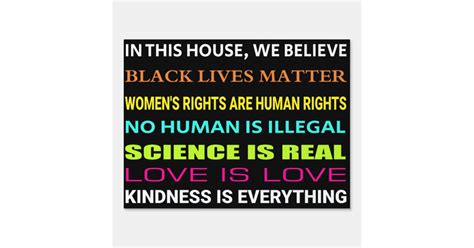
(In my house, we believe the Nicene Creed)

Instead of a naked public square, we see one festooned today with every imaginable image of the rainbow and associated symbology: from flags to backlighting, from crosswalks to entire murals on the sides of buildings. The public square went briefly from being a space where one might once have found images of the Ten Commandments or, during the holidays, a Christmas crèche, to one where the White House might be lit up by the rainbow celebrating a judicial fiat declaring a right to marriage of homosexuals in a constitution written in the 1780s, to public libraries where praise of cross-dressing, transexuality, and gay sex would become run-of-the-mill children’s programming.

When religion in any traditional or recognizable form is excluded from the public square, it does not mean that the public square is in fact naked. When recognizable religion is excluded, the vacuum will be filled by ersatz religion, by religion bootlegged into public space under other names.

The high priests of the new religion insist upon enthusiastic public expressions of support—especially during the holy month of June—lest one’s relative lack of fervency be taken as an indication of disbelief and grounds for being purged from the ranks of the elect. In nearly every respect, expressions of Pride are deployed in identical ways to traditional religious symbols and belief, in the eyes of many constituting a replacement religion. The inescapable, even overbearing presence of Pride symbology thus today bears all the unmistakable features of a “comprehensive doctrine,” the prevention of which earnest liberals of yesteryear insisted was their sole, modest aim.

Any war of “comprehensive doctrines” also brings attendant dangers. However, only someone not paying attention could believe that those dangers have been absent in recent years. My hope is that forthrightness about the terms of the debate may lead not to renewed “wars of religion,” but to a new settlement. A more pacific settlement might arise from acknowledgment that the actual “fact of pluralism” may require increased acceptance and acknowledgement of various state establishments. Such a settlement would return us to the original arrangement of the constitutional order, in which various religious traditions could coexist with robust internal unity amid relative proximate concord. California might thus retain its de facto established religion of Pride, and Alabama would establish some form of broadly nondenominational Protestant Christianity.

Patrick Deneen, inluding a prophetic insight of Richard John Neuhaus.

Comments:

  1. I think Deneen is correct that “Pride” has become a Rawlsian comprehensive doctrine — i.e., a de facto religion. (That doesn’t mean I think it will endure.)
  2. Deneen’s suggestion of permitted state establishments of religion is America’s original pattern (for what it’s worth). The First Amendment’s prohibition of Congress making any “law respecting an establishment of religion” was indeed a restriction on Congress, not the states. Massachusetts (of all places) had a state establishment until the 1830s and abandoned it voluntarily, not because some court declared it unconstitutional.
  3. I suspect I could formulate an argument that a state establishment of religion, unlike a limit on free exercise of religion, ought not be barred by the 14th Amendment “incorporation.” So long as a citizen is not coerced, I question whether their 14th Amendment “rights” are violated by an establishment.
  4. I’m under no illusion that I will like the religion established by any state: While I differ from him in details, I concur with Ross Douthat’s daring book title Bad Religion: How We Became a Nation of Heretics, and the best state establishment I could realistically hope for is mainstream Protestant (i.e., moralistic therapeutic deism).

Progressives verus liberals

You know you’ve touched a nerve with progressive activists when they tell you not just that you’re wrong but that you’re on the other side.

Such is the fate of any old-school liberal or mainstream Democrat who deviates from progressive dogma …

If this was just about our feelings, these denunciations could be easily brushed aside. But the goal and the effect is to narrow the focus of acceptable discourse by Democrats and their allies. If liberals are denounced for “punching left” when they express a reasonable difference of opinion, potentially winning ideas are banished.

In the run-up to a tight election with a weak Democratic candidate and a terrifying Republican opponent, pushing liberals and centrists out of the conversation not only exacerbates polarization, it’s also spectacularly counterproductive.

Those on the left who’ve been dumbstruck as Donald Trump has intimidated his most vociferous Republican critics (see: Chris Sununu, Nikki Haley) into falling in line might exert a little more self-awareness of similar moves by the left.

The goal of progressives may be solidarity, but their means of achieving it are by shutting alternative ideas down rather than modeling tolerance.

Pamela Paul, Who You Calling Conservative?

Note that I am not denying a similar Trumpist lock-step on the Right, nor does Ms. Paul.

Understanding the 2024 Roberts Court

If you really want to understand the conservative-dominated Supreme Court, it’s important to realize that all the Republican nominees who sit on it formed their legal philosophy and forged their legal reputations long before Donald Trump was elected president. This is no less true of Trump’s three nominees than of the three justices who were nominated by previous Republican presidents. Neil Gorsuch, Brett Kavanaugh and Amy Coney Barrett all possessed a robust legal identity and a considerable body of work before their selection to the high court. In fact, each has his or her own maverick streak, with Gorsuch perhaps most notable in his steadfast defense of Native Americans and the rights of criminal defendants.

When you understand this reality, what can seem to be a confounding, surprising Supreme Court term is actually predictable. The Trumpist right is lobbing a number of novel cases presenting aggressive legal theories to justices with pre-Trump legal philosophies, and the pre-Trump justices are rejecting them, repeatedly.

David French (emphasis added).

The Trumpist right is especially getting aggressive in Mississippi, Louisiana and Texas, part of the 5th Circuit U.S. Court of Appeals. The 5th Circuit has become where conservatives play out their fantasies to an obliging court as the 9th Circuit used to be the playground for progressives. You could say the 5th is the new 9th.

Republicans Pounce

A politically inconvenient rape and murder: Two migrants who’d crossed the border illegally have been charged with the rape and murder of 12-year-old Jocelyn Nungaray in Houston. The Associated Press managed to not once mention the status of the killers. The NYT eventually covered it, only in the context of how darned politically inconvenient it is: “The killing of Jocelyn Nungaray in Houston has become the latest crime seized on by Republicans to attack President Biden over his immigration policies.” Right. That 12-year-old, so rude of her to be murdered by the wrong type and letting Republicans “seize on” it. 

Nellie Bowles.

I’ll give the New York Times credit for disguising the usual formulation wherein the real story is “Republicans pounce” instead of what detestable thing they pounce on.

Tradition

Most of the things in our lives are not of our own making – they were given to us. Our language, our culture, the whole of our biology and the very gift of life itself is something that has been “handed down” to us. In that sense, we are all creatures of “tradition” (traditio=“to hand down”). Of course, these things that are not of our own making and are the least controllable are also those things that we take most for granted. We may hate our culture and our biology, but will still have to use our traditioned language (or someone’s traditioned language) to say so. Tradition is simply the most foundational, inescapable aspect of human existence.

Fr. Stephen Freeman, Things You Can’t Invent


So: where did all my mockery of Trump go? Well, first, I resolved to stop harping on it. But then, I just moved it off to my reflexive blog, trying to keep this one relatively reflective.

I suffer more from the humiliations inflicted by my country than from those inflicted on her.

Simone Weil, from a letter to Georges Bernanos.

I don’t do any of the major social media, but I have two sub-domains of the domain you’re currently reading: (a) You can read most of my reflexive stuff, especially political here. (b) I also post some things on the only social medium I frequent, because people there are quirky, pleasant and real.

Juneteenth

I have nothing to say about Juneteenth except that emancipation was a legitimately huge landmark in our nation’s history and worthy of annual commemoration.

Public affairs

Indiana’s GOP Lieutenant Governor nominee

Indiana over last weekend nominated as its Lieutenant Governor candidate, Micah Beckwith, a pastor of some sort who:

  • Thinks that the “progressive left has taken over the Republican Party in Indiana,” and that some Republicans today are “champions of Communism.”
  • Said on a Christian(ish) podcast “We are in a season of war right now … People need to wake up, or else this mental and heart battle that we find ourselves in culturally, it will lead to bullets and bombs. It’s just a matter of time.”
  • Said God had told him, on January 7, 2021: “Micah, I sent those riots to Washington. What you saw yesterday was my hand at work.” (This is what every story on him seems to pick up.)

Those quotes are from Michelle Goldberg at the New York Times. Goldberg also says, sans quote, that he’s a “self-described Christian Nationalist.”

Beckwith was forced onto the ticket against the wishes of the Gubernatorial nominee, retiring U.S. Senator Mike Braun.

Yeah, I guess it’s national news.

I didn’t support Braun for Governor. I was unenthusiastic about him when he ran for Senate in a GOP primary whose theme was “Mirror, mirror on the wall, who’s the Trumpiest of them all?” (but I preferred him to Todd Rokita, now our Attorney General and a truly loathsome person). I’m not certain I’ll vote for him in the General Election.

My decision will hinge to some degree on how effective he is at keeping a reassuring distance from Beckwith without, of course, repudiating him so firmly as to hand the election to Democrats. So far, his pointed message “I’m in charge” seems about right.

I’ve noted repeatedly that I repudiated any loyalty to the Republican Party on Inauguration Day 2005. But I still have a reflex to vote Republican over Democrat, and to mourn what already has become of the Republican party, and what one likely future holds.

On Christian Nationalism

Having noted Micah Beckwith’s purported Christian Nationalism, I’m reminded that I may not have staked out my own position openly.

First, I define it narrowly. There have been ridiculous accusations of Christian Nationalism based on undisclosed or untenable definitions. Real Christian Nationalists are still pretty rare, I think (but what do I, a contrarian, know?).

I’m not unaware that American pluralism is an experiment. I’m not sure whether it will succeed or fail. I’m familiar with and friendly toward the phrase “worst form of government except for all the others.” I’m not ready to abandon it.

At the risk of ad hominem, I don’t trust the “Christians” who expressly advocate for Christian Nationalism. One of my older blogs, on what we then called “culture wars,” remains relevant, but I’ll paraphrase excerpts rather than do direct quotes.

My distrust of Christian Nationalists stems fairly directly from my disagreements with their form of our putatively shared faith — disagreements that lead me to chronic use of scare-quotes around the word Christian or the use of “Christianish.”

The pious Protestants among them tend functionally believe that God’s only presence in the world is His rules, so they “honor” Him by keeping his rules. But the age of Trump has brought many to profess that they’re Evangelicals even if, in the extreme case, they’re Muslims or even atheists, because of something they like about the politics now associated with that label.

The most coherent, maybe the only, Protestant theorists of Christian Nationalism are theonomists, or more specifically Reconstructionists. If these Calvinist intellectuals had their way, there would be 18 Old Testament Capital Crimes in our law books – including sassing parents. They’d shut down my Church and desecrate its icons. They might, for all I know, execute me for idolatry for the icons in my home prayer corner.

Ummmm, no thanks.

The Catholic theorists of Christian Nationalism (Integralism, they call it) are much better — not okay, but less bad. But I don’t think their side would get the levers of power anyway.

There is no remotely viable Orthodox version of Christian Nationalism, Byzantium being long-gone. And we’d lack the numbers to staff government if there were.

So I think “Christian Nationalism” in America would be, in ascending order of likelihood:

  1. Catholic Integralism
  2. Calvinistic Reconstructionism
  3. A blasphemous mish-mash of right wingnuttery in the name of God. (Like Indiana’s GOP Lietenant Governor nominee or the yard sign “Make Faith Great Again: Trump 2020.”)

I reject them all. I think all of them would be hostile to Orthodox Christianity. I prefer to continue our flawed experiment with pluralism. But I suspect I’ll live to see one of them.

We Orthodox have survived similar or worse circumstances before.

America’s enemies

American leaders have a great need to identify an enemy or group of enemies that the U.S. can define itself against in order to justify the dominant position that they want the U.S. to have. It doesn’t occur to these leaders that the pursuit of dominance itself is what creates so many enemies or that the U.S. would be far more secure by renouncing the pursuit.

Losing the Soviets as an enemy created a hole in U.S. foreign policy that Washington desperately tried to fill with anything our leaders could find, but the substitute villains (Saddam Hussein, Milosevic, etc.) were so weak by comparison that the threats had to be massively inflated.

Daniel Larison (who had fallen off my radar)

We seem hellbent on creating intractible enemies in at least three corners of the world. Depending on their political stripe, American politicians speak as if Russia, China, and/or Iran pose existential threats to us. Yes, we do have substantive differences with all, but I can make a case for all three that they simply wish to live their lives in their own ways in their part of the world without our interference. Look at the flash points with each: Ukraine, Israel, Taiwan. All are American dependencies; all are projections of our hegemony into the very heart of their respective spheres. Regardless of your sentiments, the fate of none of those areas have any existential meaning to the U.S.; and yes, I am including Israel in that. They do, however, have existential meaning to our supposed adversaries.

Terry Cowan

J.D. Vance

I commented on June 13 about Ross Douthat’s interview with J.D. Vance.

There doubtless have been many commentators weighing in on the interview, but I’ve read only one so far: Andrew Sullivan. He made some excellent observations about places where Vance was tap-dancing around the unvarnished truth (to stay in Trump’s good graces?) or omitting crucial facts that eviscerate his argument.

Of the changes in voting rules to deal with Covid?:

The new pandemic rules, moreover, were endorsed by the Congress, which passed $400 million in the CARES Act for the election’s unique challenges, which Trump himself signed into law. If the rules were rigged, Trump helped rig them!

Vance’s case is completely undermined by Trump himself. Trump, after all, did not say after the election that the Covid rules were why he’d lost. He said he’d lost because votes were stolen, stuffed, and hidden, and the voting machines had been rigged. He’s saying the same things today. And the reason for all of it was not some genuine concern about easier mail-in and absentee voting (he endorsed absentee voting, after all), but Trump’s basic, characterological inability to function in a system that doesn’t guarantee him victory every single time.

That is not the system’s fault. It’s the fault of the party that nominated a malignant, delusional loon.

Putin

This week in Budapest, I met with an American academic active in the struggle for international religious freedom. We spoke about the Russia-Ukraine war, and established that we both believe Russia ought not to have invaded its neighbor. I added that as an Orthodox Christian, it grieves me how Putin has instrumentalized the Church to advance his war aims.

Then the American, a conservative Christian, posed a provocative question, that went something like this: For all his thuggishness, do you think that Vladimir Putin is on the right side of broad civilizational trends? My interlocutor brought up Putin’s harsh criticism of Western secularism and its emptiness, contrasting it to a Russia built on traditional values, including religion. Yes, Russia is in deep social and demographic trouble, and yes, Putin might be a colossal hypocrite, but, said the American, on the deep civilizational questions, isn’t Putin, you know … right?

I knew the answer, but as a man of the West, was too depressed by the question to admit it ….

Rod Dreher in the European Conservative

Degrowth

The case for degrowth is not about martyred self-denial or constraining human potential; it is about reorienting socioeconomies to support collaborative and creative construction of lives that are pleasurable, healthy, satisfying, and sustainable for more people and more places. End goals of degrowth – dignified work, less selfish competition, more equitable relationships, identities not ranked by individual achievement, solidary communities, humane rhythms of life, respect for natural environments – are also the means through which people exercise and embody, day by day, the lifestyles, institutions, and politics of degrowth worlds to come.

The Cauldron of Degrowth – Front Porch Republic

Euro-skepticism

The European Union began as a trading bloc, but by the early 1990s, it had evolved into a moral project fueled by elite distaste for (even revulsion against) the nationalistic sentiments these elites had become convinced were the source of all the crimes of the European past, including imperialism, racism, fascism, and genocide. What Europe needed was an inoculation against these sentiments, and the EU would be the vaccine, giving the continent a collective goal of striving to overcome particularistic attachments and the cruelty, suffering, and oppression they supposedly implant and encourage. Nationalistic sentiments would be sublimated into the transnational idea of the EU, with the EU itself eventually expanding without limit as the leading edge of a world without borders or walls impeding trade, the free movement of people, products, capital, and labor.

Damon Linker

I am enthusiastically European; no informed person could seriously wish to return to the embattled, mutually antagonistic circle of suspicious and introverted nations that was the European continent in the quite recent past. But it is one thing to think an outcome desirable, quite another to suppose it is possible. It is my contention that a truly united Europe is sufficiently unlikely for it to be unwise and self-defeating to insist upon it. I am thus, I suppose, a Euro-pessimist.

Tony Judt

Matters of Opinion

The continuing siege of Samuel Alito

I’m a journalist. We’re journalists. There are certain things we do. When we interview somebody, we make it clear that I work for the New York Times, the “NewsHour,” the Washington Post. Like, we make it clear who we are. We don’t lie. We don’t misrepresent ourselves. We don’t hide a tape recorder somewhere, and we don’t lead people on with a bunch of ideological rants. And this person did all that. It’s a complete breach of any—the basic form of journalistic ethics. And I was, frankly, stunned that all of us in our business just reported on it, just like straight up. And to me, this information is so doctored by her attitudes, the way she’s leading on Alito and his wife. It’s just—it’s unfair to them, frankly, to treat this as some major news story. We should be treating it as somebody, a prankster. And there’s a right-wing version of this called Project Veritas, where they lie too—as some prankster who’s creating distorted information.

David Brooks, on the Journalist who plied Justice Alito with a red-meat rant and got only a very anodyne response.

I found myself hoping that she will forever be known as the journalist who engaged in sleaze and then made it worse by publishing the nothingburger results. And then I remembered an incident in my past, when I may have been older than she is now, when I broke the rules to get the true story — not as a journalist, but as a lawyer. I, too, came up dry — and exposed for my wrongdoing.

I’m glad that did not follow me the rest of my life. I hope she has learned her lesson as I learned mine.

Worst Matter of Opinion podcast ever?

With Ross Douthat on vacation, Michelle Cottle, Carlos Lozada and Lydia Polgreen invited their hardcore colleague Jesse Wegman to join them.

Synopsis: Some justices blame the press for distrust of the U.S. Supreme Court. But that’s not it. It’s really Justice Alito’s [first exaggeration about Justice Alito] and [generalization built on exaggeration] and Clarence Thomas [Oh, hell, let’s just lump him with Alito] and dismissing Alito’s version of flag-gate and laughing out loud at Justice Alito saying [garbled version of he has a duty to deliberate if he’s not required to recuse, which is true] and Mitch McConnell, who played unprecedented political hardball to defeat Merrick Garland (by delay) and confirm Justice Barrett (by contrasting haste), so that Trump’s two appointees have cooties-by-association.

I will give Carlos Lozada credit for pushing back. The bias, dishonesty, and inexcusable ignorance of the other three make me want to cancel my Times subscription.

Intuition

“I have the feeling that I understand it.” But then he adds, “In fact, it is not ‘understanding,’ and it is not ‘knowledge.’ It is a direct awareness, or intuition. It’s not the kind of thing you ‘understand.’ It’s like I said before to you: one grain of rice, and the whole earth, they are the same. You can’t learn that from a book.”

Andy Couturier, The Abundance of Less

Mordant observation

The more people came to know gay people and understand the aims of the movement for gay marriage, the more accepting they became of it. The more people come to know trans people and understand the aims of the transgender moment, the more skeptical they become of its claims.

Wesley Yang on new polling. (Via Andrew Sullivan)

Books

There are 10,000 books in my library, and it will keep growing until I die. This has exasperated my daughters, amused my friends and baffled my accountant. If I had not picked up this habit in the library long ago, I would have more money in the bank today; I would not be richer.

Pete Hamill via Robert Breen on micro.blog.

I know what Hamill means.


So: where did all my mockery of Trump go? Well, first, I resolved to stop harping on it. But then, I just moved it off to my reflexive blog, trying to keep this one relatively reflective.

I suffer more from the humiliations inflicted by my country than from those inflicted on her.

Simone Weil, from a letter to Georges Bernanos.

I don’t do any of the major social media, but I have two sub-domains of the domain you’re currently reading: (a) You can read most of my reflexive stuff, especially political here. (b) I also post some things on the only social medium I frequent, because people there are quirky, pleasant and real.

Notebook Dump 6/13/24

Culture

Incentivizing misery (bad urbanism)

There is nothing economically or socially inevitable about either the decay of old cities or the fresh-minted decadence of the new unurban urbanization. On the contrary, no other aspect of our economy and society has been more purposefully manipulated … to achieve precisely what we are getting. Extraordinary governmental financial incentives have been required to achieve this degree of monotony, sterility and vulgarity. Decades of preaching, writing and exhorting by experts have gone into convincing us and our legislators that mush like this must be good for us, as long as it comes bedded with grass.

Jane Jacobs, The Death and Life of Great American Cities

“Assignable Curiosity” — ouch!

As Jeff Schmidt writes in Disciplined Minds (Rowman & Littlefield, 2001), academia and the other high-ranking professions are good at maintaining “ideological discipline” within their ranks, and people who do well in the academy tend to have “assignable curiosity,” which is to say, they are obediently interested in the things they’re told to be interested in.

Alan Jacobs, How to Think

By what authority?

The newest [Covid conspiracy theory] I’ve heard is that Covid is ravaging people’s immune systems on a mass scale comparable to that of H.I.V. On what authority can such a falsehood now be debunked?

As the expression goes, trust is built in drops and lost in buckets, and this bucket is going to take a very long time to refill.

Zeynep Tufekci, A Lesson From Covid on How to Destroy Public Trust (emphasis added)

And then there’s the National Security officials who prostituted themselves to declare Hunter Biden’s laptop a made-in-Russia hoax.

If I were on the Left, I hope I’d have the objectivity to reject most of what comes out of HRC and SPLC, both of them media-coddled bullshit factories, dependent on fear to stay in business. (By all rights, HRC should have declared victory and closed up shop after Obergefell; instead, it took up a version of transgender rights that many gays and lesbians reject.) But the Media lap up their stuff.

I don’t know who’s trustworthy any more. Whereas I formerly read stuff regularly from sources on the fairly far Left and Right, I now try to stick to sane-seeming, more-or-less-centrist sources, the fairly far Left and Right having become chronic liars. But I have no conclusive reason to think the center isn’t lying, too.

Any glimmers of absolute certainty I saw in the past were probably unwarranted, but these days it’s hard to find “beyond reasonable doubt.”

Elusive higher purposes

L.M. Sacacas attempts to disenthrall us from a subtle delusion:

Implicit in the promise of outsourcing and automation and time-saving devices is a freedom to be something other than what we ought to be. The liberation we are offered is a liberation from the very care-driven involvement in the world and in our communities that would render our lives meaningful and satisfying. In other words, the promise of liberation traps us within the tyranny of tiny tasks by convincing us to see the stuff of everyday life and ordinary relationships as obstacles in search of an elusive higher purpose—Creativity, Diversion, Wellness, Self-actualization, whatever. But in this way it turns out that we are only ever serving the demands of the system that wants nothing more than our ceaseless consumption and production.

Perhaps the best expression I know of the sentiment I’m trying to convey is from a poem by Marylin Chandler McEntyre, “Artists at Work,” from her collection inspired by Vermeer’s women:

The craftsman who made the rose window at Chartres
rose one morning in the dead of winter,
shivered into what layers of wool he owned,
and went to his bench to boil molten lead.
This was not the day to cut the glass or dye it,
lift it to the sun to see the colors dance
along the walls, or catch one’s breath
at peacock shades of blue: only, today,
to lay hot lead in careful lines, circles,
wiping and trimming, making
a perfect space for light.

When Wren designed St. Paul’s, he had to turn away
each day from the vision in his mind’s wide eye
to scraps of paper where columns of figures measured
tension and stress, heft and curve, angle and bearing point.
Whole days he spent considering the density
of granite, the weathering of hardwoods,
the thickness of perfect mortar; all
to the greater glory of God.

And Vermeer with his houseful of children
didn’t paint some days, didn’t even mix
powders or stretch canvasses, or clean palettes,
but hauled in firewood, cleaned out
a flue, repaired a broken cradle, remembering,
as he bent to his task, how light shone gold
on a woman’s flesh, and gathered
in drops on her pearls.

Teflon Sam

A liberal (maybe even left-wing) provocateur named Lauren Windsor attended a dinner of the Supreme Court Historical Society and, with hidden recording device and pretending to be a fervent Catholic conservative, tried to bait Justices John Roberts and Samuel Alito into saying something inflammatory. She utterly struck out with Roberts but got an polite, anodyne response from Alito. The liberal media are now dishonestly engaged in trying to distill something sinister, even theocratic, from the weak tea of what he said.

But …

To start with the question of judicial ethics: Where was the justice’s error? He did not mention any pending case or litigation. He did not name any person or party. He did not discuss any specific political or moral matter. Most of the exchange consists of the filmmaker’s own goading remarks, followed by the justice’s vague and anodyne affirmations and replies. About what you might expect when cornered at a boring cocktail party.

Setting aside judicial ethics, I can think of two possible objections to what Justice Alito said: that he should not hold these views; or that he should not express them in public.

As to whether he should hold these views, I would suggest that they are not so extreme as to merit denunciation. On the contrary, they are reasonable, even commonplace.

Marc O. DeGirolami. And:

Alito wasn’t wrong. What’s wrong is what this Windsor woman did: misrepresented herself in an attempt to bait these Justices into saying something she could weaponize on social media.

To be fair, the right-wing activists of Project Veritas have famously done the same kind of thing. I’ve praised it before, but on reflection, I regret that. It is a bad thing to turn even private life into an ideological battleground. When activists of either Left or Right go picket outside a public figure’s house, they claim that their cause (pro-life, gay rights, whatever) is so morally urgent that it justifies violating the unwritten taboo that separates public from private. Both sides do it, and it’s wrong. They’re making life together impossible.

Project Veritas has landed some excellent scoops with its undercover activism, and has exposed some bad actors, for sure. Yet I have come to believe the price for doing so is too high. If we lose the ability to socialize with each other out of fear that the stranger we have just met might not be who he or she claims to be, and that they might be leading us into a trap, then we have lost something fundamental to civilized life, haven’t we?

Rod Dreher.

Errata

In March, I wrote:

IVF is in fact popular … (I’d say “nobody would dare try to outlaw IVF” except that people are daring some pretty bizarre things these days.)

I stand at least semi-corrected:

The Southern Baptist Convention, the nation’s largest and most politically powerful Protestant denomination, voted Wednesday to oppose in vitro fertilization. The move may signal the beginning of a broad turn on the right against IVF, an issue that many evangelicals, anti-abortion advocates and other social conservatives see as the “pro-life” movement’s next frontier — one they hope will eventually lead to restrictions, or outright bans, on IVF at the state and federal levels. (Source: politico.com)

Via John Ellis, whose daily new curation I recently discovered.

I note that the SBC resolution does not call for legislation, but I’m placing no bets on this being the end of the subject.

If you have no idea why anyone might opposed IVF, you need to get out more. As an oblique reminder, I again dig into my archives:

When the industry makes promises to prospective parents about in vitro fertilization, it leans on images of cherub-cheeked babies. And when it pitches to egg donors, it speaks the language of altruism: You can help make a family. But when something goes wrong, the liability-shy industry is quick to retreat to the language of cells and property. IVF relies on treating the embryos it creates, freezes, and often discards as Schrödinger’s persons: we cannot make a moral pronouncement about what they are until we know whether they’re intended for life or death.

Leah Libresco Sargeant

Beginning with the paragraph “The media’s manipulations …”, Ryan Anderson critiques IVF more directly.

Politics

Trading Power for Liberty

So why are parts of the right so discontent? The answer lies in the difference between power and liberty. One of the most important stories of the last century — from the moment the Supreme Court applied the First Amendment to state power in 1925, until the present day — is the way in which white Protestants lost power but gained liberty. Many millions are unhappy with the exchange.

David French, MAGA Turns Against the Constitution

Western Hegemony has ended

Five hundred years of Western hegemony has ended, while the global majority’s aspiration for a world order based on multipolarity and sovereign equality is rising. This incisive book addresses the demise of liberal hegemony, though pointing out that a multipolar Westphalian world order has not yet taken shape, leaving the world in a period of interregnum. A legal vacuum has emerged, in which the conflicting sides are competing to define the future order.

NATO expansionism was an important component of liberal hegemony as it was intended to cement the collective hegemony of the West as the foundation for a liberal democratic peace. Instead, it dismantled the pan-European security architecture and set Europe on the path to war without the possibility of a course correction. Ukraine as a divided country in a divided Europe has been a crucial pawn in the great power competition between NATO and Russia for the past three decades.

The war in Ukraine is a symptom of the collapsing world order. The war revealed the dysfunction of liberal hegemony in terms of both power and legitimacy, and it sparked a proxy war between the West and Russia instead of ensuring peace, the source of its legitimacy.

The proxy war, unprecedented sanctions, and efforts to isolate Russia in the wider world contributed to the demise of liberal hegemony as opposed to its revival. Much of the world responded to the war by intensifying their transition to a Eurasian world order that rejects hegemony and liberal universalism. The economic architecture is being reorganised as the world diversifies away from excessive reliance on Western technologies, industries, transportation corridors, banks, payment systems, insurance systems, and currencies. Universalism based on Western values is replaced by civilisational distinctiveness, sovereign inequality is swapped with sovereign equality, socialising inferiors is replaced by negotiations, and the rules-based international order is discarded in favour of international law. A Westphalian world order is reasserting itself, although with Eurasian characteristics.

The West’s defeat of Russia would restore the unipolar world order while a Russian victory would cement a multipolar one. The international system is now at its most dangerous as the prospect of compromise is absent, meaning the winner will take all. Both NATO under US direction and Russia are therefore prepared to take great risks and escalate, making nuclear wan increasingly likely.

Summary blurb for Glenn Diesen, The Ukraine War & the Eurasian World Order, recommended by cyberfriend and blogger Terry Cowan.

Although Diesen, even Cowan, pay closer attention to such things than I do, this is very much my view as well. So do I buy the book to confirm my priors or move on to another topic? If the Russia-Ukraine war ends before I buy it, I’ll probably move on.

But first, a key quote, from 1987 and from an eminent source, to keep and ponder:

George Kennan:

Were the Soviet Union to sink tomorrow under the waters of the ocean, the American military-industrial complex would have to go on, substantially unchanged until some other adversary could be invented. Anything else would be an unacceptable shock to the American economy.

Via Diesen and Terry Cowan

Nothing has changed. It is literally true that we invent enemies to justify feeding what Dwight Eisenhower presciently called “the military-industrial complex.”

J.D. Vance (see below) also thinks the world is becoming multipolar.

J.D. Vance

Ross Douthat has an important interview: J.D. Vance on Where He’d Take the Republican Party. I’m sharing an unlocked version which, if you wonder, as I do, “What happened to the never-Trump author of Hillbilly Elegy?” is worth reading.

I’ll probably wrestle with it more if he becomes Trump’s running mate. For now, I’m slightly less cynical about his change(s) over eight years than I was before, and I find that I’m of one mind with him substantively on a few things.

Balancing Sociopathy against policy

I don’t apologize for the votes I cast after careful (indeed, searching) consideration. However, I do have to apologize for my view of the never Trumpers whom I found to be histrionic and unrealistic. They saw further that there were significant risks involved with Donald Trump that could very well outweigh the policy outcomes. They were right about that, and they deserve an apology from me (and perhaps others who saw it the way I did) for not perceiving that their concerns were grounded in reality, not merely some idealistic moral fragility. They perceived a legitimate threat, which did come to significant fruition.

Hunter Baker, When Pragmatic Politics Goes Bad: An Apology to the Never-Trumpers

This, published 9 days after the January 6 insurrection (or whatever you want to call it, except “patriot rally” or its cognates) remains worth reading — if only for his rationale for voting as he did. I consider his rationale incoherent; one need not vote for a menace who might do some good things in order avoid being a “free rider” if the menace actually does them. One can say “I think the menace outweighs the possible benefits.”

Reminder …

I’ve moved most political stuff to another blog, but if you’re curious, they’re just a click away.


So: where did all my mockery of Trump go? Well, first, I resolved to stop harping on it. But then, I just moved it off to my reflexive blog, trying to keep this one relatively reflective.

I suffer more from the humiliations inflicted by my country than from those inflicted on her.

Simone Weil, from a letter to Georges Bernanos.

I don’t do any of the major social media, but I have two sub-domains of the domain you’re currently reading: (a) You can read most of my reflexive stuff, especially political here. (b) I also post some things on the only social medium I frequent, because people there are quirky, pleasant and real.

June!

Culture

Summertime wordplay

[I]n The Star Tribune of Minneapolis, James Lileks described the “glorious boredom” of a child’s summer with its “endlessly attenuated twilight, as the sun slides down like a hot coin and starts up the jukebox of crickets and frogs.” (Rudy Brynolfson, Minneapolis)

(Via Frank Bruni)

The fate of the humanities

There’s no shortage of voices lamenting the state of the humanities, or at least of humanities departments. I was going to compile some samples, but if you’re interested, you’re already aware of them.

Are they wrong? Are the humanities actually at a new dawn?

The math nerds built our world, from the apps we use to get to work to the way we order our toilet paper. But with the rise of AI, are the coders set to become victims of their own success? Peter Thiel thinks so. In a recent conversation with Tyler Cowen, the PayPal co-founder predicted that the new technology would be “worse for the math people than for the word people.” What use is spending four years learning how to code when AI can do it all for you? 

The author Luke Burgis, echoing Thiel, predicts a “bull market in the humanities.” As he put it in a recent post on his Substack, “the humanities, rightly understood, are things that technology cannot take away or substitute for.” By the humanities, Burgis doesn’t mean the “ideological programs of cultural change” at elite universities. He means the humanities broadly understood as the study of history, philosophy, religion, language, and arts that explores “what it truly means to be human.” 

We may be in the middle of a technological revolution, but paradoxically, what’s timeless and ancient might be more valuable than what’s timely and modern.

The Free Press

From a somewhat different perspective:

The best books about technology are about humanity—about what it means to be human and about life well lived and urgent threats to the good life. Because technology is essentially a human thing, good writing about technology is good writing about human things. A doctrine of technology is only as good as its doctrine of man; indeed, not only depends upon but is a doctrine of man. The technologist is an anthropologist, from first to last.

What, then, are the best books (not) about technology that I have read? A short list would include Abraham Joshua Heschel’s The Sabbath; Walker Percy’s Lost in the Cosmos; François Mauriac’s The Eucharist; Wendell Berry’s A Timbered Choir; Josef Pieper’s Leisure, the Basis of Culture; Jonathan Lear’s Radical Hope; Stephen King’s On Writing; Albert Murray’s The Omni-Americans; Pascal’s Pensées; and many more.

Brad East

Sportsball

[M]uch of the modern sports world has lost its luster for me.

The era is long gone when the lineups of professional teams had enough year-to-year continuity that one knew all the players’ names and stats. But the rotation in and out of teams, including now in college sports, has become such a blur that only TV commentators afflicted with hyperfocus can keep track.

Sure, money-ball’s metrics rule, but the reality remains that now you’re mostly rooting for mercenaries. And as cable TV fades, pro and college sports teams are disappearing into the permanent fog called streaming. Looking for the airtime of your favorite team can turn into a constant and costly snipe hunt. Is it worth it?

Daniel Henninger

Tap-dancing around the “W” word

Whether and when someone with a uterus gets their period — for the first time, and throughout their life — can reflect not only their reproductive health, but their risk of cardiovascular disease, cancer, miscarriage, and premature death ….

STAT, H/T John Ellis

Let’s see now. Slightly more than half the human race comes equipped with a uterus. Wouldn’t it be nice if there was a word for them less kludgy than “persons with uteruses” or the equivalent?

I wish they’d stop doing this

To journalists, this is a lazy visual for “this is a story about something-or-other related to Russia.”

To this American Orthodox Christian, it insinuates “Russian Orthodoxy is up to something sinister again.”

I object!

MAGA flag

Nobody knew the flag was MAGA until Justice Alito flew it. Justice Alito, however, should have known it was evil, so the argument goes, since by flying it he made it evil. Okay, well. Commenters, please add what else Justice Alito needs to endorse so that it can become shameful, and if you agree that he should start with the term fur baby. As for the other Alito flag controversy, the upside-down American flag, turns out The Washington Post saw that when it was briefly flying in 2021 and decided not to report on it since it wasn’t really a story, but now that the election’s coming up, everyone’s going through their diaries.

Nellie Bowles

Unplanned unparenthood

The obvious reasons for postponing or forgoing parenthood, such as lack of money or building a career, no doubt play a part. But another, more welcome, trend is also evident. Breaking the data down by age shows that fertility is in serious decline only among America’s youngest women. Since the 1990s the fertility rate for those aged between 15 and 19 has fallen by 77%; that for 20- to 24-year olds is down by 48%. Meanwhile, it is slowly increasing for women aged 30 and over (see charts). In 1990 teenage pregnancies accounted for one in eight births. By 2022 this had fallen to one in 25.

The Economist

Politics

Vice-signaling

“Vice-signaling.” Surely I’ve heard it before, but Michelle Goldberg brought it back as the overall branding of today’s GOP. (Killing Dogs. Taunting the Homeless. Praising Al Capone. This Is Trump’s Party.) To that list we can ad “voting for convicted felons if they’re really brazen about it.”

Speaking of which:

The blasphemy of the radical left is to deny human depravity; the radical right’s blasphemy is to enshrine this depravity as noble.

Matthew Beringer

Choosing

Eight years ago, I published an essay for Public Discourse about why I could not vote for either Hillary Clinton or Donald Trump. “Vote as if your ballot determines nothing whatsoever—except the shape of your own character,” the piece concluded. “Vote as if the public consequences of your action weigh nothing next to the private consequences. The country will go whither it will go, when all the votes are counted. What should matter the most to you is whither you will go, on and after this November’s election day.”

There is nothing in what I said then that I would now retract. I rejected the idea that I, as one individual, must treat my choice as confined to the binary of Clinton versus Trump, as though the weight of the outcome were on me alone. It is frequently the case that we vote for one major-party presidential candidate principally because we are against the other one—usually because we find “our guy” a less than optimal choice but “the other guy” strongly repellent. But when we conclude that both of them are wholly unfit for office, our habitual partisan commitments, and our fond hope that the one representing “our side” will be normal, or guided by normal people, do not compel us to cast a vote in that direction. What we must consider, I argued, is not our role in the outcome of the election (which is negligible, and unknown to us when voting), but the effect on our conscience and character of joining our will to a bad cause.

The last eight years have made me more certain I was right.

Matthew J. Franck, Choosing Not to Choose

Choosing Not to Choose” is the title of a new piece by Matthew Franck published today on the site. Trump is wholly unfit for office, Franck allows, but so is Biden for different reasons. And it’s important that Americans not vote for a political candidate they believe is unfit, as one’s vote inevitably influences one’s character. Invest in a corrupt political cause on lesser-of-two-evils grounds and eventually, by feeling obliged to defend it and perhaps embrace it, you too will be corrupted.

My dispute with Franck is simple. I disagree with how he’s framed the choice before voters.

The question isn’t “Biden or Trump?” so much as it’s “Should we continue with the constitutional order as we’ve known it or try something radically different?”

I’ll guarantee here and now that if Trump becomes president again and remains in good health he’ll try to extend his term in office past 2029. I won’t guarantee that he’ll succeed, but the attempt will be made as surely as you’re reading this. Trump is less a person than a personality type and his type is compelled to pursue its own interests remorselessly above all things. I think he’d honestly find it hard to comprehend why someone in his position shouldn’t try to extend their time in power.

Biden won’t do that if reelected. (And not just because he might be catatonic by 2029.) He won’t defy court orders. He won’t stock the leadership of the Justice Department with fanatics who have sworn an oath of allegiance to him personally. He won’t call the military out into the streets to confront people protesting him. And, contra Franck, I don’t believe he’ll claim a “mandate” if he wins, since he’s all but certain to do so with fewer electoral votes than he received in 2020 and with a Republican takeover of the Senate.

Nick Cattogio, Choosing to Choose


I suffer more from the humiliations inflicted by my country than from those inflicted on her.

Simone Weil, from a letter to Georges Bernanos.

I don’t do any of the major social media, but I have two sub-domains of the domain you’re currently reading: (a) You can read most of my cathartic venting, especially political here. (b) I also post some things on the only social medium I frequent, because people there are quirky, pleasant and real.

Public Affairs

On the one hand, I express no profound personal opinions here; on the other, I have some smart and provocative “takes” from others and some comments on them.

Stupid opinions on why a Trump conviction will be reversed

Any conviction obtained at the so-called “trial” of former President Donald Trump’s alleged alteration of financial records will be reversed on appeal, if necessary by the U.S. Supreme Court, because altering financial records is only a crime in New York if you do it to conceal some other crime. Paying Stormy Daniels money is NOT a crime. …

Steven Calabresi (emphasis added).

I would wager a substantial sum that the U.S. Supreme Court will not reverse a New York conviction of Trump at all, let alone on the basis that New York Courts misapplied New York law.

If the law is as Calabresi says, State appeal courts should reverse, but state Courts have the last word on what state law is.

Steven Calabresi is not a stupid man. This outburst was an example of motivated reasoning.

It’s still quite possible that the Manhattan jury will convict Trump on the 34 felony charges Bragg has brought. But there is no chance the conviction will withstand appeal, particularly given that it relies so heavily on Cohen’s testimony.

Eli Lake (emphasis added).

I would wager even more that a conviction will not be reversed because it relies too heavily on Michael Cohen’s testimony. No Courts will have any idea what the jury relied on. That’s not how jury trials work.

I cannot vouch for Elli Lake not being stupid on legal matters. It rather appears that he is.

Note: This is not to say that Courts won’t reverse because particular testimony of Cohen was admitted over timely objection. Nor am I saying that this prosecution is solid and will not be reversed. There’s a lot of non-dopey analysis that thinks if very shaky. I’m just faulting stupid arguments that mislead non-lawyer readers.

History Rhyming?

I’ve been surprised at the intensity of the electorate’s hostility to post-Roe restrictive abortion legislation. I thought public opinion was more closely divided.

As we think about why voters are so hostile, though, it may be illuminating to remember the Protestant landscape pre-Roe. For one common instance:

The great majority [of pre-Roe Southern Baptists] favored such “therapeutic” abortions, but a small minority objected that abortion was murder, and another small minority argued that it should be legal in all cases. The divide, however, did not fall along the usual conservative-moderate lines, but rather, it seems, along the spectrum of anti-Catholicism.

Frances FitzGerald, The Evangelicals. Voters may just be reverting to pre-Roe positions.

I care a bit about what the various states do. But I’m still committed to federalism, unconvinced that this is an appropriate topic for national legislation.

Commencement Addresses

It’s like the opening parable of David Foster Wallace’s Kenyon College commencement address: “There are these two young fish swimming along and they happen to meet an older fish swimming the other way, who nods at them and says ‘Morning, boys. How’s the water?’ And the two young fish swim on for a bit, and then eventually one of them looks over at the other and goes ‘What the hell is water?’”

James K. A. Smith, You Are What You Love

But what sort of use does it make of this freedom? Here again, the main concern is not to infringe the letter of the law. There is no true moral responsibility for deformation or disproportion. What sort of responsibility does a journalist or a newspaper have to his readers, or to his history — or to history? If they have misled public opinion or the government by inaccurate information or wrong conclusions, do we know of any cases of public recognition and rectification of such mistakes by the same journalist or the same newspaper? It hardly ever happens because it would damage sales. A nation may be the victim of such a mistake, but the journalist usually always gets away with it. One may — One may safely assume that he will start writing the opposite with renewed self-assurance.

Alexandr Solzhenitsyn, Harvard Commencement Address, 1978

Equality

In these powerfully written essays Oakeshott points to the damage done when politics is directed from above towards a goal – whether liberty, equality or fraternity – and where all policies and negotiations are formulated by reference to that goal.

Roger Scruton, Conservatism

We in the US are suffering from a putative commitment to the goal of equality, “where all policies and negotiations are formulated by reference to that goal.”

I say “putative” because we seem to have lost the ability to identify which things truly are alike, and so should be treated alike, the ability to recognize that not all discrimination is invidious. Sometimes “discrimination” is the necessary consequence of discernment.

If the preceding seems impenetrably opaque, think about the dogma “trans women are women.” If that makes perfect, incontestable sense to you, you probably are loving our present love affair with “equality.” If you hesitate or disagree with “trans women are women,” you may be on my wavelength.

Elites and normies

Elites require control over the information sphere because their policy obsessions—on immigration, gender, and climate, for example—are not popular with the normies. By necessity, progressive fantasies must be imposed on our mediated reality, even as dissenting opinions are cast out into the dark. The internal combustion engine will destroy the earth; windmills will save it. Trump is a wannabe dictator; Biden, the adult in the room. Antagonists are always “far right”; there’s no such thing as “far left.” The ambition to conquer the empirical world with words approaches magical thinking.

It rarely works. The chaos and contingencies of the digital age allow the normies and their chosen tribunes, the populists, too much room to maneuver. Trump’s rise in the opinion polls would otherwise be inexplicable.

Martin Gurri

Why the meritocracy is not viewed as a legitimate ruling class

Now comes the kicker. By the competition it unleashes, bourgeois society creates unprecedented wealth, but also unprecedented inequality of wealth. It does so even while proclaiming equality to be its great insight, innovation and foundation, an inalienable right of man. The contradiction of bourgeois society is such that “its development belies its principle, and its dynamic undercuts its legitimacy.”

In earlier societies, inequality held a legitimate status, assigned by nature, tradition, or providence. In bourgeois society, inequality is an idea that circulates sub rosa in contradiction with the way individuals view themselves; it nevertheless pervades the environment in which they live…. The bourgeoisie did not invent the division of society into classes, but by cloaking that division in an ideology that renders it illegitimate, they tinged it with suffering.

One result is that we are deprived of a fundamental requirement of any polity: a ruling class that will be perceived as legitimate.

At bottom, we see a refusal of the ruling class to take responsibility for its rule, preferring to LARP at the barricades.

Matthew B. Crawford, Why the meritocracy is not viewed as a legitimate ruling class

Why so few pro-Trump columnists

There aren’t many pro-Trump columnists at major papers because there aren’t many pro-Trump columnists anywhere.

In past years, it hardly seems possible that a major publication wouldn’t have a supporter of Ronald Reagan on George W. Bush on its staff. That is why in 2024, newspapers would love nothing more than to have an in-house columnist on Team Red Hat/Tie.

But Trumpism is a visual medium – it cannot withstand the scrutiny of a written column. Trump supporters can go on Fox News or Newsmax or OAN and say whatever they want in the moment without being fact-checked beforehand. But writing a column means having editors and fact checkers verify the claims you’re making.

And because no editor will rubber-stamp a claim like “the 2020 election was stolen,” someone who tries to argue Biden didn’t win the last election or that the Jan. 6 insurrectionists were “political prisoners” will never be able to make their way to a legacy print outlet. A columnist that wanted to say, for instance, Vice President Mike Pence had the ability to choose his own electors in 2020 would be like a columnist earnestly arguing a woman is safer if she encounters a bear rather than a human man in the woods.

This phenomenon is glaringly obvious any time Trump goes on a network like CNN for a town hall or a debate. The falsehoods come so fast out of his mouth, the moderator can’t keep up, leaving 90 percent of his claims unchallenged. If the reporter stopped Trump to correct him on every lie he told, the event would be more moderator than candidate.

That is because being a Trumper is based almost solely on emotion and doesn’t rely on facts. Trumpism is a clenched fist, not an argument. And newspapers print arguments.

Christian Schneider, Where Are All the Pro-Trump Newspaper Columnists? (emphasis added; H/T The Morning Dispatch)

I am predisposed to credit Schneider’s argument because of people like Eric Metaxas.

Metaxas, a Yale grad, is an intellectual of sorts. He writes books. He hosts high-tone “Socrates in the City” conversations. I have it on fairly good authority that he’s genial and fun to talk to.

But he’s bereft of arguments for his election denialism. He has rock-solid certainty. As a word guy, he makes reductio ad Hitlerum analogies. He may have had mystical visions. But he has zero evidence. (Did I mention the rock-solid certainty?)

Checking in on the further-right

Charlie Kirk is worked up. “The world is in flames, and Bidenomics is a complete and total disaster,” the conservative influencer said during a recent episode of his podcast The Charlie Kirk Show. “But it can’t and won’t ruin my day,” he continued. “Why? ’Cause I start my day with a hot America First cup of Blackout Coffee.” Liberals have brought about economic Armageddon, but first, coffee.

… “Rest assured knowing that you’re ready for whatever the globalists throw at us next,” Kirk said at the end of one ad for medical-emergency kits … The commercial breaks sounded like something from an alternate universe. The more I listened to them, the more I came to understand that that was the point.

Some of Kirk’s ads … sound a little jarring: “You are nine meals away from anarchy,” he said in one ad for buckets of food rations, from a website called MyPatriotSupply.com. Yet as the world of right-wing-coded products has expanded, so has the weirdness of ads for them. “For 10 years, Patriot Mobile has been America’s only Christian-conservative wireless provider,” started another ad. Switching to Patriot Mobile, Kirk explained, would mean that “you’re sending the message that you support free speech, religious liberty, the sanctity of life, the Second Amendment, our military veterans and first-responder heroes” while getting “the same coverage you’ve been accustomed to without funding the left.”

Ali Breland, Why Is Charlie Kirk Selling Me Food Rations?

Another Denialism

Just as the Bishop of Oxford refused to consider that he might be descended from an ape, so now are many in the West reluctant to contemplate that their values, and even their very lack of belief, might be traceable back to Christian origins.

Tom Holland, Dominion

Trust the science

The strong, as science had conclusively demonstrated, had both a duty and an obligation to eliminate the weak.

Tom Holland, Dominion


So: where did all my mockery of Trump go?

I suffer more from the humiliations inflicted by my country than from those inflicted on her.

Simone Weil, from a letter to Georges Bernanos.

I don’t do any of the major social media, but I have two sub-domains of the domain you’re currently reading: (a) You can read most of my cathartic venting, especially political here. (b) I also post some things on the only social medium I frequent, because people there are quirky, pleasant and real.

Friday, 5-17-24

Pearl-clutchers

“I have heard from a good number of people in the S.D.N.Y. who have said, ‘Why the heck would Todd [Blanche] do this — why would he ever take this case?’” Elie Honig, a CNN senior legal analyst who worked with Mr. Blanche at the Southern District of New York, said in a recent profile. “My response is, generally, when did we become pearl-clutchers about defense lawyers defending defendants?”

Michael Wilson, Todd Blanche, Trump’s Lawyer in Hush-Money Trial, Cross-Examines Cohen

Just so.

The Culture Generally

Seeing whole people

[W]e have to stop just seeing these [gender dysphoric] young people through the lens of their gender and see them as whole people, and address the much broader range of challenges that they have, sometimes with their mental health, sometimes with undiagnosed neurodiversity. It’s really about helping them to thrive, not just saying “How do we address the gender?” in isolation.

Dr. Hilary Cass to the New York Times

Thinking small

Ted Gioia, Why Creatives Will Win by Thinking Small pulls together a convincing case that “Even the gatekeepers are sick of dealing with gatekeepers” and are going independent and/or small to evade them. Taylor Swift and Substack are two examples, evading the gatekeepers of the sclerotic music and publishing industries respectively.

Maybe we could say that small is getting pretty big.

Ted Gioia’s got one of the best culture-analyzing Substacks going.

Living off inherited moral capital

“I wouldn’t call it a change of mind,” Will said of his transition from classical liberalism to traditionalist conservatism. “I would say that I had become much more sensitive to the problem that Gertrude Himmelfarb, her husband, Irving Kristol, and others were to cite. And that is: Does classic liberalism provide for its own continuation, or does it live off the moral capital of a different age?”

Guy Denton, George Will Stands Against Vehemence

Presented without comment

A female friend expressed outrage that Caitlin Clark would be paid a piddling $76,000 in her first year in the WNBA. (By comparison, the first pick in the 2023 NBA draft signed a four-year contract for $55 million.) I asked her what team drafted Clark. She did not know. I asked her whether she knew the name of New York’s WNBA team. She did not. The name of any team in the WNBA? Nope. A famous player in the WNBA? Again, no answer.

R. R. Reno

Ready, fire, aim

Staff at The New York Times are circulating a draft of a letter to their boss, executive editor Joe Kahn, criticizing him for saying that some young reporters are not fully committed to independent journalism. Pro tip: if you’re worried your boss thinks you’re all whiny activists, campaigning against him from within the newsroom is only proving his point. (Semafor)

Oliver Wiseman

Politics

Boondogglia, USA

[A]rena subsidies are a terrible use of finite government resources and a ridiculously egregious redistribution of wealth from regular Americans—fans and haters alike—to some of the wealthiest people and organizations on the planet. And, to top it all off, they’re a classic case of political malpractice—local officials delivering massive rents to various cronies by promising unwitting voters the world yet delivering far fewer—but still “seen”—economic and social benefits to their communities.

Maybe all this government support might be worth the costs if the subsidized facilities at issue produced even a fraction of the benefits that supporters promise, but they don’t. Instead, there are few positions on which more economists agree than the terribleness of sports arena subsidies.

Scott Lincicome, Sports Are Great, but Stadium Subsidies Stink

Election 2024

The default position of American conservative Christians in this Fall’s Presidential Election should be to abstain or to vote for a Third-Party Candidate. Neither major party candidate is acceptable, so we should avoid complicity with both. It’s a painful situation, but not complicated.

My unspoken premise is that America is, and long has been, off course, and like all empires is waning, slowly, then all at once. (I could be wrong about the all-at-once part; that may come from the part of Evangelical apocalypticism that I did not avoid and have not fully recovered from. “Babylon the Great is fallen, is fallen” and all that.)

Neither major party has what it takes to fix that. Maybe no party does. Still, I intend to vote for Peter Sonski for President. That’s not just a protest vote. My values line up better with the American Solidarity Party than with either the Republicans or the Democrats.

Am I throwing my vote away? No. I’m telling both parties that they’re unacceptable. That’s a message well worth sending, not a waste. If enough people tell them that, they’ll change or fade into irrelevance. The first step toward changing our unsatisfactory two-party system, if it’s not entirely incorrigible, is to stop voting for lesser evils.

Am I voting for the other guy by not voting for your guy? No. I know how my home state is going to vote; my vote won’t be decisive — not in 2024, anyway. If polling was close enough that I thought it might make a difference, my correct decision would admittedly be harder emotionally. (I last voted for a “lesser evil” in, I believe, 2008.)

That’s it.

POTUS 2024

It was like he made you feel everything’s gonna be OK. The economy’s gonna get better; everybody’s freaking out about the border, but he’ll get it stopped.

Dee, a friend of Peggy Noonan, explaining why she’s voting for Trump.

Polls suggest that a felony conviction would lose him some votes ….

David Graham. What kind of world are we living in that a felony conviction wouldn’t be the death of a campaign?

Liberalism versus authoritarianism

I’ve tried to understand the appeal of Donald Trump. David Brooks gives it an oblique stab, and I thought there was a lot to like in his analysis, which is about liberalism versus authoritarianism, and the draw of the latter.

Now I understand how we keep electing bozos

As it happens, a new survey of registered voters was released last week from Navigator Research showing that a sizable number of Americans, incredibly enough, held Biden responsible for “the overturning of Roe v. Wade and the elimination of the federal right to an abortion.” That opinion was held by 34 percent of self-identified independents, 32 percent of Black voters, and 42 percent of Hispanic voters. It helps explain why the Biden campaign is devoting so much energy to connecting the dots between Trump’s Supreme Court appointments and the Dobbs decision. But it also suggests public perceptions of Trump are very hard to change, and that’s a big problem for Democrats.

Wall Street Journal.

Might there be, among those misinformed folks, people who give Biden credit for Dobbs as well as those who blame him? Or is ignorance a “pro-choice” exclusive?

Female success in Trumplandia

  • In The Los Angeles Times, Robin Abcarian noted that Noem, Marjorie Taylor Greene and Sarah Palin, among others, conform to a certain MAGA model for women leaders: “First, they want to prove how tough they are by shooting guns, preferably at animals, though occasionally at cars that Democrats drive. And second, they aspire to beauty standards set by Fox News anchors. Dental veneers. Cheek and lip fillers. Botox. Hair extensions. Performative cruelty and pouty lips are what it takes to succeed as a woman in the party of Trump.” (Judy Moise, Seattle)
  • In The Arizona Republic, Ed Masley appraised a recent Rolling Stones concert and wrote that Mick Jagger’s physicality “invites you to imagine Mikhail Baryshnikov raised by a family of overcaffeinated roosters.” (Paul Welch, Phoenix, and Dan Olson, Spokane, Wash., among others)

Frank Bruni

How MAGAworld grew

Of all passions the passion for the Inner [Circle] is most skillful in making a man who is not yet a very bad man do very bad things.

C.S. Lewis, The Weight of Glory

I have watched this play out powerfully since 2016.

De-polarizing maxims to live by

  • The people you think of as your enemies aren’t as wicked as you believe them to be.
  • If you believe that your ordinary political opponents are not merely mistaken, but are evil, you have ceased to do politics and begun to do heretical religion.

Putting things in perspective

  • In a gloomy mood about the state of the world, I was reminded that the big actors of today, Trump, Biden, Putin, etc. etc. will mostly be dead, and very soon. Thinking in terms of living so that our communities outlast the current commotions is important.
  • Leonard Woolf: “One of the most horrible things … was to listen on the wireless to the speeches of Hitler — the savage and insane ravings of a vindictive underdog who suddenly saw himself to be all-powerful. … One afternoon I was planting in the orchard under an apple-tree iris reticulata, those lovely violet flowers. … Suddenly I heard Virginia’s voice calling to me from the sitting room window: ‘Hitler is making a speech.’ I shouted back, ‘I shan’t come. I’m planting iris and they will be flowering long after he is dead.’”

John Brady and Jim Rain, respectively, on the best social medium in the cosmos.


So: where did all my mockery of Trump go?

I suffer more from the humiliations inflicted by my country than from those inflicted on her.

Simone Weil, from a letter to Georges Bernanos.

You can read most of my more impromptu stuff here and here (both of them cathartic venting, especially political) and here (the only social medium I frequent, because people there are quirky, pleasant and real). All should work in your RSS aggregator, like Feedly or Reeder, should you want to make a habit of it.

Saturday Notebook Dump 5-11-24

Culture

Mind your own business

I have mixed feelings about Aaron Renn, of whom you may not even have heard. But he has a provocative suggestion, which I’ll paraphrase.

Why should conservatives, and especially Christian conservatives, oppose jackassery like the Columbia University occupation? Columbia doesn’t love conservatives, or Christians.

Columbia itself produced the brats who now threaten it. Do we even have a horse in this race? Would it be bad for us if Columbia paid the price for what it has become?

Such is liberal hegemony in the cultural institutions (arts, education, media) that we lament it constantly. Why then should we leap to defend these leftist institutions when they’re under threat from folks even further to the left?

There’s something to be said for sitting back and enjoying the show.

AR-15 as totem

In 2023, the Washington Post published a series of articles about AR-15-style rifles. The series was scientifically illiterate, error-ridden, propagandistic, and willfully misleading. 

Naturally, it has just been awarded the Pulitzer Prize.

Kevin D. Williamson. Williamson then really gets into the weeds. Though I’m not a huge gun enthusiast, I enjoy reading columns like this because of what they say about the sloppy journalism they’re critiquing and because I often learn things I didn’t know, like:

It is probably worth noting here that AR-style rifles are used in a very, very small share of shootings in the United States: All rifles together typically account for something less than 3 percent of the firearms homicides in the United States in a given year. Rifles are more commonly used in mass shootings, but, even in those high-profile crimes, they are used in a minority of cases, about 28 percent. The most common firearm used in a violent crime in the United States is the 9mm semiautomatic handgun—which is the most common handgun found in the United States.

Mass shooters often choose AR-style rifles for obvious reasons—because they are common, relatively easy to operate, and the rifle that most Americans are most familiar with—and for reasons that are best described as totemic. … Gun-control advocates who want to prohibit only AR-style rifles are seeking a merely symbolic victory—those other semiautomatic rifles would remain on the market and presumably would be used for the common legitimate and rare criminal purposes AR-style rifles are used for.

We could—and probably should—be more aggressive in prosecuting the crime of simple illegal firearm possession absent some additional violent offense, and we probably should hand down stiffer sentences more consistently for that crime rather than doing what we do now—which is dismissing the great majority of those cases or pleading them down to some trivial misdemeanor.

But rigorously enforcing the laws regarding firearm possession with prison sentences is going to mean a lot more young men becoming incarcerated felons earlier in life, and it is nearly certain that those young men will be disproportionately black and poor. … We should probably arrest and prosecute a lot more straw-buyers than we do, but we should be clear-eyed about who those straw-buyers are going to be—people with otherwise clean criminal records, often girlfriends or family members of convicted felons—before we start locking them up.

And they wonder why demagogues get so much mileage out of claims about “fake news.” It’s shameful stuff.

Whew! That’s a relief!

Even the most challenging writer will not always want to read works that constantly challenge or repudiate his or her expectations. Auden used to say that great masterpieces demand so much of their readers that you simply can’t take one on every day, not without either trivializing the experience or exhausting yourself.

Alan Jacobs, back to the brows

I know the internet has dumbed us down, and I’m not exempt from that. But I try to keep challenging books in my book list. My need to read other things, too, is hereby vindicated!

Jacobs throws out another thesis about “the brows” (low-, middle-, and high-):

For a long time now there has been no genuine lowbrow reading. Those who insist on all their expectations being fulfilled can get that hit much more efficiently through movies, TV, Instagram, TikTok, etc.

Intrinsic values

When people say that something is “valuable in and of itself,” I think what they mean is simply that it has no economic or social value — note Kirsch’s contrast between intrinsic value and something valued because it “makes us more virtuous citizens or more employable technicians of reading and writing.” Someone might say that when we say some artifact or experience is intrinsically valuable we’re saying that it does not have any instrumental value — but isn’t a song that delights me instrumental to that delight? And isn’t that okay? 

So I think that when we describe something as having intrinsic value, what we really mean is that the value it provides is higher than or nobler than any furthering of crassly economic or social ambitions. We’re indirectly and somewhat sloppily appealing to a hierarchy of goods. And maybe — especially in the context of debates about liberal education, which is at least partly the context of Kirsch’s essay — we should be more explicit about that, and conscious of what our hierarchy is and why we affirm it.

We are blessed that Alan Jacobs, (intrinsic values) uses this blog as a digital notebook, tagging his entries for future retrieval.

AI gonna sell us stuff

[W]hen the hysterical claims about the coming of “the Singularity” and quickly-approaching AI doom/utopia subside, what we’ll find is that most of what AI is doing is a more complex and sophisticated version of what Silicon Valley already does: giving us increasingly-aggressive recommendations for how to sate our various needs.

The longstanding battle between the individual and the state will come to look quaint in comparison to the battle of the human against the profit-maximizing AI, an entity that is distributed and depersonalized and so can have no personal accountability. And it will all be happening with a populace that has grown used to seeing digital systems as permanent authorities that they have no ability to defy.

Freddie deBoer

Peak Woke?

Both wokeness and anti-wokeness have lost their transgressive edge. Now they’re both kind of “cringe,” as the kids say.

And that is a sign of healing. 

One of the worst annoyances of polarized politics is the way the fringes symbiotically feed off each other. Like bootleggers and Baptists both benefiting from blue laws, the extreme left and extreme right need each other to justify their catastrophizing. The worst thing that could happen for Republican House fundraising efforts would be for the “Squad” of far-left members of Congress to be replaced by sensible Democrats. And the last thing the Democratic Congressional Campaign Committee wants is for Marjorie Taylor Greene to be primaried by an intelligent Republican who doesn’t talk about Jewish space lasers.

Jonah Goldberg

News-Be-Gone

The news industry is Society’s appendix – permanently inflamed and completely pointless. You’re better off simply having it removed.

Rolf Dobelli, Stop Reading the News

This is advice I’ve been unable to follow very far.

Legalia

Picking dead pigeons in the Park

Jonathan Alter has a better idea than putting Trump in jail for further contempt, with all the Secret Service and other complications. Jail for the Chief? There’s a Better Punishment.

Education

The beginning of the end … of this particular miserable chapter

MIT sours on DEI: MIT has done away with mandatory diversity statements in their hiring process. The president of the school, Sally Kornbluth, told John Sailer: “We can build an inclusive environment in many ways, but compelled statements impinge on freedom of expression, and they don’t work.” This is a watershed moment: MIT is the first elite school to reverse course on this policy. Let’s see what schools follow suit.

Oliver Wiseman, The Free Press

DEI was the latest chapter in the effort to purge wrongthinking conservatives from our institutions. Its end will be the beginning of a re-branded effort.

Campus

  • As university administrators nationwide grapple with how to deal with anti-Israel encampments, former Nebraska senator and current University of Florida President Ben Sasse wrote in the Wall Street Journal of a model to follow. “At the University of Florida, we have repeatedly, patiently explained two things to protesters: We will always defend your rights to free speech and free assembly—but if you cross the line on clearly prohibited activities, you will be thrown off campus and suspended,” he wrote. “We said it. We meant it. We enforced it. We wish we didn’t have to, but the students weighed the costs, made their decisions, and will own the consequences as adults. We’re a university, not a daycare. We don’t coddle emotions, we wrestle with ideas. … For a lonely subset of the anxious generation, these protest camps can become a place to find a rare taste of community. This is their stage to role-play revolution. … Universities have an obligation to combat this ignorance with rigorous teaching. Life-changing education explores alternatives, teaches the messiness of history, and questions every truth claim. Knowledge depends on healthy self-doubt and a humble willingness to question self-certainties.”

The Morning Dispatch

The World

Israel, Hamas, Gaza

  • A Palestinian man living in the U.S. offers both grief for his family who have died in Israel’s war against Hamas and condemnation for the terrorist organization that sacrificed his homeland. “Thirty-one,” Ahmed Fouad Alkhatib wrote for The Times of London. “That’s how many of my extended family members have died in Gaza since October 7. … The past seven months have entailed endless sleepless nights, close calls, false alarms and frantic attempts to help locate missing family members.” But the pro-Palestianian, anti-Israel narrative in the West misses a key truth, he argued. “Many believe Gaza was this unbelievably awful place before October 7, an unrelenting prison with nothing in it worth living for. They then conclude that Hamas’s horrendous attack was a legitimate reaction to Israeli policies that made Gaza a concentration camp. But this perspective misses an important truth. It fails to recognise that even with Israel’s multifaceted blockade, which has been in place since 2007, Gaza was a beautiful place that meant so much to its residents and people. … Hamas needlessly and criminally threw all of this away as part of nefarious calculations by violent and homicidal leaders who have utter disregard and contempt for the average Palestinian citizen.”

The Morning Dispatch

Politics

On not doubling down

Glenn Loury thought maybe the world — maybe he — had been wrong about Derek Chauvin, the police officer convicted of murdering George Floyd in 2020. Loury had watched a documentary, “The Fall of Minneapolis,” that had circulated largely on right-wing social media, arguing that Chauvin had been wrongly convicted, and found himself persuaded. Was it possible, he wondered, that Floyd had actually died of a drug overdose?

… Then Radley Balko, an independent journalist, published a lengthy and meticulous critique of the film, calling it “all nonsense.”

“I pride myself on remaining open to evidence and reason, even if they disconfirm something I had formerly thought to be true,” Loury wrote in a mea culpa for his Substack, calling his error egregious. …

How had he made such a mistake?

“The real story is I hated what happened in the summer of 2020,” he told me. “I think these moral panics we have around these police killings are over the top and it’s bad for the country.” He had supported the filmmakers, he confessed, because they were attacking people he opposed. “I let that cloud my judgment.”

Pamela Paul, One Black Conservative Continues to Stand Apart (emphasis added)

Forming alliances on the basis of shared hatreds is soul-scarring.

Of course he said the quiet part out loud

That brings us to a Washington Post article this morning. At a Mar-a-Lago meeting in April, oil executives complained that despite pouring hundreds of millions into lobbying the government, the Biden administration had pursued stronger environmental regulations. “Trump’s response stunned several of the executives in the room overlooking the ocean: You all are wealthy enough, he said, that you should raise $1 billion to return me to the White House,” the Post reports. In exchange, Trump vowed to roll back current regulations and freeze future ones. He told them that, given the savings, a billion bucks would be a “deal” for them.

What Trump was offering is entirely legal and absolutely corrupt. (Or to borrow a phrase: very legal and very uncool.) Thanks to Trump’s bluntness, there can be no hair-splitting about what’s going on here, and that’s good for public understanding. Trump asked special interests for an eye-popping fee in exchange explicit favors. Trump and the oil companies might argue (dubiously) that their preferred regime would actually be better for consumers, but they are cutting “the people” out of the discussion entirely, subverting democracy. The deal is getting done between Trump and the suits, behind closed doors. It’s a good reminder that Trump’s claim to being an outsider is a sham.

David A. Graham, Trump’s Legal, Corrupt Offer to Oil Executives

Bipartisanship today

Who’s responsible for the illegal immigration problem?

When it comes to immigration, it’s true that the Biden administration belatedly worked with legislators to settle on a compromise bill that would stem the flow of migrants (including refugees) to the southern border. But it’s also true that Republicans, led by Trump, decided they’d prefer to keep the border a festering problem through an election year in order to hurt the president.

That’s cynical, hardball politics. But that’s just another way of saying it’s politics well played. (It ain’t beanbag, after all.)

Damon Linker. The key words are belated, prefer, fester and cynic.

Momala

[2020] was the year when friendships were shattered and livelihoods ruined because someone didn’t post a black square on Instagram; when every suburban wine mom was frantically reading White Fragility for her anti-racist book club; when members of Congress posed for an absurdly self-serious photo shoot draped in kente cloth. It was the year when representation mattered—to the exclusion of basically everything else. 

This miasma of liberal white guilt and frantic, performative virtue-signaling was the birthplace of many a bizarre cultural artifact, like the anti-racism research center for which Ibram X. Kendi received (and squandered) $43 million, or the $250,000 “Woke Kindergarten” program that taught five-year-olds in San Francisco to “disrupt whiteness.” But its most lasting legacy, arguably, is Kamala Harris, who ended up a skipped heartbeat away from the top job for reasons that were primarily aesthetic: once Biden promised to pick a woman of color as his running mate, her selection was all but guaranteed.

[H]er social justice credentials are thoroughly undermined by her actual record: one of a career prosecutor with a penchant for authoritarian overreach and a hostility to civil liberties.

As an attorney, she—or people working on her behalf—routinely fought to keep innocent people in prison, to avoid compensating the wrongfully convicted, and to protect corrupt cops and prosecutors. In her capacity as California’s district attorney, she stood in the way of advanced DNA testing that could have proved the innocence of a man who had spent four decades on death row—until a 2018 story about the case created bad press for her presidential campaign, at which point she hastily (and uselessly) declared that she now supported the test.

==And then there’s her legal war against the founders of Backpage.com, a classified ads site with a robust “Adult Services” section. Harris charged Michael Lacey and James Larkin with conspiracy to commit pimping back in 2016. This eight-year effort is the clearest manifestation I have ever seen of the phrase “the process is the punishment.” In August 2023, on the eve of yet another court battle, James Larkin committed suicide. In reaction to this news, Reason’s Matt Welch noted: “You will see 100 times more ink spilled this year on chimerical right-wing book bans than you will on the vice president’s scapegoat blowing his brains out.” He was right, sort of; the actual ratio of book ban coverage as compared to Larkin’s suicide was more like 10,000 to one.

I’ve commented little on Kamala Harris because she has been nearly invisible as Vice President in these tumultuous times. But I’m grateful to Kat Rosenfield (America Doesn’t Need Momala Harris) for this reminder of why I detested her conduct in California government and rued Joe Biden selecting her for VP.

Misogyny

Last year, my colleague Sophie Gilbert wrote that a second Trump presidency would produce four more years of unchecked misogyny. “I don’t believe Donald Trump hates women. Not by default, anyway,” she wrote. “The misogyny that Trump embodies and champions is less about loathing than enforcement: underscoring his requirement that women look and behave a certain way, that we comply with his desires and submit to our required social function.” Daniels’s account of her encounter with him showed exactly how that can work. It’s not that Trump bore any malice toward Daniels (that came later); it’s that she mattered to him only as a vehicle to sex.

By now, Trump has gotten a great deal more than he expected or wanted that day in his Tahoe penthouse. Following a lunch break today, his attorneys argued for a mistrial on the basis of Daniels’s answers. Merchan refused but said several times that some things that came up would have been “better left unsaid.” The newly demure defendant would surely agree.

David A. Graham, Trump’s Misogyny and Stormy Daniels


So: where did all my mockery of Trump go?

I suffer more from the humiliations inflicted by my country than from those inflicted on her.

Simone Weil, from a letter to Georges Bernanos.

You can read most of my more impromptu stuff here and here (both of them cathartic venting, especially political) and here (the only social medium I frequent, because people there are quirky, pleasant and real). All should work in your RSS aggregator, like Feedly or Reeder, should you want to make a habit of it.

420 2024

I have to be reminded every year that “420” is a winky feast for weed afficianados.

Trans in the news

MSM largely ignores the voice of sanity on teen trans

A short note on the MSM coverage of last week’s publication of the Cass Report — the most comprehensive review of all the scientific evidence around the sex reassignment of children. There was barely any. Nada at CNN. Zippo by the Washington Post. NPR — surprise! — ignored it. So did NBC, which covers trans issues obsessively, and CBS.

The transqueer groups who’ve backed transing children with gender dysphoria — primarily HRC and GLAAD — have also said nothing on their websites. GLAAD was the group that brought a van with the words “The Science Is Settled” to intimidate the NYT into not covering the issue. You might think they’d say something, now that a definitive study has shown the science is anything but settled. But nah.

The New York Times ran a real story; so did the WSJ; David Brooks has a piece today praising the fairness and compassion of the Cass Repot; and the Washington Post, despite its news division, published a remarkable op-ed by a gay detransitioner, reflecting on how his own internalized homophobia had led him astray under the guidance of the trans industry. That’s the first time I’ve read in the MSM how transing children is putting countless gay kids at terrible risk — a vital point, deliberately obscured by formerly gay rights groups that have now gone fully trans. So there’s hope in the wilderness. But not much.

Andrew Sullivan (bold added)

“Protecting trans kids”

Being in favour of the sterilisation of autistic and gay children — or “protecting trans kids”, as it’s been known — has long been a way to advertise one’s right-side-of-history credentials.

Victoria Smith, Puberty blocker ruling won’t cure Scotland’s gender problem

If that quote makes no sense to you, have you considered

  • the prevalence of autism in gender dysphoric kids (a “co-morbidity”) and
  • the prevalence of homosexuality among kids who, once gender dysphoric, grow out of it?

(Surely you know that sterility is a side-effect of medical interventions via surgery or even just hormones.)

Culture

René Girard, call your office

Pierre Valentin … who authored the first French study of the woke phenomenon, described wokeness as “a spirit of sheer negation.” He insightfully observed that wokeness is an inversion of the traditional scapegoat mechanism. The scapegoat mechanism sacrifices the exception, the outsider, for the sake of preserving the whole. But in the woke paradigm, you sacrifice the whole to coddle the exception.

Rod Dreher, reporting from the National Conservatism Conference that Brussels’ mayor tried to cancel three times. A midnight court hearing turned back those efforts.

Liberalism’s trajectory

I’m kind of with those who say there’s a trajectory within classical liberalism toward where we are now because, you’ve got to just keep finding new groups to liberate, and new forms of oppression, and then the ever-increasing focus on the self and the sovereignty of choice. But that’s such a desert landscape.

… [W]e’re beginning to see some really frightening instances: people are so tired of wokeism and the exaggerated forms of liberalism that they want the absolute contrary as you take solace or consolation in something that’s a violent overthrow of that.

Catholic Bishop Robert Barron via Juicy Ecumenism

Meatspace

The greater the social value produced by a job, the less one is likely to be paid to do it.

David Graeber, Bullshit Jobs

These are the jobs done in meatspace, which jobs manifested their importance during the Covid pandemic.

Sleepwalking despite it all

Even after the terrorist attacks of September 11, 2001, that collapsed the twin towers of the World Trade Center and sliced through the Pentagon, America is are still sleepwalking into the future.

James Howard Kunstler, The Long Emergency

NPR

Wokeness is illiberal

The point I have been trying to make for years now is that wokeness is not some racier version of liberalism, merely seeking to be kinder and more inclusive. It is, in fact, directly hostile to liberal values; it subordinates truth to ideology; it judges people not by their ability but by their identity; and it regards ideological diversity as a mere dog-whistle for bigotry. [NPR CEO Katherine] Maher has publicly and repeatedly avowed support for this very illiberalism. If people with these views run liberal institutions, the institutions will not — cannot — remain liberal for very long. And they haven’t. Elite universities are turning into madrassas, and media is turning into propaganda.

Yes, Fox News is worse. The right-leaning media, apart from the WSJ, is woefully lacking in solid reporting and sober argument. But that’s why it matters that the big fish remain liberal. And it’s one thing when propaganda pervades private institutions, but at NPR, you and I are also subsidizing it with our tax dollars. I fail to see how that is in any way fair or sustainable — for its listeners or donors.

NPR’s biggest staff cuts since the Great Recession and its rapid decline in listenership — while radio and podcasts are booming everywhere else — are telling us something. It’s just something that the smug fanatics now running the place don’t want to hear.

Andrew Sullivan, Katherine Maher is not a Liberal

Relativist on facts, absolutist on morals

For [NPR CEO Katherine] Maher, authoritative platforms have a duty to control knowledge production and police the boundaries of speech, imposing formal relativism while writing the Good People’s moral precepts into the parameters of what is sayable and knowable. Meanwhile, the counter-melody of NPR’s staffers contesting [Uri] Berliner’s article reminds us that while we may not like Maher’s moral framework, she’s right about the politicisation of truth.

Maher would never put it so bluntly, but the difference between the free circulation of information in the print and the digital eras is gatekeeping, effectively on the basis of intelligence and wealth (via the proxies of reading ability and leisure to write).

Mary Harrington

Politics

Why Biden shouldn’t debate Trump

A consortium of television networks yesterday released a joint statement inviting President Joe Biden and his presumptive opponent, Donald Trump, to debate on their platforms: “There is simply no substitute for the candidates debating with each other, and before the American people, their visions for the future of our nation.”

President Biden’s spokesperson should answer like this: “The Constitution is not debatable. The president does not participate in forums with a person under criminal indictment for his attempt to overthrow the Constitution.”

Until tried and convicted, Trump must be regarded as innocent in the eyes of the law.

But the political system has eyes of its own. No doubt exists about what Trump did, or why, or what his actions meant. Trump lost an election, then incited a violent mob to attack the Capitol. He hoped that the insurrectionists would terrorize, kidnap, or even kill his own vice president in order to stop the ceremony to formalize the victory of Biden and his vice president, Kamala Harris. By disrupting the ceremony, Trump schemed to cast the election’s result to the House of Representatives, where Republican voting strength might proclaim him president in place of the lawful winner. Many people were badly injured by Trump’s violent plan, and some died as a result.

Imagine watching the debate with the sound off—what would you see? Two men, both identified as “president,” standing side by side, receiving equal deference from some of the most famous hosts and anchors on American television. The message: Violence to overthrow an election is not such a big deal. Some Americans disapprove of it; others have different opinions—that’s why we have debates. Coup d’état: tip of the hat? Or wag of the finger?

For Biden to refuse to rub elbows with Trump won’t make Trump go away, of course. The Confederacy did not go away when Abraham Lincoln refused to concede the title of president to Jefferson Davis. That’s not why Lincoln consistently denied Davis that title. Lincoln understood how demoralizing it would be to Union-loyal Americans if he accepted the claim that Davis was a president rather than a rebel and an insurrectionist. Biden should understand how demoralizing it would be to democracy-loyal Americans if he accepted the claim that Trump is more than a January 6 defendant.

David Frum

Ornamenting Orange Man

[H]is life with his family — his feelings about his family — are something we can’t see. And that blind spot is a significant part of what can make him seem so inhuman.

His predecessors in the White House had their own family dramas. Can we talk about Bill and Hill? But in President Clinton’s voice and eyes — when he spoke of Hillary, when he looked at Chelsea — there were genuine sorrow for the screw-ups and a whole riot of raw emotions. His lack of discipline wasn’t a lack of heart.

George W. Bush’s and Barack Obama’s interactions with their wives and daughters were suffused with a palpable tenderness.

But when Trump talks about Melania, Ivanka, Donald Jr.? Even as he praises them, he seems really to be complimenting himself. And he uses the same stock phrases, the same braggart’s diction, the same isn’t-my-life-enviable boilerplate with which he discusses his foreign policy, his economic record, his golf resorts, his crowds. It could be A.I.-generated: ChatDJT.

Are his family members’ meanings to him more ornamental than sentimental? … And Melania? How much does she matter to him, and vice versa?

Frank Bruni

Is this the understatement of the decade?

After Jan. 6, 2021, any future election involving Donald Trump was going to make a sizable bloc of Americans anxious about the state of U.S. democracy.

Thomas Shull

Erick’s got some ‘splainin’ to do

“There was no insurrection. That is a left/media talking point. It was a riot, yes. It was not an insurrection. Those who believe this don’t actually care about the truth though,” – Erick Erickson this week.

“This was insurrectionist, and it was inspired by the President of the United States — I don’t care about your damn feelings this morning. … [Trump] encouraged people to storm the United States Capitol to stop a democratic election after lying [about it] for two months” – Erickson on January 7, 2021.

Via Andrew Sullivan

Neville Chamberlain

Irritated by Rep. Marjorie Taylor Greene’s tireless dedication to serving Moscow’s interests, Democratic Rep. Jared Moskowitz offered an amendment to the Ukraine aid bill that would have renamed her office the “Neville Chamberlain Room.” It was an ugly, stupid, juvenile insult.

Say what you will about Marjorie Taylor Greene, she is no Neville Chamberlain.

Neville Chamberlain was an honorable and decent man …

What was Winston Churchill’s judgment? He eulogized his former rival in Parliament: 

It fell to Neville Chamberlain in one of the supreme crises of the world to be contradicted by events, to be disappointed in his hopes, and to be deceived and cheated by a wicked man. But what were these hopes in which he was disappointed? What were these wishes in which he was frustrated? What was that faith that was abused? They were surely among the most noble and benevolent instincts of the human heart—the love of peace, the toil for peace, the strife for peace, the pursuit of peace, even at great peril, and certainly to the utter disdain of popularity or clamour.

Neville Chamberlain made the wrong decision at the most important juncture of his public life. But he was an authentic statesman who put service over self, even at the cost of his reputation, personal fortune, and health. For most of the world—and particularly for Americans, who care so little for history—all that remains of Neville Chamberlain is his worst mistake. But he did what he thought was right, received very little thanks for it in the end, and never stopped working for his country until the last few weeks of his life, when he was physically unable to continue. He died, as he wished, plain Mr. Chamberlain.

Marjorie Taylor Greene is no Neville Chamberlain. Not on her best day.

Kevin D. Williamson.

I share this in equal parts to contemn MJT and to marvel at the rhetorical gifts of Winston Churchill, of whom and of which gifts I stand in awe.

Tell us what you really think, Kevin

The winner of the Democratic primary on April 23 will have the honor of almost certainly losing the R+8 district to House Freedom Caucus Chairman Scott Perry, the sycophantic cretin and half-assed QAnon cultist who helped to execute the legislative leg of Donald Trump’s failed coup d’état in early 2021. There must be something in the water down in Dillsburg.

Kevin D. Williamson


I suffer more from the humiliations inflicted by my country than from those inflicted on her.

Simone Weil, from a letter to Georges Bernanos.

You can read most of my more impromptu stuff here and here (both of them cathartic venting, especially political) and here (the only social medium I frequent, because people there are quirky, pleasant and real). All should work in your RSS aggregator, like Feedly or Reeder, should you want to make a habit of it.