Jyoti [the writer’s wife] was a psychiatrist who earned actual money. But psychiatry was killing her, her role was not to cure people but to medicate them, to stick plasters on the wounds the Machine had gouged into the people at the bottom of the pile. There was nothing she could do about the wounds, and they kept coming.
My culture comes, most recently, from the southeastern suburbs of England. It’s a culture of hard work, of ‘getting on,’ of English Protestantism channeled into secular ambition. It’s about settling down and having a family, contributing, progressing, climbing up; not bad things, necessarily, not for a lot of people. But it’s also about selling up, moving on, about property ladders and career ladders, about staking your place on the consumer travelator that represents progress in a burning world. It’s about feeding the Machine that rips up the people and rips up the places and turns them all against each other while the money funnels upwards to the people who are paying attention. This is the crap our children are learning. There is not much sign at all that the tide is turning.
The only possible opening for a statement of this kind is that I detest writing. The process itself epitomizes the European concept of ‘legitimate’ thinking; what is written has an importance that is denied the spoken. My culture, the Lakota culture, has an oral tradition, so I ordinarily reject writing. It is one of the white world’s ways of destroying the cultures of non-European peoples, the imposing of an abstraction over the spoken relationship of a people. … Newton, for example, ‘revolutionized’ physics and the so-called natural sciences by reducing the physical universe to a linear mathematical equation. Descartes did the same thing with culture. John Locke did it with politics, and Adam Smith did it with economics. Each one of these ‘thinkers’ took a piece of the spirituality of human existence and converted it into a code, an abstraction … Each of these intellectual revolutions served to abstract the European mentality even further, to remove the wonderful complexity and spirituality from the universe and replace it with a logical sequence: one, two, three. Answer! (Quoting Russell Means)
‘In Western Civilization,’ says the poet Gary Snyder, ‘our elders are books.’ Books pass on our stories. Books carry the forbidden knowledge and the true. Books are weird things, inhuman things, abstract things, but they are gateways, at their best, to the world to which the drum and the fire and the sweat lodge used to take us. The Otherworld. At her best, the writer is a shaman, a priestess, a summoner.
Of Tucker Carlson in Hungary, Bill Kristol says out loud what others have been insinuating:
The New American Right is now explicitly embracing the Old European Right. Not to put to fine a point on it, the New American Right is…anti-American.
Rod Dreher is having none of it — from Kristol the rest of the Sacred Confraternity of Circle-Jerking Pundits:
Is anybody really moved by an older man calling a younger man “anti-American” because he goes to a NATO country and American ally, and speaks well of it? Isn’t that, you know, nuts?
…
The idea that an American conservative who admires some of what Viktor Orban does, and believes, is somehow “anti-American” is not only insulting, but is a smear designed to make people believe that to be a real American, you have to endorse selling your country, its institutions, and its traditions out to globalist liberals and American hegemons willing to start wars to turn the whole world into America. Forget it. I love my country, though I don’t love what it’s becoming. If I can learn from the Hungarians how to better resist what the people who are ruining America are doing, then that’s pro-American to me.
No one in New York is walking around saying “I don’t believe it” or “That’s not the Andrew I know.” It’s apparently the Andrew Cuomo a lot of people knew.
You may now resume your regularly-scheduled activities.
Another inversion, realignment
I’ve said since Election 2016 that a major political realignment was under way (though I said it much more in the early days, before the daily assaults from Trump became too dominant in my thoughts). Here’s an emergent example:
We’ve come to an odd pass in American politics. The people who have the deepest suspicions about the way government works are increasingly enthusiastic about the use of government power.
Somehow, many of the same folks who say that government authorities shouldn’t be trusted to make sure vaccines are safe or that elections are fairly conducted also say that we should have the government set industrial policy, regulate speech on the internet, or even engineer the size and shape of American families. How can institutions so corrupt as the ones described by right-wing nationalists be trusted with the power to administer matters far more complicated than testing vaccines or counting ballots?
This is perhaps hyperbolic, but it is at least directionally right as to some of Rod Dreher’s recent utterances, for instance:
Hungary is an important example for American conservatives in part because it compels us to recognize that the state is the only means we have left to defend ourselves from those who despise us and our institutions, and want to force us to bow to soft totalitarianism. This is a hell of a thing for an American conservative raised in the Reagan era to grasp, but that’s where we are. Just as the king’s role was in part to protect the people from the depredations of the nobility, in this current era of leftist capture of US institutions (including the military!), the state is the only means by which we conservatives can exercise power in our own self-defense.
Sullivan the Prophet
[Andrew Sullivan’s] term “Christianist” felt like a mild slap in the face, right until the afternoon of Jan. 6, when a mob of believers stormed the Capitol on a “righteous” mission to overturn an election — with crosses in the crowd and prayers on their lips.
The women with whom I spoke – currently and formerly incarcerated at “Chowchilla” prison (as the Central California Correctional Facility is colloquially known), this state’s highest security women’s prison – are watching as biological males begin to self-identify as females and transfer in. Washington state, which has a similar policy, has already allowed a rapist and serial killer of women to transfer into the women’s prison. As is true in Washington state, California requires no sex reassignment surgeries or hormones for men to become eligible for transfer to the women’s prison. Self-identification is enough. With good reason, these women are terrified.
This is insanity imposed on us by a tiny minority of highly-educated ideologues and idiots. I’m sick of it. I’ll never knowingly vote for an unhinged, narcissistic Donald Trump-type, but I’ll vote for sane people who will try intelligent ways of stopping this sort of thing.
Helpful glossary
Populist worries
We worry desperately about money—not because of obsessive acquisitiveness, but because constructing a bulwark against a failing culture requires heaps of it. (How much is private security, in the absence of a police force? Private school, in the absence of non-racist public ones? Non-woke doctors, who will fulfill their oath to heal us? How much is all this going to cost, and how will we possibly afford any of it?)
Interesting point. The overall article, though, is a defense of Ohio Senatorial candidate J.D. Vance against a wild screed in The Atlantic (which journal I didn’t renew, though I might some day).
Rod Dreher, too, vouches for Vance. As a Hoosier, I have no horse in this race.
Young ideologues
The youth is an intellectual merely, a believer in ideas, who thinks that ideas can overcome the world. The mature man passes beyond intellectuality to wisdom; he believes in ideas, too, but life has taught him to be content to see them embodied, which is to see them under a sort of limitation. In other words, he has found that substance is a part of life, a part which is ineluctable.
Richard Weaver, Ideas Have Consequences
I highlighted it, but apparently didn’t take it readily to heart.
The Enlightenment
The Enlightenment not only helped us to discover the Atom bomb but also gave us the intellectual means to use it without great guilt.
Stanley Hauerwas, Resident Aliens
I’m pretty bearish on "the Enlightenment," starting with the congratulatory name. I may write at greater length on this some day.
A crack in qualified immunity
"[W]hy should university officers, who have time to make calculated choices about enacting or enforcing unconstitutional policies, receive the same protection as a police officer who makes a split-second decision to use force in a dangerous setting?"
Justice Thomas got his tacit wish very recently in the 8th U.S. Circuit Court of Appeals. Arrogant University of Iowa Administrators once again (yes, the University is a recidivist) decided that relatively conservative Christian groups should be brought to heel by stripping them of recognition until they stopped being, well, relatively conservative.
The 8th Circuit held that the individual administrators cannot shield their pocketbooks from individual liability for dollar-damages by claiming "qualified immunity" — because qualified immunity requires that the law be at least a bit murky, and the law against public institutions’ viewpoint discrimination is crystal clear.
Yay for the 8th Circuit!
Affective primacy
You can feel affective primacy in action the next time you run into someone you haven’t seen in many years. You’ll usually know within a second or two whether you liked or disliked the person, but it can take much longer to remember who the person is or how you know each other.
Jonathan Haidt, The Righteous Mind. I experience that regularly, but I didn’t know there was a name for it.
How the BoBos Broke America
Third, [the BoBos have] come to dominate left-wing parties around the world that were formerly vehicles for the working class. We’ve pulled these parties further left on cultural issues (prizing cosmopolitanism and questions of identity) while watering down or reversing traditional Democratic positions on trade and unions. As creative-class people enter left-leaning parties, working-class people tend to leave. Around 1990, nearly a third of Labour members of the British Parliament were from working-class backgrounds; from 2010 to 2015, the proportion wasn’t even one in 10. In 2016, Hillary Clinton won the 50 most-educated counties in America by an average of 26 points—while losing the 50 least-educated counties by an average of 31 points.
… In 2020, Joe Biden won just 500 or so counties—but together they account for 71 percent of American economic activity, according to the Brookings Institution. Donald Trump won more than 2,500 counties that together generate only 29 percent of that activity. An analysis by Brookings and The Wall Street Journal found that just 13 years ago, Democratic and Republican areas were at near parity on prosperity and income measures. Now they are divergent and getting more so. If Republicans and Democrats talk as though they are living in different realities, it’s because they are.
…
[T]he educated elite tended to be the most socially parochial group, as measured by contact with people in occupational clusters different from their own. In a study for The Atlantic, Amanda Ripley found that the most politically intolerant Americans “tend to be whiter, more highly educated, older, more urban, and more partisan themselves.” The most politically intolerant county in the country, Ripley found, is liberal Suffolk County, Massachusetts, which includes Boston.
…
With their amazing financial and convening power, blue oligarchs move to absorb any group that threatens their interests, co-opting their symbols, recruiting key leaders, hollowing out their messages. “Woke capitalism” may seem like corporations gravitating to the left, but it’s also corporations watering down the left. Members of the blue oligarchy sit atop systems that produce inequality—and on balance their actions suggest a commitment to sustaining them.
Great article to read and argue with. I say that as someone who almost certainly qualifies as a BoBo. The second paragraph in particular was an eye-opener.
Da Press
I have finally internalized the lesson that the press is too biased to merit reliance. All of them.
So how is one to know what’s going on in the world? Curate the least unreliable?
Next lesson: we’re not meant to know what’s going on far, far from kith and kin.
UPDATE: Someone who apparently feels as I do about this suggests that BBC World News is still reliable. I’m going to try it.
Viktor Orbán week
Tucker Carlson is in Budapest this week, which is the worst thing about Budapest I can think of off-hand. (I tried watching him to see what he had to say about Hungary, but I couldn’t get past his initial, dishonest, manipulative demagoguery about other things.) This has given the usual suspects an occasion to publicly affirm that they’re still on the left-liberal team, and gives Rod Dreher yet another chance to push back.
[W]hat sets [Viktor Orbán] apart from American conservative leaders is that he recognizes the nature of the crisis, and is prepared to act boldly to address it. He believes that contemporary Western liberalism has surrendered to a civilizational death wish. I prefer the (possibly flawed) ways that Orban is meeting the crisis than the ways that the American Right is failing to do same.
…
Which is the only power capable of standing up to Woke Capitalists, as well as these illiberal leftists in academia, media, sports, cultural institutions, and other places? The state. That’s it. This is disorienting to Anglo-American conservatives, who are accustomed to seeing the state as the enemy, and institutions of civil society, especially business, as friends of freedom. It’s no longer true, and people on the Right who want to fight soft totalitarianism had better start to understand this. This is why American conservatives ought to be beating a path to Hungary and Poland (as well as to Spain, to talk to the Vox party, and to other European countries to learn from non-Establishment populist parties).
Yes, I do include Rod in the unreliable sources. I could qualify that assessment, but suffice for now that he has backed up his "on balance" defense of Hungary with facts, whereas its foes have shown me no more than hand-waving, epithets, hyperbole, and "everybody-knows-ism." I’m more inclined to credit Rod.
The Spectator is closer to the situation than I am, and here’s its take:
Brussels’s problem is not really with Poland or Hungary. More fundamentally, ‘unity in diversity’ has become anathema to it. It cannot accept that the geographical borders of Europe do not neatly overlap with the European Union’s ideological fault lines.
I’m not going to get into the history or beliefs of Orthodox Christians, beyond saying that the tradition began with the Schism of 1054 when millions of Christians who were unhappy with the direction of the Catholic Church (on theological and political grounds) broke away to form their own tradition.
You’d have done better to say nothing at all, Ryan, since what you said is ass-backward. Here’s a more accurate account:
The unity of the universal church was disrupted over the 11th through 13th centuries as an increasingly willful Patriarch of Rome broke away from the other four great Patriarchates, taking the West into schism from the rest of the Church.
Little, nutritious bites
…they trained students to be spelunkers of their personal identities and left them incurious about the world outside their heads.
Mark Lilla, The Once and Future Liberal
Even the man we nailed on a tree for a lookout said little about it; he told us evil would come.
Les Murray, New Selected Poems
Adiaphora
The essential point I want to make here is this: elite liberals, as a class used to comfortable and orderly lives, were massively freaked out by the election of Donald Trump, and what they have demanded in turn is not a new and better political movement but for everyone else to be freaked out too … Feel the way that we feel or you will be exiled.
…
Liberal Democrats want the bad things they say they fear to happen; that much is obvious. They would rather the bad things happen and be proven right about the threat than for the bad things not to happen at all. This is porn. It’s all porn.
May this be the first of many sanctions against rogue lawyers who joined in spreading manure about Election 2020.
I know that a lawsuit is preferable to riots in the streets, but you can’t just throw any crap on paper and call it a good faith legal claim. There’s junk law just as there’s junk science.
You can read most of my more impromptu stuff at here. It should work in your RSS aggregator, like Feedly, should you want to make a habit of it.
For the moment, at least, Jews are Schrodinger’s victims; they may or may not be deserving of sympathy, depending on who’s doing the victimizing. When a group of tiki torch-wielding white nationalists chant “Jews will not replace us!,” the condemnation is swift. But replace the tiki torch with a Palestinian flag, and call the Jews “settler colonialists,” and the equivocations roll in: Maybe that guy who threw a firebomb at a group of innocent people on the street in New York was punching up, actually?
April Powers naively believed that American Jews should get the same full-throated defense as any other minority group in the wake of a vicious attack, without ambivalence, caveats and whataboutism. That belief cost her the security of a job.
For decades and decades my view of the Episcopal Church in the United States has been “unfaithfully liberal.” And having started in the essentially fundamentalist wing of Evangelicalism, I was baffled at how a Real Christian®️ could stay in such a Church. (I felt much the same way about the unfaithfulness of some other denominations, but the Episcopal Church had the additional strike of descent from a bastard child of Henry VIII.)
Well, at least as to the Episcopal Church, I’ve figured out over the last five years or so why a believing orthodox Christian might decamp to, or stay in, that Church: worship. You know, the kind of stuff that’s addressed to God or to reposed saints rather than to oneself or one’s friends in the pew. I starved for such worship in Evangelical and Calvinist Churches, with sporadic respite (a great hymn accidentally replacing a praise song, for instance).
But a mid-sized Episcopal Church probably conducts its liturgies and other services more punctiliously than the Roman Catholic Churches in its city. And they are worshipful, or at least not a distraction from worship. The heterodoxy outside formal services was too big an ask for me, but it hasn’t been for others.
The retiring Rep. Kevin Brady—the top Republican on the House Ways & Means Committee—pointed to some of these concerns in a tweet on Friday. “MORE TROUBLING SIGNS: June jobs report,” it reads. “Long-term unemployment worsened. Unemployment for ALL MINORITIES & LESS EDUCATED worsened. Construction jobs shrank. Labor-force rate: still poor.”
But Tony Fratto—a top Treasury Department and White House official in the George W. Bush administration—argued naysayers were straining a little too hard to criticize the report: “I know it’s fun to find the dark clouds behind every silver lining, but there’s no such thing as a bad jobs report that adds 850k jobs. That’s not a thing.”
I need periodic reminders that I’m a human, not a rational computing machine. My feelings about the Pennsylvania Supreme Court’s reversal of Bill Cosby’s rape conviction is the latest reminder.
Never has the unmasking of a sexual predator disconcerted me more than the unmasking of Bill Cosby. It seemed impossible that he could be a serial rapist. I could hardly bear his conviction even though the unmasking seemed complete and convincing (more from press coverage of the context than from trial testimony about the particular case).
Sarah Isgur of the Advisory Opinions podcast is vehement that his release from prison is not based on a “technicality,” because freedom from self-incrimination is fundamental, not technical. I still call it a “technicality” as a reminder to myself that the “evidence” against Cos (in a sense broader than what improperly was admitted in court) seems convincing — bitterly, disappointingly, convincing.
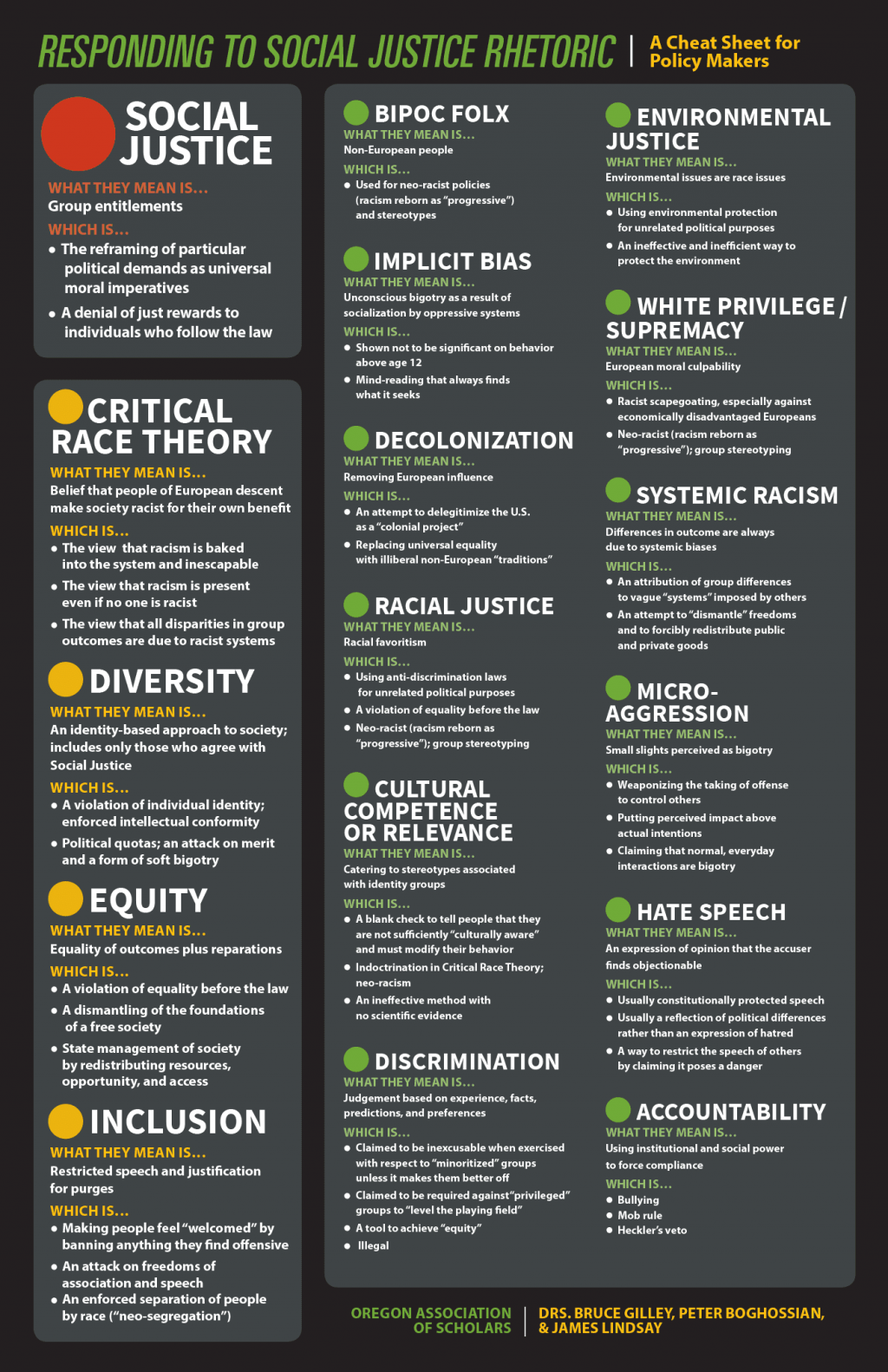
I mentioned recently an exchange with an old friend on Critical Race Theory. I wouldn’t change a word of that.
But my friend sent me a link (he reads this blog) and an implied invitation to further discussion.
So I set about collecting some articles on CRT and I now expand my comments.
My suspicion that there’s no agreed definition of Critical Race theory was confirmed. I think the author of the article he sent me implied a straw man definition of CRT. My knowledge that some on The Right are creating and exploiting confusion in waging culture war was confirmed.
The confusion makes it hard to say “what I think about CRT” in much the same way I hesitate to say I’m “conservative” these days: “conservative” by whose definition? “CRT” by whose definition?
Critical theory (of which CRT is a subset) is a discipline based on the conviction that the ways we think about our humanistic subjects are not self-evidently correct and require investigation, reflection, and in some cases correction. Critical Race Theory is a tendency to make race the central device in such investigation, reflection, and correction.
I have no problem with “Critical theory” as I’ve defined it. Far from it. Quite a bit of what I write here tacitly adopts it, albeit in a relatively undisciplined way.
But it is dangerous to pursue Critical Race Theory if that means that race is the sole, or even the primary, device for analysis. It’s dangerous because it’s imbalanced, but I also oppose it because I still aspire to “color-blind, melting pot” America, and racializing everything impedes that. Anyone using CRT should be prepared to code-switch before they get way out on a limb of implausibly racial explanations of injustices or social anomalies that have plausible non-racial explanations.
Convergences
I’ve Heard people talking about “convergences“ quite a bit lately, and I have to say I am experiencing a lot of convergence myself. Unfortunately, it doesn’t make for a very spritely blogging, because the convergence I’m getting points toward the important things in life being right hemisphere, and sometimes ineffable without a kind of violence.
Sweet is the lore which Nature brings; Our meddling intellect Mis-shapes the beauteous forms of things:— We murder to dissect.
(From Wordsworth, The Tables Turned.) “Murdering to dissect” is the gist of what the left hemisphere sometimes does to comprehend the right hemiphere’s more holistic apprehensions.
BLM
Freddie de Boer caught fire. I quote extensively to give the context of his concluding indictments:
[W]hen people are asked to contribute to a cause a natural and indeed necessary instinct is to ask about the honesty of the do-gooder in question and the efficacy of their program. Otherwise there’s no point, there’s no progress. Why would we bother to empower people to fix things if we hadn’t asked whether they were honest and effective?
Those absolutely basic requirements of positive change have been completely evacuated from the public discussion of social justice politics, due to the fact that most people are afraid of the consequences of engaging in adult discrimination about these politics and also because they don’t really respect the people who espouse them … [N]one of us have (sic) any … reason to trust the people panhandling for money, clout, and fame through the auspices of social justice … We are all being told, by progressive consensus, that we have to mindlessly donate, ask no questions, never wonder about motives, and never, ever consider the efficacy of their efforts. We either blindly fall in line when they say to give them whatever they want, including the adoption of extremely contentious policies in a polarized democratic country, or we’re on the other side, the bad side, and we have to live with the black mark of being “part of the problem.”
Nowhere is this dynamic more obvious than concerning BlackLivesMatter.
There is no mainstream media criticism of BlackLivesMatter. There isn’t. There’s explicitly conservative criticism and “Intellectual Dark Web” stuff …
…
When a politician comes out with a tax plan, journalists and analysts look at it and say, “does this tax plan add up? Does it have the markings of an effective tax plan?” They’ll poke holes in it – yes, if it’s from the other party, but also if it’s from their own. Because they know we need tested and robust tax plans. But when Ibram Kendi says, “all of my vague recriminations and radical-sounding racialist woowoo is the solution to racism,” every journalist and analyst you know scratches their beard and says, “ah yes, indeed,” and they don’t even say that very loudly. But where’s the proof that any of Kendi’s rhetoric actually leads to any action at all? That such action does/could prompt positive change? Who is checking his work? What has Ibram Kendi’s ideology accomplished, beyond enriching Ibram Kendi? Can we point to, like, a graph that shows the outcome of his good works? It certainly seems that we can’t. Since this is the case, why does 95% of the journalism that references Kendi make literally no mention of the basic concept of efficacy?
…
Media and academia are controlled by white liberals and white liberals live their lives in absolute petrifying fear of being called racist. Or transphobic or ableist … But … talking about honesty and efficacy is how you make sure progress is happening. If you actually care about any political movement, you dedicate yourself to the task of critical engagement. The way adults do for other adults … That’s what love requires. What respect requires. The policy on lefty Twitter is that you never ask hard questions about #BlackLivesMatter, ever, and most people in establishment media write for the approval of lefty Twitter above and beyond any other motivation. $10.6 billion dollars1 were sucked up into a vague and amorphous social movement that has no defined boundaries or parent organization, and yet many of the biggest players in the media haven’t once asked where it went!
…
The most obvious fact about this horseshit “great awokening” we’re going through than that it’s all powered by condescension … You know why the immense numbers of white liberal journalists on Twitter who cheered on the movement last year and put “BLM” in their Tinder profiles never ask hard questions about the movement and whether it was using its political capital and economic resources wisely? Because they think Black people are the [expletive deleted] junior varsity of politics. Their unwavering “support” for BLM functions, in practice, as an exercise in patronizing head patting, an expression of contempt dolled up as political solidarity. Supporters ask questions and make criticisms. And it is the media’s job to investigate all notable political movements, even if its members are fundamentally supporters of those movements. That responsibility has been almost totally abdicated in regards to BLM.
Where did that $10.6 billion go? If the mainstream media has any credibility at all – and if anyone involved has any respect for the goals of BlackLivesMatter, rather than fear of appearing to oppose them – they’d perform a major, critical, skeptical, hard-nosed investigation. The public interest demands it … [C]heck this fact: BlackLivesMatter has existed for seven years and it’s resulted in more new houses for Patrisse Cullors than pieces of national legislation. Media, do your [expletive deleted] job. Prove me wrong.
If you admire his courage, consider subscribing. He “nails it” like this quite regularly, and is followed by smart prominent thinkers left, right and center. “Their unwavering “support” for BLM functions, in practice, as an exercise in patronizing head patting, an expression of contempt dolled up as political solidarity.” That alone is worth an annual subscription!
Performance-enhancing drugs
U.S. sprinter Sha’Carri Richardson has been suspended for one month after testing positive for marijuana, the U.S. Anti-Doping Agency announced Friday morning.
(USA Today network)
Some social media acquaintances, quoting Robin Williams, helped me pin down what’s annoying about this: marijuana is a performance-enhancing drug only if there’s a Hershey bar waiting at the finish line.
Masculinizing
Aaron Renn, a veteran researcher and writer, began relatively recently, to publish a newsletter (The Masculinist) and then added a podcast by the same name. (See here.)
I moderately enjoyed the newsletter and greatly enjoyed the podcast — until the past two weeks, when Renn seems to have lost some coherence and has resorted to insider chit-chat about North American Evangelicalism (like most Evangelical commentators, he reflexively equates that to “the Church”). I stand so far outside Evangelicalism these days that I barely recognize the players’ names, let alone Renn’s allusions to what they’ve been up to lately.
He may become one of the few paid subscriptions I drop.
Getting Trumpy
From here to the end, it’s witty and insightful, but all Trump-related, should you wish to abstain.
Trump’s legacy
It went on like that for the whole interview. Romney knew the infrastructure bill in detail. He praised President Joe Biden and Secretary of State Antony Blinken. He differed with Democrats about social spending and taxes. He stated unequivocally that the election was free and fair. In short, he was completely out of step with modern “conservatism” and the Republican party.
Some said that the permanent change Trump would effect in the Republican party would be a heightened attention to the needs of the working class. That may or may not materialize. Some Republicans are making noises about being a “worker’s party,” but there doesn’t appear to be anything concrete there yet.
No, the biggest post-Trump change is the eager embrace of indecency …
…
Do you remember—eons or five years ago—when it was considered beneath contempt to attack a politician’s family? Bring the heat for the man in the arena, but by all that is holy, leave his wife and kids out of it? It seems antique now. When one of the Biden family dogs passed away a couple of weeks ago, a National Review writer tweeted, “Champ Dies. Major lives on. The Biden family tragedy in miniature.”
Mocking a family when they’ve lost a beloved pet, which was the way some on Twitter interpreted this, would have been tasteless and cruel. But this was much more sinister. The implication was that Biden’s “good son,” Beau, had died while his brother Hunter lived on. Who does that? And especially those who call themselves conservative and constantly rant about threats to civilization. How can they not see that undermining basic civility and decency is itself an attack on civilization?
Well, at least we have Romney, and a few more, to remind Republicans of what they once were and could be again.
Everybody seems to agree that prosecuting his CFO is prosecutors’ way of trying to flip him and get to Trump. But what do they think Trump did?
A grand-jury indictment of Donald Trump’s business and its chief financial officer, Allen Weisselberg, unsealed this afternoon in New York, alleges tax evasion arising from an attempt to pay Weisselberg and other Trump Organization executives extra money “off the books.” Prosecutors charge that Weisselberg and others received rent payments and other benefits without paying the appropriate taxes on them. Weisselberg and the Trump Organization have said they will plead not guilty.
So far, the danger is to Trump’s friends and his business, not the former president himself. But the danger could spiral, because Trump knew only so many tricks. If Trump’s company was bypassing relatively moderate amounts of tax on the income flows to Trump’s friends, what was it doing with the much larger income flows to Trump and his own family? Even without personal testimony, finances leave a trail. There is always a debit and a credit, and a check issued to the IRS or not.
In our country today, a considerable minority of our fellow citizens believe that the 2020 election was stolen in plain sight by left-wing mathematicians in Venezuela who devised algorithms to rig voting machines to overturn a landslide Republican victory and elect a senile Democrat and his communistic base to run the government who want to confiscate your guns and make everyone ride bicycles and live on tofu and kale and who invented a fake Chinese influenza so they could force immunization with a vaccine that makes people passive and accepting of state control, which allows vampires to move freely and drink the blood of small children, but in August, when the rightful president is reinstated and our borders are secure, we can breathe freely again and make America great.
I take no position on that. Strange things happen every day. I am only an observer; I don’t make the rules. As I have said on so many occasions, “You kids work it out among yourselves.”
I’m not sure I’ve heard a better summary of the events of January 6 than a text early that afternoon from my younger brother – the text that first alerted me that something big had happened: “It’s official. Trump has turned us into 3rd World shithole.”
You can read most of my more impromptu stuff at here. It should work in your RSS aggregator, like Feedly, should you want to make a habit of it.
The birth of wokeism was a godsend to corporations, Mr. Ramaswamy says. It helped defang the left. “Wokeism lent a lifeline to the people who were in charge of the big banks. They thought, ‘This stuff is easy!’ ” They applauded diversity and inclusion, appointed token female and minority directors, and “mused about the racially disparate impact of climate change.” So, in Mr. Ramaswamy’s narrative, “a bunch of big banks got together with a bunch of millennials, birthed woke capitalism, and then put Occupy Wall Street up for adoption.” Now, in Mr. Ramaswamy’s tart verdict, “big business makes money by critiquing itself.”
Mr. Ramaswamy regards Klaus Schwab, founder and CEO of the World Economic Forum in Davos, Switzerland, as the “patron saint of wokeism” for his relentless propagation of “stakeholder capitalism”—the view that the unspoken bargain in the grant to corporations of limited liability is that they “must do social good on the side.”
Davos is “the Woke Vatican,” Mr. Ramaswamy says; Al Gore and Larry Fink, CEO of BlackRock, are “its archbishops.” CEOs “further down the chain”—he mentions James Quincey of Coca-Cola, Ed Bastian of Delta, Marc Benioff of Salesforce, John Donahoe of Nike and Alan Jope of Unilever —are its “cardinals.”
Ross Douthat on the rumors that American Catholic Bishops are (were?) considering “a document on the proper reception of communion that might propose, or at least suggest (the document does not actually exist yet), that the Eucharist be withheld from Catholic politicians who favor or vote to fund abortion”:
Withholding communion from politicians who are particularly implicated in those abortions, then, is both a political and a pastoral act. Political, because it establishes that the church takes abortion as seriously as it claims — seriously enough to actually use one of the few disciplinary measures that it has at its disposal. Pastoral, because the politicians in question are implicated in a uniquely grave and public sin, and taking communion in that situation is a potential sacrilege from which not only the Eucharist but they themselves need to be protected.
This kind of straightforward logic does not, however, make the plan to withhold communion from Joe Biden a necessarily prudent one. The first problem is that it is pastorally effective only if the withholding takes place, and in the structure of the church only Biden’s bishops (meaning the bishop of Wilmington, Del., or the archbishop of Washington, D.C.) and the priests under their authority can make that kind of call. So the most likely consequence of the United States Conference of Catholic Bishops issuing some sort of document is that Biden continues to attend Mass and receive communion from friendly priests and prelates, and the bishops as a corporate body, already weak and scandal-tarnished, look as if they’ve made a partisan intervention with no meaningful effect.
Which points to the second problem — that a direct attempt at a communion ban will inevitably be interpreted as a partisan intervention, at a time when the partisan captivity of conservative Christianity, Protestant and Catholic alike, is a serious problem for the witness of the church.
By this I mean that however reasonable the bishops’ focus on abortion as a pre-eminent issue, in a polarized nation it’s created a situation where Republicans can seemingly get away with a vast accumulation of un-Catholic acts and policies and simple lies — many of them on display in Donald Trump’s administration, which was amply staffed with Catholics — and be perpetually forgiven because the Democrats support Roe. v. Wade.
Rod Dreher weighs in in several ways, but this especially caught my eye:
I don’t know how Orthodox bishops have reacted in similar situations. I do know this: that in the Orthodox Church, when I’ve been traveling, I have been refused communion by priests who did not know me when I presented myself for communion. This is how I learned not to do so unless I have been able to speak to the priest before services to let them know that I am an Orthodox Christian who has had a recent confession. Generally speaking, Orthodox priests are zealous about what they call “guarding the chalice”. They do this because of their high view of what Holy Communion is — a view shared by Catholic teaching. They do this in part to protect the laity from receiving communion unworthily. You might not get this, but if you believe what Orthodoxy and Catholicism says about the Eucharist is true, then it should make logical sense to you.
…
It comes down to this: in this moment, is the Church (not just the Catholic Church) called to be prophetic, or therapeutic? I think that only by being prophetic — calling the world out — can it be therapeutic, and heal the world of its brokenness.
Surveillance capitalism. For instance …
The Sleep Number bed is typical of smart home devices, as Harvard business school professor Shoshana Zuboff describes in The Age of Surveillance Capitalism. It comes with an app, of course, which you’ll need to install to get the full benefits. Benefits for whom? Well, to know that you would need to spend some time with the sixteen-page privacy policy that comes with the bed. There you’ll read about third-party sharing, analytics partners, targeted advertising, and much else. Meanwhile, the user agreement specifies that the company can share or exploit your personal information even “after you deactivate or cancel” your Sleep Number account. You are unilaterally informed that the firm does not honor “Do Not Track” notifications. By the way, its privacy policy once stated that the bed would also transmit “audio in your room.” (I am not making this up.)
If there were no existential threats, we’d invent one
The post-WW2 military posture of the U.S. has been endless war. To enable that, there must always be an existential threat, a new and fresh enemy that can scare a large enough portion of the population with sufficient intensity to make them accept, even plead for, greater military spending, surveillance powers, and continuation of permanent war footing. Starring in that war-justifying role of villain have been the Communists, Al Qaeda, ISIS, Russia, and an assortment of other fleeting foreign threats.
According to the Pentagon, the U.S. intelligence community, and President Joe Biden, none of those is the greatest national security threat to the United States any longer. Instead, they all say explicitly and in unison, the gravest menace to American national security is now domestic in nature. Specifically, it is “domestic extremists” in general — and far-right white supremacist groups in particular — that now pose the greatest threat to the safety of the homeland and to the people who reside in it.
…
Within that domestic War on Terror framework, Gen. Milley, by pontificating on race, is not providing cultural commentary but military dogma. Just as it was central to the job of a top Cold War general to embrace theories depicting Communism as a grave threat, and an equally central part of the job of a top general during the first War on Terror to do the same for Muslim extremists, embracing theories of systemic racism and the perils posed to domestic order by “white rage” is absolutely necessary to justify the U.S. Government’s current posture about what war it is fighting and why that war is so imperative.
…
Whatever else is true, it is creepy and tyrannical to try to place military leaders and their pronouncements about war off-limits from critique, dissent and mockery. No healthy democracy allows military officials to be venerated to the point of residing above critique. That is especially true when their public decrees are central to the dangerous attempt to turn the war posture of the U.S. military inward to its own citizens.
Elsewhere, in a single observation, Leigh Fermor captures the essentially hysterical nature of Nazism better than any philosophical analyst. Watching people salute one another in the street, he writes:
“People meeting … would become performing seals for a second. This exchange, soon to become very familiar, seemed extremely odd for the first few days, as though the place were full of slightly sinister boy scouts.”
“A reader in Madrid sends me this photo from the Spanish city of Valencia. It’s a poster put up by the city government:
“It reads: “In Valencia, there are men with a vulva and women with a penis. Yes.”
“Well, no. This is a lie. This is a lie that the government of the city of Valencia is telling with big street signs. Yet to the European Union elites, Hungarian PM Viktor Orban is the real problem.“
(Emphasis added)
Yeah. The real problem is the ones who won’t salute. That’s the ticket.
Orbán is not “far right”
“A hero to Europe’s far right, Mr. Orban says he wants to overhaul education and reshape his country’s society to have a more nationalistic, conservative body politic. But his critics argue that the donation is legalized theft, employed to tighten Mr. Orban’s grip on power by transferring public money to foundations run by political allies.”
That “far right” smear again. The New York Times, like most Western journalism outlets, is incapable of telling the truth about Orban and his party. They are not “far right.” Fidesz is center-right. Hungary actually has a far-right party. It’s called Jobbik, and it’s openly anti-Semitic — or was, until it underwent some kind of strange makeover, and now says its Jew-hating is in the past. Last December, Jobbik formally teamed up with the left-wing opposition, in hopes of beating Orban in the 2022 race. Yes, the left-wing parties are now formally allied with a party whose stars have called their capital city “Judapest,” and called for making a list of Hungarian Jews who pose national security threats. But please, New York Times, tell us another story about Viktor Orban being mean to George Soros.
Among US journalists, you often hear bitter complaints about the bias of Fox News, and sometimes you hear expressed a grudging belief that the existence of Fox means there is balance in the American media. This is because journalists are so overwhelmingly liberal that they can’t perceive how far to the left, and how unbalanced, their viewpoint is. I’ve written before about a study, now over 20 years old, by two professors at Baruch College, who demonstrated that the US media did a good job of reporting on the rise of the religious right as a force within the Republican Party, but missed entirely the parallel rise of the secular left as a force within the Democratic Party. Their thesis was that the media didn’t see what was right in front of their eyes because to them, it was only natural that secular liberals would grow more dominant within the Democratic Party. It wasn’t news; it was nature.
Progressophobia
Last week Bill Maher of HBO’s “Real Time” did a commentary on something he believes deeply destructive. Maher, who has described his politics as liberal, libertarian, progressive and practical, is a longtime and occasionally brave foe of wokeness in its extreme manifestations. He zeroed in on one aspect that fuels a lot of grievance, and that is the uninformed sense that America has largely been impervious to improvement.
Mr. Maher called this “progressophobia,” a term coined by the cognitive psychologist Steven Pinker. Mr. Maher defines it as “a brain disorder that strikes liberals and makes them incapable of recognizing progress. It’s like situational blindness, only what you can’t see is that your dorm in 2021 is better than the South before the Civil War.”
His audience laughed uncertainly. You could tell they didn’t want to get caught laughing at the wrong thing and weren’t certain what the wrong thing was. Normally they’re asked to laugh at right-wing idiocy, which is never in (sic)
“If you think that America is more racist now than ever, more sexist than before women could vote, you have progressophobia,” Mr. Maher said. Look at the changes America has made on disputed issues like gay marriage and marijuana legislation. “Even something like bullying. It still happens, but being outwardly cruel to people who are different is no longer acceptable. That’s progress. Acknowledging progress isn’t saying, ‘We’re done,’ or, ‘We don’t need more.’ And being gloomier doesn’t mean you’re a better person.”
…
“The ‘Friends’ reunion we just had looked weird, because if you even suggested a show today about six people all of whom were straight and white, the network would laugh you out of the room and then cancel you on Twitter. And yet there is a recurrent theme on the far left that things have never been worse.”
[C]ompared with evangelicals, Mainline churches have “seemingly” been “less susceptible to pervasive sexual abuse,” and related cover-ups or minimizing of the problem.
Reporters should seek to eliminate the “seemingly” hedge word and figure out whether their performance is in fact superior. If so, are Mainliners simply more moral?
Tooley finds the explanation in church structures and cultures.
First, Mainline groups are rapidly aging and often lack the thriving youth ministries that supply ample targets for predators.
Second, Mainline churches have “a genuine institutional advantage with wider systems of accountability” whereas the bulk of evangelicalism is “congregationalist,” so each local church governs itself without oversight and accountability …
I think Tooley is spot-on in both observations, though I had only thought of poor “accountability” of independent founders/pastors before he pointed out the “youth ministry” angle.
Postscript: The Vaccines
I’m starting to regret, at least a little, trusting the government that Covid vaccines were safe:
So somehow there’s enough bias in the system to shut down anything generic, cheap, and safe and to amplify things that are dangerous, new, still under patent.
…
If there is an argument to be made about our economic and political system, it is that our system can allow you to evaporate trillions of dollars of wealth in the pursuit of billions of dollars of wealth. And that’s what we’re seeing here.
A fuller description of the participants in the podcast, which is very long (3 hours 16 minutes):
Dr. Robert Malone is the inventor of mRNA Vaccine technology. Mr. Steve Kirsch is a serial entrepreneur who has been researching adverse reactions to COVID vaccines. Dr. Bret Weinstein is an evolutionary biologist. Bret talks to Robert and Steve about the pandemic, treatment and the COVID vaccines.
So these are not some random crackpots.
They got me thinking about my own vaccine experience, but if I were to write about it, it would be:
unreliable (I’m not sure that this problem emerged after the vaccine)
anecdotal and
maybe just a denial that I’m a fat old man, and that age catches up with people like me quite brutally.
You can read most of my more impromptu stuff at here. It should work in your RSS aggregator, like Feedly, should you want to make a habit of it.
Over the weekend, I had coffee with a Hungarian friend who spent a lot of time in America as a kid and teenager, because his father is an academic. He has a critical view of the US system because of its tolerance for economic precarity for so many. He supports the Orban government, and agrees with me about how totally biased and distorting the news media are, based on the kinds of things that middle and upper middle class reporters care about. For example, said my friend, in the long wake of the 2008 global economic crash, Viktor Orban’s government passed a law forbidding banks from expelling people who had defaulted on their mortgages from their homes. “Barack Obama didn’t do that,” said my friend. And then we talked about how with the US left, as long as you fly the rainbow flag and say “Black Lives Matter,” you can do whatever you want with the economy, and you won’t hear a word of protest from the supposed champions of the little guy versus Capital.
[A] liturgical practice … in Orthodoxy … is a frontal assault on Hades.
The traditional name for these celebrations is “Soul Saturdays.” They are celebrations of the Divine Liturgy on Saturday mornings offered for the souls of the departed … They make a fitting prelude for Holy Week and Pascha. At Pascha, Christ Himself “tramples down death by death and upon those in the tombs bestows life.” This is the Great and Holy Sabbath – the true and Great Soul Saturday. This is the great theme of Pascha itself. Christ’s Resurrection is, strangely, not so much about Christ as it is about Christ’s action. Many modern Christians treat Pascha (Easter) as though it were a celebration of Jesus’ personal return after a tragic death. Orthodoxy views Christ’s Holy Week, Crucifixion, Descent into Hades and Resurrection as one unending, uninterrupted assault on Hades. This is the great mystery of Pascha – the destruction of death and Hades. Death is the “last enemy.” Those who forget this are like soldiers who have forgotten the purpose of the war in which they fight.
And so the battle forms a significant part of the liturgical effort of the Church. The boldness of the third prayer is quite striking …
I can recall the first time I offered this prayer in my priesthood. I had a copy in front of me, but had not read it before the service, nor had I ever heard it. I trembled as I offered the words … astounded by their boldness. I had never heard such boldness before the Throne of God within the walls of the Church itself. It is also a reminder of the weakness and infirmity of the legal imagery of salvation. The legal view requires of God that He be the enforcer of Hades. To such a prayer He could only reply: “I cannot grant such things because of my Justice!”
If there are alternative solutions, like finding another baker, why force the point? Why take up arms to coerce someone when you can easily let him be—and still celebrate your wedding? That is particularly the case when much of the argument for marriage equality was that it would not force anyone outside that marriage to approve or disapprove of it …
One reason we won that debate is because many straight people simply said to themselves, "How does someone else’s marriage affect me?" and decided on those grounds to support or acquiesce to such a deep social change …
It seems grotesquely disingenuous now for the marriage-equality movement to bait and switch on that core "live and let live" argument. And it seems deeply insensitive and intolerant to force the clear losers in a culture war into not just defeat but personal humiliation.
An old friend we visited Saturday en route to our favorite vacation spot asked my thoughts on Critical Race Theory, and I think I shocked him with my mild dismissiveness, which I couldn’t explain all that well on the spot. "Well, the reported excesses, like telling white school kids that their skin tone makes them irredeemable oppressors, already constitute racial harassment or a racially hostile environment under Title VII, so why do we need new laws?" was the gist of my answer. Very lawyerly.
The incompleteness of that answer has bothered me, and I’ve surfaced two more reasons:
Laws banning ideas are a bad idea, especially when the ideas sought to be banned are ill-defined or mis-defined, which is the case with most or all of the anti-CRT laws. Similarly, the inability to define CRT suggests that much of the murmuring about it is mostly Shibboleth.
The reported excesses of CRT exemplify progressive overreach, which generates its own cultural backlash. I don’t need to enter that fray.
Reading Between the Lines
There were three kinds of evangelical leaders. The dumb or idealistic ones who really believed. The out-and-out charlatans. And the smart ones who still believed—sort of—but knew that the evangelical world was shit, but who couldn’t figure out any way to earn as good a living anywhere else. I was turning into one of those, having started out in the idealistic category.
Frank Schaeffer, Crazy for God. I don’t really recommend Schaeffer, but it doesn’t take a whole lot of reading between the lines here to explain how Schaeffer became the equivocally-Christian author of kiss-and-tell Exvangelical books and Huffington Post columns.
You can read most of my more impromptu stuff at here. It should work in your RSS aggregator, like Feedly, should you want to make a habit of it.
The Supreme Court today took the surprising tack of deciding a religious freedom case (Fulton v. City of Philadelphia) on the basis of a statutory provision I’d never heard mentioned in discussions of the case (and I was paying moderately close attention).
The majority opinion by Chief Justice Roberts, joined by Justices Breyer, Sotomayor, Kagan, Kavanaugh, and Barrett: When a legal rule allows for "entirely discretionary exceptions" (e.g., that a foster care evaluation provider "shall not reject … prospective foster or adoptive parents … based upon … their … sexual orientation … unless an exception is granted by the Commissioner or the Commissioner’s designee, in his/her sole discretion"), the government must generally provide such exceptions for religious objectors as well.
I’m not surprised at the outcome. I am surprised (and disappointed) that I hadn’t heard about this discretionary exemption clause in the law. It was an obvious way, it seems to me, to avoid having to overturn the 30-year-old Employment Division v. Smith precedent — even though no exemptions have been extended to anyone.
But Justice Alito has a point, too:
[The majority] decision might as well be written on the dissolving paper sold in magic shops. The City has been adamant about pressuring CSS to give in, and if the City wants to get around today’s decision, it can simply eliminate the never-used exemption power. If it does that, then, voilà, today’s decision will vanish—and the parties will be back where they started. The City will claim that it is protected by Smith; CSS will argue that Smith should be overruled; the lower courts, bound by Smith, will reject that argument; and CSS will file a new petition in this Court challenging Smith. What is the point of going around in this circle?
(Both block-quotes from Eugene Volokh, with emphasis added.)
Paul Kingsnorth on the environmental movement (which he left):
What, exactly, was he leaving? A movement that had transformed itself into, as he memorably put it, “the catalytic converter on the silver SUV of the global economy.” … To him, this next-gen environmentalism was simply “business-as-usual: the expansive, colonizing, progressive human narrative, shorn only of carbon.”
It’s ever so much easier than admitting that our endless wars of choice piss some people off around the world — especially if one is a Senator, but almost as much if one is a journalistic lapdog to the Beltway crowd.
Hudge and Gudge, or the governing class generally, will never fail for lack of some modern phrase to cover their ancient predominance. The great lords will refuse the English peasant his three acres and a cow on advanced grounds, if they cannot refuse it longer on reactionary grounds. They will deny him the three acres on grounds of State Ownership. They will forbid him the cow on grounds of humanitarianism.
G.K. Chesterton, What’s Wrong with the World?
You can read most of my more impromptu stuff at here. It should work in your RSS aggregator, like Feedly, should you want to make a habit of it.
I seem to recall ProPublica doing some worthwhile muck-raking, but it wasn’t this week. But I guess if you’re in possession of stolen income tax returns of very, very rich men, you’ve got to say something even if it’s breathtakingly stupid.
Is the tide turning?
Last month the Spanish parliament voted against a bill that would allow people to determine their own gender. A day later Germany’s voted down two such bills. Few newspapers took any notice.
…
In May the Karolinska University hospital in Stockholm, which contains Sweden’s largest adolescent gender clinic, released new guidelines saying it would no longer prescribe blockers and hormones to children under 18 …
Research has had an impact. In a paper in 2015, a Finnish psychiatrist, Riittakerttu Kaltiala-Heino, found that more than 75% of adolescents applying for sex-reassignment surgery needed help for psychiatric problems other than gender dysphoria. (Another paper, published this year, found 88% needed such help.) Finland last year adopted strict guidelines prioritising therapy over hormones and surgery.
The story also refers in the same paragraph to the "LGBT community" and to "LGB Alliance Deutschland." While I can no longer claim to understand the world’s increasing madness, it seems to me that "T" has distinct interests so diverging from, and sometimes contradicting, "LGB" interests that it’s a stretch to lump them into a notional "community."
Only the unwillingness of groups like Human Rights Campaign (inventors of the yellow-on-blue equal-sign logo) to declare victory (same-sex marriage surely was the end-game for LGB, right?) and go home (i.e., disband) keeps the four letters together. It’s not an uncommon story for an entity to think that it is what it’s about, and to expand the mission or pretend then war is continuing after they’ve decisively won.
Every time the culture decides through popular vote to ask for government penetration into the marketplace, it creates a climate that pushes the biggest players to curry concessionary privileges with the regulators. The little players don’t have the clout, manpower, or capital to arm-twist. The big players do. And that is why every time, every time, every time—should I say it once more?—every time the public asks for government oversight, it eventuates in the bigger players getting more power and the smaller players being kicked in the teeth.
Salatin, a small, innovative farmer, knows whereof he writes.
[S]in goes underground when it’s not socially acceptable. No one watches porn in the pews at church or beats their wife at the grocery store. Why would we expect post-1965 racism to remain out in the open?
I have noted, through the years, that the patriotism that inhabits the thoughts of many is a deeply protected notion, treated as a virtue in many circles. This often gives it an unexamined character, a set of feelings that do not come under scrutiny …
Asking questions of these things quickly sends some heads spinning. They wonder, “Are we not supposed to love our country?” As an abstraction, no. We love people; we love the land. We owe honor to honorable things and persons. The Church prays for persons: the President, civil authorities, the armed forces. We are commanded to pray and to obey the laws as we are able in good conscience. Nothing more. St. Paul goes so far as to say that our “citizenship [politeia] is in heaven.” The assumption of many is that so long as the citizenship of earth does not conflict with the citizenship of heaven, all is fine. I would suggest that the two are always in conflict for the simple reason that one is “from above” while the other is “from below,” in the sense captured in Christ’s “my kingdom is not of this world.”
[T]here is a widely-shared impression that the kind of regional or mid-major papers that were once so essential have not had anything like the same success in transitioning to subscription-dominant financial models. The internet was already disproportionately concentrating power into the hands of a few major newspapers before digital subscriptions deepened, and of course three or four of them already enjoyed national influence even before we entered the online era. Concentrating greater power and influence into a few publications is detrimental to my basic philosophy for media, which is that you want a diversity of voices not so much for diversity itself but so that many different viewpoints can, perhaps, triangulate on something like the truth. What you get now is that, despite the vast number of competing shops and options compared to the past, the NYT in some ways is perversely even more the Official Voice than it once was.
Which means that the Official Voice is a haughty bloodless affluent educated socially liberal voice. Many have suggested that its increasing reliance on subscription sales makes the NYT even more dependent on an explicitly liberal Democratic audience.
If newsgathering becomes too expensive for almost every publication, then the few papers that can continue to do it will control the narrative of truth …
Wondering how to decide what to read? Here’s a simple but effective heuristic to cut down the choices significantly. Ask yourself one question: Does this writer make bank when we hate one another? And if the answer is yes, don’t read that writer.
I’m aware of my tendency to blog like a mere aggregator or curator, but today, for whatever reason, I slowed down and thought.
Living consciously within limits
On the 15th of each month, a reminder pops up to read my maxims (they actually come from two American Orthodox Priests, one living, one reposed). Sometimes I don’t get around to it until, say, the 17th.
As I read them today, it occurred to me that they give a decent idea of how an Orthodox mindset should cash out in “practical” life (if only we weren’t always missing the mark).
I do try to live by them (that’s why I review them monthly). Even falling short, it’s a much saner way to live than not trying at all.
On a closely-related note, I read an article just now (as I write) that I thought good enough to save and index: Dedication: In Praise of the Long-Haulers. It uses the term "stickers," in contrast to "boomers," a contrast I’d seen before.
But this time, in conjunction with indexing, I decided to make "sticker" a tag in my system and to look for like articles. My system was crawling with them. For instance:
Granted, my system (a kind of database) is kind of young, after a computer crash garbled its predecessor. So I may have just been on a "making-a-virtue-of-Covidtide-necessity" binge of rootedness ruminations. But I think these really are the kinds of people I most admire, and that I’m gradually become more stickerlike myself.
Maybe this just means I’m getting too old to fight or rally in the streets.
Abortion back on the docket
The [U.S. Supreme] court said Monday it would review next term whether all state laws that ban pre-viability abortions are unconstitutional. The court’s 1973 ruling in Roe v. Wade declared that a woman has a constitutional right to terminate a pregnancy in the first six months of her pregnancy when the fetus is incapable of surviving outside the womb.
The test case is from Mississippi, which bans most abortions after 15 weeks, significantly before fetal viability. A panel of the 5th U.S. Circuit Court of Appeals, one of the most conservative in the country, blocked enforcement of the law, finding it in conflict with Roe v. Wade and subsequent abortion decisions.
The news, you may have noticed, is often over-hyped. This story really isn’t, whatever the ultimate outcome, because SCOTUS took the case even though there is no "Circuit split."
There is no Circuit split (inconsistent results from different U.S. Circuit Courts of Appeal) because under existing precedent, laws like Mississippi’s are clearly unconstitutional as unduly burdensome on the (court-created) right to abortion. The Supreme Court seldom takes discretionary review of issues on which all the Circuit Courts are agreed, and when it does, it’s thought to be likely that the court itself is doubting its precedents (or universal Circuit Court interpretation of those precedents).
So this case, more than any other since Planned Parenthood v. Casey thirty years ago, really could be the Big One. And if you think that a major change in the Supreme Court’s view on abortion would not be a bit deal, you haven’t thought it through or you have a crazy-high threshold for "big deal."
During a congressional hearing last week, … Health and Human Services Secretary Xavier Becerra, repeatedly denied the existence of a federal ban on barbaric partial-birth abortions that has been law for 18 years …
… In his confirmation hearings, Becerra dodged questions about his stance on partial-birth abortion, deflecting with repeated claims that he would “follow the law” as head of HHS. Now Becerra outright denies the existence of a statute that has been around for nearly two decades.
… Becerra can hardly plead ignorance on this topic. As a freshman congressman, he voted against the ban …
So what’s with Becerra’s denial? Is he just hair-splitting because he doesn’t like the "partial-birth abortion" label? The author anticipated that:
As for Becerra’s parroting of the abortion lobby talking point that partial-birth abortion “is not a medical term,” neither is a heart attack, but almost everyone understands what one is.
An entertaining bootleggers-and-Baptists moment
Mr. Sanders has become the chief obstacle to his party leaders’ hopes of restoring the full federal tax deduction for state and local taxes, known as SALT, capped at $10,000 by the 2017 Tax Cuts and Jobs Act. Speaker Nancy Pelosi of San Francisco calls the loss of that deduction “devastating.” Likewise New York Sen. Chuck Schumer, who vowed that “one of the first things” he would do as majority leader would be to see that the SALT cap is “dead, gone and buried.”
But not Bernie. Asked directly on “Axios on HBO” last week whether he supports this effort, Mr. Sanders proudly raised his progressive colors: “You can’t be on the side of the wealthy and powerful if you are going to really fight for working families.”
It’s making for an entertaining bootleggers-and-Baptists moment, with two opposing camps—low-tax Republicans and the leader of the Democratic Party’s progressive wing—finding themselves in the same foxhole. Each wants to keep the SALT cap, but for very different reasons.
I had forgotten the delightful colloquialism "bootleggers-and-Baptists" moment.
Congresslechers and Cicadas
Joel Greenberg, a former county tax collector with strong ties to Florida congressman Matt Gaetz, pleaded guilty Monday to federal crimes including sex trafficking a minor. The New York Timesreported last month that Gaetz himself is under federal investigation for possible sex trafficking crimes.
The Morning Dispatch. Joel Greenburg "pleaded guilty" and agreed to cooperate. If Matt Gaetz is guilty and not too sociopathic to know it, he should be getting very, very uncomfortable.
But if his goal is getting laid by as many undiscriminating women as possible, he’s had a relatively good run — as has Garrison Keillor:
[C]ompared to the male cicada who, after seventeen years underground, has one sexual experience, dies, and never gets to see his progeny, my life is a fairy tale.
The cicadas are out for survival of their species — survival is victory. Father David touched on this in his homily on Sunday and quoted the verse in 2nd Corinthians: We are hard pressed on every side, but not crushed; perplexed, but not in despair; persecuted, but not abandoned; struck down, but not destroyed. “Struck down but not destroyed” describes cicada existence pretty well. As for being “persecuted,” we Episcopalians have it pretty easy. Flocks of cicadas are carried by the wind over Manhattan and a few land in Central Park and some in flower pots on terraces and our persecution, believe me, is minimal.
Then I went forward for Communion and saw slight movement on Father David’s vestment sleeve as he held out the wafer to me and said, “The body of our Lord,” and I saw an insect on his extended thumb, perhaps a dying male, and he said, “Hang on,” which he’s never said before during Communion and I flicked the cicada away. “Thank you,” he said. “And also to you,” I said.
At my age, I no longer worry about Noah and the Ark and all those folks knocking on the door begging to be let in. I haven’t read Job in years. The city is noisy, the numerosity is staggering, crazy people yell at you, I don’t belong here but then neither do most of the others. And there have been times on the uptown C train, packed into a car with people on all sides standing within inches of each other and still not touching, avoiding eye contact, when I’ve thought, “We are all one in God and He loves us dearly,” and known it is true. It’s hard to explain this to Midwesterners. You have to be there.
Top Republicans on the Maricopa County Board of Supervisors blasted fellow Republicans pushing additional audits of the 2020 election results as conspiracy theorists and grifters. “We ran a bipartisan, fair election. That’s every piece of evidence that I’ve ever seen put in front of us,” said Clint Hickman, a Republican supervisor. “We are operating on facts and evidence presented to this board.” The county’s top election official, Stephen Richer, also a Republican, called new claims of irregularities from former President Donald Trump “unhinged.”
Many years ago, I met a woman who had had the kind of experience you ordinarily only find in fiction. As a young adult, she was in a serious car accident, resulting in a head injury. She suffered a period of total amnesia, followed by months of convalescence. When she recovered, she was never the same: Her family relationships weakened; she cut out former friends and found new ones; she moved halfway across the world; her interests and tastes changed; she became more outgoing and less self-conscious; she no longer cared much what other people thought about her.
Her parents always attributed these major character changes to her “bump on the head.” But she told me no—the injury had nothing to do with it. Rather, it was the recovery time, away from ordinary routines, that created a punctuation mark in the long sentence of her life. She had a unique opportunity to assess her priorities. She vowed to take nothing in her former life as given. She tore her beliefs and values down to the studs, and rebuilt them. And in so doing, she said, she became happy for the first time in her life.
This intriguing opening led me into an okay essay — an essay that might profitably be expanded.
I agree with the author that the pandemic had given a lot of us a chance for introspection, and even more broadly that Brookes undertakes.
Essential workers
Among the less imaginative "takes" on the pandemic are (1) how essentially nobody could self-quarantine for months in the last pandemic because "remote work" wasn’t feasible; (2) how scientific knowledge facilitated development of vaccines with astonishing rapidity, further lessening the effect of the pandemic.
What I think remains under-covered in the pandemic is about how the truly essential workers in our economy are those who must show up in person, including not only nurses (who have gotten a reasonable amount of good press), but grocery store cashiers, shelf-stockers (is that the gender-neutral term?), bus drivers, police, fire, paramedics. A lot of these people not only must show up in person, but must do so for a second full-time or part-time job to make ends meet.
Economists, especially of the Austrian school, will hate this, but I’ll say it anyway: a lot of these people are underpaid for the risks they took.
I think Kavanaugh got treated very badly on the supposed sexual misbehavior and that it was a mere understandable human lapse, poor form but not disqualifying, for him to have lost his cool at the end of all that indignity.
But his adolescent aspiration to become alcoholic got treated too gently. I avoided underage drinking (three or four lapses between 18 and 21, zero drunkenness) because it was illegal (kind of a litmus test for a future lawyer/judge, don’t you think?), and I’m pretty scornful of a guy who upholds the law for everyone but himself.
Doing real good versus limelight-grabbing
I recently started listening to Malcolm Gladwell’s Revisionist History podcast. When he’s good, he’s very good.
My Little Hundred Million, is very, very good. Just listening to it is instructive, but you could spend a lot of time thinking about other applications of the insights (Gladwell gives several).
Low-valence geezer
I resist bonding with fellow liberals because it gets to feeling too comfy, sitting and murmuring in unison about Mitch McConnell and how devious and evil he is, so I say, quietly, “The real problem is that he’s smarter than the others. There is an art to obstruction and he is an artist.” So they start unloading on Trump and I listen and then I put my oar in: “ Donald Trump is an original, nobody like him before or since. All the others, either party, are variants of a type, but Trump came along, boasting, wearing his contempt proudly, and enough people loved him for that to elect him. Other presidents took the job very seriously but he was more like a sultan or an emir. And here he is, the most admired man in America. Democrats approve of Biden; Republicans adore Trump. No comparison.”
This statement lets some air into the conversation. You sit around on a terrace with your fellow liberals and the conversation turns choral and my job is to soloize, offer dissent in a minor key ….
I now turn toward political matters. Don’t say I didn’t warn you.
Not worth the powder to blow them up
I would feel differently if NRO was a religious journal, especially if it were explicitly Roman Catholic, but somehow it smells exceedingly fishy when political journal National Review Online is constantly meddling in whether President Biden should be denied communion (Thursday’s installment) because of his support of legal abortion.
This is doubly so because "pro-life" Republicans haven’t really done a damn thing for the unborn beyond (a) confirming judges thought to be hostile to abortion, (b) proposing that Catholic Democrats be excommunicated. They’ve been playing pro-life voters for suckers. I wish I could remember the guy who first threw that in my face in 2002 so I could apologize for my hostile reaction. (They’ve been playing all social conservatives for suckers on all issues. Remember you heard it here first.)
Perhaps if the GOP truly does "permanently become the Party of the Working Class" (see below) that will change, but I wouldn’t bet on it considering its odd idea of who is "working class."
Trump > truth
The calculation was pretty straightforward: The need to stay on the good side of Trump voters and donors—which necessarily means staying on the good side of Trump—was greater than the need to tell the truth about January 6, the “big lie,” or Trump generally.
Staying on the good side of Trump is more important than truth-telling? You know what I say about that? Die, GOP, die!
Working Class Republicans
I have seen it suggested that most of the country doesn’t know who Liz Cheney is and that in a few months, nobody will remember or care about her ouster. There may be some truth in that. Heck, there may be a lot of truth in that.
I also recall confidently announcing that Election 2016 meant that some major political realignment was underway, and by that I meant
working-class voters migrating to the GOP
suburban soccer moms migrating to the Democrats and
other things beyond my imagination at that point (sort of implied by "major realignment").
Well, Kevin McCarthy wants the GOP to "permanently become the Party of the Working Class." (If you don’t know Liz Cheney or Kevin McCarthy, why are you reading?) That was kind of predictable, as one of the big stories of 2016 was how many had come on their own.
So the GOP got a real working man running for governor of Virginia (he typed with a smirk on his face). Read all about it in the first of three items here.
The ambiguous adjective 45 has earned, fair and square
I have never wavered on whether 45 (he who shall not be named) was a suitable President of the United States (or candidate, for that matter). But I think, considering his continued reach and inexplicable popularity, that I must allow him the ambiguous adjective "consequential."
You can read most of my more impromptu stuff at here. It should work in your RSS aggregator, like Feedly, should you want to make a habit of it.


 Tipsy Teetotaler ن