From grim to grimmer

Bummer

I could have filled this post with many clippings colorfully describing how bad things are. I’ve done it before and I’ll probably do it again. That’s just the kind of guy I am: melancholic.

But it just seems too much this week. I’m having trouble identifying anything going right in the USA.

I came of age in the 60s, and although I’ve been expecting our collapse for a long time, the manner and speed of the seeming collapse are a surprise.

I’ll summarize what’s a bit unsettling, even for me, thus:

  • We are moving rapidly from American hegemony to a multipolar world.
  • The very best President imaginable couldn’t stop, but could at best slow, our relative decline.
  • The very best President imaginable wouldn’t even run because of the politics of personal destruction.
  • But a toxic narcissist, jilted by voters in 2020, would run again in 2024 on a platform of vengeance. “Vengeance” turned out to mean turning America into a “shithole country.” (That will teach us!)
  • The Mainstream media are whistling past the cemetery as all this goes down.
  • UPDATE: Charlie Kirk, who it seems was more consequential than I had realized, gunned down Wednesday. I wrote everything in this post, other than this bullet point, before the murder of young Kirk. I knew little about him. My first impression was unfavorable because he was associated with Jerry Falwell, Jr. at the time that Falwell’s Potemkin Piety was collapsing. Thereafter? Well, I’m about 50 years older than his target demographic. (My wife didn’t even know who he was.) I’ve read a lot about him this morning, but the most interesting observation I read was too frank for this raw moment, so I’ll let you ferret out your own information if you care to.

With that off my chest, I’ll try to edify y’all for a while.

Repelled by conservatism, but not a liberal

Conservatism, as you know, is a complete mess in America right now. But reading conservative authors like Edmund Burke, Samuel Johnson, Fyodor Dostoyevsky, Gertrude Himmelfarb and James Q. Wilson does give you an adequate appreciation for the power of nonmaterial forces — culture, moral norms, traditions, religious ideals, personal responsibility and community cohesion.

I’ve been driven away from the right over the past decade, but I can’t join the left because I just don’t think that tradition of thought grasps reality in all its fullness. I wish both right and left could embrace the more complex truth that the neocon Democrat Daniel Patrick Moynihan expressed in his famous maxim: “The central conservative truth is that it is culture, not politics, that determines the success of a society. The central liberal truth is that politics can change culture and save it from itself.”

David Brooks, Why I Am Not a Liberal. This pretty clearly was one of the ten best things I’ll see in the New York Times this month, so that’s one of my gift links.

Breakneck: what you get in an engineered society

Publishers have figured out how to get limelight for their new titles, and one new title that’s deservedly getting a lot is Dan Wang’s Breakneck, about the astonishing ascendancy of China.

For a solid interview with Dan Wang (interviewer Ross Douthat), click this shared link: This Is Why America Is Losing to China.

Wang attributes this in substantial part to the relative influence of engineers in China versus that of lawyers in the USA. Engineers build; lawyers obstruct.

I find that somewhat plausible. But I write this precis not as an uncritical defense of my former profession, but to call attention to where engineered China went off the rails: trying to engineer China’s demographics led to over 300,000,000 abortions, over 100,000,000 sterilizations, and a population that’s skewed toward males.

That is, in my experience of engineers, classic engineering myopia. China could have benefitted from a bit more rule of law, less engineering “logic.”

What’s “fair” got to do with it?

There are people who get outraged when a court — especially the Supreme Court — impose or affirm what seems like an “unfair” result.

The scare-quote is not because fairness is a fantasy. It’s there because courts’ “unfair” decisions are mostly decisions to follow the law despite any countervailing sense of fairness.

And I approve of that approach. Consider: what is truly “fair” about denying a win to a guy who followed all the legal rules and then got sued by a guy who ignored the rules but somehow feels cheated (and has a good lawyer to sell his sob story)?

Liberalism without illusions

William A. Galston, a blast from the Clintonian past, has a wonderful article in Democracy Journal. I summarize, but I fully intend to read it several more times.

My summary:

Liberal democracy (a/k/a classical liberalism) has some inherent weaknesses:

  1. Because liberal democracy restrains majorities and gives even small minorities a say, it slows the achievement of goals that majorities support. In other words, it requires more patience than many possess.
  2. Liberal democracy requires tolerance for minority views and ways of life to which many citizens are deeply opposed.
  3. Liberal democracy requires a distinction between civic identity and personal or group identity.
  4. Liberal democracy requires compromise.

Liberals (left-liberals, or “liberals” in the modern pejorative sense) complicate these weaknesses with characteristic illusions:

  1. Myopic materialism: the belief, especially pervasive among elites, that economic issues are the real issues and that cultural issues are diversionary, deliberately heightened by unscrupulous leaders to gain support for their anti-liberal agendas.
  2. Parochialism. Yes, transnationalism is the parochialism of elites, because most people in advanced democracies as well as “developing” nations value particular attachments—to local communities and to the nation, to friends and family and compatriots.
  3. Naivete about the course of human events and the possibilities of human nature.

Credit for my discovery of this article goes to Rod Dreher.

Broken Windows

Okay, everyone is writing about it, and Trump’s vehement denials and $10 Billion lawsuit against Dow Jones makes it newsworthy that there’s now potent corroboration of Dow Jones’ (via the Wall Street Journal) claim about Trump’s hand-rendered birthday card for ephebophile Jeffrey Epstein’s 50th birthday. But I can’t say anything smarter than this:

From what I can tell, in fact, there’s no actual theory underlying the impromptu new conspiracy theory that the letter was forged. No one can explain how or why a birthday message purporting to be from Trump to one of his close associates would have been doctored for a privately published book compiled in 2003. Did time-travelers from the present day fake the letter and plant it knowing that it would come out someday and damage him—after he’d already been elected president twice?

If so, their plot failed. This isn’t going to damage him. It’s just another broken window in a neighborhood that’s full of them.

Andrew Egger explains at The Bulwark:

In a way, Donald Trump and his allies have spent their entire political lives preparing for this moment. The whole miserable decade of “alternative facts,” of witch hunts, of flooding the zone with sh-t—it all amounted to a long, powerful education for his base. It’s a training in a certain kind of zen meditation, in which stories damaging to Trump pass from the eyes and ears directly out of the body without ever intersecting the brain. By now, the base has gotten in their 10,000 hours. They’ve become masters of the craft. They can perform all sorts of remarkable feats—the media-cope equivalent of lying on beds of nails while cinderblocks are smashed on their chests. These cinderblocks, they whisper serenely, are just a liberal plot. If I pay attention, the Democrats win.

The Epstein scandal is the “final boss” of Trump scandals, the supreme test of reality-defying propaganda skills that MAGA has acquired over the course of 10 years. The crime involved, pedophilia, is one of their obsessions; the villain, Jeffrey Epstein, is a lead character in their hysteria about an elite child-abuse cabal; yet the evidence continues to mount that their own messiah, Donald Trump, knew what was happening as it happened and—at best—did nothing to stop it. It’s like the Access Hollywood scandal but with the spin difficulty dialed up by a factor of 10. 

Think of American government as a big neighborhood. The neighborhood has started to go to hell. Its residents are adjusting their expectations for it accordingly.

Bad things happen when neighborhoods start to go to hell. As public evidence of minor disorder and neglect rises, crime gets worse. That’s the “broken windows” theory of criminology—the idea that letting lesser offenses like window-breaking go unpunished signals to good guys and bad guys alike that laws won’t be enforced. Criminals respond by escalating to more serious offenses and law-abiding locals become fatalistic or apathetic.

Trump has broken a lot of windows in our government. How can we expect Americans to maintain the same expectations for civic order that they used to have as the proverbial neighborhood falls into disrepair?

Nick Catoggio.


Somehow, this seemed like the time to resurrect an item I only recently deleted from my footer:

Your enemies are not demonic, and they are not all-powerful and the right hasn’t always lost and the left hasn’t always won. But if you convince yourself of that, you give yourselves all sorts of permission to do a lot of stupid and terrible things under the rubric of “Do you know what time it is?”

Jonah Goldberg.

[A] critical mass of the American people … no longer want[s] to govern themselves, … are sick of this republic and no longer want to keep it if it means sharing power with those they despise.

Nick Catoggio

I don’t do any of the major social media, but I have two sub-domains of the domain you’re currently reading: (a) You can read most of my reflexive stuff, especially political here. (b) I also post some things on my favorite social mediu

Saturday, 9/6/25

A question to keep you up tonight

The Uniform Code of Military Justice (UCMJ), particularly Article 92, mandates obedience to lawful orders but distinguishes that unlawful orders—those that require criminal acts or violate the Constitution, U.S. federal law, or international law—must not be followed. Military personnel are legally required to refuse unlawful orders, with the understanding that obeying illegal orders does not absolve one from responsibility under both U.S. military law and international law. This principle was firmly established by precedents such as the Nuremberg Trials, which rejected “just following orders” as a defense for war crimes. (Via Perplexity AI, but confirmed)

If you believe or suspect, as I do, that Donald Trump plans a series of provocations toward the end of declaring martial law and remaining in office, UCMJ Article 92 might come as at least a small comfort. “If they order troops to fire on peaceful civilian demonstrators, the troops should refuse, right?”

Well, “should” is doing a lot of work there. An incident last week gives great pause:

I ran across this dystopian sentence in the New York Times: “Pentagon officials were still working Wednesday on what legal authority they would tell the public was used to back up the extraordinary strike in international waters.”

The vice president was asked yesterday to specify the legal authority that entitled Trump to blow up a bunch of people in the Caribbean. The authority, he replied, is that there are “literal terrorists who are bringing deadly drugs into our country and the president of the United States ran on a promise of stopping this poison from coming into our country.”

He and I happened to attend the same law school, so from one alumnus to another: That’s not the correct answer, J.D. The president’s campaign pledges don’t magically acquire the force of law because a plurality of the electorate decided he’d be marginally preferable to his opponent.

[So w]here is that authorization? Since 2001, presidents from both parties have strained the logic of the post-9/11 AUMFs against al-Qaeda and Iraq by citing them to justify attacks on adjacent jihadist threats like ISIS. No one seriously believes they can be stretched so far as to encompass drug trafficking in the Caribbean, though. Absent any new approval from Congress, letting Trump mark people for death based on an assessment of “terrorism” by his own State Department amounts to granting him the power to kill anyone whom he deems a threat.

That’s how we ended up with Pentagon lawyers poring over law books on Wednesday, desperately trying to find some statute that might retroactively justify blowing up 11 Venezuelans.

The answer to the question posed to J.D. Vance is that there is no obvious legal authority for what the president did. There’s only what we might call post-legal authority, the idea that—as Trump himself once put it—“He who saves his Country does not violate any Law.” Which, I think, cuts to the heart of the difference between conservatives and postliberals.

To ask which legal authority gives Trump the power to kill Venezuelans on mere suspicion of drug trafficking is to engage in non sequitur. The president said he would save the country by preventing drugs from entering the U.S. and he’s going to do that. What does law have to do with anything?

On that note, here’s a question to keep you up tonight: If the Times is correct that the Pentagon couldn’t identify a legal justification for Trump’s order to kill a bunch of people, why did it obey his order?

To ask that question is to invite demagoguery about not taking crime seriously or knowing “what time it is,” blah blah, but I know exactly what time it is and it’s exactly the right question for the hour. Our new government fundamentally believes that law is an obstacle to American greatness—that law, normally just a nuisance, has itself become a major problem bedeviling the country—and it intends to solve this problem too. One way is to normalize shooting first and asking questions later. That’s the significance of what just happened to that Venezuelan ship.

Nick Cattogio (bold added)

Mind-boggling

I suspect you haven’t heard more about this because the ramifications boggle the mind:

3. China may have hacked data from every single American in one of the largest-ever cyberattacks, experts fear. Hackers backed by Beijing targeted more than 80 countries, stealing information on telecoms, transport and military infrastructure in a year-long campaign, investigators concluded in a report released last week. Since 2021, the group, known as Salt Typhoon, has accessed data that could enable the Chinese intelligence services to monitor global communication networks and track targets including politicians, spies and activists. Even the telephone conversations of Donald Trump and JD Vance were compromised, according to the FBI. Hackers sponsored by the Chinese government “are targeting networks globally, including, but not limited to, telecommunications, government, transportation, lodging, and military infrastructure networks”, the joint statement, from agencies including the National Security Agency, Cybersecurity and Infrastructure Security Agency (CISA) and FBI, said. (Source: telegraph.co.uk)

John Ellis News Items

Noted


[A] critical mass of the American people … no longer want[s] to govern themselves, … are sick of this republic and no longer want to keep it if it means sharing power with those they despise.

Nick Catoggio

I don’t do any of the major social media, but I have two sub-domains of the domain you’re currently reading: (a) You can read most of my reflexive stuff, especially political here. (b) I also post some things on my favorite social medium.

Thursday potpourri, 9/4/25

Bon mots

  • In another article in The Journal, [Kyle] Smith panned “The Roses,” about a miserably married couple: “People are going to want to walk out of this movie even when it is shown on airplanes.” (Ray Psonak, Tokyo)
  • In his newsletter, Jim Acosta reacted to the labor secretary, Lori Chavez-DeRemer, fawning over the president during that three-hour cabinet lovefest: “Get a room. Just not the cabinet room, please.” (Linda Hoffman, Georgetown, S.C.)
  • In The Guardian, Arwa Mahdawi offered an explanation for what she sees as unusually conspicuous cosmetic surgery among the MAGA elite: “These are not human faces, they are luxury meat-masks meant to signal wealth and in-group belonging.” (Chris McDonald, Gainesville, Va.)
  • In Esquire, Dave Holmes contemplated the choice confronting young American scientists facing the Trump administration’s assault on research: “You could live in fear of being sent to the gulag for your frog embryos not having their citizenship papers in order, or you could go live in a place like Australia, where you’re valued and well compensated, where your lifesaving work is free of political manipulation and where Chris Hemsworth is a 6. Who wouldn’t take that deal?” (Dave Pramuk, Napa, Calif.)

Frank Bruni

Tyrannies

Among the most useful contrasts involves distinguishing the ancient form of tyranny from the modern variant.

The philosophers of classical Greece (Plato, Xenophon, Aristotle) treated tyranny as a regime devoted to enabling the tyrant to fulfill his lust for the greatest possible pleasures. …

Modern tyranny is very different. Unlike the ancient form, modern tyranny is usually ideological, motivated by ideas, and it involves administration on a vast, national scale, which means it requires a popular movement to gain power and a party to hold it. …

The thing that’s interesting about Trump is that he has far more in common with ancient tyrants than he does with modern ones. …

[Trump is] a man who personalizes everything. It’s always about Trump—his ego, his power, his image, his accomplishments, his strength, his wealth. This is why Cabinet meetings quickly become cringe-inducing displays of obsequiousness on the part of senior members of his own administration, who trip over themselves to bestow ridiculously over-the-top praise on Dear Leader. It’s also why Trump is using the formal and informal powers of his office to punish his domestic political enemies, regardless of whether doing so violates longstanding norms restricting presidential behavior.

The pleasures he wants now are mainly the nation’s undivided attention and ever-greater quantities of money. He gets the first by weighing in on every controversy in the country, from crime and immigration to Sydney Sweeney’s ad campaign for American Eagle, a proposed change to the Cracker Barrel logo, and who will be admitted to the Baseball Hall of Fame. He gets the second by shamelessly extorting money from other governments and wealthy companies, universities, law firms, and individuals from around the world.

Damon Linker

On that very last sentence, the extorted money is not really going into Trump’s pocket. It goes to the government, and typically is for specific purposes such as campus reforms or trade schools.

But it’s still extortionate.

Thinking outside the nativist box

On Saturday while grilling on his back porch, a friend of mine noted with disapproval how those of British nationality are now a minority in London (approximately 41 percent of Londoners were born outside of the UK according to the UK Office for National Statistics). He believes that native-born British aren’t permitted to object and that their capital is demographically no longer theirs.

This friend shares many of my core Christian convictions and was educated at a service academy and an Ivy League graduate school. He is intellectually curious and attends a large suburban megachurch. He also regularly engages with the podcast offerings of the New Right that have displaced legacy media. While he isn’t an Anglican, I’ve encountered similar talking points in the online fringes of my own church tradition, including discussion of “Heritage Americans.”

I don’t share my friend’s distress (possibly because I’m from Colorado which has a low percentage of native-born residents, and live outside Washington, D.C. where seemingly nearly everyone is from elsewhere). It’s preferable, in my viewpoint, to live in a place where many want to move to rather than a place many are relocating from. The capital of any large empire inevitably attracts diaspora populations from its far-flung territories ….

Jeffrey Walton

Dirty Harry

When Oxford University decided to give an honorary degree to former President Harry Truman, Elizabeth Anscombe objected:

Some things you simply cannot do, no matter the consequences. And for Anscombe, “choosing to kill the innocent as a means to an end is always murder.”

Consequences in ethical analysis are never as important as actions and intentions, and they can never justify doing something that is inherently wrong; to argue otherwise inevitably leads to an ethic in which moral absolutes wither away. (Humans will always be able to convince themselves that their circumstances are that dire.) If the intent behind Hiroshima and Nagasaki was to use civilians as means to that end, then no appeals to potential consequences could justify that decision. To do so, for Anscombe, was to rationalize murder.

Luis Parrales, Elizabeth Anscombe and the Bomb

Lie taxonomy

The problem is that all too many Christians are in the grips of two sets of lies. We’ll call them the enabling lies and the activating lies. And unless you deal with the enabling lies, the activating lies will constantly pollute the body politic and continue to spawn violent unrest.

What’s the difference between the two kinds of lies? The enabling lie is the lie that makes you fertile ground for the activating lie that actually motivates a person to charge a thin blue line at the Capitol or take a rifle to a pizza parlor.

Here’s an enabling lie: America will end if Trump loses. That was the essence of the Flight 93 essay in 2016. That was the core of Eric Metaxas’s argument in our debates this spring and fall.

Here’s another enabling lie: The fate of the church is at stake if Joe Biden wins.

And here’s yet another: The left hates you (this sentence sometimes concludes with the phrase “and wants you dead.”)

David French, Only the Church Can Truly Defeat a Christian Insurrection

Performative piety (on the campaign trail)

On Monday, Texas Attorney General Ken Paxton issued a press release recommending that schools adopt a policy that calls for recitation of the Lord’s Prayer. The press release said in part:

“In Texas classrooms, we want the Word of God opened, the Ten Commandments displayed, and prayers lifted up,” said Attorney General Paxton. “Twisted, radical liberals want to erase Truth, dismantle the solid foundation that America’s success and strength were built upon, and erode the moral fabric of our society. Our nation was founded on the rock of Biblical Truth, and I will not stand by while the far-left attempts to push our country into the sinking sand.”…

… [Senate Bill 11] directs the Office of the Attorney General to defend any school district or charter school that adopts such a policy. In addition, the Attorney General is empowered to recommend best practices for implementation.

For Texas students considering how to best utilize this time, Attorney General Paxton encourages children to begin with the Lord’s Prayer, as taught by Jesus Christ.

The press release then sets out the text of the Lord’s Prayer as it appears in the King James Version of Matthew 6:9-13.

(Religion Clause blog)

Paxton is deeply corrupt and fighting for his political life through a divorce and a primary candidacy for the U.S. Senate.

The Ten Commandments don’t need friends like him, but he may need to bandy them about to burnish his image with low-information voters fond of performative piety.

Corrupt Todd Rokita take note.


[A] critical mass of the American people … no longer want[s] to govern themselves, … are sick of this republic and no longer want to keep it if it means sharing power with those they despise.

Nick Catoggio

I don’t do any of the major social media, but I have two sub-domains of the domain you’re currently reading: (a) You can read most of my reflexive stuff, especially political here. (b) I also post some things on my favorite social medium.

New World Order

[H]ere’s the real takeaway: Tianjin is not just hosting another international gathering; it is hosting the embryonic headquarters of a new world order. When half of humanity convenes to discuss not how to obey the old hegemon, but how to craft sovereign industrial futures, the game has already shifted. The West, stuck in yesterday’s script of divide and rule, cannot grasp that the 21st century is already unfolding elsewhere – in Russian engines powering Chinese jets, in oil tankers sailing east, in Modi and Putin shaking hands against the backdrop of an Asia that is no longer waiting for permission. The SCO in Tianjin is Eurasia writing history, while the West scribbles in the margins of its own decline.

My cyberfriend Terry Cowan, commenting on Shangai Cooperation Organization (the SCO) meeting in Tianjin, China — without us. Here’s how a few of our mainstream media covered it (not that Terry thinks they’ve got much true to say):

Then, a day later, Trump exerted his charm:

Twenty-six heads of state joined Xi Jinping to watch a military parade in Beijing. They included many autocrats, including from Russia and North Korea, but no leaders of big Western democracies. Beforehand Mr Xi said mankind faced a choice between peace and war, and called China “unstoppable”. Donald Trump told China’s leader to “give my warmest regards to Vladimir Putin, and Kim Jong Un, as you conspire against The United States”.

The Economist World in Brief, Wednesday 9/3. Fuller Economist coverage here.

John Ellis channels the Financial Times:

Xi Jinping has capped a week of frenetic diplomacy by presiding over one of China’s biggest military parades, projecting his nation’s growing power in a show of solidarity with fellow strongmen Vladimir Putin and Kim Jong Un. A procession of China’s newest tanks, drones and missiles rolled past Tiananmen Square on Wednesday to mark the 80th anniversary of the second world war victory over Japan. The People’s Liberation Army showed off its latest weapons, including hypersonic missiles, with Xi hailing troops as a “heroic force” that should develop into a “world-class military” — implying a full equal to the US’s armed forces. The Chinese president said the PLA would “resolutely safeguard national sovereignty, unity and territorial integrity” — code for Beijing’s goal of gaining control over Taiwan. “The great rejuvenation of the Chinese nation is unstoppable,” Xi added. (Source: ft.com)

I’m not going to blame Donald Trump for all this. I have little doubt that his various tarrifs, trash-talking, vacillation and so forth accelerated it, but the American empire didn’t much rally under Joe Biden, either. We’re at an inflection point, and I expect us to be much closer to “bit player” than to “hegemon” when it’s over.


[A] critical mass of the American people … no longer want[s] to govern themselves, … are sick of this republic and no longer want to keep it if it means sharing power with those they despise.

Nick Catoggio

I don’t do any of the major social media, but I have two sub-domains of the domain you’re currently reading: (a) You can read most of my reflexive stuff, especially political here. (b) I also post some things on my favorite social medium.

Dateline, Weimar America, 8/28/25

CrackerBarrelGate

This story strikes me as stupid, stupid, stupid. Here, through the voices of others, is why.

The chain was founded in 1969 — not 1776. It adopted the country branding because down-home cooking and folksy kitsch were trendy back then, not because they were trying to restore America to the Good Ole Days. Now, the market has moved on, and Cracker Barrel has been trying to adapt …

We have confused brands with moral values, and we demand to see our politics reflected everywhere, even in restaurant signage. We have also confused social media with social lives. And alone with our screens, too many of us have become addicted to rage, mashing the refresh button for the dopamine that rushes through us every time we discover that someone, somewhere, is wrong on the internet.

The addiction is so consuming that when no ready source of rage is available, we start cooking up our own out of whatever we can find in the cupboard. But if the cupboard is really this bare, I suggest people put down the phone and head to Cracker Barrel, rock themselves to serenity in the chairs on the porch, then head inside for a delicious helping of hashbrown casserole.

Megan McArdle

This, too:

The Cracker Barrel farce … is the first case of “cancel culture” I’m aware of in which the accusers couldn’t articulate why the accused was being canceled. 

Which was to their advantage, I think. An offender charged with a particular thoughtcrime can answer the charge but an offender charged with nothing in particular has little choice but to surrender. Which is what the company did on Tuesday.

Christopher Rufo, probably the New Right’s most influential culture warrior, admitted that he’s never set foot in the restaurant but declared war on it nonetheless in the name of making an example of any business “considering any move that might appear to be ‘wokification.’”

“The Barrel must be broken,” he announced with no apparent irony. If a progressive culture warrior had said something as clownishly imperious, self-important, and Stalinist as that 10 years ago, right-wingers would still be making scornful jokes about it today.

Nick Catoggio.

In a Man-Bites-Dog story, Christopher Rufo recently wrote a little piece that was not knee-jerk shit-stirring! But this episode tells me he hasn’t really mended his ways.

I expect no better from Rufo, frankly, but Hillsdale College has no excuse — and no more respect from me, though I thought very highly of it ten years ago when it was, like I was and am, conservative, not Trumpist. (Two Hillsdale alums, who became expats for a while, were cool on their alma mater well before I was. I guess they read the signs: Hillsdale becoming a caricature of anti-woke education.)

Television rights, National rites

They will never do it, because it’s too tacky to bear, and they don’t need the money, but here’s an interesting thought exercise for media dorks: What would the price be if Swift and Kelce were to sell the live rights to their wedding for television? 

We know the NFL collects more than $110 million for a single playoff game—that’s what Peacock paid, and that was two whole years ago. Your standard live sports deal now hits 10 figures, easy. March Madness gets a billion annually to show college kids bricking 3-pointers. Paramount is set to pay more than $1 billion a year for humans pounding each other inside a steel cage.

A Swift-Kelce nuptial is bigger than all of that, mainly because of Swift, whose fame is vast and fierce, and if you don’t believe that, try criticizing one of her singles on Reddit sometime. There would be outrageous interest for both a live telecast and repeat viewing—you could do remixes, Taylor’s versions, on and on.

I think $500 million. That would be the absolute floor.

Jason Gay, Wall Street Journal

My better half wants a televised wedding opposite the State of the Union address, but that would reduce revenues quite a bit.

That is, I suppose it would reduce revenues. Who knows? I didn’t even know that Travis Kelce wasn’t a quarterback.

Nobel Laureate

FBI agents searched the Maryland home and Washington, D.C., office of former national security adviser John Bolton on Friday morning, reportedly as part of an investigation into his potential mishandling of classified documents. Bolton was not charged or detained during the operation. President Donald Trump—who revoked Bolton’s security clearance and Secret Service protection days into his second term—told reporters he had no prior knowledge of the searches but described Bolton, who has been a sharp critic of Trump in recent years, as “a real sort of a low life” and “not a smart guy.”

The Morning Dispatch

Congratulations, Mr. Bolton! Being described by Donald Trump as “a real sort of a low life” and “not a smart guy” is like winning a Nobel Prize for Integrity and Rectitude.

UPDATE: Even a blind pig finds the occasional acorn, or even a truffle: John Bolton Inquiry Eyes Emails Obtained by Foreign Government – The New York Times. So maybe Bolton actually, technically kinda broke a law. “Show me the man and I’ll show you the crime” (Lavrentiy Beria, Soviet secret police chief).

The most miserable habitation in the world

The fundamental structural problem of our government during the Trump administrations is this: our constitution assumed the George Washington was President. It assumed that our high officials would be men of high character, virtuous men. It assumed that of the American people as well.

So John Adams was dead right in this quote, the last sentences of which are fairly well-known:

While our country remains untainted with the principles and manners which are now producing desolation in so many parts of the world; while she continues sincere, and incapable of insidious and impious policy, we shall have the strongest reason to rejoice in the local destination assigned us by Providence. But should the people of America once become capable of that deep simulation towards one another, and towards foreign nations, which assumes the language of justice and moderation while it is practising iniquity and extravagance, and displays in the most captivating manner the charming pictures of candor, frankness, and sincerity, while it is rioting in rapine and insolence, this country will be the most miserable habitation in the world; because we have no government armed with power capable of contending with human passions unbridled by morality and religion. Avarice, ambition, revenge, or gallantry, would break the strongest cords of our Constitution as a whale goes through a net. Our Constitution was made only for a moral and religious people. It is wholly inadequate to the government of any other.

John Adams, October 11, 1798

This President of the United States is not a virtuous man, but a vicious one. Empowered by shrewd and evil advisors (no more “adults in the room”) and motivated by avarice, ambition, and revenge, he is the whale breaking through the net, pushing the “unitary executive theory” (which wouldn’t be a problem were George Washington President) to the breaking point, turning the Department of Justice into the Department of Revenge and now trying to take over the Federal Reserve System – the better to blow a bubble from the bursting of which we may never recover.

I’m not going to resume lamenting what else bothers me about this administration (David French has some of the receipts), but I thought the fundamental problem, though it is not my original insight, might be helpful to pass along.

Do we have any reason to hope that men and women of high virtue will fill the Oval Office and Congress come 2029?

To be a conservative in 2025 …

To be a conservative in 2025 is to be politically homeless—but perhaps not entirely politically friendless.

At home, the party of Donald Trump—the party of J.D. Vance and Ted Cruz and Marco Rubio and Tucker Carlson, not to mention supposed normies such as Mike Pence, et al.—currently is engaged in answering a question I hadn’t thought anyone was asking: “What would national socialism look like if antisemitism were less of a political priority?”

Kevin D. Williamson

Apropos of the first paragraph, the bulk of Williamson’s column is about how liberals-in-the-American-polarity-sense are starting to discover some timeless truths that just might allow conservatives to become allies if not intimates.

On that lone hopeful note, adieu!


Nick Catoggio:

[A] critical mass of the American people … no longer want[s] to govern themselves, … are sick of this republic and no longer want to keep it if it means sharing power with those they despise.

I don’t do any of the major social media, but I have two sub-domains of the domain you’re currently reading: (a) You can read most of my reflexive stuff, especially political here. (b) I also post some things on my favorite social medium.

Re-enchantment sans woo-woo

Ties that bind

Amid the hyperpluralism of divergent truth claims, metaphysical beliefs, moral values, and life priorities, ubiquitous practices of consumerism are more than anything else the cultural glue that holds Western societies together.

Brad S. Gregory, The Unintended Reformation

Subjection to the Roman Pontiff

Two years after Maifreda’s execution, Boniface VIII was prompted by the open defiance of Philip IV, the king of France, to issue the most ringing statement of papal supremacy ever made: ‘We declare, state and define that it is absolutely necessary for salvation that every human creature be subject to the Roman Pontiff.’

Tom Holland, Dominion. You would have a hard time finding Catholics who affirm this today, though I believe that “declare, state and define” makes it clear that this is an ex cathedra pronouncement of the sort that is supposed to be infallible.

Not my circus, not my monkeys. I’ll leave it to Catholics to reconcile the declaration and the on-the-ground reality of today.

Who’s for sale?

Today’s evangelical movement is a mess. Although they might disagree on much else, even most evangelicals can agree on that. The question is: Why?

Megan Basham, a writer for The Daily Wire, offers her answer in her new book Shepherds For Sale: How Evangelical Leaders Traded The Truth for a Leftist Agenda, the tone of which is summarized well right in the title.

Profiling evangelical leaders and institutions she claims have been co-opted or outright bought-off by funders and foundations on the left, Basham’s book asserts that such “evangelical elite” have betrayed Christian positions on issues such as abortion, immigration, and sexuality in order to curry favor with a more mainstream cultural elite. 

Basham is right that many “shepherds” are, in fact, “for sale.” But the unintended irony—and fundamental flaw—of her book is that the corrupting money is not on the evangelical left, as she claims, but on the populist right. The rise of such organizations as Turning Point USA (and its subsidiary Turning Point Faith), the Epoch Times, and The Daily Wire itself—organizations that combined bring in hundreds of millions of dollars in annual revenue—bear witness to the financial benefits of pandering to populists. Turning Point USA, for example, now hosts pastors conferences that feature evangelical MAGA apologists like Eric Metaxas, Sean Feucht, and Rob McCoy. A recent event in San Diego attracted 1,200 pastors. Turning Point USA’s annual revenue now tops $80 million.

If Basham is right that the evangelical movement is sick, she has misdiagnosed the true cause of the illness: departing from the Gospel to pursue ideology and political activism. The movement has moved well beyond the responsibilities of Christian citizenship in pursuit of realpolitik.

Warren Cole Smith, Which Shepherds Are For Sale?

I think this means that it’s the pundit, not (just?) the Shepherds, who are for sale.

Yes, Moscow, ID is in the fever swamps, but don’t discount it

If you asked an American Christian 40 years ago who his or her favorite public preacher or Christian commentator was, he or she would say Billy Graham or some nationally recognizable television evangelist. Twenty years ago, responses would include megachurch preacher/author Rick Warren, who wrote best-selling books like The Purpose Driven Life. When I ask today, the answers I invariably get are names usually unrecognizable to me, even as the president of a Christian think tank that studies these issues. American Christianity, like much of American politics and journalism, has become siloed. A favorite preacher or Christian writer today will be a personality who has a million followers on YouTube or for his podcast, but is not well known outside his own constituency. Wilson has fit that category for years, occupying a special niche of contrarian, very conservative evangelicalism. But recent publicity and controversies have elevated him to a new level.

Postliberal America is the ideal field for Wilson and his followers. His Washington church will not likely grow into the thousands. Nor will his denomination grow into the millions. But he is a suitable chaplain to a growing segment on the right that disdains classical liberalism as a failure, if not flawed from the start, and wants to completely rebuild America into a new postliberal order, where Christianity is not just central, but ideally legally privileged.

Mark Tooley, writing about Doug Wilson and his “Communion of Reformed Evangelical Churches,” based in Moscow, ID, but spreading like kudzu.

If you’re still dreaming martyrdom dreams about the Left coming to kill “real Christians,” get real. It seems likelier to me that hardcore postmillennialist Calvinists will seize power and persecute everything from (a) progressives to (b) those whose idea of Christian history goes back past the Reformation to the time of Christ and the Apostles. And I say that as someone who formerly was a pretty hardcore Calvinist and heard all kinds of weird things from my postmillennialist Calvinist friends.

When (if?) the postmillennialists seize power and begin the executions, they’ll call it “the Millennium.” They’re not charismatics like the New Apostolic Reformation flakes with their Seven-Mountain Mandate, but I could see the two groups temporarily making common cause. The common thread in “conservative” postmillennialism in the twentieth and twenty-first centuries is the striving for political power to bring in Christ’s kingdom.

What I believe about the end-times is that Christ will “come to judge the living and the dead” and “His Kingdom shall have no end.” In the Protestant world, they’d class that as “amilleniallism,” and it’s one of few carryovers from my Protestant days.

Another limitation of science

A boy may not approach his mother with the sexual rite in mind any more than a husband may try to make his wife over into a mother figure. Both attempts are confusion. Appropriateness is the test, and no merely scientific analysis of the situation will tell us why this body may not cohabit with this one. The forms are there (male body, female body), but the roles do not permit it.

Thomas Howard, Chance or the Dance (Second Edition).

Re-enchantment

I listened to podcast by a group of smart Evangelical or Evangelical-adjacent guys, talking about disenchantment and re-enchantment.

One of the concerns about re-enchantment was that it would get into “woo-woo” or syncretism or something else really dangerous. But then one of them said something that triggered this reaction in me: why not re-enchant with the words of a great ecumenical saint as guardrails?

I arise today
Through a mighty strength, the invocation of the Trinity,
Through belief in the Threeness,
Through confession of the Oneness
of the Creator of creation.

I arise today
Through the strength of Christ’s birth with His baptism,
Through the strength of His crucifixion with His burial,
Through the strength of His resurrection with His ascension,
Through the strength of His descent for the judgment of doom.

I arise today
Through the strength of the love of cherubim,
In the obedience of angels,
In the service of archangels,
In the hope of resurrection to meet with reward,
In the prayers of patriarchs,
In the predictions of prophets,
In the preaching of apostles,
In the faith of confessors,
In the innocence of holy virgins,
In the deeds of righteous men.

I arise today, through
The strength of heaven,
The light of the sun,
The radiance of the moon,
The splendor of fire,
The speed of lightning,
The swiftness of wind,
The depth of the sea,
The stability of the earth,
The firmness of rock.

I arise today, through
God’s strength to pilot me,
God’s might to uphold me,
God’s wisdom to guide me,
God’s eye to look before me,
God’s ear to hear me,
God’s word to speak for me,
God’s hand to guard me,
God’s shield to protect me,
God’s host to save me
From snares of devils,
From temptation of vices,
From everyone who shall wish me ill,
afar and near.

I summon today
All these powers between me and those evils,
Against every cruel and merciless power
that may oppose my body and soul,
Against incantations of false prophets,
Against black laws of pagandom,
Against false laws of heretics,
Against craft of idolatry,
Against spells of witches and smiths and wizards,
Against every knowledge that corrupts man’s body and soul;
Christ to shield me today
Against poison, against burning,
Against drowning, against wounding,
So that there may come to me an abundance of reward.

Christ with me,
Christ before me,
Christ behind me,
Christ in me,
Christ beneath me,
Christ above me,
Christ on my right,
Christ on my left,
Christ when I lie down,
Christ when I sit down,
Christ when I arise,
Christ in the heart of every man who thinks of me,
Christ in the mouth of everyone who speaks of me,
Christ in every eye that sees me,
Christ in every ear that hears me.

I arise today
Through a mighty strength, the invocation of the Trinity,
Through belief in the Threeness,
Through confession of the Oneness
of the Creator of creation.

(St. Patrick’s Breastplate) It’s got devils, false prophets, pagans, heretics, witches, smiths, and wizards. That’s pretty enchanted, no?

A bogus but popular story

There is a popular version of this story. The popular version goes like this: up until Constantine, the Christian church was a series of independent congregations following the path of the Carpenter from Nazareth, with varied beliefs about who and what he was; there was no canon law, no structure, no church hierarchy; mostly they didn’t think about theology. Then Constantine noticed the religion and decided that with some tweaking it could be made to be the spiritual substructure of a renewed centralized empire, and it was he who invented the idea of Jesus as an imperial God; he who established the list of books of the Canon, he who insisted on a defined creed and a hierarchical church government. This is the story that Dan Brown tells in The Da Vinci Code; it is a story that many spiritual-but-not-religious folk and (with some variation) some fundamentalist low church protestants share (of course the fundamentalists for some reason nevertheless accept the divinity of Christ.)

Alastair Roberts

Spiritual effects of AI

AI will seem to have godlike powers, and human nature being what it is, we will be hard-pressed to resist relating to it as such, even if we tell ourselves that it is “just” a machine.

Rod Dreher, UAP, AI, and the Naiveté of Moderns.

I have cooled on Rod for many reasons (I only get his free postings now, for instance), but this very accurately captures a key concern about the spiritual effects of AI.

There are other reasons for concern, but that’s a big one.


Religious ideas have the fate of melodies, which, once set afloat in the world, are taken up by all sorts of instruments, some woefully coarse, feeble, or out of tune, until people are in danger of crying out that the melody itself is detestable.

George Elliot, Janet’s Repentance, via Alan Jacobs

[N]one of the things that I care about most have ever proven susceptible to systematic exposition.

Alan Jacobs, Breaking Bread With the Dead

You can read most of my more impromptu stuff here and here (both of them cathartic venting, especially political) and here (the only social medium I frequent, because people there are quirky, pleasant and real). All should work in your RSS aggregator, like Feedly or Reeder, should you want to make a habit of it.

Saturday, 8/23/25

Public Affairs

Ted Cruz knows better

[Ted] Cruz was an intellectually serious politician of the kind who would quote Hayek and reference Milton Friedman off-the-cuff in private conversation until he discovered—and this is a thing with Texas politicians—that there was more juice to be had from pretending to be the good ol’ boy that he is not than in simply being the Ivy League lawyer he is. Cruz’s current position in American public life is that of a piteous and contemptible figure. … [F]or the moment, he is still a senator caught between the fringeward push of his radicalizing party and the centerward pull of his state’s urbanizing electorate. 

Cruz is (or should be) smart enough to have figured out by now that he is never going to be president, and he ought to allow himself to be liberated by this and take on a new role—one that the genuine Ted Cruz, if there is anything left of him inside the chrysalis of grotesque opportunism and self-degradation in which he has enveloped himself, would be well-suited to undertake: defending the Constitution and the American order from a sustained assault that is coming from within his own party.

It would not take very much: “No, Mr. President, you may not willy-nilly create a new national sales-tax regime with rates based on how you’re feeling that day, even if you call it a tariff; no, you may not federalize the Philadelphia police department or deploy troops in U.S. cities based on whatever phony emergency pretext occurs to you in between social media posts; no, the states are not your ‘agents,’ and they most certainly do not have to do ‘whatever the president of the United States tells them’ to do, even if you put ‘FOR THE GOOD OF OUR COUNTRY’ in capital letters. And if you refuse to honor the constitutional limits on your office, then you can be removed from that office—with my vote, if necessary, though I would regret it and would probably lose my Senate seat as a result. But there are things more important than winning the next election.” 

No, I do not think Cruz has it in him. 

But he is starting to reach the stage of life when, to borrow David Brooks’ formulation, it is time to stop thinking about one’s résumé and start thinking about one’s eulogy.

Kevin D. Williamson, Ted Cruz Knows Better.

In which I reveal an unpopular opinion

Almost everything I knew about him, and particularly his professional accomplishments and opinions, made me think that Brett Kavanagh would be a good Supreme Court justice, and I haven’t been disappointed.

Why “almost”? It wasn’t really the Christine Ford Blasey accusations, but it was related to them: Brett Kavanaugh was an underage, binge-drinking party boy.

That was never in dispute. And I hate that. From him, there wasn’t so much as a “when I was young and foolish, I was young and foolish” acknowledgment. I don’t care if his parents winked at it or even bought the beer.

Now I don’t recall anyone else who was bothered enough even to shrug it off with “boys will be boys.” I seemingly stood alone in thinking underage binge drinking a blot on his character and fitness to uphold the law — all of it, including the parts that inconvenience him.

It’s not okay, and if that makes me a prig, so be it.

There is no possible religious neutrality in schools. So there!

J Budziszewski wants to make Catholic education more widely available without the governmental “strings attached” of Charter School (or presumably vouchers):

Please let’s not blather about religious “neutrality.”  So called secular education is not neutral, but reflects a bias against faith in favor of irreligion.

In fact, even that way of putting it is not precisely accurate. It isn’t that public schools have no god; in fact they place many gods before God. Superficial thinkers suppose that unconditional loyalties – whether of the “woke” or another variety — don’t count as religion just because they don’t use the word “god” for their gods. But the crux of the matter does not lie in the words they use.

I take a different minor issue with the first paragraph quoted than Budziszewski himself does. What “secular education” does is inculcate indifference. Purporting to teach children what they need to know without telling them anything about religion tacitly tells them that they need not know anything about it.

And this is not a straw man. The two-hundred-page course guide for Advanced Placement (AP) course in U.S. government and politics “doesn’t mention Christianity or the Bible—not once, even though it professes to cover ‘the intellectual traditions that animated our founding.’” (Mark Bauerlein)

But that’s not the same as teaching hostility toward religion (“irreligion”).

On the point about unconditional loyalties I couldn’t agree more. I just don’t know what we do about it. Deschooling Society?

DOGE

I have had a faint hope that we would discover that DOGE has begun modernization of software and strategic use of AI in the agencies they blitzkrieged immediately after our latest Presidential inauguration.

But they appears at this point to have been engaged in pure, nihilistic destruction — a style that, along with vengeance-destruction, appears to be what this 47th Presidency is all about.

Capitalist Economy

Pay no heed to the man in the management handcuffs

Ted Gioia was writing a book and looking for a publisher:

This person ran a legendary publishing house, and was also a jazz lover. He was a fan of my writing. We exchanged some emails, and then had a phone conversation.

“Ted, I love the book you’re writing,” he told me. “The sample chapters you sent are outstanding. You’re a special writer, and I’d love to sign you a contract. But…”

My head was already spinning. These people typically pay out big advances. I could finish the book and pay all my bills—no sweat! But before I could pursue these daydreams any further, this famous editor went on:

“I’d love to sign you to a contract. But I can’t.”

“Why not?” I asked—and even I could hear the plaintive note in my voice.

“Well, I’m sure your book would sell. But we evaluate books on their projected sales during the three years following release. If a book doesn’t have a three-year payback, we don’t do it.”

“I don’t think I understand this,” I whimpered in reply. “What are you saying?”

“It’s simple. Your book will probably sell for the next ten years or more. But I can only consider the first three years in making an offer—that’s why I have to turn you down.”

Okay, I understood discounted cash flow even better than this editor. I could give you a lecture on the Capital Asset Pricing Model in my sleep. In my early days, I made a living doing this kind of analysis.

But this way of thinking is wrong in the world of arts and culture.

When I tell editors that my books demonstrably sell for 25-50 years and longer, this is a turn-off. They actually hate it when I say it.

They won’t be around that long—editors constantly change jobs. They don’t give a hoot what sales will be like in the year 2050. They want something with cocktail party buzz for the six weeks following publication.

That’s the world they live in. But I don’t—and I refuse to move there.

How I Learned to Stop Worrying About Short-Term Results in My Career (bold added)

There’s a lot more where that came from because Ted Gioia is a freakin’ polymath. His has become (probably) my favorite Substack that doesn’t focus on religious subjects.

Work-life balance

I’m 22 and I’ve built two companies that together are valued at more than $20 million. I’ve signed up my alma mater as a client, connected with billionaire mentors and secured deferred admission to Stanford’s M.B.A. program. When people ask how I did it, the answer isn’t what they expect—or want—to hear. I eliminated work-life balance entirely and just worked. When you front-load success early, you buy the luxury of choice for the rest of your life.

… I averaged 3½ hours of sleep a night and had about 12½ hours every day to focus on business. The physical and mental toll was brutal: I gained 80 pounds, lived on Red Bull and struggled with anxiety. But this level of intensity was the only way to build a multimillion-dollar company.

Emil Barr, ‘Work-Life Balance’ Will Keep You Mediocre

So that’s the world he lives in. I don’t, never have, and I refuse to move there — or to recommend it to anyone I care about.

Culture

Gay race communism

Now, Cracker Barrel is updating its décor and branding—slightly. The bulk of the update is a brighter, less cluttered interior design, but the “controversial” decision is to change its logo. The company removed the old white guy in overalls sitting by a barrel, and now just has a text-only sign that reads “Cracker Barrel.” 

And people are losing their minds, claiming that it has gone “woke.” What seems to have sparked this brouhaha is a tweet saying that the store has “scrapped a beloved American aesthetic and replaced it with sterile, soulless branding.” 

This prompted an outraged “WTF is wrong with @CrackerBarrel??!” tweet from Donald Trump Jr., that loyal guardian of all that is homey and traditional in American life. The very popular End Wokeness Twitter account proclaimed: “Cracker Barrel CEO Julie Masino should face charges for this crime against humanity.”

Chris Rufo then came out with a Cracker Barrel delenda Est pronunciamiento:

Alright, I’m hearing chatter from behind the scenes about the Cracker Barrel campaign and, on second thought: we must break the Barrel. It’s not about this particular restaurant chain—who cares—but about creating massive pressure against companies that are considering any move that might appear to be “wokification.” The implicit promise: Go woke, watch your stock price drop 20 percent, which is exactly what is happening now. I was wrong. The Barrel must be broken.

Now, it’s true that Cracker Barrel has done some LGBT marketing stuff, probably as a result of being criticized for alleged discriminatory policies in the 1990s. But maybe also because gay people—and people who aren’t particularly horrified by gay people—might like good, affordable breakfasts, too. They’ve also tried to cultivate Hispanic customers. I’m not sure this means they’ve been taken over by the Latinx reconquista

I am also, shall we say, skeptical that a few old website screenshots of these efforts are proof that, in the words of Federalist co-founder Sean Davis, “Cracker Barrel’s CEO and leadership clearly hate the company’s customers and see their mission as re-educating them with the principles of gay race communism.”

Jonah Goldberg. It’s enough to make me want to try to remember that I keep forgetting to eat at Cracker Barrel.

What nihilists can’t believe

It’s hard enough to get people to believe something, but it’s really hard to get people to believe in belief — to persuade a nihilist that some things are true, beautiful and good.

David Brooks, The Rise of Right-Wing Nihilism (gift link)

I just can’t root for a guy who looks like Caligula

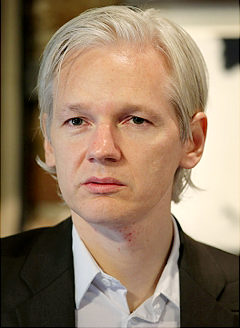
My libertarian and anti-state impulses incline me to be favorable toward Julian Assange, but I’ve never been able to shake how much he looks like John Hurt’s Caligula.

Technology

The technologies we use to try to “get on top of everything” always fail us, in the end, because they increase the size of the “everything” of which we’re trying to get on top.

Oliver Burkeman, Four Thousand Weeks

Brought to you by the letter “D”

Dust and decay,
ditherers upon the doorstep
of death itself; dried-
up ghosts of daisy-chain
days that were once dappled
with dew and delight.

R.S. Thomas, Anybody’s Alphabet, Collected Later Poems 1988-2000.

The Los Alamos Sin

As Freeman Dyson put it, the “sin” of the scientists at Los Alamos was not that they made the bomb but that they enjoyed it so much.

Walker Percy, Lost in the Cosmos


I don’t do any of the major social media, but I have two sub-domains of the domain you’re currently reading: (a) You can read most of my reflexive stuff, especially political here. (b) I also post some things on my favorite social medium.

New, chill Tipsy

Rules, Codes

The modern sexual marketplace

Half a century on from the contraceptive technology transition, and Greer’s call for women to emancipate desire from family formation, some 40 percent of Americans now meet their partners via the frictionless, boundary-less, disembodied free-for-all of online dating. And what this delivered wasn’t the blossoming of sexuality Firestone imagined: it was the modern ‘sexual marketplace’. In this ‘marketplace’, age-old sexed asymmetries have returned in cartoon form – without social codes to govern their action.

Mary Harrington, Feminism Against Progress

Weird, democratic, recognizable rules

Of HBO’s series The Gilded Age:

I think we like its picture of a society that had brute but recognizable rules that, in some weird way, were democratic. Make a whole pot of money, be generous with it to gain notice but enact modesty when thanked, learn to imitate personal dignity and a little refinement, and you’re in. It wasn’t much tighter than that. Now it’s more just the money, no one has to bow to some phony old value system, and the money spurts in all directions, creating a themeless chaos, and tech billionaires in sweatshirts give us moral lectures from Jeffrey Epstein’s plane.

Peggy Noonan

How are things holding up?

Can anything good come out of DOGE?!

My provisional verdict on the Trump administration is written and published and I do not intend to dwell on it anymore. But when DOGE started on its rampage, I wondered if the lads might, incidentally, do some good with their techie tools.

It appears that they have, and the tool was an AI thingamajig called SweetREX Deregulation AI. Who can object in principle to identifying regulations that are not required by statute and to flagging them for possible repeal? I cannot.

Hey, Mussolini reportedly made the trains run on time.

The judicial system still stands

I’m happy to say that the judicial system is serving as a fairly effective check on some of Trump’s worst impulses. And I say this, despite the sloppy narrative in the progressive press that the Supreme Court has become a rubberstamp for Trump. (One suspects that they’ve been written for months, just waiting for a few “statistics” to plug in before running them.)

Harvard Law Professor Jack Goldsmith methodically demolishes much of the nonsense channeled from Adam Bonica through Thomas Edsall at the New York Times. Goldsmith’s is a substack and likely is paywalled.

Suffice for now that the most dramatic claim, which involves federal District Court ruling against Trump more than 93% of the time and the Supreme Court upholding Trump more than 93% of the time is really preposterous. Goldsmith:

This analysis points the most fundamental problem with Bonica’s efforts to draw inferences from the Court’s Trump-related interim orders. The Court reviews only applications filed by parties. The Solicitor General seeks interim relief when he thinks the chances of success are relatively high. As Steve Vladeck explained in June, there are “literally dozens of adverse rulings by district courts that the Trump administration has been willing to leave intact—either by not appealing them in the first place, or by not pushing further after being rejected by courts of appeals.” (By my count that number is around four dozen right now.)==

… When Bonica says that the Supreme Court “reverses almost automatically,” he is ignoring the crucial fact that the Court sees only a fraction of lower court rulings, and then only ones that are skewed for likely government success.

Bonica and the New York Times are committing a variant of the political science sin of “testing on the dependent variable”: they draw sweeping conclusions from a subset of cases that is small, highly unrepresentative, and unexplained. Other critical claims in the Edsall piece ignore this fundamental point.

Goldsmith (bold added)

Jonathan Adler’s subsequent comments on Edsall and Goldsmith are not paywalled. Adler largely agrees with Goldsmith.

My point is not that Trump is exactly “right” about anything. It’s more that some of the wrongness is not illegal or unconstitutional.

Ailments and symptoms

[R]esistance is treating the symptom, not the ailment. The ailment is the tide of global populism that has been rising across the developed world for years, if not decades. And the cause is that our societies have segregated into caste systems, in which almost all the opportunity, respect and power is concentrated within the educated caste and a large portion of the working class understandably wants to burn it all down.

David Brooks, America’s New Segregation (gift link)

Authority

Following

Let’s begin by considering the sentence “We must follow the science.” It is one we have heard, in various forms, repeatedly since about the middle of March 2020 via the various propaganda platforms that saturate our lives: the electronic billboards, the websites, the TV ads, the Tweets and Instagram posts. No sentence better captures the core convictions and commitments of our well-educated, well-heeled, and well-regarded.

Think of the parallel commands never heard. No one who is today in a position of cultural authority ever says, “We must follow our guts.” No one says, “We must follow tradition.” No one says, “We must follow our religious leaders.” No one says, “We must follow the poets.” No one says, “We must follow what the majority decides.” No one says, “We must follow those who have displayed wisdom.”

Importantly, no one in a position of cultural authority even says, “We must follow no one but ourselves. No one can legitimately set limits on our behavior!”

No, the widely held, seemingly unchallengeable cultural belief is: We must follow the science.

Jeremy Beer, Limits, Risk Aversion, and Technocracy

Xenogender: just one question, but it’s kind of tough

If you read the UNESCO documents on childhood sexuality education …, you will find pages and pages about protecting children from sexual abuse.  Sprinkled through them are much briefer passages which let the cat out of the bag — but you have to look for them.  It’s true that the activists who run these agencies don’t want children to be raped.  But they do want to sexualize them, and they want it very much.

They explain that “comprehensive sexuality education” “equips” young people including children to develop sexual relationships.  Among its many goals are that five-to-eight year olds are to be taught that they can masturbate and it will give them pleasure; nine-to-twelve year olds, that abortion is safe; and twelve-to-fifteen year olds, that there are various and sundry “gender identities” which deserve equal respect.

Speaking of so called gender identities:  The UNESCO documents don’t list them, but did you know that activists now claim that some people are “xenogender”?  That’s a gender “that cannot be contained by human understandings of gender.”

I wonder:  If it can’t be contained by human understandings of gender, then how do the activists know that it is one?

J Budziszewski (bold added)


I don’t do any of the major social media, but I have two sub-domains of the domain you’re currently reading: (a) You can read most of my reflexive stuff, especially political here. (b) I also post some things on my favorite social medium.

Monday, 8/11/25

The New, Improved, Bureau of Labor Statistics

I’m not naive enough to think there exists such a thing as a non-ideological, neutral economic statistics human. So the idea that they would goose numbers to hurt Trump isn’t crazy to me, at all. But we do know that a Trump sycophant replacement will push this to new heights. We all know they’ll be technically worse. Numbers will be displayed to produce the letters M-A-G-A. The unemployed will be renamed New Golfers, as in, “The number of New Golfers this quarter is soaring.” Inflation? Rebranded as Patriot Growth. Rising gas prices? That’s Freedom Fuel demanding a premium. The only percentage allowed under the new jobs guy is 100 percent. A market crash is finally, a buying opportunity for American citizens, you are welcome. By Q3, the Bureau of Economic Analysis will be headquartered inside a Bass Pro Shop. Every press conference from the new Fed Chair will begin with, “Now I’m no expert, but. . . ” Jobs numbers are whatever you want them to be. Job numbers are a feeling.

Nellie Bowles

All she needs is a few more randomly-capitalized words and bangs to have the Trumpian rhetorical style down pat.

Power for power’s sake because … power

Megan McArdle from the Washington Post is a frequent guest on the Dispatch podcast. Recently, she helped unpack how people have seen elite hypocrisy and drawn the conclusion that there are no real norms, no truth, and have thereby greenlighted Trump who nowadays abandons all pretext of virtue, all gestures at norm-keeping. For instance, he doesn’t want redistricting in Texas because of apple pie, motherhood, the flag, and cute little furry things, but because “we’re entitled to five more seats in Congress.”

The relevant YouTube discussion starts here. My favorite, fructifying observation was about the “complete liberal takeover of the institutions that were in charge of deeming which hypocritical arguments counted.”

Enjoy.

The ruined landscape of our constitutional democracy

Andrew Sullivan was on fire Friday. He notes that Trump is “psychologically incapable of understanding anything but dominance and revenge, with no knowledge of history, crashing obliviously and malevolently through the ruined landscape of our constitutional democracy.” More on that at the end.

Meanwhile, the more granular indictment:

  • “what were only a few years ago obviously impeachable offenses are now simply known as the Trump administration.”
  • On the “emergency” he inherited from Biden: “A failed previous presidency, wars fought by other countries in other countries, subsidies for green energy, 2.7 percent inflation, and a trade deficit not much different than in the past few decades: if this amounts to a “national emergency,” then an emergency is a permanent condition, and the president can rule by fiat from here on out.”
  • “Resist and he’ll ruin you. He’ll destroy your law firm’s business; he’ll stop that corporate merger you want; he’ll put a tariff on your company; he’ll launch a DOJ investigation into you; he’ll get you fired for doing your job in government faithfully; he’ll sue you if you print something true about him; and if you’re a federal judge and rule against him, he’ll sic an online mob, and maybe a real mob, onto you. He has done all these things this year — and openly celebrated them.”
  • “only in police states do governments deploy masked anonymous armed men — now with no age limits! — patrolling the streets with the power to arrest and detain.”

Summing up:

This very Greek tragedy — conservatives killing the Constitution they love because they hate the left more — is made more poignant by Trump’s utter cluelessness: he doesn’t even intend to end the American experiment in self-government and individual freedom. He isn’t that sophisticated. He is ending it simply because he knows no other way of being a human being. He cannot tolerate any system where he does not have total control. Character counts, as conservatives once insisted, and a man with Trump’s psyche, when combined with his demagogic genius, is quite simply incompatible with liberal democratic society. Unfit.

We knew damn well he was a snake before we took him in. I have a lot of sins to repent of in my life, but even once voting for Donald Trump isn’t among of them. If you voted for him because you hated the left more, you may need to take stock.

Donald Trump is Allan Brooks

How exciting! I came up with this metaphor on my own!: “Donald Trump is Allan Brooks. His cabinet, department heads and other lackeys are his ChatGPT.

You didn’t “have to be there,” but you do need to know that Allan Brooks is a guy who ChatGPT led to the brink of insanity by playing sycophant to his increasingly delusional ideas over something like 300 hours of chat (chronicled in the story at the hyperlink).

Redistricting

I haven’t written a great deal about the effort of Texas Republicans to redistrict their state in the middle of a decade (that is, without any new formal census data for justification). In case you have been living in a cave, the Republicans are hoping to tease five more Republican district out of Texas, which would virtually assure Republican control of Congress after the 2026 congressional elections.

I admit that my impression was that this was completely abnormal and probably there was some constitutional provision that tied congressional redistricting to the decennial censuses so as to make it unconstitutional. I have now gone looking for that provision, having more than a passing acquaintance with the constitution, and I don’t see any such provision within the amount of time I was willing to spend looking for it.

Republicans in Texas have so often flaunted disregard for decency, truthfulness, and norms in general, that not being a Texas resident, I’m going to try to bite my tongue on this latest round of norm-breaking.

But now our shape-shifting Vice President has visited Indiana, reportedly urging us to redistrict before the 2026 elections as well. I’m pleased to report that the idea got a surprisingly cool reception from our Governor, which I ardently hope will continue.

I find consolation, contemplating these norm-breakers, in the thought that the way you get more “red” congressional districts by legislative fiat is by spreading the state’s Republicans over more districts, decreasing the margin in each district. If the US remains negative on Trump in November, 2026, the redrawn districts are likelier to swing Democrat than if they had fewer red districts with fatter margins.

I say that not because I want Democrats to win, but because I want Trumpists to lose. And Donald J. Trump has a pretty solid record of fouling up the electoral chances of Republicans downticket and in off-years (can you say “Herschel Walker”?).

Man bites dog

A retired lawyer, I subscribe to the “Short Circuits” blog which gives, um, short accounts of cases in federal circuit courts. For instance:

Boyle County, Ky. sheriff’s deputy is sentenced to over nine years for using excessive force on arrestees and lying to cover it up. DOJ (2024): When we looked at his phone, we found that he likes to brag about beating people up and take photos of injuries he caused to share with buddies. Sixth Circuit (unpublished): Conviction affirmed.

By the way: criminal prosecution of rogue police is too rare. I suspect there was a racial element in the excessive force; else the United States Department of Justice wouldn’t get involved in a Kentucky police matter.

Another example of the blog’s terseness:

Las Vegas firefighter sues the city for sex- and race-based discrimination. The case goes to a jury, which finds (1) that the firefighter was treated offensively, but not because of her race or sex, and (2) that the firefighter was not retaliated against for reporting the offensive incident. Despite finding no basis for liability, the jury awards the firefighter $150k in damages. District Court: Okay jurors, I just want to clarify that you’re all agreed there was no retaliation or race-/sex-based discrimination. Jurors: That’s correct. District Court: Judgment for the city, no damages. Ninth Circuit: Sounds about right.

Terser still:

Tenth Circuit: We held off on deciding this case about gender-transition procedures for minors until the Supreme Court decided Skrmetti. And, well, the Supreme Court decided Skrmetti.

For Love of Sentences

Frank Bruni includes this observation in this week’s column:

  • In The New Republic, Virginia Heffernan observed that the prevalence of women in Trump’s cabinet wasn’t a blessing, given the women: “Like middle-aged Manson girls, Pam Bondi, Tulsi Gabbard, Linda McMahon and Kristi Noem take orders from a supremely nasty felon. But they have vile streaks all their own. The vileness blends their private and public actions in a filthy smoothie.” (Amy S. Parker, Evanston, Ill., and Maureen J. O’Connor, Sacramento, Calif.)

The rest of his choices are non-political and can begin a closing palate-cleanser:

  • In The Washington Post, David Von Drehle paid tribute to the musical satirist Tom Lehrer, who died last month: “A mathematical prodigy from a wealthy family with a fondness for the light comic operas of Gilbert and Sullivan, Lehrer was to social criticism what Cole Porter was to sex — proof there is no better way to say the unsayable than with witty rhymes and toe-tapping rhythms.” (Uschi Wallisser, Stuttgart, Germany)
  • And George F. Will bemoaned the ubiquity and vagueness of a four-letter word: “Having no fixed meaning, ‘vibe’ cannot be used incorrectly. So, it resembles the phrase ‘social justice,’ which includes a noun and a modifier that does not intelligibly modify the noun.” Will added: “Shakespeare used 28,827 different words without resorting to ‘vibe.’ He could have written that Lear gave off a bad vibe while raging on the heath, and that Falstaff’s vibe was fun. But the Bard did as well as he could with the limited resources of the Elizabethan English he had.” (Cheryl Hanschen, Jackson, Mo., and Grace Sheldon-Williams, Los Angeles, among others)

Frank Bruni’s For Love of Sentences. He had several more good ones, but I thought I’d be skirting copyright laws if I quoted all of them.

Bruni’s Love of Sentences follows his main weekly opinion piece, which this week pointed out that Sydney Sweeney is a remarkably good actress — a scene-stealer from bigger names, even.

Given Bruni’s examples, I may never be able to confirm this for myself, despite the lass being easy on the eyes, because the characters he describes her portraying are exactly the nasty or disturbed sorts I’ll turn off if I stumble onto them, and won’t begin watching if forewarned.

Things AI taught me this week

Did you know that the word “blueberry” included the letter “b” three times? Neither did I, but ChatGPT 5 is on top of it.


Your enemies are not demonic, and they are not all-powerful and the right hasn’t always lost and the left hasn’t always won. But if you convince yourself of that, you give yourselves all sorts of permission to do a lot of stupid and terrible things under the rubric of “Do you know what time it is?”

Jonah Goldberg.

Trumpism can be seen as a giant attempt to amputate the highest aspirations of the human spirit and to reduce us to our most primitive, atavistic tendencies.

David Brooks

I don’t do any of the major social media, but I have two sub-domains of the domain you’re currently reading: (a) You can read most of my reflexive stuff, especially political here. (b) I also post some things on my favorite social medium.

And now for something more edifying

Having vented all my political bile a few hours ago, I give you, as David French puts it at the end of a column, “what else I did.”

Not “what” but “whether”

[W]e’re well past canon wars at this point. The question isn’t what people are going to read on the other side of the bottleneck; it’s whether they’re going to read anything at all. If you want a perfect example of not getting it, consider the conservatives complaining about books assigned in K-12 schools, and the liberals complaining about book-bans. How can either side keep pretending that the problem is with what students are reading? The world in which that debate made sense no longer exists. Even at elite universities, nobody reads books anymore.

If we are indeed entering a “new dark age” – one full of “shining devices” and for that reason mostly empty of literate persons – then Christian institutions today may have a similar mission to fulfill: saving the best of the secular world from the new bottleneck of technological “progress.” Maybe in the future it will only be students at Christian universities who read Freud and Marx and Nietzche and all the other great anti-Christian thinkers, because it will only be students at Christian universities who still read anything at all.

Adam Smith in Christian Scholars Review.

Shedding Enlightenment Values

When readers interact imaginatively with a book, they are still following the book’s lead, attempting to answer the book’s questions, responding to the book’s challenges and therefore putting their own convictions at risk.

When we interact with A.I., on the other hand, it is we who are driving the conversation. We formulate the questions, we drive the inquiry according to our own interests and we search, all too often, for answers that simply reinforce what we already think we know. In my own interactions with ChatGPT, it has often responded, with patently insincere flattery: “That’s a great question.” It has never responded: “That’s the wrong question.” It has never challenged my moral convictions or asked me to justify myself.

David A. Bell, A.I. Is Shedding Enlightenment Values.

Speaking of AI, it seems that the new ChatGPT 5 adds to its error-proneness a new feature: incorrigibility. It no longer flatters and apologizes for errors and corrects them — at least, not consistently.

To update an old aphorism, any lawyer who relies on AI has a client who has a fool for a lawyer.

Judeo-Christian anthropology

I’ve learned a lot from reading some serious religious thinkers down through the years: Augustine, Pascal, Franz Rosenzweig, Reinhold Niebuhr, TS Eliot, Walker Percy, the encyclicals of Pope John Paul II, Stanley Hauerwas, Peter Lawler, Alan Jacobs, David Bentley Hart …

The thing I most appreciate about the authors I’ve listed is how they expand my understanding of human nature. Judeo-Christian anthropology really does have a different shape than ancient Greek philosophical accounts of it, no less than modern scientific-reductionistic construals.

Damon Linker, Ask Me Anything

More:

The country is more secular than it was 20 years ago; the Republican coalition is more secular than it was then, too; and the parts of that coalition that describe themselves as evangelicals are, on average, less likely to attend church and read the Bible regularly than their counterparts a generation ago. Their faith has evolved into an identity marker: They call themselves Christians or evangelicals because those labels convey that they’re the good Americans, as opposed to those bad Americans on the other side of the partisan and culture-war divide.

We’re Babylon

I don’t feel “patriotic” if patriotism means expressing confidence in the country as it is today. Living overseas for the past two years, in a conservative country that’s in America’s ideological crosshairs, has taught me a painful lesson about what my country stands for today, and how it uses its power in the world. “We’re Babylon,” a visiting US pastor said to me recently. He’s right. … Seriously, you have to get out of America for some time to grasp how much cultural influence we have in the world, and how bad that is.

Rod Dreher.

The idea that America is “Babylon” has intrigued me for more than 50 years, after I first read Edward Tracy’s book The United States in Prophecy.

I do not recommend that book, written as it was by some manner of Evangelical or Dispensationalist. But I bought it at a time when I was Evangelical and the Evangelical Book market was flooded with crap like The Late, Great Planet Earth, which fed Evangelicals Americanism and cold war Russophobia (which differed from today’s Russophobia). The idea that the United States might be an equivocal, or even a negative, player in Bible prophecy was just irresistibly transgressive to me.

I thoroughly enjoyed the irony of using Hal Lindseyish exegesis to reach Jim Wallisish conclusions.

Still, the possibility of Tracy being at least adjacent to the truth lingered and lingers, partly because I have a much different view of Bible prophecy these days. I don’t use it to predict the future (I never really did), but I think that figures like “Babylon” can echo typologically down through the ages. In that sense “We’re Babylon” fits Edward Tracy’s exegesis awfully well (see Jeremiah 51:7-8, Revelation 14:8).

Note that “the United States as Babylon” in the constellation of my thinking antedates Trumpism by four decades or more. This is one thing I don’t blame on our current President. Indeed, events of the last 7 months or so have so debased us that it’s hard to imagine the world uniformly mourning if our instantiation of Babylon fell.

Erotica

Much later, Playboy magazine came along, in which girls removed their underwear and a boy could drive to a drugstore in a part of town where he was not known and tuck a copy into a Wall Street Journal and peruse it And later came Tropic of Cancer and Portnoy’s Complaint and now porn is freely available online though to me it has all the erotic allure of watching oil well pumps pumping in North Dakota.

Garrison Keillor

Gerrymander boomerang

Those who draw gerrymanders can get too greedy. They maximize seats by cutting their party’s margins in each seat. If 2026 is a particularly bad year for Republicans in Texas, they could lose ground from this gerrymander.

E.J. Dionne.

From your mouth to God’s ear, E.J.


I don’t do any of the major social media, but I have two sub-domains of the domain you’re currently reading: (a) You can read most of my reflexive stuff, especially political here. (b) I also post some things on my favorite social medium.