Three days in a row! When did I last blog three days in a row?!
I have nothing to say about Israel, Hamas, Gaza, Lebanon, Iran, hostages and any piece I’ve left out, but I’m not oblivious to this anniversary.
Not politics
Tradition
Tradition refuses to submit to the small and arrogant oligarchy of those who merely happen to be walking about. All democrats object to men being disqualified by the accident of birth; tradition objects to their being disqualified by the accident of death.
G.K. Chesteron, Orthodoxy
Here is a quick and generally reliable rule to follow. If people have always said it, it is probably true; it is the distilled wisdom of the ages. If people have not always said it, but everybody is saying it now, it is probably a lie; it is the concentrated madness of the moment.
Anthony M. Esolen, Out of the Ashes
Sportsball
Gladwell, like many of us, seems to have unwittingly internalized the idea that when professional athletes do the thing they’re paid to do, they’re not acting according to the workaday necessity (like the rest of us) but rather are expressing with grace and energy their inmost competitive instincts, and doing so in a way that gives them delight. We need to believe that because much of our delight in watching them derives from our belief in their delight.
Alan Jacobs, How to Think
Dreaming is just about our only break from rationalism
The whole evolution of music as an academic discipline tends to destroy the most important reason to care about music in the first place.
Here’s one of my charts on the subject:
That’s why I started to write about sleeping.
No music writer talks about sleep more than me. And that’s because dreams happen when we sleep—and this is the one type of visionary experience everybody can still access.
We all become a little unhinged and crazy in those dreams. Even the most rationalistic STEM advocate.
…
Could something like this—dream therapy for creatives— exist in the current day?
I wondered about this for a long time. I finally decided to ask musicians about whether they had learned songs from their dreams.
Nothing prepared me for the response I got. I heard from hundreds of musicians—and learned that the gift of a song during a dream is quite common. And it’s usually a powerful song.
…
I note that many musicians have told me that they are reluctant to discuss their dream songs. The subject is just too strange and antithetical to our dominant rationalist paradigm.
And that reluctance is even greater if the artist has a hallucination or out-of-body experience or something else that ‘medical experts’ might want to treat.
My hunch is that these happen frequently to intensely creative people—even in an age of rationalism.
The world isn’t as neat and rigorously logical as you’ve been told. And the world of artistic inspiration is the least logical of all. There’s a good reason why the ancients believed that creative works were a gift from the muse.
…
I continue to research this subject, and I think about it all the time. Even more important, I try to open up my mind to realms of experience beyond the empirical. That’s where creativity comes from, and I don’t want to shut myself off from the source because of close-mindedness.
Above all, I don’t mock or dismiss artists who have these visions, or assume that in every instance they are suffering from mental illness. Some of them might be a lot wiser or healthier than the rest of us.
I can’t think of a solo-effort Substack that delivers more bang for the buck that Ted Gioia, The Honest Broker. And the guy is really smart about some things that interest me.
From the Department of Free-Association: Has Rod Dreher, once again, seized the moment to shape a coming conversation, as he did in Crunchy Cons, Benedict Option and Live Not By Lies?
Politics
Serious people earnestly disagreeing
Back in August I was watching the DNC with my old mom in California. Kamala and Tim and Michelle and Barack and all the others kept talking about our reasons for aiding Ukraine in its fight against the Russian occupation of its eastern territories. They consistently appealed to the apparently essentialized fact that the Ukrainians, like the Americans, “love freedom”, and that it is only natural and right to help other peoples who share this love with us. There was zero acknowledgment of the complexities of geopolitics and historical legacies, or of the situated perspective a Russian might non-crazily come to have, according to which parts of what is now Ukraine seem naturally and justly to fall more into the sphere of influence of the Russian Empire than of the North Atlantic one.
I know a lovely man in his 60s, an outstanding member of the vanishing breed of the Homo Sovieticus, whose father is Ukrainian and whose mother is Russian, and who grew up in Kazakhstan. He tells me his parents waited to get married so that the celebration would take place on the 300th anniversary of the 1654 Pereyaslav Agreement, in which the Cossack Hetmanate in control of much of Ukraine made a ceremonial pledge of loyalty to Moscow. This friend of mine is in exile, and is no admirer of Putin. He greatly regrets the 2022 invasion. But he could never make any sense of any claim to the effect that Ukraine rightly belongs to NATO and not to Russia in virtue of some mysterious essential trait of the Ukrainian people, that they “love freedom” while the Russians do not.
…
And here we arrive at what really gets me about the Democrats. If we are going to risk direct conflict with another nuclear-armed superpower, let us not be lulled into it by bullshit and platitudes. Why do the Democrats have to talk that way? It’s as if the Republican tactic of portraying “the libs” as effeminate hyper-woke safe-spacers has really only caused the Democrats themselves to double down with absurd displays of hawkish masculinity. We’re supposed to love Kamala because she’s a tough-on-crime prosecutor, and that therefore corrects for the slip-ups of the past years when some in the progressive wing of the party have suggested, on the contrary, that all cops are bastards. Tim Walz, meanwhile, seems to have been chosen primarily because he wears flannel shirts, and has been put on display in the most implausibly kayfabe campaign ads purportedly fixing his own pick-up truck. One almost expects them next to come out with an ad depicting Walz in the act of dressing a deer, looking every bit the caricature of the Minneapolis goy neighbor in the Coen Brothers’ A Serious Man (2009). He’s a hunter and a football coach, but he’s also a faculty advisor for the LGBTQIA+ club! What a model of enlightened masculinity! She’s a prosecutor and a foreign-policy hawk, but she’s a she and she brings “joy”! The problem is that none of the rest of the world cares about any of that childish stuff. They all know that for all the equally kayfabe retrograde masculinity of Trump, that man is an absolute pussy, and it is in fact the Democrats who represent the greatest threat to any hot-spot of resistance to the US’s arch-imperial ambitions throughout the world.
What are the odds that a world in which the American Empire is beaten into desperate retreat would be any sort of world our children and grandchildren might want to live in? … Trump, in a second term as president, is practically guaranteed to assume the role of overseer of American imperial retreat, in favor not of a global community of equals such as some naïve progressives might have hoped for in the early years of the League of Nations, but of nationalist isolation and at most pragmatic cooperation with other self-sequestering nation-states, somewhat along the lines of what Marine Le Pen envisions for Europe in the phrase “association des nations libres”. That phrase might sound innocent enough, but nations that are free to dispense with any idea of reciprocal obligations are unlikely to remain in a stable “association” for long, and Trump, at least, hardly gives any indications of knowing how to guide the ship of state as it weathers the inevitable storms that will whip up unstable waters in our years of decline. Far better, far surer, we believe, to have a party in power that understands and accepts the nature of the that power: imperial power, namely, which might aspire in the years ahead not only to face off with steely resolve in our current global showdown, but, eventually, to emerge as its undisputed champion. … Most of us on the Editorial Board, even the Americans among us, do not live in the United States, and from our respective vantages it is pretty hard to concentrate on any aspect of American political life that does not have to do with its role as a globe-spanning empire. Just manage your domestic affairs however you see fit, we are tempted to say; our overwhelming concern is with what you get up to beyond your borders. We therefore have rather little patience for that current of Democratic partisan discourse that would like for American politics to sound more or less like, say, Danish politics. Denmark, if we may be blunt, and all of the Scandinavian countries with such high marks on all the usual tests, is able to focus on maintaining its robust welfare state primarily because its defense is entirely outsourced to the American Empire. The American Democrats who fawn over European national health systems seldom realize that by seeing to the defense of other NATO members, the United States is at the same time freeing up European national budgets for other more humane uses. Americans pay for European defense rather than paying for their own welfare; Europeans get health care in turn, but only through de-facto vassalization.
We would like to see this arrangement continue, at least for now, at least until NATO can be expanded to include all of those states that currently set themselves up in opposition to it, a prospect even Russia’s own leaders in the early post-Soviet years were able to entertain with some seriousness.
You might think our reasons for voting for the Democrats are not good ones, or that we are merely “joking” when we give them. We can only reply that your reasons really do not matter. You might well imagine your are voting, for your part, for “decency”, or “joy”, or sane gun-control laws or a woman’s right to choose. But the only way to vote for any of these things is to cast a vote for American empire. That’s the bargain. We here at The Hinternet, minus our Founding Editor, believe this is a bargain worth accepting, but that is only because we believe it is the United States under Democratic leadership that offers us the single best shot at subduing all the planet’s lingering zones of discontent, and delivering us into a future of perpetual peace. This is what we at The Hinternet want. Do you?
These seem to be serious people having a serious disagreement, not just swapping bullshit and platitudes. It’s a habit most of us, myself included, could benefit by emulating.
Agreement on norms trumps disagreement on policy
Cheney’s argument for Harris is a classical liberal version of the GOP’s “Flight 93 election” reasoning from 2016. It’s a basic matter of proper prioritizing: Agreement on norms trumps disagreement on policy. If you hand power back to Trump, he’ll crash the constitutional order. The conservative thing to do under the circumstances is to storm the cockpit by backing Harris, who’ll at least keep the plane in the air.
(I wonder how Lisa Beamer feels about Flight 93 as a recurring political trope?)
Those conservative Democrats!
The truth, I think, is that the Democratic Party is drifting. Coasting. Dems are buoyed at the national level by Trump’s personal unpopularity but lacking in any kind of compelling vision for the future of the country. For the third cycle in a row, the Democrats have been freed up to run a mostly substanceless campaign that boils down to “Vote for us so Trump will lose.” But what besides that promise of negation does the party stand for? What does it hope to accomplish? Or does it just want to be empowered to manage for a little longer the well-functioning system of domestic and international institutions that already exists?
The answer, it would seem, is the latter. From what I can tell, the Democrats are proposing little beyond a defense of the status quo (or, in the case of abortion rights, a return to the status quo as of a few years ago) against all the unorthodox things their opponents aim to accomplish (including mass deportations, a revolution in how the executive branch is staffed, and the imposition of sweeping tariffs).
That means the Democrats have inadvertently become America’s conservative party, championing the views and interests of those Americans who are content with the country’s present and recent past. When that stance is combined with opposition to the widely loathed Trump, it can (just barely) deliver victory …
The term “conservative” has many meanings, but the most elementary one—the one associated with the man generally considered to be the first conservative writer and thinker, Edmund Burke—grows out of the name itself: To be conservative is to seek to conserve the present’s inheritance from the past: the accomplishments, authoritative institutions, norms, habits, policies, and traditions that have been handed down to us by previous generations.
That’s the meaning of Liz Cheney’s enthusiastic endorsement of the Harris/Walz ticket late last week. It’s not a signal that Harris will govern as a Republican from the era when Cheney’s father (who has also endorsed Harris) served as George W. Bush’s vice president. It’s an expression of Burkean conservatism against the disruptive-revolutionary impulses of the MAGA movement.
The American multiculturalists similarly reject their country’s cultural heritage. Instead of attempting to identify the United States with another civilization, however, they wish to create a country of many civilizations, which is to say a country not belonging to any civilization and lacking a cultural core. History shows that no country so constituted can long endure as a coherent society. A multicivilizational United States will not be the United States; it will be the United Nations.
Samuel P. Huntington, The Clash of Civilizations and the Remaking of World Order.
I was not a very good student of history, but I wonder what historic precedents Huntington has in mind when he says “History shows …”. Sincere question. Surely it’s not just that nobody has tried a multicivilizational nation before; that would not yield a verdict of history.
Please comment if you know. (Comments are moderated but not censored for viewpoint.)
We knew damn well he was a snake …
before we took him in.
I love editorial cartoons, and am fond of comic strips as well. As newspapers are dying, I mainline mine from here.
I suffer more from the humiliations inflicted by my country than from those inflicted on her.
I don’t do any of the major social media, but I have two sub-domains of the domain you’re currently reading: (a) You can read most of my reflexive stuff, especially political here. (b) I also post some things on the only social medium I frequent, because people there are quirky, pleasant and real.
We’re home at last from a vacation overshadowed by car damage from road debris encountered on the way north to vacation. Every fix revealed yet another problem. Every new problem required a wait for Allstate to approve the added work. We finally just drove our rental car home yesterday and are currently planning how most easily to retrieve our car when they finally fix the final problem.
I have nothing more to say on that, lest I add myself to the luckiest victims in the world (see below).
Not very political
The huge history of a little bit of geography
The word Palestine always brought to my mind a vague suggestion of a country as large as the United States. I do not know why, but such was the case. I suppose it was because I could not conceive of a small country having so large a history. I think I was a little surprised to find that the grand Sultan of Turkey was a man of only ordinary size. I must try to reduce my ideas of Palestine to a more reasonable shape. One gets large impressions in boyhood, sometimes, which he has to fight against all his life.
Mark Twain, The Innocents Abroad
Epistemic idiocy
A man who murdered dozens of Muslims at two mosques in New Zealand was “steeped in the culture of the extreme-right internet,” … His manifesto explained that he had done research and developed his racist worldview on “the internet, of course. . . . You will not find the truth anywhere else.”6 The latter assertion involves, alas, a rather serious mistake about epistemic authority.
This is a flawed but important article I personally will revisit on the subject of legitimate epistemic authority. We’re not as adrift and it sometimes seems — or as the New Zealander fancied himself.
ProPublica
Having apparently run out of Supreme Court justices to attempt to drive from public life, the left-wing nonprofit journalistic outfit ProPublica has directed its attention to sullying one of their most notable achievements: the Dobbs decision, which returned the power to regulate abortion to the people and to the states. Georgia now has a heartbeat law, which outlaws abortion once a fetus has a detectable heartbeat (with exceptions for rape, incest, and maternal health). A recent ProPublica article blamed the law for the deaths of two women who had taken chemical-abortion drugs (whose riskiness goes unremarked upon). The drugs killed the children but failed to expel all of their remains. One woman unsuccessfully sought treatment in a hospital, and the other feared it—both, supposedly, results of the law. But as our former colleague Isaac Schorr pointed out at Mediaite, the law does not forbid the surgical removal of an already dead child. No reasonable person who read the plain text of the law would think otherwise, which may be why ProPublica did not include the relevant portion. Even the argument that the doctors’ uncertainty about the law prevented treatment is unsubstantiated. The ProPublica article eventually admits that “it is not clear” why doctors waited to perform the necessary procedure. Laws against abortion haven’t caused any deaths, but ProPublica is doing its part to raise the death toll.
National Review email newsletter
The luckiest victims on earth
[E]ven as you push back against ideological bias and discrimination, remember that as a university student you are one of the luckiest — most privileged — people on the planet. So do not think of yourself as a victim. You can assert and defend your rights without building an identity around grievances, however justified those grievances may be.
…
Remember that the criticism of a belief (or a practice, faith or lifestyle) is not a personal attack, though the natural human tendency to wrap our emotions tightly around our convictions can make it feel as if it is.
I don’t pin dreams on the rack of endless above-ground interpretation, but I do give them space and attention.
In myth, when you are facing a monster, look at its reflection on your shield, not the abyss of its face. That will quickly burn you to cinders. What is your shield? Well it’s something that shows you the general shape of your adversary but not to the degree it paralyses you.
The yearslong elevation of figures like [North Carolina Gubernatorial Candidate] Mark Robinson and the many other outrageous MAGA personalities, along with the devolution of people in MAGA’s inner orbit — JD Vance, Elon Musk, Lindsey Graham and so very many others — has established beyond doubt that Trump has changed the Republican Party and Republican Christians far more than they have changed him.
In nine years, countless Republican primary voters have moved from voting for Trump in spite of his transgressions to rejecting anyone who doesn’t transgress. If you’re not transgressive, you’re suspicious. Decency is countercultural in the Republican Party. It’s seen as a rebuke of Trump.
… I’ve compared the cultural power of a leader to setting the course of a river. Defying or contradicting the leader’s ethos is like swimming against the current — yes, you can do that for a time, but eventually you get exhausted and either have to swim to the bank and leave, or you’re swept downstream, just like everyone else.
In a similar vein, albeit from someone who hasn’t been Republican:
There is no place for dissenters in the contemporary Republican Party. That is going to remain true whether or not Donald Trump prevails in November. It’s long past time those who reject the right-populist takeover of the party to cut themselves loose and stop pretending they will have a meaningful say in building its future. They will not. It would be far better for them, and for the Democrats, if they joined the Donkey Party outright and began fortifying the Harris-Walz campaign’s move toward the ideological center-left.
In a strong post late last week, The Bulwark’s Jonathan Last took the occasion of the latest mind-boggling revelations about Mark Robinson, the Republican Party’s nominee for governor of North Carolina, to make the point that the GOP is a “failed state.” The image comes from a 2016 Slatecolumn by his Bulwark colleague Will Saletan. As Last explains, functional institutions “have power centers and interests. In a healthy institution, these power centers can unite to achieve shared interests, even in difficult moments which require sacrifice.” Over the last two decades, for example, Democratic Party has given us the following examples:
In 2008 Hillary Clinton was supposed to be the Democratic presidential nominee. But various Democratic power centers coordinated to elevate Barack Obama, who they believed was a better candidate.
In 2016, a democratic socialist tried to win the Democratic presidential nomination. The party coordinated to prevent him from doing so.
In 2020, the same democratic socialist made another attempt. The party coalesced around Joe Biden and got him elected president.
In 2023, as Republicans went through four nominees to find a speaker of the House, Democrats voted, unanimously, time after time, for Hakeem Jeffries.
And in 2024, when the Democratic Party realized that Joe Biden was compromised as a candidate by his health, they convinced him to step aside.
I want to underscore this: The Democratic Party was able to convince a sitting president to abandon his reelection attempt four months before November.
That’s a portrait of a party as an effective, functional institution.
The Republican Party, by way of sharpest contrast, cannot even get a man to step aside in a crucial statewide race when he’s caught (among other things) describing himself as a “Black Nazi” on a porn-focused chat forum. The party is being held hostage—by the candidate, yes, but his power is itself a function of his popularity among Republican voters in the state. They want him as their nominee, and the voters get whatever they want in the contemporary GOP. Which means the institution is a hollow shell—or the domestic equivalent of a failed state.
Sorry, Damon, but I’m not going to be in the vanguard of any GOP migration, partly because I’m not exactly in the GOP, partly because of a few deal-killer Democrat policies.
The Bennet Inversion
Our best hope is to hasten a change in culture that reverses this effect. Call it the Bennet Inversion, for Senator Michael Bennet, who campaigned for president promising to govern so boringly that voters would go weeks without thinking about him. He was so successful that no one remembers his campaign at all. Biden accomplished a miniature version of this, by executing a Fabian strategy and defeating Trump without ever facing him directly on the field of meme battle.
I don’t do any of the major social media, but I have two sub-domains of the domain you’re currently reading: (a) You can read most of my reflexive stuff, especially political here. (b) I also post some things on the only social medium I frequent, because people there are quirky, pleasant and real.
I’m on vacation, so I’m not going to take the time to sort these into topics.
Also, it’s a major Feast day in the Eastern Church. The Orthodox Church at my vacation destination appears to be postponing observance to tomorrow — an Orthodox oddity in my limited experience.
Selling hoi polloi a delusion
Those with a material interest in doing so have learned to speak autonomy talk, and to tap into the deep psychology of autonomy in ways that lead to its opposite.
Matthew Crawford, The World Beyond Your Head
Purposeful to a fault
Himmler quite aptly defined the SS member as the new type of man who under no circumstances will ever do “a thing for its own sake.”
Hannah Arendt, The Origins of Totalitarianism
Sit quietly with that one for a minute. Then consider Josef Pieper, Leisure, The Basis of Culture.
“Televangelists”
Fugitive Televangelist Wanted by F.B.I. Is Caught in the Philippines Weeks of tense standoff in the Philippines have ended in the capture of a pastor accused of leading an international ring of sex abuse and trafficking of young women and girls.
I don’t believe it would be fair to saddle any Christian tradition or denomination with this guy. From what the Times says about the idolatrous adulation he cultivated, he was plainly some kind of one-off cultist.
But I have no idea how many one-off cultists are abroad in the world, when this admonition currently being featured at the end of my Sunday blog posts:
Religious ideas have the fate of melodies, which, once set afloat in the world, are taken up by all sorts of instruments, some woefully coarse, feeble, or out of tune, until people are in danger of crying out that the melody itself is detestable.
George Elliot, Janet’s Repentance, via Alan Jacobs
Huge (if true)
Donald Trump runs no risk of going to prison in the middle of his campaign, thanks to Judge Juan Merchan’s decision Friday to postpone sentencing until Nov. 26. The delay gives his lawyers more time to prepare an appeal. Fortunately for Mr. Trump, his trial was overwhelmingly flawed, and a well-constructed appeal would ensure its ultimate reversal.
A central problem for the prosecution and Judge Merchan lies in Article VI of the U.S. Constitution, which makes federal law the “supreme law of the land.” That pre-empts state law when it conflicts with federal law, including by asserting jurisdiction over areas in which the federal government has exclusive authority.
Mr. Trump’s conviction violates this principle because it hinges on alleged violations of state election law governing campaign spending and contributions. The Federal Election Campaign Act pre-empts these laws as applied to federal campaigns. If it didn’t, there would be chaos. Partisan state and local prosecutors could interfere in federal elections by entangling candidates in litigation, devouring precious time and resources.
That hasn’t happened except in the Trump case, because the Justice Department has always guarded its exclusive jurisdiction even when states have pushed back, as has happened in recent decades over immigration enforcement.
The normal approach would have been for the Justice Department to inform District Attorney Alvin Bragg, who was contemplating charges against Mr. Trump, of the FECA pre-emption issue. If Mr. Bragg didn’t follow the department’s guidance, it would have intervened at the start of the case to have it dismissed. Instead the department allowed a state prosecutor to interfere with the electoral prospects of the chief political rival of President Biden, the attorney general’s boss.
In the summer of 2015, back when he was still talking to traitorous reporters like me, I spent extended stretches with Donald Trump. He was in the early phase of his first campaign for president, though he had quickly made himself the inescapable figure of that race—as he would in pretty much every Republican contest since. We would hop around his various clubs, buildings, holding rooms, limos, planes, golf carts, and mob scenes, Trump disgorging his usual bluster, slander, flattery, and obvious lies. The diatribes were exhausting and disjointed.
But I was struck by one theme that Trump kept pounding on over and over: that he was used to dealing with “brutal, vicious killers”—by which he meant his fellow ruthless operators in showbiz, real estate, casinos, and other big-boy industries. In contrast, he told me, politicians are saps and weaklings.
“I will roll over them,” he boasted, referring to the flaccid field of Republican challengers he was about to debate at the Ronald Reagan Presidential Library that September. They were “puppets,” “not strong people.” He welcomed their contempt, he told me, because that would make his turning them into supplicants all the more humiliating.
“They might speak badly about me now, but they won’t later,” Trump said. They like to say they are “public servants,” he added, his voice dripping with derision at the word servant. But they would eventually submit to him and fear him. They would “evolve,” as they say in politics. “It will be very easy; I can make them evolve,” Trump told me. “They will evolve.”
Like most people who’d been around politics for a while, I was dubious. And wrong. They evolved.
The eighteenth-century Humean slave of the passions is thus indistinguishable from the liberated, twentieth-century Sartrean individual living authentically.
Brad S. Gregory, The Unintended Reformation
All that matters is strength
Part of the reason Trump is less constrained on [the abortion] issue than his predecessors is that he’s transformed the Christian right just as he has the broader conservative movement, dethroning serious-seeming figures while promoting those once regarded as flamboyant cranks. In Republican politics, Steve Bannon and Alex Jones now have far more influence than erstwhile conservative stalwarts like Paul Ryan and Dick Cheney. Similarly, in the religious realm, the ex-president has elevated a class of faith healers, prosperity gospel preachers and roadshow revivalists over the kind of respectable evangelicals who clustered around George W. Bush. “Independent charismatic leaders, who 20 years ago would have been mocked by mainstream religious right leaders, are now frontline captains in the American culture wars,” writes the scholar Matthew D. Taylor in his fascinating new book, “The Violent Take It by Force: The Christian Movement That Is Threatening Our Democracy.”
The churches Taylor is writing about exist outside the structures and doctrines of denominations like the Southern Baptists. They’re led by flashy spiritual entrepreneurs who fashion themselves as modern apostles and prophets with supernatural spiritual gifts, and they represent one of the fastest-growing movements in American Christianity. Among many of these churches, Trump remains the anointed one, chosen by God to restore Christian rule to the United States. These Christians care a great deal about abortion, but they appear to care at least as much about Trump. Many of them see him as a modern-day version of the Persian emperor Cyrus, a heathen who, in the sixth century B.C.E., rescued God’s chosen people from Babylonian captivity. In this framework, Trump’s piety is irrelevant; all that matters is his strength.
I think Goldberg, no Christian, is right. And that means that it’s hard to say that MAGA and I share the Christian tradition; their religion seems from a darker source.
Ted Cruz is no dummie
Liz Cheney famously endorsed Kamala Harris over Donald Trump, and less famously endorsed Democratic U.S. Representative Colin Allred over Ted Cruz for Cruz’s Texas Senate seat.
So has she abandoned the GOP?
I can’t speak for Cheney, but I can tell you why I’m voting for Allred over Cruz—and it has nothing to do with policy or burning anything down.
Since January 6, the threshold question I ask when considering whether to vote for a Republican is how that candidate responded to Trump’s coup attempt. There’s a spectrum of behavior on that point, with Cheney and Kinzinger on one end, Trump himself on the other, and the mass of congressional Republicans somewhere in between.
At the two extremes of the spectrum, policy doesn’t matter to me. Policy debates are things you get to have when everyone agrees on the rules of the game. Rewarding those who defended democratic norms and punishing those who undermined them is more important.
I would vote for Cheney and every other Republican who voted to impeach or convict Trump following the insurrection in hopes that their victories would embolden others in the party to resist his power grabs in a second term. And I would vote against Trump and all of his co-conspirators for the opposite reason, in hopes that their defeats would convince others that civic crime, like trying to overturn an election on false pretenses, doesn’t pay.
Ted Cruz was Trump’s chief co-conspirator in the Senate after the 2020 election, initially agreeing to argue before the Supreme Court that the electoral votes of swing states won by Joe Biden should be thrown out. When the court declined to hear that case, Cruz switched to Plan B and ring-led a scheme on January 6 to stop Congress from certifying Biden’s victory by objecting to those swing-state electoral votes. Had he gotten his way, some sort of chaotic ad hoc election “commission” would have been thrown together before Inauguration Day to decide who the next president should be.
He did all of this knowing full well that Trump was and is a loon and that egging on Americans to doubt the fairness of their own elections will destabilize the country long-term. But he was willing to pay that price because he thought making himself useful to the coup would give him a leg up with Trump’s base when he runs for president again someday.
You don’t need to agree with Colin Allred on a single policy issue to grasp that a person like Ted Cruz cannot be trusted to defend the constitutional order. He was tested and failed grievously. If you believe that a second Trump presidency would create a “unique threat” to American government, as Liz Cheney and I do, it’s urgent that Trump’s most unethical enablers in Congress be replaced by people who won’t rubber-stamp anything he does.
Republicans in Texas had their chance to replace Cruz with a candidate like that in this year’s primary, just as Republicans nationally had their chance to replace Trump. They made their choice. Cheney and I have made ours.
It’s frankly amazing to me that so many conservatives have been left struggling to understand Cheney’s endorsement of Allred. To a certain sort of partisan, it seems, Trump is the only elected Republican who bears meaningful responsibility for the attempt to overturn the 2020 election. Ted Cruz, Mike Lee, the scores of House GOPers who voted to object on January 6—they’re all off the hook because, well, there are just too many of them to punish. Beating them at the polls would wipe out the party, and partisans won’t tolerate that. Even for just one election cycle, to teach their representatives a hard lesson about authoritarian bootlicking.
If you feel obliged to excuse Ted Cruz for his role in a coup plot because that’s what hating Democrats requires of you, you do you. But let’s please stop memory-holing his part in it by feigning confusion as to why Liz Cheney might want to drive him from politics. It’s pathetic.
Ted Cruz is no dummie. He’s whip-smart and cunning. He also is a contemptible human being with no core. His mentor, Princeton’s Robert P. George, must be deeply grieved.
Shanghaied
Few cities in Asia match Shanghai’s level of economic development. In the fanciest shopping streets in the city center you can go miles without leaving the realm of luxury stores, with a Hermes outlet abutting a Louis Vuitton outlet, which in turn abuts a Rolex outlet. At times, the city reminded me of an acquaintance’s semi-humorous observation that, in a hundred years, luxury brands may be all that remains of Europe’s once enormous influence on the world.
In Postwar, Tony Judt argues that in the 1960s, the restive mood of Europe’s young was in part fueled by the ugliness of the homes in which they had been raised and the new universities in which they were being educated. Comparisons between Europe sixty years ago and China today are certain to be wrong for any number of reasons, but my mind kept going back to Judt’s observation every time I drove past another island of identical, unadorned housing blocks.
Preferences about the next American president seem to be nearly as divided among Chinese intellectuals as they are among the American electorate. A senior scholar of international relations told me that Donald Trump would likely be more willing to cut deals with China but that he preferred Kamala Harris because of her greater predictability on the international stage. A senior economist told me that Kamala Harris might prove softer on tariffs but that she would prefer Donald Trump because of his greater predictability on economic policy. The only consistent refrain was the preference for perceived predictability: Chinese elites seem as discombobulated by the sense that it’s impossible to predict what Washington might do as they are by any specific action the next president might take.
The chief petty officers aboard the USS Manchester (LCS-14) were caught illicitly placing and using a Starlink satellite-internet antenna while the ship was under way. The conspiracy, involving all senior enlisted sailors attached to the littoral combat ship, came to light after months of use, when a civilian contractor came aboard and stumbled upon the bootleg setup. The ship’s command senior chief and ringleader of the operation was convicted at court-martial and reduced in rank from E-8 to E-7: an outrageously light penalty considering her repeated lies to her commanding officer, her background in Navy IT that ensures she was absolutely aware of her transgression, and the cover-up campaign that involved the intimidation and silencing of those below her. This betrayal of the ship’s whereabouts in service to movie-streaming, texting, and other forms of personal entertainment is especially egregious because of the role that chiefs have in preserving good order and discipline among the ranks while upholding Navy traditions. A bad chief is the ruin of a ship and its crew, and the legal equivalent of keelhauling the only correct recourse.
National Review’s The Week Friday email. See also the Navy Times.
Donald Trump after the debate
The Hill: Trump Floats Punishment For ABC After Debate
I mean, to be honest, they’re a news organization. They have to be licensed to do it. They ought to take away their license for the way they did that.
This response is fractally wrong. ABC doesn’t need a license to be a news organization (thank God and the First Amendment).
If they did have a license, it would be dictatorial to revoke it for displeasing the President or anyone else.
Trump once again exhibits his anti-democratic impulses, though once again it probably will deter no fans.
Lesser evils
“Sending migrants away, not allowing them to grow, not letting them have life is something wrong; it is cruelty,” Francis said in a news conference on the plane as he returned to Rome after his long trip to Southeast Asia and Oceania. “Sending a child away from the womb of the mother is murder because there is life. And we must speak clearly about these things.”
…
But when asked whether it would be morally admissible to vote for someone who favored the right to abortion, he responded: “One must vote. And one must choose the lesser evil. Which is the lesser evil? That lady or that gentleman? I don’t know. Each person must think and decide according to his or her own conscience.”
Donald Trump seemingly is Teflon-coated, but explicit Papal permission to vote for the (more) pro-abortion candidate could logically be a factor in this election.
Even WSJ is appalled
Ms. Loomer is usually described in the press as “far right,” but that’s unfair to the fever swamps. On Sunday she posted on X that if Ms. Harris wins the election, “the White House will smell like curry,” a gibe against Ms. Harris’s Indian heritage.
She added that Ms. Harris’s speeches “will be facilitated via a call center.” U.S. companies often farm out their information lines to Indian firms, get it? We wonder if JD Vance’s Indian-American wife thinks that’s funny.
In 2018 Ms. Loomer chained herself to Twitter’s New York headquarters after the platform banned her. She suggested that Casey DeSantis, the wife of Florida Gov. Ron DeSantis, might have lied about having breast cancer: “I’ve never seen the medical records.” This week she smeared Sen. Lindsey Graham after he criticized her association with Mr. Trump.
All of this would be ignorable, except that others close to Mr. Trump say he is listening to Ms. Loomer’s advice. People in the Trump campaign are trying to get her out of the former President’s entourage, to no avail. Even Rep. Marjorie Taylor Greene thinks Ms. Loomer is damaging the former President’s election chances.
As North Carolina Sen. Thom Tillis put it on Friday: “Laura Loomer is a crazy conspiracy theorist who regularly utters disgusting garbage intended to divide Republicans. A DNC plant couldn’t do a better job than she is doing to hurt President Trump’s chances of winning re-election. Enough.”
If anyone is looking for facts to support a vote for Trump despite loony Loomer (and everything else), these two graphs may be just the ticket. The Biden administration has not covered itself in glory on illegal immigration.
The yellow bar is illegal immigrants and those awaiting adjudication of asylum claims or other claims to remain.
Delta wants to know what I thought of my flight. Honda wants to know what I thought of my oil change. The company that inspects my HVAC system twice yearly wants to know what I thought of … the air filter replacements? The technician’s demeanor? I’m not sure because I’ve read only the subject lines of the emails, which keep coming, imploring me to reflect on the experience and charting some strange new territory where customer service and stalking overlap. It may be time for a restraining order. Or, minimally, a different kind of filter, the one that consigns certain senders’ electronic missives to the Spam or Trash folders.
I don’t do any of the major social media, but I have two sub-domains of the domain you’re currently reading: (a) You can read most of my reflexive stuff, especially political here. (b) I also post some things on the only social medium I frequent, because people there are quirky, pleasant and real.
It is satisfying to manifest oneself concretely in the world, through manual competence; it has been known to make a person quiet and easy. It seems to relieve him of the need to offer chattering interpretations of himself, to vindicate his worth. He can remain quiet and simply point: The building stands, the lights are on, the car now runs.
I tend to forget how strange was the childhood of the brilliant and quirky Matthew Crawford. Read the item to see what I mean.
Bon mots
In The Washington Post, Amanda Katz noted that Kennedy had terminated his presidential campaign and endorsed Trump, “ending a dilemma for voters torn between their love of deportation camps and their love of measles.”
In The New Yorker, Helen Rosner sampled the classic fare at a nearly 90-year-old French restaurant in Manhattan that received a recent sprucing-up: “You can hardly go wrong, though it would be the height of tragedy if not one person at the table ordered the frogs’ legs persillade, a cancan line of amphibian gams in an audibly sizzling bath of butter and garlic that a server oomphs up, upon presentation, with a squeeze of lemon.”
“I don’t know if Democrats fully realize how damaging the image of the possible first woman president being incapable of giving an interview alone without the presence of a man to help her is,” – Meghan McCain.
“It’s disappointing to say — but perhaps he personally lacks principle on this issue,” – Lila Rose, anti-abortion activist, on Trump’s latest pivot. (D’ya think?)
Political highlight of 2024: The Democrats selecting a successor to feeble President Joe Biden without panic about needing to re-do the primary elections.
I wasn’t politically sophisticated when the parties decided to turn over the selection of their Presidential candidates to whoever deigned to show up at a primary election (run at government expense, with government’s thumb on the scales to maintain the present two parties), but I was alive and aware. Because I was a snot-nosed kid, I probably thought it was a great idea.
It wasn’t. It took the selection from pros who wanted to win the election and turned it over to “the base”, which eventually would want maximalist trolling of the other duopoly party. Therein is a major source of our notorious “polarization,” at least among the noisier members of the parties.
If I haven’t said it before, I’m in favor of “smoke-filled rooms” or whatever other technique the parties choose to select candidates at their own expense. I heard one where they suggested non-binding primaries — a way to create a presumptive nominee, but giving the party a opportunity to bail out if the people’s choice is an idiot or semi-comatose.
Two things about the image stood out. One is the preposterous idea that “America” is accurately represented by five populist edgelords, all of whom live in close proximity at the ends of the proverbial horseshoe. But that’s in keeping with modern Republican mythology about Trump’s movement reflecting a supposed silent majority: If the only people who count as “real Americans” are those on Team MAGA, then sure, a coalition that runs the gamut from left-leaning Putin apologists to right-leaning Putin apologists is a fair portrait of America.
The other thing that struck me was that Republicans evidently believe this image benefits them politically. Somehow we’ve arrived at a place as a country where Donald Trump is no longer weird enough in his own right to lock down “the weird vote” this fall and needs cover on his weirdo flank from the likes of Kennedy and Gabbard. Worse, he and his party seem to think there are more votes to be had by appealing to that weirdo bloc than there are to be lost among normie voters by doing so.
The partisan shifts of both Trump and RFK Jr. are part of a long term cycle in which educated professionals have gravitated toward the Democratic Party coalition and a generic suspicion of institutions and the people who run them has come to be associated with conservative politics. … The problem is that this hasn’t actually changed the fact that lots of people are dumb cranks; it’s simply created a Dumb Crank Party. And on balance, I think that has eroded the epistemic quality of both coalitions.
My worry is that liberals will get so caught up in countering his every move, essentially playing his game, that they will fail to seize—or even recognize—the opportunity he has given them. Now that he has destroyed conventional Republicanism and what was left of principled conservatism, the playing field is empty. For the first time in living memory, we liberals have no ideological adversary worthy of the name. So it is crucial that we look beyond Trump.
Mark Lilla, The Once and Future Liberal
CPAC
CPAC was still a depressing place to be, a revival meeting for political fanatics. Only, instead of selling hope, the speakers were preaching anger and resentment.
That’s because the subject of Donald Trump’s toothy thumbs-up photo op amid the fallen at Arlington National Cemetery is persuasion-proof. There are already a thousand reasons to despise him; either you came around to doing so long ago or you’ve managed to rationalize away each of them, in which case this latest one won’t pose any problem.
Years ago, it was possible to believe there might be something he could do to alienate his apologists. Callousness toward the military was an obvious one: The right prides itself on being patriotic, and patriots rightly celebrate service members for the sacrifices they’ve made to defend America. If Trump were to stoop to his usual boorishness in attacking an opponent’s military record, it was thought, he might at last discover a line he’s not allowed to cross.
How naive we were. The rest of this column could be spent revisiting his various affronts to military honor over the years: goofing on John McCain for being captured in Vietnam; “feuding” with a Muslim Gold Star family in 2016; confiding in aides that he didn’t want wounded veterans in a parade because it “doesn’t look good for me;” declining to visit an American military cemetery outside Paris in 2018 for fear, allegedly, that his hair would get wet in the rain; saying on the same trip, according to four separate sources cited by TheAtlantic, that the cemetery was “filled with losers” and that the Marines at Belleau Wood were “suckers” for having sacrificed their lives.
John Kelly, a four-star Marine general who went on to become Trump’s chief of staff, confirmed all of it on the record to CNN last October. According to The Atlantic, when Trump accompanied Kelly in 2017 on a visit to the grave of the general’s son Robert, who was himself killed in Afghanistan years earlier, he turned to Kelly and said of the fallen, “I don’t get it. What was in it for them?”
In a test of credibility between a man with a dubious record of draft deferments on the one hand and a highly decorated officer who lost his son in combat on the other, it’s no contest: The right chooses to believe that Kelly, not Trump, is the liar. That’s what being “persuasion-proof” means …
All of this feels familiar, no?
Not the setting, that is, but Trump’s M.O. It’s the classified documents fiasco all over again. He wanted something he couldn’t have; that something was minor enough that he calculated the relevant authorities wouldn’t go to war with him to block him from getting it; so he simply ignored the rules and dared them to do something about it.
He succeeded at Arlington and might yet succeed in the other matter. That’s what happens when a gangster by temperament leads a gang that includes millions of people: In nearly every dispute, the personal cost of litigating that dispute will be greater for his opponents than it will be for him. Not coincidentally, according to military sources who spoke to the New YorkTimes, the reason the cemetery employee chose not to press charges over the alleged altercation is that “she feared Mr. Trump’s supporters pursuing retaliation,” an entirely reasonable concern.
…
Law simply shouldn’t matter here. The way you deter Trump and other sociopathic politicians from treating gravesites as stage sets is by shaming them and punishing them politically for their callousness. But … how you do that when the people in the best position to inflict that punishment, right-wing voters, refuse to do so?
Trump was never on the social conservatives’ side. He courted them and sought their approval as a function of his desire for status, power, and his own aggrandizement. If they had achieved political results that could benefit him, he would still be seeking their support, but now he sees them as an obstacle and an embarrassment. If you are seeking to manipulate, influence, or transact business with Trump by all means flatter him, but always understand that he was never your friend and will always turn on you the moment you pose an obstacle to his ambitions.
When you announce that one can be pro-life and support a philandering womanizer and twice divorced serial adulterer who has been credibly accused of rape, you discredit the cause and tell people you aren’t really serious.
When you announce that one can be pro-life and support a man who was closely associated with Jeffrey Epstein and even joked about Epstein’s alleged pedophiliac assaults of children, you discredit the cause and tell people you aren’t really serious.
When you announce that one can be pro-life and support a man who refused to straightforwardly answer when asked if he has ever paid for an abortion, you discredit the cause and tell people you aren’t really serious.
I don’t do any of the major social media, but I have two sub-domains of the domain you’re currently reading: (a) You can read most of my reflexive stuff, especially political here. (b) I also post some things on the only social medium I frequent, because people there are quirky, pleasant and real.
A hectic week in which I forgot things, including blogging (though not clipping blog fodder). Enjoy.
Culture
America the unadorned ugly
While I was driving through some of America’s most majestic natural beauty, almost everything in it built by humans was unadorned ugliness. Pre-fab bland buildings that look like they were airlifted in and plopped down in plots of land bulldozed flat, with zero shade or attempt to integrate them into the surrounding nature.
It didn’t help that I was also feeling physically gross, unable to walk, and eating trash, since that’s what’s almost exclusively available on the road in the US, because that’s what most Americans eat — prepackaged globs of fat and sugar.
America’s diet, outside of a minority of successful neighborhoods, has gotten worse since my last American Dream trip, with everything now somehow bigger, sweeter, and fattier: Mass produced, highly processed gunk, that has as much connection to what the rest of the world considers food as pornography does to intimacy.
… [M]y last three years of trips to countries as different as Vietnam, France, Uganda, and Istanbul, has highlighted and strengthened my view that while the US certainly provides our citizens with the most opportunity, and the most stuff, we don’t provide them with the most fulfilling, beautiful, and elevating life.
When the broken window was repaired and the stove began to spread its heat, something seemed to relax in everyone, and at that moment Towarowski (a Franco-Pole of twenty-three, typhus) proposed to the others that each of them offer a slice of bread to us three who had been working. And so it was agreed. Only a day before a similar event would have been inconceivable. The law of the Lager said: “eat your own bread, and if you can, that of your neighbor,” and left no room for gratitude. It really meant that the Lager was dead. It was the first human gesture that occurred among us. I believe that that moment can be dated as the beginning of the change by which we who had not died slowly changed from Häftlinge to men again.
Primo Levi, Survival in Auschwitz
My pet peeve
When Sarah Kate Ellis was named president of GLAAD more than a decade ago, the LGBTQ advocacy organization was in dire financial straits. “I was given a scary mandate,” she toldThe New York Times in 2019: “Fix it or shut it down.”
She should have done the latter.
Founded in 1985 as the Gay and Lesbian Alliance Against Defamation, the nonprofit originally had the mission of promoting more empathetic media coverage of people with AIDS. Over the years, its remit expanded to countering negative portrayals of gay, lesbian, bisexual, and transgender people in advertising and entertainment. Today, the proliferation of LGBTQ characters on our screens, largely sympathetic coverage in mainstream media, and the ubiquity of same-sex couples in advertisements and commercials all suggest that GLAAD achieved its mission. The group should have long ago taken the win and dissolved—just as the organization Freedom to Marry announced it would do shortly after the Supreme Court legalized same-sex marriage in the summer of 2015.
Accepting victory, however, can be difficult for people who devote their lives to a cause, and not only for emotional reasons. The impulse among activists, once successful, to keep raising money necessitates that they find things to spend it on ….
I may be particularly sensitive to this sort of thing because my father once joined “Ad hoc Committee [to Accomplish Somethingorother].” They accomplished it, but soon Dad got a letter, on the Committee’s letterhead, supporting some other cause, and listing him as a committee members. I don’t recall if he didn’t support the new cause at all of if he merely had not enlisted to go on record on that cause, but some co-belligerent failed to grok “ad hoc.”
I’m confident there are conservative groups that should have declared victory and gone home (some have crossed my mind in the past but I don’t now recall them. Right to Life is not an example because it wanted to outlaw abortion, not just reverse Roe.). Human Rights Campaign is another example on the sexual-liberation Left:
Flailing about for relevance since the legalization of same-sex marriage, many gay-rights groups pivoted to a related but fundamentally different cause: transgender rights. Rather than emulate the movement’s past approach—seeking allies across the political spectrum and accepting compromise as a precondition for legal and social progress—they have taken hard-line left-wing positions. LGBTQ groups repeat the mantra “the science is settled” on the extremely complex and fraught subject of youth gender medicine and insist that anyone who questions the provision of puberty blockers to gender-dysphoric children is transphobic. They continue to spread this message even as many European countries have backed away from such treatments after concluding that the evidence supporting them is weak. The reflexive promotion of major medical interventions for minors should be a red flag for gay men and lesbians, considering the research indicating that manygender-distressed and gender-nonconformingchildren grow up to be gay.
Whence the phrase “transing away the gay” as the newest iteration of “praying away the gay” (and checking some of the same emotional boxes). The whole Kirchick article is quote-worthy, and I commend it to you.
Politics generally
BOTS
Blunt talk:
[T]he key to a Harris win in November won’t be the support of black Americans or Indian Americans or even “brown Americans” — though she has identified at various points in her political life as all three. Rather, Harris is a flesh-and-blood avatar of a much more numerous, powerful, and radically dissatisfied demographic: never-married and childless American women between the ages of 20 and 45.
Aside from mass immigration, the most striking demographic development of the past decade is the large cohort of American women who have embraced the helping hand of the state in place of the increasingly suspect protections of fathers, brothers, boyfriends and husbands. In doing so, they have become the Democratic Party’s most enthusiastic and decisive constituency. According to a recent Pew survey, these Brides Of The State (BOTS) support Democrats over Republicans by a whopping 72-24%, providing the Party with its entire advantage in both national and most state elections. Married American women, by contrast, support Republicans by 50-45, which more or less matches the pro-Republican margin in every other age and gender demographic. Without the overwhelming support of BOTS for the Democrats, in other words, America would be a solid-majority Republican country in which Trump would win a likely electoral landslide.
The Democratic Party’s political engineers first sensed the centrality of BOTS to the Party’s power base during Barack Obama’s re-election campaign in 2012. The Obama campaign then duly rolled out a storybook ad called “the Life of Julia”, which explained how Obama’s policies, from Head Start to Obamacare to contraception coverage to Medicare reform, would care for Julia from graduation through motherhood and finally to the grave without her needing to form a human relationship with anyone outside the government.
What you’re seeing throughout American Christianity now is the fundamentalist wing is really exerting itself. And so what that means is when you encounter somebody who’s a fundamentalist and you say, “I’m not voting for Trump,” they often don’t look at that as a debatable point for which Christians in good will can disagree. They will look at this and say, “It is the natural and inevitable consequence of applying Christian principles that you will support Donald Trump.”
As long-time readers know, I spent most of my first three decades as a Wheaton College/IVCF-flavored Evangelical. What I’ve mentioned less often is that schools of that flavor had some taboos that, although mostly sensible, did not merit the label “biblical.” How often Christians who purport to base everything on the Bible come up with extrabiblical Shibboleths is telling.
Political violence and threats of violence
Political violence and threats of violence have no place in the American democratic process. Yet threats and intimidation follow the MAGA movement like night follows day. One of the saddest stories of our time is the way in which even local election officials and local school board members fear for their safety. The level of threat against public officialshas escalated in the MAGA era, MAGA Republicans often wield threats as a weapon against Republican dissenters, and every American should remember Jan. 6, when a mob of insurrectionists ransacked the Capitol.
I appreciate French reminding me about the violence and intimidation that follows MAGA, even quite apart from January 6. He will suffer attempts at intimidation as a result of this piece.
French also points out some legitimate complexifiers even on abortion, which so many millions consider a categorical reason to vote Republican: (1) the 2024 GOP platform plank on abortion is effectively pro-choice; (2) abortion rates and ratios have been lower under pro-abortion democrats.
Via John Ellis news items. It’s gratifying that a majority is directionally correct about politicians caring about people like them. But nobody, not even 1 in 10, should be so stupid as to think that Trump cares about anybody but Trump.
Trump in particular
On message?
The silliest spectacle in politics this month has been Republicans pleading with Trump to get back on message, as if he’s somehow forgotten that inflation and immigration are his strongest lines of attack against Harris.
He didn’t forget. And he assuredly does want to win. He’s off-message because he can’t help himself. There’s something wrong with him.
The New York Times reported this weekend on a dinner he held with wealthy donors in New York on August 2. “Some guests hoped Mr. Trump would signal that he was recalibrating after a series of damaging mistakes,” the paper noted. Instead he babbled about stolen elections, repeated his “black or Indian?” critique of Harris, and assured the crowd that he’s “not nicer” following the attempt on his life last month that had supposedly left him a changed man.
One attendee told the New York Post’s Charles Gasparino that when a donor advised him to tone down some of his attacks, Trump replied, “They tried to put me in jail; they tried to ruin my reputation and then they tried to assassinate me. At some point, you have [to] be truthful to yourself.”
Being true to himself is the whole problem. His advisers are “deeply rattled by his meandering, mean and often middling public performances since the failed assassination attempt,” per Axios. One source claimed that Trump “is struggling to get past his anger,” the sort of thing one might say about a temperamental child (no wonder), not the nominee of a major party fewer than 100 days out from an election.
Trump being undisciplined and self-indulgent isn’t news, though, any more than him resorting to childish cruelty toward his enemies is. What’s newsy is how his anxiety about Harris’ surging popularity has led him into outright fantasy to try to explain it.
“It’s not over until he puts his hand on the Bible and takes the oath,” LaCivita said in a recent interview with Politico at the Republican National Convention. “It’s not over on Election Day, it’s over on Inauguration Day.” An investigation by Rolling Stone last month found that nearly 70 pro-Trump election deniers serve as election officials in key battleground counties.
In Georgia, Trump supporters on the state election board have adopted rules requiring “reasonable inquiry” before election results are certified, a move that could give GOP county-election-board members the ability to reject the 2024 election’s outcome. And as The Guardianreports, the lawyer and Trump ally Cleta Mitchell “has spent the last few years building up a network of activists focused on local boards of elections.” At the national level, the Republican National Committee says that it hopes to mobilize 100,000 volunteers, including thousands of poll watchers, to focus on “Democrat attempts to circumvent the rules.” Meanwhile, one RNC senior counsel for election integrity, Christina Bobb, was criminally indicted earlier this year for her role in trying to overturn the 2020 election (she pleaded not guilty).
Then there is the mood of the MAGA base. Trump’s lies about the 2020 election have become a litmus test in the GOP, and a recent Pew Research Center poll found that although 77 percent of Democratic voters believe that the election will be conducted “fairly and accurately,” less than half of Republican voters have faith in the system. Despite Harris’s recent surge, the majority of Trump supporters are confident that he will be victorious. (A recent YouGov poll found that nearly eight in 10 Trump supporters think he would win if pitted against Harris.) Trump fully intends to stoke his supporters’ disbelief and anger at the possibility that he could lose. As Wehner warned recently: “If you have friends who are Trump worshippers, a word of counsel: They’re heading to a very dark place psychologically … They felt this race was won; now it’s slipping away. Expect even greater self-delusion and more toxic rants.”
Never has the GOP been more unified, and Donald Trump deserves all the credit. The issueunitingpundits, editorial boards, virtually allRepublicanpoliticians, GOP consultants, MAGA warriors, and rallygoers: the need for Trump to lay aside personal gripes and grievances and to stick to theissues and attack Vice President Kamala Harris and Gov. Tim Walz on their records.
The whole landscape of the campaign has been transformed. The rise of Harris instantly cast Trump in a new light. He formerly seemed more ominous and threatening, which, whatever its political drawbacks, signaled strength; now he seems not just old but low-energy, stale, even pathetic. He has become the political version of Fat Elvis.
Trump is much better equipped psychologically to withstand ferocious criticisms than he is equipped to withstand mockery. Malignant narcissists go to great lengths to hide their fears and display a false or idealized self. Criticism targets the persona. Mockery, by contrast, can tap very deep fears of being exposed as flawed or weak. When the mask is the target, people with Trump’s psychological profile know how to fight back. Mockery, though, can cause them to unravel.
Trump’s three big problems as a candidate are precisely the same qualities that mitigated the worst of what might have been a much worse Trump presidency the last time around: He is lazy, he is stupid, and he is childish.
I can hear you objecting: “Hey, we came here for serious analysis, not name-calling!” But, in this case, the analysis and the name-calling end up in the same place: finding that the most politically relevant traits of Donald Trump are that he is lazy, stupid, and childish.
… Anyone who has heard Trump speak or read his unedited writing knows that he is not an especially intelligent man. But his native stupidity is compounded by his ignorance—which is to say, by the fact that he is too lazy to do his homework and acquire the kind of grasp of the issues that would make him a more effective candidate.
… There is a reason he wanders all over the place in his speeches—it isn’t only arrogance and self-centeredness. He’s dumber than nine chickens. That’s why he was an incompetent real-estate investor even though he was a successful reality-television grotesque. He isn’t the first dumb person to find success in the celebrity business, where stupidity seems to be an asset.
…
His penchant for using demeaning nicknames as a substitute for political argument might be thought of as an aspect of his laziness or his stupidity, but it is, at heart, part of his childishness. The same childishness is what has him insisting that he doesn’t need to run a conventional campaign, because he is a very special little boy. Never mind that after his fluke win in 2016, he has led his party from one electoral defeat to another—often in close succession, as when he pissed away Republicans’ chances in Georgia in a snit after his humiliating loss to the human eggplant in 2020.
Trump’s personality defects were, perversely enough, this country’s saving grace while he was president. He wanted to be a caudillo but ended up being very little more than a poisonous buffoon thanks to the laziness, stupidity, and childishness that kept him from realizing the worst of his ambitions as president. That very well may keep him from realizing any of his political ambitions in 2024.
I am not quite sure that I believe the maxim that “character is destiny.” Stupidity, on the other hand …
I don’t do any of the major social media, but I have two sub-domains of the domain you’re currently reading: (a) You can read most of my reflexive stuff, especially political here. (b) I also post some things on the only social medium I frequent, because people there are quirky, pleasant and real.
I just finished reading The Old Faith in a New Nation, a 2023 book by one Paul J. Gutacker. I can write no better summary of the author’s purpose than the publisher’s:
Conventional wisdom holds that tradition and history meant little to nineteenth-century American Protestants, who relied on common sense and “the Bible alone.” The Old Faith in a New Nation challenges this portrayal by recovering evangelical engagement with the Christian past. Even when they appeared to be most scornful toward tradition, most optimistic and forward-looking, and most confident in their grasp of the Bible, evangelicals found themselves returning, time and again, to Christian history. They studied religious historiography, reinterpreted the history of the church, and argued over its implications for the present. Between the Revolution and the Civil War, American Protestants were deeply interested in the meaning of the Christian past.
The book
I concur with the 4-star rating at Amazon, mostly because the sympathetic academic author obviously spent a lot of time researching a narrow topic, off-the-beaten track. When I stumbled across it, I knew that I needed it to challenge the “conventional wisdom” resident in my own imagination.
It would be churlish to complain of faults in a book that did what I wanted it to do, and was passably readable to boot. I now have a better idea of how nineteenth-century American Evangelicals (and a few mainstream Protestants and Unitarians) treated Christian history.
Generally, the Evangelicals settled for tendentious 18th-Century historiography. It’s hard to blame them — the laymen, at least. There are only 24 hours in a day, and the 8-hour workday didn’t exist. We’re still that way:
The instinctual shortcut that we take when we have “too much information” is to engage with it selectively, picking out the parts we like and ignoring the remainder, making allies with those who have made the same choices and enemies of the rest.
A lover of obscure mots justes, I was pleased to meet the word mnemohistory, which to my disappointment isn’t even in the online Merriam-Webster. It is “the history of memory … The past is not only remembered by later generations, it also exerts by itself an influence on later times.” A near-equivalent, I guess, is “cultural history.”
The 19th-century American Evangelical mnemohistory was fiercely anti-Catholic — especially, and oddly, anti-celibacy, though the anti-Catholicism was comprehensive.
Somewhat to my surprise (I had already read in Frances Fitzgerald that it was anti-Calvinist), it was quite contemptuous of the Protestant Reformation as well — largely because the Reformation wasn’t adequately anti-Catholic. The Reformers baptized infants? Mumbled vague nothings about Christ’s presence in the Eucharistic elements? Damnable papacy!
Though the Magisterial Reformation opened Pandora’s box with its sola scriptura même, I’m newly-appreciative of its merits, at least compared to what followed. The Magisterial Reformers didn’t intendthe whirlwind, and Rome did need reform.
That the best-laid plans chronically go astray is enough to make one suspect all is not right in the pre-eschaton world. (It’s also an imaginative buttress for temperamental conservatism.)
The acid test
The acid test of American Evangelical mnemohistory came in the debates over slavery, when there arose an urgent need to shuffle the deck chairs. Gutacker summarizes:
This was only one of many ironies in the debates over slavery, which saw Catholics ignoring or reinterpreting papal decrees, Episcopalians celebrating early American Puritans, Presbyterians defending medieval society while criticizing the Reformation, Baptists treating patristic exegesis as authoritative, and anticlerical abolitionists praising the pope. Not all of this irony was lost on contemporaries. As has been discussed, African American historians, in particular, took pleasure in pointing out the hypocrisy of proslavery authors who cited North African church fathers in their arguments for white supremacy.
Antebellum 19th-century American Evangelicals didn’t so much revere history as to use it to confirm their priors. They rejected tradition and precedent, those inconvenient facts, in favor of congenial theories they called “history” — again, a relatable vice, but it’s how we got Baptists andSouthern Baptists, Methodists andSouthern Methodists, and even Presbyterians and Southern Presbyterians (a division that leaves fewer contemporary traces than the Baptist and Methodist schisms).
Oh, yeah, almost forgot: It’s also a substantial explanation of how we got a Civil War.
I think that qualifies as failing the acid test.
Bless their hearts!
I’m fond of the expression “making a virtue of necessity.” 19th-century schisms over slavery were lamented at the time. Today’s more mercenary schisms pass without much objection as “isn’t-it-nice-that-there’s-a-church-for-all-preferences?” nondenominationalism. All hail the religiopreneur! (Bless their hearts!)
Christians were until recently (and in ecclesial Christianity, still are) horrified by schism. But what to make of the continued fissiparousness of movements themselves born in conscious schism, as was post-Second Great Awakening evangelicalism? Is it all that bad when badness can’t cohere?*
I confess a bit of schadenfreude, mitigated morally by faint hope for the epiphany “this isn’t working; our first principles must be wrong” — and for return to the Church that remained, albeit centered outside the West, when the Roman Church went into schism from it. There, Holy Tradition is preserved and transmitted as the warp and woof of liturgies, hymns, prayers, scripture, and all that goes into a lived faith.
* (An aside about coherence: Ken Myers, muse of Mars Hill Audio Journal, once suggested that today’s evangelicalism coheres, is united, not by orthodoxy but by orthpathos — not rightshareddoctrine but right shared feeling. Insofar as it does loosely cohere, I have no better explanation, and if I did it would be a topic for another day.)
… that Christ may dwell in your hearts through faith; that you, being rooted and grounded in love, may be able to comprehend with all the saints what is the width and length and depth and height — to know the love of Christ which passes knowledge; that you may be filled with all the fullness of God.
You can read most of my more impromptu stuff here and here (both of them cathartic venting, especially political) and here (the only social medium I frequent, because people there are quirky, pleasant and real). All should work in your RSS aggregator, like Feedly or Reeder, should you want to make a habit of it.
“Georgians fear their country is becoming like Russia,” proclaims the Economist headline. It’s a bit confusing because most of the Georgians the article discusses actually seem more concerned, if only tacitly, about their country becoming like America. (Did the author hear explicit concerns about Americanization but didn’t report them?)
Witness:
By the Kura river in Georgia’s capital, Tbilisi, a group of old women wearing black clothes and headscarves had stopped on the pavement, clearly lost. They were trying to work out how to get to Rustaveli Avenue, the city’s main thoroughfare, where a large crowd was forming. It included Orthodox priests, people carrying framed icons, families with children waving small Georgian flags and teenagers from a dance school dressed in traditional clothing.
The throng was markedly different from the young, mainly English-speaking protesters who had massed on the tree-lined avenue a few days before. On Tuesday May 14th the government, led by the Georgian Dream party, passed a law that will force organisations that receive more than 20% of their funding from abroad to register as foreign agents. …
This gathering, on the Friday after the law was passed, was more subdued. It was in honour of Family Purity Day, a celebration of “traditional values” that the Georgian Orthodox church has held annually since 2014 (a riposte to the International Day against Homophobia, Biphobia and Transphobia). This year, Family Purity Day was a public holiday for the first time.
…
The Georgian Dream party claims that Orthodox Christian family values are threatened by a foreign “LGBT agenda”, and that rich foreigners fund NGOs in Georgia to promote this sinister plot. It’s a narrative copied almost word for word from Russia and Hungary, whose scaremongering leaders, Vladimir Putin and Viktor Orban, it has served well. Since pro-democracy and anti-corruption NGOs do indeed depend heavily on western philanthropy, labelling them “foreign agents”, which sounds a lot like “spies”, is a handy way to stifle scrutiny of ruling parties.
…
Bells rang out as we reached the cathedral. We stood outside, on a huge plaza with views across the city. Some of the people I met seemed sincerely committed to the cause. Other marchers’ motivations were less clear. Before I had a chance to ask them where they were from, several told me that they were locals and hadn’t been paid to be there. Clearly they were sensitive to the rumours that a recent pro-government rally had been populated by rent-a-crowds, bussed in from outside the city.
The Economist free-lancer is worried about where in Georgia the demonstrators for Family Purity Day came from, but strangely dismissive of their concerns. It doesn’t cross her mind that a concern shared by Russia, Hungary and Georgia just might possibly be valid; it’s just a cut-and-paste “narrative.”
Meanwhile, she’s utterly incurious about the bona fides of the “English-speaking protesters who had massed” on those streets days before, demonstrating in favor of unfettered foreign influence. In my admittedly limited experience it would be hard to assemble a “mass” of Anglophones from among the Georgian population. Where did they all come from?
If you read between the lines, even assuming the bona fides of the Anglophone protesters, Georgia is divided between people wanting to westernize and people wanting to maintain traditional values. Since Putin also purports to favor traditional values, it’s low-hanging fruit to draw analogies between traditionalist Georgians and Russia. That, too, is a convenient “narrative.”
It’s not just the Economist writing unself-aware critiques of Georgia, though. From Sunday’s New York Times:
America’s Foreign Agents Registration Act, or F.A.R.A., written in 1938 to combat Nazi propaganda and all but forgotten until Russia began meddling in American elections, basically requires persons or entities engaged in lobbying or advocacy for foreign governments to register with the Department of Justice. It has now become a major tool for exposing efforts by Russia, China and other autocratic states to manipulate the Western public through media, governmental or commercial outlets they control. The European Union is now working on a similar law.
…
On balance, a law that helps the public understand who is funding foreign influence operations is useful and needed at a time when foreign meddling in elections or other domestic processes is becoming more insidious and widespread. The fact that democratic countries have such legislation does not negate their obligation to speak and act against its perversion by governments and politicians seeking to destroy the very transparency that such laws are intended to provide.
Schmemann is far more cosmopolitan than I, but here he sounds provincial. The logic seems to be “OurForeign Agents Registration Act is directed against foreign subversion, but when they require that “foreign agents” self-identify, it is sinister, directed at NGOs that are all about sweetness and light and all that America currently stands for by gorry by jingo by gee by gosh by gum.” Ipse dixit.
Too many of us assume that the desire of the nations is the USA. But it’s not that simple. It’s really not that simple.
A cyber-friend who follows world affairs more closely than I do (and spends far more time in Georgia, too), weighs in not specifically on Georgia, but on the world more widely:
Yesterday I saw an interview with Tony Blinken. … [H]e said that, in talking with people from around the world, he finds that there is a real “thirst” for American leadership. If you think that is true, or even marginally so, then I predict that the next several decades are going to be disquieting ones for you. … I rather assiduously follow news on the five other inhabited continents, and with the exception of the British, I have found exactly no one “thirsting” for American leadership (and with the British, this is largely due to the fact that we are basically them with a twang.)
If you were to compare, for instance, American global hegemony to a hotel, you would find most guests checking out of the Hotel Americano. The most attentive and independent have already left, while others are following suit-out at the curb, awaiting their taxis. Stragglers remain in their rooms, but packing or googling to find better accommodations. No one is staying other than a few hard-core residents, ensconced in their lounge chairs in the lobby asking What? What? That is what happens when Management becomes insufferable.
… The Cold War bloc mentality is how we still look at the world, and it saves us from having to confront real history, one in which we are complicit up to our eyeballs; one that includes just about everything that has happened since the Cold War actually ended, by negotiation, in 1989. …
… When we speak of American “values,” we still think it means something. Perhaps it does, but to the rest of the world it is not at all what we think it is. We have become a shambolic nation, stumbling blindly forward in the only way we know, impervious to warning signs and flashing lights.
The future is Multipolarity, which is the old Westphalian balance of power expanded globally; to-wit: BRICS. That should not scare us at all. Why should it? Failure at unipolarity is actually, on a real level, success. We think we have to be “Great,” Number one, with all the power, making all the rules. We even have a name for it: the rules-based international order. Who makes the rules? We do. What are the rules? Whatever we say they are at the time.
We believe that if we are not on top, then we have lost. That is true only if Power is your guiding principle (and to nearly all politicians, it is that.) If we even had the slightest and most tenuous attachment to the tenets of the Faith we supposedly espouse, then we would realize that that kind of thinking is of the Devil. If we were a schoolkid on the playground, would you want to play with us?
Wouldn’t it be okay just to be a “good nation,” rather than a great one? Frankly, the fact that we are not going to be leading the future world doesn’t bother me one whit.
On Monday, not a holiday in Georgia, the veto override on the foreign agents law began. If I wait for the smoke to clear, I may never publish. So I’ll put a bow on it and send it out: Any Georgian who sees wisdom in staying on friendly terms with Russia has ample “Made in America” justification.
I fear the Greeks, especially bearing gifts.
Virgil, The Aeneid
Men will not accept truth at the hands of their enemies, and truth is seldom offered to them by their friends: for this reason I have spoken it.
Alexis de Tocqueville , Democracy in America
I suffer more from the humiliations inflicted by my country than from those inflicted on her.
I don’t do any of the major social media, but I have two sub-domains of the domain you’re currently reading: (a) You can read most of my cathartic venting, especially political here. (b) I also post some things on the only social medium I frequent, because people there are quirky, pleasant and real.
… churches centered on the Bible, evangelism, and personal faith in Jesus; often but not necessarily nondenominational, with moderate to minimal emphasis on sacraments, liturgy, and ecclesiastical authority; and marked by a revivalist style as well as conservative beliefs about sex, marriage, and other social issues. Historically, … white and middle- to lower-class …
Brad East, describing the sorts of churches in which he has noticed a loosening of social taboos (and in some cases, abandonment of prior understandings of scripture), and some putting on of liturgical airs, in The Loosening of American Evangelicalism.
East describes a lot of the changes he sees, and then speculates on the reasons for them. His fourth suggested reason got my attention as a plausible “silver lining” to secularization:
Fourth and finally, there are no sectarians in post-Christian foxholes. As counterintuitive as it may seem, the same forces leading evangelicals to start drinking, getting tattoos, and watching HBO are also leading them to say the creeds, receive ashes on their forehead, and read Pope Benedict XVI. When the world feels arrayed against faithfulness to Christ, you need all the friends you can get. Doctrinal differences that aren’t relevant to current cultural battles—think infant baptism, not theologies of sex and gender—can be overlooked in a pinch.
What intellectuals are searching for
[S]uppose you are an atheist or agnostic exposed, over time, to the desert fathers, or to the pro-Nicene fathers of the fourth and fifth centuries, or to Saint Maximus Confessor or Saint John of Damascus, or to Benedictine monks, or to Saint Thérèse of Lisieux, or to Julian of Norwich, or to Saint Francis or Saint Bernard or Saint Anselm. It would simply never occur to you that what you find in these authors is what you’d find in the Methodist congregation on the corner, or the Baptist church around the block, or the non-denom start-up across town. Not only do the devotional and liturgical, spiritual and theological worlds conjured by these writers and texts not exist in such spaces. The traditions themselves do not claim the figures in question. You go, therefore, to the people and the places who are bold enough to say, “Those names are our names; those saints are our saints; those books are our books. We nurture and preserve and pass them on. Come learn them from us; indeed, come learn from us what they learned themselves, in their own time.”
In sum: What intellectuals, especially agnostic intellectuals in midlife, are restlessly searching for is something not man-made, but divine; not provisional, but final; not a question, but an answer. They are looking for rest, however penultimate in this life, not more open-ended restlessness. Something that lasts. Something that can plausibly make a claim both to antiquity and to permanency. A bulwark that will not fail. Something to defer to, submit to, bow one’s head in surrender to; something to embrace and be embraced by: a teacher but also a mother. And the truth is that Rome plausibly presents itself as both mater et magistra, the pillar and bulwark of the truth. Orthodoxy does as well. The plausibility explains why so many intellectuals find port of harbor with each of them. The reverse, in turn, explains why so few of those sorts of people convert from rudderless adult atheism to Protestantism with a capital-p.
Brad East, musing on why intellectuals and other public figures convert to Christianity in Catholic, Orthodox (or perhaps Anglican) traditions.
A life-giving gift
I’m almost certain I’ve shared this before, but I share it again not only because it seems wise, but because I lived it — with a big caveat: happy-clappy is not confined to youth groups, and I wasn’t young when I discovered ancient Christianity.
For those young people who are either scared or suspicious of happy-clappy versions of youth group Christianity, ancient Christian disciplines and historic Christian worship can be received as a life-giving gift. When you have only seen forms of piety that value spontaneous expression and clichéd sincerity, to be given the cadences and rhythms of the Book of Common Prayer can be like receiving the gift of tongues. In my experience, many young people are intensely ritual animals without realizing it. And when they are introduced to habit-forming practices of Christian faith, invited into ways of following Jesus that are ancient and tested, their faith is given a second life.
Context includes not only the historical and cultural setting and textual elements such as literary arrangement and relationship of the words. Context includes the original setting in which the Scriptures were written—the Church. The author belonged to the community of faith, as did his anticipated audience…
Dr. Eugenia Scarvelis Constantinou, Thinking Orthodox
The democratic spirit at prayer
Much of what today passes for Protestantism is nothing of the sort. Rather, it is a thinly veiled cloak for the democratic spirit at “prayer.” “Salvation by grace through faith” is a slogan for individualism, a Christianity “by right.” There are no works, no requirements, only a “grace-filled” entitlement. For the ultimate form of democracy is the person who needs no one else: no Church, no priest, no sacrament, only the God of my understanding who saves me by grace and guarantees that I can do it alone.
I returned to following the Mere Fidelity podcast after a year or two absence (when I was more preoccupied with other things). One back episode I manually downloaded was Moral Complicity, which took as its springboard a controversy over one Alistair Begg’s faux pas.
It was an interesting episode, part of which lamented Evangelicalism’s lack of tools and training in moral reasoning, leaving Evangelicals to live in ambiguous situations based on shibboleths.
I was surprised at my own inability to justify my reaction to the particular question posed. Then I remembered that even my tiniest prayer book has some resources:
NINE WAYS OF PARTICIPATING IN ANOTHER’S SIN
By counsel.
By command.
By consent.
By provocation.
By praise or flattery.
By concealment.
By partaking.
By silence.
By defense of the sin committed.
THE CHIEF SPIRITUAL WORKS OF MERCY
To admonish sinners.
To instruct the ignorant.
To counsel the doubtful.
To comfort the sorrowful.
To suffer wrongs patiently.
To forgive injuries.
To pray for the living and the dead.
Wise eunuch
Then the Spirit said to Philip, “Go near and overtake this chariot.” So Philip ran to him, and heard him reading the prophet Isaiah, and said, “Do you understand what you are reading?” And he said, “How can I, unless someone guides me?” And he asked Philip to come up and sit with him.
Acts 8:29-31.
I was rather old when I learned (as I understood it) that reading silently, sola mentes, was unknown in the ancient world.
I wasn’t quite as old when I realized that “How can I, unless someone guides me?” was a wise answer, not a pathetic one.
Col. R.B. Thieme, Jr.
“Well-nigh 50 years ago,” wrote the geezer, “I heard a guy who in retrospect was the weirdest, but most mainstream, preacher I ever heard.”
Thieme was not outside the Evangelical Overton Window, but I recall two really weird things he said during the week or so of meetings I attended in Prescott, Arizona (I have a vague idea that I listened to him on the radio even longer):
Nothing pleases God more than doctrine in the frontal lobe. It is fair to say that this was an obsessive theme of Thieme, if you’ll pardon the wordplay.
The human ovum is the only sinless cell in the human body. Were it not sinless, Christ would have inherited sin from Mary.
I immediately thought the first thing quoted (almost verbatim) was weird and off-key. Now I’m quite sure it was wrong to the point of heresy. God desires several things more than storing up doctrine in one’s wetware. It is spiritually perilous not to value them as He does.
But the idea that mastery of doctrine was paramount was mainstream western Christianity. Since Thomas Acquinas, over-intellectualizing the Christian life has been (dare I say it?) a major way of avoiding actual encounter with God. In that sense, he was mainstream. And his website doesn’t put this idea front and center, portraying instead an extraordinarily hard-working dispensational premillennial evangelical pastor — adherent to a doctrinal scheme that led me to distance myself from evangelicalism around the time I encountered Thieme, though I don’t recall any cause-and-effect relationship.
The ovum remark was not an obsession, in my limited experience. The idea of inheriting sin and guilt is ubiquitous in Western Christianity (and repudiated in Eastern Christianity, which recalls that the wages of sin is death, not guilt — but that’s a longer story, and one that I’m probably not qualified to tell). Nevertheless, I don’t recall any other teacher ever making anything like Thieme’s weird remark.
Wedding rites
Contrast the vision of family carried in these cultural liturgies—and played out in television dramas and romantic comedies—with the countercultural, biblical vision that is carried in an Orthodox wedding rite. The rite has two “movements” or stages. The first is the Service of Betrothal. In the entrance or vestibule of the church, the priest asks both the groom and the bride a question. To the groom: “Have you, Nicholas, a good, free, and unconstrained will and a firm intention to take unto yourself to wife this woman, Elizabeth, whom you see before you?” And to the bride: “Have you, Elizabeth, a good, free, and unconstrained will and a firm intention to take unto yourself to husband this man, Nicholas, whom you see before you?” Each in turn replies, “I have,” and these are the only words they will speak in the ceremony. This won’t be an expressive opportunity for them to “show their love.” There’s no fixation on novelty in the idiosyncratic writing of their own vows. The actor and agent here is the Lord, the church’s Bridegroom, and their lives as husband and wife (and as mother- and father-to-be) are here being taken up into that life. The Triune God is the center of this ceremony, exhibiting a vision of marriage in which this is also true. This is beautifully signaled in vows that echo their baptism “in the name of the Father, and of the Son, and of the Holy Spirit.”
It occurred to me as I was posting this that Smith’s book is one of extremely few contemporary Protestant-written books I can commend — not that I read all that many, mind you. It’s one of a few (along with books by Hans Boersma) that leave me wondering “why haven’t these guys shed their obviously uncomfortable Protestantism for Orthodoxy?”
When I heard the learn’d theologian …
When I heard the learn’d astronomer, When the proofs, the figures, were ranged in columns before me, When I was shown the charts and diagrams, to add, divide, and measure them, When I sitting heard the astronomer where he lectured with much applause in the lecture-room, How soon unaccountable I became tired and sick, Till rising and gliding out I wander’d off by myself, In the mystical moist night-air, and from time to time, Look’d up in perfect silence at the stars.
Last night, I began reading Paul Gutacker, The Old Faith in a New Nation: American Protestants and the Christian Past. Gutacker doesn’t buy the standard narrative that bibicist American Evangelicalism has no interest in Church history and traditions. It sounded promising enough that I bought it without any personal recommendations from trusted sources.
I’m especially interested to see whether it will call into question anything I’ve internalized from Nathan Hatch, The Democratization of American Christianity. So far, it seems to accept Hatch’s work.
… that Christ may dwell in your hearts through faith; that you, being rooted and grounded in love, may be able to comprehend with all the saints what is the width and length and depth and height — to know the love of Christ which passes knowledge; that you may be filled with all the fullness of God.
You can read most of my more impromptu stuff here and here (both of them cathartic venting, especially political) and here (the only social medium I frequent, because people there are quirky, pleasant and real). All should work in your RSS aggregator, like Feedly or Reeder, should you want to make a habit of it.
For several years, I’ve been reading the blog of Hal Freeman, an American who was living in Russia with his younger Russian wife and their children.
But then his wife, Oksana, died, leaving him a single father in a land whose language he hadn’t mastered. His lack of mastery made daily life difficult, and to an extent left him at the mercy of his late wife’s family. And with them, the clash of cultures, American versus Russian, became a big problem.
So he and his youngest daughter returned to the U.S., leaving some sons in Russia. After a month or so of visiting his U.S. sons from a prior marriage, he posted again, including this touching passage:
It has been very hard moving without a wife. I am not just talking about the help in getting things packed and unpacked. It is hard not having someone so close with whom I can discuss what is going on and what we are going through. I have appealed more than once to C.S. Lewis’ book, “A Grief Observed,” and the analogy he used of a man who had a leg amputated. At first the pain can be sharp and overwhelming when touched. Over time, there is healing. The sharp pain and the extreme sensitivity fades. He learns to get around much easier over time. Nevertheless, when he gets into a car or the bath, he remembers that he is an amputee.
It has been well over two and a half years since Oksana departed this life. I don’t have those times of sharp, excruciating pain in my soul anymore. I have learned to move on and accept that I am a single father. Yet, the move has made the memory of her departure more difficult again. And, I am facing the reality that at my age and with my rather different circumstances, I probably will never have the joy and contentment of a life companion again. And I can honestly say–and I believe I speak for many others who have lost their spouse–it really isn’t so much about missing what she could do for me. I miss doing things for her. There is great emotional reward in caring for and doing things for the one you love. As someone else who had gone through the grief said to me, “Grief is love that has nowhere to go.”
Barring simultaneous death in an accident or something, my wife and I face that prospect sooner rather than later, both of us having attained our allotted threescore and ten. She, having kept up roughly four close friendships, probably would cope better than I would.
Transing the gay away
At the risk of being accused of concern-trolling, I’m passing this along because it really does bother me.
[T]he entire category of gay kids has been abolished by, yes, gay groups. Gay kids are now conflated with entirely different groups: children who believe they are the opposite sex, straight kids who call themselves “queer,” an entirely new category of human beings called “nonbinaries,” and a few hundred new “orientations” and “genders” — including eunuchs! All of these kids are now deemed “gender diverse,” essentially living the same “LGBTQIA+” life, defined as being queer and subverting any and all cultural and social norms. Homosexuality? It has effectively evaporated into “gender diversity.”
…
The last thing a gay boy needs to be told is that he might actually be a girl inside — and that might be the source of all his troubles. It’s psychologically brutalizing and scarring.
… It’s the deepest, oldest homophobic trope: that gay boys aren’t really boys. And it is now being deployed by gender theorists as gleefully as it once was by bigots.
… The overwhelming majority of detransitioners are gay men and lesbians who were persuaded they were trans in childhood. In the old days, sorting through these feelings just required growing up — no need to make a decision until you’re an adult — and every decision was reversible. In the age of “affirmation-only” and “gender-affirming care,” all this becomes ever more fraught as kids are required to make a decision against a pubertal clock. And this is not a hypothetical. We know it has happened; we know it is happening. For many gender-dysphoric children, there is no doubt that “gender-affirming care” is literally transing the gay away.
What greater manifestation of “internalized homophobia” could there be than deciding that my attraction toward boys must mean I’m a girl (or vice-versa)? Yet, valorizing this madness has become “progressive” dogma.
Presidential “debates”
The first televised presidential debates were between John F. Kennedy and Richard Nixon in 1960. The contrast between them and the last debates between Trump and Biden is striking—and appalling. The 1960 candidates soberly aired their views on issues of the day, differing with one another firmly but in a civil manner. The events were reasoned, mature, and valuable. There were reasons Nixon’s sobriquet was “Tricky Dick” and they were widely known. But on camera in those debates he, from today’s vantage-point, seems almost professorial, measuring his words and tackling serious issues.
Donald Trump is incapable of meaningful participation in such an event. Only in the sense that “match” can apply to both chess and mud wrestling could the word “debate” apply both to the Kennedy-Nixon event and to Trump’s on-stage behavior. Trump cannot help but distort a debate into a cage-fight. He will, again, shamelessly lie and endlessly interrupt.
This is especially problematic because Trump’s behavior during such events can be misleadingly seductive … To many, Trump’s unplugged alpha splatter lends an enticing sense of vigor, strength, and even leadership quality … Trump’s verbal towel-snapping is extreme—he is now renowned for the ability to entrance an audience while communicating all but nothing of importance.
I not infrequently post provocative things I may not agree with. This is not one of those posts. There are other ways Biden could have declined “debate” (e.g., “I will not debase the office of the Presidency by engaging with a man under 91 criminal indictments”), but he’s made that harder by getting his Irish up and smack-talking Trump.
Body-snatched?
It seems that the home of Supreme Court Justice Samuel Alito flew and upside-down American flag for as many as several days shortly after the January 6, 2021 insurrection. Justice Alito attributes that to his wife’s response to a pissing contest with progressive neighbors.
Our friend David French reminded his readers today of one of Jonah Goldberg’s most famous columns, the Invasion of the Body Snatchers piece from March 2016. It was written just as Trump was locking up the Republican presidential nomination for the first time. The influence of ascendant MAGA populism on conservatives whom he’d known for years wasn’t merely profound, Jonah wrote. It was eerie.
He described the change his way: “Someone you know or love goes to sleep one night and appears the next day to be the exact same person you always knew … Except they’re different, somehow. They talk funny. They don’t care about the same things they used to.”
That was eight years ago. By now, every person reading this has had extensive personal experience with the phenomenon he observed. It’s happened again and again, in plain sight.
That experience is inescapable context for the reaction to the Times’ story. Maybe the Alitos are getting a bad rap about the flag. Maybe the justice is prepared to thwart Trump’s unconstitutional ambitions in a second term.
Or maybe another body is on its way to being snatched. Why should the Supreme Court be immune from to an ideological virus that’s convinced right-wingers that vindicating America’s constitutional vision requires empowering Donald Trump?
Until the body-snatcher era ends, no one who shows evidence of having been snatched gets the benefit of the doubt. Not at the bottom of the conservative movement and not at the top either.
Culture war debt forgiveness
You’ll notice we are not having a national debate about paying off poor people’s mortgages. We could do that just as easily if the self-declared champions of the poor had any interest in anything other than their own status and their own appetites. They don’t.
National Review, The College-Debt Debate Is a Culture-War Battle
When theology fails
Harm to you is not harm to me in the strict sense, and that is a great part of the problem. He could knock me down the stairs and I would have worked out the theology for forgiving him before I reached the bottom. But if he harmed you in the slightest way, I’m afraid theology would fail me. That may be one great part of what I fear, now that I think of it.
You can read most of my more impromptu stuff here and here (both of them cathartic venting, especially political) and here (the only social medium I frequent, because people there are quirky, pleasant and real). All should work in your RSS aggregator, like Feedly or Reeder, should you want to make a habit of it.
The heart of Gilead is not religious extremism, but social engineering.
Nowhere is this more apparent than in the Handmaids themselves, and the Ceremony that defines their role. The idea that women can be used outside of the confines of marriage as incubators for strongly desired children would be abhorrent to the vast majority of religious conservatives who seem to be The Handmaid’s Tale‘s targets. But it is all the rage in certain secular and progressive circles—and by no means is it limited to the fringes. It has become especially popular among homosexual couples, many of whom pay top dollar for Handmaids who serve a purpose they cannot fulfill themselves.
Not original with me, but I’ve lost the original source.
Schrödinger persons
On a related note:
When the industry makes promises to prospective parents about in vitro fertilization, it leans on images of cherub-cheeked babies. And when it pitches to egg donors, it speaks the language of altruism: You can help make a family. But when something goes wrong, the liability-shy industry is quick to retreat to the language of cells and property. IVF relies on treating the embryos it creates, freezes, and often discards as Schrödinger’s persons: we cannot make a moral pronouncement about what they are until we know whether they’re intended for life or death.
Argentina, for all it’s faults, is a Democracy, and the people keep electing very flawed politicians. They keep electing tumult, and choosing short term satisfaction. They keep voting for the candidate that promises to give them the most things, while also taking stuff away from others. They keep doing that because now, after a century of disarray, part of their national identity is a cynicism that’s reached nihilistic levels.
That sounds like the trajectory of another country I know well. I noticed a report this morning that Trump is 6 points ahead in (some) polls.
I can relax but I’m not going to enjoy it.
Aaron Burr = DJT
Charlie Sykes, The choice Republicans face is too good for me to just pull excerpts. I didn’t know what kind of low, narcissistic character Aaron Burr was, and how close he came to being President. We need some Alexander Hamiltons in the GOP (but I fear the GOP is too far gone).
David Frum painstakingly explains why Even Bill Barr Should Prefer Joe Biden by gaming out what’s likely to happen if Trump is elected. Maybe that will prove persuasive to a handful of Trump voters, but it suffices for me that Trump, like Aaron Burr, is a “dangerous, narcissistic mountebank and ‘a man of extreme & irregular ambition.’”
POTUS candidate age disparity
At the White House Correspondents Dinner on Saturday, Joe Biden joked that age is an issue in the election, because “I’m a grown man running against a six-year-old.” (New York Post)
Hungry for coverage of last Thursday’s SCOTUS arguments on Presidential criminal immunity, I was nauseous as most of my sources were doing the usual “we know this Court is corrupt; let us now find proof in the hypothetical questions they ask on this case we’re afraid might not go our way.”
Then finally I found sanity:
As several of the justices pointed out, they aren’t making a rule for Donald Trump. They’re making “a rule for the ages,” as Justice Neil Gorsuch put it—one that has to apply to good presidents and bad ones, Republicans and Democrats, high-minded prosecutors and partisan ones. It can be easy to focus on “the needs of the moment,” as Justice Brett Kavanaugh said.
And here’s the fear. If the high court gives presidents too much immunity, the White House could turn into a “crime center,” as Justice Ketanji Brown Jackson said. Too little immunity, and there’s an endless cycle of prosecutions. The ability to find some vague statute will “be used against the current president or the next president,” Kavanaugh said, “and the next president and the next president after that.”
So how will this all shake out? I can’t say for sure, of course. And oral arguments—even a two-hour and 40-minute session—can tell you only so much. But I predict this will be a unanimous ruling instructing the district court to determine which of the charged acts were clearly outside the authority of the president, whether it was an official act or not.
Every time you see the word disinformation, remember that The New York Times said it was “a conspiracy theory” that Covid came from a lab.
In Santa Monica, a new 122-unit homeless housing project is moving ahead; it’s projected to cost $1 million per unit to build. That’s the optimistic projection! And in San Francisco, the city built special housing just for the middle class. The result: 80 percent of units in some of these buildings are empty. Why? “A city bureaucracy so convoluted that qualifying for an apartment involves a tortured and time-consuming process,” according to a great San Francisco Chronicle story. I promise that if you let capitalism work, supply will meet demand. Alternatively, we can keep trying these government scams, raise taxes to 70 percent, and build more empty construction and overpriced pot shops and Sombritas and a single charging station.
David Frum’s odd characterization of a televised Biden-Trump Presidential debate: “The networks want their show, but to give the challenger equal status on a TV stage would be a dire normalization of his attempted coup.”
Xitter
Someone’s (Charlie Sykes? coinage for X, formerly known as Twitter. I like it for the rich possibilities of how to pronounce it.
Could a child ever dream about a Lucid or Rivian? These are generically good-looking, low-emissions vehicles that only a cyborg could lust over. They are songs sung through Auto-Tune, with clever and forgettable lyrics composed by ChatGPT.
You can read most of my more impromptu stuff here and here (both of them cathartic venting, especially political) and here (the only social medium I frequent, because people there are quirky, pleasant and real). All should work in your RSS aggregator, like Feedly or Reeder, should you want to make a habit of it.

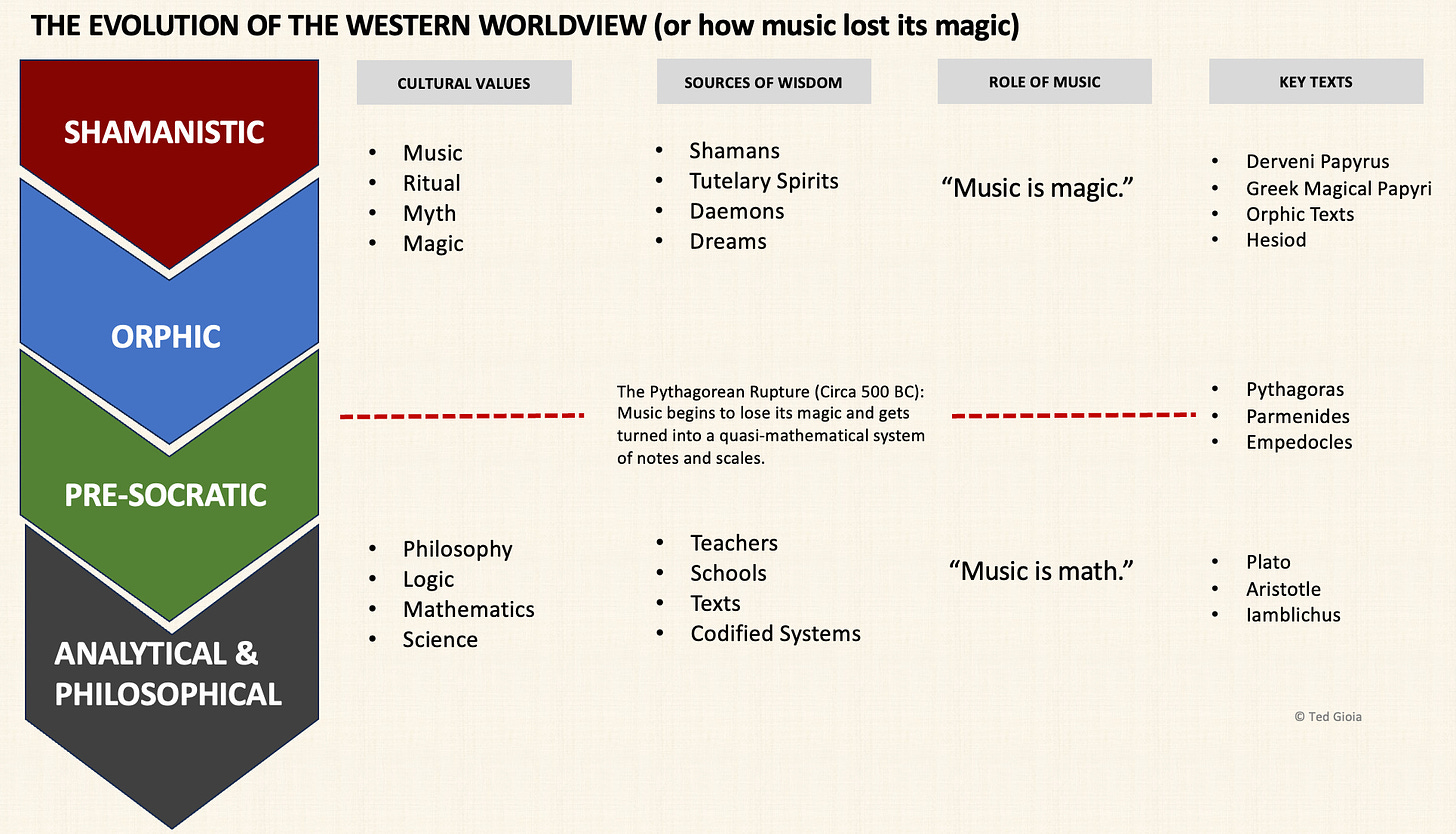





 Tipsy Teetotaler ن