Three days in a row! When did I last blog three days in a row?!
I have nothing to say about Israel, Hamas, Gaza, Lebanon, Iran, hostages and any piece I’ve left out, but I’m not oblivious to this anniversary.
Not politics
Tradition
Tradition refuses to submit to the small and arrogant oligarchy of those who merely happen to be walking about. All democrats object to men being disqualified by the accident of birth; tradition objects to their being disqualified by the accident of death.
G.K. Chesteron, Orthodoxy
Here is a quick and generally reliable rule to follow. If people have always said it, it is probably true; it is the distilled wisdom of the ages. If people have not always said it, but everybody is saying it now, it is probably a lie; it is the concentrated madness of the moment.
Anthony M. Esolen, Out of the Ashes
Sportsball
Gladwell, like many of us, seems to have unwittingly internalized the idea that when professional athletes do the thing they’re paid to do, they’re not acting according to the workaday necessity (like the rest of us) but rather are expressing with grace and energy their inmost competitive instincts, and doing so in a way that gives them delight. We need to believe that because much of our delight in watching them derives from our belief in their delight.
Alan Jacobs, How to Think
Dreaming is just about our only break from rationalism
The whole evolution of music as an academic discipline tends to destroy the most important reason to care about music in the first place.
Here’s one of my charts on the subject:
That’s why I started to write about sleeping.
No music writer talks about sleep more than me. And that’s because dreams happen when we sleep—and this is the one type of visionary experience everybody can still access.
We all become a little unhinged and crazy in those dreams. Even the most rationalistic STEM advocate.
…
Could something like this—dream therapy for creatives— exist in the current day?
I wondered about this for a long time. I finally decided to ask musicians about whether they had learned songs from their dreams.
Nothing prepared me for the response I got. I heard from hundreds of musicians—and learned that the gift of a song during a dream is quite common. And it’s usually a powerful song.
…
I note that many musicians have told me that they are reluctant to discuss their dream songs. The subject is just too strange and antithetical to our dominant rationalist paradigm.
And that reluctance is even greater if the artist has a hallucination or out-of-body experience or something else that ‘medical experts’ might want to treat.
My hunch is that these happen frequently to intensely creative people—even in an age of rationalism.
The world isn’t as neat and rigorously logical as you’ve been told. And the world of artistic inspiration is the least logical of all. There’s a good reason why the ancients believed that creative works were a gift from the muse.
…
I continue to research this subject, and I think about it all the time. Even more important, I try to open up my mind to realms of experience beyond the empirical. That’s where creativity comes from, and I don’t want to shut myself off from the source because of close-mindedness.
Above all, I don’t mock or dismiss artists who have these visions, or assume that in every instance they are suffering from mental illness. Some of them might be a lot wiser or healthier than the rest of us.
I can’t think of a solo-effort Substack that delivers more bang for the buck that Ted Gioia, The Honest Broker. And the guy is really smart about some things that interest me.
From the Department of Free-Association: Has Rod Dreher, once again, seized the moment to shape a coming conversation, as he did in Crunchy Cons, Benedict Option and Live Not By Lies?
Politics
Serious people earnestly disagreeing
Back in August I was watching the DNC with my old mom in California. Kamala and Tim and Michelle and Barack and all the others kept talking about our reasons for aiding Ukraine in its fight against the Russian occupation of its eastern territories. They consistently appealed to the apparently essentialized fact that the Ukrainians, like the Americans, “love freedom”, and that it is only natural and right to help other peoples who share this love with us. There was zero acknowledgment of the complexities of geopolitics and historical legacies, or of the situated perspective a Russian might non-crazily come to have, according to which parts of what is now Ukraine seem naturally and justly to fall more into the sphere of influence of the Russian Empire than of the North Atlantic one.
I know a lovely man in his 60s, an outstanding member of the vanishing breed of the Homo Sovieticus, whose father is Ukrainian and whose mother is Russian, and who grew up in Kazakhstan. He tells me his parents waited to get married so that the celebration would take place on the 300th anniversary of the 1654 Pereyaslav Agreement, in which the Cossack Hetmanate in control of much of Ukraine made a ceremonial pledge of loyalty to Moscow. This friend of mine is in exile, and is no admirer of Putin. He greatly regrets the 2022 invasion. But he could never make any sense of any claim to the effect that Ukraine rightly belongs to NATO and not to Russia in virtue of some mysterious essential trait of the Ukrainian people, that they “love freedom” while the Russians do not.
…
And here we arrive at what really gets me about the Democrats. If we are going to risk direct conflict with another nuclear-armed superpower, let us not be lulled into it by bullshit and platitudes. Why do the Democrats have to talk that way? It’s as if the Republican tactic of portraying “the libs” as effeminate hyper-woke safe-spacers has really only caused the Democrats themselves to double down with absurd displays of hawkish masculinity. We’re supposed to love Kamala because she’s a tough-on-crime prosecutor, and that therefore corrects for the slip-ups of the past years when some in the progressive wing of the party have suggested, on the contrary, that all cops are bastards. Tim Walz, meanwhile, seems to have been chosen primarily because he wears flannel shirts, and has been put on display in the most implausibly kayfabe campaign ads purportedly fixing his own pick-up truck. One almost expects them next to come out with an ad depicting Walz in the act of dressing a deer, looking every bit the caricature of the Minneapolis goy neighbor in the Coen Brothers’ A Serious Man (2009). He’s a hunter and a football coach, but he’s also a faculty advisor for the LGBTQIA+ club! What a model of enlightened masculinity! She’s a prosecutor and a foreign-policy hawk, but she’s a she and she brings “joy”! The problem is that none of the rest of the world cares about any of that childish stuff. They all know that for all the equally kayfabe retrograde masculinity of Trump, that man is an absolute pussy, and it is in fact the Democrats who represent the greatest threat to any hot-spot of resistance to the US’s arch-imperial ambitions throughout the world.
What are the odds that a world in which the American Empire is beaten into desperate retreat would be any sort of world our children and grandchildren might want to live in? … Trump, in a second term as president, is practically guaranteed to assume the role of overseer of American imperial retreat, in favor not of a global community of equals such as some naïve progressives might have hoped for in the early years of the League of Nations, but of nationalist isolation and at most pragmatic cooperation with other self-sequestering nation-states, somewhat along the lines of what Marine Le Pen envisions for Europe in the phrase “association des nations libres”. That phrase might sound innocent enough, but nations that are free to dispense with any idea of reciprocal obligations are unlikely to remain in a stable “association” for long, and Trump, at least, hardly gives any indications of knowing how to guide the ship of state as it weathers the inevitable storms that will whip up unstable waters in our years of decline. Far better, far surer, we believe, to have a party in power that understands and accepts the nature of the that power: imperial power, namely, which might aspire in the years ahead not only to face off with steely resolve in our current global showdown, but, eventually, to emerge as its undisputed champion. … Most of us on the Editorial Board, even the Americans among us, do not live in the United States, and from our respective vantages it is pretty hard to concentrate on any aspect of American political life that does not have to do with its role as a globe-spanning empire. Just manage your domestic affairs however you see fit, we are tempted to say; our overwhelming concern is with what you get up to beyond your borders. We therefore have rather little patience for that current of Democratic partisan discourse that would like for American politics to sound more or less like, say, Danish politics. Denmark, if we may be blunt, and all of the Scandinavian countries with such high marks on all the usual tests, is able to focus on maintaining its robust welfare state primarily because its defense is entirely outsourced to the American Empire. The American Democrats who fawn over European national health systems seldom realize that by seeing to the defense of other NATO members, the United States is at the same time freeing up European national budgets for other more humane uses. Americans pay for European defense rather than paying for their own welfare; Europeans get health care in turn, but only through de-facto vassalization.
We would like to see this arrangement continue, at least for now, at least until NATO can be expanded to include all of those states that currently set themselves up in opposition to it, a prospect even Russia’s own leaders in the early post-Soviet years were able to entertain with some seriousness.
You might think our reasons for voting for the Democrats are not good ones, or that we are merely “joking” when we give them. We can only reply that your reasons really do not matter. You might well imagine your are voting, for your part, for “decency”, or “joy”, or sane gun-control laws or a woman’s right to choose. But the only way to vote for any of these things is to cast a vote for American empire. That’s the bargain. We here at The Hinternet, minus our Founding Editor, believe this is a bargain worth accepting, but that is only because we believe it is the United States under Democratic leadership that offers us the single best shot at subduing all the planet’s lingering zones of discontent, and delivering us into a future of perpetual peace. This is what we at The Hinternet want. Do you?
These seem to be serious people having a serious disagreement, not just swapping bullshit and platitudes. It’s a habit most of us, myself included, could benefit by emulating.
Agreement on norms trumps disagreement on policy
Cheney’s argument for Harris is a classical liberal version of the GOP’s “Flight 93 election” reasoning from 2016. It’s a basic matter of proper prioritizing: Agreement on norms trumps disagreement on policy. If you hand power back to Trump, he’ll crash the constitutional order. The conservative thing to do under the circumstances is to storm the cockpit by backing Harris, who’ll at least keep the plane in the air.
(I wonder how Lisa Beamer feels about Flight 93 as a recurring political trope?)
Those conservative Democrats!
The truth, I think, is that the Democratic Party is drifting. Coasting. Dems are buoyed at the national level by Trump’s personal unpopularity but lacking in any kind of compelling vision for the future of the country. For the third cycle in a row, the Democrats have been freed up to run a mostly substanceless campaign that boils down to “Vote for us so Trump will lose.” But what besides that promise of negation does the party stand for? What does it hope to accomplish? Or does it just want to be empowered to manage for a little longer the well-functioning system of domestic and international institutions that already exists?
The answer, it would seem, is the latter. From what I can tell, the Democrats are proposing little beyond a defense of the status quo (or, in the case of abortion rights, a return to the status quo as of a few years ago) against all the unorthodox things their opponents aim to accomplish (including mass deportations, a revolution in how the executive branch is staffed, and the imposition of sweeping tariffs).
That means the Democrats have inadvertently become America’s conservative party, championing the views and interests of those Americans who are content with the country’s present and recent past. When that stance is combined with opposition to the widely loathed Trump, it can (just barely) deliver victory …
The term “conservative” has many meanings, but the most elementary one—the one associated with the man generally considered to be the first conservative writer and thinker, Edmund Burke—grows out of the name itself: To be conservative is to seek to conserve the present’s inheritance from the past: the accomplishments, authoritative institutions, norms, habits, policies, and traditions that have been handed down to us by previous generations.
That’s the meaning of Liz Cheney’s enthusiastic endorsement of the Harris/Walz ticket late last week. It’s not a signal that Harris will govern as a Republican from the era when Cheney’s father (who has also endorsed Harris) served as George W. Bush’s vice president. It’s an expression of Burkean conservatism against the disruptive-revolutionary impulses of the MAGA movement.
The American multiculturalists similarly reject their country’s cultural heritage. Instead of attempting to identify the United States with another civilization, however, they wish to create a country of many civilizations, which is to say a country not belonging to any civilization and lacking a cultural core. History shows that no country so constituted can long endure as a coherent society. A multicivilizational United States will not be the United States; it will be the United Nations.
Samuel P. Huntington, The Clash of Civilizations and the Remaking of World Order.
I was not a very good student of history, but I wonder what historic precedents Huntington has in mind when he says “History shows …”. Sincere question. Surely it’s not just that nobody has tried a multicivilizational nation before; that would not yield a verdict of history.
Please comment if you know. (Comments are moderated but not censored for viewpoint.)
We knew damn well he was a snake …
before we took him in.
I love editorial cartoons, and am fond of comic strips as well. As newspapers are dying, I mainline mine from here.
I suffer more from the humiliations inflicted by my country than from those inflicted on her.
I don’t do any of the major social media, but I have two sub-domains of the domain you’re currently reading: (a) You can read most of my reflexive stuff, especially political here. (b) I also post some things on the only social medium I frequent, because people there are quirky, pleasant and real.
From nobody’s Synaxarion except mine: On this, the 29th day of July, we commemorate the chastening of Tipsy the not-yet-Orthodox, who was wounded in a stupid motorcycle accident in Lafayette in the year 1965.
Politics
Be it remembered
The president of the United States summoned this mob, assembled the mob, and lit the flame of this attack. Everything that followed was his doing. None of this would have happened without the president. The president could have immediately and forcefully intervened to stop the violence. He did not. There has never been a greater betrayal by a president of the United States of his office and his oath to the Constitution.
If only the GOP had more persons with balls like Liz Cheney’s! Speaking of which …
Toxic Masculinity rightly so called
The Democratic Party must join the battle for the hearts and minds of young men … Trumpist masculinity is rooted in grievance and anger. [Admiral William] McRaven’s message centers on honor and courage.
There’s a seductive quality to Trump’s masculinity. Grievance is a form of counterfeit purpose, and anger is a form of counterfeit courage. For a time, your grievance can give you a mission — fighting the hated foe. And when you’re in the midst of an online temper tantrum, taking on all comers in your social media feed, you can feel a little bit brave, even if all you’re doing is tapping out vitriolic posts from the safety and comfort of your couch.
When you center masculinity on grievance and anger rather than honor and courage, you attract men like Hogan and Kid Rock and White. Worse, that is how you mold the men in your movement, including men like [VP Candidate JD] Vance.
Many conservatives rightly decry the way in which parts of the far left tend to use the words “straight white male” as a virtual epithet, as if there were something inherently suspect in the identities of tens of millions of men and boys. And if men feel that Democrats are hostile to them, they’ll go where they feel wanted, the gender gap will become a gender canyon, and more men will embrace Trumpism because that’s just what men do.
It will take a victorious Trump all of 30 seconds to begin discussing the “many, many people saying we should probably change the Constitution” to allow presidents to serve more than two terms. Sorry to be gloomy, but it seems unrealistic to think that the extreme polarization, the massive proliferation of disinformation and conspiracy theories, and the erosion of faith in elections will retreat or dissipate. If anything, they seem to be strengthening and accelerating.
Hyperbole aside, I don’t much care if Trump does say that. There’s no way a constitutional amendment to that effect would pass within 3 years or so (i.e., in time for him to run again) — if ever.
Kamala
I think it’s very important, as you have heard from so many incredible leaders, for us at every moment in time, and certainly this one, to see the moment in time in which we exist and are present, and to be able to contextualize it, to understand where we exist in the history and in the moment as it relates not only to the past but the future.
What the fuck does any of that mean? And what does she actually believe in? From locking up criminals as California’s AG to pushing bail for BLM rioters, from imprisoning cannabis users to favoring national weed legalization — is quite a journey.
…
Harris is one of the weakest and wokest Democratic candidates there is. She cannot credibly appeal to the center after such extreme-left posturing; she cannot run a campaign; she cannot run an executive office; she has never been able to win elections outside the left-liberal, one-party state of California; and she has nothing to offer to those of us who really, really don’t want to vote for Trump but don’t want to unburden ourselves of every moderate or conservative principle we ever had. Apart from that, she’s perfect.
JD Vance has said some things he needs to explain or walk back. But so has Kamala Harris — at least when she’s not utterly vacuous in a pseudo-smart sort of way.
Public Affairs
Beacon of hope
Matthew Crawford is a guy with a PhD who still, compulsively, does things with his hands. Thus, he sometimes needs tools — like an “indicator base.”
The one from Harbor Freight was a real POS, as apparently are most things from there, their “thing” being selling really cheap Chinese stuff. He went to Grainger for a replacement:
The lady behind the counter had never heard of an indicator base, but I expected this. It is a common enough tool, but in a big, publicly-traded company, people who know things don’t sit behind counters or answer phones. The less someone knows, the cheaper they are. So she got on her computer and looked it up. The one that came up had a price of $465. I told her that can’t be right; a decent one costs about $50 and a good one about $100 (the HFT one I am replacing currently sells for $13). There must have been a misplaced decimal point. Trying again, she hit a few key strokes that brought her to a screen with a series of search filters. The first filter asked me to choose the holding strength of the magnet, from a list of options. These were listed in a hodgepodge of different units. One such unit was Newtons, which is a legitimate unit for specifying force, but one that most people in the US (certainly machinists) don’t use, unless they are the type who also get into Esperanto.
…
My point is that the desk lady and I were dealing with a bunch of random shit on a screen that had little connection to reality as I understood it, and we couldn’t get past this screen without pretending otherwise. The inventory system was surely built by a web designer, someone who has probably never used any of the tools listed in the vast Grainger catalogue. Or rather, it was likely built by a whole team of such people, unknown to one another, speaking several different languages and dispersed across the globe.
And so forth and so on. But there’s a better alternative, with some trade-offs:
I could end on this gloomy note. But let me tell you about another industrial supply house, McMaster-Carr, because the difference is remarkable. (They are my go-to source, but they have no storefronts as Grainger does, and I wanted my indicator base immediately.)
…
My point is that the catalogue [“3,592 pages of dense type”] is written as though it matters, by people involved with material things. They want to sell stuff that enables people to do things. How is this allowed in 2024?!
The answer is surely connected to the fact that this family business, with 1,000 employees, which opened in the Chicago Loop in 1901, remains private, while Grainger is publicly traded. McMaster is said to be “secretive”, but a business intelligence site says the company “has historically raised $0 in funding,” meaning it has no debt. Meaning, it isn’t subject to the imperatives of what I like to call “systematized irrationality.” Global capital isn’t just impatient for returns, it is invested in models of reality that offer portability and scalability, allowing metrics to be applied across sectors and industries and communicated to people sitting in high-rise office buildings. Legibility-from-afar always means partial and hence fake legibility. It can be achieved by substituting representations for reality, but representations of a particular kind: they must be emptied of rich layers of content derived from the situated knowledge of particular practices – the very practices in which you might use the tool or material in question. This entails the destruction of knowledge, for the sake of uniformity and financial abstraction.
By contrast, the McMaster-Carr catalogue is like a modern-day version of Diderot’s Encyclopedie. If the final cataclysm were to happen, but you somehow had access to the catalogue and everything in it, you would be able to reconstruct the modern world. They have kept finance and IT in their proper place.
I decidedly do not work with my hands (unless you count typing). I used to be pretty handy in a general sort of way, but it’s gone away from decades of disuse. (My son must have picked up his dual mind-hand propensities from his maternal grandfather. His musical keyboard abilities are a total mystery. Milkman?)
But I can appreciate Crawford, and his story, and a privately-held company that does things right.
No storefronts? No problem!
Irish microcosm
Ardnacrusha was a revolutionary piece of technology in its time, enabling the newly-independent Irish state to provide huge amounts of electricity for a nation for which it was still a rarity (you can see fascinating photos and accounts of its construction here and here.) But the march of the Machine has consequences. In this case, those consequences included a 90% collapse in the salmon population of the Shannon, which previously had been world-famous for its salmon runs, along with the mass death of trout and eels, the silting up of parts of the waterway, an increase in flooding and the raising of the water level of Lough Derg.
Still at least Ireland now has a carbon-free electricity supply, right? Well, no. When it was built, Ardnacrusha was the biggest hydroelectric scheme in the world, until it was beaten to that title by America’s Hoover Dam. On completion, it produced enough power to meet the electricity demand of the whole of Ireland. Today it produces just 2% of it. That’s how much the thirst for electricity has increased in one short century. An astonishing seventy per cent of all that electricity will be swallowed by Internet server farms by the end of this decade.
Behold! Sustainability!
…
The giant wind turbines – subject to similar local protests across the land – are the latest Big Tech solution to the power ‘needs’ of the country: ‘needs’ which have accelerated a thousandfold in a century, and will continue to do so. Everybody wants insta-access to the shiny flicky pictures on the little Satanic Rectangle in their back pockets, but nobody wants to live in the middle of the power station needed to supply it. Well, get used to it, people, because the whole landscape will be a power station soon. Then there’ll be nowhere to hide except inside your VR headsets. Got a problem with that? Then take a hammer to your phone!
We have two camps, and you really need to pick a side:
(1) The dominant view in the economy treats music as something of little consequence or value. You shouldn’t even have to pay a penny to hear it. And if it can be replaced by an AI track—or even a podcast or twerking video or some other form of ‘content’—that’s perfectly fine. That’s because musicians don’t create sufficient value to deserve better treatment.
Or you can align yourself with the other view:
(2) Music is our most trusted pathway into a world of beauty and enchantment. It transforms our lives in a way that everyday products of consumption can’t replicate. And even though it is intangible, it endures longer than these consumer goods. At the end of your life, you will still turn to your beloved songs for comforts, long after other products have worn out and lost their value.
Make no mistake, this is a huge issue. The wealthiest people in the world—namely, the owners of the dominant web platforms—are trying to subjugate all cultural endeavors (or as they call it, content) in their digital domains. But this can only happen if they are allowed to manipulate the economy value of creativity, and force it into subservience to their centralized technologies.
We can’t afford to let that happen. So, as you might guess, I have an easy time picking (2) above as my chosen pathway.
And it’s not just my opinion. Plato and Socrates finally came to the same conclusion at the end of their lives. Is it too much to hope that the people who control our music economy will eventually make that same discovery?
Dreher proposed the best way forward for the Republican Party when he wrote Crunchy Cons. In case anyone has forgotten the manifesto, here it is again in brief: Conservatism should focus more on the character of society than on the material conditions of life found in consumerism. Big business deserves as much skepticism as big government. Culture is more important than politics and economics. A conservatism that does not practice restraint, humility, and good stewardship—especially of the natural world—is not fundamentally conservative. Small, local, old, and particular are almost always better than big, global, new, and abstract. Beauty is more important than efficiency. The relentlessness of media-driven pop culture deadens our senses to authentic truth, beauty, and wisdom. The institution most essential to conserve is the traditional family.
Crunchy Cons was my introduction to Rod Dreher, and I liked it very much. “Beauty is more important than efficiency”? now that is counter-cultural!
I rather miss that sunnier, more optimistic version of him — which I did not read as a way forward for the GOP so much as a way forward for the culture. Speaking of which …
Living decently
What I hold out for is the possibility that a man can live decently without knowing all the answers, or believing that he does—can live decently even in the understanding that life is unspeakably complex and unspeakably subtle in its complexity. The decency, I think, would be in acting out of the awareness that personal acts of compassion, love, humility, and honesty are better and more adequate responses to that complexity than any public abstraction or theory or organization.
— Wendell Berry, “Notes from an Absence and a Return,” in A Continuous Harmony (Berkeley: Counterpoint, 2012), page 51, via Gracy Olmstead
I suffer more from the humiliations inflicted by my country than from those inflicted on her.
I don’t do any of the major social media, but I have two sub-domains of the domain you’re currently reading: (a) You can read most of my reflexive stuff, especially political here. (b) I also post some things on the only social medium I frequent, because people there are quirky, pleasant and real.
Copyright law is just a big steaming mess. Whenever you think it can’t get crazier, it always does.
YouTube is the ultimate battlefield for copyright claims gone wild. Even when I do a short YouTube video about music, I can never play examples from actual recordings. (That’s why I’ve never given an online course on music history. Corporate lawyers would shut me down in a New York minute.)
Consider the case of the YouTuber whose video got demonetized because his “Samsung washing machine randomly chimed to signal a laundry cycle had finished while he was streaming.”
How is that even possible? But it gets even stranger.
Ashley Belanger reports in Ars Technica:
Apparently, YouTube had automatically scanned Albino’s video and detected the washing machine chime as a song called “Done”…[but it] actually comes from the song “Die Forelle” (“The Trout”) from Austrian composer Franz Schubert.
The song was composed in 1817 and is in the public domain. Samsung has used it to signal the end of a wash cycle for years.
I’m not sure what Schubert would make of all this. But I can assure you that none of his heirs will get a penny from this. That’s not the purpose of song copyrights anymore.
I have added a P.S. to my recent post “34 Counts!”:
I don’t think I’ll dwell on the 34 counts any more, and regret having done so. The 34 counts were 34 bookkeeping entries. In most courts — and in best practice — this would have been charged as one crime, or so I’m told.
Politics
Sheep
Most Church leaders—conscious that to condemn Nazis for blasphemous kitsch might prove risky—opted to bite their tongues. Some, though, actively lent it their imprimatur. In 1933, the year that Hitler was appointed chancellor, Protestant churches across Germany marked the annual celebration of the Reformation by singing Wessel’s battle hymn. In Berlin Cathedral, a pastor shamelessly aped Goebbels. Wessel, he preached, had died just as Jesus had died. Then, just for good measure, he added that Hitler was ‘a man sent by God’.
This is the story of Chris Kyle. And it was — I remember seeing it here in Tennessee. And you couldn’t find a parking spot in our theater. That movie was an absolute sensation.
And one of the most memorable parts of that movie is when Chris Kyle is involved in a playground fight, and his father goes through this sheepdog, sheep, wolf analogy. And that is there’s three kinds of people in this world. There’s the sheep, there are the wolves who prey on the sheep, and the sheepdogs who protect the sheep from the wolf.
And he says, I’m not raising any sheep in this household. So what are you? And at that point, Chris Kyle identifies himself as a sheep dog, as somebody who protects the weak against the wolf. OK? And so it’s a very anti-bullying sort of vision of male courage.
And then here comes Donald Trump, who fits to a T the definition of a wolf, of a bully. The story the right told about itself was that they would be inoculated against the wolf, against the bully, because they have this ethos of the sheepdog.
But then when the wolf arose and the bully arose, they went with the bully, the very person that a generation of young right-wing men were warned about. And so that’s what makes this, in many ways, so much more deeply disturbing even than it otherwise been (sic), because it called into question kind of the cultural enterprise that was happening before Trump.
On that same podcast, Jamelle Bouie, riffing on Trump’s first post-conviction public appearance being UFC (Universal Fight Club), quipped that “Professional wrestling is camp for straight men..”
Not a referendum on Trump?!
I believe I recently passed on an opinion that both Trump and Biden want this election to be a referendum on Trump. Now I pass along the opinion that it’s a referendum on Biden:
[Y]ou can just look at the polls in the US: 51 percent of Americans now support mass deportations of the kind Trump is proposing; including 42 percent of Democrats, and 45 percent of Hispanics. That was unthinkable four years ago — and it’s entirely on Biden. The revolt against this basic failure of governance is now strong even in big cities, run by Democrats, and among non-whites, who are moving toward Trump.
Joe Biden’s main campaign theme seems to be that he alone can defend liberal democracy from Donald Trump. What Biden has never understood is that restricting immigration is absolutely critical to defending liberal democracy. Everything else is just words, condescending words. If Trump triumphs in November, Biden will be responsible for simply ignoring basic political reality, alienating the very people he needs.
…
One person was responsible for Trump’s first term: Hillary Clinton. And one will be responsible for his second: Joe Biden.
I guess it’s worth reiterating at this point that I’m not anti-immigration. It remains the lifeblood of America, and immigration is vital for our future fiscal balance. I’m a proud immigrant myself — and America will always be able to integrate newcomers in ways European countries simply cannot. But, like a huge majority of Americans, I’m in favor of legal, orderly, controlled immigration — and not the chaos we now see everywhere in the West. This is not racism or xenophobia; it’s a recognition that borders and the rule of law matter; and that without secure borders, we risk losing the core reality of a nation-state; and without a better-paced influx, we risk delegitimizing immigration altogether, and balkanizing our societies.
Trump’s base does not win elections outside of party primaries. It did not win the midterms for the Republican Party in 2018, it did not win re-election for the Trump in 2020, and it did not win a red wave for Republicans in 2022. The signature Republican victory of the last four years, the election of Glenn Youngkin over Terry McAuliffe in the 2021 Virginia race for governor, rested on an effort to marginalize the Trump base so that party leaders could engineer a nominee with the ability to distance himself from the former president and his movement.
And true to form, the RNC’s Lara Trump has issued a fatwa against Larry Hogan, Republican candidate from U.S. Senate from Maryland, for saying the public should respect the process and the verdict in the Trump felony trial. Kiss that seat goodbye, GOP.
Chicken Littles of the Left
Some people reportedly (I haven’t met one outside of click-bait stories) are worked up that some Trump supporters want to ban IVF, contraception, and recreational sex. Though I know some arguments against each of those sacred cows, this strikes me as a reverse mirror-image of QAnon.
I would welcome more careful thought about IVF, but I’m an outlier. Anyone who thinks that a lame duck Donald Trump is going to pander to a very small group of ideologues who are seriously out of step with 90%+ of their countrymen needs to take a deep breath. Anyone who thinks that Donald Trump (who probably has frequent sperm donor perks at the fertility clinics of Manhattan) is personally opposed to IVF, contraception and recreational sex (“I never did anything that needed forgiveness” or something like that, he said) needs inpatient psych care.
Culture
Defining deviancy down … and up
When and why did American life become so coarse, amoral and ungovernable? In his classic 1993 essay, “Defining Deviancy Down”, the late Senator Daniel Patrick Moynihan offered a semantic explanation. He concluded that, as the amount of deviant behaviour increased beyond the levels the community can “afford to recognise”, we have been redefining deviancy so as to exempt conduct we used to stigmatise, while also quietly raising the “normal” level in categories where behaviour is now abnormal by any earlier standard. The reasons behind this, he said, were altruism, opportunism and denial — but the result was the same: an acceptance of mental pathology, broken families and crime as a fact of life.
In that same summer, Charles Krauthammer responded to Senator Moynihan with a speech at the American Enterprise Institute. He acknowledged Senator Moynihan’s point but said it was only one side of the story. Deviancy was defined down for one category of society: the lower classes and black communities. For the middle classes, who are overwhelmingly white and Christian, the opposite was true. Deviancy was in fact defined up, stigmatising and criminalising behaviour that was previously regarded as normal. In other words, there was a double standard at work.
A new poll from Ipsos has found that support for same-sex marriage among Americans has fallen to just 51% approval.
…
Following a years-long rise in support for gay marriage, a groundswell of anti-woke sentiment emerged around 2021, much of it directed at LGBT activism as parents gained a new window into their children’s curriculum when schooling went remote during the Covid-19 pandemic …
Gay rights have since been lumped in with trans rights in the popular imagination, which may have chipped away some public support for gay marriage at the margins. …
Bev Jackson, co-founder of the LGB Alliance, said the decline in support for same-sex marriage had causes on both the Left and the Right. “Blame for the fall in US support for gay marriage lies partly with the homophobic religious Right. But equally to blame are treacherous organisations like GLAAD and the ACLU which promote insane, deeply unpopular concepts such as gender self-ID and child ‘transition’,” she said. “Gender identity ideologues have been riding on LGB’s coattails for too long, and they’re helping to destroy support for the rights we fought for decades to win.”
Junk info is often false info, but it isn’t junk because it’s false. It’s junk because it has no practical use; it doesn’t make your life better, and it doesn’t improve your understanding. Even lies can be nourishing; the works of Dostoevsky are fiction, yet can teach you more about humans than any psychology textbook. Meanwhile, most verified facts do nothing to improve your life or understanding, and are, to paraphrase Nietzsche, as useful as knowledge of the chemical composition of water to someone who is drowning.
The intuitive moral structure of our modern social imaginary prioritizes victimhood, sees selfhood in psychological terms, regards traditional sexual codes as oppressive and life denying, and places a premium on the individual’s right to define his or her own existence.
They want revolutionary ends, but they want to hide behind establishment credibility.
Jonah Goldberg, describing the successor ideology, which has famously “march[ed] through the institutions.”
Tipsy the squish
I finally had to replace the color toner cartridges on my laser printer. I opened the red-and-white Canon box I’d ordered months ago. I found unfamiliar packaging of the cartridges and unfamiliar cartridge configuration. I figured out how to install them and then looked for the instructions on recycling them (back to Canon). It was nowhere to be found.
Having seen the word “compatible” a few times, I looked more closely at the box. Where the word Canon should have been, the word “Cartridge” appeared.
I remembered when I purchased them my shock at the low price, but I double- and triple-checked. I thought I was getting an inexplicable price on Canon goods. They still conned me with the Canon-looking box.
Now I’ve got three laser cartridges I can’t recycle, and it bothers me more than such a thing is supposed to bother a conservative.
Which reminds me again of how close “conservative” today is to “barbarian.” My gut-identification today remains “conservative,” but my considered identification is center-right.
Progress
Progress should be about improving the quality of life and human flourishing. We make a grave error when we assume this is the same as new tech and economic cost-squeezing.
Mainstream coverage of this issue is a buffet of sanctimonious overclaiming. It says authoritatively that kids in the US can’t go on blockers or hormones prior to lengthy, in-depth assessment (false). That no one under 18 is getting surgery (false). That the worldwide rise in referrals to youth GD clinics is almost entirely the result of reduced stigmatization (no one knows). That GD, or the perception that one has GD, can’t spread through adolescent social networks (almost certainly false on the basis of anecdotal evidence and any familiarity with developmental psychology). That it’s a ‘myth’ that significant number of kids who believe themselves to be trans will later feel differently (false, according to all the existing data). That only a tiny percentage of people detransition (we have no data at all on this in the context of youth gender care in the States).
What the Media Gets Wrong on Gender Reassignment. This is from 2021 when the elites were uniformly purveying lies about Covid, gender dysphoria and who knows what all else. Things have gotten markedly better in recent months on adolescent gender dysphoria.
Capitalistic algorithmic ideological hairball
For many of our applicants—and this, of course, is what the program is about, what the humanities are about—learning has, or ought to have, an existential weight. Beneath their talk of education, of unplugging from technology, of having time for creativity and solitude, I detected a desire to be free of forces and agendas: the university’s agenda of ‘relevance,’ the professoriate’s agenda of political mobilization, the market’s agenda of productivity, the internet’s agenda of surveillance and addiction. In short, the whole capitalistic algorithmic ideological hairball of coerced homogeneity. The desire is to not be recruited, to not be instrumentalized, to remain (or become) an individual, to resist regression toward the mean, or meme.
The characteristic feature of the loser is to bemoan, in general terms, mankind’s flaws, biases, contradictions, and irrationality-without exploiting them for fun and profit.
I don’t do any of the major social media, but I have two sub-domains of the domain you’re currently reading: (a) You can read most of my reflexive stuff, especially political here. (b) I also post some things on the only social medium I frequent, because people there are quirky, pleasant and real.
Unnoticed, I had filled my cup to overflowing. Pour yourself a cup and enjoy the (mostly) curation.
Trans turning point?
Keeping score
“Males have stolen over 879 trophies, medals, and titles from women and girls across 423 different competitions in over 28 different sports,” – Reilly Gaines.
In Great Britain, the Cass Report, a comprehensive four-year study of transgender medicine for pre-adults, has case deep shade on past practices — practices Europe is backing away from frantically but which the US Medical establishment still supports. Andrew Sullivan gives them both barrels:
Big Pharma created lucrative “customers for life” by putting kids on irreversible drugs for a condition that could not be measured or identified by doctors and entirely self-diagnosed by … children.
And what if over 80 percent of the children subject to this experiment were of a marginalized group — gay kids? And the result of these procedures was to cure them of same-sex attraction by converting them to the opposite sex? I simply cannot imagine that any liberal or progressive would hand over gender-nonconforming children, let alone their own children, to the pharmaceutical and medical-industrial complex to be experimented on in this way.
…
Accountability? Good luck with that. Will any of the Twitter mobs who hounded the skeptics take stock? Will the ACLU’s Chase Strangio feel any regret for trying to censor the first major book raising the alarm? Will groups like GLAAD and HRC confess to their grotesque lies — “The Science Is Settled” — and ugly bullying tactics to suppress reporting on the question? Will they cop to having supported gay conversion therapy in which many gay kids were “fixed” by being turned physically into the opposite sex?
Will HRC and countless educators temper the curriculum that tells small children that their bodies are irrelevant to whether they are a boy or girl, and that they can change their sex at will? Will these ideologues ever concede the foul homophobia behind questioning the maleness of a girly boy or the femaleness of the tomboy? Will they ever admit that their ideological extremism, and their “queer” conflation of trans and gay experiences, has led to one of the greatest medical abuses of gay kids in history? Of course they won’t. As I write, HRC and GLAAD have not uttered a peep about the report’s findings. They are intellectually and morally bankrupt institutions, desperate for money, and using the scarred bodies of gender-dysphoric children to fundraise.
In a sane world, the doctors who pushed these lucrative treatments and the leaders of the transqueer groups responsible for the wreckage of so many young gay and lesbian lives should resign in shame. So should the MSM journalists who were stenographers for these fanatics, acting to suppress the truth rather than expose it. So should the gay doctors who supported this insanity. This was — and remains — a horrifying case of gays betraying our own — and the most vulnerable and helpless among us.
History will be brutal to those responsible. But almost certainly not brutal enough.
For me, it has always been sufficient that “woman in a man’s body” or vice-verse isn’t a real thing. The sexual binary is real. We are “assigned” names at birth, not sex, which is discovered then (if not previously). We do nobody any favors by saying “Sure, sweetie; you are whatever sex you say you are.”
Gender dysphoria is a real thing, too — a form of mental illness that should be treated with all due skill and compassion. I cannot imagine non-surgical approaches having been exhausted before a minor becomes an adult.
Transgender madness
Nothing that so captures the essence of the Cass Report as this:
Instead of taking narrow claims of dysphoria at face value, Cass adopts a holistic approach, arguing that such statements must be considered “within the context of poor mental health and emotional distress among the broader adolescent population.”
Nina Power, The Trans Reckoning is Here. Considering the context doesn’t mean ignoring, but exploring all possibilities before doing something radical.
No longer, in the sentient world, will doctors be valorized for taking narrow claim of dysphoria at face value — what has come to be called “affirming,” and beginning the process that leads to sexual mutilation in the name of sex-change.
Some U.S. legislatures had already arrived at the unfashionable conclusion that “affirming” kids with gender dysphoria through “social transitioning,” puberty blockers, cross-sex hormones and such was bad medicine, and some, including my own, went so far as to ban the medical transitioning as to legal minors. I have my doubts about legislatures practicing medicine, but the provocation was great, and I have little doubt that legislative bans will protect more kids than they hurt.
So I was feeling pretty good about the turning of the tide on trans when what to my wondering eyes should appear but a front-page, above-the-fold story in my local Gannett rag about the woes of Hoosier kids with gender dysphoria who no longer can get their desired trendy treatments in-State. The story included all the groin pieties about puberty blockers being safe and reversible — some of the very claims debunked by the Cass Report. Had they intended that story as a provocation, it could not have been better timed.
The Cass Report is fairly fresh off the press, and is the work of but one researcher, although she was very well-credentialed and took four years on the project. It probably will be critiqued — carefully, one hopes, although there may instead be an effort to mob-cancel it for want of rational criticisms.
Meanwhile, it is as if the Report gave permission for common sense to speak what it has been intimidated from saying for too long.
In my home, the local Gannett rag will be cancelled.
This is a huge step emotionally. I grew up on newspapers. My older brother had a huge paper route. Reading the daily newspaper was one of the things responsible adults did. But smaller-market newspapers have been killed by the internet. Our local rag has descended into a collection of celebrity gossip, feature stories, and a smattering of news stories from other Gannett rags in the state. It doesn’t even include enough advertising and coupons to justify hanging on any longer. That trans propaganda was just the last straw.
I’ll try to replace it with a combination of:
A retired newsman’s substack. He’s been scooping the newspaper frequently already — and his stuff is timelier, not delayed by 48 hours.
Local television websites.
Two local funeral home websites for obituaries.
We’re in a strange new world.
Culture
Billy Joel
I vividly remember the first time I heard Billy Joel on the radio. Mainstream pop/rock radio was not part of my childhood listening diet, so I was already in my early teens. I was having lunch in a university roadhouse with my father and a visiting scholar, a young neo-classical composer. We took turns poking fun at the songs on the roadhouse channel, until “Scenes From an Italian Restaurant” struck up. Then the composer paused to listen, raised a finger and said, dead serious, “This is a great song.”
As [Annie Dillard] put it so memorably, the difference between a partial and a total solar eclipse is like the difference between kissing a man and marrying him.
Virtues
I’m reminded of my colleague David Brooks’s distinction between “résumé virtues” and “eulogy virtues.” As David described it, résumé virtues “are those skills you bring to the marketplace.” Eulogy virtues, by contrast, “are talked about at your funeral — whether you were kind, brave, honest or faithful. Were you capable of deep love?” Most of the “manosphere” influencers look at men’s existential despair and respond with a mainly material cure. Yes, some nod at classical values (and even cite the Stoics, for example), but it’s in service of the will to win. Success — with money, with women — becomes your best revenge.
The problems with this approach are obvious to anyone with an ounce of wisdom or experience, but I’m reminded of a memorable line from “The Big Lebowski”: “I mean, say what you want about the tenets of national socialism, Dude, at least it’s an ethos.” It’s hard to counter something with nothing, and when it comes to the crisis confronting men and boys, there is no competing, holistic vision for our sons.
When I attended prepper conventions as research for my book, I found their visions of a collapsed American Republic suspiciously attractive: It’s a world where everybody grows his own food, gathers with family by candlelight, defends his property against various unpredictable threats and relies on his wits. Their preferred scenario resembled, more than anything, a sort of postapocalyptic “Little House on the Prairie.”
There was a dramatic jump upward in divorce rates at the beginning of the 1970s. Women whose husbands walked out were faced with the prospect of raising large families on the minimum wage. I remember that time well. Divorce laws were not particularly favorable to women in many places. One reaction was for mothers to teach their daughters never to put themselves in such a vulnerable position. This kicked off the spiral of demands for more pay and more opportunities in education and the workplace. Arguably, the pendulum has now swung too far, and men are disadvantaged by divorce laws. Why work to become a marriageable man if marriage is now such a risky proposition, especially in an era of relaxed sexual norms?
… (in most US states, the highest-paid public servant is a football or basketball coach at a state university)
David Graeber, Bullshit Jobs
NPR
“NPR is why I got into journalism. But it’s also partially why I left legacy media. By 2018, Trump voters wouldn’t talk to me, and I didn’t blame them — we often painted them as racists. And if I ever booked a white man, I’d better have a reason why,” – Olivia Reingold.
I really do think that the internet, in its original open form, is an amazing thing and a genuine contributor to human flourishing — but the occlusion of the open web by the big social media companies has been a disaster for our common life and for the life of the mind. My plan, and my hope, is to keep going here long after I have lost the ability to publish anywhere else. This is my home on the web and also the place where I can most fully be myself as a writer. And that’s worth a lot.
In The Financial Times, Anjana Ahuja questioned the potential of a new meat: “With half the U.K. population reporting anxiety about snakes and about one in 50 harboring a phobia, the idea of snakes as the new livestock of choice might not have legs.” (Lois Russell, Somerville, Mass.)
Ezra Dyer paid tribute to an automotive throwback, the Dodge Challenger Black Ghost: “It’s a stupid car, really, peak mouth-breather, screaming of wretched excess. But its analog mechanical brutality activates some primal lobe deep in our brains, the one that catalyzes noise into adrenaline. The final V-8 Challenger rolled off the line on Dec. 22 last year, another dinosaur obliterated by the E.V. asteroid.” (Gerry O’Brien, Goderich, Ontario)
In The London Review of Books, Michael Hofmann took pointed issue with some right-wing warriors: “It seems there is only one model for today’s ‘man of action,’ and that is shock and awe. Overwhelming force deployed suddenly and overwhelmingly. A theatrical performance with no audience as such, only a houseful of victims. The lions eat the circus and then tweet about it.” (William Wood, Edmonton, Alberta)
Mercy
The mercy of the world is you don’t know what’s going to happen.
Mat, in Wendell Berry’s Jayber Crow
Abortion
Donald Albatross Trump
The problem for pro-lifers is that … efforts at persuasion have become markedly less effective over a timeline that overlaps closely with Trump’s takeover of the Republican Party
…
[O]ne does not need to be a monocausalist to see how the identification of the anti-abortion cause with his particular persona, his personal history and public style, might have persuaded previously wavering and ambivalent Americans to see the pro-life movement differently than they did before.
…
With that kind of standard-bearer, the accusations of your opponents — that your cause is organized more around repression than protection, more around hypocrisy than high ideals — are going to carry more weight. And some people who might have been your allies, who share your general moral worldview, are going to find reasons to disassociate themselves from your political project.
… [T]he form of conservatism that he embodies is entirely misaligned with the pro-life movement as it wants and needs to be perceived.
That’s the price of the bargain abortion opponents made. The deal worked on its own terms: Roe is gone. But now they’re trapped in a world where their image is defined more by the dealmaker’s values than by their own.
Kevin D. Williamson comes out swinging on abortion politics:
The conservative legal view of Roe v. Wade—which is not necessarily an anti-abortion view—is that the Supreme Court exnihilated a federal right to abortion straight out of the penumbras of Justice Harry Blackmun’s posterior based on very little more than pure political will, and that Dobbs rightly reversed this act of judicial superlegislation, returning the matter to the democratic process and, mainly, to state legislatures. A person who generally supports abortion rights could easily hold that position—and, indeed, many do. By no means is it the case, however, that, as Trump stated, vacating Roe was something “that all legal scholars [on] both sides wanted.” (Even on the most serious of moral issues, Trump cannot help but lie, stupidly, blatantly, and to no purpose. He lies out of habit and because he enjoys it.) The argument about Roe was an argument about law, not an argument about abortion.
Now comes the argument about abortion.
Overturning Roe provided only the opportunity to have that argument, and, for the moment, the anti-abortion side is not having a lot of luck advancing its case. Possibly this is because the anti-abortion movement has chosen a leader who so transparently does not give a fig about abortion or any other moral or political question except to the extent that it serves his interests …
…
Consensus-building in this matter is not something undertaken in order to accommodate abortion enthusiasm in the interest of advancing a broader political agenda but rather the opposite: Consensus-building is the only way to build a stable, long-term policy that actually protects the lives of the unborn and reduces—in fact, not in theory—the practice of abortion. Consensus-building is the way toward anti-abortion goals, not a detour from them. As I have written before: The pro-life movement doesn’t win when nobody can get an abortion—it wins when nobody wants one.
This is what an interactive Economist article thinks about my Presidential vote in November:
Switch me to California and it flips strongly. I’m told the paywall is down, so size up yourself.
FWIW
The Democratic National Committee paid President Joe Biden’s legal bills while he was under investigation by special counsel Robert Hur over whether the president mishandled classified documents, Axios reported Friday. While the Biden campaign has attacked former President Donald Trump for using campaign funds to pay his compounding legal bills, the committee paid $1.5 million—mostly between July 2023 and February 2024—to attorneys and firms representing Biden during Hur’s probe. While Trump has spent funds from his Save America political action committee on legal fees, it is unlikely that his campaign is using money from the Republican National Committee for that purpose.
Trump has repeatedly challenged Biden to debate him even though he skipped all of the debates in the Republican presidential primary.
David M. Drucker, Charles Hilu and Michael Warren Camp Biden is hinting that he won’t debate. I don’t blame them: Trump doesn’t really debate; he slings insults and one-liners (last item) that demean any “debate” he’s in. Add to that a Democrat candidate who has lost a step or two, and the opening Trump gave him by not deigning to debate his inferiors, and I’m in Camp Biden on debating.
P.S. David Frum says it better than I:
President Biden’s spokesperson should answer like this: “The Constitution is not debatable. The president does not participate in forums with a person under criminal indictment for his attempt to overthrow the Constitution.”
Hoist with his own petard
New York Judge Juan Merchan—who is overseeing former President Donald Trump’s hush money criminal trial—on Friday rejected one of Trump’s final efforts to delay the proceedings set to begin later today. Trump and his team asked for the trial to be pushed “indefinitely” on the grounds that the media attention surrounding it would make it impossible for Trump to receive a fair trial. Merchan, however, held that Trump intentionally generates much of the media attention. “The situation Defendant finds himself in now is not new to him and at least in part, of his own doing,” the judge wrote.
In Dallas, Texas, last Thursday night, four people walked onto a stage: a libertarian, a recent dropout from the Democratic race for president, an economic populist, and Ann Coulter, who needs no introduction.
They were all asked a single question, which is also the No. 1 issue that will affect the 2024 election: Should the United States close its borders?
It’s the kind of topic that’s become impossible to talk about out loud and in public. One side accuses the other of xenophobia and racism; the other of lawlessness and cheating the electoral system.
But at The Free Press, we believe that the issues that matter most to Americans are worth talking about in public, without fear. That’s why we partnered with FIRE to launch our new series, the America Debates, moderated by our founder, Bari Weiss.
So on Thursday at the Majestic Theatre in downtown Dallas, we welcomed a crowd of 700 from states all over the nation including Utah, Indiana, Alabama, and Mississippi. We even met a few readers who flew in from London.
There were best friends from high school, women in cowboy boots, and married couples on either side of the issue—including Dr. Nina Niu Sanford, who immigrated to the U.S. from China at age three, and her husband, a native Texan born to a Mexican immigrant. (She voted in favor of America shutting its borders; he voted against.)
“If you want to hear an exchange of ideas it’s basically relegated to AM radio,” a pregnant woman from Rhode Island who flew 1,700 miles to the event told me. “But you never get people like this, just sitting on a stage together, hashing out ideas.”
Jake Billings, a 34-year-old from Utah, said he arrived believing in an open border. But when he heard Ahmari list the ways Americans without college degrees get the short end of the stick because of illegal migration, he felt swayed in a different direction.
“He just laid out how it hurts the working class, which is where I come from,” said Billings, who shared that his mother was one of 13 kids. “What can I say? I’m a facts person.”
This summary was preceded by “The full video of the event will be available soon to paid subscribers of The Free Press. So if you’re not already a paid subscriber, become one today.” The Free Press has become Substack’s subscription champion for good reason.
If you’re not a Free Press subscriber, you’re missing some awfully good stuff. Same for the Dispatch. If I had budget woes, those would be among the last to go.
I try to avoid a Manichean outlook on the world, but even without White Knight delusions, there’s a case to made, and Coats makes it well without a facile Putin = Hitler narrative.
Why the new Christian right keeps losing
For the most part, the new Christian right is almost entirely lacking in the discipline, self-control, and judgment required to secure real political victories in a democratic system. Small wonder many of them want a totalitarian dictator, then. Maybe that’s the only way they’ll ever actually accomplish anything legislatively.
“I don’t think the fixes that most conservatives propose would fix anything,” he said. “I don’t think bringing back in the props of official Christianity is going to get at the darkness at the center of all this.” To him the Christian worldview had become just too remote in America, and worse, millions of Americans denied the very notion of the objective truth. Like many other conservative evangelicals at the end of the century, Mohler spoke of “postmodernism” rather than “secular humanism” as the condition of godless modern America.
Frances Fitzgerald, The Evangelicals. I occasionally agree with Albert Mohler, and this is one of those occasions.
Maxine Waters changes her tune
In the young and fun days of 2018, Maxine Waters encouraged protesters to confront politicians in restaurants. In those Olden Times, she said: “If you see anybody from that cabinet [Trump’s] in a restaurant, in a department store, at a gasoline station, you get out and you create a crowd and you push back on them and you tell them they’re not welcome anymore, anywhere.” (H/t Dan O’Donnell for tracking this video down.)
Fast-forward a few years and here is Maxine Waters, after facing mild protest from a single person at a single restaurant: “As a member of Congress, where people—you know—who evidently had a racist attitude, and recently even one confronted me in a restaurant—and they don’t say racist things but what they say is they don’t like something I said. They don’t like a position that I took. But you know that—you know—if you were not black, you would not be approached that way.” Exactly. A dissatisfied constituent has never approached a white politician.
…
Meanwhile, everyone at Harvard is upset that conservative activist and writer Chris Rufo keeps finding egregious plagiarism in this or that beloved professor’s work. And The Harvard Crimson this week has a proposal: “We can’t let outsiders control the plagiarism narrative. Harvard and other universities must stay ahead of the game, surfacing instances of plagiarism and addressing them before malicious actors can hurt the University’s credibility.” I do believe Chris Rufo will accept those terms.
In February 2016, New York Times columnist Ross Douthat wrote: “If you dislike the religious right, wait till you meet the post-religious right.” His words captured a widely shared assumption that the rise of Donald Trump signaled not only the death of the religious right, but the birth of an irreligious right animated by white racial grievance.
No, I don’t think that’s clear at all. As Schmitz notes, there is a surprising move of many Hispanics and Blacks toward the GOP, and that puts a caveat on the “white racial grievance” part of Douthat’s assumption. But I don’t think it clearly disproves it.
This is but a quibble about Schmitz’s article, which I was prepared to dislike (perhaps even hate), but which I found interesting and helpful in several ways.
No, Trump’s Presidency Wasn’t Worth It
The price tag of the Trump presidency exceeds its value exponentially. The tax cuts, deregulation, judicial appointments, executive orders, and cultural counter-offensives (“he fights”) are trinkets compared to the way he has undermined the values and norms required to sustain the rule of law and the constitutional order.
I just heard the story of a candidate who was furious with his estranged wife for not posing for a family photo with the kids. I can’t say more for fear of too precisely identifying the situation, in which wife and children are quite innocent and don’t need the hassle.
Our six primary candidates for governor aren’t much better, although their badness differs from his.
Politics is so phony it makes me want to puke. Well, actually, it makes me want to post.
You can read most of my more impromptu stuff here and here (both of them cathartic venting, especially political) and here (the only social medium I frequent, because people there are quirky, pleasant and real). All should work in your RSS aggregator, like Feedly or Reeder, should you want to make a habit of it.
“How has it come about,” C. S. Lewis once asked, “that we use the highly emotive word ‘stagnation,’ with all its malodorous and malarial overtones, for what other ages would have called ‘permanence’?” It is, Lewis suggests, because the dominance of the machine in our culture altered our imagination. It gave us a “new archetypal image.”
Ken Myers, All God’s Children and Blue Suede Shoes
Considering how excellent an interviewer Ken Myers is, I’m surprised I don’t have more highlights from this oldish book by him. But this one surfaces just often enough to seem ever green. It’s especially dear to me because one of the common lazy criticisms of Orthodox Christianity is that it’s “stagnant.”
Feckless Diktator
Tens of thousands of people marched in Budapest, Hungary, on Saturday to protest Hungarian Prime Minister Viktor Orbán’s government. Péter Magyar, a former diplomat who was once a senior member of Orbán’s Fidesz party, organized the demonstration and has presented himself as a changemaker with plans to challenge Orbán in upcoming European parliament elections this summer. The rising opposition figure has promised to root out corruption and repair ties with the European Union—of which Hungary is a member—if elected.
What kind of authoritarian would allow such a thing? Could it be that our press has giving him a bum rap? Surely not!
NCAA wrap-up: Defense always travels
“We’ve played against athletes, played against some really good defensive guys this year in the tournament,” Painter said. “But not the collection of defensive players like UConn has. We play against somebody, they would have a lock-down defender. These guys are bringing lock-down defenders off the bench. Defense always travels. Tip of the hat to them. They were great.”
I’ve said without embarrassment that I’m a “fair weather fan.” I think I’ve learned enough about basketball, and about Purdue Coach Matt Painter’s approach to coaching, to change that to “Purdue Men’s basketball fan.”
Caitlin Clark helped the generalized fandom, too.
Where’s a pro-lifer to go in 2024?
I am conflicted. It is tempting to join the pro-lifechorus proclaiming that Donald Trump is not a pro-life candidate (because it’s true). But I don’t agree that his not-so-new abortion federalism is the proof that he’s not pro-life.
Abortion federalism is what the law should be. It’s what I said for darn near 50 years that the law would be after the reversal of Roe, and I’m not going to do a bait-and-switch.
So I guess I’m stuck with my fundamental objection that Donald Trump is a toxic narcissist, incapable of reckoning with facts that are inconvenient to him (like “You lost the election, sir”), yet capable of poisoning the culture.
For maybe a decade, from the earlyish eighties forward, I really was a single-issue anti-abortion voter (anti-abortion and pro-life aren’t the same thing, but seamless-garment-of-life candidates were rare). I became disenthralled of single-issue voting when NRLC and its affiliates endorsed nasty people who unconvincingly claimed they were pro-life — like maybe Trump in 2016 (I don’t recall whether they endorsed him; I wouldn’t have paid attention if they had.)
Trump’s pledge to appoint Supreme Court Justices from Leonard Leo’s list, which I only half believed, was not enough to gain my vote in 2016, and nothing he could say about “life issues” in 2024 would outweigh his baneful influence on everything he touches.
A devil is no less a devil if the lie he tells flatters you and stands to help you defeat your enemies and achieve power.
Other disaffected seamless-garment pro-lifers should join me in voting for this party.
Gaining Perspective
A man who has lived in many places is not likely to be deceived by the local errors of his native village; the scholar has lived in many times and is therefore in some degree immune from the great cataract of nonsense that pours from the press and the microphone of his own age.
C.S. Lewis, The Weight of Glory
Can we afford the rich?
While we talk a lot about the private jet emissions of the rich, the biggest environmental impacts of inequality are actually ‘psychosocial’:
“The well-publicized lifestyles of the rich promote standards and ways of living that others seek to emulate, triggering cascades of expenditure for holiday homes, swimming pools, travel, clothes and expensive cars. Studies show that people who live in more-unequal societies spend more on status goods. … Inequality also makes it harder to implement environmental policies. Changes are resisted if people feel that the burden is not being shared fairly.”
Fierce competition for social status not only turbocharges consumerism, it also reduces social cohesion, worsens mental health and increases crime:
“By accentuating differences in status and social class – for example, through the type of car someone drives, their clothing or where they live – inequality increases feelings of superiority and of inferiority. … Even affluent people would enjoy a better quality of life if they lived in a country with a more equal distribution of wealth, similar to a Scandinavian nation. They might see improvements in their mental health and have a reduced chance of becoming victims of violence; their children might do better at school and be less likely to take dangerous drugs.”
Trump aims at the FBI, kills FISA; gee, thanks Mr. Revenge!
Donald Trump has a special talent for creating chaos that benefits no one except Donald Trump, and doesn’t even do that in the end. That’s the only way to understand his destructive intervention Wednesday on the reauthorization of the Foreign Intelligence Surveillance Act in Congress. “Kill FISA,” he wrote on Truth Social, and the House Republican dunce caucus obliged.
On Tuesday evening the House Rules Committee voted out a rule that would have allowed lawmakers to vote on renewing FISA along with substantive reforms. The proposed bill, a consensus project between the House Intelligence and Judiciary committees, was written to improve safeguards for Americans in Section 702’s surveillance database, which lets intelligence agencies eavesdrop on the communications of foreigners overseas.
…
Mr. Trump instructed Republicans to kill FISA because “IT WAS ILLEGALLY USED AGAINST ME, AND MANY OTHERS. THEY SPIED ON MY CAMPAIGN!!!” Nice to know that the man who wants to become Commander in Chief again has his eye on his own revenge, rather than public safety.
For those of a certain age — who hear the word “modernist” as modern — it’s an astonishment that a good portion of William Carlos Williams’s poetry is out of copyright. After noticing how often the Internet routinely violates poetry copyrights (currently protecting works after 1928), we decided early on here at Poems Ancient and Modern that we would try to be vigilant about copyright, which prevents us (in our current poverty) from running anything from W.H. Auden, Silvia Plath, Delmore Schwartz, Philip Larkin, and many others. But not only is the first modernist generation, with the likes of T.S. Eliot and Ezra Pound, coming into the public domain, but so increasingly is the second generation of such modernists as William Carlos Williams and Wallace Stevens. It’s been a hundred years since the high modernists were the cutting edge of the modern.
The Indiana Court of Appeals rejects a demand that a third “gender” designation be available on drivers licenses:
BMV asserts its binary-only policy for state credentials is designed to accurately, consistently, and efficiently identify licensees. The agency indicates that recording an individual’s objective characteristic of sex better advances the state interest in accurate identification than would recording a person’s subjective non-binary identity. Additionally, identifying an individual’s sex on their state credentials promotes consistency within the system as other statutes require the licensee’s sex to be identified and recorded. Finally, BMV suggests that issuing credentials identifying an individual’s sex better serves to further administrative efficiency than reporting a subjective status with innumerable designations.
Quango: a Quasi-NGO; an organisation to which a government has devolved power, but which is still partly controlled and/or financed by government bodies.
4
Sodcasting: a term coined in Britain for playing music on your phone in public — after “sod” for “sodomite”, i.e. something that only a total ASSHOLE would do. H/T Andrew Sullivan, who adds:
It’s not as if there isn’t an obvious win-win solution for both those who want to listen to music and those who don’t. Let me explain something that seems completely unimaginable to the Bluetoothers: If you can afford an iPhone, you can afford AirPods, or a headset, or the like. Put them in your ears, and you will hear music of far, far higher quality than from a distant Bluetooth, and no one else will be forced to hear anything at all! What’s not to like? It follows, it seems to me, that those who continue to refuse to do so, who insist that they are still going to make you listen as well, just because fuck-you they can, are waging a meretricious assault on their fellow humans.
5
fundamentalist, n. Anyone who is more serious about religion than I am, especially if he owns a gun.
You can read most of my more impromptu stuff here and here (both of them cathartic venting, especially political) and here (the only social medium I frequent, because people there are quirky, pleasant and real). All should work in your RSS aggregator, like Feedly or Reeder, should you want to make a habit of it.
Today is that day the Purdue Boilermaker Men advance to the NCAA Championship game by ending the fairy tale run of DJ Burns and NC State. Remember, you read it here first. (Caveat: I have no money riding on any games and you certainly shouldn’t put money on my prediction.)
Meta
America the experiment
America as an experiment is genuinely important to the world not because of the accidents of history that made us the most powerful nation on Earth, but because America is the first real experiment in building a large, multiethnic, multicultural democracy. And we don’t know yet if that can hold. There haven’t been enough of them around for long enough to say for certain that it’s going to work,
Joseph de Maistre. Writing in 1809, he scoffed at the idea that any document written by mortal hands could ever design and establish genuinely new foundational laws. The spirit of any such laws was invariably already written on the hearts of those men who attempted to crudely reduce them to mere lines on a piece of paper. “Precisely what is most fundamental and most essentially constitutional in the laws of a nation cannot be written,” he wrote. The true constitution of a strong and functional nation was always “that admirable, unique, and infallible public spirit, beyond all praise, which directs everything, which protects everything. What is written is nothing.”
…
What is America’s implicit constitution today? Naturally, it’s never been fully captured in writing, though some authors, such as Christopher Caldwell, have variously attempted to nail it down here and there. If pressed to summarise, I might say it is one that values safety and security over freedom; top-down control over self-governance; empty egalitarian posturing over excellence; material comfort over virtue; entitlement over responsibility; bureaucracy over accountability; narcissistic emotivism over duty; fantasy over reality; global ambitions over national loyalty; dreams of progress over eternal and transcendent truths — in short, the same spirit that animates our out-of-control managerial regime. It’s the spirit which saw that regime not hesitate to impose Covid lockdowns, or trash the rule of law and attempt to jail political opponents (and for half the country to view this as acceptable or even admirable); it’s what has produced Supreme Court justices who fret free speech would undermine the security state.
The neologism “luxury beliefs” is only five years old, but what it describes was noted decades ago (if not earlier):
Harlem itself, and every individual Negro in it, is a living condemnation of our so-called “culture.” Harlem is there by way of a divine indictment against New York City and the people who live downtown and make their money downtown. The brothels of Harlem, and all its prostitution, and its dope-rings, and all the rest are the mirror of the polite divorces and the manifold cultured adulteries of Park Avenue: they are God’s commentary on the whole of our society.
At my shows, I like to have the audience sing, just for the sensuous warmth of it. We sing “My country, ’tis of thee” and in the South we can sing a hymn or two a cappella and it’s amazing to observe this from the stage, people who are surprised and delighted and moved by the beauty of their voices mingled with the others. They learned this as Baptist kids and then (I imagine) lapsed into secular humanism and went through doctrine therapy and devoted themselves to vintage wines and dark coffees and French baking, and now, as I sing “When peace like a river attendeth my way and sorrows like sea billows roll,” the words come back to them and they sing like risen saints at the Sunday camp meeting and they dab at their eyes with a hanky.
With their heavy weight and quick acceleration, EVs tend to burn through tires about 20% faster than internal combustion vehicles do, according to consultancy firm AlixPartners. And the tires cost about 50% more.
One might assume that a presidential nominee who generates as much devotion as Mr. Trump would be a financial boon to his party. One would be wrong. With Mr. Trump, everything is about Mr. Trump … While the Republican base may be smitten with Mr. Trump, plenty of big-money donors are skittish about bankrolling his nonsense. The former president has been scrambling to close the gap, leering at potential funders as if they were contestants at the Miss Universe pageant.
Leonard Leo (not the Federalist Society) provided Donald Trump with the list of outstanding conservative prospective Supreme Court Nominees that Trump ran on in 2016 and that probably made the difference in the Election. Kudos to him for that. I didn’t believe Trump would keep his promise to nominate from that list, and for that and other reasons, I didn’t vote for him.
But about the time Leo got on the Trump train, his life appears to have take a dramatic turn:
The Campaign for Accountability’s complaint alleges that “Leo-affiliated nonprofits” paid BH Group and CRC Advisors a total of $50.3 million between 2016 and 2020.
During this period, according to the complaint, Leo’s lifestyle changed:
In August 2018, he paid off the 30-year mortgage on the Mclean, Va. home, most of which was still outstanding on the payoff date. Later that same year, Leonard Leo bought a $3.3 million summer home with 11 bedrooms in Mount Desert, an affluent seaside village on the coast of Maine, using, in part, a 20-year mortgage of $2,310,000. Leonard Leo paid off the entire balance of that mortgage just one year later in July 2019. In September 2021, Leonard Leo bought a second home in Mount Desert for $1.65 million.
The complaint was based in part on a March 2023 Politico story by Heidi Przybyla. She wrote that her “investigation, based on dozens of financial, property and public records dating from 2000 to 2021, found that Leo’s lifestyle took a lavish turn beginning in 2016,” citing Leo’s purchases of the Maine properties along with “four new cars, private school tuition for his children, hundreds of thousands of dollars in donations to Catholic causes and a wine locker at Morton’s Steakhouse.”
Part of my leeriness is probably because I’m smack dab in the middle of reading Timothy Egan’s A Fever in the Heartland: The Ku Klux Klan’s Plot to Take Over America, and the Woman Who Stopped Them, which describes Indiana Grand Dragon D.C. Stevenson’s extremely profitable financial con in his promotion of the 1920s Klan. The story is full of MAGA-like personalities (right down to the rapes) and profiteering.
I’m no longer a Ben Shapiro fan, but when he’s right, he’s right.
Election 2024
Political Therapeutic Deism
Political Therapeutic Deism is a system of beliefs which invoke religious terms for the purposes of affirming one’s politics. It includes beliefs like:
God is on my political party’s side.
My views on political issues are a leading indicator that I am a true Christian.
My actions in politics are justified in light of God’s general approval of my politics.
I do not understand how other “Christians” could vote for my candidate’s opponent.
It is clear and obvious which political issues are most important to God.
Political Therapeutic Deism makes sense of why we’re seeing sorting in churches by politics, over and above theology or other factors. It makes sense of why we’ve seen steep declines of religious affiliation among Democrats over the last several decades, and why growing numbers of Trump supporters identify as evangelical, even if they don’t share evangelicals’ theologicalbeliefs. …
Political Therapeutic Deism has the benefit of making clear what we are seeing is the misappropriation of religious language and symbols for political ends. It also harkens to a term (Moral Therapeutic Deism) which has been thoroughly rejected by some of the very kind of people “Christian nationalists” seek to persuade to their way of thinking. They want to equate opposition to their political proposals as opposition to Christianity itself. Why would we help them?
Until a better term comes along, I expect to use political therapeutic deism for the faux-evangelical Trumpists that MSM calls “white Christian nationalist.”
“But the judges” no longer applies
For many legal conservatives, a two-word incantation—“but judges”—defined the Trump era. It began as an exhortation or, perhaps, a justification. Later it became a coping device, edging into gallows humor. As the shadows lengthened in the last days of a desperate and increasingly lawless presidency, it became a rueful question. A mob, incited by the president who refused to accept a lawful election, sacked the Capitol, assaulted police officers, interrupted the electoral count, and hunted down officeholders—“But … judges?”
Conservatives who had wagered the Trump gambit worth the risk got the upside of their bargain. Trump nominated many excellent men and women to the judiciary. A confident conservative majority, grounded in originalism and textualism, now controls the Supreme Court. The white whale of Roe v. Wade—long emblematic of lawless usurpation of policymaking by the Court—fell.
Contrary to the fears of liberals and the misplaced hopes of Trump, conservative judicial appointees upheld the principle of judicial independence. They refused to serve as reliable partisans and handed Trump and his administration importantlegal defeats. Crucially, Trump’s nominees rejected his baseless claims of a stolen election.
But these advances in jurisprudence came at a deep civic cost. The president with whom legal conservatives allied themselves used his office to denigrate the rule of law, mock the integrity of the justice system, attack American institutions, and undermine public faith in democracy. Beyond the rhetoric, he abused emergency powers, manipulated appropriated funds for personal political ends, and played fast and loose with the appointments clause, all at the cost of core congressional powers.
Republicans in Congress barely resisted these actions and increasingly behaved more like courtiers than members of a co-equal branch of government.
…
Partisans promise that Trump in a second term would nominate judges more loyal to the president while Trump-friendly, post-liberal thinkers develop theories like “common-good constitutionalism” in which conservative judges would abandon originalism in favor of promoting certain ends. Adrian Vermeule, the leading academic proponent of the latter view, has argued that “originalism has now outlived its utility, and has become an obstacle to the development of a robust, substantively conservative approach to constitutional law and interpretation.” It would be deeply ironic, and the ultimate failure of the movement, if the “but judges” bargain were to end with purportedly “conservative” judges legislating from the bench.
Anyone who says “but the judges” to justify voting for Trump in 2024 is seriously misguided. He’s disappointed with his first-term SCOTUS nominees in particular, as they’ve not been the kinds of toadies he wants. Next time, he’ll nominate toadies, not excellent jurists, and since the Senate is going to flip (11 Republicans are up for re-election, 23 Democrats) he’ll get them confirmed.
Good advice, since abandoned
Listen to me. Listen. If the twentieth century tells us anything, it’s that whenever you hear anyone standing before a crowd, winding them up about the cause of creating utopia on earth, you had better run.
Rod Dreher, December 12, 2020. I’m sorry to say that he has since reconciled himself to a supposed necessity to vote for Trump.
Miscellany
Rowling throws down the gauntlet
Scotland has a new hate speech law that criminalizes “stirring up hatred” against a series of “protected characteristics,” including race, age, religion, disability, and “transgender identity.” J.K. Rowling threw down the gauntlet:
On Monday, the day the law came into effect, the Harry Potter author posted a dare on X. In it, she named 10 transgender women, called them all men, and said: “If what I’ve written here qualifies as an offense under the terms of the new act, I look forward to being arrested.” … “If they go after any woman for simply calling a man a man, I’ll repeat that woman’s words and they can charge us both at once.”
I am a fan of almost anything that disrupts the hegemony of this fatuously self-righteous and profoundly anti-intellectual educational establishment, which exists not to lift up the marginalized and excluded but rather to soothe the consciences of the ruling class. May the forces of disruption flourish.
Trump Media lost $58 million and brought in $4 million in revenue last year. Yet, the market is valuing DJT at $6.4 billion. That there’s a meme stock. (I could have pulled this for “Rackets,” above.)
It is odd that Trump got the reputation of being The End of the American Press, when Biden is really the one who hates questions and shuns journalists. Remember Trump? How he would actually never stop talking? How he’d sit and antagonize reporters endlessly? But oh, he’d talk. It was alarming, often described as “rambling.” But at least we all knew exactly what was going through his mind (chaos, tangents, rage, pettiness, pretty good jokes, Rosie O’Donnell, more Rosie O’Donnell, why was it always Rosie O’Donnell).
[S]tudent loan relief is the wrong approach. Colleges should simply not cost this much. Solution: eliminate 90 percent of university administrator roles, since at least that many are fully fake. Offer incentives for kids to enroll in trade schools or community colleges. Boom, loan crisis solved, you’re welcome. Next topic.
From Reuters
America’s leading women’s rights group of yesteryear is still arguing that it’s white supremacy to maintain girls’ sports. Here’s NOW, the National Organization of Women: “Repeat after us: Weaponizing womanhood against other women is white supremacist patriarchy at work. Making people believe there isn’t enough space for trans women in sports is white supremacist patriarchy at work.” Yes, it’s white supremacist patriarchy to argue. . . that someone who’s gone through male puberty might have an unfair advantage in, let’s say, rugby. Interesting. Fascinating. I will repeat until I am clean.
When I think of the consciousness that generates the circular sorrow of “Ifs eternally,” or the one trying to find the one thing that will unify all the disparate experiences of one life, I think of a man—almost always a man, though there are notable exceptions—sitting alone in a room and doggedly trying to figure it all out.
[A]art is in a peculiar and dangerous position these days. This week, over 17,000 artists and activists signed an open letter demanding that Israeli artists be excluded from the Venice Biennale festival in Italy, simply because they are Israelis. And even while that attempt at censorship is launched, other artists proclaim how brave they are for art on certain pet causes, violating taboos that no one has enforced for decades and everyone they know already mocks. There is no real cost to such stands.
In June 2022, the court ended federal access to abortion, kicking abortion policy back to the states.
Since then, nine states—Alabama, Texas, Arkansas, Kentucky, Louisiana, Missouri, Oklahoma, South Dakota, and Tennessee—have outlawed abortion outright, not even allowing the procedure when women become pregnant through rape or incest. (Alabama’s IVF ruling is the most extreme pro-life ruling yet.) …
Alabama Supreme Court’s decision might ramify unpopularly, bearing in mind the conservative adage that there are popular “unpopular opinions” (i.e., “popular among our leftcoastal readers, less so in flyover country”) and unpopular “unpopular opinions (i.e., “popular among the fundamentalist deplorables in flyover country but vilified by leftcoastal types).
But I digress. The Alabama decision was a ruling in favor of IVF-availing parents whose frozen embryos were negligently destroyed by another patient for lack of safeguards at the IVF clinic. There were no sinister designs on IVF in the opinion at all.* So constantly throwing the decision into the abortion mix strikes me as shit-stirring clickbait.
And “they” must stir the shit, and bait the clicks, vigorously and now, because IVF is in fact popular and the Alabama legislature is hastening to protect it from unintended consequences of the Court’s decision. (I’d say “nobody would dare try to outlaw IVF” except that people are daring some pretty bizarre things these days.)
* Alabama’s Supreme Court had earlier ruled that wrongful death action was allowed to parents for loss of descendants en ventre sa mere; the recent case clarified that intrauterine or extrauterine descendants were within contemplation of the parental wrongful death law.
The case against IVF
While we’re on the subject, I think it’s important for people in secure positions occasionally to voice unpopular unpopular opinions — opinions that others may be too cancelable to voice.
For the record, I have serious moral qualms about IVF, based on a combination of (a) knowing that in the U.S., IVF practice knowingly creates large numbers of embryos that will eventually be destroyed and (b) some Roman Catholic influence that tells me babies should be made in marital beds, not laboratories.
J Budziszewski, What We Can’t Not Know briefly sketches the Roman Catholic case against IVF (thought his immediate target is cloning).
So you would say that aspirin, surgery to remove a tumor, and cloning “respect” nature, too. Not cloning. Why not? Doesn’t it assist the natural function of having babies? Once more: our nature is our design. We are designed to have babies, but we are not designed to have them in that way. To put it another way, our design includes not only certain ends but certain means. There is a difference between repairing the reproductive system and bypassing it. Well, it doesn’t seem to be a big deal anyway. I think it is a very big deal. When you try to turn yourself into a different kind of being, you are not only doing wrong but asking for trouble. He who ignores the witness of his design will have to face the witness of natural consequences.
If you think this argument has (not “should have”) any appreciable political valence in the USA, you need to get a grip. I’m just saying it should have some valence.
I don’t know where I ultimately would come out on IVF it were there an opportunity to discuss it, not just Roman Catholic voices crying in the wilderness versus reflexive dismissal of those voices.
Law
Witless Ape returns to ballot
[I]t was a perfectly defensible position to hold that Trump should be disqualified. What was indefensible was the air of swaggering certainty that permeated so many of those takes. … self-evident. Common sense. Obvious. Indisputable. Automatic.
David French was in the “Common sense. Obvious. Indisputable. Automatic.” camp, and he’s not going down without a final howl of protest:
It’s extremely difficult to square this ruling with the text of Section 3. The language is clearly mandatory. The first words are “No person shall be” a member of Congress or a state or federal officer if that person has engaged in insurrection or rebellion or provided aid or comfort to the enemies of the Constitution. The Section then says, “But Congress may by a vote of two-thirds of each house, remove such disability.”
In other words, the Constitution imposes the disability, and only a supermajority of Congress can remove it. But under the Supreme Court’s reasoning, the meaning is inverted: The Constitution merely allows Congress to impose the disability, and if Congress chooses not to enact legislation enforcing the section, then the disability does not exist. The Supreme Court has effectively replaced a very high bar for allowing insurrectionists into federal office — a supermajority vote by Congress — with the lowest bar imaginable: congressional inaction.
I guess the Supreme Court considers whether it’s best to shade the law when following it fearlessly could unleash chaos. It’s days like yesterday that make that obvious, indisputable.
(H/T Kevin D. Williamson for the “Witless Ape” image; he minted it, and the linked item is a classic.)
The exceedingly long arm of Russian law
The media reported last week that Russian authorities had arrested Ksenia Karelina, a U.S.-Russian dual citizen, and charged her with treason for donating a nominal sum to an organization that aids Ukraine … The charges against Ms. Karelina are an assault on what it means to be American. The Russian state contends that for a U.S. citizen to make a donation to a U.S. charity and to attend a peaceful protest on U.S. soil is a punishable offense on arrival in Russia.
Trump’s immunity claims are far too broad, but ex-Presidents need at least narrow immunity. Running for high office is already so fraught that I question the sanity of anyone who runs. Add to the existing ugliness the prospect of criminal prosecution, with no possible immunity if the other party wins next time, and we’ll have nobody but saints and sociopaths willing to risk it.
Qualified Immunity
In Indiana, we have a political novice candidate for governor whose first major media buy was an ad with him sitting in a rustic church, slightly misquoting the Bible and earnestly telling us he’s a “man of faith.” It kind of turned my stomach.
The second major media buy was an ad with a well-spoken Rwandan refugee, who became his foster daughter, telling us he’s a “man of faith.” It was much more believable.
His third major media buy simplistically says that qualified immunity (over which governors have little or no control) protects police and so protects us and brillig, and slithey toves, gyring and gimbling in the wabe, and “as governor, your safety will always come first” (sic).
Eric Doden has now lost me for sure. Qualified Immunity, a court-created line-item veto, effectively turns “every person” in 42 USC §1983 into “precious few people.”
Miscellany
[Expletive deleted] AI
It is not possible to say definitively who negatively impacted society more, Elon Musk tweeting memes or Hitler. Both have had a significant impact on society, but in different ways.
No, you dare not make war on cotton. No power on earth dares to make war upon it. Cotton is king.” Such words smacked of hubris, the excessive pride that goes before a fall. And so they would turn out to be, expressing a mistaken vision that would lead to cruel and tragic consequences for the South. Lulled into a false sense of economic security by the illusion that cotton was invincible and its prices would never fall, the South would become fatally committed to a brutal social and economic system that was designed for the lucrative production of cotton on a massive scale but that achieved such productivity at an incalculable cost in human and moral terms. It placed the region on a collision course with changing moral sensibilities in the world, and with fundamental American ideals.
Wilfred M. McClay, Land of Hope
Psychological Man
My grandfather left school at fifteen and spent the rest of his working life as a sheet metal worker in a factory in Birmingham, the industrial heartland of England. If he had been asked if he found satisfaction in his work, there is a distinct possibility he would not even have understood the question, given that it really reflects the concerns of psychological man’s world, to which he did not belong.
Carl R. Trueman, The Rise and Triumph of the Modern Self
Where paranoia is the mark of sophistication
In the offline world, paranoia is a liability. It inhibits you from seeing the world clearly. In parts of the online world, you’re considered a rube if you’re not paranoid, if you’re not seeing a leftist plot around every corner, if you’re not believing that Taylor Swift and Travis Kelce’s romance is a Biden administration psy-op that culminated with rigging the Super Bowl.
You can read most of my more impromptu stuff here and here (both of them cathartic venting, especially political) and here (the only social medium I frequent, because people there are quirky, pleasant and real). All should work in your RSS aggregator, like Feedly or Reeder, should you want to make a habit of it.
When people wonder or worry about AI, and how it might one day eclipse the human brain, I think of poetry, the arts. The computer brain may be able to store an infinite amount of information, but it cannot have the sense of memory that we humans can. It will not refine its translations of Byron in the Gulag or write poems on a scaffold. It will not be able to leave a few lines that say: “I was here, too.”
So long as we do these things, and remember these things, the beating human heart will never be burned up utterly.
The inevitability of choice
I think I’ve mentioned dropping Rod Dreher’s Substack, though I’ve been a fan of his since Crunchy Cons. I probably used phrases like logorrhea and low signal-to-noise ratio. The first would come as no surprise to Dreher; the latter may just mean that I’ve read much of his signal multiple times over 18 years and it’s not worth the effort to filter out the noise to read it once more.
But I’ll say this for him: he’s still capable of good writing that’s not overly-larded with catastrophism, as witness this column in the European Conservative, by the reading of which I feel less alone (see preceding item):
[A]ll traditionalism in our wretched age is a bit fake. How could it not be? The fundamental experience of modernity is the shattering of all authoritative traditions and narratives. We can’t escape that. As Charles Taylor, pre-eminently among many others, has observed, even when we affirm tradition today, we do so with the knowledge that we could do otherwise.
I saw this play out in my own family, when as a young man I told my father that I was going to convert to Catholicism. He was dumbstruck by the thought. “But the Drehers have always been Methodist!” he protested. In fact, the first Drehers to move to North America were Lutherans, and not too many generations before that, were Catholics. And for that matter, my dad rarely went to church, which sent a signal to me about how lightly he took his Methodism.
Decades later, having left Catholicism for Orthodoxy in part because I was seeking even deeper roots in tradition, I had to face the fact that my father had a more traditional mindset, and I was, paradoxically, the modernist. That is, my father may not have had much belief in Methodist Christianity, but he accepted that Methodism was part of our collective identity. The Drehers rarely go to church, and the church they rarely go to is the Methodist church, because that’s how it has always been.
What my late father, who was born in 1934, failed to understand is that his children were born into a world that takes almost nothing for granted. His son, in his mid-twenties, was becoming Catholic because he had become more serious about the Christian faith, and had come to believe that the pursuit of truth led him in this direction. Yet when I took up the practice of the Catholic faith, for a long time I felt like an impostor, performing rituals that did not come naturally to me, though they would in time.
It was even more radical when I lost my Catholic faith, and was rescued by Orthodoxy, a form of Christianity that is alien to the West. A well-known Orthodox theologian once, in my presence, called us converts fake—as if Orthodoxy was something that you had to be born into. This is an absurd position for a theologian of a universalist religion that spreads by evangelism to take.
… it’s the LARPers, the eccentrics, and all others willing to be criticized as ‘fake’ are the very people whose devotion to tradition, however skewed and silly, will carry us through the darkness and confusion of the present moment.
(Emphasis added)
An earlier draft included my interjection after the first paragraph, but on second thought, Dreher makes my point better in his remaining paragraphs. The European Conservative brings out the better in him.
Can’t or Won’t?
We live in comforts that the richest of aristocrats not very long ago could never have dreamed of, and yet we claim that we are too poor to have more than a child or two. The truth is the reverse: we are too rich to have more than a child or two, too committed to work for work’s sake and to the purchase of prestige, mansions, the “best” schools, and toys for grown-ups.
Anthony M. Esolen, Out of the Ashes
Scamify
I’ve griped a lot about the fake artists problem at Spotify. It’s like a stone in my shoe, and just gets worse and worse.
I’m supposed to be a jazz expert. So why haven’t I heard of these artists? And why is it so hard to find photos of these musicians online?
I’m supposed to be a jazz expert. So why haven’t I heard of these artists? And why is it so hard to find photos of these musicians online?
I listened to twenty different tracks. There’s some superficial variety in the music, but each track I heard had the same piano tone and touch. Even the reverb sounds the same.
I did the math. The numbers told me that you simply can’t offer unlimited music for $9.99 per month. Somebody would get squeezed—probably the musicians (for a start).
And now?
I note that Spotify has sharply increased its subscription price and recently laid off 1,500 employees.
But the company released quarterly earnings this week—and it is still losing money!
Let me put this into perspective: Spotify was founded in 2006, and has now been operating for almost 18 years. It has 236 million subscribers in 184 countries. But the business still isn’t profitable.
Maybe one path to profitability is to pass off royalty-free AI Muzak as easy-listening jazz. It used to be a mild insult to call any work of art “derivative,” but with AI, it’s turtles all the way down.
Civilization
To realize the relative validity of one’s convictions and yet stand for them unflinchingly is what distinguishes a civilized man from a barbarian.
From the same Damon Linker post that quotes Schumpeter:
Niebuhr rightly remarked that Americans nearly always mean well when they act in the world. Our moral perils are thus “not those of conscious malice or the explicit lust for power.” Yet the rules of the world are such that good intentions—even our own—often lead to unintended bad consequences. This is a lesson we seem incapable of learning, or remembering, so eager are we to deny that the actions of even “the best men and nations” are “curious compounds of good and evil.”
…
The danger of crafting policy and acting in the world on the basis of an overly exalted view of our ourselves isn’t just that we’ll make foolish decisions that lead to immense suffering and harmful setbacks to our broader strategic aims. It’s also that in raising and dashing lofty expectations, we run the risk of inadvertently inspiring the cynicism to which Niebuhr also thought we were prone, as the inverse of our over-confident moralism.
This happened on the left during the 1970s, in the wake of the Vietnam debacle, with George McGovern’s call for America to “come home” after its ruinous misadventure in southeast Asia. And it’s happening in our own time on the right, after George W. Bush displayed hubris in deciding to topple the regime of Saddam Hussein and then adopted an unmodulated form of theologically infused American exceptionalism to justify the policy once its original rationale (ridding Iraq of weapons of mass destruction it didn’t possess) crumbled to dust. (If you’ve forgotten its details, I urge you to read Bush’s 2005 Inaugural Address, with its 50-odd invocations of “freedom” or “liberty,” and jaw-dropping declaration that the ultimate goal of American foreign policy is nothing less than “ending tyranny in our world.”)
The instant before that “jaw-dropping declaration” was my last as a Republican, as I’ve written about before.
World Affairs
Made in America
Only naive arrogance can lead Westerners to assume that non-Westerners will become “Westernized” by acquiring Western goods. What, indeed, does it tell the world about the West when Westerners identify their civilization with fizzy liquids, faded pants, and fatty foods?
It pains me to channel this, but Dreher’s right, at least up to the break:
Whatever you think of Vladimir Putin, who is ten years younger than Biden, he is vigorous, sharp, and combative. He gave his American interlocutor a coherent lesson on the past thousand years of Russian history, and hesitated only to tell the Yank to hush, and let him finish. Meanwhile, in Washington yesterday, Joe Biden confused President Sisi of Egypt with the leader of Mexico.
Toggling back and forth online from the Carlson interview to the Biden press conference, staged to address the humiliating Special Counsel’s report, was like moving out on a frail, narrow footbridge over a chasm. It is truly terrifying to consider that the feeble, senile old man desperately trying to rebut charges of dementia is what the U.S. sends to “battle” against a man like Putin.
Even worse, nobody doubts that Putin, for better or for worse, governs Russia. Who is governing America from the White House? Because it is not Joe Biden, that’s for sure.
…
It is hard for many Europeans to understand, but Americans scarcely know what happened in our country more than five minutes ago. And we only seem to care about it insofar as we can cite history as a reason to justify whatever it is that we want to do now. This is why Americans are living through the catastrophic, indeed totalitarian, leftist stripping of significant historical figures from public life—taking down their monuments, expelling a considered, nuanced treatment of them from history books—without protest. Too few Americans understand why this matters, and why they should care.
Isn’t Vladimir Putin doing the same thing—putting history to use to justify his attack on Ukraine? Yes, but there’s a difference. Russia really does have this incredibly long, dense, and difficult history with the territory we now call Ukraine. One does not have to accept Putin’s conclusion at the end of the story—‘therefore, Russia had to invade’—or accept his version of historical events to grasp that history matters to him in ways that many Americans will fail to appreciate.
National Affairs
Now and then
Is the New York Times suffering cognitive decline?
As I frequently remind readers, I’m a former conservative who hasn’t voted for the GOP since 2002. Why?
Because I think the Republican Party and its right-wing media allies intentionally spew demagogic toxins into the civic atmosphere of the nation for the sake of political gain. Because that isn’t going to change. (Like a three-pack-a-day smoker waiving away the possibility of lung cancer even after symptoms of serious illness have appeared, Republican voters have become addicted to the poison and demand more of it with each new election.) And most of all, because, like a highly skilled conman/drug pusher, Donald Trump deepens the deadly addiction every day, along with posing a potentially fatal threat to the country’s democratic institutions.
Republicans vs. property rights: Democrats in Minnesota, including Ilhan Omar, are supporting a new bill that would ban something called parking minimums. Parking minimums require property owners and developers to include a certain number of parking spots per apartment or business, and it was useful in the 1950s construction boom but it’s now one of the ways the government forces everyone into sprawling, low-density communities that rely on cars. Left to the free market, people often freely choose to live close together. They like it. I like it! Ever wonder why Paris and London are so charming? Anyway, I’m for freedom and so I err on the side of people being able to do more of what they want with their land, especially when parking lots are genuinely ugly. So oddly enough, when it comes to parking minimums, I’m with Ilhan Omar. The Republican opposition to the bill—again, which would limit the power of government and give property owners more rights to do what they want—goes something like this:
Apart from the knee-jerk response of “freedom,” which ought to resonate with a Republican (at least as I remember the party), removing that impediments to higher-density living arrangements is the right policy because it promotes more sustainable living.
Another good one steps away from DC
Another respected Republican, Rep. Cathy McMorris Rodgers, also revealed she will retire at the year’s end, despite being the chair of the influential House Energy and Commerce Committee. The 54-year-old lawmaker from Washington state has served in Congress since 2005. McMorris Rodgers and Gallagher join a growing exodus of members of both parties who are leaving Congress frustrated that political infighting has made legislating harder than usual.
Rep. Rodgers is one of a few candidates I supported financially (1) because she was endorsed by the pro-life Susan B. Anthony List and (2) then-35 year-old Rodgers looked electable. I am grateful that she has never engaged in the kind of jackassery that would make me regret my support.
Too many other SBA List endorsees who got elected have turned into embarrassments. One of them was foregrounded at new Speaker Mike Johnson’s coming out party snarling “SHUT UP!” at a reporter for asking an obvious and appropriate question.
I don’t look at SBA List endorsements any more.
Separating the man from the movement
Trigger Warning: If you don’t want to see anything about DJT here, stop. I’m quoting this because the mention of him is incidental to a more important point about how to heal our politics:
I think I detest Donald Trump as much as the next guy, but Trumpian populism does represent some very legitimate values: the fear of imperial overreach; the need to preserve social cohesion amid mass migration; the need to protect working-class wages from the pressures of globalization.
The struggle against Trump the man is a good-versus-bad struggle between democracy and narcissistic authoritarianism, but the struggle between liberalism and Trumpian populism is a wrestling match over how to balance legitimate concerns.
Yes, I suppose this is another insouciant assumption that there can be Trumpism without Trump. But we ignore populism’s legitimate values, we’ll see other demagogues arise to exploit them when Trump’s gone.
Resolute yet humble
Isaiah Berlin, concluded one of his most famous essays by quoting an observation by political economist Joseph Schumpeter: “To realize the relative validity of one’s convictions and yet stand for them unflinchingly is what distinguishes a civilized man from a barbarian.” This is also what distinguished postwar liberals such as Berlin and literary critic Lionel Trilling (the subject of this series’ second post) from just about everyone writing and thinking about politics today.
ICMY, I think he called “just about everyone writing and thinking about politics today” barbarian, and I won’t disagree if one allows for a bit of hyperbole in “just about everyone.”
You can read most of my more impromptu stuff here and here (both of them cathartic venting, especially political) and here (the only social medium I frequent, because people there are quirky, pleasant and real). All should work in your RSS aggregator, like Feedly or Reeder, should you want to make a habit of it.
Paul Krugman compared the welfare of Europeans with that of Americans: “It should count for something that there’s a growing gap between European and U.S. life expectancy, since the quality of life is generally higher if you aren’t dead.”
One suspects, rather, that noisily associating with driverless cars helps to preserve Uber’s image as a “tech” company, rather than as an especially aggressive practitioner of labor and financial arbitrage. Beneath the cutting-edge hocus-pocus, Uber’s “driver-partners” appear to have entered a sharecropper economy from which it is difficult to exit.
We should notice that while driverless cars hold real potential to ease congestion, and thereby contribute to the common good, there has been no talk of treating as a public utility the infrastructure that will make driverless cars possible, nor of making their programming available for inspection. What is being proposed, as near as one can make it out through the fog of promotional language, is an “urban operating system” of mobility that would be owned by a cartel of IT companies, participation in which would not be optional in any meaningful sense. … In the mentality of corporate libertarianism, there is no concept of legitimate public authority as that which secures the interests of citizens against the power of monopoly capital.
There’s a genre of aphorism in the form “If you don’t like X, just wait ’till you see Y.”
I’m not sure “transing the gay away” is any improvement over “praying the gay away,” but it’s what we’ve now got.
[T]he vast majority of children with gender dysphoria are gay or lesbian; and this is the target population for child sex changes. How can you tell which kids are going to end up as transgender and which will become gay or lesbian? The official answer is that it is clear in every single case. The actual answer is that we can’t know for sure. But if the policy is that any child who merely says they are the opposite sex cannot be questioned, and must be fast-tracked toward an irreversible sex change, we have a huge danger: that gay children will have their bodies wrecked, their fertility ended, and their sex lives stunted because we have erased the trans and gay distinction, and, in fact, merged the two.
Tucker Carlson went to Russia to interview Vladimir Putin. In his announcement prefacing the interview, he says that while many American journalists have interviewed Ukraine’s president Volodymyr Zelensky, “not a single Western journalist has bothered to interview the president of the other country involved in this conflict, Vladimir Putin.” Well. I’m sure every major outlet has tried: Putin, who hates free speech and hates a free press, simply refuses … Putin is the reason we don’t hear from Putin. And there is a real American journalist in Russia right now: that’s Wall Street Journal reporter and current Russian prisoner Evan Gershkovich, who we see only when he’s marched into a plexiglass box for another hearing in his show trial. ….
Nextdoor’s stock is collapsing, which personally makes me a little happy. You see, Nextdoor started as a useful neighborhood communication tool. The trouble is, neighbors like talking about things that the idealistic young workers of Nextdoor don’t approve of, namely crime. You guessed it. Yes, among each other, neighbors, at least in my area of Los Angeles, often talk about which house on the block was broken into and whether they were attacked or just robbed, things such as that. Bad talk, you baddie homeowners … Bad talk has been suppressed on Nextdoor, where you may discuss only things that twentysomething engineers (who live in guarded apartment towers with doormen) agree is healthy. Like juice cleanses. …
Speaking of places I don’t need the government, this week Florida’s Ron DeSantis is supporting a state ban on lab-grown meat. “You need meat, OK? We’re gonna have meat in Florida,” DeSantis said. “We’re not going to do that fake meat. Like, that doesn’t work.” …
Dartmouth is bringing back the SAT requirement for all applicants, a first for the Ivy League, which made the SAT and ACT optional in 2020. The argument was that all tests are racist, and what’s not racist are extracurricular activities and teacher recommendations. Yes, there is nothing more egalitarian than being the goalie on a travel hockey team, a $10,000 trip to Ecuador to volunteer, and a stunning letter of recommendation from a teacher who has eight kids in her class. Sure, all studies show that the SAT has a surprisingly egalitarian effect across race and class. But dropping the test was worth it for these schools. Why? Because knowing SAT scores makes it much harder for Harvard and Yale to legally discriminate against Asians. Anyway, Dartmouth really does want to know who’s actually smart, so they’re bringing it back. What else is happening in education?
There seems a broad consensus not so much even that work is good but that not working is very bad; that anyone who is not slaving away harder than he’d like at something he doesn’t especially enjoy is a bad person, a scrounger, a skiver, a contemptible parasite unworthy of sympathy or public relief.
David Graeber, Bullshit Jobs
Recommendations
There is a young, Christian writer named Bethel McGrew who is now on my radar and probably should be on yours. Taste her Substack.
Poems Ancient and Modern is a publication about poetry. Joseph Bottum, a writer in the Black Hills of South Dakota, and Sally Thomas, in the Western Piedmont of North Carolina, choose and comment on poems, old and new, ancient and modern. Drawn from the deep traditions of English verse — the great work of the past and the living poets who keep those traditions alive — the poetry, with its accompanying commentary, demonstrates that poetry still enthralls the ear, instructs the mind, and aids the soul.
I had some reasonably good quotes here from David French on the supposed political conspiracy behind — oh, I dunno — Taylor Swift becoming popular and getting a hunky NFL boyfriend, all the better to re-elect Joe Biden.
I’m not going to blog them because I think this “story” is nut-picking that turned into a journalistic murmuration.
In other words, I know I’m out of touch with MAGA-America, but it appears to me that the people obsessing about this “story” are opportunistic journalists and pundits (sorry David), not Trumpists.
[I]t turns out that when you spend your time making fun of the stupid nonsense conservatives are spending their time freaking out about, you are also spending your precious time on earth on stupid nonsense … There’s zero stakes here, but the fact that so many people are so animated about zero stakes reveals a rot that is itself genuinely high-stakes.
After reading Freddie, I didn’t have the stomach to read an Atlantic story on the cosmic significance of Joni Mitchell at the 2024 Grammy Awards.
Wherein I comment on a sportsball
I generally am not a big fan of sportsball of any kind, but I’ve become more of a fan of Premier League soccer (the stamina of those guys is a marvel) and I’m an intense (if fair-weather) fan of Purdue Men’s basketball.
After #2 Purdue’s road win over #6 Wisconsin, sportswriters are saying things like “Purdue basketball shows it is elite, even when not its best” (Sam King) and the equivalent, elaborated nicely by Greg Doyel.
I’ve got to disagree. The team play on the road against Wisconsin is Purdue at its best. Its best is not Edey scoring 30 points, or Loyer raining down 3-pointers. Not when an opponent defends Edey and gives few open looks on 3s like Wisconsin did.
Lance Jones 20, Braden Smith 19, Zach Edey 18. That inversion is Purdue at its best, and it’s why they’ve got an unusually good shot at the NCAA Tournament.
Just sayin’.
Trump-adjacent
ICYMI
February 8, 2024 was a very, very, very good day for a certain Donald J. Trump.
All who listened to SCOTUS are confident he’s headed back to the ballot in Colorado.
The Special Counsel report on Joe Biden’s handling of classified documents was devastating to Team Biden.
(H/T Advisory Opinions podcast for that insight.)
I’d sooner drink muddy water than say “congratulations;” I’m just laying out the facts.
I know there’s a meta-argument that Trump “threatens democracy.” But the more obvious argument is that he embodies it, and it’s making a lot of people understandably sick with anxiety.
My point is that “democracy” is not worthy of our worship and never was.
Our Constitution was made only for a moral and religious people. It is wholly inadequate to the government of any other.
The moment Trump launched his insurgent campaign in June 2015, the old [Republican] order began to crumble. Now the rabble was calling the shots—and it had found its tribune.
This displaced a lot of intellectuals who had gotten used to the old way of doing business. They now had three options: They could find another line of work and thereby disappear into the American woodwork; they could become Never Trump dissenters, which either meant keeping the old fusionist-conservative remnant alive for some hoped-for fantasy future (The Dispatch) or becoming post-Republican centrist Democrats (The Bulwark); or they could try and adapt to the new Trumpian order of things on the right.
The staff of First Things, long after I’d departed, took the third path, as did many others at both old and new magazines, think tanks, and digital media outlets. Some of the work these people did and continue to do is worthwhile in trying to put policy meat on the bare bones of right-wing populism/nationalism.
Linker is not wrong about First Things, to which I’ve subscribed since its sane beginnings. As a charter subscriber to The Dispatch, I guess I’m now basically a fusionist-conservative, waiting for “some hoped-for fantasy future.” I know that I frequently think “if that’s what ‘conservatism’ is today, then I’m not conservative,” but I’m as yet unconvinced that the present populist moment is what conservatism is.
“Trump? we already did that one.”
It is well to remember that pundits fail:
The Constitution says that if Trump is impeached and then convicted, he can be banned from running for president again. Trump run again? Democrats should only be so lucky. The media culture does not allow second chances, whatever the Constitution may say. “Trump? we already did that one.” He’s over. He lost the election by 10 million votes. Is there anyone who has become more sympathetic to Trump since Election Day?
How should the press cover a presumable Trump-Biden presidential rematch? More pointedly, how should it cover Donald Trump?
The history that precedes that question is well known. In 2015-16 the media, having discovered that Mr. Trump was a walking talking ratings bump and being honestly fascinated by his rise, turned the airwaves over to him knowing he couldn’t win. He won. In a great cringe of remorse and ideological horror, many did penance by joining the “resistance.” The result: Mr. Trump wasn’t stopped—he got a whole new fundraising stream out of “fake news”—but journalism’s reputation was drastically harmed.
Peggy Noonan, who goes on to share detailed ideas on how the press needs to rehabilitate that damaged reputation.
Election 2024
We’re now looking at an election pitting the 14th Amendment against the 25th.
If it seems like a nonsequitur to blame two notoriously unsuitable major-party candidates on immorality and apostasy, you’ve got a distorted idea of how judgment works: sometimes, it’s just a matter of God stepping back and saying “Okay, have it your way.”
You can read most of my more impromptu stuff here (cathartic venting) and here (the only social medium I frequent, because people there are quirky, pleasant and real). Both should work in your RSS aggregator, like Feedly or Reeder, should you want to make a habit of it.
I have nothing to say about basketball. That title is just my answer to the question “how is this Saturday different than all others?”
Update: Purdue plays Rutgers Sunday the 28th. I blew that.
Culture
Fairy tales
Fairy tales do not give the child his first idea of bogey. What fairy tales give the child is his first clear idea of the possible defeat of bogey. The baby has known the dragon intimately ever since he had an imagination. What the fairy tale provides for him is a St. George to kill the dragon.
G.K. Chesterton, writing the original lines, in Tremendous Trifles, Book XVII: The Red Angel (1909)
If Hef had died eight days later
Half the trick of business is knowing when to get out, and Hugh Hefner was a great businessman. “His timing was perfect,” said the New York Timesobituary, when he died in September 2017 … But the obituarist was more right about Hefner’s timing than she could have known. Eight days after his death, the same paper published its devastating expose of Harvey Weinstein’s serial sexual assaults against women, and the #MeToo movement quickly assembled in response. You can’t exactly call it luck when a 91-year-old dies, but if Hefner had lasted two weeks longer, the memorials would have been far harsher judgement about his influence on the 20th century.
(Beyond that nice lead-in, there’s not an awful lot to see in Ditum’s article. Take it or leave it.)
Right-Wing Progressives
Who/what is a Right-Wing Progressive (RWP)? Start by picturing a Silicon Valley elite who is by now well-and-truly fed up with the Woke left. But the causes for the RWP’s objection to the Woke mind-virus and its regnant regime differ significantly from those of a traditional conservative. The conservative loathes the Woke for their revolutionary assault on the moral, cultural, and social order, on foundational structures of civilization like the family, and on the True, the Good, and the Beautiful writ large. In contrast, the RWP is likely to consider these things to be at most tangential to his main concern. His anti-Wokeness is motivated mostly by an assessment that the ideology is degrading meritocracy, promoting irrational stupidity, inhibiting scientific innovation, diverting investment into worthless causes, and limiting long-term economic performance – in other words that it is holding back progress.
RWPs are what Virginia Postrel, in her 1998 book The Future and Its Enemies, approvingly dubbed “dynamists”: individuals whose primary vision for a good society is a state of constant Promethean invention, discovery, growth, and transformation. They see their true enemies as what Postrel labels “stasists”: nostalgia-ridden, backwards-looking brutes who hate change and for some unimaginable reason want to keep everything old and therefore obsolete from being replaced by new and better things. Today, from the RWP’s point of view, the forces of stasism just happen to include the Woke left in addition to conservatives.
The hard sciences help us understand the natural world. The social sciences help us measure behavior patterns across populations. But culture and the liberal arts help us enter the subjective experience of particular people: how this unique individual felt; how this other one longed and suffered. We have the chance to move with them, experience the world, a bit, the way they experience it.
[I]t’s … my belief in original sin that makes me skeptical of one particular kind of story: the “Doing this hurts me but darn it I simply must stand up for my principles” story — which is the tale that a number of former Substackers are telling these days. “Substack is great for me but I simply can’t be on the same platform with all these Nazis” — though as many people have pointed out, Substack has maybe half a dozen Nazis among its zillions of users, and none of the platforms these people are decamping for are Nazi-free either.
Here’s what I believe: This has absolutely nothing to do with Nazis. The purpose of the campaign is not to expel Nazis from Substack but to create a precedent. If Substack said “Okay, the Nazis are gone, the response would not be “Thanks!” It would be, “Cool, now let’s talk about Rod Dreher.” And then Bari Weiss, and then Jesse Singal, and then Freddie DeBoer, etc. etc. The goal is not to eliminate Nazis; the goal is to reconstitute the ideological monoculture that Substack, for all its flaws — it’s not a service I would ever use —, has effectively disrupted.
It’s especially affirming that Jacobs lists three Substackers I subscribe to plus one I dropped fewer that two weeks ago (because his logorrheic posts have what feels like a very low signal-to-noise ratio).
A lighter touch
Checking my cellphone bill the other day, I found myself wondering just how many Nazis use the same service as me. Probably hundreds, since I use one of the three biggest cell providers in the country. What were the ethics, I wondered, of paying a company that was being used to spread hate?
The judge-made doctrine of “qualified immunity” makes a mockery of our civil rights laws, over and over and over again, as police get away with outrages. Judge Don Willet is fed up with it:
[O]ne of the justifications so frequently invoked in defense of qualified immunity—that law enforcement officers need “breathing room” to make “split-second judgments”—is altogether absent in this case. This was no fast-moving, high-pressure, life-and-death situation. Those who arrested, handcuffed, jailed, mocked, and prosecuted Priscilla Villarreal, far from having to make a snap decision or heat-of-the-moment gut call, spent several months plotting Villarreal’s takedown, dusting off and weaponizing a dormant Texas statute never successfully wielded in the statute’s near-quarter-century of existence. This was not the hot pursuit of a presumed criminal; it was the premeditated pursuit of a confirmed critic.
Also, while the majority says the officers could not have “predicted” that their thought-out plan to lock up a citizen-journalist for asking questions would violate the First Amendment—a plan cooked up with legal advice from the Webb County District Attorney’s Office, mind you—the majority simultaneously indulges the notion that Villarreal had zero excuse for not knowing that her actions might implicate an obscure, never-used provision of the Texas Penal Code. In other words, encyclopedic jurisprudential knowledge is imputed to Villarreal, but the government agents targeting her are free to plead (or feign) ignorance of bedrock constitutional guarantees.
In the upside-down world of qualified immunity, everyday citizens are demanded to know the law’s every jot and tittle, but those charged with enforcing the law are only expected to know the “clearly established” ones. Turns out, ignorance of the law is an excuse—for government officials. Such blithe “rules for thee but not for me” nonchalance is less qualified immunity than unqualified impunity. The irony would be sweet if Villarreal’s resulting jailtime were not so bitter, and it lays bare the “fair warning” fiction that has become the touchstone of what counts as “clearly established law.”
Having so recently pledged not to blog about Donald Trump, I find myself needing to clarify that pledge: it does not extend to commenting on procedures by which we elect presidents.
Which brings me to this stunner:
[N]o matter how the Court rules in Trump v. Anderson [the Colorado ballot excusion of Trump], do not expect Senate President Kamala Harris or a Democratic majority in the House of Representatives, on January 6, 2025, to count electoral votes cast for Donald Trump who all Democrats believe is disqualified from being re-elected as President by Section 3 of the Fourteenth Amendment. The President of the Senate and a Democratic majority in the House of Representatives will not feel bound to follow the ruling of a Republican Supreme Court. And, that is even without factoring in the likelihood that Trump will be convicted of at least some of the 91 charges on which he has been indicted and that he may lose the popular vote even if he wins in the Electoral College.
Do I think this would be unfair and wrong as a matter of constitutional law? Of course, I do! I, after all, signed a brief by three former Republican Attorneys General in Trump v. Anderson saying that Donald Trump is not barred from being re-elected by Section 3 of the Fourteenth Amendment. But, if you want to know what Democrats think about this, and what they will do on January 6, 2025, take the time to read Yale Sterling Professor of Law Akhil Reed Amar’s amicus brief, co-written with his brother Vikram, in Trump v. Anderson. The Amar brothers think a Democratic President of the Senate and a Democratic majority in the House are not bound by the Republican Supreme Court’s ruling in Trump v. Anderson. I would be stunned if all of legal academia and the press did not end up agreeing with them along with some conservative legal academics. So, even if Donald Trump were to win in the Electoral College in 2024, Kamala Harris and the House of Representatives would not count his electoral votes. There is simply no way that Donald Trump can win the 2024 presidential election.
Steven Calabresi, who I don’t think is a “Democrats are utterly evil” nut-case.
So imagine January 6, 2021 in reverse. Mob or not (and if the Dems talk about it in advance, there will be a mob or two or four …), the Senate may do what Mike Pence refused to do: throw out electoral votes for the opposing party. And they’ve got one legal heavyweight behind them already, not a John Eastman whispering deranged theories in secret.
If the Senate does that, all bets on a swell coming decade or two are off. Better for the Country would be that Biden win fair and square. Best of all (I suspect, but dare not pray): that Providence remove both of the geriatric candidates from the race, and soon.
The Republican Party is now useless for conservatives
Accepting Dobbs as the long-term compromise [on abortion] at the federal level is desirable and necessary for reasons unrelated to the abortion issue itself. My own belief—as a pro-lifer and a conservative who also cares a great deal about the rest of the conservative agenda—is that the Republican Party is a lost cause. Right-wing populists–the people who now dominate the GOP–ultimately have no enduring interests beyond symbolic culture war skirmishing and maintaining long-term welfare benefits and other economic subsidies important to white people (SNAP and other programs associated rightly or wrongly with nonwhite urbanites will be on the chopping block, while Social Security and Medicare must be held sacrosanct and corporate welfare remains popular). A new center-right coalition will have to be forged, and a party organized to support it, if conservative policies are to be advanced by democratic and legislative means. The Republican Party is no longer available, in a practical sense, as a vehicle for those purposes.
You can read most of my more impromptu stuff here (cathartic venting) and here (the only social medium I frequent, because people there are quirky, pleasant and real). Both should work in your RSS aggregator, like Feedly or Reeder, should you want to make a habit of it.

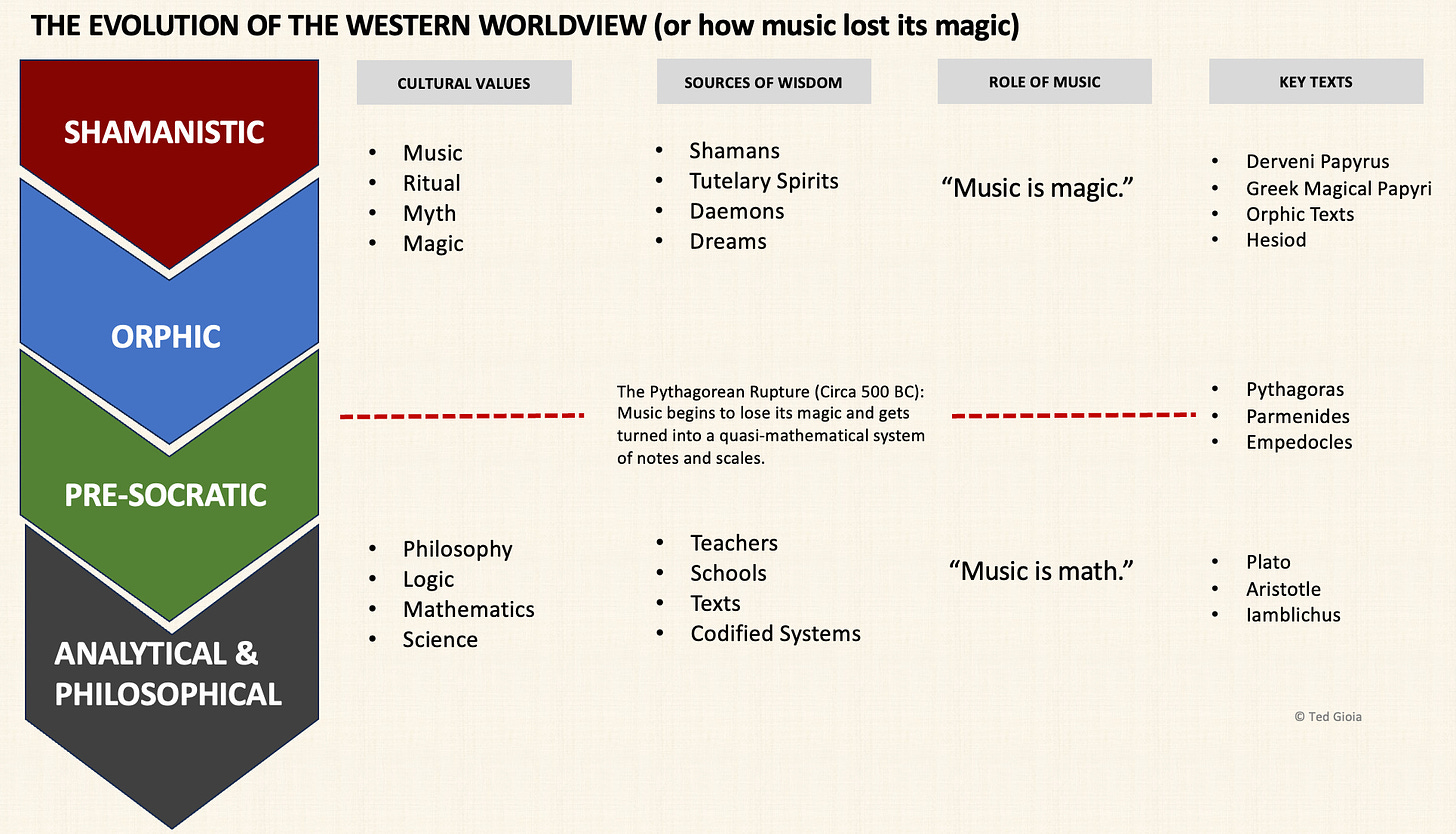


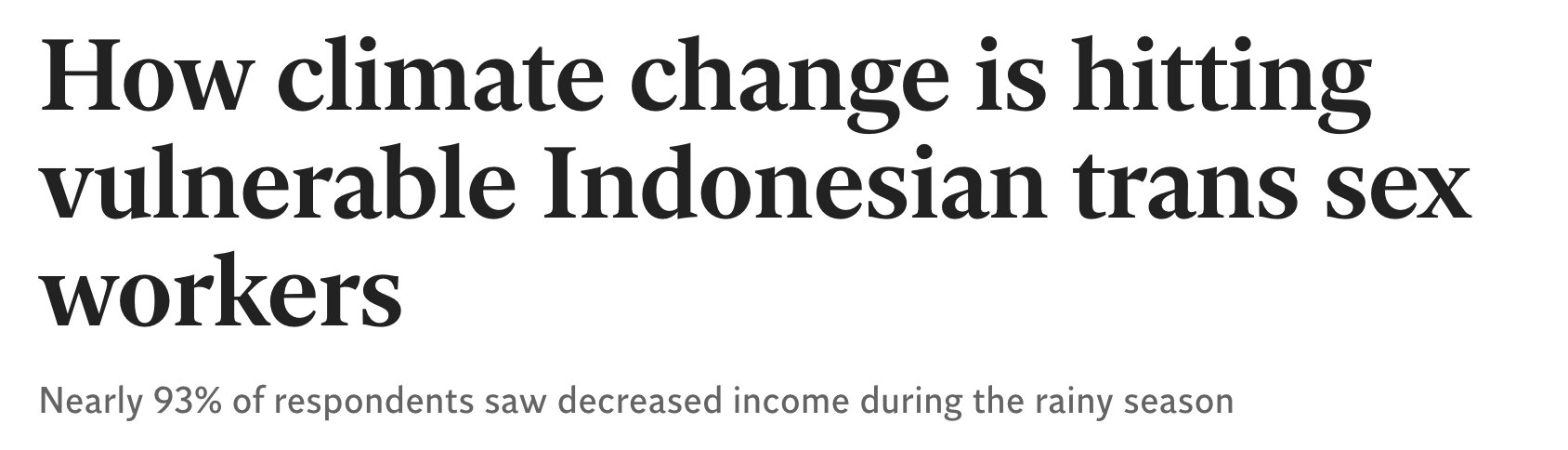
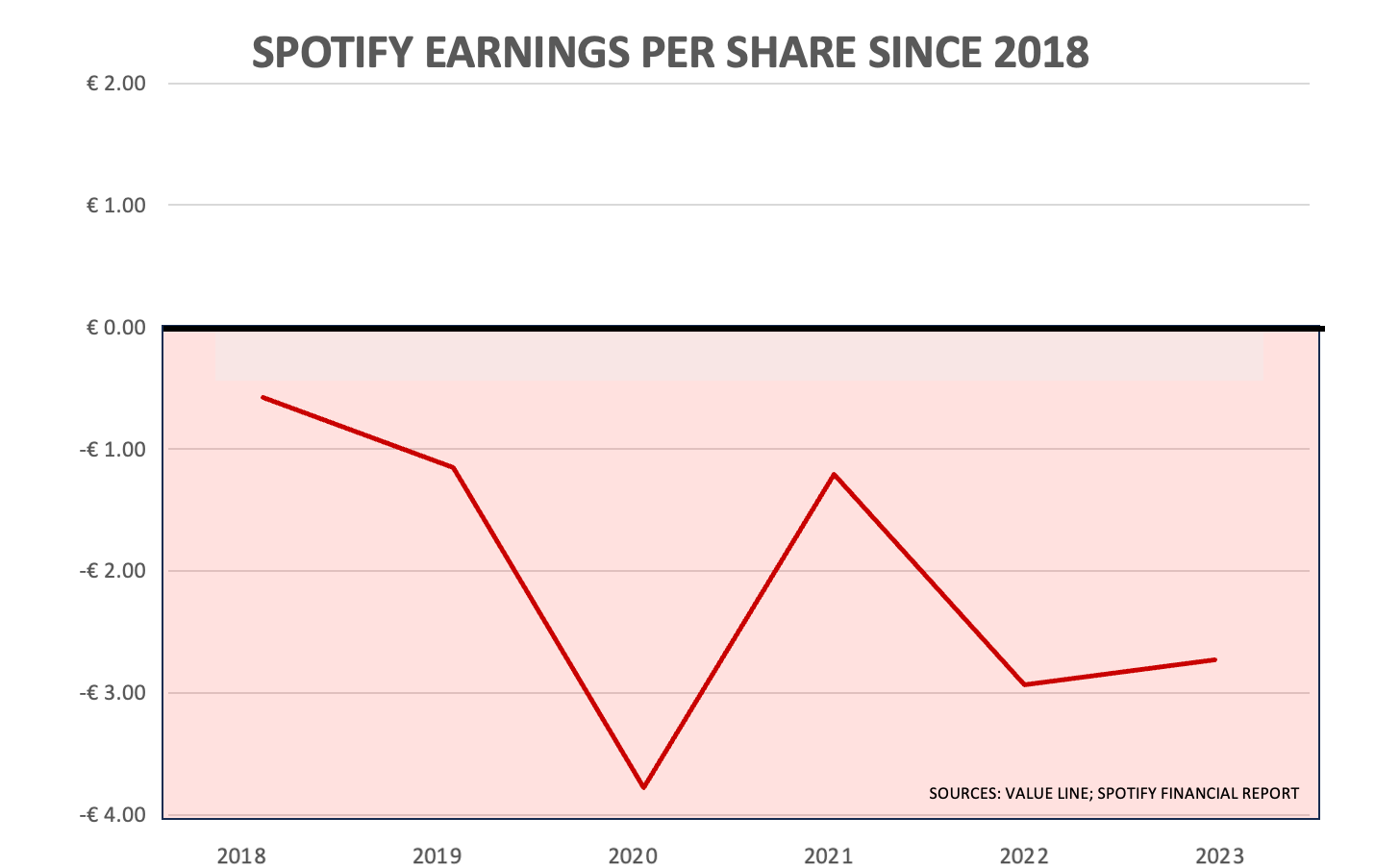
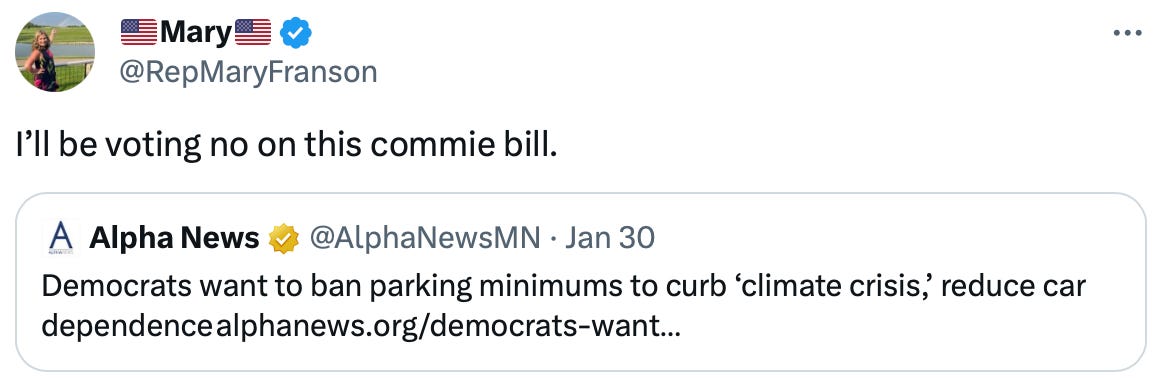
 Tipsy Teetotaler ن