The Uniform Code of Military Justice (UCMJ), particularly Article 92, mandates obedience to lawful orders but distinguishes that unlawful orders—those that require criminal acts or violate the Constitution, U.S. federal law, or international law—must not be followed. Military personnel are legally required to refuse unlawful orders, with the understanding that obeying illegal orders does not absolve one from responsibility under both U.S. military law and international law. This principle was firmly established by precedents such as the Nuremberg Trials, which rejected “just following orders” as a defense for war crimes. (Via Perplexity AI, but confirmed)
If you believe or suspect, as I do, that Donald Trump plans a series of provocations toward the end of declaring martial law and remaining in office, UCMJ Article 92 might come as at least a small comfort. “If they order troops to fire on peaceful civilian demonstrators, the troops should refuse, right?”
Well, “should” is doing a lot of work there. An incident last week gives great pause:
I ran across this dystopian sentence in the New York Times: “Pentagon officials were still working Wednesday on what legal authority they would tell the public was used to back up the extraordinary strike in international waters.”
…
The vice president was asked yesterday to specify the legal authority that entitled Trump to blow up a bunch of people in the Caribbean. The authority, he replied, is that there are “literal terrorists who are bringing deadly drugs into our country and the president of the United States ran on a promise of stopping this poison from coming into our country.”
He and I happened to attend the same law school, so from one alumnus to another: That’s not the correct answer, J.D. The president’s campaign pledges don’t magically acquire the force of law because a plurality of the electorate decided he’d be marginally preferable to his opponent.
…
[So w]here is that authorization? Since 2001, presidents from both parties have strained the logic of the post-9/11 AUMFs against al-Qaeda and Iraq by citing them to justify attacks on adjacent jihadist threats like ISIS. No one seriously believes they can be stretched so far as to encompass drug trafficking in the Caribbean, though. Absent any new approval from Congress, letting Trump mark people for death based on an assessment of “terrorism” by his own State Department amounts to granting him the power to kill anyone whom he deems a threat.
That’s how we ended up with Pentagon lawyers poring over law books on Wednesday, desperately trying to find some statute that might retroactively justify blowing up 11 Venezuelans.
The answer to the question posed to J.D. Vance is that there is no obvious legal authority for what the president did. There’s only what we might call post-legal authority, the idea that—as Trump himself once put it—“He who saves his Country does not violate any Law.” Which, I think, cuts to the heart of the difference between conservatives and postliberals.
…
To ask which legal authority gives Trump the power to kill Venezuelans on mere suspicion of drug trafficking is to engage in non sequitur. The president said he would save the country by preventing drugs from entering the U.S. and he’s going to do that. What does law have to do with anything?
…
On that note, here’s a question to keep you up tonight: If the Times is correct that the Pentagon couldn’t identify a legal justification for Trump’s order to kill a bunch of people, why did it obey his order?
To ask that question is to invite demagoguery about not taking crime seriously or knowing “what time it is,” blah blah, but I know exactly what time it is and it’s exactly the right question for the hour. Our new government fundamentally believes that law is an obstacle to American greatness—that law, normally just a nuisance, has itself become a major problem bedeviling the country—and it intends to solve this problem too. One way is to normalize shooting first and asking questions later. That’s the significance of what just happened to that Venezuelan ship.
I suspect you haven’t heard more about this because the ramifications boggle the mind:
3. China may have hacked data from every single American in one of the largest-ever cyberattacks, experts fear. Hackers backed by Beijing targeted more than 80 countries, stealing information on telecoms, transport and military infrastructure in a year-long campaign, investigators concluded in a report released last week. Since 2021, the group, known as Salt Typhoon, has accessed data that could enable the Chinese intelligence services to monitor global communication networks and track targets including politicians, spies and activists. Even the telephone conversations of Donald Trump and JD Vance were compromised, according to the FBI. Hackers sponsored by the Chinese government “are targeting networks globally, including, but not limited to, telecommunications, government, transportation, lodging, and military infrastructure networks”, the joint statement, from agencies including the National Security Agency, Cybersecurity and Infrastructure Security Agency (CISA) and FBI, said. (Source: telegraph.co.uk)
[A] critical mass of the American people … no longer want[s] to govern themselves, … are sick of this republic and no longer want to keep it if it means sharing power with those they despise.
I don’t do any of the major social media, but I have two sub-domains of the domain you’re currently reading: (a) You can read most of my reflexive stuff, especially political here. (b) I also post some things on my favorite social medium.
[Jaron] Lanier agreed that it’s up to humans to protect the truth in the age of AI, but was less optimistic that we will do so: “The issue with AI is not the AI. It’s not the large language model. It’s the concentration of power and wealth around who owns it,” he said. “You have to look at the big system, including the people, the money, the business, the society, the psychology, the mythmaking, the politics.”
Codgers and technology go together like peanut butter and sardines.
Frank Bruni. Then this, merely via Frank Bruni, not from him:
In the quarterly journal Sapir, Bret Stephens made a kind of peace with the heavily partisan slant of so much cable television news: “To demand scrupulous impartiality on their broadcasts is like expecting fancy linens at a Motel 6.” (Naomi Lerner, West Orange, N.J.)
A non-tribal Democrat
Some of my subscribers dislike when I throw elbows to my left. They share my disdain for Donald Trump and his party, and my commitment to understanding them in light of political theory and history, but they are also devoted Democrats who have warm feelings for Joe Biden, were thrilled by the campaign of Kamala Harris and Tim Walz, and still seethe about Hillary Clinton’s loss in 2016.
That isn’t me. I vote for Democrats. I directionally agree with them on most issues. And I consider the Republican alternative thoroughly unacceptable. Yet I am not a devoted Democrat. A big part of the reason is that I’m not a joiner—of anything. I value my own independence too much and temperamentally resist deploying my talents to advance a cause—any cause, even a worthy one, and even one wrapped up, at this moment, with the fate of liberal democratic self-government in the United States.
But this way of thinking presumes that working to help the Democrats should take the form of deferring to and falling in line behind party leadership and elected officials, taking marching orders, rallying around candidates and nominees endorsed by the party bigwigs, and then maintaining message discipline to get them elected. That’s what I resist. But there’s another kind of devotion—one that expresses itself as tough love and a willingness to speak candidly, and even harshly, about faults.
…
… a Democratic researcher is quoted as saying that when she asks swing voters to liken the two parties to animals, they consistently describe Republicans as lions, tigers, and sharks—“apex predators” that “take what they want when they want”—but Democrats as tortoises, slugs, or sloths, creatures typically considered “slow, plodding, [and] passive.”
One of this crazy-making aspects of life in Trump 2.0 is that the media coverage of the administration’s antics focuses, mostly on the substance of what they are doing, ignoring the process, and the question of whether they have the authority to do it at all.
Such, I feared, was the infirmity of NPR and PBS Aren’t Entitled to Your Tax Dollars, a Free Press article by a serious Ivy league constitutional law professor. I slogged my way through it, agreeing with the author again and again, but frustrated that he was ignoring the elephant in the room. Finally, in literally the last paragraph, he mentioned the elephant almost as a throwaway line:
NPR also alleges in its complaint that the federal statute creating the Corporation for Public Broadcasting prohibits Trump from making this defunding decision. That’s a very different argument, which I’m not addressing here ….
I would venture a guess that nine out of ten people who read this column will come away with the impression that NPR and PBS are suffering from a liberal sense of entitlement to tax dollars, and miss the point about there being some limits to executive power.
In the end, it may not matter because this Congress is sufficiently servile that if Trump asks Congress to defund CPB, PBS and NPR (a longtime GOP talking point), it almost certainly will oblige him.
But process does matter, tremendously. Where the power to do something resides also matters.
This is all, for the record, a really excellent example of what we used to mean when we used the word ideology. Once upon a time, one wouldn’t say “My ideology is…” because ideology referred to the hidden, unexplored, unconscious politics that lay beneath the public, open, explicit politics. An ideology was those pre-political assumptions and beliefs which conditioned and limited political thought, which made the conscious political philosophy of any individual what it was. Ideology is the skeleton that hides unseen within the animal of politics but nevertheless determines the structure of that which is seen. Ideology exists in both the macro and the micro; this bizarre upper-caste antipathy towards ideology is a good example. If you asked leadership at these publications if they had any particular interest in leading a charge against the practice of adoption, they’d say no, of course not, what a weird question! If you were to show them just how repetitively this particular set of critiques and questions and hrm hrm hrm noises gets published in their pages, they’d swear to you that it reflects no underlying party line. And yet there it is, the evidence, in black and white. Something about the current constitution of the anxious educated urbanite liberal soul cries out inside of them: the real problem is adoption.
A well-regarded Evangelical pastor published this weeks before the 2020 Election.
[T]his is a long-overdue article attempting to explain why I remain baffled that so many Christians consider the sins of unrepentant sexual immorality (porneia), unrepentant boastfulness (alazoneia), unrepentant vulgarity (aischrologia), unrepentant factiousness (dichostasiai), and the like, to be only toxic for our nation, while policies that endorse baby-killing, sex-switching, freedom-limiting, and socialistic overreach are viewed as deadly.
…
I think it is a drastic mistake to think that the deadly influences of a leader come only through his policies and not also through his person.
This is true not only because flagrant boastfulness, vulgarity, immorality, and factiousness are self-incriminating, but also because they are nation-corrupting. They move out from centers of influence to infect whole cultures. The last five years bear vivid witness to this infection at almost every level of society.
…
Christians communicate a falsehood to unbelievers (who are also baffled!) when we act as if policies and laws that protect life and freedom are more precious than being a certain kind of person. The church is paying dearly, and will continue to pay, for our communicating this falsehood year after year.
The justifications for ranking the destructive effects of persons below the destructive effects of policies ring hollow.
I find it bewildering that Christians can be so sure that greater damage will be done by bad judges, bad laws, and bad policies than is being done by the culture-infecting spread of the gangrene of sinful self-exaltation, and boasting, and strife-stirring (eristikos).
…
I think it is baffling and presumptuous to assume that pro-abortion policies kill more people than a culture-saturating, pro-self pride.
When a leader models self-absorbed, self-exalting boastfulness, he models the most deadly behavior in the world. He points his nation to destruction. Destruction of more kinds than we can imagine.
It is naive to think that a man can be effectively pro-life and manifest consistently the character traits that lead to death — temporal and eternal.
Piper did not say who he was voting for. He did not name names. For that reason, I’m blogging this separately from pointed political material.
But I’m not going to deny that my heart soared to see that our current President had not captured and reduced to servility the entirety of one of America’s most prominent Christian traditions.
The right to know isn’t the whole story
To further clarify our situation, consider W. H. Auden’s discussion, which I’ve cited before, of the idea that, as he put it, “the right to know is absolute and unlimited.” “We are quite prepared,” Auden wrote,
“to admit that, while food and sex are good in themselves, an uncontrolled pursuit of either is not, but it is difficult for us to believe that intellectual curiosity is a desire like any other, and to recognize that correct knowledge and truth are not identical. To apply a categorical imperative to knowing, so that, instead of asking, ‘What can I know?’ we ask, ‘What, at this moment, am I meant to know?’ — to entertain the possibility that the only knowledge which can be true for us is the knowledge that we can live up to — that seems to all of us crazy and almost immoral.”
Harvard and the Trump administration have each finally met an adversary too big to push around. America’s richest university never really considered how much it depends on government policy, including lavish federal research funding, federal student aid, and a permissive immigration regime for the foreign students—who make up a third of the university’s student body and often subsidize the rest by paying more. Progressives also never thought through how the many tools they devised for using government leverage against private institutions—including threatening tax exemptions, as the Supreme Court allowed on dubious grounds in Bob Jones University v. United States (1983)—could be used against universities that engage in race discrimination for the “right” reasons, cultivate a political monoculture among the faculty, and permit campus mobs to terrorize minority groups who are out of progressive favor (Jews). Now, Trump is trying to strip Harvard of everything—tax exemption, federal funding, and visas for foreign students already enrolled. While the comeuppance for Harvard is admittedly delicious, the president is abusing powers he ought not to have, and Harvard has deep enough pockets to fight him in court.
National Review Weekly email.
Some cases don’t have valid arguments on both sides. That I find nothing “delicious” about Harvard’s “comeuppance” is an example of why I ignore National Review’s regular email invitations to resubscribe.
Can a car have a “catfish smile”?
“Behind that catfish smile, the company’s twin-turbo 4.0-liter DOHC V8 now discharges a drama-drenched 656 hp and 590 lb-ft—153 hp and 85 lb-ft more than the previous Vantage Roadster—thanks to larger turbochargers, revised camshaft profiles, optimized compression ratio and upgraded fueling and cooling.”
Kudos to Dan Neil for the spot-on “catfish smile.”
The car, by the way, is a 2025 Aston Martin Vantage Roadster, which will set you back $300,000 as equipped (this week’s ephemeral tariffs not included).
Credentials, good times, and genuine learning
Most young people today feel, with considerable justification, that they live in an economically precarious time. They therefore want the credential that will open doors that lead to a good job, either directly or (by getting them into good graduate programs) indirectly …
But those same young people also want to have a good time in college, a period of social experience and experimentation that they (rightly) think will be harder to come by when they enter that working world …
… Yes, students understand — they understand quite well, and vocally regret — that when they use chatbots they are not learning much, if anything. But the acquisition of knowledge is a third competing good, and if they pursue that one seriously they may well have to sacrifice one of the other two, or even both. Right now they can have two out of three, and as Meat Loaf taught us all long ago, two out of three ain’t bad.
After Trump held a crypto dinner last Thursday night, crypto moguls who paid to be there felt scammed that the president didn’t even stick around at the event they’d hoped to do their own scams at. I saw someone describe him as the apex scammer. Our Scammander in Chief.
In other Russia news, a new statue of Joseph Stalin in a Moscow metro station was unveiled this month. President Putin has called Stalin an “effective manager,” and has said that enemies of Russia use the “excessive demonization” of Stalin to attack “the Soviet Union and Russia.” Stalin is back, big time. Interesting that “effective manager” is being used here to describe a man who facilitated the death of millions—and not efficiently. But I’m not a businessman.
The continued reckoning: A postmortem on Kamala Harris’s campaign cited a “perception gap” as one of the reasons she lost, saying voters believed she held positions that she didn’t. “Over 80% of swing voters who chose Trump believed Harris held positions she didn’t campaign on in 2024, including supporting taxpayer funding for transgender surgeries for undocumented immigrants (83%), mandatory electric vehicles by 2035 (82%), decriminalizing border crossings (77%), and defunding the police (72%).” But Harris had, in fact, supported all of these positions. Like, she is on record supporting each of those positions (here, here, here, and here). So it’s not really a perception problem so much as a reception problem, like theseideas are not popular even though I support them. There’s a sense among Dems that people should simply ignore the things that are unpopular and that referencing them is fake news. Like, how dare you talk about the surge of migrants coming through our new open borders thanks to swift changes from the Biden admin. Yes, it’s technically true, but it’s disinformation-coded.
Leave Bruce alone: A bar in New Jersey canceled a performance by a Bruce Springsteen tribute band after the real Springsteen called Trump “corrupt, incompetent, and treasonous” while on tour in England. Citing the bar’s MAGA clientele, the bar owner said that a Springsteen cover band would be “too risky at the moment.” And: “Whenever the national anthem plays, my bar stands and is in total silence, that’s our clientele. Toms River is red and won’t stand for his bull—.” [But MAGA doesn’t have a violent streak. No way. That’s fake news.]
Things that are not antisemitism: The Democratic Socialists of America “Liberation Caucus” has announced its support for Elias Rodriguez, the suspect arrested for slaughtering two Israeli Embassy staffers outside D.C.’s Capital Jewish Museum last week. Here’s the statement signed by the DSA Liberation folks and a bunch of others: “As imperialism has made the entire world its battlefield, it is justified to fight it, by any means necessary, without regard for geography.” And: “[T]here must be consequences for genocidal [Z]ionist imperialism, and those consequences are righteous.”
The latest fitness craze is surely going to be Fake My Run. It fits perfectly with the national ethos whereby university students are already doing Fake My Education.
Your enemies are not demonic, and they are not all-powerful and the right hasn’t always lost and the left hasn’t always won. But if you convince yourself of that, you give yourselves all sorts of permission to do a lot of stupid and terrible things under the rubric of “Do you know what time it is?”
Trumpism can be seen as a giant attempt to amputate the highest aspirations of the human spirit and to reduce us to our most primitive, atavistic tendencies.
I don’t do any of the major social media, but I have two sub-domains of the domain you’re currently reading: (a) You can read most of my reflexive stuff, especially political here. (b) I also post some things on my favorite social medium. I am now exploring Radiopaper.com as well.
For most of my professional career, I’ve been a skeptic of the American meritocracy. Not a skeptic of the basic idea that competent and intelligent people should fill positions requiring competence and intelligence, but a skeptic of the idea that a system of frantic adolescent hoop-jumping and résumé-building, designed to skim the smartest kids from every region and segregate them from the rest of society for college and beyond, has actually created an elite that’s more responsible, effective, morally grounded and genuinely cosmopolitan than the more quasi-aristocratic upper class that it displaced.
I’ve spent most of my life thinking that I was well-informed on the American religious scene — especially Evangelicalism. For a long time, that self-regard may have been warranted.
No more. I recently passed the 27th anniversary of my reception into the Orthodox Christian faith. And it may be time to admit that I’ve lost track of what’s going on in the American Evangelical world.
Stephanie McCrummen of the Atlantic has recently published twoarticles on the New Apostolic Reformation (NAR) and those who share its outlook with or without conscious acknowledgement of NAR.
I’ve had my eyes on NAR for a few years, but here’s where McCrummen floored me:
What was happening in the barn in Lancaster County did not represent some fringe of American Christianity, but rather what much of the faith is becoming. A shift is under way, one that scholars have been tracking for years and that has become startlingly visible with the rise of Trumpism. At this point, tens of millions of believers—about 40 percent of American Christians, including Catholics, according to a recent Denison University survey—are embracing an alluring, charismatic movement that has little use for religious pluralism, individual rights, or constitutional democracy.
What she’s describing in NAR That 40% figure got my back up as absurd until I realized that I was basing it on the typical doctrinal commitments of Evangelicalism more than 27 years ago. In fact, it’s been 45 years since I unequivocally identified as Evangelical, being for 18 subsequent years (before my Orthodox reception) only Evangelical-adjacent.
So I can’t say she’s wrong. I also can’t say she’s right, but if she’s right, it would go fairly far in explaining the great Evangelical murmuration from “character matters” (Bill Clinton) to, in effect, “he may be a rapist sonofabitch but he’s our rapist sonofabitch.” So the NAR “prophets” have spoken.
Metaphors: Choose Wisely
Metaphors matter. They can elucidate, but they can also elide and confuse. For a long time, the conservative metaphor for the Left’s tactics has been “slippery slope.” It’s a bad metaphor. It suggests that radical efforts to harm American families are all just the result of the gravitational pull of the earth, or the inevitability of logical progression. That isn’t the case. The tactics used against American families are far more clever. And they invariably involve a “Bait and Switch.” Sell the American people on a principle we can all agree on: “inclusivity,” “tolerance” and “anti-bullying.” Then, smuggle in an entirely different program under its name. That is how gender ideology ended up part of the mandatory “anti-bullying” curriculum, as opposed to the “sex education curriculum,” which is subject to parental opt out.
When an authoritarian-minded leader poised to control the world’s most powerful military begins overt saber-rattling against neighbors, the most obvious and important question to ask is whether he intends to follow through. That question, unfortunately, is difficult to answer. On the one hand, Trump almost certainly has no plan, or even concepts of a plan, to launch a hemispheric war. Seizing the uncontrolled edges of the North American continent makes sense in the board game Risk, but it has very little logic in any real-world scenario.
On the other hand, Trump constantly generated wild ideas during his first term, only for the traditional Republicans in his orbit to distract or foil him, with the result that the world never found out how serious he was about them. This time around, one of his highest priorities has been to make sure his incoming administration is free of officials whose professionalism or loyalty to the Constitution would put them at risk of violating their loyalty to Trump. We cannot simply assume that Trump’s most harebrained schemes will fizzle.
An easier question to answer is why Trump keeps uttering these threats. One reason is that he seems to sincerely believe that strong countries have the right to bully weaker ones. Trump has longinsisted that the United States should seize smaller countries’ natural resources, and that American allies should be paying us protection money, as if they were shopkeepers and America were a mob boss.
So let’s run the race marked out for us. Let’s fix our eyes on Old Glory and all she represents. Let’s fix our eyes on this land of heroes and let their courage inspire. And let’s fix our eyes on the author and perfecter of our faith and our freedom and never forget that where the spirit of the Lord is, there is freedom. That means freedom always wins.
Mike Pence, at the 2020 Republican National Convention, via William T. Cavanaugh, The Uses of Idolatry. Compare this the Hebrews 12:1-2 and ask yourself “just how low is the bar for being considered a devout Christian Republican?”
Cui bono?
Cui bono? Whom did this new story serve? Who benefits from a world of consequence-free sex, weak ties, the putting off of childbearing and family? Today, the pharmaceutical and medical industries benefit, by selling decades-long prescriptions for contraceptives, and then various attempts at ART [Assisted Reproductive Technology] later on. Corporations and employers benefit: they gain a new labor force unsaddled by commitments to family, place, or other less-than-profitable concerns.
On Wednesday America’s Supreme Court examined a Texas law mandating age verification for websites where a third or more of the material is “sexual” and “harmful to minors”. A district judge blocked the law, which is similar to measures recently passed by 18 other states, but an appeals court reinstated it last year.
A trade association of adult entertainers, known as the Free Speech Coalition, is arguing that the law restricts adult Texans’ access to protected speech and violates the First Amendment. The Supreme Court struck down a similar law (the federal Child Online Protection Act) in 2004, the plaintiffs point out. Texas’s defence relies on a high-court ruling from 1968 that upheld a law banning erotic bookstores from selling their wares to children. But online commerce, the plaintiffs retort, is a world apart: adults may be reluctant to reveal their identities to porn sites because they worry about “identity thieves and extortionists”.
Economist World News in Brief for 1/15/25.
That last sentence should be a real eye-opener. Paraphrasing: “We’re such pathetic wankers that we do business with identity thieves and extortionists. We have a right to be pathetic wankers, so to hell with the kids who get exposed.”
That’s not the whole case the “Free Speech Coalition” could make against the Texas law (and about the logic of the 5th U.S. Circuit Court of Appeals) but it’s got to be among the most risible.
Glimmers
Woke retreat
Recently, [Mark] Zuckerberg ordered tampon machines to be taken out of men’s bathrooms in all of Meta’s offices. Commenter Richard Hanania said,
This is like pulling down the statue of Saddam. Now you know wokeness is dead.
… Nobody could have imagined that a vulgar, orange billionaire from New York and an anti-woke South African immigrant in Silicon Valley might be the champions Europe needs to find its own courage and Make Europe Great Again. But then again, despite the false faith of the left-wing ideologues and their bureaucracies, the march of history follows no predictable path.
[F]or those of us who have run afoul of the Left’s dogma, particularly in public, it’s harder to worry over the Trump cabinet’s failure to harmonize with the views of credentialed bureaucrats.
Look no further than MAGA mega-toady Steve Bannon declaring war on MAGA mega-toady Elon Musk.
Bannon has had a bee in his bonnet about Musk for the better part of a month, ever since Elon went to the mat in support of H-1B visas for highly skilled immigrants. “He is a truly evil guy, a very bad guy. I made it my personal thing to take this guy down,” he told an Italian newspaper recently, vowing to have Musk “run out of here by Inauguration Day.” Turning to Silicon Valley’s habit of hiring migrants instead of Americans, Bannon took the gloves off—and sounded a little, well, woke in the process:
“No blacks or Hispanics have any of these jobs or any access to these jobs,” Bannon said.
“Peter Thiel, David Sachs, Elon Musk, are all white South Africans,” Bannon observed. “He should go back to South Africa. Why do we have South Africans, the most racist people on earth, white South Africans, we have them making any comments at all on what goes on in the United States?”
Well then.
Pity poor Elon, who spent Christmas week defending Indian engineers from Groypers calling them sewage-drinking subhumans only to have Groyper-adjacent nationalist Steve Bannon turn around and accuse him of being racist. The rift over immigration policy developing between red-pilled tech bros, color-blind nativist ideologues, and gutter white supremacists will be a fun one to follow over the next four years.
But it won’t be the only one. There are numerous rifts opening on the right as Donald Trump prepares to take office. The GOP caught the proverbial car on Election Day and now each of its factions wants to drive; watching them tear each other apart will be one of the small silver linings of a second Trump presidency.
I don’t do any of the major social media, but I have two sub-domains of the domain you’re currently reading: (a) You can read most of my reflexive stuff, especially political here. (b) I also post some things on the only social medium I frequent, because people there are quirky, pleasant and real.
A few years ago (confirmation hearings, I suspect):
[U.S. Surgeon General nominee Rachel] Levine refused to answer, choosing merely to say that “transgender medicine is a very complex and nuanced field with robust research and standards of care that have been developed.” Paul hit back that “the specific question was about minors,” and accused Levine of having “evaded the question.” Paul continued: Do you support the government intervening to override the parent’s consent to give a child puberty blockers, cross-sex hormones, and/or amputation surgery of breasts and genitalia? You have said that you’re willing to accelerate the protocols for street kids. I’m alarmed that poor kids with no parents, who are homeless and distraught, you would just go through this and allow that to happen to a minor.
That “robust research and standards of care” is essentially a incestuous echo chamber. In that echo chamber, “everybody knows” some things that aren’t true. But gradually, clarity intrudes, first in the Cass Report from Great Britain, most recently on Thursday just passed:
There were a couple of moments in the oral arguments in US vs. Skrmetti this week that were truly clarifying, I think. The first was about suicides among children and teens with gender dysphoria. They are — as the ACLU lawyer, Chase Strangio, finally conceded when questioned by Justice Alito — “thankfully and admittedly rare.”
That’s a big deal. It’s a big deal because the most common argument used by doctors and activists for child sex-changes for years is that if the kids do not transition, they will kill themselves. “Do you want a dead son or a live daughter?” is the question that has been repeatedly, routinely, posed to freaked-out parents with a dysphoric child. That’s why the Biden administration routinely refers to life-saving “gender-affirming care.” It’s transition or death. In every discussion I have ever had on this topic with someone who supports sex changes for kids, this has always been the first point raised.
…
We sometimes think of this trans controversy as a debate about civil rights and medicine. But it is useful at times to step back and truly grasp the radicalism of the ideology fueling the “LGBTQIA+” movement, to see what its vision of humanity is. We are socially constructed abstractions, not bodies. We have no core sex. The core goal of critical gender and queer theory — which is what is behind the child sex change craze — is to end the sex binary entirely as an organizing principle for our society. It is to remove nature from our understanding of what it means to be human. It is as extreme in its epistemological gnosticism as in its philosophical nihilism.
It is not about helping the few, and never has been. It’s about revolutionizing us all.
He’s not wrong. But M. Gessen seems more wrong than right:
Trans and gender-nonconforming people have existed as long as humans have used gender to organize themselves — think Joan of Arc; think Yentl; think many, many real and fictional people in-between — but in Western culture, it’s only in the last half-century that trans people have asserted ourselves as a group. It was only when we became more visible that the onslaught of new discriminatory laws began.
“Trans and gender-nonconforming people” don’t belong together as a category. Lumping them together feeds the fad Andrew Sullivan calls “transing away the gay,” whereby gender-nonconforming adolescents are told “Maybe you’re a boy in a woman’s body” (or vice-versa), which isn’t a real thing.
It’s nothing new for subterranean activity to be ignored by the law until it surfaces (“asserts itself”). Then, sometimes, the law decides it’s bad and disfavors it in various ways. There’s even a maxim for it: the law isn’t made until first it’s broken. An assertive movement based on the fantasy of women in men’s bodies and vice-versa is likely to be rejected fairly decisively.
Finally, Nellie Bowles may have the best response to the nonsense — mockery:
Chase Strangio is on the wrong side of the vibe shift: The Supreme Court this week heard arguments over whether to strike down Tennessee’s ban on medical gender transitions for minors (i.e., no puberty blockers, cross-sex hormones, or surgeries till 18). The ACLU sent their most famous lawyer and the face of the organization, Chase Strangio, to argue the case. Before things started, Chase laid out the stakes to CNN’s Jake Tapper: “These are young people who may have known since they were two years old exactly who they are, who suffered for six, seven years before they had any relief.” So: a two-year-old. When I say to my two-year-old that she’s a funny bunny, she says, “No, kitty cat.” Which to me indicates an extremely advanced and gifted conception of herself. Anyway. Surgery for her tail is next week. She has been consistent that she’s a “kitty cat” for months now. She wears kitty cat ears, a woeful stand-in for the real thing that I’m sure some excellent doctors can arrange.
Justice Ketanji Brown Jackson compared banning medical transitions for minors to bans on interracial marriage. I’m no legal scholar, but it honestly must be fun for your job to just come up with crazy analogies and throw them back at terrified lawyers. I’m just not sure I see the connection she’s making, but I also sometimes throw spaghetti at the wall when nothing’s working. It’s my “why not” business strategy. It’s the “you know what else was illegal once? Interracial marriage” approach.
The reality as it comes to me is that many kids with gender dysphoria are working through a growing awareness of attraction to their own sex. We know how tumultuous modern adolescence is, and confusion about sexuality adds yet another layer of tumult.
Given time, and denied “affirmation” that the real them is trapped in the wrong body (though not denied love and “watchful waiting” medical and psychological care), they emerge as fairly well-adjusted homosexuals. Affirmed, too many of them only later realize that they and they enablers were too hasty, and they de-transition insofar as the changes wrought are reversible.
Maybe that’s just something I picked up in my echo chamber, but I haven’t heard anyone deny the part about “watchful waiting” leading to resolution without transition — or, rather, the only denial I’ve heard is the bogus “live daughter or dead son” trope.
I suffer more from the humiliations inflicted by my country than from those inflicted on her.
I don’t do any of the major social media, but I have two sub-domains of the domain you’re currently reading: (a) You can read most of my reflexive stuff, especially political here. (b) I also post some things on the only social medium I frequent, because people there are quirky, pleasant and real.
We had a lot of trouble with western mental health workers who came here immediately after the genocide and we had to ask some of them to leave. They came and their practice did not involve being outside in the sun where you begin to feel better, there was no music or drumming to get your blood flowing again, there was no sense that everyone had taken the day off so that the entire community could come together to try to lift you up and bring you back to joy, there was no acknowledgement of the depression as something invasive and external that could actually be cast out again. Instead they would take people one at a time into these dingy little rooms and have them sit around for an hour or so and talk about bad things that had happened to them. We had to ask them to leave.
A Rwandan talking to a western writer, Andrew Solomon, about his experience with western mental health and depression. I regret losing the URL, but offer the following in complement:
Serenity in leisure
There is a certain serenity in leisure. That serenity springs precisely from our inability to understand, from a recognition of the mysterious nature of the universe; it springs from the courage of deep confidence, so that we are content to let things take their course; and there is something about it which Konrad Weiss, the poet, called “confidence in the fragmentariness of life and history.”
Visit a graveyard; you will search in vain for a tombstone inscribed with the words “steam-fitter,” “executive vice president,” “park ranger,” or “clerk.” In death, the essence of a soul’s being on earth is seen as marked by the love they felt for, and received from, their husbands, wives, and children, or sometimes also by what military unit they served with in time of war. These are all things which involve both intense emotional commitment, and the giving and taking of life. While alive, in contrast, the first question anyone was likely to have asked on meeting any of those people was, “What do you do for a living?”
David Graeber, Bullshit Jobs
… but liars can figure
I saw an item in the Wall Street Journal very recently:
Here’s a statistic to remember next year, as Congress debates extending President Trump’s 2017 tax cuts: The top 1% of income-tax filers provided 40.4% of the revenue in 2022, according to recently released IRS data. The top 10% of filers carried 72% of the tax burden. Self-styled progressives will never admit it, but U.S. income taxes are already highly progressive ….
Then I saw a Politico item lamenting how little income tax the super-wealth pay on their increase wealth.
So, is someone lying?
Yeah, pretty much. Increased wealth doesn’t imply taxable income. I’m confident that the increased wealth figures Politico cited were mostly unrealized capital gains, which we don’t tax for a number of very good (if not ironclad) reasons.
Infrastructure century
Because the highways were gold-plated with our national wealth, all other forms of public building were impoverished. This is the reason why every town hall built after 1950 is a concrete-block shed full of cheap paneling and plastic furniture, why public schools look like overgrown gas stations, why courthouses, firehouses, halls of records, libraries, museums, post offices, and other civic monuments are indistinguishable from bottling plants and cold-storage warehouses. The dogmas of Modernism only helped rationalize what the car economy demanded: bare bones buildings that served their basic functions without symbolically expressing any aspirations or civic virtues.
One of the things I worry about is unaccountable local officials now that the internet has killed smaller local media. The Lafayette Journal & Courier is a wraith, all but invisible were it not for stories fed from other Gannett papers. WLFI has been gutted with departures as its owner, Allen Media Group, bids billions for new acquisitions but doesn’t pay its bills. Only national politics is really covered any more, and that in only a selective way:
Trans teen health
In oral arguments at the Supreme Court Wednesday, ACLU lawyer and transgender ideologue Chase Strangio was forced to admit that gender realignment surgery for children does not prevent suicide—a core claim of many trans activists, notoriously communicated to parents by doctors as “do you want a live girl or a dead boy?” (Source: The Free Press)
What’s left of the trans argument against Tennessee law, in my view, boils down to “it’s sex discrimination to allow estrogen for girls, testosterone for boys, but not vice versa” — an argument that begs the question of whether the brute fact of sexual binary has any implications for law and medicine.
Wordplay
as man became disenchanted with regards to God and the cosmos, he became enchanted instead with himself and his own potential
The Free Press has its people weigh in on what they’re thankful for at Thanksgiving. Martin Gurri responds:
This year, the petty little man in me is thankful that I won’t have to listen to Joe Biden’s double-dribbling sentences or Kamala Harris’s sitcom canned laughter ever again. The greedy analyst in me is thankful that Donald Trump is coming to burn Washington, D.C., to the ground, so Bari Weiss can keep telling people that I’m the only human on Earth who understands this dread pirate. The lonesome immigrant in me is thankful for my wife, and children, and grandchildren, my country and my street, my plans and my memories—because they make high politics feel like a trivial dream that I wake up from, when I step away from my laptop.
Pete Hegseth
I don’t trust Trump, and it seems to me as if he’s deliberately staffing up with sexual predators — as if that was proof of a decisive “get-things-done” manliness.
Moreover, I distrust pretty boys like Pete Heseth, Gavin Newsom, etc. (Yeah. Maybe there’s a little envy there.)
Nevertheless, I’m withholding my final judgment on Hegseth’s suitability for DoD because his accusers are hiding behind anonymity.
Pardon power
[T]he President is only accountable to the electorate so long as he or his party are up for election. Once the election is over, there’s no one for voters to punish. That’s why Biden waited until after the election to pardon Hunter; why Trump did the same for Steve Bannon and Roger Stone; why Obama did the same when commuting the sentences of Chelsea Manning and the terrorist Oscar López Rivera. And, most notoriously, that’s why Bill Clinton waited until his last full day in office to pardon the fugitive Marc Rich, who had fled to Switzerland to avoid prosecution and whose ex-wife donated $450,000 to the Clinton Library.
It is true that in some matters, including a considerable swath of policy issues that he neither understands nor cares about, Trump can be like Lord Derby, who, “like the feather pillow, bears the marks of the last person who has sat on him”—which is no small thing given the assortment of asses we are talking about. But Trump makes a big impression of his own on the feather pillows he encounters.
I don’t do any of the major social media, but I have two sub-domains of the domain you’re currently reading: (a) You can read most of my reflexive stuff, especially political here. (b) I also post some things on the only social medium I frequent, because people there are quirky, pleasant and real.
For a few days this last week I started to believe that Kamala Harris and the Democrats could come from behind and beat Donald Trump. But then I started to hear Democrats patting themselves on the back for coming up with a great new label for Trump Republicans. They are “weird.”
I cannot think of a sillier, more playground, more foolish and more counterproductive political taunt for Democrats to seize on than calling Trump and his supporters “weird.”
But weird seems to be the word of the week. As this newspaper reported, in a potential audition to be Harris’s running mate, Gov. Tim Walz of Minnesota said over the weekend of Trump and his vice-presidential pick, Senator JD Vance of Ohio: “The fascists depend on us going back, but we’re not afraid of weird people. We’re a little bit creeped out, but we’re not afraid.” Just to make sure he got the point across, Walz added: “The nation found out what we’ve all known in Minnesota: These guys are just weird.”
As The Times reported, Harris, speaking at a weekend campaign event at a theater in the Berkshires, “leaned into a new Democratic attack on the former president and his running mate, Senator JD Vance of Ohio, saying that some of the swipes the men had taken against her were ‘just plain weird.’” The Times added: “Pete Buttigieg, the secretary of transportation, said Mr. Trump was getting ‘older and stranger’ while Senator Chuck Schumer, the majority leader, called Mr. Vance ‘weird’ and ‘erratic.’”
It is now a truism that if Democrats have any hope of carrying key swing states and overcoming Trump’s advantages in the Electoral College, they have to break through to white, working-class, non-college-educated men and women, who, if they have one thing in common, feel denigrated and humiliated by Democratic, liberal, college-educated elites. They hate the people who hate Trump more than they care about any Trump policies. Therefore, the dumbest message Democrats could seize on right now is to further humiliate them as “weird.”
“It is not only a flight from substance,” noted Prof. Michael J. Sandel of Harvard, author of “The Tyranny of Merit: Can We Find the Common Good?” “It allows Trump to tell his supporters that establishment elites look down on them, marginalize them and view them as ‘outsiders’ — people who are ‘weird.’ It plays right into Trump’s appeal to his followers that he is taking the slings and arrows of elites for them. It is a distraction from the big argument that Democrats should be running on: How we can renew the dignity of work and the dignity of working men and women.”
I don’t know what is sufficient for Harris to win, but I sure know what is necessary: a message that is dignity-affirming for working-class Americans, not dignity-destroying. If this campaign is descending into name-calling, no one beats Trump in that arena.
I’m not sure that calling Trump and his running mate J.D. Vance “weird” when you’re the party of gender fluidity will connect with voters.
Oliver Wiseman at the Free Press (cartoon from a separate source)
(N.B. Be it remembered that everyone reading this is probably WEIRD)
Self-sabotage
Decades ago, the lesbian cultural critic Camille Paglia warned her fellow homosexuals against reckless attacks on religion. Homosexuality only flourishes under conditions of advanced culture, she said—and like it or not, the church is a pillar of culture. Therefore, said Paglia, when gays “attack the institutions of culture (including religion), they are sabotaging their own future.”
In 2016, Paglia spoke at an ideas festival in Britain, saying that the West’s obsession with androgyny and transgenderism is a sign that “civilization is starting to unravel. You find it again and again and again in history.”
“People who live in such times feel that they’re very sophisticated, they’re very cosmopolitan,” Paglia said. In truth, she goes on, they give evidence of a culture that no longer believes in itself. This, in turn, calls forth “people who are convinced of the power of heroic masculinity”—in other words, barbarians.
Nobody will resist contemporary “barbarians” to defend a civilizational order that places the sexually disordered at its symbolic pinnacle. Ordinary Frenchmen might fight for the Blessed Virgin Mary, or for Marianne, the symbol of the Republic, or at least for Brigitte Bardot. But for Barbara Butch? Please.
“Vague and subjective policies pervade the financial industry,” Jeremy Tedesco told the Federalist Society group. He is the general counsel at Alliance Defending Freedom, which has itself been labeled an “extremist group” by the Southern Poverty Law Center. (ADF once was the institutional home of famously intolerant extremist David French.) “They’ll never tell the customer the real reason they are being debanked. Companies hide behind vague standards, just like government would do if it were regulating speech.”
Tedesco sees the issue as being essentially one of collusion: heavily regulated industries doing the dirty work of government officials who cannot engage in censorship themselves but who can lean on banks and insurance companies and make their lives miserable if they choose.
How many civil servants could a future President Trump try to fire using a reimplemented Schedule F? Estimates run to somewhere around 50,000. Fukuyama is worth quoting at length on the implications:
It is hard to describe the damage that will be done to American government if these plans are carried out. While there is a good case to be made for great flexibility in the hiring and firing of federal officials, the wholesale replacement of thousands of public servants with political cronies would take the nation back to the spoils system of the 19th century. Republicans think that they will be undermining the deep state, but they will simply be politicizing functions that should be carried out in an impartial way, and will destroy the ethic of neutral public service that animates much of the government. When they lose power, as they necessarily will, the other party will simply get rid of their partisans and replace them with Democratic loyalists in a way that undermines any continuity in government. Who will want a career in public service under these conditions? Only political hacks, opportunists, and those who see openings for personal enrichment in the bureaucracy.
I figure whoever walks away with Pennsylvania wins the deal; so come first Tuesday in November, I plan on staying up no later than the calling of that state. Either way, it will be a new regime, sending rats like Sullivan and Blinken and Kirby scurrying off to think tanks to plot their return to power. Meanwhile, nothing much will change, despite the label at the top; for weapons of death and destruction have to be shipped, genocide has to be upheld, and money has to be printed, no matter the administration.
Biden’s three-pronged proposal to reform the Supreme Court isn’t serious.
He didn’t consult with Congress before announcing it, as he would have if he were serious.
He proposed no language for the constitutional amendments that would be required were he serious.
A constitutional amendment to the effect that Presidents have no (little?) immunity isn’t a matter of Supreme Court reform at all — and will prove deucedly difficult to write if someone tries.
Biden probably is past the point of being able to achieve seriousness; all he’s got left is petulance.
(BTW: Term limits and a binding ethics code are not crazy ideas, but the devil’s in the details on how to “bind” SCOTUS.)
I suffer more from the humiliations inflicted by my country than from those inflicted on her.
I don’t do any of the major social media, but I have two sub-domains of the domain you’re currently reading: (a) You can read most of my reflexive stuff, especially political here. (b) I also post some things on the only social medium I frequent, because people there are quirky, pleasant and real.
For my response, let’s just say I have a presumption against all revolutions; they seldom elevate, frequently immiserate. But they’ll happen when enough people think it couldn’t get any worse.
Bring back frank established religions?
Thoughts as we close out “Pride Month:”
(In my house, we believe the Nicene Creed)
Instead of a naked public square, we see one festooned today with every imaginable image of the rainbow and associated symbology: from flags to backlighting, from crosswalks to entire murals on the sides of buildings. The public square went briefly from being a space where one might once have found images of the Ten Commandments or, during the holidays, a Christmas crèche, to one where the White House might be lit up by the rainbow celebrating a judicial fiat declaring a right to marriage of homosexuals in a constitution written in the 1780s, to public libraries where praise of cross-dressing, transexuality, and gay sex would become run-of-the-mill children’s programming.
…
When religion in any traditional or recognizable form is excluded from the public square, it does not mean that the public square is in fact naked. When recognizable religion is excluded, the vacuum will be filled by ersatz religion, by religion bootlegged into public space under other names.
…
The high priests of the new religion insist upon enthusiastic public expressions of support—especially during the holy month of June—lest one’s relative lack of fervency be taken as an indication of disbelief and grounds for being purged from the ranks of the elect. In nearly every respect, expressions of Pride are deployed in identical ways to traditional religious symbols and belief, in the eyes of many constituting a replacement religion. The inescapable, even overbearing presence of Pride symbology thus today bears all the unmistakable features of a “comprehensive doctrine,” the prevention of which earnest liberals of yesteryear insisted was their sole, modest aim.
…
Any war of “comprehensive doctrines” also brings attendant dangers. However, only someone not paying attention could believe that those dangers have been absent in recent years. My hope is that forthrightness about the terms of the debate may lead not to renewed “wars of religion,” but to a new settlement. A more pacific settlement might arise from acknowledgment that the actual “fact of pluralism” may require increased acceptance and acknowledgement of various state establishments. Such a settlement would return us to the original arrangement of the constitutional order, in which various religious traditions could coexist with robust internal unity amid relative proximate concord. California might thus retain its de facto established religion of Pride, and Alabama would establish some form of broadly nondenominational Protestant Christianity.
Patrick Deneen, inluding a prophetic insight of Richard John Neuhaus.
Comments:
I think Deneen is correct that “Pride” has become a Rawlsian comprehensive doctrine — i.e., a de facto religion. (That doesn’t mean I think it will endure.)
Deneen’s suggestion of permitted state establishments of religion is America’s original pattern (for what it’s worth). The First Amendment’s prohibition of Congress making any “law respecting an establishment of religion” was indeed a restriction on Congress, not the states. Massachusetts (of all places) had a state establishment until the 1830s and abandoned it voluntarily, not because some court declared it unconstitutional.
I suspect I could formulate an argument that a state establishment of religion, unlike a limit on free exercise of religion, ought not be barred by the 14th Amendment “incorporation.” So long as a citizen is not coerced, I question whether their 14th Amendment “rights” are violated by an establishment.
I’m under no illusion that I will like the religion established by any state: While I differ from him in details, I concur with Ross Douthat’s daring book title Bad Religion: How We Became a Nation of Heretics, and the best state establishment I could realistically hope for is mainstream Protestant (i.e., moralistic therapeutic deism).
Progressives verus liberals
You know you’ve touched a nerve with progressive activists when they tell you not just that you’re wrong but that you’re on the other side.
Such is the fate of any old-school liberal or mainstream Democrat who deviates from progressive dogma …
If this was just about our feelings, these denunciations could be easily brushed aside. But the goal and the effect is to narrow the focus of acceptable discourse by Democrats and their allies. If liberals are denounced for “punching left” when they express a reasonable difference of opinion, potentially winning ideas are banished.
…
In the run-up to a tight election with a weak Democratic candidate and a terrifying Republican opponent, pushing liberals and centrists out of the conversation not only exacerbates polarization, it’s also spectacularly counterproductive.
…
Those on the left who’ve been dumbstruck as Donald Trump has intimidated his most vociferous Republican critics (see: Chris Sununu, Nikki Haley) into falling in line might exert a little more self-awareness of similar moves by the left.
The goal of progressives may be solidarity, but their means of achieving it are by shutting alternative ideas down rather than modeling tolerance.
Note that I am not denying a similar Trumpist lock-step on the Right, nor does Ms. Paul.
Understanding the 2024 Roberts Court
If you really want to understand the conservative-dominated Supreme Court, it’s important to realize that all the Republican nominees who sit on it formed their legal philosophy and forged their legal reputations long before Donald Trump was elected president. This is no less true of Trump’s three nominees than of the three justices who were nominated by previous Republican presidents. Neil Gorsuch, Brett Kavanaugh and Amy Coney Barrett all possessed a robust legal identity and a considerable body of work before their selection to the high court. In fact, each has his or her own maverick streak, with Gorsuch perhaps most notable in his steadfast defense of Native Americans and the rights of criminal defendants.
When you understand this reality, what can seem to be a confounding, surprising Supreme Court term is actually predictable. The Trumpist right is lobbing a number of novel cases presenting aggressive legal theories to justices with pre-Trump legal philosophies, and the pre-Trump justices are rejecting them, repeatedly.
The Trumpist right is especially getting aggressive in Mississippi, Louisiana and Texas, part of the 5th Circuit U.S. Court of Appeals. The 5th Circuit has become where conservatives play out their fantasies to an obliging court as the 9th Circuit used to be the playground for progressives. You could say the 5th is the new 9th.
Republicans Pounce
A politically inconvenient rape and murder: Two migrants who’d crossed the border illegally have been charged with the rape and murder of 12-year-old Jocelyn Nungaray in Houston. The Associated Press managed to not once mention the status of the killers. The NYT eventually covered it, only in the context of how darned politically inconvenient it is: “The killing of Jocelyn Nungaray in Houston has become the latest crime seized on by Republicans to attack President Biden over his immigration policies.” Right. That 12-year-old, so rude of her to be murdered by the wrong type and letting Republicans “seize on” it.
I’ll give the New York Times credit for disguising the usual formulation wherein the real story is “Republicans pounce” instead of what detestable thing they pounce on.
Tradition
Most of the things in our lives are not of our own making – they were given to us. Our language, our culture, the whole of our biology and the very gift of life itself is something that has been “handed down” to us. In that sense, we are all creatures of “tradition” (traditio=“to hand down”). Of course, these things that are not of our own making and are the least controllable are also those things that we take most for granted. We may hate our culture and our biology, but will still have to use our traditioned language (or someone’s traditioned language) to say so. Tradition is simply the most foundational, inescapable aspect of human existence.
I don’t do any of the major social media, but I have two sub-domains of the domain you’re currently reading: (a) You can read most of my reflexive stuff, especially political here. (b) I also post some things on the only social medium I frequent, because people there are quirky, pleasant and real.
As we are wont to do, we sent “help” to Rwanda after genocide there. At least one, they got a tart and stinging reception:
We had a lot of trouble with western mental health workers who came here immediately after the genocide and we had to ask some of them to leave. They came and their practice did not involve being outside in the sun where you begin to feel better, there was no music or drumming to get your blood flowing again, there was no sense that everyone had taken the day off so that the entire community could come together to try to lift you up and bring you back to joy, there was no acknowledgement of the depression as something invasive and external that could actually be cast out again. Instead they would take people one at a time into these dingy little rooms and have them sit around for an hour or so and talk about bad things that had happened to them. We had to ask them to leave.
A Rwandan talking to a western writer, Andrew Solomon, about his experience with western mental health and depression. Via Letters.
Strange congruence
It’s a real dog-bites-man story, to write about how religious liberalism is dying. But Ryan Burge, a political scientist who specializes in religion (and a pastor of a liberal Baptist congregation), notes a new academic paper producing more evidence that liberals abandon religion, while conservatives find churches where they feel comfortable with their politics. Read the paper via the link.
I consider it a shame and a scandal that there should be a measurable link between conservative politics and religiosity. I could be wrong — specifically, I could be over-reacting to the toxicity of so much of American politicized religion (the bane of my existence for more than 30 years) — but I think authentic Christianity is substantially orthogonal to American political categories, or at least can accommodate a bit more than center-left to center-right. Churches should make very few feel like aliens because of their politics.
On Monday, Rachel Swan reported for the San Francisco Chronicle:
Czech TV journalist Bohumil Vostal was capturing what he thought would be a majestic shot — San Francisco’s iconic City Lights bookstore, steeped in the gathering dusk — when three masked assailants approached with guns pointed.
“They were heading at my camera man, aiming a gun at his stomach, and one at my head,” Vostal said in an interview Monday, growing breathless as he recounted the harrowing incident at 5 p.m. the night before.
…Like many reporters, Vostal had seen news coverage of unruly shoplifters, open-air drug markets and commercial vacancies, but he hoped to portray the city in a more positive light…
The Chronicle notes that Mr. Vostal and his colleagues are from a public television station, so perhaps they were just as eager as U.S. public broadcasters to paint flattering portraits of jurisdictions run by leftists. But that was before the harrowing incident. And if you’ve lost Bohumil Vostal, you’ve lost middle America.
The thieves grabbed $18,000 worth of equipment, including a camera, lights and a tripod, and jumped into a getaway car as a stunned Mr. Vostal futilely tried to memorize its license plate.
“They took my research, my time, my ideas,” Mr. Vostal said, distraught that he lost all of his footage. “That is why I’m angry, you know?”
I’m not gloating. I’m not feeling schadenfreude. I was fond of San Francisco, though I visited only once and only very briefly. Now they’ve taken it away by crime.
I’m not certain, though, about the Wall Street Journal’s habitual spin about “jurisdictions run by leftists” or such. My midwestern city is hugely more crime-ridden than when I was growing up, and it’s run by Chamber of Commerce types from center left to, occasionally, center-right (the further right seems unable to field appealing candidates).
Authoritarian, Totalitarian
“To grasp the threat of totalitarianism, it’s important to understand the difference between it and simple authoritarianism. Authoritarianism is what you have when the state monopolizes political control. That is mere dictatorship—bad, certainly, but totalitarianism is much worse. According to Hannah Arendt, the foremost scholar of totalitarianism, a totalitarian society is one in which an ideology seeks to displace all prior traditions and institutions, with the goal of bringing all aspects of society under control of that ideology.
Rod Dreher, Live Not by Lies.
Two lawyers agree: lawyering is for lawyers, and in courtrooms
David French: You know, I’m glad you said what you said about the importance of legal advocates because I mean, it’s just absolutely indispensable as a truth seeking mechanism to have smart people on 100% on the side of their respective clients, but I haven’t found a better way to get to truth.
Sarah Isgur: Haven’t found a better way.
David French: But for that Sarah that I think people haven’t really absorbed and that the “but” is that only works in the court system, okay.
Because in the court system you have rules of evidence you have rules of decorum you have all of that energy, and advocacy is channeled through a code of ethics into a formalized system where your advocacy is tested in front of an impartial judge or impartial jury, where you have a capable opponent, where you have rules of evidence.
Here’s what’s really hurting our society, is we have people who adopt a lawyer mentality in life, in activism writ large, where there aren’t rules of evidence, where there aren’t codes of ethics, and so what’s happening is we’re having this activism-driven world, where people are approaching their political cause, or their political candidate, with all the zeal that a lawyer has for their client and none of the rules and none of the limitations. And it’s creating this activist-driven culture where, as opposed to in courts, where the two advocates going at each other is a truth-seeking function because it’s channeled through all the rules with an impartial jurist. And outside of the courtroom, that same zealous advocacy mindset. becomes a truth-obscuring function. And it’s one of the reasons why we have such a problem with just knowing basic simple facts in this country right now is that we have two sides that are treating their life as partisans as if they’re lawyers unbounded by rules of ethics.
And that is really destroying … our society’s truth-seeking ability because it’s a bastardized form of the truth-seeking function we pour into our court system. And this activist mindset and the sort of activist ethos is really sort of eating our institutions alive, and so, yeah, it’s honorable to be a lawyer as a lawyer in a court system. If you’re going to take the lawyer mindset, just as a citizen, talking about your sort of favorite ideas or your political ideas. political party or your candidate, et cetera, you’re missing it, you’re missing it.
We need a lot more jurists, people who are trying to discover the truth, then we need more activists, and we’re overrun with activists right now.
Add the vote of this retired lawyer to those of David and Sarah.
Half right
Subsidies for electric vehicles are a huge mistake. These cars are conceptually the same battery and motor as a fourth-grade science project—not a great innovation. And given high prices for EVs, subsidies are mainly a giveaway to the already well-off. If you add up carbon emissions from manufacturing, daily use and end of life, EVs have total life-cycle emissions 30% lower than gasoline-powered autos. In Silicon Valley, something is considered truly transformational if it’s 10 times better, not a third.
Andy Kesler, Wall Street Journal. Kesler thinks that infrastructure for autonomous cars is a better investment. He makes a good case, but I can’t entirely shake Matthew Crawford’s Why We Drive
Political-ish
Looking back
The reality of Biden becoming president on Wednesday is too difficult to square away, so it is simply not being squared. Instead, some are falling deeper into delusion, expanding a divide on the right that New York Times columnist Ross Douthat called “not a normal ideological division or an argument about strategy or tactics, but a split between reality and fantasy that may be uniquely hard for either self-interest or statesmanship to bridge.”
I’d say she nailed that. We have not bridged it yet, nearly three years later, and I don’t even see much progress on bridge-building.
Contrasting demeanors
Trump has built a base of fanatic messianic support on the right preaching that America is terrible and only he can save it. Scott, essentially, is arguing that America is wonderful and his ascension to the Senate in the first state to secede from the Union before the Civil War proves it. For the party to suddenly shift from Trumpism to Scottism would be as disorienting and unlikely as shifting from, er, Tea Party conservatism to Trumpism.
Judging by his own rhetoric, Trump’s become the most overtly fascist major-party candidate in American history, yet he’s trouncing respectable opponents like Tim Scott in the Republican primary and would likely defeat Biden if the election were held today. How can that be? Do American voters agree with the right about “what time it is”? (You wouldn’t know it from last week’s election result.) Or have they not realized yet what they’re getting themselves into?
Mike Davis, who’s a likely pick for Attorney General in a restored Trump administration, has listed five top-priority agenda items for such a restoration:
Fire members of the deep state executive branch [using Schedule F reform];
Indict the entire Biden family;
Deport 10 million people;
Detain people at Gitmo;
Pardon all people serving time or on trial for acts undertaken on January 6.
The human voice: That we can sing seems basis for conjecture that, despite our stupidities and our sinfulness, we might be the reason the universe exists.
You can read most of my more impromptu stuff here (cathartic venting) and here (the only social medium I frequent, because people there are quirky, pleasant and real). Both should work in your RSS aggregator, like Feedly or Reeder, should you want to make a habit of it.
I wanted to suggest a few ideas that could anchor what we might jokingly refer to as “Frog and Toad Christendom.”
The idea is best summarized, as one friend helpfully put it, as resetting society’s defaults to favor people’s long-term interests rather than short-term pleasures. At present, we make it easy for people to indulge in in short-term pleasures that will, stretched out over time, leave them poorer, more lonely, and less able to contribute to their communities. We also make it harder to pursue things that will be in our best interests long-term. This is precisely the opposite of how it should be. We want to make it easier to choose virtue and harder to choose vices on a broad, societal level.
Here are six ideas that I think could fit under this overall principle:
First, ban online gambling …
Second, ban porn …
Third, place higher taxes on vices, such as marijuana and alcohol …
Fourth, redesign cities to discourage speeding and to make roads more pedestrian friendly. Third places thrive in walkable neighborhoods and because so much of our social connectedness comes via third places, we should want our cities to be walkable …
Fifth, birth should be free …
Sixth, to make it easier for workers, particularly workers with only high-school degrees, to form and support families, we should repeal right to work laws where they exist …
I agree with the spirit of all these, particularly when Jake fleshes them out (my ellipses). But they’re the work of a generation, and David Samuels’ “glittering oligarchy” (see The problem, and the un-solution below) will fight them as the existential threat they are.
What if …?
What if Arthur, eldest son of Henry VII, had not died in his mid-teens?:
There would have been no Dissolution of the Monasteries, and the subsequent upheaval to the rhythm of rural English life. 90% of English art would not have been destroyed in an iconoclastic orgasm of ideological fervor, and English churches and shrines would have remained awash in color, rather than the stone or whitewashed sepulchers of today. There would have been no new aristocracy to steal the land of the peasants, and there would have been no Enclosures Act … There was no New England because there were no Puritans—no “City on a Hill,” no Protestant work ethic … The empire would have been English rather than British. The Industrial Revolution would have been muted, not being able to feed upon rural dispossession and poverty, and would consequently been less convulsive to English society.
Since Terry’s an actual historian, he plays out a lot more detail than this. I, not a historian but made heartsick by Bradford Wicox’s Unintended Reformation, was reminded again that destroying culture and smashing artifacts was a Protestant thing before it was an ISIS thing.
Well played
(H/T Todd Grotenuis on micro.blog)
Must reading
When doctors fundamentally misunderstand the cause of a condition and treat the symptoms instead, and fail to properly monitor outcomes, and modify their practice in response to known adverse outcomes, our patients suffer — often greatly and for the rest of their lives — if indeed they survive. These fundamental errors underpin the depressingly regular scandals that punctuate the history of medicine. (The stakes are particularly high if surgery is involved.)
It is naïve to think that all these scandals are in the past … So where might the next medical scandal be brewing?
The increasing visibility of detransitioners suggests it may lie in wait in gender-affirming medicine. Many detransitioners are young women who underwent treatment for psychological distress that has left them with irreversible, life-long changes to their bodies: a deep voice, a beard, and compromised sexual function. Some have had their breasts surgically removed; some may be infertile. Others are young men who have been castrated.
…
For many detransitioners, the cause of their distress as a teenager was misattributed by their clinicians to the notion that they had been born in the wrong body, and that they would be helped by the surgical creation of the “correct” body ….
Mutilating bodies ought to be the very, very last resort for a problem that starts in the mind.
Ardently seeking catharsis
[I]ntroducing no-fault divorce was a travesty, and in many ways redefined marriage more drastically than Obergefell vs. Hodges.
None of this is even on the radar of many of today’s conservative elites. As often as not, they have been through a divorce themselves, and the compromise that marks their personal lives renders them reticent about standing up for traditional marriage. The consequence has been that most conservative influencers seek to move on from same-sex marriage as quickly as possible. Battle lines have been redrawn, the tent broadened, and now—they loudly proclaim—we can get back to promoting the free market and taking on the really crazy leftist proposals. Sure, the institution of marriage might be an unfortunate piece of collateral damage in the fight, but at least we won’t give an inch on this transgender nonsense.
I, too, had never heard of Mr. Harrold. And I disagree with his vitriol toward the Respect for Marriage Act. But I’m glad someone had the balls to write something so contrary to the Zeitgeist that for a moment, I felt positively moderate.
The right kind of facts, mediated by our betters
In an important article titled “Google.gov,” the law professor Adam J. White writes that Google views “society’s challenges today as social-engineering problems” and aspires to “reshape Americans’ informational context, ensuring that we make choices based only upon what they consider the right kind of facts—while denying that there could be any values or politics embedded in the effort.”
A society which wants to preserve a fund of personal knowledge must submit to tradition.
Michael Polanyi, Personal Knowledge. But we won’t submit because we’re Mur’cans.
Legalia
Protecting freedom of religion — through the speech clause
In case you hadn’t noticed, or had forgotten, the free speech clause of the First Amendment has been more effective in protecting religiously-informed conscience than have free exercise or non-establishment clauses, directly concerned with religion though they be.
I cannot imagine a factual scenario where that would not continue to hold true, though that may be a failure of imagination (from too many years between me and a Socratic law school classroom).
Simple question, botched answer
The reliance of religious dissenters on the free speech clause should have come up here, too:
Another dissenter has “a simple question regarding 303 Creative”:
If the website designer’s action is expressive, and if her closely held religious belief was to believe that God was against interracial or inter-religious wedding, is it okay for her to refuse service? If not, why not? If so, it would seem to open a Pandora’s Box of truly held religious beliefs (with no way to prove/disprove) overriding any and all anti-discrimination protections if the business’s product is viewed as expressive — which is just as nebulous as knowing if a belief is truly held.
One answer is that all the major religions bar homosexual sex. A better case would be where a religion forbids divorce. Would someone refuse to design a site for a second wedding? Possibly, I suppose. I don’t doubt that some of this is driven by homophobia and very selective enforcement of Biblical strictures. As a Christian, I think it’s immoral to single out gays — and only gays — in this way. But a fundamentalist may differ, and they have rights too.
Sullivan is a very smart fellow but he blew this one.
The simple answer to the dissenter’s simple question is “Yes, she may deny her expressive services to create custom websites for interracial or inter-religious weddings” in this fairly wild hypothetical, because this was a free speech case; all references to religious beliefs are beside the point because it’s not a free exercise of religion case.
Although I would find opposition to interracial weddings atavistic, offensive and anti-Christian, and opposition to inter-religious weddings surprising in this day and age, I believe that freedom from compelled expression is “high trump” and will be so held if challenges continue. The only viable question will be in edge cases: “is this really compelled expression”?
As I was writing the preceding, I remembered the days when I thought otherwise, thought that the gay tsunami would crush all before it — as its legal theorists intended:
In her symposium paper Moral Conflict: (Some) Religions and Marriage Equality, [Georgetown law prof and later Obama recess appointment to the EEOC Chai] Feldblum asked what effect “marriage equality” – i.e., marriage between members of the same sex – will have on the rights of those employers, landlords and others whose religion teaches them that same-sex sexual conduct is sinful (and perhaps harmful to society):
Let me be very clear … [I]n almost all the situations (not perhaps in every one, but in almost every one), I believe the burden on religious people that will be caused by granting gay people full equality will be justified …. That is because I believe granting liberty to gay people advances a compelling government interest, that such an interest cannot be adequately advanced if “pockets of resistance” to a societal statement of equality are permitted to flourish, and hence that a law that permits no individual exceptions based on religious beliefs will be the least restrictive means of achieving the goal of liberty for gay people.
Are gay rights in conflict with religious freedom? – Tipsy Teetotaler ن. I don’t know what Feldblum would have said about those “others” whose (religious) convictions might motivate a free-speech refusal of expressive services, and I won’t speculate about that. But with that sole carve-out, Feldblum has been vindicated so far.
Racial gerrymandering in a SCOTUS dissent on affirmative action
Leftists who love racial discrimination when they control it have responded widely and loudly. This tweet from Erica Marsh, a Democrat operative, provides an excellent summary of them all:
Today’s Supreme Court decision is a direct attack on Black people. No Black person will be able to succeed in a merit-based system which is exactly why affirmative-action based programs were needed. Today’s decision is a TRAVESTY!!!
Twitter being Twitter, there was a nice pile-on, back-tracking, blacksplaining, etc.
(Do not rely on Mr. Larson for analysis of the Supreme Court cases he’s celebrating. He’s conservative, but he’s just as sloppy about the details as most liberals who are lamenting the same cases.)
SCOTUS
Be it noted that I disapprove the feeding frenzy of attacks on conservative Supreme Court justices, notably Thomas and Alito. I won’t go into the reasons why, which have been well-addressed by their defenders or, in Alito’s case, by himself.
But I can still appreciate the wordcraft of these bits via Frank Bruni:
In Slate, Dahlia Lithwick parsed the generosity from billionaires that Justices Samuel Alito and Clarence Thomas have so richly enjoyed: “A #protip that will no doubt make those justices who have been lured away to elaborate bear hunts and deer hunts and rabbit hunts and salmon hunts by wealthy oligarchs feel a bit sad: If your close personal friends who only just met you after you came onto the courts are memorializing your time together for posterity, there’s a decent chance you are, in fact, the thing being hunted.”
In The Washington Post, Alexandra Petri mined that material by mimicking the famous opening line of “Pride and Prejudice” by Jane Austen: “It is a truth universally acknowledged that an American billionaire, in possession of sufficient fortune, must be in want of a Supreme Court justice.”
Politics
$35 million per quarter
Trump raking it in: The Prince of Mar-a-Lago pulled in $35 million in the second quarter of the year, double what he raised the quarter before. It looks like Republican donors not only weren’t put off by the classified document scandal. . . or the New York indictment. . . or the Georgia case, but are, in fact, rallying behind him, perhaps hoping to get a better seat at the document viewing table. If you had to guess, how much would you need to donate to see the aliens? Just images of aliens, printed and spread out next to a Diet Coke and onion rings, preferably. Asking for a friend.
I was taken by surprised at least twice by this quote from Peggy Noonan:
Chris Christie could easily defeat Joe Biden. So could several of the GOP candidates now in the field. Donald Trump wouldn’t, for one big reason: His special superpower is that he is the only Republican who will unite and rally the Democratic base and drive independents away. He keeps the Biden coalition together.
A sad thing is that many bright Trump supporters sense this, and the case against him, but can’t concede it and break from him, in some cases because they fear him and his friends. They don’t want to be a target, they don’t want to be outside the in-group, they want to be safely inside. They curry favor.
This weekend at a party, one of Mr. Trump’s New York supporters, a former officeholder, quickly made his way to me to speak of his hero. He referred to the Abraham Accords and the economy and said: “Surely you can admit he was a good president.”
He was all wound up, so I spoke slowly. “I will tell you what he is: He is a bad man. I know it, and if I were a less courteous person I would say that you know it, too.”
He was startled, didn’t reply, and literally took a step back. Because, I think, he does know it. But doesn’t ever expect it to be said.
A journalist in our cluster said, musingly, “That was an excellent example of apophasis,” the rhetorical device of saying something by saying you’re not going to say it.
Imagine that! Knowingly forfeiting the Presidency for this evil man. But I think Noonan’s right, as she so often is.
The problem, and the un-solution
The country once defined by its powerful middle class is now a flagship of inequality that looks more like a high-end version of Brazil or Nigeria than the mid-20th century bastion of strong unions, churches, civic associations and inclusive political parties … A glittering oligarchy … presides over a simmering landscape of uncontrolled low-skill immigration, drug addiction and dead-end service jobs.
… Propelled by the rise of identity politics, the fragmenting logic of market capitalism or the force of new technologies that reconfigure space and time — or all three forces working hand-in-hand — America has become the prize for a set of tribes engaged in a zero-sum contest for power and spoils.
…
Where the idea of an American nation or community is increasingly rejected as a remnant of a hegemonic and oppressive past, the celebration of particularity reigns. There is the mandatory replacement of the American flag by sectarian banners — the Black Lives Matter flag for Black History Month; the ever-changing LGBTQA+ symbols for Pride Month — along with elaborate ceremonies of printing new postage stamps, and rewriting history books to focus on the laudable achievements of tribal heroes …
The paradoxical nature of the current American predicament is therefore hard to miss. On the one hand, Silicon Valley has cemented America’s place as the wealthiest and most powerful nation on Earth, the unchallenged global leader in fields like AI and biotech — capable of disintegrating any would-be rival by pushing a button and detaching them from the global banking system and the internet. On the other, the digital revolution propelled by American technology and finance is visibly disintegrating America itself. The meritocratic universities and other institutions that once made America the envy of the world are hostages of a new political system in which rote repetition of Democratic Party catechisms about race, class, gender and identity has replaced institutional values such as intellectual independence and critical inquiry. Such ambitions, along with the pursuit of beauty and other forms of excellence, are now signs of Right-wing heresy, to be stamped out by party administrators who administer, well, pretty much everything.
The Democratic Party plays a central role in the new American order, serving as a kind of shadow state, or state-within-a-state — the supremacy of the former being characteristic of so-called revolutionary regimes overseas. Once a vehicle for working Americans to achieve tangible goals such as home ownership, decent healthcare, national parks and a dignified old age, the Democrats under the presidencies of Bill Clinton and Barack Obama found a new place in the sun as the address to which the oligarchs pay protection money and do deals with the security agencies in Washington — after endorsing a global trade regime that cost millions of Americans their jobs and flooded their towns with fentanyl.
The Republican Party, meanwhile, once the party of America’s richest moneymen and biggest industrialists, now poses as the party of small business and the dispossessed, under the leadership of an oft-indicted figure who surrounds himself with the dregs of American political life. Whatever threat Donald Trump once posed to the robber barons and the bureaucracies they have allied themselves with, he long ago revealed himself to be a clownish figure, alternating populist rhetoric with self-pitying conspiracy theories while repeatedly failing to protect himself or his followers from forces that mean them harm. The result has been political suicide for Republicans who support him, as well as those who oppose them.
Well, that makes me special: I’m an occupant of the "little in between." I pray for Peterson because he is so consequential (as I characterized Billy Graham a day or two ago), and seemingly for good, but I’m not certain he is great or good.
Why am I not certain? Partly because I’ve seen too many heroes knocked forever off their pedestals when some secret came out or some latent flaw was made manifest.
Such guardedness may come from being (1) sentient and (2) 73 years old.
Life in six words
… the joke about the man who walks into the house with his hands full of dog turds and tells his wife, “Look what I almost stepped in,” which sums up much of life in one sentence.
Harvard is very upset about paying any taxes: Those no-good Republicans in 2017 passed a tax on universities with mega-high endowments—those whose investment assets are more than $500,000 in assets per student. It impacts about 100 schools. Harvard, which as a nonprofit pays no federal taxes, has an endowment of more than $53 billion. Under the tax, Harvard has to pay a 1.4% tax on net investment income. The school is apparently lobbying Democrats in Congress hard right now.
Nellie Bowles. I did the math, and Harvard’s $53 billion would subject it to tax unless its enrollment climbed above 106,000!
I knew that taxing monster endowments was a desiderata of a few on the Right, but I hadn’t known that it passed.
I love immigration; it’s immigrants I can’t stand!
Wait, New Yorkers, I thought you wanted an open border? After asylum seekers from Arizona and Texas started showing up on buses in Washington, D.C., and New York City, our very welcoming friends on the east coast began freaking out. Here I thought we all agreed on an open border! And I’m pretty sure the consensus was that all complaints from southern states about a strained social safety net and the need for federal help were just that old Texas racism. Now, NYC mayor Eric Adams, citing the strain on the social safety net, has this to say: “We urgently need federal support.” The D.C. mayor’s Muriel Bowser also wants the federal government involved. “We have called on the federal government to work across state lines to prevent people from really being tricked into getting on buses.”
Andrew Sullivan leads Friday with a convincing, and thus depressing, account of how Putin stands to win in Ukraine. Then he moves on to other things.
Backlash to gay civil rights?
One more thing. We are not living through a huge, belated backlash to gay civil rights. The polling and the politics show a majority consensus on the established civil rights of gay and trans people. What we are living through is a potent reaction, laced, alas, with resurgent homophobia and transphobia, to a new and utterly different campaign to abolish the sex binary in biology, law, education and society. That campaign has nothing to do with civil rights for gays or for trans people.
It is about the indoctrination of children and the abolition of women, rooted in an illiberal ideology that rejects the entire concept of civil rights as a mere mask for white, cis-hetero oppression. It rejects the very premise of a same-sex marriage, because it denies the reality of binary sex. And it is led by those who strongly opposed the goal of marriage equality — the queer left — in the past.
How dare she leave the reservation!
“So far this summer the far left has referred to me as: Far Right Latina, Not The Real Deal, Breakfast Taco, Unqualified opponent for being born in Mexico, Miss Frijoles. This is what happens when you stray from their narrative and start to think for yourself!” – Mayra Flores, the first congresswoman born in Mexico.
A case for proofreading before posting
“This is misinformation about monkeypox. The outbreak is occurring almost entirely among men who have sex with me,” – Benjamin Ryan, typo-wounded science reporter.
WordGunplay
Performative insecurity
A high-level-of-generality description of today’s gun culture — open carry and such.
It feels a bit Freudian to me, but we are living in a war of slogans (along with other wars), so that’s fair.
An alternative description of today’s gun culture, care of Mennonite @toddgrotenhuis on micro.blog.
I think I prefer it. It’s less specific than performative insecurity, being applicable to vices other than preening gun displays, but it loses the Freudian snark.
Brandishing culture
@JMaxB’s refinement on the offerings of @toddgrotenhuis and @rcrackley. I intend to keep "vice signaling" and "brandishing culture," "performative insecurity" falling away as a spent catalyst. (Now if I can only remember the verb "brandish" more reliably.)
It’s a long way to Heaven dear Lord,
it’s a hard row to hoe
And I don’t know if I’ll make it dear Lord
but I sure won’t make it alone.
SmallTown Heroes, Long Road, from their one-and-so-far-only "byzantine bluegrass" album Lo, the Hard Times.
You can read most of my more impromptu stuff here (cathartic venting) and here (the only social medium I frequent, because people there are quirky, pleasant and real). Both should work in your RSS aggregator, like Feedly or Reeder, should you want to make a habit of it.


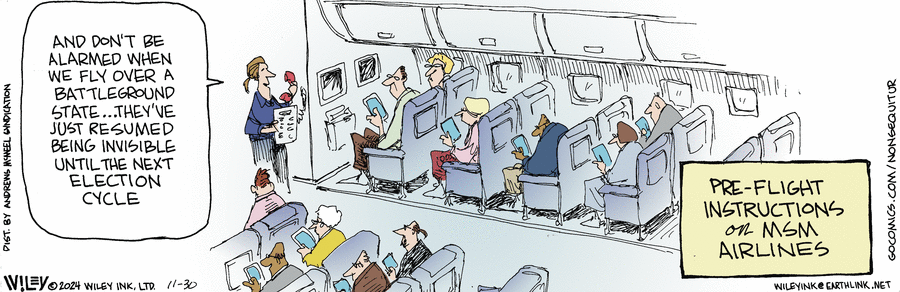


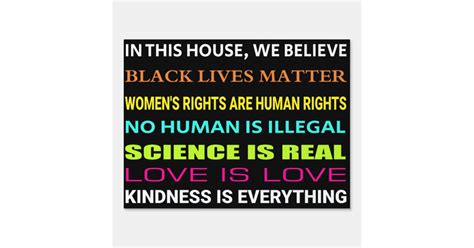
 Tipsy Teetotaler ن