Feast of Prophet Elijah

Culture

“Mixed heritage” versus “mixed race”

I have an extraordinary acquaintance on social media whose skin is dark, whereas his wife’s is light. It’s the things he does, and his unusual heritage, that makes him extraordinary. But he also thinks a lot about “race” because of how he and his daughter get categorized.

His daughter is also light-skinned, and was categorized as “white” a few days ago in a class where basically everyone else was a POC (as they say) and they “decided to lean hard into race being about physical characteristics, basically how people look, rather than even addressing the even slightly less dicey definition of shared ancestry.” The story has started a little social media discussion.

In the course, my acquaintance drew a distinction that I’d not heard before:

The main thing to understand is that race is a completely made up construct with no basis in scientific method (with the many, many, outliers like my daughter as proof of that). [So far, so familiar.]

Heritage is scientifically inescapable as it is based on who your direct ancestors are.

This is why I’m careful to say [my daughter] is of “mixed heritage” and not “mixed race”. Because, no one is of “mixed race” because race is based solely on looks and looks are a matter of individual perception.

If I ruled the world, “race” would be banished in favor of “heritage.” It seems like a helpful mind-hack.

Viva la difference!

Japan is very Japanese, intentionally so. You rarely see foreigners here beyond a few Filipinos and Bangladeshis. This annoys the economist technocrat types, sometimes for moral reasons, but mostly for pragmatic reasons. They see immigration, and open borders, as necessary for economic growth, which they view as the only goal for a country. A place must grow, change, and evolve, or else it’s a failure. Or to put it in the words of the economic development IMF types, every country should adopt the US western model of open borders, labor and pension reform, global treaties, and free markets, etc etc etc.

Japan, of all the G7 members, has stubbornly refused to do much of this, from the smaller things like eating whale to the larger things like increasing immigration, especially when it comes to any policy that could corrupt or dilute its culture.

So the technocrat/policy types look at Japan’s last few decades of relative economic stagnation as a failure, while the Japanese just shrug it off and chalk it up to one of the costs of maintaining their cultural identity. Something I intellectually respect, even if it’s not for me. A national identity, through a shared and specialized culture, is one of the easiest webs of meaning to construct, that works for the largest number of citizens, and in a largely secular place like Japan, certainly helps add to its functionality. To it being a high trust society.

That model of “maintaining Japan for the Japanese” might work for Japan, but that doesn’t mean I’m suggesting it would be good for the US. Immigration is central to the US’s last remaining shared web of meaning, which is what we generally call the American Dream. The idea that anybody, with enough hard work, can be successful, without having to break the rules. That someone can come to the US from literally anywhere, with nothing, and build a life for their kids that’s better than their own.

In contrast to Japan, cultural change rather than preservation is our national model, and entrepreneurialism is our national identity. So much so that we have made it a transcendent and spiritual ethos, even though it’s grounded in the material. A nationalism built around a kind of prosperity theology — which is inclusive of different peoples and cultures, as long as they buy into the concept of aspirational wealth.

Chris Arnade, Walking across Japan, part 2: A retreat to Niigata.

I could do with a bit more Japan in my life, figuratively speaking. I’ll never move, and it would not be to the far east if I did. I’m not opposed to (controlled) immigration even at a fairly expansive rate. But the dynamism, the churn, of American modernity I find pretty uncongenial much of the time.

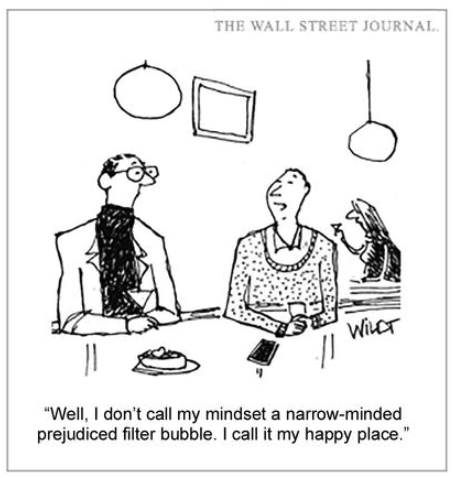
Self-induced flatness?

Most consumers don’t know that by using internet-based (or -generated) platforms—by buying from Amazon, by staying in an Airbnb, by ordering on Grubhub, by friending people on Facebook—that they are subscribing to a life of flatness, one that can lead directly into certain politics. But they are. Seduced by convenience, we end up paying for the flattening of our own lives. It is not an accident that progressive ideas spread faster on the internet. The internet is a car that runs on flatness; progressive politics—unlike either conservatism or liberalism—are flatness.

Alana Newhouse, Everything is Broken

Happy places

In a previous life, Jamie was a MacBook-using, flat white-sipping hipster photographer from east London, growing slowly disillusioned with the pressure and precarity of the city’s gentrification. Then, one day, while hungover at a music festival, she stumbled upon a sauna. “I came out of the sauna into nature and plunged into a cold lake and was reborn,” she says.

Months later, Jamie left London, moved to Sussex and set up her first sauna venture. After just five years, she’s flourishing: “I’ve created a really beautiful life for myself. I live on the beach, I work in a forest, I run my own business. I’m doing work that feels purposeful and impactful.”

Louis Elton, The dawn of the Bohemian Peasants
Tech

Technological downsides

[T]he tendency to disorder [is] greatest when social arrangements are both increasingly complicated, and increasingly unnatural. Hackers couldn’t have kept our ancestors from building cooking fires, but it is very difficult to keep them from knocking out the electrical grid.

J Budziszewski

ChatGPT scholarship

I’ve written before about the ways that ChatGPT and the like are revealing the unimaginative, mechanical nature of so many assignments we college teachers create and administer. In that post I wrote, “If an AI can write it, and an AI can read it and respond to it, then does it need to be done at all?“ Might we not ask the same question about our research, so much of which is produced simply because publish-or-perish demands it, not because of any value it has either to its authors or its readers (if it has any readers)?

Countless times in my career I have heard people talk about their need to publish research — to get tenure or promotion — in an AI-like pattern-matching mode: What sort of thing is getting published these days? What terms and concepts are predominantly featured? What previous scholarship is most often cited? And once they answer those questions, they generate the appropriate “content” and then fit it into one of the very few predetermined structures of academic writing. And isn’t all this a perfect illustration of a bullshit job?

Yes, I’m worried about what AI will do to academic life — but I also see the possibility of our having to face the ways in which our work, as students, teachers, and researchers, has become mechanistic and dehumanizing. And if we can honestly acknowledge the conditions, then maybe we can do something better.

Alan Jacobs, noting another facet to Dan Cohen’s concerns about AI in scholarship.

Jacobs’ path requires reflection and painful course-correction, so I reckon we’ll use AI to fight AI — the usual layering of a technical solution on top of a technology-induced problem.

Until it all breaks.

Legalia

The Lawless GOP Law-Enforcers

I had forgotten that the Republican Attorneys General Association sent robocalls asking people to join a certain rally on January 6, 2021. Hindsight shows this to have been a bad idea.

But foresight would have done the same: what legitimate interest did Republican Attorneys General have in turning out throngs of deluded populists for a rally in support of the idea that Donald Trump had won the election he’d lost two months earlier? Much worse came of it than expected, but no sane person would have expected any good of it.

They should have been supporting the rule of law, not becoming violence-enabling political hacks.

Aim at fat-cats, hit do-gooders

My colleagues at the Competitive Enterprise Institute (where I am a writer in residence) are taking the lead in what will be, almost certainly, the most significant case the Supreme Court hears in its next term: Moore v. United States. (Do not confuse it with the surveillance case of the same name.) Like many such cases, this one really involves, at heart, very little more than the question of whether the Constitution says what it actually says or whether the government can, citing needful exigencies, simply pretend that the Constitution says whatever the powers that be in Washington decide it needs to say on any given day.

Charles and Kathleen Moore invested in a social enterprise in India, KisanKraft Machine Tools Private Limited, which helps Indian farmers in poor and underdeveloped areas improve their businesses—and their lives—by acquiring more modern equipment. KisanKraft now employs hundreds of people in India and has helped a great many marginal farmers—and their families and communities—improve their economic situations by means of their own work and enterprise, not as clients of some political patron or as dependents on some charitable program. (The next time someone tells you free-market economics is for people who care only about themselves … ) KisanKraft is one of those businesses that exists to make a difference rather than a profit, and, for that reason, it reinvests all of its earnings into the business itself. The Moores have never received a penny of income from their investment in the firm, never expected to, and, barring some unforeseeable development, never will. 

But, thanks to the special kind of imbecility that can be produced only by the intellectual fusion of Donald Trump with Elizabeth Warren, the Moores have been given a tax bill not for any income they have realized from their investment—of which there is $0.00—but for imaginary income. KisanKraft could have paid out dividends to its investors, who would then have investment income to pay taxes on. But KisanKraft did not do that. Donald Trump, who has the resume of a villain from an unpublished Ayn Rand novel—second-rater, inherited money, serial business failure, corrupt, seething with hatred for people who succeed in the businesses he failed at—has spent years railing at American investors and businesses with the unpatriotic gall to invest in overseas businesses (that are not golf courses), and in 2017 congressional Republicans, caught up in that unsavory nationalist-populist moment, produced the grievously misnamed Tax Cuts and Jobs Act, which imposed a “one time” (“It’s only this once, we promise!”) tax on unrealized overseas investment income, simply “deeming” profits to have been realized and repatriated for tax purposes. It was one of the dumbest policy ideas of a remarkably dumb era. Of course, it was supposed to wring money out of the scheming shifty corporate “fat cats” who populate the fever dreams of well-heeled Washington populists. 

Of course, it landed on people like the Moores.

Kevin D. Williamson

Early precedent for 303 Creative

Creative artists refusing to create works that violate their conscience is nothing new. Consider, for instance, the Roman Emperor Diocletian:

… the last glimpse that we have of his personal life is his irritation at the refusal of his Christian stone-masons to make him a statue of Æsculapius.

Rebecca West, Black Lamb & Grey Falcon, (Kindle Location 3520).

Sex and gender

Sanity or a ban?

I don’t want to ban any medical procedure. It may be that in a few cases, transition will help at such a young age. But recommending them as a general rule, the minute a child says they’re the opposite sex, without exploration of other possible mental health issues? Reckless beyond belief. That has got to stop. Someone has to protect the children, especially the gay ones, who cannot protect themselves.

Andrew Sullivan. This is the concluding paragraph of a too-long-to-fully-quote item on the continuing scandal of the American medical establishment using junk science or made-up science to support mutilating gender dysphoric children as the first treatment option.

Shmocial Shmontagion

[N]early forty percent of Brown’s student body identifies as “not straight,” which is five times the national average. To be fair, the definition of “not straight” ranges these days from being in a same-sex relationship—which somehow rings very traditional now, very problematic, very “there’s only one sex allowed in this relationship”—to having an edgy haircut. There are two options for what’s going on here. The first is that Alex Jones was right, that our drinking water is screwing with our hormones, and that indeed everyone is becoming gay from it. The second rhymes with Shmocial Shmontagion.

Suzy Weiss, The Free Press


We are in the grip of a grim, despairing rebellion against reality that imagines itself to be the engine of moral progress.

R.R. Reno

The end of the world as we know it is not the end of the world.

You can read most of my more impromptu stuff here (cathartic venting) and here (the only social medium I frequent, because people there are quirky, pleasant and real). Both should work in your RSS aggregator, like Feedly or Reeder, should you want to make a habit of it. I’m even playing around a bit here, but uncertain whether I’ll persist.
Saturday, 7/15/23

I forewent a provocative headline and lead paragraph.

You’re welcome.

Culture

Peter Coy brings the receipts

I haven’t harped about this because I didn’t have facts and figures. But the New York Times’ Peter Coy has now provided them (and it’s important enough that I’m giving you a link that pierces the paywall):

  • The amount of lithium, cobalt, manganese, nickel, graphite and other lithium-ion battery materials needed for one long-range electric vehicle would be enough for either six plug-in hybrids or 90 of the type of hybrid that recharges from deceleration and braking.
  • The overall carbon reduction of those 90 hybrids over their lifetimes is 37 times as much as a single battery electric vehicle.
  • The production of electric vehicles produces more greenhouse gases than the production of cars with combustion engines. So E.V.s have to travel between 28,000 and 68,000 miles before they have an emissions advantage over similarly sized and equipped internal-combustion mobiles.

All-electric vehicles are presently a gigantic flim-flam, and considering that third point, they’re going to remain a flim-flam for quite a long time. (Does an EV even get 68,000+ miles before those big honkin’ batteries need replaced?)

The plug-in hybrids have appealed to me, but I’ve got to get over that and to stop feeling like a criminal for (currently) not even driving a conventional hybrid, but a full-blown internal-combustion vehicle. (I’d have bought my second hybrid if they offered one on this model.)

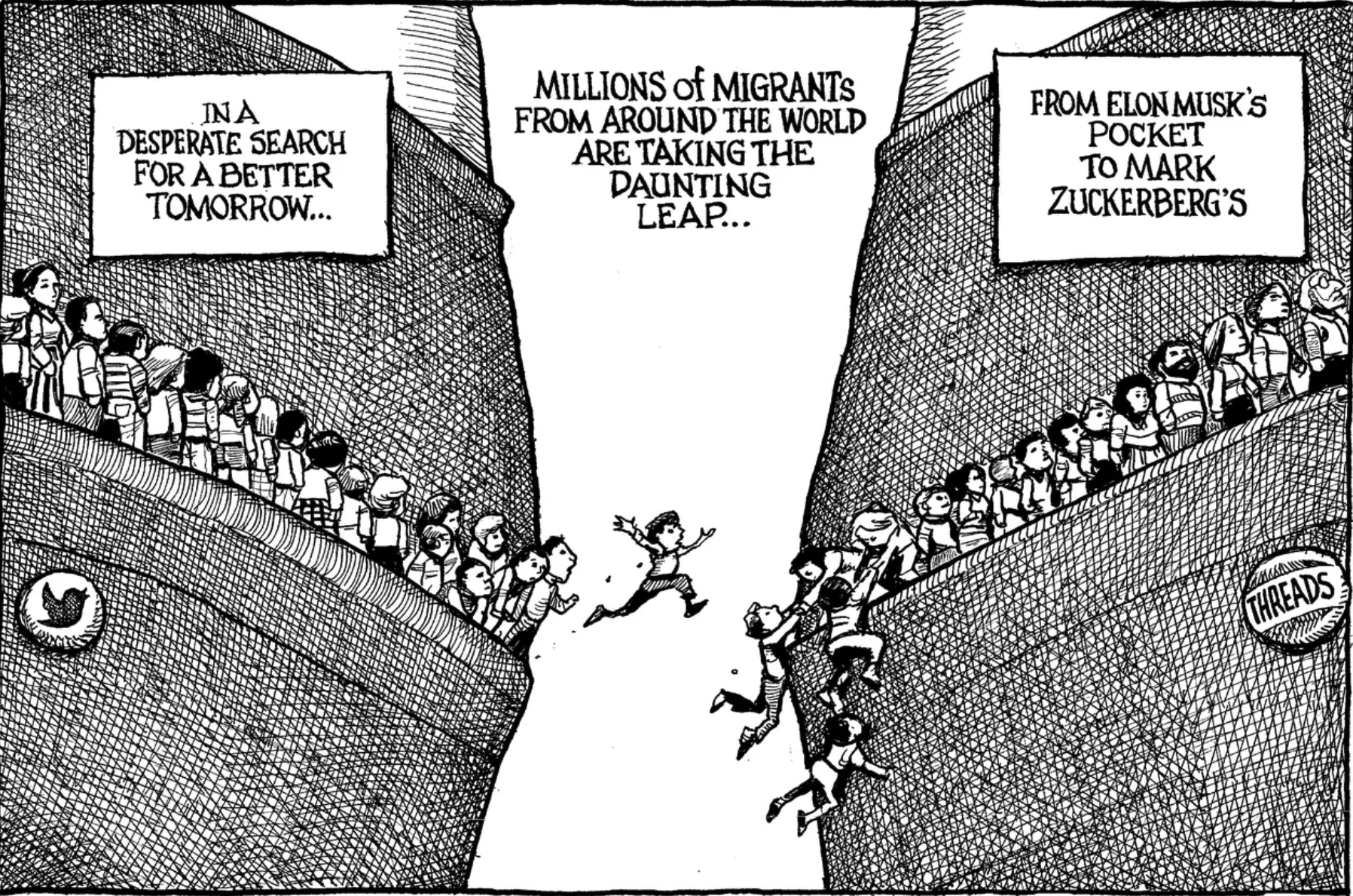
EVs are a kind of social contagion, heavily subsidized by the federal government, which really needs to cut it out.

This is one reason I have almost as little respect for Elon Musk as I do for He Who Shall Not Be Named (another guy who got more-or-less rich dishonorably).

From the July 15 Economist

Pangloss makes the case for AI

Mark Andreesen, giving the Panglossian version of AI, lost me early on at the patently bullshitty “infinitely patient, infinitely compassionate, infinitely knowledgeable, and infinitely helpful.” He reminds me of George Burns: “Sincerity – if you can fake that, you’ve got it made.” Because all those AI virtues are fakes.

I was hoping for something better, because I think there’s a better case available. In fact, I know there’s a better case to be made because I heard it made on a podcast Tuesday on the Ezra Klein show.

Freedom

Aunt Concetta told me that she didn’t like life in America because we had no freedom. That comment baffled me because, like everyone else my age, I believed that America was the land of the free and the home of the brave. But she pulled me up short. “Your grandmother,” she said, “is afraid to walk down the main street at night.”

… That little conversation, more than anything I have read about political life, has put an indelible mark on my thinking about freedom. I have long rejected any view that reduces liberty to the results of a constitutional mechanism, or that identifies liberty with suffrage, or that defines liberty as a negative, as what the government may not tell you that you may not do.

… I think I can venture a suggestion as to gauging the degree of real freedom that a nation, or perhaps your town or your street, enjoys. It is the degree and the character of spontaneous, unencumbered, and undirected action on the street.

Anthony Esolen

I kinda sorta feel for Tommy Tuberville

Terms like “white nationalist” mean something: White nationalism is a form of white supremacy that advocates white dominance and white control. You don’t have to take my word for it, you can look it up. (On Tuesday, Tuberville admitted that white nationalists are racists.)

I don’t normally read Charles Blow, but this time, I read a little bit, including the block-quote, because The Morning Dispatch had called out Tuberville teasingly the day before:

It took him about two months and several botched attempts, but a hearty congratulations to GOP Sen. Tommy Tuberville of Alabama for finally saying these words in this order: “White nationalists are racists.”

I remember in law school insisting that I was a creationist. I said that because I believed that this stuff all around us, out to the furthest reaches of our telescopes, were the result of a divine creation, not an accident or the outworking of eternally-existent matter and energy. Someone pointed out that what I meant, though, was not what creationism had come to mean as a term of art. Creationism had come to mean divine creation roughly 6000 to 10,000 years ago, fixed species, etc.

“White Nationalist” has never been a term I’d apply to myself; first, because race is truly (if not exclusively, in our vexed history) a pigment of the imagination; second, because nationalism holds little to no appeal for me. But it appeared to me to mean “nationalism professed by a pale person,” and its journalistic use to be more epithet than description.

Maybe Tommy Tuberville thought as I did, and that’s why he pushed back so. But Blow cites Merriam-Webster for a term-of-art meaning that implies racist white supremacy.

I still stand by the epithet point, and believe that the term is not yet univocally racist. But sensible people, aware of its equivocal meaning, will steer clear of it.

Paris

Many people who love Paris love it because the first time they came they ate something better than they had ever eaten before, and kept coming back to eat it again.

Adam Gopnik, [The Table Comes First(https://www.amazon.com/Table-Comes-First-Family-Meaning-ebook/dp/B004KPM1EY/ref=sr_1_1)

I find that very plausible.

Legalia

FINALLY someone else says it (and better than I)

The nature of expressive, creative work is also such that consumers would not ordinarily wish to risk the quality of the product or service by conscripting a reluctant vendor to create messages that contradict the vendor’s sincere personal beliefs.

Abram Pafford, “You Couldn’t Pay Me to Say That”: 303 Creative and Compelled Commercial Speech.

303 Creative was a well-warranted pre-enforcement challenge based on the proposition that Colorado’s public accommodations law was unconstitutional as applied to plaintiff’s refusal of website design for same-sex weddings. Colorado never challenged the owner’s standing, and even stipulated the facts that eventually blew a little hole in the hull of its law (which remains resolutely afloat).

Even today, pre-enforcement challenges are pending to, notably, some of the new restrictive abortion laws some states have passed, and to state bans on transgender care for minors. The Left is happy as can be with decades of pre-enforcement challenges like these — of which the Left has been the primary beneficiary. I don’t recall Right-leaning pre-enforcement challenges, other than against college speech codes, until the Obama years.

Not until after Colorado had lost did its Attorney General start joining the ignorant “fake case” chorus.

But in a sense, 303 Creative was a “fake case” — or at least an “engineered case”: the sense that in the real world, untainted by polarization and the insatiable desire of LGBTetc folks for universal affirmation, as if their sexuality were constitutional high trump, such cases would not be brought because — well, see the block quote. That’s why I put it there.

What should happen now is clear enough to me: states should disavow application of their public accommodation laws to creative professionals’ rare refusals to aid in expressing an objectionable message — with the creative professional being the sole judge of “objectionable.”

And I’ll reiterate that the key here is the right of the service provider to be free of compulsion to express sentiments they in fact disapprove. It would apply as much to, say, a Jewish graphic designer declining to work on BDS advocacy as to conservative Christians (and others) declining work on same-sex weddings. I sincerely doubt that Colorado would punish that Jewish graphic designer; this is about forcing Christians to bend the knee to the new sexual orthodoxies.

(It’s surprising how easy it is to mis-state what’s at stake here. This little item took far more time than I expected. I probably should cut some slack to those who make a living minting hot takes on complex topics for siloed readerships and who get sloppy in the process.)

Non-partisan politics

Smoke-filled rooms

I miss smoke-filled rooms.

Not the literal ones, but the ones that brought forth sane and competitive candidates back in the day.

Today, primary voters — often the most extreme members of a party — deliver us unpalatable candidates, with the only gesture toward electability being “will he be perceived as less bad than the other party’s guy?”

Yes, I’m thinking specifically of the likely nomination of Donald Trump by the GOP. But I’m not thinking exclusively of that. Hillary in 2016 is also an example.

Our Unaccountable TechLords

At almost every gathering artificial intelligence came up. I’d say people are approaching AI with a free floating dread leavened by a pragmatic commitment to make the best of it, see what it can do to make life better. It can’t be stopped any more than you can stop the tide. There’s a sense of, “It may break cancer’s deepest codes,” combined with, “It may turn on us and get us nuked.”

My offered thought: AI’s founders, funders and promoters made a big recent show of asking Congress to help them fashion moral guardrails, but to my mind there was little comfort in it. I think they had three motives. First, to be seen as humble and morally serious—aware of the complexities of this awesome new power and asking for help in thinking them through. Second, they are certain government is too incompetent and stupid to slow them down or impede them in any meaningful way, so why not. Third, when something goes wrong they can say, “But we pleaded for your help!”

That unfriendly read is based on 30 years of observing our tech leaders. They have a sense of responsibility to their vision and to their own genius, but not to people at large or the American people in particular. They always claim they’re looking for better communication and greater joy between peoples when in the end it turns out they’re looking for money and power. And they only see the sunny side of their inventions because they were raised in a sunny age, and can’t imagine what darkness looks like, or that it comes.

Peggy Noonan

My skewed perspective

There are too many sensible people writing critically and even bitterly about the government’s Covid pandemic (or is “epidemic” sufficient?) response for me to assume it just partisan politics. But I confess that something about having retired before Covidtide seems to make me largely insensible to the outrage many feel about the government response.

I even joked that “I’m an introvert; social distancing is almost my default.”

So pardon me for not joining the chorus. If I’m consistent, though, I won’t join government’s defenders, either.

But I will make this observation: during the putative lockdowns, our lowest-paid, lowest-status workers had to go ahead and work in “meatspace,” risking infection. They are our truly indispensable workers, and many of them should be paid far better than they are.

Gaming the fat-cat system

The Republican National Committee has set a threshold of 40,000 individual donors, including 200 each in 20 states or territories, to qualify for primary debates. This is supposed to assure broad support and (they say) block candidates with mostly fat-cat donors.

So, how long did it take for candidates to game that system?

So how about using fat-cat donations to buy $20 gift cards for anyone who gives $1? You can buy a lot of $1 gifts if you’re offering an instant 1900% ROI.

(David A. Graham, We’re Entering a New Era of Shady Campaign Finance)


We are in the grip of a grim, despairing rebellion against reality that imagines itself to be the engine of moral progress.

R.R. Reno

The end of the world as we know it is not the end of the world.

You can read most of my more impromptu stuff here (cathartic venting) and here (the only social medium I frequent, because people there are quirky, pleasant and real). Both should work in your RSS aggregator, like Feedly or Reeder, should you want to make a habit of it. I’m even playing around a bit here, but uncertain whether I’ll persist.
Thursday, 1/5/23

Culture

Words to live by

The larger point is that a rich and satisfying life involves checking a lot of boxes, not checking the same box over and over again until the combination of the ink and the pressure punches through the paper of your checklist. Moreover, some of these boxes require subordinating yourself to something greater than yourself. Virtually all meaningful institutions demand some sacrifice of yourself and your immediate wants to the greater good of the institution. The family is the first and most obvious example of this. You can’t be a good father or husband, mother or wife, if you expect your family to always put your needs first.

Jonah Goldberg, Something Short of Tragic

Why not wait and see if the odds are with you?

The best estimate, from studies starting in the 1970s, is that around 80% of gender-dysphoric children who are allowed to express themselves as they wish, but who do not socially transition—change their clothes, pronouns and the like to present as members of the opposite sex—will, as they grow up, become reconciled to their biological sex. Yet puberty blockers seem to prevent that reconciliation. In European clinics that report numbers, it happens with just 2-4% of children given the drugs. American clinics rarely publish figures, but anecdotally the picture is similar.

The Economist, Gender Medicine — Little Is Known About the Effects of Puberty Blockers. So far as I know, this is still true almost two years later, but the U.S. was charting its own ideologically-mad pursuit of a standard of care that said “block puberty at a minimum, no questions asked,” unlike any of our peer nations.

Self-own extraordinnaire.

I had no idea who Andrew Tate was, that he had a stable of cars, that he trolls Greta Thunberg, and that he now holds the world record for a self-own. But then someone shared this: Andrew Tate’s Arrested for Human Trafficking After Trolling Greta Thunberg.

What Purdue did in the Daniels Decade

We stood for excellence at scale. We did not accept that there’s a tradeoff when bringing education to more people – the original assignment of land grant universities like ours, to open the doors, widen the aperture to higher education. Many people, with some cause, said, Well, the bigger you grow, the lower the quality of the students you’ll have. Many of them will not succeed. We’ve challenged that. And in fact, we have grown 30%. The quality of our students, their performance, the graduation rates, everything has gone up, not down. As my successor will be happy to tell you, we’ve grown to one of the biggest engineering colleges anywhere. And at No. 4 in the national rankings, we are bigger than the top three put together. So you don’t have to trade that off, and I think we’re demonstrating that.

We said that in a world where outcomes are more and more determined by technology and science and the advance of those disciplines that we had an unusual opportunity, and very much a duty, to deliver to the nation more graduates skilled in those areas and more research that contributed the advanced knowledge in those areas. Ten years ago, 41% of the students at this university were in a STEM discipline – a high percentage. Today, it’s 68%, of a student body that is 30% bigger. We are producing for this nation, the kind of talents on which our future success so heavily depends.

Now former Purdue University President Mitch Daniels, via Based in Lafayette, a Substack that’s indispensible for local news as the local Gannett newspaper struggles.

I have my reservations about big research universities, but Purdue, and land-grant University, is a pretty good neighbor.

An Englishman on American Football

I see American Football as the sport that’s the obvious creation of a society based around hyperconsumption. It’s only about a dozen minutes of actual stuttering play stuffed into this capitalist packaging of hype and image, coming with hundreds of adverts for products you weren’t interested in and drowning in a wealth of the packing chips of instant replays and shots of players and officials loitering. I just can’t see the appeal.

Alastair Roberts He said that almost seven years ago. It wasn’t a prophecy of injuries or fatalities, but the appeal of the American spectacle should, but probably won’t, diminish after the Damar Hamlin cardiac arrest on field, triggered by the kind of hits fans pay to see. I’m skeptical that technology can make safe a game based on large people crashing into each other at high speed.

American Football eclipsed by World Football/Soccer is one of my hopes for progress.

David French to wed the grey lady

All things considered, I’m content.

David French will become a regular columnist for the New York Times on January 30 and will cease being a regular columnist for The Dispatch, which he helped to found. But (whew!) he’ll continue doing the Advisory Opinions podcast with Sara Isgur. That’s what mattered most to me.

And I subscribe to NYT, so I’ll read his relocated columns, too.

Maybe The Dispatch should try to wrest Michael Brendan Dougherty or Daniel McCarthy away from National Review now.

The Alzheimer’s Streetlight Effect

There’s an old joke about a drunk who lost his keys. It even has given a name to a cognitive error: The Streetlight effect.

I’m reminded again that it’s not always funny, as when scientists pursue theories that have been pretty well disproven, such as amaloid plaques as the cause of Alzheimer’s, simply because that’s where the grant money is.

On the other hand, that does tend to prove that scientists and humans, not gods, and as prone to venality as any preacher who tells his people what they want to hear instead of what they need to hear.

British Mysteries

The Missus and I have been enjoying British mysteries on the BritBox streaming service, but we’ve reached the point where we agree that the writers riffing on G.K. Chesterton’s Father Brown, likely British secularists if not neo-pagans, have no idea what makes the protagonist Father Brown (beyond routinely telling the murderer to repent and confess to the police). The stock characters are no longer enough to sustain our interest.

They also have become less imaginative, more graphic (e.g., profuse blood flying in a knockout punch), and more sexual, the sort of pattern that turned us off other mysteries with attractive protagonists (like the Midsomer Murders).

Then, of course, there’s The Hidden Cost of Cheap TVs, too, but that’s been fairly obvious for a long time.

Stage Manager

My latest Mac OS update brought with it an annoying intruder named "Stage Manager," who keeps getting in the way of my own stage management.

I learned how to shut him off today, and now I find that I occasionally want him back on. In other words, he’s not all bad.

This is probably just me being a grumpy old man.

Politics (but smarter and less bitter than in the past)

GOP New Years Resolution: Live Not By Lies

I doubt that serial liar and fabulist George Santo deserves as much attention as he’s gotten, but at least it’s all been negative. He seems to be his only apologist.

Yet nobody with power to do anything is proposing to do it. Here’s an idea for them:

Kicking George Santos out of Congress is a job for the people of Long Island, one that they can do for themselves if they should happen to discover some particle of communal self-respect. But there are things that Republicans in Congress could and should do to set an example here: They could and should refuse to give him committee assignments; they could and should vote to censure him; they could and should expel him from the Republican Party. …

If the Republican Party would like to make a desperately needed New Year’s resolution, it should be this: that the GOP will cease being an organization dedicated to lies, based on lies, trafficking in lies, cultivating lies, and strategically reliant on lies. The Republicans should embark on a very modest course of self-improvement that begins with telling the truth. Of course, such a specimen as George Santos would have no place in such a party.

Neither would Donald Trump, Kevin McCarthy, Newt Gingrich, Sean Hannity, Ted Cruz, Marco Rubio, Marjorie Taylor Greene, Lauren Boebert, Mike Pence ….

Rachael Larimore

Is Trump now a moderate?

For the first time as a candidate, Trump might not be “the craziest son of a b-tch in the race.” That phrase comes from a memorable interview Rep. Thomas Massie gave in 2017 explaining why so many Ron Paul voters in the 2012 primaries ended up becoming Donald Trump supporters in 2016. An authoritarian candidate should struggle to attract libertarians, but Trump didn’t. Massie knew why.

“I went to Iowa twice and came back with [Ron Paul]. I was with him at every event for the last three days in Iowa,” Massie said. “From what I observed, not just in Iowa but also in Kentucky, up close with individuals, was that the people that voted for me in Kentucky, and the people who had voted for Rand Paul in Iowa several years before, were now voting for Trump. In fact, the people that voted for Rand in a primary in Kentucky were preferring Trump.”

“All this time,” Massie explained, “I thought they were voting for libertarian Republicans. But after some soul searching I realized when they voted for Rand and Ron and me in these primaries, they weren’t voting for libertarian ideas — they were voting for the craziest son of a b-tch in the race. And Donald Trump won best in class, as we had up until he came along.”

Nick Cattogio

What Everybody Knows

[E]ven if American institutions and rules make the U.S. system more unstable (under certain conditions) than those in other democracies, the events of January 6 depended on the introduction of an additional variable as a catalyst—and that is Donald Trump’s narcissism and malevolence. Trump simply couldn’t face his own loss—or rather, he couldn’t face admitting his own loss in public—and avoiding that humiliation was more important to him even than the fate of American self-government. If getting himself declared the winner required overturning the rule of law and liberal democracy in the United States, that was fine with him.

[A] number of prominent GOP candidates were extreme, badly informed, personally unappealing, and wildly inarticulate, and so performed poorly in the midterm’s general election contests. But how did these bum candidates end up competing in general elections in the first place? The answer, obviously, is that Republican voters chose them (often at Trump’s urging).

And that means it isn’t just Trump who’s responsible for January 6. It’s also all the voters who ended up doubting the trustworthiness of America’s electoral institutions across the board while simultaneously placing the entirety of their faith in the hands of a verified con artist out to protect his delicate ego from the painful truth of his failure to win an election.

It’s this consideration, among others, that keeps me from joining The Bulwark’s Jonathan Last in reversing position on the question of whether Trump should be prosecuted. Where Last has come around to the view that prosecution may well be the least-bad option, I continue to believe it would be less bad to allow Trump to continue fading in stature than to risk reviving his reputation among the mob of dittoheads who once revered him by turning him into an outlaw/folk-hero locked in a fight to the figurative death with the “Democrat Justice Department.”

Damon Linker, What Everybody Knows

Blaming the victim without regret

Even on issues where I am nominally on his side, I think he deserves all of the trouble he has invited upon himself …

I do not think Congress should make his tax returns public because I think punitively releasing tax returns is a bad practice, even when done against people I think have it coming.

Donald Trump lied over and over again about his tax returns. He said he’d release them, then didn’t, claiming he couldn’t because he was being audited. He probably lied about the audit; he certainly lied that being audited prevented him from releasing them. He broke all sorts of rules—admittedly informal rules, but rules nonetheless—and as we’ve seen over and over again, when one “side” breaks the rules, it gives the other “side” psychological permission to break other rules in response. Trump invited the predicament he’s in. He wants the rules to benefit him, never to bind him.

Jonah Goldberg, Something Short of Tragic

Congress and Trump’s Tax Returns

The actual point of the release is to embarrass Mr. Trump for refusing to release his returns. We criticized him for this, but it isn’t a legal requirement. Democrats needed a legislative purpose to pry private records from the IRS, and the best excuse they could manage was a desire to strengthen the agency’s presidential-audit policy. The weakness of that rationale was laid bare at the Dec. 20 meeting when Ways and Means approved the release.

Karen McAfee, Democrats’ top oversight staffer, couldn’t explain how releasing the returns would affect legislation. Pressed by GOP Rep. Kevin Brady, she sputtered that Democrats want a bill “to make sure that the audits start on time.” No word on how speeding up audits requires broadcasting Mr. Trump’s finances to the world.

The Trump Tax Return Precedent

Here’s another instance where someone did something unjust to Trump, but at the same time it’s true that he brought it on himself.

I doubt we’re heard the last of this. Trumpist Republicans will want payback, and they’ll not have trouble finding allies.

Just Desserts

McCarthy is getting exactly what he deserves. After January 6, he failed to lead. Instead, he swallowed what was left of his pride and traveled down to Mar-a-Lago to make amends with Donald Trump.

Yet he’s not being punished for that grotesque capitulation. Instead he’s facing yet another act of “burn it down” disruption from many of the same figures—including Matt Gaetz, Paul Gosar, and Lauren Boebert—who’ve built their entire brands around trolling, rage, and rebellion.

It’s possible that GOP obstruction will yield a better speaker. One can hope. But a hope is not a plan, and it seems that the “plan” is to simply block McCarthy and see what happens.

While I don’t want to intrude too much on Nick’s populism beat, one of the tragedies of our time is that populists can often diagnose real maladies (elites have failed in many respects, and America faces real problems), yet they often decide to “solve” the problem with something  worse ….

David French

To hell with that

Wren: To hell with what?

Meijer: With the idea of running at this moment [against other Trumpist candidates]. What is required from a purity test standpoint — folks know they need his endorsement, and then what they end up doing to get that endorsement ends up being disqualifying.

Wren: This dynamic played out with your Republican primary opponent, John Gibbs, the far-right conspiracy theorist who criticized women’s right to vote and propagated the idea that Hillary Clinton campaign chairman John Podesta participated in satanic rituals. Yet you went to a unity rally with him. That surprised me.

Meijer: I was surprised at the media reaction to that. In my mind, not going to something like that is a sore loser move. The least I can do is wish him congratulations and best of luck. It’s funny there were a lot of kind of anti-Trump and Never Trump folks who trashed me for that. I was like, “Oh, do you want me to act the same way [Trump] did? Do you want me to deny that I lost? Do you want me to be a sore loser? Come on.”

Former Congressman Pete Meijer

Senator Sinema’s Independent prattling

… we are united in our … independence.

Kyrsten Sinema, putative Independent, via Lee Drutman, Kyrsten Sinema and the Myth of Political Independence

I fear that her personal declaration of independence will be the electoral kiss of death, as it was with another interesting political figure, Justin Amash.

Closing thought

Life doesn’t come with a trigger warning.

Poet/Activist Pádraig Ó Tuama, Interview with Krista Tippett


You can read most of my more impromptu stuff here (cathartic venting) and here (the only social medium I frequent, because people there are quirky, pleasant and real). Both should work in your RSS aggregator, like Feedly or Reeder, should you want to make a habit of it.

Hobbit Day 2022

I have it on reasonably good authority that today is Hobbit Day, and it turns out that Peter Jackson isn’t the only one to cash in on Hobbits.

Culture

How the Bobos Broke America — key excerpt

I tend to quote a lot of things without comment, but I’m going to say that the following strikes me as true, and so contrary to the recent history of the Democrat and Republican parties that it’s core to why I believe a major realignment is underway. Today’s Republican party is not the same Republican party I left in January 2005. For my taste, it’s worse, but that taste almost certainly is tainted by Orange Man. But I gradually came to see his appeal:

What causes psychic crisis are the whiffs of “smarter than” and “more enlightened than” and “more tolerant than” that the creative class gives off. People who feel that they have been rendered invisible will do anything to make themselves visible; people who feel humiliated will avenge their humiliation. Donald Trump didn’t win in 2016 because he had a fantastic health-care plan. He won because he made the white working class feel heard.

How the Bobos Broke America.

There’s no need to hold a pity party for me, but I’ve spent most of my life too Christian and too socially awkward to be comfortable with social elites, too elite to feel instinctively empathetic or entirely comfortable with the working class.

How unreality spreads

Wrong beliefs and wrong perceptions are contagious whether or not they are sincere, because dissidents tend to self-censor and act like believers. That is how entire societies, such as the Soviet Union, can be built on everyone’s publicly pretending to believe what many privately know to be false.

Jonathan Rauch, Echo Chambers and Confirmation Loops in The Constitution of Knowledge.

I think this has some contemporary relevance. I’ll say no more.

National Conservatism could be a boon for religious liberty lawyers

Here’s the national conservatism “Statement of Principles” on God and public religion, signed by dozens of leaders of the national conservatism movement:

No nation can long endure without humility and gratitude before God and fear of his judgment that are found in authentic religious tradition. For millennia, the Bible has been our surest guide, nourishing a fitting orientation toward God, to the political traditions of the nation, to public morals, to the defense of the weak, and to the recognition of things rightly regarded as sacred. The Bible should be read as the first among the sources of a shared Western civilization in schools and universities, and as the rightful inheritance of believers and non-believers alike. Where a Christian majority exists, public life should be rooted in Christianity and its moral vision, which should be honored by the state and other institutions both public and private. At the same time, Jews and other religious minorities are to be protected in the observance of their own traditions, in the free governance of their communal institutions, and in all matters pertaining to the rearing and education of their children. Adult individuals should be protected from religious or ideological coercion in their private lives and in their homes. (Emphasis added.)

This paragraph describes a form of religious supremacy that relegates dissenting religious believers to the “private” sphere, while granting Christianity a position of powerful public privilege.

But we shouldn’t fool ourselves into believing that the “moral vision” of the signatories broadly reflects the diversity of Christian belief and practice in the United States. After all, there are churches that host drag queen events, as well as churches that condemn drag queens. Both the Democratic and Republican parties are completely dependent on their Bible-believing, church-going base constituencies (white Evangelicals for Republicans and Black Protestants for Democrats).

Are national conservatives thus satisfied when either party wins, so long as a Christian (Joe Biden, for example) is at the helm?

Of course not. For the term “moral vision” to mean anything, it has to mean a particular version of professed Christian belief and practice.

David French

A polity that "relegates dissenting religious believers to the “private” sphere, while granting [a form of putative] Christianity a position of powerful public privilege" is inconsistent with current Supreme Court thinking, and I don’t think Trump’s nominees change that.

When did modernity begin?

For us, the real Middle Ages extend from the reign of Charlemagne to the opening of the fourteenth century, at which date a new decadence set in that has continued, through various phases and with gathering impetus, up to the present time. This date is the real starting-point of the modern crisis: it is the beginning of the disruption of Christendom, with which the Western civilization of the Middle Ages was essentially identified: at the same time, it marks the origin of the formation of ‘nations’ and the end of the feudal system, which was very closely linked with the existence of Christendom. The origin of the modern period must therefore be placed almost two centuries further back than is usual with historians…

René Guénon Guénon, The Crisis of the Modern World.

What Putin lacks

[T]he death of Queen Elizabeth II and the wave of antique pageantry help illuminate one of the Russian president’s important weaknesses. He has been hobbled in his fight because his regime lacks the mystical quality we call legitimacy.

Ross Douthat, Why Queen Elizabeth’s Strength Is Putin’s Weakness

This takes “self-deprecating” too far

We sat and watched the committal service, we who threw all this away in the 18th century, all the costumery, ribbonry, and titlery and iconic disciplines and endless dignity, in favor of the mess we know all too well …

[A]fter a couple hours of admiring tradition and ceremony and everyone knowing which foot to put where, it dawns on me that this elevation of bureaucracy to an art form is what America fortunately escaped and thus was better able to give the world the phenomenal techno advances of my lifetime, the laptop, cellphone, GPS, AI, drones, radical reductions in the cost of solar panels and wind energy, new vaccines. These things were not created by platoons of people marching in place but by brilliant gamblers and entrepreneurs, nerds of many stripes. (We also gave the world the blues and rock ’n’ roll, but that’s another story.)

An English major in college, I looked down on IT students because they all dressed alike and carried plastic pocket protectors for their ballpoint pens. I saw them as dullards. As it turns out they were at work on data technology that led to the internet, which changed my life and yours too. Meanwhile, the English department and other humanities march along beside the hearse and the horsemen.

I wanted to be eccentric and got my wish but the engineers in my family are more engaged with the real world.

Garrison Keillor.

Once again, I’ll opine.

I like technology entirely too well, but “the laptop, cellphone, GPS, AI, drones, radical reductions in the cost of solar panels and wind energy, new vaccines” do nothing to fill the void in the human soul, and I deny that they are the “real world” in a meaningful sense. Maybe monarchy doesn’t fill the soul-void, either; I don’t know (at least in part) because I’ve never lived in a monarchy. But I think monarchy says something true about reality that all the tech in the world misses.

So maybe we and Great Britain are still joined symbiotically at the hip; they provide the meaning, we provide the toys and the parties.

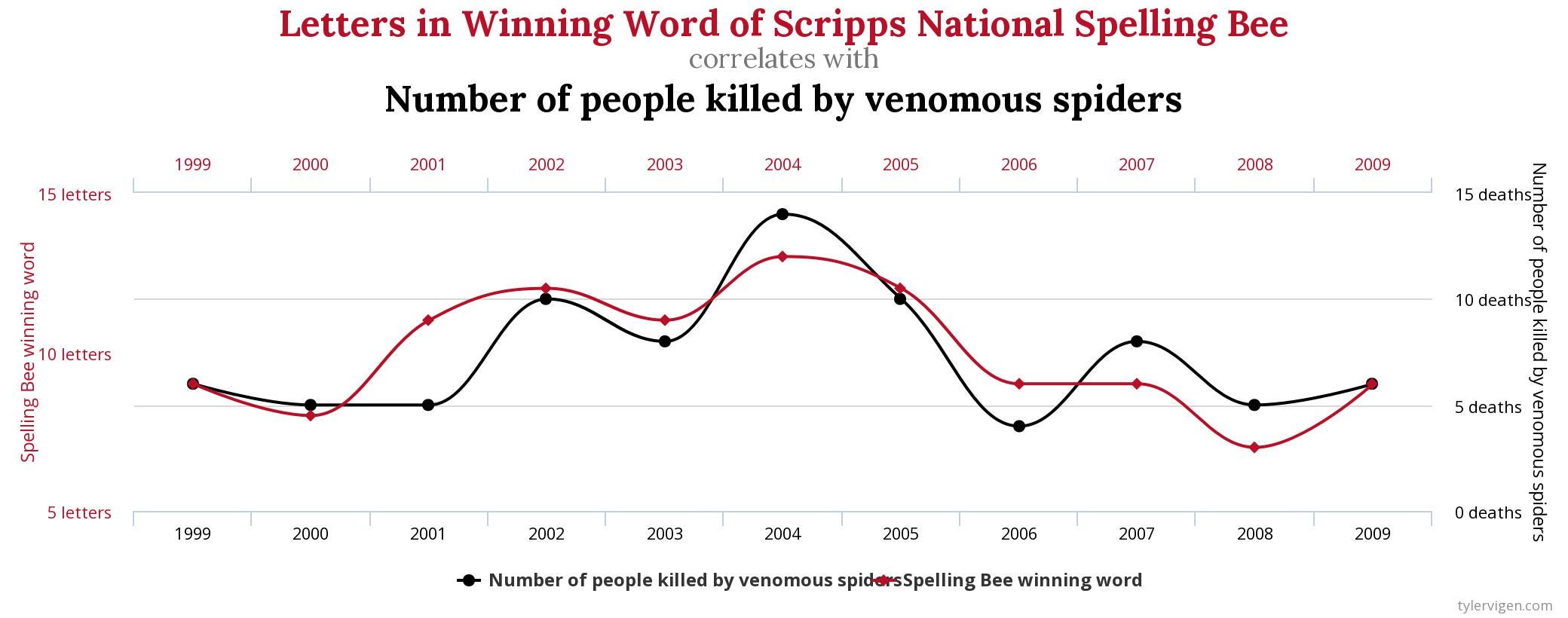
Correlation

This sort of thing is why I’ll probably renew Jesse Singal’s Substack:

Missed it when it was fresh

[I]t is absolutely ridiculous that people should choose to go around looking like letter boxes.

Boris Johnson, mid-2018, on Burqas.

Shorts

Journalism

Two formerly solid journals seem to have picked their tribes, and now assiduously pitch to the worst tribal instincts.

The Decline of First Things

There are many occasions for exposing hypocrisy these days. In the aftermath of the FBI raid on Donald Trump’s Florida home, we can point to Hillary Clinton’s private server. Asked to denounce Trump’s refusal to accept the results of the 2020 election, we can cite Stacey Abrams, who never accepted her defeat in the 2018 gubernatorial race in Georgia.

R.R. Reno opening his big monthly Editorial in First Things.

That is Whataboutism at 190 proof. I have no idea what he thinks the FBI (or someone) ought to have done about Hillary’s server 6-7 years ago, and he certainly doesn’t tell us. He just insinuates that what they didn’t do was hypocritical because of what they later did. As for Stacy Abrams, so far as I know she has dropped “they done me wrong” from her stump speeches, unlike Orange Man (who is dining out on it), even if she has never formally conceded defeat.

That was just the opener. Considering how the column continued, I’m inclined to think that Reno had a bad case of writer’s block, and so resorted to tendentious bullshit.

I am thus reminded why I still (barely, and decreasingly) consider First Things essential reading but have ceased giving its publishing corporation anything beyond the cost of my subscription.

Conservative Radicals

It’s interesting to see a tribe close ranks.

Ron DeSantis’ sending two planefuls of refugees to Martha’s Vineyard is morally indefensible trolling.

So how does his tribe defend it? By focusing on “why the Left went so bat-guano crazy” over it, and implying that DeSantis had effectively taken a chapter from Saul Alinsky:

Ridicule is man’s most potent weapon. There is no defense. It is almost impossible to counterattack ridicule. Also it infuriates the opposition, who then react to your advantage.

Ridicule Is Man’s Most Potent Weapon

Apparently “ridicule” is now National Review’s term for instrumentalizing humans who are unpopular with the GOP.

With Kevin Williamson defecting to The Dispatch, I’m almost out of reasons (I can think of just two remaining) to glance at the National Review homepage any more.

Politics

Wrong kind of diversity

Liz Truss, Great Britain’s new Prime Minister, has completed her cabinet. There are no white men. None. But that’s not good enough for Britain’s Left:

“It’s a meritocratic advance for people who have done well in education, law and business,” Sunder Katwala, the director of British Future, a think tank that focuses on issues of immigration, integration and national identity, told CNN. “It’s not an advance on social class terms.”

This is an interesting criticism. “Meritocratic,” used here in a pejorative sense, means based on ability and achievement, earned through a combination of talent and hard work. Traditionally, merit served as the primary consideration in hiring, but some people today see the very systems that confer merit as rigged, especially against minorities. In an effort to rectify that imbalance and to diversify the work force, particularly for leadership positions, it has become common practice in hiring — in the business and nonprofit worlds, as in government — to make racial or ethnic diversity a more significant factor.

The trouble is that for many of the same people, ethnic and racial diversity count only when combined with a particular point of view …

The implication is that there’s only one way to authentically represent one’s race, ethnicity or sex — otherwise you’re a phony or a pawn.

Pamela Paul, When Diversity Isn’t the Right Kind of Diversity

War? Really?

“Even the people who are responsible for disseminating the laptop admit that, on a human level, what happened to Hunter is horrifying. ‘A lot of stuff I do, I don’t feel great about,’ says one of them, Steve Bannon. ‘But we’re in a war.’”

The Morning Dispatch, recommending a New York Magazine article on the Hunter Biden laptop saga.

Steve Bannon is a very intelligent but quite unprincipled. “War”? Baloney!

J.D. Vance ❤️ Donald J. Trump

Trump went off on a tangent about a New York Times story that said Vance’s campaign didn’t ask Trump to come here. “JD wants my support so bad. He’s kissing my ass.”

Andrew Tobias on Twitter

Is this why we’re to take Trump “seriously if not literally”? He certainly captured the essence of Vance’s metamorphosis.

A Moment of Pleasure

Seldom has a Democrat made me as happy as Letitia James made me on Wednesday.


[S]ubordinating truth to politics is a game which tyrants and bullies always win.

Jonathan Rauch, The Constitution of Knowledge

The Orthodox "phronema" [roughly, mind-set] cannot be programmitized or reduced into shibboleths.

Fr. Jonathan Tobias

You can read most of my more impromptu stuff here (cathartic venting) and here (the only social medium I frequent, because people there are quirky, pleasant and real). Both should work in your RSS aggregator, like Feedly or Reeder, should you want to make a habit of it.

Saturday, 7/9/22

Dobbs

Digesting Dobbs‘ legal fallout

Most of my favorite podcasters have annoying mannerisms, but substance too good to get hung up on it. For a ConLaw geek, Akhil Amar’s Amarica’s Constitution fits that to a "T".

Amar glories in saying "I told you so" (not in those words) over and over and over, but as they say, "it ain’t bragging if you can do it." He definitely is one of our nation’s top Constitutional Law scholars.

Amar is a "pro-choice" liberal who recognized that Roe was a real dog’s breakfast. So I took seriously his July 6 ruminations on the rationale of Dobbs, which he considers justified if flawed (for context, note that finding little flaws in justified opinions is roughly half of what legal teaching is about).

If the court takes the Dobbs reasoning elsewhere, it portends more reversals of precedent, though not necessarily contraception, miscegenation, sodomy or same-sex marriage. (For instance, in what state in 2022 would laws against them pass to create a test case? And if such a law were passed, there’s more to stare decisis analysis than "was this wrong when decided?" or even "was this egregiously wrong when decided?")

But the originalist approaches of the conservative majority are going to be less deferential to precedent than to the original meaning of the constitutional provision in question. And that’s as it should be because the constitution, not precedent, is the supreme law of the land, and to it Justices take an oath. (It’s understood, though, that lower courts are bound by precedent from higher courts.)

I’m not sure what precedents will be at most risk, but I think we’re going to find out.

Dobbs cultural fallout

“Men, it’s on us now,” someone said on Twitter just hours after Roe v. Wade was overturned on June 24. “Either start wearing contraceptives or get a vasectomy.” In the two weeks since, the suggestion that men can or should express solidarity with women by getting vasectomies to prevent unwanted pregnancies has proliferated online. The tone varies from flirty (“getting a vasectomy is the new 6-foot-4”) to pointed (“i don’t want to hear a peep out of anyone with a dick until the vasectomy appointment is scheduled”), but the overarching message is the same: “If you create sperm and can get someone pregnant, go get a vasectomy,” one viral tweet read. “We are tired.”

… Google Trends shows a small increase in vasectomy searches during the first week of May, when the draft decision first leaked, followed by a second, larger one starting in late June. Doctors have also reported higher interest in the procedure. “We have never seen a vasectomy spike like this in response to a single political or social event,” the Florida-based urologist Doug Stein told me.

Doctors like Stein, who has been dubbed “The Vasectomy King” by local press, have spent years evangelizing for the procedure. Now their cause is suddenly ascendant. The nation’s vasectomy influencers are in the spotlight.

The Vasectomy Influencers.

Well, I certainly didn’t see that coming, though I suppose it was unrealistic to expect an outbreak of chastity.

Remember, young Lothario: vasectomy is forever. Maybe you should just keep it in your pants until you’re ready to start adulting. Not that adulting is always easy.

Adulting in America

If you’re an adult in America today, you’ve learned how to speak furtively of what is happening, how to deploy discretion in repeating what you’ve heard, this secret grammar of mass murder. Time was that a horror like the 2006 slaying of five Amish schoolgirls by a deranged gunman would hold up daily affairs for at least a few moments; even little ones could detect a disruption in the normal order of things. By now we know that if the kids are young enough to miss the news, you might as well let them, because there will—not might, but will—come a day when the reality of their situation finds them.

Elizabeth Bruenig, Living in an Age of Mass Shootings

Too much more about Orange Man and Kindred Spirits

Trumpian "coincidences"

Among tax lawyers, the most invasive type of random audit carried out by the I.R.S. is known, only partly jokingly, as “an autopsy without the benefit of death.”

The odds of being selected for that audit in any given year are tiny — out of nearly 153 million individual returns filed for 2017, for example, the I.R.S. targeted about 5,000, or roughly one out of 30,600.

One of the few who received a bureaucratic letter with the news that his 2017 return would be under intensive scrutiny was James B. Comey, who had been fired as F.B.I. director that year by President Donald J. Trump. …

Among those who were chosen to have their 2019 returns scrutinized was the man who had been Mr. Comey’s deputy at the bureau: Andrew G. McCabe, who served several months as acting F.B.I. director after Mr. Comey’s firing.

Mr. McCabe was later dismissed by the Trump Justice Department after its watchdog accused him of misleading internal F.B.I. investigators ….

Michael S. Schmidt, Comey and McCabe, Who Infuriated Trump, Both Faced Intensive I.R.S. Audits

Weaponizing the IRS is neither unprecedented nor the exlusive mark of one of the two corrupt and feckless major parties. But this is unusually blatant.

The IRS Commissioner appointed by Trump has ordered an Inspector General investigation, but it’s a stretch for me to believe that a hit-job like this didn’t come through his own office.

Roped, broke and branded

Mr Trump prizes no supporters more than those who once rejected him but then roped, broke and branded themselves. He has endorsed [Harriet] Hageman and appeared last month at a rally in Casper with her. Ms Hageman, a lawyer, stoked the crowd by itemising things to revile, from illegal immigration to Anthony Fauci. But one bit of elaboration popped out when she said Mr Trump knew she would represent “your fallacies”, quickly amending that to “families”.

High noon for Liz Cheney | The Economist

Shambolic boyo

I see nothing sad in his leaving but that he was very entertaining and had one of the best political acts—shambolic upper-class boyo, utterly lost in his personal sphere, just like you and no better than you—in modern British history.

Peggy Noonan on the downfall of Boris Johnson

Boris and Donald

The actual law-breaking and lies about law-breaking were cast in even worse light by the news today that the opposition leader, Keir Starmer, has been cleared by the police from the charge that he too had violated the lockdown rules. Starmer, to heighten the contrast, had publicly stated that he’d resign his position if he were found guilty. The difference between Keir and Boris (and I’ve known both for decades) is pretty obvious: Keir is a somewhat dull, decent bloke and Boris is an entitled, colorful charlatan.

But the glee of the elites and the mainstream media at this likable rogue’s political demise obscures something important. They were wrong to conflate him with Trump. Boris is a liar the way Bill Clinton was a liar: he lied to get himself out of trouble he’d gotten himself into. And, like Clinton, Boris had some relationship to reality — even as he tried to bluff and bluster his way through it.

Trump’s lies were far, far graver and bolder: that he’d won an election in a landslide (when he lost), and that our entire electoral system is rigged. And Trump, unlike Boris, is truly pathological and psychologically broken — incapable of distinguishing his own egomaniac fantasies from the real world.

Andrew Sullivan (emphasis added)

Not that the emphasized sentence is not how Oxford-educated pundits say "poopy-head" or "full of cooties." It’s an actual opinion — which I fully share — of psychological incapacity, which if true leads inexorably to the conclusion that Trump’s unfit to occupy the White House. That was essentially my objection to Trump from the beginning (probably 2016, when it became harder to write him off as a joke), though through a combination of luck and some adults in the room, we didn’t see the lunacy on full display until after he lost in 2020.

I thought in 2016 that his nomination, and then his election, were raised middle-fingers to America’s competent governing class. I slowly came to appreciate why a lot of American’s left-behind might want to do that, and I hope that both parties will pay attention to their legitimate grievances (i.e., the economic ones, not any racial resentments).

But God deliver us from any more Trump!

Anyway, Sullivan’s Substack this week is far more about Boris Johnson than about Trump, and gives Johnson credit for his many accomplishments. Then he pivots back:

Which brings me, of course, to the obvious analogy to the American right. The Tories were thrilled to ride Boris’ coat-tails into office — he did deliver Brexit and a smashing election victory — but they did not turn into a cult. He had to face a feisty press and weekly grillings in parliament, in which his relationship to reality was constantly tested. His own Conservative MPs — many of whom owed him their seats and careers — enabled him to a point, but they never lost their minds or, ultimately, their consciences.

Trump and the GOP? A sadder, darker, weirder story. Trump’s lies are far, far worse. Boris never questioned the results of a referendum or an election — and neither did his opponents. He didn’t marshal an armed mob to ransack parliament when his own MPs turned on him. The final straw for Boris was when he lied that he hadn’t been briefed about a minor Tory sex scandal, and apologized.

Trump, meanwhile, has unrelentingly sustained the biggest, most dangerous lie of all: that our entire democracy is rigged, that he won in a landslide in 2020, and that the GOP should seek to win the next election by any means, fair or foul. His lies are proactive and corrosive to democracy for the future. They have to be huge to work. And they are.

Why We Did It

I don’t know if this is David French’s original thought or Tim Miller’s original thought or the result of French reflecting on Miller, but darn, it’s good!

Ask any person to describe themselves, and they’ll likely respond with a mix of characteristics and virtues. They’ll describe their profession (lawyer, banker, plumber), their relationships (husband, father, grandfather), and their politics (Republican, Democrat), and if asked they might even describe their perceived virtues (honesty, fidelity, fortitude).

But what if the virtues conflict with other core parts of a person’s identity? …

[D]uring the Trump years, honesty and independence directly and starkly clashed with status. Time and again, men and women in America’s political class found that they couldn’t possess both virtue and power. They had to make a choice.

During the Trump years, the collision between status and virtue was constant and relentless. Trump never gave anyone a breather. He was never chagrined or mollified by scandal. He never apologized. He never turned over a new leaf. He just charged from one lie to another, and his demands for absolute loyalty left his defenders and followers with little ability to separate themselves from his worst moments while still remaining in the Republican tent.

As we’ve seen from days of courageous testimony before the January 6 House Select Committee, it is quite possible to say “I’m a Republican, and I’m honest.” But with each passing week—and with each new revelation—it grows more difficult to say “I’m a Trump Republican, and I’m honest.” Status conflicts with virtue, and status wins.

David French at his best, reviewing (and highly recommending) Tim Miller’s Why We Did It: A Travelogue From the Republican Road to Hell.

Thriving on toxicity

Somehow this seems to fit here, with the preceding two as preface:

There are species of bacteria that actually thrive in the toxic emissions from hydrothermal vents deep below the ocean. What would be killing sulphuric acid to most animals is food for them. We have created a similarly hostile climate in media and politics: high pressure, extreme temperature swings, and a toxic atmosphere. We should not be surprised, then, that unlovely creatures are the only ones who can thrive in this space.

Decent people with dignity are easy marks for outrage mobs, cancel culture, and the clickbait press. But fools with no shame are impervious to such a climate. Men and women of character tend to stay away, and if they don’t, are much more subject to the extortionate pressures of the political world. If your reputation is already poor, you can chase celebrity, frolicking among the deep-sea plumes, while your more delicate competitors are floating on the surface, poisoned.

Chris Stirewalt, H/T Alan Jacobs, commenting specifically on the improbable political victories of Donald Trump and Boris Johnson.

Miscellany

  • Public health officials in Oregon announced they would be delaying a meeting because to rush and get everything done for it was a white trait. Here’s what a high ranking Oregon Health Authority official wrote to postpone the upcoming confab: "We recognize that urgency is a white supremacy value that can get in the way of more intentional and thoughtful work, and we want to attend to this dynamic. Therefore, we will reach out at a later date to reschedule." The KKK would unironically love this explanation.
  • Tucker and conservative media have a hammer and keep looking for nails … Carlson is right that there is social breakdown that contributed to this shooting: After police took away the boy’s knives amid his various threats of violence, the Highland Park shooter’s dad helped buy him a gun.
  • “Joy too can be an act of resistance. I want to talk about personal acts of reclamation because sometimes people will say, ‘There’s nothing I can do. I feel so powerless.’ There is no act too small that you can engage in. Even today, I have a personal errand, I need to redo my nails. And I’ve decided that I’m going to use my new manicure as almost like a personal act of reclamation for me and my story.” — Alexandria Ocasio-Cortez

Nellie Bowles

Nellie had many more (including side-eyes at Elon Musk’s non-marital fertility), but I started feeling guilty about sharing so much paid content.


Penultimately, just a bit more, now from Andrew Sullivan’s miscellany:

  • “From an empirical, non-woke perspective, the ‘Kill TERFs’ movement is pretty astonishing. It’s a bunch of biological males, threatening to brutalize biological females, for saying that female sex is real,” – Wilfred Reilly.
  • “There is considerable overlap between the intelligence of the smartest bears and the dumbest tourists,” a Yosemite Park ranger when asked why it was so tough to design a bear-proof trash bin.

Happy

Happy as something unimportant
and free as a thing unimportant.
As something no one prizes
and which does not prize itself.
As something mocked by all
and which mocks at their mockery.
As laughter without serious reason.
As a yell able to outyell itself.
Happy as no matter what,
as any no matter what.

Happy
as a dog’s tail.

Anna Swir via Poetry Foundation


If people have always said it, it is probably true; it is the distilled wisdom of the ages. If people have not always said it, but everybody is saying it now, it is probably a lie; it is the concentrated madness of the moment.

Anthony Esolen, Out of the Ashes

You can read most of my more impromptu stuff here (cathartic venting) and here (the only social medium I frequent, because people there are quirky, pleasant and real). Both should work in your RSS aggregator, like Feedly or Reeder, should you want to make a habit of it.

Like a pinball, bouncing all over

Pursuit of truth generally

Expertise

Oliver Traldi helps answer “How are those without expertise to determine who has it?”:

Yet another problem for our experts is that the source, nature, and relevance of their expertise is often ill-defined. A degreed professional like First Lady Jill Biden might want to be called “Doctor,” but even those who accede will struggle to articulate just what kind of knowledge she has that the rest of us lack. What is the knowledge-how or knowledge-that accompanying a doctorate degree in educational leadership? Or take the world’s most famous diversity consultant, Robin DiAngelo, Ph.D., whose degree is in “Multicultural Education” and whose “area of research” is “Whiteness Studies and Critical Discourse Analysis.” On what field of propositions would we expect her to be an authoritative source and ask the typical non-expert to defer, setting aside his own judgment for hers?

Even when expertise is genuine, disciplines and professions, along with their practitioners, seem determined to overextend its breadth for purposes of laundering their personal, non-expert opinions under their expert brand. In the summer of 2020, over a thousand public-health researchers signed a letter expressing their support for mass public protests in the midst of the COVID-19 pandemic, even as they insisted that in all other contexts the COVID-19 threat weighed against such gatherings. In The Atlantic, under the headline “Public Health Experts are Not Hypocrites,” Harvard Medical School professor Julia Marcus and Yale School of Public Health professor and MacArthur “Genius Grant” winner Gregg Gonsalves proposed that “systemic racism” was itself “a pervasive and long-standing public-health crisis.” By expanding the reach of the term “health,” the authors seemed to think they could also expand, as though by linguistic fiat, the breadth of their knowledge about the world, and demand new deference on matters of morality and politics. The signatories were public health experts, and systemic racism was a public health crisis, ergo the signatories were systemic racism experts.

Of course, such justification by stipulation is no justification at all. Marcus and Gonsalves never managed to explain what special insight a public health expert might have on the benefits of nationwide protests, or why anyone should defer to their conclusion that “the health implications of maintaining the status quo of white supremacy are too great to ignore, even with the potential for an increase in coronavirus transmission from the protest.” Making matters worse, they warned that even asking, “How many new infections from the protests will public health experts tolerate?” is an impermissible “call to color blindness, to stop seeing the health effects of systemic racism as something worthy of attention during the pandemic.” Now they were self-declared moral experts in two ways: qualified to adjudicate a divisive political debate, and further qualified to scold those who might question that initial qualification. They didn’t just know better than us; they were better than us.

Oliver Traldi, With All Due Respect to the Experts. Brilliant and very worth reading.

Handy heuristic

Here is a quick and generally reliable rule to follow. If people have always said it, it is probably true; it is the distilled wisdom of the ages. If people have not always said it, but everybody is saying it now, it is probably a lie; it is the concentrated madness of the moment.

Anthony Esolen, Out of the Ashes

Misinformation Tech

In keeping with their field’s tolerance for acronyms, they called it AMITT (Adversarial Misinformation and Influence Tactics and Techniques). They’ve identified more than 60 techniques so far, mapping them onto the phases of an attack. Technique 49 is flooding, using bots or trolls to overtake a conversation by posting so much material it drowns out other ideas. Technique 18 is paid targeted ads. Technique 54 is amplification by Twitter bots. But the database is just getting started.

Wired.com, ‌One Data Scientist’s Quest to Quash Misinformation

There’s gold in that there discourse!

Freddie deBoer finally said what I’ve wanted to say, and says it at length, with appropriate contempt, and with contemporary illustrations that I couldn’t have produced because I’m now culturally illiterate as to anything in popular culture. F’rinstance:

[S]ome of the most successful self-marketers of the 21st century are white men. They are, in fact, Good White Men.

These are the guys who put their pronouns in their bios in hopes that doing so might get them a little pussy. These are the guys who will harangue you about how white dudes do this and white dudes do that, speaking to you from their blameless white dude mouths in their righteous white dude faces. These are the guys who look at the discourse about white supremacy and patriarchy and see market opportunity.

… Good White Males think whiteness and maleness are problems to be solved. The trouble here is twofold. First, simply by nature of being Good White Men, by the very act of endlessly talking about the sinful nature of other white men, the Good White Men exonerate themselves from the very critique they advance. Constantly complaining about the evil done by white men inherently and invariably functions to contrast themselves with other, worse white men. Being the white man who talks about the poor character of most white men cannot help but shine your own character. No matter how reflexively you chant that you realize that you yourself are part of the problem, no matter how insistently you say that you’re included in your own critique, you aren’t. You can’t be. To be the one who makes the critique inevitably elevates you above it.

He who humbleth himself wishes to be exalted.

Second, standing up and demanding that everyone pay attention to someone else sure is a good way to monopolize attention for yourself. If you go on your podcast, blog, cable news show, or social network as a white man and tell other white men they need to shut up and listen, you are definitionally not shutting up and listening – and, of course, doing so in such a way as to receive credit for doing it. Put another way, Good White Men constantly tell other men and white people to step back and listen but absolutely never shut the fuck up themselves. Each of these guys could walk the talk by just unplugging and no longer filling the airwaves with their opinions, and in so doing cede space to POC and women and whoever else. That they don’t is the most damning indictment of their project.

Freddie deBoer, The Good White Man Roster

Politics and our common life

Liberalism according to Frank Fukuyama

N.S. Lyons: when he/she is good, he/she is very, very good. The latest is a review essay, mostly of Francis Fukuyama’s Liberalism and its Discontents, but with a quarter or so on Conservatism: A Rediscovery, by Yoram Hazony.

This is a long read. The tl;dr is that Fukuyama’s modest introductory definition of liberalism is tacitly abandoned for most of the rest of the book. I think Lyons is in the camp that liberalism (i.e., classical liberalism, which comes in left and right flavors) is incoherent — and that today’s conservatism is really right liberalism and therefore also incoherent. Hazony’s thicker conservatism fares better.

The preceding paragraph is my next-day-from-memory summary. Your mileage may vary.

Motivated reasoning

Republicans are gloating over the Maya Flores winning election to Congress in a blue Latino pocket in Texas:

The most recent margin in Texas’s 34th congressional district was five points for the Democrats. Flores beat Sanchez by eight points. That’s a 13-point swing toward the Republican Party. And the Texas special election followed similar elections in California and Alaska where Republicans also over-performed.

National Review. Their point is that the GOP is going to slaughter the Democrats in the Fall mid-terms.

That may be true, but Maya Flores isn’t really a good sign of it, as I’ve learned from the Dispatch’s Sara Isgur and nowhere else:

  • This was a special election to fill a vacancy; Flores will serve only until January unless elected again in the Fall.
  • Flores raised something like $700,000; her Democrat opponent more like $46,000.
  • I’m not even sure the Democrat spent all his money; Flores winning doesn’t shift the balance of Congress and is only for about 7 months.
  • A congressional district now has more than 700,000 people in it. Only something like 14,000 voted in Tuesday’s election.

If Flores wins in the Fall, that will be a bigger deal. Meanwhile, the Republicans really aren’t delusional about Latino gains.

(If “Latino” is not currently the preferred word, sorry/not sorry. I can’t keep up. I originally said “hispanic,” but that didn’t sound au courant.)

Structural disadvantage

Monisms are tweetable and retweetable, compressible into soundbites; pluralisms are not. Therefore in our current media environment, all versions of pluralism are structurally disadvantaged.

Alan Jacobs, Ten Theses on Monism and Pluralism, Plus a Quotation

How conspiracy theorists go wrong

What distinguishes conspiracy theorists from the rest of us is their inability or unwillingness to believe that big consequences can flow from small, accidental, disorganized, even ludicrous causes.

Holman W. Jenkins, Jr., Voters Elected the Jan. 6 Donald Trump

Democrat do-over

I believe Democrats know they should have nominated Senator Amy Klobuchar in 2020, and they’ll figure out a way to do it for 2024.

Andrew C. McCarthy, Liz Cheney Is Winning the January 6 Committee.

All I will say is I think that would be very good for the country.

I take that back: we also should consider electoral reforms (ranked-choice voting? open primaries?) that give saner candidates a better chance.

January 6

Side shows and main events

As I have argued at some length, the invasion of the Capitol and the vandalism and violence associated with it were a sideshow, and should be understood as such. The main event was Donald Trump’s attempt to find some legal or procedural fig leaf for invalidating the 2020 presidential election, and by that means to remain in power — a coup d’état under color of law …

The fact that Republicans have cynical, self-serving reasons for not taking the Democrats seriously does not erase the fact that there are excellent reasons for not taking the Democrats seriously — contempt for what the Democratic Party embodies and stands for is in fact a moral necessity.

Kevin D. Williamson, January 6 Hearings: Story without a Hero

Disarming the case against political violence

On both sides of the aisle, there is increasing acceptance of the idea that our political institutions are illegitimate, which while it isn’t in itself a call to violence effectively disarms the strongest argument against violence. This is most obvious on the Republican side, something the ongoing January 6th hearings have provided a powerful reminder of. A huge percentage of the GOP rank and file believe that the last election was stolen and therefore that the current government is illegitimate, and while only a tiny minority participated in violence in response on that fatal day, it’s difficult in practice to convincingly disavow that response without forcefully rejecting the premise that justified it.

Noah Millman, Do We Need To Worry About Violence Against the Court?

Desperate times, desperate measures?

As he sheltered with Mike Pence from the January 6 rioters, Pence’s legal counsel Greg Jacob

emailed constitutional law professor John Eastman, architect of the plan for Pence to reject the electoral votes Congress certified. “Thanks to your bullshit, we are now under siege,” he wrote.

“The siege is because you and your boss did not do what was necessary,” Eastman replied.

Throughout the day yesterday, witnesses—including Jacob—eviscerated the legal arguments underpinning Eastman’s plan, while lawmakers laid out evidence that Eastman and other Trump allies knew full well the flaws in their strategy—but forged ahead with a pressure campaign urging Pence to go along anyway. After the riot, Eastman was so fearful of legal consequences he emailed Rudy Giuliani that he’d “decided that [he] should be on the pardon list, if that is still in the works.” Trump never gave him one, and according to committee members, he’s pleaded the Fifth Amendment 100 times in his testimony before them.

The Morning Dispatch

Some wit put John Eastman’s pardon plea in Haiku:

(received through the grapevine).

Sexualia

“Soft Totalitarianism” captures something no other term seems to

I know some good people who scoff that “soft totalitarianism” is an oxymoron, but I haven’t seen a better term for this kind of just-making-shit-up coordinated suppression of unfashionable ideas truths while tolerating truly vile behavior by preferred ideologies:

Not to be outdone, this week, PayPal and Etsy shut down the accounts of biological realist and writer Colin Wright for his persistence in arguing that there are only two sexes. Etsy permanently disabled Wright’s account – where he sold his “Reality’s Last Stand” merch promoting his newsletter – on the grounds that Wright “glorif[ied] hatred or violence toward protected groups.” That’s a lie; Wright never did.

Wright is a biologist who made the grievous error of knowing a thing or two about biology and refusing to genuflect before the Torquemadas who insist he parrot their phony gender science. But of course, while Wright pays this price for his harmless (and, honestly, inoffensive) t-shirts and mugs, Etsy continues to list for sale stickers and pins and other bric-a-brac emblazoned with messages like “Fuck TERFs,” “TERFs can choke,” and “Shut the Fuck up TERF” with an anime creature pointing a semiautomatic handgun at its presumably female interlocutor.

Abigail Shrier

NSFW

The salacious details can’t really be avoided if I want to illustrate how transgender ideology is intruding on the most intimate realms (and I do):

A natal female who had sex with three women using a specially-made prosthetic has been convicted of assault. Tarjit Singh, born Hannah Walters, met women via online dating, and kept clothes on during intimacy in the dark to avoid being revealed as a natal female. It was only several months into one relationship, on discovery of the prosthetic, that Singh’s natal sex was revealed.

This story reads very differently depending on where you’re standing. Is it a case of sexual assault, with a victim tricked into intimate contact she wouldn’t have accepted if she’d known the sex of the individual she was dating? Or is it evidence of our transphobic society, where stigma forced “Tarjit Singh” first to conceal “his” true self only subsequently to be punished for this with the full force of the law?

Mary Harrington, ‌Landmark trans cases show who the men really are

Similar cases are happening and, dare I suggest, increasing;

A recent US case, with similarities to that of ‘Tarjit Singh’, resulted in murder …
Ismiemen Etute, a Virginia college athlete, beat Jerry Smith to death after discovering he’d posed as “Angie Renee” online to obtain sexual contact with Etute.

Lesbians are being called transphobes for wanting sexual contact only with natal real women. Sexual louts like Etute commit murder when tricked by a man pretending to be a horny woman.

It appears that sexual liberation has not produced utopia, no?

Old man led by zealots

Nevertheless, our President thinks we need more of what ails us — the veritable definition of insanity:

Biden has never seemed more like an old man being led by zealots than on the topic of medical interventions for gender dysphoric children, where he is deeply radical. Biden this week is signing an executive order banning any federal funds from “conversion therapy,” which is what activists call it when teen girls go to a therapist for a couple visits before getting a mastectomy. His policies are putting America’s approach to this complex topic far to the left of European nations (some of which are pulling away from under-18 medical interventions altogether) and far to the left even of where many trans leaders think we should be. 

Nellie Bowles (italics added).

Antidote

A Psalm for anxiety over “cancel culture,” “soft tyranny” and some other insanities.

Miscellany

Time-wasters

Although federal, state, and local fair housing laws generally permit discrimination in selecting roommates or housemates, they still prohibit advertisers from mentioning their discriminatory preferences, except for specifying gender. The result is that persons who place classified ads for roommates waste their time, as well as the time of many of those who respond to their ads, by inviting and dealing with inquiries from persons who fail to meet the actual “discriminatory” criteria.

David Bernstein, You Can’t Say That!

New podcast, familiar podcasters

If you liked the All the President’s Lawyers podcast, you are almost certain to like Serious Trouble.

Potty Humor

As long as I’m (uncharacteristically) embedding images, this favorite from the nation of Georgia. There was much, much beauty there, but this gritty, grimy vista along the road from Tbilisi to Stepantsminda was unique:


You can read most of my more impromptu stuff here (cathartic venting) and here (the only social medium I frequent, because people there are quirky, pleasant and real). Both should work in your RSS aggregator, like Feedly or Reeder, should you want to make a habit of it.

Newsfasting

We Orthodox Christians have just started Lent yesterday, and I’m already irritable from not being able to stuff my face promiscuously! Or from something.

There are always dozens of reasons for irritation.

Res Ipsa Loquitur

Ukraine

I find that some news just kind of splashes up onto my pants legs even when I’m limiting news consumption. Believe me that I’m limiting news:

  • Reading the Economist World in Brief and The Morning Dispatch for top news, but rarely click through the Economist.
  • Entirely skipping the Wall Street Journal.
  • Limiting New York Times to obituaries, religion (almost never anything good or even new there), a glance at the Opinions page, and maybe sports and travel.
  • Investigative reporting is higher-quality than regular news, but I still can’t do anything about most of what I see in The Intercept, ProPublica, and bellingcat, so I skip them most of the time.
  • When someone I respect recommends analysis by someone else that I respect, I’ll usually click through if the topic is of interest.

This is still a work in process. I may, at the risk of irritability, cut back further.

Ukraine sues Russia

Last week the International Criminal Court, which prosecutes individuals, launched an investigation into war crimes in Ukraine. On Monday the International Court of Justice, which judges governments, hears allegations of genocide. But these are not accusations against Russia. Rather, Ukraine wants the court to rule that Russia’s own allegations of genocide against Ukraine in the breakaway regions of Donetsk and Luhansk are false and contrary to international law.

Russia accepts the authority of the ICJ (unlike that of the ICC). But Ukraine does not expect its neighbour to bow to the court’s verdict. Russia did not even turn up to the court on Monday (their defence was due on Tuesday). Instead, Ukraine hopes that a verdict in its favour would strip Vladimir Putin, Russia’s president, of any vestige of legal pretext for an invasion, which, he claims, was launched to stop the supposed genocide.

Economist World in Brief.

How interesting to ask a court to rule that your invader’s excuse for invasion is a lie — and the invader has no answer to your “put up or shut up” challenge.

How to Avoid Nuclear War With Russia

Ross Douthat, How to Avoid Nuclear War With Russia is a brilliant distillation of nuclear wisdom, it seems to me.

In short, our conventional forces are so vastly superior to those of Russia that if we directly engaged Russia over its invasion of Ukraine, we’d quickly put Putin’s back to the wall and he might, quite literally, go nuclear.

I guess not all problems are answerable with technology, huh? I’ll take a wise man over a technocrat (almost) any day.

Longfellow was right

A European war is unhelpful for Trump because it reminds voters that Longfellow was right: Life is real, life is earnest. Trump’s strut through presidential politics was made possible by an American reverie; war in Europe has reminded people that politics is serious.”

George Will via the Morning Dispatch

Private Sanctions and Cancel Culture

The Bulwark chronicles how private companies and other non-government actors are punishing Russia for the Ukraine invasion.

I am not entirely amused because this sort of private war is also being waged against Wrongthink in America. For instance, conservative commentator Michelle Malkin and her husband have been banned from AirBNB for associating with Nick Fuentes, of whom AirBNB (and almost everyone else, including me) does not approve.

It may come to the point that making “exercise of free association or free speech rights” protected classes will be a better choice than letting cancel culture commit a kind of economic terrorism.

Fourth Generation War

In Iraq, Afghanistan, and elsewhere, we face Fourth Generation war, not against state militaries similar to our own but non-state forces that fight very differently. While the next conservatism favors a strong defense, it should also question the hundreds of billions of dollars we pour annually into legacy forces and weapons suitable only for fighting other states. A strong defense requires military reform, not just heaps of money.

Andrew J. Bacevich, J. David Hoeveler, James Kurth, Dermot Quinn, Paul Weyrich and William S. Lind, et al., The Essence of Conservatism

Russia may be about to experience this in Ukraine if they seek to occupy.

(I’ll bet William Lind wrote this item. He’s always talking about Fourth Generation warfare.)

Gallows humor?

Olha Koba, a psychologist in Kyiv, said that “anger and hate in this situation is a normal reaction and important to validate.” But it is important to channel it into something useful, she said, such as making incendiary bombs out of empty bottles.

Maria Varenikova, ‌Hate for Putin’s Russia Consumes Ukraine, H/T Claire Berlinski via The Morning Dispatch

Patriotism in its purest, loveliest form

After more than 24 years away, Washington Post correspondent Isabelle Khurshudyan finally returned to Odessa, the city where she and her parents were born. “Now that I’m finally here, I wish I wasn’t,” she writes in her dispatch from the coastal city, where she’s been able to reconnect with her 81-year-old great aunt, Baba Zina, who refused to evacuate. “When I asked why that was, she scolded me, telling me to not get distracted from driving. Then she explained that she was born in this city. It’s her home. She visited the United States four times. Four of her siblings moved there, but she returned to Odessa each time. There’s something about this city—with its roots back in imperial Russia, its classic architecture, its appreciation for artists and its Black Sea beaches—that make people romantic about it. Peak Odessa: The opera and ballet theater is the most fortified building in town, surrounded by a wall of sandbags. ‘I visited the Vienna opera house just to see how it compared to ours. Ours is better,’ Zina said as we drove by the theater. ‘I went to the one in Paris, too. It was nice, of course. But ours is nicer.’”

via The Morning Dispatch

Three items from Protestants

Choosing a story

I haven’t quoted Jake Meador in a while because I stopped following him because I was too busy wallowing in “news.” because reasons.

The core problem facing the western church today is that virtually everyone, including many of us, believes that the most basic, elemental right a person has is the right to self-designate. This means that, as we are cast adrift in the world, trying to make sense of who we are, where we are, and what we ought to do, we mostly do not turn outward and allow the need of neighbor and nature to answer our questions. We do not look to culture for guidance or to family or to faith. In the words of Hauerwas, *“we have no story except the story we chose when we had no story.” And so to answer the question of who we are, we look inward toward our own ambition and aspiration, desire and need. We act according to that, with scant attention paid to the costs such action will have for the world or for our neighbors.

Jake Meador, touting his new book, What Are Christians For?: Life Together at the End of the World (emphasis added).

You could do much worse than Jake Meador on the internet.

Put on the whole snappy comebacks of God

[W]e’re not really after understanding, I [] think, but rather the maintenance of a certain way of life which is sustained not necessarily through ordering affections and desires toward good ends, but rather simply through a kind of automated acquiescence to authority figures.

One gets the idea from a fair bit of Christian worldview literature (especially when some conference or course is being advertised) that a worldview is almost like a set of categories you can download, and then march out into the world equipped with the right answers and knowing in advance how to refute the wrong answers. But this is not how people learn—not how they learn real meaningful knowledge and wisdom at any rate. This kind of pre-packaged knowledge turns out to be awfully flimsy and brittle when confronted with the complexities of the real world.

Jake Meador again (quoting Brad Littlejohn), but a different blog post.

I’ve been around smart Evangelicals who thought “Worldview camps” and such were really good and really cutting edge. I had figured out pretty early on that they were pretty much as Brad Littlejohn says. Plus you can’t overcome the effects of six daily hours of public school and three daily hours of television with a one- or two-week camp.

Grokking ‘Sin’

It wasn’t until college that I ever really thought about the Christian doctrine of sin. I had grown up in a Baptist church hearing about how Jesus *“died for our sins,” but it seemed that sin was the breaking of certain rules — drinking too much, sleeping around, lying, murder and stealing …

In college, through a string of failed relationships and theological questioning, I came to understand sin as something more fundamental than rule breaking, more subtle and *“under the hood” of my consciousness. It was the ways I would casually manipulate people to get my way. It was a hidden but obnoxious need for approval …

This is the slow dawning that I had about myself in college, and with it came liberation. Far from being a crushing blow of self-hatred, the realization of my actual, non-theoretical sinfulness came with something like a recognition of grace. I saw that I was worse than I’d thought I was, and that truth knocked me off the eternal treadmill of trying to be better and do better and get it all right. It allowed me to slowly (and continually) learn to receive love, atonement, forgiveness and mercy.

Tish Harrison Warren

Seeing sin as mere rule-breaking is, in my personal experience, the worst thing about Christian fundamentalist taboos (smoking, drinking, dancing, playing cards and secret societies) of the 50s and 60s, which my Evangelical boarding school aped. It certainly gave me a skewed view, which was harmful to me and others spiritually — even though 14-to-18 year-olds have no business smoking, drinking or joining oath-bound secret societies anyway.

Other stuff

SCOTUS Opposition failure

When Kevin Williamson, a bright guy, can do no better than this in opposing a Democrat SCOTUS nominee, you know you’ve got a pretty good nominee.

Summarizing:

  • She’s part of the meritocracy, the ruling class. (He’s convincing on that.)
  • Dick Durbin and his ilk insinuating that she’s got some hardscrabble backstory is bunk. (He’s got a point.)
  • She does not believe in the rule of law. (He doesn’t deliver one single iota of evidence for that. Not one. And that’s the only one he says should disqualify her.)

After watching one-after-another Republican-appointed justice disappoint, I’m done with making predictions about actual future performance of a nominee.

Truth in Journalism

The nonconformists over at The Postliberal Order set us straight on journalistic terminology:

  • Democracy and liberalism
  • The difference between American philanthropists and Russian Oligarchs
  • Fact-checks
  • The difference between military interventions and invasions
  • Propaganda in general

You’ll appreciate the next item even more if you read this one. It’s short.

This is not propaganda

The Emmett Till Antilynching Act

The Senate passed the Emmett Till Antilynching Act by unanimous consent on Monday. Once signed into law by President Biden, the legislation will amend the U.S. Criminal Code to designate lynching as a federal hate crime punishable by up to 30 years in prison.

The Morning Dispatch.

My immediate reaction was that lynching isn’t much of an issue today, and I think I was right, but there’s this so you can gauge the problem for yourself.

And if you think it’s enough that Ahmaud Arbery was “essentially” lynched, be advised that (a) you can’t prosecute for “essentially the same thing” and (b) his murderers got life without parole, which is longer than 30 years.

Buildings for nomads. This is how the late Sir Roger Scruton described “various financial district glass-pane shoeboxes—structures.” (H/T Anthony DiMauro). Some might consider that a commendation; I don’t.

Wordplay

United in diversity:

“The EU’s quite vapid motto.” (Ed West)

Ostpolitik

From the Economist:

Ostpolitik (noun): a decades-old strategy of dealing with Russia based in part on the hope that gas pipelines could promote mutual dependence and therefore peace. Read the full article.

Spelling bees

Congratulations to [Name], an [School] student, who is heading to the Scripps National Spelling Bee in Washington D.C., May 29 to June 3. [Name] won a 10-county regional bee Saturday at [Site] in [City]. His winning word: Archetype.

Spelling Bees aren’t what they used to be.

Simile of the day

One of the guests was a retired Hungarian art historian. She had the most delicate Old World accent. It was like listening to audible porcelain.

Rod Dreher

Mal mots

In a piece for National Review, John McCormack notes how Russia’s invasion of Ukraine has diminished America’s already fledgling neo-isolationist movement even further.

The Morning Dispatch (italics added).

Someone at the Dispatch misapprehends “fledgling.”

(And once again, I’m glad I don’t write for a living and to deadline.)

Servants of their servants

For all drunkards and gluttons I weep and sigh, for they have become servants of their servants.

St. Nicholai of Zicha, Prayers by the Lake XXIX, via Fr. Stephen Freeman (italics added)

How we think

Intellect confuses intuition.
Piet Mondrian

The Economist World in Brief


You can read most of my more impromptu stuff here (cathartic venting) and here (the only social medium I frequent, because people there are quirky, pleasant and real). Both should work in your RSS aggregator, like Feedly or Reeder, should you want to make a habit of it.

Monday potpourri, 12/13/21

Wrongful convictions

“Sprinkle some junk science onto a faulty identification, and it’s the perfect recipe for a wrongful conviction,” Hammond said.

40-year-old Syracuse rape conviction at the heart of author Alice Sebold’s memoir is thrown out

It appears that Alice Seybold was honestly mistaken in her identification of the defendant. I’m surprised, though, that the conviction was overturned decades later without DNA evidence.

Collapse of the West

Who would believe that the whole Western world, in whose image, for better or for worse, all nations seemed to hurry to refashion themselves, would collapse, not battered from without, but sagging into lethargy and indifference and stupor from within?

Anthony M. Esolen, Out of the Ashes.

Inventing existential foes

Because Trumpians live in a state of perpetual war, they need to continually invent existential foes ….

David Brooks, who gives what I consider the best explanation to date on how American conservatism produced President Donald Trump. (The explanation is not hopeful for the GOP.)

Ignoring the Classics

Of course, the classics are neither progressive nor conservative—to argue that they are one or the other is to superimpose a useless framework on them, though Featherstone is right that conservative students are the ones usually defending them. This makes sense because conservatism has a coherent theory for why the past is valuable; progressivism less so, which is why contemporary progressivism has so thoroughly abandoned the classics, even if your old-school Marxist knew his Euripides as well as anyone.

But conservatives have turned from the classics, too. Your average attender of the Conservative Political Action Conference likely couldn’t hold a candle to a mid-century Burkean in terms of reading. Policy has become king on both sides of the aisle. A few notable exceptions aside, most conservative donors are more likely to give money to political campaigns, think tanks, and partisan publications than to programs in classical education or the humanities.

Micah Mattix, Prufrock (part of Spectator World) commenting on The Left Should Defend Classical Education

Kamala “Mindless Ramble” Harris

I trace [Vice President Kamala Harris’s] decline to when she went to Guatemala and Mexico in June for meetings on immigration. Near the end in what should have been a highly prepared meeting with the press, she launched into a sort of mindless ramble in which she kept saying we have to find out the “root causes” of illegal immigration. She said it over and over. “My trip . . . was about addressing the root causes. The stories that I heard and the interactions we had today reinforce the nature of these root causes. . . . So the work that we have to do is the work of addressing the cause—the root causes.”

There is no one in America, including immigrants, who doesn’t know the root causes of illegal immigration. They’re coming for a better life. America has jobs, a social safety net, public sympathy for the underdog. Something good might happen to you here. Nothing good was going to happen at home.

That’s why immigrants have always come. Studying “root causes” is a way of saying you want to look busy while you do nothing.

She seemed unprepared, unfocused—unserious.

Peggy Noonan, Kamala Harris Needs to Get Serious.

The paradox of diversity

It can be hard to know where to go on that if diversity is a key component of a well-rounded education but an indefensible burden on the very people representing the diversity.

The idea, again, is that there’s something offensive about a Black person being asked to arbitrate the Black view on a given issue — but what if white writers don’t ask? Isn’t their asking what we were hoping for?

John McWhorter, How Can Something Be Racist but Not Racist at the Same Time?

Higher Education

I was enthused by the announcement of the University of Austin, with President Pano Kanelos coming from St. Johns. But I’m also a bit burnt out on downright enthusiasm for universities and liberal arts colleges.

I had very high regard for Hillsdale College, for instance, only to watch it go Trumpist (Michael “Flight 93 Election” Anton on faculty) and now demagogic in its fundraising letters (most recently, surveying recipients on the socialist menace).

I think I’ll watch carefully before I dig into my wallet for UofA.

Loudon County Culture War

Since Trump came on the scene, Democrats have dominated the most affluent communities in America, winning all 13 of the richest congressional districts (mostly by wide margins) in 2018 and 41 of the top 50. Republicans as recently as 1992 regularly won over half of these districts. Lately, though, in places where voters have money and college educations, Republicanism has become a stigma on the order of bestiality or syphilis …

The Loudoun mess had a lot to do with race, but it was no simple sequel to old civil rights battles. This was a brand-new tale about multidimensional racial tensions, beginning perhaps with the impatience of affluent intellectuals toward a quiet immigrant community whose chief crime, as ham-handed as this sounds, was believing the American dream. For that offense, they were sentenced to the rudest of awakenings. Loudoun doubled as the ultimate media malpractice story, in which the public across years of salacious controversies was told everything but the most important bits.

Matt Taibbi, ‌Loudoun County, Virginia: A Culture War in Four Acts

First-world problems

Normally, an internet-connected feeding machine dispenses kibble for them at noon, but the felines’ bowls were empty and clean. The gadget hadn’t worked because of an outage at Amazon[]’s … cloud-computing unit.

“We had to manually give them food like in ancient times,” said Mr. Lerner, a 29-year-old small-business owner who lives in Marina del Rey, Calif.

Amazon Outage Disrupts Lives, Surprising People About Their Cloud Dependency – WSJ

So obvious (now that he points it out)


[H]ypocrisy is too universal to be interesting …

Liel Leibovitz, ‌Treason of the Intellectuals


You can read most of my more impromptu stuff at here. It should work in your RSS aggregator, like Feedly, should you want to make a habit of it.

Amazing: No Politics

Innovation then and now

Henry Ford happily allowed his children to be chauffeured around town in the mass-market vehicles he pioneered, but today, Silicon Valley executives protect their children from smartphones and send them to schools without screens—a telling sign of their opinion of their own products.

Gladden Pappin, Advancing in Place

Pappin is an integralist or integralism-adjacent, so I read him guardedly. Still, it’s hard to resist that little ad hominem.

Pornification failure

Much later, Playboy magazine came along, in which girls removed their underwear and a boy could drive to a drugstore in a part of town where he was not known and tuck a copy into a Wall Street Journal and peruse it And later came Tropic of Cancer and Portnoy’s Complaint and now porn is freely available online though to me it has all the erotic allure of watching oil well pumps pumping in North Dakota.

Garrison Keillor

Le mot juste is "shibboleth"

I generally don’t like "why didn’t he write about this?" objections, but I think John McWhorter missed the boat by not using the term "shibboleth" in this piece.

Put not your trust in jury verdicts

There is a dissonance between what we invest in a trial and what it resolves. We rely on the criminal-justice process for the airing of important aspects and arguments around many public controversies that deeply divide us. The trial and its attendant litigation become our historical record. But in the end, a criminal proceeding settles only a very narrow point: Did the state present proof beyond a reasonable doubt to support the charges it alleged?

In the Rittenhouse trial — in what I continue to believe is a case that should never have been a criminal prosecution — the state did not meet its burden. That narrow finding is critical, and the jury made it.

Still, the trial has very little to tell us about the unrest on the streets, what caused it. It doesn’t address how the government dealt with, or rather was derelict in, its duty to provide security. It has nothing to say about prudential or moral questions unrelated to the proof vel non of charged crimes — e.g., should Kyle Rittenhouse have been on the violent scene in Kenosha that night, should he have been armed, and what does the fact that we can’t agree on these questions — indeed, can’t even seem to discuss them civilly much of the time — portend for our society? Nothing, because we’ve always been a rambunctious bunch, or disaster, because our disagreements are growing more fundamental?

Verdicts in a criminal case do not begin to address those matters.

But they are essential just the same. We can’t address anything effectively without the rule of law. Today, the rule of law won.

Andrew C. McCarthy, *‌Thoughts on the Rittenhouse Not-Guilty Verdicts *

Two paths of the novel

If the novelist cannot provide a window into reality, then he must ultimately write about himself; and his technique, or politics, or personal problems come to the forefront of his work. Like the postmodernist Pompidou Center in Paris, with all its pipes, wires, and elevators on the outside, the postmodern novel refuses the “hidden” artistry of the realistic tradition in order to flaunt its bag of tricks.

Gregory Wolfe, Beauty Will Save the World

A charitable surmise

One of the reasons that Pope Francis sometimes seems so frustrated with the state of the Church today may be that, in his experience, too many Christians tend to confuse doctrine and law and rituals and structures with the real experience of faith.

Abp. Charles J. Chaput, Strangers in a Strange Land

If Archbishop Chaput’s surmise is correct, I’ll give the Pope his props for a change — with a caveat: the "real experience of faith" can be absent even in a saint, and even for long "dry" spells. Witness St. Theresa of Calcutta, who suffered depression for decades, rarely if ever feeling God’s presence.

Deep paradox

In some sense, as dark to the intellect as it is unendurable to the feelings, we can be both banished from the presence of Him who is present everywhere and erased from the knowledge of Him who knows all.

C.S. Lewis, The Weight of Glory in The Weight of Glory

Tell me why I’m wrong

Having avoided the divisive topic of politics, I turn to the divisive subject of religion.

When I consider a story like David French’s The Moral Collapse of America’s Largest Christian University, I think that public-facing Evangelicalism is almost entirely religiopreneurs getting ego strokes and money, lots of money, and lots of — oh, never mind. This is a family blog.

Oh, those guys plus followers who will follow their leaders anywhere, including perdition, if the metrics are good (since good metrics are confused with God’s blessing).

I know there are faithful pastors laboring away far from the limelight, but the tone is set by the bozos, isn’t it?

Thinking much about politics

A sick society must think much about politics, as a sick man must think much about his digestion; to ignore the subject may be fatal cowardice for the one as for the other. But if either comes to regard it as the natural food of the mind—if either forgets that we think of such things only in order to be able to think of something else—then what was undertaken for the sake of health has become itself a new and deadly disease.

C.S. Lewis, Membership, in The Weight of Glory


You can read most of my more impromptu stuff at here. It should work in your RSS aggregator, like Feedly, should you want to make a habit of it.

Magic Mushrooms

Wednesday evening I watched a Netflix documentary titled Fantastic Fungi. The first voice in the documentary turned out to be the voice of Fungi, who returns for further narration (largely in the form of self-adulation) repeatedly over the 80 minutes of the show.

The last 15 minutes or so built to a crescendo which can only be described as religious in its fervor, leading me almost to expect an altar call. And fairly early in the program, I commented to my wife that there was a little bit "too much of the spirit of Carl Sagan" in the production — a foreshadowing, it proved.

However, there came a point when people described experimental treatment with magic-mushroom type stuff during terminal illness as the most profound religious experience of their lives. 
 At that point, my (Calvinist) wife expressed scorn. At that point, I (Orthodox, having read a lot in popular treatments of neuropsychology lately) thought I perceived an additional "data point" in my case against living life as if it was all made up of data points.

I’m influenced:

  • heavily and recently by Iain McGilchrist, The Master and His Emissary.
  • Michael Polanyi’s coinage of "tacit knowledge"
  • the Saints of my Church, not one of whom was canonized for analytical rigor
  • the monastics of my Church, canonized or not
  • a lifetime of singing sacred choral music, mostly in Western Christian tradition.

There probably are other influences, too.

So I’m now going to advance a hypothesis, which has been taking vague shape in my mind over several months (or longer, as in Polanyi).

My hypothesis is that psychedelics, particularly including magic mushrooms or other fungi, subvert the dominance of the analytical left cerebral hemisphere — a dominance that has arisen in part from our adulation of science and its susceptibility of objective proof. Concurrently, our use of the right hemisphere has atrophied.

If I had to refine my hypothesis, it would be that psychedelics give a boost particularly to the more intuitive or emotional right hemisphere, with which we have become so unfamiliar as late modern or early postmodern humans, that the experience of meta-perception via the right hemisphere is overwhelming and perceived as a religious experience. Many people have never experienced such a thing at all and I hypothesize that vanishingly few of us have experienced it as intensely as occurs during a "good trip."

I find corroboration for this hypothesis in the long-lasting effects of a single trip, without a need to repeat the experience frequently because the sense of well-being persists, and in the evidence that mushrooms were almost sacramental in ancient practices we now would call “religious.”

I further hypothesize that the rebalancing of the two hemispheres is part of what can happen in a modern or early postmodern monastic life. And I confess (no longer hypothesizing) that an ascetic life is the approved Orthodox Christian manner of rebalancing the hemispheres (not referred to in those terms, though, and not the ultimate goal) and, particularly, activating that portion of the right hemisphere that our God-bearing fathers have identified as the nous — a capacity much disabled in our times.

I find a slight analogy to this in my increase appreciation of much poetry after a generous pour of whiskey.

If we do not regain a balance of the hemispheres through changes in our collective life, and if research on magic mushrooms continues (which research I support), I could imagine a day when the church would approve tripping to overcome the disability life has inflicted on us — to jump-start the ascetic life, in essence.

But my hypothesis is pretty far out there, and this is not that day. As a faithful Orthodox Christian, let alone a tonsured Reader, I’m not at liberty to take a stab at chemical or fungal shortcuts to theosis, especially when they’re marketed (for thinly-veiled marketing is what Fantastic Fungi was) as an alternative religion.


You can read most of my more impromptu stuff at here. It should work in your RSS aggregator, like Feedly, should you want to make a habit of it.