Well, that makes me special: I’m an occupant of the "little in between." I pray for Peterson because he is so consequential (as I characterized Billy Graham a day or two ago), and seemingly for good, but I’m not certain he is great or good.
Why am I not certain? Partly because I’ve seen too many heroes knocked forever off their pedestals when some secret came out or some latent flaw was made manifest.
Such guardedness may come from being (1) sentient and (2) 73 years old.
Life in six words
… the joke about the man who walks into the house with his hands full of dog turds and tells his wife, “Look what I almost stepped in,” which sums up much of life in one sentence.
Harvard is very upset about paying any taxes: Those no-good Republicans in 2017 passed a tax on universities with mega-high endowments—those whose investment assets are more than $500,000 in assets per student. It impacts about 100 schools. Harvard, which as a nonprofit pays no federal taxes, has an endowment of more than $53 billion. Under the tax, Harvard has to pay a 1.4% tax on net investment income. The school is apparently lobbying Democrats in Congress hard right now.
Nellie Bowles. I did the math, and Harvard’s $53 billion would subject it to tax unless its enrollment climbed above 106,000!
I knew that taxing monster endowments was a desiderata of a few on the Right, but I hadn’t known that it passed.
I love immigration; it’s immigrants I can’t stand!
Wait, New Yorkers, I thought you wanted an open border? After asylum seekers from Arizona and Texas started showing up on buses in Washington, D.C., and New York City, our very welcoming friends on the east coast began freaking out. Here I thought we all agreed on an open border! And I’m pretty sure the consensus was that all complaints from southern states about a strained social safety net and the need for federal help were just that old Texas racism. Now, NYC mayor Eric Adams, citing the strain on the social safety net, has this to say: “We urgently need federal support.” The D.C. mayor’s Muriel Bowser also wants the federal government involved. “We have called on the federal government to work across state lines to prevent people from really being tricked into getting on buses.”
Andrew Sullivan leads Friday with a convincing, and thus depressing, account of how Putin stands to win in Ukraine. Then he moves on to other things.
Backlash to gay civil rights?
One more thing. We are not living through a huge, belated backlash to gay civil rights. The polling and the politics show a majority consensus on the established civil rights of gay and trans people. What we are living through is a potent reaction, laced, alas, with resurgent homophobia and transphobia, to a new and utterly different campaign to abolish the sex binary in biology, law, education and society. That campaign has nothing to do with civil rights for gays or for trans people.
It is about the indoctrination of children and the abolition of women, rooted in an illiberal ideology that rejects the entire concept of civil rights as a mere mask for white, cis-hetero oppression. It rejects the very premise of a same-sex marriage, because it denies the reality of binary sex. And it is led by those who strongly opposed the goal of marriage equality — the queer left — in the past.
How dare she leave the reservation!
“So far this summer the far left has referred to me as: Far Right Latina, Not The Real Deal, Breakfast Taco, Unqualified opponent for being born in Mexico, Miss Frijoles. This is what happens when you stray from their narrative and start to think for yourself!” – Mayra Flores, the first congresswoman born in Mexico.
A case for proofreading before posting
“This is misinformation about monkeypox. The outbreak is occurring almost entirely among men who have sex with me,” – Benjamin Ryan, typo-wounded science reporter.
WordGunplay
Performative insecurity
A high-level-of-generality description of today’s gun culture — open carry and such.
It feels a bit Freudian to me, but we are living in a war of slogans (along with other wars), so that’s fair.
An alternative description of today’s gun culture, care of Mennonite @toddgrotenhuis on micro.blog.
I think I prefer it. It’s less specific than performative insecurity, being applicable to vices other than preening gun displays, but it loses the Freudian snark.
Brandishing culture
@JMaxB’s refinement on the offerings of @toddgrotenhuis and @rcrackley. I intend to keep "vice signaling" and "brandishing culture," "performative insecurity" falling away as a spent catalyst. (Now if I can only remember the verb "brandish" more reliably.)
It’s a long way to Heaven dear Lord,
it’s a hard row to hoe
And I don’t know if I’ll make it dear Lord
but I sure won’t make it alone.
SmallTown Heroes, Long Road, from their one-and-so-far-only "byzantine bluegrass" album Lo, the Hard Times.
You can read most of my more impromptu stuff here (cathartic venting) and here (the only social medium I frequent, because people there are quirky, pleasant and real). Both should work in your RSS aggregator, like Feedly or Reeder, should you want to make a habit of it.
Sunday was the day of my quarterly review of articles I’ve tagged for re-reading. Among other things, I’m reminded of why I subscribed to a Yorkshireman with the pen name FFatalism (who hasn’t floated my boat very high in recent weeks).
Our epistemic default setting
Objectivism is, according to philosopher Esther Meek, our “defective epistemic default setting” as modern westerners. This is our problem. We wrongly think of knowledge as facts, information, proofs, and propositions. Real, true knowledge, we think, can always be explicitly put into words and sentences.
…
[Michael] Polanyi recognized how disastrous this view of knowledge really is. He already had an inchoate–or, tacit–sense that this was wrong by 1916 …
There is a hint here of what would become Polanyi’s most famous phrase: “We can know more than we can tell.”
This is a conviction that I’m trying to get from my head into my bones. It seems gradually to be happening, aided by realization that it is impossible to tell a Protestant or Catholic what they should know about Eastern Orthodox Christianity until they’ve had a few weeks experiencing the Divine Liturgy. (This is excellent, but it’s no substitute for the experience of Liturgy.)
Everyone knows the fall is coming
I am a poor listener. I only know the same thing that everyone does: the current order cannot go on. We express this knowledge in ten thousand ways. Some people concentrate on climate change, others on the collapse of moral language, and others on the unavailability of energy to sustain the modern regime. Historical narratives of civilisationalcollapse become increasingly salient. Parents do not expect the world to be as friendly to their children as it was to them. Nobody believes that the next 50 years will follow the upward arc of the last 50. We hang for a moment in the air, waiting for gravity.
Everyone knows the fall is coming, but our politics cannot say it. The language of continual progress is too entrenched. The UK government talks of ‘levelling up’ the country. Their opposition wants to ‘build a future that everyone in Britain can be proud of’. The social justice set want to build a ‘more equitable’ future. Their opposition wants to ‘return to classical liberalism’. Whether left or right, whether a political party or a political movement, all seek to guide the upwards arc of the future to ensure that we land in just the right spot. This is bullshit. We have never been able to guide the Machine, and everyone knows that we’re reaching the top of the arc. We are going to fall. The language of progress isn’t there because anyone still believes it. It is a habit, a behavioural leftover that betrays a ‘catastrophic failure of imagination’.
…
[T]here will still be politics after the fall. Human beings cannot avoid their political nature … But in this moment, post-collapse politics are hard to imagine. We face the situation that Jonathan Lear, in Radical Hope, describes the Crow Indians facing in the 19th century ….
This article, with the articles it links and discusses, is very important for those who want to have some kind of “secular” hope for rebuilding after the coming collapse. There’s precedent in those Crow Indians, folks.
Deeper into the spectacle
In the older sense of ‘politics’, the connections between people are mediated through networks of other social relations. I know you as one of the Jones family, you live on the other side of town, you are a member of the same union as me, you are also a member of local Methodist congregation, and so on. In the modern sense of ‘politics’, the connections between people are mediated through images, chunks of decontextualised pictures and text. You share an emotionally moving video, you have an emoji by your twitter username, you despise a politician that you will never meet, you share your opinions on the geopolitics of country that you will never visit, and so on. This second set of social relations are part of what Guy Debord called the spectacle. Even in 1967, he could see that the spectacle gradually degrades the ideal of human fulfilment from being about who you are to how you appear.
We are now deeper into the spectacle. The combination of social media, internet shopping, and working from home allows the comfortable classes to almost entirely replace the directly lived set of social relations that constitute real politics with social relations mediated by images. The rest of society seems to be moving along the same path. Anxiety about the effects of the internet, particularly on teenagers, is widespread; but the social relations that have created this technology and are furthered by it are not new. They are the same spectacle that Debord analysed half a century ago. Debord ends the first part of his book by remarking that the ‘spectacle is capital accumulated to the point that it becomes images’. This now sounds like he was prophesising the Metaverse and non-fungible tokens. He was not. They are bullshit and nothing new.
It is because we are so deep in the spectacle, and have been for so long, that anyone concerned with localism must ask whether people are still capable of politics: whether we are still the kind of people who can organise ourselves into ‘households’, ‘villages’, and ‘political communities’ or whether we are only capable of relating to one another in the temporary and conditional ways that the spectacle requires.
…
Here, I am using an idea of Simone Weil’s, and her ideas can be subtle and tricky to grasp. When I say ‘the spectacle makes paying attention hard’, it perhaps makes you think of a busy social media feed that distracts you from sitting and talking to your spouse or neighbour. That is not really what I’m getting at. On that picture of things – I don’t talk to my spouse because I am too busy with virtual relationships – paying attention is seen as a sort of activity, a thing that you do. I’m paying attention to social media, not my spouse. Weil, though, would say that when you’re on social media, then you are not paying attention to anything at all.
For Weil, attention is not something that you do. It is something that occurs only when you stop doing and start ‘waiting’: in her poetic language, ‘the soul empties itself of all its own contents in order to receive into itself the being it is looking at’.
… Humans need to be part of something more than the spectacle. It is difficult because truly paying attention to others is hard and scary and it leaves us vulnerable. Politics demands more from each of us, not just from Westminster or the political hate-figures of the moment.
What is occurring on the right, then, is a partial realization of the program that the hard-right writer Sam Francis championed in his 1994 essay “Religious Wrong.” He argued that cultural, ethnic and social identities “are the principal lines of conflict” between Middle Americans and progressive elites and that the “religious orientation of the Christian right serves to create what Marxists like to call a ‘false consciousness’ for Middle Americans.” In other words, political Christianity prevented the right-wing base from fully understanding the culture war as a class war — a power struggle between Middle America and a hostile federal regime. He saw Christianity’s universalist ideals as at odds with the defense of the American nation, which was being dispossessed by mass immigration and multiculturalism. “Organized Christianity today,” he wrote in 2001, “is the enemy of the West and the race that created it.”
Mr. Francis’ position, of course, has always been far outside the mainstream of conservative opinion. Conservatives have traditionally viewed religion as foundational to Western heritage, and they have seen its moderating influence on identitarian conflicts as a crucial component of civic harmony. But as a description of recent trends, his assessment holds some weight: The decline of organized religion on the right has, in fact, supercharged the culture war.
Many observers — including Mr. Francis, whose writing became more openly white nationalist toward the end of his career — have been quick to suggest that this new energy is, in essence, white identity politics. It’s true that the decline of religion as an organizing force on the right has made other forms of identity more prominent — and in the absence of a humanizing Christian ethic, white racial consciousness could fill the void. There are and always have been strains of white-supremacist politics that reject Christianity for that reason. (The American eugenicist Madison Grant, for example, echoed Friedrich Nietzsche in denouncing Christianity as “the religion of the slave, the meek and the lowly.” Christianity tends “to break down class and race distinctions,” Mr. Grant wrote in 1916. “Such distinctions are absolutely essential to the maintenance of race purity in any community when two or more races live side by side.”)
Terms of engagement
We’re allowed to participate in the public sphere as long as we chemically neuter ourselves during our peak childbearing years. We agree to participate in a market in which the commercial production and care of children are both considered normal parts of an educated woman’s life. When our children are the smallest and most vulnerable, we agree to place them in the care of others, often strangers; that is, if we’re lucky enough to have children. If we’re unable to conceive when we’re finally ready professionally and financially, we agree to submit our bodies to the expensive, degrading, and possibly dangerous trauma of artificial reproductive technology. These technologies may include artificially over-stimulating our ovaries, retrieving our eggs, creating embryos, freezing them for unspecified periods of time, and watching a large percentage of our tiny children not survive these processes. Maybe, just maybe, at the end of all this, we might give birth to a healthy baby.
Jennifer Roback Moss, The Sexual State.
I read this book in anticipation of a conference at which the author was one of three keynote speakers. Despite my approval of this broad-brush passage, the unrelenting shrillness of this author overall was a key factor in deciding that the conference was not worth winter travel.
Leo Strauss
“Knowledge of ignorance,” [Leo] Strauss added, “is not ignorance. It is knowledge of the elusive character of the truth, of the whole.” The philosopher in this sense views human beings “in the light of the mysterious character of the whole,” which is to say in the light “of the fundamental and permanent problems.” Questions, not answers. Problems, not solutions.
…
Strauss’ Socratic skepticism differs from many other styles of skepticism in not being primarily a consequence of the limitations of human reason or some other defect of the human mind—as if another, less imperfect mind could discover an underlying coherence or fuller knowledge that eludes us. On the contrary, as one scholar has written, Socratic skepticism is a response to “the character of the world” itself. Elusiveness, hiddenness, confounding riddles, the primacy of questions to answers and problems to solutions—all of this “is a property of being itself.”
…
To champion moral virtue in a modern liberal democracy is to sound like a conservative. To champion it while also advocating a form of philosophy that undermines the foundations of moral virtue is to sound like a uniquely cynical form of conservative—one who deploys conservative rhetoric as a mere subterfuge or “noble lie” for popular consumption. This has become one of the most common accusations critics make against Strauss. But his position is actually more complicated than that—and more interesting.
Damon Linker, launching an intriguing series on Leo Strauss and the various contemporary American Straussians. I’m looking forward to reading the series.
Steve Bannon
Former Trump adviser Steve Bannon has agreed to testify before the congressional committee investigating the January 6, 2021 attack on the Capitol, and Trump’s efforts to overturn the 2020 election. Bannon previously cited executive privilege as a reason to refuse the Committee’s subpoena. But he has changed that position after Trump sent a letter agreeing to waive the privilege if Bannon reaches an agreement with the Committee.
Inspired by Trump’s generous waiver, I hereby officially proclaim and declare that I am waiving the share of the spice revenue of Arrakis due to me as Sublime Padishah Emperor of the Known Universe! Are you not impressed by my generosity? If not, it might be because I’m not actually an Emperor, and do not actually have any spice revenue.
Kudos to V.P. Harris and Sec. Becera for not spewing their coffee.
If people have always said it, it is probably true; it is the distilled wisdom of the ages. If people have not always said it, but everybody is saying it now, it is probably a lie; it is the concentrated madness of the moment.
You can read most of my more impromptu stuff here (cathartic venting) and here (the only social medium I frequent, because people there are quirky, pleasant and real). Both should work in your RSS aggregator, like Feedly or Reeder, should you want to make a habit of it.
If you’ve read me for very long, you’ll know I’m pretty tepid about gun rights. But I’m going to weigh in on last week’s Bruen decision anyway: I don’t like it.
What I don’t like is the approach Justice Thomas took to reach his results. For ease, and because I’m not so hot on guns to go any deeper, I’ll quote my beloved Morning Dispatch:
Thomas’ majority opinion does rework how courts should assess the constitutionality of gun legislation. Courts must drop their previous efforts to balance the interest of the state in preventing gun violence against the Second Amendment rights of individuals, Thomas wrote, and instead consider only the Second Amendment’s text and the “history and tradition” of gun legislation when the Second and 14th Amendments passed.
“They’re not looking for whether there was the exact same gun regulation,” Stephen Gutowski, founder of gun policy outlet The Reload, told The Dispatch. “They’re looking at whether there was a similar gun regulation.”
Thomas writes that courts are more equipped to perform a historical legal analysis than the cost-benefit analysis they’ve been attempting, but Breyer’s esoteric weapons list highlights that it could still be a challenge to properly identify and apply relevant regulations. “I just think [Thomas is] a little overconfident in the ability of particularly lower courts, which don’t have endless resources and immense law libraries,” Seth Chandler, a University of Houston law professor who has taught Constitutional law, told The Dispatch. “Even Justice Thomas acknowledges that this process of analogous reasoning, it’s not straightforward and obvious.”
(Italics added)
It’s not just that history offers only analogies in many cases but that, reportedly, Justice Thomas discarded some historic restrictions as not relevant for one reason or another. How are the lower courts supposed to evaluate history when he was kind of cavalier about it.
So Bruen has not added consistency and clarity to Second Amendment Jurisprudence. It may have diminished it.
On Monday, I began reading Samuel P. Huntington’s Clash of Civiliztion, which I’m enjoying very much, but not at the moment because I’m typing about a case I was surprisingly ambivalent about.
So let’s see if we can make some brief sense of it and get me back to Huntington. I am hugely indebted to the Advisory Opinions podcast because when I saw all those printed words I said “No, siree! I’m not going to cut-and-paste from all that! I just don’t care that much!”
Majority version: Saintly Joseph Kennedy only wanted a moment of private, personal prayer at the 50 yard line immediately after the football games he’d just coached. Conscience-bound, he conscientiously violated oppressive directives from the school district, which suspended, then fired him. He wins on both religious speech and general free speech grounds, the gap between which we’re now narrowing. By the way, we hereby drive a stake through the heart of Lemon v. Kurtzman, one of several zombie precedents we’ve left haunting the countryside, while giving the side-eye to lower courts who don’t get the joke.
Dissent: WTF! You’re describing a completely different case! This is a case of a willful provocateur seeking to lead his players to Evangelical-Jesus, praying in a very public place, in front of most of the stadium, and by winks and nods inviting players to join him at mid-field and yelling “Neener! Neener! Neener!” at the School Board. If we allowed this sort of thing, it would lead to terrible places and he really should have lost.
Coach Pharisee and his entirely voluntary flock. He has his reward.
Yes, the facts stated in the opinion and those stated in the dissent differed almost that wildly. My impression has been that the dissent’s version is closer to the whole truth, the majority’s version a bit — Ahem! — curated. (I also thought trials, not appeals, were supposed to determine the facts, but never mind.)
Net result: Kennedy wins and nobody should cite Lemon v. Kurtzman any more. Future courts are again told to consult “historical practices and understandings.” You may genuflect now and back out of the room slowly — and try to wipe that look of puzzled incredulity off your faces.
Hard cases make bad law, but this one seemingly made almost no law at all except that a zombie is now declared a corpse. That’s my story and I’m stickin’ to it unless I stumble across a more compelling version.
Do not forward; moved, left no forwarding address
The West Caldwell Police Department has responded to multiple calls at a residence formerly owned by Justice Samuel Alito. Erroneous information was circulating on the internet that indicated that Justice Alito still resides in West Caldwell, and individuals have been sending harassing packages to the current resident.
Justice Alito moved out of West Caldwell Just after being confirmed to the US Supreme Court, 15 years ago in 2007. The current homeowner has no affiliation with Justice Alito and deserves to live in peace in their home free from harassment, regardless of anyone’s political beliefs.
All incidents will be investigated and those responsible will be charged and prosecuted.
Please like and share this post to hopefully put an end to this activity.
I will never again complain about people who ignore my voicemail greeting and leave messages for an auto parts place with a number one digit off our home phone number.
Tallying the cost of Dobbs
It is done. The decision by the U.S. Supreme Court in Dobbs v. Jackson Women’s Health Organization overturned Roe v. Wade, ending 50 years in which abortion has been a constitutional right.
Now Catholic and evangelical Christian leaders need to acknowledge the costs of their victory. The most visible is nearly a half-century of being in bed with the Republican Party, and most recently its leader Donald Trump, a man of low morals willing to lie, cheat and, to hear the Jan. 6 committee tell it, break the law in order to stay in office.
It also meant becoming a single-issue constituency who sacrificed nearly every social justice issue to create a Supreme Court that would reverse Roe v. Wade.
…
Yes, the Republicans finally delivered on their promise to reverse Roe, but in every other way it is making the world less hospitable to life. To call this pro-life is absurd.
I would find just as creepy, I think, if it was an opposite-sex pair of yuppies staring into each others eyes, congratulating each other on outsourcing a job they just wouldn’t disrupt their careers for.
This instrumentalizes women and commodifies babies, so it’s in perfect keeping with the zeitgeist.
If people have always said it, it is probably true; it is the distilled wisdom of the ages. If people have not always said it, but everybody is saying it now, it is probably a lie; it is the concentrated madness of the moment.
You can read most of my more impromptu stuff here (cathartic venting) and here (the only social medium I frequent, because people there are quirky, pleasant and real). Both should work in your RSS aggregator, like Feedly or Reeder, should you want to make a habit of it.
Oliver Traldi helps answer “How are those without expertise to determine who has it?”:
Yet another problem for our experts is that the source, nature, and relevance of their expertise is often ill-defined. A degreed professional like First Lady Jill Biden might want to be called “Doctor,” but even those who accede will struggle to articulate just what kind of knowledge she has that the rest of us lack. What is the knowledge-how or knowledge-that accompanying a doctorate degree in educational leadership? Or take the world’s most famous diversity consultant, Robin DiAngelo, Ph.D., whose degree is in “Multicultural Education” and whose “area of research” is “Whiteness Studies and Critical Discourse Analysis.” On what field of propositions would we expect her to be an authoritative source and ask the typical non-expert to defer, setting aside his own judgment for hers?
Even when expertise is genuine, disciplines and professions, along with their practitioners, seem determined to overextend its breadth for purposes of laundering their personal, non-expert opinions under their expert brand. In the summer of 2020, over a thousand public-health researchers signed a letter expressing their support for mass public protests in the midst of the COVID-19 pandemic, even as they insisted that in all other contexts the COVID-19 threat weighed against such gatherings. In TheAtlantic, under the headline “Public Health Experts are Not Hypocrites,” Harvard Medical School professor Julia Marcus and Yale School of Public Health professor and MacArthur “Genius Grant” winner Gregg Gonsalves proposed that “systemic racism” was itself “a pervasive and long-standing public-health crisis.” By expanding the reach of the term “health,” the authors seemed to think they could also expand, as though by linguistic fiat, the breadth of their knowledge about the world, and demand new deference on matters of morality and politics. The signatories were public health experts, and systemic racism was a public health crisis, ergo the signatories were systemic racism experts.
…
Of course, such justification by stipulation is no justification at all. Marcus and Gonsalves never managed to explain what special insight a public health expert might have on the benefits of nationwide protests, or why anyone should defer to their conclusion that “the health implications of maintaining the status quo of white supremacy are too great to ignore, even with the potential for an increase in coronavirus transmission from the protest.” Making matters worse, they warned that even asking, “How many new infections from the protests will public health experts tolerate?” is an impermissible “call to color blindness, to stop seeing the health effects of systemic racism as something worthy of attention during the pandemic.” Now they were self-declared moral experts in two ways: qualified to adjudicate a divisive political debate, and further qualified to scold those who might question that initial qualification. They didn’t just know better than us; they were better than us.
Here is a quick and generally reliable rule to follow. If people have always said it, it is probably true; it is the distilled wisdom of the ages. If people have not always said it, but everybody is saying it now, it is probably a lie; it is the concentrated madness of the moment.
In keeping with their field’s tolerance for acronyms, they called it AMITT (Adversarial Misinformation and Influence Tactics and Techniques). They’ve identified more than 60 techniques so far, mapping them onto the phases of an attack. Technique 49 is flooding, using bots or trolls to overtake a conversation by posting so much material it drowns out other ideas. Technique 18 is paid targeted ads. Technique 54 is amplification by Twitter bots. But the database is just getting started.
Wired.com, One Data Scientist’s Quest to Quash Misinformation
There’s gold in that there discourse!
Freddie deBoer finally said what I’ve wanted to say, and says it at length, with appropriate contempt, and with contemporary illustrations that I couldn’t have produced because I’m now culturally illiterate as to anything in popular culture. F’rinstance:
[S]ome of the most successful self-marketers of the 21st century are white men. They are, in fact, Good White Men.
…
These are the guys who put their pronouns in their bios in hopes that doing so might get them a little pussy. These are the guys who will harangue you about how white dudes do this and white dudes do that, speaking to you from their blameless white dude mouths in their righteous white dude faces. These are the guys who look at the discourse about white supremacy and patriarchy and see market opportunity.
… Good White Males think whiteness and maleness are problems to be solved. The trouble here is twofold. First, simply by nature of being Good White Men, by the very act of endlessly talking about the sinful nature of other white men, the Good White Men exonerate themselves from the very critique they advance. Constantly complaining about the evil done by white men inherently and invariably functions to contrast themselves with other, worse white men. Being the white man who talks about the poor character of most white men cannot help but shine your own character. No matter how reflexively you chant that you realize that you yourself are part of the problem, no matter how insistently you say that you’re included in your own critique, you aren’t. You can’t be. To be the one who makes the critique inevitably elevates you above it.
He who humbleth himself wishes to be exalted.
Second, standing up and demanding that everyone pay attention to someone else sure is a good way to monopolize attention for yourself. If you go on your podcast, blog, cable news show, or social network as a white man and tell other white men they need to shut up and listen, you are definitionally not shutting up and listening – and, of course, doing so in such a way as to receive credit for doing it. Put another way, Good White Men constantly tell other men and white people to step back and listen but absolutely never shut the fuck up themselves. Each of these guys could walk the talk by just unplugging and no longer filling the airwaves with their opinions, and in so doing cede space to POC and women and whoever else. That they don’t is the most damning indictment of their project.
N.S. Lyons: when he/she is good, he/she is very, very good. The latest is a review essay, mostly of Francis Fukuyama’s Liberalism and its Discontents, but with a quarter or so on Conservatism: A Rediscovery, by Yoram Hazony.
This is a long read. The tl;dr is that Fukuyama’s modest introductory definition of liberalism is tacitly abandoned for most of the rest of the book. I think Lyons is in the camp that liberalism (i.e., classical liberalism, which comes in left and right flavors) is incoherent — and that today’s conservatism is really right liberalism and therefore also incoherent. Hazony’s thicker conservatism fares better.
The preceding paragraph is my next-day-from-memory summary. Your mileage may vary.
Motivated reasoning
Republicans are gloating over the Maya Flores winning election to Congress in a blue Latino pocket in Texas:
The most recent margin in Texas’s 34th congressional district was five points for the Democrats. Flores beat Sanchez by eight points. That’s a 13-point swing toward the Republican Party. And the Texas special election followed similar elections in California and Alaska where Republicans also over-performed.
National Review. Their point is that the GOP is going to slaughter the Democrats in the Fall mid-terms.
That may be true, but Maya Flores isn’t really a good sign of it, as I’ve learned from the Dispatch’s Sara Isgur and nowhere else:
This was a special election to fill a vacancy; Flores will serve only until January unless elected again in the Fall.
Flores raised something like $700,000; her Democrat opponent more like $46,000.
I’m not even sure the Democrat spent all his money; Flores winning doesn’t shift the balance of Congress and is only for about 7 months.
A congressional district now has more than 700,000 people in it. Only something like 14,000 voted in Tuesday’s election.
If Flores wins in the Fall, that will be a bigger deal. Meanwhile, the Republicans really aren’t delusional about Latino gains.
(If “Latino” is not currently the preferred word, sorry/not sorry. I can’t keep up. I originally said “hispanic,” but that didn’t sound au courant.)
Structural disadvantage
Monisms are tweetable and retweetable, compressible into soundbites; pluralisms are not. Therefore in our current media environment, all versions of pluralism are structurally disadvantaged.
What distinguishes conspiracy theorists from the rest of us is their inability or unwillingness to believe that big consequences can flow from small, accidental, disorganized, even ludicrous causes.
All I will say is I think that would be very good for the country.
I take that back: we also should consider electoral reforms (ranked-choice voting? open primaries?) that give saner candidates a better chance.
January 6
Side shows and main events
As I have argued at some length, the invasion of the Capitol and the vandalism and violence associated with it were a sideshow, and should be understood as such. The main event was Donald Trump’s attempt to find some legal or procedural fig leaf for invalidating the 2020 presidential election, and by that means to remain in power — a coup d’état under color of law …
The fact that Republicans have cynical, self-serving reasons for not taking the Democrats seriously does not erase the fact that there are excellent reasons for not taking the Democrats seriously — contempt for what the Democratic Party embodies and stands for is in fact a moral necessity.
On both sides of the aisle, there is increasing acceptance of the idea that our political institutions are illegitimate, which while it isn’t in itself a call to violence effectively disarms the strongest argument against violence. This is most obvious on the Republican side, something the ongoing January 6th hearings have provided a powerful reminder of. A huge percentage of the GOP rank and file believe that the last election was stolen and therefore that the current government is illegitimate, and while only a tiny minority participated in violence in response on that fatal day, it’s difficult in practice to convincingly disavow that response without forcefully rejecting the premise that justified it.
As he sheltered with Mike Pence from the January 6 rioters, Pence’s legal counsel Greg Jacob
emailed constitutional law professor John Eastman, architect of the plan for Pence to reject the electoral votes Congress certified. “Thanks to your bullshit, we are now under siege,” he wrote.
“The siege is because you and your boss did not do what was necessary,” Eastman replied.
Throughout the day yesterday, witnesses—including Jacob—eviscerated the legal arguments underpinning Eastman’s plan, while lawmakers laid out evidence that Eastman and other Trump allies knew full well the flaws in their strategy—but forged ahead with a pressure campaign urging Pence to go along anyway. After the riot, Eastman was so fearful of legal consequences he emailed Rudy Giuliani that he’d “decided that [he] should be on the pardon list, if that is still in the works.” Trump never gave him one, and according to committee members, he’s pleaded the Fifth Amendment 100 times in his testimony before them.
“Soft Totalitarianism” captures something no other term seems to
I know some good people who scoff that “soft totalitarianism” is an oxymoron, but I haven’t seen a better term for this kind of just-making-shit-up coordinated suppression of unfashionable ideastruths while tolerating truly vile behavior by preferred ideologies:
Not to be outdone, this week, PayPal and Etsy shut down the accounts of biological realist and writer Colin Wright for his persistence in arguing that there are only two sexes. Etsy permanently disabled Wright’s account – where he sold his “Reality’s Last Stand” merch promoting his newsletter – on the grounds that Wright “glorif[ied] hatred or violence toward protected groups.” That’s a lie; Wright never did.
Wright is a biologist who made the grievous error of knowing a thing or two about biology and refusing to genuflect before the Torquemadas who insist he parrot their phony gender science. But of course, while Wright pays this price for his harmless (and, honestly, inoffensive) t-shirts and mugs, Etsy continues to list for sale stickers and pins and other bric-a-brac emblazoned with messages like “Fuck TERFs,” “TERFs can choke,” and “Shut the Fuck up TERF” with an anime creature pointing a semiautomatic handgun at its presumably female interlocutor.
The salacious details can’t really be avoided if I want to illustrate how transgender ideology is intruding on the most intimate realms (and I do):
A natal female who had sex with three women using a specially-made prosthetic has been convicted of assault. Tarjit Singh, born Hannah Walters, met women via online dating, and kept clothes on during intimacy in the dark to avoid being revealed as a natal female. It was only several months into one relationship, on discovery of the prosthetic, that Singh’s natal sex was revealed.
This story reads very differently depending on where you’re standing. Is it a case of sexual assault, with a victim tricked into intimate contact she wouldn’t have accepted if she’d known the sex of the individual she was dating? Or is it evidence of our transphobic society, where stigma forced “Tarjit Singh” first to conceal “his” true self only subsequently to be punished for this with the full force of the law?
Similar cases are happening and, dare I suggest, increasing;
A recent US case, with similarities to that of ‘Tarjit Singh’, resulted in murder … Ismiemen Etute, a Virginia college athlete, beat Jerry Smith to death after discovering he’d posed as “Angie Renee” online to obtain sexual contact with Etute.
Lesbians are being called transphobes for wanting sexual contact only with natalreal women. Sexual louts like Etute commit murder when tricked by a man pretending to be a horny woman.
It appears that sexual liberation has not produced utopia, no?
Old man led by zealots
Nevertheless, our President thinks we need more of what ails us — the veritable definition of insanity:
Biden has never seemed more like an old man being led by zealots than on the topic of medical interventions for gender dysphoric children, where he is deeply radical. Biden this week is signing an executive order banning any federal funds from “conversion therapy,” which is what activists call it when teen girls go to a therapist for a couple visits before getting a mastectomy. His policies are putting America’s approach to this complex topic far to the left of European nations (some of which are pulling away from under-18 medical interventions altogether) and far to the left even of where many trans leaders think we should be.
A Psalm for anxiety over “cancel culture,” “soft tyranny” and some other insanities.
Miscellany
Time-wasters
Although federal, state, and local fair housing laws generally permit discrimination in selecting roommates or housemates, they still prohibit advertisers from mentioning their discriminatory preferences, except for specifying gender. The result is that persons who place classified ads for roommates waste their time, as well as the time of many of those who respond to their ads, by inviting and dealing with inquiries from persons who fail to meet the actual “discriminatory” criteria.
If you liked the All the President’s Lawyers podcast, you are almost certain to like Serious Trouble.
Potty Humor
As long as I’m (uncharacteristically) embedding images, this favorite from the nation of Georgia. There was much, much beauty there, but this gritty, grimy vista along the road from Tbilisi to Stepantsminda was unique:
You can read most of my more impromptu stuff here (cathartic venting) and here (the only social medium I frequent, because people there are quirky, pleasant and real). Both should work in your RSS aggregator, like Feedly or Reeder, should you want to make a habit of it.
If you are an intelligent and thoughtful young American, you cannot be a progressive public intellectual today, any more than you can be a cavalry officer or a silent movie star.
Michael Lind. An arresting thesis, elaborated to a fair degree, beginning with:
That’s because, in the third decade of the 21st century, intellectual life on the American center left is dead. Debate has been replaced by compulsory assent and ideas have been replaced by slogans that can be recited but not questioned: Black Lives Matter, Green Transition, Trans Women Are Women, 1619, Defund the Police. The space to the left-of-center that was once filled with magazines and organizations devoted to what Diana Trilling called the “life of significant contention” is now filled by the ritualized gobbledygook of foundation-funded, single-issue nonprofits like a pond choked by weeds.
He eventually recounts how the same thing happened to conservatism shortly after the collapse of Communism, concluding on a hopeful note:
What survives of intellectual politics in the United States today consists of a growing number of exiles from establishment wokeness on Substack and an assortment of dissident leftists, conservatives, and populists, some of whom have come together in new publications like American Affairs, Compact, and The Bellows, and in quirkier couture shops like Tablet.
John Henry Ramirez
One SCOTUS case we all seemed to agree on (except for Justice Thomas) was that involving John Henry Ramirez, who wanted his clergyman in the death chamber, praying aloud with hands laid on John Henry. Texas said “no” (Texas is a very mixed bag), but it lost.
But there’s now a strage twist:
When a judge in South Texas signed an order this past week setting an execution date of Oct. 5 for John Henry Ramirez, it seemed like the end of the road.
Mr. Ramirez was convicted in 2008 for the murder of a convenience store worker, a crime he has acknowledged committing. He was sentenced to death and appealed his case to the Supreme Court — not to stop his execution, but to prepare for it. He asked to have his Baptist pastor pray out loud and lay hands on him in the execution chamber, a request that brought his case national notoriety. Last month, the court ruled in his favor, clearing the path for his execution to proceed as long as the state of Texas complied with his request.
But in a surprise turn of events on Thursday, District Attorney Mark Gonzalez of Nueces County filed a motion withdrawing the death warrant for Mr. Ramirez, citing his “firm belief that the death penalty is unethical and should not be imposed on Mr. Ramirez or any other person.” His own office had requested the execution date just days earlier, but Mr. Gonzalez, a Democrat, wrote in his motion that an employee in his office had done so without consulting him.
In a broadcast from his office on Facebook Live on Thursday afternoon, Mr. Gonzalez, whose district includes Corpus Christi, where the crime occurred, explained his decision.
“For a while now, I’ve said that I don’t believe in the death penalty,” he said. “My office is not going to seek the death penalty anymore.” He said he would be a hypocrite if he advanced Mr. Ramirez’s execution even as he instructs his office not to pursue the death penalty in new cases. Mr. Gonzalez and his office did not respond to requests for comment.
After I scanned New York Times Opinions yesterday morning, Ross Douthat dropped a bombshell analysis of what’s going on with the surge in self-reported cases of various gender nonconformities (and a few related things). It came to my attention via Alan Jacobs’ succinct response.
If it’s not already clear, I fall in Douthat’s third “possible reading” of Gallup polling on the surge:
This trend is bad news. What we’re seeing today isn’t just a continuation of the gay rights revolution; it’s a form of social contagion which our educational and medical institutions are encouraging and accelerating. These kids aren’t setting themselves free from the patriarchy; they’re under the influence of online communities of imitation and academic fashions laundered into psychiatry and education — one part Tumblr and TikTok mimesis, one part Judith Butler.
Add to the surge the readiness of many doctors to hormonally and surgically “confirm” kids’ brand-new-but-vehement genders and it’s a real mess.
Douthat closes thus:
I will make a prediction: Within not too short a span of time, not only conservatives but most liberals will recognize that we have been running an experiment on trans-identifying youth without good or certain evidence, inspired by ideological motives rather than scientific rigor, in a way that future generations will regard as a grave medical-political scandal.**
Which means that if you are a liberal who believes as much already, but you don’t feel comfortable saying it, your silence will eventually become your regret.
Jacobs doesn’t entirely agree:
I think this prediction will partly, but not wholly, come true. I do believe that there will be a change of direction, but for the most part it will be a silent one, an unspoken course correction; and on the rare occasions that anyone is called to account for their recklessness, they’ll say, as a different group of enthusiasts did some decades ago, “We only did what we thought was best. We only believed the children.” But they won’t have to say it often, because the Ministry of Amnesia will perform its usual erasures ….
I took the bait and followed his links on “believing the children” and the “Ministry of Amnesia,” and I’m glad I did. I intend to add “children’s crusades” and “Ministry of Amnesia” to my rhetorical armory, thought the first seems more perfect that the second:
One clever little specialty of adult humans works like this: You very carefully (and, if you’re smart, very subtly) instruct children in the moral stances you’d like them to hold. Then, when they start to repeat what you’ve taught them, you cry “Out of the mouths of babes! And a little child shall lead them!” And you very delicately maneuver the children to the front of your procession, so that they appear to be leading it — but of course you make sure all along that you’re steering them in the way that they should go. It’s a social strategy with a very long history.
“It’s the children who are now leading us,” said Diane Ehrensaft, the director of mental health for the clinic. “They’re coming in and telling us, ‘I’m no gender.’ Or they’re saying, ‘I identify as gender nonbinary.’ Or ‘I’m a little bit of this and a little bit of that. I’m a unique gender, I’m transgender. I’m a rainbow kid, I’m boy-girl, I’m everything.’”
— certain alarms should ring. No child came up with the phrase “I identify as gender nonbinary.” It is a faithful echo of an adult’s words.
Even as the Biden admin goes hard on pushing for medical interventions for gender dysphoric teenagers (green-lighting double mastectomies and the like), the mainstream media is finally listening to trans clinicians and trans adults who have been sounding an alarm: The teenage transitions are out of control.
Here’s a profile in the Los Angeles Times this week of the brave Erica Anderson, a clinician and trans woman (Abigail Shrier quoted her in her groundbreaking Common Sense story last year). Anderson lets the LA Times reporter sit in on a session with a kid who is not sure about their gender and who talks about how their friends identify as things like raccoon gender vibe: “One friend says that their gender is the same vibe as a raccoon. They’re saying that their gender has the same, like, chaotic, dumpster vibes as raccoons.”
Also this week, adult trans woman Corinna Cohn wrote a heartbreaking essay for the Washington Post about sex reassignment surgery and what it has been like to never have experienced orgasm, warning young people not to do this so quickly, not to give up that part of life so quickly. “From the day of my surgery, I became a medical patient and will remain one for the rest of my life,” she writes. And: “I chose an irreversible change before I’d even begun to understand my sexuality.”
And in a third vibe shift this week: JK Rowling hosted a boozy lunch with England’s greatest old world feminists. Critics call these women TERFs (trans-exclusionary radical feminists) because they do not want mixed-sex prisons or sports. The TERFs may have been hounded out of jobs and polite liberal society, but they are having fun.
It occurs to me that over the last 30 years or so, I’ve been repeatedly exposed to Evangelical Protestant types who center their public expressions of faith on Micah 6:8.
Now that’s is a perfectly lovely verse:
He hath shewed thee, O man, what is good; and what doth the Lord require of thee, but to do justly, and to love mercy, and to walk humbly with thy God?
But it is part of the Old Testament, and the immediate context is God wanting justice, mercy and humility rather than empty sacrifices:
Will the Lord be pleased with thousands of rams, or with ten thousands of rivers of oil? shall I give my firstborn for my transgression, the fruit of my body for the sin of my soul?
I suspect, knowing some of the Micahphiles, that this verse is a kind of virtue-signaling, a way of saying “We’re not fundamentalists or Religious Right crypto-Theocrats.
But it’s getting a little bit old. Might I commend a substitute: Genesis 27:11?
You’re judging me?
I was in Jerusalem, and in the morning I was at the Holy Liturgy in the Church of the Holy Sepulchre. I am not a good friend of the early morning, but it was very early. There were Russians, Greeks, Romanians, Muslims, Catholics, Copts, and all the people in there. And I was judging God: if we are the right faith, the right confession, why couldn’t you give to us this sacred place? One of the consequences of my conversion was that I was becoming very strict. God told me, in the same way as the first time, ‘I’ve been struggling for many years to bring them together, and you’re judging me?’ I realized it was the only place on earth where everybody is in there together around God, even if they’re fighting each other, they are there with God.
Orthodox often feel that Latin scholastic theology makes too much use of legal concepts, and relies too heavily on rational categories and syllogistic argumentation, while the Latins for their part have frequently found the more mystical approach of Orthodoxy too vague and ill-defined.
I encountered this distinction long ago, when I was investigating what the Orthodox Church was, and I’ve found it very durable and fruitful. However, I recently encountered a possible caveat:
Orthodox theology is often described as “mystical.” I suspect that what is actually going on is that Orthodox theology is not “linear.” Rather, it is “everything at once.” This is actually how the world is. Things do not take place in a linear fashion, but together, and at once. History is not so polite as to “take turns,” waiting for one thing to lead to another. It is, undoubtedly the reason that all human plans fail in the end: we never “see coming” the train that hits us because we are too busy monitoring the linearity of our own expectations.
The Orthodox insight is that theology is “everything at once.” Although events may be described in a linear fashion, they are yet more fully understood when they are allowed to inform one another. The Annunciation is Pascha, if you have ears to hear. …
The Elder Cleopa from the Sihastria monastery, who is now in the process of canonization, had the habit of recommending patience as the greatest virtue. He would say, “Patience! Patience!” harder and harder, many times.
…
People would say, “But Father Cleopa, how long?” He would say, “Not so long — just until the grave.” After that, you will see beauty that eye hasn’t seen and ear hasn’t heard, and your heart has never felt. Those beauties are eternal.
You can read most of my more impromptu stuff here (cathartic venting) and here (the only social medium I frequent, because people there are quirky, pleasant and real). Both should work in your RSS aggregator, like Feedly or Reeder, should you want to make a habit of it.
David Lat, author of the legal blog Original Jurisdiction, on Sunday named Ilya Shapiro his "Lawyer of the Week," with Michael Avennati and David Freydin as "lesser white men" Runners-Up.
If I have to explain it, it won’t be funny any more.
Thumb on the Scale
I know that Wikipedia isn’t perfect, but it’s disappointing that a partisan can slip in and edit the articles on his preferred candidate for SCOTUS and the articles on the two most prominent other contenders:
Meanwhile, on the SCOTUS nomination front, one top contender, Judge Ketanji Brown Jackson (D.C. Cir.), issued her first appellate opinion. It earned high scores from legal writing guru Ross Guberman and high scores from progressives, with Mark Joseph Stern of Slate declaring it “an unqualified win to union rights.” This will only strengthen Judge Jackson’s status as the favored pick of progressives, many of whom have raised concerns about her main competitors, Justice Leondra Kruger (California Supreme Court) and Judge J. Michelle Childs (D.S.C.).
What are those concerns? Maybe check out the Wikipedia pages for Justice Kruger and Judge Childs—which a former Jackson clerk helpfully edited to make the two sound less appealing to the left, while simultaneously editing Judge Jackson’s entry to make her appear more palatable to progressives.
Maybe this can take the heat off Ilya Shapiro. Less logical things have happened.
Against collusive secrecy
A UCLA First Amendment Amicus Brief Clinic student and I were just appointed by a District Court as amicus to file a brief supporting the right of public access and opposing sealing of certain documents. The parties had both agreed to sealing, but "courts are duty-bound to protect public access to judicial proceedings and records," even as to "stipulated sealings … where the parties agree." And appointing an amicus curiae to represent the no-sealing position will help give the court an adversary presentation on the matter.
Eugene Volokh. I did not know, and am happy to learn, that courts are duty-bound to protect public access to judicial proceedings and records. If the parties want to keep everything under wraps, they should go to private arbitration. I don’t want my taxes paying for secret, possibly collusive court proceedings.
Mainstream Media
As close as they come to fresh Russia news
[A] substantial part of the added value I seek to bring to reporting and analysis is derived from my following the Russian-language electronic and print media closely, whereas the vast majority of commentators who populate Western television news and op-ed pages only offer up synthetic, rearranged factoids and unsubstantiated claims from the reports and analysis of their peers. Investigative reporting does not exist among mainstream. Reprinting handouts from anonymous sources in high places of the Pentagon and State Department is the closest they come to daily fresh “news.”
So Joe Rogan "used a racial slur," "the N-word," on his podcast. It is a shame that we can’t even talk about whether he was using it as a racial slur, or whether he was quoting some historic literature, or whether the word qua word was the being discussed (as I’m discussing it now).
Well, that was my reaction to the Wall Street Journal’s cryptic telling of the tale. The Morning Dispatch comes helpfully much closer:
Rogan apologized over the weekend for repeatedly saying the N-word in older podcasts—he said he used to think it was acceptable to use in context ….
It has been a long time since a white man could say [Voldemort] repeatedly, even in context, without giving offense. Rogan should have (and probably did) know better.
I hope I don’t need to write any more about Rogan, but the censors are still probing getting him kicked off Spotify.
Miscellany
What’s the goal here?
On that side, a professionally-dressed young woman introduced herself as a social worker to her client. On the other, a disheveled-looking white guy with dirty hair and open sores on his face sat down, and by any measure he presented as male. After introducing herself, the first question she asked was "What are your pronouns?". What followed was this excruciating attempt to explain the very concept of pronouns. I could only hear one side of the conversation, but here are some snippets:
"No, no, I don’t mean your name. I mean your pronouns."
"A pronoun is a way for someone else to refer to you"
"No, I already know your name, I’m asking about your pronouns"
"So for example, my pronouns are ‘sheehurr‘*, so yours would be….?"
"That’s your middle name, which I already know, I’m asking about what word someone else would refer to you, like if they were talking about you to someone else…"
*[I’m trying to be mindful of how "she/her" would sound spoken out loud to someone completely ignorant of the concept.]
And so forth. This went on for about five minutes until my own client showed up and I had to close the door. It’s fair to say that the other guy did not give a fuck about pronouns, nor would it be anywhere near the top 100 of his priorities given his circumstances at the time. And perhaps most maddening of all, pronouns are completely irrelevant in a conversation with only two parties. He’s in jail, and this is what state resources dedicated to indigent defendants were being diverted to accomplishing. Scott Greenfield had already written about this potential trend on perverted prioritization way back in 2017.
No matter what you discuss in Law and Critical Deviant Sexuality class at Yale Law School, you’re given a few minutes to gather the information necessary to save a client’s life, to get the client bail or know whether to take the plea offer. You can spend those few minutes on things that you feel deeply about or things that they feel deeply about, like beating the rap.
And here’s the kicker: most of the people you will represent will be minority, poor, male and, yes, guilty, to some greater or lesser extent. Like me, they too are not woke. Even if they are, they don’t give a damn about it at the moment, and want you to be a tough lawyer focused only on what they need rather than your feminist agenda or transsexual sensitivity.
Be it remembered that a fanatic is one who, having lost sight of the goal, redoubles xyrs efforts.
Living in the free world after the end of history
Once, I thought I lived in the free world. The liberal West was supposed to be the point on which the arc of history converged. But nobody talks like that any more. History has started up again, and we are all just holding tight.
… [W]hat happened when the [Berlin] wall fell was not the triumph of freedom over oppression so much as the defeat of one Western ideology by another. The one that came through was the oldest, subtlest and longest-lasting, one which disguised itself so well that we didn’t know it was an ideology at all: liberalism.
… Each … upheaval[], whether in Jacobin France, Marxist Russia or Nazi Germany, failed to create the promised utopias but did have the effect of clearing away the the traditional structures of the pre-modern era. Into the void created by this process rushed the Machine – the ‘monster that grows in deserts’ – with its sensibility of control, measurement, utility and profit.
…
In this new world, the three poles of culture would no longer be people, place and prayer, but individual, market and state.
Heisenberg’s uncertainty principle teaches us that if you isolate a particle, you have to stop the flow of the wave. The key concept here is not that isolating the particle gives you a false picture of reality, but rather that isolating the particle gives you an unavoidably incomplete picture of reality. The mistake is to think that by isolating and pinning down the particle (so to speak), we have made it possible to know the full story.
Think of the famous line of Wordsworth: “We murder to dissect.” We have to remove a living creature from the flow of life in order to dismember it to study it. This is fine, but we must not be under the illusion that life is merely a combination of discrete parts. To think this way, though, is to see the world as a madman does.
"Anything that comes out of the South is going to be called grotesque by the northern reader, unless it is grotesque, in which case it is going to be called realistic."
“When you have to assume that [your audience is not Christian], then you have to make your vision apparent by shock – to the hard of hearing you shout, and for the almost-blind you draw large and startling figures.” Her audience assumed, in its midcentury optimism, that everything was OK. But everything is not OK. There is something wrong with humanity. There is something unnatural in nature.
I recommend Abigail Shrier’s Child Custody’s Gender Gauntlet only if you have a strong stomach and have not been feeling despair over the culture’s direction. (It’s also available here.) It upset me about as much as anything I’ve read in the last month or so.
Consider that (a) a recommendation and (b) a trigger warning.
A creed for rogues
Man is the measure of all things, but man has no fixed nature. Man measures all things by his words, but words have no fixed meanings. Language is not an instrument for finding truth, but for changing it. Those who can master it, master all. It is a good creed for rogues, and commends itself to tyrants in every age.
J Budziszewski, What We Can’t Not Know
My pronouns
I’ve got a presumption against making nice with people who solemnly pronounce their pronouns, let alone people who waste precious time on the topic, but I’ve been dreaming of getting back to Paris, so I just updated one social medium profile to specify my pronouns as il/son/lui-même.
Covid
Safetyism on Parade
I probably could have put this under politics, but since I take a swipe at Dubya along with the quoted swipe at Buttigieg, I think it belongs here.
In a recent Department of Transportation report, Secretary Pete Buttigieg wrote that “zero is the only acceptable number of deaths and serious injuries on our roadways.” Although that sounds nice, it’s obviously not true, George Will argues in his latestWashington Postcolumn, and it’s irresponsible to pretend it is. “The phrase ‘zero tolerance’ (of a virus, or violence, or something) is favored by people who are allergic to making judgments and distinctions: i.e., thinking,” he writes. “There must … be limits to prophylactic measures against even clear and present dangers. Otherwise, public health officials will meet no resistance to the primal urge of all government agencies: the urge to maximize their missions. … When Buttigieg identifies as ‘the only acceptable’ social outcome something that is unattainable, we see how government forfeits the public’s trust. Americans are hitting the mute button on government that calls life’s elemental realities and painful trade-offs unacceptable.”
Be it remembered that I "hit the mute button" on the GOP in January 2005, when Dubya declared as national policy eradication of tyranny from the world.
That "There must … be limits to prophylactic measures against even clear and present dangers" is a message many progressive friends in the arts aren’t willing to hear yet when it comes to Covid. I’m ready to treat Covid like the flu unless another particularly deadly variant emerges, but if I want to make music outside of Church, I still must wear a mask, it seems.
Datapoint
Last week, despite daily COVID-19 cases at record highs, Denmark decided to do away with all its pandemic restrictions. No more mask mandates, no more vaccine obligations, no more isolation requirements. To better understand the rationale for the move—which Sweden, Norway, and Spain have since echoed—Derek Thompson spoke with Danish researcher Michael Bang Petersen. “Our hospitals are not being overwhelmed,” Petersen told The Atlantic. “We have a lot of people in hospitals with positive tests, but most of them are testing positive with COVID rather than being there because of COVID. They’re also in the hospital for a much shorter duration than previous waves. The number of people being treated for pneumonia is a critical indicator, and that’s going down as well. … It’s important to be clear that waiting to remove restrictions is not a cost-free decision. A pandemic is not just a public-health disaster. It affects all parts of society. It has consequences for economic activity, for people’s well-being, and for their sense of freedom. Pandemic restrictions put on pause fundamental democratic rights. If there’s a critical threat, that pause might be legitimate. But there is an obligation to remove those restrictions quickly when the threat is no longer critical.”
Almost every public comment Trump makes these days is focused on the election … He also warned that he would incite unrest if prosecutors who are investigating him and his businesses took action against him.
Trump’s mind has no room to entertain any other thoughts, at least not for long. His defeat is his obsession; it has pulled him into a deep, dark place. He wants to pull the rest of us into it as well.
I discuss Trump in psychological terms because I have said for a half-dozen years—and previously in these pages—that the most important thing to understand about Trump is his disordered personality; it’s the only way to even begin to think about how to deal with him. (I’m not the only person to think that.)
…
A wise conservative friend of mine who is a critic of the left recently told me, “At the elite level, the Republican Party is much worse than the Democratic Party when it comes to the health of American democracy. It is led by, and defined by, Trump, who wants to attack our institutions at every level.”
So he does, and so he has. Trump was dangerous, his mind disordered, before; he’s more dangerous, his mind more disordered, now. He’s obsessed and enraged, consumed by vengeance, and moving us closer to political violence. His behavior needs attention not because of the past but because of the future. A second Trump term would make the first one look like a walk in the park.
Indeed he is: obsessed; a loser; dominated by a narcissistic personality disorder. I, like Wehner, recognized the very dangerous narcissism well before he was elected.
"People with strong narcissistic needs want to love themselves, and they desperately want others to love them too—or at least admire them, see them as brilliant and powerful and beautiful, even just see them, period. The fundamental life goal is to promote the greatness of the self, for all to see."
"A number of Donald Trump’s critics have reached a consensus: We are being governed by a man with a narcissistic personality disorder, almost certainly of the malignant variety, and it’s time to call it by name."
According to DSM-5, the seminal guide to mental disorders and illness, a person with narcissistic personality disorder demonstrates "a pervasive pattern of grandiosity (in fantasy or behavior), need for admiration, and lack of empathy."
[A]s conservatives tub-thump for NATO expansion in Europe and hawkishness elsewhere, they seem clueless as to what these things entail: the integration of evermore geographic space into the same socioeconomic order they find so oppressive at home.
The authors characterize themselves and post-liberals, signifying that they think classical liberalism has failed (Deneen wrote a whole book on that premise) and they’re ready to move on.
I tend to agree with their assessment of liberalism, but I’m suffering from a preference for the devil I know over the one I don’t — and a conservative appreciation that revolutions generally make things worse.
Meanwhile, the three of them have enough heft to elicit several push-backs, like here and here.
RNC: Who needs friends when you and your fellow-combatants can have such fun?
As the old saying widely attributed to Ronald Reagan goes, “The person who agrees with you 80 percent of the time is a friend and an ally, not a 20 percent traitor.”
But the legitimacy of the democratic process is a heck of a 20 percent to disagree about …
“The Republican National Committee hereby formally censures Representatives Liz Cheney of Wyoming and Adam Kinzinger of Illinois and shall immediately cease any and all support of them as members of the Republican Party.”
… Cheney and Kinzinger’s transgressions? Supporting Democratic efforts to “destroy President Trump” more than they support “winning back a Republican majority in 2022,” and “participating in a Democrat-led persecution of ordinary citizens engaged in legitimate political discourse.”
After the language of the censure resolution was made public, GOP Chairwoman Ronna McDaniel quickly sought to clarify that the RNC viewed stolen election claims and efforts to overturn said election as “legitimate political discourse,” not the violence at the Capitol. But the message came through loud and clear: Any effort to draw attention to January 6 rather than sweep it under the rug is not welcome at the Republican National Committee.
Ronna McDaniel’s clarification was patent bullshit: the January Sixers who were engaged in "legitimate political discourse" (the ones who didn’t smash their way into the Capital, some of them calling for hanging Mike Pence, in case you’re really dim-witted) are not being prosecuted, let alone persecuted (with the possible exception of the Orange God King in Exile, who incited the riot, and whose successful prosecution for something therefore has some allure).
MTG: Your 15 minutes of fame are up
"Now we have Nancy Pelosi’s Gazpacho Police, spying on members of Congress …." Congresscreature Marjorie Taylor Greene.
You can read most of my more impromptu stuff here (cathartic venting) and here (the only social medium I frequent, because people there are quirky, pleasant and real). Both should work in your RSS aggregator, like Feedly or Reeder, should you want to make a habit of it.
Socked in by our biggest blizzard since 2007. It’s kind of nice, at least for me and mine. A really bad time to be homeless, though.
A Return to Sanity?
Several members of the West Lafayette (Indiana) City Council are pushing an ordinance to ban "conversion therapy," with fines of up to $1,000 per day. The Mayor, a very liberal Republican, says he’ll veto it. You can read some pretty good coverage of the jockeying here.
But this was what most surprised and heartened me:
And a national group devoted to advocating for LGBTQ rights and counseling gay, lesbian and transgender teens to accept who they are has been lobbying city council members in recent weeks to reject the ordinance, calling it clumsy and vague and saying it could do more harm than good.
Good for them. Now where are the conservatives willing to repudiate clumsy, vague, harmful bans on "Critical Race Theory" or "divisive concepts"? There are some, but far too many play to the peanut gallery.
Crotchety Old Icons
Only in stereotype are the elderly sweet and meek, at least other than when hulked over by someone disturbingly youthful and vigorous. Judge Richard Posner in his book on aging and human nature noted that older people, less dependent on “transacting with others,” actually have less reason than younger people to conceal their obnoxiousness. How much more so two superstars approaching their 80s with a lifetime of royalties in the bank.
Audiences seek controversy not just to open their minds, not just to annoy their betters, but because to hear impertinent, unapproved talk feels like freedom.
It’s worth a whole other column, and unfortunately a lengthy one, to disentangle the magical thinking of Covid ideology, which got Mr. Rogan in trouble in the first place. Let’s be satisfied with an example. All through Monday evening’s show, National Public Radio teased a segment about school parents who—get this—are both pro-vaccine and anti-mask. Heads explode, as if masks and vaccines aren’t different tools with different uses. Somehow they have to be regarded as ideological totems and embraced as a package.
The flight of liberal writers to Substack and other non-mainstream venues in the Covid era is often misinterpreted: It’s not because they’ve had a conservative awakening. They are simply repulsed by such NPR-style stupidity.
(Emphasis added) I used to listen to NPR because it made me feel smarter, in contrast to most news. If I had to commute today, and ran out of smart podcasts, I probably still would prefer it to the alternatives. But I can understand those who won’t.
Flores v. NFL
I don’t exactly "follow" the NFL (when I watch, it’s with a guilty conscience about Chronic Traumatic Encephalopathy), but it seems that one Brian Flores has filed a lawsuit alleging that the NFL discriminated against him and other Black coaches in their hiring practices.
I thought "good luck proving that," but then I saw this:
Stunning details in Brian Flores lawsuit: in texts, Bill Belichick thought he was texting Brian Daboll (not Brian Flores) and congratulated him on getting the Giants head coach job days before Flores was set to interview for the gig.
Hmmmm. That’s pretty bad.
I’m not rooting for or against Flores, but knowledgeable people seem to be taking the lawsuit seriously, and not just people who traffic in controversy.
What’s different about our civilization
There has always been, and probably always will be, economic inequality, but few civilizations appear to have so extensively perfected the separation of winners from losers or created such a massive apparatus to winnow those who will succeed from those who will fail.
"When elected, I’ll nominate a [whatever] to the Supreme Court"
There’s a lot of grumbling about President Biden’s declared intention of nominating a black woman to the Supreme Court. A letters-to-the-Editor writer in the Wall Street Journal, for instance, sees an "inference that Mr. Biden needs to eliminate almost all the competition for them to be considered."
I see no reason for such an inference, even if Sri Srinivasan is better-qualified (as Ilya Shapiro infelicitously argued). The three women getting most of the mention are all well-qualified nominees independent of race and sex. At least one of them would be on any Democrat President’s short-list, and all of them are thought to be to the right of Justice Sotomayor — roughly in the neighborhood of Justice Kagan.
On balance, though, it adds no glory to the perception of judicial independence for any President to promise and pick candidates for their appeal to particular parts of his base. (On that, I’ll give Reagan credit: promising to nominate a woman was not pandering to any part of his base, but trying to reassure moderates that he wasn’t part of the <anachronism> cis-hetero-Christo-patriarchy<\anachronism>).
Side note: The smear campaign against anyone who dares to question the wisdom of Biden’s commitment to nominate a black woman to SCOTUS does, of course, include Adam Serwer, the Atlantic’s most consistently dishonest and partisan hack.
Life in 2022
As I drove Tuesday night from Church (where I sang a Liturgy unmasked — as was everyone else) to a newly-resumed Chamber singer rehearsal (where we all wore masks and some even then won’t come to rehearsal yet), I realized that the pandemic has made me an accomplished code-switcher.
Fill in the blanks
In another entry, Shirer noted that a joke had begun making its way around the more cynical quarters of Berlin: “An airplane carrying Hitler, Göring and Goebbels crashes. All three are killed. Who is saved?” Answer: “The German People.”
("Half the quotes attributed to me on the internet are not true." – Benjamin Franklin)
You can read most of my more impromptu stuff here (cathartic venting) and here (the only social medium I frequent, because people there are quirky, pleasant and real). Both should work in your RSS aggregator, like Feedly or Reeder, should you want to make a habit of it.
Sometimes a bedraggled and barefoot concentration camp survivor plucked up his courage and knocked on the door of prewar friends to ask, “Excuse me, do you by any chance still have some of the stuff we left with you for safekeeping?” And the friends would say, “You must be mistaken, you didn’t leave anything with us, but come in anyway!” And they would seat him in their parlor where his carpet lay on the floor and pour herb tea into antique cups that had belonged to his grandmother. The survivor would thank them, sip his tea, and look at the walls where his paintings hung. He would say to himself, “What does it matter? As long as we’re alive? What does it matter?” At other times, it would not turn out so nicely. The prewar friends would not make tea, would not suggest any mistake. They would just laugh and say in astonishment, “Come on now, do you really believe we would store your stuff all through the war, exposing ourselves to all that risk just to give it back to you now?” And the survivor would laugh too, amazed at his own stupidity, would apologize politely and leave. Once downstairs he would laugh again, happily, because it was spring and the sun was shining down on him.
A very interesting argument from Matt Lutz in Persuasion.
[P]rogress on racial equality can only advance once we’ve abandoned the outmoded teleological paradigm that’s come to dominate contemporary discussions of race. To dismantle the mechanisms that propagate racial disparities, it is not enough to know that they work, we must understand how they work. The concept of “systemic racism” impedes that vital work.
In a nutshell, the idea of “systemic racism” is too abstract to cash out in helpful policy changes or other actions. I highly recommend the article.
We all live by faith
The irony is that we all—secular or religious people alike—make our biggest life-shaping decisions on faith. Life is too short to learn what you need to know to live well.
Frank Schaeffer, Crazy for God. I do not recommend this book. I don’t even recommend Frank Schaeffer. But sometimes, even the most frenzied human hits the mark.
Red flags
[Mark] Andreessen starts with the replication crisis in scientific studies, especially in psychology—over half of studies can’t be replicated. I suggest “studies show” are the two most dangerous words in the English language. Mr. Andreessen quickly adds, “The corollary is ‘experts say.’”
If you were to regularly air-drop Cheetos over the entire territory of a game preserve, you would probably find that all the herbivores preferred them right away to whatever pathetic grubs and roots they had been eating before. A few years later, the lions would have decided that hunting is not only barbaric but, worse, inconvenient. The cheetahs would come around eventually—all that running!—and the savannah would be ruled by three-toed sloths. With orange fur.
Regarding “orange fur,” note that the book came out in March of 2015.
Realities
From my local newspaper:
… Additional auditions coming up in Civic Theatre’s schedule include for ‘The Mountaintop,’ which follows a fictional telling of Martin Luther King Jr.’s last night on Earth on the eve of his assassination. This play is set entirely in room 306 of the Lorraine Motel, and is seeking actors for its two roles who fit the following guidelines:
Black, male-identifying actor, able to play late 30s/early 40s age range, must be willing to make changes to appearance to fit MLK Jr. Black, female-identifying actor, able to play 30/40s age range.
Not “black-identifying, male-identifying”? Race is real but sex is notional now, I guess. If it weren’t so sunny outside, I’d say this kind of reversal is ominous.
Huxley’s insidious dystopia
An Orwellian world is much easier to recognize, and to oppose, then a Huxleyan. Everything in our background has prepared us to know and resist the prison when the gates begin to close around us. We are not likely, for example, to be indifferent to the voices of the Sakharovs and the Timmermans and the Walesas. We take arms against such a sea of troubles, buttressed by the spirit of Milton, Bacon, Voltaire, Göethe and Jefferson. But what if there are no cries of anguish to be heard? Who is prepared to take arms against a sea of amusement. To whom do we complain, and when, and in what tone of voice, when serious discourse dissolves into giggles? What is the antidote to a culture’s being drained by laughter?
“Mozilla Stops Accepting Cryptocurrency, Wikipedia May be Next: Are Dominos Falling?” Brandon Vigliarolo reports on Jamie Zawinski, the co-founder of Mozilla, and his critiques of cryptocurrency: “As of this writing, a single transaction on the Bitcoin blockchain eats up the same amount of energy as the average US household in a 77.8-day, or roughly two and a half month, period. Ethereum, though nowhere near as large, still eats up the same amount of energy that a US household does in eight days.”
Not to mention that in crypto-world, everyone is either a con or a mark. The GameStop bubble is rational in comparison.
Still, eternal vigilance
Some day, Zoom learning, which proved a real eye-opener for some parents who listened in on their kids’ lessons, may fade into memory. How then may parents hold schools accountable for indoctrination?
Public schools should have their curricula and lesson plans posted online. And no state public school funds should be spent on the equity industrial complex: defund equity consultants, DEI conferences and struggle sessions for either teachers or students. If teachers want to bone up on Judith Butler or Robin DiAngelo, they can do it on their own dime. If this sounds harsh, so be it. Critical theory should be treated more like creationism in public schools than scholarship: an unfalsifiable form of religion, preferably banned outright, but if not, always accompanied by Darwin.
I’m not a doctor, I’m a f—ing moron. … I’m not a respected source of information.
Joe Rogan, April 2021
I have no opinion on Joe Rogan except that he’s too foul-mouthed for me to listen to. Last time — and to the best of my recollection the only time — I tried to listen was when he was talking to Tulsi Gabbard, a show he front-loaded with tons of ads interspersed with F-bombs.
I made it maybe 20 minutes into the show. I don’t need any more incitement to my own potty-mouth.
But it seems to me that Neil Young and Joni Mitchell are on the side of the dark angels in this case:
I … worry about the continued fragmentation of society that attends the idea that everyone sharing a cultural space must align ideologically to coexist … What concerns me most about all this is the siloing of society into warring tribes.
Last week the department duly charged 11 followers of a far-right militia called the Oath Keepers with “seditious conspiracy” to stop the transfer of power. By far the most serious charge yet levelled over the riot, it is a devastating rebuke to the revisionist Republican view of it as a legitimate protest that got out of hand.
There is a ton of evidence that the Oath Keepers fully anticipated and intended armed confrontation. So the “revisionist Republican view” is deluded.
But what if these self-appointed militiamen get acquitted because the government cannot prove that they knew the election was valid (and therefore were trying to stop the peaceful and lawful transition of power rather than “stop the steal”)? That’s a real risk.
What then of the “devastating rebuke?” In the depths of Trumpland, it will be retold as “the whole thing was made up” rather than “the government came up short on one element of the seditious conspiracy.”
This is a case where a man’s reach should not exceed his grasp.
Brink of civil war?
I’m not prepared to say “all is well” (we’re kind of a hot steaming mess in many ways), but Musa al-Gharbi makes a convincing case that America is not on the brink of a civil war.
What sticks with me:
A lot of the “crazy Republican” polls credulously report what Republicans say to troll the pollsters (especially when the poll is obviously biased).
If 2/3 of 74 million Trump voters really believed that Democrats stole the election, 1/6/21 would have been a whole lot bigger and uglier. (This may be relevant to my prior item on the charges against the Oath Keepers.)
Hell hath no fury …
I’ve long thought that Ann Coulter went from funny to deranged on 9/11/01, when her friend Barbara Olsen was one of the terrorists’ victims. But it’s interesting how she’s digging at her former hero:
When [Ann] Coulter turns, she does not go gently. Her critiques of Mr. Trump have included calling him “a shallow, lazy ignoramus,” “a complete moron,” “a blithering idiot” and “a lout.” She now considers his entire presidency a flop. “Trump accomplished everything he was ever going to accomplish at 2 a.m.” on election night in 2016, she emailed me last week. “The best thing that could have happened to the Republican Party (and the country) would have been for him to be vaporized at the moment he was announcing his victory. Pence would have been afraid to betray Trump’s supporters. Trump wasn’t!”
…
Ms. Coulter, it seems, has found a shiny new leader with whom to antagonize her former hero. “For months now, Trump’s been playing the aging silent film star Norma Desmond in ‘Sunset Boulevard’ to DeSantis’s younger, prettier Betty Schaefer,” she wrote in her column Wednesday, which closed with this punch to the throat: “Give voters a populist conservative who’s not a con man and a liar and they’ll be ‘Republicans’ again. No wonder Trump hates DeSantis.”
Six years ago, Barack Obama gave an interview toThe Atlantic quashing Beltway militarists’ dreams of war in Ukraine:
“The fact is that Ukraine, which is a non-Nato country, is going to be vulnerable to military domination by Russia no matter what we do… This is an example of where we have to be very clear about what our core interests are and what we are willing to go to war for.“
Then as now, both blue and red propaganda outlets howled. The “core interest” of the Washington consensus is war. It isn’t just big business, but our biggest business, one of the last things we still make and export on a grand scale. The bulk of the people elected to congress and a lion’s share of the lobbyists, lawyers, and journalists who snuggle in a giant fornicating mass in the capital are dedicated to the upkeep of the war bureaucracy.
…
The truth is there’s nothing to be done at this point. We had our chance. Both Russia and Ukraine should have been economic and strategic allies. Instead, we repeatedly blew opportunities in both places by trying to flex more and more muscle in the region (including, ironically, via election meddling). Now there’s no winning move left. Conceding this means abandoning conventional wisdom, and the people we’re now relying on to see the light have shown little ability to do that.
The Wall Street Journal’s Gerard Baker sends up quite a few examples of how we’re already living in a sort of metaverse — “a highly immersive virtual world where people gather to socialize, play, and work” — but one was particularly timely:
Amanda Gorman, the young woman who declaimed some stanzas of undergraduate verse at Mr. Biden’s inauguration a year ago and was instantly declared the new Sappho, wrote in the New York Times last week that she was terrified that she was going to be assassinated. Because, you know, angry white supremacists are itching to take out overrated poets.
Gorman did go ahead and read the verses, of course.
The LARPERs on the Right are the stop-the-steal trolls. If they really believed it, there’d have been hundreds of thousands of them in DC on 1/6/21. (See America is not on the brink of a civil war.)
We must stop being the stupid party … we must stop insulting the intelligence of voters. We need to trust the smarts of the American people. We have to stop dumbing down our ideas and stop reducing everything to mindless slogans and taglines for 30-second ads.
Bobby Jindal, 2013, to his fellow-Republicans.
Carville cuts crap
If Democrats are worried about voting rights and election integrity, then these [smaller races] are the sorts of races they should support and volunteer for, because this is where the action is and this is where things will be decided. … Republicans raised $33 million for secretary of state races around the country. The Democrats had until recently raised $1 million. I think it’s now up to $4 million. That’s the story, right there. That’s the difference, right there. Bitching about a Democratic senator in West Virginia is missing the damn plot …
You can read most of my more impromptu stuff here (cathartic venting) and here (the only social medium I frequent, because people there are quirky, pleasant and real). Both should work in your RSS aggregator, like Feedly or Reeder, should you want to make a habit of it.
(No, I didn’t collect all these today, but my queue was getting pretty full.)
Sex, sport, and hard truths
Scientists are generally "uncomfortable with black-and-white statements, because science is all about nuance." But in the case of sex and sport, "there are some hard truths that deserve to be trumpeted." There is a significant performance difference between males and females from puberty onward. Testosterone is the primary driver of that difference. There is a wide gap, no overlap, between the male and female T ranges. Sex may not be binary for all people or for all purposes. But for sport, what most of us mean when we say "sex" is actually what matters, and that sex is undeniably binary: you either have testes and functional androgen receptors, or you don’t. "Full stop."
…
On average, even in the elite athlete population, males have 30 times more T than females. This includes both transgender women and girls starting from the onset of puberty, and 46-XY males with the two differences of sex development (DSDs) that are most relevant for sport: 5ARD (alpha-reductase deficiency) and PAIS (partial androgen insensitivity). The Gold, Silver, and Bronze medalists in the women’s 800 meters in Rio—Caster Semenya, Francine Nyonsaba, and Margaret Wambui—are all suspected of having the former condition. They are not "hyperandrogenic females." The latter are represented on the figure as 46-XX females with PCOS (polycystic ovaries) and CAH (congenital adrenal hyperplasia).
… Pick your body part, your geography, and your socioeconomic status and do your comparative homework. Starting in puberty there will always be boys who can beat the best girls and men who can beat the best women.
This is the first substantive article in a very recent guest series at Volokh Conspiracy.
Brace yourself for more rainbow flags and diversity trainings
A tornado outbreak tore through the midwest on December 10, killing more than 80 people. Many are still missing. Some factory and warehouse workers in the region say their bosses threatened to fire them if they left their posts to go home. In the last decade, corporations have been able to placate the American left with rainbow flags and diversity trainings. It would be interesting if this tornado—and the reports from inside a candle factory and Amazon warehouse—reignites something of the old, real labor movement. We hope so. The candle factory workers have filed suit.
So why are our authorities catering to neurosis and fear rather than explaining the truth: that the virus is never going away, and the way to protect yourself and others is to get vaccinated and boosted. Why isn’t that the only message?
…
I am a naturally pro-social person. I wear a mask when required. I get tested when required. I try to accommodate and respect people’s differing risk preferences. But I’m very privileged when it comes to COVID; doing these things is easy for me. I don’t have little kids in school. I work from home. None of the extant restrictions materially impact my life.
Yet even I feel myself being radicalized, starting to think: maybe it’s not enough to make reasoned arguments against rules that are little more than hygiene theater. Maybe it’s time to break them.
And if I’m feeling that way, how on earth must normal people feel?
I’ve read one fairly powerful series on why vaccine hesitancy might be warranted even if the vaccines are safe. I won’t try to summarize except to say that the storyline goes "so if most of us get vaccinated, what happens then, and then even later — and cui bono?" It’s here, here and here, though there’s a likely paywall.
Again, I’m vaccinated and boosted, preferring the possibly false assurances of my government to the dark hints of resisters. I’ve not been persuaded that I made a bad call, even if eventualities may eventuate. They always do, and it’s shocking how much I instinctively avoid reckoning with that most of the time.
Too old
We need also to be frank about Biden. He’s too old to be president, and most people sense this. He was elected because he was someone clearly not as toxic to the electorate as most of the other more radical Dems. But in office, this has been shown to be a chimera. There is nothing to distinguish him in policy from the far left.
His administration has embraced race and sex discrimination in every part of the federal government; he has endorsed the subordination of biological sex to gender identity in the law; his goal in immigration policy is to enable mass migration, not stop it. His administration routinely deploys the hideous acronyms of woke language — “equity,” “Latinx,” “BIPOC,” “LGBTQIA+” — and any return to plain English and common sense violates their commitment to “social justice.” Just watch Biden repeat the nonsense word “LatinX” in public. It’s pitiable.
Just yesterday it was reported that his administration will offer bonuses to Medicare doctors who “create and implement an anti-racism plan.” An “anti-racism plan” means doctors must now view “systemic racism” as a health issue, and deny any biological differences in health between human genetic sub-populations. This is ideology, not science. Biden views people as groups first, individuals second. That’s why he decided on the racial and gender identity of his vice-president and his top Supreme Court nominee before he even considered the individual pick.
Freddie deBoer summarizes what this boils down to in the real world: "[G]etting rid of the SATs is just another way for them to consolidate total and unfettered privilege to choose whoever is going to make their pockets even heavier, and that they are and will always be in the business of nominating an aristocracy that will deepen inequality and intensify exploitation …."
More:
You can’t make college admissions fair by getting rid of the SAT because colleges admissions can’t be “fair.” College admissions exist to serve the schools. Period. End of story. They always have, they always will. College admissions departments functioned as one big anti-Semitic conspiracy for decades because that was in the best interest of the institution. Guys who the schools know will never graduate but who run a 4.5 40 jump the line because admissions serves the institution. Absolute … dullards whose parents can pay – and listen, guys, it’s cute that you think legacies are somehow the extent of that dynamic, like they won’t let in the idiot son of a wealthy guy who didn’t go there – get in because admissions serves the institution. Some cornfed doofus from Wyoming with a so-so application gets in over a far more qualified kid from Connecticut because the marketing department gets to say they have students from 44 states in the incoming class instead of 43 that way, because admissions serves the institution. How do you people look at this world and conclude that the problem is the SAT?
And what just drives me crazy, what I find so bizarre, is that all these PMC liberals in media and academia think they’re so endlessly disillusioned and over it and jaded, but they imagine that it was the SAT standing in the way of these schools admitting a bunch of poor Black kids. What … do you think has been happening, exactly? They’re standing around, looking at all these brilliant kids from Harlem and saying “oh God, if only we could let in these kids. We need to save them from the streets! But we can’t get past that dastardly SAT.” They decide who to let in, and they always have! They can let in whoever they want! Why on earth would you put the onus on the test instead of the schools? You think, what, they would prefer to admit kids whose parents can’t possibly donate? The whole selection process for elite schools is to skim a band of truly gifted students from the top, then admit a bunch of kids with identical resumes whose parents will collectively buy the crew team a new boathouse, and then you find a kid whose parents moved to the states from Nigeria two years before he was born and whose family owns a mining company and you call that affirmative action. And if you look at all this, and you take to Twitter to complain about the SAT instead of identifying the root corruption at the schools themselves, you’re a … mark, a patsy. You’ve been worked, you’ve been took. You’re doing the bidding of some of the wealthiest, most elitist, most despicable institutions on earth. You think Harvard [cares] about poor Black teenagers? Are you out of your … minds?
It was in their best interest to use the SAT before, so they used it. Now it’s in their best interest to have even more leeway to select the bumbling doofus children of the affluent, and you’re applauding them for it in the name of “equity.” Brilliant.
It’s all corrupt. All of it. From the top to the bottom. It is so insane that all of these people who are ostensibly so cynical about institutions, who will tell you that capitalism is inherently a rigged game, who think meritocracy is a joke, who say that they think these hierarchies are all just privilege, will then turn around and say “ah yes, the SAT is gone, now fairness and egalitarianism will reign.”
(Expletives deleted (that’s what most of the ellipses are) — and they were numerous).
My missing moral foundation
I suppose I shouldn’t be surprised at today’s political tribalism, having experienced something similar.
I was a conservative "culture warrior" for decades. My reasons for ceasing aren’t entirely clear even to me, because most of my convictions remain much the same today. Part of it probably has to do with getting over the conceit that people with opposite convictions are necessarily moral monsters who must be publicly anathematized and sent into exile.
But I was never advise of the tacit requirement that I support just about any tomfoolery that any fellow-warrior might come up with. I apparently was, as I learned when a conservative fellow-warrier decided to call for a newspaper boycott over it running Lynn Johnston’s For Better or Worse comic strip even after (gasp!) it introduce a gay middle-school boy character.
For my money, that strip, gay character or not, was one of the loveliest on the whole comic page — and I said so, loudly, probably in a letter to the editor (remember those? Good times!).
At the time, I was the newspaper’s lawyer, but that didn’t influence me (it just wasn’t all that lucrative). Nevertheless, my fellow-warrior’s mother called me and lambasted me about "30 pieces of silver" and yadda, yadda, yadda. I was reminded of this little chapter when I recently saw the mother’s obituary. She had apologized in the meantime.
I don’t recall other specific incidents when I broke from some tribe I’d never consciously joined, but I have the impression that the For Better or Worse chapter was not the only one, even if it was particularly vivid.
Another time, I returned from vacation to find my firm fairly far into litigation against a quirky acquaintance with whom I’d shared some lunches over a mutual interest. When I heard the allegations, I thought "I hate to say it, but that sounds like something he’d do," so I joined the team working on it.
I later took Jonathan Haidt’s Moral Foundations Questionnaire, discovering that my score on "Loyalty/betrayal" was shockingly low for a conservative. All I can say in defense is that I try to be faithful to principle. And I still suffer qualms about that second incident.
Maybe this was why my Evangelical/Fundamentalist schools forbade membership in "oath-bound secret societies" like fraternities, lodges and such: don’t take an oath that might require you to betray principle for the sake of the tribe. If so, it’s not entirely bogus.
Christopher Hitchens
Christopher Hitchens died ten years ago, and there’s been a little burst of "Boy! We could sure use Hitch now!" articles. The most recent thought we could use him because he was fearless and the rest of us (including the author) are scared to death of getting cancelled.
I enjoyed much that Hitch wrote, the best of which has aged well. But I think that God, in his great mercy, gave us all the Hitch we really needed, and I wish for no more.
Pro-tip
Ignorance has been an excellent strategy for me. I could listen to Fox and it’d make me furious, but I don’t and I save a lot of time that I’d spend chewing the carpet.
Henry Ford happily allowed his children to be chauffeured around town in the mass-market vehicles he pioneered, but today, Silicon Valley executives protect their children from smartphones and send them to schools without screens—a telling sign of their opinion of their own products.
Pappin is an integralist or integralism-adjacent, so I read him guardedly. Still, it’s hard to resist that little ad hominem.
Pornification failure
Much later, Playboy magazine came along, in which girls removed their underwear and a boy could drive to a drugstore in a part of town where he was not known and tuck a copy into a Wall Street Journal and peruse it And later came Tropic of Cancer and Portnoy’s Complaint and now porn is freely available online though to me it has all the erotic allure of watching oil well pumps pumping in North Dakota.
I generally don’t like "why didn’t he write about this?" objections, but I think John McWhorter missed the boat by not using the term "shibboleth" in this piece.
Put not your trust in jury verdicts
There is a dissonance between what we invest in a trial and what it resolves. We rely on the criminal-justice process for the airing of important aspects and arguments around many public controversies that deeply divide us. The trial and its attendant litigation become our historical record. But in the end, a criminal proceeding settles only a very narrow point: Did the state present proof beyond a reasonable doubt to support the charges it alleged?
In the Rittenhouse trial — in what I continue to believe is a case that should never have been a criminal prosecution — the state did not meet its burden. That narrow finding is critical, and the jury made it.
Still, the trial has very little to tell us about the unrest on the streets, what caused it. It doesn’t address how the government dealt with, or rather was derelict in, its duty to provide security. It has nothing to say about prudential or moral questions unrelated to the proof vel non of charged crimes — e.g., should Kyle Rittenhouse have been on the violent scene in Kenosha that night, should he have been armed, and what does the fact that we can’t agree on these questions — indeed, can’t even seem to discuss them civilly much of the time — portend for our society? Nothing, because we’ve always been a rambunctious bunch, or disaster, because our disagreements are growing more fundamental?
Verdicts in a criminal case do not begin to address those matters.
But they are essential just the same. We can’t address anything effectively without the rule of law. Today, the rule of law won.
If the novelist cannot provide a window into reality, then he must ultimately write about himself; and his technique, or politics, or personal problems come to the forefront of his work. Like the postmodernist Pompidou Center in Paris, with all its pipes, wires, and elevators on the outside, the postmodern novel refuses the “hidden” artistry of the realistic tradition in order to flaunt its bag of tricks.
One of the reasons that Pope Francis sometimes seems so frustrated with the state of the Church today may be that, in his experience, too many Christians tend to confuse doctrine and law and rituals and structures with the real experience of faith.
Abp. Charles J. Chaput, Strangers in a Strange Land
If Archbishop Chaput’s surmise is correct, I’ll give the Pope his props for a change — with a caveat: the "real experience of faith" can be absent even in a saint, and even for long "dry" spells. Witness St. Theresa of Calcutta, who suffered depression for decades, rarely if ever feeling God’s presence.
Deep paradox
In some sense, as dark to the intellect as it is unendurable to the feelings, we can be both banished from the presence of Him who is present everywhere and erased from the knowledge of Him who knows all.
C.S. Lewis, The Weight of Glory in The Weight of Glory
Tell me why I’m wrong
Having avoided the divisive topic of politics, I turn to the divisive subject of religion.
When I consider a story like David French’s The Moral Collapse of America’s Largest Christian University, I think that public-facing Evangelicalism is almost entirely religiopreneurs getting ego strokes and money, lots of money, and lots of — oh, never mind. This is a family blog.
Oh, those guys plus followers who will follow their leaders anywhere, including perdition, if the metrics are good (since good metrics are confused with God’s blessing).
I know there are faithful pastors laboring away far from the limelight, but the tone is set by the bozos, isn’t it?
Thinking much about politics
A sick society must think much about politics, as a sick man must think much about his digestion; to ignore the subject may be fatal cowardice for the one as for the other. But if either comes to regard it as the natural food of the mind—if either forgets that we think of such things only in order to be able to think of something else—then what was undertaken for the sake of health has become itself a new and deadly disease.

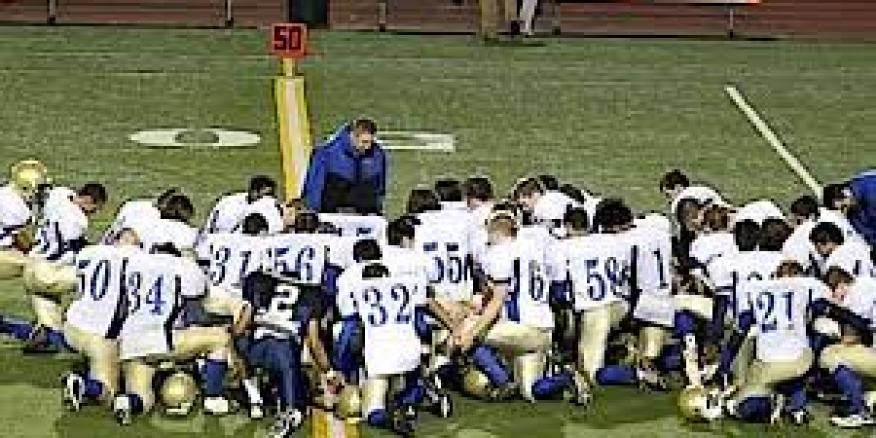

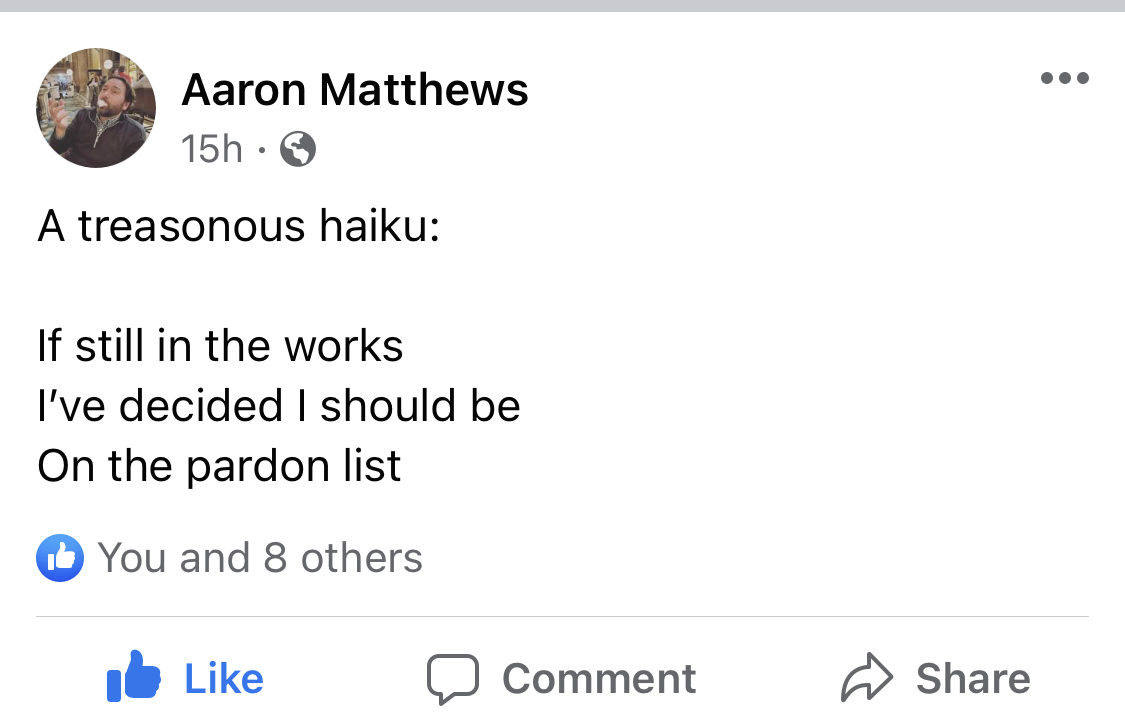

 Tipsy Teetotaler ن