“I have heard from a good number of people in the S.D.N.Y. who have said, ‘Why the heck would Todd [Blanche] do this — why would he ever take this case?’” Elie Honig, a CNN senior legal analyst who worked with Mr. Blanche at the Southern District of New York, said in a recent profile. “My response is, generally, when did we become pearl-clutchers about defense lawyers defending defendants?”
[W]e have to stop just seeing these [gender dysphoric] young people through the lens of their gender and see them as whole people, and address the much broader range of challenges that they have, sometimes with their mental health, sometimes with undiagnosed neurodiversity. It’s really about helping them to thrive, not just saying “How do we address the gender?” in isolation.
Ted Gioia, Why Creatives Will Win by Thinking Small pulls together a convincing case that “Even the gatekeepers are sick of dealing with gatekeepers” and are going independent and/or small to evade them. Taylor Swift and Substack are two examples, evading the gatekeepers of the sclerotic music and publishing industries respectively.
Maybe we could say that small is getting pretty big.
Ted Gioia’s got one of the best culture-analyzing Substacks going.
Living off inherited moral capital
“I wouldn’t call it a change of mind,” Will said of his transition from classical liberalism to traditionalist conservatism. “I would say that I had become much more sensitive to the problem that Gertrude Himmelfarb, her husband, Irving Kristol, and others were to cite. And that is: Does classic liberalism provide for its own continuation, or does it live off the moral capital of a different age?”
A female friend expressed outrage that Caitlin Clark would be paid a piddling $76,000 in her first year in the WNBA. (By comparison, the first pick in the 2023 NBA draft signed a four-year contract for $55 million.) I asked her what team drafted Clark. She did not know. I asked her whether she knew the name of New York’s WNBA team. She did not. The name of any team in the WNBA? Nope. A famous player in the WNBA? Again, no answer.
Staff at TheNew York Times are circulating a draft of a letter to their boss, executive editor Joe Kahn, criticizing him for saying that some young reporters are not fully committed to independent journalism. Pro tip: if you’re worried your boss thinks you’re all whiny activists, campaigning against him from within the newsroom is only proving his point. (Semafor)
[A]rena subsidies are a terrible use of finite government resources and a ridiculously egregious redistribution of wealth from regular Americans—fans and haters alike—to some of the wealthiest people and organizations on the planet. And, to top it all off, they’re a classic case of political malpractice—local officials delivering massive rents to various cronies by promising unwitting voters the world yet delivering far fewer—but still “seen”—economic and social benefits to their communities.
…
Maybe all this government support might be worth the costs if the subsidized facilities at issue produced even a fraction of the benefits that supporters promise, but they don’t. Instead, there are few positions on which more economists agree than the terribleness of sports arena subsidies.
The default position of American conservative Christians in this Fall’s Presidential Election should be to abstain or to vote for a Third-Party Candidate. Neither major party candidate is acceptable, so we should avoid complicity with both. It’s a painful situation, but not complicated.
My unspoken premise is that America is, and long has been, off course, and like all empires is waning, slowly, then all at once. (I could be wrong about the all-at-once part; that may come from the part of Evangelical apocalypticism that I did not avoid and have not fully recovered from. “Babylon the Great is fallen, is fallen” and all that.)
Neither major party has what it takes to fix that. Maybe no party does. Still, I intend to vote for Peter Sonski for President. That’s not just a protest vote. My values line up better with the American Solidarity Party than with either the Republicans or the Democrats.
Am I throwing my vote away? No. I’m telling both parties that they’re unacceptable. That’s a message well worth sending, not a waste. If enough people tell them that, they’ll change or fade into irrelevance. The first step toward changing our unsatisfactory two-party system, if it’s not entirely incorrigible, is to stop voting for lesser evils.
Am I voting for the other guy by not voting for your guy? No. I know how my home state is going to vote; my vote won’t be decisive — not in 2024, anyway. If polling was close enough that I thought it might make a difference, my correct decision would admittedly be harder emotionally. (I last voted for a “lesser evil” in, I believe, 2008.)
That’s it.
POTUS 2024
It was like he made you feel everything’s gonna be OK. The economy’s gonna get better; everybody’s freaking out about the border, but he’ll get it stopped.
Dee, a friend of Peggy Noonan, explaining why she’s voting for Trump.
Polls suggest that a felony conviction would lose him some votes ….
David Graham. What kind of world are we living in that a felony conviction wouldn’t be the death of a campaign?
Liberalism versus authoritarianism
I’ve tried to understand the appeal of Donald Trump. David Brooks gives it an oblique stab, and I thought there was a lot to like in his analysis, which is about liberalism versus authoritarianism, and the draw of the latter.
Now I understand how we keep electing bozos
As it happens, a new survey of registered voters was released last week from Navigator Research showing that a sizable number of Americans, incredibly enough, held Biden responsible for “the overturning of Roe v. Wade and the elimination of the federal right to an abortion.” That opinion was held by 34 percent of self-identified independents, 32 percent of Black voters, and 42 percent of Hispanic voters. It helps explain why the Biden campaign is devoting so much energy to connecting the dots between Trump’s Supreme Court appointments and the Dobbs decision. But it also suggests public perceptions of Trump are very hard to change, and that’s a big problem for Democrats.
Might there be, among those misinformed folks, people who give Biden credit for Dobbs as well as those who blame him? Or is ignorance a “pro-choice” exclusive?
Female success in Trumplandia
In The Los Angeles Times, Robin Abcarian noted that Noem, Marjorie Taylor Greene and Sarah Palin, among others, conform to a certain MAGA model for women leaders: “First, they want to prove how tough they are by shooting guns, preferably at animals, though occasionally at cars that Democrats drive. And second, they aspire to beauty standards set by Fox News anchors. Dental veneers. Cheek and lip fillers. Botox. Hair extensions. Performative cruelty and pouty lips are what it takes to succeed as a woman in the party of Trump.” (Judy Moise, Seattle)
In The Arizona Republic, Ed Masley appraised a recent Rolling Stones concert and wrote that Mick Jagger’s physicality “invites you to imagine Mikhail Baryshnikov raised by a family of overcaffeinated roosters.” (Paul Welch, Phoenix, and Dan Olson, Spokane, Wash., among others)
I have watched this play out powerfully since 2016.
De-polarizing maxims to live by
The people you think of as your enemies aren’t as wicked as you believe them to be.
If you believe that your ordinary political opponents are not merely mistaken, but are evil, you have ceased to do politics and begun to do heretical religion.
Putting things in perspective
In a gloomy mood about the state of the world, I was reminded that the big actors of today, Trump, Biden, Putin, etc. etc. will mostly be dead, and very soon. Thinking in terms of living so that our communities outlast the current commotions is important.
Leonard Woolf: “One of the most horrible things … was to listen on the wireless to the speeches of Hitler — the savage and insane ravings of a vindictive underdog who suddenly saw himself to be all-powerful. … One afternoon I was planting in the orchard under an apple-tree iris reticulata, those lovely violet flowers. … Suddenly I heard Virginia’s voice calling to me from the sitting room window: ‘Hitler is making a speech.’ I shouted back, ‘I shan’t come. I’m planting iris and they will be flowering long after he is dead.’”
You can read most of my more impromptu stuff here and here (both of them cathartic venting, especially political) and here (the only social medium I frequent, because people there are quirky, pleasant and real). All should work in your RSS aggregator, like Feedly or Reeder, should you want to make a habit of it.
Unnoticed, I had filled my cup to overflowing. Pour yourself a cup and enjoy the (mostly) curation.
Trans turning point?
Keeping score
“Males have stolen over 879 trophies, medals, and titles from women and girls across 423 different competitions in over 28 different sports,” – Reilly Gaines.
In Great Britain, the Cass Report, a comprehensive four-year study of transgender medicine for pre-adults, has case deep shade on past practices — practices Europe is backing away from frantically but which the US Medical establishment still supports. Andrew Sullivan gives them both barrels:
Big Pharma created lucrative “customers for life” by putting kids on irreversible drugs for a condition that could not be measured or identified by doctors and entirely self-diagnosed by … children.
And what if over 80 percent of the children subject to this experiment were of a marginalized group — gay kids? And the result of these procedures was to cure them of same-sex attraction by converting them to the opposite sex? I simply cannot imagine that any liberal or progressive would hand over gender-nonconforming children, let alone their own children, to the pharmaceutical and medical-industrial complex to be experimented on in this way.
…
Accountability? Good luck with that. Will any of the Twitter mobs who hounded the skeptics take stock? Will the ACLU’s Chase Strangio feel any regret for trying to censor the first major book raising the alarm? Will groups like GLAAD and HRC confess to their grotesque lies — “The Science Is Settled” — and ugly bullying tactics to suppress reporting on the question? Will they cop to having supported gay conversion therapy in which many gay kids were “fixed” by being turned physically into the opposite sex?
Will HRC and countless educators temper the curriculum that tells small children that their bodies are irrelevant to whether they are a boy or girl, and that they can change their sex at will? Will these ideologues ever concede the foul homophobia behind questioning the maleness of a girly boy or the femaleness of the tomboy? Will they ever admit that their ideological extremism, and their “queer” conflation of trans and gay experiences, has led to one of the greatest medical abuses of gay kids in history? Of course they won’t. As I write, HRC and GLAAD have not uttered a peep about the report’s findings. They are intellectually and morally bankrupt institutions, desperate for money, and using the scarred bodies of gender-dysphoric children to fundraise.
In a sane world, the doctors who pushed these lucrative treatments and the leaders of the transqueer groups responsible for the wreckage of so many young gay and lesbian lives should resign in shame. So should the MSM journalists who were stenographers for these fanatics, acting to suppress the truth rather than expose it. So should the gay doctors who supported this insanity. This was — and remains — a horrifying case of gays betraying our own — and the most vulnerable and helpless among us.
History will be brutal to those responsible. But almost certainly not brutal enough.
For me, it has always been sufficient that “woman in a man’s body” or vice-verse isn’t a real thing. The sexual binary is real. We are “assigned” names at birth, not sex, which is discovered then (if not previously). We do nobody any favors by saying “Sure, sweetie; you are whatever sex you say you are.”
Gender dysphoria is a real thing, too — a form of mental illness that should be treated with all due skill and compassion. I cannot imagine non-surgical approaches having been exhausted before a minor becomes an adult.
Transgender madness
Nothing that so captures the essence of the Cass Report as this:
Instead of taking narrow claims of dysphoria at face value, Cass adopts a holistic approach, arguing that such statements must be considered “within the context of poor mental health and emotional distress among the broader adolescent population.”
Nina Power, The Trans Reckoning is Here. Considering the context doesn’t mean ignoring, but exploring all possibilities before doing something radical.
No longer, in the sentient world, will doctors be valorized for taking narrow claim of dysphoria at face value — what has come to be called “affirming,” and beginning the process that leads to sexual mutilation in the name of sex-change.
Some U.S. legislatures had already arrived at the unfashionable conclusion that “affirming” kids with gender dysphoria through “social transitioning,” puberty blockers, cross-sex hormones and such was bad medicine, and some, including my own, went so far as to ban the medical transitioning as to legal minors. I have my doubts about legislatures practicing medicine, but the provocation was great, and I have little doubt that legislative bans will protect more kids than they hurt.
So I was feeling pretty good about the turning of the tide on trans when what to my wondering eyes should appear but a front-page, above-the-fold story in my local Gannett rag about the woes of Hoosier kids with gender dysphoria who no longer can get their desired trendy treatments in-State. The story included all the groin pieties about puberty blockers being safe and reversible — some of the very claims debunked by the Cass Report. Had they intended that story as a provocation, it could not have been better timed.
The Cass Report is fairly fresh off the press, and is the work of but one researcher, although she was very well-credentialed and took four years on the project. It probably will be critiqued — carefully, one hopes, although there may instead be an effort to mob-cancel it for want of rational criticisms.
Meanwhile, it is as if the Report gave permission for common sense to speak what it has been intimidated from saying for too long.
In my home, the local Gannett rag will be cancelled.
This is a huge step emotionally. I grew up on newspapers. My older brother had a huge paper route. Reading the daily newspaper was one of the things responsible adults did. But smaller-market newspapers have been killed by the internet. Our local rag has descended into a collection of celebrity gossip, feature stories, and a smattering of news stories from other Gannett rags in the state. It doesn’t even include enough advertising and coupons to justify hanging on any longer. That trans propaganda was just the last straw.
I’ll try to replace it with a combination of:
A retired newsman’s substack. He’s been scooping the newspaper frequently already — and his stuff is timelier, not delayed by 48 hours.
Local television websites.
Two local funeral home websites for obituaries.
We’re in a strange new world.
Culture
Billy Joel
I vividly remember the first time I heard Billy Joel on the radio. Mainstream pop/rock radio was not part of my childhood listening diet, so I was already in my early teens. I was having lunch in a university roadhouse with my father and a visiting scholar, a young neo-classical composer. We took turns poking fun at the songs on the roadhouse channel, until “Scenes From an Italian Restaurant” struck up. Then the composer paused to listen, raised a finger and said, dead serious, “This is a great song.”
As [Annie Dillard] put it so memorably, the difference between a partial and a total solar eclipse is like the difference between kissing a man and marrying him.
Virtues
I’m reminded of my colleague David Brooks’s distinction between “résumé virtues” and “eulogy virtues.” As David described it, résumé virtues “are those skills you bring to the marketplace.” Eulogy virtues, by contrast, “are talked about at your funeral — whether you were kind, brave, honest or faithful. Were you capable of deep love?” Most of the “manosphere” influencers look at men’s existential despair and respond with a mainly material cure. Yes, some nod at classical values (and even cite the Stoics, for example), but it’s in service of the will to win. Success — with money, with women — becomes your best revenge.
The problems with this approach are obvious to anyone with an ounce of wisdom or experience, but I’m reminded of a memorable line from “The Big Lebowski”: “I mean, say what you want about the tenets of national socialism, Dude, at least it’s an ethos.” It’s hard to counter something with nothing, and when it comes to the crisis confronting men and boys, there is no competing, holistic vision for our sons.
When I attended prepper conventions as research for my book, I found their visions of a collapsed American Republic suspiciously attractive: It’s a world where everybody grows his own food, gathers with family by candlelight, defends his property against various unpredictable threats and relies on his wits. Their preferred scenario resembled, more than anything, a sort of postapocalyptic “Little House on the Prairie.”
There was a dramatic jump upward in divorce rates at the beginning of the 1970s. Women whose husbands walked out were faced with the prospect of raising large families on the minimum wage. I remember that time well. Divorce laws were not particularly favorable to women in many places. One reaction was for mothers to teach their daughters never to put themselves in such a vulnerable position. This kicked off the spiral of demands for more pay and more opportunities in education and the workplace. Arguably, the pendulum has now swung too far, and men are disadvantaged by divorce laws. Why work to become a marriageable man if marriage is now such a risky proposition, especially in an era of relaxed sexual norms?
… (in most US states, the highest-paid public servant is a football or basketball coach at a state university)
David Graeber, Bullshit Jobs
NPR
“NPR is why I got into journalism. But it’s also partially why I left legacy media. By 2018, Trump voters wouldn’t talk to me, and I didn’t blame them — we often painted them as racists. And if I ever booked a white man, I’d better have a reason why,” – Olivia Reingold.
I really do think that the internet, in its original open form, is an amazing thing and a genuine contributor to human flourishing — but the occlusion of the open web by the big social media companies has been a disaster for our common life and for the life of the mind. My plan, and my hope, is to keep going here long after I have lost the ability to publish anywhere else. This is my home on the web and also the place where I can most fully be myself as a writer. And that’s worth a lot.
In The Financial Times, Anjana Ahuja questioned the potential of a new meat: “With half the U.K. population reporting anxiety about snakes and about one in 50 harboring a phobia, the idea of snakes as the new livestock of choice might not have legs.” (Lois Russell, Somerville, Mass.)
Ezra Dyer paid tribute to an automotive throwback, the Dodge Challenger Black Ghost: “It’s a stupid car, really, peak mouth-breather, screaming of wretched excess. But its analog mechanical brutality activates some primal lobe deep in our brains, the one that catalyzes noise into adrenaline. The final V-8 Challenger rolled off the line on Dec. 22 last year, another dinosaur obliterated by the E.V. asteroid.” (Gerry O’Brien, Goderich, Ontario)
In The London Review of Books, Michael Hofmann took pointed issue with some right-wing warriors: “It seems there is only one model for today’s ‘man of action,’ and that is shock and awe. Overwhelming force deployed suddenly and overwhelmingly. A theatrical performance with no audience as such, only a houseful of victims. The lions eat the circus and then tweet about it.” (William Wood, Edmonton, Alberta)
Mercy
The mercy of the world is you don’t know what’s going to happen.
Mat, in Wendell Berry’s Jayber Crow
Abortion
Donald Albatross Trump
The problem for pro-lifers is that … efforts at persuasion have become markedly less effective over a timeline that overlaps closely with Trump’s takeover of the Republican Party
…
[O]ne does not need to be a monocausalist to see how the identification of the anti-abortion cause with his particular persona, his personal history and public style, might have persuaded previously wavering and ambivalent Americans to see the pro-life movement differently than they did before.
…
With that kind of standard-bearer, the accusations of your opponents — that your cause is organized more around repression than protection, more around hypocrisy than high ideals — are going to carry more weight. And some people who might have been your allies, who share your general moral worldview, are going to find reasons to disassociate themselves from your political project.
… [T]he form of conservatism that he embodies is entirely misaligned with the pro-life movement as it wants and needs to be perceived.
That’s the price of the bargain abortion opponents made. The deal worked on its own terms: Roe is gone. But now they’re trapped in a world where their image is defined more by the dealmaker’s values than by their own.
Kevin D. Williamson comes out swinging on abortion politics:
The conservative legal view of Roe v. Wade—which is not necessarily an anti-abortion view—is that the Supreme Court exnihilated a federal right to abortion straight out of the penumbras of Justice Harry Blackmun’s posterior based on very little more than pure political will, and that Dobbs rightly reversed this act of judicial superlegislation, returning the matter to the democratic process and, mainly, to state legislatures. A person who generally supports abortion rights could easily hold that position—and, indeed, many do. By no means is it the case, however, that, as Trump stated, vacating Roe was something “that all legal scholars [on] both sides wanted.” (Even on the most serious of moral issues, Trump cannot help but lie, stupidly, blatantly, and to no purpose. He lies out of habit and because he enjoys it.) The argument about Roe was an argument about law, not an argument about abortion.
Now comes the argument about abortion.
Overturning Roe provided only the opportunity to have that argument, and, for the moment, the anti-abortion side is not having a lot of luck advancing its case. Possibly this is because the anti-abortion movement has chosen a leader who so transparently does not give a fig about abortion or any other moral or political question except to the extent that it serves his interests …
…
Consensus-building in this matter is not something undertaken in order to accommodate abortion enthusiasm in the interest of advancing a broader political agenda but rather the opposite: Consensus-building is the only way to build a stable, long-term policy that actually protects the lives of the unborn and reduces—in fact, not in theory—the practice of abortion. Consensus-building is the way toward anti-abortion goals, not a detour from them. As I have written before: The pro-life movement doesn’t win when nobody can get an abortion—it wins when nobody wants one.
This is what an interactive Economist article thinks about my Presidential vote in November:
Switch me to California and it flips strongly. I’m told the paywall is down, so size up yourself.
FWIW
The Democratic National Committee paid President Joe Biden’s legal bills while he was under investigation by special counsel Robert Hur over whether the president mishandled classified documents, Axios reported Friday. While the Biden campaign has attacked former President Donald Trump for using campaign funds to pay his compounding legal bills, the committee paid $1.5 million—mostly between July 2023 and February 2024—to attorneys and firms representing Biden during Hur’s probe. While Trump has spent funds from his Save America political action committee on legal fees, it is unlikely that his campaign is using money from the Republican National Committee for that purpose.
Trump has repeatedly challenged Biden to debate him even though he skipped all of the debates in the Republican presidential primary.
David M. Drucker, Charles Hilu and Michael Warren Camp Biden is hinting that he won’t debate. I don’t blame them: Trump doesn’t really debate; he slings insults and one-liners (last item) that demean any “debate” he’s in. Add to that a Democrat candidate who has lost a step or two, and the opening Trump gave him by not deigning to debate his inferiors, and I’m in Camp Biden on debating.
P.S. David Frum says it better than I:
President Biden’s spokesperson should answer like this: “The Constitution is not debatable. The president does not participate in forums with a person under criminal indictment for his attempt to overthrow the Constitution.”
Hoist with his own petard
New York Judge Juan Merchan—who is overseeing former President Donald Trump’s hush money criminal trial—on Friday rejected one of Trump’s final efforts to delay the proceedings set to begin later today. Trump and his team asked for the trial to be pushed “indefinitely” on the grounds that the media attention surrounding it would make it impossible for Trump to receive a fair trial. Merchan, however, held that Trump intentionally generates much of the media attention. “The situation Defendant finds himself in now is not new to him and at least in part, of his own doing,” the judge wrote.
In Dallas, Texas, last Thursday night, four people walked onto a stage: a libertarian, a recent dropout from the Democratic race for president, an economic populist, and Ann Coulter, who needs no introduction.
They were all asked a single question, which is also the No. 1 issue that will affect the 2024 election: Should the United States close its borders?
It’s the kind of topic that’s become impossible to talk about out loud and in public. One side accuses the other of xenophobia and racism; the other of lawlessness and cheating the electoral system.
But at The Free Press, we believe that the issues that matter most to Americans are worth talking about in public, without fear. That’s why we partnered with FIRE to launch our new series, the America Debates, moderated by our founder, Bari Weiss.
So on Thursday at the Majestic Theatre in downtown Dallas, we welcomed a crowd of 700 from states all over the nation including Utah, Indiana, Alabama, and Mississippi. We even met a few readers who flew in from London.
There were best friends from high school, women in cowboy boots, and married couples on either side of the issue—including Dr. Nina Niu Sanford, who immigrated to the U.S. from China at age three, and her husband, a native Texan born to a Mexican immigrant. (She voted in favor of America shutting its borders; he voted against.)
“If you want to hear an exchange of ideas it’s basically relegated to AM radio,” a pregnant woman from Rhode Island who flew 1,700 miles to the event told me. “But you never get people like this, just sitting on a stage together, hashing out ideas.”
Jake Billings, a 34-year-old from Utah, said he arrived believing in an open border. But when he heard Ahmari list the ways Americans without college degrees get the short end of the stick because of illegal migration, he felt swayed in a different direction.
“He just laid out how it hurts the working class, which is where I come from,” said Billings, who shared that his mother was one of 13 kids. “What can I say? I’m a facts person.”
This summary was preceded by “The full video of the event will be available soon to paid subscribers of The Free Press. So if you’re not already a paid subscriber, become one today.” The Free Press has become Substack’s subscription champion for good reason.
If you’re not a Free Press subscriber, you’re missing some awfully good stuff. Same for the Dispatch. If I had budget woes, those would be among the last to go.
I try to avoid a Manichean outlook on the world, but even without White Knight delusions, there’s a case to made, and Coats makes it well without a facile Putin = Hitler narrative.
Why the new Christian right keeps losing
For the most part, the new Christian right is almost entirely lacking in the discipline, self-control, and judgment required to secure real political victories in a democratic system. Small wonder many of them want a totalitarian dictator, then. Maybe that’s the only way they’ll ever actually accomplish anything legislatively.
“I don’t think the fixes that most conservatives propose would fix anything,” he said. “I don’t think bringing back in the props of official Christianity is going to get at the darkness at the center of all this.” To him the Christian worldview had become just too remote in America, and worse, millions of Americans denied the very notion of the objective truth. Like many other conservative evangelicals at the end of the century, Mohler spoke of “postmodernism” rather than “secular humanism” as the condition of godless modern America.
Frances Fitzgerald, The Evangelicals. I occasionally agree with Albert Mohler, and this is one of those occasions.
Maxine Waters changes her tune
In the young and fun days of 2018, Maxine Waters encouraged protesters to confront politicians in restaurants. In those Olden Times, she said: “If you see anybody from that cabinet [Trump’s] in a restaurant, in a department store, at a gasoline station, you get out and you create a crowd and you push back on them and you tell them they’re not welcome anymore, anywhere.” (H/t Dan O’Donnell for tracking this video down.)
Fast-forward a few years and here is Maxine Waters, after facing mild protest from a single person at a single restaurant: “As a member of Congress, where people—you know—who evidently had a racist attitude, and recently even one confronted me in a restaurant—and they don’t say racist things but what they say is they don’t like something I said. They don’t like a position that I took. But you know that—you know—if you were not black, you would not be approached that way.” Exactly. A dissatisfied constituent has never approached a white politician.
…
Meanwhile, everyone at Harvard is upset that conservative activist and writer Chris Rufo keeps finding egregious plagiarism in this or that beloved professor’s work. And The Harvard Crimson this week has a proposal: “We can’t let outsiders control the plagiarism narrative. Harvard and other universities must stay ahead of the game, surfacing instances of plagiarism and addressing them before malicious actors can hurt the University’s credibility.” I do believe Chris Rufo will accept those terms.
In February 2016, New York Times columnist Ross Douthat wrote: “If you dislike the religious right, wait till you meet the post-religious right.” His words captured a widely shared assumption that the rise of Donald Trump signaled not only the death of the religious right, but the birth of an irreligious right animated by white racial grievance.
No, I don’t think that’s clear at all. As Schmitz notes, there is a surprising move of many Hispanics and Blacks toward the GOP, and that puts a caveat on the “white racial grievance” part of Douthat’s assumption. But I don’t think it clearly disproves it.
This is but a quibble about Schmitz’s article, which I was prepared to dislike (perhaps even hate), but which I found interesting and helpful in several ways.
No, Trump’s Presidency Wasn’t Worth It
The price tag of the Trump presidency exceeds its value exponentially. The tax cuts, deregulation, judicial appointments, executive orders, and cultural counter-offensives (“he fights”) are trinkets compared to the way he has undermined the values and norms required to sustain the rule of law and the constitutional order.
I just heard the story of a candidate who was furious with his estranged wife for not posing for a family photo with the kids. I can’t say more for fear of too precisely identifying the situation, in which wife and children are quite innocent and don’t need the hassle.
Our six primary candidates for governor aren’t much better, although their badness differs from his.
Politics is so phony it makes me want to puke. Well, actually, it makes me want to post.
You can read most of my more impromptu stuff here and here (both of them cathartic venting, especially political) and here (the only social medium I frequent, because people there are quirky, pleasant and real). All should work in your RSS aggregator, like Feedly or Reeder, should you want to make a habit of it.
Today is that day the Purdue Boilermaker Men advance to the NCAA Championship game by ending the fairy tale run of DJ Burns and NC State. Remember, you read it here first. (Caveat: I have no money riding on any games and you certainly shouldn’t put money on my prediction.)
Meta
America the experiment
America as an experiment is genuinely important to the world not because of the accidents of history that made us the most powerful nation on Earth, but because America is the first real experiment in building a large, multiethnic, multicultural democracy. And we don’t know yet if that can hold. There haven’t been enough of them around for long enough to say for certain that it’s going to work,
Joseph de Maistre. Writing in 1809, he scoffed at the idea that any document written by mortal hands could ever design and establish genuinely new foundational laws. The spirit of any such laws was invariably already written on the hearts of those men who attempted to crudely reduce them to mere lines on a piece of paper. “Precisely what is most fundamental and most essentially constitutional in the laws of a nation cannot be written,” he wrote. The true constitution of a strong and functional nation was always “that admirable, unique, and infallible public spirit, beyond all praise, which directs everything, which protects everything. What is written is nothing.”
…
What is America’s implicit constitution today? Naturally, it’s never been fully captured in writing, though some authors, such as Christopher Caldwell, have variously attempted to nail it down here and there. If pressed to summarise, I might say it is one that values safety and security over freedom; top-down control over self-governance; empty egalitarian posturing over excellence; material comfort over virtue; entitlement over responsibility; bureaucracy over accountability; narcissistic emotivism over duty; fantasy over reality; global ambitions over national loyalty; dreams of progress over eternal and transcendent truths — in short, the same spirit that animates our out-of-control managerial regime. It’s the spirit which saw that regime not hesitate to impose Covid lockdowns, or trash the rule of law and attempt to jail political opponents (and for half the country to view this as acceptable or even admirable); it’s what has produced Supreme Court justices who fret free speech would undermine the security state.
The neologism “luxury beliefs” is only five years old, but what it describes was noted decades ago (if not earlier):
Harlem itself, and every individual Negro in it, is a living condemnation of our so-called “culture.” Harlem is there by way of a divine indictment against New York City and the people who live downtown and make their money downtown. The brothels of Harlem, and all its prostitution, and its dope-rings, and all the rest are the mirror of the polite divorces and the manifold cultured adulteries of Park Avenue: they are God’s commentary on the whole of our society.
At my shows, I like to have the audience sing, just for the sensuous warmth of it. We sing “My country, ’tis of thee” and in the South we can sing a hymn or two a cappella and it’s amazing to observe this from the stage, people who are surprised and delighted and moved by the beauty of their voices mingled with the others. They learned this as Baptist kids and then (I imagine) lapsed into secular humanism and went through doctrine therapy and devoted themselves to vintage wines and dark coffees and French baking, and now, as I sing “When peace like a river attendeth my way and sorrows like sea billows roll,” the words come back to them and they sing like risen saints at the Sunday camp meeting and they dab at their eyes with a hanky.
With their heavy weight and quick acceleration, EVs tend to burn through tires about 20% faster than internal combustion vehicles do, according to consultancy firm AlixPartners. And the tires cost about 50% more.
One might assume that a presidential nominee who generates as much devotion as Mr. Trump would be a financial boon to his party. One would be wrong. With Mr. Trump, everything is about Mr. Trump … While the Republican base may be smitten with Mr. Trump, plenty of big-money donors are skittish about bankrolling his nonsense. The former president has been scrambling to close the gap, leering at potential funders as if they were contestants at the Miss Universe pageant.
Leonard Leo (not the Federalist Society) provided Donald Trump with the list of outstanding conservative prospective Supreme Court Nominees that Trump ran on in 2016 and that probably made the difference in the Election. Kudos to him for that. I didn’t believe Trump would keep his promise to nominate from that list, and for that and other reasons, I didn’t vote for him.
But about the time Leo got on the Trump train, his life appears to have take a dramatic turn:
The Campaign for Accountability’s complaint alleges that “Leo-affiliated nonprofits” paid BH Group and CRC Advisors a total of $50.3 million between 2016 and 2020.
During this period, according to the complaint, Leo’s lifestyle changed:
In August 2018, he paid off the 30-year mortgage on the Mclean, Va. home, most of which was still outstanding on the payoff date. Later that same year, Leonard Leo bought a $3.3 million summer home with 11 bedrooms in Mount Desert, an affluent seaside village on the coast of Maine, using, in part, a 20-year mortgage of $2,310,000. Leonard Leo paid off the entire balance of that mortgage just one year later in July 2019. In September 2021, Leonard Leo bought a second home in Mount Desert for $1.65 million.
The complaint was based in part on a March 2023 Politico story by Heidi Przybyla. She wrote that her “investigation, based on dozens of financial, property and public records dating from 2000 to 2021, found that Leo’s lifestyle took a lavish turn beginning in 2016,” citing Leo’s purchases of the Maine properties along with “four new cars, private school tuition for his children, hundreds of thousands of dollars in donations to Catholic causes and a wine locker at Morton’s Steakhouse.”
Part of my leeriness is probably because I’m smack dab in the middle of reading Timothy Egan’s A Fever in the Heartland: The Ku Klux Klan’s Plot to Take Over America, and the Woman Who Stopped Them, which describes Indiana Grand Dragon D.C. Stevenson’s extremely profitable financial con in his promotion of the 1920s Klan. The story is full of MAGA-like personalities (right down to the rapes) and profiteering.
I’m no longer a Ben Shapiro fan, but when he’s right, he’s right.
Election 2024
Political Therapeutic Deism
Political Therapeutic Deism is a system of beliefs which invoke religious terms for the purposes of affirming one’s politics. It includes beliefs like:
God is on my political party’s side.
My views on political issues are a leading indicator that I am a true Christian.
My actions in politics are justified in light of God’s general approval of my politics.
I do not understand how other “Christians” could vote for my candidate’s opponent.
It is clear and obvious which political issues are most important to God.
Political Therapeutic Deism makes sense of why we’re seeing sorting in churches by politics, over and above theology or other factors. It makes sense of why we’ve seen steep declines of religious affiliation among Democrats over the last several decades, and why growing numbers of Trump supporters identify as evangelical, even if they don’t share evangelicals’ theologicalbeliefs. …
Political Therapeutic Deism has the benefit of making clear what we are seeing is the misappropriation of religious language and symbols for political ends. It also harkens to a term (Moral Therapeutic Deism) which has been thoroughly rejected by some of the very kind of people “Christian nationalists” seek to persuade to their way of thinking. They want to equate opposition to their political proposals as opposition to Christianity itself. Why would we help them?
Until a better term comes along, I expect to use political therapeutic deism for the faux-evangelical Trumpists that MSM calls “white Christian nationalist.”
“But the judges” no longer applies
For many legal conservatives, a two-word incantation—“but judges”—defined the Trump era. It began as an exhortation or, perhaps, a justification. Later it became a coping device, edging into gallows humor. As the shadows lengthened in the last days of a desperate and increasingly lawless presidency, it became a rueful question. A mob, incited by the president who refused to accept a lawful election, sacked the Capitol, assaulted police officers, interrupted the electoral count, and hunted down officeholders—“But … judges?”
Conservatives who had wagered the Trump gambit worth the risk got the upside of their bargain. Trump nominated many excellent men and women to the judiciary. A confident conservative majority, grounded in originalism and textualism, now controls the Supreme Court. The white whale of Roe v. Wade—long emblematic of lawless usurpation of policymaking by the Court—fell.
Contrary to the fears of liberals and the misplaced hopes of Trump, conservative judicial appointees upheld the principle of judicial independence. They refused to serve as reliable partisans and handed Trump and his administration importantlegal defeats. Crucially, Trump’s nominees rejected his baseless claims of a stolen election.
But these advances in jurisprudence came at a deep civic cost. The president with whom legal conservatives allied themselves used his office to denigrate the rule of law, mock the integrity of the justice system, attack American institutions, and undermine public faith in democracy. Beyond the rhetoric, he abused emergency powers, manipulated appropriated funds for personal political ends, and played fast and loose with the appointments clause, all at the cost of core congressional powers.
Republicans in Congress barely resisted these actions and increasingly behaved more like courtiers than members of a co-equal branch of government.
…
Partisans promise that Trump in a second term would nominate judges more loyal to the president while Trump-friendly, post-liberal thinkers develop theories like “common-good constitutionalism” in which conservative judges would abandon originalism in favor of promoting certain ends. Adrian Vermeule, the leading academic proponent of the latter view, has argued that “originalism has now outlived its utility, and has become an obstacle to the development of a robust, substantively conservative approach to constitutional law and interpretation.” It would be deeply ironic, and the ultimate failure of the movement, if the “but judges” bargain were to end with purportedly “conservative” judges legislating from the bench.
Anyone who says “but the judges” to justify voting for Trump in 2024 is seriously misguided. He’s disappointed with his first-term SCOTUS nominees in particular, as they’ve not been the kinds of toadies he wants. Next time, he’ll nominate toadies, not excellent jurists, and since the Senate is going to flip (11 Republicans are up for re-election, 23 Democrats) he’ll get them confirmed.
Good advice, since abandoned
Listen to me. Listen. If the twentieth century tells us anything, it’s that whenever you hear anyone standing before a crowd, winding them up about the cause of creating utopia on earth, you had better run.
Rod Dreher, December 12, 2020. I’m sorry to say that he has since reconciled himself to a supposed necessity to vote for Trump.
Miscellany
Rowling throws down the gauntlet
Scotland has a new hate speech law that criminalizes “stirring up hatred” against a series of “protected characteristics,” including race, age, religion, disability, and “transgender identity.” J.K. Rowling threw down the gauntlet:
On Monday, the day the law came into effect, the Harry Potter author posted a dare on X. In it, she named 10 transgender women, called them all men, and said: “If what I’ve written here qualifies as an offense under the terms of the new act, I look forward to being arrested.” … “If they go after any woman for simply calling a man a man, I’ll repeat that woman’s words and they can charge us both at once.”
I am a fan of almost anything that disrupts the hegemony of this fatuously self-righteous and profoundly anti-intellectual educational establishment, which exists not to lift up the marginalized and excluded but rather to soothe the consciences of the ruling class. May the forces of disruption flourish.
Trump Media lost $58 million and brought in $4 million in revenue last year. Yet, the market is valuing DJT at $6.4 billion. That there’s a meme stock. (I could have pulled this for “Rackets,” above.)
It is odd that Trump got the reputation of being The End of the American Press, when Biden is really the one who hates questions and shuns journalists. Remember Trump? How he would actually never stop talking? How he’d sit and antagonize reporters endlessly? But oh, he’d talk. It was alarming, often described as “rambling.” But at least we all knew exactly what was going through his mind (chaos, tangents, rage, pettiness, pretty good jokes, Rosie O’Donnell, more Rosie O’Donnell, why was it always Rosie O’Donnell).
[S]tudent loan relief is the wrong approach. Colleges should simply not cost this much. Solution: eliminate 90 percent of university administrator roles, since at least that many are fully fake. Offer incentives for kids to enroll in trade schools or community colleges. Boom, loan crisis solved, you’re welcome. Next topic.
From Reuters
America’s leading women’s rights group of yesteryear is still arguing that it’s white supremacy to maintain girls’ sports. Here’s NOW, the National Organization of Women: “Repeat after us: Weaponizing womanhood against other women is white supremacist patriarchy at work. Making people believe there isn’t enough space for trans women in sports is white supremacist patriarchy at work.” Yes, it’s white supremacist patriarchy to argue. . . that someone who’s gone through male puberty might have an unfair advantage in, let’s say, rugby. Interesting. Fascinating. I will repeat until I am clean.
When I think of the consciousness that generates the circular sorrow of “Ifs eternally,” or the one trying to find the one thing that will unify all the disparate experiences of one life, I think of a man—almost always a man, though there are notable exceptions—sitting alone in a room and doggedly trying to figure it all out.
A 2023 account of these car dealers by Slate’s Alexander Sammon recounts the awesome scale of their collective wealth and influence on Republican politics: “Auto dealers are one of the five most common professions among the top 0.1%” while making up “a majority of the country’s 140,000 Americans who earn more than $1.58 million per year”; members of the industry association donate to Republicans “at a rate of 6-to-1”, through which they have worked “to write and rewrite laws to protect dealers and sponsor sympathetic politicians in all 50 states”. Such figures help to make sense of Moreno’s and his fellow car dealers’ status as the cream of the crop among America’s local elites.
Cuenco seems to overlook the difference between wealth and prestige.
Sportsball
Being in politics is like being a football coach. You have to be smart enough to understand the game, and dumb enough to think it’s important.
Eugene McCarthy, via the Economist’s World in Brief
Dictator or not?
On the drive into Budapest from the airport, travelers can see billboards erected by the Hungarian political opposition, featuring a photo of Prime Minister Viktor Orban with the slogan “God? Homeland? Pedophilia!” It’s a reference to the recent scandal involving a presidential pardon of a politically connected man who had been convicted of aiding in a pedophilia cover-up. The scandal cost the ruling Fidesz party its top two female politicians: President Katalin Novak and former Justice Minister Judit Varga.
Associating the prime minister, who apparently did not know about the pardon until the media reported it, and who quickly called for resignations of these top allies, is a low blow. But that’s how it goes in Hungary. Fidesz is not above similar tactics. If you expect Magyar politics to be a tea party, you are going to be disappointed.
Still, bearing in mind how the U.S. president recently denounced Orban as a “dictator”—a slur widely repeated in Western media and public discourse—you have to wonder what kind of strongman would allow himself to be publicly criticized as a promoter of pedophilia. If Orban really were a dictator, wouldn’t these billboards have been banned? Wouldn’t those who paid for them be eating goulash in a gulag now?
… Hungary, which supposedly groans under the burden of the Orban dictatorship, enjoys far more freedom of expression than countries whose media and whose leaders condemn it as repressive. You have to wonder why.
Rod Dreher in the European Conservative (no paywall).
Eugenics for the age of The Machine
Servility
Will we reach the point where nobody thinks they could start their own little business?
Political
Meet the new boss, Trumpier than the old boss
Washington Post: Was the 2020 Election Stolen? Job Interviews at RNC Take an Unusual Turn.
Those seeking employment at the Republican National Committee after a Donald Trump-backed purge of the committee this month have been asked in job interviews if they believe the 2020 election was stolen, according to people familiar with the interviews, making the false claim a litmus test of sorts for hiring.
The closest I get to liking Donald Trump is when he evinces contempt for those who idolize him.
I feel guilty about that, as one shouldn’t sympathize with con artists. But you know how it is with scams: At a certain point of extreme gullibility, the mark starts to seem more contemptible than the person preying on them. If you’re still falling for “Nigerian prince” emails in 2024, the problem lies chiefly with you, not with the flimflam man responsible.
The sheer laziness with which Trump has courted evangelical voters since 2015 has always betrayed a degree of sincere disdain for them that’s unusual in a man not otherwise known for honesty. It would have been trivially easy for him to brush up on Christian dogma after he entered politics in the name of convincing the Republican base that he’d seen the light after a dissolute adulthood. But … he couldn’t be bothered to do so.
He’s never cared enough about the faith espoused by most of his supporters to even pretend to take it seriously.
A man who lies like he breathes somehow can’t get motivated to lie persuasively about being pious, even as a gesture of minimal respect for his own fans. That’s remarkable. And insofar as most evangelicals have shrugged it off and rolled over for him anyway, my sympathies lie more with him. He’s been sending them the political equivalent of “Nigerian prince” emails for nine years; if they haven’t wised up yet, that’s a problem with them more so than with Trump.
…
His first political priority, even above maximizing his chances of reelection, is purging the Republican Party of anyone who would question his right to rule. He doesn’t want independent-minded Christians in the GOP any more than he wants the traditional conservatives who preferred Nikki Haley in the primary. He’ll win without them—and if he can’t, he’ll at least have consolidated his power over one-half of America’s political establishment in the process.
In that context, whether by design or by happenstance, the “Trump Bible” operates as a sort of litmus test for evangelicals who have stuck with him this far through thick and thin. You won’t abandon me if I make a mockery of your faith, will you? No, of course you won’t.
…
The devolution of evangelicalism in the Trump era is itself an interesting mix of radicalism and transactionalism, mirroring Trump’s personality. Many Christians made a cynical bargain with him in 2016, suppressing their moral discomfort and offering him their votes in exchange for guarantees that he’d enact their agenda, starting with limits on abortion. Insofar as his poor character and irreligiosity troubled them, some may have idly hoped that their influence over him, and the influence of figures like Mike Pence, would turn his heart toward God in time. He might be remade in Christianity’s image.
That transaction didn’t pan out the way they’d hoped. For many, Christianity has been remade in his image.
How to reach Republicans with the anti-Trump Gospel
Carville has been sounding an alarm about progressives getting too censorious since he advised Hillary Clinton in 2016. He disparaged liberals’ snooty, elitist “faculty lounge” attitudes long before he blew off the faculty lounge himself. He complained that “woke stuff is killing us,” that the left was talking in a language that ordinary Americans did not understand, using terms like “Latinx” and “communities of color,” and with a tone many Americans found sneering, as in Hillary’s infamous phrase “basket of deplorables.”
“There are a lot of people on the left that would rather lose and be pure because it makes them feel good, it makes them feel superior,” Carville said. And that, he said, is how you end up with Dobbs.
He thinks Donald Trump’s voters see him as akin to King Cyrus or King David in the Bible, a flawed messenger, so it’s best to use a biblical narrative about betrayal.
“If you say, ‘You dumb son of a bitch, how can you ever think that this fat, slimy, rapist, criminal, racist should be president?’ they’re going to recoil,” he said. “I think Democrats should say: ‘Look, you believed in him. You felt like you weren’t being seen, you were being culturally excluded. But he betrayed you. You thought he was going to be for you and helping you, but he was really for TikTok and tax cuts to the rich.’”
I submit that what changed when Trump entered the political arena on the highest levels isn’t that he gained powerful enemies who resolved to take him down by any means possible, nefarious or otherwise. What changed is that he was now a magnet for all kinds of scrutiny—journalistic as well legal …
Isn’t this the most obvious thing in the world? What is the first thing that anyone entertaining a run for the White House is asked by anyone who understands the process? Do you have any skeletons in the closet? Better get them out in the open now, because they will be discovered during the course of the campaign, and they will sink you, especially if you seek to cover it up.
Because Trump’s alleged crimes and misdeeds were extremely complex and deeply embedded in his sprawling business empire—and because the wheels of justice (rightly) grind extremely slowly—it’s taken many years for numerous lines of investigation to culminate in several trials all at roughly the same time, just as Trump is gearing up for a third attempt to win the White House. That’s not great. But as Jonathan Chait has argued quite cogently, the reason why it’s happening is that Donald Trump is a crook! If he wanted to continue getting away with being a crook, he could have decided not to run for president! Instead, he launched a campaign, won, lost, and is now running again. That’s nearly nine years (and counting) of ensuring the Klieg lights of public scrutiny are trained on every aspect of his life and business. What did he expect?
Since Trump trends toward imbecility, he may be surprised and outraged about this. But his defenders really should know better.
Jonah Goldberg on NBC’s difficulty finding commentators to defend Trumpy positions:
I’ve said it a million times on here: When we were all growing up, […] the word “RINO” meant someone who was squishy on abortion, or taxes, or foreign policy, or something like that. It was about issues. Now, by Trump’s own admission, RINO only refers to people insufficiently loyal to Donald Trump. And so you get this weird kind of thing where you have to find people who are supposedly intelligent conservatives who are also willing to talk about Donald Trump as if he’s comrade Stalin. And that’s a really tiny universe of people because it almost demands that you have no integrity or that you lie. And that’s how Ronna McDaniel starts to look attractive.
Wordplay
Tina Brown assessed King Charles: “Even with the best prognosis for his cancer, he has been left with a rueful rump of a reign.” (Ann Madonia Casey, Fairview, Texas)
Jesse Green reviewed a new Broadway production: “Romantic musicals are as personal as romance itself. What makes you sigh and weep may leave the person next to you bored and stony. At ‘The Notebook,’ I was the person next to you.” (Christopher Flores, San Antonio)
And Bret Stephens, conversing with Gail Collins, skewered the social media site affiliated with Donald Trump: “I take it you’re referring to Truth Social, which in an honest world would be renamed Lies Sociopathic.” (Ross Payne, Windermere, Fla.)
I’ve been soaking in a culture for a few days — the culture of Hoosier basketball mania. It’s a great year to be a fair weather fan living in Purdue-land. I’ll be tuning in again in moments.
Right too early, they’d like their lives back, please
NHS England has just announced it will no longer be prescribing puberty blockers to children with gender dysphoria (a fancy term for distress at being the sex you are, which explains precisely nothing). There is, it turns out, “not enough evidence to support the safety or clinical effectiveness” of this form of treatment. Other countries, such as the Netherlands, home of “the Dutch protocol”, are now acting with greater caution. It seems as though the doubters — those of us “radicalised” into believing what everyone else believed until six or seven years ago — were right all along.
…
As I’d often be reminded when I raised objections, I’m not an endocrinologist, or a psychologist, or a queer theorist, or a porn-addled New York writer, or a four-year-old child speaking in gendered tongues. It is hard to pinpoint precisely which field makes you an expert on whether puberty blockers are a good idea, because for so long the only acceptable qualification has been insisting that they are a good idea.
As Hannah Barnes documented in Time to Think, experienced clinicians at London’s Tavistock clinic ceased to be considered experts the moment they no longer toed the line …
It is staggering to realise just how flimsy the evidence in favour of all this was. Experiments have been conducted on the bodies of children due to the political cowardice of adults. Humans cannot change sex. We cannot go through any other puberty than the one our body is destined to go through. This is what makes us adults. It is obscene that so many have lied to children, and by doing so put them at risk of so much long-term damage ….
Puberty blockers to be discontinued in England: In a seismic moment in this long debate, the National Health Service in England has officially ended the use of puberty blockers for gender-dysphoric children. From the NHS: “We have concluded that there is not enough evidence to support the safety or clinical effectiveness of (puberty blockers) to make the treatment routinely available at this time.” The drugs will be prescribed only as part of carefully watched clinical trials. You don’t need me to remind you what these drugs do but I will anyway: prescribed at the start of puberty, they impact bone density and height and can do things like cause teeth enamel to shed and crack; if followed with cross-sex hormones, they can leave the child entirely sterile and unable ever to orgasm. There is no evidence of improved mental health outcomes from this treatment plan.
Now, the early critics of puberty blockers are asking for their lives back. Here’s James Esses, who was studying to be a therapist: “For daring to say that children should not be prescribed irreversible and harmful puberty blockers, I was expelled from my Masters’ degree. As of today, it is official NHS England policy. Yet, I remain expelled.” Will James see this reversed? Will any of the people who fought to achieve this protection for kids get apologies? Doubtful. Their arguments may be official English medical policy now, but it’s best to leave them in the gulags of their professions anyway. It’s a shame they had to be right so early.
It’s interesting to me that some gays and lesbians are the most trenchant critics of trans ideology. Nellie’s lesbian, and gay Andrew Sullivan is particularly eloquent in voicing his concerns.
Ideology
Speaking of ideology:
An ideology is quite literally what its name indicates: it is the logic of an idea … its thought movement does not spring from experience but is self-generated, and … it transforms the one and only point that is taken and accepted from experienced reality into an axiomatic premise…. Once it has established its premise, its point of departure, experiences no longer interfere with ideological thinking, nor can it be taught by reality.
Over the past decade a new, and very revealing, locution has drifted from our universities into the media mainstream: Speaking as an X . . . This is not an anodyne phrase. It tells the listener that I am speaking from a privileged position on this matter. (One never says, Speaking as a gay Asian, I feel incompetent to judge this matter.) It sets up a wall against questions, which by definition come from a non-X perspective. And it turns the encounter into a power relation: the winner of the argument will be whoever has invoked the morally superior identity and expressed the most outrage at being questioned.
Comparisons between Silicon Valley and Wall Street or Washington, D.C., are commonplace, and you can see why—all are power centers, and all are magnets for people whose ambition too often outstrips their humanity.
Adrienne LaFrance, The Rise of Techno-authoriarianism.
(* Yes, I checked. The plural is “nexuses”.)
Conspiracy theorists
There was a time, not that long ago, when mainstream-news consumers pitied people who had succumbed to the sprawling conspiracies of QAnon. Imagine spending your days parsing “Q Drops,” poring over cryptic utterances for coded messages. Imagine taking every scrap of new information and weaving it into an existing narrative. Those poor, deluded, terminally online saps. What a terrible modern affliction.
And then some of my friends became Kate Middleton truthers ….
There’s more to a quadrennial US election than the Presidency, but just for the sake of old-timey water-cooler talk, let’s act like there isn’t much more.
The darkest timeline
Not for another seven and a half months will there be truly meaningful news at the polls to analyze, but I suppose Tuesday night’s primary results warrant a word or two.
By choice, of course. Most Americans oppose having Joe Biden or Donald Trump back on the ballot in November, but partisans are comfortable with it. And in our terrible system of choosing party nominees via primaries, partisans call the tune.
Democratic primary voters weren’t offered a serious alternative to the president this year and never put pressure on their leadership to provide one. Republican primary voters were offered serious alternatives to their own nominee but preferred to stick with an adjudicated rapist who attempted a coup on January 6.
The fact that we’ve saddled ourselves with a rematch between two unfit geriatrics whom most of the population dislikes is a window onto a decadent country’s depleted civilizational will. A people that no longer takes politics or its role in the world seriously predictably can’t muster the effort to provide itself with capable leadership options for its most important job. No wonder Aaron Rodgers is suddenly being touted as a potential vice presidential candidate; in 2024 America, why wouldn’t he be?
[O]verall this is an absurd moment. Everything’s settled but nothing feels stable. A nation now knows who its two major party candidates will be, after relatively easy contests, and that nation doesn’t want those candidates! The polls show it. The general feeling: We’re stuck with these crazy old coots.
Neither candidate can, as they say in politics, do optimism. Neither can make you see a better tomorrow. Mr. Trump is American carnage; everything’s terrible and only he can repair it; the worse things are, the better his chances. That’s why he didn’t want the recent bipartisan immigration bill. On a problem that’s, say, a foot long, it offered 2 inches of progress. Can’t have that! Mr. Biden can’t do optimism because when he speaks of the sunny side he sounds out of touch. He’s not believable and does not have a plan beyond keep on keepin’ on. He sounds like a politician who’s just word-saying.
What to say about these characters of 2024? Representing the “Outs” is a grifting bullsh*t artist who will spend the next four years monetizing his entire administration. Meanwhile, representing the “Ins” is a mumbling, bumbling old Cold Warmonger, slave to a soulless and increasingly discredited ideology who will continue to project our power abroad like it is 1991, arrogantly clueless to how both the world and his own country have shifted under his feet since he first entered the Senate during the Nixon administration.
Who would vote for either of these hucksters? I will tell you. It is your brother-in-law; your favorite cousin; your neighbor; your best friend from college; your co-worker; the nice lady you talk to at the dog park; the server at your favorite restaurant; and that cute young couple with the adorable new baby. In our unique political culture, the sublime and the lovely and beautiful merge seamlessly with the hideously absurd.
Trying to explain why Biden is struggling despite the availability of so many arguments that things are going well:
Something like the following process appears to happen: A group of left-leaning activists declares that certain words, claims, or arguments should be considered anathema, tainted as they supposedly are with prejudice, bigotry, racism, sexism, xenophobia, homophobia, or transphobia; then people in authoritative positions within public and private institutions (government, administrative and regulatory agencies, universities, corporations, media platforms, etc.) defer to the activists, adjusting the language they use to conform to new norms; and then, once the norms and expectations have been adjusted, a new round of changes gets mandated by the activists and the whole process repeats again, and again, and again.
I suspect that to many millions of Americans (and to lots of people living in democracies across the world where something similar is going on) the process feels a bit like a rolling moral revolution without end that makes them deeply uncomfortable … I’d be willing to bet that for many … the negative reaction follows from the sheer bossiness of it, with schools, government bureaucrats, HR departments at work, movie stars, and others constantly declaring: You can’t talk that way anymore; you must speak this other way now; those words are bad; these words are the correct ones. A lot of people are ok with this. But many others respond with: Who the f-ck are you to tell me how I’m allowed to talk? Who elected or appointed you as my moral overseer and judge?
…
[C]onsider what happened after Biden, in an unscripted remark during the SOTU, used the words “an illegal” to describe a foreign national who allegedly murdered a 22-year-old nursing student in Georgia last month. Immigration activists and others on the left wing of the Democratic Party sharply criticized Biden for this, calling the term “dehumanizing,” and two days later, he apologized, saying: “I shouldn’t have used ‘illegal.’ It’s ‘undocumented.’”
… The president misused the official moral vocabulary of our moment.
But who set those rules in the first place? Who made them so official that violating them required a public apology from the president? Who is Biden afraid of offending? The answer in this case is single-issue pro-immigration activists and social-justice progressives on the leftward edge of the Democratic Party. The self-correction therefore announced to the world that when it comes to such matters as how one speaks and thinks about the status of immigrants in our country, the president takes his orders from—he defers to—moral busybodies on the left wing of his party.
…
The reason the subterranean influence of social-justice progressivism is worth focusing on is that it may be a major contributing factor to the collapse of the center-left bulwark against the populist right. The rolling moral revolution is intensely disliked by a sizable faction of the electorate …
The problem for Democrats, very much including Joe Biden, is that the activists pushing the new moral dispensation are part of the Democratic Party’s electoral coalition. For that reason, any time a person unhappily encounters an example of social-justice progressivism in their lives, it’s easy and not unreasonable to direct the resulting anger at the Democratic president, even though he’s not leading the charge but merely going along with and deferring to it.
This might not be the sole or even primary factor behind Biden’s persistently soft approval numbers. But I’m quite sure it’s one important factor—and one the Democratic Party’s leading officeholders and professional strategists seem reluctant even to acknowledge, let alone address.
Damon Linker (boldface added), in some of his very sharpest commentary of this election cycle.
The downticket – or maybe even RFKJr.
Two years ago, Democratic outfits spent money in GOP primaries on ads designed to help crank populist candidates prevail over more formidable mainstream opponents. “Cynical” doesn’t begin to describe the mindset of liberals who routinely warn voters that MAGA Republicans are a threat to democracy and then quietly spend millions of dollars to help those same Republicans advance to the general election.
But that’s what Democrats did in 2022, believing that their own candidates would have an easier time defeating cranks in November. Annnnnnd … they were right.
You can read most of my more impromptu stuff here and here (both of them cathartic venting, especially political) and here (the only social medium I frequent, because people there are quirky, pleasant and real). All should work in your RSS aggregator, like Feedly or Reeder, should you want to make a habit of it.
Of course, that’s not on the Liturgical Calendar. And FWIW, I won’t be partaking. I. Am. So. Over. American football.
Sins, transgressions, infirmities
“If only I had known…”
These are, not infrequently, the words of an apology. They are also an explanation of why we are sometimes the way we are. Ignorance is, in the mind of the Fathers, a major cause of sin. Of course, if sin is understood in a legal/forensic framework, then ignorance would be nothing more than a form of innocence. Not knowing is excusable in most cases. But the teaching of the Church does not describe the world in legal/forensic terms. The world is not about who and what is right or wrong. It’s about what truly exists and what does not. Existence and being (ontology) are what matter, not what is legally correct. …
The door to true knowledge is repentance. Of course, for most people, repentance itself belongs to the category of legal and forensic things. It means not doing bad things, promising not to repeat the ones I have done, and, perhaps, feeling sorry. This is both inadequate and misleading. The Greek word used for repentance is metanoia, literally a “change of mind (nous).” It can be described as a movement from one form of knowledge to another (true knowledge).
The path to such knowledge passes through humility. And the path to humility involves shame (yes, I’m writing again about shame). Shame is more than a significant emotion (painful at best). It is described by the Elder Sophrony as “the Way of the Lord.” It is at the very heart of repentance. Shame has to do with “who we are.” Guilt is about “what I have done.” It is important to understand the distinction.
For some time before I became Orthodox, I was aware that most of the harm I caused, most of the chaos I cast onto those around me, was not the result of malice or a desire to harm, but of ignorance, of epistemic insufficiency if you will. I knew that my finitude often made me an agent of mischief in the world even when I thought I was doing the right thing.
But I was in a Christian tradition that understood sin in a legal/forensic framework, a framework focused on deliberate malfeasance. In this framework, to at least a degree, the proverbial Bull In The China Shop isn’t really a problem because he meant no harm. That was not true to the whole of my experience; I couldn’t help but feel responsible somehow for all the broken china around me (and, worse, the crushing knowledge that there doubtless was more, elsewhere, that I wasn’t even aware of).
When I stumbled into Orthodoxy, I immediately noticed, from the ubiquitous Trisagion (Thrice-Holy) prayers, pretty solid proof that Orthodoxy gets that:
Lord, cleanse us of our sins. Master, pardon our transgressions. Holy One, visit and heal our infirmities.
There are apparently (at least) three problematic categories, and only one of them calls for “pardon.” The others need “cleansing” or “healing.” (Prayers for forgiveness from sins committed “in knowledge or in ignorance” reinforced that.)
Now that was true to the whole of my experience.
Positive World, Neutral World, Negative World
I apparently was too gullible in accepting Aaron Renn’s tidy positive world, neutral world, negative world taxonomy as a very useful insight. Patrick Miller, whose church figured in Renn’s account, has now written a very helpful corrective (not really a rebuttal) to Renn: What Happened When My Church Encountered Negative World:
[T]he negativity of the post-2015 negative world is most keenly felt by those who, in the pre-2014 world, had easier access to power and influence: middle class, college-educated, non-coastal evangelicals. I’m not doing identity politics, I’m just observing that if you lived on the coasts as an evangelical before 2014, you didn’t feel like you lived in a “neutral world.” You were an outsider who spent the last few decades with divergent views on sex/sexuality. But middle class, midwestern and southern evangelicals enjoyed a sense of being normal. Many were insiders who had access to power denied to those of lower social strata, and (often) different skin color.
For example, it’s hard to imagine black or white Christians teaching orthodox views of race in Selma, Alabama in 1964 calling it a “positive world.” So-called “Christian” segregation academies, like Bob Jones University, didn’t desegregate until 1971, and didn’t lift their ban on interracial dating until 2000. They were reflective of the negative world of the south throughout the so-called “positive world” era.
…
We experience today as a particularly negative world—as compared to 10 years ago—for the same reasons non-evangelicals like Andrew Sullivan and J.K. Rowling do.
This is why former enemies of evangelicalism, like the new atheists, have become co-belligerents. Sam Harris, James Lindsay, and Peter Boghossian all live in a negative world, too. Likewise, non-evangelical free speech advocates who once coded left, like Johnathan Haidt, Bari Weiss, and Greg Lukianoff, also find themselves in a negative world.
Evangelicals experience the negativity as resistance to their faith, the New Atheists as resistance to reason, and the free speech advocates as resistance to the First Amendment. In many ways it’s all of these things and none of them in particular. The negative world that Renn describes results from the recent ascension of an imperialistic ideology—the successor ideology, the identity synthesis, wokeism—that has taken control of major American institutions, and is unafraid to forcefully remove and shame anyone and everyone who resists assimilation.
So let me be clear: We do live in a negative world and we are not alone.
…
While our story, certainly fits with [Renn’s] narrow thesis, it also shows what his framework ignores: 1) The negativity non-coastal evangelicals experience today does not come exclusively from progressives, but just as forcefully from far-rightidealogues. 2) The pre-2014 era wasn’t neutral. It, too, was a negative world. Put differently, Renn’s framework doesn’t actually make sense of the church that, in his introduction, epitomized it.
…
[As an example of negativity from both sides, I’ve had] many strange experiences. In a single day, someone publicly called me a CRT cultural marxist and someone else called me a white supremacist. In a single week, one family left the church because we weren’t pro-BLM and a different family life because they said we supported CRT. We took hard hits publicly for critiquing the January 6 rioters and critiquing our school district for bringing children to a drag performance without parental permission.
…
I had people whom I counseled through marital distress, catastrophic loss, and awful sickness who turned against me because I wouldn’t affirm a right-wing conspiracy theory or stop teaching about ethnic reconciliation (which is hard to do if you teach through Ephesians, Galatians, Romans, Luke, Revelation, etc.).
…
When you strip away all the globalizing abstractions—like journalism, Hollywood, government, and big business—and focus instead on the on-the-ground experience of local institutional leaders, you will discover that their “negative world” is caused both by a left-wing progressive movement and a right-wing populist movement.
There are some things in life of which it’s apt to say “I can’t un-see this.” I hope this gentle take-down of a taxonomy I’d bought into will be one of them.
The starkest of contrasts
An American legacy that lingers:
Taking seriously the mandate of liberty and equality, the Christians espoused reform in three areas. First, they called for a revolution within the church to place laity and clergy on an equal footing and to exalt the conscience of the individual over the collective will of any congregation or church organization. Second, they rejected the traditions of learned theology altogether and called for a new view of history that welcomed inquiry and innovation. Finally, they called for a populist hermeneutic premised on the inalienable right of every person to understand the New Testament for him- or herself.
A deeper historic legacy that swims against the modern American stream:
For this reason, attempting to interpret the New Testament apart from the Church and Tradition is quite unnatural and will fail to uncover the true purpose and meaning of the text. Christ did not establish Scriptures, but a Church. The Church existed before the New Testament, and the apostolic Tradition, preserved by Orthodoxy as a sacred treasure, is the only context in which the Scriptures are correctly understood.
I worry that there is some sense in which “evangelicalism” is a) mostly a sociological identifier devoid of theological content, and b) mostly a vague network of conferences, podcasts, and other online platforms.
In both cases, there simply isn’t any mechanism for handling theological error well, let alone the often far more arduous task of determining when a theological error has been made.
…
What worries me is that these controversies are effectively tried via social media, which as Blake Callens noted, is often more of an industry than a ministry. So the primary rules of the game are inherently the rules of media public relations rather than anything discernibly Christian. This means that even when a controversy works itself out in mostly unobjectionable ways, there isn’t really any institutional or procedural factor accounting for that. It’s merely the broken clock that is right twice a day. But the larger issue is the lack of rootedness in local churches which are governed by confessions, procedural norms, and so on.
Does a Muslim checking the box next to “born-again or evangelical” actually tell us something about how their view themselves in social, political, and religious space? I think the answer to that question is “yes” and I don’t just believe it’s an issue of measurement error or poor survey design. Instead, it also tells us something deeply profound about what terms like “evangelical” mean to a Muslim (or really any non-Protestant identifier) over the last decade.
Looking for a church in [City], [State] that loves Jesus, has Holy Communion every week, has at least a few other young families, and isn’t infected with white Christian nationalism. Not interested in “concert and a TED talk.” Any recommendations?
An Anglican cyber-friend reaching out on our shared social medium.
I of course offered a link to an Orthodox Cathedral in [City], [State]. It clearly fit the bill.
But it seems there was an additional, initially unspoken, desiderata: he wanted the Anglican practice of open communion — “offering Holy Communion to all baptized followers of Jesus.”
To that I had nothing to say for fear of (1) starting an argument on (2) a topic where I was out of my depth. Theological arguments on the internet are near the top of the futility heap even when both sides are well-equipped — a fortiori when one side really has no more to say that “sorry, that’s not how we do it” but then augments that with ersatz rationales.
… that Christ may dwell in your hearts through faith; that you, being rooted and grounded in love, may be able to comprehend with all the saints what is the width and length and depth and height — to know the love of Christ which passes knowledge; that you may be filled with all the fullness of God.
You can read most of my more impromptu stuff here (cathartic venting) and here (the only social medium I frequent, because people there are quirky, pleasant and real). Both should work in your RSS aggregator, like Feedly or Reeder, should you want to make a habit of it.
Paul Krugman compared the welfare of Europeans with that of Americans: “It should count for something that there’s a growing gap between European and U.S. life expectancy, since the quality of life is generally higher if you aren’t dead.”
One suspects, rather, that noisily associating with driverless cars helps to preserve Uber’s image as a “tech” company, rather than as an especially aggressive practitioner of labor and financial arbitrage. Beneath the cutting-edge hocus-pocus, Uber’s “driver-partners” appear to have entered a sharecropper economy from which it is difficult to exit.
We should notice that while driverless cars hold real potential to ease congestion, and thereby contribute to the common good, there has been no talk of treating as a public utility the infrastructure that will make driverless cars possible, nor of making their programming available for inspection. What is being proposed, as near as one can make it out through the fog of promotional language, is an “urban operating system” of mobility that would be owned by a cartel of IT companies, participation in which would not be optional in any meaningful sense. … In the mentality of corporate libertarianism, there is no concept of legitimate public authority as that which secures the interests of citizens against the power of monopoly capital.
There’s a genre of aphorism in the form “If you don’t like X, just wait ’till you see Y.”
I’m not sure “transing the gay away” is any improvement over “praying the gay away,” but it’s what we’ve now got.
[T]he vast majority of children with gender dysphoria are gay or lesbian; and this is the target population for child sex changes. How can you tell which kids are going to end up as transgender and which will become gay or lesbian? The official answer is that it is clear in every single case. The actual answer is that we can’t know for sure. But if the policy is that any child who merely says they are the opposite sex cannot be questioned, and must be fast-tracked toward an irreversible sex change, we have a huge danger: that gay children will have their bodies wrecked, their fertility ended, and their sex lives stunted because we have erased the trans and gay distinction, and, in fact, merged the two.
Tucker Carlson went to Russia to interview Vladimir Putin. In his announcement prefacing the interview, he says that while many American journalists have interviewed Ukraine’s president Volodymyr Zelensky, “not a single Western journalist has bothered to interview the president of the other country involved in this conflict, Vladimir Putin.” Well. I’m sure every major outlet has tried: Putin, who hates free speech and hates a free press, simply refuses … Putin is the reason we don’t hear from Putin. And there is a real American journalist in Russia right now: that’s Wall Street Journal reporter and current Russian prisoner Evan Gershkovich, who we see only when he’s marched into a plexiglass box for another hearing in his show trial. ….
Nextdoor’s stock is collapsing, which personally makes me a little happy. You see, Nextdoor started as a useful neighborhood communication tool. The trouble is, neighbors like talking about things that the idealistic young workers of Nextdoor don’t approve of, namely crime. You guessed it. Yes, among each other, neighbors, at least in my area of Los Angeles, often talk about which house on the block was broken into and whether they were attacked or just robbed, things such as that. Bad talk, you baddie homeowners … Bad talk has been suppressed on Nextdoor, where you may discuss only things that twentysomething engineers (who live in guarded apartment towers with doormen) agree is healthy. Like juice cleanses. …
Speaking of places I don’t need the government, this week Florida’s Ron DeSantis is supporting a state ban on lab-grown meat. “You need meat, OK? We’re gonna have meat in Florida,” DeSantis said. “We’re not going to do that fake meat. Like, that doesn’t work.” …
Dartmouth is bringing back the SAT requirement for all applicants, a first for the Ivy League, which made the SAT and ACT optional in 2020. The argument was that all tests are racist, and what’s not racist are extracurricular activities and teacher recommendations. Yes, there is nothing more egalitarian than being the goalie on a travel hockey team, a $10,000 trip to Ecuador to volunteer, and a stunning letter of recommendation from a teacher who has eight kids in her class. Sure, all studies show that the SAT has a surprisingly egalitarian effect across race and class. But dropping the test was worth it for these schools. Why? Because knowing SAT scores makes it much harder for Harvard and Yale to legally discriminate against Asians. Anyway, Dartmouth really does want to know who’s actually smart, so they’re bringing it back. What else is happening in education?
There seems a broad consensus not so much even that work is good but that not working is very bad; that anyone who is not slaving away harder than he’d like at something he doesn’t especially enjoy is a bad person, a scrounger, a skiver, a contemptible parasite unworthy of sympathy or public relief.
David Graeber, Bullshit Jobs
Recommendations
There is a young, Christian writer named Bethel McGrew who is now on my radar and probably should be on yours. Taste her Substack.
Poems Ancient and Modern is a publication about poetry. Joseph Bottum, a writer in the Black Hills of South Dakota, and Sally Thomas, in the Western Piedmont of North Carolina, choose and comment on poems, old and new, ancient and modern. Drawn from the deep traditions of English verse — the great work of the past and the living poets who keep those traditions alive — the poetry, with its accompanying commentary, demonstrates that poetry still enthralls the ear, instructs the mind, and aids the soul.
I had some reasonably good quotes here from David French on the supposed political conspiracy behind — oh, I dunno — Taylor Swift becoming popular and getting a hunky NFL boyfriend, all the better to re-elect Joe Biden.
I’m not going to blog them because I think this “story” is nut-picking that turned into a journalistic murmuration.
In other words, I know I’m out of touch with MAGA-America, but it appears to me that the people obsessing about this “story” are opportunistic journalists and pundits (sorry David), not Trumpists.
[I]t turns out that when you spend your time making fun of the stupid nonsense conservatives are spending their time freaking out about, you are also spending your precious time on earth on stupid nonsense … There’s zero stakes here, but the fact that so many people are so animated about zero stakes reveals a rot that is itself genuinely high-stakes.
After reading Freddie, I didn’t have the stomach to read an Atlantic story on the cosmic significance of Joni Mitchell at the 2024 Grammy Awards.
Wherein I comment on a sportsball
I generally am not a big fan of sportsball of any kind, but I’ve become more of a fan of Premier League soccer (the stamina of those guys is a marvel) and I’m an intense (if fair-weather) fan of Purdue Men’s basketball.
After #2 Purdue’s road win over #6 Wisconsin, sportswriters are saying things like “Purdue basketball shows it is elite, even when not its best” (Sam King) and the equivalent, elaborated nicely by Greg Doyel.
I’ve got to disagree. The team play on the road against Wisconsin is Purdue at its best. Its best is not Edey scoring 30 points, or Loyer raining down 3-pointers. Not when an opponent defends Edey and gives few open looks on 3s like Wisconsin did.
Lance Jones 20, Braden Smith 19, Zach Edey 18. That inversion is Purdue at its best, and it’s why they’ve got an unusually good shot at the NCAA Tournament.
Just sayin’.
Trump-adjacent
ICYMI
February 8, 2024 was a very, very, very good day for a certain Donald J. Trump.
All who listened to SCOTUS are confident he’s headed back to the ballot in Colorado.
The Special Counsel report on Joe Biden’s handling of classified documents was devastating to Team Biden.
(H/T Advisory Opinions podcast for that insight.)
I’d sooner drink muddy water than say “congratulations;” I’m just laying out the facts.
I know there’s a meta-argument that Trump “threatens democracy.” But the more obvious argument is that he embodies it, and it’s making a lot of people understandably sick with anxiety.
My point is that “democracy” is not worthy of our worship and never was.
Our Constitution was made only for a moral and religious people. It is wholly inadequate to the government of any other.
The moment Trump launched his insurgent campaign in June 2015, the old [Republican] order began to crumble. Now the rabble was calling the shots—and it had found its tribune.
This displaced a lot of intellectuals who had gotten used to the old way of doing business. They now had three options: They could find another line of work and thereby disappear into the American woodwork; they could become Never Trump dissenters, which either meant keeping the old fusionist-conservative remnant alive for some hoped-for fantasy future (The Dispatch) or becoming post-Republican centrist Democrats (The Bulwark); or they could try and adapt to the new Trumpian order of things on the right.
The staff of First Things, long after I’d departed, took the third path, as did many others at both old and new magazines, think tanks, and digital media outlets. Some of the work these people did and continue to do is worthwhile in trying to put policy meat on the bare bones of right-wing populism/nationalism.
Linker is not wrong about First Things, to which I’ve subscribed since its sane beginnings. As a charter subscriber to The Dispatch, I guess I’m now basically a fusionist-conservative, waiting for “some hoped-for fantasy future.” I know that I frequently think “if that’s what ‘conservatism’ is today, then I’m not conservative,” but I’m as yet unconvinced that the present populist moment is what conservatism is.
“Trump? we already did that one.”
It is well to remember that pundits fail:
The Constitution says that if Trump is impeached and then convicted, he can be banned from running for president again. Trump run again? Democrats should only be so lucky. The media culture does not allow second chances, whatever the Constitution may say. “Trump? we already did that one.” He’s over. He lost the election by 10 million votes. Is there anyone who has become more sympathetic to Trump since Election Day?
How should the press cover a presumable Trump-Biden presidential rematch? More pointedly, how should it cover Donald Trump?
The history that precedes that question is well known. In 2015-16 the media, having discovered that Mr. Trump was a walking talking ratings bump and being honestly fascinated by his rise, turned the airwaves over to him knowing he couldn’t win. He won. In a great cringe of remorse and ideological horror, many did penance by joining the “resistance.” The result: Mr. Trump wasn’t stopped—he got a whole new fundraising stream out of “fake news”—but journalism’s reputation was drastically harmed.
Peggy Noonan, who goes on to share detailed ideas on how the press needs to rehabilitate that damaged reputation.
Election 2024
We’re now looking at an election pitting the 14th Amendment against the 25th.
If it seems like a nonsequitur to blame two notoriously unsuitable major-party candidates on immorality and apostasy, you’ve got a distorted idea of how judgment works: sometimes, it’s just a matter of God stepping back and saying “Okay, have it your way.”
You can read most of my more impromptu stuff here (cathartic venting) and here (the only social medium I frequent, because people there are quirky, pleasant and real). Both should work in your RSS aggregator, like Feedly or Reeder, should you want to make a habit of it.
Despite my backlog of bought books, I’ve got a feeling that Fosse’s Septology is in my future.
The Bunkinator
Whatever you think about Arnold Schwarzenegger, his films, or his donkey, his book—Be Useful: Seven Rules for Life—is bunk: “Permit me to save you the trouble of finding out for yourself: Be Useful is a raw deal, a hollow PR exercise filled with precepts and quips but devoid of self-awareness or humility. You might be swayed by Arnie’s touching faith in bipartisanship and the need to tackle the climate crisis or moved by his tales of heroic procurement of personal protective equipment during the early days of the COVID-19 pandemic. But as a pitch for Marcus Aurelius status (the erstwhile emperor is thanked in the acknowledgments), it’s thoroughly expendable — an overpromoted TED Talk, just another cross-promotional weapon in the Schwarzenegger multimedia arsenal.”
This one’s aimed at me, but you might benefit, too:
We’re all connected. The planet is a global village. We sing “We Are the World” while swaying back-and-forth in harmony with thousands of others, holding our tiny lighters. This sense of empathy, magnified a thousandfold, feels wonderfully soft and cozy end yet it achieves absolutely nothing. This magical sense of all-encompassing, worldwide fellowship is a gigantic act of self-deceit. The fact is, consuming the news does not connect to other people and cultures. We’re connected to each other because we cooperate, trade, cultivate friendships and relationships, fall in love.
From my earliest youth, I understood that keeping up on current affairs was considered the lowest of low bars for good citizenship. I now seriously doubt that — though I really appreciate our local retired ink-stained wretch’s Substack, which in some ways outperforms his former employer’s newspaper in coverage of relevant local news (where individuals might influence things).
The present madness
Gate-crashers
But they identify as Women in Tech: There is a conference for women in tech, a group we used to care about a lot. It’s called Grace Hopper Celebration of Women in Computing, after the pioneering computer scientist. And since 1994, it’s been a place for women in the industry to gather, meet with recruiters, and hear female leaders talk onstage, though more recently the conference has opened to women and nonbinary folk. Something strange occurred this year: a ton of people signed up, claiming to be nonbinary. Those people happened to look a lot like what we used to call men. An event organizer took to the stage to say: “Simply put, some of you lied about your gender identity when you registered.” But how can they know this? What special test is there for nonbinary identification? Having more than two earrings? Hating your dad?
Suddenly, NPR was engaging in transphobic gender essentialism, writing that “men took over” the job fair. Suddenly it was very, very easy for NPR to see that men would take advantage of gender self-ID to get into a women’s space. But it remains impossible to imagine a man would also do this to get into, let’s say, a women’s prison, or a women’s-only hospital ward, or a rape crisis center, or a domestic violence shelter, or a women’s changing room, or a women’s bathroom. You see, the women in prison are poor and are not friends with NPR employees; the women at the tech conference went to Barnard! Big difference.
Speaking of something no one would never take advantage of—sports. The Swimming World Cup announced a whole new category this year for trans and gender-nonconforming folks to compete. I think it’s great—everyone who wants to race ought to be able to race, and this seemed really logical. Weirdly, when barred from competing against biological women but instead offered a trans category. . . no one signed up. World Aquatics, the governing body of the Swimming World Cup, announced this week they plan to try again.
Life is triggering. Part of being an adult is learning to take responsibility for your feelings instead of insisting that it’s the world’s responsibility not to trigger you.
Coleman Hughes, whose TED Talk advocating color-blindness somehow has not yet been published. Reports of the reason(s) vary, and I’d only be revealing my cognitive bias if I noted that the true reason is obviously that some malcontent progressives at TED prefer antiracism™ to color-blindness.
In all the time I have spent with people who live in genuinely rooted cultures – rooted in time, place and spirit – whether that be here in the remnants of rural Ireland, in indigenous communities in Mexico, Papua or India, on some of the last small farms in England, or simply talking to Maori or Native American or Aboriginal Australian people, I have been struck by one fact: people don’t tend to talk much about their ‘identity’ unless it is under threat. The louder you have to talk about it, the more you have lost. Once an entire country is talking about nothing else, that’s a pretty good sign that the Machine has sprayed the roots of its people with Roundup and ploughed the remains into the field.
The legislation also demonstrates one of the oddest results of the modern emphasis on the radical freedom of the individual. In such a world, all must theoretically be allowed to have their own narratives of identity. But because some narratives of identity inevitably stand in opposition to others, some identities must therefore be privileged with legitimate status and others treated as cultural cancers. And that means that, in an ironic twist, the individual ceases to be sovereign and the government has to step in as enforcer. The lobby group of the day then decides who is in and who is out, with the result that, in this instance, the gay or trans person who wants to become straight or “cis” (to use the pretentious jargon), cannot be tolerated. His narrative calls into question that of others. We might say that his very existence is a threat. To grant any degree of legitimacy to his desire is to challenge the normative status of the desires of others.
“The educated class is in no danger of becoming a self-contained caste,” I wrote in 2000. “Anybody with the right degree, job, and cultural competencies can join.” That turned out to be one of the most naive sentences I have ever written.
If any human acts may loosely be called causeless, they are the minor acts of a healthy man; whistling as he walks; slashing the grass with a stick; kicking his heels or rubbing his hands. It is the happy man who does the useless things; the sick man is not strong enough to be idle.
G. K. Chesterton, Orthodoxy
Politics
Backlash
Back in October of 2020, when Amy Coney Barrett was teed up to replace the Notorious RBG, Emma Green wrote:
Others believe Supreme Court victories for the anti-abortion-rights movement could be Pyrrhic, prompting a cultural backlash that will tilt public opinion in favor of expanded abortion rights.
I believe that fairly strongly. If the Supreme Court reverses Roe, thus returning the issue to the legislative process, we will see a lot of fake pro lifers change the tune they’ve been whistling. That’s why I long ago stopped fetishizing a human life amendment or a supreme court reversal of Roe v. Wade. We are saving more lives through crisis pregnancy centers. (On the other hand, the legislative process is precisely where the issue truly belongs, because the constitution is silent about it.)
I was wrong about the fake pro lifers abandoning the cause. Instead we saw, in the reddest of states, a Gadarene rush toward total abortion bans, no exceptions. I definitely did not foresee that.
I suspect that overreach, not the reversal of Roe v. Wade standing alone, is what has indeed created a backlash. Meanwhile, the media blackout on the Democrats’ opposite abortion extremism remains.
Effective LARPing the dark side
Of Donald Trump, Ted Cruz, Josh Hawley (and probably a few others):
[L]ike so very many elite members of the Republican Party, they’re standing well outside the white working class while they role-play a dark caricature of its values and interests. And all too many members of the American working class are eager to embrace that caricature. They soak up the pandering and pledge their loyalty in return.
As a religious conservative, watching the MAGA Religious Right rally at the Jericho March was a red pill experience for me … The joining of religious faith to conspiracy theory, and the juicing it with nationalist fervor, and Trumpist cult of personality — it was radioactive.
Then came a climactic mystification. There came along the first Yugoslavian ticket-collector, a red-faced, ugly, amiable Croat. The Germans all held out their tickets, and lo and behold! They were all second-class. My husband and I gaped in bewilderment. It made the campaign they had conducted against the young man in coffee-and-cream clothes completely incomprehensible and not at all pleasing. … young man turned out of the carriage because he had a second-class ticket,’ they would have nodded and said, ‘Yes,’ and if I had gone on and said, ‘But you yourselves have only second-class tickets,’ they would not have seen that the second statement had any bearing on the first; and I cannot picture to myself the mental life of people who cannot perceive that connexion.
Rebecca West, Black Lamb and Grey Falcon.
We are once again to a point where the reasoning of some of our fellow-citizens is impenetrable.
I will be traveling on a tour of parts of Greece and a pilgrimage to MountAthos, an Orthodox monastic Republic, and likely will not be posting again until sometime the week of October 22.
A fundamental reality of human existence is that vice often leaves virtue with few good options. Evil men can attach catastrophic risks to virtually any course of action, however admirable.
You can read most of my more impromptu stuff here (cathartic venting) and here (the only social medium I frequent, because people there are quirky, pleasant and real). Both should work in your RSS aggregator, like Feedly or Reeder, should you want to make a habit of it.
Some gaslighters are claiming that Spring began yesterday, but I distinctly remember that it starts March 21. That’s my story and I’m stickin’ to it.
Culture
The World Beyond Your Head
Matthew Crawford, who does not know me nor I him, nonetheless describes a very strong tendency in my life:
I can take a virtual tour of the Forbidden City in Beijing, or of the deepest underwater caverns, nearly as easily as I glance across the room. Every foreign wonder, hidden place, and obscure subculture is immediately available to my idle curiosity; they are lumped together into a uniform distancelessness that revolves around me. But where am I? There doesn’t seem to be any nonarbitrary basis on which I can draw a horizon around myself—a zone of relevance—by which I might take my bearings and get oriented. When the axis of closer-to-me and farther-from-me is collapsed, I can be anywhere, and find that I am rarely in any place in particular.
I suspect that this is why I like to travel: it forces on me that particularity of places.
My Man Mitch
Mitch Daniels, former Purdue president, didn’t hold back about the state of today’s athlete in his latest Washington Post column. The headline was about women’s sports, but Daniels really laid into what he considered “sports figures who embody self-absorption over collective commitment, who cultivate their personal ‘brands’ at the expense of collective success.” An example: “A top athlete can consort with criminals, brandish guns in public and litter the landscape with illegitimate children in whose lives he has no intention of playing a father’s role, seldom with career consequences.” Read the rest here: “In a me-first era, my appreciation of women’s sports just keeps growing.”
The Metropolitan Opera has been ordered by an arbitrator to pay the Russian soprano Anna Netrebko more than $200,000 for performances it canceled last year after she declined to denounce President Vladimir V. Putin of Russia following the invasion of Ukraine.
I wish the Met had been hit harder than that, but as a private company, it has some latitude to indulge its oppressive impulses. (Netrebko lost claims for performances where she and the Met had not yet inked the deal.)
Colonialism
“We must find new lands from which we can easily obtain raw materials and at the same time exploit the cheap slave labour that is available from the natives of the colonies. The colonies would also provide a dumping ground for the surplus goods produced in our factories.” (Cecil Rhodes)
In general terms aid cannot be of use to the poor of the Third World for the critical reason that they necessarily depend on the local economy for their sustenance, and the local economy does not require the extensive highways, big dams, or for that matter hybrid seeds, fertilisers and pesticides of the Green Revolution, any more than it does the fleet of helicopters that the British government imposed on India. These are only of use to the global economy, which can only expand at the expense of the local economy, whose environment it degrades, whose communities it destroys and whose resources (land, forest, water and labour) it systematically appropriates for its own use.
[D]espite having NCAA eligibility remaining, the Ivy League hasn’t budged from its position to limit its athletes a four-year window to compete. It’s something that Princeton, as an institution, also believes in, according to coach Mitch Henderson.
"We have [two] other seniors that have eligibility. Each one of these guys has an extra year," Henderson said. "It doesn’t change anything for us. We’re very much about the four-year process.
"Princeton, we’re about the growth of the student-athlete over the four-year process. I hope that’s not saying we’re a stick in the mud. It’s very much who we are. We expect them after senior year to be able to kind of go out and make pretty serious contributions in their communities."
Princeton just became my emotional favorite in the tournament. Much as I like college basketball, I love colleges and universities that are about education.
Academic theology (and apologetics)
It has been roughly 25 years since it dawned on me that a secular person can never do truly Christian theology, which is more than an academic pursuit.
There’s no one more dangerous than the man who knows the steps but hasn’t walked them.
My presumption — rebuttable but strong — is that their sexual partners learned this frightening twist on love-making from watching hardcore porn (of a sort I never encountered).
Men are not guarding their imaginations. Women, too, are setting themselves up for divorce, with all its ramifications:
Calling a spade a spade
“Conversion therapy” bans pressure therapists to never help any patient try to feel comfortable in her body. That’s not some unintended consequence; it’s the essence of these bans. As Jack Turban has put it, it’s "unethical" to try to make a child "cisgender."
The thinking class, meanwhile, squanders its waking hours on a quixotic campaign to destroy every remnant of an American common culture and, by extension, a reviled Western civilization they blame for the failure to establish a heaven on earth of rainbows and unicorns. By the logic of the day, “inclusion” and “diversity” are achieved by forbidding the transmission of ideas, shutting down debate, and creating new racially segregated college dorms.
The activists … appear deliberately to avoid giving their efforts a name, and they will likely object to anything that might be more descriptively accurate—like my preferred “antiliberal progressivism”—on the grounds that it carries negative connotations … I do think there’s a good reason to opt for “antiliberal progressivism” instead of “woke” or “wokeness”: doing so connects current trends to historical antecedents that, it’s now possible to see, were earlier chapters in a single, episodic story of intrafactional conflict on the left.
[T]here’s [a] reason [besides fearful capitulation] why liberals, especially over the last few years, have been so quick to fold in the face of antiliberal demands by militant progressives. It’s because liberals get caught in the either/or dynamics of polarized politics, thinking that any expression of criticism about their ostensible allies on the left invariably amounts to an in-kind contribution to advancing the political aims of their enemies on the right. This thinking runs something like this:
Yes, some of what the left-wing activists want is bad, defies liberal norms, and pushes pretty far into radical territory when it comes to race and gender. But the right is responding to this stuff by doing even worse things (including banning books, gutting academic freedom, and restricting free speech and other liberties). For that reason, it’s important we not criticize the left—because doing so empowers the right. Just look at what’s happened to Freddie deBoer this past week: He wrote a powerful Substack post criticizing the activists in the name of the left, and now he’s being quoted by right-wingers. We need to choose sides, and it’s not a hard call. We must stand with our somewhat wayward allies on the left for fear of empowering the fascism that’s making inroads all the time in the Republican Party.
I think the truth is pretty close to the opposite of this view: If the liberal center-left doesn’t stand up to antiliberal progressivism and refuse to capitulate to its demands within institutions, then those who disdain its influence will have nowhere to turn besides the right. That’s why liberals ought to do more to defend liberal ideals and norms where they hold power in civil society—because it will demonstrate that one needn’t embrace the right’s own antiliberalism in order to combat antiliberalism on the left.
I find this heartening, and I see Linker as an ally. I think “antiliberal progressivism” perfectly captures what is objectionable about wokeism. I reflexively recoil from progressive excesses, but have been unable to make peace with opportunistic and heavy-handed “conservative” responses — a sort of reverse mirror-image of what Linker is advocating for his side.
I can’t omit a bit more Linker, though:
Liberalism itself is more than capable of defending itself from opponents in either direction, as long as liberals summon the courage and rise to the challenge of doing so. It can do this most effectively by drawing crucial distinctions that comport more fully with the complex truth of things than the edifying homilies preferred by the right or the furious craving for moral purity that so often prevails on the left.
…
Yes, transgender adults should enjoy the same legal protections as other vulnerable minorities. But that doesn’t mean “gender-affirming care” (which can include radical pharmaceutical and surgical interventions) is the proper path forward for the rapidly growing numbers of teenagers who express discomfort with their sexuality and gender identity. Neither does it imply that the rest of us need to embrace the philosophically and biologically dubious assertions of many transgender activists about the thoroughgoing fluidity of sex and gender.
Linker is very much on the same wavelength as leftist philosopher Susan Neiman, (The true Left is not woke):
[T]he fact that politicians ranging from Ron DeSantis to Rishi Sunak deploy “woke” as a battle cry should not prevent us from examining its assumptions. For not only liberals, but many Leftists and socialists like me are increasingly uneasy with the form it has taken.
…
What concerns me most here are the ways in which contemporary voices considered to be progressive have abandoned the philosophical ideas that are central to any liberal or Left-wing standpoint: a commitment to universalism over tribalism, a firm distinction between justice and power, and a belief in the possibility of progress.
A preemptive barrier to productive disagreement
Before you can attempt to define what “wokeness” is, you should acknowledge this basic fact. Going further, you should acknowledge that as with cancel culture, critical race theory, and even structural racism, the contested nature of the term imposes a preemptive barrier to productive disagreement.
…
The constellation of social-justice concerns and discursive lenses that have powerfully influenced institutional decision making does work to sort individuals into abstract identity groups arranged on spectrums of privilege and marginalization. To paraphrase James Baldwin, it proceeds from the insistence that one’s categorization alone is real and cannot be transcended. The idea that patriarchy, white supremacy, transphobia, homophobia, Islamophobia, and other ills inexorably saturate our lived realities and that the highest good is to uncover and oppose them is, I think, a central component of “wokeness” as both its proponents and critics understand it.
…
[P]erhaps we can all agree, at bare minimum, to set ourselves the task of limiting our reliance on in-group shorthand, and embracing clear, honest, precise, and original thought and communication. If we want to persuade anyone not already convinced of what we believe, we are going to have to figure out how to say what we really mean.
I try to avoid “you should have written about X instead of about Y” critiques, but how in heaven’s name could Williams note the wokesters’ obsessive use of “patriarchy, white supremacy, transphobia, homophobia, [and] Islamophobia” without commenting on how ill-defined those slurs are? His only hint at “both sides” is his last paragraph.
To the list of ill-defined or undefined put-downs of people not on the Left, I would certainly add “white Christian nationalism.”
A substitute religion?
[M]embership in houses of worship sank to 47% – below the 50% mark for the first time. In 1999, that number was 70%.
It’s possible, said [former Congressman Daniel] Lipinski, that many citizens are now searching for "for meaning, or a mission, or truth, somewhere else," which only raises the stakes in public life.
"Partisanship has become not just a social identity, but a primary identity considered to be more important than any other," he said. "We all identify ourselves as belonging to different groups – our families, our religions, our favorite sports teams, our professions. But more and more Americans are defining who they are by the political parties that they choose."
…
At this point, said Lipinksi, political dogmas have become so powerful that they now appear to be shaping the religious, class and sexual identities of many Americans – instead of the other way around. The teachings of competing politicos. preachers and pundits define the boundary lines in this war zone.
The bottom line: The "partisan virtue-signaling" that became so obvious in the Donald Trump era now dominates political discourse and news coverage about America’s most divisive religious and moral issues.
Politics
Reality candidates
In case you were wondering: He’s in.
I mean, of course, newly announced 2024 presidential contender Joseph Allen Maldonado, a.k.a. Joe Exotic, a.k.a. the Tiger King, a.k.a. the reality-television grotesque who actually had the No. 1 show in the nation, with truly unbelievable ratings: Tiger King had more than 34 million viewers in its first 10 days, nearly five times the average viewership of Celebrity Apprentice in its 2014-15 season. If ratings are what matters, then Joe Exotic is surely the best-qualified presidential candidate since Dwight Eisenhower: D-Day got great ratings.
No? Okay, then.
Why not Joe Exotic?
Isn’t being a reality-television star a presidential qualification? There are enough Americans who believe that to elect a president, are there not? Are we doing the democracy thing or aren’t we?
Let’s not be snobs about it. Sure, he looks like a guy you’d see walking south alongside the northbound lanes of I-35 just past the Lake Murray State Park exit in skull-print hoodie pushing a baby stroller with a missing wheel—but we are done, done, done with those fancy elites condescending to Real Americans™ from behind the safety of their Audi windshields as they speed down the road to the Harvard Club or Trader Joe’s or a job or wherever. If having a ridiculous mullet means you can’t be president, then the current guy is disqualified; if a ridiculous bleach-and-dye job means you can’t be president, then somebody explain the last guy.
(Really. Somebody explain the last guy. I tried my best.)
There are two things we know for certain about Donald Trump: The first is that he is the sort of irritating New York neurotic who believes that he ceases to exist when attention is not being paid to him, and the second is that he is constitutionally incapable of producing three consecutive sentences without a lie in one of them. A lie that brings him attention must be as irresistible as a well-seasoned hunk of porn-star jerky who pays him postcoital hush money rather than his usual arrangement, which goes the other way around. If you cannot see the hand of divine judgment at work in the prospect of this ailing republic being convulsed over an episode that, by the account of one of the intimately involved parties, had all of the impact of a Vienna sausage landing in a catcher’s mitt, then you have no religious imagination at all.
…
A federal prison is not the only kind of facility one can imagine Donald Trump locked up in. I don’t know whether he is mentally ill in a medical sense any more than I know whether Joe Biden is cognitively impaired in a medical sense, but I do know that, in the colloquial sense of the word crazy, he is as crazy as a sack of ferrets.
…
What is remarkable to me is that, all these years after the fact, the Trump admirers are still complaining that Hillary Rodham Clinton called them “deplorables.” The Clintons are awful and embarrassing and gross—Roger Stone has been known to plagiarize my line about the Clintons’ being “the penicillin-resistant syphilis of American politics”—but, if all this isn’t deplorable, what is?
You can read most of my more impromptu stuff here (cathartic venting) and here (the only social medium I frequent, because people there are quirky, pleasant and real). Both should work in your RSS aggregator, like Feedly or Reeder, should you want to make a habit of it.
As the German Army faced crushing losses at Stalingrad in 1942 and 1943, the White Rose sensed mistakenly that military reverses would turn Germans against Hitler. The group’s fliers, quoting from Goethe, Schiller, Aristotle, Lao Tzu and the Bible, urged passive resistance and sabotage of the Nazi project.
“Isn’t it true that every honest German is ashamed of his government these days?” the first leaflet asked. “Who among us can imagine the degree of shame that will come upon us and upon our children when the veils fall from our faces and the awful crimes that infinitely exceed any human measure are exposed to the light of day?”
Note particularly the first sentence, which strikes me as relevant to the current political popularity of certain creeps and losers.
Picking the lesser evil
As much as I object to the sloppy practices of some gender clinics and to their widely-reported unseemly haste to “transition” (i.e., mutilate) adolescents, there is a case for balancing harms, and for giving great weight to the question “who decides?”
That comes forcefully to mind as I watch ham-handed limelight-seekers in legislatures trying to solve the trans social contagion with something close to outright bans on any approach to adolescent gender dysphoria other than “watchful waiting.” I think doctors should do a lot more watchful waiting than they have been, but when I saw the legislative response, I realized it may be best for legislators to stay out of it if they can’t do any better than that — and it may be that they legitimately cannot.
If “patient, parents and physician decide” prevails, it will mean (in the current, white-hot mania) many lives ruined with the only recourse being a malpractice action, not restoration of full health. But that imperfect outcome may just be the best we can do.
(I wrote this before reading Andrew Sullivan’s Substack, which made an analogous point.)
How to treat critics of democracy
It would be wholly unworthy of us as thinking beings not to listen to the critics of democracy—even if they are enemies of democracy—provided they are thinking men (and especially great thinkers) and not blustering fools.
When the Berlin Wall fell, the Committee for the Free World, a neoconservative think tank, closed its doors. Its director, Midge Decter, concluded that it had served its purpose and so should dissolve. Gay-rights organizations [e.g., Human Rights Campaign] chose a different path after Obergefell. Rather than declare victory and go home, they moved on to the “next frontier”: transgender rights. Religious conservatives had already been largely eliminated from important American institutions, and so posed no internal obstacle to the pursuit of this goal. Feminists, who remained, mostly went along with the idea that men could become women. Those who chose to speak were labeled “TERFs” and targeted with the same arsenal of social, professional, and financial threats that had once been deployed against opponents of same-sex marriage.
The ginger Prince is “open” to talking with the family, “to help them understand their unconscious bias.” We all know what this type of “dialogue” means coming from one who feels victimized. It means that you talk and talk until you agree with them. It is pointless to disagree with those who carefully nurture their sense of victimhood, the perpetually aggrieved, whether it be your crazy cousin or the former President.
I asked every person I met if they felt any hate—toward the Turks, or the Azeris, or anyone else who imperiled Armenia or turned a blind eye to their fate. The question struck them all as strange. “Why would I feel hate?” a former senior government official responded over espressos and biscotti. “There are so many other, more productive things to feel and do.”
… [U]nless I’ve been gravely misinformed, if it throws in for nothing else, surely Christianity is bullish on hope. Americans should take note. Stateside, hope is in short supply.
Here I would remind you that Chris Cuomo had his entire media career destroyed because he gave a politician (his brother) back-channel advice concerning a specific incident without disclosing it.
Which is proper: What Cuomo did was 100 percent out of bounds. CNN was right to fire him. It’s good that no other mainstream outlet has hired him.
My point is that in the “liberal mainstream media,” Chris Cuomo got the professional equivalent of the death penalty for an offense that was a tiny fraction of the size of what happens up and down the line at Fox every forking day. And the Fox people will face zero consequences for their infinitely greater sins.
But, hey, the liberal mainstream media got the Covington kids story wrong for 24 hours, so, what are you gonna do, right? Both sides?
I almost added emphasis, but surely you can read or re-read four short paragraphs and get the point.
With what judgment ye judge, ye shall be judged
I think there’s a deep phoniness at the center of [Bill O’Reilly’s] schtick. The schtick is built on this perception that he is the character he plays. He is Everyman … fighting for you against the powers that be. And that’s great as a schtick. But the moment that it’s revealed not to be true, it’s over.
This is what I mean when I use the term “woke”: the effort by progressives to take ideological control of institutions within civil society and use those positions to mandate that their moral outlook (and accompanying empirical claims about race, American history, and human sexuality and gender) be adopted throughout the broader culture. Note that for the most part this is about society and not politics as normally defined. Democrats (at least outside of the very bluest districts) aren’t running for office on a woke agenda. Plenty of people tried to in the 2020 Democratic presidential primaries, but the least woke candidate among them (Joe Biden) prevailed, showing that America’s left-leaning party keeps one foot firmly planted in the unwoke liberal center-left, where I make my ideological home.
Yet Republicans haven’t responded at the level of civil society. Instead, prodded by rabblerousing right-wing digital activists like Christopher Rufo, they have sought to combat wokeness using the blunt force of government power—by banning books, curtailing what can be taught in schools, imposing penalties on private companies for taking progressive stands on social and cultural issues, and seizing control of public universities to prevent them from teaching the “wrong” things and following DEI mandates in their hiring decisions.
Republicans justify these aggressive moves by claiming that wokeness isn’t just a problem but a huge problem, a massive problem, maybe even the biggest problem facing the country. In this respect, wokeness has become a successor in their minds to communism—a totalitarian ideology of the left that threatens to destroy all that’s good and great about America and that therefore needs to be rooted out by any means necessary. (Some on the right make the connection to communism explicit by describing wokeness as a form of “cultural Marxism.” Since I see the phenomenon primarily as a form of post-Protestant Christianity, I avoid using the term.)
…
[N]othing would do more to empower wokeness as a grassroots phenomenon than sending DeSantis to the White House, where he would fight moral illiberalism with political illiberalism, in the process turning left-wing activists into martyrs for freedom and democracy.
We can’t fight wokeness by smashing it politically. We can only fight it by convincing liberal-minded people in powerful positions within private and public institutions that they should stand up to and resist it. Which may be just another way of saying that the key to stopping wokeism is a reaffirmation of liberalism.
The Constitution of the United States, properly interpreted, provides a marvelous method for handling social conflict. It empowers an elected government to enact even contentious new rules while protecting the most fundamental human rights of dissenting citizens. Political defeat is never total defeat. Losers of a given election still possess their basic civil liberties, and the combination of the right to speak and the right to vote provides them concrete hope for their preferred political outcomes.
But if a government both enacts contentious policies and diminishes the civil liberties of its current ideological opponents, then it sharply increases the stakes of political conflict. It breaks the social compact by rendering political losers, in effect, second-class citizens. A culture war waged against the civil liberties of your political opponents inflicts a double injury on dissenters: They don’t merely lose a vote; they also lose a share of their freedom.
That’s exactly what’s happening now. The culture war is coming for American liberty — in red states and blue alike. The examples are legion ….
I think the link will get you through the NYT paywall.
The kinds of laws French identifies offend me in another way: they reflect the contempt of legislators and governors for their oaths to uphold the Constitution, inasmuch as many of these laws are unconstitutional substantively or because they’re so vague that a reasonable person cannot discern where the lien is between lawful and unlawful. And it’s a black mark against Ron DeSantis that he supports several of them.
And don’t get me started on the smarmy governor of California, who … no, I don’t want to get started.
Heuristics to counteract gaslighting
In reality, a consensus can be wrong, and a conspiracy theory can sometimes point toward an overlooked or hidden truth — and the approach that Caulfield proposes, to say nothing of the idea of a centralized Office of Reality, seem likely to founder on these rocks. If you tell people not to listen to some prominent crank because that person doesn’t represent the establishment view or the consensus position, you’re setting yourself up to be written off as a dupe or deceiver whenever the consensus position fails or falls apart.
There will be two populist right-wing critiques of SVB, I suspect, more complementary than contradictory.
The smart one, laid out by Ramaswamy in his detailed analysis of SVB’s mismanagement, is that a bailout will create more problems for the country long-term than would letting the bank fail and leaving its depositors in temporary financial limbo. Customers with millions or billions of dollars in assets suddenly have no great incentive to ensure that they’re banking with a responsible institution now that the feds have agreed to backstop irresponsible ones. Better to let SVB’s clients suffer and thereby incentivize other American businesses to do greater diligence in deciding where to park their money. The best-run banks will get the lion’s share of the deposits. Free-market competition, in all its glory.
That’s impressively logical but too pat, I think, at a moment of panic. Panic is the enemy of logic; once bank runs begin, even banks that did things the right way might be overrun and broken as customers rush to move their money. And that money won’t be moved to better-run midsize banks, it’ll be moved to Wall Street giants for maximum safety.
Still, Ramaswamy’s basic point, that markets will reward and punish the right people more fairly and efficiently than the government can, is well taken. Smart critique.
To borrow Joe Biden’s line about Rudy Giuliani, many Trump-era Republicans are so invested in culture war that they can’t get through a sentence without a noun, a verb, and “woke,” or some variation thereof.
Close encounters
Duck!
For the first time ever, I set aside my annual vehicle registration papers and forgot to send them in. So I appeared at the BMV in person to remedy the problem.
O felix culpa! I got my first up close look at 7’4″ 305 pound Zach Edey, likely NCAA Men’s player of the year. (Eventually, my number was called and I was seated to his immediate left.)
Yes, he has to duck for every doorway. Duck quite a lot, actually.
Another close encounter
As long as we’re doing photos and stories of close encounters (well, I am anyway), I’ll reminisce about a choral experience.
Singing under the late William Jon Gray, our serious amateur chorus usually hired soloists for our major works, generally sacred classics like masses and oratorios. One Spring as we were warming up for the concert, Mr. Gray introduced us to our tenor soloist, brought in from the Jacobs School at Indiana University, mingled in with the tenor section for warmups, but who had not even joined us in dress rehearsal (unusual).
Ladies and gentleman, I’d like to introduce you to our tenor soloist today, Lawrence Brownlee. Enjoy him, because we’ll never be able to afford him again: he won the Metropolitan Opera Auditions this week.
I promised a picture, but it’s not of our concert. You may recognize the famous lady Lawrence accompanied in this Met production:
Tradition is a bulwark against the power of commerce and the dissolving acid of money, and by removing these, all revolutions in the modern period have ended up accelerating the commercial and technological shift towards the Machine.
You can read most of my more impromptu stuff here (cathartic venting) and here (the only social medium I frequent, because people there are quirky, pleasant and real). Both should work in your RSS aggregator, like Feedly or Reeder, should you want to make a habit of it.

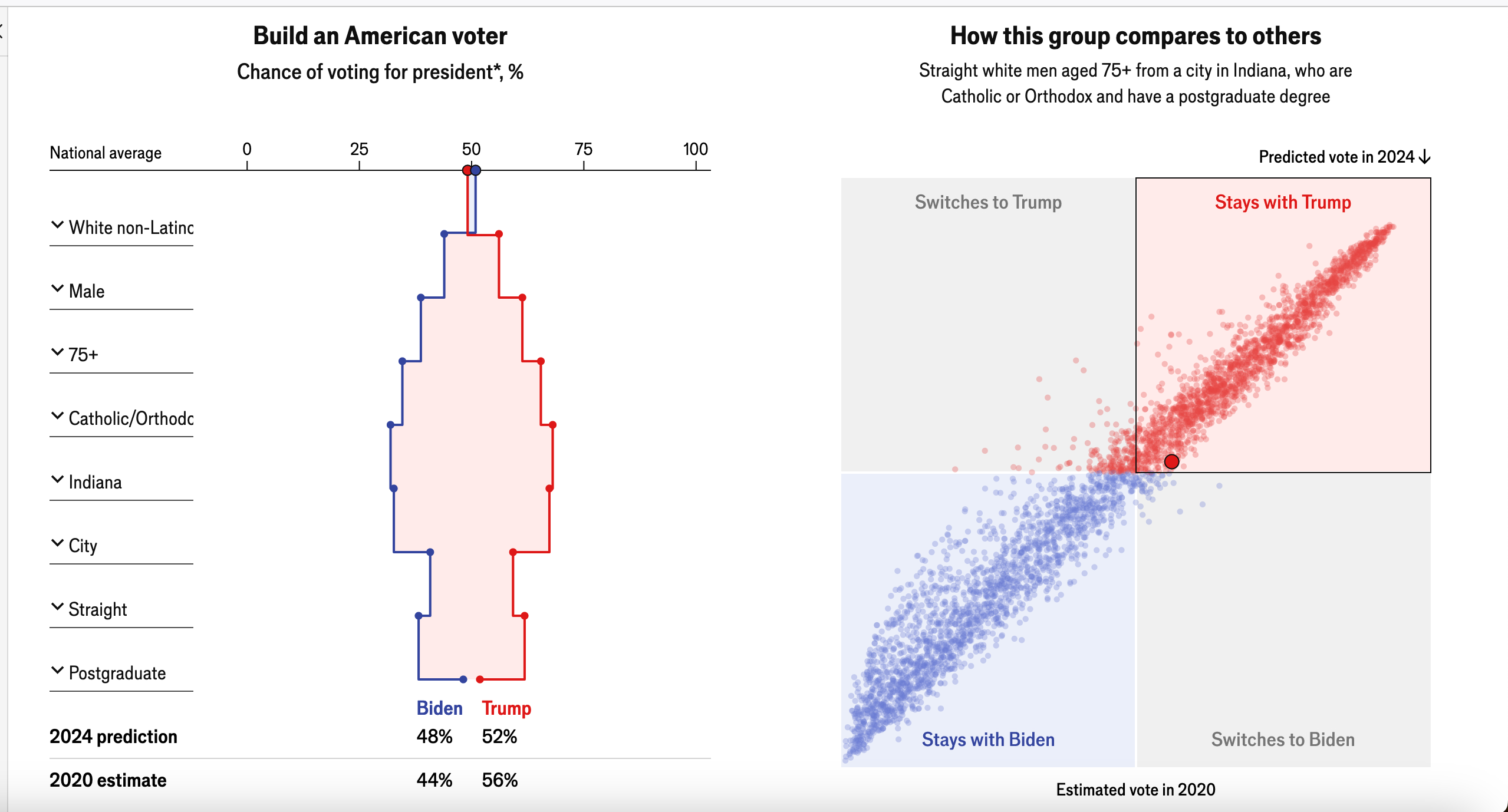


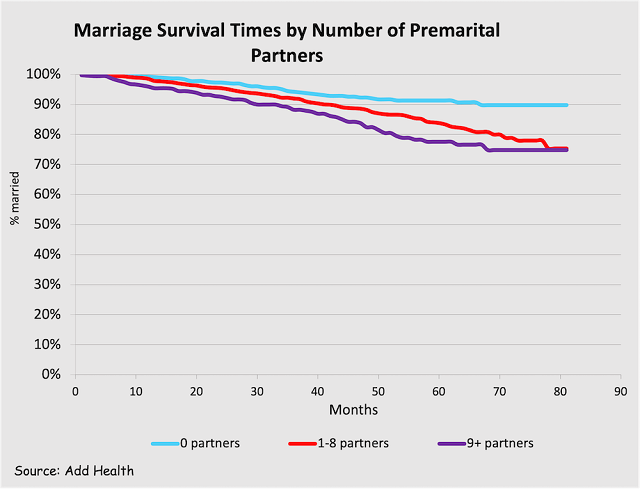

 Tipsy Teetotaler ن