The collectivist-individualist dichotomy is a clear example of the modern mind opposing ideas that are only in opposition once abstracted from reality. What is this collectivism? What is this individualism? I have never encountered a society that was not composed of individuals, and I have never met an individual who did not belong to a society.
Take anyone you know, and try to imagine the pre-societal self that exists there free from all the social influences that have made him. If I try to imagine myself independent of where I was born, the family that brought me forth, the schools I attended, the language in which I think and speak, the books I’ve read, the friends I’ve made, I simply cannot do it, and if I were to achieve some imagining of such a pre-social self, it wouldn’t be me in any case.
So, what ought the conservative response to be in the face of people living in a way they find reprehensible, if it is not that of doubling-down on individualism? The true conservative response is: we live in a society, and there are some things we will accept and some things we will not, and where the line lies is worked out circumstantially by prudential deliberation and negotiation. We will tolerate certain behaviours which we dislike and be intolerant of others. But if you want to mutilate yourself, we will aim to prevent you from doing so, for we have to live in a community with you, and we think that such behaviour is impermissible in our community ….
I don’t often recommend poetry, but Famous, by Naomi Shihab Nye, caught my ear in a podcast reading, and is notable in the context of Illich for its call to humbler ambitions.
Segregated sports
I had no idea that chess routinely holds separate men’s and women’s competitions, and that the women overall are objectively worse than men. See Frank Haviland, Chess: Checkmate for the Egalitarians for a fascinating and possibly illuminating treatment. I’m still scratching my head.
Since Employment Division v. Smith in the early 1990s, we’ve been living under a constitutional regime which, viewed from a galloping horse, looks quite a bit less favorable than prior law for religious exemptions from some laws. So long as a law is neutral and generally applicable, one isn’t entitled to a religious exemption however strong one’s beliefs or weak the governmental interest in making the law.
But when you slow down and look closer, the concept of “neutral laws of general applicability” keeps tripping up rulemakers, as they keep creating loopholes for some but not for none. Sometimes, the loophole is as big as “we can make exceptions case-by-case.” In others, it’s gerrymandering the law to target a disfavored religious practice, as when Hialeah Florida tried to hobble the animal sacrifices of Santeria while permitting Kosher slaughter.
So I was gratified to see the religion-friendly ending to a case I’ve watched, on and off, since its 2017 beginning, Country Mill Farms, LLC. V. City of East Lansing, where the City of East Lansing excluded Country Mill Farms from its farmers market because it refused, at its own facility, to host same-sex weddings. Click the link for Euguene Volokh’s fuller description.
Politics
My Man Mitch strikes again
We’re mired in a hot-dog, look-at-me, dance-in-the-end-zone world. Success in public capacities seems reliant not on the quality of officeholders’ ideas or effectiveness, but on their cleverness and audacity in sound bites, tweeting and the other ‘performative’ arts.
The most interesting act out of the 126 acts laid out in the indictment is the first one. It reads:
On or about the 4th day of November 2020, DONALD JOHN TRUMP made a nationally televised speech falsely declaring victory in the 2020 presidential election. Approximately four days earlier, on or about October 31, 2020, DONALD JOHN TRUMP discussed a draft speech with unindicted co-conspirator Individual 1, whose identity is known to the Grand Jury, that falsely declared victory and falsely claimed voter fraud. The speech was an overt act in furtherance of the conspiracy.
The most significant claim here is that Trump always planned to cry, “Fraud!” if he lost regardless of the evidence. This is not a shocking revelation, given that he has a long history of preemptively saying that the only way he might lose anything is if his opponents cheated or rigged the game.
More generally, Trump’s voters hold him as a source of true information, even more so than other sources, including conservative media figures, religious leaders, and even their own friends and family.
(CBS News, Emphasis added). “True information”! Words have lost all meaning!
We are in the grip of a grim, despairing rebellion against reality that imagines itself to be the engine of moral progress.
The end of the world as we know it is not the end of the world.
You can read most of my more impromptu stuff here (cathartic venting) and here (the only social medium I frequent, because people there are quirky, pleasant and real). Both should work in your RSS aggregator, like Feedly or Reeder, should you want to make a habit of it. I’m even playing around a bit here, but uncertain whether I’ll persist.
A federal judge in D.C. vacated the 2017 desertion conviction and dishonorable discharge of former Army Sergeant Bowe Bergdahl, who walked off of a base in Afghanistan in 2009. He was captured by the Taliban and held for five years before being freed in a prisoner exchange in 2014. The judge argued Bergdahl did not receive a fair trial because the [military] judge in the case failed to disclose he was concurrently applying for a job in former President Donald Trump’s Justice Department—Trump had called Bergdahl a traitor and suggested he should be executed. Bergdahl may now face a second trial before a different judge.
(TMD) What you think of Bergdahl shouldn’t blind you to the sleaziness of what the military judge did.
Political persecution
From the department of “Damned-if-you do, Damned-if-you-don’t,” a thought on Donald Trump’s legal difficulties:
If they prosecute him, “they’re politically persecuting him.”
If they don’t prosecute him, they’ve “got nothing on him.”
Heads Trump wins, tails Trump wins.
Such is my former party. Brain dead is the benign explanation; cynical is the likelier (and culpable) explanation.
Well, they’ve got something on him, so let the “persecution” continue.
Not a rubber stamp, but a punching bag
Just as Hunter Biden was on the verge of signing a very nice plea deal to settle up tax and gun charges, Judge Maryellen Noreika mucked it all up. “I cannot accept the plea agreement today,” said Judge Noreika, who is definitely getting audited this year and who should be very careful about going 0.5 miles above the speed limit from now on.
The IRS announced Monday that it would stop making most unannounced, in-person visits to taxpayers—a practice that has long been one of the agency’s key tools to collect unpaid taxes—citing security concerns and taxpayer confusion as scam artists imitated the tactic. The change is part of a 10-year modernization plan focused on cracking down on tax evasion and improving customer service.
Shocking new study—the SAT is a progressive tool: There are a lot of good liberals who genuinely believe that the SAT is racist, but that teacher recommendation letters and extracurriculars aren’t. My friends: Please think about a teacher at a small private school versus one at a big public school. Who has more time to get to know a kid? Think about extracurriculars: what happens to the kid who needs to work at a deli and can’t launch a nonprofit in Gambia? The SAT is the least racist thing we have. The SAT is the closest to equity in admissions we can ever hope to achieve. Now we have stats from a new study out of Harvard and Brown showing how the ultra-rich can get a huge boost from everything except. . . the SAT.
Meantime, in the U.S., Democrats in Texas and Louisiana voted this week in favor of age restrictions on hormones and gender surgeries, explicitly breaking with the party. Shawn Thierry, a Democrat in Texas, said: “I have made a decision to place the safety and well-being of all young people over the comfort of political expediency.” Let’s not get ahead out ourselves—in Oregon, doctors can treat gender dysphoric adolescents 15 years or older without parental permission or even notification. But I’m pretty sure we’re seeing a shift here. I agree with Jesse Singal that pediatric transitions will very soon be memory-holed as a thing that Absolutely Never Happened.
In the two years I’ve lived in Hungary, I have seen many Americans and Western Europeans come to Budapest for the first time, visibly anxious about what they’ll find, as they only know the city and the country from their media, which routinely denounce the Orban government as ‘authoritarian’ and, yes, ‘far-right.’ It only takes a few days for them to realize that they have been lied to, and that Viktor Orbán is the kind of reasonable, effective conservative that most Americans on the Right hope for when they vote Republican, but rarely get.
As I tell Americans headed over, “Budapest feels like a major midwestern American city, circa 1998.” If Clinton-era Omaha, but with better architecture and food, is your idea of Nazitown, maybe the problem is you.
[Marty Peretz] writes honestly about the core fight around publishing a symposium on The Bell Curve:
Leon said: Publish a review of the book but don’t run the piece itself. We don’t run Marxists here; we shouldn’t run Social Darwinists. Andrew said: Our readers read Marxists and Marxist derivatives already. If we don’t run Murray they’ll never read him at all — and Murray is a person who matters.
I was speaking about my own ignorance as well: reading the draft of the book was the first time I’d ever even heard there were racial differences in the distribution of mean IQ. That forbidden knowledge — uncontested, uncontestable — was something we needed and need to know. Because it was and is real. That’s all. Why it was real and how to fix it were open questions. And the ongoing debates over the fraught issue are still necessary, which is why the woke left wants to render them entirely taboo — along with countless of their other stagnant little orthodoxies. Our job as writers, I believed, was to open up debate with epistemic humility, courage and precision; it was not to shut it down in a flurry of virtue-signaling.
I have always rebelled against taboos based on the idea that bad people will make bad uses of what appears to be truly true.
Living by faith
The irony is that we all—secular or religious people alike—make our biggest life-shaping decisions on faith. Life is too short to learn what you need to know to live well.
Frank Schaeffer, Crazy for God
The DEI Racket
Jesse Singal notes the reported abandonment of DEI programs in corporate America, and recounts the sad story of a school principal absurdly called racist and white supremacist during prolonged DEI training, and who eventually took his own life
[M]any contemporary DEI trainings “often seem geared more toward sparking a revolutionary reunderstanding of race relations than solving organizations’ specific problems.” There’s an intense, confrontational element to some of them … DiAngelo’s approach leans very heavily on the idea of calling out white employees, in front of their colleagues, for their alleged racial sins …
…
My argument, then and now, is that these sorts of DEI interventions are, very obviously, psychological interventions. What else do you call something that is designed to change the way people think and act? And if they’re psychological interventions, of course they should be subjected to certain standards; perhaps first and foremost, their advocates should be able to assure institutional decision-makers that whatever else they do or don’t accomplish, they won’t cause harm.
But we don’t have that data, because almost none of these programs are formally, rigorously evaluated. I may sound like I’m beating a dead horse here, and I understand that at a certain point I come across as a nerd, but until you have evidence a program works, you don’t have any evidence a program works. It doesn’t matter how glossy the brochure or how impressive the website is. I understand that CEOs were desperate to do something to respond to societal and employee demand in the wake of George Floyd’s murder. But this is a rather undercooked industry, and until it adopts better standards, it will be hard to shed all that many tears over its contraction.
I couldn’t help but think of Orwell’s Animal Farm when I read A Cruel Summer at Cornell, about a Telluride Association Summer Program that seemed to be, if tacitly, about the eventuality of DEI as currently treated.
Conspiracy theories
Conspiracy theorists have got at least two things right: that the truth can differ dramatically from what we’re officially told, and that it is usually unpleasant. There aren’t many conspiracy fantasists who claim that the world is run by a benevolent secret society which will one day deposit a fortune in all our bank accounts.
We may laugh at the university that appended a trigger warning to Ernest Hemingway’s The Old Man and the Sea, informing students that it contains scenes of “graphic fishing” ….
The more the economy becomes a matter of the mere distribution of loot, the more inefficiency and unnecessary chains of command actually make sense, since these are the forms of organization best suited to soaking up as much of that loot as possible.
David Graeber, Bullshit Jobs
Efficiency versus humanity
Efficiency was the coldest metric for evaluating a merger. It reduced Americans into the stylized economic caricature known as the “consumer,” treating cheap goods as our highest and only aspiration. The new guidelines inject a bit of humanity back into the calculus. And they suggest that the ultimate question for government shouldn’t be whether something is efficient, but whether it’s right.
I hope I’m not being sold a bill of goods, but if the new Biden antitrust guidelines are as Foer represents them, I approve — and that puts me at odds with The Thing That Used To Be Conservatism.
Politics
Isolationist fascism
Trump differed sharply from the European fascists of the interwar period.
They were ardent militarists and imperialists. War was the crucible in which the new fascist man was to be forged; territorial expansion was both the means and the end of fascist power and triumph. Trump has shown little ambition to pursue such aims.
…
Unlike previous fascist leaders with their cult of war, Trump still offers appeasement to dictators abroad, but he now promises something much closer to dictatorship at home. For me, what Trump is offering for his second presidency will meet the threshold, and the label I’d choose to describe it would be “isolationist fascism.” Until now, such a concept would have been an oxymoron, a historical phenomenon without precedent. Trump continues to break every mold.
Government has tools to fight Black poverty. It does not have tools to fight white hatred. Not in any real way. Poverty lives in the world. Hatred lives in the head.
Well, I think . . . they have nothing to do with being president of the United States. The 10th Amendment is very clear about what the federal government’s role is, and what’s not specifically for the federal government, that limited number of things is designated to the states or to the people. I mean, it’s a one-sentence amendment in the Constitution that I believe is basically overstepped all the time, all the time, all the time.
And I’ve seen it as, again, small business. medium business, governor, I’ve seen the federal overreach. So Dobbs? Support Dobbs—leave it up to the states. I was a candidate for not even 12 hours and the first question on CNN was how do you feel about signing a federal abortion amendment? I said I wouldn’t sign it. . . . We said, it’s up to the states, the states have to decide ….
I respect Burgum for saying that. For decades, I said that reversal of Roe v. Wade would return the issue to the states. Abortion has never really been a national issue (even if Roe pretended permissive abortion was enshrined in the constitution).
Granted that a federal abortion amendment would by definition make abortion a national issue, and granted that the Right to Life movement has wanted a Human Life Amendment for decades and decades, I’m unsure that the precedent of shifting the federal/state balance is one I can support.
Once upon a time, I called myself a single-issue pro-life voter. But then the GOP started running idiots who had nothing but a supposed pro-life stance to commend them — and often they betrayed in talking about it that they didn’t really get the issues. That put an end to my true single-issue voting. Now, promising a Human Life Amendment will not get me to vote for someone who otherwise is a toxic jack- or jenny-ass, like a Matt Gaetz or a Marjorie Taylor Greene.
The incredible shrinking candidate
There was a time, not that long ago, when I thought I might be able to get behind Florida Governor Ron DeSantis in his bid for the Presidency.
Ron DeSantis, Florida’s governor, ordered state officials to probe whether AB InBev, Bud Light’s parent company, breached its responsibility to shareholders by hiring a transgender social-media influencer. The partnership with Dylan Mulvaney fuelled a boycott by conservatives; AB InBev has shed about a tenth of its stockmarket value since April. Mr DeSantis has also picked fights with Disney for its “wokery”.
In 2022 DeSantis signed the Stop W.O.K.E. Act, a response to the panic on the right over critical race theory. Of course he did: For all the hype about the governor’s post-liberal “vision” for America, his legislative priorities are highly reactive to whatever the populist hobby horse du jour happens to be. It’s an endless game of fetch with Very Online MAGA activists tossing the ball and Ron DeSantis loyally bounding after it in whatever direction it happens to go.
(Emphasis added)
Government’s Covid response
I seem to be seeing articles every day that assume the absurdity of the government response to Covid.
This is a debate (if there be a debate) that I’m not going to enter or even to watch closely, for a couple of reasons:
I gladly isolated to a fairly great extent because I’m an introvert.
I painlessly isolated to a fairly great extent because I am (and was then) retired and financially comfortable.
I prudently isolated to a fairly great extent because I am obese and over age 70 — a demographic that everyone agrees would have been counseled to isolate even by epidemiological dissenters from Dr. Fauci’s approach.
What I will say was that we collectively were surprisingly uninterested in the fate of those mostly low-paid essential workers who had to show up in meatspace, thereby exposing themselves to (supposedly) mortal danger. Did the powers that be really believe they were all in mortal danger? Let’s not forget them.
For want of a Christian conservative, vote secular populist?
I used to say “If you don’t like The Religious Right, just wait ‘till you see the Irreligious Right.”
Snark aside, this review makes me want to buy yet another book I may not live long enough to read: Tobias Kremer, The Godless Crusade: Religion, Populism, and Right-Wing Identity Politics in the West. How this cashes out in the US, sadly, is that many religious voters are likely to vote for secular populist candidates again for lack of a more attractive alternative.
That’s especially easy to do if your state is deep red or deep blue, as you can relax (knowing your vote won’t sway any race) and vote your conscience (not voting for a “lesser evil”) as a signal to the major parties that America is tired of shit sandwiches on the menu.
Tomorrow, Saturday July 29, 9:03 pm, is the 58th anniversary of my motorcycle accident. I was hurt memorably, but not grievously or maimingly (if that’s a word).
We are in the grip of a grim, despairing rebellion against reality that imagines itself to be the engine of moral progress.
The end of the world as we know it is not the end of the world.
You can read most of my more impromptu stuff here (cathartic venting) and here (the only social medium I frequent, because people there are quirky, pleasant and real). Both should work in your RSS aggregator, like Feedly or Reeder, should you want to make a habit of it. I’m even playing around a bit here, but uncertain whether I’ll persist.
I have an extraordinary acquaintance on social media whose skin is dark, whereas his wife’s is light. It’s the things he does, and his unusual heritage, that makes him extraordinary. But he also thinks a lot about “race” because of how he and his daughter get categorized.
His daughter is also light-skinned, and was categorized as “white” a few days ago in a class where basically everyone else was a POC (as they say) and they “decided to lean hard into race being about physical characteristics, basically how people look, rather than even addressing the even slightly less dicey definition of shared ancestry.” The story has started a little social media discussion.
In the course, my acquaintance drew a distinction that I’d not heard before:
The main thing to understand is that race is a completely made up construct with no basis in scientific method (with the many, many, outliers like my daughter as proof of that). [So far, so familiar.]
Heritage is scientifically inescapable as it is based on who your direct ancestors are.
This is why I’m careful to say [my daughter] is of “mixed heritage” and not “mixed race”. Because, no one is of “mixed race” because race is based solely on looks and looks are a matter of individual perception.
If I ruled the world, “race” would be banished in favor of “heritage.” It seems like a helpful mind-hack.
Viva la difference!
Japan is very Japanese, intentionally so. You rarely see foreigners here beyond a few Filipinos and Bangladeshis. This annoys the economist technocrat types, sometimes for moral reasons, but mostly for pragmatic reasons. They see immigration, and open borders, as necessary for economic growth, which they view as the only goal for a country. A place must grow, change, and evolve, or else it’s a failure. Or to put it in the words of the economic development IMF types, every country should adopt the US western model of open borders, labor and pension reform, global treaties, and free markets, etc etc etc.
Japan, of all the G7 members, has stubbornly refused to do much of this, from the smaller things like eating whale to the larger things like increasing immigration, especially when it comes to any policy that could corrupt or dilute its culture.
So the technocrat/policy types look at Japan’s last few decades of relative economic stagnation as a failure, while the Japanese just shrug it off and chalk it up to one of the costs of maintaining their cultural identity. Something I intellectually respect, even if it’s not for me. A national identity, through a shared and specialized culture, is one of the easiest webs of meaning to construct, that works for the largest number of citizens, and in a largely secular place like Japan, certainly helps add to its functionality. To it being a high trust society.
That model of “maintaining Japan for the Japanese” might work for Japan, but that doesn’t mean I’m suggesting it would be good for the US. Immigration is central to the US’s last remaining shared web of meaning, which is what we generally call the American Dream. The idea that anybody, with enough hard work, can be successful, without having to break the rules. That someone can come to the US from literally anywhere, with nothing, and build a life for their kids that’s better than their own.
In contrast to Japan, cultural change rather than preservation is our national model, and entrepreneurialism is our national identity. So much so that we have made it a transcendent and spiritual ethos, even though it’s grounded in the material. A nationalism built around a kind of prosperity theology — which is inclusive of different peoples and cultures, as long as they buy into the concept of aspirational wealth.
I could do with a bit more Japan in my life, figuratively speaking. I’ll never move, and it would not be to the far east if I did. I’m not opposed to (controlled) immigration even at a fairly expansive rate. But the dynamism, the churn, of American modernity I find pretty uncongenial much of the time.
Self-induced flatness?
Most consumers don’t know that by using internet-based (or -generated) platforms—by buying from Amazon, by staying in an Airbnb, by ordering on Grubhub, by friending people on Facebook—that they are subscribing to a life of flatness, one that can lead directly into certain politics. But they are. Seduced by convenience, we end up paying for the flattening of our own lives. It is not an accident that progressive ideas spread faster on the internet. The internet is a car that runs on flatness; progressive politics—unlike either conservatism or liberalism—are flatness.
In a previous life, Jamie was a MacBook-using, flat white-sipping hipster photographer from east London, growing slowly disillusioned with the pressure and precarity of the city’s gentrification. Then, one day, while hungover at a music festival, she stumbled upon a sauna. “I came out of the sauna into nature and plunged into a cold lake and was reborn,” she says.
Months later, Jamie left London, moved to Sussex and set up her first sauna venture. After just five years, she’s flourishing: “I’ve created a really beautiful life for myself. I live on the beach, I work in a forest, I run my own business. I’m doing work that feels purposeful and impactful.”
[T]he tendency to disorder [is] greatest when social arrangements are both increasingly complicated, and increasingly unnatural. Hackers couldn’t have kept our ancestors from building cooking fires, but it is very difficult to keep them from knocking out the electrical grid.
I’ve written before about the ways that ChatGPT and the like are revealing the unimaginative, mechanical nature of so many assignments we college teachers create and administer. In that post I wrote, “If an AI can write it, and an AI can read it and respond to it, then does it need to be done at all?“ Might we not ask the same question about our research, so much of which is produced simply because publish-or-perish demands it, not because of any value it has either to its authors or its readers (if it has any readers)?
Countless times in my career I have heard people talk about their need to publish research — to get tenure or promotion — in an AI-like pattern-matching mode: What sort of thing is getting published these days? What terms and concepts are predominantly featured? What previous scholarship is most often cited? And once they answer those questions, they generate the appropriate “content” and then fit it into one of the very few predetermined structures of academic writing. And isn’t all this a perfect illustration of a bullshit job?
Yes, I’m worried about what AI will do to academic life — but I also see the possibility of our having to face the ways in which our work, as students, teachers, and researchers, has become mechanistic and dehumanizing. And if we can honestly acknowledge the conditions, then maybe we can do something better.
Alan Jacobs, noting another facet to Dan Cohen’s concerns about AI in scholarship.
Jacobs’ path requires reflection and painful course-correction, so I reckon we’ll use AI to fight AI — the usual layering of a technical solution on top of a technology-induced problem.
But foresight would have done the same: what legitimate interest did Republican Attorneys General have in turning out throngs of deluded populists for a rally in support of the idea that Donald Trump had won the election he’d lost two months earlier? Much worse came of it than expected, but no sane person would have expected any good of it.
They should have been supporting the rule of law, not becoming violence-enabling political hacks.
Aim at fat-cats, hit do-gooders
My colleagues at the Competitive Enterprise Institute (where I am a writer in residence) are taking the lead in what will be, almost certainly, the most significant case the Supreme Court hears in its next term: Moore v. United States. (Do not confuse it with the surveillance case of the same name.) Like many such cases, this one really involves, at heart, very little more than the question of whether the Constitution says what it actually says or whether the government can, citing needful exigencies, simply pretend that the Constitution says whatever the powers that be in Washington decide it needs to say on any given day.
Charles and Kathleen Moore invested in a social enterprise in India, KisanKraft Machine Tools Private Limited, which helps Indian farmers in poor and underdeveloped areas improve their businesses—and their lives—by acquiring more modern equipment. KisanKraft now employs hundreds of people in India and has helped a great many marginal farmers—and their families and communities—improve their economic situations by means of their own work and enterprise, not as clients of some political patron or as dependents on some charitable program. (The next time someone tells you free-market economics is for people who care only about themselves … ) KisanKraft is one of those businesses that exists to make a difference rather than a profit, and, for that reason, it reinvests all of its earnings into the business itself. The Moores have never received a penny of income from their investment in the firm, never expected to, and, barring some unforeseeable development, never will.
But, thanks to the special kind of imbecility that can be produced only by the intellectual fusion of Donald Trump with Elizabeth Warren, the Moores have been given a tax bill not for any income they have realized from their investment—of which there is $0.00—but for imaginary income. KisanKraft could have paid out dividends to its investors, who would then have investment income to pay taxes on. But KisanKraft did not do that. Donald Trump, who has the resume of a villain from an unpublished Ayn Rand novel—second-rater, inherited money, serial business failure, corrupt, seething with hatred for people who succeed in the businesses he failed at—has spent years railing at American investors and businesses with the unpatriotic gall to invest in overseas businesses (that are not golf courses), and in 2017 congressional Republicans, caught up in that unsavory nationalist-populist moment, produced the grievously misnamed Tax Cuts and Jobs Act, which imposed a “one time” (“It’s only this once, we promise!”) tax on unrealized overseas investment income, simply “deeming” profits to have been realized and repatriated for tax purposes. It was one of the dumbest policy ideas of a remarkably dumb era. Of course, it was supposed to wring money out of the scheming shifty corporate “fat cats” who populate the fever dreams of well-heeled Washington populists.
Creative artists refusing to create works that violate their conscience is nothing new. Consider, for instance, the Roman Emperor Diocletian:
… the last glimpse that we have of his personal life is his irritation at the refusal of his Christian stone-masons to make him a statue of Æsculapius.
I don’t want to ban any medical procedure. It may be that in a few cases, transition will help at such a young age. But recommending them as a general rule, the minute a child says they’re the opposite sex, without exploration of other possible mental health issues? Reckless beyond belief. That has got to stop. Someone has to protect the children, especially the gay ones, who cannot protect themselves.
Andrew Sullivan. This is the concluding paragraph of a too-long-to-fully-quote item on the continuing scandal of the American medical establishment using junk science or made-up science to support mutilating gender dysphoric children as the first treatment option.
Shmocial Shmontagion
[N]early forty percent of Brown’s student body identifies as “not straight,” which is five times the national average. To be fair, the definition of “not straight” ranges these days from being in a same-sex relationship—which somehow rings very traditional now, very problematic, very “there’s only one sex allowed in this relationship”—to having an edgy haircut. There are two options for what’s going on here. The first is that Alex Jones was right, that our drinking water is screwing with our hormones, and that indeed everyone is becoming gay from it. The second rhymes with Shmocial Shmontagion.
The end of the world as we know it is not the end of the world.
You can read most of my more impromptu stuff here (cathartic venting) and here (the only social medium I frequent, because people there are quirky, pleasant and real). Both should work in your RSS aggregator, like Feedly or Reeder, should you want to make a habit of it. I’m even playing around a bit here, but uncertain whether I’ll persist.
Reiterating, I had collected so much material that I’m breaking it up topically. I can’t certify zero partisanship, express or implied, in what follows. Just remember that I’ve never been a Democrat and I’m almost over all my Republican reflexes.
Gobsmacked?
Who is the most pro-life president in modern American history?
But if we change the metric from abortion law to actual, legal abortions, the picture is considerably different, and begins to challenge our assumptions about what it means to build a true pro-life culture in the United States. If the most important metric in determining a president’s pro-life credentials is the prevalence of abortions performed in the United States during his term, then the title of the most pro-life president in modern American history belongs, remarkably, to Barack Obama. It’s not close. And, Trump’s judicial nominations notwithstanding, a very long pro-life trend reversed itself during his presidency.
…
No president saw sharper decreases in the abortion rate and ratio from the first to the last year of his presidency than Barack Obama. In 2016, at the end of a presidency dominated by pro-choice policies and judicial nominations, there were a total of 874,080 abortions — 338,270 fewer than there were in 2008, the last year of the George W. Bush presidency.
…
[E]ven before Roe was overturned, I was under no illusions about the challenge facing the pro-life movement. That challenge is now proving worse even than I feared, and it’s worse in part because of the very compromises made to secure the Dobbs victory. The pro-life movement was Donald Trump’s mighty political vehicle. Without its support, his cruelty, malice and corruption would be a footnote to history.
Instead, his towering presence has warped almost a full decade of American life, turned Americans against Americans and transformed the culture of the Republican Party, the political home of pro-life America. It remains to be seen how long his malign influence will last. But much of America has experienced Trump’s presence on the public stage as a form of assault, and that assault is ultimately antithetical to the cause of life.
…
A pro-life movement that has long affixed its eyes on power must now remember hope. Otherwise, it may remember this period of American history as the time when it won the law and lost the nation, when the means of its legal triumph also sowed the seeds of its cultural defeat. If there is one thing that we know, it is that the culture in which we live decisively influences whether men and women possess the hope sufficient to have a child.
David French. In fairness to French, I realize that my excerpts may be slightly more negative toward Trump than his essay was.
In any event, for a 43-year pro-life veteran like me, the raw facts are challenging, and they’ve earned this French essay a flag to remind me to read it again.
The emigration of the Left
Leftists used to see themselves as champions of the poor and working classes. They viewed government as a means to protect and provide for the economically vulnerable. They wanted to rein in the power of the rich, and to ensure a decent life for the ordinary working man and his family.
This was a winning political message for the Democratic Party of Franklin D. Roosevelt and his successors, even though the reality fell short of the promises. As those on the right pointed out, big government has inefficiencies, injustices, oppression, and corruption of its own. Nonetheless, conservatives are not opposed to all government welfare and regulation, and we can recognize some virtues in the left’s old economic vision, even if we remain skeptical of big government’s ability to achieve it.
The left used to dream of economic and social solidarity. Then sex broke the left. The sexual revolution suddenly had the left talking like the most radical individualists imaginable; solidarity, commitment, and obligations were abandoned if they got in the way of pursuing a good time in bed or pursuing the next romantic relationship.
…
The heart of today’s Democratic Party isn’t the union hall, but white-collar professionals with pride flags in their Twitter profiles. This class is eager to pressure everyone else into accepting their social views, especially as regards the rainbow agenda. Hence the order to take food from poor children to force schools to adhere to the whims of LGBT activists.
I do not ordinarily visit The Federalist, which I hasten to say is unrelated to The Federalist Society. Thursday’s “front page above the fold” gives you a sampling of the unsavory flavor:
But this article was linked within another I was reading — and the description of “leftists” and Democrats seems fundamentally accurate. Further, there’s at least smoke if not fire behind that last sentence.
I feel bad that I had to learn of this story by coincidence, but I’m too likely to end up utterly frantic and unhinged if I regularly dumpster-dive for the odd bit of edible news. (I could name names, but I won’t. Let’s just say I’m glad I’m not expected to publish every day in order to keep myself and my wife fed.) Isn’t it enough to know that our general national trajectory is very bad without obsessing over every scrap of supporting evidence, Left and Right?
The prime directive of any bureaucracy
Title Nine of the 1972 Education Act was straightforward, and answered perfectly well to a democratic consensus of the time: educational institutions should not discriminate based on sex. As in “you’re a woman, you can’t attend this school.” The object of its control was institutions. But the powers said to emanate from Title Nine not only expanded, they became different in kind. Its object of control is now students: universities, as franchisees of the federal government, must now manage student’ sexual relations with one another. This transformation has taken place outside the legislative process, where it would be subject to democratic pressures (and hence common opinion), and has instead been internal to the federal rule-making apparatus.
Universities, in turn, tend to interpret the rules according to the timeless institutional principle of maximum ass-covering, which lines up nicely with the prime directive of any bureaucracy: it must expand, like a shark that must keep moving or die.
Don’t let a lucrative cause end just because you won
The goal of any civil rights movement should be to shut itself down one day. And once we get marriage equality and military service, those of us in the gay rights movement should throw a party, end the movement, and get on with our lives.
Andrew Sullivan, at a Human Rights Campaign Fundraiser before Obergefell decreed same-sex marriage throughout the land. But the HRC continued, shifting its attention to grifting for every plausible and some implausible demands of sexual minorities — er, excuse me, gender minorities, or something.
The craziest thing is that these grifters still have the respectful ears of our adult “influencers.”
In Vibetown, it always made sense
One of the three researchers at the Wuhan Institute of Virology who came down with Covid-like symptoms in November 2019 was Ben Hu, who worked on the project that received U.S. funding. This was first reported by our friends at Public, then confirmed in The Wall Street Journal.
Yes, a U.S. taxpayer-funded project. So the U.S. intelligence communities knew what was happening and why from the start. If Public and The WSJ are right, the scandal now is the cover-up. Here’s Alina Chan, who works with the Broad Institute of MIT and Harvard and wrote a book on Covid’s origins: “When I first heard the names of the sick WIV researchers, I was in disbelief that people in the US [government] knew about this and yet allowed the public to listen to media stories about pangolins and raccoon dogs for literally years. . . . The most shocking part of this story is that it took 3.5 years for this intel to be shared with the public.”
In retrospect, there were early signs that it was a U.S. government cover-up, not a Chinese one. Only an American would know that our media is so malleable that indeed we can be told Chinese-people-eating-crazy-shit-again is the anti-racist origin story. Yes, the classic not racist explanation: the Chinese love of diseased pangolin flesh is what killed your grandma. A research lab with sloppy security? That’s called racism. Chinese officials would never concoct this PR scheme on their own because it’s insane. But you see: it’s insane in a world of logic. Not in vibes, where we live. In Vibetown, it always made sense.
Nellie Bowles at the Free Press. I almost let my subscription lapse last Monday, because I’m only reading a third to a half of their daily articles, but then thought better of it. That their interests are broader than mine doesn’t mean they’re not interesting when the stars are in alignment.
Anyway, I don’t actually remember whether “I told you so,” about Fauci, but I never believed his denial of U.S. funding for gain-of-function research. I’m pretty sure that the proof he was lying (not just equivocating with weasel-words) was revealed almost immediately.
If you live where the government regularly lies to you but isn’t consistently good at suppressing refutations of its lies, are you living in a “free country” or a “democracy”?
The new education rhetoric
Here’s a great example of the new education rhetoric: “The far right’s effort to take over schools is not limited to battlegrounds or red states—they just won 40% of the elected education roles in NYC,” writes Amanda Litman, a prominent education activist, literally just describing parents who are pro–standardized testing.
It turns out that closing schools for years was really bad. And schools deciding that math and reading are right-wing didn’t help. And weirdly, teachers becoming quasi-religious figures primarily tasked with gender-discovery journeys also did not improve scores. You know why? Those are my jobs. Yes, all of these tasks used to be the role of the lesbian aunt. It was my job to say math class is trash; Howard Zinn does it better; and Doc Martens are a good shoe that will last you years. It was me who was meant to paint your son’s nails. ME.
How and in what sense has the Right become authoritarian?
I don’t think our most fundamental problem is that one of our two parties wants to establish one-party authoritarian rule. Our most fundamental problem is that we disagree very deeply about what kind of country we should be, and that disagreement is also very narrow, meaning that which direction we will go is maximally unsettled …
As far as I’m concerned, the primary thing that has made the right more dangerous than the left through this period is that, thanks to Donald Trump and voters most devoted to him, the right now actively indulges in fantasies, delusions, and conspiratorial thinking that convince it that it’s more popular than it really is, that the left has rigged the system in its favor, and that these acts of cheating by the left require truth-defying acts of rule-bending and rule-breaking in order for the right to prevail.
That is how the right gets to nascent authoritarianism ….
How were the large animals initially domesticated? I really like the theory that ancient people used the same trick modern hunters use—salt traps. They would give animals salt (which they need badly), so they have to come. Even husbandry has an element of bribe and negotiation. … You need to give people what they want. Now what do they want? That’s usually very simple to understand, they won’t shut up about it. They may express it indirectly through projections though. … Western right wings desire a great Christian conservative power which will save them from the wokes. They dream about it day and night. … they project their need to the nearest available candidate—Vladimir Putin, viewing him as a parental figure.
Considering how flawed and dishonest virtually all politicians are, I once flirted with the possibility that Putin was a flawed, dishonest and sometimes murderous Christian conservative, so I know that Lamont is at least in the ballpark on this.
The real problem with corporate tax cuts
One way of talking about tax cuts, for example, is that they’re a bad economic policy solution to the real problems that we face. But another is that they’re a way of giving money to our enemies as conservatives. Do we really want to keep on fueling the people who are funding institutions, organizations, and ideas that we find abhorrent?
My answer to that is, obviously, no. So despite the fact that I don’t think tax cuts are great economic policy, I think they’re most stupid because they’re empowering our political enemies and we should stop doing that.
The end of the world as we know it is not the end of the world.
You can read most of my more impromptu stuff here (cathartic venting) and here (the only social medium I frequent, because people there are quirky, pleasant and real). Both should work in your RSS aggregator, like Feedly or Reeder, should you want to make a habit of it.
It’s a long one today, but I’ve broken it down by rubric.
And for what it’s worth, Mrs. Tipsy and I have been married 51 years as of today.
Culture
The single most counterintuitive social principle in all of human history.
The idea that obnoxious, misguided, seditious, blasphemous, and bigoted expressions deserve not only to be tolerated but, of all things, protected is the single most counterintuitive social principle in all of human history. Every human instinct cries out against it, and every generation discovers fresh reasons to oppose it. It is saved from the scrapheap of self-evident absurdity only by the fact that it is also the single most successful social principle in all of human history.
I could have classified this under politics, but if we lose all culture of free speech, we’ll eventually lose the law as well — and I wanted anyone who skips politics to see it.
The Europe that came together in 1990 is coming apart again, its people angry and fragmented, its leaders visionless, the once-free-ish West boiling in a stew of hate speech laws, vaccine mandates and ever-accelerating censorship and intolerance. ‘Populists’ continue to barrack and harrass its leaders, and neither they nor their media allies can quite work out why. The last global empire is led by a confused octogenarian, and within a few years the biggest economy in the world will be a communist dictatorship. The Scorpions never saw that one coming.
“White-throated sparrows have four chromosomally distinct sexes that pair up in fascinating ways. P.S. Nature is amazing. P.P.S. Sex is not binary,” – Laura Helmuth, editor-in-chief of Scientific American. The sparrows have just two sexes, as Community Notes corrected. Jerry Coyne has a beaut of a piece on this.
I regret that I have no recollection of the source for this, but I hereby explicitly disclaim adding a word other than the heading.
The elite avatars of proledom
Stanford Law School students were in the news for awhile, thanks to a contingent of them having shouted down a conservative campus speaker … I’ve come to think that the whole frame of the thing speaks to a real refusal of the American left to take its own ideas seriously. The debate fell along the typical lines. Liberals and lefties, as is their habit, rushed not only to defend the student protesters but to lionize them. What I find somewhat depressing is that this has become a habit, anointing representatives of the academic 1% as the footsoldiers of progressive change. The catechism of 21st-century progressivism insists that we are creatures of our immutable demographic traits, that our race and our class and our privilege define us and our influence on the world. If that’s true, how are we to assume that law students at Stanford Law School are anything other than the next generation’s shock troops of the bourgeoisie, whatever their professed politics? Where did all of that demographic determinism go?
This feeling that I’m feeling isn’t schadenfreude …
… because there’s not an ounce of sorrow in it:
Oath Keepers founder and leader Stewart Rhodes—convicted in November on a number of charges, including seditious conspiracy, for his role instigating the January 6 riots and seeking to disrupt the transfer of power—was sentenced on Thursday to 18 years in prison, the longest such term of any January 6 defendant thus far. The head of the Oath Keepers’ Florida chapter, Kelly Meggs, was sentenced to 12 years in prison.
TMD. It’s important that insurrectionists like Rhodes and Meggs pay dearly.
On the other hand, I’m not opposed in principle to Ron DeSantis’ promise to review January 6 convictions and consider Presidential pardons. I know one fellow I’d like to see pardoned, who wandered in rubbernecking like a bog-standard tourist. I at least glimmeringly understand why DOJ prosecuted one and all, but for some of those convicted, the process should be the only lasting punishment.
I had marked this for sharing already, but then I had lunch with someone, soon turning 61, who is feeling his age and wondering if he has mis-spent his life, and it became more salient to me:
I had a dream last night in which I visited [my parents] James and Dora on their farm after the house burned down and saw their seven kids and little Eleanor had a terrible fever and the family sat praying for her — a fleeting dream but I would give anything to revisit it. I feel the same way about the picture of my mother, 17, with sister Elsie and friend Dorothy, three girls in summer dresses standing holding their bikes by Lake Nokomis in 1932, so happy — I want to ask her, “Do you realize you’re going to have six kids and not much money and they’ll cause you a lot of problems? Is this really what you want? I’m a writer, I can send you to Hollywood. You’re very charming, very funny. What he loves about you, millions of others would love too. What do you say, kid?” And she gets on her bike and wheels away.
[T]he analytic process cannot deal with uniqueness: there is an irresistible temptation for it to move from the uniqueness of something to its assumed non-existence, since the reality of the unique would have to be captured by idioms that apply to nothing else.
BitDefender Box protects my entire home network, including IOT devices. I cheerfully pay up each year for software and firmware updates plus anti-virus for all my iOS and MacOS stuff.
The only kind of stepladder I have any business using these days.
Now, even if you hate politics, you might want to read the opener to the next item.
Politics
The Quaker whose mule wouldn’t plow
One of my favorite stories, for roughly five decades now, is of a Quaker with a mule who wouldn’t plow.
Finally, after various goads, the Quaker walked to the mule, took its ears gently in hand, looked into its eyes, and said “Brother mule. Thee knowest I am a Quaker, Thee knowest I cannot beat thee. Thee knowest I cannot curse thee. What thee does not know is that I can sell thee — to the baptist up the road. And he can beat the living daylights out of thee.”
That’s pretty much how I’m starting to feel about the wokesters/progressive Left/successor ideology. My “baptists” are the Irreligious Right, the Christianist Right — both capable of violence, I think — and a few politicians who can see which way the wind is blowing, such as Ron DeSantis.
I doubt I can vote for DeSantis, in part because of his ham-handed attacks on the progressive Left in Florida and his playing illegal immigrants (I know the adjective is offensive to some, but it’s a perfectly good description) as pawns by putting them on busses headed to Blue zones. So maybe I really wouldn’t sell my cultural adversaries to him.
And I know I can’t vote for Trump.
But I’m starting to feel at least ambivalent, not entirely negative, about how the “baptists” might handle this. And I’m certain I’m not alone.
Fear casts out love
Fear casts out love. And not only love. Fear also casts out intelligence, casts out goodness, casts out all thought of beauty and truth.
At some point, I think soon, he’ll have to make a serious, textured and extended case against Donald Trump. Not insults and nicknames, not “Can he take a punch? Can he throw a punch?” No, something aimed at the big beating heart of the GOP that tells those who’ve gone on the Trumpian journey and aligned with him that they can no longer indulge their feelings. At a crucial point in history they’ll lose again, and the damage to the country will be too great. Throwaway lines like “the culture of losing” aren’t enough. That’s just a line that signals. Don’t signal, say. Include the long history of political losses—Congress, the presidency, the opportunity for a red wave in 2022.
Yes, tell those good people that you served your country in a tragedy called Iraq and the other guy claimed bone spurs and ran during a tragedy called Vietnam. You think you don’t have to say it, but you do. People who love Mr. Trump need reasons they can explain to themselves to peel away.
Religious conservatives in the 2016 election
When religious conservatism made its peace with Donald Trump in 2016, the fundamental calculation was that the benefits of political power — or, alternatively, of keeping cultural liberalism out of full political power — outweighed the costs to Christian credibility inherent in accepting a heathen figure as a political champion and leader.
The contrary calculation, made by the Christian wing of Never Trump, was that accepting Trump required moral compromises that American Christianity would ultimately suffer for, whatever Supreme Court seats or policy victories religious conservatives might gain.
There’s a lot distilled in those two paragraphs. I particularly note that the second paragraph at least hints at the view that Christianity is about something other than political power, a possibility that the New York Times in particular almost never considers. (“Politics is real, religion isn’t” is the gist of it.)
Yet I don’t see my own position reflected in either of them.
My core anti-Trump conviction was that his narcissism would distort his perceptions of reality, and that a President who misperceives reality — or even just a few key realities at a few pivotal times — could damage the nation terribly — worse than Hillary Clinton would.
The current formulation of my former position is inevitably colored by what actually happened, because I didn’t commit my position to writing in 2015-16 so I could some day say “see, I told you so.” But narcissism and misperception of reality was definitely at the core. And in 2016, I still thought that Christian Trump-voters were probably holding their noses because of the alternative. If I spoke or wrote about how wicked he was, it was my trying to pry others away from him with arguments that I thought they’d find weightier than “he’s a toxic narcissist.” I never expected so much troll-like adulation of that man under Christianish auspices.
Had it not been for his mesmerizing narcissism, he’d have never been such an effective demagogue and would not have won the GOP primary. So I’d never have needed to weigh whether a mere serial adulterer and shady casino magnate, without a disabling personality disorder, was an acceptable alternative to a woman who deplored roughly half the nation.
What keeps Damon Linker up at night
I just don’t think, even now, that the imposition of a right-wing tyranny is a likely scenario for the United States. Far more likely is a mutually reinforcing cycle of extra-constitutional power grabs, spasms of civil unrest, efforts to impose order, and more egregious acts of violence aimed at “the system.” This wouldn’t become a civil war like the one that consumed the United States in the 1860s, with massive armies facing each other for protracted, bloody battles aimed at seizing territory. But it would nonetheless be a form of low-boil civil war, perhaps resembling The Troubles in Northern Ireland more than any other recent examples.
… each side’s greatest fear is a dictatorship by the other side.
Another is that when each side is informed about the other side’s fears along these lines, the reaction is angry and mocking dismissal. You’re saying I’m a threat to them_? What a bunch of bullshit. Everybody with a brain and capable of unbiased thinking knows_ they’re the problem.
Yet another fact about our politics is that each side is becoming more willing to entertain (or fantasize about taking?) extra-constitutional acts in order to protect itself from what it’s convinced are the threatening extra-constitutional acts by the other side. Trump’s self-coup-attempt in January 2021 is only the most obvious and egregious example. More recent ones have come up throughout the current debt-ceiling battle, with prominent Democrats proposing all kinds of gambits, justified by the supposed national emergency posed by looming debt default, to get around the Constitution’s placement of the power of the purse in the hands of Congress.
My point, once again, is not to assign or remove blame from either side—or to treat both sides as equally good or bad. If the choice is between Trump’s self-coup to keep himself in power despite losing the 2020 election and the Democratic Speaker of the House talking with the Chairman of the Joint Chiefs about a plan to undertake a coup of their own against that same dictator-president, I would side with the latter every time. But the latter is still a coup—an unconstitutional power grab undertaken to thwart a prior unconstitutional power grab.
I don’t know how to prevent this except by one personal step: declaring myself a noncombatant. That won’t keep “them” from coming for me, whichever “them” it be, and I don’t know how to prevent that, either.
Imagining a Trump reprise
[I]magine a second Trump administration. This time he surrounds himself with loyalists who vow to do his bidding. Among their first acts is to impose Schedule F reform on the executive branch, which enables them to fire tens of thousands of career civil servants and replace them with even more loyalists. This would open up the possibility of a more DeSantis-like Trump administration.
Yet it would still be different in one decisive respect: Trump doesn’t affirm any consistent ideology. Instead, he aims to inflict as much pain and damage as possible on his own enemies and those of his supporters. To that end, he’s perfectly willing and happy to reverse course the moment he sees an opening for a victory or a deal. He relies entirely on his own judgment. He doesn’t follow the lead of advisers. He sizes things up with his own eyes, and makes sudden, snap decisions. He prizes flexibility and despises constraints—and as we all learned in the two months following the 2020 election, this even extends to the Constitution, the rule of law, and the norms of ordinary democratic politics, including the peaceful transfer of power.
This sounds more than a little like the kind of government the ancient political philosophers described as a kingship—albeit one in which the king wholly lacks in virtue or wisdom. They called such a leader a tyrant. Such a tyranny is different than the ideological forms of dictatorship we’re familiar with from the modern age because it has no overarching constellation of ideas it seeks to enact or to which it looks for guidance. It’s the rule, instead, of one man seeking to satisfy his own insatiable hunger for attention and thirst for the adulation of the people.
Modern ideological dictators are ascetics of a kind. Adolf Hitler, Joseph Stalin, and Mao Zedong devoted their lives to a cause.
But Trump’s only cause is himself. Somewhat like the ancient tyrants Plato and Aristotle analyzed, he is a political hedonist who acts as he does out of a craving for the pleasure that comes from being loved and cheered by a crowd.
I’m beginning to despair of the whole right, but especially the anti-woke formation (much as I loathe woke-ism). There’s no positive vision to it. It’s unserious. It seems designed to stave off real populism at the level of political economy.
You can read most of my more impromptu stuff here (cathartic venting) and here (the only social medium I frequent, because people there are quirky, pleasant and real). Both should work in your RSS aggregator, like Feedly or Reeder, should you want to make a habit of it.
Casserolades: concerts of banging pots and pans to signify political discontent. This seems to be a uniquely French thing. The demonstrators are called casseroleurs.
Womb envy: [The envy that men may (or is it “allegedly”?) feel of the biological functions of the female. Contemporary womb-enviers are said to be prominent among those technicians making lavish claims of sentience for (misnamed) Artificial Intelligence. “It’s only natural that computer scientists long to create A.I. and realize a long-held dream.” (Jaron Lanier) (Side note: I guess it’s okay to recognize sexual dimorphism when the point it to belittle males.)
An ambient expectation of human subservience. The unarticulated requirement that humans do more and more common tasks in the manner required by digital designs. (Synthesized from the context of Jaron Lanier’s use of the term in There Is No A.I.)
A sensational scoop was tweeted last month by America’s National Public Radio: Elon Musk’s “massive space sex rocket” had exploded on launch. Alas, it turned out to be an automated mistranscription of SpaceX, the billionaire’s rocketry firm. (From the Economist, I believe.)
One peculiarity of European aristocrats is that their names pile up, like snowdrifts … It’s lunchtime in Tirana, the capital of Albania, and I am about to meet Leka Anwar Zog Reza Baudouin Msiziwe Zogu, crown prince of the Albanians. (Helen Lewis)
The red velvet robes trimmed in ermine, the five-pound crown, the gold robes on top of gold robes dragging over gold carpets — the regalia often made it feel like a Versace fashion show staged in an assisted-living facility. (Rachel Tashjian)
Watching a coronation is the constitutional equivalent of visiting a zoo, and finding a Triceratops in one of the enclosures. (Tom Holland)
Not Trump
(We now inch toward truly unpleasant truths, albeit colorfully expressed.)
The source of aesthetics, ethics (and folly)
We favor the visible, the embedded, the personal, the narrated, and the tangible; we scorn the abstract. Everything good (aesthetics, ethics) and wrong (Fooled by Randomness) with us seems to flow from it.
I salute the Hollywood writers who went out on strike this past week but I can tell you that we essayists won’t be joining them. For one thing, the essay is deeply imbedded in our nation’s very identity (U.S.A.) but for another thing, a national essay strike would be like a National Husbands Day of Silence, most wives wouldn’t care and many wouldn’t notice.
The transgender movement now wields tremendous power, and many children are being transitioned long before they reach their teen years. They are being put on puberty blockers and going under the knife before they are old enough to vote, drink, or drive. Many will wake up one day and realize that their ability to conceive children and experience sexual pleasure was destroyed by the adult ideologues that they trusted.
I’d look forward to the malpractice judgments against the ideologues and profiteers were it not that every such judgment is inadequate redress for the kinds of harm they cause.
Professional Human Losers
I have a cyber-acquaintance (I was well aware of him even before cyberspace, though), Alan Jacobs, who’s something of a Christian Public Intellectual — a dying breed as he noted in a Harpers article a few years back. One of Jacobs’ muses in turn is Austin Kleon, whose postings he frequently shares, and at which I frequently yawn. That probably means I’m a shallow person — or that my brain and Jacobs feed on different things.
But this one caught my fancy as it catches our moment. I’ll just say it involves, and riffs off, Jeopardy Champ (now host) Ken Jennings losing to a supercomputer.
It’s short enough that I won’t risk, by quoting an excerpt, omitting something that might edify you, whose brain may also feed on different things than mine.
Analogy?
Mortician Bonasera/Don Corleone = Harlan Crow/Clarence Thomas True or False?
Because the publisher is the Atlantic (and the author isn’t Adam Serwer) the article is less than 100% meritless. But Harrington gives away her guttersnipe game when (a) she views any conservative justice’s friends as suspect and (b) she reports no similar friendships of liberal justices.
But wait! There’s more!
African Americans, migrants, and the children of migrants tend to reject anti-intellectual politics, and still see the educational system as the most likely means of social advancement for their children. This makes it easier for poor whites to see them as unfairly in alliance with rich white liberals.
Easier, yes, but the captivity of these groups to the Democratic party is independent evidence of alignment with rich white liberals.
Fomenting stochastic violence
(Getting closer to the nasties …)
The law in its majesty neutrality has decided that people on both the Left and the Right can spout incendiary lies so long as the threat of violent response is not imminent. But I think the coinage “stochastic violence” or “stochastic terrorism” is nevertheless useful, and that “random” violence is sometimes (often?) rooted in lying rhetoric (and, as in the case of the January 6 insurrection, calling it “random” is a cop-out).
Setting the stage, deploring the actors
But who, sir, makes the [slave] trader? Who is most to blame? The enlightened, cultivated, intelligent man, who supports the system of which the trader is the inevitable result, or the poor trader himself? You make the public statement that calls for his trade, that debauches and depraves him, till he feels no shame in it; and in what are you better than he?
Harriett Beecher Stowe, Uncle Tom’s Cabin
Slavery aside, we still do this: we escalate our rhetoric and then damn the actual perpetrators of such stochastic terrorism as our rhetoric invited.
Or maybe, if we’re shameless enough, we’ll call the terrorism a …
Patriot Purge
Yeah! That’s the ticket!
If you infuse an issue or set of issues with religious intensity but drain a movement of religious virtue, then profound religious conflict — including violent conflict — is the inevitable result. Indeed, we saw religious violence on full display when a mob stormed the Capitol on Jan. 6, 2021, and it is no coincidence that one of Carlson’s most mendacious projects was his effort to recast the Jan. 6 insurrection and its aftermath as a “patriot purge.”
Maybe I should leave it at that, but the author has more:
The more the Christian right latches on to cruel men, the more difficult it becomes to argue that the cruelty is a bug, not a feature …
Many Christians fear that kindness doesn’t “work,” so they discard it. This is how even decency itself becomes a “secondary value.” Aggression, not virtue, becomes the touchstone of political engagement, and anything other than aggression is seen as a sign of weakness.
As someone who cannot remember ever watching Tucker Carlson’s segment in its entirety (who hasn’t encountered clips of him?), I can’t speak of his “cruelty” or “aggression” except to say that they were nowhere near my top-line impressions. Maybe that showed up when he singled out some random click-baity schmuck for ridicule?
Trump’s court loss
(Sigh! It’s time.)
We’ll all go down together
The first rule of the modern Republican Party, it’s said, is “You can’t criticize Trump.” But that’s not correct.
The actual rule is “You can’t take sides with the left against Trump.” It just so happens that every moral objection to Trump’s character and fitness is now “coded” as leftist …
In 2023, the question of Trump’s character has become a litmus test of right-wing authenticity. To deem him unfit for office is necessarily to have been corrupted by left-wing propaganda, even if the “propaganda” in question is Trump being accused of sexual misconduct by 20+ women and then being held liable for sexual abuse in court.
This explains why so many conservatives, elected and otherwise, resorted to grumbling about the “New York jury” after yesterday’s verdict. If the jurors were a bunch of partisan blue-state hacks, as their critics insinuate, it’s passing strange that they ended up finding Trump not liable on [raping] her. But since holding him accountable for any moral failing is behavior that’s now associated exclusively with Democrats, the belief on the right that the verdict could only have been tainted by politics will be inescapable.
That dynamic conveniently makes it impossible for Trump’s fitness for office to be challenged legitimately by someone on his own side, as challenging him on those grounds means you’re not on his side at all.
Reporter Benjy Sarlin captured the absurdity when he tweeted, “It’s hard to sum up the 2024 situation more succinctly than this: Trump is already calling DeSantis a groomer based 100% on innuendo with 0 penalty; and DeSantis cannot respond by citing an actual jury finding of sexual abuse.” It’s ludicrous. But it’s also completely rational for DeSantis and the rest of the field under the circumstances to overlook the Carroll trial, since to mention it would be to take sides with the left against Trump. And that would disqualify them, not him.
It is humiliating to live in a nation-state where Donald Trump could win the Presidential election not just once, but twice. But here is where my wife, friends, family and Church are, so I’ll stay and we’ll all go down together.
I’m quite confident that we’ll go down, but what do I know? I’m not a self-appointed “Apostle” or “Prophet” with power to declare that Donald Trump, right now, is our dulytruly-elected President.
Law or Donald Trump? Pick one.
[W]e watched as even Trump-nominated judges ruled time and again against Trump’s election challenges, yet a majority of Republicans still do not believe that Joe Biden legitimately won enough votes to carry the 2020 election. When the choice is between the law and the evidence or Donald Trump, Republicans have consistently picked Trump.
But is sexual abuse different? Can an actual jury verdict — after a trial featuring all the due process that American law requires — finally break the bond with Trump?
Here is the darkest possible outcome to the case, one that I fear is more likely than not. The Republican public will either shrug at the result or will simply choose to disbelieve the jury, assuming without evidence that it was biased against Trump. Indeed, when asked about the verdict, Senator Marco Rubio told a Bulwark reporter, “That jury’s a joke.” Senator Lindsey Graham said he questioned “the whole process” and told Punchbowl News, “I think you could convict Donald Trump of kidnapping Lindbergh’s baby.”
But would a jury so hopelessly biased against Trump jury reject Carroll’s rape claim? Or is that an indication that the jury actually weighed the evidence supporting each charge?
Back when Trump first burst on the scene in the summer and fall of 2015, conservative pundits assured us the Republican electorate would reject him and opt for someone/anyone else. That turned out to be wrong—yet here we are nearly eight years later and often the very same people now assure us the Republican electorate would be rejecting Trump and embracing DeSantis if only the media weren’t playing dirty.
I don’t buy it.
Hey, I get it: Being wrong’s a bitch. Yet error can still be worthwhile if it serves as an opportunity to learn and course-correct. Right-leaning writers recognized this when they made the point against Democrats who spent the better part of the Trump administration blaming Vladimir Putin, James Comey, the New York Times, CNN—really anyone but themselves—for Clinton’s loss. But now these same conservatives refuse to subject themselves to the same degree of scrutiny and soul-searching.
Which means they are depriving themselves of the chance to adjust their thinking in the light of a bracing and crucially important truth about the Republican Party: That when given the choice between a know-nothing narcissist and moral cretin who embodies their resentments and channels their anger and hatred but accomplishes little and a candidate who’s spent years proving himself a vastly more competent, woke-slaying enemy of liberalism, the voters still prefer the first guy.
I never did much criminal law, but this strikes me as a bad omen if your name is Donald Trump:
A Friday court filing revealed that at least eight of the 16 false Georgia electors who planned to declare former President Donald Trump the winner of their state’s 2020 presidential contest have accepted immunity deals in Fulton County District Attorney Fani Willis’ investigation of attempts to overturn the 2020 election. The brief filed by the electors’ defense attorney shows the electors will be immune from prosecution if they testify truthfully in the probe.
You can read most of my more impromptu stuff here (cathartic venting) and here (the only social medium I frequent, because people there are quirky, pleasant and real). Both should work in your RSS aggregator, like Feedly or Reeder, should you want to make a habit of it.
I finally dipped my toe into ChatGPT, having been inspired by a story of a mom who used it to plan her child’s birthday party.
I had it draft a policy on delinquent tuition payment for a private school. High marks. Over the coming days, I’ll see what other logjams it can break on my project list.
I asked it “What are some real-world applications of the quadratic equation?” It gave a plausible answer, which I cannot evaluate since I haven’t used the equation since high school and cannot remember it. (If any kids are reading this, that’s probably because I became a lawyer, not an engineer.)
Since I get too easily enamored of technology, it behooves me to read smart critiques and concerns as they come along, if only to guide my personal conduct toward AI.
Nashville shooting
Journalistic lacunae
Why not explore [journalistically] how the attack on children and teachers in a Christian school affects Christians. This massacre may have been what some call a “hate-crime” against a religious group. And it’s odd that the community whose actual children were murdered seems less deserving of coverage than the community wrongly associated with a child-killer. It would be the equivalent of asking the Muslim community how they felt about a mass shooting in a synagogue, but never asking Jews.
It also seems legit to me to cover how violent memes and slogans and rhetoric can prime already-unstable people to commit violence. If it’s fair to call out the NRA’s materials after a mass killing (and I think it is), it’s also fair to note how common violent imagery and rhetoric has become in the TQIA+ world.
“Kill Terfs” is not a fringe slogan; it’s everywhere. A leader of the TQIA+ movement, Chase Strangio, has written that laws restricting child sex-changes are, in fact, laws to “criminalize known survival care for trans youth … That goal is akin to a goal of killing us.“ He has also claimed that his opponents “want to control and eradicate” trans people. Last weekend, a trans activist assaulted a gender-critical speaker with tomato juice in New Zealand, telling a crowd that “I want her to be full of blood, because that’s what she’s advocating for. She’s advocating for our genocide … our extermination.” The mob violently shut the event down. Then there are the many
grimacing skulls that promise “DEATH BEFORE DETRANSITION”, knives, baseball bats wrapped in barbed wire, assault rifles painted in the pastel tones of the trans flag, torrents of rape and death threats, the grim vow that “EVERY DAY IS TRANS DAY OF VENGEANCE.
And it would also be great if the press could fact-check not just the falsehood that trans people are more likely to murder, but also the idea, constantly reiterated by TQIA+ groups, of an “epidemic” of anti-trans, hate-motivated murders. That notion has been repeatedly debunked ….
I was just about ready to join the demand for release of the Nashville Christian School shooter’s reported “manifesto” when this brought me up short:
consider this other possibility: Might the shooter’s manifesto contain accusations of some kind against family, school, church or others? If that’s the case, police and legal officials may be investigating these claims before airing them to the public.
That’s not an entirely idle speculation, as you’ll see if you follow the hyperlink, nor is it implausible: an extremely conservative Presbyterian church in my hometown badly mishandled sexual abuse in the congregation.
So, yes, sooner or later we need to see the “manifesto.” If they’re investigating claims of the manifesto, it would be nice to know.
The Trump Indictment
Selected quotes
I’ve written a bit about the New York case against Trump, now gone to indictment. None of it was particularly original, and neither is this, but then I’m pretty selective about what sources I’ll spend time reading.
That said, some notable commentary by others:
David Frum notes that the charges might not even be about Stormy Daniels. (Deciding what a grand jury’s up to is a bit like reading chicken entrails.)
In his statement responding to the indictment, the former president said, “Never before in our Nation’s history has this been done.” But never before in our nation’s history have we had a president as dishonorable, as unethical, and as malicious as Donald Trump. (Peter Wehner)
There’s something very, well, Trumpy about this: He has a way of making everything sordid. Instead of a dramatic discussion about the meaning of accountability for a president who sought to overthrow the will of the voters to stay in power, we’re arguing about the dirty mechanics of hush-money payments to an adult-film star. (Quinta Jurecic)
I worry that a failed prosecution might strengthen Trump. Yet I’d also worry — even more — about the message of impunity that would be sent if prosecutors averted their eyes because the suspect was a former president. [Paragraph break omitted] The former president’s fixer, Michael Cohen, was sentenced to three years in prison for doing Trump’s bidding, and a fundamental principle of justice is that if an agent is punished, then the principal should be as well. That is not always feasible, and it may be difficult to replicate what a federal prosecution achieved in Cohen’s case. But the aim should be justice, and this indictment honors that aim. (Nicholas Kristoff, I Worry About a Failed Prosecution of Trump, but I Worry More About No Prosecution)
There is a counterargument that this is America’s moment for prosecutorial discretion to allow the country to recover and move on. As a teenager, I was outraged when President Gerald Ford pre-emptively pardoned former President Richard Nixon, yet over time I came to think that it was the right call and allowed the country to heal. Yet one difference is obvious: Nixon in 1974 was already completely discredited, ostracized and broken, while Trump denies any wrongdoing and is running again for the White House. (Nicholas Kristoff, I Worry About a Failed Prosecution of Trump, but I Worry More About No Prosecution)
Extradition
When someone on the Right accuses a progressive of being funded by George Soros, it damages my regard for the accuser more than for the accused. It’s a mark either of stupidity by the accuser or of his contempt for those listening. (The same goes for Lefties’ obsessions with the Koch brothers or Peter Thiel.)
Ron DeSantis is not stupid. You draw the necessary inference.
By the way, as Radley Balko points out, DeSantis famously removed a local prosecutor from office last year for declaring that he wouldn’t enforce the law as written for political reasons. That’s no different from what DeSantis himself is guilty of here [in claiming that “Florida will not assist in an extradition request”].
I want to leave a note here, because I expect to have many occasions to link back to it in the next several months.
Americans and Republicans, remember: You asked for this. Given the choice between a dozen solid conservatives and one Clinton-supporting con artist and game-show host, you chose the con artist. You chose him freely. Nobody made you do it.
I will be reminding you all of that, from time to time.
In a lot of ways, the reversal of party affiliation by the white working class, in increasingly by “POCs” in the working class, is the most astonishing part of the realignment since witless ape rode escalator.
Elite Populism
There is an elite version of populism that masquerades as technocracy.
I’m not sure who first said it, but it’s been observed that Trump’s fundamental political proposition is not really populism, or foreign policy isolationism, or economic protectionism. Trump’s political pitch is, simply, “I will destroy your enemies.” Which is part of what makes him a monster, his zeal for attacking his targets and the targets he picks. But when I see people who favor police and prison abolition exactly up until the police and prisons become useful tools to them, it convinces me even more that “I will destroy your enemies” is all that politics is. When you scrape the surface even a little bit, that’s all that you find, the will to destroy the other side.
I do not agree with Freddie on “all that politics is,” but he’s got an awfully good point about Trump.
Freddie gems
I am waiting for someone to tell me what the radical left approach to law and order adds up to, these days, other than an injunction against ever calling the cops for anything and people screaming on Twitter that it’s fine if you smoke meth in a crowded elevator. No one has taken me up on the offer to explain how any of this works. Because none of it works, and it’s not clear if it was ever intended to work as an actionable set of proposals. It’s all pose, all fashion. Three years after “defund the police” became a ubiquitous slogan in left spaces, nobody knows what it means, nobody feels any pressure to figure that out, but everyone is still sure that if you expect any enforcement of basic order at all, you’re a fascist.
Trump stood for very little in any conventional political terms, barely attempted to define a political agenda on the campaign trail, and was most notable in policy terms for his willingness to defend Medicare and Social Security after Paul Ryan’s former stranglehold on Republican fiscal ideals. Instead, he offered the ritualistic scourging of the people his fans found detestable – first in the primary, mocking John McCain and Jeb Bush and whoever else stood in his way, then the effete liberals who were allowing immigrants and criminals to ruin the country. His potential successor, Ron Desantis, is something of an idea man, but he tilts those ideas towards the urge to destroy constantly. His signature policies are all oriented towards reminding voters that he will target their enemies and use government to oppose them. He has to; it’s a political necessity for a 21st-century Republican with great ambitions.
What all of us have to recognize is that the nihilism and score-settling of the past seven years are not the fault of a single awful man but emergent properties of a toxicity deeply embedded in the guts of this country. We can’t cure that toxicity if we spend all of our time diagnosing it in the other side. Of course I think Republicans are mostly to blame. But that belief tells us nothing about how to build a better, healthier political culture.
Here’s the funny thing: while conservatives balk at even the mildest gun control efforts on account of it being a slippery slope (fine), progressives have absolutely no intention of enforcing even existing gun control laws. What could I mean by this? Just listen to Philadelphia District Attorney Larry Krasner this week on how his office won’t prosecute illegal gun possession:
We do not believe that arresting people and convicting them for illegal gun possession is a viable strategy to reduce shootings,” the DA’s office said.
This is the ur-progressive prosecutor, saying gun control doesn’t stop shootings and that he’s just not going to do it. Because enforcing gun control laws would mean—it’s almost too terrible to say—enforcing laws. And that’s a line that America’s progressive prosecutors simply cannot cross.
Gun control gets a boost every time there’s a mass shooting, especially of schoolchildren. But when you get into the weeds, the details, where the devil notoriously lurks, it’s far from obvious what to do. We can wish that we’d never become so gun-infatuated as a nation, but we did.
Kevin D. Williamson demolishes (as have countless others before him) the case against the AR-15 in The Washington Post Misfires—Again. The only thing particularly dangerous about the AR-15 seems to be its cool factor, its status as an icon of toughness.
So what now? “Do something! (however symbolic, ill-advised or constitutionally provocative)” is not an answer I’ll accept.
Challenge
Purity … is NOT the one thing needful; and it is better that a life should contract many a dirt-mark, than forfeit usefulness in its efforts to remain unspotted.
William James
Pure religion and undefiled before God and the Father is this, To visit the fatherless and widows in their affliction, and to keep himself unspotted from the world.
If I were to support, much less endorse, Donald Trump for president, I would actually have to go back and apologize to former President Bill Clinton.
Southern Baptist Seminary President Al Mohler, 2016. “By 2020, Mohler had nonetheless become a public supporter of Trump, even standing by his vote for Trump after the Jan. 6 insurrection. ‘Based upon the binary choice we faced on November the third, I believe then that that was the right action to take,’ Mohler said on his podcast on January 7, 2021. ‘And going back to November the third, I would do the same thing again.’ To my knowledge, Mohler has yet to issue an apology to Bill Clinton.” (Robert P. Jones, Why a Trump indictment will matter so little to most of his Christian supporters)
Then the angel of the Lord went forth, and smote in the camp of the Assyrians a hundred and fourscore and five thousand: and when they arose early in the morning, behold, they were all dead corpses.
Isaiah 37:36 (King James Version)
‘Traditional art invites a look’, she wrote. ‘[Modernist art] engenders a stare’. The stare is not known for building bridges with others, or the world at large: instead it suggests alienation, either a need to control, or a feeling of terrified helplessness.
Iain McGilchrist, The Master and His Emissary. (I don’t recall who he was quoting.)
Disneyland is presented as imaginary in order to make us believe that the rest [of America] is real.
You can read most of my more impromptu stuff here (cathartic venting) and here (the only social medium I frequent, because people there are quirky, pleasant and real). Both should work in your RSS aggregator, like Feedly or Reeder, should you want to make a habit of it.
This one goes out to a certain gun-lover in my life:
When I first arrived in Orlando, in late October, I rented what to me was a comically large Ford SUV and drove to McDonald’s for hash browns and a cup of breakfast tea (zombie-gray, error). Then I went to a gun range, where I began by firing two pistols. The very serious man behind the desk had clocked my teeth (British), accent (Hermione Granger), and sex (female), and expressed skepticism that I would want to fire an AR‑15 assault rifle too. But I did. In the past decade, semiautomatic rifles like the AR-15 have become the weapon of choice for young killers, and I needed to see what America was willing to put into the hands of teenagers in the name of freedom.
With the pistols, my shots pulled down from the recoil or the weight. But the AR‑15 nestled into my shoulder pad, and the shots skipped out of it and into the center of the target. I felt like I was in Call of Duty, with the same confidence that there would be no consequences for my actions; that if anything went wrong, I could just respawn.
Later, a friend texted to ask how firing the rifle had been. I loved it, I said. No one should be allowed to have one_._ This is not a sentiment to be expressed openly in DeSantis’s Florida. When the Tampa Bay Rays tweeted in support of gun control after the Uvalde, Texas, massacre last year, the governor vetoed state funding for a new training facility, saying that it was “inappropriate to subsidize political activism of a private corporation.” You might think: How petty. Or maybe: How effective.
[Florida] is a textbook example of academic bloat. The State University System of Florida consists of 12 public universities, with 341,000 enrolled students, of which only four are engaged in what the Carnegie Classification of Institutions of Higher Education refers to as “very high research activity”. The rest of these institutions, such as the enormous Florida Atlantic University, are vast and shabby post-secondary “student warehouses”, similar to UT-Arlington.
It is these universities, not the tiny New College of Florida, that constitute the real threat to public education — and not because they are “woke”, but because their retention and graduation rates are horrific. They are enrolling students, taking their federally-subsidised student loans, and barely graduating around 50% of them.
All signs that I’ve registered counsel me that I’d been wasting my time trying to decide if Artificial Intelligence is boon, bane, or something even further out on the spectrum than those markers. I haven’t chatted with ChatGPT or immersed myself in a single longform essay on how “transformative” (grammatically neutral but functionally adulatory) or “apocalyptic” (mirror-image opposite) the technology is.
They’re all surely speculations by people who don’t really know because nobody knows the future, and I’d be astonished if I found a smoking-gun argument on either side.
I have spent a few minute, though, chuckling at AI screwups.
Routine corporate behavior
Fox News pandering to what its viewers wanted to hear after the last Presidential election is not really out of the mainstream of corporate behavior:
Sycophancy toward those who hold power is a fact in every regime, and especially in a democracy, where, unlike tyranny, there is an accepted principle of legitimacy that breaks the inner will to resist…. Flattery of the people and incapacity to resist public opinion are the democratic vices, particularly among writers, artists, journalists and anyone else who is dependent on an audience.
Here’s the closest I thought I could come to what I value in a college or university (though “Academic Profile” seems a belamed version of “will they try to make me an educated person?”):
And here’s where I should go based on those criteria:
It was kind of interesting. If I actually were looking for a college, I’d definitely put this in the mix of tools.
Politics
Eric Metaxas and his kin
Eric Metaxas appeared to be a pretty solid guy until he sold his soul to a politician who remains too much in the news. His over-the-top comments between Election 2020 and the cool-down period after January 6 (see this) destroyed any trust I might have felt.
But I recently listened to a podcast discussion of his presumptuous newish book Letter to the American Church. I discerned very little thought, but a lot of rhetorical cunning: staccato riffs salted with endless straw men. I assume that sort of thing persuades some people. His resort to straw men in support of his inexplicably pre-ordained conclusions is of longstanding (see the Emma Green Atlantic story, the first link above).
Specifically, Mr. Metaxas,
I did not vote for Hillary Clinton just because I didn’t vote for Trump (have you heard of the “Electoral College” and “Red States”? A protest vote in a Red State need not be a Blue vote); and
I didn’t withhold my vote from Trump because I thought his supporters were yucky, tacky or whatever that straw man was. I refused to vote for him (twice now, and the second time the alternative was not Hillary, Trump’s biggest 2016 advantage) because he is a toxic narcissist and because sooner or later his pathological self-regard was going to make him misapprehend reality. (As we see his current deranged output on Truth Social, it’s obvious that I was right.)
I’ve thought about what would make someone like Metaxas lose his mind over this. There are people closer to me than him who’ve done much the same thing, such as the friend who recently faulted “SJW” jackboots at Purdue for disrupting a “conservative speaker.” That version has a few problems:
Purdue has a strong free speech policy.
So the SJWs did not disrupt, but rather counter-protested and acted up nearby.
The dramtis personnae were not a benign conservative and malign SJWs, but rather a Right provocateur (“we must eradicate transgenderism from America”) eager to give offense and Leftish provocatees eager to take it.
What happened was that my friend had taken his Right narrative and applied it to facts that he assumed fit. He hadn’t bothered to ascertain what actually went on.
This suggests to me a possible causal sequence:
My friend (and Metaxas?) assume that, this being America, if there’s a bad American guy or group, there must be a countervailing good American guy or group. It’s unthinkable that God would forsake America, His special darling, leaving its people with only miserably bad political choices (my strong suspicion of what happened).
Having identified the Democrats as bad, the Republicans must be good (because only they are big enough to countervail; a vote for a third party candidate is “wasted”).
Having identified the Republicans as good, their nominees and elected officials must be good — not just “less bad most of the time” but “good,” or “very good” or (as spoke another evangelical friend in 2016) “the best candidate I’ve had the privilege to vote for in my entire life.”
Thus do we get Christian folk who have syncretized the faith with Manicheanism. Pas d’ennemies áu droit.
I suggest that narrative, which I shall for a while be tempted to use to structure what I observe and what I hear vague rumors about.
Where’s the beef? Maybe Georgia
In April 2020, businesses in Georgia were shuttered by government decree as in most of the rest of the country. Mr. Kemp was hearing from desperate entrepreneurs: “ ‘Look man, we’re losing everything we’ve got. We can’t keep doing this.’ And I really felt like there was a lot of people fixin’ to revolt against the government.”
The Trump administration “had that damn graph or matrix or whatever that you had to fit into to be able to do certain things,” Mr. Kemp recalls. “Your cases had to be going down and whatever. Well, we felt like we met the matrix, and so I decided to move forward and open up.” He alerted Vice President Mike Pence, who headed the White House’s coronavirus task force, before publicly announcing his intentions on April 20.
That afternoon Mr. Trump called Mr. Kemp, “and he was furious.” Mr. Kemp recounts the conversation as follows:
“Look, the national media’s all over me about letting you do this,” Mr. Trump said. “And they’re saying you don’t meet whatever.”
Mr. Kemp replied: “Well, Mr. President, we sent your team everything, and they knew what we were doing. You’ve been saying the whole pandemic you trust the governors because we’re closest to the people. Just tell them you may not like what I’m doing, but you’re trusting me because I’m the governor of Georgia and leave it at that. I’ll take the heat.”
“Well, see what you can do,” the president said. “Hair salons aren’t essential and bowling alleys, tattoo parlors aren’t essential.”
“With all due respect, those are our people,” Mr. Kemp said. “They’re the people that elected us. They’re the people that are wondering who’s fighting for them. We’re fixin’ to lose them over this, because they’re about to lose everything. They are not going to sit in their basement and lose everything they got over a virus.”
Mr. Trump publicly attacked Mr. Kemp: “He went on the news at 5 o’clock and just absolutely trashed me …
…
At that point, Florida was still shut down. Mr. DeSantis issued his first reopening order on April 29, nine days after Mr. Kemp’s. On April 28, the Florida governor had visited the White House, where, as CNN reported, “he made sure to compliment the President and his handling of the crisis, praise Trump returned in spades.”
Three years later, here’s the thanks Mr. DeSantis gets: This Wednesday Mr. Trump issued a statement excoriating “Ron DeSanctimonious” as “a big Lockdown Governor on the China Virus.” As Mr. Trump now tells the tale, “other Republican Governors did MUCH BETTER than Ron and, because I allowed them this ‘freedom,’ never closed their States. Remember, I left that decision up to the Governors!”
In contemplating the possible criminal indictment of former President Donald Trump, the Florida governor tweeted: “The Manhattan District Attorney is a Soros-funded prosecutor.”
Let us review.
George Soros, the wealthy Hungarian-American financier and philanthropist, is the bogey man of the American right wing. They trace whatever they don’t like about liberalism or progressive politics back to Soros’ imaginary machinations. Soros is the puppet-master.
George Soros is a Jew.
These are antisemitic conspiracy theories. That is what makes antisemitism so potent, and unique among hatred — it has always existed as a network of conspiracy theories. You just have to say the name “Soros,” and you wind up with an antisemitic dog whistle — in much the same way as “Rothschild” has been, and continues to be.
I consider DeSantis’s comment about Alvin Bragg a combination of craven servility to Trumpist voters and hackneyed demagoguery about a bogey man.
But it does not follow that criticism of Soros is antisemitic, unless one absurdly considers any criticism of a Jew, at least if coupled with some dark hint that “he’s up to something,” antisemitic. And both Salkin and the ADL seem to have little more than that. (James Kirchik makes a similar point.)
They may nevertheless be right (I’ve been wrong about my “conservative” countrymen before). Let’s try a thought-experiment: Is Left criticism of Peter Thiel’s influence anti-gay?
You can read most of my more impromptu stuff here (cathartic venting) and here (the only social medium I frequent, because people there are quirky, pleasant and real). Both should work in your RSS aggregator, like Feedly or Reeder, should you want to make a habit of it.
Few areas of medicine have become as politically heated, and in need of cool-headed research, as treatment of transgender children. Neither side seems to be engaging in good faith. Some Democrats have misrepresented the medical consensus on how best to help children with gender-related distress, presenting this as a closed matter when there is no global scientific consensus. The cherry-picking of evidence by medical bodies such as the American Academy of Paediatrics helps explain why Republicans have become twice as likely as Democrats to believe scientists have agendas beyond the pursuit of scientific fact.
More drugs and surgery for kids: The American Academy of Pediatrics this week came out with new recommendations: Obese children should be given weight loss drugs and surgery at ages as young as 12 and 13, respectively. Now, that is probably the right thing to do for severely obese children. But also: The new recommendations argue that “obesity is a chronic disease.” Obesity, in the new mindset, can never be about choices. It is not a lifestyle problem.
The message is: body positivity and junk foodare a-ok (can’t be shaming anyone!) until the American medical establishment can profit, and then it’s a sharp pivot to hardcore drugs and surgery. It’s cheap, government-subsidized corn products shoveled into school lunches, then a series of expensive drugs for chemically imbalanced adolescents. There is no middle ground.
One thing I noticed in the new pediatric guideline is they use the word overweight in a way I’d never seen. It goes: “youth with overweight and obesity.” As in: “This is the AAP’s first clinical practice guideline (CPG) outlining evidence-based evaluation and treatment of children and adolescents with overweight and obesity.” Obesity and “overweight” is a disease you catch.
Has anyone devised and deployed an effective incentive for doctors to learn about, and prescribe, good nutrition — patient-tailored if necessary?
Legalia
Notably off-narraative
Some LGBetc students sued to circumvent or invalidate exemptions for certain religious schools from certain nondiscrimination rules:
To recap, a coalition of students sued the Biden Department of Education, seeking to roll back religious liberty and place a high price on the autonomy of religious organizations, the Biden administration defended religious liberty, and a Clinton-appointed judge dismissed the case, relying in part on unanimous Supreme Court precedent decided by both Republican and Democratic-appointed justices.
This is not exactly the culture war narrative you hear on cable news.
David French, trying to inject a little anti-inflammatory into the culture war narrative.
(H/T Get Religion, critiquing the pathetic coverage of the story by RNS).
Covenants not to compete
For the record, I viscerally and strongly support the Biden FTC’s move to abolish Covenants Not to Compete. I do so because I have seen their abuse over and over again.
My state, Indiana, always greets lawsuits over these covenants with ritual incantations that they are viewed with disfavor. Then it always upholds them, no matter how ludicrous and unreasonable.
What I most hate about the Indiana approach is the perversity of this reasoning:
Unless otherwise agreed, all employees are “at will.”
It’s sad that you uprooted your family and moved X miles for a job with an employer who didn’t mention covenants not to compete, but when your new employer thrust the covenant before you on your first day and said “sign,” it was supported by adequate consideration because employer didn’t fire you then and there.
Yes, the employer could still fire you without cause tomorrow. What is it about “at will” you don’t understand, dummy?
I suppose if you checked, you might find one or two covenants rejected by an Indiana appellate court, though I don’t recall one. So sue me.
And I suppose that the FTC probably lacks lawful power to abolish them. So sue it. I know someone will.
Politics
The difference between conservatives and Freedom Caucus
Some people have asked me, “How has the Trump era changed you?” For one thing, it has made me a lot more conservative — not in the Fox-and-talk sense, but in an older, Burkean one. Most of the radicalism in me has been snuffed out.
One of the GOP’s new congressmen, Madison Cawthorn, said, “I want a new generation of Americans to be radicals.”
The populism that the press keeps styling as some sort of conservatism is still radical two year later, as shown by legislation that proposes wholesale to tear down systems and replace them with untried “conservative” alternatives. Florida Governor DeSantis is not exempt from this observation, as he loads up the Board of New College of Florida with populists like Christopher Rufo, who are in a hurry to demolish and rebuild.
One Simpson’s episode worth ten thousand words
As we approach the 30th anniversary of The Simpsons’ legendary Monorail episode, Alan Siegel caught up with Conan O’Brien—a former writer for the show—on what it was like to pitch what is now considered one of the most timeless bits in sitcom history. “[“Marge vs. the Monorail”] warned the world about charismatic men selling foolishly grandiose solutions to problems that don’t need fixing,” Siegel writes for The Ringer. “References to the episode will never cease making O’Brien happy. While browsing the Rose Bowl flea market, his friend once noticed a framed travel poster showcasing Homer and the monorail. ‘It says, “Glides as smoothly as a cloud,’’’ O’Brien says. ‘I was like, “You have to buy that for me.” It wasn’t even that much. That’s hanging in my house, and I kind of smile every time I see it.’ Still, the fact that ‘Marge vs. the Monorail’ is seemingly brought up whenever a grifter dupes the public surprises O’Brien. After all, it was an idea that started very, very small.”
[A]ttempts to ban ordinary weapons such as semiautomatic rifles and handguns are plainly unconstitutional, that they would be unlikely to do much to deter violent crime, and that they are at root intellectually dishonest: They are more genuinely a culture-war assault by progressive-leaning urbanites and suburbanites on gun owners as a demographic, one that is perceived (not entirely accurately) as being socially retrograde, white, male, rural, Southern, middle-aged—everything that communicates “Trump voter” to people living in Greenwich, Connecticut.
[I]t’s long past time for well-meaning conservatives writing in good faith to face up to the facts: The GOP is not an economically populist party and shows no signs at all of becoming one. It’s a culturally populist party with a plutocratic economic agenda.
“The only reason for a Republican hopeful to put their own aspirations aside and back DeSantis in 2024 is because it would be good for the country for the GOP to finally rid itself of Trump,” Nick writes in Tuesday’s Boiling Frogs. “I doubt a single one will pass on the race for that reason.”
The Stanford historian David M. Kennedy has spent a career as an authority on American society and politics; winner of a Pulitzer Prize, he wrote one of the most popular textbooks on American history and has delved into a number of controversies and political movements. But he has struggled to come up with any analogue from the past for what he describes as the “insurrection” at the U.S. Capitol on January 6. “This is a unique moment,” he says, “where a degree of insanity and irrationality has infected a large enough sector of our body politic that we’re really sick. I think we are politically sick, and I use that word advisedly.”
The Federal Election Commission decided last week to dismiss a complaint brought by the Republican National Committee and other GOP campaign groups that alleged Gmail’s spam filter constituted “illegal, corporate in-kind contributions to the Biden campaign and Democrat[ic] candidates across the country.” Republicans cited a North Carolina State University study that found GOP campaign emails were sent to spam at a significantly higher rate than Democratic ones, but FEC officials found no evidence any disproportionate results were intentional and held that Google had “credibly supported its claim” that the spam filter exists for commercial purposes. As Sarah noted last year, Republican campaigns have a long history of overusing and sharing email lists, resulting in spam filters being triggered at a higher rate.
I doubtless suffer from Trump Derangement Syndrome, even after having watched with bemusement people with Bush or Obama derangements. By admitting this, I’m saying that I simply have never understood how Donald J. Trump could appeal to any upright adult human, let alone appeal as POTUS.
I know he does appeal to some such people, though, and is at least tolerable to many more. So I need periodically to let one of his defenders make the case:
When it comes to Donald J. Trump, people see what they wish to see. Much like with the audio debate a few years ago “Do you hear ‘Laurel’ or ‘Yanny’?,” what some perceive as an abrasive, scornful man bent on despotism, others see as a candid, resolute leader unflinchingly committed to America’s interests.
(Another thing I can’t understand is how vocal NeverTrumper George Conway and Kellyanne kept their marriage intact 2015-2020.)
Cited without any conviction that it really matters
Renato Mariatti makes the case that Biden’s retention of classified documents is nothing like Trump’s:
…
Based on what we know now, Biden’s sloppy retention of a smattering of classified documents looks more like former Secretary of State Hillary Clinton’s inadvertent retention of classified material on a private email server than former President Donald Trump’s stubborn refusal to return hundreds of classified documents to the DOJ despite repeated demands from federal officials.
Trump is under investigation for willful retention of classified records because he ignored direct requests from national archives officials, a grand jury subpoena and even a personal visit from DOJ’s top counterintelligence official. The FBI seized the documents pursuant to a search warrant only after they discovered that Trump’s attorneys lied to them and that documents had been moved inside Mar-a-Lago after their visit.
…
While the Biden investigation is at an early stage, and there may be key facts that are not yet public, Biden’s actions appear to have been sloppy and inadvertent rather than willful and obstructive. Most of the statutes that Trump is under investigation for violating wouldn’t apply to Biden’s conduct. The only statute that Hur would likely investigate is 18 U.S.C. 793(f)(1), which punishes the loss or removal of national defense information resulting from “gross negligence.”
Culture
Woke schoolmarms
[W]hy does wokeness … drive me crazy?
The beginning of an answer can be found in the fact that wokeness makes me feel like I’m attending Sunday school in a denomination and parish I never chose to join. I just turn on the radio or open the paper or scroll through Twitter — and the next thing I know, a finger-wagging do-gooder with institutional power behind him is delivering a sermon, showing me The Way, calling on me to repent, encouraging me to be born again in the moral light.
To minimize suffering and to maximize security were natural and proper ends of society and Caesar. But then they became the only ends, somehow, and the only basis of law—a perversion. Inevitably, then, in seeking only them, we found only their opposites: maximum suffering and minimum security.
Walter M. Miller Jr. [A Canticle for Leibowitz]()
Faces and heels
Aaron Renn has a fascinating account of “heels” and “faces,” a dichotomy from the argot of professional wrestling that I’d not heard before, including this interesting take on the Trump phenomenon:
Playing the heel is not always a strategic failure. Some people can succeed in both using heel mode to benefit themselves, and having some strategic success as well.
The big example is Donald Trump. The party system, political finance structure, and media apparatus made it essentially impossible for any fundamental changes to or questioning of the system to gain traction. Trump, in a judo type move, was able to use the media’s desire for a conservative heel to draw immense media attention that catapulted him to the presidency. Most of the time, he was able to successfully parry media attacks using some variation of heel tactics.
Not only that, his candidacy and presidency shook up the system in a way that I don’t recall ever happening since the Reagan era. While ultimately it might be completely suppressed – every major institution in society, including the Republican Party establishment, is aligned with making that suppression happen – he certainly made an impact. And that would not have happened without using heel tactics.
Unsurprisingly, Donald Trump has not only spent decades in the media spotlight, he’s also in the pro wrestling hall of fame. He has a deep understanding of how these dynamics work and how to deploy them successfully.
Tradition is a bulwark against the power of commerce and the dissolving acid of money, and by removing these, all revolutions in the modern period have ended up accelerating the commercial and technological shift towards the Machine.
You can read most of my more impromptu stuff here (cathartic venting) and here (the only social medium I frequent, because people there are quirky, pleasant and real). Both should work in your RSS aggregator, like Feedly or Reeder, should you want to make a habit of it.
Beware, lest the fate of Jordan Peterson befall thee
Now, no one who has followed [Jordan] Peterson—presumably including the higher-ups at the College of Psychologists of Ontario—seriously believes he would agree to such a request. He has confirmed as much on Twitter. (This is a guy who burst onto the scene in 2016 after refusing to use gender-neutral pronouns.) And Peterson is famous enough at this point to be inoculated against the financial consequences of refusing to submit, which the college must know.
The college’s statement, then, is not a message to Peterson, but a message to other would-be dissenters: Comply with our politics, or risk losing your livelihood.
…
[T]here is something about the [Jordan] Peterson story that is more chilling. It was not enough for the College to declare his comments offensive. It had to go one step further and imply that there was something about him that was unwell. By referring Peterson to a therapist for daring to speak his mind, the College of Psychologists of Ontario has pathologized dissent. It has made political disagreement into an illness.
Stanford University has, mercifully, retreated from some seriously deranged and intellectually incoherent rules:
To mention but a single category of forbidden words, Stanford’s thirteen-page index prohibits terms that define people by just one of their characteristics. “Prisoner,” for example, defines people by the characteristic of being, or having been, in prison. Instead, Stanford says, one should say “person who is/was incarcerated.” My first, uncharitable thought was that Stanford’s DEI experts hadn’t gone nearly far enough, for as you will see if you think deeply about it, the expression “person who is/was incarcerated” still identifies people according to just one of their characteristics, the characteristic of being incarcerated.
…
Another of the banned words on Stanford’s list is “prostitute.” Anyone can see why. Who wants to be called a prostitute? The Stanford DEI administrators suggest substituting the phrase “person who engages in sex work,” which is considerate of them. After thinking it over, however, I thought “Oho! Does not this phrase too define people according to just one of their characteristics, the characteristic of engaging in sex work?” Perhaps one might say “person who may, sometimes, perform sexual acts for money, as anyone might from time to time.” But who is to say what counts as a sexual act these days? So that’s out. This is a tough one. For now, the best substitute for “prostitute” I’ve been able to come up with is “political consultant.”
One of my most vital convictions is summed up in this post: “Wondering how to decide what to read? Here’s a simple but effective heuristic to cut down the choices significantly. Ask yourself one question: Does this writer make bank when we hate one another? And if the answer is yes, don’t read that writer.” Americans have these wildly distorted views of people whom they perceive to be their political enemies because so many journalists and talking heads enrich themselves through stoking hatred. Those people should be utterly shunned.
I’m confident this originated with Alan Jacobs, though I don’t have a URL.
This admonition hasn’t been far from my mind since I first saw it. But I would refine it: “Does this writer, in this blog or publication, make bank when we hate one another?” I have to have that refinement or else Rod Dreher’s Chicken Little routine at The American Conservative would disqualify him even though his Substack, Rod Dreher’s Diary, is just fine — so intense that I want to avert my eyes sometimes, but not making bank on hate.
For Rod’s sake, I wish he’d find a way to dump his Chicken Little gig.
Populists, too, can march
Ron DeSantis has appointed a bunch of conservatives, even a rabble-rouser or two, to the Board of New College of Florida, the most liberal (in the political sense — i.e., “progressive”) of Florida’s state schools.
Michelle Goldberg refers to it as Christopher Rufo’s “long march through the institutions,” which strikes me as just about perfect, if you know the allusion.
The end of woke capital?
Is the politically active CEO poised to become a thing of the past? “Businesses waded into these once-taboo topics to begin with because they claimed they aligned with their corporate values, and—let’s be real—because they viewed it as good PR,” Beth Kowitt writes for Bloomberg. “[But] the era of widespread corporate outspokenness is ending. Part of the calculus for corporations is that they may be realizing they overestimated the goodwill their public stances generate. Research from Vanessa Burbano, a professor at Columbia Business School, has found that there is a ‘significant demotivating effect’ if an employer takes a stance an employee disagrees with, but no statistically motivating effect if the employee agrees. ‘The blowback you get is greater than the benefit,’ she told me. The reason, she says, is likely what’s called a ‘false consensus effect.’ People tend to assume that others share their values and are surprised and react more strongly when they find out that’s not the case.”
I don’t know about the wider trends, but woke capital is still trying to tell Indiana’s legislature what to do. Maybe they’re doing that because they succeeded with Indiana RFRA in 2005 and there’s no reason to think they can’t succeed again, so highly do we value our image as business magnet.
Social Climbing
It’s not the sort of thing I’d usually read, but for some reason, this caught my eye: Xochitl Gonzalez, The New Case for Social Climbing. Recommended.
Ethnomasochism
The passing of the Queen became primarily an occasion for a recitation of the crimes of British imperialism, both real and imagined. This catechism, and those that follow the same template in other Western countries, ironically serves to provide a kind of cohesion — not of the nation, but of a post-national ruling class that regards itself as the civilized minority and defines itself against a backward majority.
Matthew B. Crawford, Love of one’s own. I just discovered that Crawford has a Substack. I’m in!
Uniqueness
It must surely be granted that whatever is unique defies definition. Definition then must depend on some kind of analogical relationship of a thing with other things, and this can mean only that definition is ultimately circular.
The committee’s report documents starkly how Trump literally erased and stopped history from being recorded as he waited to see how the storming of the Capitol would unfold: He stopped the White House photographer from taking pictures between 1:30 and 4 pm, there are no official records—as there should be—of his telephone calls that afternoon despite his assistant saying “he was placing lots of calls,” and, “the President’s official Daily Diary contains no information for this afternoon between the hours of 1:19 pm and 4:03 pm, at the height of the worst attack on the seat of the United States Congress in over two centuries.” These are huge historical holes, as anyone who studies the presidency knows—the daily diary usually tracks every single interaction a president has to the minute, including who stepped into or out of what room when, when telephone calls were attempted, whether they were successful, etc. And we have these records from the darkest and most fraught moments of American history—the Cuban Missile Crisis, the Saturday Night Massacre, 9/11, and so on. Trump’s foresight to stop these records on January 6 is as solid evidence of a mens rea, a guilty mind, as you could imagine.
I got an email from a Florida Man today, saying the January 6 report is all LIES! LIES! LIES! and PLEASE, PLEASE, PLEASE, stupid people, send money to this grift I call a defense fund!
Those who haven’t figured out that this is a grift, funnelling money straight into his pocket, deserve to lose whatever they send.
Mitch McConnell ain’t afraid of Florida Man
In another sign that Republicans are really ready to ditch Trump, Mitch McConnell was brutal on the former president in a recent interview with NBC News: “Here’s what I think has changed: I think the former president’s political clout has diminished.” And then on losing the midterms: “We lost support that we needed among independents and moderate Republicans, primarily related to the view they had of us as a party—largely made by the former president—that we were sort of nasty and tended toward chaos.” Nasty and trending toward chaos is a pretty perfect way to describe the former president and his would-be political successors.
If the House was full of Dan Crenshaws, Mike Gallaghers, Steve Scalises, and Pete Meijers and purged of all the Marjorie Taylor Greenes and Matt Gaetzes, it would be just as ideologically conservative if not more so, but it would be a lot less amateurish and crazy. And that would be good for the GOP, conservatism, and the country—because voters don’t just vote for individual candidates, they vote for which party they want to see in power. So of course, all things being equal, the “establishment” should err on the side of supporting candidates who make the party more attractive to voters generally.
[A]llies and rival powers alike know that a Republican winning the White House could portend foreign policy reversals on multiple fronts around the globe. That makes us a far less reliable partner and source of stability than we have been in the past.
Social media carrying water for the Administration
Email exchanges between Rob Flaherty, the White House’s director of digital media, and social-media executives prove the companies put Covid censorship policies in place in response to relentless, coercive pressure from the White House—not voluntarily. The emails emerged Jan. 6 in the discovery phase of Missouri v. Biden, a free-speech case brought by the attorneys general of Missouri and Louisiana and four private plaintiffs represented by the New Civil Liberties Alliance.
…
These emails establish a clear pattern: Mr. Flaherty, representing the White House, expresses anger at the companies’ failure to censor Covid-related content to his satisfaction. The companies change their policies to address his demands. As a result, thousands of Americans were silenced for questioning government-approved Covid narratives. Two of the Missouri plaintiffs, Jay Bhattacharya and Martin Kulldorff, are epidemiologists whom multiple social-media platforms censored at the government’s behest for expressing views that were scientifically well-founded but diverged from the government line—for instance, that children and adults with natural immunity from prior infection don’t need Covid vaccines.
Emails made public through earlier lawsuits, Freedom of Information Act requests and Elon Musk’s release of the Twitter Files had already exposed a sprawling censorship regime involving the White House as well as the Centers for Disease Control and Prevention, the Department of Homeland Security, the Federal Bureau of Investigation and other agencies. The government directed tech companies to remove certain types of material and even to censor specific posts and accounts. Again, these included truthful messages casting doubt on the efficacy of masks and challenging Covid-19 vaccine mandates.
This story is significant because private actors can violate first amendment free speech rights if they are acting under government coercion to do so — as they apparently have been.
I have taken all recommended Covid vaccines and available boosters. I know that “do your own research” can easily lead one to quacks and deliberate liars, and a realistic assessment of my science literacy suggests I’d be susceptible to that. I don’t object to the government communicating its official position to citizens. But I draw the line at government censoring dissent — directly or by turning social media into its agents.
Tradition is a bulwark against the power of commerce and the dissolving acid of money, and by removing these, all revolutions in the modern period have ended up accelerating the commercial and technological shift towards the Machine.
You can read most of my more impromptu stuff here (cathartic venting) and here (the only social medium I frequent, because people there are quirky, pleasant and real). Both should work in your RSS aggregator, like Feedly or Reeder, should you want to make a habit of it.

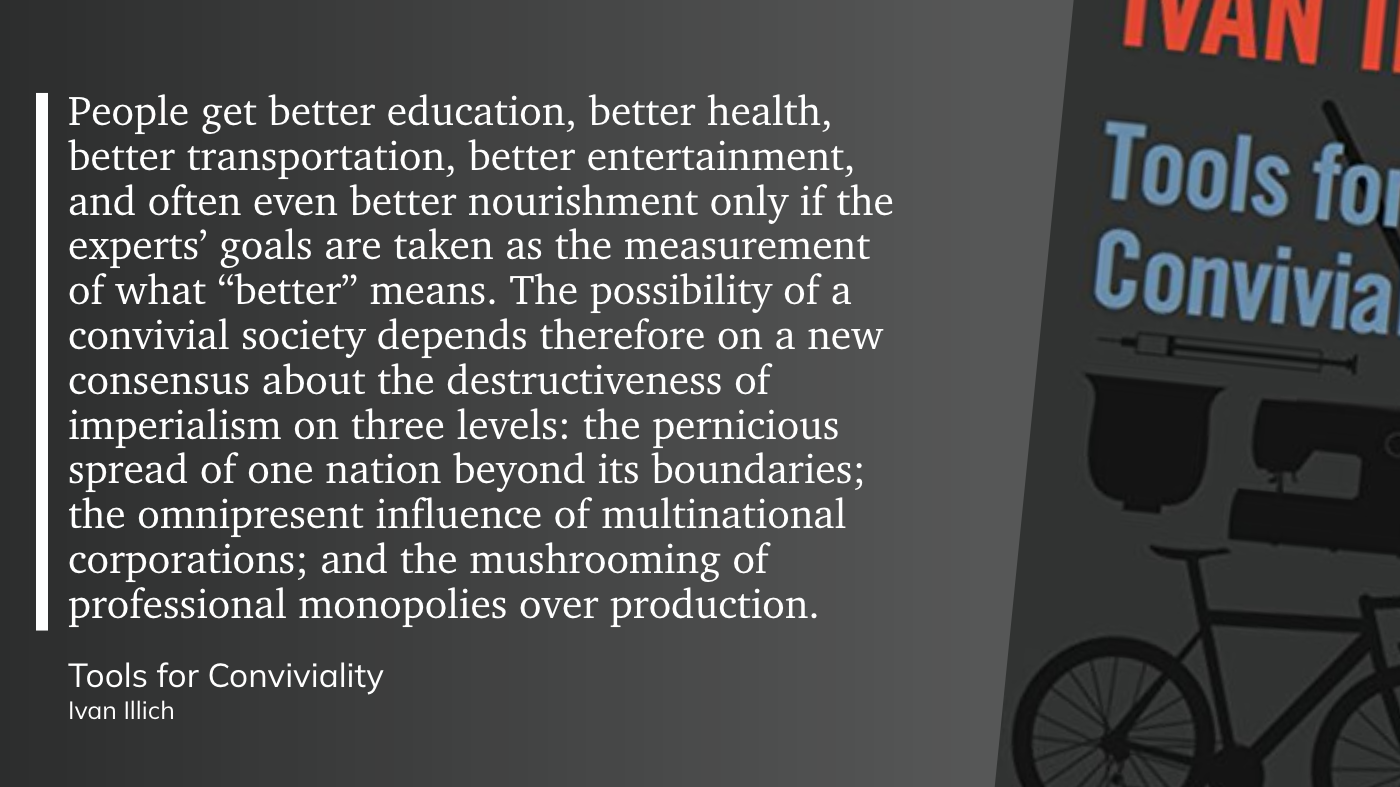

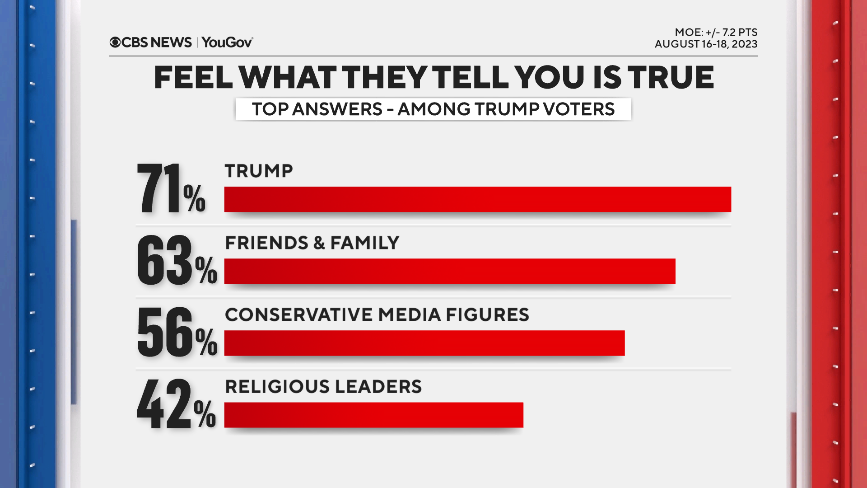
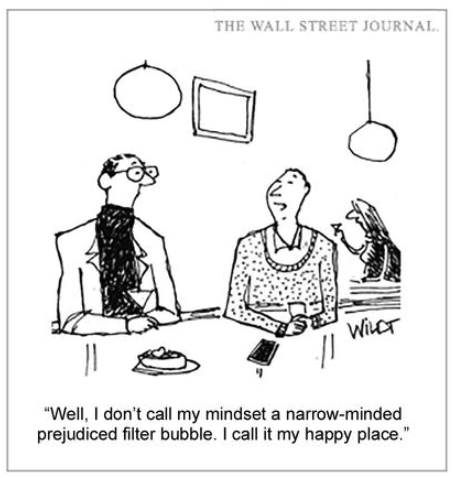





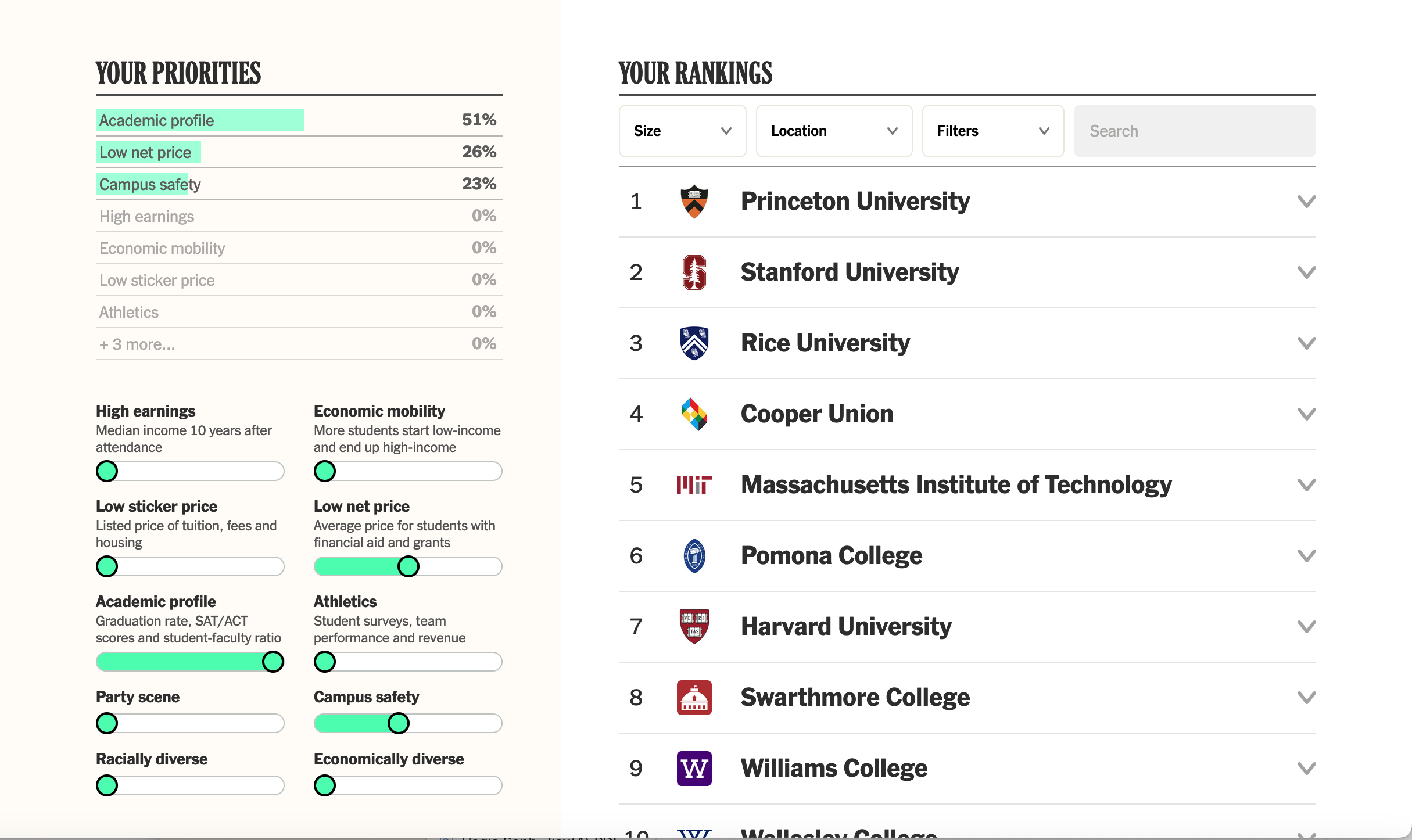
 Tipsy Teetotaler ن