Public Affairs
Everybody wants everything
Quite recently, I quoted Zaid Jilani:
In our political duopoly, you have to endorse one set of leaders or another in order to do anything constructive.
I responded that perhaps my rejection of the duopoly is because I’m not really trying “to do anything constructive” politically.
I stand by that, and I’m now reinforced by Isaiah Berlin via Alan Jacobs. Berlin:
[I]t is in fact impossible to combine Christian virtues, for example meekness or the search for spiritual salvation, with a satisfactory, stable, vigorous, strong society on earth. Consequently a man must choose. To choose to lead a Christian life is to condemn oneself to political impotence: to being used and crushed by powerful, ambitious, clever, unscrupulous men; if one wishes to build a glorious community like those of Athens or Rome at their best, then one must abandon Christian education and substitute one better suited to the purpose.
Jacobs adds:
I think Berlin is right about Machiavelli, and I think Machiavelli is right about Christianity too. The whole argument illustrates Berlin’s one great theme: the incompatibility of certain “Great Goods” with one another. The more I think about it, the more convinced I am that the inability to grasp this point is one of the greatest causes of personal unhappiness and social unrest. Millions of American Christians don’t see how it might be impossible to reconcile (a) being a disciple of Jesus Christ with (b) ruling over their fellow citizens and seeking retribution against them. Many students at Columbia University would be furious if you told them that they can’t simultaneously (a) participate in what they call protest and (b) fulfill the obligations they’ve taken on as students. They want both! They demand both!
Everybody wants everything, that’s all. They’re willing to settle for everything.
If you are fearful about condemning yourself “to political impotence: to being used and crushed by powerful, ambitious, clever, unscrupulous men,” David Brooks has some help to offer: Love in Harsh Times and Other Coping Mechanisms
America’s world mission
After Putin’s invasion of Ukraine, the Biden administration imposed “super sanctions,” promising that such measures would bring the Russian economy to its knees. These measures, and the confidence with which they were imposed, reflected the old consensus, which presupposed the end-of-history dream world. But the outcomes contradict that fantasy. Countries commanding nearly half of global GDP refused to join our sanctions regime, exposing the obvious fact that the “rules-based international order” is not international and never has been. It has always been an instrument of American power.
I’m reluctant to use the word “empire.” After the fall of the Berlin Wall, the United States did not establish colonies. But the term has become unavoidable. The international order was made in our image, an ersatz empire, as recent events have revealed. Faced with the prospect of Russian aggression, the demilitarized nations of Europe are forced to operate as American vassal states.
…
I’m not a foreign policy expert, but I venture to guess that the combined military firepower of Russia, China, North Korea, and Iran (and its proxies) is substantial, perhaps equal to any force that the United States and its allies can bring to bear on short notice. How is it that we have allowed such a coalition to emerge? The Journal reports this expert opinion: “Russia and the other nations have set aside historic frictions to collectively counter what they regard as a U.S.-dominated global system.” I marvel at the formulation, “what they regard.” In effect, our policymakers suggest that the Russia-China-Iran-North Korea alliance rests on a misconception. Putin and Xi need to wake up to the truth. The “global system” is not U.S. dominated but U.S. sponsored—for the sake of world peace, prosperity, and the triumph of abortion and gay rights . . . er, human rights. It is nothing so narrow and parochial as the imposition of America’s national interests or our activist ideologies.
Maybe the Great and the Good in Washington recognize reality, and they mouth the old pieties out of habit; or perhaps they sense (accurately) the political danger of being the first to break with established orthodoxies. Can you imagine the domestic furor that would be visited upon a Secretary of State who suggested (again, accurately) that a foreign policy promoting gay rights and other progressive causes is a virtue-signaling luxury we can’t afford in an era of great-power competition? But I worry that we are led by true believers. Some imagine that the United States has been ordained by God to defend “democracy.” Others think that we have a secular mission to promote “reproductive freedom” and LGBTQ rights around the world (the arc of history, and so on).
R.R. Reno
Blaming the messenger
In 2023 Christopher Rufo exposed the fact that Texas Children’s Hospital was maiming minors in the service of transgender ideology. The Texas Legislature passed a bill prohibiting transgender medical procedures for minors. Now Rufo reports that the Texas Children’s Hospital has persisted in practicing “gender-affirming care,” committing Medicaid fraud in order to fund the prohibited procedures (“The Murky Business of Transgender Medicine,” City Journal). Federal officials have not stood idle. As the controversy became public in 2023, they were “busy assembling information.” The target? The whistleblowers! “A federal prosecutor, Tina Ansari, threatened the original whistleblower [Eithan] Haim with prosecution.” Then, in early June, “the stakes intensified. Three heavily armed federal agents knocked on Haim’s door and gave him a summons. According to the documents, he had been indicted on four felony counts of violating medical privacy laws. If convicted, Haim faces the possibility of ten years in federal prison.” A sadly familiar story. The rule of law turned into an ideological weapon.
R.R. Reno
Trade-offs
Writing for the Washington Post, Megan McArdle explored the questions posed by the CrowdStrike IT meltdown. “It’s quite efficient for one firm to serve a large number of important customers, as CrowdStrike does,” she wrote. “In some ways, these concentrated players might provide greater reliability, because they develop a lot of expertise by serving many users, and they can invest more in R&D and security than Bob’s Friendly Local Software Co. can. But when outages happen, they happen to seemingly everyone, everywhere, all at once, leaving users no alternatives. How best to try to manage the trade-off between efficiency and redundancy is a hard question for another day. For the moment, the important thing is to recognize that it exists, and that there’s no easy way around it. We probably should have thought more about such trade-offs when the Great Efficiency Drive was underway. We’ll have to think even harder about them now.”
The Morning Dispatch
Model collapse
Training artificial intelligence (AI) models on AI-generated text quickly leads to the models churning out nonsense, a study has found. This cannibalistic phenomenon, termed model collapse, could halt the improvement of large language models (LLMs) as they run out of human-derived training data and as increasing amounts of AI-generated text pervade the Internet. “The message is, we have to be very careful about what ends up in our training data,” says co-author Zakhar Shumaylov, an AI researcher at the University of Cambridge, UK. Otherwise, “things will always, provably, go wrong”. he says.” The team used a mathematical analysis to show that the problem of model collapse is likely to be universal, affecting all sizes of language model that use uncurated data, as well as simple image generators and other types of AI. (Source: nature.com)
John Ellis News Items
Luxury Beliefs
Young Rob Henderson has been deservedly dining out on his memoir Troubled and his coinage of “luxury beliefs.” But once you enter public debates, you not only attract crazies and trolls, but solid critics as well.
Yasha Mounk finds Henderson’s definition of luxury beliefs wanting:
Ideas and opinions that confer status on the affluent while often inflicting costs on the lower classes. And a core feature of a luxury belief is that the believer is sheltered from the consequences of his or her belief. There is this kind of element of duplicity, whether conscious or not.
He offers a substitute:
Luxury beliefs are ideas professed by people who would be much less likely to hold them if they were not insulated from, and had therefore failed seriously to consider, their negative effects.
The differences aren’t just semantic, and between the two of them, I agree with Mounk.
Now I await Mounk’s critics to further refine the definition.
Partisan politics
The Populist id weighs in on Harris
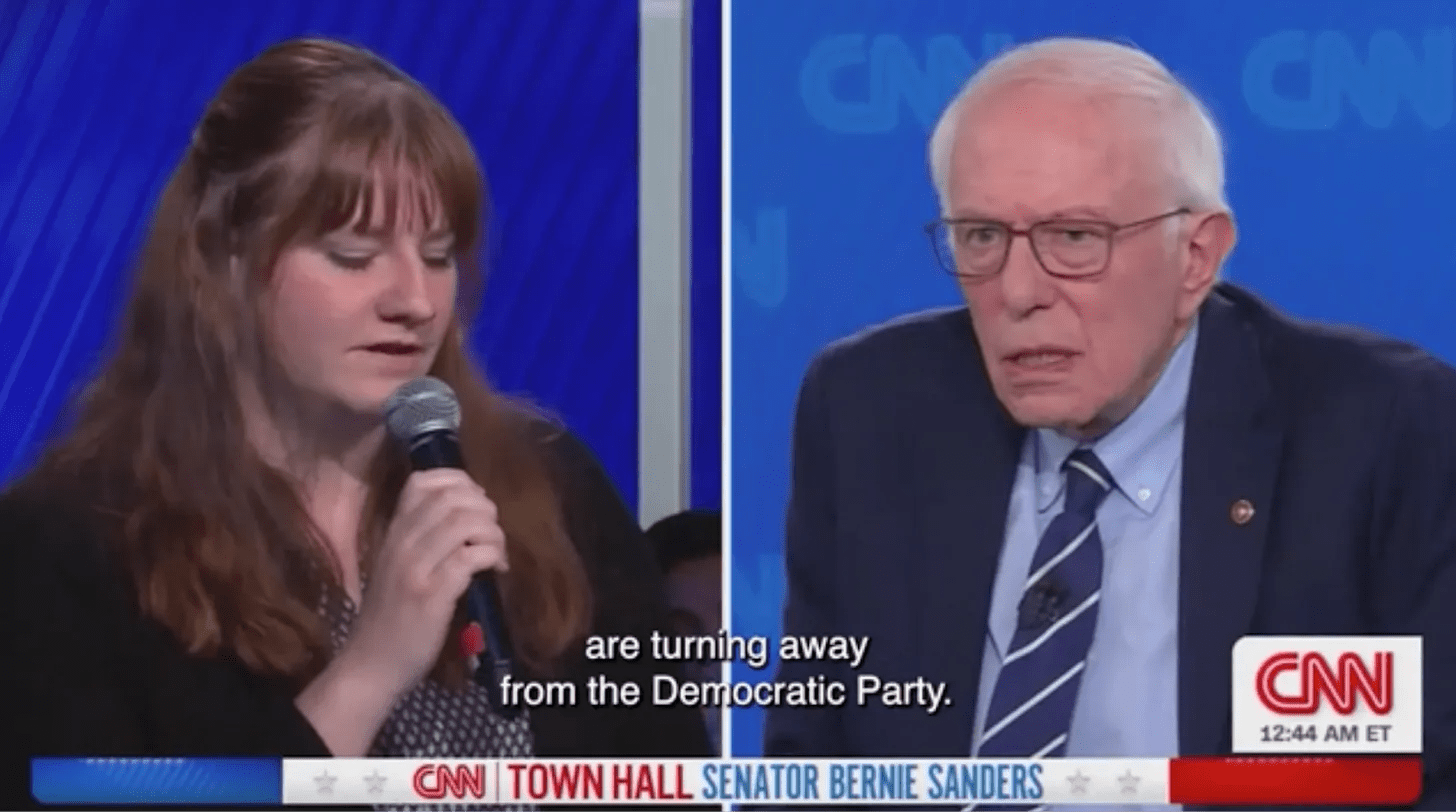
I’m not at all sure I agree with him on this, but Nick Catoggio has some pointed thoughts on GOP reactions to de facto Democrat nominee Kamala Harris:
I don’t believe the jabs about her being a “DEI hire” are part of a strategic calculus. I think they’re a matter of the populist id flaring at the thought of being governed by a black woman who’s not part of the ideological tribe.
It’s a preview of the next four years if Kamala Harris figures out a way to beat Trump this fall, I suspect. Unlike any presidency in my lifetime, her term would be wracked by obstruction, paralysis, and public disillusionment.
If you thought congressional Republicans were reluctant to compromise with Barack Obama, you ain’t seen nothing yet.
Gaslighted about the border
Remember when Joe Biden made Kamala Harris his border czar? Well, bunky, that’s no longer operative. All the cool kids agree that it never happened. Do you want to be know for cooties? C’mon, man!
At this stage of things, perhaps it’s not surprising that reporters aren’t scrutinizing Harris’s record with the same zeal with which they dove into “Russiagate,” but this marks a new low. We told you she was this thing that we’re now telling you she never was. What’s the word for that again? Right. Gaslighting.
…
We can be sure of this much: If the border was not a mess, if this was not a winning GOP issue, Kamala Harris would be running on it right now. And her media sock-puppet friends—who seem to believe in nothing except making sure she wins—would be celebrating “The Greatest Border Czar Who Ever Was.”
Peter Savodnik, Gaslighting the Public on Kamala Harris as ‘Border Czar’
I understood — indeed, sympathized with — the desperation to keep Trump from the Presidency in 2016. But a lie is a lie, and they’re lying to us again.
It’s not that “they must think we’re stupid.” They do think that we’re stupid, and we give them grounds to think that day after day.
Is this half-apology better than none?
I am writing to offer an apology. The short version is this: I severely underestimated the threat posed by a Donald Trump presidency. The never-Trumpers—who never seemed to stop issuing their warnings and critiques—struck me as psychologically and emotionally weak people with porcelain-fragile sensibilities. It turns out their instincts were significantly better attuned than my own.
…
My judgment of colleagues and of various conservatives who opposed Trump was privately severe. On the surface, I fully granted the strength of their concerns. But in the confines of my mind, I concluded that they were moral free riders. They wouldn’t sully themselves by voting for Donald Trump, but they would benefit from many of his policies. I have been asked why I voted for him when I live in Tennessee where my vote was not necessary. I voted for him exactly because of my determination not to be a free rider. I would bear the weight of the decision.
…
I knew I was wrong as January 6 approached and the president started calling for Vice President Mike Pence to reject certification of the electoral college results. This, of course, was on top of his disturbing phone call to the Georgia Secretary of State urging him to “find” additional votes. At the same time, he encouraged Americans to mass at the Capitol to support his cause.
I do not suggest that the Americans who went to the Capitol, the great majority of them peaceful, bore ill intent, but I do think that the president intended to create a spectacle that would put pressure on Mike Pence to take a dramatic and extra-legal step that would fundamentally betray the American political order and its traditions.
Hunter Baker, When Pragmatic Politics Goes Bad: An Apology to the Never Trumpers
This column is ever-so-timely again. I say that not to praise the de facto Democrat nominee, nor even to imply that she’s a “lesser evil.” I say it, first, as a call to repentance from the behavior that got us into this awful mess. Insanity, by one pop-definition, is doing what you’ve always done and expecting a different result.
For me, part of repentance is rejecting “lesser-of-two-evils” voting calculus. Two parties of some sort were (inadvertently?) in our national DNA from the start; if one must win a majority (not plurality) of electors to gain the Presidency, then third parties are overwhelmingly “spoilers” (though not quite inevitably). I nevertheless will spoil my heart out again this quadrennium — taking care not to despise those who make the “binary” choice.
For any Christian Trump voter in 2024 (I suspect Baker will be in that camp in a few months unless he’s changed a lot since 1/21/21, when his apology was dated) whose head or heart is not dead must extend a bit of grace to those who can’t bring themselves to vote for him.
Trump as media favorite
Be at remembered that the media gave Donald Trump so much Free Press in 2016 that they virtually elected him. And while they clearly wanted to be coded as anti-Trump (their “stated preference”), the attention they gave him smells like revealed preference to me. A lot of people do like to watch him — a preference I never understood from the day a friend of mine went gaga over The Art of the Deal.
Adiaphora
Dinosaur
I like technology. I was, for my generation, an early adopter of computers and I spend (too) many hours per day on my MacBook.
But after a few years on Facebook, I dropped it. I got on it to communicate among my high school classmates, but most of them weren’t on it. And it got kind of overwhelmed with commercialism. Maybe there were plugins or something to suppress all that, but I dropped it anyway.
I dropped my Twitter account, too, unable to bear a 1/100 signal-to-noise ratio. I eventually signed up again, for some incomprehensible reason, only to find that the ratio is now 1/10000. I haven’t logged on in months. Is there any more enervating activity in the world than doom-scrolling?
I thought those were two pretty solid decisions. But now I constantly hear things on podcasts like “You can find it on our Facebook page.” (Oof! No I cannot! Why don’t you have a page on the open web?) And yesterday, the President of the United States announced on Twitter/X that he’s ending his campaign for re-election. (Mercifully, professional doomscrollers quickly surface major news like this.)
I still think those were solid decisions, but they seem pretty tame compared friends flirting with stuff like this and repeating mêmes like “be the friction you want to see in the world.”
A blast from the Covid past
I am radically testing the limits of what it fundamentally means to be outdoors by erecting walls, putting a roof on top of those walls, and then insisting that it is still outdoors. This bold subversion of commonly accepted norms challenges and deconstructs “outdoorsness” as we know it. Moreover, by performing this act of deconstruction through a literal act of construction, I am illuminating the contradictory double nature of the mere act of existing. To this end, I search for the strange within the familiar, the indoors within the outdoors, the technically compliant within the clearly unsafe.
Simon Henriques, I Am the Designer of This Restaurant’s Outdoor Seating Space, and This Is My Artist’s Statement
Why resign on August 20?
After half a century in politics, Senator Bob Menendez, found guilty of all 16 counts in his corruption trial, will resign, effective August 20. Why then? Well, as Katherine Tully-McManus notes, senators get paid on the 5th and 20th of each month. Trust old “Gold Bar Bob” to check out after payday. (Politico)
The Free Press
Technology will never end work (at least until we re-jigger our mimesis)
Futurists and their ilk keep predicting the elimination of work by technology, but it never arrives. By some reckonings, we’re working more than ever; we’re certainly not approaching zero work, not even asymptotically.
What gives? We give. We keep working because we want more. We want everything. (See Alan Jacobs, above)
Disciples of René Girard make careers out of analyzing such things, so I’ll dabbling lest I make a fool of myself.
I suffer more from the humiliations inflicted by my country than from those inflicted on her.
Simone Weil, from a letter to Georges Bernanos.
I don’t do any of the major social media, but I have two sub-domains of the domain you’re currently reading: (a) You can read most of my reflexive stuff, especially political here. (b) I also post some things on the only social medium I frequent, because people there are quirky, pleasant and real.

 Tipsy Teetotaler ن