I’ve paid closer attention (plus Substack subscription fees and book purchases) to Paul Kingsnorth since his conversion to Christianity and specifically to Orthodox Christianity. (No, he did not convert to “Romanian Orthodoxy,” though his regular parish is predominately Romanian. There is no substantial difference between Romanian, Serbian, Greek, Russian, Georgian, Syrian or other Orthodox ethnic identifiers.)
I’ve also paid closer attention (plus Substack subscription fees and a book purchase) to Martin Shaw since his reversion to Christianity, this time as Orthodox.
But I’ve been trying to keep in mind the scriptural cautions against putting novices on a pedestal Cf. I Timothy 3:6. Neither novice, Kingsnorth or Shaw, is a Christian authority – yet.
Mercifully, neither is claiming the prophet’s mantle, but careless readers can cloak them with it anyway.
I’m happy for Kingsnorth that his new polemic, Against the Machine, is selling well, and that he is getting blogged and podcasted by everyone and his brother. I’ve read the book, which was more than a stitching together of old internet posts. But if you read it, do also read some critiques, such as ‘Unnatural’ Doesn’t Mean ‘Wicked’, by non-Orthodox Christian Tara Isabella Burton.
Elites failing to reproduce
PhDs are falling: At Harvard, PhD programs are collapsing amid budget woes. The Faculty of Arts and Sciences just slashed the number of PhD student admissions slots by more than 75 percent in the Science division and 60 percent in the Arts & Humanities division for the next two years.
The PhD racket was always a weird one. These schools pushed their smartest, most annoyingly ambitious kids to get a PhD (there but for the grace of god go I). During that PhD, these guys do all the work of being a professor—teaching courses, grading papers. But they’re paid next to nothing. And then the clincher is that at the end, there are no jobs available. Maybe one English department job in Idaho for a group of 300 of them to battle to the death over. So I support this belt-tightening. We will have about 5,000 fewer antifa soldiers produced each year. They might even spend their 20s making money.
Over the past decade a new, and very revealing, locution has drifted from our universities into the media mainstream: Speaking as an X . . . This is not an anodyne phrase. It tells the listener that I am speaking from a privileged position on this matter. (One never says, Speaking as a gay Asian, I feel incompetent to judge this matter.) It sets up a wall against questions, which by definition come from a non-X perspective. And it turns the encounter into a power relation: the winner of the argument will be whoever has invoked the morally superior identity and expressed the most outrage at being questioned.
Mark Lilla, The Once and Future Liberal.
Legal realism
A new analysis of insurance data finds that more than one in ten of the women who take the abortion pill experience sepsis, infection, hemorrhaging, or another “serious adverse event.” The only reason regulators tolerate such a high level of danger to the mother is that the ability to kill her baby cheaply and conveniently trumps all considerations.
Wow, it really was a social contagion: As the great vibe shift sweeps our country, it turns out that the rise in transgender identities really was a fad—between 2022 and 2024, the number of trans-identifying young people has dropped in half. Last week, another study hinted at the same conclusion, but it was widely criticized due to its failure to distinguish between trans and nonbinary identities, which are obviously very different, you ignoramus. This week’s data from writer and psychology professor Jean Twenge proved that both identities are in free fall among the youth. …
This is good for a lot of reasons—but in particular, it’s good for trans people! Why? Because there have always been a small number of people who feel truly dysphoric in their sex. And the last thing you want is a horde of depressed teen girls latching on to your situation as a way to rage against their bodies, a stand-in for anorexia or cutting. I’ve never been more worried about my rights as a gay person than when all the angry youth started announcing they were gay or trans or queer because then I just knew backlash was coming. Anything funky they did, they called it gay. They wore a weird jacket and got creative with their haircuts and all of a sudden, they’re claiming my identity. I say, scram, kids! Get out of here! I’m putting up a border around Gay Territory and saying No more may enter. It’s me, it’s everyone in Provincetown, and it’s my dykes in the Midwest, and that’s it. We’re full up. Go see if the Mormons are taking applications.
The next two items are the most pointedly political in this post – and that’s not very pointed. I just don’t have it in me to spit into the wind recently.
A new presumption of bad faith
I was reminded by a New York Times guest editorial on the dangers of the Insurrection Act that our laws almost all assume that the law enforcer will be sane and will act in good faith. As a consequence of electing an insane and vengeful President, we now “enjoy” the full American expression of Joseph Stalin’s “show me the man and I’ll show you the crime.” My reflex is to disbelieve every word Trump says and to suspect invidious discrimination in all his Orders.
It might behoove our legislators to consider, before passing a law, what injustices could be wrought by bad actors wielding the proposed law.
Bring back hypocrisy
The Wall Street Journal has somehow decided to position its Editorial Page just slightly “left” (whatever those terms mean any more) of the Falun Gong’s Epoch Times. Thursday, it was Barton Swaim’s both-sides demi-defense of Trump’s lawfare against his perceived enemies.
I counter with “Yes, but Trump truly is worse because he does it right out in the open, shamelessly.” If hypocrisy is the tribute vice pays to virtue, it joins smoking and drinking on the very short list of vices Trump doesn’t practice. Otherwise, his brazenness coarsens every thing he touches and everyone who cheers him. For a guy so enamored of gold leaf, he’s oddly opposite King Midas.
I never thought I would lament the loss of hypocrisy.
In the wider world, asking whether academia really skews left makes you look like an idiot or, slightly more charitably, like someone so encased in a bubble that they don’t even know what they’re missing. As for insisting on your right to complete self-governance, free from “secondary, external aims,” as Siraganian puts it … well, if you expect someone else to pay you to pursue truth, at some point, you must accept some secondary, external aims.
Academics tend to recoil from such a crass and mercenary idea, and fair enough, but the world is a crass and mercenary place. We talk about pursuing truth for its own sake, but most academics are pursuing it in exchange for money they can use to satisfy their many less elevated needs. The people who provide that money want something in return. Many will not be content to know that somewhere the global stock of Truth is increasing. Especially if one of the Truths you insist on is that they are dim-witted bigots.
Anyway, this is how the AAUP responds to the conversation on X:
The more I see institutional elites, in government and the private sector, the more I realize these people are like the pre-revolutionary Tsarist circles. They had no idea why so many people hated them, and what kind of precarious situation they were in.
They always invest in businesses that put them in the ‘trade routes’—controlling the linkages, and never getting involved in the creation of tangible value.
Kagi News, a new and useful aggregator, offers “Today in History as one of its tabs, with events at the top, people at the bottom.
For some reason, I find that a lot of composers and poets I had place mentally in the late-19th century were actually in early-19th century. Edgar Allen Poe never even saw the late-19th. Who knew?
Snippets
… the Conservative Political Action Conference, a kind of movable rent-a-troll event … (Anne Appelbaum via Frank Bruni)
The old Saudi brand was ‘austere theocracy,’ but the new one is ‘fun, fun, fun, but still with beheading.’” (Helen Lewis via Frank Bruni)
We live the given life and not the planned. (Wendell Berry, Sabbath poems 1994 number 3)
I love her more than evolution requires. (Charles Murray’s wife, reflecting on their first child. Attributed to others as well. The insight doubtless matters more than the source.)
Mad Ireland hurt you into poetry. (W. H. Auden, in memory of W. B. Yeats)
Music is a conspiracy to commit beauty. (Linda Ronstadt)
States, particularly liberal democracies, are heavily dependent on wars for moral coherence. (Stanley Hauerwas, Resident Aliens). Looking at the last 62 years of American history seems to confirm this.
Your enemies are not demonic, and they are not all-powerful and the right hasn’t always lost and the left hasn’t always won. But if you convince yourself of that, you give yourselves all sorts of permission to do a lot of stupid and terrible things under the rubric of “Do you know what time it is?”
[A] critical mass of the American people … no longer want[s] to govern themselves, … are sick of this republic and no longer want to keep it if it means sharing power with those they despise.
I don’t do any of the major social media, but I have two sub-domains of the domain you’re currently reading: (a) You can read most of my reflexive stuff, especially political here. (b) I also post some things on my favorite no-algorithm social medium.
Mr. Trump lashed out at the Federalist Society, blaming it for bad advice on whom to appoint to judgeships. He singled out Leonard Leo, a former longtime leader of the Federalist Society who helped recommend his first-term nominees and who exemplifies the conservative legal movement.
“I was new to Washington, and it was suggested that I use the Federalist Society as a recommending source on judges,” the president wrote. “I did so, openly and freely, but then realized that they were under the thumb of a real ‘sleazebag’ named Leonard Leo, a bad person who, in his own way, probably hates America, and obviously has his own separate ambitions.”
Mr. Leo and Mr. Trump had a falling out in 2020, but the personal attack was a sharp escalation. In a statement, Mr. Leo said, “I’m very grateful for President Trump transforming the federal courts, and it was a privilege being involved.”
Still, Mr. Trump’s tirade strained an already uneasy relationship with traditional legal conservatives.
Many share the president’s goals of strengthening border security, curbing the administrative state and ending “diversity, equity and inclusion” programs, said John Yoo, a conservative law professor. But, he added, they dislike some of Mr. Trump’s methods, whether that is prolifically invoking emergency powers or insulting judges who rule against his administration.
And Professor Yoo, who wrote memos advancing sweeping theories of presidential power as a Bush administration lawyer, said Mr. Trump’s attacks on Mr. Leo were “outrageous.”
“Calling for the impeachment of judges, attacking Leonard Leo personally and basically calling him as traitor as far as I can tell — Trump is basically turning his back on one of his biggest achievements of his first term,” he added, referring to the reshaping of the federal judiciary.
For what it’s worth, Trump’s pledge to appoint federal judges from a list compiled by Leonard Leo (not the Federalist Society, which doesn’t do endorsements) was pivotal to his 2016 Election victory, especially among abortion foes who understandably did not trust a twice-divorced narcissist playboy with gambling and porn connections. Charlie Savage hasn’t forgotten that, but I shouldn’t quote his whole article.
If the Senate has a couple of Republicans with integrity, hack appointees like Emil Bove will not be confirmed. C’mon, guys! Save him from himself!
Petulant Trump disavows his signature success (2)
There are many stories in literature about people making deals with the devil. Weirdly, in most of them the devil is a square dealer.
That is, he keeps up his end of the bargain. He offers the protagonist wealth or power in exchange for something ethereal, like their immortal soul, and when they agree he delivers. The Prince of Lies turns out not to be a swindler. Most of the drama happens after he makes good on his promise and comes to collect.
The moral of those stories isn’t that you’re a fool to trade with Beelzebub because you’ll be cheated. It’s that you’re a fool to sacrifice your noblest self for something as fleeting as worldly power.
Conservatives made a deal like that in 2016. Donald Trump offered to stock the federal judiciary with their favorite judges, beginning with the vacancy left by Antonin Scalia on the Supreme Court; in return they would set aside their moral, civic, and ideological objections to him and support him in virtually anything he wanted to do, even if it affronted their conservative beliefs. Or basic decency.
The bargain was struck—and he delivered. Three eminent conservative jurists were added to the Supreme Court. Hundreds more were confirmed to federal appellate and district courts. The great white whale of social conservatism, Roe v. Wade, was harpooned in 2022 after a 50-year chase. Many other landmark legal victories for the American right have accumulated since Trump took office in 2017.
Conservatives weren’t cheated. The devil made good.
Fast-forward to last night …
[Leonard] Leo spent many years as the Federalist Society’s sherpa on judicial nominees, advising Republican presidents on whom to appoint and helping to shepherd candidates through the confirmation process. With the exception of Mitch McConnell, no one has done more this century to build a federal bench of originalist judges. But Trump didn’t want originalists—he wanted flunkies—and so Leo’s influence, and the influence of the organization he serves, have gone up in smoke …
Conservatives got the judiciary they wanted in exchange for supporting a man who radiates contempt for the constitutional order. In doing so, they empowered a postliberal movement that despises judges who do their jobs conscientiously instead of dutifully midwifing a Trumpist autocracy. As the Republican Party proceeds further down the path to fascism that those conservatives enabled, eventually the federal judiciary will consist entirely of believers in the “living Constitution,” half authoritarian and half progressive. In the long run, as Reaganites age out and are replaced by younger Trumpists, conservative judges as we’ve known them will go mostly extinct.
That’s what conservatives got for their bargain. The devil has come to collect.
The concept of a pardon, of course, is extremely hard for Trump to understand. Traditionally, a pardon is due to someone who has completed (or nearly completed) their sentence, expressed remorse, and turned their life around — and thereby been the recipient of mercy. But remorse is a concept unknown to a pathological narcissist. Mercy is even stranger. After all, who wins and who loses in an act of mercy? It’s one of those acts defined by grace — another literally meaningless concept for Trump. For him, all human conduct is built on a zero-sum, winner-vs-loser foundation. So a pardon is always instrumental — a way to reward allies, win credits, and enlarge his power by announcing to the world that he alone is the ultimate rule of law, and can intervene at any point to ensure his version of justice is the dispositive one. A monarch, in other words.
…
But Trump is the real outlier (and Biden, in his defense, used Trump’s abuse as a justification for his own self-dealing). In recent times he’s out in front in numbers: more than 1,700 full pardons so far, and we have three-and-a-half years to go. Nixon’s 863, Carter’s 574, Clinton’s 396, W’s 189, and Obama’s 212 put it in perspective. But these previous presidents abused the power occasionally — it’s an absolute power after all — while largely respecting the contours of the rule of law.
Trump has dispensed with any pretense of that. He is an instinctual tyrant — see his immigration overreach and his unilateral tariff mania — and the pardon power was almost made for him. The weakness of any constitution is the virtue — or, more often, the lack of it — in its office-holders. And Trump has the civic virtue of Jeffrey Epstein. The pardon power was always going to be a loaded gun in his tiny, careless hands.
… [H]e is using the pardon power all the time, rather than waiting till the end of his term. It replaces the rule of law with monarchical discretion. That’s why he could not tolerate Jeff Sessions all those years ago. Because Sessions, for all his passionate partisanship, still understood the system he was operating in and still believed that the appearance of impartial justice was integral to liberal democracy’s survival. Sessions was an American.
…
A majority of the American electorate, mind you, endorsed this lawlessness last November. It’s hard to pity them, as they absorb or ignore all the corruption they voted for and are still content to tolerate. They love crypto-monarchy as long as their king is on the throne. They do not seem to understand that this version of monarchy is still an elected one, and that another king from the other tribe may wear the crown some day. They may miss the benefits of liberal democracy once they have succeeded in killing it.
I’m not an active investor. I tend to buy and hold Mutual Funds and ETFs. (That’s just me; you do you.) But it did not escape my notice, even before the term was coined, that what’s now dubbed “TACO trades” could be profitable.
Wall Street is all over the “TACO trade,” another instance of people realizing they shouldn’t take the president at face value. “TACO” is short for “Trump always chickens out.” Markets have tended to go down when Trump announces new tariffs, but investors have recognized that a lot of this is bluffing, so they’re buying the dip and then profiting off the inevitable rally.
A reporter asked Trump about the expression on Wednesday, and he was furious. “I chicken out? I’ve never heard that,” he said. “Don’t ever say what you said. That’s a nasty question. To me, that’s the nastiest question.” The reaction demonstrates that the traders are right, because—to mix zoological metaphors—a hit dog will holler. The White House keeps talking tough about levying new tariffs on friends and geopolitical rivals alike, but Trump has frequently gone on to lower the measures or delay them for weeks or months.
Foreign leaders had figured out that Trump was a pushover by May 2017, and a year later, I laid out in detail his pattern of nearly always folding. He’s a desirable negotiating foil, despite his unpredictable nature, because he doesn’t tend to know his material well, has a short attention span, and can be easily manipulated by flattery. The remarkable thing is that it’s taken this long for Wall Street to catch on.
Now that the cat’s out of the bag, the profitability will diminish and what’s left will mostly be the pleasure of annoying Velveeta Voldemort.
The most incompetent administration ever
A federal appeals panel ordered officials not to deport a 31-year-old to El Salvador. Minutes later, it happened anyway. The government blamed “administrative errors.”
Will Trump pay any price for this fishy string of “administrative errors”?
Among his voters, I doubt it. But with the courts, the toll is steep and rising. They just cannot believe anything Administration lawyers promise. And they shouldn’t.
DJT, the anti-conservative
[I]t’s hard to think of a more anti-conservative figure than President Donald Trump or a more anti-conservative movement than MAGA. Trump and his supporters evince a disdain for laws, procedures, and the Constitution. They want to empower the federal government in order to turn it into an instrument of brute force that can be used to reward allies and destroy opponents.
The Trump administration is a thugocracy, and the Republican Party he controls supports him each step of the way. Almost every principle to which Republicans once professed fealty has been jettisoned. The party is now devoted to the abuse of power and to vengeance.
…
The significance of this shift can hardly be overstated. A party that formerly proclaimed allegiance to the Constitution and the rule of law, warned about the concentration and abuse of power, and championed virtue, restraint, and moral formation has been transmogrified. The Republican Party now stands for everything it once loathed.
And she has been frank about the dilemma faced by Republicans like her who are dismayed about the president’s policies and pronouncements but worried that speaking out about them could bring death threats or worse.
“We are all afraid,” she told constituents in April, adding: “I’m oftentimes very anxious myself about using my voice, because retaliation is real. And that’s not right.”
I do acknowledge threats against Trump’s life, too. Several isolated nuts have been arrested and charged. But it seems to me that a President and his supporters holding Congress hostage for fear of their lives is an order of magnitude worse.
No laughing matter
Next month will be the first anniversary of Tim Walz’s branding of Donald Trump, JD Vance and, by implication, some of their political associates as “weird,” and it’s obvious now that Walz spoke too soon, before Trump won in November and his administration turned weirdness into a credential and an operating principle, before weirdness started afflicting Trump allies who seemed a little less weird in the past, before episodes of Trump-adjacent weirdness proliferated.
… [T]his pageant of peculiarity isn’t a laughing matter. It reflects Trump’s confusion of nonconformity with boldness. It speaks to his love of performance, even if it’s the fruit of a loopy performer. It demonstrates his desire to rattle, no matter how infantile the rattling.
If I’m subjected to one more lamentation, one more rant, about how lost and pitiable and shameful the Democratic Party is, my head is going to explode. Not because the Democratic Party is in good shape — it isn’t. Not because it can make do with only minor adjustments — it can’t. It’s guilty of the arrogance and incompetence of which it’s accused. And the country’s future as a reasonably healthy and prosperous democracy depends on Democrats’ recognition and remedy of that.
But some of the extravagant lashing of the party carries the implicit suggestion that Republicans, by contrast, have their act together. Excuse me? If success at the polls is the only metric for that, then sure, yes, they’re in an enviable spot. But it’s a wretched (and, I have to believe, vulnerable) one. Republican lawmakers who rightly gaped in horror at the events of Jan. 6, 2021, later developed collective amnesia, putting power several light-years above principle. They then indulged or outright applauded Trump’s laughable cabinet picks and his adoration of Musk and his cockamamie tariffs and his abandonment of due process and his swag from Qatar and his sadistic humiliation of President Volodymyr Zelensky of Ukraine and so many other cruelties and outrages that this sentence could go on forever. I struggle to admire Republicans’ political chops. I’m too distracted by their moral rot.
For love of sentences
In Esquire, Dave Holmes marveled at Senator Lindsey Graham’s suggestion, in a social media post before the conclave, that cardinals consider the idea of Trump as the next pope: “I guess he had not yet closed the day’s humiliation ring on his Apple Watch.” Holmes added that while Graham was probably joking, “You can’t be tongue-in-cheek when you are actively licking the boot. There is just not enough tongue for both jobs.” (Susan Fitzgerald, Las Cruces, N.M.)
I confess that my laser-focus on Trump can sound like excusing the Democrats’ problems. It really isn’t. I’m just madder at my former party than at the I party whose Presidential nominee I voted for only once, 53 years ago.
An Andrew Sullivan podcast this week with the authors of Original Sin reminded me of just how screwed we are in the other of our major-party choices, the Dems, and how Joe Biden fooled me with his “nice guy” schtick. Though I didn’t vote for him, I would have done so if my fair state hadn’t been a lock for Trump.
Hypocrisy
Hypocrisy is the tribute paid to virtue by vice.
I will give Trump 2.0 credit for not adding hypocrisy to its countless other sins.
On second thought, his attacks on Ivy League universities for suffering antisemites gladly may qualify.
The best jokes
It has been said that the best jokes are dangerous because they are in some way truthful.
On Wednesday, a dangerous joke was told in the Oval Office. The South African president turned to the American president and said: “I’m sorry I don’t have a plane to give you.”
Trump lost 96% of federal court cases in May. Even GOP-appointed judges ruled against him 72% of the time,” – Jack Hopkins.
“The Washington Post has now confirmed that it was Trump who asked the Qataris to gift him the plane for free (rather than the Qataris offering it), and that Qatar is demanding a written memo from the White House to this effect before the deal is finalized,” – Tom Malinowski.
Your enemies are not demonic, and they are not all-powerful and the right hasn’t always lost and the left hasn’t always won. But if you convince yourself of that, you give yourselves all sorts of permission to do a lot of stupid and terrible things under the rubric of “Do you know what time it is?”
Trumpism can be seen as a giant attempt to amputate the highest aspirations of the human spirit and to reduce us to our most primitive, atavistic tendencies.
I don’t do any of the major social media, but I have two sub-domains of the domain you’re currently reading: (a) You can read most of my reflexive stuff, especially political here. (b) I also post some things on my favorite social medium. I am now exploring Radiopaper.com as well.
I can’t get this out of my head as pundits keep explaining what’s wrong with every approach to dealing with Donald Trump’s damnable lies and crimes: A fundamental reality of human existence is that vice often leaves virtue with few good options. Evil men can attach catastrophic risks to virtually any course of action, however admirable. (David French)
If hypocrisy is the tribute vice pays to virtue, what do you call vice so shameless that it doesn’t even pretend to be virtuous?
(Asking for a friend whose initials are USA)
On a related note:
Of impeachment #2, from January 6, Mitch McConnell says we can’t impeach a President who’s no longer in office but there’s always the legal system.
Four indictments into the legal system, Republicans scream that “the Democrats are criminalizing politics.”
There’s just no pleasing utterly unprincipled power-seekers.
The end of the uneasy anti-Roe coalition
The [Supreme] Court’s landmark [Dobbs] decision brought an end to that uneasy anti-Roe coalition, revealing the amalgamation for what it was: a group of fellow travelers whose interests aligned to a point, but who had their own, separate visions for what would replace the status quo. Was overturning Roe and returning the abortion issue to the states the end goal, as many Federalist Society types saw it? Was Alito’s Dobbs decision the first step toward a nationwide ban? Is there a middle ground that’s both morally acceptable to the pro-life movement and electorally popular?
If the conveyor belt of science dictating politics has fallen out of favor in administrative law and is even more obviously inapplicable to politics in general, why are so many politicians returning to its rhetoric? The reason is that, even if it is an intellectually bankrupt tradition, it remains politically useful. Scientism is an attempt to shut down political debates. It shifts the discussion from questions of value, which are accessible to all, to questions of facts which are in the domain of the experts, thus shifting the terrain of the debate. It also hampers the evolution of expert consensus, because when science becomes a front for politics, dissenting from the party lines becomes harder even for experts. And it allows progressives to portray their opponents as ignorant. That has been a common trope of progressive politics: conservatives are the stupid party.
I am not anti-gun. I’m pro-knife. Consider the merits of the knife. In the first place, you have to catch up with someone in order to stab him. A general substitution of knives for guns would promote physical fitness. We’d turn into a whole nation of great runners. Plus, knives don’t ricochet. And people are seldom killed while cleaning their knives.
Georgia’s Republican governor, Brian Kemp, said Thursday he would not call a special session of the legislature to investigate Willis, despite requests from some GOP lawmakers in the state. “Up to this point, I have not seen any evidence that DA Willis’ actions or lack thereof warrant action by the prosecuting attorney oversight commission,” Kemp told reporters.
Mike Pence at the first GOP Presidential debate for the 2024 election.
I thought that was wrong in one sense when I first read it, justifying Pence’s position favoring national abortion legislation. For more than 40 years, I said that reversing Roe would return the abortion issue to the states. Now Mike Pence was boasting that it was a mark of his awesome leadership to over-promise dubiously-constitutional legislation on abortion.
My conviction has grown since then that it’s sheer idiocy, faux high rhetoric. Consensus is not the opposite of leadership; it is a goal of leadership.
Shorts
American conservatism
American conservatism is merely the shadow that follows Radicalism as it moves forward towards perdition. It remains behind it, but never retards it, and always advances near its leader.
Alan Jacobs finds Pablo Neruda’s book blurb the greatest ever:
Anyone who doesn’t read Cortázar is doomed. Not to read him is a serious invisible disease which in time can have terrible consequences. Something similar to a man who has never tasted peaches. He would quietly become sadder, noticeably paler and, probably, little by little, he would lose his hair. I don’t want those things to happen to me, and so I greedily devour all the fabrications, myths, contradictions, and mortal games of the great Julio Cortázar.
You can read most of my more impromptu stuff here (cathartic venting) and here (the only social medium I frequent, because people there are quirky, pleasant and real). Both should work in your RSS aggregator, like Feedly or Reeder, should you want to make a habit of it.
Voters have to make a choice. Choices are always binary. In the end the majority of voters who aren’t fans of either man will have to decide whose flaws are greater. The presidential ballot doesn’t allow for a nuanced moral calculus.
Baloney! If the major parties keep serving up sh*t sandwiches, we can always refuse to choose (not vote). And there’s the choice of voting for the American Solidarity Party candidate (my choice the past two presidential elections).
Home-invasion robbers
Its mistake is not in any of the hand-written niceties it revels in, which make life orderly, cozy—even lovely. Its mistake is that it treats Leftist ideologues like quirky out-of-town guests arriving for brunch. It assumes we all want the same things and are equally devoted to the perpetuation of bedrock American commitments: free speech, free exercise of faith, equal protection, rule of law.
But the Woke are not zany guests. They are home-invasion robbers.
Nellie Bowles on Friday had the customary array of nut-picked items, but this one is particularly choice:
Philip Morris gets higher ESG rating than Tesla: Before anyone gets too excited about America making a sensible turn on climate change, let’s check in on our eco-investing program. Environmental, Social, and Governance (ESG) scores are meant to be guides for ethical investing, and a company’s score is extremely influential for where big investors put their money. It’s also fully corrupt, and data firms award high scores only to companies that give money to the most bizarre causes. So for example: Tesla now has an overall score of 37 out of 100, compared to Philip Morris International, which has a score of 84. Never mind that cigarettes accelerate the deaths of 8 million a year. (Read Rupa Subramanya’s Free Press article about ESG.)
(Emphasis added)
USA
American Exceptionalism
America’s “exceptional” nature … doesn’t imply superiority. It doesn’t even suggest excellence. It implies difference.
When the head of USAID, Samantha Power, comes to your country and spouts off about America’s role in facilitating “civil society” and “independent journalism,” you are not only right to be worried—you have a duty to stay vigilant.
In my seemingly endless quest for balanced news and commentary (even if it’s roll-your-own balance by reading across a broad spectrum), I’ve been frustrated again and again. When I started in the early ’90s, with a shortwave radio, almost everyone was playing our music (literally) and singing our tune (figuratively). Soon came the internet, and shortwave went the way of the Dodo Bird.
C.S. Lewis in his essay wrote that “Every age has its own outlook. It is specially good at seeing certain truths and specially liable to make certain mistakes. We all, therefore, need the books that will correct the characteristic mistakes of our own period. And that means the old books.” Every country, too, tends to see some things especially well, others poorly. I try to be aware of that when I read putative enemies, both Americans, arguing with each other; I don’t always spot the hidden premise they share, that the world may not share, but I see it often enough to vindicate Lewis.
But such is the world today that even regions and countries who think differently from us publish their thinking in English, thank goodness, as I’m not currently literate other than in English. That means I can read:
Maybe foreign thinkers writing in English can supplement old books for expanding my mind.
Trump and his woes
Speaking of the Trump indictment
Here’s Marco Rubio:
There is no limit to what these people will do to protect their power & destroy those who threaten it, even if it means ripping our country apart & shredding public faith in the institutions that hold our republic together.
Rubio was speaking of the Democrats, of course; I could muster up some respect for him if it were a tearful admission he had been protecting his power by shredding public faith in the institutions of criminal justice.
Marco Rubio wasn’t necessarily the worst, but there was particular irony here.
Sober Peggy Noonan
My fear is that Mar-a-Lago is a nest of spies. Membership in the private club isn’t fully or deeply vetted; anyone can join who has the money (Mr. Trump reportedly charges a $200,000 initiation fee).
A spy—not a good one, just your basic idiot spy—would know of the documents scattered throughout the property, and of many other things. All our international friends and foes would know.
Strange things happen in Mar-a-Lago. In 2019 a Chinese woman carrying four cellphones, a hard drive and a thumb drive infected with malware breezed past security and entered without authorization. She was arrested and jailed for eight months. Another Chinese woman was arrested soon after; a jury acquitted her of trespassing but convicted her of resisting arrest. In 2021 a “Ukrainian fake heiress and alleged charity scammer” gained access, according to the Guardian.
Who else has?
Mar-a-Lago isn’t secure. Those documents didn’t belong there. It is a danger to our country that they were. This story will do Mr. Trump no good with his supporters. It will hurt him—maybe not a lot but some, maybe not soon but in time. I mean the quiet Trump supporters, not big mouths and people making money on the game, but honest people.
When individuals and communities confront a range of options, all of which are likely to lead to bad consequences, that’s a tragic situation. I think that’s where the country finds itself today—in the midst of an unfolding tragedy. The proper response to such a situation is sobriety and honesty about the dangers that lie ahead.
The New York Times describes advisers to rival campaigns wrestling today with the surreal task of “trying to persuade Republican primary voters, who are inured to Mr. Trump’s years of controversies and deeply distrustful of the government, that being criminally charged for holding onto classified documents is a bad thing.”
Nick Cattogio. Note, too, that the criminal charges came from a grand jury, not straight from DOJ.
Two key ideas for next year
I implore my conservative readers to consider two ideas:
Donald Trump is unfit for the Presidency of the United States.
The Democrats (and substantial portions of the civil service) have treated Donald Trump very shabbily. For sake of argument only, I’ll include the federal criminal indictment in that.
Now here’s the point, which doesn’t seem subtle to me but seems to be widely overlooked: Idea 2 doesn’t negate Idea 1.
Can you see that?
Should we inflict Donald Trump upon ourselves and our children just to get back at those who’ve wronged him? Couldn’t we just throw him a giant pity party? (Sorry: I’m expecting an emergency phone call that evening.)
Nailing the Wall Street Journal
Josh Barro nails the Wall Street Journal. Its opinion pieces really have been as bad as he describes in This Is Solely Donald Trump’s Fault. Excerpt:
People like those who constitute WSJ editorial board, who admit Trump broke the law but still don’t think he should be charged for it, should have to spell out what kinds of crimes a leading politician should not be allowed to commit.
And just in case you’ve wondered what Artificial Intelligence would come up with when asked for “A bathroom with a crystal chandelier, and an orange man with blond hair in a business suit reading a document on the toilet, and boxes and boxes of files stacked up everywhere, Pixar,” Barro answers that, too.
Will Republicans nominate a first-grader?
Overwhelming self-entitlement is just at the core of who Trump and [Boris] Johnson are. It is their character. This is how Johnson’s school principal described him when the future PM was just 17: “[He] sometimes seems affronted when criticized for what amounts to a gross failure of responsibility … I think he honestly believes that it is churlish of us not to regard him as an exception, one who should be free of the network of obligation that binds everyone else.” It could read as a summary of parliament’s report 41 years later.
And as with Trump and his bizarre behavior with “his boxes,” it’s very hard to see some profound, malign motive here in pursuit of something important. It’s just mindless egotism, married with an infinite capacity for deceit. Here’s how George M. White, Trump’s classmate at their military academy, characterized him at 17:
“The most significant incident, which I got into big trouble for, was when we were taking a picture in May of 1964, and Donald Trump refused to draw his sword. I’m the first captain and I order present arms and there are five guys behind me and they draw. But he refuses. I hear behind me, ‘Trump, draw your sword.’ Donald refuses. The picture gets taken. … He was defying a direct order, showing his defiance,” White said. “He was ‘being Trump,’ showing that his ego was more powerful than anybody’s. He later showed that picture around to show how defiant he was because he didn’t draw the sword.”
Trump himself told one biographer that “when I look at myself in the first grade and I look at myself now, I’m basically the same. The temperament is not that different.”
How seriously should we take Donald Trump’s candidacy?
…
Ross Douthat As seriously as a spring tempest. As seriously as a summer forest fire. As seriously as the north wind shaking the barren trees on the last day of autumn. As seriously as the winter wind, blowing in the same bare place, with the nothing that is not there and the nothing that is.
…
What matters most about him as a presidential candidate?
…
Douthat That his second term was foretold in the Necronomicon, written in eldritch script on the Mountains of Madness and carved deep, deep into the white stones of the Plateau of Leng.
…
What do you find most inspiring — or unsettling — about his vision for America?
…
Douthat I believe that before the sixth seal is opened, the sun becomes black as sackcloth and the moon becomes of blood, he will deliver more winning than we have ever seen, and I look forward to it.
…
Imagine you’re a G.O.P. operative or campaign manager. What’s your elevator pitch for a Trump candidacy?
…
Douthat Some say the world will end in fire, some say in ice. From what I’ve tasted of desire, I hold with those who favor fire. But if it had to perish twice, I think I know enough of hate to say that for destruction ice is also great and would suffice. MAGA!
Keeping Trump out of the brain
I can’t quite feel ashamed of my perpetual naïveté toward Donald Trump. I don’t want to be the kind of person who can easily enter the head of an amoral narcissist.
I’d rather not let him infect my brain. I’d rather not let that guy alter my views of the world. If occasional naïveté is the price for mental independence from Trump, I’m willing to pay it.
The end of the world as we know it is not the end of the world.
You can read most of my more impromptu stuff here (cathartic venting) and here (the only social medium I frequent, because people there are quirky, pleasant and real). Both should work in your RSS aggregator, like Feedly or Reeder, should you want to make a habit of it.
Don’t lose the first part of that quote by getting caught up in the important end of the quote — and end that defies pop Christian history. A lot of interpretive problems become easier if you remember that followers of The Way were originally a sect within Judaism (until eventually Judaism expelled them).
Islanded Selves
In late Western modernity we have constructed an atomized, value-free, material model in which our islanded selves are ultimately disconnected from one another. T.S. Eliot put his finger on it in the Choruses from the Rock:
When the Stranger says ‘What is the meaning of this city? Do you huddle close together because you love each other?’ What will you answer? ‘We all dwell together To make money from each other’? or ’this is a community’?
I have never met a person that fasts faithfully who is at all more hypocritical or less virtuous than one who does not fast – not a single one … it is far more likely that the one who fasts is much more faithful.
Do not turn every virtue (like almsgiving or any “ministry”) into a program. This sort of administrative philosophy leads to despair.
Always remember that anger makes us temporarily energetic, but also stupid … I cannot think of one good thing I ever did or said in anger: but I can think of many regrets.
Father Jonathan Tobias, Second Terrace blog, January 29, 2018 (“Some maxims for the new wilderness”)
You can read most of my more impromptu stuff here (cathartic venting) and here (the only social medium I frequent, because people there are quirky, pleasant and real). Both should work in your RSS aggregator, like Feedly or Reeder, should you want to make a habit of it.
For most believers, the truths of their faith have become platitudes taught in catechism or Sunday school. The mysteries of faith—those strange events such as the Incarnation, Transfiguration, and Resurrection—have lost their awe and wonder and become replaced by sensible morality and proper reverence. There is nothing wrong with morality or reverence, but pious propriety is a starvation diet for the soul. Modern versions of the Bible, which translate verse passages into prosaic language for the supposed sake of clarity, are mistranslations, since they change the effect of the text.
When Jesus preached, he told stories, spoke poems, and offered proverbs. The Beatitudes are a poem about the merciful Kingdom of God in contrast to the selfish world of mankind. Jesus was not much concerned with theology. He left that to posterity. He did not ask his listeners to think their way to salvation; he wanted them to taste and see the goodness of God. He told them stories in which they could see themselves. He spoke to people as creatures with both a body and soul. He addressed them in the fullness of their fallen humanity, driven by contradictory appetites, emotions, and imagination.
When the Second Vatican Council dropped these sequences from the Catholic missal, it demonstrated how remote the Church had become from its own traditions. The new Church wanted to reengage the broader world and get rid of the musty traditions of the past. Vatican II wanted to be practical, positive, and modern; its motto was aggiornamento, Italian for “bringing things up to date.” The poetic sequences, which had seemed so splendid to the old Church—rapturous artistic vehicles for the contemplation of divine mysteries—felt too pious, formal, and elaborate for modern worship.
William Wordsworth was a religious man who saw the poet’s role as prophetic, but his Christianity expressed itself most eloquently in pantheistic Deism. He grew more devout and conventional in middle age, to the detriment of his verse. His pious Ecclesiastical Sonnets (1822) marked the lowest point of his career. Read any page of it outdoors—the stupefied bees will stop buzzing and the birds fall senseless from the trees.
Minor poets with major minds, Chesterton and Belloc were smart, brash, and wickedly funny. Unintimidated by their intellectual foes, they swaggered when others would have taken cover. For the first time since the Elizabethan Age, there was an outspoken Catholic presence in English verse.
And then, in conclusion:
Christianity has survived into the twenty-first century, but it has not come through unscathed. It has kept its head and its heart—the clarity of its beliefs and its compassionate mission. The problem is that it has lost its senses, all five of them. Great is the harvest, and greater still the hunger it must feed, but its call into the world has become faint and abstract. Contemporary Christianity speaks mostly in ideas. Potent ideas, to be sure, but colorless and hackneyed in their expression …
A major challenge of Christianity today is to recover the language of the senses and to recapture faith’s natural relationship with beauty. There is much conversation nowadays about beauty among theologians and clergy. They seem to consider it a philosophical problem to be solved by analysis and apologetics. Those are the tools they have. Their relation to beauty is passive rather than creative. Even the clearest thinking can’t close the gap between how people experience their existence—a holistic mix of sensory data, emotions, memories, ideas, and imagination—and how the Church explains it—moral and spiritual concepts organized in a rational system. The theology isn’t wrong; it’s just not right for most occasions. It offers a laser when a lamp is what’s needed.
These things matter because we are incarnate beings. We see the shape and feel the texture of things. We instinctively know that the form of a thing is part of its meaning. We are drawn to beauty, not logic. Our experience of the divine is not primarily intellectual. We feel it with our bodies. We picture it in our imaginations. We hear it as a voice inside us. We are grateful for an explanation, but we crave inspiration, communion, rapture, epiphany.
It probably will come as no surprise to you that I do not think that Orthodoxy has "lost its senses."
But I am one man, formed in the West, which has lost its senses, so I face extra hurdles acquiring the mind of the Church.
I read more on Saturday of his first book, A Branch from the Lightning Tree, and it was so overwhelming that despite having had two giant cups of coffee, I had to come back to the room to sleep. There is deep magic in his words. I see now why Guite, an Anglican priest, told me that only Orthodox Christianity will be able to contain the immensity that is Martin Shaw’s imagination and sensibility.
I’m experiencing Martin Shaw that way, too, though I’ve only caught snippets and haven’t yet read the book I bought.
C.S. Lewis, reacting to the claim that society was returning to paganism, said something to the effect of "Would that it were so! The pagan is an eminently convertible man." Paul Kingsnorth and Martin Shaw may be the first fruits that add "prophet" to Lewis’ encomiums.
What Athos has on offer
Why have western scholars virtually ignored this experiential form of mystical Christianity at a time when numerous Westerners have turned their gaze toward Hinduism and Buddhism? What does Mount Athos have to offer to the Western world today that is not available within the mainstream churches?
However nonrational myths were, they betrayed man’s urge to explain what he found in himself and in the world, as well as his belief that explanation was somehow possible.
Remember that old saw "hypocrisy is the tribute vice pays to virtue"?
Gilbert Meilander, with help from C.S. Lewis throughout, reminds me that a charge of "hypocrisy" ought to be used very sparingly. Excerpt from the introduction:
Discussing his experience as a soldier in the Great War, he writes of a fellow soldier who was not only (like Lewis) a scholar from Oxford, but also—alarmingly to Lewis—“a man of conscience,” committed to adhering to taken-for-granted moral principles.
Embarrassed by the contrast with his own life, Lewis did his best to conceal the fact that he himself had not taken moral obligations so seriously. “If this is hypocrisy,” Lewis writes:
then I must conclude that hypocrisy can do a man good. To be ashamed of what you were about to say, to pretend that something which you had meant seriously was only a joke—this is an ignoble part. But it is better than not to be ashamed at all. And the distinction between pretending you are better than you are and beginning to be better in reality is finer than moral sleuthhounds conceive. . . . When a boor first enters the society of courteous people what can he do, for a while, except imitate the motions? How can he learn except by imitation?
Belonging, truthing
For human beings, the ability to belong is more [evolutionarily] adaptive than the ability to see what’s true.
I’m thinking of an American-made religion with (1) what strikes me as an unusually implausible founding story, but (2) a very strong sense of community. That religion was still growing rapidly last time I looked at the stats (though that has been a while). Score one datapoint for Haidt and Jacobs.
Tonic
You’re churches, for God’s sake. Quit fighting for social justice. Quit saving the bloody planet. Attend to some souls. That’s what you are supposed to do. That’s your holy duty. Do it. Now. Before it’s too late. And the hour is nigh.
Well, that’s bracing — unless your church was already doing that.
If people have always said it, it is probably true; it is the distilled wisdom of the ages. If people have not always said it, but everybody is saying it now, it is probably a lie; it is the concentrated madness of the moment.
You can read most of my more impromptu stuff here (cathartic venting) and here (the only social medium I frequent, because people there are quirky, pleasant and real). Both should work in your RSS aggregator, like Feedly or Reeder, should you want to make a habit of it.
It occurred to me recently that my blog is an odd project because, increasingly, the things that matter most to me are ineffable.
I’ve read at least one book that “effed the ineffable” by going on and on, shifting to reflect from varying angles. I actually thought it was pretty effective, but you had to be keenly interested in the topic to wade through so much overlapping, kaleidescopic quasi-repetition. (I did find that 24 years of immersing myself in Orthodox Christian worship, as my Parish’s cantor — and not just the Sunday Liturgy — had “communicated” the same things.)
I’ve taken a stab at poetry occasionally, but rarely have thought it remotely successful. Anyway, I once heard it said that the person who becomes a poet to say something is less poetic than someone who becomes a poet because he/she likes messing around with words.
I guess the reason I keep blogging may be that I, too, am going on and on, in prose, shifting to reflect from varying angles — just not between the covers of a single book and without an explicit Master Goal. But in a lot of ways, my blog is a very large commonplace book, but an online friend (we’ve narrowly missed meeting IRL) already took that in his blog (now Substack) title.
Anyway, I actually looked briefly at what WordPress says about my blog (something I rarely do since I’m not writing to be popular), and apparently it’s emailed to 350 addresses, and I assume that some others get the RSS feed. I’m pretty sure that some of the emails are bogus, created for god-knows-what purpose. But a heartening number probably are real people, and to them I say thank you for your indulgence.
A partisan scold as arbiter of “Disinformation”
The preoccupation with “misinformation” and “disinformation” on the part of America’s enlightened influencers last month reached the level of comedy. The Department of Homeland Security chose a partisan scold, Nina Jankowicz, to head its new Disinformation Governance Board despite her history of promoting false stories and repudiating valid ones—the sort of scenario only a team of bumblers or a gifted satirist could produce.
There is something so disingenuous about critical theorists both arguing that they are revealing the real truth about the world in order to change it, and then claiming that they’re just offering an alternative take of history within a liberal context. You can see this intellectually dishonest bait-and-switch in the 1619 Project. It claims something truly radical — that the real founding of America was in 1619 because the core meaning of America is white supremacy, not liberal democracy — and then, when called on it, turns around and says no, silly, we’re just engaging in a thought-experiment to explain how racism has affected all of us, and to provoke debate. Well: which is it? In theory, they tell you it is all compatible with liberalism; in practice, they prove and believe the opposite.
From an official Planned Parenthood website, an about-face that reveals a lot:
Well-meaning folks often contrast “pro-choice” with “pro-abortion,” as in, I’m pro-choice, not pro-abortion. But that’s hurtful to people who’ve had abortions. It implies that abortion isn’t a good thing, that legal abortion is important but somehow bad, undesirable. That’s deeply stigmatizing, and contributes to the shame and silence around abortion, making people who’ve had abortions feel isolated and ashamed. At least one in four people who can get pregnant will have an abortion during their lives, and they should be supported and celebrated. It’s time to retire the phrase “pro-choice, not pro-abortion” for good.
I heard a youngish woman recently describe her long-ago long bus trip to a D.C. “pro-choice” rally. Older women were talking of abortion as if it were good, not a lesser evil. One even bragged that she’d had 6 abortions, and it was her primary birth control.
The youngish woman emerged from the bus pro-life.
Amnesiac même advocacy
From a supplemental Andrew Sullivan substack May 13:
[Sullivan’s critic1]: You’re conveniently forgetting that five of the nine justices (Roberts, Alito, Gorsuch, Kavanaugh, Barrett) were nominated by presidents who lost the popular vote. [Sullivan’s rejoinder]: That is completely irrelevant. But even it it weren’t, both of Bush’s appointees were picked during his second term, after he won the popular vote against Kerry.
[Sullivan’s critic2]: Currently, several state legislatures have big GOP majorities that in no way reflect the number of votes each party received in the preceding election. My guess is that one or more of these legislatures will act quickly this summer, after Roe is overturned, to outlaw abortion. Will that be an instance of democracy working well? [Sullivan’s rejoinder]: Yes, it absolutely will. And voters can vote again in November. Again: is it the pro-choice position that no states be allowed to legislate on abortion because gerrymandering exists? What else are they barred from voting on?
[Sullivan’s critic3]: While I am certain there are women who would never have an abortion — and they cannot imagine allowing any other woman to have an abortion — the majority you refer to as “pro-life” is deeply affected by another condition: religion. The majority of the pro-life women you speak of, through their faith, surrendered any sense of having power that isn’t subjected to the approval of the church or their husbands! They have no distinct awareness or appreciation of the fullness of their own free will — their liberty — or their innate freedom to make decisions on their own, entirely independent of their faith. [Sullivan’s rejoinder]: I’m afraid this completely misunderstands Catholic teaching on this. Women are not supposed to submit their moral views to their husbands’ approval. And the thinly veiled contempt for religious people — they don’t have any autonomy or agency — is a form of bigotry, in my view.
On that last point, see Eugene Volokh’s contemptuous response to that kind of motivated reasoning, which he no doubt hears a couple of times each week if not each day.
Talk less, Smile more.
Now when Chief Justice Roberts speaks of the Court as an “institution,” he approaches that concept from a PR perspective–5-4 decisions are bad, incoherent 9-0 decisions are good. Thomas could not care what final votes are. Rather, he worries about attacks on the Court by the political branches, and more recently, from within.
…
Unlike Justice Ginsburg, no one knows where Chief Justice Roberts is. To quote Aaron Burr, “Talk less, Smile more, Don’t let them know what you’re against or what you’re for.” NFIB v. Sebelius may have saved the ACA, but the controlling opinion destroyed the Supreme Court as we know it. The anonymous conservative told Politico:
“There is a price to be paid for what he did. Everybody remembers it,”
Roberts won the battle, but lost the war. Now Thomas is making this point explicitly.
Of the laxity of law enforcement in protests at Justices’ homes:
When it comes to the contrast to Jan. 6, what stands out to me is actually a similarity: a large protest gathered on Capitol Hill and authorities responded with much too little force to disperse it — including after it got way out of hand. Where things differ has been the aftermath, with federal prosecutors now aggressively prosecuting people who merely wandered into the building after the most violent and aggressive perpetrators had pushed their way inside. That seems like overreach in the opposite direction — discretion erring on the side of undue harshness. We should absolutely be throwing the book at everyone who ransacked the building and sought to commit acts of violence against members of Congress or the vice president in order to overturn the election. But that likely doesn’t describe everyone, or even most of the people, present at the protests that day.
Damon Linker (who, should it not be clear, favors discretionary non-prosecution of smallish, non-menacing demonstrations at the Justices’ homes).
I’m acquainted with someone who “merely wandered into the building after the most violent and aggressive perpetrators had pushed their way inside” the capitol on 1/6/21, but is being prosecuted nonetheless. The Feds have lost at least one such case at trial, and I’m hoping they’ll now relent on the others.
Point is: I’m willing to extend the same grace I want for him to wrong-headed people who peacefully protest at justices’ homes – even if there’s a federal law that facially makes that illegal.
Overturning nature
[T]he lawn signs in university towns announce, “Hate has no home here.” This sentiment amounts to reversing the fall of man and proclaiming the kingdom of God. And as I have argued, today’s progressive cultural politics seeks to overturn the authority of nature. Thus we have at once widespread resignation—and God-like ambition.
It’s really very strange. One hundred thousand people die of opioid overdoses in a single year, and elites throw up their hands and do nothing. Meanwhile, they put untold millions into transgender activism and insist that the fullest resources of the medical-industrial complex must be employed to attain its goals.
I generally don’t like arguments in the form of “Why are you writing/worrying about X?! You should be writing/worrying about Y!” But I can’t help but suspect that elites have noticed that the people dying of opioid overdoses are mostly deplorables, not real people.
Oh: And that the trans cause is stylishly pseudo-transgressive.
Words to live by
We must always tell what we see. Above all, and this is more difficult, we must always see what we see.
French writer Charles Péguy via R.R. Reno. I’m not sure that Reno is seeing what he’s seeing, but he’s seeing one of the right problems.
You can read most of my more impromptu stuff here (cathartic venting) and here (the only social medium I frequent, because people there are quirky, pleasant and real). Both should work in your RSS aggregator, like Feedly or Reeder, should you want to make a habit of it.
We Orthodox Christians have just started Lent yesterday, and I’m already irritable from not being able to stuff my face promiscuously! Or from something.
There are always dozens of reasons for irritation.
Res Ipsa Loquitur
Ukraine
I find that some news just kind of splashes up onto my pants legs even when I’m limiting news consumption. Believe me that I’m limiting news:
Reading the Economist World in Brief and The Morning Dispatch for top news, but rarely click through the Economist.
Entirely skipping the Wall Street Journal.
Limiting New York Times to obituaries, religion (almost never anything good or even new there), a glance at the Opinions page, and maybe sports and travel.
Investigative reporting is higher-quality than regular news, but I still can’t do anything about most of what I see in The Intercept, ProPublica, and bellingcat, so I skip them most of the time.
When someone I respect recommends analysis by someone else that I respect, I’ll usually click through if the topic is of interest.
This is still a work in process. I may, at the risk of irritability, cut back further.
Ukraine sues Russia
Last week the International Criminal Court, which prosecutes individuals, launched an investigation into war crimes in Ukraine. On Monday the International Court of Justice, which judges governments, hears allegations of genocide. But these are not accusations against Russia. Rather, Ukraine wants the court to rule that Russia’s own allegations of genocide against Ukraine in the breakaway regions of Donetsk and Luhansk are false and contrary to international law.
Russia accepts the authority of the ICJ (unlike that of the ICC). But Ukraine does not expect its neighbour to bow to the court’s verdict. Russia did not even turn up to the court on Monday (their defence was due on Tuesday). Instead, Ukraine hopes that a verdict in its favour would strip Vladimir Putin, Russia’s president, of any vestige of legal pretext for an invasion, which, he claims, was launched to stop the supposed genocide.
How interesting to ask a court to rule that your invader’s excuse for invasion is a lie — and the invader has no answer to your “put up or shut up” challenge.
In short, our conventional forces are so vastly superior to those of Russia that if we directly engaged Russia over its invasion of Ukraine, we’d quickly put Putin’s back to the wall and he might, quite literally, go nuclear.
I guess not all problems are answerable with technology, huh? I’ll take a wise man over a technocrat (almost) any day.
Longfellow was right
A European war is unhelpful for Trump because it reminds voters that Longfellow was right: Life is real, life is earnest. Trump’s strut through presidential politics was made possible by an American reverie; war in Europe has reminded people that politics is serious.”
The Bulwark chronicles how private companies and other non-government actors are punishing Russia for the Ukraine invasion.
I am not entirely amused because this sort of private war is also being waged against Wrongthink in America. For instance, conservative commentator Michelle Malkin and her husband have been banned from AirBNB for associating with Nick Fuentes, of whom AirBNB (and almost everyone else, including me) does not approve.
It may come to the point that making “exercise of free association or free speech rights” protected classes will be a better choice than letting cancel culture commit a kind of economic terrorism.
Fourth Generation War
In Iraq, Afghanistan, and elsewhere, we face Fourth Generation war, not against state militaries similar to our own but non-state forces that fight very differently. While the next conservatism favors a strong defense, it should also question the hundreds of billions of dollars we pour annually into legacy forces and weapons suitable only for fighting other states. A strong defense requires military reform, not just heaps of money.
Andrew J. Bacevich, J. David Hoeveler, James Kurth, Dermot Quinn, Paul Weyrich and William S. Lind, et al., The Essence of Conservatism
Russia may be about to experience this in Ukraine if they seek to occupy.
(I’ll bet William Lind wrote this item. He’s always talking about Fourth Generation warfare.)
Gallows humor?
Olha Koba, a psychologist in Kyiv, said that “anger and hate in this situation is a normal reaction and important to validate.” But it is important to channel it into something useful, she said, such as making incendiary bombs out of empty bottles.
After more than 24 years away, Washington Post correspondent Isabelle Khurshudyan finally returned to Odessa, the city where she and her parents were born. “Now that I’m finally here, I wish I wasn’t,” she writes in her dispatch from the coastal city, where she’s been able to reconnect with her 81-year-old great aunt, Baba Zina, who refused to evacuate. “When I asked why that was, she scolded me, telling me to not get distracted from driving. Then she explained that she was born in this city. It’s her home. She visited the United States four times. Four of her siblings moved there, but she returned to Odessa each time. There’s something about this city—with its roots back in imperial Russia, its classic architecture, its appreciation for artists and its Black Sea beaches—that make people romantic about it. Peak Odessa: The opera and ballet theater is the most fortified building in town, surrounded by a wall of sandbags. ‘I visited the Vienna opera house just to see how it compared to ours. Ours is better,’ Zina said as we drove by the theater. ‘I went to the one in Paris, too. It was nice, of course. But ours is nicer.’”
I haven’t quoted Jake Meador in a while because I stopped following him because I was too busy wallowing in “news.” because reasons.
The core problem facing the western church today is that virtually everyone, including many of us, believes that the most basic, elemental right a person has is the right to self-designate. This means that, as we are cast adrift in the world, trying to make sense of who we are, where we are, and what we ought to do, we mostly do not turn outward and allow the need of neighbor and nature to answer our questions. We do not look to culture for guidance or to family or to faith. In the words of Hauerwas, *“we have no story except the story we chose when we had no story.” And so to answer the question of who we are, we look inward toward our own ambition and aspiration, desire and need. We act according to that, with scant attention paid to the costs such action will have for the world or for our neighbors.
You could do much worse than Jake Meador on the internet.
Put on the whole snappy comebacks of God
[W]e’re not really after understanding, I [] think, but rather the maintenance of a certain way of life which is sustained not necessarily through ordering affections and desires toward good ends, but rather simply through a kind of automated acquiescence to authority figures.
One gets the idea from a fair bit of Christian worldview literature (especially when some conference or course is being advertised) that a worldview is almost like a set of categories you can download, and then march out into the world equipped with the right answers and knowing in advance how to refute the wrong answers. But this is not how people learn—not how they learn real meaningful knowledge and wisdom at any rate. This kind of pre-packaged knowledge turns out to be awfully flimsy and brittle when confronted with the complexities of the real world.
Jake Meador again (quoting Brad Littlejohn), but a different blog post.
I’ve been around smart Evangelicals who thought “Worldview camps” and such were really good and really cutting edge. I had figured out pretty early on that they were pretty much as Brad Littlejohn says. Plus you can’t overcome the effects of six daily hours of public school and three daily hours of television with a one- or two-week camp.
Grokking ‘Sin’
It wasn’t until college that I ever really thought about the Christian doctrine of sin. I had grown up in a Baptist church hearing about how Jesus *“died for our sins,” but it seemed that sin was the breaking of certain rules — drinking too much, sleeping around, lying, murder and stealing …
…
In college, through a string of failed relationships and theological questioning, I came to understand sin as something more fundamental than rule breaking, more subtle and *“under the hood” of my consciousness. It was the ways I would casually manipulate people to get my way. It was a hidden but obnoxious need for approval …
…
This is the slow dawning that I had about myself in college, and with it came liberation. Far from being a crushing blow of self-hatred, the realization of my actual, non-theoretical sinfulness came with something like a recognition of grace. I saw that I was worse than I’d thought I was, and that truth knocked me off the eternal treadmill of trying to be better and do better and get it all right. It allowed me to slowly (and continually) learn to receive love, atonement, forgiveness and mercy.
Seeing sin as mere rule-breaking is, in my personal experience, the worst thing about Christian fundamentalist taboos (smoking, drinking, dancing, playing cards and secret societies) of the 50s and 60s, which my Evangelical boarding school aped. It certainly gave me a skewed view, which was harmful to me and others spiritually — even though 14-to-18 year-olds have no business smoking, drinking or joining oath-bound secret societies anyway.
Other stuff
SCOTUS Opposition failure
When Kevin Williamson, a bright guy, can do no better than this in opposing a Democrat SCOTUS nominee, you know you’ve got a pretty good nominee.
Summarizing:
She’s part of the meritocracy, the ruling class. (He’s convincing on that.)
Dick Durbin and his ilk insinuating that she’s got some hardscrabble backstory is bunk. (He’s got a point.)
She does not believe in the rule of law. (He doesn’t deliver one single iota of evidence for that. Not one. And that’s the only one he says should disqualify her.)
After watching one-after-another Republican-appointed justice disappoint, I’m done with making predictions about actual future performance of a nominee.
The difference between American philanthropists and Russian Oligarchs
Fact-checks
The difference between military interventions and invasions
Propaganda in general
You’ll appreciate the next item even more if you read this one. It’s short.
This is not propaganda
The Emmett Till Antilynching Act
The Senate passed the Emmett Till Antilynching Act by unanimous consent on Monday. Once signed into law by President Biden, the legislation will amend the U.S. Criminal Code to designate lynching as a federal hate crime punishable by up to 30 years in prison.
My immediate reaction was that lynching isn’t much of an issue today, and I think I was right, but there’s this so you can gauge the problem for yourself.
And if you think it’s enough that Ahmaud Arbery was “essentially” lynched, be advised that (a) you can’t prosecute for “essentially the same thing” and (b) his murderers got life without parole, which is longer than 30 years.
Buildings for nomads. This is how the late Sir Roger Scruton described “various financial district glass-pane shoeboxes—structures.” (H/T Anthony DiMauro). Some might consider that a commendation; I don’t.
Ostpolitik (noun): a decades-old strategy of dealing with Russia based in part on the hope that gas pipelines could promote mutual dependence and therefore peace. Read the full article.
Spelling bees
Congratulations to [Name], an [School] student, who is heading to the Scripps National Spelling Bee in Washington D.C., May 29 to June 3. [Name] won a 10-county regional bee Saturday at [Site] in [City]. His winning word: Archetype.
Spelling Bees aren’t what they used to be.
Simile of the day
One of the guests was a retired Hungarian art historian. She had the most delicate Old World accent. It was like listening to audible porcelain.
In a piece forNational Review, John McCormack notes how Russia’s invasion of Ukraine has diminished America’s already fledgling neo-isolationist movement even further.
You can read most of my more impromptu stuff here (cathartic venting) and here (the only social medium I frequent, because people there are quirky, pleasant and real). Both should work in your RSS aggregator, like Feedly or Reeder, should you want to make a habit of it.
This has always been a staggering irony of the Snowden story: the primary attack on him by U.S. officials to impugn his motives and patriotism is that he lives in Russia and thus likely cooperated with Russian authorities (a claim for which no evidence has ever been presented), when the reality is that Snowden would have left Russia eight years ago after a 30-minute stay in its airport had U.S. officials not used a series of maneuvers that barred him from leaving.
Spain also ended up apologizing to Bolivia. Its then-Foreign Minister cryptically admitted: "They told us they were sure… that he was on board.” Though the Spanish official refused to specify who the "they” was — as if there were any doubts — he acknowledged that the assurances they got that Snowden was on board Morales’ plane was the only reason they took the actions they did to force the plane of the Bolivian leader to land.
Given that it was only the U.S. which was so desperate to get their hands on Snowden — they had already used Vice President Biden to lead a highly coercive effort to threaten countries with punishment if they gave him asylum — few doubted where this false intelligence originated and who was behind the unprecedented act of forcing a presidential plane to land. Indeed, all of this was so glaringly obvious that not even the U.S. government was willing to deny it.
So you might want to modulate the outrage at Belarus — or ramp up the skepticism about our own purity.
Parachute efficacy randomized control trial
Parachute use did not significantly reduce death or major injury (0% for parachute v 0% for control; P>0.9). This finding was consistent across multiple subgroups. Compared with individuals screened but not enrolled, participants included in the study were on aircraft at significantly lower altitude (mean of 0.6 m for participants v mean of 9146 m for non-participants; P<0.001) and lower velocity (mean of 0 km/h v mean of 800 km/h; P<0.001).
Conclusions Parachute use did not reduce death or major traumatic injury when jumping from aircraft in the first randomized evaluation of this intervention. However, the trial was only able to enroll participants on small stationary aircraft on the ground, suggesting cautious extrapolation to high altitude jumps.
If you work in a massage parlor, you likely come from, and are in, a very different economic situation from the one Kamala Harris has inhabited most of her life … What does Harris’s life have to do with theirs, when it comes to any of the stuff that matters? …
In theory, of course, the connection is that Harris is part-Asian, and the victims (well, the ones mentioned in the Politico story), were Asian. But I feel like I should be putting that term — ‘Asian’ — in scare quotes. These particular victims were mostly Korean. So on paper Harris, like the victims, has “Asian heritage.” But I ask you in good faith: What the hell does this mean? The distance from the part of India where Harris’ mother is from to Seoul is about 3,300 miles. These are entirely different civilizations. Even the most racially ignorant rube would be unlikely to mistake someone of Indian descent with someone of Korean descent. And of course even here the language is extremely slippery, because India, in particular, is quite ethnically and linguistically complicated, as one would expect of a gargantuan country of almost 1.4 billion people.
…
I’m just not sure there’s any way to conceive of a concept of ‘Asianness’ that 1) includes both Kamala Harris and the victims of the massage-parlor murders and 2) doesn’t horseshoe into something redolent of old-school racism or Orientalism.
He’s right. I, too, have been bothered by the inclusion of Indians as "Asian." Not in common parlance, they’re not.
I’ll second what the self-loathing woman said
Keira Bell was a troubled fourteen-year-old living in England. Daughter of an unemployed, alcoholic mother, she was distressed by the physical changes brought on by puberty. Her mother and others suggested that perhaps she really wanted to be a boy. Keira adopted their idea. At age fifteen, she was referred by a government psychologist to the Gender Identity Development Service. By age sixteen, she was being given a drug regimen of puberty blockers. The National Health Service continued its ministrations with a double mastectomy at twenty. After that surgery, Bell came to some realizations: “I recognized that gender dysphoria was a symptom of my overall misery, not its cause.” Looking back, she says, “I had so many issues that it was comforting to think I really had only one that needed solving: I was a male in a female body. But it was the job of the professionals to consider all my co-morbidities, not just to affirm my naive hope that everything could be solved with hormones and surgery.” Bell sums up: “I was an unhappy girl who needed help. Instead, I was treated like an experiment.”
Some years ago, I asked Paul McHugh, former chief of psychiatry at Johns Hopkins, what could stop the medical profession’s adoption of the monstrously destructive transgender ideology. He replied, “When these kids grow up and realize what has been done to them, the lawsuits will be ruinous.” Bell did exactly that. In 2020, a panel of High Court judges issued a unanimous verdict to the effect that Bell’s treatment amounted to an unscientific experiment with life-altering consequences. The Court severely restricted the use of puberty blockers and hormone treatments for children under sixteen. The clinic is appealing the ruling.
It is my hope that people like Keira Bell find the right malpractice lawyers and win billions of dollars in damages. For those severely harmed by the transgender mania, this would be a good start toward something like justice.
Everyone other than "desisters" are labeled "transphobic" for hesistancy about the trans mania, but perhaps desisters can escape with nothing worse than "self-loathing."
Diary this one for a month from now
France, Debray notes, has obligingly assimilated such anglicisms as gender studies, Gay Pride, revenge porn, and #MeToo, along with the collective self-loathing they are meant to carry with them. Since Debray has always been attentive to the role of privilege and guilt in his own early revolutionary enthusiasms, this is a subject that interests him greatly. “The stigma of being a bourgeois oppressor was not irremediable,” he recalls. “You could join the Communist party, a trade union, or a guerrilla commando in Mozambique. But white privilege? Where do you go to get over that? The dermatologist?”
As I read this fascinating profile (probably paywalled for another month or so), I kept thinking "ironic distancing" of Debray from his revolutionary past, and Caldwell himself eventually so characterized it.
If Debray carries a lesson for his twentieth-century readers, perhaps it is that the French radical tradition really is a tradition, as dedicated to rules, rituals, and reverence as any other.
The sure-fire short-cut to Heaven
My favorite part of Matins may be what I call martyr wordplay. Example:
On this day the holy Martyr Seleucus, having been sawn asunder, was perfected in martyrdom.
Verse: Without a groan, Seleucus bears the sawing
And so saw the saw as a short cut to Heaven.
I’m not kidding. Many of the Martys, while not seeking out martyrdom, welcomed it when it sought them out. I’m just following their lead — in enjoying the wordplay.

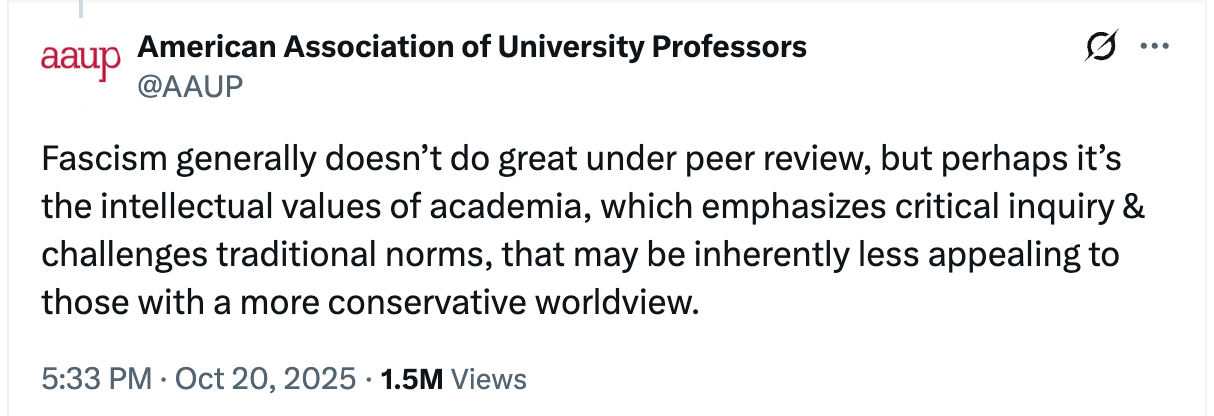
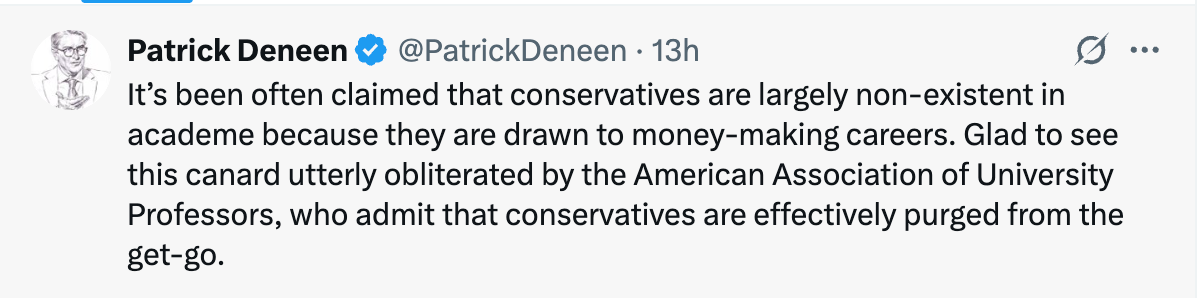
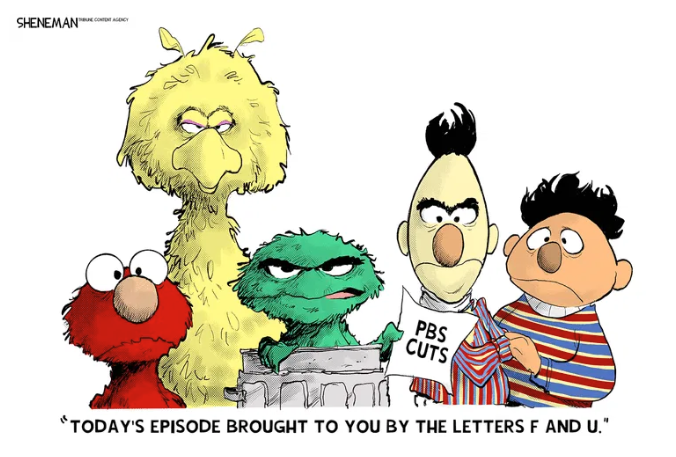
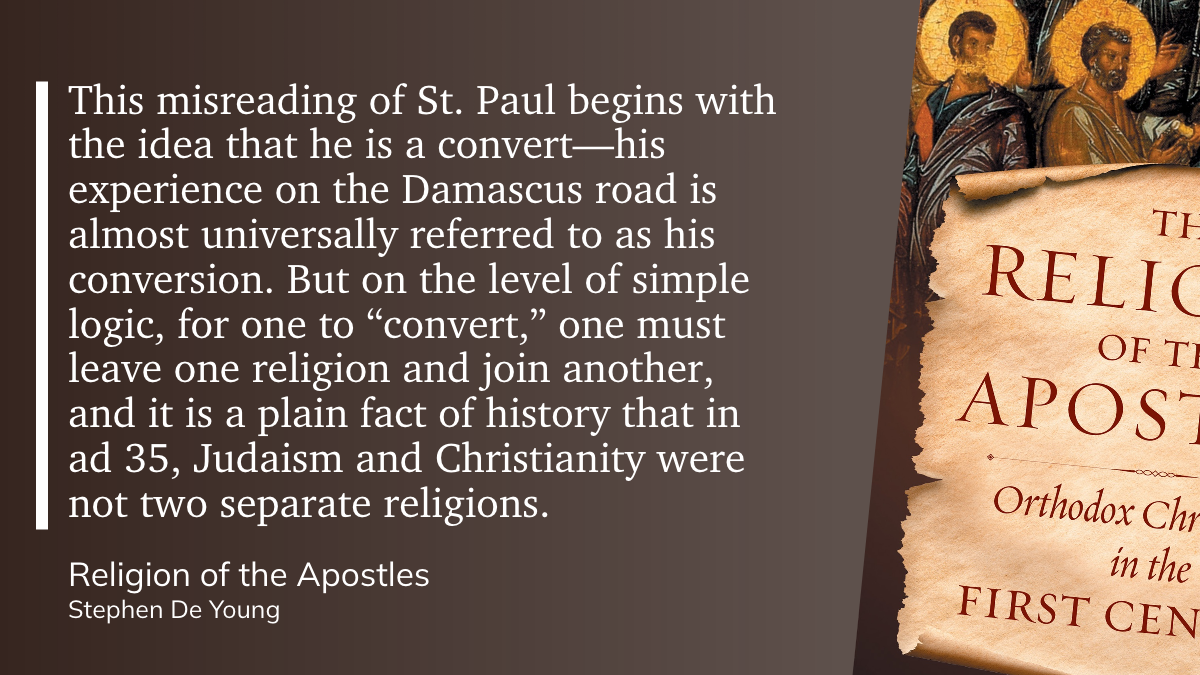
 Tipsy Teetotaler ن