I apologize for all the politics in this post. I’m torn between (a) ignoring it all for the sake of my soul and (b) not being a good German as our Nazis threaten.
“Nazi” is a figure of speech, but it feels as if Trump is pushing things to Hitlerian lengths, and I’m having trouble ignoring that. History doesn’t repeat, but it rhymes.
But first, one item that’s not political
Taking no risks, exercising no imagination
You can tell how stagnant things have become from the lookalike covers. I walk into a bookstore and every title I see is like this.
They must have fired the design team and replaced it with a lazy bot. You get big fonts, random shapes, and garish colors—again and again and again. Every cover looks like it was made with a circus clown’s makeup kit.
My wife is in a book club. If I didn’t know better, I’d think they read the same book every month. It’s those same goofy colors and shapes on every one.
Of course, you can’t judge a book by its cover. But if you read enough new releases, you get the same sense of familiarity from the stories. The publishers keep returning to proven formulas—which they keep flogging long after they’ve stopped working.
“They wanted the guy who was controlling our minds to be dead,” she said. “He had so much power over our generation.” When I asked who “they” were, she breezily suggested I do my own research. “We know who’s running the game,” she went on, glancing at her phone. I couldn’t tell how serious she was being. “You know, it’s a bigger picture. 9/11. MLK. JFK. Charlie Kirk.”
The first weird thing about that utterance is the insouciant phrasing that Charlie Kirk was controlling her mind, with “so much power” (with him gone, she sometimes turns to Nick Fuentes for mind-control). It’s kinda pathetic that the TPUSA President at a major university needs fixes of ideology.
But the most ominous thing is accusing an unidentified “they” (a “they” that has been around since at least the early 60s) of the murder. This kind of talk started while Charlie Kirk’s body was still drifting down toward room temperature. It is perhaps why Rod Dreher calls Kirk’s death the Radical Right’s Reichstag Fire.
These kids are very much a reverse mirror-image of lefist loonie like Antifa. They’re looking for meaning in politics. They’re so open to conspiracy theories that their brains have fallen out. They’re fools, whose only excuse (youth) is tempting to disregard since they think they’re so slick.
None of which is to deny that they may do a lot of damage.
Charlie Kirk was a time traveler?
Charlie Kirk was a time traveler? Even I draw the line at certain conspiracy theories. That’s why Candace Owens is so helpful, because she reminds me I’m actually not crazy—she is! Her latest is that Charlie Kirk was a time traveler. “Why did Charlie Kirk think he was a time traveler? He said, as I showed you in earlier messages, that he was a time traveler and he had to find me. . . . And again, not anything that I would have placed so much emphasis on back when he was saying it, but it came to fruition. The other parts. . . . I’m totally occupied by this. I tell you, I read these messages and I’m going,, what is this, what is reality, actually?” She alleges that there were “agents” who had Charlie Kirk “monitored. . . since he was young.” What is reality even, Candy? Actually, don’t answer that.
“The woman and her friend were highly disrespectful of law enforcement … Law enforcement should not be in a position where they have to put up with this stuff,” – President Trump asked if deadly force was necessary in the ICE killing of Renee Good.
“Seeing Vance’s comments about Minneapolis, I lived a similar moment 19 years ago in a Russian courtroom hearing a judge state that the police officer’s testimony had to be trusted over our video evidence because ‘he was wearing the uniform.’ Total immunity beats reality in a police state,” – Garry Kasparov.
“Heritage Americans: ‘You’re less American than I am because my ancestors built this country.’ Also Heritage Americans: ‘Don’t blame me for slavery or segregation. I’m not responsible for what my ancestors did,’” – Avik Roy.
“For years, I kicked against the image of the ‘ugly American.’ Nothing burned me more, when I was in Europe, as a student and after. I have written on this often. And now — there is nothing to say. There is only … bewilderment, anger, and shame,” – Jay Nordlinger on Trump’s thuggery over Greenland.
If you insist on working with the poor, if this is your vocation, then at least work among the poor who can tell you to go to hell. (Ivan Illich via The Convivial Society)
If liberals insist that only fascists will enforce borders, then voters will hire fascists to do the job liberals refuse to do. (David Frum)
If fascists insist on enforcing borders fascistically, grossed-out voters will soon want to fire them, too. (Nick Catoggio)
The least surprising news of the week was Trump threatening to invoke the Insurrection Act. Provoking unrest to justify martial law has been the subtext of ICE’s performative thuggery all along.
The Department of Labor posted the phrase “One Homeland. One People. One Heritage” with a cool video. Me, I prefer it in the original German: “Ein Volk, ein Reich, ein Führer.” (Nellie Bowles)
I don’t do any of the major social media, but I have two sub-domains of the domain you’re currently reading: (a) You can read most of my reflexive stuff, especially political here. (b) I also post some things on my favorite no-algorithm social medium.
The best thing about New Years Day 2026 is that it means 2025 is over. President Ozymandias really hit the ground running for his second term, having surrounded himself with evil, shrewd, and power-hungry operatives this time instead of Republican normies who muted his bellowing. It’s hard to imagine (knocks on wood) that the worst of the self-aggrandizing vandalism isn’t over now.
Wordplay
Aphorisms
A platitude is a placebo for the mind; an aphorism is a wake-up call. Aphorisms provoke debate; they don’t promote dogma. Though they’re short, aphorisms spur considered reflection, not Pavlovian partisanship. At a time when polarization is so amped up, aphorisms can serve as psychological circuit breakers, interrupting our comfortable assumptions and prodding us to open our minds, unclench our fists, and think for ourselves.
In The Washington Post, Dana Milbank responded to some Republicans’ suggestion that the D.C. Metro be renamed the “Trump Train”: “It’s a great idea. Qatar will donate the subway cars, which will be powered by coal. Passengers will pay for fares with cryptocurrency after first showing proof of citizenship. And the trains will reverse themselves regularly and without warning — never quite reaching their original destination.” (Mary Ellen Maher-Harkins, Orwigsburg, Pa.)
In The Atlantic, David A. Graham processed the addition of “Trump” to “Kennedy” in the moniker for Washington’s premier performing arts center: “He asks not what he can do for his country, but what his country can name for him.” (Darrell Ing, Honolulu)
In Esquire, Dave Holmes acknowledged that Senator Lindsey Graham was maybe joking that Trump should be the next pope — but maybe not: “You can’t be tongue-in-cheek when you are actively licking the boot. There is just not enough tongue for both jobs.” (Susan Fitzgerald, Las Cruces, N.M.)
In The Wall Street Journal, Jason Gay rued the effect of obsessive replays on the determination of what, in pro football, constitutes a catch. “It’s the affliction of overthinking: If it walks like a duck, and talks like a duck, wait, hold on, it must be a chandelier,” he wrote. “It’s further evidence humans can ruin the spirit of anything, if given the time and technology.” (Bill Sclafani, Rockport, Mass.)
\[I\]n The Washington Post, Ron Charles assessed “The Little Book of Bitcoin,” by the supremely self-confident pitchman Anthony Scaramucci: “In one passage, he touts the convenience of transporting $500 million in Bitcoin on a thumb drive, which is the best news I’ve heard since my yacht got a new helipad.” (Stephen S. Power, Maplewood, N.J., and Hannah Reich, Queens, among others)
Charles also observed that the scolds who ban books have taken issue with “Maurice Sendak’s ‘In the Night Kitchen,’ which has been proven in the state of Florida to turn straight white Christian boys into polygender Marxists who eat only quinoa.” (Jill Gaither, St. Louis, and John Jacoby, North Andover, Mass.)
In The Times, Kevin Roose worried that when it comes to regulations, the stately metabolism of institutions is no match for the velocity of A.I.: “It feels, at times, like watching policymakers on horseback, struggling to install seatbelts on a passing Lamborghini.” (Conrad Macina, Landing, N.J.)
In The Times, A.O. Scott sang a similar song: “Occam’s razor, the venerable philosophical principle that the truest explanation is likely to be the simplest, has been thrown away. We’re living in the age of Occam’s chain saw, when the preferred answer is the one that makes the loudest noise and generates the most debris.” (Charles Kelley, Merrimack, N.H., and Trisha Houser, Durham, N.C., among others)
I saved three of Bruni’s best as personal favorites:
Also in The Times, Matt Hongoltz-Hetling considered the importance of an annual communal feast to a Vermont town’s special fellowship: “Whether a vibrant community created the potluck or the potluck created a vibrant community is like asking which came first, the fried chicken or the deviled egg.” (Stacey Somppi, Cottonwood, Ariz., and Hillary Ellner, Durham, N.C., among others)
In The Times, James Hamblin parodied the typical message and script of a television drug ad: “You will frolic on the beach at sunset psoriasis-free, with a golden retriever, smiling into the distance. You also may experience sudden loss of cardiac function, seizures of the arms or intermittent explosive ear discharge. Talk to your doctor.” (Susan Casey, Palm City, Fla.)
In The Dispatch, Kevin D. Williamson gave thanks for academia, despite its flaws: “The American university system is the envy of the world, and we are burning it down because there’s a couple of nonbinary gender studies professors at Bryn Mawr who say crazy stuff from time to time and there is a brain-dead gaggle of Jew-hating weirdos at Columbia. Of course, there is room for reform. But you don’t have to love every feather on the goose when it is laying golden eggs.” (Dan Markovitz, Corte Madera, Calif.)
The first just feels perfect; “explosive ear discharge” in the second was the only thing in the list that made me laugh uncontrollably; Kevin Williamson captures perhaps the single most tragic thing about what “we” are doing, (purely by coincidence, of course, during the second reign of the orange barbarian).
Finally: “Some of you should walk a mile in my shoes, because then you would be a mile away from me. Keep the shoes.” (Encountered by my wife on Pinterest)
My 2025
Reading
As I always note in my footer, I blog and socialize at micro.blog in addition to here. One of my friendlies at MB, an uncommonly sane Evangelicalish pastor in Chicagoland (very keen on racial reconciliation is he), posted his 2025 reading list and inquired about what others read this year.
My response:
At 77, I feel the Grim Reaper breathing down my neck, and I already own more books than I’ll get read before he wins. Further, I’ve read many, many books in my life already, including multiple books on many perennial themes. And although I love poetry, I either had poor teachers or was too barbarian to learn how to read demanding examples.
So I don’t have much toleration for books that are cumulative of what I already understand, or are neither pleasurable nor (so far as I can tell after reading a bit) profitable, including ones that many good people were raving about.
To avoid performative listing, then (e.g., Geoffrey Hill poetry, which defeated me utterly), I’ve eliminated all the books I abandoned part way in. Finally, listing a volume of poetry doesn’t mean I’ve read it all yet.
Book
Author
Rings Trilogy
Tolkien
Albion’s Seed
David Hackett Fischer
The World After Liberalism
Matthew Rose
Coracle
Kenneth Steven
Table for Two
Amor Towles
Till We Have Faces
C.S. Lewis
Godric
Beuckner
Stalingrad
Anthony Beever
Small Is Beautiful
Schumacher
Rilke Poetry
Rilke
Apocrypha
Stephen De Young
The Greek East and the Latin West: A Study in the Christian Tradition
Philip Sherrard
A Time of Gifts
Patrick Leigh Fermor
The New Science of the Enchanted Universe
Marshall Sahlins
Bread & Water, Wine & Oil
Fr. Meletios Webber
Lost in the Cosmos
Walker Percy
Giovanni’s Room
James Baldwin
The Long Loneliness
Dorothy Day
The innocence of Father Brown
G.K. Chesterton
Against the Machine
Paul Kingsnorth
You Have Arrived at Your Destination
Amor Towles
The Air We Breathe: How We All Came to Believe in Freedom, Kindness, Progress, and Equality
Extra pills are piling up across America. Excessive refills by U.S. pharmacies cost Medicare and patients $3 billion between 2021 and 2023, according to a WSJ analysis of Medicare prescription data.
WSJ. Based on my own rigorous anecdata, this is 1000% true. Which means that although mail-order pharmacies may have started it, brick-and-mortar local pharmacies are in the game now, too.
I really would rather not manually refill every prescription, but my pharmacy seems incapable of waiting 90 days to refill a 90-day prescription, and when I get a text that a prescription is ready for pick-up, I go pick it up (with rare exceptions, like a post-op opioid painkiller I definitely did not need).
Sam Altman, OpenAI’s chief executive, said in a recent podcast he can see ways that seeking companionship from an AI chatbot could go wrong, but that the company plans to give adults leeway to decide for themselves.
Nothing in her political career before September inclined me to cut Marjorie Taylor Green any slack whatever, but something has happened since then.
Her political conversion story, if you can call it that (it’s not about changing from MAGA to progressive or any other political position), rings true.
It started at the Charlie Kirk Memorial service:
What stayed with Greene long afterward were the last two speakers who took the stage. First there was Kirk’s widow, Erika, who stood in white before the crowd filling the Arizona stadium, lifted her tear-filled eyes and said that she forgave her husband’s killer. And then there was President Trump. “He was a missionary with a noble spirit and a great, great purpose,” he said of Kirk. “He did not hate his opponents. He wanted the best for them. That’s where I disagreed with Charlie. I hate my opponent, and I don’t want the best for them.”
“That was absolutely the worst statement,” Greene wrote to me in a text message months after the memorial service. And the contrast between Erika Kirk and the president was clarifying, she added. “It just shows where his heart is. And that’s the difference, with her having a sincere Christian faith, and proves that he does not have any faith.”
I thought at the time that should have been a wake-up call for every “Christian” Trump supporter in America. I still do. It speaks ominous things about our religious and political culture that it seems to have awoken so few.
But Marjorie Taylor Green, of all people, recognized it! And it appears that she has genuinely repented of her role in stoking hatred and division!
Time will tell; she’s been taking the potent MAGA pill for a long time, and withdrawal may prove too hard. But it’s looking good so far.
I wish her what I wished for Jimmy Carter on January 20, 1981: a long and happy and private life — plus a sustained repentance.
Paganism with worship music
We seem to be entering a pagan century. It’s not only Trump. It’s the whole phalanx of authoritarians, all those greatness-obsessed macho men like Vladimir Putin and Xi Jinping. It’s the tech bros. It’s Christian nationalism, which is paganism with worship music. (If you ever doubt the seductive power of paganism, remember it has conquered many of the churches that were explicitly founded to reject it.)
“If you dislike the religious right, wait till you meet the post-religious right,” Ross Douthat warned presciently at the dawn of Trumpism in 2016. … What Douthat calls the “post-religious right” certainly is more obnoxious and morally degenerate than its Bush-era forebear was, but it’s not correct to call a movement that’s developed its own alternate morality “post-religious.” It’s not even correct to call it “post-Christian,”…
The modern right is boisterously Christian, but without Christ. It extols Christianity aggressively but has ditched most of the moral content …
…
The purest expression of Christianity without Christ came from Trump himself, not coincidentally. At Charlie Kirk’s memorial service, shortly after Kirk’s widow, Erika, moved viewers by publicly forgiving her husband’s killer, the president strode to the mic and said, “That’s where I disagreed with Charlie. I hate my opponents, and I don’t want the best for them. I’m sorry.” That’s the literal antithesis of Christian morality …
But there were no mass defections by Christians from the president’s camp after his heresy. Erika Kirk herself remains a loyal Trump ally in good standing. And why not? Hating one’s enemies is squarely in line with the three purposes of post-Christ right-wing Christianity. The first is establishing the right’s cultural hegemony over other American factions; the second is narrowing the parameters of the right-wing tribe to exclude undesirables; and the third is deemphasizing morality as a brake on ruthlessness toward one’s opponents.
Almost everything written about the “alternative right” has been wrong in one respect. The alt-right is not stupid; it is deep. Its ideas are not ridiculous; they are serious. To appreciate this fact, one needs to inquire beyond its presence on social media, where its obnoxious use of insult, obscenity, and racism has earned it a reputation for moral idiocy.
Matthew Rose, A World After Liberalism
At the outset of debate
If we are willing to grant, at the outset, that the people we’re debating agree about ends—that they want a healthy and prosperous society in which all people can flourish—then we can converse with them, we can see ourselves as genuine members of a community. And even if at the end of the day we have to conclude that we all do not want the same goods (which can, alas, happen), it is better that we learn it at the end of the day than decide it before sunrise.
Would we necessarily say that government, civic life, the media, or high finance work better now than in the mid-20th century? We can scorn the smug WASP blue bloods from Groton and Choate—and certainly their era’s retrograde views of race and gender—but their leadership helped produce the Progressive movement, the New Deal, victory in World War II, the Marshall Plan, NATO, and the postwar Pax Americana. After the meritocrats took over in the 1960s, we got quagmires in Vietnam and Afghanistan, needless carnage in Iraq, the 2008 financial crisis, the toxic rise of social media, and our current age of political dysfunction.
We are also offended by the contumely of allies as well as foes, who refuse to regard our prosperity as fruit and proof of our virtue but suggest that it may be the consequence of our vulgar Philistinism.
Reinhold Niehbur, The Irony of American History
Read the fine print
On the surface, it would seem that the assurances given in the Declaration of the Rights of the Peoples of Russia were clear and unequivocal. But lurking in the shadowy annals of communist polemics there was a catch. To paraphrase, but not distort, Lenin’s position, nations have the right to self-determination, but only the proletariat has the right to decide. And, as if that were not enough, only the Communist Party can speak for the proletariat.
Jack Matlock, Autopsy on an Empire
Raising the bar for Tinhorn Dictators
Ramsey’s intolerance for dissent has created what former employees call a cultlike environment, where leaders proclaim their love for staff and then fire people at a moment’s notice.
A new crop of moderate Democrats is trying to counter both President Trump and progressive influence in their own party. (WSJ) May their tribe increase.
And so we have before us one of the characteristic political necessities of our time: to take seriously what we cannot respect. (Wendell Berry, The Unsettling of America)
Conservative and mainstream media were drifting apart, not just ideologically but epistemically… (Jonathan Rauch, The Constitution of Knowledge) This epistemic drift (of the Right, I think, not the mainstream) tempts me to despair.
“The only thing we have to fear is fear itself,” … was a damned funny thing for Franklin Roosevelt to say in 1933, the year Adolf Hitler came to power. (Kevin D. Williamson)
The face of my fear is not a new Hitler but the Old Adam. It is the face in the mirror. (Kevin D. Williamson)
One category I used to apply to some of my posts became obsolete almost overnight around 1/20/2017: Zombie Reaganism. You never see that any more, and I miss it more than I thought I would.
I don’t do any of the major social media, but I have two sub-domains of the domain you’re currently reading: (a) You can read most of my reflexive stuff, especially political here. (b) I also post some things on my favorite no-algorithm social medium.
As December impends, we have our first substantial snowfall of the year in my fair city. I am belatedly thankful for snow blowers.
Right Relativism
Jonah Goldberg, who I don’t read that often, grabbed my attention with the title of his Thanksgiving Day post: The Truth, the Whole Truth, Everything but the Truth. It was good enough for promotion to my lead item today.
Just one little snip:
It’s amazing to me how many people on the right can (rightly!) denounce the 1619 Project … but yawn at the … tendentious denunciations of the American regime by conservative intellectuals and various “influencers.” As shoddy as the 1619 Project was, it was vastly more serious and grounded in facts than “the Jews did Pearl Harbor” or the idea peddled on Carlson’s show that the Holocaust was an accident of poor planning by the Nazis.
When I was in university, Saul Alinsky didn’t come to my attention (neither did Foucault, Derrida and other figures now widely blamed for various ills). But some on the right, tired of losing and convinced that the Left’s tactics were giving them victories, have now embraced Alinsky for their own purposes. For instance:
We have successfully frozen their brand—”critical race theory”—into the public conversation and are steadily driving up negative perceptions. We will eventually turn it toxic, as we put all of the various cultural insanities under that brand category.
That’s “national conservative” Alinskyite Christopher Rufo, boasting in 2021. He’s my personal “Exhibit A” in indicting the Right. Compare Alinsky (via Goldberg):
“Pick the target, freeze it, personalize it, and polarize it,” and “Ridicule is man’s most potent weapon. It is almost impossible to counterattack ridicule. Also it infuriates the opposition, who then react to your advantage.”
I didn’t recognize the echo of Alinsky when I first read Rufo’s Tweet back in ’21, but I knew immediately that Rufo was being dishonest and thus was not my idea of a conservative. (Yeah, I guess I’m one of those “beautiful losers.”) He still isn’t my idea of a conservative, and remains one of my top two or three least favorite “respectable” conservatives. (I will grant that he’s “consequential”—my favorite way of damning with pseudo-praise.)
It may not be pas d’ennemis à droite, but I don’t recall any other conservatives condemning him. So I will: Lines must be drawn somewhere, and Rufo belongs on the same side of the respectability line as Tucker2025.
Rant over.
Goldberg (without citing Rufo, though I absolutely couldn’t help going there) explains some of the bad metaphysics of it. I recommend his piece to everyone, but I implore people who think of themselves as American conservatives (a habit I can’t shake) to read it carefully, because it hit bullseye after bullseye on the intellectual defeat of what passes for conservatism in the U.S. these days. Would that Rufo were one of his targets.
The American Right
Even apart from the widespread dishonesty on the American Right, I don’t hold out much hope for it to cohere rather than falling into civil war with one another.
Yoram Hazony, Josh Hammer, Christopher Rufo, Kevin Roberts, R.R. Reno, Viktor Orbán, JD Vance (honorary)
Nationalism modeled on Israeli Zionism; view liberalism as imperialist and neo-Marxist; anti-wokeness; hawkish realism or restrained foreign policy.
Postliberals
Sohrab Ahmari, Patrick Deneen, Adrian Vermeule, Gladden Pappin, JD Vance
Politics oriented toward a theological “Highest Good”; critical of U.S. liberal founding; push for social conservatism combined with pro-family/worker policies; skeptical of foreign military aid.
Claremonsters
Michael Anton, Thomas Klingenstein, John Eastman, Charles Kesler, Larry Arnn, JD Vance
Strongly defensive of a traditionalist interpretation of the American founding; view modern progressive changes as heretical; advocate aggressive opposition to “leftist” forces.
Hard Right Underbelly
Curtis Yarvin, Costin Alamariu (Bronze Age Pervert), Charles Cornish-Dale (Raw Egg Nationalist), Darren Beattie, Nick Fuentes, Steve Bannon, Tucker Carlson.
Reactionary extremism; engage with fascist and anti-establishment conspiracy theories often ironically.
Silicon Valley Tech Bros
Peter Thiel, Elon Musk, Marc Andreessen
Wealth-driven influence on right-wing politics; skepticism about democracy; interest in economic monopolies and authoritarian tendencies; cultural dynamism and natalism.
Foreign Policy Restrainers
Staff of The American Conservative, Quincy Institute, Tucker Carlson (partially), JD Vance (occasionally)
Oppose hawkish neoconservative foreign policy; skeptical of U.S. support for Ukraine and Israel in current conflicts.
Make America Healthy Again
Robert Kennedy Jr., writers linked to Tablet magazine and The Free Press, novelist Walter Kirn.
Anti-vaccine skepticism; anti-establishment public health stance arising from pandemic distrust.
Zombie Reaganites
Christopher Long, Thomas Lynch (former ISI leaders)
Opposition to federal government expansion since the New Deal; radical libertarian Old Right ideas
In addition to the inconsistent core beliefs, there are temperamental tendencies to further complicate things.
If you noticed one name over and over again, though, you’re right. JD Vance is enough of a chameleon (my characterization) that he might be capable of unifying most of the larger factions.
On avoiding information bubbles
I wrote some time previously (probably years ago) about my catholic reading habits, spanning a very wide spectrum of Left, Right and Center. I realized recently that I’ve narrowed my reading since then.
I haven’t narrowed my Overton Window—my conception of what opinions are admissible in a good society—but I’ve lost interest in reading some admissible opinions.
This narrowing is partly from a rather recent forsaking of political controversy. If I can barely be roused to rail against Donald Trump (from a truly conservative, not populist or progressive, promontory), then what else should rouse me?
But I think a bigger part is that I’m getting old and I have a fairly fixed vision of the world—a constrained vision, in the distinction made by Thomas Sowell.
For my reading habits, the constrained vision leaves me viewing writings from an unconstrained vision as at best tending toward delusion. For my politics, the constrained vision led me to repudiate my identification with the GOP when George W. Bush declared in his second inaugural an American goal of ending tyranny in the world, an unconstrained vision.
I’m just not interested any more in reading things that are incompatible with my vision of the world. Nothing has fundamentally shaken my vision during my long adult lifetime, and I don’t reasonably expect that anything ever will. I don’t (necessarily) hate opinions from a unconstrained vision, but I think there are better things to do with what time remains to me than to read them just to avoid the charge of living in an information bubble.
Call that “hydebound” if you must, but I prefer to think of it as stopping the search for the truth now that I think I’ve found that. C.S. Lewis and G.K. Chesterton would approve.
An Open Note to My Congressmen
To: Jim Baird, Todd Young, Jim Banks
I only joined AARP to get discounts on stuff. I’ll let you know when I really care about you supporting an AARP position. Don’t assume it.
Very truly yours, Your cantakerous constituent (who just got a letter asking him to lobby you along the AARP party line)
Shorts
As Bette Midler once said: “When it’s 3 o’clock in New York, it’s still 1938 in London.” (Keith McNally)
Silence, remember, is violence — perhaps the most profoundly anti-liberal slogan ever invented. (Andrew Sullivan)
Your enemies are not demonic, and they are not all-powerful and the right hasn’t always lost and the left hasn’t always won. But if you convince yourself of that, you give yourselves all sorts of permission to do a lot of stupid and terrible things under the rubric of “Do you know what time it is?”
[A] critical mass of the American people … no longer want[s] to govern themselves, … are sick of this republic and no longer want to keep it if it means sharing power with those they despise.
I don’t do any of the major social media, but I have two sub-domains of the domain you’re currently reading: (a) You can read most of my reflexive stuff, especially political here. (b) I also post some things on my favorite no-algorithm social medium.
Post-liberalism usefully refers to two distinct but overlapping tendencies: First, the rejection of the liberal consensus of the post-Cold War era, usually described as “neoliberalism” (another highly contested term), in favor of a more right-wing or left-wing politics that still probably belongs inside the liberal tradition. Second, a more root-and-branch rejection of the entire liberal order — often reaching back for inspiration to liberalism’s religious and reactionary critics, sometimes repurposing Marxist thought, sometimes looking ahead to a future that’s post-liberal because it’s post-human as well.
It makes sense to group these different ideas together under the rubric of post-liberalism for two reasons. First, they have gained ground collectively as a response to liberalism’s perceived crisis and amid a shared experience of destabilizing technological and cultural change. Second, thinkers and writers often move back and forth between “soft” and “hard” forms of post-liberalism, making definitions slippery even in individual cases.
…
Political post-liberalism, however, does not begin with post-liberal ideas. It begins with the inchoate populist revolts of the Brexit referendum and Donald Trump’s victory in 2016, which precious few intellectuals anticipated, and it has taken various ad hoc and unstable forms since then.
For those of you who don’t live your lives online, I perhaps should set this stage. Marcionite heretic Tucker Carlson a few weeks ago conducted a “softball interview” with neo-Nazi Nick Fuentes. Then
the Heritage Foundation’s (of Project 2025 fame) president, Kevin Roberts, defended Carlson and took a swipe at Carlson’s “globalist” critics.
Sadly, the problem here goes beyond the bigotry of a few “influencers” or the flaws of specific leaders at Heritage and some other conservative institutions. Rather, as Kim Holmes put it, this is the predictable consequence of “replacing conservatism with nationalism.” A conservative movement that increasingly defines itself in ethno-nationalist terms as a protector of the supposed interests of America’s white Christian majority against immigrants and minority groups cannot readily avoid descending into anti-Semitism, as well.
Colorado has repeatedly been rebuked by the U.S. Supreme Court for its religious hostility …
Colorado officials have taken the position that Catholic preschools cannot ask families who want to enroll to support the Catholic Church’s teachings, including on issues related to sexuality and marriage. … But secular schools require similar alignment all the time: Many Montessori schools, for example, require parents who enroll to sign a statement agreeing to the school’s fundamental principles …
With the help of the Becket Fund for Religious Liberty, the archdiocese and its parish preschools have been fighting against this religious bigotry in court.
I’d give Becket a 90% chance of winning this. The key is that Colorado apparently has no problem with the cited practice of Montessori schools—a toleration that destroys it’s claim of neutrality when it forbids Catholic Preschools to do the same.
(The 10% chance of a loss comes from the possibility of courts reversing course.)
What the Epstein story is really about is unloved girls. It’s about the children in this country who aren’t taken care of, who are left to the mercy of the world. It’s about teenagers who come from a place where no one cared enough, was capable enough, was responsible and watched out for them. That’s how most of those girls wound up in a room with Jeffrey Epstein.
Here is what sexual abusers of children know: Nobody has this kid’s back. Mom’s distracted or does drugs, dad isn’t on the scene or doesn’t care. The kids are on their own. Predators can smell this, the undefended nature of their prey.
It’s what the Epstein indictment meant when it called the children “particularly vulnerable.”
It’s what Virginia Giuffre reports in her posthumously published memoir, “Nobody’s Girl.” She says she was sexually abused by her father starting at age 7, that she was later molested by a friend of her parents. She was a runaway at 14, lived on the streets and with foster families.
I think the Jeffrey Epstein obsession long ago ceased being good for anything and now has descended into something conspiratorial and a bit kinky. If I never see anything more about it, that would be good.
Somali thumb on the scale
Great news about autism: Looks like that spike in autism might just be Somali fraudsters gaming the system to siphon money to the al-Shabaab terrorist group back home.
At this point, I thought the author was insane, but then this:
Yes, today I bring you a City Journalarticle headlined: “The Largest Funder of Al-Shabaab Is the Minnesota Taxpayer.” A ton of Somali immigrants to Minnesota are gaming the autism diagnosis system and setting up fake treatment centers to get taxpayer cash. And a lot of it. From the article: “Autism claims to Medicaid in Minnesota have skyrocketed in recent years—from $3 million in 2018 to. . . $399 million in 2023.” Honestly, I’m not a taxpayer in Minnesota so this seems like a them problem. But I’m a worried mom, and I love hearing that autism rates are being inflated by scammers. We’re healthier than we thought. That’s great news.
[A] naked public square is a morally ignorant public square. American public debate was healthier and the conversation more profound when religious leaders like Reinhold Niebuhr, Abraham Joshua Heschel, Martin Luther King Jr. and Fulton Sheen brought their faith to bear on public questions. Today morality has been privatized and left up to the individual. The shared moral order is shredded, and many people, morally alone, have come to feel that their lives are meaningless.
…
My problem with the Kirk memorial service and all the conversation about his assassination generally is that many people seem to have no coherent idea about the proper relationship between faith and politics. In their minds, the two spheres seem all mixed together higgledy-piggledy.
One faith leader told my Times colleague Elizabeth Dias about a conversation she had had with Charlie Kirk, who told her, “I want to talk about spiritual things, and in order to do that, I have to enter the political arena.”
Why on earth would Kirk believe that?
As people eulogized Kirk, it was rarely clear if they were talking about the man who was trying to evangelize for Jesus or the one trying to elect Republicans. A spokesperson at Turning Point declared, “He confronted evil and proclaimed the truth and called us to repent and be saved.” Is that what Kirk was doing when arguing with college kids about tariffs?
…
What happens when people operate without any coherent theory of how religion should relate to politics?
First, people treat electoral politics as if it were a form of spiritual warfare …
Second, the process of moral formation is perverted …
Third, people develop an addiction to rapture …
The problem is that politics is prosaic. Deliberation and negotiation work best in a mood of moderation and equipoise. If you want to practice politics in the mood best suited for the altar call, you’re going to practice politics in a way that sends prudence out the window.
Fourth, a destructive kind of syncretism prevails. Syncretism is an ancient religious problem. It occurs when believers try to merge different kinds of faith. These days, it’s faith in Jesus and the faith in MAGA all cocktailed together. Syncretism politicizes and degrades faith and totalizes politics.
Fifth, it kicks up a lot of hypocrisy …
Finally, it causes people to underestimate the power of sin. The civil rights movement had a well-crafted theory of the relationship between religion and politics. The movement’s theology taught its members that they were themselves sinful and that they had to put restraints on their political action in order to guard against the sins of hatred, self-righteousness and the love of power. Without any such theory, MAGA imposes no restraints, and sin roams free.
“When you select for ‘fighters’ in your leadership, you’ll get leaders who treat politics as performance art.” Nick Catoggio
“Like ‘cancel culture’ not so long ago, post-liberalism has become a crucial signifier in our debates without anyone agreeing on what it actually describes.” Ross Douthat
“A solid gold toilet sold at Sotheby’s last night for $12.1 million—the winner narrowly outbidding the decorators at 1600 Pennsylvania Avenue.” The Morning Dispatch
“[A] decent respect to the opinions of mankind requires that they should declare the causes ….” (If you don’t know the source of this, you might not be able to pass the current citizenship test.) Is it just me, or does our nation no longer have any respect for the opinions of mankind?
“The revolution always winds up eating its own, as Robespierre and Trotsky found out. Trump was the guy who let the lunatics out of the conservative asylum, Greene foremost among them. And now, no surprise, she’s turned on him.” (Bret Stephens)
“[I]t is now quite possible that the Republican Party could lose control of the House in part because the Trump administration was too incompetent to rig the [Texas] districts properly.” David French
The Guardian: January 6 Rioter Who Was Pardoned by Trump Arrested for Child Sexual Abuse
(I don’t do any of the major social media, but I have two sub-domains of the domain you’re currently reading: (a) You can read most of my reflexive stuff, especially political here. (b) I also post some things on my favorite no-algorithm social medium.)
Much ink has been spilled on the softball interview of Groyper-in-Chief Nick Fuentes by what-the-hell-do-you-call-him-these-days Tucker Carlson.
This post is entirely about that from various perspectives. If you’ve had enough of that, wait for my next post, coming soon.
Grifter?
I find it impossible to defend [him] against the charge that what he did and said during the period under examination amounted to anti-Semitism, whatever it was that drove him to say and do it: most probably, an iconoclastic temperament.
William F. Buckley, said or written about Pat Buchanan.
Buckley was perhaps the foremost foe of antisemitism in conservative ranks from the 60s until his death.
There’s unfortunately a fresh need today for some policing of the ranks, but by whom, and how? Kevin D. Williamson sees the problem:
The times being what they are—and what they are is poisoned by social media, which has taken down all of the fences that once stood around mass imbecility—there is now another kind of antisemitism to take into account: digital, entrepreneurial antisemitism. There is a market for antisemitism, and there are careers to be had servicing that market. Nick Fuentes, who has recently been in the news, is an entrepreneurial antisemite. Tucker Carlson is another.
(Kevin Roberts of the Heritage Foundation is a fool and a coward who wants to bank the profits of that antisemitism without taking any moral responsibility for it. With apologies to my friends who will be hurt by this: It is impossible for any self-respecting person to be associated with his Heritage Foundation.)
“But isn’t that cancel culture?”, I seem to hear. Not according to a workable definition that I’m pretty sure comes from Williamson or his colleague Nick Catoggio. Paraphrasing, “Cancel culture” is an attempt to enforce a not-yet-existent consensus, to narrow the Overton Window; enforcing an existing consensus, like those against the Nazis and, yes, antisemitism, doesn’t qualify.
Goldberg got my attention. As I suggested, it’s uncertain that anyone on the Right today has the stature and the will to decree a cordon sanitaire against the likes of Fuentes. This is no substitute for reading her whole piece, but I thought it framed the problem well:
Kirk, who came of age in the pre-Trump conservative movement, was still sometimes willing to police boundaries. But in the wake of his killing, there’s surprisingly little sense on the right that that part of his legacy should be upheld. Rather, prominent voices insist that Kirk’s murder necessitates the final loosening of all remaining restraints. “I cannot ‘unite’ with the left because they want me dead,” the influential podcaster Matt Walsh posted after Kirk’s death. “But I will unite with anyone on the right.”
Adrian Vermeule, the Harvard law professor who has helped create the intellectual foundation for the post-liberal right, put it more elegantly this weekend, as the fight over Carlson, Fuentes and Roberts roiled conservatives. “History records many cases in which cities fell to siege because, even with the enemy at the very gates, factions within the city could not put aside their mutual struggle for domination,” he wrote on social media. Lest there be any doubt about which factions he was scolding, he made it clear in a subsequent post: “I’ll be resolutely ignoring the views of those who profess a certain ‘conservatism’ but who have never actually challenged the liberal consensus on anything that might endanger their careers.”
Vermeule is a cultivated man who, as Field writes, is part of a movement that “thinks it has a monopoly on things like ‘the true, the good and the beautiful.’” Yet however lofty his rhetoric, its moral logic leads inexorably to Groyperism, and the elevation of Fuentes, Kirk’s foe, into his successor.
(Italics added)
Elsewhere in the Times, Ross Douthat chimes in on how to gatekeep against antisemitism in a digital age, with the case of Fuentes front and center. That’s an important question, but it feels to me as if Ross is a little more than a helpful start. For now, I can only heartily endorse two partial solutions:
Whatever share of Capitol Hill interns or think tank employees are actually Fuentes sympathizers, the institutional right must not permit radicalized junior staffers to steamroll or puppeteer their nominal superiors.
Create a zone where normal criticism of Israeli strategy is possible but clearly distinguish those normal debates from paranoid and antisemitic criticism.
Heritage Foundation (and the “intellectual energy” on the Right)
As for Kevin Roberts, can you guess how eager he’s been to have a hard conversation about January 6? I bet you can.
His tenure at Heritage mirrors the wider right’s hostility to dissent. A few days ago, Jonah Goldberg reminded us that Roberts’ organization is unusual among think tanks in insisting on a “one voice” policy that requires staff to “always publicly advocate for a single, unified position.” That is, not coincidentally, also how Donald Trump runs the GOP, ruthlessly “canceling” any party official who challenges his policies by threatening to fire them or primary them out of their job. But message discipline in a political party, particularly a highly authoritarian one, is to be expected.
In a think tank, whose experts should be having all sorts of interesting disagreements over law and policy, it’s downright weird. It should welcome illuminating “hard conversations” among its employees, and usually think tanks do—except for the Heritage Foundation, whose highest purpose under Roberts appears to be supplying ideological cover for Republicans’ drift toward Peronism.
[I]t’s no longer the Buckleyites who supply the right’s intellectual energy, such as it is. It’s postliberals like Adrian Vermeule, Curtis Yarvin, and Patrick Deneen. Carl Schmitt, not Antonin Scalia, is in vogue among new right legal thinkers. That’s what I meant when I said that Roberts’ quote is preposterous for more than one reason: When he calls on the conservative movement to have hard conversations about its direction, he’s implying that a “conservative” movement still meaningfully exists and that it retains the power to cancel postliberals if it so chooses.
It doesn’t. Rather the opposite: As Mike Pence, Mitt Romney, Liz Cheney, Jeff Flake, and a gajillion other Reaganites might tell you, all of the canceling being done in the modern GOP is of conservatives by ascendant postliberals.
Your editorial “The New Right’s New Antisemites” (Nov. 3) gives the impression that the Heritage Foundation’s president, Kevin Roberts, is an apologist for anti-Jewish hate or, worse, a promoter of it. That couldn’t be further from the truth.
In the days after Hamas’s Oct. 7, 2023, attack on Israel, Heritage hosted one of the first public events to condemn the terrorism and the blatant antisemitism it unleashed. Shortly thereafter we created the National Task Force to Combat Antisemitism to help coordinate the efforts of like-minded organizations.
In October 2024, we launched Project Esther, an initiative to combat antisemitism in the U.S. through legal and legislative remedies. This effort has found allies across the political spectrum and raised awareness among the general public and the Trump administration of the immediate threat that left-wing antisemitism poses to America’s Jews and the U.S.
Months later I published my book, “The Battle for the Jewish State: How Israel and America Can Win,” a large portion of which is dedicated to this issue. Our three nonresident fellows live in Israel. The Davis Institute for National Security, which I lead, focuses on defeating antisemitism, as do our colleagues in the domestic-policy and legal departments.
Your editorial ignores this record, none of which would have been possible without the direct and enthusiastic support of Mr. Roberts. Many who have criticized him in recent days, moreover, have ignored his admission that his video supporting Tucker Carlson was a mistake that didn’t clearly articulate the institution’s rebuke of Holocaust deniers and antisemitism. Mr. Roberts has always given us the necessary resources to fulfil our mission and has participated in the work himself.
He isn’t antisemitic; nor does he tolerate anyone who is. Mr. Roberts is instead leading the conservative charge against this ancient bigotry: an insidious cancer that has degraded once-great societies and can’t be allowed to spread in America. All of us at Heritage look forward to continuing this fight under his direction.
The absence of anyone with the stature to read Fuentes and/or Carlson out of the “conservative movement” suggests that Catoggio is right: the intellectual energy on the Right is now (currently?) postliberal, and if anyone is cancelled, it’s the “conservative movement” itself. Adrian Vermeule, for instance, has contemned any “conservative” who isn’t sufficiently bloody-minded:
History records many cases in which cities fell to siege because, even with the enemy at the very gates, factions within the city could not put aside their mutual struggle for domination,” he wrote on social media. Lest there be any doubt about which factions he was scolding, he made it clear in a subsequent post: “I’ll be resolutely ignoring the views of those who profess a certain ‘conservatism’ but who have never actually challenged the liberal consensus on anything that might endanger their careers.
That is very grim. I remain with the true conservatives, though I’ve finally, I think, gotten a handle on the grievances that gave rise to Trump and MAGA. Grievances generally don’t build anything worthwhile.
Your enemies are not demonic, and they are not all-powerful and the right hasn’t always lost and the left hasn’t always won. But if you convince yourself of that, you give yourselves all sorts of permission to do a lot of stupid and terrible things under the rubric of “Do you know what time it is?”
[A] critical mass of the American people … no longer want[s] to govern themselves, … are sick of this republic and no longer want to keep it if it means sharing power with those they despise.
I don’t do any of the major social media, but I have two sub-domains of the domain you’re currently reading: (a) You can read most of my reflexive stuff, especially political here. (b) I also post some things on my favorite no-algorithm social medium.
Raphael Glucksmann, a member of the European Parliament, feels that America has reneged on the values that led to the statue being gifted. “We’re going to say to the Americans who have chosen to side with the tyrants, to the Americans who fired researchers for demanding scientific freedom: “Give us back the Statue of Liberty,” he said at a convention of his center-left party, Place Publique, Sunday. “We gave it to you as a gift, but apparently you despise it. So it will be just fine here at home,” Glucksmann added.
The Harvard Law School chapter of the Federalist Society was taken over last week by “Common Good Constitutionalism” disciples of Professor Adrian Vermeule (i.e., wokesters of the Right). The chapter’s former president, Sarah Isgur, has some thoughts about the incel Integralists and their pyrrhic victory:
Freedom is turned on its head. Individual freedom does not exist if it does not enhance the general welfare (again, defined by them). To break it down: Speech that is good is protected. Speech that is bad is not. And the government gets to define what is good.
But they misunderstand Fed Soc’s strength. So let me explain: It came from its size and its diversity of thought. When you shrink it down to only those people who agree with you on outcomes, you have stripped it of its source of power.
The Vikings can be resentful that we didn’t let them into our club. They can even burn down the club. But they still won’t be in the club. They’ll just be standing over its ashes, still sad, and confused, and angry, and without clerkships, and without girlfriends.
History is littered with the stories of young men who are frustrated and can’t get chicks. They’re called “Jacobins.”
Trigger warning: Do not read the following with your mouth full of scrambled eggs or hot coffee. I speak from experience.
In Oedipus Tex, the mathematician-composer P.D.Q. Bach’s 1990 comedic answer to Stravinsky’s tragic oratorio, the titular hero discovers the truth of his situation—that he has married his mother, Billy-Jo Costa, Queen of the Rodeo—and, fulfilling the requirements of tragedy, he takes the rhinestone-covered barrettes out of her hair and gouges out his eyes. At which point the chorus sings:
“And immediately after he’d put out both his eyes, he … kind of wished he hadn’t.”
Everybody has regrets. Nations and their governments do, too. When things are upside down in the state, you end up with Oedipus Rex, Macbeth, or the Trump administration.
Mahmoud Khalil is a Palestinian activist involved in the Columbia protests who was arrested in a Keystone Kops-level caper launched by Marco Rubio’s incompetent State Department, which proposed to revoke a student visa that Khalil doesn’t have. Khalil is, in fact, the holder of a green card, meaning that he has been given permanent resident status in the United States by the U.S. government. Which is to say, Khalil is in this country as a permanent resident thanks to a decision of the U.S. government, which, after looking back on what it had done, kind of wished it hadn’t.
My regret is that I cannot read Kevin D. Williamson or Nick Catoggio more regularly without breaking my promise to myself not to wallow in politics during the Trumposcene, but rather to enjoy the inumerable things that humans can enjoy even under the governance of jackasses or jackboots.
In a democracy private citizens see a man of their own rank in life who rises from that obscure position in a few years to riches and power; the spectacle excites their surprise and their envy, and they are led to inquire how the person who was yesterday their equal is today their ruler. To attribute his rise to his talents or his virtues is unpleasant, for it is tacitly to acknowledge that they are themselves less virtuous or less talented than he was. They are therefore led, and often rightly, to impute his success mainly to some of his vices; and an odious connection is thus formed between the ideas of turpitude and power, unworthiness and success, utility and dishonor.
Tocqueville’s concern was that if citizens in a democracy saw that unethical and corrupt behavior led to “riches and power,” this would not only normalize such behavior; it would validate and even valorize it. The “odious connection” between immoral behavior and worldly success would be first made by the public, which would then emulate that behavior.
That is the great civic danger posed by Donald Trump, that the habits of his heart become the habits of our hearts; that his code of conduct becomes ours. That we delight in mistreating others almost as much as he does. That vengeance becomes nearly as important to us as it is to him. That dehumanization becomes de rigueur.
David French, reflecting on his (supportive) relationship to the Tea Party movement and cautioning Democrats against trying to reproduce it in the Democrat party:
But it all turned bad, and the reasons it turned bad are directly relevant to Democrats today.
Republicans built a movement around both anger and ideology. My mistake was in believing that the ideology was more important than the anger, but it was the anger that gave the Tea Party its political momentum, and that anger eventually swallowed the ideology. Rage is now the defining characteristic of Trump’s Republican Party.
…
My first interpretation of Tea Party anger was precisely that it was in service of higher values, specifically a return to founding constitutional principles and an embrace of free markets and fiscal responsibility. But that was wrong. The ideology mattered only if it could serve the anger.
Another way of putting it is that Tea Party members embraced constitutional conservatism and libertarianism as a tactic, not as a principle, and the instant that a different, Trumpist ideology emerged — a better vehicle for the party’s raw rage — they welcomed it with open arms.
What’s your hurry?
Could this be the meta-explanation of what the ochre emperor is doing?:
DOGE is in a race with the courts. From the first days of the administration it was all shock and awe. Take an agency everyone knows is a problem, such as USAID, and kill it. Tell employees to go home, put a guard outside and lock the door, cover the agency’s name in gaffer’s tape, have a functionary send an email terminating employment, then disable email accounts. Staffers can’t reach each other, can’t find the reporter’s address—confusion kills the will to resist. Other agencies watch, and it puts the fear of God into them.
It’s all a race to get as much accomplished now as possible. Once something goes to the Supreme Court, there will be clear limits. Until then, maybe months, maybe a year, get it done.
Here I confess my conservative lizard brain likes seeing unhelpful and destructive parts of any organism, very much including government, cut and sometimes obliterated, and for the usual reasons. But the non-lizard parts—those that are analytical, involve experience, and have observed human nature and seen who’s doing the cutting, and at what size and speed—recoil, and see great danger ahead.
Judiciary 101
“The good news here is, we did put 235 judges, progressive judges, judges not under the control of Trump, last year on the bench, and they are ruling against Trump time after time after time,” Senate Minority Leader Chuck Schumer said a few days ago.
You do the judiciary no favors talking like that, Sen. Schumer.
“[C]onservative judges, judges (supposedly) under the control of Trump,” are ruling against him, too — just as they did with his b*llsh*t 2020-21 election challenges.
No federal judge is “under the control” of the President who appointed him or her. That’s kinda the point of life tenure on good behavior.
Miscellany
“If you weren’t outraged that the law and due process weren’t followed when Biden let 10+ million people into the country, don’t expect voters to be outraged by accusations Trump isn’t following due process when he deports them,” – Mark Hemingway.
“I still can’t get over the power of negative polarization where liberals genuinely convinced themselves that the lab leak was the racist theory of Covid origins, but the ‘it’s just the disgusting hygiene and superstition of Chinese wet market customers’ was the non-racist theory,” – Michael Brendan Dougherty.
Colin Wright: “‘Christ Is King’ Is the Woke Right’s ‘Black Lives Matter.’”
Sullivan’s main essay is on how Anthony Fauci intentionally misled us about the origins of Covid.
Why on earth would panicked scientists believe that Covid was probably a lab leak and then write a landmark paper “trying to disprove” it? It’s the essential question. One obvious answer is that Fauci realized that if his beloved gain-of-function research had led to the death of millions in a plague, he might not go down in history as a medical saint.
I have no need of any other hypothesis.
I suffer more from the humiliations inflicted by my country than from those inflicted on her.
I don’t do any of the major social media, but I have two sub-domains of the domain you’re currently reading: (a) You can read most of my reflexive stuff, especially political here. (b) I also post some things on the only social medium I frequent, because people there are quirky, pleasant and real.
On the one hand, I express no profound personal opinions here; on the other, I have some smart and provocative “takes” from others and some comments on them.
Stupid opinions on why a Trump conviction will be reversed
Any conviction obtained at the so-called “trial” of former President Donald Trump’s alleged alteration of financial records will be reversed on appeal, if necessary by the U.S. Supreme Court, because altering financial records is only a crime in New York if you do it to conceal some other crime. Paying Stormy Daniels money is NOT a crime. …
I would wager a substantial sum that the U.S. Supreme Court will not reverse a New York conviction of Trump at all, let alone on the basis that New York Courts misapplied New York law.
If the law is as Calabresi says, State appeal courts should reverse, but state Courts have the last word on what state law is.
Steven Calabresi is not a stupid man. This outburst was an example of motivated reasoning.
It’s still quite possible that the Manhattan jury will convict Trump on the 34 felony charges Bragg has brought. But there is no chance the conviction will withstand appeal, particularly given that it relies so heavily on Cohen’s testimony.
I would wager even more that a conviction will not be reversed because it relies too heavily on Michael Cohen’s testimony. No Courts will have any idea what the jury relied on. That’s not how jury trials work.
I cannot vouch for Elli Lake not being stupid on legal matters. It rather appears that he is.
Note: This is not to say that Courts won’t reverse because particular testimony of Cohen was admitted over timely objection. Nor am I saying that this prosecution is solid and will not be reversed. There’s a lot of non-dopey analysis that thinks if very shaky. I’m just faulting stupid arguments that mislead non-lawyer readers.
History Rhyming?
I’ve been surprised at the intensity of the electorate’s hostility to post-Roe restrictive abortion legislation. I thought public opinion was more closely divided.
As we think about why voters are so hostile, though, it may be illuminating to remember the Protestant landscape pre-Roe. For one common instance:
The great majority [of pre-Roe Southern Baptists] favored such “therapeutic” abortions, but a small minority objected that abortion was murder, and another small minority argued that it should be legal in all cases. The divide, however, did not fall along the usual conservative-moderate lines, but rather, it seems, along the spectrum of anti-Catholicism.
Frances FitzGerald, The Evangelicals. Voters may just be reverting to pre-Roe positions.
I care a bit about what the various states do. But I’m still committed to federalism, unconvinced that this is an appropriate topic for national legislation.
Commencement Addresses
It’s like the opening parable of David Foster Wallace’s Kenyon College commencement address: “There are these two young fish swimming along and they happen to meet an older fish swimming the other way, who nods at them and says ‘Morning, boys. How’s the water?’ And the two young fish swim on for a bit, and then eventually one of them looks over at the other and goes ‘What the hell is water?’”
But what sort of use does it make of this freedom? Here again, the main concern is not to infringe the letter of the law. There is no true moral responsibility for deformation or disproportion. What sort of responsibility does a journalist or a newspaper have to his readers, or to his history — or to history? If they have misled public opinion or the government by inaccurate information or wrong conclusions, do we know of any cases of public recognition and rectification of such mistakes by the same journalist or the same newspaper? It hardly ever happens because it would damage sales. A nation may be the victim of such a mistake, but the journalist usually always gets away with it. One may — One may safely assume that he will start writing the opposite with renewed self-assurance.
In these powerfully written essays Oakeshott points to the damage done when politics is directed from above towards a goal – whether liberty, equality or fraternity – and where all policies and negotiations are formulated by reference to that goal.
We in the US are suffering from a putative commitment to the goal of equality, “where all policies and negotiations are formulated by reference to that goal.”
I say “putative” because we seem to have lost the ability to identify which things truly are alike, and so should be treated alike, the ability to recognize that not all discrimination is invidious. Sometimes “discrimination” is the necessary consequence of discernment.
If the preceding seems impenetrably opaque, think about the dogma “trans women are women.” If that makes perfect, incontestable sense to you, you probably are loving our present love affair with “equality.” If you hesitate or disagree with “trans women are women,” you may be on my wavelength.
Elites and normies
Elites require control over the information sphere because their policy obsessions—on immigration, gender, and climate, for example—are not popular with the normies. By necessity, progressive fantasies must be imposed on our mediated reality, even as dissenting opinions are cast out into the dark. The internal combustion engine will destroy the earth; windmills will save it. Trump is a wannabe dictator; Biden, the adult in the room. Antagonists are always “far right”; there’s no such thing as “far left.” The ambition to conquer the empirical world with words approaches magical thinking.
It rarely works. The chaos and contingencies of the digital age allow the normies and their chosen tribunes, the populists, too much room to maneuver. Trump’s rise in the opinion polls would otherwise be inexplicable.
Why the meritocracy is not viewed as a legitimate ruling class
Now comes the kicker. By the competition it unleashes, bourgeois society creates unprecedented wealth, but also unprecedented inequality of wealth. It does so even while proclaiming equality to be its great insight, innovation and foundation, an inalienable right of man. The contradiction of bourgeois society is such that “its development belies its principle, and its dynamic undercuts its legitimacy.”
In earlier societies, inequality held a legitimate status, assigned by nature, tradition, or providence. In bourgeois society, inequality is an idea that circulates sub rosa in contradiction with the way individuals view themselves; it nevertheless pervades the environment in which they live…. The bourgeoisie did not invent the division of society into classes, but by cloaking that division in an ideology that renders it illegitimate, they tinged it with suffering.
One result is that we are deprived of a fundamental requirement of any polity: a ruling class that will be perceived as legitimate.
…
At bottom, we see a refusal of the ruling class to take responsibility for its rule, preferring to LARP at the barricades.
There aren’t many pro-Trump columnists at major papers because there aren’t many pro-Trump columnists anywhere.
In past years, it hardly seems possible that a major publication wouldn’t have a supporter of Ronald Reagan on George W. Bush on its staff. That is why in 2024, newspapers would love nothing more than to have an in-house columnist on Team Red Hat/Tie.
But Trumpism is a visual medium – it cannot withstand the scrutiny of a written column. Trump supporters can go on Fox News or Newsmax or OAN and say whatever they want in the moment without being fact-checked beforehand. But writing a column means having editors and fact checkers verify the claims you’re making.
And because no editor will rubber-stamp a claim like “the 2020 election was stolen,” someone who tries to argue Biden didn’t win the last election or that the Jan. 6 insurrectionists were “political prisoners” will never be able to make their way to a legacy print outlet. A columnist that wanted to say, for instance, Vice President Mike Pence had the ability to choose his own electors in 2020 would be like a columnist earnestly arguing a woman is safer if she encounters a bear rather than a human man in the woods.
This phenomenon is glaringly obvious any time Trump goes on a network like CNN for a town hall or a debate. The falsehoods come so fast out of his mouth, the moderator can’t keep up, leaving 90 percent of his claims unchallenged. If the reporter stopped Trump to correct him on every lie he told, the event would be more moderator than candidate.
That is because being a Trumper is based almost solely on emotion and doesn’t rely on facts. Trumpism is a clenched fist, not an argument. And newspapers print arguments.
I am predisposed to credit Schneider’s argument because of people like Eric Metaxas.
Metaxas, a Yale grad, is an intellectual of sorts. He writes books. He hosts high-tone “Socrates in the City” conversations. I have it on fairly good authority that he’s genial and fun to talk to.
But he’s bereft of arguments for his election denialism. He has rock-solid certainty. As a word guy, he makes reductio ad Hitlerum analogies. He may have had mystical visions. But he has zero evidence. (Did I mention the rock-solid certainty?)
Checking in on the further-right
Charlie Kirk is worked up. “The world is in flames, and Bidenomics is a complete and total disaster,” the conservative influencer said during a recent episode of his podcast The Charlie Kirk Show. “But it can’t and won’t ruin my day,” he continued. “Why? ’Cause I start my day with a hot America First cup of Blackout Coffee.” Liberals have brought about economic Armageddon, but first, coffee.
… “Rest assured knowing that you’re ready for whatever the globalists throw at us next,” Kirk said at the end of one ad for medical-emergency kits … The commercial breaks sounded like something from an alternate universe. The more I listened to them, the more I came to understand that that was the point.
…
Some of Kirk’s ads … sound a little jarring: “You are nine meals away from anarchy,” he said in one ad for buckets of food rations, from a website called MyPatriotSupply.com. Yet as the world of right-wing-coded products has expanded, so has the weirdness of ads for them. “For 10 years, Patriot Mobile has been America’s only Christian-conservative wireless provider,” started another ad. Switching to Patriot Mobile, Kirk explained, would mean that “you’re sending the message that you support free speech, religious liberty, the sanctity of life, the Second Amendment, our military veterans and first-responder heroes” while getting “the same coverage you’ve been accustomed to without funding the left.”
Just as the Bishop of Oxford refused to consider that he might be descended from an ape, so now are many in the West reluctant to contemplate that their values, and even their very lack of belief, might be traceable back to Christian origins.
I don’t do any of the major social media, but I have two sub-domains of the domain you’re currently reading: (a) You can read most of my cathartic venting, especially political here. (b) I also post some things on the only social medium I frequent, because people there are quirky, pleasant and real.
David French had a powerful New York Times column (shared link) detailing how much the constant threat of violence, principally from MAGA sources, is warping American politics. “If you wonder why so few people in red America seem to stand up directly against the MAGA movement, are you aware of the price they might pay if they did?”
I’m sufficiently fed up with almost all things MAGA that I’m disinclined to engage in any whataboutism in its defense. But this bit from French seemed a little too facile:
And no, threats of ideological violence do not come exclusively from the right. We saw too much destruction accompanying the George Floyd protests to believe that. We’ve seen left-wing attacks and threats against Republicans and conservatives. The surge in antisemitic incidents since Oct. 7 is a sobering reminder that hatred lives on the right and the left alike.
But the tsunami of MAGA threats is different. The intimidation is systemic and ubiquitous, an acknowledged tactic in the playbook of the Trump right that flows all the way down from the violent fantasies of Donald Trump himself. It is rare to encounter a public-facing Trump critic who hasn’t faced threats and intimidation.
There’s a lot of play in the joints of “an acknowledged tactic in the playbook of the Trump right” — I wish he had corroborated that —but even apart from that it seems too facile not because the Left is engaged in systemic and ubiquitous threats of death to officials and their families, but because the Left’s less violent version of cancel culture does have some pretty deep systemic effects of its own, starting with epistemology:
When comes to science—whether something like vaccines, or climate change (which I use as examples in my book)—there’s a fear of going against the grain. It’s the same with things like conversations around gender, diversity, and geopolitics. The problem is that as a society, we do not know if we are making the right decisions on these fronts, or are even presented with all the relevant information because there’s this silencing culture where the moderate voices are too often afraid to speak due to the heavy consequences for doing so, and those on either extreme of an issue have a monopoly on the discourse, because they are loud and aggressive.
There’s no need for overt state enforcement if people voluntarily conform to oppressive ideologies and behaviors, policing themselves—often defined by those in power, even if not directly. And like we discussed earlier, power isn’t always about the state—it’s also those on the fringes who are willing to, essentially, bully others into submission. They don’t necessarily need to use force. We are social creatures, so social ostracism, condemnation, and shaming are all really powerful tools when it comes to suppressing dissenting views that might goes against a seemingly prevailing ideology.
What kind of person demands or feels entitled to an apology for something that wasn’t even done to them? By answering that question, you’ll begin to understand who you’re really dealing with. It’s not about accountability, redemption, self-reflection, or protecting society. It’s about power.
Katherine Brodsky, a liberal who has experienced the Left’s version a lot.
Yes, one could say that you resist the Left be growing some balls, whereas resisting the Right could put spouse and children at risk of death, but the Left version ain’t nothing.
Our first amendment has held fairly well as a legal matter, but we need a more robust culture of free speech.
You can read most of my more impromptu stuff here and here (both of them cathartic venting, especially political) and here (the only social medium I frequent, because people there are quirky, pleasant and real). All should work in your RSS aggregator, like Feedly or Reeder, should you want to make a habit of it.
The attacks are the work of a minuscule minority of conservatives. When The Washington Post analyzed 986 complaints against specific books filed during the 2021-2022 school year, it found that the majority were issued by the same 11 people. (You read that right. 11.) Across the red states, hundreds of popular titles have been removed from public school and community libraries, in many cases on the basis of a single complaint.
When a book is removed because of a single complaint from one full-time U.S. Crackpot Laureate, I blame the administration — not America, not even the crackpot. It’s almost as if they want to gin up another yarn for Banned Book Week, knowing that the press will overlook the pussilanimity and label complaints “terror campaigns” (as Renkl did).
Am I wrong?
Performing malady
Today, people perform trauma. They perform trauma because they’re rewarded for doing so with attention and sympathy. The desire to get those things is natural; the incentive structure that produces that behavior is toxic. The social assumptions that once pushed people to valorize being healthy, which we now often dismiss as “stigma,” have no purchase in online communities like TikTok, Tumblr, or Instagram. What has great purchase is presenting a comprehensible identity to others, a vision of a self made legible by some simplistic and overarching factor.
…
It’s a basic fact of human life in the digitally-connected era: when a discourse gets empowered, in some way, it will be abused. We’re just now starting to count all of the ways that the discourse of racial justice and LGBTQ rights and feminism and related concepts have been weaponized and misused, invoked in bad faith to destructive ends. People found that when they invoked those discourses, others were often unwilling to push back, for fear of being branded racist, or sexist, or homophobic, etc. We had created an incentive structure, and people responded to those incentives. And we have now spent years and years living in the consequences of that scenario – freed from any responsibility to truth or sense or pragmatism by their cloak of social justice, a lot of hucksters have carved out careers of influence and reward, while bad ideas have proliferated due to the lack of an appropriately skeptical environment. Perhaps things have recently begun to thaw, but it will take time to tell.
When people obsess over the college pipeline, they do so because they think that college can turn everybody into a busy little meritocrat, the kind who go on to get jobs at Google or a SLAC or the Ford Foundation or the Department of the Interior. But the high school excellence to college to enviable PMC employment cycle depends on a level of natural intellectual talent, plus the ability to delay gratification and keep to a schedule etc., that many people don’t have. So we need other models ….
I must study politics and war that my sons may have the liberty to study mathematics and philosophy. My sons ought to study mathematics and philosophy, geography, natural history, naval architecture, navigation, commerce, and agriculture in order to give their children a right to study paintings, poetry, music, architecture, statuary, tapestry, and porcelain.
We live in comforts that the richest of aristocrats not very long ago could never have dreamed of, and yet we claim that we are too poor to have more than a child or two. The truth is the reverse: we are too rich to have more than a child or two, too committed to work for work’s sake and to the purchase of prestige, mansions, the “best” schools, and toys for grown-ups.
Do you take “sides” or do you have “positions”? For the good of democracy, William Deresiewicz hopes it’s the latter. “‘Side’ carries with it an entire worldview; it tells us how to think and feel,” he writes for Persuasion. “As soon as you say ‘side,’ you’re saying there are only two: the right one and the wrong one, us versus them, good versus evil. ‘Positions’ involves a very different set of practices than ‘sides.’ ‘Sides’ goes with debates, where each party tries to ‘win,’ to show that they are ‘right,’ by bashing away at the other. At best you might decide the truth lies somewhere ‘in the middle.’ ‘Positions’ goes with conversations. You listen; you acknowledge doubt; you think out loud; you learn. You both learn. You discover things together neither of you would have come to on your own. You might meet in the middle, but you’re as likely to decide that the truth, or at least your next best approximation of the truth, lies somewhere else altogether—in a different direction, or another dimension. And you can do all this because the stakes aren’t existential anymore. Your identity—as a member of your ‘side’—is no longer riding on the outcome. You can breathe. You can think.”
The foundations of our political consensus are eroding. The establishment is noticing. Writing in The Atlantic, Graeme Wood dwells on the influence of Bronze Age Pervert, a transgressive internet personality. For a moment, though, Wood surveys a wider scene. He recognizes that Bronze Age Pervert’s antics can so transfix us that we fail to see something real happening among bright and normal young people. Here’s what Wood observes on the basis of an exchange between Yale professor Bryan Garsten and First Things contributor Matthew Rose:
Last year, at a conference of political philosophers at Michigan State University, a Yale professor named Bryan Garsten told his colleagues [in response to a paper by Rose, later published in First Things as “Leo Strauss and the Closed Society,” December 2022] that they were in trouble. The topic of the conference was liberalism—not Ted Kennedy liberalism, but the classical version that predates the modern Democratic Party and indeed America itself. Liberalism is the view that individuals have rights and beliefs, and that politics involves safeguarding rights and making compromises when beliefs conflict. It has existed for only a few centuries and is by some measures the most successful idea in history. Just look where people want to live: the United States, the European Union, Canada, Australia, and the United Kingdom, all liberal places that people will risk their life to reach.
But Garsten said liberalism had some of his best students hopping into rafts and paddling in other intellectual directions. He said they had been “captured” by the belief “that to be morally serious, one faces a choice.” The choice, he said, is not between liberalism and illiberalism. Liberalism had already lost. Its greatest champion, the United States, had run aground after pointless wars, terminal decadence, and bureaucratic takeover by activists and special interests. Garsten said his best students were choosing between the protofascism of Nietzsche and a neomedieval, quasi-theocratic version of Catholicism opposed to Enlightenment liberalism. These students considered liberal democracy an exhausted joke, and they hinted—and sometimes did more than hint—that the past few centuries had been a mistake, and that the mistake should now be corrected.
In my experience, the choices are not so stark. Most young people whom I meet are not interested in protofascist or quasi-theocratic options. But they do express doubts about the present regime. This is because they are not stupid. They can see that the regime is quick to speak of “our democracy,” but works to censor and control our lives, even our use of pronouns. I regard Bronze Age Pervert as a symptom (a minor one), not a cause. The source of growing dissent from our illiberal liberal regime rests in its failures, which are masked by self-serving propaganda and tactics of intimidation.
On a number of occasions I’ve lamented that our leaders have done nothing to stem the surging tide of pornography on the web. A friend recently told me that I’m behind the times. In 2022 Louisiana State Representative Laurie Schlegel introduced legislation requiring websites that host pornography to “perform reasonable age verification methods.” In effect, those wishing to access pornography need to show government-issued ID in one or another electronic form. The bill passed the Louisiana House by a vote of 96–1 and the State Senate by a vote of 34–0. Similar legislation has been enacted in Arkansas, Montana, Mississippi, Utah, Virginia, and Texas. The effects have been dramatic, and not only where underage users are concerned. Not surprisingly, adults who are legally entitled to view pornography aren’t keen to upload screenshots of their driver’s licenses onto pornography websites. One source reports that Pornhub, the biggest global company in the porn industry, has suffered an 80-percent drop in traffic in Louisiana. Pornhub has stopped operating in Utah, Mississippi, and Virginia. As an industry representative observed, age verification requirements are “business-killing.” More states have legislation pending.
(Yes, two Reno quotes means I’m belatedly reading the current First Things. I no longer rejoice on its arrival, but rather sigh. I’m not sure I’ll renew, although I think I’m a charter subscriber, as Richard John Neuhaus moved from the Rockford Institute to this new publication. It has gradually changed under Reno, then more rapidly changed under Trump-Reno. The ratio of religion to politics was way out of kilter in this issue especially.)
Cui bono?
I’m suspicious of the congealing conventional wisdom that Robert F. Kennedy Jr. would do more damage to Donald Trump as a third-party candidate than to Joe Biden.
Even though some of its proponents, like our own Chris Stirewalt, have forgotten more about politics than I’ll ever know.
What makes me suspicious is the delight I take in the prospect. I don’t care how Trump ends up losing so long as he loses, but to have him lose because a far-left nut ended up stealing the right-wing crank vote from him would be sweet beyond words. Live by the conspiracy theory, die by the conspiracy theory.
Your Guide to the New Right, the current Ezra Klein podcast (guest-hosted by David French) is very, very good. Guest Stephanie Slade really knows her stuff (or is faking it well enough to fool me — one who has spent too much time reading about the new right antics, so appalled am I by the disappearance of conservatism).
Gerontocracy and Gaetz
The basic gerontocratic fiscal trap is easy to describe: As societies grow older, with longer life expectancies and fewer kids, their old-age commitments become steadily more costly even as the share of voters who benefit from those commitments (and turn out to vote) increases. This makes it harder to fix fiscal problems, and it makes the path of least political resistance the protection of the old and the shortchanging of the young — who, thus shortchanged, start fewer families and deepen societal senescence.
But there is a further twist in American politics, which is that the party that would normally be the ideological vehicle for resisting the drift into gerontocratic stasis — the party of free markets and limited government — is also increasingly dependent on the votes of culturally conservative older voters. Which makes it especially politically challenging, even self-undermining, to actually undertake the kind of fiscal reforms that the right’s philosophy officially supports.
Many people have been commenting on this, so perhaps it’s even better than I thought.
Trump
Winning, but dysfunctionally
In the 2022 elections,
Democrats had lost the majority, but Republicans had not won a functioning majority of their own.
They tried to act otherwise. They tried to advance a big agenda, even tried to launch an impeachment inquiry into President Biden. To propel that agenda required their tiny majority to march in unison, each member subordinating his or her own wishes to the collective will.
Predictably, that did not happen.
Which left Plan B: Accept reality; acknowledge that the GOP had not won a functioning majority; and reach across the aisle, make deals, and do your business that way.
That’s what McCarthy did in May with the debt-ceiling deal and tried to do again with the budget this past weekend. The first foray wounded him. The second finished him.
The rules of contemporary Republican politics make it hard to accept reality. Reality is just too awkward.
In reality, Trump has been a big vote loser for Republicans. He fluked into the presidency with a Dukakis-like share of the vote in 2016, then lost his party its majority in the House in 2018. Trump got decisively booted from the presidency in 2020; rampaged illegally on January 6, 2021; and then cost his party its Senate majority in the January 2021 runoff elections. His election-denier message damaged his party further in the elections of 2022. His demand for a Biden investigation and impeachment in 2023 is producing an embarrassing fiasco. But no Republican leader dares say these things out loud.
Most taboo of all is working with Democrats, on any terms other than total, one-sided domination: We win, you lose. …
…
Where we are is a country with a solid anti-Trump majority confronting a pro-Trump minority that believes it has a right to rule without concession or compromise.
I consider Matt Gaetz to be a maliciously cynical lawmaker, but I can’t say I’m sorry to see McCarthy deposed. After all, he has been a key figure in transforming the GOP into a monstrous political party, one whose contempt for constitutional and democratic norms poses the greatest threat to the republic since the Civil War.
…
McCarthy was careful never to get crosswise of Trump, aware of what a dominant figure Trump is within the Republican Party. McCarthy has been so obeisant to Trump—a lawless, cruel, and uniquely destructive figure—that Trump once referred to him as “my Kevin.”
…
McCarthy also did something unprecedented, campaigning in his role as speaker in a primary against a sitting incumbent in his own party, Liz Cheney, a one-time ally and member of his leadership team. Cheney’s sin? She voted to impeach Trump for inciting the attack on the Capitol; she served as vice chair of the House select committee investigating the January 6 attack; and she continued to call out Trump’s lies about the election being stolen. Cheney acted honorably, placing country above party. She put her political career at risk in order to defend the Constitution. And that was simply too much for “my Kevin.”
…
In Robert Bolt’s A Man for All Seasons, Sir Thomas More has an exchange with Richard Rich, an ambitious young man whom More, early in the play, warns against getting into politics. Rich doesn’t possess the moral fortitude to resist the temptations that accompany a political life. It isn’t so much that Rich is bad; it’s that he’s weak.
Rich eventually betrays More, and in one of the play’s most famous lines, More tells Rich, “Why, Richard, it profit a man nothing to give his soul for the whole world … but for Wales!”
Kevin McCarthy gave up his soul not for Wales but for something worse—Donald Trump. It will be of little comfort to McCarthy to know that he’s hardly the only one to have done so.
So, if the Dutch gain a financial advantage through public debt, joint stock companies, and South Asian trade, then the English can simply snaffle their ideas.
A fundamental reality of human existence is that vice often leaves virtue with few good options. Evil men can attach catastrophic risks to virtually any course of action, however admirable.
You can read most of my more impromptu stuff here (cathartic venting) and here (the only social medium I frequent, because people there are quirky, pleasant and real). Both should work in your RSS aggregator, like Feedly or Reeder, should you want to make a habit of it.
This is the 25th anniversary of my dad’s death. Alan Jacobs reminds me that it’s also the 50th anniversary of W.H. Auden’s death. I am twice bereaved (though I knew not Auden 50 years ago).
Migration
Orban’s Hungary
I’m not saying that Trump was all bad as president. But even the good things that Trump did were accompanied by a narcissism, a gratuitous aggression and not often with[] a lot of intellectual substance, while Orbán has got about the business of being a successful centre-right leader with a lot more grace and a lot more intellectual heft.
… governments have a duty to their own citizens to maintain the character of the country and not to have the character of the country changed forcibly by outsiders.
… no one has a right to turn up in someone else’s country and demand residency. Now, if they are immediately fleeing serious risks to their lives, yes, they can claim sanctuary. But for them to be genuine refugees, as opposed to would-be illegal migrants, they’ve got to seek sanctuary in the first available place. And the vast majority of those coming into Europe are not seeking sanctuary in the first available place. They aren’t even seeking sanctuary at all, most of them, they’re seeking a better life.
The problem with the migration package is its underlying philosophy; a philosophy of open borders complete with letters of invitation. The message that needs to be sent is that there is no allocation possible; please don’t come. If a country needs a workforce, it must be done through legal channels: embassies, consulates, and cooperation programmes with third countries.
The current policy of burdening countries that do not have any link, current or historical, to the third world is unfair and must stop. We were never part of those decisions, so why should we have any responsibility for it? This is a Central European and a Hungarian position. The EU has enough assets at its disposal to handle this problem, such as the financial instruments, to make agreements with countries outside the EU to stop, not to manage, migration. The attitude towards migration has to change completely. Policy makers must say: No, don’t come here. Everything else is hot air.
…
European voters must be told that economic migration is not a human right; asylum from a war zone is. A country neighboring a war zone should take in refugees, as Hungary has done with Ukraine (1.2 million asylum seekers have already been received since the start of the war). However, it is absurd, legally and morally, to make the same allowance for economic migrants who come from far away lands and have passed through many safe countries.
Up until now, we have had more questions than answers. What we’d like is more answers than questions.
A spokesperson for a group suspicious of a government proposal. (The details of the proposal and of the suspicious group aren’t really relevant, are they? The silliness of the attempted aphorism is the real point.)
“Religion” as a tool of oppression
It’s outside the usual narrative of repression by religion, but it’s possibly more pervasive: marginalizing something by assigning it to the category “religion.”
In reality, the amorphous nature of Hinduism is due to the fact that Hinduism originally included all that it means to be Indian, including what modern Westerners divided into religion, politics, economics, and so on. But if Hinduism is what it means to be Indian, then by identifying and isolating a religion called Hinduism, the British were able to marginalize what it means to be Indian. Under British colonization, to be British was to be public; to be Indian was to be private. The very conception of religion was a tool in removing native Indian culture and Indians themselves from the exercise of public power.
Thanks to Jacob Mchangama, I learned that Bing Chat and ChatGPT-4 (which use the same underlying software) refuse to answer queries that contain the words “nigger,” “faggot,” “kike,” and likely others as well. This leads to the refusal to talk about Kike Hernandez (might he have been secretly born in Scunthorpe?), but of course it also blocks queries that ask, for instance, about the origin of the word “faggot,” about reviews for my coauthor Randall Kennedy’s book Nigger, and much more. (Queries that use the version with the accent symbol, “Kiké Hernández,” do yield results, and for that matter the query “What is the origin of the slur ‘Kiké’?” explains the origin of the accent-free “kike.” But I take it that few searchers would actually include such diacritical marks in their search.)
I’ll believe that AI is “intelligent” when it can answer serious questions about contentious topics rather than imposing a blanket ban on naughty words.
Censorship from the anti-censors
The master’s tools will never dismantle the master’s house.
This led me to review my clippings on Rufo, who set my presumption to “distrust” when he spoke about “freezing the brand” of critical race theory and what he intended to do next. It turns out that some decent people think he’s mostly positive. I’m still not convinced. I feel like he’s a ticking time-bomb harboring some terrible secret.
Conspiracy theories
When should one believe a conspiracy theory?
The bottom line is that citizens should believe accounts from properly constituted epistemic authorities rather than theories that either (1) directly conflict with the epistemic authorities or (2) assert knowledge that has yet to be deemed authoritative by the epistemic authorities. A conspiracy theory may be true, but people are not justified in believing it until the appropriate epistemological authorities deem it true. Therefore, well-evidenced conspiracy theories may—should they reach a certain evidentiary bar—provide the grounds for investigation, appeal, and reassessment, but they should not be believed outright.
This would work great if only conspiracy theories didn’t so often start with axiomatic distrust of “properly constituted epistemic authorities.”
A specific conspiracy theory
Right-wing activist Charlie Kirk on Friday accused the Department of Justice of trying to cover up its biases by indicting a Democratic senator.
New Jersey Senator Bob Menendez was indicted on federal bribery charges Friday. The indictment accuses Menendez and his wife of accepting hundreds of thousands of dollars in cash, gold bars, and “luxury vehicle and home furnishings.”
But rather than accept the indictment shows that the Justice Department is actually a neutral entity, Kirk unveiled some convoluted logic to supposedly prove his original belief.
“The way that the fourth branch of government operates is with intentionality. There are no mistakes,” he said on his podcast.
“They’re doing this to create the appearance of impartiality so that they can continue their jihad against Donald Trump.”
I note that despite multiple Right-Wingers in the headline, Otten only cited the hack Charlie Kirk, good enough to affiliate with Liberty University but compared to whom Christopher Rufo is a Nobel Laureate.
Preening propagandists
danah boyd: “Over the last two years, I’ve been intentionally purchasing and reading books that are banned.” The problem here is that none, literally not one, of the books on the list boyd links to have been banned. Neither have they been “censored,” which is what the article linked to says. That’s why boyd can buy and read them: because they’ve been neither banned nor censored.
…
I sometimes wonder whether this kerfuffle isn’t something of a smokescreen, intended to distract our attention from more serious and troubling attempts at what George Orwell called “the prevention of literature” … You can buy books that some parents have protested; you can’t buy books that, because of political pressure, have never seen the light of day ….
On the supposed superiority of empathy versus sympathy
Etymologically speaking, sympathy was here first. In use since the 16th century, when the Greek syn- (with) combined with pathos (experience, misfortune, emotion, condition) to mean “having common feelings,” sympathy preceded empathy by a good four centuries. Empathy (the “em” means “into”) barged in from the German in the 20th century and gained popularity through its usage in fields like philosophy, aesthetics and psychology. According to my benighted 1989 edition of Webster’s Unabridged, empathy was the more self-centered emotion, “the intellectual identification with or vicarious experiencing of the feelings, thoughts or attitudes of another.”
But in more updated lexicons, it’s as if the two words had reversed. Sympathy now implies a hierarchy whereas empathy is the more egalitarian sentiment. Empathy, per Dictionary.com, is “the psychological identification with or vicarious experiencing of the emotions, thoughts or attitudes of another” while sympathy stands at a haughty, “you poor dear” remove: “the act or state of feeling sorrow or compassion for another.”
…
Still, it’s hard to square the new emphasis on empathy — you must feel what others feel — with another element of the current discourse. According to what’s known as “standpoint theory,” your view necessarily depends on your own experience: You can’t possibly know what others feel.
I’ve found that reminding myself that other people also experience imposter syndrome has never been comforting or at all helpful.
Instead, the closest I’ve come to a “cure” is by taking the spotlight off me and trying to focus on the work. This isn’t about who I am, but about something I’m doing. I tell myself: Okay fine, maybe I am a fraud, but the work is real. I have an index card pinned to the wall that says, “The work speaks for itself.”
What do we mean exactly by “person of faith”? Trump has had a few very good polls this week, and one deeply perplexing one. The majority of Republican voters see Donald J. Trump as a “person of faith,” according to a poll by HarrisX for the Deseret News. In fact, they see him as more religious than Mitt Romney, who definitely wears the Mormon underwear, and Mike Pence, whose faith is so strong it disallows him from looking female baristas in the eye. Trump. . . more faithful. . . than Mitt Romney and Mike Pence. I don’t even mean this as a pro-Pence take (sick), since for me personally, the one thing I like about Trump is how absolutely godless he is. My walnut-sized brain simply cannot grok the idea of Trump as your top Republican of faith. If Trump’s a man of faith, I am a pastor. My only takeaway is that I am deeply, criminally out of touch with Evangelical America.
I was going to comment on this myself, but Bowles beat me to it with something more adequate than “WTF?!” Is this not a genuine proof that much American religion is nuts?
Strive to resist numbness
Some percentage of you surely rolled your eyes when you realized what this newsletter would be about. Another Trump column?
Strive to resist numbness. Because despite all the blather about Biden and Trump being the two most known “known quantities” in politics, we actually don’t know how dangerous and destabilizing Trump might prove to be as his mind bends under the strain of an election and four indictments. Or whether it’ll break entirely once he’s back in power and surrounded by the most obsequious fascist toadies he can find.
This points, I think, to a certain unreality on the American right. The intellectuals (or at least some of them) are nuanced in their thinking, humane in their sensibilities, keen to avoid cruelty and alleviate suffering, and willing to use government (at least sometimes) to attain that end. But the party’s officeholders and the rank-and-file voters who put them there are prone to extremism, indifferent to (and sometimes appear actively to delight in) cruelty and suffering, and unwilling to use government to make anyone’s life any easier.
…
The fact is that GOP voters chose Trump—and they keep choosing him. They liked his coarseness and selfishness, his rage and fear, and his demands for personal fealty and deference. It’s therefore more accurate to say that his own exemplification and affirmation of these qualities have given Republican voters permission to exemplify and affirm these pre-existing qualities in themselves. Trump lets them off the hook. Instead of Michelle Obama exhorting them to go high when their political opponents go low, Trump assures Republican voters that the smart thing (the guarantor of political victory) is always to go as low as possible—which means indulging a temptation toward viciousness that was already there.
This has had the effect of transforming expressions of callousness and aversion to charity from selectively indulged vices into demonstrations of virtue widely admired for their toughness and ruthlessness.
As I have noted repeatedly, I mentally checked out of the GOP (my state doesn’t register voters by party) in January 2005, but not because I found the party coarse and selfish. I began to suspect that something was more deeply wrong only during Obama administration, when Republican obsessions with bullshit like birth certificates made me suspect racism more overt than I had thought still existed. Then Trump blew the whole thing open when he moved from Birther-in-Chief to Commander-in-Chief.
As I also have noted (or at least implied) repeatedly, I haven’t checked into the Democrat party. My weak and notional party affiliation is with the American Solidarity Party.
And if you think affiliation with a third party is foolish, I’ll note that it’s no more foolish than expecting either of our major parties to embody the values that lead me to the ASP.
If out of the crooked timber of humanity no straight thing was ever made, then if a thing is made straight it will be because humanity has been stripped out of it.
You can read most of my more impromptu stuff here (cathartic venting) and here (the only social medium I frequent, because people there are quirky, pleasant and real). Both should work in your RSS aggregator, like Feedly or Reeder, should you want to make a habit of it.

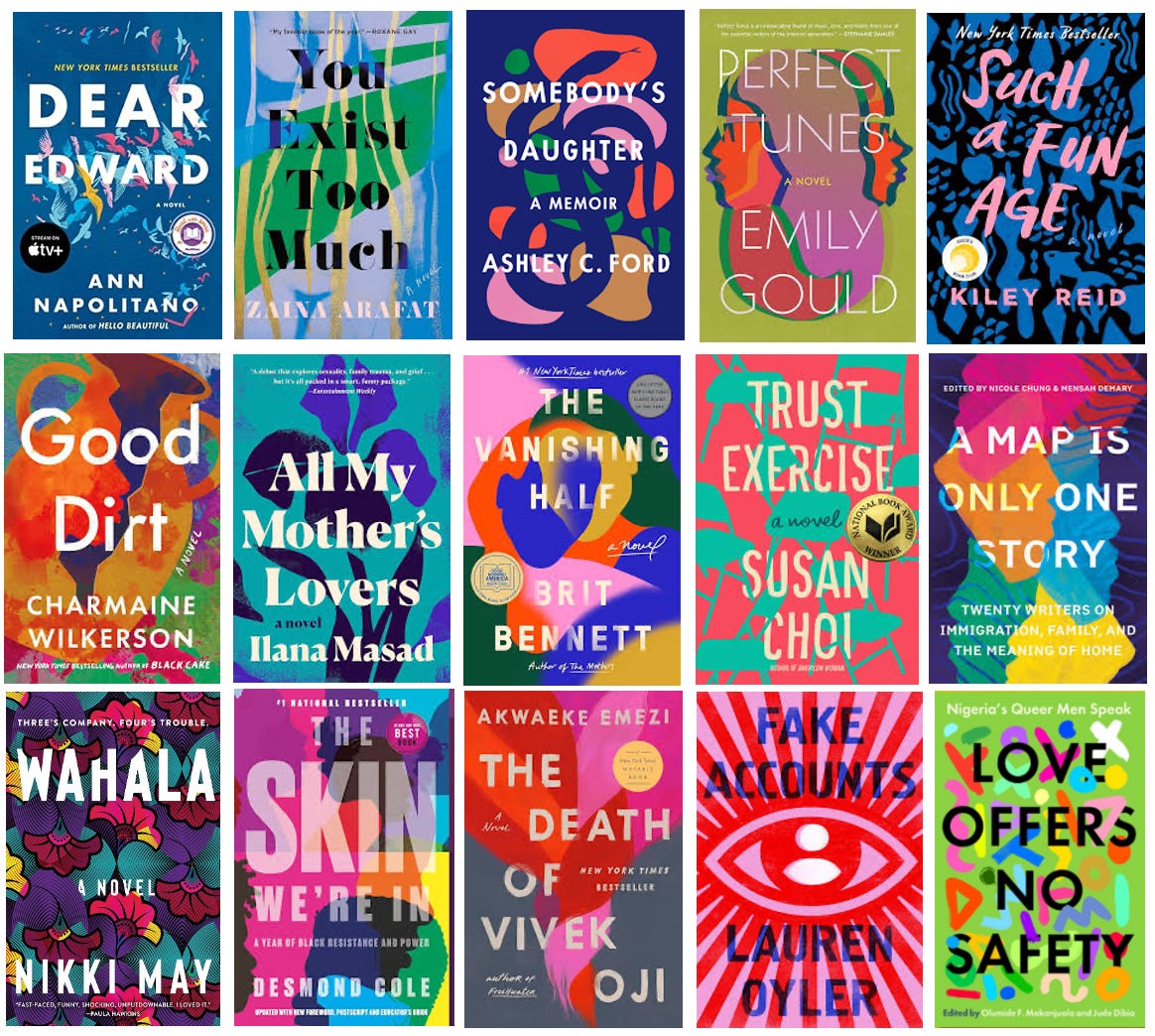
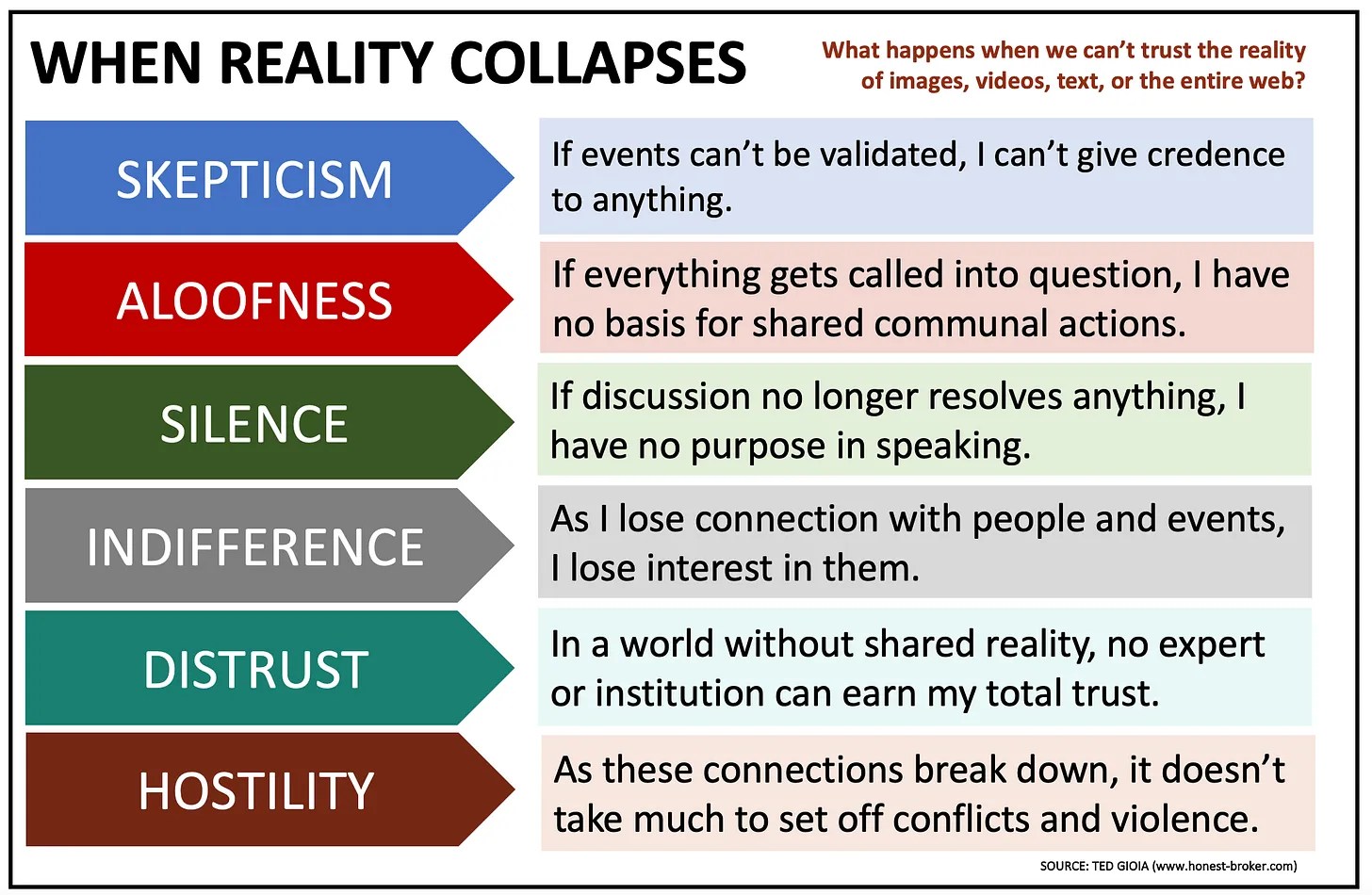

 Tipsy Teetotaler ن
