Bless their hearts

Neo-Manicheans

Ten years ago, let’s say fifteen to be safe, if you saw an essay titled “Consequences are Good, Actually,” you might naturally assume that it came from the political right. Conservatives, after all, believe in law and order, retributive justice, and the God of the Old Testament. But nowadays, it’s liberals who constantly call for consequences, liberals who sneer at the concept of forgiveness, liberals who stand for a Manichean worldview that permits no deviation from white-hat/black-hat morality …

We’ve spent the past two years with the left-of-center world debating, and largely endorsing, quite radical ideas about ending policing and prisons. This would seem to suggest a certain predisposition to forgiveness and equanimity in human affairs, a communal understanding that life is complicated, all of us are sinners, and there but for the grace of God go we. But as the various groans about the New York piece show, the urge to defund the police etc. is really much less about a particular ethic of caring and much more about simply nominating a communally-approved target for progressive anger. It happens that the abstract category “the cops” is a good thing for people to target, but the broader point is that most liberal criminal justice reform energy isn’t derived at all from a desire to be more compassionate and understanding but simply to have a new designated hate object ….

Freddie deBoer, Ah, Carceral Liberalism

Also from that piece:

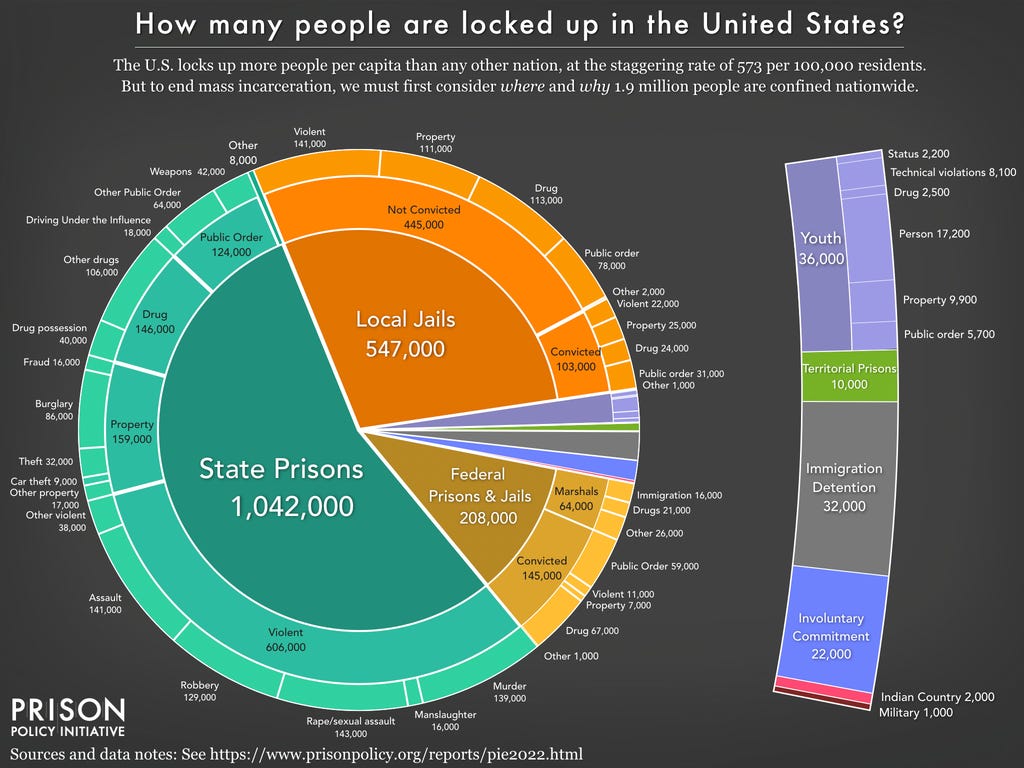
Pie chart showing the number of people locked up on a given day in the United States by facility type and the underlying offense using the newest data available in March 2022.

1.9 million people incarcerated in a nation of (roughly) 340 million. This is an extremely high rate in comparison to other nations.

What the heck is wrong with us? Are we more lawless? More punitive? Both?

Mencken Memorializes Machen

I’d never seen this before — an excerpt from H.L. Mencken’s obituary for J. Gresham Machen:

There was a time, two or three centuries ago, when the overwhelming majority of educated men were believers, but that is apparently true no longer. Indeed, it is my impression that at least two-thirds of them are now frank skeptics. But it is one thing to reject religion altogether, and quite another thing to try to save it by pumping out of it all its essential substance, leaving it in the equivocal position of a sort of pseudo-science, comparable to graphology, “education,” or osteopathy.

That, it seems to me, is what the Modernists have done, no doubt with the best intentions in the world. They have tried to get rid of all the logical difficulties of religion, and yet preserve a generally pious cast of mind. It is a vain enterprise. What they have left, once they have achieved their imprudent scavenging, is hardly more than a row of hollow platitudes, as empty as [of] psychological force and effect as so many nursery rhymes. They may be good people and they may even be contented and happy, but they are no more religious than Dr. Einstein. Religion is something else again — in Henrik Ibsen’s phrase, something far more deep-down-diving and mudupbringing, Dr. Machen tried to impress that obvious fact upon his fellow adherents of the Geneva Mohammed. He failed — but he was undoubtedly right.

H/T Alan Jacobs

Uvalde

The only thing worse, for a community, than what Radley Balko has famously called the “warrior cop” is a bunch of people who are cosplaying warrior cops.

Alan Jacobs. The whole thing is brief and worth reading.

Wordplay

Providence-washing

My very own coinage for baffling, bad or wicked decisions being justified, post hoc, by some good thing coming from it. Example: "Why did prissy Mike Pence ever agree to run with Donald Trump?" Answer: "Maybe God had January 6 in mind."


Phrase of the era: Gish-Galloping

The term “Gish Gallop” was coined by Eugenie Scott of the National Center for Science Education. The phrase refers to a debate tactic that was a favorite of Duane Gish, a young-Earth creationist who was also a highly skilled debater.

The Gish Gallop is the tactic of snowing your opponent under a mountain of supposed “pieces of evidence” or “problem cases” and claiming that the opponent’s inability to respond to this pile of evidence shows that your side is right. This tactic counts as a fallacy because its effectiveness doesn’t depend on presenting arguments that are right or even well-supported. Quantity is offered as a substitute for quality.

(Pseudo-)Science Blog » Gish Gallop (fallacy of the day)

Used in contemporary news:

As the January 6 hearings restarted today after the long weekend, I was thinking about the weird, psychotic fear that has overtaken millions of Americans. I include in those millions people who are near and dear to me, friends I have known for years who now seem to speak a different language, a kind of Fox-infused, Gish Galloping, “what-about” patois that makes no sense even if you slow it down or add punctuation.

Tom Nichols, What Are Trump Supporters So Afraid Of?

High marks to Nichols for applying "Gish Galloping" to the Trumpian patois. I was getting weary of "flooding the zone with shit," which really should be in the Urban Dictionary as a synonym for Gish-Galloping.


Conundrum of the week

May a baptismal regnerationist who never had a "born again experience" represent that he or she is born again for purposes of an Evangelical School requirement that teachers be "Born Again Christians"? (See, e.g., Carson v. Malkin, Breyer, J, dissenting) After all, the very essence of baptismal regnerationism is the belief that a proper baptism is how one actually gets born again.

How about a baptismal regnerationist who (like me) did have a childhood "born again experience" but no longer believes that such experience actually regenerated him or her? (I do not consider my experience worthless, however.)

I’m inclined to say "no" in both cases because, bless their hearts, those schools just don’t really know how one gets regenerate, and they’re using "born again" as a term of Evangelical art.

Did I remember to say "Bless their hearts"?

Breaking Religious News

The Presbyterian Church in America is withdrawing from the National Association of Evangelicals. The essential reason appears to be NAE’s political involvements in general and one political position in particular.

Had I remained in Dallas, I would have become a PCA Presbyterian because our "Independent Presbyterian" church (dear to us even though "Independent Presbyterian" is an oxymoron) was in the process of affiliating when we left.


If people have always said it, it is probably true; it is the distilled wisdom of the ages. If people have not always said it, but everybody is saying it now, it is probably a lie; it is the concentrated madness of the moment.

Anthony Esolen, Out of the Ashes

You can read most of my more impromptu stuff here (cathartic venting) and here (the only social medium I frequent, because people there are quirky, pleasant and real). Both should work in your RSS aggregator, like Feedly or Reeder, should you want to make a habit of it.

A wee bit

The last-of-its-kind abides

[A]fter a runoff and a recount, Rep. Henry Cuellar—the last pro-life Democrat in the House—narrowly edged out progressive attorney Jessica Cisneros to win the Democratic primary in Texas’ 28th District.

TMD

What’s the January 5 Committee up to?

Four hearings in, the overall purpose of the public hearings of the House January 6 Committee is clear: to remind you how much more outrageous and unforgivable former President Donald Trump’s brazen attempt to steal the 2020 election was than how you remember it. In that respect, Tuesday’s hearing, featuring the testimony of state and local officials the president’s team tried to malign or manipulate, might have been the most successful one yet.

TMD

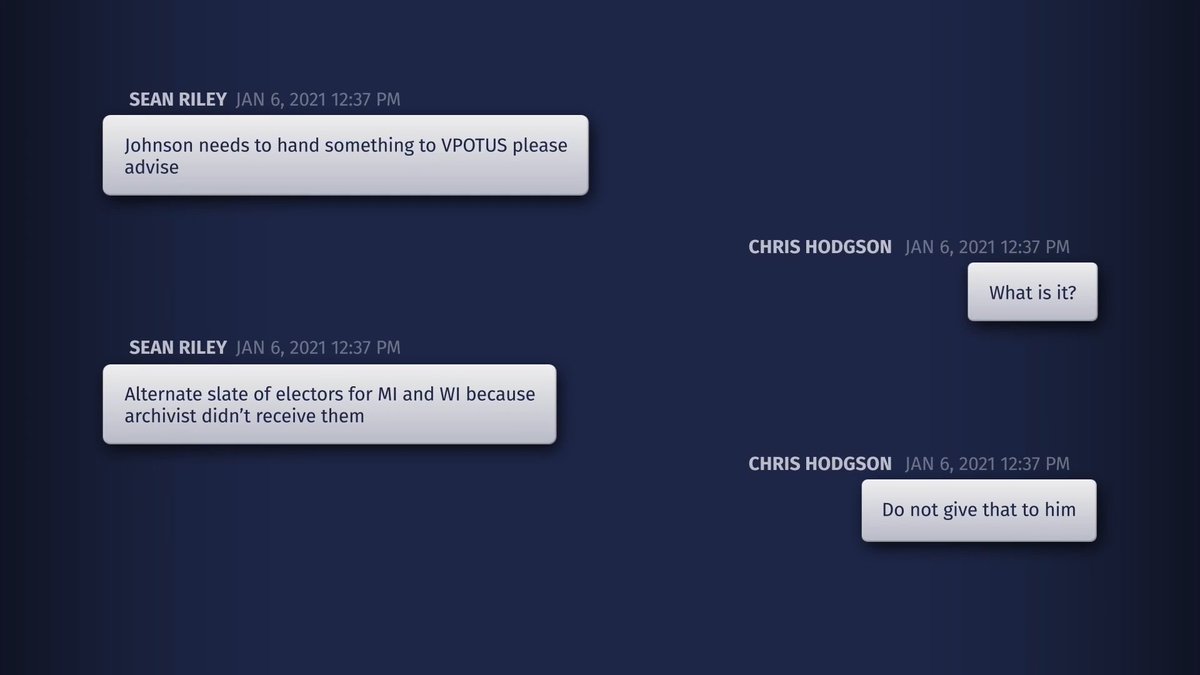
Here are the texts the Jan 6 Cmte just showed of @RonJohnsonWI’s chief of staff asking how he can give VP Pence alternate slates of electors for WI and MI on Jan 6th —>

Frank Thorp V via TMD

What are they afraid of?

As the January 6 hearings restarted today after the long weekend, I was thinking about the weird, psychotic fear that has overtaken millions of Americans. I include in those millions people who are near and dear to me, friends I have known for years who now seem to speak a different language …

Arizona House Speaker Rusty Bowers and others, describ[ed] the threats and harassment they have received for doing their duty to the Constitution.

And the threats don’t stop with political figures; families are now in the crosshairs. Representative Adam Kinzinger, for example, tweeted Monday about a letter he received in which the writer threatened not only to kill him, but to kill his wife and infant son.

I think the Trump superfans are terrified of being wrong. I suspect they know that for many years they’ve made a terrible mistake—that Trump and his coterie took them to the cleaners and the cognitive dissonance is now rising to ear-splitting, chest-constricting levels. And so they will literally threaten to kill people like Kinzinger (among others) if that’s what it takes to silence the last feeble voice of reason inside themselves.

We know from studies (and from experience as human beings) that being wrong makes us feel uncomfortable. It’s an actual physiological sensation, and when compounded by humiliation, it becomes intolerable. The ego cries out for either silence or assent. In the modern media environment, this fear expresses itself as a demand for the comfort of massive doses of self-justifying rage delivered through the Fox or Newsmax or OAN electronic EpiPen that stills the allergic reaction to truth and reason.

These outlets are eager to oblige. It’s not you, the hosts assure the viewers. It’s them. You made the right decisions years ago and no matter how much it now seems that you were fooled and conned, you are on the side of right and justice.

Tom Nichols, What Are Trump Supporters So Afraid Of?

R.I.P.

Former Purdue basketball star Caleb Swanigan has died at age 25. May he rest in peace; he didn’t have much of that as he lived.


If people have always said it, it is probably true; it is the distilled wisdom of the ages. If people have not always said it, but everybody is saying it now, it is probably a lie; it is the concentrated madness of the moment.

Anthony Esolen, Out of the Ashes

You can read most of my more impromptu stuff here (cathartic venting) and here (the only social medium I frequent, because people there are quirky, pleasant and real). Both should work in your RSS aggregator, like Feedly or Reeder, should you want to make a habit of it.

Proving the rule (and more)

Proving the rule

I have long said that when a denomination forms a committee to study whether they’ve been wrong about something that puts them at odds with the culture (and in recent years that almost always involves homosexuality), it invariably leads the denomination to capitulate to the culture.

I was wrong. Wrong about "invariably." Such studies are usually charades, but not, apparently, always.

The Christian Reformed Church in North America (the denomination in which I was an Elder until I left to become Orthodox, and in which my wife so far remains) studied sexuality from 2016 until last week. Then it "voted Wednesday at its annual synod to codify its opposition to homosexual sex by elevating it to the status of confession, or declaration of faith."

The vote, after two long days of debate, approves a list of what the denomination calls sexual immorality it won’t tolerate, including “adultery, premarital sex, extra-marital sex, polyamory, pornography, and homosexual sex.”

Christianity Today, Christian Reformed Church Brings LGBT Stance Into Faith Statement.

Note that homosexual sex is not singled out, though it leaps out on its own to everyone who knows what specific sexuality triggered the six-year study.

The reactions from the dissenters so far have run along predictable lines, which I resist critiquing except to say "It is not compassionate to affirm people’s sins." If you think "homosexual sex" is not a sin, and should be affirmed, then we do not agree.

(I do not mean by "sin" what most western people mean by "sin." Sin is "missing the mark." Deciding on the eternal consequences of particular sins, including the sin of the dissenters from the CRC synod’s decision, is infinitely above my pay-grade.)

The heaviest price the CRC will pay will almost certainly be at its highly-regarded Calvin University, a third of whose faculty publicly voiced opposition to the report from which the synod’s decision flowed:

What’s going to happen to Calvin? It’s going to lose its rock star faculty. But it’s probably going to remain Christian. These liberal faculty are going to go on to greater things, professionally, and be able to dine out on how they were badly treated by the homo-hating fundagelicals at Calvin. But the CRC has taken a brave and unpopular stand for the Gospel. God sees.

Rod Dreher. Most gay-affirming faculty will leave because they will no longer be able to subscribe (literally, as in "sign below" — I signed something analogous as an Elder) the denomination’s fortified faith statement; it would mark them as not among the cool kids to relent now by subscribing The Loathsome Thing, especially if they earlier subscribed the pre-emptive dissent.

Rod’s reader Andrew S. comments:

The momentary rush of conservative enthusiasm for this move will please Rod’s readers, but the fury of the left will be in full force over the next several weeks and months. Any university board contemplating a similar move better should study what will likely happen, and plan accordingly for a media siege of their institution. Watch for the following:

  1. a sudden drop in college rankings, unattributable to any objective criterion currently used by the major ranking media;

  2. a tsunami of requests, using already existing anonymous online reporting portals, for Biden’s Department of Education to open Title IX investigations at the universities in question;

  3. calls by social media talking heads to blacklist graduates of the schools;

  4. a sudden mysterious dearth of available federal and private grant money for faculty at these schools, along with the denial of conference platforms for faculty members.

Financial pressures are such that many if not most religiously-affiliated schools will quickly develop new “insights” into the Bible that permit them to cave in to the left, if they haven’t already. Board members sticking to Christian principles better raise prodigious sums of cash to plow into their endowments and strengthen ties with allied Christian schools to bolster their financial self-sufficiency. Woke winter is coming, and Calvin will provide an example of what other colleges should expect.

Do you doubt this? This manifests the "soft tyranny" that a few on the center-right ridicule, but which I take quite seriously, as recently as Tuesday morning:

It has now become indisputable that the liberal order not only uses a variety of quasi coercive legal instruments such as bureaucratic guidances, selective funding of NGOs, and so forth, but it also exploits the liberal version of the public-private distinction to full advantage. It deploys selective enforcement of the law against “private violence” and takes political advantage of background conditions of economic necessity (“the market”) and of the radical conformity of public opinion under liberalism, instigated by the media. It controls its subjects with mobs both virtual and real, threats of ostracism, loss of employment, and a sort of reputational death (the dreaded state of being “out of the mainstream,” enforced politically by a cordon sanitaire).

Adrian Vermeule.

I have said at least once before and will say it again: the Christian Reformed Church was a very good place from which to come to Orthodoxy. It never dove into the zaniness of broader evangelicalism (thought many parishes and individuals have dipped their toes, or even waded in up to the knees). Rather, from my earliest arrival struck me as sober and serious-minded.

Yet I expected it to cave in, because I do not trust Protestantism over the long haul to interpret their touchstone, their scriptures, in any seriously countercultural way.

I’m heartened that this was not the CRC’s year to swallow the zeitgeist. And they set such a firm precedent that it will be hard to backslide very soon. By then, the zeitgeist may have moved on, as zeitgeists are wont to do.

Why the rule remains generally valid

We are not in a post-Christian age, but in a post-Enlightenment age. The reason why these Christianities are collapsing is that they were rationalized.

Fr. Hans Jacobse on the WAWTAR podcast.

Calvinism ("the Reformed faith") is surely among the most rationalized. Its system fails, in my opinion, not for lack of rationality, but for lack of humanity: it’s hard to see daylight between Reformed predestination and simple fatalism, hard to see room for meaningful human agency.

Denialisms

I can have an argument with you about what to do about climate change. I can even accept somebody making an argument that, based on what I know about human nature, it’s too late to do anything serious about this—the Chinese aren’t going to do it, the Indians aren’t going to do it—and that the best we can do is adapt. I disagree with that, but I accept that it’s a coherent argument. I don’t know what to say if you simply say, “This is a hoax that the liberals have cooked up, and the scientists are cooking the books. And that footage of glaciers dropping off the shelves of Antarctica and Greenland are all phony.” Where do I start trying to figure out where to do something?

Jeffrey Goldberg, Why Obama Fears for Our Democracy – The Atlantic.

You can swap "climate change" with a lot of other issues, most famously Alex Jones’ claim that Sandy Hook was a hoax, the bereaved parents "crisis actors." On second thought, "the Democrats stole the 2020 Election" may be more famous.

Hard words

A. G. Sertillanges wrote in The Intellectual Life: “The mind is dulled, not fed, by inordinate reading, it is made gradually incapable of reflection and concentration, and therefore of production…. Never read when you can reflect; read only, except in moments of recreation, what concerns the purpose you are pursuing; and read little, so as not to eat up your interior silence.”

Kit Wilson, Reading Ourselves to Death.

Another excellent article read, on the perils of too much reading.

Babylon, not Israel

[S]ome see America as a new Israel, God’s chosen country that’s now being taken over by His enemies, rather than a new Babylon in which Jesus-followers are mixed in with many others.

Marvin Olasky, The Sixty Years’ War: Evangelical Christianity in the Age of Trump.

The oldest lie of all is the denial of death.

The cities lie. Their radical chic is stretched tight over the bare lust for money. Their cosmopolitan diversity hides the uniformity of clawing ambition. Their youth is stolen from elsewhere, used for a time, and discarded when its looks and gullibility begin to fade. They grow little food and make fewer objects every year. They offer only services no one needs and knowledge no one believes. A blustering businessman sinks deeper into debt; but, risking it all again and again, he’ll keep up his pretence until the bailiffs arrive. That is the soul of the city.

FFatalism, The dishonest land The whole short posting was excellent in a bleak sort of way.

And, God help me, I love cities anyway.‌

Dad theory

My kids—if I can even use the possessive—are a part of me, but I cannot see them if I reduce them to my own reflection. Parenthood entails limitless closeness; all parents see more of their very young children than their kids can see of themselves. Being a dad, though, means perceiving this intimacy from a distance and working to make it outwardly manifest through awkward, conscious effort. This dialectical relationship resembles good thinking, which brings us to the first moment of Dad Theory. Dads guard against losing themselves in particularity, on one hand, and losing themselves in abstraction, on the other. Being a dad means being neither too attached to one’s own concerns to see things clearly, nor too impressed by speculation to see the messiness of real life. To practice Dad Theory is to negotiate with the known unknowns—and to trust that love is a stable point you can use to navigate through ambiguity to reach something solid and sure.

Matt Dinan, ‌It’s Time for Some Dad Theory, via Leah Libresco Sargeant, Dads Choosing to be Dependable

When is a coup too stupid to be a coup?

The American Conservative‘s Peter Van Buren looks at January 6 and concludes that the coup attempt was so stupid and so deficient in his post-hoc markers of coup attempts (he sets a remarkably high bar) that it couldn’t possibly have been a coup attempt at all.

I’m so glad he cleared that up. It will be a relief when my subscription expires and I no longer feel duty-bound to rummage through such garbage in search of nourishment.

Word of the day:

Portent. Since portents don’t come with Divinely-inscribed subtitles, I’ll leave it to you to decide what this means.

But if you want to call it "mere coincidence," note that your case is no stronger than mine for "portent."


To the woke, discernment is discrimination and boundaries are oppression.

Richard Abbot, who I don’t know from Adam but who responded to this.

You can read most of my more impromptu stuff here (cathartic venting) and here (the only social medium I frequent, because people there are quirky, pleasant and real). Both should work in your RSS aggregator, like Feedly or Reeder, should you want to make a habit of it.

Summer Solstice ’22

Prosecute Trump?

So far, there has only been circumstantial evidence that Trump knew he lost the 2020 Election, so news that he admitted his loss theoretically could be huge.

However, if you have access to the New York Times, do yourself a favor and read Prosecute Trump? Put Yourself in Merrick Garland’s Shoes. I think I’d call it a day at step two of the analysis: the unlikelihood of a unanimous guilty verdict in a country where so many worship the guy. Not even in the very liberal District of Columbia.

If I made it to step three, I’d again hit a wall: Do we really want that disgraceful and disgraced humbug to star as Johnny Depp with the prosecution as Amber Heard?

So I say "no prosecution." Our best outcome will be if the current Congressional hearings sufficiently disgrace him, even to those who voted for him, that he’s politically dead and buried.

Kudos to the Dispatch

Your membership allows us to do this kind of high-quality, in-depth journalism rather than chase clicks or attempt to monetize the latest outrage. Thank you.

The Morning Dispatch, touting its multi-part report on How the Uyghur Forced Labor Prevention Act Became Law.

I’ve subscribed been a member from the beginning, and the Dispatch has consistently made good on not chasing clicks or attempting to monetize the latest outrage. Its voice is unique: clearly not Trumpist, yet not obsessively anti-Trump like The Bulwark. It is one of my most valued news and commentary sources (though Jonah Goldberg alone talks and writes more than I can find time to listen and read).

Consider joining and enjoying a play-it-straight source in this tribalist historic hiatus.

Summer Kwaanza?

Juneteenth—the annual observance celebrating the end of slavery in the United States in 1865—is a holiday that many Americans haven’t heard of until recently. That has caused some to wonder if it’s just some new “woke” holiday invented by Marxist academics, the creators of the historically inaccurate 1619 Project, or some other group on the left.

It is not.

Juneteenth has been celebrated since 1866, mostly by Black Americans; yet it’s a day that’s worthy of celebration by every American, as it represents a critical turning point in American history, not just Black history. It is the day that we as a people finally began to live up to one of the greatest principles we professed: a nation devoted to liberty for all.

Kay Cole James

Yes, I was among those world-weary folks who assumed Juneteenth was a summer Kwaanza. My bad.

How should we celebrate this newest national holiday?

Second-hand reading list

  • American Rhyd Wildermuth is writing about his new life in Luxembourg, discovering the complexity of European culture from the perspective of a recovering US ‘progressive’. His observations about the mapping of a simplistic American race narrative onto the old and ever-shifting cultures and ethnicities of Europe is spot-on, I think. I have long felt that the language in which British and some European cultural elites now talk about race – dividing the world artificially into ‘whites’ and ‘people of colour’, for example – is a form of American colonialism which both obscures the reality of European culture and history, and increases or introduces racial tension. Rhyd writes about this sensitively and sharply.
  • If ‘the modern world is a hell’ seems like overkill to you, this recent Guardian interview with transhumanist author Elise Bohan may wake you up, for Bohan is quite clear about where it is leading, and she can’t wait. The aim of transhumanism, she explains, is to allow us to move beyond the ‘ape-brained meat sack’ otherwise known as the human body, so that we can beat death, remake humanity, perfect nature and ultimately, in her own words ‘build God’ anew. Bohan, of course, like her interviewer, doesn’t believe in God. If she did, she might recognise that the argument she is making is precisely the same one that was made by the serpent in the Garden of Eden – which is to say that, as I suggested in my last essay, it is literally Satanic.
  • What is the alternative to this future? Neuroscientist Erik Hoel, in a long and interesting essay on his own Substack, suggests that the answer might lie in Shakespeare. Humanity is messy. Nature is complex, and not under our control. The likes of Bohan, who are designing our future, can’t cope with this mess, just as they can’t cope with loss, death, humility, the unknown, the transcendent or anything else they can’t turn into an equation or replicate in a lab. The ‘coming inhuman future’, as Hoel calls it, can only be fought with a defence of the irrational, messy, dark, light and mysterious complexity of nature, which includes our human nature. Arm yourselves.

Paul Kingsnorth, Intermission: Reading and Writing – by Paul Kingsnorth. Kingsnorth recommended some others, too, but these are what I’m going to read.

A quick, partial critique of liberalism

It has now become indisputable that the liberal order not only uses a variety of quasi coercive legal instruments such as bureaucratic guidances, selective funding of NGOs, and so forth, but it also exploits the liberal version of the public-private distinction to full advantage. It deploys selective enforcement of the law against “private violence” and takes political advantage of background conditions of economic necessity (“the market”) and of the radical conformity of public opinion under liberalism, instigated by the media. It controls its subjects with mobs both virtual and real, threats of ostracism, loss of employment, and a sort of reputational death (the dreaded state of being “out of the mainstream,” enforced politically by a cordon sanitaire).

Adrian Vermeule.

I continue to struggle: I want classical liberalism to work, but I am conversant with powerful critiques, including from sorta-scary guys like Vermeule. Monday, I finally ordered a primary source for its defense: Francis Fukuyama’s End of History and the Last Man, having read quite a bit about it over the past few days.


If people have always said it, it is probably true; it is the distilled wisdom of the ages. If people have not always said it, but everybody is saying it now, it is probably a lie; it is the concentrated madness of the moment.

Anthony Esolen, Out of the Ashes

You can read most of my more impromptu stuff here (cathartic venting) and here (the only social medium I frequent, because people there are quirky, pleasant and real). Both should work in your RSS aggregator, like Feedly or Reeder, should you want to make a habit of it.

Curated just for you, whoever you are

Legalia

Why would a conservative want to serve on SCOTUS?

I can’t fathom why anyone would want to serve on the Supreme Court. To be more precise, I can’t fathom why any conservative would want to serve on the Supreme Court. Liberal jurists are feted with honors at every juncture. But conservative jurists are excoriated and personally attacked. I wonder, in hindsight, if Kavanaugh still would have pursued a position on the Supreme Court, knowing what we know now: the first confirmation hearing, baseball tickets, Spartacus, Christine Blasey Ford, Michael Avenatti, Ronan Farrow, the second confirmation hearing, yearbook, beer, Klobuchar, Saturday Night Live, Matt Damon, the Dobbs leak, and now an assassination attempt outside of his home. During this time, Kavanaugh and his family have been dragged through such painful experiences, one after the other. Was it all worth it? And to what end?

Eugene Volokh

303 Creative

Creative professionals routinely express their politics in their art—through the art they choose or refuse to create. Famously, for example, shortly after the election of Donald Trump, a number of fashion designers (artists, to be sure) declared that they would, under no circumstances, “dress” Melania or Ivanka Trump –this despite the fact that dresses themselves rarely (if ever) contain a political or cultural message as explicit as the words or image a web designer creates. Merely doing business with the Trumps was an intolerable notion to creative professionals who abhorred the Trump family’s political methods and messages.

In an open letter rejecting the idea of working with the Trumps, designer Sophie Theallet said, “We value our artistic freedom, and always humbly seek to contribute to a more humane, conscious, and ethical way to create in this world.” She said, “As an independent fashion brand, we consider our voice an expression of our artistic and philosophical ideas.” And another designer, Naeem Khan, asserted: “A designer is an artist, and should have the choice of who they want to dress or not.”

In reporting on the designer choices, the Washington Post’s Robin Givhan explained well how artists view their work:

Like other creative individuals, Theallet sees fashion as a way of expressing her views about beauty and the way women are perceived in society. Fashion is her tool for communicating her world vision. In the same way that a poet’s words or a musician’s lyrics are a deeply personal reflection of the person who wrote them, a fashion designer’s work can be equally as intimate. In many ways, it’s why we are drawn to them. We feel a one-to one connection.

A web designer’s work is similarly intimate ….

Brief of 15 Family Policy Organizations as Amici Curiae in Support of Petitioners in the 303 Creative case (internal citations omitted).

If you don’t know the case, you should get to know it.

Colorado, with the help of the 10th U.S. Circuit Court of Appealsl, has mounted the worst, and most explicit, attack on freedom from compelled speech since West Virginia v. Barnette in World War II (when West Virginia required recitation of the Pledge of Allegiance by schoolchildren on pain of expulsion).

Colorado claimed that even though 303 Creative was engaged in pure speech (a key legal category; Masterpiece Cakehop, in contrast, had a creative element but in the end produced not speech, but cake), it could be compelled to create a website for a same-sex wedding because none of the other wedding website creators had exactly the talents of 303 Creative, so 303 was effectively a monopoly and could be forced to create the desired site:

In its decision below, the 10th circuit noted that the petitioners’ artistry created something like a “monopoly,” a market where only the petitioners exist.

Id. Only madness-induced blindness could distinguish the relevant facts of this case from those in West Virginia v. Barnette to the detriment of 303 Creative. Read and enjoy the whole Amicus brief.

Understated

The problem is a reflection of a badly broken political culture and it won’t be easily fixed. But, in the meantime, the House should probably go ahead and pass that SCOTUS protection bill.

The Morning Dispatch on increasing political violence, prompted specifically by the plot against Justice Kavanaugh.

More generally, the Morning Dispatch’s coverage of the successful recall of San Francisco Prosecuting Attorney Chesa Boudin confirms its trustworthiness as a news source: It has more points in Boudin’s favor than I’ve noticed anywhere else, and they aren’t insubstantial.

Sexualia

Incoherent Pride

[I]t is interesting that the American Embassy to the Vatican is flying the rainbow flag for Pride month. Commentators have pointed out the obvious intent to cause offense to the Catholic Church. But the embassy’s decision also sends a message to the American people: Another flag has government endorsement. The message of “inclusion” that it represents signals to those Americans who might dissent from the LGBTQ+ movement that in these interesting times their membership in the republic for which the real national flag stands is more a matter of tolerance than full-blooded affirmation.

The problems with LGBTQ+ inclusion are, of course, manifold. First, there is the logical problem that any movement deploying the rhetoric of inclusion has to face: If everyone is included and nobody is excluded, then the movement is meaningless. Thus, the language of “inclusion” here is really a code word for precisely the opposite: It actually means exclusion and the delegitimizing of any person or group that dissents from what the movement’s movers and shakers deem to be acceptable opinion. Acceptable thought will typically tend toward a view of reality that regards such dissenters as mentally deficient, sub-human, or simply evil.

Carl R. Trueman

Succinct

There are masculine girls. There are feminine boys. What are we going to do? Carve them up?

Jordan Peterson on the Official Trailer for the Matt Walsh documentary (prank-a-thon?) What is a Woman?.

Politics

Relatively successful

Purdue University president Mitch Daniels is retiring at the end of the year. Consistent with his maverick ways over the last 10 years, his successor was announced concurrently with his retirement announcement. There was no public Presidential search, and we will doubtless be treated to days of complaints, petty and serious, about that.

His successor will be the professor and Dean, Dr. Mung Chiang, who served as his Executive Vice President for Strategic Initiatives, of which Purdue has formed a great many over the last 10 years, with some of the biggest corporate names in the world.

I’m very proud of Purdue, my neighbor just across the Wabash, but I would prefer that my loved ones not attend there.

First, like most major universities today, the streets of the campus flow with alcohol, which endangers students of both sexes with the ambiguities of sexual interactions between drunks.

Second, I prefer undergraduate liberal arts education to enlisting in the Technocracy fresh out of high school.

But it seems to me that Mitch Daniels has been a tremendously successful Ginormous Research University President, and I wish him well.

"A Crucial Element of Fascism"

The American militia movement is small, but in the early days of 2021, it nonetheless came to the aid of a lawless president seeking to use force to keep himself in power. It did so by attacking the national legislature and threatening to kill elected representatives of the American people. And when this happened, the president himself stood back and stood by, watching expectantly, refusing to call off the armed mob, hoping the violence might empower him to remain in the White House despite losing the election two months earlier. In doing so, Trump ended up injecting a crucial element of fascism into the country’s political system.

I don’t use the F-word lightly. Trump winning the presidency while losing the popular vote by three million isn’t fascism. Trump appointing a record number of judges and three Supreme Court justices who appear poised to overturn Roe v. Wade isn’t fascism. Trump attempting to close the southern border to immigrants and refugees isn’t fascism. Trump’s verbal attacks on the media aren’t fascism (though they could be said to lay the groundwork for it by stoking popular rage against a free press). Trump engaging in the politics of bullshit by lying constantly to the American people isn’t fascism (though it, too, can prepare the way for it by leading voters to despair of firmly distinguishing between fact and falsehood).

But groups of organized, armed thugs allied with the president acting at his request to prevent the peaceful and lawful transfer of power to his successor is absolutely a fascist act. We’ve seen nothing remotely like it elsewhere in the democratic world, no matter how bad the illiberal policies and rhetoric of newly emboldened right-wing populists in other countries have been.

Damon Linker

Holding up that hateful mirror

Republicans are the co-creators of Trump’s corrupt and unconstitutional enterprise. The great majority of them are still afraid to break fully with him. They consider those who have, like Liz Cheney, to be traitors to the party. They hate Cheney because she continues to hold up a mirror to them. They want to look away. She won’t let them.

Peter Wehner

Is racism a public health crisis?

My fair city has approved a resolution declaring racism a public health crisis.

The statistics on racial disparities are stark. But unless the reporting is botched — a very real possibility considering that our Gannett paper hovers near death — the response is one of those "OMG! WE’VE GOT TO DO SOMETHING!" responses, and implicitly accepts the dogma that all racial disparities are caused by racism.

My point would be mere pedantry were it not for the likelihood that a vague diagnosis of "racism" as the cause is likely to lead to errant treatment.

Stochastic Terrorism

I’m kind of a sucker for portentous names given to commonsense observations. My new one is "stochastic terrorism," introduced by David French with a link to Todd Morley.

As French puts the commonsensical translation:

The concept is both common-sense and controversial. The common-sense element is easy to explain. If you’re a normal person and five people hate you, what are the odds you’ll face targeted violence? Unless you’re engaged in criminal activity yourself (and the five people who hate you are other criminals), then the odds are almost impossibly low.

But what if 50,000 people hate you? Or five million? Then the odds change considerably, until they reach a virtual certainty that you’ll face a threat of some kind.

Why did the Californian last week go after Justice Kavanaugh instead of Justice Alito? How many million people hate Brett Kavanaugh? How did there come to be so many who hate him? D’ya think it might have something to do with the over-the-top attacks during his confirmation hearings?

That’s how you build a frenzy from which someone emerges to exact just retribution on some putative fiend. Todd Morely names a few names.

(FWIW: I cooled about 20 degrees on Kavanaugh as soon as it emerged that he has been a heavy recreational beer-drinker since years before he could drink legally. Call me extreme — and on this topic, I clearly am far out of the American mainstream — but I think a Supreme Court Justice should have a history of abiding even by annoying little laws like minimum drinking age, and of sobriety both literal and figurative. Drunken frat boys are a turnoff even when they don’t grope co-eds.)

Well, anyway, back to stochastic terrorism. French again:

Of course the ultimate recent example of hatred and fury spawning violence is the attack on the Capitol on January 6. It was perhaps the most predictable spasm of violence in recent American history. One cannot tell tens of millions of Americans that an election is stolen and that the very fate of the country hangs in the balance without some of those people actually acting like the election was stolen and the nation is at stake.

But if the concept of stochastic terrorism is so obviously connected to human experience, why is it controversial? In part because it aims responsibility upward, and it places at least some degree of moral responsibility for violent acts on passionate nonviolent people. While criminal responsibility may rest exclusively with the person who carries the gun (or his close conspirators), moral responsibility is not so easy to escape.

(Emphasis added).

Too long I have blithely and exclusively "blamed the person who carries the gun", discounting (if not ignoring) incitements that stop short of criminality. I remain a free speech advocate, and I detest the idea that any truth is too dangerous to be uttered lawfully. But it is becoming too, too obvious politicians and pundits who make careers of vilifying specific opponents, and internet jackasses who doxx the scapegoat du jour, are playing with fire, and at the very least should face political, social and commercial* sanctions.

And to the extent that I have dehumanizingly vilified Donald Trump over the last three years, mea culpa, mea culpa, mea maxima culpa!

(* I have in mind commercial sanctions like boycotting Tucker Carlson’s advertisers, but I don’t want to watch him to find out who they are.)

UPDATE: Jonah Goldberg alludes to who Tucker’s advertisers are:

Seb Gorka dron[ing] on about Relief Factor (a fish oil supplement that all super-patriots take before they put their heads on Mike Lindell’s pillows)

No chance for boycotting there.

Religion

Normally, I’d consider putting Religion in first position, but the following are not the kinds of dogma or dogma-adjacent things that cry out for that.

Here’s to you, Mrs. Robinson

In David & Bathsheba, we see a man in the act of either removing—or replacing—a jacket from a woman’s shoulders. Is this the moment before or after King David has committed adultery with the wife of his general? Mrs. Potiphar presents us not with a cartoonish harridan panting after the biblical Joseph, but an attractive, middle-aged woman staring pensively at her reflection in a mirror. McCleary treats the incident not in terms of mere lust, but in a larger psychological and spiritual context of loneliness and fear of death.

Gregory Wolfe, Beauty Will Save the World.

The "Mrs. Potiphar" Wolfe refers to is presumably this:

Mrs. Potiphar

If you don’t know the allusion, read Genesis 39. If you don’t know what Genesis 39 is, may God have mercy on your ignorant soul.

A Dangerous Inversion

To justify Christianity because it provides a foundation of morality, instead of showing the necessity of Christian morality from the truth of Christianity, is a very dangerous inversion; and we may reflect, that a good deal of the attention of totalitarian states has been devoted, with a steadiness of purpose not always found in democracies, to providing their national life with a foundation of morality — the wrong kind perhaps, but a good deal more of it. It is not enthusiasm, but dogma, that differentiates a Christian from a pagan society.

T.S. Eliot via Kevin D. Williamson, who continues:

Eliot’s “dangerous inversion” is very much the model for the intersection of religion with politics in our time: Religion is, and is almost universally assumed to be, the junior partner.

American Evangelicals as Cultural Christians

What has happened is that the Christian sense of collective identity has persisted even among those hollowed-out Christians who have abandoned Christian orthodoxy, reducing the Christian confession to a demographic box to check, one of many constituent parts of an American “national identity.” Never mind, for the moment, that one of the hallmarks of the authentic American identity is approaching Christian orthodoxy and Christian observance with a seriousness that brushes up against fanaticism: The story of the United States does not begin with the arrival of the first slave, as the 1619 Project would argue, but with the arrival of the first Separatist.

For a century or so, Americans have had friends and countrymen who are “culturally Jewish.” We know what that means: a Jewish sense of communal identity bound to that vague American religious sensibility that sits somewhere between Protestant and agnostic — not atheistic, but operatively secular. I have not heard many Catholics call themselves “culturally Catholic” — Catholics who have given up Catholicism mostly just continue to call themselves “Catholic,” with the “cultural” qualifier being understood. In the case of Catholics, the communal identity is not in the end religious at all but is instead only the detritus of immigrant ethnic identities that have been dissolved in the hot soup of modernity. Conservatives used to be the ones who preferred the “melting pot” model of communal life to ethnic and religious particularism, but the rightist element Hochman writes about has, to some considerable degree, abandoned that. And so we have that new thing, the “cultural Christian.” I believe the first time I ever heard the term used was by Richard Spencer, the white nationalist, who found his parents’ Episcopalianism insufficiently invigorating.

Evangelicals, particularly white Evangelicals, are an important part of the new coalition that was formed around the campaign and cult of Donald Trump, but Christian thinking per se plays almost no role in that cult. Indeed, it would be very difficult for these Christians if it were otherwise: Donald Trump is an idolator and a heretic, a blasphemer and a perpetrator of sacrilege, and much more ….

Kevin D. Williamson


You can read most of my more impromptu stuff here (cathartic venting) and here (the only social medium I frequent, because people there are quirky, pleasant and real). Both should work in your RSS aggregator, like Feedly or Reeder, should you want to make a habit of it.

Potpourri 6/9/22

January 6, with us forever

After Mr. Pence was hustled to safety, Mark Meadows, the White House chief of staff, is reported to have told colleagues that Mr. Trump said that perhaps Mr. Pence should have been hanged.

Maggie Haberman, ‌Pence Staff Feared for His Safety Amid Trump’s Pressure Campaign Before Jan. 6.

That’s at least triple hearsay (someone says that Mark Meadows told colleagues that Trump said) plus a "perhaps," but with Trump, it seems sufficiently credible — and yes, I’ll plead guilty to confirmation bias if you can get an indictment.

The most astonishing part of this whole story is that Mike Pence finally said "no" to the Orange God. I thought he’d taken leave of his senses when he agreed to run with Trump, but it was only his principles that he was abandoning.

I’m assuming that the public "hearings" that begin this evening will be agitprop. I assume that it will be the kind of anti-Trump agitprop that I’m predisposed to believe. But the very fact that they brought in a storied documentary producer to help stage it counsels that I avoid it and rely on multiple secondary sources (probably WSJ, NYT and the Dispatch — which culpably leaves out stellar sources like Alex Jones, Breitbart Steve Bannon’s War Room "television show," Think Progress or other emetic productions).

Surely the gist will be something like this:

This was a violent assault on the United States Capitol, and it was provoked by a sitting president of the United States,” Cheney said. “He oversaw a multipart plan, [the] objective of which was for him to stay in power, to overturn the results of an election and stay in power. And I would say to people, as you’re listening to some of my colleagues and others who think that the way to respond to this investigation is with politics and partisanship—those people are not acting in a way that is healthy for the country.

Liz Cheney on the Dispatch Live

Defense/Defiance

Spend much time at gun shows or at gun shops, and you’ll quickly become familiar with something called the “tactical” or “black gun” lifestyle, where civilians intentionally equip themselves in gear designed for the “daily gunfight.” It’s often a form of elaborate special forces cosplay, except the weapons (and sometimes the body armor) are very real.

Something has changed in the streets as well. It’s now common to see men and women armed to the teeth, open-carrying during anti-lockdown protests and even outside public officials’ homes. This is when the gun is used to menace and intimidate. It’s displayed not as a matter of defense but rather as an open act of defiance. It’s meant to make people uncomfortable. It’s meant to make them feel unsafe.

David French,‌Against Gun Idolatry.

I’ve noticed increasingly that I "learn" things by reading other than what the author directly intended. In this case, French helped me put my finger on what I, an enthusiast neither for guns nor for gun bans, find obnoxious about open carry regimes: they enable performative assholery and political intimidation.

Knock-on celebrity

Some individuals reach the unfortunate but not entirely irrational conclusion that the best way to be remembered is by assassinating somebody whose long-lasting fame is guaranteed. There is something very modern about this approach. In the celebrity culture where we all live, nothing is worse to some people than the idea of dying unknown and staying that way. Shooting your way out of this box is a method of leeching off of someone else’s celebrity. In the celebrity culture, a negative reputation for all times is better than no reputation at all. John Wilkes Booth shot Abraham Lincoln because he (Booth) was a Southern partisan. John Hinckley shot Ronald Reagan because he wanted fame, like Travis Bickle in the movie Taxi Driver—or at least an opportunity to touch fame.

Michael E. Kinsley, Old Age

Social Media in the unreal world of celebrities

Somehow, this seems related to the preceding item:

[I]t is difficult for me not to have some level of sympathy for [Amber] Heard. She has not only been found by the jury to have testified falsely as to critical issues of fact—to have lied—but been so pilloried throughout the nation that she has become a public face of falsehood. We have had public figures at the highest level of national authority who have routinely lied about far more important matters and have never been subjected to anything like the level of opprobrium she is now enduring.”

The rage against her—and the worship of him—has been primal. And there was no escaping it. Over the course of the trial, it felt like the algorithms that drive social media were programmed to stoke hatred of Heard.

Famed attorney Floyd Abrams via Bari Weiss.

The delusion of quantification, mastery and management

You likely read or heard about Jonathan Haidt’s big April essay in the Atlantic, “After Babel: Why the Past 10 Years of American Life Have Been Uniquely Stupid.” The thesis is pretty straightforward: social media is ruining America. In the New Yorker, Gideon Lewis-Kraus takes an admirably fair and honest look at Haidt’s claims. Frankly, Lewis-Kraus is to be commended not only for his analysis but for the spirit in which it was presented. Basically, he found that it is difficult to support Haidt’s most dire claims with existing data.

Lewis-Kraus, and the scholars he consulted, are probably right. Haidt’s case is difficult to defend given existing research. Interestingly, however, they all seem to approach this in similar fashion: they grant that Haidt is right to be concerned, but they’re simply not sure if he is concerned about the right things and in the right measure. Lewis-Kraus is also to be commended for the running acknowledgement that it may be difficult to measure and quantify the kind of effects we’re looking for. I remain skeptical that we can rely merely on social scientific data to ground our action. That may very well be a symptom of the deeper (Babel-like!) delusion of mastery and management. But along those lines, this was a particularly interesting observation:

“Gentzkow told me that, for the period between 2016 and 2020, the direct effects of misinformation were difficult to discern. ‘But it might have had a much larger effect because we got so worried about it—a broader impact on trust,’ he said. ‘Even if not that many people were exposed, the narrative that the world is full of fake news, and you can’t trust anything, and other people are being misled about it—well, that might have had a bigger impact than the content itself.’”

Well, that’s kind of the point isn’t it? I mean, that consequence Gentzkow describes is a consequence of social media, which acts as a massive assortment of feedback loops from the social body to the collective consciousness, such that it generates all manner of distorted and disordered actions.

Finally, on this score, I’ll say that the allusion to the Babel narrative amounts to little more than window dressing (curiously, the Atlantic seems to have removed the reference from the title). When Haidt writes, with reference to the tower, that social media platforms “unwittingly dissolved the mortar of trust, belief in institutions, and shared stories that had held a large and diverse secular democracy together,” he seems to be overlooking the fact that in the Hebrew story the destruction of the tower was not something to be lamented. The destruction of the tower was an act of judgment on the hubris of the builders. I think there was an interesting direction in which to take that story, but I’m not sure this was it.

L.M. Sacasas, ‌Readings and Resources (emphasis added because I share his skepticism about our collective delusion).

Writers shouldn’t talk

Who in their right mind would want to talk, much less listen, to a person who has contrived to spend as much of her life as possible crouched over her computer in isolation, deleting unsatisfactory variants of a single sentence for upwards of an hour? Nothing in my daily practice has prepared me for the gauntlet of a tête-à-tête. Writing is an antidote to the immediacy and inexactitude of speech, and I resent any attempt to drag me back into the sludge of dialogue …

Books and essays are the product of long bouts of thinking, which makes writers fantastically ill-suited to summoning opinions instantaneously …

To be adept at honing sentences for weeks or months is no guarantee of any aptitude for improvisation. Nor does skill at fictionalizing life or theorizing about it correlate with any facility for entering into the thick of things.

Becca Rothfeld, Writers Shouldn’t Talk

From my subjective core, this is almost too obvious to say write. I’m myself in Rothfeld’s camp. I’ve labored way too long over relatively short speeches I was expected to give, and then delivered them as closely to the written text as I could manage while maintaining reasonable eye contact. I don’t trust my spontaneous utterances to be worth the attention of assembled auditors. Obviously, I’m less inhibited about the written word.

Celebrate the First Amendment

An Australian court on Monday ordered Google to pay $515,000 to former Australian politician John Barilaro for failing to take down from YouTube a campaign of “relentless, racist, vilificatory, abusive, and defamatory” videos attacking him, which the court ruled “drove Mr. Barilaro prematurely from his chosen service in public life and traumatized him significantly.”

TMD. I do not know the details behind this, so I won’t call Mr. Barilaro a snowflake, but I’m having trouble imagining any possible details that would support liability in U.S. Courts. And with due allowance for familiarity, I like it that way.

Dreherisms

Smart to have a dumb home?

The business rationale for the smart home is to bring the intimate patterns of life into the fold of the surveillance economy, which has a one-way mirror quality.

Matthew B. Crawford, Defying the Data Priests

Librarian cosplay

I’m tired of hearing about supposed book bannings in the U.S.

  • Deleting a book from a curriculum while leaving it in the school library is not a book banning.
  • Someone trying to get a book removed from a public library, which tells that someone to go take a hike, is not a book banning.

What’s going on, I think, is bored librarians (is there another kind?) engaging in ritual cosplay ("You can have To Kill a Mockingbird when you pry it from my cold, dead fingers!").

Wordplay

From the Economist:

Word of the Week: écoponts, “wildlife bridges” in French. France is building overpasses for animals to reduce roadkill and help them roam more freely. Read the full story.


You have to be educated into cant; it is a kind of stupidity that surpasses the capacity of unaided Nature to confer.

Anthony M. Esolen, Out of the Ashes (Kindle location 411)


You can read most of my more impromptu stuff here (cathartic venting) and here (the only social medium I frequent, because people there are quirky, pleasant and real). Both should work in your RSS aggregator, like Feedly or Reeder, should you want to make a habit of it.
Monday collation

Politics

The Irreligious Right

I used to say "If you don’t like the Religious Right, just wait till you see the nonreligious Right." The nonreligious Right is here, and now dominates the grassroots GOP.

Frankly, it’s not (yet) as bad as we feared for varying reasons (but it’s trending worse, I think).

A fantastically good overview, ‌Republicans Are Now the Party of the Nonreligious Right appeared Thursday in, of all places, the New York Times, written by one Nate Hochman of National Review. It is long and deep, and I’m going to need to read it again to sort out what this means for me personally; Hochman already brilliantly identified why the GOP now gives me the willies (as do the Democrats, but then they always have).

I don’t know if I picked up the moniker in the Hochman article, but it appears to me that what he describes may be closely related to what others have calle "Barstool conservatism":

What could unite free-market libertarians, revanchist Catholics, Southern evangelicals, and working-class Reagan Democrats but their shared hatred of… actual Democrats?

Derek Robertson, How Republicans Became the ‘Barstool’ Party.

Drain those brains

In the Washington Post, Josh Rogin argues some congressional Republicans are forgetting one of the key takeaways from the Cold War: that exploiting brain drain from autocratic societies is a “smart and righteous” strategy. “The whole world is competing for the talents of those who are fleeing from Hong Kong and Putin’s Russia,” Rogin writes, noting Republicans have blocked efforts to ease visa restrictions for high-skilled workers from those regions. “Cruz claimed that accepting Hong Kongers was the first step to opening our borders and that the Chinese Communist Party could exploit the program to send spies to the United States. This ignores the fact that China has much easier ways to get spies into our country and that the CCP is trying to stop Hong Kongers from leaving because Beijing knows the brain-drain risk for China is real. … Republicans’ excessive fear of immigration should not waste a strategic opportunity for the United States to strengthen itself and weaken its rivals at the same time. Congress should work to ensure that China’s and Russia’s losses are America’s gains.”

The Morning Dispatch.

Surely Rogin is right, right?

Justin Trudeau

One of the oddities of Canadian politics is that its Liberal Party politicians so often sound like they’re running for office in the U.S. And, right on time this week, Canadian Prime Minister Justin Trudeau has announced that he wants to ban the sale of handguns and confiscate so-called assault weapons via a mandatory buyback.

The timing is no coincidence, as Mr. Trudeau is responding to the U.S. debate over guns and mass shootings. Apparently Canadian politics is too boring, or parochial, or something, because he also vowed to defend abortion rights after the draft Supreme Court opinion overturning Roe v. Wade was leaked. He even made a show of kneeling at a Black Lives Matter rally in June 2020.

Wall Street Journal Editorial Board. I generally avoid Editorial Board offerings on the basis that the King James Bible is the only work of art ever created by a committee, but the title "Justin Trudeau Runs for Congress" was powerful bait.

Answer me this …

This battle has been lost, and I see no hope of reversal. I even suspect, as do others, that reversal would be worse than letting it be. But I don’t think questions like this were ever answered:

Assuming a general policy of recognizing committed dyads, should the benefits that Oscar and Alfred [applicants for a hypothetical marriage license] receive depend on whether their relationship is or can be presumed to be sexual?

Sherif Girgis, Ryan T. Anderson and Robert P. George, What Is Marriage?, Kindle Location 295.

If the benefits received depend on whether the relationship is presumed sexual, then aren’t we leaving a lot of lifelong friends out of the more Platonic benefits that were thrust front and center in rationalizing same-sex marriage?

Damon Linker

Another bright light moves to Substack from legacy media: Damon Linker leaving The Week. His focus, reflected in the Substack title, is the Right.

I’m a Linker fan, but his first three postings seemed a bit underwhelming.

Legalia

Yes, I’m going to (gag!) say something (retch!) about THAT case

The jury in The Case That Kept Gossipy Television Gossiping has decide that she defamed him $15 millionsworth while he only defamed her $2 millionsworth.

It kind of has the feel of a suicide pact from what I could tell in the glimpses I got on TV.

Apparently, the jury verdict identified the three Heard statements they considered defamatory:

The jury was forced to examine three separate statements from the editorial, starting with the headline: “I spoke up against sexual violence—and faced our culture’s wrath. That has to change.”

The second involved Heard’s description of herself as a public figure representing domestic abuse, and the last statement at issue involved the public’s response: “I had the rare vantage point of seeing, in real time, how institutions protect men accused of abuse.”

(Johnny Depp Wins U.S. Defamation Lawsuit Against Amber Heard)

I could easily imagine an appeals court ruling as a matter of law that the second and third were not defamatory. Note, too, that the first technically doesn’t say that she was herself a victim of sexual violence, only that she spoke up against it.

Stay tuned. I don’t think this is over yet, though appeals won’t be blanket-covered like the trial was.

An open letter to SCOTUS Clerks

Very smart blogger David Lat has an open letter to the current Supreme Court clerks — the guilty and the innocent. I think it’s of interest even if you’re not a retired lawyer who still follows Indiana and Federal Courts.

So who’s stupid now?

Man pleads guilty to felony charge in riot at US Capitol

PHILADELPHIA – A suburban Philadelphia man charged in the January 2021 riot at the U.S. Capitol after he was turned in by an ex-girlfriend after reportedly insulting her intelligence for not believing the election had been stolen has pleaded guilty to a felony count. Richard Michetti, 29, of Ridley Park pleaded guilty Tuesday in federal court in Washington to a charge of aiding and abetting obstruction of an official proceeding. Officials said photos showed him inside the Capitol Rotunda. He is to be sentenced Sept. 1.

Wire Service Reports (emphasis added)

Sexual fad du jour

The author provides a high-point estimate of an 11-point increase in LGBT identity between 2008 and 2021 among Americans under 30. Of that, around 4 points can be explained by an increase in same-sex behavior. The majority of the increase in LGBT identity can be traced to how those who only engage in heterosexual behavior describe themselves.

Born This Way? The Rise of LGBT as a Social and Political Identity – CSPI Center (H/T Nellie Bowles)

Meanwhile, it’s hard to overestimate the goofiness and downright offensiveness of U.S. efforts to promote Pride Month.

Abortion

An odd, but telling, tid-bit: When the draft Dobbs opinion leaked, the Washington Post opined that reversing Roe would put us out of step with Western Europe. This myopic bit of mythology was so patently wrong that they had to retract or amend: reversing Roe almost certainly would bring us into better alignment with Europe, where legal abortion is more limited than in the U.S. under our juristocracy.

(Sorry I can’t give a link:

  • I heard it on a reliable podcast, but …
  • I’m persona non grata at WaPo; I suspect that never-subscribers can see more free stuff than former-subscribers.)

Guns

For the Record: 10 Cases in Past Year Where Law-Abiding Defenders "Have Stopped Likely Mass Public Shootings" With Guns

Wordplay

the rainforests of the ocean

The Economist’s poetic description of coral reefs.


When you skip the news, life is a lot more like Anne of Green Gables or The House at Pooh Corner.

Garrison Keillor


They were powerful until they were powerless. They lived on probation their entire lives.

Andrew Sullivan on gay life in Washington, DC for about 2/3 of the last century.

I sometimes second-guess my support (Caution: Ancient history ahead! Youngsters may be shocked!) for decriminalizing consensual adult sodomy in the late 60s and thereafter, since the ensuing 50+ years have brought more dubious demands. It’s good to be reminded of why a decision was right, even if it may have, in some sense, "set a bad precedent."


You can read most of my more impromptu stuff here (cathartic venting) and here (the only social medium I frequent, because people there are quirky, pleasant and real). Both should work in your RSS aggregator, like Feedly or Reeder, should you want to make a habit of it.

Sunday, 6/5/22

The silver lining of collapse and defeat

[Gerhart] Niemeyer, in his typically tough and unsentimental fashion, was much less inclined to see signs of such spiritual recovery in the West, precisely because we have experienced neither the extremity of suffering, nor the shock of societal collapse and defeat.

Gregory Wolfe, Beauty Will Save the World: Recovering the Human in an Ideological Age, Kindle Location 4090.

Theological liberals unawares

A political ecumenism that pushes back against woke lunacy but causes Christians to adopt or excuse the disposition of cruelty and licentiousness is its own compromise. This is why it’s ever so important for religious conservatism to keep their modes distinct. A subtle but gradual shift that normalizes the ethos and pathos of secular conservatism is but another manifestation of theological liberalism.

Andrew T. Walker. I will be blogging about secular conservatism in my next posting.

Was there ever a "positive world" for Christianity?

I’ve become very suspicious of accounts of Christianity’s place in American life that leave out questions related to justice. Issues of justice, especially as they relate to race and class have vexed the church for nearly our whole history in these lands. Indeed, they have vexed the church to such a degree that many Christian critics—Frederick Douglass, David Walker, Martin Luther King Jr., Wendell Berry, Jemar Tisby, etc.—have suggested that it is more accurate to call the prevalent forms of Christian practice in America something other than plain Christianity. Douglass called it slave-owners Christianity. Tisby uses “compromised Christianity.” Whatever term you prefer—I talked about “white evangelical crap” last year—I think the point here is significant.

It would be news to Christians during the antebellum years who sheltered fugitive slaves at considerable risk to themselves that they were living in a “positive” world. They were obviously behaving Christianly, and yet doing so put them at great risk relative to their supposedly Christian nation. Similar problems pop up elsewhere as well. Consider slaves themselves, many of whom were Christian but whose marriages were not respected and whose baptisms were often delayed or modified to accommodate the vicious slavery regime. What would they say if you told them they were living in a Christian nation or a nation friendly to Christians? Would Native peoples whose children were taken from their homes believe they lived in a nation where “Christian moral norms are the basic moral norms of society”?

Jake Meador, on why he has changed his opinion on the usefulness of Aaron Renn’s The Three Worlds of Evangelicalism.

It don’t mean a thing, if you ain’t got that … ummm, enforcement

I’ll grant that the UMC [United Methodist Church] is more traditional than before, at least it is on paper. But it doesn’t matter. It doesn’t matter how traditional our Book of Discipline is because we have no mechanism or process for ordering our ecclesial life in a way that reflects what is found in our documents. You can write anything you want in the Discipline, but if those responsible for administering it only enforce the parts with which they agree, then it doesn’t matter.

Matt O’Reilly, The UMC is More Traditional than Ever, but it Doesn’t Matter

Pre-Roe

… an earlier, pre-Roe tradition, in which liberal clergy helped women obtain abortions.

The Economist

Wow! Deja vu! It has been five decades now, but I am reminded by this on Friday that I once attended a United Presbyterian Church where one of the younger ministers was engaged in abortion referrals.

Live and learn. But when I think why I attended there regularly (i.e., excellent music and more thoughtful preaching than I was accustomed to), I sympathize more with orthodox Christians who remain in liberal churches like TEC (Episcopal) or ELCA (Lutheran).


You can read most of my more impromptu stuff here (cathartic venting) and here (the only social medium I frequent, because people there are quirky, pleasant and real). Both should work in your RSS aggregator, like Feedly or Reeder, should you want to make a habit of it.

So much sadness

I have nothing to say about mass shootings. Maybe some other day.

Faith Matters

Woe!

The Southern Baptist Convention, single-minded champions of “evangelism” and defenders of “church autonomy,” didn’t want to be distracted from its evangelistic mission by widespread credible reports of clergy sexual abuse within the convention.

As I read their evangelistic rationalizations, I couldn’t help but think of a worthy epitaph:

Woe unto you, scribes and Pharisees, hypocrites! for ye compass sea and land to make one proselyte, and when he is made, ye make him twofold more the child of hell than yourselves.

(Matthew 23:15)

A church that doesn’t follow its “evangelism” with disciple-making (including churches where every sermon is predominately evangelistic), and that doesn’t hold its clergy accountable for bad behavior, is a spiritual Ponzi scheme. People get hurt when Ponzi schemes collapse.

Pas d’ennemis à droight?

[T]he next time you’re tempted to say that American Christians today experience hostility unprecedented in our nation’s history, and can escape condemnation only if they bow their knee to the dominant cultural norms; that it didn’t used to be like that, that decades ago no American Christian had to be hesitant about affirming the most elementary truths of the Christian faith — the next time you’re tempted to say all that, please, before you speak, remember Julius Scott.

Alan Jacobs, A Story.

Cultural illiteracy at NPR

Cordileone notified members of the archdiocese in a letter on Friday that Pelosi must publicly repudiate her support for abortion rights in order to take Holy Communion — a ritual practiced in Catholic churches to memorialize the death of Christ, in part by consuming a symbolic meal of bread and wine.

GetReligion passed along that NPR groaner.

Church of the Stilted Euphemism

Is it a sign of bad faith when your local Episcopal Priestx publish a joint open letter that refers to “reproductive healthcare” when they clearly mean “abortion”?

Culture more generally

Adrift

Our pursuit of understanding is often an uneasy admixture of the desire to know and the desire to be known as one who knows by those we admire.

The enchanted world, in Taylor’s view, yielded the experience of a porous, and thus vulnerable self. The disenchanted world yielded an experience of a buffered self, which was sealed off, as the term implies, from beneficent and malignant forces beyond its ken.

If we are, in fact, inhabiting a media ecosystem that, through sheer scale and ubiquity, heightens our awareness of all that is wrong with the world and overwhelms pre-digital habits of sense-making and crisis-management, then meta-positioning might be more charitably framed as a survival mechanism.

There is a picture that is informing my thinking here. It is the picture of being adrift in the middle of the ocean with no way to get our bearings. Under these circumstances the best we can ever do is navigate away from some imminent danger, but we can never purposefully aim at a destination.

L. M. Sacasas, ‌The Meta-Positioning Habit of Mind. Sacasas (a pseudonym, as I recall) is not the originator of all this text, but distinguishing his sources was beyond my scope.

This is an article I’ve flagged to re-read.

Visiting Russia

I woke up on Saturday to the news that my name was on a list of 963 Americans barred for life by the Russian Foreign Ministry from visiting Mother Russia. Which is about as upsetting as waking up to a call from your doctor who says, “It isn’t cancer” or a message from an ex that reads, “I was wrong about everything.”

Bret Stephens.

Up until about, oh, February 23, I hoped to visit Russia some day. Although I’m not a persona non grata, I very much doubt it (not despair of it, mind you).

Now they tell me

When she was an editor at Basic Books, a publishing house, in the 1970s, a manuscript came in. It was a fancy-pants work of high intellectual argle-bargle, and her boss at the time was inclined to reject it. “Don’t you dare,” she said. “It’s utter nonsense and it will sell a billion copies.” That book was called Godel Escher Bach: The Eternal Golden Braid. It won the Pulitzer. It is still in print 43 years later. It is utter nonsense. It has sold, if not a billion copies, then a million copies or more.

John Podhoretz, in his eulogy for his mother, Midge Decter.

Now they tell me. The book was acclaimed. The book proved impenetrable. I blamed my own inadequacies and chalked up the effort as part of my program of self-improvement (I always felt a bit guilty about abandoning a liberal arts degree, especially since I ended up breaking up with the young woman I intended to support through a more “practical” degree). Apparently it was a waste of both time and money.

Maybe someone, some day, will admit the same about David Bentley Hart’s The Beauty of the Infinite. Mr. Hart: Je t’accuse!

Controversy

Let’s get real

A progressive law professor explains how the logic of the draft opinion could be extended to withdraw a right to contraception from constitutional precedent.

Assuming she’s theoretically right (at least in what she says if not in her ignoring of countervailing arguments), so what? Or “let’s get real.”

In 2022, does access to contraception depend on a constitutional right to contraception? Is there any state in the union with a political movement to outlaw contraception? Can anyone (Margaret Atwood and her acolytes excluded) even imagine such a movement arising? Assuming that someone ginned up legislation against IUDs and the morning-after pill on the ground that they’re abortifacient, do you really think it could pass? Or that they’d include other contraceptives? Without such legislation, who could even bring a lawsuit challenging Griswold v. Connecticut‘s contraception conclusions, or even Eisenstadt v. Baird‘s?

Straight talk

Do not miss Bill Maher channeling Abigail Shrier when you have 9:21 to spare.

Primaries

I kinda like Texas, but it saddens me that Texas Republicans chose crooked grifter Ken Paxton in the primary election for Attorney General.

And I categorically wouldn’t want to live in any Congressional District that thinks Marjorie Taylor Green is a keeper.


You can read most of my more impromptu stuff here (cathartic venting) and here (the only social medium I frequent, because people there are quirky, pleasant and real). Both should work in your RSS aggregator, like Feedly or Reeder, should you want to make a habit of it.

“Pro-Abortion” is now official (more)

Blogging the ineffable

It occurred to me recently that my blog is an odd project because, increasingly, the things that matter most to me are ineffable.

I’ve read at least one book that “effed the ineffable” by going on and on, shifting to reflect from varying angles. I actually thought it was pretty effective, but you had to be keenly interested in the topic to wade through so much overlapping, kaleidescopic quasi-repetition. (I did find that 24 years of immersing myself in Orthodox Christian worship, as my Parish’s cantor — and not just the Sunday Liturgy — had “communicated” the same things.)

I’ve taken a stab at poetry occasionally, but rarely have thought it remotely successful. Anyway, I once heard it said that the person who becomes a poet to say something is less poetic than someone who becomes a poet because he/she likes messing around with words.

I guess the reason I keep blogging may be that I, too, am going on and on, in prose, shifting to reflect from varying angles — just not between the covers of a single book and without an explicit Master Goal. But in a lot of ways, my blog is a very large commonplace book, but an online friend (we’ve narrowly missed meeting IRL) already took that in his blog (now Substack) title.

Anyway, I actually looked briefly at what WordPress says about my blog (something I rarely do since I’m not writing to be popular), and apparently it’s emailed to 350 addresses, and I assume that some others get the RSS feed. I’m pretty sure that some of the emails are bogus, created for god-knows-what purpose. But a heartening number probably are real people, and to them I say thank you for your indulgence.

A partisan scold as arbiter of “Disinformation”

The preoccupation with “misinformation” and “disinformation” on the part of America’s enlightened influencers last month reached the level of comedy. The Department of Homeland Security chose a partisan scold, Nina Jankowicz, to head its new Disinformation Governance Board despite her history of promoting false stories and repudiating valid ones—the sort of scenario only a team of bumblers or a gifted satirist could produce.

Barton Swaim, How Disagreement Became ‘Disinformation’ (Wall Street Journal)

Janus-faces

There is something so disingenuous about critical theorists both arguing that they are revealing the real truth about the world in order to change it, and then claiming that they’re just offering an alternative take of history within a liberal context. You can see this intellectually dishonest bait-and-switch in the 1619 Project. It claims something truly radical — that the real founding of America was in 1619 because the core meaning of America is white supremacy, not liberal democracy — and then, when called on it, turns around and says no, silly, we’re just engaging in a thought-experiment to explain how racism has affected all of us, and to provoke debate. Well: which is it? In theory, they tell you it is all compatible with liberalism; in practice, they prove and believe the opposite.

Andrew Sullivan, Don’t Fight CRT. Expose It.

Dobbsian thoughts

Well, then: I’ll be glad to say “pro-abortion”

From an official Planned Parenthood website, an about-face that reveals a lot:

Well-meaning folks often contrast “pro-choice” with “pro-abortion,” as in, I’m pro-choice, not pro-abortion. But that’s hurtful to people who’ve had abortions. It implies that abortion isn’t a good thing, that legal abortion is important but somehow bad, undesirable. That’s deeply stigmatizing, and contributes to the shame and silence around abortion, making people who’ve had abortions feel isolated and ashamed. At least one in four people who can get pregnant will have an abortion during their lives, and they should be supported and celebrated. It’s time to retire the phrase “pro-choice, not pro-abortion” for good.

Maia Baker, What’s wrong with choice?: Why we need to go beyond choice language when we’re talking about abortion.

I heard a youngish woman recently describe her long-ago long bus trip to a D.C. “pro-choice” rally. Older women were talking of abortion as if it were good, not a lesser evil. One even bragged that she’d had 6 abortions, and it was her primary birth control.

The youngish woman emerged from the bus pro-life.

Amnesiac même advocacy

From a supplemental Andrew Sullivan substack May 13:

[Sullivan’s critic1]: You’re conveniently forgetting that five of the nine justices (Roberts, Alito, Gorsuch, Kavanaugh, Barrett) were nominated by presidents who lost the popular vote.
[Sullivan’s rejoinder]: That is completely irrelevant. But even it it weren’t, both of Bush’s appointees were picked during his second term, after he won the popular vote against Kerry.

[Sullivan’s critic2]: Currently, several state legislatures have big GOP majorities that in no way reflect the number of votes each party received in the preceding election. My guess is that one or more of these legislatures will act quickly this summer, after Roe is overturned, to outlaw abortion. Will that be an instance of democracy working well?
[Sullivan’s rejoinder]: Yes, it absolutely will. And voters can vote again in November. Again: is it the pro-choice position that no states be allowed to legislate on abortion because gerrymandering exists? What else are they barred from voting on?

[Sullivan’s critic3]: While I am certain there are women who would never have an abortion — and they cannot imagine allowing any other woman to have an abortion — the majority you refer to as “pro-life” is deeply affected by another condition: religion. The majority of the pro-life women you speak of, through their faith, surrendered any sense of having power that isn’t subjected to the approval of the church or their husbands! They have no distinct awareness or appreciation of the fullness of their own free will — their liberty — or their innate freedom to make decisions on their own, entirely independent of their faith. 
[Sullivan’s rejoinder]: I’m afraid this completely misunderstands Catholic teaching on this. Women are not supposed to submit their moral views to their husbands’ approval. And the thinly veiled contempt for religious people — they don’t have any autonomy or agency — is a form of bigotry, in my view.

On that last point, see Eugene Volokh’s contemptuous response to that kind of motivated reasoning, which he no doubt hears a couple of times each week if not each day.

Talk less, Smile more.

Now when Chief Justice Roberts speaks of the Court as an “institution,” he approaches that concept from a PR perspective–5-4 decisions are bad, incoherent 9-0 decisions are good. Thomas could not care what final votes are. Rather, he worries about attacks on the Court by the political branches, and more recently, from within.

Unlike Justice Ginsburg, no one knows where Chief Justice Roberts is. To quote Aaron Burr, “Talk less, Smile more, Don’t let them know what you’re against or what you’re for.” NFIB v. Sebelius may have saved the ACA, but the controlling opinion destroyed the Supreme Court as we know it. The anonymous conservative told Politico:

“There is a price to be paid for what he did. Everybody remembers it,”

Roberts won the battle, but lost the war. Now Thomas is making this point explicitly.

Josh Blackman (emphasis added)

Selective non-enforcement

Of the laxity of law enforcement in protests at Justices’ homes:

When it comes to the contrast to Jan. 6, what stands out to me is actually a similarity: a large protest gathered on Capitol Hill and authorities responded with much too little force to disperse it — including after it got way out of hand. Where things differ has been the aftermath, with federal prosecutors now aggressively prosecuting people who merely wandered into the building after the most violent and aggressive perpetrators had pushed their way inside. That seems like overreach in the opposite direction — discretion erring on the side of undue harshness. We should absolutely be throwing the book at everyone who ransacked the building and sought to commit acts of violence against members of Congress or the vice president in order to overturn the election. But that likely doesn’t describe everyone, or even most of the people, present at the protests that day.

Damon Linker (who, should it not be clear, favors discretionary non-prosecution of smallish, non-menacing demonstrations at the Justices’ homes).

I’m acquainted with someone who “merely wandered into the building after the most violent and aggressive perpetrators had pushed their way inside” the capitol on 1/6/21, but is being prosecuted nonetheless. The Feds have lost at least one such case at trial, and I’m hoping they’ll now relent on the others.

Point is: I’m willing to extend the same grace I want for him to wrong-headed people who peacefully protest at justices’ homes – even if there’s a federal law that facially makes that illegal.

Overturning nature

[T]he lawn signs in university towns announce, “Hate has no home here.” This sentiment amounts to reversing the fall of man and proclaiming the kingdom of God. And as I have argued, today’s progressive cultural politics seeks to overturn the authority of nature. Thus we have at once widespread resignation—and God-like ambition.

It’s really very strange. One hundred thousand people die of opioid overdoses in a single year, and elites throw up their hands and do nothing. Meanwhile, they put untold millions into transgender activism and insist that the fullest resources of the medical-industrial complex must be employed to attain its goals.

R.R. Reno.

I generally don’t like arguments in the form of “Why are you writing/worrying about X?! You should be writing/worrying about Y!” But I can’t help but suspect that elites have noticed that the people dying of opioid overdoses are mostly deplorables, not real people.

Oh: And that the trans cause is stylishly pseudo-transgressive.

Words to live by

We must always tell what we see. Above all, and this is more difficult, we must always see what we see.

French writer Charles Péguy via R.R. Reno. I’m not sure that Reno is seeing what he’s seeing, but he’s seeing one of the right problems.


You can read most of my more impromptu stuff here (cathartic venting) and here (the only social medium I frequent, because people there are quirky, pleasant and real). Both should work in your RSS aggregator, like Feedly or Reeder, should you want to make a habit of it.