A real deal Christian on the left

The year after [Shane] Claiborne graduated, he and five friends pooled their savings and bought a rowhouse in Philadelphia’s Kensington neighborhood, one of the city’s poorest areas, where they had already gotten to know many of the residents. They filed paperwork to become a 501(c)(3) — an “antiprofit organization,” Claiborne later wrote — and moved there in January 1998, opening their doors to everyone who needed food or clothing. They dubbed their community the Simple Way and took inspiration from long-established “intentional communities” like the Catholic Worker and Bruderhof.

Nick Tabor, Washington Post

I would not have given their enterprise much chance of success. They beat the odds.

More:

It wasn’t until 1995, after the Republicans had swept the midterm elections, propelled by the release of Newt Gingrich’s conservative legislative blueprint “Contract With America,” that Ralph Reed, the Christian Coalition’s director, could say his movement was “thoroughly integrated and enmeshed into the machinery of the Republican Party.” In the short term, this partnership was a boon for both the GOP and the conservative faith leaders. But it had an unintended consequence: People who came of age in the ’90s or later learned to see the GOP and evangelicalism — or even religion more broadly — as almost synonymous. Rejecting one would mean rejecting the other.

(Emphasis added)

Because so many Evangelicals have sold their souls to Donald Trump, I’m especially glad that Shane Claiborne exists (though I knew about him long before Trump). At least a few for whom the Religious Right never held any charm (or perhaps lost its charm) have turned Claibornesque progressive Christian rather than leave the faith.

As for those souls of who left the faith because it was “thoroughly integrated and enmeshed into the machinery of the Republican Party,” the Ralph Reeds, conservatives and Trumpians who confounded the faith and partisanship will have to answer.

* * * * *

All Christian readers could benefit from listening to the podcast The Struggle Against the Normal Life. It’s a short (11:05) detox for our toxic faux Christian environment.

You can read most of my more impromptu stuff at here. It should work in your RSS aggregator, like Feedly, should you want to make a habit of it.
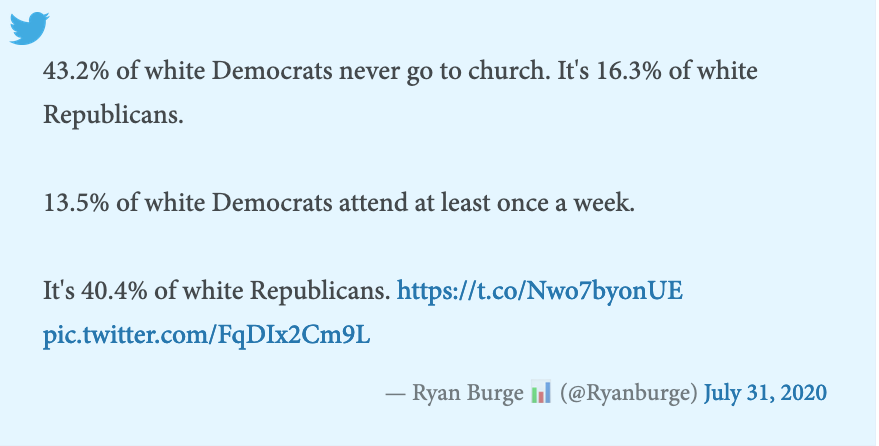
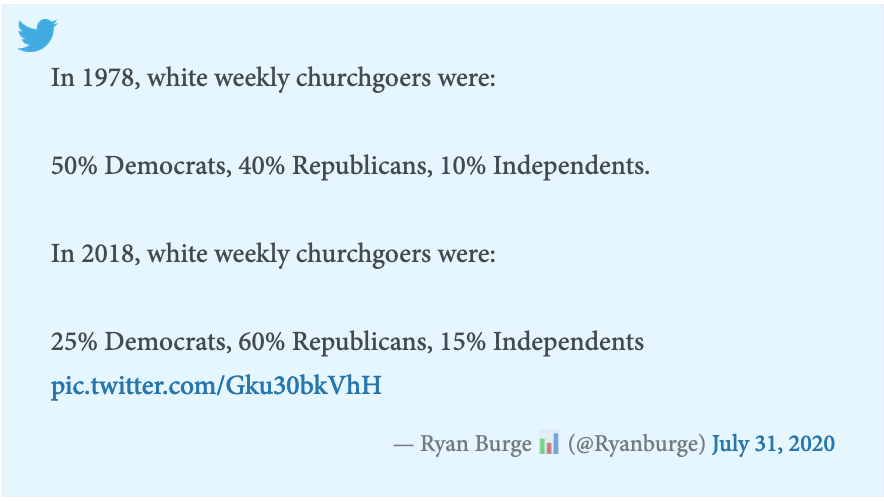
This (sigh!) is as good as it gets

I’ve been waiting for decades for the orthodox to rout the progressives in a denominational split — which amounts to waiting for the progressives to overplay their hand just once.

The usual progressive ploy is to plead for dialog — again and again for as long as it takes to wear down the orthodox — then to give false assurances of pluralism once their heresy or immorality is grudgingly afforded the status of an option, then to crush the orthodox when they gain power. Or as Neuhaus’s Law puts it, “Where orthodoxy is optional, orthodoxy will sooner or later be proscribed.”

It looks like the United Methodist split over homosexuality and same-sex marriage is as close as we’re going to get to an orthodox rout, and even there the progressives are keeping the denomination name (which may prove a blessing in the long run):

This week, a group of church leaders announced a plan for the dissolution of the worldwide church that would allow conservative congregations and conferences to leave the main body and join a new conservative denomination. Under the proposal, the UMC would give the new denomination $25 million and allow departing congregations to keep their property, and departing clergy, their pensions.

(Law & Religion Forum) Keeping property and pensions, and getting a farewell gift to boot, is a smashing victory — relatively speaking.

God bless the Africans, who forced the progressives (a majority in North America) to sue for “peace.” My great-grandchildren may someday need to be evangelized by missionaries from the global south.

* * *

I must also issue a caveat at this point, because the dominant media falsely make disputes like this a matter of good guys versus wicked homophobes.

David French provides an easy way to do so:

The true fracturing point between [progressive and orthodox] churches is over the authority and interpretation of scripture. The debate over LGBT issues is a consequence of the underlying dispute, not its primary cause … [T]here is a strain of Protestant Christianity that views the Bible as valuable but not infallible or inerrant. Evangelical Christians, by contrast, strongly dissent from that view.

Thus, at heart, the disagreement between the [orthodox and progressive] isn’t over issues—even hot-button cultural and political issues—but rather over theology. Indeed, the very first clause of the United Methodist Church’s nine-page separation plan states that church members “have fundamental differences regarding their understanding and interpretation of Scripture, theology and practice.” …

I’m not for a moment going to pretend that there aren’t homophobes and bigots in [orthodox Christianity]. I’ve encountered more than a few people who turn a blind eye to or rationalize and excuse all manner of heterosexual sin while scorning their gay and lesbian friends and neighbors. But for the thoughtful and faithful dissenters on both sides of the theological aisle, sexuality is the side issue. Differences over scriptural authority and biblical theology represent the central dispute.

Orthodox Christian sexual ethics have absolutely nothing to do with animus against gays and lesbians. In fact, there should be zero animus against any person of any sexual orientation or gender identity. Instead, the orthodox Christian sexual ethic—which reserves sex for the marriage between a man and a woman—rests on a sincere conviction that it is not only directly commanded by God through scripture, it’s also best for human flourishing, and it is symbolic of the sacred relationship between Christ and His Church.

And then caveats to the caveat:

French is an Evangelical, which characteristically (and in French’s case) involves a fair amount of parochialism and ecclesiological cluelessness. So I have modified his over-simplified contrast between Evangelicals and Mainstream Protestants to refer to orthodox and progressive more broadly.

Second, for Catholics and capital-O Orthodox, the scriptural teaching on sexuality is important but not all-important, because each Church’s tradition is consistent about the meaning of sexuality. Were I still Protestant, however, I would stand with the lower-o orthodox, because the case that scripture is unclear is dishonest. Here’s an admission against interest to that effect:

I have little patience with efforts to make Scripture say something other than what it says through appeals to linguistic or cultural subtleties. The exegetical situation is straightforward: we know what the text says… . [However] we must state our grounds for standing in tension with the clear commands of Scripture… and appeal instead to another authority when we declare that same sex unions can be holy and good. And what exactly is that authority? We appeal explicitly to the weight of our own experience and the experience thousands of others have witnessed to, which tells us that to claim our own sexual orientation is in fact to accept the way in which God has created us.

(Pro-gay Roman Catholic scholar Luke Timothy Johnson)

That will have to suffice, for everything eventually connect to everything else, and I don’t have an eternity to qualify and ramify.

* * * * *

Sailing on the sea of this present life, I think of the ocean of my many offenses; and not having a pilot for my thoughts, I call to Thee with the cry of Peter, save me, O Christ! Save me, O God! For Thou art the lover of mankind.

(From A Psalter for Prayer)

You can read most of my more impromptu stuff at here. It should work in your RSS aggregator, like Feedly, should you want to make a habit of it.
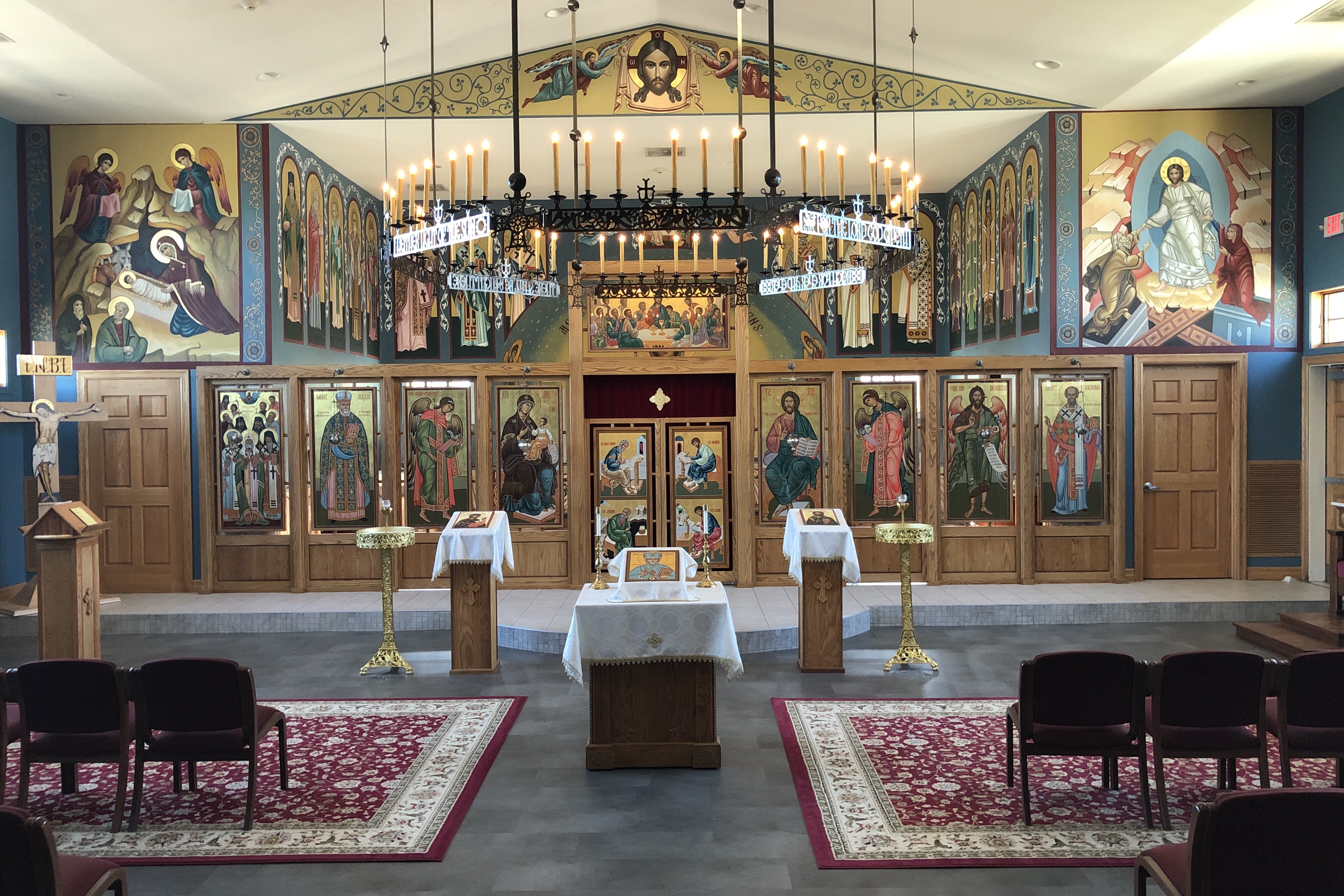
When politics becomes a religion

Religionized politics bodes to kill us:

I’m convinced that 2020 is going to be the most spiritually challenging year for politically engaged Christians of my adult lifetime. In an increasingly de-Christianized America, politics itself is emerging as a competing religious force, and it’s a religion that’s increasingly based on hate and fear, rather than love and grace.

[T]he idea that a person is “good, but wrong” or even “decent, but wrong” is vanishing. Instead, the conventional wisdom is that our political opponents are “terrible and wrong.” Our opponents not only have bad policies, they are bad people.

Now, let’s thrown in an additional complicator for people of faith. Perhaps a religious partisan could attempt to justify the animosity if they could map out a nice, neat religious divide. “Of course they’re terrible people—they’re all heretics.” After all, “reasoning” like that has launched countless wars of religion. And indeed, Republican partisans do make the claim that the GOP stands as a bulwark against increasingly godless Democrats.

But here’s the very different truth. The bases of both parties are disproportionately composed of the most God-fearing, church-going cohort of Americans—black Democrats and white Evangelicals. So, no, while there are serious differences regading abortion, religious liberty, immigration, and a host of other vital moral issues (and blue states tend to be more secular than red states), American politics cannot be neatly defined as a battle between the godly and the godless.

Thus, while the stakes of our modern political conflicts are thankfully lower than the awful carnage of the Civil War, the political division between black Democrats and white Evangelicals reminds me of Lincoln’s famous words in his second inaugural: “Both read the same Bible, and pray to the same God; and each invokes His aid against the other.” And we face a similar reality: “The prayers of both could not be answered; that of neither has been answered fully.”

David French (emphasis added).

* * * * *

Sailing on the sea of this present life, I think of the ocean of my many offenses; and not having a pilot for my thoughts, I call to Thee with the cry of Peter, save me, O Christ! Save me, O God! For Thou art the lover of mankind.

(From A Psalter for Prayer)

You can read most of my more impromptu stuff at here. It should work in your RSS aggregator, like Feedly, should you want to make a habit of it.
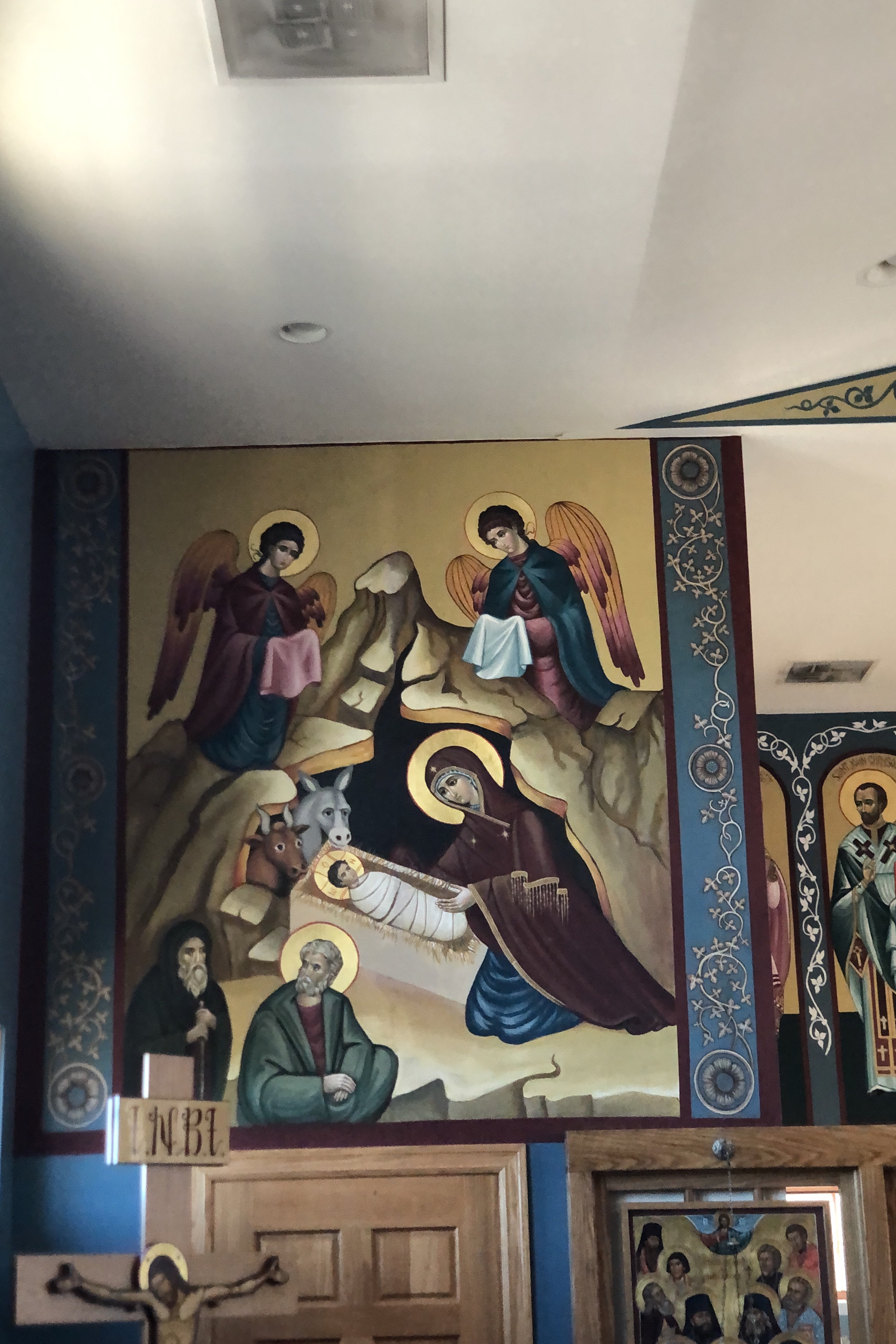
Same God?

Hang on here. I purposefully meander a bit today, which is a fitting way of sharing a little epiphany I had while reading un-Christmassy stuff (Thomas S. Kuhn and Ian Hacking, The Structure of Scientific Revolutions: 50th Anniversary Edition) on Christmas Eve.

Do we, however, really need to describe what separates Galileo from Aristotle, or Lavoisier from Priestley, as a transformation of vision? Did these men really see different things when looking at the same sorts of objects? Is there any legitimate sense in which we can say that they pursued their research in different worlds? Those questions can no longer be postponed, for there is obviously another and far more usual way to describe all of the historical examples outlined above. Many readers will surely want to say that what changes with a paradigm is only the scientist’s interpretation of observations that themselves are fixed once and for all by the nature of the environment and of the perceptual apparatus. On this view, Priestley and Lavoisier both saw oxygen, but they interpreted their observations differently; Aristotle and Galileo both saw pendulums, but they differed in their interpretations of what they both had seen.

(Page 120, Kindle edition)

These sorts of questions could be extended to other areas, which was why Stanley Fish so insistently schooled Nico Perrino, on one So to Speak podcast:

[Stanley]: Do you believe in the distinction between faith on the one hand and reason or empirical investigation on the other?

Nico: Yes.

Stanley: Yes, I thought you would.

Nico: Of course, I do. So, I’ve fallen into your trap.

Stanley: Because I don’t. I taught a course yesterday on Inherit the Wind. It’s a movie about the Scopes Trial in the early part of the 20th century.

Nico: Yeah, Scopes Trial.

Stanley: That’s a movie produced and directed by Stanley Kramer who is a stalwart First Amendment liberal. The entire dramatic rhetoric of the movie depends on the distinction between faith on the one hand and reason, especially reason associated with scientific experiments, on the other hand. That distinction doesn’t hold up for a second. That distinction doesn’t hold up. What’s you’re dealing with in science as opposed to let’s say orthodox Christianity or something else are two different faiths.

Two different kinds of faiths undergirded by radically opposed assumptions and presuppositions. But it’s presupposition and assumptions which are generating the evidence and facts on both sides. Again, you have – I can tell and say this with all the generosity – you are deeply mired in the basic assumptions and presuppositions of classical liberalism. Anything else that is brought to you, anything that is brought to you by some kind of retrograde sinner like me sounds outlandish and obviously perverse.

Nico: No, not necessarily. Because otherwise, I wouldn’t be having this conversation with you.

Stanley: Good point.

Nico: But, you know, we’re at the corner of what? 5th and 12th Avenue. Are you telling me it’s not a fact that we’re at the corner of 5th and 12th Avenue?

Stanley: Oh, come on. Come on. Look, have you ever read The Structure of Scientific Revolution?

Nico: I have not.

Stanley: Okay. Do you know what it is?

Nico: No.

Stanley: Okay. It’s a book that is probably the most influential book in the social sciences and humanities for the past 75 years. That’s not an understatement. That is not an overstatement. Kuhn, his project, is the history of science as his title suggests. What he does is challenge the picture that I’ve already referred to where he says that science is not an activity in which one generation because of using its powers of observation and experiment adds to the details of the description of nature that was begun by previous generations.

What he’s saying is that scientific knowledge is not cumulative in the way that the usual picture of science suggests. Instead, scientific knowledge, that is the establishment of scientific fact, depends on what he calls paradigms. What’s a paradigm? A paradigm is the set of in place assumptions and authorized methodologies that govern and are in fact the content of scientific investigation at any moment. Paradigms rather than any direct confrontation between the observer and the world. Paradigms are what produces evidence and interpretations.

Finally, interpretations that are persuasive and successful for a while until that paradigm, for reasons that he details, is dislodged by another. When that happens, when the paradigm within which scientific observers work Kuhn says changes. One might say without exaggeration that without the world in which the scientific practitioner works has itself changed.

Nico: See, I don’t buy it though because there are things that scientist do maybe through this paradigm that produce a tangible result that only come as a result of. Changing the paradigm won’t change the result.

Stanley: Tangible result is itself along with other talismanic phrases like that – tangible result will be recognized as one depending on what pragmatic point of view you are situated. What Kuhn would say, he’s not the only one and I’m not the only one, is that any conclusion that you might reach and be confident in is not supported by some correspondents between your methodological, descriptive protocol and the world. Rather it’s produced by the paradigm within which you are ensconced and of which you are in some sense an extension.

I really urge to read this book because he considers – he’s not debunking science. He’s not debunking scientific achievement. He’s just giving a different picture of it which challenges what he thinks of as the over simplified picture, again, of a world out there waiting to be correctly described. We, as rational observers, having the task to describe it.

Having now read a bit more than half of Kuhn, I understand what Stanley was saying, and I’m less inclined to agree with with Nico.

Anyway, one extension of the “paradigm” (or “gestalt,” as Kuhn so often has it) is the continually vexed question of “whether Christians and Muslims worship the same God,” which I have visited several times in the past (here, here, and even here in passing).

My paradigm, which led me to say “of course they do“ is monotheism strictly and literally speaking: There is only one God, howsoever He may be misunderstood. Those who say they do not worship the same God strike me as tacitly embracing henotheism, usually with some vehement tribal pride thrown in about the superiority of our God.

But in fairness, the paradigm of the “different God” folks is perhaps doctrine, and “common parlance” rather than strict and literal monotheism. A sufficiently different understanding of God (as the Islamic understanding differs from the orthodox Christian) is, figuratively, “another God,” much as scientists after a gestalt shift are figuratively in “a different world,” according to Kuhn (and Fish?).

Further, my paradigm is apparently flexible. I sometimes ruminate on how the “loving God” I met in bedtime Bible stories as a child, and in childhood Sunday School, got displaced by an “angry God,” prickly, even furious, at how our screwups besmirch His dignity, as if He were a feudal lord. They do indeed feel like different Gods. (I found the loving God again, once and for all, in Orthodox Christianity, but that story is too tangential today.)

Likewise, a “progressive Christian” profession that Matthew 25 is the “heart of the Gospel” arises from a different hermeneutic than mine and, I suspect, is a convenient way of making Christ’s incarnate deity an optional doctrine and doing away with “the scandal of the Cross.” In their paradigm/gestalt, Matthew 25 being the heart of the Gospel is almost axiomatic, and the stupendous paradox we celebrated yesterday is at best tangential, likelier credulous or even incomprehensible. They and I are divided by our nominally common (“Christian”) faith. (It also makes Christian sexual morality, which rivals the Cross for scandal-giving these days, optional.)

And then there are the Jews. I and they, too, worship different Gods if you want to be very figurative about it, though their non-Trinitarian God is pre-Christian rather than anti-Christian. I wonder, though, how many of the “Muslims-worship-a-different-God” folks even think about the Jews when blasting the Muslims?

So what? So can we, on this second day of Christmas (indeed, on all days) be less hasty with expressions that needlessly divide us with intimations that The Other believes as he believes because he’s pure evil rather than out of a very different, good faith, perspective?

That doesn’t mean we all unequivocally worship the same God, for God’s sake, but might our divisions can produce yearning instead of angry denunciations?

* * * * *

Sailing on the sea of this present life, I think of the ocean of my many offenses; and not having a pilot for my thoughts, I call to Thee with the cry of Peter, save me, O Christ! Save me, O God! For Thou art the lover of mankind.

(From A Psalter for Prayer)

You can read most of my more impromptu stuff at here. It should work in your RSS aggregator, like Feedly, should you want to make a habit of it.
Donning the prophet’s mantle

The president of the United States attempted to use his political power to coerce a foreign leader to harass and discredit one of the president’s political opponents. That is not only a violation of the Constitution; more importantly, it is profoundly immoral.

The reason many are not shocked about this is that this president has dumbed down the idea of morality in his administration. He has hired and fired a number of people who are now convicted criminals. He himself has admitted to immoral actions in business and his relationship with women, about which he remains proud. His Twitter feed alone—with its habitual string of mischaracterizations, lies, and slanders—is a near perfect example of a human being who is morally lost and confused.

… None of the president’s positives can balance the moral and political danger we face under a leader of such grossly immoral character.

This concern for the character of our national leader is not new in CT. In 1998, we wrote this:

The President’s failure to tell the truth—even when cornered—rips at the fabric of the nation. This is not a private affair. For above all, social intercourse is built on a presumption of trust: trust that the milk your grocer sells you is wholesome and pure; trust that the money you put in your bank can be taken out of the bank; trust that your babysitter, firefighters, clergy, and ambulance drivers will all do their best. And while politicians are notorious for breaking campaign promises, while in office they have a fundamental obligation to uphold our trust in them and to live by the law.

And this:

Unsavory dealings and immoral acts by the President and those close to him have rendered this administration morally unable to lead.

To the many evangelicals who continue to support Mr. Trump in spite of his blackened moral record, we might say this: Remember who you are and whom you serve. Consider how your justification of Mr. Trump influences your witness to your Lord and Savior. Consider what an unbelieving world will say if you continue to brush off Mr. Trump’s immoral words and behavior in the cause of political expediency. If we don’t reverse course now, will anyone take anything we say about justice and righteousness with any seriousness for decades to come? Can we say with a straight face that abortion is a great evil that cannot be tolerated and, with the same straight face, say that the bent and broken character of our nation’s leader doesn’t really matter in the end?

Mark Galli, Trump Should Be Removed from Office, Christianity Today, 12/19/19.

I understand and respect Christianity Today’s customary avoidance of making politics central, or even prominent, among its concerns. It certainly has not, unlike the Democrats, “had it out for [Trump] from day one,” and therefore is exempt from the “cloud of partisan suspicion.”

I have many, many criticisms of Evangelicalism as my former spiritual home, some of which have been addressed here, more at least alluded to. But it stands alongside the Roman Catholic Church (and unlike mainstream Protestantism or the Orthodox Church) as an embodiment of what people envision when they hear or read “Christianity” or “the Church(es)” — if my judgment, which has lost contact with my countrymen in many ways, can be trusted this once.

So for the sake of the Christian faith and its ecclesial embodiment, I hope, without being very hopeful, that many Evangelicals will heed CT’s articulate call for removal of Donald Trump, an utter moral shipwreck, from the office of the Presidency.

UPDATE:

Green: One of the things that you seem most concerned about in the editorial is the reputation of evangelicalism—of Christianity—and the damage that this association with Trump might do to Christian witness.

I wonder how much that motivates you—your belief that the association with Trump is going to do long-term damage to the ability of Christians to share the Gospel.

Galli: Oh my God. It’s going to be horrific.

We’ve been a movement that has said the moral character of our leaders is really important. And if they fail in that department, they can’t be a good influence. That’s what CT said when Nixon’s immoralities were discovered. That’s what we said when Clinton’s immoralities were discovered. And one of the reasons I thought we should say it now is because it’s pretty clear that this is the case with Donald Trump.

Unfortunately, a number of my brothers and sisters will just defend him to the end. They somehow think that’s going to be a good witness to the Gospel. It’s unimaginable to me how they think that, but they do. And I just think it’s a big mistake.

I will acknowledge, and I did acknowledge, that the Democrats are riding on a partisan horse here. They just vehemently hate Donald Trump. And they’ve been trying from day one to get him out of office. There’s no question about that.

But that doesn’t take away from the fact that what they discovered is actually true. That’s the thing that’s disappointing about my evangelical and conservative friends. They just won’t admit it. They just won’t say it. They just say, “It’s partisan.” Well, yeah. It’s partisan. But this partisan effort happened to uncover something that was really bad.

The fact that not a single Republican, and none of my evangelical, conservative friends, has been able to admit that strikes me as a deep and serious problem.

I’m sorry, Emma. I’m going to start preaching—I used to be a pastor. I don’t think the Republican Party or the Democratic Party are exemplars of moral virtue. As most commentators have noted, our country is in a really deeply troubling state when it comes to ethical and moral leadership. I’m certainly not going to say, “Oh, all the politicians are really ethical and Donald Trump isn’t.” No. But he happens to be the president of the United States. He deserves a certain amount of focus.

Mark Galli interviewed by Emma Green at the Atlantic

* * * * *

Sailing on the sea of this present life, I think of the ocean of my many offenses; and not having a pilot for my thoughts, I call to Thee with the cry of Peter, save me, O Christ! Save me, O God! For Thou art the lover of mankind.

(From A Psalter for Prayer)

You can read most of my more impromptu stuff at here. It should work in your RSS aggregator, like Feedly, should you want to make a habit of it.
Motivated reasoning

If I had to name only one thing I have learned in my many years of making arguments, it would be this: You cannot convince people of anything that they sense it’s in their interest not to know. I thought about this often as I was reading Alex Morris’s Rolling Stone story about American evangelicals’ love of Trump.

… It is very much in the interest of Morris’s aunt, and in the interest of millions and millions of other people, not to know that we are, through our economic choices, bringing ruin to the planet that we’re supposed to be the stewards of. And so she doesn’t know. Like so many others, she makes a point of not knowing.

But I think the problem of motivated not-knowing isn’t found only on the conservative evangelical side of things. Here’s one passage from Morris’s essay that seems to be drawing a lot of attention:

“The white nationalism of fundamentalism was sleeping there like a latent gene, and it just came roaring back with a vengeance,” says [Greg] Thornbury. In Trump’s America, “‘religious liberty’ is code for protection of white, Western cultural heritage.”

In that second sentence, the clause “In Trump’s America” is a problem. What does it mean? In one sense, the entire nation is “Trump’s America” right now, whether we like it or not; but maybe Morris means something like “Americans who enthusiastically support Trump,” or “the parts of the country that are strongly supportive of Trump.” Impossible to tell. Thornbury didn’t use the phrase, but presumably he said something that led into his line about “religious liberty” as code for something else.

So the passage is unclear, but I’d like to know what Thornbury means. I’ve written a good deal about the importance of religious freedom on this blog and elsewhere — just see the tag at the bottom of this post — so does that mean that I am using that topic as “code for protection of white, Western cultural heritage”? If so: explain that to me, please.

Maybe there’s something that Greg Thornbury and Alex Morris have an interest in not knowing: that even if millions of white Americans abuse the concept of religious liberty, religious liberty could nevertheless be in some danger.

Alan Jacobs, who has much more than this to say, including ways in which fundamentalist Christian cranks are motivated to ignore environmental damage.

Seriously, read it all.

But Jacobs omits something: anyone who thinks Rolling Stone is prima facie a reliable interlocutor of Christianity, and especially of the religious right, deserves all the false certaintly and motivated ignorance he gains there. Rod Dreher kinda hits that, too.

* * * * *

Sailing on the sea of this present life, I think of the ocean of my many offenses; and not having a pilot for my thoughts, I call to Thee with the cry of Peter, save me, O Christ! Save me, O God! For Thou art the lover of mankind.

(From A Psalter for Prayer)

You can read most of my more impromptu stuff at here. It should work in your RSS aggregator, like Feedly, should you want to make a habit of it.
A new landmark

As Evelyn Waugh noted,

barbarism is never finally defeated; given propitious circumstances, men and women who seem quite orderly will commit every conceivable atrocity. The danger does not come merely from habitual hooligans; we are all potential recruits for anarchy. Unremitting effort is needed to keep men living together at peace; there is only a margin of energy left over for experiment, however beneficent. Once the prisons of the mind have been opened, the orgy is on.

In one sense, the barbarism that Flaubert and Waugh descried is a perennial threat. What is new is its celebration as a form of liberation. We live at a moment when intellectuals have traded the pursuit of truth for the sophistry of power politics, when all manner of obscenity is broadcast and championed by those charged with preserving our cultural and intellectual heritage, when the public square has become a pit of snarling vituperation. In the Nicomachean Ethics, Aristotle observed that nobody but a blockhead believes that our conduct does not form our character. We are as we act, and we have been acting very badly indeed.

It is a melancholy truth that the conservative response to the onslaught of barbarism has been conspicuously impotent. Part of the reason is that conservatives long ago ceded authority in cultural and intellectual matters to leftists, who in turn have capitulated on every issue to the most radical elements.

But culture is not the whole answer. In one of his essays on humanism, T. S. Eliot observed that when we “boil down Horace, the Elgin Marbles, St. Francis and Goethe” the result will be “pretty thin soup.” That truth was also at the heart of Hillsdale’s dedication of Christ Chapel. As Eliot concluded, “Culture, after all, is not enough, even though nothing is enough without culture.” What else is there? Religion, or at least some acknowledgment that the ultimate source of our moral vocation transcends our mundane interventions. Eliot put it neatly: “Either everything in man can be traced as a development from below, or something must come from above. There is no avoiding that dilemma: you must be either a naturalist or a supernaturalist.”

It says a lot that Eliot’s articulation of this core belief of traditional conservatism should be deeply controverted today, even by many conservatives. The depth of that controversy is perhaps an index of our confusion. Dostoevsky once claimed that if God does not exist then everything is permitted. Considerable ingenuity has gone into proving Dostoevsky wrong. To date, though, the record would seem to support him.

A genuinely transgressive act (New Criterion, November 2019), on the dedication of Christ Chapel at Hillsdale College. The chapel is large, classical, and integral to the quad.

A Christian college of no particular Christian tradition strikes me, prima facie, as doomed to the same sorts of spiritual deaths as Harvard, Yale, Princeton, and countless others (some of which haven’t yet succumbed but are in vegetative states). But somehow Hillsdale has been pulling it off for 175 years now, with founding principles that put the Ivies to shame, and with independence from government money and meddling. Everyone who really believes in diversity — you know, like diverse diversity, not uniform “diversity” — should be grateful that such a place exists.

If my grandchildren don’t want technical educations in college, it would be high on my list of “Please, God, let them choose …” institutions.

* * * * *

The Lord is King, be the peoples never so impatient; He that sitteth upon the Cherubim, be the earth never so unquiet.

(Psalm 98:1, Adapted from the Miles Coverdale Translation, from A Psalter for Prayer)

You can read most of my more impromptu stuff at here. It should work in your RSS aggregator, like Feedly, should you want to make a habit of it.
Anecdotes and trends

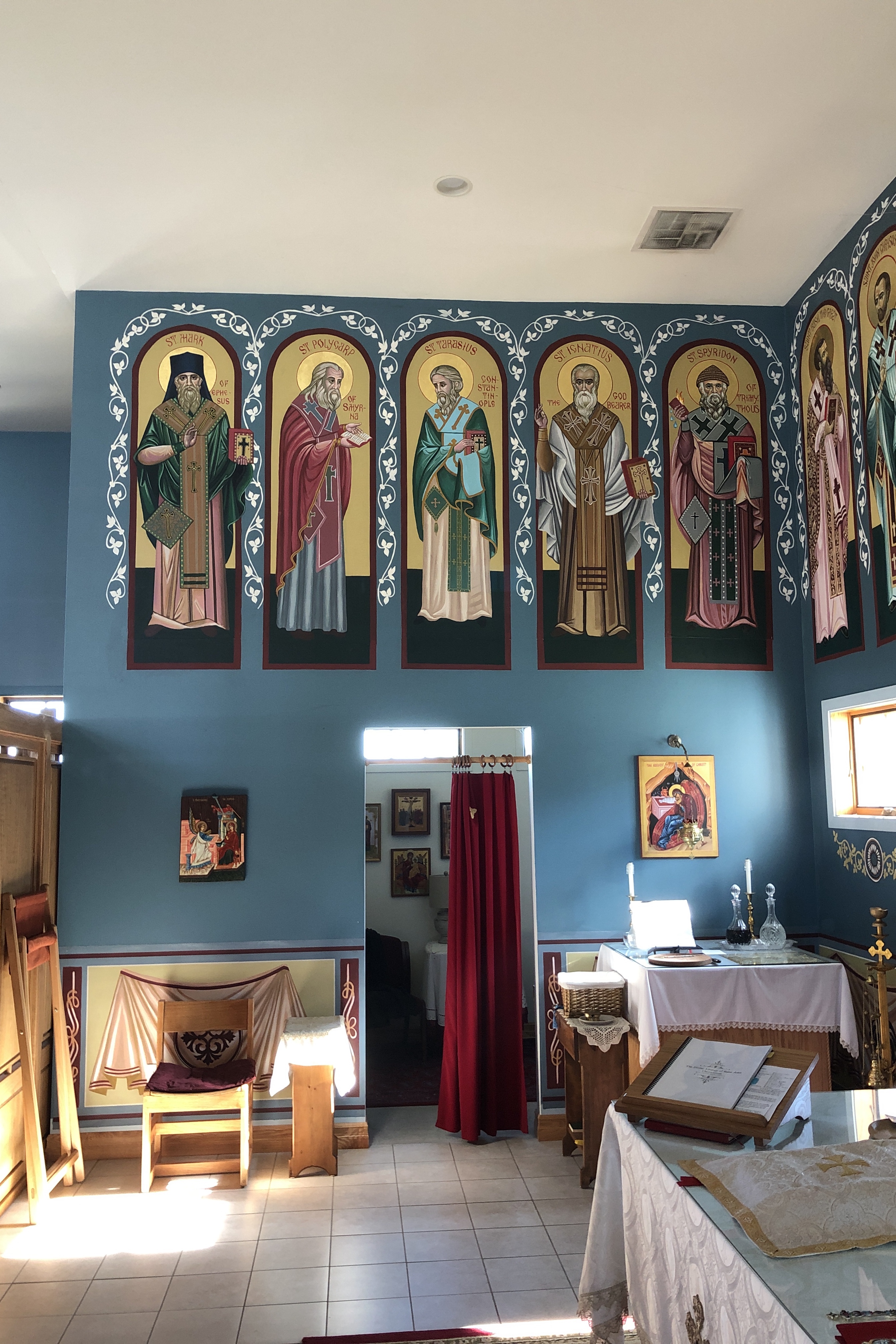
One man in my parish is very frugal and doesn’t even own a car. He usually gets a ride to our rural church from someone else in the parish. But a few weeks ago, he had to hire a Lyft, and the driver, a Sikh man, asked if he could come in.

He ended up staying for the whole service and coffee hour, taking videos with his smartphone, and was welcomed warmly (there was even a staged photo of him with Father Gregory and another man in the parish with a notable beard).

A few years ago, a Texan Purdue student, from a Hindu family, completed a long catechumenate and was received into the Orthodox Church. Tomorrow, we receive a heavily-tattooed military veteran, formerly in one of the Arminian Christian traditions. A Protestant pastor is a respectful inquirer, and several Roman Catholics are in the catechumenate. Our founding Priest was Episcopalian, our current Priest Lutheran. I was Calvinist. One of my Godsons was Church of Christ, a Goddaughter raised without religion. Converts in our parish probably outnumber “cradle Orthodox,” though some of the converts have many “cradle Orthodox” children that I may be mistakenly thinking of as themselves converts.

[M]ore than every before, people are searching for the One True Church of Christ – they are searching for Orthodoxy.

Roman Catholics are aghast at the Amazonian Synod, the constant vague and confusing statements coming from Rome, and the consistent degeneration of their spirituality. They’re realizing that there is something serious has gone mission, and they know that there is more.

Protestant Christians are tired of the happy, clappy/seeker-friendly service which offers a spiritual experience a mile wide, an inch deep, and is often loaded with gnostic beliefs. They’re realizing that something is wrong, something is missing, and that there is something more.

Non-Christians in these latter days are turning from the world, desperate to find some beacon of Truth in a dystopian society. Many muslims, buddhists, and hindus are finding Christ. They’re having a spiritual awakening. They KNOW something is wrong. They want to fix it themselves, but they don’t know what it takes.

Father John at Journey to Orthodoxy. Need I add that this rings true?

It is also sadly true that some leave the Orthodox faith. That baffles me, but life is hard — harder for some than others — and people struggle with burdens they cannot (or do not) articulate.  But the trend seems to the contrary.

If any of Father John’s descriptions fit you, we’d love to see you.

* * * * *

The Lord is King, be the peoples never so impatient; He that sitteth upon the Cherubim, be the earth never so unquiet.

(Psalm 98:1, Adapted from the Miles Coverdale Translation, from A Psalter for Prayer)

You can read most of my more impromptu stuff at here. It should work in your RSS aggregator, like Feedly, should you want to make a habit of it.

Tragedy and Triumph

Beto O’Rourke says, in the special Thursday Democrat Pander-O-Thon for LGBT votes, that churches, colleges and charities should lose their tax-exempt status if they oppose same-sex marriage.

That’s the succinct version. But I wouldn’t blog if that’s all I had to say.

Liberals will say, “Don’t worry about it. Beto is scraping the bottom of the polls. What he says doesn’t really matter.”…

This conservative said that, too, but

… Huh. Don’t you believe it. If this belief isn’t already held by all the Democratic candidates now, it will be. As Brandon McGinley says, there really is no principled reason to resist it, given what the Democrats already believe about the sanctity of homosexuality and transgenderism. Haven’t we all lived long enough now to recognize that the Law of Merited Impossibility — “It will never happen, and when it does, you bigots will deserve it” — is as irrefutable as the Second Law of Thermodynamics?

Even at this late date, we hear from many liberals that orthodox Christians are “obsessed” with homosexuality. They can’t grasp why, aside from bigotry, that we are so concerned about the issue. It’s largely because the march of LGBT ideology to conquer our culture tramples over the rights of orthodox/traditionalist religious people, and indeed of anybody who objects to whatever claim LGBTs make.

What Beto O’Rourke said last night is a perfect example of why many orthodox Christians who despise Donald Trump will vote for him anyway. The survival of our institutions depends on keeping the Democrats out of the White House (and Congress) for as long as we can ….

Rod Dreher (emphasis added).

Insofar as Dreher is describing why many Christians will hold their noses and vote for Trump, he is surely right.

Insofar as he is saying that the survival of our Christian institutions hinges on Donald Trump’s reelection, he is selling God short.

But this is admittedly a situation with high stakes, where the horrible terribleness of Donald Trump has emboldened the Democrats to veer sharply to their left and to promise their base the heads of orthodox Christians on a platter.

Trust in God comes hard in these circumstances, and the trusting ones need to abandon any illusion that Romans 8:28 means only good things happen to those who love and are called by God.

I’m still strongly inclined never to vote for Trump, come whatever may.

It’s not just “all things considered and on balance.” It’s a question of my ingrained, pre-theoretical ethical orientation. I just couldn’t vote for Richard Nixon, in my first Presidential election, once I’d concluded he was a crook. 47 years later, with a bit more ethical theory under my belt and a lot less starry eyes in my residual optimism, I still cannot begin to articulate a convincing deontological or virtue ethics argument for voting for Trump, and I reject Dreher’s implicit consequentialism.

I’d encourage any Christian readers inclined to vote for Trump to grapple with articulating at ethical case for voting for Trump, aware that consequentialism squares pretty badly with Christianity.

On the other hand, my scriptures (the Christian scriptures before the Reformers bowdlerized them — see this, for instance) do include this bit of consequentialism:

A large force of soldiers pursued them, caught up with them, set up camp opposite them, and prepared to attack them on the Sabbath.

There is still time, they shouted out to the Jews. Come out and obey the king’s command, and we will spare your lives.

We will not come out, they answered. We will not obey the king’s command, and we will not profane the Sabbath.

The soldiers attacked them immediately, but the Jews did nothing to resist; they did not even throw stones or block the entrances to the caves where they were hiding. They said,

We will all die with a clear conscience. Let heaven and earth bear witness that you are slaughtering us unjustly.

So the enemy attacked them on the Sabbath and killed the men, their wives, their children, and their livestock. A thousand people died.

When Mattathias and his friends heard the news about this, they were greatly saddened and said to one another,

If all of us do as these other Jews have done and refuse to fight the Gentiles to defend our lives and our religion, we will soon be wiped off the face of the earth.

On that day they decided that if anyone attacked them on the Sabbath, they would defend themselves, so that they would not all die as other Jews had died in the caves.

(Emphasis added)

Make of that passage what you will. It does seem a pretty consequentialist, and Judas Maccabeus remains a mythical hero.

Maybe the polls in your state will say, in 13 months, that your state’s a toss-up, so that choosing between evils feels compulsory.

What I make of the passage from I Macabees is that I at least must be gentle with fellow-Christians who vote for Trump or (because of his horrible terribleness) his Democrat opponent — and that I should hope and pray that they will recognize such a vote as at best a tragic, not triumphant.

* * * * *

The Lord is King, be the peoples never so impatient; He that sitteth upon the Cherubim, be the earth never so unquiet.

(Psalm 98:1, Adapted from the Miles Coverdale Translation, from A Psalter for Prayer)

You can read most of my more impromptu stuff at here. It should work in your RSS aggregator, like Feedly, should you want to make a habit of it.

Reaping what we’ve sown

The universal brotherhood of man is a real thing, but human beings are limited in their capacity to love and understand one another; we need a hierarchy of loves based on mutual understanding and presence (inseparable from history and culture) that we might best love one another …

We live in a world where various powers have callously disregarded the values of blood or soil. The history of colonialism is mostly one of displacement and stolen land, followed by the imposition of a political imaginary that interpolated blood into foreign political categories, creating the “tribalism” that sickens governments around the world. The recent history of economic development has provided many benefits to people at the cost that they displace themselves from their families or their land for the sake of a “good job.” Various wars have created our current refugee crisis, where people often have no hope of returning to their land or reuniting with their family members whose bones are sinking into that land. Extractive economies — most tragically, the drug economy — allow people in power to enjoy the fruits of the land while those who work that land suffer various kinds of violence.

Because the Gospel must be preached to all nations, because we as Christians have a trans-national identity that ultimately trumps any other identity, and because no man who wants to feed his family should be denied the opportunity to seek the employment necessary to do so, movement around the world should be free.

The fact that any man should be forced to travel halfway across the world to do so, disrupting his relationship with blood and soil, is a travesty of the natural order. The reality that Western nations fear men doing so only demonstrates that we have built our political order on a house of cards. We quake at the possibility that the conditions we have sown in other places through our economic practices and warmongering might come to us through migration. We are hysterical at the possibility of reaping what we have sown.

Matthew Loftus, Pro-Blood, Pro-Soil, Pro-Nation, Pro-Christianity, at Mere Orthodoxy.

I’m glad I’m not the only one who sees cause-and-effect between our economic and foreign policies and the migrants coming to our shores (Europe’s, too).

* * * * *

The Lord is King, be the peoples never so impatient; He that sitteth upon the Cherubim, be the earth never so unquiet.

(Psalm 98:1, Adapted from the Miles Coverdale Translation, from A Psalter for Prayer)

You can read most of my more impromptu stuff at here. It should work in your RSS aggregator, like Feedly, should you want to make a habit of it.