I hesitate to share this, but not knowing who my readers are, I can’t know that somebody doesn’t need this as a wake-up call:
Writing for Christianity Today, Russell Moore unpacked how the evangelical subculture rejected virtue, “driven specifically by the very same white evangelical subculture that once insisted that personal character—virtue, to use a now distant-sounding word the American founders knew well—matters.” He continued: “Part of the vulgarization of the Right is due to the Barstool Sports/Joe Rogan secularization of the base, in which Kid Rock is an avatar more than Lee Greenwood or Michael W. Smith. But much more alarmingly, the coarsening and character-debasing is happening among politicized professing Christians. The member of Congress joking at a prayer breakfast about turning her fiancé down for sex to get there was there to talk about her faith and the importance of religious faith and values for America. The member of Congress telling a reporter to ‘f— off’ is a self-described ‘Christian nationalist.’ We’ve seen ‘Let’s Go Brandon’—a euphemism for a profanity that once would have resulted in church discipline—chanted in churches. If we are hated for attempted Christlikeness, let’s count it all joy. But if we are hated for our cruelty, our sexual hypocrisy, our quarrelsomeness, our hatefulness, and our vulgarity, then maybe we should ask what happened to our witness. Character matters. It is not the only thing that matters. But without character, nothing matters.”
[W]ere he to emerge today, [Ned] Flanders would face withering mockery for his moral scruples—but more likely by his white evangelical co-religionists than by his beer-swilling secular cartoon neighbors.
On the other hand …
This makes sense to me. Evangelical Christianity emphasizes the personal relationship with Christ. It puts more emphasis on what Kierkegaard said was the core Christian way of responding to the Gospel: as something to be lived out actively, requiring personal conversion, not just a social habit.
It is, as they say, ironic. Evangelical theology is almost antinomian in terms of salvation having anything to do with what you do, versus the notions in your head (what you “believe”).
But there they are, bless their hearts, in Church oftener than not.
But I just discovered that one of my favorite Orthodox bloggers, Fr. Stephen Freeman, has noticed the same democratizing theme:
[I]n contemporary Christianity, it is said that “every man is a Pope.” Whereas a few generations ago, people asserted that the Bible alone had authority, today, that, too, has been overthrown. Each person is his own authority. And I will add, that if every person is his own authority, then there is no authority.
…
I am fully sympathetic with the political place of democracy …
I am, however, deeply interested in the spiritual disease that accompanies the interiorizing of the democratic project. We have not only structured our political world in a “democratic” manner, we have spiritualized the concept and made of it a description for how the world truly is and how it should be. The assumptions of democracy have become the assumptions of modern morality and the matrix of our worldview …
…
Much of what today passes for Protestantism is nothing of the sort. Rather, it is a thinly veiled cloak for the democratic spirit at “prayer.” “Salvation by grace through faith” is a slogan for individualism, a Christianity “by right.” There are no works, no requirements, only a “grace-filled” entitlement. For the ultimate form of democracy is the person who needs no one else: no Church, no priest, no sacrament, only the God of my understanding who saves me by grace and guarantees that I can do it alone.
…
It is a great spiritual accomplishment to not be “conformed to this world.” The ideas and assumptions of modern consumer democracies permeate almost every aspect of our culture. They become an unavoidable part of our inner landscape. Only by examining such assumptions in the light of the larger Christian tradition can we hope to remain faithful to Christ in the truth. Those who insist on the absence of spiritual authority, or demand that nothing mediate grace will discover that their lives serve the most cruel master of all – the spirit of the age.
Nevin and Schaff also discerned certain common intellectual patterns and reflexes beneath the rampant pluralism of American Protestantism. They attributed the breakdown of theological coherence to attitudes that American Christians had assumed. These two felt that a radical Bible-centeredness was the reigning theory among Protestant sects. After surveying the statements of belief of fifty-three American denominations, Nevin surmised that the principle “no creed but the Bible” was the distinctive feature of American religion.
Nathan O. Hatch, The Democratization of American Christianity
Fifty-three denominations that just follow the Bible but cannot agree on what it means. What’s wrong with this picture?
Christianity generally
A constant temptation
Christianity in this instance is no longer even a worldview—or what John Rawls calls a “fully comprehensive doctrine”—much less an institutionalized worldview. It is conceived as one wedge in the pie of an individual life, a matter not of shared obedience to the Word incarnate with eternal life in the balance, but of preferred inclination toward the “company or conversation of those whose Customs and Humours, whose Talk and Disposition they like best.”
Brad S. Gregory, The Unintended Reformation
An article I keep coming back to
This is an article I’ve been revisiting and wrestling with regularly:
There is a reason why so many evangelical and Protestant graduate students in theology move toward “higher church” traditions. Intellectually, they discover thinkers and writings their own “lower church” traditions either ignore or lack; liturgically, they discover practices handed down century after century that function like a lifeline in a storm. Reading Saint Ignatius or Saint Justin or Saint Irenaeus or Saint Augustine, it occurs to them that they don’t have to imagine what the church’s ancient liturgy looked and felt like; they can simply visit a church down the street.
…
It isn’t strange to learn that Prestigious Scholar X on the law/econ/poli-sci faculty at Ivy League School Y is Roman Catholic. It is a bit of a surprise to learn that he’s an evangelical. The moment you hear it, though, you wonder (or ask) whether he’s an evangelical Anglican or some such.
For those whose churches don’t have formal confession, understand that we confess our sins without suggesting that they were justified by our neighbor’s provocation. It sounds so easy, but not being able to self-justify, not even a eensy-weensy bit, can be surprisingly hard.
East and West
I don’t think his focus was Christianity, but Guenon was (inadvertently?) not wrong about the relative emphasis in Western versus Eastern Christianity.
… that Christ may dwell in your hearts through faith; that you, being rooted and grounded in love, may be able to comprehend with all the saints what is the width and length and depth and height — to know the love of Christ which passes knowledge; that you may be filled with all the fullness of God.
You can read most of my more impromptu stuff here and here (both of them cathartic venting, especially political) and here (the only social medium I frequent, because people there are quirky, pleasant and real). All should work in your RSS aggregator, like Feedly or Reeder, should you want to make a habit of it.
Grushenka, a character in Dostoevsky’s The Brothers Karamazov, relates a now-famous fable about an old woman:
Once upon a time there was a woman, and she was wicked as wicked could be, and she died. And not one good deed was left behind her. The devils took her and threw her into the lake of fire. And her guardian angel stood thinking: what good deed of hers can I remember to tell God? Then he remembered and said to God: once she pulled up an onion and gave it to a beggar woman. And God answered: now take that same onion, hold it out to her in the lake, let her take hold of it, and pull, and if you pull her out of the lake, she can go to paradise, but if the onion breaks, she can stay where she is. The angel ran to the woman and held out the onion to her: here, woman, he said, take hold of it and I’ll pull. And he began pulling carefully, and had almost pulled her all the way out, when other sinners in the lake saw her being pulled out and all began holding on to her so as to be pulled out with her. But the woman was wicked as wicked could be, and she began to kick them with her feet: ‘It’s me who’s getting pulled out, not you; it’s my onion, not yours.’ No sooner did she say it than the onion broke. And the woman fell back into the lake and is burning there to this day. And the angel wept and went away.
It reminds me of a small scene in CS Lewis’ The Great Divorce. Angels are trying to help a soul make the journey from hell to heaven. One, a woman, seems mostly to a grumbler. Lewis’ soul has this conversation with his own guide:
‘I am troubled, Sir,’ said I, ‘because that unhappy creature doesn’t seem to me to be the sort of soul that ought to be even in danger of damnation. She isn’t wicked: she’s only a silly, garrulous old woman who has got into a habit of grumbling, and feels that a little kindness, and rest, and change would due her all right.’ ‘That is what she once was. That is maybe what she still is. If so, she certainly will be cured. But the whole question is whether she is now a grumbler.’ ‘I should have thought there was no doubt about that!’ ‘Aye, but ye misunderstand me. The question is whether she is a grumbler, or only a grumble. If there is a real woman— even the least trace of one— still there inside the grumbling, it can be brought to life again. If there’s one wee spark under all those ashes, we’ll blow it till the whole pile is red and clear. But if there’s nothing but ashes we’ll not go on blowing them in our own eyes forever. They must be swept up.’
Both stories have in common a tiny, insignificant thing: an onion, a grumble. There is in Scripture a similar “tiny thing,” a single moment that serves as a hinge in a human life. The exchange between the “Good Thief” and Christ on the Cross is hymned during Holy Week with the words, “The Wise Thief entered Paradise in a single moment…” It is a remembrance of the extreme measure of God’s grace.
The story of the Old Woman and the Onion is a parable stated in the extreme manner of absurdity. I was first drawn to it by the simple fact of its willingness to ascribe such mercy to God. A single, rotten onion, given as charity would be sufficient to get you out of hell! It was the imaginative force of such a thing that shook my soul when I first read it. In my childhood, there could never have been such a Christian mercy. Hell is hell is hell.
He’s not wrong about that, and I now think that the Grushenka story is truer than “hell is hell is hell.”
Ecclesial Christians
I’m pretty sure it was the late Richard John Neuhaus who described “ecclesial Christians” as “Christians for whom faith in Christ and faith in His Church is one act of faith, not two.”
I like that very much and my experience as a former non-ecclesial Christian who became ecclesial 26+ years ago, it rings true.
IYKYK, as the kids say
A distinction that may be of interest
For the Roman Catholic prayer, said by the priest after the penitent confesses, states, “I absolve you,” whereas in the Orthodox Church the wording reflects the original understanding: “May God forgive you, through me, a sinner.”
The Divine Liturgy is rightly understood as a theophany – an appearance of God (Christ) in our midst. We stand in the place of Moses, and wrestle in the place of Jacob. We gaze with Ezekiel and the fiery wheels with the Son of Man in their midst. We stand with St. John the Theologian and the vast crowds of heaven before the Lamb-slain-from-the-foundation upon the altar with the four beasts and angels surrounding Him.
…
This is profoundly significant. Our culture has trained people to become an audience. A theater performance, a concert, and a Church service are all of a piece. Worse than this, we are trained to be an audience that expects to be entertained ….
Photographers have long had an uneasy relationship with the sacred. There is the age-old anxiety that a photograph can steal a soul. And last week, more than 900 wedding photographers signed a petition complaining that “problematic vicars” can be “rude, humiliating, aggressive and abusive”. The fact is, the sacred has a deep and visceral distrust of the whole business of taking photos, which — in our Instagram-addled age — has resulted in a colossal culture clash.
One photographer, Rachel Roberts, who launched the petition, took a pop at problematic vicars. “They basically forget the fact that two people are getting married, and it’s the most important day of their lives. They put their own objectives and their own rules first and forget the reason why we’re all actually here.” Talk about getting things the wrong way round. The reason we are all there is for two people to enter into holy matrimony, not for wandering photographers to get the best angle for the album.
The problem is that photographs don’t just record reality — they change it. Quantum physicists talk of the observer effect: the very act of observing reality causes a disturbance within it, and thus changes it. Something similar is true of wedding photography. We pose for photographs. We behave differently when we are being captured on film …
So when the photographer turns up 10 minutes before the service and tells me how it’s going to be, that this is how the bride wants it, it makes little difference. They will stay behind the pillar and take photographs from the back, and not follow the bride down the aisle as if this were some catwalk show. They hate it, of course. But you don’t just walk into the house of God and expect the place to bend to your needs. The fact that this space is different, reflects different values, is precisely why people choose to be married here.
A seed was planted today in my head, and I don’t know where it will go. It is the possibility, even the likelihood, that a lot of people we call “Protestants” are not unequivocally Protestant because they’re not rooted in or in continuity with the classical Protestantism of the Reformation.
That’s all the speaker said, but already I’m thinking about the many denominations that grew out of the American revivalism of the late 18th and early 19th centuries, much of which was explicitly in rebellion against the Reformed/Calvinist stream of Reformation thought.
We probably call them “Protestants” because we don’t have a term for “not Roman Catholic, not Orthodox, not unequivocally Protestant, but calling themselves Christians.”
“Protecting” God, stripping away all meaning
[Jonathan] Edwards sought to intensify God’s control of creation. Yet ironically, Edwards ended up colluding with the Gnostic denigration of the material world to the degree that his entire philosophical project aimed at guarding God from the perceived threat posed by materiality. For God to truly be glorified, things in the world cannot have distinct natures or identities; rather, God must impose all meaning externally through will-acts that remain, in the final analysis, purely arbitrary. There is no actual meaning within the realm of space and time because the cosmos is simply a passive instrument of divine control.
Margaret Sanger specifically drove the Evangelical Protestants into the pro-birth control column. She used the ever-reliable anti-Catholic sentiment of this group to overcome their natural aversion to birth control and to the Progressive Social Gospel Mainline. Thanks to Sanger’s efforts, by the time of the Griswold v. Connecticut decision, the entire country considered opposition to birth control to be a uniquely Catholic position.
… that Christ may dwell in your hearts through faith; that you, being rooted and grounded in love, may be able to comprehend with all the saints what is the width and length and depth and height — to know the love of Christ which passes knowledge; that you may be filled with all the fullness of God.
You can read most of my more impromptu stuff here and here (both of them cathartic venting, especially political) and here (the only social medium I frequent, because people there are quirky, pleasant and real). All should work in your RSS aggregator, like Feedly or Reeder, should you want to make a habit of it.
Most of what is written about Christian nationalism is silly. Critics and analysts sweepingly deride conventional Christian conservatives as Christian nationalists. By some counts, there are, by this definition, tens of millions of Christian nationalists. Sometimes even civil religion, with its homage to a vague deity, is labeled Christian nationalism. If so, all presidents from George Washington to Joe Biden are Christian nationalists. Sometimes the target is folk religionists who conflate God and country. They sometimes sport paraphernalia with American flags draped around the cross. These folk religionists typically aren’t aware they are Christian nationalists. They don’t publish articles, much less books. And they typically don’t have policy agendas, just an attitude that God and country should be interchangeably honored.
…
Christian nationalism is distinct from conventional Christian conservatism. The former are typically post-liberals who want some level of explicit state established Christianity. The latter have been and largely still are classical liberals who affirm traditional American concepts of full religious liberty for all. Both groups want a “Christian America.” But the former want it by statute. The latter see it as mainly a demographic, historical and cultural reality.
This looks like a solid and helpful piece from a more religiously-sophisticated source than the Politico piece it’s responding to. But it seems to me superficial insofar as it’s credulous about “nations.”
Not this:
The patriotic mythologies that came into existence together with modernity’s nationalisms are siren songs that seek to create loyalties that are essentially religious in nature. World War I, in the early 20th century, was deeply revealing of the 19th century’s false ideologies. There, in the fields of France, European Christians killed one another by the millions in the name of entities that, in some cases, had existed for less than 50 years (Germany was born, more or less, in 1871). The end of that war did nothing, apparently, to awaken Christians to the madness that had been born in their midst.
…
These passions are worth careful examination, particularly as they have long been married to America’s many denominational Christianities. I think it is noteworthy that one of the most prominent 19th century American inventions was Mormonism. There, we have the case of a religious inventor (Joseph Smith) literally writing America into the Scriptures and creating an alternative, specifically American, account of Christ and salvation. It was not an accident. He was, in fact, drawing on the spirit of the Age, only more blatantly and heretically. But there are many Christians whose Christianity is no less suffused with the same sentiments.
Asking questions of these things quickly sends some heads spinning. They wonder, “Are we not supposed to love our country?” As an abstraction, no. We love people; we love the land. We owe honor to honorable things and persons. The Church prays for persons: the President, civil authorities, the armed forces. We are commanded to pray and to obey the laws as we are able in good conscience. Nothing more.
For fifty years I worshipped at the shrine of an Unknown God. It’s better than nothing. This tells us something of the intrinsic nature of humans. That we are wired to adore. It’s been a deception that we can get along without bending our heads, or ‘think’ our way out of our essential religiosity …
I lit candles for the Unknown God, coaxed exotic incense, sought out quiet places, wrapped myself in antelope skins and read ancient texts, hundreds of them. I got myself out into the bush, I abandoned work without real substance, I became a scholar and a seeker. I lived in a circle for four years, no screens anywhere near me. I blew my lantern out early and woke to birdsong. I was devoted, and I was led.
But I would tell by the camp fire every story but the story. The vast, glorious, uneasy elephant in the room.
I loved the Unknown God because it seemed beautiful, ancient, intensely mysterious, but didn’t infringe on how I actually lived. Not if I didn’t want it to. Had no bearing on my ethics or morality – what there was left of them. I dwelt in a world of strong emotion, intuitions and elaborate ceremonies. I learnt an awful lot about being human. I learnt an awful lot about the value of beauty.
And yet, I remained absolutely unaccountable. At the flick of a switch I could be the same old degenerate I’d always been …
Those fifty years got me an awfully long way. They’ve enabled me languages and experiences that gird me well in middle age. They haven’t required abandoning, or disowning, or shamefully chucking on a bonfire. I was a Romantic, that was what I was. But if you’ve really committed to a quest, a day will come when everything you think you know gets rocked, challenged, shaken. That happened to me four years ago up in the forest at the end of a 101-day vigil. When the unthinkable happened.
My unknown God decided to make himself visible to me.
Clause not yet adopted at Rome … omitted from manuscripts of the Creed … inclusion perhaps a copyist’s mistake! H’m … Upheld by Paulinus of Aquileia at the Synod of Friuli, 800, yes, yes, yes … but only adopted among the Franks … Here we are! Frankish monks intoning the Filioque clause at Jerusalem! Outrage and uproar of Eastern monks!’ He paused and rubbed his hands. ‘I wish I’d been there!’ He pushed back his spectacles for a moment and then resumed. ‘Pope Leo III tries to suppress the addition, in spite of the insistence of Charlemagne – a Frank, of course! – but approves of the doctrine.
Patrick Leigh Fermor, Between the Woods and the Water. Patrick Leigh Fermor is not where I expected to find a saucy account of where the filioque came from.
Untenable but appealing
To read [Elaine] Pagels and [Bart]Ehrman, the Jesus Seminarians, and many others, the reader would think that orthodox interpretation of the Christian story has no claim to greater antiquity, and no stronger connection to the first followers of Christ, than the many and various heretical interpretations. In their view, the New Testament reflects only the theological-ideological biases of the “proto-orthodox” party, and the canon as we know it was imposed retrospectively, rather than developing organically in the early Church. These claims are enormously appealing to the modern religious mind, but they aren’t particularly tenable.
Ross Douthat, Bad Religion
Iconodules
A key turning point in my life, during my thesis (“The Icon as Theology”) defense, came with the question, “Do you believe the veneration of icons to be necessary to salvation?” I hesitated (I was an Anglican priest at the time), and responded, “I believe that their veneration is necessary to its fullness.” I have lived with that answer for many years and pondered it and the question as well. Christ, according to the Scriptures, is the “icon of the invisible God” (Col. 1:15). I cannot imagine a salvation that is somehow separate from the veneration, indeed, the worship of that Icon.
Florida’s most notorious abortion clinic is located at 1103 Lucerne Terrace in downtown Orlando. On the sidewalk directly in front of this clinic, the Orlando Women’s Center, there are two prominent marks in the concrete. They are signs of an extraordinary story.
The concrete was worn away by the feet of John Barros, who for nearly two decades stood outside this clinic as a sidewalk counselor …
I asked him, once, how he’d felt called to the pro-life movement. “I wasn’t called to the pro-life movement,” he replied. “God called me to forty feet of sidewalk.”
The new Christendom’s penitential system was often experienced as external to the needs of the penitent. It was based on new patterns of canon law that codified sin and the penances that negated it. The system could be overwhelmingly legalistic and for some authorities was centered not on the penitent but on his clerical confessor. It was concerned more with divine satisfaction than with human transformation.
John Strickland, The Age of Utopia. The “new Christendom” Strickland is referring to is Western Christendom after the Great Schism of roughly 1,000 years ago. Human transformation remains the focus of confession, absolution and penance in the Christian East (and in American Orthodoxy).
Anecdote contra data
Writing on X, a priest reports: “A bit of good news . . . I’ve had more confessions of the ‘Bless me Father, for I have sinned, it’s been 20, 25, 30, 40, 50 years since my last confession . . .’ sort this year than I ever remember. I’m seeing more people at Mass than I ever remember.”
… that Christ may dwell in your hearts through faith; that you, being rooted and grounded in love, may be able to comprehend with all the saints what is the width and length and depth and height — to know the love of Christ which passes knowledge; that you may be filled with all the fullness of God.
You can read most of my more impromptu stuff here and here (both of them cathartic venting, especially political) and here (the only social medium I frequent, because people there are quirky, pleasant and real). All should work in your RSS aggregator, like Feedly or Reeder, should you want to make a habit of it.
Of course, that’s not on the Liturgical Calendar. And FWIW, I won’t be partaking. I. Am. So. Over. American football.
Sins, transgressions, infirmities
“If only I had known…”
These are, not infrequently, the words of an apology. They are also an explanation of why we are sometimes the way we are. Ignorance is, in the mind of the Fathers, a major cause of sin. Of course, if sin is understood in a legal/forensic framework, then ignorance would be nothing more than a form of innocence. Not knowing is excusable in most cases. But the teaching of the Church does not describe the world in legal/forensic terms. The world is not about who and what is right or wrong. It’s about what truly exists and what does not. Existence and being (ontology) are what matter, not what is legally correct. …
The door to true knowledge is repentance. Of course, for most people, repentance itself belongs to the category of legal and forensic things. It means not doing bad things, promising not to repeat the ones I have done, and, perhaps, feeling sorry. This is both inadequate and misleading. The Greek word used for repentance is metanoia, literally a “change of mind (nous).” It can be described as a movement from one form of knowledge to another (true knowledge).
The path to such knowledge passes through humility. And the path to humility involves shame (yes, I’m writing again about shame). Shame is more than a significant emotion (painful at best). It is described by the Elder Sophrony as “the Way of the Lord.” It is at the very heart of repentance. Shame has to do with “who we are.” Guilt is about “what I have done.” It is important to understand the distinction.
For some time before I became Orthodox, I was aware that most of the harm I caused, most of the chaos I cast onto those around me, was not the result of malice or a desire to harm, but of ignorance, of epistemic insufficiency if you will. I knew that my finitude often made me an agent of mischief in the world even when I thought I was doing the right thing.
But I was in a Christian tradition that understood sin in a legal/forensic framework, a framework focused on deliberate malfeasance. In this framework, to at least a degree, the proverbial Bull In The China Shop isn’t really a problem because he meant no harm. That was not true to the whole of my experience; I couldn’t help but feel responsible somehow for all the broken china around me (and, worse, the crushing knowledge that there doubtless was more, elsewhere, that I wasn’t even aware of).
When I stumbled into Orthodoxy, I immediately noticed, from the ubiquitous Trisagion (Thrice-Holy) prayers, pretty solid proof that Orthodoxy gets that:
Lord, cleanse us of our sins. Master, pardon our transgressions. Holy One, visit and heal our infirmities.
There are apparently (at least) three problematic categories, and only one of them calls for “pardon.” The others need “cleansing” or “healing.” (Prayers for forgiveness from sins committed “in knowledge or in ignorance” reinforced that.)
Now that was true to the whole of my experience.
Positive World, Neutral World, Negative World
I apparently was too gullible in accepting Aaron Renn’s tidy positive world, neutral world, negative world taxonomy as a very useful insight. Patrick Miller, whose church figured in Renn’s account, has now written a very helpful corrective (not really a rebuttal) to Renn: What Happened When My Church Encountered Negative World:
[T]he negativity of the post-2015 negative world is most keenly felt by those who, in the pre-2014 world, had easier access to power and influence: middle class, college-educated, non-coastal evangelicals. I’m not doing identity politics, I’m just observing that if you lived on the coasts as an evangelical before 2014, you didn’t feel like you lived in a “neutral world.” You were an outsider who spent the last few decades with divergent views on sex/sexuality. But middle class, midwestern and southern evangelicals enjoyed a sense of being normal. Many were insiders who had access to power denied to those of lower social strata, and (often) different skin color.
For example, it’s hard to imagine black or white Christians teaching orthodox views of race in Selma, Alabama in 1964 calling it a “positive world.” So-called “Christian” segregation academies, like Bob Jones University, didn’t desegregate until 1971, and didn’t lift their ban on interracial dating until 2000. They were reflective of the negative world of the south throughout the so-called “positive world” era.
…
We experience today as a particularly negative world—as compared to 10 years ago—for the same reasons non-evangelicals like Andrew Sullivan and J.K. Rowling do.
This is why former enemies of evangelicalism, like the new atheists, have become co-belligerents. Sam Harris, James Lindsay, and Peter Boghossian all live in a negative world, too. Likewise, non-evangelical free speech advocates who once coded left, like Johnathan Haidt, Bari Weiss, and Greg Lukianoff, also find themselves in a negative world.
Evangelicals experience the negativity as resistance to their faith, the New Atheists as resistance to reason, and the free speech advocates as resistance to the First Amendment. In many ways it’s all of these things and none of them in particular. The negative world that Renn describes results from the recent ascension of an imperialistic ideology—the successor ideology, the identity synthesis, wokeism—that has taken control of major American institutions, and is unafraid to forcefully remove and shame anyone and everyone who resists assimilation.
So let me be clear: We do live in a negative world and we are not alone.
…
While our story, certainly fits with [Renn’s] narrow thesis, it also shows what his framework ignores: 1) The negativity non-coastal evangelicals experience today does not come exclusively from progressives, but just as forcefully from far-rightidealogues. 2) The pre-2014 era wasn’t neutral. It, too, was a negative world. Put differently, Renn’s framework doesn’t actually make sense of the church that, in his introduction, epitomized it.
…
[As an example of negativity from both sides, I’ve had] many strange experiences. In a single day, someone publicly called me a CRT cultural marxist and someone else called me a white supremacist. In a single week, one family left the church because we weren’t pro-BLM and a different family life because they said we supported CRT. We took hard hits publicly for critiquing the January 6 rioters and critiquing our school district for bringing children to a drag performance without parental permission.
…
I had people whom I counseled through marital distress, catastrophic loss, and awful sickness who turned against me because I wouldn’t affirm a right-wing conspiracy theory or stop teaching about ethnic reconciliation (which is hard to do if you teach through Ephesians, Galatians, Romans, Luke, Revelation, etc.).
…
When you strip away all the globalizing abstractions—like journalism, Hollywood, government, and big business—and focus instead on the on-the-ground experience of local institutional leaders, you will discover that their “negative world” is caused both by a left-wing progressive movement and a right-wing populist movement.
There are some things in life of which it’s apt to say “I can’t un-see this.” I hope this gentle take-down of a taxonomy I’d bought into will be one of them.
The starkest of contrasts
An American legacy that lingers:
Taking seriously the mandate of liberty and equality, the Christians espoused reform in three areas. First, they called for a revolution within the church to place laity and clergy on an equal footing and to exalt the conscience of the individual over the collective will of any congregation or church organization. Second, they rejected the traditions of learned theology altogether and called for a new view of history that welcomed inquiry and innovation. Finally, they called for a populist hermeneutic premised on the inalienable right of every person to understand the New Testament for him- or herself.
A deeper historic legacy that swims against the modern American stream:
For this reason, attempting to interpret the New Testament apart from the Church and Tradition is quite unnatural and will fail to uncover the true purpose and meaning of the text. Christ did not establish Scriptures, but a Church. The Church existed before the New Testament, and the apostolic Tradition, preserved by Orthodoxy as a sacred treasure, is the only context in which the Scriptures are correctly understood.
I worry that there is some sense in which “evangelicalism” is a) mostly a sociological identifier devoid of theological content, and b) mostly a vague network of conferences, podcasts, and other online platforms.
In both cases, there simply isn’t any mechanism for handling theological error well, let alone the often far more arduous task of determining when a theological error has been made.
…
What worries me is that these controversies are effectively tried via social media, which as Blake Callens noted, is often more of an industry than a ministry. So the primary rules of the game are inherently the rules of media public relations rather than anything discernibly Christian. This means that even when a controversy works itself out in mostly unobjectionable ways, there isn’t really any institutional or procedural factor accounting for that. It’s merely the broken clock that is right twice a day. But the larger issue is the lack of rootedness in local churches which are governed by confessions, procedural norms, and so on.
Does a Muslim checking the box next to “born-again or evangelical” actually tell us something about how their view themselves in social, political, and religious space? I think the answer to that question is “yes” and I don’t just believe it’s an issue of measurement error or poor survey design. Instead, it also tells us something deeply profound about what terms like “evangelical” mean to a Muslim (or really any non-Protestant identifier) over the last decade.
Looking for a church in [City], [State] that loves Jesus, has Holy Communion every week, has at least a few other young families, and isn’t infected with white Christian nationalism. Not interested in “concert and a TED talk.” Any recommendations?
An Anglican cyber-friend reaching out on our shared social medium.
I of course offered a link to an Orthodox Cathedral in [City], [State]. It clearly fit the bill.
But it seems there was an additional, initially unspoken, desiderata: he wanted the Anglican practice of open communion — “offering Holy Communion to all baptized followers of Jesus.”
To that I had nothing to say for fear of (1) starting an argument on (2) a topic where I was out of my depth. Theological arguments on the internet are near the top of the futility heap even when both sides are well-equipped — a fortiori when one side really has no more to say that “sorry, that’s not how we do it” but then augments that with ersatz rationales.
… that Christ may dwell in your hearts through faith; that you, being rooted and grounded in love, may be able to comprehend with all the saints what is the width and length and depth and height — to know the love of Christ which passes knowledge; that you may be filled with all the fullness of God.
You can read most of my more impromptu stuff here (cathartic venting) and here (the only social medium I frequent, because people there are quirky, pleasant and real). Both should work in your RSS aggregator, like Feedly or Reeder, should you want to make a habit of it.
I’ve recently been challenged to think again through how the raw reality of divided Christianity should cash out in my life. I don’t think I’ve been getting that right, and I’m working on it (without for one second doubting the claims of Orthodox Christianity).
For one thing, viewed from the 30,000-foot level, my convictions combined with a propensity for polemics, may have led me to sin against Christian charity. I’ll leave it enigmatically there for now.
As I work through this, the tone of my posts may change.
Crypto-casuistry
Ken Myers: … Until the middle of the 20th century, Catholic moral theology and pastoral guidance were dominated by a series of moral manuals, which approached ethical decisions casuistically, lists of rules and authoritative citations. One of the mid-twentieth century critics of these manuals, a French Jesuit, judged that they were “far too negative and concerned chiefly with minimal obligations. Virtues were passed over in favor of commandments and law.” When I talk with Matthew Levering about his book. I asked whether he agreed with the judgment that the approach of these manuals was too minimalistic.
Matthew Levering: In terms of today’s morality, you wouldn’t call the moral manuals minimalist, but what you would do though is you would say they sort of encourage a minimalist perspective because because the idea was to exercise your… freedom up to the very limit of what was permissible and then allow law to have its place. So in other words, you could be constantly trying to figure out, you know, what’s the limit that I can get away with? Yeah. You know, that kind of thing. Like, what can I get away with while still acting as a Christian? And so you would be then always going up to the line and testing the line and trying to find different authorities that would give you permission to exceed the line. The moral life then becomes not this glorious thing of being in Christ and of charity and sort of this expansive sense of charity and then all the other virtues. But instead what happens is the more life becomes about trying to identify the minimum and trying to make sure you’re not crossing the line You know, but still getting it’s having as much freedom as you you can possibly get without crossing the line You know these type of these type of things you can see how in practice it led to a certain minimalism.
Matthew Levering on the role of conscience in moral life, Mars Hill Audio Journal volume 158, track 7.
My Evangelical boarding school experience was casuistic in this sense, including bright lines to be pushed against and neglect of positive virtues. The term we used was “legalism,” but it was not easy to entirely escape that mind-set. It left its mark on me. I particularly wish there had been an emphasis on chastity and not just on abstention from sex, which is a pale imitation of chastity.
Calvinball Christianity
I don’t join the local basketball league hoping to convert it to pickleball. That’s what pickleball leagues are for. Although at least switching from one sport to another would be intelligible. More often, the [biblicist] objection to [catholic] Christianity’s immutability assumes the only good sports league would be one that changed constantly, randomly, and according to no rhyme or reason. Such an objection does not actually like sports. Or rather, it likes one sport only: Calvinball. And every league should be Calvinball or be shut down.
… a concrete human community-not merely a de facto “society” of autonomous individuals who kept their private views to themselves and lived as they pleased within the state’s laws-was not only the social product but also the social producer of embodied Christian faith. It always had been. Without it, beyond the micro-social context of one’s family, it is unclear how one might learn to live as a Christian, as opposed simply to learning what to believe and how one should spend an hour or two each Sunday.
Brad S. Gregory, The Unintended Reformation
To restore and preserve the faith in robust form, there must be community. I think even the biblicists understand this in practice, if not in theory.
Televangelists
Two or three of the ladies had pronounced views on points of doctrine, particularly sin and damnation, which they never learned from me. I blame the radio for sowing a good deal of confusion where theology is concerned. And television is worse. You can spend forty years teaching people to be awake to the fact of mystery and then some fellow with no more theological sense than a jackrabbit gets himself a radio ministry and all your work is forgotten. I do wonder where it will end.
John Ames, the protagonist pastor/narrator in Marilynne Robinson’s Gilead.
Losing savor
Liberal Christians no longer need theology to make their case. They can couch their argument entirely in terms of secular political rights … In fact, arguments based on rights were probably more convincing than theological arguments even to them. The mainline remains as committed as ever to the social causes of our day—to gay rights, immigration reform, and a stronger social safety net. They still decry racism and economic exploitation, too. They’ve hardly remained silent, but there’s a reason you can’t hear them anymore. They sound just like everybody else.
…
I suspect the twin movements of anti-intellectualism and anti-populism in the United States cannot adequately be told without reflecting on the split of mainline Protestantism into, on the one hand, de-institutionalized fundamentalist and evangelical movements and, on the other, a culturally elite yet increasingly faithless institutionalism.
…
Evangelicalism is a populist movement in that it was founded on patterns of mass consumption; it’s a movement within which a person like Joel Osteen thrives, yet a publication like Books & Culture perishes.
Great art, culture, and learning has generally depended on the support of elite patrons and institutions, not least the church and the state (perhaps especially monarchies). In mass, populist, or highly democratic movements, such excellence receives much less support. The existence of a thriving “high culture” or academic elite requires non-democratic structures that are harder to develop in a mass society. Where mass culture prevails, there’s often a pressure to cater to less cultivated tastes or, alternatively, to rebel against them in dysfunctional ways that signal an elite status.
…
All this is one of the underlying reasons, seldom mentioned, why so many formerly conservative Protestant scholars and writers have gone in the direction of Rome. Conservative Protestantism has an impoverished elite, an unimpressive scholarly culture, and is poorly networked. With the rank apostasy of mainline Protestantism and the exodus of conservatives from such institutions, conservative Christian thinkers feel as though they have no intellectual home. What’s more, they operate in a culture that is more populist in orientation, which can stifle excellence rather than empower it.
Evangelicalism doesn’t produce intellectual and cultural elites like Rome and the mainline traditionally have. Nor do we have strong academic and higher cultural networks. Granting this, it’s no surprise Rome attracts some conservative scholars and writers who wish to make an difference.
Q: I’ve heard that the Orthodox Church permits remarriage. Isn’t this a departure from the Lord’s teaching in scripture?
We should start by countering a common misconception that remarriage is allowed. It would be logical to ask the same question with a small variation: Why does the Orthodox Church allow robbery, rape, or murder? Each of these sins, with repentance and a period of separation from the sacraments, can be forgiven and the person restored to full Communion. That does not imply that the Church winks at these sins; rather it acknowledges that a person who makes harmful choices is not a lost cause; he is capable of restoration, and our goal is his repentance and healing, not his exclusion in order to maintain our imagined purity ….
The human voice: That we can sing seems basis for conjecture that, despite our stupidities and our sinfulness, we might be the reason the universe exists.
You can read most of my more impromptu stuff here (cathartic venting) and here (the only social medium I frequent, because people there are quirky, pleasant and real). Both should work in your RSS aggregator, like Feedly or Reeder, should you want to make a habit of it.
This may well seem too personal and of low interest, but my life has been lived in and around the church to a great extent. These nine churches are important, not incidental, to my life story. (Minor updates since first posted.)
My parents, after conscious adult decisions for Christ, got their own Christian formation at a fundamentalist Baptist Church in Bloomington, Indiana as my dad finished law school after World War II. But for some reason, they settled us, as dad began his law practice, in the much more moderate Evangelical Covenant Church, part of a denomination rooted in Swedish pietism, and with an evangelical rather than fundamentalist identity.
My parents remained members there until death. While this was our family church, I made my very young “decision for Christ,” which I still count, in a sense, as the beginning of my “Christian life.”
The denomination was relatively broad. If parents wanted a baby baptized, the church would baptize by sprinkling. If parents, like my own, believed in “believers baptism,” the church would go so far as to baptize in a creek if one wanted immersion. They were not dispenationalist prophecy fanatics, but they had a few of those as members. They used the Apostles Creed; I don’t believe I ever heard the Nicene Creed there.
I attended two years of “confirmation class” on Saturday mornings in 7th and 8th grade; I remember no substance from them, and I did not get baptized and join the church at confirmation class conclusion. That’s probably on me or on the very idea of catechizing middle-schoolers. Maybe the theory is that kids can’t handle paradoxes like the Trinity until that age.
So far as I know, no other males in my age cohort still attends any church faithfully, though somewhere between one and three females did (one loses track). The main thing I got at ECC, consciously, was a taste for coffee, black, beginning at about age 12.
The current building is the third in my memory. The first was a different, old, building on this land. The second, where I took those confirmation classes, is now one of two Reformed Presbyterian Churches in town. I have never been regular at the third building.
This is where I was baptized on a winter’s night at age 17. I began attending while in boarding school nearby. We were bussed into town Sunday morning and the busses would make stops at (unofficially?) approved churches. I fell in love with pipe organ here. I heard good preaching and had good enough Sunday School classes here. I had a girlfriend who went here. I eventually attended here with my wife, who is not that former girlfriend, and its pastor did our wedding service (at a more intimate Evangelical Covenant Church in town, which church was without a pastor and could use the fee, I assume).
Today, if forced to attend WBC in its current incarnation or the Lutheran Church that now occupies WBC’s old building, I’d probably choose the latter: the Bible Church has gone happy-clappy megachurch, though they retain a “traditional service” in one of their “worship spaces.”
This is the church I attended during my terminal undergrad years, and my wife and I walked half a block here as newlyweds as well (while she finished her undergrad degree). Again, the pipe organ, music, and erudite preaching were the draw, but a plus was our InterVarsity Christian Fellowship faculty sponsor’s membership there.
I saw some things there that in retrospect were just flat wrong, such as the junior pastor’s involvement in a “clergy network” for abortion referrals before Roe v. Wade. I wonder now how Christian was the erudite preaching that so pleased me.
Occasionally I attended a larger, more evangelical and obsessively anti-Catholic Presbyterian Church in Peoria. But the obsession was too much even for me, though I, too, was hostile to Rome.
When we arrived in Dallas on an employment assignment, we went next door the first Sunday to a Missouri Synod Lutheran Church. I think it was the first time I’d seen a more-or-less historical Christian liturgy, and I was having none of it. “Too Catholic” for me, was my thought.
So the second Sunday we walked past it to this church, which at the time was, oxymoronically, an “Independent Presbyterian Church.” They were independent, I think, because the available Presbyterian denominations were too hot or too cold, too soft or too hard. We rather liked it.
During our stay in Dallas, I had need (more than I knew) for a little pastoral correction. Rev. John Pyles pulled button-holed me and did it. I thank him.
During our too-short time there, it was approaching the new Presbyterian Church in America (PCA) for affiliation. I was in favor.
I had a 15- or 16-month, eventful job assignment to the municipal hospital in this small Oklahoma town. We had a terrible time finding a Church that we considered minimally acceptable, so we defined acceptable downward.
I believe, but would not bet anything I couldn’t afford to lose, that this is where we settled. I believe it was part of the Disciples of Christ denomination.
I don’t think it’s the same building (but it appears to be in the right neighborhood, so it could be an expansion and remodel). There was nothing memorable about the music, but I believe that the preaching included an “altar call” every Sunday.
While we were in Watonga, our son was born (albeit at a hospital in Enid — long story).
After Watonga, I left my employer and became a small-business proprietor in the mountains of Arizona. For some reason, I thought it was important that we be members of a church, not mere faithful attenders. After a visit here, we chose this church because it was large, the preaching was pretty good, and the young adult Sunday School was outstanding (Harold Waters, if you’re still living, thank you!). My wife’s baptism was deemed inadequate (sprinkling, and before she made a personal commitment to Christ) so she had to be baptized again — one of several things I’d do over if I had the chance.
In fact, if I had it to over, we probably would have attended the uninvitingly-named Church of All Christian Faiths which, unbeknownst to me before we committed to the Baptist Church, was becoming a PCA Presbyterian Church under Pastor Charles Turner. He and I talked quite a bit.
First Baptist was affiliated with the Conservative Baptist Conference (or Convention, or something), with a seminary in Denver.
It was during my time in Prescott that my reading took me from Evangelical to Calvinist. It was also during that time that I encountered Col. R.B. Thieme, Jr. Sadly, he had many fans at First Baptist Church, and I followed along for a week of meetings in a gym at a local college.
Col. Thieme was the rare dispensationalist whose other heresies and peculiarities were even more serious than his eschatological errors. Samples: Did you know that God loves nothing more than “doctrine in the frontal lobe”? Did you know that the ovum is the only human structure untainted by Original Sin? I learned both of those things during my distressing week of auditing his faux-erudite talks. I don’t recall if I was a Calvinist before he came to town, but I was not taken in by any of that, and it rather lowered my esteem for his followers in our church.
After, I ended up teaching a breakoff younger-adult Sunday School class, which of course had to be on the book of Revelation initially because … reasons … unhealthy obsessions. (Fun fact: Revelation is part of the Orthodox canon, but has zero appointed readings in Orthodox services. Having seen Evangelicals act as if it’s the centralmost book of the Bible, I appreciate that very much.) I told the Church leaders that I could no longer in good conscience teach dispensational premillennialism, which didn’t bar my Church membership but I thought would disqualify me to teach. I was wrong. So I picked fights with young dispensationalist students for a while before selling my business and heading for law school, my hometown in sight longer-term.
This was an intimate, warm, evangelical Church (the pastor was a Wheaton College graduate) where we easily settled during law school. I was too busy with studying law to have deep involvement, and even may have missed a Sunday or two here and there.
After law school, returned to my hometown but not to my childhood church. I wanted a Calvinist Church as a permanent home, but the non-instrumental Reformed Presbyerian approach to worship left me cold (remember: I was a pipe organ fan).
This is where we comfortably settled. I served both as deacon and elder, and on the Pastoral Search Committee — twice, I think. During the second search, and after about fifteen years here, I discovered Orthodox Christianity and was emotionally committed to it before the pastor we called had arrived.
The Christian Reformed Church requires elders to sign a “Form of Subscription,” which basically says “I believe what the CRC teaches and if I develop doubts, I’ll pursue them only through proper channels, not stirring things up openly.” (I think that’s a pretty good idea, by the way.) So when I left this Church, it was a surprise to everyone but my wife and the pastor. I no doubt appeared impetuous — a cross to bear in the “first world problems” sense.
Our home website is badly outdated: we have many more icons on the walls of the altar area; Subdeacon Gregory has moved on to a job out of state. This has now been my “church home” for more than 25 years.
Having decided to make the most momentous religious change of my life, I realized I should look at Roman Catholicism, which by then I considered the only serious contender to Orthodoxy. I had occasionally seen and admired “little old ladies” kneeling in prayer in Catholic churches at random times during the week. But when I looked with fresh eyes, it did not draw me; I probably had already absorbed the Orthodox version of the Great Schism (including that the sack of Constantinople by Latin Crusaders was the last straw in a 150-year rift). I’ve never regretted my decision, though I was something of a fan of Benedict XVI and even of John Paul II.
Throughline
There were occasional compromises, because no better Church was available (see Watonga) or because a church offered some recompense (see Prescott), but two common threads, through the parts of this ecclesial meandering that I freely chose, was a quest to worship God worthily, particularly in hymnody, and to be in historic continuity with my spiritual forefathers. I don’t expect I’ll ever need to move again. A picture of me about my Sunday business is here.
Tao Teh Ching
It is also not surprising that so many are turning to the profound and enigmatic work of pre-Christian China, the Tao Teh Ching. In reading Lao Tzu, they sent the spirit similar to that of Jesus Christ. They see a poetic glimpse of Christ in Lao Tzu — a reflection that is faint but somehow still pure. And to them, this faint but pure image is better than the more vivid but tarnished image of Him that they encounter in much of what now passes for Christianity.
In the traditions of ancient China, the western spiritual seeker can learn the basics of spiritual life which the churches failed to teach him: how to be free of compulsive thinking and acquire stillness of thoughts, how to cut off desires and addictions, and how to conquer negative emotions.
I would venture to say that most of us have already adopted parts of these secular visions of fullness. To take the most personally convicting example, many of us who profess faith in Christ actually find most of our existential justification in romance or career success or intelligence or beauty or popularity, and we find our meaning in a secular telos of achievement.
If in a hundred years, Christians are identified as the people who don’t kill their children or kill their elders, we will have done well.
Stanley Hauerwas on MAiD, Canada’s euthanasia program, via the epigram here.
Taking Rites comparatively
I can’t feel smug about this because I didn’t fashion the Byzantine Rite (used in Orthodox Churches) — and if I had fashioned it, much of the basis for smugness would vanish.
My Orthodox friend John Brady has pointed out that even the Traditional Latin Mass had dropped the Epiclesis in favor of a supposed “consecration”, which this chart does not reflect.
A caution to culture warriors
No man can concentrate his attention upon evil, or even upon the idea of evil, and remain unaffected. To be more against the devil than for God is exceedingly dangerous. Every crusader is apt to go mad. He is haunted by the wickedness which he attributes to his enemies; it becomes in some sort a part of him.
Possession is more often secular than supernatural. Men are possessed by their thoughts of a hated person, a hated class, race or nation. At the present time the destinies of the world are in the hands of self-made demoniacs – of men who are possessed by, and who manifest, the evil they have chose to see in others. They do not believe in devils; but they have tried their hardest to be possessed – have tried and been triumphantly successful. And since they believe even less in God than in the devil, seems very unlikely that they will ever be able to cure themselves of their possession. Concentrating his attention upon the idea of a supernatural uncommon among secular demoniacs. But his idea of good was also supernatural and metaphysical, and in the end it saved him.
A writer I long greatly admired has seemingly fallen into the maw of focusing on evils. I will continue to pray for him, but I rarely can bear to read what he writes any more.
Religion is not a domesticated animal
Church and state would not be such a difficult subject if religion were, as the Court apparently thinks it to be, some purely personal avocation that can be indulged entirely in secret, like pornography, in the privacy of one’s room. For most believers it is not that, and has never been.
Apparently, some self-styled Christian Nationalists have been taking refuge in a quote from St. Augustine:
[S]ince you cannot do good to all, you are to pay special regard to those who, by the accidents of time, or place, or circumstance, are brought into closer connection with you.
Our countrymen are closer than foreigners. Therefore, piss on everyone but our countrymen. Q.E.D.
The end of the world as we know it is not the end of the world.
You can read most of my more impromptu stuff here (cathartic venting) and here (the only social medium I frequent, because people there are quirky, pleasant and real). Both should work in your RSS aggregator, like Feedly or Reeder, should you want to make a habit of it. I’m even playing around a bit here, but uncertain whether I’ll persist.
It’s a long one today, but I’ve broken it down by rubric.
And for what it’s worth, Mrs. Tipsy and I have been married 51 years as of today.
Culture
The single most counterintuitive social principle in all of human history.
The idea that obnoxious, misguided, seditious, blasphemous, and bigoted expressions deserve not only to be tolerated but, of all things, protected is the single most counterintuitive social principle in all of human history. Every human instinct cries out against it, and every generation discovers fresh reasons to oppose it. It is saved from the scrapheap of self-evident absurdity only by the fact that it is also the single most successful social principle in all of human history.
I could have classified this under politics, but if we lose all culture of free speech, we’ll eventually lose the law as well — and I wanted anyone who skips politics to see it.
The Europe that came together in 1990 is coming apart again, its people angry and fragmented, its leaders visionless, the once-free-ish West boiling in a stew of hate speech laws, vaccine mandates and ever-accelerating censorship and intolerance. ‘Populists’ continue to barrack and harrass its leaders, and neither they nor their media allies can quite work out why. The last global empire is led by a confused octogenarian, and within a few years the biggest economy in the world will be a communist dictatorship. The Scorpions never saw that one coming.
“White-throated sparrows have four chromosomally distinct sexes that pair up in fascinating ways. P.S. Nature is amazing. P.P.S. Sex is not binary,” – Laura Helmuth, editor-in-chief of Scientific American. The sparrows have just two sexes, as Community Notes corrected. Jerry Coyne has a beaut of a piece on this.
I regret that I have no recollection of the source for this, but I hereby explicitly disclaim adding a word other than the heading.
The elite avatars of proledom
Stanford Law School students were in the news for awhile, thanks to a contingent of them having shouted down a conservative campus speaker … I’ve come to think that the whole frame of the thing speaks to a real refusal of the American left to take its own ideas seriously. The debate fell along the typical lines. Liberals and lefties, as is their habit, rushed not only to defend the student protesters but to lionize them. What I find somewhat depressing is that this has become a habit, anointing representatives of the academic 1% as the footsoldiers of progressive change. The catechism of 21st-century progressivism insists that we are creatures of our immutable demographic traits, that our race and our class and our privilege define us and our influence on the world. If that’s true, how are we to assume that law students at Stanford Law School are anything other than the next generation’s shock troops of the bourgeoisie, whatever their professed politics? Where did all of that demographic determinism go?
This feeling that I’m feeling isn’t schadenfreude …
… because there’s not an ounce of sorrow in it:
Oath Keepers founder and leader Stewart Rhodes—convicted in November on a number of charges, including seditious conspiracy, for his role instigating the January 6 riots and seeking to disrupt the transfer of power—was sentenced on Thursday to 18 years in prison, the longest such term of any January 6 defendant thus far. The head of the Oath Keepers’ Florida chapter, Kelly Meggs, was sentenced to 12 years in prison.
TMD. It’s important that insurrectionists like Rhodes and Meggs pay dearly.
On the other hand, I’m not opposed in principle to Ron DeSantis’ promise to review January 6 convictions and consider Presidential pardons. I know one fellow I’d like to see pardoned, who wandered in rubbernecking like a bog-standard tourist. I at least glimmeringly understand why DOJ prosecuted one and all, but for some of those convicted, the process should be the only lasting punishment.
I had marked this for sharing already, but then I had lunch with someone, soon turning 61, who is feeling his age and wondering if he has mis-spent his life, and it became more salient to me:
I had a dream last night in which I visited [my parents] James and Dora on their farm after the house burned down and saw their seven kids and little Eleanor had a terrible fever and the family sat praying for her — a fleeting dream but I would give anything to revisit it. I feel the same way about the picture of my mother, 17, with sister Elsie and friend Dorothy, three girls in summer dresses standing holding their bikes by Lake Nokomis in 1932, so happy — I want to ask her, “Do you realize you’re going to have six kids and not much money and they’ll cause you a lot of problems? Is this really what you want? I’m a writer, I can send you to Hollywood. You’re very charming, very funny. What he loves about you, millions of others would love too. What do you say, kid?” And she gets on her bike and wheels away.
[T]he analytic process cannot deal with uniqueness: there is an irresistible temptation for it to move from the uniqueness of something to its assumed non-existence, since the reality of the unique would have to be captured by idioms that apply to nothing else.
BitDefender Box protects my entire home network, including IOT devices. I cheerfully pay up each year for software and firmware updates plus anti-virus for all my iOS and MacOS stuff.
The only kind of stepladder I have any business using these days.
Now, even if you hate politics, you might want to read the opener to the next item.
Politics
The Quaker whose mule wouldn’t plow
One of my favorite stories, for roughly five decades now, is of a Quaker with a mule who wouldn’t plow.
Finally, after various goads, the Quaker walked to the mule, took its ears gently in hand, looked into its eyes, and said “Brother mule. Thee knowest I am a Quaker, Thee knowest I cannot beat thee. Thee knowest I cannot curse thee. What thee does not know is that I can sell thee — to the baptist up the road. And he can beat the living daylights out of thee.”
That’s pretty much how I’m starting to feel about the wokesters/progressive Left/successor ideology. My “baptists” are the Irreligious Right, the Christianist Right — both capable of violence, I think — and a few politicians who can see which way the wind is blowing, such as Ron DeSantis.
I doubt I can vote for DeSantis, in part because of his ham-handed attacks on the progressive Left in Florida and his playing illegal immigrants (I know the adjective is offensive to some, but it’s a perfectly good description) as pawns by putting them on busses headed to Blue zones. So maybe I really wouldn’t sell my cultural adversaries to him.
And I know I can’t vote for Trump.
But I’m starting to feel at least ambivalent, not entirely negative, about how the “baptists” might handle this. And I’m certain I’m not alone.
Fear casts out love
Fear casts out love. And not only love. Fear also casts out intelligence, casts out goodness, casts out all thought of beauty and truth.
At some point, I think soon, he’ll have to make a serious, textured and extended case against Donald Trump. Not insults and nicknames, not “Can he take a punch? Can he throw a punch?” No, something aimed at the big beating heart of the GOP that tells those who’ve gone on the Trumpian journey and aligned with him that they can no longer indulge their feelings. At a crucial point in history they’ll lose again, and the damage to the country will be too great. Throwaway lines like “the culture of losing” aren’t enough. That’s just a line that signals. Don’t signal, say. Include the long history of political losses—Congress, the presidency, the opportunity for a red wave in 2022.
Yes, tell those good people that you served your country in a tragedy called Iraq and the other guy claimed bone spurs and ran during a tragedy called Vietnam. You think you don’t have to say it, but you do. People who love Mr. Trump need reasons they can explain to themselves to peel away.
Religious conservatives in the 2016 election
When religious conservatism made its peace with Donald Trump in 2016, the fundamental calculation was that the benefits of political power — or, alternatively, of keeping cultural liberalism out of full political power — outweighed the costs to Christian credibility inherent in accepting a heathen figure as a political champion and leader.
The contrary calculation, made by the Christian wing of Never Trump, was that accepting Trump required moral compromises that American Christianity would ultimately suffer for, whatever Supreme Court seats or policy victories religious conservatives might gain.
There’s a lot distilled in those two paragraphs. I particularly note that the second paragraph at least hints at the view that Christianity is about something other than political power, a possibility that the New York Times in particular almost never considers. (“Politics is real, religion isn’t” is the gist of it.)
Yet I don’t see my own position reflected in either of them.
My core anti-Trump conviction was that his narcissism would distort his perceptions of reality, and that a President who misperceives reality — or even just a few key realities at a few pivotal times — could damage the nation terribly — worse than Hillary Clinton would.
The current formulation of my former position is inevitably colored by what actually happened, because I didn’t commit my position to writing in 2015-16 so I could some day say “see, I told you so.” But narcissism and misperception of reality was definitely at the core. And in 2016, I still thought that Christian Trump-voters were probably holding their noses because of the alternative. If I spoke or wrote about how wicked he was, it was my trying to pry others away from him with arguments that I thought they’d find weightier than “he’s a toxic narcissist.” I never expected so much troll-like adulation of that man under Christianish auspices.
Had it not been for his mesmerizing narcissism, he’d have never been such an effective demagogue and would not have won the GOP primary. So I’d never have needed to weigh whether a mere serial adulterer and shady casino magnate, without a disabling personality disorder, was an acceptable alternative to a woman who deplored roughly half the nation.
What keeps Damon Linker up at night
I just don’t think, even now, that the imposition of a right-wing tyranny is a likely scenario for the United States. Far more likely is a mutually reinforcing cycle of extra-constitutional power grabs, spasms of civil unrest, efforts to impose order, and more egregious acts of violence aimed at “the system.” This wouldn’t become a civil war like the one that consumed the United States in the 1860s, with massive armies facing each other for protracted, bloody battles aimed at seizing territory. But it would nonetheless be a form of low-boil civil war, perhaps resembling The Troubles in Northern Ireland more than any other recent examples.
… each side’s greatest fear is a dictatorship by the other side.
Another is that when each side is informed about the other side’s fears along these lines, the reaction is angry and mocking dismissal. You’re saying I’m a threat to them_? What a bunch of bullshit. Everybody with a brain and capable of unbiased thinking knows_ they’re the problem.
Yet another fact about our politics is that each side is becoming more willing to entertain (or fantasize about taking?) extra-constitutional acts in order to protect itself from what it’s convinced are the threatening extra-constitutional acts by the other side. Trump’s self-coup-attempt in January 2021 is only the most obvious and egregious example. More recent ones have come up throughout the current debt-ceiling battle, with prominent Democrats proposing all kinds of gambits, justified by the supposed national emergency posed by looming debt default, to get around the Constitution’s placement of the power of the purse in the hands of Congress.
My point, once again, is not to assign or remove blame from either side—or to treat both sides as equally good or bad. If the choice is between Trump’s self-coup to keep himself in power despite losing the 2020 election and the Democratic Speaker of the House talking with the Chairman of the Joint Chiefs about a plan to undertake a coup of their own against that same dictator-president, I would side with the latter every time. But the latter is still a coup—an unconstitutional power grab undertaken to thwart a prior unconstitutional power grab.
I don’t know how to prevent this except by one personal step: declaring myself a noncombatant. That won’t keep “them” from coming for me, whichever “them” it be, and I don’t know how to prevent that, either.
Imagining a Trump reprise
[I]magine a second Trump administration. This time he surrounds himself with loyalists who vow to do his bidding. Among their first acts is to impose Schedule F reform on the executive branch, which enables them to fire tens of thousands of career civil servants and replace them with even more loyalists. This would open up the possibility of a more DeSantis-like Trump administration.
Yet it would still be different in one decisive respect: Trump doesn’t affirm any consistent ideology. Instead, he aims to inflict as much pain and damage as possible on his own enemies and those of his supporters. To that end, he’s perfectly willing and happy to reverse course the moment he sees an opening for a victory or a deal. He relies entirely on his own judgment. He doesn’t follow the lead of advisers. He sizes things up with his own eyes, and makes sudden, snap decisions. He prizes flexibility and despises constraints—and as we all learned in the two months following the 2020 election, this even extends to the Constitution, the rule of law, and the norms of ordinary democratic politics, including the peaceful transfer of power.
This sounds more than a little like the kind of government the ancient political philosophers described as a kingship—albeit one in which the king wholly lacks in virtue or wisdom. They called such a leader a tyrant. Such a tyranny is different than the ideological forms of dictatorship we’re familiar with from the modern age because it has no overarching constellation of ideas it seeks to enact or to which it looks for guidance. It’s the rule, instead, of one man seeking to satisfy his own insatiable hunger for attention and thirst for the adulation of the people.
Modern ideological dictators are ascetics of a kind. Adolf Hitler, Joseph Stalin, and Mao Zedong devoted their lives to a cause.
But Trump’s only cause is himself. Somewhat like the ancient tyrants Plato and Aristotle analyzed, he is a political hedonist who acts as he does out of a craving for the pleasure that comes from being loved and cheered by a crowd.
I’m beginning to despair of the whole right, but especially the anti-woke formation (much as I loathe woke-ism). There’s no positive vision to it. It’s unserious. It seems designed to stave off real populism at the level of political economy.
You can read most of my more impromptu stuff here (cathartic venting) and here (the only social medium I frequent, because people there are quirky, pleasant and real). Both should work in your RSS aggregator, like Feedly or Reeder, should you want to make a habit of it.
It’s Pascha (Easter) in Orthodoxy. Our Vigil was wonderful, but you had to be there to enjoy it, so I’ll not say any more.
Latins vs. Greeks
Two centuries later, fundamental differences in phronema [mindset] would again be an obstacle to union between the West and the East at the Council of Florence in 1439. Catholics presented rational arguments for their positions, and the Orthodox responded by citing apostolic Tradition. It was “the constant conviction of the Latins that they always won the disputation, and of the Greeks that no Latin argument ever touched the heart of the problem.”
Orthodoxy theology defines only what is necessary and always leaves unspoken that which cannot be explained. This approach was part of the Christian faith from the beginning. But the Western phronema often suppresses, dismisses, minimizes, or ignores this stance. The Western mind is compelled to define and explain everything, since without a rational explanation a concept or fact cannot be considered true, or, conversely, all truth can be proven rationally.
Ireland is a palimpsest, a manuscript scraped imperfectly clean and reused, the old text bleeding through the new. A landscape with a long memory. As an American, I grieve the mnemonic emptiness of the New World. I long for ruins.
I was nurtured on stories as a child that contrasted Christ’s “non-judging” (“Jesus, meek and mild”) with Christ the coming Judge (at His dread Second Coming). I was told that His second coming would be very unlike His first. There was a sense that Jesus, meek and mild, was something of a pretender, revealing His true and eternal character only later as the avenging Judge.
This, of course, is both distortion and heresy. The judgment of God is revealed in Holy Week. The crucified Christ is the fullness of the revelation of God. There is no further revelation to be made known, no unveiling of a wrath to come. The crucified Christ is what the wrath of God looks like.
This rings very true, although in my case “nurtured” refers mostly to my Christian high school and 2.5 years of Christian colleges. I do not recall my parents nurturing such a view.
But in your pondering whether you, too, were so nurtured, don’t fail to ponder the second paragraph.
Conservative Christian Europeans
The European experiment with trying to keep the Church alive amid dechristianization by making it more like the world has been a decisive failure. Christianity has to be different, and not be ashamed of that difference. In my European travels, the believers with whom I have spent time would be counted as conservative in moral and theological terms, but that, of course, does not track neatly with political conservatism.
“Wild Christianity” seems to have achieved almost (shudder!) même status, and predictably if being used in conflicting senses. But here’s a notable observer:
I have read an obscenely large number of articles and books on the decline of Christendom and the West, and even rushed in to write one myself, where angels fear to tread. But I have read absolutely nothing as close to the bull’s eye and as far from the bull’s opposite end as “A Wild Christianity” by Paul Kingsnorth, who, being a true poet, is not merely a singer but also a seer. Thank you, Gandalf.
[O]nce I was at an academic conference in Balamand, Lebanon, and I got a message that the Patriarch of Antioch, Ignatios IV at that time, wanted to meet me and another young theologian, who was from Greece, privately. What could this be about? We were ushered into a private drawing room, stood as His Beatitude entered, came forward to kiss his hand, and then sat down after he did. Well, he looks at us, and in perfect English exclaims, “The problem with you Greeks is that you are all dualists! Even a rock has a soul!!!” And that was it. He’d spoken his peace, he got up and left, and we were ushered back out.
For those not fitting the NAR emotional profile (see below), there’s another option.
I have wondered how the “success” of the spiritual life would be measured? I could imagine that the number of persons baptized might be compared to the number of the baptized who fall short of salvation—but there is no way to discover such a thing. In lieu of that, we often set up our own way of measuring—some expectation of “success” that we use to judge the spiritual life. “I tried Christianity,” the now self-described agnostic relates, “and found that it did not live up to its claims.” [Laughter] I’ve seen things like that.
To my mind, the entire question is a little like complaining about your hammer because it doesn’t work well as a screw-driver. The problem is that the spiritual life doesn’t “work,” and it was never supposed to. It is not something that “works”; it is something that “lives.” And this is an extremely important distinction.
It occurred to me within the last week or two that there’s at least one thing in America that’s immeasurably better than my childhood and adolescent status quo: there are Orthodox Christian Churches all over the place, and Orthodoxy has become a live option for Christians in other traditions they’re finding empty.
The Slow Road to Heaven
Despite every atheist protestation, religion abides – and if there is not one that is inherited, then a culture will invent new ones.
Power is an ever-present temptation in this world. It offers the notion that we can, by force (of arms or law), achieve our desired ends. That was true under emperors and tsars, and remains true within modern democracies. When Pilate questioned Jesus regarding the nature of His kingdom, Christ was very clear that His kingdom “is not of this world.” He adds that were His kingdom of this world – then His disciples would arm themselves and fight. That many Christians through the ages have imagined armed struggle to be an important element of the Christian life is a testament to our confidence in the weapons of this world and our lip-service to the Kingdom of God.
The crucified life is seen most clearly when it stands out against a background of worldliness.
“People aren’t asking whether Christianity is true, Abe. They aren’t even asking if it is good. My friends are wondering if Christianity is even safe.”
I too readily accepted Cho’s quote as a valid indictment of (much) American Christianity. Meador does some helpful disambiguation of “safe.”
False mysticism
There’s a hymn that they used to sing at my childhood church that goes, “Turn your eyes upon Jesus, look full in his wonderful face, and the things of earth will grow strangely dim in the light of his glory and grace.” I get the point it’s trying to make: that encountering true hope, beauty and holiness puts pettier things in perspective. Still, my experience of faith is nearly the opposite of what the hymn describes. The more I have tried to seek God — the more I reach for truth, beauty and mystery that I know exceeds my grasp — the more bright, vivid and vital the things of earth become.
I had that point driven home powerfully in the last week, for I somehow stumbled upon an intriguing series within a podcast I almost certainly would never have visited otherwise.
The series was on the New Apostolic Reformation (NAR), about which I knew only three things fairly firmly:
It emerged during my middle-age years.
A formerly mainstream evangelical, C. Peter Wagner, who has been obsessed with “church growth” as long as I’ve known of him, was a prominent proponent.
NAR believes it has Apostles leading the Church.
I now know much, much more, and it ain’t pretty.
The podcast was named “Straight White American Jesus.” With a title like that, it’s not the sort of place I frequent, just as I don’t dumpster-dive for my food. But despite the semiotics of that name, the podcast series, titled “Charismatic Revival Fury,” was delivered soberly and in scholarly fashion until the presenter got worked up for a while at the hypocrisy of NAR “Apostles” and “Prophets” backpedaling from the January 6 rioters, so many of whom they had inspired and whipped into frenzy. These were the rioters who apparently considered themselves Christian but who fit no pigeon-hole I knew — because their pigeon-hole was NAR.
I now realize that the NAR novelties have extended quite far, perhaps because C. Peter Wagner, even before his NAR days, would resort to just about anything in the name of “Church growth,” and NAR follows his example, thus keeping things at fever pitch with a stream of new “prophesies” and unchristian promises of political power (dominion).
Overall, the series was focused on the political ramifications of NAR. Usually, I think the press stupidly considers religion merely notional and fundamentally unreal until it eventuates in something political. And there was a bit of that sense here. I don’t think Straight White American Jesus would have been interested in exposing the heresies of NAR apart from its political ramifications. But when I went looking for analysis of NAR’s religious beliefs, the top hits were not from sources I think are reliable.
I’m not prepared to try to make sense of NAR here except that
it seems almost designed to be elusive, like nailing jello to the wall; and
it seems from the 30,000-foot level like an emotionalistic tradition led by a mixture of narcissistic “Apostles” and “Prophets.”
For all its piety and fervor, today’s United States needs to be recognized for what it really is: not a Christian country, but a nation of heretics.
You can read most of my more impromptu stuff here (cathartic venting) and here (the only social medium I frequent, because people there are quirky, pleasant and real). Both should work in your RSS aggregator, like Feedly or Reeder, should you want to make a habit of it.
A scene from Wendell Berry’s Jayber Crow, narrated by the titular character, in which a man gets angry about the then-current protests against the Vietnam War:
One Saturday evening, while Troy was waiting his turn in the chair, the subject was started and Troy said — it was about the third thing said — “They ought to round up every one of them sons of bitches and put them right in front of the damned communists, and then whoever killed who, it would be all to the good.” […]
It was hard to do, but I quit cutting hair and looked at Troy. I said, “Love your enemies, bless them that curse you, do good to them that hate you.”
Troy jerked his head up and widened his eyes at me. “Where did you get that crap?”
I said, “Jesus Christ.”
And Troy said, “Oh.”
It would have been a great moment in the history of Christianity, except that I did not love Troy.
… [U]nless I’ve been gravely misinformed, if it throws in for nothing else, surely Christianity is bullish on hope. Americans should take note. Stateside, hope is in short supply.
Reading the Five Charts article, I was inclined to think the headline was sensationalist more than substantive — a religious variation on “The GOP is all White Christian Nationalists now.”
Rigor, whether you like it or not
Rod Dreher watched The Paper Chase and was smitten by The Majesty Of Professor Kingsfield, whose approach to matters once was spiritually helpful for Rod:
Back in the summer of 1991, when at age 24 I had made a decision to enter the Catholic Church, I went to the university Catholic chapel, thinking — oh, sweet summer child that I was — that a college ministry would offer a more intellectually serious approach to Catholicism. After months of therapeutic, sentimental navel-gazing in which I had been invited over and over to get in touch with my okayness, I left in disgust.
I was sent to an inner-city parish, and there met with old Father Dermot Moloney, an Irishman who dyed his hair shoe-polish black, and who had a Kingsfieldian crust to him. He heard my story, and agreed to instruct me in the faith. He said, in his porridge-thick accent, “By da time I get troo with ye, ye might not want to be a Catlick, but ye’ll know what a Catlick is.” I was so grateful that Father Moloney, gruff though he was, respected the faith, the tradition, and me enough to present it that way.
German Catholicism
Germany already has a Protestant church [and] we don’t need two.
Pope Francis’ remark to Bishop George Bätzing, president of the German Bishops’ Conference, via George Weigel, Apostasy in Germany’s Catholic Church. More from Weigel:
As the Synodal Way, which some in Rome call the “Suicidal Way,” drew the attention of Catholics world-wide, many said that German Catholicism was heading into “schism”—an institutional rupture with Rome. That isn’t quite right. Schisms typically are caused by issues of church order. Thus the Catholic Church believes the Orthodox churches of the Christian East are “schismatic” because they don’t accept the pope’s primacy and universal authority. What is unfolding in Germany is different—akin to the 16th-century Lutheran Reformation: apostasy.
Rome jumps the shark on war and killing
Bernard [of Clairveaux] did not stop with the [Knights] Templar Rule. He went as far as writing a treatise entitled In Praise of the New Knighthood. In it he declared without hesitation that “the knights of Christ may safely do battle in the battles of their Lord, fearing neither the sin of smiting the enemy nor the danger of their own downfall, inasmuch as death for Christ, inflicted or endured, bears no taint of sin, but deserves abundant glory.” Perfectly aligned with the new papal doctrine of indulgences, such a claim encouraged Christians to do what traditional Christianity had always taught them never to do: to kill their enemies, with an assurance that doing so would open to them the kingdom of heaven.
You can read most of my more impromptu stuff here (cathartic venting) and here (the only social medium I frequent, because people there are quirky, pleasant and real). Both should work in your RSS aggregator, like Feedly or Reeder, should you want to make a habit of it.
Orthodoxy holds that the fullness of the Faith was revealed to the Church at Pentecost, once and for all. The Greek Fathers utilized their education in the service of the Church to explain doctrine, not to find new truths, since the fullness of the truth was received at Pentecost.
Ultimately, theology is not a set of definitions or theories. Theology is mystery since it transcends the rational mind and attempts to express the inexpressible. In schools of theology and seminaries, theology is indeed an academic subject and, as such, it requires accuracy and embraces a certain “intellectual rigour,” as Met. Kallistos remarks. This does not conflict with Orthodoxy, since “we do not serve the Kingdom of God through vagueness, muddle and lazy thinking.” But he also notes that in other sciences or areas of investigation, the personal sanctity of the scientist or inquirer is irrelevant. This is not the case with theology, which requires metanoia (repentance), catharsis (purification), and askesis (spiritual struggle).
Both of these observations point out true Orthodox distinctives in comparison to Western Christendom, don’t they?
How to Live (temporally)
Within this longer blog post is a priceless bullet-list on “how to live.” I review it regularly.
Though I blog a lot about politics, it’s been a long time since I argued politics. The difference in outcomes between policy A and policy B are usually less important to me than the potential for personal alienation. So my political blogs are mixtures of “this is my opinion; yours may vary” and “here’s something thought-provoking or very well written.”
Certainly, the bulk of Pentecostal-charismatics who follow the prophets are in for a shock when Biden gets inaugurated Jan. 20. Rather than admit their error, Brown says some prophets have already concocted a scenario where Trump will be inaugurated “in heaven” and that God will replace Biden with Trump sometime this spring.
The whole story is well worth reading, Julia Duin being a “Religion Beat” pro in the press.
Homeless
I am thinking of a Black Southern Baptist–trained pastor who could not stomach taking his kids to church within his denomination anymore because of his fellow church members’ reluctance to talk about racism. A longtime staffer at a major American archdiocese who feels daily rage at the Catholic Church’s inability to address the clergy sexual-abuse crisis. A young woman fired from her job at a conservative Christian advocacy organization because she spoke out against President Trump. A Catholic professor who bitterly wishes the Democratic Party had room for his pro-life views. These are all examples from the world of religion and politics, but they speak to a deep and expansive truth: In many parts of American life, people feel the institutions that were supposed to guide their lives have failed, and that there is no space for people like them.
It’s a useful skill to be able to hold two truths in mind at the same time.
Truth #1 is that Russia is unjustified in invading Ukraine.
Truth #2 is that, discounting all the bullshit about “de-Nazification” or “Russki Mir,” Russia is right that the West is decadent, particularly in the area of sex and gender (with the U.S. leading the way), and that Ukraine is worrisomely trending westward in many areas of culture.
I literally pray every day that God will thwart our meddling in traditional cultures, and I generally have sexual perversity in mind as the distinctive way we meddle these days. I also pray that God will turn back all manner of attacks on Ukraine. So I’m rooting for Ukraine to win against Russia in the hot war, but also that it will reject some of our ways as it grows closer to the West.
Nota Bene
No Orthodox Christians observe Christmas on January 6 or 7. All Orthodox Christians observe Christmas on December 25.
You read that right.
The thing is, December 25 on the Julian calendar (which much of world Orthodoxy follows liturgically) is January 7 on the Gregorian Calendar, the “civil calendar,” which some Orthodox (including my parish) follow for every Christian feast except Easter/Pascha.
Religion News Service summarizes plausibly enough, given its Gregorian Calendar premises:
While the Orthodox Christian churches in Greece, Bulgaria and Romania celebrate [Epiphany/Theophany] on Jan. 6, Orthodox Churches in Russia, Ukraine and Serbia follow the Julian calendar, according to which Epiphany is celebrated on Jan. 19, as their Christmas falls on Jan. 7.
It is not disputed that the Gregorian Calendar is more accurate astronomically.
I won’t get into the intra-Orthodox disputes over the “calendar issue,” which I personally shunted aside decades ago. Those arguments do nothing to edify.
You can read most of my more impromptu stuff here (cathartic venting) and here (the only social medium I frequent, because people there are quirky, pleasant and real). Both should work in your RSS aggregator, like Feedly or Reeder, should you want to make a habit of it.

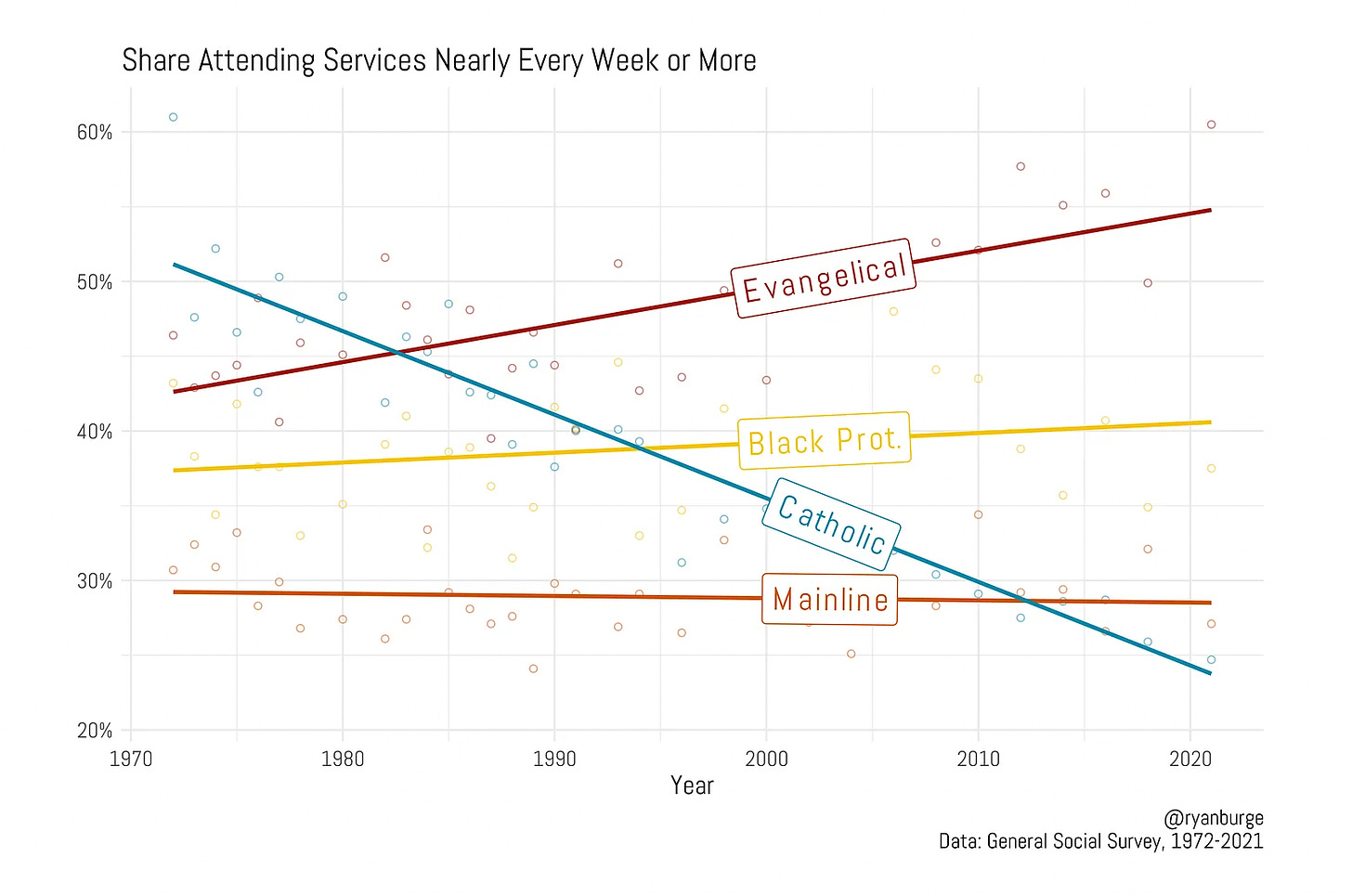
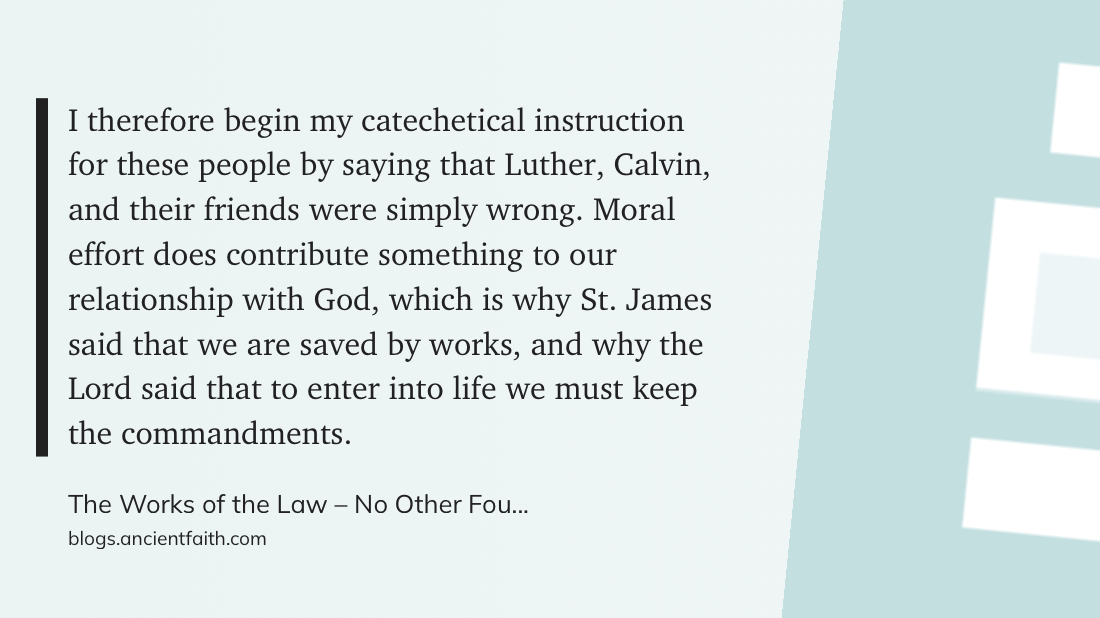

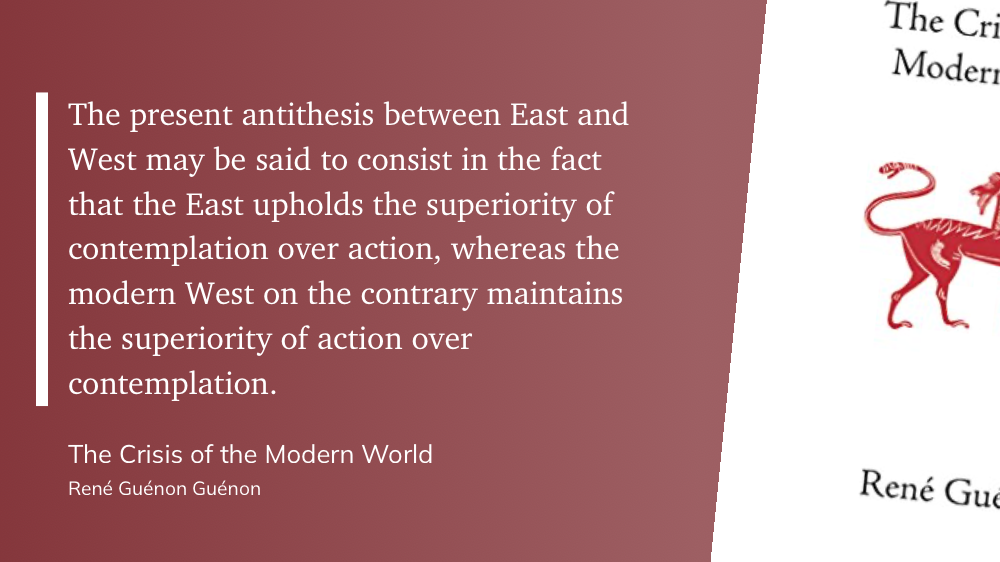
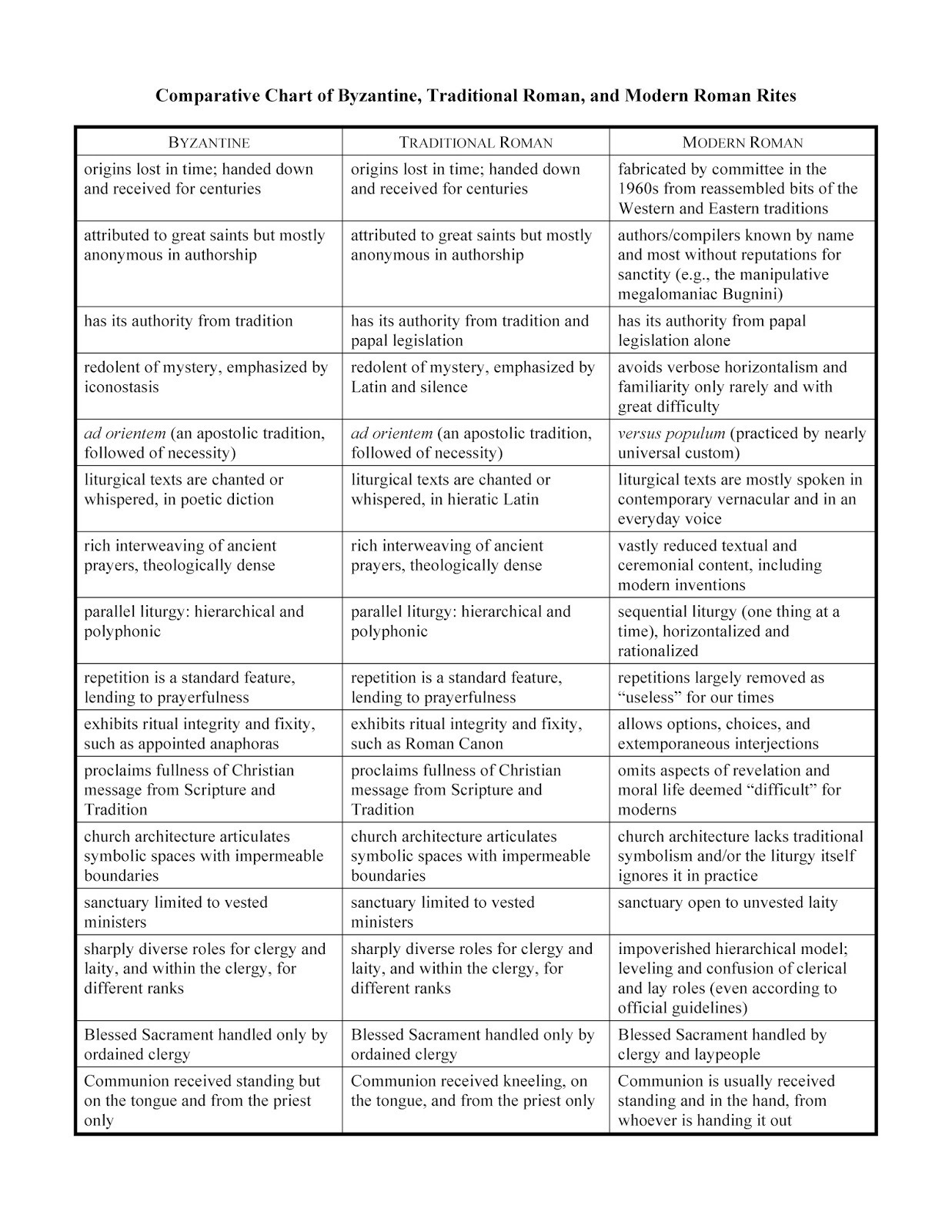


 Tipsy Teetotaler ن