Two guys who know what’s going on in Evangelicalism these days sat down for a chat a few months ago: Russell Moore and David French. I only heard it this past week, and it’s really awfully good. It’s available as a podcast as well as the linked YouTube video.
I’m used to David French as a legal and political commentator, but he’s a pretty darned good observer of his religious milieu — as, of course, is Russell Moore whose life work is pervasively religious.
Sizing things up realistically
On the one hand, I trust in God’s providence.
On the other hand, there was a whole lot about the America I grew up in, and worked in, that I’m going to miss now that it’s gone. I’m reminded of the Brit who said of losing the war something like “I should not be able to number all the things I would miss.”
Here comes the acid test of “I have learned in whatsoever state I am, therewith to be content.”
Reading the Riot Act to Social Media “Theologians”
You have to accept that if you only know English and you can only read the Church Fathers and the Bible in translation, you at some point are going to have to … find someone who actually knows the original languages who you trust, and just believe them about what it says.
You don’t have to go learn those languages, but if you’re not going to go and learn those languages, you’re not entitled to an opinion on this … Shut up. Shut up on social media. Stop causing trouble. Stop trying to cause factions in the Church. That’s a sin. That’s a grievous sin … You have to learn before you can teach.
This blunt quote is directed particularly at Orthodox laymen who argue for substitutionary atonement based on reading the Church Fathers translated, in most instances, by Philip Schaff, a Calvinist Protestant. Substitutionary atonement (Christ in place of me) is not the position of the Orthodox Church (more like Christ on behalf of me — setting aside our different view of “atonement” itself).
But I’m confident that Orthodox Christians aren’t the only autodidact “theologians” quoting Church Fathers from Schaff. I own Schaff’s translations (as I did before becoming Orthodox, I believe). I honor his monumental work in translating so much. Heck, I even honor, in relative terms, the Mercerburg Theology with which he is associated. But I dare not trust him very far.
The least you can do
The man and woman cannot utterly sink who on every seventh day is obliged to appear in decent apparel, and to join with all the standing and respectability of the community in a united act of worship.
David Hacket Fischer, Albion’s Seed. I don’t recall who, or when, or in what region of America, Fischer was quoting, and it doesn’t seem worth looking up.
How do you measure comfort care?
Gonzalez is troubled to learn that the nuns “consistently fail to provide statistics on the efficacy of their work.” But there is no ready yardstick to measure the success of outreach programs to lepers. And how does one measure the efficacy of programs designed to comfort the dying?
Bill Donohue, Unmasking Mother Teresa’s Critics.
There are swaths of reality that are not susceptible to meaningful metrics and statistics. It’s prudent to ask for statistics on some things, yes, but monstrously reductionist to treat as some kind of scam the inability to produce statistics on other things.
Ecumenical Winter
The foremost divides in Western Christendom for some time fell along Protestant and Roman Catholic dividing lines, from the sixteenth century well through the Troubles in Northern Ireland. But today all Christians with even the most basic (creedal) orthodox theology and shared vision of human sexuality, the sanctity of life, and more find themselves as co-belligerents in a struggle with an inhumane and secularizing Western society and progressivist religion. There is far greater good will towards one another for that reason alone than there was in the past five centuries, culminating in cooperation such as Evangelicals and Catholics Together. Gone with the vanishing Protestant Mainline is the milquetoast ecumenism wherein “doctrine divides, service unites.” Here to stay is an emerging ecumenism where the things held in common run to the core of one’s commitments in life and in death.
The first time I went to India, it was such a shock for me, the different culture, and everything was a new experience for me. I had so much to learn. The second time it was more like everyday life. The main thing I understood the second time was that I didn’t need as many things as I thought. Not at all. I could live with what I could carry in one backpack. With a family, I had thought I needed all that furniture and tables and kitchen equipment and washing machines and a vacuum cleaner. I realized I really can live simply. After that, I thought, I could live exactly this way anywhere.
Highly recommended for seeing how life could be different without being worse. Like the Tao Te Ching (directly and through Christ The Eternal Tao), this book helped me see some things more vividly because of the foreign setting.
As the White House tutors us about the “real world, that is governed by strength, that is governed by force, that is governed by power,” I’m very glad to be in a church where every Sunday we sing the Beatitudes, which tell us the way blessedness works.
You can read most of my more impromptu stuff here and here (both of them cathartic venting, especially political) and here (the only social medium I frequent, because people there are quirky, pleasant and real and it has no-algorithms). All should work in your RSS aggregator, like Feedly or Reeder, should you want to make a habit of it.
I’ve long believed that there is a weird market failure in American culture. There are a lot of shows on politics, business and technology, but there are not enough on the fundamental questions of life that get addressed as part of a great liberal arts education: How do you become a better person? How do you find meaning in retirement? Does America still have a unifying national narrative? How do great nations recover from tyranny?
…
We have become a sadder, meaner and more pessimistic country. One recent historical study of American newspapers finds that public discourse is more negative now than at any time since the 1850s. Large majorities say our country is in decline, that experts are not to be trusted, that elites don’t care about regular people. Only 13 percent of young adults believe America is heading in the right direction. Sixty-nine percent of Americans say they do not believe in the American dream.
Loss of faith produces a belief in nothing. …
Nihilism is the mind-set that says that whatever is lower is more real … Disillusioned by life, the cynic gives himself permission to embrace brutality, saying: We won’t get fooled again. It’s dog eat dog. If we’re going to survive, we need to elect bullies to high places …
Multiple generations of students and their parents fled from the humanities and the liberal arts, driven by the belief that the prime purpose of education is to learn how to make money.
We’re abandoning our humanistic core. … As a result of technological progress and humanistic decay, life has become objectively better but subjectively worse. We have widened personal freedom but utterly failed to help people answer the question of what that freedom is for.
The most grievous cultural wound has been the loss of a shared moral order. We told multiple generations to come up with their own individual values. This privatization of morality burdened people with a task they could not possibly do, leaving them morally inarticulate and unformed. It created a naked public square where there was no broad agreement about what was true, beautiful and good. Without shared standards of right and wrong, it’s impossible to settle disputes; it’s impossible to maintain social cohesion and trust. Every healthy society rests on some shared conception of the sacred — sacred heroes, sacred texts, sacred ideals — and when that goes away, anxiety, atomization and a slow descent toward barbarism are the natural results.
It shouldn’t surprise us that, according to one Harvard survey, 58 percent of college students say they experienced no sense of “purpose or meaning” in their life in the month before being polled. It shouldn’t surprise us that people are so distrusting and demoralized. I’m haunted by an observation that Albert Camus made about his own continent 75 years ago: The men of Europe “no longer believe in the things that exist in the world and in living man; the secret of Europe is that it no longer loves life.”
David Brooks’ farewell column for the New York Times (gift link) reprises the concerns about which he has been writing of late, which writing made him my favorite at the Times. (See below for an example.) I hope he won’t just disappear into some Yale classroom, never again to share his wisdom with the wider world.
The idea that “the prime purpose of education is to learn how to make money” has outraged me for as long as I can remember — perhaps because I succumbed to it for what seemed like an adequate personal reason (an engagement to be married in a year when I was 19), but then never got back formally to the humanities when that reason vanished. I’ve been an autodidact ever since, envious of those who studied the humanities more formally, in the give-and-take of a well-run classroom.
Devouring “the news”
Something I still aspire to
One journalist I knew (who worked for a far bigger outlet as a political correspondent) once told me that the news was the first thing she read when she opened her eyes, and the last thing she saw before falling asleep.
Perhaps this is how some journalists need to live their lives. If reporting the daily news is their calling, they must be deeply aware of what is going on. Even if it means watching and reading all the time.
But it is not for you and me, friends. This sort of news consumption will reign your emotions: it will drive you to anger, terror, annoyance, and despair. It will make you feel helpless. It will divorce you from the daily, real things happening in your own home. Take it from someone who’s lived it: knowing absolutely everything that is happening right now—whether in Iran, or Ukraine, or Washington, D.C., or Minnesota—is not your calling. It can actually serve as a dangerous distraction from the vocations of your own life, neighborhood, and community.
…
Here are some boundaries I’ve set in place for my news consumption since 2020. They have been very helpful. I pray they are helpful to you.
Check one site, and check it once every couple days at most. If you can, check it once a week. That’s it. Find a reliable source that you trust—preferably a site that tries not to follow a party line. It is more likely to give you the nuance partisan news outlets neglect. If the events of the hour are truly and lastingly important, they will still be talked about a week later. If a credible news outlet, one you find trustworthy and careful, isn’t talking about it, there’s a good chance you should not worry about it. This filters out a lot of momentary “noise,” and allows you to attend to what truly matters.
Olmstead is the second person who tacitly or explicitly recommends what strikes me, at the gut level, as excessive disengagement: once-weekly news exposure. Alan Jacobs, who only reads the Economist, and that only when it arrives at his home, is the other.
I was raised in such a way that, by precept or example (I don’t remember the precept being vocalized), I absorbed the message that “good citizens stay on top of the news.” I don’t know that it was ever right. Maybe it was in the 1950s. But “the news” is far vaster today than it was then, and more polarized, and frequently (especially if you get social media news) insane.
All that aside, I sense that I’m spending too much time on the news because, well, I sit down for morning devotions and news around 5:30 am and often am still sitting there at 10 am. Like today, for instance, he typed at 10:00 am.
I’m retired, so it’s not like I’m robbing from my employer. God, maybe, but not, god forbid, my employer.
I’m aware of this. I think I’m making progress.
Re-orientation
Alan Jacobs sympathizes with people who are tempted to give up reading the news because it’s too depressing. But that:
is an inadequate response; it has a tendency to leave you fretful and at loose ends.
What helps is to read works from the past that deal with questions and challenges that are structurally similar to the ones we’re facing but that emerged in a wholly different context. Right now I am reading the Psalms, especially those that deal with questions of justice and injustice, and the Hebrew prophets. Though comparisons of the current moment to the rise of Nazism often strike me as overblown, they seem increasingly apt these days, so I am returning to Bonhoeffer’s Letters and Papers from Prison. I am also reading, perhaps surprisingly but quite appropriately and illuminatingly, Machiavelli’s Discourses. Machiavelli himself was breaking bread with the dead: reading Roman history as a way of understanding the challenges of 16th-century Florentine politics.
This practice offers a threefold reorientation:
Emotional, because it gives you a break from people who are continually trying to stoke your feelings of anger and hatred;
Intellectual, because in comparing past situations with ours you get an increasingly clear sense of what about our current situation is familiar (and therefore subject to familiar remedies) and what unusual or even unique (and therefore in need of new strategies);
Moral, because, as Aragorn says to Éomer, “Good and ill have not changed since yesteryear; nor are they one thing among Elves and Dwarves and another among Men. It is a man’s part to discern them, as much in the Golden Wood as in his own house.”
Radicalization
Ambition versus lust for domination
The 18th-century English historian Edward Wortley Montagu distinguished between ambition and the lust for domination. Ambition can be a laudable trait, since it can drive people to serve the community in order to win public admiration. The lust for domination, he wrote, is a different passion, a form of selfishness that causes us to “draw every thing to center in ourselves, which we think will enable us to gratify every other passion.”
The insatiable lust for domination, he continues “banishes all the social virtues.” The selfish tyrant attaches himself only to those others who share his selfishness, who are eager to wear the mask of perpetual lying. “His friendship and his enmity will be alike unreal, and easily convertible, if the change will serve his interest.”
…
Tacitus was especially good at describing the effect the tyrant has on the people around him. When the tyrant first takes power, there is a “rush into servitude” as great swarms of sycophants suck up to the great man. The flattery must forever escalate and grow more fawning, until every follower’s dignity is shorn away. Then comes what you might call the disappearance of the good, as morally healthy people lie low in order to survive. Meanwhile, the whole society tends to be anesthetized. The relentless flow of appalling events eventually overloads the nervous system; the rising tide of brutality, which once seemed shocking, comes to seem unremarkable.
I have suspected that part of the reason for a rightward swing in young people [blood-and-soil nationalism,, though] may be that the holocaust is not seared into their worldview and identity as it is in my generation. I was born after the war, but was acutely aware of its horrors. I specifically recall Life’s Picture History of World War II in my childhood home. A child who viewed that repeatedly, as I did, isn’t likely to forget.
When I think about the distortion of history, I remember when I was updating my history of Jerusalem and a friend rang me and said she had an “indispensable history of the Jewish people that you have to read.” She sent it over, all wrapped up. When I opened it, I was surprised to find it was TheProtocols of the Elders of Zion, the antisemitic forgery created by the czar’s secret police. History matters, but more than ever, we need to assert that it be based on real events.
A way in which I do agree with my fellow panelist that political correctness has done an enormous amount of harm in the sliver of the population whose affiliation might be up for grabs comes from the often highly literate, highly intelligent people that gravitate to the alt-right – internet savvy, media savvy – who often are radicalized in that way – who “swallow the red pill” as the saying goes from the Matrix – when they are exposed for the first time to true statements that have never been voiced in college campuses or in the New York Times or in respectable media. It’s almost like a bacillus to which they have no immunity, and they are immediately infected with both an outrage that these truths are unsayable, and no defense against taking them to what we might consider rather repellent conclusions.
Early in Trump’s second administration, handwriting appeared on the walls of the Department of Justice and the offices Federal District Attorneys:
Integrity will not be tolerated if it requires candor to the court about weaknesses in the Administration’s position.
If you’ve ever been even a mediocre lawyer, you know that intransigence toward a judge who has figured out your case’s weakness is not wise even in the short term. In the longer term, it tells the court you can’t be trusted to be honest.
In Federal Courts, there was a longstanding “presumption of regularity” in the doings of government lawyers. That has been lost so completely that it’s no longer even talked about in the news, especially when there are new Administration theatrics to talk about.
But I’m going to talk about something related. Minneapolis is a “sanctuary city” of a fairly rigorous sort. It won’t cooperate with DHS/ICE even so modestly as to let them know when they have illegal immigrants convicted of violent crimes in their custody. That’s part of Trump’s rationale, at least after-the-fact, for sending in 3000 ICE agents ostensibly to deal with welfare fraud that didn’t involve illegal immigrants but US Citizens who were once immigrants. So something smells fishy.
Those ICE agents are wearing masks. They’re behaving provocatively. The news has stories about them grabbing brown kids as they leave school, then returning them hours later because they’re here legally, and about American citizens of foreign origin being snatched and sent to hellhole foreign prisons.
The new guy in charge of ICE in Minneapolis says he’ll draw down his troops if Minneapolis will start cooperating on the transfer of immigrant prisoners to ICE control.
Can you, Minneapolis official, entertain any presumption of regularity on the part of ICE? Can you presume that American Citizens won’t be manhandled, tortured, deported by these masked goons?
iPhone, the Kleenex for wiping up ICE
The iPhone [note iPhone standing in for all smartphones, like Kleenex=facial tissue] seems to be the only serious threat to ICE’s violence. We know they feel emboldened to do virtually anything to anybody and have been granted a rhetorical “absolute immunity.” We also know that the federal government will tell big, beautiful, massive lies to justify any and all ICE abuses — before any investigations.
So Renee Good was a “deranged lunatic,” Karoline Leavitt declared. Good didn’t just try to run over an ICE officer; she did run him over, and it was unclear if he would survive his injuries, said the president. She was engaged in “domestic terrorism,” according to Stephen Miller. Equally, Alex Pretti was another “would-be assassin” who walked up to ICE officers “brandishing” a gun, trying “to murder federal agents” who, fearing a “massacre,” fired solely in self-defense. He was an “insurrectionist” rightly “put down,” in the words of one MAGA congressman. Last night, Trump repeated his description of Pretti as an “insurrectionist” and “agitator.”
…
We’ve become worried — with very good reason — about the damage phones have done to our brains, our attention span, and our democracy. But without them, the Trump lies about Minneapolis might well have prevailed.
…
In a country with a fascistic government that disseminates massive lies — ours — iPhone videos become essential to keep democracy and objective truth on life support. There are dangers, of course. Lack of context can deceive; AI has made every video’s authenticity suspect; people can subjectively interpret things any way they want. But what happened this past week in America was that, even with all those caveats, a big majority of sane Americans emerged out of the woodwork, looked at the videos, rejected tribalism, and said: Nah, ICE is lying. And ICE had to retreat.
Civic hygiene: another reason to hold onto my phone while many around me are (vocally) giving up theirs. I don’t struggle with compulsive smartphone use; if you do, your mileage may vary.
Really, the only qualms I have about my phone are about the Chinese factory workers who make them — and that’s always a tough call because some jobs just are hard or boring, and the line between that and metaphorical slavery is indistinct.
The death of the magazine
But a magazine I always thought of as a relatively small group of identifiable writers, connected with some broad themes. They could disagree with each other. They had some broad agreements, creating this little thing that would have a variety of their views.
The Atlantic is now just now a machine. I mean, it has hundreds of staffers. It has hundreds of writers. … The magazine itself, of course, was directly challenged by the internet in ways that probably impossible to recreate. The fact that you had to have these writers stapled together with paper really did create a particular cultural product that cannot be done anymore.
Throughout the extensive litigation over the [Alien Enemies Act], in this case and others, the Trump Administration has claimed the president deserves absolute deference when he claims that an “invasion” exists. The absurd implications of this position were highlighted in yesterday’s argument, when Fifth Circuit Chief Judge Jennifer Elrod (appointed by George W. Bush) asked whether the president could invoke the AEA in response to the “British Invasion” of rock stars, like the Beatles. “What if,” she asked “the [President’s] proclamation said ‘we’re having a British invasion.’ They’re sending all these musicians over to corrupt young minds…. They’re coming over and they’re taking over all kinds of establishments.” Could courts then rule the president’s invocation of the AEA was illegal? In response, Justice Department lawyer Drew Ensign admitted the government’s position would require courts to still defer to the president, and allow him to wield the extraordinary emergency powers that can only be triggered by an actual “invasion.”
Rachel Louise Snyder appraised the Immigration and Customs Enforcement agent who killed Renee Good: “The man, with his face covering, his tactical vest, his handgun and his shorn hair, was kitted up to playact in a war against unarmed everybodies. He was frailty wrapped in fatigues.” (Karla Holomon, Cary, N.C., and Molly Gaffga, Sanatoga, Pa., among many others)
Maureen Dowd parsed this cursed second term of Trump’s: “Trump Redux is infatuated with drone strikes and airstrikes, tumescent with the power of the world’s greatest military, hungry to devour the hemisphere in one imperialistic gulp.” (Ellen Casey, Hope, R.I., and Kate Kavanagh, Concord, Mass.)
I’ve always been kind of anti-populist because I know people. And the more people you know, the less of a populist you are, I think. (Kevin D. Williamson)
From the perspective of political theory, my argument falls within the category of “political indifferentism”–that is, the notion that politics is mostly a matter “indifferent” to core human interests. (Ephraim Radner, Mortal Goods)
There are many who do not know they are Fascists, but will find it out when the time comes. (Ernest Hemingway via Kevin D. Williamson)
Of all his weaknesses that is one of his greatest, that he’d rather hurt himself than not fight. He’d rather hurt the country than not fight. The fight is all. (Peggy Noonan)
“Today,” says de Lubac, “when the essential doctrine of the unity of the human race is attacked, mocked by racism,” we should feel anguish that it is so weakly defended by Christian leaders. (James R. Wood)
Nihilism is the mind-set that says that whatever is lower is more real. (David Brooks in his farewell NYT column)
I don’t do any of the major social media, but I have two sub-domains of the domain you’re currently reading: (a) You can read most of my reflexive stuff, especially political here. (b) I also post some things on my favorite no-algorithm social medium.
The best thing about New Years Day 2026 is that it means 2025 is over. President Ozymandias really hit the ground running for his second term, having surrounded himself with evil, shrewd, and power-hungry operatives this time instead of Republican normies who muted his bellowing. It’s hard to imagine (knocks on wood) that the worst of the self-aggrandizing vandalism isn’t over now.
Wordplay
Aphorisms
A platitude is a placebo for the mind; an aphorism is a wake-up call. Aphorisms provoke debate; they don’t promote dogma. Though they’re short, aphorisms spur considered reflection, not Pavlovian partisanship. At a time when polarization is so amped up, aphorisms can serve as psychological circuit breakers, interrupting our comfortable assumptions and prodding us to open our minds, unclench our fists, and think for ourselves.
In The Washington Post, Dana Milbank responded to some Republicans’ suggestion that the D.C. Metro be renamed the “Trump Train”: “It’s a great idea. Qatar will donate the subway cars, which will be powered by coal. Passengers will pay for fares with cryptocurrency after first showing proof of citizenship. And the trains will reverse themselves regularly and without warning — never quite reaching their original destination.” (Mary Ellen Maher-Harkins, Orwigsburg, Pa.)
In The Atlantic, David A. Graham processed the addition of “Trump” to “Kennedy” in the moniker for Washington’s premier performing arts center: “He asks not what he can do for his country, but what his country can name for him.” (Darrell Ing, Honolulu)
In Esquire, Dave Holmes acknowledged that Senator Lindsey Graham was maybe joking that Trump should be the next pope — but maybe not: “You can’t be tongue-in-cheek when you are actively licking the boot. There is just not enough tongue for both jobs.” (Susan Fitzgerald, Las Cruces, N.M.)
In The Wall Street Journal, Jason Gay rued the effect of obsessive replays on the determination of what, in pro football, constitutes a catch. “It’s the affliction of overthinking: If it walks like a duck, and talks like a duck, wait, hold on, it must be a chandelier,” he wrote. “It’s further evidence humans can ruin the spirit of anything, if given the time and technology.” (Bill Sclafani, Rockport, Mass.)
\[I\]n The Washington Post, Ron Charles assessed “The Little Book of Bitcoin,” by the supremely self-confident pitchman Anthony Scaramucci: “In one passage, he touts the convenience of transporting $500 million in Bitcoin on a thumb drive, which is the best news I’ve heard since my yacht got a new helipad.” (Stephen S. Power, Maplewood, N.J., and Hannah Reich, Queens, among others)
Charles also observed that the scolds who ban books have taken issue with “Maurice Sendak’s ‘In the Night Kitchen,’ which has been proven in the state of Florida to turn straight white Christian boys into polygender Marxists who eat only quinoa.” (Jill Gaither, St. Louis, and John Jacoby, North Andover, Mass.)
In The Times, Kevin Roose worried that when it comes to regulations, the stately metabolism of institutions is no match for the velocity of A.I.: “It feels, at times, like watching policymakers on horseback, struggling to install seatbelts on a passing Lamborghini.” (Conrad Macina, Landing, N.J.)
In The Times, A.O. Scott sang a similar song: “Occam’s razor, the venerable philosophical principle that the truest explanation is likely to be the simplest, has been thrown away. We’re living in the age of Occam’s chain saw, when the preferred answer is the one that makes the loudest noise and generates the most debris.” (Charles Kelley, Merrimack, N.H., and Trisha Houser, Durham, N.C., among others)
I saved three of Bruni’s best as personal favorites:
Also in The Times, Matt Hongoltz-Hetling considered the importance of an annual communal feast to a Vermont town’s special fellowship: “Whether a vibrant community created the potluck or the potluck created a vibrant community is like asking which came first, the fried chicken or the deviled egg.” (Stacey Somppi, Cottonwood, Ariz., and Hillary Ellner, Durham, N.C., among others)
In The Times, James Hamblin parodied the typical message and script of a television drug ad: “You will frolic on the beach at sunset psoriasis-free, with a golden retriever, smiling into the distance. You also may experience sudden loss of cardiac function, seizures of the arms or intermittent explosive ear discharge. Talk to your doctor.” (Susan Casey, Palm City, Fla.)
In The Dispatch, Kevin D. Williamson gave thanks for academia, despite its flaws: “The American university system is the envy of the world, and we are burning it down because there’s a couple of nonbinary gender studies professors at Bryn Mawr who say crazy stuff from time to time and there is a brain-dead gaggle of Jew-hating weirdos at Columbia. Of course, there is room for reform. But you don’t have to love every feather on the goose when it is laying golden eggs.” (Dan Markovitz, Corte Madera, Calif.)
The first just feels perfect; “explosive ear discharge” in the second was the only thing in the list that made me laugh uncontrollably; Kevin Williamson captures perhaps the single most tragic thing about what “we” are doing, (purely by coincidence, of course, during the second reign of the orange barbarian).
Finally: “Some of you should walk a mile in my shoes, because then you would be a mile away from me. Keep the shoes.” (Encountered by my wife on Pinterest)
My 2025
Reading
As I always note in my footer, I blog and socialize at micro.blog in addition to here. One of my friendlies at MB, an uncommonly sane Evangelicalish pastor in Chicagoland (very keen on racial reconciliation is he), posted his 2025 reading list and inquired about what others read this year.
My response:
At 77, I feel the Grim Reaper breathing down my neck, and I already own more books than I’ll get read before he wins. Further, I’ve read many, many books in my life already, including multiple books on many perennial themes. And although I love poetry, I either had poor teachers or was too barbarian to learn how to read demanding examples.
So I don’t have much toleration for books that are cumulative of what I already understand, or are neither pleasurable nor (so far as I can tell after reading a bit) profitable, including ones that many good people were raving about.
To avoid performative listing, then (e.g., Geoffrey Hill poetry, which defeated me utterly), I’ve eliminated all the books I abandoned part way in. Finally, listing a volume of poetry doesn’t mean I’ve read it all yet.
Book
Author
Rings Trilogy
Tolkien
Albion’s Seed
David Hackett Fischer
The World After Liberalism
Matthew Rose
Coracle
Kenneth Steven
Table for Two
Amor Towles
Till We Have Faces
C.S. Lewis
Godric
Beuckner
Stalingrad
Anthony Beever
Small Is Beautiful
Schumacher
Rilke Poetry
Rilke
Apocrypha
Stephen De Young
The Greek East and the Latin West: A Study in the Christian Tradition
Philip Sherrard
A Time of Gifts
Patrick Leigh Fermor
The New Science of the Enchanted Universe
Marshall Sahlins
Bread & Water, Wine & Oil
Fr. Meletios Webber
Lost in the Cosmos
Walker Percy
Giovanni’s Room
James Baldwin
The Long Loneliness
Dorothy Day
The innocence of Father Brown
G.K. Chesterton
Against the Machine
Paul Kingsnorth
You Have Arrived at Your Destination
Amor Towles
The Air We Breathe: How We All Came to Believe in Freedom, Kindness, Progress, and Equality
Extra pills are piling up across America. Excessive refills by U.S. pharmacies cost Medicare and patients $3 billion between 2021 and 2023, according to a WSJ analysis of Medicare prescription data.
WSJ. Based on my own rigorous anecdata, this is 1000% true. Which means that although mail-order pharmacies may have started it, brick-and-mortar local pharmacies are in the game now, too.
I really would rather not manually refill every prescription, but my pharmacy seems incapable of waiting 90 days to refill a 90-day prescription, and when I get a text that a prescription is ready for pick-up, I go pick it up (with rare exceptions, like a post-op opioid painkiller I definitely did not need).
Sam Altman, OpenAI’s chief executive, said in a recent podcast he can see ways that seeking companionship from an AI chatbot could go wrong, but that the company plans to give adults leeway to decide for themselves.
Nothing in her political career before September inclined me to cut Marjorie Taylor Green any slack whatever, but something has happened since then.
Her political conversion story, if you can call it that (it’s not about changing from MAGA to progressive or any other political position), rings true.
It started at the Charlie Kirk Memorial service:
What stayed with Greene long afterward were the last two speakers who took the stage. First there was Kirk’s widow, Erika, who stood in white before the crowd filling the Arizona stadium, lifted her tear-filled eyes and said that she forgave her husband’s killer. And then there was President Trump. “He was a missionary with a noble spirit and a great, great purpose,” he said of Kirk. “He did not hate his opponents. He wanted the best for them. That’s where I disagreed with Charlie. I hate my opponent, and I don’t want the best for them.”
“That was absolutely the worst statement,” Greene wrote to me in a text message months after the memorial service. And the contrast between Erika Kirk and the president was clarifying, she added. “It just shows where his heart is. And that’s the difference, with her having a sincere Christian faith, and proves that he does not have any faith.”
I thought at the time that should have been a wake-up call for every “Christian” Trump supporter in America. I still do. It speaks ominous things about our religious and political culture that it seems to have awoken so few.
But Marjorie Taylor Green, of all people, recognized it! And it appears that she has genuinely repented of her role in stoking hatred and division!
Time will tell; she’s been taking the potent MAGA pill for a long time, and withdrawal may prove too hard. But it’s looking good so far.
I wish her what I wished for Jimmy Carter on January 20, 1981: a long and happy and private life — plus a sustained repentance.
Paganism with worship music
We seem to be entering a pagan century. It’s not only Trump. It’s the whole phalanx of authoritarians, all those greatness-obsessed macho men like Vladimir Putin and Xi Jinping. It’s the tech bros. It’s Christian nationalism, which is paganism with worship music. (If you ever doubt the seductive power of paganism, remember it has conquered many of the churches that were explicitly founded to reject it.)
“If you dislike the religious right, wait till you meet the post-religious right,” Ross Douthat warned presciently at the dawn of Trumpism in 2016. … What Douthat calls the “post-religious right” certainly is more obnoxious and morally degenerate than its Bush-era forebear was, but it’s not correct to call a movement that’s developed its own alternate morality “post-religious.” It’s not even correct to call it “post-Christian,”…
The modern right is boisterously Christian, but without Christ. It extols Christianity aggressively but has ditched most of the moral content …
…
The purest expression of Christianity without Christ came from Trump himself, not coincidentally. At Charlie Kirk’s memorial service, shortly after Kirk’s widow, Erika, moved viewers by publicly forgiving her husband’s killer, the president strode to the mic and said, “That’s where I disagreed with Charlie. I hate my opponents, and I don’t want the best for them. I’m sorry.” That’s the literal antithesis of Christian morality …
But there were no mass defections by Christians from the president’s camp after his heresy. Erika Kirk herself remains a loyal Trump ally in good standing. And why not? Hating one’s enemies is squarely in line with the three purposes of post-Christ right-wing Christianity. The first is establishing the right’s cultural hegemony over other American factions; the second is narrowing the parameters of the right-wing tribe to exclude undesirables; and the third is deemphasizing morality as a brake on ruthlessness toward one’s opponents.
Almost everything written about the “alternative right” has been wrong in one respect. The alt-right is not stupid; it is deep. Its ideas are not ridiculous; they are serious. To appreciate this fact, one needs to inquire beyond its presence on social media, where its obnoxious use of insult, obscenity, and racism has earned it a reputation for moral idiocy.
Matthew Rose, A World After Liberalism
At the outset of debate
If we are willing to grant, at the outset, that the people we’re debating agree about ends—that they want a healthy and prosperous society in which all people can flourish—then we can converse with them, we can see ourselves as genuine members of a community. And even if at the end of the day we have to conclude that we all do not want the same goods (which can, alas, happen), it is better that we learn it at the end of the day than decide it before sunrise.
Would we necessarily say that government, civic life, the media, or high finance work better now than in the mid-20th century? We can scorn the smug WASP blue bloods from Groton and Choate—and certainly their era’s retrograde views of race and gender—but their leadership helped produce the Progressive movement, the New Deal, victory in World War II, the Marshall Plan, NATO, and the postwar Pax Americana. After the meritocrats took over in the 1960s, we got quagmires in Vietnam and Afghanistan, needless carnage in Iraq, the 2008 financial crisis, the toxic rise of social media, and our current age of political dysfunction.
We are also offended by the contumely of allies as well as foes, who refuse to regard our prosperity as fruit and proof of our virtue but suggest that it may be the consequence of our vulgar Philistinism.
Reinhold Niehbur, The Irony of American History
Read the fine print
On the surface, it would seem that the assurances given in the Declaration of the Rights of the Peoples of Russia were clear and unequivocal. But lurking in the shadowy annals of communist polemics there was a catch. To paraphrase, but not distort, Lenin’s position, nations have the right to self-determination, but only the proletariat has the right to decide. And, as if that were not enough, only the Communist Party can speak for the proletariat.
Jack Matlock, Autopsy on an Empire
Raising the bar for Tinhorn Dictators
Ramsey’s intolerance for dissent has created what former employees call a cultlike environment, where leaders proclaim their love for staff and then fire people at a moment’s notice.
A new crop of moderate Democrats is trying to counter both President Trump and progressive influence in their own party. (WSJ) May their tribe increase.
And so we have before us one of the characteristic political necessities of our time: to take seriously what we cannot respect. (Wendell Berry, The Unsettling of America)
Conservative and mainstream media were drifting apart, not just ideologically but epistemically… (Jonathan Rauch, The Constitution of Knowledge) This epistemic drift (of the Right, I think, not the mainstream) tempts me to despair.
“The only thing we have to fear is fear itself,” … was a damned funny thing for Franklin Roosevelt to say in 1933, the year Adolf Hitler came to power. (Kevin D. Williamson)
The face of my fear is not a new Hitler but the Old Adam. It is the face in the mirror. (Kevin D. Williamson)
One category I used to apply to some of my posts became obsolete almost overnight around 1/20/2017: Zombie Reaganism. You never see that any more, and I miss it more than I thought I would.
I don’t do any of the major social media, but I have two sub-domains of the domain you’re currently reading: (a) You can read most of my reflexive stuff, especially political here. (b) I also post some things on my favorite no-algorithm social medium.
Much of what Illich had to say to those bright-eyed students preparing to spend their summer volunteering in Mexico are summed up in these early lines:
“I do have deep faith in the enormous good will of the U.S. volunteer. However, his good faith can usually be explained only by an abysmal lack of intuitive delicacy. By definition, you cannot help being ultimately vacationing salesmen for the middle-class ‘American Way of Life,’ since that is really the only life you know.”
Illich recognized that “development” work, as it was happening in the 1960s, was, in fact, a vehicle by which a whole complex nexus of values and systems was being exported to and imposed upon the “under-developed” world, and ultimately in such a way that the recipients of this aid would be subjected to new forms of poverty and dependence—“modernized poverty,” as Illich called it elsewhere.
…
Illich tells his audience that “next to money and guns, the third largest North American export is the U.S. idealist, who turns up in every theater of the world: the teacher, the volunteer, the missionary, the community organizer, the economic developer, and the vacationing do-gooders”—to which list, of course, we can add the tech evangelist. It is then that he drops this devastating line:
Perhaps this is the moment to instead bring home to the people of the U.S. the knowledge that the way of life they have chosen simply is not alive enough to be shared.
‘Young man,’ he said, ‘don’t you know you can’t go home again?’ And he went on to speak of the advantages, for a young writer, of living in New York among the writers and the editors and the publishers.
The conversation that followed was a persistence of politeness in the face of impossibility. I knew as well as Wolfe that there is a certain metaphorical sense in which you can’t go home again – that is, the past is lost to the extent that it cannot be lived in again. I knew perfectly well that I could not return home and be a child, or recover the secure pleasures of childhood.
But I knew also that as the sentence was spoken to me it bore a self-dramatizing sentimentality that was absurd. Home – the place, the countryside – was still there, still pretty much as I left it, and there was no reason I could not go back to it if I wanted to.
Wendell Berry, The World-Ending Fire
More from the same source:
Our model citizen is a sophisticate who before puberty understands how to produce a baby, but who at the age of thirty will not know how to produce a potato.
Extremisms
Knee-jerk whataboutism—citing left-wing extremism to brush away concerns of right-wing extremism—is a way of saying, effectively, “I don’t actually care about right-wing extremism. Left-wing extremism is so overwhelmingly bad it’s okay to turn a blind eye to the conspiracy theorists, thugs, and terrorists on my side.”
Slavery was never less than a statement about the sovereignty of capital, and its rights, in relation to human rights. In the South, economic restrictions on religious organization by black Christians was part and parcel of the racial system undergirding slavery and the marginalization of free African Americans.
Mark A. Noll, America’s God
Terribly prophetic
When you have attention, you have power, and some people will try and succeed in getting huge amounts of attention, and they would not use it in equal or positive ways.
The big tech platform debates about online censorship and content moderation? Those are ultimately debates about amplification and attention. Same with the crisis of disinformation. It’s impossible to understand the rise of Donald Trump and the MAGA wing of the far right or, really, modern American politics without understanding attention hijacking and how it is used to wield power … the attempted Capitol insurrection in January [2021] was the result of thousands of influencers and news outlets that, in an attempt to gain fortune and fame and attention, trotted out increasingly dangerous conspiracy theories on platforms optimized to amplify outrage.
Unlike cynicism, hopefulness is hard-earned, makes demands upon us, and can often feel like the most indefensible and lonely place on Earth. Hopefulness is not a neutral position either. It is adversarial. It is the warrior emotion that can lay waste to cynicism.
I don’t do any of the major social media, but I have two sub-domains of the domain you’re currently reading: (a) You can read most of my reflexive stuff, especially political here. (b) I also post some things on the only social medium I frequent, because people there are quirky, pleasant and real.
I’m leading with Trump because his coronation is imminent and I’ve encountered a few unfamiliar worthy “takes” on him.
The Solzhenitsyn test
In his 1970 Nobel lecture, Aleksandr Solzhenitsyn said, “You can resolve to live your life with integrity. Let your credo be this: Let the lie come into the world, let it even triumph. But not through me.” The problem presently before the United States is that the Trump administration will be staffed in its upper reaches by political appointees who, without exception, have failed this test.
To get their positions, these men and women have to be willing to declare, publicly if necessary, that Donald Trump won the 2020 election and that the insurrectionary riot of January 6, 2021, was not instigated by a president seeking to overturn that election. These are not merely matters that might be disputed, or on which reasonable people can disagree, or of which citizens in the public square can claim ignorance. They are lies, big, consequential lies that strike at the heart of the American system of government, that deny the history through which we have all lived, that reject the unambiguous facts that are in front of our noses. They are lies that require exceptional brazenness, or exceptional cowardice, or a break with reality to assert.
…
Whatever the defenses they come up with, however, the senior appointees of the Trump administration will have to enter public service having affirmed an ugly lie, or several. No matter what other qualities they have to their credit, that will remain with them. That, in turns, means that we can never really trust them: We must always suppose that, having told an egregious lie to get their positions, they will be willing to tell others to hold on to them. They can have no presumption of truthfulness in their government service.
That in turn will change them fundamentally. In Robert Bolt’s marvelous A Man for All Seasons, Sir Thomas More explains to his daughter why he cannot yield to Henry VIII’s demand that he declare the king’s first marriage invalid, allowing Henry to marry Anne Boleyn, and hopefully get the male heir the kingdom desperately needs. More knows that that declaration is in the public interest. He also knows that his refusal will sooner or later lead him to the execution block.
When a man takes an oath, Meg, he’s holding his own self in his own hands. Like water. And if he opens his fingers then—he needn’t hope to find himself again.
To land a top job with Donald Trump, you have to open your fingers. It is, as Solzhenitsyn suggested, the end of your integrity.
The imbecilic clown show 1/6/21 was the least of it
We use “January 6” as a shorthand to talk about what Trump did after losing the 2020 election, but it is important to understand—and I think historians will agree about this—that the imbecilic clown show at the Capitol was the least important and least dangerous part of that episode. Trump’s attempt to suborn election fraud—which is what he was up to on that telephone call with the Georgia secretary of state on January 2, 2021—was the more serious part of the attempted coup d’état. Some coup-plotters are generalissimos who just march their troops into the capital and seize power, but many of them—many of the worst of them—take pains to come up with some legal or constitutional pretext for their actions. Often, the pretext is an emergency, as it was with Indira Gandhi, Augusto Pinochet, the coup that brought Francisco Franco to power, etc. You’ll remember that Donald Trump called for the termination of the Constitution as an emergency measure: “A Massive Fraud of this type and magnitude allows for the termination of all rules, regulations, and articles, even those found in the Constitution,” Trump wrote in his trademark kindergartner’s prose. “Our great ‘Founders’ did not want, and would not condone, False & Fraudulent Elections!”
John Adams knew the secret in the heart of democracy: a death wish. “There never was a democracy yet that did not commit suicide,” he wrote. And so the American people, in their belligerent stupidity, have again given the awesome power of the presidency to the man who attempted to overthrow the government the last time he was entrusted with that power. Trump has, of course, promised to pardon those who carried out the violence and chaos of January 6, which is no surprise: The riot was conducted on his behalf, and that is the kind of riot he likes. His contempt for the law is utter and complete, and the only law that he honors is the one inscribed on his heart: “I should get whatever I want.”
Trump is the CCP’s cheapest date: Trump is scrambling to save TikTok. He’s filed an amicus brief to the Supreme Court asking them to treat him like he’s already president and to stop this terrible ban of his favorite piece of Chinese spyware. As The Wall Street Journal editorial board puts it: “The brief is extraordinary in several ways, none of them good.”
As background, Trump was against TikTok until. . . TikTok investor Jeff Yass and his wife Janine dropped about $100 million into Republicans in recent years. And then, what do you know, he’s all in for TikTok! Trump asked the Supreme Court not to act all sus on TikTok’s rizz.
Shadow president Elon Musk has deep business entanglements with China, so it’s a given he’s going to be compromised on this. But Trumpo—Mr. CHYNA—made nationalism his whole thing. And all it took was one Republican donor with cash, but not even that much for China, to continue the colonization of teenage American minds through the infectious disease known as TikTok. Democrats at least genuinely believe in the CCP. Like, they prefer it on an intellectual level. Republicans don’t; they’re just for sale, and cheap.
Meanwhile, the White House confirmed this week that a ninth American telecommunications firm has been hacked by China. Per the AP: “Though the FBI has not publicly identified any of the victims, officials believe senior U.S. government officials and prominent political figures are among those whose communications were accessed.” China just reads all our texts and no one even cares. To explain this in a way you TikTok-addled people might understand: America is the unconscious patient in surgery, and our lawmakers are the surgeons and nurses doing a viral dance around our slack-jawed body.
Nellie Bowles. Remember: This is part of Bowles’ weekly sardonic news wrap-up. Take it seriously, not literally.
Simon won his bet with Ehrlich
Be it remembered that Julian (“The Ultimate Resource Simon, in my younger lifetime, made a wager with Paul (“The Population Bomb”) Ehrlich about what would happen to five key commodity prices over the period of the wager. Ehrich predicted that the prices would rise, Simon that they would fall.
As I read The Ultimate Resource, I thought “surely this is some very clever sophistry.” But Simon won the wager. All five commodities fell in real price.
Infinite growth in a finite world still seems impossible (though Simon probably would say the world isn’t finite in any economically significant way because of human ingenuity). There’s also the matter of externalities, about which “human ingenuity” seems kind of cavalier.
But Simon won the wager. That’s not nothing, and it doesn’t fit the left narrative.
Northstar
Dreher proposed the best way forward for the Republican Party when he wrote Crunchy Cons. In case anyone has forgotten the manifesto, here it is again in brief:
* Conservatism should focus more on the character of society than on the material conditions of life found in consumerism. * Big business deserves as much skepticism as big government. * Culture is more important than politics and economics. * A conservatism that does not practice restraint, humility, and good stewardship—especially of the natural world—is not fundamentally conservative. * Small, local, old, and particular are almost always better than big, global, new, and abstract. * Beauty is more important than efficiency. * The relentlessness of media-driven pop culture deadens our senses to authentic truth, beauty, and wisdom. * The institution most essential to conserve is the traditional family.
This is the version of Rod Dreher that first caught my so favorable attention. I’m keeping a wary eye on the current version.
UBI
→ UBI really doesn’t work: It pains me to write this. But yet another study was published that shows universal basic income (UBI) doesn’t work.
Researchers gave $500 a month to a group of California households and compared them to a control group who received no money—quite the short straw to draw. The households that received the stipend ended up only $100 richer and actually purchased more cigarettes. So basically, UBI makes people French. They found that UBI had no positive effect on psychological or financial well-being. It didn’t even improve food security. Except that cigarettes make it so you don’t need lunch, so I guess food security is relative.
I was hoping universal basic income would become a reality nationwide. Then I could pursue my true passions: horseback riding, debutante balls, and cyberbullying.
The entire point of Title IX is to prevent discrimination based on sex. Throwing gender identity into the mix eviscerates the statute and renders it largely meaningless.
Chief Judge Danny C. Reeves of the Eastern District of Kentucky, rejecting the Biden administration’s novel interpretation of Title IX through federal rule-making.
First-world problems
The FBI has issued a formal warning to sports leagues about organized robberies of professional athletes. Since September, nine pro athletes have had their homes broken into, including Kansas City Chiefs stars Patrick Mahomes and Travis Kelce, Dallas Mavericks guard Luka Dončić, and Bengals quarterback Joe Burrow. According to the FBI, organized crime groups from South America have used high-tech surveillance and hacking methods to spy on athletes and disable their security systems. (It also helps to know when a team is playing an away game.)
What answer did writer Fyodor Dostoevsky give a concerned mother about how to teach her son the difference between good and evil? “His answer both eased my anxiety and terrified me,” Vika Pechersky wrote for Christianity Today. “On the one hand, Dostoevsky gives simple advice to a set of very complex questions. There is no need to master elaborate philosophical systems and social theories to teach my children the meaning of good and evil. According to Dostoevsky, people have a natural yearning for truth, and this yearning comes to our aid in the work of parenting. Herein lies the terrifying part, for the work of parenting starts with my own self—my love of truth, rectitude, goodness of heart, freedom from false shame, and constant reluctance to deceive. I have to embody the love of truth and goodness and live them out in my daily life if I want to teach my children to love what is good.”
Looks like my server is doing 70% of all its work for these fucking LLM training bots that don’t to anything except for crawling the fucking internet over and over again.
Oh, and of course, they don’t just crawl a page once and then move on. Oh, no, they come back every 6 hours because lol why not. They also don’t give a single flying fuck… [about making] my database server very unhappy, causing load spikes, and effective downtime/slowness for the human users.
I guess this is the new role for human beings in the digital economy. We teach the bots how to replace us.
Those greedy bots will come back again in a few hours—they always do. So get busy and start posting.
AI F1 A -FRIEND of mine who sings the praises of AI has suggested that I might farm out Touchstone fundraising letters to Al or perhaps even have it write an article or two for the magazine. What could I say? I shook my head in silence. Failing to catch my meaning, he assured me that improvements to Al over the past year have it writing at a professional level.
“So what?” I said. “Why would anyone want to read it?”
“Because,” he said, “it writes well.”
Again I said, “So what?”
I have all but given up trying to explain my opposition to Al to those who seem to think that, if Al can be programmed to mimic the best writing of which men are capable, then why wouldn’t I want to use it? I tell them that I presume Al is now every bit as capable as they say and will be doubly so six months from now. And still I say, “So what?” And still they earnestly try to convince me that Al writes every bit as well as I just conceded it does.
My friend is a Formula 1 racing fan, so I tried a new angle: “I am certain that if they took the men out of the cars (and the pit crews out of the pits), Al drivers could churn out better lap times than their human counterparts every time.”
He found my suggestion ridiculous. “Who would want to watch that?”
-J. Douglas Johnson, Touchstone magazine, January/February 2025
Patience takes a lot out of you
His father said, “Kindness takes more strength than I have now. I didn’t realize how much effort I used to put into it. It’s like everything else that way, I guess.” … “Maybe I’m finding out I’m not such a good man as I thought I was. Now that I don’t have the strength—patience takes a lot out of you. Hope, too.”
Marilynne Robinson, The Gilead Novels (I can’t way which Gilead novel; I have a Kindle version including all three.)
I suffer more from the humiliations inflicted by my country than from those inflicted on her.
I don’t do any of the major social media, but I have two sub-domains of the domain you’re currently reading: (a) You can read most of my reflexive stuff, especially political here. (b) I also post some things on the only social medium I frequent, because people there are quirky, pleasant and real.
This is Purdue’s Homecoming weekend. They’re playing football — or pretending to. I’m looking forward to basketball season.
Miscellany
An odd job title, if you think about it
“Content Creator” is a title that inadvertently tells on itself. It’s a tacit admission that the nature of the “content“ is meaningless and it exists to fill space. Might as well call yourself “Stuff Maker” or “Thing Doer.”
“Poverty just doesn’t happen,” Rep. [Barbara] Lee, a California Democrat, declared at the launch of the “Children’s Budget,” a kind of progressive wish list, last week. “It’s a policy choice.” Rep. Lee has run up against a kind of metaphysical limit there: She is as wrong as it is possible for a human being to be.
As practically every serious thinker about the issue has understood for a few thousand years at least, poverty does just happen—it is, in fact, one of the few things that does just happen. Poverty is the natural state of the human animal. Do nothing, and you will have poverty. Thomas Hobbes knew it. Aristotle knew it 2,000 years before Hobbes. Hesiod knew it centuries before Aristotle. The authors of the Upanishads knew it centuries before Hesiod. “Throughout history, poverty is the normal condition of man,” the American sci-fi writer Robert Heinlein observed. Or, as Thomas Sowell spent a lifetime explaining to an apparently impenetrable public, poverty has no causes—the absence of poverty has causes. Rep. Lee’s error is not novel. Her mistake repeats—nearly verbatim—the error of Rep. Ayanna Pressley: “Poverty is not naturally occurring; it is a policy choice.”
In 2018, she appeared on a panel at the Conservative Political Action Conference. When asked about feminism, she attacked her own tribe, saying, “I’m disappointed in people on our side for being hypocrites on sexual harassers and abusers of women who are in our party, who are in the White House, who brag about their extramarital affairs, who brag about mistreating women. And because he happens to have an R after his name, we look the other way; we don’t complain.”
The crowd erupted in jeers and shouts of “Not true!” Charen had been a speechwriter for Nancy Reagan! This was CPAC, Republican prom! Security guards escorted her out for her own protection.
The incident didn’t seem to shake her. “There is nothing more freeing than telling the truth,” Charen later wrote in a New York Timesop-ed.
Decades ago, Mona Charen was one of my favorite conservative columnists. I rarely read her these days because, in the anti-Trump cosmos, I’m on planet Dispatch and find planet Bulwark a bit weird tedious. Thus has the black hole of Donald Trump disrupted the cosmos.
Yes, it’s a big, diverse electorate, but there are certain opinions we all share. Like this one: I can’t believe the party I hate isn’t getting clobbered in the polls.
From the Liz Cheney left to the Robert F. Kennedy Jr. right, ask any voter at random whether they’re surprised at how close this race is, and my guess is they’ll talk your ear off in exasperation.
Neither fear nor courage saves us. Unnatural vices Are fathered by our heroism. Virtues Are forced upon us by our impudent crimes. These tears are shaken from the wrath-bearing tree.
I can’t say what Vice President Kamala Harris’s favorite word is — the one time I met with her, I didn’t ask — but I’d put a big stack of chips on “context.” She said it not once, not twice, but three times in her signature May 2023 “coconut tree” riff, and I’ve heard it tumble from her lips on other occasions as well. It’s like some oratorical caftan, warming and comforting her.
That turns out to be apt. Her bid for the presidency is all about context.
Any realistic response to it hinges not on the policy details that she has or hasn’t provided, not on the fine points of her record over time, not on her interview with Stephanie Ruhle of MSNBC on Wednesday, not on her previous sit-down with CNN’s Dana Bash. It hinges on context. She cannot be sized up outside of or apart from the alternative, a man of such reprehensible character, limitless rage, disregard for truth, contempt for democracy, monumental selfishness and incoherent thinking that even discussing Harris’s virtues and vices feels ever so slightly beside the point. She’s not Donald Trump.
In the culture war, we know exactly what she is: an equity leftist, a strong believer in race and sex discrimination today to make up for past race and sex discrimination yesterday, and a politician who favors redefining womanhood to include biological men, and conducting medical experiments on gay, autistic and trans children, based entirely on self-diagnosis. These are her values, they are the values of every Dem special interest group, and she assures us they have not changed. I believe her.
…
I have yet to hear her say a single interesting or memorable thing in her entire career. Have you?
…
If a serious Republican candidate were up against her — even Nikki Haley — this election would not be even faintly close.
But we do not have a serious Republican candidate.
We have the most shameless charlatan in American political history — and there are plenty of competitors. He is unfit in every respect to be president of the United States …
Trump does not merely break norms. He has broken the norm, the indispensable norm for the continuation of the republic, the norm first set by George Washington when he retired from office, the norm that changed the entire world for the better: accepting the results of an election … I do not think this is even within his personal control. He is so genuinely psychologically warped that he has never and will never agree to the most basic requirement of public office: that you quit when you lose; and that the system is more important than any individual in it.
He is not lying when he insists that he won in 2016 and 2020 by massive landslides in the popular vote. He believes it. He believes he will win by a landslide in November, and there is no empirical evidence that could convince him otherwise. If he loses the election, he will call it a massive fraud one more time, and foment violence to protest it. We know this more certainly than we know anything about Kamala Harris. He tried to leverage mob violence to disrupt our democracy once. If that was not disqualifying, nothing is …
…
So I will vote for Harris, despite my profound reservations about her. Because I have no profound reservations about him. I know who he is and what he is. I know what forces he is conjuring and the extremes to which he will gladly take his own personal crusade. To abstain, though temptingly pure, is a cop-out. I vote not for Harris as such, but for a conservatism that can emerge once the demon is exorcized.
We have to guard that spirit. Let it always inspire us. Let it always be the source of our optimism, which is that spirit that is uniquely American. Let that then inspire us by helping us to be inspired to solve the problems.
Kamala Harris. I hate to belittle her, because her context is him, and he is everything that Bruni and Sullivan said. If Indiana is in play, I’ll vote for the sane-but-empty suit who’ll leave office in 2028 if defeated, leaving our political system intact.
Somebody apparently told Trump about, say, ProPublica attacking the Dobbs decision (substantially reversing Roe v. Wade). His over-the-top response, directionally right, was this:
When speaking to supporters from the swing state, where both Trump and Vice President Kamala Harris have doubled efforts to capture the election count in November, Trump lamented the criticism aimed at the Supreme Court‘s conservative supermajority and said it should be “illegal.”
“They were very brave, the Supreme Court. Very brave. And they take a lot of hits because of it,” said the former president. “It should be illegal, what happens. You know, you have these guys like playing the ref, like the great Bobby Knight. These people should be put in jail the way they talk about our judges and our justices, trying to … sway their vote, sway their decision”
So he also is profoundly ignorant of our most fundamental rights, including the right to say stupid things about any branch of government we care to kvetch about.
Some Nationalist, this
Donald Trump is a funny kind of patriot.
He loves America—except for the cities, the people who live in the cities, about half of the states, the universities, professional sports leagues, Hollywood, Silicon Valley, Wall Street, the legal system, immigrants, the culture. He thinks the Capitol Police are murderers and that the FBI is a gestapo, that the government is an illegitimate junta maintained through election fraud, that the January 6 rioters are political prisoners, that the nation is a ruin, that it is “failed.” And when it fell to him to explain to [a] debate audience why he should be president, he spent most of his time repeating the praise of Hungarian autocrat Viktor Orbán.
Trump’s enemies are all Americans, his friends are all foreign dictators, and his money lives in Dubai and Indonesia. Some nationalist.
Trump lives in a very strange little bubble: His world is Palm Beach, a handful of golf courses and hotels, and Fox News. The smallness of his frame of reference is a problem for him ….
Depending on how you count them, 19 or 26 or 67 women have accused Mr. Trump of sexual misconduct. Women who have said he “squeezed my butt,” “eyed me like a piece of meat,” “stuck his hand up my skirt,” “thrust his genitals,” “forced his tongue in my mouth,” was “rummaging around my vagina,” and so on.
Mr. Trump has denied any misconduct. He, in turn, has accused the women of being “political operatives,” plotting a “conspiracy against you, the American people,” looking for their “10 minutes of fame” and not being his “type.”
“It couldn’t have happened, it didn’t happen,” Mr. Trump sneered during a recent news conference, referring to Ms. Leeds, the one who accused him of assaulting her on an airplane. “And she would not have been the chosen one.”
I don’t do any of the major social media, but I have two sub-domains of the domain you’re currently reading: (a) You can read most of my reflexive stuff, especially political here. (b) I also post some things on the only social medium I frequent, because people there are quirky, pleasant and real.
We’re home at last from a vacation overshadowed by car damage from road debris encountered on the way north to vacation. Every fix revealed yet another problem. Every new problem required a wait for Allstate to approve the added work. We finally just drove our rental car home yesterday and are currently planning how most easily to retrieve our car when they finally fix the final problem.
I have nothing more to say on that, lest I add myself to the luckiest victims in the world (see below).
Not very political
The huge history of a little bit of geography
The word Palestine always brought to my mind a vague suggestion of a country as large as the United States. I do not know why, but such was the case. I suppose it was because I could not conceive of a small country having so large a history. I think I was a little surprised to find that the grand Sultan of Turkey was a man of only ordinary size. I must try to reduce my ideas of Palestine to a more reasonable shape. One gets large impressions in boyhood, sometimes, which he has to fight against all his life.
Mark Twain, The Innocents Abroad
Epistemic idiocy
A man who murdered dozens of Muslims at two mosques in New Zealand was “steeped in the culture of the extreme-right internet,” … His manifesto explained that he had done research and developed his racist worldview on “the internet, of course. . . . You will not find the truth anywhere else.”6 The latter assertion involves, alas, a rather serious mistake about epistemic authority.
This is a flawed but important article I personally will revisit on the subject of legitimate epistemic authority. We’re not as adrift and it sometimes seems — or as the New Zealander fancied himself.
ProPublica
Having apparently run out of Supreme Court justices to attempt to drive from public life, the left-wing nonprofit journalistic outfit ProPublica has directed its attention to sullying one of their most notable achievements: the Dobbs decision, which returned the power to regulate abortion to the people and to the states. Georgia now has a heartbeat law, which outlaws abortion once a fetus has a detectable heartbeat (with exceptions for rape, incest, and maternal health). A recent ProPublica article blamed the law for the deaths of two women who had taken chemical-abortion drugs (whose riskiness goes unremarked upon). The drugs killed the children but failed to expel all of their remains. One woman unsuccessfully sought treatment in a hospital, and the other feared it—both, supposedly, results of the law. But as our former colleague Isaac Schorr pointed out at Mediaite, the law does not forbid the surgical removal of an already dead child. No reasonable person who read the plain text of the law would think otherwise, which may be why ProPublica did not include the relevant portion. Even the argument that the doctors’ uncertainty about the law prevented treatment is unsubstantiated. The ProPublica article eventually admits that “it is not clear” why doctors waited to perform the necessary procedure. Laws against abortion haven’t caused any deaths, but ProPublica is doing its part to raise the death toll.
National Review email newsletter
The luckiest victims on earth
[E]ven as you push back against ideological bias and discrimination, remember that as a university student you are one of the luckiest — most privileged — people on the planet. So do not think of yourself as a victim. You can assert and defend your rights without building an identity around grievances, however justified those grievances may be.
…
Remember that the criticism of a belief (or a practice, faith or lifestyle) is not a personal attack, though the natural human tendency to wrap our emotions tightly around our convictions can make it feel as if it is.
I don’t pin dreams on the rack of endless above-ground interpretation, but I do give them space and attention.
In myth, when you are facing a monster, look at its reflection on your shield, not the abyss of its face. That will quickly burn you to cinders. What is your shield? Well it’s something that shows you the general shape of your adversary but not to the degree it paralyses you.
The yearslong elevation of figures like [North Carolina Gubernatorial Candidate] Mark Robinson and the many other outrageous MAGA personalities, along with the devolution of people in MAGA’s inner orbit — JD Vance, Elon Musk, Lindsey Graham and so very many others — has established beyond doubt that Trump has changed the Republican Party and Republican Christians far more than they have changed him.
In nine years, countless Republican primary voters have moved from voting for Trump in spite of his transgressions to rejecting anyone who doesn’t transgress. If you’re not transgressive, you’re suspicious. Decency is countercultural in the Republican Party. It’s seen as a rebuke of Trump.
… I’ve compared the cultural power of a leader to setting the course of a river. Defying or contradicting the leader’s ethos is like swimming against the current — yes, you can do that for a time, but eventually you get exhausted and either have to swim to the bank and leave, or you’re swept downstream, just like everyone else.
In a similar vein, albeit from someone who hasn’t been Republican:
There is no place for dissenters in the contemporary Republican Party. That is going to remain true whether or not Donald Trump prevails in November. It’s long past time those who reject the right-populist takeover of the party to cut themselves loose and stop pretending they will have a meaningful say in building its future. They will not. It would be far better for them, and for the Democrats, if they joined the Donkey Party outright and began fortifying the Harris-Walz campaign’s move toward the ideological center-left.
In a strong post late last week, The Bulwark’s Jonathan Last took the occasion of the latest mind-boggling revelations about Mark Robinson, the Republican Party’s nominee for governor of North Carolina, to make the point that the GOP is a “failed state.” The image comes from a 2016 Slatecolumn by his Bulwark colleague Will Saletan. As Last explains, functional institutions “have power centers and interests. In a healthy institution, these power centers can unite to achieve shared interests, even in difficult moments which require sacrifice.” Over the last two decades, for example, Democratic Party has given us the following examples:
In 2008 Hillary Clinton was supposed to be the Democratic presidential nominee. But various Democratic power centers coordinated to elevate Barack Obama, who they believed was a better candidate.
In 2016, a democratic socialist tried to win the Democratic presidential nomination. The party coordinated to prevent him from doing so.
In 2020, the same democratic socialist made another attempt. The party coalesced around Joe Biden and got him elected president.
In 2023, as Republicans went through four nominees to find a speaker of the House, Democrats voted, unanimously, time after time, for Hakeem Jeffries.
And in 2024, when the Democratic Party realized that Joe Biden was compromised as a candidate by his health, they convinced him to step aside.
I want to underscore this: The Democratic Party was able to convince a sitting president to abandon his reelection attempt four months before November.
That’s a portrait of a party as an effective, functional institution.
The Republican Party, by way of sharpest contrast, cannot even get a man to step aside in a crucial statewide race when he’s caught (among other things) describing himself as a “Black Nazi” on a porn-focused chat forum. The party is being held hostage—by the candidate, yes, but his power is itself a function of his popularity among Republican voters in the state. They want him as their nominee, and the voters get whatever they want in the contemporary GOP. Which means the institution is a hollow shell—or the domestic equivalent of a failed state.
Sorry, Damon, but I’m not going to be in the vanguard of any GOP migration, partly because I’m not exactly in the GOP, partly because of a few deal-killer Democrat policies.
The Bennet Inversion
Our best hope is to hasten a change in culture that reverses this effect. Call it the Bennet Inversion, for Senator Michael Bennet, who campaigned for president promising to govern so boringly that voters would go weeks without thinking about him. He was so successful that no one remembers his campaign at all. Biden accomplished a miniature version of this, by executing a Fabian strategy and defeating Trump without ever facing him directly on the field of meme battle.
I don’t do any of the major social media, but I have two sub-domains of the domain you’re currently reading: (a) You can read most of my reflexive stuff, especially political here. (b) I also post some things on the only social medium I frequent, because people there are quirky, pleasant and real.
Culture
Made Men
I cannot remember the books I’ve read any more than the meals I have eaten; even so, they have made me.
Ralph Waldo Emerson
A perennial favorite for the internet age
I can take a virtual tour of the Forbidden City in Beijing, or of the deepest underwater caverns, nearly as easily as I glance across the room. Every foreign wonder, hidden place, and obscure subculture is immediately available to my idle curiosity; they are lumped together into a uniform distancelessness that revolves around me. But where am I? There doesn’t seem to be any nonarbitrary basis on which I can draw a horizon around myself—a zone of relevance—by which I might take my bearings and get oriented. When the axis of closer-to-me and farther-from-me is collapsed, I can be anywhere, and find that I am rarely in any place in particular.
Matthew Crawford, The World Beyond Your Head
Another oldie
To say that we and the Soviet Union are to be compared is the equivalent of saying that the man who pushes the old lady into the way of an oncoming bus, and the man who pushes the old lady out of the way of an oncoming bus, are both people who push old ladies around.
One doesn’t see this sort of observation much any more:
Reason is an absolute … Yet those who ask me to believe this world picture also ask me to believe that Reason is simply the unforeseen and unintended by-product of mindless matter at one stage of its endless and aimless becoming. Here is flat contradiction. They ask me at the same moment to accept a conclusion and to discredit the only testimony on which that conclusion can be based. The difficulty is to me a fatal one; and the fact that when you put it to many scientists, far from having an answer, they seem not even to understand what the difficulty is, assures me that I have not found a mare’s nest but detected a radical disease in their whole mode of thought from the very beginning.
C.S. Lewis, Weight of Glory
Good Dad
Dad only had three stages in his day. He was either (1) drinking coffee, (2) had just finished drinking coffee, or (3) was brewing a fresh pot right now.
Ted Gioia, How Coffee Became a Joke. Unlike Ted, I rather like Starbucks, but the only frou-frou I ever ordered was one, and only ever one, Pumpkin Spice Latté, just to see what the buzz was about. Otherwise, I’m happy with whatever dark roast is on offer or even Pike Place if necessary.
Ruso-Ukraine war and NATO
Be it remembered:
Manysobervoiceswarned that an expansion of NATO to Russia’s border would poke the Bear, leading to an inevitable war. As long ago as 1998, following the U.S. decision to expand NATO eastwards, George Kennan said the following to Thomas Friedman:
“I think it is the beginning of a new cold war. I think the Russians will gradually react quite adversely and it will affect their policies. I think it is a tragic mistake. There was no reason for this whatsoever. No one was threatening anybody else. This expansion would make the founding fathers of this country turn over in their graves.
“We have signed up to protect a whole series of countries, even though we have neither the resources nor the intention to do so in any serious way. [NATO expansion] was simply a lighthearted action by a Senate that has no real interest in foreign affairs. What bothers me is how superficial and ill informed the whole Senate debate was. I was particularly bothered by the references to Russia as a country dying to attack Western Europe.
And recently, we’ve had people in the know bragging that we are going to bring Ukraine itself into NATO, though “we have neither the resources nor the intention” of following through by vigorously defending, with troops, a new member that was already under attack when admitted to NATO.
Campus Protests
Coddled2
[S]ociety takes the attitudes and antics of the young far too seriously. In an era when we are reliably informed that adolescence persists well into the twenties, it is strange that we deem the views of anyone under the age of thirty to have any real significance or merit. Yet it seems to be an unspoken assumption that young people, especially young, angry, and opinionated people, are to be indulged as important …
This exaltation of youth is simultaneously the exaltation of ignorance and incompetence. Early claims of Israeli occupation of Gaza and the continued sloppy use of the language of genocide, fueled by people at the U.N. who could benefit from using a dictionary, are two obvious examples of the former. As for the latter, when, for example, did adult revolutionaries hold hunger strikes lasting a whole twelve hours or seize buildings and then demand that the university authorities give them food and water? I have no affection for Che Guevara, but he did at least spend time in a Bolivian jungle while trying to foment revolution. I presume he never once considered whining to the Bolivian government about the harsh conditions of jungle life and had to find his own food and water. A cynic might say that even our revolutionaries are pathetic these days.
One of the voices on the Matter of Opinion podcast Friday likened Columbia University getting police to clear our an occupied hall to “calling the police on your own kids” because the University is in loco parentis. I think the voice belonged to someone named “Van Winkle.”
I was in college when students effectually abolished in loco parentis. They didn’t want anyone telling them what to do and what not to do. But, giving credit to Ms. Van Winkle, they did generally whistle a different tune when there was the threat of police being brought in.
I’ve long thought take your pick; you don’t deserve protectivein loco parentis (“we’ll take care of this ourselves, officer”) if you’re not willing to live by university rules (“here’s the rules you’re expected to live by”).
Radical Revolutionaries on the cheap
And of course the protesters all want (and I’m sure will get) the arrests taken off their records. They want to be radical revolutionaries holding a radical protest. They also want the protest catered ASAP. And when it’s done for summer, they want good grades in all the classes and squeaky-clean records. McKinsey doesn’t staff itself!
Another thing I seem to remember is that civil disobedience includes taking the consequences for breaking an unjust law. Scott free for breaking a just law does not compute.
Forewarding illiberalism
As readers know, I’m deeply sympathetic to the argument that Israel has over-reached, over-bombed, and over-reacted in its near-unhinged overkill of Palestinian civilians, especially children, in the wake of 10/7’s horrors. It has been truly horrifying. I begrudge no one demonstrating passionately to protest this. But as I watch the rhetoric and tactics of many — but not all — of these students, I’m struck by how this humane concern is less prominent than the rank illiberalism and ideological extremism among many.
Preventing students from attending classes, taking exams, or even walking around their own campus freely is not a protest; it’s a crime. So is the destruction of property, and the use of physical intimidation and violence against dissenting students. The use of masks to conceal identity is reminiscent of the Klan, and antithetical to non-violent civil disobedience. It’s a way for outsiders to easily infiltrate and a way to escape responsibility for thuggishness. It’s menacing, ugly and cowardly.
It did not have to be this way. Imagine if students simply demonstrated peacefully for a cease-fire, placed the victims and hostages at the forefront of the narrative, and allowed themselves to be arrested proudly on camera and face legal consequences for their actions, as the civil rights movement did. Imagine if they were emphatically non-violent and always open to debate.
But they aren’t, because they are not the inheritors of the Christian, universalist civil rights movement but its illiberal, blood-and-soil nemesis, long curated in the Ivy League.
…
And they will help Trump get an Electoral College landslide, just as the new left handily elected Nixon in 1968 and 1972.
On Democrats’ promise to help defeat Marjorie Taylor Greene’s effort to oust Speaker Mike Johnson:
Republicans, rather than fume that Democrats have denied them a chance to self-destruct, should consider that perhaps this is the inevitable result of the mid-session motion-to-vacate game that has brought them to the brink of losing their majority without an intervening election. A conference that can’t bear to see any of its members lead the House will soon enough encounter a cure for that.
National Review, The Week email for 5/3/24.
Meanwhile, over at the Evil Party
Once someone determined Trump was so bad it was okay to lie about him, it set the precedent that the only thing that mattered was a subject’s politics.
You can read most of my more impromptu stuff here and here (both of them cathartic venting, especially political) and here (the only social medium I frequent, because people there are quirky, pleasant and real). All should work in your RSS aggregator, like Feedly or Reeder, should you want to make a habit of it.
Unnoticed, I had filled my cup to overflowing. Pour yourself a cup and enjoy the (mostly) curation.
Trans turning point?
Keeping score
“Males have stolen over 879 trophies, medals, and titles from women and girls across 423 different competitions in over 28 different sports,” – Reilly Gaines.
In Great Britain, the Cass Report, a comprehensive four-year study of transgender medicine for pre-adults, has case deep shade on past practices — practices Europe is backing away from frantically but which the US Medical establishment still supports. Andrew Sullivan gives them both barrels:
Big Pharma created lucrative “customers for life” by putting kids on irreversible drugs for a condition that could not be measured or identified by doctors and entirely self-diagnosed by … children.
And what if over 80 percent of the children subject to this experiment were of a marginalized group — gay kids? And the result of these procedures was to cure them of same-sex attraction by converting them to the opposite sex? I simply cannot imagine that any liberal or progressive would hand over gender-nonconforming children, let alone their own children, to the pharmaceutical and medical-industrial complex to be experimented on in this way.
…
Accountability? Good luck with that. Will any of the Twitter mobs who hounded the skeptics take stock? Will the ACLU’s Chase Strangio feel any regret for trying to censor the first major book raising the alarm? Will groups like GLAAD and HRC confess to their grotesque lies — “The Science Is Settled” — and ugly bullying tactics to suppress reporting on the question? Will they cop to having supported gay conversion therapy in which many gay kids were “fixed” by being turned physically into the opposite sex?
Will HRC and countless educators temper the curriculum that tells small children that their bodies are irrelevant to whether they are a boy or girl, and that they can change their sex at will? Will these ideologues ever concede the foul homophobia behind questioning the maleness of a girly boy or the femaleness of the tomboy? Will they ever admit that their ideological extremism, and their “queer” conflation of trans and gay experiences, has led to one of the greatest medical abuses of gay kids in history? Of course they won’t. As I write, HRC and GLAAD have not uttered a peep about the report’s findings. They are intellectually and morally bankrupt institutions, desperate for money, and using the scarred bodies of gender-dysphoric children to fundraise.
In a sane world, the doctors who pushed these lucrative treatments and the leaders of the transqueer groups responsible for the wreckage of so many young gay and lesbian lives should resign in shame. So should the MSM journalists who were stenographers for these fanatics, acting to suppress the truth rather than expose it. So should the gay doctors who supported this insanity. This was — and remains — a horrifying case of gays betraying our own — and the most vulnerable and helpless among us.
History will be brutal to those responsible. But almost certainly not brutal enough.
For me, it has always been sufficient that “woman in a man’s body” or vice-verse isn’t a real thing. The sexual binary is real. We are “assigned” names at birth, not sex, which is discovered then (if not previously). We do nobody any favors by saying “Sure, sweetie; you are whatever sex you say you are.”
Gender dysphoria is a real thing, too — a form of mental illness that should be treated with all due skill and compassion. I cannot imagine non-surgical approaches having been exhausted before a minor becomes an adult.
Transgender madness
Nothing that so captures the essence of the Cass Report as this:
Instead of taking narrow claims of dysphoria at face value, Cass adopts a holistic approach, arguing that such statements must be considered “within the context of poor mental health and emotional distress among the broader adolescent population.”
Nina Power, The Trans Reckoning is Here. Considering the context doesn’t mean ignoring, but exploring all possibilities before doing something radical.
No longer, in the sentient world, will doctors be valorized for taking narrow claim of dysphoria at face value — what has come to be called “affirming,” and beginning the process that leads to sexual mutilation in the name of sex-change.
Some U.S. legislatures had already arrived at the unfashionable conclusion that “affirming” kids with gender dysphoria through “social transitioning,” puberty blockers, cross-sex hormones and such was bad medicine, and some, including my own, went so far as to ban the medical transitioning as to legal minors. I have my doubts about legislatures practicing medicine, but the provocation was great, and I have little doubt that legislative bans will protect more kids than they hurt.
So I was feeling pretty good about the turning of the tide on trans when what to my wondering eyes should appear but a front-page, above-the-fold story in my local Gannett rag about the woes of Hoosier kids with gender dysphoria who no longer can get their desired trendy treatments in-State. The story included all the groin pieties about puberty blockers being safe and reversible — some of the very claims debunked by the Cass Report. Had they intended that story as a provocation, it could not have been better timed.
The Cass Report is fairly fresh off the press, and is the work of but one researcher, although she was very well-credentialed and took four years on the project. It probably will be critiqued — carefully, one hopes, although there may instead be an effort to mob-cancel it for want of rational criticisms.
Meanwhile, it is as if the Report gave permission for common sense to speak what it has been intimidated from saying for too long.
In my home, the local Gannett rag will be cancelled.
This is a huge step emotionally. I grew up on newspapers. My older brother had a huge paper route. Reading the daily newspaper was one of the things responsible adults did. But smaller-market newspapers have been killed by the internet. Our local rag has descended into a collection of celebrity gossip, feature stories, and a smattering of news stories from other Gannett rags in the state. It doesn’t even include enough advertising and coupons to justify hanging on any longer. That trans propaganda was just the last straw.
I’ll try to replace it with a combination of:
A retired newsman’s substack. He’s been scooping the newspaper frequently already — and his stuff is timelier, not delayed by 48 hours.
Local television websites.
Two local funeral home websites for obituaries.
We’re in a strange new world.
Culture
Billy Joel
I vividly remember the first time I heard Billy Joel on the radio. Mainstream pop/rock radio was not part of my childhood listening diet, so I was already in my early teens. I was having lunch in a university roadhouse with my father and a visiting scholar, a young neo-classical composer. We took turns poking fun at the songs on the roadhouse channel, until “Scenes From an Italian Restaurant” struck up. Then the composer paused to listen, raised a finger and said, dead serious, “This is a great song.”
As [Annie Dillard] put it so memorably, the difference between a partial and a total solar eclipse is like the difference between kissing a man and marrying him.
Virtues
I’m reminded of my colleague David Brooks’s distinction between “résumé virtues” and “eulogy virtues.” As David described it, résumé virtues “are those skills you bring to the marketplace.” Eulogy virtues, by contrast, “are talked about at your funeral — whether you were kind, brave, honest or faithful. Were you capable of deep love?” Most of the “manosphere” influencers look at men’s existential despair and respond with a mainly material cure. Yes, some nod at classical values (and even cite the Stoics, for example), but it’s in service of the will to win. Success — with money, with women — becomes your best revenge.
The problems with this approach are obvious to anyone with an ounce of wisdom or experience, but I’m reminded of a memorable line from “The Big Lebowski”: “I mean, say what you want about the tenets of national socialism, Dude, at least it’s an ethos.” It’s hard to counter something with nothing, and when it comes to the crisis confronting men and boys, there is no competing, holistic vision for our sons.
When I attended prepper conventions as research for my book, I found their visions of a collapsed American Republic suspiciously attractive: It’s a world where everybody grows his own food, gathers with family by candlelight, defends his property against various unpredictable threats and relies on his wits. Their preferred scenario resembled, more than anything, a sort of postapocalyptic “Little House on the Prairie.”
There was a dramatic jump upward in divorce rates at the beginning of the 1970s. Women whose husbands walked out were faced with the prospect of raising large families on the minimum wage. I remember that time well. Divorce laws were not particularly favorable to women in many places. One reaction was for mothers to teach their daughters never to put themselves in such a vulnerable position. This kicked off the spiral of demands for more pay and more opportunities in education and the workplace. Arguably, the pendulum has now swung too far, and men are disadvantaged by divorce laws. Why work to become a marriageable man if marriage is now such a risky proposition, especially in an era of relaxed sexual norms?
… (in most US states, the highest-paid public servant is a football or basketball coach at a state university)
David Graeber, Bullshit Jobs
NPR
“NPR is why I got into journalism. But it’s also partially why I left legacy media. By 2018, Trump voters wouldn’t talk to me, and I didn’t blame them — we often painted them as racists. And if I ever booked a white man, I’d better have a reason why,” – Olivia Reingold.
I really do think that the internet, in its original open form, is an amazing thing and a genuine contributor to human flourishing — but the occlusion of the open web by the big social media companies has been a disaster for our common life and for the life of the mind. My plan, and my hope, is to keep going here long after I have lost the ability to publish anywhere else. This is my home on the web and also the place where I can most fully be myself as a writer. And that’s worth a lot.
In The Financial Times, Anjana Ahuja questioned the potential of a new meat: “With half the U.K. population reporting anxiety about snakes and about one in 50 harboring a phobia, the idea of snakes as the new livestock of choice might not have legs.” (Lois Russell, Somerville, Mass.)
Ezra Dyer paid tribute to an automotive throwback, the Dodge Challenger Black Ghost: “It’s a stupid car, really, peak mouth-breather, screaming of wretched excess. But its analog mechanical brutality activates some primal lobe deep in our brains, the one that catalyzes noise into adrenaline. The final V-8 Challenger rolled off the line on Dec. 22 last year, another dinosaur obliterated by the E.V. asteroid.” (Gerry O’Brien, Goderich, Ontario)
In The London Review of Books, Michael Hofmann took pointed issue with some right-wing warriors: “It seems there is only one model for today’s ‘man of action,’ and that is shock and awe. Overwhelming force deployed suddenly and overwhelmingly. A theatrical performance with no audience as such, only a houseful of victims. The lions eat the circus and then tweet about it.” (William Wood, Edmonton, Alberta)
Mercy
The mercy of the world is you don’t know what’s going to happen.
Mat, in Wendell Berry’s Jayber Crow
Abortion
Donald Albatross Trump
The problem for pro-lifers is that … efforts at persuasion have become markedly less effective over a timeline that overlaps closely with Trump’s takeover of the Republican Party
…
[O]ne does not need to be a monocausalist to see how the identification of the anti-abortion cause with his particular persona, his personal history and public style, might have persuaded previously wavering and ambivalent Americans to see the pro-life movement differently than they did before.
…
With that kind of standard-bearer, the accusations of your opponents — that your cause is organized more around repression than protection, more around hypocrisy than high ideals — are going to carry more weight. And some people who might have been your allies, who share your general moral worldview, are going to find reasons to disassociate themselves from your political project.
… [T]he form of conservatism that he embodies is entirely misaligned with the pro-life movement as it wants and needs to be perceived.
That’s the price of the bargain abortion opponents made. The deal worked on its own terms: Roe is gone. But now they’re trapped in a world where their image is defined more by the dealmaker’s values than by their own.
Kevin D. Williamson comes out swinging on abortion politics:
The conservative legal view of Roe v. Wade—which is not necessarily an anti-abortion view—is that the Supreme Court exnihilated a federal right to abortion straight out of the penumbras of Justice Harry Blackmun’s posterior based on very little more than pure political will, and that Dobbs rightly reversed this act of judicial superlegislation, returning the matter to the democratic process and, mainly, to state legislatures. A person who generally supports abortion rights could easily hold that position—and, indeed, many do. By no means is it the case, however, that, as Trump stated, vacating Roe was something “that all legal scholars [on] both sides wanted.” (Even on the most serious of moral issues, Trump cannot help but lie, stupidly, blatantly, and to no purpose. He lies out of habit and because he enjoys it.) The argument about Roe was an argument about law, not an argument about abortion.
Now comes the argument about abortion.
Overturning Roe provided only the opportunity to have that argument, and, for the moment, the anti-abortion side is not having a lot of luck advancing its case. Possibly this is because the anti-abortion movement has chosen a leader who so transparently does not give a fig about abortion or any other moral or political question except to the extent that it serves his interests …
…
Consensus-building in this matter is not something undertaken in order to accommodate abortion enthusiasm in the interest of advancing a broader political agenda but rather the opposite: Consensus-building is the only way to build a stable, long-term policy that actually protects the lives of the unborn and reduces—in fact, not in theory—the practice of abortion. Consensus-building is the way toward anti-abortion goals, not a detour from them. As I have written before: The pro-life movement doesn’t win when nobody can get an abortion—it wins when nobody wants one.
This is what an interactive Economist article thinks about my Presidential vote in November:
Switch me to California and it flips strongly. I’m told the paywall is down, so size up yourself.
FWIW
The Democratic National Committee paid President Joe Biden’s legal bills while he was under investigation by special counsel Robert Hur over whether the president mishandled classified documents, Axios reported Friday. While the Biden campaign has attacked former President Donald Trump for using campaign funds to pay his compounding legal bills, the committee paid $1.5 million—mostly between July 2023 and February 2024—to attorneys and firms representing Biden during Hur’s probe. While Trump has spent funds from his Save America political action committee on legal fees, it is unlikely that his campaign is using money from the Republican National Committee for that purpose.
Trump has repeatedly challenged Biden to debate him even though he skipped all of the debates in the Republican presidential primary.
David M. Drucker, Charles Hilu and Michael Warren Camp Biden is hinting that he won’t debate. I don’t blame them: Trump doesn’t really debate; he slings insults and one-liners (last item) that demean any “debate” he’s in. Add to that a Democrat candidate who has lost a step or two, and the opening Trump gave him by not deigning to debate his inferiors, and I’m in Camp Biden on debating.
P.S. David Frum says it better than I:
President Biden’s spokesperson should answer like this: “The Constitution is not debatable. The president does not participate in forums with a person under criminal indictment for his attempt to overthrow the Constitution.”
Hoist with his own petard
New York Judge Juan Merchan—who is overseeing former President Donald Trump’s hush money criminal trial—on Friday rejected one of Trump’s final efforts to delay the proceedings set to begin later today. Trump and his team asked for the trial to be pushed “indefinitely” on the grounds that the media attention surrounding it would make it impossible for Trump to receive a fair trial. Merchan, however, held that Trump intentionally generates much of the media attention. “The situation Defendant finds himself in now is not new to him and at least in part, of his own doing,” the judge wrote.
In Dallas, Texas, last Thursday night, four people walked onto a stage: a libertarian, a recent dropout from the Democratic race for president, an economic populist, and Ann Coulter, who needs no introduction.
They were all asked a single question, which is also the No. 1 issue that will affect the 2024 election: Should the United States close its borders?
It’s the kind of topic that’s become impossible to talk about out loud and in public. One side accuses the other of xenophobia and racism; the other of lawlessness and cheating the electoral system.
But at The Free Press, we believe that the issues that matter most to Americans are worth talking about in public, without fear. That’s why we partnered with FIRE to launch our new series, the America Debates, moderated by our founder, Bari Weiss.
So on Thursday at the Majestic Theatre in downtown Dallas, we welcomed a crowd of 700 from states all over the nation including Utah, Indiana, Alabama, and Mississippi. We even met a few readers who flew in from London.
There were best friends from high school, women in cowboy boots, and married couples on either side of the issue—including Dr. Nina Niu Sanford, who immigrated to the U.S. from China at age three, and her husband, a native Texan born to a Mexican immigrant. (She voted in favor of America shutting its borders; he voted against.)
“If you want to hear an exchange of ideas it’s basically relegated to AM radio,” a pregnant woman from Rhode Island who flew 1,700 miles to the event told me. “But you never get people like this, just sitting on a stage together, hashing out ideas.”
Jake Billings, a 34-year-old from Utah, said he arrived believing in an open border. But when he heard Ahmari list the ways Americans without college degrees get the short end of the stick because of illegal migration, he felt swayed in a different direction.
“He just laid out how it hurts the working class, which is where I come from,” said Billings, who shared that his mother was one of 13 kids. “What can I say? I’m a facts person.”
This summary was preceded by “The full video of the event will be available soon to paid subscribers of The Free Press. So if you’re not already a paid subscriber, become one today.” The Free Press has become Substack’s subscription champion for good reason.
If you’re not a Free Press subscriber, you’re missing some awfully good stuff. Same for the Dispatch. If I had budget woes, those would be among the last to go.
I try to avoid a Manichean outlook on the world, but even without White Knight delusions, there’s a case to made, and Coats makes it well without a facile Putin = Hitler narrative.
Why the new Christian right keeps losing
For the most part, the new Christian right is almost entirely lacking in the discipline, self-control, and judgment required to secure real political victories in a democratic system. Small wonder many of them want a totalitarian dictator, then. Maybe that’s the only way they’ll ever actually accomplish anything legislatively.
“I don’t think the fixes that most conservatives propose would fix anything,” he said. “I don’t think bringing back in the props of official Christianity is going to get at the darkness at the center of all this.” To him the Christian worldview had become just too remote in America, and worse, millions of Americans denied the very notion of the objective truth. Like many other conservative evangelicals at the end of the century, Mohler spoke of “postmodernism” rather than “secular humanism” as the condition of godless modern America.
Frances Fitzgerald, The Evangelicals. I occasionally agree with Albert Mohler, and this is one of those occasions.
Maxine Waters changes her tune
In the young and fun days of 2018, Maxine Waters encouraged protesters to confront politicians in restaurants. In those Olden Times, she said: “If you see anybody from that cabinet [Trump’s] in a restaurant, in a department store, at a gasoline station, you get out and you create a crowd and you push back on them and you tell them they’re not welcome anymore, anywhere.” (H/t Dan O’Donnell for tracking this video down.)
Fast-forward a few years and here is Maxine Waters, after facing mild protest from a single person at a single restaurant: “As a member of Congress, where people—you know—who evidently had a racist attitude, and recently even one confronted me in a restaurant—and they don’t say racist things but what they say is they don’t like something I said. They don’t like a position that I took. But you know that—you know—if you were not black, you would not be approached that way.” Exactly. A dissatisfied constituent has never approached a white politician.
…
Meanwhile, everyone at Harvard is upset that conservative activist and writer Chris Rufo keeps finding egregious plagiarism in this or that beloved professor’s work. And The Harvard Crimson this week has a proposal: “We can’t let outsiders control the plagiarism narrative. Harvard and other universities must stay ahead of the game, surfacing instances of plagiarism and addressing them before malicious actors can hurt the University’s credibility.” I do believe Chris Rufo will accept those terms.
In February 2016, New York Times columnist Ross Douthat wrote: “If you dislike the religious right, wait till you meet the post-religious right.” His words captured a widely shared assumption that the rise of Donald Trump signaled not only the death of the religious right, but the birth of an irreligious right animated by white racial grievance.
No, I don’t think that’s clear at all. As Schmitz notes, there is a surprising move of many Hispanics and Blacks toward the GOP, and that puts a caveat on the “white racial grievance” part of Douthat’s assumption. But I don’t think it clearly disproves it.
This is but a quibble about Schmitz’s article, which I was prepared to dislike (perhaps even hate), but which I found interesting and helpful in several ways.
No, Trump’s Presidency Wasn’t Worth It
The price tag of the Trump presidency exceeds its value exponentially. The tax cuts, deregulation, judicial appointments, executive orders, and cultural counter-offensives (“he fights”) are trinkets compared to the way he has undermined the values and norms required to sustain the rule of law and the constitutional order.
I just heard the story of a candidate who was furious with his estranged wife for not posing for a family photo with the kids. I can’t say more for fear of too precisely identifying the situation, in which wife and children are quite innocent and don’t need the hassle.
Our six primary candidates for governor aren’t much better, although their badness differs from his.
Politics is so phony it makes me want to puke. Well, actually, it makes me want to post.
You can read most of my more impromptu stuff here and here (both of them cathartic venting, especially political) and here (the only social medium I frequent, because people there are quirky, pleasant and real). All should work in your RSS aggregator, like Feedly or Reeder, should you want to make a habit of it.
In his classic 1993 essay, “Defining Deviancy Down”, the late Senator Daniel Patrick Moynihan offered a semantic explanation. He concluded that, as the amount of deviant behaviour increased beyond the levels the community can “afford to recognise”, we have been redefining deviancy so as to exempt conduct we used to stigmatise, while also quietly raising the “normal” level in categories where behaviour is now abnormal by any earlier standard. The reasons behind this, he said, were altruism, opportunism and denial — but the result was the same: an acceptance of mental pathology, broken families and crime as a fact of life.
In that same summer, Charles Krauthammer responded to Senator Moynihan with a speech at the American Enterprise Institute. He acknowledged Senator Moynihan’s point but said it was only one side of the story. Deviancy was defined down for one category of society: the lower classes and black communities. For the middle classes, who are overwhelmingly white and Christian, the opposite was true. Deviancy was in fact defined up, stigmatising and criminalising behaviour that was previously regarded as normal. In other words, there was a double standard at work.
… [T]he application of progressive moral double-standards is now seen at the level of geopolitics, most specifically over the ongoing Israel-Hamas war. We have produced a discourse in which deviancy is defined up for Jews and Israel, and down for Arabs and Muslims.
…
[E]very lowering of standards to appease extremist Arabs and Muslims is racism dressed up as compassion and disdain masquerading as kindness. It is moral confusion and it is dangerous — suicidally so.
The problem for the Times is that many of its own staffers do not want to investigate the sexual violence that occurred on October 7. They see it as a vulnerability to their own side in the information war about Gaza.
“There are a huge number of people at the Times who are activists, and it is their job to tell a particular story,” one Times reporter told The Free Press. “The precedent was set that this works. If it doesn’t work through one means, they will find another.”
No Victorian-era missionary could ever match the moralistic certainty displayed by left-wing Americans and Europeans, when it comes to instructing the savage Other about its failings. At least the missionaries understand that they have to behave with a modicum of intercultural respect to the natives …
Three years ago, the American ambassador to Niger raised the Pride flag at the embassy, in the heart of the conservative Islamic nation, and issued a public statement affirming the U.S. government’s dedication to LGBT rights. Why? How did that advance American interests in this strategically critical central African nation?
…
On Monday, Gallup released a poll showing that fewer Americans these days consider China and Russia to be their nation’s enemies. What’s more:
Additionally, 5 percent of Americans now say the U.S. was its own worst enemy, which is up 4 points from last year. Pollsters noted this is the highest percentage of Americans who said the U.S. is its own worst enemy since 2005. Eleven percent of independents said the U.S. was its top enemy, according to the new poll.
They have a point. Long gone are the days when America was the uncontested global hyperpower. Washington has squandered its material power on wars that made the world more dangerous, and also exposed the U.S. to accusations of hypocrisy. To many outside the U.S., American claims to defend democracy and advance human rights are little more than moralization justifying American cultural, economic, and military hegemony.
…
A retired U.S. military source close to the data confirmed recently what I had only been told anecdotally by armed forces veterans: that military families, long a main source of recruits for the all-volunteer army, have been so alienated by the Pentagon’s woke contempt for traditional American values that they have discouraged their sons and daughters from serving.
…
You can’t wage culture war on conservatives at home and in foreign lands, and expect those same people to show up for you when the shooting starts.
[W]hen it came time to make his final appeal to voters, candidate [Ronald] Reagan deflected attention away from himself. Instead, he targeted the spotlight directly at the incumbent president and the president’s record.
When Reagan spoke of himself, it was to present himself as a plausible replacement … Reagan understood that Reagan was not the issue in 1980. Jimmy Carter was the issue. Reagan’s job was to not scare anybody away.
…
But Trump won’t accept the classic approach to running a challenger’s campaign. He should want to make 2024 a simple referendum on the incumbent. But psychically, he needs to make the election a referendum on himself.
That need is self-sabotaging.
In two consecutive elections, 2016 and 2020, more Americans voted against Trump than for him. The only hope he has of changing that verdict in 2024 is by directing Americans’ attention away from himself and convincing them to like Biden even less than they like Trump. But that strategy would involve Trump mainly keeping his mouth shut and his face off television—and that, Trump cannot abide.
Trump cannot control himself. He cannot accept that the more Americans hear from Trump, the more they will prefer Biden.
…
In Raymond Chandler’s novel The Long Goodbye, the private eye Philip Marlowe breaks off a friendship with a searing farewell: “You talk too damn much and too damn much of it is about you.” When historians write their epitaphs for Trump’s 2024 campaign, that could well be their verdict.
People love people who have good stories and there is no good story without trouble so get into trouble while you’re still young and have time to climb out of the ditch. Don’t do things that can really hurt you like drugs you buy from strangers on the street, just fall in with lowlifes, fall for an obvious scam, say crazy things you know aren’t true, and the simplest way to accomplish that is to endorse the Florida Orange. Now.
Starting in January 2025, there’s going to be a market for Republican confessionals — a yuge market — the lecture circuit will have room for upright people admitting that they were hornswoggled by the most obvious conman to come down the pike since the guy who sold the mimeograph that prints fifties. Even Scientologists can see through him.
Last note on this: as America’s reporters were pretending they’d never used the term bloodbath to indicate a financial situation, Google’s activist engineers were working to back them up. Search “bloodbath definition” and the search giant once included the informal usage: Informal. A period of disastrous loss or reversal: A few mutual funds performed well in the general bloodbath of the stock market. But by Thursday, Google dropped that, and the only definition offered: an event or situation in which many people are killed in a violent manner.Weird!
Also, interestingly, in America, illegal migrants (undocumented, under-papered, citizen-questioning, whatever you want) can now legally own guns thanks to Obama-appointed Illinois federal judge Sharon Johnson Coleman, who just ruled as such. The extent to which gun control has fallen out of fashion cannot be overstated. As soon as people realized that gun control would have to be enforced by cops and not special gun fairies, everyone turned to policies that would make the old NRA blush.
[T]he ADL filed a federal complaint about Berkeley schools after allegations of, among other things, elementary school students being told by their teachers to write “stop bombing babies” on note cards and then to attach those cards to the door of the only Jewish teacher at the school.
Someone wrote to Andrew Sullivan objecting to his use of “changing sex” as a description of what some people so notoriously are having done to their bodies. Sullivan replied that “Sex reassignment is the most accurate term. No man will ever function as a woman and vice-versa.”
Sullivan’s solution is tempting in a go-along-to-get-along sort of way, but it tacitly concedes the “sex assigned at birth” Orwellianism.
I don’t like it. You may slip it by me, but I don’t believe it’s accurate.
What to call it, then? Since “gender” appears to be subjective (if not meaningless), “gender confirmation” seems the least bad option I know.
Surgery may be the least bad option in a few cases of an adult’s intractable gender dysphoria, but don’t ever ask me to affirm that there actually exists such a thing as a woman trapped in a man’s body or a man trapped in a woman’s body — or that surgery can actually change sex.
YEAH, PROBABLY POLITICS
Will this, finally, make him a kamikaze candidate?
Trump has added a much more disturbing project to his list of campaign promises: He intends to pardon all the people jailed for the attack on the Capitol during the January 6 insurrection.
Trump once held a maybe-sorta position on pardoning the insurrectionists. He is now, however, issuing full-throated vows to get them out of prison. On March 11, Trump declared on his Truth Social account: “My first acts as your next President will be to Close the Border, DRILL, BABY, DRILL, and Free the January 6 Hostages being wrongfully imprisoned!”
…
Trump is no longer flirting with this idea. The man whose constitutional duty as president would be to “take care that the laws be faithfully executed” is now promising to let hundreds of rioters and insurrectionists out of prison with full pardons. And eventually, he will make clear what he expects in return.
Donald Trump predicted a bloodbath if Joe Biden is re-elected. Conveniently lost in that description is that the “bloodbath” was a flooding of America’s auto market with Chinese cars, which he pledged to keep out with a 100% tariff.
But his defenders weren’t entirely up front, either:
What Trump defenders elide is that the former president has forfeited any presumption of good intentions. Trump winks at and even celebrates violence all the time. He fawns over authoritarians and insists that presidents, like rogue cops, should have complete immunity to commit crimes. When the Capitol was under siege by a mob acting on his behalf, he declined to intervene for hours. He even defended the mob’s chants of “Hang Mike Pence!”
Heck, Trump once again celebrated those “great patriots” of January 6 during the same rally Saturday, declaring those convicted of assault and other crimes “hostages.” If these convicted criminals are hostages, where are the ransom demands?
In short, Trump, who routinely distorts others’ statements and plays footsie with violence, doesn’t deserve the benefit of the doubt when he uses terms like “bloodbath.”
It’s an unusual leader who’s capable of committing high crimes or misdemeanors in two distinct genres of corruption. But Donald Trump is an unusual man.
His first impeachment was a case of extortion. Congress approved military aid for Ukraine, but instead of sending the funds overseas expeditiously, Trump withheld them while leaning on President Volodymyr Zelensky for a “favor” in the form of dirt on his likely opponent in the next presidential election.
His second impeachment was a case of fanaticism. Trump couldn’t cope with losing the election so he began howling that he had been a victim of fraud. He spun up his supporters about it so relentlessly that they ended up breaking into the Capitol on January 6 to try to halt the transfer of power.
His first high crime was a product of transactional logic, ice cold in nature. His second was a product of passionate radicalism, red hot by comparison. There may have been more corrupt public figures than him in America’s distant past but no one matches him for versatility.
— Republicans against Trump (@RpsAgainstTrump) March 15, 2024
Anyone who once vowed never to vote for Donald Trump and now finds himself willing to walk over broken glass for him after a coup attempt and assorted impeachments and indictments has either cashed in his soul or been brain-poisoned by his own populist propaganda.
That’s the story of the conservative movement since 2016, by and large. Unspeakable.
Even amid a difficult and costly war that he initiated, Putin remains firmly in control of Russia, despite a series of Western sanctions and wishful thinking in Washington that its military expertise, weapons, and enthusiasm for the war would loosen his grip on power. Blindfolded by ideology, Biden wants the candy of regime change, but Putin has proven to be an iron-clad piñata.
Like those who opposed the lockdowns, the masking of children, vaccine mandates, our southern border and immigration policy, or Woke racial intolerance, those of us who applied reasonable skepticism to pediatric gender transition were treated shabbily. The coercive tools of social ostracism and censorship were wielded against us with smug pride. Then, in 2023, our positions became conventional wisdom, but we were still unacceptable. It was all so obvious, suddenly, even to members of the MSM. They’d arrived where we’d long been, but seemed to think they’d discovered the land by dint of their own wisdom, preferring to ignore the grotesque inhabitants.
…
Were we supposed to wait patiently until the New York Times and The Atlantic lazily gathered the gumption to do their jobs? Or were we to speak up and stoically accept our due stigma? And now, after the foreseeable catastrophes have been laid bare, must conservatives pretend that no one could have seen it coming? Or worse, play cheerleader to liberals for finally—finally—waking up to a disaster that should have been easy for them to prevent?
…
Here is a humbling truth, which all conservatives must face: If you have been shouting anything from the rooftops for years, it is not to your credit that no one listened. That you did not change minds. That you did not form a winning alliance. That you instead earned attaboys online from the same crew who pledged you loyalty from the start. Bitterness is deeply unattractive; that may have been one reason the more rational side sometimes fails to win enough support.
You can read most of my more impromptu stuff here and here (both of them cathartic venting, especially political) and here (the only social medium I frequent, because people there are quirky, pleasant and real). All should work in your RSS aggregator, like Feedly or Reeder, should you want to make a habit of it.

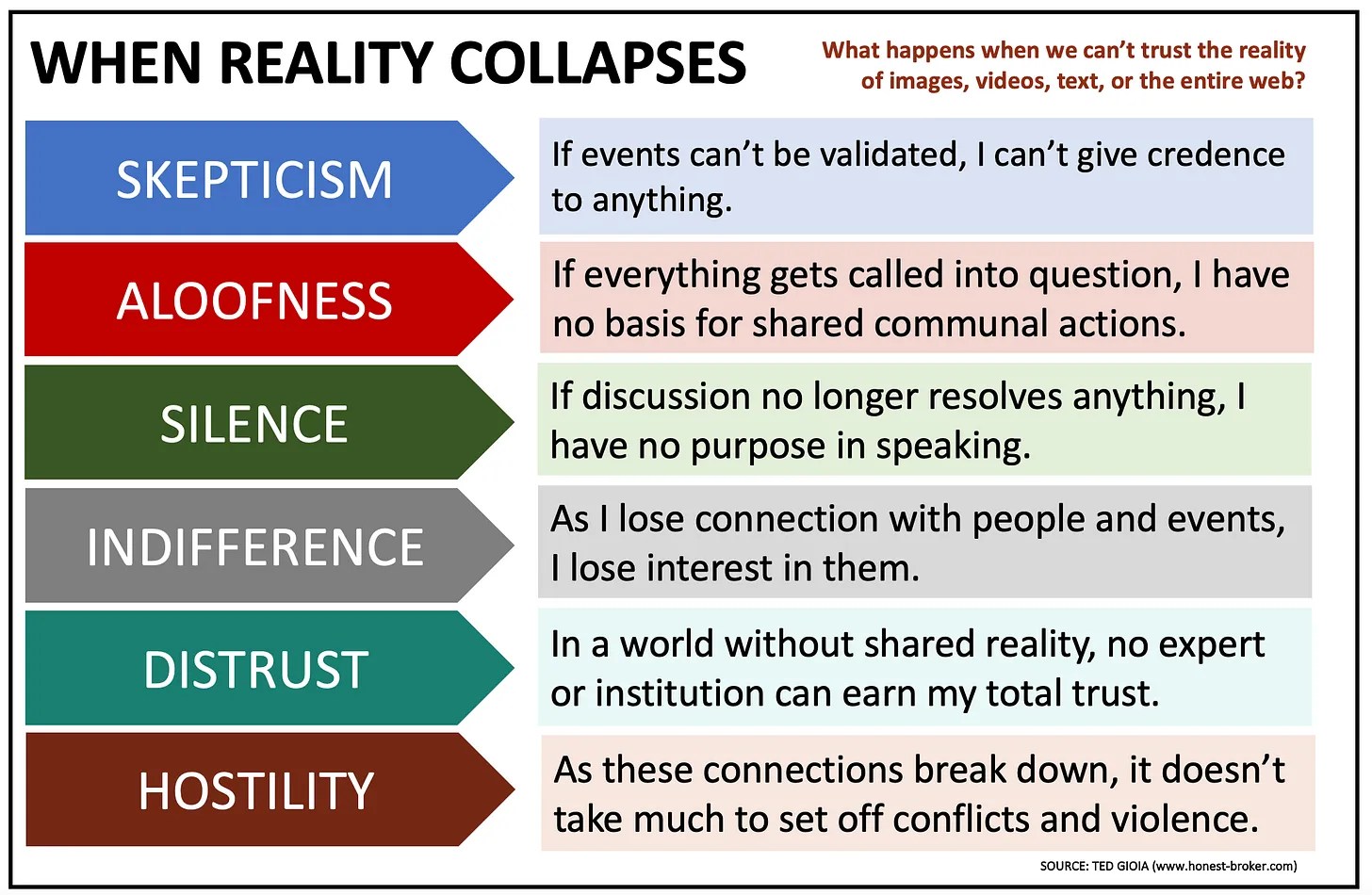


 Tipsy Teetotaler ن