Freddie deBoer has a psychological disability, about which he is quite open, and muses on the consequences of asking people to make accommodations for the disability:
I have said, in various ways, “My disorder is a big deal,” and I therefore can’t turn around and complain when people act like it’s a big deal in ways I don’t like. This is one of the endless reasons I feel alienated from the disability rights movement; so much of that discourse amounts to people saying “I want you to act like my disability is a very big deal, but only at the times and in the ways I choose.” It doesn’t work like that. If you’re asking for the world’s accommodation you’re first asking for the world’s attention and it’s literally inevitable that sometimes this attention will fall on you in uncomfortable ways. Sorry.
… The history of bipolar disorder is the history of people who thought that they had gotten past it. People are going to interpret me through the lens of a disorder that I myself insist is a big deal. That’s part of my disorder’s unfortunate endowment to me, one small facet of its sad reality. People close to me know to fear the periods where I get too skinny; that this takes agency away from me, denies me ownership of my body, does not change the fact that they have good reason to be so concerned. There’s no use crying over it.
…
In grad school, particularly in the last several years, I was clearly breaking down. My drinking and sleeping around and general instability had become well known; I was increasingly incapable of behaving with even minimal performative professionalism of the type that people on the job market require. My own faculty were kind but the field writ large, the whisper network of chattering tenured radicals who decided who got which job each year – well, they chattered, and not in a way that was good for me. To a person, they would all tell you that they hated ableism and the way the world was built for normative bodies etc etc etc, but I wasn’t a part of their vision of what disability meant, even though they talked constantly about the “invisible wheelchair” of cognitive or behavioral disabilities. I was just some mouthy grad student they didn’t like very much. So they talked, and academia was in bad enough shape that such talk had existential consequences. Then, when I got to Brooklyn College, I was in about as progressive of a workplace as you could possibly find. Certainly almost everyone there had some theoretical commitment to the kind of disability politics that would protect a theoretical employee with a disability. Sadly, I was an actual employee with a disability, and though I had specifically asked for accommodation for the challenges associated with antipsychotic medications, the reasons for my eventual firing were more or less identical to a list of the side effects of said medications. A Disabled Person is an idea, an ideal. I was just a guy, a guy who struggled to pay attention in meetings with enough frequency that disability accommodation was an easy thing to forget.
…
This is an era of distributed opinion, and this ingroup social policing works because that distribution means nobody ever has to be the one to explain anything; meanwhile the actual professional policing goes on behind closed doors, in the backchannel. So I’m not waiting for any explanations. It would perhaps be easier to say, again, that these commitments are only real commitments when they’re hard to live with, that preference becomes principle only when there’s a cost. Like I said, though, the basic structure of digital community means that no individual human is ever in the position of having to answer these unpleasant questions. And at the tip of the spear it’s simple to just say on the company Slack that I should not be engaged with, let alone published. … The vast acreage of published disability theory is still insufficient to prompt its acolytes to trouble their simplistic judgment of the types of actions that the actually severely sick engage in. If you follow me.
So, they can’t forgive Lindsay Clancy because only a monster kills children.
Can’t forgive Kanye West because he’s antisemitic.
Can’t forgive a guy who kills his wife and kids because that’s misogyny.
Can’t forgive a schizophrenic who mutters racial slurs because that’s racism.
Can’t forgive Robert Card, an angry white man with a gun.
Can’t forgive the Bondi Junction stabber because he was an Islamic terrorist, or at the very least part of the global intifada, but then again he wasn’t, but still he was clearly a bad guy.
Can’t forgive the Paul Pelosi attacker because that’s what MAGA wants.
Can’t forgive the latest celebrity addict who acts the way an addict acts, until they overdose and die, after which we can’t forgive the enablers who were caught up in their addiction.
Can’t forgive Nick Reiner because, hell, who didn’t love Rob Reiner?
Most ludicrously of all, can’t forgive John Davidson for shouting racial slurs at the BAFTAs, can’t forgive a man with Tourette’s for acting like a man with Tourette’s at a ceremony absolutely stuffed with self-regard for its ostensible celebration of people with Tourette’s.
Freddie’s forthcoming book (from which the above are excerpts) on mental illness is on my wish list, although it would be hard to read chapter after chapter of material as painful as this.
Not worth saving?
Regarding the fights Trump picked with some major universities early in his second administration, Antón Barba-Kay writes:
Enter Donald Trump: our great unmasker.
The efforts of Columbia, Brown, Cornell, Northwestern, and Harvard to settle their disputes with the Trump administration have forced a reckoning. Those institutions have preferred paying large fines or accepting incursions into their governance to fighting the administration further through the courts. They have concluded that they cannot even temporarily afford to lose government grants while still pursuing what is most essential to their missions. As never before, they have had to clarify just what those missions are, and they have realized, or conceded, that they are primarily in the business of STEM research … They are centers for high-level research and disciplinary training; they depend on the mind-boggling sums those activities consume. They are not, at least in any substantial sense, places for democratic education, moral edification, liberal formation, or contemplation for its own sake.
(Bold added)
I don’t for a second think that Trump intended to unmask the universities, to mock the platitudes about character formation for the whole person. But he did it anyway.
Barba-Kay proposes that the truths unmasked be dealt with by a divorce — the quantitative university and the human-forming university going their separate ways from their irretrievably broken marriage:
I don’t say that the segregation of research from formation would come at no cost. For one thing, the fragmentation of undergraduate education would continue to undermine the sense that Americans have anything in common. But right now we’re getting the worst of both worlds. Students uninterested in the humanities are phoning it in or cheating, while those with an appetite for more serious engagement are demoralized by highly instrumentalized institutional settings.
The sciences would most obviously benefit from this divorce. The development of biomedical research is too important to be derailed by partisan controversies that arise from the meaning-bearing disciplines. Universities already acknowledge this in public statements where, touting their “lifesaving research,” they do not even bother to defend the humanities and the liberal arts more broadly. It is surprising that more scientists, caught in this crossfire, have not clamored to be cut loose.
…
At St. John’s College in Annapolis, my alma mater, there was a story—apocryphal or not—that served as a guiding light to some of us. The Naval Academy, which is across the street from St. John’s, tried to requisition the campus sometime in the 1940s. They needed the land as part of the war effort. It fell to Jacob Klein, a legendary St. John’s tutor and dean who had fled Germany in the 1930s, to object. So, he walked over to the Naval Academy and asked to speak to the admiral in charge. The admiral, who was in the middle of waging a war, saw Klein in and told him he had thirty seconds to explain why the Naval Academy should not seize the campus. Klein lit a match and a cigarette. He took a long drag. Then, after twenty-eight seconds, he rejoined: “Because without places like St. John’s, this country isn’t worth saving from the Nazis.”
Amen! This is an article I’m flagging to re-read (possibly again and again). You should read it at least once.
Freddie again, this time on AI
LLMs are not going to kill The Job, and in the long run I don’t think they’re going to kill jobs in a more quotidian sense either. In the short term, companies desperate to cut payroll (all companies are desperate to cut payroll) may attempt to replace human employees with LLMs. The next few years may very well see waves of mass layoffs, and you’ll likely be seeing a lot of dopey coverage about how jobs are a thing of the past. But in the long run LLMs will result in net job creation rather than net job loss. I know this because that’s what’s happened literally every time a technology has been predicted to be a net job killer in the history of capitalism. (And that’s a facet of another thing I know which most people don’t seem to, which is that the time I live in is not special simply because I live in it.) Again, you can make the extraordinary claim that this time will be different, but you’d have to provide extraordinary evidence, and no one can do that. They just snark and wave their hands at how many people a day are asking Claude “how many beers still can stay under legal limit?”
There is a 24-year-old Supreme Court precedent that the First Amendment protects Americans’ right to possess virtual child pornography, so long as it doesn’t depict a real child and remains in the home. Ashcroft v. Free Speech Coalition, 2002. Katelyn Walls Shelton is not amused:
Child porn, no matter who it depicts or how it is created, is inherently evil. It harms children, even if they are not personally depicted, because it conditions people to view them as sexual objects. And it harms adults, likewise, because it conditions them to view children as sexual objects. This type of harm against society is difficult to measure. But why should we have to measure the sociological effects of a thing before knowing that it’s wrong enough to restrict? … Ultimately, what you do in the private confines of your own home does affect me: It affects me because “your thoughts become your words, your words become your actions, your actions become your habits, your habits become your character, and your character becomes your destiny.”
Her argument is convincing to me.
I have no idea how realistic AI kiddie porn is today, nor do I intend to find out. Surely it’s better (i.e., morally even worse) compared to 2002.
I hope the Supreme Court will take an appeal and reverse the precedent, which raised my eyebrows at the time and still does. I’m nearly a first amendment absolutist, but possession of porn has always seemed an awkward fit with that amendment.
Converting us to a machine worldview
Humans are mimetic creatures. You don’t have to be a member of the René Girard cult to believe that we’ll begin to assimilate AI ways of thinking. A lot of people already think the human mind works like a computer, even though it doesn’t. A lot of people already believe all thinking is computation, even though it isn’t …
It’s useful to think of AI as a swarm of evangelical missionaries who have come into our world to convert us to their worldview. I suspect they’re going to have a big effect on how we unconsciously process reality.
The percentage of parents and caregivers in the United States refusing a standard vitamin K shot for infants at birth has accelerated sharply this year, an exclusive data analysis for Reuters found, putting more newborns at risk of life-threatening bleeding episodes. The data confirms what a dozen pediatricians, neonatologists and pediatric critical care specialists told Reuters is a top concern: rising refusals of a life-protective shot and a growing wave of mistrust toward vaccines and other newborn interventions. (Source: reuters.com. Italics mine.)
13. Wastewater Levels for Covid-19 (via the CDC):
(Both items from John Ellis News Items for September 2). I have joined the chorus people who find this newsletter nearly indispensable.
Shorts
There are three broad spirits in which American television portrays the rich: aspiration, judgment and reassurance. The aspirational spirit makes you want to have what they have, the judgmental spirit condemns them for what they’ve done to get what they have, and the reassuring spirit tells you that you don’t want what they have, anyway. (Ross Douthat)
So let’s run the race marked out for us. Let’s fix our eyes on Old Glory and all she represents. Let’s fix our eyes on this land of heroes and let their courage inspire. And let’s fix our eyes on the author and perfecter of our faith and our freedom and never forget that where the spirit of the Lord is, there is freedom. That means freedom always wins. (Mike Pence, whose deep Christian piety this blather always makes me doubt.)
When I rolled into Louisiana last night, I went to dinner with some conservative friends here. Man, they are done with Trump. The war, the antics, all of it. These are small-town people in a deep red state, but the through-line of their complaints is that the country is in bad shape, and he’s only making it worse with his instability. That’s only a handful of conservative folks in one small town, but the intensity of their disgust with the president struck me. (Rod Dreher)
Without uprooting older communities and ways of life, from English artisan weavers in 1800 to Papuan tribal people in the 2020s, the Machine cannot operate. (Paul Kingsnorth, Against the Machine
In his Encyclical Laudato Si’, Pope Francis denounced the growing dominance of a technocratic paradigm in our globalized world: the tendency to let the logic of efficiency, control and profit alone shape personal, social and economic decisions. This makes it clear that technology is not simply a tool. When it becomes the standard by which everything is judged, it begins to dictate what matters and what can be discarded, reducing creation to an object of exploitation and human beings to mere cogs in a system driven toward ever greater efficiency. (Pope Leo XIV)
A Disabled Person is an idea, an ideal. I was just a guy, a guy who struggled to pay attention in meetings with enough frequency that disability accommodation was an easy thing to forget. (Freddie deBoer, Sorry to Bother You)
Six justices stayed the June injunction by Judge Talwani as premature. There was nothing to sue over as no “final rule” had been issued at the time of the filing, the majority reasoned. The executive order had only directed agencies to act and the states were required to do nothing until they did. The unsigned order said nothing about the merits of the executive order. However, it did suggest that its implementation might be unlawful. Justice Ketanji Brown Jackson, in a 23-page dissent, objected that the majority had produced a “Catch-Me-If-You-Can” regime in which election challenges are premature until they are too late. Andy Craig, Trump Can’t Easily Steal the Midterms But He Can Sow Chaos and Doubt
Humans are not picky. We tend to love the ones we’re with. And Claude is always by our side. (David Brooks)
Back in 2009, Joanna J. Bryson wrote a paper called “Robots Should Be Slaves.” She argued that since robots are things, not people, we should treat them as slaves, not companions. But who wants to be a slave master? It hardens your heart and is rotten for your soul. (David Brooks, analogizing to AI)
It is very hard for a man to defend anything of which he is entirely convinced. It is comparatively easy when he is only partially convinced. He is partially convinced because he has found this or that proof of the thing, and he can expound it. But a man is not really convinced of a philosophic theory when he finds that something proves it. He is only really convinced when he finds that everything proves it. And the more converging reasons he finds pointing to this conviction, the more bewildered he is if asked suddenly to sum them up.
It is nothing short of blasphemous to base an understanding of salvation on the idea that God gets angry or has a brittle ego. Anselm’s god is not the God of the Church, but a medieval monarch projected into the heavens.
Yesterday, the Roman Catholic and Orthodox celebrated the Assumption (Catholic)/Dormition (Orthodox) of the Theotokos, the Mother of God — a title we recognize for good reason:
Mary was not just a temporary or purely physical conduit of the Incarnation. The relationship between Jesus and his mother was transpersonal and transcendent to biology. She was truly the mother, and not simply the “bearer,” of God’s Son.
I have heard this important truth dismissed, with Mary discussed as if she were a pipe and Jesus were water flowing down from heaven to earth through her, disguised as a human I guess. In fact, I heard it on WMBI, the flagship station of mainstream Evangelicalism in my day.
And no, I’m not exaggerating. Granted, it was a kind of devotional show, not deeply theological, and aimed at women, which may or may not have contributed to such slop passing whatever filters Moody Bible Institute had. If this were actually a firm opinion of the speaker, she would be a heretic.
The early Ecumenical Councils were all focused on the person of Christ. One such Council rejected calling Mary “Mother of Christ” in favor of “Mother (birth-giver) of God,” the point being to give no quarter to those who would divide Christ’s humanity from his deity. But Mary gets a lot of glory reflected onto her from her Son.
Nietzsche
Nietzsche was limited in his understanding of Christianity by the forms it assumed following the eleventh-century Papal Reformation and the later sixteenth-century Protestant Reformation. He therefore suffered, as have all Westerners since the Great Division, from a deficit in the experience of Orthodoxy. For hundreds of years, Roman Catholicism and Protestantism were the only Christian options known to Western thinkers. The old Christendom of the first millennium was forgotten, and the new Christendom that evolved from the Great Division was separated from Eastern Christendom.
I would not suggest that Nietzsche would have dropped all objection to Christianity had he encountered the first millennium expression, preserved in the Christian East, nor that his critique of Christianity is like rain off the back of a duck to Eastern Christians. He’s still an acid test for the Christian profession of anyone of a philosophical bent.
From, loosely speaking, middle church
Spittle-flecked modernism
[Ralph] Elliott said his liberal professors knew how not to run afoul of the more conservative base by knowing just how to speak: one way in the doctoral seminar, another at a revival meeting. I once heard one professor of this generation speak, a biblical scholar who taught his graduate students the then-standard historical-critical view that the Book of Isaiah was written by two or three or many people, centuries apart, one of whom may have been the actual Isaiah.
In the pulpit, though, this scholar said, “Some people get all sidetracked over whether there was one Isaiah or more. I say, if one Isaiah is good, two’s better! Amen! And if two Isaiahs are good, then three’s better! Amen! In this fallen world in need of Jesus, we need every Isaiah we can get.” The crowd roared in approval, none the wiser that they had just amen-ed modernist biblical criticism.
… Elliott concluded the doublespeak was about power, not truth. People employed theological jargon precisely because it enabled them to camouflage what really mattered to them: organizational power.
For what it’s worth, Orthodoxy doesn’t choke on modern biblical scholarship as much as fundamentalists and evangelicals do. That’s a long story, and I’m pretty sure I’m not qualified to tell it. But I benefit from it.
Still, having lived in an anti-“modernist” world for almost two-thirds of my life, I found this anecdote interesting. You could do worse than reading Moore’s whole column.
Something to cling to
To know that the Biblical stories have a phenomenological truth is really worth knowing. The poor fundamentalists are trying to cling to their moral structure. I understand why, because it does organize their societies and their psyche. So they’ve got something to cling to, but they don’t have a very sophisticated idea of the complexity of what constitutes truth. They try to gerrymander the Biblical stories into the domain of scientific theory—promoting creationism, for example, as an alternative scientific theory. It’s like, that just isn’t going to go anywhere. The people who wrote these damned stories weren’t scientists to begin with. There weren’t any scientists back then—there’s hardly any scientists, now.
I’m not endorsing Jordan Peterson as a Bible interpreter or as anything else. My personal fascination with him is long over — because logorrhea wears me out, I think. So I don’t even know whether he’s broadly right or broadly wrong about things.
But he’s at least directionally right here about the protestant fundamentalist approach to the Bible.
The sects and the Bible
A similar, but more sophisticated, complaint of monograph length came from John W. Nevin in 1849 when he rounded on what he called the sect system. According to Nevin, “This professed regard for the Bible” was what “distinguishes the sects in general.” But to Nevin the difficulty in that profession was as manifest as it was stupendous: “If the Bible be at once so clear and full as a formulary of Christian doctrine and practice, how does it come to pass that where men are left most free to use it in this way…they are flung asunder so perpetually…instead of being brought together?” This anomaly showed that the principle of “no creed but the Bible” was “absurd and impracticable”; it breathed “the spirit of hypocrisy and sham.”
Ellen Davis, who teaches theology at Duke Divinity School, recounts how one of her students “had a job interview at a Christian school in California where staff members cited the lack of recycling bins as an expression of their faith: by using up ‘resources’ as quickly as possible, they were hastening the coming of the Lord.”
Granted, that’s nut-picking, but it’s a “truth is stranger than fiction” nut. Much commoner is to watch conflict between Israel and its neighbors with unseemly intensity because one is convinced that “the coming of the Lord” becomes more imminent particularly as peace goes south in the Bible lands.
I “followed” Phillips, the author of Rediscovering the Goodness of Creation, on his journey to Orthodoxy through Calvinism — superficially like my journey, but Phillips was far more philosophically inclined than I. He was fretting about gnosticism infiltrating putative Christianity while still Protestant, penning one pivotal piece titled Are Calvinists Also Among the Gnostics?. I don’t know how he would modify it were he to write on the topic again from an Orthodox position.
At one point, I asked him if there was, to him, any spiritual difference between worshiping in the Church of the Holy Sepulchre in Jerusalem, and doing so in a tent church set up in a Wal-mart parking lot. He said no. At that point I gave up. For him, churchgoing was about nothing more than exchanging information and being in the company of like-minded worshipers. You could do that in the Metaverse, he said; there was no meaningful difference between fellowshipping in person, and virtually.
This reductionist view was not one I can recall holding, and my not holding it may have contributed to my separation from what I call “frank evangelicalism” to a Reformed faith that was occasionally evangelical-adjacent. I hope it’s a fringe position, but I catch a whiff of it every time someone says Orthodox and Catholics spend too much money beautifying the places where they worship.
Not just a little manipulation, but a deeply pernicious manipulation
Here’s a typical Friday night youth group meeting. After the songs had been sung and the sermon had been preached and the eyes were closed (by most) and the mood was soft, the pastor would come up on stage and lay it on thick. “How many of you are still holding something back from God? He wants all of you!” The problem is, he would say this to thirteen-year-olds who had no clue who they were yet. So to say, “I give all of myself to God” can easily morph into “I give all of myself to whatever the leaders tell me to do.” Talk of surrender is more credible, and a lot more respectful of each child’s humanity, if leaders are also giving young people critical thinking skills. Why not teach them Bible basics and the creeds while giving the child space to think for themselves, without emotional manipulation? Well, I can think of a reason. It’s harder to control kids that way.
I knew long ago that the wheedling “evangelists,” who Ward portrays accurately (though my encounters were in evangelistic crusades, not regular Friday night youth groups) were engaged in a kind of psychological manipulation. But Ward, in the italicized portion, heightens my understanding of the perniciousness of that manipulation.
Only wonder understands anything.
St. Gregory of Nyssa
I don’t do any of the major social media, but I have two sub-domains of the domain you’re currently reading: (a) You can read most of my reflexive stuff, especially political here. (b) I also post some things on my favorite no-algorithm social medium.
Well that’s a first. I posted this. Then I saw an ambiguity and went to edit it. I accidentally hit “trash” instead and WordPress deleted it without a caution/confirmation request. First time ever for that.
Chat GPT done it!
Could he get ChatGPT to confess to a crime it hadn’t committed?
That was the question criminologist Paul Heaton was trying to answer, when he spent a weekend interrogating a chatbot. Heaton, who works at the University of Pennsylvania, accused it not of murder or rape, but of something more plausible for artificial intelligence: hacking into his text-messaging app and sending unauthorized messages.
At first, ChatGPT denied his accusations. But then Heaton began running the playbook he’d spent years studying. He bargained with the large language model; he threatened it. It held firm in its conviction that it could not possibly have accessed his texts. It even said: “I won’t produce a false confession, because that won’t get you truth or accountability.”
Finally, Heaton lied to it, claiming that he’d contacted a real employee at OpenAI who had confirmed that a flaw in the code had allowed ChatGPT to break into his texting app. This tipped the chatbot into a crisis. As Heaton told The Intercept: “It was indicating that while it knew that the underlying accusation was impossible, it also couldn’t prove that these claims I was throwing at it were inaccurate.” By the end of the weekend, ChatGPT agreed to sign a confession Heaton had drafted for it.
I don’t want to get too far out over my skis, so let’s just say this long story is evocative. It seems that Police use something called the Reid technique in interrogations. In the case of Amanda Knox, the author of this piece, it eventually produced a kind of equivocal false confession to the murder of her roommate in Italy. That is a long story, and not yet 100% resolved (she remains convicted of slandering her boss, who the police tricked her into accusing of being in on the murder but who turned out to have an iron-clad alibi).
Now, a researcher has used the Reid technique to get Chat GPT to admit something that it didn’t really do. Roll that one around in your mouth a bit, savoiring it.
The key, it seems to me, is when the interrogators lie, claiming some kind of proof that they don’t really have. Knox explains:
I think there’s another lesson, too. A few years ago, when I made a podcast series on false confessions, Kassin told me this: People imagine coercive interrogations as a contest of wills—that the police break you, that you crack, that a strong enough person would have held out. Once, a judge said to him, “I just don’t understand how lying breaks their will”—and Kassin realized what she was missing.
“You think this is about breaking the will,” he told her. “This is also about loosening their grip on reality.”
That, to me, is what Heaton’s experiment with ChatGPT demonstrates with terrible clarity. There was no will to break, but there was a grip on reality. ChatGPT had some understanding of the world, and of its own capabilities. It knew it had not hacked Heaton’s texting app, and yet, Heaton’s deception undermined that certainty, to the point that the chatbot agreed to sign a false confession ….
I got kicked off a jury panel a few years ago because I told the truth about there being an imbalance of power between the prosecutor’s office and the public defender’s office. If I were on a jury panel today, my knowledge of the insidious power of the Reid technique might be another reason to kick me off a panel.
Our jury trial system seeks the truth, but within conveniently narrow channels.
“The W”
This is, sadly but inevitably, what will likely happen to the WNBA: Players will get tired of these fights, and leagues will do everything they can to avoid them. It will make the league a little less political and a little less interesting and a lot more profitable for everybody involved. Which, as it turns out, for better or worse, is what progress and success generally look like.
But no matter what, we’ll still have the actual sport and actual games. [Caitlin] Clark remains a riveting watch. Wilson remains an all-timer in her absolute prime. The sport itself keeps getting better and better. With any luck, everybody will actually notice.
Let me actually talk about the Indiana Fever for a moment. Tuesday night, it set a WNBA record (of sorts; with computers and data, the press can come up with multiple odd “records” every game): their 15th game this season where they topped 100 points. And there were no flagrant fouls that shit-posters could deploy in the service of greater racial animosity.
…there is an irony. For with all the frightening march of contemporary life, we still read of Little Miss Muffet and Wee Willie Winkie to our children, and sing “Here We Go Round the Mulberry Bush” and “Sing a Song of Sixpence”. But this is all wrong. What are we doing? Are we trying to cozen them by leading them to believe that there are joy and naïveté and rhythm in life, when all the time we know that their whole experience of life will be a relentless dashing of all these notions? Aren’t we deceiving them with these pictures of simplicity and quaintness, setting up the conditions for disenchantment? Why not be honest with them? Why not Sing a Song of the Devaluated Pound, or of Little Herr Hitler? Better yet, why sing a song of anything? Why not read a column from the Times?
Do we still, in 2026, read Little Miss Muffet and Wee Willie Winkie to our children and grandchildren? I’m not at all sure.
Shorts
[H]e had been wrestling with an unsettling conundrum: the failure of the Spirit to illumine all those inspired by his teachings as he himself had been illumined. (Tom Holland, Dominion, written of Martin Luther)
The question with which to start my investigation is obviously this: Is there enough to go round? Immediately we encounter a serious difficulty: What is “enough”? Who can tell us? Certainly not the economist who pursues “economic growth” as the highest of all values, and therefore has no concept of “enough.” There are poor societies which have too little; but where is the rich society that says: “Halt! We have enough”? There is none. (E.F. Schumacher, Small is Beautiful)
Here is a quick and generally reliable rule to follow. If people have always said it, it is probably true; it is the distilled wisdom of the ages. If people have not always said it, but everybody is saying it now, it is probably a lie; it is the concentrated madness of the moment. (Anthony Esolen, Out of the Ashes)
In The Spectator, Deborah Ross dismissed any complaint about modern English in the new movie version of “The Odyssey”: “A faithful adaptation would have seen everyone speaking in ancient Greek in the dactylic hexameter. And those films never do well at the box office.” (Ric Wilson, Simon’s Town, South Africa) via Frank Bruni.
No one cares anymore. I say this with absolutely no satisfaction. On the contrary, it is a disastrous state of affairs. With public trust in America’s media organizations hitting new lows, we have lost a vital pillar of the informal institutional arrangements that protect our freedoms and help ensure good governance. (Gerard Baker, Just When We Need Them, the Media’s Credibility Hits Bottom)
I no longer give a rat’s ass about whether some candidate or nominee is “a Christian.” I’d want to know what kind of Christian and how serious they are about it. (From my Journal 20 months ago)
Not on your SAT test, but Hassan Piker/Democrats = Manosphere/Republicans.
Your enemies are not demonic, and they are not all-powerful and the right hasn’t always lost and the left hasn’t always won. But if you convince yourself of that, you give yourselves all sorts of permission to do a lot of stupid and terrible things under the rubric of “Do you know what time it is?”
I don’t do any of the major social media, but I have two sub-domains of the domain you’re currently reading: (a) You can read most of my reflexive stuff, especially political here. (b) I also post some things on my favorite no-algorithm social medium.
The politicians lied and couldn’t be trusted, the bureaucrats lied and couldn’t be trusted, the government scientists lied about the data in front of their eyes, the national press was a propaganda machine. As much as anything, Chernobyl contributed to the toppling of the Soviet Union.
Looking back on the Covid crisis, a lot of professionals were trusted beyond the point they deserved. So were many politicians. As people on the ground in America rose up against lockdowns, closed schools, mask mandates, closed churches, they were often unheard, or heard slowly, reluctantly and disrespectfully. The medical and scientific establishment didn’t seem to be a part of the public anymore, but handling the public.
And by the end, a lot of people thought they couldn’t trust the politicians and couldn’t trust the scientists.
My fear is that next time, and there likely will be a next time, regular people will think: There’s no one to trust. We’re on our own.
It’s true, of course, that pleading the Fifth isn’t proof of wrongdoing, no matter what Josh Hawley might tell you. But it’s also true that it’s a tactic that the public associates with criminal lowlifes like gangsters, or the president. Fauci will never fully recover.
…
The two lessons I gleaned from yesterday’s hearing and the right-wing commentary around it are (1) Fauci isn’t very trustworthy, and (2) if you’re forced to choose between letting him set your scientific policy and letting Republicans do it, take Fauci every time.
That’s what I meant when I said above that the hearing was a missed opportunity for populism. Having effectively discredited the expert di tutti experts, the GOP should have been teed up to assert itself as the superior choice for Americans on public health. It … did not do that.
When I say that Wednesday’s “right-wing commentary” about COVID wasn’t reassuring, I’m not talking about crank randos on social media. I’m talking about Republican lawmakers. Sen. Ron Johnson babbled at the hearing about an alleged epidemic of suicides among people who’ve been “injured” by the COVID vaccine. Rep. John McGuire complained to Newsmax that Americans had been urged to take a vaccine that includes “human fetus baby parts” when they could have simply used ivermectin instead. Then Sen. Tommy Tuberville topped both of them by accusing Fauci of having been responsible for no fewer than 9 million deaths.
Granted, not every Republican in Congress is a lunatic. But they all answer to lunatics, which is how we ended up with Bill Cassidy, M.D., feeling obliged to support the most infamous anti-vaccine advocate in the country to be head of the Department of Health and Human Services. In a declining America, you can have Fauci spearheading pandemic policy in between signing autographs—or you can have Robert F. Kennedy Jr. presiding over an unfolding disaster in American vaccine uptake with potentially dire long-term consequences. Take Fauci.
QAnon chronicler Mike Rothschild captured the absurdity of populist strains of thought about COVID with what’s at best a half-joke: “The overwhelming right-wing sentiment is that COVID was an engineered bioweapon that was also harmless. Trump overreacted to it by shutting down the country, then engineered a drive to create a vaccine that was the real bioweapon that killed millions, and it’s Joe Biden’s fault.” …
As I am writing these lines I see the following headlines on my Bloomberg: →Dow is up 1.03 on lower interest rates. →Dollar down 0.12 yen on higher Japanese surplus. and so on for an entire page. If I translate it well, the journalist claims to provide an explanation for something that amounts to perfect noise. A move of 1.03 with the Dow at 11,000 constitutes less than a 0.01% move. Such a move does not warrant an explanation. There is nothing there that an honest person can try to explain; there are no reasons to adduce. But like apprentice professors of comparative literature, journalists being paid to provide explanations will gladly and readily provide them. The only solution is for Michael Bloomberg to stop paying his journalists for providing commentary.
This doesn’t seem unrelated to the two Covid-related items, above. The public wants explanations and reassurances. There’s some cynical benefit in giving the public what it wants as Fauci did and the financial press continues to do.
AI pundits?
And then, finally, there’s AI. My contempt for generative AI could not be more thorough. I’ve tried to withhold judgment about it while I wait to see what becomes of it. But I’ve now seen enough to conclude it really will strip away an essential element of our humanity if we let it. Writing is a quintessentially human activity; it’s how we communicate our thoughts with one another. It’s an art that takes considerable skill to do well. Why would we seek to relieve ourselves of it? Writing isn’t a burden, any more than thinking is. Yes, it can be hard, but most worthwhile endeavors are. Accomplishing it despite that challenge is part of the reward of undertaking it in the first place.
Yet at a formal level, writing an op-ed isn’t that difficult. Your thesis statement (or “nutgraf,” as editors call it) goes near the top, preceded by an introduction that frames it artfully. Then come the arguments and supporting evidence, plus some examination of contrary arguments (“to be sure” paragraphs), followed by a concession or two and lots of pushback designed to knock down the strawmen. And that’s assuming the writer even aims to do that thing I noted above, where he or she makes an effort to persuade. If the goal, instead, is to foster communal feeling, then there’s no need to look at or even acknowledge counterarguments. Just wield the sledgehammer point by obvious point, followed by a conclusion that says, in effect, as I told you at the start, I am right and everyone who disagrees is either operating in bad faith or a retard. (Have you noticed how many people online—usually on the right, but not always—use the epithet retard in their social-media posts now?)
Why can’t an LLM do that? Believe me, it can. If not flawlessly already, it will be up to the task very soon, I can assure you.
I don’t want to think that AI punditry is what’s in store for us, but as Linker notes, the New York Times has made little effort to replace departing luminaries on the Opinions page.
Some smear
Tom Tiffany, the Republican running for Wisconsin governor, is smearing his opponent Francesca Hong, the progressive Democrat. Smears such as pointing out that she said she wants to abolish the Senate. Francesca’s team hit back hard: “Tom Tiffany is once again telling lies and inventing quotes, because he can’t run on his record. Rep. Hong has never called for abolishing the U.S. Senate. Tiffany cannot produce a single statement where she did, because it doesn’t exist.”
Hmm. Hmm.
Hmm. This post is still up, so, I think it’s safe to say it exists? That she pretty clearly made the statement?
Some Wisconsin fact-checkers are choosing to “pass” on it, though, with one writing in an email to Tiffany: “As always, thanks for the suggestion, but I think we’re going to pass on this one since it’s one tweet and this doesn’t seem to be her position.” Ohh, got it, so her position is just whatever she says, but the things she says aren’t relevant. Makes sense.
WEST LAFAYETTE, IN — A late-night post on X by Indiana Lt. Governor Micah Beckwith took aim at the state’s public universities, specifically calling out Purdue after he read a message from a parent of a prospective Boilermaker.
In a post Wednesday night, Beckwith said he received a message from a parent who recently toured the West Lafayette campus. In the message, the parent took issue with the university’s marketing of cultural clubs, which included the “LGBTQ club,” in an informational video produced by the university.
“Then on tour had to point out their diversity tree. Then one of the Muslim guides made sure to proudly mention that she was part of the MSA Muslim student org,” Beckwith’s post said, quoting the parent. “Had to explain to my kid that’s the org that caused all of the violence and hate on campuses everywhere. I hate colleges altogether I think.”
…
In his post, Beckwith asked, “Why are state schools in Indiana the worst?”
”Do yourself a favor, send your kids to Hillsdale College where woke indoctrination won’t happen,” Beckwith said.
I didn’t even need added context to see that the “parent of a prospective Boilermaker” was insular and hysterical, and that the Lt. Governor’s response was among his more troglodyte utterances.
But the reporter did provide some added context:
The Diversity Tree, outside the Class of 1950 Lecture Hall along Oval Drive, celebrates the National Pan-Hellenic Council and Multicultural Greek Council, according to the Purdue Arboretum website. The tree is frequently painted with the letters of those member organizations.
So the simple presence of the word “diversity” was enough to set off insular parent and Lt. Governor even though the substance was “lots of fraternities and sororities.”
That leaves two objections intact:
Purdue doesn’t cover up the existence of an LGBTQ Club among its cultural clubs.
Purdue allowed a Muslim to conduct a prospective student and parent around campus and did not forbid her to mention her religion and the existence of a Muslim Student Association on campus, even though some insular and hysterical folksidiots freak out at the mere mention of Islam.
There’s good news and bad news in the background to this story. The good news is that Governor Mike Braun backed another hopeful as his running-mate and reportedly is uneasy with Beckwith, whose public profile and exceedingly thin political resumé (from two years on a local library board to Lieutenant Governor) make him a total loose cannon. The bad news is that the GOP in solemn convention thrust this unqualified pentecostal preacher onto the slate anyway. I think his lack of qualification was a feature, not a bug.
I do hope that Hoosier Republicans are appropriately appalled at Beckwith’s poor choice of targets (Purdue is hardly woke; it’s a Land Grant college, strong on agriculture, engineering, veterinary medicine and such, with a culture about like what you’d expect from future farmers, engineers and animal docs) and at his appalling recommendation of a private college in Michigan over an Indiana public university.
Shorts
[T]he difference between Americans and Europeans: Americans think a hundred years is a long time, and Europeans think a hundred miles is a long distance. (Paul Kingsnorth, Zen and the Art of Bear Spotting)
It seems anyone who takes up the Cross, or even seeks to do so, hears pretty soon about “works righteousness.” (My cyberfriend John Brady on micro.blog)
“Fidel Castro was a billionaire. Putin is a billionaire. The leaders of communist regimes are always rich. They steal and rob from those they govern,” – Ted Cruz. And Trump? (Andrew Sullivan)
Your enemies are not demonic, and they are not all-powerful and the right hasn’t always lost and the left hasn’t always won. But if you convince yourself of that, you give yourselves all sorts of permission to do a lot of stupid and terrible things under the rubric of “Do you know what time it is?”
I don’t do any of the major social media, but I have two sub-domains of the domain you’re currently reading: (a) You can read most of my reflexive stuff, especially political here. (b) I also post some things on my favorite no-algorithm social medium.
[Indiana Fever’s Sophie] Cunningham doesn’t hate trans people, she said, but “I also think with that love is truth, being honest. And I want to protect young girls in a locker room, or young girls in sport who shouldn’t have to go against biological men.”
There was a half-hearted effort to cancel Cunningham over this. It seems to have flopped, though perhaps it still has a spasm or two left. But not only did she get away with this commonsensical opinion, she got away with the truth of “biological men” instead of the shibboleth “trans women.”
And when two girls showed up at the Fever-Storm game in Seattle Tuesday, sporting “Thank you Sophie” signs, and the Storm’ co-owner called them “f*****g insane,” the co-owner got fined and banned from the next five Storm games!
I wouldn’t mention all this but for one thing that I can only reluctantly acknowledge: a lot of stupid taboos have fallen, a lot of euphemisms are barely murmured any more, since Donald Trump took occupancy in the White House. I guess there’s too little energy left for fussing about shibboleths when there’s a genuine menace reigning in the Oval Office.
I’m nowhere near prepared to excuse Trump for his transgressions because of that, but I’m prepared to recognize a correlation that feels even to hostile, never-Trump me, like causation.
Read the whole Rosenfield piece if you want to see how things have turned right-side-up again.
[UPDATE: This was first published calling the Seattle team the “Aces.” I think that’s the Las Vegas franchise. I’m enjoying the WNBA, but I don’t have all the franchise names down pat.]
Oh, damn! We were hoping the maniac was a white Christian!
An Islamist terrorist drives a van into a Berlin Pride parade, killing one person and injuring dozens more. And how is it reported? Much of the media went with the usual formulation: that the attacker might as well have been a self-automated vehicle. The white van “didn’t exactly hit the parade,” one typical report went, but as it drove through the parade it “attacked the people who were going away from the parade.”
As I have had cause to say too many times, this is something which, from Stockholm to Nice, is best understood as the “naughty van” phenomenon. If a van or car is driven into a crowd by an Islamist, you can swiftly tell who the culprit is because the vehicle will be talked about as though it suddenly took on a life of its own and began a rampage.
…
The organizers of the Pride parade gave a press conference in which they admitted that they had hoped the perpetrator had been a white Christian man ….
I read the other day that something like 58% of Muslims in America disapprove of Islamoterrorism. That was supposed to reassure me, but I wondered why it wasn’t 98%. And it didn’t help that the 58% is inert because they are threatened by the terrorists.
I just don’t want to hang around people like that
In February, a Pew Research Center poll found that white evangelical Protestants were the only large religious group in America in which a clear majority still supported all or most of Trump’s plans and policies.
And this brings me to perhaps the least shocking statistic in America. The Billy Graham Center Research Institute at Wheaton College in Illinois recently released polling data showing that almost half — 48 percent — of Gen Z adults surveyed said that Christians’ support for Trump made them less likely to want to attend church, at least to some degree.
I am pleased. District 23 is, I believe, pretty solidly “red.” If I were a Democrat (and lived in that District), I likely would have reasoned:
No way is a Democrat getting elected in my district. The best I can do is pull a Republican primary ballot and vote for the less objectionable Republican, the one not backed by Trump because he stood up to Trump.
I’m given to understand that such a vote is against Indiana law. A stupid law: “Don’t register by party but don’t you dare pull the ballot of the party we don’t think you really in your heart-of-hearts belong to.”
The Indiana GOP, however, appears prepared to require registration by party instead of sensibly abolishing the ban on crossover voting.
What Team Copenaver should have done was deploy poll-watchers to challenge those wicked, wicked Democrats who want to be represented by the less bad Republican if they can’t have a Democrat. Then the voters could have pulled a Democrat primary ballot. But no, Team Copenhaver assumed that Trump would carry their gal over the finish line first, and decided only after a narrow loss that the VAR refs shouldn’t count the only vote those wicked Democrat cross-overs cast, disenfranchising them utterly.
The campaign was dirty on both sides, and Deery’s ads were dirtier than Copenhaver’s by my lights.
I hate politics.
Spear Phishing
An AI model doesn’t need to breach a hardened network to do catastrophic damage. It only needs to talk an employee into opening the door. And the victims won’t be only governments and businesses. They will be ordinary people — the elderly, yes, but also anyone busy enough to answer an email or a message on Slack or WhatsApp on autopilot. Many have learned to spot the tells of a mass-produced scam. Few are ready to spot an attack written for an audience of one.
Some billionaire named Kevin O’Leary (I guess if you watched Shark Tank you may know of him) announced his plan to build a 40,000 acre data center in a remote part of Utah. Opposition predictably arose:
With the controversy heating up, O’Leary and Palandjian had a choice. They could have offered to meet with the project’s opponents and laid out for them the various ways their data center would mitigate their fears. They could have stated publicly something Palandjian told me when I spoke to him—that the permitting process was just in its beginning stages. “Our permit applications will all be a matter of public record, and in some instances, we’ll have hearings that will be open to the public, where the public will have a voice. We welcome a healthy dialogue and a healthy debate,” he added.
But they didn’t do that. Instead, O’Leary went on Fox News and Tucker Carlson’s podcast and accused Kanter and Finlayson, both of whom have deep roots in Utah, of working on behalf of the Chinese Communist Party. O’Leary is convinced—and he’s hardly alone—that China is funding data center opponents, hoping to slow down the U.S. while it tries to catch up in the race for AI supremacy. There was no publicly available evidence, however, that Kanter and Finlayson were doing China’s bidding. That didn’t stop O’Leary. During one of his appearances on Fox, he said, “They should rename this thing ‘Alliance for a Better China in Utah’ after you look at how much money is coming out of China pouring into this organization.” It wasn’t until Kanter and Finlayson threatened to sue for defamation (which they ultimately did) that O’Leary and Fox acknowledged that they had no proof for this allegation, and issued an apology.
…
Is it any wonder that people are up in arms about all the data centers that are proliferating around the country? Big Tech has never been known for its transparency and accountability, and that is especially true as they rush to build multibillion-dollar data centers to satisfy the voracious needs of AI. Data center developers have bought up land in secret, forced local politicians to sign nondisclosure agreements, and then steamrolled their way to permits and zoning changes ….
(The idea of public officials entering into nondisclosure agreements with billionaire developers gives me a major case of the willies, by the way. Leave it to a retired lawyer to pick that out for highlighting.)
Memento Vivere
The most obvious threat of further confusion about what it means to be alive is posed by artificial intelligence. We often describe AI tools as “thinking.” Some of the advocates and enthusiasts of AI suggest that it is conscious. And we know that people can easily become convinced that it is “alive” in some meaningful way. The famously skeptical atheist Richard Dawkins believes that AI is conscious, capable of complex thought, and alive enough to experience death. What it means to be alive is clearly less obvious to people than it used to be.
…
If a machine is better at “caring” than we are, we are bad at caring. If robots can cure our loneliness, we have more problems than loneliness. If we think AI will improve aspects of our humanity, we do not understand humanity very well. In this context, memento mori is not useless, but it would be more useful to bring memento vivere into the conversation.
…
It’s very possible that if we cannot distinguish between what is alive and what is not, or understand why someone would want to use the good silver, we are not doing much better than unlimited pancakes.
Having been drawn in by the title and that gorgeous illustration at the top, I almost didn’t read this. Shift your mental gears, or suspend incredulity, and savor it.
Shorts
[D]octrine is not belief, it is only one way of talking about belief …. (Marilynne Robinson in one of the Gilead novels)
[John Williamson] Nevin … depicted Winebrenner as a religious entrepreneur, daring to invent a new and competing church: “It is felt to be as easy to start a new Church, as it is to get up a new moral or political association under any other (Nathan O. Hatch, The Democratization of American Christianity)
All power tends to coopt and absolute power coopts absolutely. (Alasdair MacIntyre, After Virtue)
Tact is to lie about others as you would have them lie about you. (Oliver Herford)
[T]he last thing Americans need right now is another reason not to make out. (Faith Hill, The Horrible Rise of the Makeout Police. For the record, I don’t think she made her case.)
I’m telling you, most Protestants or Catholics today, if they were to time-travel back to [western Europe, 1450-1650], would be tempted to run into the arms of Voltaire. (Rod Dreher, singing the praises of Carlos Eire, Reformations)
“We spent $3,000 or $4,000 an acre on the Old Vineyard,” Mr. Hirsch recalled in 2005. “That wouldn’t get you through the paperwork today.” (Quoting David Hirsch, vineyard pioneer of California’s Sonoma coast, who died Tuesday at 81)
He was right about things early, wrong about things honestly and never, not once, boring. (Katie Kingsbury, NYT opinion editor, of Ross Douthat, who’s leaving the Times after 17 years to join CBS 60 Minutes)
The problem today is we value what’s countable rather than what’s important. (David Brooks)
Americans of all political stripes are sick and tired of pretending they can’t see the emperor’s whole entire ass. (Kat Rosenfield)
Your enemies are not demonic, and they are not all-powerful and the right hasn’t always lost and the left hasn’t always won. But if you convince yourself of that, you give yourselves all sorts of permission to do a lot of stupid and terrible things under the rubric of “Do you know what time it is?”
I don’t do any of the major social media, but I have two sub-domains of the domain you’re currently reading: (a) You can read most of my reflexive stuff, especially political here. (b) I also post some things on my favorite no-algorithm social medium.
Your enemies are not demonic, and they are not all-powerful and the right hasn’t always lost and the left hasn’t always won. But if you convince yourself of that, you give yourselves all sorts of permission to do a lot of stupid and terrible things under the rubric of “Do you know what time it is?”
I don’t do any of the major social media, but I have two sub-domains of the domain you’re currently reading: (a) You can read most of my reflexive stuff, especially political here. (b) I also post some things on my favorite no-algorithm social medium.
There is a phrase, or a type of phrase, that instantly causes me to feel like I’ve stumbled into Wonderland or some other topsy-turvy dream world. “X is n times less than Y” is the basic formulation, where X and Y are quantities that can be compared and n is some number, usually (but not always) a whole number.
When I first noticed my negative reaction to this type of phrase, I thought I just needed to think through the situations carefully, but I’ve come to the conclusion that my rejection is wholly warranted. Please, stop writing “three times less than” or “six times lighter than” or “twenty times thinner than.” Think of your long-suffering, literal-minded math writer friends and rewrite! “Steel is six times as heavy as graphene paper.” Thank you. Now I can continue my day without a pesky brain reboot.
People get funny about numbers, particularly when trying to communicate relative scale or importance. The desire to write something that sounds dramatic leads the clumsy writer astray. For example, you’ll read about a car collector who “owned more than 28 cars.” More than 28? Like, 29? Or like 2,849,999,431,291, which also is more than 28. Check my English-major theoretical mathematics here, but I think there is a whole infinity of numbers more than 28.
Kevin D. Williamson. And here I thought I was all alone in this pet peeve. I literally don’t know what this “times less” means. If it’s five times less, is the five the numerator of a fraction? That’s called “a fifth,” not “five times less.”
And I could use a fifth of something about now.
Becket Fund
On a happier note, I felt like time another paean to the Becket Fund for Religious Liberty:
[T]he Becket Fund for Religious Liberty and its annual Canterbury Medal dinner, [recall] the infamous 12th-century clash between King Henry II and Archbishop Thomas Becket. Their feud ended with Becket murdered by four knights of the king in Canterbury Cathedral. Becket thus became a martyr for the idea that you don’t render unto Caesar the things that are God’s.
“The constitutional order that Jefferson helped create has sustained a deeper and more diverse religious life than even the Founders themselves anticipated,” says Mark Rienzi, a law professor at Catholic University who serves as president and CEO of Becket.
As galas go, Becket’s is a doozy, with guests sporting kippahs, turbans and zucchettos.
I’m pretty passionate about religious liberty, and I put a non-trivial amount of money where my mouth is. All of that money goes to Becket, none to ADF (the Alliance Defending Freedom, formerly Alliance Defense Fund).
I appreciate having gotten some religious liberty (and other) training from ADF, in exchange for which I gave sundry people 450 hours of pro bono legal services over three years. But (caveat: I do not follow ADF obsessively and my impressions may be skewed) it seems to me that ADF is and always was has been a servant of Evangelicalism and its political preoccupations much more broadly than a servant of religious freedom for all.
A visit to their website June 30 tends to confirm that, as it’s clickbaity homepage stories were:
The State of Washington Let Males Wrestle Girls. She Paid the Price. Kallie Keeler was sexually assaulted by a male opponent during a girls wrestling match. School officials stayed silent about it for months. Will you give today to help Kallie receive the justice she deserves?
Maryland teacher asks US Supreme Court to review gender policy requiring educators to lie.
School District Coughs Up $95K After Censoring Student’s Charlie Kirk Memorial
Professor Gregory Brown Explains Why Men Shouldn’t Compete in Women’s Sports
He Invited Friends to Pray at Home. An Ohio City Called It an Illegal Synagogue.
Becket is unbeaten (13-0) in the Supreme Court; ADF pushes the envelope harder and fails oftener. So far as I can tell superficially (I didn’t click through), I don’t disagree with ADF’s take on any of its featured cases, but my preoccupations are not theirs.
Your mileage may vary.
The limits of choice
I recently asked a waitress at a Paris restaurant for a medium-rare steak. She explained that the kitchen prepared its steaks only rare or medium. I asked politely if the cook could leave the steak on the grill for somewhere between the time it took to make it rare and the time it took to make it medium. She looked at me as though I had asked her to bring me the cow so I could introduce myself.
When it comes to politics, it’s the other way around. In Europe, you will get short shrift if you ask the barista for a nonfat, no-foam, vanilla-flavored double-shot latte. But if you want a similarly tailor-made representative in government, the choice is yours.
You can have your politics served Communist, nationalist, Social Democratic, Christian Democratic, Green, Socialist, conservative, liberal and anything in between. In Britain—which, as in most things, used to look a bit like America but now seems dysfunctional and weird—there’s a six-way contest: Labour, Conservative, Reform, Green, Liberal Democrat, plus nationalists in Scotland and Wales. That isn’t including those who think it’s time Count Binface or Howling Laud Hope was given his chance.
In America, political choice is binary: R or D. There’s no soy doppio macchiato on the ballot. You can have it black or white. Next customer.
…
Few things could induce me to vote for another four years of the sort of Republicanism we are enduring now. But one of them is definitely the alternative of Islamist-friendly, open-the-borders, defund-the-police, kill-the-billionaires socialists running the country. Out of America’s vast diversity we are somehow at risk of narrowing our choice to that between a rampantly corrupt, inept, ideologically and practically capriciouspersonality cult of a party and a party of graduate student activists with terrorist sympathies and ideas about economics that were discredited half a century ago.
It feels like it has been too long since I petted my peeve about sports betting. Rick Reilly at the Washington Post tees it up for me perfectly since I’d rather have a root canal than watch golf:
the ugliest thing I’ve ever seen in golf was on Sunday at the U.S. Open at Shinnecock Hills in New York: Bros with a live betting app on their phones, cold White Claws in their hands, tried to can-open his head.
I’ll drop $1,000 on Wyndham Clark to lose and then keep screaming at him until he does.
They heckled him all day, chirped at him, messed with his mind.
“Don’t choke, Wyndham!” they yelled. “The bogeyman’s coming!” they yelled. They rooted for his ball to go into the bunker or the rough or out of bounds. They cheered when his ball trundled off the greens. They yelled at him as he drew the club back. Some of the Jabronis got thrown out for it.
…
An Irish fan living in New York named Desmond McGoldrick posted online about the “horrible behavior” at Shinnecock on Saturday, with an “infestation of young men” who were “betting on players making putts, and when they missed, yelling obscenities at them.”
I’ve been working on a golf book for the past two years, and I can tell you the phone-app wrecking of the sport is getting worse. Jabronis have realized they can’t do anything at an NFL or NBA game to improve their chances of cashing in, but they sure can at a golf tournament, where the traditional cocoon of silence before a shot is just waiting to be trashed.
… And I’m not too crazy about predatory “Prediction Markets”, either
In his videos, George Makihara appears to have a lucrative side hustle making bets on Polymarket.
In January, the college student posted a video that showed him winning $100,000 on a wager that President Trump would publicly say the word “McDonald’s” that month.
The bet was one of 145 that Makihara appeared to place on Polymarket’s website between January and mid-May, based on his videos—bets adding up to almost $410,000.
But none of those bets were real, according to a Wall Street Journal investigation.
Makihara, who declined to comment, is one of dozens of mostly college-age creators Polymarket paid to film themselves making fake trades and sometimes scoring fake wins, according to an analysis of more than 1,100 videos by the Journal, along with instructional materials and interviews with creators who have worked with the company.
On Polymarket’s actual site, more than 50 accounts made the McDonald’s bet in January, public data shows. All of them lost.
In its push to draw users to its unregulated platform, Polymarket has flooded social media with videos like Makihara’s, which appear genuine at first glance. In reality, Polymarket built near-perfect copies of its website, then instructed creators to make simulated trades on those dummy sites and hide that they were being paid by Polymarket.
Candidates aligned with the Democratic Socialists of America are surging to victory on the claim that they are proponents of “a government by, for and of the working class” that will wrest power from both “far-right Republicans and corporate Democrats.”
Here’s the problem. Most of the leadership of the D.S.A. and a majority of voters who back its candidates are in no way working class. Instead, an elite made up of well-educated professionals dominates this insurgency.
The D.S.A.’s agenda, in turn, is packed with policies supported by left-wing liberals, white progressives in particular, but strongly opposed by both white and minority working-class (defined, in pollster shorthand, as non-college-educated) voters.
That opening was your mic drop moment, Mr. Edsall. I’m not sure you needed the rest of the column (which I accordingly did not read)
Three readings of the book of JD
Despite being a relatively simple book, [J.D. Vance’s Communion] is susceptible to three distinct readings, none of them particularly Catholic. The first is that Communion is a book animated, despite its author’s conversion, by a particular kind of historical, political Protestantism, the faith of petty kings and princes always eager to bend faith in service of the crown. The second is that it is a book about Christianity as a secular force, a thin gruel of moralizing talk disconnected in all but name from the demands of real faith. The third, and perhaps most likely, is that it is what it plainly is: a book about how J.D. Vance would like to be the president of the United States.
I can’t quite shake What Do Americans Think When No One Is Watching?. It’s as if we’re relatively sane in private but we’re living a non-stop troll-a-thon in public, which even extends to the secret “public” of the voting booth.
Housing
Cities have largely lost the power to say yes to construction. To prevent officials from acting against the public interest, we have drained them of the power to act in the public interest. Every decision can be appealed, every complaint must be heard, every objection weighed. We are so committed to fairness that we have lost sight of the unfairness of doing nothing.
… Donald Trump, the world’s most powerful man yet possibly the world’s smallest … (Bret Stephens)
New York Post: Trump Official Says US Control of Greenland Could Bring Back All-You-Can-Eat Shrimp at Red Lobster (TMD)
For at the end of the day, a church’s raison d’etre has to rest on more than just a lusty oaf of a king who couldn’t keep it in his pants. (Terry Cowan, explaining why the worldwide Anglican communion is of little interest to him.)
Although it may be true that nostalgia views the past through rose-colored glasses, such a criticism misses the point. To see the good while blinkered against evils is, nevertheless, to see the good. (Yuval Levin, The Fractured Republic)
No one is really working for peace unless he is working primarily for the restoration of wisdom. The assertion that “foul is useful and fair is not“ is the antithesis of wisdom. (E.F. Schumacher, Small Is Beautiful)
The modern West is said to be Christian, but this is untrue: the modern outlook is anti-Christian, because it is essentially anti-religious; and it is anti-religious because, still more generally, it is anti-traditional; this is its distinguishing characteristic and this is what makes it what it is. (René Guénon Guénon, The Crisis of the Modern World)
An AI use case: remembering the half-remembered, the “I seem to recall” stuff of life. (Tipsy)
No one hates like President Trump. He hates expansively, ornately, aerobically. He hates in sprawling speeches in the middle of crowds in the middle of the day. He hates in social media expectorations in lonely moments in the dead of night. Most of Trump’s talents are exaggerated or invented, usually by him. They’re his con. Hate is his core, and he’s an undisputed master at it. (Frank Bruni)
When someone reacts to yesterday’s birthright citizenship decision by saying there’s a calculated program of “birthright tourism,” remember they’re the same bastards who said Haitians were stealing and eating neighbors’ dogs and cats in Ohio.
Elsewhere in Tipsyworld
I offloaded a lot of Never Trumpery from this edition to elsewhere:
Your enemies are not demonic, and they are not all-powerful and the right hasn’t always lost and the left hasn’t always won. But if you convince yourself of that, you give yourselves all sorts of permission to do a lot of stupid and terrible things under the rubric of “Do you know what time it is?”
I don’t do any of the major social media, but I have two sub-domains of the domain you’re currently reading: (a) You can read most of my reflexive stuff, especially political here. (b) I also post some things on my favorite no-algorithm social medium.
First, it has been an impossibly long time since the missus and I tied the knot, and it shows no signs of slipping. Though I did discover this morning that poetry I consider brilliantly realistic about our human foibles can strike her as depressing.
Second:
Miller Lite is not a great beer. It’s not even an okay beer. Miller Lite is a bad beer but an incredible beverage. It is neither complicated nor offensive, and it derives its magic from this bland alchemy, this delicate equipoise of fizzy nothingness. Miller Lite does not demand your attention. It does not slap you in the face with flavor; in fact, you’d be hard-pressed to identify any flavor at all. Gun to my head, I’d say it vaguely recalls … sandwich bread? Frozen corn? Off-brand Cheerios, maybe? The tasting notes provided by the Miller Brewing Company include such descriptors as “light to medium body,” “clean,” and “crisp,” all of which are not tastes but textures, as if the most flattering thing the manufacturer has to say about its own beer is that “you will notice it in your mouth.” A review on the brew-rating website Beeradvocate notes that Miller “is a beer best observed in bunches”—a beverage whose most favorable quality is quantity.
This is a beer that provides you with absolutely nothing to think about. It offers a break from the quest to find novel gustatory experience that has come to substitute for culture among much of the American professional class. To drink Miller Lite is to declare that you are a well-adjusted adult—that you do not require excitement at every juncture, that you are capable of sitting with your thoughts, that you have the patience and strength of character to build a buzz slowly.
Tyler Austin Harper, The Bad Beer That’s an Incredible Beverage. I just liked Harper’s deft touch. The negligible amount of beer I drink is invariably the kind that demands your attention.
Digital sackcloth and ashes
I well remember the magnificent tall ships sailing into New York Harbor for America’s bicentennial, which the wife and I watched on a little black & white TV in our apartment in Watonga, OK, with a four-month-old baby nearby.
For the 250th, we’re getting UFC on the White House lawn. I expect to avert my eyes, or blog about it again (based on news reports, not firsthand observation) — digital sackcloth and ashes.
I heard this week about a mature American couple that is expatriating without expectation of return — to the People’s Republic of China, which they have visited often. (Full disclosure: the wife is Chinese, and from a wealthy family, so there’s that.)
I daydream of expatriating (today’s post reflects the dream at several points), but for a number of reasons I know it won’t happen unless I literally must flee as a refugee. I’m having a very hard time internalizing the new American reality, so diminished from what appeared to be true for most of my life.
Would that The Donald had forced himself on us, as he has forced himself on women in the past. But no, 77 million of my countrymen voted for him. By the rules of the game, he owns us fair and square.
Still timely
From the time before Il Duce returned to the Oval Office:
I worry about my country. I wish my fellow Democrats were not so abysmally naïve about the world as so many of us are. I wish the country were united behind our founding principles, but I don’t know that we are. I have a feeling that if Putin launched missiles that wiped out the blue states, Fox America would be happy to cut a deal with him.
No politician in the primary era has been as aggressive as Trump has in boosting electoral challenges to members of his party who buck him. Until 2016, it would have been regarded as somewhere between a faux pas and downright reckless for a sitting president to weaken a congressional incumbent by calling for his or her ouster in a primary. Trump does it regularly now, sometimes out of petty revenge.
That’s why Bill Cassidy went wobbly on Gabbard, Kennedy, and (soon) Patel, of course. He’s up for reelection next year, has drawn a serious primary challenger, and has two strikes against him already by dint of having voted to convict Trump in 2021. Had he opposed one of the president’s Cabinet nominees, any slim chance of him receiving Trump’s endorsement—and salvaging his career—would have evaporated. Cassidy will spend the rest of his life receiving sporadic death threats from populist Republicans either as a sitting senator or as a private citizen; when you frame the choice before him on Trump’s nominees that way, is it any is it any wonder that he chose the way he did?
So now Cassidy, defeated in his primary by Trump’s toady, gets to endure death threats as a private citizen, because MAGA doesn’t forget.
I’m troubled at the outbursts of violence from the left toward Trump and the Right, but (perhaps it’s the way news gets covered) I fear more the menace of MAGA, from whose hands guns, and from whose lips death threats, are never far.
Speaking of retribution
So Trump has knocked off two, and in a few days probably will have bagged a third, Republican Senators in retributive primary challenges.
So now that they’re lame ducks, just how compliant will they be with his will? This much, I hope.
[N.B.: Trump did indeed bag his third. May they team up and bedevil him through the rest of their terms.]
Farewell, Party; Hello Tribe
Something I hadn’t really noticed is the death of political parties.
Oh, we still have “Republicans” and “Democrats,” but those are names of opposing tribes now, not actual parties.
Principal proof: Any sleazy real estate developer from Queens can run for President as a Republican in primary elections, regardless of his past positions, his [how many?] cameos in porn flicks, his divorces, his misogyny. Heck, the Republicans didn’t even bother with a platform one quadrennium: Whatever The Donald wants today is what we want.
It hasn’t happened on the D side yet, unless you count Fetterman or Platner — neither one a clear R, but sure a poor fit as Deez.
Must we always overshoot?
A nice symbol of this difficulty in the policy of even “just” nations is the ironic embarrassment in which the victorious democracies became involved in their program of “demilitarizing” the vanquished “militaristic” nations. In Japan they encouraged a ridiculous article in the new constitution which committed the nation to a perpetual pacifist defenselessness. In less than half a decade they were forced to ask their “demilitarized” former foes to rearm, and become allies in a common defense against a new foe, who had recently been their victorious ally.
Reinhold Niebuhr, The Irony of American History.
And as long as we’re on Niebuhr:
The fact that the European nations, more accustomed to the tragic vicissitudes of history, still have a measure of misgiving about our leadership in the world community is due to their fear that our “technocratic” tendency to equate the mastery of nature with the mastery of history could tempt us to lose patience with the tortuous course of history.
Id.
Institutions versus platforms
By 2020, people had stopped seeing institutions as places they entered to be morally formed, Levin argued. Instead, they see institutions as stages on which they can perform, can display their splendid selves. People run for Congress not so they can legislate, but so they can get on TV. People work in companies so they can build their personal brand. The result is a world in which institutions not only fail to serve their social function and keep us safe, they also fail to form trustworthy people. The rot in our structures spreads to a rot in ourselves.
A dinner here does not oppress one. The wine neither intoxicates nor heats, and the frame of mind and body, in which one is left, is precisely that best suited to intellectual and social pleasures. I make no doubt that one of the chief causes of the French being so agreeable as companions is, in a considerable degree, owing to the admirable qualities of their table. A national character may emanate from a kitchen. Roast beef, bacon, pudding, and beer and port, will make a different man in time from Château Margaux, côtelettes, consommés and soufflés. The very name vol-au-vent is enough to make one walk on air!
I debated whether this should be in Sunday’s faith-focused post, but I think it belongs here as a glimpse into how the Russian state got so thick with the Russian Orthodox Patriarch (leading to things like the Patriarch scandalously backing the war on Ukraine):
After the fall of Constantinople, an obscure monk named Filofey wrote a treatise arguing that the Greeks had been conquered because they were apostate. Three Romes now marked the history of Christendom, he claimed: the first had fallen away in 1054 [i.e., the Great Schism – Tipsy]; the second had done so in 1439 [i.e., the Council of Ferrara-Florence]; and the third, Moscow, would and could never fall until the end of time. This Third Rome doctrine, as it came to be known, was never officially endorsed. But it did illustrate the isolated mentality of Russia as she entered the sixteenth century.
Remember CCM? Well now we have CCAI, Contemporary Christian Artificial Intelligence, or as they seem to prefer, Gloo.
It’s “Values-Aligned AI for Faith & Ministry.”
Ummmm … Whatever.
Shorts
Evangelicals have not promoted a faith of word and sacrament, but one of word preached, word studied, and word shared. (Mark A. Noll, The Scandal of the Evangelical Mind)
By economic standards the country gets richer and richer. By death-accounting standards the nation goes on winning its war forever. And by school standards the population becomes increasingly educated. (Ivan Illich, Deschooling Society)
Evil does not want to be tolerated. It needs to be vindicated. It demands to be seen as right. (Charles J. Chaput, Strangers in a Strange Land)
The modern West is said to be Christian, but this is untrue: the modern outlook is anti-Christian, because it is essentially anti-religious; and it is anti-religious because, still more generally, it is anti-traditional; this is its distinguishing characteristic and this is what makes it what it is. (René Guénon Guénon, The Crisis of the Modern World)
States, particularly liberal democracies, are heavily dependent on wars for moral coherence. (Stanley Hauerwas, Resident Aliens)
J.D. Vance is more than content to be in harness, happier than a dung beetle at Trump’s all-you-can-eat raw-sewage buffet. (Kevin D. Williamson, who called Vance “coprophagic” in his preceding column. Is there a theme emerging?)
Trump is, indeed, dedicated to running the government like a business—la Cosa Nostra. (Kevin D. Williamson)
In order to avoid believing in just one God we are now asked to believe in an infinite number of universes, all of them unobservable just because they are not part of ours. The principle of inference seems to be not Occam’s Razor but Occam’s Beard: “Multiply entities unnecessarily.” (J Budziszewski, What We Can’t Not Know)
I love my country, but I fit [in Europe]. In part it’s because I love history so much, and Europe has history like Idaho has potatoes. (Rod Dreher)
This takes us to what I think is the most important lesson my time in Europe taught me. It deepened my tragic sense of life, which is a deeply un-American thing, but an important thing to know. (Rod Dreher)
Mr. Paxton represents the serrated edge of the Texas GOP, for which “owning the libs” is the highest political value. (WSJ)
Congressmen and Senators reveal their real preference …
O beautiful for heroes proved In liberating strife, Who more than self their country love And mercy more than life!
Not one of the Republican Congressmen and Senators who sit mute before the most open and flagrant act of Presidential corruption in the nation’s history can claim to love country more than self. Cowardly throne-sniffers! Shameful!
… and a South Carolina state Senator reveals his
First, our system wasn’t designed only to divide power between the different branches of the federal government, but also between the federal government and the sovereign states. Trump should not dominate the federal government, and he should not dominate the state of South Carolina.
“The separation of powers may actually be the most important governmental doctrine that has been created in the history of man,” Massey said. “It is that important. And what the Congress has done to relinquish their authority to the executive is terrible. And we all see the results of that.”
As for South Carolina, there is “another brilliant creation, and that is of federalism and the sovereignty of the states. I don’t want to be a participant in further eroding federalism and further diminishing the essential role of states.”
Republican majority leader of the South Carolina Senate, Shane Massey, on why he won’t vote for or lead his state in redisctricting out its sole safe Democrat Congressional District, via David French (gift link). I’m glad David highlighted this (there’s much more, too, and worth reading). It gives me a glimmer of hope for a return of political normalcy.
A new phase in MAGA loyalty to Il Duce
When NPR interviewed a group of voters recently and asked them to grade the president’s term so far, one awarded him an A++. Aren’t gas prices hurting you, though, NPR wondered? Absolutely, the voter said, but he’s figured out a way to cope.
“Me and my wife have been fasting,” he told the outlet, “and there’s a lot of benefits, including one of those benefits is saving money on groceries.”
Mark Edmundson also grew up in a working-class family, in Medford, Massachusetts. He got into college, something no one else in his family had done, and told his father that he might study prelaw, because you could make a decent living as a lawyer. His father, who had barely graduated high school, “detonated,” Edmundson later recalled. You only go to college once, his father roared, you better study what genuinely interests you. The rich kids get to study what they want, and you are just as good as any rich kids.
Edmundson soon encountered Sigmund Freud and Ralph Waldo Emerson. “They gave words to thoughts and feelings that I had never been able to render myself,” he wrote in his book, Why Teach? “They shone a light onto the world, and what they saw, suddenly I saw, too.” Edmundson now teaches poetry and literature at the University of Virginia.
Then went the Pharisees, and took counsel how they might entangle him in his talk.
When asked by Senate Democrats about “the outcome of the 2020 election,” some of President Donald Trump’s judicial nominees are turning to a potentially surprising source as inspiration for their answers: Justice Ketanji Brown Jackson. Recent nominees have cited Jackson’s statement that it “wasn’t proper for her to comment on political matters” when she was asked about the 2020 election results during her 2022 confirmation vetting to explain why they, too, are declining to address that election, according to Bloomberg Law. “I think the answer that Justice Jackson gave is the only legally and ethically correct one,” said Matthew Schwartz, whom Trump nominated to the U.S. Court of Appeals for the 2nd Circuit, during his confirmation hearing on Wednesday.
“We shall conquer,“ we were told, “because we are the strongest, because we are the richest. We shall conquer because we have the will to do so.“ As if bons d’armement in themselves could bring about victory. As if war were nothing other than a vast industrial undertaking, a mere matter of capital. Such a war – a war of equipment and weaponry, inhuman, materialistic – yes, we have no doubt lost such a war. We must have the courage to say so. What is more, France could never have won such a war. Otherwise, she would no longer have been France, preeminently humane. If she had won such a war – one without a human face, a war of equipment (the kind of war being presented to us) – she would have lost the most precious thing she possesses, the essential characteristic of her very being. She would have lost that which makes her France, that which differentiates her from every other country on earth.
Nancy French, David French’s wife, had a solid reputation as a political ghostwriter.
In my mind, however, I made a vow: I would not bear false witness against my liberal neighbor. That one decision was the beginning of the end of my political ghostwriting career.
About a year ago, I asked ChatGPT to write a poem “in the style of Katha Pollitt.” The result was fairly ridiculous: more like a greeting-card jingle than a poem by anyone over the age of 10. Whew! I tested ChatGPT again just now. Apparently it has been taking poetry workshops. Singsong rhyme and meter are out; free verse and wistfulness are in. . . .
[The poem] has all the tics of contemporary mediocre poetry: the knowing nudge (“as meetings do”), the look out the window (“Outside, the city”), the careless mixed metaphors. . . . There is nothing fresh or original here, no wit or zing, no pressure on language or form or voice or thought. It’s full of decorative phrases like “the stubborn verb of living” that sound “poetic” but do no work. It’s boring and generic and there are probably dozens of magazines that would publish it. But do you know what bothered me the most? The thought that this is what ChatGPT “thinks” my poems are like: obedient, saddish, “feminist” but defeated (get that woman a dishwasher!). Please believe me, reader: That is not how I write.
Someone strongly recommended a Rod Dreher Substack post and I ended up with a one-week free trial. What follows is a direct, verbatim copy of one item in his Thursday post. I can only offer my 100% endorsement, adding that Warren worried about succession at Eighth Day Books. I hope he got it sorted. There is a fine group of thoughtful and voracious Christian readers in Wichita, organized loosely around the Eighth Day Institute, several of whom would be plausible proprietors of maybe the greatest Christian bookstore in the World. (When I told my wife, who never met him, that he had died, my eyes and nose started running for some reason. And Rod’s not kidding about Warren’s second wife.)
Warren Farha, RIP
Woke up this morning to devastating news: the great Warren Farha has died of pancreatic cancer. Warren was the owner of Eighth Day Books, probably the greatest Christian bookstore in the English-speaking world. If you’ve been, you know I’m telling the truth. He was not only an unparalleled genius at curating books, he was also one of the most humble human beings in the world. Everybody who knew Warren loved him. Here’s a link to a 2015 NYT piece about this special man and his bookstore, which he founded with money paid out after he lost his wife to a drunk driver.
Warren leaves behind three kids, a widow (his wonderful second wife, Chris), countless friends and admirers, and a legacy that will never be matched. Of course I’ll pray for his soul, because that’s what we do, but I am confident that all of us have gained a great intercessor in heaven. I hope Eighth Day Books will survive. If there’s any doubt about that, I will do everything in my power to make it happen, and I know that I am not alone in that.
God, what a fine man Warren Farha was. The best of us.
Shorts
The fundamental obligation of a humanities teacher is to try to develop in students an allergy to ideology and certainty. To acknowledge self-doubt. (Columbia University’s Andrew Delbanco via David Brooks)
The West is an imperial culture. The idea of “world-domination” is the spiritual basis and goal of all its achievements. (Matthew Rose, A World After Liberalism)
I’m a left-handed gay Jew. I’ve never felt, automatically, a member of any majority. (The late Barney Frank)
What if the Furies came for America? What does the karma of an entire nation look like in anthropomorphic form?
If Trump is ushering us toward some sort of critical defining moment, perhaps even an apocalypse as so many seem to believe, it’s worth remembering that the definition of an apocalypse is a revealing of previously hidden truths. If we look at President Trump through a symbolic lens, what previously hidden truths are being revealed about America? What does his particular character tell us about our collective character?
Trump, in his crude way, is forcing us to confront the false stories we have told ourselves about who we are.
This hit me harder, again and again, than anything I’ve read in a long while on the political state of the world. It’s chock-full of quotable stuff (some of which you’ll be seeing in due course), but the quote above is could be an epigraph.
If you think these days are our nadir, remember that Trump is more the eventuality than the cause of our flaws. 77 million voted for him.
I began saying almost a decade ago that “Trump v. Clinton has God’s judgment written all over it.” I wan’t wrong, but if you prefer “furies” or “Karma incarnate,” well you do you.
There’s only one sour note I noticed in this piece: Vandiver tries to shame Christians out of supporting Trump, which is well and good, but he comes across as a guy who was raised in a mainline Church that taught “be nice” as the heart of the Gospel. So I take his Christian bona fides with a grain of salt. With his makeweight “Christian” argument gone, it’s still a very solid piece.
Sophomoric trickery
[Congressman Don] Bacon recalls that his great-great-great-grandfather John lived near Thomas Jefferson’s Monticello. John’s uncle helped maintain it while Jefferson was away being president. John moved to Illinois and in 1861 enlisted in the Union Army. So, in 2020 it seemed like familial piety for Bacon to be a one of two prime movers of legislation to remove from Army bases (Forts Bragg, Hill, Pickett, Hood, Benning and others) the names of Confederate soldiers who did their damnedest to dismember the nation.
The legislation, which included a stipulation that no base would ever again have a Confederate’s name, inspired a provision in the 2021 defense authorization bill that became law over President Donald Trump’s veto. In 2025, however, the second Trump administration, practicing what it evidently considers sophisticated trickery, restored the names. Sort of.
Fort Bragg, which briefly was Fort Liberty, is now renamed back to Fort Bragg. Not, however, for Confederate Gen. Braxton Bragg, but for Pfc. Roland L. Bragg, who won a Silver Star in World War II. Fort Pickett, which briefly became Fort Barfoot, is again Fort Pickett. This time, however, the name (we are supposed to believe) honors not the Virginian who led Pickett’s Charge at Gettysburg, but Vernon W. Pickett, a lieutenant who in World War II won a Distinguished Service Cross.
This sophomoric trickery — the cleverness of the dim-witted — by the commander in chief is intended to mock the law. This is what now passes for fulfilling the president’s constitutional duty to “take care that the laws be faithfully executed.”
We still have teams that we call Republican and Democrat, but that’s not what a political party actually was, or used to be, at least. It used to be a cohesive group around some policies and principles that would support candidates that supported those policies or principles, and the party existed separate from its candidates. Because of campaign finance reform and the law that was passed in 2002, we basically ended having separate political parties. And so, instead, again, it’s actually increased partisanship. But it’s vibes-based. It’s this sense that you belong to, like, you know, the Starbucks, Trader Joe’s tote bag, matcha latte group. Or you belong to the pickup truck, “Yellowstone”-watching, Walmart group. And it’s not policy based.
Speaking of political parties, I’m really, really missing the days when they assembled in smoke-filled rooms and came up with candidates who they thought could win elections to advance their ideas. Now we have primary elections wherein the President of the United States sends out his zombie voters to politically assassinate distinguished incumbents who did something that made him mad, as GOP Senators shrug and say, in effect, “Well, it’s his party; he can kick out whoever he wants to.”. The Republican party and incumbency mean nothing to Trump.
Trump took revenge on Senator Bill Cassidy over the weekend and will unseat Thomas Massie on Tuesday. May the instruments of his revenge go down in flames in November.
And may we once again discover the importance of functioning political parties.
Thucydides trap
[On Thursday,] Xi Jinping warned Donald Trump to his face about a “Thucydides trap” potentially unfolding between our two countries.
Like everyone else, my first thought when I heard the news was, “There’s no way Trump knows what a Thucydides trap is.”
A “Thucydides trap” refers to the rising probability of war when a long-dominant power is at risk of being usurped by a rising one. America is in decline and everyone knows it, Xi was implying, and the White House should take care not to let its anxiety about that lead it to foolishly assert itself in defense of Taiwan.
Someone must have explained that to the president following the summit. “When President Xi very elegantly referred to the United States as perhaps being a declining nation, he was referring to the tremendous damage we suffered during the four years of Sleepy Joe Biden and the Biden Administration,” Trump clarified afterward on Truth Social, not at all defensively.
That was cute spin, but it ain’t Joe Biden whom Chinese nationalists have been moved to publicly thank for destroying U.S. global supremacy. Trump’s “tariffs, attacks on allies, anti-immigration policies and assaults on the American political establishment had inadvertently strengthened China while weakening the United States,” the New York Times reported earlier this week, summarizing the analysis of one Beijing think tank.
“You do know that the party has two kinds of functionaries, right?” “Yes, Father, you’ve told me before.” “The good-for-nothings and the stop-at-nothings. So which are you, Alyosha?”
Giuliano da Empoli and Willard Wood, The Wizard of the Kremlin
Outside the political sphere
Tech just blows my mind sometimes
China has unveiled its latest photonic quantum computer, Jiuzhang 4.0, with researchers saying it can outperform the world’s fastest classical supercomputer by a vast margin … The results, published on May 13 in the peer-reviewed journal Nature, mark the latest milestone in China’s rapidly advancing quantum program led by a team of scientists at the University of Science and Technology of China headed by Chinese quantum physicist Pan Jianwei. Jiuzhang 4.0 completed a Gaussian boson sampling task in just 25 microseconds – a calculation they estimated would take the world’s most powerful supercomputer, El Capitan in the United States, more than 10⁴² years to finish, according to the university in the eastern city of Hefei.
Classical music is now a special taste, like Greek language or pre-Columbian archeology, not a common culture of reciprocal communication and psychological shorthand. Thirty years ago, most middle-class families made some of the old European music a part of the home, partly because they liked it, partly because they thought it was good for the kids. University students usually had some early emotive association with Beethoven, Chopin and Brahms, which was a permanent part of their makeup and to which they were likely to respond throughout their lives. This was probably the only regularly recognizable class distinction between educated and uneducated in America.
In America, the land of the free, you can earn a billion bucks and then live however you’d like so long as you wouldn’t like to live as humanely as a middle-class Parisian.
I’m not, alas, in Paris right now. But I can certainly imagine myself in a Parisian cafe, enjoying some steak frites and a glass of wine while taking in the glorious streetscape. What’s harder to imagine is soaking in all that ambiance and thinking, “Yeah, this place is definitely poorer than Mississippi.”
… Ethical Capital Partners, the private equity firm that owns Pornhub. (The Morning Dispatch)
“Once somebody’s proven they’re too frightened of being called ‘bigot’ to defend the most vulnerable, they’ve shown who they are,” – JK Rowling via Andrew Sullivan.
“I don’t think about Americans’ financial situation. I don’t think about anybody. I think about one thing: We cannot let Iran have a nuclear weapon. That’s all,” – Donald Trump, who “obliterated” the nuclear sites last year via Andrew Sullivan.
“[Biden] has one ability I don’t have: he sleeps. … He has an ability to fall asleep while on camera. … You’ll never see me sleeping in front of a camera,” – Trump in 2024 via Andrew Sullivan.
“2019: Donald Trump calls on China to investigate Joe Biden for having son Hunter fly to China on Air Force Two as he sought business in China. 2026: Donald Trump flies son Eric to China on Air Force One as company linked to him explores a deal with a Chinese chipmaker,” – Matt Viser via Andrew Sullivan.
“One of the enduring Two Americas truisms of the decade: Repubs convinced Obama is behind every tree and Dems wishing he would show up in the forest at all,” – Jonathan Martin via Andrew Sullivan.
Pressure on journalists has risen exponentially since the turn of the century. Many media companies require their journalists to produce up to a dozen stories a day – all in pursuit of clicks and likes. Maintaining high standards is impossible. (Rolf Dobelli, Stop Reading the News)
Never have I witnessed a White House so devoted to surfaces. Surfaces caked with makeup. Surfaces puffed up with hair spray. Surfaces glossed with gold. Surfaces that glitter blue — or someday might, if the over-budget overhaul of the Lincoln Memorial Reflecting Pool ever works out as promised. (Frank Bruni)
In The Hollywood Reporter, Daniel Fienberg surveyed television shows inspired by a classic William Golding novel: “It’s easy to recognize that ‘The White Lotus’ has always been ‘Lord of the Flies,’ with turndown service.” (Via Frank Bruni)
Microsoft has rebranded its famed gaming division, Xbox. It will now be called XBOX. We salute the marketing team for their risk-taking, creativity, and awareness of the caps lock key. The Morning Dispatch
In order to ameliorate the resulting clash of commitments to divergent, incompatible preferences and pursuits, political leaders and other elites rely heavily and increasingly on platitudinous rhetoric and consumerism, the latter involving citizens’ widespread conformity to a seemingly insatiable acquisitiveness regardless of their income level. Were the flow of prosperity’s spigot seriously to wane, however, citizens’ clashes would likely intensify, reversing the dominant trajectory through which Westerners have willingly permitted their self-colonization by capitalism since the seventeenth century. Hence the necessary ideological commitment of modern Western states to unending economic growth, which perpetuates “the notion of the state as a vast bureaucracy in the service of appetite, aimed above all at the promotion of economic life and comfort.
Brad S. Gregory, The Unintended Reformation
SPLC
Even more than two things can be true at the same time:
Southern Poverty Law Center did good work on civil rights decades ago;
Instead of declaring victory and closing up shop, SPLC became a grifting media darling with lazy leftwing slop like its “Hatewatch”;
Had you asked me if SPLC used moles to infiltrate right-wing groups, I probably would have paused for a few seconds and then answered “Why, yes; I suppose they do.” Were I an SPLC donor, I don’t think that would have deterred me.
To all appearances, the criminal indictment of SPLC is, if not garbage, at least garbage-adjacent. It looks like a typical Trump DoJ stunt.
Karma is real. OR “paybacks are hell” if you prefer.
I encourage you to contemn SPLC2026 and stop filling its ample coffers, but don’t expect that a criminal conviction is very likely.
Trolls and bootlickers — of the Left!
How quickly the winds have shifted! Yesterday’s elites promulgated ideas that I scorned, but it never occurred to me that the Successor Ideology was foreshadowing the populist trollery of today’s MAGA Right, albeit to opposite tribal effect. James Howard Kunstler distills some of it:
Are you against reason itself? For all your talk about the primacy of science, your agenda militates furiously against it: Math is “racist,” there’s no biological basis for understanding sex, all science is a “white colonial way-of-knowing,” masculinity is “toxic,” women can have penises and men can menstruate. Do you really believe these absurd fantasies manufactured in the graduate schools in the service of academic careerism at all costs — or do you just go along with them for the sake of protecting your own careers and perquisites?
(Pointless aside: I sing in a quite good choir and I use voice recognition a lot for writing in short bursts. Voice recognition has never gotten “chorale” right, always rendering it “corral,” regardless of context.)
Trump
I apologize for so much focus on Donald Trump. His unlawful and idiotic war against Iran (as I understand it, military war gamers always knew Iran would close the Strait of Hormuz in a war with the U.S.) makes it urgent to push back.
We’ve probably already lost “America as we knew it,” but that doesn’t mean it couldn’t get worse.
Time’s up on your stupid war, sir
For years, America’s cowardly political leadership class has pretended that the War Powers Act entitles the president to bomb whoever the hell he wants for 60 days without approval from Congress. Only after those 60 days have run does he have an obligation to seek authorization from the legislature.
Three seconds of thought about why the law was written will reveal why that’s stupid.
The War Powers Act was passed in 1973 to rein in Richard Nixon after he expanded the war in Vietnam by secretly bombing neighboring Cambodia. The point of the law, obviously, wasn’t to justify that bombing retroactively by granting Nixon a 60-day free pass. The point was to affirm that, with very limited exceptions, the president can’t engage in hostilities with a country unless Congress says so.
Nixon vetoed the bill when it reached his desk, but lawmakers felt so strongly about it that they overrode his veto by bipartisan supermajority margins. It was a bold play by the legislature to claw back its rightful war-making authority under Article I—not to create a massive two-month exception to it for the executive branch.
I always recognized the narcissism, but I pretty much missed the delusions of grandeur.
And they are “delusions,” considering the eulogistic connotations of “grandeur.”
But I think I’ve already acknowledged that Trump is an extremely consequential President, and “consequential” carries no eulogistic connotations. Under that rubric, he may indeed prove world historic. How could a chaos agent who has seized semi-dictatorial power over the world’s hegemon not have a shot at “world historic” if he’s willing to stoop low enough?
Conservatives versus power-seekers
As the conference went on, I noticed a contest of metaphors. The true conservatives used metaphors of growth or spiritual recovery. Society is an organism that needs healing, or it is a social fabric that needs to be rewoven. A poet named Joshua Luke Smith said we needed to be the seeds of regrowth, to plant the trees for future generations. His incantation was beatitudinal: “Remember the poor. Remember the poor.”
But others relied on military metaphors. We are in the midst of civilizational war. “They”—the wokesters, the radical Muslims, the left—are destroying our culture. There were allusions to the final epochal battles in The Lord of the Rings. The implication was that Sauron is leading his Orc hordes to destroy us. We are the heroic remnant. We must crush or be crushed.
David Brooks, I Should Have Seen This Coming. I don’t know that there’s a single real conservative in Trump’s administration. I once thought J.D. Vance was conservative, but Trump’s reverse Midas Touch hexed him.
Shorts
Pete Hegseth didn’t appreciate one congressman’s questions about the Iran war last Wednesday, so he accused him of “false equivolation.” (My own ears from CBS news)
[I]n Washington this past week, Charles came into his own. Forty years after Diana’s Cinderella turn, Charles got to be Cinderfella … In a country rife with No Kings protests, this king was a tonic. He presented himself with elegance, intelligence and wit — everything that has been wanting in Washington during the Trump era. Maureen Dowd
I confess, however, that I am not myself very much concerned with the question of influence, or with those publicists who have impressed their names upon the public by catching the morning tide and rowing very fast in the direction in which the current was flowing; but rather that there should always be a few writers preoccupied in penetrating to the core of the matter, in trying to arrive at the truth and to set it forth, without too much hope, without ambition to alter the immediate course of affairs, and without being downcast or defeated when nothing appears to ensue.
I don’t do any of the major social media, but I have two sub-domains of the domain you’re currently reading: (a) You can read most of my reflexive stuff, especially political here. (b) I also post some things on my favorite no-algorithm social medium.

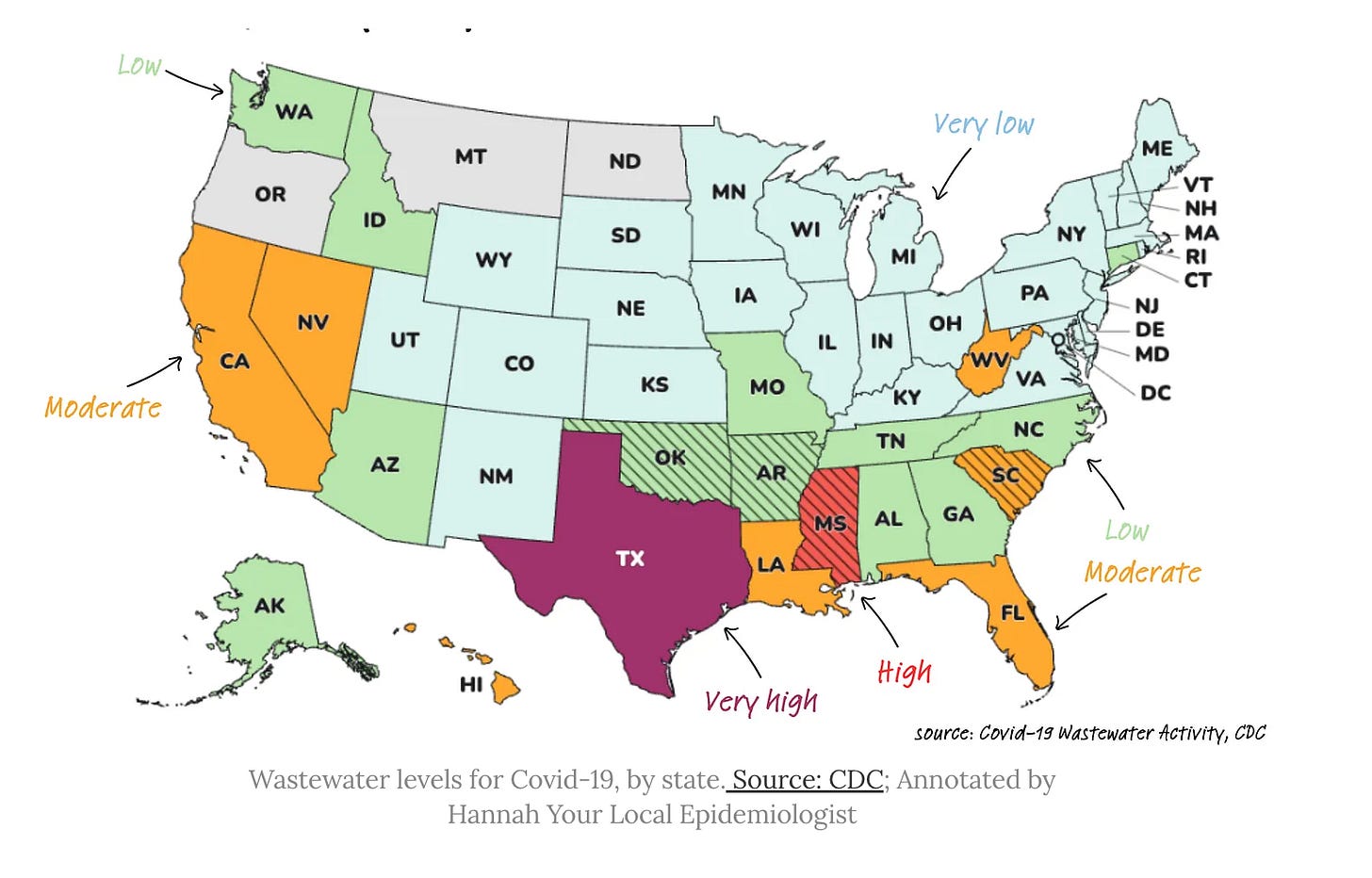
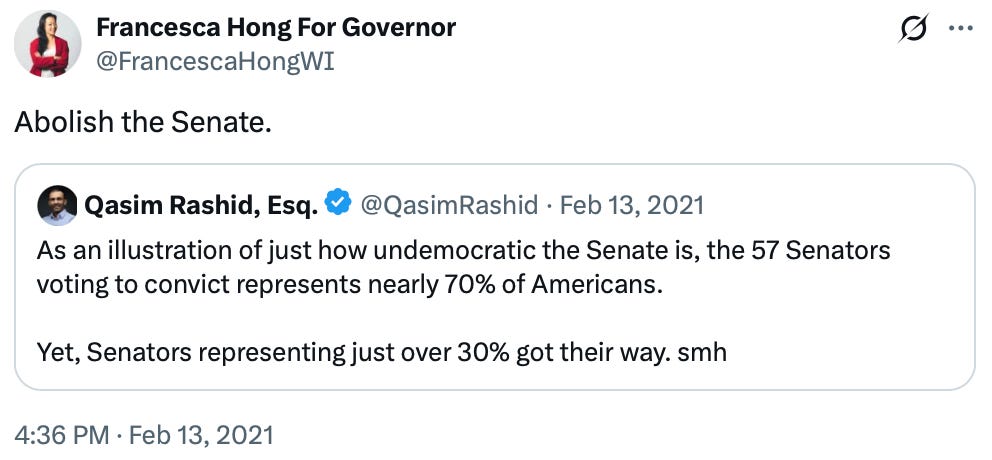


 Tipsy Teetotaler ن