I don’t know about your Inbox, but mine tends to fill up especially on Friday. So I’m posting this now rather than in the wee hours tomorrow.
Trump 2.0
I haven’t been able to eliminate sharp criticism of Trump from today’s post because there are too many issues and I’ve read too much that isn’t just “same old same old.” As has become my habit, I’ve posted most of my anti-Trump stuff here.
United States law allows for a quite expedited process to remove people from the country, to deport them. You don’t get a big trial. You don’t get a jury trial. You are moved rapidly because the theory of the case is: First, you don’t have a right to immigrate to the United States, so you have not been deprived of your rights. And secondly, once you’re removed from the United States, you remain a free person. You are sent back to the place you came from or some other place to which you have some connection, and then you’re free to go about your business. You’re not sent to a prison—not sent to a prison for life.
But as I talk about this, the thing that has most gripped my mind with worry and anxiety is not only the effect on the individuals themselves, some of whom may be genuinely innocent, but the effect on those who are sending human beings to a prison without a hearing.
You know, the United States government is now building an apparatus of lawyers, of officials of all kinds, who plan and think every day, How can we apprehend people on American soil and bundle them to a prison without giving them any show of a hearing? They’re building skills and competencies at non-due-process forms of arrest and incarceration that are going to be very hard to limit.
… I remember when I was a Canadian citizen in the United States on a student visa, we were warned if you got into a bar fight, you could theoretically lose your student visa. Now, in those days, that meant that you’d have to go back to Canada and go to school in Canada, which is not the end of the world. In today’s America, that could mean you could lose your student visa and be accused of terrorism, and a bag put over your head and be put into a car and sent to a prison in El Salvador for the rest of your life.
Now, maybe that doesn’t happen in every case. Maybe that doesn’t happen in many cases. But there are people in the employ of the United States government, paid by taxpayers to think about how can we daily broaden the category of people who can be arrested and detained and imprisoned without any showing to any authority at all, without any opportunity to make themselves heard, without any evaluation by an independent fact finder—by any of the things we call due process.
David Frum, introducing a terrific conversation about The Crisis of Due Process with Peter Keisler. (bold added)
Do we really believe in free speech?
Trump 2.0 has been deporting foreign students and others for constitutionally protected speech, using as its current go-to bad-faith excuse that the speech is antisemitic.
The late British-American journalist Christopher Hitchens is a more recent testament to the long tolerance of America toward foreign dissent. Before becoming a U.S. citizen in 2007, Hitchens spent decades as a legal resident—and as one of America’s most acerbic public intellectuals. He accused Ronald Reagan of being “a liar and trickster,” called Israel America’s “chosen surrogate” for “dirty work” and “terrorism,” lambasted Bill Clinton as “almost psychopathically deceitful,” and accused the George W. Bush administration of torture and illegal surveillance. If a student can be deported for writing a campus op-ed critical of Israel, any of Hitchens’ views could have been used to justify deporting him.
This isn’t how our system is supposed to work. When a president does the kinds of things Donald Trump is doing, his popularity should sink so low that Congress will feel empowered to stand up to him. Ideally, they would impeach and remove him from office for attempting to govern like an absolute monarch. Short of that, Congress and the courts would be working in tandem to impose and enforce constraints on the wayward executive until the next election strengthens their hand against him.
But none of this is happening—because our system has broken down. The parties are ideologically sorted, with almost no remaining overlap. And Trump has transformed the GOP into a cult of personality more loyal to him personally than to the Republican Party, the other institutions of American democracy, the law, or the Constitution.
In a situation like this, the only thing preventing the president from transforming himself into a tyrant is his own willingness to do it. The courts can tell him to stop. But will he? If he does, democracy survives, at least for the time being. If he doesn’t, democracy is over, at least until it can be reconstituted at some point in the future.
One should never hope to live through a moment of great political precarity like our own. But one tiny compensation is that such moments bring clarity about certain fundamental matters. How has the United States managed to survive for nearly 250 years without evolving into a dictatorship? The answer really may be this simple: By never electing a man willing to do what it takes to effectuate the change.
It’s not clear that the courts will suffice, but the courts — having already, and deservedly, come to treat the Administration as bad-faith, untrustworthy actors — will provide partial deterrence and may help sway public opinion by the cogency (and sometimes, the tartness) of their reasoning.
[I]f you want a really extraordinary example of that, you would look at the order that the Court issued at 1 a.m. on Saturday morning this last weekend, because even though they had held that everybody has to be given meaningful notice before they could be removed in this way, there was credible evidence that the administration was loading people onto buses without giving them anything like the notice that was required. And the ACLU went to the Supreme Court and said, you know, Please, as you listen to the rest of this case and get briefing, stop this from happening.
And if the administration were a normal administration and had compiled a record so far of being a normal administration, the Court would’ve said, Well, I can be confident they’re not going to do this while we are hearing your petition, so let’s give the government a chance to respond. Let’s see what they say, and then we’ll decide what to do. Because, of course, the government wouldn’t spirit these people away while we are actually in the process of deciding whether it can do so on this emergency application you filed. But they knew that the government had done exactly that with the first 200 or so people they had sent away.
The case was before a district judge, and they rushed to secretly get the people out before he could issue an order. And they didn’t quite succeed on that, which is why you have these issues of contempt floating around now. But at 1 a.m., the Court by a 7–2 vote said, Don’t remove anybody in the class represented by these lawyers until you hear otherwise from us.
And that shows that there is a cost to the administration of acting the way it’s acting towards the courts, because if you squander the reputation that governments of both parties have had for credibility and fair dealing and honest brokering with the Court, then they’re going to treat you different because they know they can’t quite trust you.
The barstool right, which is a genuinely new constituency made up of hedonistic anti-woke libertarians that has replaced the Christian conservatives
The neo-conservative foreign policy hawks, who are the weakest member of the coalition, but can still get what they want on certain issues, as seen with the attacks on the Houthis as well as the saber rattling regarding Greenland
In other words, the Christian influence on actual Republican policy items and their political vision is going to be exceedingly negligible going forward. Sure, Vice President Vance will make an appearance at the March for Life. President Trump will show up to the National Prayer Breakfast. But even when he does acknowledge a Christian event, it often will come loaded with hatred and vile self-aggrandizement, as seen yesterday:
And ultimately when push comes to shove on the policy level, Christian concerns will always be backgrounded or eliminated relative to the priorities of the three above groups, as we have already seen on abortion, marriage, and PEPFAR.
I originally thought to post this on a Sunday, when my focus is narrower, but it didn’t fit there because I don’t value “religion” for its instrumental partisan-political value.
It was a very few years ago when I warned (as had others) “If you don’t like the Religious Right, just wait ‘till you see the irreligious Right.” Well you’ve been seeing them in power for three months now.
Beta-testing tyranny in the Sunshine State
Ron DeSantis walked so that Donald Trump could run. When the time came to formulate a policy response to the woke left, no one mattered more than the governor of Florida.
And through it all, DeSantis declared that Florida was the place where “woke goes to die.”
In his second term, Trump is a scaled-up version of DeSantis. Every element of the DeSantis model has been deployed against Trump’s ideological enemies …
…
At first I was optimistic about the anti-woke right. Their free speech argument resonated with me. I’d spent decades litigating free speech cases, after all, and I’d never really seen anything like a mass movement for free expression.
But my optimism quickly faded. In 2021, the anti-woke right embraced a series of state laws that were designed to ban critical race theory. Rather than meet critical race theorists in the marketplace of ideas, the right chose to try to suppress their expression.
By this time I was familiar with the right’s authoritarian turn — and getting very worried about it. In 2019, parts of the intellectual right were consumed with a fight over liberalism itself, with the new right arguing that liberal values — freedom of speech and free trade, for example — were hollowing out American culture, creating a nation of atomized individuals who were consumed with self-actualization (and consumption itself) at the expense of family and community.
Ironically, the left, now alarmed by the federal government’s intrusive reach [into, say, Harvard], bears direct responsibility for crafting the very legal weapons wielded against the universities it dominates. Almost four decades ago, progressive legislators demanded sweeping amendments to civil rights law, expanding federal oversight over higher education. The sequence of events reveals a cautionary tale of political hubris: progressive confidence that state power would reliably serve their ends overlooked the reality that governmental authority, once unleashed, recognizes no ideological master. Today’s circumstances starkly illustrate how expansive federal control over civil society, originally celebrated by progressives, returns to haunt its architects. The left’s outrage ought to focus not on this particular administration but on its own reckless empowerment of the state.
Yet for all its courage, Harvard’s response stopped short of making the argument that would best protect the values for which it was fighting. It defended the university’s independence without explaining why that independence deserves protection. It invoked values like “pluralism” and “inquiry,” but it did not fully explain why those values are essential to a liberal democratic society. The letter therefore missed an opportunity to articulate what a university is for — not just to students or donors, but to the country. And this matters, because Trump’s attack against this and other universities is not only about the balance of power between universities and the government. It is, at bottom, about the legitimacy of higher education as a public good.
The danger of being a professional exposer of the bogus is that, encountering it so often, one may come in time to cease to believe in the reality it counterfeits.
Your enemies are not demonic, and they are not all-powerful and the right hasn’t always lost and the left hasn’t always won. But if you convince yourself of that, you give yourselves all sorts of permission to do a lot of stupid and terrible things under the rubric of “Do you know what time it is?”
Regarding said “lot of stupid and terrible things,” my failure to call out anything about the current regime does not mean I approve. There’s just too much, and on some of the apparent illegalities I don’t want to abuse my credentials without thinking it through.
I don’t do any of the major social media, but I have two sub-domains of the domain you’re currently reading: (a) You can read most of my reflexive stuff, especially political here. (b) I also post some things on the only social medium I frequent, because people there are quirky, pleasant and real.
Raphael Glucksmann, a member of the European Parliament, feels that America has reneged on the values that led to the statue being gifted. “We’re going to say to the Americans who have chosen to side with the tyrants, to the Americans who fired researchers for demanding scientific freedom: “Give us back the Statue of Liberty,” he said at a convention of his center-left party, Place Publique, Sunday. “We gave it to you as a gift, but apparently you despise it. So it will be just fine here at home,” Glucksmann added.
The Harvard Law School chapter of the Federalist Society was taken over last week by “Common Good Constitutionalism” disciples of Professor Adrian Vermeule (i.e., wokesters of the Right). The chapter’s former president, Sarah Isgur, has some thoughts about the incel Integralists and their pyrrhic victory:
Freedom is turned on its head. Individual freedom does not exist if it does not enhance the general welfare (again, defined by them). To break it down: Speech that is good is protected. Speech that is bad is not. And the government gets to define what is good.
But they misunderstand Fed Soc’s strength. So let me explain: It came from its size and its diversity of thought. When you shrink it down to only those people who agree with you on outcomes, you have stripped it of its source of power.
The Vikings can be resentful that we didn’t let them into our club. They can even burn down the club. But they still won’t be in the club. They’ll just be standing over its ashes, still sad, and confused, and angry, and without clerkships, and without girlfriends.
History is littered with the stories of young men who are frustrated and can’t get chicks. They’re called “Jacobins.”
Trigger warning: Do not read the following with your mouth full of scrambled eggs or hot coffee. I speak from experience.
In Oedipus Tex, the mathematician-composer P.D.Q. Bach’s 1990 comedic answer to Stravinsky’s tragic oratorio, the titular hero discovers the truth of his situation—that he has married his mother, Billy-Jo Costa, Queen of the Rodeo—and, fulfilling the requirements of tragedy, he takes the rhinestone-covered barrettes out of her hair and gouges out his eyes. At which point the chorus sings:
“And immediately after he’d put out both his eyes, he … kind of wished he hadn’t.”
Everybody has regrets. Nations and their governments do, too. When things are upside down in the state, you end up with Oedipus Rex, Macbeth, or the Trump administration.
Mahmoud Khalil is a Palestinian activist involved in the Columbia protests who was arrested in a Keystone Kops-level caper launched by Marco Rubio’s incompetent State Department, which proposed to revoke a student visa that Khalil doesn’t have. Khalil is, in fact, the holder of a green card, meaning that he has been given permanent resident status in the United States by the U.S. government. Which is to say, Khalil is in this country as a permanent resident thanks to a decision of the U.S. government, which, after looking back on what it had done, kind of wished it hadn’t.
My regret is that I cannot read Kevin D. Williamson or Nick Catoggio more regularly without breaking my promise to myself not to wallow in politics during the Trumposcene, but rather to enjoy the inumerable things that humans can enjoy even under the governance of jackasses or jackboots.
In a democracy private citizens see a man of their own rank in life who rises from that obscure position in a few years to riches and power; the spectacle excites their surprise and their envy, and they are led to inquire how the person who was yesterday their equal is today their ruler. To attribute his rise to his talents or his virtues is unpleasant, for it is tacitly to acknowledge that they are themselves less virtuous or less talented than he was. They are therefore led, and often rightly, to impute his success mainly to some of his vices; and an odious connection is thus formed between the ideas of turpitude and power, unworthiness and success, utility and dishonor.
Tocqueville’s concern was that if citizens in a democracy saw that unethical and corrupt behavior led to “riches and power,” this would not only normalize such behavior; it would validate and even valorize it. The “odious connection” between immoral behavior and worldly success would be first made by the public, which would then emulate that behavior.
That is the great civic danger posed by Donald Trump, that the habits of his heart become the habits of our hearts; that his code of conduct becomes ours. That we delight in mistreating others almost as much as he does. That vengeance becomes nearly as important to us as it is to him. That dehumanization becomes de rigueur.
David French, reflecting on his (supportive) relationship to the Tea Party movement and cautioning Democrats against trying to reproduce it in the Democrat party:
But it all turned bad, and the reasons it turned bad are directly relevant to Democrats today.
Republicans built a movement around both anger and ideology. My mistake was in believing that the ideology was more important than the anger, but it was the anger that gave the Tea Party its political momentum, and that anger eventually swallowed the ideology. Rage is now the defining characteristic of Trump’s Republican Party.
…
My first interpretation of Tea Party anger was precisely that it was in service of higher values, specifically a return to founding constitutional principles and an embrace of free markets and fiscal responsibility. But that was wrong. The ideology mattered only if it could serve the anger.
Another way of putting it is that Tea Party members embraced constitutional conservatism and libertarianism as a tactic, not as a principle, and the instant that a different, Trumpist ideology emerged — a better vehicle for the party’s raw rage — they welcomed it with open arms.
What’s your hurry?
Could this be the meta-explanation of what the ochre emperor is doing?:
DOGE is in a race with the courts. From the first days of the administration it was all shock and awe. Take an agency everyone knows is a problem, such as USAID, and kill it. Tell employees to go home, put a guard outside and lock the door, cover the agency’s name in gaffer’s tape, have a functionary send an email terminating employment, then disable email accounts. Staffers can’t reach each other, can’t find the reporter’s address—confusion kills the will to resist. Other agencies watch, and it puts the fear of God into them.
It’s all a race to get as much accomplished now as possible. Once something goes to the Supreme Court, there will be clear limits. Until then, maybe months, maybe a year, get it done.
Here I confess my conservative lizard brain likes seeing unhelpful and destructive parts of any organism, very much including government, cut and sometimes obliterated, and for the usual reasons. But the non-lizard parts—those that are analytical, involve experience, and have observed human nature and seen who’s doing the cutting, and at what size and speed—recoil, and see great danger ahead.
Judiciary 101
“The good news here is, we did put 235 judges, progressive judges, judges not under the control of Trump, last year on the bench, and they are ruling against Trump time after time after time,” Senate Minority Leader Chuck Schumer said a few days ago.
You do the judiciary no favors talking like that, Sen. Schumer.
“[C]onservative judges, judges (supposedly) under the control of Trump,” are ruling against him, too — just as they did with his b*llsh*t 2020-21 election challenges.
No federal judge is “under the control” of the President who appointed him or her. That’s kinda the point of life tenure on good behavior.
Miscellany
“If you weren’t outraged that the law and due process weren’t followed when Biden let 10+ million people into the country, don’t expect voters to be outraged by accusations Trump isn’t following due process when he deports them,” – Mark Hemingway.
“I still can’t get over the power of negative polarization where liberals genuinely convinced themselves that the lab leak was the racist theory of Covid origins, but the ‘it’s just the disgusting hygiene and superstition of Chinese wet market customers’ was the non-racist theory,” – Michael Brendan Dougherty.
Colin Wright: “‘Christ Is King’ Is the Woke Right’s ‘Black Lives Matter.’”
Sullivan’s main essay is on how Anthony Fauci intentionally misled us about the origins of Covid.
Why on earth would panicked scientists believe that Covid was probably a lab leak and then write a landmark paper “trying to disprove” it? It’s the essential question. One obvious answer is that Fauci realized that if his beloved gain-of-function research had led to the death of millions in a plague, he might not go down in history as a medical saint.
I have no need of any other hypothesis.
I suffer more from the humiliations inflicted by my country than from those inflicted on her.
I don’t do any of the major social media, but I have two sub-domains of the domain you’re currently reading: (a) You can read most of my reflexive stuff, especially political here. (b) I also post some things on the only social medium I frequent, because people there are quirky, pleasant and real.
We’re home at last from a vacation overshadowed by car damage from road debris encountered on the way north to vacation. Every fix revealed yet another problem. Every new problem required a wait for Allstate to approve the added work. We finally just drove our rental car home yesterday and are currently planning how most easily to retrieve our car when they finally fix the final problem.
I have nothing more to say on that, lest I add myself to the luckiest victims in the world (see below).
Not very political
The huge history of a little bit of geography
The word Palestine always brought to my mind a vague suggestion of a country as large as the United States. I do not know why, but such was the case. I suppose it was because I could not conceive of a small country having so large a history. I think I was a little surprised to find that the grand Sultan of Turkey was a man of only ordinary size. I must try to reduce my ideas of Palestine to a more reasonable shape. One gets large impressions in boyhood, sometimes, which he has to fight against all his life.
Mark Twain, The Innocents Abroad
Epistemic idiocy
A man who murdered dozens of Muslims at two mosques in New Zealand was “steeped in the culture of the extreme-right internet,” … His manifesto explained that he had done research and developed his racist worldview on “the internet, of course. . . . You will not find the truth anywhere else.”6 The latter assertion involves, alas, a rather serious mistake about epistemic authority.
This is a flawed but important article I personally will revisit on the subject of legitimate epistemic authority. We’re not as adrift and it sometimes seems — or as the New Zealander fancied himself.
ProPublica
Having apparently run out of Supreme Court justices to attempt to drive from public life, the left-wing nonprofit journalistic outfit ProPublica has directed its attention to sullying one of their most notable achievements: the Dobbs decision, which returned the power to regulate abortion to the people and to the states. Georgia now has a heartbeat law, which outlaws abortion once a fetus has a detectable heartbeat (with exceptions for rape, incest, and maternal health). A recent ProPublica article blamed the law for the deaths of two women who had taken chemical-abortion drugs (whose riskiness goes unremarked upon). The drugs killed the children but failed to expel all of their remains. One woman unsuccessfully sought treatment in a hospital, and the other feared it—both, supposedly, results of the law. But as our former colleague Isaac Schorr pointed out at Mediaite, the law does not forbid the surgical removal of an already dead child. No reasonable person who read the plain text of the law would think otherwise, which may be why ProPublica did not include the relevant portion. Even the argument that the doctors’ uncertainty about the law prevented treatment is unsubstantiated. The ProPublica article eventually admits that “it is not clear” why doctors waited to perform the necessary procedure. Laws against abortion haven’t caused any deaths, but ProPublica is doing its part to raise the death toll.
National Review email newsletter
The luckiest victims on earth
[E]ven as you push back against ideological bias and discrimination, remember that as a university student you are one of the luckiest — most privileged — people on the planet. So do not think of yourself as a victim. You can assert and defend your rights without building an identity around grievances, however justified those grievances may be.
…
Remember that the criticism of a belief (or a practice, faith or lifestyle) is not a personal attack, though the natural human tendency to wrap our emotions tightly around our convictions can make it feel as if it is.
I don’t pin dreams on the rack of endless above-ground interpretation, but I do give them space and attention.
In myth, when you are facing a monster, look at its reflection on your shield, not the abyss of its face. That will quickly burn you to cinders. What is your shield? Well it’s something that shows you the general shape of your adversary but not to the degree it paralyses you.
The yearslong elevation of figures like [North Carolina Gubernatorial Candidate] Mark Robinson and the many other outrageous MAGA personalities, along with the devolution of people in MAGA’s inner orbit — JD Vance, Elon Musk, Lindsey Graham and so very many others — has established beyond doubt that Trump has changed the Republican Party and Republican Christians far more than they have changed him.
In nine years, countless Republican primary voters have moved from voting for Trump in spite of his transgressions to rejecting anyone who doesn’t transgress. If you’re not transgressive, you’re suspicious. Decency is countercultural in the Republican Party. It’s seen as a rebuke of Trump.
… I’ve compared the cultural power of a leader to setting the course of a river. Defying or contradicting the leader’s ethos is like swimming against the current — yes, you can do that for a time, but eventually you get exhausted and either have to swim to the bank and leave, or you’re swept downstream, just like everyone else.
In a similar vein, albeit from someone who hasn’t been Republican:
There is no place for dissenters in the contemporary Republican Party. That is going to remain true whether or not Donald Trump prevails in November. It’s long past time those who reject the right-populist takeover of the party to cut themselves loose and stop pretending they will have a meaningful say in building its future. They will not. It would be far better for them, and for the Democrats, if they joined the Donkey Party outright and began fortifying the Harris-Walz campaign’s move toward the ideological center-left.
In a strong post late last week, The Bulwark’s Jonathan Last took the occasion of the latest mind-boggling revelations about Mark Robinson, the Republican Party’s nominee for governor of North Carolina, to make the point that the GOP is a “failed state.” The image comes from a 2016 Slatecolumn by his Bulwark colleague Will Saletan. As Last explains, functional institutions “have power centers and interests. In a healthy institution, these power centers can unite to achieve shared interests, even in difficult moments which require sacrifice.” Over the last two decades, for example, Democratic Party has given us the following examples:
In 2008 Hillary Clinton was supposed to be the Democratic presidential nominee. But various Democratic power centers coordinated to elevate Barack Obama, who they believed was a better candidate.
In 2016, a democratic socialist tried to win the Democratic presidential nomination. The party coordinated to prevent him from doing so.
In 2020, the same democratic socialist made another attempt. The party coalesced around Joe Biden and got him elected president.
In 2023, as Republicans went through four nominees to find a speaker of the House, Democrats voted, unanimously, time after time, for Hakeem Jeffries.
And in 2024, when the Democratic Party realized that Joe Biden was compromised as a candidate by his health, they convinced him to step aside.
I want to underscore this: The Democratic Party was able to convince a sitting president to abandon his reelection attempt four months before November.
That’s a portrait of a party as an effective, functional institution.
The Republican Party, by way of sharpest contrast, cannot even get a man to step aside in a crucial statewide race when he’s caught (among other things) describing himself as a “Black Nazi” on a porn-focused chat forum. The party is being held hostage—by the candidate, yes, but his power is itself a function of his popularity among Republican voters in the state. They want him as their nominee, and the voters get whatever they want in the contemporary GOP. Which means the institution is a hollow shell—or the domestic equivalent of a failed state.
Sorry, Damon, but I’m not going to be in the vanguard of any GOP migration, partly because I’m not exactly in the GOP, partly because of a few deal-killer Democrat policies.
The Bennet Inversion
Our best hope is to hasten a change in culture that reverses this effect. Call it the Bennet Inversion, for Senator Michael Bennet, who campaigned for president promising to govern so boringly that voters would go weeks without thinking about him. He was so successful that no one remembers his campaign at all. Biden accomplished a miniature version of this, by executing a Fabian strategy and defeating Trump without ever facing him directly on the field of meme battle.
I don’t do any of the major social media, but I have two sub-domains of the domain you’re currently reading: (a) You can read most of my reflexive stuff, especially political here. (b) I also post some things on the only social medium I frequent, because people there are quirky, pleasant and real.
Today is that day the Purdue Boilermaker Men advance to the NCAA Championship game by ending the fairy tale run of DJ Burns and NC State. Remember, you read it here first. (Caveat: I have no money riding on any games and you certainly shouldn’t put money on my prediction.)
Meta
America the experiment
America as an experiment is genuinely important to the world not because of the accidents of history that made us the most powerful nation on Earth, but because America is the first real experiment in building a large, multiethnic, multicultural democracy. And we don’t know yet if that can hold. There haven’t been enough of them around for long enough to say for certain that it’s going to work,
Joseph de Maistre. Writing in 1809, he scoffed at the idea that any document written by mortal hands could ever design and establish genuinely new foundational laws. The spirit of any such laws was invariably already written on the hearts of those men who attempted to crudely reduce them to mere lines on a piece of paper. “Precisely what is most fundamental and most essentially constitutional in the laws of a nation cannot be written,” he wrote. The true constitution of a strong and functional nation was always “that admirable, unique, and infallible public spirit, beyond all praise, which directs everything, which protects everything. What is written is nothing.”
…
What is America’s implicit constitution today? Naturally, it’s never been fully captured in writing, though some authors, such as Christopher Caldwell, have variously attempted to nail it down here and there. If pressed to summarise, I might say it is one that values safety and security over freedom; top-down control over self-governance; empty egalitarian posturing over excellence; material comfort over virtue; entitlement over responsibility; bureaucracy over accountability; narcissistic emotivism over duty; fantasy over reality; global ambitions over national loyalty; dreams of progress over eternal and transcendent truths — in short, the same spirit that animates our out-of-control managerial regime. It’s the spirit which saw that regime not hesitate to impose Covid lockdowns, or trash the rule of law and attempt to jail political opponents (and for half the country to view this as acceptable or even admirable); it’s what has produced Supreme Court justices who fret free speech would undermine the security state.
The neologism “luxury beliefs” is only five years old, but what it describes was noted decades ago (if not earlier):
Harlem itself, and every individual Negro in it, is a living condemnation of our so-called “culture.” Harlem is there by way of a divine indictment against New York City and the people who live downtown and make their money downtown. The brothels of Harlem, and all its prostitution, and its dope-rings, and all the rest are the mirror of the polite divorces and the manifold cultured adulteries of Park Avenue: they are God’s commentary on the whole of our society.
At my shows, I like to have the audience sing, just for the sensuous warmth of it. We sing “My country, ’tis of thee” and in the South we can sing a hymn or two a cappella and it’s amazing to observe this from the stage, people who are surprised and delighted and moved by the beauty of their voices mingled with the others. They learned this as Baptist kids and then (I imagine) lapsed into secular humanism and went through doctrine therapy and devoted themselves to vintage wines and dark coffees and French baking, and now, as I sing “When peace like a river attendeth my way and sorrows like sea billows roll,” the words come back to them and they sing like risen saints at the Sunday camp meeting and they dab at their eyes with a hanky.
With their heavy weight and quick acceleration, EVs tend to burn through tires about 20% faster than internal combustion vehicles do, according to consultancy firm AlixPartners. And the tires cost about 50% more.
One might assume that a presidential nominee who generates as much devotion as Mr. Trump would be a financial boon to his party. One would be wrong. With Mr. Trump, everything is about Mr. Trump … While the Republican base may be smitten with Mr. Trump, plenty of big-money donors are skittish about bankrolling his nonsense. The former president has been scrambling to close the gap, leering at potential funders as if they were contestants at the Miss Universe pageant.
Leonard Leo (not the Federalist Society) provided Donald Trump with the list of outstanding conservative prospective Supreme Court Nominees that Trump ran on in 2016 and that probably made the difference in the Election. Kudos to him for that. I didn’t believe Trump would keep his promise to nominate from that list, and for that and other reasons, I didn’t vote for him.
But about the time Leo got on the Trump train, his life appears to have take a dramatic turn:
The Campaign for Accountability’s complaint alleges that “Leo-affiliated nonprofits” paid BH Group and CRC Advisors a total of $50.3 million between 2016 and 2020.
During this period, according to the complaint, Leo’s lifestyle changed:
In August 2018, he paid off the 30-year mortgage on the Mclean, Va. home, most of which was still outstanding on the payoff date. Later that same year, Leonard Leo bought a $3.3 million summer home with 11 bedrooms in Mount Desert, an affluent seaside village on the coast of Maine, using, in part, a 20-year mortgage of $2,310,000. Leonard Leo paid off the entire balance of that mortgage just one year later in July 2019. In September 2021, Leonard Leo bought a second home in Mount Desert for $1.65 million.
The complaint was based in part on a March 2023 Politico story by Heidi Przybyla. She wrote that her “investigation, based on dozens of financial, property and public records dating from 2000 to 2021, found that Leo’s lifestyle took a lavish turn beginning in 2016,” citing Leo’s purchases of the Maine properties along with “four new cars, private school tuition for his children, hundreds of thousands of dollars in donations to Catholic causes and a wine locker at Morton’s Steakhouse.”
Part of my leeriness is probably because I’m smack dab in the middle of reading Timothy Egan’s A Fever in the Heartland: The Ku Klux Klan’s Plot to Take Over America, and the Woman Who Stopped Them, which describes Indiana Grand Dragon D.C. Stevenson’s extremely profitable financial con in his promotion of the 1920s Klan. The story is full of MAGA-like personalities (right down to the rapes) and profiteering.
I’m no longer a Ben Shapiro fan, but when he’s right, he’s right.
Election 2024
Political Therapeutic Deism
Political Therapeutic Deism is a system of beliefs which invoke religious terms for the purposes of affirming one’s politics. It includes beliefs like:
God is on my political party’s side.
My views on political issues are a leading indicator that I am a true Christian.
My actions in politics are justified in light of God’s general approval of my politics.
I do not understand how other “Christians” could vote for my candidate’s opponent.
It is clear and obvious which political issues are most important to God.
Political Therapeutic Deism makes sense of why we’re seeing sorting in churches by politics, over and above theology or other factors. It makes sense of why we’ve seen steep declines of religious affiliation among Democrats over the last several decades, and why growing numbers of Trump supporters identify as evangelical, even if they don’t share evangelicals’ theologicalbeliefs. …
Political Therapeutic Deism has the benefit of making clear what we are seeing is the misappropriation of religious language and symbols for political ends. It also harkens to a term (Moral Therapeutic Deism) which has been thoroughly rejected by some of the very kind of people “Christian nationalists” seek to persuade to their way of thinking. They want to equate opposition to their political proposals as opposition to Christianity itself. Why would we help them?
Until a better term comes along, I expect to use political therapeutic deism for the faux-evangelical Trumpists that MSM calls “white Christian nationalist.”
“But the judges” no longer applies
For many legal conservatives, a two-word incantation—“but judges”—defined the Trump era. It began as an exhortation or, perhaps, a justification. Later it became a coping device, edging into gallows humor. As the shadows lengthened in the last days of a desperate and increasingly lawless presidency, it became a rueful question. A mob, incited by the president who refused to accept a lawful election, sacked the Capitol, assaulted police officers, interrupted the electoral count, and hunted down officeholders—“But … judges?”
Conservatives who had wagered the Trump gambit worth the risk got the upside of their bargain. Trump nominated many excellent men and women to the judiciary. A confident conservative majority, grounded in originalism and textualism, now controls the Supreme Court. The white whale of Roe v. Wade—long emblematic of lawless usurpation of policymaking by the Court—fell.
Contrary to the fears of liberals and the misplaced hopes of Trump, conservative judicial appointees upheld the principle of judicial independence. They refused to serve as reliable partisans and handed Trump and his administration importantlegal defeats. Crucially, Trump’s nominees rejected his baseless claims of a stolen election.
But these advances in jurisprudence came at a deep civic cost. The president with whom legal conservatives allied themselves used his office to denigrate the rule of law, mock the integrity of the justice system, attack American institutions, and undermine public faith in democracy. Beyond the rhetoric, he abused emergency powers, manipulated appropriated funds for personal political ends, and played fast and loose with the appointments clause, all at the cost of core congressional powers.
Republicans in Congress barely resisted these actions and increasingly behaved more like courtiers than members of a co-equal branch of government.
…
Partisans promise that Trump in a second term would nominate judges more loyal to the president while Trump-friendly, post-liberal thinkers develop theories like “common-good constitutionalism” in which conservative judges would abandon originalism in favor of promoting certain ends. Adrian Vermeule, the leading academic proponent of the latter view, has argued that “originalism has now outlived its utility, and has become an obstacle to the development of a robust, substantively conservative approach to constitutional law and interpretation.” It would be deeply ironic, and the ultimate failure of the movement, if the “but judges” bargain were to end with purportedly “conservative” judges legislating from the bench.
Anyone who says “but the judges” to justify voting for Trump in 2024 is seriously misguided. He’s disappointed with his first-term SCOTUS nominees in particular, as they’ve not been the kinds of toadies he wants. Next time, he’ll nominate toadies, not excellent jurists, and since the Senate is going to flip (11 Republicans are up for re-election, 23 Democrats) he’ll get them confirmed.
Good advice, since abandoned
Listen to me. Listen. If the twentieth century tells us anything, it’s that whenever you hear anyone standing before a crowd, winding them up about the cause of creating utopia on earth, you had better run.
Rod Dreher, December 12, 2020. I’m sorry to say that he has since reconciled himself to a supposed necessity to vote for Trump.
Miscellany
Rowling throws down the gauntlet
Scotland has a new hate speech law that criminalizes “stirring up hatred” against a series of “protected characteristics,” including race, age, religion, disability, and “transgender identity.” J.K. Rowling threw down the gauntlet:
On Monday, the day the law came into effect, the Harry Potter author posted a dare on X. In it, she named 10 transgender women, called them all men, and said: “If what I’ve written here qualifies as an offense under the terms of the new act, I look forward to being arrested.” … “If they go after any woman for simply calling a man a man, I’ll repeat that woman’s words and they can charge us both at once.”
I am a fan of almost anything that disrupts the hegemony of this fatuously self-righteous and profoundly anti-intellectual educational establishment, which exists not to lift up the marginalized and excluded but rather to soothe the consciences of the ruling class. May the forces of disruption flourish.
Trump Media lost $58 million and brought in $4 million in revenue last year. Yet, the market is valuing DJT at $6.4 billion. That there’s a meme stock. (I could have pulled this for “Rackets,” above.)
It is odd that Trump got the reputation of being The End of the American Press, when Biden is really the one who hates questions and shuns journalists. Remember Trump? How he would actually never stop talking? How he’d sit and antagonize reporters endlessly? But oh, he’d talk. It was alarming, often described as “rambling.” But at least we all knew exactly what was going through his mind (chaos, tangents, rage, pettiness, pretty good jokes, Rosie O’Donnell, more Rosie O’Donnell, why was it always Rosie O’Donnell).
[S]tudent loan relief is the wrong approach. Colleges should simply not cost this much. Solution: eliminate 90 percent of university administrator roles, since at least that many are fully fake. Offer incentives for kids to enroll in trade schools or community colleges. Boom, loan crisis solved, you’re welcome. Next topic.
From Reuters
America’s leading women’s rights group of yesteryear is still arguing that it’s white supremacy to maintain girls’ sports. Here’s NOW, the National Organization of Women: “Repeat after us: Weaponizing womanhood against other women is white supremacist patriarchy at work. Making people believe there isn’t enough space for trans women in sports is white supremacist patriarchy at work.” Yes, it’s white supremacist patriarchy to argue. . . that someone who’s gone through male puberty might have an unfair advantage in, let’s say, rugby. Interesting. Fascinating. I will repeat until I am clean.
When I think of the consciousness that generates the circular sorrow of “Ifs eternally,” or the one trying to find the one thing that will unify all the disparate experiences of one life, I think of a man—almost always a man, though there are notable exceptions—sitting alone in a room and doggedly trying to figure it all out.
Okay, I can’t resist a little comment. The three are grousing about the Colorado ballot exclusion case, Trump v. Anderson.
George Conway, author of the third listed column, sums up what I think happened:
It may be noble-minded for someone like me, sitting in the cheap seats, to incant my favorite Latin legal maxim, Fiat justitia ruat caelum—“Let justice be done though the heavens may fall.” But I don’t hold a lifetime appointment to decide how justice is to be done. And however much I’d like to think that judges really believe … that they “cannot allow [their] decisions to be affected by any extraneous influences such as concern about the public’s reaction to [their] work,” the fact is that judges are human. Their decisions are affected at times by their perception of what the public reaction may be.
…
I could go on picking apart the weaknesses and inconsistencies in the Court’s opinion, and legions of law professors will do so for ages to come, but the Court’s lack of convincing reasoning is, frankly, beside the point. The Court’s decision wasn’t about law. It was about fear.
I think SCOTUS reached the right conclusion on the wrong rationale. You can make fun of me, but I think the theory is correct that the President is not an “officer” subject to section 3. I think that for having read some of the history around section 3, which I find more persuasive than one Senator’s (disingenuous?) assurance to another that the amendment indeed “hid an elephant (POTUS) in a mousehole” (“other officers”). And I return to that ideé fixe after feeling, as I recall, some passing doubt about it during the oral argument.
Well, at least SCOTUS was “unanimous.” Now I can only hope that never-Trump Republicans, who Trump has disinvited from his party, will oblige him in sufficient numbers to assure his defeat, fair and square, in the November balloting.
What worries me now, though, is not the Christian Nationalists themselves. Frankly, many of them are too reckless, undisciplined, and reactive to be able to accomplish the revolutionary change they seek. What worries me is that there are a great many socially conservative evangelical voters who love the democratic life who are constantly being called “Christian Nationalists” by the likes of Heidi Przybyla for believing things that are utterly unremarkable in Christian history. If our secular media outlets continue to tell them that “Christian Nationalism” is the belief in things virtually all Christians across history have believed, I fear they will listen. And they will find these ethno-nationalist totalitarian aspirants and, not realizing what they are doing, they will make common cause with them.
After all, they’ve already been told that they are ‘Christian Nationalists,’ haven’t they? They’ve been told that protecting the unborn makes them a Christian nationalist, that wishing to promote natural marriage makes them a Christian nationalist, that wanting men to support their children makes them a Christian nationalist. They’ve even been told that believing our rights come from God makes one a Christian nationalist.
Eventually they will start to believe it.
Here is my request: If you are a secular person who wants Christian Nationalism to lose, you should stop helping the Christian Nationalists win.
(One hyperlink added)
It was quite adolescent of me, with my actual adolescence a mitigating factor, but there were several times in my younger life when I was falsely accused of things and reacted by actually doing them.
So I hope you can forgive me for agreeing heartily with Jake Meador on this one.
White Rural Rage
White Rural Rage: The Threat to American Democracy By Tom Schaller and Paul Waldman Random House, 320 pages, $32
Why does a book like this exist? For one thing, it exists to serve the demand for books among people who lack the patience for reading literature. These books are some of the many consumer items that serve as tokens of college education. By visiting the front-most display table at Barnes & Noble and picking up a copy of The Sixth Extinction or Freakonomics, one affirms one’s place among the civilized few who “read.” With White Rural Rage: The Threat to American Democracy, Paul Waldman and Tom Schaller toss another forkful of silage into the troughs of the book-club class.
Of course, a book like this is also intended to provoke a reaction from its targets. The authors are counting on it, as they make clear when they predict that some will conclude that “as two coastal cosmopolitans, we have no right to offer this critique of White rural politics.” The anticipated backlash is an essential part of the marketing strategy.
…
It is the third part of their thesis on which I would like to raise some points of information. Waldman and Schaller assert that, despite their ruling stature, rural whites “paradoxically” fail to demand anything of their political leaders. The authors admit that rural whites have some legitimate sources of anger, particularly the economic hollowing out of their regions by “late-stage capitalism.” However, having despaired of correcting this, rural whites lend their electoral clout to Republicans, who offer a program of cultural vengeance without any redress of rural whites’ material grievances. There is a lot of truth to this. I would just add that pretty much all Americans have seen their communities hollowed out by capitalism, and pretty much all of them have despaired of receiving very much from their representatives. Those who plan to trudge submissively to the polls for President Biden in November are hardly more demanding subjects than those who will cast a vote for Donald Trump.
…
Consider this remark from the authors, in reference to a 2023 conference in Nebraska about preventing agricultural monopolies: “Rural folks are gradually realizing that corporate consolidation, not socialism, is destroying their economies.” Judging by the record of the Grangers, the People’s Party, William Jennings Bryan (who is briefly cited in the book as a typical rural bigot) the Non-Partisan League, the American Society of Equity, Robert LaFollette, the National Farmers’ Organization, Estes Kefauver, the American Agriculture Movement, the National Save the Family Farm Coalition, Tom Harkin, Paul Wellstone, and others, I would suggest that rural people made some hesitant advances toward this insight before 2023. Indeed, a poll conducted by Open Markets Institute in 2018 showed that 54 percent of Trump voters favored the government breaking up monopolies, and only 28 percent were opposed. Moreover, some of the most visible MAGA firebrands are thoroughgoing antimonopolists. Perhaps some of the “gradual realization” Waldman and Schaller delight in when it is expressed in small activist conferences is also reflected in the far more formidable MAGA movement.
Not everyone was totally bowled over by Joe Biden’s Thursday SOTU. Andrew Sullivan had the most colorful, detailed neutral take I’ve seen:
Yes, he did. That’s the core headline. Biden had to convince the American public, and to some extent the world, that he retains the vigor and marbles of his former self. And this he largely accomplished.
He still looks very old though. The first thought I had watching him emerge into the House was that he looks less like Biden than someone wearing a Biden Halloween mask. The features are all there in some kind of uncanny valley, buoyed by fillers, stretched by Botox into a mask whose weirdness hovers somewhere between Joan Rivers and John Kerry, the pure black raisin-eyes peering from within the carved carapace of what was once a face. The Botox is so severe that he has a habit of looking and listening to someone without any measurable change in expression, as if frozen until his mouth can prove he’s not a mannequin. That gives him the open-mouthed squint expression that makes him seem angry at something and yet clueless about why at the same time.
And the vigor was achieved by shouting half the address at about twice the speed required for it to be fully intelligible. The unholy pace made it inevitable he would slur his words as well, so at times, I felt like I was trapped in an Irish pub with a drunk unintelligibly yelling at me for some reason, and I couldn’t get away. And then there was the occasional tone of a fierce, marital squabble: the sudden rising cadence and rhetorical stamp of the foot, as he expressed his volcanic displeasure at something or other. In time, as the adrenaline (or something else) wore off a bit, he became more understandable, but I confess I kept turning the volume down. The Abraham Simpson vibe was strong.
Ouch!
Conservatives and Republicans
[T]he overlap in a Venn diagram of conservatism and capital-R Republicanism has never been smaller.
Nuland shows no sign of rethinking her ideological commitments, however. A few weeks ago, in a speech at the Center for Security and International Studies marking the second anniversary of Vladimir Putin’s invasion, she declared: “Our continued support for Ukraine tells tyrants and autocrats everywhere … that we will defend the rights of free people to determine their own future … and that the world’s democracies will defend the values and principles that keep us safe and strong.”
Such rhetoric shouldn’t be dismissed as pure posturing. Rather, proponents of realism and restraint in foreign policy must reckon with the fact that statements like these reflect the hawks’ deep-seated, immensely consequential convictions about America and its place in the world. Put another way: Nuland & Co. really do mean it when they say such things—and that lack of cynicism is precisely what makes them so terrifying. Their conception of foreign policy as an endless international crusade against ideological enemies, rather than a tool for realizing state interests, fails the American people and risks bringing the world to the precipice of catastrophe.
→ WPATH Files: This week, the leading organization for doctors who perform gender transitions on minors is reeling from a major leak of internal documents, emails, and conference calls. What the leak mostly shows: doctors really had no idea about a lot of the long-term impact of these interventions. Would the kids put on blockers and then cross-sex hormones ever be able to orgasm? Wow, we’re finding out that they can’t, because they’re saying they can’t. Will puberty blockers followed by cross-sex hormones (the yellow brick road of medical transition) stunt a kid’s growth, one clinician asks? Answer seems like yes: “Blockers, by suppressing puberty, keep growth plates open longer, so younger teens have a potential to grow longer, however their growth velocity is typically at prepubertal velocity, without typical growth spurt.” Or watch this video of clinicians trying to figure out how to get their 14-year-old patients to do informed consent to lifetime sterility (often starting at age 9 with puberty blockers). From the video: “It’s a real growing edge in our field to figure out how we can approach that. I’m definitely a little stumped on it.” I am also stumped on how to get gender-dysphoric children to consent to sterility—maybe we can wait till they’re 18? Just an idea. Just a thought. One practitioner talks about meeting former patients now in their 20s who want to start families, and he jokes that when they find him, he responds: “Oh, the dog isn’t doing it for you?”
The biggest news is that these groups knew that the hormone therapies were causing cancer. I’ve said it before, but as a one-time butch teenager with rabid political opinions and the knowledge that I was Correct About Everything, now a happy gay adult with no political opinions and the knowledge that I am Usually Wrong: thank god this movement wasn’t around when I was 14. That said, when I’m done having kids, given the state of things post-breastfeeding, a double mastectomy sounds sort of nice.
I’ve downloaded the files but have only heard excerpts from critics of WPATH. The files are so damning that WPATH has not admitted their authenticity nor, to my knowledge, have they denied it. Since mainstream media don’t like to be shown up as gullible, they’ve embargoed stories on the WPATH files for now.
Andrew Sullivan, a gay writer, has an unusual beef with WPATH. It might be distilled thus: “Doctors who medically transition adolescents are doing so with disregard for autism, mental health comorbidities, and questionably “informed consent. The consequence is that countless kids who have translated their homosexual urges into ‘I’m in the wrong body’ are being sexually mutilated and rendered non-orgasmic.”
But that’s how I would have distilled it last week. Now, with the release of the WPATH files, he’s white-hot:
What does one say of medical professionals who experiment on children in this fashion, and then publicly lie about it? One thing we can say is that they are not medical professionals. And WPATH is not a medical professional outfit, like, say, the American Medical Association. It has many activists and nutballs as members who have no medical or mental health expertise. But in so far as its “guidelines” are used by real medical groups and real doctors, and taken as gospel by woke MSM hacks, it has huge influence and no guardrails. What we are discovering is a grotesquely unethical experiment on vulnerable gender-dysphoric (and often gay) children, performed without meaningful consent, based on manipulative lies (the suicide canard), and defended by a conscious campaign of rank misinformation and ideological bullying.
I used to think there was some good in some of this, and that these experiments were being conducted with entirely good intentions by ethical doctors, who would never violate the Hippocratic Oath to “do no harm.” We all know better now. These quacks treat informed consent as optional, deploy emotional blackmail to alter a child’s endocrine system for life, and care little about the long-term consequences for the victims of their lucrative craft. They have never seen a guardrail protecting children that they didn’t want to remove — and recently abolished any lower limits on the ages at which children can be transed.
At some point the perpetrators of this unethical abuse of vulnerable, troubled kids need to face consequences, and not just in the broken, mutilated bodies of the children they have so callously abused.
Lawyers with the balls to buck the narrative and sue these monsters for malpractice deserve the rich financial rewards they’ll work so very hard to get.
Lost in the Cosmos
Assume that you are quite right. You are depressed because you have every reason to be depressed. No member of the other two million species which inhabit the earth—and who are luckily exempt from depression—would fail to be depressed if it lived the life you lead. You live in a deranged age—more deranged than usual, because despite great scientific and technological advances, man has not the faintest idea of who he is or what he is doing.
You can read most of my more impromptu stuff here and here (both of them cathartic venting, especially political) and here (the only social medium I frequent, because people there are quirky, pleasant and real). All should work in your RSS aggregator, like Feedly or Reeder, should you want to make a habit of it.
I have nothing to say about basketball. That title is just my answer to the question “how is this Saturday different than all others?”
Update: Purdue plays Rutgers Sunday the 28th. I blew that.
Culture
Fairy tales
Fairy tales do not give the child his first idea of bogey. What fairy tales give the child is his first clear idea of the possible defeat of bogey. The baby has known the dragon intimately ever since he had an imagination. What the fairy tale provides for him is a St. George to kill the dragon.
G.K. Chesterton, writing the original lines, in Tremendous Trifles, Book XVII: The Red Angel (1909)
If Hef had died eight days later
Half the trick of business is knowing when to get out, and Hugh Hefner was a great businessman. “His timing was perfect,” said the New York Timesobituary, when he died in September 2017 … But the obituarist was more right about Hefner’s timing than she could have known. Eight days after his death, the same paper published its devastating expose of Harvey Weinstein’s serial sexual assaults against women, and the #MeToo movement quickly assembled in response. You can’t exactly call it luck when a 91-year-old dies, but if Hefner had lasted two weeks longer, the memorials would have been far harsher judgement about his influence on the 20th century.
(Beyond that nice lead-in, there’s not an awful lot to see in Ditum’s article. Take it or leave it.)
Right-Wing Progressives
Who/what is a Right-Wing Progressive (RWP)? Start by picturing a Silicon Valley elite who is by now well-and-truly fed up with the Woke left. But the causes for the RWP’s objection to the Woke mind-virus and its regnant regime differ significantly from those of a traditional conservative. The conservative loathes the Woke for their revolutionary assault on the moral, cultural, and social order, on foundational structures of civilization like the family, and on the True, the Good, and the Beautiful writ large. In contrast, the RWP is likely to consider these things to be at most tangential to his main concern. His anti-Wokeness is motivated mostly by an assessment that the ideology is degrading meritocracy, promoting irrational stupidity, inhibiting scientific innovation, diverting investment into worthless causes, and limiting long-term economic performance – in other words that it is holding back progress.
RWPs are what Virginia Postrel, in her 1998 book The Future and Its Enemies, approvingly dubbed “dynamists”: individuals whose primary vision for a good society is a state of constant Promethean invention, discovery, growth, and transformation. They see their true enemies as what Postrel labels “stasists”: nostalgia-ridden, backwards-looking brutes who hate change and for some unimaginable reason want to keep everything old and therefore obsolete from being replaced by new and better things. Today, from the RWP’s point of view, the forces of stasism just happen to include the Woke left in addition to conservatives.
The hard sciences help us understand the natural world. The social sciences help us measure behavior patterns across populations. But culture and the liberal arts help us enter the subjective experience of particular people: how this unique individual felt; how this other one longed and suffered. We have the chance to move with them, experience the world, a bit, the way they experience it.
[I]t’s … my belief in original sin that makes me skeptical of one particular kind of story: the “Doing this hurts me but darn it I simply must stand up for my principles” story — which is the tale that a number of former Substackers are telling these days. “Substack is great for me but I simply can’t be on the same platform with all these Nazis” — though as many people have pointed out, Substack has maybe half a dozen Nazis among its zillions of users, and none of the platforms these people are decamping for are Nazi-free either.
Here’s what I believe: This has absolutely nothing to do with Nazis. The purpose of the campaign is not to expel Nazis from Substack but to create a precedent. If Substack said “Okay, the Nazis are gone, the response would not be “Thanks!” It would be, “Cool, now let’s talk about Rod Dreher.” And then Bari Weiss, and then Jesse Singal, and then Freddie DeBoer, etc. etc. The goal is not to eliminate Nazis; the goal is to reconstitute the ideological monoculture that Substack, for all its flaws — it’s not a service I would ever use —, has effectively disrupted.
It’s especially affirming that Jacobs lists three Substackers I subscribe to plus one I dropped fewer that two weeks ago (because his logorrheic posts have what feels like a very low signal-to-noise ratio).
A lighter touch
Checking my cellphone bill the other day, I found myself wondering just how many Nazis use the same service as me. Probably hundreds, since I use one of the three biggest cell providers in the country. What were the ethics, I wondered, of paying a company that was being used to spread hate?
The judge-made doctrine of “qualified immunity” makes a mockery of our civil rights laws, over and over and over again, as police get away with outrages. Judge Don Willet is fed up with it:
[O]ne of the justifications so frequently invoked in defense of qualified immunity—that law enforcement officers need “breathing room” to make “split-second judgments”—is altogether absent in this case. This was no fast-moving, high-pressure, life-and-death situation. Those who arrested, handcuffed, jailed, mocked, and prosecuted Priscilla Villarreal, far from having to make a snap decision or heat-of-the-moment gut call, spent several months plotting Villarreal’s takedown, dusting off and weaponizing a dormant Texas statute never successfully wielded in the statute’s near-quarter-century of existence. This was not the hot pursuit of a presumed criminal; it was the premeditated pursuit of a confirmed critic.
Also, while the majority says the officers could not have “predicted” that their thought-out plan to lock up a citizen-journalist for asking questions would violate the First Amendment—a plan cooked up with legal advice from the Webb County District Attorney’s Office, mind you—the majority simultaneously indulges the notion that Villarreal had zero excuse for not knowing that her actions might implicate an obscure, never-used provision of the Texas Penal Code. In other words, encyclopedic jurisprudential knowledge is imputed to Villarreal, but the government agents targeting her are free to plead (or feign) ignorance of bedrock constitutional guarantees.
In the upside-down world of qualified immunity, everyday citizens are demanded to know the law’s every jot and tittle, but those charged with enforcing the law are only expected to know the “clearly established” ones. Turns out, ignorance of the law is an excuse—for government officials. Such blithe “rules for thee but not for me” nonchalance is less qualified immunity than unqualified impunity. The irony would be sweet if Villarreal’s resulting jailtime were not so bitter, and it lays bare the “fair warning” fiction that has become the touchstone of what counts as “clearly established law.”
Having so recently pledged not to blog about Donald Trump, I find myself needing to clarify that pledge: it does not extend to commenting on procedures by which we elect presidents.
Which brings me to this stunner:
[N]o matter how the Court rules in Trump v. Anderson [the Colorado ballot excusion of Trump], do not expect Senate President Kamala Harris or a Democratic majority in the House of Representatives, on January 6, 2025, to count electoral votes cast for Donald Trump who all Democrats believe is disqualified from being re-elected as President by Section 3 of the Fourteenth Amendment. The President of the Senate and a Democratic majority in the House of Representatives will not feel bound to follow the ruling of a Republican Supreme Court. And, that is even without factoring in the likelihood that Trump will be convicted of at least some of the 91 charges on which he has been indicted and that he may lose the popular vote even if he wins in the Electoral College.
Do I think this would be unfair and wrong as a matter of constitutional law? Of course, I do! I, after all, signed a brief by three former Republican Attorneys General in Trump v. Anderson saying that Donald Trump is not barred from being re-elected by Section 3 of the Fourteenth Amendment. But, if you want to know what Democrats think about this, and what they will do on January 6, 2025, take the time to read Yale Sterling Professor of Law Akhil Reed Amar’s amicus brief, co-written with his brother Vikram, in Trump v. Anderson. The Amar brothers think a Democratic President of the Senate and a Democratic majority in the House are not bound by the Republican Supreme Court’s ruling in Trump v. Anderson. I would be stunned if all of legal academia and the press did not end up agreeing with them along with some conservative legal academics. So, even if Donald Trump were to win in the Electoral College in 2024, Kamala Harris and the House of Representatives would not count his electoral votes. There is simply no way that Donald Trump can win the 2024 presidential election.
Steven Calabresi, who I don’t think is a “Democrats are utterly evil” nut-case.
So imagine January 6, 2021 in reverse. Mob or not (and if the Dems talk about it in advance, there will be a mob or two or four …), the Senate may do what Mike Pence refused to do: throw out electoral votes for the opposing party. And they’ve got one legal heavyweight behind them already, not a John Eastman whispering deranged theories in secret.
If the Senate does that, all bets on a swell coming decade or two are off. Better for the Country would be that Biden win fair and square. Best of all (I suspect, but dare not pray): that Providence remove both of the geriatric candidates from the race, and soon.
The Republican Party is now useless for conservatives
Accepting Dobbs as the long-term compromise [on abortion] at the federal level is desirable and necessary for reasons unrelated to the abortion issue itself. My own belief—as a pro-lifer and a conservative who also cares a great deal about the rest of the conservative agenda—is that the Republican Party is a lost cause. Right-wing populists–the people who now dominate the GOP–ultimately have no enduring interests beyond symbolic culture war skirmishing and maintaining long-term welfare benefits and other economic subsidies important to white people (SNAP and other programs associated rightly or wrongly with nonwhite urbanites will be on the chopping block, while Social Security and Medicare must be held sacrosanct and corporate welfare remains popular). A new center-right coalition will have to be forged, and a party organized to support it, if conservative policies are to be advanced by democratic and legislative means. The Republican Party is no longer available, in a practical sense, as a vehicle for those purposes.
You can read most of my more impromptu stuff here (cathartic venting) and here (the only social medium I frequent, because people there are quirky, pleasant and real). Both should work in your RSS aggregator, like Feedly or Reeder, should you want to make a habit of it.
I finally dipped my toe into ChatGPT, having been inspired by a story of a mom who used it to plan her child’s birthday party.
I had it draft a policy on delinquent tuition payment for a private school. High marks. Over the coming days, I’ll see what other logjams it can break on my project list.
I asked it “What are some real-world applications of the quadratic equation?” It gave a plausible answer, which I cannot evaluate since I haven’t used the equation since high school and cannot remember it. (If any kids are reading this, that’s probably because I became a lawyer, not an engineer.)
Since I get too easily enamored of technology, it behooves me to read smart critiques and concerns as they come along, if only to guide my personal conduct toward AI.
Nashville shooting
Journalistic lacunae
Why not explore [journalistically] how the attack on children and teachers in a Christian school affects Christians. This massacre may have been what some call a “hate-crime” against a religious group. And it’s odd that the community whose actual children were murdered seems less deserving of coverage than the community wrongly associated with a child-killer. It would be the equivalent of asking the Muslim community how they felt about a mass shooting in a synagogue, but never asking Jews.
It also seems legit to me to cover how violent memes and slogans and rhetoric can prime already-unstable people to commit violence. If it’s fair to call out the NRA’s materials after a mass killing (and I think it is), it’s also fair to note how common violent imagery and rhetoric has become in the TQIA+ world.
“Kill Terfs” is not a fringe slogan; it’s everywhere. A leader of the TQIA+ movement, Chase Strangio, has written that laws restricting child sex-changes are, in fact, laws to “criminalize known survival care for trans youth … That goal is akin to a goal of killing us.“ He has also claimed that his opponents “want to control and eradicate” trans people. Last weekend, a trans activist assaulted a gender-critical speaker with tomato juice in New Zealand, telling a crowd that “I want her to be full of blood, because that’s what she’s advocating for. She’s advocating for our genocide … our extermination.” The mob violently shut the event down. Then there are the many
grimacing skulls that promise “DEATH BEFORE DETRANSITION”, knives, baseball bats wrapped in barbed wire, assault rifles painted in the pastel tones of the trans flag, torrents of rape and death threats, the grim vow that “EVERY DAY IS TRANS DAY OF VENGEANCE.
And it would also be great if the press could fact-check not just the falsehood that trans people are more likely to murder, but also the idea, constantly reiterated by TQIA+ groups, of an “epidemic” of anti-trans, hate-motivated murders. That notion has been repeatedly debunked ….
I was just about ready to join the demand for release of the Nashville Christian School shooter’s reported “manifesto” when this brought me up short:
consider this other possibility: Might the shooter’s manifesto contain accusations of some kind against family, school, church or others? If that’s the case, police and legal officials may be investigating these claims before airing them to the public.
That’s not an entirely idle speculation, as you’ll see if you follow the hyperlink, nor is it implausible: an extremely conservative Presbyterian church in my hometown badly mishandled sexual abuse in the congregation.
So, yes, sooner or later we need to see the “manifesto.” If they’re investigating claims of the manifesto, it would be nice to know.
The Trump Indictment
Selected quotes
I’ve written a bit about the New York case against Trump, now gone to indictment. None of it was particularly original, and neither is this, but then I’m pretty selective about what sources I’ll spend time reading.
That said, some notable commentary by others:
David Frum notes that the charges might not even be about Stormy Daniels. (Deciding what a grand jury’s up to is a bit like reading chicken entrails.)
In his statement responding to the indictment, the former president said, “Never before in our Nation’s history has this been done.” But never before in our nation’s history have we had a president as dishonorable, as unethical, and as malicious as Donald Trump. (Peter Wehner)
There’s something very, well, Trumpy about this: He has a way of making everything sordid. Instead of a dramatic discussion about the meaning of accountability for a president who sought to overthrow the will of the voters to stay in power, we’re arguing about the dirty mechanics of hush-money payments to an adult-film star. (Quinta Jurecic)
I worry that a failed prosecution might strengthen Trump. Yet I’d also worry — even more — about the message of impunity that would be sent if prosecutors averted their eyes because the suspect was a former president. [Paragraph break omitted] The former president’s fixer, Michael Cohen, was sentenced to three years in prison for doing Trump’s bidding, and a fundamental principle of justice is that if an agent is punished, then the principal should be as well. That is not always feasible, and it may be difficult to replicate what a federal prosecution achieved in Cohen’s case. But the aim should be justice, and this indictment honors that aim. (Nicholas Kristoff, I Worry About a Failed Prosecution of Trump, but I Worry More About No Prosecution)
There is a counterargument that this is America’s moment for prosecutorial discretion to allow the country to recover and move on. As a teenager, I was outraged when President Gerald Ford pre-emptively pardoned former President Richard Nixon, yet over time I came to think that it was the right call and allowed the country to heal. Yet one difference is obvious: Nixon in 1974 was already completely discredited, ostracized and broken, while Trump denies any wrongdoing and is running again for the White House. (Nicholas Kristoff, I Worry About a Failed Prosecution of Trump, but I Worry More About No Prosecution)
Extradition
When someone on the Right accuses a progressive of being funded by George Soros, it damages my regard for the accuser more than for the accused. It’s a mark either of stupidity by the accuser or of his contempt for those listening. (The same goes for Lefties’ obsessions with the Koch brothers or Peter Thiel.)
Ron DeSantis is not stupid. You draw the necessary inference.
By the way, as Radley Balko points out, DeSantis famously removed a local prosecutor from office last year for declaring that he wouldn’t enforce the law as written for political reasons. That’s no different from what DeSantis himself is guilty of here [in claiming that “Florida will not assist in an extradition request”].
I want to leave a note here, because I expect to have many occasions to link back to it in the next several months.
Americans and Republicans, remember: You asked for this. Given the choice between a dozen solid conservatives and one Clinton-supporting con artist and game-show host, you chose the con artist. You chose him freely. Nobody made you do it.
I will be reminding you all of that, from time to time.
In a lot of ways, the reversal of party affiliation by the white working class, in increasingly by “POCs” in the working class, is the most astonishing part of the realignment since witless ape rode escalator.
Elite Populism
There is an elite version of populism that masquerades as technocracy.
I’m not sure who first said it, but it’s been observed that Trump’s fundamental political proposition is not really populism, or foreign policy isolationism, or economic protectionism. Trump’s political pitch is, simply, “I will destroy your enemies.” Which is part of what makes him a monster, his zeal for attacking his targets and the targets he picks. But when I see people who favor police and prison abolition exactly up until the police and prisons become useful tools to them, it convinces me even more that “I will destroy your enemies” is all that politics is. When you scrape the surface even a little bit, that’s all that you find, the will to destroy the other side.
I do not agree with Freddie on “all that politics is,” but he’s got an awfully good point about Trump.
Freddie gems
I am waiting for someone to tell me what the radical left approach to law and order adds up to, these days, other than an injunction against ever calling the cops for anything and people screaming on Twitter that it’s fine if you smoke meth in a crowded elevator. No one has taken me up on the offer to explain how any of this works. Because none of it works, and it’s not clear if it was ever intended to work as an actionable set of proposals. It’s all pose, all fashion. Three years after “defund the police” became a ubiquitous slogan in left spaces, nobody knows what it means, nobody feels any pressure to figure that out, but everyone is still sure that if you expect any enforcement of basic order at all, you’re a fascist.
Trump stood for very little in any conventional political terms, barely attempted to define a political agenda on the campaign trail, and was most notable in policy terms for his willingness to defend Medicare and Social Security after Paul Ryan’s former stranglehold on Republican fiscal ideals. Instead, he offered the ritualistic scourging of the people his fans found detestable – first in the primary, mocking John McCain and Jeb Bush and whoever else stood in his way, then the effete liberals who were allowing immigrants and criminals to ruin the country. His potential successor, Ron Desantis, is something of an idea man, but he tilts those ideas towards the urge to destroy constantly. His signature policies are all oriented towards reminding voters that he will target their enemies and use government to oppose them. He has to; it’s a political necessity for a 21st-century Republican with great ambitions.
What all of us have to recognize is that the nihilism and score-settling of the past seven years are not the fault of a single awful man but emergent properties of a toxicity deeply embedded in the guts of this country. We can’t cure that toxicity if we spend all of our time diagnosing it in the other side. Of course I think Republicans are mostly to blame. But that belief tells us nothing about how to build a better, healthier political culture.
Here’s the funny thing: while conservatives balk at even the mildest gun control efforts on account of it being a slippery slope (fine), progressives have absolutely no intention of enforcing even existing gun control laws. What could I mean by this? Just listen to Philadelphia District Attorney Larry Krasner this week on how his office won’t prosecute illegal gun possession:
We do not believe that arresting people and convicting them for illegal gun possession is a viable strategy to reduce shootings,” the DA’s office said.
This is the ur-progressive prosecutor, saying gun control doesn’t stop shootings and that he’s just not going to do it. Because enforcing gun control laws would mean—it’s almost too terrible to say—enforcing laws. And that’s a line that America’s progressive prosecutors simply cannot cross.
Gun control gets a boost every time there’s a mass shooting, especially of schoolchildren. But when you get into the weeds, the details, where the devil notoriously lurks, it’s far from obvious what to do. We can wish that we’d never become so gun-infatuated as a nation, but we did.
Kevin D. Williamson demolishes (as have countless others before him) the case against the AR-15 in The Washington Post Misfires—Again. The only thing particularly dangerous about the AR-15 seems to be its cool factor, its status as an icon of toughness.
So what now? “Do something! (however symbolic, ill-advised or constitutionally provocative)” is not an answer I’ll accept.
Challenge
Purity … is NOT the one thing needful; and it is better that a life should contract many a dirt-mark, than forfeit usefulness in its efforts to remain unspotted.
William James
Pure religion and undefiled before God and the Father is this, To visit the fatherless and widows in their affliction, and to keep himself unspotted from the world.
If I were to support, much less endorse, Donald Trump for president, I would actually have to go back and apologize to former President Bill Clinton.
Southern Baptist Seminary President Al Mohler, 2016. “By 2020, Mohler had nonetheless become a public supporter of Trump, even standing by his vote for Trump after the Jan. 6 insurrection. ‘Based upon the binary choice we faced on November the third, I believe then that that was the right action to take,’ Mohler said on his podcast on January 7, 2021. ‘And going back to November the third, I would do the same thing again.’ To my knowledge, Mohler has yet to issue an apology to Bill Clinton.” (Robert P. Jones, Why a Trump indictment will matter so little to most of his Christian supporters)
Then the angel of the Lord went forth, and smote in the camp of the Assyrians a hundred and fourscore and five thousand: and when they arose early in the morning, behold, they were all dead corpses.
Isaiah 37:36 (King James Version)
‘Traditional art invites a look’, she wrote. ‘[Modernist art] engenders a stare’. The stare is not known for building bridges with others, or the world at large: instead it suggests alienation, either a need to control, or a feeling of terrified helplessness.
Iain McGilchrist, The Master and His Emissary. (I don’t recall who he was quoting.)
Disneyland is presented as imaginary in order to make us believe that the rest [of America] is real.
You can read most of my more impromptu stuff here (cathartic venting) and here (the only social medium I frequent, because people there are quirky, pleasant and real). Both should work in your RSS aggregator, like Feedly or Reeder, should you want to make a habit of it.
I have a theory that many grassroots Republicans don’t want to win elections anymore.
Well … maybe that’s too far. I think they’re generally indifferent about winning elections, let’s say, and for the same reason Jim DeMint was. Their commitment to their ideology is tribal more so than it is political. You can compromise when you view politics as a means to some policy end that you favor. But when, like faith, politics defines who you are, there can be no compromising on that. It’s an end in itself.
…
Winning elections is nice but not at the price of tolerating heretics.
If you could prove to populists that doubling down on the alleged innocence of January 6 protesters and Trump’s many other grievances and conspiracy theories would certainly cost them the 2024 election, I don’t know that it would rally them against him. The possibility that he’s an electoral drag on the party is relatively uncontroversial postmidterm, after all. He’s leading in primary polling anyway.
You don’t abandon your faith just because it’s unpopular. Better 30 Marco Rubios or Marjorie Taylor Greenes than 60 Arlen Specters or Mitt Romneys.
…
If the populist right believed its own nonsense about “Flight 93 elections,” the 2024 primary would already be decided. Trump and his political baggage would be unceremoniously tossed out of the rear of the plane and a more electable populist like DeSantis would be escorted to the cockpit. Instead, in primary polling thus far, Trump remains at the controls.
I think populists ultimately care less about defeating the libs than about owning them. And no one antagonizes liberals quite like Trump does.
Frankly, they might even quietly prefer minority status in government. The minority in Congress spends its time blaming the majority for all of the country’s woes, with no obligation to produce a policy agenda of its own. That’s populism all over.
I can think of no theory that explains more 2023 Republican facts than this does. It is so perfect that if I had any sense, I’d stop writing about politics until Trump loses the 2024 primary battle or the general election.
I don’t often solicit feedback, but what evidence, dear readers, can you muster against Catoggio’s theory?
Fox News: A Safe Space for Conservative Snowflakes
If you search for “safe space” on Fox News’ website you’ll get over 46,000 results. Not all of them are about those woke snowflakes who need trigger warnings and cry rooms. But a whole lot of them are.
For instance, in 2017, shortly after Donald Trump’s inauguration, Tucker Carlson grilled a college professor about a student who came into her classroom crying about the election. “As the adult shouldn’t you say, ‘You know, it was an election, and it was democratic, and nobody got cancer, nobody died, and maybe you should toughen up a little?’”
Would that Carlson and the rest of Fox’s leadership had a similar attitude toward their own audience, the average age of which is 56. > > “A little more than a week after television networks called the 2020 presidential election for Joseph R. Biden Jr.,” the New York Times’ Peter Baker reported, “top executives and anchors at Fox News held an after-action meeting to figure out how they had messed up.”
The primary mess-up was the network’s decision to call Arizona for Joe Biden at 11:20 p.m. on Election Night. The call infuriated the Trump campaign and viewers alike.
Save for Washington managing editor Bill Sammon, who also served on the “Decision Desk” that made the call, attendees at the meeting believed the Arizona announcement hurt Fox’s “brand” – not because they got it wrong, or even because they got it right. It hurt the brand because it hurt peoples’ feelings.
Tradition is a bulwark against the power of commerce and the dissolving acid of money, and by removing these, all revolutions in the modern period have ended up accelerating the commercial and technological shift towards the Machine.
You can read most of my more impromptu stuff here (cathartic venting) and here (the only social medium I frequent, because people there are quirky, pleasant and real). Both should work in your RSS aggregator, like Feedly or Reeder, should you want to make a habit of it.
I encountered Donald Trump a few times in the pre-social-media era, and he struck me as someone who was in on his own joke. He no longer does. Elon Musk used to be a serious person more concerned with engineering and building businesses than with petty name-calling. He didn’t seem like the kind of person to amplify a preposterous, sordid story about Paul Pelosi. Kanye West was once a thoughtful artist. Now known as Ye, he radiates antisemitism on top of his earlier slavery denialism.
I have observed a change, or really a narrowing, in the public behavior of people who use Twitter or other social media a lot. (“Other social media” sometimes coming into play after ejection from Twitter.) When I compare Mr. Musk, Mr. Trump and Ye, I see a convergence of personalities that were once distinct. The garish celebrity playboy, the obsessive engineer and the young artist, as different from one another as they could be, have all veered not in the direction of becoming grumpy old men, but into being bratty little boys on a schoolyard. Maybe we should look at what social media has done to these men.
…
I believe “Twitter poisoning” is a real thing. It is a side effect that appears when people are acting under an algorithmic system that is designed to engage them to the max. It’s a symptom of being part of a behavior-modification scheme.
The same could be said about any number of other figures, including on the left. Examples are found in the excesses of cancel culture and joyless orthodoxies in fandom, in vain attention competitions and senseless online bullying.
…
Twitter poisoning is a little like alcoholism or gambling addiction, in that the afflicted lose all sense of proportion about their own powers. They can come to believe they have almost supernatural abilities. Little boys fantasize about energy beams shooting from their fingertips.
I started to read a story on Sam Bankman-Fried and the collapse of FTX, his cryptocurrency venture. But I stopped when aI realized that I still don’t understand crypto, which I accordingly never trusted, and that I was reading the story mostly for the schadenfreude.
That I mention this, and allude to tulip mania, shows that I, a sinner, still take pleasure in being vindicated.
… an endless stream of content
Instead of facilitating the modest use of existing connections—largely for offline life (to organize a birthday party, say)—social software turned those connections into a latent broadcast channel. All at once, billions of people saw themselves as celebrities, pundits, and tastemakers. A global broadcast network where anyone can say anything to anyone else as often as possible, and where such people have come to think they deserve such a capacity, or even that withholding it amounts to censorship or suppression—that’s just a terrible idea from the outset. And it’s a terrible idea that is entirely and completely bound up with the concept of social media itself: systems erected and used exclusively to deliver an endless stream of content.
The best argument I’ve heard for praying fervently that Twitter survives is this:
Just FYI if Twitter dies, TGIF goes with it. (Nellie Bowles)
Election 2022
The Democrats’ greatest electoral asset
What will Democrats do when Donald Trump isn’t around to lose elections? We have to wonder because on Tuesday Democrats succeeded again in making the former President a central campaign issue, and Mr. Trump helped them do it.
Trumpy Republican candidates failed at the ballot box in states that were clearly winnable …
…
Since his unlikely victory in 2016 against the widely disliked Hillary Clinton, Mr. Trump has a perfect record of electoral defeat. The GOP was pounded in the 2018 midterms owing to his low approval rating. Mr. Trump himself lost in 2020. He then sabotaged Georgia’s 2021 runoffs by blaming party leaders for not somehow overturning his defeat. That gave Democrats control of the Senate …
Now Mr. Trump has botched the 2022 elections, and it could hand Democrats the Senate for two more years. Mr. Trump had policy successes as President, including tax cuts and deregulation, but he has led Republicans into one political fiasco after another.
The smartest money spent in this whole election was the tens of millions the Democratic party spent to help ensure Republicans picked the craziest candidates in nine different state primaries. It was a risky, cynical move for Dems to boost the most radical Republicans—and it paid off. The most effective (i.e.: dangerous) Republican candidate is someone reasonable like Virginia governor Glenn Youngkin. Trumpist Republicans reject these types as RINOs, and Dems were only too happy to help.
Americans also rejected the #resistance stars. Georgia gubernatorial candidate Stacey Abrams lost again. And Texas’s Beto O’Rourke lost, again again. Not that it will deter either of them from running for President (certainly not from fundraising at least). TGIF looks forward to the Abrams-O’Rourke ticket in 2024.
Look for the Republicans to copy “back the Dems’ craziest primary candidates” to their own playbook.
A Teachable Moment
An esteemed Tory political figure summed it up succinctly in London in August: “Donald Trump ruined the Republican Party’s brand.”
It will now stick with him or not. It will live free or die.
If, in 2024, Republicans aren’t serious about policy—about what they claim to stand for—they will pick him as their nominee. And warm themselves in the glow of the fire as he goes down in flames. If they’re serious about the things they claim to care about—crime, wokeness, etc.—they’ll choose someone else and likely win.
…
[Of a Trump rally in Ohio:] What I am seeing is the end of something. I am seeing yesterday. This is a busted jalopy that runs on yesteryear’s resentments. A second term of this would be catastrophic, with him more bitter, less competent, surrounded by collapsed guardrails. He and his people once tried to stop the constitutionally mandated electoral vote certification by violently overrunning the U.S. Capitol. If America lets him back, he will do worse. And America knows.
… All About Me is a losing game, because politics is all about us …
The old saying is there’s no education in the second kick of a mule. This is the third kick, after 2018 and 2020. Maybe they will learn now.
The election of 2022 marked the moment when America began to put performative populism behind us. Though the results are partial, and Trump acolytes could still help Republicans control Congress, this election we saw the emergence of an anti-Trump majority.
According to a national exit poll, nearly 60 percent of voters said they had an unfavorable view of Trump. Almost half of the voters who said they “somewhat disapprove” of Biden as president still voted for Democrats, presumably because they were not going to vote for Trumpianism.
…
The telling election results were at the secretary of state level. The America First Secretary of State Coalition features candidates who rejected the 2020 election results and who would have been a threat to election integrity if they had won Tuesday. Most either lost or seem on their way to losing. Meanwhile, Brad Raffensperger, the secretary of state of Georgia who stood up to Trump’s bullying, won by a wide margin.
…
There are two large truths I’ll leave you with. The first is that both parties are fundamentally weak. The Democrats are weak because they have become the party of the educated elite. The Republicans are weak because of Trump. The Republican weakness is easier to expunge. If Republicans get rid of Trump, they could become the dominant party in America. If they don’t, they will decline.
Second, the battle to preserve the liberal world order is fully underway. While populist authoritarianism remains a powerful force worldwide, people, from Kyiv to Kalamazoo, have risen up to push us toward a world in which rules matter, practicality matters, stability and character matter.
By saying he would not run again, Mr Biden would not surrender political leverage so much as enhance his chance to reach at least some deals. And he would make any Republican investigations of him and his family seem like malicious irrelevancies.
Trumpism continues to define American politics in many ways. Trumpian candidates appeared to do not great – JD Vance won, but he has a relationship to Trump that’s more complicated than Oedipus’s with Jocasta – but every single Republican Senate candidate had to define him- (or her-, but really him-) self in relationship to Trump. He wasn’t on the ballot, but our country’s political gravity sucks toward him at all times. What’s scary about him is knowing that, for him, nothing else matters – I don’t think he gives a single merciful shit about passing a conservative agenda, so long as people are talking about him. Including – especially – the haters!
I think people continue to underestimate the downsides of Trump’s influence on American politics. Yes, he served as president for a term, and just about everyone in politics (if speaking honestly) would say that electing your guy to the presidency is worth any cost. But Trump’s benefits are in some tension – he famously refused to put Social Security or Medicare in harm’s way, defying Paul Ryan’s previous stewardship of the GOP; he made just enough substance-free waves at economic populism and trade protectionism to let some people look past the fact that he’s a lunatic who says wild shit about whatever he wants and appears to barely be holding it together, cognitively. That’s one set of advantages. The other advantage is that he’s a lunatic who says wild shit about whatever he wants and appears to barely be holding it together, cognitively. A lot of Republican primary voters loved him because he would say absolutely whatever it took to most insult his enemies.
Finally, I continue to think that the outlook can’t look too rosy for Democrats given a basic question: what happens if an actually-competent populist Republican rises out of the morass of the party? What happens if someone takes Trump’s refusal to threaten SS and Medicare, takes his populist feints, and keeps a little bit of the performative rudeness, but isn’t, you know, absolutely fucking nuts? What if we get a Trump that hasn’t admitted to sexual misconduct on video? What if we get a Trump who doesn’t mock disabled reporters? What if we get a Trump who doesn’t have a mountain of oppos sitting out in the open for any reporter to get a hold of? What happens if, instead, we get a Reaganite figure who preaches a small government gospel while being smart enough to leave entitlements for the elderly alone, can give a speech without telling a thousand lies, and who doesn’t appear seriously cognitively compromised? Hypothetically, that figure could win 40 states. I truly believe that.
Freddie deBoer’s modest post-election analysis. Oddly, Freddie doubts that Ron DeSantis is the hypothetical candidate in his third-quoted excerpt.
Attempted extortion
Ron DeSantis, a Republican, won re-election as governor of Florida by a whopping margin. He is now well placed to run for the presidency in 2024. Donald Trump warned “Mr DeSanctimonious” to stay out of that race, hinting that he might dish up dirt on him if he challenges Mr Trump for the Republican nomination.
True Leadership
The voters have spoken, and they’ve said that they want a different leader. And a true leader understands when they have become a liability.
In the Holy Land and Jordan in late-October, I encountered the occasional pay toilet (usually, an attendant outside).
Considering the direction of American business, and even my big-clinic doctor, I’m almost surprised I haven’t gotten texts asking me to “Rate you experience breaking wind in our loo” — with a followup robocall if I don’t take the original bait.
[S]ubordinating truth to politics is a game which tyrants and bullies always win.
You can read most of my more impromptu stuff here (cathartic venting) and here (the only social medium I frequent, because people there are quirky, pleasant and real). Both should work in your RSS aggregator, like Feedly or Reeder, should you want to make a habit of it.
[M]uch of the conversation about the modern Republican Party assumes … that Republican politicians are impossibly bound to the needs and desires of their coalition and unable to resist its demands. Many — too many — political observers speak as if Republican leaders and officials had no choice but to accept Donald Trump into the fold, no choice but to apologize for his every transgression, no choice but to humor his attempt to overturn the result of the 2020 presidential election and now no choice but to embrace election-denying candidates around the country.
But that’s nonsense. For all the pressures of the base, for all the fear of Trump and his gift for ridicule, for all the demands of the donor class, it is also true that at every turn, Republicans in Washington and elsewhere have made an active and affirmative choice to embrace the worst elements of their party — and jettison the norms and values that make democracy work.
Nobody forced them, but a sleazy and dangerous Democrat tactic worked:
Democrats’ cynical decisions to boost more extreme Republican primary candidates seem to have paid off last night, as Price reports, with all six of the boosted primary winners losing to Democratic candidates. That’s likely to encourage future Democratic meddling—but operatives say it should also be a wake up call for Republicans supporting extreme candidates.
Some of these MAGA candidates were so thinly-funded — apart from the boost the Dems cynically gave them — that they were unlikely to win. And in the end (the general election), they didn’t.
The Democrats meddling in Michigan’s 3rd District generated the most controversy. Incumbent Peter Meijer was one of only 10 Republican House members to vote to impeach Trump in the aftermath of January 6—but he lost his primary to Trump-aligned candidate John Gibbs after the Democratic Congressional Campaign Committee spent $425,000 boosting Gibbs. Pre-election forecasts suggested that the race was likely to end up being the closest of the six “MAGA meddling” races. On Tuesday, Gibbs lost by 8 points to his Democratic opponent Hillary Scholten, who had run an explicitly moderate campaign.
Lashed to the Orange mast as the ship overturns
Mastriano and Lake, meanwhile, successfully navigated their respective primaries by lashing themselves to the former president in essentially every respect. That meant throwing themselves behind stolen-election conspiracy theories, but it also meant disdaining the notion that they had to care about uniting the party. It was their job to wave the MAGA flag, and everyone else’s job to get in line.
This produced bizarre spectacles, like when Lake went out of her way to attack, not just the late Sen. John McCain, but any of her own potential voters who might have liked him. “We don’t have any McCain Republicans in here, do we?” Lake said at a campaign event. “Get the hell out!”
In a wave election, that sort of behavior might pay off as a triumphal assertion of who is in charge around here. With a loss, it ends up as a remarkable display of political hubris.
“What every Republican leader knows, but few dare say out loud, is that 2022 would mark the third consecutive year that Republicans not named or tainted by Trump had a good election,” Jonathan Martin writes for Politico. “For all the affection Trump enjoys from his base, there’s a reason why it’s Democrats who are the most eager to make him the face of the GOP.”
While others suggest this election was a defeat for Trump, Trumpism, and the Big Steal bullshit, the New York Times narrative makes it about America’s love of abortion together with a defense of democracy against its enemies.
I know I’m nowhere near the mainstream in many ways, and I was sufficiently inattentive to the campaign that I unwittingly early-voted for an Indiana candidate who, I learned on Election Day, is under a dark cloud. But despite the success of a few abortion-permissive post-Dobbs referenda, I’m not buying the Times narrative. It’s not absurd, but I don’t find it persuasive, either.
Politics more broadly
The GOP’s Urban failures
Young, educated urbanites in Texas are a lot like their counterparts anywhere else in the country. Imagine yourself as a high-achieving young Texan who wants to attend an elite university, graduate, move to Austin, and work at Apple. What does the Republican Party stand for that makes you feel that you belong there? Parker, the Fort Worth mayor, looks like precisely the kind of voter Republicans have an increasingly hard time reaching: a millennial woman with an elite university education, a graduate degree, and an address in a major city in what will soon be the nation’s third-largest metropolitan area.
…
There is good evidence that conservatives can get good things done in big cities. But, for the most part, big-city voters are not interested in Republicans.
“We’re the old man saying, ‘Get off my lawn!’” says Kevin Robnett of Fort Worth, a businessman, veteran, and longtime Republican activist. “We as a party have become anti-intellectual, and we have become anti-institution,” he continues. This has made it more difficult to connect with college-educated professionals in the cities and suburbs. “Our message is: ‘Something has been broken and you have been robbed, and things were better in the past.’ That’s our mantra now, and it is a losing vision for the entire millennial generation. They want to suck the marrow out of life. That’s why you don’t see them in offices, and they’re hard to employ. But one of the things about that generation that I really like—that we are not appealing to—is the sense that we can fix our problems, that our best days are ahead. I have an optimistic view of that generation, but our party does not.”
Worse than merely failing to sympathize with the values and aspirations of these voters, Republicans often sneer at them, denouncing the cities and the mode of life lived there as corrupt, dismissing the colleges and universities that prepare students for professional life as dens of inequity, and, increasingly, treating those at the commanding heights of business as cultural traitors. “You don’t tell a woman she’s ugly and should have made better choices and then try to get her to go out with you,” Robnett says.
I’m still on the fence about whether Viktor Orban’s “illiberal democracy” is per se anathema (currently reading Karl Popper’s Open Society and Its Enemies), but I don’t think that today’s dramatis personnae on the American Right could pull it off here — with the possible exception of Ron DeSantis, who is far smarter and more thoughtful than his street-brawler looks suggest.
Culture
Good science not (necessarily) welcome here
Students are often happy to hear that there are genes for sexual orientation, but if you teach that most human personality traits, and even school achievement, have a heritable component, they start to squirm …
[I]t has become taboo in the classroom to note any disparities between groups that are not explained as the result of systemic bias.
…
Some grants focus almost exclusively on identity, as federal agencies, such as the National Science Foundation, now offer a surplus of grants with the purpose of “broadening the participation of members of groups that are . . . currently underrepresented”—instead of funding research to answer scientific questions.
But the field that is most directly affected is research related to humans, especially those dealing with evolution of populations.
As an example: The NIH now puts barriers to access to the important database of “Genotypes and Phenotypes (dbGaP).” The database is an amazing tool that combines genomes (the unique genetic makeup of each individual) and phenotypes (the observable characteristics of each individual) of millions of people. These phenotypes include education, occupation, health and income and, because the dataset connects genetics with phenotype at an individual level, it is essential for scientists who want to understand genes and genetic pathways that are behind those phenotypes.
The NIH now denies scientists access to this data and other related datasets. Researchers report getting permits denied on the grounds that studying their genetic basis is “stigmatizing.” According to one researcher, this happens even if the research has nothing to do with race or sex, but focuses on genetics and education.
Jeffrey Epstein accuser Virginia Giuffre, her lawyer David Boies and the disgraced financier’s former attorney Alan Dershowitz said Tuesday that they have dropped their defamation lawsuits against one another, ending a yearslong feud involving two of the nation’s best-known attorneys.
…
In announcing the resolution of the lawsuits, Ms. Giuffre said in a statement that she now recognizes that she might have made a mistake in identifying Mr. Dershowitz as one of her alleged abusers.
…
Mr. Dershowitz said in a statement Tuesday that he never had sex with Ms. Giuffre.
“I have nevertheless come to believe that at the time she accused me she believed what she said,” Mr. Dershowitz said. He added that he now believed that he was mistaken in accusing Mr. Boies of engaging in misconduct and extortion.
Well, I’m glad that’s all — well, “cleared up” seems a bit strong.
Pro tip from someone who practiced law for 37 years and heard many jury verdicts announced: very seldom does either side feel fully vindicated and satisfied after the jury comes back.
Too typical
This is a humiliating moment. Or at least it should have been. The Daily Wire’s Matt Walsh went on Joe Rogan’s podcast and asserted that “millions” of kids have been on hormone blockers. That’s laughably absurd. There has been a spike in students identifying as genderqueer or non-binary, but millions of kids on puberty blockers?
Rogan’s team fact-checked Walsh in real time, and found that the true number of children placed on puberty blockers was less than 1,000 kids per year, out of the more than 70 million children in the United States.
[Embedded Tweet omitted]
I want to be crystal clear on where I stand. I don’t believe minor children should receive “gender-affirming” surgery or be placed on puberty blockers. States have the constitutional authority to block such treatments, and they should.
At the same time, one of the reasons why our politics has become so hysterical is constant exaggeration. Critical race theory is everywhere! Drag queens are overrunning our schools! Millions of kids are on puberty blockers!
Take something that’s bad (there are, in fact, harmful anti-racist training modules, drag shows for children are absurd, and no child should be given life-altering “gender-affirming” medical treatment) and then hype the threat. Make it pervasive. Frighten people. It’s a formula for ratings and clicks, but it’s also a formula for reactionary politics and constitutional violations. It’s a formula that heightens American polarization and contributes to pervasive anger and despair.
Walsh has cast himself as an expert on these matters. He created a documentary attacking radical gender ideology. He should know better.
I am sick to death of implausible, if not outright innumerate, hyperbole from people I basically agree with.
(For what it’s worth, contra French, I’m uneasy with outright bans on “gender-affirming care” of adolescents because, even if “trans” is a social contagion, and there has been profiteering and ideological blinders at gender clinics, I’m not prepared to say that no adolescent needs such a band-aid, if only to cover the deep wound of genuine, persistent and extreme gender dysphoria.)
[S]ubordinating truth to politics is a game which tyrants and bullies always win.
You can read most of my more impromptu stuff here (cathartic venting) and here (the only social medium I frequent, because people there are quirky, pleasant and real). Both should work in your RSS aggregator, like Feedly or Reeder, should you want to make a habit of it.

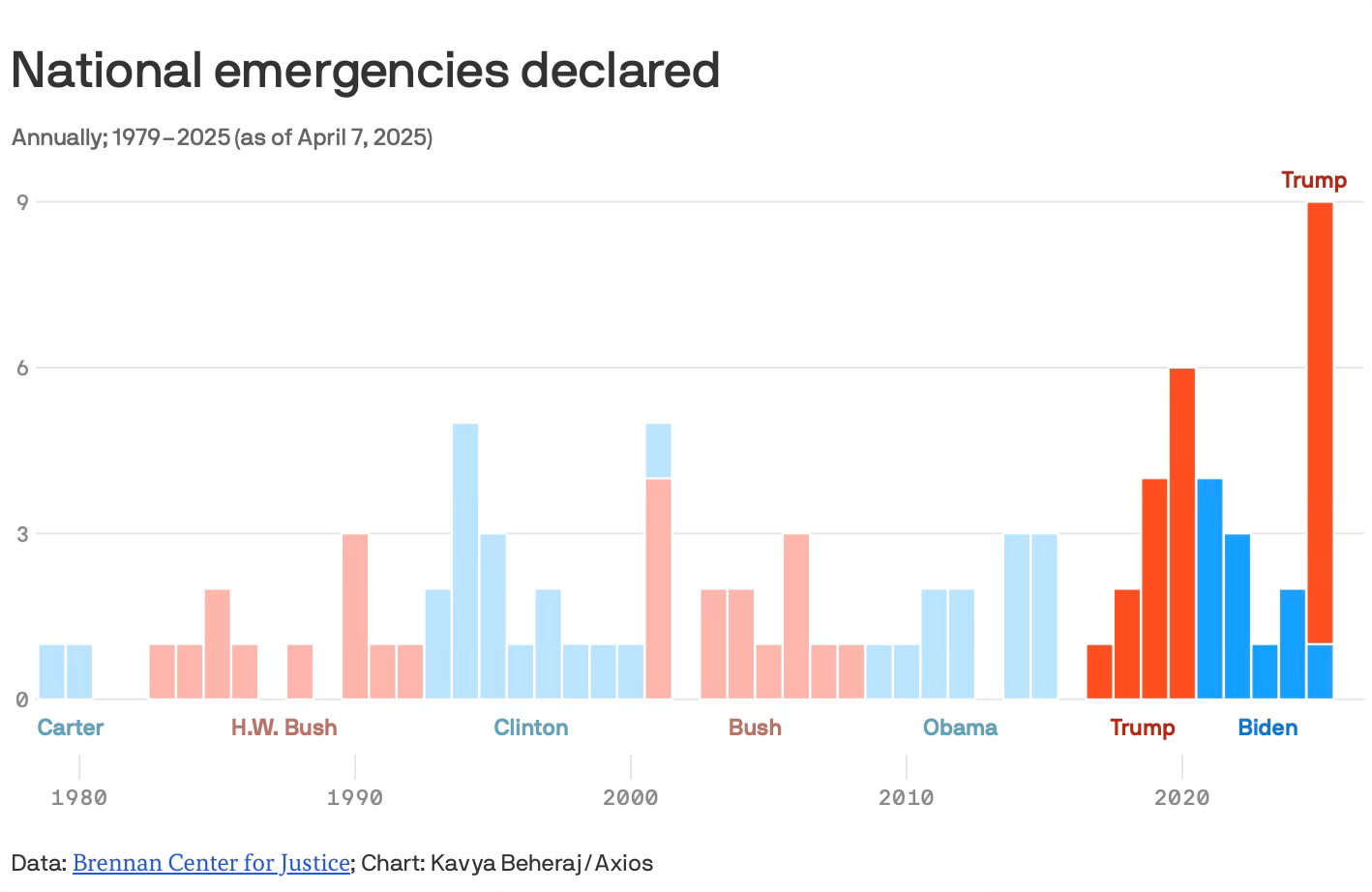
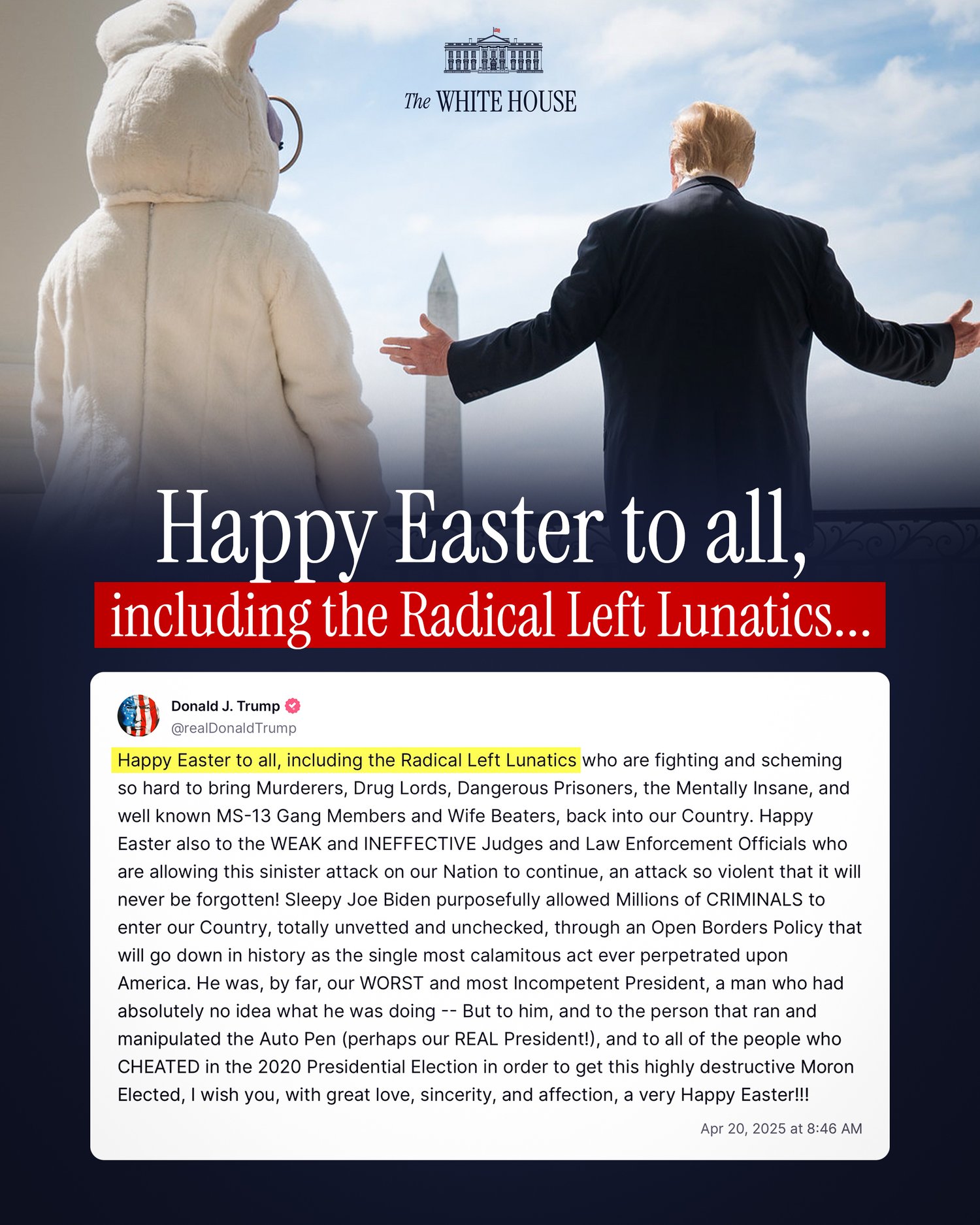
 Tipsy Teetotaler ن