Veneration of the Cross

My parish in going to have visitors today from a United Methodist confirmation class. It happens to be the day where we start the Liturgy with everyone present, one-by-one or two-by-two, coming forward, kneeling and prostrating before Christ’s cross, which will probably take 20 minutes or more considering how attendance has been lately.

If nothing else, they ought to come away understanding that we don’t distill or do things by halves.

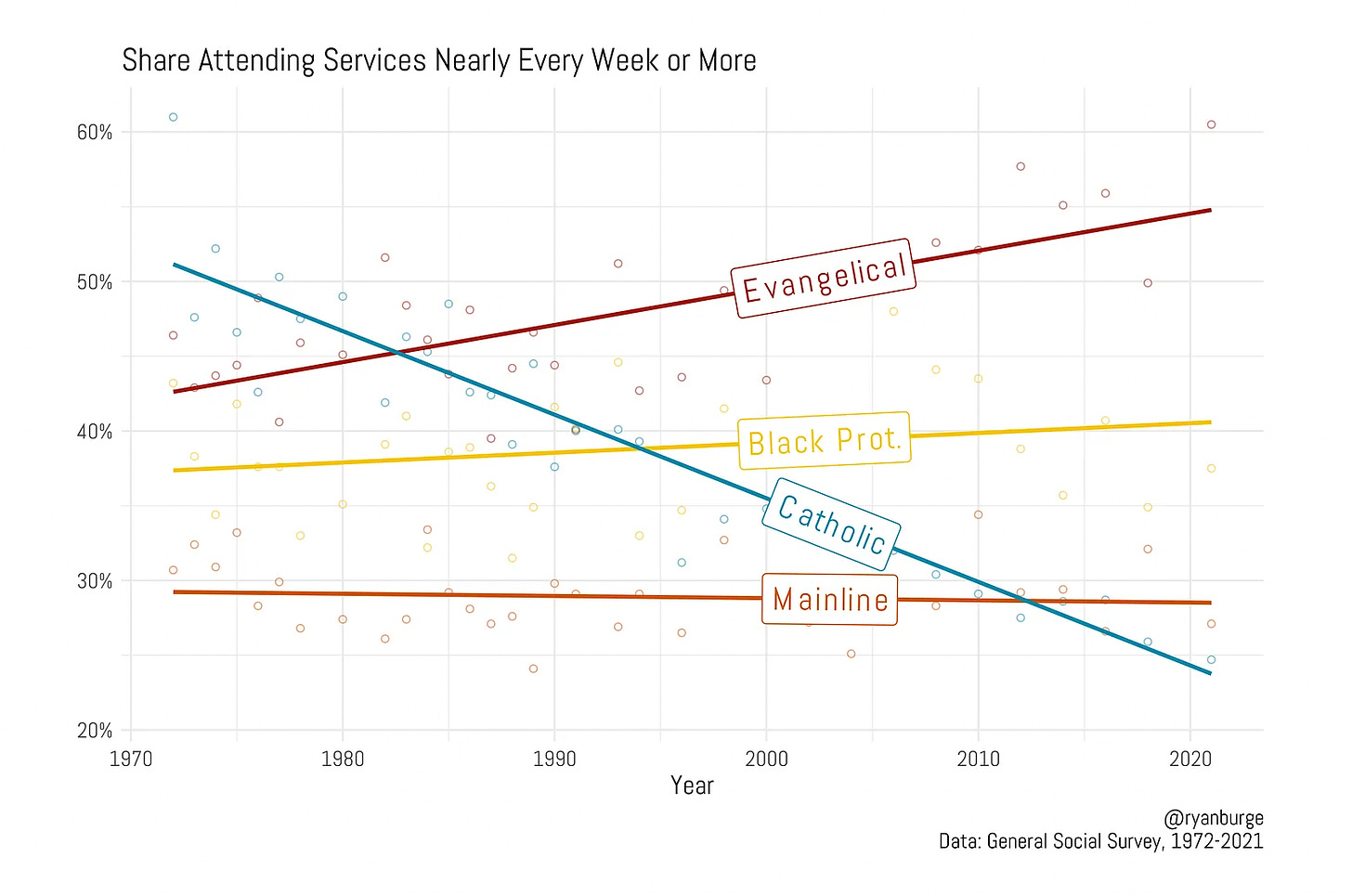
Churchgoing and the busting thereof

That relationship with organized religion provided many things at once: not only a connection to the divine, but also a historical narrative of identity, a set of rituals to organize the week and year, and a community of families. PRRI found that the most important feature of religion for the dwindling number of Americans who still attend services a few times a year included “experiencing religion in a community” and “instilling values in their children.”

When I read the PRRI survey, this emphasis on community is what caught my eye.

Did the decline of religion cut some people off from a crucial gateway to civic engagement, or is religion just one part of a broader retreat from associations and memberships in America?

Many people, having lost the scaffolding of organized religion, seem to have found no alternative method to build a sense of community.

Derek Thompson, The True Cost of the Churchgoing Bust – The Atlantic

…we are not advocating community merely for the sake of community. The Christian claim is not that we as individuals should be based in a community because life is better lived together rather than alone. The Christian claim is that life is better lived in the church because the church, according to our story, just happens to be true. The church is the only community formed around the truth, which is Jesus Christ, who is the way, the truth, and the life. Only on the basis of his story, which reveals to us who we are and what has happened in the world, is true community possible.

Stanley Hauerwas, Resident Aliens

Time to retire “Christian Nationalism”

Brad East insists that six things associated with “Christian Nationalism” are really characteristic of Christians more widely. For instance,

4. Believing divine providence guides America. In a weak sense, all Christians believe this, and when nonreligious outlets overreact to providential language it’s just that: an overreaction. But many Christians endorse a much stronger version. They speak of America as a light to the world, a city set on a hill with a special role in God’s plan for the world.

I wish fellow Christians would give up this belief. It claims too much; it ignores the church; it forgets Israel (Rom. 11:1–2, 28–29); it overinvests in a nation that will, like all others, one day pass away (Is. 40:15, Matt. 24:35). And yet there is nothing more American than American exceptionalism. From our founding onward, this belief has always been with us, often with religious overtones. Christians who disagree with me on this issue aren’t radicals. They’re ordinary Americans, especially by the standards of older generations and immigrants. You might as well accuse them of liking barbecue or apple pie.

Evangelical Sacramentalists

Mere Orthodoxy, a blog populated by young Calvinists and growing in respectability, sounds a sour note: The Overcorrection of the Evangelical Sacramentalists. That disappoints me because I like the lads there awfully well.

I can’t say the author is wrong within Evangelical context; maybe it’s impossible to get the exact kind of “balance” Gillis Harp craves. I’ve never been able to get the world to conform to my inchoate desires, either. (Maybe he should start another church to get it right, right?)

But the fundamental problem is that Harp and his compatriots won’t consider the possibility that there’s a balanced Christianity in continuous existence since the Apostles. They can’t see it because it’s eclipsed by the Latin Church from which their spiritual ancestors emerged, ultimately achieving not reformation but schism.

The Orthodox Church goes through a whole lotta “word” embedded in the fixed parts of the Liturgy before every communion. It has homilies. And it has Vespers, Matins, Compline, canonical Hours, and countless Canons and Akathists, suffused with the word (and The Word) for worship without sacrament. Apart from it, outside the Ark, you’re on your own.

And adding sacraments to evangelicalism won’t be any panacea.

Beauty

Whereas I once believed that the decadence of the West could only be turned around through politics and intellectual dialectics, I am now convinced that authentic renewal can only emerge out of the imaginative visions of the artist and the mystic.

Gregory Wolfe, Beauty Will Save the World

Ethics

Aristotle said that only those who have been well brought up can usefully study ethics: to the corrupted man, the man who stands outside the Tao, the very starting point of this science is invisible. He may be hostile, but he cannot be critical: he does not know what is being discussed.

C.S. Lewis, The Abolition of Man

Speaking iconically

The Seventh Council was able to declare that “icons do with color what Scripture does with words” precisely because both speak in an “iconic” manner—or we could say that icons speak in a “Scriptural manner.” They are revelatory of one another—however, literalism is descriptive of neither. The iconic character of Scripture begins to be apparent when one pays attention to how the New Testament “reads” the Old.

Fr. Stephen Freeman, Everywhere Present

Choosing or being chosen

Matt, a pastor, admitted: “The older I get, the more I feel that I didn’t choose faith, ministry, or youth ministry. They chose me. I don’t do this because I feel like it. I do it because everything else I’ve done has felt like a lie. (Especially retail. I really suck at retail.)”

Kendra Creasy Dean, Almost Christian

Blessed is he whose job or profession feels like the truth.


… that Christ may dwell in your hearts through faith; that you, being rooted and grounded in love, may be able to comprehend with all the saints what is the width and length and depth and height — to know the love of Christ which passes knowledge; that you may be filled with all the fullness of God.

Ephesians 3:17-19 (NKJV)

You can read most of my more impromptu stuff here and here (both of them cathartic venting, especially political) and here (the only social medium I frequent, because people there are quirky, pleasant and real). All should work in your RSS aggregator, like Feedly or Reeder, should you want to make a habit of it.

Saturday, 4/6/24

Today is that day the Purdue Boilermaker Men advance to the NCAA Championship game by ending the fairy tale run of DJ Burns and NC State. Remember, you read it here first. (Caveat: I have no money riding on any games and you certainly shouldn’t put money on my prediction.)

Meta

America the experiment

America as an experiment is genuinely important to the world not because of the accidents of history that made us the most powerful nation on Earth, but because America is the first real experiment in building a large, multiethnic, multicultural democracy. And we don’t know yet if that can hold. There haven’t been enough of them around for long enough to say for certain that it’s going to work,

Barack Obama

No sheaf of papers can protect us

Joseph de Maistre. Writing in 1809, he scoffed at the idea that any document written by mortal hands could ever design and establish genuinely new foundational laws. The spirit of any such laws was invariably already written on the hearts of those men who attempted to crudely reduce them to mere lines on a piece of paper. “Precisely what is most fundamental and most essentially constitutional in the laws of a nation cannot be written,” he wrote. The true constitution of a strong and functional nation was always “that admirable, unique, and infallible public spirit, beyond all praise, which directs everything, which protects everything. What is written is nothing.”

What is America’s implicit constitution today? Naturally, it’s never been fully captured in writing, though some authors, such as Christopher Caldwell, have variously attempted to nail it down here and there. If pressed to summarise, I might say it is one that values safety and security over freedom; top-down control over self-governance; empty egalitarian posturing over excellence; material comfort over virtue; entitlement over responsibility; bureaucracy over accountability; narcissistic emotivism over duty; fantasy over reality; global ambitions over national loyalty; dreams of progress over eternal and transcendent truths — in short, the same spirit that animates our out-of-control managerial regime. It’s the spirit which saw that regime not hesitate to impose Covid lockdowns, or trash the rule of law and attempt to jail political opponents (and for half the country to view this as acceptable or even admirable); it’s what has produced Supreme Court justices who fret free speech would undermine the security state.

N.S. Lyons, at UnHerd

Luxury beliefs before 2019

The neologism “luxury beliefs” is only five years old, but what it describes was noted decades ago (if not earlier):

Harlem itself, and every individual Negro in it, is a living condemnation of our so-called “culture.” Harlem is there by way of a divine indictment against New York City and the people who live downtown and make their money downtown. The brothels of Harlem, and all its prostitution, and its dope-rings, and all the rest are the mirror of the polite divorces and the manifold cultured adulteries of Park Avenue: they are God’s commentary on the whole of our society.

Thomas Merton, The Seven Story Mountain

And again I say, “Beauty Will Save the World”

At my shows, I like to have the audience sing, just for the sensuous warmth of it. We sing “My country, ’tis of thee” and in the South we can sing a hymn or two a cappella and it’s amazing to observe this from the stage, people who are surprised and delighted and moved by the beauty of their voices mingled with the others. They learned this as Baptist kids and then (I imagine) lapsed into secular humanism and went through doctrine therapy and devoted themselves to vintage wines and dark coffees and French baking, and now, as I sing “When peace like a river attendeth my way and sorrows like sea billows roll,” the words come back to them and they sing like risen saints at the Sunday camp meeting and they dab at their eyes with a hanky.

Garrison Keillor

Rackets

EVs

With their heavy weight and quick acceleration, EVs tend to burn through tires about 20% faster than internal combustion vehicles do, according to consultancy firm AlixPartners. And the tires cost about 50% more.

Via Dense Discovery Issue 282

Trump looting the GOP

One might assume that a presidential nominee who generates as much devotion as Mr. Trump would be a financial boon to his party. One would be wrong. With Mr. Trump, everything is about Mr. Trump … While the Republican base may be smitten with Mr. Trump, plenty of big-money donors are skittish about bankrolling his nonsense. The former president has been scrambling to close the gap, leering at potential funders as if they were contestants at the Miss Universe pageant.

Michelle Cottle, Trump Is Financially Ruining the Republican Party

I haven’t seen gullibility like today’s GOP since Harlem stood by its man Adam Clayton Powell.

Has Leonard Leo turned mercenary?

Formerly friendly, I’m now a little leery of Leonard Leo.

Leonard Leo (not the Federalist Society) provided Donald Trump with the list of outstanding conservative prospective Supreme Court Nominees that Trump ran on in 2016 and that probably made the difference in the Election. Kudos to him for that. I didn’t believe Trump would keep his promise to nominate from that list, and for that and other reasons, I didn’t vote for him.

But about the time Leo got on the Trump train, his life appears to have take a dramatic turn:

The Campaign for Accountability’s complaint alleges that “Leo-affiliated nonprofits” paid BH Group and CRC Advisors a total of $50.3 million between 2016 and 2020.

During this period, according to the complaint, Leo’s lifestyle changed:

In August 2018, he paid off the 30-year mortgage on the Mclean, Va. home, most of which was still outstanding on the payoff date. Later that same year, Leonard Leo bought a $3.3 million summer home with 11 bedrooms in Mount Desert, an affluent seaside village on the coast of Maine, using, in part, a 20-year mortgage of $2,310,000. Leonard Leo paid off the entire balance of that mortgage just one year later in July 2019. In September 2021, Leonard Leo bought a second home in Mount Desert for $1.65 million.

The complaint was based in part on a March 2023 Politico story by Heidi Przybyla. She wrote that her “investigation, based on dozens of financial, property and public records dating from 2000 to 2021, found that Leo’s lifestyle took a lavish turn beginning in 2016,” citing Leo’s purchases of the Maine properties along with “four new cars, private school tuition for his children, hundreds of thousands of dollars in donations to Catholic causes and a wine locker at Morton’s Steakhouse.”

Thomas B. Edsall, Trump’s Backers Are Determined Not to Blow It This Time Around

Part of my leeriness is probably because I’m smack dab in the middle of reading Timothy Egan’s A Fever in the Heartland: The Ku Klux Klan’s Plot to Take Over America, and the Woman Who Stopped Them, which describes Indiana Grand Dragon D.C. Stevenson’s extremely profitable financial con in his promotion of the 1920s Klan. The story is full of MAGA-like personalities (right down to the rapes) and profiteering.

Trump’s second term, with Leonard Leo’s help, is shaping up to be a nightmare for true conservatism and a repudiation of much of the excellent work Leo’s judicial list did in the first Trump term. Truly Donald Trump has a reverse Midas touch.

Just asking questions

I’m no longer a Ben Shapiro fan, but when he’s right, he’s right.

Election 2024

Political Therapeutic Deism

Political Therapeutic Deism is a system of beliefs which invoke religious terms for the purposes of affirming one’s politics. It includes beliefs like:

  1. God is on my political party’s side.
  2. My views on political issues are a leading indicator that I am a true Christian.
  3. My actions in politics are justified in light of God’s general approval of my politics.
  4. I do not understand how other “Christians” could vote for my candidate’s opponent.
  5. It is clear and obvious which political issues are most important to God.

Political Therapeutic Deism makes sense of why we’re seeing sorting in churches by politics, over and above theology or other factors. It makes sense of why we’ve seen steep declines of religious affiliation among Democrats over the last several decades, and why growing numbers of Trump supporters identify as evangelical, even if they don’t share evangelicals’ theological beliefs. …

Political Therapeutic Deism has the benefit of making clear what we are seeing is the misappropriation of religious language and symbols for political ends. It also harkens to a term (Moral Therapeutic Deism) which has been thoroughly rejected by some of the very kind of people “Christian nationalists” seek to persuade to their way of thinking. They want to equate opposition to their political proposals as opposition to Christianity itself. Why would we help them?

Michael Wear

Until a better term comes along, I expect to use political therapeutic deism for the faux-evangelical Trumpists that MSM calls “white Christian nationalist.”

“But the judges” no longer applies

For many legal conservatives, a two-word incantation—“but judges”—defined the Trump era. It began as an exhortation or, perhaps, a justification. Later it became a coping device, edging into gallows humor. As the shadows lengthened in the last days of a desperate and increasingly lawless presidency, it became a rueful question. A mob, incited by the president who refused to accept a lawful election, sacked the Capitol, assaulted police officers, interrupted the electoral count, and hunted down officeholders—“But … judges?”

Conservatives who had wagered the Trump gambit worth the risk got the upside of their bargain. Trump nominated many excellent men and women to the judiciary. A confident conservative majority, grounded in originalism and textualism, now controls the Supreme Court. The white whale of Roe v. Wade—long emblematic of lawless usurpation of policymaking by the Court—fell. 

Contrary to the fears of liberals and the misplaced hopes of Trump, conservative judicial appointees upheld the principle of judicial independence. They refused to serve as reliable partisans and handed Trump and his administration important legal defeats. Crucially, Trump’s nominees rejected his baseless claims of a stolen election.

But these advances in jurisprudence came at a deep civic cost. The president with whom legal conservatives allied themselves used his office to denigrate the rule of law, mock the integrity of the justice system, attack American institutions, and undermine public faith in democracy. Beyond the rhetoric, he abused emergency powers, manipulated appropriated funds for personal political ends, and played fast and loose with the appointments clause, all at the cost of core congressional powers. 

Republicans in Congress barely resisted these actions and increasingly behaved more like courtiers than members of a co-equal branch of government.

Partisans promise that Trump in a second term would nominate judges more loyal to the president while Trump-friendly, post-liberal thinkers develop theories like “common-good constitutionalism” in which conservative judges would abandon originalism in favor of promoting certain ends. Adrian Vermeule, the leading academic proponent of the latter view, has argued that “originalism has now outlived its utility, and has become an obstacle to the development of a robust, substantively conservative approach to constitutional law and interpretation.” It would be deeply ironic, and the ultimate failure of the movement, if the “but judges” bargain were to end with purportedly “conservative” judges legislating from the bench.

Gregg T. Nunziata, The Conservative Legal Movement Got Everything It Wanted. It Could Lose It All

Anyone who says “but the judges” to justify voting for Trump in 2024 is seriously misguided. He’s disappointed with his first-term SCOTUS nominees in particular, as they’ve not been the kinds of toadies he wants. Next time, he’ll nominate toadies, not excellent jurists, and since the Senate is going to flip (11 Republicans are up for re-election, 23 Democrats) he’ll get them confirmed.

Good advice, since abandoned

Listen to me. Listen. If the twentieth century tells us anything, it’s that whenever you hear anyone standing before a crowd, winding them up about the cause of creating utopia on earth, you had better run.

Rod Dreher, December 12, 2020. I’m sorry to say that he has since reconciled himself to a supposed necessity to vote for Trump.

Miscellany

Rowling throws down the gauntlet

Scotland has a new hate speech law that criminalizes “stirring up hatred” against a series of “protected characteristics,” including race, age, religion, disability, and “transgender identity.” J.K. Rowling threw down the gauntlet:

On Monday, the day the law came into effect, the Harry Potter author posted a dare on X. In it, she named 10 transgender women, called them all men, and said: “If what I’ve written here qualifies as an offense under the terms of the new act, I look forward to being arrested.” … “If they go after any woman for simply calling a man a man, I’ll repeat that woman’s words and they can charge us both at once.”

The Free Press

Bomb-thrower

Responding to an Emma Green New Yorker article on classical education:

I am a fan of almost anything that disrupts the hegemony of this fatuously self-righteous and profoundly anti-intellectual educational establishment, which exists not to lift up the marginalized and excluded but rather to soothe the consciences of the ruling class. May the forces of disruption flourish.

Alan Jacobs, against the factory of unreason

Nellie snippets

  • Trump Media lost $58 million and brought in $4 million in revenue last year. Yet, the market is valuing DJT at $6.4 billion. That there’s a meme stock. (I could have pulled this for “Rackets,” above.)
  • It is odd that Trump got the reputation of being The End of the American Press, when Biden is really the one who hates questions and shuns journalists. Remember Trump? How he would actually never stop talking? How he’d sit and antagonize reporters endlessly? But oh, he’d talk. It was alarming, often described as “rambling.” But at least we all knew exactly what was going through his mind (chaos, tangents, rage, pettiness, pretty good jokes, Rosie O’Donnell, more Rosie O’Donnell, why was it always Rosie O’Donnell).
  • [S]tudent loan relief is the wrong approach. Colleges should simply not cost this much. Solution: eliminate 90 percent of university administrator roles, since at least that many are fully fake. Offer incentives for kids to enroll in trade schools or community colleges. Boom, loan crisis solved, you’re welcome. Next topic.
  • From Reuters
  • America’s leading women’s rights group of yesteryear is still arguing that it’s white supremacy to maintain girls’ sports. Here’s NOW, the National Organization of Women: “Repeat after us: Weaponizing womanhood against other women is white supremacist patriarchy at work. Making people believe there isn’t enough space for trans women in sports is white supremacist patriarchy at work.” Yes, it’s white supremacist patriarchy to argue. . . that someone who’s gone through male puberty might have an unfair advantage in, let’s say, rugby. Interesting. Fascinating. I will repeat until I am clean.

Nellie Bowles

I’m that guy

When I think of the consciousness that generates the circular sorrow of “Ifs eternally,” or the one trying to find the one thing that will unify all the disparate experiences of one life, I think of a man—almost always a man, though there are notable exceptions—sitting alone in a room and doggedly trying to figure it all out.

Christian Wiman, Zero at the Bone

April Fools Day

Schism and “church growth”

Protestantism thus gradually came to lose the primitive Christian horror of schism. As time went on, with the continuing multiplication of Protestant denominations, what now matters among them is purity of doctrine, not unity—and sometimes doctrine takes a back seat to lesser things. The concept of schism has all but vanished from the theological glossary of Evangelicals: if they don’t like their church, they simply leave and start another one down the street. What the Fathers decried as schism is now regarded as normal church growth. So long as the new church does not make a point of denying the Trinity, it remains a part of the una sancta.

Fr. Lawrence Farley, The Necessary Revolution (hyperlink added)

I’ve mused for decades that calling schisms “church growth” was an attempt to make a virtue out of a wicked “necessity” (compulsive fissiparousness, rooted in disagreements about what the Bible teaches).

Will liberal Protestantism ever fail utterly?

For generations the more liberal-leaning Protestant denominations have been declining. But liberal Christianity is a renewable resource, as long as there are conservative Christianities to inspire rebellion and disillusionment.

Ross Douthat

Holy Week in MAGAworld

The signs are everywhere. First, there’s the behavior of the savior himself, Donald Trump. On Monday of Holy Week, he compared himself to Jesus Christ, posting on Truth Social that he received a “beautiful” note from a supporter saying that it was “ironic” that “Christ walked through his greatest persecution the very week they are trying to steal your property from you.”

On Tuesday, he took to Truth Social to sell a $60 “God Bless the USA Bible” (the “only Bible endorsed by President Trump”), an edition of the King James Bible that also includes America’s founding documents. “Christians are under siege,” he said. The Judeo-Christian foundation of America is “under attack,” Trump claimed, before declaring a new variant on an old theme: “We must make America pray again.”

Two weeks ago, Charlie Kirk, the founder of Turning Point USA, told a Christian gathering that Democrats “want full and complete destruction of the United States of America.” Kirk is a powerful Trump ally. He has millions of followers on social media and is hoping to raise more than $100 million in 2024 to help mobilize voters for Trump.

“I do not think you can be a Christian and vote Democrat,” Kirk said, and “if you vote Democrat as a Christian, you can no longer call yourself a Christian.”

All of this is unfolding against the backdrop of so-called prophetic utterances that place Trump at the center of God’s plan to save America. According to these prophecies, Trump is God’s choice to lead America out of spiritual darkness, to save it from decline and despair. In this formulation, to oppose Trump is to stand against the will of God.

David French.

Yes, the signs are everywhere: Trump is an antichrist.

Oh wait! That’s not what French said! He said the signs were of this:

When people are angry and afraid, they will look for a savior. When that anger and fear is latched to faith and prophecy, they will yearn for a religious crusade.

There’s a version of this same story playing out in the United States, but because the anger and fear are so overwrought, the prophecies so silly, and the savior so patently absurd, we may be missing the religious and cultural significance of the moment. A significant part of American Christianity is spiraling out of control.

On my second reading, I lost my frustration that French was missing the point. I think he gets the antichrist point just fine, but that talk of “antichrist” is a little bit alien to a PCA Presbyterian and utterly alien to the New York Times. This is as clear as French and his employer can make it. Let him who has ears hear.

An distracting mistake

Roman Catholics, Anglicans and Orthodox Christians, who together claim around 1.5 billion members, describe the Bible as a final authority in matters of faith …

Esau McCaulley

I cannot think of a sense in which Prof. McCaulley is correct here. Sola scriptura (the Bible as a final authority in matters of faith) was a Protestant Reformation novelty, not a claim of the ancient church. And McCaulley’s mistake contributes little or nothing to his argument about the outrage of Trump’s Holy Week endorsement of a MAGA Bible.

McCaulley continues:

… Evangelicals, who have overwhelmingly supported Mr. Trump over the course of three election cycles, are known for their focus on Scripture, too. None of these traditions cite or refer to any American political documents in their doctrinal statements — and for good reason.

Well, duh! You know what else Orthodox Christianity doesn’t say in its creed?* It doesn’t say that the Bible is an authority in the Christian faith at all.

Our practice shows how highly we regard the scriptures, as our liturgies and other services are pervaded with them. But scripture is not of creedal status. Indeed, the New Testament canon was not settled until decades or more after the Nicene Creed was formulated.

Again, Prof. McCaulley’s banal observation adds little to his argument about MAGA Bible.

[* Two eye-openers for me in the Orthodox Church were (1) the use of scripture and (2) the source and use of the creed and other decisions of ecumenical counsels. But those are beyond today’s scope.]


… that Christ may dwell in your hearts through faith; that you, being rooted and grounded in love, may be able to comprehend with all the saints what is the width and length and depth and height — to know the love of Christ which passes knowledge; that you may be filled with all the fullness of God.

Ephesians 3:17-19 (NKJV)

You can read most of my more impromptu stuff here and here (both of them cathartic venting, especially political) and here (the only social medium I frequent, because people there are quirky, pleasant and real). All should work in your RSS aggregator, like Feedly or Reeder, should you want to make a habit of it.
Gregory Palamas Sunday

Evangelicals

Evangelical Subculture according to Russell Moore

I hesitate to share this, but not knowing who my readers are, I can’t know that somebody doesn’t need this as a wake-up call:

Writing for Christianity Today, Russell Moore unpacked how the evangelical subculture rejected virtue, “driven specifically by the very same white evangelical subculture that once insisted that personal character—virtue, to use a now distant-sounding word the American founders knew well—matters.” He continued: “Part of the vulgarization of the Right is due to the Barstool Sports/Joe Rogan secularization of the base, in which Kid Rock is an avatar more than Lee Greenwood or Michael W. Smith. But much more alarmingly, the coarsening and character-debasing is happening among politicized professing Christians. The member of Congress joking at a prayer breakfast about turning her fiancé down for sex to get there was there to talk about her faith and the importance of religious faith and values for America. The member of Congress telling a reporter to ‘f— off’ is a self-described ‘Christian nationalist.’ We’ve seen ‘Let’s Go Brandon’—a euphemism for a profanity that once would have resulted in church discipline—chanted in churches. If we are hated for attempted Christlikeness, let’s count it all joy. But if we are hated for our cruelty, our sexual hypocrisy, our quarrelsomeness, our hatefulness, and our vulgarity, then maybe we should ask what happened to our witness. Character matters. It is not the only thing that matters. But without character, nothing matters.”

The Morning Dispatch

Moore also wrote:

[W]ere he to emerge today, [Ned] Flanders would face withering mockery for his moral scruples—but more likely by his white evangelical co-religionists than by his beer-swilling secular cartoon neighbors.

On the other hand …

This makes sense to me. Evangelical Christianity emphasizes the personal relationship with Christ. It puts more emphasis on what Kierkegaard said was the core Christian way of responding to the Gospel: as something to be lived out actively, requiring personal conversion, not just a social habit.

Rod Dreher, Kierkegaard on Easter

It is, as they say, ironic. Evangelical theology is almost antinomian in terms of salvation having anything to do with what you do, versus the notions in your head (what you “believe”).

But there they are, bless their hearts, in Church oftener than not.

Reformational Protestants

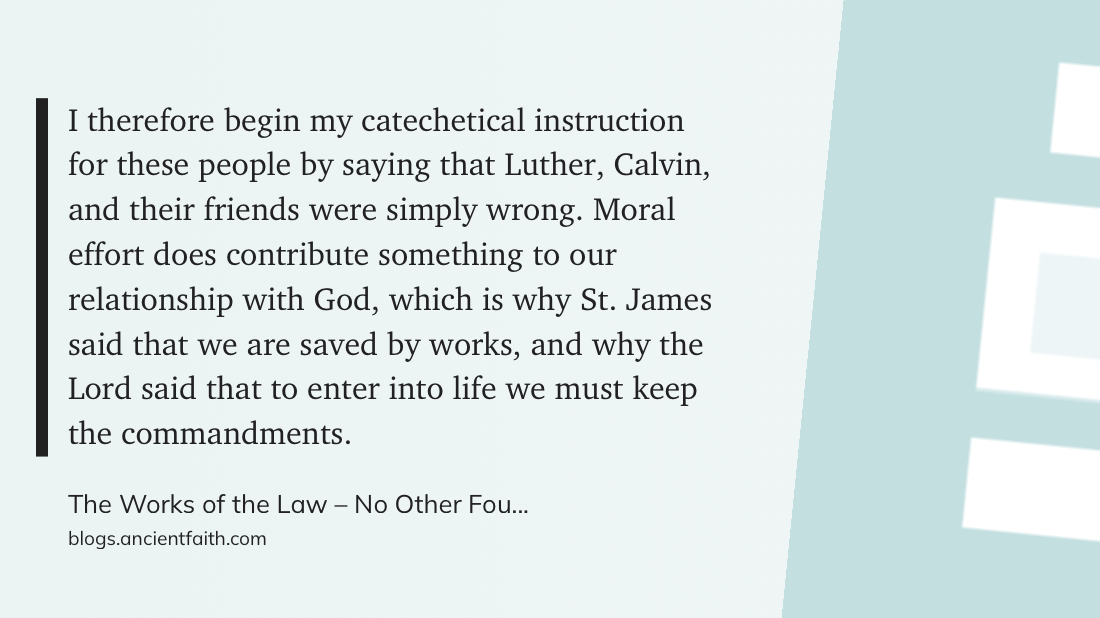
Putting it bluntly

If you want the full posting: The Works of the Law

Every man a Pope

I frequently quote Nathan Hatch’s masterful The Democratization of American Christianity in my posts. It explains so much.

But I just discovered that one of my favorite Orthodox bloggers, Fr. Stephen Freeman, has noticed the same democratizing theme:

[I]n contemporary Christianity, it is said that “every man is a Pope.” Whereas a few generations ago, people asserted that the Bible alone had authority, today, that, too, has been overthrown. Each person is his own authority. And I will add, that if every person is his own authority, then there is no authority.

I am fully sympathetic with the political place of democracy …

I am, however, deeply interested in the spiritual disease that accompanies the interiorizing of the democratic project. We have not only structured our political world in a “democratic” manner, we have spiritualized the concept and made of it a description for how the world truly is and how it should be. The assumptions of democracy have become the assumptions of modern morality and the matrix of our worldview …

Much of what today passes for Protestantism is nothing of the sort. Rather, it is a thinly veiled cloak for the democratic spirit at “prayer.”  “Salvation by grace through faith” is a slogan for individualism, a Christianity “by right.” There are no works, no requirements, only a “grace-filled” entitlement. For the ultimate form of democracy is the person who needs no one else: no Church, no priest, no sacrament, only the God of my understanding who saves me by grace and guarantees that I can do it alone.

It is a great spiritual accomplishment to not be “conformed to this world.” The ideas and assumptions of modern consumer democracies permeate almost every aspect of our culture. They become an unavoidable part of our inner landscape. Only by examining such assumptions in the light of the larger Christian tradition can we hope to remain faithful to Christ in the truth. Those who insist on the absence of spiritual authority, or demand that nothing mediate grace will discover that their lives serve the most cruel master of all – the spirit of the age.

Fr. Stephen Freeman, The Madness of Democracy – A Spiritual Disease

The common feature of American religion

Nevin and Schaff also discerned certain common intellectual patterns and reflexes beneath the rampant pluralism of American Protestantism. They attributed the breakdown of theological coherence to attitudes that American Christians had assumed. These two felt that a radical Bible-centeredness was the reigning theory among Protestant sects. After surveying the statements of belief of fifty-three American denominations, Nevin surmised that the principle “no creed but the Bible” was the distinctive feature of American religion.

Nathan O. Hatch, The Democratization of American Christianity

Fifty-three denominations that just follow the Bible but cannot agree on what it means. What’s wrong with this picture?

Christianity generally

A constant temptation

Christianity in this instance is no longer even a worldview—or what John Rawls calls a “fully comprehensive doctrine”—much less an institutionalized worldview. It is conceived as one wedge in the pie of an individual life, a matter not of shared obedience to the Word incarnate with eternal life in the balance, but of preferred inclination toward the “company or conversation of those whose Customs and Humours, whose Talk and Disposition they like best.”

Brad S. Gregory, The Unintended Reformation

An article I keep coming back to

This is an article I’ve been revisiting and wrestling with regularly:

There is a reason why so many evangelical and Protestant graduate students in theology move toward “higher church” traditions. Intellectually, they discover thinkers and writings their own “lower church” traditions either ignore or lack; liturgically, they discover practices handed down century after century that function like a lifeline in a storm. Reading Saint Ignatius or Saint Justin or Saint Irenaeus or Saint Augustine, it occurs to them that they don’t have to imagine what the church’s ancient liturgy looked and felt like; they can simply visit a church down the street.

It isn’t strange to learn that Prestigious Scholar X on the law/econ/poli-sci faculty at Ivy League School Y is Roman Catholic. It is a bit of a surprise to learn that he’s an evangelical. The moment you hear it, though, you wonder (or ask) whether he’s an evangelical Anglican or some such.

Brad East, Conversions, Protestantism, and a new mainline

A cartoon for the rest of Election 2024

For those whose churches don’t have formal confession, understand that we confess our sins without suggesting that they were justified by our neighbor’s provocation. It sounds so easy, but not being able to self-justify, not even a eensy-weensy bit, can be surprisingly hard.

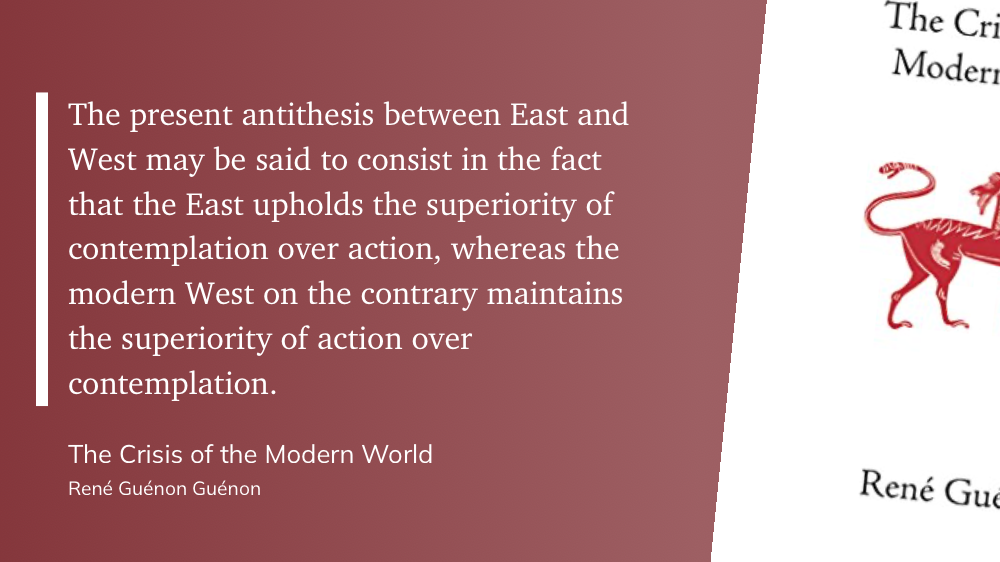
East and West

I don’t think his focus was Christianity, but Guenon was (inadvertently?) not wrong about the relative emphasis in Western versus Eastern Christianity.


… that Christ may dwell in your hearts through faith; that you, being rooted and grounded in love, may be able to comprehend with all the saints what is the width and length and depth and height — to know the love of Christ which passes knowledge; that you may be filled with all the fullness of God.

Ephesians 3:17-19 (NKJV)

You can read most of my more impromptu stuff here and here (both of them cathartic venting, especially political) and here (the only social medium I frequent, because people there are quirky, pleasant and real). All should work in your RSS aggregator, like Feedly or Reeder, should you want to make a habit of it.
St. John Climacus Saturday

Culture

Elite or not?

A 2023 account of these car dealers by Slate’s Alexander Sammon recounts the awesome scale of their collective wealth and influence on Republican politics: “Auto dealers are one of the five most common professions among the top 0.1%” while making up “a majority of the country’s 140,000 Americans who earn more than $1.58 million per year”; members of the industry association donate to Republicans “at a rate of 6-to-1”, through which they have worked “to write and rewrite laws to protect dealers and sponsor sympathetic politicians in all 50 states”. Such figures help to make sense of Moreno’s and his fellow car dealers’ status as the cream of the crop among America’s local elites.

Michael Cuenco, Car dealers will decide America’s future.

Cuenco seems to overlook the difference between wealth and prestige.

Sportsball

Being in politics is like being a football coach. You have to be smart enough to understand the game, and dumb enough to think it’s important.

Eugene McCarthy, via the Economist’s World in Brief

Dictator or not?

On the drive into Budapest from the airport, travelers can see billboards erected by the Hungarian political opposition, featuring a photo of Prime Minister Viktor Orban with the slogan “God? Homeland? Pedophilia!” It’s a reference to the recent scandal involving a presidential pardon of a politically connected man who had been convicted of aiding in a pedophilia cover-up. The scandal cost the ruling Fidesz party its top two female politicians: President Katalin Novak and former Justice Minister Judit Varga.

Associating the prime minister, who apparently did not know about the pardon until the media reported it, and who quickly called for resignations of these top allies, is a low blow. But that’s how it goes in Hungary. Fidesz is not above similar tactics. If you expect Magyar politics to be a tea party, you are going to be disappointed.

Still, bearing in mind how the U.S. president recently denounced Orban as a “dictator”—a slur widely repeated in Western media and public discourse—you have to wonder what kind of strongman would allow himself to be publicly criticized as a promoter of pedophilia. If Orban really were a dictator, wouldn’t these billboards have been banned? Wouldn’t those who paid for them be eating goulash in a gulag now? 

… Hungary, which supposedly groans under the burden of the Orban dictatorship, enjoys far more freedom of expression than countries whose media and whose leaders condemn it as repressive. You have to wonder why.

Rod Dreher in the European Conservative (no paywall).

Eugenics for the age of The Machine

Servility

Will we reach the point where nobody thinks they could start their own little business?

Political

Meet the new boss, Trumpier than the old boss

Washington Post: Was the 2020 Election Stolen? Job Interviews at RNC Take an Unusual Turn.

Those seeking employment at the Republican National Committee after a Donald Trump-backed purge of the committee this month have been asked in job interviews if they believe the 2020 election was stolen, according to people familiar with the interviews, making the false claim a litmus test of sorts for hiring.

The Morning Dispatch

Trump’s faith

The closest I get to liking Donald Trump is when he evinces contempt for those who idolize him.

I feel guilty about that, as one shouldn’t sympathize with con artists. But you know how it is with scams: At a certain point of extreme gullibility, the mark starts to seem more contemptible than the person preying on them. If you’re still falling for “Nigerian prince” emails in 2024, the problem lies chiefly with you, not with the flimflam man responsible.

The sheer laziness with which Trump has courted evangelical voters since 2015 has always betrayed a degree of sincere disdain for them that’s unusual in a man not otherwise known for honesty. It would have been trivially easy for him to brush up on Christian dogma after he entered politics in the name of convincing the Republican base that he’d seen the light after a dissolute adulthood. But … he couldn’t be bothered to do so.

He’s never cared enough about the faith espoused by most of his supporters to even pretend to take it seriously.

That’s how we ended up with him once famously rendering “2 Corinthians” as “Two Corinthians” rather than “Second Corinthians.” And listing “an eye for an eye” as his favorite Bible verse instead of something from the Gospels. And admitting at an evangelical forum that he couldn’t recall ever having asked for God’s forgiveness.

A man who lies like he breathes somehow can’t get motivated to lie persuasively about being pious, even as a gesture of minimal respect for his own fans. That’s remarkable. And insofar as most evangelicals have shrugged it off and rolled over for him anyway, my sympathies lie more with him. He’s been sending them the political equivalent of “Nigerian prince” emails for nine years; if they haven’t wised up yet, that’s a problem with them more so than with Trump.

His first political priority, even above maximizing his chances of reelection, is purging the Republican Party of anyone who would question his right to rule. He doesn’t want independent-minded Christians in the GOP any more than he wants the traditional conservatives who preferred Nikki Haley in the primary. He’ll win without them—and if he can’t, he’ll at least have consolidated his power over one-half of America’s political establishment in the process.

In that context, whether by design or by happenstance, the “Trump Bible” operates as a sort of litmus test for evangelicals who have stuck with him this far through thick and thin. You won’t abandon me if I make a mockery of your faith, will you? No, of course you won’t.

The devolution of evangelicalism in the Trump era is itself an interesting mix of radicalism and transactionalism, mirroring Trump’s personality. Many Christians made a cynical bargain with him in 2016, suppressing their moral discomfort and offering him their votes in exchange for guarantees that he’d enact their agenda, starting with limits on abortion. Insofar as his poor character and irreligiosity troubled them, some may have idly hoped that their influence over him, and the influence of figures like Mike Pence, would turn his heart toward God in time. He might be remade in Christianity’s image.

That transaction didn’t pan out the way they’d hoped. For many, Christianity has been remade in his image.

Nick Catoggio, The True Faith

How to reach Republicans with the anti-Trump Gospel

Carville has been sounding an alarm about progressives getting too censorious since he advised Hillary Clinton in 2016. He disparaged liberals’ snooty, elitist “faculty lounge” attitudes long before he blew off the faculty lounge himself. He complained that “woke stuff is killing us,” that the left was talking in a language that ordinary Americans did not understand, using terms like “Latinx” and “communities of color,” and with a tone many Americans found sneering, as in Hillary’s infamous phrase “basket of deplorables.”

“There are a lot of people on the left that would rather lose and be pure because it makes them feel good, it makes them feel superior,” Carville said. And that, he said, is how you end up with Dobbs.

He thinks Donald Trump’s voters see him as akin to King Cyrus or King David in the Bible, a flawed messenger, so it’s best to use a biblical narrative about betrayal.

“If you say, ‘You dumb son of a bitch, how can you ever think that this fat, slimy, rapist, criminal, racist should be president?’ they’re going to recoil,” he said. “I think Democrats should say: ‘Look, you believed in him. You felt like you weren’t being seen, you were being culturally excluded. But he betrayed you. You thought he was going to be for you and helping you, but he was really for TikTok and tax cuts to the rich.’”

James Carville profile by Maureen Dowd

What’s behind “Lawfare”?

I submit that what changed when Trump entered the political arena on the highest levels isn’t that he gained powerful enemies who resolved to take him down by any means possible, nefarious or otherwise. What changed is that he was now a magnet for all kinds of scrutiny—journalistic as well legal …

Isn’t this the most obvious thing in the world? What is the first thing that anyone entertaining a run for the White House is asked by anyone who understands the process? Do you have any skeletons in the closet? Better get them out in the open now, because they will be discovered during the course of the campaign, and they will sink you, especially if you seek to cover it up.

Because Trump’s alleged crimes and misdeeds were extremely complex and deeply embedded in his sprawling business empire—and because the wheels of justice (rightly) grind extremely slowly—it’s taken many years for numerous lines of investigation to culminate in several trials all at roughly the same time, just as Trump is gearing up for a third attempt to win the White House. That’s not great. But as Jonathan Chait has argued quite cogently, the reason why it’s happening is that Donald Trump is a crook! If he wanted to continue getting away with being a crook, he could have decided not to run for president! Instead, he launched a campaign, won, lost, and is now running again. That’s nearly nine years (and counting) of ensuring the Klieg lights of public scrutiny are trained on every aspect of his life and business. What did he expect?

Since Trump trends toward imbecility, he may be surprised and outraged about this. But his defenders really should know better.

Damon Linker, Seven More Months of … This?

Ronna McDaniels’ excellent NBC adventure

Jonah Goldberg on NBC’s difficulty finding commentators to defend Trumpy positions:

I’ve said it a million times on here: When we were all growing up, […] the word “RINO” meant someone who was squishy on abortion, or taxes, or foreign policy, or something like that. It was about issues. Now, by Trump’s own admission, RINO only refers to people insufficiently loyal to Donald Trump. And so you get this weird kind of thing where you have to find people who are supposedly intelligent conservatives who are also willing to talk about Donald Trump as if he’s comrade Stalin. And that’s a really tiny universe of people because it almost demands that you have no integrity or that you lie. And that’s how Ronna McDaniel starts to look attractive.

Wordplay

Tina Brown assessed King Charles: “Even with the best prognosis for his cancer, he has been left with a rueful rump of a reign.” (Ann Madonia Casey, Fairview, Texas)

Jesse Green reviewed a new Broadway production: “Romantic musicals are as personal as romance itself. What makes you sigh and weep may leave the person next to you bored and stony. At ‘The Notebook,’ I was the person next to you.” (Christopher Flores, San Antonio)

And Bret Stephens, conversing with Gail Collins, skewered the social media site affiliated with Donald Trump: “I take it you’re referring to Truth Social, which in an honest world would be renamed Lies Sociopathic.” (Ross Payne, Windermere, Fla.)

Clipped from Frank Bruni

Midweek dump (3/28/24)

Culture

The most gruesome conversion therapy

Discussing the new free documentary Lost Boys: Searching for Manhood, about boys who apparently were pressured toward “transitioning”:

The irony hasn’t gone unnoted that while trans activists position themselves in the same stream as gay and lesbian activists, this gruesome “treatment” functions as the most extreme form of “conversion therapy,” more nightmarish by far than the silliest South Park caricature of a “pray the gay away” evangelical …

For Alex, insight has gradually dawned that his more sensitive interests in poetry and music simply made him “a romantic type.” They didn’t make him “effeminate” per se. Nor, he adds, did they make him “gay.”

Bethel McGrew, The Island of Lost Boys

The insight behind that second paragraph has haunted me ever since “gender confirmation surgery” became a public phenomenon.

“Is there no room left for tomboys and sissies?”, asks the old cisgendered white guy (who isn’t exactly an exemplar of all manly stereotypes)? Who decided that tomboys are really boys and that sissies are really girls?

Not my kind of guy

The Journalism Herd seems to have decided it’s time for a reprise of Christine Blasey Ford, which reminds me that my lightly-held position at the time of the Ford-Kavanaugh face-off was that Brett Kavanaugh might have done what she said (tried to remove her swimsuit, as I recall) because he was drunk on beer as was so usual for him and his pals at the time. (I also read a high-level hatchet-job on Ford that made a decent case that she was lying.)

I didn’t consider a drunken adolescent mistake reason enough to disqualify him for SCOTUS after many years of responsible adulthood. But I made a mental note that he’s not my kind of guy.

(Side note: Parents winking at teen boozing is a major reason we didn’t send our son to a Catholic High School, and why he won’t send our grandchildren there, either.)

American multiculturalists

The American multiculturalists similarly reject their country’s cultural heritage. Instead of attempting to identify the United States with another civilization, however, they wish to create a country of many civilizations, which is to say a country not belonging to any civilization and lacking a cultural core. History shows that no country so constituted can long endure as a coherent society. A multicivilizational United States will not be the United States; it will be the United Nations.

Samuel P. Huntington, The Clash of Civilizations and the Remaking of World Order

Restlessness

Where you come from is gone, where you thought you were going to never was there, and where you are is no good unless you can get away from it.

Flannery O’Connor, born on the Feast of Annunciation in 1925. Garrison Keillor has anecdotes.

Abroad

It’s barbaric — and it’s working

Before the war, Israelis estimated Hamas had dug around 100 miles of tunnels. Hamas leaders claimed they had a much more expansive network, and it turns out they were telling the truth. The current Israeli estimates range from 350 to about 500 miles of tunnels. The tunnel network, according to Israel, is where Hamas lives, holds hostages, stores weapons, builds missiles and moves from place to place … in this war, Hamas is often underground, the Israelis are often aboveground, and Hamas seeks to position civilians directly between them. As Barry Posen, a professor at the security studies program at M.I.T., has written, Hamas’s strategy could be “described as ‘human camouflage’ and more ruthlessly as ‘human ammunition.’” Hamas’s goal is to maximize the number of Palestinians who die and in that way build international pressure until Israel is forced to end the war before Hamas is wiped out. Hamas’s survival depends on support in the court of international opinion and on making this war as bloody as possible for civilians, until Israel relents.

David Brooks

Hate

When people say they want to ban hate speech, what they really mean is that they want to ban hate. And you may as well say that we should ban jealousy, or anger, or greed, or fear. Hate is an endemic part of the human experience and so hate speech always will be too, even after they implant behavior-modification chips in our brains. Ban all the words you like; people will find new ways to express hate.

Freddie deBoer, ‌You Can’t Censor Away Extremism. Scotland replies: Hold my beer.

Domestic Politics

Be it remembered …

In a court filing Tuesday, failed Arizona gubernatorial candidate Kari Lake chose not to contest allegations that she defamed Maricopa County Recorder Stephen Richer when she accused him of committing election fraud during the state’s 2022 elections. She had failed to file a response to Richer’s June lawsuit, which accused her of baselessly claiming Richer stuffed ballot boxes with fake ballots and intentionally made the ballot confusing for voters in an effort to “rig” the election. Lake has asked the court to convene a jury to decide the damages she owes Richer in the case.

The Morning Dispatch

Two from Thomas

Ban the Bland!

Newt Gingrich believed that the brand of politics Bob Michel practiced had contributed to House Republicans’ 40-year sojourn in the political desert. Gingrich decided to change this, starting with Republicans’ vocabulary and tactics. This proved effective, but at the cost of rising incivility and declining cooperation between the political parties. Once the use of terms such as “corruption,” “disgrace” and “traitor” becomes routine in Congress, the intense personal antipathy these words express is bound to trickle down to rank-and-file party identifiers.

Thomas B. Edsall, Lean Into It. Lean Into the Culture War

What’s the point of electing Republicans if they’re not barbarians?

On Nov. 5, North Carolina will determine whether a slate of Republican candidates who believe that the 2020 election was stolen, who dismiss Trump’s 91 felony charges and who are eager to be led by the most prodigious liar in the history of the presidency, can win in a battleground state.

Pope McCorkle, a Democratic consultant and professor at Duke’s Sanford School of Public Policy, argued in an email that the results of this year’s Republican primary election on March 5 demonstrate that “the North Carolina G.O.P. is now a MAGA party. With the gubernatorial nomination of Mark Robinson, the N.C. G.O.P. is clearly in the running for the most MAGA party in the nation.”

As they are elsewhere, MAGA leaders in North Carolina are confrontational.

In February 2018, Robinson, the first Black lieutenant governor of the state, described on Facebook his view of survivors of school shootings who then publicly call for gun control. They are “media prosti-tots” who suffer from “the liberal syndrome of rectal cranial inversion mixed with a healthy dose of just plain evil and stupid permeating your hallways.”

In a March 2018 posting on Facebook, Robinson declared: “This foolishness about Hitler disarming MILLIONS of Jews and then marching them off to concentration camps is a bunch of hogwash.”

In an October 2021 sermon in a North Carolina church, Robinson told parishioners, “There’s no reason anybody anywhere in America should be telling any child about transgenderism, homosexuality, any of that filth. And yes, I called it filth.”

There are many ways to express MAGA extremism.

On May 13, 2020, Michele Morrow, the Republican nominee for North Carolina Superintendent of Public Schools, responded on X (formerly Twitter) to a suggestion that Barack Obama be sent to the Guantánamo Bay detention camp on charges of treason. Morrow’s counterproposal?

I prefer a Pay Per View of him in front of the firing squad. I do not want to waste another dime on supporting his life. We could make some money back from televising his death.

In Morrow’s world, Obama would be unlikely to die alone. Morrow’s treason execution list, according to a report on CNN, includes North Carolina’s current governor, Roy Cooper, former New York governor, Andrew Cuomo, Representative Ilhan Omar, Hillary Clinton, Senator Chuck Schumer, Anthony Fauci, Bill Gates — and President Biden.

Thomas B. Edsall, One Purple State Is ‘Testing the Outer Limits of MAGAism’

  • [ ] Vulgar attacks? Check (“prosti-tots” and “rectal cranial inversion”)
  • [ ] Holocaust denial? Check
  • [ ] Crazed charges of “treason” with proposed mass public executions? Check

You know what North Carolina needs. It needs “bloodbath” of MAGA jackasses on November 5.

But truth told, I’m not sure that these freshly-minted MAGA/populist “Republicans” will care about a massive voter repudiation so long as meanwhile they performatively own the libs.

Explain this one away

Fuggedabout “bloodbath” blather:

“A Massive Fraud of this type and magnitude allows for the termination of all rules, regulations, and articles, even those found in the Constitution.” Those are Trump’s words, verbatim. He wasn’t talking about Chinese automotive imports.

Kevin D. Williamson, Giving Permission to Political Violence


So: where did all my mockery of Trump go?

I suffer more from the humiliations inflicted by my country than from those inflicted on her.

Simone Weil, from a letter to Georges Bernanos.

You can read most of my more impromptu stuff here and here (both of them cathartic venting, especially political) and here (the only social medium I frequent, because people there are quirky, pleasant and real). All should work in your RSS aggregator, like Feedly or Reeder, should you want to make a habit of it.

Sunday of Orthodoxy

(This is how Orthodoxy views this Sunday; it celebrates Orthodox iconodules triumphing over iconoclasts.)

“You are not Jesus”

[I]t’s good to remind ourselves periodically of the first rule of Scriptural exegesis: You are not Jesus. Whenever you read a story about Jesus’s life, you should not identify with Jesus. You should identify with the sinner whom He is healing/converting/forgiving/upbraiding/flagellating/etc.

Whenever a traditional Christian defends some point of traditional Christian morality, you’ll hear one of our lefty friends cry, “I thought Jesus ate with prostitutes and tax collectors!” Once again, the proper response is: Do you identify with Jesus in that parable?

This is where liberal Christianity becomes—ironically; hilariously—elitist. Sorry, folks, but God’s not saying you must condescend to eat with sinners. No: you are the sinner. He condescends to eat with you.

As for us recovering sinners (i.e., Christians) Saint Paul gives us a different rule: “But now I have written to you not to keep company with anyone named a brother, who is sexually immoral, or covetous, or an idolater, or a reviler, or a drunkard, or an extortioner—not even to eat with such a person” (1 Cor. 5:11). Why? Because, not being Jesus, you can’t trust yourself not to fall into their vice.

Michael Warren Davis, You’re Not Jesus

I don’t know how to discern when a Substack is public, but this one is so good, I’d urge you to at least try reading the whole thing.

Hangovers

It was not that we got drunk. No, it was this strange business of sitting in a room full of people and drinking without much speech, and letting yourself be deafened by the jazz that throbbed through the whole sea of bodies binding them all together in a kind of fluid medium. It was a strange, animal travesty of mysticism, sitting in those booming rooms, with the noise pouring through you, and the rhythm lumping and throbbing in the marrow of your bones. You couldn’t call any of that, per se, a mortal sin. We just sat there, that was all. If we got hangovers the next day, it was more because of the smoking and nervous exhaustion than anything else.

Thomas Merton, The Seven Storey Mountain

I had totally forgotten this passage, which both came as a shock and struck me as very perceptive.

Chesterton loves him some saints

St. Francis, in praising all good, could be a more shouting optimist than Walt Whitman. St. Jerome, in denouncing all evil, could paint the world blacker than Schopenhauer.

G.K. Chesterton, Orthodoxy

Trajectories

The Methodist rhetorical trajectory

American followers of John Wesley found it easy to forget his advice never to scream and never to raise the voice above its natural pitch.

Nathan Hatch, The Democratization of American Christianity

But then eventually they lowered their voices again.

The decline of denominations and the rise of crypto-baptists

[A] new rightist group has emerged to “reinvigorate” the Southern Baptist Convention, which it fears is sliding into wokery. Its executive director is a self-identified “Christian nationalist.” Count me skeptical that many Southern Baptists are succumbing to progressivism. I’m also skeptical that the Southern Baptist Convention, which has been declining for nearly 20 years, will exist as a strong denomination ten years from now. Its churches and seminaries likely will align with non-denominationalism, whose ethos is chiefly Baptist.

The decline if not collapse of denominations in America means Christians, even if they remain in denominations, no longer are influenced by centralized structures but are mainly influenced by their self-chosen social media. Decades ago progressives gained control of Mainline denominations whose members were still mostly traditional. In post-denominational America that strategy is no longer relevant. Unalloyed religious progressivism can be found at outlets like Sojourners, which long tried to stay friendly to orthodox Protestants and Catholics but now touts transgenderism and a phalanx of other progressive causes. Fifteen to twenty years ago, the National Association of Evangelicals, as I noted nearly a decade ago, shifted from conservative to more centrist. But groups like NAE, like the National Council of Churches, no longer count a great deal in post-denominational America.

Mark Tooley, Where is the Religious Left?

The missionary trajectory

Cluain Patrick (the Irish word Cluain translates as ‘meadow’) is still a working community well, and one way you can tell is that a new altar has been built near it. This is not unusual at wells near towns, where an outdoor mass is often held on the saint’s day. Perhaps one will be happening here today. Here is the local priest at work three years back:

You may have noticed that this priest is not a native Irishman. This is increasingly common across the country. The land which used to produce one priest per family can now barely find a handful of Irish men who want the job. As a result, there has been an influx of priests from other nations, and those nations are usually outside Europe, in parts of the world where Christianity is still taken seriously. I don’t know where the priest in this picture is from, but in my local Catholic church the African pastor is from Nigeria – and yet he has the deliciously Irish name of Father Ciaran. I hadn’t realised until recently that Nigeria was originally evangelised by Irish Christians. Now it seems the favour is being returned. We are the pagans now, and we need all the help we can get.

Paul Kingsnorth

I’ve expected for a few decades that the day would come when Christian Africa would be evangelizing the West. I didn’t expect I’d still be alive when that day arrived.


… that Christ may dwell in your hearts through faith; that you, being rooted and grounded in love, may be able to comprehend with all the saints what is the width and length and depth and height — to know the love of Christ which passes knowledge; that you may be filled with all the fullness of God.

Ephesians 3:17-19 (NKJV)

You can read most of my more impromptu stuff here and here (both of them cathartic venting, especially political) and here (the only social medium I frequent, because people there are quirky, pleasant and real). All should work in your RSS aggregator, like Feedly or Reeder, should you want to make a habit of it.
Theodore Saturday 2024

NOT POLITICS (at least not American)

Defining Deviancy Down (and up)

In his classic 1993 essay, “Defining Deviancy Down”, the late Senator Daniel Patrick Moynihan offered a semantic explanation. He concluded that, as the amount of deviant behaviour increased beyond the levels the community can “afford to recognise”, we have been redefining deviancy so as to exempt conduct we used to stigmatise, while also quietly raising the “normal” level in categories where behaviour is now abnormal by any earlier standard. The reasons behind this, he said, were altruism, opportunism and denial — but the result was the same: an acceptance of mental pathology, broken families and crime as a fact of life.

In that same summer, Charles Krauthammer responded to Senator Moynihan with a speech at the American Enterprise Institute. He acknowledged Senator Moynihan’s point but said it was only one side of the story. Deviancy was defined down for one category of society: the lower classes and black communities. For the middle classes, who are overwhelmingly white and Christian, the opposite was true. Deviancy was in fact defined up, stigmatising and criminalising behaviour that was previously regarded as normal. In other words, there was a double standard at work.

… [T]he application of progressive moral double-standards is now seen at the level of geopolitics, most specifically over the ongoing Israel-Hamas war. We have produced a discourse in which deviancy is defined up for Jews and Israel, and down for Arabs and Muslims.

[E]very lowering of standards to appease extremist Arabs and Muslims is racism dressed up as compassion and disdain masquerading as kindness. It is moral confusion and it is dangerous — suicidally so.

Ayan Hirsi Ali

Motivated blindness

The problem for the Times is that many of its own staffers do not want to investigate the sexual violence that occurred on October 7. They see it as a vulnerability to their own side in the information war about Gaza.

“There are a huge number of people at the Times who are activists, and it is their job to tell a particular story,” one Times reporter told The Free Press. “The precedent was set that this works. If it doesn’t work through one means, they will find another.”

Oliver Wiseman

BORDERLINE

Demoralizing the troops

No Victorian-era missionary could ever match the moralistic certainty displayed by left-wing Americans and Europeans, when it comes to instructing the savage Other about its failings. At least the missionaries understand that they have to behave with a modicum of intercultural respect to the natives …

Three years ago, the American ambassador to Niger raised the Pride flag at the embassy, in the heart of the conservative Islamic nation, and issued a public statement affirming the U.S. government’s dedication to LGBT rights. Why? How did that advance American interests in this strategically critical central African nation?

On Monday, Gallup released a poll showing that fewer Americans these days consider China and Russia to be their nation’s enemies. What’s more:

Additionally, 5 percent of Americans now say the U.S. was its own worst enemy, which is up 4 points from last year. Pollsters noted this is the highest percentage of Americans who said the U.S. is its own worst enemy since 2005. Eleven percent of independents said the U.S. was its top enemy, according to the new poll.

They have a point. Long gone are the days when America was the uncontested global hyperpower. Washington has squandered its material power on wars that made the world more dangerous, and also exposed the U.S. to accusations of hypocrisy. To many outside the U.S., American claims to defend democracy and advance human rights are little more than moralization justifying American cultural, economic, and military hegemony.

A retired U.S. military source close to the data confirmed recently what I had only been told anecdotally by armed forces veterans: that military families, long a main source of recruits for the all-volunteer army, have been so alienated by the Pentagon’s woke contempt for traditional American values that they have discouraged their sons and daughters from serving.

You can’t wage culture war on conservatives at home and in foreign lands, and expect those same people to show up for you when the shooting starts.

Rod Dreher, When Culture War Affects Real War

From Frum’s Mouth to God’s Ear

[W]hen it came time to make his final appeal to voters, candidate [Ronald] Reagan deflected attention away from himself. Instead, he targeted the spotlight directly at the incumbent president and the president’s record.

When Reagan spoke of himself, it was to present himself as a plausible replacement … Reagan understood that Reagan was not the issue in 1980. Jimmy Carter was the issue. Reagan’s job was to not scare anybody away.

But Trump won’t accept the classic approach to running a challenger’s campaign. He should want to make 2024 a simple referendum on the incumbent. But psychically, he needs to make the election a referendum on himself.

That need is self-sabotaging.

In two consecutive elections, 2016 and 2020, more Americans voted against Trump than for him. The only hope he has of changing that verdict in 2024 is by directing Americans’ attention away from himself and convincing them to like Biden even less than they like Trump. But that strategy would involve Trump mainly keeping his mouth shut and his face off television—and that, Trump cannot abide.

Trump cannot control himself. He cannot accept that the more Americans hear from Trump, the more they will prefer Biden.

In Raymond Chandler’s novel The Long Goodbye, the private eye Philip Marlowe breaks off a friendship with a searing farewell: “You talk too damn much and too damn much of it is about you.” When historians write their epitaphs for Trump’s 2024 campaign, that could well be their verdict.

David Frum

Sin quickly, repent next January

People love people who have good stories and there is no good story without trouble so get into trouble while you’re still young and have time to climb out of the ditch. Don’t do things that can really hurt you like drugs you buy from strangers on the street, just fall in with lowlifes, fall for an obvious scam, say crazy things you know aren’t true, and the simplest way to accomplish that is to endorse the Florida Orange. Now.

Starting in January 2025, there’s going to be a market for Republican confessionals — a yuge market — the lecture circuit will have room for upright people admitting that they were hornswoggled by the most obvious conman to come down the pike since the guy who sold the mimeograph that prints fifties. Even Scientologists can see through him.

Garrison Keillor

Three from Nellie

Google tendentiously rewrites the dictionary

Last note on this: as America’s reporters were pretending they’d never used the term bloodbath to indicate a financial situation, Google’s activist engineers were working to back them up. Search “bloodbath definition” and the search giant once included the informal usage: Informal. A period of disastrous loss or reversal: A few mutual funds performed well in the general bloodbath of the stock market. But by Thursday, Google dropped that, and the only definition offered: an event or situation in which many people are killed in a violent manner. Weird!

Nellie Bowles

How liberals changed their minds on guns

Also, interestingly, in America, illegal migrants (undocumented, under-papered, citizen-questioning, whatever you want) can now legally own guns thanks to Obama-appointed Illinois federal judge Sharon Johnson Coleman, who just ruled as such. The extent to which gun control has fallen out of fashion cannot be overstated. As soon as people realized that gun control would have to be enforced by cops and not special gun fairies, everyone turned to policies that would make the old NRA blush.

Nellie Bowles

Jaw-dropper

[T]he ADL filed a federal complaint about Berkeley schools after allegations of, among other things, elementary school students being told by their teachers to write “stop bombing babies” on note cards and then to attach those cards to the door of the only Jewish teacher at the school.

Nellie Bowles

Whatchamacallit surgery

Someone wrote to Andrew Sullivan objecting to his use of “changing sex” as a description of what some people so notoriously are having done to their bodies. Sullivan replied that “Sex reassignment is the most accurate term. No man will ever function as a woman and vice-versa.”

Sullivan’s solution is tempting in a go-along-to-get-along sort of way, but it tacitly concedes the “sex assigned at birth” Orwellianism.

I don’t like it. You may slip it by me, but I don’t believe it’s accurate.

What to call it, then? Since “gender” appears to be subjective (if not meaningless), “gender confirmation” seems the least bad option I know.

Surgery may be the least bad option in a few cases of an adult’s intractable gender dysphoria, but don’t ever ask me to affirm that there actually exists such a thing as a woman trapped in a man’s body or a man trapped in a woman’s body — or that surgery can actually change sex.

YEAH, PROBABLY POLITICS

Will this, finally, make him a kamikaze candidate?

Trump has added a much more disturbing project to his list of campaign promises: He intends to pardon all the people jailed for the attack on the Capitol during the January 6 insurrection.

Trump once held a maybe-sorta position on pardoning the insurrectionists. He is now, however, issuing full-throated vows to get them out of prison. On March 11, Trump declared on his Truth Social account: “My first acts as your next President will be to Close the Border, DRILL, BABY, DRILL, and Free the January 6 Hostages being wrongfully imprisoned!”

Trump is no longer flirting with this idea. The man whose constitutional duty as president would be to “take care that the laws be faithfully executed” is now promising to let hundreds of rioters and insurrectionists out of prison with full pardons. And eventually, he will make clear what he expects in return.

Tom Nichols

On “Bloodbaths”

Donald Trump predicted a bloodbath if Joe Biden is re-elected. Conveniently lost in that description is that the “bloodbath” was a flooding of America’s auto market with Chinese cars, which he pledged to keep out with a 100% tariff.

But his defenders weren’t entirely up front, either:

What Trump defenders elide is that the former president has forfeited any presumption of good intentions. Trump winks at and even celebrates violence all the time. He fawns over authoritarians and insists that presidents, like rogue cops, should have complete immunity to commit crimes. When the Capitol was under siege by a mob acting on his behalf, he declined to intervene for hours. He even defended the mob’s chants of “Hang Mike Pence!”

Heck, Trump once again celebrated those “great patriots” of January 6 during the same rally Saturday, declaring those convicted of assault and other crimes “hostages.” If these convicted criminals are hostages, where are the ransom demands?

In short, Trump, who routinely distorts others’ statements and plays footsie with violence, doesn’t deserve the benefit of the doubt when he uses terms like “bloodbath.”

Jonah Goldberg, Stop Making a Martyr of Donald Trump

High Crimes or Misdemeanors

It’s an unusual leader who’s capable of committing high crimes or misdemeanors in two distinct genres of corruption. But Donald Trump is an unusual man.

His first impeachment was a case of extortion. Congress approved military aid for Ukraine, but instead of sending the funds overseas expeditiously, Trump withheld them while leaning on President Volodymyr Zelensky for a “favor” in the form of dirt on his likely opponent in the next presidential election.

His second impeachment was a case of fanaticism. Trump couldn’t cope with losing the election so he began howling that he had been a victim of fraud. He spun up his supporters about it so relentlessly that they ended up breaking into the Capitol on January 6 to try to halt the transfer of power.

His first high crime was a product of transactional logic, ice cold in nature. His second was a product of passionate radicalism, red hot by comparison. There may have been more corrupt public figures than him in America’s distant past but no one matches him for versatility.

Nick Catoggio, The Transactional Radical

The story of the conservative movement since 2016

Finding dignity in politics is like finding jewelry in a sewer system. There’s some there, rest assured; all you need to do is search.

But, good lord, the foulness you’ll endure while looking for it is unspeakable.

I’ve gotten used to it to a degree, as any sewer worker does. But on Friday I nearly choked on the fumes of cynical grifting putridity:

Ben Shapiro, who once called Trump a “spoiled brat” and refused to vote for him in 2016, is now co-hosting a fundraiser for Donald Trump:

“I’d walk over broken glass to vote for him [Trump].”

This is what selling your soul for power and money looks like. pic.twitter.com/If5gh4duM3

— Republicans against Trump (@RpsAgainstTrump) March 15, 2024

Anyone who once vowed never to vote for Donald Trump and now finds himself willing to walk over broken glass for him after a coup attempt and assorted impeachments and indictments has either cashed in his soul or been brain-poisoned by his own populist propaganda.

That’s the story of the conservative movement since 2016, by and large. Unspeakable.

Nick Catoggio again.

Putin is in control

Even amid a difficult and costly war that he initiated, Putin remains firmly in control of Russia, despite a series of Western sanctions and wishful thinking in Washington that its military expertise, weapons, and enthusiasm for the war would loosen his grip on power. Blindfolded by ideology, Biden wants the candy of regime change, but Putin has proven to be an iron-clad piñata.

Seymour Hersh

Not even a nod of acknowledgement

Like those who opposed the lockdowns, the masking of children, vaccine mandates, our southern border and immigration policy, or Woke racial intolerance, those of us who applied reasonable skepticism to pediatric gender transition were treated shabbily. The coercive tools of social ostracism and censorship were wielded against us with smug pride. Then, in 2023, our positions became conventional wisdom, but we were still unacceptable. It was all so obvious, suddenly, even to members of the MSM.  They’d arrived where we’d long been, but seemed to think they’d discovered the land by dint of their own wisdom, preferring to ignore the grotesque inhabitants.

Were we supposed to wait patiently until the New York Times and The Atlantic lazily gathered the gumption to do their jobs? Or were we to speak up and stoically accept our due stigma? And now, after the foreseeable catastrophes have been laid bare, must conservatives pretend that no one could have seen it coming? Or worse, play cheerleader to liberals for finally—finally—waking up to a disaster that should have been easy for them to prevent?

Here is a humbling truth, which all conservatives must face: If you have been shouting anything from the rooftops for years, it is not to your credit that no one listened. That you did not change minds. That you did not form a winning alliance. That you instead earned attaboys online from the same crew who pledged you loyalty from the start. Bitterness is deeply unattractive; that may have been one reason the more rational side sometimes fails to win enough support.

Abigail Shrier


So: where did all my mockery of Trump go?

I suffer more from the humiliations inflicted by my country than from those inflicted on her.

Simone Weil, from a letter to Georges Bernanos.

You can read most of my more impromptu stuff here and here (both of them cathartic venting, especially political) and here (the only social medium I frequent, because people there are quirky, pleasant and real). All should work in your RSS aggregator, like Feedly or Reeder, should you want to make a habit of it.

Wednesday, 3/20/24

I grew up on “March 21 is the start of Spring,” but we’re not there yet and it nevertheless has been Spring for going on a day.

A trained physicist of my social media acquaintance explains:

Sunrise and sunset are defined as the time when the sun’s upper edge crosses the horizon; if you timed them from the crossing of the sun’s center, day and night should be equal today. Astronomical calculations equinoxes go by the center. Also, in practical terms, the atmosphere refracts light, so you can see the sun when it’s actually a little bit below the horizon. I believe most posted sunrise/sunset times take refraction into account? though refraction angle varies with air pressure. Anyhow, enjoy your extra 6 or 7 minutes!

So now you know until we both forget again.

Political

Too political

Justice Sonia Sotomayor will turn 70 in June. If she retires this year, President Joe Biden will nominate a young and reliably liberal judge to replace her. Republicans do not control the Senate floor and cannot force the seat to be held open like they did when Scalia died. Confirmation of the new justice will be a slam dunk, and liberals will have successfully shored up one of their seats on the Court—playing the kind of defense that is smart and prudent when your only hope of controlling the Court again relies on both the timing of the death or retirement of conservative judges and not losing your grip on the three seats you already hold.

Josh Barro in the Atlantic

I generally like Josh Barro, and this misguided piece won’t make me hate him. But it’s fraught with problems, starting with how it encourages a starkly partisan politicization of the Supreme Court — a politicization that Barro regularly exhibits on his Serious Trouble podcast with his snotty and unjustified treatment of Trump appointees as servile to Trump.

The “Trump Court” isn’t all that Trumpy? They’re conservatives, but not partisan Republican hacks. For that matter, the three “liberals” are not partisan Democrat hacks, witness the 14th Amendment Section 3 decision of a few weeks ago. A Biden “reliably liberal” Justice will disappoint the Democrats periodically because the Justices are, first of all, Judges, with a weighty sense of their importance at the top of that co-equal branch. Republicans learned that for decades under Eisenhower’s appointments.

But you wouldn’t know that from press coverage. The press feeds an unrealistic narrative of slavish partisanship on the bench, especially about Republican nominees. A Sotomayor resignation in the next few months, after public calls like Barro’s, will justify this heretofore largely unjustified narrative. (Maybe that’s why actual politicians, who Barro calls “gutless,” are importuning Sotomayor privately, not loudly and openly.)

And, of course, it invites tit-for-tat response. If Donald Trump wins the election, there would be calls for Clarence Thomas to retire. Never mind that Donald Trump will not be working off a Federalist Society-type* list because his first-term nominees have not been servile, as he expects everyone to be. I suspect that Thomas would resist such calls, but since he seems to enjoy real life, he might succumb.

I used to say “If you don’t like the Religious Right, wait ’till you see the Irreligious Right.” I think I’ve been largely vindicated in that, but it’s hard to prove my vindication because Irreligious Right barbarians these days often adopt an “evangelical” label, so their lack of Christian bona fides is harder to demonstrate than I care to undertake. (If you deny that someone who calls himself “Christian” really is Christian, you’re being mean in today’s muddled minds.)

But I’d now add, fully aware that it fuels calls like Barro’s, “If you don’t like FedSoc-type* justices, just wait ‘till you see who Trump nominates if he gets a second term.”

(* Re: “FedSoc-type”: The 2016-2020 list, which Trump campaigned on, was from John Leo, a FedSoc Founder, but not from FedSoc itself, as it doesn’t do that sort of thing institutionally.)

The hidden costs

I wrote here recently to the effect that the dollar amounts of our military aid the Ukraine should be deeply discounted, since Ukraine turns around and buys from us (insofar as the aid is not “in kind” weaponry). I fear I was too superficial, and the all-in cost is potentially greater than the nominal amount:

When the Pentagon decided to send weapons to Kyiv, these were mostly taken from already existing stocks. This was unavoidable, for at least two reasons. First, US munitions production was wildly inadequate to cover wartime demands. Second, the lead time for new production was simply too long: many of the weapons ordered for Ukraine in 2022 would realistically only be ready for use after the war had concluded. And so, the United States stripped its own warehouses of equipment — and it didn’t stop there. In some cases, it looted ammunition and weapons from its own combat formations. In others, it stripped many of its allies, such as South Korea, of a large amount of their equipment, too.

Malcom Kyeyune, The deception behind America’s support for Ukraine

I guess focusing on dollars misses the full picture, huh?

GOP’s conscientious objectors to Trump

A lot of my Never Trump allies on the center-right feel sure that Pence refusing to endorse the man he served for four years points the way (or “creates a permission structure”) for Republican voters to abandon the former president. By joining Nikki Haley, Mitt Romney, Dick Cheney, Dan Quayle, William Barr, Mark Esper, John Kelly, Mick Mulvaney, John Coats, John Bolton, H.R. McMaster, Liz Cheney, and a long list of additional Cabinet members, present and former GOP members of Congress, and state officials in opposing Trump’s bid to become president again, Pence supposedly helps to guarantee his loss in November.

But it’s also possible that the refusal to endorse hastens the GOP’s transformation into the party Trump and Bannon originally hoped to build eight years ago—a “workers party” that’s actually (or more precisely described as) a cross-racial coalition of voters who haven’t graduated from college.

… The policies favored by those old-line Reagan-Bush Republicans are no longer especially popular with less-educated voters, and the highly ideological and inauthentic way in which the old-guard talks and thinks also diverges from what Trump is teaching many of these voters to look for in a political tribune: unapologetic brashness, braggadocio, and bullshit.

Damon Linker

I have a blog category for “Zombie Reaganism.” If you think about it for a moment, you’ll be unsurprised that it has fallen into disuse.

TikTok

I have zero firsthand experience with TikTok, but you may have noticed that it’s in the news.

[I]n one of the more astonishing public relations blunders in modern memory, TikTok made its critics’ case for them when it urged users to contact Congress to save the app. The resulting flood of angry calls demonstrated exactly how TikTok can trigger a public response and gave the lie to the idea that the app did not have clear (and essentially instantaneous) political influence.

Trump’s flip-flop demonstrates once again the futility of ascribing any kind of coherent ideology to the former president. Before Trump’s change of heart, one could argue that being “tough on China” was one of the fixed stars of his MAGA policy constellation …

Second, the flip-flop indicates that Trump’s positions may well be for sale, even when they threaten national security …

Finally, Trump’s reversal reveals that his real enemy is always the domestic enemy. As The Dispatch’s Nick Catoggio wrote last Thursday: “Populist-nationalism is about asserting tribal preeminence over other domestic tribes. And so it prioritizes fighting the enemy within.” In this context, the “enemy within” is Mark Zuckerberg and the “deep state.”

Catoggio correctly observed, “It speaks volumes” that “Trump felt safe politically allying himself with China on a pressing issue in an election year so long as he framed his position in terms of greater antipathy to one of the right’s domestic enemies, Big Tech.”

Last week, I wrote a column urging Reagan conservatives and Haley Republicans to vote for Joe Biden. The withering reaction from some on the right demonstrated the extent to which many Republicans still possess the mistaken belief that Trump possesses conservative convictions. How many times does he have to demonstrate that his personal grievances and perceived self-interest will always override ideology or policy?

David French

As I’ve written before, I think I’ll again be spared the indignity of having to vote for either of the major-party candidates, but French has made a fairly good case for Republicans and conservatives holding their noses and crossing over this year.

Conservatism

Dreher proposed the best way forward for the Republican Party when he wrote Crunchy Cons. In case anyone has forgotten the manifesto, here it is again in brief: Conservatism should focus more on the character of society than on the material conditions of life found in consumerism. Big business deserves as much skepticism as big government. Culture is more important than politics and economics. A conservatism that does not practice restraint, humility, and good stewardship—especially of the natural world—is not fundamentally conservative. Small, local, old, and particular are almost always better than big, global, new, and abstract. Beauty is more important than efficiency. The relentlessness of media-driven pop culture deadens our senses to authentic truth, beauty, and wisdom. The institution most essential to conserve is the traditional family.

Arthur Hunt III, Live Not by Lies from Neither the Left nor Right – Front Porch Republic

I doubt that the GOP could have more completely rejected this advice than it has since, say, 2005.

The biggest threat to traditional values

Last night I was having drinks with a Catholic friend visiting the city from western Europe. He is pretty demoralized about politics and everything else. He told me how pathetic the institutional church is in his country, as well as the political parties his side usually votes for. He complained that it is so difficult to rouse the conservatives in his country to recognize how insane the situation is. They want desperately to pretend that everything’s fine, that if they just keep voting for the mainstream conservative party, it’s all going to work out in the end.

He told me that one of the most difficult things for him to come to terms with is how his view on America has changed. He said he has no love for Russia or China, but it was a bitter red pill for him to swallow to realize that as bad as those countries’ governments are, they aren’t the biggest threat to him. No, he said, the forces that are destroying the things I cherish most in the world — faith, family, nation, tradition — all originate in the United States.

Rod Dreher, Revolution & The Call To Bravery

I initially found the second paragraph more arresting; now I’m not so sure that the first isn’t just as salient.

(Note: I’m unsubscribed from Rod Dreher’s Substack in the sense that I no longer pay. I believe I wrote about why I unsubscribed at the time of the decision. But he still has many public posts that get mailed to me.)

Cultural

Google’s Ideological Echo Chamber Hothouse

In August 2017, James Damore, then a twentysomething Google software engineer, sent a memo to all employees called “Google’s Ideological Echo Chamber.” Damore argued that the company’s political bias toward the left “has created an ideological echo chamber where some ideas are too sacred to be honestly discussed.” Damore suggested, among other things, that “discriminating just to increase the representation of women in tech” was “misguided and biased.” Within a month, Google fired him for “advancing harmful gender stereotypes.” 

Google has long been a progressive company—in 2020, for example, 88 percent of donations by Google employees went to Democrats (almost $5.5 million) while only 12 percent (some $766,000) went to Republicans. But after Damore was ousted, Google’s corporate culture became even more radical, according to Maguire. “Damore’s firing emboldened them to push a more open ideological agenda,” he said.

Francesca Block, Olivia Reingold, Google’s Woke AI Wasn’t a Mistake. We Know. We Were There.

Ban the “book banning” grift!

The ALA releases its annual report every April (which is common enough) in which it releases figures on how many challenges to library holdings were made the preceding year. But it runs its “Banned Books Week” every October, which gives it two instances every year to issue a press release lamenting the grave danger to democracy that these challenges pose. Almost every major media outlet—and I do mean almost every single one—follows suit, wondering how long American democracy will last if elementary students can’t continue to check out Gender Queer.  

What’s the problem with the ALA’s report on “challenges”? As I argued here last year, the numbers are misleading …

This year, the ALA is highlighting the total number of books challenged whereas last year they were highlighting the total number of unique challenges. Why? Because the number of single challenges has actually gone down from 1269 in 2022 to 1247 in 2023. (The ALA notes that several challenges contained as many as a hundred books.) That doesn’t help advance the narrative that right-wing parents are a serious threat to democracy, so the ALA is touting the 4,240 figure.

At root, my problem with the ALA is the lack of transparency. They leave out important contextual information in order to raise money by fear-mongering (there is always a link to give to the ALA’s supposed defense of free speech with every press release). How many libraries reported challenges? How many books were actually removed from shelves? Were these at city libraries or school libraries (the ALA doesn’t distinguish between the two)?

Micah Mattix

Andrea Long Chu’s says the quiet part out loud

Spending even one minute responding to Andrea Long Chu’s recent provocation feels like a defeat. It is such an ill-conceived, careless piece of writing, and one that exhibits so little genuine concern for the group it is supposedly written on behalf of — trans kids — that its own thesis statement is basically self-debunking: “We must be prepared to defend the idea that, in principle, everyone should have access to sex-changing medical care, regardless of age, gender identity, social environment, or psychiatric history,” argues Chu. 

Alas, this argument wasn’t printed on some random blog, but as a cover story in New York magazine, where I worked as an online editor and writer-at-large from 2014 to 2017. Chu is given almost 8,000 words to defend her radical argument, but she just. . . doesn’t. I don’t quite understand why this article was printed, in this form, in the pages of a great magazine staffed by some of the best editors in the country. The counterarguments to her position are so blazingly obvious to anyone who has ever interacted with a child or a teenager that it’s an act of willful editorial neglect to simply ignore them entirely. The whole thing comes across much more as an act of high-profile trolling than a meaningful contribution to the discourse about trans kids. Along the way, as is Chu’s habit, she smears the work of a bunch of journalists, myself included, by cherry-picking quotes, sleazily writing that things we have written could be seen as arguing X, where X is something offensive we never would endorse, and so on. 

Andrea Long Chu won a Pulitzer for her literary criticism. Maybe she’s brilliant at it. But her attempts at actual real-world policy arguments are remarkably lazy. Her editors let her down here.

Jesse Singal.

I’m nearing the end of a one-month paid subscription to New York. Even apart from Chu’s piece (which I skipped when I saw how insane his/her thesis was), I’ve been too unimpressed to continue.

Impervious to the Evidence

Despite sociological evidence to the contrary, it remains to all appearances virtually axiomatic that the acquisition of consumer goods is the presumptive means to human happiness-and the more and better the goods, the better one’s life and the happier one will be.

Brad S. Gregory, The Unintended Reformation


So: where did all my mockery of Trump go?

I suffer more from the humiliations inflicted by my country than from those inflicted on her.

Simone Weil, from a letter to Georges Bernanos.

You can read most of my more impromptu stuff here and here (both of them cathartic venting, especially political) and here (the only social medium I frequent, because people there are quirky, pleasant and real). All should work in your RSS aggregator, like Feedly or Reeder, should you want to make a habit of it.

Saint Patrick’s Day

St. Patrick’s Day

St. Patrick, a Saint of the first millennium, is recognized as a Saint in the Orthodox Church as well as in the Christian West.

I, in my old age, strive after that which I was hindered from learning in my youth.

Attributed to St. Patrick

Also attributed to St. Patrick is the gist of this imagined conversation, long a favorite of mine.

Restorationists

I posed a passing question recently about whether Restorationists — a blanket term for the denominations and heretical movements arising around the Second Great Awakening — are properly called Protestant. I encountered this distillation in trying to answer it:

The restorationists are usually totally ignorant of what the early Church was really like. They assume that it was congregational, not hierarchical. They assume it was non-liturgical and non-sacramental. They assume it was Bible-based. They assume there was no clergy and that the congregation met in people’s homes. They don’t have any evidence for these assumptions, and all of these assumptions are simply not true, or if they were true in some isolated places they are not the whole truth …

The reason the primitivists are ignorant of what the primitive Church was really like is because they are largely unaware of the writings of the early Church Fathers. Most of them do not know that we have documents telling us just what the early Christians believed, how they worshipped, and how the Church was structured.

Fr. Dwight Longnecker (Roman Catholic), The Problems with Primitivism.

As we agree on the sanctity of Patrick, Enlightener of Ireland, so I agree about this. That still leaves a lot unsaid and unanswered.

Contra today’s restorationists

It is a mere cavil that objects that this sort of thing is “highbrow.” It has nothing to do with brows, or with taste, or anything else. Only a sorry provincialism actually insists on camp-meeting songs, folk songs, or songs of personal testimony over the Te Deum because these songs are somehow more “relevant.” Relevance itself, in this light, becomes a pitiable thing. What is the touchstone of relevance: subjective sentiments or seventeen centuries of Christian worship?

Tom Howard, Evangelical Is Not Enough

Wordplay: Reality Observers

Authors who are not Christian but are looking around at the world, recognizing what is real, what is happening to what is real, and are trying to do something to address it.

(Via Jake Meador. His proximate example was Mary Harrington (Feminism Against Progress), but I would add Jesse Singal, Freddie deBoer, Matthew Crawford (although he fairly recently became Christian), Bari Weiss, and doubtless several others I can’t immediately bring to mind. Many of these folks are fairly young, and they may find their observations of reality eventually leading to Christian faith.)


… that Christ may dwell in your hearts through faith; that you, being rooted and grounded in love, may be able to comprehend with all the saints what is the width and length and depth and height — to know the love of Christ which passes knowledge; that you may be filled with all the fullness of God.

Ephesians 3:17-19 (NKJV)

You can read most of my more impromptu stuff here and here (both of them cathartic venting, especially political) and here (the only social medium I frequent, because people there are quirky, pleasant and real). All should work in your RSS aggregator, like Feedly or Reeder, should you want to make a habit of it.