Toxins and antidotes

I encountered one of this quotes before and may have shared it, but now I’ve read the whole article:

When I was at Yale in the 1980s, I was given so many tools for understanding the world. By the time I graduated, I could think about things as a Utilitarian or a Kantian, as a Freudian or a behaviorist, as a computer scientist or a humanist. I was given many lenses to apply to any one situation. But nowadays, students who major in departments that prioritize social justice over the disinterested pursuit of truth are given just one lens—power—and told to apply it to all situations. Everything is about power. Every situation is to be analyzed in terms of the bad people acting to preserve their power and privilege over the good people. This is not an education. This is induction into a cult, a fundamentalist religion, a paranoid worldview that separates people from each other and sends them down the road to alienation, anxiety, and intellectual impotence.

Now that I have thoroughly depressed you, let me end with a few rays of hope and some thoughts about what can be done. I began this lecture with a discussion of the fine-tuned liberal democracy, which is the hypothesis that human beings are unsuited for life in large diverse secular democracies, unless we can get certain settings finely adjusted. I think this hypothesis is true, and I have tried to show that we have stumbled into some very bad settings. I am pessimistic about our future, but let me state clearly that I have low confidence in my pessimism. It has always been wrong to bet against America, and it is probably wrong to do so now …

[I]f you want more hope, let me tell you why I think things are going to start to improve on university campuses, beginning in the fall of 2018: because as things get worse on campus, more people are beginning to stand up, and more people are searching for solutions. Some college presidents are starting to stand up. They all know they are sitting on a powder keg, and they want to defuse it. Also, they are generally liberal scholars, deeply opposed to illiberalism …

Professors are starting to stand up, too. At Heterodox Academy, we started with 25 members two years ago; now we have over 1,400, evenly balanced between left and right. We got a big surge of members after the violence at Middlebury because that was a tipping point. Professors are overwhelmingly on the left, but they are mostly liberal Left, not illiberal. My field—social psychology—for example, is quite sane. I have been raising the alarm about political imbalance and orthodoxy since 2011, and so far nothing bad has happened to me …

And most importantly, some students are beginning to stand up. At Reed College, one of the most politically orthodox schools in the country, social-justice activists had been protesting and disrupting the first-year humanities course for more than a year. They called the course an act of white supremacy because it focused on dead white authors. They said the course was traumatizing to non-white students. They brought their signs and chants into the classroom every day, making it hard for professors to teach or for students to learn. Many Reed students and professors objected, but none dared to do so publicly, lest they be called racist themselves. Finally, this fall, several Asian students stood up, criticized the protesters, and asked them to stop interfering with their education. Once these students stood up, support for the protesters collapsed. Many people had been going along out of fear, rather than conviction.

(Jonathan Haidt) This edited transcript of Haidt’s Wriston Lecture for the Manhattan Institute, delivered on November 15 has much more of worth than I have quoted, including analysis of how we got so polarized. A hint: I left the GOP in 2005, but there was handwriting on the walls ten years earlier (which I did not notice.)

* * * * *

Some succinct standing advice on recurring themes.

Where I glean stuff.

Gun Control

I began this blog many weeks ago, forgot it, but now finish in pared-down form.

I wonder to what extent the visceral anger at “thoughts and prayers” is a way of expressing fear and anger at our inability to control irruptions of evil into our ordered lives.

(Rod Dreher)

***

When a tragedy occurs — particularly one that involves gun violence, like Sunday’s mass shooting in Texas — two things are quite predictable in the aftermath: First, lots of people, including politicians, will offer their “thoughts and prayers.” And second, an increasingly large cadre of critics will react to these offerings of “thoughts and prayers” with outrage.

Why? It seems people think “thoughts and prayers” are a lazy substitute for embarking on some real political action that might help prevent such tragedies from occurring in the future …

Contrary to the enraged certainties of many anti-gun liberals, there are actually few policies we know of that could serve as easy remedies to things like gun massacres …

The urgency and vigor of those who despise the notion of “thoughts and prayers” would only be justified in their reaction if there were indeed a magic button we could push to fix the problem tomorrow. And there isn’t.

But there’s something more fundamental at play. This isn’t just about guns. It’s about how we see political action. The implicit, maybe unconscious, but clear premise of the anti-“thoughts and prayers” line is that the only proper response to bad things happening is always political action. But turning everything into a political battle ensures that every single issue will become a conflictual one, leading to the progressive fraying away of social norms and of the belief in shared American values — which is what allows for political debate to begin with.

(Pascal-Emmanuel Gobry, In defense of ‘thoughts and prayers’)

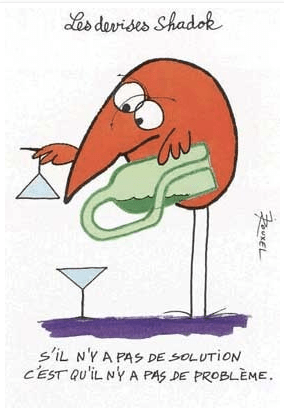
Derision of prayer and demands (tacit or explicit) for legislative magic are extensions, it seems to me, of our broadly modern notion that the public square is full of “problems” that need scientific or political “solutions.” I believe a ban on semi-automatic weapons would lower mass murder rates very slowly at best, with the interim full of demands for banning private gun ownership entirely—or so I expect gun owner suspicions run. They’d rather endure the evil of occasional mass murder than face that prospect.

No solution

Insofar as the gun control cause is “liberal,” and liberalism is most famously instantiated in the Democrat party, this seems like a very bad issue for Democrats serious about regaining some political power:

  • We have no answers, and perhaps no real concern, for the economic and social pain of you Trump voters.
  • We despise your prayers.
  • We want to take away the guns you so bitterly cling to.

Were I still a Republican, I’d be thrilled at such folly.

***

What do the perpetrators of the massacres at Sandy Hook, at Aurora, at Orlando, and at Sutherland Springs have in common? They were all men under 30 and they all used versions of the same kind of firearm, the AR-15, the semi-automatic version of the military’s M-16 and the bestselling gun in America.

It might be difficult to make this connection because as I write this, the section on the use of AR-15s in mass killings has been deleted from Wikipedia by a user called Niteshift36, who claimed that including such a section at all was inherently biased. According to his user profile, this no-doubt scrupulous and disinterested editor of the world’s most widely used work of reference is “proud to be an American,” “a native speaker of the English language,” “skeptical of anthropogenic global warming,” and “supports concealed carry laws.” He is also a veteran, a Tom Clancy and 24 fan, someone who thinks we should “say NO to political correctness,” and a self-professed “Jedi.”

With all apologies to Jedi Master Niteshift36, this is ridiculous. If the killers had all worn Mickey Mouse sunglasses or been found with Metallica tattoos, it would be considered noteworthy. It’s not biased except in the sense that reality itself is biased against childish gun enthusiasts. But whether he wins his edit war or nay, he has done a great service by reminding us what we’re dealing with whenever we try to argue. He fits a profile, of revoltingly adolescent, video game-addicted LARPers who think that their hobby of playing dress-up with murder weapons is a constitutional right.

The AR-15 is not just a gun. It is a hobby, a lifestyle, an adolescent cult …

(Matthew Walther, The adolescent cult of the AR-15)

Lest you think Walther’s mocking approach nearly as useless as prayer, be assured that this is aimed right at the source of the problem:

Lewis does not apologize for the fact that The Screwtape Letters is an entertaining and amusing read. Indeed in the opening pages he quotes Martin Luther and St. Thomas More on the need to take Lucifer lightly. Luther says, “The best way to drive out the devil, if he will not yield to texts of Scripture, is to jeer and flout him, for he cannot bear scorn.” For his part, St. Thomas More writes, “The devil…that proud spirit…cannot endure to be mocked.”

(Dwight Longnecker, Laughing at Lucifer with Lewis) Walther:

Which is why I am not optimistic about our ability to pass any kind of meaningful legislation. The Republican Party owes too much of its support to people whose economic well-being it gleefully neglects but whose ill-considered attachments to dangerous toys it has safeguarded as a kind of poisoned consolation prize. Nor do I think that if we were somehow able to ban the manufacture, sale, and possession of all such weapons and carry out a more or less successful confiscation scheme we would never see anything like what happened in Sutherland Springs again. The real causes are chthonic; AR-15s are only the accidents that have in many cases enabled them.

* * * * *

Some succinct standing advice on recurring themes.

Warlock Hunts (and lesser voices)

In the space of about 24 hours I encountered three contributions, not necessarily toward a “solution,” but at least toward perspective, on the sexual harassment tsunami.

The most prominent and lengthiest was Claire Berlinski’s The Warlock Hunt at The American Interest (metered paywall; one freebie per month).

As the title foreshadows, she thinks things have gone too far. Excerpts:

Mass hysteria has set in. It has become a classic moral panic, one that is ultimately as dangerous to women as to men.

It now takes only one accusation to destroy a man’s life.Just one for him to be tried and sentenced in the court of public opinion, overnight costing him his livelihood and social respectability. We are on a frenzied extrajudicial warlock hunt that does not pause to parse the difference between rape and stupidity. The punishment for sexual harassment is so grave that clearly this crime—like any other serious crime—requires an unambiguous definition. We have nothing of the sort.

In recent weeks, one after another prominent voice, many of them political voices, have been silenced by sexual harassment charges … Some of the charges sound deadly serious. But others—as reported anyway—make no sense. I can’t say whether the charges against these men are true; I wasn’t under the bed. But even if true, some have been accused of offenses that aren’t offensive, or offenses that are only mildly so—and do not warrant total professional and personal destruction.

The things men and women naturally do—flirt, play, lewdly joke, desire, seduce, tease—now become harassment only by virtue of the words that follow the description of the act, one of the generic form: “I froze. I was terrified.” It doesn’t matter how the man felt about it. The onus to understand the interaction and its emotional subtleties falls entirely on him. But why? Perhaps she should have understood his behavior to be harmless—clumsy, sweet but misdirected, maladroit, or tacky—but lacking in malice sufficient to cost him such arduous punishment?

In recent weeks, I’ve acquired new powers. I have cast my mind over the ways I could use them. I could now, on a whim, destroy the career of an Oxford don who at a drunken Christmas party danced with me, grabbed a handful of my bum, and slurred, “I’ve been dying to do this to Berlinski all term!” That is precisely what happened. I am telling the truth. I will be believed—as I should be.

But here is the thing. I did not freeze, nor was I terrified. I was amused and flattered and thought little of it. I knew full well he’d been dying to do that. Our tutorials—which took place one-on-one, with no chaperones—were livelier intellectually for that sublimated undercurrent. He was an Oxford don and so had power over me, sensu stricto. I was a 20-year-old undergraduate. But I also had power over him—power sufficient to cause a venerable don to make a perfect fool of himself at a Christmas party. Unsurprisingly, I loved having that power. But now I have too much power. I have the power to destroy someone whose tutorials were invaluable to me and shaped my entire intellectual life much for the better. This is a power I do not want and should not have.

Revolutions against real injustice have a tendency, however, to descend into paroxysms of vengeance that descend upon guilty and innocent alike … This revolution risks going the way revolutions so often do, and the consequences will not just be awful for men. They will be awful for women.

Not long ago we firmly convinced ourselves that our children were being ritually raped by Satanists. In recent years, especially, we have become prone to replacing complex thought with shallow slogans …

Given the events of recent weeks, we can be certain of this: From now on, men with any instinct for self-preservation will cease to speak of anything personal, anything sexual, in our presence. They will make no bawdy jokes when we are listening. They will adopt in our presence great deference to our exquisite sensitivity and frailty. Many women seem positively joyful at this prospect. The Revolution has at last been achieved! But how could this be the world we want? Isn’t this the world we escaped?

Who could blame a man who does not enjoy the company of women under these circumstances, who would just rather not have women in the workplace at all? This is a world in which the Mike Pence rule—“Never be alone with a woman”—seems eminently sensible. Such a world is not good for women, however—as many women were quick to point out when we learned of the Mike Pence rule. Our success and advancement relies upon the personal and informal relationships we have with our colleagues and supervisors. But who, in this climate, could blame a venerable Oxford don for refusing to take the risk of teaching a young woman, one-on-one, with no witnesses? Mine was the first generation of women allowed the privilege of unchaperoned tutorials with Balliol’s dons. Will mine also be the last? Like so many revolutions, the sexual revolution risks coming full circle, returning us right where we started—fainting at bawdy jokes, demanding the return of ancient standards of chivalry, so delicate and virginal that a man’s hand on our knee causes us trauma.

So for Berlinski, a little sexiness in the workplace, and even (or especially) in one-on-one sessions is fun, and energizing, and only objectionable when it goes too far, the boundary of “too far” being about as clear as the famous “I know it when I see it” definition of obscenity. She is on the right track, though, when she writes of the tendencies of this kind of panic being bad for both men and women, albeit in different ways. The article is worth a full reading.

I included Berlinski on the “Mike Pence rule” (more properly the Billy Graham rule) specifically for the contrast to Tish Harrison Warren‘s An Open Letter to Men Who Broke the Billy Graham Rule, at The Well back in April, when the hot topic was not toxic lewdness but toxic prudery:

In light of the Vice President’s revelation that he does not eat meals alone with women (besides his wife) and the widespread discussion of the “Billy Graham Rule,” I wanted to take this opportunity to thank you for meeting with me — some of you years ago, some of you last week — to disciple me, befriend me, love me, and honor me as a fellow follower of Christ and as a human being.

So thank you.

You, men-who’ve-met-with-me-one-on-one, who’ve eaten with me, had coffee with me, mentored me, encouraged me, and befriended me — you have changed my life. I am a Christian because you poured into me. I am a pastor because you pastored me. I am, I hope, a better wife and mother because you are in my life.

You did not see me as a sexual threat to be avoided, but as a human being, even a sister. And you were safe. You never hit on me. You never made me feel weird or uneasy. If you ever struggled with sexual temptation, you’ve dealt with that by talking with your wife, male friends, or a counselor so that you could be a friend, brother, and pastor to women around you. Because of that, I have the gift of having men in my life who are trustworthy and who are true, dear friends.

So for Warren, who is pretty conservative if graded on a curve, there’s no perceptible sexiness in these one-on-ones, because there’s nobody here but us sincere Christians, who know how to sublimate any unwanted sexual feelings.

I don’t know what Warren would say today, in the midst of this alleged moral panic. I dare say her opportunities for one-on-ones would be reduced significantly at the moment. I don’t recall any Evangelical figures being nationally exposed in the current round of scandals, but there’s a regional offender (albeit of less exalted religious tradition than Warren), and Ravi Zacharias, who travels in somewhat the same Christianity Today circles as Warren, is pretty rueful about letting his guard down:

Today, Zacharias and his eponymous Ravi Zacharias International Ministries (RZIM) released their first statements specifically addressing a personal lawsuit involving a married woman who sent nude photos to the popular author and speaker …

“I have learned a difficult and painful lesson through this ordeal,” Zacharias said. “I failed to exercise wise caution and to protect myself from even the appearance of impropriety, and for that I am profoundly sorry. I have acknowledged this to my Lord, my wife, my children, our ministry board, and my colleagues.”

Last month, Zacharias settled a lawsuit with a Canadian couple he claimed had attempted to extort him over messages he had exchanged with the wife.

The federal lawsuit—which was filed by Zacharias, not the couple—alleged that his “friendly correspondence” with the wife evolved over the course of 2016 to her sending him “unwanted, offensive, sexually explicit language and photographs.” In April 2017, the couple sent a letter through their attorney demanding millions of dollars in exchange for keeping the messages a secret.

“In the alternative of protracted and public litigation, [the couple] will sign a release of you and your church and ministry in exchange for a certified check in the amount of $5 million,” stated the letter from the Bryant Law Firm ….

That seemingly extortionate demand would get my attention.

Finally, at Public Discourse, Mark Regnerus:

Recent revelations about sexual harassment, assault, and abuse underscore certain blunt realities about men, women, and sex. How can we confront those realities in a way that leads to less sexual violence?

He states and briefly elaborates “three blunt but essential truths:”

  • First, men’s sex drives are, on average, stronger and less discriminating than women’s.
  • Second, men have the upper hand in the contemporary mating market, even as—and partly because—women are flourishing economically and educationally. These are not criticisms; they are observations.
  • Third, women are usually physically smaller and weaker than men, and—as already noted—more discriminating in their sexual choices. Hence women are more prone to find themselves in situations of sexual risk with regard to men.

Regnerus then critically engages an early-2017 scholarly article that deals with male sexuality in terms of “fly zones” and “no-fly zones, concluding:

These are liminal times in male-female relationships. Treating men as if only threats of shaming, expulsion, and litigation will beat back their urges is not only an erroneous theory, Fleming asserts, “it’s downright dysfunctional for everyone, because it distorts the rules in such a way as to disorient men and women alike.”

Women should not silently put up with men’s boorish and aggressive expressions of sexual interest. But as we combat that we must ensure that men and women do not come to fear and suspect (and then avoid) each other, where we lean on law and regulation over convention. Now is the time for men to exhibit—and women to reinforce—norms of interaction that respect women’s dignity, bodily integrity, and security, while preserving the capacity to express (when appropriate) romantic interest and handle rejection. It is not rocket science. We know how to do this.

I also thought the “fly zone” versus “no-fly zone” model was interesting, but couldn’t help but notice the ambiguous areas:

Fleming argues that it’s the border between “fly” and “no fly” zones—a party, for example—that is most apt to foster confusion and tempt risk, not the classroom or the bus. This is the social space in which most problems, ranging from sexual badgering to diminished consent to downright rape, are apt to occur. Comparable dynamics can occur at after-work gatherings, professional conferences, on a first date, or after texting to “hang out.”

Cf. Claire Berlinski’s “drunken Christmas party” in Oxford.

Considering some of the points Regnerus made as he moved toward his conclusion, his confidence that “We know how to do this” seems a nonsequitur. I’m not at all sure we do know how to do this any more, unless he means that all married men should accumulate a year of rust on their courting skills every calendar year, which might be a good place to start.

Pre-Publication Update: An NPR poll featured at the top of Thursday’s All Things Consider reports 86% Americans support “zero tolerance for sexual harassment.” I trust that these lemmings feel virtuous for having no tolerance whatever for something they almost certainly cannot define. NPR made no effort to define it, either.

* * * * *

I would a thousand times rather have dinner with secular liberals of a certain temperament than with a group of religious conservatives who agreed with me about most things, but who have no sense of humor or irony.

(Rod Dreher)

Some succinct standing advice on recurring themes.

Shorts

Shorts:

* * * * *

Some succinct standing advice on recurring themes.
 

Saturday Potpourri 2

  1. The Spirit of Peace
  2. Pray without ceasing and see the doctor
  3. Almost she persuades me, a skeptic
  4. Always a corrupting enterprise
  5. I do remember — don’t you?
  6. SF passes the law of unintended consequences
  7. The ever-morphing political dinner name game
  8. PROBABLY

Continue reading “Saturday Potpourri 2”

Resilience

Today’s identity politics . . . teaches the exact opposite of what we think a liberal arts education should be. When I was at Yale in the 1980s, I was given so many tools for understanding the world. By the time I graduated, I could think about things as a utilitarian or as a Kantian, as a Freudian or a behaviorist, as a computer scientist or as a humanist. I was given many lenses to apply to any given question or problem.

But what do we do now? Many students are given just one lens—power. Here’s your lens, kid. Look at everything through this lens. Everything is about power. Every situation is analyzed in terms of the bad people acting to preserve their power and privilege over the good people. This is not an education. This is induction into a cult. It’s a fundamentalist religion. It’s a paranoid worldview that separates people from each other and sends them down the road to alienation, anxiety and intellectual impotence. . . .

There are two more paragraphs in this Wall Street Journal “Notable & Quotable” from Jonathan Haidt, the last sounding a hopeful note about America’s resilience.

I, too, see signs that the great ship of culture is swinging around on some of the issues that concern me, as, for instance, younger people begin re-populating our walkable cities, many of them choosing not to own an automobile.

There’s no government edict to depopulate the suburbs, and the fears (justified) of peak oil are abated. But as if by instinct, people are behaving as if they grok this little slice of fossil-fuel reality, whether or not they articulate it.

I suspect that some shift will happen, too, in America’s recent tendency toward secularization, though I can’t claim to know how the shift will come about, or just how the new landscape will appear.

No, God never promised that the gates of hell wouldn’t prevail against the Church anywhere, howsoever temporarily, but I doubt that America’s becoming so unfaithful that Africa must send missionaries with the Gospel any time soon. (To echo Jonathan Haidt, though, I have very low confidence in my optimism about this.)

But I am bearish on Evangelicalism (if you hadn’t noticed). Coincidentally (providentially?), Michael Gerson has some supporting commentary both for resilience in general but with specific bearishness on Evangelicalism:

It is sometimes assumed (including by me) that the presidency sets a moral tone for the nation, influencing what society considers normal and acceptable in a kind of trickle-down ethics. But the sexual harassment revolution emerged from society in spite of — or even in defiance of — a president who has boasted of exploiting women and who stands accused of harassing more than a dozen.

This is a reminder that the moral dynamics of a nation are complex, which should come as no surprise to conservatives (at least of the Burkean variety). This is a big country, capable of making up its own collective mind. Politics reaches only the light zone of a deep ocean. It is a sign of hope that moral and ethical standards can assert themselves largely unaided by political, entertainment and media leaders ….

[R]apid shifts in social norms should be encouraging to social reformers of various stripes. Attitudes and beliefs do not move on a linear trajectory. A period of lightning clarity can change the assumptions and direction of a culture.

I elided some comments about how the country is moving to a better place on sexual harassment, because of that I’m quite skeptical, for reasons I’ve mentioned in recent blogs. But Gerson has a big Evangelical fish to fry:

And where did this urgent assertion of moral principle come from? Not from the advocates of “family values.” On the contrary, James Dobson, the founder of Focus on the Family (now under much better management), chose to side with GOP Senate candidate Roy Moore of Alabama against his highly credible accusers. “I have been dismayed and troubled,” Dobson said, “about the way he and his wife Kayla have been personally attacked by the Washington establishment.”

It is as if Dobson set out to justify every feminist critique of the religious right. Instead of standing against injustice and exploitation — as the Christian gospel demands — Dobson sided with patriarchal oppression in the cause of political power. This is beyond hypocrisy. It is the solidarity of scary, judgmental old men. It is the ideology of white male dominance dressed up as religion.

This is how low some religious conservatives have sunk ….

Dobson isn’t just “religious.” He’s Evangelical. As is Franklin Graham, Billy Graham’s angry son, a reliable voice in support of guys like Roy Moore. I know of at least one other Evangelical scandal that could explode, involving a substantially fraudulent CV of a prominent Evangelical apologist. I’m not sure why it hasn’t exploded yet.

Some places remain, though, where student are given lenses other than “power”:

Imagine a beautiful garden in the midst of a gray, industrial, bleak city. The city’s architecture is functional only, given totally to the making of money or to the most ephemeral, when not downright base, forms of entertainment. This city is all big box store and mega-super-cinema-plex. But the garden is lovely, lush, and inviting. It is full of beautiful growth and well-crafted stonework. It is a place for true recreation and joyful exercise. And it is ancient, passed down through generations of city-dwellers as a place of relief and regeneration.

What would you think of the generation that let that garden die?

What would you think of a people who intentionally destroyed it?

In short, the main reason Western civilization, with an emphasis on “Great Books,” deserves a prominent—indeed, the prominent—place in the curriculum of the Christian university is stewardship ….

(Benjamin Myers, The Christian University: Steward of Western Civilization) At Myers’ university, there’s a required 15 credits in Western Civilization. Bully for them! Myers:

Let us not cheapen the noble goal of exploring world cultures by pretending that three hours in Polynesian folklore is as good as fifteen hours in Western civilization, when we really just want to open up twelve more hours for the study of management or sports nutrition.

Remember the old quip—I think it was from William F. Buckley—that the problem with liberals (“progressives” probably would have been more apt) is they can’t begin to describe the utopia in which they’d finally be conservative because all at last was well?

I cannot overemphasize how important it is that universities and liberal arts colleges like Myers’ be left unmolested because those who would homogenize education and stamp out unfashionable truths are themselves unstable chasers-after ephemera and delusions. This has been my conviction for nearly 50 years.

Have you read A Canticle for Leibowitz, by the way?

Resilience. I like that hopeful word. It’s a nice balance to my usual doom and gloom.

* * * * *

“Liberal education is concerned with the souls of men, and therefore has little or no use for machines … [it] consists in learning to listen to still and small voices and therefore in becoming deaf to loudspeakers.” (Leo Strauss)

There is no epistemological Switzerland. (Via Mars Hill Audio Journal Volume 134)

Some succinct standing advice on recurring themes.


Tryptophan reading

  1. It ain’t necessarily so
  2. Whither young Evangelicals?
  3. American hilarity
  4. Worse than “fake news”?
  5. Hollywood for ugly people
  6. History rhymes
  7. The banality of hypocrisy
  8. American Christianity

Continue reading “Tryptophan reading”

St. John the Almsgiver, 2017

    1. Obviously, these prophets didn’t understand
    2. Contemning “thoughts and prayers”
    3. The last idol still standing
    4. Historical Ignorance, Moral Arrogance
    5. Absolute passion, utter fragility
    6. John the Merciful

Continue reading “St. John the Almsgiver, 2017”