Lutz, a historian of medicine at the University of Pennsylvania who has previously written a book about her experiences raising a son (now an adult) with severe autism, goes on to lay out a fascinating history of this concept in the first half of Chasing the Intact Mind. She focuses heavily on memoirs written by parents of children with autism, showing how at every stage in the modern history of our understanding of this condition, such parents have pined for — and in some cases gone to herculean and frequently pseudoscientific lengths to free — the “intact mind” supposedly lurking behind their severely disabled child’s troubled exterior. It’s often quite difficult for these parents to accept that their experiences raising kids with severe autism, which can involve the everyday management of violent tantrums, obsessively repetitive behavior, and problems with toileting and basic communication, reflect not a temporary challenge that will be overcome, with a “normal” kid waiting at the other end of a journey, but rather simply who their child is and will always be. But sometimes, unfortunately, that’s the case.
I selected this quote because it rings so true — even in the case fairly mild “on the spectrum” children. Of course, it doesn’t help if qualified doctors don’t give the blunt word “your child suffers Asperger’s Syndrome” (as was the current terminology for the child I”m thinking of). If doctors shilly-shally around with “we don’t know what’s wrong,” it’s understandable that parents would seek someone — heck, anyone — who says he does know.
Compelling governmental interests
[Escondido Union School District] contends that the government purpose of protecting gender diverse students from (an undefined) harm is a compelling governmental interest and the policy of non-disclosure to parents is narrowly tailored…. This argument is unconvincing. First, both the Ninth Circuit and the Supreme Court have found overly broad formulations of compelling government interests unavailing…. Second, keeping parents uninformed and unaware of significant events that beg for medical and psychological experts to evaluate a child, like hiding a gym student’s soccer concussion, is precisely the type of inaction that is likely to cause greater harm and is not narrowly tailored. ….
→ Working really hard to spin this:The New York Times is working very hard to somehow spin the migrant situation in New York and Chicago into being a problem Republicans caused. It’s hard. Biden is president and in charge of the border. These cities are all run by Democrats. But. . . there must be a way that Republicans created this. We got it! They hopedit into existence:
I hope you’re happy, GOP, with all the families sleeping in gyms in Staten Island, just like you planned.
…
In Toronto public schools, to make it easier to ensure the books are equitable, everything written in 2008 or earlier has been removed from shelves. For real. It’s just too risky to have old books that might have old ideas written by the wrong type of author. And so, to make the so-called book “weeding” process easier, we’re not even looking past 2008. Goodbye to The Very Hungry Caterpillar and goodbye to The Diary of Anne Frank (I’m sure there are others, but really, are there?). The world began in 2009. We have no knowledge of what came before that year. Why are you asking about it? Why do you need to read a book from before then? Is it your homophobia? Is it that you hate Latinos? I’m just taking notes because it’s interesting that you’re so interested.
…
… Meanwhile, in Nebraska, a detransitioner who had a double mastectomy at 16 is suing the hospital. Literally, all these clinics need to do is wait until the kid turns 18.
“The term ‘non-binary’ can be translated to Spanish as ‘no binario’ or ‘no binaria’ depending on the gender of the person,” – ChatGPT.
“Yale University has more employees than it does students. In fact, the school has 2.44 administrators for every faculty member, and one administrator for every four students. That’s the same ratio the government recommends for childcare of infants under twelve months,” – Greg Lukianoff and Rikki Schlott.
“I do realize, in retrospect, that I was too quick to take the official story — that [Covid] came from a wet market where wild animals were sold — at face value. If I am honest, I accepted it because it served my own motivated reasoning and reinforced my worldview … [Steve Bannon and others’] over-the-top conspiracies fed our over credulity; their ‘question everything’ led many of us to not questioning enough,” – Naomi Klein.
Although they differed on many matters, Dostoevsky, Danilevsky, and Leontyev did ultimately agree on one thing: the interests of humanity as a whole demanded that Russia not copy the West, but rather defend its own distinctive culture.
Speaking of which, half my kingdom to anyone who can non-violently wipe that cheesy grin off Vivek Ramaswamy’s face.
Pop starlets
Terry Mattingly tells of interviewing Allison Krause early in her career and asking why she was sticking with bluegrass and with her band Union Station (I believe she’s been offered a very big pop music deal). Her answer, basically, was “If I go to pop, will anybody be listening when I’m 60?”
A related question for young pop starlets is “Will anyone listen if I don’t show a lot of skin?” For very few (I’m looking at you, Taylor Swift) is the answer “yes.”
(And that’s not a “clean bill of health” for Swift. I don’t know her oeuvre well enough to give it more than one tepid thumb-up.)
Self-refuting
[I]f you want to know how NOT to start a letter defending yourself from accusations of antisemitism, you can use this letter as a model. After noting that the festival has been harshly criticized by “the Jewish Federation and the ADL,” the organizers have this to say:
unlike our detractors, we do not operate in the shadows nor among elite decision makers and funders. Rather, we value transparency and public access, accountability, and scrutiny. We are also acutely aware of the power disparity between these highly funded, connected and organized Zionist organizations versus our small cultural institution run by volunteers and student organizations, most of them Penn students.
Talk about self-owns… The organizers are so clueless about antisemitism that they engage in classic anti-Jewish tropes while defending themselves from charges of antisemitism. Which kinda undermines anything else they have said or will say in their defense.
What the liturgy of the mall trains us to desire as the good life and “the American way” requires such massive consumption of natural resources and cheap (exploitive) labor that it is impossible for this way of life to be universalized.
We did not downsize as a gesture of protest against consumer society. We simply found ourselves with a reduced income and set about discovering the things we could do without. We were helped by situating ourselves in a place where it is quite difficult to spend money in the ways we spent it before. Patmos did not have available the range of goods that eat up income at an expanding rate so that you never feel you have quite enough. And doing without them has the therapeutic effect of slowing you down. It takes time to hand-wash clothes or to jump up and down on sheets, rinse them, wring them out and hang them on a line between trees in the garden; to top and tail the beans; to mix, whip and grate by hand; to haul up buckets from a well. A life without gadgets develops a different, slower rhythm. And, oddly, more time seems to be available in a life without labor-saving devices.”
Peter France, Patmos: A Place of Healing for the Soul
Maybe lack of principles isn’t all bad …
Even if I don’t intend to keep the same pace as people here, I often just have to. In India, there’s none of that kind of stuff. The difference is as great as that between getting on a slow local train and getting on the bullet train.” When I ask her what she thinks the reason is, she says, “Well, the effect of the heat is one thing: India is hot. But don’t you think the principles they have are different? The focus of thinking in Japan is economics, or it has become that way recently. Even politics is more like a form of economics than an attempt to realize an ideal society. Politicians don’t have any principles in Japan.”
The other day, the Free Press sponsored a public debate on the question of has the Sexual Revolution failed? Rob Henderson writes:
…
The sexual revolution obviously succeeded in its aim: more freedom.
The answer to the debate description (“The sexual revolution promised liberation. Fifty years on, we ask: has it delivered?”) is obviously yes.
But the reason why a debate makes sense is because many people conflate liberation (freedom) with happiness.
The revolution has unquestionably increased freedom. But it also made people less happy. Many people, though, anticipated that greater freedom would necessarily bring greater happiness.
Sadly the world doesn’t work that way.
We can’t have everything good all at once. We can have some good things, but we can’t have all good things at the same time.
…
So what’s more important, happiness for children, or freedom for adults? Our society has decided, and there’s no going back.
At the debate, there was a lot of attention devoted to discussing the impact of the sexual revolution on men and women—whether the revolution failed women, or failed men, or helped men more than women, or helped women more than men. Nobody asked whether the sexual revolution failed children. People already know the answer.
The sexual revolution gave rise to new laws and cultural norms that made divorce and remarriage easier. This was not without cost.
The closest anyone came to discussion how children’s lives have changed in the wake of the revolution was Anna Khachiyan, who mentioned the Cinderella Effect.
Children living with one genetic parent and one stepparent are approximately 40 times more likely to be abused than children living with both genetic parents. This greater rate occurs even when controlling for poverty and socioeconomic status.
I disagree that “there’s no going back.” I have no quick fix or straight path back, but I suspect we will somehow go back — some day. But there are going to be a lot of children irreparably damaged meanwhile, because the sexual revolution is another of those luxury beliefs that the elites can more-or-less survive but which devastates millions when it trickles down.
Dreher, musing on the topic agrees with Henderson: “We’re going to have to ride this thing out till the collapse.” I’m not sure that’s all that different from what I suspect. I just deny that “the collapse” is the end of the world; it may be a pivot-point. Apropos of this theme, which I’ve sounded several times recently, see Nathaniel Peters, Living Well at the End of a World.
Children’s happiness, adult freedom
So what’s more important, happiness for children, or freedom for adults? Our society has decided, and there’s no going back.
At the debate, there was a lot of attention devoted to discussing the impact of the sexual revolution on men and women—whether the revolution failed women, or failed men, or helped men more than women, or helped women more than men. Nobody asked whether the sexual revolution failed children. People already know the answer.
The sexual revolution gave rise to new laws and cultural norms that made divorce and remarriage easier. This was not without cost.
The closest anyone came to discussion how children’s lives have changed in the wake of the revolution was Anna Khachiyan, who mentioned the Cinderella Effect.
Children living with one genetic parent and one stepparent are approximately 40 times more likely to be abused than children living with both genetic parents. This greater rate occurs even when controlling for poverty and socioeconomic status.
[W]hile 91 percent of college-educated conservatives agree that “children are better off if they have married parents,” only 30 percent of college-educated liberals agree, according to a report to be released next week by the Institute for Family Studies.
…
One stunning and depressing gauge of racial inequity in the United States: The study found that 62 percent of white children live in low-poverty areas with fathers present in most homes, while only 4 percent of Black children do.
Nicholas Kristof. Every once in a while, it’s nice to see conservatives so clearly a part of the “reality-based community” with liberals off in Delusionland.
Gender vs. Sex
While 66% of black Democrats say a person’s gender is their sex determined at birth, only 27% of white Democrats say the same.
Occasionally, something like this pops up and makes me realize why some voters consider “Republican” Donald Trump the lesser evil compared to any Democrat.
Why such a hack?
Everyone knows that Kamala Harris is, as one writer put it, a “hack with terrible political skills.” Peggy Noonan, has what seems like a plausible suggestion of how someone who has ascended so high could remain such a political klutz:
She is proof that profound and generational party dominance in a state tends to yield mediocrity. Politicians from one-party states never learn broadness. They speak only Party Language to Party Folk. They aren’t forced to develop policy mastery, only party dynamics. They rely on personal charm but are superficial. Going national requires developing more depth, or at least imitating depth. She didn’t bother to do that.
Note: Gavin Newsom will be just as bad if elevated to national office.
A fundamental reality of human existence is that vice often leaves virtue with few good options. Evil men can attach catastrophic risks to virtually any course of action, however admirable.
You can read most of my more impromptu stuff here (cathartic venting) and here (the only social medium I frequent, because people there are quirky, pleasant and real). Both should work in your RSS aggregator, like Feedly or Reeder, should you want to make a habit of it.
The collectivist-individualist dichotomy is a clear example of the modern mind opposing ideas that are only in opposition once abstracted from reality. What is this collectivism? What is this individualism? I have never encountered a society that was not composed of individuals, and I have never met an individual who did not belong to a society.
Take anyone you know, and try to imagine the pre-societal self that exists there free from all the social influences that have made him. If I try to imagine myself independent of where I was born, the family that brought me forth, the schools I attended, the language in which I think and speak, the books I’ve read, the friends I’ve made, I simply cannot do it, and if I were to achieve some imagining of such a pre-social self, it wouldn’t be me in any case.
So, what ought the conservative response to be in the face of people living in a way they find reprehensible, if it is not that of doubling-down on individualism? The true conservative response is: we live in a society, and there are some things we will accept and some things we will not, and where the line lies is worked out circumstantially by prudential deliberation and negotiation. We will tolerate certain behaviours which we dislike and be intolerant of others. But if you want to mutilate yourself, we will aim to prevent you from doing so, for we have to live in a community with you, and we think that such behaviour is impermissible in our community ….
I don’t often recommend poetry, but Famous, by Naomi Shihab Nye, caught my ear in a podcast reading, and is notable in the context of Illich for its call to humbler ambitions.
Segregated sports
I had no idea that chess routinely holds separate men’s and women’s competitions, and that the women overall are objectively worse than men. See Frank Haviland, Chess: Checkmate for the Egalitarians for a fascinating and possibly illuminating treatment. I’m still scratching my head.
Since Employment Division v. Smith in the early 1990s, we’ve been living under a constitutional regime which, viewed from a galloping horse, looks quite a bit less favorable than prior law for religious exemptions from some laws. So long as a law is neutral and generally applicable, one isn’t entitled to a religious exemption however strong one’s beliefs or weak the governmental interest in making the law.
But when you slow down and look closer, the concept of “neutral laws of general applicability” keeps tripping up rulemakers, as they keep creating loopholes for some but not for none. Sometimes, the loophole is as big as “we can make exceptions case-by-case.” In others, it’s gerrymandering the law to target a disfavored religious practice, as when Hialeah Florida tried to hobble the animal sacrifices of Santeria while permitting Kosher slaughter.
So I was gratified to see the religion-friendly ending to a case I’ve watched, on and off, since its 2017 beginning, Country Mill Farms, LLC. V. City of East Lansing, where the City of East Lansing excluded Country Mill Farms from its farmers market because it refused, at its own facility, to host same-sex weddings. Click the link for Euguene Volokh’s fuller description.
Politics
My Man Mitch strikes again
We’re mired in a hot-dog, look-at-me, dance-in-the-end-zone world. Success in public capacities seems reliant not on the quality of officeholders’ ideas or effectiveness, but on their cleverness and audacity in sound bites, tweeting and the other ‘performative’ arts.
The most interesting act out of the 126 acts laid out in the indictment is the first one. It reads:
On or about the 4th day of November 2020, DONALD JOHN TRUMP made a nationally televised speech falsely declaring victory in the 2020 presidential election. Approximately four days earlier, on or about October 31, 2020, DONALD JOHN TRUMP discussed a draft speech with unindicted co-conspirator Individual 1, whose identity is known to the Grand Jury, that falsely declared victory and falsely claimed voter fraud. The speech was an overt act in furtherance of the conspiracy.
The most significant claim here is that Trump always planned to cry, “Fraud!” if he lost regardless of the evidence. This is not a shocking revelation, given that he has a long history of preemptively saying that the only way he might lose anything is if his opponents cheated or rigged the game.
More generally, Trump’s voters hold him as a source of true information, even more so than other sources, including conservative media figures, religious leaders, and even their own friends and family.
(CBS News, Emphasis added). “True information”! Words have lost all meaning!
We are in the grip of a grim, despairing rebellion against reality that imagines itself to be the engine of moral progress.
The end of the world as we know it is not the end of the world.
You can read most of my more impromptu stuff here (cathartic venting) and here (the only social medium I frequent, because people there are quirky, pleasant and real). Both should work in your RSS aggregator, like Feedly or Reeder, should you want to make a habit of it. I’m even playing around a bit here, but uncertain whether I’ll persist.
I wanted to suggest a few ideas that could anchor what we might jokingly refer to as “Frog and Toad Christendom.”
The idea is best summarized, as one friend helpfully put it, as resetting society’s defaults to favor people’s long-term interests rather than short-term pleasures. At present, we make it easy for people to indulge in in short-term pleasures that will, stretched out over time, leave them poorer, more lonely, and less able to contribute to their communities. We also make it harder to pursue things that will be in our best interests long-term. This is precisely the opposite of how it should be. We want to make it easier to choose virtue and harder to choose vices on a broad, societal level.
Here are six ideas that I think could fit under this overall principle:
First, ban online gambling …
Second, ban porn …
Third, place higher taxes on vices, such as marijuana and alcohol …
Fourth, redesign cities to discourage speeding and to make roads more pedestrian friendly. Third places thrive in walkable neighborhoods and because so much of our social connectedness comes via third places, we should want our cities to be walkable …
Fifth, birth should be free …
Sixth, to make it easier for workers, particularly workers with only high-school degrees, to form and support families, we should repeal right to work laws where they exist …
I agree with the spirit of all these, particularly when Jake fleshes them out (my ellipses). But they’re the work of a generation, and David Samuels’ “glittering oligarchy” (see The problem, and the un-solution below) will fight them as the existential threat they are.
What if …?
What if Arthur, eldest son of Henry VII, had not died in his mid-teens?:
There would have been no Dissolution of the Monasteries, and the subsequent upheaval to the rhythm of rural English life. 90% of English art would not have been destroyed in an iconoclastic orgasm of ideological fervor, and English churches and shrines would have remained awash in color, rather than the stone or whitewashed sepulchers of today. There would have been no new aristocracy to steal the land of the peasants, and there would have been no Enclosures Act … There was no New England because there were no Puritans—no “City on a Hill,” no Protestant work ethic … The empire would have been English rather than British. The Industrial Revolution would have been muted, not being able to feed upon rural dispossession and poverty, and would consequently been less convulsive to English society.
Since Terry’s an actual historian, he plays out a lot more detail than this. I, not a historian but made heartsick by Bradford Wicox’s Unintended Reformation, was reminded again that destroying culture and smashing artifacts was a Protestant thing before it was an ISIS thing.
Well played
(H/T Todd Grotenuis on micro.blog)
Must reading
When doctors fundamentally misunderstand the cause of a condition and treat the symptoms instead, and fail to properly monitor outcomes, and modify their practice in response to known adverse outcomes, our patients suffer — often greatly and for the rest of their lives — if indeed they survive. These fundamental errors underpin the depressingly regular scandals that punctuate the history of medicine. (The stakes are particularly high if surgery is involved.)
It is naïve to think that all these scandals are in the past … So where might the next medical scandal be brewing?
The increasing visibility of detransitioners suggests it may lie in wait in gender-affirming medicine. Many detransitioners are young women who underwent treatment for psychological distress that has left them with irreversible, life-long changes to their bodies: a deep voice, a beard, and compromised sexual function. Some have had their breasts surgically removed; some may be infertile. Others are young men who have been castrated.
…
For many detransitioners, the cause of their distress as a teenager was misattributed by their clinicians to the notion that they had been born in the wrong body, and that they would be helped by the surgical creation of the “correct” body ….
Mutilating bodies ought to be the very, very last resort for a problem that starts in the mind.
Ardently seeking catharsis
[I]ntroducing no-fault divorce was a travesty, and in many ways redefined marriage more drastically than Obergefell vs. Hodges.
None of this is even on the radar of many of today’s conservative elites. As often as not, they have been through a divorce themselves, and the compromise that marks their personal lives renders them reticent about standing up for traditional marriage. The consequence has been that most conservative influencers seek to move on from same-sex marriage as quickly as possible. Battle lines have been redrawn, the tent broadened, and now—they loudly proclaim—we can get back to promoting the free market and taking on the really crazy leftist proposals. Sure, the institution of marriage might be an unfortunate piece of collateral damage in the fight, but at least we won’t give an inch on this transgender nonsense.
I, too, had never heard of Mr. Harrold. And I disagree with his vitriol toward the Respect for Marriage Act. But I’m glad someone had the balls to write something so contrary to the Zeitgeist that for a moment, I felt positively moderate.
The right kind of facts, mediated by our betters
In an important article titled “Google.gov,” the law professor Adam J. White writes that Google views “society’s challenges today as social-engineering problems” and aspires to “reshape Americans’ informational context, ensuring that we make choices based only upon what they consider the right kind of facts—while denying that there could be any values or politics embedded in the effort.”
A society which wants to preserve a fund of personal knowledge must submit to tradition.
Michael Polanyi, Personal Knowledge. But we won’t submit because we’re Mur’cans.
Legalia
Protecting freedom of religion — through the speech clause
In case you hadn’t noticed, or had forgotten, the free speech clause of the First Amendment has been more effective in protecting religiously-informed conscience than have free exercise or non-establishment clauses, directly concerned with religion though they be.
I cannot imagine a factual scenario where that would not continue to hold true, though that may be a failure of imagination (from too many years between me and a Socratic law school classroom).
Simple question, botched answer
The reliance of religious dissenters on the free speech clause should have come up here, too:
Another dissenter has “a simple question regarding 303 Creative”:
If the website designer’s action is expressive, and if her closely held religious belief was to believe that God was against interracial or inter-religious wedding, is it okay for her to refuse service? If not, why not? If so, it would seem to open a Pandora’s Box of truly held religious beliefs (with no way to prove/disprove) overriding any and all anti-discrimination protections if the business’s product is viewed as expressive — which is just as nebulous as knowing if a belief is truly held.
One answer is that all the major religions bar homosexual sex. A better case would be where a religion forbids divorce. Would someone refuse to design a site for a second wedding? Possibly, I suppose. I don’t doubt that some of this is driven by homophobia and very selective enforcement of Biblical strictures. As a Christian, I think it’s immoral to single out gays — and only gays — in this way. But a fundamentalist may differ, and they have rights too.
Sullivan is a very smart fellow but he blew this one.
The simple answer to the dissenter’s simple question is “Yes, she may deny her expressive services to create custom websites for interracial or inter-religious weddings” in this fairly wild hypothetical, because this was a free speech case; all references to religious beliefs are beside the point because it’s not a free exercise of religion case.
Although I would find opposition to interracial weddings atavistic, offensive and anti-Christian, and opposition to inter-religious weddings surprising in this day and age, I believe that freedom from compelled expression is “high trump” and will be so held if challenges continue. The only viable question will be in edge cases: “is this really compelled expression”?
As I was writing the preceding, I remembered the days when I thought otherwise, thought that the gay tsunami would crush all before it — as its legal theorists intended:
In her symposium paper Moral Conflict: (Some) Religions and Marriage Equality, [Georgetown law prof and later Obama recess appointment to the EEOC Chai] Feldblum asked what effect “marriage equality” – i.e., marriage between members of the same sex – will have on the rights of those employers, landlords and others whose religion teaches them that same-sex sexual conduct is sinful (and perhaps harmful to society):
Let me be very clear … [I]n almost all the situations (not perhaps in every one, but in almost every one), I believe the burden on religious people that will be caused by granting gay people full equality will be justified …. That is because I believe granting liberty to gay people advances a compelling government interest, that such an interest cannot be adequately advanced if “pockets of resistance” to a societal statement of equality are permitted to flourish, and hence that a law that permits no individual exceptions based on religious beliefs will be the least restrictive means of achieving the goal of liberty for gay people.
Are gay rights in conflict with religious freedom? – Tipsy Teetotaler ن. I don’t know what Feldblum would have said about those “others” whose (religious) convictions might motivate a free-speech refusal of expressive services, and I won’t speculate about that. But with that sole carve-out, Feldblum has been vindicated so far.
Racial gerrymandering in a SCOTUS dissent on affirmative action
Leftists who love racial discrimination when they control it have responded widely and loudly. This tweet from Erica Marsh, a Democrat operative, provides an excellent summary of them all:
Today’s Supreme Court decision is a direct attack on Black people. No Black person will be able to succeed in a merit-based system which is exactly why affirmative-action based programs were needed. Today’s decision is a TRAVESTY!!!
Twitter being Twitter, there was a nice pile-on, back-tracking, blacksplaining, etc.
(Do not rely on Mr. Larson for analysis of the Supreme Court cases he’s celebrating. He’s conservative, but he’s just as sloppy about the details as most liberals who are lamenting the same cases.)
SCOTUS
Be it noted that I disapprove the feeding frenzy of attacks on conservative Supreme Court justices, notably Thomas and Alito. I won’t go into the reasons why, which have been well-addressed by their defenders or, in Alito’s case, by himself.
But I can still appreciate the wordcraft of these bits via Frank Bruni:
In Slate, Dahlia Lithwick parsed the generosity from billionaires that Justices Samuel Alito and Clarence Thomas have so richly enjoyed: “A #protip that will no doubt make those justices who have been lured away to elaborate bear hunts and deer hunts and rabbit hunts and salmon hunts by wealthy oligarchs feel a bit sad: If your close personal friends who only just met you after you came onto the courts are memorializing your time together for posterity, there’s a decent chance you are, in fact, the thing being hunted.”
In The Washington Post, Alexandra Petri mined that material by mimicking the famous opening line of “Pride and Prejudice” by Jane Austen: “It is a truth universally acknowledged that an American billionaire, in possession of sufficient fortune, must be in want of a Supreme Court justice.”
Politics
$35 million per quarter
Trump raking it in: The Prince of Mar-a-Lago pulled in $35 million in the second quarter of the year, double what he raised the quarter before. It looks like Republican donors not only weren’t put off by the classified document scandal. . . or the New York indictment. . . or the Georgia case, but are, in fact, rallying behind him, perhaps hoping to get a better seat at the document viewing table. If you had to guess, how much would you need to donate to see the aliens? Just images of aliens, printed and spread out next to a Diet Coke and onion rings, preferably. Asking for a friend.
I was taken by surprised at least twice by this quote from Peggy Noonan:
Chris Christie could easily defeat Joe Biden. So could several of the GOP candidates now in the field. Donald Trump wouldn’t, for one big reason: His special superpower is that he is the only Republican who will unite and rally the Democratic base and drive independents away. He keeps the Biden coalition together.
A sad thing is that many bright Trump supporters sense this, and the case against him, but can’t concede it and break from him, in some cases because they fear him and his friends. They don’t want to be a target, they don’t want to be outside the in-group, they want to be safely inside. They curry favor.
This weekend at a party, one of Mr. Trump’s New York supporters, a former officeholder, quickly made his way to me to speak of his hero. He referred to the Abraham Accords and the economy and said: “Surely you can admit he was a good president.”
He was all wound up, so I spoke slowly. “I will tell you what he is: He is a bad man. I know it, and if I were a less courteous person I would say that you know it, too.”
He was startled, didn’t reply, and literally took a step back. Because, I think, he does know it. But doesn’t ever expect it to be said.
A journalist in our cluster said, musingly, “That was an excellent example of apophasis,” the rhetorical device of saying something by saying you’re not going to say it.
Imagine that! Knowingly forfeiting the Presidency for this evil man. But I think Noonan’s right, as she so often is.
The problem, and the un-solution
The country once defined by its powerful middle class is now a flagship of inequality that looks more like a high-end version of Brazil or Nigeria than the mid-20th century bastion of strong unions, churches, civic associations and inclusive political parties … A glittering oligarchy … presides over a simmering landscape of uncontrolled low-skill immigration, drug addiction and dead-end service jobs.
… Propelled by the rise of identity politics, the fragmenting logic of market capitalism or the force of new technologies that reconfigure space and time — or all three forces working hand-in-hand — America has become the prize for a set of tribes engaged in a zero-sum contest for power and spoils.
…
Where the idea of an American nation or community is increasingly rejected as a remnant of a hegemonic and oppressive past, the celebration of particularity reigns. There is the mandatory replacement of the American flag by sectarian banners — the Black Lives Matter flag for Black History Month; the ever-changing LGBTQA+ symbols for Pride Month — along with elaborate ceremonies of printing new postage stamps, and rewriting history books to focus on the laudable achievements of tribal heroes …
The paradoxical nature of the current American predicament is therefore hard to miss. On the one hand, Silicon Valley has cemented America’s place as the wealthiest and most powerful nation on Earth, the unchallenged global leader in fields like AI and biotech — capable of disintegrating any would-be rival by pushing a button and detaching them from the global banking system and the internet. On the other, the digital revolution propelled by American technology and finance is visibly disintegrating America itself. The meritocratic universities and other institutions that once made America the envy of the world are hostages of a new political system in which rote repetition of Democratic Party catechisms about race, class, gender and identity has replaced institutional values such as intellectual independence and critical inquiry. Such ambitions, along with the pursuit of beauty and other forms of excellence, are now signs of Right-wing heresy, to be stamped out by party administrators who administer, well, pretty much everything.
The Democratic Party plays a central role in the new American order, serving as a kind of shadow state, or state-within-a-state — the supremacy of the former being characteristic of so-called revolutionary regimes overseas. Once a vehicle for working Americans to achieve tangible goals such as home ownership, decent healthcare, national parks and a dignified old age, the Democrats under the presidencies of Bill Clinton and Barack Obama found a new place in the sun as the address to which the oligarchs pay protection money and do deals with the security agencies in Washington — after endorsing a global trade regime that cost millions of Americans their jobs and flooded their towns with fentanyl.
The Republican Party, meanwhile, once the party of America’s richest moneymen and biggest industrialists, now poses as the party of small business and the dispossessed, under the leadership of an oft-indicted figure who surrounds himself with the dregs of American political life. Whatever threat Donald Trump once posed to the robber barons and the bureaucracies they have allied themselves with, he long ago revealed himself to be a clownish figure, alternating populist rhetoric with self-pitying conspiracy theories while repeatedly failing to protect himself or his followers from forces that mean them harm. The result has been political suicide for Republicans who support him, as well as those who oppose them.
Lorrie Smith of 303 Creative in Colorado would like to expand her website-design business to wedding websites, but she realizes that she’ll eventually get, and will decline for reasons of conscience, requests for same-sex wedding websites. Colorado antidiscrimination authorities say that’s a no-no. The case is before SCOTUS, awaiting a decision within a month or so.
Hurt Feelings, Conscience, and Freedom
Rick Plasterer, previously unknown to me, lays out some of the social history behind such cases (with an obvious bit of ax-grinding):
Faced with a court intent on protecting freedom of religion and speech, the Left has turned to the claim that civil rights law, and behind it, the Fourteenth Amendment, mandates pro-active government measures to remove social stigma. This is really a very blatant effort to gain what social conservatives have complained about for years, the claim of a right not to be offended.
…
[S]ome research proposes that younger LGBT cohorts seem to be more sensitive to perceived stigmatizing than the older LGBT population. Given the large “snowflake” population in colleges and universities, this is not surprising. As a researcher critical of the consequences of the sexual revolution, Regnerus said he experiences much day-to-day stigma, but has learned to deal with it. The LGBT identifying population can and does deal with it as well. But pro-LGBT stigma research tends to deny “agency on the part of persons. It esteems collective action while implying personal passivity and an externalized locus of control.”
…
But although the claim to “dignitary harm” might be newly raised with LGBT liberation, the claim that there cannot be fundamental differences in society about ultimate things is old. Quoting Jean Jacques Rosseau’s “The Social Contract,” (1762), George observed that “America is stalked by an ancient fear: The creeping suspicion that ‘[i]t is impossible to live with those whom we regard as damned.’”
One of my heroes, Robert P. George of Princeton, has weighed in on behalf of 303 Creative via an amicus brief:
Although the rights to free speech and the free exercise of religion are distinct and thus receive separate protection under the First Amendment, they are often intertwined. “[M]uch . . . religious speech might be perceived as offensive to some,” because faithful adherence to a religious tradition implies the acceptance of certain claims about objective truth and the concomitant rejection of certain conduct as morally inconsistent with that truth.
… the Supreme Court has consistently affirmed that the First Amendment protects even profoundly offensive forms of expressive conduct. See, e. g., Snyder, 562 U.S., at 447 (First Amendment protects group that picketed a soldier’s funeral bearing signs indicating their belief “that God kills American soldiers as punishment” for national sins); Virginia v. Black, 583 U.S. 343, 347–348 (2003) (affirming the right of the Ku Klux Klan to burn crosses at rallies); Johnson, 491 U.S., at 420 (holding a “State’s interest in preserving the [American] flag as a symbol of nationhood and national unity” did not justify a man’s criminal conviction for engaging in protected political expression by burning it). Hence, when a speaker’s message is explicit—as unmistakable in expressive intent as a twenty-five-foot-tall burning cross, for instance, Black, 583 U.S., at 349—it is clearly protected by the First Amendment. But Colorado’s argument would deny protection to far milder forms of speech, such as an artist’s refusal to design a product that promotes a message to which she objects.
The Supreme Court has ruled that “the First Amendment protects flag burning, funeral protests, and Nazi parades.” McCutcheon v. FEC, 572 U.S. 185, 191 (2014). It would be an absurd jurisprudential result to rule that Ms. Smith could not, however, politely tell a couple that satisfying their request would conflict with her deeply held religious beliefs about marriage, and then direct them to a different service provider, without bringing the full force of Colorado law down upon herself.
…
Even if Ms. Smith’s refusal to provide website design services for same-sex ceremonies is deeply upsetting, her customers’ distress would still not justify coercion, because the dignity of both parties would be at stake. Ms. Smith could just as easily claim that Colorado’s attempt to commandeer her voice inflicts a “dignitary harm” upon her. By using its power to take from Ms. Smith the right to speak and disseminate her ideas in the public square, Colorado’s actions deprive Ms. Smith of “the right to use speech to strive to establish worth, standing, and respect” for her voice.
…
The First Amendment is a default setting against governmental restraints on speech that the State can overcome only with a compelling rationale. Allegations of “dignitary harm,” on their own, do not suffice, particularly when state action to remedy that “harm” only transfers the injury to a different party.
I added the boldface because the impossibility of avoiding dignitary harm to someone in situations like this is generally overlooked. Instead, Colorado has been deciding the cases based on an unspoken hierarchy of who’s cool and who’s not. Currently, sexual minorities are cool; Christians who believe that no real marriage is being solemnized when both parties are of the same sex (and that lament, not celebration, is in order) are not cool.
I’m pretty confident that SCOTUS is going to correct that, but it may contrive a narrow, niggling way to avoid hitting it head-on in Lorrie Smith’s case.
Other Legalia
Advice to aspiring law students
Law school opens doors
Law school will not turn a Beta into an Alpha
Big student loan debt closes doors. Want to work for the Innocence Project, or Becket Fund or the like? Fuggedaboudit!
Unless you are a lifetime, Alpha, and you can’t imagine life apart from running with the big dogs, don’t take on heavy student debt on the assumption that you’ll have an Alpha job and Alpha compensation.
Items 1 and 3 have been a mantra of mine for several years. Items 2 and 4 just came to me very recently.
Better Late Than Never
The Texas House voted overwhelmingly on Saturday to impeach the state’s Republican attorney general, Ken Paxton, over accusations of bribery, using his position to enrich himself and a campaign donor, and abuse of public trust. The vote immediately removed Paxton—in his third term as A.G.—from office, pending a trial in the state Senate, where a two-thirds majority of the 31 senators is needed to convict him. If convicted, he would be barred from ever holding office in Texas again. This is the first time since 1917 Texas has impeached a state-wide office-holder.
I like Andrew Sullivan’s take on trangenderism matters even better in distilled form:
A longtime reader quits the Dish:
Andrew, I cannot take your obsession with trans kids any longer. There are so many other issues you could be covering in your weekly essay: the debt ceiling, McCarthy’s tenuous leadership, China, baseball’s new rules, climate change, the Pope, and on and on. As the mother of a trans son who was miserable from age 8 on — and the friend of many other parents of trans kids who were miserable or even suicidal (one at age 6) — I cannot bear your ignorance and fear any longer. I will miss the VFYW and the contest.
I’m sorry you feel this way. As I said in the piece: “We should counter hostility and prejudice toward trans people. We should treat gay kids and kids with gender dysphoria with tenderness, care, and love.” But I confess I am obsessed when gay boys are having their heads filled with notions like “you are in the wrong body” if they are behaving like stereotypical girls, and when so many are irreversibly sterilized before they have even had a chance to grow up. Have you read Time to Think?
I’m also against crude bans on transing children. I’d prefer a European compromise whereby these medical experiments on children can continue — but only with carefully screened patients in rigorous clinical trials. But the American medical establishment refuses to acknowledge any concerns at all, and has recently abolished any lower age limit for transing children. They won’t even engage in debate.
I’m not entirely comfortable with Sullivan’s “European compromise,” because I think it is ontologically false that a female can be born in a male body or vice-versa.
But I’m not comfortable with categorical bans, either, because I recognize the reality of gender dysphoria (at levels a tiny fraction of what we’re currently seeing claimed) that in some cases is intractable and disabling. Social transitioning may give some of these unfortunate people adequate relief, but maybe not all of them. But it generally will not be until adulthood that “so intractable it needs medical intervention” becomes clear, and the social policy calculus changes with adults, doesn’t it?
If I’m wrong about that, the European compromise may be the best we’ve got in a screwed-up world.
Selective enforcement
Homosexual sex has been illegal in Uganda since the days of British colonial rule. No one’s been convicted under the statute since independence in 1962, but the rule provides license for routine repression …
This was essentially the US pattern in the 1960s as well.
It seems to me to be a principle all people of good will should support: there should be no criminal laws that are 99% unenforced, but get trotted out against people who get cross-wise with some prickly official.
Masculine virtues
In 2016, for example, the single most important intellectual work of the new right was an essay by Michael Anton entitled “The Flight 93 Election.” It began like this: “2016 is the Flight 93 election: Charge the cockpit or you die. You may die anyway. You — or the leader of your party — may make it into the cockpit and not know how to fly or land the plane. There are no guarantees. Except one: If you don’t try, death is certain.”
That’s right: The argument was that electing Hillary Clinton, a thoroughly establishment Democrat, would mean the end of America. It’s an argument that people never stopped making. In 2020, I debated the Christian author Eric Metaxas about whether Christians should support Donald Trump against Joe Biden. What did he argue? That Joe Biden could “genuinely destroy America forever.”
Catastrophic rhetoric is omnipresent on the right. Let’s go back to the “groomer” smear. It’s a hallmark of right-wing rhetoric that if you disagree with the new right on any matter relating to sex or sexuality, you’re not just wrong; you’re a “groomer” or “soft on pedos.” Did a senator vote to confirm Ketanji Brown Jackson for the Supreme Court? Then he’s “pro-pedophile.” Did you disagree with Florida’s H.B. 1557, which restricted instruction on sexuality and gender identity? Then “you are probably a groomer.”
But conservative catastrophism is only one part of the equation. The other is meanspirited pettiness. Traditional masculinity says that people should meet a challenge with a level head and firm convictions. Right-wing culture says that everything is an emergency, and is to be combated with relentless trolling and hyperbolic insults.
… And that brings us back to Mr. Hawley. For all of its faults when taken to excess, the traditional masculinity of which he claims to be a champion would demand that he stand firm against a howling mob. Rather, he saluted it with a raised fist — and then ran from it when it got too close and too unruly.
Of course, we don’t need to pay attention to David French since he’s a particularly notorious groomer who has gone to work for the Devil.
Back to The Flight 93 Election. When it was very fresh, I read it and admired the Chuzpah of daring the right wing to live up to its catastrophism (about the end of America if Hillary was elected) by voting for Trump. I thought the author risked undermining the catastrophism rather than exploiting it — another in a long line of bets I’d have lost by overestimating the American electorate.
Selected dramatis personae
Losers
The characteristic feature of the loser is to bemoan, in general terms, mankind’s flaws, biases, contradictions, and irrationality-without exploiting them for fun and profit.
Mind you, I’m not denying I’m a loser by this vivid definition.
Christianists
Professor [Rémi] Brague observed that even today many Europeans defend and fight for Christian morality because they see Christianity as a set of values rather than a religion. They are, as the professor noted, Christianists. They uphold the religion’s moral framework but do not believe in Christ. This paradox leads to a major challenge: Christian values, culture, and civilization cannot be sustained if we are cut off from Christ and tradition as the source.
That strikes me as a pretty good use of the term “Christianist” (Lord knows we’ve got plenty of them in the US), and consistent, I think, of how I’ve generally used the term.
Brief foray into politics
Overloading narrative circuits
I would prefer Trump didn’t become President. But if he became president with 40+ percent of the Hispanic vote and 25+ percent of the black vote, it would be a great thing for the country, finally overloading the circuits of the “everything is white supremacy” machine.
Wesley Yang on an ABC News/WaPo poll showing that 27 percent of black Americans would “definitely or probably vote for Trump in 2024.” (Quoted by Andrew Sullivan)
I’m afraid Linker’s right
DeSantis says: Look at all these great policies I’ve enacted!
Trump says: I’ll kick the shit out of your enemies!
And Republican voters may just prefer the latter.
…
Trump is first and foremost the vehicle of a right-wing revenge fantasy. Everything else follows from that.
You can read most of my more impromptu stuff here (cathartic venting) and here (the only social medium I frequent, because people there are quirky, pleasant and real). Both should work in your RSS aggregator, like Feedly or Reeder, should you want to make a habit of it.
It also makes sense to assume that Fox’s behavior will change if it ends up losing this [Dominion] lawsuit. I certainly think it will. Specifically, the people who work there will take care not to put it in writing the next time they quietly conspire to smear someone into oblivion.
…
Murdoch’s shop has always followed the herd, a reminder that its core mission was and remains to advocate for its audience’s political priorities, not to provide them with news. Especially when the news happens to contradict those priorities.
…
If you happened to tune into Fox [February 2] you found [Tucker] Carlson still at it more than a year later, promising fans that he’s unearthed video that’ll soon prove the government is “lying” about the insurrection.
“The time to decide whether or not you want to kill a deer is before you go hunting.”
“If you don’t want to get a haircut, don’t hang around the barbershop.”
Wisdom via Chris Stirewalt, who preaches a eulogy of sorts for Bill Sammons, late of Fox News, who definitely decided to kill the deer.
Generally
Flipping the script on its head
I ask Oizumi why he is so drawn to this country. “I like to go places where there are people with a real history. In Korea, that same tribe, that same culture has been there for a very long time.” “Well,” I say, “Europe has a long history too.” “No way! That place is frightening.” “Frightening?” “Yes. I went to Italy, Spain, Milan, Florence, and all the buildings were made from stone—the churches, the castle walls, and ramparts. Now, how did they make that? That would take a tremendous amount of energy. In those days there were no bulldozers. Everything was done by hand. A place with that many stone buildings would have needed some kind of slavery system to build them. When I saw that I thought, Wow, Asia was still relatively peaceful back in the olden days.
We are offended only by those who are boorish in the way that working class people are boorish, not by those who are boorish in the way that our powerful classes are boorish.
To the extent that a Disney production manifests the sort of obvious and literal-minded progressive messaging that might outrage some Republican official, it is already failing by the Mouse’s own standards and is destined for obsolescence no matter what. What survives to become fixed in the Disney canon has to feel deeply in tune with its vast and bipartisan audience even when there’s some kind of ideological vision underneath. Politics is welcome in the temple but never nakedly or openly, never crudely — only clothed in the robes of princesses and filtered through the lyrics of Howard Ashman or Lin-Manuel Miranda.
Never have I been more grateful to teach where I do: at a men’s maximum-security prison. My students there, enrolled in a for-credit college program, provide a sharp contrast with contemporary undergraduates. These men are highly motivated and hard-working. They tend to read each assignment two or three times before coming to class and take notes as well. Some of them have been incarcerated for 20 or 30 years and have been reading books all that time. They would hold their own in any graduate seminar. That they have had rough experiences out in the real world means they are less liable to fall prey to facile ideologies. A large proportion of them are black and Latino, and while they may not like David Hume’s or Thomas Jefferson’s ideas on race, they want to read those authors anyway. They want, in short, to be a part of the centuries-long conversation that makes up our civilization. The classes are often the most interesting part of these men’s prison lives. In some cases, they are the only interesting part.
…
In many ways, it is the Platonic ideal of teaching, what teaching once was. No faculty meetings, no soul-deadening committee work, no bloated and overbearing administration. No electronics, no students whining about grades. Quite a few of our students are serving life sentences and will never be able to make use of their hard-won college credits. No student debt, no ideological intolerance, no religious tests—whoops, I mean mandatory “diversity” statements. And in our courteous, laughter-filled classroom there is none of the “toxic environment” that my friends in the academy complain about, and that I experienced during my own college teaching career.
The author gives a lot of credit to the absence of cell phones and internet connections.
Breaking Covenant
I think the truth is that we have been breaking our covenants with students for quite some time. The rise in student debt is a broken covenant. Adjunctification is a broken covenant. The fact that at some research universities a significant portion of student tuition pays faculty to not teach is a broken covenant. According to this study from Charles Schwartz, an emeritus professor at Cal Berkeley, 40 percent of student tuition at his institution goes toward funding departmental research.
Pardon me while I briefly geek out on constitutional legalia.
As a threshold matter, I’m not even certain the Establishment Clause can be incorporated. … Akhil Amar has written … that this federalism provision prevents the federal government from interfering with state established churches. But that ship has probably sailed.
I’m quite certain that the original meaning of the establishment clause was that the federal government could not lawfully interfere with state established churches. Fer cryin’ out loud, people, Massachusetts had an established Congregational Church into the 1830s and nobody thought it was uncontitutional.
Perhaps it also meant that the federal government could not lawfully establish its own national church; that would be nice.
But it never occurred to me that because the Establishment Clause was a federalism provision, it’s illegitimate to use the anti-slavery Civil War Amendments to apply it to the states (the “incorporation doctrine”).
So Indiana could still establish Preacher Boy Billy-Bob’s Landmark Baptist Church as the state religion. That would not be nice.
Politics
Damon Linker: Ron DeSantis Is Not a Fascist
Tens of millions of our fellow citizens don’t like where they think our country is headed, and they’re expressing that dislike at the ballot box. The response to them shouldn’t be you’re not allowed to dislike and attempt to change the country’s direction. The response should be here are reasons why you should be less hostile to recent trends and more fearful that the illiberal reforms you favor will end up making you less free in the long run, too
One of the most impressive things about Barack Obama was that he could make the conservative case more eloquently than 90% of conservatives. One of the most infuriating things about him was he would then do the progressive thing — invariably in the Senate, oftener than not as President.
Damon Linker had replicated that impressive feat with contemporary right-illiberals, like Ron DeSantis. But he remains a liberal (center-left, I’d say). The linked column (and I think the link will get you to it for free) is one of his best and is food for productive thought both for right-illiberals (or those tempted by it) and liberals of both left and right.
The fashy essence of authoritarian populism
[P]er his keynote speech at CPAC on Saturday, it appears the coming campaign will be Trump Unleashed.
My hat is off to whichever speechwriter came up with the line “I am your retribution.” With remarkable efficiency, it divines the fashy essence of authoritarian populism.
Tradition is a bulwark against the power of commerce and the dissolving acid of money, and by removing these, all revolutions in the modern period have ended up accelerating the commercial and technological shift towards the Machine.
You can read most of my more impromptu stuff here (cathartic venting) and here (the only social medium I frequent, because people there are quirky, pleasant and real). Both should work in your RSS aggregator, like Feedly or Reeder, should you want to make a habit of it.
Few areas of medicine have become as politically heated, and in need of cool-headed research, as treatment of transgender children. Neither side seems to be engaging in good faith. Some Democrats have misrepresented the medical consensus on how best to help children with gender-related distress, presenting this as a closed matter when there is no global scientific consensus. The cherry-picking of evidence by medical bodies such as the American Academy of Paediatrics helps explain why Republicans have become twice as likely as Democrats to believe scientists have agendas beyond the pursuit of scientific fact.
More drugs and surgery for kids: The American Academy of Pediatrics this week came out with new recommendations: Obese children should be given weight loss drugs and surgery at ages as young as 12 and 13, respectively. Now, that is probably the right thing to do for severely obese children. But also: The new recommendations argue that “obesity is a chronic disease.” Obesity, in the new mindset, can never be about choices. It is not a lifestyle problem.
The message is: body positivity and junk foodare a-ok (can’t be shaming anyone!) until the American medical establishment can profit, and then it’s a sharp pivot to hardcore drugs and surgery. It’s cheap, government-subsidized corn products shoveled into school lunches, then a series of expensive drugs for chemically imbalanced adolescents. There is no middle ground.
One thing I noticed in the new pediatric guideline is they use the word overweight in a way I’d never seen. It goes: “youth with overweight and obesity.” As in: “This is the AAP’s first clinical practice guideline (CPG) outlining evidence-based evaluation and treatment of children and adolescents with overweight and obesity.” Obesity and “overweight” is a disease you catch.
Has anyone devised and deployed an effective incentive for doctors to learn about, and prescribe, good nutrition — patient-tailored if necessary?
Legalia
Notably off-narraative
Some LGBetc students sued to circumvent or invalidate exemptions for certain religious schools from certain nondiscrimination rules:
To recap, a coalition of students sued the Biden Department of Education, seeking to roll back religious liberty and place a high price on the autonomy of religious organizations, the Biden administration defended religious liberty, and a Clinton-appointed judge dismissed the case, relying in part on unanimous Supreme Court precedent decided by both Republican and Democratic-appointed justices.
This is not exactly the culture war narrative you hear on cable news.
David French, trying to inject a little anti-inflammatory into the culture war narrative.
(H/T Get Religion, critiquing the pathetic coverage of the story by RNS).
Covenants not to compete
For the record, I viscerally and strongly support the Biden FTC’s move to abolish Covenants Not to Compete. I do so because I have seen their abuse over and over again.
My state, Indiana, always greets lawsuits over these covenants with ritual incantations that they are viewed with disfavor. Then it always upholds them, no matter how ludicrous and unreasonable.
What I most hate about the Indiana approach is the perversity of this reasoning:
Unless otherwise agreed, all employees are “at will.”
It’s sad that you uprooted your family and moved X miles for a job with an employer who didn’t mention covenants not to compete, but when your new employer thrust the covenant before you on your first day and said “sign,” it was supported by adequate consideration because employer didn’t fire you then and there.
Yes, the employer could still fire you without cause tomorrow. What is it about “at will” you don’t understand, dummy?
I suppose if you checked, you might find one or two covenants rejected by an Indiana appellate court, though I don’t recall one. So sue me.
And I suppose that the FTC probably lacks lawful power to abolish them. So sue it. I know someone will.
Politics
The difference between conservatives and Freedom Caucus
Some people have asked me, “How has the Trump era changed you?” For one thing, it has made me a lot more conservative — not in the Fox-and-talk sense, but in an older, Burkean one. Most of the radicalism in me has been snuffed out.
One of the GOP’s new congressmen, Madison Cawthorn, said, “I want a new generation of Americans to be radicals.”
The populism that the press keeps styling as some sort of conservatism is still radical two year later, as shown by legislation that proposes wholesale to tear down systems and replace them with untried “conservative” alternatives. Florida Governor DeSantis is not exempt from this observation, as he loads up the Board of New College of Florida with populists like Christopher Rufo, who are in a hurry to demolish and rebuild.
One Simpson’s episode worth ten thousand words
As we approach the 30th anniversary of The Simpsons’ legendary Monorail episode, Alan Siegel caught up with Conan O’Brien—a former writer for the show—on what it was like to pitch what is now considered one of the most timeless bits in sitcom history. “[“Marge vs. the Monorail”] warned the world about charismatic men selling foolishly grandiose solutions to problems that don’t need fixing,” Siegel writes for The Ringer. “References to the episode will never cease making O’Brien happy. While browsing the Rose Bowl flea market, his friend once noticed a framed travel poster showcasing Homer and the monorail. ‘It says, “Glides as smoothly as a cloud,’’’ O’Brien says. ‘I was like, “You have to buy that for me.” It wasn’t even that much. That’s hanging in my house, and I kind of smile every time I see it.’ Still, the fact that ‘Marge vs. the Monorail’ is seemingly brought up whenever a grifter dupes the public surprises O’Brien. After all, it was an idea that started very, very small.”
[A]ttempts to ban ordinary weapons such as semiautomatic rifles and handguns are plainly unconstitutional, that they would be unlikely to do much to deter violent crime, and that they are at root intellectually dishonest: They are more genuinely a culture-war assault by progressive-leaning urbanites and suburbanites on gun owners as a demographic, one that is perceived (not entirely accurately) as being socially retrograde, white, male, rural, Southern, middle-aged—everything that communicates “Trump voter” to people living in Greenwich, Connecticut.
[I]t’s long past time for well-meaning conservatives writing in good faith to face up to the facts: The GOP is not an economically populist party and shows no signs at all of becoming one. It’s a culturally populist party with a plutocratic economic agenda.
“The only reason for a Republican hopeful to put their own aspirations aside and back DeSantis in 2024 is because it would be good for the country for the GOP to finally rid itself of Trump,” Nick writes in Tuesday’s Boiling Frogs. “I doubt a single one will pass on the race for that reason.”
The Stanford historian David M. Kennedy has spent a career as an authority on American society and politics; winner of a Pulitzer Prize, he wrote one of the most popular textbooks on American history and has delved into a number of controversies and political movements. But he has struggled to come up with any analogue from the past for what he describes as the “insurrection” at the U.S. Capitol on January 6. “This is a unique moment,” he says, “where a degree of insanity and irrationality has infected a large enough sector of our body politic that we’re really sick. I think we are politically sick, and I use that word advisedly.”
The Federal Election Commission decided last week to dismiss a complaint brought by the Republican National Committee and other GOP campaign groups that alleged Gmail’s spam filter constituted “illegal, corporate in-kind contributions to the Biden campaign and Democrat[ic] candidates across the country.” Republicans cited a North Carolina State University study that found GOP campaign emails were sent to spam at a significantly higher rate than Democratic ones, but FEC officials found no evidence any disproportionate results were intentional and held that Google had “credibly supported its claim” that the spam filter exists for commercial purposes. As Sarah noted last year, Republican campaigns have a long history of overusing and sharing email lists, resulting in spam filters being triggered at a higher rate.
I doubtless suffer from Trump Derangement Syndrome, even after having watched with bemusement people with Bush or Obama derangements. By admitting this, I’m saying that I simply have never understood how Donald J. Trump could appeal to any upright adult human, let alone appeal as POTUS.
I know he does appeal to some such people, though, and is at least tolerable to many more. So I need periodically to let one of his defenders make the case:
When it comes to Donald J. Trump, people see what they wish to see. Much like with the audio debate a few years ago “Do you hear ‘Laurel’ or ‘Yanny’?,” what some perceive as an abrasive, scornful man bent on despotism, others see as a candid, resolute leader unflinchingly committed to America’s interests.
(Another thing I can’t understand is how vocal NeverTrumper George Conway and Kellyanne kept their marriage intact 2015-2020.)
Cited without any conviction that it really matters
Renato Mariatti makes the case that Biden’s retention of classified documents is nothing like Trump’s:
…
Based on what we know now, Biden’s sloppy retention of a smattering of classified documents looks more like former Secretary of State Hillary Clinton’s inadvertent retention of classified material on a private email server than former President Donald Trump’s stubborn refusal to return hundreds of classified documents to the DOJ despite repeated demands from federal officials.
Trump is under investigation for willful retention of classified records because he ignored direct requests from national archives officials, a grand jury subpoena and even a personal visit from DOJ’s top counterintelligence official. The FBI seized the documents pursuant to a search warrant only after they discovered that Trump’s attorneys lied to them and that documents had been moved inside Mar-a-Lago after their visit.
…
While the Biden investigation is at an early stage, and there may be key facts that are not yet public, Biden’s actions appear to have been sloppy and inadvertent rather than willful and obstructive. Most of the statutes that Trump is under investigation for violating wouldn’t apply to Biden’s conduct. The only statute that Hur would likely investigate is 18 U.S.C. 793(f)(1), which punishes the loss or removal of national defense information resulting from “gross negligence.”
Culture
Woke schoolmarms
[W]hy does wokeness … drive me crazy?
The beginning of an answer can be found in the fact that wokeness makes me feel like I’m attending Sunday school in a denomination and parish I never chose to join. I just turn on the radio or open the paper or scroll through Twitter — and the next thing I know, a finger-wagging do-gooder with institutional power behind him is delivering a sermon, showing me The Way, calling on me to repent, encouraging me to be born again in the moral light.
To minimize suffering and to maximize security were natural and proper ends of society and Caesar. But then they became the only ends, somehow, and the only basis of law—a perversion. Inevitably, then, in seeking only them, we found only their opposites: maximum suffering and minimum security.
Walter M. Miller Jr. [A Canticle for Leibowitz]()
Faces and heels
Aaron Renn has a fascinating account of “heels” and “faces,” a dichotomy from the argot of professional wrestling that I’d not heard before, including this interesting take on the Trump phenomenon:
Playing the heel is not always a strategic failure. Some people can succeed in both using heel mode to benefit themselves, and having some strategic success as well.
The big example is Donald Trump. The party system, political finance structure, and media apparatus made it essentially impossible for any fundamental changes to or questioning of the system to gain traction. Trump, in a judo type move, was able to use the media’s desire for a conservative heel to draw immense media attention that catapulted him to the presidency. Most of the time, he was able to successfully parry media attacks using some variation of heel tactics.
Not only that, his candidacy and presidency shook up the system in a way that I don’t recall ever happening since the Reagan era. While ultimately it might be completely suppressed – every major institution in society, including the Republican Party establishment, is aligned with making that suppression happen – he certainly made an impact. And that would not have happened without using heel tactics.
Unsurprisingly, Donald Trump has not only spent decades in the media spotlight, he’s also in the pro wrestling hall of fame. He has a deep understanding of how these dynamics work and how to deploy them successfully.
Tradition is a bulwark against the power of commerce and the dissolving acid of money, and by removing these, all revolutions in the modern period have ended up accelerating the commercial and technological shift towards the Machine.
You can read most of my more impromptu stuff here (cathartic venting) and here (the only social medium I frequent, because people there are quirky, pleasant and real). Both should work in your RSS aggregator, like Feedly or Reeder, should you want to make a habit of it.
I know that Viktor Orbán isn’t running a liberal democracy. He says it’s an illiberal democracy. “If I could count on American post-liberals being as competent and honest as Orbán,” I thought, “I could tolerate illiberal democracy, even though it wouldn’t be my first choice.”
But now he’s pulled a stunt that bothers me even more than some of the other ways he’s manipulated things to keep winning elections:
In December 2020, when Hungary’s health authority set up a website for citizens to register for covid-19 vaccinations, it included a tick-box for those who wanted to receive further information. Gabor Toka, a political-science professor, found it odd that the box did not specify that future communications should be about covid. To see what would happen, he ticked the box for his own registration but left it unticked for his mother’s. Some months later, when Hungary’s general-election campaign swung into gear, he found that he (but not his mother) started to get campaign emails from the ruling party, Fidesz.
Mr Toka was not the only one. A report published on December 1st by Human Rights Watch suggests that Fidesz seems to have gained access to state databases and used them to send campaign messages to voters. In addition to emails, people got phone calls and text messages from Fidesz candidates urging them to vote and reminding them what a wonderful job the government was doing.
I was just reminded of the excellent capacity of Readwise to share a quote as an eye-grabbing image. Expect to see more.
What authoritarianism does to decent people
Yesterday a friend messaged me to say that one passage from Monday’s newsletter had rung his bell. It had to do with motives. Perhaps some conservatives who’ve moved away from right-wing policies during the Trump era have done so, I wrote, because they’ve begun to doubt the good intentions of leaders who support those policies.
If the average Republican says the law should be harder on drug dealers, you and I might eagerly agree. If an aspiring strongman in the mold of Rodrigo Duterte says the same thing, you and I might worry instead about how a more draconian legal regime would eventually be abused.
Authoritarianism brings out the libertarian in decent people.
…
All it took was a bare assertion without credible evidence that the election had been rigged against a right-wing president to flip Stewart Rhodes from freedom warrior to fascist goon.
This is a remarkably thought-provoking piece. One more excerpt:
Years ago a fellow Never Trumper told me the great irony of the Tea Party era is that those of us who were viewed at the time as moderates and “RINOs” turned out to be the ones who took conservative principles seriously. We the squishes were told that conservatism was about X, Y, and Z, then suddenly Trump arrived and it wasn’t about those things anymore. So we left.
It was the firebreathing hyper-principled “true conservatives” and small-government radicals who were easily co-opted by a nationalist strongman. They simply adapted and carried on.
I’ve always taken pride in that. But it also feeds my insecurity that on a fundamental level I don’t understand how most people practice politics. I can cite chapter and verse on What Classical Liberalism means, but if 90 percent of those who used to—and maybe still—call themselves classical liberals are okay with an authoritarian personality cult so long as it’s advancing their interests by owning the libs, then how “real” is classical liberalism really?
Legalish
Balancing negative externalities
Free Speech
We still enjoy free speech in the U.S. partly because good people are willing to “sue the bastards” when the bastards try to punish or chill free speech. Eugene Volokh and F.I.R.E., for instance, are suing New York State (New York State Wants to Conscript Me to Violate the Constitution)
One reason why I’m not a Ron DeSantis fan is that his popular (for the GOP’s Florida base, at least) “Stop Woke Act” also violates free speech norms of not the letter of the 1st Amendment (which I think it probably does; caveat: I haven’t thought about that a lot.).
Getting the Analogy Right
SCOTUS heard arguments Monday on another case that people will incline to call gay rights versus religious freedom, though it was argued on free speech grounds. As is so often the case, the questions from the Justices were probing.
Remarkably, a non-lawyer comment aptly summarizes a key point:
[T]he right analogy is crucial here, and correct distinctions are critical. In order to justify racial violence and oppression, white people in America and Europe essentially invented a novel theology, baptizing white supremacy. It was racism in search of an ethic. Sexual ethics, by contrast, are named and addressed in religious scriptures in specific terms. Unlike white supremacy, religious teachings regarding sex, including prohibitions on extramarital and premarital sex, pornography, lust and same-sex sexual activity have been part of the Christian faith from its earliest days. This is not an aberrant view rooted in bigotry but a sincere belief that flows from ancient texts and teaching shared by believers all over the world.
If you had $1 billion, what would you do with your life?
How about $190 billion?
The difference between those two seems academic to a middle-class schlub like me, as there’s not a lot one can do with $190 billion that one can’t do with $1 billion. Although if one of your highest ambitions is to make social media safe again for chuds with Pepe avatars, I suppose the distinction is meaningful.
I can tell you what I wouldn’t be doing if my net worth surged to 10 figures. I wouldn’t be spending much time online.
And to the extent that I did, I wouldn’t be using it to sh-tpost.
An academic or a scholar is a specialist in one area of knowledge, whereas an intellectual is a “specialist in generalizations.” That’s a line from one of my intellectual heroes, the sociologist Daniel Bell, and I love it because it’s so delightfully paradoxical. An intellectual is someone who isn’t necessarily a specialist in anything but who reads widely in many subjects and grasps enough of the important aspects of specialized knowledge to render illuminating generalizations about lots of topics.
Another way to put it is to say that an intellectual is a bit of a dilettante or an amateur. I know a little bit about a lot of subjects, and I use that little bit of knowledge to try and understand what’s going on around me in an informed way. But I’m not a specialist in anything—not even the intellectual history and political theory I studied in graduate school, because I finished my studies 24 years ago and haven’t kept up with the latest scholarship.
This was an interesting installment from Linker, who also deftly fielded this final question:
I would love to get your opinion on what you think Ben Shapiro is up to. He seems to want to be both a conservative intellectual and a purveyor of sensationalist clickbait. And he seems to get a pass from most of the responsible conservative media.
Ben Shapiro interacts with and retweets me from time to time on Twitter. I suspect if you asked him, he’d say I’m one of the few sane and honest liberals around. Because of that, I don’t want to be mean to him here. But I will say that my view of him is precisely the one you sketch in your question. He’s obviously very smart, and the kind of conservatism (in policy terms) that he pushes is continuous with the Reagan-Bush 43 era. That’s not my thing these days, but it once was, and I respect smart people who advocate for those views, even today.
But in style, Shapiro is very much a child of Breitbart—and he appears not to recognize how corrosive that approach to engaging in politics ends up being for the very things he cares most about. If you spend all your days treating the opposition as evil and highlighting only the worst, most ridiculous arguments they make, you’re going to produce an audience that thinks the opposition is evil, stupid, and a threat to the country. And that might get members of this audience to elect someone who views the opposition with so much contempt that acting to overturn an election seems preferable to letting that opposition take power.
So I’d say Shapiro should spend some time re-watching episodes of the old William F. Buckley, Jr. Firing Line and remind himself of a better way—a way that seeks to elevate one’s own side rather than merely denigrate and demonize the other side. (Though it’s also true that this “better way” would probably generate considerably less revenue for The Daily Wire.)
Jesse Jackson’s long-lost daughter?
Nellie Bowles’ crap detector failed her as she joined the world-wide mimetic soccer-flop about British Royal racism.
Nellie, I think you need to do some more digging into the supposedly racist godmother of Prince William, Lady Susan Hussey. When someone shows up at a charity event in African garb and an African name on their nametag, it is neither racist nor offensive to ask about their birthplace.
When the querent is 83 years old, you answer the intent of her question politely: "I don’t know where in Africa my ancestors came from, because they were brought to the Caribbean as slaves, but I myself was born in London."
Considering that Ngozi Fulani has made a career of race hustling, including accusing the Windsors of committing domestic violence against Meghan Markle, I can’t take her obnoxious failure to communicate with an elderly lady as anything but an effort to make trouble.
Race hucksters live on, in Britain, too.
Liberal, but uncivilized
In the era of populism there is a lively debate about when a democracy ceases to be liberal. But the advance of euthanasia presents a different question: What if a society remains liberal but ceases to be civilized?
The rules of civilization necessarily include gray areas. It is not barbaric for the law to acknowledge hard choices in end-of-life care, about when to withdraw life support or how aggressively to manage agonizing pain.
It is barbaric, however, to establish a bureaucratic system that offers death as a reliable treatment for suffering and enlists the healing profession in delivering this “cure.” And while there may be worse evils ahead, this isn’t a slippery slope argument: When 10,000 people are availing themselves of your euthanasia system every year, you have already entered the dystopia.
I think, if you wrote a book, you fucked up, and it should have been a six-paragraph blog post.
Sam Bankman-Friedman, to writer Adam Friedman. (H/T L. M. Sacasas)
I hesitate to defend “SBF,” but I have read, or at least started to read, books that could, and perhaps should, have been a six-paragraph blog post. (Smarter people than me, though, aver that though one might convey the “facts” in six paragraphs, the nuances might warrant a full book.)
YouTube TV
I tried YouTube TV for about 15 hours, most of which I spent sleeping, singing, or otherwise not watching it. The low-definition images were annoying. That one must get in bed with Google again is really annoying. Trial ended.
Now maybe I need to figure out how to DVR late sports events on standard cable.
Just sayin’
If a team is going to beat a complete team with a lot of complemetary contributors like Purdue boasts, they’re going to have to catch the Boilermakers on the off-est of off days.
Garrett Shearman, Hammer and Nails, December 4.
Trumpish
A Bad Trip
Napoleon Bonaparte was born on the island of Corsica in 1769, rose to become a French military commander and emperor, and died on the island of Saint Helena in 1821. If I encounter a person on the street in Philadelphia in early December 2022 who insists he is this same Napoleon Bonaparte, I will be quite certain he is wrong about this, which means he is either lying or truly believes it and is insane.
How do I know this? Because I know history. Because I know when the actual Napoleon lived and died. Because I live in a social (intersubjective) world in which widely trusted cultural authorities will vouch for these truths.
But what if other people on the street believe this man and respond to his claim as if what he says about himself is true? What if another set of “experts” emerges to proclaim that, actually, this man is correct? And what if this is followed by the belief spreading further and large numbers of people throughout the country coming to believe it? Before long, newspaper headlines and cable news chyrons scream, “Napoleon Bonaparte Alive and Well in Philadelphia,” as I stand back and observe the spectacle in disbelief and mounting horror.
At what point does this man become sane and I become the madman?
…
This is a post about a feeling. And the feeling isn’t one in which the whole world, except for you, flips from affirming X to affirming not-X. It’s about the feeling of living in a world in which some of the people—not all of them, but also not just one or a small handful—begin to affirm an alternative reality from within our still-shared world. I’m convinced the emergence and widespread use of the word “gaslighting” during the Trump presidency was an effort to name this feeling of our social world being invaded by elements of psychosis. That feeling repeatedly surged while Trump was in office, and it reached a peak on January 6, when the madness actually burst into physical reality and briefly tried to remake the concrete political world in its image.
Donald Trump called for the “termination” of America’s constitution, in service to the lie that he won the presidential election of 2020. On his own social-media network he said that revoking “all rules” might be necessary to reinstall himself in the White House (notwithstanding his new electoral campaign).
The Economist Daily Briefing for December 4.
I don’t know why I bother clipping these. He called for ignoring the freakin’ constitution and all it has gotten from GOP leaders is disapproving murmurs.
I guess it befalls me and those like me who do not covet public office to keep beating the drum: this man is not fit for Dog-Catcher.
[S]ubordinating truth to politics is a game which tyrants and bullies always win.
To believe that wealth is the only significant measure of the worth of an individual, a family, or a community is to reject the teaching of nearly every religion and wisdom tradition that ever was.
You can read most of my more impromptu stuff here (cathartic venting) and here (the only social medium I frequent, because people there are quirky, pleasant and real). Both should work in your RSS aggregator, like Feedly or Reeder, should you want to make a habit of it.
I have it on reasonably good authority that today is Hobbit Day, and it turns out that Peter Jackson isn’t the only one to cash in on Hobbits.
Culture
How the Bobos Broke America — key excerpt
I tend to quote a lot of things without comment, but I’m going to say that the following strikes me as true, and so contrary to the recent history of the Democrat and Republican parties that it’s core to why I believe a major realignment is underway. Today’s Republican party is not the same Republican party I left in January 2005. For my taste, it’s worse, but that taste almost certainly is tainted by Orange Man. But I gradually came to see his appeal:
What causes psychic crisis are the whiffs of “smarter than” and “more enlightened than” and “more tolerant than” that the creative class gives off. People who feel that they have been rendered invisible will do anything to make themselves visible; people who feel humiliated will avenge their humiliation. Donald Trump didn’t win in 2016 because he had a fantastic health-care plan. He won because he made the white working class feel heard.
There’s no need to hold a pity party for me, but I’ve spent most of my life too Christian and too socially awkward to be comfortable with social elites, too elite to feel instinctively empathetic or entirely comfortable with the working class.
How unreality spreads
Wrong beliefs and wrong perceptions are contagious whether or not they are sincere, because dissidents tend to self-censor and act like believers. That is how entire societies, such as the Soviet Union, can be built on everyone’s publicly pretending to believe what many privately know to be false.
I think this has some contemporary relevance. I’ll say no more.
National Conservatism could be a boon for religious liberty lawyers
Here’s the national conservatism “Statement of Principles” on God and public religion, signed by dozens of leaders of the national conservatism movement:
No nation can long endure without humility and gratitude before God and fear of his judgment that are found in authentic religious tradition. For millennia, the Bible has been our surest guide, nourishing a fitting orientation toward God, to the political traditions of the nation, to public morals, to the defense of the weak, and to the recognition of things rightly regarded as sacred. The Bible should be read as the first among the sources of a shared Western civilization in schools and universities, and as the rightful inheritance of believers and non-believers alike. Where a Christian majority exists, public life should be rooted in Christianity and its moral vision, which should be honored by the state and other institutions both public and private. At the same time, Jews and other religious minorities are to be protected in the observance of their own traditions, in the free governance of their communal institutions, and in all matters pertaining to the rearing and education of their children. Adult individuals should be protected from religious or ideological coercion in their private lives and in their homes. (Emphasis added.)
This paragraph describes a form of religious supremacy that relegates dissenting religious believers to the “private” sphere, while granting Christianity a position of powerful public privilege.
But we shouldn’t fool ourselves into believing that the “moral vision” of the signatories broadly reflects the diversity of Christian belief and practice in the United States. After all, there are churches that host drag queen events, as well as churches that condemn drag queens. Both the Democratic and Republican parties are completely dependent on their Bible-believing, church-going base constituencies (white Evangelicals for Republicans and Black Protestants for Democrats).
Are national conservatives thus satisfied when either party wins, so long as a Christian (Joe Biden, for example) is at the helm?
Of course not. For the term “moral vision” to mean anything, it has to mean a particular version of professed Christian belief and practice.
A polity that "relegates dissenting religious believers to the “private” sphere, while granting [a form of putative] Christianity a position of powerful public privilege" is inconsistent with current Supreme Court thinking, and I don’t think Trump’s nominees change that.
When did modernity begin?
For us, the real Middle Ages extend from the reign of Charlemagne to the opening of the fourteenth century, at which date a new decadence set in that has continued, through various phases and with gathering impetus, up to the present time. This date is the real starting-point of the modern crisis: it is the beginning of the disruption of Christendom, with which the Western civilization of the Middle Ages was essentially identified: at the same time, it marks the origin of the formation of ‘nations’ and the end of the feudal system, which was very closely linked with the existence of Christendom. The origin of the modern period must therefore be placed almost two centuries further back than is usual with historians…
[T]he death of Queen Elizabeth II and the wave of antique pageantry help illuminate one of the Russian president’s important weaknesses. He has been hobbled in his fight because his regime lacks the mystical quality we call legitimacy.
We sat and watched the committal service, we who threw all this away in the 18th century, all the costumery, ribbonry, and titlery and iconic disciplines and endless dignity, in favor of the mess we know all too well …
[A]fter a couple hours of admiring tradition and ceremony and everyone knowing which foot to put where, it dawns on me that this elevation of bureaucracy to an art form is what America fortunately escaped and thus was better able to give the world the phenomenal techno advances of my lifetime, the laptop, cellphone, GPS, AI, drones, radical reductions in the cost of solar panels and wind energy, new vaccines. These things were not created by platoons of people marching in place but by brilliant gamblers and entrepreneurs, nerds of many stripes. (We also gave the world the blues and rock ’n’ roll, but that’s another story.)
An English major in college, I looked down on IT students because they all dressed alike and carried plastic pocket protectors for their ballpoint pens. I saw them as dullards. As it turns out they were at work on data technology that led to the internet, which changed my life and yours too. Meanwhile, the English department and other humanities march along beside the hearse and the horsemen.
I wanted to be eccentric and got my wish but the engineers in my family are more engaged with the real world.
I like technology entirely too well, but “the laptop, cellphone, GPS, AI, drones, radical reductions in the cost of solar panels and wind energy, new vaccines” do nothing to fill the void in the human soul, and I deny that they are the “real world” in a meaningful sense. Maybe monarchy doesn’t fill the soul-void, either; I don’t know (at least in part) because I’ve never lived in a monarchy. But I think monarchy says something true about reality that all the tech in the world misses.
So maybe we and Great Britain are still joined symbiotically at the hip; they provide the meaning, we provide the toys and the parties.
Two formerly solid journals seem to have picked their tribes, and now assiduously pitch to the worst tribal instincts.
The Decline of First Things
There are many occasions for exposing hypocrisy these days. In the aftermath of the FBI raid on Donald Trump’s Florida home, we can point to Hillary Clinton’s private server. Asked to denounce Trump’s refusal to accept the results of the 2020 election, we can cite Stacey Abrams, who never accepted her defeat in the 2018 gubernatorial race in Georgia.
R.R. Reno opening his big monthly Editorial in First Things.
That is Whataboutism at 190 proof. I have no idea what he thinks the FBI (or someone) ought to have done about Hillary’s server 6-7 years ago, and he certainly doesn’t tell us. He just insinuates that what they didn’t do was hypocritical because of what they later did. As for Stacy Abrams, so far as I know she has dropped “they done me wrong” from her stump speeches, unlike Orange Man (who is dining out on it), even if she has never formally conceded defeat.
That was just the opener. Considering how the column continued, I’m inclined to think that Reno had a bad case of writer’s block, and so resorted to tendentious bullshit.
I am thus reminded why I still (barely, and decreasingly) consider First Things essential reading but have ceased giving its publishing corporation anything beyond the cost of my subscription.
Conservative Radicals
It’s interesting to see a tribe close ranks.
Ron DeSantis’ sending two planefuls of refugees to Martha’s Vineyard is morally indefensible trolling.
So how does his tribe defend it? By focusing on “why the Left went so bat-guano crazy” over it, and implying that DeSantis had effectively taken a chapter from Saul Alinsky:
Ridicule is man’s most potent weapon. There is no defense. It is almost impossible to counterattack ridicule. Also it infuriates the opposition, who then react to your advantage.
Apparently “ridicule” is now National Review’s term for instrumentalizing humans who are unpopular with the GOP.
With Kevin Williamson defecting to The Dispatch, I’m almost out of reasons (I can think of just two remaining) to glance at the National Review homepage any more.
Politics
Wrong kind of diversity
Liz Truss, Great Britain’s new Prime Minister, has completed her cabinet. There are no white men. None. But that’s not good enough for Britain’s Left:
“It’s a meritocratic advance for people who have done well in education, law and business,” Sunder Katwala, the director of British Future, a think tank that focuses on issues of immigration, integration and national identity, told CNN. “It’s not an advance on social class terms.”
This is an interesting criticism. “Meritocratic,” used here in a pejorative sense, means based on ability and achievement, earned through a combination of talent and hard work. Traditionally, merit served as the primary consideration in hiring, but some people today see the very systems that confer merit as rigged, especially against minorities. In an effort to rectify that imbalance and to diversify the work force, particularly for leadership positions, it has become common practice in hiring — in the business and nonprofit worlds, as in government — to make racial or ethnic diversity a more significant factor.
The trouble is that for many of the same people, ethnic and racial diversity count only when combined with a particular point of view …
…
The implication is that there’s only one way to authentically represent one’s race, ethnicity or sex — otherwise you’re a phony or a pawn.
“Even the people who are responsible for disseminating the laptop admit that, on a human level, what happened to Hunter is horrifying. ‘A lot of stuff I do, I don’t feel great about,’ says one of them, Steve Bannon. ‘But we’re in a war.’”
The Morning Dispatch, recommending a New York Magazine article on the Hunter Biden laptop saga.
Steve Bannon is a very intelligent but quite unprincipled. “War”? Baloney!
J.D. Vance ❤️ Donald J. Trump
Trump went off on a tangent about a New York Times story that said Vance’s campaign didn’t ask Trump to come here. “JD wants my support so bad. He’s kissing my ass.”
You can read most of my more impromptu stuff here (cathartic venting) and here (the only social medium I frequent, because people there are quirky, pleasant and real). Both should work in your RSS aggregator, like Feedly or Reeder, should you want to make a habit of it.
… yet, oddly, that seems to be how some of the light got in.
Even while living it all out, Cohen felt—and documented—the emptiness of the sexual revolution. His most apocalyptic, almost Ginsberg-like commentary on the world he and his fellow revolutionaries had created was the 1992 song and album, The Future, which ended with these verses:
Give me back the Berlin wall Give me Stalin and St. Paul Give me Christ or give me Hiroshima Destroy another fetus now We don’t like children anyhow I’ve seen the future, baby It is murder
Leonard Cohen lived long enough to see the freedom of the sixties turn into something else—something that, despite his enthusiastic personal participation, was poisonous, especially for the vulnerable.
I discovered Leonard Cohen quite late in my life (and his). I enjoyed his lyrics so much that I bought a volume of his poetry, only to find that volume full of adolescent sexual obsessions and hints (or more) of promiscuity. I won’t again make the mistake of straying beyond his music.
Punish the hated standards!
A lesbian law student in Idaho, offended by the sexual standards of the Christian Legal Society chapter and its sponsor, got the university to issue no-contact orders against them. The targets of those orders sued and, it should go without saying, won:
In a footnote, commenting on a faculty member’s statement that religious beliefs are not an excuse to deprive others of their rights, the court said:
Phrases such as this have taken root in recent years and paint an overtly negative picture of religious liberty. The assumption such phrases implicate is that people use their religion to mask discriminatory conduct and then try to “hide” from any legal consequences by invoking religious protection. The Court will not dissect why this assumption is a shallow look at religion, and fails to provide any substance to numerous individual constitutional rights. Suffice it to say, in a pluralistic society, people should honor differing viewpoints and build bridges of understanding instead of arguing that opposing viewpoints are inherently discriminatory and must be punished or excluded from the public square.
If you could do it, I suppose, it would be a good idea to live your life in a straight line – starting, say, in the Dark Wood of Error, and proceeding by logical steps through Hell and Purgatory and into Heaven. Or you could take the King’s Highway past the appropriately named dangers, toils, and snares, and finally cross the River of Death and enter the Celestial City. But that is not the way I have done it, so far. I am a pilgrim, but my pilgrimage has been wandering and unmarked. Often what has looked like a straight line to me has been a circling or a doubling back. I have been in the Dark Wood of Error any number of times. I have known something of Hell, Purgatory, and Heaven, but not always in that order. The names of many snares and dangers have been made known to me, but I have seen them only in looking back. Often I have not known where I was going until I was already there. I have had my share of desires and goals, but my life has come to me or I have gone to it mainly by way of mistakes and surprises. Often I have received better than I deserved. Often my fairest hopes have rested on bad mistakes. I am an ignorant pilgrim, crossing a dark valley. And yet for a long time, looking back, I have been unable to shake off the feeling that I have been led — make of that what you will.
I’ve got to read about my doppelgänger, Jayber Crow, sooner rather than later.
Pax Anglo-Saxonica
For European officials and politicians, a great fear gnaws at the back of their minds when they look at the ongoing war in Ukraine: What happens if the United States loses interest?
Despite the war being in Europe, involving European powers, with largely European consequences, America remains the essential partner for Ukraine. For most of Eastern Europe, Scandinavia, and Britain, in particular, the reality that Ukraine would likely already be lost were it not for American military support has only proved the intrinsic value of living in an American world order. For others, including the French, such dependence is now a source not only of shame, but of long-term vulnerability. America might care enough to supply Ukraine today, but with Donald Trump limbering up for his second shot at the presidency, it doesn’t take a huge leap of imagination to picture a time when this is no longer the case.
And as French President Emmanuel Macron has warned, whichever American president is in office when this is finally all over, Russia will remain, its preoccupations, fears, interests, and myths the same as before.
I feel that I have one foot in in Orthodox civilization. (I don’t know a metaphor for less than the half implied by "one foot." If I did, I’d use it.) I have read enough about Russia that I was starting to think I understood it.
Then Putin ordered the attack on Ukraine, and my conceit went away.
But McTague is writing about us, not Russia, and this is clearly his central point:
The great paradox in the world today is that the “dumb simplicity” of America’s self-perception, as one senior European government adviser put it to me, is both obviously bogus and fundamentally true. The story that America tells about itself is both the source of many of its foreign-policy disasters and the necessary myth without which much of the world would be a more brutal place.
…
[As a] government adviser put it to me, “show me a foreign minister in the West who really wants less America.”
…
The dumb simplicity of America’s interventions is often infuriating and obtuse, or even disastrously naive and destructive. It exists in people like Neal and Holbrooke, Bush and Biden. And yet if America stops believing in its myth, if it scurries back into the safety of its continental bunker, having decided it is now just another normal nation, then a cold wind might start to blow in places that have become complacent in their security. When the dumb simplicity is removed, the complexities of the world start growing back.
This is what Ukraine fears and others in Europe expect. In the end, though, what really matters is which story America believes, and for how long.
I wish we had enough internal stability that our allies could feel confident that the next President wasn’t just going to repudiate all foreign alliances, and in fact would do nothing that was both substantial and abrupt.
If people have always said it, it is probably true; it is the distilled wisdom of the ages. If people have not always said it, but everybody is saying it now, it is probably a lie; it is the concentrated madness of the moment.
You can read most of my more impromptu stuff here (cathartic venting) and here (the only social medium I frequent, because people there are quirky, pleasant and real). Both should work in your RSS aggregator, like Feedly or Reeder, should you want to make a habit of it.
I have no flag-waving enthusiasm for you, but nothing too dark, either.
Trying to post daily isn’t a habit that comes easily. I’m dropping this one Monday morning, whereas my intent is to put a bow on my posts the prior evening.
Politics
From the Department of I Wish I’d Written That
I’ve been thinking about the weird intense hatred many conservatives feel for people like David French and Liz Cheney — for anyone they think isn’t “fighting.” Here’s my conclusion: The conservative movement has too many sheepdogs and not enough shepherds.
Sheepdogs do two things: they snap at members of the herd whom they believe to be straying from their proper place, and they bark viciously at wolves and other intruders. Sheepdogs are good at identifying potential predators and scaring them off with noisy aggression. (Often they suspect innocent passers-by of being wolves, but that just comes with the job description. Better to err on the side of caution, etc.)
What sheepdogs are useless at is caring for the sheep. They can’t feed the sheep, or inspect them for injury or illness, or give them medicine. All they can do is bark when they see someone who might be a predator. And that’s fine, except for this: the sheepdogs of the conservative movement think that everyone who is not a sheepdog – everyone who is not angrily barking — is a wolf. So they try to frighten away even the faithful shepherds. If they succeed, eventually the whole herd will die, from starvation or disease. And as that happens, the sheepdogs won’t even notice. They will stand there with their backs to the dying herd and bark their fool heads off.
By the time the Supreme Court reversed Roe, the anti-abortion movement had become so thoroughly allied with conservative Republican politics that it was difficult to imagine a time when liberal Democrats who supported an expanded welfare state were leaders in the movement.
It always puzzled me that abortion had become so partisan an issue. And gradually, it horrified me that abortion opponents felt obligated to vote for the creepiest, most implausible Republicans as long as they said they’d work to overturn Roe. Some of them plainly had not internalized the meaning of "pro-life."
I suppose there was an analogous process on the side of abortion supporters. Lord knows, the Democrats have some creepy people in high places.
We’ll see how, or whether, Dobbs changes that. The liberal Democrats who oppose abortion and haven’t died off should find the American Solidarity Party most congenial.
Jonah discerns a bit of hypocrisy
Definitions vary, but I think we can all agree that giving voters and their representatives power to make decisions is part of any serious understanding of democracy. I know that totalitarian and authoritarian countries like to call themselves democracies too. But such claims are what you might call “deceptive advertising” or “false branding” or “lies.”
As the English setter said when making a big fuss about a quail, here’s what I’m getting at: A lot of people described the Dobbs decision overturning Roe v. Wade as a blow to “our democracy.”
…
But let’s move on.
Nach maga, kommen wir.
There’s one area where I agree with Democrats about the threat to “our democracy.” All of the hardcore MAGA candidates championing the stolen election lie are a real threat to democracy. I may not agree with progressives about the scope or scale of the threat (I suspect our democracy can survive the election of a bunch of Trumpian Mini-Mes). But that, too, is beside the point. You don’t have to buy the argument that these bozos, grifters, useful idiots, and poltroons pose an existential threat to democracy to still think they pose a serious threat.
More importantly, I’m not the one saying they pose an existential threat. Last November, leaders of 58 of the most influential progressive groups wrote an open letter to Congress saying that, “Our democracy faces an existential threat—the very real possibility that the outcome of an election could be ignored and the will of the people overturned by hyperpartisan actors.”
So what have Democrats—who often echo this rhetoric—done to thwart these hyperpartisan democracy assassins?
As I’ve said, I’m not all that impressed by Coach Kennedy, the 50-yardline-post-game-prayer guy who won in the Supreme Court last week. In fact, I would have been okay with it if he had lost on the theory that his prayers, in the total context of his history of post-game prayers, was excessively (if subtly) coercive (which is more or less what the dissent argues).
Now, Prof. Josh Blackman (No Offense, But It’s Just A Prayer) has given me second thoughts about whether there ought to be any cause of action for "coercion" so subjective as the facts here shown.
Naturally, Mr. Kennedy’s proposal to pray quietly by himself on the field would have meant some people would have seen his religious exercise. Those close at hand might have heard him too. But learning how to tolerate speech or prayer of all kinds is "part of learning how to live in a pluralistic society," a trait of character essential to "a tolerant citizenry."Lee. This Court has long recognized as well that "secondary school students are mature enough … to understand that a school does not endorse," let alone coerce them to participate in, "speech that it merely permits on a nondiscriminatory basis." Mergens. Of course, some will take offense to certain forms of speech or prayer they are sure to encounter in a society where those activities enjoy such robust constitutional protection. But "[o]ffense … does not equate to coercion."Town of Greece.
Justice Gorsuch in Kennedy v. Bremerton (emphasis added).
Sometimes, I just need a good whack up side-o-the-head.
(I am not friendly, by the way, to what I take to be the Coach’s version of Christianity; that is almost invariably true of religious freedom cases in the U.S. because the U.S. has, in Ross Douthat’s words, so much Bad Religion. So don’t give me the "How’d ya like it if he was praying a Muslim prayer, huh?!" bit.)
Miscellany
Funning
I was told some decades back that the word "fun" has no real equivalent in other languages/cultures. That possibility was so much fun that I didn’t risk spoiling it by checking out the claim.
I also couldn’t define "fun." Now, at the end of his guest post The Holy Anarchy of Fun at Bari Weiss’s Common Sense, Walter Kirn gives it a shot:
Fun is abandonment. “Don’t think. Do.” It’s a form of forgetting, of looseness and imbalance, which is why it can’t be planned and why it threatens those who plan things for us. Fun is minor chaos enjoyed in safety and most genuine when it comes as a surprise, when water from hidden nozzles hits your face or when the class hamster, that poor imprisoned creature, has finally had enough and flees its cage.
I can’t say I find Kirn’s elliptical definition anything better than evocative, but now that he puts fun under my nose again, I find that feel less censorious toward it than I once did.
We spend too much time in the left hemisphere, "murdering to dissect" as Wordsworth put it. "Fun" could be at least a waystation on the way to
… a heart
That watches and receives.
Eine Kleine Structural Racism
Here is an example, not necessarily huge, of "structural racism": Brian Sawers, What Lies Behind That ‘No Trespass’ Sign – The Atlantic. It’s also an interesting historical story even apart from its ongoing effects. Suffice that keeping freed slaves in a deeply subordinate position was a substantial part of the motivation for closing formerly open lands.
For a few years in my childhood, my Dad owned maybe ten acres of country land, mostly woods. The idea was we’d build a custom home there some day. Dad posted "No Trespassing" signs, which found themselves peppered full of 22 caliber bullet holes. We even caught a squirrel hunter in flagrante delicto one time. It never occurred to me until now that maybe Dad shouldn’t have posted those signs, but should have expected hunters to visit, which really did him no harm. (This was an era where a landowner wouldn’t get sued if someone invited himself in a got hurt accidentlally.)
I don’t suppose there’s be a lot of people opting for a subsistence diet of squirrels, rabbits and more exotic critters, hunted on open lands, so I don’t know how lingering is the oppressive effect of these laws. But suffice that lands were legally open, and trespassing wasn’t a thing, until slaves got legally emancipated.
Both sides
There are some really crazy ideas out there, and not just on the QAnon Right:
Someday I will do this long-form and with a lot of sources and such, but I’m writing at the moment out of considerable annoyance. In short, I am so sick and tired of being told by leftists that our mental illness problems (my mental illness problem) are the fault of capitalism, or perhaps some such vague and useless thing as “the system.” Sometimes they say this specifically about suicide as well. I would like to ask compassionate people to stop doing this, and I have the following questions and complaints.
I talked to a sports fanatic at Church coffee hour yesterday. This move portends a lot more than I realized.
If people have always said it, it is probably true; it is the distilled wisdom of the ages. If people have not always said it, but everybody is saying it now, it is probably a lie; it is the concentrated madness of the moment.
You can read most of my more impromptu stuff here (cathartic venting) and here (the only social medium I frequent, because people there are quirky, pleasant and real). Both should work in your RSS aggregator, like Feedly or Reeder, should you want to make a habit of it.


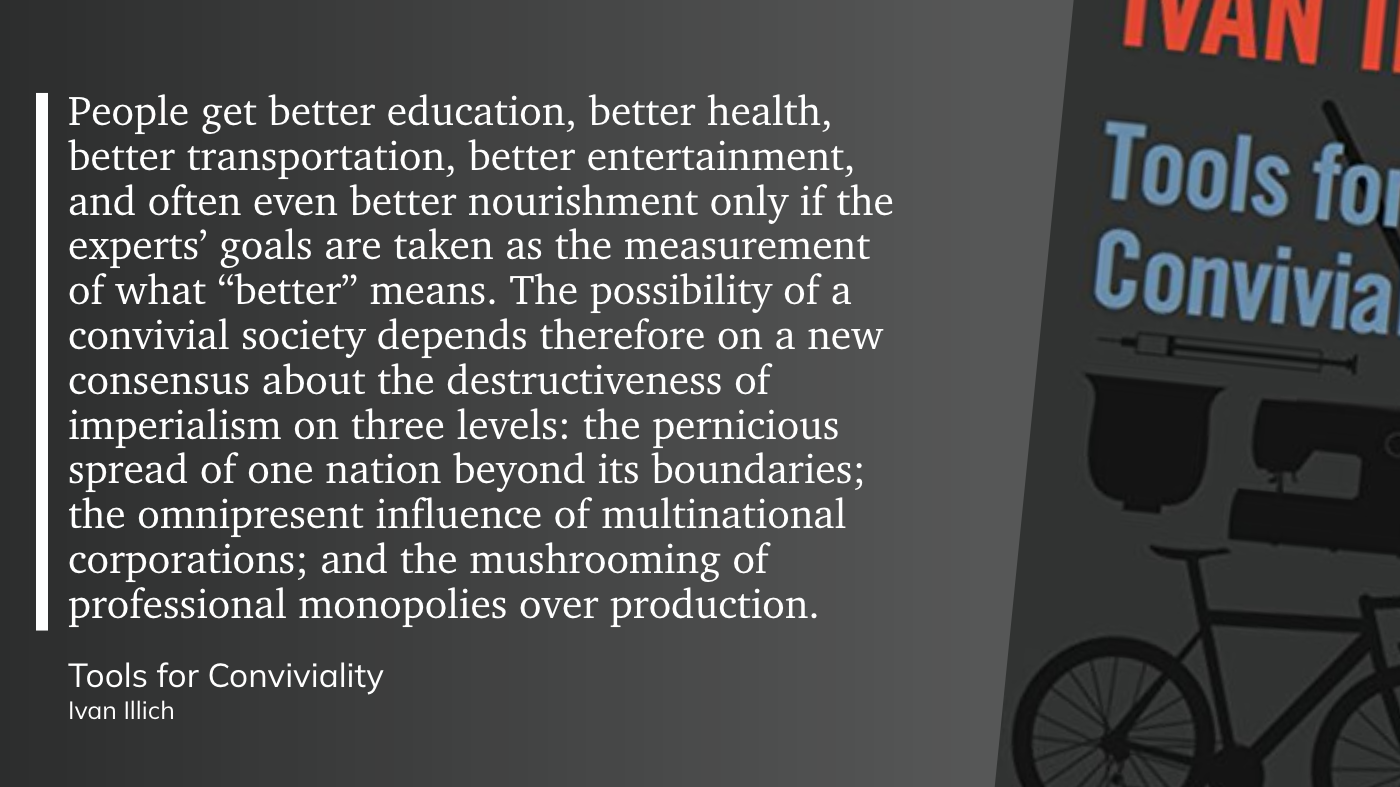

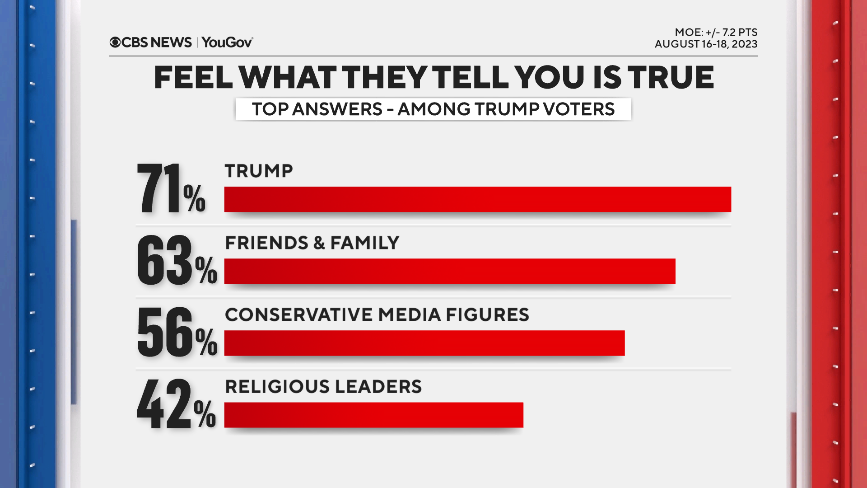


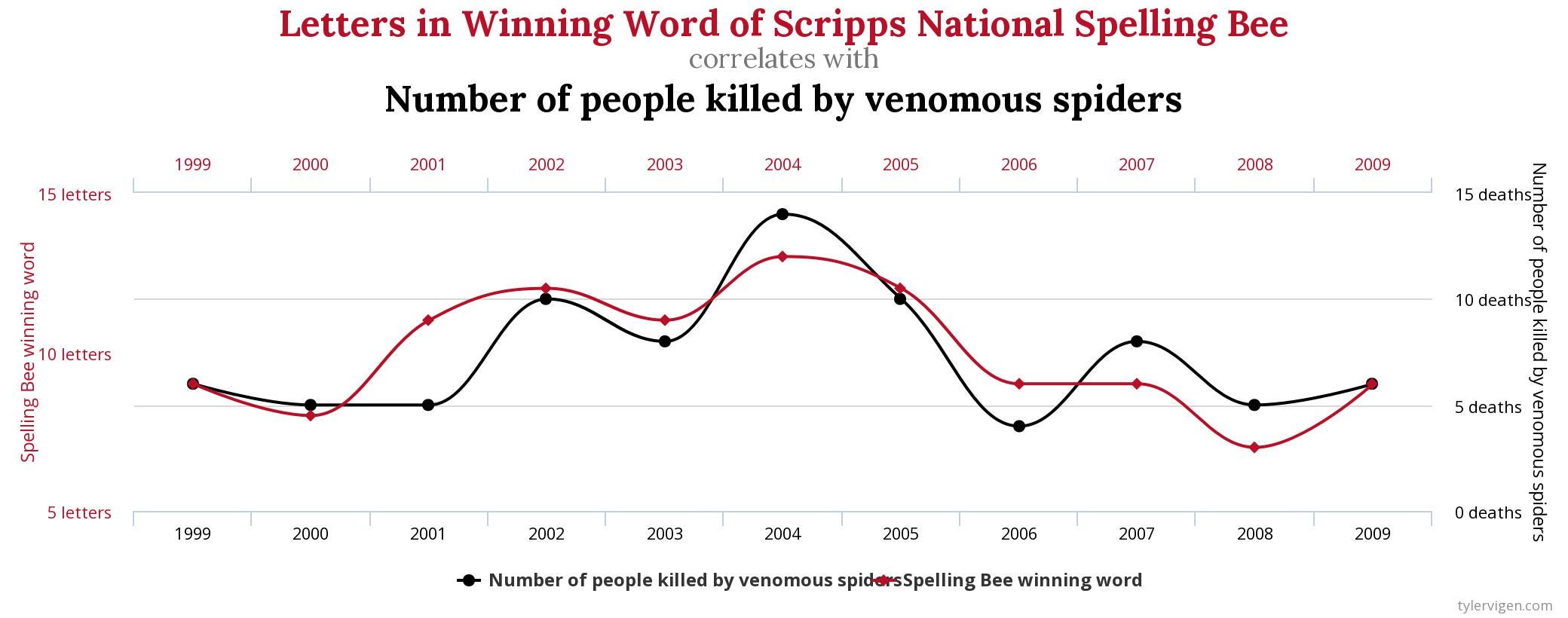
 Tipsy Teetotaler ن