Thursday, 12/18/25

Quietly grassing up the neighbor

Of the Bondi Beach terrorist shootings by Muslim men Sajid Akram and Naveed Akram (unconfirmed by police at this writing) and the heroic intervention of one Ahmed al-Ahmed:

Let it be said, and said with firmness and gratitude, that a Muslim fruit seller named Ahmed al-Ahmed rushed one of the gunmen and disarmed him, saving Jewish lives and taking a couple of bullets himself for his trouble. May God bless that brave man. Here is video of him courageously tackling the gunman. This brings to mind something I was told back in 2002 by a Jewish friend who worked in counterterrorism. Be careful not to accuse every Muslim, she said. Some of our best sources are Muslims within Muslim communities who hate what they’re seeing, but know that if they speak out publicly against it, they will be killed. So they come to us quietly.

Rod Dreher

I wish we could figure out what makes many Muslims exemplary citizens, others murderous fanatics. Though I reject Islam as a false religion, I don’t want to think it’s simply that the former don’t take it seriously.

I have a theory, but it’s at a high enough level of generality that it’s not much use, I fear: that Islam, like Evangelicalism, has no authority beyond a sacred text, so Imams/Preachers can twist the text as they wish, limited only by what their congregants will tolerate.

The Other Terrorists

“Right-wing attacks and plots account for the majority of all terrorist incidents in the United States since 1994, and the total number of right-wing attacks and plots has grown significantly during the past six years,” the Center for Strategic & International Studies concluded after examining terror plots in the United States from 1994 to May of this year. “Right-wing extremists perpetrated two-thirds of the attacks and plots in the United States in 2019 and over 90 percent between January 1 and May 8, 2020.”

Nicholas Kristof, The Lawbreakers Trump Loves (August 29, 2020)

AI moves fast, breaks things

A woman in a service industry, an immigrant to America from Eastern Europe who’s been here about 20 years, took me aside recently. Her eldest child, a senior in high school, is looking around at local colleges. She was worried about AI and asked for advice on what her son might study so that in four years he could get a job. We asked ChatGPT, which advised “embodied in-person work” such as heating and air conditioning technician, pool cleaner. She wasn’t happy with that. She’d worked herself to the bone to get her son higher in the world than she is. She wants him to own the pool.

Peggy Noonan, Trump may be losing his touch

Grievance Memoirs

Political memoirs tend to fall into recognizable categories.

There is the sanitized precampaign memoir, gauzy life stories mixed with vague policy projects and odes to American goodness. There is the postcampaign memoir, usually by the losers, assessing the strategy and sifting through the wreckage. There are memoirs by up and comers who dream of joining the arena and by aging politicos rewriting their careers once more before the obits start to land. There are memoirs by former staff members who realize that proximity to power gives them a good story and memoirs by journalists who chronicle power so closely that they imagine themselves its protagonists.

But a recent spate of books highlights the presence of a new category, one well suited to our time: the grievance memoir. In their books, Eric Trump (“Under Siege”), Karine Jean-Pierre (“Independent”) and Olivia Nuzzi (“American Canto”) are all outraged by affronts real and imagined, fixated on nefarious, often unspecified enemies, obsessed with “the narrative” over the facts and oblivious to their complicity in the conditions they decry.

The authors (a third child embracing on to his father’s legal and political grudges, a former White House press secretary groping for a new brand, a boutique political journalist enmeshed in a self-made scandal) are animated, above all, by a certainty that they’ve been wronged not just by people or institutions but also by broader forces. They are ancillary characters inflating themselves into victims, heroes, even symbols. It is the inevitable memoir style for a moment when everyone feels resentful, oppressed, overlooked — in a word, aggrieved.

Carlos Lozado (who’s famous among his New York Times colleagues as a voracious book-reader).

Add to Lozado’s list a longish article by Jacob Savage in Compact magazine, which Rod Dreher found “one of the most powerful essays I’ve read all year.” Its gist seems to be that straight, white, young men can’t catch a break any more – for reasons predating AI.

Ross Douthat thinks Savage has a point; that Douthat has an opinion suggests that Dreher isn’t just playing Chicken Little again.

I’m fortunate to be chronologically beyond gathering personal straight white male grievance anecdotes (and that my grandson is thrilled at, not resigned to, the prospect of a sort of Shop Class As Soulcraft career).

Are we the baddies?

Remizov and other conservative democrats complain that modern Western liberalism is in fact anti-democratic, as it tramples on national traditions and subordinates national authorities to international ones and to the impersonal forces of globalization.

Paul Robinson, Russian Conservatism. This book is pretty good at giving the gift to see ourselves as others see us.

When your only tool is anger, every little problem looks infuriating

Trump has never shined in moments that call for dignity and restraint … This is what makes Trump’s post about the Reiners not just despicable and cruel but also bad for the country. In moments of national mourning or trauma, a president can seek to bring people together … But not Trump. He finds the most divisive way to insert himself … His choices … take moments that could be unifying—surely Americans of all political views can agree on the greatness of When Harry Met Sally and The Princess Bride—and turn them into opportunities for anger.

Which is, in effect, Trump’s political project.

David Graham, Trump Blames Rob Reiner for His Own Murder

Shorts

  • I like ebooks because nobody can tell that I’m performative reading. (@restlesslens on micro.blog)
  • Be regular and orderly in your life, so that you may be violent and original in your work. (Gustave Flaubert)
  • Insofar is not the same as inasmuch, and I don’t know why the current style is to break the former into three words.
  • I remember mocking people for thinking the Covid vaccine was Bill Gates’ way of getting microchips into us. Hmmm.
  • This is the paradox of politics: Every time you solve a major problem, you’re removing a weapon from your political arsenal. (Peggy Noonan, Trump may be losing his touch)
  • If “TDS” is the tendency to become irrationally obsessed with Donald Trump and project that obsession onto everyone else, then somebody is indeed deranged, and it wasn’t Rob Reiner. (David Graham, Trump Blames Rob Reiner for His Own Murder.
  • A tool always implies at least one small story[:] There is a situation; something needs doing. (L.M. Sacasas)
  • Anyone claiming to know the future is just trying to own it. (L.M. Sacasas)
  • After this awful weekend, Trump has once again lowered the bar for what we can expect from the president. (The Free Press, Mr. President, Don’t Mock the Dead)
  • The odds are good, but the goods are odd. (Advice given to incoming women at Georgia Tech).

Elsewhere in Tipsyworld


We are all gatekeepers now.

Peggy Noonan

Your enemies are not demonic, and they are not all-powerful and the right hasn’t always lost and the left hasn’t always won. But if you convince yourself of that, you give yourselves all sorts of permission to do a lot of stupid and terrible things under the rubric of “Do you know what time it is?”

Jonah Goldberg.

[A] critical mass of the American people … no longer want[s] to govern themselves, … are sick of this republic and no longer want to keep it if it means sharing power with those they despise.

Nick Catoggio

I don’t do any of the major social media, but I have two sub-domains of the domain you’re currently reading: (a) You can read most of my reflexive stuff, especially political here. (b) I also post some things on my favorite no-algorithm social medium.

Sunday Sundries, 8/3/25

Shift of power

The shift from church power to state power is not the victory of peaceable reason over irrational religious violence. The more we tell ourselves it is, the more we are capable of ignoring the violence we do in the name of reason and freedom.

William T. Cavanaugh, The Myth of Religious Violence

I’ve always loved this quote, but it somehow seems even more salient these days.

Our cultural glue

Given the destructive fruitlessness of religio-political conflicts in the Reformation era, Catholics and Protestants alike built on trends that antedated the Reformation and decided to go shopping instead of continuing to fight about religion, thus permitting their self-colonization by capitalism in the industrious revolution. In combination with the exercise of power by hegemonic, liberal states, a symbiosis of capitalism and consumerism is today more than anything else the cultural glue that holds together the heterogeneity of Western hyperpluralism.

Brad S. Gregory, The Unintended Reformation

The shift (see first item) was not instantaneous.

The Gimlet Eye

So many well-meaning Christians believe that the best way for the Church to influence American culture is by imitating as much as possible whatever way of life happens to be fashionable and popular, in the hopes that people will like us and listen to us.

Ken Myers, All God’s Children and Blue Suede Shoes

What is “enough”?

The question with which to start my investigation is obviously this: Is there enough to go round? Immediately we encounter a serious difficulty: What is “enough”? Who can tell us? Certainly not the economist who pursues “economic growth” as the highest of all values, and therefore has no concept of “enough.” There are poor societies which have too little; but where is the rich society that says: “Halt! We have enough”? There is none.

E.F. Schumacher, Small Is Beautiful.

A reminder

I posted this scarcely sixteen months ago, but when I stumbled onto the source again, a was struck with how it addresses a real problem:

[I]t’s good to remind ourselves periodically of the first rule of Scriptural exegesis: You are not Jesus. Whenever you read a story about Jesus’s life, you should not identify with Jesus. You should identify with the sinner whom He is healing/converting/forgiving/upbraiding/flagellating/etc.

Whenever a traditional Christian defends some point of traditional Christian morality, you’ll hear one of our lefty friends cry, “I thought Jesus ate with prostitutes and tax collectors!” Once again, the proper response is: Do you identify with Jesus in that parable?

This is where liberal Christianity becomes—ironically; hilariously—elitist. Sorry, folks, but God’s not saying you must condescend to eat with sinners. No: you are the sinner. He condescends to eat with you.

As for us recovering sinners (i.e., Christians) Saint Paul gives us a different rule: “But now I have written to you not to keep company with anyone named a brother, who is sexually immoral, or covetous, or an idolater, or a reviler, or a drunkard, or an extortioner—not even to eat with such a person” (1 Cor. 5:11). Why? Because, not being Jesus, you can’t trust yourself not to fall into their vice.

Michael Warren Davis, then a Catholic, You’re Not Jesus

Wingman

He recognized that he couldn’t “convert me” to Orthodoxy; only Christ can do that. The Lord had to enter my heart and lead me into a deeper relationship with Him through His Body, the Orthodox Church. The Orthodox evangelist, then, isn’t a preacher or apologist. He’s more like a wingman.

Michael Warren Davis, now Orthodox, the Yankee Athonite

Ready to get strong?

Okay, I’m stealing this analogy from a Catholic podcast/YouTube channel, but I love it and it fits Orthodoxy, too:

Protestantism is like having some dumbells at home. Orthodoxy is like having a fully-equipped gym with a personal trainer.

A long and winding road

From a different episode of that Catholic podcast, Ridvan Ayedemir, a/k/a Apostate Prophet, talks of his spiritual journey:

  • out of Sunni Islam,
  • through agnosticism,
  • through atheism (of the “there’s-just-not-enough-evidence-for-god” variety, not the “theists are stupid” variety),
  • through adopting some Jewish practice and thinking of conversion,
  • through the Rosary and its mysteries (which he still prays), and
  • into the Orthodox Catechumenate.

It’s long, but fascinating. I figured with an adopted persona like “Apostate Prophet,” he would be very polemical and combative. He’s not, though the podcast features his very most polemical points as the teaser.

What I found most interesting is that he didn’t start really feeling attracted to Jesus Christ until he tried filling his “meaning” void with the Rosary! He liked it, started reading about the mysteries of the Rosary (which I’ve never read), and came to love Jesus through the Rosary meditations on His Crucifixion.

Most of us are so used to insisting on understanding and certainty before we take a religious step that taking a step, assessing its effects, and then coming to understanding (not always certainty) seems like a real man-bites-dog story.

I had already heard rumors that Ridvan/Apostate, who I’d never heard of until within the past two months or so, had become Orthodox. I was praying for him since he’s at least a minor celebrity and I don’t want him making shipwreck because of Christian limelight. Having now heard him for some 2.75 hours, my prayers will be more appreciative and fervent.


Religious ideas have the fate of melodies, which, once set afloat in the world, are taken up by all sorts of instruments, some woefully coarse, feeble, or out of tune, until people are in danger of crying out that the melody itself is detestable.

George Elliot, Janet’s Repentance, via Alan Jacobs

[N]one of the things that I care about most have ever proven susceptible to systematic exposition.

Alan Jacobs, Breaking Bread With the Dead

You can read most of my more impromptu stuff here and here (both of them cathartic venting, especially political) and here (the only social medium I frequent, because people there are quirky, pleasant and real). All should work in your RSS aggregator, like Feedly or Reeder, should you want to make a habit of it.

Sunday, 11/24/24

Formatting things a bit differently today, without “headlines.”

  • After he had twice visited the United States in the 1930s, Dietrich Bonhoeffer wrote a perceptive essay contrasting Christian development in America with parallel developments in the parts of Europe most directly shaped by the Protestant Reformation. His assessment included an observation that was as shrewd in its comparative wisdom as it is relevant for the themes of this book: “The secularization of the church on the continent of Europe arises from the misinterpretation of the reformers’ distinction of the two realms [of church and society]; American secularization derives precisely from the imperfect distinction of the kingdoms and offices of church and state, from the enthusiastic claim of the church to universal influence in the world.” What Bonhoeffer saw has been described with other terms here: The key moves in the creation of evangelical America were also the key moves that created secular America.
  • It is a matter of great historical significance that American Protestants almost never cited biblical chapter and verse to defend their interpretive practices. Precisely as it worked on Scripture, the Reformed, literal hermeneutic revealed most clearly how it arose from the special circumstances of American life. Yet even if this hermeneutic itself was not necessarily rooted in a literal reading of Scripture, it was nonetheless the American norm for the generations between the writing of the Constitution and the end of the Civil War.

Mark Noll, America’s God. (You may need to chew on that a bit. Or read the book.)


Religions devised for a social purpose, like Roman emperor-worship or modern attempts to ‘sell Christianity as a means of saving civilisation’, do not come to much. The little knots of Friends who turn their backs on the ‘World’ are those who really transform it.

C.S. Lewis via Paul Kingsnorth, who situates Lewis’ insight in our age.


Brad East once pondered:

Why do people convert to Christianity? Why do intellectuals and other public figures convert so often to Catholicism (or Eastern Orthodoxy) and so rarely to Protestantism?

Conversions, Protestantism, and a new mainline. I suspect he’s still pondering, though I don’t think he’s addressed the topic as explicitly as in the quoted article.

I keep coming back to the article deliberately, feeling as if I haven’t exhausted it. Maybe you’d find it helpful, too.


The west, so it seems to them, tends to think of the Crucifixion in isolation, separating it too sharply from the Resurrection. As a result the vision of Christ as a suffering God is in practice replaced by the picture of Christ’s suffering humanity: the western worshipper, when he meditates upon the Cross, is encouraged all too often to feel an emotional sympathy with the Man of Sorrows, rather than to adore the victorious and triumphant king.

Timothy Ware, The Orthodox Church


No, St. Paul wasn’t a perv:

When teaching non-Jewish Christians, one of the most radical disjunctions with their former way of life was sexual morality. Sexual continence had simply not been a concern for most of them before, so it became Paul’s focus. Paul’s frequent emphasis on this area was not based on prurient interest but on the continuing education and reorientation of former pagans.

Fr. Stephen De Young, Saint Paul the Pharisee. Actually (I’m sure Fr. Stephen noted it elsewhere), fornication with temple prostitutes was the former practice of some of these non-Jewish Christians. That’s why Paul had to focus there.


“Man is what he eats.” With this statement the German materialistic philosopher Feuerbach thought he had put an end to all “idealistic” speculations about human nature. In fact, however, he was expressing, without knowing it, the most religious idea of man. For long before Feuerbach the same definition of man was given by the Bible.

Fr. Alexander Schmemann, For the Life of the World


“The clock,” [Lewis] Mumford has concluded, “is a piece of power machinery whose ‘product’ is seconds and minutes.” … [A]s Mumford points out, with the invention of the clock, Eternity ceased to serve as the measure and focus of human events.

Neil Postman, Amusing Ourselves to Death


It’s profoundly significant that of all the Christian groups, only the Orthodox include the babies at the Holy Chalice, completely recognizing and demon-strating their full incorporation into the Church, the Body of Christ. This alone, it seems to me, shows forth the truthfulness of our Church’s claim to be the One, Holy, Catholic, and Apostolic Church, alone preserving the fullness of the Christian Faith.

Frederica Mathewes-Green & Rod Dreher, Healing Humanity


  • Only a few peoples—the odd German tribe and, inevitably, the Jews—had stood aloof from the exposure of unwanted children. Pretty much everyone else had always taken it for granted. Until, that was, the emergence of a Christian people.
  • Islamic the Islamic State may have been; but it also stood in a line of descent from Anabaptist Münster. It was, perhaps, the most gruesome irony in the whole history of Protestantism.
  • When scholars in Europe sought to justify the Spanish conquest of the New World, they reached not for the Church Fathers, but for Aristotle. ‘As the Philosopher says, it is clear that some men are slaves by nature and others free by nature.’
  • The concept of secularism—for all that it was promoted by the editor who invented the word as an antidote to religion—testified not to Christianity’s decline, but to its seemingly infinite capacity for evolution.

Tom Holland, Dominion

Several narrower books linger more persistently in my mind, but Dominion has in a sense penetrated deeper than mere “mind.”


  • Even after His Resurrection, Christ instructed disciples on the road to Emmaus when “beginning with Moses and all the prophets, he interpreted to them in all the scriptures the things concerning himself” (Luke 24:27). The Christological key to unlock the Jewish Scriptures was given to the Church by Christ Himself…
  • Two centuries later, fundamental differences in phronema would again be an obstacle to union between the West and the East at the Council of Florence in 1439. Catholics presented rational arguments for their positions, and the Orthodox responded by citing apostolic Tradition. It was “the constant conviction of the Latins that they always won the disputation, and of the Greeks that no Latin argument ever touched the heart of the problem.”

Dr. Eugenia Scarvelis Constantinou, Thinking Orthodox


Sometimes this whole 2000-year-old faith seems like a living koan. Chew on this until you are enlightened. Keep walking.

Paul Kingsnorth

You can read most of my more impromptu stuff here and here (both of them cathartic venting, especially political) and here (the only social medium I frequent, because people there are quirky, pleasant and real). All should work in your RSS aggregator, like Feedly or Reeder, should you want to make a habit of it.

Sunday, 12/10/23

Prelude

This item follows on my enigmatic first item on December 3.

I’ve very frequently been quite harsh toward Evangelical Christians — “Why can’t you stupid people see that you need to be Orthodox!!!” has been the gist. So to anyone who has felt hectored, I apologize. If you’re still here, forgive me — and thanks for bearing with me in my chronic (26 year) convertitis.

I should know from my own experience that it’s not illegitimate to settle into a religious tradition and not be looking for the location of the exits immediately; that was my demeanor toward Calvinism for 20 years or so, and toward Evangelicalism for nearly 30 years before that. Both times, I was sort of blind-sided into recognizing the need to change.

Further, phenomenology and theology sometimes co-exist awkwardly. For instance, I now thoroughly believe that Baptism is not just a symbol, but is one’s initiation in the Church — a very important matter (theology). But I can’t help but feel that my Christian life began, in a non-trivial sense, 12 or so years before my Baptism when I realized (after being caught in flagrante delicto) that beating up on my brother to take away a toy was disappointing to Jesus and I needed Him to forgive me — and to “come into my heart,” as my then-tribe put it (phenomenology).

Bereft though they were of sacrament, Liturgy, incense, Church Fathers, icons, beauty and so forth, that realization and my response were important. But I’ve concluded that Evangelical Is Not Enough.

But I’ve tried to hector others into recognizing that it’s not enough. I wouldn’t have put it that way, but that’s what it amounted to.

I could say more about why I felt driven to hectoring people, but for reasons I need not share, I won’t.

Anyway: I need to reconcile myself to the reality of divided Christianity — that not all sincere Christians have entered the Ark, the one holy catholic and apostolic church of the Nicene Creed, and almost certainly some never will. The most I can do under my own power is to produce discontent with where they are — unholy discontent, which could lead them out of Christianity entirely. I don’t intend that.

But if you ever do feel any holy discontent, be sure to give Orthodoxy a look.

And I’ll probably be unable to completely eliminate critiques because Orthodoxy and Evangelicalism differ in important regards (more about that below), and where they do differ, I believe Orthodoxly.

The Main Act

Two kinds of believers

I sometimes think that the modern world’s true cultural divide is not between believers and unbelievers but between those who think life is a puzzle that is capable of being solved and those who believe it’s a mystery that ought to be approached by way of silence and humility. I am a problem solver by disposition, but in my heart I am strongly on the side of the mysterians.

It’s a mistake to treat [the tradition of Meister Eckhart, Teresa of Avila, John of the Cross, and Karl Rahner] as a watered-down version of the more certain expressions of faith typically associated with organized religion. The most sincere believers I’ve known have also been the most humble, the most perplexed. It may be that those who feel most powerfully the presence of God in their lives likewise feel most powerfully the impossibility of adequately capturing that presence in words. And it may be that those for whom God is not a symbol or a cudgel but a lived reality find this reality most mysterious.

Christopher Beha, Jon Fosse and the Power of Faith at 1 a.m.

I’m with Beha: “I am a problem solver by disposition, but in my heart I am strongly on the side of the mysterians.” I’ve been trying to solve the puzzle for many decades now, and I probably see more open questions than when I started.

So I now plan, after some fear that it was being over-hyped, to read Jon Fosse’s Septology.

This is not unrelated to the preceding item.

Why intellectuals don’t convert to Evangelical Christianity

My social medium friend Kyle Essary engages Brad East’s speculation about why intellectuals who become Christian tend to become Roman Catholic or Orthodox rather than Evangelical:

But there’s one area that Brad doesn’t mention. And I think this reason keeps many intellectuals away from many Protestant traditions. Catholicism and Orthodoxy don’t have crazies. There may be a few here or there, but when you hear about a Christian group making fools of themselves publicly, you can be fairly certain that they are Protestant—and probably evangelical. Our low-church, anti-institutional biases breed these types. If you are an intellectual considering Christianity, you will not naturally move toward Christian groups that oppose science or higher education. But evangelical Protestants have groups that oppose both.

Kyle has distilled this aspect better than I ever had.

Certainty, Ferocity and Solidarity

[T]he true distinction between fundamentalism and mainstream beliefs isn’t what fundamentalists believe but how fundamentalists believe. As Richard Land, a former president of the Southern Baptist Convention’s Ethics & Religious Liberty Commission, once told me, “Fundamentalism is far more a psychology than a theology.”

I’ve never encountered a fundamentalist culture that didn’t combine three key traits: certainty, ferocity and solidarity.

Certainty is the key building block. The fundamentalist mind isn’t clouded by doubt. In fact, when people are fully captured by the fundamentalist mind-set, they often can’t even conceive of good-faith disagreement …

That certainty breeds ferocity. Indeed, ferocity — not piety — is a principal trait of every truly fundamentalist movement I’ve ever encountered. Ferocity is so valuable to fundamentalism that it can cover a multitude of conventional Christian sins. Defending Trump in 2016, Robert Jeffress, the pastor of First Baptist Dallas, an evangelical megachurch, explained, “Frankly, I want the meanest, toughest son of a gun I can find. And I think that’s the feeling of a lot of evangelicals.”

Yet certainty and ferocity are nothing without solidarity … I’m reminded of an infamous quote by Mike Huckabee, a former Baptist pastor, regarding the necessity of loyalty. Explaining Trump’s hostility toward Ron DeSantis, Huckabee said, “I think there are two virtues — loyalty and confidentiality. Be loyal to the people who helped you and learn how to keep your mouth shut.”

Again, that’s not piety. It’s solidarity.

David French, Why Fundamentalists Love Trump

I appreciate this dissection of what makes “fundamentalism” fundamentalist, and it rings true to my 75 years’ experience. That’s even more interesting to me than why fundamentalists love Florida Man.

Note three things, though:

  1. So described, fundamentalism is not merely distinct from “mainstream” beliefs, if by mainstream one means the Seven Sisters of American Protestantism, but also distinguishes it from non-fundamentalist evangelicalism. Indeed, there’s no major difference between Christian evangelicals and fundamentalists in theology (see J.I. Packer, ”Fundamentalism” and the Word of God), but there are evangelicals who are blessedly low on certainty, ferocity and solidarity.
  2. So described, it becomes clearer how there can be Islamic as well as Christian fundamentalists — even Orthodox Christian fundamentalists (though I strongly believe that such Orthodox fundamentalism is not very good Orthodoxy).
  3. [Fundamentalists] “can have a steamrolling effect in institutions because their opponents — almost by definition — have less certainty, less ferocity and less solidarity” (French again).

Not a Freudian slip

Victor I. Masters, the head of Home Missions from 1909 to 1921, reflected and influenced denominational thinking when he argued that the North had lost its religion to Romanism and rationalism, and that the SBC’s divine mission was to spread “the Anglo-Saxon evangelical faith.”

Frances FitzGerald, The Evangelicals

Interlude

Quanta

Quantum physics: Electrons moving, but photographing them affects path and speed. Why? How? Quantum theology: God’s mind doesn’t change, but he tells us to pray, and somehow our prayers affect the outcome.

Marvin Olasky, The Wonder of the Universe’s Weirdness

Theology

The classic Orthodox definition of a theologian is well known and frequently repeated in Orthodox circles: “A true theologian is one who prays,” or “One who prays is a true theologian.” This legendary saying reflects the Orthodox phronema and stands in stark contrast to the Western Christian phronema, which strongly emphasizes use of the mind for comprehension of theological truths and rational deduction as a theological method.

Dr. Eugenia Scarvelis Constantinou, Thinking Orthodox

Gratitude

I am a millionaire.
My bedroom is full of gold
light, of the sun’s jewellery.
What shall I do with this wealth?
Buy happiness, buy gladness,
the wisdom that grows with the giving of thanks?

R.S. Thomas, Collected Later Poems 1988-2000

Postlude

Orthodox Teaching does not merely differ from Western Christianity in content, but the reason for the difference is equally important. After reading this book, Western Christians still may not understand our mentality, but perhaps they will begin to realize that the difference between Orthodoxy and Western Christianity is significant and more far-reaching than a few doctrines, ancient rituals, and a refusal to submit to the pope. The variance is deeper than appears on the surface, extending to how theology is conceived, conceptualized, taught, and approached. To complicate matters, often the same terminology is used in East and West, but basic terms or concepts do not have the same meaning at all. What is sin? What is salvation? What is forgiveness?

Dr. Eugenia Scarvelis Constantinou, Thinking Orthodox


So walk on air against your better judgement

(Seamus Heaney)

You can read most of my more impromptu stuff here (cathartic venting) and here (the only social medium I frequent, because people there are quirky, pleasant and real). Both should work in your RSS aggregator, like Feedly or Reeder, should you want to make a habit of it.

The Christian Conversion of Ayaan Hirsi Ali

Ayaan Hirsi Ali very recently announced that she now identifies as a Christian. She followed up the announcement with an essay in UnHerd explaining somewhat more fully.

I noted the UnHerd essay, and noted its arguable inadequacy, but held counsel, commenting only guardedly in my personal journal. Now two others,* Rod Dreher and Mark Tooley, have published comments, and they’re on roughly the same wavelength with me.

Both note the arguable inadequacies of her UnHerd essay, but both graciously defend her.

Tooley:

It sounds like she is church going but not does not describe herself as a confessional Christian. Maybe she is where the English journalist Malcolm Muggeridge was after his conversion from atheism (also like Ali disdaining British atheist Bertrand Russell), at which point he affirmed the idea but not the specific historicity of Christianity.

There are of course many, many people who convert to Christianity not because of an intense personal spiritual crisis resulting in a cathartic acceptance of Jesus Christ but because of revulsion against the world’s distortions. For such converts, Christianity is at first an intellectual and aesthetic oasis to which they flee from an arid desert. Later they often in their spiritual journey become more theologically specific. Muggeridge, in his interview with William Buckley, said he did not care if Jesus Christ physically arose from the dead. Presumably later, upon joining the Catholic Church, he did in fact care.

Dreher, who definitely suffers logorrhea and bouts of exhibitionistic transparency, had more to say:

Absent a ‘road to Damascus’ conversion moment for Hirsi Ali, it seems to these critics that she is merely a ‘cultural Christian’ as opposed to a believing one.

My fellow conservative Christian intellectuals who call out Hirsi Ali’s ‘instrumentalist’ Christianity may mean well, but they are making a serious mistake. For one, they lack charity. It is an astonishing thing to see a woman who renounced the idea of God because of the cruel and insane treatment she received from Muslims, and who turned herself into a prophet of atheism, now publicly attest to being a follower of Jesus Christ. Note well that she has done this while living around Stanford University in northern California, one of the most woke and anti-Christian places in America. This is difficult and very brave. It seems to me that we owed her more understanding than some of us gave her in light of her news.

More importantly, these critics misunderstand the nature of religious conversion, and do so in a way that is particular to intellectuals. St. Paul’s dramatic experience on the aforementioned road to Damascus is the paradigmatic conversion: in a flash of overwhelming awe, a man experiences God, and is changed instantly. That’s not how it works with most people.

The thing is, faith is poetry, not syllogism.

To be honest, I was for a long time ashamed of my conversion to Orthodoxy, because it wasn’t intellectually clean. I wanted to be able to state with the kind of clarity of an expert witness in the dock that I had examined the claims for authority of the Roman church, and of the Eastern churches, and the weight of evidence lay with Byzantium. It didn’t happen that way. I came into Orthodoxy as a drowning man desperate to keep his head above water. In the end, this was the best way for me to have done it. My intellectual pride—my sin, not the Catholic Church’s—had led to my spiritual shipwreck. By showing me the primacy of the conversion of the heart, and teaching me how to achieve it, Orthodox Christianity showed me out of the dark wood.

I say all this not to make a pitch for Orthodoxy, but simply to show, by using my own example, how ragged these things can be.

When I heard her in London, and read her testimony in Unherd, I felt not like marking down a theology undergraduate paper with a red pen, but like rushing in with my prayers to help a broken angel learn to fly. She is imperfectly Christian today; she may be more perfectly Christian tomorrow. And so, by God’s grace, will you and I.

Note especially Dreher’s identification of an “astonishing thing.” This is not a woman who would just go along to get along with her current post-Christendom milieu; her announcement means something.

Now, please! please! please! please! please!, just leave her alone and don’t try to put her on the Christian speaking circuit. Give this seedling a chance to grow.

* Doubtless more than two have commented, but I try to stay away from the internet’s garbage pails.

Happy August

Culture

Frodo failed

Frodo failed.

If you’re a reader of Tolkien’s Lord of the Rings (or just a movie-goer), then you know that the central, heroic character, the young Mr. Frodo, ring-bearer, fails to throw the Ring into the fires of Mt. Doom at the end of his arduous journey. Everything he loved, his home, his friends, every scrap of goodness, depended on the Ring being tossed into those fires, and, when it came down to it, he was unable to let it go. Fortunately for Middle Earth, the wraith-like, pitiable creature, Gollum, bit Frodo’s finger off in order to have the Ring again for his own, and accidentally slipped and fell into the fires, saving Middle Earth in the bargain. All of that drama resolved by an accident?

It is genius.

Fr. Stephen Freeman

Pedagogy after AI

Imagine a culinary school that teaches its students how to use HelloFresh: “Sure, we could teach you how to cook from scratch the way we used to — how to shop for ingredients, how to combine them, how to prepare them, how to present them — but let’s be serious, resources like HelloFresh aren’t going away, so you just need to learn to use them properly.” The proper response from students would be: “Why should we pay you for that? We can do that on our own.”

If I decided to teach my students how to use ChatGPT appropriately, and one of them asked me why they should pay me for that, I don’t think I would have a good answer. But if they asked me why I insist that they not use ChatGPT in reading and writing for me, I do have a response: I want you to learn how to read carefully, to sift and consider what you’ve read, to formulate and then give structure your ideas, to discern whom to think with, and finally to present your thoughts in a clear and cogent way. And I want you to learn to do all these things because they make you more free — the arts we study are liberal, that is to say liberating, arts.

If you take up this challenge you will learn not to “think for yourself” but to think in the company of well-chosen companions, and not to have your thoughts dictated to you by the transnational entity some call surveillance capitalism, which sees you as a resource to exploit and could care less if your personal integrity and independence are destroyed. The technocratic world to which I would be handing you over, if I were to encourage the use of ChatGPT, is driven by the “occupational psychosis” of sociopathy. And I don’t want you to be owned and operated by those Powers

Alan Jacobs, Technologies and Trust

Stripping humanity from homo sapiens

If out of the crooked timber of humanity no straight thing was ever made, then if a thing is made straight it will be because humanity has been stripped out of it.

L.M. Sacasas, Embrace Your Crookedness. This is a very worthwhile reflection on the human condition.

Don’t assume that “they” will be stripping humanity. Some people strip their own humanity. Rebecca West (Black Lamb and Grey Falcon) embeds the story of one who did so:

So with his money he could follow his mania, which was for the new thing, for Science, for the machine, for the artificial, the modern. You may not remember it, for I think it came earlier with you than with us, but there was some time ago a rage for such things. It was partly due to your H. G. Wells and his imitators, and it was partly due to our ideas about America, which we then believed to be entirely covered with sky-scrapers and factories.

I went on so, telling more and more absurd stories, until I said, “And of course I was forgetting, there is the artificial woman that was invented by the celebrated surgeon Dr. Martel. That is quite wonderful.” And my old friend said to me, “An artificial woman? What is that? A woman that is artificial! For God’s sake! Tell us all about it!”

I saw that she was getting very fond of me, like a mother for her son, and I grieved, for I did not like to have brought this sorrow to her by [the silly joke on her husband about the artificial woman]. I felt very ashamed when she came to see me at a time when the cold wind had made me bad with my lungs, and it was as if I should go like my sister, who had died when she was sixteen, and I said to her, “Aunt, you are too good to me. I have done nothing for you,” and she answered with tears in her eyes, “But you have been as good to me as a son. Do you think I am so simple that I do not know the artificial woman must long ago be finished, with such a clever man as you say working on it? You tell my husband that it is not so only because you know that I could not bear to have such a creature in my house.” There was nothing at all that I could say. I could not confess to her that I had been a monkey without making it plain to her that her husband had been an ass.

It came to this poor silly old man and he learned that the most modern thing to do was to kill yourself, and so he did it. He became very melancholy for a time, working at it as other old men work at learning chess, and then went into his stable and hanged himself, to be modern, to have an artificial death instead of a natural. I think he was probably sure that there was immortality, for though he believed he was a freethinker I do not believe it ever crossed his mind that he would not live after death. And soon after his wife also hanged herself, but I do not think there was anything modern about her reasons, they could not have been more ancient.

Whence our delight at athletes?

Gladwell, like many of us, seems to have unwittingly internalized the idea that when professional athletes do the thing they’re paid to do, they’re not acting according to the workaday necessity (like the rest of us) but rather are expressing with grace and energy their inmost competitive instincts, and doing so in a way that gives them delight. We need to believe that because much of our delight in watching them derives from our belief in their delight.

Alan Jacobs, How to Think: A Survival Guide for a World at Odds

Hectoring, dismissive and jejune

[I]f the right has overcorrected to an old-fashioned (and somewhat hostile) vision of masculinity, many progressives have ignored the opportunity to sell men on a better vision of what they can be. … To the extent that any vision of “nontoxic” masculinity is proposed, it ends up sounding more like stereotypical femininity than anything else: Guys should learn to be more sensitive, quiet and socially apt, seemingly overnight. It’s the equivalent of “learn to code!” as a solution for those struggling to adjust to a new economy: simultaneously hectoring, dismissive and jejune.

Christine Emba via DenseDiscovery

Notable passing

SunRay Kelley, Master Builder of the Counterculture, Dies at 71. That link should get you through the Times paywall.

Sinead O’Connor

My cyberfriend Patrick Rhone shares a worthy comment on Sinead O’Connor: some Kris Kristofersson song lyrics in her honor after she was booed off a stage.

Musicians are sometimes prophets, and prophets often get stoned.

Political

Muslim discomfort with Democrat extremists

Asma Uddin, in her book “When Islam Is Not a Religion,” describes “a tacit agreement that Muslims, as religious believers, will never challenge any of the rights championed by the Left, such as a progressive vision of gender or sexual equality.” Muslims became an integral part of the party not as a faith community with distinct theological commitments but as a “marginalized” group requiring protection from Republican bigotry.

But during the Trump years, the Democratic Party veered sharply to the left on social and cultural issues. The Republican Party lost interest in Muslims, with Mr. Trump neglecting to antagonize them during his 2020 re-election bid. The new enemy was “wokeness,” and a growing number of Muslims found themselves on the GOP side of that divide. According to the AP VoteCast Survey, as many as 35% of Muslims voted for Mr. Trump in 2020, compared with 8% to 13% in 2016.

It’s easy enough for the left to dismiss white evangelical Trump supporters. But when the party does the same to Muslims, who for years had been loyal Democrats, it demonstrates its disrespect for actual cultural diversity.

Shadi Hamid, Muslims vs. Democrats: A Story of Betrayal

Conservatives and Reactionaries

When writers at The Bulwark or The Dispatch, or the presidential campaigns of Asa Hutchinson, Chris Christie, and Will Hurd, criticize Trump, they highlight (at least in part) his breaks from longstanding norms, traditions, and expectations of elected officials. Trump shouldn’t have lied about the results of the 2020 election. He shouldn’t have provoked an insurrection and haplessly sought to foment a self-coup to remain in power after losing the vote. He shouldn’t have disregarded laws restricting access to classified documents. And so forth. Those are the kinds of objections one would expect to hear from conservatives.

But DeSantis has nothing critical to say about any of the above. When he goes after Trump, it’s for his failure to break more radically from longstanding norms, traditions, and expectation. Trump was too willing to defer to public-health officials during the COVID-19 pandemic, too quick to believe vaccines could protect people from becoming ill, too inclined to seek support from LGBT voters, too moderate on abortion, too cautious in dealing with the administrative state. In all of these ways, Trump was too conservative. He maintained too many continuities with the past. He should have broken more fully with it in favor of an alternative future that would be more congenial to the right.

Damon Linker, Ron DeSantis, Reactionary Tryhard.

I don’t want Joe Biden to be President for four more years. I’d gladly vote for most conservative alternatives to him — if there were any. Trump is a reactionary and populist (as well as a narcissist and/or a fine illustration of “oppositional defiant disorder”); DeSantis is trying to outdo him on both counts. And I don’t intend to pull punches about that sad reality.

“Spreading democracy”

My nation pretends it’s spreading democracy, and I’ve never (within ready memory) believed that.

Democratization conflicts with Westernization, and democracy is inherently a parochializing not a cosmopolitanizing process. Politicians in non-Western societies do not win elections by demonstrating how Western they are. Electoral competition instead stimulates them to fashion what they believe will be the most popular appeals, and those are usually ethnic, nationalist, and religious in character.

Samuel P. Huntington, The Clash of Civilizations and the Remaking of World Order

Barbarian feigns Christianity

On twitter Stephen Wolfe, author of “The Case for Christian Nationalism,” claimed he didn’t know who Emmett Till was until he recently googled his name. He then commented: “Yea I’m supposed to care about some 1955 event that all the libs care about. Their minds are captured.”

Stephen Wolfe’s book The Case for Christian Nationalism extolls a fantasy Calvinist confessional state in which the elect rule over the lost and reprobate. God’s reputed people have the power, and the people less favored are their subjects, living under their rules. Its vision of power over service isn’t very Christian. And its subjugation of some people over others based on their religion isn’t very nationalist. It certainly isn’t at all American.

But disdaining Emmett Till’s murder, and the civil rights revolution it helped unleash, as part of the wider ongoing, 2000-year-old Christian revolution of equality and dignity for all, is helpfully clarifying.

Mark Tooley

I can’t think of anyone I consider actually Christian who advocates “Christian Nationalism.” Maybe I need to get out more. Maybe some Christians involuntarily drawn to the notion have conscience-pangs and reservations so they don’t talk about it.

One of the reasons why I oppose “Christian Nationalism” in the USA is that notionally-Christian barbarians would almost certainly grab the reins of power, and there’s nobody more remorseless than someone who thinks he has a mandate from heaven to rule righteously.

Tough love

Congratulations to Colombian President Gustavo Petro, who over the weekend set a standard for good governance to which political leaders throughout the Americas can aspire.
“I wish him luck and strength,” he tweeted after his son Nicolás was hit with charges related to money laundering and drug trafficking. “May these events strengthen his character and let him reflect on his own errors.”

TMD

Public transportation is a loser?

The reason most public transportation is seen as ‘losing’ money is precisely because it charges for trips. If you don’t charge fares, suddenly it can’t ‘lose’ money. It just costs money, the same as the roads.
@dx@social.ridetrans.it

Via DenseDiscovery. I confess that I had to read that twice to see the brilliance.

Unwelcome contrast

I myself am a secret monarchist, as were my relatives in Rhode Island and Connecticut in 1775 except they weren’t secret about it. I miss Elizabeth II, the perfect modest model of a modern English monarch, tramping in the rain with her corgis. When Her Majesty met President Schlump and he opened his big yap and hee-hawed at her, we saw a contrast that was not favorable to our side.

Garrison Keillor


We are in the grip of a grim, despairing rebellion against reality that imagines itself to be the engine of moral progress.

R.R. Reno

The end of the world as we know it is not the end of the world.

You can read most of my more impromptu stuff here (cathartic venting) and here (the only social medium I frequent, because people there are quirky, pleasant and real). Both should work in your RSS aggregator, like Feedly or Reeder, should you want to make a habit of it. I’m even playing around a bit here, but uncertain whether I’ll persist.
Hobbit Day 2022

I have it on reasonably good authority that today is Hobbit Day, and it turns out that Peter Jackson isn’t the only one to cash in on Hobbits.

Culture

How the Bobos Broke America — key excerpt

I tend to quote a lot of things without comment, but I’m going to say that the following strikes me as true, and so contrary to the recent history of the Democrat and Republican parties that it’s core to why I believe a major realignment is underway. Today’s Republican party is not the same Republican party I left in January 2005. For my taste, it’s worse, but that taste almost certainly is tainted by Orange Man. But I gradually came to see his appeal:

What causes psychic crisis are the whiffs of “smarter than” and “more enlightened than” and “more tolerant than” that the creative class gives off. People who feel that they have been rendered invisible will do anything to make themselves visible; people who feel humiliated will avenge their humiliation. Donald Trump didn’t win in 2016 because he had a fantastic health-care plan. He won because he made the white working class feel heard.

How the Bobos Broke America.

There’s no need to hold a pity party for me, but I’ve spent most of my life too Christian and too socially awkward to be comfortable with social elites, too elite to feel instinctively empathetic or entirely comfortable with the working class.

How unreality spreads

Wrong beliefs and wrong perceptions are contagious whether or not they are sincere, because dissidents tend to self-censor and act like believers. That is how entire societies, such as the Soviet Union, can be built on everyone’s publicly pretending to believe what many privately know to be false.

Jonathan Rauch, Echo Chambers and Confirmation Loops in The Constitution of Knowledge.

I think this has some contemporary relevance. I’ll say no more.

National Conservatism could be a boon for religious liberty lawyers

Here’s the national conservatism “Statement of Principles” on God and public religion, signed by dozens of leaders of the national conservatism movement:

No nation can long endure without humility and gratitude before God and fear of his judgment that are found in authentic religious tradition. For millennia, the Bible has been our surest guide, nourishing a fitting orientation toward God, to the political traditions of the nation, to public morals, to the defense of the weak, and to the recognition of things rightly regarded as sacred. The Bible should be read as the first among the sources of a shared Western civilization in schools and universities, and as the rightful inheritance of believers and non-believers alike. Where a Christian majority exists, public life should be rooted in Christianity and its moral vision, which should be honored by the state and other institutions both public and private. At the same time, Jews and other religious minorities are to be protected in the observance of their own traditions, in the free governance of their communal institutions, and in all matters pertaining to the rearing and education of their children. Adult individuals should be protected from religious or ideological coercion in their private lives and in their homes. (Emphasis added.)

This paragraph describes a form of religious supremacy that relegates dissenting religious believers to the “private” sphere, while granting Christianity a position of powerful public privilege.

But we shouldn’t fool ourselves into believing that the “moral vision” of the signatories broadly reflects the diversity of Christian belief and practice in the United States. After all, there are churches that host drag queen events, as well as churches that condemn drag queens. Both the Democratic and Republican parties are completely dependent on their Bible-believing, church-going base constituencies (white Evangelicals for Republicans and Black Protestants for Democrats).

Are national conservatives thus satisfied when either party wins, so long as a Christian (Joe Biden, for example) is at the helm?

Of course not. For the term “moral vision” to mean anything, it has to mean a particular version of professed Christian belief and practice.

David French

A polity that "relegates dissenting religious believers to the “private” sphere, while granting [a form of putative] Christianity a position of powerful public privilege" is inconsistent with current Supreme Court thinking, and I don’t think Trump’s nominees change that.

When did modernity begin?

For us, the real Middle Ages extend from the reign of Charlemagne to the opening of the fourteenth century, at which date a new decadence set in that has continued, through various phases and with gathering impetus, up to the present time. This date is the real starting-point of the modern crisis: it is the beginning of the disruption of Christendom, with which the Western civilization of the Middle Ages was essentially identified: at the same time, it marks the origin of the formation of ‘nations’ and the end of the feudal system, which was very closely linked with the existence of Christendom. The origin of the modern period must therefore be placed almost two centuries further back than is usual with historians…

René Guénon Guénon, The Crisis of the Modern World.

What Putin lacks

[T]he death of Queen Elizabeth II and the wave of antique pageantry help illuminate one of the Russian president’s important weaknesses. He has been hobbled in his fight because his regime lacks the mystical quality we call legitimacy.

Ross Douthat, Why Queen Elizabeth’s Strength Is Putin’s Weakness

This takes “self-deprecating” too far

We sat and watched the committal service, we who threw all this away in the 18th century, all the costumery, ribbonry, and titlery and iconic disciplines and endless dignity, in favor of the mess we know all too well …

[A]fter a couple hours of admiring tradition and ceremony and everyone knowing which foot to put where, it dawns on me that this elevation of bureaucracy to an art form is what America fortunately escaped and thus was better able to give the world the phenomenal techno advances of my lifetime, the laptop, cellphone, GPS, AI, drones, radical reductions in the cost of solar panels and wind energy, new vaccines. These things were not created by platoons of people marching in place but by brilliant gamblers and entrepreneurs, nerds of many stripes. (We also gave the world the blues and rock ’n’ roll, but that’s another story.)

An English major in college, I looked down on IT students because they all dressed alike and carried plastic pocket protectors for their ballpoint pens. I saw them as dullards. As it turns out they were at work on data technology that led to the internet, which changed my life and yours too. Meanwhile, the English department and other humanities march along beside the hearse and the horsemen.

I wanted to be eccentric and got my wish but the engineers in my family are more engaged with the real world.

Garrison Keillor.

Once again, I’ll opine.

I like technology entirely too well, but “the laptop, cellphone, GPS, AI, drones, radical reductions in the cost of solar panels and wind energy, new vaccines” do nothing to fill the void in the human soul, and I deny that they are the “real world” in a meaningful sense. Maybe monarchy doesn’t fill the soul-void, either; I don’t know (at least in part) because I’ve never lived in a monarchy. But I think monarchy says something true about reality that all the tech in the world misses.

So maybe we and Great Britain are still joined symbiotically at the hip; they provide the meaning, we provide the toys and the parties.

Correlation

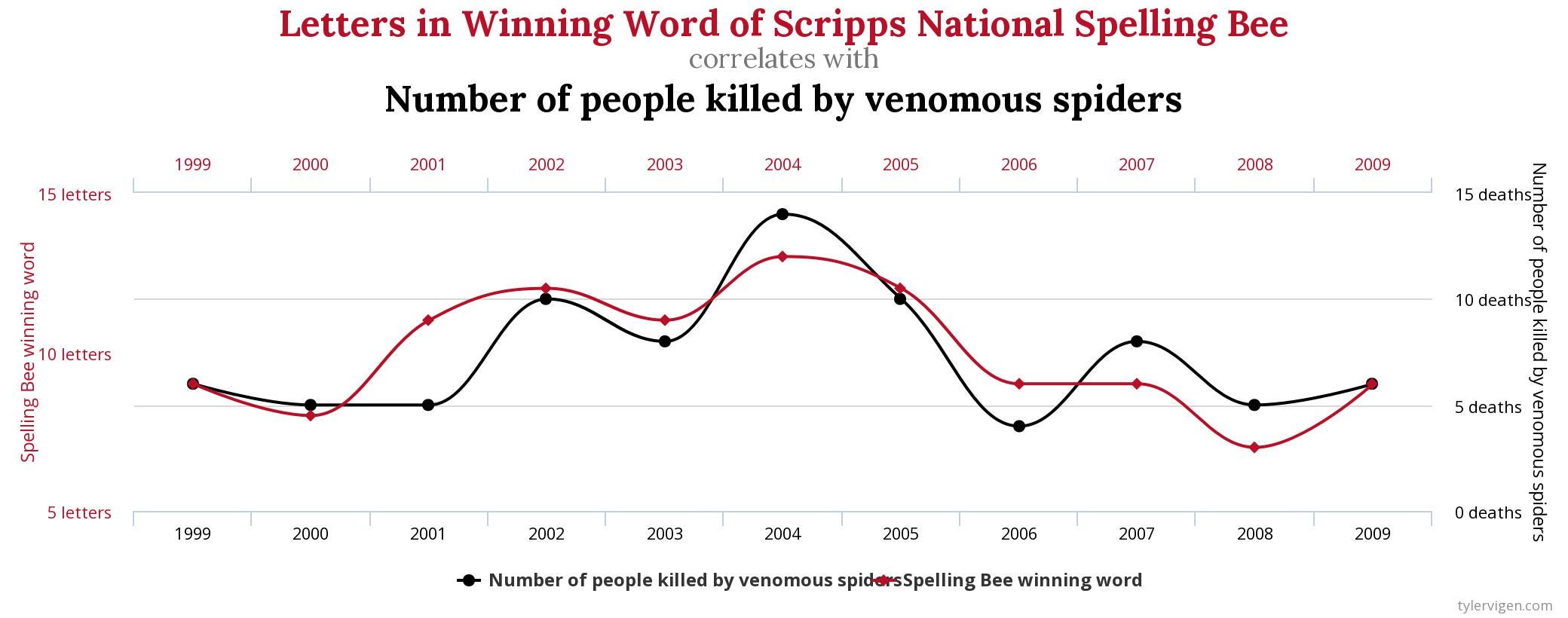
This sort of thing is why I’ll probably renew Jesse Singal’s Substack:

Missed it when it was fresh

[I]t is absolutely ridiculous that people should choose to go around looking like letter boxes.

Boris Johnson, mid-2018, on Burqas.

Shorts

Journalism

Two formerly solid journals seem to have picked their tribes, and now assiduously pitch to the worst tribal instincts.

The Decline of First Things

There are many occasions for exposing hypocrisy these days. In the aftermath of the FBI raid on Donald Trump’s Florida home, we can point to Hillary Clinton’s private server. Asked to denounce Trump’s refusal to accept the results of the 2020 election, we can cite Stacey Abrams, who never accepted her defeat in the 2018 gubernatorial race in Georgia.

R.R. Reno opening his big monthly Editorial in First Things.

That is Whataboutism at 190 proof. I have no idea what he thinks the FBI (or someone) ought to have done about Hillary’s server 6-7 years ago, and he certainly doesn’t tell us. He just insinuates that what they didn’t do was hypocritical because of what they later did. As for Stacy Abrams, so far as I know she has dropped “they done me wrong” from her stump speeches, unlike Orange Man (who is dining out on it), even if she has never formally conceded defeat.

That was just the opener. Considering how the column continued, I’m inclined to think that Reno had a bad case of writer’s block, and so resorted to tendentious bullshit.

I am thus reminded why I still (barely, and decreasingly) consider First Things essential reading but have ceased giving its publishing corporation anything beyond the cost of my subscription.

Conservative Radicals

It’s interesting to see a tribe close ranks.

Ron DeSantis’ sending two planefuls of refugees to Martha’s Vineyard is morally indefensible trolling.

So how does his tribe defend it? By focusing on “why the Left went so bat-guano crazy” over it, and implying that DeSantis had effectively taken a chapter from Saul Alinsky:

Ridicule is man’s most potent weapon. There is no defense. It is almost impossible to counterattack ridicule. Also it infuriates the opposition, who then react to your advantage.

Ridicule Is Man’s Most Potent Weapon

Apparently “ridicule” is now National Review’s term for instrumentalizing humans who are unpopular with the GOP.

With Kevin Williamson defecting to The Dispatch, I’m almost out of reasons (I can think of just two remaining) to glance at the National Review homepage any more.

Politics

Wrong kind of diversity

Liz Truss, Great Britain’s new Prime Minister, has completed her cabinet. There are no white men. None. But that’s not good enough for Britain’s Left:

“It’s a meritocratic advance for people who have done well in education, law and business,” Sunder Katwala, the director of British Future, a think tank that focuses on issues of immigration, integration and national identity, told CNN. “It’s not an advance on social class terms.”

This is an interesting criticism. “Meritocratic,” used here in a pejorative sense, means based on ability and achievement, earned through a combination of talent and hard work. Traditionally, merit served as the primary consideration in hiring, but some people today see the very systems that confer merit as rigged, especially against minorities. In an effort to rectify that imbalance and to diversify the work force, particularly for leadership positions, it has become common practice in hiring — in the business and nonprofit worlds, as in government — to make racial or ethnic diversity a more significant factor.

The trouble is that for many of the same people, ethnic and racial diversity count only when combined with a particular point of view …

The implication is that there’s only one way to authentically represent one’s race, ethnicity or sex — otherwise you’re a phony or a pawn.

Pamela Paul, When Diversity Isn’t the Right Kind of Diversity

War? Really?

“Even the people who are responsible for disseminating the laptop admit that, on a human level, what happened to Hunter is horrifying. ‘A lot of stuff I do, I don’t feel great about,’ says one of them, Steve Bannon. ‘But we’re in a war.’”

The Morning Dispatch, recommending a New York Magazine article on the Hunter Biden laptop saga.

Steve Bannon is a very intelligent but quite unprincipled. “War”? Baloney!

J.D. Vance ❤️ Donald J. Trump

Trump went off on a tangent about a New York Times story that said Vance’s campaign didn’t ask Trump to come here. “JD wants my support so bad. He’s kissing my ass.”

Andrew Tobias on Twitter

Is this why we’re to take Trump “seriously if not literally”? He certainly captured the essence of Vance’s metamorphosis.

A Moment of Pleasure

Seldom has a Democrat made me as happy as Letitia James made me on Wednesday.


[S]ubordinating truth to politics is a game which tyrants and bullies always win.

Jonathan Rauch, The Constitution of Knowledge

The Orthodox "phronema" [roughly, mind-set] cannot be programmitized or reduced into shibboleths.

Fr. Jonathan Tobias

You can read most of my more impromptu stuff here (cathartic venting) and here (the only social medium I frequent, because people there are quirky, pleasant and real). Both should work in your RSS aggregator, like Feedly or Reeder, should you want to make a habit of it.

Wednesday, 8/17/22

What fools we mortals be

Proof that he knows better

I once ran into an old acquaintance at a Middletown bar who told me that he had recently quit his job because he was sick of waking up early. I later saw him complaining on Facebook about the “Obama economy” and how it had affected his life. I don’t doubt that the Obama economy has affected many, but this man is assuredly not among them. His status in life is directly attributable to the choices he’s made, and his life will improve only through better decisions. But for him to make better choices, he needs to live in an environment that forces him to ask tough questions about himself. There is a cultural movement in the white working class to blame problems on society or the government, and that movement gains adherents by the day.

J.D. Vance, Hillbilly Elegy. The movement to blame someone else now seems to have Vance as one of its leaders.

The great paradox of “queer” ideology

The great paradox of “queer” ideology is that it both seeks the margins and then complains about being marginalized! It wants both the frisson of outsiderdom and total acceptance by insiderdom. It’s the kind of reasoning you expect from a toddler not a grownup. The “centering” of the “marginalized” is how critical queer theory always eventually disappears up its own backhole.

Norm McDonald once said of the term “cisgender” that “it’s a way of marginalizing a normal person.” And he’s right. When “queer theorists” insist they are about diversity, they mean the opposite. The point is not to live and let live; it is to impose their queerness on everyone — to make themselves feel more secure.

Andrew Sullivan

Strategic Name-choosing

“I figured if I called myself Dykewomon,” she joked in an interview with J: The Jewish News of Northern California this year, “I would never get reviewed in The New York Times. Which has been true.”

Obituary of Lesbian “author, poet and activist” Elana Dykewomon (neé Nachman) in the New York Times

Solomon Asch’s corollary

In a famous 1951 experiment, the psychologist Solomon Asch showed how easily humans can be manipulated by social pressure to conform. If everyone else in the room affirms even the most blatant falsehood, we will very often affirm it ourselves, even denying the clear evidence of our own eyes.

But a variation of the Asch experiment gives hope. If only one other person in the room—a single reality ally—tells the truth, the pressure to conform drops sharply and we become much more willing to buck the lie. That is why authoritarian regimes work so furiously to stifle opposition voices, even seemingly weak ones. It is what the Soviet dissident Aleksandr Solzhenitsyn was getting at when he said, “The simple act of an ordinary brave man is not to participate in lies, not to support false actions! His rule: Let that [lie] come into the world, let it even reign supreme—only not through me.”

Jonathan Rauch, The Reality Ally (Persuasion)

So, I’ll join the alliance: Joe Biden won the 2020 Presidential Election. He did not steal it.

Does everyone have a narrative?

Yes, the legacy media, like the New York Times, have a narrative. But so do (some? most?) upstart media, like Quillette.

Ken White (Popehat) demolishes an absurd Quillette story, twisted and jammed into the narrative “kids today are intolerant snowflakes.”

What the story actually shows, stripped of handwaving and unwarranted characterizations, is some private school students protesting perfectly appropriately when a powerful lawyer and Harvard Professor subjected them to repeated use of the word “nigger,” part of the title of a book by another powerful professor. And, ironically, the professor who claims to have been cancelled by kids silently walking out on his lecture, is famously, even performatively, in favor of free speech and expression — for himself, apparently, but not for those who would protest his ideas.

People disagreeing with you or protesting you without trying to silence or deplatform you is not what generally is meant by “cancellation.”

But the Quillette article fits my worldview, so I might have bought it had Popehat not intervened.

‘Murica

Sclerosis plus ideological capture

America’s response to Covid-19 went badly not just for Trump-related reasons, but because of problems inherent to our public health edifice, from bureaucratic sclerosis to the ideological capture of putatively neutral institutions …

And then along with these failures came an absurd ideological spectacle, in which health officials agonized about how to state the obvious — that monkeypox at present is primarily a threat to men who have sex with men — and whether to do anything to publicly discourage certain Dionysian festivities associated with Pride Month. As the suffer-no-fools writer Josh Barro has exhaustively chronicled, public-health communication around monkeypox has been an orgy of euphemism and wokespeak, misleading and baffling if you don’t understand what isn’t being said.

This, too, has repeated Covidian failures. The political anxiety about saying or doing anything that might appear to stigmatize homosexuality mirrors the great public-health abdication to the George Floyd protests — in which a great many members of an expert community that had championed closures and lockdowns decided to torch their credibility by endorsing mass protests because the cause seemed too progressive to critique.

In each case what’s been thrown over is neutrality — the idea that public health treats risky behaviors equally, regardless of what form of expression they represent …

[S]peaking for myself, as a citizen with a personal interest in medical controversy, when I read the kind of blathering, newspeak-infused monkeypox advisories that Barro highlights, all I can think is: I can never trust anything these people say again.

Ross Douthat, The C.D.C. Continues to Lead From Behind – The New York Times

Priceless Americana

6-7 years back, I asked my eldest’s scout leader if he was a Christian. He said, “Of course, it’s the most important thing in my life.” I asked where he went to church and he replied, “I’ve never been, but my wife was raised Catholic.” For him, it was just another part of his … American identity.

One response to a social medium thread on churchless Christianity (that began with the thrown-down gauntlet “Being reliably right-wing doesn’t confer upon you the status of being an “orthodox Christian,” even if it is with a small ‘o.’”)

Is this how tribalism begins?

Protection of freedom of thought requires that no group should be permitted by law to express an opinion. For when a group starts having opinions, it inevitably tends to impose them on its members.

Simone Weil, The Need for Roots. I cannot concur with her literal sense, but today’s tribalism makes me think that she was directionally correct.

There are a number of tribalists who think me a traitor because I unexpectedly and publicly bucked the tribe — a tribe of which I was never a member, but only a co-belligerent.

Prophetic

Christian concern about popular culture should be as much about the sensibilities it encourages as about its content.

Ken Myers, All God’s Children and Blue Suede Shoes.

Just so you don’t miss the prophetic gravamen, not that the book predates social media and the ubiquitous smartphone. (And blogs, too, frankly.)

Hit list

The American Conservative has a list of cases it wants to see reversed now that Roe is reversed:

If you know all those cases without looking them up, you’re a better man than I am.

I’m sympathetic to overturning at least one of them. One other, On birthright citizenship, my reflex is that if Michael Anton or John Eastman is agin it, I’m fer it.

Did I mention that I’ve dropped my American Conservative subscription? So many sites I used to enjoy reading that I now avoid. Maybe I’m the one that’s changing (though I’m confident that the Trump-Sluagh has gotten to some of them).

It’s hard to admit that I really don’t fit anywhere other than an Orthodox Church (and that’s because the Church is mercifully broad in accommodating quirks).

George Soros is not off-limits

Democratic billionaire George Soros has, by his own admission, had an outsized influence on our politics over the years with his political donations—just as GOP mega-donors Sheldon Adelson, Paul Singer, and Charles and David Koch had on the right. “All well and good. America is a free country, and Soros has every right to spend his vast fortune however he wants within the boundaries of the law, as well as to justify that spending in the public square,” James Kirchick writes in Tablet Magazine. “[But] the same applies to those of us inhabiting lower tax brackets, who have no less a right to criticize Soros for how he’s trying to influence American public life.” Because Soros is Jewish, however, many progressives have adopted the tactic of dismissing any criticism of his political advocacy as anti-Semitic—a charge Kirchick, himself Jewish, believes is unfair. “The argument that the mere mention of the name ‘Soros’ is tantamount to antisemitism, which is effectively the position of the progressive political, media, and activist elite, is made entirely in bad faith,” he writes. “If the mind of a Soros supporter, upon hearing his name, races immediately to an image of a ‘Jew,’ and one who serves as a stand-in for ‘the Jews,’ it’s probably not the motives of the critic that need questioning.”

The Morning Dispatch, August 16, 2022

Isms

When I was young, there was a conservative book titled “Today’s Isms.” I was trying to figure out what ISMS stood for. It turns out, it stands for ideologies — communism, socialism, fascism. We could add a few today.

Islamism

There’s nothing freakish about the attack on Salman Rushdie:

And yet as shocking as this attack was, it was also 33 years in the making: The Satanic Verses is a book with a very bloody trail

In July 1991, the Japanese translator of the condemned book, Hitoshi Igarashi, 44-years-old, was stabbed to death outside his office at the University of Tsukuba, northeast of Tokyo. The same month, the book’s Italian translator, Ettore Capriolo, was also stabbed—this time, in his own home in Milan. Two years later, in July 1993, the book’s Turkish translator, the prolific author Aziz Nesin, was the target of an arson attack on a hotel in the city of Sivas. He escaped, but 37 others were killed. A few months later, Islamists came for William Nygaard, the book’s Norwegian publisher. Nygaard was shot three times outside his home in Oslo and was critically injured.

And those are stories we remember. In 1989, 12 people were killed at an anti-Rushdie riot in Mumbai, the author’s birthplace, where the book was also banned. Five Pakistanis died in Islamabad under similar circumstances.

Bari Weiss, We Ignored Salman Rushdie’s Warning

But would we back Rushdie were Satanic Verses being published today?

When Rushdie made those comments to L’Express it was in the fallout of PEN, the country’s premiere literary group, deciding to honor the satirical French magazine Charlie Hebdo with an award. Months before, a dozen staff members of Charlie Hebdo were murdered by two terrorists in their offices. It was impossible to think of a publication that deserved to be recognized and elevated more.

And yet the response from more than 200 of the world’s most celebrated authors was to protest the award. Famous writers—Joyce Carol Oates, Lorrie Moore, Michael Cunningham, Rachel Kushner, Michael Ondaatje, Teju Cole, Peter Carey, Junot Díaz—suggested that maybe the people who had just seen their friends murdered for publishing a satirical magazine were a little bit at fault, too. That if something offends a minority group, that perhaps it shouldn’t be printed. And those cartoonists were certainly offensive, even the dead ones. These writers accused PEN of “valorizing selectively offensive material: material that intensifies the anti-Islamic, anti-Maghreb, anti-Arab sentiments already prevalent in the Western world.”

Bari Weiss, We Ignored Salman Rushdie’s Warning

Trumpism

When I left Above the Law in 2019 for my two-year detour into legal recruiting, it was partly because of Donald Trump. Writing about the law in 2019 meant writing about Trump, and writing about Trump meant unpleasantness.

I returned to writing by launching Original Jurisdiction in December 2020, after Trump lost the presidential election, and I turned it into my full-time job in May 2021, after he left office. I thought it was safe to go back in the water.

Alas, here we are, more than 18 months after his administration’s end, and Trump still dominates the headlines. Almost every category in today’s Judicial Notice relates to the controversial ex-president.

David Lat, We Just Can’t Quit Him

Miscellany

A back-handed recommendation

I’m not generally given to wretched excess, but when I get into a six-episode Shetland on Britbox, I’m apt to binge-watch.

Breaking the Sabbath

The princess—I mean the Shiek’s daughter—was only thirteen or fourteen years old, and had a very sweet face and a pretty one. She was the only Syrian female we have seen yet who was not so sinfully ugly that she couldn’t smile after ten o’clock Saturday night without breaking the Sabbath.

Mark Twain, Innocents Abroad.

I’m not sure the princess would worry about breaking the Christian Sabbath. Twain should have made it “sundown Friday.”

Frederick Beuchner

[Frederick Beuchner] did not hold orthodox religious views.

“Contrary to widespread religious belief,” he wrote in a 1994 essay for The Times, “I don’t think God goes around changing things in the sense of making bad things happen to bad people and good things happen to good people, or of giving one side victory over the other in wars, or of pushing a bill through Congress to make school prayer constitutional.”

Robert D. McFadden’s obituary of Beuchner in the New York Times.

What an odd illustration of un-“orthodox religious views”!

Frederick Buechner has met Christians who remind him of American tourists in Europe: Not knowing the language of their listeners, they speak the language of Zion loudly and forcefully, hoping the natives will somehow comprehend. They seem cocky with faith, voluble with their theology, and content with a God who resembles a cosmic Good Buddy. Their certitude both fascinates and alarms him.

Phillip Yancey, ‌Frederick Buechner, the Reverend of Oz

With the caveat that I, oddly enough, cannot recall reading anything from “the most quoted living writer among Christians of influence” (though I’ve known the name for decades and decades), I recommend the Yancey piece, from Christianity Today, as far more perceptive than the Times obituary.


"The Frenchman works until he can play. The American works until he can’t play; and then thanks the devil, his master, that he is donkey enough to die in harness …." (G.K. Chesterton)

You can read most of my more impromptu stuff here (cathartic venting) and here (the only social medium I frequent, because people there are quirky, pleasant and real). Both should work in your RSS aggregator, like Feedly or Reeder, should you want to make a habit of it.

Wednesday, 7/13/22

Independent State Legislatures?

Members of the Supreme Court’s conservative supermajority just last week took the next step in a little-noticed, but extremely dangerous, project: attempting to jam into law a radical misinterpretation of the Constitution’s elections and electors clauses, which, if successful, would create electoral chaos across the country.

Thomas Wolf and Ethan Herenstein, How the Supreme Court Could Upend the Integrity of Our Elections.

It is very obnoxious to attribute a "project" to the Supreme Court or to individual justices. But if you can filter out such tendentious crap, this is a more accessible explanation of the "Independent State Legislature" idea than the law journal article from the brothers Amar.

I can only hope that this pernicious novelty got such favorable mention as it did from three justices because the issue was barely briefed and superficially plausible. That won’t happen again in the North Carolina case: the issue will have the hell briefed out of it and no superficial plausibility will be left.

For my tastes, the key is one of those things you might overlook, but once you’ve seen it, you cannot unsee it.

Why liberal democracy gets no purchase in Islamdom

The general failure of liberal democracy to take hold in Muslim societies is a continuing and repeated phenomenon for an entire century beginning in the late 1800s. This failure has its source at least in part in the inhospitable nature of Islamic culture and society to Western liberal concepts.

Samuel P. Huntington, The Clash of Civilizations and the Remaking of World Order. This inhospitality is shared by what Huntington labels "Orthodox civilization," centered in Russia, where it goes back at least 150 years.

Rationality and Taboo

In this context, the words of Leszek Kołakowski are sobering and akin to Philip Rieff’s own melancholy judgment on our third-world culture: “To the extent that rationality and rationalization threaten the very presence of taboos of our civilization, they corrode its ability to survive. But it is quite improbable that taboos, which are barriers erected by instinct and not by conscious planning, could be saved, or selectively saved, by rational technique; in this area we can only rely on the uncertain hope that the social self-preservation drive will prove strong enough to react to their evaporation, and that this reaction will not come in barbarous form.”

Rod Dreher and Carl Trueman, The Rise and Triumph of the Modern Self, quoting Modernity on Endless Trial (Chicago: University of Chicago Press, 1990), 13.

Steve Bannon

[Steve] Bannon’s “offer” to testify seemed clearly to be an attempt to muddy the increasingly clear waters of the committee’s hearings. In the first impeachment hearings, Representatives Jim Jordan (R-OH) and John Ratcliffe (R-TX) used their positions to shout and badger witnesses and to create sound bites for right-wing media that put forward a completely misleading narrative of what the hearings were actually showing. As Josh Kovensky of Talking Points Memo pointed out today, Trump has complained bitterly that his people are unable to get their own narrative out, even as evidence against the president and his allies coming from his own inner circle is painting a damning picture of an attempt to overturn our democracy.

Public “testimony” would enable loyalists like Bannon to “flood the zone with sh*t,” as he has called his method of disinformation. Not only Bannon, but also the leader of the Oath Keepers, Stewart Rhodes, has offered to “testify.” So, too, has Representative Mo Brooks (R-AL). In each case, though, the men have tried to put limits on what they will talk about and the conditions under which they will talk, revealing both an attempt to demonstrate that they still have power to make demands (they don’t) and that they are not making good faith offers. Rhodes’s lawyer told Politico: “He wants to confront them.”

Heather Cox Richardson, Letters from an American, July 11, 2022

Anyone who’s trying to put limits on what they will talk about and the conditions under which they will talk isn’t acting in good faith. It’s theater or even sabotage.

The crossroads of forest and village

The breakdown of initiation and the diminishment of mythic understanding are actually defences against encountering our own beauty. On a societal level, we appear to be working day and night at that defense. But the Great Self is hard-wired in us, and though the ritual mechanisms to approach it are wiped out, it won’t disappear but instead becomes mired in shadow. Therefore a King can only be seen as a tyrant, a Hag only as a bringer of misfortune. We tiptoe away from these beings, far too informed to take them seriously, and then we wonder why we don’t have the energy to vote. Myth proposes the paradoxical view that we are to dwell in the tension of a “crossroads” of Village and Forest, and that this very complexity provides the grounding of an authentic human life—a strange accord with ego and soul, rationality and vision. Ego gives a shape to these energies for living in the world that benefits others, but with no inner connection they lose their divine inflections and corrupt.

Fatuity of the Month, June 2022

Your freedom of expression of yourselves in drag is what America is all about.

Nancy Pelosi, pandering on Ru Paul’s Drag Race.

Martin Shaw, quoted by Rod Dreher (without a link)


If people have always said it, it is probably true; it is the distilled wisdom of the ages. If people have not always said it, but everybody is saying it now, it is probably a lie; it is the concentrated madness of the moment.

Anthony Esolen, Out of the Ashes

You can read most of my more impromptu stuff here (cathartic venting) and here (the only social medium I frequent, because people there are quirky, pleasant and real). Both should work in your RSS aggregator, like Feedly or Reeder, should you want to make a habit of it.

Beheading of John the Baptist

Yes, we commemorated the beheading of John the Baptist today, saying some rather pointed things about Herod, Herodias, and that hootchy-kootchy dancer.

Let’s get this out of the way

Afghanistan continues to haunt, partly because I continue getting smacked by distasteful facts. I’d be pulling punches not to share them:

Where Hegel saw the spirit of the new age in the figure of Napoleon riding through Jena, the spirit of the liberal age increasingly came to be consciously and rhetorically centered, at least in part, in the figure of the afghan woman finally getting a chance to play football, celebrate pride month, and studying critical gender theory ….

Malcom Kyeyune, via Angela Nagle, How Will The Empire End?

More from Nagle:

The Spectator commented on “How Ivy League diplomats sought to remake Afghanistan in Harvard’s image” via hundreds of millions spent on gender studies politics, which they persisted with even when it directly caused rebellions, adding this short illustrative video:

…you can see the exact point (specifically, 31 seconds in) where the American mission in Afghanistan dies.

https://www.youtube-nocookie.com/embed/wdrvpSfJM1w?rel=0&autoplay=0&showinfo=0&enablejsapi=0

Or this:

The reality is that America lost its war in Afghanistan more than a decade ago, roughly around the time when CIA officers began bribing aging warlords with Viagra. The Americans knew all about the young boys the tribal leaders kept in their camps; because the sex drug helped Afghan elders rape more boys more often, they were beholden to America’s clandestine service. Losing Afghanistan then is the least of it. When you choose to adopt a foreign cohort’s cultural habits, customs for which the elders of your own tribe would ostracize and perhaps kill you, you have lost your civilization.

Assabiya Wins Every Time – Tablet Magazine

Yet another of the reasons it’s hard for me to look at Afghanistan is that it never occurred to me that when judgment finally fell on us, others would become collateral damage.

It is not entertaining when a writer repeats himself, but what we are experiencing is judgment. If we will not grasp that, we will grasp nothing. We are being judged not so much for the imaginary evils for which violent, deranged thugs despise the country, but for the real evils we have cuddled to our bosoms.  We are just beginning to have the government we deserve.

Politics matters, make no mistake. But what we need is not just a different president, not just a political reform, but sorrow, soul-searching, and conversion. The rest — let us hope — will follow.

J Budziszewski, Why the President Should Not Be Called a Coward

A poem to keep

Because the eye has a short shadow or it is hard to see over heads in the crowd?

If everyone else seems smarter but you need your own secret?

If mystery was never your friend?

If one way could satisfy the infinite heart of the heavens?

If you liked the king on his golden throne more than the villagers carrying baskets of lemons?

If you wanted to be sure his guards would admit you to the party?

The boy with the broken pencil
scrapes his little knife against the lead
turning and turning it as a point
emerges from the wood again

If he would believe his life is like that
he would not follow his father into war

(Naomi Shihab Nye, Fundamentalism, via Poetry Foundation)

Qutb, how liberalism has failed … and what’s the alternative?

The ideas that seized the imagination of millions had deep and diverse intellectual roots. For example, the mid-20th century thinker Sayyid Qutb mounted a comprehensive critique of the soulless materialism of America, tracing it in part to the separation of church and state — the fatal error, he believed, that divided the spirit from the flesh. In the Muslim world, he argued, body and soul should not be split asunder, but should live united in a resurrected caliphate, governed by Shariah law.

David Brooks, This Is How Theocracy Shrivels (The New York Times)

I have not read Qutb, but I’ve read several critiques, home-grown, of how liberalism has failed, and soulless materialism makes cameo appearances in some of them.

The critiques are persuasive. What I haven’t read is a persuasive prescription. I’m far from a great historian, even by amateur standards, but I’ve read enough to have a rich storehouse of yarns on how great ideas go wrong, and every prescription I’ve read has "this will not end well" written all over it.

Those of us who are Christian have no basis to hope for an earthly paradise. The scriptures seem to point against such a thing ever arriving. But we believe, or should, that there are no accidents, no nooks or crevices of the cosmos unnoticed or neglected by divine providence. How all this "works together for good to them that love God" is a mystery, and we have no commission to help the mystery along.

But mystery can become our friend if we use the time we formerly wasted on tilting at windmills to deal with things at least somewhat within our control.

"Conservative evangelicals" take up the mainstream’s worst habit

[On July 8], the Public Religion Research Institute released its brand new 2020 American Religious Landscape.

Some things are not surprising …

But there are two big surprises.

First, the “unaffiliates” are not growing so fast anymore …

The other surprise is bigger.

For the first time (I think ever), the population segment of white evangelicals is shrinking. "Since 2006,” PRRI reports, “white evangelical Protestants have experienced the most precipitous drop in affiliation, shrinking from 23% of Americans in 2006 to 14% in 2020."

This is new, arrestingly new. For decades — since the 1970’s — it’s been a truism that conservative evangelicals have bucked the tide of religious decline in America. In 1972, sociologist Dean Kelly wrote a famous book called just that: Why Conservative Churches are Growing. He concluded that while mainline Protestant churches were concerned about popular political issues, conservative evangelical churches were concerned with Biblical demands upon life, relationships and responsibilities.

The decline of white evangelicals seems mostly to result from the larger changing demographics of America. This is obvious. There is an irreversible change from a white majority to a plurality of ethnicities in the country. This is happening no matter what one thinks about immigration or voting policies.

But there is another factor that has contributed to the decline. When Dean Kelly wrote his book in 1972, the evangelical community was focussed upon concrete “Biblical lifestyle issues.” Since then, the focus has broadened to involvement in political, partisan issues and the “culture wars” — the very sort of involvement that Kelly had blamed for mainline decline 50 years before.

Now it seems that the chickens have come home to roost. The Pew report of 2019 observed that it was just because of explicit political partisanship that many young adults are leaving the evangelical community, most likely landing squarely in the “unaffiliated” category.

Fr. Jonathan Tobias, ‌Second Terrace: the cost of partisanship

On a related note:

It must have come as a shock to Dad to be plunged into the heart of the American evangelical scene in the 1970s and 1980s, and to suddenly see just who he was urging to take power in the name of returning America to our “Christian roots.” Who would be in charge? Pat Robertson? Jerry Falwell? Gary North? Dr. Dobson? Rousas Rushdoony? And what sort of fools would “our people” elect as president or for Congress, given that they had so easily been duped by the flakes, madmen, and charlatans they were hailing (and lavishly funding) as their spiritual leaders?

Frank Schaeffer (son of the late Francis Schaeffer), Crazy for God

I am not a fan of Frank Schaeffer, but I read several of his books after he professed Orthodox Christianity. (I’ll leave it at that.) Occasionally he was perceptive and quotable.

Political war over culture is not culture war

From Ryan Burge, tweet, 2 July 2021.

“How did you go bankrupt?” Bill asked?

“Two ways,” Mike said. “Gradually, then suddenly.”

—Ernest Hemingway, The Sun Also Rises (1926).

We are told that conservatives “lost the culture war.” I dissent from this view: American conservatives never waged a culture war. Conservatives certainly fought, there is no denying that. They fought with every bit of obstruction and scandal their operatives could muster. But this was not a culture war. Rather, America’s conservatives fought a political war over culture. Republicans used cultural issues to gain—or to try to gain—political power. Their brightest minds and greatest efforts went into securing control of judiciary, developing a judicial philosophy for their appointees, securing control of the Capitol, and developing laws that could be implemented in multiple state houses across the nation. No actual attempt to change the culture was attempted.

This was not thought necessary. Conservatives had the people. One decade they were called a “silent” majority; as the culture war heated up, that majority transitioned from “silent” to “moral,” but a majority they remained. In these circumstances it was sufficient to quarantine the cultural dissidents and keep them from using minority maneuvers (“legislating from the bench”) to impose their cultural priorities on the rest of us. Political containment was the name of our game. Republicans played it well. They still play it well, even when the majority of yesterday has melted away.

The left played for different stakes. They fought for American culture as the right fought over it. Their insurgency succeeded as Hemingway’s businessman failed: gradually, then suddenly.

Tanner Greer, Culture Wars are Long Wars. H/T John Brady’s Rags of Light newsletter.

I really appreciate the distinction between culture war and political war over culture. More than eleven years ago, I declared myself a "Conscientious Objector to the Culture Wars." As I review that post today, I actually was objecting to the political wars over culture. Other than that, it was a pretty good post, and I’d stand by most of it today.

Moreover, when I posed the question "So who am I hangin’ out with these days," the answer basically reflected the commonplace that culture is upstream from politics, and I was trying to connect to healthy culture:

Basically, I’m going back and rethinking all things political and cultural. I’m wisdom-hunting. I read Wendell Berry essays and poetry, Bill Kauffman books, Russell Kirk’s Conservative Mind, Matthew Crawford’s Shop Class as Soulcraft, Scott Cairns’ Poetry, W.H. Auden (“For the Time Being” is now on my list for every Advent).

My conversion to Orthodox Christianity started it in a way. I soon realized that the Church has not always prevailed, and has produced martyrs in every century. And that’s okay. Better we should lose honorably than win by selling our souls.

Christ: disguised under badly remembered and selectively retold western history

Our world is a “post-Christian” world.  Culturally speaking, Christ and His message is well known, but disguised under layer after layer of badly remembered and selectively retold western history.  Everyone knows the name “Christ,” but very few associate it with anything life-giving.  Even those who believe in Christ, who look to Him for salvation, who are baptized and who have some devotion to the Church, even these no longer take the hierarchy of the Church seriously and have largely accepted a culturally reimagined version of Christ: a nice-guy deity, interested mostly in how I as an individual feel about things.

This, of course, is a far cry from Christ, the God who became human to transfigure human nature into the divine image from which it fell of old in Paradise.  Yet very many Christians today, many Orthodox Christians, do not know this Christ.  They know only the culturally acceptable christ of their imagination. And so they are lost in their own confusion and passions thinking that they follow Christ. And for these, we must pray.  They are like those who have received an inoculation.  They have taken just enough dead virus to put them on the defence against the real.  The false Christ that they have come to know, blinds their eyes and deadens their ears to the real.

Archpriest Michael Gillis, ‌Is It Possible to Live a Holy Life in the World? H/T John Brady (again).


You can read most of my more impromptu stuff at here. It should work in your RSS aggregator, like Feedly, should you want to make a habit of it.