I’ve been relentlessly venting my spleen against one of the two candidates for President of the United States. Today, I will completely spare you vitriol except to offer this link.
There are, however, a few political comments today, along with much else.
The Machine
That’s not a very imaginative title I came up with. R.S. Thomas is a poet whose Collected Later Poems I bought for some reason, though Thomas was not acclaimed like, say, Dylan Thomas, his fellow Welchman. But I’m very fond of many of his poems.
‘The body is mine and the soul is mine’ says the machine. ‘I am at the dark source where the good is indistinguishable from evil. I fill my tanks up and there is war. I empty them and there is not peace. I am the sound, not of the world breathing, but of the catch rather in the world’s breath.’
Is there a contraceptive for the machine, that we may enjoy intercourse with it without being overrun by vocabulary? We go up into the temple of ourselves and give thanks that we are not as the machine is. But it waits for us outside, knowing that when we emerge it is into the noise of its hand beating on the breast’s iron as Pharisaically as ourselves.
R.S. Thomas, Collected Later Poems 1988-2000. Bloodaxe Books. Kindle Edition.
Excising personhood
Every attempt to implement machine learning will come at the cost of removing features of personhood from the world. Already, the cost of housing in person-scale environments like the neighborhood where Jacobs herself lived—Manhattan’s Greenwich Village—has soared beyond the reach of almost everyone, leaving those with more modest means to move to places dominated by highways.
When I tell people here in Tennessee that I work for The New York Times, I often get a visible negative reaction. Sometimes, the negative reaction is verbal and I’m condemned to my face as “fake news.”
I try to respond with a spirit of curiosity. I know that we make mistakes and I’m curious as to what specifically made them angry. Rarely do I get a precise answer. There is simply a sense that we can’t be trusted, that we’re on the other side.
When I ask which news outlets they follow, invariably they give me a list of channels and sites that were so comprehensively dishonest and irresponsible in 2020 and 2021 that many of them have been forced into settlements, have retracted stories and have issued apologies under pressure.
Yet all these outlets are all still popular on the right. Long after their dishonesty was exposed, the MAGA faithful continue to believe their reports and share their stories. It turns out that people will in fact trust liars — so long as the liars keep telling them what they want to hear.
We don’t know our true values until they’re tested
Hatred is the prime motivating force in our politics
Trust is tribal
Problematizing Geography
How Many Continents Are There? You May Not Like the Answers. Recent earth science developments suggest that how we count our planet’s largest land masses is less clear than we learned in school.
The imperfection she cites — questioning no-fault divorce — is just fine with me, by the way. I know the arguments that sold no-fault to America, but I also know the reality, and I don’t like it. No-fault deserves to be questioned.
Frivolous pursuits
“Talking? But what about?” Walking and talking—that seemed a very odd way of spending an afternoon. In the end she persuaded him, much against his will, to fly over to Amsterdam to see the Semi-Demi-Finals of the Women’s Heavyweight Wrestling Championship.
Aldous Huxley, Brave New World. I read 1984 long before I read Brave New World. Who in their right mind thinks Orwell saw the future more clearly than Huxley?
Brides of the State
Fifty percent of married women vote Republican, and 45% vote Democratic, which mirrors the GOP advantage in other demographic groups. But, according to Pew, “Women who have never been married are three times as likely to associate with the Democratic Party as with the Republican Party (72% vs. 24%).” In 1980, the number of women over 40 who had never married was around 6%. Now it is 22%, and this has become a crucial bloc for the Democrats.
Bret Stephens makes A Conservative Case Against Trump (unlocked). It’s not his best anti-Trump case, in my opinion, but you can judge its persuasiveness for yourself if you like, since the end of the month is nigh and I have unlocked articles to give away still.
An Academic’s Case for Trump
The ideology that believes that humans can change sex; treats children’s and young people’s fantasies as truth; and is willing to put children on puberty blockers, cross-sex hormones, and even butcher them with surgery, is barbaric. There is no other word for it. Men who give themselves female names and pronouns, and put on lipstick and a dress, do not magically become women. Pretending that such men are women puts actual women directly at risk. Men, no matter how they dress or what they call themselves, have no place in women’s bathrooms, in women’s domestic crisis centers, in women’s prisons, or—less critically but somehow more obvious to everyone—in women’s sports.
Heather Heying, discussing one of the reasons she is, surprisingly, voting for Trump.
I suffer more from the humiliations inflicted by my country than from those inflicted on her.
I don’t do any of the major social media, but I have two sub-domains of the domain you’re currently reading: (a) You can read most of my reflexive stuff, especially political here. (b) I also post some things on the only social medium I frequent, because people there are quirky, pleasant and real.
More than three decades ago, Nathan Hatch published The Democratization of American Christianity, a history of the Second Great Awakening, arguably the most important religious episode in American history. At the recent Intercollegiate Studies Institute annual homecoming, I served on a panel that discussed the award-winning book. It was a pleasure to do so. Hatch gives a magisterial account of the upsurge of religious populism that shaped the new American republic in decisive ways. Anyone who wants to understand the last ten years of American politics should read The Democratization of American Christianity.
Denunciations of the “swamp” echo the Second Great Awakening’s polemics against the clerical establishment of its day, which itinerate preachers derided as complacent, more interested in high salaries and comfortable parsonages than in gospel preaching. Trump rallies follow in the tradition of raucous, call-and-response camp meetings. Commentators wonder at the fact that respectable people support Trump, not knowing that some of the most important leaders of the religious populism of the early 1800s were elites such as Barton Stone, who embraced the new, raw, and uncouth style of religious revival.
Elias Smith was a renegade preacher and journalist who, in 1808, launched America’s first religious newspaper, Herald of Gospel Liberty. He mocked and abused the Calvinist grandees, the “clerical hierarchy” that dominated Protestantism at that time. Establishment clergy like Lyman Beecher raged against preachers like Smith who were disturbing the religious landscape. It does not take much imagination to cast Tucker Carlson in the role of a latter-day Elias Smith. He thrills his populist devotees and outrages the guardians of political respectability such as George Will, a Lyman Beecher of our time.
Hatch raises larger themes. The Second Great Awakening took place during a time of rapid social change. The new republic gave rise to radicalisms of many sorts. People were on the move, as territories west of the Appalachian Mountains were settled. Old institutions and authorities lost their power. As I note above, recent decades have seen similar changes. Globalization, demographic change, the sexual revolution, social media, and other factors have precipitated a quite different but equally significant crisis of authority. We should not be surprised, therefore, that populism has returned, as it did in the late 1800s, when America was transformed by industrialization, urbanization, and swelling waves of immigrants.
Hatch documents that revivalist preachers were confident that their individualist, evangelical Christianity would fulfill the sacred mission of America. In their sermons and broadsides, populist religion mixed freely with populist politics, as was the case for William Jennings Bryan and subsequent American populists. Today’s Trumpian populism is different. To be sure, many pious people support Trump and other populist politicians. Avatars of popular religion like Paula White lurk on the peripheries. But the movement lacks an explicitly religious dimension, which is striking when we compare it to the administration of George W. Bush, an establishment figure who was not shy about his evangelical convictions.
Which makes me wonder: In spite of fascinating parallels to the outpouring of Christian enthusiasm and political radicalism in the Second Great Awakening, does today’s populism ironically contribute to an important elite ambition, the establishment of a post-Christian, entirely secular political culture in America? I hope not.
After several readings, I’m not sure what Reno is trying to say here. My impression until that penultimate paragraph was that he though our last decade’s populism just fine and dandy, as was the ferment of the 19th century; then he raises the possibility that the lack of a “religious dimension” is at least a bit worrisome.
But what an odd thing for a Catholic (or Orthodox) to believe. In case after case, the wake of the Great Awakenings was destructive of the Christian institutions that evidenced stability and left us, in the characterization of Ross Douthat, A Nation of Heretics.
That’s mostly because I don’t think changing gender is possible. How can an impossible thing be immoral?
It’s also partly because I hold open the possibility that presenting as the opposite sex, with or without surgery and hormonal interventions, may for some individuals be the optimal way to quiet intractable gender dysphoria. (Who am I to condemn cosplaying in the cause of lessening psychic pain?)
But I’ll tell you something that is immoral. This kind of un-empathetic poor-mouthing about people disapproving (or denying the reality of) “trans lives”:
Is it morally acceptable to change your gender?
Just over half the country doesn’t think so — a proportion that has stayed fairly stable since 2021, the year after I disclosed my gender transition. It’s disheartening to reflect on the fact that every other person you meet, statistically speaking, disapproves of your existence.
Gina Chua. Nothing in the Gallup poll in question suggests that anyone disapproves the existence of people who’ve carried through on the putatively immoral decision to transition.
We are a low-down, debased people who have made ourselves indisposed toward intelligent discussion of issues. We sling slurs and pitch pity parties.
Journalistic murmurations
World Ends in Nuclear conflagration. Women and children most affected.
Something like this was an old jab at the New York Times’s stylistic preoccupations.
Inside the U.S. Government-Bought Tool That Can Track Phones at Abortion Clinics
H/T Nellie Bowles, who didn’t seem to think it the least bit odd that 404 Media’s fears turned immediately to red states tracking their handmaidens to blue state abortuaries.
With insanity supporters like this, sanity may stand a chance
Tucker Carlson spoke at the Turning Point USA Trump rally this week and gave the absolute best anti-Trump speech I’ve ever heard. Tucker’s speech is here and excerpted below, somehow kinky and alarming and rousing at the same time:
“There has to be a point at which Dad comes home [crowd cheers]. Yeah, that’s right. Dad comes home, and he’s pissed. Dad is pissed. He’s not vengeful. He loves his children, disobedient as they may be. He loves them because they’re his children,” said Tucker Carlson, a grown man and a major respected figure on the right. “And when Dad gets home, you know what he says? ‘You’ve been a bad girl. You’ve been a bad little girl, and you’re getting a vigorous spanking right now. And no, it’s not gonna hurt me more than it hurts you. No, it’s not. I’m not gonna lie. It’s gonna hurt you a lot more than it hurts me. And you earned this. You’re getting a vigorous spanking because you’ve been a bad girl. And it has to be this way.’ ”
If someone spoke like this to me on the street, I would pepper spray them. If I heard someone speak like this to someone else, I would pepper spray them and myself. Tucker Carlson’s endorsement of Trump makes me want to mainline MSNBC. Tucker’s endorsement makes me think Democracy Is On the Line, and Christopher Steele is a respected member of the intelligence community, and I heard there was a box of White House stationery at Mar-a-Lago illegally. Tucker’s endorsement just made me start knitting a pussy hat. Trump is not daddy. America is not his little girl. I believe in free speech except when a grown man is saying the words bad little girl. And Tucker Carlson needs to keep his kinks private and shameful like the rest of us.
Democrats have continued to liken Trump to Adolf Hitler and assert he poses a grave “danger” to the planet if he is reelected, even after two recent assassination attempts against him.
(Jason Cohen)
How pray tell, Mr. Cohen, do two assassination attempts disprove Trump being a grave danger (or require suppression of the truth)? Do you tacitly call on Trump to cool it when his rhetoric generates death threats to election officials?
(Note that all the hyperlinks in my quote are to other Daily Caller stories; that’s why I thought “echo chamber” was apt.)
Would it help if it were done by image rather than words?
(If you don’t get the allusion, search for “distracted boyfriend même.)
Kamala F.B. Harris
In The Bulwark, Jonathan V. Last thanked the vice president for taking on Trump: “I believe that for all her political ambition, Kamala Harris is carrying this burden for us. She’s not Barack Obama, basking in the warmth of a cultural moment en route to becoming a cultural icon. She’s more like Frodo Baggins, walking toward Mordor while carrying a millstone around her neck, in an attempt to save all of Middle-earth from a dark fate.” (Sally McDonald, Cairns, Australia)
I find his immodesty not only a serious character flaw but a danger to his governing ability. I don’t believe he wishes to abolish the Constitution, undermine our democracy, set himself up as dictator. But such full-court immodesty has to work against one’s perspective, make impossible anything resembling a sense of history, allow for necessary accommodations with reality. A man who sees no other picture but those with himself in the center is not a man you want to run your nation.
I quote this not to beat a dead horse, but because it is almost identical in its insight to one of the points I made long ago: Trump’a narcissism distorts his vision of the world, and that kind of distortion is intolerable in a POTUS. It’s so disqualifying that I don’t care what his “positions” are on “the issues.”
I suffer more from the humiliations inflicted by my country than from those inflicted on her.
I don’t do any of the major social media, but I have two sub-domains of the domain you’re currently reading: (a) You can read most of my reflexive stuff, especially political here. (b) I also post some things on the only social medium I frequent, because people there are quirky, pleasant and real.
Predictably, secular authorities convinced by the reformers’ truth claims liked the distinction drawn between the necessity of obedience to them and of disobedience to Rome. They liked hearing “the Gospel” accompanied by such “good news”—it would allow them, for starters, to appropriate for themselves all ecclesiastical property, including the many buildings and lands that belonged to religious orders, and to use it or the money from its sale in whatever ways they saw fit. In two stages during the late 1530s, seizing for himself the vast holdings of all the hundreds of English monasteries and friaries, Henry VIII would demonstrate how thoroughly a ruler could learn this lesson without even having to accept Lutheran or Reformed Protestant doctrines about grace, faith, salvation, or worship.
Repentance is everything you do to get sin, those inborn passions, out of you. It’s reading, thinking, praying, weeding out disruptive influences in your life, sharing time with fellow Christians, following the guidance of the saints. Repentance is the renunciation of what harms us and the acquisition of what is beneficial to us, writes a holy counselor.
The prayer of penitence leads us to reflect critically on our own lives. If it is uttered sincerely, it leads us to repent in humility, not just of particular wrongs we have done, but of our whole shameful and degraded state of being. The paradox is that, far from leading to lethargy or despair, such penitence brings a new kind of strength. Sexual sin is never merely sexual, but always has motives that are rooted in the passions—whether the need to be loved, or the lust for domination, or the desire to prove oneself attractive, or any of a dozen other motives that come readily to mind.
… to believe that wealth is the only significant measure of the worth of an individual, a family, or a community is to reject the teaching of nearly every religion and wisdom tradition that ever was.
[T]he move from taking God for granted to disputing God’s existence is a move from naïve to reflective, from a position where one set of options is precluded to a position where that set of options is fully available. Underlying that move, however, is the move from porous to buffered selves, and that is a move from naïve to naïve. It is, in other words, a move from a position where one set of options is precluded to a position where another set of options is precluded.
Caveat: This touches on American electoral politics.
Historical views of the Rapture
Do you want to be like Tim?
If you are a writer or pastor who wants to preach like [the late Tim] Keller, you won’t get there if your strategy is “listen to Keller and copy him.” Keller himself would tell you that that’s a terrible idea.
Instead, do what Tim did: Go to seminary. After seminary, read everything George Whitefield wrote. Read Calvin’s Institutes and his sermons. Read The Lord of the Rings over and over and over. Read everything C. S. Lewis ever wrote. Read every Puritan paperback from Banner of Truth. Read sociology. Read social theory. Read Bavinck. Read current events books and a steady line up of journalists. Do all of that within the context of a family alongside your spouse and while talking to people facing ordinary life problems who are in need of counsel and aid and think about how to explain what you’re learning to them in ways that are sensible to them. Lewis had a rule that if he couldn’t say something in a way an ordinary British person could understand it meant that he wasn’t ready to say that thing yet. Follow that rule.
Heh, heh, heh! You had me going there for a minute, Jake. What’s the quick way to preaching like Tim Keller? I don’t want to be faithful for decades and decades with no assurance that I’ll ever become famous; I want a surefire to fame by next year.
East versus West
The thing is the cultural habit of rationalizing and abstracting has also made serious inroads into Catholic life and practice in the West. The crisis, Kingsnorth concluded, is not so much one of Catholic versus Protestant as it is of Eastern Christianity versus Western Christianity. It is a conclusion I arrived at not long after I left Catholicism for Orthodoxy in 2006, the result of a great spiritual trauma. I had thought of Catholicism as a mystic-friendly form of Christianity—which it is, but only by comparison to Protestantism. When seen from the East, both Catholicism and Protestantism—in the West, at least—are marooned primarily in the head and are futilely trying to think their way out of the civilizational shipwreck of the modern West.
Though Orthodoxy shares with Catholicism a fundamentally sacramental metaphysics, in practice Orthodoxy is far more mystical, emphasizing that the conversion of the heart must precede the conversion of the intellect. It does not deny the intellect, only orders it within an anthropological hierarchy.
One aspect of Orthodoxy that particularly appealed to Kingsnorth is its panentheism—the principle that God is, as the Orthodox prayer says, “everywhere present and filling all things.” It’s not the same as pantheism, which says that the material universe is God. Orthodoxy teaches that God is separate from his creation but also interpenetrates it with his energies, or his force. Consider how the warmth and pleasant glow of an English hillside on an August afternoon occur because the faraway sun penetrates the grass, the flowers, and the earth with its energies. The hillside is not the sun, but it testifies to the presence of the sun in its material being.
“The earth is not God, but God is there, present in nature, not in some far-off heaven,” Kingsnorth says. He goes on: “He’s deeply entwined in everything. Creation is the book of God, as Augustine said, I think. That is explicitly recognized in Orthodoxy. So what I was finding, weirdly enough, was a sort of ancestral Christianity that my ancestors in England would have had access to, and that the early Celtic saints certainly had access to. When I became Orthodox, a lot of people said to me, ‘Welcome home,’ and, strangely, it did feel like I was coming home. It felt like there’s something here that we had, that we lost.”
I’ve been a fan of most of Rod Dreher’s books since Crunchy Cons. I want to distinguish his books from his columns, which I have frequently disagreed with. I also concede that one of his books was too raw, too transparent, too kiss-and-tell for my tastes.
Rod has been through a lot — openly for the last two years or so, quietly for a decade before that. Oh, heck: he’s been through a lot his whole life, much at the hands of family who lived in Louisiana at an extreme end of insularity. It’s hard to imagine a family that felt no pride in a member making it fairly big in New York City publishing because he dared to leave home, a family that affirmatively poisoned the minds of the next generation with refrains that Uncle Rod was uppity and no damn good.
I think he’s coming out of it, but he thought he had come out of it when he wrote How Dante Can Save Your Life.He’s voting for Donald Trump because Trump is the enemy of his enemies.. I cannot. I’m more with Miles Smith: “don’t tell me it is anything other than tragic that either of the two leading candidates for the presidency will eventually govern the American republic.”
Rod has a new book coming out tomorrow. It may be his most important; I’ve had it on pre-order for months.
This rave review struck me as capturing what’s special about Rod:
Dreher has an uncanny ability to articulate how religious conservatives feel, even to pre-empt it. Previous books gave us the Crunchy Cons (2006), whose eponymous conservatives want to turn the clock back; The Benedict Option (2017), which meant opting out of liberal culture; and Live Not By Lies (2020), which drew a line between “Marxist” and “woke”.
I can attest, spending much time among devout Christians, that Dreher has done it again, capturing our present mood: we’re trapped between wanting to throw ourselves into movement politics to defeat The Beast, or looking inwards in the hopes of becoming the change one wants to see in the world. Many of us are asking whether the best service we could do to Christianity is simply to become better Christians.
(Boldface added.) If you doubt that he has pre-empted conversations, ask yourself how often you’ve encountered the term “the Benedict Option,” which is literally his coinage.
These are a few of my favorite things
[N]one of the things that I care about most have ever proven susceptible to systematic exposition.
“My people have been oppressed for nearly 2000 years. For 1200 years they endured Dhimmitude, a system of oppression made for the sole purpose of humiliating & breaking them. Today they face persecution in their homeland. And yet I don’t know of a single Coptic terrorist. Do you?”
If you hide the gifts you have been given in order to appear humble, then you are very proud indeed. Wishing to appear humble is the worst form of pride.
Religious ideas have the fate of melodies, which, once set afloat in the world, are taken up by all sorts of instruments, some woefully coarse, feeble, or out of tune, until people are in danger of crying out that the melody itself is detestable.
George Elliot, Janet’s Repentance, via Alan Jacobs
You can read most of my more impromptu stuff here and here (both of them cathartic venting, especially political) and here (the only social medium I frequent, because people there are quirky, pleasant and real). All should work in your RSS aggregator, like Feedly or Reeder, should you want to make a habit of it.
I took my Lincoln into the dealer last week because wiper fluid wouldn’t spray. They fixed it and suggested wiper blades, too.
I of course got a Customer Satisfaction Survey afterword because — well, this is Weimar America 2024.
In my value system, a 3 out of 5 means this was a perfectly okay experience, no problem. I don’t expect bliss or epiphanies from a car repair.
But to Ford-Lincoln, anything less that straight 5s triggers a message to the dealer that it desperately needs to call me to fix things. So the dealer called, and I told him his corporate overlords are idiots.
And then, incredibly, another survey came to ask whether the dealer called me, and now what are my answers to the other questions (how likely are you to recommend, etc.)? I couldn’t just say the dealer called me; the other questions were mandatory so I couldn’t submit the form without answering them.
But, aha!, they had a field for free-form comments, which I filled and submitted thus:
I am never going to answer another customer satisfaction survey. You won’t be satisfied until I’ve lied and given you all fives, so I’m going to lie like a dog and give them to you. But the truth is that Ford-Lincoln has burnt some goodwill by the refusal to accept “this was a satisfactory service call.” You won’t even let me say the dealer followed up and leave it at that, because I can’t say that (which is true) without answering all the other questions and risking another round of fawning attention if the answers are less than 5. I DON’T WANT FAWNING ATTENTION. I WANTED MY CAR FIXED. I GOT MY CAR FIXED. NOW LEAVE ME ALONE! WHAT KIND OF IDIOTS ARE TELLING YOU THAT THIS HARASSMENT IS A WAY TO BUILD CUSTOMER SATISFACTION?!
(That felt good, but I’m not sure my pulse and blood pressure are back down yet. I claim no copyright on this, and you can substitute another “f-word” for “fawning.”)
Gratitude Grievance
I beam with pride when I see companies like Shopify, GitHub, Gusto, Zendesk, Instacart, Procore, Doximity, Coinbase, and others claim billion-dollar valuations from work done with Rails. It’s beyond satisfying to see this much value created with a web framework I’ve spent the last two decades evolving and maintaining. A beautiful prize from a life’s work realized.
But it’s also possible to look at this through another lens, and see a huge missed opportunity! If hundreds of billions of dollars in valuations came to be from tools that I originated, why am I not at least a pétit billionaire?! …
This line of thinking is lethal to the open source spirit.
The moment you go down the path of gratitude grievances, you’ll see ungrateful ghosts everywhere. People who owe you something, if they succeed. A ratio that’s never quite right between what you’ve helped create and what you’ve managed to capture. If you let it, it’ll haunt you forever.
…
Thou shall not lust after thy open source’s users and their success.
Everything except language knows the meaning of existence. Trees, planets, rivers, time know nothing else. They express it moment by moment as the universe.
Even this fool of a body lives it in part, and would have full dignity within it but for the ignorant freedom of my talking mind.
Les Murray, New Selected Poems
Religion (whatever that is)
Papering over an abyss of waste and horror
[T]he 2024 presidential campaign is a type of tragedy. For many Evangelicals, choosing between the two is a near-existential psycho-intellectual crisis. Because we lack an understanding of the tragic, we tend to think that everything we do must somehow be “redemptive.” …
…
Evangelical treatment of politics as nearly sacramental, rather than a part of temporal or natural life, has left them unable to conceive of political tragedy. Greg Wolfe in Image sees this as an essentially American failing, and he’s probably right. “My youthful, earnest religiosity” Wolfe writes, papered over “an abyss of waste and horror with innocuous pieties.”
…
Evangelicals seem convinced that they could never be a part of a national political tragedy, and their refusal to concede the essentially tragic nature of American politics is to their peril. Every succeeding generation of evangelicals, left right and center, seem convinced that salvation lies in their own political exertions, seemingly unaware that they too could be a part of a national political tragedy, wherein God’s judgment comes on the moral and immoral, on the pious and impious. There are cases, I am sure, to be made for voting for Trump, and that is who most of my tribe will tend towards. Maybe it is necessary. Maybe it is prudent. But don’t tell me it is anything other than tragic that either of the two leading candidates for the presidency will eventually govern the American republic.
There was in fact a strange mix of Evangelicalism clericalism and charismatic political action that Trump effectively harnessed in unique ways.
It is not coincidental that many, if not most, exvangelical memoirs are written by people who have had some background with charismatic influence, and why the specific Cold War confluence of legacy Evangelicals and charismatics created the conditions for the exvangelical movement. In their Washington Post piece Erica Ramirez and Leah Paynerightly note that while the “Pentecostal-Charismatic movement overlaps with evangelical traditions in many ways, especially in their conservative ideas about political issues such as abortion, marriage and prayer in schools,” evangelicals and Pentecostals are “historically distinct — until the mid-20th century, Pentecostals and their Charismatic descendants weren’t routinely grouped with their evangelical counterparts.”
There was in fact a strange mix of Evangelicalism clericalism and charismatic political action that Trump effectively harnessed in unique ways.
It’s tempting to muse about why both “sides” consented to the conflation of pentecostal/charismatic and evangelical.
Perhaps another day. If I tried it today, I’d be neglecting other things and my take would probably be too cynical.
Politics
New Nadir
The Rutherford County, North Carolina, Sheriff’s Office said on Monday that police officers arrested a 44-year-old man on Saturday suspected of threatening violence against Federal Emergency Management Agency (FEMA) disaster workers. The Washington Post reported over the weekend that FEMA ordered its employees to temporarily evacuate the county after National Guard service members reported seeing a truck of armed militants who were “out hunting FEMA,” though law enforcement said the suspect acted alone. The man—carrying a handgun and rifle at the time of his arrest—was charged with “going armed to the terror of the public” and released later that day on $10,000 bail.
With Harris I’m pretty sure there will be another Election in four years; I’m not at all sure with Trump. But with Trump at +16 in my state, I have the luxury of voting for neither of them.
Poetic justice
Less than four weeks from the election, Michigan’s Democratic governor made an in-kind contribution to Donald Trump’s campaign. Gretchen Whitmer appeared last week in a video featuring her placing a Dorito chip on the tongue of a kneeling social-media influencer. After Michigan’s bishops denounced the clip as “specifically imitating the posture and gestures of Catholics receiving the Holy Eucharist,” Ms. Whitmer apologized.
The kicker: She was wearing a Harris-Walz campaign hat in the video.
The swing-state governor says she had no idea people might find the post offensive, which speaks to how out of touch Democratic elites are ….
This may qualify as poetic justice. Kamala Harris deserves to be outed as anti-Catholic (see this as well as the McGurn column) quite apart from Gretchen Whitmer’s mockery of the eucharist.
But I’m kind of waiting for the rest of the Whitmer story. What’s above is suspiciously weird; I just don’t know how Whitmer could have blundered her way into that highly-scripted gaff unless it was some kind of Borat or Project Veritas entrapment. Maybe that kneeling social-media influencer was a conservative provocateur, in which case I’d fault her (him?) equally with Whitmer in staging the mockery.
Russian 1988, China 2024
So: Why didn’t Gorbachev’s reforms succeed and save an empire?
Regarding the key figure, opinion was split at least five ways: some said it had been Ukrainian President Leonid Kravchuk; others, Russian President Boris Yeltsin; still others, Soviet President Mikhail Gorbachev or KGB Chairman Vladimir Kryuchkov. Finally, one or two passed the credit (or guilt) back to Leonid Brezhnev.
Each had a cogent reason for his answer. Moscow’s Mayor Gavriil Popov and Alexander Yakovlev fingered Kravchuk because his action in leading Ukraine to complete independence had removed an essential component of any possible union. Without Ukraine, their argument went, a union would be unworkable, since the discrepancy in size between Russia and each of the other republics was so great. At least one unit of intermediate size was needed to create the sort of balance a federation, or even confederation, would require.nov Others, such as Anatoly Sobchak and Konstantin Lubenchenko, the last speaker of the USSR Supreme Soviet, did not agree with this logic.
Russia, Belarus, the countries of Central Asia, and perhaps one or two from the Transcaucasus could have formed a viable union even without Ukraine, they argued. Only one republic was irreplaceable, and that was Russia. Ergo, Yeltsin had been the key figure. If he had not conspired with the leaders of Ukraine and Belarus to form the Commonwealth of Independent States, some form of confederation could have been cobbled together to the benefit of all.
“No,” said others, including Vladislav Starkov and Sergei Stankevich, who felt that Gorbachev’s stubbornness, his failure to understand the force of nationalism, his devotion to a discredited socialism, and the authoritarian streak in his personality had prevented him from voluntarily transferring the sort of power to the republics that their leaders demanded. His failures in leadership, in short, had determined the collapse of the state he headed, and no other political figure could have saved it.
Anatoly Chernyayev, ever loyal to his boss, would have none of that. He felt that a union treaty would have been signed if the attempted coup had not occurred in August. This implied that Vladimir Kryuchkov had been the key figure. He, after all, had organized the coup, and nobody else could have done it without his cooperation.
Starkov, who named Gorbachev as the principal culprit, also pointed out that Leonid Brezhnev had shared much of the responsibility, for he was the Soviet leader who had set the stage for collapse by neglecting the country’s economic, social, and ethnic problems and by permitting local “mafias” under the guise of the Communist Party to obtain a hammerlock on power in many of the union republics.
This stuff’s complicated and most of us Americans haven’t got a clue what Russia is about. Gobachev tried major reform, but there were too many moving pieces and personalities — so he got collapse in the end.
I don’t do any of the major social media, but I have two sub-domains of the domain you’re currently reading: (a) You can read most of my reflexive stuff, especially political here. (b) I also post some things on the only social medium I frequent, because people there are quirky, pleasant and real.
As it turned out, Yeltsin probably did not need to conduct a political campaign in the usual sense. As the Party’s hostility became more evident, Yeltsin’s popularity rose. The public attitude was that anybody the Communist apparatchiks detested must be a hero. The campaign the Party waged against Yeltsin was not merely futile; it was Yeltsin’s strongest political asset.
Jack F. Matlock, Autopsy on an Empire
Hostage situations
Republicans can’t unequivocally say that Joe Biden won the 2020 Presidential election.
But Democrats can’t say that a human being with a penis is not a woman.
Both major parties are hostage to crazies.
Hearsay High Dudgeon
Of Ta-Nahesi Coates
“Part of me would have done anything to go home,” he writes in his new book The Message, about his 10-day trip to Israel and the Palestinian territories in the summer of 2023. “The part that always grouses about the rigors of reporting, the awkwardness of asking strangers intimate questions, the discipline of listening intently.” Readers, if listening to other people is a chore, then journalism might not be the career for you.
It could also be that Coates hates reporting because he is bad at it. Every reporter knows the a-ha moment of living through the anecdote that will make the perfect lead or kicker. No such perfect anecdotes have ever happened to Coates or, if they did, he was oblivious to them. His previous book, Between the World and Me, was an indictment of America as a racist hellscape, yet the worst act of racism he recounted from his own life—not something he read about in a newspaper or a history book—was a white lady on an escalator who shouted at his dawdling son, who was blocking her way, “Come on!”
I have no personal opinion of Mr. Coates. One of my then-favorites, Rod Dreher, was in awe of him as a writer, but before I read anything of his (save possibly a magazine article or such), he turned dour (that much I knew) and pretty much dropped off my radar.
But Andrews’ description of the worst active racism he personally experienced reminds me of a pattern I’ll call “hearsay high dudgeon.”
One notices such things, first, in one’s adversaries. 30+ years ago, my fair city, followed by the sister city across the river and my fair county, decided that we desperately needed to add sexual orientation to our human relations codes. There was no precipitating hate crime. The precipitant was merely that a liberal city councilman’s son came out, and the ordinance amendment felt like a father’s homage to his son.
As I listened to the heated public comments, I waited for evidence that we had unjust discrimination in our collective hearts. In three sets of public comments (one in each of the three jurisdictions in question), I heard one first-hand complaint from a lesbian whose military career was somehow deflected (I do not remember the details) before the military began liberalizing on such matters under the Clinton administration. (Of course, our local ordinance wasn’t going to change how the United States military treated such matters.)
But then there was one other first-hand account of local adverse effects: a male college student’s two male roommates no longer wanted to live with him after they found his stash of gay porn. Arguably, the Ordinances would have made that actionable as “discrimination in housing.” But was that discrimination “unjust”? Do we really want government intruding on roommate preferences?
Yes, we do in my community. Or maybe the testimony was irrelevant because our representatives just know, without evidence, what homophobic blackguards their constituents are.
Only later did I begin noticing similar things said by my allies. Various Christians also live in hearsay high dudgeon, collecting and cherishing accounts of “persecution” against other Christians.
Isn’t it pretty debilitating to present yourself or your tribe as victims to gain sympathy?
* * * * * * *
I have a sequel to the preceding. Some readers might wonder why I opposed extending anti-discrimination measures to the attribute of sexual orientation. They might even be indignant that I did that.
In large part, it was because I don’t think all “discrimination” is invidious (or unjust, if you prefer). “Discrimination” can be the epithet version of “discernment,” a very good and important word.
Let me illustrate. Suppose you run a government institution for troubled adolescent girls. Suppose you need staff and are determined not to “discriminate.” Suppose a 24-year-old man applies for a position that will allow him unsupervised access to those troubled adolescent girls.
Of course you have rules as safeguards against sexual predation, but rules can be broken.
Should you be discerning and recognize that hiring a man likely to be sexually attracted to some of his charges, in a position that allows unsupervised access to the objects of his desire, is a formula for disaster and scandal? Or should you follow your nondiscrimination ideology and hire him if he is otherwise the best candidate, perhaps giving yourself a pat on the back for open-mindedness?
Now flip that script. Suppose one runs a government institution for troubled adolescent boys. Suppose one needs staff and is determined not to “discriminate.” Suppose a 24-year-old “out” gay man applies for a position that will allow him unsupervised access to those troubled adolescent boys.
Ledbetter was hired by a home for troubled boys after he was “out” to anyone in town who paid any attention. A few years later, two of those troubled boys came forward to say he preyed on them sexually. The local press declared editorially that they were put up to the accusations by fundamentalist homophobes and that the episode was an illustration of blackguard homophobia. Somehow, Ledbetter’s defense attorneys got a signed retraction from one of the boys and the charges went away.
But the accusations were true. Ledbetter had even videotaped the encounters, as Wisconsin police discovered when they investigated him for similar sexual predation up there more than a decade later.
He’s in custody for the rest of his years. His journalistic enablers are complicit in the abuse of dozens of boys — and they didn’t do Ledbetter any favors either.
I didn’t know at the time whether the 1990s accusations were true or false (I had spoken to the boys, but did not undertake to represent them legally) nor do I expect that the journalists would have known. What I expected from the journalists was something better than damnable conspiracy theories about fundamentalist Christians, a fundamentalist being anyone more conservative than the journalist. The journalistic reaction was tribal, not rational; gay is good, conservative Christian bad.
I did not think that a gay man inevitably would bugger boys in his charge if given the chance any more than a straight man would copulate willy-nilly with nubile girls. But I was good and damn sure, from personal experience of male adolescence and young adulthood (from which vantage point some adolescent girls remained alluring), that the chances were way too high for his hiring to have been defensible.
Saying “no” to his application would have been “discernment,” not “discrimination.” But the Ordinance we passed categorically forbids any “difference in treatment in the areas of employment, housing and public accommodations” based on sex or sexual orientation (or other attributed). No discernment is allowed.
Democrat conspiracy kooks
The claims had a powerful effect on public opinion among Democrats, just as Trump’s ranting and raving is doing now among Republicans. In March 2018, a YouGov poll revealed that an astonishingly high 66 percent of Democrats believed that in 2016 Russia tampered with vote tallies in order to get Donald Trump elected president — a claim with no more evidence behind it than Trump’s current assertions about being deprived of victory by voter fraud.
Remember that, dear Christian, next time you’re tempted to paint us as uniquely victims of the Zeitgeist. The Zeitgeist varies from place-to-place.
Empty pantsuit
The closest Harris has gotten to articulating her agenda is the following, from the 60 Minutes interview:
In the last four years, I have been vice president of the United States. And I have been traveling our country. And I have been listening to folks and seeking what is possible in terms of common ground. I believe in building consensus. We are a diverse people. Geographically, regionally, in terms of where we are in our backgrounds. And what the American people do want is that we have leaders who can build consensus. Where we can figure out compromise and understand it’s not a bad thing, as long as you don’t compromise your values, to find common-sense solutions. And that has been my approach.
This is a classic Harris quote. It’s impossible to disagree with, but it’s also so empty that it’s hard even to agree with it either. It doesn’t tell us what she personally would push for before she’d compromise, what she really has conviction about, what she really believes in. In fact, the more I listened to her in these interviews, the more worried I became that she doesn’t actually believe in anything.
… Trump knows how to sell — in fourth grade language. Harris only knows how to charm elite liberals — in language only elite liberals use. It’s the only political skill she’s ever needed to have. And it’s not going to be enough.
…
Look: I’m voting for her. Or rather, I’m voting against Trump. (The most striking aspect of the various endorsements of Harris — from The New Yorker to The Atlantic — is that they were almost entirely about Trump.) But I’ll tell you this: catching Trump’s various podcast and radio spots gives a very different impression. He is as reckless as she is careful; as conversational and natural as she is stilted and scripted. He is much more comfortable in the new media universe than she is.
Check out his interview with Theo Von, and watch him and Theo talk about cocaine addiction; or see Trump’s appearance on comic Andrew Shulz’s show. Here’s Schulz bursting out laughing when Trump says he’s “a basically truthful person” — and Trump carries on.
In his newsletter, Political Wire, Taegan Goddard surveyed that fabulist’s unfabulous merch: “The constant stream of Trump infomercials — hawking watches, silver coins, sneakers, bibles, coffee table books, NFTs — is beginning to feel like a going-out-of-business sale.” (Nancy Jones, Iowa City)
At Defector, David Roth recapped The Washington Post’s interviews with Trump rallygoers who weren’t staying for the whole show: “Some of the people The Post spoke to left because they were sick of ‘the insults,’ which feels a bit like storming out of a steakhouse dinner just before dessert because you don’t eat meat.” (Matt Keenan, Sharon, Mass.)
I don’t do any of the major social media, but I have two sub-domains of the domain you’re currently reading: (a) You can read most of my reflexive stuff, especially political here. (b) I also post some things on the only social medium I frequent, because people there are quirky, pleasant and real.
Three days in a row! When did I last blog three days in a row?!
I have nothing to say about Israel, Hamas, Gaza, Lebanon, Iran, hostages and any piece I’ve left out, but I’m not oblivious to this anniversary.
Not politics
Tradition
Tradition refuses to submit to the small and arrogant oligarchy of those who merely happen to be walking about. All democrats object to men being disqualified by the accident of birth; tradition objects to their being disqualified by the accident of death.
G.K. Chesteron, Orthodoxy
Here is a quick and generally reliable rule to follow. If people have always said it, it is probably true; it is the distilled wisdom of the ages. If people have not always said it, but everybody is saying it now, it is probably a lie; it is the concentrated madness of the moment.
Anthony M. Esolen, Out of the Ashes
Sportsball
Gladwell, like many of us, seems to have unwittingly internalized the idea that when professional athletes do the thing they’re paid to do, they’re not acting according to the workaday necessity (like the rest of us) but rather are expressing with grace and energy their inmost competitive instincts, and doing so in a way that gives them delight. We need to believe that because much of our delight in watching them derives from our belief in their delight.
Alan Jacobs, How to Think
Dreaming is just about our only break from rationalism
The whole evolution of music as an academic discipline tends to destroy the most important reason to care about music in the first place.
Here’s one of my charts on the subject:
That’s why I started to write about sleeping.
No music writer talks about sleep more than me. And that’s because dreams happen when we sleep—and this is the one type of visionary experience everybody can still access.
We all become a little unhinged and crazy in those dreams. Even the most rationalistic STEM advocate.
…
Could something like this—dream therapy for creatives— exist in the current day?
I wondered about this for a long time. I finally decided to ask musicians about whether they had learned songs from their dreams.
Nothing prepared me for the response I got. I heard from hundreds of musicians—and learned that the gift of a song during a dream is quite common. And it’s usually a powerful song.
…
I note that many musicians have told me that they are reluctant to discuss their dream songs. The subject is just too strange and antithetical to our dominant rationalist paradigm.
And that reluctance is even greater if the artist has a hallucination or out-of-body experience or something else that ‘medical experts’ might want to treat.
My hunch is that these happen frequently to intensely creative people—even in an age of rationalism.
The world isn’t as neat and rigorously logical as you’ve been told. And the world of artistic inspiration is the least logical of all. There’s a good reason why the ancients believed that creative works were a gift from the muse.
…
I continue to research this subject, and I think about it all the time. Even more important, I try to open up my mind to realms of experience beyond the empirical. That’s where creativity comes from, and I don’t want to shut myself off from the source because of close-mindedness.
Above all, I don’t mock or dismiss artists who have these visions, or assume that in every instance they are suffering from mental illness. Some of them might be a lot wiser or healthier than the rest of us.
I can’t think of a solo-effort Substack that delivers more bang for the buck that Ted Gioia, The Honest Broker. And the guy is really smart about some things that interest me.
From the Department of Free-Association: Has Rod Dreher, once again, seized the moment to shape a coming conversation, as he did in Crunchy Cons, Benedict Option and Live Not By Lies?
Politics
Serious people earnestly disagreeing
Back in August I was watching the DNC with my old mom in California. Kamala and Tim and Michelle and Barack and all the others kept talking about our reasons for aiding Ukraine in its fight against the Russian occupation of its eastern territories. They consistently appealed to the apparently essentialized fact that the Ukrainians, like the Americans, “love freedom”, and that it is only natural and right to help other peoples who share this love with us. There was zero acknowledgment of the complexities of geopolitics and historical legacies, or of the situated perspective a Russian might non-crazily come to have, according to which parts of what is now Ukraine seem naturally and justly to fall more into the sphere of influence of the Russian Empire than of the North Atlantic one.
I know a lovely man in his 60s, an outstanding member of the vanishing breed of the Homo Sovieticus, whose father is Ukrainian and whose mother is Russian, and who grew up in Kazakhstan. He tells me his parents waited to get married so that the celebration would take place on the 300th anniversary of the 1654 Pereyaslav Agreement, in which the Cossack Hetmanate in control of much of Ukraine made a ceremonial pledge of loyalty to Moscow. This friend of mine is in exile, and is no admirer of Putin. He greatly regrets the 2022 invasion. But he could never make any sense of any claim to the effect that Ukraine rightly belongs to NATO and not to Russia in virtue of some mysterious essential trait of the Ukrainian people, that they “love freedom” while the Russians do not.
…
And here we arrive at what really gets me about the Democrats. If we are going to risk direct conflict with another nuclear-armed superpower, let us not be lulled into it by bullshit and platitudes. Why do the Democrats have to talk that way? It’s as if the Republican tactic of portraying “the libs” as effeminate hyper-woke safe-spacers has really only caused the Democrats themselves to double down with absurd displays of hawkish masculinity. We’re supposed to love Kamala because she’s a tough-on-crime prosecutor, and that therefore corrects for the slip-ups of the past years when some in the progressive wing of the party have suggested, on the contrary, that all cops are bastards. Tim Walz, meanwhile, seems to have been chosen primarily because he wears flannel shirts, and has been put on display in the most implausibly kayfabe campaign ads purportedly fixing his own pick-up truck. One almost expects them next to come out with an ad depicting Walz in the act of dressing a deer, looking every bit the caricature of the Minneapolis goy neighbor in the Coen Brothers’ A Serious Man (2009). He’s a hunter and a football coach, but he’s also a faculty advisor for the LGBTQIA+ club! What a model of enlightened masculinity! She’s a prosecutor and a foreign-policy hawk, but she’s a she and she brings “joy”! The problem is that none of the rest of the world cares about any of that childish stuff. They all know that for all the equally kayfabe retrograde masculinity of Trump, that man is an absolute pussy, and it is in fact the Democrats who represent the greatest threat to any hot-spot of resistance to the US’s arch-imperial ambitions throughout the world.
What are the odds that a world in which the American Empire is beaten into desperate retreat would be any sort of world our children and grandchildren might want to live in? … Trump, in a second term as president, is practically guaranteed to assume the role of overseer of American imperial retreat, in favor not of a global community of equals such as some naïve progressives might have hoped for in the early years of the League of Nations, but of nationalist isolation and at most pragmatic cooperation with other self-sequestering nation-states, somewhat along the lines of what Marine Le Pen envisions for Europe in the phrase “association des nations libres”. That phrase might sound innocent enough, but nations that are free to dispense with any idea of reciprocal obligations are unlikely to remain in a stable “association” for long, and Trump, at least, hardly gives any indications of knowing how to guide the ship of state as it weathers the inevitable storms that will whip up unstable waters in our years of decline. Far better, far surer, we believe, to have a party in power that understands and accepts the nature of the that power: imperial power, namely, which might aspire in the years ahead not only to face off with steely resolve in our current global showdown, but, eventually, to emerge as its undisputed champion. … Most of us on the Editorial Board, even the Americans among us, do not live in the United States, and from our respective vantages it is pretty hard to concentrate on any aspect of American political life that does not have to do with its role as a globe-spanning empire. Just manage your domestic affairs however you see fit, we are tempted to say; our overwhelming concern is with what you get up to beyond your borders. We therefore have rather little patience for that current of Democratic partisan discourse that would like for American politics to sound more or less like, say, Danish politics. Denmark, if we may be blunt, and all of the Scandinavian countries with such high marks on all the usual tests, is able to focus on maintaining its robust welfare state primarily because its defense is entirely outsourced to the American Empire. The American Democrats who fawn over European national health systems seldom realize that by seeing to the defense of other NATO members, the United States is at the same time freeing up European national budgets for other more humane uses. Americans pay for European defense rather than paying for their own welfare; Europeans get health care in turn, but only through de-facto vassalization.
We would like to see this arrangement continue, at least for now, at least until NATO can be expanded to include all of those states that currently set themselves up in opposition to it, a prospect even Russia’s own leaders in the early post-Soviet years were able to entertain with some seriousness.
You might think our reasons for voting for the Democrats are not good ones, or that we are merely “joking” when we give them. We can only reply that your reasons really do not matter. You might well imagine your are voting, for your part, for “decency”, or “joy”, or sane gun-control laws or a woman’s right to choose. But the only way to vote for any of these things is to cast a vote for American empire. That’s the bargain. We here at The Hinternet, minus our Founding Editor, believe this is a bargain worth accepting, but that is only because we believe it is the United States under Democratic leadership that offers us the single best shot at subduing all the planet’s lingering zones of discontent, and delivering us into a future of perpetual peace. This is what we at The Hinternet want. Do you?
These seem to be serious people having a serious disagreement, not just swapping bullshit and platitudes. It’s a habit most of us, myself included, could benefit by emulating.
Agreement on norms trumps disagreement on policy
Cheney’s argument for Harris is a classical liberal version of the GOP’s “Flight 93 election” reasoning from 2016. It’s a basic matter of proper prioritizing: Agreement on norms trumps disagreement on policy. If you hand power back to Trump, he’ll crash the constitutional order. The conservative thing to do under the circumstances is to storm the cockpit by backing Harris, who’ll at least keep the plane in the air.
(I wonder how Lisa Beamer feels about Flight 93 as a recurring political trope?)
Those conservative Democrats!
The truth, I think, is that the Democratic Party is drifting. Coasting. Dems are buoyed at the national level by Trump’s personal unpopularity but lacking in any kind of compelling vision for the future of the country. For the third cycle in a row, the Democrats have been freed up to run a mostly substanceless campaign that boils down to “Vote for us so Trump will lose.” But what besides that promise of negation does the party stand for? What does it hope to accomplish? Or does it just want to be empowered to manage for a little longer the well-functioning system of domestic and international institutions that already exists?
The answer, it would seem, is the latter. From what I can tell, the Democrats are proposing little beyond a defense of the status quo (or, in the case of abortion rights, a return to the status quo as of a few years ago) against all the unorthodox things their opponents aim to accomplish (including mass deportations, a revolution in how the executive branch is staffed, and the imposition of sweeping tariffs).
That means the Democrats have inadvertently become America’s conservative party, championing the views and interests of those Americans who are content with the country’s present and recent past. When that stance is combined with opposition to the widely loathed Trump, it can (just barely) deliver victory …
The term “conservative” has many meanings, but the most elementary one—the one associated with the man generally considered to be the first conservative writer and thinker, Edmund Burke—grows out of the name itself: To be conservative is to seek to conserve the present’s inheritance from the past: the accomplishments, authoritative institutions, norms, habits, policies, and traditions that have been handed down to us by previous generations.
That’s the meaning of Liz Cheney’s enthusiastic endorsement of the Harris/Walz ticket late last week. It’s not a signal that Harris will govern as a Republican from the era when Cheney’s father (who has also endorsed Harris) served as George W. Bush’s vice president. It’s an expression of Burkean conservatism against the disruptive-revolutionary impulses of the MAGA movement.
The American multiculturalists similarly reject their country’s cultural heritage. Instead of attempting to identify the United States with another civilization, however, they wish to create a country of many civilizations, which is to say a country not belonging to any civilization and lacking a cultural core. History shows that no country so constituted can long endure as a coherent society. A multicivilizational United States will not be the United States; it will be the United Nations.
Samuel P. Huntington, The Clash of Civilizations and the Remaking of World Order.
I was not a very good student of history, but I wonder what historic precedents Huntington has in mind when he says “History shows …”. Sincere question. Surely it’s not just that nobody has tried a multicivilizational nation before; that would not yield a verdict of history.
Please comment if you know. (Comments are moderated but not censored for viewpoint.)
We knew damn well he was a snake …
before we took him in.
I love editorial cartoons, and am fond of comic strips as well. As newspapers are dying, I mainline mine from here.
I suffer more from the humiliations inflicted by my country than from those inflicted on her.
I don’t do any of the major social media, but I have two sub-domains of the domain you’re currently reading: (a) You can read most of my reflexive stuff, especially political here. (b) I also post some things on the only social medium I frequent, because people there are quirky, pleasant and real.
You may be relieved to know there’s nothing today explicitly about the 2024 Election or any of the candidates in it, save for this one personal thing.
In a fit of righteous (I hope) indignation, I believe I recently wrote that if Indiana is in play come November 5, I would vote for Kamala Harris. Reminded of the centrality of permissive abortion to her campaign, and of the extremity of the national Democratic Party’s support for “transitioning” as its signature (and aggressive) response to adolescent gender dysphoria, I retract that ill-considered position. I could say more about why these two issues combined are deal-breakers, but I’d be borrowing heavily from J Budziszewski if I did (see also Concurring with Exemplary Clarity below).
Think about yard signs. The progressive ones read:
Black Lives Matter Women’s Rights = Human Rights No Human Is Illegal Science Is Real Love Is Love Diversity Makes Us Stronger Kindness Is Everything
What would ours say? There are “conservative” yard signs for sale. But they contain no moral vision, nothing to believe in, only an effort to “own the libs.”
Our cupboard is so bare that young men are filling auditoriums to hear Jordan Peterson tell them to clean their rooms.
In my weaker moments, I’ve been known to look for an “own the libs” yard sign in response to the mincing sentiments of the progressive sign quoted, but nothing I found (and I found very little) was anything I’d put up in my yard.
The Nicene Creed might fit on a sign, but it would illegible to passing drivers, and I would be taking God’s name in vain if I put it up in rainbow hues.
From Front Porch Republic’s Saturday recommendations
“Wendell Berry at 90.” Jonathon Van Maren reflects on why Wendell Berry means so much to so many of his readers: “Berry’s fiction is not only a record of rural life and the slow death of agricultural America, but also a record of the interior lives of Americans before we outsourced our thinking to digital devices and absorbed our worldviews from screens. His novels lack the frantic pace of so many of his contemporaries; reading them, I had to slow my own mind and detach from the mile-a-minute culture wars to match the pace of the men and women of Port William. Always, his stories left me feeling refreshed.”
“Why Christian Parents Should Resist School-Issued Screens.” Patrick Miller offers a set of arguments supported by research to help parents push back against the lure of progress. He draws from his own experience on a school board: “We were offered tens of thousands of dollars in grants to pay for one-to-one devices in our classrooms. Saying no felt like stealing something from students. It felt like resisting progress. But we said no anyway, because our pressing question wasn’t ‘How can we restructure our curriculum around new technology?’ but ‘What technologies are best suited to serve our educational mission?’ Technology wasn’t our master; it was the servant. And there wasn’t enough research to prove it was a good servant.”
“Life on Mars.” Grace Mackey pens a thoughtful review of Haidt’s book, The Anxious Generation: “As a member of Gen Z, this was not a light read. When you spend your teens owning a smartphone, you grow used to hearing your parents and teachers blame your problems on a phone— It gets tiresome. I understand the skepticism towards Haidt and the concern that he is a grumpy old man tired of watching the online world expand into something foreign to him. I had some of that skepticism. Regardless, I picked up his book because I was genuinely curious if he offered explanations of anxiety that I hadn’t heard before. This past year, I started therapy because I needed help managing my anxiety disorder. While reading, it didn’t take long for my skepticism to fade and alarm to set in. I was struck by how deeply I resonated with what Haidt described.”
“I was there” at the founding of Front Porch Republic, having followed several of the founding curmudgeons (e.g., Patrick Deneen, Jason Peters) before they coalesced. FPR has changed, but I still find it very much worth reading still — the Saturday curation of others’ articles especially.
Concurring with exemplary clarity
Earlier this year, the Supreme Court of Texas handed down a decision (Texas v. Loe) upholding that state’s law prohibiting medically irreversible and damaging transgender treatments for minors. The Court held that, in passing the statute, the Texas legislature employed its constitutionally legitimate power to promote the health and welfare of the state’s citizens. The law does not infringe upon the rights of parents to determine the medical care of their children or the rights of doctors to provide care.
Justice Jimmy Blacklock wrote a concurring opinion that laid out the issues at stake with exemplary clarity. He observed that the case turned on fundamental and mutually exclusive assumptions about what it means to be human.
Within the Traditional Vision, human males and females do not “identify” as men and women. We are men and women, irreducibly and inescapably, no matter how we feel. Proceeding from these moral and philosophical premises, the Traditional Vision naturally holds that medicinal or surgical interference with a child’s developing capacity for normal, healthy sexual reproduction is manifestly harmful to the child, an obvious injustice unworthy of the high label “medicine.”
Against this view, Blacklock ranges the alternative—“call it the Transgender Vision.” This view “holds that we all have a ‘sex assigned at birth,’” and thus assigned, it “may or may not correspond to our inwardly felt or outwardly expressed ‘gender identity.’” Under these assumptions, “the Transgender Vision holds that an adolescent child who feels out of place in a biologically normal body should in many cases take puberty-blocking drugs designed to retard or prevent the emergence of sexual characteristics out of line with the child’s gender identity.” It manifestly follows that parents and children have a right to this kind of treatment, just as they have a right to other medical procedures that promote well-being.
The Traditional and Transgender Visions “diverge at the most basic level.” The disagreement is metaphysical, as it were. Judges need to recognize that debates over medical procedures and disputes about empirical claims concerning the efficacy of transgender treatments “are merely the surface-level consequences of deep disagreement over the deepest questions about who we are.” The Traditional Vision sees the treatments as “self-evidently harmful to children,” whereas the Transgender Vision regards the same treatments as “necessary medical care.”
The constitutional question amounts to this: Does the Texas Legislature have the proper constitutional authority to legislate in accord with the Traditional Vision? Or does the Transgender Vision enjoy a special, privileged constitutional status, which the court must honor? Blacklock observes that it would be very strange for a judge to answer “no” and “yes.” How could anyone reasonably hold that the Traditional Vision, which has held sway from time immemorial, can’t serve as a rational basis for determining what accords with the health and welfare of citizens? And on what basis can a judge determine that the Transgender Vision enjoys privileged status, given the fact that it has never “obtained the consent of the People of Texas”?
A great deal of testimony in this case came from medical experts, who insisted that interventions to facilitate “transitioning” enjoy the approval of medical associations and other professional bodies. Blacklock notes that such testimony is irrelevant. “The Texas Constitution authorizes the Legislature to regulate ‘practitioners of medicine.’ It does not authorize practitioners of medicine to regulate the Legislature—no matter how many expert witnesses they bring to bear.” Quite right. Doctors and researchers are free to adopt metaphysical assumptions. But so are legislators. And when those assumptions conflict, those of elected legislators determine the law, not those of “experts.”
Blacklock gets to the nub of our debates about transgender ideology (and pinpoints the specious reasoning of the Supreme Court’s Bostock decision): Those urging transgender rights “claim that the Transgender Vision is an established matter of science, not a matter of belief.” But saying it does not make it so. “From the perspective of the Traditional Vision”—I would say, from the perspective of any clear-thinking person—“any such assertion is an inherent conflation of speculative philosophy and empirical science. Neither a philosophical proposition (‘gender identity is real’) nor a moral rule (‘gender identity should be affirmed’) can be proven with scientific method or the tools of medicine.”
Medical associations, academic journals, and universities have become captive to progressive ideologies, transgender ideology among them. They are certainly not trustworthy sources of moral wisdom. And they are increasingly untrustworthy sources of empirical truths. Kudos to Justice Blackwood for so clearly explaining why their distorted moral presumptions and perverted science should not be accorded transcendent legal authority.
Reno has steered First Things so far in a MAGA (and Roman Catholic) direction that I was resolved to drop it. Then came the October issue, with Oren Cass’ article, Constructing Conservatism, three erudite responses to it, and this item, which I had not seen elsewhere. I guess I’ll be in for another year, but it sure is a bleak landscape most months.
Effete aristocrats
The dirty secret of “content moderation” everywhere is that it’s a tiny sliver of the educated rich correcting everyone else. It’s telling people what fork to use, but you can get a degree in it.
…
In prerevolutionary France, even the most drunken, depraved, debauched libertine had to be prepared to back up an insolent act with a sword duel to the death. Our aristocrats pee themselves at the sight of mean tweets. They have no honor, no belief, no poetry, art, or humor, no patriotism, no loyalty, no dreams, and no accomplishments. They’re simultaneously illiterate and pretentious, which is very hard to pull off.
A: One plane flight a year cancels out a lot of “environmentalist” talk. B: I have been saying this for years. It’s even more true if CO2 emissions are all you care about; on those grounds alone you’re better off trading your Tesla for an F250 and canceling that trip to Europe. But airplanes are to one class what trucks are to another, and it’s the airplane class that runs things. Environmental policy, like everything else, is too often a matter of whose ox is being gored. C: The airplane class is definitely a thing–and boy how [do] they love to lecture the bumpkins.
I didn’t ask permission to identify the writers (none of which was me), but thought the “Airplane Class” was a useful construct.
I suffer more from the humiliations inflicted by my country than from those inflicted on her.
I don’t do any of the major social media, but I have two sub-domains of the domain you’re currently reading: (a) You can read most of my reflexive stuff, especially political here. (b) I also post some things on the only social medium I frequent, because people there are quirky, pleasant and real.
Sundays are joyful days, but there’s a little cloud on this one: 26 years ago, my father died, quite unexpectedly.
His was a quick and apparently painless death — what we think of as a good death these days. But I’m not so sure. Meeting God face-to-face is a serious business. I’m inclined to think a slow and painful death, with lots of time to face the reality and to set aright things that are our of kilter, has its own advantages.
We brought nothing into this world
Modernity equates liberty with the freedom to decide and choose, to define ourselves and the world around us. In the words of Justice Anthony Kennedy (Planned Parenthood vs. Casey, 1992):
At the heart of liberty is the right to define one’s own concept of existence, of meaning, of the universe, and of the mystery of human life.
We relish this concept of unfettered freedom. But, of course, it is absurd, even for a secularist. For whether we choose to admit it or not, we “brought nothing into this world” (1 Tim. 6:7). Everything in our lives is derived and gifted. We are not the inventors of the world nor of our lives. And though we struggle to understand and even master our own DNA, it remains a primary component of our destiny, a genetic memory of the history of our coming into being across the ages. To be told that we have some portion of DNA contributed by Neanderthals reminds us that even such obscure ancestors are “selves we have received” through our genetically traditioned existence.
Without defining Christianity, Renn says the world used to be positive toward it. You can read Renn for yourself, and Jacobs, too (and you really should read Jacobs if you think Renn is onto something important), but here’s the gist (via Jacobs) of why there was never a “positive world” for thoroughgoing Christianity:
Professing Christianity is what Renn calls a “status-enhancer” when and only when the Christianity one professes is in step with what your society already and without reference to Christian teaching describes as “being an upstanding citizen.” If you don’t believe me, try getting up on stage in an evangelical megachurch and reckoning seriously with Jesus’s teaching on wealth and poverty. Even a sermon on loving your enemies, like Ruby Bridges, and blessing those who curse you, can be a hard sell — as many pastors since 2016 have discovered. News flash: if you make a point of never saying anything that would make people doubt your commitment to their preferred social order, they’ll probably think you an upstanding citizen. (Who knew?)
There are pretty much always some elements of Christian teaching that you can get away with publicly affirming; but you can never get away with affirming them all. If American Christians sixty years ago felt fully at home in their social world, that’s because they quietly set aside, or simply managed to avoid thinking about, all the biblical commandments that would render them no longer at ease in the American dispensation. Any Christians who have ever felt completely comfortable in their culture have already edited out of their lives the elements of Christianity that would generate social friction. And no culture that exists, or has ever existed, or ever will exist, is receptive to the whole Gospel.
Renn is Evangelical or Evangelical-adjacent (PCA Presbyterian). I was once very friendly toward the PCA, so I think I can say that it’s not a church that rocked the social order (at least until Orgasms for All! became the unofficially established religion of the USA).
The bloom is entirely off my Renn Rose. I deeply discount articles that take his “three worlds” model as their premise.
A Christian Is An Outlaw
Apropos of “negative world”:
It would be honour in modernity for a Christian to be called such an outlaw, for surely they do not conform to the laws of this world.
There’s a brilliant episode of King of the Hill where Bobby, the thirteen-year-old boy, gets really into Christian rock. At the end of the episode his dad, Hank, shows him a box where he keeps tokens from all the different phases he has gone through. There’s a Beanie Baby, a Tamagotchi, a Teenage Mutant Ninja Turtle… Bobby cringes—and that’s the point. “I know you think the stuff you’re doing now is cool,” says Hank to his son, “but in a few years, you’re going to think it’s lame. And I don’t want the Lord to end up in this box.”
This Orthodox novice’s section on prayer (“Play to your weakness”) was also very good.
Sufficiently Rawlsian?
I might appeal to the second chapter of Genesis when speaking about the fundamental importance of male–female complementarity. But I do so because the biblical witness so succinctly and powerful states a fundamental truth that every civilization has honored.
Even as they claimed to rely on the Bible alone, antebellum Protestants frequently turned to Christian saints, exegetical traditions, the practices of Christians past, and official church teachings, employing these sources to complement or clarify what they took the Bible to mean. Perhaps this betrays a deeper sense that the Bible was not as self-interpreting as many Protestants hoped. At the very least, it shows the inescapability of tradition. American Protestants never read, or argued over, the Bible alone.
Paul J. Gutacker, The Old Faith in a New Nation
What the heck is a Carpatho-Rusyn?
In the last decades of the nineteenth century, Byzantine Rite Christians from the Carpathian mountain region began to arrive in America. It is difficult to label these people: they came from an area that today is divided among Poland, Slovakia, Hungary, Moldova, Belarus, and Ukraine, and they were known by a great variety of names, including Carpatho-Russians, Rusyns, Ruthenians, Galicians, and others. Their ancestors were originally Orthodox Christians, but in the sixteenth and seventeenth centuries they submitted to the pope of Rome through a series of “unions,” which is why they have long been known to the Orthodox as “Uniates.” Despite their subordination to the pope, they retained most of the external forms of Orthodox worship and practice, including allowing married men to become priests.
These people are the historic core of my diocese. And my parish’s Patron Saint, Alexis Toth, led multitudes back to the Orthodox faith, after he was spurned by Archbishop John Ireland.
Religious ideas have the fate of melodies, which, once set afloat in the world, are taken up by all sorts of instruments, some woefully coarse, feeble, or out of tune, until people are in danger of crying out that the melody itself is detestable.
George Elliot, Janet’s Repentance, via Alan Jacobs
You can read most of my more impromptu stuff here and here (both of them cathartic venting, especially political) and here (the only social medium I frequent, because people there are quirky, pleasant and real). All should work in your RSS aggregator, like Feedly or Reeder, should you want to make a habit of it.
This is Purdue’s Homecoming weekend. They’re playing football — or pretending to. I’m looking forward to basketball season.
Miscellany
An odd job title, if you think about it
“Content Creator” is a title that inadvertently tells on itself. It’s a tacit admission that the nature of the “content“ is meaningless and it exists to fill space. Might as well call yourself “Stuff Maker” or “Thing Doer.”
“Poverty just doesn’t happen,” Rep. [Barbara] Lee, a California Democrat, declared at the launch of the “Children’s Budget,” a kind of progressive wish list, last week. “It’s a policy choice.” Rep. Lee has run up against a kind of metaphysical limit there: She is as wrong as it is possible for a human being to be.
As practically every serious thinker about the issue has understood for a few thousand years at least, poverty does just happen—it is, in fact, one of the few things that does just happen. Poverty is the natural state of the human animal. Do nothing, and you will have poverty. Thomas Hobbes knew it. Aristotle knew it 2,000 years before Hobbes. Hesiod knew it centuries before Aristotle. The authors of the Upanishads knew it centuries before Hesiod. “Throughout history, poverty is the normal condition of man,” the American sci-fi writer Robert Heinlein observed. Or, as Thomas Sowell spent a lifetime explaining to an apparently impenetrable public, poverty has no causes—the absence of poverty has causes. Rep. Lee’s error is not novel. Her mistake repeats—nearly verbatim—the error of Rep. Ayanna Pressley: “Poverty is not naturally occurring; it is a policy choice.”
In 2018, she appeared on a panel at the Conservative Political Action Conference. When asked about feminism, she attacked her own tribe, saying, “I’m disappointed in people on our side for being hypocrites on sexual harassers and abusers of women who are in our party, who are in the White House, who brag about their extramarital affairs, who brag about mistreating women. And because he happens to have an R after his name, we look the other way; we don’t complain.”
The crowd erupted in jeers and shouts of “Not true!” Charen had been a speechwriter for Nancy Reagan! This was CPAC, Republican prom! Security guards escorted her out for her own protection.
The incident didn’t seem to shake her. “There is nothing more freeing than telling the truth,” Charen later wrote in a New York Timesop-ed.
Decades ago, Mona Charen was one of my favorite conservative columnists. I rarely read her these days because, in the anti-Trump cosmos, I’m on planet Dispatch and find planet Bulwark a bit weird tedious. Thus has the black hole of Donald Trump disrupted the cosmos.
Yes, it’s a big, diverse electorate, but there are certain opinions we all share. Like this one: I can’t believe the party I hate isn’t getting clobbered in the polls.
From the Liz Cheney left to the Robert F. Kennedy Jr. right, ask any voter at random whether they’re surprised at how close this race is, and my guess is they’ll talk your ear off in exasperation.
Neither fear nor courage saves us. Unnatural vices Are fathered by our heroism. Virtues Are forced upon us by our impudent crimes. These tears are shaken from the wrath-bearing tree.
I can’t say what Vice President Kamala Harris’s favorite word is — the one time I met with her, I didn’t ask — but I’d put a big stack of chips on “context.” She said it not once, not twice, but three times in her signature May 2023 “coconut tree” riff, and I’ve heard it tumble from her lips on other occasions as well. It’s like some oratorical caftan, warming and comforting her.
That turns out to be apt. Her bid for the presidency is all about context.
Any realistic response to it hinges not on the policy details that she has or hasn’t provided, not on the fine points of her record over time, not on her interview with Stephanie Ruhle of MSNBC on Wednesday, not on her previous sit-down with CNN’s Dana Bash. It hinges on context. She cannot be sized up outside of or apart from the alternative, a man of such reprehensible character, limitless rage, disregard for truth, contempt for democracy, monumental selfishness and incoherent thinking that even discussing Harris’s virtues and vices feels ever so slightly beside the point. She’s not Donald Trump.
In the culture war, we know exactly what she is: an equity leftist, a strong believer in race and sex discrimination today to make up for past race and sex discrimination yesterday, and a politician who favors redefining womanhood to include biological men, and conducting medical experiments on gay, autistic and trans children, based entirely on self-diagnosis. These are her values, they are the values of every Dem special interest group, and she assures us they have not changed. I believe her.
…
I have yet to hear her say a single interesting or memorable thing in her entire career. Have you?
…
If a serious Republican candidate were up against her — even Nikki Haley — this election would not be even faintly close.
But we do not have a serious Republican candidate.
We have the most shameless charlatan in American political history — and there are plenty of competitors. He is unfit in every respect to be president of the United States …
Trump does not merely break norms. He has broken the norm, the indispensable norm for the continuation of the republic, the norm first set by George Washington when he retired from office, the norm that changed the entire world for the better: accepting the results of an election … I do not think this is even within his personal control. He is so genuinely psychologically warped that he has never and will never agree to the most basic requirement of public office: that you quit when you lose; and that the system is more important than any individual in it.
He is not lying when he insists that he won in 2016 and 2020 by massive landslides in the popular vote. He believes it. He believes he will win by a landslide in November, and there is no empirical evidence that could convince him otherwise. If he loses the election, he will call it a massive fraud one more time, and foment violence to protest it. We know this more certainly than we know anything about Kamala Harris. He tried to leverage mob violence to disrupt our democracy once. If that was not disqualifying, nothing is …
…
So I will vote for Harris, despite my profound reservations about her. Because I have no profound reservations about him. I know who he is and what he is. I know what forces he is conjuring and the extremes to which he will gladly take his own personal crusade. To abstain, though temptingly pure, is a cop-out. I vote not for Harris as such, but for a conservatism that can emerge once the demon is exorcized.
We have to guard that spirit. Let it always inspire us. Let it always be the source of our optimism, which is that spirit that is uniquely American. Let that then inspire us by helping us to be inspired to solve the problems.
Kamala Harris. I hate to belittle her, because her context is him, and he is everything that Bruni and Sullivan said. If Indiana is in play, I’ll vote for the sane-but-empty suit who’ll leave office in 2028 if defeated, leaving our political system intact.
Somebody apparently told Trump about, say, ProPublica attacking the Dobbs decision (substantially reversing Roe v. Wade). His over-the-top response, directionally right, was this:
When speaking to supporters from the swing state, where both Trump and Vice President Kamala Harris have doubled efforts to capture the election count in November, Trump lamented the criticism aimed at the Supreme Court‘s conservative supermajority and said it should be “illegal.”
“They were very brave, the Supreme Court. Very brave. And they take a lot of hits because of it,” said the former president. “It should be illegal, what happens. You know, you have these guys like playing the ref, like the great Bobby Knight. These people should be put in jail the way they talk about our judges and our justices, trying to … sway their vote, sway their decision”
So he also is profoundly ignorant of our most fundamental rights, including the right to say stupid things about any branch of government we care to kvetch about.
Some Nationalist, this
Donald Trump is a funny kind of patriot.
He loves America—except for the cities, the people who live in the cities, about half of the states, the universities, professional sports leagues, Hollywood, Silicon Valley, Wall Street, the legal system, immigrants, the culture. He thinks the Capitol Police are murderers and that the FBI is a gestapo, that the government is an illegitimate junta maintained through election fraud, that the January 6 rioters are political prisoners, that the nation is a ruin, that it is “failed.” And when it fell to him to explain to [a] debate audience why he should be president, he spent most of his time repeating the praise of Hungarian autocrat Viktor Orbán.
Trump’s enemies are all Americans, his friends are all foreign dictators, and his money lives in Dubai and Indonesia. Some nationalist.
Trump lives in a very strange little bubble: His world is Palm Beach, a handful of golf courses and hotels, and Fox News. The smallness of his frame of reference is a problem for him ….
Depending on how you count them, 19 or 26 or 67 women have accused Mr. Trump of sexual misconduct. Women who have said he “squeezed my butt,” “eyed me like a piece of meat,” “stuck his hand up my skirt,” “thrust his genitals,” “forced his tongue in my mouth,” was “rummaging around my vagina,” and so on.
Mr. Trump has denied any misconduct. He, in turn, has accused the women of being “political operatives,” plotting a “conspiracy against you, the American people,” looking for their “10 minutes of fame” and not being his “type.”
“It couldn’t have happened, it didn’t happen,” Mr. Trump sneered during a recent news conference, referring to Ms. Leeds, the one who accused him of assaulting her on an airplane. “And she would not have been the chosen one.”
I don’t do any of the major social media, but I have two sub-domains of the domain you’re currently reading: (a) You can read most of my reflexive stuff, especially political here. (b) I also post some things on the only social medium I frequent, because people there are quirky, pleasant and real.
We’re home at last from a vacation overshadowed by car damage from road debris encountered on the way north to vacation. Every fix revealed yet another problem. Every new problem required a wait for Allstate to approve the added work. We finally just drove our rental car home yesterday and are currently planning how most easily to retrieve our car when they finally fix the final problem.
I have nothing more to say on that, lest I add myself to the luckiest victims in the world (see below).
Not very political
The huge history of a little bit of geography
The word Palestine always brought to my mind a vague suggestion of a country as large as the United States. I do not know why, but such was the case. I suppose it was because I could not conceive of a small country having so large a history. I think I was a little surprised to find that the grand Sultan of Turkey was a man of only ordinary size. I must try to reduce my ideas of Palestine to a more reasonable shape. One gets large impressions in boyhood, sometimes, which he has to fight against all his life.
Mark Twain, The Innocents Abroad
Epistemic idiocy
A man who murdered dozens of Muslims at two mosques in New Zealand was “steeped in the culture of the extreme-right internet,” … His manifesto explained that he had done research and developed his racist worldview on “the internet, of course. . . . You will not find the truth anywhere else.”6 The latter assertion involves, alas, a rather serious mistake about epistemic authority.
This is a flawed but important article I personally will revisit on the subject of legitimate epistemic authority. We’re not as adrift and it sometimes seems — or as the New Zealander fancied himself.
ProPublica
Having apparently run out of Supreme Court justices to attempt to drive from public life, the left-wing nonprofit journalistic outfit ProPublica has directed its attention to sullying one of their most notable achievements: the Dobbs decision, which returned the power to regulate abortion to the people and to the states. Georgia now has a heartbeat law, which outlaws abortion once a fetus has a detectable heartbeat (with exceptions for rape, incest, and maternal health). A recent ProPublica article blamed the law for the deaths of two women who had taken chemical-abortion drugs (whose riskiness goes unremarked upon). The drugs killed the children but failed to expel all of their remains. One woman unsuccessfully sought treatment in a hospital, and the other feared it—both, supposedly, results of the law. But as our former colleague Isaac Schorr pointed out at Mediaite, the law does not forbid the surgical removal of an already dead child. No reasonable person who read the plain text of the law would think otherwise, which may be why ProPublica did not include the relevant portion. Even the argument that the doctors’ uncertainty about the law prevented treatment is unsubstantiated. The ProPublica article eventually admits that “it is not clear” why doctors waited to perform the necessary procedure. Laws against abortion haven’t caused any deaths, but ProPublica is doing its part to raise the death toll.
National Review email newsletter
The luckiest victims on earth
[E]ven as you push back against ideological bias and discrimination, remember that as a university student you are one of the luckiest — most privileged — people on the planet. So do not think of yourself as a victim. You can assert and defend your rights without building an identity around grievances, however justified those grievances may be.
…
Remember that the criticism of a belief (or a practice, faith or lifestyle) is not a personal attack, though the natural human tendency to wrap our emotions tightly around our convictions can make it feel as if it is.
I don’t pin dreams on the rack of endless above-ground interpretation, but I do give them space and attention.
In myth, when you are facing a monster, look at its reflection on your shield, not the abyss of its face. That will quickly burn you to cinders. What is your shield? Well it’s something that shows you the general shape of your adversary but not to the degree it paralyses you.
The yearslong elevation of figures like [North Carolina Gubernatorial Candidate] Mark Robinson and the many other outrageous MAGA personalities, along with the devolution of people in MAGA’s inner orbit — JD Vance, Elon Musk, Lindsey Graham and so very many others — has established beyond doubt that Trump has changed the Republican Party and Republican Christians far more than they have changed him.
In nine years, countless Republican primary voters have moved from voting for Trump in spite of his transgressions to rejecting anyone who doesn’t transgress. If you’re not transgressive, you’re suspicious. Decency is countercultural in the Republican Party. It’s seen as a rebuke of Trump.
… I’ve compared the cultural power of a leader to setting the course of a river. Defying or contradicting the leader’s ethos is like swimming against the current — yes, you can do that for a time, but eventually you get exhausted and either have to swim to the bank and leave, or you’re swept downstream, just like everyone else.
In a similar vein, albeit from someone who hasn’t been Republican:
There is no place for dissenters in the contemporary Republican Party. That is going to remain true whether or not Donald Trump prevails in November. It’s long past time those who reject the right-populist takeover of the party to cut themselves loose and stop pretending they will have a meaningful say in building its future. They will not. It would be far better for them, and for the Democrats, if they joined the Donkey Party outright and began fortifying the Harris-Walz campaign’s move toward the ideological center-left.
In a strong post late last week, The Bulwark’s Jonathan Last took the occasion of the latest mind-boggling revelations about Mark Robinson, the Republican Party’s nominee for governor of North Carolina, to make the point that the GOP is a “failed state.” The image comes from a 2016 Slatecolumn by his Bulwark colleague Will Saletan. As Last explains, functional institutions “have power centers and interests. In a healthy institution, these power centers can unite to achieve shared interests, even in difficult moments which require sacrifice.” Over the last two decades, for example, Democratic Party has given us the following examples:
In 2008 Hillary Clinton was supposed to be the Democratic presidential nominee. But various Democratic power centers coordinated to elevate Barack Obama, who they believed was a better candidate.
In 2016, a democratic socialist tried to win the Democratic presidential nomination. The party coordinated to prevent him from doing so.
In 2020, the same democratic socialist made another attempt. The party coalesced around Joe Biden and got him elected president.
In 2023, as Republicans went through four nominees to find a speaker of the House, Democrats voted, unanimously, time after time, for Hakeem Jeffries.
And in 2024, when the Democratic Party realized that Joe Biden was compromised as a candidate by his health, they convinced him to step aside.
I want to underscore this: The Democratic Party was able to convince a sitting president to abandon his reelection attempt four months before November.
That’s a portrait of a party as an effective, functional institution.
The Republican Party, by way of sharpest contrast, cannot even get a man to step aside in a crucial statewide race when he’s caught (among other things) describing himself as a “Black Nazi” on a porn-focused chat forum. The party is being held hostage—by the candidate, yes, but his power is itself a function of his popularity among Republican voters in the state. They want him as their nominee, and the voters get whatever they want in the contemporary GOP. Which means the institution is a hollow shell—or the domestic equivalent of a failed state.
Sorry, Damon, but I’m not going to be in the vanguard of any GOP migration, partly because I’m not exactly in the GOP, partly because of a few deal-killer Democrat policies.
The Bennet Inversion
Our best hope is to hasten a change in culture that reverses this effect. Call it the Bennet Inversion, for Senator Michael Bennet, who campaigned for president promising to govern so boringly that voters would go weeks without thinking about him. He was so successful that no one remembers his campaign at all. Biden accomplished a miniature version of this, by executing a Fabian strategy and defeating Trump without ever facing him directly on the field of meme battle.
I don’t do any of the major social media, but I have two sub-domains of the domain you’re currently reading: (a) You can read most of my reflexive stuff, especially political here. (b) I also post some things on the only social medium I frequent, because people there are quirky, pleasant and real.



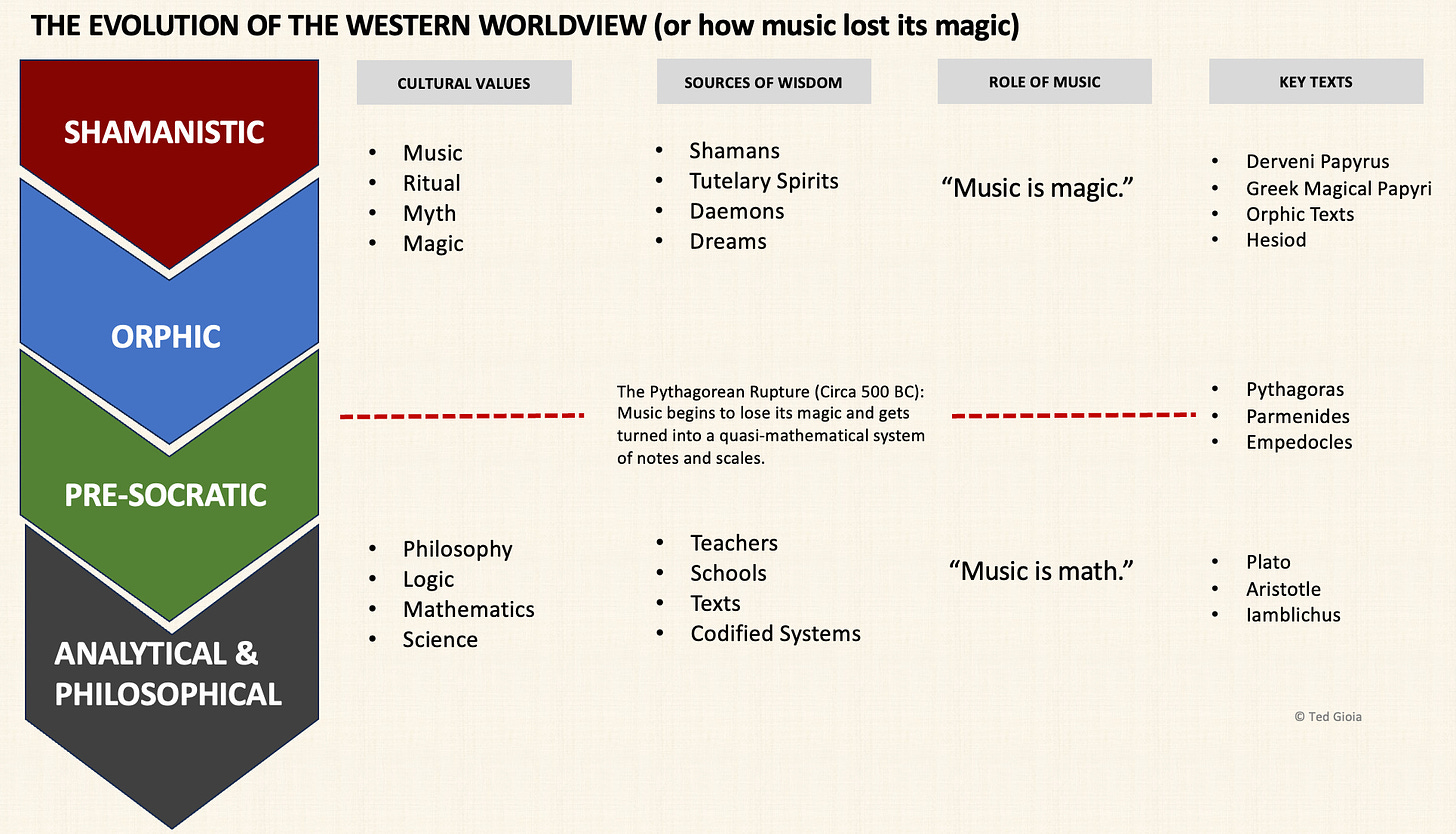


 Tipsy Teetotaler ن