Here, with minimal personal commentary, are some of the smarter or snappier takes on Donald Trump’s felony convictions Thursday:
The jury, obviously, is asked only to evaluate the evidence before it, and yet, it is asking a lot of anyone to sit and ignore the fact that the defendant has, publicly, turned you into an enemy.
I was struck by the insistence of Trump’s lawyers on pursuing arguments or lines of questioning that seemed unhelpful to their case. Todd Blanche, for example, insisted repeatedly that Trump had never slept with Stormy Daniels, even though this denial boxed Trump into a weaker argument. These tactics by the defense seemed designed to placate Trump’s own vanity and sense of grievance — but even if they made the client happy, it’s hard to imagine they helped his case with the jury.
The defense lost a winnable case by adopting an ill-advised strategy that was right out of Mr. Trump’s playbook. For years, he denied everything and attacked anyone who dared to take him on. It worked — until this case.
I have practiced criminal law for over 20 years, and I have tried and won cases as both a federal prosecutor and criminal defense attorney. I’ve almost never seen the defense win without a compelling counternarrative. Jurors often want to side with prosecutors, who have the advantage of writing the indictment, marshaling the witnesses and telling the story.
The defense needs its own story, and in my experience, the side that tells the simpler story at trial usually wins.
Instead of telling a simple story, Mr. Trump’s defense was a haphazard cacophony of denials and personal attacks … Perhaps Mr. Trump’s team was also pursuing a political or press strategy, but it certainly wasn’t a good legal strategy. The powerful defense available to Mr. Trump’s attorneys was lost amid all the clutter.
The verdict should come as a surprise to precisely nobody. Those who protest the verdict most fiercely know better than anyone how justified it is. The would-be Trump running mate Marco Rubio shared a video this afternoon on X, comparing American justice to a Castro show trial. The slur is all the more shameful because Rubio has himself forcefully condemned Trump. “He is a con artist,” Rubio said during the 2016 nomination contest. “He runs on this idea he is fighting for the little guy, but he has spent his entire career sticking it to the little guy—his entire career.” Rubio specifically cited the Trump University scheme as one of Trump’s cons. In 2018, Trump reached a $25 million settlement with people who had enrolled in the courses it offered.
Eight years later, Rubio has attacked a court, a jury, and the whole U.S. system of justice for proving the truth of his words.
…
What has been served here is not the justice that America required after Trump’s plot to overturn the 2020 election first by fraud, then by violence. It’s justice instead of an especially ironic sort, driving home to the voting public that before Trump was a constitutional criminal, he got his start as a squalid hush-money-paying, document-tampering, tabloid sleazeball.
If Trump does somehow return to the presidency, his highest priority will be smashing up the American legal system to punish it for holding him to some kind of account—and to prevent it from holding him to higher account for the yet-more-terrible charges pending before state and federal courts. The United States can have a second Trump presidency, or it can retain the rule of law, but not both.
It was the first time a sitting or former US president has been convicted of a crime. It was also the first time that the allies of a president of one party have successfully weaponised the American judicial system in an attempt to destroy the presidential candidate of another.
In both of these cases, the partisan motives of the Democratic prosecutors and judges were evident …
The partisanship of the Democratic officials in the hush-money case has been just as blatant. Charges like those brought against Trump were rejected as too weak by Cyrus Vance, the previous Manhattan district Attorney, and they were also rejected as too flimsy by Vance’s successor, Manhattan’s current DA, Alvin Bragg. Bragg only changed his mind and brought charges against Trump after two things happened. The first was the publication of a book — People vs. Donald Trump: An Inside Account — by Mark Pomerantz, a member of Bragg’s team who resigned in protest in 2022, claiming that Bragg was not doing enough to prosecute Trump. The second was the fact that, by 2023, it was becoming clear that Trump would be the Republican nominee for the presidency.
…
In the short run, the corruption of the American legal system by Democrats has sundered the reputation of New York state. Yet far worse is the damage to America’s global reputation. Thanks to these Soviet-style show trials, the US can no longer plausibly claim to be a global example of the nonpartisan rule of law and constitutional government. That reputation was already damaged by Trump’s clumsy attempt to overturn the results of the 2020 election. Today, however, thanks to his enemies’ willingness to play a similar game, that perception has been cemented.
For in the future, by weaponising state law to try to destroy federal candidates and officeholders of the rival party, Democrats have opened a Pandora’s box. It is probably only a matter of time before Republican attorney generals start prosecuting present or former Democratic politicians on their own trumped-up charges. And why not? The use of lawfare against Trump has put a target on the back of Democratic politicians. Already some Republicans are calling for prosecutions of James and Bragg under an obscure federal statute against electoral interference. After all, such prosecutions, ruinous as they would be, are more plausible than the cases that those prosecutors have brought against Trump.
In Robert Bolt’s play A Man For All Seasons, Sir Thomas More responds to William Roper’s statement that he would “cut down every law in England” to go after the Devil: “Oh? And when the last law was down, and the Devil turned ’round on you, where would you hide, Roper, the laws all being flat?” The Democrats are about to learn a similar lesson: that even the Devil deserves the benefit of the law.
Note: Lind wrote some other things I’m pretty sure I disagree with, but after he closed with the classic line from A Man For All Seasons, I couldn’t not quote his better stuff.
Trump would be an unlikely candidate for prison even if he weren’t also a candidate for president. For one thing, he will be 78 at the time of sentencing, making him potentially vulnerable in a prison setting. “[Prison time] would really surprise me,” David said on the special edition of Advisory Opinions. “He’s a first-time, nonviolent felony offender.”
Nevertheless, David added, “There are circumstances where you have 34 convictions, you have zero expression of remorse, you have multiple contempt citations in the trial, all of those things are not optimal defendant behavior in the face of these convictions.”
I don’t do any of the major social media, but I have two sub-domains of the domain you’re currently reading: (a) You can read most of my cathartic venting, especially political here. (b) I also post some things on the only social medium I frequent, because people there are quirky, pleasant and real.
The real verdict, is going to be November 5 by the people.
Donald Trump who, opening his mouth after the verdict, actually said something true for once.
***
P.S. I don’t think I’ll dwell on the 34 counts any more, and regret having done so. The 34 counts were 34 bookkeeping entries. In most courts — and in best practice — this would have been charged as one crime, or so I’m told.
On the one hand, I express no profound personal opinions here; on the other, I have some smart and provocative “takes” from others and some comments on them.
Stupid opinions on why a Trump conviction will be reversed
Any conviction obtained at the so-called “trial” of former President Donald Trump’s alleged alteration of financial records will be reversed on appeal, if necessary by the U.S. Supreme Court, because altering financial records is only a crime in New York if you do it to conceal some other crime. Paying Stormy Daniels money is NOT a crime. …
I would wager a substantial sum that the U.S. Supreme Court will not reverse a New York conviction of Trump at all, let alone on the basis that New York Courts misapplied New York law.
If the law is as Calabresi says, State appeal courts should reverse, but state Courts have the last word on what state law is.
Steven Calabresi is not a stupid man. This outburst was an example of motivated reasoning.
It’s still quite possible that the Manhattan jury will convict Trump on the 34 felony charges Bragg has brought. But there is no chance the conviction will withstand appeal, particularly given that it relies so heavily on Cohen’s testimony.
I would wager even more that a conviction will not be reversed because it relies too heavily on Michael Cohen’s testimony. No Courts will have any idea what the jury relied on. That’s not how jury trials work.
I cannot vouch for Elli Lake not being stupid on legal matters. It rather appears that he is.
Note: This is not to say that Courts won’t reverse because particular testimony of Cohen was admitted over timely objection. Nor am I saying that this prosecution is solid and will not be reversed. There’s a lot of non-dopey analysis that thinks if very shaky. I’m just faulting stupid arguments that mislead non-lawyer readers.
History Rhyming?
I’ve been surprised at the intensity of the electorate’s hostility to post-Roe restrictive abortion legislation. I thought public opinion was more closely divided.
As we think about why voters are so hostile, though, it may be illuminating to remember the Protestant landscape pre-Roe. For one common instance:
The great majority [of pre-Roe Southern Baptists] favored such “therapeutic” abortions, but a small minority objected that abortion was murder, and another small minority argued that it should be legal in all cases. The divide, however, did not fall along the usual conservative-moderate lines, but rather, it seems, along the spectrum of anti-Catholicism.
Frances FitzGerald, The Evangelicals. Voters may just be reverting to pre-Roe positions.
I care a bit about what the various states do. But I’m still committed to federalism, unconvinced that this is an appropriate topic for national legislation.
Commencement Addresses
It’s like the opening parable of David Foster Wallace’s Kenyon College commencement address: “There are these two young fish swimming along and they happen to meet an older fish swimming the other way, who nods at them and says ‘Morning, boys. How’s the water?’ And the two young fish swim on for a bit, and then eventually one of them looks over at the other and goes ‘What the hell is water?’”
But what sort of use does it make of this freedom? Here again, the main concern is not to infringe the letter of the law. There is no true moral responsibility for deformation or disproportion. What sort of responsibility does a journalist or a newspaper have to his readers, or to his history — or to history? If they have misled public opinion or the government by inaccurate information or wrong conclusions, do we know of any cases of public recognition and rectification of such mistakes by the same journalist or the same newspaper? It hardly ever happens because it would damage sales. A nation may be the victim of such a mistake, but the journalist usually always gets away with it. One may — One may safely assume that he will start writing the opposite with renewed self-assurance.
In these powerfully written essays Oakeshott points to the damage done when politics is directed from above towards a goal – whether liberty, equality or fraternity – and where all policies and negotiations are formulated by reference to that goal.
We in the US are suffering from a putative commitment to the goal of equality, “where all policies and negotiations are formulated by reference to that goal.”
I say “putative” because we seem to have lost the ability to identify which things truly are alike, and so should be treated alike, the ability to recognize that not all discrimination is invidious. Sometimes “discrimination” is the necessary consequence of discernment.
If the preceding seems impenetrably opaque, think about the dogma “trans women are women.” If that makes perfect, incontestable sense to you, you probably are loving our present love affair with “equality.” If you hesitate or disagree with “trans women are women,” you may be on my wavelength.
Elites and normies
Elites require control over the information sphere because their policy obsessions—on immigration, gender, and climate, for example—are not popular with the normies. By necessity, progressive fantasies must be imposed on our mediated reality, even as dissenting opinions are cast out into the dark. The internal combustion engine will destroy the earth; windmills will save it. Trump is a wannabe dictator; Biden, the adult in the room. Antagonists are always “far right”; there’s no such thing as “far left.” The ambition to conquer the empirical world with words approaches magical thinking.
It rarely works. The chaos and contingencies of the digital age allow the normies and their chosen tribunes, the populists, too much room to maneuver. Trump’s rise in the opinion polls would otherwise be inexplicable.
Why the meritocracy is not viewed as a legitimate ruling class
Now comes the kicker. By the competition it unleashes, bourgeois society creates unprecedented wealth, but also unprecedented inequality of wealth. It does so even while proclaiming equality to be its great insight, innovation and foundation, an inalienable right of man. The contradiction of bourgeois society is such that “its development belies its principle, and its dynamic undercuts its legitimacy.”
In earlier societies, inequality held a legitimate status, assigned by nature, tradition, or providence. In bourgeois society, inequality is an idea that circulates sub rosa in contradiction with the way individuals view themselves; it nevertheless pervades the environment in which they live…. The bourgeoisie did not invent the division of society into classes, but by cloaking that division in an ideology that renders it illegitimate, they tinged it with suffering.
One result is that we are deprived of a fundamental requirement of any polity: a ruling class that will be perceived as legitimate.
…
At bottom, we see a refusal of the ruling class to take responsibility for its rule, preferring to LARP at the barricades.
There aren’t many pro-Trump columnists at major papers because there aren’t many pro-Trump columnists anywhere.
In past years, it hardly seems possible that a major publication wouldn’t have a supporter of Ronald Reagan on George W. Bush on its staff. That is why in 2024, newspapers would love nothing more than to have an in-house columnist on Team Red Hat/Tie.
But Trumpism is a visual medium – it cannot withstand the scrutiny of a written column. Trump supporters can go on Fox News or Newsmax or OAN and say whatever they want in the moment without being fact-checked beforehand. But writing a column means having editors and fact checkers verify the claims you’re making.
And because no editor will rubber-stamp a claim like “the 2020 election was stolen,” someone who tries to argue Biden didn’t win the last election or that the Jan. 6 insurrectionists were “political prisoners” will never be able to make their way to a legacy print outlet. A columnist that wanted to say, for instance, Vice President Mike Pence had the ability to choose his own electors in 2020 would be like a columnist earnestly arguing a woman is safer if she encounters a bear rather than a human man in the woods.
This phenomenon is glaringly obvious any time Trump goes on a network like CNN for a town hall or a debate. The falsehoods come so fast out of his mouth, the moderator can’t keep up, leaving 90 percent of his claims unchallenged. If the reporter stopped Trump to correct him on every lie he told, the event would be more moderator than candidate.
That is because being a Trumper is based almost solely on emotion and doesn’t rely on facts. Trumpism is a clenched fist, not an argument. And newspapers print arguments.
I am predisposed to credit Schneider’s argument because of people like Eric Metaxas.
Metaxas, a Yale grad, is an intellectual of sorts. He writes books. He hosts high-tone “Socrates in the City” conversations. I have it on fairly good authority that he’s genial and fun to talk to.
But he’s bereft of arguments for his election denialism. He has rock-solid certainty. As a word guy, he makes reductio ad Hitlerum analogies. He may have had mystical visions. But he has zero evidence. (Did I mention the rock-solid certainty?)
Checking in on the further-right
Charlie Kirk is worked up. “The world is in flames, and Bidenomics is a complete and total disaster,” the conservative influencer said during a recent episode of his podcast The Charlie Kirk Show. “But it can’t and won’t ruin my day,” he continued. “Why? ’Cause I start my day with a hot America First cup of Blackout Coffee.” Liberals have brought about economic Armageddon, but first, coffee.
… “Rest assured knowing that you’re ready for whatever the globalists throw at us next,” Kirk said at the end of one ad for medical-emergency kits … The commercial breaks sounded like something from an alternate universe. The more I listened to them, the more I came to understand that that was the point.
…
Some of Kirk’s ads … sound a little jarring: “You are nine meals away from anarchy,” he said in one ad for buckets of food rations, from a website called MyPatriotSupply.com. Yet as the world of right-wing-coded products has expanded, so has the weirdness of ads for them. “For 10 years, Patriot Mobile has been America’s only Christian-conservative wireless provider,” started another ad. Switching to Patriot Mobile, Kirk explained, would mean that “you’re sending the message that you support free speech, religious liberty, the sanctity of life, the Second Amendment, our military veterans and first-responder heroes” while getting “the same coverage you’ve been accustomed to without funding the left.”
Just as the Bishop of Oxford refused to consider that he might be descended from an ape, so now are many in the West reluctant to contemplate that their values, and even their very lack of belief, might be traceable back to Christian origins.
I don’t do any of the major social media, but I have two sub-domains of the domain you’re currently reading: (a) You can read most of my cathartic venting, especially political here. (b) I also post some things on the only social medium I frequent, because people there are quirky, pleasant and real.
“I have heard from a good number of people in the S.D.N.Y. who have said, ‘Why the heck would Todd [Blanche] do this — why would he ever take this case?’” Elie Honig, a CNN senior legal analyst who worked with Mr. Blanche at the Southern District of New York, said in a recent profile. “My response is, generally, when did we become pearl-clutchers about defense lawyers defending defendants?”
[W]e have to stop just seeing these [gender dysphoric] young people through the lens of their gender and see them as whole people, and address the much broader range of challenges that they have, sometimes with their mental health, sometimes with undiagnosed neurodiversity. It’s really about helping them to thrive, not just saying “How do we address the gender?” in isolation.
Ted Gioia, Why Creatives Will Win by Thinking Small pulls together a convincing case that “Even the gatekeepers are sick of dealing with gatekeepers” and are going independent and/or small to evade them. Taylor Swift and Substack are two examples, evading the gatekeepers of the sclerotic music and publishing industries respectively.
Maybe we could say that small is getting pretty big.
Ted Gioia’s got one of the best culture-analyzing Substacks going.
Living off inherited moral capital
“I wouldn’t call it a change of mind,” Will said of his transition from classical liberalism to traditionalist conservatism. “I would say that I had become much more sensitive to the problem that Gertrude Himmelfarb, her husband, Irving Kristol, and others were to cite. And that is: Does classic liberalism provide for its own continuation, or does it live off the moral capital of a different age?”
A female friend expressed outrage that Caitlin Clark would be paid a piddling $76,000 in her first year in the WNBA. (By comparison, the first pick in the 2023 NBA draft signed a four-year contract for $55 million.) I asked her what team drafted Clark. She did not know. I asked her whether she knew the name of New York’s WNBA team. She did not. The name of any team in the WNBA? Nope. A famous player in the WNBA? Again, no answer.
Staff at TheNew York Times are circulating a draft of a letter to their boss, executive editor Joe Kahn, criticizing him for saying that some young reporters are not fully committed to independent journalism. Pro tip: if you’re worried your boss thinks you’re all whiny activists, campaigning against him from within the newsroom is only proving his point. (Semafor)
[A]rena subsidies are a terrible use of finite government resources and a ridiculously egregious redistribution of wealth from regular Americans—fans and haters alike—to some of the wealthiest people and organizations on the planet. And, to top it all off, they’re a classic case of political malpractice—local officials delivering massive rents to various cronies by promising unwitting voters the world yet delivering far fewer—but still “seen”—economic and social benefits to their communities.
…
Maybe all this government support might be worth the costs if the subsidized facilities at issue produced even a fraction of the benefits that supporters promise, but they don’t. Instead, there are few positions on which more economists agree than the terribleness of sports arena subsidies.
The default position of American conservative Christians in this Fall’s Presidential Election should be to abstain or to vote for a Third-Party Candidate. Neither major party candidate is acceptable, so we should avoid complicity with both. It’s a painful situation, but not complicated.
My unspoken premise is that America is, and long has been, off course, and like all empires is waning, slowly, then all at once. (I could be wrong about the all-at-once part; that may come from the part of Evangelical apocalypticism that I did not avoid and have not fully recovered from. “Babylon the Great is fallen, is fallen” and all that.)
Neither major party has what it takes to fix that. Maybe no party does. Still, I intend to vote for Peter Sonski for President. That’s not just a protest vote. My values line up better with the American Solidarity Party than with either the Republicans or the Democrats.
Am I throwing my vote away? No. I’m telling both parties that they’re unacceptable. That’s a message well worth sending, not a waste. If enough people tell them that, they’ll change or fade into irrelevance. The first step toward changing our unsatisfactory two-party system, if it’s not entirely incorrigible, is to stop voting for lesser evils.
Am I voting for the other guy by not voting for your guy? No. I know how my home state is going to vote; my vote won’t be decisive — not in 2024, anyway. If polling was close enough that I thought it might make a difference, my correct decision would admittedly be harder emotionally. (I last voted for a “lesser evil” in, I believe, 2008.)
That’s it.
POTUS 2024
It was like he made you feel everything’s gonna be OK. The economy’s gonna get better; everybody’s freaking out about the border, but he’ll get it stopped.
Dee, a friend of Peggy Noonan, explaining why she’s voting for Trump.
Polls suggest that a felony conviction would lose him some votes ….
David Graham. What kind of world are we living in that a felony conviction wouldn’t be the death of a campaign?
Liberalism versus authoritarianism
I’ve tried to understand the appeal of Donald Trump. David Brooks gives it an oblique stab, and I thought there was a lot to like in his analysis, which is about liberalism versus authoritarianism, and the draw of the latter.
Now I understand how we keep electing bozos
As it happens, a new survey of registered voters was released last week from Navigator Research showing that a sizable number of Americans, incredibly enough, held Biden responsible for “the overturning of Roe v. Wade and the elimination of the federal right to an abortion.” That opinion was held by 34 percent of self-identified independents, 32 percent of Black voters, and 42 percent of Hispanic voters. It helps explain why the Biden campaign is devoting so much energy to connecting the dots between Trump’s Supreme Court appointments and the Dobbs decision. But it also suggests public perceptions of Trump are very hard to change, and that’s a big problem for Democrats.
Might there be, among those misinformed folks, people who give Biden credit for Dobbs as well as those who blame him? Or is ignorance a “pro-choice” exclusive?
Female success in Trumplandia
In The Los Angeles Times, Robin Abcarian noted that Noem, Marjorie Taylor Greene and Sarah Palin, among others, conform to a certain MAGA model for women leaders: “First, they want to prove how tough they are by shooting guns, preferably at animals, though occasionally at cars that Democrats drive. And second, they aspire to beauty standards set by Fox News anchors. Dental veneers. Cheek and lip fillers. Botox. Hair extensions. Performative cruelty and pouty lips are what it takes to succeed as a woman in the party of Trump.” (Judy Moise, Seattle)
In The Arizona Republic, Ed Masley appraised a recent Rolling Stones concert and wrote that Mick Jagger’s physicality “invites you to imagine Mikhail Baryshnikov raised by a family of overcaffeinated roosters.” (Paul Welch, Phoenix, and Dan Olson, Spokane, Wash., among others)
I have watched this play out powerfully since 2016.
De-polarizing maxims to live by
The people you think of as your enemies aren’t as wicked as you believe them to be.
If you believe that your ordinary political opponents are not merely mistaken, but are evil, you have ceased to do politics and begun to do heretical religion.
Putting things in perspective
In a gloomy mood about the state of the world, I was reminded that the big actors of today, Trump, Biden, Putin, etc. etc. will mostly be dead, and very soon. Thinking in terms of living so that our communities outlast the current commotions is important.
Leonard Woolf: “One of the most horrible things … was to listen on the wireless to the speeches of Hitler — the savage and insane ravings of a vindictive underdog who suddenly saw himself to be all-powerful. … One afternoon I was planting in the orchard under an apple-tree iris reticulata, those lovely violet flowers. … Suddenly I heard Virginia’s voice calling to me from the sitting room window: ‘Hitler is making a speech.’ I shouted back, ‘I shan’t come. I’m planting iris and they will be flowering long after he is dead.’”
You can read most of my more impromptu stuff here and here (both of them cathartic venting, especially political) and here (the only social medium I frequent, because people there are quirky, pleasant and real). All should work in your RSS aggregator, like Feedly or Reeder, should you want to make a habit of it.
While every liberal democracy in the world claims to guarantee free expression in some form, the United States is essentially the only country where the government may not “take sides” on contentious issues by censoring expression based on the speaker’s viewpoint. As the post-October 7 examples show, many European countries have indeed taken a side in the public discourse over the Israeli-Palestinian conflict—in a way that might surprise many American observers: calls for a ceasefire and an end to what they see as an Israel-perpetrated genocide are criminally prohibited hate speech, while support for continued attacks is constitutionally protected. This strange result illustrates the unintended consequences of allowing governments to pick and choose which beliefs are unlawful “hate speech” and which are fair criticism.
The notion—dominant the in most of the world—that hateful speech is not “free speech” dates at least to the global post-World War II reckoning with Nazism …
How governments are responding to Israel-Gaza protests illustrates these radically diverging constitutional commitments to viewpoint neutrality. European national officials defended some of these pro-Palestinian restrictions primarily on public-order grounds more than stifling hate. But even so, the double standard implies that they view much of anti-Israeli speech as inherently anti-Semitic, and therefore, beyond the pale. This leads to a paradox, in which criticizing Muslims or Arabs as a group can constitute unlawful hate speech, but many expressions of support for Islamic-Arab groups are also prohibited, because of the threat that the government thinks those groups pose.
…
These examples offer a cautionary tale: When empowering the government to decide which beliefs are illegitimate, future policymakers may not use that power in ways you like or anticipate. They may even decide that your own viewpoints are the illegitimate ones—as with the song of South African anti-apartheid activists, “Shoot the Boer (i.e., white farmer)”; gender-critical feminists’ insistence that natal sex is critical to sexual orientation; and more recently, Palestinian advocates’ calls for a ceasefire and a “free Palestine.”
Scholars and activists celebrating new and stronger hate-speech laws might therefore consider Justice Hugo Black’s 1952 reaction to a (now largely discredited) decision upholding a conviction for disparaging Black Americans: “If there be minority groups who hail this [development] as their victory,” he wrote, they should contemplate Pyrrhus of Epirus’s observation: “Another such victory and I am undone.”
Kevin Cope, The Global Hate-Speech Conundrum via Eugene Volokh (bold added)
Too rich
We live in comforts that the richest of aristocrats not very long ago could never have dreamed of, and yet we claim that we are too poor to have more than a child or two. The truth is the reverse: we are too rich to have more than a child or two, too committed to work for work’s sake and to the purchase of prestige, mansions, the “best” schools, and toys for grown-ups.
In 1963, JFK signed the Community Mental Health Act. Its order to close the state psychiatric hospitals was followed, and hundreds were shuttered; the community mental health centers that were meant to replace them were never built …
In 1975, the Supreme Court’s O’Connor v. Donaldson decision established a national standard that the mentally ill could only be involuntarily treated if they represented an immediate threat to themselves or others. This completely removed actual medical necessity from the equation, and the standard directly incentivized hospitals to discharge very ill patients, many of whom leave these useless emergency room visits and immediately abuse drugs, self-harm, commit crimes, attack others, or commit suicide …
There are desperately ill, utterly impoverished, terribly vulnerable people living on the street right now. They are exactly the kind of people the left should fight for. But because we have become such a caricature of ourselves, we are incapable of acknowledging that some people really are fucked up, that some people really are dangerous, that some people really aren’t just different but are sick, ugly sick, violent sick, no-silver-lining sick. Not beautiful and poetic madness but drug addicted, horrifically paranoid, caked-in-shit sick. And what people like that need is to be forced into treatment to save their lives. But sunny, false notions that everyone muttering to themselves on the subway hides a sweet little self-actualized busy bee inside of them, and an impossibly myopic fixation on the abstract rights of people whose brains have hijacked their minds, has left us unable to provide the actual help the severely mentally ill need. I have found no way to penetrate the liberal consciousness on this issue. Because it’s conservatives, I guess, who complain about violence and disorder on the streets.
Even if I were still a single-issue (abortion) voter (I’m not; I’ve seen too many insane and/or phoney “pro-life” candidates), the GOP no longer make a compelling case on that issue.
Hamas Hyperbole, Media Credulity
In a May 6 report, the UN stated the death toll was 34,735, including 9,500 women and 14,500 children, or at least 24,000 civilians.
But two days later, the UN quietly revised its figures, stating that 50 percent fewer civilians had died. The total number of deaths is about the same at 34,844, but that number includes 4,959 women and 7,797 children—a total of 12,756 civilians. (And this from the United Nations, whose General Assembly adopted 15 resolutions on Israel in 2023, compared to seven for the rest of the world combined.)
This revision is the clearest sign yet that Hamas’s statistics cannot be trusted. As David Adesnik, senior fellow at the Foundation for the Defense of Democracies, says: “The UN should state clearly that it has lost confidence in sources whose credibility it has affirmed for months.”
…
Spencer says that even the revised UN figures probably overstate the death toll, because the numbers aren’t limited to people who were killed in the war. “The UN numbers include every death in Palestine no matter what the cause was,” Spencer told The Free Press. “Every natural death, missing person, anyone killed by Hamas.”
And yet, so far not a single major media platform, save Fox News, has reported on the new UN numbers.
On a Newsweek article skewering Viktor Orbán for his friendliness toward China:
China doesn’t give a damn what Hungary does with its borders, or with LGBT policy. That’s not to say that China doesn’t have and pursue its own interests. The Chinese are not altruists. It’s just that dealing with them, countries can preserve sovereignty in ways the West makes harder and harder to do.
Talk to African diplomats and lawmakers, and you’ll hear from them deep exasperation with the way Western countries constantly push feminist and LGBT ideology on them, as a condition of foreign aid. I invite you to spend just a little bit of time googling “LGBT”, “feminist” and “foreign policy”. Western institutions are as militantly evangelical about these ideologies as the Church was about religion in the Age of Discovery.
If your country wants and needs development aid, but wants to maintain cultural sovereignty, you’re going to look to China. To be very clear, Chinese support also has strings attached! But they are different strings. My point is simply that mindless cheerleaders for the Western establishment, like the Newsweek essayist, should make the effort to see what things look like to people outside the Greater American Empire.
Whenever I watch a Netflix show these days, it seems as if there are several themes that are yawningly predictable. One of them is the motif of the “strong woman.” (I’m not referring to the South Park “strong woman.” That is a subject for another day.)
I mean the way in which female characters must now almost always be shown to be people of unbelievable strength—including rather unbelievable physical strength. One reason the recent Amazon adaptation of J.R.R. Tolkien’s Lord of the Rings (called The Rings of Power) flopped is that it tried to push this motif at every turn. In one especially implausible scene, a “strong woman” fights off a whole horde of armor-clad men with her bare fists. We were meant to marvel at her strength. Most people reached for the off switch.
I didn’t make it past the first 15 minutes or so of The Rings of Power, but it took me 6 episodes to reach my limit on Apple TV’s Sugar, which ended with a similarly absurd show of superhuman strength.
Zero-sum
Maybe the prospective [wedding service] customers, like many Americans, do not see transcendent meaning in the ceremonial commencement of matrimony, because they associate a wedding as admittance to an institutional legal fiction that allows one access to nothing more than a cluster of political and social privileges not available to other friendships. So, given this understanding, it is not surprising that the customers see the provider’s refusal as a negative judgment on the public legitimacy of their union. Thus, it’s easy to see why the customers would be offended by the provider’s refusal and subsequently seek legal redress. But what the customers fail to see is that their demand that the courts force the providers to rescind their denial and be punished for it is really a demand that the state force the providers not to exercise their freedom of worship, the liberty not to participate in, or not provide assistance to, ceremonies that one believes have sacramental significance.
You can read most of my more impromptu stuff here and here (both of them cathartic venting, especially political) and here (the only social medium I frequent, because people there are quirky, pleasant and real). All should work in your RSS aggregator, like Feedly or Reeder, should you want to make a habit of it.
I have mixed feelings about Aaron Renn, of whom you may not even have heard. But he has a provocative suggestion, which I’ll paraphrase.
Why should conservatives, and especially Christian conservatives, oppose jackassery like the Columbia University occupation? Columbia doesn’t love conservatives, or Christians.
Columbia itself produced the brats who now threaten it. Do we even have a horse in this race? Would it be bad for us if Columbia paid the price for what it has become?
Such is liberal hegemony in the cultural institutions (arts, education, media) that we lament it constantly. Why then should we leap to defend these leftist institutions when they’re under threat from folks even further to the left?
There’s something to be said for sitting back and enjoying the show.
AR-15 as totem
In 2023, the Washington Post published a series of articles about AR-15-style rifles. The series was scientifically illiterate, error-ridden, propagandistic, and willfully misleading.
Kevin D. Williamson. Williamson then really gets into the weeds. Though I’m not a huge gun enthusiast, I enjoy reading columns like this because of what they say about the sloppy journalism they’re critiquing and because I often learn things I didn’t know, like:
It is probably worth noting here that AR-style rifles are used in a very, very small share of shootings in the United States: All rifles together typically account for something less than 3 percent of the firearms homicides in the United States in a given year. Rifles are more commonly used in mass shootings, but, even in those high-profile crimes, they are used in a minority of cases, about 28 percent. The most common firearm used in a violent crime in the United States is the 9mm semiautomatic handgun—which is the most common handgun found in the United States.
Mass shooters often choose AR-style rifles for obvious reasons—because they are common, relatively easy to operate, and the rifle that most Americans are most familiar with—and for reasons that are best described as totemic. … Gun-control advocates who want to prohibit only AR-style rifles are seeking a merely symbolic victory—those other semiautomatic rifles would remain on the market and presumably would be used for the common legitimate and rare criminal purposes AR-style rifles are used for.
…
We could—and probably should—be more aggressive in prosecuting the crime of simple illegal firearm possession absent some additional violent offense, and we probably should hand down stiffer sentences more consistently for that crime rather than doing what we do now—which is dismissing the great majority of those cases or pleading them down to some trivial misdemeanor.
But rigorously enforcing the laws regarding firearm possession with prison sentences is going to mean a lot more young men becoming incarcerated felons earlier in life, and it is nearly certain that those young men will be disproportionately black and poor. … We should probably arrest and prosecute a lot more straw-buyers than we do, but we should be clear-eyed about who those straw-buyers are going to be—people with otherwise clean criminal records, often girlfriends or family members of convicted felons—before we start locking them up.
…
And they wonder why demagogues get so much mileage out of claims about “fake news.” It’s shameful stuff.
Whew! That’s a relief!
Even the most challenging writer will not always want to read works that constantly challenge or repudiate his or her expectations. Auden used to say that great masterpieces demand so much of their readers that you simply can’t take one on every day, not without either trivializing the experience or exhausting yourself.
I know the internet has dumbed us down, and I’m not exempt from that. But I try to keep challenging books in my book list. My need to read other things, too, is hereby vindicated!
Jacobs throws out another thesis about “the brows” (low-, middle-, and high-):
For a long time now there has been no genuine lowbrow reading. Those who insist on all their expectations being fulfilled can get that hit much more efficiently through movies, TV, Instagram, TikTok, etc.
Intrinsic values
When people say that something is “valuable in and of itself,” I think what they mean is simply that it has no economic or social value — note Kirsch’s contrast between intrinsic value and something valued because it “makes us more virtuous citizens or more employable technicians of reading and writing.” Someone might say that when we say some artifact or experience is intrinsically valuable we’re saying that it does not have any instrumental value — but isn’t a song that delights me instrumental to that delight? And isn’t that okay?
So I think that when we describe something as having intrinsic value, what we really mean is that the value it provides is higher than or nobler than any furthering of crassly economic or social ambitions. We’re indirectly and somewhat sloppily appealing to a hierarchy of goods. And maybe — especially in the context of debates about liberal education, which is at least partly the context of Kirsch’s essay — we should be more explicit about that, and conscious of what our hierarchy is and why we affirm it.
We are blessed that Alan Jacobs, (intrinsic values) uses this blog as a digital notebook, tagging his entries for future retrieval.
AI gonna sell us stuff
[W]hen the hysterical claims about the coming of “the Singularity” and quickly-approaching AI doom/utopia subside, what we’ll find is that most of what AI is doing is a more complex and sophisticated version of what Silicon Valley already does: giving us increasingly-aggressive recommendations for how to sate our various needs.
…
The longstanding battle between the individual and the state will come to look quaint in comparison to the battle of the human against the profit-maximizing AI, an entity that is distributed and depersonalized and so can have no personal accountability. And it will all be happening with a populace that has grown used to seeing digital systems as permanent authorities that they have no ability to defy.
Both wokeness and anti-wokeness have lost their transgressive edge. Now they’re both kind of “cringe,” as the kids say.
And that is a sign of healing.
One of the worst annoyances of polarized politics is the way the fringes symbiotically feed off each other. Like bootleggers and Baptists both benefiting from blue laws, the extreme left and extreme right need each other to justify their catastrophizing. The worst thing that could happen for Republican House fundraising efforts would be for the “Squad” of far-left members of Congress to be replaced by sensible Democrats. And the last thing the Democratic Congressional Campaign Committee wants is for Marjorie Taylor Greene to be primaried by an intelligent Republican who doesn’t talk about Jewish space lasers.
The beginning of the end … of this particular miserable chapter
MIT sours on DEI: MIT has done away with mandatory diversity statements in their hiring process. The president of the school, Sally Kornbluth, told John Sailer: “We can build an inclusive environment in many ways, but compelled statements impinge on freedom of expression, and they don’t work.” This is a watershed moment: MIT is the first elite school to reverse course on this policy. Let’s see what schools follow suit.
DEI was the latest chapter in the effort to purge wrongthinking conservatives from our institutions. Its end will be the beginning of a re-branded effort.
Campus
As university administrators nationwide grapple with how to deal with anti-Israel encampments, former Nebraska senator and current University of Florida President Ben Sasse wrote in the Wall Street Journal of a model to follow. “At the University of Florida, we have repeatedly, patiently explained two things to protesters: We will always defend your rights to free speech and free assembly—but if you cross the line on clearly prohibited activities, you will be thrown off campus and suspended,” he wrote. “We said it. We meant it. We enforced it. We wish we didn’t have to, but the students weighed the costs, made their decisions, and will own the consequences as adults. We’re a university, not a daycare. We don’t coddle emotions, we wrestle with ideas. … For a lonely subset of the anxious generation, these protest camps can become a place to find a rare taste of community. This is their stage to role-play revolution. … Universities have an obligation to combat this ignorance with rigorous teaching. Life-changing education explores alternatives, teaches the messiness of history, and questions every truth claim. Knowledge depends on healthy self-doubt and a humble willingness to question self-certainties.”
A Palestinian man living in the U.S. offers both grief for his family who have died in Israel’s war against Hamas and condemnation for the terrorist organization that sacrificed his homeland. “Thirty-one,” Ahmed Fouad Alkhatib wrote for The Times of London. “That’s how many of my extended family members have died in Gaza since October 7. … The past seven months have entailed endless sleepless nights, close calls, false alarms and frantic attempts to help locate missing family members.” But the pro-Palestianian, anti-Israel narrative in the West misses a key truth, he argued. “Many believe Gaza was this unbelievably awful place before October 7, an unrelenting prison with nothing in it worth living for. They then conclude that Hamas’s horrendous attack was a legitimate reaction to Israeli policies that made Gaza a concentration camp. But this perspective misses an important truth. It fails to recognise that even with Israel’s multifaceted blockade, which has been in place since 2007, Gaza was a beautiful place that meant so much to its residents and people. … Hamas needlessly and criminally threw all of this away as part of nefarious calculations by violent and homicidal leaders who have utter disregard and contempt for the average Palestinian citizen.”
Glenn Loury thought maybe the world — maybe he — had been wrong about Derek Chauvin, the police officer convicted of murdering George Floyd in 2020. Loury had watched a documentary, “The Fall of Minneapolis,” that had circulated largely on right-wing social media, arguing that Chauvin had been wrongly convicted, and found himself persuaded. Was it possible, he wondered, that Floyd had actually died of a drug overdose?
… Then Radley Balko, an independent journalist, published a lengthy and meticulous critique ofthe film, calling it “all nonsense.”
…
“I pride myself on remaining open to evidence and reason, even if they disconfirm something I had formerly thought to be true,” Loury wrote in a mea culpa for his Substack, calling his error egregious. …
How had he made such a mistake?
“The real story is I hated what happened in the summer of 2020,” he told me. “I think these moral panics we have around these police killings are over the top and it’s bad for the country.” He had supported the filmmakers, he confessed, because they were attacking people he opposed. “I let that cloud my judgment.”
Forming alliances on the basis of shared hatreds is soul-scarring.
Of course he said the quiet part out loud
That brings us to a Washington Post article this morning. At a Mar-a-Lago meeting in April, oil executives complained that despite pouring hundreds of millions into lobbying the government, the Biden administration had pursued stronger environmental regulations. “Trump’s response stunned several of the executives in the room overlooking the ocean: You all are wealthy enough, he said, that you should raise $1 billion to return me to the White House,” the Post reports. In exchange, Trump vowed to roll back current regulations and freeze future ones. He told them that, given the savings, a billion bucks would be a “deal” for them.
What Trump was offering is entirely legal and absolutely corrupt. (Or to borrow a phrase: very legal and very uncool.) Thanks to Trump’s bluntness, there can be no hair-splitting about what’s going on here, and that’s good for public understanding. Trump asked special interests for an eye-popping fee in exchange explicit favors. Trump and the oil companies might argue (dubiously) that their preferred regime would actually be better for consumers, but they are cutting “the people” out of the discussion entirely, subverting democracy. The deal is getting done between Trump and the suits, behind closed doors. It’s a good reminder that Trump’s claim to being an outsider is a sham.
Who’s responsible for the illegal immigration problem?
When it comes to immigration, it’s true that the Biden administration belatedly worked with legislators to settle on a compromise bill that would stem the flow of migrants (including refugees) to the southern border. But it’s also true that Republicans, led by Trump, decided they’d prefer to keep the border a festering problem through an election year in order to hurt the president.
That’s cynical, hardball politics. But that’s just another way of saying it’s politics well played. (It ain’t beanbag, after all.)
Damon Linker. The key words are belated, prefer, fester and cynic.
Momala
[2020] was the year when friendships were shattered and livelihoods ruined because someone didn’t post a black square on Instagram; when every suburban wine mom was frantically reading White Fragility for her anti-racist book club; when members of Congress posed for an absurdly self-serious photo shoot draped in kente cloth. It was the year when representation mattered—to the exclusion of basically everything else.
This miasma of liberal white guilt and frantic, performative virtue-signaling was the birthplace of many a bizarre cultural artifact, like the anti-racism research center for which Ibram X. Kendi received (and squandered) $43 million, or the $250,000 “Woke Kindergarten” program that taught five-year-olds in San Francisco to “disrupt whiteness.” But its most lasting legacy, arguably, is Kamala Harris, who ended up a skipped heartbeat away from the top job for reasons that were primarily aesthetic: once Biden promised to pick a woman of color as his running mate, her selection was all but guaranteed.
…
[H]er social justice credentials are thoroughly undermined by her actual record: one of a career prosecutor with a penchant for authoritarian overreach and a hostility to civil liberties.
As an attorney, she—or people working on her behalf—routinely fought to keep innocent people in prison, to avoid compensating the wrongfully convicted, and to protect corrupt cops and prosecutors. In her capacity as California’s district attorney, she stood in the way of advanced DNA testing that could have proved the innocence of a man who had spent four decades on death row—until a 2018 story about the case created bad press for her presidential campaign, at which point she hastily (and uselessly) declared that she now supported the test.
==And then there’s her legal war against the founders of Backpage.com, a classified ads site with a robust “Adult Services” section. Harris charged Michael Lacey and James Larkin with conspiracy to commit pimping back in 2016. This eight-year effort is the clearest manifestation I have ever seen of the phrase “the process is the punishment.” In August 2023, on the eve of yet another court battle, James Larkin committed suicide. In reaction to this news, Reason’s Matt Welch noted: “You will see 100 times more ink spilled this year on chimerical right-wing book bans than you will on the vice president’s scapegoat blowing his brains out.” He was right, sort of; the actual ratio of book ban coverage as compared to Larkin’s suicide was more like 10,000 to one.
I’ve commented little on Kamala Harris because she has been nearly invisible as Vice President in these tumultuous times. But I’m grateful to Kat Rosenfield (America Doesn’t Need Momala Harris) for this reminder of why I detested her conduct in California government and rued Joe Biden selecting her for VP.
Misogyny
Last year, my colleague Sophie Gilbert wrote that a second Trump presidency would produce four more years of unchecked misogyny. “I don’t believe Donald Trump hates women. Not by default, anyway,” she wrote. “The misogyny that Trump embodies and champions is less about loathing than enforcement: underscoring his requirement that women look and behave a certain way, that we comply with his desires and submit to our required social function.” Daniels’s account of her encounter with him showed exactly how that can work. It’s not that Trump bore any malice toward Daniels (that came later); it’s that she mattered to him only as a vehicle to sex.
By now, Trump has gotten a great deal more than he expected or wanted that day in his Tahoe penthouse. Following a lunch break today, his attorneys argued for a mistrial on the basis of Daniels’s answers. Merchan refused but said several times that some things that came up would have been “better left unsaid.” The newly demure defendant would surely agree.
You can read most of my more impromptu stuff here and here (both of them cathartic venting, especially political) and here (the only social medium I frequent, because people there are quirky, pleasant and real). All should work in your RSS aggregator, like Feedly or Reeder, should you want to make a habit of it.
Culture
Made Men
I cannot remember the books I’ve read any more than the meals I have eaten; even so, they have made me.
Ralph Waldo Emerson
A perennial favorite for the internet age
I can take a virtual tour of the Forbidden City in Beijing, or of the deepest underwater caverns, nearly as easily as I glance across the room. Every foreign wonder, hidden place, and obscure subculture is immediately available to my idle curiosity; they are lumped together into a uniform distancelessness that revolves around me. But where am I? There doesn’t seem to be any nonarbitrary basis on which I can draw a horizon around myself—a zone of relevance—by which I might take my bearings and get oriented. When the axis of closer-to-me and farther-from-me is collapsed, I can be anywhere, and find that I am rarely in any place in particular.
Matthew Crawford, The World Beyond Your Head
Another oldie
To say that we and the Soviet Union are to be compared is the equivalent of saying that the man who pushes the old lady into the way of an oncoming bus, and the man who pushes the old lady out of the way of an oncoming bus, are both people who push old ladies around.
One doesn’t see this sort of observation much any more:
Reason is an absolute … Yet those who ask me to believe this world picture also ask me to believe that Reason is simply the unforeseen and unintended by-product of mindless matter at one stage of its endless and aimless becoming. Here is flat contradiction. They ask me at the same moment to accept a conclusion and to discredit the only testimony on which that conclusion can be based. The difficulty is to me a fatal one; and the fact that when you put it to many scientists, far from having an answer, they seem not even to understand what the difficulty is, assures me that I have not found a mare’s nest but detected a radical disease in their whole mode of thought from the very beginning.
C.S. Lewis, Weight of Glory
Good Dad
Dad only had three stages in his day. He was either (1) drinking coffee, (2) had just finished drinking coffee, or (3) was brewing a fresh pot right now.
Ted Gioia, How Coffee Became a Joke. Unlike Ted, I rather like Starbucks, but the only frou-frou I ever ordered was one, and only ever one, Pumpkin Spice Latté, just to see what the buzz was about. Otherwise, I’m happy with whatever dark roast is on offer or even Pike Place if necessary.
Ruso-Ukraine war and NATO
Be it remembered:
Manysobervoiceswarned that an expansion of NATO to Russia’s border would poke the Bear, leading to an inevitable war. As long ago as 1998, following the U.S. decision to expand NATO eastwards, George Kennan said the following to Thomas Friedman:
“I think it is the beginning of a new cold war. I think the Russians will gradually react quite adversely and it will affect their policies. I think it is a tragic mistake. There was no reason for this whatsoever. No one was threatening anybody else. This expansion would make the founding fathers of this country turn over in their graves.
“We have signed up to protect a whole series of countries, even though we have neither the resources nor the intention to do so in any serious way. [NATO expansion] was simply a lighthearted action by a Senate that has no real interest in foreign affairs. What bothers me is how superficial and ill informed the whole Senate debate was. I was particularly bothered by the references to Russia as a country dying to attack Western Europe.
And recently, we’ve had people in the know bragging that we are going to bring Ukraine itself into NATO, though “we have neither the resources nor the intention” of following through by vigorously defending, with troops, a new member that was already under attack when admitted to NATO.
Campus Protests
Coddled2
[S]ociety takes the attitudes and antics of the young far too seriously. In an era when we are reliably informed that adolescence persists well into the twenties, it is strange that we deem the views of anyone under the age of thirty to have any real significance or merit. Yet it seems to be an unspoken assumption that young people, especially young, angry, and opinionated people, are to be indulged as important …
This exaltation of youth is simultaneously the exaltation of ignorance and incompetence. Early claims of Israeli occupation of Gaza and the continued sloppy use of the language of genocide, fueled by people at the U.N. who could benefit from using a dictionary, are two obvious examples of the former. As for the latter, when, for example, did adult revolutionaries hold hunger strikes lasting a whole twelve hours or seize buildings and then demand that the university authorities give them food and water? I have no affection for Che Guevara, but he did at least spend time in a Bolivian jungle while trying to foment revolution. I presume he never once considered whining to the Bolivian government about the harsh conditions of jungle life and had to find his own food and water. A cynic might say that even our revolutionaries are pathetic these days.
One of the voices on the Matter of Opinion podcast Friday likened Columbia University getting police to clear our an occupied hall to “calling the police on your own kids” because the University is in loco parentis. I think the voice belonged to someone named “Van Winkle.”
I was in college when students effectually abolished in loco parentis. They didn’t want anyone telling them what to do and what not to do. But, giving credit to Ms. Van Winkle, they did generally whistle a different tune when there was the threat of police being brought in.
I’ve long thought take your pick; you don’t deserve protectivein loco parentis (“we’ll take care of this ourselves, officer”) if you’re not willing to live by university rules (“here’s the rules you’re expected to live by”).
Radical Revolutionaries on the cheap
And of course the protesters all want (and I’m sure will get) the arrests taken off their records. They want to be radical revolutionaries holding a radical protest. They also want the protest catered ASAP. And when it’s done for summer, they want good grades in all the classes and squeaky-clean records. McKinsey doesn’t staff itself!
Another thing I seem to remember is that civil disobedience includes taking the consequences for breaking an unjust law. Scott free for breaking a just law does not compute.
Forewarding illiberalism
As readers know, I’m deeply sympathetic to the argument that Israel has over-reached, over-bombed, and over-reacted in its near-unhinged overkill of Palestinian civilians, especially children, in the wake of 10/7’s horrors. It has been truly horrifying. I begrudge no one demonstrating passionately to protest this. But as I watch the rhetoric and tactics of many — but not all — of these students, I’m struck by how this humane concern is less prominent than the rank illiberalism and ideological extremism among many.
Preventing students from attending classes, taking exams, or even walking around their own campus freely is not a protest; it’s a crime. So is the destruction of property, and the use of physical intimidation and violence against dissenting students. The use of masks to conceal identity is reminiscent of the Klan, and antithetical to non-violent civil disobedience. It’s a way for outsiders to easily infiltrate and a way to escape responsibility for thuggishness. It’s menacing, ugly and cowardly.
It did not have to be this way. Imagine if students simply demonstrated peacefully for a cease-fire, placed the victims and hostages at the forefront of the narrative, and allowed themselves to be arrested proudly on camera and face legal consequences for their actions, as the civil rights movement did. Imagine if they were emphatically non-violent and always open to debate.
But they aren’t, because they are not the inheritors of the Christian, universalist civil rights movement but its illiberal, blood-and-soil nemesis, long curated in the Ivy League.
…
And they will help Trump get an Electoral College landslide, just as the new left handily elected Nixon in 1968 and 1972.
On Democrats’ promise to help defeat Marjorie Taylor Greene’s effort to oust Speaker Mike Johnson:
Republicans, rather than fume that Democrats have denied them a chance to self-destruct, should consider that perhaps this is the inevitable result of the mid-session motion-to-vacate game that has brought them to the brink of losing their majority without an intervening election. A conference that can’t bear to see any of its members lead the House will soon enough encounter a cure for that.
National Review, The Week email for 5/3/24.
Meanwhile, over at the Evil Party
Once someone determined Trump was so bad it was okay to lie about him, it set the precedent that the only thing that mattered was a subject’s politics.
You can read most of my more impromptu stuff here and here (both of them cathartic venting, especially political) and here (the only social medium I frequent, because people there are quirky, pleasant and real). All should work in your RSS aggregator, like Feedly or Reeder, should you want to make a habit of it.
The heart of Gilead is not religious extremism, but social engineering.
Nowhere is this more apparent than in the Handmaids themselves, and the Ceremony that defines their role. The idea that women can be used outside of the confines of marriage as incubators for strongly desired children would be abhorrent to the vast majority of religious conservatives who seem to be The Handmaid’s Tale‘s targets. But it is all the rage in certain secular and progressive circles—and by no means is it limited to the fringes. It has become especially popular among homosexual couples, many of whom pay top dollar for Handmaids who serve a purpose they cannot fulfill themselves.
Not original with me, but I’ve lost the original source.
Schrödinger persons
On a related note:
When the industry makes promises to prospective parents about in vitro fertilization, it leans on images of cherub-cheeked babies. And when it pitches to egg donors, it speaks the language of altruism: You can help make a family. But when something goes wrong, the liability-shy industry is quick to retreat to the language of cells and property. IVF relies on treating the embryos it creates, freezes, and often discards as Schrödinger’s persons: we cannot make a moral pronouncement about what they are until we know whether they’re intended for life or death.
Argentina, for all it’s faults, is a Democracy, and the people keep electing very flawed politicians. They keep electing tumult, and choosing short term satisfaction. They keep voting for the candidate that promises to give them the most things, while also taking stuff away from others. They keep doing that because now, after a century of disarray, part of their national identity is a cynicism that’s reached nihilistic levels.
That sounds like the trajectory of another country I know well. I noticed a report this morning that Trump is 6 points ahead in (some) polls.
I can relax but I’m not going to enjoy it.
Aaron Burr = DJT
Charlie Sykes, The choice Republicans face is too good for me to just pull excerpts. I didn’t know what kind of low, narcissistic character Aaron Burr was, and how close he came to being President. We need some Alexander Hamiltons in the GOP (but I fear the GOP is too far gone).
David Frum painstakingly explains why Even Bill Barr Should Prefer Joe Biden by gaming out what’s likely to happen if Trump is elected. Maybe that will prove persuasive to a handful of Trump voters, but it suffices for me that Trump, like Aaron Burr, is a “dangerous, narcissistic mountebank and ‘a man of extreme & irregular ambition.’”
POTUS candidate age disparity
At the White House Correspondents Dinner on Saturday, Joe Biden joked that age is an issue in the election, because “I’m a grown man running against a six-year-old.” (New York Post)
Hungry for coverage of last Thursday’s SCOTUS arguments on Presidential criminal immunity, I was nauseous as most of my sources were doing the usual “we know this Court is corrupt; let us now find proof in the hypothetical questions they ask on this case we’re afraid might not go our way.”
Then finally I found sanity:
As several of the justices pointed out, they aren’t making a rule for Donald Trump. They’re making “a rule for the ages,” as Justice Neil Gorsuch put it—one that has to apply to good presidents and bad ones, Republicans and Democrats, high-minded prosecutors and partisan ones. It can be easy to focus on “the needs of the moment,” as Justice Brett Kavanaugh said.
And here’s the fear. If the high court gives presidents too much immunity, the White House could turn into a “crime center,” as Justice Ketanji Brown Jackson said. Too little immunity, and there’s an endless cycle of prosecutions. The ability to find some vague statute will “be used against the current president or the next president,” Kavanaugh said, “and the next president and the next president after that.”
So how will this all shake out? I can’t say for sure, of course. And oral arguments—even a two-hour and 40-minute session—can tell you only so much. But I predict this will be a unanimous ruling instructing the district court to determine which of the charged acts were clearly outside the authority of the president, whether it was an official act or not.
Every time you see the word disinformation, remember that The New York Times said it was “a conspiracy theory” that Covid came from a lab.
In Santa Monica, a new 122-unit homeless housing project is moving ahead; it’s projected to cost $1 million per unit to build. That’s the optimistic projection! And in San Francisco, the city built special housing just for the middle class. The result: 80 percent of units in some of these buildings are empty. Why? “A city bureaucracy so convoluted that qualifying for an apartment involves a tortured and time-consuming process,” according to a great San Francisco Chronicle story. I promise that if you let capitalism work, supply will meet demand. Alternatively, we can keep trying these government scams, raise taxes to 70 percent, and build more empty construction and overpriced pot shops and Sombritas and a single charging station.
David Frum’s odd characterization of a televised Biden-Trump Presidential debate: “The networks want their show, but to give the challenger equal status on a TV stage would be a dire normalization of his attempted coup.”
Xitter
Someone’s (Charlie Sykes? coinage for X, formerly known as Twitter. I like it for the rich possibilities of how to pronounce it.
Could a child ever dream about a Lucid or Rivian? These are generically good-looking, low-emissions vehicles that only a cyborg could lust over. They are songs sung through Auto-Tune, with clever and forgettable lyrics composed by ChatGPT.
You can read most of my more impromptu stuff here and here (both of them cathartic venting, especially political) and here (the only social medium I frequent, because people there are quirky, pleasant and real). All should work in your RSS aggregator, like Feedly or Reeder, should you want to make a habit of it.
I’m glad the FTC banned non-competes. (The preceding sentence assumes that it had authority to ban them.)
My main beef with non-competetion clauses is summarized at the Dispatch:
In practice, the agreements are often sprung on workers after they’ve accepted a job and turned down other offers …
Here’s how that works (or, I hope, worked) in my fair state:
All employment is “at will” unless otherwise specified. That means your employer can fire you any time for almost any reason or no reason.
If your employer hires you and then springs a non-compete clause on you, your choice is to sign or, in all likelihood, be fired as an at will employee.
Aha! says the reader who remembers from a business law class that an enforceable contract must be supported by consideration on both sides. But your employer’s contractual “consideration” that makes the non-comp enforceable is forebearing from firing you, you miserable “at will” employee, on the spot. Gotcha!
Oh, yeah: Your employment is still “at will” after you sign.
I’d call that an “unfair or deceptive act or practice” of the sort the FTC is empowered to regulate.
There’s a Latin maxim: abusus non tollit usum. I have no little or problem with the usum of non-competition clauses freely bargained over up-front rather than sprung after the employee has burnt bridges. But I never saw a single one of those in my law practice, perhaps because employees who freely bargained for them were honorable enough not to complain about them later, when they pinched. It was the employees who got them sprung on them after hiring on who had legitimate beefs, but beefs that my fair state almost never recognized as legitimate despite ritual professions that non-competition clauses were “disfavored.”
So vastly do the abuses outweigh legitimate uses that I’m viscerally in the “burn them all down” camp. So kudos to the FTC, and may the Chamber of Commerce challenge crash and burn, too.
No lower court has determined whether the allegations in Trump’s indictment amount to official acts that could be shielded from liability or private conduct. But when the Supreme Court agreed to take the case, it rephrased the question it would consider as: “whether and if so to what extent does a former president enjoy presidential immunity from criminal prosecution for conduct alleged to involve official acts during his tenure in office.”
That means the high court’s ruling is likely to require lower courts to separate out Trump’s official acts from his private ones, as alleged in the indictment, before proceedings can restart in the election obstruction case. If the D.C. trial is stalled until after the election, and Trump returns to office, he could pressure his attorney general to drop the federal charges against him.
As with the three-hour argument in Trump v. Anderson, a disconcertingly precious little of the two-hour argument today was even devoted to the specific and only question presented for decision.
The Court and the parties discussed everything but the specific question presented.
That question is simply whether a former President of the United States may be prosecuted for attempting to remain in power notwithstanding the election of his successor by the American People, thereby also depriving his lawfully elected successor of the powers of the presidency to which that successor became entitled upon his rightful election by the American People — and preventing the peaceful transfer of power for the first time in American history.
Now don’t go cross-eyed on me. You can understand this: the court decided to consider “whether and if so to what extent does a former president enjoy presidential immunity from criminal prosecution for conduct alleged to involve official acts during his tenure in office.” I’m baffled that Judge Luttig could call his lurid-if-accurate paragraph as “the specific question presented.” I could accept “the question behind the question presented” or “the ultimate question,” but “question presented” is a term of art in Supreme Court practice, one that advocates abbreviate as “QP.” Woe to the advocate who bops in saying “Why ya’ kidding here? We all know that the “QP” isn’t the real question,” because the “real question” is what the Court says it is.
That said, Judge Luttig proceeds to lay out an interesting case against Trump on his tendentious version of the question presented. (You might want to get a prophylactic antibiotic shot before reading the comments to the Judge’s thread.)
Food for Thought
Earlier this month, the actor Jonathan Majors was sentenced to a year of domestic violence counseling after being found guilty of assaulting his ex-girlfriend. The response to the sentencing was muted. While there was plenty of social media chatter, some of it anguished, there were few thinkpieces to be found …
In general I didn’t hear much outrage. And I think that might be a sign of progress. Because while I certainly understand having mixed feelings about the sentence, it’s exactly the kind of alternative to prison that we need to solve mass incarceration. Prosecutors didn’t ask for jail time, the judge didn’t hand down any, and a first-time Black offender was diverted out of the penal system. That’s exactly what those of us who support comprehensive criminal justice reform have been calling for, these past years. Isn’t it?
When I spoke at MIT recently, I pulled a rhetorical move that I admit is a little cheap, but which does help to clarify things. I asked students if they thought that, from a social justice standpoint, a man should go to jail for punching someone in the face, once, as a first-time offender. They all seemed to feel that, no, such a person should not go to jail, that such a punishment is too extreme for the crime. That’s more or less how I feel, too. But then I asked them “What if that person is his wife?,” and watched the confusion spread. Their certainty about what was just suddenly deserted them. The anti-carceral instincts of many progressives are often complicated by “identity crimes,” in this way. There’s a generic sense that our justice system should be more lenient and more forgiving, except when it comes to crimes like domestic violence or sexual assault or hate crimes, in which case the punishments are immediately assumed to be too lenient and too forgiving.
Pedantic point: What Jonathan Majors did presumably was battery, not assault.
Culture
You never enter the same stream twice
“We can’t ever go back to the old things or try to get ‘the old kick’ out of something or find things the way we remember them,” wrote Hemingway. “We have them as we remember them and they are fine and wonderful and we have to go on and have other things because the old things are nowhere except in our minds now.”
…
“Every time I came back to somewhere, I was disappointed, and I loved Michigan so much I didn’t want to be disappointed.”
This reminded me that I need to get some Hemingway books and (sigh!) get them into the queue of books that I’ll never finish reading before I die — hundreds of them, many on my shelves, or Kindle, or Apple Books.
I don’t know Petoskey as well as I know Traverse City, Glen Arbor, Leland, Suttons Bay, and Northport, but what I know, I love. And I have fond memories of lunches and dinners at City Park Grill.
But I don’t have a lot of photographs of these places. Somewhere along the line, I intuited that I experience most places more intensely if I don’t try to capture it on film (or film’s digital equivalents). Is this in the Hemingway spirit?
Literary fiction in America has become a monoculture in which the writers and the editors are overwhelmingly products of the same few top-ranked universities and the same few top-ranked MFA programs … Such people tend also to live in the same tiny handful of places. And it is virtually impossible for anything really interesting, surprising, or provocative to emerge from an intellectual monoculture.
With these facts in mind I have developed a three-strike system to help me decide whether to read contemporary fiction, with the following features:
The book is set in Brooklyn: Three strikes, you’re out.
The author lives in Brooklyn: Three strikes, you’re out.
The book is set anywhere else in New York City: Two strikes.
The book is set in San Francisco: Two strikes.
The book’s protagonist is a writer or artist or would-be writer or would-be artist: Two strikes.
The author attended an Ivy League or Ivy-adjacent university or college: Two strikes.
The book is set in Los Angeles: One strike.
The author lives in San Francisco: _One strik_e.
The author has an MFA: One strike.
The book is set in the present day: One strike.
… It is vanishingly unlikely that a book that gets three strikes in my system will be worth reading, because any such book is overwhelmingly likely to reaffirm the views of its monoculture — to be a kind of comfort food for its readers.
[F]or me, the travel (specifically the travel into small towns) was the best part of the [documentary film] exercise. I always felt a lot wiser every time I returned to my Brooklyn coffee shop or neighborhood bookstore; I always felt like I wanted to start getting into arguments with everyone around me. It wasn’t that my politics were so different from my coastal brethren, but after even a few days in Decatur or Lubbock or Clovis or wherever I was, it would be clear to me that there was a great deal about the country that liberals and progressives—however well-intentioned they might be—were just missing.
‘When one gives up the Christian faith, one pulls the right to Christian morality out from under one’s feet.’ Nietzsche’s loathing for those who imagined otherwise was intense. Philosophers he scorned as secret priests. Socialists, communists, democrats: all were equally deluded. ‘Naiveté: as if morality could survive when the God who sanctions it is missing!’
Tom Holland, Dominion. I’ve come, probably only within the last five years or so, to appreciate Nietzsche. He hated Christianity, but he hated it for the right reasons.
If you, like me, have wondered how society ever came to accept ideas like “a woman trapped in a man’s body,” you, like I, may find this UnHerd article helpful: Sarah Ditum, Who is to blame for gender theory?. Feminism of certain sorts played a role. From the introduction:
At some point in the Noughties, the idea that men and women were fundamentally alike in character and aptitude (if not in body) became the only acceptable thing to believe; and at some point shortly after that, the doctrine of transgenderism swept in and swept away every claim feminism had ever made. It’s a classic of the monkey’s paw genre: be careful what you wish for.
The burning of the Ivies is an inside job
The mounting chaos on Ivy League campuses in recent days is only the latest chapter in a longer story of America’s elite colleges sabotaging their hard-earned reputations. And now, some prospective students and parents are wondering: Are these really the best places to spend four years and hundreds of thousands of dollars?
Some are taking Nate Silver’s advice.“Just go to a state school,” he tweeted Sunday. “The premium you’re paying for elite private colleges vs. the better public schools is for social clout and not the quality of the education. And that’s worth a lot less now that people have figured out that elite higher ed is cringe.”
Other prospective students are heading south to colleges like the University of Miami, Clemson, Elon, and Georgia Tech, where the weather is nicer and campus life is more relaxed.
If we have a sense that there is something higher than our reason can explain to be found in the woods and the fields, and if this is the real reason our hearts break when the woods and the fields are bulldozed in the name of economics, then this sense, like our ability to love or to experience beauty or ugliness, is entirely ‘subjective’. But it is also entirely real.
Our culture stands in awe of science, and is repeatedly thrilled by what it can do, and understandably. But it is far less keen to talk about what it can’t do. We tend to allow the excitement generated by men in lab coats rebuilding frogs to blind us to the reality of what science is: simply a method of finding out how things work. This is hardly a small thing, but it is not as a great a thing as some of its public advocates would have us believe either. And neither is it, as some are very keen for us to believe, the basis of a new ethic.
Paul Kingsnorth, In the Black Chamber
Only the wild attracts
In literature it is only the wild that attracts us. Dullness is but another name for tameness. It is the uncivilised free and wild thinking in “Hamlet” and the “Iliad”, in all the Scriptures and Mythologies, not learned in the schools, that delights us.
To be subject to the sort of authority that asserts itself through a claim to knowledge is to risk being duped, and this is offensive not merely to one’s freedom but to one’s pride.
Matthew B. Crawford, The World Beyond Your Head
Not too Swift
I am too unfamiliar with her oeuvre to have an opinion worth sharing on Taylor Swift. I don’t mean to be dismissive; I’m a 75-year-old guy who feels cold breath on his neck and doesn’t have time to master the ins and outs of a young lady who (reportedly) sings a lot about bad relationships and break-ups.
In Esquire, Charles P. Pierce reflected on an emblematic American newspaper: “Ever since USA Today first darkened the doors of our rooms in various Marriott properties, we’ve all had fun mocking the way it served up the news in easily digestible nuggets (and also pie charts!). Of course, given the aerosolized way we get our news these days, the old USA Today looks like The Paris Review.” (Stephen Wertheimer, Boca Raton, Fla.)
Robin Givhan considered Donald Trump’s appearances in a Manhattan courtroom last week: “This is a trial that reminds us of the smallness of Trump even as the idea of him, the myth of him has become outsize.” (Betsy Snider, Acworth, N.H.)
And Karen Tumulty chronicled the Kennedy clan’s effort to quash the candidacy of Robert F. Kennedy Jr.: “In an election fueled by fear and resentment, there is no torch to be passed — except for the one that the Kennedys fear would be used to set fire to what’s left of the family’s name.” (Greg Howard, Vancouver, Wash.)
I strongly support the aid package while understanding the qualms about it, but its merits aren’t my focus here. Johnson’s principled course is. He made common cause with political adversaries. He potentially put his speakership in greater jeopardy than if he’d taken a different tack (though these matters are tricky and time will tell).
What impresses and encourages me most, though, are accounts of how he arrived at his backing of the bill: He educated himself. As Catie Edmondson reported in an article in The Times on Sunday, Johnson “attributed his turnabout in part to the intelligence briefings he received, a striking assertion from a leader of a party that has embraced former President Donald J. Trump’s deep mistrust of the intelligence community.”
Seeking more information. Not dismissing it out of hand because of its provenance. Humbly conceding that your prior understanding was faulty or incomplete. Encouraging others to look beyond their stubbornness to the possibility of enlightenment.
None of that should be exceptional. All of it is. May it be a model for the lawmakers around him, for all politicians, for the rest of us.
Kennedy hurting Trump more than Biden: Poor RFK Jr. First his family clubbed together to shoot an ad for his presidential opponent Joe Biden. Now a group of his former colleagues in the environmental movement have written to him urging him to drop out of the race. “In nothing more than a vanity candidacy, RFK Jr. has chosen to play the role of election spoiler to the benefit of Donald Trump—the single worst environmental president our country has ever had,” write his (former?) buddies.
But while the left turns the screws on Camelot’s wayward son, a new poll shows that it’s Trump, not Biden, suffering more from Kennedy’s presence in the race. A survey published by Marist yesterday showed Biden (51 percent) three points ahead of Trump (48 percent) in a two-way contest, but that extends to a five-point lead when other candidates are included. In a five-way contest, Biden is at 43 percent, Trump is at 38 percent, RFK Jr. is at 15 percent, and Cornel West and Jill Stein both register 2 percent.
I am mildly surprised. Before JFKJr. picked a billionaire far-lefty for his running mate, I thought he would hurt Trump more than Biden. Then I thought the VP choice flipped that.
Shows how much I know. Why are you even reading this?
The GOP division
Amid threats to oust House Speaker Mike Johnson for allowing a vote on aid to Ukraine, Rep. Tony Gonzales of Texas captured the party’s own divide between the good and the rest in colorful terms on CNN Sunday. “It’s my absolute honor to be in Congress,” he said, “but I serve with some real scumbags.”
18 defendants in a nine-count indictment unsealed in Arizona on Wednesday that alleges they conspired “to prevent the lawful transfer of the presidency to keep Unindicted Coconspirator 1 in office against the will of Arizona’s voters.” … Two newbies to the indictment circuit are Trump adviser Boris Epshteyn and Christina Bobb, another former Trump campaign lawyer who was recently tapped to lead the Republican National Committee’s “election integrity” department.
This, boys and girls, is why every morning since early 2020 I’ve prayed that God would “Thwart those who conspire to commit political fraud, intimidation, or otherwise to corrupt or overthrow our elections.” It was obvious early on that they intended to become the election officials who could, if anyone could, overthrow the will of the voters.
Mistaken identity
Pardon me: Your patience is wearing thin!? From my text app last night:
Maybe she mistook me for someone who cares about the thing that used to be the Republican Party.
You can read most of my more impromptu stuff here and here (both of them cathartic venting, especially political) and here (the only social medium I frequent, because people there are quirky, pleasant and real). All should work in your RSS aggregator, like Feedly or Reeder, should you want to make a habit of it.
Unnoticed, I had filled my cup to overflowing. Pour yourself a cup and enjoy the (mostly) curation.
Trans turning point?
Keeping score
“Males have stolen over 879 trophies, medals, and titles from women and girls across 423 different competitions in over 28 different sports,” – Reilly Gaines.
In Great Britain, the Cass Report, a comprehensive four-year study of transgender medicine for pre-adults, has case deep shade on past practices — practices Europe is backing away from frantically but which the US Medical establishment still supports. Andrew Sullivan gives them both barrels:
Big Pharma created lucrative “customers for life” by putting kids on irreversible drugs for a condition that could not be measured or identified by doctors and entirely self-diagnosed by … children.
And what if over 80 percent of the children subject to this experiment were of a marginalized group — gay kids? And the result of these procedures was to cure them of same-sex attraction by converting them to the opposite sex? I simply cannot imagine that any liberal or progressive would hand over gender-nonconforming children, let alone their own children, to the pharmaceutical and medical-industrial complex to be experimented on in this way.
…
Accountability? Good luck with that. Will any of the Twitter mobs who hounded the skeptics take stock? Will the ACLU’s Chase Strangio feel any regret for trying to censor the first major book raising the alarm? Will groups like GLAAD and HRC confess to their grotesque lies — “The Science Is Settled” — and ugly bullying tactics to suppress reporting on the question? Will they cop to having supported gay conversion therapy in which many gay kids were “fixed” by being turned physically into the opposite sex?
Will HRC and countless educators temper the curriculum that tells small children that their bodies are irrelevant to whether they are a boy or girl, and that they can change their sex at will? Will these ideologues ever concede the foul homophobia behind questioning the maleness of a girly boy or the femaleness of the tomboy? Will they ever admit that their ideological extremism, and their “queer” conflation of trans and gay experiences, has led to one of the greatest medical abuses of gay kids in history? Of course they won’t. As I write, HRC and GLAAD have not uttered a peep about the report’s findings. They are intellectually and morally bankrupt institutions, desperate for money, and using the scarred bodies of gender-dysphoric children to fundraise.
In a sane world, the doctors who pushed these lucrative treatments and the leaders of the transqueer groups responsible for the wreckage of so many young gay and lesbian lives should resign in shame. So should the MSM journalists who were stenographers for these fanatics, acting to suppress the truth rather than expose it. So should the gay doctors who supported this insanity. This was — and remains — a horrifying case of gays betraying our own — and the most vulnerable and helpless among us.
History will be brutal to those responsible. But almost certainly not brutal enough.
For me, it has always been sufficient that “woman in a man’s body” or vice-verse isn’t a real thing. The sexual binary is real. We are “assigned” names at birth, not sex, which is discovered then (if not previously). We do nobody any favors by saying “Sure, sweetie; you are whatever sex you say you are.”
Gender dysphoria is a real thing, too — a form of mental illness that should be treated with all due skill and compassion. I cannot imagine non-surgical approaches having been exhausted before a minor becomes an adult.
Transgender madness
Nothing that so captures the essence of the Cass Report as this:
Instead of taking narrow claims of dysphoria at face value, Cass adopts a holistic approach, arguing that such statements must be considered “within the context of poor mental health and emotional distress among the broader adolescent population.”
Nina Power, The Trans Reckoning is Here. Considering the context doesn’t mean ignoring, but exploring all possibilities before doing something radical.
No longer, in the sentient world, will doctors be valorized for taking narrow claim of dysphoria at face value — what has come to be called “affirming,” and beginning the process that leads to sexual mutilation in the name of sex-change.
Some U.S. legislatures had already arrived at the unfashionable conclusion that “affirming” kids with gender dysphoria through “social transitioning,” puberty blockers, cross-sex hormones and such was bad medicine, and some, including my own, went so far as to ban the medical transitioning as to legal minors. I have my doubts about legislatures practicing medicine, but the provocation was great, and I have little doubt that legislative bans will protect more kids than they hurt.
So I was feeling pretty good about the turning of the tide on trans when what to my wondering eyes should appear but a front-page, above-the-fold story in my local Gannett rag about the woes of Hoosier kids with gender dysphoria who no longer can get their desired trendy treatments in-State. The story included all the groin pieties about puberty blockers being safe and reversible — some of the very claims debunked by the Cass Report. Had they intended that story as a provocation, it could not have been better timed.
The Cass Report is fairly fresh off the press, and is the work of but one researcher, although she was very well-credentialed and took four years on the project. It probably will be critiqued — carefully, one hopes, although there may instead be an effort to mob-cancel it for want of rational criticisms.
Meanwhile, it is as if the Report gave permission for common sense to speak what it has been intimidated from saying for too long.
In my home, the local Gannett rag will be cancelled.
This is a huge step emotionally. I grew up on newspapers. My older brother had a huge paper route. Reading the daily newspaper was one of the things responsible adults did. But smaller-market newspapers have been killed by the internet. Our local rag has descended into a collection of celebrity gossip, feature stories, and a smattering of news stories from other Gannett rags in the state. It doesn’t even include enough advertising and coupons to justify hanging on any longer. That trans propaganda was just the last straw.
I’ll try to replace it with a combination of:
A retired newsman’s substack. He’s been scooping the newspaper frequently already — and his stuff is timelier, not delayed by 48 hours.
Local television websites.
Two local funeral home websites for obituaries.
We’re in a strange new world.
Culture
Billy Joel
I vividly remember the first time I heard Billy Joel on the radio. Mainstream pop/rock radio was not part of my childhood listening diet, so I was already in my early teens. I was having lunch in a university roadhouse with my father and a visiting scholar, a young neo-classical composer. We took turns poking fun at the songs on the roadhouse channel, until “Scenes From an Italian Restaurant” struck up. Then the composer paused to listen, raised a finger and said, dead serious, “This is a great song.”
As [Annie Dillard] put it so memorably, the difference between a partial and a total solar eclipse is like the difference between kissing a man and marrying him.
Virtues
I’m reminded of my colleague David Brooks’s distinction between “résumé virtues” and “eulogy virtues.” As David described it, résumé virtues “are those skills you bring to the marketplace.” Eulogy virtues, by contrast, “are talked about at your funeral — whether you were kind, brave, honest or faithful. Were you capable of deep love?” Most of the “manosphere” influencers look at men’s existential despair and respond with a mainly material cure. Yes, some nod at classical values (and even cite the Stoics, for example), but it’s in service of the will to win. Success — with money, with women — becomes your best revenge.
The problems with this approach are obvious to anyone with an ounce of wisdom or experience, but I’m reminded of a memorable line from “The Big Lebowski”: “I mean, say what you want about the tenets of national socialism, Dude, at least it’s an ethos.” It’s hard to counter something with nothing, and when it comes to the crisis confronting men and boys, there is no competing, holistic vision for our sons.
When I attended prepper conventions as research for my book, I found their visions of a collapsed American Republic suspiciously attractive: It’s a world where everybody grows his own food, gathers with family by candlelight, defends his property against various unpredictable threats and relies on his wits. Their preferred scenario resembled, more than anything, a sort of postapocalyptic “Little House on the Prairie.”
There was a dramatic jump upward in divorce rates at the beginning of the 1970s. Women whose husbands walked out were faced with the prospect of raising large families on the minimum wage. I remember that time well. Divorce laws were not particularly favorable to women in many places. One reaction was for mothers to teach their daughters never to put themselves in such a vulnerable position. This kicked off the spiral of demands for more pay and more opportunities in education and the workplace. Arguably, the pendulum has now swung too far, and men are disadvantaged by divorce laws. Why work to become a marriageable man if marriage is now such a risky proposition, especially in an era of relaxed sexual norms?
… (in most US states, the highest-paid public servant is a football or basketball coach at a state university)
David Graeber, Bullshit Jobs
NPR
“NPR is why I got into journalism. But it’s also partially why I left legacy media. By 2018, Trump voters wouldn’t talk to me, and I didn’t blame them — we often painted them as racists. And if I ever booked a white man, I’d better have a reason why,” – Olivia Reingold.
I really do think that the internet, in its original open form, is an amazing thing and a genuine contributor to human flourishing — but the occlusion of the open web by the big social media companies has been a disaster for our common life and for the life of the mind. My plan, and my hope, is to keep going here long after I have lost the ability to publish anywhere else. This is my home on the web and also the place where I can most fully be myself as a writer. And that’s worth a lot.
In The Financial Times, Anjana Ahuja questioned the potential of a new meat: “With half the U.K. population reporting anxiety about snakes and about one in 50 harboring a phobia, the idea of snakes as the new livestock of choice might not have legs.” (Lois Russell, Somerville, Mass.)
Ezra Dyer paid tribute to an automotive throwback, the Dodge Challenger Black Ghost: “It’s a stupid car, really, peak mouth-breather, screaming of wretched excess. But its analog mechanical brutality activates some primal lobe deep in our brains, the one that catalyzes noise into adrenaline. The final V-8 Challenger rolled off the line on Dec. 22 last year, another dinosaur obliterated by the E.V. asteroid.” (Gerry O’Brien, Goderich, Ontario)
In The London Review of Books, Michael Hofmann took pointed issue with some right-wing warriors: “It seems there is only one model for today’s ‘man of action,’ and that is shock and awe. Overwhelming force deployed suddenly and overwhelmingly. A theatrical performance with no audience as such, only a houseful of victims. The lions eat the circus and then tweet about it.” (William Wood, Edmonton, Alberta)
Mercy
The mercy of the world is you don’t know what’s going to happen.
Mat, in Wendell Berry’s Jayber Crow
Abortion
Donald Albatross Trump
The problem for pro-lifers is that … efforts at persuasion have become markedly less effective over a timeline that overlaps closely with Trump’s takeover of the Republican Party
…
[O]ne does not need to be a monocausalist to see how the identification of the anti-abortion cause with his particular persona, his personal history and public style, might have persuaded previously wavering and ambivalent Americans to see the pro-life movement differently than they did before.
…
With that kind of standard-bearer, the accusations of your opponents — that your cause is organized more around repression than protection, more around hypocrisy than high ideals — are going to carry more weight. And some people who might have been your allies, who share your general moral worldview, are going to find reasons to disassociate themselves from your political project.
… [T]he form of conservatism that he embodies is entirely misaligned with the pro-life movement as it wants and needs to be perceived.
That’s the price of the bargain abortion opponents made. The deal worked on its own terms: Roe is gone. But now they’re trapped in a world where their image is defined more by the dealmaker’s values than by their own.
Kevin D. Williamson comes out swinging on abortion politics:
The conservative legal view of Roe v. Wade—which is not necessarily an anti-abortion view—is that the Supreme Court exnihilated a federal right to abortion straight out of the penumbras of Justice Harry Blackmun’s posterior based on very little more than pure political will, and that Dobbs rightly reversed this act of judicial superlegislation, returning the matter to the democratic process and, mainly, to state legislatures. A person who generally supports abortion rights could easily hold that position—and, indeed, many do. By no means is it the case, however, that, as Trump stated, vacating Roe was something “that all legal scholars [on] both sides wanted.” (Even on the most serious of moral issues, Trump cannot help but lie, stupidly, blatantly, and to no purpose. He lies out of habit and because he enjoys it.) The argument about Roe was an argument about law, not an argument about abortion.
Now comes the argument about abortion.
Overturning Roe provided only the opportunity to have that argument, and, for the moment, the anti-abortion side is not having a lot of luck advancing its case. Possibly this is because the anti-abortion movement has chosen a leader who so transparently does not give a fig about abortion or any other moral or political question except to the extent that it serves his interests …
…
Consensus-building in this matter is not something undertaken in order to accommodate abortion enthusiasm in the interest of advancing a broader political agenda but rather the opposite: Consensus-building is the only way to build a stable, long-term policy that actually protects the lives of the unborn and reduces—in fact, not in theory—the practice of abortion. Consensus-building is the way toward anti-abortion goals, not a detour from them. As I have written before: The pro-life movement doesn’t win when nobody can get an abortion—it wins when nobody wants one.
This is what an interactive Economist article thinks about my Presidential vote in November:
Switch me to California and it flips strongly. I’m told the paywall is down, so size up yourself.
FWIW
The Democratic National Committee paid President Joe Biden’s legal bills while he was under investigation by special counsel Robert Hur over whether the president mishandled classified documents, Axios reported Friday. While the Biden campaign has attacked former President Donald Trump for using campaign funds to pay his compounding legal bills, the committee paid $1.5 million—mostly between July 2023 and February 2024—to attorneys and firms representing Biden during Hur’s probe. While Trump has spent funds from his Save America political action committee on legal fees, it is unlikely that his campaign is using money from the Republican National Committee for that purpose.
Trump has repeatedly challenged Biden to debate him even though he skipped all of the debates in the Republican presidential primary.
David M. Drucker, Charles Hilu and Michael Warren Camp Biden is hinting that he won’t debate. I don’t blame them: Trump doesn’t really debate; he slings insults and one-liners (last item) that demean any “debate” he’s in. Add to that a Democrat candidate who has lost a step or two, and the opening Trump gave him by not deigning to debate his inferiors, and I’m in Camp Biden on debating.
P.S. David Frum says it better than I:
President Biden’s spokesperson should answer like this: “The Constitution is not debatable. The president does not participate in forums with a person under criminal indictment for his attempt to overthrow the Constitution.”
Hoist with his own petard
New York Judge Juan Merchan—who is overseeing former President Donald Trump’s hush money criminal trial—on Friday rejected one of Trump’s final efforts to delay the proceedings set to begin later today. Trump and his team asked for the trial to be pushed “indefinitely” on the grounds that the media attention surrounding it would make it impossible for Trump to receive a fair trial. Merchan, however, held that Trump intentionally generates much of the media attention. “The situation Defendant finds himself in now is not new to him and at least in part, of his own doing,” the judge wrote.
In Dallas, Texas, last Thursday night, four people walked onto a stage: a libertarian, a recent dropout from the Democratic race for president, an economic populist, and Ann Coulter, who needs no introduction.
They were all asked a single question, which is also the No. 1 issue that will affect the 2024 election: Should the United States close its borders?
It’s the kind of topic that’s become impossible to talk about out loud and in public. One side accuses the other of xenophobia and racism; the other of lawlessness and cheating the electoral system.
But at The Free Press, we believe that the issues that matter most to Americans are worth talking about in public, without fear. That’s why we partnered with FIRE to launch our new series, the America Debates, moderated by our founder, Bari Weiss.
So on Thursday at the Majestic Theatre in downtown Dallas, we welcomed a crowd of 700 from states all over the nation including Utah, Indiana, Alabama, and Mississippi. We even met a few readers who flew in from London.
There were best friends from high school, women in cowboy boots, and married couples on either side of the issue—including Dr. Nina Niu Sanford, who immigrated to the U.S. from China at age three, and her husband, a native Texan born to a Mexican immigrant. (She voted in favor of America shutting its borders; he voted against.)
“If you want to hear an exchange of ideas it’s basically relegated to AM radio,” a pregnant woman from Rhode Island who flew 1,700 miles to the event told me. “But you never get people like this, just sitting on a stage together, hashing out ideas.”
Jake Billings, a 34-year-old from Utah, said he arrived believing in an open border. But when he heard Ahmari list the ways Americans without college degrees get the short end of the stick because of illegal migration, he felt swayed in a different direction.
“He just laid out how it hurts the working class, which is where I come from,” said Billings, who shared that his mother was one of 13 kids. “What can I say? I’m a facts person.”
This summary was preceded by “The full video of the event will be available soon to paid subscribers of The Free Press. So if you’re not already a paid subscriber, become one today.” The Free Press has become Substack’s subscription champion for good reason.
If you’re not a Free Press subscriber, you’re missing some awfully good stuff. Same for the Dispatch. If I had budget woes, those would be among the last to go.
I try to avoid a Manichean outlook on the world, but even without White Knight delusions, there’s a case to made, and Coats makes it well without a facile Putin = Hitler narrative.
Why the new Christian right keeps losing
For the most part, the new Christian right is almost entirely lacking in the discipline, self-control, and judgment required to secure real political victories in a democratic system. Small wonder many of them want a totalitarian dictator, then. Maybe that’s the only way they’ll ever actually accomplish anything legislatively.
“I don’t think the fixes that most conservatives propose would fix anything,” he said. “I don’t think bringing back in the props of official Christianity is going to get at the darkness at the center of all this.” To him the Christian worldview had become just too remote in America, and worse, millions of Americans denied the very notion of the objective truth. Like many other conservative evangelicals at the end of the century, Mohler spoke of “postmodernism” rather than “secular humanism” as the condition of godless modern America.
Frances Fitzgerald, The Evangelicals. I occasionally agree with Albert Mohler, and this is one of those occasions.
Maxine Waters changes her tune
In the young and fun days of 2018, Maxine Waters encouraged protesters to confront politicians in restaurants. In those Olden Times, she said: “If you see anybody from that cabinet [Trump’s] in a restaurant, in a department store, at a gasoline station, you get out and you create a crowd and you push back on them and you tell them they’re not welcome anymore, anywhere.” (H/t Dan O’Donnell for tracking this video down.)
Fast-forward a few years and here is Maxine Waters, after facing mild protest from a single person at a single restaurant: “As a member of Congress, where people—you know—who evidently had a racist attitude, and recently even one confronted me in a restaurant—and they don’t say racist things but what they say is they don’t like something I said. They don’t like a position that I took. But you know that—you know—if you were not black, you would not be approached that way.” Exactly. A dissatisfied constituent has never approached a white politician.
…
Meanwhile, everyone at Harvard is upset that conservative activist and writer Chris Rufo keeps finding egregious plagiarism in this or that beloved professor’s work. And The Harvard Crimson this week has a proposal: “We can’t let outsiders control the plagiarism narrative. Harvard and other universities must stay ahead of the game, surfacing instances of plagiarism and addressing them before malicious actors can hurt the University’s credibility.” I do believe Chris Rufo will accept those terms.
In February 2016, New York Times columnist Ross Douthat wrote: “If you dislike the religious right, wait till you meet the post-religious right.” His words captured a widely shared assumption that the rise of Donald Trump signaled not only the death of the religious right, but the birth of an irreligious right animated by white racial grievance.
No, I don’t think that’s clear at all. As Schmitz notes, there is a surprising move of many Hispanics and Blacks toward the GOP, and that puts a caveat on the “white racial grievance” part of Douthat’s assumption. But I don’t think it clearly disproves it.
This is but a quibble about Schmitz’s article, which I was prepared to dislike (perhaps even hate), but which I found interesting and helpful in several ways.
No, Trump’s Presidency Wasn’t Worth It
The price tag of the Trump presidency exceeds its value exponentially. The tax cuts, deregulation, judicial appointments, executive orders, and cultural counter-offensives (“he fights”) are trinkets compared to the way he has undermined the values and norms required to sustain the rule of law and the constitutional order.
I just heard the story of a candidate who was furious with his estranged wife for not posing for a family photo with the kids. I can’t say more for fear of too precisely identifying the situation, in which wife and children are quite innocent and don’t need the hassle.
Our six primary candidates for governor aren’t much better, although their badness differs from his.
Politics is so phony it makes me want to puke. Well, actually, it makes me want to post.
You can read most of my more impromptu stuff here and here (both of them cathartic venting, especially political) and here (the only social medium I frequent, because people there are quirky, pleasant and real). All should work in your RSS aggregator, like Feedly or Reeder, should you want to make a habit of it.
“How has it come about,” C. S. Lewis once asked, “that we use the highly emotive word ‘stagnation,’ with all its malodorous and malarial overtones, for what other ages would have called ‘permanence’?” It is, Lewis suggests, because the dominance of the machine in our culture altered our imagination. It gave us a “new archetypal image.”
Ken Myers, All God’s Children and Blue Suede Shoes
Considering how excellent an interviewer Ken Myers is, I’m surprised I don’t have more highlights from this oldish book by him. But this one surfaces just often enough to seem ever green. It’s especially dear to me because one of the common lazy criticisms of Orthodox Christianity is that it’s “stagnant.”
Feckless Diktator
Tens of thousands of people marched in Budapest, Hungary, on Saturday to protest Hungarian Prime Minister Viktor Orbán’s government. Péter Magyar, a former diplomat who was once a senior member of Orbán’s Fidesz party, organized the demonstration and has presented himself as a changemaker with plans to challenge Orbán in upcoming European parliament elections this summer. The rising opposition figure has promised to root out corruption and repair ties with the European Union—of which Hungary is a member—if elected.
What kind of authoritarian would allow such a thing? Could it be that our press has giving him a bum rap? Surely not!
NCAA wrap-up: Defense always travels
“We’ve played against athletes, played against some really good defensive guys this year in the tournament,” Painter said. “But not the collection of defensive players like UConn has. We play against somebody, they would have a lock-down defender. These guys are bringing lock-down defenders off the bench. Defense always travels. Tip of the hat to them. They were great.”
I’ve said without embarrassment that I’m a “fair weather fan.” I think I’ve learned enough about basketball, and about Purdue Coach Matt Painter’s approach to coaching, to change that to “Purdue Men’s basketball fan.”
Caitlin Clark helped the generalized fandom, too.
Where’s a pro-lifer to go in 2024?
I am conflicted. It is tempting to join the pro-lifechorus proclaiming that Donald Trump is not a pro-life candidate (because it’s true). But I don’t agree that his not-so-new abortion federalism is the proof that he’s not pro-life.
Abortion federalism is what the law should be. It’s what I said for darn near 50 years that the law would be after the reversal of Roe, and I’m not going to do a bait-and-switch.
So I guess I’m stuck with my fundamental objection that Donald Trump is a toxic narcissist, incapable of reckoning with facts that are inconvenient to him (like “You lost the election, sir”), yet capable of poisoning the culture.
For maybe a decade, from the earlyish eighties forward, I really was a single-issue anti-abortion voter (anti-abortion and pro-life aren’t the same thing, but seamless-garment-of-life candidates were rare). I became disenthralled of single-issue voting when NRLC and its affiliates endorsed nasty people who unconvincingly claimed they were pro-life — like maybe Trump in 2016 (I don’t recall whether they endorsed him; I wouldn’t have paid attention if they had.)
Trump’s pledge to appoint Supreme Court Justices from Leonard Leo’s list, which I only half believed, was not enough to gain my vote in 2016, and nothing he could say about “life issues” in 2024 would outweigh his baneful influence on everything he touches.
A devil is no less a devil if the lie he tells flatters you and stands to help you defeat your enemies and achieve power.
Other disaffected seamless-garment pro-lifers should join me in voting for this party.
Gaining Perspective
A man who has lived in many places is not likely to be deceived by the local errors of his native village; the scholar has lived in many times and is therefore in some degree immune from the great cataract of nonsense that pours from the press and the microphone of his own age.
C.S. Lewis, The Weight of Glory
Can we afford the rich?
While we talk a lot about the private jet emissions of the rich, the biggest environmental impacts of inequality are actually ‘psychosocial’:
“The well-publicized lifestyles of the rich promote standards and ways of living that others seek to emulate, triggering cascades of expenditure for holiday homes, swimming pools, travel, clothes and expensive cars. Studies show that people who live in more-unequal societies spend more on status goods. … Inequality also makes it harder to implement environmental policies. Changes are resisted if people feel that the burden is not being shared fairly.”
Fierce competition for social status not only turbocharges consumerism, it also reduces social cohesion, worsens mental health and increases crime:
“By accentuating differences in status and social class – for example, through the type of car someone drives, their clothing or where they live – inequality increases feelings of superiority and of inferiority. … Even affluent people would enjoy a better quality of life if they lived in a country with a more equal distribution of wealth, similar to a Scandinavian nation. They might see improvements in their mental health and have a reduced chance of becoming victims of violence; their children might do better at school and be less likely to take dangerous drugs.”
Trump aims at the FBI, kills FISA; gee, thanks Mr. Revenge!
Donald Trump has a special talent for creating chaos that benefits no one except Donald Trump, and doesn’t even do that in the end. That’s the only way to understand his destructive intervention Wednesday on the reauthorization of the Foreign Intelligence Surveillance Act in Congress. “Kill FISA,” he wrote on Truth Social, and the House Republican dunce caucus obliged.
On Tuesday evening the House Rules Committee voted out a rule that would have allowed lawmakers to vote on renewing FISA along with substantive reforms. The proposed bill, a consensus project between the House Intelligence and Judiciary committees, was written to improve safeguards for Americans in Section 702’s surveillance database, which lets intelligence agencies eavesdrop on the communications of foreigners overseas.
…
Mr. Trump instructed Republicans to kill FISA because “IT WAS ILLEGALLY USED AGAINST ME, AND MANY OTHERS. THEY SPIED ON MY CAMPAIGN!!!” Nice to know that the man who wants to become Commander in Chief again has his eye on his own revenge, rather than public safety.
For those of a certain age — who hear the word “modernist” as modern — it’s an astonishment that a good portion of William Carlos Williams’s poetry is out of copyright. After noticing how often the Internet routinely violates poetry copyrights (currently protecting works after 1928), we decided early on here at Poems Ancient and Modern that we would try to be vigilant about copyright, which prevents us (in our current poverty) from running anything from W.H. Auden, Silvia Plath, Delmore Schwartz, Philip Larkin, and many others. But not only is the first modernist generation, with the likes of T.S. Eliot and Ezra Pound, coming into the public domain, but so increasingly is the second generation of such modernists as William Carlos Williams and Wallace Stevens. It’s been a hundred years since the high modernists were the cutting edge of the modern.
The Indiana Court of Appeals rejects a demand that a third “gender” designation be available on drivers licenses:
BMV asserts its binary-only policy for state credentials is designed to accurately, consistently, and efficiently identify licensees. The agency indicates that recording an individual’s objective characteristic of sex better advances the state interest in accurate identification than would recording a person’s subjective non-binary identity. Additionally, identifying an individual’s sex on their state credentials promotes consistency within the system as other statutes require the licensee’s sex to be identified and recorded. Finally, BMV suggests that issuing credentials identifying an individual’s sex better serves to further administrative efficiency than reporting a subjective status with innumerable designations.
Quango: a Quasi-NGO; an organisation to which a government has devolved power, but which is still partly controlled and/or financed by government bodies.
4
Sodcasting: a term coined in Britain for playing music on your phone in public — after “sod” for “sodomite”, i.e. something that only a total ASSHOLE would do. H/T Andrew Sullivan, who adds:
It’s not as if there isn’t an obvious win-win solution for both those who want to listen to music and those who don’t. Let me explain something that seems completely unimaginable to the Bluetoothers: If you can afford an iPhone, you can afford AirPods, or a headset, or the like. Put them in your ears, and you will hear music of far, far higher quality than from a distant Bluetooth, and no one else will be forced to hear anything at all! What’s not to like? It follows, it seems to me, that those who continue to refuse to do so, who insist that they are still going to make you listen as well, just because fuck-you they can, are waging a meretricious assault on their fellow humans.
5
fundamentalist, n. Anyone who is more serious about religion than I am, especially if he owns a gun.
You can read most of my more impromptu stuff here and here (both of them cathartic venting, especially political) and here (the only social medium I frequent, because people there are quirky, pleasant and real). All should work in your RSS aggregator, like Feedly or Reeder, should you want to make a habit of it.



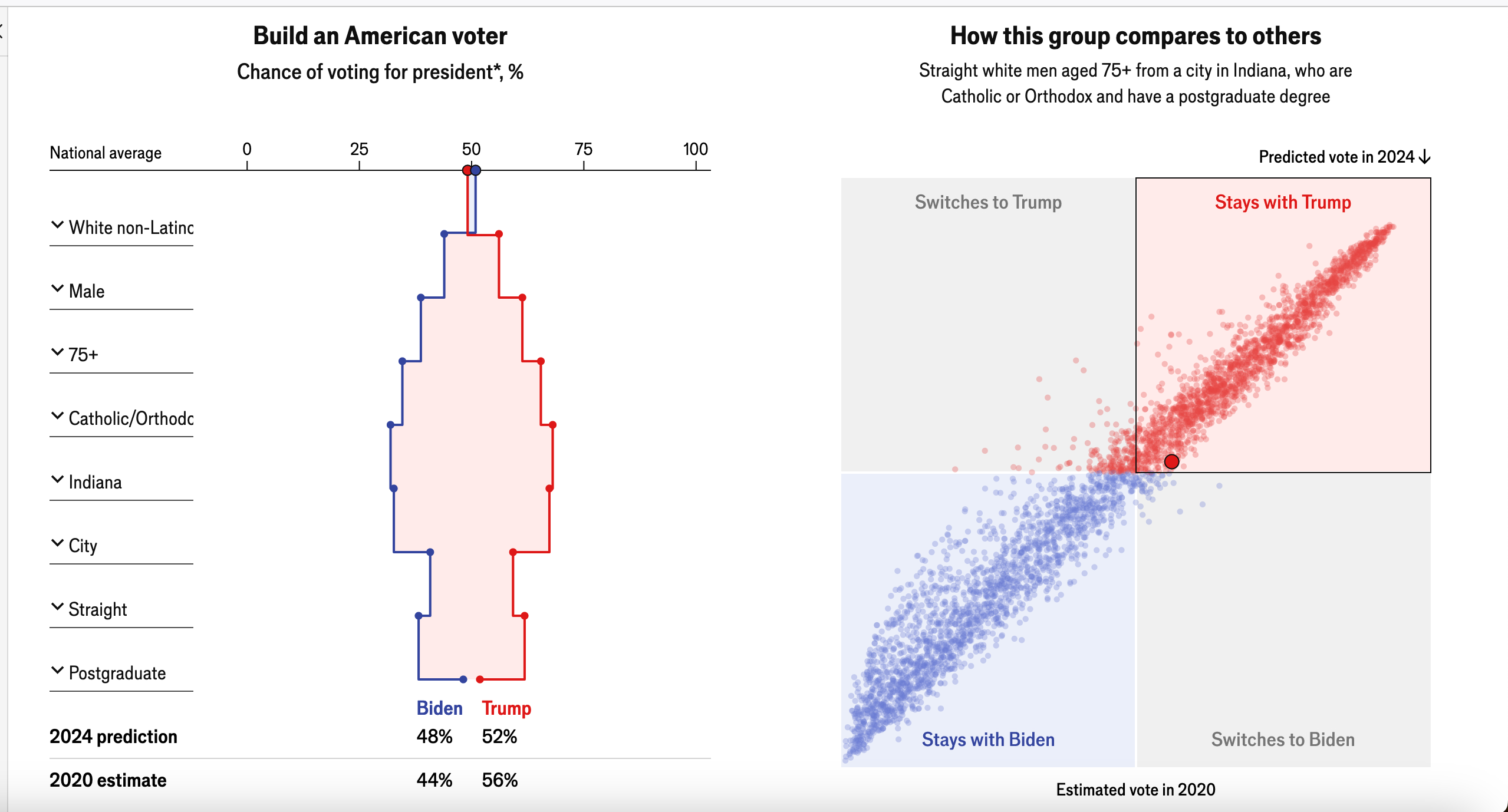
 Tipsy Teetotaler ن