Lutz, a historian of medicine at the University of Pennsylvania who has previously written a book about her experiences raising a son (now an adult) with severe autism, goes on to lay out a fascinating history of this concept in the first half of Chasing the Intact Mind. She focuses heavily on memoirs written by parents of children with autism, showing how at every stage in the modern history of our understanding of this condition, such parents have pined for — and in some cases gone to herculean and frequently pseudoscientific lengths to free — the “intact mind” supposedly lurking behind their severely disabled child’s troubled exterior. It’s often quite difficult for these parents to accept that their experiences raising kids with severe autism, which can involve the everyday management of violent tantrums, obsessively repetitive behavior, and problems with toileting and basic communication, reflect not a temporary challenge that will be overcome, with a “normal” kid waiting at the other end of a journey, but rather simply who their child is and will always be. But sometimes, unfortunately, that’s the case.
I selected this quote because it rings so true — even in the case fairly mild “on the spectrum” children. Of course, it doesn’t help if qualified doctors don’t give the blunt word “your child suffers Asperger’s Syndrome” (as was the current terminology for the child I”m thinking of). If doctors shilly-shally around with “we don’t know what’s wrong,” it’s understandable that parents would seek someone — heck, anyone — who says he does know.
Compelling governmental interests
[Escondido Union School District] contends that the government purpose of protecting gender diverse students from (an undefined) harm is a compelling governmental interest and the policy of non-disclosure to parents is narrowly tailored…. This argument is unconvincing. First, both the Ninth Circuit and the Supreme Court have found overly broad formulations of compelling government interests unavailing…. Second, keeping parents uninformed and unaware of significant events that beg for medical and psychological experts to evaluate a child, like hiding a gym student’s soccer concussion, is precisely the type of inaction that is likely to cause greater harm and is not narrowly tailored. ….
→ Working really hard to spin this:The New York Times is working very hard to somehow spin the migrant situation in New York and Chicago into being a problem Republicans caused. It’s hard. Biden is president and in charge of the border. These cities are all run by Democrats. But. . . there must be a way that Republicans created this. We got it! They hopedit into existence:
I hope you’re happy, GOP, with all the families sleeping in gyms in Staten Island, just like you planned.
…
In Toronto public schools, to make it easier to ensure the books are equitable, everything written in 2008 or earlier has been removed from shelves. For real. It’s just too risky to have old books that might have old ideas written by the wrong type of author. And so, to make the so-called book “weeding” process easier, we’re not even looking past 2008. Goodbye to The Very Hungry Caterpillar and goodbye to The Diary of Anne Frank (I’m sure there are others, but really, are there?). The world began in 2009. We have no knowledge of what came before that year. Why are you asking about it? Why do you need to read a book from before then? Is it your homophobia? Is it that you hate Latinos? I’m just taking notes because it’s interesting that you’re so interested.
…
… Meanwhile, in Nebraska, a detransitioner who had a double mastectomy at 16 is suing the hospital. Literally, all these clinics need to do is wait until the kid turns 18.
“The term ‘non-binary’ can be translated to Spanish as ‘no binario’ or ‘no binaria’ depending on the gender of the person,” – ChatGPT.
“Yale University has more employees than it does students. In fact, the school has 2.44 administrators for every faculty member, and one administrator for every four students. That’s the same ratio the government recommends for childcare of infants under twelve months,” – Greg Lukianoff and Rikki Schlott.
“I do realize, in retrospect, that I was too quick to take the official story — that [Covid] came from a wet market where wild animals were sold — at face value. If I am honest, I accepted it because it served my own motivated reasoning and reinforced my worldview … [Steve Bannon and others’] over-the-top conspiracies fed our over credulity; their ‘question everything’ led many of us to not questioning enough,” – Naomi Klein.
Although they differed on many matters, Dostoevsky, Danilevsky, and Leontyev did ultimately agree on one thing: the interests of humanity as a whole demanded that Russia not copy the West, but rather defend its own distinctive culture.
Speaking of which, half my kingdom to anyone who can non-violently wipe that cheesy grin off Vivek Ramaswamy’s face.
Pop starlets
Terry Mattingly tells of interviewing Allison Krause early in her career and asking why she was sticking with bluegrass and with her band Union Station (I believe she’s been offered a very big pop music deal). Her answer, basically, was “If I go to pop, will anybody be listening when I’m 60?”
A related question for young pop starlets is “Will anyone listen if I don’t show a lot of skin?” For very few (I’m looking at you, Taylor Swift) is the answer “yes.”
(And that’s not a “clean bill of health” for Swift. I don’t know her oeuvre well enough to give it more than one tepid thumb-up.)
Self-refuting
[I]f you want to know how NOT to start a letter defending yourself from accusations of antisemitism, you can use this letter as a model. After noting that the festival has been harshly criticized by “the Jewish Federation and the ADL,” the organizers have this to say:
unlike our detractors, we do not operate in the shadows nor among elite decision makers and funders. Rather, we value transparency and public access, accountability, and scrutiny. We are also acutely aware of the power disparity between these highly funded, connected and organized Zionist organizations versus our small cultural institution run by volunteers and student organizations, most of them Penn students.
Talk about self-owns… The organizers are so clueless about antisemitism that they engage in classic anti-Jewish tropes while defending themselves from charges of antisemitism. Which kinda undermines anything else they have said or will say in their defense.
What the liturgy of the mall trains us to desire as the good life and “the American way” requires such massive consumption of natural resources and cheap (exploitive) labor that it is impossible for this way of life to be universalized.
We did not downsize as a gesture of protest against consumer society. We simply found ourselves with a reduced income and set about discovering the things we could do without. We were helped by situating ourselves in a place where it is quite difficult to spend money in the ways we spent it before. Patmos did not have available the range of goods that eat up income at an expanding rate so that you never feel you have quite enough. And doing without them has the therapeutic effect of slowing you down. It takes time to hand-wash clothes or to jump up and down on sheets, rinse them, wring them out and hang them on a line between trees in the garden; to top and tail the beans; to mix, whip and grate by hand; to haul up buckets from a well. A life without gadgets develops a different, slower rhythm. And, oddly, more time seems to be available in a life without labor-saving devices.”
Peter France, Patmos: A Place of Healing for the Soul
Maybe lack of principles isn’t all bad …
Even if I don’t intend to keep the same pace as people here, I often just have to. In India, there’s none of that kind of stuff. The difference is as great as that between getting on a slow local train and getting on the bullet train.” When I ask her what she thinks the reason is, she says, “Well, the effect of the heat is one thing: India is hot. But don’t you think the principles they have are different? The focus of thinking in Japan is economics, or it has become that way recently. Even politics is more like a form of economics than an attempt to realize an ideal society. Politicians don’t have any principles in Japan.”
The other day, the Free Press sponsored a public debate on the question of has the Sexual Revolution failed? Rob Henderson writes:
…
The sexual revolution obviously succeeded in its aim: more freedom.
The answer to the debate description (“The sexual revolution promised liberation. Fifty years on, we ask: has it delivered?”) is obviously yes.
But the reason why a debate makes sense is because many people conflate liberation (freedom) with happiness.
The revolution has unquestionably increased freedom. But it also made people less happy. Many people, though, anticipated that greater freedom would necessarily bring greater happiness.
Sadly the world doesn’t work that way.
We can’t have everything good all at once. We can have some good things, but we can’t have all good things at the same time.
…
So what’s more important, happiness for children, or freedom for adults? Our society has decided, and there’s no going back.
At the debate, there was a lot of attention devoted to discussing the impact of the sexual revolution on men and women—whether the revolution failed women, or failed men, or helped men more than women, or helped women more than men. Nobody asked whether the sexual revolution failed children. People already know the answer.
The sexual revolution gave rise to new laws and cultural norms that made divorce and remarriage easier. This was not without cost.
The closest anyone came to discussion how children’s lives have changed in the wake of the revolution was Anna Khachiyan, who mentioned the Cinderella Effect.
Children living with one genetic parent and one stepparent are approximately 40 times more likely to be abused than children living with both genetic parents. This greater rate occurs even when controlling for poverty and socioeconomic status.
I disagree that “there’s no going back.” I have no quick fix or straight path back, but I suspect we will somehow go back — some day. But there are going to be a lot of children irreparably damaged meanwhile, because the sexual revolution is another of those luxury beliefs that the elites can more-or-less survive but which devastates millions when it trickles down.
Dreher, musing on the topic agrees with Henderson: “We’re going to have to ride this thing out till the collapse.” I’m not sure that’s all that different from what I suspect. I just deny that “the collapse” is the end of the world; it may be a pivot-point. Apropos of this theme, which I’ve sounded several times recently, see Nathaniel Peters, Living Well at the End of a World.
Children’s happiness, adult freedom
So what’s more important, happiness for children, or freedom for adults? Our society has decided, and there’s no going back.
At the debate, there was a lot of attention devoted to discussing the impact of the sexual revolution on men and women—whether the revolution failed women, or failed men, or helped men more than women, or helped women more than men. Nobody asked whether the sexual revolution failed children. People already know the answer.
The sexual revolution gave rise to new laws and cultural norms that made divorce and remarriage easier. This was not without cost.
The closest anyone came to discussion how children’s lives have changed in the wake of the revolution was Anna Khachiyan, who mentioned the Cinderella Effect.
Children living with one genetic parent and one stepparent are approximately 40 times more likely to be abused than children living with both genetic parents. This greater rate occurs even when controlling for poverty and socioeconomic status.
[W]hile 91 percent of college-educated conservatives agree that “children are better off if they have married parents,” only 30 percent of college-educated liberals agree, according to a report to be released next week by the Institute for Family Studies.
…
One stunning and depressing gauge of racial inequity in the United States: The study found that 62 percent of white children live in low-poverty areas with fathers present in most homes, while only 4 percent of Black children do.
Nicholas Kristof. Every once in a while, it’s nice to see conservatives so clearly a part of the “reality-based community” with liberals off in Delusionland.
Gender vs. Sex
While 66% of black Democrats say a person’s gender is their sex determined at birth, only 27% of white Democrats say the same.
Occasionally, something like this pops up and makes me realize why some voters consider “Republican” Donald Trump the lesser evil compared to any Democrat.
Why such a hack?
Everyone knows that Kamala Harris is, as one writer put it, a “hack with terrible political skills.” Peggy Noonan, has what seems like a plausible suggestion of how someone who has ascended so high could remain such a political klutz:
She is proof that profound and generational party dominance in a state tends to yield mediocrity. Politicians from one-party states never learn broadness. They speak only Party Language to Party Folk. They aren’t forced to develop policy mastery, only party dynamics. They rely on personal charm but are superficial. Going national requires developing more depth, or at least imitating depth. She didn’t bother to do that.
Note: Gavin Newsom will be just as bad if elevated to national office.
A fundamental reality of human existence is that vice often leaves virtue with few good options. Evil men can attach catastrophic risks to virtually any course of action, however admirable.
You can read most of my more impromptu stuff here (cathartic venting) and here (the only social medium I frequent, because people there are quirky, pleasant and real). Both should work in your RSS aggregator, like Feedly or Reeder, should you want to make a habit of it.
“What is truth?” said jesting Pilate, and would not stay for an answer. [Francis Bacon]
…
In 1990, soon after the Ayatollah Khomeini pronounced his fatwa against Salman Rushdie, the novelist was interviewed by Mike Wallace for 60 Minutes. At one point Wallace asks Rushdie why he would write a story (The Satanic Verses) in which the wives of the Prophet are prostitutes in brothels.
Rushdie: Well, it’s, of course, not his wives in brothels. I mean, let’s be accurate about this. It’s not his wives in brothels.
Wallace (skeptically): What is it?
Rushdie: There is a brothel in the imaginary city in which the prostitutes take the names of the prophets’ wives. Meanwhile, it is quite clearly stated the prophets’ wives are somewhere else being perfectly well behaved.
Wallace: Yes. But it’s in the eye of the reader. It’s in eye of the beholder. And if you are a faithful Muslim…
Wallace is quite committed to this “eye of the beholder” take. The author sees it one way, the readers another—who are we to judge? When Rushdie persists in trying to correct the lie about his book, Wallace tries to frame it as a matter of the author’s “intention.” But Rushdie responds, “If I’m accused of calling the prophets’ wives whores, I didn’t do it.” At which point Wallace simply changes the subject, never deigning to acknowledge that truth and falsehood are at stake here—and that the truth is easily ascertained, if one can be bothered to seek it. Journalistic bothsidesism can be a kind of jesting, too.
I knew not to try to quantify key aspects other than climate change in my research because it would dilute the story that prestigious journals like Nature and its rival, Science, want to tell.
This matters because it is critically important for scientists to be published in high-profile journals; in many ways, they are the gatekeepers for career success in academia. And the editors of these journals have made it abundantly clear, both by what they publish and what they reject, that they want climate papers that support certain preapproved narratives—even when those narratives come at the expense of broader knowledge for society.
To put it bluntly, climate science has become less about understanding the complexities of the world and more about serving as a kind of Cassandra, urgently warning the public about the dangers of climate change. However understandable this instinct may be, it distorts a great deal of climate science research, misinforms the public, and most importantly, makes practical solutions more difficult to achieve.
…
In theory, scientific research should prize curiosity, dispassionate objectivity, and a commitment to uncovering the truth. Surely those are the qualities that editors of scientific journals should value.
In reality, though, the biases of the editors (and the reviewers they call upon to evaluate submissions) exert a major influence on the collective output of entire fields.
Instead of slowing down information by reviewing and testing it before passing it along, digital media rewarded instantaneity and impulsivity. The Constitution of Knowledge checks before transmitting. It squelches bad information by filtering it out and slowing it down. By contrast, digital networks disseminate information at the speed of light and without regard to quality. They have given new substance to the old saying that a lie circles the world before truth gets its boots on.
The ecomodernist approach of Regenesis relies on a mechanistic understanding of humanity. The presumption is that humans are merely fleshy machines that can adapt to flourish in any environment as long as their basic material needs are met. That doesn’t match with most people’s experience of life.
If this is accurate, then the ecomodernists are, um, not the kind of people I want in charge of things.
“Learning outcomes”
In a nutshell, the two learning outcomes for our homeschool are to pursue the joy of learning and to cultivate human flourishing. When is the last time you saw these goals listed as learning outcomes in your local public school?
There is more. Until recently walking away from academia, I worked as a professor of History and Classics for fifteen years, teaching undergraduate and graduate students. Repeatedly, some of the best students I have taught have been homeschooled. What set them apart was precisely the spirit of bold curiosity that I see in my own kids: that bright light in their eyes, an interest in asking questions and in pursuing rabbit trails independently.
Public school curricula, with their strictly set state standards and increased emphasis on standardized testing, simply cannot allow this sort of flexibility. As a result, no matter how amazing the teachers are (and, believe me, many are truly amazing!), students do not get the opportunity to cultivate curiosity, wonder, and a genuine love of learning. More control and oversight is not helping American public schools, and it certainly would not help homeschoolers.
My near neighbor, Purdue University, now has both the World’s Largest Drum and its smallest, clocking in at 50 microns and manufactured on campus in the nanotechnology center.
Is the congressional elder abuse hotline disconnected?
Someone help Mitch McConnell. He has experienced a couple of freezing episodes on camera, with the most recent lasting about 30 seconds. I’m not a doctor. I don’t know what these are. But I know that America’s elders are being abused right before our eyes. I know that Dianne Feinstein, whose daughter has power of attorney over her legal affairs, should not be a sitting senator. Joe Biden’s speech in Maui, when he finally showed up, was bizarre. There are 115 confirmed dead with more than 100 still missing, a tragedy compounded by disastrous local politicians, and Biden compared it all to his small kitchen fire: “I don’t want to compare difficulties, but we have a little sense, Jill and I, of what it was like to lose a home. Years ago—now 15 years—I was in Washington doing Meet the Press. . . . [L]ightning struck at home on a little lake that’s outside of our home—not a lake, a big pond—and hit a wire and came up underneath our home into the. . . air conditioning ducts. To make a long story short, I almost lost my wife, my ’67 Corvette, and my cat.”
“Not the ’Vette!” shouted the people who lost homes and loved ones.
If our parents or grandparents acted this way, we would take away the car. Let alone the country.
Talk is cheap, caring costly
The American left has never come up with a solution to the very basic conundrum that they want open borders but also robust social services. Up until now, the conflict has never come to a head because folks could just point at Trump or at Southern politicians and talk about how racist those Republicans are to enforce the border. But now it’s Biden. And now immigrants are coming en masse to New York City, asking about those robust social services. And now someone actually has to do the math.
As a capitalist monster, I have a solution: fully open borders but no social services, just survival of the fittest, America as the world’s Thunderdome. VIP boxes for the tech titans and popcorn stands to your left. No? Why is everyone hissing?
In school gender wars news
An education minister in Ontario, Canada, has made a U-turn and now says indeed, parents should be told when a child starts using a new name and pronouns at school. Meanwhile, in Jefferson County, Colorado, we’re seeing the opposite: the teachers union is coaching educators on how to hide evidence about collecting information on student sexuality and gender identity.
From CBS: “An email from Jefferson County Education Association (JCEA) to teachers says, ‘if you do a questionnaire, please make it a paper and pencil activity—any digital records are more permanent and may be requested under federal law.’ The union also encouraged teachers to ‘make your notations about students and not hold on to the documents.’ ”
If you see the Amazon guy delivering books on homeschooling to my house, no you didn’t.
Culture generally
Culture war
War and culture go together like a gore and vulture, right?
The discussions over woke and anti-woke and culture wars are soul-sucking to me. I think it’s good to have specific debates over affirmative action in college admissions, the problems with boys, the way we teach history — and that’s terrific; and we’ve had that on this podcast and we should continue to have it — but when we talk about the culture war, that’s not about debating issues. The culture war is about joining a side. It is about picking a team. And the problem with picking a team in the culture wars is that you inevitably end up with lunatics on your team, right, and the craziest ones are often the captains of the team. And they might want to go much further than you might want to go, but y’know, you’re on the team, and you don’t want the other side to win, so, y’know, you end up supporting what[ever] the team is defending.
Boy, does that ever nail my feelings. If you cared to, you could find several people who would say (if you asked it subtly) that I’m a lousy team player, or even that I’m a Judas. Despite the fact that I’d never even joined their team, I was a lawyer, and articulate, so they claimed me.
Easily the stupidest position the “team” ever took was to demand that the local rag drop the For Better of Worse comic strip (after it introduced as a very minor character a gay middle-schooler), with misleading statistics to show that the rag was out of step for not dropping it. I happened to be the paper’s attorney at the time. I wrote a letter to the editor supporting this most insightful and humane strip. That’s when I got a semi-anonymous call that mentioned 30 pieces of silver (semi-anonymous because it was the captain’s mother, and I knew the captain’s maiden name).
Restoring souls
Garrison Keillor almost went all season without taking in a ball game, but he’s got tickets (game and flight from New York) to a Twins game Wednesday:
I’ll sit behind the visitors’ dugout at the ballpark and my sense of order will be restored, same as when I recite the Twenty-third Psalm, it still says that the Lord restoreth my soul and my cup runneth over, it doesn’t say He awakens my consciousness or that I resonate with authenticity.
[T]o read reviews and thinkpieces and social media, you’d think that [the new movie] Bottoms was emerging into a culture industry where the Moral Majority runs the show. One of the totally bizarre things about contemporary pop culture coverage is that the “lesbian Letterboxd crowd” and subcultures like them – proud and open and loud champions of “diversity” in the HR sense – are prevalent, influential, and powerful, and yet we are constantly to pretend that they don’t exist. To think of Bottoms as inherently subversive, you have to pretend that the cohort that Handler refers to here has no voice, even as its voice is loud enough to influence a New York magazine cover story. This basic dynamic really hasn’t changed in the culture business in a decade, and that’s because the people who make up the profession prefer to think of their artistic and political tastes as permanently marginal even as they write our collective culture.
Essentially the entire world of for-pay movie criticism and news is made up of the kind of people who will stand up and applaud for a movie with that premise regardless of how good the actual movie is. And I suspect that Rachel Handler, the author of that piece, and its editors at New York, and the PR people for the film, and the women who made it, and most of the piece’s readers know that it isn’t brave to release that movie, in this culture, now …
…
“Anything involving LQBTQ characters or themes is still something that’s inherently risky and daring in the world of entertainment and media, in the year of our lord 2023” is both transparently horseshit and yet socially mandated, in industries in which most people are just trying to hold on and don’t need the hassle.
…
[F]or 15 years as a professional writer I’ve watched people write things that were in fact incredibly safe, then get lionized by their peers for their bravery. Again and again and again. I’ve always thought the petty hypocrisy was plain; if you’re getting celebrated by a huge number of your peers for a piece you wrote, how could it have been brave? These pieces might have been good, true, correct, necessary, sharp, funny, or wise, and that’s enough. Brave isn’t everything.
My answer would be Lyle Lovett, That’s Right, You’re Not From Texas. I wouldn’t bother with 19 more. I obviously am unworthy of the Presidency.
Tennis balls
Some former high-profile [tennis] players have traded in a racket for a gun, including Sergiy Stahovsky, a Ukrainian who famously beat Roger Federer in 2013. “Stakhovsky is a member of special operations for the Security Service of Ukraine. His unit, he says, is heavily involved in the fighting and deploys a range of weapons—mortars, javelin and stinger missiles, drones. He told me that he was vacationing in Dubai with his family when the war started. The city was hosting a men’s tournament that week. Stakhovsky had not lived in Ukraine since he was 12. But with his country under attack, he felt obliged to join the war effort. He left Dubai and arrived in Kyiv on Feb. 28, four days after the Russians invaded. “I did not have any other option,” he said. “I could not imagine sitting outside of Ukraine and screaming for other people to help Ukraine.”
Marie Antoinette probably never said “Let them eat cake”. But she did provoke popular fury by building a model peasant village at Versailles, where she would retire to escape the pressures and opulence of court life, and even sometimes dress up as a milkmaid for picnics or parties.
If the 21st century has an aristocracy on a par with that of Versailles, it is surely the Silicon Valley tech elite. And their equivalent of Marie Antoinette’s toy farm is Burning Man: a utopian week-long summer festival in the Nevada Desert, whose culture captures a distinctive West Coast liberal ideal — and which is, in the modern context, every bit as artificial and tone-deaf as le hameau de la Reine.
… sustaining Black Rock City requires considerable material effort under the bonnet … Sometimes described as an experiment in “radical self-sufficiency”, Burning Man is perhaps more accurately an experiment in creating a radical post-scarcity society by having done all your shopping ahead of time.
The “playa” where the event takes place has no shelter, no water, and no greenery. Nothing is left there between festivals, meaning all infrastructure a temporary, hauled in and assembled for the purpose. Depending on your actual bank balance, this means after the $575 ticket price you must buy or rent everything you need for an encampment, band together with friends, or at minimum raise the funds needed for membership in one of the annual larger pre-existing themed camps. You must pre-load with food, water and shelter. Plus you’ll have more fun if you also take trinkets and treats for barter, fun costumes to wear, drugs, and perhaps a bicycle to get around. All this is then hauled out onto the ring-fenced blank slate of a dry Nevada lake-bed, so festival-goers can enjoy a magical, week-long experience of life without buying or selling.
In other words: all this gift-economy joy is enabled by participation in the regular cut-throat capitalist one. And enjoying it at all is predicated on having enough surplus resource in your life that you can afford to blow at least a few grand on contributing to a colossal, ephemeral simulacrum of no longer needing money at all.
I thought I wasn’t interested in burning man, but then Alan Jacobs deftly pointed out that Harrington is really writing about self-delusion and simulacra.
Intuition
AI without the ballast of intuition represents the tyranny of pure analysis. Unleashed, and without intuition to give it a more profound understanding of humanity, AI stands ready to extend the power of reductive and often dangerously misleading concepts.
Ronald W. Dworkin in Hedgehog Review, H/T Alan Jacobs on micro.blog
It could happen again
I close, as I began, with Hedgehog Review 24.3, an issue devoted to “Hope Itself”:
A thousand times in history—a million, more likely—visionaries, prophets, artists, and philosophers have wandered away from the social world that made them and sat themselves in nature, to see what could be seen when you stop demanding that nature echo back precisely the creeds of your community.
…
The liberal establishment has gnashed its teeth, shrieked, buried its head in the sand, blamed its comeuppance on omnipotent Russian bots, anything to avoid going back to reality and seeing what it might have missed, how its cultures have been blind, how they could be refreshed.
Ian Marcus Corbin, Deep Down Things in a Time of Panic, in Hedgehog Review 24.3, p. 20.
(Having recently finished reading the massive Black Lamb and Grey Falcon (Rebecca West), I’m doing some catch-up on journals like Hedgehog Review, whence two quotes — so far)
A fundamental reality of human existence is that vice often leaves virtue with few good options. Evil men can attach catastrophic risks to virtually any course of action, however admirable.
You can read most of my more impromptu stuff here (cathartic venting) and here (the only social medium I frequent, because people there are quirky, pleasant and real). Both should work in your RSS aggregator, like Feedly or Reeder, should you want to make a habit of it.
It is a monstrous piece of bogus liberalism to deny that industrialism has done much for the highest interests of humanity by raising the standard of living. It is as foolish as to deny the harm it has done them by not raising it enough, by poisoning the skies and fields with cheap cities, and taking away the will of its employees by keeping them in political and economic subjection.
[I]n the American university system the vast expansion of DEI apparat simply follows the previous (and not yet complete) expansion of the mental-health apparat, all of which siphons resources away from the teaching of students. But that’s okay, because almost no one — least of all students and their parents — thinks that learning is the point of university. The university is for socialization, networking, and credentialing, and I expect to see a continuing expansion of the bureaucracies that promote these imperatives and a corresponding contraction of the number of teachers. And anyway, insofar as teaching and learning remain a burdensome necessity, if an annoying one, much of that work can be outsourced to ed-teach products and, now, to chatbots.
Genuine teaching and genuine learning will always go on, but for the foreseeable future it will happen at the margins of our universities or outside the universities altogether. Meanwhile, the symbolic work of the party-state will grind on ….
This meant bringing together supporters and opponents of slavery. (Not free and slave states: in 1776, every state recognized slavery. The Betsy Ross flag shows us thirteen stars in a circle, and every star represents a slave state.) Some of the colonists disliked slavery; others were very attached to it. In consequence, the Declaration adopts a political theory that has no direct implications for slavery: it is about the rights of insiders and focused on the question of when the governed may reject the legitimate political authority of their governors.
What the 1619 Project is, really, is the extreme progressive version of the standard story: it tells us that we have fallen further short of our ideals, more frequently, more consistently, and more deliberately than we realize. Yet it still tells us that “our founding ideals” were written in 1776—and it is still a profession of faith in them, of faith in an America we can work to perfect.
From Tuesday more motorists must pay to drive in London. The Ultra-Low Emissions Zone—in which a surcharge applies to high-polluting vehicles—will be expanded to all 32 boroughs of Britain’s capital. The £12.50 ($15.75) daily levy will cover diesel cars and vans that do not meet “Euro 6” standards (typically those bought before 2015), and cars that don’t meet “Euro 4” (which typically predate 2006). A scrappage scheme has been introduced to help owners of non-compliant cars buy greener vehicles.
London’s mayor, Sadiq Khan, a member of the Labour Party, argues that the move will improve health, especially of children. But it has provoked a fierce backlash, particularly among drivers who live in peripheral parts of the city. That has been seized upon by Britain’s ruling Conservative Party, which has had a hard time winning votes in London in recent years. The party is now portraying Labour as anti-driver. Some vigilantes have vandalised the cameras used to enforce the clean-air scheme.
The Economist’s World in Brief 8/29/23. A thousand takes on this story could be, and probably are being, written. I noted it for the trajectory of western governments and to note that another publication might have used “protesters” where the Economist chose “vigilantes.” After all, it’s “mostly peaceful,” isn’t it?
Travel
People travel to faraway places to watch, in fascination, the kind of people they ignore at home.
Professor Lynn Wardle has shown that the American Law Institute’s Principles of the Law of Family Dissolution approach to fault has serious inconsistencies. If one party squanders family wealth, this fact can be considered in the property settlement, almost like an “economic fault.” Allegations of assault, battery, or abuse of the children can be handled as criminal acts.
So, if the ALI’s Principles still effectively permit the consideration of economic faults and abuse faults, what does no-fault amount to? It means that the major fault removed by “no-fault” was adultery or sexual infidelity.
(I gritted and ground my teeth through this book not because of its substance but because of a style I found grating. Caveat emptor.)
Tortious spam filters?
U.S. District Court Judge Daniel Calabretta granted Google’s motion to dismiss a lawsuit filed by the Republican National Committee (RNC) claiming the company’s Gmail spam filter unfairly suppressed RNC messages. “While it is a close case,” the judge wrote, “the court concludes that … the RNC has not sufficiently pled that Google acted in bad faith in filtering the RNC’s messages into Gmail users’ spam folders, and that doing so was protected by section 230.” As Sarah wrote last year, Republican fundraising appeals are likely flagged by spam filters at higher rates due to abuse of email lists.
The prison population roughly doubled during Reagan’s years in office, from 329,000 Americans in jail in 1980 to 627,000 in 1988. This trend accelerated during the Bush and Clinton presidencies. By 2008, there were 1.6 million people in American prisons, with the US leading the world in total prison population and imprisonment rate.
Jon Ward, Testimony. That should be enough to make anyone think twice, two or three times, about how “free” we really are.
Politics
What is this “white trash”?
Once, coming back on his plane with a billionaire friend who had brought along a foreign model, Trump, trying to move in on his friend’s date, urged a stop in Atlantic City. He would provide a tour of his casino. His friend assured the model that there was nothing to recommend Atlantic City. It was a place overrun by white trash. “What is this ‘white trash’?” asked the model. “They’re people just like me,” said Trump, “only they’re poor.”
Michael Wolff, Fire and Fury (I have not read this book but ran across this quote anyway.)
Manly men
[Ted] Cruz is one of the many singing the totally-normal-and-not-at-all-weirdly-homoerotic praises of Donald Trump’s recent Fulton County Jail mugshot: “Trump’s mugshot where he looks like a pissed off and angry badass is an iconic historic photo. It’s going viral, and it’s making a heck of a statement.” Jesse Watters of Fox News, affirming his “unblemished record of heterosexuality,” said of Trump: “He looks good and he looks hard.”
In reality, Trump looks like the Grinch after a makeover performed by John Wayne Gacy—I’d love to know what the last man booked into that jail while wearing that much makeup was charged with, and I’ll bet it was hilarious—but it is of interest to me what these guys with their unblemished records of heterosexuality think looks and seems tough. Donald Trump is a guy who has never lifted anything heavier than money and blasts Broadway show tunes and the Village People at his rallies for totally normal people who are by no means members of a cult. I don’t know how much time you can spend dancing to “Macho Man” before your record of heterosexuality gets a blemish, or at least a footnote. And then there’s the inevitable playing of the music from Cats.
The end of the world as we know it is not the end of the world.
You can read most of my more impromptu stuff here (cathartic venting) and here (the only social medium I frequent, because people there are quirky, pleasant and real). Both should work in your RSS aggregator, like Feedly or Reeder, should you want to make a habit of it.
Thick travel has made me realise how much chaos we have here in the US, at a spiritual level, compared with the rest of the world. We are becoming a thin culture, obsessed with the surface, more and more in denial about the importance of what is beneath. We have forgotten that we need webs of meaning, eroding so many of them. People are left trying to cope with what we humans are not equipped to cope with — the isolation and chaos that follows from meaninglessness.
… My three years of thick travel, of trying to understand other cultures, has given me a much clearer picture of the problems here in the US. It’s made me aware just how deep they are. Our culture is harsh and transactional; it doesn’t respect the very human need for a deeper sense of meaning. The result is our epidemic of suicides, overdoses, and other early deaths.
Worse still is that culture, while easy to erode, is very hard to rebuild once gone. You can’t legislate back meaning. If thick travel teaches you anything, it’s that people don’t work that way.
It’s that mythical place where New World people come to lead different lives. For centuries, and no matter how much it has changed, Europe, for us, has meant art and architecture, science and philosophy, fashion and fame, sex and perfume — and some connection to the past that, in an unbridgeable way, is unavailable to us back home … To come abroad is to understand yourself as a product of your own culture, and to see just how specific that culture is. So much of what I thought of as my personality — whatever made me different from other people — turned out to pale in comparison with what made me similar to other people, especially other Americans.
I’ve written here about how living in a small country for a length of time has revealed to me how the US throws its weight around in ways that strike me as bullying. Just today The Interceptreports on a secret Pakistani document purporting to reveal US pressure to remove prime minister Imran Khan (who was, in fact, forced from office) to punish him for being neutral towards US policy in Ukraine. That kind of thing really lands when you start to see the world through the eyes of others.
…
I meet young Europeans from time to time who can’t wait to get out of here and move to America, where they can have the fantasy life they imagine they can’t here. I try to dissuade them from their false impressions — its hard, for example, to make them understand how impossible most of the US, outside of a handful of East Coast cities, is to navigate without a car — but in the end, they should follow their dream if they have the opportunity to do so. What I find so interesting is that the thing that draws me to Europe — the weight of its history and culture — is precisely the thing that they want to escape by going to America. Who am I to say they are wrong?
…
[NB]one of these countries can absorb immigrants like America can, because the cultures are way too thick. Any American who thinks that European resistance to mass migration is due to nothing but racism is a fool who ought to have the experience of living here for a time. Assimilation is far, far more difficult here in these thick old cultures than in the thin culture of the United States. America is very different that way; most of the world is like Europe.
Yup again, though one need not live abroad to see the USA as others see it — something I began trying to do in the early 1990s by buying a world band radio when I was too poor (it’s all relative) and busy to travel. One of the blessings of the internet is the ability to get those other perspectives without leaving your armchair. You just need to care to do it.
Too good to last
The students weren’t allowed to take notes. At this stage the experience itself was more important than getting clear ideas and definitions down on paper for later. They had first of all, most of all, to delight and wonder.
…
Despite appearance, however, in their various meditations the professors were gently leading the students toward two goals. First, by pointing out so much beauty, they were bringing students in an experiential way toward the normal trust that the real is really real, delightful, mysterious, interesting—to wonder, as the program’s motto says …
The second goal was to bring students to the recognition that the Western cultural heritage could be a fountain from which to draw and not just a system to be dismantled …
Despite its popularity, a program so unapologetic in its embrace of traditional thought, values, and methods could not but find itself out of step with the priorities, agendas, and specializations of the modern research university. What’s more, in the eyes of administrators, an alarming number of students were converting to Catholicism. Some had even entered the monastic life! According to a summary report from an investigative committee, the program exhibited “a lack of tolerance for divergent points of view.” Through a series of bureaucratic manoeuvres and internal investigations, the program was slowly sidelined in the university curriculum and stripped of resources. Without the university’s support, and amid continuing hostility to its aims and purposes from administrators and professors, the program was shut down in 1979, not ten years after it had begun.
This week, I watched videos of people literally burning Harry Potter books, like latter-day Nazis, in the cause of transgender liberation. It’s safe to say, I think, that many of these people have lost their minds — just by staying online. And they not only think they’re perfectly sane; they think they’re heroes.
The Washington Post opined that anti-LGBTQ+ moves in the Middle East were “echoing” those of the American culture wars—as if Turkey, Saudi Arabia, and Pakistan had been listed by the Human Rights Campaign as favored vacation destinations until their ruling elites started reading the website of Moms for Liberty.
Idiocy is the female defect: intent on their private lives, women follow their fate through a darkness deep as that cast by malformed cells in the brain. It is no worse than the male defect, which is lunacy: they are so obsessed by public affairs that they see the world as by moonlight, which shows the outlines of every object but not the details indicative of their nature.
Aaron Sibarium, a rising star reporter for The Washington Free Beacon, recently posted, “Whenever I’m on a career advice panel for young conservatives, I tell them to avoid group chats that use the N-word or otherwise blur the line between edgelording and earnest bigotry.”
…
To understand the cultural dynamic, I want to introduce you to an obscure online concept, no enemies to the right. A tiny fringe adopts this mind-set as a conscious ethos, but for a much larger group, it is simply their cultural reality. In their minds, the left is so evil — and represents such an existential threat — that any accommodation of it (or any criticism of the right) undermines the forces of light in their great battle against the forces of darkness. Attack the left in the most searing terms, and you’ll enjoy the thunderous applause of your peers. Criticize the new right, and you can experience a vicious backlash. The result is a relentless pull to the extremes.
… To the new right, their opposition to the left is so obviously correct that only moral cowardice or financial opportunism (“grifting”) can explain any compromise.
I don’t think there’s anything “obscure” or “online” about “no enemies to the right.” It’s been around long enough to have a French equivalent, pas d’ennemis à droite, and I suspect that the English version derived from the French. Moreover, don’t forget pas d’ennemis à gauche.
One who, as of mid-2023, insisted vehemently that an individual cannot change race, which is wholly a fictitious social construct, but can change “gender.”
(This definition expires 12/31/23 if not repudiated sooner by the progressive hive-mind.)
Legalia
Pro tip
I suggest that you skip commentary on the latest Trump indictment (Fulton County, Georgia) for at least 24 hours, to August 16, unless you love being misled by rash hot-takes.
After all, the indictment is very long, factually and legally, complicated, based in part on a state RICO law that differs from Federal RICO and probably from any other state RICO.
We really need a top Georgia criminal lawyer who isn’t on either team in this indictment to suss out the RICO implications in particular, don’t we?
Fraud?
In response to those who say (in response to the latestnext-to-latest federal Trump indictment) that “fraud” is limited to situations involving money or property; or who say that, “yes, there are cases holding that “fraud” is broader than that in §371, but we think this Supreme Court has been narrowing broad criminal statutes and we think they’ll narrow “fraud” in §371 if Trump is convicted under it”; I go out on a limb to say:
Lenity and other theories notwithstanding, if the Supreme Court narrows “fraud” under §371, it won’t be in reviewing a conviction of Donald Trump for his January 6 shennanigans. His behavior was just too wicked and the risk to the nation too great.
This is my foray into legal realism. And I don’t say there will be no dissents from upholding the (hypothetical) conviction.
Book bans
I wish they’d ban my book Cheerfulness so that more people would read it. I wrote it because the America I know and love is upbeat, enterprising, amiable to a fault, partial to jokes, and the mood of fracture and trauma seems fictitious to me, a far cry from the country that attracted our immigrant forebears. They didn’t cross the border in the hopes of taking vengeance.
A telltale sign of the dishonest interlocutor is if they oppose your right to question them. Politicians who refuse interviews with the press, public health officials who demonize dissenters, activists who demand the muzzling of opposing opinions—such people are simply not to be trusted.
“You mean you’ve engineered the disturbances?” said Mark. “That’s a crude way of putting it,” said Feverstone. “But–what’s it all for?” “Emergency regulations,” said Feverstone. “You’ll never get the powers we want at Edgestow until the Government declares that a state of emergency exists there.”
Most Times reporters now also rely on some form of encrypted communication, particularly messaging apps like Signal and WhatsApp or the emailing service ProtonMail, to keep their sources and conversations confidential.
That is a remarkable shift. Encryption technologies became popular only a few years ago, after the former government security contractor Edward Snowden revealed the extent of what the United States government was doing to surveil its own citizens.
I’d love to make Signal my default messaging app and Protonmail my default email app, but too few people, inexplicably, have adopted them. (Hint, hint.)
If you say you don’t trust the government but aren’t encrypting your online communications, I don’t believe you.
Subsidiarity in a nutshell
When government takes over a space formerly held by intermediating institutions or citizens acting through the democratic process, they promise dispassionate expertise, neutrality and justice. But what they deliver is a replacement ideology and a big stick to enforce adherence.
… until I realized that anyone who answered at all (i.e., accepted the premise that Jesus fits on a political scale) is of dubious sanity regardless of the answer.
I want to add “orthogonal” to my vocabulary, and “Jesus is orthogonal to politics as we conceive them” seems apt.
Postscript
Failure of imagination
The problem is that we cannot imagine a future where we possess less but are more.
The end of the world as we know it is not the end of the world.
You can read most of my more impromptu stuff here (cathartic venting) and here (the only social medium I frequent, because people there are quirky, pleasant and real). Both should work in your RSS aggregator, like Feedly or Reeder, should you want to make a habit of it. I’m even playing around a bit here, but uncertain whether I’ll persist.
[A]s has been the case since Mr Trump’s political rise began, the surest protection against his return to the White House would be for other Republican leaders to tell the truth, as [key GOP] state officials did after the 2020 election.
The more I think about it, the more I view Mitch McConnel’s wimping out on the second Trump impeachment as a terrible, terrible chapter in a distinguished political life. We could have avoided this narcissistic madman running for office again had the GOP any real balls.
Scienter and Trump’s deranged mind
In criminal law, “scienter” involves knowledge and intention. Premeditated murder is more serious than involuntary homicide, for instance.
Against that background, I think Peggy Noonan put her finger on something that could become important in the prosecution of last Tuesday’s indictment of Donald Trump”
It is argued that the indictment goes, uncomfortably, at Mr. Trump’s thinking: Did he believe what he said about the stolen election, or was he lying? This speaks to intent. His defenders argue that he believed it, and that even if he didn’t, he’d still be operating under First Amendment protections …
The question of what Mr. Trump believed strikes me as beside the point. Based on long observation, he doesn’t “believe”; he’s not by nature a believer. His longtime method of operation is to deploy concepts and approaches strategically to see what works. Put another way, he makes something up, sticks with it if it flies, drops it if it doesn’t, and goes on to “believe” something else.
I’m not sure how that will play out in the hands of prosecutors, but it strikes me as astute and potentially an achilles heel for Trump.
A somewhat different take, or perhaps a different approach to the same basic take, is that of Michael Wolf, who has written three books about Trump:
… Mr. Trump’s unmediated fire hose of verbiage, an unstoppable sequence of passing digressions, gambits and whims, more attuned to the rhythms of his voice than to any obligation to logic or, often, to any actual point or meaning at all and hardly worth taking notice of.
…
I’ve had my share of exposure to his fantastic math over the years — so did almost everyone around him at Mar-a-Lago after the election — and I don’t know anyone who didn’t walk away from those conversations at least a little shaken by his absolute certainty that the election really was stolen from him.
…
The chaos he creates is his crime; there is, however, no statute against upsetting the dependable order. Breaking the rules — often seemingly to no further purpose than just to break the rules as if he were a supreme nihilist or simply an obstreperous child — is not much of a grand criminal enterprise, even though for many, it’s infuriating coming from someone charged with upholding the rules.
…
[T]he larger pattern, clear to anyone who has had firsthand experience with the former president, is that he will say almost anything that pops into his head at any given moment, often making a statement so confusing in its logic that to maintain one’s own mental balance, it’s necessary to dismiss its seriousness on the spot or to pretend you never heard it.
Politics
BoBos in Purgatory
The author of Bobos in Paradise takes a critical look at his own class:
[W]e’re the bad guys. We built an entire social order that sorts and excludes people on the basis of the quality that we possess most: academic achievement. It’s easy to understand why people in less-educated classes would conclude that they are under economic, political, cultural and moral assault—and why they’ve rallied around Trump as their best warrior against the educated class. He understood that it’s not the entrepreneurs who seem most threatening to workers; it’s the professional class. Trump understood that there was great demand for a leader who would stick his thumb in our eyes on a daily basis and reject the whole epistemic regime that we rode in on. If distrustful populism is your basic worldview, the Trump indictments seem like just another skirmish in the class war between the professionals and the workers, another assault by a bunch of coastal lawyers who want to take down the man who most aggressively stands up to them.
Yet wokeness is not just a social philosophy, but an elite status marker, a strategy for personal advancement. You have to possess copious amounts of cultural capital to feel comfortable using words like intersectionality, heteronormativity, cisgender, problematize, triggering, and Latinx. By navigating a fluid progressive cultural frontier more skillfully than their hapless Boomer bosses and by calling out the privilege and moral failings of those above them, young, educated elites seek power within elite institutions. Wokeness becomes a way to intimidate Boomer administrators and wrest power from them.
I can’t blame him for a bit of repetition or variations on a theme. Some things once seen can’t be unseen, and a sincere writer is apt to want others to really see them, too.
Of course, such sobriety can’t stand unchallenged, so at least one article I read opined that Brooks is wrong.
Late-stage democratic collapse
The 45-page indictment, in this respect, is simply sickening. But just as sickening has been the response from the right. National Review penned a disgraceful and error-ridden editorial, providing cover for behavior that no Constitutional conservative could ever defend. (At least they published an internal dissent from Noah Rothman.) The Wall Street Journal was mealy-mouthed. Right-Twitter was unhinged. Two desperate arguments were invoked: that the contrast with the prosecution of Hunter Biden by a Trump-appointed prosecutor proved a two-tier justice system (for all Hunter’s depravity and corruption, it does nothing of the kind); and that organizing an attempt to nullify a fair election was protected under the First Amendment (seriously?). Butters is even declaring that a jury is somehow invalid because of where it will be convened — another assault on the rule of law.
There is no rationality at work here; merely rationalization. But it is a rationalization powered by a tribalism so intense it now obliterates everything before it: truth, reality, civility, and every virtue, large and small, that keeps a liberal democracy intact. This is not a democratic debate or discussion anymore. It is not a fight within our existing system. It is the effective delegitimization of the entire system — because its procedures and norms cannot validate one deranged man’s sick psyche.
…
We are entering late-stage democratic collapse, where tribalism overwhelms reason, common trust evaporates, debate is gone, norms destroyed, and all that matters is the purity of the extremes, and who can win power by any means. The latest indictment of Trump — and more specifically, the reaction to it — is proof that the “extinction-level event” of liberal democracy is here. Future historians may look back and conclude, in fact, that it has already happened.
I wish I thought Sullivan was wrong. I’m too old and too married to emigrate, though, so I’ll just keep riding this out, remembering that the end of America as we’ve known it isn’t the end of the world.
I read a few Pollyannas, but find declinism more compelling.
American Postliberal says the silent part out loud
I think it is the beginning of a new cold war. I think the Russians will gradually react quite adversely and it will affect their policies … I think it is a tragic mistake. There was no reason for this whatsoever … Of course there is going to be a bad reaction from Russia, and then (the NATO expanders) will say that we always told you that is how the Russians are — but this is just wrong. This has been my life, and it pains me to see it so screwed up in the end.
I agree that Donald Trump is a “threat to democracy,” in the sense that one generally means. But you know, I live now in a Western democracy — Hungary — in which the people have voted in four consecutive elections for Viktor Orban and his party, much to the chagrin of Washington. So, the media and the Washington ruling class condemns Orban as an enemy of democracy because he keeps winning free and fair elections. In fact, the head of USAid came over in February to deliver $20 million to anti-government NGOs in the name of defending democracy (that is, to foment a Color Revolution). Whenever I hear people from the transatlantic ruling class talk about their commitment to democracy, in the same breath that they condemn Hungary and Poland for supposedly being its enemies, I have exactly the same confidence as I do when I hear these same people talking about how we need to go to war again to defend democracy: None.
It is extremely difficult to maintain the freedom of the press, when that is used by different parties to advocate the assassination of each other’s leaders. It is extremely difficult not to throw people into prison without trial if disorder is so great that the law courts dare not convict the most guilty disturbers of the peace. And the King could not discuss his difficulties with his liberal subjects, because he was incapable of understanding intellectuals.
Rebecca West, Black Lamb and Grey Falcon, writing about early 20th-century in the Balkans.
Moral equivalence?
Okay, last crazy headline: Apparently ISIS is anti-gay the same way as America’s conservative Christians are.
As Seth Mandel summarized it: “Iran hangs gays from construction cranes because America still has separate sports leagues for men and women.” I think a lot of the young newspaper writers who argue America is just as bad as Al-Qaeda and that our conservatives are literally ISIS should simply go visit Syria. Frolic in Egypt. Rock out in Yemen. When an American soldier saves you, I doubt you’ll be worrying about whether he’s a Southern Baptist.
Amazon’s Shiny Happy People: Duggar Family Secrets was a documentary waiting to happen ever since the Josh Duggar scandal broke eight years ago. In many ways, it is a documentary that needed to be made. It discusses real problems within the homeschooling movement that many homeschoolers would prefer to ignore. It tells the stories of women and men whose upbringing ranged from deeply flawed to abusive; and it helps to illustrate how one of the most religiously conservative elements in American society, the homeschooling community, might actually contribute to the rise of the Nones. For all this, however, the documentary suffers from a fundamental flaw: it fails to say anything about the millions of ordinary homeschoolers who are raising children in perfectly healthy (and sometimes quite secular) ways.
There is no “fundamental flaw” in failing to balance a story to the satisfaction of every possible critic with an obsession. It’s perfectly legitimate to tell a story about failure without telling a parallel story about success.
I did not view Shiny Happy People as a screed against home schooling, and I think you’d need to be pretty prickly and ideological to view it so. Sadly, many homeschoolers do seem to be prickly and ideological.
Winding up for his pitch, he describes my attitude toward Rufo (emphasis added):
Christopher F. Rufo is what is sometimes known as a shit-stirrer—a particular type of troublemaker whose game is to find something stinky, then waft its fumes toward the noses of those mostly likely to be outraged by it … Even those who find their behavior outrageous often find Rufo’s tactics distasteful as well.
Soon comes the key paragraph:
Your appreciation of this book will depend in part on whether you prefer Rufo the carnival barker, luring in members of the public to see the lefty freakshow he curates, or Rufo the intellectual historian. The first is more fun but the second is just as biased. His description of the careers of these intellectual figures is meant for readers who know nothing of their work, and do not care to learn about it from a sympathetic source. The narrative is meant to build them up only to villainize them—and this is not difficult. Like Rufo’s TikTok freaks, his woke progenitors often said and did things that need no additional commentary to make them into villains.
I’ll take a pass. It has been, I think, more than a decade now since I stopped reading stuff with the tacit goal of winding myself up.
Hippie collectives and corporations
Why did the Dutch publishing outfit need a receptionist? Because a company has to have three levels of command in order to be considered a “real” company. At the very least, there must be a boss, and editors, and those editors have to have some sort of underlings or assistants—at the very minimum, the one receptionist who is a kind of collective underling to all of them. Otherwise you wouldn’t be a corporation but just some kind of hippie collective.
David Graeber, Bullshit Jobs
Property
‘C‘est un bon pays; personne n’est riche là-bas mais tout le monde a des biens.‘
Via Rebecca West, Black Lamb and Grey Falcon. This could be the Distributist Vision Statement: This is a good land; nobody’s rich but everyone has property.
A great modern factory is a waste from the point of view of the need of property; for it is unable to provide either the workers, or the manager who is paid his salary by the board of directors, or the members of the board who never visit it, or the shareholders who are unaware of its existence, with the least satisfaction in connexion with this need.
Simone Weil, The Need for Roots (italics added)
Shorts
Dianne Feinstein, 90, Cedes Power of Attorney to Daughter—But Still Serves in Congress
You can read most of my more impromptu stuff here (cathartic venting) and here (the only social medium I frequent, because people there are quirky, pleasant and real). Both should work in your RSS aggregator, like Feedly or Reeder, should you want to make a habit of it. I’m even playing around a bit here, but uncertain whether I’ll persist.
If you’re a reader of Tolkien’s Lord of the Rings (or just a movie-goer), then you know that the central, heroic character, the young Mr. Frodo, ring-bearer, fails to throw the Ring into the fires of Mt. Doom at the end of his arduous journey. Everything he loved, his home, his friends, every scrap of goodness, depended on the Ring being tossed into those fires, and, when it came down to it, he was unable to let it go. Fortunately for Middle Earth, the wraith-like, pitiable creature, Gollum, bit Frodo’s finger off in order to have the Ring again for his own, and accidentally slipped and fell into the fires, saving Middle Earth in the bargain. All of that drama resolved by an accident?
Imagine a culinary school that teaches its students how to use HelloFresh: “Sure, we could teach you how to cook from scratch the way we used to — how to shop for ingredients, how to combine them, how to prepare them, how to present them — but let’s be serious, resources like HelloFresh aren’t going away, so you just need to learn to use them properly.” The proper response from students would be: “Why should we pay you for that? We can do that on our own.”
If I decided to teach my students how to use ChatGPT appropriately, and one of them asked me why they should pay me for that, I don’t think I would have a good answer. But if they asked me why I insist that they not use ChatGPT in reading and writing for me, I do have a response: I want you to learn how to read carefully, to sift and consider what you’ve read, to formulate and then give structure your ideas, to discern whom to think with, and finally to present your thoughts in a clear and cogent way. And I want you to learn to do all these things because they make you more free — the arts we study are liberal, that is to say liberating, arts.
If you take up this challenge you will learn not to “think for yourself” but to think in the company of well-chosen companions, and not to have your thoughts dictated to you by the transnational entity some call surveillance capitalism, which sees you as a resource to exploit and could care less if your personal integrity and independence are destroyed. The technocratic world to which I would be handing you over, if I were to encourage the use of ChatGPT, is driven by the “occupational psychosis” of sociopathy. And I don’t want you to be owned and operated by those Powers.
If out of the crooked timber of humanity no straight thing was ever made, then if a thing is made straight it will be because humanity has been stripped out of it.
L.M. Sacasas, Embrace Your Crookedness. This is a very worthwhile reflection on the human condition.
Don’t assume that “they” will be stripping humanity. Some people strip their own humanity. Rebecca West (Black Lamb and Grey Falcon) embeds the story of one who did so:
So with his money he could follow his mania, which was for the new thing, for Science, for the machine, for the artificial, the modern. You may not remember it, for I think it came earlier with you than with us, but there was some time ago a rage for such things. It was partly due to your H. G. Wells and his imitators, and it was partly due to our ideas about America, which we then believed to be entirely covered with sky-scrapers and factories.
…
I went on so, telling more and more absurd stories, until I said, “And of course I was forgetting, there is the artificial woman that was invented by the celebrated surgeon Dr. Martel. That is quite wonderful.” And my old friend said to me, “An artificial woman? What is that? A woman that is artificial! For God’s sake! Tell us all about it!”
…
I saw that she was getting very fond of me, like a mother for her son, and I grieved, for I did not like to have brought this sorrow to her by [the silly joke on her husband about the artificial woman]. I felt very ashamed when she came to see me at a time when the cold wind had made me bad with my lungs, and it was as if I should go like my sister, who had died when she was sixteen, and I said to her, “Aunt, you are too good to me. I have done nothing for you,” and she answered with tears in her eyes, “But you have been as good to me as a son. Do you think I am so simple that I do not know the artificial woman must long ago be finished, with such a clever man as you say working on it? You tell my husband that it is not so only because you know that I could not bear to have such a creature in my house.” There was nothing at all that I could say. I could not confess to her that I had been a monkey without making it plain to her that her husband had been an ass.
…
It came to this poor silly old man and he learned that the most modern thing to do was to kill yourself, and so he did it. He became very melancholy for a time, working at it as other old men work at learning chess, and then went into his stable and hanged himself, to be modern, to have an artificial death instead of a natural. I think he was probably sure that there was immortality, for though he believed he was a freethinker I do not believe it ever crossed his mind that he would not live after death. And soon after his wife also hanged herself, but I do not think there was anything modern about her reasons, they could not have been more ancient.
Whence our delight at athletes?
Gladwell, like many of us, seems to have unwittingly internalized the idea that when professional athletes do the thing they’re paid to do, they’re not acting according to the workaday necessity (like the rest of us) but rather are expressing with grace and energy their inmost competitive instincts, and doing so in a way that gives them delight. We need to believe that because much of our delight in watching them derives from our belief in their delight.
[I]f the right has overcorrected to an old-fashioned (and somewhat hostile) vision of masculinity, many progressives have ignored the opportunity to sell men on a better vision of what they can be. … To the extent that any vision of “nontoxic” masculinity is proposed, it ends up sounding more like stereotypical femininity than anything else: Guys should learn to be more sensitive, quiet and socially apt, seemingly overnight. It’s the equivalent of “learn to code!” as a solution for those struggling to adjust to a new economy: simultaneously hectoring, dismissive and jejune.
My cyberfriend Patrick Rhone shares a worthy comment on Sinead O’Connor: some Kris Kristofersson song lyrics in her honor after she was booed off a stage.
Musicians are sometimes prophets, and prophets often get stoned.
Political
Muslim discomfort with Democrat extremists
Asma Uddin, in her book “When Islam Is Not a Religion,” describes “a tacit agreement that Muslims, as religious believers, will never challenge any of the rights championed by the Left, such as a progressive vision of gender or sexual equality.” Muslims became an integral part of the party not as a faith community with distinct theological commitments but as a “marginalized” group requiring protection from Republican bigotry.
…
But during the Trump years, the Democratic Party veered sharply to the left on social and cultural issues. The Republican Party lost interest in Muslims, with Mr. Trump neglecting to antagonize them during his 2020 re-election bid. The new enemy was “wokeness,” and a growing number of Muslims found themselves on the GOP side of that divide. According to the AP VoteCast Survey, as many as 35% of Muslims voted for Mr. Trump in 2020, compared with 8% to 13% in 2016.
…
It’s easy enough for the left to dismiss white evangelical Trump supporters. But when the party does the same to Muslims, who for years had been loyal Democrats, it demonstrates its disrespect for actual cultural diversity.
When writers at The Bulwark or The Dispatch, or the presidential campaigns of Asa Hutchinson, Chris Christie, and Will Hurd, criticize Trump, they highlight (at least in part) his breaks from longstanding norms, traditions, and expectations of elected officials. Trump shouldn’t have lied about the results of the 2020 election. He shouldn’t have provoked an insurrection and haplessly sought to foment a self-coup to remain in power after losing the vote. He shouldn’t have disregarded laws restricting access to classified documents. And so forth. Those are the kinds of objections one would expect to hear from conservatives.
But DeSantis has nothing critical to say about any of the above. When he goes after Trump, it’s for his failure to break more radically from longstanding norms, traditions, and expectation. Trump was too willing to defer to public-health officials during the COVID-19 pandemic, too quick to believe vaccines could protect people from becoming ill, too inclined to seek support from LGBT voters, too moderate on abortion, too cautious in dealing with the administrative state. In all of these ways, Trump was too conservative. He maintained too many continuities with the past. He should have broken more fully with it in favor of an alternative future that would be more congenial to the right.
I don’t want Joe Biden to be President for four more years. I’d gladly vote for most conservative alternatives to him — if there were any. Trump is a reactionary and populist (as well as a narcissist and/or a fine illustration of “oppositional defiant disorder”); DeSantis is trying to outdo him on both counts. And I don’t intend to pull punches about that sad reality.
“Spreading democracy”
My nation pretends it’s spreading democracy, and I’ve never (within ready memory) believed that.
Democratization conflicts with Westernization, and democracy is inherently a parochializing not a cosmopolitanizing process. Politicians in non-Western societies do not win elections by demonstrating how Western they are. Electoral competition instead stimulates them to fashion what they believe will be the most popular appeals, and those are usually ethnic, nationalist, and religious in character.
On twitter Stephen Wolfe, author of “The Case for Christian Nationalism,” claimed he didn’t know who Emmett Till was until he recently googled his name. He then commented: “Yea I’m supposed to care about some 1955 event that all the libs care about. Their minds are captured.”
…
Stephen Wolfe’s book The Case for Christian Nationalism extolls a fantasy Calvinist confessional state in which the elect rule over the lost and reprobate. God’s reputed people have the power, and the people less favored are their subjects, living under their rules. Its vision of power over service isn’t very Christian. And its subjugation of some people over others based on their religion isn’t very nationalist. It certainly isn’t at all American.
But disdaining Emmett Till’s murder, and the civil rights revolution it helped unleash, as part of the wider ongoing, 2000-year-old Christian revolution of equality and dignity for all, is helpfully clarifying.
I can’t think of anyone I consider actually Christian who advocates “Christian Nationalism.” Maybe I need to get out more. Maybe some Christians involuntarily drawn to the notion have conscience-pangs and reservations so they don’t talk about it.
One of the reasons why I oppose “Christian Nationalism” in the USA is that notionally-Christian barbarians would almost certainly grab the reins of power, and there’s nobody more remorseless than someone who thinks he has a mandate from heaven to rule righteously.
Tough love
Congratulations to Colombian President Gustavo Petro, who over the weekend set a standard for good governance to which political leaders throughout the Americas can aspire.
“I wish him luck and strength,” he tweeted after his son Nicolás was hit with charges related to money laundering and drug trafficking. “May these events strengthen his character and let him reflect on his own errors.”
The reason most public transportation is seen as ‘losing’ money is precisely because it charges for trips. If you don’t charge fares, suddenly it can’t ‘lose’ money. It just costs money, the same as the roads. @dx@social.ridetrans.it
Via DenseDiscovery. I confess that I had to read that twice to see the brilliance.
Unwelcome contrast
I myself am a secret monarchist, as were my relatives in Rhode Island and Connecticut in 1775 except they weren’t secret about it. I miss Elizabeth II, the perfect modest model of a modern English monarch, tramping in the rain with her corgis. When Her Majesty met President Schlump and he opened his big yap and hee-hawed at her, we saw a contrast that was not favorable to our side.
The end of the world as we know it is not the end of the world.
You can read most of my more impromptu stuff here (cathartic venting) and here (the only social medium I frequent, because people there are quirky, pleasant and real). Both should work in your RSS aggregator, like Feedly or Reeder, should you want to make a habit of it. I’m even playing around a bit here, but uncertain whether I’ll persist.
I’ve always liked the story with the punchline “What the hell is water?” But I don’t think I’d ever read the full commencement address from which I got it.
Quite good, with anticipations of Iain McGillchrist and of “pay attention to what you’re paying attention to;” but David Foster Wallace’s way may be better.
The law says what the law says. The job of the Supreme Court is to apply the law, not to make up the law, not to reform the law, not to ensure that the law accords with public opinion. If public opinion is opposed to the law, then the public can elect new lawmakers and write new laws. It is not up to the Supreme Court to do that for them. If representative democracy means anything, it is that the law is made by lawmakers who are elected by the people and democratically accountable to them.
…
Even Nina Totenberg has noticed that the progressives on the Supreme Court are more inclined toward bloc voting while the so-called conservatives are more inclined toward intellectual disagreement. If your bookie took bets on how individual justices were going to vote in any given hot-button case, you’d make more money betting on the progressives, who are predictable. When it comes to their most important political commitments, they sometimes have reached their decision before the first arguments are made.
I’m not sure how Williamson supports that last sentence, but otherwise it’s solid.
Damon Linker’s sober assessment
I’m not really interested in debating the substance of the issue. I’m fully vaccinated, so is my wife, and so are my kids. That includes several rounds of Pfizer’s mRNA COVID vaccine. But I’m not anything close to being a medical doctor or an expert on immunology or epidemiology. I’m not even an especially informed amateur observer of issues in public health. What I am is a broadly well-educated writer and citizen who trusts doctors, public-health professionals, government agencies, and the media’s myriad mechanisms of publicity to provide me with accurate information about the world. I trust that since tens of millions of Americans (and hundreds of millions more all over the world) have taken these vaccines, I would have heard about it in the form of a blockbuster news story if they actually did more harm than good.
But note: I don’t know that vaccines are safe in the same way that I know it’s a cloudy day in the Philadelphia suburbs, where I live and am writing this post. And this is true about an enormous number of things. Anytime anyone says “I know X” about a matter that goes beyond direct personal experience—I can see the clouds outside my window with my own eyes—it implicitly involves an act of trust: “I know X because Y says X, and I trust that Y knows what s/he is talking about and wouldn’t deceive me.”
Do you distrust the pronouncements of Anthony Fauci? Fine. But why would that lead you to trust RFK or Joe Rogan more? Just because they’re not employed by the government?
Why indeed? I know full well that governments lie to me constantly — but nowhere near so constantly that I can say “government said it so it must be a lie.” But what I also knowbelieve is that crackpots and grifters are even less reliable than the government (do I really need to cite examples?), and that I lack the time and the knowledge to personally check out every contrarian claim.
Especially at age 74, I am very aware of my mortality, and of the much higher priorities for spending the time until that day.
Maslow’s Hierarchy, level 1
For all I complain about the empty materialism of the West, there is a certain level of wealth essential to human happiness, below which family, faith, and work as a craft, isn’t solace enough. We need a certain amount of stuff to escape the drudgery and toil of existence. That level is probably somewhere above Senegal ($1,800 per capita GDP) and below Vietnam ($4,000).
The policies implementing the Sexual Revolution now have the priority that peace and prosperity used to occupy in political loyalties and discourse. The revolutionary ideology now holds the place of esteem once held by the Judeo-Christian religions.
In general, I did not care for this book, but this particular point is powerful. The Biden administration has proven the truth of it vividly in its enthusiastic celebrations of Pride Month. (If you missed the details, Rod Dreher is ever ready to fill you in.)
The late Joseph Sobran said decades ago that the Democrats had become the “vote your vice” party. It has only gotten worse (with an admixture of perverse obsequiousness toward transgender ideology).
(I grant that there are vices other than sexual, and that when Republicans are in power they either leave the declining status quo untouched or else pass performative and draconian bans that the courts strike down on various grounds, some of those grounds being solid.)
Scotomas
Speaking of vice, the current issue of The American Conservative devotes its current issue to the topic.
Yup. They’ve got the biggies:
Porn
Gambling
Marijuana
Witchcraft
Social Media
But I almost laughed out loud at the absence of binge drinking and at the article titled and subtitled The No Smoking Garden: The crusade against tobacco has depended on shameless propaganda.
I’m thinking the common thread here is “calls to legalize newer vices are bad; traditional legal vices are fine.”
This is typical of why I keep waiting for The American Conservative to realize that my subscription has lapsed.
Don’t worry; science has it all figured out
(An archaeologist finds a motel centuries hence:)
Surrounding almost the entire complex was a vast flat area, marked with parallel white lines. In several of the spaces stood freely interpreted metal sculptures of animals. To avoid the misunderstanding that often arises with free interpretation, each sculpture was clearly labeled. They were inscribed with such names as Cougar, Skylark, and Thunderbird, to name but a few. The importance of animal worship in Yank burial customs has never been more clearly illustrated.
It was easy for my generation of baby boomer liberals to be humble, because we had much to be humble about.
Many on the left had erred on what was perhaps the most important issue of the 20th century, global totalitarianism: Too many had been soft on Soviet Communism or Chinese Maoism. When you see well-meaning people on your side who were catastrophically wrong about profound moral and political issues, humility comes more easily.
These days, however, many conservatives are so ridiculous that I fear they are robbing us liberals of that well-earned humility.
Peter Wehner can always be counted on to oppose Florida Man, but sometimes he hits the nail on the head more squarely than other times:
Trump doesn’t just cross moral lines; he doesn’t appear capable of understanding moral categories. Morality is for Trump what colors are to a person who is color-blind.
Trump’s moral depravity, which touches every area of his life, private and public, has long been in public view, undisguised and impossible to miss.
Other shady and unethical individuals have served in the White House—Richard Nixon and Warren Harding among them—but Trump’s full-spectrum corruption puts him in a category all his own. His degeneracy is unmatched in American presidential history and unsurpassed in American political history.
Donald Trump, rather than using the presidency to elevate human sensibilities, did the opposite, and he did it relentlessly. Among the most damaging legacies of the Trump years is his barbarization of America’s civic and political life. He called the spirits from the vasty deep, and they came when summoned.
Mind you, I’m among those who succumbed to Trump Derangement Syndrome (the first Presidency so to afflict me), so I can’t fault Wehner for a bit of obsessiveness.
What is the reason for Mike Pence?
Pence recently did an interview with right-wing radio hosts Clay Travis and Buck Sexton, in which he refused to say whether he’d pardon Trump once in office. The hosts wanted Trump pardoned, and Pence basically had three answers. First, he riffed on the fact that he believes these are “serious charges” and he “can’t defend what’s been alleged.” Second, he says it’s “premature” to discuss a pardon because we don’t know what “the president’s defense is” or “what are the facts.” And then third, he says “we either believe in our judicial process in this country or we don’t; we either stand by the rule of law or we don’t.”
…
Normally, I’m not impressed with candidates who refuse to answer questions because they look like they’re being evasive for political reasons. The lack of authenticity is like nails on a chalkboard. But here, it actually is a real answer. He thinks the charges are real, but he’s open to hearing Trump’s side of the story.
Sarah Isgur. She analyzes the other GOP candidates, too.
Pence is right, but being right often requires nuance for which voters have no patience.
I was aware of, but did not share, a Pence Derangement Syndrome when he was Governor of Indiana. I have nothing in particular against him now. But on 1/6/21, he assuredly was aware that by honoring our electoral college system over the shenannigans of Florida Man, he was ending his political career.
In 2023, Pence is a stone-cold loser, lacking even the “what the hell, why not tell the truth?” rationale of Chris Christie.
Wordplay
1
Filiation and affiliation
The late Edward Said was known for his distinction between filiation and affiliation. Filiative relations are those that come to us naturally, those that are givens of our birth and into which we are born. Affiliative relations are those we purposefully forge.
Mr. Robertson ran for president in 1988, hoping to channel evangelistic popularity from his growing television empire, the Christian Broadcasting Network, into Republican political might. Ultimately he failed — even devout Christians worried about the intensity with which the celebrity minister blended church and state.
And yet, by the time of his death on Thursday, the vision he championed had gained more power than he could have ever thought possible. The alliance between evangelical Christianity and Republican politics has fused, even as America has grown increasingly secular. The polarizing rhetoric of his often inflammatory views has become a defining feature of American politics.
“Evangelistic popularity” is pretty clumsy. It skips over primary and secondary meanings of evangelism and evangelistic to mash up a tertiary meaning (a meaning which I suggest arose from journalistic misusage, which eventually “makes proper” I guess, as “literal” now is a hyperbolic form of “metaphorical.”)
I have no idea, apart from context, what happens when an alliance fuses, and I’m not persuaded by it.
I recently read Before Religion: A History of a Modern Concept 📚 The idea of religion as a sphere of life distinct from politics, economics, or science is a recent development in European history. That’s not a complete surprise to me, but I’d never before read so much on how that came about. Spoiler alert: there’s a bit of cultural imperialism in the sense of “imposing” on other cultures how the secularized West parses things.
9
Baksheesh, a word meaning bribes in Arabic, which police frequently ask for in Egypt. Read the full story.
This probably is in the same thought constellation as how notoriously hard it is to create compelling good fictional characters.
11
“Random” vs. “Mystery”
To call the unknown “random” is to plant the flag by which to colonize and exploit the known … To call the unknown by its right name, “mystery,” is to suggest that we had better respect the possibility of a larger, unseen pattern that can be damaged or destroyed and, with it, the smaller patterns … But if we are up against mystery, then knowledge is relatively small, and the ancient program is the right one: Act on the basis of ignorance.
So we come to the present pass, with the world’s most powerful nation, with all of its magnificent history and intricate constitutional architecture, at the mercy of a pathological narcissist, trembling at the thought of bringing him to justice — as if it were the act of applying the law to him, and not his brazen defiance of it, that were the anomaly
What he once wore as electoral camouflage is now tattooed all over him, in yet another fulfillment of the late Kurt Vonnegut’s warning that, eventually, “we are what we pretend to be.”
Tom Nichols on the transmogrification of J.D. Vance into a Trumpist.
D
Teenagers suffer for many reasons. One is being fragile and in formation — a human construction site.
The end of the world as we know it is not the end of the world.
You can read most of my more impromptu stuff here (cathartic venting) and here (the only social medium I frequent, because people there are quirky, pleasant and real). Both should work in your RSS aggregator, like Feedly or Reeder, should you want to make a habit of it. I’m even playing around a bit here, but uncertain whether I’ll persist.
We found that the precise mix of events that leads to crisis varies, but two drivers of instability loom large. The first is popular immiseration—when the economic fortunes of broad swaths of a population decline. The second, and more significant, is elite overproduction—when a society produces too many superrich and ultra-educated people, and not enough elite positions to satisfy their ambitions.
These forces have played a key role in our current crisis. In the past 50 years, despite overall economic growth, the quality of life for most Americans has declined. The wealthy have become wealthier, while the incomes and wages of the median American family have stagnated. As a result, our social pyramid has become top-heavy. At the same time, the U.S. began overproducing graduates with advanced degrees. More and more people aspiring to positions of power began fighting over a relatively fixed number of spots. The competition among them has corroded the social norms and institutions that govern society.
…
The long history of human society compiled in our database suggests that America’s current economy is so lucrative for the ruling elites that achieving fundamental reform might require a violent revolution. But we have reason for hope. It is not unprecedented for a ruling class—with adequate pressure from below—to allow for the nonviolent reversal of elite overproduction. But such an outcome requires elites to sacrifice their near-term self-interest for our long-term collective interests. At the moment, they don’t seem prepared to do that.
There’s nothing wrong with studying things, because intuitions can be wrong. But this — not entirely independently, but after lots of reading over lots of years — was my intuition about two major ailments even before reading Turchin.
(Thought for the day from the “History Rhymes” Department: were abolitionists proto-wokesters?)
Brahmins and Trumpists
In a parallel vein to Turchin’s:
We now have whole industries that take attendance at an elite school as a marker of whether they should hire you or not. So the hierarchies built by the admissions committees get replicated across society. America has become a nation in which the elite educated few marry each other, send their kids to the same exclusive schools, move to the same wealthy neighborhoods and pass down disproportionate economic and cultural power from generation to generation — the meritocratic Brahmin class.
And, as Michael Sandel of Harvard has argued, the meritocratic culture gives the “winners” the illusion that this sorting mechanism is righteous and inevitable and that they’ve earned everything they’ve got.
And then we sit around wondering why Trumpian populists revolt.
…
We could have chosen to sort people on the basis of creativity, generosity or resilience. We could have chosen to promote students who are passionate about one subject but lag in the other subjects (which is how real-life success works). But instead we created this academic pressure cooker that further disadvantages people from the wrong kind of families and leaves even the straight-A winners stressed, depressed and burned out.
Why Democrats should not desire a Trump candidacy, even strategically
There is profound discontent in this country, and for all Trump’s lawlessness and ludicrousness, he has a real and enduring knack for articulating, channeling and exploiting it. “I am your retribution,” he told Republicans at the Conservative Political Action Conference this year. Those words were chilling not only for their bluntness but also for their keenness. Trump understands that in the MAGA milieu, a fist raised for him is a middle finger flipped at his critics. DeSantis, Scott, Mike Pence, Nikki Haley — none of them offer their supporters the same magnitude of wicked rebellion, the same amplitude of vengeful payback, the same red-hot fury.
Trump’s basic political orientation and the broad strokes of his priorities and policies may lump him together with his Republican competitors, but those rivals aren’t equally unappealing or equally scary because they’re not equally depraved.
He’s the one who [long bill of particulars on Trumps depravity omitted]. His challengers tiptoe around all of that with shameful timidity. He’s the one who wallows happily and flamboyantly in this civic muck.
There are grave differences between the kind of threat that Trump poses and the kind that his Republican rivals do, and to theorize a strategic advantage to his nomination is to minimize those distinctions, misremember recent history and misunderstand what the American electorate might do on a given day, in a given frame of mind.
I suspect I’d be distraught during a DeSantis presidency and depressed during a Pence one. But at least I might recognize the America on the far side of it.
Put another way, once is what you did (made a mistake, as people and parties do). Twice is what you did (almost out of loyalty to the first mistake). But a third time—that isn’t what you did, it’s who you are.
Peggy Noonan. Noonan believes that renomination of Trump in 2024 will literally destroy the Republican party. So many people will leave, albeit in waves and for different motives, that the party will be unsustainable even as a banner for Trumpism.
Culture
Microcosm
Nearly everything in Phoenix is brand new, and part of a corporate chain. It is the furthest thing from organic. It’s all part of a corporate plan to meet and then newly concoct human needs in the most generic and profit-maximizing way possible. It’s almost as if they could simply roll out new housing developments and Burger Kings like Astroturf. I’m pretty certain they would if they could. It is quite telling that they can’t build more of it fast enough to meet the demand. There are a lot of people drawn to living in this way. The whole thing is premised on the false hope that if all our physical needs are met we would be happy. Which is patently false, though we have a hard time realizing that. This isn’t the only place it is happening. I don’t hesitate to call this kind of growth metastatic. But for that, if the power and water were turned off the whole place would shrivel up to nothing and blow away in a few days. In the meantime, we are golfing our way into the Apocalypse.
…
I don’t know how we will solve the civilizational crisis we are in. But I agree with others who tell us that even trying to solve it is part of the problem itself.
Maybe the first thing we need to do is stop trying to solve and simply acknowledge where we are and the complete mess we are in. Business as usual will no longer suffice. Instead, we should do nothing and stop trying to fix it. It can’t be fixed and the more we meddle the worse things get. I know this might sound ridiculous to some, like giving up, but I don’t think it is. It is rather to admit we are wholly outmatched by the very mess we ourselves have made. I think the best place to start is what might be called radical contemplation. For all the disasters forming up around us, the problem is not out there, but within us. We are the source and nothing else will change—no matter how clever our response may be—unless we are deeply changed. It’s a long shot, for sure.
Jack Leahy, The Golf Course at the End of the World. That last paragraph so completely echoes Paul Kingsnorth, The West Must Die that Leahy either read him or we’re getting a spontaneous consensus among relatively deep thinkers.
It’s exceedingly odd to conclude that one who was born into the world’s most powerful nation-state, forty years later saw it become world hegemon hell-bent on remaking the world in its own image, is now likely to see the ending of an epoch even bigger than all that — and isn’t entirely sorry to see that end.
I’m too much the conservative to applaud the revolution, but I’m having trouble ginning up much fighting spirit against it. Exhaustion, too, is a mark of things ending.
It won’t swing back if it’s not a pendulum
Gender Ideology is not a pendulum, and it will not swing back with a little help from inertia. Gender Ideology is a fundamentalist religion—intolerant, demanding strict adherence to doctrine, hell-bent on gathering proselytes. I do not here use the term “religion” metaphorically or lightly.
Induction into this religion begins with a baptism: the selection of pronouns and often a new name, greeted with all the celebration (and more) of a conversion. It evangelizes aggressively: through social media influencers, who claim to know a teen’s truest self better than her parents and to love that teen so much more than they ever could. Therapists, teachers, and school counselors play evangelist to numberless kids at American school.
There’s no physical evidence that any of us possesses an ethereal gender identity, of course. It may actually be disprovable; there is a good deal of evidence against it. No matter. The adherents take it on faith. The notion that each of us is born with a gender identity, utterly separable from our physiology, known only to us, imagines gender identity as the secular version of the ‘soul.’
Somebody seems to have recognized that they won’t have George Soros to demonize forever, so they’ve started grooming Bill Gates to take his place.
Corporate Capture of one institution
By such men [as Earl Butz] and such careers the land-grant college system, originally meant to enhance the small-farm possibility, has been captured for the corporations.
Wendell Berry, The Unsettling of America.
Should any political party attempt to abolish social security, unemployment insurance, and eliminate labor laws and farm programs, you would not hear of that party again in our political history. There is a tiny splinter group, of course, that believes you can do these things … Their number is negligible and they are stupid.
Dwight Eisenhower in a letter to his brother, quoted by Peter Turchin
For all its piety and fervor, today’s United States needs to be recognized for what it really is: not a Christian country, but a nation of heretics.
The end of the world as we know it is not the end of the world.
You can read most of my more impromptu stuff here (cathartic venting) and here (the only social medium I frequent, because people there are quirky, pleasant and real). Both should work in your RSS aggregator, like Feedly or Reeder, should you want to make a habit of it.
It’s a long one today, but I’ve broken it down by rubric.
And for what it’s worth, Mrs. Tipsy and I have been married 51 years as of today.
Culture
The single most counterintuitive social principle in all of human history.
The idea that obnoxious, misguided, seditious, blasphemous, and bigoted expressions deserve not only to be tolerated but, of all things, protected is the single most counterintuitive social principle in all of human history. Every human instinct cries out against it, and every generation discovers fresh reasons to oppose it. It is saved from the scrapheap of self-evident absurdity only by the fact that it is also the single most successful social principle in all of human history.
I could have classified this under politics, but if we lose all culture of free speech, we’ll eventually lose the law as well — and I wanted anyone who skips politics to see it.
The Europe that came together in 1990 is coming apart again, its people angry and fragmented, its leaders visionless, the once-free-ish West boiling in a stew of hate speech laws, vaccine mandates and ever-accelerating censorship and intolerance. ‘Populists’ continue to barrack and harrass its leaders, and neither they nor their media allies can quite work out why. The last global empire is led by a confused octogenarian, and within a few years the biggest economy in the world will be a communist dictatorship. The Scorpions never saw that one coming.
“White-throated sparrows have four chromosomally distinct sexes that pair up in fascinating ways. P.S. Nature is amazing. P.P.S. Sex is not binary,” – Laura Helmuth, editor-in-chief of Scientific American. The sparrows have just two sexes, as Community Notes corrected. Jerry Coyne has a beaut of a piece on this.
I regret that I have no recollection of the source for this, but I hereby explicitly disclaim adding a word other than the heading.
The elite avatars of proledom
Stanford Law School students were in the news for awhile, thanks to a contingent of them having shouted down a conservative campus speaker … I’ve come to think that the whole frame of the thing speaks to a real refusal of the American left to take its own ideas seriously. The debate fell along the typical lines. Liberals and lefties, as is their habit, rushed not only to defend the student protesters but to lionize them. What I find somewhat depressing is that this has become a habit, anointing representatives of the academic 1% as the footsoldiers of progressive change. The catechism of 21st-century progressivism insists that we are creatures of our immutable demographic traits, that our race and our class and our privilege define us and our influence on the world. If that’s true, how are we to assume that law students at Stanford Law School are anything other than the next generation’s shock troops of the bourgeoisie, whatever their professed politics? Where did all of that demographic determinism go?
This feeling that I’m feeling isn’t schadenfreude …
… because there’s not an ounce of sorrow in it:
Oath Keepers founder and leader Stewart Rhodes—convicted in November on a number of charges, including seditious conspiracy, for his role instigating the January 6 riots and seeking to disrupt the transfer of power—was sentenced on Thursday to 18 years in prison, the longest such term of any January 6 defendant thus far. The head of the Oath Keepers’ Florida chapter, Kelly Meggs, was sentenced to 12 years in prison.
TMD. It’s important that insurrectionists like Rhodes and Meggs pay dearly.
On the other hand, I’m not opposed in principle to Ron DeSantis’ promise to review January 6 convictions and consider Presidential pardons. I know one fellow I’d like to see pardoned, who wandered in rubbernecking like a bog-standard tourist. I at least glimmeringly understand why DOJ prosecuted one and all, but for some of those convicted, the process should be the only lasting punishment.
I had marked this for sharing already, but then I had lunch with someone, soon turning 61, who is feeling his age and wondering if he has mis-spent his life, and it became more salient to me:
I had a dream last night in which I visited [my parents] James and Dora on their farm after the house burned down and saw their seven kids and little Eleanor had a terrible fever and the family sat praying for her — a fleeting dream but I would give anything to revisit it. I feel the same way about the picture of my mother, 17, with sister Elsie and friend Dorothy, three girls in summer dresses standing holding their bikes by Lake Nokomis in 1932, so happy — I want to ask her, “Do you realize you’re going to have six kids and not much money and they’ll cause you a lot of problems? Is this really what you want? I’m a writer, I can send you to Hollywood. You’re very charming, very funny. What he loves about you, millions of others would love too. What do you say, kid?” And she gets on her bike and wheels away.
[T]he analytic process cannot deal with uniqueness: there is an irresistible temptation for it to move from the uniqueness of something to its assumed non-existence, since the reality of the unique would have to be captured by idioms that apply to nothing else.
BitDefender Box protects my entire home network, including IOT devices. I cheerfully pay up each year for software and firmware updates plus anti-virus for all my iOS and MacOS stuff.
The only kind of stepladder I have any business using these days.
Now, even if you hate politics, you might want to read the opener to the next item.
Politics
The Quaker whose mule wouldn’t plow
One of my favorite stories, for roughly five decades now, is of a Quaker with a mule who wouldn’t plow.
Finally, after various goads, the Quaker walked to the mule, took its ears gently in hand, looked into its eyes, and said “Brother mule. Thee knowest I am a Quaker, Thee knowest I cannot beat thee. Thee knowest I cannot curse thee. What thee does not know is that I can sell thee — to the baptist up the road. And he can beat the living daylights out of thee.”
That’s pretty much how I’m starting to feel about the wokesters/progressive Left/successor ideology. My “baptists” are the Irreligious Right, the Christianist Right — both capable of violence, I think — and a few politicians who can see which way the wind is blowing, such as Ron DeSantis.
I doubt I can vote for DeSantis, in part because of his ham-handed attacks on the progressive Left in Florida and his playing illegal immigrants (I know the adjective is offensive to some, but it’s a perfectly good description) as pawns by putting them on busses headed to Blue zones. So maybe I really wouldn’t sell my cultural adversaries to him.
And I know I can’t vote for Trump.
But I’m starting to feel at least ambivalent, not entirely negative, about how the “baptists” might handle this. And I’m certain I’m not alone.
Fear casts out love
Fear casts out love. And not only love. Fear also casts out intelligence, casts out goodness, casts out all thought of beauty and truth.
At some point, I think soon, he’ll have to make a serious, textured and extended case against Donald Trump. Not insults and nicknames, not “Can he take a punch? Can he throw a punch?” No, something aimed at the big beating heart of the GOP that tells those who’ve gone on the Trumpian journey and aligned with him that they can no longer indulge their feelings. At a crucial point in history they’ll lose again, and the damage to the country will be too great. Throwaway lines like “the culture of losing” aren’t enough. That’s just a line that signals. Don’t signal, say. Include the long history of political losses—Congress, the presidency, the opportunity for a red wave in 2022.
Yes, tell those good people that you served your country in a tragedy called Iraq and the other guy claimed bone spurs and ran during a tragedy called Vietnam. You think you don’t have to say it, but you do. People who love Mr. Trump need reasons they can explain to themselves to peel away.
Religious conservatives in the 2016 election
When religious conservatism made its peace with Donald Trump in 2016, the fundamental calculation was that the benefits of political power — or, alternatively, of keeping cultural liberalism out of full political power — outweighed the costs to Christian credibility inherent in accepting a heathen figure as a political champion and leader.
The contrary calculation, made by the Christian wing of Never Trump, was that accepting Trump required moral compromises that American Christianity would ultimately suffer for, whatever Supreme Court seats or policy victories religious conservatives might gain.
There’s a lot distilled in those two paragraphs. I particularly note that the second paragraph at least hints at the view that Christianity is about something other than political power, a possibility that the New York Times in particular almost never considers. (“Politics is real, religion isn’t” is the gist of it.)
Yet I don’t see my own position reflected in either of them.
My core anti-Trump conviction was that his narcissism would distort his perceptions of reality, and that a President who misperceives reality — or even just a few key realities at a few pivotal times — could damage the nation terribly — worse than Hillary Clinton would.
The current formulation of my former position is inevitably colored by what actually happened, because I didn’t commit my position to writing in 2015-16 so I could some day say “see, I told you so.” But narcissism and misperception of reality was definitely at the core. And in 2016, I still thought that Christian Trump-voters were probably holding their noses because of the alternative. If I spoke or wrote about how wicked he was, it was my trying to pry others away from him with arguments that I thought they’d find weightier than “he’s a toxic narcissist.” I never expected so much troll-like adulation of that man under Christianish auspices.
Had it not been for his mesmerizing narcissism, he’d have never been such an effective demagogue and would not have won the GOP primary. So I’d never have needed to weigh whether a mere serial adulterer and shady casino magnate, without a disabling personality disorder, was an acceptable alternative to a woman who deplored roughly half the nation.
What keeps Damon Linker up at night
I just don’t think, even now, that the imposition of a right-wing tyranny is a likely scenario for the United States. Far more likely is a mutually reinforcing cycle of extra-constitutional power grabs, spasms of civil unrest, efforts to impose order, and more egregious acts of violence aimed at “the system.” This wouldn’t become a civil war like the one that consumed the United States in the 1860s, with massive armies facing each other for protracted, bloody battles aimed at seizing territory. But it would nonetheless be a form of low-boil civil war, perhaps resembling The Troubles in Northern Ireland more than any other recent examples.
… each side’s greatest fear is a dictatorship by the other side.
Another is that when each side is informed about the other side’s fears along these lines, the reaction is angry and mocking dismissal. You’re saying I’m a threat to them_? What a bunch of bullshit. Everybody with a brain and capable of unbiased thinking knows_ they’re the problem.
Yet another fact about our politics is that each side is becoming more willing to entertain (or fantasize about taking?) extra-constitutional acts in order to protect itself from what it’s convinced are the threatening extra-constitutional acts by the other side. Trump’s self-coup-attempt in January 2021 is only the most obvious and egregious example. More recent ones have come up throughout the current debt-ceiling battle, with prominent Democrats proposing all kinds of gambits, justified by the supposed national emergency posed by looming debt default, to get around the Constitution’s placement of the power of the purse in the hands of Congress.
My point, once again, is not to assign or remove blame from either side—or to treat both sides as equally good or bad. If the choice is between Trump’s self-coup to keep himself in power despite losing the 2020 election and the Democratic Speaker of the House talking with the Chairman of the Joint Chiefs about a plan to undertake a coup of their own against that same dictator-president, I would side with the latter every time. But the latter is still a coup—an unconstitutional power grab undertaken to thwart a prior unconstitutional power grab.
I don’t know how to prevent this except by one personal step: declaring myself a noncombatant. That won’t keep “them” from coming for me, whichever “them” it be, and I don’t know how to prevent that, either.
Imagining a Trump reprise
[I]magine a second Trump administration. This time he surrounds himself with loyalists who vow to do his bidding. Among their first acts is to impose Schedule F reform on the executive branch, which enables them to fire tens of thousands of career civil servants and replace them with even more loyalists. This would open up the possibility of a more DeSantis-like Trump administration.
Yet it would still be different in one decisive respect: Trump doesn’t affirm any consistent ideology. Instead, he aims to inflict as much pain and damage as possible on his own enemies and those of his supporters. To that end, he’s perfectly willing and happy to reverse course the moment he sees an opening for a victory or a deal. He relies entirely on his own judgment. He doesn’t follow the lead of advisers. He sizes things up with his own eyes, and makes sudden, snap decisions. He prizes flexibility and despises constraints—and as we all learned in the two months following the 2020 election, this even extends to the Constitution, the rule of law, and the norms of ordinary democratic politics, including the peaceful transfer of power.
This sounds more than a little like the kind of government the ancient political philosophers described as a kingship—albeit one in which the king wholly lacks in virtue or wisdom. They called such a leader a tyrant. Such a tyranny is different than the ideological forms of dictatorship we’re familiar with from the modern age because it has no overarching constellation of ideas it seeks to enact or to which it looks for guidance. It’s the rule, instead, of one man seeking to satisfy his own insatiable hunger for attention and thirst for the adulation of the people.
Modern ideological dictators are ascetics of a kind. Adolf Hitler, Joseph Stalin, and Mao Zedong devoted their lives to a cause.
But Trump’s only cause is himself. Somewhat like the ancient tyrants Plato and Aristotle analyzed, he is a political hedonist who acts as he does out of a craving for the pleasure that comes from being loved and cheered by a crowd.
I’m beginning to despair of the whole right, but especially the anti-woke formation (much as I loathe woke-ism). There’s no positive vision to it. It’s unserious. It seems designed to stave off real populism at the level of political economy.
You can read most of my more impromptu stuff here (cathartic venting) and here (the only social medium I frequent, because people there are quirky, pleasant and real). Both should work in your RSS aggregator, like Feedly or Reeder, should you want to make a habit of it.
Peter Wehner recounts an anecdote from a 1985 gathering of the South African National Initiative for Reconciliation, where the Dutch Reformed were guardedly present:
Bishop [Desmond] Tutu was one of the last people to speak; as he was preparing to do so, the leaders of the Dutch Reformed Church were uneasy, visibly stiffening. Tutu addressed his remarks directly to them.
“I just want to thank God that he brought you, my white brothers, here to South Africa,” the Anglican bishop told the Dutch Reformed Church leaders, as best Haugen recalls his words decades later. “I thank God that you came because you brought the mission hospitals, and I was born in a mission hospital. I thank God you brought the mission schools, and I went to a mission school. But most of all, my brothers, I thank God that he brought you because you brought the word of God. But now I’m going to have to open up that word of God and show you why your apartheid system is a sin.”
Tutu proceeded to do just that.
Causation isn’t always obvious in human affairs, but according to Wehner “The following year, the Dutch Reformed Church declared that South Africa’s system of racial separation and minority white rule was morally wrong and had done the country and its people grievous harm.”
My recollection is that they declared it a heresy, which meant a lot to me since I was then a member of the Christian Reformed Church, historically Dutch and quite thoroughly “adjacent” to South Africa’s Dutch Reformed in many ways, and its defense of apartheid was an embarrassment — embarrassing like the Russian Orthodox Patriarch blessing the invasion of Ukraine.
What pluralism is and isn’t
Pluralism is an irreducible, sociological fact of American life. It is not a set of norms that requires perfect neutrality in public spaces; instead, it creates parameters around what’s politically possible amid profoundly diverse views about first principles.
That may be a sleeper. You might want to read it again.
Harder questions for The Man Who Would Be King
What the TV professionals should learn is that they have two choices in dealing with another Trump primary campaign. They can take the kind of this-is-an-emergency path urged on them by some press critics and anti-Trump writers: Don’t platform him or normalize his campaign in any way, don’t let him speak on live TV, cover him only within a set framework that constantly emphasizes his authoritarian tendencies and attempts to overturn the last election. I don’t believe this path is wise or workable, but it at least has a moral consistency lacking in the “democracy is in danger and tune in tonight for an hour with the demagogue!” approach that we already watched play out in 2016.
Alternatively, if the press intends to conduct interviews and run debates as normal, then in preparing for them they need to try to think a little bit more like Republican voters as opposed to center-left journalists. Not in the sense of behaving slavishly toward the former president, but in the sense of writing the kinds of questions that a right-leaning American primed to dislike the media might actually find illuminating.
In part, as Ramesh Ponnuru suggests, that means drilling into Trump’s presidential record on conservative terms rather than liberal ones — asking about, for instance, the failure to complete the border wall or the surge in crime in the last year of his administration. In part, as Erick Erickson writes, it means asking obvious questions that follow from his stolen-election narrative rather than just attacking it head-on — as in, if the Democrats really stole the election, why did your administration, your chosen attorney general and your appointed judges basically just let them do it?
Special Counsel John Durham—appointed during former President Donald Trump’s administration—issued a 306-page report criticizing the FBI’s investigation into allegations linking the Trump campaign and Russia ahead of the 2016 election. Durham found the collusion probe was opened based on “raw, unanalyzed, and uncorroborated intelligence” and that investigators placed too much stock in supposed evidence provided by Trump’s political rivals. The report also alleges the FBI was far more hesitant to investigate claims Hillary Clinton’s campaign had similar foreign ties. GOP Rep. Jim Jordan—chair of the House Judiciary Committee and the Select Subcommittee on the Weaponization of the Federal Government—said yesterday he’d invited Durham to testify next week.
Once again, I’m in the position of holding two truths in tension:
The Media, the FBI, and who knows who all else, will do just about anything, including dirty, sleazy tricks, to keep Donald Trump out of the White House.
Donald Trump nevertheless is deeply unqualified for the Presidency of this troubled nation-state I live in.
The Biden Family Grift
“I don’t see any direct evidence of misconduct in the memo or reports about it,” Ken White, a criminal defense attorney and former federal prosecutor who worked on government fraud and public corruption, told TMD. “When it rises to the level of an official doing things because of payments to a family member, or paying money with the specific intent to change an official’s decision, that’s illegal. But hiring a public official’s idiot brother-in-law for your board of directors generally isn’t.”
…
“There’s a vast amount of activity that’s sleazy but legal in American politics,” White told TMD. “It’s reasonable to make inquiries about why a vice president’s relatives are getting big payments from foreign countries. But so far it’s smoke, not fire.”
…
The House Judiciary and Intelligence Committees released a joint staff report last week claiming a letter signed by former intelligence officials during the 2020 election discounting the legitimacy of the infamous Hunter Biden laptop was coordinated with the Biden campaign and exploited the national security credentials of former officials.
President Biden says he will not negotiate with congressional Republicans over a bill to increase the debt ceiling. This is preposterous and indefensible, for several reasons: For one thing, taxing, spending, and borrowing are inherently congressional powers, not presidential powers. For another thing, Joe Biden is president—not king. The idea that a president would refuse to negotiate with Congress over congressional action is nonsensical from a constitutional point of view and autocratic from a political point of view. Congress is not there to do the president’s bidding—if anything, it is the other way around: The president is charged with the faithful execution of the laws Congress passes, not with barking orders at the branch of government that is actually charged by the Constitution with responsibility for this issue.
I’m pleased to report that Biden was lying/bluffing/bloviating and is indeed talking with congressional Republicans — talks that cynics might even call “negotiations.”
Christian Nationalisms
Michelle Goldberg, who I don’t usually read, caught my attention with this one:
A major question for Republicans in 2024 is whether this militant version of Christian nationalism — one often rooted in Pentecostalism, with its emphasis on prophecy and revelation — can overcome the qualms of more mainstream evangelicals. The issue isn’t whether the next Republican presidential candidate is going to be a Christian nationalist, meaning someone who rejects the separation of church and state and treats Christianity as the foundation of American identity and law. That’s a foregone conclusion in a party whose state lawmakers are falling over themselves to pass book bans, abortion prohibitions, anti-trans laws, and, in Texas, bills authorizing school prayer and the posting of the Ten Commandments in classrooms.
What’s not yet clear, though, is what sort of Christian nationalism will prevail: the elite, doctrinaire variety of candidates like Gov. Ron DeSantis of Florida, or the violently messianic version embodied by Flynn and Trump.
…
If DeSantis treats Christianity as a moral code he’d like to impose on the rest of us, Trump treats it as an elevated status that should come with special perks. That’s how he can slam DeSantis for being “sanctimonious” even as he wraps his own campaign in biblical raiment. If a Republican wins in 2024, the victor will preside over a Christian nationalist administration. The question is whether that person will champion an orthodoxy or a cult.
What a hell of a state we’re in when Donald Trump, with zero Christian bona fides, is considered the avatar of one variety of “Christian Nationalism.” And while I question the use of “Christian Nationalism” to describe MAGAworld, he’s definitely the avatar of something that thinks it’s Christian. So too may be DeSantis, this time with some bona fides.
It’s shaping up once again that I’ll be unable to vote in good conscience for either major party candidate next fall.
Legalia
How much menace can we be required to tolerate?
Today, Kat Rosenfeld of UnHerd gained the coveted status of “Writers the Tipsy Teetotaler intends henceforth to pay closer attention to.”
Her topic is the subway death of Jordan Neely at the hands of Daniel Penny with the approbation of some other passengers. It’s so rich that I commend the whole essay to you at UnHerd though it was reprinted at Bari Weiss’s Free Press behind a paywall:
During the 2017 peak of the #MeToo movement, the conversation about sexual harassment came down to two related but ultimately separate questions. On the one hand, there was the question of what men shouldn’t do; on the other, there was the question of what women could be expected to tolerate.
…
For [Jordan Neeliy] to die on the dirty floor of a subway car, screaming and defecating on himself while three strangers held him by the arms, legs, and neck, he had to be first failed at every turn by a system that was supposed to shelter and protect him — not just from doing harm, but from being harmed by others when his mental illness manifested in frightening ways.
…
Here, one might have expected that many of the same voices who argued so vehemently against the notion of resilience in the midst of MeToo … would now demand zero tolerance for male aggression on public transit …
But, no: instead, many of the people who once insisted that men who slid into DMs deserved the complete destruction of their professional reputations became passionate advocates for toughening up when it came to dealing with volatile people on public transit.
…
To sum up: a man who reposts an off-colour joke is advertising his innate misogyny, to the point where women should feel uncomfortable sharing a workplace with him. But an agitated and clearly unstable man announcing to a crowded subway car — as Neely reportedly did — that he’s been pushed to the brink and is ready to die, or go to prison for life: why in the world would you find that menacing?
…
Of course, today’s 180-degree pivot to brash fearlessness is identitarian horse-trading: MeToo is out, BLM is in. The dynamics of any conflict must be considered along these lines, and the narrative must be massaged accordingly. This was true in 2020 when a white woman called the police on a black man who threatened her in a public park; it is true now, as piety demands that the behaviour of the black, homeless victim of this terrible tragedy must not be scrutinised in any way. On the Left, that is; the Right has spent the past few days waving Neely’s criminal history in the air, singing “He Had It Coming”, in an absolute spectacle of ghoulishness.
…
That mindset, so ubiquitous in the wake of MeToo, so popular among progressives in general, says that no breach of decorum or moment of discomfort is too insignificant to ignore. It must be registered. It must be punished. It’s nothing more or less than a call for constant vigilance. The thing about that: when you demand vigilance, you get vigilantes.
(Italics added)
One cavil: Maybe Rosenfeld has been frequenting further-Right sites than I do, but “singing ‘He Had It Coming’, in an absolute spectacle of ghoulishness” strikes me, for once, as hyperbolic bothsiderism.
There definitely is a reflex to defend Daniel Penny, but the Right-coded commentary I’ve seen appreciates that Jordan Neely was non compos mentos and didn’t “deserve” to die. Were it clear that Daniel Penny intended his death, a lot of his support would disappear.
Meanwhile, I’m at least glad that there’s a generous legal defense fund for Penny — some of it probably ill-motivated, but the shade of green is the same regardless of motive — so he can mount a proper fight against dubious criminal charges.
Abortion extremism
North Carolina state lawmakers voted Tuesday to override Democratic Gov. Roy Cooper’s veto of a bill that prohibits most abortions after 12 weeks of gestation, with exceptions for rape and incest (up to 20 weeks of gestation), “life-limiting anomalies” (up to 24 weeks), and life of the mother (no limit). The bill also appropriates money for child and foster care programs, contraception, and paid parental leave for teachers and government employees. North Carolina’s Republican lawmakers have pitched the legislation as a model for states around the country.
I said previously that Governor Cooper’s veto should brand him as an absolutist and his party’s position on abortion as extreme.
I know I am well out of the mainstream, but this Bill strikes me as being about where the country is likely to end up on average, for the foreseeable future, with a few solid blue states echoing Gov. Cooper’s absolutism in favor of any and all abortions.
A few years before his death in 1972, [C.] Day Lewis was made Poet Laureate of the UK—which is generally a mixed blessing of an honor, tending to mean that the poet in question has their best work behind them and now must try to summon the muses to celebrate the wedding of someone sixth in line to the throne.
Fun fact 1: C. Day Lewis was father of Daniel Day Lewis.
Fun fact 2: Although I recognize the name as that of an actor, I probably could not pick Daniel Day Lewis out of a police lineup of famous middle-age, caucasian (whatever that means), dark-haired actors. I’m just not a movie groupie.
Embrace of Vigilantism
Jamelle Bouie, who I probably should watch more closely, echoes my distress over the Right-wing valorization of white males who arguably acted as vigilantes. (The Republican Embrace of Vigilantism Is No Accident).
He might have mentioned Left-wing valorization of the victims, who generally were not without fault in the lethal incidents, but if I’m going to complain about bothsiderism, I shouldn’t fault writers who don’t practice it — even if it’s because they see no enemies or toxic extremists on their side of the spectrum.
Companion Piece to the Companion Piece: B. D. McClay, Phenomenology of the Gun (Recommended by an acquaintance on micro.blog)
The Good Life
Despite sociological evidence to the contrary, it remains to all appearances virtually axiomatic that the acquisition of consumer goods is the presumptive means to human happiness-and the more and better the goods, the better one’s life and the happier one will be.
Let’s just say you’d better have great discipline and a very rich interior life if you expect to be happy amid great affluence.
If this is true of individuals, that money doesn’t buy happiness, why can’t it be true of a whole society? Perhaps we can sum it up thusly: What does it profit a man to gain the world yet lose his soul? If America has gained the world but lost its soul, we should be anxious indeed.
Ultimately, the education system should commit to spending at least as much on a fifteen-year-old whose next seven years will be spent in a combination of school, apprenticeship, and employment as it spends on one headed to a four-year public university.
In the footer of each blog post, I mention my presence on micro.blog and blot.im for shorter items or outbursts, respectively. Now Alan Jacobs has written a neat summary of micro.blog, the three paths of micro.blog.
For all its piety and fervor, today’s United States needs to be recognized for what it really is: not a Christian country, but a nation of heretics.
You can read most of my more impromptu stuff here (cathartic venting) and here (the only social medium I frequent, because people there are quirky, pleasant and real). Both should work in your RSS aggregator, like Feedly or Reeder, should you want to make a habit of it.




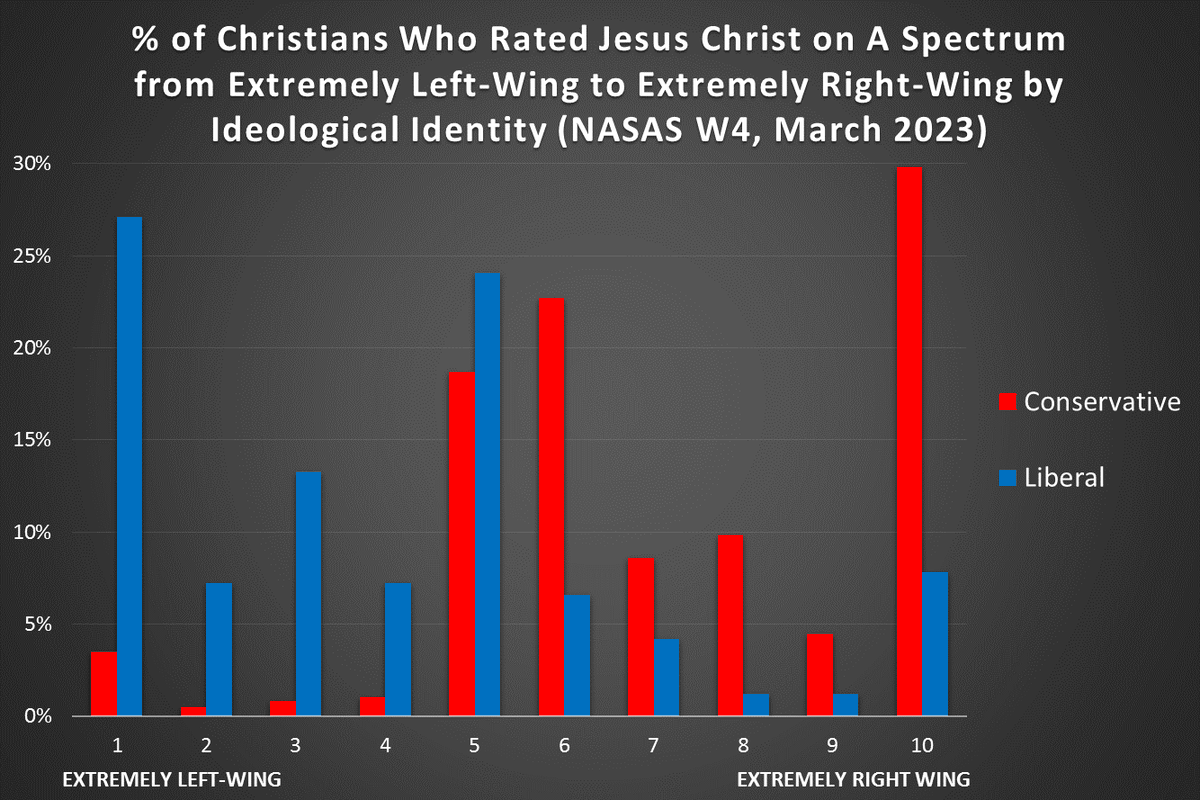
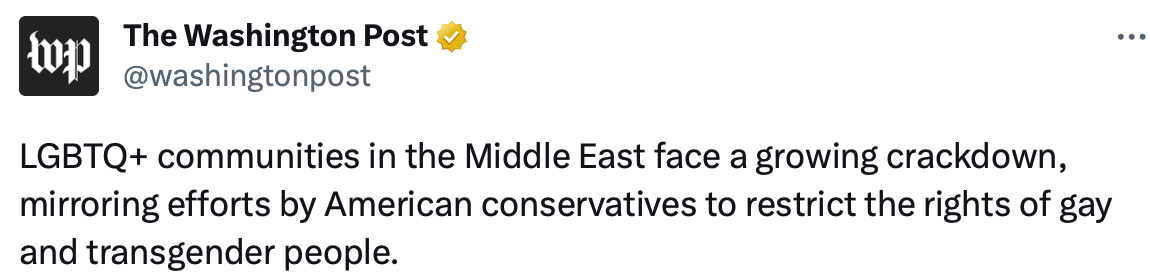



 Tipsy Teetotaler ن
