Another sign of major realignment

More interesting … was Mrs. Clinton’s commentary on the role of economic concerns in the 2016 contest. “There’s all that red in the middle, where Trump won,” she said. “But what the map doesn’t show you is that I won the places that represent two-thirds of America’s gross domestic product.” To scattered applause, she continued: “So I won the places that are optimistic, diverse, dynamic, moving forward.”

… She sees her electoral disappointment in economically downscale regions not as a political failure but a source of validation—and, apparently, an indication of those voters’ failings. Similarly, last September she told Vox that the Electoral College is “an anachronism” in part because “I won in counties that produce two-thirds of the economic output in the United States.” Should those voters have more of a say?

Since Andrew Jackson, the Democratic Party has usually been identified as the party of the “common man,” and its adversaries as defenders of wealth and economic privilege. Jackson earned that reputation for his party by reducing property qualifications for the franchise for white men. But the Democrats’ most recent standard-bearer sounds an awful lot like the 19th-century conservatives who thought political representation should be tied to wealth. This is a significant moment in America’s partisan realignment.

(Jason Willick, What Happened to the Common Man?, Wall Street Journal — emphasis added, paywall)

* * * * *

It is not bigotry to be certain we are right; but it is bigotry to be unable to imagine how we might possibly have gone wrong.

Bigotry is an incapacity to conceive seriously the alternative to a proposition.

A man … is only a bigot if he cannot understand that his dogma is a dogma, even if it is true.

(G.K. Chesterton) Be of good courage, you who are called “bigots” by those who are unable to conceive seriously the alternatives to their dogmas.

Some succinct standing advice on recurring themes.

Where I glean stuff.

We knew full well he was a snake

I suggested soon after the 2016 elections that something big was happening, though I’d barely began to understand it. It feels timely to take another look now.

Trump has co-opted “movement conservatism” almost completely. Former “never Trump” conservatives in many cases have become his sycophants. The three Republicans who want to replace moderate Democrat Senator Joe Donnelly in Indiana are generally trying to out-Trumpify one another (here, here and here). To speak any criticism of Trump, howsoever true (e.g., he’s a lout sexually), is to invite boos and hisses, as Mona Charen learned at CPAC last week.

I detest the media’s reckless use of the term “far right,” but a telltale sign that “far right” may indeed be what’s happening to movement conservatism is that CPAC invited Marion Maréchal-Le Pen. As Mona Charen later noted, Mademoiselle LePen holds no public office or particular prominence in France, but her aunt Marine and grandfather Jean-Marie are, respectively, far-right secularists and extreme far-right, even crypto-Nazi. In short, she was invited for the far-right frisson of her family name, like inviting Milo to your campus only with genuinely sinister undertones instead of just mindless iconoclasm.

UPDATE: I intended to acknowledge that CPAC almost certainly got more than it bargained for from LePen, who did not dish up a racist anti-immigration rant and actually pushed some conservative themes that few American conservatives are ready to hear sympathetically. Rod Dreher discusses this well enough that I’ll link to his blog and quote this:

Do not take me as endorsing Marion Maréchal-Le Pen! I honestly don’t know enough about her to do such a thing, and I certainly condemn the racism and anti-Semitism of her grandfather — and, if she espouses it, then her own racism and anti-Semitism. However, I generally don’t trust the US media’s reporting on her, or on the European anti-liberal right.

And Trump himself gave a CPAC speech that included a poem (actually song lyrics), based on one of Aesop’s fables, which I didn’t know had become part of his schtick. He explicitly makes immigrants the treacherous snake in the doggerel.

During the campaign,

Trump left the stage soon after finishing “The Snake” — and it acted as a sort of lens through which the evening’s hatred and xenophobia and racism could be focused and made clear. Those howls of approval? That’s the sound of thousands of hateful worldviews being confirmed all at once by a single work of art.

(Paul Constant, What Donald Trump’s favorite poem tells us about Donald Trump)

Do you miss mere “dog whistles” yet, progressive Americans?

But Constant continues, elaborating what hit me when I heard Trump read that poem:

Recently, Tony Schwartz, the ghostwriter who worked on Donald Trump’s book The Art of the Deal, pointed out that the key to understanding Trump is this: when he tosses around insults, he is really talking about himself. With this insight in mind, you can see all Trump’s insecurities swirl to the surface in his attacks: he’s called Hillary Clinton “a lose [sic] cannon with extraordinarily bad judgement [sic] & insticts [sic],” he’s labeled Elizabeth Warren a “racist,” said President Obama “doesn’t have a clue,” and he loves to call the press “dishonest.” It’s like he’s performing advanced psychotherapy on himself by projecting his self-loathing onto the world.

And so with that discovery in mind, consider what Trump might find so compelling about “The Snake.” Audiences seem to interpret the poem as a charge against kindness. Trump supporters like to say that we can no longer afford to accept immigrants because our generosity has been taken advantage of again and again. The implication is that we need to get our house in order before we open our doors again. But that’s a misreading of “The Snake.” Instead, “The Snake” is about believing against all evidence to the contrary that someone’s nature will change in different circumstances.

For the last few months, Republican leaders have tried to assure the electorate that Trump would pivot during the election, that he would start calming down and presenting as a more reasonable candidate when we got closer to the general election. Trump himself has said that he would act presidential if he won the election. We have repeatedly been told — by Trump’s family at the Republican National Convention, by Trump himself, by Trump’s running mate — that we are not seeing the real Donald Trump.

But what Trump is telling us with “The Snake” is that he is the snake in that story, and that he will never stop spreading his poison. Trump’s whole pitch is that he’s been an asshole his entire life, and that he’s willing to be the asshole on our behalf for a change. He’s proud of his bankruptcies, his tax-dodging, his dishonorable business practices. Many of his followers argue that he’s just the kind of monster we need to even the playing field with international competitors. But in his speeches, Trump himself keeps urging us to believe the evidence before our eyes: we know damn well he is a snake, so why would we take him in?

(Emphasis added) There’s plenty of other commentary on Trump and this poem, too.

Yet the Democrats thus far will not moderate to seize disaffected conservatives, now read out of their former party and movement. The near-term future thus looks as polarized or even more polarized (“paralyzed,” I typed initially in a Freudian slip) than the present.

In my post-election suggestion of big ferment, I quoted Michael Lind of Politico that what we were seeing was actually the end of a partisan realignment:

The partisan coalitions that defined the Democratic and Republican parties for decades in the middle of the twentieth century broke apart long ago; over the past half century, their component voting blocs — ideological, demographic, economic, geographic, cultural — have reshuffled. The reassembling of new Democratic and Republican coalitions is nearly finished.

What we’re seeing this year is the beginning of a policy realignment, when those new partisan coalitions decide which ideas and beliefs they stand for — when, in essence, the party platforms catch up to the shift in party voters that has already happened … The future is being built before our eyes, with far-reaching consequences for every facet of American politics.

That still rings very true to me, and I am coming to detest the ideas and beliefs of the new Republican party as much as I’ve long detested the deal-killer abortion stance of the Democrats. Maybe, pace Lind, the increasing frank and unapologetic racism of the GOP is the eventuality of the “dog whistles” of which progressive America complained: the kennel’s full now, and the occupants nominated the snake.

But it’s not all bad.

  1. Neal Gorsuch.
  2. The death of Zombie Reaganism as the GOP’s mantra. (Unfortunately, Living Trumpism is far worse than Zombie Reaganism.)

Seriously, within the last two years or so, I’ve affiliated with the American Solidarity Party. Its platform is far enough out of the current mainstream that it feels utopian. In some ways, it’s my ideological placeholder: “not Republican, not Democrat, but flirting with this kind of Christian vision for our common life.”

Over the weekend, I discovered, subscribed to, and delighted in American Affairs, a journal explicitly founded because “the conventional partisan platforms are no longer relevant to the the most pressing challenges facing our country.”

In short, I don’t yet see any place for me emerging from either the Republicans or the Democrats, and I think the interesting discussions are happening in places like American Affairs, with its welcoming conservative atmosphere but no dogmatic positions that I’ve seen.

I’m still not quite sure what’s up, but I’m seeing glimmers that it actually might not be some “rough beast, its hour come round at last, Slouch[ing] towards Bethlehem to be born.” But maybe that’s just the sunshine and hints of Spring deceiving me.

* * * * *

Some succinct standing advice on recurring themes.

Where I glean stuff.

An Antidote to 45

There are times when I genuinely wonder whether I can hold up psychologically in our current politics and culture. My shrink tells me I am far from alone in this, and that everyone she listens to is consumed with a depression that swings from despair to rage to what can only be called learned helplessness. There are moments when everything I have come to believe in — reasoned deliberation, mutual toleration, liberal democracy, free speech, honesty, decency, and moderation — seem as if they are in eclipse. Emotionalism, tribalism, intolerance, lies, cruelty, and extremism surround us (and I have not been immune in this climate to their temptations either). Trump has turned the right into a foul, spit-flecked froth of racist reactionism, and he has evoked a radical response on the left that, while completely understandable, alienates me and many others more profoundly with every passing day …

Trump himself seems hard to oppose without in some way mimicking him. Take the high road and you risk genteel irrelevance. Go down to Trump’s level and you find yourself wrestling with a brawler whose indecency eventually defines you as well …

[W.H.] Auden is an antidote to Trump and to our times. He despised celebrity; he ran from fame and money; he never “signaled” his many virtues to anyone; in fact, he went to great lengths to hide them from view. “Once at a party I met a woman who belonged to the same Episcopal church that Auden attended in the 1950s, St. Mark’s in-the-Bowery in New York,” Mendelson recalls. “She told me that Auden heard that an old woman in the congregation was suffering night terrors, so he took a blanket and slept in the hallway outside her apartment until she felt safe again.” He privately paid for the tuition of a succession of war orphans until his death; he made himself look like an asshole in demanding immediate payment for some work — but only so he could quietly give the money to Dorothy Day’s homeless shelter in New York. Mendelson also recalls how “I got a phone call from a Canadian burglar who told me he had come across Auden’s poems in a prison library and had begun a long correspondence in which Auden gave him an informal course in literature. Auden was especially pleased to get him started on Kafka.” It turns out that there were countless such acts of quiet generosity.

He hated to grandstand. He knew the temptations of the easy political stance. He gave a public speech in the U.S. just after he arrived here in 1939 and got a rapturous response from the liberal crowd. But he wrote to a friend afterward: “I suddenly found I could really do it, that I could make a fighting demagogic speech and have the audience roaring … It is so exciting but so absolutely degrading; I felt just covered with dirt afterwards.”

Auden found this wisdom — and indeed way of life — in Christianity, as so many others have over the millennia, which is why I worry about our day and age. We live in a post-Christian world, and even many who say they are Christian turn out to be craven sophists, dedicating themselves to an evil man for the sake of something they call good. So where do we go to get off the train of history now that faith has “ended,” to see it in some deeper perspective, outside the hot take of 30 seconds ago, the news of the last hour, or the most recent assault on reason and decency from the man at the head of the table? …

(Andrew Sullivan) Read the whole thing, including the second part, on science and sexual harassment.

* * * * *

Some succinct standing advice on recurring themes.

Where I glean stuff.
Alt-Right Christians?

[T]hose who ascribe the achievements of Western culture to race rather than providence have chosen Faust over Christ.

But to assert orthodox doctrine against __________’s heresies would be useless. His private dialectic, congregation of one, has transcended the old creeds. __________ wants to show that Christianity and the alt-right are compatible, not by declaring a new racist orthodoxy, but by denying that Christian faith is incompatible with anything at all.

________ thus places himself in the same camp as … every … liberal Protestant who preaches a liquid creed. For all of them, there is nothing stable at the heart of Christian faith, no set of propositions that must be judged true or false, no substrate of apostolic tradition or spiritual authority sustaining the Church through the ages; there is only that fickle goddess History, leading a perpetual process of discernment and evolution according to the self-loving demands of the “present.” Whether one uses this “infinitely malleable” Christianity to serve a liberal or a reactionary agenda is largely beside the point.

It’s an old phenomenon, perhaps best understood by Hans Kerrl, Nazi Reichminister for Church Affairs during the 1930s. In 1937, as the resistance of the Confessing Church grew bolder, Kerrl made a speech to loyalist clergy:

The Party stands on the basis of Positive Christianity, and Positive Christianity is National Socialism. . . . [Lutheran clergyman] Dr. Zoellner and [Catholic Bishop of Münster] Count Galen have tried to make clear to me that Christianity consists in faith in Christ as the son of God. That makes me laugh. . . . No, Christianity is not dependent upon the Apostle’s Creed. . . . True Christianity is represented by the party, and the German people are now called by the party and especially the Führer to a real Christianity. . . . The Führer is the herald of a new revelation.


That potent German concoction we call liberal theology—historical criticism, Enlightened reason, fellow-feeling, and Hegelian dreams—was far more susceptible to ideological manipulation by the Nazis than were the traditional dogmas of Roman Catholics or evangelical Lutherans.

(Connor Grubaugh) I don’t play the “Nazi” card lightly. Neither did Grubaugh.

* * * * *

Some succinct standing advice on recurring themes.

Where I glean stuff.

Spitting in the soup

That people associated with a university would invite a hateful mythmonger like Richard Spencer to campus is a tragedy; but it’s a greater tragedy that someone like Spencer is a public figure at all. That’s not something that even the best university administration can fix.

I might add that when people say that they want conservative ideas to be represented on campus and then invite Ann Coulter or Milo or Richard Spencer to speak, they have zero interest in ideas. They just want to spit in their neighbor’s soup.

(Alan Jacobs, part of his delayed reaction to the New Atlantis article I recently alluded to)

* * * * *

Some succinct standing advice on recurring themes.

Where I glean stuff.

Gun Control

I began this blog many weeks ago, forgot it, but now finish in pared-down form.

I wonder to what extent the visceral anger at “thoughts and prayers” is a way of expressing fear and anger at our inability to control irruptions of evil into our ordered lives.

(Rod Dreher)

***

When a tragedy occurs — particularly one that involves gun violence, like Sunday’s mass shooting in Texas — two things are quite predictable in the aftermath: First, lots of people, including politicians, will offer their “thoughts and prayers.” And second, an increasingly large cadre of critics will react to these offerings of “thoughts and prayers” with outrage.

Why? It seems people think “thoughts and prayers” are a lazy substitute for embarking on some real political action that might help prevent such tragedies from occurring in the future …

Contrary to the enraged certainties of many anti-gun liberals, there are actually few policies we know of that could serve as easy remedies to things like gun massacres …

The urgency and vigor of those who despise the notion of “thoughts and prayers” would only be justified in their reaction if there were indeed a magic button we could push to fix the problem tomorrow. And there isn’t.

But there’s something more fundamental at play. This isn’t just about guns. It’s about how we see political action. The implicit, maybe unconscious, but clear premise of the anti-“thoughts and prayers” line is that the only proper response to bad things happening is always political action. But turning everything into a political battle ensures that every single issue will become a conflictual one, leading to the progressive fraying away of social norms and of the belief in shared American values — which is what allows for political debate to begin with.

(Pascal-Emmanuel Gobry, In defense of ‘thoughts and prayers’)

Derision of prayer and demands (tacit or explicit) for legislative magic are extensions, it seems to me, of our broadly modern notion that the public square is full of “problems” that need scientific or political “solutions.” I believe a ban on semi-automatic weapons would lower mass murder rates very slowly at best, with the interim full of demands for banning private gun ownership entirely—or so I expect gun owner suspicions run. They’d rather endure the evil of occasional mass murder than face that prospect.

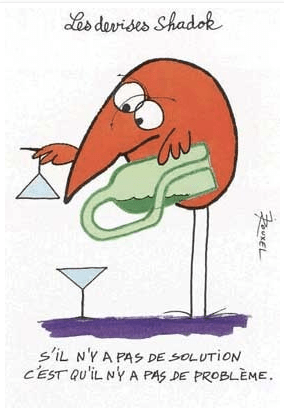
No solution

Insofar as the gun control cause is “liberal,” and liberalism is most famously instantiated in the Democrat party, this seems like a very bad issue for Democrats serious about regaining some political power:

  • We have no answers, and perhaps no real concern, for the economic and social pain of you Trump voters.
  • We despise your prayers.
  • We want to take away the guns you so bitterly cling to.

Were I still a Republican, I’d be thrilled at such folly.

***

What do the perpetrators of the massacres at Sandy Hook, at Aurora, at Orlando, and at Sutherland Springs have in common? They were all men under 30 and they all used versions of the same kind of firearm, the AR-15, the semi-automatic version of the military’s M-16 and the bestselling gun in America.

It might be difficult to make this connection because as I write this, the section on the use of AR-15s in mass killings has been deleted from Wikipedia by a user called Niteshift36, who claimed that including such a section at all was inherently biased. According to his user profile, this no-doubt scrupulous and disinterested editor of the world’s most widely used work of reference is “proud to be an American,” “a native speaker of the English language,” “skeptical of anthropogenic global warming,” and “supports concealed carry laws.” He is also a veteran, a Tom Clancy and 24 fan, someone who thinks we should “say NO to political correctness,” and a self-professed “Jedi.”

With all apologies to Jedi Master Niteshift36, this is ridiculous. If the killers had all worn Mickey Mouse sunglasses or been found with Metallica tattoos, it would be considered noteworthy. It’s not biased except in the sense that reality itself is biased against childish gun enthusiasts. But whether he wins his edit war or nay, he has done a great service by reminding us what we’re dealing with whenever we try to argue. He fits a profile, of revoltingly adolescent, video game-addicted LARPers who think that their hobby of playing dress-up with murder weapons is a constitutional right.

The AR-15 is not just a gun. It is a hobby, a lifestyle, an adolescent cult …

(Matthew Walther, The adolescent cult of the AR-15)

Lest you think Walther’s mocking approach nearly as useless as prayer, be assured that this is aimed right at the source of the problem:

Lewis does not apologize for the fact that The Screwtape Letters is an entertaining and amusing read. Indeed in the opening pages he quotes Martin Luther and St. Thomas More on the need to take Lucifer lightly. Luther says, “The best way to drive out the devil, if he will not yield to texts of Scripture, is to jeer and flout him, for he cannot bear scorn.” For his part, St. Thomas More writes, “The devil…that proud spirit…cannot endure to be mocked.”

(Dwight Longnecker, Laughing at Lucifer with Lewis) Walther:

Which is why I am not optimistic about our ability to pass any kind of meaningful legislation. The Republican Party owes too much of its support to people whose economic well-being it gleefully neglects but whose ill-considered attachments to dangerous toys it has safeguarded as a kind of poisoned consolation prize. Nor do I think that if we were somehow able to ban the manufacture, sale, and possession of all such weapons and carry out a more or less successful confiscation scheme we would never see anything like what happened in Sutherland Springs again. The real causes are chthonic; AR-15s are only the accidents that have in many cases enabled them.

* * * * *

Some succinct standing advice on recurring themes.

No true conservative …

I was pondering this quote, probably just going to put it in my personal journal with a pithy remark or two:

Conservatism is what conservatives think, say, and do. As conservatives change—as much through the harsh fact of death and birth as by the fluctuations of opinion—so does what it means to be a conservative.

(David Frum) But then Rod Dreher weighed in with a more elaborate set of remarks, reflecting his wider reading:

Here are Russell Kirk’s Six Canons of Conservatism:

  1. A belief in a transcendent order, which Kirk described variously as based in tradition, divine revelation, or natural law;
  2. An affection for the “variety and mystery” of human existence;
  3. A conviction that society requires orders and classes that emphasize “natural” distinctions;
  4. A belief that property and freedom are closely linked;
  5. A faith in custom, convention, and prescription, and
  6. A recognition that innovation must be tied to existing traditions and customs, which entails a respect for the political value of prudence.

Which of these general principles describes popular American conservatism today? Maybe No. 4, with smidge of No. 1, most of them people who take the Jeffress Option. I subscribe to Kirk’s Canons, but I can’t pretend that they are much in evidence outside of the religious, literary, and philosophical circles I frequent.

The truth is, they probably haven’t been for a long time, because the world that produced Kirkian traditionalism has been largely obliterated by mass culture, consumerism, media, and technology. The fact that so many conservatives responded to my 2002 cover story in National Review describing “crunchy cons” (my name for 21st-century conservatives who are more or less Kirkians) by treating it as if I were trying to smuggle liberalism in through the back door revealed how little influence Kirk’s ideas have on the contemporary conservative mind. (Alas for the contemporary conservative mind!)

What do you call Kirkian conservatives in the age of Trump? Reactionaries? What? All I can tell you is that I identify less and less with what people mean today when they use the word “conservative.” Then again, it’s been like that for me for about a decade, so I’m used to it. It’s kind of vain to say that we are the true conservatives. At least orthodox Catholics who affirm the Church’s doctrinal teachings can appeal to an authoritative standard. Political parties — unless, like the Communist parties, they are run like religious cults — don’t have authoritative standards.

Although more erudite (I don’t have Kirk’s Six Canons in mind, but they’re in my heart), Rod captures my feelings exactly. But don’t miss one key sentence: “It’s kind of vain to say that we are the true conservatives.” That’s the “No True Scotsman” fallacy, which I learned from my friend Doug Masson. Kirk is venerable, but he’s no “authoritative standard” if he ever was.

* * * * *

Some succinct standing advice on recurring themes.

Where I glean stuff.

Thursday, 11/9/17

  1. The voice of the Mother of God
  2. What’s “conservative”?
  3. Remedial Civics for The Donald
  4. I’ll believe in Trumpism when …
  5. Being the better Trump
  6. Is diversity overrated?
  7. Soft Targets
  8. My Opioid Adventure
  9. Excess of Enthusiasm
  10. How very American: Ketosis without ascesis

Continue reading “Thursday, 11/9/17”