Pentecost …

(at least in the Eastern Church)

For the very first time, I vetted this post with AI. I didn’t change so much as a jot or a tittle.

Evangelicals

Overlooking the obvious

In the past year I have visited the Middle East, India, Africa, Latin America, and Europe as the guest of churches and ministries. In each place, evangelicals exude life and energy. While staid churches change slowly, evangelicals tend to be light on their feet, adapting quickly to cultural trends.

The Jesus movement, the house-church movement, seeker-friendly churches, emergent churches—evangelicals have spawned all of these. In their wake, worship bands have replaced organs and choirs, PowerPoint slides and movie clips now enliven sermons, and espresso bars keep congregants awake. If a technique doesn’t work, find one that does.

Although I admire the innovation, I would caution that mimicking cultural trends has a downside …

Perhaps we should present an alternative to the prevailing culture rather than simply adopt it. What would a church look like that created space for quietness, that bucked the celebrity trend and unplugged from surrounding media, that actively resisted consumerist culture? What would worship look like if it were directed more toward God than toward our entertainment preferences?

While writing a book about prayer, I learned more from Catholics than from any other group. They have, after all, devoted entire orders to the practice. I learn mystery and reverence from the Eastern Orthodox. In music, in worship, in theology, they teach me of the mysterium tremendum involved when we puny human beings approach the God of the universe.

As I survey evangelicalism I see much good, but also much room for improvement. Our history includes disunity—how many different denominations do this magazine’s readers represent?—and a past that includes lapses in ethics and judgment.

Phil Yancey’s 2009 farewell column for Christianity Today (illustration added). I don’t understand why the farewell wasn’t because he was going somewhere more conducive to prayer or reverence. Does it not occur to him that one decision for Christ plus good works does not a complete Christian make, that emotion is not the same as the Holy Spirit?

Biblicist Guruism

Reflecting on a story about exvangelicals:

So how do you help address the problem that Miles is describing in his review, a culture of biblicist guruism in which the churches do not even look recognizably Protestant in any real way? How do you address the massive gaps and holes in a person’s Christian discipleship that result from sustained exposure to such churches?

If the Gospel was not clear or was not preached, then what you had was more a religious assembly than a church. If the sacramental life of the church was non-existent, you had a religious assembly, not a church. And if there was no aid in Christian discipline… well, you know the drill.

When I came to Grace Chapel in 2007, a small PCA church that was at the time located in central Lincoln, I didn’t know that I’d not really been part of a church before, at least as the church was traditionally understood. What I found at Grace was something I hadn’t even known to look for because I didn’t know it existed. I found something obviously and unapologetically Christian—the Gospel was clear in every sermon, and clear in a way I’d never heard it from a pulpit before, the Eucharist was celebrated regularly, and the pastor at the church actually seemed to know the people in his church and to think it was his job to care for them and aid them in their discipleship. I’d never seen anything like it before.

And the services themselves helped to reenforce the basics of Christian belief and practice: We prayed the Lord’s Prayer corporately. We confessed our sins corporately. We sang old hymns. Every week we received a benediction. The grammar and vocabulary of Christianity pervaded the liturgy; it wasn’t just a guy in a pulpit pontificating, loudly proclaiming his own loosely assorted thoughts about life and expecting you to take him seriously because he attempted to root them in scripture.

Jake Meador (italics added).

The non-church “church” Jake came from may have been an example of what he calls “biblicist guruism.”

Second Great Awakening

While Methodists, Disciples, and Mormons disagreed radically on what constituted belief in the gospel, they all shared an intense hostility to the passive quality of Calvinist religious experience, and they all made salvation imminently accessible and immediately available.

Nathan O. Hatch, The Democratization of American Christianity

I have alluded to this antipathy toward Calvinism previously, having first encountered it in Hatch’s book (I’m pretty sure). When I moved from frank Evangelicalism to Calvinism, it felt as if I was moving to a much different worldview, and I guess my intuitions were sound.

Protestants

… [Luther] had been wrestling with an unsettling conundrum: the failure of the Spirit to illumine all those inspired by his teachings as he himself had been illumined.

Tom Holland, Dominion

It seems fair to distinguish Protestants from Evangelicals, contrary to lifelong habit. I’m not positive that Evangelicals circa 2024 AD are no longer Protestant, but along with Jake Meador, I’m entertaining that possibility quite a lot lately. If they’ve left Protestantism, it strikes me as a continuing outworking of Luther’s conundrum.

Catholics

According to Catholic doctrine, sin offends God, disrupts the moral order, and deprives God of His glory and majesty. Punishment for the sin restores order and the glory of God.

Dr. Eugenia Scarvelis Constantinou, Thinking Orthodox

When I first read that, it made me a bit nauseous. The Orthodox mind is quite different from that.

Orthodoxen

Start with the Psalms

It came to me a few days ago, during morning devotions, that it would be very easy for a 21st century convert to Orthodox Christianity, from Protestantism or Evangelicalism, to overlook one very important and durable tradition of the church.

Perhaps because the Anglophone church has gained so many converts, and because those converts were accustomed to regular preaching from a wide range of scripture, we have available to us, notably on Ancient Faith “Radio,” an array of Orthodox versions of Bible studies. One of them even bears the title “The Whole Counsel of God,” and has progressed through all books of the Old and New Testaments and started over again.

In my mind, those podcasts risk obscuring from the view of converts that the basic scripture for Orthodox Christians is the Psalter — the book of Psalms. As Father Jonathan Tobias emphasized,

Chant the Psalms every morning and every evening. Two kathismata in the morning, one in the evening as appointed. This will form your mind into prayer and life.

There’s nothing wrong with going beyond that, and I should do more of general Bible study than I do, but start with the Psalms. Always start with the Psalms.

(Weird historic fact: Back in the day, Evangelicals would do some Evangelistic spadework by distributing inexpensive copies of the Gospel According to John — not the whole New Testament, but just that one Gospel account. In contrast, the Orthodox Church didn’t expose converts to the Gospel According to John, the most profoundly theological of the four Gospels, until after significant preliminary catechesis and baptism. See text at fns. 2 & 3.)

Thanks but No Thanks

Without entering into particulars, we say that as long as the Church of the Saviour shall stand upon earth, we cannot admit that there is in her bosom a Bishop Supreme other than our Lord Himself; or that there exists an infallible Patriarch, who can speak, ex cathedra, superior to Ecumenical Councils – to which Councils alone belongs infallibility, because they have always conformed to the Sacred Scriptures and apostolical tradition. Nor can we admit that the Apostles were unequal, inasmuch as they were all illuminated by the Holy Ghost up to the same measure; or that to this or that Patriarch a precedence has been given, not by any synodal or human resolution, but by right Divine, as you assert.

Ecumenical Patriarch Gregory VI, firmly refusing to attend Vatican I, which was poised to declare papal infallibility at the behest of Pope Pius IX. Via Matthew Namee. The Orthodox Patriarch of Alexandria was no less firm, but pointed out (though the Pope surely knew it) what the Pope needed to do:

But not to prolong this discussion let me repeat once, and for all, that as this new attempt on the part of his Holiness the Pope has miscarried, it is necessary, if he sincerely desires the unity of the Universal Church that he should write to the patriarchs individually, and acting in concert, endeavor to come to an understanding with them respecting the course to be adopted – renouncing every dogma on which opinions may clash in the church. By so doing his efforts might perchance be crowned with some degree of success.

Involuntary sin

According to Scripture, the cause of all sin that is involuntary lies in what is voluntary.

Dee Pennock, God’s Path to Sanity


… that Christ may dwell in your hearts through faith; that you, being rooted and grounded in love, may be able to comprehend with all the saints what is the width and length and depth and height — to know the love of Christ which passes knowledge; that you may be filled with all the fullness of God.

Ephesians 3:17-19 (NKJV)

You can read most of my more impromptu stuff here and here (both of them cathartic venting, especially political) and here (the only social medium I frequent, because people there are quirky, pleasant and real). All should work in your RSS aggregator, like Feedly or Reeder, should you want to make a habit of it.
Juneteenth

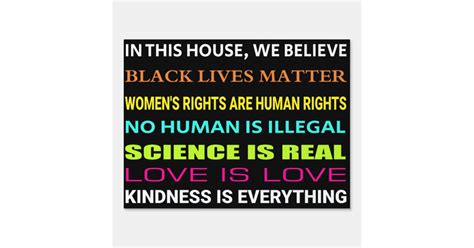
I have nothing to say about Juneteenth except that emancipation was a legitimately huge landmark in our nation’s history and worthy of annual commemoration.

Public affairs

Indiana’s GOP Lieutenant Governor nominee

Indiana over last weekend nominated as its Lieutenant Governor candidate, Micah Beckwith, a pastor of some sort who:

  • Thinks that the “progressive left has taken over the Republican Party in Indiana,” and that some Republicans today are “champions of Communism.”
  • Said on a Christian(ish) podcast “We are in a season of war right now … People need to wake up, or else this mental and heart battle that we find ourselves in culturally, it will lead to bullets and bombs. It’s just a matter of time.”
  • Said God had told him, on January 7, 2021: “Micah, I sent those riots to Washington. What you saw yesterday was my hand at work.” (This is what every story on him seems to pick up.)

Those quotes are from Michelle Goldberg at the New York Times. Goldberg also says, sans quote, that he’s a “self-described Christian Nationalist.”

Beckwith was forced onto the ticket against the wishes of the Gubernatorial nominee, retiring U.S. Senator Mike Braun.

Yeah, I guess it’s national news.

I didn’t support Braun for Governor. I was unenthusiastic about him when he ran for Senate in a GOP primary whose theme was “Mirror, mirror on the wall, who’s the Trumpiest of them all?” (but I preferred him to Todd Rokita, now our Attorney General and a truly loathsome person). I’m not certain I’ll vote for him in the General Election.

My decision will hinge to some degree on how effective he is at keeping a reassuring distance from Beckwith without, of course, repudiating him so firmly as to hand the election to Democrats. So far, his pointed message “I’m in charge” seems about right.

I’ve noted repeatedly that I repudiated any loyalty to the Republican Party on Inauguration Day 2005. But I still have a reflex to vote Republican over Democrat, and to mourn what already has become of the Republican party, and what one likely future holds.

On Christian Nationalism

Having noted Micah Beckwith’s purported Christian Nationalism, I’m reminded that I may not have staked out my own position openly.

First, I define it narrowly. There have been ridiculous accusations of Christian Nationalism based on undisclosed or untenable definitions. Real Christian Nationalists are still pretty rare, I think (but what do I, a contrarian, know?).

I’m not unaware that American pluralism is an experiment. I’m not sure whether it will succeed or fail. I’m familiar with and friendly toward the phrase “worst form of government except for all the others.” I’m not ready to abandon it.

At the risk of ad hominem, I don’t trust the “Christians” who expressly advocate for Christian Nationalism. One of my older blogs, on what we then called “culture wars,” remains relevant, but I’ll paraphrase excerpts rather than do direct quotes.

My distrust of Christian Nationalists stems fairly directly from my disagreements with their form of our putatively shared faith — disagreements that lead me to chronic use of scare-quotes around the word Christian or the use of “Christianish.”

The pious Protestants among them tend functionally believe that God’s only presence in the world is His rules, so they “honor” Him by keeping his rules. But the age of Trump has brought many to profess that they’re Evangelicals even if, in the extreme case, they’re Muslims or even atheists, because of something they like about the politics now associated with that label.

The most coherent, maybe the only, Protestant theorists of Christian Nationalism are theonomists, or more specifically Reconstructionists. If these Calvinist intellectuals had their way, there would be 18 Old Testament Capital Crimes in our law books – including sassing parents. They’d shut down my Church and desecrate its icons. They might, for all I know, execute me for idolatry for the icons in my home prayer corner.

Ummmm, no thanks.

The Catholic theorists of Christian Nationalism (Integralism, they call it) are much better — not okay, but less bad. But I don’t think their side would get the levers of power anyway.

There is no remotely viable Orthodox version of Christian Nationalism, Byzantium being long-gone. And we’d lack the numbers to staff government if there were.

So I think “Christian Nationalism” in America would be, in ascending order of likelihood:

  1. Catholic Integralism
  2. Calvinistic Reconstructionism
  3. A blasphemous mish-mash of right wingnuttery in the name of God. (Like Indiana’s GOP Lietenant Governor nominee or the yard sign “Make Faith Great Again: Trump 2020.”)

I reject them all. I think all of them would be hostile to Orthodox Christianity. I prefer to continue our flawed experiment with pluralism. But I suspect I’ll live to see one of them.

We Orthodox have survived similar or worse circumstances before.

America’s enemies

American leaders have a great need to identify an enemy or group of enemies that the U.S. can define itself against in order to justify the dominant position that they want the U.S. to have. It doesn’t occur to these leaders that the pursuit of dominance itself is what creates so many enemies or that the U.S. would be far more secure by renouncing the pursuit.

Losing the Soviets as an enemy created a hole in U.S. foreign policy that Washington desperately tried to fill with anything our leaders could find, but the substitute villains (Saddam Hussein, Milosevic, etc.) were so weak by comparison that the threats had to be massively inflated.

Daniel Larison (who had fallen off my radar)

We seem hellbent on creating intractible enemies in at least three corners of the world. Depending on their political stripe, American politicians speak as if Russia, China, and/or Iran pose existential threats to us. Yes, we do have substantive differences with all, but I can make a case for all three that they simply wish to live their lives in their own ways in their part of the world without our interference. Look at the flash points with each: Ukraine, Israel, Taiwan. All are American dependencies; all are projections of our hegemony into the very heart of their respective spheres. Regardless of your sentiments, the fate of none of those areas have any existential meaning to the U.S.; and yes, I am including Israel in that. They do, however, have existential meaning to our supposed adversaries.

Terry Cowan

J.D. Vance

I commented on June 13 about Ross Douthat’s interview with J.D. Vance.

There doubtless have been many commentators weighing in on the interview, but I’ve read only one so far: Andrew Sullivan. He made some excellent observations about places where Vance was tap-dancing around the unvarnished truth (to stay in Trump’s good graces?) or omitting crucial facts that eviscerate his argument.

Of the changes in voting rules to deal with Covid?:

The new pandemic rules, moreover, were endorsed by the Congress, which passed $400 million in the CARES Act for the election’s unique challenges, which Trump himself signed into law. If the rules were rigged, Trump helped rig them!

Vance’s case is completely undermined by Trump himself. Trump, after all, did not say after the election that the Covid rules were why he’d lost. He said he’d lost because votes were stolen, stuffed, and hidden, and the voting machines had been rigged. He’s saying the same things today. And the reason for all of it was not some genuine concern about easier mail-in and absentee voting (he endorsed absentee voting, after all), but Trump’s basic, characterological inability to function in a system that doesn’t guarantee him victory every single time.

That is not the system’s fault. It’s the fault of the party that nominated a malignant, delusional loon.

Putin

This week in Budapest, I met with an American academic active in the struggle for international religious freedom. We spoke about the Russia-Ukraine war, and established that we both believe Russia ought not to have invaded its neighbor. I added that as an Orthodox Christian, it grieves me how Putin has instrumentalized the Church to advance his war aims.

Then the American, a conservative Christian, posed a provocative question, that went something like this: For all his thuggishness, do you think that Vladimir Putin is on the right side of broad civilizational trends? My interlocutor brought up Putin’s harsh criticism of Western secularism and its emptiness, contrasting it to a Russia built on traditional values, including religion. Yes, Russia is in deep social and demographic trouble, and yes, Putin might be a colossal hypocrite, but, said the American, on the deep civilizational questions, isn’t Putin, you know … right?

I knew the answer, but as a man of the West, was too depressed by the question to admit it ….

Rod Dreher in the European Conservative

Degrowth

The case for degrowth is not about martyred self-denial or constraining human potential; it is about reorienting socioeconomies to support collaborative and creative construction of lives that are pleasurable, healthy, satisfying, and sustainable for more people and more places. End goals of degrowth – dignified work, less selfish competition, more equitable relationships, identities not ranked by individual achievement, solidary communities, humane rhythms of life, respect for natural environments – are also the means through which people exercise and embody, day by day, the lifestyles, institutions, and politics of degrowth worlds to come.

The Cauldron of Degrowth – Front Porch Republic

Euro-skepticism

The European Union began as a trading bloc, but by the early 1990s, it had evolved into a moral project fueled by elite distaste for (even revulsion against) the nationalistic sentiments these elites had become convinced were the source of all the crimes of the European past, including imperialism, racism, fascism, and genocide. What Europe needed was an inoculation against these sentiments, and the EU would be the vaccine, giving the continent a collective goal of striving to overcome particularistic attachments and the cruelty, suffering, and oppression they supposedly implant and encourage. Nationalistic sentiments would be sublimated into the transnational idea of the EU, with the EU itself eventually expanding without limit as the leading edge of a world without borders or walls impeding trade, the free movement of people, products, capital, and labor.

Damon Linker

I am enthusiastically European; no informed person could seriously wish to return to the embattled, mutually antagonistic circle of suspicious and introverted nations that was the European continent in the quite recent past. But it is one thing to think an outcome desirable, quite another to suppose it is possible. It is my contention that a truly united Europe is sufficiently unlikely for it to be unwise and self-defeating to insist upon it. I am thus, I suppose, a Euro-pessimist.

Tony Judt

Matters of Opinion

The continuing siege of Samuel Alito

I’m a journalist. We’re journalists. There are certain things we do. When we interview somebody, we make it clear that I work for the New York Times, the “NewsHour,” the Washington Post. Like, we make it clear who we are. We don’t lie. We don’t misrepresent ourselves. We don’t hide a tape recorder somewhere, and we don’t lead people on with a bunch of ideological rants. And this person did all that. It’s a complete breach of any—the basic form of journalistic ethics. And I was, frankly, stunned that all of us in our business just reported on it, just like straight up. And to me, this information is so doctored by her attitudes, the way she’s leading on Alito and his wife. It’s just—it’s unfair to them, frankly, to treat this as some major news story. We should be treating it as somebody, a prankster. And there’s a right-wing version of this called Project Veritas, where they lie too—as some prankster who’s creating distorted information.

David Brooks, on the Journalist who plied Justice Alito with a red-meat rant and got only a very anodyne response.

I found myself hoping that she will forever be known as the journalist who engaged in sleaze and then made it worse by publishing the nothingburger results. And then I remembered an incident in my past, when I may have been older than she is now, when I broke the rules to get the true story — not as a journalist, but as a lawyer. I, too, came up dry — and exposed for my wrongdoing.

I’m glad that did not follow me the rest of my life. I hope she has learned her lesson as I learned mine.

Worst Matter of Opinion podcast ever?

With Ross Douthat on vacation, Michelle Cottle, Carlos Lozada and Lydia Polgreen invited their hardcore colleague Jesse Wegman to join them.

Synopsis: Some justices blame the press for distrust of the U.S. Supreme Court. But that’s not it. It’s really Justice Alito’s [first exaggeration about Justice Alito] and [generalization built on exaggeration] and Clarence Thomas [Oh, hell, let’s just lump him with Alito] and dismissing Alito’s version of flag-gate and laughing out loud at Justice Alito saying [garbled version of he has a duty to deliberate if he’s not required to recuse, which is true] and Mitch McConnell, who played unprecedented political hardball to defeat Merrick Garland (by delay) and confirm Justice Barrett (by contrasting haste), so that Trump’s two appointees have cooties-by-association.

I will give Carlos Lozada credit for pushing back. The bias, dishonesty, and inexcusable ignorance of the other three make me want to cancel my Times subscription.

Intuition

“I have the feeling that I understand it.” But then he adds, “In fact, it is not ‘understanding,’ and it is not ‘knowledge.’ It is a direct awareness, or intuition. It’s not the kind of thing you ‘understand.’ It’s like I said before to you: one grain of rice, and the whole earth, they are the same. You can’t learn that from a book.”

Andy Couturier, The Abundance of Less

Mordant observation

The more people came to know gay people and understand the aims of the movement for gay marriage, the more accepting they became of it. The more people come to know trans people and understand the aims of the transgender moment, the more skeptical they become of its claims.

Wesley Yang on new polling. (Via Andrew Sullivan)

Books

There are 10,000 books in my library, and it will keep growing until I die. This has exasperated my daughters, amused my friends and baffled my accountant. If I had not picked up this habit in the library long ago, I would have more money in the bank today; I would not be richer.

Pete Hamill via Robert Breen on micro.blog.

I know what Hamill means.


So: where did all my mockery of Trump go? Well, first, I resolved to stop harping on it. But then, I just moved it off to my reflexive blog, trying to keep this one relatively reflective.

I suffer more from the humiliations inflicted by my country than from those inflicted on her.

Simone Weil, from a letter to Georges Bernanos.

I don’t do any of the major social media, but I have two sub-domains of the domain you’re currently reading: (a) You can read most of my reflexive stuff, especially political here. (b) I also post some things on the only social medium I frequent, because people there are quirky, pleasant and real.

Sunday June 2

Reformation

An indifferent history student in my youth, I now enjoy it very much.

Pandora’s box

…in the wake of [Luther’s] defiant appearance at Worms, he found himself impotent to control the explosions that he had done so much to set in train. Nor was he alone. Every claim by a reformer to an authority over his fellow Christians might be met by appeals to the Spirit; every appeal to the Spirit by a claim to authority. The consequence, detonating across entire reaches of Christendom, was a veritable chain reaction of protest.

Tom Holland, Dominion

Seizing Church properties

Predictably, secular authorities convinced by the reformers’ truth claims liked the distinction drawn between the necessity of obedience to them and of disobedience to Rome. They liked hearing “the Gospel” accompanied by such “good news”—it would allow them, for starters, to appropriate for themselves all ecclesiastical property, including the many buildings and lands that belonged to religious orders, and to use it or the money from its sale in whatever ways they saw fit. In two stages during the late 1530s, seizing for himself the vast holdings of all the hundreds of English monasteries and friaries, Henry VIII would demonstrate how thoroughly a ruler could learn this lesson without even having to accept Lutheran or Reformed Protestant doctrines about grace, faith, salvation, or worship.

Brad S. Gregory, The Unintended Reformation

Beauty

Conversion

The prevailing image of religious conversion today is one that is individualistic—conversion is in some sense experienced within the self—and sentimental—one is transported by emotions—which then cause one to affirm a certain set of religious dogmas. Such things do happen and to be absolutely clear they are great, but this individualistic and pietistic model is also of modern, recent vintage. Such experiences have always happened but they were not thought to be the majority, even less the default or only case.

“The best argument for the Catholic faith, in the end, is the beauty of her art, and the life of her saints,” once said none other than Benedict XVI, and the argument presented there is really a different version of Ali’s: look at what Christian civilization has produced, look at how uniquely beautiful and praiseworthy it is; the fact that a civilization animated by such ideas produced such unique and surpassing greatness must be an indication that these ideas are in a profound way true.

This is a perfectly rational train of thought, a perfectly legitimate thing to believe, and a perfectly legitimate route to the Church!

I have seen many people stumble on the path of faith because they have an expectation that religious belief or practice must, of necessity, produce some sort of deep personal or emotional effect, and therefore feel that they’re “doing it wrong” or that it’s “not for them” or that they just “haven’t been touched” or “called”. No! These people have also been called and touched, just in a different way. In the meantime, this pietistic understanding of faith has done a lot of damage.

Pascal-Emmanuel Gobry, In Defense Of Ayaan Hirsi Ali’s Conversion

I perhaps should note that while Gobry is of the Roman Catholic faith, “Catholic” is also an appropriate adjective for the Orthodox Church.

Divine and counterfeit beauty

During his American tour in 2011, Archimandrite Vasileios of Iveron spent considerable time teaching Americans how to reorder their affections toward divine beauty. Speaking to Americans, who are known for their love of pleasure and their worship of the body, the Athonite monk warned his audience not to mistake the call of divine beauty by settling their affections on lesser objects that lure us with a counterfeit beauty.

Robin Phillips and Stephen De Young, Rediscovering the Goodness of Creation

One of the huge confusions in our time is to mistake glamour for beauty.

Poet John O’Donohue, interviewed by Krista Tippett.

The sects

Achieving our country

For all its notional secularity, much of today’s liberalism is still informed by the essentially messianic assumption that “achieving our country,” in the words of Richard Rorty, the post-Christian grandson of the great Social Gospel theologian Walter Rauschenbusch, can be a substitute for the consolations of traditional religious faith.

Ross Douthat, Bad Religion

The Force

When I was studying systematics, one of our seminars required us to read about a dozen different, so-called, systematic theologies, from across a very broad spectrum. I recall someone presenting a paper on the doctrine of God in the writings of the radical feminist Catholic, Rosemary Radford Ruether. When the student finished reading the paper, there was a dead, stunned silence in the room. Finally, a sheepish voice piped up, “Isn’t that the Force in Star Wars?” We broke out in laughter because it was precisely what she had articulated. It might make for interesting reading, but it certainly could not be called “Christian.”

Fr. Stephen Freeman

Ties that bind

The reality is that while many in the evangelical movement thought their bonds were primarily (or exclusively) theological or missional, many of those bonds were actually political, cultural, and socioeconomic.

Michael Graham, The Six Way Fracturing of Evangelicalism

Or, as Ken Myers had it decades ago, binding by feelings manifested in a common sensibility.

Christology

There is a cooperation of the divine and the human, the uncreated and the created. Christ is the perfect man, the complete man, the whole man. But Christ is also God. That is to say, paradox as it may sound, it is God alone who is the perfect man. Only God is completely and utterly human. As we said, in so far as man fails to realize the divine in himself, to that extent he falls short of being completely human. He remains less than human … It is not accidental or a cause of surprised that man’s attempts to be only human — to fulfill the ideals of the non-religious humanism of the last centuries — results in the dehumanization both of man and of the forms of the society which he has fabricated around himself.

Philip Sherrard, The Rape of Man and Nature

Miscellany

Benedict Option

Socialized to believe that their culture was the majority, it seems Christians have invested much less than Orthodox Jews in four key elements of faithful living required to thrive as a minority: educating children separately from the broader society, marking space and time to bolster community cohesion, strengthening local institutions, and reducing the influence of secular media.

A Christian reader may counter that Jewish rules seem legalistic. Yes, Jewish rules are indeed commands. This is a key difference in our faiths, and Christians seem to enjoy a liberty that Jews do not. I wonder, though, if community-held “constraints” would bring Christians greater freedom. Could they leave you unhindered by the burden of trying to change the majority culture and free instead to pursue joy as a flourishing minority?

Seth Kaplan, How to Flourish as a Creative Minority

It’s true that a Christianish civil religion lulled a Christianish people into complacency. That possibility if over for the foreseeable future; neither wokeism (all is allowed, nothing forgiven) nor MAGA is bringing it back. Kaplan’s advice is good, though I don’t really see more than a tiny minority (e.g., the Bruderhof) re-arranging life to live in close physical proximity to other Christians.

In a manner of speaking …

Nancy French talks about David French’s return from war (he enlisted gratuitously and served in a war zone as a J.A.G.):

Before he left, he’d been patient, slow to anger. But now my formerly carefree husband was foul tempered and anxious. Many of his friends had been killed, but war did not provide him time to process the trauma. After someone was killed, he had to focus on the next thing and the next and the next. But now he was swallowed up by grief. Plus, his faith had taken a hit. And since he was the one who’d introduced me to Christianity, it was unnerving.

Nancy French, Ghosted (emphasis added).

Nancy French grew up in the Church of Christ denomination. She attended (albeit resentfully) a Church of Christ college. That she should say so casually that David introduced her to Christianity is quite telling.

  1. Was the Church of Christ devoid of Christianity?
  2. Were her ears stopped, her heart embittered, by something she experienced in the Church of Christ (she was sexually abused in early adolescence by a youth pastor)?
  3. Is she fibbing a bit to zip up her book a bit?

I have heard things like this so many, many times. I heard a nationally famous figure say he’d “never heard the gospel” in the Church my wife and I were attending; I found that an indefensible swipe at a very sound Church (as Protestant Churches go), but it’s kind of the way Evangelicals tell their stories.

From my current perch, I can’t defend the adequacy of any Protestant Church. But it’s jarring to hear a Baptist or PCA Presbyterian or nondenominational Evangelical say that they never heard the heard the gospel (or never encountered Christianity) in the Baptist or PCA Presbyterian or nondenominational Evangelical church they left in favor of some other Baptist or PCA Presbyterian or nondenominational Evangelical Church.

I’m just not really buying it.


… that Christ may dwell in your hearts through faith; that you, being rooted and grounded in love, may be able to comprehend with all the saints what is the width and length and depth and height — to know the love of Christ which passes knowledge; that you may be filled with all the fullness of God.

Ephesians 3:17-19 (NKJV)

You can read most of my more impromptu stuff here and here (both of them cathartic venting, especially political) and here (the only social medium I frequent, because people there are quirky, pleasant and real). All should work in your RSS aggregator, like Feedly or Reeder, should you want to make a habit of it.

Sunday of the Paralytic, 2024

No sectarians in post-Christian foxholes

… churches centered on the Bible, evangelism, and personal faith in Jesus; often but not necessarily nondenominational, with moderate to minimal emphasis on sacraments, liturgy, and ecclesiastical authority; and marked by a revivalist style as well as conservative beliefs about sex, marriage, and other social issues. Historically, … white and middle- to lower-class …

Brad East, describing the sorts of churches in which he has noticed a loosening of social taboos (and in some cases, abandonment of prior understandings of scripture), and some putting on of liturgical airs, in The Loosening of American Evangelicalism.

East describes a lot of the changes he sees, and then speculates on the reasons for them. His fourth suggested reason got my attention as a plausible “silver lining” to secularization:

Fourth and finally, there are no sectarians in post-Christian foxholes. As counterintuitive as it may seem, the same forces leading evangelicals to start drinking, getting tattoos, and watching HBO are also leading them to say the creeds, receive ashes on their forehead, and read Pope Benedict XVI. When the world feels arrayed against faithfulness to Christ, you need all the friends you can get. Doctrinal differences that aren’t relevant to current cultural battles—think infant baptism, not theologies of sex and gender—can be overlooked in a pinch.

What intellectuals are searching for

[S]uppose you are an atheist or agnostic exposed, over time, to the desert fathers, or to the pro-Nicene fathers of the fourth and fifth centuries, or to Saint Maximus Confessor or Saint John of Damascus, or to Benedictine monks, or to Saint Thérèse of Lisieux, or to Julian of Norwich, or to Saint Francis or Saint Bernard or Saint Anselm. It would simply never occur to you that what you find in these authors is what you’d find in the Methodist congregation on the corner, or the Baptist church around the block, or the non-denom start-up across town. Not only do the devotional and liturgical, spiritual and theological worlds conjured by these writers and texts not exist in such spaces. The traditions themselves do not claim the figures in question. You go, therefore, to the people and the places who are bold enough to say, “Those names are our names; those saints are our saints; those books are our books. We nurture and preserve and pass them on. Come learn them from us; indeed, come learn from us what they learned themselves, in their own time.”

In sum: What intellectuals, especially agnostic intellectuals in midlife, are restlessly searching for is something not man-made, but divine; not provisional, but final; not a question, but an answer. They are looking for rest, however penultimate in this life, not more open-ended restlessness. Something that lasts. Something that can plausibly make a claim both to antiquity and to permanency. A bulwark that will not fail. Something to defer to, submit to, bow one’s head in surrender to; something to embrace and be embraced by: a teacher but also a mother. And the truth is that Rome plausibly presents itself as both mater et magistra, the pillar and bulwark of the truth. Orthodoxy does as well. The plausibility explains why so many intellectuals find port of harbor with each of them. The reverse, in turn, explains why so few of those sorts of people convert from rudderless adult atheism to Protestantism with a capital-p.

Brad East, musing on why intellectuals and other public figures convert to Christianity in Catholic, Orthodox (or perhaps Anglican) traditions.

A life-giving gift

I’m almost certain I’ve shared this before, but I share it again not only because it seems wise, but because I lived it — with a big caveat: happy-clappy is not confined to youth groups, and I wasn’t young when I discovered ancient Christianity.

For those young people who are either scared or suspicious of happy-clappy versions of youth group Christianity, ancient Christian disciplines and historic Christian worship can be received as a life-giving gift. When you have only seen forms of piety that value spontaneous expression and clichéd sincerity, to be given the cadences and rhythms of the Book of Common Prayer can be like receiving the gift of tongues. In my experience, many young people are intensely ritual animals without realizing it. And when they are introduced to habit-forming practices of Christian faith, invited into ways of following Jesus that are ancient and tested, their faith is given a second life.

James K.A. Smith, You Are What You Love

Context is broader than the text itself

Context includes not only the historical and cultural setting and textual elements such as literary arrangement and relationship of the words. Context includes the original setting in which the Scriptures were written—the Church. The author belonged to the community of faith, as did his anticipated audience…

Dr. Eugenia Scarvelis Constantinou, Thinking Orthodox

The democratic spirit at prayer

Much of what today passes for Protestantism is nothing of the sort. Rather, it is a thinly veiled cloak for the democratic spirit at “prayer.”  “Salvation by grace through faith” is a slogan for individualism, a Christianity “by right.” There are no works, no requirements, only a “grace-filled” entitlement. For the ultimate form of democracy is the person who needs no one else: no Church, no priest, no sacrament, only the God of my understanding who saves me by grace and guarantees that I can do it alone.

Fr. Stephen Freeman

If you think that’s a cheap shot, you need to read Nathan Hatch, The Democratization of American Christianity.

Nine paths of complicity

I returned to following the Mere Fidelity podcast after a year or two absence (when I was more preoccupied with other things). One back episode I manually downloaded was Moral Complicity, which took as its springboard a controversy over one Alistair Begg’s faux pas.

It was an interesting episode, part of which lamented Evangelicalism’s lack of tools and training in moral reasoning, leaving Evangelicals to live in ambiguous situations based on shibboleths.

I was surprised at my own inability to justify my reaction to the particular question posed. Then I remembered that even my tiniest prayer book has some resources:

NINE WAYS OF PARTICIPATING IN ANOTHER’S SIN

  • By counsel.
  • By command.
  • By consent.
  • By provocation.
  • By praise or flattery.
  • By concealment.
  • By partaking.
  • By silence.
  • By defense of the sin committed.

THE CHIEF SPIRITUAL WORKS OF MERCY

  • To admonish sinners.
  • To instruct the ignorant.
  • To counsel the doubtful.
  • To comfort the sorrowful.
  • To suffer wrongs patiently.
  • To forgive injuries.
  • To pray for the living and the dead.

Wise eunuch

Then the Spirit said to Philip, “Go near and overtake this chariot.” So Philip ran to him, and heard him reading the prophet Isaiah, and said, “Do you understand what you are reading?” And he said, “How can I, unless someone guides me?” And he asked Philip to come up and sit with him.

Acts 8:29-31.

I was rather old when I learned (as I understood it) that reading silently, sola mentes, was unknown in the ancient world.

I wasn’t quite as old when I realized that “How can I, unless someone guides me?” was a wise answer, not a pathetic one.

Col. R.B. Thieme, Jr.

“Well-nigh 50 years ago,” wrote the geezer, “I heard a guy who in retrospect was the weirdest, but most mainstream, preacher I ever heard.”

I’m the geezer. The guy I heard was “Col. R.B. Thieme, Jr..” See also R. B. Thieme, Jr., Bible Ministries | Home

Thieme was not outside the Evangelical Overton Window, but I recall two really weird things he said during the week or so of meetings I attended in Prescott, Arizona (I have a vague idea that I listened to him on the radio even longer):

  1. Nothing pleases God more than doctrine in the frontal lobe. It is fair to say that this was an obsessive theme of Thieme, if you’ll pardon the wordplay.
  2. The human ovum is the only sinless cell in the human body. Were it not sinless, Christ would have inherited sin from Mary.

I immediately thought the first thing quoted (almost verbatim) was weird and off-key. Now I’m quite sure it was wrong to the point of heresy. God desires several things more than storing up doctrine in one’s wetware. It is spiritually perilous not to value them as He does.

But the idea that mastery of doctrine was paramount was mainstream western Christianity. Since Thomas Acquinas, over-intellectualizing the Christian life has been (dare I say it?) a major way of avoiding actual encounter with God. In that sense, he was mainstream. And his website doesn’t put this idea front and center, portraying instead an extraordinarily hard-working dispensational premillennial evangelical pastor — adherent to a doctrinal scheme that led me to distance myself from evangelicalism around the time I encountered Thieme, though I don’t recall any cause-and-effect relationship.

The ovum remark was not an obsession, in my limited experience. The idea of inheriting sin and guilt is ubiquitous in Western Christianity (and repudiated in Eastern Christianity, which recalls that the wages of sin is death, not guilt — but that’s a longer story, and one that I’m probably not qualified to tell). Nevertheless, I don’t recall any other teacher ever making anything like Thieme’s weird remark.

Wedding rites

Contrast the vision of family carried in these cultural liturgies—and played out in television dramas and romantic comedies—with the countercultural, biblical vision that is carried in an Orthodox wedding rite. The rite has two “movements” or stages. The first is the Service of Betrothal. In the entrance or vestibule of the church, the priest asks both the groom and the bride a question. To the groom: “Have you, Nicholas, a good, free, and unconstrained will and a firm intention to take unto yourself to wife this woman, Elizabeth, whom you see before you?” And to the bride: “Have you, Elizabeth, a good, free, and unconstrained will and a firm intention to take unto yourself to husband this man, Nicholas, whom you see before you?” Each in turn replies, “I have,” and these are the only words they will speak in the ceremony. This won’t be an expressive opportunity for them to “show their love.” There’s no fixation on novelty in the idiosyncratic writing of their own vows. The actor and agent here is the Lord, the church’s Bridegroom, and their lives as husband and wife (and as mother- and father-to-be) are here being taken up into that life. The Triune God is the center of this ceremony, exhibiting a vision of marriage in which this is also true. This is beautifully signaled in vows that echo their baptism “in the name of the Father, and of the Son, and of the Holy Spirit.”

James K. A. Smith, You Are What You Love: The Spiritual Power of Habit

It occurred to me as I was posting this that Smith’s book is one of extremely few contemporary Protestant-written books I can commend — not that I read all that many, mind you. It’s one of a few (along with books by Hans Boersma) that leave me wondering “why haven’t these guys shed their obviously uncomfortable Protestantism for Orthodoxy?”

When I heard the learn’d theologian …

When I heard the learn’d astronomer,
When the proofs, the figures, were ranged in columns before me,
When I was shown the charts and diagrams, to add, divide, and measure them,
When I sitting heard the astronomer where he lectured with much applause in the lecture-room,
How soon unaccountable I became tired and sick,
Till rising and gliding out I wander’d off by myself,
In the mystical moist night-air, and from time to time,
Look’d up in perfect silence at the stars.

Walt Whitman

Do American Evangelicals despise history?

Last night, I began reading Paul Gutacker, The Old Faith in a New Nation: American Protestants and the Christian Past. Gutacker doesn’t buy the standard narrative that bibicist American Evangelicalism has no interest in Church history and traditions. It sounded promising enough that I bought it without any personal recommendations from trusted sources.

I’m especially interested to see whether it will call into question anything I’ve internalized from Nathan Hatch, The Democratization of American Christianity. So far, it seems to accept Hatch’s work.


… that Christ may dwell in your hearts through faith; that you, being rooted and grounded in love, may be able to comprehend with all the saints what is the width and length and depth and height — to know the love of Christ which passes knowledge; that you may be filled with all the fullness of God.

Ephesians 3:17-19 (NKJV)

You can read most of my more impromptu stuff here and here (both of them cathartic venting, especially political) and here (the only social medium I frequent, because people there are quirky, pleasant and real). All should work in your RSS aggregator, like Feedly or Reeder, should you want to make a habit of it.

St. Thomas Sunday 2024

Creed

The theologian William Placher defends the importance of creeds by citing Lionel Trilling: “It is probably true that when the dogmatic principle in religion is slighted, religion goes along for awhile on generalized emotion and ethical intention—morality touched by emotion—[but] then it loses the force of Its impulse and even the essence of Its Being.” Placher elaborates: Even if I have a warm personal relationship with Jesus, I also need an account of what’s so special about Jesus to understand why my relationship with him is so important. If I think about dedicating my life to following him, I need an idea about why he’s worth following. Without such accounts and ideas, Christian feeling and Christian behavior start to fade to generalized warm fuzziness and social conventions.

Kendra Creasy Dean, Almost Christian

Protestants

Then

The truth is that, while St David’s is a beautiful place, full of history, it feels somehow … dead. Maybe I’m being unfair. I only visited for a day. But I’ve seen enough living religious sites to know what they look – and feel – like. In Ireland, and even more so in places like Romania or Greece, a site like this would not only be hung with offerings, but would often be full of pilgrims lighting candles or kneeling in prayer. Here? Just tourists like me with hiking boots and cameras.

This is not an observation unique to St David’s: it’s the norm throughout Britain. I’ve only realised the depth of the problem since I moved out of the country and began to understand what others still had – and what we once had here.

Britain, almost uniquely amongst the many countries I have visited in my life – at least those in the ‘old world’ – feels spiritually dead, and this in turn feels like the root cause of the many problems that plague the land today. I don’t say this with any relish: this is my homeland, and I wish it were different. But since I have become a Christian, in particular, I have come to see just what has been lost there. Much of this is the legacy of the inaptly-named ‘Reformation’, which in Britain led to a frenzy of iconoclasm and sacrilegious violence. The ransacking of the monasteries, along with the centuries of spiritual tradition they held, the destruction of shrines like that of St David, the beheading of statues, the whitewashing of churches, the banning of festivals, the filling-in of holy wells: the wonder of medieval British Christianity will never be regained. And this was all done by Christians. It’s hard not to resent it sometimes.

Paul Kingsnorth, The God-Shaped Hole.

To be deep in history is to cease being Protestant.

Cardinal Newman

Now

Much of the Republican Party, including white evangelicals and fundamentalists, would line up in support of Trump even if he did order the assassination of a political opponent. If you don’t think so, you’re simply not familiar enough with the MAGA mind. You’re not listening closely enough to what Trump is saying to his supporters, and what they’re saying to one another.

It’s easy to anticipate just how their argument would unfold: first, deny that any amount of evidence could be amassed to prove that Trump tried to assassinate anyone; second, dismiss the allegations because they are being made by “haters” who suffer from Trump Derangement Syndrome; third, point the finger at the “Biden crime family,” whose corruptions far exceed what we see from Trump and his kin; and fourth, insist that even if the former president did order the assassination of a political opponent, it’s essential that Trump retain the presidency, because his absence would lead to dystopia. Unfortunately, for the sake of America, some people must perish. Or so Trump supporters would say.

Peter Wehner

Sacred covenants

True, the Methodist church adopted a statement about marriage. It affirms “marriage as a sacred, lifelong covenant that brings two people of faith (adult man and adult woman of consenting age or two adult persons of consenting age) into a union of one another and into deeper relationship with God and the religious community.” But what does “sacred” mean when divorced from the traditional theological and ethical beliefs that underpin Christianity? The description is nothing more than an aesthetic gloss to conceal what’s transpiring: the reduction of marriage to an emotional bond rather than the mysterious union of a man and woman that would normatively lead to the most sacred and godlike of events, the creation of new life.

Carl Trueman in the Wall Street Journal Opinion pages

A very big deal

Normalizing homosexuality is a very, very big deal, no matter which side you are on. Some progressives have a habit of accusing conservatives of making too big a deal of it. But this is hypocritical. If it weren’t a big deal, then progressives wouldn’t wreck whole denominations over it. To be fair, if I believed about homosexuality and the human person what progressives believe, I would probably be doing exactly what they’re doing, as a matter of justice. I would hope, though, that I would have the humility to recognize that what I was asking of my fellow churchmen was to accept and affirm a massive theological and historical change within Christianity, one that overturns the clear and unambiguous testimony of Scripture and Tradition. But they don’t. Those people typically act like it’s no big deal, except to the bigots who resist Progress.

… [A]ll ecclesial bodies have to have within them an agreed-upon method of authoritatively determining moral and theological truth. Simply as a sociological claim, if a church body cannot agree on an authoritative means of resolving these questions, what holds it together, except some combination of sentiment and historical inertia?

… It is an interesting psychological question as to why the leadership class within churches believes that the future of their church requires liberalizing … even though the evidence that liberalization doesn’t stop decline, but if anything increases it, is overwhelming. I believe it was Schumpeter who said that every institution, over time, will be led by people who mistake what’s good for them personally with what’s good for the institution.

[F]or the orthodox (theological conservatives), religion is in part a means through which we discover the structure of reality and conform ourselves to it. For the modernists (theological liberals), religion is a means by which we make ourselves at home in this world. It’s not that the orthodox don’t want to make a home in this world, or that the modernists don’t want to live in reality. Rather, it’s that the orthodox believe that all of reality is undergirded, and founded, in a sacred order of which we are a part. We can’t make it up as we go along; we must instead be open to divine revelation, and organize our lives from what has been revealed from God, because it tells us what is really Real. The modernists, by contrast, more or less disbelieve that the material world has a telos (end purpose), and that things have a logos (rational purpose) intrinsic to themselves.

Rod Dreher, When Is It Time To Schism?, quoting Mircea Eliade, The Sacred And The Profane.

This was an unusually good piece by Rod, who has become hard to read much of the time. I recommend all of it.

Protest is who the West is

Thomas Aquinas is often held responsible by Eastern Orthodox theologians for some of the key theological errors which led the Roman branch of the Church astray. Those errors in turn, they say, led to the internal Western schism known as the ‘Reformation’, whose ‘protestant’ rebels were themselves reacting against the impact of those errors. Catholic Christians naturally disagree. What we can say with certainty is that since Luther et al began their protest, the protest has never stopped. Protest, now, is what the West does. There has been so much protesting against the Church, in fact, that Christianity itself has died as the foundation of our moral order, and we are only now dimly becoming aware of what a catastrophe this is.

Paul Kingsnorth

Ecclesial Christianity

One man’s move to ecclesial Christianity

One thing I like about both Orthodoxy and Catholicism is that you have to do these things, whether you like it or not, whether you’re in the mood or not, sometimes whether you believe or not. You just have to plow ahead. I want that. If it’s left up to me, I am one lazy son-of-a-bitch. I will not do anything unless someone comes along and says, “You need to do this. This is really important. This will shape your life. Come on, Galli. Get off your butt.”

Yonat Shimron, Mark Galli, former Christianity Today editor and Trump critic, to be confirmed a Catholic (Religion News Service, September 10, 2020)

Stones to bread

I have heard various naive Orthodox opine that we need jurisdictional unity in the United States so that we can have a stronger voice and a more visible presence. It would seem that they have yet to renounce the world and are still thinking about the stones/bread problem. Unity is good because the Church is One (as is affirmed in the Creed). But it is not good because it is “useful.” Indeed, I suspect that God has allowed our disunity for His own purposes – including saving us from ourselves.

Our modern world, it would seem, has won the debate concerning turning stones into bread. We imagine that Christianity’s superiority lies in the fact that it would somehow make better bread ….

Fr. Stephen Freeman

Where’s the problem?

Archbishop Chaput’s brief critique of the theology of Cardinal Fernández in “Cardinal Fernández Misleads” (April 2024) seems to capture what many of us outside the Roman Catholic Church see as the real character of the Francis papacy: It is a form of liberal Protestantism in papal vestments …

Yet as an orthodox Protestant, I take no pleasure in the theological disaster that has been unfolding in Rome over the last decade. Rome has status, money, and power that could, if her leadership so desires, be used to hold the line on key social and political issues. And all Christians potentially benefit from that. But to act with conviction, one must believe with conviction. And there lies the problem, as the archbishop has so helpfully indicated.

Carl R. Trueman

A favorite prayer

LORD our God, Who art rich in mercy and Who hast no equal with respect to Thy compassion, Who alone art sinless by nature and becamest man, though without sin, for our sakes, Hearken at this hour unto this, my painful entreaty, for I am poor and bereft of good works, and my heart is troubled within me. For Thou knowest, O King most high, Lord of heaven and earth, that I have wasted all my youth in sins and, following after the lusts of my flesh, have become wholly an object of scorn to the demons. Continually have I followed wholly after the Devil, wallowing in the mire of the passions; for darkened in mind from my childhood, and even unto the present time, I have never desired to do Thy holy will; but, held wholly captive by the passions which assail me, I am become the butt of the mockery and scorn of the demons, being in no way mindful of the threat of Thine unendurable wrath against sinners and the fiery Gehenna which awaiteth. As one who hath thus fallen into despair and is in no way capable of conversion, I am become empty and naked of Thy friendship. For what manner of sin have I not committed? What demonic work have I not done? In what shameful and prodigal activity have I not indulged with relish and zeal? I have polluted my mind with lustful thoughts; I have sullied my body with intercourse; I have defiled my spirit by entertaining; every member of my wretched flesh have I loved to serve and enslave to sin. And who now will not lament me, wretch that I am? Who will not bewail me who am condemned? For I alone, I, O Master, have stirred up Thy wrath; I alone have kindled Thine anger against me; I alone have done that which is evil in Thy sight, having surpassed and outdone all the sinners of ages past, having sinned without rival and unforgivably. Yet, because Thou art most merciful and compassionate, 0 Lover of mankind, and awaitest the conversion of man, Lo! I throw myself before Thy dread and unendurable judgment seat, and, as it were, clutching Thy most pure feet, cry out from the depths of my soul: Cleanse me, O Lord! Forgive me, O Thou Who art readily reconciled! Have mercy upon my weakness; condescend unto my perplexity; hearken unto my supplication; and receive not my tears in silence. Accept me who repenteth, and turn me back who am gone astray; embrace me who am returning, and forgive me who prayeth. For Thou hast not appointed repentance for the righteous, nor hast Thou appointed forgiveness for them that have not sinned; but it is for me, a sinner, that Thou hast appointed repentance for those things wherein I have caused Thee displeasure, and I stand before Thee, naked and stripped bare, O Lord, Who knowest the hearts of men, confessing my sins; for I am unable to lift up mine eyes to gaze upon the height of heaven, being weighed down by the heavy burden of my sins. Enlighten, therefore, the eyes of my heart, and grant me remorse unto repentance, and contrition unto amendment of life, that, with good hope and true confidence, I may proceed to the world beyond, continually praising and blessing Thy most holy name: of the Father, and of the Son, and of the Holy Spirit; now, and ever, and unto the ages of ages. Amen.

Prayers After Reading the Tenth Kathisma, A Psalter for Prayer: An Adaptation of the Classic Miles Coverdale Translation


… that Christ may dwell in your hearts through faith; that you, being rooted and grounded in love, may be able to comprehend with all the saints what is the width and length and depth and height — to know the love of Christ which passes knowledge; that you may be filled with all the fullness of God.

Ephesians 3:17-19 (NKJV)

You can read most of my more impromptu stuff here and here (both of them cathartic venting, especially political) and here (the only social medium I frequent, because people there are quirky, pleasant and real). All should work in your RSS aggregator, like Feedly or Reeder, should you want to make a habit of it.

Sunday of Palms

Yes, we’re that much later than the West this year.

This wild Christ

We are living in a time where we need more imagination, more courage, and a deeper understanding of freedom. We are told we are free than ever; then why do we feel so? so tyrannized.

I went out into a forest to be wedded to the wild and came out wedded to the Galilee Druid. There is no easy way to talk about what happened.

So, I’m going to go to the forest and see what happened.

The God of the Christians is a scandal from the beginning, born a fugitive, dies an outlaw is butchered on a hill and has the audacity to return. Jesus of the slaves, Jesus of the desert, Jesus of love, Jesus of hard and troubling ideas. This mystical egalitarian, this burning wheel, this one who kneels and drinks the darkness of the world. He is the fundamental poetic event, and he is nothing at all like what I thought he was.

But this wild Christ may be the strangest God of all.

Martin Shaw, in the narration of the embedded film clip here (italics added).

Zwingli

I attended a socially obligatory reception and dinner recently, where I was seated with an Evangelical couple of my acquaintance. Discussion turned to European travels (there was a reason for that turn), and it developed that both of us had visited, indeed sung in, Grossmunster Church in Zurich.

I commented that I had been particularly thrilled at singing there, but now consider its most famous pastor, Zwingli, an arch-villain of the Reformation. The husband was clearly puzzled. I answered him, but his puzzlement remained. I think we now occupy different religious worlds, divided by our common “Christianity.”

Here’s an expression of my side:

The memorialism of certain Reformation groups, in which the presence of Christ in the Eucharist is reduced to a simple remembrance on the part of believers, is among the most egregious examples of the triumph of linearity. Here, the Eucharist is celebrated, but the presence of Christ is reduced to historical memory, the weakest possible interpretation of His words and commandments and a deep distortion of the role of anamnesis (memory).

Fr. Stephen Freeman, Everywhere Present

Nutshell

  • Believing in papal supremacy is the sina qua non of Roman Catholicism.
  • Sola scriptura is the sina qua non of Protestantism.
  • Preserving and transmitting the apostolic tradition unaltered is the sina qua non of Orthodoxy.

Paraphrasing Presb. Jeannie Constantinou.

What words suffice?

The Orthodox Tradition, which is often described by many as “mystical,” is not “mystical” in any sense of “esoteric” or “strange.” Such adjectives for the faith are simply a reaching for words to describe a reality that is richer than any merely rational scheme or metaphysical explanation. It is the largeness of a Kingdom that cannot be described or circumscribed, and yet is found in the very heart of the believer. What words do we use to describe something which dwarfs the universe and yet dwells within us?

It is for such reasons that I always find myself repelled by efforts to reduce doctrine to simplified formulas. Doctrine – the teaching of the faith should not reduce our understanding but enlarge it – to the very point of silence – and beyond. It is why it is so frustrating to try and explain icons. No one has an argument with the presence of words in the Church – the icons do the same things words do – only with color and in the language of silence. I can enter the Church, remain in silence and yet see (and hear!) something other than the incessant chatter of my own mind. The icons speak with the texture of the Kingdom – opening windows and doors that transcend every height and depth, things present and things to come.

Fr. Stephen Freeman, The Texture of Life and the Kingdom

Hell

“… We first need to understand what hell means.“

“I thought it is a state of being cut off from God.“

“It is that, of course. It is ignorance of God, but it is not only that. According to the Holy Elders, hell is the experience of God, not as light and eternal grace, but as eternal fire instead. God, however, is not eternal fire. It is human beings who create the distortions, not God. It is therefore the souls of human beings that need to be healed so that they may be able to have the version of God as light and not as fire that torments.”

Kyriakos C. Markides, The Mountain of Silence

Sometimes (and this is one of those times), I feel as if I need to say You don’t need to read this book; rather, you need an Orthodox Christian Church.

Settling for everything

[I]t is in fact impossible to combine Christian virtues, for example meekness or the search for spiritual salvation, with a satisfactory, stable, vigorous, strong society on earth. Consequently a man must choose. To choose to lead a Christian life is to condemn oneself to political impotence: to being used and crushed by powerful, ambitious, clever, unscrupulous men; if one wishes to build a glorious community like those of Athens or Rome at their best, then one must abandon Christian education and substitute one better suited to the purpose.

The whole argument illustrates Berlin’s one great theme: the incompatibility of certain “Great Goods” with one another. The more I think about it, the more convinced I am that the inability to grasp this point is one of the greatest causes of personal unhappiness and social unrest. Millions of American Christians don’t see how it might be impossible to reconcile (a) being a disciple of Jesus Christ with (b) ruling over their fellow citizens and seeking retribution against them …

Everybody wants everything, that’s all. They’re willing to settle for everything.

Alan Jacobs, ruminating on Machiavelli via Isaiah Berlin.


… that Christ may dwell in your hearts through faith; that you, being rooted and grounded in love, may be able to comprehend with all the saints what is the width and length and depth and height — to know the love of Christ which passes knowledge; that you may be filled with all the fullness of God.

Ephesians 3:17-19 (NKJV)

You can read most of my more impromptu stuff here and here (both of them cathartic venting, especially political) and here (the only social medium I frequent, because people there are quirky, pleasant and real). All should work in your RSS aggregator, like Feedly or Reeder, should you want to make a habit of it.

April Fools Day

Schism and “church growth”

Protestantism thus gradually came to lose the primitive Christian horror of schism. As time went on, with the continuing multiplication of Protestant denominations, what now matters among them is purity of doctrine, not unity—and sometimes doctrine takes a back seat to lesser things. The concept of schism has all but vanished from the theological glossary of Evangelicals: if they don’t like their church, they simply leave and start another one down the street. What the Fathers decried as schism is now regarded as normal church growth. So long as the new church does not make a point of denying the Trinity, it remains a part of the una sancta.

Fr. Lawrence Farley, The Necessary Revolution (hyperlink added)

I’ve mused for decades that calling schisms “church growth” was an attempt to make a virtue out of a wicked “necessity” (compulsive fissiparousness, rooted in disagreements about what the Bible teaches).

Will liberal Protestantism ever fail utterly?

For generations the more liberal-leaning Protestant denominations have been declining. But liberal Christianity is a renewable resource, as long as there are conservative Christianities to inspire rebellion and disillusionment.

Ross Douthat

Holy Week in MAGAworld

The signs are everywhere. First, there’s the behavior of the savior himself, Donald Trump. On Monday of Holy Week, he compared himself to Jesus Christ, posting on Truth Social that he received a “beautiful” note from a supporter saying that it was “ironic” that “Christ walked through his greatest persecution the very week they are trying to steal your property from you.”

On Tuesday, he took to Truth Social to sell a $60 “God Bless the USA Bible” (the “only Bible endorsed by President Trump”), an edition of the King James Bible that also includes America’s founding documents. “Christians are under siege,” he said. The Judeo-Christian foundation of America is “under attack,” Trump claimed, before declaring a new variant on an old theme: “We must make America pray again.”

Two weeks ago, Charlie Kirk, the founder of Turning Point USA, told a Christian gathering that Democrats “want full and complete destruction of the United States of America.” Kirk is a powerful Trump ally. He has millions of followers on social media and is hoping to raise more than $100 million in 2024 to help mobilize voters for Trump.

“I do not think you can be a Christian and vote Democrat,” Kirk said, and “if you vote Democrat as a Christian, you can no longer call yourself a Christian.”

All of this is unfolding against the backdrop of so-called prophetic utterances that place Trump at the center of God’s plan to save America. According to these prophecies, Trump is God’s choice to lead America out of spiritual darkness, to save it from decline and despair. In this formulation, to oppose Trump is to stand against the will of God.

David French.

Yes, the signs are everywhere: Trump is an antichrist.

Oh wait! That’s not what French said! He said the signs were of this:

When people are angry and afraid, they will look for a savior. When that anger and fear is latched to faith and prophecy, they will yearn for a religious crusade.

There’s a version of this same story playing out in the United States, but because the anger and fear are so overwrought, the prophecies so silly, and the savior so patently absurd, we may be missing the religious and cultural significance of the moment. A significant part of American Christianity is spiraling out of control.

On my second reading, I lost my frustration that French was missing the point. I think he gets the antichrist point just fine, but that talk of “antichrist” is a little bit alien to a PCA Presbyterian and utterly alien to the New York Times. This is as clear as French and his employer can make it. Let him who has ears hear.

An distracting mistake

Roman Catholics, Anglicans and Orthodox Christians, who together claim around 1.5 billion members, describe the Bible as a final authority in matters of faith …

Esau McCaulley

I cannot think of a sense in which Prof. McCaulley is correct here. Sola scriptura (the Bible as a final authority in matters of faith) was a Protestant Reformation novelty, not a claim of the ancient church. And McCaulley’s mistake contributes little or nothing to his argument about the outrage of Trump’s Holy Week endorsement of a MAGA Bible.

McCaulley continues:

… Evangelicals, who have overwhelmingly supported Mr. Trump over the course of three election cycles, are known for their focus on Scripture, too. None of these traditions cite or refer to any American political documents in their doctrinal statements — and for good reason.

Well, duh! You know what else Orthodox Christianity doesn’t say in its creed?* It doesn’t say that the Bible is an authority in the Christian faith at all.

Our practice shows how highly we regard the scriptures, as our liturgies and other services are pervaded with them. But scripture is not of creedal status. Indeed, the New Testament canon was not settled until decades or more after the Nicene Creed was formulated.

Again, Prof. McCaulley’s banal observation adds little to his argument about MAGA Bible.

[* Two eye-openers for me in the Orthodox Church were (1) the use of scripture and (2) the source and use of the creed and other decisions of ecumenical counsels. But those are beyond today’s scope.]


… that Christ may dwell in your hearts through faith; that you, being rooted and grounded in love, may be able to comprehend with all the saints what is the width and length and depth and height — to know the love of Christ which passes knowledge; that you may be filled with all the fullness of God.

Ephesians 3:17-19 (NKJV)

You can read most of my more impromptu stuff here and here (both of them cathartic venting, especially political) and here (the only social medium I frequent, because people there are quirky, pleasant and real). All should work in your RSS aggregator, like Feedly or Reeder, should you want to make a habit of it.

Sunday, March 10, 2024

Grushenka and the Grumbler

Grushenka, a character in Dostoevsky’s The Brothers Karamazov, relates a now-famous fable about an old woman:

Once upon a time there was a woman, and she was wicked as wicked could be, and she died. And not one good deed was left behind her. The devils took her and threw her into the lake of fire. And her guardian angel stood thinking: what good deed of hers can I remember to tell God? Then he remembered and said to God: once she pulled up an onion and gave it to a beggar woman. And God answered: now take that same onion, hold it out to her in the lake, let her take hold of it, and pull, and if you pull her out of the lake, she can go to paradise, but if the onion breaks, she can stay where she is. The angel ran to the woman and held out the onion to her: here, woman, he said, take hold of it and I’ll pull. And he began pulling carefully, and had almost pulled her all the way out, when other sinners in the lake saw her being pulled out and all began holding on to her so as to be pulled out with her. But the woman was wicked as wicked could be, and she began to kick them with her feet: ‘It’s me who’s getting pulled out, not you; it’s my onion, not yours.’ No sooner did she say it than the onion broke. And the woman fell back into the lake and is burning there to this day. And the angel wept and went away.

It reminds me of a small scene in CS Lewis’ The Great Divorce. Angels are trying to help a soul make the journey from hell to heaven. One, a woman, seems mostly to a grumbler. Lewis’ soul has this conversation with his own guide:

‘I am troubled, Sir,’ said I, ‘because that unhappy creature doesn’t seem to me to be the sort of soul that ought to be even in danger of damnation. She isn’t wicked: she’s only a silly, garrulous old woman who has got into a habit of grumbling, and feels that a little kindness, and rest, and change would due her all right.’ ‘That is what she once was. That is maybe what she still is. If so, she certainly will be cured. But the whole question is whether she is now a grumbler.’ ‘I should have thought there was no doubt about that!’ ‘Aye, but ye misunderstand me. The question is whether she is a grumbler, or only a grumble. If there is a real woman— even the least trace of one— still there inside the grumbling, it can be brought to life again. If there’s one wee spark under all those ashes, we’ll blow it till the whole pile is red and clear. But if there’s nothing but ashes we’ll not go on blowing them in our own eyes forever. They must be swept up.’

Both stories have in common a tiny, insignificant thing: an onion, a grumble. There is in Scripture a similar “tiny thing,” a single moment that serves as a hinge in a human life. The exchange between the “Good Thief” and Christ on the Cross is hymned during Holy Week with the words, “The Wise Thief entered Paradise in a single moment…” It is a remembrance of the extreme measure of God’s grace.

Father Stephen Freeman, bringing together two of my favorites. Then there’s this:

The story of the Old Woman and the Onion is a parable stated in the extreme manner of absurdity. I was first drawn to it by the simple fact of its willingness to ascribe such mercy to God. A single, rotten onion, given as charity would be sufficient to get you out of hell! It was the imaginative force of such a thing that shook my soul when I first read it. In my childhood, there could never have been such a Christian mercy. Hell is hell is hell.

He’s not wrong about that, and I now think that the Grushenka story is truer than “hell is hell is hell.”

Ecclesial Christians

I’m pretty sure it was the late Richard John Neuhaus who described “ecclesial Christians” as “Christians for whom faith in Christ and faith in His Church is one act of faith, not two.”

I like that very much and my experience as a former non-ecclesial Christian who became ecclesial 26+ years ago, it rings true.

IYKYK, as the kids say

A distinction that may be of interest

For the Roman Catholic prayer, said by the priest after the penitent confesses, states, “I absolve you,” whereas in the Orthodox Church the wording reflects the original understanding: “May God forgive you, through me, a sinner.”

Michael Shanbour, Know the Faith

Entertainment

The Divine Liturgy is rightly understood as a theophany – an appearance of God (Christ) in our midst. We stand in the place of Moses, and wrestle in the place of Jacob. We gaze with Ezekiel and the fiery wheels with the Son of Man in their midst. We stand with St. John the Theologian and the vast crowds of heaven before the Lamb-slain-from-the-foundation upon the altar with the four beasts and angels surrounding Him.

This is profoundly significant. Our culture has trained people to become an audience. A theater performance, a concert, and a Church service are all of a piece. Worse than this, we are trained to be an audience that expects to be entertained ….

Fr. Stephen Freeman

Getting priorities straight

Photographers have long had an uneasy relationship with the sacred. There is the age-old anxiety that a photograph can steal a soul. And last week, more than 900 wedding photographers signed a petition complaining that “problematic vicars” can be “rude, humiliating, aggressive and abusive”. The fact is, the sacred has a deep and visceral distrust of the whole business of taking photos, which — in our Instagram-addled age — has resulted in a colossal culture clash.

One photographer, Rachel Roberts, who launched the petition, took a pop at problematic vicars. “They basically forget the fact that two people are getting married, and it’s the most important day of their lives. They put their own objectives and their own rules first and forget the reason why we’re all actually here.” Talk about getting things the wrong way round. The reason we are all there is for two people to enter into holy matrimony, not for wandering photographers to get the best angle for the album.

The problem is that photographs don’t just record reality — they change it. Quantum physicists talk of the observer effect: the very act of observing reality causes a disturbance within it, and thus changes it. Something similar is true of wedding photography. We pose for photographs. We behave differently when we are being captured on film …

So when the photographer turns up 10 minutes before the service and tells me how it’s going to be, that this is how the bride wants it, it makes little difference. They will stay behind the pillar and take photographs from the back, and not follow the bride down the aisle as if this were some catwalk show. They hate it, of course. But you don’t just walk into the house of God and expect the place to bend to your needs. The fact that this space is different, reflects different values, is precisely why people choose to be married here.

Giles Fraser, The narcissism of wedding photographers

Others

A seed was planted today in my head, and I don’t know where it will go. It is the possibility, even the likelihood, that a lot of people we call “Protestants” are not unequivocally Protestant because they’re not rooted in or in continuity with the classical Protestantism of the Reformation.

That’s all the speaker said, but already I’m thinking about the many denominations that grew out of the American revivalism of the late 18th and early 19th centuries, much of which was explicitly in rebellion against the Reformed/Calvinist stream of Reformation thought.

We probably call them “Protestants” because we don’t have a term for “not Roman Catholic, not Orthodox, not unequivocally Protestant, but calling themselves Christians.”

“Protecting” God, stripping away all meaning

[Jonathan] Edwards sought to intensify God’s control of creation. Yet ironically, Edwards ended up colluding with the Gnostic denigration of the material world to the degree that his entire philosophical project aimed at guarding God from the perceived threat posed by materiality. For God to truly be glorified, things in the world cannot have distinct natures or identities; rather, God must impose all meaning externally through will-acts that remain, in the final analysis, purely arbitrary. There is no actual meaning within the realm of space and time because the cosmos is simply a passive instrument of divine control.

Robin Phillips, Recovering the Goodness of Creation

Be it remembered

Margaret Sanger specifically drove the Evangelical Protestants into the pro-birth control column. She used the ever-reliable anti-Catholic sentiment of this group to overcome their natural aversion to birth control and to the Progressive Social Gospel Mainline. Thanks to Sanger’s efforts, by the time of the Griswold v. Connecticut decision, the entire country considered opposition to birth control to be a uniquely Catholic position.

Jennifer Roback Morse, The Sexual State


… that Christ may dwell in your hearts through faith; that you, being rooted and grounded in love, may be able to comprehend with all the saints what is the width and length and depth and height — to know the love of Christ which passes knowledge; that you may be filled with all the fullness of God.

Ephesians 3:17-19 (NKJV)

You can read most of my more impromptu stuff here and here (both of them cathartic venting, especially political) and here (the only social medium I frequent, because people there are quirky, pleasant and real). All should work in your RSS aggregator, like Feedly or Reeder, should you want to make a habit of it.

Sunday, 1/28/24

A most palatable “gospel”

Predictably, secular authorities convinced by the reformers’ truth claims liked the distinction drawn between the necessity of obedience to them and of disobedience to Rome. They liked hearing “the Gospel” accompanied by such “good news”—it would allow them, for starters, to appropriate for themselves all ecclesiastical property, including the many buildings and lands that belonged to religious orders, and to use it or the money from its sale in whatever ways they saw fit. In two stages during the late 1530s, seizing for himself the vast holdings of all the hundreds of English monasteries and friaries, Henry VIII would demonstrate how thoroughly a ruler could learn this lesson without even having to accept Lutheran or Reformed Protestant doctrines about grace, faith, salvation, or worship.

Brad S. Gregory, The Unintended Reformation

Strong advice

There are also obvious reasons why a Christian should never attend a gay wedding. Many wedding liturgies, including that of the Book of Common Prayer, require the officiant to ask early in the service if anyone present knows any reason why the couple should not be joined together in matrimony. A Christian is at that point obliged to speak up. I would hazard a guess that such an intervention would be far more offensive than simply refusing to be at the service. 

The issue can also not be separated from the broader question of sex, gender, and human nature. If marriage is rooted in the complementarity of the sexes, then any marriage that denies that challenges the Christian understanding of creation. It is one thing for the world to do that. It is quite another for Christians to acquiesce in the same.

Carl Trueman

FBI and the RAD-TRADs

This week marks the one-year anniversary of the so-called Richmond memo, the leaked FBI paper calling for surveillance and infiltration of “radical-traditionalist Catholic” parishes to combat their supposed threat to national security.

Ed Condon, The Pillar

My favorite C.S. Lewis

  • If we insist on keeping Hell (or even Earth) we shall not see Heaven: if we accept Heaven we shall not be able to retain even the smallest and most intimate souvenirs of Hell.
  • “Milton was right,” said my Teacher. “The choice of every lost soul can be expressed in the words ‘Better to reign in Hell than serve in Heaven.’ There is always something they insist on keeping even at the price of misery. There is always something they prefer to joy—that is, to reality. Ye see it easily enough in a spoiled child that would sooner miss its play and its supper than say it was sorry and be friends. Ye call it the Sulks. But in adult life it has a hundred fine names—Achilles’ wrath and Coriolanus’ grandeur, Revenge and Injured Merit and Self-Respect and Tragic Greatness and Proper Pride.”

C.S. Lewis, The Great Divorce.

This short book has become my favorite Lewis less for its literary qualities than for its effect on me.

Sometime during my journey to Orthodoxy from Calvinism, it made me ask myself “What are you doing, Mr. Once-Saved-Always-Saved, to become the kind of person who wouldn’t get back on the bus at the end of the day trip?” (I saw some reason to think I was such a person.)

Contra the Gnostics

  • “The central truth affirmed by the doctrine of the resurrection of the body,” writes the British theologian and priest Fr. Andrew Louth, “is that human beings are not simply spiritual, but are constituted by both soul and body: a body on its own is a corpse, a soul on its own is one of the departed. Human beings only exist as soul-and-body.” … “The inclination, in the late classical culture in which Christianity first developed, to think of human life in essentially spiritual terms is to be resisted. At death, the body becomes a corpse; the gift of life in the kingdom of heaven means, in some sense, the restoration of the body.
  • “Antipathy to the body now carries the day in many a Christian funeral, particularly among suburban, educated, white Protestants, where the frank acknowledgement of the pain of death and the firm hope in the resurrection of the body get nosed out by the sort of vague, body-denying, death-defying blather expressed in this popular anonymous funeral poem. Do not stand at my grave and weep; I am not there, I do not sleep. I am a thousand winds that blow. I am the diamond glints on snow. I am the sunlight on ripened grain. I am the gentle autumn rain. It is important to emphasize that these are not the sentiments of non-Christian services but the funerals of modern Protestants.

Robin Phillips and Stephen De Young, Rediscovering the Goodness of Creation


… that Christ may dwell in your hearts through faith; that you, being rooted and grounded in love, may be able to comprehend with all the saints what is the width and length and depth and height — to know the love of Christ which passes knowledge; that you may be filled with all the fullness of God.

Ephesians 3:17-19 (NKJV)

You can read most of my more impromptu stuff here (cathartic venting) and here (the only social medium I frequent, because people there are quirky, pleasant and real). Both should work in your RSS aggregator, like Feedly or Reeder, should you want to make a habit of it.

Sunday, 1/21/24

Re-enchantment

The secularist’s cosmology

A modern secularist quite often accepts the idea of God. What, however, he emphatically negates is precisely the sacramentality of man and world.

Alexander Schmemann, For the Life of the World

I sometimes fear that tantalizing quotes like this will make a reader think “I ought to read that book.” What I really intend is that the reader think “Maybe I ought to become an Orthodox Christian.”

Iconoclasm

At the time of the Reformation, the effigies of saints had sometimes been dragged to the public square and there decapitated by the town’s executioner. This not only in itself prefigures the French Revolution, and emphasises the continuity between regicide and the abolition of the sacramental, but also powerfully enacts two other left-hemisphere tendencies that characterise both the Reformation and the Enlightenment, to which we now might turn.

Iain McGilchrist, The Master and His Emissary

Hubris

Zwingli’s work also repudiated the entire patristic and medieval theology of the sacrament: “I can conclude nothing else but that all the doctors have greatly erred [vil geirret habend] from the time of the apostles. . . . Therefore we want to see what baptism actually is, at many points indeed taking a different path against that which ancient, more recent, and contemporary authors have taken, not according to our own whim [nitt mit unserem tandt] but rather according to God’s word.” Just like his Anabaptist opponents, Zwingli was following God’s word.

Brad S. Gregory, The Unintended Reformation.

On a European Tour with the Wheaton College Men’s Glee Club, long ago and far away, I was thrilled to sing at Grossmünster Church in Zurich, where “Huldrych Zwingli initiated the Swiss-German Reformation in Switzerland from his pastoral office …, starting in 1520.” (Wikipedia)

That thrill is a mark of my delusion. I now think Zwingli a particularly fiendish Reformer, and as regards the sacraments, the true father of the kind of gnostic Evangelicalism I inhabited for 30 years, more or less. Neither Calvin nor Luther was so thoroughly iconoclastic.

And if you think “iconoclastic” is eulogistic, may God have mercy on your soul.

Imagine there’s no religion

In the the pre-modern West, as in much of the world today, there was no such thing as “religion”. The Christian story was the basis of peoples’ understanding of reality itself. There was no “religion”, because there was no notion that this truth was somehow optional or partial, any more than we today might assume that gravity or the roundness of the Earth are facts we could choose to engage with only on Sunday mornings.

Paul Kingsnorth, Is There Anything Left to Conserve?

The public effects of private matters

About a third of the way through the discussion, Douthat asks Ahmari to explain a couple of chapters in his recent book, The Unbroken Thread. The second chapter Ahmari discusses is entitled “Is Sex a Private Matter?” In that chapter, Ahmari turns to a surprising authority: Andrea Dworkin. Ahmari appeals to Dworkin to argue that sex is never purely private: what is done in the bedroom or viewed on a screen has inevitable public consequences …

Onsi Kamel, The Power of the Catholic Intellectual Ecosystem

Anthropogenic comological consequences

The plausibility of anthropogenic climate change ought to be abundantly evident to Christians; scripture is full of admonitions on how the sinfulness of man has cosmological consequences. See also Prayers by the Lake number 39. (H/T Fr. Steven DeYoung)

Do you know, my child …

Rod Dreher has a book coming out on re-enchantment of our world. This “prayer” may be all the re-enchantment I need:

Do you know, my child, why the clouds are closed when the fields are thirsty for rain, and why they open, when the fields have no desire for rain?
Nature has been confused by the wickedness of men, and has abandoned its order.
Do you know, my child, why the fields produce heavy fruit in the springtime, and yield a barren harvest in the summer?
Because the daughters of men have hated the fruit of their womb, and kill it while it is still in blossom.
Do you know, my child, why the springs have gone dry, and why the fruits of the earth no longer have the sweetness that they used to have?
Because of the sin of man, from which infirmity has invaded all of nature.
Do you know, my child, why a victorious nation suffers defeats as a result of its own disunity and discord, and eats bread made bitter by tears and malice?
Because it conquered the bloodthirsty enemies around it-self, but failed to conquer those within itself.
Do you know, my child, how a mother can feed her children without nourishing them?
By not singing a song of love to them while nursing them, but a song of hatred towards a neighbor.
Do you know, my child, why people have become ugly and have lost the beauty of their ancestors?
Because they have cast away the image of God, which fashions the beauty of that image out of the soul within, and removes the mask of earth.
Do you know, my child, why diseases and dreadful epidemics have multiplied?
Because men have begun to look upon good health as an abduction of nature and not as a gift from God. And what is abducted with difficulty must with double difficulty be protected.
Do you know, my child, why people fight over earthly territory, and are not ashamed to be on the same level as moles?
Because the world has sprouted through their heart, and their eyes see only what is growing in the heart; and because, my child, their sin has made them too weak to struggle for heaven.
Do not cry, my child, the Lord will soon return and set everything right.

(St. Nikolai Velimirovich, Prayers by the Lake, XXXIX)

Miscellany

Is silence violence?

There are more evil things going on in the world than any one person can respond to. You could spend all day every day on social media just declaring that you denounce X or Y or Z and never get to the end of what deserves to be denounced. If my silence about Gaza is complicit in the violence being done there, what about my silence regarding the Chinese government’s persecution of the Uighurs? Or the government of Myanmar’s persecution of the Rohingya? Or what Boko Haram has done in Nigeria? Or what multinational corporations do to destroy our environment? Or dogfighting rings? Or racism in the workplace? Or sexism in the workplace?

[P]ick your spots and pick them unapologetically. It’s perfectly fine for people to have their own causes, the causes that for whatever reason touch their hearts. We all have them, we are all moved more by some injustices than by others; not one of us is consistently concerned with all injustices, all acts of violence, nor do we have a clear system of weighting the various sufferings of the world on a scale and portioning out our attention and concern in accordance with a utilitarian calculus.

The silence-is-violence crowd, to their credit, don’t think that money is the only commodity we have to spend: they think we can and must spend our words also. And they always believe they know what, in a given moment, we must spend our words on. What they never seen to realize, though, is that some words are a debased currency. As the Lord says to Job, “Who is this that darkeneth counsel by words without knowledge?” To speak “words without knowledge” is to “darken counsel,” that is, confuse the issue, mislead or confuse one’s hearers. The purpose of counsel is to illuminate a situation; one does not illuminate anything by speaking out of ignorance or mere rage. 

Alan Jacobs, Silence, Violence, and the Human Condition

Pointed question

In 2024, do priests and pastors have influence on their people anywhere near as that of random internet influencers?

You can’t fight something with nothing

You can’t fight something with nothing. If the French don’t like the Islamification of French public life, then they aren’t going to stop it by doubling down on laïcisme.

Rod Dreher in the European Conservative (where he reins in his catastrophism)

Confessing others’ sins

Anthony Lusvardi, S.J., teaches sacramental theology at the Pontifical Gregorian University in Rome. In “Confessing Other People’s Sins” (The Lamp, Issue 19), he takes issue with the practice of apologizing for historic wrongs. In his experience, there’s a certain type who enters the confessional only to launch into complaints about other people’s misdeeds, which amounts to a spiritual evasion of his own sins. Is something like that happening when a city council or college president issues statements that repent of past harms? “The problem with historical apologies is that they never involve taking responsibility for one’s own actions but necessarily mean confessing sins committed by others.” And it is in the faux penitents’ interest to exaggerate those sins. “The more heinous the crimes of others, the more venial our own offenses seem. We can get off the hook for our smaller sins by spotlighting the graver sins of others.”

R. R. Reno at First Things.

Talking out of class

Christians are often tempted, particularly in this time called modern, to say more than we know. We are so tempted because we fear we do not believe what we say we believe. So we try to assure ourselves that we believe what we say we believe by convincing those who do not believe what we believe that they really believe what we believe once what we believe is properly explained.

Stanley Hauerwas via Jake Meador

Christian atheists

I believe there’s a rational way to begin sketching what people like Murray, Ali, Tom Holland, and other “Christian atheists” in this space are attempting to articulate. On Twitter, my friend Jay Richards proposes a sort of first inference to the best explanation. It goes something like this:

(1) I’m far more certain of the truth of my moral convictions A, B, and C than I am certain that atheism is true. So, let’s take A, B, and C as given.

(2) A, B, and C don’t make a lot of sense given atheism.

(3) A, B, and C are consistent with and seem to follow from the truth claims of Christianity.

(4) A, B, and C historically emerged from a broadly Christian culture.

(5) Given (1) through (4), the truth of Christianity seems more likely than the truth of materialism/atheism.

Bethel McGrew

Fine and good. I’ve heard far stranger ways that people began their Christian lives. But that’s only a beginning. Rationality is not the telos of the Logos.

However human reason is construed or understood, it cannot fathom what is by definition unfathomable, and so despite traditional Christian theology’s pervasive and variegated use of reason it can never finally grasp directly that with which it is chiefly concerned. This makes it a sort of intellectual endeavor different from any other.

Brad S. Gregory, The Unintended Reformation

Why true Christianity can’t be a political faith

Philip Sherrard has further noted that Christianity is uniquely ill-suited to function as a political religion because, alone among the Abrahamic faiths, it has no body of legislation intended to function as civil law. The Christian Church is set up to facilitate communion between the human and the divine. This is obviously a process from which the coercive sanction of positive law and coercive violence is excluded. If the Church is conceived of as a voluntary assembly of believers in communion with God, then no political party can claim to be a part of either its successes or its failures; politics is, after all, nothing more the organized use of violence.

Put Not Your Trust in Princes, an article I no longer can access at nationalreview.com, though I retain the URL. The title is from Psalm 146.

Incense

If you think there’s something fishy about incense in Christian worship, read Fr. Stephen Freeman, The Sweet Smoke of Prayer

Dogma

Dogmas are important, but not as the building blocks of some comprehensive account of the Divine Mysteries, but rather a series of decisions, arrived at by the Church, that are there to prevent ways of thinking that might obscure or bypass the mystery of God before which we stand in awe.

Andrew Louth via Martin Shaw, What We Don’t Know, We Don’t Know

This is a very Orthodox attitude toward dogma. I don’t know if there are any other Christian traditions that so view it. My former traditions definitely did not.

Reductionism

One of the oddest thoughts to have crept its way into the Christian mind is the notion of what is “necessary to salvation.” The simple questions within the New Testament, “What must we do to be saved?” quickly become the stuff of bumper-stickers and a reduced version of Christianity unable to sustain a genuine spiritual life.

In my seminary years (Anglican), I had a professor who stated that he did not believe in angels. I was puzzled and asked him why. “Because they are not necessary. Anything an angel can do can be done by the Holy Spirit.” And there you have it. Only things that are necessary need to be posited as existing …

Fr. Stephen Freeman, * An Unnecessary Salvation*, who disagrees.


… that Christ may dwell in your hearts through faith; that you, being rooted and grounded in love, may be able to comprehend with all the saints what is the width and length and depth and height — to know the love of Christ which passes knowledge; that you may be filled with all the fullness of God.

Ephesians 3:17-19 (NKJV)

You can read most of my more impromptu stuff here (cathartic venting) and here (the only social medium I frequent, because people there are quirky, pleasant and real). Both should work in your RSS aggregator, like Feedly or Reeder, should you want to make a habit of it.