When people wonder or worry about AI, and how it might one day eclipse the human brain, I think of poetry, the arts. The computer brain may be able to store an infinite amount of information, but it cannot have the sense of memory that we humans can. It will not refine its translations of Byron in the Gulag or write poems on a scaffold. It will not be able to leave a few lines that say: “I was here, too.”
So long as we do these things, and remember these things, the beating human heart will never be burned up utterly.
The inevitability of choice
I think I’ve mentioned dropping Rod Dreher’s Substack, though I’ve been a fan of his since Crunchy Cons. I probably used phrases like logorrhea and low signal-to-noise ratio. The first would come as no surprise to Dreher; the latter may just mean that I’ve read much of his signal multiple times over 18 years and it’s not worth the effort to filter out the noise to read it once more.
But I’ll say this for him: he’s still capable of good writing that’s not overly-larded with catastrophism, as witness this column in the European Conservative, by the reading of which I feel less alone (see preceding item):
[A]ll traditionalism in our wretched age is a bit fake. How could it not be? The fundamental experience of modernity is the shattering of all authoritative traditions and narratives. We can’t escape that. As Charles Taylor, pre-eminently among many others, has observed, even when we affirm tradition today, we do so with the knowledge that we could do otherwise.
I saw this play out in my own family, when as a young man I told my father that I was going to convert to Catholicism. He was dumbstruck by the thought. “But the Drehers have always been Methodist!” he protested. In fact, the first Drehers to move to North America were Lutherans, and not too many generations before that, were Catholics. And for that matter, my dad rarely went to church, which sent a signal to me about how lightly he took his Methodism.
Decades later, having left Catholicism for Orthodoxy in part because I was seeking even deeper roots in tradition, I had to face the fact that my father had a more traditional mindset, and I was, paradoxically, the modernist. That is, my father may not have had much belief in Methodist Christianity, but he accepted that Methodism was part of our collective identity. The Drehers rarely go to church, and the church they rarely go to is the Methodist church, because that’s how it has always been.
What my late father, who was born in 1934, failed to understand is that his children were born into a world that takes almost nothing for granted. His son, in his mid-twenties, was becoming Catholic because he had become more serious about the Christian faith, and had come to believe that the pursuit of truth led him in this direction. Yet when I took up the practice of the Catholic faith, for a long time I felt like an impostor, performing rituals that did not come naturally to me, though they would in time.
It was even more radical when I lost my Catholic faith, and was rescued by Orthodoxy, a form of Christianity that is alien to the West. A well-known Orthodox theologian once, in my presence, called us converts fake—as if Orthodoxy was something that you had to be born into. This is an absurd position for a theologian of a universalist religion that spreads by evangelism to take.
… it’s the LARPers, the eccentrics, and all others willing to be criticized as ‘fake’ are the very people whose devotion to tradition, however skewed and silly, will carry us through the darkness and confusion of the present moment.
(Emphasis added)
An earlier draft included my interjection after the first paragraph, but on second thought, Dreher makes my point better in his remaining paragraphs. The European Conservative brings out the better in him.
Can’t or Won’t?
We live in comforts that the richest of aristocrats not very long ago could never have dreamed of, and yet we claim that we are too poor to have more than a child or two. The truth is the reverse: we are too rich to have more than a child or two, too committed to work for work’s sake and to the purchase of prestige, mansions, the “best” schools, and toys for grown-ups.
Anthony M. Esolen, Out of the Ashes
Scamify
I’ve griped a lot about the fake artists problem at Spotify. It’s like a stone in my shoe, and just gets worse and worse.
I’m supposed to be a jazz expert. So why haven’t I heard of these artists? And why is it so hard to find photos of these musicians online?
I’m supposed to be a jazz expert. So why haven’t I heard of these artists? And why is it so hard to find photos of these musicians online?
I listened to twenty different tracks. There’s some superficial variety in the music, but each track I heard had the same piano tone and touch. Even the reverb sounds the same.
I did the math. The numbers told me that you simply can’t offer unlimited music for $9.99 per month. Somebody would get squeezed—probably the musicians (for a start).
And now?
I note that Spotify has sharply increased its subscription price and recently laid off 1,500 employees.
But the company released quarterly earnings this week—and it is still losing money!
Let me put this into perspective: Spotify was founded in 2006, and has now been operating for almost 18 years. It has 236 million subscribers in 184 countries. But the business still isn’t profitable.
Maybe one path to profitability is to pass off royalty-free AI Muzak as easy-listening jazz. It used to be a mild insult to call any work of art “derivative,” but with AI, it’s turtles all the way down.
Civilization
To realize the relative validity of one’s convictions and yet stand for them unflinchingly is what distinguishes a civilized man from a barbarian.
From the same Damon Linker post that quotes Schumpeter:
Niebuhr rightly remarked that Americans nearly always mean well when they act in the world. Our moral perils are thus “not those of conscious malice or the explicit lust for power.” Yet the rules of the world are such that good intentions—even our own—often lead to unintended bad consequences. This is a lesson we seem incapable of learning, or remembering, so eager are we to deny that the actions of even “the best men and nations” are “curious compounds of good and evil.”
…
The danger of crafting policy and acting in the world on the basis of an overly exalted view of our ourselves isn’t just that we’ll make foolish decisions that lead to immense suffering and harmful setbacks to our broader strategic aims. It’s also that in raising and dashing lofty expectations, we run the risk of inadvertently inspiring the cynicism to which Niebuhr also thought we were prone, as the inverse of our over-confident moralism.
This happened on the left during the 1970s, in the wake of the Vietnam debacle, with George McGovern’s call for America to “come home” after its ruinous misadventure in southeast Asia. And it’s happening in our own time on the right, after George W. Bush displayed hubris in deciding to topple the regime of Saddam Hussein and then adopted an unmodulated form of theologically infused American exceptionalism to justify the policy once its original rationale (ridding Iraq of weapons of mass destruction it didn’t possess) crumbled to dust. (If you’ve forgotten its details, I urge you to read Bush’s 2005 Inaugural Address, with its 50-odd invocations of “freedom” or “liberty,” and jaw-dropping declaration that the ultimate goal of American foreign policy is nothing less than “ending tyranny in our world.”)
The instant before that “jaw-dropping declaration” was my last as a Republican, as I’ve written about before.
World Affairs
Made in America
Only naive arrogance can lead Westerners to assume that non-Westerners will become “Westernized” by acquiring Western goods. What, indeed, does it tell the world about the West when Westerners identify their civilization with fizzy liquids, faded pants, and fatty foods?
It pains me to channel this, but Dreher’s right, at least up to the break:
Whatever you think of Vladimir Putin, who is ten years younger than Biden, he is vigorous, sharp, and combative. He gave his American interlocutor a coherent lesson on the past thousand years of Russian history, and hesitated only to tell the Yank to hush, and let him finish. Meanwhile, in Washington yesterday, Joe Biden confused President Sisi of Egypt with the leader of Mexico.
Toggling back and forth online from the Carlson interview to the Biden press conference, staged to address the humiliating Special Counsel’s report, was like moving out on a frail, narrow footbridge over a chasm. It is truly terrifying to consider that the feeble, senile old man desperately trying to rebut charges of dementia is what the U.S. sends to “battle” against a man like Putin.
Even worse, nobody doubts that Putin, for better or for worse, governs Russia. Who is governing America from the White House? Because it is not Joe Biden, that’s for sure.
…
It is hard for many Europeans to understand, but Americans scarcely know what happened in our country more than five minutes ago. And we only seem to care about it insofar as we can cite history as a reason to justify whatever it is that we want to do now. This is why Americans are living through the catastrophic, indeed totalitarian, leftist stripping of significant historical figures from public life—taking down their monuments, expelling a considered, nuanced treatment of them from history books—without protest. Too few Americans understand why this matters, and why they should care.
Isn’t Vladimir Putin doing the same thing—putting history to use to justify his attack on Ukraine? Yes, but there’s a difference. Russia really does have this incredibly long, dense, and difficult history with the territory we now call Ukraine. One does not have to accept Putin’s conclusion at the end of the story—‘therefore, Russia had to invade’—or accept his version of historical events to grasp that history matters to him in ways that many Americans will fail to appreciate.
National Affairs
Now and then
Is the New York Times suffering cognitive decline?
As I frequently remind readers, I’m a former conservative who hasn’t voted for the GOP since 2002. Why?
Because I think the Republican Party and its right-wing media allies intentionally spew demagogic toxins into the civic atmosphere of the nation for the sake of political gain. Because that isn’t going to change. (Like a three-pack-a-day smoker waiving away the possibility of lung cancer even after symptoms of serious illness have appeared, Republican voters have become addicted to the poison and demand more of it with each new election.) And most of all, because, like a highly skilled conman/drug pusher, Donald Trump deepens the deadly addiction every day, along with posing a potentially fatal threat to the country’s democratic institutions.
Republicans vs. property rights: Democrats in Minnesota, including Ilhan Omar, are supporting a new bill that would ban something called parking minimums. Parking minimums require property owners and developers to include a certain number of parking spots per apartment or business, and it was useful in the 1950s construction boom but it’s now one of the ways the government forces everyone into sprawling, low-density communities that rely on cars. Left to the free market, people often freely choose to live close together. They like it. I like it! Ever wonder why Paris and London are so charming? Anyway, I’m for freedom and so I err on the side of people being able to do more of what they want with their land, especially when parking lots are genuinely ugly. So oddly enough, when it comes to parking minimums, I’m with Ilhan Omar. The Republican opposition to the bill—again, which would limit the power of government and give property owners more rights to do what they want—goes something like this:
Apart from the knee-jerk response of “freedom,” which ought to resonate with a Republican (at least as I remember the party), removing that impediments to higher-density living arrangements is the right policy because it promotes more sustainable living.
Another good one steps away from DC
Another respected Republican, Rep. Cathy McMorris Rodgers, also revealed she will retire at the year’s end, despite being the chair of the influential House Energy and Commerce Committee. The 54-year-old lawmaker from Washington state has served in Congress since 2005. McMorris Rodgers and Gallagher join a growing exodus of members of both parties who are leaving Congress frustrated that political infighting has made legislating harder than usual.
Rep. Rodgers is one of a few candidates I supported financially (1) because she was endorsed by the pro-life Susan B. Anthony List and (2) then-35 year-old Rodgers looked electable. I am grateful that she has never engaged in the kind of jackassery that would make me regret my support.
Too many other SBA List endorsees who got elected have turned into embarrassments. One of them was foregrounded at new Speaker Mike Johnson’s coming out party snarling “SHUT UP!” at a reporter for asking an obvious and appropriate question.
I don’t look at SBA List endorsements any more.
Separating the man from the movement
Trigger Warning: If you don’t want to see anything about DJT here, stop. I’m quoting this because the mention of him is incidental to a more important point about how to heal our politics:
I think I detest Donald Trump as much as the next guy, but Trumpian populism does represent some very legitimate values: the fear of imperial overreach; the need to preserve social cohesion amid mass migration; the need to protect working-class wages from the pressures of globalization.
The struggle against Trump the man is a good-versus-bad struggle between democracy and narcissistic authoritarianism, but the struggle between liberalism and Trumpian populism is a wrestling match over how to balance legitimate concerns.
Yes, I suppose this is another insouciant assumption that there can be Trumpism without Trump. But we ignore populism’s legitimate values, we’ll see other demagogues arise to exploit them when Trump’s gone.
Resolute yet humble
Isaiah Berlin, concluded one of his most famous essays by quoting an observation by political economist Joseph Schumpeter: “To realize the relative validity of one’s convictions and yet stand for them unflinchingly is what distinguishes a civilized man from a barbarian.” This is also what distinguished postwar liberals such as Berlin and literary critic Lionel Trilling (the subject of this series’ second post) from just about everyone writing and thinking about politics today.
ICMY, I think he called “just about everyone writing and thinking about politics today” barbarian, and I won’t disagree if one allows for a bit of hyperbole in “just about everyone.”
You can read most of my more impromptu stuff here and here (both of them cathartic venting, especially political) and here (the only social medium I frequent, because people there are quirky, pleasant and real). All should work in your RSS aggregator, like Feedly or Reeder, should you want to make a habit of it.
Paul Krugman compared the welfare of Europeans with that of Americans: “It should count for something that there’s a growing gap between European and U.S. life expectancy, since the quality of life is generally higher if you aren’t dead.”
One suspects, rather, that noisily associating with driverless cars helps to preserve Uber’s image as a “tech” company, rather than as an especially aggressive practitioner of labor and financial arbitrage. Beneath the cutting-edge hocus-pocus, Uber’s “driver-partners” appear to have entered a sharecropper economy from which it is difficult to exit.
We should notice that while driverless cars hold real potential to ease congestion, and thereby contribute to the common good, there has been no talk of treating as a public utility the infrastructure that will make driverless cars possible, nor of making their programming available for inspection. What is being proposed, as near as one can make it out through the fog of promotional language, is an “urban operating system” of mobility that would be owned by a cartel of IT companies, participation in which would not be optional in any meaningful sense. … In the mentality of corporate libertarianism, there is no concept of legitimate public authority as that which secures the interests of citizens against the power of monopoly capital.
There’s a genre of aphorism in the form “If you don’t like X, just wait ’till you see Y.”
I’m not sure “transing the gay away” is any improvement over “praying the gay away,” but it’s what we’ve now got.
[T]he vast majority of children with gender dysphoria are gay or lesbian; and this is the target population for child sex changes. How can you tell which kids are going to end up as transgender and which will become gay or lesbian? The official answer is that it is clear in every single case. The actual answer is that we can’t know for sure. But if the policy is that any child who merely says they are the opposite sex cannot be questioned, and must be fast-tracked toward an irreversible sex change, we have a huge danger: that gay children will have their bodies wrecked, their fertility ended, and their sex lives stunted because we have erased the trans and gay distinction, and, in fact, merged the two.
Tucker Carlson went to Russia to interview Vladimir Putin. In his announcement prefacing the interview, he says that while many American journalists have interviewed Ukraine’s president Volodymyr Zelensky, “not a single Western journalist has bothered to interview the president of the other country involved in this conflict, Vladimir Putin.” Well. I’m sure every major outlet has tried: Putin, who hates free speech and hates a free press, simply refuses … Putin is the reason we don’t hear from Putin. And there is a real American journalist in Russia right now: that’s Wall Street Journal reporter and current Russian prisoner Evan Gershkovich, who we see only when he’s marched into a plexiglass box for another hearing in his show trial. ….
Nextdoor’s stock is collapsing, which personally makes me a little happy. You see, Nextdoor started as a useful neighborhood communication tool. The trouble is, neighbors like talking about things that the idealistic young workers of Nextdoor don’t approve of, namely crime. You guessed it. Yes, among each other, neighbors, at least in my area of Los Angeles, often talk about which house on the block was broken into and whether they were attacked or just robbed, things such as that. Bad talk, you baddie homeowners … Bad talk has been suppressed on Nextdoor, where you may discuss only things that twentysomething engineers (who live in guarded apartment towers with doormen) agree is healthy. Like juice cleanses. …
Speaking of places I don’t need the government, this week Florida’s Ron DeSantis is supporting a state ban on lab-grown meat. “You need meat, OK? We’re gonna have meat in Florida,” DeSantis said. “We’re not going to do that fake meat. Like, that doesn’t work.” …
Dartmouth is bringing back the SAT requirement for all applicants, a first for the Ivy League, which made the SAT and ACT optional in 2020. The argument was that all tests are racist, and what’s not racist are extracurricular activities and teacher recommendations. Yes, there is nothing more egalitarian than being the goalie on a travel hockey team, a $10,000 trip to Ecuador to volunteer, and a stunning letter of recommendation from a teacher who has eight kids in her class. Sure, all studies show that the SAT has a surprisingly egalitarian effect across race and class. But dropping the test was worth it for these schools. Why? Because knowing SAT scores makes it much harder for Harvard and Yale to legally discriminate against Asians. Anyway, Dartmouth really does want to know who’s actually smart, so they’re bringing it back. What else is happening in education?
There seems a broad consensus not so much even that work is good but that not working is very bad; that anyone who is not slaving away harder than he’d like at something he doesn’t especially enjoy is a bad person, a scrounger, a skiver, a contemptible parasite unworthy of sympathy or public relief.
David Graeber, Bullshit Jobs
Recommendations
There is a young, Christian writer named Bethel McGrew who is now on my radar and probably should be on yours. Taste her Substack.
Poems Ancient and Modern is a publication about poetry. Joseph Bottum, a writer in the Black Hills of South Dakota, and Sally Thomas, in the Western Piedmont of North Carolina, choose and comment on poems, old and new, ancient and modern. Drawn from the deep traditions of English verse — the great work of the past and the living poets who keep those traditions alive — the poetry, with its accompanying commentary, demonstrates that poetry still enthralls the ear, instructs the mind, and aids the soul.
I had some reasonably good quotes here from David French on the supposed political conspiracy behind — oh, I dunno — Taylor Swift becoming popular and getting a hunky NFL boyfriend, all the better to re-elect Joe Biden.
I’m not going to blog them because I think this “story” is nut-picking that turned into a journalistic murmuration.
In other words, I know I’m out of touch with MAGA-America, but it appears to me that the people obsessing about this “story” are opportunistic journalists and pundits (sorry David), not Trumpists.
[I]t turns out that when you spend your time making fun of the stupid nonsense conservatives are spending their time freaking out about, you are also spending your precious time on earth on stupid nonsense … There’s zero stakes here, but the fact that so many people are so animated about zero stakes reveals a rot that is itself genuinely high-stakes.
After reading Freddie, I didn’t have the stomach to read an Atlantic story on the cosmic significance of Joni Mitchell at the 2024 Grammy Awards.
Wherein I comment on a sportsball
I generally am not a big fan of sportsball of any kind, but I’ve become more of a fan of Premier League soccer (the stamina of those guys is a marvel) and I’m an intense (if fair-weather) fan of Purdue Men’s basketball.
After #2 Purdue’s road win over #6 Wisconsin, sportswriters are saying things like “Purdue basketball shows it is elite, even when not its best” (Sam King) and the equivalent, elaborated nicely by Greg Doyel.
I’ve got to disagree. The team play on the road against Wisconsin is Purdue at its best. Its best is not Edey scoring 30 points, or Loyer raining down 3-pointers. Not when an opponent defends Edey and gives few open looks on 3s like Wisconsin did.
Lance Jones 20, Braden Smith 19, Zach Edey 18. That inversion is Purdue at its best, and it’s why they’ve got an unusually good shot at the NCAA Tournament.
Just sayin’.
Trump-adjacent
ICYMI
February 8, 2024 was a very, very, very good day for a certain Donald J. Trump.
All who listened to SCOTUS are confident he’s headed back to the ballot in Colorado.
The Special Counsel report on Joe Biden’s handling of classified documents was devastating to Team Biden.
(H/T Advisory Opinions podcast for that insight.)
I’d sooner drink muddy water than say “congratulations;” I’m just laying out the facts.
I know there’s a meta-argument that Trump “threatens democracy.” But the more obvious argument is that he embodies it, and it’s making a lot of people understandably sick with anxiety.
My point is that “democracy” is not worthy of our worship and never was.
Our Constitution was made only for a moral and religious people. It is wholly inadequate to the government of any other.
The moment Trump launched his insurgent campaign in June 2015, the old [Republican] order began to crumble. Now the rabble was calling the shots—and it had found its tribune.
This displaced a lot of intellectuals who had gotten used to the old way of doing business. They now had three options: They could find another line of work and thereby disappear into the American woodwork; they could become Never Trump dissenters, which either meant keeping the old fusionist-conservative remnant alive for some hoped-for fantasy future (The Dispatch) or becoming post-Republican centrist Democrats (The Bulwark); or they could try and adapt to the new Trumpian order of things on the right.
The staff of First Things, long after I’d departed, took the third path, as did many others at both old and new magazines, think tanks, and digital media outlets. Some of the work these people did and continue to do is worthwhile in trying to put policy meat on the bare bones of right-wing populism/nationalism.
Linker is not wrong about First Things, to which I’ve subscribed since its sane beginnings. As a charter subscriber to The Dispatch, I guess I’m now basically a fusionist-conservative, waiting for “some hoped-for fantasy future.” I know that I frequently think “if that’s what ‘conservatism’ is today, then I’m not conservative,” but I’m as yet unconvinced that the present populist moment is what conservatism is.
“Trump? we already did that one.”
It is well to remember that pundits fail:
The Constitution says that if Trump is impeached and then convicted, he can be banned from running for president again. Trump run again? Democrats should only be so lucky. The media culture does not allow second chances, whatever the Constitution may say. “Trump? we already did that one.” He’s over. He lost the election by 10 million votes. Is there anyone who has become more sympathetic to Trump since Election Day?
How should the press cover a presumable Trump-Biden presidential rematch? More pointedly, how should it cover Donald Trump?
The history that precedes that question is well known. In 2015-16 the media, having discovered that Mr. Trump was a walking talking ratings bump and being honestly fascinated by his rise, turned the airwaves over to him knowing he couldn’t win. He won. In a great cringe of remorse and ideological horror, many did penance by joining the “resistance.” The result: Mr. Trump wasn’t stopped—he got a whole new fundraising stream out of “fake news”—but journalism’s reputation was drastically harmed.
Peggy Noonan, who goes on to share detailed ideas on how the press needs to rehabilitate that damaged reputation.
Election 2024
We’re now looking at an election pitting the 14th Amendment against the 25th.
If it seems like a nonsequitur to blame two notoriously unsuitable major-party candidates on immorality and apostasy, you’ve got a distorted idea of how judgment works: sometimes, it’s just a matter of God stepping back and saying “Okay, have it your way.”
You can read most of my more impromptu stuff here (cathartic venting) and here (the only social medium I frequent, because people there are quirky, pleasant and real). Both should work in your RSS aggregator, like Feedly or Reeder, should you want to make a habit of it.
I have nothing to say about basketball. That title is just my answer to the question “how is this Saturday different than all others?”
Update: Purdue plays Rutgers Sunday the 28th. I blew that.
Culture
Fairy tales
Fairy tales do not give the child his first idea of bogey. What fairy tales give the child is his first clear idea of the possible defeat of bogey. The baby has known the dragon intimately ever since he had an imagination. What the fairy tale provides for him is a St. George to kill the dragon.
G.K. Chesterton, writing the original lines, in Tremendous Trifles, Book XVII: The Red Angel (1909)
If Hef had died eight days later
Half the trick of business is knowing when to get out, and Hugh Hefner was a great businessman. “His timing was perfect,” said the New York Timesobituary, when he died in September 2017 … But the obituarist was more right about Hefner’s timing than she could have known. Eight days after his death, the same paper published its devastating expose of Harvey Weinstein’s serial sexual assaults against women, and the #MeToo movement quickly assembled in response. You can’t exactly call it luck when a 91-year-old dies, but if Hefner had lasted two weeks longer, the memorials would have been far harsher judgement about his influence on the 20th century.
(Beyond that nice lead-in, there’s not an awful lot to see in Ditum’s article. Take it or leave it.)
Right-Wing Progressives
Who/what is a Right-Wing Progressive (RWP)? Start by picturing a Silicon Valley elite who is by now well-and-truly fed up with the Woke left. But the causes for the RWP’s objection to the Woke mind-virus and its regnant regime differ significantly from those of a traditional conservative. The conservative loathes the Woke for their revolutionary assault on the moral, cultural, and social order, on foundational structures of civilization like the family, and on the True, the Good, and the Beautiful writ large. In contrast, the RWP is likely to consider these things to be at most tangential to his main concern. His anti-Wokeness is motivated mostly by an assessment that the ideology is degrading meritocracy, promoting irrational stupidity, inhibiting scientific innovation, diverting investment into worthless causes, and limiting long-term economic performance – in other words that it is holding back progress.
RWPs are what Virginia Postrel, in her 1998 book The Future and Its Enemies, approvingly dubbed “dynamists”: individuals whose primary vision for a good society is a state of constant Promethean invention, discovery, growth, and transformation. They see their true enemies as what Postrel labels “stasists”: nostalgia-ridden, backwards-looking brutes who hate change and for some unimaginable reason want to keep everything old and therefore obsolete from being replaced by new and better things. Today, from the RWP’s point of view, the forces of stasism just happen to include the Woke left in addition to conservatives.
The hard sciences help us understand the natural world. The social sciences help us measure behavior patterns across populations. But culture and the liberal arts help us enter the subjective experience of particular people: how this unique individual felt; how this other one longed and suffered. We have the chance to move with them, experience the world, a bit, the way they experience it.
[I]t’s … my belief in original sin that makes me skeptical of one particular kind of story: the “Doing this hurts me but darn it I simply must stand up for my principles” story — which is the tale that a number of former Substackers are telling these days. “Substack is great for me but I simply can’t be on the same platform with all these Nazis” — though as many people have pointed out, Substack has maybe half a dozen Nazis among its zillions of users, and none of the platforms these people are decamping for are Nazi-free either.
Here’s what I believe: This has absolutely nothing to do with Nazis. The purpose of the campaign is not to expel Nazis from Substack but to create a precedent. If Substack said “Okay, the Nazis are gone, the response would not be “Thanks!” It would be, “Cool, now let’s talk about Rod Dreher.” And then Bari Weiss, and then Jesse Singal, and then Freddie DeBoer, etc. etc. The goal is not to eliminate Nazis; the goal is to reconstitute the ideological monoculture that Substack, for all its flaws — it’s not a service I would ever use —, has effectively disrupted.
It’s especially affirming that Jacobs lists three Substackers I subscribe to plus one I dropped fewer that two weeks ago (because his logorrheic posts have what feels like a very low signal-to-noise ratio).
A lighter touch
Checking my cellphone bill the other day, I found myself wondering just how many Nazis use the same service as me. Probably hundreds, since I use one of the three biggest cell providers in the country. What were the ethics, I wondered, of paying a company that was being used to spread hate?
The judge-made doctrine of “qualified immunity” makes a mockery of our civil rights laws, over and over and over again, as police get away with outrages. Judge Don Willet is fed up with it:
[O]ne of the justifications so frequently invoked in defense of qualified immunity—that law enforcement officers need “breathing room” to make “split-second judgments”—is altogether absent in this case. This was no fast-moving, high-pressure, life-and-death situation. Those who arrested, handcuffed, jailed, mocked, and prosecuted Priscilla Villarreal, far from having to make a snap decision or heat-of-the-moment gut call, spent several months plotting Villarreal’s takedown, dusting off and weaponizing a dormant Texas statute never successfully wielded in the statute’s near-quarter-century of existence. This was not the hot pursuit of a presumed criminal; it was the premeditated pursuit of a confirmed critic.
Also, while the majority says the officers could not have “predicted” that their thought-out plan to lock up a citizen-journalist for asking questions would violate the First Amendment—a plan cooked up with legal advice from the Webb County District Attorney’s Office, mind you—the majority simultaneously indulges the notion that Villarreal had zero excuse for not knowing that her actions might implicate an obscure, never-used provision of the Texas Penal Code. In other words, encyclopedic jurisprudential knowledge is imputed to Villarreal, but the government agents targeting her are free to plead (or feign) ignorance of bedrock constitutional guarantees.
In the upside-down world of qualified immunity, everyday citizens are demanded to know the law’s every jot and tittle, but those charged with enforcing the law are only expected to know the “clearly established” ones. Turns out, ignorance of the law is an excuse—for government officials. Such blithe “rules for thee but not for me” nonchalance is less qualified immunity than unqualified impunity. The irony would be sweet if Villarreal’s resulting jailtime were not so bitter, and it lays bare the “fair warning” fiction that has become the touchstone of what counts as “clearly established law.”
Having so recently pledged not to blog about Donald Trump, I find myself needing to clarify that pledge: it does not extend to commenting on procedures by which we elect presidents.
Which brings me to this stunner:
[N]o matter how the Court rules in Trump v. Anderson [the Colorado ballot excusion of Trump], do not expect Senate President Kamala Harris or a Democratic majority in the House of Representatives, on January 6, 2025, to count electoral votes cast for Donald Trump who all Democrats believe is disqualified from being re-elected as President by Section 3 of the Fourteenth Amendment. The President of the Senate and a Democratic majority in the House of Representatives will not feel bound to follow the ruling of a Republican Supreme Court. And, that is even without factoring in the likelihood that Trump will be convicted of at least some of the 91 charges on which he has been indicted and that he may lose the popular vote even if he wins in the Electoral College.
Do I think this would be unfair and wrong as a matter of constitutional law? Of course, I do! I, after all, signed a brief by three former Republican Attorneys General in Trump v. Anderson saying that Donald Trump is not barred from being re-elected by Section 3 of the Fourteenth Amendment. But, if you want to know what Democrats think about this, and what they will do on January 6, 2025, take the time to read Yale Sterling Professor of Law Akhil Reed Amar’s amicus brief, co-written with his brother Vikram, in Trump v. Anderson. The Amar brothers think a Democratic President of the Senate and a Democratic majority in the House are not bound by the Republican Supreme Court’s ruling in Trump v. Anderson. I would be stunned if all of legal academia and the press did not end up agreeing with them along with some conservative legal academics. So, even if Donald Trump were to win in the Electoral College in 2024, Kamala Harris and the House of Representatives would not count his electoral votes. There is simply no way that Donald Trump can win the 2024 presidential election.
Steven Calabresi, who I don’t think is a “Democrats are utterly evil” nut-case.
So imagine January 6, 2021 in reverse. Mob or not (and if the Dems talk about it in advance, there will be a mob or two or four …), the Senate may do what Mike Pence refused to do: throw out electoral votes for the opposing party. And they’ve got one legal heavyweight behind them already, not a John Eastman whispering deranged theories in secret.
If the Senate does that, all bets on a swell coming decade or two are off. Better for the Country would be that Biden win fair and square. Best of all (I suspect, but dare not pray): that Providence remove both of the geriatric candidates from the race, and soon.
The Republican Party is now useless for conservatives
Accepting Dobbs as the long-term compromise [on abortion] at the federal level is desirable and necessary for reasons unrelated to the abortion issue itself. My own belief—as a pro-lifer and a conservative who also cares a great deal about the rest of the conservative agenda—is that the Republican Party is a lost cause. Right-wing populists–the people who now dominate the GOP–ultimately have no enduring interests beyond symbolic culture war skirmishing and maintaining long-term welfare benefits and other economic subsidies important to white people (SNAP and other programs associated rightly or wrongly with nonwhite urbanites will be on the chopping block, while Social Security and Medicare must be held sacrosanct and corporate welfare remains popular). A new center-right coalition will have to be forged, and a party organized to support it, if conservative policies are to be advanced by democratic and legislative means. The Republican Party is no longer available, in a practical sense, as a vehicle for those purposes.
You can read most of my more impromptu stuff here (cathartic venting) and here (the only social medium I frequent, because people there are quirky, pleasant and real). Both should work in your RSS aggregator, like Feedly or Reeder, should you want to make a habit of it.
Every once in a while, David Brooks writes something that makes me want to say “I’m a David Brooks kind of conservative.” This was one of those times:
How do you stay mentally healthy and spiritually whole in brutalizing times? How do you prevent yourself from becoming embittered, hate-filled, calloused over, suspicious and desensitized?
Ancient wisdom has a formula to help us, which you might call skepticism of the head and audacity of the heart.
The ancient Greeks knew about violent times. They lived with frequent wars between city-states, with massacres and mass rape. In response, they adopted a tragic sensibility. This sensibility begins with the awareness that the crust of civilization is thin. Breakdowns into barbarism are the historic norm. Don’t fool yourself into believing that you’re living in some modern age, too enlightened for hatred to take over.
In these circumstances, everybody has a choice. You can try to avoid thinking about the dark realities of life and naïvely wish that bad things won’t happen. Or you can confront these realities and develop a tragic mentality to help you thrive among them. As Ralph Waldo Emerson would write centuries later, “Great men, great nations have not been boasters and buffoons, but perceivers of the terror of life, and have manned themselves to face it.” And that goes for great women, too.
This tragic sensibility prepares you for the rigors of life in concrete ways. First, it teaches a sense of humility …
Second, the tragic sensibility nurtures a prudent approach to life. It encourages people to focus on the downsides of their actions and work to head them off …
Third, this tragic mentality encourages caution. …
Fourth, the tragic mentality teaches people to be suspicious of their own rage. …
Fifth, tragedies thrust the harsh realities of individual suffering in our faces, and in them we find our common humanity. …
So far, I’ve been describing the cool, prudent and humble mentality we learn from the Athenians. Now I turn to a different mentality, a mentality that emerged among the great Abrahamic faiths, and in their sacred city, Jerusalem. This mentality celebrates an audacious act: the act of leading with love in harsh times.
… During a recent Zoom call, someone asked me: Isn’t it dangerous to be vulnerable toward others when there is so much bitterness, betrayal and pain all around? My answer to that good question is: Yes, it is dangerous. But it is also dangerous to be hardened and calloused over by hard times. It is also dangerous, as C.S. Lewis put it, to guard your heart so thoroughly that you make it “unbreakable, impenetrable, irredeemable.”
I believe I have given a fair representation of the plight of rural America, a land of worsening problems that it did not cause and cannot solve, from which urban America derives its food, clothing, and shelter, plus “raw materials.” For these necessary things rural America receives prices set in urban America. For the manufactured goods returned to it, rural America pays prices set in urban America.
This rural America Mr. Burns treats as an enemy country, “rural and white,” inhabited by voters for Trump who are “animated most intensely by feelings of racial resentment or male self-pity,” and by “working-class voters who feel victimized by a distant and dysfunctional government, by wealthy elites, by nefarious foreign regimes, and all-powerful multinational corporations.” Mr. Burns is a political expert, who writes from a posture of authority, but his authority comes from no close acquaintance with rural places or with Trump voters or with people of the working class. He identifies only two reasons rural people might have had for voting for Trump, without asking, for instance, why they might have voted against Clinton or Biden. And he says that working-class voters “feel” victimized, apparently without considering that they may “feel” so because they know so. He might have added that many of them know also that they are disregarded or disdained by another set of elites who think them ignorant because they have not been to college. This is a prejudice, resting upon a cruel and extremely destructive falsehood of the same kind as white supremacy. To be fair, or at least more complete, Mr. Burns might have added to his collection of deplorables the rural voters who vote for Democrats only because the Democrats are not Republicans.
…
Because I have watched for half a century and more the decline of my own community and others like it everywhere in rural America, along with the increasing ecological and cultural damages of industrial agriculture, I have made a practice of reading newspaper and magazine articles by Democratic or leftward experts of politics and economics, hoping that I would see an acknowledgement, first of the economic importance of the natural world, and then of the importance of the land-use economies of agriculture, forestry, and mining, by which the goods of the natural world are made available for human use. I have not made a “survey,” but I have read enough to know that Alexander Burns’s article is conventional. Like his fellow experts, he appears to assume the inexhaustibility of the non-human world, and likewise the forever availability of the rural and working-class humans who do, well or poorly, the fundamental work of every economy. Like most of his fellow experts, he consents to and takes for granted the corporate destruction of the land and the human communities of rural America.
…
My impression is that the writers of the articles I have read have never ventured into rural America to ask in good faith what the problems are and what might be the remedies. And so I have made a sort of practice also of inviting writers and editors to come here where I live to allow me (and some younger people) to show them what we are up against. So far, nobody has showed up.
The fact of the matter is he is a consummate narcissist and he constantly engages in reckless conduct that puts his political followers at risk and the conservative and Republican agenda at risk. … He will always put his own interest and gratifying his own ego ahead of everything else, including the country’s interest. There’s no question about it. … He’s like a 9-year-old, a defiant 9-year-old kid, who’s always pushing the glass toward the edge of the table defying his parents to stop him from doing it.
William Barr, who together with a few other former high officials in Trump’s administration have ruled out voting for him in 2024:
Nikki Haley
Mike Pence
Mike Pompeo
John Bolton
William Barr
Mick Mulvaney
Betsy DeVos
Dan Coats
Rex Tillerson
Alex Azar
Elaine Chao
John Kelly
Mark Esper
James Mattis
H.R. McMaster
Richard Spencer
Mark Milley
The ubiquitous machine
The body is mine and the soul is mine’ says the machine. ‘I am at the dark source where the good is indistinguishable from evil. I fill my tanks up and there is war. I empty them and there is not peace. I am the sound, not of the world breathing, but of the catch rather in the world’s breath.’
Is there a contraceptive for the machine, that we may enjoy intercourse with it without being overrun by vocabulary? We go up into the temple of ourselves and give thanks that we are not as the machine is. But it waits for us outside, knowing that when we emerge it is into the noise of its hand beating on the breast’s iron as Pharisaically as ourselves.”
I had mixed, but mostly negative, feelings about it at the time. (The positive feelings boiled down to “anyone who doesn’t know you can’t vote by text message is someone I’d prefer not vote anyway.”)
Reading in silence is the source of half the misconceptions that have caused the public to distrust poetry. Without the sound, the reader looks at the lines as he looks at prose, seeking a meaning. Prose exists to convey meaning, and no meaning such as prose conveys can be expressed as well in poetry. That is not poetry’s business.
Basil Bunting, “The Poet’s Point of View” via Christian Wiman, Zero at the Bone
The attention economy rewards shamelessness
In subsequent obscure journal articles, Mr. Goldhaber warned of the attention economy’s destabilizing effects, including how it has disproportionate benefits for the most shameless among us. “Our abilities to pay attention are limited. Not so our abilities to receive it,” he wrote in the journal First Monday. “The value of true modesty or humility is hard to sustain in an attention economy.”
“A PRESIDENT OF THE UNITED STATES MUST HAVE FULL IMMUNITY, WITHOUT WHICH IT WOULD BE IMPOSSIBLE FOR HIM/HER TO PROPERLY FUNCTION. ANY MISTAKE, EVEN IF WELL INTENDED, WOULD BE MET WITH ALMOST CERTAIN INDICTMENT BY THE OPPOSING PARTY AT TERM END. EVEN EVENTS THAT ‘CROSS THE LINE’ MUST FALL UNDER TOTAL IMMUNITY, OR IT WILL BE YEARS OF TRAUMA TRYING TO DETERMINE GOOD FROM BAD. THERE MUST BE CERTAINTY. EXAMPLE: YOU CAN’T STOP POLICE FROM DOING THE JOB OF STRONG & EFFECTIVE CRIME PREVENTION BECAUSE YOU WANT TO GUARD AGAINST THE OCCASIONAL ‘ROGUE COP’ OR ‘BAD APPLE.’ SOMETIMES YOU JUST HAVE TO LIVE WITH ‘GREAT BUT SLIGHTLY IMPERFECT.’ ALL PRESIDENTS MUST HAVE COMPLETE & TOTAL PRESIDENTIAL IMMUNITY, OR THE AUTHORITY & DECISIVENESS OF A PRESIDENT OF THE UNITED STATES WILL BE STRIPPED & GONE FOREVER. HOPEFULLY THIS WILL BE AN EASY DECISION. GOD BLESS THE SUPREME COURT!”
“People do these elaborate takes about Trump’s authoritarian aspirations and then he just comes out and says the president should be allowed to do infinite crimes,” Matt Yglesias marveled.
When carmakers test gasoline-powered vehicles for compliance with the Transportation Department’s fuel-efficiency rules, they must use real values measured in a laboratory. By contrast, under an Energy Department rule, carmakers can arbitrarily multiply the efficiency of electric cars by 6.67. This means that although a 2022 Tesla Model Y tests at the equivalent of about 65 miles per gallon in a laboratory (roughly the same as a hybrid), it is counted as having an absurdly high compliance value of 430 mpg. That number has no basis in reality or law.
For exaggerating electric-car efficiency, the government rewards carmakers with compliance credits they can trade for cash. Economists estimate these credits could be worth billions: a vast cross-subsidy invented by bureaucrats and paid for by every person who buys a new gasoline-powered car.
Until recently, this subsidy was a Washington secret. Carmakers and regulators liked it that way. Regulators could announce what sounded like stringent targets, and carmakers would nod along, knowing they could comply by making electric cars with arbitrarily boosted compliance values. Consumers would unknowingly foot the bill.
The secret is out. After environmental groups pointed out the illegality of this charade, the Energy Department proposed eliminating the 6.67 multiplier for electric cars, recognizing that the number “lacks legal support” and has “no basis.”
Carmakers have panicked and asked the Biden administration to delay any return to legal or engineering reality. That is understandable. Without the multiplier, the Transportation Department’s proposed rules are completely unattainable. But workable rules don’t require government-created cheat codes. Carmakers should confront that problem head on.
You can read most of my more impromptu stuff here (cathartic venting) and here (the only social medium I frequent, because people there are quirky, pleasant and real). Both should work in your RSS aggregator, like Feedly or Reeder, should you want to make a habit of it.
Despite sociological evidence to the contrary, it remains to all appearances virtually axiomatic that the acquisition of consumer goods is the presumptive means to human happiness-and the more and better the goods, the better one’s life and the happier one will be.
Brad S. Gregory, The Unintended Reformation
Paradox
The quest for unity that drove people to discard formal theology for the Scriptures drove them further asunder.
“Every theological vagabond and peddler may drive here his bungling trade, without passport or license, and sell his false ware at pleasure.”
Frances FitzGerald, The Evangelicals, quoting Nathan O. Hatch, The Democratization of American Christianity, who in turn is quoting a mainstream Protestant pastor’s lament about the new sects.
Conversion
“There is no point in converting people to Christ if they do not convert their vision of the world and of life, since Christ then becomes merely a symbol for all that we love and want already –without Him. This kind of Christianity is more terrifying than agnosticism or hedonism.”
Rod Dreher, Schmemann and Social Justice (quoting Fr. Alexander Schmemann)
Listening to that other voice
[T]he real problem of the Christian life comes where people do not usually look for it. It comes the very moment you wake up each morning. All your wishes and hopes for the day rush at you like wild animals. And the first job each morning consists simply in shoving them all back; in listening to that other voice, taking that other point of view, letting that other larger, stronger, quieter life come flowing in. And so on, all day. Standing back from all your natural fussings and frettings; coming in out of the wind.
We can only do it for moments at first. But from those moments the new sort of life will be spreading through our system: because now we are letting Him work at the right part of us. It is the difference between paint, which is merely laid on the surface, and a dye or stain which soaks right through. He never talked vague, idealistic gas. When he said, “Be perfect,” He meant it. He meant that we must go in for the full treatment.
In Orthodoxy, you won’t commit mortal sin for missing liturgy. There is no concept of “mortal sin”. That’s just not how the Orthodox “model” works. You are supposed to be at liturgy, not because you fear punishment, but because being present at liturgy is an aid to theosis. It draws you closer and closer to unity with God. On the occasion I miss liturgy, I regret it, and if I don’t have a good reason (traveling, or sick), I confess it when I next go to confession. But I don’t lie there fearing for my everlasting soul.
The demons are still with us, but they have lost. They and their chief, the devil, are still trying to draw us into damnation with them, but they will never again wield the power they once did. All they have left to them is deception. Against their deceptions we have humility in repentance, and the reason that weapon is so powerful is because by humbling ourselves we join ourselves to Jesus Christ, who in His humility threw down that great dragon and banished him forever at the point of the swords of the archangels, angels, and all the saints.
Andrew Stephen Damick and Stephen De Young, The Lord of Spirits (book, not podcast)
Without comment
It’s dangerous to try analyzing a Christian tradition that’s not, and never has been, one’s own — though I’ve probably done so repeatedly. This time, I’ll leave Catholic commentary to a card-carrying Catholic, author of the authorized biography of John Paul II:
To make matters worse from a journalistic standpoint, the only witnesses cited in defense of today’s papal autocracy were such acolytes of the pontificate as Austen Ivereigh, David Gibson, and Massimo Faggioli—the functional equivalent of Tucker Carlson writing a piece entitled, “Donald Trump takes on unprecedented attacks from his opponents” and sourcing it with quotes from Marjorie Taylor Greene, Matt Gaetz, and Lauren Boebert. This isn’t journalism; it’s blatant advocacy. And it should be named as such.
Western Christian theology is founded on the phronema of Augustine. The East did not acquire the mind of one Father, but the mind of the Fathers.
Dr. Eugenia Scarvelis Constantinou, Thinking Orthodox
There’s a tremendous amount distilled there. You can’t read Augustine’s Confessions and easily deny that he was a saint. But he was peerless in the West and was not in serious dialog with the many Greek-speaking Fathers in the East, so he went awry in ways that have ramified mightily in the West and that accordingly lead us in the East to keep him at arm’s length.
Seems about right
The collapse of U.S. Mainline Protestantism also included a collapse in Protestant confidence, intellectual life, and public influence. Modern Evangelicalism lacked the institutions and traditions of centuries-old Mainline groups. They typically could not compete directly with vigorous Catholic intellectual life. And so rising Evangelicalism often relied on Catholic intellectual resources to make needed public arguments.
Looking for a news hook? Duke’s latest report in 2021 (.pdf here) showed evangelicals to be the nation’s least politicized Christian grouping. Only 43% of local evangelical congregations participated in even one of the 12 types of political involvements that were surveyed, compared with the more liberal “mainline” Protestants (at 52%), Catholics (81%) and Black Protestants (82%) or (not part of this study) the well-known activism at Jewish synagogues and Muslim mosques.
The Guy takes the savvy author to task on one detail, the tic of applying words like “Christian” or “church” while referring only to white evangelicals. We’re told that these past few years the radicals “seemed poised to capture the controls inside of the American Church.” True for Catholicism? For Black Protestantism? How about for mainstream evangelical denominations and parachurch groups?
… that Christ may dwell in your hearts through faith; that you, being rooted and grounded in love, may be able to comprehend with all the saints what is the width and length and depth and height — to know the love of Christ which passes knowledge; that you may be filled with all the fullness of God.
You can read most of my more impromptu stuff here (cathartic venting) and here (the only social medium I frequent, because people there are quirky, pleasant and real). Both should work in your RSS aggregator, like Feedly or Reeder, should you want to make a habit of it.
I write here not as a teacher to students but rather as a reader to other readers, a citizen to other citizens. I write because I think I have learned a few things in my teaching life that are relevant to our common life. You will see what those are if you read on.
My approach here is anything but systematic. Of all the literary genres, I am fondest of the essay, with its meandering course that (we hope) faithfully represents the meanderings of the human mind … certain images in advance and people will recur throughout this book, returning perhaps when you think we’re done with them. I write this way because none of the things that I care about most have ever proven susceptible to systematic exposition.”
For the most part, my essay-writing days are over (you’ll find much more of my own musings in earlier blog posts), but my curation of attributed quotes and their frequent juxtaposition of quotes that seem kindred express, I think, the same spirit Jacobs articulates here.
Mea culpae
Harvard polls versus polls of Harvard
Last Saturday, I gently mocked the idea that a poll at Harvard University could be a reliable indicator of the leanings of 18-24 year-olds nationwide.
In my defense, the writer I was gently mocking very specifically said that it was “a representative survey at Harvard University.”
On the shocking substance of the poll, see the questions raised by Ilya Somin.
Absolutely immune
I confess that I too quickly dismissed Donald Trump’s claim of absolute immunity — a claim that was rebuffed by the trial court, which decision Special Prosecutor Jack Smith now asks the U.S. Supreme Court to affirm. (I don’t think I scoffed here, but I did scoff.)
This is the big question and it goes to the very heart of why we give immunity to some public officials. Judges, for example, enjoy absolute immunity from prosecution for their judicial acts—even if they acted corruptly or maliciously—because we don’t want every judicial act subject to meta-litigation. (We should note this doesn’t apply to actions outside legal decisions they make on the bench, which is why we see some judges prosecuted on bribery charges, for instance.) Legislators and prosecutors also enjoy absolute immunity for most of their official acts too. Why? Because we want these people to do their jobs without fear or favor. So how should we think about a president?
On one end of the spectrum, not many people would argue that a former president can’t be charged with murder for, let’s say, shooting someone on Fifth Avenue just because he was president at the time he pulled the trigger. On the other end, it would seem like a bad idea to allow a current president to bring fraud charges against his predecessor for overpromising and underdelivering on a policy proposal, such as “if you like your health care plan, you can keep it.”
And to make this discussion more concrete, one of the things that Trump is charged with is “attempt[ing] to use the power and authority of the Justice Department to conduct sham election crime investigations.” Where does that fall on our spectrum?
It’s hard to guess where each justice will fall on this question because it involves questions about executive power, separation of powers, and all the future hypotheticals about how someone might abuse their power. In one outcome, presidents could be afraid to perform basic parts of their job because they might be charged with a crime down the road. In the other, current presidents could break the law with impunity for four years without fear of any future consequences.
I’d expect the Supreme Court to decide whether to take the case just before the New Year.
Hard cases make bad law, and Donald Trump’s odious persona makes every case hard. Tread carefully — as I trust SCOTUS will if it takes the case.
Political follies
West Coast Big Mouths
Meanwhile on the West Coast it’s now looking nearly impossible to fund what would have been the country’s most expensive and unjust experiment in civic wokeness. Jose Martinez reports for CBS News in San Francisco:
The future of African-American reparations in San Francisco is facing an uncertain future after Mayor London Breed announced that a proposed office won’t be funded due to budget cuts.
The office would have been a precursor to attempting to redistribute money from people who never owned slaves to people who were never enslaved. It wasn’t just the principle of such a plan that was troubling, or the difficulty of trying to precisely define the level of ancestral guilt or victimhood within the great American melting pot. It was also the money. In March this column noted the work of a city-appointed reparations committee and asked:
How massive would this new race-based spending scheme end up being? “The committee hasn’t done an analysis of the cost of the proposals,” reported the AP at the time.
But Lee Ohanian, a fellow at Stanford’s Hoover Institution, examined the work of the committee and wrote in January:
I have analyzed some parts of this proposal and estimate that its cost, presented on a per-household basis, will be nearly $600,000 per non–African American San Francisco household.
He warned that “this estimate may be too low” but provided a ballpark number of recipients set to receive the proposed payouts:
Paying $5 million to 35,455 individuals totals about $175 billion. To put this in perspective, the city’s budget for the current fiscal year is $14 billion, while this proposed sum exceeds the current state budgets of all US states except for California, New York, and Texas.
Speaking of Texas, it would surely become the new home for much of San Francisco’s current population if this proposal is ever enacted.
I wouldn’t be too hasty about moving to Texas, though I’d surely move somewhere if my household was going to get hit so heavily for something nobody in it ever did. Texas has an Attorney General who should have been convicted on his impeachment plus a legislature that seemingly cannot pass intelligible and reasonable laws plus a vendetta against public education.
I think one could do better.
Book-burning
This week, I watched videos of people literally burning Harry Potter books, like latter-day Nazis, in the cause of transgender liberation. It’s safe to say, I think, that many of these people have lost their minds — just by staying online. And they not only think they’re perfectly sane; they think they’re heroes.
If you are skeptical about the transgender social contagion, you should read The secret life of gender clinicians (UnHerd) and bear in mind that most of “trans” kids, if not “transitioned,” turn out gay or lesbian, but recovered from dysphoria; in other words, they are no longer uncomfortable with their sexed bodies. That’s why there’s dark humor that the gender clinicians are killing off a generation of gay kids, and this perverse aspect is a perennial source of concern for Andrew Sullivan.
For my money, insofar as a physician refuses to exercise a “paternalistic” or “gatekeeper” function, he or she has ceased being a professional and might as well be taking orders at a burger joint (where it really is no concern whether the customer’s burger-craving conceals something deeper).
Giuliani, a genuinely tragic figure
The first thing you need to know about a MAGA Man like Giuliani is that he’s dishonest. Truthfulness is incompatible with Trumpism. Trump is a liar, and he demands fealty to his lies. So Giuliani’s task, as Trump’s lawyer, was to lie on his behalf, and lie he did. He even repeated his lies about Freeman and Moss — the same lies to which he’d already confessed — outside the courthouse during his trial.
A MAGA Man such as Giuliani supplements his lies with rage. To watch him pushing Trump’s election lies was to watch a man become unglued with anger. The rage merged with the lie. The rage helped make the lie stick. Why would a man like Giuliani, former prosecutor and hero mayor, be so angry if he hadn’t discovered true injustice? MAGA Men and Women are very good at using their credibility from the past to cover their lies in the present.
Amid the lies and rage, however, a MAGA Man like Giuliani also finds religion. But not in the way you might expect. No, MAGA Man is not sorry for what he’s done. Instead, he feels biblically persecuted. Freeman and Moss aren’t the real victims; he is. Moreover, he also knows that the base is religious and likes to hear its politicians talk about God.
Giuliani learned that lesson well. So during the trial, he compared himself to Christians in the Colosseum, battling the lions like the martyrs of old. He’s not alone in this, of course. Trump shared an image of Jesus sitting by his side as he stood trial. Stone got so religious that he claimed to see supernatural sights, including, he said, a “demonic portal” that’s “swirling like a cauldron” about the Biden White House.
We weren’t hallucinating when we admired Rudy’s mayoralty, were we? But some horrible flaw attached him to Donald J. Trump in a way that, as other Trump sycophants have learned, ruined him.
Crunchy Left Populist Conservatism
Dreher proposed the best way forward for the Republican Party when he wrote Crunchy Cons. In case anyone has forgotten the manifesto, here it is again in brief:
Conservatism should focus more on the character of society than on the material conditions of life found in consumerism.
Big business deserves as much skepticism as big government.
Culture is more important than politics and economics.
A conservatism that does not practice restraint, humility, and good stewardship—especially of the natural world—is not fundamentally conservative.
Small, local, old, and particular are almost always better than big, global, new, and abstract.
Beauty is more important than efficiency.
The relentlessness of media-driven pop culture deadens our senses to authentic truth, beauty, and wisdom.
The institution most essential to conserve is the traditional family.
Arthur Hunt III, Live Not by Lies From Neither the Left Nor Right How much is today’s “conservative” party, the GOP, interested in such values? If I hold my head just right and squint, I think they might be inchoately interested in several of them, but the way they express it is pretty off-putting.
His obituaries in the mainstream press were mostly judgment, no mercy. It’s not nice when malice gets a final, unanswered shot. On the conservative side, TV commentaries were cloying to the point of cultish. It gives a sense of horror to see people who are essentially cold enact warmth of feeling.
What made Rush Limbaugh’s show possible was the repeal of the Fairness Doctrine, which, starting in 1949, mandated that holders of broadcast licenses must both give airtime to important issues and include opposing views. It asserted a real public-interest obligation from broadcasters.
By the 1980s it was being argued that the doctrine itself was hurting free speech: It was a governmental intrusion on the freedom of broadcasters, and, perversely, it inhibited the presentation of controversial issues. There were so many voices in the marketplace, and more were coming; fairness and balance would sort themselves out.
In 1987 the doctrine was abolished, a significant Reagan-era reform. But I don’t know. Let me be apostate again. Has anything in our political culture gotten better since it was removed? Aren’t things more polarized, more bitter, less stable?
I’m not sure it was good for America.
War and poetry
It has been said that the Second World War did not produce great poets like the First War did. The Second War did not produce a Wilfred Owen or even a Siegfried Sassoon.
But that is because the great poems of the Second World War were not written in English. They were written in German and in Russian.
Sometimes, it feels as if one of my roles in the world is to read Rod Dreher so others don’t have to. His hair is frequently on fire (or he’s gotten good at pretending it is; for the sake of his soul, it’s probably better that it be authentic, not feigned).
Why do I follow him? Well, I became a fan with his book Crunchy Cons (and see above, too), lo these seventeen years past. I’ve bought every book since, though some didn’t touch me and one made me cringe. I followed him at American Conservative, where his cultural catastrophizing enabled him to blog prolifically. I followed his departure from the Roman Catholic Church, gutted, and his prompt discovery of the Orthodox Church. I’ve attended a conference where he was a keynoter and chatted one-on-one. Now I’ve followed him through his divorce, the causes of which he has concealed beyond the generalities that both were at fault in some measure but neither was unfaithful, and which has left him, once again, gutted.
I’d call it “friendship” were it not that he almost certainly doesn’t remember me (he might say he’s met me before if he saw a picture). That, plus he so frequently puts his finger on something with pretty articulate analysis.
So it was twice this week. First (though second chronologically):
So: in the Church of Pope Francis, a priest can bless a gay couple who are engaged in sodomy, but that priest cannot say the Tridentine mass. This is where Catholicism in in 2023. When I became a Catholic, and after I left the Catholic Church, I have always believed that the health and stability of Christianity in the West depends on the health and stability of the Catholic Church, as the mother church of the West. This is not a day for any Protestant or Orthodox Christian living in the West to feel smug and superior. The loss of Rome to the Great Queering — and if you think Rome will stop here, you need to talk to some people who have lived through the queering of their Protestant communions — is going to be a massive blow to all Biblically faithful Christians living in Western civilization.
The next papal conclave — one of the most important in Church history — will determine if Francis was an aberration, or if his liberalizing is the new normal. And if the next pope reverses some or all of this, what kind of fight will he have on his hands?
(See section III of this for background; it’s very fresh news)
It is worth thinking about, though, why homosexuality has become the pre-eminent wedge issue across Christian churches. Church progressives have this dishonest strategy of pretending that it’s a minor issue, except for the fact that they won’t give it up and reach a compromise with conservatives. I suppose if I believed what progressives do about homosexuality and transgenderism, I would be bound to think that this is an issue on which compromise is impossible, for the same reason I would find it impossible to compromise with Christians inside my ecclesial body who believed that (say) black people were living in a state of sin by being black.
I do not believe what progressives do on the point, however. I do not believe that homosexuality and/or transgenderism is a characteristic like race. I won’t argue the point here and now, but I simply want to highlight the profundity of the disagreement with Christian progressives here. If you believe that LGBT status is in the same moral category as race, then everything else follows. It becomes incomprehensible, outside of raw bigotry, why conservatives within the church object.
The reason why homosexuality, and human sexuality in general, is the pre-eminent wedge issue is because of Christian anthropology. That is to say, the Bible gives us a clear idea of what it means to be a being made in the image of God. We know from direct Scriptural teaching, as well as from reasoning from revealed first principles, that homosexuality runs contrary to bedrock Christian teaching. That homosexuality is, to use the language of the Roman catechism, “intrinsically disordered” — meaning that by its very nature it cannot be reconciled to the Logos. I am unaware that the Bible has anything to say about transgenderism, but if that’s not intrinsically disordered, nothing is.
In contemporary times, many, perhaps most, people do not see either homosexuality or, increasingly, transgenderism as disordered, in part because they do not recognize an intrinsic order, at least not one that excludes either phenomenon.
That “homosexuality runs contrary to bedrock Christian teaching” is a hard teaching in this age, and obviously there are progressives in the Church of England (and elsewhere) that think otherwise. But when one sees Christianity as a way of life suited to the salvation of human persons rather than a checklist of doctrines to affirm, anthropology because pretty central.
I’m increasingly inclined to renew Dreher’sRod’s Substack at annual renewal time in a few months, despite how I felt a few months ago.
As they say, something can be so obvious that it becomes invisible.
The old saw that “courts decide cases” is not accurate when the subject is the United States Supreme Court. It decides issues that it thinks important.
That said, I think Ben Johnson, The Supreme Court Doesn’t Just Decide Cases, gets a lot wrong (I don’t see, and Johnson doesn’t try to show, how picking issues turns the court into a legislature), though I’m (we’re?) indebted to him for pointing out the novelty (a mere 80 years) of abstracting issues from the case context, and the shaky legal basis for doing so.
Shorts
Donald Trump dishonors America in so many ways that it isn’t possible to keep them all in mind and still remember to brush your teeth.
A good science fiction story should be able to predict not the automobile but the traffic jam.
Fredrik Pohl
* * *
… an age which advances progressively backwards …
T.S. Eliot, Choruses from The Rock
* * *
Over 280 million electric mopeds, scooters, motorcycles, and three-wheelers are displacing four times as much demand for oil as all the world’s electric cars at present.
You can read most of my more impromptu stuff here (cathartic venting) and here (the only social medium I frequent, because people there are quirky, pleasant and real). Both should work in your RSS aggregator, like Feedly or Reeder, should you want to make a habit of it.
As we close in on the Feast, artifacts of Western Christendom loom larger. I’ll spend this morning singing in my Orthodox Church, this afternoon singing two more-or-less traditional Lessons & Carols. (I’ll spend this evening and tomorrow resting my voice.)
Too obvious
Two young fish are swimming along when they are passed by an older fish. He says, “Good morning, boys. How’s the water?” And one of the younger fishes asks the other, “What’s water?”
Exceedingly sad is the blindness of the sons of men, who do not see the power and glory of the Lord. A bird lives in the forest, and does not see the forest. A fish swims in the water, and does not see the water. A mole lives in the earth, and does not see the earth. In truth, the similarity of man to birds, fish, and moles is exceedingly sad.
People, like animals, do not pay attention to what exists in excessive abundance, but only open their eyes before what is rare or exceptional.
There is too much of You, O Lord, my breath, therefore people do not see You. You are too obvious, O Lord, my sighing, therefore the attention of people is diverted from You and directed toward polar bears, toward rarities in the distance.
Endless doctrinal controversies and formidable erudition
Most competing Protestant protagonists in the sixteenth century did not draw from their disagreements the conclusion that the Reformation’s foundational principle or its adjuncts were themselves the source of the new problem. (Those who did so tended to return to the Roman church. Rather, they usually reasserted—and argued, in endless doctrinal controversies and sometimes with formidable erudition—that they were right and their rivals wrong.
If there’s one thing I learned in all my research on religious enchantment, it’s that mankind’s religions emerge from a primal experience of awe; everything else is commentary. A highly intellectualized religion diminishes the experience of awe, and turns it into a moral and ethical system. Don’t misunderstand: morality and ethics are important, and should not be set in opposition to primal religious experience. But the point of religion is the encounter with God; anything less than that is a diminution of true religion. The way we in the West approach religion since the Enlightenment is an outlier on human experience — and, as we now see everywhere around us, a dead end.
A new Protestant friend here in Hungary asked to go with me to the Orthodox liturgy recently … He told me that after a lifetime in Protestantism, he has grown weary of church-as-academic-lecture. He explained that he appreciates the intelligence and the teaching of the kind of sermons he has become used to, but as he gets older, his soul craves “enchantment” (the word he used) in faith. A learned discussion of theology and morality leave him thirsting for more — which is why he approached me to ask me about Orthodoxy.
In medieval England, just prior to the Reformation, there were between 40 and 50 days of the calendar (apart from Sundays) that were feasts of the Church on which little to no work was done … By the end of the Reformation period, such days had largely disappeared, with Christmas, Easter, and Pentecost (Whitsunday), alone remaining – with only Christmas being a possible weekday celebration …
It is possible to think about this shift in Christian thought in economic terms. Fifty days in the year on which work is interrupted can have an enormous impact on productivity and efficiency … The shift itself can be seen in the very use of economics to measure what is good and salutary in a society. … Strictly speaking, the modern world has not been disenchanted. Rather, it is now enchanted with money and the “invisible hand” of the market.
Religious energy once so animated cultures that massive wars were fought over interpretations of holy writ. Where did this energy go? I might get annoyed with excesses of other faiths, but I’m mostly in the “you do you” camp. Perhaps the energy has been sublimated into other areas, other arenas of focused attention. Its apparent dissipation must be accounted for.
This energy has found a home in sports and politics
These are the arenas in which we wage holy war. The war has jumped out of the arena and entered the stands. We are caught in our symbols, our totems, our liturgies. Can these energies be tamed and contained?
You can read most of my more impromptu stuff here (cathartic venting) and here (the only social medium I frequent, because people there are quirky, pleasant and real). Both should work in your RSS aggregator, like Feedly or Reeder, should you want to make a habit of it.
By the time I post this, America’s chattering class probably will have moved on to new clickbait [Note: I was wrong about that; they’re still writing about it.], but I thought David French was solid on the Ivy League Presidents’ notorious testimony to Congress:
So if the university presidents were largely (though clumsily) correct about the legal balance, why the outrage? To quote the presidents back to themselves, context matters. For decades now, we’ve watched as campus administrators from coast to coast have constructed a comprehensive web of policies and practices intended to suppress so-called hate speech and to support students who find themselves distressed by speech they find offensive.
The result has been a network of speech codes, bias response teams, safe spaces and glossaries of microaggressions that are all designed to protect students from alleged emotional harm. But not all students …
[E]ach of the schools represented at the hearing has itsowncheckeredpast on freespeech. Harvard is the worst-rated school for free expression in America, according to the Foundation for Individual Rights and Expression. (I served as the group’s president in 2004 and 2005.) So even if the presidents’ lawyerly answers were correct, it’s more than fair to ask: Where was this commitment to free expression in the past?
…
That said, some of the responses to campus outrages have been just as distressing as the hypocrisy shown by the school presidents. With all due apology to Homer Simpson and his legendary theory of alcohol, it’s as if many campus critics view censorship as the “cause of, and solution to, all of life’s problems.”
Universities have censored conservatives? Then censor progressives, too. Declare the extreme slogans of pro-Palestinian protesters to be harassment and pursue them vigorously. Give them the same treatment you’ve given other groups that hold offensive views ….
[W]hen journalists discovered that [Harvard President Claudine Gay] had plagiarized heavily (even as she published very little before getting the job), Harvard hired a high-powered lawyer to bully those reporters. Several of the academics she plagiarized are not happy about it. And it does bring up questions of her actual credentials here—her biggest success before her appointment as president of Harvard seems to be as part of the mob that tried to smear Roland Fryer, a black professor there who poked some holes in common police racism narratives.
I didn’t want to believe it was possible that a representative survey at Harvard University would show that 51 percent of Americans between ages 18 and 24 found that the attacks by Hamas can be justified by the grievance of Palestinians.
This is but one of a list of Döpfner’s “I didn’t want to believes,” but its fallacy smacked me in the face. Isn’t “a representative survey at Harvard University” an oxymoron? Isn’t any survey at Harvard incapable of showing what Americans generally between ages 18 and 24 believe?
I think the author knows that:
And, more than anything else, I didn’t want to believe it was possible that some of the most renowned and influential elite universities in the world would capitulate to the cultural struggle carried out in the name of a woke agenda pushed by students that are increasingly demonstrating a blatantly antisemitic mindset ….
The ongoing treason of the intellectuals
For nearly ten years, rather like Benda, I have marveled at the treason of my fellow intellectuals. I have also witnessed the willingness of trustees, donors, and alumni to tolerate the politicization of American universities by an illiberal coalition of “woke” progressives, adherents of “critical race theory,” and apologists for Islamist extremism.
Throughout that period, friends assured me that I was exaggerating. Who could possibly object to more diversity, equity, and inclusion on campus? In any case, weren’t American universities always left-leaning? Were my concerns perhaps just another sign that I was the kind of conservative who had no real future in the academy?
Such arguments fell apart after October 7, as the response of “radical” students and professors to the Hamas atrocities against Israel revealed the realities of contemporary campus life. That hostility to Israeli policy in Gaza regularly slides into antisemitism is now impossible to deny.
Rod Dreher, who went to LSU instead of an Ivy League school, has a more “meta” view of the débâcle:
What my European friend, who arrived at Harvard dazzled by its global brand, discovered in his time there was the real secret to the most elite university in the world: that it is less about scholarship than it is about networking and credentialing its students to thrive within a system of power.
This is not necessarily a bad thing. Every society has elites, and needs them to keep things running. What my European friend saw was that America’s elites are not fit for purpose.
Dispossession
Stewardship as affront
Superficially, litter and the rusting carcasses of salvaged cars are both an affront to the eye. But while litter exemplifies that lack of stewardship that is the ethical core of a throwaway society, the visible presence of old cars represents quite the opposite. Yet these are easily conflated under the environmentalist aesthetic, and the result has been to impart a heightened moral status to Americans’ prejudice against the old, now dignified as an expression of civic responsibility.
…
Among the sacrifices demanded by the new gods may be your ten year old car that gets 35 MPG, requires zero new manufacturing (with its associated environmental costs), and may be good for another ten years. As Rene Girard points out, ritual violence is usually directed against a scapegoat who is in fact innocent, onto whom the sins of the community are transferred. In our pagan society of progress, it seems anything old and serviceable can serve this role.
Even many places that are inclined to be chill about private acts between adults balk at how far America is taking things. In America, tens of thousands of people cut off their breasts or genitals every year trying to change their sex. Judges tell parents they will lose custody if they don’t let their children be castrated. Rising STD rates among gay men have led the CDC to approve the continuous use of antibiotics as a prophylactic (DoxyPEP), even though this will surely result in antibiotic-resistant superbugs. Our birthrates are collapsing, and almost half of the children we do have are out of wedlock. There are lots of reasons other countries might look at us and think maybe we don’t have our sexual norms exactly right.
You can have power over people as long as you don’t take everything away from them. But when you’ve robbed a man of everything, he’s no longer in your power.
[T]he Times is becoming the publication through which America’s progressive elite talks to itself about an America that does not really exist.
James Bennet, former New York Times Opinion Editor, in the Economist. This is a 16,000-word essay on what has gone wrong at the Times — and how it went wrong.
A big factor is the intrinsic incentives of modern narrowcasting. The New York Times is prospering immensely, after a near-death experience, but it is prospering by telling liberals and progressives what they want to hear while pretending that it’s still an honest, unbiased source. So profitable is the new scam that the Times is unlikely to repent and go back to the old ways.
My decision to skip the Times “news” coverage and go straight to the Opinion pages — where I know I’m getting opinion and am unseduced by it — is vindicated.
Sundry madness
Barbara Furlow-Smiles, the woman whose title was Lead Strategist, Global Head of Employee Resource Groups and Diversity Engagement (i.e., head of DEI) at Facebook, pleaded guilty this week to defrauding the company of $4 million. A perfect symbol of these programs that literally the leader of it was very, very busy coming up with ways to steal millions from Mark Zuckerberg. Sometimes it was just simple: she had Facebook pay $18,000 to a preschool for tuition, which, I love that, you don’t get what you don’t ask for. Other times, her scams were more elaborate. She hired friends for fake jobs and had them pay her kickbacks (dream of dreams). She submitted fake expense reports and such (oldie but goody). The kickbacks often came in cash, sometimes wrapped in t-shirts, according to the Feds (secure).
The Biden administration has decided to go after a random moving company for the crime of hiring too many muscular young men. Yes, the Equal Employment Opportunity Commission has sued Meathead Movers, alleging age discrimination. There was no complaint that kicked this off, no elderly man who was turned out. The EEOC just decided to bankrupt this random company. The investigation started in 2017, but September 2023 was the moment to strike. Six years of investigating Meathead Movers. Maybe the CEO didn’t tweet enough nice things about Kamala Harris. Who knows. But moving companies beware: Are you hiring strong young men to carry things? Illegal! Go to a retirement home, find the tiniest elderly lady, and force her to haul a piano. That’s justice. That’s the EEOC. No one tell them about the NBA.
The warning Cheney issues is clear and persuasive: A second presidential term for Donald Trump would pose great risks to the nation’s democratic practices and identity. A retribution-minded, Constitution-terminating leader buttressed by unscrupulous advisers and ethically impaired lawyers could, she argues, “dismantle our republic.” As both a witness and a target of the Jan. 6 assault on the Capitol and as a leader of the House committee that investigated the attack, Cheney recognizes the power of the mob that Trump commands. She also understands the cowardice of his enablers in the Republican Party, the same kind of loyalists who would populate — or at least seek to justify — a second Trump administration.
I’ve endured many presidential candidates who had me reaching for a cocktail. Ramaswamy is the first who has me looking for Dramamine.
Frank Bruni. Bruni also gives a shout-out to Sarah Isgur:
[I]n The Times, Sarah Isgur defined the challenge of discussing Vivek Ramaswamy: “I think I speak for the entire pundit class when I tell you that we’re all running out of synonyms for ‘jerk.’”
The funny thing is, Isgur did not say that. What she said was “I think I speak for the entire pundit class when I tell you that we’re all running out of synonyms for ‘asshole.’” The Times censored it.
So walk on air against your better judgement
(Seamus Heaney)
You can read most of my more impromptu stuff here (cathartic venting) and here (the only social medium I frequent, because people there are quirky, pleasant and real). Both should work in your RSS aggregator, like Feedly or Reeder, should you want to make a habit of it.
I hope I’ll have enough voice to sing this evening’s Lafayette Chamber Singers concert, Pastyme With Good Companye. I’ve been fighting a cold since Tuesday.
Culture
Pizzagate is nothing new
In the summer of 1705, an unusually extravagant rumor horrified the citizenry. The Tsar, it was said, had forbidden Russian men to marry for seven years so that Russian women might be married to foreigners being imported by the shipload. To preserve their young women, Astrachaners arranged a mass marriage before the foreigners could arrive, and on a single day, July 30, 1705, a hundred women were married.
I once asked the best teacher I ever had why she no longer taught her favorite novel, and she said that she stopped teaching a book when she found she was no longer curious about it. The humanistic spirit is, fundamentally, an inquisitive one.
…
If the study of literature or philosophy helps to fight sexism and racism or to promote democracy and free speech — and everyone agrees that sexism and racism are bad and democracy and free speech are good — then you have your answer as to why we shouldn’t cut funding for the study of literature or philosophy. Politicization is a way of arming the humanities for its political battles, but it comes at an intellectual cost. Why are sexism and racism so bad? Why is democracy so good? Politicization silences these and other questions, whereas the function of the humanities is to raise them.
Agnes Callard. These are but a few snippets from a rich article defending the humanities, though the author cannot tell you the “value” of them.
Seeing obscurely
The mind is a camera obscura constantly trying to render an image of reality on the back wall of consciousness through the pinhole of awareness, its aperture narrowed by our selective attention, honed on our hopes and fears.
Modern science, arising from an arbitrary limitation of knowledge to a particular order—the lowest of all orders, that of material or sensible reality—has lost, through this limitation and the consequences it immediately entails, all intellectual value; as long, that is, as one gives to the word ‘intellectuality’ the fullness of its real meaning, and refuses to share the ‘rationalist’ error of assimilating pure intelligence to reason, or, what amount to the same thing, of completely denying intellectual intuition.
René Guénon Guénon, The Crisis of the Modern World
Terror Profiteers
We’re had war profiteers for a very long time. Now we have terrorism profiteers:
Money from terror: Is it possible that Hamas terrorists made a profit on the October 7 massacre? It is. On Monday, two law professors, Robert J. Jackson Jr. of NYU and Joshua Mitts of Columbia, released the draft of a paper that makes the case. There was “a significant spike in short selling in the principal Israeli-company EFT [exchange traded fund] days before the October 7 Hamas attack. . . . Similarly, we identify increases in short selling before the attack in dozens of Israeli companies traded in Tel Aviv,” they write. Translation? There were people who, knowing the attack was coming, bet that the stocks of Israeli companies would fall. (H/T Joe Nocera for this guest item.)
In The Atlantic’s January/February 2024 special issue, 24 writers imagine what a second Trump term would look like.
After noticing that the top X articles on the Atlantic webpage Monday were about how horrible a second Trump term would be, I noted they were all from a January/February 2024 “special issue, and that the block-quote was the banner at the top of the page.
How do we deal with Trump? Indictments boost him. An Atlantic special issue full of warnings (probably ranging from sober to highly speculative) may add as much support as it peels off. Yet how dare we remain mute?
I said when Trump won in 2016 that it marked a major political realignment. I think I underestimated it.
The extent of support for Donald Trump strikes me as an apocalypse:
“Apocalypse” has come to be used popularly as a synonym for catastrophe, but the Greek word apokálypsis, from which it is derived, means a revelation.
(Wikipedia) You could also say “unveiling.” That’s why I say that support for him is an apocalypse, not (just) that a second term would be a catastrophe.
What that apocalypse reveals, I’m starting to think, is that roughly half of Americans are finished with liberal democracy and want a populist strong man. And I suspect that half would say, in essence, “Why shouldn’t we be finished with it? That procedural fetish has not done well for me and mine.”
It might be prudent to “shut up and keep your head down,” but that’s never been advice I was inclined to take.
Reform the Insurrection Act!
The Insurrection Act, which dates back to 1792 but has since been amended, is not, however, well drafted. And its flaws would give Trump enormous latitude to wield the staggering power of the state against his domestic political enemies.
…
When you read misguided laws like the Insurrection Act, you realize that the long survival of the American republic is partly a result of good fortune. Congress, acting over decades, has gradually granted presidents far too much power, foolishly trusting them to act with at least a minimal level of integrity and decency.
Trump has demonstrated that trust is no longer a luxury we can afford.
George Santos was, for now at least, the ultimate Novelty Con:
I’m a college-educated white woman/black man/gay man/Latina/[some combination of the previous] under 40, and I am ready to repeat today’s GOP talking points!” That is the entire value proposition, but it works.
Republicans have long been starved for novelty. From its founding in the Little White Schoolhouse in 1854 until 2016, the Republican Party was fundamentally the same thing the whole time: the party of heartland businessmen’s conservatism. …
There is a kind of devolutionary force at work among the Novelty Cons. Ann Coulter may play a crazy person on television, but she is smart and did real work as a real lawyer before she started doing … whatever it is she does now. Ben Carson is a brain surgeon. Michael Steele didn’t just wander in off the street and get made head of the Republican National Committee.
George Santos, on the other hand, is pretty much a guy who wandered in off the street into the House of Representatives, saying, “Let’s put on a show!” Marjorie Taylor Greene is a QAnon kook who wandered in off Facebook. Lauren Boebert is a general-purpose incompetent who wandered in after accidentally poisoning people with bad pork sliders at a county fair in Colorado. Matt Gaetz’s grandfather died of a heart attack at the North Dakota GOP convention, being at that time a minor public official and, apparently, a clairvoyant. This gang represents what you might call the immaculate grift: grift liberated from the burden of trying to carry forward a real political program or philosophy, grift for grift’s sake, ars (of a sort) gratia pecuniae. Putting these people into Congress is like mashing up Carmina Burana with the Ghostbusters theme—yeah, you can do that, there’s no law against it as far as I know, but … why_?_
Santos was—is?—whatever anybody needed him to be, the ultimate Novelty Con: Gay! Jewish! (or “Jew-ish.”) Latino! Whatever! He is the epitome of what the Republican Party stands for (“stands for”) in 2023: the willingness to say anything, however transparently dishonest, absurd, or self-abasing, in the hope of winning an election. He mustered some half-formed talk-radio grunts about inflation and crime and the like, but Santos was a pretty straightforward product: a gay Latino willing to put an “R” next to his name, the political version of whatever the opposite of a beard is. That Rep. Santos finally embarrassed the party of Marjorie Taylor Greene, Matt Gaetz, and Lauren Boebert enough to get him expelled from the House is his only actual achievement in life.
I can’t say I’m proud of the GOP, but that enough Republicans joined Democrats to expel Santos makes me despise it a hair less.
Bespoke realities
There is a fundamental difference between, on the one hand, someone who lives in the real world but also has questions about the moon landing, and on the other, a person who believes the Covid vaccine is responsible for a vast number of American deaths and Jan. 6 was an inside job and the American elite is trying to replace the electorate with new immigrant voters and the 2020 election was rigged and Donald Trump is God’s divine choice to save America.
Such individuals don’t simply believe in a conspiracy theory, or theories. They live in a “bespoke reality.” That brilliant term comes from my friend Renée DiResta, the technical research manager at the Stanford Internet Observatory, and it refers to the effects of what DiResta calls a “Cambrian explosion of bubble realities,” communities “that operate with their own norms, media, trusted authorities and frameworks of facts.”
…
Combine vast choice with algorithmic sorting, and we now possess a remarkable ability to become arguably the most comprehensively, voluntarily and cooperatively misinformed generation of people ever to walk the earth. The terms “voluntarily” and “cooperatively” are key. We don’t live in North Korea, Russia or the People’s Republic of China. We’re drunk on freedom by comparison. We’re misinformed not because the government is systematically lying or suppressing the truth. We’re misinformed because we like the misinformation we receive and are eager for more.
Meanwhile, pro-Palestinian protesters showed up to scream at Rosalynn Carter’s funeral this week. They also showed up to scream during New York’s Rockefeller Center Christmas tree lighting, which is up there alongside blocking highways at rush hour when it comes to winning over normal people. As the writer Josh Kraushaar put it: these guys are becoming the Westboro Baptist Church of the left.
In the hearings, [Harvard] President Gay actually said, with a straight face, that “we embrace a commitment to free expression even of views that are objectionable, offensive, hateful.” This is the president whose university mandates all students attend a Title IX training session where they are told that “fatphobia” and “cisheterosexism” are forms of “violence,” and that “using the wrong pronouns” constitutes “abuse.” This is the same president who engineered the ouster of a law professor, Ronald Sullivan, simply because he represented a client, of whom Gay and students (rightly but irrelevantly) disapproved, Harvey Weinstein.
This is the same president who watched a brilliant and popular professor, Carole Hooven, be effectively hounded out of her position after a public shaming campaign by one of her department’s DEI enforcers, and a mob of teaching fellows, because Hooven dared to state on television that biological sex is binary. This is the president of a university where a grand total of 1.46 percent of faculty call themselves “conservative” and 82 percent call themselves “liberal” or “very liberal.” This is the president of a university which ranked 248th out of 248 colleges this year on free speech (and Penn was the 247th), according to the Foundation for Individual Rights and Expression. Harvard is a place where free expression goes to die.
The critics who keep pointing out “double standards” when it comes to the inflammatory speech of pro-Palestinian students miss the point. These are not double standards. There is a single standard: It is fine to malign, abuse and denigrate “oppressors” and forbidden to do so against the “oppressed.”
…
If a member of an oppressor class says something edgy, it is a form of violence. If a member of an oppressed class commits actual violence, it’s speech. That’s why many Harvard students instantly supported a fundamentalist terror cult that killed, tortured, systematically raped and kidnapped Jews just for being Jews in their own country.
Jordan Peterson made the same point, in a different context, that Sullivan makes in the penultimate paragraph: “It isn’t hypocrisy, it’s hierarchy.” Oppressed are higher status than oppressors; Jews are definitionally oppressors because they are coded “white.”
This is called “progressive.” I don’t care to protect the reputation of progressivism, so I’m not going to concern-troll on its behalf. Fly your freaky flags, progressive America! Let your offensiveness be stand in stark relief to sanity!
It’s times like this when I understand (not to say “agree with”) the rightwing insistence that every presidential election is existential, and that the Ds are far worse than the Rs.
So walk on air against your better judgement
(Seamus Heaney)
You can read most of my more impromptu stuff here (cathartic venting) and here (the only social medium I frequent, because people there are quirky, pleasant and real). Both should work in your RSS aggregator, like Feedly or Reeder, should you want to make a habit of it.
I’ve resumed, for several months now, use of my (digital) Journal and Common Place Book to collect many of the items I find amusing or that confirm my biases. A relative few of them I also still blog, along with items I judge are of more general interest than what gets logged only privately. That’s why I’m posting less total volume of material.
As this blog’s free for the taking, I don’t apologize, but wanted to explain.
Politics
The people
Character is destiny
Trump will never himself be a tragic figure as he sits alone wondering why the “quality people” want nothing to do with him. A tragic figure is someone who meets a sorry end despite his virtues. Trump, by his own choosing, never had use for virtue. His pathetic end—in this life and certainly in the history books—is the direct result of his admitted vices. As I’ve said from the beginning of all this, character is destiny.
Senate Majority Leader Chuck Schumer, the country’s highest-ranking Jewish official, gave a roughly 40-minute speech on the Senate floor Wednesday condemning the antisemitism that has exploded across the United States following Hamas’ October 7 attack on Israel, calling it “a five-alarm fire that must be extinguished.” The address, aimed largely at those on the political left, called out progressives who celebrated Hamas’ brutal attack and repeatedly invoked the memory of the Holocaust. “Many Jewish Americans fear what the future may bring, based on the repeated lessons of history,” he said. Meanwhile, the presidents of Harvard University, the University of Pennsylvania, and the Massachusetts Institute of Technology were called to appear before the House Education and Workforce Committee on December 5 to give testimony regarding antisemitism at their respective institutions.
Voters want to hear how problems can be solved—not told they’re doomed unless obviously impractical steps are taken. And it doesn’t help that the Left’s version of the steps that must be taken includes a raft of unrelated social programs that would be nice to have but don’t do anything about climate change (see, for instance, the Green New Deal proposed in Congress). Nor does it help that obviously necessary components of a clean energy program like nuclear power are ruled out because, well, people on the Left don’t like nuclear power.
[W]e’re just really confused how people are not acknowledging that the democrats are just as in bed with corporate and pharmaceutical interests as republicans … I don’t know enough about psychology to say for sure why this has happened. Why when finally, finally, the Republicans are saying, “Woah, looks like the police are sometimes racist. We do need police reform!” the left had to then go, “Reform? Who said anything about reform? We need to defund the police!”… The truth is that neither party represents working class Americans. And these supposed “socialists” – what are they running on? Free college and banning fracking. It’s maddening.
This is from some Readwise highlights. I have no memory of who linked to the original enticingly enough to get me there. I swear I’m not a regular at The Dandy, which appears to be for upstate New York elitist pot-heads.
Epigraph or epitaph?
When the history of this era is written, “I just want Republicans to win; that’s all I care about” should be its epigraph.
Nick Cattogio, quoting equivocally Anti-Trump Chris Sununu.
How reticent Republicans will come around to Trump
One of the shining lessons of the past eight years is that however low your expectations might be for Republican voters, they’re not low enough. Most of those on the right who should know better but have stuck it out this far will get to “yes” on Trump 2.0, I suspect. Some might do so after determined efforts at self-persuasion, but most will back Trump without much strain.
There are various rationalizations to which they’ll turn to resolve the tension between their nagging fear that Trump is a poisonous threat to America’s civic heritage and their partisan duty to believe that government by the far right is preferable to government by the far left—and that every Democrat is supposedly a member, or a puppet, of the far left. Those rationalizations are a strange brew of magical thinking and hard-nosed “binary choice” partisan logic.
…
[A] Republican-controlled Congress would either tolerate or actively enable Trump’s power grabs in a second term, the same way that congressional Republicans tolerated or actively enabled his aggressive deficit spending during his first term. We are very late in the game for anyone to still pretend that the GOP cares about restraining the federal government whenever they’re in charge of it, but that’s the sort of silliness in which one must indulge to imagine reelecting Trump as some sort of civic good.
Follow me for what is going to long like a sudden left turn: Do you know why the Republicans’ bad reputation on racial questions is a problem for the GOP politically? It isn’t because it costs them among black voters—it is because it costs them among white voters, of whom there are a whole lot more, many of whom do not wish to associate themselves with a party that is known (not without reason) for harboring politicians and activists with ugly and atavistic racial attitudes. These same voters—many of whom would be more or less on board with traditional Republican economic policies—are put off by other characteristics of the GOP coalition: its anti-intellectualism, its rural orientation, etc. That isn’t to say that everybody in the Republican Party is a rube on a turnip truck—but if you see a bunch of rubes piled into a turnip truck, you can bet that the turnip truck is going to have a “Jesus Is My Savior Trump Is My President!” bumper sticker on it. It isn’t going to say “Biden-Harris 2024.”
The Democrats have wisely offered themselves up as the natural political home of those upwardly mobile urban-suburban professionals the Republican Party doesn’t want. The Martin Center’s main man George Leef can sneer at the elite universities three times a week in the pages of National Review, but there is a great many young Americans who very much would like to attend one of those universities, and a great many middle-aged Americans who would like their children to attend such a school and who care a great deal about who gets in and why. But, even among people for whom Harvard’s admissions standards are not an immediate and urgent issue, the question remains: Do you want to associate yourself with the Ivy League crowd and the upwardly mobile strivers, or with the sneerers and scoffers who (though college-educated themselves, of course!) want you to believe that there’s a bright future in bumpkinism?
…
Republicans have spent the past 15 years or so micturating from a great height upon the aspirations of people who might want (for themselves or for their children) an Ivy League education, a high-paying job in technology or finance, a nice home in Silicon Valley or New York City or another big metropolitan area—in cities and suburbs that may not comport exactly with their politics on the whole but which offer (to everyone who is not a political monomaniac) many other important benefits, from economic opportunity to cultural interests to superior health care facilities. “Real Americans,” Republicans insist, do not aspire to such things—all Real Americans want to be farmers in Muleshoe, Texas, and diesel mechanics in Toad Suck, Arkansas.
(Williamson suggests that the Democrats, too, are following policies apt to alienate strivers, but the Republican transmogrification is easier to caricature.)
So glad he solved that
How about it doesn’t matter whether progressives are liberals? We must move beyond the old labels. We are separated by rationalists and irrationalists.
What was once liberal is simply (as it mostly always has been) common sense, common decency, and management of inevitable change for the benefit of the general welfare and liberty and justice for all. Basically, what any reasonable and broad view of society would see as doing the right thing.
Almost anyone’s reading of social and political history would agree that we live in a better, more decent and fair nation because of the right things that rationalists did: abolish slavery, rein in the robber barons, establish labor laws, and approve women’s suffrage, civil rights, voting rights, Social Security and Medicare. The right things to do, which the irrationalists opposed.
In this new century social attitudes have changed, geopolitical power has changed, technology has exploded, the climate has changed. But what hasn’t changed is the need and desire to do the right and decent thing. And there is only one side that continues that fight.
When we finally pull our heads above the surface of the water we’re swimming in, we might see that there is no longer a divide of right and left, red and blue, liberal and conservative; it’s one simply of right and wrong. Rationality vs. irrationality.
I read this as “Let’s do away with an imperfectly nuanced political spectrum in favor of this useless but self-flattering binary.”
Foreign follies
“Many sober voices warned that an expansion of NATO to Russia’s border would poke the Bear, leading to an inevitable war. As long ago as 1998, following the U.S. decision to expand NATO eastwards, George Kennan said the following to Thomas Friedman:
I think it is the beginning of a new cold war. I think the Russians will gradually react quite adversely and it will affect their policies. I think it is a tragic mistake. There was no reason for this whatsoever. No one was threatening anybody else. This expansion would make the founding fathers of this country turn over in their graves.
The idea was that when faced with abundance one should consume abundantly – an idea that has survived to become the basis of our present economy. It is neither natural nor civilized, and even from a ‘practical’ point of view it is to the last degree brutalizing and stupid.
Less than a decade ago, I had high regard for “conservative” Hillsdale College. Its hiring of Michael (“Flight 93 Election”) Anton, who is at it again, together with the populist, rabble-rousing tone of its mailings, have brought that high regard to an bitter end.
Nevertheless, I’m in Hillsdale’s corner on this pernicious lawsuit. Hillsdale accepts no federal aid, but left activists, acting in the name of two co-eds who allegedly were acquaintance-raped by two Hillsdale men, are trying to impose Title IX processes on Hillsdale or else strip it of tax exemption.
SCOTUS sowed bad seed when it let the IRS strip Bob Jones University of tax exemption because of its odious policies on race. This is going to be a battlefront in the Left/Right wars for some time to come (and I have little doubt that the Right will try a tit-for-tat attack on some leftish nonprofits).
EA
Defined in these broad terms, effective altruism is no more a meaningful philosophy than “do politics good” is a political platform or “be a good person” is a moral system. In the piece linked above Matthews says that “what’s distinctive about EA is that… its whole purpose is to shine light on important problems and solutions in the world that are being neglected.” But that isn’t distinctive at all! Every do-gooder I have ever known has thought of themselves as shining a light on problems that are neglected. So what?
…
This is why EA leads people to believe that hoarding money for interstellar colonization is more important than feeding the poor, why researching EA leads you to debates about how sentient termites are. In the past, I’ve pointed to the EA argument, which I assure you sincerely exists, that we should push all carnivorous species in the wild into extinction, in order to reduce the negative utility caused by the death of prey animals. (This would seem to require a belief that prey animals dying of disease and starvation is superior to dying from predation, but ah well.) … [T]hose examples are essential because they demonstrate the problem with hitching a moral program to a social and intellectual culture that will inevitably reward the more extreme expressions of that culture. It’s not nut-picking if your entire project amounts to a machine for attracting nuts.
From my point of view, the case against Fox News isn’t that it is dangerous or that Tucker Carlson’s work is likely to incite anybody to violence. (Maybe it will, but I doubt it. This country may generate a few school-shooters every year, but I don’t think it has the energy for a sustained intifada.) The case against Fox News is that it is tedious, repetitive, and lurid. Aesthetically and emotionally, it more often resembles pornography than it does, say, the commentary of Paul Harvey.
We disagreed—and still do—with Wilders’ calls for blanket bans on additional asylum seekers, with the notion of banning the Quran (let alone any book), and with his consistent failure to draw a distinction between Islam and Islamism.
But we understand how and why his message resonated with the public.
While elites over the past two decades have told the public to ignore their lying eyes, Wilders continued to emphasize the hot-button subjects that resonated with the public: the struggling economy, the importance of borders, the risks of devolving too much power to Brussels, the threat of Islamism, and the challenge of mass migration.
While elites told the public that opposing migration was xenophobic, ordinary people noticed structural changes in their country and felt they—the public—had not been adequately consulted.
The history of all hitherto existing society is the history of class struggles.
Freeman and slave, patrician and plebeian, lord and serf, guild-master and journeyman, in a word, oppressor and oppressed, stood in constant opposition to one another, carried on an uninterrupted, now hidden, now open fight, a fight that each time ended, either in a revolutionary reconstitution of society at large, or in the common ruin of the contending classes.
The key phrase: “in a word, oppressor and oppressed.” The essential point is not that there are different social classes, but that the differentiation is always (a) binary and (b) morally asymmetrical …
At the outset I said that these principles effectively constitute the modern Left. But they constitute the modern populist Right as well. Replace “bourgeoisie” with “coastal elites” and the “deep state”; replace “workers of the world, unite” with Trump’s “I am your retribution” and J. D. Vance’s “Our people hate the right people.” Different targets, same logic. It’s conceptual Marxism — a conceptual order that gets extracted from the political-economic specifics of the argument and then is redeployed.
(This is also, not incidentally, how Judenhass works: Jew and gentile are “oppressor and oppressed”; it is not possible for Jews to have virtues; genocide is baked into the system.)
The single most significant political division in the Western world today is between those who deploy this logic and those who don’t; between, in other words, Manichaeans and Humanists. The only two parties that matter.
London has become its own country in a way, leaving the hinterlands further behind, its elites still gnashing their teeth about Boris and Brexit, while picking at their octopus starters. The prime minister is Hindu, the mayor of London is Muslim, and the first minister of Scotland is Muslim. The abandoned husks of churches contrast with the bustle of new mosques. This is a Britain unlike anything before.
And some of it clearly works: close your eyes and listen to young non-white Brits on the buses or trains, and all the accents and slang are instantly recognizable from my youth. The humor is still rich. Civility is fraying but still there. Crime is nowhere near American levels. The new Elizabeth underground line is marvelous. A city with the cultural cohesion of the Heathrow departure lounge somehow hangs together. The Brits are still a nation of high-functioning alcoholics and retain their strange, hysterical aversion to cannabis. It’s a miracle of multicultural harmony, but you can feel its internal tensions rising.
…
And the fear of the crazy right has gone. Milei and Wilders instantly moderated on some of their most outlandish positions, as soon as power was within reach. No, Milei won’t dollarize the Argentine economy, it turns out; and no, Wilders won’t ban mosques, as he tries to build a coalition government. Meloni has talked up immigration control, but in power, she hasn’t done much about it, and her support for Ukraine and the EU has been a big surprise. Poland’s hard-right party showed it could not stay in power forever this year, and in Spain, Vox lost ground. But in all this, a taboo has been broken — the same kind of taboo that the election of Donald Trump represented. The small-c conservatism of the Western electorate has expired.
I once fancied that racism in the classic “dark people are inferior to light people” sense had largely vanished from the U.S. I conceded that racial stereotypes remained, but thought that even those fled in the face of a nicely-dressed darker person who spoke standard English — someone like, say, Thomas Sowell, Condoleeza Rice, or Barack Obama.
Birtherism and other bizarre attacks on said Obama persuaded me that I had been mistaken. People weren’t calling him [racial epithet omitted], but something dark and atavistic was afoot. Maybe I need to get out more.
I was less naïve about antisemitism, but it has so shamelessly reared its ugly head since October 7 that I’ve added it as a “category,” appearing today for the first time as such (earlier blogs no doubt had it as a “tag”).
The human voice: That we can sing seems basis for conjecture that, despite our stupidities and our sinfulness, we might be the reason the universe exists.
You can read most of my more impromptu stuff here (cathartic venting) and here (the only social medium I frequent, because people there are quirky, pleasant and real). Both should work in your RSS aggregator, like Feedly or Reeder, should you want to make a habit of it.

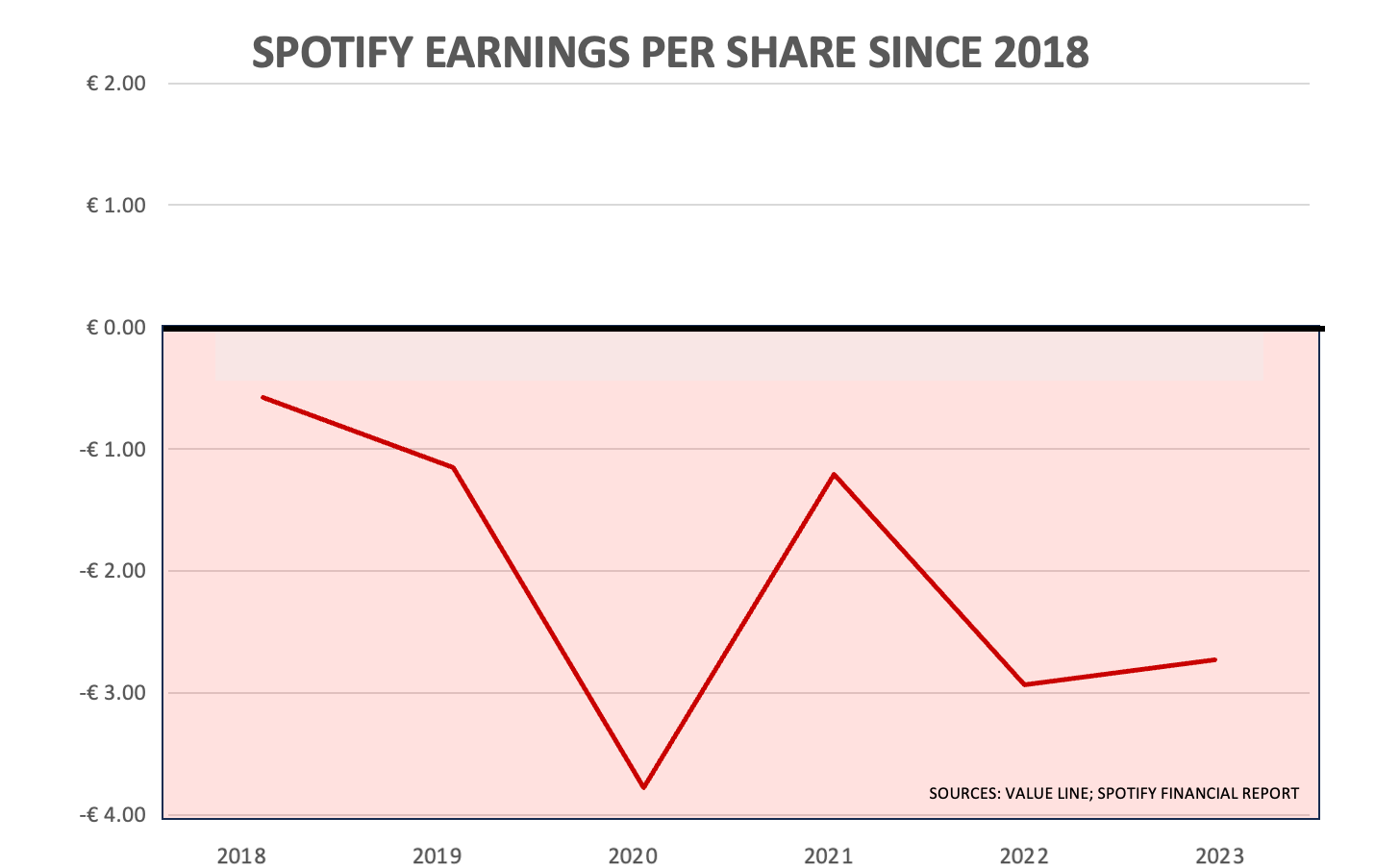
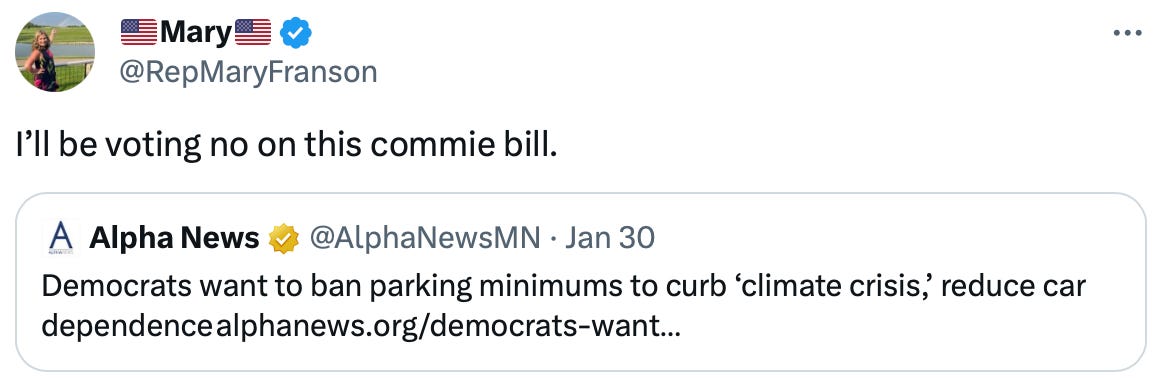

 Tipsy Teetotaler ن