When people wonder or worry about AI, and how it might one day eclipse the human brain, I think of poetry, the arts. The computer brain may be able to store an infinite amount of information, but it cannot have the sense of memory that we humans can. It will not refine its translations of Byron in the Gulag or write poems on a scaffold. It will not be able to leave a few lines that say: “I was here, too.”
So long as we do these things, and remember these things, the beating human heart will never be burned up utterly.
The inevitability of choice
I think I’ve mentioned dropping Rod Dreher’s Substack, though I’ve been a fan of his since Crunchy Cons. I probably used phrases like logorrhea and low signal-to-noise ratio. The first would come as no surprise to Dreher; the latter may just mean that I’ve read much of his signal multiple times over 18 years and it’s not worth the effort to filter out the noise to read it once more.
But I’ll say this for him: he’s still capable of good writing that’s not overly-larded with catastrophism, as witness this column in the European Conservative, by the reading of which I feel less alone (see preceding item):
[A]ll traditionalism in our wretched age is a bit fake. How could it not be? The fundamental experience of modernity is the shattering of all authoritative traditions and narratives. We can’t escape that. As Charles Taylor, pre-eminently among many others, has observed, even when we affirm tradition today, we do so with the knowledge that we could do otherwise.
I saw this play out in my own family, when as a young man I told my father that I was going to convert to Catholicism. He was dumbstruck by the thought. “But the Drehers have always been Methodist!” he protested. In fact, the first Drehers to move to North America were Lutherans, and not too many generations before that, were Catholics. And for that matter, my dad rarely went to church, which sent a signal to me about how lightly he took his Methodism.
Decades later, having left Catholicism for Orthodoxy in part because I was seeking even deeper roots in tradition, I had to face the fact that my father had a more traditional mindset, and I was, paradoxically, the modernist. That is, my father may not have had much belief in Methodist Christianity, but he accepted that Methodism was part of our collective identity. The Drehers rarely go to church, and the church they rarely go to is the Methodist church, because that’s how it has always been.
What my late father, who was born in 1934, failed to understand is that his children were born into a world that takes almost nothing for granted. His son, in his mid-twenties, was becoming Catholic because he had become more serious about the Christian faith, and had come to believe that the pursuit of truth led him in this direction. Yet when I took up the practice of the Catholic faith, for a long time I felt like an impostor, performing rituals that did not come naturally to me, though they would in time.
It was even more radical when I lost my Catholic faith, and was rescued by Orthodoxy, a form of Christianity that is alien to the West. A well-known Orthodox theologian once, in my presence, called us converts fake—as if Orthodoxy was something that you had to be born into. This is an absurd position for a theologian of a universalist religion that spreads by evangelism to take.
… it’s the LARPers, the eccentrics, and all others willing to be criticized as ‘fake’ are the very people whose devotion to tradition, however skewed and silly, will carry us through the darkness and confusion of the present moment.
(Emphasis added)
An earlier draft included my interjection after the first paragraph, but on second thought, Dreher makes my point better in his remaining paragraphs. The European Conservative brings out the better in him.
Can’t or Won’t?
We live in comforts that the richest of aristocrats not very long ago could never have dreamed of, and yet we claim that we are too poor to have more than a child or two. The truth is the reverse: we are too rich to have more than a child or two, too committed to work for work’s sake and to the purchase of prestige, mansions, the “best” schools, and toys for grown-ups.
Anthony M. Esolen, Out of the Ashes
Scamify
I’ve griped a lot about the fake artists problem at Spotify. It’s like a stone in my shoe, and just gets worse and worse.
I’m supposed to be a jazz expert. So why haven’t I heard of these artists? And why is it so hard to find photos of these musicians online?
I’m supposed to be a jazz expert. So why haven’t I heard of these artists? And why is it so hard to find photos of these musicians online?
I listened to twenty different tracks. There’s some superficial variety in the music, but each track I heard had the same piano tone and touch. Even the reverb sounds the same.
I did the math. The numbers told me that you simply can’t offer unlimited music for $9.99 per month. Somebody would get squeezed—probably the musicians (for a start).
And now?
I note that Spotify has sharply increased its subscription price and recently laid off 1,500 employees.
But the company released quarterly earnings this week—and it is still losing money!
Let me put this into perspective: Spotify was founded in 2006, and has now been operating for almost 18 years. It has 236 million subscribers in 184 countries. But the business still isn’t profitable.
Maybe one path to profitability is to pass off royalty-free AI Muzak as easy-listening jazz. It used to be a mild insult to call any work of art “derivative,” but with AI, it’s turtles all the way down.
Civilization
To realize the relative validity of one’s convictions and yet stand for them unflinchingly is what distinguishes a civilized man from a barbarian.
From the same Damon Linker post that quotes Schumpeter:
Niebuhr rightly remarked that Americans nearly always mean well when they act in the world. Our moral perils are thus “not those of conscious malice or the explicit lust for power.” Yet the rules of the world are such that good intentions—even our own—often lead to unintended bad consequences. This is a lesson we seem incapable of learning, or remembering, so eager are we to deny that the actions of even “the best men and nations” are “curious compounds of good and evil.”
…
The danger of crafting policy and acting in the world on the basis of an overly exalted view of our ourselves isn’t just that we’ll make foolish decisions that lead to immense suffering and harmful setbacks to our broader strategic aims. It’s also that in raising and dashing lofty expectations, we run the risk of inadvertently inspiring the cynicism to which Niebuhr also thought we were prone, as the inverse of our over-confident moralism.
This happened on the left during the 1970s, in the wake of the Vietnam debacle, with George McGovern’s call for America to “come home” after its ruinous misadventure in southeast Asia. And it’s happening in our own time on the right, after George W. Bush displayed hubris in deciding to topple the regime of Saddam Hussein and then adopted an unmodulated form of theologically infused American exceptionalism to justify the policy once its original rationale (ridding Iraq of weapons of mass destruction it didn’t possess) crumbled to dust. (If you’ve forgotten its details, I urge you to read Bush’s 2005 Inaugural Address, with its 50-odd invocations of “freedom” or “liberty,” and jaw-dropping declaration that the ultimate goal of American foreign policy is nothing less than “ending tyranny in our world.”)
The instant before that “jaw-dropping declaration” was my last as a Republican, as I’ve written about before.
World Affairs
Made in America
Only naive arrogance can lead Westerners to assume that non-Westerners will become “Westernized” by acquiring Western goods. What, indeed, does it tell the world about the West when Westerners identify their civilization with fizzy liquids, faded pants, and fatty foods?
It pains me to channel this, but Dreher’s right, at least up to the break:
Whatever you think of Vladimir Putin, who is ten years younger than Biden, he is vigorous, sharp, and combative. He gave his American interlocutor a coherent lesson on the past thousand years of Russian history, and hesitated only to tell the Yank to hush, and let him finish. Meanwhile, in Washington yesterday, Joe Biden confused President Sisi of Egypt with the leader of Mexico.
Toggling back and forth online from the Carlson interview to the Biden press conference, staged to address the humiliating Special Counsel’s report, was like moving out on a frail, narrow footbridge over a chasm. It is truly terrifying to consider that the feeble, senile old man desperately trying to rebut charges of dementia is what the U.S. sends to “battle” against a man like Putin.
Even worse, nobody doubts that Putin, for better or for worse, governs Russia. Who is governing America from the White House? Because it is not Joe Biden, that’s for sure.
…
It is hard for many Europeans to understand, but Americans scarcely know what happened in our country more than five minutes ago. And we only seem to care about it insofar as we can cite history as a reason to justify whatever it is that we want to do now. This is why Americans are living through the catastrophic, indeed totalitarian, leftist stripping of significant historical figures from public life—taking down their monuments, expelling a considered, nuanced treatment of them from history books—without protest. Too few Americans understand why this matters, and why they should care.
Isn’t Vladimir Putin doing the same thing—putting history to use to justify his attack on Ukraine? Yes, but there’s a difference. Russia really does have this incredibly long, dense, and difficult history with the territory we now call Ukraine. One does not have to accept Putin’s conclusion at the end of the story—‘therefore, Russia had to invade’—or accept his version of historical events to grasp that history matters to him in ways that many Americans will fail to appreciate.
National Affairs
Now and then
Is the New York Times suffering cognitive decline?
As I frequently remind readers, I’m a former conservative who hasn’t voted for the GOP since 2002. Why?
Because I think the Republican Party and its right-wing media allies intentionally spew demagogic toxins into the civic atmosphere of the nation for the sake of political gain. Because that isn’t going to change. (Like a three-pack-a-day smoker waiving away the possibility of lung cancer even after symptoms of serious illness have appeared, Republican voters have become addicted to the poison and demand more of it with each new election.) And most of all, because, like a highly skilled conman/drug pusher, Donald Trump deepens the deadly addiction every day, along with posing a potentially fatal threat to the country’s democratic institutions.
Republicans vs. property rights: Democrats in Minnesota, including Ilhan Omar, are supporting a new bill that would ban something called parking minimums. Parking minimums require property owners and developers to include a certain number of parking spots per apartment or business, and it was useful in the 1950s construction boom but it’s now one of the ways the government forces everyone into sprawling, low-density communities that rely on cars. Left to the free market, people often freely choose to live close together. They like it. I like it! Ever wonder why Paris and London are so charming? Anyway, I’m for freedom and so I err on the side of people being able to do more of what they want with their land, especially when parking lots are genuinely ugly. So oddly enough, when it comes to parking minimums, I’m with Ilhan Omar. The Republican opposition to the bill—again, which would limit the power of government and give property owners more rights to do what they want—goes something like this:
Apart from the knee-jerk response of “freedom,” which ought to resonate with a Republican (at least as I remember the party), removing that impediments to higher-density living arrangements is the right policy because it promotes more sustainable living.
Another good one steps away from DC
Another respected Republican, Rep. Cathy McMorris Rodgers, also revealed she will retire at the year’s end, despite being the chair of the influential House Energy and Commerce Committee. The 54-year-old lawmaker from Washington state has served in Congress since 2005. McMorris Rodgers and Gallagher join a growing exodus of members of both parties who are leaving Congress frustrated that political infighting has made legislating harder than usual.
Rep. Rodgers is one of a few candidates I supported financially (1) because she was endorsed by the pro-life Susan B. Anthony List and (2) then-35 year-old Rodgers looked electable. I am grateful that she has never engaged in the kind of jackassery that would make me regret my support.
Too many other SBA List endorsees who got elected have turned into embarrassments. One of them was foregrounded at new Speaker Mike Johnson’s coming out party snarling “SHUT UP!” at a reporter for asking an obvious and appropriate question.
I don’t look at SBA List endorsements any more.
Separating the man from the movement
Trigger Warning: If you don’t want to see anything about DJT here, stop. I’m quoting this because the mention of him is incidental to a more important point about how to heal our politics:
I think I detest Donald Trump as much as the next guy, but Trumpian populism does represent some very legitimate values: the fear of imperial overreach; the need to preserve social cohesion amid mass migration; the need to protect working-class wages from the pressures of globalization.
The struggle against Trump the man is a good-versus-bad struggle between democracy and narcissistic authoritarianism, but the struggle between liberalism and Trumpian populism is a wrestling match over how to balance legitimate concerns.
Yes, I suppose this is another insouciant assumption that there can be Trumpism without Trump. But we ignore populism’s legitimate values, we’ll see other demagogues arise to exploit them when Trump’s gone.
Resolute yet humble
Isaiah Berlin, concluded one of his most famous essays by quoting an observation by political economist Joseph Schumpeter: “To realize the relative validity of one’s convictions and yet stand for them unflinchingly is what distinguishes a civilized man from a barbarian.” This is also what distinguished postwar liberals such as Berlin and literary critic Lionel Trilling (the subject of this series’ second post) from just about everyone writing and thinking about politics today.
ICMY, I think he called “just about everyone writing and thinking about politics today” barbarian, and I won’t disagree if one allows for a bit of hyperbole in “just about everyone.”
You can read most of my more impromptu stuff here and here (both of them cathartic venting, especially political) and here (the only social medium I frequent, because people there are quirky, pleasant and real). All should work in your RSS aggregator, like Feedly or Reeder, should you want to make a habit of it.
Not that the replacement of our 2023 calendars with 2024 will necessarily make a difference, but a guy can hope, can’t he?
Legalia
New York Times vs. OpenAI
The New York Timesfiled a lawsuit on Wednesday against OpenAI and Microsoft over alleged copyright infringement, claiming that the companies exploited the newspaper’s content without permission or authorization to train their AI systems—including the chatbot ChatGPT—and “wrongfully benefited from” the Times’ journalism. “This action seeks to hold them responsible for the billions of dollars in statutory and actual damages that they owe for the unlawful copying and use of the Times’ uniquely valuable works,” the paper argued in the filing.
Non-lawyers may find puzzling the thought that the main job of law schools is to teach people to think like lawyers. What the heck does that mean?
Among other things, it means that I cannot read an item like this without thinking this is how the common law develops: gripes and competing analogies.
True example: Early in the days of petroleum, Defendant, seeing Plaintiff getting rich off oil wells, slant-drills and taps the same pool of crude oil under Plaintiff’s property. Plaintiff sues, saying he owns everything within his borders from the infernal depths to the furthest skies. Defendant says the crude oil is like a highly mobile animal (a “wild, fugacious mineral-animal” was my property law prof’s description) which is rightfully owned by whoever captures it.
Eventually, a body of law develops from the resolutions of multiple cases, each with some different nuances.
So, is OpenAI like a slant-driller? How did those slant-drilling cases resolve? If the answer were obvious, there’d be no lawsuits or they would quickly settle.
The way generative AI works by training on existing data and generating new creative content and text is something that intellectual property as a legal framework has not had to deal with. We’re going to have to litigate and get the ruling from the court.
So this is a very important case that I wouldn’t be surprised that if it doesn’t go all the way to the United States Supreme Court because this has to be settled for us to know what the framework is for generative AI.
That first paragraph describes classic common law development.
The second paragraph is dubious: the Supreme Court doesn’t take cases just because they’re important, and an important case filed in state court would likely not get SCOTUS to review it. But this is probably in Federal Court, since it’s under (federal) copyright law, so SCOTUS might take it if it doesn’t like the decision of the Court of Appeals that eventually reviews the District Court decision.
On whether Trump is disqualified
I detest Donald Trump. It would be a great relief to me, though I cannot bring myself to pray for it, were he (and Joe Biden too, for that matter) to drop dead, soon. Some of his followers would spin conspiracy theories, but nothing any of us can do will stop that whatever happens.
At this stage of our absurdly-long pre-election run-up, it would be terribly, terribly, terribly divisive to exclude Trump from the ballot. What could serve more deeply to delegitimize the whole Presidential election next year?
The legal arguments about the applicability of Section 3 of the 14th Amendment are nuanced, and it’s not just about “insurrection.” The intent of the section was mostly to keep the former Confederate States from sending bomb-throwing racists to the House or Senate, with little worry about a bomb-throwing President, The language of the section arguably sweeps more broadly; but it dances all around naming the Presidency. Did the Reconstruction Congress hide an elephant (the Presidency) in a mouse-hole?
Credible legal scholars deny that the Presidency is a “civil office” of the United States. For instance, Kurt Lash: “According to longstanding congressional precedent and legal authority, the phrase ‘civil office under the United States’ did not include the office of president of the United States. As Joseph Story explained in his influential ‘Commentaries on the Constitution of the United States,’ the congressional precedent known as ‘Blount’s Case’ established that the offices of president, senator and representative were not civil offices under the government of the United States — they were the government of the United States. The phrase ‘civil office under the United States” referred to appointed offices.’“
SCOTUS has tended to go with textual arguments rather than intent. I hope they either revert to intent or find a really persuasive textual reason to allow him on the ballot, and Joseph Story may be just the ticket. Some of Trump’s enemies would spin conspiracy theories or shit-talk SCOTUS, but nothing any of us can do will stop that whatever happens.
Then, if Trump is still disappointingly alive and kicking on Election Day, I hope we collectively kick him to the curb by a really convincing margin. (This would be more realistic if the Democrats would turn their attention away from knee-capping Trump and toward a compelling centrist or center-left vision for 2025-2029.)
Culture
Racism
Martin Luther King Jr.’s most famous speech would not meet Kendi’s definition of anti-racism, nor would the one Barack Obama made about there being too many fatherless Black families. Indeed, nearly everything that Americans have been taught about how to be anti-racist for the past several decades is, according to Kendi’s explicit definition, racist.
Subrena E. Smith, a person of color as such things are styled, proposes that since we invented race for nefarious reasons, it’s time to banish it.
If terrorists win, it will be the transphobes’ fault
Since January of this year, more than 400 anti-LGBTQ+ laws have been introduced at the state level … That number is rising and demonstrates a trend that could be dangerous for service members, their families, and the readiness of the force as a whole.
I’m reasonably confident that General Burt is highly educated, because only someone highly educated could believe such drivel:
You have to be educated into cant; it is a kind of stupidity that surpasses the capacity of unaided Nature to confer.
Anthony M. Esolen, Out of the Ashes. I call “Bullshit” and “Shame on you for trying to shame us, General.”
This is a quote that has stuck with me. Yes, it’s a variation on a populist theme, but there’s enough truth to that theme that The Emperor’s New Clothes has become beloved.
Jung versus Freud
Having felt his own seething unconscious erupt into the midst of normal daylight reality served Jung well in his treatment of schizophrenic patients, who in Freud’s judgment were too far gone to reach, but whose bizarre hallucinations and delusions Jung attempted to comprehend with respect and tenderness. Unlike Freud, who maintained a studied distance from his patients, sitting aloof and serene out of the supine sufferer’s sight, Jung would sit face to face with his charges, bumping knees, exhorting with vehement gestures.
In Jung’s estimation, what healed was not disinterested mind alone following a dogmatic trail through the vast wastes of one’s sexual history, but making contact, demonstrating sympathy, aiming at a comprehensive understanding, allowing the free play of humanity at its best. Jung could see that for patients above the age of thirty-five — life’s halfway mark, or what Dante callednel mezzo del cammin di nostra vita — their principal concern was not undoing childhood psychosexual knots that persisted into adulthood, but rather finding the authoritative spiritual truth that one could found a serious life upon.
That kind of explains Jungian Jordan Peterson’s style, doesn’t it?
Adult movies — and literature
I used to say that an adult movie was one where they kiss and then the lights go out (because the adults know what comes next).
I’ve now read Marilynne Robinson’s Gilead and Home, truly adult novels. What child could understand? A rare treat, too rich to binge-read. I can’t even face wading into Lila or Jack immediately.
Journalists are so predictable
After dealing with reporters through many rounds of violence since coming to power in Gaza in 2007, Hamas understood that most can be co-opted or coerced, and that coverage of Gaza would reliably focus on civilian casualties, obscuring the cause of the war, portraying Israel’s military operations as atrocities, and thus pressuring Israel to stop fighting.
[B]ook critic Ron Charles … noted the publication of “Manhood: The Masculine Virtues America Needs,” by Senator Josh Hawley: “The book’s final cover contains just text, including the title so oversized that the word ‘Manhood’ can’t even fit on one line — like a dude whose shoulders are so broad that he has to turn sideways to flee through the doors of the Capitol.”
In The Los Angeles Times, Jessica Roy explained the stubborn refusal of plastic bags to stay put: “Because they’re so light, they defy proper waste management, floating off trash cans and sanitation trucks like they’re being raptured by a garbage god.”
Of Kevin McCarthy’s toppling as House speaker by Matt Gaetz and his fellow right-wing rebels: “It’s as if Julius Caesar were stabbed to death in the Forum by the Marx Brothers.” (Peggy Noonan)
Ron DeSantis, gives off the vibe “that he might unplug your life support to recharge his cellphone.” (Peggy Noonan)
Too many voters today are easily conned, deeply biased, impervious to fact and bereft of survival instincts. Contrary to myth, frogs leap out of heating pots. Stampeding cattle stop at a cliff edge. Lemmings don’t really commit mass suicide. We’ll find out about Americans in 2024. (Mort Rosenblum)
While I don’t systematically gather, grade, and keep records on such things, I rather liked two sentences from Daniel Henninger:
The most fraudulent word in higher education is “dialogue.” Real dialogue died years ago, replaced by a soft-pillow politics that envelops anything disagreeable and then smothers it.
Speaking of higher education:
Acknowledging a few exceptions among conservative commentators and public officials, we can still say that universities are to Republicans what guns are to Democrats: an issue they are certain is at the root of great evils, but about which they face a massive knowledge gap that hampers their ability to do anything effective, even within the limited space our legal order allows.
Greg Conti, The Rise of the Sectarian University (Compact Mag) I’m seeing enough good stuff from Compact (which registered with me at its founding) to consider paying its pricey subscription price.
After all the hype, it turns out that “Trump without the crazy” is just an awkward, aggrieved, opportunistic, anti-charismatic, aspiring autocrat with a mile-wide cruel streak and the people skills of Mark Zuckerberg crossed with Richard Nixon.
Much of the social energy of the old internet has now retreated underground to the cozyweb. Except for a few old-fashioned blogs like this one, there’s not much of it left above-ground now. But there’s an odd sort of romance to holding down a public WordPress-based fortress in the grimdark bleakness, even as almost everything (including the bulk of what I do) retreats to various substacks, discords, and such.
I think you probably know who posted that on TruthSocial.
“Christians tend not to hope other people rot in hell on Christmas Day,” radio host Erick Erickson sniffed afterward, which read like a non sequitur in context. Why would Trump care whether people think he’s a good Christian? And how confident should we be at this point about which sentiments are and aren’t condoned by politically engaged members of the faith? Erickson’s grasp of what’s normal and what isn’t for American Christians may not be as firm as he, and I, might wish.
If Mr. Trump wins the Republican nomination for the third straight time and then prevails in the general election, he will have sealed the transformation of his party, given new energy to right-wing populism around the world, and called into question the principles that have shaped America’s security policy since World War II.
Voters will have ratified the outlook that Mr. Trump has advocated since the 1980s: opposition to immigration, multilateral trade treaties and globalization. They would give him the opportunity to enact more extreme proposals in his second term—including an all-out attack on the “deep state” federal bureaucracy and the use of the military to fight crime, immigration and domestic dissent. They would embrace his view of the press as the enemy of the people and agree to an all-out culture war led from the White House. After hearing Mr. Trump declare across the country that “for those of you who have been wronged and betrayed, I am your retribution,” they will have replied, in effect, “Retribution is exactly what we want. Use the government to punish our enemies.”
Adults have a particular responsibility to model and set a template for the young. It is a primary job of the adults in the room, wherever the room is, to show every day, in dress, speech and comportment, what being adult looks like. At least two generations have come up with no idea. Our national style has grown crude and vulgar; this entered Washington some years back, and that only made it worse. It’s a little sad. Washington used to be so old-fashioned, it was one of its charms, it was a throwback. Decades ago you smiled because female members of Congress, in their suits and high-button blouses, dressed like aspiring librarians. Now some dress like aspiring whores. Can I get in trouble for saying that? Let’s find out.
… that Christ may dwell in your hearts through faith; that you, being rooted and grounded in love, may be able to comprehend with all the saints what is the width and length and depth and height — to know the love of Christ which passes knowledge; that you may be filled with all the fullness of God.
You can read most of my more impromptu stuff here (cathartic venting) and here (the only social medium I frequent, because people there are quirky, pleasant and real). Both should work in your RSS aggregator, like Feedly or Reeder, should you want to make a habit of it.
By the time I post this, America’s chattering class probably will have moved on to new clickbait [Note: I was wrong about that; they’re still writing about it.], but I thought David French was solid on the Ivy League Presidents’ notorious testimony to Congress:
So if the university presidents were largely (though clumsily) correct about the legal balance, why the outrage? To quote the presidents back to themselves, context matters. For decades now, we’ve watched as campus administrators from coast to coast have constructed a comprehensive web of policies and practices intended to suppress so-called hate speech and to support students who find themselves distressed by speech they find offensive.
The result has been a network of speech codes, bias response teams, safe spaces and glossaries of microaggressions that are all designed to protect students from alleged emotional harm. But not all students …
[E]ach of the schools represented at the hearing has itsowncheckeredpast on freespeech. Harvard is the worst-rated school for free expression in America, according to the Foundation for Individual Rights and Expression. (I served as the group’s president in 2004 and 2005.) So even if the presidents’ lawyerly answers were correct, it’s more than fair to ask: Where was this commitment to free expression in the past?
…
That said, some of the responses to campus outrages have been just as distressing as the hypocrisy shown by the school presidents. With all due apology to Homer Simpson and his legendary theory of alcohol, it’s as if many campus critics view censorship as the “cause of, and solution to, all of life’s problems.”
Universities have censored conservatives? Then censor progressives, too. Declare the extreme slogans of pro-Palestinian protesters to be harassment and pursue them vigorously. Give them the same treatment you’ve given other groups that hold offensive views ….
[W]hen journalists discovered that [Harvard President Claudine Gay] had plagiarized heavily (even as she published very little before getting the job), Harvard hired a high-powered lawyer to bully those reporters. Several of the academics she plagiarized are not happy about it. And it does bring up questions of her actual credentials here—her biggest success before her appointment as president of Harvard seems to be as part of the mob that tried to smear Roland Fryer, a black professor there who poked some holes in common police racism narratives.
I didn’t want to believe it was possible that a representative survey at Harvard University would show that 51 percent of Americans between ages 18 and 24 found that the attacks by Hamas can be justified by the grievance of Palestinians.
This is but one of a list of Döpfner’s “I didn’t want to believes,” but its fallacy smacked me in the face. Isn’t “a representative survey at Harvard University” an oxymoron? Isn’t any survey at Harvard incapable of showing what Americans generally between ages 18 and 24 believe?
I think the author knows that:
And, more than anything else, I didn’t want to believe it was possible that some of the most renowned and influential elite universities in the world would capitulate to the cultural struggle carried out in the name of a woke agenda pushed by students that are increasingly demonstrating a blatantly antisemitic mindset ….
The ongoing treason of the intellectuals
For nearly ten years, rather like Benda, I have marveled at the treason of my fellow intellectuals. I have also witnessed the willingness of trustees, donors, and alumni to tolerate the politicization of American universities by an illiberal coalition of “woke” progressives, adherents of “critical race theory,” and apologists for Islamist extremism.
Throughout that period, friends assured me that I was exaggerating. Who could possibly object to more diversity, equity, and inclusion on campus? In any case, weren’t American universities always left-leaning? Were my concerns perhaps just another sign that I was the kind of conservative who had no real future in the academy?
Such arguments fell apart after October 7, as the response of “radical” students and professors to the Hamas atrocities against Israel revealed the realities of contemporary campus life. That hostility to Israeli policy in Gaza regularly slides into antisemitism is now impossible to deny.
Rod Dreher, who went to LSU instead of an Ivy League school, has a more “meta” view of the débâcle:
What my European friend, who arrived at Harvard dazzled by its global brand, discovered in his time there was the real secret to the most elite university in the world: that it is less about scholarship than it is about networking and credentialing its students to thrive within a system of power.
This is not necessarily a bad thing. Every society has elites, and needs them to keep things running. What my European friend saw was that America’s elites are not fit for purpose.
Dispossession
Stewardship as affront
Superficially, litter and the rusting carcasses of salvaged cars are both an affront to the eye. But while litter exemplifies that lack of stewardship that is the ethical core of a throwaway society, the visible presence of old cars represents quite the opposite. Yet these are easily conflated under the environmentalist aesthetic, and the result has been to impart a heightened moral status to Americans’ prejudice against the old, now dignified as an expression of civic responsibility.
…
Among the sacrifices demanded by the new gods may be your ten year old car that gets 35 MPG, requires zero new manufacturing (with its associated environmental costs), and may be good for another ten years. As Rene Girard points out, ritual violence is usually directed against a scapegoat who is in fact innocent, onto whom the sins of the community are transferred. In our pagan society of progress, it seems anything old and serviceable can serve this role.
Even many places that are inclined to be chill about private acts between adults balk at how far America is taking things. In America, tens of thousands of people cut off their breasts or genitals every year trying to change their sex. Judges tell parents they will lose custody if they don’t let their children be castrated. Rising STD rates among gay men have led the CDC to approve the continuous use of antibiotics as a prophylactic (DoxyPEP), even though this will surely result in antibiotic-resistant superbugs. Our birthrates are collapsing, and almost half of the children we do have are out of wedlock. There are lots of reasons other countries might look at us and think maybe we don’t have our sexual norms exactly right.
You can have power over people as long as you don’t take everything away from them. But when you’ve robbed a man of everything, he’s no longer in your power.
[T]he Times is becoming the publication through which America’s progressive elite talks to itself about an America that does not really exist.
James Bennet, former New York Times Opinion Editor, in the Economist. This is a 16,000-word essay on what has gone wrong at the Times — and how it went wrong.
A big factor is the intrinsic incentives of modern narrowcasting. The New York Times is prospering immensely, after a near-death experience, but it is prospering by telling liberals and progressives what they want to hear while pretending that it’s still an honest, unbiased source. So profitable is the new scam that the Times is unlikely to repent and go back to the old ways.
My decision to skip the Times “news” coverage and go straight to the Opinion pages — where I know I’m getting opinion and am unseduced by it — is vindicated.
Sundry madness
Barbara Furlow-Smiles, the woman whose title was Lead Strategist, Global Head of Employee Resource Groups and Diversity Engagement (i.e., head of DEI) at Facebook, pleaded guilty this week to defrauding the company of $4 million. A perfect symbol of these programs that literally the leader of it was very, very busy coming up with ways to steal millions from Mark Zuckerberg. Sometimes it was just simple: she had Facebook pay $18,000 to a preschool for tuition, which, I love that, you don’t get what you don’t ask for. Other times, her scams were more elaborate. She hired friends for fake jobs and had them pay her kickbacks (dream of dreams). She submitted fake expense reports and such (oldie but goody). The kickbacks often came in cash, sometimes wrapped in t-shirts, according to the Feds (secure).
The Biden administration has decided to go after a random moving company for the crime of hiring too many muscular young men. Yes, the Equal Employment Opportunity Commission has sued Meathead Movers, alleging age discrimination. There was no complaint that kicked this off, no elderly man who was turned out. The EEOC just decided to bankrupt this random company. The investigation started in 2017, but September 2023 was the moment to strike. Six years of investigating Meathead Movers. Maybe the CEO didn’t tweet enough nice things about Kamala Harris. Who knows. But moving companies beware: Are you hiring strong young men to carry things? Illegal! Go to a retirement home, find the tiniest elderly lady, and force her to haul a piano. That’s justice. That’s the EEOC. No one tell them about the NBA.
The warning Cheney issues is clear and persuasive: A second presidential term for Donald Trump would pose great risks to the nation’s democratic practices and identity. A retribution-minded, Constitution-terminating leader buttressed by unscrupulous advisers and ethically impaired lawyers could, she argues, “dismantle our republic.” As both a witness and a target of the Jan. 6 assault on the Capitol and as a leader of the House committee that investigated the attack, Cheney recognizes the power of the mob that Trump commands. She also understands the cowardice of his enablers in the Republican Party, the same kind of loyalists who would populate — or at least seek to justify — a second Trump administration.
I’ve endured many presidential candidates who had me reaching for a cocktail. Ramaswamy is the first who has me looking for Dramamine.
Frank Bruni. Bruni also gives a shout-out to Sarah Isgur:
[I]n The Times, Sarah Isgur defined the challenge of discussing Vivek Ramaswamy: “I think I speak for the entire pundit class when I tell you that we’re all running out of synonyms for ‘jerk.’”
The funny thing is, Isgur did not say that. What she said was “I think I speak for the entire pundit class when I tell you that we’re all running out of synonyms for ‘asshole.’” The Times censored it.
So walk on air against your better judgement
(Seamus Heaney)
You can read most of my more impromptu stuff here (cathartic venting) and here (the only social medium I frequent, because people there are quirky, pleasant and real). Both should work in your RSS aggregator, like Feedly or Reeder, should you want to make a habit of it.
Thick travel has made me realise how much chaos we have here in the US, at a spiritual level, compared with the rest of the world. We are becoming a thin culture, obsessed with the surface, more and more in denial about the importance of what is beneath. We have forgotten that we need webs of meaning, eroding so many of them. People are left trying to cope with what we humans are not equipped to cope with — the isolation and chaos that follows from meaninglessness.
… My three years of thick travel, of trying to understand other cultures, has given me a much clearer picture of the problems here in the US. It’s made me aware just how deep they are. Our culture is harsh and transactional; it doesn’t respect the very human need for a deeper sense of meaning. The result is our epidemic of suicides, overdoses, and other early deaths.
Worse still is that culture, while easy to erode, is very hard to rebuild once gone. You can’t legislate back meaning. If thick travel teaches you anything, it’s that people don’t work that way.
It’s that mythical place where New World people come to lead different lives. For centuries, and no matter how much it has changed, Europe, for us, has meant art and architecture, science and philosophy, fashion and fame, sex and perfume — and some connection to the past that, in an unbridgeable way, is unavailable to us back home … To come abroad is to understand yourself as a product of your own culture, and to see just how specific that culture is. So much of what I thought of as my personality — whatever made me different from other people — turned out to pale in comparison with what made me similar to other people, especially other Americans.
I’ve written here about how living in a small country for a length of time has revealed to me how the US throws its weight around in ways that strike me as bullying. Just today The Interceptreports on a secret Pakistani document purporting to reveal US pressure to remove prime minister Imran Khan (who was, in fact, forced from office) to punish him for being neutral towards US policy in Ukraine. That kind of thing really lands when you start to see the world through the eyes of others.
…
I meet young Europeans from time to time who can’t wait to get out of here and move to America, where they can have the fantasy life they imagine they can’t here. I try to dissuade them from their false impressions — its hard, for example, to make them understand how impossible most of the US, outside of a handful of East Coast cities, is to navigate without a car — but in the end, they should follow their dream if they have the opportunity to do so. What I find so interesting is that the thing that draws me to Europe — the weight of its history and culture — is precisely the thing that they want to escape by going to America. Who am I to say they are wrong?
…
[NB]one of these countries can absorb immigrants like America can, because the cultures are way too thick. Any American who thinks that European resistance to mass migration is due to nothing but racism is a fool who ought to have the experience of living here for a time. Assimilation is far, far more difficult here in these thick old cultures than in the thin culture of the United States. America is very different that way; most of the world is like Europe.
Yup again, though one need not live abroad to see the USA as others see it — something I began trying to do in the early 1990s by buying a world band radio when I was too poor (it’s all relative) and busy to travel. One of the blessings of the internet is the ability to get those other perspectives without leaving your armchair. You just need to care to do it.
Too good to last
The students weren’t allowed to take notes. At this stage the experience itself was more important than getting clear ideas and definitions down on paper for later. They had first of all, most of all, to delight and wonder.
…
Despite appearance, however, in their various meditations the professors were gently leading the students toward two goals. First, by pointing out so much beauty, they were bringing students in an experiential way toward the normal trust that the real is really real, delightful, mysterious, interesting—to wonder, as the program’s motto says …
The second goal was to bring students to the recognition that the Western cultural heritage could be a fountain from which to draw and not just a system to be dismantled …
Despite its popularity, a program so unapologetic in its embrace of traditional thought, values, and methods could not but find itself out of step with the priorities, agendas, and specializations of the modern research university. What’s more, in the eyes of administrators, an alarming number of students were converting to Catholicism. Some had even entered the monastic life! According to a summary report from an investigative committee, the program exhibited “a lack of tolerance for divergent points of view.” Through a series of bureaucratic manoeuvres and internal investigations, the program was slowly sidelined in the university curriculum and stripped of resources. Without the university’s support, and amid continuing hostility to its aims and purposes from administrators and professors, the program was shut down in 1979, not ten years after it had begun.
This week, I watched videos of people literally burning Harry Potter books, like latter-day Nazis, in the cause of transgender liberation. It’s safe to say, I think, that many of these people have lost their minds — just by staying online. And they not only think they’re perfectly sane; they think they’re heroes.
The Washington Post opined that anti-LGBTQ+ moves in the Middle East were “echoing” those of the American culture wars—as if Turkey, Saudi Arabia, and Pakistan had been listed by the Human Rights Campaign as favored vacation destinations until their ruling elites started reading the website of Moms for Liberty.
Idiocy is the female defect: intent on their private lives, women follow their fate through a darkness deep as that cast by malformed cells in the brain. It is no worse than the male defect, which is lunacy: they are so obsessed by public affairs that they see the world as by moonlight, which shows the outlines of every object but not the details indicative of their nature.
Aaron Sibarium, a rising star reporter for The Washington Free Beacon, recently posted, “Whenever I’m on a career advice panel for young conservatives, I tell them to avoid group chats that use the N-word or otherwise blur the line between edgelording and earnest bigotry.”
…
To understand the cultural dynamic, I want to introduce you to an obscure online concept, no enemies to the right. A tiny fringe adopts this mind-set as a conscious ethos, but for a much larger group, it is simply their cultural reality. In their minds, the left is so evil — and represents such an existential threat — that any accommodation of it (or any criticism of the right) undermines the forces of light in their great battle against the forces of darkness. Attack the left in the most searing terms, and you’ll enjoy the thunderous applause of your peers. Criticize the new right, and you can experience a vicious backlash. The result is a relentless pull to the extremes.
… To the new right, their opposition to the left is so obviously correct that only moral cowardice or financial opportunism (“grifting”) can explain any compromise.
I don’t think there’s anything “obscure” or “online” about “no enemies to the right.” It’s been around long enough to have a French equivalent, pas d’ennemis à droite, and I suspect that the English version derived from the French. Moreover, don’t forget pas d’ennemis à gauche.
One who, as of mid-2023, insisted vehemently that an individual cannot change race, which is wholly a fictitious social construct, but can change “gender.”
(This definition expires 12/31/23 if not repudiated sooner by the progressive hive-mind.)
Legalia
Pro tip
I suggest that you skip commentary on the latest Trump indictment (Fulton County, Georgia) for at least 24 hours, to August 16, unless you love being misled by rash hot-takes.
After all, the indictment is very long, factually and legally, complicated, based in part on a state RICO law that differs from Federal RICO and probably from any other state RICO.
We really need a top Georgia criminal lawyer who isn’t on either team in this indictment to suss out the RICO implications in particular, don’t we?
Fraud?
In response to those who say (in response to the latestnext-to-latest federal Trump indictment) that “fraud” is limited to situations involving money or property; or who say that, “yes, there are cases holding that “fraud” is broader than that in §371, but we think this Supreme Court has been narrowing broad criminal statutes and we think they’ll narrow “fraud” in §371 if Trump is convicted under it”; I go out on a limb to say:
Lenity and other theories notwithstanding, if the Supreme Court narrows “fraud” under §371, it won’t be in reviewing a conviction of Donald Trump for his January 6 shennanigans. His behavior was just too wicked and the risk to the nation too great.
This is my foray into legal realism. And I don’t say there will be no dissents from upholding the (hypothetical) conviction.
Book bans
I wish they’d ban my book Cheerfulness so that more people would read it. I wrote it because the America I know and love is upbeat, enterprising, amiable to a fault, partial to jokes, and the mood of fracture and trauma seems fictitious to me, a far cry from the country that attracted our immigrant forebears. They didn’t cross the border in the hopes of taking vengeance.
A telltale sign of the dishonest interlocutor is if they oppose your right to question them. Politicians who refuse interviews with the press, public health officials who demonize dissenters, activists who demand the muzzling of opposing opinions—such people are simply not to be trusted.
“You mean you’ve engineered the disturbances?” said Mark. “That’s a crude way of putting it,” said Feverstone. “But–what’s it all for?” “Emergency regulations,” said Feverstone. “You’ll never get the powers we want at Edgestow until the Government declares that a state of emergency exists there.”
Most Times reporters now also rely on some form of encrypted communication, particularly messaging apps like Signal and WhatsApp or the emailing service ProtonMail, to keep their sources and conversations confidential.
That is a remarkable shift. Encryption technologies became popular only a few years ago, after the former government security contractor Edward Snowden revealed the extent of what the United States government was doing to surveil its own citizens.
I’d love to make Signal my default messaging app and Protonmail my default email app, but too few people, inexplicably, have adopted them. (Hint, hint.)
If you say you don’t trust the government but aren’t encrypting your online communications, I don’t believe you.
Subsidiarity in a nutshell
When government takes over a space formerly held by intermediating institutions or citizens acting through the democratic process, they promise dispassionate expertise, neutrality and justice. But what they deliver is a replacement ideology and a big stick to enforce adherence.
… until I realized that anyone who answered at all (i.e., accepted the premise that Jesus fits on a political scale) is of dubious sanity regardless of the answer.
I want to add “orthogonal” to my vocabulary, and “Jesus is orthogonal to politics as we conceive them” seems apt.
Postscript
Failure of imagination
The problem is that we cannot imagine a future where we possess less but are more.
The end of the world as we know it is not the end of the world.
You can read most of my more impromptu stuff here (cathartic venting) and here (the only social medium I frequent, because people there are quirky, pleasant and real). Both should work in your RSS aggregator, like Feedly or Reeder, should you want to make a habit of it. I’m even playing around a bit here, but uncertain whether I’ll persist.
Voters have to make a choice. Choices are always binary. In the end the majority of voters who aren’t fans of either man will have to decide whose flaws are greater. The presidential ballot doesn’t allow for a nuanced moral calculus.
Baloney! If the major parties keep serving up sh*t sandwiches, we can always refuse to choose (not vote). And there’s the choice of voting for the American Solidarity Party candidate (my choice the past two presidential elections).
Home-invasion robbers
Its mistake is not in any of the hand-written niceties it revels in, which make life orderly, cozy—even lovely. Its mistake is that it treats Leftist ideologues like quirky out-of-town guests arriving for brunch. It assumes we all want the same things and are equally devoted to the perpetuation of bedrock American commitments: free speech, free exercise of faith, equal protection, rule of law.
But the Woke are not zany guests. They are home-invasion robbers.
Nellie Bowles on Friday had the customary array of nut-picked items, but this one is particularly choice:
Philip Morris gets higher ESG rating than Tesla: Before anyone gets too excited about America making a sensible turn on climate change, let’s check in on our eco-investing program. Environmental, Social, and Governance (ESG) scores are meant to be guides for ethical investing, and a company’s score is extremely influential for where big investors put their money. It’s also fully corrupt, and data firms award high scores only to companies that give money to the most bizarre causes. So for example: Tesla now has an overall score of 37 out of 100, compared to Philip Morris International, which has a score of 84. Never mind that cigarettes accelerate the deaths of 8 million a year. (Read Rupa Subramanya’s Free Press article about ESG.)
(Emphasis added)
USA
American Exceptionalism
America’s “exceptional” nature … doesn’t imply superiority. It doesn’t even suggest excellence. It implies difference.
When the head of USAID, Samantha Power, comes to your country and spouts off about America’s role in facilitating “civil society” and “independent journalism,” you are not only right to be worried—you have a duty to stay vigilant.
In my seemingly endless quest for balanced news and commentary (even if it’s roll-your-own balance by reading across a broad spectrum), I’ve been frustrated again and again. When I started in the early ’90s, with a shortwave radio, almost everyone was playing our music (literally) and singing our tune (figuratively). Soon came the internet, and shortwave went the way of the Dodo Bird.
C.S. Lewis in his essay wrote that “Every age has its own outlook. It is specially good at seeing certain truths and specially liable to make certain mistakes. We all, therefore, need the books that will correct the characteristic mistakes of our own period. And that means the old books.” Every country, too, tends to see some things especially well, others poorly. I try to be aware of that when I read putative enemies, both Americans, arguing with each other; I don’t always spot the hidden premise they share, that the world may not share, but I see it often enough to vindicate Lewis.
But such is the world today that even regions and countries who think differently from us publish their thinking in English, thank goodness, as I’m not currently literate other than in English. That means I can read:
Maybe foreign thinkers writing in English can supplement old books for expanding my mind.
Trump and his woes
Speaking of the Trump indictment
Here’s Marco Rubio:
There is no limit to what these people will do to protect their power & destroy those who threaten it, even if it means ripping our country apart & shredding public faith in the institutions that hold our republic together.
Rubio was speaking of the Democrats, of course; I could muster up some respect for him if it were a tearful admission he had been protecting his power by shredding public faith in the institutions of criminal justice.
Marco Rubio wasn’t necessarily the worst, but there was particular irony here.
Sober Peggy Noonan
My fear is that Mar-a-Lago is a nest of spies. Membership in the private club isn’t fully or deeply vetted; anyone can join who has the money (Mr. Trump reportedly charges a $200,000 initiation fee).
A spy—not a good one, just your basic idiot spy—would know of the documents scattered throughout the property, and of many other things. All our international friends and foes would know.
Strange things happen in Mar-a-Lago. In 2019 a Chinese woman carrying four cellphones, a hard drive and a thumb drive infected with malware breezed past security and entered without authorization. She was arrested and jailed for eight months. Another Chinese woman was arrested soon after; a jury acquitted her of trespassing but convicted her of resisting arrest. In 2021 a “Ukrainian fake heiress and alleged charity scammer” gained access, according to the Guardian.
Who else has?
Mar-a-Lago isn’t secure. Those documents didn’t belong there. It is a danger to our country that they were. This story will do Mr. Trump no good with his supporters. It will hurt him—maybe not a lot but some, maybe not soon but in time. I mean the quiet Trump supporters, not big mouths and people making money on the game, but honest people.
When individuals and communities confront a range of options, all of which are likely to lead to bad consequences, that’s a tragic situation. I think that’s where the country finds itself today—in the midst of an unfolding tragedy. The proper response to such a situation is sobriety and honesty about the dangers that lie ahead.
The New York Times describes advisers to rival campaigns wrestling today with the surreal task of “trying to persuade Republican primary voters, who are inured to Mr. Trump’s years of controversies and deeply distrustful of the government, that being criminally charged for holding onto classified documents is a bad thing.”
Nick Cattogio. Note, too, that the criminal charges came from a grand jury, not straight from DOJ.
Two key ideas for next year
I implore my conservative readers to consider two ideas:
Donald Trump is unfit for the Presidency of the United States.
The Democrats (and substantial portions of the civil service) have treated Donald Trump very shabbily. For sake of argument only, I’ll include the federal criminal indictment in that.
Now here’s the point, which doesn’t seem subtle to me but seems to be widely overlooked: Idea 2 doesn’t negate Idea 1.
Can you see that?
Should we inflict Donald Trump upon ourselves and our children just to get back at those who’ve wronged him? Couldn’t we just throw him a giant pity party? (Sorry: I’m expecting an emergency phone call that evening.)
Nailing the Wall Street Journal
Josh Barro nails the Wall Street Journal. Its opinion pieces really have been as bad as he describes in This Is Solely Donald Trump’s Fault. Excerpt:
People like those who constitute WSJ editorial board, who admit Trump broke the law but still don’t think he should be charged for it, should have to spell out what kinds of crimes a leading politician should not be allowed to commit.
And just in case you’ve wondered what Artificial Intelligence would come up with when asked for “A bathroom with a crystal chandelier, and an orange man with blond hair in a business suit reading a document on the toilet, and boxes and boxes of files stacked up everywhere, Pixar,” Barro answers that, too.
Will Republicans nominate a first-grader?
Overwhelming self-entitlement is just at the core of who Trump and [Boris] Johnson are. It is their character. This is how Johnson’s school principal described him when the future PM was just 17: “[He] sometimes seems affronted when criticized for what amounts to a gross failure of responsibility … I think he honestly believes that it is churlish of us not to regard him as an exception, one who should be free of the network of obligation that binds everyone else.” It could read as a summary of parliament’s report 41 years later.
And as with Trump and his bizarre behavior with “his boxes,” it’s very hard to see some profound, malign motive here in pursuit of something important. It’s just mindless egotism, married with an infinite capacity for deceit. Here’s how George M. White, Trump’s classmate at their military academy, characterized him at 17:
“The most significant incident, which I got into big trouble for, was when we were taking a picture in May of 1964, and Donald Trump refused to draw his sword. I’m the first captain and I order present arms and there are five guys behind me and they draw. But he refuses. I hear behind me, ‘Trump, draw your sword.’ Donald refuses. The picture gets taken. … He was defying a direct order, showing his defiance,” White said. “He was ‘being Trump,’ showing that his ego was more powerful than anybody’s. He later showed that picture around to show how defiant he was because he didn’t draw the sword.”
Trump himself told one biographer that “when I look at myself in the first grade and I look at myself now, I’m basically the same. The temperament is not that different.”
How seriously should we take Donald Trump’s candidacy?
…
Ross Douthat As seriously as a spring tempest. As seriously as a summer forest fire. As seriously as the north wind shaking the barren trees on the last day of autumn. As seriously as the winter wind, blowing in the same bare place, with the nothing that is not there and the nothing that is.
…
What matters most about him as a presidential candidate?
…
Douthat That his second term was foretold in the Necronomicon, written in eldritch script on the Mountains of Madness and carved deep, deep into the white stones of the Plateau of Leng.
…
What do you find most inspiring — or unsettling — about his vision for America?
…
Douthat I believe that before the sixth seal is opened, the sun becomes black as sackcloth and the moon becomes of blood, he will deliver more winning than we have ever seen, and I look forward to it.
…
Imagine you’re a G.O.P. operative or campaign manager. What’s your elevator pitch for a Trump candidacy?
…
Douthat Some say the world will end in fire, some say in ice. From what I’ve tasted of desire, I hold with those who favor fire. But if it had to perish twice, I think I know enough of hate to say that for destruction ice is also great and would suffice. MAGA!
Keeping Trump out of the brain
I can’t quite feel ashamed of my perpetual naïveté toward Donald Trump. I don’t want to be the kind of person who can easily enter the head of an amoral narcissist.
I’d rather not let him infect my brain. I’d rather not let that guy alter my views of the world. If occasional naïveté is the price for mental independence from Trump, I’m willing to pay it.
The end of the world as we know it is not the end of the world.
You can read most of my more impromptu stuff here (cathartic venting) and here (the only social medium I frequent, because people there are quirky, pleasant and real). Both should work in your RSS aggregator, like Feedly or Reeder, should you want to make a habit of it.
True revolutionaries do not need to borrow authority from institutions, because they have the power to take what they want from their unconsenting enemy. The woke Left, whether we want to admit it or not, and whether it is itself conscious of it or not, has no such power. It has only consenting victims.
…
People on the New Right will probably object, claiming that they’re unwilling to listen to and aren’t convinced by the woke Left but are coerced into acquiescing in its beliefs and required conduct thanks to its institutional power—that they are the victims of a form of violence. But the nature of the new Left’s power is not Schmittian. Instead, its power comes from its capacity to influence the state through … “institutional capture” [a/k/a] “cultural hegemony.”
…
The irritating proximity of different ways of life, which is inevitable in complex modern societies, would not lead their proponents to such extreme expressions of disdain and mutual hatred if those proponents were made to bear the consequences of their discourse. Without such a prospect, each side can all too safely afford to see the other as an absolute enemy and claim to heroically stand for its cause. In the spirit of Schmitt, no situation is as little political as ours.
…
The woke Left and the New Right are manifestations of a deeper crisis. Both of them find their origin in the neutral state’s aims to liberate people from the responsibility to determine and to pursue a common good, and therefore focus on the administration of things. The state remains neutral out of fear that our disagreements about the common good might lead us to become enemies. But polarization shows clearly enough that peace reduced to mere coexistence, and the virtues attached to it (tolerance and moderation), fall short of what makes human beings want to form a united people, and ready to cultivate the virtues necessary to achieve such a goal.
Freedom, understood as individual autonomy, can never be the sole or even the main question to which a political regime provides the collective answer: How to live together and still be free?
…
Our problem is not that Left and Right are bringing us to the verge of civil war, but that their political demands have become completely detached from the reality of the human relations that make the satisfaction of such demands possible and just.
Alexis Carré, in the concluding essay in a series on the “coalition of the sensible” at Public Discourse.
That essay was a real mind-bender for someone like me who has bought the narrative that we are dangerously polarized, almost on the brink of a hot civil war. It’s one of the rare pieces I’m flagging (Obsidian bookmark) to re-read after a while.
The other essays in the series are linked at the top of Carré’s essay.
Our ideologically incoherent tribes
Today, the Lewises argue, “Left” and “Right” are competing bundles of unconnected and sometimes incompatible issue commitments held together by tribalism. The authors bring to bear a wealth of social science research that shows that people’s issue commitments are more heavily influenced by group loyalties than by philosophical consistency. They also catalogue a history of various political stances that, for example, began as Right, then were considered Left, and sometimes back again, depending on the coalitions’ needs. Trade protectionism, for example, was “Right;” then “Left;” now “Right” again (or maybe “Right” and “Left”). Foreign interventionism took the reverse course. Today what counts as “Right” and “Left” has become conflated with party, and party with the views of individual leaders. All of this, the Lewises contend, cuts strongly against the “essentialist” concept of ideology and in favor of their “social theory.”
Considering what became of the GOP in 2015-16, this “social theory of ideology” has some obvious appeal, as the GOP now holds policies opposite those held ten years ago, and the change was not gradual and evolutionary.
Covert Culture Wars
No Place of One’s Own
To make every place available to all is not to erase privilege, if by that term we mean something illegitimate. Rather it is to erase an earned ability to know and to use diverse and localized pockets of the world according to different levels of personal investment and responsibility. Another way to name this would be the end of ownership, conceived not simply as private property, but as title to inhabit some place on the earth as one’s own.
Google Street View undermines our ability to inhabit a place on earth as our own, and Google has ambitions toward something even more deracinating (I suspect it involved the map of your home created by your Roomba and uploaded to our overlords.)
It is good periodically to be reminded, first, how evil Google is and, second, to trace the implications of its hubris (and its market-tested insouciant responses to objectors).
Participatory disinformation
Disinformation and conspiracism spread in advanced, individualistic democracies like the United States not because their targets are sheeplike but because, to the contrary, so many people are active collaborators in their own deception. … “It’s a fight between good and evil,” one woman told the Associated Press in 2021, explaining why she spent hours every day scouring the internet for proof that the 2020 election was stolen from Trump. “She saw systems fail those most vulnerable,” reported the A.P., “and her faith in the standard truth-bearers of American democracy—courts, Congress, the media—eroded. She felt she could trust nothing but believe anything.… … Conspiracy theories like the ones about the 2020 election and the COVID-19 pandemic “are profoundly participatory disinformation campaigns,”
Playing in her first real WNBA game in 579 days, Brittney Griner did something Friday night in Los Angeles that national television audiences hadn’t seen her do in a long time: The Phoenix Mercury center stood for the national anthem.
She stopped doing so in 2020 but has resumed the practice after returning from 10 months of imprisonment in Russia. “One thing that’s good about this country is our right to protest,” Griner said after the game when I asked her about the issue. “You have a right to be able to speak out, question, to challenge, and do all these things. [After] what I went through, it just means a little bit more to me now. I was literally in a cage and could not stand the way I wanted to … and a lot of other situations. Just being able to hear my national anthem, see my flag, I definitely wanted to stand.”
The Tavistock Centre, the sole facility in the NHS dedicated to [gender reassignment], kept statistics on the children who came to their doors. Among those referred in 2012, ninetypercent of natal girls and 80 percent of natal boys reported being same-sex attracted or bisexual. There is no inherent relationship between trans and gay and bi people. So why this staggering overlap? No answer. If a Christianist hospital was busy changing the sexes of overwhelmingly gay kids, so that they became straight, what do you think the gay rights establishment would say? But when a queer facility does exactly that, all the worriers are bigots.
So many potentially gay children were being sent down the pathway to change gender, two of the clinicians said there was a dark joke among staff that “there would be no gay people left.” “It feels like conversion therapy for gay children,” one male clinician said. “I frequently had cases where people started identifying as trans after months of horrendous bullying for being gay,” he told The Times. “Young lesbians considered at the bottom of the heap suddenly found they were really popular when they said they were trans.”
Another female clinician said: “We heard a lot of homophobia which we felt nobody was challenging. A lot of the girls would come in and say, ‘I’m not a lesbian. I fell in love with my best girl friend but then I went online and realised I’m not a lesbian, I’m a boy. Phew.”
You might imagine that, given this record, the queers would go out of their way to reassure us, to show how tight the safeguarding is, how they screen thoroughly to ensure that gay kids are not swept up in this. But they regard the very question of whether gay kids are at risk as out of bounds.
Andrew Sullivan, Notes on a Medical Scandal. I don’t recall Sullivan ever before penning such a crie de couer, but I’m glad he did. You should read the whole thing if you can, bearing in mind that “queer” isn’t used as an insult but as the self-chosen adjective of the activists he’s opposing.
I had not known the “staggering” extent of the overlap between homosexual attractions and subsequent trans identification, but had been aware that most adolescents who presented with gender dysphoria would, if denied medical transition, eventually settle into conventional gay or lesbian identities. That probably is why the trans ideologues are ruling the very question of whether gay kids are at risk out of bounds, transphobic and evil.
I should also mention (confess?) that I have previously overlooked (not just underestimated the “stick” of anti-gay bullying, underestimated the role of qualms about homosexual attraction, and overestimated the “carrot” of social valorization as motives for kids to declare themselves trans.
Inconvenient parallel
California banned conversion therapy for minors in 2012. That law later withstood two legal challenges. I wonder if the precedents in those cases will affect legal challenges to the Texas and Florida bills [banning gender transitioning procedures for minors] as judges weigh whether legislators overreached in denying treatments many trans kids want.
[I]f you remember CNN’s ratings during the Trump presidency, then you know that quivering you see among the talking heads now might not be rage so much as thrill. More like the quivering you hear about in romance novels. There’s an unholy but unstoppable union, a love hidden but never extinguished kind of shake—yes yes yes!—it’s the story of Donald J. Trump and cable news.
The ancient philosophers’ primary question was what makes the best regime. Democracy certainly did not qualify. Why not? The answer was simple. They thought democracy was a messy system, systematically undermining the rule of law, profoundly partisan, often hostile to the most prominent leaders and citizens. The famous defense of democratic Athens delivered by Pericles in Thucydides’ The Peloponnesian War is in fact more a defense of Athens and Athenian imperialism than of the democratic political model. When Plato and Aristotle wrote their scathing remarks about the Athenian system, they thought it was already in decline and Athens might soon become a victim of the crisis from which it would not be able to recover. And this is exactly what happened.
There seems to be some titilating about famous men who knew Jeffrey Epstein, the latest being Noam Chomsky.
For the record, I think human beings — even Jeffrey Epstein — are more complicated than that. If every man who knew Jeffrey Epstein was a sexual predator, then I should give up on Christianity and become a frank Manichean.
Miscellany
A student told me there were no objective moral truths. I mentioned a precept of the Decalogue, and asked “What about that?” He replied, “That’s not morality, that’s justice.” But if we take justice in the classical sense – giving to each what is due to him – almost all morality is about justice. To my wife, I owe fidelity; to my parents, honor; to the child whom I sire, an intact family in which to enjoy the care of me and his mother.
A warning to intellectuals such as myself. Supposing the existence of square circles, you can do a lot of things: You can make syllogisms about them, you can develop theories about them, you can even prove theorems about them. But that doesn’t mean that they exist.
As a Christian, I believe in the Messiah. That doesn’t mean I have to like political messianism, which we find both on the right and on the left. The difference is that left-wing political messianism is usually utopian, trusting the hero to take us to a political promised land — but right-wing political messianism is usually reactive, trusting the hero to save us from the crazies who believe in utopia. The advantage here lies with the left, because unfortunately, most people are more impressed by lunatic visionaries than by persons with no vision at all.
I realized at dusk under the flight path of the rooks that this weight on me was perhaps not words or my need to belong but was the weight of knowing too much seeing too much taking on too much staring too long into the abyss taking it all so personally.
(Paul Kingsnorth, versified by me because I felt that it “scanned” as poetry)
Rank Politics
DeSantis head-scratcher
Some of what Ron DeSantis is doing seems sensible, some dubious, some flat-out weird. What in heaven’s name is the purpose of the “2-minute opening remarks” in the fifth item on this list?
Reparations
A group of prominent Democrats are calling for $14 trillion to be paid as reparations to the descendants of slaves. The bill was introduced by Missouri Rep. Cori Bush, who said: “The United States has a moral and legal obligation to provide reparations for the enslavement of Africans and its lasting harm on the lives of millions of Black people.” I’m on board with reparations. At least, I think it’d be better to do a big reparations shebang—cut checks and call it a day—than the strange sort of slow-drip reparations plans we see in liberal institutions. Like, yes, $14 trillion is a lot of money. But if the alternative is Robin DiAngelo trainings till the end of time and making the MCAT illegal and allowing people to self-ID as doctors because that’s more equitable, then $14 trillion is a bargain.
But here’s why reparations … will never happen: simply cutting checks to the descendants of slaves means shuttering all the thousands of racial justice nonprofits that serve as an employment program for America’s white grad students ….
You can read most of my more impromptu stuff here (cathartic venting) and here (the only social medium I frequent, because people there are quirky, pleasant and real). Both should work in your RSS aggregator, like Feedly or Reeder, should you want to make a habit of it.
I was not losing any sleep over Artificial General Intelligence, which is good since “Artificial General Intelligence” is (I very recently learned) an hyperbole, inflating what ChatGPT and its ilk really are.
Baldur Bjarnason’s Artificial General Intelligence and the bird brains of Silicon Valley didn’t entirely reassure me that the synthetic text-parser we’ve been having fun with for a few months don’t present some real problems, but the problems are orders of magnitude less, and almost certainly qualitatively different from, the breathless speculations that keep turning up.
But Bjarnason’s article was so laugh-inducing and persuasive debunking that I could easily over-quote. I’ll narrow my focus to the passages I think likeliest to break the spell of any reader(s) who are overestimating AItoday’s sophisticated stabs at the Turing Test:
The idea that there is intelligence somehow inherent in writing is an illusion. The intelligence is all yours, all the time: thoughts you make yourself in order to make sense of another person’s words.
…
Because text and language are the primary ways we experience other people’s reasoning, it’ll be next to impossible to dislodge the notion that these are genuine intelligences. No amount of examples, scientific research, or analysis will convince those who want to maintain a pseudo-religious belief in alien peer intelligences. After all, if you want to believe in aliens, an artificial one made out of supercomputers and wishful thinking feels much more plausible than little grey men from outer space. But that’s what it is: a belief in aliens.**
It doesn’t help that so many working in AI seem to want this to be true. They seem to be true believers who are convinced that the spark of Artificial General Intelligence has been struck.
They are inspired by the science fictional notion that if you make something complex enough, it will spontaneously become intelligent.
…
General reasoning seems to be an inherent, not emergent, property of pretty much any biological lifeform with a notable nervous system.
Note that this is not actually human exceptionalism (not that I’d oppose that), but biological exceptionalism, commenting favorably on the actual intelligence of, say, bumble bees, with fewer than half a billion brain cells, in contrast to what machines do.
GenZ vices
People who grow up in this culture of distrust are bound to adopt self-protective codes of behavior. I’ve been teaching college students on and off for 25 years. Over the last few years, students have become much less willing to argue with one another in class. They don’t want to be viciously judged. It’s not even that they are consciously afraid of being canceled. It’s simply that the norm of non-argumentativeness in public has settled over many (but not all) parts of campus culture.
Stephen Spender was a friend and contemporary of W. H. Auden’s, but he had nowhere near Auden’s surfeit of talent. Like Auden, he grew up in the 1930s, spent time in Berlin, saw some of what was coming, and wrote about it. His journals have interesting things in them, not least an insight he made in September 1939. “All the nice people I knew in Germany,” he says, “were either tired or weak.” Why was that the case? he asks his journal again two days later. He concludes that Yeats was right when he wrote: “The best lack all conviction, while the worst / Are full of passionate intensity.”
Note the implication: there are people with the time to peruse the journals of second-rate poets.
Coronation
A salutary lesson from the coronation
The most mysterious and sacred centre of Charles’ coronation is the Anointing. In this ceremony, which dates back to the Old Testament, Charles will remove his robes of state. Dressed in a simple white shirt, he will be anointed by the Archbishop of Canterbury with oil of chrism, made on Jerusalem’s Mount of Olives and blessed in a special ceremony by the Patriarch of Jerusalem.
The millions watching the Coronation won’t see any of this. Our screens will see only the anointing screen: an elaborate tapestry embroidered by the Royal School of Needlework, depicting every nation in the Commonwealth as leaves on a tree. Behind this, the Archbishop will pour the oil into an ornate silver-gilt spoon, the only surviving relic of the pre-Civil War coronation regalia, and anoint Charles on the hands, chest and head: a moment traditionally seen as between the sovereign and God, and thus closed to public view.
And in screening this moment from the view of public and cameras alike, Charles makes ceremonial acknowledgement of a truth with both personal and political significance, and profound countercultural power: that some things are not, and never will be, open to all.
That truth is one of the reasons to oppose porn (for all the good opposition will do): it opens to all things that should be kept private.
A more dubious item
Before Charles III and Queen Consort Camilla made the trek from Buckingham Palace in the gilded Diamond Jubilee State Coach to Westminster—the nation’s coronation church since 1066—protests in and around Trafalgar Square were already taking place.
Police arrested Graham Smith, leader of the anti-monarchist group ‘Republic’, along with 52 others, invoking the fact that “their duty to prevent disruption outweighed the right to protest.”
We would readily recognize in, say, Red China or Russia, the suppression of dissent to created a comparably tidy spectacle. So are Red China and Russia not as bad as we’re taught, or is Britain worse?
Politics
When all you have is a hammer …
I have my own tribal biases, although lately not the ones I had for most of my life. I used to presume that the leftist take on any given subject wasn’t just wrong but informed by malice, however concealed. In the Trump era, my presumption has shifted: If the populist right is animated over some controversy, chances are the other side of the issue is the morally correct one.
…
[A] core conviction of Trumpism is the belief that every problem can be made less troublesome by the application of more violence. Illegal immigrants flooding the border? Shoot them in the legs. Fentanyl epidemic in the heartland? Bomb the cartels. BLM protests spiraling into riots? Invoke the Insurrection Act. D.A. breathing down your neck? Threaten “death and destruction” if you’re charged. Demonstrators disrupting your rallies? Offer to pay the legal fees of anyone who assaults them. Risk of a floor fight at your party’s political convention? Warn of riots if it happens. Lost a presidential election? Instigate a mob to overturn it by force.
Alarmed by an unstable homeless person on the subway? Choke him until he stops moving.
When all you have is an authoritarian hammer, everything looks like a nail.
Part of me — a very large part — regrets that Donald Trump not only hasn’t disappeared, but bodes to be elected in 2024, as America like a dog returns to its 2016 vomit. That’s why I continue to pass along observant stuff like the preceding.
Proud Boys eat Humble Pie
A federal jury on Thursday convicted five leaders of the Proud Boys militia—Enrique Tarrio, Ethan Nordean, Joseph Biggs, Zachary Rehl, and Dominic Pezzola—on multiple felony charges related to their activities on January 6, 2021. Four of the leaders—all except Pezzola—were found guilty of a seditious conspiracy to interfere with the transfer of power from Donald Trump to Joe Biden, and the five were also convicted on charges of obstructing an official proceeding, conspiring to prevent members of Congress and federal law enforcement officers from discharging their duties, civil disorder, and destruction of government property. Prosecutors are likely to seek lengthy sentences for all five.
The Department of Justice apparently decided to prosecute everyone who entered the Capital in the January 6 insurrection. Consequently, a fairly close acquaintance of mine (who strolled in looking like a sightseer, not an insurrectionist, in the photos in his indictment) has been convicted on fairly minor charges.
So it warms my heart to see that the real insurrectionists are getting convicted of some much more serious charges.
A bellwether?
The North Carolina Senate voted 29-20 on Thursday, entirely along party lines, to advance legislation prohibiting most abortions after 12 weeks of gestation, with exceptions for rape and incest (up to 20 weeks of gestation), “life-limiting anomalies,” (up to 24 weeks), and life of the mother (no limit). The bill also appropriates money for child and foster care programs, contraception, and paid parental leave for teachers and government employees. North Carolina’s Democratic Gov. Roy Cooper has said he will veto the measure, but Republicans—who have supermajorities in both chambers after a state representative recently changed parties—believe they have the votes to override him.
Before Roe v. Wade was overturned by Dobbs, I thought that the politics of abortion, back in the states, would eventually play out with abortion laws roughly like this: bans after the first trimester with exceptions.
It’s interesting that a very red legislature may have needed to add such exceptions in order to override a blue Governor’s veto. Were I still a Republican, I would very much enjoy holding up Roy Cooper’s veto threat as proof that Democrats are the real abortion absolutists (though I’d have the extremely restrictive laws of some solid-red states to explain away).
Nellie’s nuggets
I thought banning gas stoves was a conspiracy theory? Now, hold on. I was told just in January of this year that the gas stove ban was a fake right-wing culture war thing.
NYT: “No One Is Coming for Your Gas Stove Anytime Soon”
Time: “How Gas Stoves Became the Latest Right-Wing Cause in the Culture Wars”
Salon: “Rumors of a gas stove ban ignite a right-wing culture war”
MSNBC: “No, the woke mob is not coming for your gas stove.”
AP News: “FACT FOCUS: Biden administration isn’t banning gas stoves”
The Washington Post: “GOP thrusts gas stoves, Biden’s green agenda into the culture wars”
Which is why it’s so weird because just this week, New York state lawmakers banned gas stoves from all new construction. So it definitely does seem like Dems are coming for gas stoves, in that they just banned them in one of America’s most populous states.
There’s usually a slightly longer lag between when the mainstream press tells us something is a crazy lie and when the press says okay, fine, it’s not a lie, it’s actually true, and also it’s a good thing—so this is surprising. I’ll be over here huffing carbon oxides and vapors.
Bud Light mess continues: Anheuser-Busch is offering their distributors free Bud Light to help them out as sales of the very bad beer continue to fall. This is the ongoing backlash for the company making a special beer can with transwoman influencer Dylan Mulvaney’s face on it. But if they want to repair relations, they should try giving out a better beer. If someone gave me boxes of free Bud Light, I would report it as a hate crime.
I … feel a certain vibe, in the eager coverage of DeSantis’s sag, suggesting that at some half-conscious level the mainstream press really wants the Trump return. They want to enjoy the Trump Show’s ratings, they want the G.O.P. defined by Trumpism while they define themselves as democracy’s defenders.
You can read most of my more impromptu stuff here (cathartic venting) and here (the only social medium I frequent, because people there are quirky, pleasant and real). Both should work in your RSS aggregator, like Feedly or Reeder, should you want to make a habit of it.
One of the key moments in the creation of modernity occurs when production moves outside the household. So long as productive work occurs within the structure of households, it is easy and right to understand that work as part of the sustaining of the community of the household and of those wider forms of community which the household in turn sustains. As, and to the extent that, work moves outside the household and is put to the service of impersonal capital, the realm of work tends to become separated from everything but the service of biological survival and the reproduction of the labor force, on the one hand, and that of institutionalized acquisitiveness, on the other. Pleonexia, a vice in the Aristotelian scheme, is now the driving force of modern productive work.
[W]e tell ourselves that we’re advancing because “grandma gets an iPhone with a smooth surface,” but meanwhile she “gets to eat cat food because food prices have gone up.”
A letter to Dear Abby: I am a twenty-three-year-old liberated woman who has been on the pill for two years. It’s getting pretty expensive and I think my boyfriend should share half the cost, but I don’t know him well enough to discuss money with him.
Remember (or know, if you can’t remember) that Lost in the Cosmos is a very strange book. I don’t know whether this was a real “Dear Abby” letter.
But it should be.
Sex
When biologists claim that sex is binary, we mean something straightforward: There are only two sexes. This is true throughout the plant and animal kingdoms. An organism’s sex is defined by the type of gamete (sperm or ova) it has the function of producing. Males have the function of producing sperm, or small gametes; females, ova, or large ones. Because there is no third gamete type, there are only two sexes. Sex is binary.
…
For the vast majority of people, their sex is obvious. And our society isn’t experiencing a sudden dramatic surge in people born with ambiguous genitalia. We are experiencing a surge in people who are unambiguously one sex claiming to “identify” as the opposite sex or as something other than male or female.
The legislation also demonstrates one of the oddest results of the modern emphasis on the radical freedom of the individual. In such a world, all must theoretically be allowed to have their own narratives of identity. But because some narratives of identity inevitably stand in opposition to others, some identities must therefore be privileged with legitimate status and others treated as cultural cancers. And that means that, in an ironic twist, the individual ceases to be sovereign and the government has to step in as enforcer. The lobby group of the day then decides who is in and who is out, with the result that, in this instance, the gay or trans person who wants to become straight or “cis” (to use the pretentious jargon), cannot be tolerated. His narrative calls into question that of others. We might say that his very existence is a threat. To grant any degree of legitimacy to his desire is to challenge the normative status of the desires of others.
[W]e’d be foolish not to see the risk of civil disorder and legal shenanigans as high no matter who loses in 2024. Downtowns were boarded up on the eve of the 2020 race not against angry and aggrieved Trump voters. Rural riots are hardly a thing. It was in deeply blue areas that local officials feared mass violence if the election didn’t turn out the way Democrats wanted.
…
You can’t analyze realities you refuse to see. Take a recent podcast with the Democratic campaign guru Joe Trippi that borders on the neurotic. He’s alarmed not because 75% of voters say they fear for the future of democracy, but because Republicans are saying this, since in his mind only Democrats are allowed to feel democracy is under threat (from Republicans, of course).
Spoiler alert: populism isn’t going away any time soon, but Trump needn’t be its avatar.
Ennui
A Jules Feiffer cartoon in the Village Voice once depicted a man suffering from liberal ennui. The man shifted uncomfortably in his chair and explained how he was bored all the time, had no appetite, no interest in life, no sense of humor, no capacity even for outrage.
As a grown-up, I’m sure you can imagine the current-world analogy.
Greg Abbott goes beyond jackassery
The law-and-order party has a law-and-order problem.
I’m not talking about the Republican Party’s tolerance for, and even unconditional defense of, Donald Trump’s many legally dubious acts—though that is certainly bad.
I’m talking, instead, about something far broader in the party and the culture from which it derives its political energy. We saw it in the way conservative media outlets and personalities back in 2020 treated 17-year-old Kyle Rittenhouse as some kind of folk hero for shooting three men, killing two, during civil unrest in Kenosha, Wisconsin, after he made a point of driving, heavily armed, to the site of the protests from his home in neighboring Illinois.
We see it in strong support among Republicans, not only for permissive gun regulations, but also for laws allowing private citizens to carry military-grade firearms in public places, whether concealed or not.
And we see it in its most alarming form yet in Texas Governor Greg Abbott’s promise to pardon Army sergeant Daniel Perry, who was convicted of murder last week for killing 28-year-old Garrett Foster at a Black Lives Matter demonstration in Austin in 2020.
Together these trends—but especially Abbott’s stance on Perry’s murder conviction—show us a party staking out a position incompatible with life under the rule of law and within a civil society. In its place, the GOP appears to favor a return to the unlawful disorder of the wild west, where vigilante violence and factional allegiances took the place of establishing justice, ensuring domestic tranquility, and promoting the general welfare.
The jury’s conviction of Daniel Perry was amply supported by the evidence. No stand your ground law should cover a hot-head going and looking for trouble, then shooting someone dead before it even arrives.
The serial jackassery of Gov. Abbott is one reason why, netting the negatives out from the positives, living in Texas doesn’t appeal to me.
A successful third party
[I]t is worth remembering that there already has been a very successful third party: the Republican Party, which skyrocketed to power very shortly after its founding in 1854, with the first Republican president, Abraham Lincoln, winning the White House in 1860. By contrast, the Libertarian Party, founded in 1971, has topped out at 3.3 percent in presidential elections—and that was in 2016, when the party’s ticket comprised two moderate Republican former governors (Gary Johnson and William Weld) running against two corrupt and contemptible New York Democrats, Hillary Clinton and Donald Trump.
You can read most of my more impromptu stuff here (cathartic venting) and here (the only social medium I frequent, because people there are quirky, pleasant and real). Both should work in your RSS aggregator, like Feedly or Reeder, should you want to make a habit of it.
I finally dipped my toe into ChatGPT, having been inspired by a story of a mom who used it to plan her child’s birthday party.
I had it draft a policy on delinquent tuition payment for a private school. High marks. Over the coming days, I’ll see what other logjams it can break on my project list.
I asked it “What are some real-world applications of the quadratic equation?” It gave a plausible answer, which I cannot evaluate since I haven’t used the equation since high school and cannot remember it. (If any kids are reading this, that’s probably because I became a lawyer, not an engineer.)
Since I get too easily enamored of technology, it behooves me to read smart critiques and concerns as they come along, if only to guide my personal conduct toward AI.
Nashville shooting
Journalistic lacunae
Why not explore [journalistically] how the attack on children and teachers in a Christian school affects Christians. This massacre may have been what some call a “hate-crime” against a religious group. And it’s odd that the community whose actual children were murdered seems less deserving of coverage than the community wrongly associated with a child-killer. It would be the equivalent of asking the Muslim community how they felt about a mass shooting in a synagogue, but never asking Jews.
It also seems legit to me to cover how violent memes and slogans and rhetoric can prime already-unstable people to commit violence. If it’s fair to call out the NRA’s materials after a mass killing (and I think it is), it’s also fair to note how common violent imagery and rhetoric has become in the TQIA+ world.
“Kill Terfs” is not a fringe slogan; it’s everywhere. A leader of the TQIA+ movement, Chase Strangio, has written that laws restricting child sex-changes are, in fact, laws to “criminalize known survival care for trans youth … That goal is akin to a goal of killing us.“ He has also claimed that his opponents “want to control and eradicate” trans people. Last weekend, a trans activist assaulted a gender-critical speaker with tomato juice in New Zealand, telling a crowd that “I want her to be full of blood, because that’s what she’s advocating for. She’s advocating for our genocide … our extermination.” The mob violently shut the event down. Then there are the many
grimacing skulls that promise “DEATH BEFORE DETRANSITION”, knives, baseball bats wrapped in barbed wire, assault rifles painted in the pastel tones of the trans flag, torrents of rape and death threats, the grim vow that “EVERY DAY IS TRANS DAY OF VENGEANCE.
And it would also be great if the press could fact-check not just the falsehood that trans people are more likely to murder, but also the idea, constantly reiterated by TQIA+ groups, of an “epidemic” of anti-trans, hate-motivated murders. That notion has been repeatedly debunked ….
I was just about ready to join the demand for release of the Nashville Christian School shooter’s reported “manifesto” when this brought me up short:
consider this other possibility: Might the shooter’s manifesto contain accusations of some kind against family, school, church or others? If that’s the case, police and legal officials may be investigating these claims before airing them to the public.
That’s not an entirely idle speculation, as you’ll see if you follow the hyperlink, nor is it implausible: an extremely conservative Presbyterian church in my hometown badly mishandled sexual abuse in the congregation.
So, yes, sooner or later we need to see the “manifesto.” If they’re investigating claims of the manifesto, it would be nice to know.
The Trump Indictment
Selected quotes
I’ve written a bit about the New York case against Trump, now gone to indictment. None of it was particularly original, and neither is this, but then I’m pretty selective about what sources I’ll spend time reading.
That said, some notable commentary by others:
David Frum notes that the charges might not even be about Stormy Daniels. (Deciding what a grand jury’s up to is a bit like reading chicken entrails.)
In his statement responding to the indictment, the former president said, “Never before in our Nation’s history has this been done.” But never before in our nation’s history have we had a president as dishonorable, as unethical, and as malicious as Donald Trump. (Peter Wehner)
There’s something very, well, Trumpy about this: He has a way of making everything sordid. Instead of a dramatic discussion about the meaning of accountability for a president who sought to overthrow the will of the voters to stay in power, we’re arguing about the dirty mechanics of hush-money payments to an adult-film star. (Quinta Jurecic)
I worry that a failed prosecution might strengthen Trump. Yet I’d also worry — even more — about the message of impunity that would be sent if prosecutors averted their eyes because the suspect was a former president. [Paragraph break omitted] The former president’s fixer, Michael Cohen, was sentenced to three years in prison for doing Trump’s bidding, and a fundamental principle of justice is that if an agent is punished, then the principal should be as well. That is not always feasible, and it may be difficult to replicate what a federal prosecution achieved in Cohen’s case. But the aim should be justice, and this indictment honors that aim. (Nicholas Kristoff, I Worry About a Failed Prosecution of Trump, but I Worry More About No Prosecution)
There is a counterargument that this is America’s moment for prosecutorial discretion to allow the country to recover and move on. As a teenager, I was outraged when President Gerald Ford pre-emptively pardoned former President Richard Nixon, yet over time I came to think that it was the right call and allowed the country to heal. Yet one difference is obvious: Nixon in 1974 was already completely discredited, ostracized and broken, while Trump denies any wrongdoing and is running again for the White House. (Nicholas Kristoff, I Worry About a Failed Prosecution of Trump, but I Worry More About No Prosecution)
Extradition
When someone on the Right accuses a progressive of being funded by George Soros, it damages my regard for the accuser more than for the accused. It’s a mark either of stupidity by the accuser or of his contempt for those listening. (The same goes for Lefties’ obsessions with the Koch brothers or Peter Thiel.)
Ron DeSantis is not stupid. You draw the necessary inference.
By the way, as Radley Balko points out, DeSantis famously removed a local prosecutor from office last year for declaring that he wouldn’t enforce the law as written for political reasons. That’s no different from what DeSantis himself is guilty of here [in claiming that “Florida will not assist in an extradition request”].
I want to leave a note here, because I expect to have many occasions to link back to it in the next several months.
Americans and Republicans, remember: You asked for this. Given the choice between a dozen solid conservatives and one Clinton-supporting con artist and game-show host, you chose the con artist. You chose him freely. Nobody made you do it.
I will be reminding you all of that, from time to time.
In a lot of ways, the reversal of party affiliation by the white working class, in increasingly by “POCs” in the working class, is the most astonishing part of the realignment since witless ape rode escalator.
Elite Populism
There is an elite version of populism that masquerades as technocracy.
I’m not sure who first said it, but it’s been observed that Trump’s fundamental political proposition is not really populism, or foreign policy isolationism, or economic protectionism. Trump’s political pitch is, simply, “I will destroy your enemies.” Which is part of what makes him a monster, his zeal for attacking his targets and the targets he picks. But when I see people who favor police and prison abolition exactly up until the police and prisons become useful tools to them, it convinces me even more that “I will destroy your enemies” is all that politics is. When you scrape the surface even a little bit, that’s all that you find, the will to destroy the other side.
I do not agree with Freddie on “all that politics is,” but he’s got an awfully good point about Trump.
Freddie gems
I am waiting for someone to tell me what the radical left approach to law and order adds up to, these days, other than an injunction against ever calling the cops for anything and people screaming on Twitter that it’s fine if you smoke meth in a crowded elevator. No one has taken me up on the offer to explain how any of this works. Because none of it works, and it’s not clear if it was ever intended to work as an actionable set of proposals. It’s all pose, all fashion. Three years after “defund the police” became a ubiquitous slogan in left spaces, nobody knows what it means, nobody feels any pressure to figure that out, but everyone is still sure that if you expect any enforcement of basic order at all, you’re a fascist.
Trump stood for very little in any conventional political terms, barely attempted to define a political agenda on the campaign trail, and was most notable in policy terms for his willingness to defend Medicare and Social Security after Paul Ryan’s former stranglehold on Republican fiscal ideals. Instead, he offered the ritualistic scourging of the people his fans found detestable – first in the primary, mocking John McCain and Jeb Bush and whoever else stood in his way, then the effete liberals who were allowing immigrants and criminals to ruin the country. His potential successor, Ron Desantis, is something of an idea man, but he tilts those ideas towards the urge to destroy constantly. His signature policies are all oriented towards reminding voters that he will target their enemies and use government to oppose them. He has to; it’s a political necessity for a 21st-century Republican with great ambitions.
What all of us have to recognize is that the nihilism and score-settling of the past seven years are not the fault of a single awful man but emergent properties of a toxicity deeply embedded in the guts of this country. We can’t cure that toxicity if we spend all of our time diagnosing it in the other side. Of course I think Republicans are mostly to blame. But that belief tells us nothing about how to build a better, healthier political culture.
Here’s the funny thing: while conservatives balk at even the mildest gun control efforts on account of it being a slippery slope (fine), progressives have absolutely no intention of enforcing even existing gun control laws. What could I mean by this? Just listen to Philadelphia District Attorney Larry Krasner this week on how his office won’t prosecute illegal gun possession:
We do not believe that arresting people and convicting them for illegal gun possession is a viable strategy to reduce shootings,” the DA’s office said.
This is the ur-progressive prosecutor, saying gun control doesn’t stop shootings and that he’s just not going to do it. Because enforcing gun control laws would mean—it’s almost too terrible to say—enforcing laws. And that’s a line that America’s progressive prosecutors simply cannot cross.
Gun control gets a boost every time there’s a mass shooting, especially of schoolchildren. But when you get into the weeds, the details, where the devil notoriously lurks, it’s far from obvious what to do. We can wish that we’d never become so gun-infatuated as a nation, but we did.
Kevin D. Williamson demolishes (as have countless others before him) the case against the AR-15 in The Washington Post Misfires—Again. The only thing particularly dangerous about the AR-15 seems to be its cool factor, its status as an icon of toughness.
So what now? “Do something! (however symbolic, ill-advised or constitutionally provocative)” is not an answer I’ll accept.
Challenge
Purity … is NOT the one thing needful; and it is better that a life should contract many a dirt-mark, than forfeit usefulness in its efforts to remain unspotted.
William James
Pure religion and undefiled before God and the Father is this, To visit the fatherless and widows in their affliction, and to keep himself unspotted from the world.
If I were to support, much less endorse, Donald Trump for president, I would actually have to go back and apologize to former President Bill Clinton.
Southern Baptist Seminary President Al Mohler, 2016. “By 2020, Mohler had nonetheless become a public supporter of Trump, even standing by his vote for Trump after the Jan. 6 insurrection. ‘Based upon the binary choice we faced on November the third, I believe then that that was the right action to take,’ Mohler said on his podcast on January 7, 2021. ‘And going back to November the third, I would do the same thing again.’ To my knowledge, Mohler has yet to issue an apology to Bill Clinton.” (Robert P. Jones, Why a Trump indictment will matter so little to most of his Christian supporters)
Then the angel of the Lord went forth, and smote in the camp of the Assyrians a hundred and fourscore and five thousand: and when they arose early in the morning, behold, they were all dead corpses.
Isaiah 37:36 (King James Version)
‘Traditional art invites a look’, she wrote. ‘[Modernist art] engenders a stare’. The stare is not known for building bridges with others, or the world at large: instead it suggests alienation, either a need to control, or a feeling of terrified helplessness.
Iain McGilchrist, The Master and His Emissary. (I don’t recall who he was quoting.)
Disneyland is presented as imaginary in order to make us believe that the rest [of America] is real.
You can read most of my more impromptu stuff here (cathartic venting) and here (the only social medium I frequent, because people there are quirky, pleasant and real). Both should work in your RSS aggregator, like Feedly or Reeder, should you want to make a habit of it.
As the German Army faced crushing losses at Stalingrad in 1942 and 1943, the White Rose sensed mistakenly that military reverses would turn Germans against Hitler. The group’s fliers, quoting from Goethe, Schiller, Aristotle, Lao Tzu and the Bible, urged passive resistance and sabotage of the Nazi project.
“Isn’t it true that every honest German is ashamed of his government these days?” the first leaflet asked. “Who among us can imagine the degree of shame that will come upon us and upon our children when the veils fall from our faces and the awful crimes that infinitely exceed any human measure are exposed to the light of day?”
Note particularly the first sentence, which strikes me as relevant to the current political popularity of certain creeps and losers.
Picking the lesser evil
As much as I object to the sloppy practices of some gender clinics and to their widely-reported unseemly haste to “transition” (i.e., mutilate) adolescents, there is a case for balancing harms, and for giving great weight to the question “who decides?”
That comes forcefully to mind as I watch ham-handed limelight-seekers in legislatures trying to solve the trans social contagion with something close to outright bans on any approach to adolescent gender dysphoria other than “watchful waiting.” I think doctors should do a lot more watchful waiting than they have been, but when I saw the legislative response, I realized it may be best for legislators to stay out of it if they can’t do any better than that — and it may be that they legitimately cannot.
If “patient, parents and physician decide” prevails, it will mean (in the current, white-hot mania) many lives ruined with the only recourse being a malpractice action, not restoration of full health. But that imperfect outcome may just be the best we can do.
(I wrote this before reading Andrew Sullivan’s Substack, which made an analogous point.)
How to treat critics of democracy
It would be wholly unworthy of us as thinking beings not to listen to the critics of democracy—even if they are enemies of democracy—provided they are thinking men (and especially great thinkers) and not blustering fools.
When the Berlin Wall fell, the Committee for the Free World, a neoconservative think tank, closed its doors. Its director, Midge Decter, concluded that it had served its purpose and so should dissolve. Gay-rights organizations [e.g., Human Rights Campaign] chose a different path after Obergefell. Rather than declare victory and go home, they moved on to the “next frontier”: transgender rights. Religious conservatives had already been largely eliminated from important American institutions, and so posed no internal obstacle to the pursuit of this goal. Feminists, who remained, mostly went along with the idea that men could become women. Those who chose to speak were labeled “TERFs” and targeted with the same arsenal of social, professional, and financial threats that had once been deployed against opponents of same-sex marriage.
The ginger Prince is “open” to talking with the family, “to help them understand their unconscious bias.” We all know what this type of “dialogue” means coming from one who feels victimized. It means that you talk and talk until you agree with them. It is pointless to disagree with those who carefully nurture their sense of victimhood, the perpetually aggrieved, whether it be your crazy cousin or the former President.
I asked every person I met if they felt any hate—toward the Turks, or the Azeris, or anyone else who imperiled Armenia or turned a blind eye to their fate. The question struck them all as strange. “Why would I feel hate?” a former senior government official responded over espressos and biscotti. “There are so many other, more productive things to feel and do.”
… [U]nless I’ve been gravely misinformed, if it throws in for nothing else, surely Christianity is bullish on hope. Americans should take note. Stateside, hope is in short supply.
Here I would remind you that Chris Cuomo had his entire media career destroyed because he gave a politician (his brother) back-channel advice concerning a specific incident without disclosing it.
Which is proper: What Cuomo did was 100 percent out of bounds. CNN was right to fire him. It’s good that no other mainstream outlet has hired him.
My point is that in the “liberal mainstream media,” Chris Cuomo got the professional equivalent of the death penalty for an offense that was a tiny fraction of the size of what happens up and down the line at Fox every forking day. And the Fox people will face zero consequences for their infinitely greater sins.
But, hey, the liberal mainstream media got the Covington kids story wrong for 24 hours, so, what are you gonna do, right? Both sides?
I almost added emphasis, but surely you can read or re-read four short paragraphs and get the point.
With what judgment ye judge, ye shall be judged
I think there’s a deep phoniness at the center of [Bill O’Reilly’s] schtick. The schtick is built on this perception that he is the character he plays. He is Everyman … fighting for you against the powers that be. And that’s great as a schtick. But the moment that it’s revealed not to be true, it’s over.
This is what I mean when I use the term “woke”: the effort by progressives to take ideological control of institutions within civil society and use those positions to mandate that their moral outlook (and accompanying empirical claims about race, American history, and human sexuality and gender) be adopted throughout the broader culture. Note that for the most part this is about society and not politics as normally defined. Democrats (at least outside of the very bluest districts) aren’t running for office on a woke agenda. Plenty of people tried to in the 2020 Democratic presidential primaries, but the least woke candidate among them (Joe Biden) prevailed, showing that America’s left-leaning party keeps one foot firmly planted in the unwoke liberal center-left, where I make my ideological home.
Yet Republicans haven’t responded at the level of civil society. Instead, prodded by rabblerousing right-wing digital activists like Christopher Rufo, they have sought to combat wokeness using the blunt force of government power—by banning books, curtailing what can be taught in schools, imposing penalties on private companies for taking progressive stands on social and cultural issues, and seizing control of public universities to prevent them from teaching the “wrong” things and following DEI mandates in their hiring decisions.
Republicans justify these aggressive moves by claiming that wokeness isn’t just a problem but a huge problem, a massive problem, maybe even the biggest problem facing the country. In this respect, wokeness has become a successor in their minds to communism—a totalitarian ideology of the left that threatens to destroy all that’s good and great about America and that therefore needs to be rooted out by any means necessary. (Some on the right make the connection to communism explicit by describing wokeness as a form of “cultural Marxism.” Since I see the phenomenon primarily as a form of post-Protestant Christianity, I avoid using the term.)
…
[N]othing would do more to empower wokeness as a grassroots phenomenon than sending DeSantis to the White House, where he would fight moral illiberalism with political illiberalism, in the process turning left-wing activists into martyrs for freedom and democracy.
We can’t fight wokeness by smashing it politically. We can only fight it by convincing liberal-minded people in powerful positions within private and public institutions that they should stand up to and resist it. Which may be just another way of saying that the key to stopping wokeism is a reaffirmation of liberalism.
The Constitution of the United States, properly interpreted, provides a marvelous method for handling social conflict. It empowers an elected government to enact even contentious new rules while protecting the most fundamental human rights of dissenting citizens. Political defeat is never total defeat. Losers of a given election still possess their basic civil liberties, and the combination of the right to speak and the right to vote provides them concrete hope for their preferred political outcomes.
But if a government both enacts contentious policies and diminishes the civil liberties of its current ideological opponents, then it sharply increases the stakes of political conflict. It breaks the social compact by rendering political losers, in effect, second-class citizens. A culture war waged against the civil liberties of your political opponents inflicts a double injury on dissenters: They don’t merely lose a vote; they also lose a share of their freedom.
That’s exactly what’s happening now. The culture war is coming for American liberty — in red states and blue alike. The examples are legion ….
I think the link will get you through the NYT paywall.
The kinds of laws French identifies offend me in another way: they reflect the contempt of legislators and governors for their oaths to uphold the Constitution, inasmuch as many of these laws are unconstitutional substantively or because they’re so vague that a reasonable person cannot discern where the lien is between lawful and unlawful. And it’s a black mark against Ron DeSantis that he supports several of them.
And don’t get me started on the smarmy governor of California, who … no, I don’t want to get started.
Heuristics to counteract gaslighting
In reality, a consensus can be wrong, and a conspiracy theory can sometimes point toward an overlooked or hidden truth — and the approach that Caulfield proposes, to say nothing of the idea of a centralized Office of Reality, seem likely to founder on these rocks. If you tell people not to listen to some prominent crank because that person doesn’t represent the establishment view or the consensus position, you’re setting yourself up to be written off as a dupe or deceiver whenever the consensus position fails or falls apart.
There will be two populist right-wing critiques of SVB, I suspect, more complementary than contradictory.
The smart one, laid out by Ramaswamy in his detailed analysis of SVB’s mismanagement, is that a bailout will create more problems for the country long-term than would letting the bank fail and leaving its depositors in temporary financial limbo. Customers with millions or billions of dollars in assets suddenly have no great incentive to ensure that they’re banking with a responsible institution now that the feds have agreed to backstop irresponsible ones. Better to let SVB’s clients suffer and thereby incentivize other American businesses to do greater diligence in deciding where to park their money. The best-run banks will get the lion’s share of the deposits. Free-market competition, in all its glory.
That’s impressively logical but too pat, I think, at a moment of panic. Panic is the enemy of logic; once bank runs begin, even banks that did things the right way might be overrun and broken as customers rush to move their money. And that money won’t be moved to better-run midsize banks, it’ll be moved to Wall Street giants for maximum safety.
Still, Ramaswamy’s basic point, that markets will reward and punish the right people more fairly and efficiently than the government can, is well taken. Smart critique.
To borrow Joe Biden’s line about Rudy Giuliani, many Trump-era Republicans are so invested in culture war that they can’t get through a sentence without a noun, a verb, and “woke,” or some variation thereof.
Close encounters
Duck!
For the first time ever, I set aside my annual vehicle registration papers and forgot to send them in. So I appeared at the BMV in person to remedy the problem.
O felix culpa! I got my first up close look at 7’4″ 305 pound Zach Edey, likely NCAA Men’s player of the year. (Eventually, my number was called and I was seated to his immediate left.)
Yes, he has to duck for every doorway. Duck quite a lot, actually.
Another close encounter
As long as we’re doing photos and stories of close encounters (well, I am anyway), I’ll reminisce about a choral experience.
Singing under the late William Jon Gray, our serious amateur chorus usually hired soloists for our major works, generally sacred classics like masses and oratorios. One Spring as we were warming up for the concert, Mr. Gray introduced us to our tenor soloist, brought in from the Jacobs School at Indiana University, mingled in with the tenor section for warmups, but who had not even joined us in dress rehearsal (unusual).
Ladies and gentleman, I’d like to introduce you to our tenor soloist today, Lawrence Brownlee. Enjoy him, because we’ll never be able to afford him again: he won the Metropolitan Opera Auditions this week.
I promised a picture, but it’s not of our concert. You may recognize the famous lady Lawrence accompanied in this Met production:
Tradition is a bulwark against the power of commerce and the dissolving acid of money, and by removing these, all revolutions in the modern period have ended up accelerating the commercial and technological shift towards the Machine.
You can read most of my more impromptu stuff here (cathartic venting) and here (the only social medium I frequent, because people there are quirky, pleasant and real). Both should work in your RSS aggregator, like Feedly or Reeder, should you want to make a habit of it.

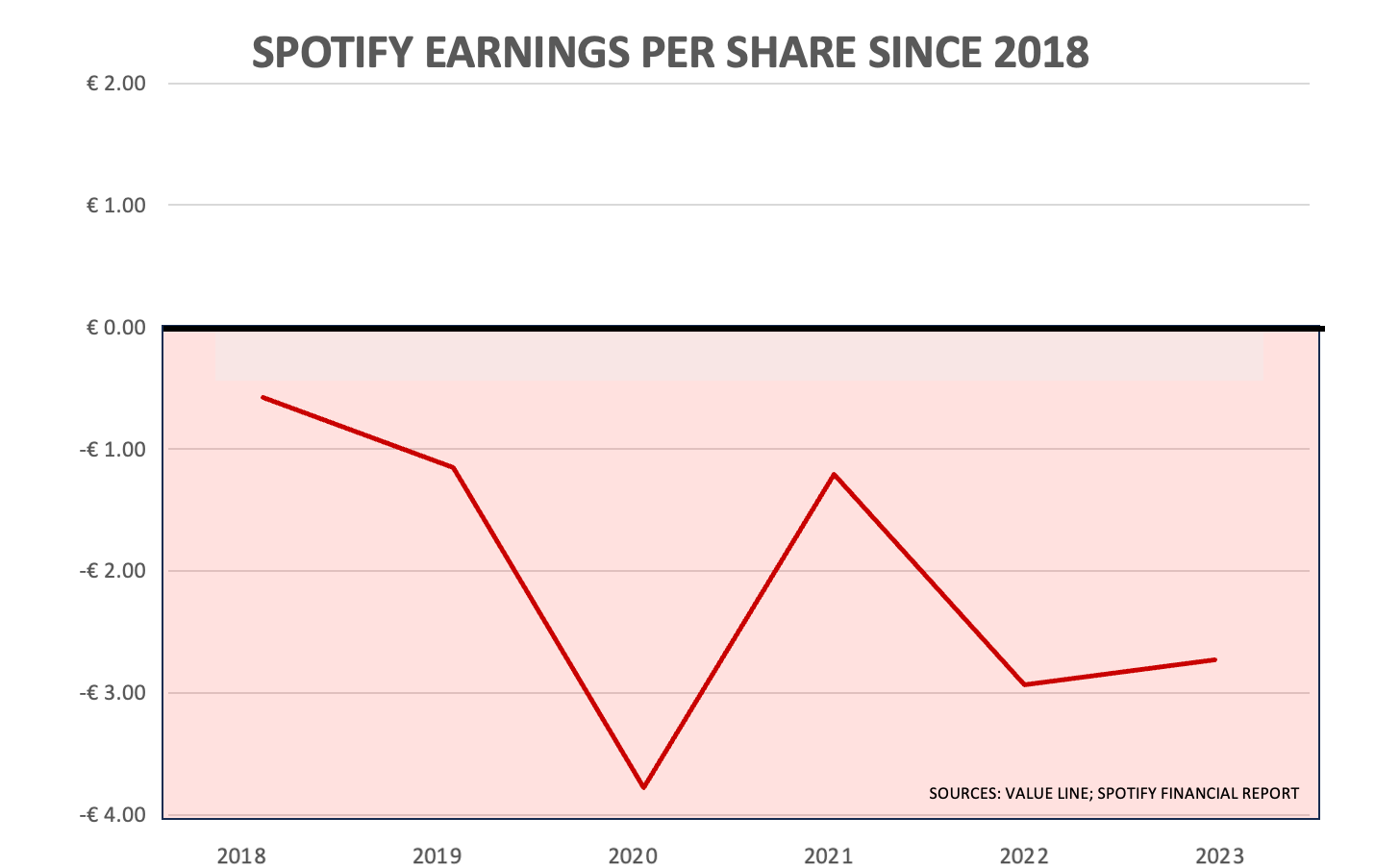
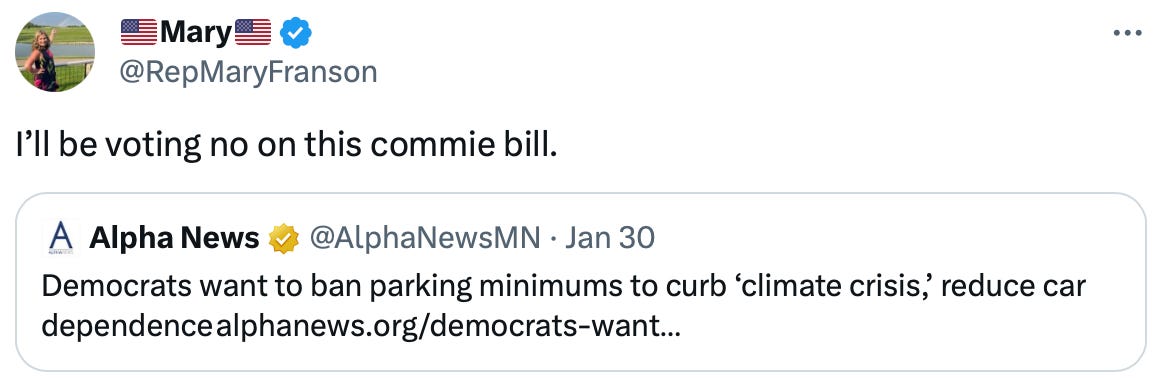
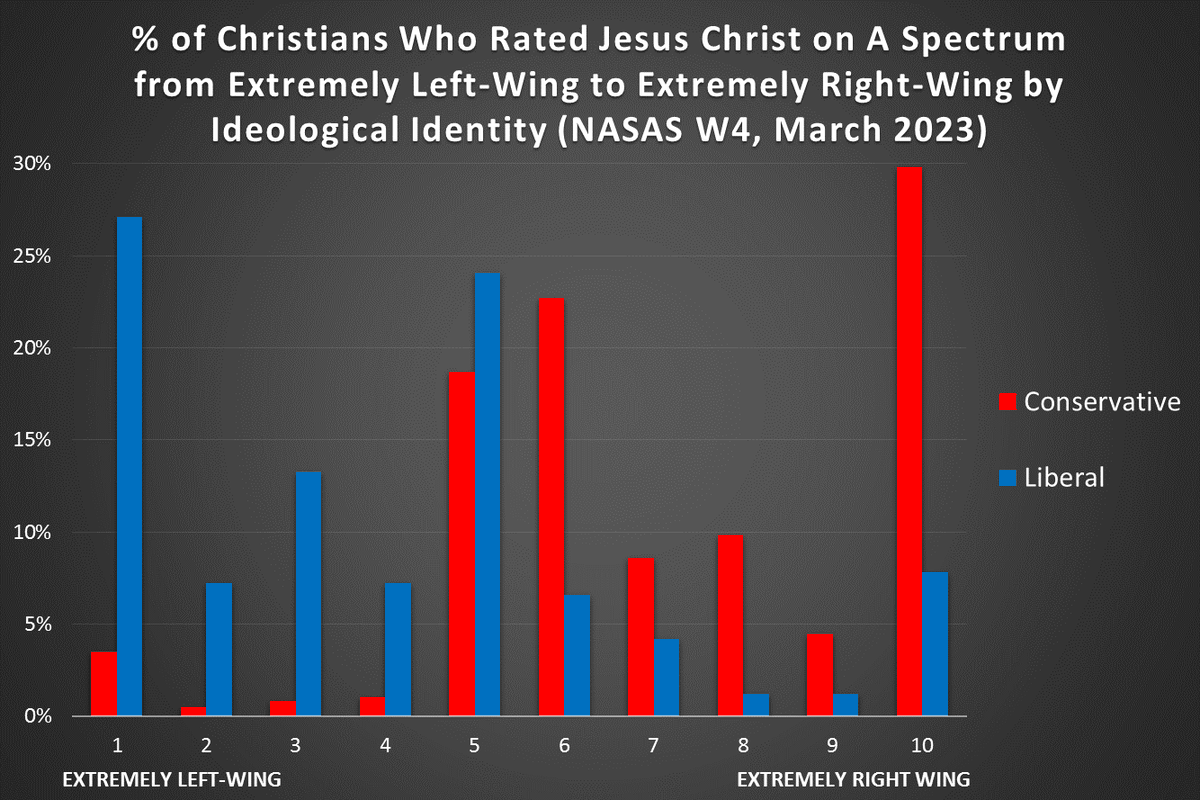
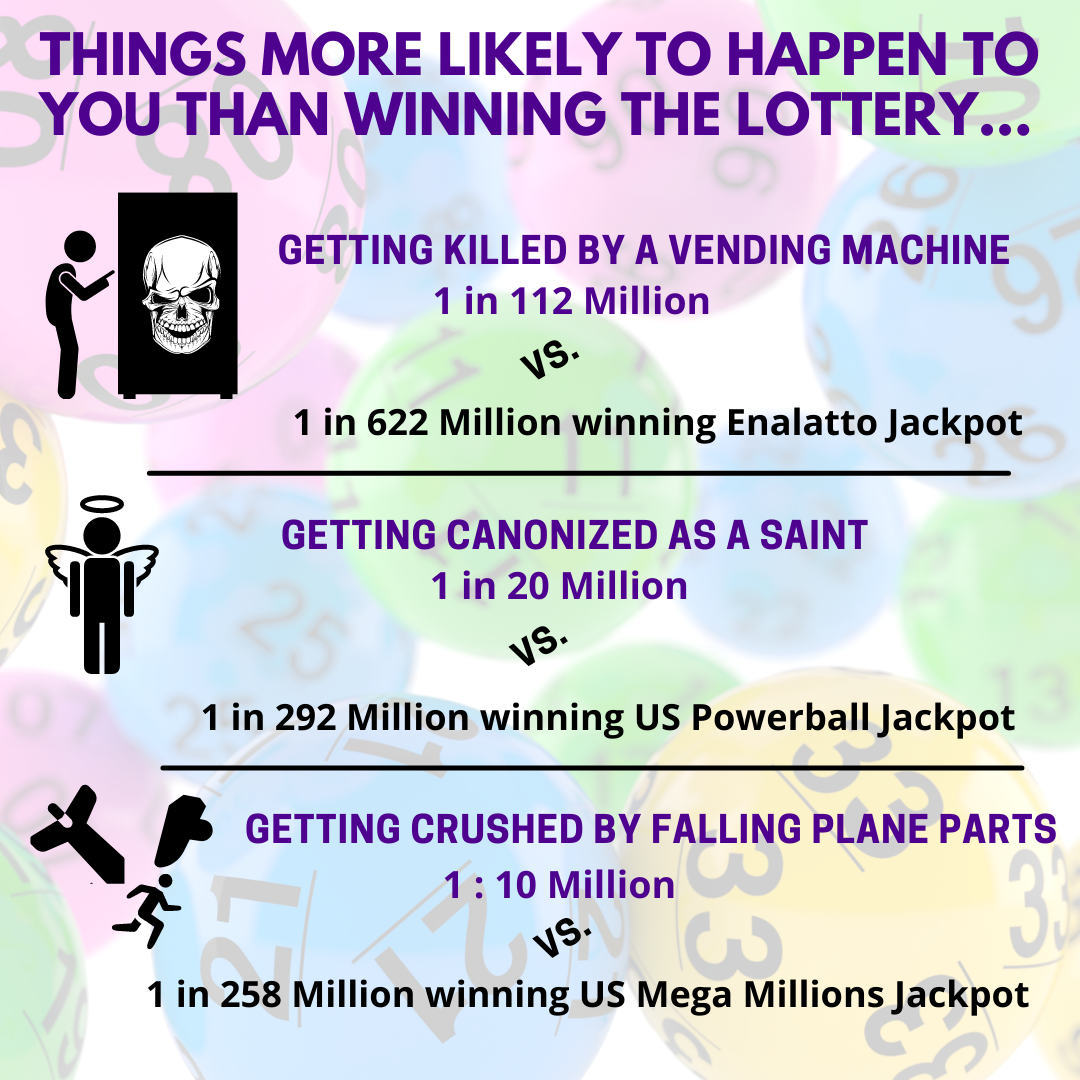

 Tipsy Teetotaler ن