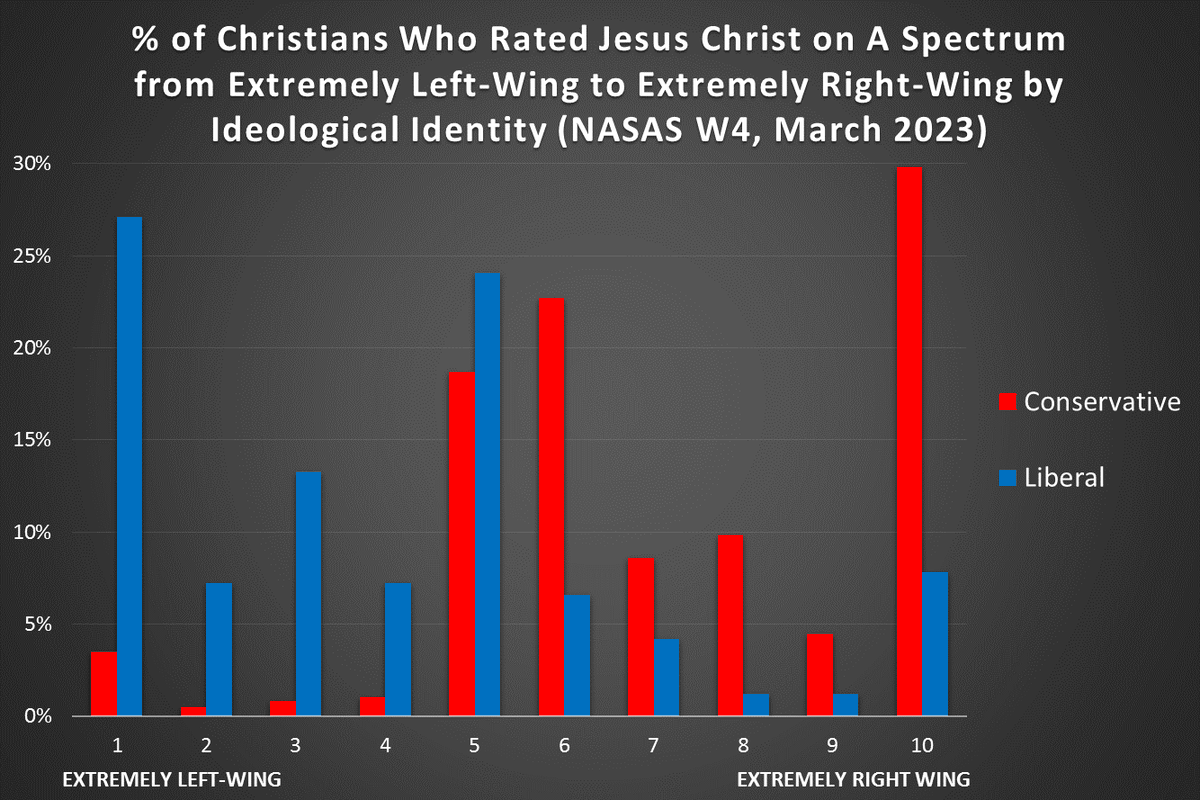
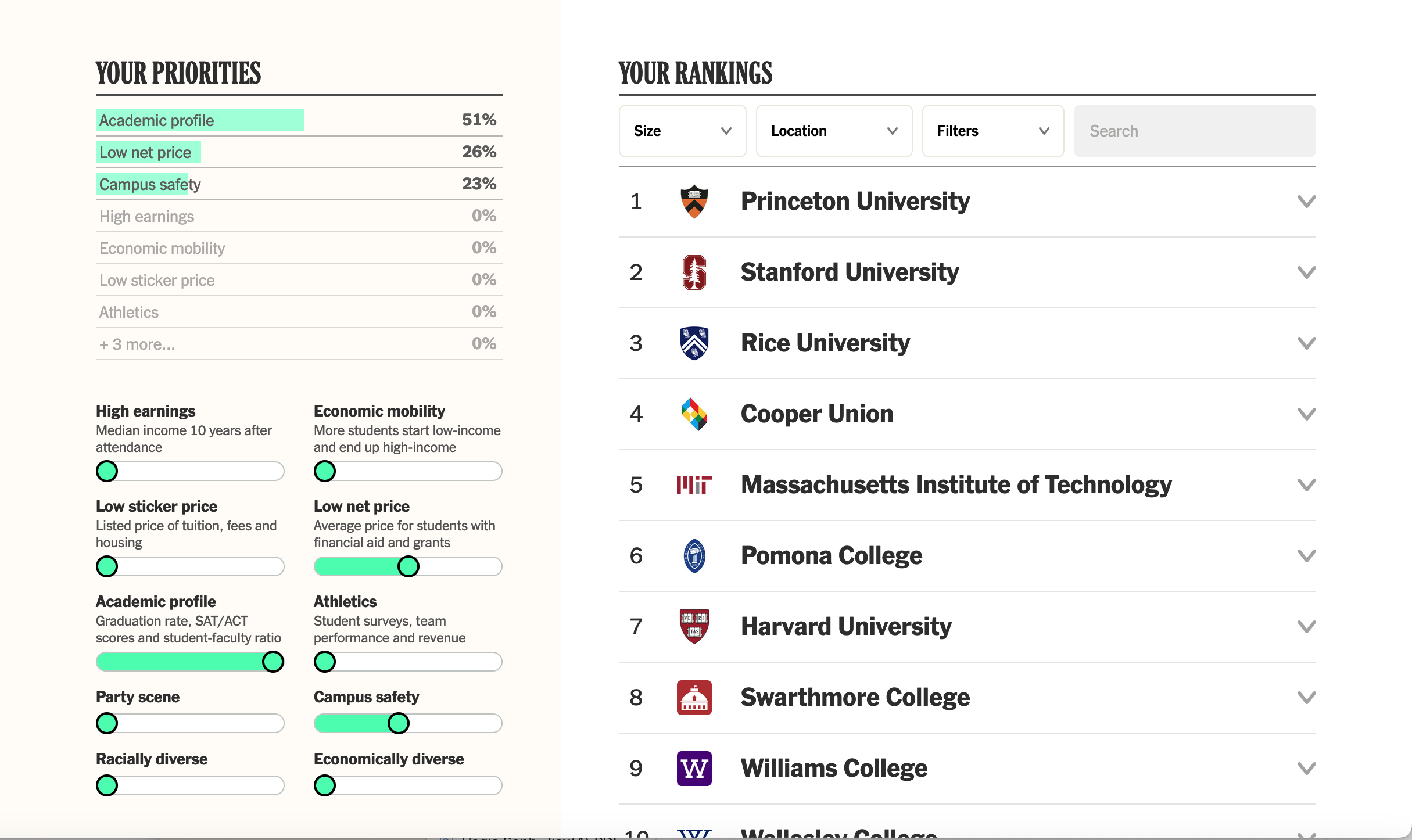
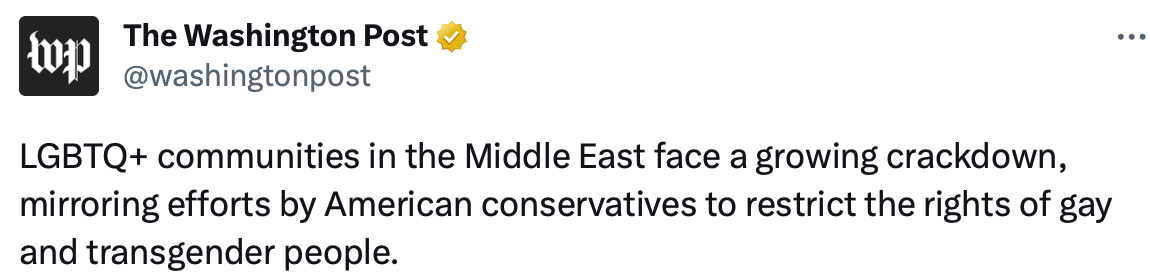
Happy August

Culture

Frodo failed

Frodo failed.

If you’re a reader of Tolkien’s Lord of the Rings (or just a movie-goer), then you know that the central, heroic character, the young Mr. Frodo, ring-bearer, fails to throw the Ring into the fires of Mt. Doom at the end of his arduous journey. Everything he loved, his home, his friends, every scrap of goodness, depended on the Ring being tossed into those fires, and, when it came down to it, he was unable to let it go. Fortunately for Middle Earth, the wraith-like, pitiable creature, Gollum, bit Frodo’s finger off in order to have the Ring again for his own, and accidentally slipped and fell into the fires, saving Middle Earth in the bargain. All of that drama resolved by an accident?

It is genius.

Fr. Stephen Freeman

Pedagogy after AI

Imagine a culinary school that teaches its students how to use HelloFresh: “Sure, we could teach you how to cook from scratch the way we used to — how to shop for ingredients, how to combine them, how to prepare them, how to present them — but let’s be serious, resources like HelloFresh aren’t going away, so you just need to learn to use them properly.” The proper response from students would be: “Why should we pay you for that? We can do that on our own.”

If I decided to teach my students how to use ChatGPT appropriately, and one of them asked me why they should pay me for that, I don’t think I would have a good answer. But if they asked me why I insist that they not use ChatGPT in reading and writing for me, I do have a response: I want you to learn how to read carefully, to sift and consider what you’ve read, to formulate and then give structure your ideas, to discern whom to think with, and finally to present your thoughts in a clear and cogent way. And I want you to learn to do all these things because they make you more free — the arts we study are liberal, that is to say liberating, arts.

If you take up this challenge you will learn not to “think for yourself” but to think in the company of well-chosen companions, and not to have your thoughts dictated to you by the transnational entity some call surveillance capitalism, which sees you as a resource to exploit and could care less if your personal integrity and independence are destroyed. The technocratic world to which I would be handing you over, if I were to encourage the use of ChatGPT, is driven by the “occupational psychosis” of sociopathy. And I don’t want you to be owned and operated by those Powers

Alan Jacobs, Technologies and Trust

Stripping humanity from homo sapiens

If out of the crooked timber of humanity no straight thing was ever made, then if a thing is made straight it will be because humanity has been stripped out of it.

L.M. Sacasas, Embrace Your Crookedness. This is a very worthwhile reflection on the human condition.

Don’t assume that “they” will be stripping humanity. Some people strip their own humanity. Rebecca West (Black Lamb and Grey Falcon) embeds the story of one who did so:

So with his money he could follow his mania, which was for the new thing, for Science, for the machine, for the artificial, the modern. You may not remember it, for I think it came earlier with you than with us, but there was some time ago a rage for such things. It was partly due to your H. G. Wells and his imitators, and it was partly due to our ideas about America, which we then believed to be entirely covered with sky-scrapers and factories.

I went on so, telling more and more absurd stories, until I said, “And of course I was forgetting, there is the artificial woman that was invented by the celebrated surgeon Dr. Martel. That is quite wonderful.” And my old friend said to me, “An artificial woman? What is that? A woman that is artificial! For God’s sake! Tell us all about it!”

I saw that she was getting very fond of me, like a mother for her son, and I grieved, for I did not like to have brought this sorrow to her by [the silly joke on her husband about the artificial woman]. I felt very ashamed when she came to see me at a time when the cold wind had made me bad with my lungs, and it was as if I should go like my sister, who had died when she was sixteen, and I said to her, “Aunt, you are too good to me. I have done nothing for you,” and she answered with tears in her eyes, “But you have been as good to me as a son. Do you think I am so simple that I do not know the artificial woman must long ago be finished, with such a clever man as you say working on it? You tell my husband that it is not so only because you know that I could not bear to have such a creature in my house.” There was nothing at all that I could say. I could not confess to her that I had been a monkey without making it plain to her that her husband had been an ass.

It came to this poor silly old man and he learned that the most modern thing to do was to kill yourself, and so he did it. He became very melancholy for a time, working at it as other old men work at learning chess, and then went into his stable and hanged himself, to be modern, to have an artificial death instead of a natural. I think he was probably sure that there was immortality, for though he believed he was a freethinker I do not believe it ever crossed his mind that he would not live after death. And soon after his wife also hanged herself, but I do not think there was anything modern about her reasons, they could not have been more ancient.

Whence our delight at athletes?

Gladwell, like many of us, seems to have unwittingly internalized the idea that when professional athletes do the thing they’re paid to do, they’re not acting according to the workaday necessity (like the rest of us) but rather are expressing with grace and energy their inmost competitive instincts, and doing so in a way that gives them delight. We need to believe that because much of our delight in watching them derives from our belief in their delight.

Alan Jacobs, How to Think: A Survival Guide for a World at Odds

Hectoring, dismissive and jejune

[I]f the right has overcorrected to an old-fashioned (and somewhat hostile) vision of masculinity, many progressives have ignored the opportunity to sell men on a better vision of what they can be. … To the extent that any vision of “nontoxic” masculinity is proposed, it ends up sounding more like stereotypical femininity than anything else: Guys should learn to be more sensitive, quiet and socially apt, seemingly overnight. It’s the equivalent of “learn to code!” as a solution for those struggling to adjust to a new economy: simultaneously hectoring, dismissive and jejune.

Christine Emba via DenseDiscovery

Notable passing

SunRay Kelley, Master Builder of the Counterculture, Dies at 71. That link should get you through the Times paywall.

Sinead O’Connor

My cyberfriend Patrick Rhone shares a worthy comment on Sinead O’Connor: some Kris Kristofersson song lyrics in her honor after she was booed off a stage.

Musicians are sometimes prophets, and prophets often get stoned.

Political

Muslim discomfort with Democrat extremists

Asma Uddin, in her book “When Islam Is Not a Religion,” describes “a tacit agreement that Muslims, as religious believers, will never challenge any of the rights championed by the Left, such as a progressive vision of gender or sexual equality.” Muslims became an integral part of the party not as a faith community with distinct theological commitments but as a “marginalized” group requiring protection from Republican bigotry.

But during the Trump years, the Democratic Party veered sharply to the left on social and cultural issues. The Republican Party lost interest in Muslims, with Mr. Trump neglecting to antagonize them during his 2020 re-election bid. The new enemy was “wokeness,” and a growing number of Muslims found themselves on the GOP side of that divide. According to the AP VoteCast Survey, as many as 35% of Muslims voted for Mr. Trump in 2020, compared with 8% to 13% in 2016.

It’s easy enough for the left to dismiss white evangelical Trump supporters. But when the party does the same to Muslims, who for years had been loyal Democrats, it demonstrates its disrespect for actual cultural diversity.

Shadi Hamid, Muslims vs. Democrats: A Story of Betrayal

Conservatives and Reactionaries

When writers at The Bulwark or The Dispatch, or the presidential campaigns of Asa Hutchinson, Chris Christie, and Will Hurd, criticize Trump, they highlight (at least in part) his breaks from longstanding norms, traditions, and expectations of elected officials. Trump shouldn’t have lied about the results of the 2020 election. He shouldn’t have provoked an insurrection and haplessly sought to foment a self-coup to remain in power after losing the vote. He shouldn’t have disregarded laws restricting access to classified documents. And so forth. Those are the kinds of objections one would expect to hear from conservatives.

But DeSantis has nothing critical to say about any of the above. When he goes after Trump, it’s for his failure to break more radically from longstanding norms, traditions, and expectation. Trump was too willing to defer to public-health officials during the COVID-19 pandemic, too quick to believe vaccines could protect people from becoming ill, too inclined to seek support from LGBT voters, too moderate on abortion, too cautious in dealing with the administrative state. In all of these ways, Trump was too conservative. He maintained too many continuities with the past. He should have broken more fully with it in favor of an alternative future that would be more congenial to the right.

Damon Linker, Ron DeSantis, Reactionary Tryhard.

I don’t want Joe Biden to be President for four more years. I’d gladly vote for most conservative alternatives to him — if there were any. Trump is a reactionary and populist (as well as a narcissist and/or a fine illustration of “oppositional defiant disorder”); DeSantis is trying to outdo him on both counts. And I don’t intend to pull punches about that sad reality.

“Spreading democracy”

My nation pretends it’s spreading democracy, and I’ve never (within ready memory) believed that.

Democratization conflicts with Westernization, and democracy is inherently a parochializing not a cosmopolitanizing process. Politicians in non-Western societies do not win elections by demonstrating how Western they are. Electoral competition instead stimulates them to fashion what they believe will be the most popular appeals, and those are usually ethnic, nationalist, and religious in character.

Samuel P. Huntington, The Clash of Civilizations and the Remaking of World Order

Barbarian feigns Christianity

On twitter Stephen Wolfe, author of “The Case for Christian Nationalism,” claimed he didn’t know who Emmett Till was until he recently googled his name. He then commented: “Yea I’m supposed to care about some 1955 event that all the libs care about. Their minds are captured.”

Stephen Wolfe’s book The Case for Christian Nationalism extolls a fantasy Calvinist confessional state in which the elect rule over the lost and reprobate. God’s reputed people have the power, and the people less favored are their subjects, living under their rules. Its vision of power over service isn’t very Christian. And its subjugation of some people over others based on their religion isn’t very nationalist. It certainly isn’t at all American.

But disdaining Emmett Till’s murder, and the civil rights revolution it helped unleash, as part of the wider ongoing, 2000-year-old Christian revolution of equality and dignity for all, is helpfully clarifying.

Mark Tooley

I can’t think of anyone I consider actually Christian who advocates “Christian Nationalism.” Maybe I need to get out more. Maybe some Christians involuntarily drawn to the notion have conscience-pangs and reservations so they don’t talk about it.

One of the reasons why I oppose “Christian Nationalism” in the USA is that notionally-Christian barbarians would almost certainly grab the reins of power, and there’s nobody more remorseless than someone who thinks he has a mandate from heaven to rule righteously.

Tough love

Congratulations to Colombian President Gustavo Petro, who over the weekend set a standard for good governance to which political leaders throughout the Americas can aspire.
“I wish him luck and strength,” he tweeted after his son Nicolás was hit with charges related to money laundering and drug trafficking. “May these events strengthen his character and let him reflect on his own errors.”

TMD

Public transportation is a loser?

The reason most public transportation is seen as ‘losing’ money is precisely because it charges for trips. If you don’t charge fares, suddenly it can’t ‘lose’ money. It just costs money, the same as the roads.
@dx@social.ridetrans.it

Via DenseDiscovery. I confess that I had to read that twice to see the brilliance.

Unwelcome contrast

I myself am a secret monarchist, as were my relatives in Rhode Island and Connecticut in 1775 except they weren’t secret about it. I miss Elizabeth II, the perfect modest model of a modern English monarch, tramping in the rain with her corgis. When Her Majesty met President Schlump and he opened his big yap and hee-hawed at her, we saw a contrast that was not favorable to our side.

Garrison Keillor


We are in the grip of a grim, despairing rebellion against reality that imagines itself to be the engine of moral progress.

R.R. Reno

The end of the world as we know it is not the end of the world.

You can read most of my more impromptu stuff here (cathartic venting) and here (the only social medium I frequent, because people there are quirky, pleasant and real). Both should work in your RSS aggregator, like Feedly or Reeder, should you want to make a habit of it. I’m even playing around a bit here, but uncertain whether I’ll persist.
Summer Solstice 2023

Culture

Commencement Wisdom

I’ve always liked the story with the punchline “What the hell is water?” But I don’t think I’d ever read the full commencement address from which I got it.

Quite good, with anticipations of Iain McGillchrist and of “pay attention to what you’re paying attention to;” but David Foster Wallace’s way may be better.

Is SCOTUS out of step?

About the Supreme Court, the New York Times wants to know “whether the court’s decisions are out of step with public opinion.” Here is the answer to that question:

It does not matter.

The law says what the law says. The job of the Supreme Court is to apply the law, not to make up the law, not to reform the law, not to ensure that the law accords with public opinion. If public opinion is opposed to the law, then the public can elect new lawmakers and write new laws. It is not up to the Supreme Court to do that for them. If representative democracy means anything, it is that the law is made by lawmakers who are elected by the people and democratically accountable to them.

Even Nina Totenberg has noticed that the progressives on the Supreme Court are more inclined toward bloc voting while the so-called conservatives are more inclined toward intellectual disagreement. If your bookie took bets on how individual justices were going to vote in any given hot-button case, you’d make more money betting on the progressives, who are predictable. When it comes to their most important political commitments, they sometimes have reached their decision before the first arguments are made.

Kevin D. Williamson, When Public Opinion Is Irrelevant.

I’m not sure how Williamson supports that last sentence, but otherwise it’s solid.

Damon Linker’s sober assessment

I’m not really interested in debating the substance of the issue. I’m fully vaccinated, so is my wife, and so are my kids. That includes several rounds of Pfizer’s mRNA COVID vaccine. But I’m not anything close to being a medical doctor or an expert on immunology or epidemiology. I’m not even an especially informed amateur observer of issues in public health. What I am is a broadly well-educated writer and citizen who trusts doctors, public-health professionals, government agencies, and the media’s myriad mechanisms of publicity to provide me with accurate information about the world. I trust that since tens of millions of Americans (and hundreds of millions more all over the world) have taken these vaccines, I would have heard about it in the form of a blockbuster news story if they actually did more harm than good.

But note: I don’t know that vaccines are safe in the same way that I know it’s a cloudy day in the Philadelphia suburbs, where I live and am writing this post. And this is true about an enormous number of things. Anytime anyone says “I know X” about a matter that goes beyond direct personal experience—I can see the clouds outside my window with my own eyes—it implicitly involves an act of trust: “I know X because Y says X, and I trust that Y knows what s/he is talking about and wouldn’t deceive me.”

Do you distrust the pronouncements of Anthony Fauci? Fine. But why would that lead you to trust RFK or Joe Rogan more? Just because they’re not employed by the government?

Why indeed? I know full well that governments lie to me constantly — but nowhere near so constantly that I can say “government said it so it must be a lie.” But what I also know believe is that crackpots and grifters are even less reliable than the government (do I really need to cite examples?), and that I lack the time and the knowledge to personally check out every contrarian claim.

Especially at age 74, I am very aware of my mortality, and of the much higher priorities for spending the time until that day.

Maslow’s Hierarchy, level 1

For all I complain about the empty materialism of the West, there is a certain level of wealth essential to human happiness, below which family, faith, and work as a craft, isn’t solace enough. We need a certain amount of stuff to escape the drudgery and toil of existence. That level is probably somewhere above Senegal ($1,800 per capita GDP) and below Vietnam ($4,000).

Chris Arnade

Vote your vice

The policies implementing the Sexual Revolution now have the priority that peace and prosperity used to occupy in political loyalties and discourse. The revolutionary ideology now holds the place of esteem once held by the Judeo-Christian religions.

Jennifer Roback Morse, The Sexual State.

In general, I did not care for this book, but this particular point is powerful. The Biden administration has proven the truth of it vividly in its enthusiastic celebrations of Pride Month. (If you missed the details, Rod Dreher is ever ready to fill you in.)

The late Joseph Sobran said decades ago that the Democrats had become the “vote your vice” party. It has only gotten worse (with an admixture of perverse obsequiousness toward transgender ideology).

(I grant that there are vices other than sexual, and that when Republicans are in power they either leave the declining status quo untouched or else pass performative and draconian bans that the courts strike down on various grounds, some of those grounds being solid.)

Scotomas

Speaking of vice, the current issue of The American Conservative devotes its current issue to the topic.

Yup. They’ve got the biggies:

  • Porn
  • Gambling
  • Marijuana
  • Witchcraft
  • Social Media

But I almost laughed out loud at the absence of binge drinking and at the article titled and subtitled The No Smoking Garden: The crusade against tobacco has depended on shameless propaganda.

I’m thinking the common thread here is “calls to legalize newer vices are bad; traditional legal vices are fine.”

This is typical of why I keep waiting for The American Conservative to realize that my subscription has lapsed.

Don’t worry; science has it all figured out

(An archaeologist finds a motel centuries hence:)

Surrounding almost the entire complex was a vast flat area, marked with parallel white lines. In several of the spaces stood freely interpreted metal sculptures of animals. To avoid the misunderstanding that often arises with free interpretation, each sculpture was clearly labeled. They were inscribed with such names as Cougar, Skylark, and Thunderbird, to name but a few. The importance of animal worship in Yank burial customs has never been more clearly illustrated.

David Macaulay, Motel of the Mysteries

Politics

Donald Trump as an occasion of sin

It was easy for my generation of baby boomer liberals to be humble, because we had much to be humble about.

Many on the left had erred on what was perhaps the most important issue of the 20th century, global totalitarianism: Too many had been soft on Soviet Communism or Chinese Maoism. When you see well-meaning people on your side who were catastrophically wrong about profound moral and political issues, humility comes more easily.

These days, however, many conservatives are so ridiculous that I fear they are robbing us liberals of that well-earned humility.

Nicholas Kristof, In the Age of Trump, It’s Hard to Be Humble

Florida Man is one-of-a-kind

Peter Wehner can always be counted on to oppose Florida Man, but sometimes he hits the nail on the head more squarely than other times:

  • Trump doesn’t just cross moral lines; he doesn’t appear capable of understanding moral categories. Morality is for Trump what colors are to a person who is color-blind.
  • Trump’s moral depravity, which touches every area of his life, private and public, has long been in public view, undisguised and impossible to miss.
  • Other shady and unethical individuals have served in the White House—Richard Nixon and Warren Harding among them—but Trump’s full-spectrum corruption puts him in a category all his own. His degeneracy is unmatched in American presidential history and unsurpassed in American political history.
  • Donald Trump, rather than using the presidency to elevate human sensibilities, did the opposite, and he did it relentlessly. Among the most damaging legacies of the Trump years is his barbarization of America’s civic and political life. He called the spirits from the vasty deep, and they came when summoned.

Mind you, I’m among those who succumbed to Trump Derangement Syndrome (the first Presidency so to afflict me), so I can’t fault Wehner for a bit of obsessiveness.

What is the reason for Mike Pence?

Pence recently did an interview with right-wing radio hosts Clay Travis and Buck Sexton, in which he refused to say whether he’d pardon Trump once in office. The hosts wanted Trump pardoned, and Pence basically had three answers. First, he riffed on the fact that he believes these are “serious charges” and he “can’t defend what’s been alleged.” Second, he says it’s “premature” to discuss a pardon because we don’t know what “the president’s defense is” or “what are the facts.” And then third, he says “we either believe in our judicial process in this country or we don’t; we either stand by the rule of law or we don’t.”

Normally, I’m not impressed with candidates who refuse to answer questions because they look like they’re being evasive for political reasons. The lack of authenticity is like nails on a chalkboard. But here, it actually is a real answer. He thinks the charges are real, but he’s open to hearing Trump’s side of the story.

Sarah Isgur. She analyzes the other GOP candidates, too.

Pence is right, but being right often requires nuance for which voters have no patience.

I was aware of, but did not share, a Pence Derangement Syndrome when he was Governor of Indiana. I have nothing in particular against him now. But on 1/6/21, he assuredly was aware that by honoring our electoral college system over the shenannigans of Florida Man, he was ending his political career.

In 2023, Pence is a stone-cold loser, lacking even the “what the hell, why not tell the truth?” rationale of Chris Christie.

Wordplay

1

Filiation and affiliation

The late Edward Said was known for his distinction between filiation and affiliation. Filiative relations are those that come to us naturally, those that are givens of our birth and into which we are born. Affiliative relations are those we purposefully forge.

James Matthew Wilson

2

Mr. Robertson ran for president in 1988, hoping to channel evangelistic popularity from his growing television empire, the Christian Broadcasting Network, into Republican political might. Ultimately he failed — even devout Christians worried about the intensity with which the celebrity minister blended church and state.

And yet, by the time of his death on Thursday, the vision he championed had gained more power than he could have ever thought possible. The alliance between evangelical Christianity and Republican politics has fused, even as America has grown increasingly secular. The polarizing rhetoric of his often inflammatory views has become a defining feature of American politics.

Elizabeth Dias at the New York Times, writing about the political side of Pat Robertson, who died June 8. (Emphasis added)

“Evangelistic popularity” is pretty clumsy. It skips over primary and secondary meanings of evangelism and evangelistic to mash up a tertiary meaning (a meaning which I suggest arose from journalistic misusage, which eventually “makes proper” I guess, as “literal” now is a hyperbolic form of “metaphorical.”)

I have no idea, apart from context, what happens when an alliance fuses, and I’m not persuaded by it.

3

hysteria

Boy! I had never stopped to think how loaded that word is!

“Mass hysteria” is out; “psychogenic illness” is in.

4

If demography is destiny, population movements are the motor of history.

Samuel P. Huntington, The Clash of Civilizations and the Remaking of World Order

5

Getting offended by something on the internet is like choosing to to step in dog crap instead of walking around it.

Found by my wife on Pinterest

6

ESPN is now a gambling-promotion network that finds sports useful.

Alan Jacobs

7

holobionts: a united meta-organism whose components evolve in concert with each other. (The idea of “holobionts” represents a paradigm shift in biology). See also, of course, Wikipedia.

8

Word of the Era: Religion

I recently read Before Religion: A History of a Modern Concept 📚 The idea of religion as a sphere of life distinct from politics, economics, or science is a recent development in European history. That’s not a complete surprise to me, but I’d never before read so much on how that came about. Spoiler alert: there’s a bit of cultural imperialism in the sense of “imposing” on other cultures how the secularized West parses things.

9

Baksheesh, a word meaning bribes in Arabic, which police frequently ask for in Egypt. Read the full story.

10

Happiness writes white ink on a white page.

Henry de Montherlant via Things Worth Remembering: The Joy of Requited Love

This probably is in the same thought constellation as how notoriously hard it is to create compelling good fictional characters.

11

“Random” vs. “Mystery”

To call the unknown “random” is to plant the flag by which to colonize and exploit the known … To call the unknown by its right name, “mystery,” is to suggest that we had better respect the possibility of a larger, unseen pattern that can be damaged or destroyed and, with it, the smaller patterns … But if we are up against mystery, then knowledge is relatively small, and the ancient program is the right one: Act on the basis of ignorance.

Mark Mitchell and Nathan Schlueter, The Humane Vision of Wendell Berry

12

From Frank Bruni’s “For Love of Sentences” segment:

A

We can’t shuffle off the mortal coil of Trump. He has burrowed, tick-like, into the national bloodstream, causing all kinds of septic responses.

Maureen Dowd

B

So we come to the present pass, with the world’s most powerful nation, with all of its magnificent history and intricate constitutional architecture, at the mercy of a pathological narcissist, trembling at the thought of bringing him to justice — as if it were the act of applying the law to him, and not his brazen defiance of it, that were the anomaly

Andrew Coyne

C

What he once wore as electoral camouflage is now tattooed all over him, in yet another fulfillment of the late Kurt Vonnegut’s warning that, eventually, “we are what we pretend to be.”

Tom Nichols on the transmogrification of J.D. Vance into a Trumpist.

D

Teenagers suffer for many reasons. One is being fragile and in formation — a human construction site.

Suzanne Garfinkle-Crowell


We are in the grip of a grim, despairing rebellion against reality that imagines itself to be the engine of moral progress.

R.R. Reno

The end of the world as we know it is not the end of the world.

You can read most of my more impromptu stuff here (cathartic venting) and here (the only social medium I frequent, because people there are quirky, pleasant and real). Both should work in your RSS aggregator, like Feedly or Reeder, should you want to make a habit of it. I’m even playing around a bit here, but uncertain whether I’ll persist.

Monday, 6/5/23

Politics

Scratching me where I itch

I confess in advance to a highly likelihood that I’m experiencing confirmation bias when so heartily agree with this from Peter Turchin for the Atlantic:

We found that the precise mix of events that leads to crisis varies, but two drivers of instability loom large. The first is popular immiseration—when the economic fortunes of broad swaths of a population decline. The second, and more significant, is elite overproduction—when a society produces too many superrich and ultra-educated people, and not enough elite positions to satisfy their ambitions.

These forces have played a key role in our current crisis. In the past 50 years, despite overall economic growth, the quality of life for most Americans has declined. The wealthy have become wealthier, while the incomes and wages of the median American family have stagnated. As a result, our social pyramid has become top-heavy. At the same time, the U.S. began overproducing graduates with advanced degrees. More and more people aspiring to positions of power began fighting over a relatively fixed number of spots. The competition among them has corroded the social norms and institutions that govern society.

The long history of human society compiled in our database suggests that America’s current economy is so lucrative for the ruling elites that achieving fundamental reform might require a violent revolution. But we have reason for hope. It is not unprecedented for a ruling class—with adequate pressure from below—to allow for the nonviolent reversal of elite overproduction. But such an outcome requires elites to sacrifice their near-term self-interest for our long-term collective interests. At the moment, they don’t seem prepared to do that.

There’s nothing wrong with studying things, because intuitions can be wrong. But this — not entirely independently, but after lots of reading over lots of years — was my intuition about two major ailments even before reading Turchin.

(Thought for the day from the “History Rhymes” Department: were abolitionists proto-wokesters?)

Brahmins and Trumpists

In a parallel vein to Turchin’s:

We now have whole industries that take attendance at an elite school as a marker of whether they should hire you or not. So the hierarchies built by the admissions committees get replicated across society. America has become a nation in which the elite educated few marry each other, send their kids to the same exclusive schools, move to the same wealthy neighborhoods and pass down disproportionate economic and cultural power from generation to generation — the meritocratic Brahmin class.

And, as Michael Sandel of Harvard has argued, the meritocratic culture gives the “winners” the illusion that this sorting mechanism is righteous and inevitable and that they’ve earned everything they’ve got.

And then we sit around wondering why Trumpian populists revolt.

We could have chosen to sort people on the basis of creativity, generosity or resilience. We could have chosen to promote students who are passionate about one subject but lag in the other subjects (which is how real-life success works). But instead we created this academic pressure cooker that further disadvantages people from the wrong kind of families and leaves even the straight-A winners stressed, depressed and burned out.

David Brooks, Let’s Smash the College Admissions Process

Why Democrats should not desire a Trump candidacy, even strategically

There is profound discontent in this country, and for all Trump’s lawlessness and ludicrousness, he has a real and enduring knack for articulating, channeling and exploiting it. “I am your retribution,” he told Republicans at the Conservative Political Action Conference this year. Those words were chilling not only for their bluntness but also for their keenness. Trump understands that in the MAGA milieu, a fist raised for him is a middle finger flipped at his critics. DeSantis, Scott, Mike Pence, Nikki Haley — none of them offer their supporters the same magnitude of wicked rebellion, the same amplitude of vengeful payback, the same red-hot fury.

Trump’s basic political orientation and the broad strokes of his priorities and policies may lump him together with his Republican competitors, but those rivals aren’t equally unappealing or equally scary because they’re not equally depraved.

He’s the one who [long bill of particulars on Trumps depravity omitted]. His challengers tiptoe around all of that with shameful timidity. He’s the one who wallows happily and flamboyantly in this civic muck.

There are grave differences between the kind of threat that Trump poses and the kind that his Republican rivals do, and to theorize a strategic advantage to his nomination is to minimize those distinctions, misremember recent history and misunderstand what the American electorate might do on a given day, in a given frame of mind.

I suspect I’d be distraught during a DeSantis presidency and depressed during a Pence one. But at least I might recognize the America on the far side of it.

Frank Bruni

Will the GOP sign its own death warrant?

Put another way, once is what you did (made a mistake, as people and parties do). Twice is what you did (almost out of loyalty to the first mistake). But a third time—that isn’t what you did, it’s who you are.

Peggy Noonan. Noonan believes that renomination of Trump in 2024 will literally destroy the Republican party. So many people will leave, albeit in waves and for different motives, that the party will be unsustainable even as a banner for Trumpism.

Culture

Microcosm

Nearly everything in Phoenix is brand new, and part of a corporate chain. It is the furthest thing from organic. It’s all part of a corporate plan to meet and then newly concoct human needs in the most generic and profit-maximizing way possible. It’s almost as if they could simply roll out new housing developments and Burger Kings like Astroturf. I’m pretty certain they would if they could. It is quite telling that they can’t build more of it fast enough to meet the demand. There are a lot of people drawn to living in this way. The whole thing is premised on the false hope that if all our physical needs are met we would be happy. Which is patently false, though we have a hard time realizing that. This isn’t the only place it is happening. I don’t hesitate to call this kind of growth metastatic. But for that, if the power and water were turned off the whole place would shrivel up to nothing and blow away in a few days. In the meantime, we are golfing our way into the Apocalypse.

I don’t know how we will solve the civilizational crisis we are in. But I agree with others who tell us that even trying to solve it is part of the problem itself.

Maybe the first thing we need to do is stop trying to solve and simply acknowledge where we are and the complete mess we are in. Business as usual will no longer suffice. Instead, we should do nothing and stop trying to fix it. It can’t be fixed and the more we meddle the worse things get. I know this might sound ridiculous to some, like giving up, but I don’t think it is. It is rather to admit we are wholly outmatched by the very mess we ourselves have made. I think the best place to start is what might be called radical contemplation. For all the disasters forming up around us, the problem is not out there, but within us. We are the source and nothing else will change—no matter how clever our response may be—unless we are deeply changed. It’s a long shot, for sure.

Jack Leahy, The Golf Course at the End of the World. That last paragraph so completely echoes Paul Kingsnorth, The West Must Die that Leahy either read him or we’re getting a spontaneous consensus among relatively deep thinkers.

It’s exceedingly odd to conclude that one who was born into the world’s most powerful nation-state, forty years later saw it become world hegemon hell-bent on remaking the world in its own image, is now likely to see the ending of an epoch even bigger than all that — and isn’t entirely sorry to see that end.

I’m too much the conservative to applaud the revolution, but I’m having trouble ginning up much fighting spirit against it. Exhaustion, too, is a mark of things ending.

It won’t swing back if it’s not a pendulum

Gender Ideology is not a pendulum, and it will not swing back with a little help from inertia. Gender Ideology is a fundamentalist religion—intolerant, demanding strict adherence to doctrine, hell-bent on gathering proselytes. I do not here use the term “religion” metaphorically or lightly.

Induction into this religion begins with a baptism: the selection of pronouns and often a new name, greeted with all the celebration (and more) of a conversion. It evangelizes aggressively: through social media influencers, who claim to know a teen’s truest self better than her parents and to love that teen so much more than they ever could. Therapists, teachers, and school counselors play evangelist to numberless kids at American school.

There’s no physical evidence that any of us possesses an ethereal gender identity, of course. It may actually be disprovable; there is a good deal of evidence against it. No matter. The adherents take it on faith. The notion that each of us is born with a gender identity, utterly separable from our physiology, known only to us, imagines gender identity as the secular version of the ‘soul.’

Abigail Shrier, Little Miss Trouble

Shorts

Grooming the next Bogeyman

Somebody seems to have recognized that they won’t have George Soros to demonize forever, so they’ve started grooming Bill Gates to take his place.

Corporate Capture of one institution

By such men [as Earl Butz] and such careers the land-grant college system, originally meant to enhance the small-farm possibility, has been captured for the corporations.

Wendell Berry, The Unsettling of America.

Should any political party attempt to abolish social security, unemployment insurance, and eliminate labor laws and farm programs, you would not hear of that party again in our political history. There is a tiny splinter group, of course, that believes you can do these things … Their number is negligible and they are stupid.

Dwight Eisenhower in a letter to his brother, quoted by Peter Turchin


For all its piety and fervor, today’s United States needs to be recognized for what it really is: not a Christian country, but a nation of heretics.

Ross Douthat, Bad Religion

We are in the grip of a grim, despairing rebellion against reality that imagines itself to be the engine of moral progress.

R.R. Reno

The end of the world as we know it is not the end of the world.

You can read most of my more impromptu stuff here (cathartic venting) and here (the only social medium I frequent, because people there are quirky, pleasant and real). Both should work in your RSS aggregator, like Feedly or Reeder, should you want to make a habit of it.

Saturday, 5/27/23

It’s a long one today, but I’ve broken it down by rubric.

And for what it’s worth, Mrs. Tipsy and I have been married 51 years as of today.

Culture

The single most counterintuitive social principle in all of human history.

The idea that obnoxious, misguided, seditious, blasphemous, and bigoted expressions deserve not only to be tolerated but, of all things, protected is the single most counterintuitive social principle in all of human history. Every human instinct cries out against it, and every generation discovers fresh reasons to oppose it. It is saved from the scrapheap of self-evident absurdity only by the fact that it is also the single most successful social principle in all of human history.

Jonathan Rauch, The Constitution of Knowledge

I could have classified this under politics, but if we lose all culture of free speech, we’ll eventually lose the law as well — and I wanted anyone who skips politics to see it.

Tasting monasticism

Fascinating: Molly Worthen, What College Students Need Is a Taste of the Monk’s Life

RIP Europe, age 33

The Europe that came together in 1990 is coming apart again, its people angry and fragmented, its leaders visionless, the once-free-ish West boiling in a stew of hate speech laws, vaccine mandates and ever-accelerating censorship and intolerance. ‘Populists’ continue to barrack and harrass its leaders, and neither they nor their media allies can quite work out why. The last global empire is led by a confused octogenarian, and within a few years the biggest economy in the world will be a communist dictatorship. The Scorpions never saw that one coming.

Paul Kingsnorth, In This Free World

“Science” in service of ridiculous ideologies

“White-throated sparrows have four chromosomally distinct sexes that pair up in fascinating ways. P.S. Nature is amazing. P.P.S. Sex is not binary,” – Laura Helmuth, editor-in-chief of Scientific American. The sparrows have just two sexes, as Community Notes corrected. Jerry Coyne has a beaut of a piece on this.

I regret that I have no recollection of the source for this, but I hereby explicitly disclaim adding a word other than the heading.

The elite avatars of proledom

Stanford Law School students were in the news for awhile, thanks to a contingent of them having shouted down a conservative campus speaker … I’ve come to think that the whole frame of the thing speaks to a real refusal of the American left to take its own ideas seriously. The debate fell along the typical lines. Liberals and lefties, as is their habit, rushed not only to defend the student protesters but to lionize them. What I find somewhat depressing is that this has become a habit, anointing representatives of the academic 1% as the footsoldiers of progressive change. The catechism of 21st-century progressivism insists that we are creatures of our immutable demographic traits, that our race and our class and our privilege define us and our influence on the world. If that’s true, how are we to assume that law students at Stanford Law School are anything other than the next generation’s shock troops of the bourgeoisie, whatever their professed politics? Where did all of that demographic determinism go?

Freddie deBoer, Stanford Law Students Are Your Class Enemy

Legalia

This feeling that I’m feeling isn’t schadenfreude

… because there’s not an ounce of sorrow in it:

Oath Keepers founder and leader Stewart Rhodes—convicted in November on a number of charges, including seditious conspiracy, for his role instigating the January 6 riots and seeking to disrupt the transfer of power—was sentenced on Thursday to 18 years in prison, the longest such term of any January 6 defendant thus far. The head of the Oath Keepers’ Florida chapter, Kelly Meggs, was sentenced to 12 years in prison.

TMD. It’s important that insurrectionists like Rhodes and Meggs pay dearly.

On the other hand, I’m not opposed in principle to Ron DeSantis’ promise to review January 6 convictions and consider Presidential pardons. I know one fellow I’d like to see pardoned, who wandered in rubbernecking like a bog-standard tourist. I at least glimmeringly understand why DOJ prosecuted one and all, but for some of those convicted, the process should be the only lasting punishment.

It pays to increase your word-power

With the etiology now explained (Happy 20th Birthday to the Streisand Effect), I may add “Streisand Effect” to my vocabulary.

It doesn’t pay (easily) to win a bet with PillowMan

As long as I’m channeling Volokh Conspiracy postings, here’s another one, equally gratifying and more contemporary: MyPillow CEO Mike Lindell Taken to Court for Refusing to Pay the Person who Proved Him Wrong

Asymmetry

It is in the nature of American justice that anger can end a life, yet forgiveness cannot necessarily save one.

Elizabeth Bruenig, A Murder Forgiven

Just because

You only live once

I had marked this for sharing already, but then I had lunch with someone, soon turning 61, who is feeling his age and wondering if he has mis-spent his life, and it became more salient to me:

I had a dream last night in which I visited [my parents] James and Dora on their farm after the house burned down and saw their seven kids and little Eleanor had a terrible fever and the family sat praying for her — a fleeting dream but I would give anything to revisit it. I feel the same way about the picture of my mother, 17, with sister Elsie and friend Dorothy, three girls in summer dresses standing holding their bikes by Lake Nokomis in 1932, so happy — I want to ask her, “Do you realize you’re going to have six kids and not much money and they’ll cause you a lot of problems? Is this really what you want? I’m a writer, I can send you to Hollywood. You’re very charming, very funny. What he loves about you, millions of others would love too. What do you say, kid?” And she gets on her bike and wheels away.

Garrison Keillor

The problem of Uniqueness

[T]he analytic process cannot deal with uniqueness: there is an irresistible temptation for it to move from the uniqueness of something to its assumed non-existence, since the reality of the unique would have to be captured by idioms that apply to nothing else.

Iain McGilchrist, The Master and His Emissary

Two favorite safety devices

BitDefender Box protects my entire home network, including IOT devices. I cheerfully pay up each year for software and firmware updates plus anti-virus for all my iOS and MacOS stuff.

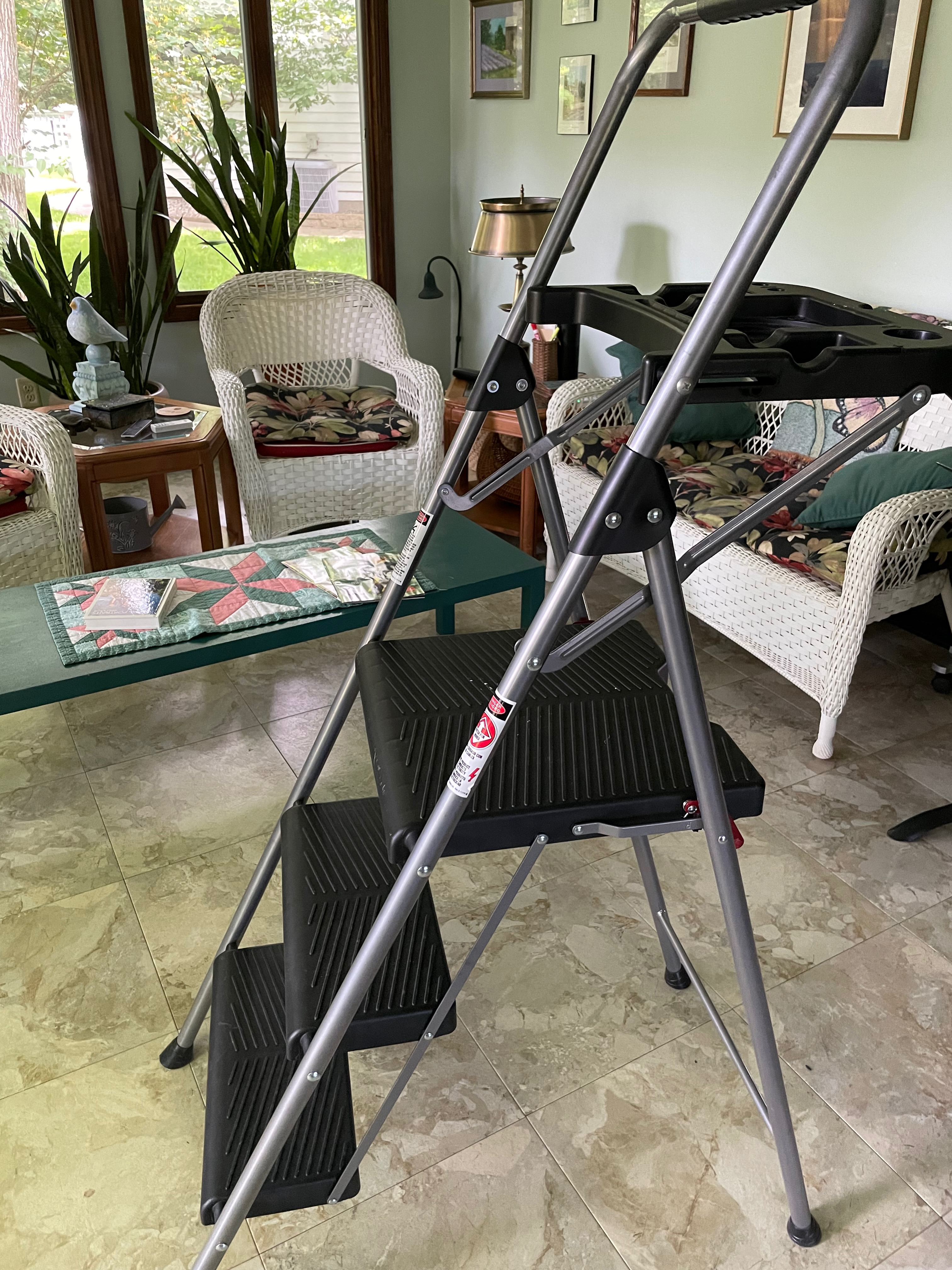
The only kind of stepladder I have any business using these days.

Now, even if you hate politics, you might want to read the opener to the next item.

Politics

The Quaker whose mule wouldn’t plow

One of my favorite stories, for roughly five decades now, is of a Quaker with a mule who wouldn’t plow.

Finally, after various goads, the Quaker walked to the mule, took its ears gently in hand, looked into its eyes, and said “Brother mule. Thee knowest I am a Quaker, Thee knowest I cannot beat thee. Thee knowest I cannot curse thee. What thee does not know is that I can sell thee — to the baptist up the road. And he can beat the living daylights out of thee.”

That’s pretty much how I’m starting to feel about the wokesters/progressive Left/successor ideology. My “baptists” are the Irreligious Right, the Christianist Right — both capable of violence, I think — and a few politicians who can see which way the wind is blowing, such as Ron DeSantis.

I doubt I can vote for DeSantis, in part because of his ham-handed attacks on the progressive Left in Florida and his playing illegal immigrants (I know the adjective is offensive to some, but it’s a perfectly good description) as pawns by putting them on busses headed to Blue zones. So maybe I really wouldn’t sell my cultural adversaries to him.

And I know I can’t vote for Trump.

But I’m starting to feel at least ambivalent, not entirely negative, about how the “baptists” might handle this. And I’m certain I’m not alone.

Fear casts out love

Fear casts out love. And not only love. Fear also casts out intelligence, casts out goodness, casts out all thought of beauty and truth.

Aldous Huxley via Peter Wehner, who was explaining ‌The Minds of Trump Supporters

I am aware of the possible irony of placing this after the immediately preceding item.

When Peggy Noonan speaks, one should listen

Peggy Noonan gives Ron DeSantis some advice:

At some point, I think soon, he’ll have to make a serious, textured and extended case against Donald Trump. Not insults and nicknames, not “Can he take a punch? Can he throw a punch?” No, something aimed at the big beating heart of the GOP that tells those who’ve gone on the Trumpian journey and aligned with him that they can no longer indulge their feelings. At a crucial point in history they’ll lose again, and the damage to the country will be too great. Throwaway lines like “the culture of losing” aren’t enough. That’s just a line that signals. Don’t signal, say. Include the long history of political losses—Congress, the presidency, the opportunity for a red wave in 2022.

Yes, tell those good people that you served your country in a tragedy called Iraq and the other guy claimed bone spurs and ran during a tragedy called Vietnam. You think you don’t have to say it, but you do. People who love Mr. Trump need reasons they can explain to themselves to peel away.

Religious conservatives in the 2016 election

When religious conservatism made its peace with Donald Trump in 2016, the fundamental calculation was that the benefits of political power — or, alternatively, of keeping cultural liberalism out of full political power — outweighed the costs to Christian credibility inherent in accepting a heathen figure as a political champion and leader.

The contrary calculation, made by the Christian wing of Never Trump, was that accepting Trump required moral compromises that American Christianity would ultimately suffer for, whatever Supreme Court seats or policy victories religious conservatives might gain.

Ross Douthat

There’s a lot distilled in those two paragraphs. I particularly note that the second paragraph at least hints at the view that Christianity is about something other than political power, a possibility that the New York Times in particular almost never considers. (“Politics is real, religion isn’t” is the gist of it.)

Yet I don’t see my own position reflected in either of them.

My core anti-Trump conviction was that his narcissism would distort his perceptions of reality, and that a President who misperceives reality — or even just a few key realities at a few pivotal times — could damage the nation terribly — worse than Hillary Clinton would.

The current formulation of my former position is inevitably colored by what actually happened, because I didn’t commit my position to writing in 2015-16 so I could some day say “see, I told you so.” But narcissism and misperception of reality was definitely at the core. And in 2016, I still thought that Christian Trump-voters were probably holding their noses because of the alternative. If I spoke or wrote about how wicked he was, it was my trying to pry others away from him with arguments that I thought they’d find weightier than “he’s a toxic narcissist.” I never expected so much troll-like adulation of that man under Christianish auspices.

Had it not been for his mesmerizing narcissism, he’d have never been such an effective demagogue and would not have won the GOP primary. So I’d never have needed to weigh whether a mere serial adulterer and shady casino magnate, without a disabling personality disorder, was an acceptable alternative to a woman who deplored roughly half the nation.

What keeps Damon Linker up at night

I just don’t think, even now, that the imposition of a right-wing tyranny is a likely scenario for the United States. Far more likely is a mutually reinforcing cycle of extra-constitutional power grabs, spasms of civil unrest, efforts to impose order, and more egregious acts of violence aimed at “the system.” This wouldn’t become a civil war like the one that consumed the United States in the 1860s, with massive armies facing each other for protracted, bloody battles aimed at seizing territory. But it would nonetheless be a form of low-boil civil war, perhaps resembling The Troubles in Northern Ireland more than any other recent examples.

… each side’s greatest fear is a dictatorship by the other side.

Another is that when each side is informed about the other side’s fears along these lines, the reaction is angry and mocking dismissal. You’re saying I’m a threat to them_? What a bunch of bullshit. Everybody with a brain and capable of unbiased thinking knows_ they’re the problem.

Yet another fact about our politics is that each side is becoming more willing to entertain (or fantasize about taking?) extra-constitutional acts in order to protect itself from what it’s convinced are the threatening extra-constitutional acts by the other side. Trump’s self-coup-attempt in January 2021 is only the most obvious and egregious example. More recent ones have come up throughout the current debt-ceiling battle, with prominent Democrats proposing all kinds of gambits, justified by the supposed national emergency posed by looming debt default, to get around the Constitution’s placement of the power of the purse in the hands of Congress.

My point, once again, is not to assign or remove blame from either side—or to treat both sides as equally good or bad. If the choice is between Trump’s self-coup to keep himself in power despite losing the 2020 election and the Democratic Speaker of the House talking with the Chairman of the Joint Chiefs about a plan to undertake a coup of their own against that same dictator-president, I would side with the latter every time. But the latter is still a coup—an unconstitutional power grab undertaken to thwart a prior unconstitutional power grab.

Damon Linker

I don’t know how to prevent this except by one personal step: declaring myself a noncombatant. That won’t keep “them” from coming for me, whichever “them” it be, and I don’t know how to prevent that, either.

Imagining a Trump reprise

[I]magine a second Trump administration. This time he surrounds himself with loyalists who vow to do his bidding. Among their first acts is to impose Schedule F reform on the executive branch, which enables them to fire tens of thousands of career civil servants and replace them with even more loyalists. This would open up the possibility of a more DeSantis-like Trump administration.

Yet it would still be different in one decisive respect: Trump doesn’t affirm any consistent ideology. Instead, he aims to inflict as much pain and damage as possible on his own enemies and those of his supporters. To that end, he’s perfectly willing and happy to reverse course the moment he sees an opening for a victory or a deal. He relies entirely on his own judgment. He doesn’t follow the lead of advisers. He sizes things up with his own eyes, and makes sudden, snap decisions. He prizes flexibility and despises constraints—and as we all learned in the two months following the 2020 election, this even extends to the Constitution, the rule of law, and the norms of ordinary democratic politics, including the peaceful transfer of power.

This sounds more than a little like the kind of government the ancient political philosophers described as a kingship—albeit one in which the king wholly lacks in virtue or wisdom. They called such a leader a tyrant. Such a tyranny is different than the ideological forms of dictatorship we’re familiar with from the modern age because it has no overarching constellation of ideas it seeks to enact or to which it looks for guidance. It’s the rule, instead, of one man seeking to satisfy his own insatiable hunger for attention and thirst for the adulation of the people.

Modern ideological dictators are ascetics of a kind. Adolf Hitler, Joseph Stalin, and Mao Zedong devoted their lives to a cause.

But Trump’s only cause is himself. Somewhat like the ancient tyrants Plato and Aristotle analyzed, he is a political hedonist who acts as he does out of a craving for the pleasure that comes from being loved and cheered by a crowd.

Damon Linker, The Rise of the Anti-Ideological Right—2 I’m not sure how “political hedonist” differs from political narcissist, but I’ll let that go.

Surely not!

I’m beginning to despair of the whole right, but especially the anti-woke formation (much as I loathe woke-ism). There’s no positive vision to it. It’s unserious. It seems designed to stave off real populism at the level of political economy.

Sohrab Ahmari on Twitter (H/T Nellie Bowles)


For all its piety and fervor, today’s United States needs to be recognized for what it really is: not a Christian country, but a nation of heretics.

Ross Douthat, Bad Religion

We are in the grip of a grim, despairing rebellion against reality that imagines itself to be the engine of moral progress.

R.R. Reno

You can read most of my more impromptu stuff here (cathartic venting) and here (the only social medium I frequent, because people there are quirky, pleasant and real). Both should work in your RSS aggregator, like Feedly or Reeder, should you want to make a habit of it.

Wednesday, 5/17/23

Politics

Gentle Persuastion

Let’s start with something nice.

Peter Wehner recounts an anecdote from a 1985 gathering of the South African National Initiative for Reconciliation, where the Dutch Reformed were guardedly present:

Bishop [Desmond] Tutu was one of the last people to speak; as he was preparing to do so, the leaders of the Dutch Reformed Church were uneasy, visibly stiffening. Tutu addressed his remarks directly to them.

“I just want to thank God that he brought you, my white brothers, here to South Africa,” the Anglican bishop told the Dutch Reformed Church leaders, as best Haugen recalls his words decades later. “I thank God that you came because you brought the mission hospitals, and I was born in a mission hospital. I thank God you brought the mission schools, and I went to a mission school. But most of all, my brothers, I thank God that he brought you because you brought the word of God. But now I’m going to have to open up that word of God and show you why your apartheid system is a sin.”

Tutu proceeded to do just that.

Causation isn’t always obvious in human affairs, but according to Wehner “The following year, the Dutch Reformed Church declared that South Africa’s system of racial separation and minority white rule was morally wrong and had done the country and its people grievous harm.”

My recollection is that they declared it a heresy, which meant a lot to me since I was then a member of the Christian Reformed Church, historically Dutch and quite thoroughly “adjacent” to South Africa’s Dutch Reformed in many ways, and its defense of apartheid was an embarrassment — embarrassing like the Russian Orthodox Patriarch blessing the invasion of Ukraine.

What pluralism is and isn’t

Pluralism is an irreducible, sociological fact of American life. It is not a set of norms that requires perfect neutrality in public spaces; instead, it creates parameters around what’s politically possible amid profoundly diverse views about first principles.

Elayne Allen, Sensible Politics Can’t Ignore Religion.

That may be a sleeper. You might want to read it again.

Harder questions for The Man Who Would Be King

What the TV professionals should learn is that they have two choices in dealing with another Trump primary campaign. They can take the kind of this-is-an-emergency path urged on them by some press critics and anti-Trump writers: Don’t platform him or normalize his campaign in any way, don’t let him speak on live TV, cover him only within a set framework that constantly emphasizes his authoritarian tendencies and attempts to overturn the last election. I don’t believe this path is wise or workable, but it at least has a moral consistency lacking in the “democracy is in danger and tune in tonight for an hour with the demagogue!” approach that we already watched play out in 2016.

Alternatively, if the press intends to conduct interviews and run debates as normal, then in preparing for them they need to try to think a little bit more like Republican voters as opposed to center-left journalists. Not in the sense of behaving slavishly toward the former president, but in the sense of writing the kinds of questions that a right-leaning American primed to dislike the media might actually find illuminating.

In part, as Ramesh Ponnuru suggests, that means drilling into Trump’s presidential record on conservative terms rather than liberal ones — asking about, for instance, the failure to complete the border wall or the surge in crime in the last year of his administration. In part, as Erick Erickson writes, it means asking obvious questions that follow from his stolen-election narrative rather than just attacking it head-on — as in, if the Democrats really stole the election, why did your administration, your chosen attorney general and your appointed judges basically just let them do it?

Ross Douthat, Trump’s Lesson for the Media and Ron DeSantis

Sounds about right

Special Counsel John Durham—appointed during former President Donald Trump’s administration—issued a 306-page report criticizing the FBI’s investigation into allegations linking the Trump campaign and Russia ahead of the 2016 election. Durham found the collusion probe was opened based on “raw, unanalyzed, and uncorroborated intelligence” and that investigators placed too much stock in supposed evidence provided by Trump’s political rivals. The report also alleges the FBI was far more hesitant to investigate claims Hillary Clinton’s campaign had similar foreign ties. GOP Rep. Jim Jordan—chair of the House Judiciary Committee and the Select Subcommittee on the Weaponization of the Federal Government—said yesterday he’d invited Durham to testify next week.

Via The Morning Dispatch for 5/16/23

Once again, I’m in the position of holding two truths in tension:

  1. The Media, the FBI, and who knows who all else, will do just about anything, including dirty, sleazy tricks, to keep Donald Trump out of the White House.
  2. Donald Trump nevertheless is deeply unqualified for the Presidency of this troubled nation-state I live in.

The Biden Family Grift

“I don’t see any direct evidence of misconduct in the memo or reports about it,” Ken White, a criminal defense attorney and former federal prosecutor who worked on government fraud and public corruption, told TMD. “When it rises to the level of an official doing things because of payments to a family member, or paying money with the specific intent to change an official’s decision, that’s illegal. But hiring a public official’s idiot brother-in-law for your board of directors generally isn’t.”

“There’s a vast amount of activity that’s sleazy but legal in American politics,” White told TMD. “It’s reasonable to make inquiries about why a vice president’s relatives are getting big payments from foreign countries. But so far it’s smoke, not fire.”

The House Judiciary and Intelligence Committees released a joint staff report last week claiming a letter signed by former intelligence officials during the 2020 election discounting the legitimacy of the infamous Hunter Biden laptop was coordinated with the Biden campaign and exploited the national security credentials of former officials.

Via The Morning Dispatch for 5/16/23

Point Well Made

President Biden says he will not negotiate with congressional Republicans over a bill to increase the debt ceiling. This is preposterous and indefensible, for several reasons: For one thing, taxing, spending, and borrowing are inherently congressional powers, not presidential powers. For another thing, Joe Biden is president—not king. The idea that a president would refuse to negotiate with Congress over congressional action is nonsensical from a constitutional point of view and autocratic from a political point of view. Congress is not there to do the president’s bidding—if anything, it is the other way around: The president is charged with the faithful execution of the laws Congress passes, not with barking orders at the branch of government that is actually charged by the Constitution with responsibility for this issue.

Kevin D. Williamson, Emperor Malarkey I.

I’m pleased to report that Biden was lying/bluffing/bloviating and is indeed talking with congressional Republicans — talks that cynics might even call “negotiations.”

Christian Nationalisms

Michelle Goldberg, who I don’t usually read, caught my attention with this one:

A major question for Republicans in 2024 is whether this militant version of Christian nationalism — one often rooted in Pentecostalism, with its emphasis on prophecy and revelation — can overcome the qualms of more mainstream evangelicals. The issue isn’t whether the next Republican presidential candidate is going to be a Christian nationalist, meaning someone who rejects the separation of church and state and treats Christianity as the foundation of American identity and law. That’s a foregone conclusion in a party whose state lawmakers are falling over themselves to pass book bans, abortion prohibitions, anti-trans laws, and, in Texas, bills authorizing school prayer and the posting of the Ten Commandments in classrooms.

What’s not yet clear, though, is what sort of Christian nationalism will prevail: the elite, doctrinaire variety of candidates like Gov. Ron DeSantis of Florida, or the violently messianic version embodied by Flynn and Trump.

If DeSantis treats Christianity as a moral code he’d like to impose on the rest of us, Trump treats it as an elevated status that should come with special perks. That’s how he can slam DeSantis for being “sanctimonious” even as he wraps his own campaign in biblical raiment. If a Republican wins in 2024, the victor will preside over a Christian nationalist administration. The question is whether that person will champion an orthodoxy or a cult.

What a hell of a state we’re in when Donald Trump, with zero Christian bona fides, is considered the avatar of one variety of “Christian Nationalism.” And while I question the use of “Christian Nationalism” to describe MAGAworld, he’s definitely the avatar of something that thinks it’s Christian. So too may be DeSantis, this time with some bona fides.

It’s shaping up once again that I’ll be unable to vote in good conscience for either major party candidate next fall.

Legalia

How much menace can we be required to tolerate?

Today, Kat Rosenfeld of UnHerd gained the coveted status of “Writers the Tipsy Teetotaler intends henceforth to pay closer attention to.”

Her topic is the subway death of Jordan Neely at the hands of Daniel Penny with the approbation of some other passengers. It’s so rich that I commend the whole essay to you at UnHerd though it was reprinted at Bari Weiss’s Free Press behind a paywall:

During the 2017 peak of the #MeToo movement, the conversation about sexual harassment came down to two related but ultimately separate questions. On the one hand, there was the question of what men shouldn’t do; on the other, there was the question of what women could be expected to tolerate.

For [Jordan Neeliy] to die on the dirty floor of a subway car, screaming and defecating on himself while three strangers held him by the arms, legs, and neck, he had to be first failed at every turn by a system that was supposed to shelter and protect him — not just from doing harm, but from being harmed by others when his mental illness manifested in frightening ways.

Here, one might have expected that many of the same voices who argued so vehemently against the notion of resilience in the midst of MeToo … would now demand zero tolerance for male aggression on public transit …

But, no: instead, many of the people who once insisted that men who slid into DMs deserved the complete destruction of their professional reputations became passionate advocates for toughening up when it came to dealing with volatile people on public transit.

To sum up: a man who reposts an off-colour joke is advertising his innate misogyny, to the point where women should feel uncomfortable sharing a workplace with him. But an agitated and clearly unstable man announcing to a crowded subway car — as Neely reportedly did — that he’s been pushed to the brink and is ready to die, or go to prison for life: why in the world would you find that menacing?

Of course, today’s 180-degree pivot to brash fearlessness is identitarian horse-trading: MeToo is out, BLM is in. The dynamics of any conflict must be considered along these lines, and the narrative must be massaged accordingly. This was true in 2020 when a white woman called the police on a black man who threatened her in a public park; it is true now, as piety demands that the behaviour of the black, homeless victim of this terrible tragedy must not be scrutinised in any way. On the Left, that is; the Right has spent the past few days waving Neely’s criminal history in the air, singing “He Had It Coming”, in an absolute spectacle of ghoulishness.

That mindset, so ubiquitous in the wake of MeToo, so popular among progressives in general, says that no breach of decorum or moment of discomfort is too insignificant to ignore. It must be registered. It must be punished. It’s nothing more or less than a call for constant vigilance. The thing about that: when you demand vigilance, you get vigilantes.

(Italics added)

One cavil: Maybe Rosenfeld has been frequenting further-Right sites than I do, but “singing ‘He Had It Coming’, in an absolute spectacle of ghoulishness” strikes me, for once, as hyperbolic bothsiderism.

There definitely is a reflex to defend Daniel Penny, but the Right-coded commentary I’ve seen appreciates that Jordan Neely was non compos mentos and didn’t “deserve” to die. Were it clear that Daniel Penny intended his death, a lot of his support would disappear.

Meanwhile, I’m at least glad that there’s a generous legal defense fund for Penny — some of it probably ill-motivated, but the shade of green is the same regardless of motive — so he can mount a proper fight against dubious criminal charges.

Abortion extremism

North Carolina state lawmakers voted Tuesday to override Democratic Gov. Roy Cooper’s veto of a bill that prohibits most abortions after 12 weeks of gestation, with exceptions for rape and incest (up to 20 weeks of gestation), “life-limiting anomalies” (up to 24 weeks), and life of the mother (no limit). The bill also appropriates money for child and foster care programs, contraception, and paid parental leave for teachers and government employees. North Carolina’s Republican lawmakers have pitched the legislation as a model for states around the country.

TMD.

I said previously that Governor Cooper’s veto should brand him as an absolutist and his party’s position on abortion as extreme.

I know I am well out of the mainstream, but this Bill strikes me as being about where the country is likely to end up on average, for the foreseeable future, with a few solid blue states echoing Gov. Cooper’s absolutism in favor of any and all abortions.

And if accepting that reality offends you, I commend The Truth of Sensible Politics at The Public Discourse.

Culture

A Cold Splash of Reality

A few years before his death in 1972, [C.] Day Lewis was made Poet Laureate of the UK—which is generally a mixed blessing of an honor, tending to mean that the poet in question has their best work behind them and now must try to summon the muses to celebrate the wedding of someone sixth in line to the throne.

Things Worth Remembering: A Poem for Parents | The Free Press

Fun fact 1: C. Day Lewis was father of Daniel Day Lewis.

Fun fact 2: Although I recognize the name as that of an actor, I probably could not pick Daniel Day Lewis out of a police lineup of famous middle-age, caucasian (whatever that means), dark-haired actors. I’m just not a movie groupie.

Embrace of Vigilantism

Jamelle Bouie, who I probably should watch more closely, echoes my distress over the Right-wing valorization of white males who arguably acted as vigilantes. (The Republican Embrace of Vigilantism Is No Accident).

He might have mentioned Left-wing valorization of the victims, who generally were not without fault in the lethal incidents, but if I’m going to complain about bothsiderism, I shouldn’t fault writers who don’t practice it — even if it’s because they see no enemies or toxic extremists on their side of the spectrum.

Companion Piece: Recommended: Firearms Classes Taught Me, and America, a Very Dangerous Lesson

Companion Piece to the Companion Piece: B. D. McClay, Phenomenology of the Gun (Recommended by an acquaintance on micro.blog)

The Good Life

Despite sociological evidence to the contrary, it remains to all appearances virtually axiomatic that the acquisition of consumer goods is the presumptive means to human happiness-and the more and better the goods, the better one’s life and the happier one will be.

Brad Gregory, The Unintended Reformation

More, from elsewhere:

Let’s just say you’d better have great discipline and a very rich interior life if you expect to be happy amid great affluence.

If this is true of individuals, that money doesn’t buy happiness, why can’t it be true of a whole society? Perhaps we can sum it up thusly: What does it profit a man to gain the world yet lose his soul? If America has gained the world but lost its soul, we should be anxious indeed.

Jon D. Schaff, Are Americans Better Off?

Parity

Ultimately, the education system should commit to spending at least as much on a fifteen-year-old whose next seven years will be spent in a combination of school, apprenticeship, and employment as it spends on one headed to a four-year public university.

Oren Cass, The Once and Future Worker

Micro.blog

In the footer of each blog post, I mention my presence on micro.blog and blot.im for shorter items or outbursts, respectively. Now Alan Jacobs has written a neat summary of micro.blog, the three paths of micro.blog.


For all its piety and fervor, today’s United States needs to be recognized for what it really is: not a Christian country, but a nation of heretics.

Ross Douthat, Bad Religion

We are in the grip of a grim, despairing rebellion against reality that imagines itself to be the engine of moral progress.

R.R. Reno

You can read most of my more impromptu stuff here (cathartic venting) and here (the only social medium I frequent, because people there are quirky, pleasant and real). Both should work in your RSS aggregator, like Feedly or Reeder, should you want to make a habit of it.

This was my week that was

Priorities

Rs are gonna lose a consequential Supreme Court race in WI and watch the soft defund candidate win the mayoralty in Chicago tonight, and they’ll spend all day tomorrow talking about Trump. And no one will see the problem.

Noah Rothman on the evening of 4/4.

I’m no longer an R, and not even sure I lean that way any more. But I’m going to try to be less obsessive in my denunciations of Orange Man. In fact, I’ll let him speak for himself. https://www.youtube-nocookie.com/embed/ERUngQUCsyE?rel=0&autoplay=0&showinfo=0&enablejsapi=0

Gun culture

I think I’ve said, maybe even recently, that the 2nd Amendment is no special preoccupation for me. I just accept what the Supreme Court says about it.

But that’s not the end of the topic. There are cultural questions, too. And I think Matthew Walther’s voice is valuable:

The AR-15 is situated at the intersection of a relatively innocent hobbyism and the sinister mainstreaming of features of the militia culture of the 1990s, even among people who lead law-abiding lives. The primary selling point of the AR-15 is that it can be endlessly modified, configured, reimagined. It can become louder or quieter, easier to carry, wield, fire and reload, or more lethal. It is meant to be combined with a seemingly endless array of customizable stocks and grips, blast mitigation devices, piston uppers and conversion kits. These components are themselves paired with a vast assortment of accessories — vests, helmets, straps and other gear unfailingly designated as “tactical.”

It is this adjective, and the ubiquity of references to “tacticians” in advertising copy, review sites and hobby forums, that suggests the baleful aspect of AR-15 culture. Who exactly is practicing these tactics, and where and for what purpose? What this “tactics” business signals is not so much a commitment to action (the overwhelming majority of those who own AR-15s are law-abiding) as a general frame of mind. To the would-be tactician, every place that humans inhabit — housing developments, apartment complexes, stores, strip malls, hotels, churches, hospitals and, yes, schools — is another opportunity to imagine oneself taking part in military-style maneuvers. Where would you go for cover if you were here? How would you hold this position? What weapons and gear would you use?

… For AR-15 enthusiasts, the gun is not a means to an end — a tool with which you hunt, a weapon with which you protect your family and property — but rather the end itself, a site of fantasy and meaning making.

I suspect that part of the reason for the rise of AR-15 fandom is the decline of other American hobby cultures …

But for all the amateur tinkering, the reality is that these fetishized murder weapons, so often treated by their owners as if they were indistinguishable from model ships or Pokémon cards, have been used repeatedly in incidents like the recent one in Nashville. …

… My opposition to what the AR-15 represents is not a methodologically rigorous attempt to identify the primary cause of what social scientists call mass shootings. In some ways it is simply an expression of hope for a saner culture, a plea for something other than hypothetical terrorism to form the basis of our leisure time and family memories.

Interesting hypothesis about American hobby cultures, too. The link, above, should get you through the Times paywall.

I’m broadly supportive of a saner culture. If my Congressman posed with his family armed with AR-15s on his Christmas card, I’d never again vote for him, much as I’ve never voted for the current Indiana Attorney General, who early in his very first campaign did something (the specific having been lost to memory) that showed him a base and demagogic liar.

Ephemeral “growth”

Sometimes growth is an accounting artifact, with work formerly done in the home moving into the market. For example, two mothers who would prefer to take care of their own children would create GDP growth by hiring each other as nannies instead, because unpaid work for one’s own family goes uncounted but paid work for someone else’s represents new economic activity.

Oren Cass, The Once and Future Worker

I felt just covered with dirt afterwards

Auden experienced some of the complexities of this situation in early 1939, soon after his arrival in the United States. He gave a speech at a dinner in New York convened to raise money for refugees from the Spanish Civil War, and, as he later reported to an English friend, “I suddenly found I could really do it, that I could make a fighting demagogic speech and have the audience roaring. So exciting but so absolutely degrading. I felt just covered with dirt afterwards.”

Alan Jacobs, The Year of Our Lord 1943

I experienced that thrill once as Emcee, warming up a crowd. It took some years for the shame to sink in with me, though, and that the demagoguery was in a “good cause” doesn’t much help.

She made her bed …

Wisconsin has elected to its Supreme Court a candidate who has all but promised how she would vote on issues including abortion and redistricting. The way she campaigned is a huge breach of how judicial candidates are supposed to behave.

Her breach will open her up to many recusal motions. I cannot explain it better than Josh Blackman did in Justice Janet Protasiewicz, Say Hello To Caperton v. Massey. Short version: there’s an ill-reasoned Supreme Court precedent (by Anthony Kennedy, king of ill-reasoned precedents) that denial of a motion to recuse can violate the federal due process clause.

Meanwhile, the prominence of abortion in that election further confirms my suspicion that most states are going to end up with European-type laws, permitting abortion for roughly one trimester, than generally banning it, in order to lay the issue more or less to rest. Specifically, the total bans (not even exceptions for the life of the mother) enacted in several red states are unsustainably unpopular.

Rhetorical escalation

I have complained more than once that is one (I have in mind a pompadoured southern pastor preaching in demagogic tones) calls Playboy “hard core pornography,” he’s limited his options for describing Hustler (and even worse publications).

It dawns on my that our current demagogues of the press have done something similar in describing Viktor Orbán’s Hungary as “authoritarian.” Yes, they’ve left room for “totalitarian” to describe Russia, but what then do we call North Korea?

How about acknowledging that Hungary is a kind of democracy — an illiberal one — and that an electoral majority seems to like it that way?

Child and Adolescent Gender Transitioning

On different sides of the Atlantic, medical experts have weighed the evidence for the treatment of gender-dysphoric children and teenagers, those who feel intense discomfort with their biological sex. This treatment is life-changing and can lead to infertility. Broadly speaking, the consensus in America is that medical intervention and gender affirmation are beneficial and should be more accessible. Across Europe several countries now believe that the evidence is lacking and such interventions should be used sparingly and need further study. The Europeans are right.

Proponents say that the care is vital to the well-being of dysphoric children. Failure to provide it, they say, is transphobic, and risks patients killing themselves. The affirmative approach is supported by the American Academy of Paediatrics, and by most of the country’s main medical bodies.

Arrayed against those supporters are the medical systems of Britain, Finland, France, Norway and Sweden, all of which have raised the alarm, describing treatments as “experimental” and urging doctors to proceed with “great medical caution”. There is growing concern that, if teenagers are offered this care too widely, the harms will outweigh the benefits.

The Economist, What America has got wrong about gender medicine

A Finnish review, published in 2020, concluded that gender reassignment in children is “experimental” and that treatment should seldom proceed beyond talking therapy. Swedish authorities found that the risks of physical interventions “currently outweigh the possible benefits” and should only be offered in “exceptional cases”. In Britain a review led by Hilary Cass, a paediatrician, found that gender-affirming care had developed without “some of the normal quality controls that are typically applied when new or innovative treatments are introduced”. In 2022 France’s National Academy of Medicine advised doctors to proceed with drugs and surgery only with “great medical caution” and “the greatest reserve”.

The Economist, The evidence to support medicalised gender transitions in adolescents is worryingly weak

Humanities murdered?

The end of the humanities: Fewer and fewer college students are choosing to study the humanities.

I will say the very best place to hide something interesting is inside a 10,000-word New Yorker story on the crisis. Thankfully, Blaise Lucey at Litverse read the whole thing and pulled the numbers.

“From 2012 to 2020:

Tufts lost ~50% of humanities majors 

Boston University lost 42% of humanities majors 

Notre Dame lost 50% of humanities majors

The study of English and history at the college-level dropped by 33% 

More than 60% of Harvard’s class of 2020 planned to enter tech, finance, and consulting jobs”

The crash makes sense. How much do you really want to pay for a semester on the white supremacy of Jane Austen, the blinding cis-ness of Homer, the anti-lesbianism of Gilgamesh? More efficient just to burn the books and major in statistics. According to a new WSJ poll, the majority of Americans, especially young Americans, now say a college degree isn’t worth the money.

Nellie Bowles

If that last paragraph really reflects how humanities are taught today, it’s no wonder — though it remains a tragedy — that enrollments are dropping.

Soros: Now you see him, Now they mustn’t

It is sometimes allowed to be said that Alvin Bragg was funded by George Soros, but only when New York mag Soros want it to be noted in a positive way, but if it’s said with a vaguely negative tone then it’s a Fact Check: False.

Nellie Bowles

Hate to say it …

[S]ometimes you come across certain places, and even certain countries, that are clean and well-lighted. They are pleasant and harmonious. They work. …

What strikes me today is how impossible it is to feel this about the United States. As Robin Williams joked, Canada is like a nice loft apartment, but America is the party raging underneath. That party, though, is turning sour; something is rotten in the state of America. Even Williams later changed his analogy. Canada was still a nice apartment, but America had turned into the nightmare meth lab below.

Tom McTague, America’s desperate dysfunction


For all its piety and fervor, today’s United States needs to be recognized for what it really is: not a Christian country, but a nation of heretics.

Ross Douthat, Bad Religion

You can read most of my more impromptu stuff here (cathartic venting) and here (the only social medium I frequent, because people there are quirky, pleasant and real). Both should work in your RSS aggregator, like Feedly or Reeder, should you want to make a habit of it.f

Thursday, 3/30/23

Education

Alarming if true

Over a third of our college seniors couldn’t show any significant cognitive gain for their college years.

Michael Poliakoff, president of the American Council of Trustees and Alumni via William McGurn.

Saucing geese and ganders

[T]he wrongs wrought by [university DEI policies] are three: First, by folding socio-political goals into the process for tenure and promotion the policy conflates those ends with professional qualifications. This conflation infringes academic freedom. Further, were it to become acceptable for a university to commandeer its faculty toward socio-political ends, made part of the faculty’s professorial obligations, there would be no principled reason why those who fund the institution—the legislatures—should not impose those socio-political ends that they hold dear.

Prof. Matthew Finkin, Diversity! Mandating Adherence to a Secular Creed.

Note well that last sentence, particularly if you commend DEI and contemn Ron DeSantis’s dealings with New College Florida.

What happens on campus doesn’t stay on campus

For a long time we tolerated campus behavior much as we used to tolerate the behavior of toddlers. They’ll grow out of it, we thought, when they enter the real world. But the joke was on us. They graduated into the real world and started to impose their views on it. Weak-kneed managers, eager to protect their privileges and preserve a quiet life, couldn’t face the hostility they’d get from their employees and a media of the same ideological mindset always willing to air the grievances.

We see the implications—occasionally bursting into the open—as when the New York Times forced its opinion editor to resign for publishing an article the radicals didn’t like, or Google dropping a Pentagon contract because employees objected to helping the U.S. defend itself. Most of the time it advances without publicity, as steadily, day by day, the former campus totalitarians make their way in the “real world.”

It’s time employers started to resist, and began to educate their employees—the hard way if necessary—why free speech is so important.

Gerrard Baker, Employers Need to Put the Squeeze on Woke Intolerance.

Culture

AR-15s and Whole Foods

If the Red Ryder BB gun is an artifact of an America in which little boys dreamed of growing up to be cowboys, then the omnipresent AR-pattern rifle testifies to a world in which the great masculine ideals are SEALs and snipers. SOCOM stands for “Special Operations Command,” but you’ll see that acronym deployed at least as often in firearms-related marketing material as you will in actual military reports.

(Incidentally, I was going to link to a “SOCOM” example above, but I am at the moment working from the cafe of a Whole Foods Market, which apparently employs a digital nanny that blocks U.S. gun-manufacturer websites. The link to the Communist Party of China works just fine. It’s a funny old world.)

Kevin D. Williamson

When polling reveals nothing useful

I am not particularly worried about a new poll everyone keeps talking about that shows collapse of civic virtues.

It’s not just that a knowledgeable pollster counsels caution about this particular due to a change in the pollster’s methodology (internet polling verses phone interview). It’s that I’ve already noted, polling aside, collapse of much about America and I don’t find quantification of it worth my time.

Progress in the 21st century

In the 21st century, Progress means the unbounded forward march of commerce and technology. And any effort at all to set any limits on that forward march, by calling for limits on the free global movement of low-skilled labour, for example, makes you far-Right by definition. As for asserting a sexed limit to self-identification, this also amounts to standing athwart the march of commerce and technology, yelling “Stop!”.

Mary Harrington, What Posie Parker learnt from Brexit

An arresting phrase

… the difference between what [J.K.] Rowling says she believes and what her critics claim she does.

J.K. Rowling Addresses Her Critics

Is Rowling a notorious liar? Are her critics clairvoyant? Are they grievance-pickers?

ICYMI

Hence the old parable about a vacationing New York businessman who gets talking to a Mexican fisherman, who tells him that he works only a few hours per day and spends most of his time drinking wine in the sun and playing music with his friends. Appalled at the fisherman’s approach to time management, the businessman offers him an unsolicited piece of advice: if the fisherman worked harder, he explains, he could invest the profits in a bigger fleet of boats, pay others to do the fishing, make millions, then retire early. “And what would I do then?” the fisherman asks. “Ah, well, then,” the businessman replies, “you could spend your days drinking wine in the sun and playing music with your friends.”

Oliver Burkeman, Four Thousand Weeks

Politics

Radical reformers

the Ukraine episode showed how Trump and DeSantis, each lionized by their admirers as men of conviction, are opposites in a sense. Trump has extreme instincts but was deterred repeatedly from following them by his advisers while in office. DeSantis, by contrast, works his will routinely in governing Florida but retreated toward a mainstream position on Ukraine when his initial reaction proved too extreme for some of his fans.

Who is the candidate of disruption between the two? The radical who doesn’t know how to govern effectively or the effective governor whose radicalism is shallow?

Nick Cattogio

The “Christians” of Coeur d’Alene

On Wednesday, as the frenzied mob of Trump enthusiasts desecrated the US Capitol, I had to go into Coeur d’Alene to run a few errands. On the street I saw a group of men and women gathered together, glued to their phones in ecstatic glee. I went into a store, where two men approached me to check if I’d heard the wonderful news about the invasion of the Capitol. They announced that the people are taking power, and this is just the beginning of a new revolution.

“And when the revolution arrives in this town,” they told me, “we’ll be driving all the liberals and BLM people into the hills.”

…[W]hen these men announced that they hoped the storming of the Capitol would culminate in the violent expulsion of their political rivals from town, I replied, “In a free society, people have the right to be jerks if they want to.” I was shouted down by everyone in the store. “Not anymore!” they yelled. “Things are different now.”

Robin Mark Phillips, 1/11/21


For all its piety and fervor, today’s United States needs to be recognized for what it really is: not a Christian country, but a nation of heretics.

Ross Douthat, Bad Religion

You can read most of my more impromptu stuff here (cathartic venting) and here (the only social medium I frequent, because people there are quirky, pleasant and real). Both should work in your RSS aggregator, like Feedly or Reeder, should you want to make a habit of it.

Tuesday, 3/28/23

Florida

Helen Lewis, Brit, visits Ron DeSantis’ Florida

This one goes out to a certain gun-lover in my life:

When I first arrived in Orlando, in late October, I rented what to me was a comically large Ford SUV and drove to McDonald’s for hash browns and a cup of breakfast tea (zombie-gray, error). Then I went to a gun range, where I began by firing two pistols. The very serious man behind the desk had clocked my teeth (British), accent (Hermione Granger), and sex (female), and expressed skepticism that I would want to fire an AR‑15 assault rifle too. But I did. In the past decade, semiautomatic rifles like the AR-15 have become the weapon of choice for young killers, and I needed to see what America was willing to put into the hands of teenagers in the name of freedom.

With the pistols, my shots pulled down from the recoil or the weight. But the AR‑15 nestled into my shoulder pad, and the shots skipped out of it and into the center of the target. I felt like I was in Call of Duty, with the same confidence that there would be no consequences for my actions; that if anything went wrong, I could just respawn.

Later, a friend texted to ask how firing the rifle had been. I loved it, I said. No one should be allowed to have one_._ This is not a sentiment to be expressed openly in DeSantis’s Florida. When the Tampa Bay Rays tweeted in support of gun control after the Uvalde, Texas, massacre last year, the governor vetoed state funding for a new training facility, saying that it was “inappropriate to subsidize political activism of a private corporation.” You might think: How petty. Or maybe: How effective.

Helen Lewis, How Freedom-Loving Florida Fell for Ron DeSantis

Florida as educational microcosm

[Florida] is a textbook example of academic bloat. The State University System of Florida consists of 12 public universities, with 341,000 enrolled students, of which only four are engaged in what the Carnegie Classification of Institutions of Higher Education refers to as “very high research activity”. The rest of these institutions, such as the enormous Florida Atlantic University, are vast and shabby post-secondary “student warehouses”, similar to UT-Arlington.

It is these universities, not the tiny New College of Florida, that constitute the real threat to public education — and not because they are “woke”, but because their retention and graduation rates are horrific. They are enrolling students, taking their federally-subsidised student loans, and barely graduating around 50% of them.

Oliver Bateman, America is fighting the wrong university wars

Culture

AI Status Report

All signs that I’ve registered counsel me that I’d been wasting my time trying to decide if Artificial Intelligence is boon, bane, or something even further out on the spectrum than those markers. I haven’t chatted with ChatGPT or immersed myself in a single longform essay on how “transformative” (grammatically neutral but functionally adulatory) or “apocalyptic” (mirror-image opposite) the technology is.

They’re all surely speculations by people who don’t really know because nobody knows the future, and I’d be astonished if I found a smoking-gun argument on either side.

I have spent a few minute, though, chuckling at AI screwups.

Routine corporate behavior

Fox News pandering to what its viewers wanted to hear after the last Presidential election is not really out of the mainstream of corporate behavior:

Sycophancy toward those who hold power is a fact in every regime, and especially in a democracy, where, unlike tyranny, there is an accepted principle of legitimacy that breaks the inner will to resist…. Flattery of the people and incapacity to resist public opinion are the democratic vices, particularly among writers, artists, journalists and anyone else who is dependent on an audience.

Allan Bloom, The Closing of the American Mind

Education more generally

The New York Times’ Frank Bruni opines on The Problem With College Rankings, and How We Fix It. The problem revolves around choosing for prestige.

The “fix” he alludes to is an interactive college selector of the Times’ own devising.

Here are the Times’ selection criteria:

Here’s the closest I thought I could come to what I value in a college or university (though “Academic Profile” seems a belamed version of “will they try to make me an educated person?”):

And here’s where I should go based on those criteria:

It was kind of interesting. If I actually were looking for a college, I’d definitely put this in the mix of tools.

Politics

Eric Metaxas and his kin

Eric Metaxas appeared to be a pretty solid guy until he sold his soul to a politician who remains too much in the news. His over-the-top comments between Election 2020 and the cool-down period after January 6 (see this) destroyed any trust I might have felt.

But I recently listened to a podcast discussion of his presumptuous newish book Letter to the American Church. I discerned very little thought, but a lot of rhetorical cunning: staccato riffs salted with endless straw men. I assume that sort of thing persuades some people. His resort to straw men in support of his inexplicably pre-ordained conclusions is of longstanding (see the Emma Green Atlantic story, the first link above).

Specifically, Mr. Metaxas,

  • I did not vote for Hillary Clinton just because I didn’t vote for Trump (have you heard of the “Electoral College” and “Red States”? A protest vote in a Red State need not be a Blue vote); and
  • I didn’t withhold my vote from Trump because I thought his supporters were yucky, tacky or whatever that straw man was. I refused to vote for him (twice now, and the second time the alternative was not Hillary, Trump’s biggest 2016 advantage) because he is a toxic narcissist and because sooner or later his pathological self-regard was going to make him misapprehend reality. (As we see his current deranged output on Truth Social, it’s obvious that I was right.)

I’ve thought about what would make someone like Metaxas lose his mind over this. There are people closer to me than him who’ve done much the same thing, such as the friend who recently faulted “SJW” jackboots at Purdue for disrupting a “conservative speaker.” That version has a few problems:

  1. Purdue has a strong free speech policy.
  2. So the SJWs did not disrupt, but rather counter-protested and acted up nearby.
  3. The dramtis personnae were not a benign conservative and malign SJWs, but rather a Right provocateur (“we must eradicate transgenderism from America”) eager to give offense and Leftish provocatees eager to take it.

What happened was that my friend had taken his Right narrative and applied it to facts that he assumed fit. He hadn’t bothered to ascertain what actually went on.

This suggests to me a possible causal sequence:

  1. My friend (and Metaxas?) assume that, this being America, if there’s a bad American guy or group, there must be a countervailing good American guy or group. It’s unthinkable that God would forsake America, His special darling, leaving its people with only miserably bad political choices (my strong suspicion of what happened).
  2. Having identified the Democrats as bad, the Republicans must be good (because only they are big enough to countervail; a vote for a third party candidate is “wasted”).
  3. Having identified the Republicans as good, their nominees and elected officials must be good — not just “less bad most of the time” but “good,” or “very good” or (as spoke another evangelical friend in 2016) “the best candidate I’ve had the privilege to vote for in my entire life.”
  4. Thus do we get Christian folk who have syncretized the faith with Manicheanism. Pas d’ennemies áu droit.

I suggest that narrative, which I shall for a while be tempted to use to structure what I observe and what I hear vague rumors about.

Where’s the beef? Maybe Georgia

In April 2020, businesses in Georgia were shuttered by government decree as in most of the rest of the country. Mr. Kemp was hearing from desperate entrepreneurs: “ ‘Look man, we’re losing everything we’ve got. We can’t keep doing this.’ And I really felt like there was a lot of people fixin’ to revolt against the government.”

The Trump administration “had that damn graph or matrix or whatever that you had to fit into to be able to do certain things,” Mr. Kemp recalls. “Your cases had to be going down and whatever. Well, we felt like we met the matrix, and so I decided to move forward and open up.” He alerted Vice President Mike Pence, who headed the White House’s coronavirus task force, before publicly announcing his intentions on April 20.

That afternoon Mr. Trump called Mr. Kemp, “and he was furious.” Mr. Kemp recounts the conversation as follows:

“Look, the national media’s all over me about letting you do this,” Mr. Trump said. “And they’re saying you don’t meet whatever.”

Mr. Kemp replied: “Well, Mr. President, we sent your team everything, and they knew what we were doing. You’ve been saying the whole pandemic you trust the governors because we’re closest to the people. Just tell them you may not like what I’m doing, but you’re trusting me because I’m the governor of Georgia and leave it at that. I’ll take the heat.”

“Well, see what you can do,” the president said. “Hair salons aren’t essential and bowling alleys, tattoo parlors aren’t essential.”

“With all due respect, those are our people,” Mr. Kemp said. “They’re the people that elected us. They’re the people that are wondering who’s fighting for them. We’re fixin’ to lose them over this, because they’re about to lose everything. They are not going to sit in their basement and lose everything they got over a virus.”

Mr. Trump publicly attacked Mr. Kemp: “He went on the news at 5 o’clock and just absolutely trashed me …

At that point, Florida was still shut down. Mr. DeSantis issued his first reopening order on April 29, nine days after Mr. Kemp’s. On April 28, the Florida governor had visited the White House, where, as CNN reported, “he made sure to compliment the President and his handling of the crisis, praise Trump returned in spades.”

Three years later, here’s the thanks Mr. DeSantis gets: This Wednesday Mr. Trump issued a statement excoriating “Ron DeSanctimonious” as “a big Lockdown Governor on the China Virus.” As Mr. Trump now tells the tale, “other Republican Governors did MUCH BETTER than Ron and, because I allowed them this ‘freedom,’ never closed their States. Remember, I left that decision up to the Governors!”

James Taranto, Brian Kemp, Georgia’s Affable Culture Warrior.

Res ipsa loquitur.

Ron DeSantis, George Soros and Peter Thiel

Governor Ron DeSantis should be ashamed.

In contemplating the possible criminal indictment of former President Donald Trump, the Florida governor tweeted: “The Manhattan District Attorney is a Soros-funded prosecutor.”

Let us review.

George Soros, the wealthy Hungarian-American financier and philanthropist, is the bogey man of the American right wing. They trace whatever they don’t like about liberalism or progressive politics back to Soros’ imaginary machinations. Soros is the puppet-master.

George Soros is a Jew.

These are antisemitic conspiracy theories. That is what makes antisemitism so potent, and unique among hatred — it has always existed as a network of conspiracy theories. You just have to say the name “Soros,” and you wind up with an antisemitic dog whistle — in much the same way as “Rothschild” has been, and continues to be.

Jeffrey Salkin, Call it Soros-phobia.

I completely agree that George Soros “is the bogey man of the American right wing.” I do not share that feeling about him.

I have no reason to doubt that Soros is a Jew.

I consider DeSantis’s comment about Alvin Bragg a combination of craven servility to Trumpist voters and hackneyed demagoguery about a bogey man.

But it does not follow that criticism of Soros is antisemitic, unless one absurdly considers any criticism of a Jew, at least if coupled with some dark hint that “he’s up to something,” antisemitic. And both Salkin and the ADL seem to have little more than that. (James Kirchik makes a similar point.)

They may nevertheless be right (I’ve been wrong about my “conservative” countrymen before). Let’s try a thought-experiment: Is Left criticism of Peter Thiel’s influence anti-gay?

Trump’s “Retribution Tour”

The accompanying article wasn’t revelatory, but I love Elaine Godfrey’s title: Trump Begins the ‘Retribution’ Tour


For all its piety and fervor, today’s United States needs to be recognized for what it really is: not a Christian country, but a nation of heretics.

Ross Douthat, Bad Religion

You can read most of my more impromptu stuff here (cathartic venting) and here (the only social medium I frequent, because people there are quirky, pleasant and real). Both should work in your RSS aggregator, like Feedly or Reeder, should you want to make a habit of it.

Tuesday, 3/7/23

Culture

Journalism

Following the herd

It also makes sense to assume that Fox’s behavior will change if it ends up losing this [Dominion] lawsuit. I certainly think it will. Specifically, the people who work there will take care not to put it in writing the next time they quietly conspire to smear someone into oblivion.

Murdoch’s shop has always followed the herd, a reminder that its core mission was and remains to advocate for its audience’s political priorities, not to provide them with news. Especially when the news happens to contradict those priorities.

If you happened to tune into Fox [February 2] you found [Tucker] Carlson still at it more than a year later, promising fans that he’s unearthed video that’ll soon prove the government is “lying” about the insurrection.

Nick Cattogio

Folk wisdom

  • “The time to decide whether or not you want to kill a deer is before you go hunting.”
  • “If you don’t want to get a haircut, don’t hang around the barbershop.”

Wisdom via Chris Stirewalt, who preaches a eulogy of sorts for Bill Sammons, late of Fox News, who definitely decided to kill the deer.

Generally

Flipping the script on its head

I ask Oizumi why he is so drawn to this country. “I like to go places where there are people with a real history. In Korea, that same tribe, that same culture has been there for a very long time.” “Well,” I say, “Europe has a long history too.” “No way! That place is frightening.” “Frightening?” “Yes. I went to Italy, Spain, Milan, Florence, and all the buildings were made from stone—the churches, the castle walls, and ramparts. Now, how did they make that? That would take a tremendous amount of energy. In those days there were no bulldozers. Everything was done by hand. A place with that many stone buildings would have needed some kind of slavery system to build them. When I saw that I thought, Wow, Asia was still relatively peaceful back in the olden days.

San Oizumi, profiled by Andy Couterier, The Abundance of Less: Lessons in Simple Living from Rural Japan

Boors

We are offended only by those who are boorish in the way that working class people are boorish, not by those who are boorish in the way that our powerful classes are boorish.

J Budziszewski

Destined for obsolescence?

To the extent that a Disney production manifests the sort of obvious and literal-minded progressive messaging that might outrage some Republican official, it is already failing by the Mouse’s own standards and is destined for obsolescence no matter what. What survives to become fixed in the Disney canon has to feel deeply in tune with its vast and bipartisan audience even when there’s some kind of ideological vision underneath. Politics is welcome in the temple but never nakedly or openly, never crudely — only clothed in the robes of princesses and filtered through the lyrics of Howard Ashman or Lin-Manuel Miranda.

Ross Douthat

Teaching in Prison

I expected much less than College Should Be More Like Prison delivered. Excerpts:

Never have I been more grateful to teach where I do: at a men’s maximum-security prison. My students there, enrolled in a for-credit college program, provide a sharp contrast with contemporary undergraduates. These men are highly motivated and hard-working. They tend to read each assignment two or three times before coming to class and take notes as well. Some of them have been incarcerated for 20 or 30 years and have been reading books all that time. They would hold their own in any graduate seminar. That they have had rough experiences out in the real world means they are less liable to fall prey to facile ideologies. A large proportion of them are black and Latino, and while they may not like David Hume’s or Thomas Jefferson’s ideas on race, they want to read those authors anyway. They want, in short, to be a part of the centuries-long conversation that makes up our civilization. The classes are often the most interesting part of these men’s prison lives. In some cases, they are the only interesting part.

In many ways, it is the Platonic ideal of teaching, what teaching once was. No faculty meetings, no soul-deadening committee work, no bloated and overbearing administration. No electronics, no students whining about grades. Quite a few of our students are serving life sentences and will never be able to make use of their hard-won college credits. No student debt, no ideological intolerance, no religious tests—whoops, I mean mandatory “diversity” statements. And in our courteous, laughter-filled classroom there is none of the “toxic environment” that my friends in the academy complain about, and that I experienced during my own college teaching career.

The author gives a lot of credit to the absence of cell phones and internet connections.

Breaking Covenant

I think the truth is that we have been breaking our covenants with students for quite some time. The rise in student debt is a broken covenant. Adjunctification is a broken covenant. The fact that at some research universities a significant portion of student tuition pays faculty to not teach is a broken covenant. According to this study from Charles Schwartz, an emeritus professor at Cal Berkeley, 40 percent of student tuition at his institution goes toward funding departmental research.

Renewing Higher Education’s Covenants

Legalia

Mind Blown

Pardon me while I briefly geek out on constitutional legalia.

As a threshold matter, I’m not even certain the Establishment Clause can be incorporated. … Akhil Amar has written … that this federalism provision prevents the federal government from interfering with state established churches. ‌But that ship has probably sailed.

Josh Blackman, Ending the Epicycles of the Establishment Clause.

I’m quite certain that the original meaning of the establishment clause was that the federal government could not lawfully interfere with state established churches. Fer cryin’ out loud, people, Massachusetts had an established Congregational Church into the 1830s and nobody thought it was uncontitutional.

Perhaps it also meant that the federal government could not lawfully establish its own national church; that would be nice.

But it never occurred to me that because the Establishment Clause was a federalism provision, it’s illegitimate to use the anti-slavery Civil War Amendments to apply it to the states (the “incorporation doctrine”).

So Indiana could still establish Preacher Boy Billy-Bob’s Landmark Baptist Church as the state religion. That would not be nice.

Politics

Damon Linker: Ron DeSantis Is Not a Fascist

Tens of millions of our fellow citizens don’t like where they think our country is headed, and they’re expressing that dislike at the ballot box. The response to them shouldn’t be you’re not allowed to dislike and attempt to change the country’s direction. The response should be here are reasons why you should be less hostile to recent trends and more fearful that the illiberal reforms you favor will end up making you less free in the long run, too

Damon Linker, Ron DeSantis Is Not a Fascist

One of the most impressive things about Barack Obama was that he could make the conservative case more eloquently than 90% of conservatives. One of the most infuriating things about him was he would then do the progressive thing — invariably in the Senate, oftener than not as President.

Damon Linker had replicated that impressive feat with contemporary right-illiberals, like Ron DeSantis. But he remains a liberal (center-left, I’d say). The linked column (and I think the link will get you to it for free) is one of his best and is food for productive thought both for right-illiberals (or those tempted by it) and liberals of both left and right.

The fashy essence of authoritarian populism

[P]er his keynote speech at CPAC on Saturday, it appears the coming campaign will be Trump Unleashed.

My hat is off to whichever speechwriter came up with the line “I am your retribution.” With remarkable efficiency, it divines the fashy essence of authoritarian populism.

Nick Cattogio


Tradition is a bulwark against the power of commerce and the dissolving acid of money, and by removing these, all revolutions in the modern period have ended up accelerating the commercial and technological shift towards the Machine.

Paul Kingsnorth

You can read most of my more impromptu stuff here (cathartic venting) and here (the only social medium I frequent, because people there are quirky, pleasant and real). Both should work in your RSS aggregator, like Feedly or Reeder, should you want to make a habit of it.

Monday, 2/5/23

Culture

IVF

This battle was lost even before I entered it, so I rarely mention it. Here goes anyway.

Where the reasons for infertility are known, we are free to develop treatments to cure them. But even if we intervene in an individual’s body to restore its reproductive function, conception still might not occur. Therapeutic interventions of this sort, which are certainly admissible for a Christian who seeks to be a parent, do not seek the conception of a child. They aim to remove known obstacles so that the couple may try to conceive a child. This may seem like a small difference, but it is not. A medical treatment of this sort seeks to enable a man and a woman to conceive. It does not seek to replace their roles in conception.

Matthew Lee Anderson, The Biblical Case Against IVF. Not surprisingly, there’s much more than this to Anderson’s argument.

I agree with Anderson’s conclusion against IVF, but not necessarily for the reasons he adduces. I particularly hesitate at the label “Biblical” in the title, as I don’t think one Christian in a thousand would reason his or her way to Anderson’s conclusion given only the Bible.

What I really agree with is thinking carefully and critically about new technologies presented to us.

We’re not going to take this any more

At various times before the nineteenth century, Byzantines, Arabs, Chinese, Ottomans, Moguls, and Russians were highly confident of their strength and achievements compared to those of the West. At these times they also were contemptuous of the cultural inferiority, institutional backwardness, corruption, and decadence of the West. As the success of the West fades relatively, such attitudes reappear. People feel “they don’t have to take it anymore.”

Samuel P. Huntington, The Clash of Civilizations and the Remaking of World Order

I wish I’d read this book decades ago. A mind-extender.

Knowing how little we know

A world of radicals needs incrementalists to make real change, Greg German and Aubrey Fox argue in Persuasion. “Gradualists know how little they know,” they write. “Anyone trying to understand a given problem these days is necessarily missing crucial information because there is simply too much information to process effectively. Gradualists acknowledge that, inevitably, errors happen. Building on this insight, an iterative, incremental process allows for each successive generation of reformers to learn from, and improve upon, their predecessors’ efforts.” Make no mistake, they continue: “We still need dreamers and visionaries and rabble-rousers who want to pursue moon-shot goals like curing cancer and ending hunger. But our default setting should be to admit the obvious: Our problems are big and our brains are small. Incrementalism is nothing less than the endless, ongoing effort to alleviate injustices. It is a way of greeting the world in a spirit of optimism even in the face of the daily conflicts, disappointments, and tragedies that life throws at all of us.”

The Morning Dispatch

Younger and older Jefferson

Jefferson observed at one time that it would be better to have newspapers and lack a government than to have a government and be without newspapers. Yet we find him in his seventieth year writing to John Adams: “I have given up newspapers in exchange for Tacitus and Thucydides, for Newton and Euclid, and I find myself much the happier.”

Richard Weaver, Ideas Have Consequences

I’m a bit behind Jefferson.

TGIF

Excerpts from Nellie Bowles’ weekly TGIF

Department of horrible ideas: State Democrats in Massachusetts want to offer prisoners reduced sentences for donating organs. Yes, I’m serious. In the new bill: If you, a prisoner, go under the knife to give up a kidney or some bone marrow, you could get up to a year of your prison sentence reduced. The lawmakers say the bill would “restore bodily autonomy.“ 

What in the free-market hell is this?

President of Heritage calling to cut military spending? What world am I in? This week, Kevin Roberts, the president of the conservative Heritage Foundation, wrote about how America needs to cut defense spending. “For too long, Republicans considered it a victory to increase defense and non-defense spending by equal dollar amounts, without cutting a dime from the deficit.” And: “Congress needs to put away its kid gloves and put the Department of Defense and other agencies alike under the knife to excise wasteful spending.” 

Getting riled up about military budgets is an age-old progressive hobby, and I still get mad looking at charts that compare U.S. military spending to every other country in the world. That Republican Heritage Foundation leaders are now saying we need to cut defense spending—and Democrats are pushing for more military spending—is amazing. The military and Big Pharma are somehow becoming pet projects of the left. Soon they’ll be advocating on behalf of Big Corn.

Metaverse

If you have a shit life, escape to the Metaverse.

Mary Harrington on the Rebel Wisdom YouTube channel. That about sums it up. Bread and Circuses for the new millennium.

Narrative, meet Reality

[T]his week, the former executive editor, Len Downie, a near-icon of the old school, published a report on journalism and found a broad consensus among his colleagues that, in the words of one editor-in-chief, “Objectivity has got to go!” So every story now assumes “white supremacy” as the core truth of the world.

So what happens when stories arrive which, on the face of it, seem to refute that entirely? Take three recent events: two mass killings of Asian-Americans within two days in California by an Asian-American (in Monterey Park) and a Chinese national (in Half Moon Bay); five black police officers in a majority-black police force with a black police chief all but lynched and murdered an innocent black man; and a trans woman was convicted of the rape of two other women with the use of her penis.

How on earth do these fit into the pre-arranged “white supremacy” template?

Andrew Sullivan, ‌When The Media Narratives Meet Reality

I must travel in weird circles. I’ve never seen racist or homophobic or transphobic violence with my own eyes.

But considering how the media gaslight us on so much else (e.g., Russiagate, Hunter Biden’s laptop — I could go on, but these are the iconic gaslightings of recent years), why should I believe the press that white supremacy is everywhere when that defies my personal experience?

The US media has the lowest credibility — 26 percent — of 46 nations, according to a 2022 study by the Reuters Institute for the Study of Journalism. And “moral clarity” journalists seem intent on driving it even lower.

(Andrew Sullivan again)

(I am aware of structural racism. Here’s a video for you if you aren’t. or think it isn’t real. If you want to call that “white supremacy,” you’ll need to come up with some stronger term for things like the KKK and the Charlottesville “Jews will not replace us!” jackasses.)

You can’t make this stuff up

But what I find even more bizarre is this critique from the Buzzfeed piece:

Another huge problem: MrBeast’s video seems to regard disability as something that needs to be solved. He doesn’t say in the video or in any of his subsequent public statements whether he consulted with the video’s subjects about how they felt to have their disability treated as a problem. That’s something that’s been argued over in the days since the video was uploaded.

Really? I suspect the fact that these blind people signed up to be cured of their blindness is a really strong indicator that they thought being blind was a problem. Talk about denying the humanity and agency of the disabled; you fools should have been proud of your blindness.

Call me retrograde and bigoted all you like, but I think that curing blindness is good. I don’t think it’s so good that we should drag blind people into hospitals and operate on them against their will. But, again, short of something like that … shut up.

Jonah Goldberg

All I can say for the Buzzfeed take is that Jesus did once ask a lame or blind person (I don’t recall which) “Do you want to be healed?”

Yes, you can!

We can’t help but notice you haven’t read our emails in a while.

National Review email to me in the early morning hours of February 5.

Yes you can help notice: don’t put trackers in them.

You’re welcome.

Politics

What is “National Conservatism”?

National conservatism is a baggy term—for some it means traditional conservatism with a particular concern for the American nation-state; for others it signifies collectivist social policies combined with social conservatism.

Barton Swaim

Tearing my hair out

The Covid emergency ends when the Supreme Court says it ends.

President Joe Biden.

I shouldn’t have to tell you how perversely wrong that it, but it certainly captures a bit of how Congress and the President reflexively defer to SCOTUS for any heavy lifting.

It’s particularly baffling in this case, though, since Amtrak Joe has announced that the Covid emergency will end in May — not that he’ll petition the Court for that.

Hold them all accountable

There is something deeply, cosmically unfair about a group of elites force-feeding voters a lie about a stolen election, bilking them out of their money, demanding with the most overheated rhetoric that they “fight” to save the country—and then avoiding all responsibility while those people are hauled off to jail for doing what they’d been asked to do.

Sarah Longwell, Hold them all accountable

Haul them off anyway. If we can’t stop demagogues, we can deter the rubes who believe them.

Whatever self-advancement requires

Writing in the National Review, Jack Butler lamented Daniels’ decision in a piece that included this passage: “I cannot begrudge a man his choices, particularly when made with his characteristic thoughtfulness. However, I can’t help but to think that, even if he himself won’t regret bowing out, the country will. While the Mitch Danielses of the world will seriously reflect on whether to enter politics and decide against it, the opportunists in public life will make no such considerations. They will instead do or say or think whatever is necessary for their own self-advancement. This paradoxical asymmetry will benefit some — indeed, it already has — but will continue to make us all worse off. The ranks of the shameless in our politics will grow while the reserves of the honest will diminish. That is not a promising trajectory if it continues unabated.” For the full piece, here it is: “Mitch Daniels Declines to Run for Senate. That’s Bad News for Our Politics.”

Based in Lafayette Substack

Turnabout ain’t fair play

That the American right would eventually tire of [progressive control of schools] and take steps to combat it through acting directly on the public schools themselves should not be surprising to anyone. And if this unhappy tale in American public life is to end with anything other than tragedy, it will require significant steps to deescalate, steps that must begin with an attempt to sincerely understand the opposite side’s concerns. The catechetical agendas of both right and left will need to expand themselves to accommodate questions of peaceful coexistence and principled pluralism amidst our deep differences. Should we fail to do this or if this turns out to be impossible, as it may well be, then reason offers little hope for any happy outcome to these current controversies.

Jake Meador, Education, Catechesis and the State.

Realism

In the 1960s, the liberal-progressive establishment successfully managed black anger, which became explosive in major cities, by accommodating demands for civil rights and allocating vast sums for economic uplift while preserving America’s existing hierarchies of wealth and power.

R.R. Reno. Reno’s title, Anger-Politics on the Right, suggests an updated application for this political placebo.

Bad Apples?

In 2022, no institution (aside from the presidency) reflected a greater partisan trust gap than the police. A full 67 percent of Republicans expressed confidence in the police, versus only 28 percent of Democrats.

David French, ‘Bad Apples’ or Systemic Issues?. I believe this was French’s debut as a full-time Opinion Writer for the New York Times.

Republicans under the gestalt-a-scope

The Republicans—where to start? They’re riven by policy disagreements, some of which stem from philosophical disagreements regarding what conservatism is and must be in the 21st century. Weirdly, since politics is a word business, their Washington leadership can’t find the words to talk about this. They don’t know how to talk about public policy. In the debt-ceiling debate, if that’s the right word, they’re allowing themselves to be tagged as the Axe the Entitlements party, or at least as people who’d secretly like to do it but can’t admit it, but when they’re in power they’ll try.

If they do that they will never win national power, or at least presidential power, again. Which they kind of know. But they do it anyway. Because they haven’t decided if they’re a “limited government” party or a party that accepts, as it should, that the federal government will never be small in our lifetimes, and being mature means seeing that and turning the party’s focus toward the pursuit of more conservative ends, such as . . . helping families? Police the government, don’t spend like nuts, aim for growth, encourage dynamism, think long term.

In any case they should stop saying “limited” government. People think the federal government is already limited, as in slow and stupid. They’d like it to be able and efficient. Maybe lean into a government that doesn’t push us around, demanding more than it’s due. Everybody wants that.

Peggy Noonan, Our Political Parties Are Struggling


Tradition is a bulwark against the power of commerce and the dissolving acid of money, and by removing these, all revolutions in the modern period have ended up accelerating the commercial and technological shift towards the Machine.

Paul Kingsnorth

You can read most of my more impromptu stuff here (cathartic venting) and here (the only social medium I frequent, because people there are quirky, pleasant and real). Both should work in your RSS aggregator, like Feedly or Reeder, should you want to make a habit of it.