What happens when you give a distractible autodidact a blog to play with?
Author: readerjohn
I am a retired lawyer and an Orthodox Christian, living in a collapsing civilization, the modern West.
There are things I'll miss when it's gone. There are others I won't. I tend to write about both.
Growing up, I remember that my parents’ rule for me playing youth sports was that I couldn’t play in any league that required practices or games on Sunday. And, at the time, that ruled out most youth sports in Lincoln. So I played flag football for two years, I think, and I did a year of micro soccer and that was about it, aside from the hockey league our church ran for a short time. We were in an extremely conservative fundamentalist congregation and yet even in a church like that, our family was weird. There may have been others with similar rules, but I don’t recall knowing anyone else with kids who wanted to be in youth sports who had such a rule. Even in fundamentalism, youth sports were a kind of untouchable element of life for many.
So: Shift away from general ideas about “being too busy.” Instead focus on a specific category—families who make it to church when their kids’ youth sports events don’t get in the way. If I said there are more people who dechurch for reasons such as prioritizing sports ahead of church than there are who leave over corruption, would that seem more plausible to you? If I suggested it to your pastor, would it seem plausible to him? (The answer is “YES, OF COURSE IT WOULD.”)
Rarely if ever in the course of doctrinal controversy did anyone say something like this: “You’re right-I lack the Holy Spirit’s guidance in my reading of scripture, and I see that you have it in yours. I admit I was mistaken, so I’ll trust you instead.”
“So much of our religious anxiety is really about having to figure out how we can avoid doing the things we know we must, while still being obedient to God. We become religious minimalists, giving God only as much as we need to do to appease him, while keeping as much as we can for ourselves. This, as opposed to desiring as God himself desires. This, as opposed to living in reality.”
In the traditions of ancient China, the western spiritual seeker can learn the basics of spiritual life which the churches failed to teach him: how to be free of compulsive thinking and acquire stillness of thoughts, how to cut off desires and addictions, and how to conquer negative emotions.”
Hieromonk Damascene, Christ the Eternal Tao. I probably quote Christ the Eternal Tao too much, but I find it that paragraph too penetrating not to repeat it.
Reason in a materialist world
Reason is an absolute—all is in ruins. Yet those who ask me to believe this world picture also ask me to believe that Reason is simply the unforeseen and unintended by-product of mindless matter at one stage of its endless and aimless becoming. Here is flat contradiction. They ask me at the same moment to accept a conclusion and to discredit the only testimony on which that conclusion can be based. The difficulty is to me a fatal one; and the fact that when you put it to many scientists, far from having an answer, they seem not even to understand what the difficulty is, assures me that I have not found a mare’s nest but detected a radical disease in their whole mode of thought from the very beginning.
There was a time when Lutherans would not have invited a Catholic archbishop to this kind of event, said Cordileone. There was a time when it was rare for Catholics to cooperate with evangelicals and other believers seeking common ground on moral and social issues.
“To tell you the truth, I actually long for the good old days when we used to have the luxury to fight with each other over doctrinal issues,” said Cordileone, drawing laughter. “But right now, the ship is going down. … The crew cannot afford to stand on the bridge and discuss the best kind of navigation equipment to use — when the ship is going down.”
The “ship,” he stressed, is not the church — “It’s our civilization.” If clergy cannot work together to defend ancient doctrines on marriage and family, while also striving to convince their own flocks to live by them, then “our civilization is … hanging by a thread.”
Our belief is that man is created to be in communion and union with God, and that if he rejects this communion, he will not become a human being in the authentic understanding. Apart from God a “normal man” cannot exist. The state of the man who has cut himself off from God is abnormal. Thus, the meaning of our belief in the “Image” is that God is the center of man’s existence. In other words, the divine element is what defines our humanity.
Metropolitan Saba of the Antiochian Orthodox Christian Archdiocese of North America.
What are we here for? What’s the point? What is the purpose of worship? Interestingly, Wright’s answer is the same for both questions: “What we’re ‘here for’ is to become genuine human beings, reflecting the God in whose image we’re made.”
James K. A. Smith, You Are What You Love
Myth & Cosmology
“So are you saying that mythology and cosmology are the same?”
“I use the words interchangeably in my writing,” he says. “Myths are a kind of cosmology in that both words express an outlook on, or a view of, the world. They are not just tales about the gods.”
[T]wo rival conceptions of religion[:] Is religion an expression of a transcendent moral and metaphysical order? Or is it just another way of pursuing ideals of compassion and social justice, which is how many liberal theologians have popularly conceived it since at least the mid-1960s?
Inner watchfulness is a primary element of our life in Christ, and far more important than following outward events. Our Lord makes this abundantly clear when He says that His second advent will be apparent to all. Our foremost need, then, is to keep watch over ourselves all the time.
I heard, particularly when I was a Protestant, complaints that “I never heard the Gospel until” [I visited my present church], although I knew that substantially the same Gospel was preached at the Church they left as in the one they now attend.
We all hear important truths many times in our lives, but it is only when we are ready for them that they penetrate.”
Despite sociological evidence to the contrary, it remains to all appearances virtually axiomatic that the acquisition of consumer goods is the presumptive means to human happiness-and the more and better the goods, the better one’s life and the happier one will be.
The end of the world as we know it is not the end of the world.
You can read most of my more impromptu stuff here (cathartic venting) and here (the only social medium I frequent, because people there are quirky, pleasant and real). Both should work in your RSS aggregator, like Feedly or Reeder, should you want to make a habit of it.
I probably should mention that I have resumed Journaling in DayOne. I’m a bit more candid and introspective in my Journal than here, but it also now includes some whimsy that might over the last few years have wound up in this blog — or that might end up both places.
Bottom line, this blog may change in content and frequency. Since I blog for fun, for free, and maybe for an eensy-weensy bit of influence, I feel no guilt over that, but more discerning readers might notice a shift and friends who read this might wonder if something’s wrong.
Culture
Watch what I do, not what I say
James Hill: “Eve Arnold, the wonderful Magnum photographer, used to recount a story about walking with Henri Cartier-Bresson from the Magnum office in Paris to have lunch at his apartment on the Rue de Rivoli. During the 15-minute stroll home, as he kept telling her that he was no longer interested in photography, only drawing, he took three rolls of film on his Leica.”
Why ROGD is the worst fad ever
Of the gender transitioning of minors:
Something you may not have thought of is that there are a lot of people who can’t move on from this. And that’s the people who have transitioned their own children. So those people are going to be like the Japanese soldiers who were on Pacific islands and didn’t know the war was over. They’ve got to fight forever. This is another reason why this is the worst, worst, worst social contagion that we’ll ever have experienced.
A lot of people have done what is the worst thing you could do, which is to harm their children irrevocably, because of it. Those people will have to believe that they did the right thing for the rest of their lives, for their own sanity, and for their own self-respect. So they’ll still be fighting, and each one of those people destroys entire organizations and entire friendship groups.
Like, I’ve lost count of the number of times that somebody has said to me of a specific organization that has been turned upside down on this, “Oh, the deputy director has a trans child.” Or, oh, the journalist on that paper who does special investigations has a trans child. Or whatever. The entire organization gets paralyzed by that one person. And it may not even be widely known at that organization that they have a trans child. But it will come out, people will have sort of said quietly, and now you can’ talk truth in front of that person, and you know you can’t, because what you’re saying is: “You as a parent have done a truly, like, a human rights abuse level of awful thing to your own child that can not be fixed.”
There are specific individuals who are actively against women’s rights here and it is not known why they are, but I happen to know through the back channels, that it is because they’ve transed their child. So those people will do anything for the entire rest of their lives to destroy me and people like me because people like me are standing in reproach to them. I don’t want to be, I’m not talking directly to them, and I don’t spend my time bitching to them. But the fact is that just simply by saying we will never accept natal males in women’s spaces, well it is their son that we’re talking about. And they’ve told their son that he can get himself sterilized and destroy his own basic sexual function and women will accept him as a woman. And if we don’t, there’s no way back for them and that child.
They’ve sold their child a bill of goods that they can’t deliver on. And I’m the one that has to be bullied to try to force me to deliver on it. So those people are going to be the people who will keep this bloody movement going, I’m sorry to say, because they’ve everything to lose, and it is a fight to the death as far as they are concerned.
Helen Joyce, quote by Jonathon Van Maren, Transgender Movement’s Last Defenders: Parents Who ‘Transitioned’ Their Children. I suppose your mileage may vary, but I found that a wonderfully succinct summary without being uncharitable to parents who, with no malicious intent, truly have helped sell their kids a bill of goods with no return address.
More from Van Maren:
Having a ‘trans kid’ these days is like getting your child into an Ivy League school a couple of decades ago—it’s a status thing. Often parents—mothers in particular—rush to post about their child’s transness on social media, choosing to out them without their permission and often lock them into an identity before they’re old enough to comprehend what’s going on. Children ‘transitioned’ at a young age have the deck stacked against them if they want to ‘de-transition’—not to mention tremendous public, peer, and parental pressure.
Magyar is unique because Hungarians are unique
Coming from a great distance and wholly unrelated to the Teutonic, Latin and Slav languages that fence it in, Hungarian has remained miraculously intact. Everything about the language is different, not only the words themselves, but the way they are formed, the syntax and grammar and above all the cast of mind that brought them into being. I knew that Magyar belonged to the Ugro-Finnic group, part of the great Ural-Altaic family, “Just,” one of my new friends told me, “as English belongs to the Indo-European.” He followed this up by saying that the language closest to Hungarian was Finnish. “How close?” “Oh, very!” “What, like Italian and Spanish?” “Well no, not quite as close as that …” “How close then?” Finally, after a thoughtful pause, he said, “About like English and Persian.”
The social network formerly known as Twitter added a five-second lag to links from sites owner Elon Musk doesn’t like (such as The New York Times and Substack). Once journalists noticed this and asked about it, suddenly the lag disappeared. In other notes on an erratic boss, Musk apparently reached out through a mutual friend to meet with popular business podcaster Scott Galloway, who declined the invitation. Suddenly Galloway was locked out of his Twitter account and has remained so for more than two weeks.
Chicago community group called Native Sons that is working to stave off gun violence recently put out a plea to gangs: please commit your shootings at night between 9 p.m. and 9 a.m. when there are fewer innocent bystanders to accidentally kill. “We have to start somewhere,” group co-founder Tatiana Atkins toldCWBChicago. I guess that’s true. But if you’re gonna do one ask. . . . Also: I don’t know if people who shoot other people will sign up to do that in time slots.
Meanwhile, in D.C.’s Ward 8, the only grocery store might close. It’s hemorrhaging money each month because of theft.
After negotiations, UPS drivers have a new contract. And they’re going to be making an average of $170,000 a year. We love to see it.
Guys, it’s a country bluegrass song. You’re gonna be okay. I feel like between this and “Try That in a Small Town,” we’re in a liberal music moral panic not seen since—well, since Mom took away my Eminem CD.
I’d add to that last one a note to the “conservatives” who are valorizing Rich Men North of Richmond (lookin’ at you, Dreher): Guys, it’s a country bluegrass song, and the singer, who has better sense than you, doesn’t want to be your Messiah. Leave him the heck alone.
Dimwit foes of the Categorical Imperative
If the new right prevails and either defeats or transforms the conservative legal movement, it will not like the world it makes. Degrade the First Amendment, and watch your freedom depend entirely on your political power. You”ll end up banning ideas you dislike in jurisdictions (like Tennessee) where those ideas have little purchase and empowering those ideas in jurisdictions (like California) where they command either majority support or majority acquiescence.
Or, to put it bluntly: If you can ban CRT in one school, you can compel it in another, and heaven help the professor who tries to stand in the way.
In a country with expressions like “what’s sauce for the goose is sauce for the gander” and “do unto others as you would have them do unto you,” a reminder like this should be unnecessary. But it is, because we’re about as bright as geese or ganders and our “Christianity” is mostly a heretical or grossly schismatic mess.
Political and politico-legal
Trump chickens out
I get why Mr. Trump isn’t eager to climb into this sandbox. Debating is hard, and he is out of practice. He participated in only two debates during the 2020 cycle, the first of which was the stuff of campaign legend — but in a bad way. (Proud boys, stand back and stand by!) At some point during Wednesday’s two-hour event he would need to talk about something other than his grievances. He hates doing that, and has always been kind of lousy at it.
Let’s say, to expand on David and Sarah’s analogy, the staff of The Dispatch decides to get into the kidnapping business. At an “editorial” meeting I bark out orders: “Okay Drucker, you get the duct tape. Isgur, you find us a good nondescript getaway car. Hayes, just keep eating cheese curds until we find something for you to do.”
Drucker gets the duct tape, Sarah gets a sweet AMC Pacer with a tricked-out engine. Hayes provides encouragement. And then we head out to kidnap George Will and hold him for ransom. (“He’s a national treasure! People will pay for his release!”)
When we’re inevitably caught and charged, I won’t have many defenders. But Isgur and Drucker fans might say, “Oh, so buying a car or duct tape is a crime now!? Come on!”
Buying such items isn’t a crime, but buying them in furtherance of a crime is evidence that you committed the crime …
…
With that bit of legal pedantry out of the way, let’s get to the point. There are a lot of acts in the Georgia indictment that are not illegal in their own right but are part of a broader criminal scheme that is—allegedly—illegal. So, Trump’s tweets and speeches are not crimes in themselves, but they are evidence toward proving the larger alleged “criminal enterprise.”
Treppenwitz is a German word meaning ‘stairway joke’. It’s a word for the joke or comeback you think of way too late – on the stairway as you’re leaving the building. I often experience the pain of a missed Treppenwitz.
John Siracusa writes about “the plumbers problem,” a phrase he created.
“The Plumber Problem” is a phrase I coined to describe the experience of watching a movie that touches on some subject area that you know way more about than the average person, and then some inaccuracy in what’s depicted distracts you and takes you out of the movie. (This can occur in any work of fiction, of course: movies, TV, books, etc.)
What we know today as “race” is a combination of inherited characteristics and cultural traditions passed down through generations.
David Freund, historian of race and politics at the University of Maryland, College Park (via Jesse Singal)
Haplogroups
A haplotype is a group of alleles in an organism that are inherited together from a single parent,[1][2] and a haplogroup (haploid from the Greek: …, haploûs, “onefold, simple” and English: group) is a group of similar haplotypes that share a common ancestor with a single-nucleotide polymorphismmutation.[3] More specifically, a haplotype is a combination of alleles at different chromosomal regions that are closely linked and that tend to be inherited together.
I am too weak in science to say what, if any, is the relationship among haplotypes, haplogroups, and the “inherited characteristic” component of “race” in the prior item. But apparently haplogroups are a necessary qualification to the assertion that race is a complete fiction.
That said, take this as a possible analogy: “race is a complete fiction” is to Newtonian physics as haplogroups are to quantum physics. The practical import is that unless you’re a geneticist or some such, it’s fine to live your life thinking of race as a complete fiction.
We are in the grip of a grim, despairing rebellion against reality that imagines itself to be the engine of moral progress.
The end of the world as we know it is not the end of the world.
You can read most of my more impromptu stuff here (cathartic venting) and here (the only social medium I frequent, because people there are quirky, pleasant and real). Both should work in your RSS aggregator, like Feedly or Reeder, should you want to make a habit of it.
Thick travel has made me realise how much chaos we have here in the US, at a spiritual level, compared with the rest of the world. We are becoming a thin culture, obsessed with the surface, more and more in denial about the importance of what is beneath. We have forgotten that we need webs of meaning, eroding so many of them. People are left trying to cope with what we humans are not equipped to cope with — the isolation and chaos that follows from meaninglessness.
… My three years of thick travel, of trying to understand other cultures, has given me a much clearer picture of the problems here in the US. It’s made me aware just how deep they are. Our culture is harsh and transactional; it doesn’t respect the very human need for a deeper sense of meaning. The result is our epidemic of suicides, overdoses, and other early deaths.
Worse still is that culture, while easy to erode, is very hard to rebuild once gone. You can’t legislate back meaning. If thick travel teaches you anything, it’s that people don’t work that way.
It’s that mythical place where New World people come to lead different lives. For centuries, and no matter how much it has changed, Europe, for us, has meant art and architecture, science and philosophy, fashion and fame, sex and perfume — and some connection to the past that, in an unbridgeable way, is unavailable to us back home … To come abroad is to understand yourself as a product of your own culture, and to see just how specific that culture is. So much of what I thought of as my personality — whatever made me different from other people — turned out to pale in comparison with what made me similar to other people, especially other Americans.
I’ve written here about how living in a small country for a length of time has revealed to me how the US throws its weight around in ways that strike me as bullying. Just today The Interceptreports on a secret Pakistani document purporting to reveal US pressure to remove prime minister Imran Khan (who was, in fact, forced from office) to punish him for being neutral towards US policy in Ukraine. That kind of thing really lands when you start to see the world through the eyes of others.
…
I meet young Europeans from time to time who can’t wait to get out of here and move to America, where they can have the fantasy life they imagine they can’t here. I try to dissuade them from their false impressions — its hard, for example, to make them understand how impossible most of the US, outside of a handful of East Coast cities, is to navigate without a car — but in the end, they should follow their dream if they have the opportunity to do so. What I find so interesting is that the thing that draws me to Europe — the weight of its history and culture — is precisely the thing that they want to escape by going to America. Who am I to say they are wrong?
…
[NB]one of these countries can absorb immigrants like America can, because the cultures are way too thick. Any American who thinks that European resistance to mass migration is due to nothing but racism is a fool who ought to have the experience of living here for a time. Assimilation is far, far more difficult here in these thick old cultures than in the thin culture of the United States. America is very different that way; most of the world is like Europe.
Yup again, though one need not live abroad to see the USA as others see it — something I began trying to do in the early 1990s by buying a world band radio when I was too poor (it’s all relative) and busy to travel. One of the blessings of the internet is the ability to get those other perspectives without leaving your armchair. You just need to care to do it.
Too good to last
The students weren’t allowed to take notes. At this stage the experience itself was more important than getting clear ideas and definitions down on paper for later. They had first of all, most of all, to delight and wonder.
…
Despite appearance, however, in their various meditations the professors were gently leading the students toward two goals. First, by pointing out so much beauty, they were bringing students in an experiential way toward the normal trust that the real is really real, delightful, mysterious, interesting—to wonder, as the program’s motto says …
The second goal was to bring students to the recognition that the Western cultural heritage could be a fountain from which to draw and not just a system to be dismantled …
Despite its popularity, a program so unapologetic in its embrace of traditional thought, values, and methods could not but find itself out of step with the priorities, agendas, and specializations of the modern research university. What’s more, in the eyes of administrators, an alarming number of students were converting to Catholicism. Some had even entered the monastic life! According to a summary report from an investigative committee, the program exhibited “a lack of tolerance for divergent points of view.” Through a series of bureaucratic manoeuvres and internal investigations, the program was slowly sidelined in the university curriculum and stripped of resources. Without the university’s support, and amid continuing hostility to its aims and purposes from administrators and professors, the program was shut down in 1979, not ten years after it had begun.
This week, I watched videos of people literally burning Harry Potter books, like latter-day Nazis, in the cause of transgender liberation. It’s safe to say, I think, that many of these people have lost their minds — just by staying online. And they not only think they’re perfectly sane; they think they’re heroes.
The Washington Post opined that anti-LGBTQ+ moves in the Middle East were “echoing” those of the American culture wars—as if Turkey, Saudi Arabia, and Pakistan had been listed by the Human Rights Campaign as favored vacation destinations until their ruling elites started reading the website of Moms for Liberty.
Idiocy is the female defect: intent on their private lives, women follow their fate through a darkness deep as that cast by malformed cells in the brain. It is no worse than the male defect, which is lunacy: they are so obsessed by public affairs that they see the world as by moonlight, which shows the outlines of every object but not the details indicative of their nature.
Aaron Sibarium, a rising star reporter for The Washington Free Beacon, recently posted, “Whenever I’m on a career advice panel for young conservatives, I tell them to avoid group chats that use the N-word or otherwise blur the line between edgelording and earnest bigotry.”
…
To understand the cultural dynamic, I want to introduce you to an obscure online concept, no enemies to the right. A tiny fringe adopts this mind-set as a conscious ethos, but for a much larger group, it is simply their cultural reality. In their minds, the left is so evil — and represents such an existential threat — that any accommodation of it (or any criticism of the right) undermines the forces of light in their great battle against the forces of darkness. Attack the left in the most searing terms, and you’ll enjoy the thunderous applause of your peers. Criticize the new right, and you can experience a vicious backlash. The result is a relentless pull to the extremes.
… To the new right, their opposition to the left is so obviously correct that only moral cowardice or financial opportunism (“grifting”) can explain any compromise.
I don’t think there’s anything “obscure” or “online” about “no enemies to the right.” It’s been around long enough to have a French equivalent, pas d’ennemis à droite, and I suspect that the English version derived from the French. Moreover, don’t forget pas d’ennemis à gauche.
One who, as of mid-2023, insisted vehemently that an individual cannot change race, which is wholly a fictitious social construct, but can change “gender.”
(This definition expires 12/31/23 if not repudiated sooner by the progressive hive-mind.)
Legalia
Pro tip
I suggest that you skip commentary on the latest Trump indictment (Fulton County, Georgia) for at least 24 hours, to August 16, unless you love being misled by rash hot-takes.
After all, the indictment is very long, factually and legally, complicated, based in part on a state RICO law that differs from Federal RICO and probably from any other state RICO.
We really need a top Georgia criminal lawyer who isn’t on either team in this indictment to suss out the RICO implications in particular, don’t we?
Fraud?
In response to those who say (in response to the latestnext-to-latest federal Trump indictment) that “fraud” is limited to situations involving money or property; or who say that, “yes, there are cases holding that “fraud” is broader than that in §371, but we think this Supreme Court has been narrowing broad criminal statutes and we think they’ll narrow “fraud” in §371 if Trump is convicted under it”; I go out on a limb to say:
Lenity and other theories notwithstanding, if the Supreme Court narrows “fraud” under §371, it won’t be in reviewing a conviction of Donald Trump for his January 6 shennanigans. His behavior was just too wicked and the risk to the nation too great.
This is my foray into legal realism. And I don’t say there will be no dissents from upholding the (hypothetical) conviction.
Book bans
I wish they’d ban my book Cheerfulness so that more people would read it. I wrote it because the America I know and love is upbeat, enterprising, amiable to a fault, partial to jokes, and the mood of fracture and trauma seems fictitious to me, a far cry from the country that attracted our immigrant forebears. They didn’t cross the border in the hopes of taking vengeance.
A telltale sign of the dishonest interlocutor is if they oppose your right to question them. Politicians who refuse interviews with the press, public health officials who demonize dissenters, activists who demand the muzzling of opposing opinions—such people are simply not to be trusted.
“You mean you’ve engineered the disturbances?” said Mark. “That’s a crude way of putting it,” said Feverstone. “But–what’s it all for?” “Emergency regulations,” said Feverstone. “You’ll never get the powers we want at Edgestow until the Government declares that a state of emergency exists there.”
Most Times reporters now also rely on some form of encrypted communication, particularly messaging apps like Signal and WhatsApp or the emailing service ProtonMail, to keep their sources and conversations confidential.
That is a remarkable shift. Encryption technologies became popular only a few years ago, after the former government security contractor Edward Snowden revealed the extent of what the United States government was doing to surveil its own citizens.
I’d love to make Signal my default messaging app and Protonmail my default email app, but too few people, inexplicably, have adopted them. (Hint, hint.)
If you say you don’t trust the government but aren’t encrypting your online communications, I don’t believe you.
Subsidiarity in a nutshell
When government takes over a space formerly held by intermediating institutions or citizens acting through the democratic process, they promise dispassionate expertise, neutrality and justice. But what they deliver is a replacement ideology and a big stick to enforce adherence.
… until I realized that anyone who answered at all (i.e., accepted the premise that Jesus fits on a political scale) is of dubious sanity regardless of the answer.
I want to add “orthogonal” to my vocabulary, and “Jesus is orthogonal to politics as we conceive them” seems apt.
Postscript
Failure of imagination
The problem is that we cannot imagine a future where we possess less but are more.
The end of the world as we know it is not the end of the world.
You can read most of my more impromptu stuff here (cathartic venting) and here (the only social medium I frequent, because people there are quirky, pleasant and real). Both should work in your RSS aggregator, like Feedly or Reeder, should you want to make a habit of it. I’m even playing around a bit here, but uncertain whether I’ll persist.
There have been too many historical Jesuses—a liberal Jesus, a pneumatic Jesus, a Barthian Jesus, a Marxist Jesus. They are the cheap crop of each publisher’s list, like the new Napoleons and new Queen Victorias. It is not to such phantoms that I look for my faith and my salvation.
In the short run it causes me less conflict with other people, for I sympathize with whatever anyone may feel. It certainly requires less moral reflection, because I believe every sad story and give in to every tearful “I want”. It fits in particularly well with the inclinations of teenagers, who are discovering sympathy for the first time, find it as intoxicating as catnip, and love to hear sad stories of the heartlessness of the grown-up world. If they have not had clear moral training, it even seems to them to resemble the Golden Rule. “If I got pregnant, I know I wouldn’t want to have the baby; if I were gay, I know I wouldn’t want anyone telling me I couldn’t get married.” This property makes false compassion especially useful for corrupting the minds of the very young, stuffing them with false wisdom before the true wisdom has time to develop.
Both presuppositions-the assimilation of God to the natural world and the mutual exclusivity of natural causes and divine presence-are implicitly part of modern science as it is conceived and practiced, although both have long ceased to be active concerns among practicing scientists qua scientists. Both indeed repudiate central claims of Christianity as discussed thus far.
I believe that I am not mistaken in saying that Christianity is a demanding and serious religion. When it is delivered as easy and amusing, it is another kind of religion altogether.
A sensible reason for retirement from a prestige post
… writing publicly about God each week can do a number on one’s soul. Thomas Wingfold, a character in a novel by the Scottish minister and poet George MacDonald, said, “Nothing is so deadening to the divine as an habitual dealing with the outsides of holy things.” Holy things, sacred topics, spiritual ideas, I believe, have power. Dealing with them is a privilege and a joy, but habitually dealing with the outside of them is inherently dangerous.
…
Constant connectivity empties us out, as individuals and as a society, making us shallower thinkers and more impatient with others. When it comes to faith, it can yield a habitual dealing with the outsides of holy things, fostering an avoidance of those internal parts of life that are most difficult, things like prayer, uncertainty, humility and the nakedness of who we most truly are amid this confusing, heartbreaking and incandescently beautiful world.
“A SPIRIT OF LEGALISM IS foreign to the Orthodox phronema, especially with respect to sin and our relationship to God. For the Orthodox, sin indicates spiritual illness. The imagery used of salvation is medical. A common title for Christ in Orthodox prayers is “the One who loves mankind” (Philanthropos). He is also often described as the “Physician of our souls and bodies.” His Incarnation restored our relationship with God by restoring fallen humanity to physical, mental, and spiritual health and wholeness.”
The end of the world as we know it is not the end of the world.
You can read most of my more impromptu stuff here (cathartic venting) and here (the only social medium I frequent, because people there are quirky, pleasant and real). Both should work in your RSS aggregator, like Feedly or Reeder, should you want to make a habit of it. I’m even playing around a bit here, but uncertain whether I’ll persist.
Reading more poetry? That’s a great thing. Reading a book of poetry a day? That’s a 100% guarantee that you will get almost nothing from your reading. Better: Read one lyric poem a day, but read it five times.
It is a marker of impending doom that anyone could start a movement like reading a book of poetry per day as a tool of self-improvement. I guess being able to Tweet that or post a Facebook brag now passes for self-improvement.
Frankly, poetry bored me when I was young. Now that I know better, any tutoring I got in how to read poetry is long forgotten.
I now read poetry amateurishly almost every day, but I rarely read more than three pages in a row unless a single poem is longer than that. (Currently reading my first Geoffrey Hill, by the way.)
Nominal state, parastate redux
Related to my Tuesday post on “The nominal state and the parastate” is an extremely long post by N.S. Lyons at The Upheaval on how the U.S. and China are traveling separate paths to the common end of managerial totalitarianism. (H/T Rod Dreher). Unherd published a much-shortened version on the 9th.
It always hits me extra hard when two thinkers I respect spend hours and hours and hours writing long, thoughtful pieces, in much different ways, about a situation I’ve paid little attention to. Such are N.S. Lyons today and Matthew Crawford yesterday (as I write).
We need a law against debanking for thought crimes, and a constitutional right to use cash rather than digital short-cuts. I say that as one who uses those shortcuts a lot. But frictionless efficiency isn’t worth the downsides.
Put on your big boy pants and live with it
Yeah, sometimes you have imposter syndrome. And sometimes you feel like an imposter because you actually do suck at what you’re trying to do. Sometimes she’s not a narcissist, she just doesn’t love you the way you want her to, and she never will. Sometimes you don’t have ADHD, you just hate your job. Sometimes your boss isn’t a sociopath, he’s just correctly identified you as unqualified for a leadership position. Sometimes you really do have schizophrenia, only there’s nothing glamorous or exciting or romantic about it, and now you’re fat from meds and trying to hold down a steady job and going to support group to drink grainy coffee and hear people tell the same stories over and over again. And sometimes you’re just in pain because the world didn’t turn out the way you wanted it to, and you’re trying to scratch out a life you can live with, and you get overwhelmed with your mundane unhappiness on the subway home from work, and you think to yourself that it must be true that your suffering is something grander, something that calls out for medical attention and reasonable accommodation, something more that makes it easier. But it isn’t and it doesn’t and there isn’t and you’re just another good, deserving human being filled with the pain of being alive. I’m sorry. I am genuinely so sorry. You wanted things, and you didn’t get them, and it hurts. You wanted to be something else, and you’re what you are, and it hurts. You thought life would be more than it is, and it isn’t, and it hurts. Me too. All of it hurts. So let it hurt.
Freddie deBoer, concluding what Alan Jacobs considers one of his best columns ever.
I re-read C.S. Lewis’ The Great Divorce yesterday, and I’m struck by how closely many of Lewis’s “ghosts” fit the assumptions of Freddie’s “therapeutic/affirmational mode.”
The pander bear comes to NR
Andrew C. McCarthy of National Review has now twice published bullshitty misrepresentations of the latest Trump federal indictment. So says Ken White, a/k/a Popehat. I’ve haD to take Popehat’s word for it because my NR subscription lapsed and they won’t let me view diddly-squat there now. But now Johah Goldberg is having him on The Remnant podcast, so I can hear from the horse’s mouth.
So why might McCarthy, a former federal prosecutor like White, be doing a bad thing that looks like carrying water for Trump? Per White:
He’s not pro-Trump. But he’s anti-anti-Trump. He’s anti-Biden, anti-the-Department-of-Justice-pursuing-Republicans, anti-”deep state”) (well sort of), anti any application of the rule of law that might benefit Democrats. Plus, he’s very pro-the National Review being kept alive and relevant. The National Review is under siege from a frothingly crazy pro-Trump right, and if it’s not entirely willing to join the crowd, it’s certainly willing to indulge in deceitful critiques of anyone criticizing Trump.
Every word of that rings true. (Be it noted that I didn’t drop NR the better to pursue “frothingly crazy pro-Trump right” stuff, but rather to exit a kaleidescope of mostly-mediocre writing with no theme except pandering a little bit to every kind of conservative they recognize.)
Anthropologists in flyover country
[Walter] Kirn, for different reasons, worked the … territory for Time, GQ, and Esquire. “Knowing that I had grown up in Minnesota and then moved to Montana, my editors decided I would be their American correspondent,” he says. “I kept being asked to do these stories, which I started to feel were setups, in which I was supposed to make the safari into deepest, darkest America and come back with tales of how bizarre and ridiculous people were. And often they were bizarre and ridiculous, but not for the reason my editors thought.” Now, he says, “I don’t have to be defensive anymore, and I can actually, probably with a good clear conscience, show how bizarre everything is because I don’t feel I’m being asked to.”
It is no accident, says [Iain] McGilchrist, that the Reformation and the Scientific Revolution came along at more or less the same time. These are manifestations of a more disembodied, left-brain way of seeing the world. The entire modern history of Western culture—through the Enlightenment, the Industrial Revolution, and all that has followed—is what you get from an intellect that values quantity over quality, that knows the price of everything, but the value of nothing.
It is hard to summarize a book as complex as The Matter With Things, a book of popular science and cultural analysis that is intimidatingly long … The argument goes like this: the picture of reality taken as objectively true by the modern mind, under the tyranny of the left brain, is, in fact, seriously distorted—and is killing us. This is something we all feel.
… The book is a powerful refutation of ‘nothing-buttery’—of the idea that reality is nothing but the sum total of its parts. It contends brilliantly that Occam’s Razor—the claim that the simplest explanation of a phenomenon is probably the best one—is a cognitive tool with which the modern world is slitting its throat.
“These are not additional forces,” said Lt. Gen. Douglas Sims, the director of operations for the Joint Staff. “These are forces that will augment what we already have there.”
transitive verb 1: to make greater, more numerous, larger, or more intense The impact of the report was augmented by its timing. 2: supplement She took a second job to augment her income
I watched the movie A Beautiful Mind completely unaware of the plot arc, so it left a big impression when, shall we say, the plot turned. So “beautiful minds” strikes me as a great deprecatory coinage.
Jeremiah 5:19
Because you served foreign gods in your land, so you shall serve foreigners in a land not yours.
Rightwing commentators seem to have realized that they won’t have George Soros to demonize forever, so they’ve started grooming Bill Gates to take his place.
Political ethics
[The Dispatch is] one of the last few right-wing media outlets in America that doesn’t celebrate ruthlessness as a political ethic.
“To grind through”. The Russian verb is being invoked by forces on both sides of the war in Ukraine.
(Via The Economist)
Believing blue, living red
Yes, on a number of fronts Americans have more culturally progressive beliefs than they did, say, in 1990, yet by the tens of millions, they have more culturally conservative lifestyles than the generation before. It’s a phenomenon somewhat clumsily called “believing blue and living red.”
This clearly is related to the phenomenon of “luxury beliefs.”
Conspiracy shit beamed down from the mothership
… it’s tough to own any of this when it’s all just conspiracy shit beamed down from the mothership.
A Senior Trump Campaign Advisor explaining why they were 0-32 on court challenges of state presidential tallies. (Paragraph 25 of the August 1 indictment.)
Enormity
Before the 2020 Election, I thought Trump would leave the White House voluntarily if he lost. Anything else would be an enormity.
Caste privilege
History is a graveyard of classes which have preferred caste privileges to leadership.
Sociologist E. Digby Baltzell, writing decades ago, via David Brooks.
We are in the grip of a grim, despairing rebellion against reality that imagines itself to be the engine of moral progress.
The end of the world as we know it is not the end of the world.
You can read most of my more impromptu stuff here (cathartic venting) and here (the only social medium I frequent, because people there are quirky, pleasant and real). Both should work in your RSS aggregator, like Feedly or Reeder, should you want to make a habit of it. I’m even playing around a bit here, but uncertain whether I’ll persist.
The AAP is, first and foremost, a trade union. “Professional medical association” is a less apt description than “association of medical professionals.” Teachers unions care about education but give their own and their members’ interests priority over those of students. So too the AAP has strong incentives to defend its own interests and those of member doctors—especially those who have publicly endorsed or facilitated sex-trait modification—even when that is harmful to patients.
…
Because the AAP apparently recognizes the superiority of systematic reviews, it should defer, while the review process is under way, to the systematic reviews conducted by the U.K. National Institute for Health Care Excellence in 2020 and updated last week. A slew of new systematic reviews touching on a wide range of topics related to pediatric gender medicine is expected to come out in the U.K. well before the AAP systematic review is completed. When they do, the AAP should embrace their findings.
Last August the AAP president said that her organization’s policy was based on “the best science.” But if systematic reviews are the appropriate way to evaluate the evidence, and if every systematic review to date has found that the evidence is exceptionally weak, how can the AAP continue to maintain that its current approach is evidence-based? Mr. Del Monte was evasive on this point. The Europeans, he said, “engaged in their process, we’re engaging in our process.”
In the last few years, I have given talks at conferences and spoken on panels about the social impacts of new technology, and as a result I am sometimes asked when ‘real’ AI will arrive – meaning the era of super-intelligent machines, capable of transcending human abilities and superseding us. When this happens, I often answer: it’s already here. It’s corporations. This usually gets an uncertain half-laugh, so I explain further. We tend to imagine AI as embodied in something like a robot, or a computer, but it can really be instantiated as anything. Imagine a system with clearly defined goals, sensors and effectors for reading and interacting with the world, the ability to recognize pleasure and pain as attractors and things to avoid, the resources to carry out its will, and the legal and social standing to see that its needs are catered for, even respected. That’s a description of an AI – it’s also a description of a modern corporation…. Corporate speech is protected, corporate personhood recognized, and corporate desires are given freedom, legitimacy and sometimes violent force by international trade laws, state regulation – or lack thereof – and the norms and expectations of capitalist society. Corporations mostly use humans as their sensors and effectors; they also employ logistics and communications networks, arbitrage labour and financial markets, and recalculate the value of locations, rewards and incentives based on shifting input and context. Crucially, they lack empathy, or loyalty, and they are hard – although not impossible – to kill.
The nominal state and the parastate
Consider the spectacle of a patriotic parade, with lots of flags waving and floats sponsored by various businesses. The Fourth of July parade would be one example, the Pride parade another. In the first, it is the flag of the United States that is flown, and the floats are likely to be sponsored by local businesses and voluntary associations — boring groups like the Chamber of Commerce, the Kiwanis, or the local VFW. In the latter, it will be the rainbow flag flying everywhere, and the floats will be sponsored by global commercial entities like Citibank or Deloitte, as well as NGOs such as the Human Rights Campaign. Local businesses will have a conspicuous presence at the Pride parade as well, indicating their alignment with the moral center of gravity of the whole, to which one feels it is proper to show allegiance (just as in a Fourth of July parade circa 1960, but of course it is a different moral center). In 2023, both parades are conducted, but it is hard to say which has the flavor of officialdom and which is counter-cultural. It probably depends on what part of the country they take place in, and likely corresponds to an urban/rural divide as well.
If the Fourth of July is a performance of national unity, subsuming all to a common allegiance, the Pride parade instead enacts a distinction — between those who are encouraged to be proud (a minority), and those who are enjoined to recognize and celebrate the proud (the majority). It isn’t a hard distinction, because by celebrating the proud, an unproud member of the majority can elevate himself into the circle of affirmation. The proud have a generous and ecumenical spirit that may be accessed through the liturgy of allyship.
…
In September 2021, about fifteen thousand Haitian migrants flooded across the Rio Grande in Del Rio, Texas. Border Patrol agents were inconsistent in their response, largely passive under the gaze of so many news cameras, perhaps sensing that their ostensible mission as laid out in law is at odds with the basis on which the ruling party asserts its moral authority: humanitarianism. But at one point, a couple of Border Patrol agents on horseback undertook to prevent some migrants from crossing the river. The long reins of their horses looked enough like whips that they could be designated as such in a national press facing more demand than supply for images that could be tagged white supremacist. (That so many Border Patrol agents are Hispanic did not matter.) Perhaps the really offensive thing about the pictures of men on horseback was that they represented, not a bureaucratic immigration process (with its corresponding sociology) but spirited competence in the realm of material things. Horsemanship. None of the migrants were injured, but these images carried a political hazard. They evoked the founding self-image of the nation, providing an uncomfortable contrast to the managed, surveilled, and softened “human resource” material that is the preferred subject of post-democratic rule. Such energy was being discharged by the horsemen on behalf of the border, that sine qua non of the nation. This was all deeply wrong, from the perspective of the Party.
President Biden was unequivocal: “I promise you, those people will pay. There is an investigation underway right now and there will be consequences.” He meant the Border Patrol agents, not the illegal border crossers. The head of state spoke, not on behalf of the written laws of the state, but on behalf of the party-state, as upholder of the humanitarian morality. Here was a case where the nominal state ran directly up against the party-state, and it was clear where the real power resides.
I believe such episodes are surface manifestations of a deeper contest over the status of the nation as a political form.
attempt[ing] to make sense of our current regime: how it works, what scripts it relies on to assert its legitimacy, and what the prospects are for its continuance. This first installment establishes the basic logic of the “party-state” and the function of what I am calling its “recognition clients” – sacred cows, more or less.
I’m in a bit of turmoil because Crawford distinguishes
two ideal types of representation: the delegate model and the trustee model. The delegate enters the legislature merely to channel the collective will of his constituents, whereas the trustee answers to the higher authority of his own conscience and understanding.
I cannot recall a time when I was not an advocate of what he calls the trustee model (and which I was wont to call “statesmanship” in those situations where the representative actually “knew better” than his constituents and voted accordingly — at some risk to his office if not his life). I remember heated arguments with my father-in-law, who clearly took the delegate view.
Yet what Crawford describes is the trustee model captured by ideologue technocrats and run amok in the name of their “recognition clients. I wait with bated breath for parts 2 and 3. If Crawford calls for abandoning the trustee model, I pretty sure he’ll lose me.
We are in the grip of a grim, despairing rebellion against reality that imagines itself to be the engine of moral progress.
The end of the world as we know it is not the end of the world.
You can read most of my more impromptu stuff here (cathartic venting) and here (the only social medium I frequent, because people there are quirky, pleasant and real). Both should work in your RSS aggregator, like Feedly or Reeder, should you want to make a habit of it. I’m even playing around a bit here, but uncertain whether I’ll persist.
[A]s has been the case since Mr Trump’s political rise began, the surest protection against his return to the White House would be for other Republican leaders to tell the truth, as [key GOP] state officials did after the 2020 election.
The more I think about it, the more I view Mitch McConnel’s wimping out on the second Trump impeachment as a terrible, terrible chapter in a distinguished political life. We could have avoided this narcissistic madman running for office again had the GOP any real balls.
Scienter and Trump’s deranged mind
In criminal law, “scienter” involves knowledge and intention. Premeditated murder is more serious than involuntary homicide, for instance.
Against that background, I think Peggy Noonan put her finger on something that could become important in the prosecution of last Tuesday’s indictment of Donald Trump”
It is argued that the indictment goes, uncomfortably, at Mr. Trump’s thinking: Did he believe what he said about the stolen election, or was he lying? This speaks to intent. His defenders argue that he believed it, and that even if he didn’t, he’d still be operating under First Amendment protections …
The question of what Mr. Trump believed strikes me as beside the point. Based on long observation, he doesn’t “believe”; he’s not by nature a believer. His longtime method of operation is to deploy concepts and approaches strategically to see what works. Put another way, he makes something up, sticks with it if it flies, drops it if it doesn’t, and goes on to “believe” something else.
I’m not sure how that will play out in the hands of prosecutors, but it strikes me as astute and potentially an achilles heel for Trump.
A somewhat different take, or perhaps a different approach to the same basic take, is that of Michael Wolf, who has written three books about Trump:
… Mr. Trump’s unmediated fire hose of verbiage, an unstoppable sequence of passing digressions, gambits and whims, more attuned to the rhythms of his voice than to any obligation to logic or, often, to any actual point or meaning at all and hardly worth taking notice of.
…
I’ve had my share of exposure to his fantastic math over the years — so did almost everyone around him at Mar-a-Lago after the election — and I don’t know anyone who didn’t walk away from those conversations at least a little shaken by his absolute certainty that the election really was stolen from him.
…
The chaos he creates is his crime; there is, however, no statute against upsetting the dependable order. Breaking the rules — often seemingly to no further purpose than just to break the rules as if he were a supreme nihilist or simply an obstreperous child — is not much of a grand criminal enterprise, even though for many, it’s infuriating coming from someone charged with upholding the rules.
…
[T]he larger pattern, clear to anyone who has had firsthand experience with the former president, is that he will say almost anything that pops into his head at any given moment, often making a statement so confusing in its logic that to maintain one’s own mental balance, it’s necessary to dismiss its seriousness on the spot or to pretend you never heard it.
Politics
BoBos in Purgatory
The author of Bobos in Paradise takes a critical look at his own class:
[W]e’re the bad guys. We built an entire social order that sorts and excludes people on the basis of the quality that we possess most: academic achievement. It’s easy to understand why people in less-educated classes would conclude that they are under economic, political, cultural and moral assault—and why they’ve rallied around Trump as their best warrior against the educated class. He understood that it’s not the entrepreneurs who seem most threatening to workers; it’s the professional class. Trump understood that there was great demand for a leader who would stick his thumb in our eyes on a daily basis and reject the whole epistemic regime that we rode in on. If distrustful populism is your basic worldview, the Trump indictments seem like just another skirmish in the class war between the professionals and the workers, another assault by a bunch of coastal lawyers who want to take down the man who most aggressively stands up to them.
Yet wokeness is not just a social philosophy, but an elite status marker, a strategy for personal advancement. You have to possess copious amounts of cultural capital to feel comfortable using words like intersectionality, heteronormativity, cisgender, problematize, triggering, and Latinx. By navigating a fluid progressive cultural frontier more skillfully than their hapless Boomer bosses and by calling out the privilege and moral failings of those above them, young, educated elites seek power within elite institutions. Wokeness becomes a way to intimidate Boomer administrators and wrest power from them.
I can’t blame him for a bit of repetition or variations on a theme. Some things once seen can’t be unseen, and a sincere writer is apt to want others to really see them, too.
Of course, such sobriety can’t stand unchallenged, so at least one article I read opined that Brooks is wrong.
Late-stage democratic collapse
The 45-page indictment, in this respect, is simply sickening. But just as sickening has been the response from the right. National Review penned a disgraceful and error-ridden editorial, providing cover for behavior that no Constitutional conservative could ever defend. (At least they published an internal dissent from Noah Rothman.) The Wall Street Journal was mealy-mouthed. Right-Twitter was unhinged. Two desperate arguments were invoked: that the contrast with the prosecution of Hunter Biden by a Trump-appointed prosecutor proved a two-tier justice system (for all Hunter’s depravity and corruption, it does nothing of the kind); and that organizing an attempt to nullify a fair election was protected under the First Amendment (seriously?). Butters is even declaring that a jury is somehow invalid because of where it will be convened — another assault on the rule of law.
There is no rationality at work here; merely rationalization. But it is a rationalization powered by a tribalism so intense it now obliterates everything before it: truth, reality, civility, and every virtue, large and small, that keeps a liberal democracy intact. This is not a democratic debate or discussion anymore. It is not a fight within our existing system. It is the effective delegitimization of the entire system — because its procedures and norms cannot validate one deranged man’s sick psyche.
…
We are entering late-stage democratic collapse, where tribalism overwhelms reason, common trust evaporates, debate is gone, norms destroyed, and all that matters is the purity of the extremes, and who can win power by any means. The latest indictment of Trump — and more specifically, the reaction to it — is proof that the “extinction-level event” of liberal democracy is here. Future historians may look back and conclude, in fact, that it has already happened.
I wish I thought Sullivan was wrong. I’m too old and too married to emigrate, though, so I’ll just keep riding this out, remembering that the end of America as we’ve known it isn’t the end of the world.
I read a few Pollyannas, but find declinism more compelling.
American Postliberal says the silent part out loud
I think it is the beginning of a new cold war. I think the Russians will gradually react quite adversely and it will affect their policies … I think it is a tragic mistake. There was no reason for this whatsoever … Of course there is going to be a bad reaction from Russia, and then (the NATO expanders) will say that we always told you that is how the Russians are — but this is just wrong. This has been my life, and it pains me to see it so screwed up in the end.
I agree that Donald Trump is a “threat to democracy,” in the sense that one generally means. But you know, I live now in a Western democracy — Hungary — in which the people have voted in four consecutive elections for Viktor Orban and his party, much to the chagrin of Washington. So, the media and the Washington ruling class condemns Orban as an enemy of democracy because he keeps winning free and fair elections. In fact, the head of USAid came over in February to deliver $20 million to anti-government NGOs in the name of defending democracy (that is, to foment a Color Revolution). Whenever I hear people from the transatlantic ruling class talk about their commitment to democracy, in the same breath that they condemn Hungary and Poland for supposedly being its enemies, I have exactly the same confidence as I do when I hear these same people talking about how we need to go to war again to defend democracy: None.
It is extremely difficult to maintain the freedom of the press, when that is used by different parties to advocate the assassination of each other’s leaders. It is extremely difficult not to throw people into prison without trial if disorder is so great that the law courts dare not convict the most guilty disturbers of the peace. And the King could not discuss his difficulties with his liberal subjects, because he was incapable of understanding intellectuals.
Rebecca West, Black Lamb and Grey Falcon, writing about early 20th-century in the Balkans.
Moral equivalence?
Okay, last crazy headline: Apparently ISIS is anti-gay the same way as America’s conservative Christians are.
As Seth Mandel summarized it: “Iran hangs gays from construction cranes because America still has separate sports leagues for men and women.” I think a lot of the young newspaper writers who argue America is just as bad as Al-Qaeda and that our conservatives are literally ISIS should simply go visit Syria. Frolic in Egypt. Rock out in Yemen. When an American soldier saves you, I doubt you’ll be worrying about whether he’s a Southern Baptist.
Amazon’s Shiny Happy People: Duggar Family Secrets was a documentary waiting to happen ever since the Josh Duggar scandal broke eight years ago. In many ways, it is a documentary that needed to be made. It discusses real problems within the homeschooling movement that many homeschoolers would prefer to ignore. It tells the stories of women and men whose upbringing ranged from deeply flawed to abusive; and it helps to illustrate how one of the most religiously conservative elements in American society, the homeschooling community, might actually contribute to the rise of the Nones. For all this, however, the documentary suffers from a fundamental flaw: it fails to say anything about the millions of ordinary homeschoolers who are raising children in perfectly healthy (and sometimes quite secular) ways.
There is no “fundamental flaw” in failing to balance a story to the satisfaction of every possible critic with an obsession. It’s perfectly legitimate to tell a story about failure without telling a parallel story about success.
I did not view Shiny Happy People as a screed against home schooling, and I think you’d need to be pretty prickly and ideological to view it so. Sadly, many homeschoolers do seem to be prickly and ideological.
Winding up for his pitch, he describes my attitude toward Rufo (emphasis added):
Christopher F. Rufo is what is sometimes known as a shit-stirrer—a particular type of troublemaker whose game is to find something stinky, then waft its fumes toward the noses of those mostly likely to be outraged by it … Even those who find their behavior outrageous often find Rufo’s tactics distasteful as well.
Soon comes the key paragraph:
Your appreciation of this book will depend in part on whether you prefer Rufo the carnival barker, luring in members of the public to see the lefty freakshow he curates, or Rufo the intellectual historian. The first is more fun but the second is just as biased. His description of the careers of these intellectual figures is meant for readers who know nothing of their work, and do not care to learn about it from a sympathetic source. The narrative is meant to build them up only to villainize them—and this is not difficult. Like Rufo’s TikTok freaks, his woke progenitors often said and did things that need no additional commentary to make them into villains.
I’ll take a pass. It has been, I think, more than a decade now since I stopped reading stuff with the tacit goal of winding myself up.
Hippie collectives and corporations
Why did the Dutch publishing outfit need a receptionist? Because a company has to have three levels of command in order to be considered a “real” company. At the very least, there must be a boss, and editors, and those editors have to have some sort of underlings or assistants—at the very minimum, the one receptionist who is a kind of collective underling to all of them. Otherwise you wouldn’t be a corporation but just some kind of hippie collective.
David Graeber, Bullshit Jobs
Property
‘C‘est un bon pays; personne n’est riche là-bas mais tout le monde a des biens.‘
Via Rebecca West, Black Lamb and Grey Falcon. This could be the Distributist Vision Statement: This is a good land; nobody’s rich but everyone has property.
A great modern factory is a waste from the point of view of the need of property; for it is unable to provide either the workers, or the manager who is paid his salary by the board of directors, or the members of the board who never visit it, or the shareholders who are unaware of its existence, with the least satisfaction in connexion with this need.
Simone Weil, The Need for Roots (italics added)
Shorts
Dianne Feinstein, 90, Cedes Power of Attorney to Daughter—But Still Serves in Congress
You can read most of my more impromptu stuff here (cathartic venting) and here (the only social medium I frequent, because people there are quirky, pleasant and real). Both should work in your RSS aggregator, like Feedly or Reeder, should you want to make a habit of it. I’m even playing around a bit here, but uncertain whether I’ll persist.
So far as I know, the Orthodox Church never moves a feast to the nearest Sunday to improve attendance. The feast of Transfiguration actually falls on Sunday this year.
Dumbfounded
We are currently in a time, perhaps unprecedented, when talk about all kinds of sexual behavior is pervasive, even inescapable. And we Christians who value purity are very much on the outside, expressing beliefs that the culture can’t even understand. There’s little likelihood that, if we could only find the right way to say it, we’d win people over; I found that out with the pro-life issue. It’s the beliefs themselves that they reject, and changing the words won’t fool them.
What I mean by “evangelical” is people who believe in the personal aspect of what it means to be a follower of Christ. That includes the way that we understand the Bible, the way that we understand the need to be born again.
Sorry, Mr. Moore, but your definition doesn’t define. I’m an American exvangelical, now (Eastern) Orthodox, and I believe in the personal aspect of what it means to be a follower of Christ, including a way of understanding the Bible and a way of understanding the need to be born again.
FotF Heresy?
While Christianity teaches that all people sin and fall short of the glory of God, [Focus on the Family’s] The Daily Citizen promotes heresy: only liberals sin. Reports about Democrats violating their own COVID restrictions (House Speaker Nancy Pelosi and California Governor Gavin Newsom) are a regular feature. Only libs engage in political violence (“12-Year-Old Boy Assaulted by Woman for Pro-Trump Sign, Police Say”).
I’m less and less interested in what I used to call myself, and more and more interested in the self God made. I spent a life time trying to accept myself ‘just as I am’, and suddenly in middle age I am challenged to be more, to deepen. That’s been the Yeshua invitation.
…
I want to be with the wildest god more often. I don’t want to gaze over the fence at my neighbour’s field and bitch about it. I don’t want to let envy, pride or even malice rule the house. This means not resting on my laurels but actively grinding out an upgrade on my behaviour. Job shows me not to get caught up with the tittle tattle of what my ‘advisors’ may have to say about the state of my life. It shows me to listen deep before and after I pray. I don’t want Him to be ornamental in my words but the root system.
Job has also taught me something about the need for grief.
The most astounding aspect of Frodo’s tale is the simple fact that, when all was said and done, he was standing where he was supposed to be[, at the Crack of Doom]. He had not quit.
…
I have been in ordained ministry for over 43 years. Over that time, I have seen a host of Christians come and go. When I preside at the funeral of a believer (which I have done hundreds of times), I am always struck by the simple fact of completion. “I have finished the race,” St. Paul said. (2Tim. 4:7) That is no mean feat.
The most striking feature of the Twelve Apostles is their steadfastness. The gospels are filled with reminders that they frequently misunderstood Christ. They argued with Him. They tried to dissuade Him from His most important work. They complained. They jockeyed with each other for preferment and attention. Peter denied Him. Only Judas despaired. Of the others, all but one died as martyrs.
When writing my films, I felt this need to wrap everything up nicely, even when most situations in my life had not. I felt the pressure to give all the answers, when so often the questions in my world had none. I felt the pull to censor my characters’ language and actions, when my own experience and behavior has very often been anything but family-friendly. In looking at this disconnect, I began to realize I, and many other well-intentioned Christian filmmakers, weren’t being entirely honest about ourselves (humanity), the world or even God in the stories we told. And if I know anything about God, he really likes honesty.
Cautionary note: Clarkson is using “Christian” in the parochial sense of “Evangelical.” There’s no demand for pat answers and pulled punches in much other Christianity because most others don’t demand their own insular culture industry.
May I assume there are disproportionately few Evangelical Terrence Malick fans?
(Be it remembered: 60 years ago, moviegoing was still an Evangelical taboo, though the taboo was quickly eroding. Drinking alcohol is another taboo that is no more. I’ve never understood how Evangelicals can watch taboos become licenses without recognizing that the taboo was never “biblical” in the first place.)
We are in the grip of a grim, despairing rebellion against reality that imagines itself to be the engine of moral progress.
The end of the world as we know it is not the end of the world.
You can read most of my more impromptu stuff here (cathartic venting) and here (the only social medium I frequent, because people there are quirky, pleasant and real). Both should work in your RSS aggregator, like Feedly or Reeder, should you want to make a habit of it. I’m even playing around a bit here, but uncertain whether I’ll persist.
So Trump’s indicted again, on unprecedentedly serious charges, which will be harder to prove than the documents case. I hold two views simultaneously:
This needed to be done.
Any good from convicting Trump will be longer-term rather than soon.
In other words, our situation is dreadful.
Not the very best people
The people with whom Trump surrounds himself are … not the “best people,” as he promised. (But if you are surprised that Trump has failed to keep a promise, you should have asked Mrs. Trump, or Mrs. Trump, or Mrs. Trump, for that matter, or maybe Stormy Daniels.) The list is one that a novelist would blush to invent: Mike Pence, the pious fraud who did Trump’s bidding right up until the moment doing so stopped serving his interests and now presents himself as the second coming of St. Francis; Rudy Giuliani, the knee-walking grifter who still remembers enough law that he already has stipulated the falsehood of his stolen-election nonsense—that swill is fine for the slavering proles in the Fox News audience, but even Giuliani wouldn’t try to defend it in court; Roger Stone, literally the kind of cuckold he likes to accuse others of being metaphorically; etc. And now Trump’s valet, Walt Nauta, is facing the prospect of time in a federal penitentiary after what reports describe as a truly clownish cloak-and-dagger affair involving “shush” emojis, sneaking through the hedges at Mar-a-Lago, and roping another minion into a scheme to destroy evidence when he did not have the technical chops to get the job done himself. These putzes make the White House Plumbers of Watergate infamy look like the Count of Monte Cristo crossed with Professor Moriarty. Criminal masterminds, they ain’t.
Kevin D. Williamson. Williamson suggests that Trump’s valets will prove the weakest of links that blow his criminal defenses away.
And yet, half of America prefers him
[O]ne thing is clear to me now: Donald Trump is a cretin who should never have risen so high in American public life. The fact that he has done so, and might take back the White House, is a giant flashing neon sign of our nation’s decadence.
And yet, the question that so many elites never seem to ask themselves: why is it that despite everything we know about Trump, half the country prefers him as president to Joe Biden?
“Cretin” is one way of putting it. “Incandescently stupid” is another:
Miles Taylor, former chief of staff at Homeland Security, recently told a podcast that part of his job was dumbing down security briefings for the “incandescently stupid” president.
This fifty-page memo that we would normally give to any other president about what his options are is something Trump literally can’t read. … And so I had to write this incandescently stupid memo called something like, “Afghanistan, How to Put America First and Win.” And then bullet by bullet, I summed up this highly classified memo into Trump’s sort of bombastic language because it was the only way he was gonna understand. I mean, I literally said in there, “You know, if we leave Afghanistan too fast, the terrorists will call us losers. But if we wanna be seen as winners, we need to make sure the Afghan forces have the strength to push back against these criminals.” I mean, it was that dumb and that’s how you had to talk to him.
Some of you will know Taylor as “Anonymous,” author of a famous New York Times essay. He eventually quit the administration (when it was more convenient for him to do so), but do you know what he didn’t do? He didn’t say, “Mr. President, you are not smart enough to have this job, and you can’t even read a proper briefing. One of us has to go, and I imagine it will be me, but this needed to be said.”
And yet half the country prefers him. It took me a long time to internalize how that could be, and I think the phrases “flyover country” and “deplorables” are evocative. David Brooks has some thoughts on that, too.
Mitch blew it
Trump could well be convicted in one or more of these trials before Election Day 2024. And he could well win the election, sending him to the White House instead of federal prison. Far from vindicating the rule of law, such an outcome would make a mockery of it.
…
[T]he last opportunity we had to contain and partially neutralize the civically pestilential influence of Donald Trump on our polity was February 13, 2021. That’s the day Senate Minority Leader Mitch McConnell voted to acquit Donald Trump for his actions on and leading up to the events of January 6. While describing Trump’s words and deeds in the run-up to the insurrectionary violence on Capitol Hill as “disgraceful,” McConnell nonetheless preferred to let the judicial branch of government solve his Trump problem for him, declaring, “We have a criminal justice system in this country. We have civil litigation. And former presidents are not immune from being held accountable by either one.”
In the annals of shirked political responsibility, that has to deserve a special prize. It would have taken ten more votes in the Senate to convict Trump in his second impeachment. Had McConnell taken a public stand against the former president and whipped others in his party to do the same, Trump might have been barred from ever holding public office again. That would have been a political solution to what was and remains a fundamentally political problem.
Instead, we’re left with the legal solution McConnell preferred—and the considerable risk that politics may well overwhelm and devour it.
I feel as if we’re in a tragedy, inexorably working itself out. The latest charges needed to be brought, whatever the political and social consequences, but those consequences could be very weird and ugly.
I pray for America every day. I carefully thought about what I think the country needs, and those are the things I wrote down to ask God for. But I cannot gin myself up to thinking that all we need is for the cup of a 2024 Presidential election between Biden and Trump to be taken from us (two men of their age dying of natural causes, perhaps?). Rather, I feel that “there’s no way out but through.” That doesn’t really lessen the dread.
What if … ?
My mother asked me recently what would happen if Donald Trump were convicted of a crime and then elected president. Would he command the military from inside a prison cell? Would his Secret Service detail be incarcerated with him? Could he pardon himself?
As the (ugh) lawyer in the family, I’m supposed to know. I didn’t, because no one does. The idea of American voters handing presidential power to an inmate is so darkly absurd that the Founders didn’t think to address it.
If we could travel through time and warn James Madison to provide some guidance in the Constitution about how a coup-plotting criminal might be expected to faithfully execute the laws, I imagine he’d stop work and tear up the document. There’d be no point in continuing. A people corrupt enough to force such a dilemma on themselves will abandon the Madisonian project in due course.
…
[One of the Trumpist responses to the indictment was that] Trump honestly believed the election was stolen. “Good luck proving that Trump knew he lost the election, when he—whether behind closed doors or in public, whether with one person or massive crowds—has consistently maintained that he won with an apparent passionate sincerity,” Rich Lowry tweeted. It’s a fair point. How might you prove specific intent to defraud if the defendant ended up talking himself into believing sincerely that he’s the one who’s been defrauded?
One thing you could do is show that Trump did seem to believe that he’d lost, at least at times. “You’re too honest,” he told Mike Pence when Pence claimed he had no authority to block the certification of electoral votes. “Just say that the election was corrupt and leave the rest to me and the Republican congressmen,” he urged acting Attorney General Jeffrey Rosen. Allegedly he described some of his own lawyers’ conspiracy theories about vote-rigging as “crazy.”
Only God and Trump himself know to what extent his brain is capable of separating truth from fiction when the truth cuts against his interests. But there were, it seems, at least glimmers of awareness periodically that Biden had won. (“Can you believe I lost to that f—ing guy? That f—ing corpse?”) Smith might be able to prove that Trump knew the truth. Certainly he can prove that every trustworthy figure within a country mile of him knew it, and told him so.
But even if he can’t, pause here and reflect that the “Trump really believed this insanity” insanity defense is being offered on behalf of a person who’s 35 points ahead in the Republican presidential primary. Much of the right will soon be claiming simultaneously that he can’t be convicted because he can’t distinguish self-serving delusions from reality—and also that he should be president again, with America’s nuclear arsenal at his command.
The end of the world as we know it is not the end of the world.
You can read most of my more impromptu stuff here (cathartic venting) and here (the only social medium I frequent, because people there are quirky, pleasant and real). Both should work in your RSS aggregator, like Feedly or Reeder, should you want to make a habit of it. I’m even playing around a bit here, but uncertain whether I’ll persist.
If you’re a reader of Tolkien’s Lord of the Rings (or just a movie-goer), then you know that the central, heroic character, the young Mr. Frodo, ring-bearer, fails to throw the Ring into the fires of Mt. Doom at the end of his arduous journey. Everything he loved, his home, his friends, every scrap of goodness, depended on the Ring being tossed into those fires, and, when it came down to it, he was unable to let it go. Fortunately for Middle Earth, the wraith-like, pitiable creature, Gollum, bit Frodo’s finger off in order to have the Ring again for his own, and accidentally slipped and fell into the fires, saving Middle Earth in the bargain. All of that drama resolved by an accident?
Imagine a culinary school that teaches its students how to use HelloFresh: “Sure, we could teach you how to cook from scratch the way we used to — how to shop for ingredients, how to combine them, how to prepare them, how to present them — but let’s be serious, resources like HelloFresh aren’t going away, so you just need to learn to use them properly.” The proper response from students would be: “Why should we pay you for that? We can do that on our own.”
If I decided to teach my students how to use ChatGPT appropriately, and one of them asked me why they should pay me for that, I don’t think I would have a good answer. But if they asked me why I insist that they not use ChatGPT in reading and writing for me, I do have a response: I want you to learn how to read carefully, to sift and consider what you’ve read, to formulate and then give structure your ideas, to discern whom to think with, and finally to present your thoughts in a clear and cogent way. And I want you to learn to do all these things because they make you more free — the arts we study are liberal, that is to say liberating, arts.
If you take up this challenge you will learn not to “think for yourself” but to think in the company of well-chosen companions, and not to have your thoughts dictated to you by the transnational entity some call surveillance capitalism, which sees you as a resource to exploit and could care less if your personal integrity and independence are destroyed. The technocratic world to which I would be handing you over, if I were to encourage the use of ChatGPT, is driven by the “occupational psychosis” of sociopathy. And I don’t want you to be owned and operated by those Powers.
If out of the crooked timber of humanity no straight thing was ever made, then if a thing is made straight it will be because humanity has been stripped out of it.
L.M. Sacasas, Embrace Your Crookedness. This is a very worthwhile reflection on the human condition.
Don’t assume that “they” will be stripping humanity. Some people strip their own humanity. Rebecca West (Black Lamb and Grey Falcon) embeds the story of one who did so:
So with his money he could follow his mania, which was for the new thing, for Science, for the machine, for the artificial, the modern. You may not remember it, for I think it came earlier with you than with us, but there was some time ago a rage for such things. It was partly due to your H. G. Wells and his imitators, and it was partly due to our ideas about America, which we then believed to be entirely covered with sky-scrapers and factories.
…
I went on so, telling more and more absurd stories, until I said, “And of course I was forgetting, there is the artificial woman that was invented by the celebrated surgeon Dr. Martel. That is quite wonderful.” And my old friend said to me, “An artificial woman? What is that? A woman that is artificial! For God’s sake! Tell us all about it!”
…
I saw that she was getting very fond of me, like a mother for her son, and I grieved, for I did not like to have brought this sorrow to her by [the silly joke on her husband about the artificial woman]. I felt very ashamed when she came to see me at a time when the cold wind had made me bad with my lungs, and it was as if I should go like my sister, who had died when she was sixteen, and I said to her, “Aunt, you are too good to me. I have done nothing for you,” and she answered with tears in her eyes, “But you have been as good to me as a son. Do you think I am so simple that I do not know the artificial woman must long ago be finished, with such a clever man as you say working on it? You tell my husband that it is not so only because you know that I could not bear to have such a creature in my house.” There was nothing at all that I could say. I could not confess to her that I had been a monkey without making it plain to her that her husband had been an ass.
…
It came to this poor silly old man and he learned that the most modern thing to do was to kill yourself, and so he did it. He became very melancholy for a time, working at it as other old men work at learning chess, and then went into his stable and hanged himself, to be modern, to have an artificial death instead of a natural. I think he was probably sure that there was immortality, for though he believed he was a freethinker I do not believe it ever crossed his mind that he would not live after death. And soon after his wife also hanged herself, but I do not think there was anything modern about her reasons, they could not have been more ancient.
Whence our delight at athletes?
Gladwell, like many of us, seems to have unwittingly internalized the idea that when professional athletes do the thing they’re paid to do, they’re not acting according to the workaday necessity (like the rest of us) but rather are expressing with grace and energy their inmost competitive instincts, and doing so in a way that gives them delight. We need to believe that because much of our delight in watching them derives from our belief in their delight.
[I]f the right has overcorrected to an old-fashioned (and somewhat hostile) vision of masculinity, many progressives have ignored the opportunity to sell men on a better vision of what they can be. … To the extent that any vision of “nontoxic” masculinity is proposed, it ends up sounding more like stereotypical femininity than anything else: Guys should learn to be more sensitive, quiet and socially apt, seemingly overnight. It’s the equivalent of “learn to code!” as a solution for those struggling to adjust to a new economy: simultaneously hectoring, dismissive and jejune.
My cyberfriend Patrick Rhone shares a worthy comment on Sinead O’Connor: some Kris Kristofersson song lyrics in her honor after she was booed off a stage.
Musicians are sometimes prophets, and prophets often get stoned.
Political
Muslim discomfort with Democrat extremists
Asma Uddin, in her book “When Islam Is Not a Religion,” describes “a tacit agreement that Muslims, as religious believers, will never challenge any of the rights championed by the Left, such as a progressive vision of gender or sexual equality.” Muslims became an integral part of the party not as a faith community with distinct theological commitments but as a “marginalized” group requiring protection from Republican bigotry.
…
But during the Trump years, the Democratic Party veered sharply to the left on social and cultural issues. The Republican Party lost interest in Muslims, with Mr. Trump neglecting to antagonize them during his 2020 re-election bid. The new enemy was “wokeness,” and a growing number of Muslims found themselves on the GOP side of that divide. According to the AP VoteCast Survey, as many as 35% of Muslims voted for Mr. Trump in 2020, compared with 8% to 13% in 2016.
…
It’s easy enough for the left to dismiss white evangelical Trump supporters. But when the party does the same to Muslims, who for years had been loyal Democrats, it demonstrates its disrespect for actual cultural diversity.
When writers at The Bulwark or The Dispatch, or the presidential campaigns of Asa Hutchinson, Chris Christie, and Will Hurd, criticize Trump, they highlight (at least in part) his breaks from longstanding norms, traditions, and expectations of elected officials. Trump shouldn’t have lied about the results of the 2020 election. He shouldn’t have provoked an insurrection and haplessly sought to foment a self-coup to remain in power after losing the vote. He shouldn’t have disregarded laws restricting access to classified documents. And so forth. Those are the kinds of objections one would expect to hear from conservatives.
But DeSantis has nothing critical to say about any of the above. When he goes after Trump, it’s for his failure to break more radically from longstanding norms, traditions, and expectation. Trump was too willing to defer to public-health officials during the COVID-19 pandemic, too quick to believe vaccines could protect people from becoming ill, too inclined to seek support from LGBT voters, too moderate on abortion, too cautious in dealing with the administrative state. In all of these ways, Trump was too conservative. He maintained too many continuities with the past. He should have broken more fully with it in favor of an alternative future that would be more congenial to the right.
I don’t want Joe Biden to be President for four more years. I’d gladly vote for most conservative alternatives to him — if there were any. Trump is a reactionary and populist (as well as a narcissist and/or a fine illustration of “oppositional defiant disorder”); DeSantis is trying to outdo him on both counts. And I don’t intend to pull punches about that sad reality.
“Spreading democracy”
My nation pretends it’s spreading democracy, and I’ve never (within ready memory) believed that.
Democratization conflicts with Westernization, and democracy is inherently a parochializing not a cosmopolitanizing process. Politicians in non-Western societies do not win elections by demonstrating how Western they are. Electoral competition instead stimulates them to fashion what they believe will be the most popular appeals, and those are usually ethnic, nationalist, and religious in character.
On twitter Stephen Wolfe, author of “The Case for Christian Nationalism,” claimed he didn’t know who Emmett Till was until he recently googled his name. He then commented: “Yea I’m supposed to care about some 1955 event that all the libs care about. Their minds are captured.”
…
Stephen Wolfe’s book The Case for Christian Nationalism extolls a fantasy Calvinist confessional state in which the elect rule over the lost and reprobate. God’s reputed people have the power, and the people less favored are their subjects, living under their rules. Its vision of power over service isn’t very Christian. And its subjugation of some people over others based on their religion isn’t very nationalist. It certainly isn’t at all American.
But disdaining Emmett Till’s murder, and the civil rights revolution it helped unleash, as part of the wider ongoing, 2000-year-old Christian revolution of equality and dignity for all, is helpfully clarifying.
I can’t think of anyone I consider actually Christian who advocates “Christian Nationalism.” Maybe I need to get out more. Maybe some Christians involuntarily drawn to the notion have conscience-pangs and reservations so they don’t talk about it.
One of the reasons why I oppose “Christian Nationalism” in the USA is that notionally-Christian barbarians would almost certainly grab the reins of power, and there’s nobody more remorseless than someone who thinks he has a mandate from heaven to rule righteously.
Tough love
Congratulations to Colombian President Gustavo Petro, who over the weekend set a standard for good governance to which political leaders throughout the Americas can aspire.
“I wish him luck and strength,” he tweeted after his son Nicolás was hit with charges related to money laundering and drug trafficking. “May these events strengthen his character and let him reflect on his own errors.”
The reason most public transportation is seen as ‘losing’ money is precisely because it charges for trips. If you don’t charge fares, suddenly it can’t ‘lose’ money. It just costs money, the same as the roads. @dx@social.ridetrans.it
Via DenseDiscovery. I confess that I had to read that twice to see the brilliance.
Unwelcome contrast
I myself am a secret monarchist, as were my relatives in Rhode Island and Connecticut in 1775 except they weren’t secret about it. I miss Elizabeth II, the perfect modest model of a modern English monarch, tramping in the rain with her corgis. When Her Majesty met President Schlump and he opened his big yap and hee-hawed at her, we saw a contrast that was not favorable to our side.
The end of the world as we know it is not the end of the world.
You can read most of my more impromptu stuff here (cathartic venting) and here (the only social medium I frequent, because people there are quirky, pleasant and real). Both should work in your RSS aggregator, like Feedly or Reeder, should you want to make a habit of it. I’m even playing around a bit here, but uncertain whether I’ll persist.

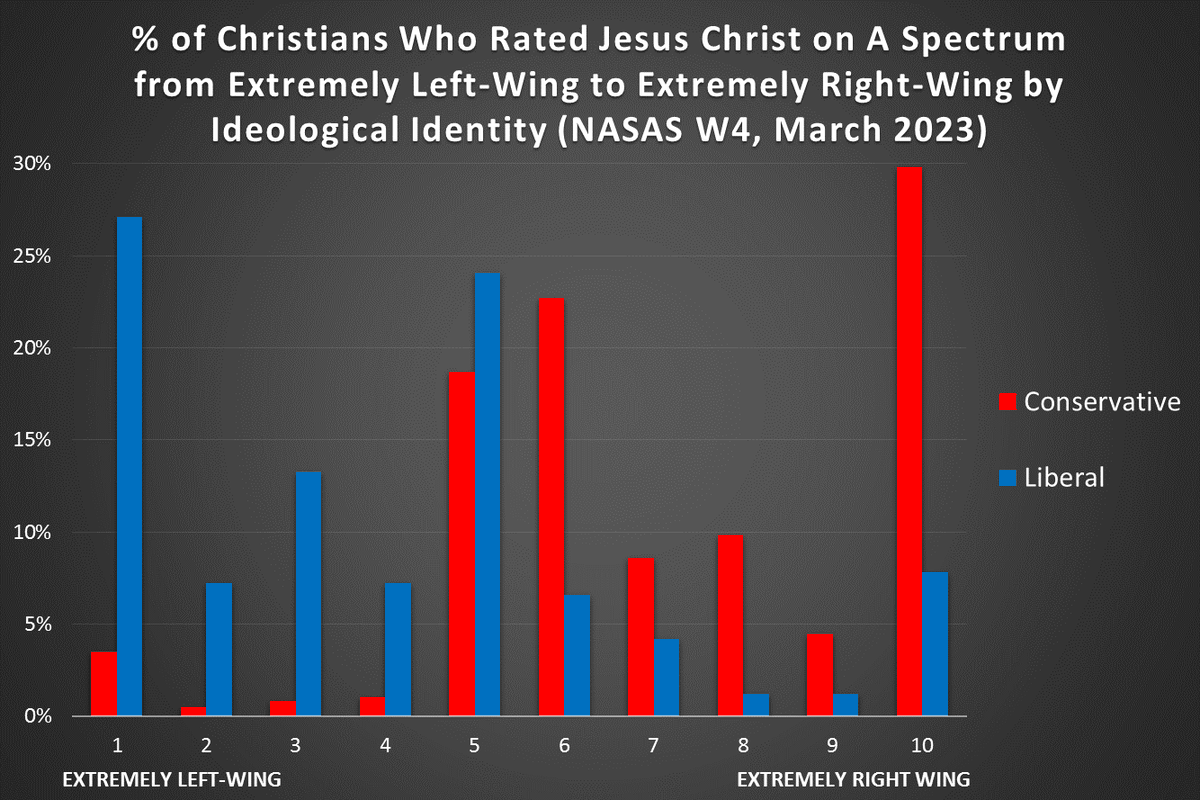
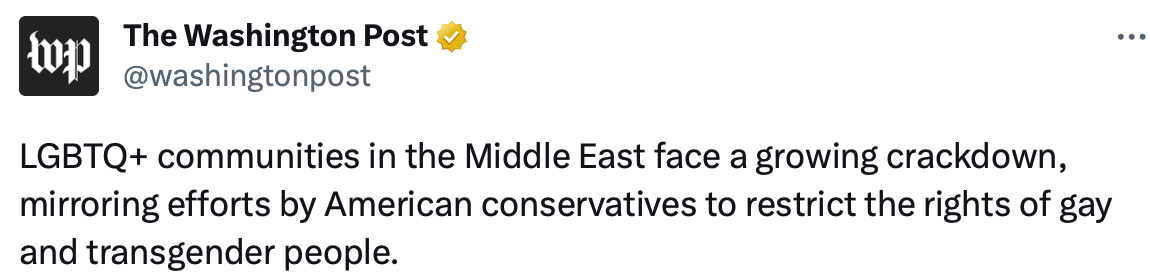


 Tipsy Teetotaler ن