Gregory Palamas Sunday

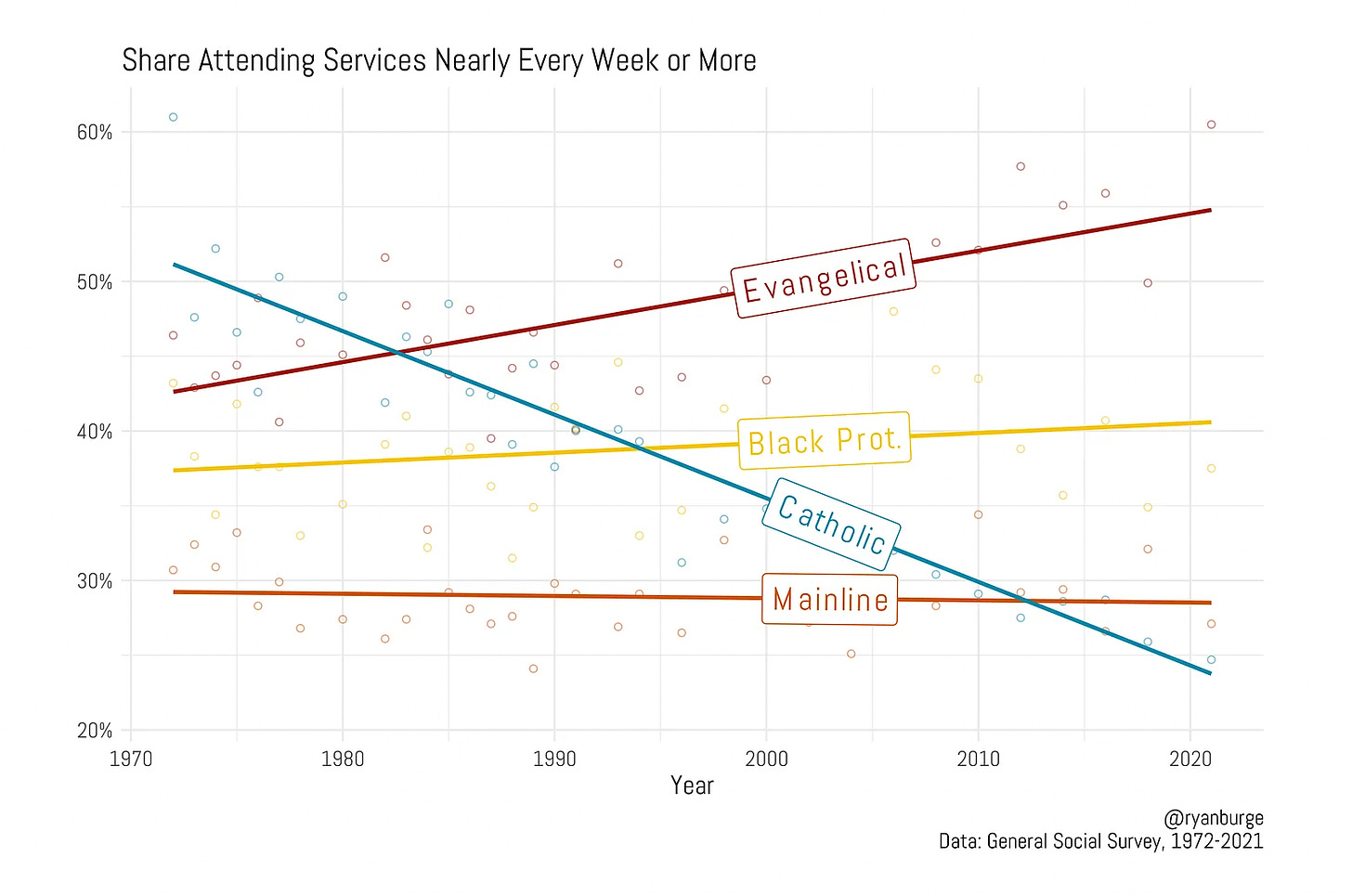
Evangelicals

Evangelical Subculture according to Russell Moore

I hesitate to share this, but not knowing who my readers are, I can’t know that somebody doesn’t need this as a wake-up call:

Writing for Christianity Today, Russell Moore unpacked how the evangelical subculture rejected virtue, “driven specifically by the very same white evangelical subculture that once insisted that personal character—virtue, to use a now distant-sounding word the American founders knew well—matters.” He continued: “Part of the vulgarization of the Right is due to the Barstool Sports/Joe Rogan secularization of the base, in which Kid Rock is an avatar more than Lee Greenwood or Michael W. Smith. But much more alarmingly, the coarsening and character-debasing is happening among politicized professing Christians. The member of Congress joking at a prayer breakfast about turning her fiancé down for sex to get there was there to talk about her faith and the importance of religious faith and values for America. The member of Congress telling a reporter to ‘f— off’ is a self-described ‘Christian nationalist.’ We’ve seen ‘Let’s Go Brandon’—a euphemism for a profanity that once would have resulted in church discipline—chanted in churches. If we are hated for attempted Christlikeness, let’s count it all joy. But if we are hated for our cruelty, our sexual hypocrisy, our quarrelsomeness, our hatefulness, and our vulgarity, then maybe we should ask what happened to our witness. Character matters. It is not the only thing that matters. But without character, nothing matters.”

The Morning Dispatch

Moore also wrote:

[W]ere he to emerge today, [Ned] Flanders would face withering mockery for his moral scruples—but more likely by his white evangelical co-religionists than by his beer-swilling secular cartoon neighbors.

On the other hand …

This makes sense to me. Evangelical Christianity emphasizes the personal relationship with Christ. It puts more emphasis on what Kierkegaard said was the core Christian way of responding to the Gospel: as something to be lived out actively, requiring personal conversion, not just a social habit.

Rod Dreher, Kierkegaard on Easter

It is, as they say, ironic. Evangelical theology is almost antinomian in terms of salvation having anything to do with what you do, versus the notions in your head (what you “believe”).

But there they are, bless their hearts, in Church oftener than not.

Reformational Protestants

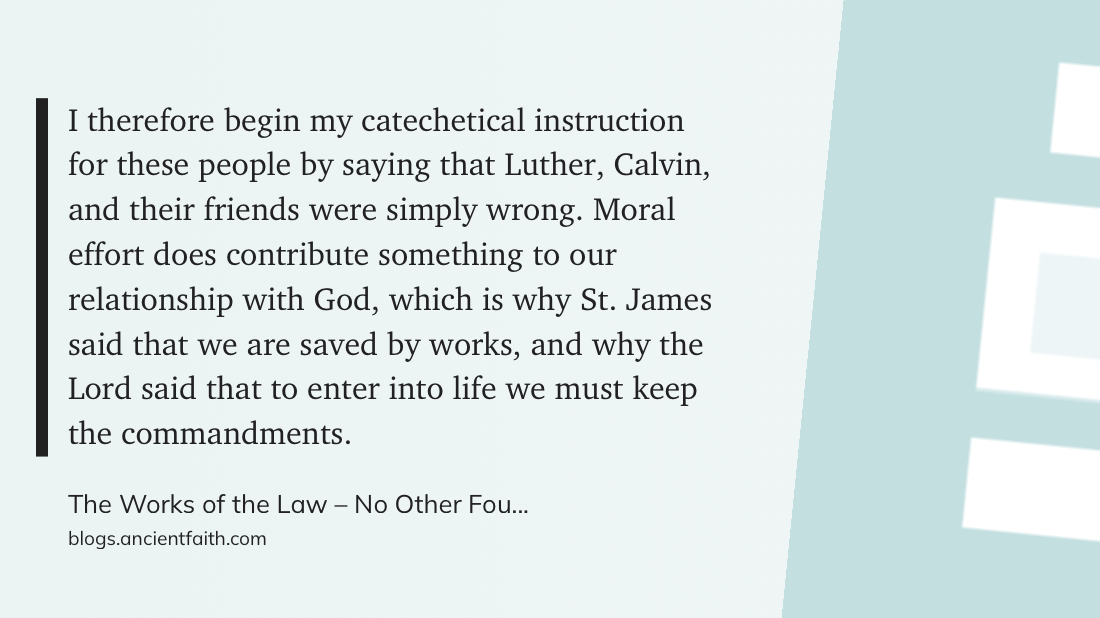
Putting it bluntly

If you want the full posting: The Works of the Law

Every man a Pope

I frequently quote Nathan Hatch’s masterful The Democratization of American Christianity in my posts. It explains so much.

But I just discovered that one of my favorite Orthodox bloggers, Fr. Stephen Freeman, has noticed the same democratizing theme:

[I]n contemporary Christianity, it is said that “every man is a Pope.” Whereas a few generations ago, people asserted that the Bible alone had authority, today, that, too, has been overthrown. Each person is his own authority. And I will add, that if every person is his own authority, then there is no authority.

I am fully sympathetic with the political place of democracy …

I am, however, deeply interested in the spiritual disease that accompanies the interiorizing of the democratic project. We have not only structured our political world in a “democratic” manner, we have spiritualized the concept and made of it a description for how the world truly is and how it should be. The assumptions of democracy have become the assumptions of modern morality and the matrix of our worldview …

Much of what today passes for Protestantism is nothing of the sort. Rather, it is a thinly veiled cloak for the democratic spirit at “prayer.”  “Salvation by grace through faith” is a slogan for individualism, a Christianity “by right.” There are no works, no requirements, only a “grace-filled” entitlement. For the ultimate form of democracy is the person who needs no one else: no Church, no priest, no sacrament, only the God of my understanding who saves me by grace and guarantees that I can do it alone.

It is a great spiritual accomplishment to not be “conformed to this world.” The ideas and assumptions of modern consumer democracies permeate almost every aspect of our culture. They become an unavoidable part of our inner landscape. Only by examining such assumptions in the light of the larger Christian tradition can we hope to remain faithful to Christ in the truth. Those who insist on the absence of spiritual authority, or demand that nothing mediate grace will discover that their lives serve the most cruel master of all – the spirit of the age.

Fr. Stephen Freeman, The Madness of Democracy – A Spiritual Disease

The common feature of American religion

Nevin and Schaff also discerned certain common intellectual patterns and reflexes beneath the rampant pluralism of American Protestantism. They attributed the breakdown of theological coherence to attitudes that American Christians had assumed. These two felt that a radical Bible-centeredness was the reigning theory among Protestant sects. After surveying the statements of belief of fifty-three American denominations, Nevin surmised that the principle “no creed but the Bible” was the distinctive feature of American religion.

Nathan O. Hatch, The Democratization of American Christianity

Fifty-three denominations that just follow the Bible but cannot agree on what it means. What’s wrong with this picture?

Christianity generally

A constant temptation

Christianity in this instance is no longer even a worldview—or what John Rawls calls a “fully comprehensive doctrine”—much less an institutionalized worldview. It is conceived as one wedge in the pie of an individual life, a matter not of shared obedience to the Word incarnate with eternal life in the balance, but of preferred inclination toward the “company or conversation of those whose Customs and Humours, whose Talk and Disposition they like best.”

Brad S. Gregory, The Unintended Reformation

An article I keep coming back to

This is an article I’ve been revisiting and wrestling with regularly:

There is a reason why so many evangelical and Protestant graduate students in theology move toward “higher church” traditions. Intellectually, they discover thinkers and writings their own “lower church” traditions either ignore or lack; liturgically, they discover practices handed down century after century that function like a lifeline in a storm. Reading Saint Ignatius or Saint Justin or Saint Irenaeus or Saint Augustine, it occurs to them that they don’t have to imagine what the church’s ancient liturgy looked and felt like; they can simply visit a church down the street.

It isn’t strange to learn that Prestigious Scholar X on the law/econ/poli-sci faculty at Ivy League School Y is Roman Catholic. It is a bit of a surprise to learn that he’s an evangelical. The moment you hear it, though, you wonder (or ask) whether he’s an evangelical Anglican or some such.

Brad East, Conversions, Protestantism, and a new mainline

A cartoon for the rest of Election 2024

For those whose churches don’t have formal confession, understand that we confess our sins without suggesting that they were justified by our neighbor’s provocation. It sounds so easy, but not being able to self-justify, not even a eensy-weensy bit, can be surprisingly hard.

East and West

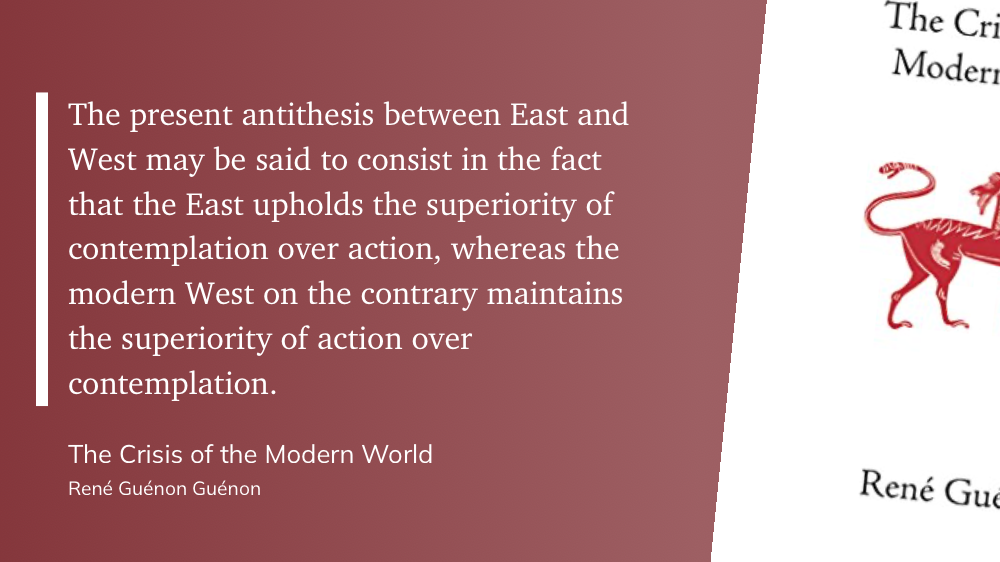
I don’t think his focus was Christianity, but Guenon was (inadvertently?) not wrong about the relative emphasis in Western versus Eastern Christianity.


… that Christ may dwell in your hearts through faith; that you, being rooted and grounded in love, may be able to comprehend with all the saints what is the width and length and depth and height — to know the love of Christ which passes knowledge; that you may be filled with all the fullness of God.

Ephesians 3:17-19 (NKJV)

You can read most of my more impromptu stuff here and here (both of them cathartic venting, especially political) and here (the only social medium I frequent, because people there are quirky, pleasant and real). All should work in your RSS aggregator, like Feedly or Reeder, should you want to make a habit of it.

St. John Climacus Saturday

Culture

Elite or not?

A 2023 account of these car dealers by Slate’s Alexander Sammon recounts the awesome scale of their collective wealth and influence on Republican politics: “Auto dealers are one of the five most common professions among the top 0.1%” while making up “a majority of the country’s 140,000 Americans who earn more than $1.58 million per year”; members of the industry association donate to Republicans “at a rate of 6-to-1”, through which they have worked “to write and rewrite laws to protect dealers and sponsor sympathetic politicians in all 50 states”. Such figures help to make sense of Moreno’s and his fellow car dealers’ status as the cream of the crop among America’s local elites.

Michael Cuenco, Car dealers will decide America’s future.

Cuenco seems to overlook the difference between wealth and prestige.

Sportsball

Being in politics is like being a football coach. You have to be smart enough to understand the game, and dumb enough to think it’s important.

Eugene McCarthy, via the Economist’s World in Brief

Dictator or not?

On the drive into Budapest from the airport, travelers can see billboards erected by the Hungarian political opposition, featuring a photo of Prime Minister Viktor Orban with the slogan “God? Homeland? Pedophilia!” It’s a reference to the recent scandal involving a presidential pardon of a politically connected man who had been convicted of aiding in a pedophilia cover-up. The scandal cost the ruling Fidesz party its top two female politicians: President Katalin Novak and former Justice Minister Judit Varga.

Associating the prime minister, who apparently did not know about the pardon until the media reported it, and who quickly called for resignations of these top allies, is a low blow. But that’s how it goes in Hungary. Fidesz is not above similar tactics. If you expect Magyar politics to be a tea party, you are going to be disappointed.

Still, bearing in mind how the U.S. president recently denounced Orban as a “dictator”—a slur widely repeated in Western media and public discourse—you have to wonder what kind of strongman would allow himself to be publicly criticized as a promoter of pedophilia. If Orban really were a dictator, wouldn’t these billboards have been banned? Wouldn’t those who paid for them be eating goulash in a gulag now? 

… Hungary, which supposedly groans under the burden of the Orban dictatorship, enjoys far more freedom of expression than countries whose media and whose leaders condemn it as repressive. You have to wonder why.

Rod Dreher in the European Conservative (no paywall).

Eugenics for the age of The Machine

Servility

Will we reach the point where nobody thinks they could start their own little business?

Political

Meet the new boss, Trumpier than the old boss

Washington Post: Was the 2020 Election Stolen? Job Interviews at RNC Take an Unusual Turn.

Those seeking employment at the Republican National Committee after a Donald Trump-backed purge of the committee this month have been asked in job interviews if they believe the 2020 election was stolen, according to people familiar with the interviews, making the false claim a litmus test of sorts for hiring.

The Morning Dispatch

Trump’s faith

The closest I get to liking Donald Trump is when he evinces contempt for those who idolize him.

I feel guilty about that, as one shouldn’t sympathize with con artists. But you know how it is with scams: At a certain point of extreme gullibility, the mark starts to seem more contemptible than the person preying on them. If you’re still falling for “Nigerian prince” emails in 2024, the problem lies chiefly with you, not with the flimflam man responsible.

The sheer laziness with which Trump has courted evangelical voters since 2015 has always betrayed a degree of sincere disdain for them that’s unusual in a man not otherwise known for honesty. It would have been trivially easy for him to brush up on Christian dogma after he entered politics in the name of convincing the Republican base that he’d seen the light after a dissolute adulthood. But … he couldn’t be bothered to do so.

He’s never cared enough about the faith espoused by most of his supporters to even pretend to take it seriously.

That’s how we ended up with him once famously rendering “2 Corinthians” as “Two Corinthians” rather than “Second Corinthians.” And listing “an eye for an eye” as his favorite Bible verse instead of something from the Gospels. And admitting at an evangelical forum that he couldn’t recall ever having asked for God’s forgiveness.

A man who lies like he breathes somehow can’t get motivated to lie persuasively about being pious, even as a gesture of minimal respect for his own fans. That’s remarkable. And insofar as most evangelicals have shrugged it off and rolled over for him anyway, my sympathies lie more with him. He’s been sending them the political equivalent of “Nigerian prince” emails for nine years; if they haven’t wised up yet, that’s a problem with them more so than with Trump.

His first political priority, even above maximizing his chances of reelection, is purging the Republican Party of anyone who would question his right to rule. He doesn’t want independent-minded Christians in the GOP any more than he wants the traditional conservatives who preferred Nikki Haley in the primary. He’ll win without them—and if he can’t, he’ll at least have consolidated his power over one-half of America’s political establishment in the process.

In that context, whether by design or by happenstance, the “Trump Bible” operates as a sort of litmus test for evangelicals who have stuck with him this far through thick and thin. You won’t abandon me if I make a mockery of your faith, will you? No, of course you won’t.

The devolution of evangelicalism in the Trump era is itself an interesting mix of radicalism and transactionalism, mirroring Trump’s personality. Many Christians made a cynical bargain with him in 2016, suppressing their moral discomfort and offering him their votes in exchange for guarantees that he’d enact their agenda, starting with limits on abortion. Insofar as his poor character and irreligiosity troubled them, some may have idly hoped that their influence over him, and the influence of figures like Mike Pence, would turn his heart toward God in time. He might be remade in Christianity’s image.

That transaction didn’t pan out the way they’d hoped. For many, Christianity has been remade in his image.

Nick Catoggio, The True Faith

How to reach Republicans with the anti-Trump Gospel

Carville has been sounding an alarm about progressives getting too censorious since he advised Hillary Clinton in 2016. He disparaged liberals’ snooty, elitist “faculty lounge” attitudes long before he blew off the faculty lounge himself. He complained that “woke stuff is killing us,” that the left was talking in a language that ordinary Americans did not understand, using terms like “Latinx” and “communities of color,” and with a tone many Americans found sneering, as in Hillary’s infamous phrase “basket of deplorables.”

“There are a lot of people on the left that would rather lose and be pure because it makes them feel good, it makes them feel superior,” Carville said. And that, he said, is how you end up with Dobbs.

He thinks Donald Trump’s voters see him as akin to King Cyrus or King David in the Bible, a flawed messenger, so it’s best to use a biblical narrative about betrayal.

“If you say, ‘You dumb son of a bitch, how can you ever think that this fat, slimy, rapist, criminal, racist should be president?’ they’re going to recoil,” he said. “I think Democrats should say: ‘Look, you believed in him. You felt like you weren’t being seen, you were being culturally excluded. But he betrayed you. You thought he was going to be for you and helping you, but he was really for TikTok and tax cuts to the rich.’”

James Carville profile by Maureen Dowd

What’s behind “Lawfare”?

I submit that what changed when Trump entered the political arena on the highest levels isn’t that he gained powerful enemies who resolved to take him down by any means possible, nefarious or otherwise. What changed is that he was now a magnet for all kinds of scrutiny—journalistic as well legal …

Isn’t this the most obvious thing in the world? What is the first thing that anyone entertaining a run for the White House is asked by anyone who understands the process? Do you have any skeletons in the closet? Better get them out in the open now, because they will be discovered during the course of the campaign, and they will sink you, especially if you seek to cover it up.

Because Trump’s alleged crimes and misdeeds were extremely complex and deeply embedded in his sprawling business empire—and because the wheels of justice (rightly) grind extremely slowly—it’s taken many years for numerous lines of investigation to culminate in several trials all at roughly the same time, just as Trump is gearing up for a third attempt to win the White House. That’s not great. But as Jonathan Chait has argued quite cogently, the reason why it’s happening is that Donald Trump is a crook! If he wanted to continue getting away with being a crook, he could have decided not to run for president! Instead, he launched a campaign, won, lost, and is now running again. That’s nearly nine years (and counting) of ensuring the Klieg lights of public scrutiny are trained on every aspect of his life and business. What did he expect?

Since Trump trends toward imbecility, he may be surprised and outraged about this. But his defenders really should know better.

Damon Linker, Seven More Months of … This?

Ronna McDaniels’ excellent NBC adventure

Jonah Goldberg on NBC’s difficulty finding commentators to defend Trumpy positions:

I’ve said it a million times on here: When we were all growing up, […] the word “RINO” meant someone who was squishy on abortion, or taxes, or foreign policy, or something like that. It was about issues. Now, by Trump’s own admission, RINO only refers to people insufficiently loyal to Donald Trump. And so you get this weird kind of thing where you have to find people who are supposedly intelligent conservatives who are also willing to talk about Donald Trump as if he’s comrade Stalin. And that’s a really tiny universe of people because it almost demands that you have no integrity or that you lie. And that’s how Ronna McDaniel starts to look attractive.

Wordplay

Tina Brown assessed King Charles: “Even with the best prognosis for his cancer, he has been left with a rueful rump of a reign.” (Ann Madonia Casey, Fairview, Texas)

Jesse Green reviewed a new Broadway production: “Romantic musicals are as personal as romance itself. What makes you sigh and weep may leave the person next to you bored and stony. At ‘The Notebook,’ I was the person next to you.” (Christopher Flores, San Antonio)

And Bret Stephens, conversing with Gail Collins, skewered the social media site affiliated with Donald Trump: “I take it you’re referring to Truth Social, which in an honest world would be renamed Lies Sociopathic.” (Ross Payne, Windermere, Fla.)

Clipped from Frank Bruni

Midweek dump (3/28/24)

Culture

The most gruesome conversion therapy

Discussing the new free documentary Lost Boys: Searching for Manhood, about boys who apparently were pressured toward “transitioning”:

The irony hasn’t gone unnoted that while trans activists position themselves in the same stream as gay and lesbian activists, this gruesome “treatment” functions as the most extreme form of “conversion therapy,” more nightmarish by far than the silliest South Park caricature of a “pray the gay away” evangelical …

For Alex, insight has gradually dawned that his more sensitive interests in poetry and music simply made him “a romantic type.” They didn’t make him “effeminate” per se. Nor, he adds, did they make him “gay.”

Bethel McGrew, The Island of Lost Boys

The insight behind that second paragraph has haunted me ever since “gender confirmation surgery” became a public phenomenon.

“Is there no room left for tomboys and sissies?”, asks the old cisgendered white guy (who isn’t exactly an exemplar of all manly stereotypes)? Who decided that tomboys are really boys and that sissies are really girls?

Not my kind of guy

The Journalism Herd seems to have decided it’s time for a reprise of Christine Blasey Ford, which reminds me that my lightly-held position at the time of the Ford-Kavanaugh face-off was that Brett Kavanaugh might have done what she said (tried to remove her swimsuit, as I recall) because he was drunk on beer as was so usual for him and his pals at the time. (I also read a high-level hatchet-job on Ford that made a decent case that she was lying.)

I didn’t consider a drunken adolescent mistake reason enough to disqualify him for SCOTUS after many years of responsible adulthood. But I made a mental note that he’s not my kind of guy.

(Side note: Parents winking at teen boozing is a major reason we didn’t send our son to a Catholic High School, and why he won’t send our grandchildren there, either.)

American multiculturalists

The American multiculturalists similarly reject their country’s cultural heritage. Instead of attempting to identify the United States with another civilization, however, they wish to create a country of many civilizations, which is to say a country not belonging to any civilization and lacking a cultural core. History shows that no country so constituted can long endure as a coherent society. A multicivilizational United States will not be the United States; it will be the United Nations.

Samuel P. Huntington, The Clash of Civilizations and the Remaking of World Order

Restlessness

Where you come from is gone, where you thought you were going to never was there, and where you are is no good unless you can get away from it.

Flannery O’Connor, born on the Feast of Annunciation in 1925. Garrison Keillor has anecdotes.

Abroad

It’s barbaric — and it’s working

Before the war, Israelis estimated Hamas had dug around 100 miles of tunnels. Hamas leaders claimed they had a much more expansive network, and it turns out they were telling the truth. The current Israeli estimates range from 350 to about 500 miles of tunnels. The tunnel network, according to Israel, is where Hamas lives, holds hostages, stores weapons, builds missiles and moves from place to place … in this war, Hamas is often underground, the Israelis are often aboveground, and Hamas seeks to position civilians directly between them. As Barry Posen, a professor at the security studies program at M.I.T., has written, Hamas’s strategy could be “described as ‘human camouflage’ and more ruthlessly as ‘human ammunition.’” Hamas’s goal is to maximize the number of Palestinians who die and in that way build international pressure until Israel is forced to end the war before Hamas is wiped out. Hamas’s survival depends on support in the court of international opinion and on making this war as bloody as possible for civilians, until Israel relents.

David Brooks

Hate

When people say they want to ban hate speech, what they really mean is that they want to ban hate. And you may as well say that we should ban jealousy, or anger, or greed, or fear. Hate is an endemic part of the human experience and so hate speech always will be too, even after they implant behavior-modification chips in our brains. Ban all the words you like; people will find new ways to express hate.

Freddie deBoer, ‌You Can’t Censor Away Extremism. Scotland replies: Hold my beer.

Domestic Politics

Be it remembered …

In a court filing Tuesday, failed Arizona gubernatorial candidate Kari Lake chose not to contest allegations that she defamed Maricopa County Recorder Stephen Richer when she accused him of committing election fraud during the state’s 2022 elections. She had failed to file a response to Richer’s June lawsuit, which accused her of baselessly claiming Richer stuffed ballot boxes with fake ballots and intentionally made the ballot confusing for voters in an effort to “rig” the election. Lake has asked the court to convene a jury to decide the damages she owes Richer in the case.

The Morning Dispatch

Two from Thomas

Ban the Bland!

Newt Gingrich believed that the brand of politics Bob Michel practiced had contributed to House Republicans’ 40-year sojourn in the political desert. Gingrich decided to change this, starting with Republicans’ vocabulary and tactics. This proved effective, but at the cost of rising incivility and declining cooperation between the political parties. Once the use of terms such as “corruption,” “disgrace” and “traitor” becomes routine in Congress, the intense personal antipathy these words express is bound to trickle down to rank-and-file party identifiers.

Thomas B. Edsall, Lean Into It. Lean Into the Culture War

What’s the point of electing Republicans if they’re not barbarians?

On Nov. 5, North Carolina will determine whether a slate of Republican candidates who believe that the 2020 election was stolen, who dismiss Trump’s 91 felony charges and who are eager to be led by the most prodigious liar in the history of the presidency, can win in a battleground state.

Pope McCorkle, a Democratic consultant and professor at Duke’s Sanford School of Public Policy, argued in an email that the results of this year’s Republican primary election on March 5 demonstrate that “the North Carolina G.O.P. is now a MAGA party. With the gubernatorial nomination of Mark Robinson, the N.C. G.O.P. is clearly in the running for the most MAGA party in the nation.”

As they are elsewhere, MAGA leaders in North Carolina are confrontational.

In February 2018, Robinson, the first Black lieutenant governor of the state, described on Facebook his view of survivors of school shootings who then publicly call for gun control. They are “media prosti-tots” who suffer from “the liberal syndrome of rectal cranial inversion mixed with a healthy dose of just plain evil and stupid permeating your hallways.”

In a March 2018 posting on Facebook, Robinson declared: “This foolishness about Hitler disarming MILLIONS of Jews and then marching them off to concentration camps is a bunch of hogwash.”

In an October 2021 sermon in a North Carolina church, Robinson told parishioners, “There’s no reason anybody anywhere in America should be telling any child about transgenderism, homosexuality, any of that filth. And yes, I called it filth.”

There are many ways to express MAGA extremism.

On May 13, 2020, Michele Morrow, the Republican nominee for North Carolina Superintendent of Public Schools, responded on X (formerly Twitter) to a suggestion that Barack Obama be sent to the Guantánamo Bay detention camp on charges of treason. Morrow’s counterproposal?

I prefer a Pay Per View of him in front of the firing squad. I do not want to waste another dime on supporting his life. We could make some money back from televising his death.

In Morrow’s world, Obama would be unlikely to die alone. Morrow’s treason execution list, according to a report on CNN, includes North Carolina’s current governor, Roy Cooper, former New York governor, Andrew Cuomo, Representative Ilhan Omar, Hillary Clinton, Senator Chuck Schumer, Anthony Fauci, Bill Gates — and President Biden.

Thomas B. Edsall, One Purple State Is ‘Testing the Outer Limits of MAGAism’

  • [ ] Vulgar attacks? Check (“prosti-tots” and “rectal cranial inversion”)
  • [ ] Holocaust denial? Check
  • [ ] Crazed charges of “treason” with proposed mass public executions? Check

You know what North Carolina needs. It needs “bloodbath” of MAGA jackasses on November 5.

But truth told, I’m not sure that these freshly-minted MAGA/populist “Republicans” will care about a massive voter repudiation so long as meanwhile they performatively own the libs.

Explain this one away

Fuggedabout “bloodbath” blather:

“A Massive Fraud of this type and magnitude allows for the termination of all rules, regulations, and articles, even those found in the Constitution.” Those are Trump’s words, verbatim. He wasn’t talking about Chinese automotive imports.

Kevin D. Williamson, Giving Permission to Political Violence


So: where did all my mockery of Trump go?

I suffer more from the humiliations inflicted by my country than from those inflicted on her.

Simone Weil, from a letter to Georges Bernanos.

You can read most of my more impromptu stuff here and here (both of them cathartic venting, especially political) and here (the only social medium I frequent, because people there are quirky, pleasant and real). All should work in your RSS aggregator, like Feedly or Reeder, should you want to make a habit of it.
Sunday of Orthodoxy

(This is how Orthodoxy views this Sunday; it celebrates Orthodox iconodules triumphing over iconoclasts.)

“You are not Jesus”

[I]t’s good to remind ourselves periodically of the first rule of Scriptural exegesis: You are not Jesus. Whenever you read a story about Jesus’s life, you should not identify with Jesus. You should identify with the sinner whom He is healing/converting/forgiving/upbraiding/flagellating/etc.

Whenever a traditional Christian defends some point of traditional Christian morality, you’ll hear one of our lefty friends cry, “I thought Jesus ate with prostitutes and tax collectors!” Once again, the proper response is: Do you identify with Jesus in that parable?

This is where liberal Christianity becomes—ironically; hilariously—elitist. Sorry, folks, but God’s not saying you must condescend to eat with sinners. No: you are the sinner. He condescends to eat with you.

As for us recovering sinners (i.e., Christians) Saint Paul gives us a different rule: “But now I have written to you not to keep company with anyone named a brother, who is sexually immoral, or covetous, or an idolater, or a reviler, or a drunkard, or an extortioner—not even to eat with such a person” (1 Cor. 5:11). Why? Because, not being Jesus, you can’t trust yourself not to fall into their vice.

Michael Warren Davis, You’re Not Jesus

I don’t know how to discern when a Substack is public, but this one is so good, I’d urge you to at least try reading the whole thing.

Hangovers

It was not that we got drunk. No, it was this strange business of sitting in a room full of people and drinking without much speech, and letting yourself be deafened by the jazz that throbbed through the whole sea of bodies binding them all together in a kind of fluid medium. It was a strange, animal travesty of mysticism, sitting in those booming rooms, with the noise pouring through you, and the rhythm lumping and throbbing in the marrow of your bones. You couldn’t call any of that, per se, a mortal sin. We just sat there, that was all. If we got hangovers the next day, it was more because of the smoking and nervous exhaustion than anything else.

Thomas Merton, The Seven Storey Mountain

I had totally forgotten this passage, which both came as a shock and struck me as very perceptive.

Chesterton loves him some saints

St. Francis, in praising all good, could be a more shouting optimist than Walt Whitman. St. Jerome, in denouncing all evil, could paint the world blacker than Schopenhauer.

G.K. Chesterton, Orthodoxy

Trajectories

The Methodist rhetorical trajectory

American followers of John Wesley found it easy to forget his advice never to scream and never to raise the voice above its natural pitch.

Nathan Hatch, The Democratization of American Christianity

But then eventually they lowered their voices again.

The decline of denominations and the rise of crypto-baptists

[A] new rightist group has emerged to “reinvigorate” the Southern Baptist Convention, which it fears is sliding into wokery. Its executive director is a self-identified “Christian nationalist.” Count me skeptical that many Southern Baptists are succumbing to progressivism. I’m also skeptical that the Southern Baptist Convention, which has been declining for nearly 20 years, will exist as a strong denomination ten years from now. Its churches and seminaries likely will align with non-denominationalism, whose ethos is chiefly Baptist.

The decline if not collapse of denominations in America means Christians, even if they remain in denominations, no longer are influenced by centralized structures but are mainly influenced by their self-chosen social media. Decades ago progressives gained control of Mainline denominations whose members were still mostly traditional. In post-denominational America that strategy is no longer relevant. Unalloyed religious progressivism can be found at outlets like Sojourners, which long tried to stay friendly to orthodox Protestants and Catholics but now touts transgenderism and a phalanx of other progressive causes. Fifteen to twenty years ago, the National Association of Evangelicals, as I noted nearly a decade ago, shifted from conservative to more centrist. But groups like NAE, like the National Council of Churches, no longer count a great deal in post-denominational America.

Mark Tooley, Where is the Religious Left?

The missionary trajectory

Cluain Patrick (the Irish word Cluain translates as ‘meadow’) is still a working community well, and one way you can tell is that a new altar has been built near it. This is not unusual at wells near towns, where an outdoor mass is often held on the saint’s day. Perhaps one will be happening here today. Here is the local priest at work three years back:

You may have noticed that this priest is not a native Irishman. This is increasingly common across the country. The land which used to produce one priest per family can now barely find a handful of Irish men who want the job. As a result, there has been an influx of priests from other nations, and those nations are usually outside Europe, in parts of the world where Christianity is still taken seriously. I don’t know where the priest in this picture is from, but in my local Catholic church the African pastor is from Nigeria – and yet he has the deliciously Irish name of Father Ciaran. I hadn’t realised until recently that Nigeria was originally evangelised by Irish Christians. Now it seems the favour is being returned. We are the pagans now, and we need all the help we can get.

Paul Kingsnorth

I’ve expected for a few decades that the day would come when Christian Africa would be evangelizing the West. I didn’t expect I’d still be alive when that day arrived.


… that Christ may dwell in your hearts through faith; that you, being rooted and grounded in love, may be able to comprehend with all the saints what is the width and length and depth and height — to know the love of Christ which passes knowledge; that you may be filled with all the fullness of God.

Ephesians 3:17-19 (NKJV)

You can read most of my more impromptu stuff here and here (both of them cathartic venting, especially political) and here (the only social medium I frequent, because people there are quirky, pleasant and real). All should work in your RSS aggregator, like Feedly or Reeder, should you want to make a habit of it.

Theodore Saturday 2024

NOT POLITICS (at least not American)

Defining Deviancy Down (and up)

In his classic 1993 essay, “Defining Deviancy Down”, the late Senator Daniel Patrick Moynihan offered a semantic explanation. He concluded that, as the amount of deviant behaviour increased beyond the levels the community can “afford to recognise”, we have been redefining deviancy so as to exempt conduct we used to stigmatise, while also quietly raising the “normal” level in categories where behaviour is now abnormal by any earlier standard. The reasons behind this, he said, were altruism, opportunism and denial — but the result was the same: an acceptance of mental pathology, broken families and crime as a fact of life.

In that same summer, Charles Krauthammer responded to Senator Moynihan with a speech at the American Enterprise Institute. He acknowledged Senator Moynihan’s point but said it was only one side of the story. Deviancy was defined down for one category of society: the lower classes and black communities. For the middle classes, who are overwhelmingly white and Christian, the opposite was true. Deviancy was in fact defined up, stigmatising and criminalising behaviour that was previously regarded as normal. In other words, there was a double standard at work.

… [T]he application of progressive moral double-standards is now seen at the level of geopolitics, most specifically over the ongoing Israel-Hamas war. We have produced a discourse in which deviancy is defined up for Jews and Israel, and down for Arabs and Muslims.

[E]very lowering of standards to appease extremist Arabs and Muslims is racism dressed up as compassion and disdain masquerading as kindness. It is moral confusion and it is dangerous — suicidally so.

Ayan Hirsi Ali

Motivated blindness

The problem for the Times is that many of its own staffers do not want to investigate the sexual violence that occurred on October 7. They see it as a vulnerability to their own side in the information war about Gaza.

“There are a huge number of people at the Times who are activists, and it is their job to tell a particular story,” one Times reporter told The Free Press. “The precedent was set that this works. If it doesn’t work through one means, they will find another.”

Oliver Wiseman

BORDERLINE

Demoralizing the troops

No Victorian-era missionary could ever match the moralistic certainty displayed by left-wing Americans and Europeans, when it comes to instructing the savage Other about its failings. At least the missionaries understand that they have to behave with a modicum of intercultural respect to the natives …

Three years ago, the American ambassador to Niger raised the Pride flag at the embassy, in the heart of the conservative Islamic nation, and issued a public statement affirming the U.S. government’s dedication to LGBT rights. Why? How did that advance American interests in this strategically critical central African nation?

On Monday, Gallup released a poll showing that fewer Americans these days consider China and Russia to be their nation’s enemies. What’s more:

Additionally, 5 percent of Americans now say the U.S. was its own worst enemy, which is up 4 points from last year. Pollsters noted this is the highest percentage of Americans who said the U.S. is its own worst enemy since 2005. Eleven percent of independents said the U.S. was its top enemy, according to the new poll.

They have a point. Long gone are the days when America was the uncontested global hyperpower. Washington has squandered its material power on wars that made the world more dangerous, and also exposed the U.S. to accusations of hypocrisy. To many outside the U.S., American claims to defend democracy and advance human rights are little more than moralization justifying American cultural, economic, and military hegemony.

A retired U.S. military source close to the data confirmed recently what I had only been told anecdotally by armed forces veterans: that military families, long a main source of recruits for the all-volunteer army, have been so alienated by the Pentagon’s woke contempt for traditional American values that they have discouraged their sons and daughters from serving.

You can’t wage culture war on conservatives at home and in foreign lands, and expect those same people to show up for you when the shooting starts.

Rod Dreher, When Culture War Affects Real War

From Frum’s Mouth to God’s Ear

[W]hen it came time to make his final appeal to voters, candidate [Ronald] Reagan deflected attention away from himself. Instead, he targeted the spotlight directly at the incumbent president and the president’s record.

When Reagan spoke of himself, it was to present himself as a plausible replacement … Reagan understood that Reagan was not the issue in 1980. Jimmy Carter was the issue. Reagan’s job was to not scare anybody away.

But Trump won’t accept the classic approach to running a challenger’s campaign. He should want to make 2024 a simple referendum on the incumbent. But psychically, he needs to make the election a referendum on himself.

That need is self-sabotaging.

In two consecutive elections, 2016 and 2020, more Americans voted against Trump than for him. The only hope he has of changing that verdict in 2024 is by directing Americans’ attention away from himself and convincing them to like Biden even less than they like Trump. But that strategy would involve Trump mainly keeping his mouth shut and his face off television—and that, Trump cannot abide.

Trump cannot control himself. He cannot accept that the more Americans hear from Trump, the more they will prefer Biden.

In Raymond Chandler’s novel The Long Goodbye, the private eye Philip Marlowe breaks off a friendship with a searing farewell: “You talk too damn much and too damn much of it is about you.” When historians write their epitaphs for Trump’s 2024 campaign, that could well be their verdict.

David Frum

Sin quickly, repent next January

People love people who have good stories and there is no good story without trouble so get into trouble while you’re still young and have time to climb out of the ditch. Don’t do things that can really hurt you like drugs you buy from strangers on the street, just fall in with lowlifes, fall for an obvious scam, say crazy things you know aren’t true, and the simplest way to accomplish that is to endorse the Florida Orange. Now.

Starting in January 2025, there’s going to be a market for Republican confessionals — a yuge market — the lecture circuit will have room for upright people admitting that they were hornswoggled by the most obvious conman to come down the pike since the guy who sold the mimeograph that prints fifties. Even Scientologists can see through him.

Garrison Keillor

Three from Nellie

Google tendentiously rewrites the dictionary

Last note on this: as America’s reporters were pretending they’d never used the term bloodbath to indicate a financial situation, Google’s activist engineers were working to back them up. Search “bloodbath definition” and the search giant once included the informal usage: Informal. A period of disastrous loss or reversal: A few mutual funds performed well in the general bloodbath of the stock market. But by Thursday, Google dropped that, and the only definition offered: an event or situation in which many people are killed in a violent manner. Weird!

Nellie Bowles

How liberals changed their minds on guns

Also, interestingly, in America, illegal migrants (undocumented, under-papered, citizen-questioning, whatever you want) can now legally own guns thanks to Obama-appointed Illinois federal judge Sharon Johnson Coleman, who just ruled as such. The extent to which gun control has fallen out of fashion cannot be overstated. As soon as people realized that gun control would have to be enforced by cops and not special gun fairies, everyone turned to policies that would make the old NRA blush.

Nellie Bowles

Jaw-dropper

[T]he ADL filed a federal complaint about Berkeley schools after allegations of, among other things, elementary school students being told by their teachers to write “stop bombing babies” on note cards and then to attach those cards to the door of the only Jewish teacher at the school.

Nellie Bowles

Whatchamacallit surgery

Someone wrote to Andrew Sullivan objecting to his use of “changing sex” as a description of what some people so notoriously are having done to their bodies. Sullivan replied that “Sex reassignment is the most accurate term. No man will ever function as a woman and vice-versa.”

Sullivan’s solution is tempting in a go-along-to-get-along sort of way, but it tacitly concedes the “sex assigned at birth” Orwellianism.

I don’t like it. You may slip it by me, but I don’t believe it’s accurate.

What to call it, then? Since “gender” appears to be subjective (if not meaningless), “gender confirmation” seems the least bad option I know.

Surgery may be the least bad option in a few cases of an adult’s intractable gender dysphoria, but don’t ever ask me to affirm that there actually exists such a thing as a woman trapped in a man’s body or a man trapped in a woman’s body — or that surgery can actually change sex.

YEAH, PROBABLY POLITICS

Will this, finally, make him a kamikaze candidate?

Trump has added a much more disturbing project to his list of campaign promises: He intends to pardon all the people jailed for the attack on the Capitol during the January 6 insurrection.

Trump once held a maybe-sorta position on pardoning the insurrectionists. He is now, however, issuing full-throated vows to get them out of prison. On March 11, Trump declared on his Truth Social account: “My first acts as your next President will be to Close the Border, DRILL, BABY, DRILL, and Free the January 6 Hostages being wrongfully imprisoned!”

Trump is no longer flirting with this idea. The man whose constitutional duty as president would be to “take care that the laws be faithfully executed” is now promising to let hundreds of rioters and insurrectionists out of prison with full pardons. And eventually, he will make clear what he expects in return.

Tom Nichols

On “Bloodbaths”

Donald Trump predicted a bloodbath if Joe Biden is re-elected. Conveniently lost in that description is that the “bloodbath” was a flooding of America’s auto market with Chinese cars, which he pledged to keep out with a 100% tariff.

But his defenders weren’t entirely up front, either:

What Trump defenders elide is that the former president has forfeited any presumption of good intentions. Trump winks at and even celebrates violence all the time. He fawns over authoritarians and insists that presidents, like rogue cops, should have complete immunity to commit crimes. When the Capitol was under siege by a mob acting on his behalf, he declined to intervene for hours. He even defended the mob’s chants of “Hang Mike Pence!”

Heck, Trump once again celebrated those “great patriots” of January 6 during the same rally Saturday, declaring those convicted of assault and other crimes “hostages.” If these convicted criminals are hostages, where are the ransom demands?

In short, Trump, who routinely distorts others’ statements and plays footsie with violence, doesn’t deserve the benefit of the doubt when he uses terms like “bloodbath.”

Jonah Goldberg, Stop Making a Martyr of Donald Trump

High Crimes or Misdemeanors

It’s an unusual leader who’s capable of committing high crimes or misdemeanors in two distinct genres of corruption. But Donald Trump is an unusual man.

His first impeachment was a case of extortion. Congress approved military aid for Ukraine, but instead of sending the funds overseas expeditiously, Trump withheld them while leaning on President Volodymyr Zelensky for a “favor” in the form of dirt on his likely opponent in the next presidential election.

His second impeachment was a case of fanaticism. Trump couldn’t cope with losing the election so he began howling that he had been a victim of fraud. He spun up his supporters about it so relentlessly that they ended up breaking into the Capitol on January 6 to try to halt the transfer of power.

His first high crime was a product of transactional logic, ice cold in nature. His second was a product of passionate radicalism, red hot by comparison. There may have been more corrupt public figures than him in America’s distant past but no one matches him for versatility.

Nick Catoggio, The Transactional Radical

The story of the conservative movement since 2016

Finding dignity in politics is like finding jewelry in a sewer system. There’s some there, rest assured; all you need to do is search.

But, good lord, the foulness you’ll endure while looking for it is unspeakable.

I’ve gotten used to it to a degree, as any sewer worker does. But on Friday I nearly choked on the fumes of cynical grifting putridity:

Ben Shapiro, who once called Trump a “spoiled brat” and refused to vote for him in 2016, is now co-hosting a fundraiser for Donald Trump:

“I’d walk over broken glass to vote for him [Trump].”

This is what selling your soul for power and money looks like. pic.twitter.com/If5gh4duM3

— Republicans against Trump (@RpsAgainstTrump) March 15, 2024

Anyone who once vowed never to vote for Donald Trump and now finds himself willing to walk over broken glass for him after a coup attempt and assorted impeachments and indictments has either cashed in his soul or been brain-poisoned by his own populist propaganda.

That’s the story of the conservative movement since 2016, by and large. Unspeakable.

Nick Catoggio again.

Putin is in control

Even amid a difficult and costly war that he initiated, Putin remains firmly in control of Russia, despite a series of Western sanctions and wishful thinking in Washington that its military expertise, weapons, and enthusiasm for the war would loosen his grip on power. Blindfolded by ideology, Biden wants the candy of regime change, but Putin has proven to be an iron-clad piñata.

Seymour Hersh

Not even a nod of acknowledgement

Like those who opposed the lockdowns, the masking of children, vaccine mandates, our southern border and immigration policy, or Woke racial intolerance, those of us who applied reasonable skepticism to pediatric gender transition were treated shabbily. The coercive tools of social ostracism and censorship were wielded against us with smug pride. Then, in 2023, our positions became conventional wisdom, but we were still unacceptable. It was all so obvious, suddenly, even to members of the MSM.  They’d arrived where we’d long been, but seemed to think they’d discovered the land by dint of their own wisdom, preferring to ignore the grotesque inhabitants.

Were we supposed to wait patiently until the New York Times and The Atlantic lazily gathered the gumption to do their jobs? Or were we to speak up and stoically accept our due stigma? And now, after the foreseeable catastrophes have been laid bare, must conservatives pretend that no one could have seen it coming? Or worse, play cheerleader to liberals for finally—finally—waking up to a disaster that should have been easy for them to prevent?

Here is a humbling truth, which all conservatives must face: If you have been shouting anything from the rooftops for years, it is not to your credit that no one listened. That you did not change minds. That you did not form a winning alliance. That you instead earned attaboys online from the same crew who pledged you loyalty from the start. Bitterness is deeply unattractive; that may have been one reason the more rational side sometimes fails to win enough support.

Abigail Shrier


So: where did all my mockery of Trump go?

I suffer more from the humiliations inflicted by my country than from those inflicted on her.

Simone Weil, from a letter to Georges Bernanos.

You can read most of my more impromptu stuff here and here (both of them cathartic venting, especially political) and here (the only social medium I frequent, because people there are quirky, pleasant and real). All should work in your RSS aggregator, like Feedly or Reeder, should you want to make a habit of it.
Wednesday, 3/20/24

I grew up on “March 21 is the start of Spring,” but we’re not there yet and it nevertheless has been Spring for going on a day.

A trained physicist of my social media acquaintance explains:

Sunrise and sunset are defined as the time when the sun’s upper edge crosses the horizon; if you timed them from the crossing of the sun’s center, day and night should be equal today. Astronomical calculations equinoxes go by the center. Also, in practical terms, the atmosphere refracts light, so you can see the sun when it’s actually a little bit below the horizon. I believe most posted sunrise/sunset times take refraction into account? though refraction angle varies with air pressure. Anyhow, enjoy your extra 6 or 7 minutes!

So now you know until we both forget again.

Political

Too political

Justice Sonia Sotomayor will turn 70 in June. If she retires this year, President Joe Biden will nominate a young and reliably liberal judge to replace her. Republicans do not control the Senate floor and cannot force the seat to be held open like they did when Scalia died. Confirmation of the new justice will be a slam dunk, and liberals will have successfully shored up one of their seats on the Court—playing the kind of defense that is smart and prudent when your only hope of controlling the Court again relies on both the timing of the death or retirement of conservative judges and not losing your grip on the three seats you already hold.

Josh Barro in the Atlantic

I generally like Josh Barro, and this misguided piece won’t make me hate him. But it’s fraught with problems, starting with how it encourages a starkly partisan politicization of the Supreme Court — a politicization that Barro regularly exhibits on his Serious Trouble podcast with his snotty and unjustified treatment of Trump appointees as servile to Trump.

The “Trump Court” isn’t all that Trumpy? They’re conservatives, but not partisan Republican hacks. For that matter, the three “liberals” are not partisan Democrat hacks, witness the 14th Amendment Section 3 decision of a few weeks ago. A Biden “reliably liberal” Justice will disappoint the Democrats periodically because the Justices are, first of all, Judges, with a weighty sense of their importance at the top of that co-equal branch. Republicans learned that for decades under Eisenhower’s appointments.

But you wouldn’t know that from press coverage. The press feeds an unrealistic narrative of slavish partisanship on the bench, especially about Republican nominees. A Sotomayor resignation in the next few months, after public calls like Barro’s, will justify this heretofore largely unjustified narrative. (Maybe that’s why actual politicians, who Barro calls “gutless,” are importuning Sotomayor privately, not loudly and openly.)

And, of course, it invites tit-for-tat response. If Donald Trump wins the election, there would be calls for Clarence Thomas to retire. Never mind that Donald Trump will not be working off a Federalist Society-type* list because his first-term nominees have not been servile, as he expects everyone to be. I suspect that Thomas would resist such calls, but since he seems to enjoy real life, he might succumb.

I used to say “If you don’t like the Religious Right, wait ’till you see the Irreligious Right.” I think I’ve been largely vindicated in that, but it’s hard to prove my vindication because Irreligious Right barbarians these days often adopt an “evangelical” label, so their lack of Christian bona fides is harder to demonstrate than I care to undertake. (If you deny that someone who calls himself “Christian” really is Christian, you’re being mean in today’s muddled minds.)

But I’d now add, fully aware that it fuels calls like Barro’s, “If you don’t like FedSoc-type* justices, just wait ‘till you see who Trump nominates if he gets a second term.”

(* Re: “FedSoc-type”: The 2016-2020 list, which Trump campaigned on, was from John Leo, a FedSoc Founder, but not from FedSoc itself, as it doesn’t do that sort of thing institutionally.)

The hidden costs

I wrote here recently to the effect that the dollar amounts of our military aid the Ukraine should be deeply discounted, since Ukraine turns around and buys from us (insofar as the aid is not “in kind” weaponry). I fear I was too superficial, and the all-in cost is potentially greater than the nominal amount:

When the Pentagon decided to send weapons to Kyiv, these were mostly taken from already existing stocks. This was unavoidable, for at least two reasons. First, US munitions production was wildly inadequate to cover wartime demands. Second, the lead time for new production was simply too long: many of the weapons ordered for Ukraine in 2022 would realistically only be ready for use after the war had concluded. And so, the United States stripped its own warehouses of equipment — and it didn’t stop there. In some cases, it looted ammunition and weapons from its own combat formations. In others, it stripped many of its allies, such as South Korea, of a large amount of their equipment, too.

Malcom Kyeyune, The deception behind America’s support for Ukraine

I guess focusing on dollars misses the full picture, huh?

GOP’s conscientious objectors to Trump

A lot of my Never Trump allies on the center-right feel sure that Pence refusing to endorse the man he served for four years points the way (or “creates a permission structure”) for Republican voters to abandon the former president. By joining Nikki Haley, Mitt Romney, Dick Cheney, Dan Quayle, William Barr, Mark Esper, John Kelly, Mick Mulvaney, John Coats, John Bolton, H.R. McMaster, Liz Cheney, and a long list of additional Cabinet members, present and former GOP members of Congress, and state officials in opposing Trump’s bid to become president again, Pence supposedly helps to guarantee his loss in November.

But it’s also possible that the refusal to endorse hastens the GOP’s transformation into the party Trump and Bannon originally hoped to build eight years ago—a “workers party” that’s actually (or more precisely described as) a cross-racial coalition of voters who haven’t graduated from college.

… The policies favored by those old-line Reagan-Bush Republicans are no longer especially popular with less-educated voters, and the highly ideological and inauthentic way in which the old-guard talks and thinks also diverges from what Trump is teaching many of these voters to look for in a political tribune: unapologetic brashness, braggadocio, and bullshit.

Damon Linker

I have a blog category for “Zombie Reaganism.” If you think about it for a moment, you’ll be unsurprised that it has fallen into disuse.

TikTok

I have zero firsthand experience with TikTok, but you may have noticed that it’s in the news.

[I]n one of the more astonishing public relations blunders in modern memory, TikTok made its critics’ case for them when it urged users to contact Congress to save the app. The resulting flood of angry calls demonstrated exactly how TikTok can trigger a public response and gave the lie to the idea that the app did not have clear (and essentially instantaneous) political influence.

Trump’s flip-flop demonstrates once again the futility of ascribing any kind of coherent ideology to the former president. Before Trump’s change of heart, one could argue that being “tough on China” was one of the fixed stars of his MAGA policy constellation …

Second, the flip-flop indicates that Trump’s positions may well be for sale, even when they threaten national security …

Finally, Trump’s reversal reveals that his real enemy is always the domestic enemy. As The Dispatch’s Nick Catoggio wrote last Thursday: “Populist-nationalism is about asserting tribal preeminence over other domestic tribes. And so it prioritizes fighting the enemy within.” In this context, the “enemy within” is Mark Zuckerberg and the “deep state.”

Catoggio correctly observed, “It speaks volumes” that “Trump felt safe politically allying himself with China on a pressing issue in an election year so long as he framed his position in terms of greater antipathy to one of the right’s domestic enemies, Big Tech.”

Last week, I wrote a column urging Reagan conservatives and Haley Republicans to vote for Joe Biden. The withering reaction from some on the right demonstrated the extent to which many Republicans still possess the mistaken belief that Trump possesses conservative convictions. How many times does he have to demonstrate that his personal grievances and perceived self-interest will always override ideology or policy?

David French

As I’ve written before, I think I’ll again be spared the indignity of having to vote for either of the major-party candidates, but French has made a fairly good case for Republicans and conservatives holding their noses and crossing over this year.

Conservatism

Dreher proposed the best way forward for the Republican Party when he wrote Crunchy Cons. In case anyone has forgotten the manifesto, here it is again in brief: Conservatism should focus more on the character of society than on the material conditions of life found in consumerism. Big business deserves as much skepticism as big government. Culture is more important than politics and economics. A conservatism that does not practice restraint, humility, and good stewardship—especially of the natural world—is not fundamentally conservative. Small, local, old, and particular are almost always better than big, global, new, and abstract. Beauty is more important than efficiency. The relentlessness of media-driven pop culture deadens our senses to authentic truth, beauty, and wisdom. The institution most essential to conserve is the traditional family.

Arthur Hunt III, Live Not by Lies from Neither the Left nor Right – Front Porch Republic

I doubt that the GOP could have more completely rejected this advice than it has since, say, 2005.

The biggest threat to traditional values

Last night I was having drinks with a Catholic friend visiting the city from western Europe. He is pretty demoralized about politics and everything else. He told me how pathetic the institutional church is in his country, as well as the political parties his side usually votes for. He complained that it is so difficult to rouse the conservatives in his country to recognize how insane the situation is. They want desperately to pretend that everything’s fine, that if they just keep voting for the mainstream conservative party, it’s all going to work out in the end.

He told me that one of the most difficult things for him to come to terms with is how his view on America has changed. He said he has no love for Russia or China, but it was a bitter red pill for him to swallow to realize that as bad as those countries’ governments are, they aren’t the biggest threat to him. No, he said, the forces that are destroying the things I cherish most in the world — faith, family, nation, tradition — all originate in the United States.

Rod Dreher, Revolution & The Call To Bravery

I initially found the second paragraph more arresting; now I’m not so sure that the first isn’t just as salient.

(Note: I’m unsubscribed from Rod Dreher’s Substack in the sense that I no longer pay. I believe I wrote about why I unsubscribed at the time of the decision. But he still has many public posts that get mailed to me.)

Cultural

Google’s Ideological Echo Chamber Hothouse

In August 2017, James Damore, then a twentysomething Google software engineer, sent a memo to all employees called “Google’s Ideological Echo Chamber.” Damore argued that the company’s political bias toward the left “has created an ideological echo chamber where some ideas are too sacred to be honestly discussed.” Damore suggested, among other things, that “discriminating just to increase the representation of women in tech” was “misguided and biased.” Within a month, Google fired him for “advancing harmful gender stereotypes.” 

Google has long been a progressive company—in 2020, for example, 88 percent of donations by Google employees went to Democrats (almost $5.5 million) while only 12 percent (some $766,000) went to Republicans. But after Damore was ousted, Google’s corporate culture became even more radical, according to Maguire. “Damore’s firing emboldened them to push a more open ideological agenda,” he said.

Francesca Block, Olivia Reingold, Google’s Woke AI Wasn’t a Mistake. We Know. We Were There.

Ban the “book banning” grift!

The ALA releases its annual report every April (which is common enough) in which it releases figures on how many challenges to library holdings were made the preceding year. But it runs its “Banned Books Week” every October, which gives it two instances every year to issue a press release lamenting the grave danger to democracy that these challenges pose. Almost every major media outlet—and I do mean almost every single one—follows suit, wondering how long American democracy will last if elementary students can’t continue to check out Gender Queer.  

What’s the problem with the ALA’s report on “challenges”? As I argued here last year, the numbers are misleading …

This year, the ALA is highlighting the total number of books challenged whereas last year they were highlighting the total number of unique challenges. Why? Because the number of single challenges has actually gone down from 1269 in 2022 to 1247 in 2023. (The ALA notes that several challenges contained as many as a hundred books.) That doesn’t help advance the narrative that right-wing parents are a serious threat to democracy, so the ALA is touting the 4,240 figure.

At root, my problem with the ALA is the lack of transparency. They leave out important contextual information in order to raise money by fear-mongering (there is always a link to give to the ALA’s supposed defense of free speech with every press release). How many libraries reported challenges? How many books were actually removed from shelves? Were these at city libraries or school libraries (the ALA doesn’t distinguish between the two)?

Micah Mattix

Andrea Long Chu’s says the quiet part out loud

Spending even one minute responding to Andrea Long Chu’s recent provocation feels like a defeat. It is such an ill-conceived, careless piece of writing, and one that exhibits so little genuine concern for the group it is supposedly written on behalf of — trans kids — that its own thesis statement is basically self-debunking: “We must be prepared to defend the idea that, in principle, everyone should have access to sex-changing medical care, regardless of age, gender identity, social environment, or psychiatric history,” argues Chu. 

Alas, this argument wasn’t printed on some random blog, but as a cover story in New York magazine, where I worked as an online editor and writer-at-large from 2014 to 2017. Chu is given almost 8,000 words to defend her radical argument, but she just. . . doesn’t. I don’t quite understand why this article was printed, in this form, in the pages of a great magazine staffed by some of the best editors in the country. The counterarguments to her position are so blazingly obvious to anyone who has ever interacted with a child or a teenager that it’s an act of willful editorial neglect to simply ignore them entirely. The whole thing comes across much more as an act of high-profile trolling than a meaningful contribution to the discourse about trans kids. Along the way, as is Chu’s habit, she smears the work of a bunch of journalists, myself included, by cherry-picking quotes, sleazily writing that things we have written could be seen as arguing X, where X is something offensive we never would endorse, and so on. 

Andrea Long Chu won a Pulitzer for her literary criticism. Maybe she’s brilliant at it. But her attempts at actual real-world policy arguments are remarkably lazy. Her editors let her down here.

Jesse Singal.

I’m nearing the end of a one-month paid subscription to New York. Even apart from Chu’s piece (which I skipped when I saw how insane his/her thesis was), I’ve been too unimpressed to continue.

Impervious to the Evidence

Despite sociological evidence to the contrary, it remains to all appearances virtually axiomatic that the acquisition of consumer goods is the presumptive means to human happiness-and the more and better the goods, the better one’s life and the happier one will be.

Brad S. Gregory, The Unintended Reformation


So: where did all my mockery of Trump go?

I suffer more from the humiliations inflicted by my country than from those inflicted on her.

Simone Weil, from a letter to Georges Bernanos.

You can read most of my more impromptu stuff here and here (both of them cathartic venting, especially political) and here (the only social medium I frequent, because people there are quirky, pleasant and real). All should work in your RSS aggregator, like Feedly or Reeder, should you want to make a habit of it.

Saint Patrick’s Day

St. Patrick’s Day

St. Patrick, a Saint of the first millennium, is recognized as a Saint in the Orthodox Church as well as in the Christian West.

I, in my old age, strive after that which I was hindered from learning in my youth.

Attributed to St. Patrick

Also attributed to St. Patrick is the gist of this imagined conversation, long a favorite of mine.

Restorationists

I posed a passing question recently about whether Restorationists — a blanket term for the denominations and heretical movements arising around the Second Great Awakening — are properly called Protestant. I encountered this distillation in trying to answer it:

The restorationists are usually totally ignorant of what the early Church was really like. They assume that it was congregational, not hierarchical. They assume it was non-liturgical and non-sacramental. They assume it was Bible-based. They assume there was no clergy and that the congregation met in people’s homes. They don’t have any evidence for these assumptions, and all of these assumptions are simply not true, or if they were true in some isolated places they are not the whole truth …

The reason the primitivists are ignorant of what the primitive Church was really like is because they are largely unaware of the writings of the early Church Fathers. Most of them do not know that we have documents telling us just what the early Christians believed, how they worshipped, and how the Church was structured.

Fr. Dwight Longnecker (Roman Catholic), The Problems with Primitivism.

As we agree on the sanctity of Patrick, Enlightener of Ireland, so I agree about this. That still leaves a lot unsaid and unanswered.

Contra today’s restorationists

It is a mere cavil that objects that this sort of thing is “highbrow.” It has nothing to do with brows, or with taste, or anything else. Only a sorry provincialism actually insists on camp-meeting songs, folk songs, or songs of personal testimony over the Te Deum because these songs are somehow more “relevant.” Relevance itself, in this light, becomes a pitiable thing. What is the touchstone of relevance: subjective sentiments or seventeen centuries of Christian worship?

Tom Howard, Evangelical Is Not Enough

Wordplay: Reality Observers

Authors who are not Christian but are looking around at the world, recognizing what is real, what is happening to what is real, and are trying to do something to address it.

(Via Jake Meador. His proximate example was Mary Harrington (Feminism Against Progress), but I would add Jesse Singal, Freddie deBoer, Matthew Crawford (although he fairly recently became Christian), Bari Weiss, and doubtless several others I can’t immediately bring to mind. Many of these folks are fairly young, and they may find their observations of reality eventually leading to Christian faith.)


… that Christ may dwell in your hearts through faith; that you, being rooted and grounded in love, may be able to comprehend with all the saints what is the width and length and depth and height — to know the love of Christ which passes knowledge; that you may be filled with all the fullness of God.

Ephesians 3:17-19 (NKJV)

You can read most of my more impromptu stuff here and here (both of them cathartic venting, especially political) and here (the only social medium I frequent, because people there are quirky, pleasant and real). All should work in your RSS aggregator, like Feedly or Reeder, should you want to make a habit of it.

Saturday, post-Ides, pre-Paddy

Culture

I’ve been soaking in a culture for a few days — the culture of Hoosier basketball mania. It’s a great year to be a fair weather fan living in Purdue-land. I’ll be tuning in again in moments.

Right too early, they’d like their lives back, please

NHS England has just announced it will no longer be prescribing puberty blockers to children with gender dysphoria (a fancy term for distress at being the sex you are, which explains precisely nothing). There is, it turns out, “not enough evidence to support the safety or clinical effectiveness” of this form of treatment. Other countries, such as the Netherlands, home of “the Dutch protocol”, are now acting with greater caution. It seems as though the doubters — those of us “radicalised” into believing what everyone else believed until six or seven years ago — were right all along.

As I’d often be reminded when I raised objections, I’m not an endocrinologist, or a psychologist, or a queer theorist, or a porn-addled New York writer, or a four-year-old child speaking in gendered tongues. It is hard to pinpoint precisely which field makes you an expert on whether puberty blockers are a good idea, because for so long the only acceptable qualification has been insisting that they are a good idea.

As Hannah Barnes documented in Time to Think, experienced clinicians at London’s Tavistock clinic ceased to be considered experts the moment they no longer toed the line …

It is staggering to realise just how flimsy the evidence in favour of all this was. Experiments have been conducted on the bodies of children due to the political cowardice of adults. Humans cannot change sex. We cannot go through any other puberty than the one our body is destined to go through. This is what makes us adults. It is obscene that so many have lied to children, and by doing so put them at risk of so much long-term damage ….

Victoria Smith, NHS puberty blocker ruling will save lives

Puberty blockers to be discontinued in England: In a seismic moment in this long debate, the National Health Service in England has officially ended the use of puberty blockers for gender-dysphoric children. From the NHS: “We have concluded that there is not enough evidence to support the safety or clinical effectiveness of (puberty blockers) to make the treatment routinely available at this time.” The drugs will be prescribed only as part of carefully watched clinical trials. You don’t need me to remind you what these drugs do but I will anyway: prescribed at the start of puberty, they impact bone density and height and can do things like cause teeth enamel to shed and crack; if followed with cross-sex hormones, they can leave the child entirely sterile and unable ever to orgasm. There is no evidence of improved mental health outcomes from this treatment plan.

Now, the early critics of puberty blockers are asking for their lives back. Here’s James Esses, who was studying to be a therapist: “For daring to say that children should not be prescribed irreversible and harmful puberty blockers, I was expelled from my Masters’ degree. As of today, it is official NHS England policy. Yet, I remain expelled.” Will James see this reversed? Will any of the people who fought to achieve this protection for kids get apologies? Doubtful. Their arguments may be official English medical policy now, but it’s best to leave them in the gulags of their professions anyway. It’s a shame they had to be right so early.

Nellie Bowles

It’s interesting to me that some gays and lesbians are the most trenchant critics of trans ideology. Nellie’s lesbian, and gay Andrew Sullivan is particularly eloquent in voicing his concerns.

Ideology

Speaking of ideology:

An ideology is quite literally what its name indicates: it is the logic of an idea … its thought movement does not spring from experience but is self-generated, and … it transforms the one and only point that is taken and accepted from experienced reality into an axiomatic premise…. Once it has established its premise, its point of departure, experiences no longer interfere with ideological thinking, nor can it be taught by reality.

Hannah Arendt via Mark Shiffman guest-writing at Matt Crawford’s Substack

Turning a discussion into a power relation

Over the past decade a new, and very revealing, locution has drifted from our universities into the media mainstream: Speaking as an X . . . This is not an anodyne phrase. It tells the listener that I am speaking from a privileged position on this matter. (One never says, Speaking as a gay Asian, I feel incompetent to judge this matter.) It sets up a wall against questions, which by definition come from a non-X perspective. And it turns the encounter into a power relation: the winner of the argument will be whoever has invoked the morally superior identity and expressed the most outrage at being questioned.

Mark Lilla, The Once and Future Liberal

Nexuses* of power

Comparisons between Silicon Valley and Wall Street or Washington, D.C., are commonplace, and you can see why—all are power centers, and all are magnets for people whose ambition too often outstrips their humanity.

Adrienne LaFrance, The Rise of Techno-authoriarianism.

(* Yes, I checked. The plural is “nexuses”.)

Conspiracy theorists

There was a time, not that long ago, when mainstream-news consumers pitied people who had succumbed to the sprawling conspiracies of QAnon. Imagine spending your days parsing “Q Drops,” poring over cryptic utterances for coded messages. Imagine taking every scrap of new information and weaving it into an existing narrative. Those poor, deluded, terminally online saps. What a terrible modern affliction.

And then some of my friends became Kate Middleton truthers ….

Helen Lewis, QAnon for Wine Moms

Election 2024

There’s more to a quadrennial US election than the Presidency, but just for the sake of old-timey water-cooler talk, let’s act like there isn’t much more.

The darkest timeline

Not for another seven and a half months will there be truly meaningful news at the polls to analyze, but I suppose Tuesday night’s primary results warrant a word or two.

So here’s a word or two: We remain, as a people, trapped in the darkest timeline.

By choice, of course. Most Americans oppose having Joe Biden or Donald Trump back on the ballot in November, but partisans are comfortable with it. And in our terrible system of choosing party nominees via primaries, partisans call the tune.

Democratic primary voters weren’t offered a serious alternative to the president this year and never put pressure on their leadership to provide one. Republican primary voters were offered serious alternatives to their own nominee but preferred to stick with an adjudicated rapist who attempted a coup on January 6.

The fact that we’ve saddled ourselves with a rematch between two unfit geriatrics whom most of the population dislikes is a window onto a decadent country’s depleted civilizational will. A people that no longer takes politics or its role in the world seriously predictably can’t muster the effort to provide itself with capable leadership options for its most important job. No wonder Aaron Rodgers is suddenly being touted as a potential vice presidential candidate; in 2024 America, why wouldn’t he be?

Nick Catoggio, It’s Later Than You Think

Stuck with these crazy old coots

[O]verall this is an absurd moment. Everything’s settled but nothing feels stable. A nation now knows who its two major party candidates will be, after relatively easy contests, and that nation doesn’t want those candidates! The polls show it. The general feeling: We’re stuck with these crazy old coots.

Neither candidate can, as they say in politics, do optimism. Neither can make you see a better tomorrow. Mr. Trump is American carnage; everything’s terrible and only he can repair it; the worse things are, the better his chances. That’s why he didn’t want the recent bipartisan immigration bill. On a problem that’s, say, a foot long, it offered 2 inches of progress. Can’t have that! Mr. Biden can’t do optimism because when he speaks of the sunny side he sounds out of touch. He’s not believable and does not have a plan beyond keep on keepin’ on. He sounds like a politician who’s just word-saying.

Peggy Noonan

Who would vote for these hucksters?

What to say about these characters of 2024?  Representing the “Outs” is a grifting bullsh*t artist who will spend the next four years monetizing his entire administration. Meanwhile, representing the “Ins” is a mumbling, bumbling old Cold Warmonger, slave to a soulless and increasingly discredited ideology who will continue to project our power abroad like it is 1991, arrogantly clueless to how both the world and his own country have shifted under his feet since he first entered the Senate during the Nixon administration.

Who would vote for either of these hucksters?  I will tell you.  It is your brother-in-law; your favorite cousin; your neighbor; your best friend from college; your co-worker; the nice lady you talk to at the dog park; the server at your favorite restaurant; and that cute young couple with the adorable new baby.  In our unique political culture, the sublime and the lovely and beautiful merge seamlessly with the hideously absurd.

Terry Cowan, Pogoland

Why Biden’s struggling

Trying to explain why Biden is struggling despite the availability of so many arguments that things are going well:

Something like the following process appears to happen: A group of left-leaning activists declares that certain words, claims, or arguments should be considered anathema, tainted as they supposedly are with prejudice, bigotry, racism, sexism, xenophobia, homophobia, or transphobia; then people in authoritative positions within public and private institutions (government, administrative and regulatory agencies, universities, corporations, media platforms, etc.) defer to the activists, adjusting the language they use to conform to new norms; and then, once the norms and expectations have been adjusted, a new round of changes gets mandated by the activists and the whole process repeats again, and again, and again.

I suspect that to many millions of Americans (and to lots of people living in democracies across the world where something similar is going on) the process feels a bit like a rolling moral revolution without end that makes them deeply uncomfortable … I’d be willing to bet that for many … the negative reaction follows from the sheer bossiness of it, with schools, government bureaucrats, HR departments at work, movie stars, and others constantly declaring: You can’t talk that way anymore; you must speak this other way now; those words are bad; these words are the correct ones. A lot of people are ok with this. But many others respond with: Who the f-ck are you to tell me how I’m allowed to talk? Who elected or appointed you as my moral overseer and judge?

[C]onsider what happened after Biden, in an unscripted remark during the SOTU, used the words “an illegal” to describe a foreign national who allegedly murdered a 22-year-old nursing student in Georgia last month. Immigration activists and others on the left wing of the Democratic Party sharply criticized Biden for this, calling the term “dehumanizing,” and two days later, he apologized, saying: “I shouldn’t have used ‘illegal.’ It’s ‘undocumented.’”

The president misused the official moral vocabulary of our moment.

But who set those rules in the first place? Who made them so official that violating them required a public apology from the president? Who is Biden afraid of offending? The answer in this case is single-issue pro-immigration activists and social-justice progressives on the leftward edge of the Democratic Party. The self-correction therefore announced to the world that when it comes to such matters as how one speaks and thinks about the status of immigrants in our country, the president takes his orders from—he defers to—moral busybodies on the left wing of his party.

The reason the subterranean influence of social-justice progressivism is worth focusing on is that it may be a major contributing factor to the collapse of the center-left bulwark against the populist right. The rolling moral revolution is intensely disliked by a sizable faction of the electorate …

The problem for Democrats, very much including Joe Biden, is that the activists pushing the new moral dispensation are part of the Democratic Party’s electoral coalition. For that reason, any time a person unhappily encounters an example of social-justice progressivism in their lives, it’s easy and not unreasonable to direct the resulting anger at the Democratic president, even though he’s not leading the charge but merely going along with and deferring to it.

This might not be the sole or even primary factor behind Biden’s persistently soft approval numbers. But I’m quite sure it’s one important factor—and one the Democratic Party’s leading officeholders and professional strategists seem reluctant even to acknowledge, let alone address.

Damon Linker (boldface added), in some of his very sharpest commentary of this election cycle.

The downticket – or maybe even RFKJr.

Two years ago, Democratic outfits spent money in GOP primaries on ads designed to help crank populist candidates prevail over more formidable mainstream opponents. “Cynical” doesn’t begin to describe the mindset of liberals who routinely warn voters that MAGA Republicans are a threat to democracy and then quietly spend millions of dollars to help those same Republicans advance to the general election.

But that’s what Democrats did in 2022, believing that their own candidates would have an easier time defeating cranks in November. Annnnnnd … they were right.

Nick Catoggio


So: where did all my mockery of Trump go?

I suffer more from the humiliations inflicted by my country than from those inflicted on her.

Simone Weil, from a letter to Georges Bernanos.

You can read most of my more impromptu stuff here and here (both of them cathartic venting, especially political) and here (the only social medium I frequent, because people there are quirky, pleasant and real). All should work in your RSS aggregator, like Feedly or Reeder, should you want to make a habit of it.

Tuesday, March 12, 2024

Why I read Damon Linker

But several of the comments said much the same thing—and others left similar remarks in response some statements I (and others) made about Biden on to the “Beg to Differ” podcast last week (which was recorded before the SOTU). I’m going to quote one of those comments, anonymously, because it so nicely distills the criticism I keep hearing in both places.

Damon [and others on the podcast] are so completely negative and pessimistic that they are contributing to the downfall of our Democracy. … It is past time to put aside your trepidation about Biden’s candidacy and policies and do everything you can to get him elected. Hopelessness and apathy are friends to authoritarians. They lead to people staying home. You can offer suggestions for changes in policy without gloom and doom and trashing Biden.

The message here is admirably clear: The critic wants me to write and say things that will contribute to Biden winning and stop saying things that will supposedly demoralize voters, leading them to give up hope for victory and so possibly skip voting on Election Day. Which means the critic wants me to suppress my critical intellect or otherwise bring it into alignment with the kind of talking points that might be released by the Biden campaign’s communications office.

I very much want Trump to lose—and by the widest possible margin. But nothing I write can make that happen. So instead of writing things with an eye to contributing to Biden’s campaign, I devote my time and talents (such as they are) to trying to understand what is happening—above all: Why has Trump succeeded in taking over the Republican Party? And how does this manifestly unfit, seditious, and corrupt bullshit artist manage to command enough support in the electorate that he will be seriously competitive for the presidency for the third election in a row?

Democracy is being threatened democratically, in other words, which means, as the old horror-movie tag line has it, the call is coming from inside the house. It’s important to remember that. Trump isn’t some foreign agent. He’s as American as can be, and so are those who have voted for him in the past and will vote for him in November. They are our fellow citizens. This is their country, too—as much theirs as it is ours. If we outnumber them, we will win and America will remain a liberal democracy for another four years. If they outnumber us, they will prevail and our liberalism will be tested, again—and, I fear, more severely than the last time.

But that won’t be the end of the story, because the story never ends ….

Damon Linker

This is why I expect to continue reading Damon Linker even as I cut away political reading that tends merely to inflame the reader.

As for that last paragraph, remember that neither party’s win in November is “the end of the world.” It is at worst “the end of a world.”

There is no “labor shortage”

I’m a libertarian, let-markets-work kind of guy, and some of my lefty or populist friends sometimes act like they’ve pulled a dispositive rabbit out of the rhetorical hat when they point out that there exist—angels and ministers of grace, defend us!—badly run businesses, dysfunctional markets, dishonest businessmen, etc. They don’t seem to understand that the choice is between stupid, greedy men and stupid, greedy men with an army and a police force. One of these groups of stupid, greedy men has to compete for your business, and you can say “no” to them; the other kind doesn’t have to take “no” for an answer. That’s the whole enchilada, really: I want more decisions affecting my life made in the context of negotiations I can walk away from and fewer of them made at the point of a bayonet.

… when it comes to immigration, I keep coming back to one thing: We have enough poor people in our country, and we don’t need to import more of them. There’s a lot more to citizenship than economic calculation, but if it’s just green cards or the equivalent we’re talking about, then I’m all for opening the national door to people who have offers for jobs at, say, $200,000 a year, or people with seven-to-10-figure sums to invest in businesses and projects. But unskilled and low-wage workers? We have plenty. And if I have to pay more for an avocado to get control of our runaway illegal (literally illegal, Mr. President—literally) immigration problem—fine.

Kevin D. Williamson

Not a strong draw

We’ve reached the stage of American decline in which smashing the constitutional order is just another issue in the upcoming election, something to be weighed alongside the candidates’ respective positions on taxes, say.

It’s not clear anymore that Trump even has a firm position on most policy issues.

He fights! his fans insist. But what, at this point, is he fighting for?

Trump’s policy preferences can usually be explained straightforwardly by ignorance, selfishness, or, in rarer cases, ideological nationalism.

None of which is a strong draw for conservative voters, I hope you’ll agree.

Nick Catoggio

Personality profiles

“We are unknown to ourselves, we knowers…and there is good reason for this. We have never looked for ourselves—so how are we ever supposed to find ourselves?” Much has changed since the late nineteenth century, when Nietzsche wrote those words. We now look obsessively for ourselves, and we find ourselves in myriad ways. Then we find more ways of finding ourselves. One involves a tool, around which grew a science, from which bloomed a faith, and from which fell the fruits of dogma. That tool is the questionnaire. The science is psychometrics. And the faith is a devotion to self-codification, of which the revelation of personality is the fruit.

[T]he self has never been more securely an object of classification than it is today, thanks to the century-long ascendence of behavioral analysis and scientific psychology, sociometry, taxonomic personology, and personality theory. Add to these the assorted psychodiagnostic instruments drawing on refinements of multiple regression analysis, and multivariate and circumplex modeling, trait determination and battery-based assessments, and the ebbs and flows of psychoanalytic theory. Not to be overlooked, of course, is the popularizing power of evidence-based objective and predictive personality profiling inside and outside the laboratory and therapy chambers since Katherine Briggs began envisioning what would become the fabled person-sorting Myers-Briggs Type Indicator (MBTI) in 1919. A handful of phone calls, psychological referrals, job applications, and free or modestly priced hyperlinked platforms will place before you (and the eighty million or more other Americans who take these tests annually) more than two thousand personality assessments promising to crack your code. Their efficacy has become an object of our collective speculation. And by many accounts, their revelations make us not only known but also more empowered to live healthy and fulfilling lives. Nietzsche had many things, but he did not have PersonalityMax.com or PersonalityAssessor.com.

Christopher Yates, Sorting the Self

I must confess that I read no further. Spritely writing just could not overcome my indifference to the topic (relative to other topics). Your mileage may vary.

A picture worth how many words

This map has kind of bothered me since I first saw it:

Look at tiny Ukraine, 1654, the orange mass in the middle, before Russia expanded it.

I can’t put it in words, but this somehow seems relevant to current travails. The heart of it, I suspect, is the question “just what is a nation-state?”

I’m sure smart people have pondered that a lot, though I don’t hear it spoken of very often. I have no illusions that I have anything to add.

Wordplay

Sexual creationism

The narrow progressive stance on gender ideology. (Pamela Paul, discussing John B. Judis and Ruy Teixeira’s Where Have All the Democrats Gone?)

Thermostatic voting

Used by a New York Times pundit to describe voters’ preference for moderate candidates.

Bafflegab

A good alternative to gobbledygook if you fear you’ve overused it.

Dirigiste

relating to a system in which a government has a lot of control over a country’s economy

Egregious

The etymology is the fun part here, via Merriam-Webster:

Some words originally used for animals that gather in flocks have been herded into use for people, too. The Latin word grex means “flock,” “herd,” or “group,” and is the root of several English words. Gregarious originally meant “tending to live in a flock, herd, or community rather than alone” but has become a synonym for “sociable.” Egregious literally meant “out of the herd” in Latin — something that stands apart. Its first meaning in English was consequently “outstanding” or “remarkable for good quality,” but over time that changed to become “very bad and easily noticed” or “flagrant.”

Interpellate/Interpolate

Stolpersteine

Literally stumbling-stones: brass plates, embedded in concrete, in the streets where victims of the Nazi Holocaust lived. 100,000 Stopersteines have now been laid.

Fluffers

Tech bros like Thiel, Musk and Andreesen are the fluffers in the global authoritarian circle jerk.

Maria, Silicon Valley’s worldview is not just an ideology; it’s a personality disorder (Crooked Timber) (hyperlink added)

Bon mots

Politicians and diapers must be changed often, and for the same reason.

Not Mark Twain

… a strangulated piety which was little more than a mask ….

Martin Shaw, The Problem With Peace

Weeds are flowers, too, once you get to know them.

A.A. Milne

Imagine a double-masked bureaucrat running a white-privilege workshop, forever.

Ross Douthat

You can make a throne of bayonets, but you can’t sit on it for long.

Boris Yeltsin

Paranoia is the opiate of those who fear they may be insignificant.

David Brooks

[T]o be human is to long for constancy, to crave the touchingly impossible assurance that what we have and cherish will be ours to hold forever, just as it is now. We build homes — fragile haikus of concrete and glass to be unwritten by the first earthquake or flood. We make vows — fragile promises to be upheld by selves we haven’t met in a future we can’t predict.

Maria Popova

Ill fares the land, to hast’ning ills a prey,
Where wealth accumulates and men decay.

Oliver Goldsmith, The Deserted Village (1770)


So: where did all my mockery of Trump go?

I suffer more from the humiliations inflicted by my country than from those inflicted on her.

Simone Weil, from a letter to Georges Bernanos.

You can read most of my more impromptu stuff here and here (both of them cathartic venting, especially political) and here (the only social medium I frequent, because people there are quirky, pleasant and real). All should work in your RSS aggregator, like Feedly or Reeder, should you want to make a habit of it.

Why history didn’t end

Negation rather than contradictions

Following the horrors of 9/11, Fukuyama and his ideas were derided as triumphalist nonsense. But he was only half wrong. Fukuyama, a Hegelian, argued that Western democracy had run out of “contradictions”: that is, of ideological alternatives. That was true in 1989 and remains true today. Fukuyama’s mistake was to infer that the absence of contradictions meant the end of history. There was another possibility he failed to consider. History could well be driven by negation rather than contradiction…

In the end, Trump was chosen precisely because of, not despite, his apparent shortcomings. He is the visible effect, not the cause, of the public’s surly and mutinous mood.

Martin Gurri, The Revolt of the Public and the Crisis of Authority in the New Millennium

Joe Biden did not expire on camera

The State of the Union should be an easy topic for a writer. It’s a televised event; you watch it; you react. 

But it’s actually quite challenging to find anything non-obvious to say about it, especially in 2024. Suspense around the address used to derive from what the president might say. Now, given his age, it derives from whether he might expire before the speech ends.

Joe Biden did not expire last night. Read any analysis today and that’s the top-line takeaway.

Then came Sen. Katie Britt to deliver the Republican rebuttal to Biden’s speech. Of her performance, the less said, the better. Watching it, I found myself wondering whether she had seized the opportunity to deliberately sabotage her chances of becoming Donald Trump’s running mate, mindful of how close the last guy who held that position came to being murdered.

There isn’t much else to say about Thursday night. Biden is plainly too old to serve competently for another four years, one “fiery and confident” address notwithstanding, and his agenda is too liberal to make any conservative happy.

I’ll be at the polls early on Election Day to vote for him.

Nick Catoggio, The State of Our Union

I’ve probably said this before, but I plan to vote for neither. Why? The Electoral College.

I fully expect the polls to show that my fair state is going, again, to deliver its Electors to Donald Trump. Therefore, I’m at liberty to write in the American Solidarity Party slate.

That’s how I’ve calculated whether to hold my nose and vote for one of the major party candidates starting in 2008, when I chose John McCain over Barack Obama (whose affect I liked almost as much as I abhorred his brief political policy record) because the polls said my state was a toss-up (Obama won). I may have voted for Romney without holding my nose; I honestly don’t remember. If I did, it wasn’t under the misimpression that he was a stellar conservative.

The corrosion of American character

[Emmanuel] Todd is a critic of American involvement in Ukraine … He believes American imperialism has not only endangered the rest of the world but also corroded American character.

In interviews over the past year, Mr. Todd has argued that Westerners focus too much on one surprise of the war: Ukraine’s ability to defy Russia’s far larger army. But there is a second surprise that has been underappreciated: Russia’s ability to defy the sanctions and seizures through which the United States sought to destroy the Russian economy. Even with its Western European allies in tow, the United States lacked the leverage to keep the world’s big, new economic actors in line. India took advantage of fire-sale prices for Russian energy. China provided Russia with sanctioned goods and electronic components.

As Mr. Todd sees it, the West’s decision to outsource its industrial base is more than bad policy; it is also evidence of a project to exploit the rest of the world. But ringing up profits is not the only thing America does in the world — it also spreads a system of liberal values, which are often described as universal human rights. A specialist in the anthropology of families, Mr. Todd warns that a lot of the values Americans are currently spreading are less universal than Americans think.

Mr. Todd is not a moralizer. But he insists that traditional cultures have a lot to fear from the West’s various progressive leanings and may resist allying themselves on foreign policy with those who espouse them.

Christopher Caldwell, The Prophetic Academic Emmanuel Todd Now Foresees the West’s Defeat

Rod Dreher elaborates on how the US pushes dubious “universal human rights:”

Boy, do we ever see that in Hungary, and throughout Eastern Europe. The US and the EU are fanatical about promoting LGBT. I mean, truly fanatical. When the Hungarian parliament in 2021 passed a law forbidding what it (accurately, in my view) sees as LGBT propaganda for children and minors, European elites went berserk. Mark Rutte, at the time the prime minister of the Netherlands, said that Hungary ought to be kicked out of the European Union over it.

Mind you, it’s routine for European governments to ban information aimed at children, who are (correctly) believed to be incapable of discerning truth and falsehood in them. In 2021, for example, the European Parliament voted to ban online advertising aimed at kids. So you can’t sell kids candy bars online, but Hungary’s refusal to allow people to sell transgenderism and sodomy to children is thought so egregious by European elites that many of them want the country thrown out of Europe.

Readers of this newsletter are well aware of how passionate the US State Department is about shoving LGBT in the faces of the world. Much of the world hates this, and sees it as a vivid sign of US cultural imperialism. Hungary is fairly tolerant on LGBT matters; same-sex couples can have registered partnerships, and almost every time I go out on the street in Budapest, I see at least one same-sex couple holding hands. But as we all know, in the eyes of these elites, to decline to accept the full and ever-changing panoply of LGBT demands is to be a horrible bigot not fit for civilized society.

(Emphasis added)

I’ll put in my 2 cents’ worth. I thought that surely 9/11 would open our eyes to how odious we are to much of the world. It didn’t. I’ve felt since then that we’re past the point of no return (I should add “humanly speaking”) when that became apparent. It hasn’t been an entirely unbroken descent; people have occasionally been red-pilled on some minor issue or another while the major trends continue downward.

So what are we to do?

Keep on keeping on, that’s what.

As C.S. Lewis preached in the Fall of 1939, shortly after Great Britain was undeniably at war with the Nazis:

I think it important to try to see the present calamity in a true perspective. The war creates no absolutely new situation; it simply aggravates the permanent human situation so that we can no longer ignore it. Human life has always been lived on the edge of a precipice. Human culture has always had to exist under the shadow of something infinitely more important than itself. If men had postponed the search for knowledge and beauty until they were secure, the search would never have begun. We are mistaken when we compare war with “normal life.” Life has never been normal. Even those periods which we think most tranquil, like the nineteenth century, turn out, on closer inspection, to be full of crises, alarms, difficulties, emergencies. Plausible reasons have never been lacking for putting off all merely cultural activities until some imminent danger has been averted or some crying injustice put right. But humanity long ago chose to neglect those plausible reasons. They wanted knowledge and beauty now, and would not wait for the suitable moment that never comes. Periclean Athens leaves us not only the Parthenon but, significantly, the Funeral Oration. The insects have chosen a different line: they have sought first the material welfare and security of the hive, and presumably they have their reward. Men are different. They propound mathematical theorems in beleaguered cities, conduct metaphysical arguments in condemned cells, make jokes on scaffolds, discuss the last new poem while advancing to the walls of Quebec, and comb their hair at Thermopylae. This is not panache; it is our nature.

I’d bet that if we are supernaturally spared the destruction I expect (which may be something like a definitive demotion from “indispensable nation” to “just another large chunk of geography” — “the end of a world,” not “the end of the world”), our supernatural saviors will make their activity deniable, so we can attribute it proximately to people who just faithfully kept on going, like humans rather than LARPing caricatures.

The One Phone of Power

I’ve been reading Tolkien again lately, and I’ve been struck by how easily one can substitute “smartphone” for “the Ring.” Take, for instance, this paragraph early on in which Gandalf invites Frodo to rid himself of the ring.

L.M. Sacasas

Above all, do not lose your desire to walk … every day I walk myself into a state of well-being and walk away from every illness; I have walked myself into my best thoughts, and I know of no thought so burdensome that one cannot walk away from it.

Above all, do not lose your desire to walk … every day I walk myself into a state of well-being and walk away from every illness; I have walked myself into my best thoughts, and I know of no thought so burdensome that one cannot walk away from it.

Kierkegaard, via the selfsame L.M. Sacasas


So: where did all my mockery of Trump go?

I suffer more from the humiliations inflicted by my country than from those inflicted on her.

Simone Weil, from a letter to Georges Bernanos.

You can read most of my more impromptu stuff here and here (both of them cathartic venting, especially political) and here (the only social medium I frequent, because people there are quirky, pleasant and real). All should work in your RSS aggregator, like Feedly or Reeder, should you want to make a habit of it.