Musings, 2/21/25

Can there be a lawful order to act unethically?

I’m struggling with the agreement between Sarah Isgur and David French on the Advisory Opinions podcast that the orders from the Trump Department of Justice to dismiss the charges against New York City Mayor Eric Adams was a lawful order, even if compliance by federal prosecutors would have been unethical. I’d like to think that an order to a professional to do something unethical is ipso facto not a lawful order.

If nothing else, this confirms the wisdom of not allowing non-lawyers to own a law firm (e.g., Model Rules of Professional Conduct 1.17(b)) lest this kind of thing pervade the legal profession rather than remaining an application of the unitary executive theory to the Department of Justice.

This is why we can’t have nice things

Speaking of unitary executive theory, I have more or less been persuaded to become a “soft unitarian.” But the test case that Donald Trump has set up by firing the head of the Special Counsel’s office is straining my recently-acquired conviction.

Mafia Don has fired Hampton Dellinger, current head of the Office of Special Counsel, without invoking “inefficiency, neglect of duty, or malfeasance in office” as required by statute. A federal District Court has ordered that he be reinstated. A federal Court of Appeals has rejected Trump’s appeal on technical grounds (the District Court decision is only preliminary, not final). He now seeks review by the US Supreme Court.

I shudder because unitary executive theory makes the substance of his appeal plausible.

So here’s the deal on the Constitutional issues.

The Constitution establishes three branches of the federal government: Congress (Article I), the Executive (Article II), and the Judiciary (Article III). The opening words of Article II are “The executive Power shall be vested in a President of the United States of America.“

So what is the status of supposedly “independent” agencies, created by Congress, like the Office of Special Council? Are they a fourth branch of government, hiding in the shadows of the constitution, or are they simply unconstitutional because all executive power is vested in the presidency? If the latter (which is substantially the position of President after President since the Office was created, but nobody before The Don cared so little about chaos to provoke a fight over it), then what checks the power of the Presidency? Are we doomed to live under a kakistocracy if the President goes haywire?

The conventional answer is that Congress’s impeachment power checks the power of the presidency. If you are satisfied that this Congress has the cojones to impeach this president, you are living in a different reality than I am.

As I sit here in my easy chair, six years retired and 43 years out of law school, the best response I can come up with for SCOTUS is (1) refuse to hear the case because the District Court decision is only preliminary or (2) take the case and rule that independent agencies are not exercising executive power, but rather are serving as a check on executive power, and thus really are “hiding in the shadows” of the Constitution.

I think this would be a satisfactory ground to uphold the District Court. But I remember how conservatives derided Justice Harry Blackmun’s finding a right to abortion in the “emanations of the penumbrae” of the constitution?

The electorate having decided that Mafia Don was the lesser evil (a perception I gradually came to find defensible within the 5 or 6 months preceding January 20) has thrust us into the Constitutional crisis of an utterly corrupt President who will never be impeached because not only can he suborn and fund primary candidates against those who would impeach him, but he can with winks, nods, and stochastically violent rhetoric unleash fanatics that make Congressmen literally fear for their families if they cross him.

A decision either way from the Supreme Court will deepen the crisis.

First, they came for the radical liberal communists …

Pundit tribalism

That issue—how intellectuals are supposed to comport themselves in their political engagements—is one that matters a lot to me. On top of the policy disagreements, what drove me away from the intellectual right two decades ago was the expectation, as an editor for First Things magazine, that I defend a political line in public. I wasn’t allowed to write a conservative case for not invading Iraq, for example, because that would risk making myself and the magazine appear “unreliable.” There was simply too much at stake, my boss told me, to risk a dissent from the conservative movement and its presidential champion. The War on Terror had to be won—and even more fundamentally, George W. Bush needed to have a successful presidency. We couldn’t risk contributing to its failure by directing criticisms its way.

Damon Linker

I’m very sympathetic to Linker about this kind of tribalism.

Our local rag used to have a very lively letters to the editor section (they don’t even have an opinion page anymore). When my religious Right co-belligerents expressed particularly idiotic opinions or called for perverse boycotts (example omitted because it was so idiotic you wouldn’t believe me), I tended to refute them vigorously, and at least once received an anonymous phone call implying that I was a Judas (no threat, just bile).

Why can’t the world be unanimously sane and moderate, just like Damon Linker and me?

Our four-party system

I enjoyed Ezra Klein’s little essay the other day as a partial explanation of how polarization got worse:

The two-party system of the 20th century was really a four-party system. The Democrats were split between the liberals we know today and the Dixiecrats, whose primary goal was upholding segregation. The Republicans were split between conservatives and Northern liberals. It is astonishing from our vantage point, but it was true for much of the 20th century: To say you were a Republican or a Democrat didn’t reveal whether you were a liberal or a conservative. As a senator, Joe Biden opposed the Roe v. Wade decision in 1973. President Richard Nixon proposed a universal health care bill and created the Environmental Protection Agency. George Wallace started out as a Democrat. Politics was different then.

Parties that contained so many different places and ideologies could not act in lock step, and so bipartisanship was common. The Civil Rights Act of 1964 was pushed by a Democratic president, but congressional Republicans were crucial to its passage. When Watergate began coming to light, Congress acted as a collective. Only four House Republicans voted against opening the impeachment inquiry into Nixon, and a delegation of congressional Republicans ultimately persuaded him to resign.

And it wasn’t just impeachment. When Nixon refused to spend the money Congress had appropriated — a policy known as impoundment — Congress acted to protect its power: The Congressional Budget and Impoundment Control Act of 1974 passed the House with only six “no” votes; it passed the Senate without a single vote in opposition.

(Emphasis added) I remember guys like Scoop Jackson, Dick Gephart, Mark Hatfield, Nelson Rockefeller, John Lindsey. Joe Manchin proves there’s no room for that kind any more. There’s just two tribes, each controlled from the wings, not the center.

Clamoring aboard the ARC

A Jordan Peterson-adjacent, Christian-coded “Alliance for Responsible Citizenship” recently convened. Two Orthodox Christian friends have diverging thoughts:

As I wrote yesterday, it is strange that it has taken a non-believing clown like Donald Trump to be the Great Disrupter. We do not have to agree with everything he does …, but I believe people like me can work with people like him in ways we simply could not do with those who were in power before.

Rod Dreher, whose “responsible citizen” culture-warring is a bone of contention between him and his friend Kingsnorth:

Jesus didn’t come to Earth to teach us how to be ‘responsible citizens’, of any political stripe. Responsible citizens don’t leave their own fathers unburied. They don’t hate their own mother and father, or give away all of their wealth, or compare the religious authorities to whitewashed tombs full of rotting flesh. And they don’t usually end up being crucified.

Paul Kingsnorth commenting in advance.

My sympathies lie almost completely with Kingsnorth, but I understand Dreher’s point — though I would rephrase it as “Unlike the Democrats, Trump is not actively and operationally hostile toward America’s motley array of ‘conservative’ Christians.”

Back in the days when I blogged longer-form original material more than curating other folks’ stuff, I declared myself a “Conscientious Objector to the Culture Wars” (a status that’s hard to maintain consistently) in a long-form blog that holds up well as a description of why I disengaged. This was about 80% Kingsnorthian a decade before I’d heard of the guy. It’s a posture that has spared me the ignominy of ever hallucinating that “we can work with” Trump 2.0 toward any truly edifying end.

(By the way: my shift from longer-form original material toward curation is, I think, a recognition that I’ve blogged most of my idées fixes in long-form and to my personal satisfaction; there’s no need to inflict them on others constantly, though I’m toying with a blogroll of my landmark posts.)

Just because …

… I thought this image was beautiful.

Jozef Pankiewicz, Market Square of Warsaw by Night, 1892 (Wikimedia Commons)


O Lord of hosts be with us, for we have none other help in times of sorrow but Thee. O Lord of hosts, have mercy on us.

I don’t do any of the major social media, but I have two sub-domains of the domain you’re currently reading: (a) You can read most of my reflexive stuff, especially political here. (b) I also post some things on the only social medium I frequent, because people there are quirky, pleasant and real.
Monday, 10/21/24

The second section of this post, “Unapologetic TDS,” is venting, pure and simple. If you’re tired of hearing what’s wrong with Trump, I sort of understand. Trump Derangement Syndrome is that first case of presidential derangement I’ve ever had. And though I’m not ashamed to completely oppose Trump, I understand why someone without TDS might find it unedifying.

Public affairs with the TDS turned off

Aphorism

Don’t run on boutique issues in a Walmart nation.

I was at the wheel of the car when some podcast or other delivered this up as an old saw. I’d never heard it before but found it delightful — even though I’m more boutique than WalMart.

In the same vein, more or less:

Much of what has come to be called “wokeness” consists of highly educated white people who went to fantastically expensive colleges trying to show the world, and themselves, that they are victims, or at least allied with the victims. Watching Ivy League students complain about how poorly society treats them is not good for my digestion.

David Brooks, Confessions of a Republican Exile

(I first went to a WalMart in the south in 1968, not far from Bentonville, AR, WalMart’s home. I had no idea what the future held.)

Marcus Welby, VC

If you let private equity buy a health care business, you run the risk that profits are going to come before patients. That’s the nature of private equity. And right now, private equity firms are buying health care companies in record numbers.

Investments in health care have grown from less than $5 billion in 2000 to more than $120 billion in 2019, according to work done by the Eileen Appelbaum, co-director of the Center for Economic Policy and Research, and Cornell professor Rosemary Batt; private equity owned hospitals now account for approximately one in five for-profit hospitals in the United States. (Sources: penguinrandomhouse.com, washingtonpost.com)

Via John Ellis

Law of Group Polarization

It’s a fact of human nature that when like-minded people gather, they tend to become more extreme. This concept — called the law of group polarization — applies across ideological and institutional lines. The term was most clearly defined and popularized in a 1999 paper by Cass Sunstein. The law of group polarization, according to Sunstein, “helps to explain extremism, ‘radicalization,’ cultural shifts and the behavior of political parties and religious organizations.”

David French, I Don’t Want to Live in a Monoculture, and Neither Do You.

That’s a pretty boring title, but the Law of Group Polarization is a real thing. Whence the put-down “you need to get out more.”

Unapologetic TDS

In what hellscape do vigilantes attack FEMA workers?

To watch as real information is overwhelmed by crank theories and public servants battle death threats is to confront two alarming facts: first, that a durable ecosystem exists to ensconce citizens in an alternate reality, and second, that the people consuming and amplifying those lies are not helpless dupes but willing participants.

Other influencers, such as the Trump sycophant Laura Loomer, have urged their followers to disrupt the disaster agency’s efforts to help hurricane victims. “Do not comply with FEMA,” she posted on X. “This is a matter of survival.”

Charlie Warzel

(I consider this political because the vigilantes strike me as crazed in a generally MAGAfied direction.)

The meta-lesson of Election 2024

An disconcerting old thought: we get the government we deserve.

No election prior to the Trump era, regardless of the outcome, ever caused me to question the fundamental decency of America.

Peter Wehner

Late Weimar America

Rhetoric has a history. The words democracy and tyranny were debated in ancient Greece; the phrase separation of powers became important in the 17th and 18th centuries. The word vermin, as a political term, dates from the 1930s and ’40s, when both fascists and communists liked to describe their political enemies as vermin, parasites, and blood infections, as well as insects, weeds, dirt, and animals. The term has been revived and reanimated, in an American presidential campaign, with Donald Trump’s description of his opponents as “radical-left thugs” who “live like vermin.”

If you connect your opponents with disease, illness, and poisoned blood, if you dehumanize them as insects or animals, if you speak of squashing them or cleansing them as if they were pests or bacteria, then you can much more easily arrest them, deprive them of rights, exclude them, or even kill them. If they are parasites, they aren’t human. If they are vermin, they don’t get to enjoy freedom of speech, or freedoms of any kind. And if you squash them, you won’t be held accountable.

Until recently, this kind of language was not a normal part of American presidential politics. Even George Wallace’s notorious, racist, neo-Confederate 1963 speech, his inaugural speech as Alabama governor and the prelude to his first presidential campaign, avoided such language. Wallace called for “segregation today, segregation tomorrow, segregation forever.” But he did not speak of his political opponents as “vermin” or talk about them poisoning the nation’s blood. Franklin Delano Roosevelt’s Executive Order 9066, which ordered Japanese Americans into internment camps following the outbreak of World War II, spoke of “alien enemies” but not parasites.

In the 2024 campaign, that line has been crossed. Trump blurs the distinction between illegal immigrants and legal immigrants—the latter including his wife, his late ex-wife, the in-laws of his running mate, and many others. He has said of immigrants, “They’re poisoning the blood of our country” and “They’re destroying the blood of our country.” He has claimed that many have “bad genes.” He has also been more explicit: “They’re not humans; they’re animals”; they are “cold-blooded killers.” He refers more broadly to his opponents—American citizens, some of whom are elected officials—as “the enemy from within … sick people, radical-left lunatics.” Not only do they have no rights; they should be “handled by,” he has said, “if necessary, National Guard, or if really necessary, by the military.”

In using this language, Trump knows exactly what he is doing. He understands which era and what kind of politics this language evokes. “I haven’t read Mein Kampf,” he declared, unprovoked, during one rally—an admission that he knows what Hitler’s manifesto contains, whether or not he has actually read it. “If you don’t use certain rhetoric,” he told an interviewer, “if you don’t use certain words, and maybe they’re not very nice words, nothing will happen.”

Anne Applebaum

Wordplay

David Rothkopf, the host of the podcast Deep State Radio, beheld Trump’s descent this week from “being periodically adrift” to something stranger and more savage: “He’s one cloudless night away from baying at the moon.” (Mary Azoy, Chapel Hill, N.C., and Steven Rauch, Claremont, Calif., among many others)

Frank Bruni

Appeal to the distaff

Have you ever looked after toddlers who insist on showing you everything they have done—terrible stick-figure drawings, what they’ve left in the potty—and demand that you admire it? If you have, then you’ve experienced something very similar to Donald Trump’s performance at a Fox News town hall yesterday in Cumming, Georgia, with an all-female audience.

Helen Lewis

“Donald Trump” is “a substantial exaggeration”

U.S. News and World Report: We Created a Monster: Trump Was a TV Fantasy Invented for ‘The Apprentice’

I want to apologize to America. I helped create a monster.

For nearly 25 years, I led marketing at NBC and NBCUniversal. I led the team that marketed “The Apprentice,” the reality show that made Donald Trump a household name outside of New York City, where he was better known for overextending his empire and appearing in celebrity gossip columns.

To sell the show, we created the narrative that Trump was a super-successful businessman who lived like royalty. That was the conceit of the show. At the very least, it was a substantial exaggeration; at worst, it created a false narrative by making him seem more successful than he was.

Via The Dispatch

Kabuki Normality

The point is not that Trump is too bilious to be funny; the point is that Senate Majority Leader Chuck Schumer, Archbishop Timothy Dolan, and many others who should know better sat there and pretended that Trump was just a regular political candidate soft-shoeing his way through an Al Smith dinner. All of these people should have refused to share a stage with Trump, but the dinner was another example of what Jonathan Last acidly—and rightly—calls “Kabuki Normality,” the careful pretense that all is well, and that appearing with a convicted felon, a man found liable for sexual abuse, a racist and a misogynist and a “fascist to the core,” is just another day at the office for the leader of New York’s Catholics and the senior Democratic senator from New York.

Tom Nichols, Trump’s ‘Day of Love’ Caps a Bizarre Week

Make your case

Donald Trump is an ailing, dim, mentally unstable moral grotesque who attempted to stage a coup d’état the last time he lost an election. If your case for Trump is “Yes, but,” then you are going to have to tell me something about Kamala Harris that I do not already know. Maybe there is a persuasive case to be made. But I haven’t heard it. 

Kevin D. Williamson


I suffer more from the humiliations inflicted by my country than from those inflicted on her.

Simone Weil, from a letter to Georges Bernanos.

I don’t do any of the major social media, but I have two sub-domains of the domain you’re currently reading: (a) You can read most of my reflexive stuff, especially political here. (b) I also post some things on the only social medium I frequent, because people there are quirky, pleasant and real.

July already! Sheesh!

Steve Bannon

Last month, I shared Ross Douthat’s long interview with J.D. Vance. July 1, the Times published a long interview of Steve Bannon by David Brooks. I’m going out on a limb here with a wager that this is one of the ten most shareworthy I’ll read this month in the Times.

For my response, let’s just say I have a presumption against all revolutions; they seldom elevate, frequently immiserate. But they’ll happen when enough people think it couldn’t get any worse.

Bring back frank established religions?

Thoughts as we close out “Pride Month:”

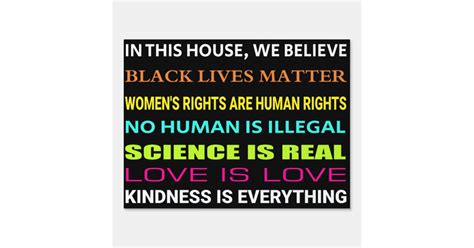
(In my house, we believe the Nicene Creed)

Instead of a naked public square, we see one festooned today with every imaginable image of the rainbow and associated symbology: from flags to backlighting, from crosswalks to entire murals on the sides of buildings. The public square went briefly from being a space where one might once have found images of the Ten Commandments or, during the holidays, a Christmas crèche, to one where the White House might be lit up by the rainbow celebrating a judicial fiat declaring a right to marriage of homosexuals in a constitution written in the 1780s, to public libraries where praise of cross-dressing, transexuality, and gay sex would become run-of-the-mill children’s programming.

When religion in any traditional or recognizable form is excluded from the public square, it does not mean that the public square is in fact naked. When recognizable religion is excluded, the vacuum will be filled by ersatz religion, by religion bootlegged into public space under other names.

The high priests of the new religion insist upon enthusiastic public expressions of support—especially during the holy month of June—lest one’s relative lack of fervency be taken as an indication of disbelief and grounds for being purged from the ranks of the elect. In nearly every respect, expressions of Pride are deployed in identical ways to traditional religious symbols and belief, in the eyes of many constituting a replacement religion. The inescapable, even overbearing presence of Pride symbology thus today bears all the unmistakable features of a “comprehensive doctrine,” the prevention of which earnest liberals of yesteryear insisted was their sole, modest aim.

Any war of “comprehensive doctrines” also brings attendant dangers. However, only someone not paying attention could believe that those dangers have been absent in recent years. My hope is that forthrightness about the terms of the debate may lead not to renewed “wars of religion,” but to a new settlement. A more pacific settlement might arise from acknowledgment that the actual “fact of pluralism” may require increased acceptance and acknowledgement of various state establishments. Such a settlement would return us to the original arrangement of the constitutional order, in which various religious traditions could coexist with robust internal unity amid relative proximate concord. California might thus retain its de facto established religion of Pride, and Alabama would establish some form of broadly nondenominational Protestant Christianity.

Patrick Deneen, inluding a prophetic insight of Richard John Neuhaus.

Comments:

  1. I think Deneen is correct that “Pride” has become a Rawlsian comprehensive doctrine — i.e., a de facto religion. (That doesn’t mean I think it will endure.)
  2. Deneen’s suggestion of permitted state establishments of religion is America’s original pattern (for what it’s worth). The First Amendment’s prohibition of Congress making any “law respecting an establishment of religion” was indeed a restriction on Congress, not the states. Massachusetts (of all places) had a state establishment until the 1830s and abandoned it voluntarily, not because some court declared it unconstitutional.
  3. I suspect I could formulate an argument that a state establishment of religion, unlike a limit on free exercise of religion, ought not be barred by the 14th Amendment “incorporation.” So long as a citizen is not coerced, I question whether their 14th Amendment “rights” are violated by an establishment.
  4. I’m under no illusion that I will like the religion established by any state: While I differ from him in details, I concur with Ross Douthat’s daring book title Bad Religion: How We Became a Nation of Heretics, and the best state establishment I could realistically hope for is mainstream Protestant (i.e., moralistic therapeutic deism).

Progressives verus liberals

You know you’ve touched a nerve with progressive activists when they tell you not just that you’re wrong but that you’re on the other side.

Such is the fate of any old-school liberal or mainstream Democrat who deviates from progressive dogma …

If this was just about our feelings, these denunciations could be easily brushed aside. But the goal and the effect is to narrow the focus of acceptable discourse by Democrats and their allies. If liberals are denounced for “punching left” when they express a reasonable difference of opinion, potentially winning ideas are banished.

In the run-up to a tight election with a weak Democratic candidate and a terrifying Republican opponent, pushing liberals and centrists out of the conversation not only exacerbates polarization, it’s also spectacularly counterproductive.

Those on the left who’ve been dumbstruck as Donald Trump has intimidated his most vociferous Republican critics (see: Chris Sununu, Nikki Haley) into falling in line might exert a little more self-awareness of similar moves by the left.

The goal of progressives may be solidarity, but their means of achieving it are by shutting alternative ideas down rather than modeling tolerance.

Pamela Paul, Who You Calling Conservative?

Note that I am not denying a similar Trumpist lock-step on the Right, nor does Ms. Paul.

Understanding the 2024 Roberts Court

If you really want to understand the conservative-dominated Supreme Court, it’s important to realize that all the Republican nominees who sit on it formed their legal philosophy and forged their legal reputations long before Donald Trump was elected president. This is no less true of Trump’s three nominees than of the three justices who were nominated by previous Republican presidents. Neil Gorsuch, Brett Kavanaugh and Amy Coney Barrett all possessed a robust legal identity and a considerable body of work before their selection to the high court. In fact, each has his or her own maverick streak, with Gorsuch perhaps most notable in his steadfast defense of Native Americans and the rights of criminal defendants.

When you understand this reality, what can seem to be a confounding, surprising Supreme Court term is actually predictable. The Trumpist right is lobbing a number of novel cases presenting aggressive legal theories to justices with pre-Trump legal philosophies, and the pre-Trump justices are rejecting them, repeatedly.

David French (emphasis added).

The Trumpist right is especially getting aggressive in Mississippi, Louisiana and Texas, part of the 5th Circuit U.S. Court of Appeals. The 5th Circuit has become where conservatives play out their fantasies to an obliging court as the 9th Circuit used to be the playground for progressives. You could say the 5th is the new 9th.

Republicans Pounce

A politically inconvenient rape and murder: Two migrants who’d crossed the border illegally have been charged with the rape and murder of 12-year-old Jocelyn Nungaray in Houston. The Associated Press managed to not once mention the status of the killers. The NYT eventually covered it, only in the context of how darned politically inconvenient it is: “The killing of Jocelyn Nungaray in Houston has become the latest crime seized on by Republicans to attack President Biden over his immigration policies.” Right. That 12-year-old, so rude of her to be murdered by the wrong type and letting Republicans “seize on” it. 

Nellie Bowles.

I’ll give the New York Times credit for disguising the usual formulation wherein the real story is “Republicans pounce” instead of what detestable thing they pounce on.

Tradition

Most of the things in our lives are not of our own making – they were given to us. Our language, our culture, the whole of our biology and the very gift of life itself is something that has been “handed down” to us. In that sense, we are all creatures of “tradition” (traditio=“to hand down”). Of course, these things that are not of our own making and are the least controllable are also those things that we take most for granted. We may hate our culture and our biology, but will still have to use our traditioned language (or someone’s traditioned language) to say so. Tradition is simply the most foundational, inescapable aspect of human existence.

Fr. Stephen Freeman, Things You Can’t Invent


So: where did all my mockery of Trump go? Well, first, I resolved to stop harping on it. But then, I just moved it off to my reflexive blog, trying to keep this one relatively reflective.

I suffer more from the humiliations inflicted by my country than from those inflicted on her.

Simone Weil, from a letter to Georges Bernanos.

I don’t do any of the major social media, but I have two sub-domains of the domain you’re currently reading: (a) You can read most of my reflexive stuff, especially political here. (b) I also post some things on the only social medium I frequent, because people there are quirky, pleasant and real.

On Claudine Gay’s plagiarism

A question at the back of my mind for a week or two has been “how serious was Claudine Gay’s plagiarism?” I brought it to front of mind within the past day or two, and I now have, serendipitously, a partial answer, which I now hasten to share.

My question arose from how her plagiarism was identified in the media, typically “verbatim copying” or “missing citations.” Someone even picked on her for “plagiarizing” acknowledgments.

Well, I’m no academic, so I won’t contest the consensus that what she did fits the academic concept of plagiarism. But what I did not read was any accusation that Gay was stealing other scholars’ ideas (not mere words, peripheral to the plagiarized articles’ scholarly thrust) and passing them off as her own.

And I now am presuming that she did not do so.

The turning point was a New Yorker interview by the estimable Emma Green, Why Some Academics Are Reluctant to Call Claudine Gay a Plagiarist.

Let’s be frank: some academics are reluctant to call her a plagiarist because of tribalism, the firestorm of accusations having come from a hostile and deplorable tribe (I’m still delighting in the insight — not my own — that education is the Right’s bugaboo as guns are the Left’s).

D. Stephen Voss, an associate professor of political science at the University of Kentucky, acknowledges that tribalism, but is quite chill about Gay’s appropriation of some of his own academic words:

Was what Claudine Gay did plagiarism?

… yes, that’s technically plagiarism.

Why do you append “technically” to the front of “plagiarism”?

I use the analogy of speeding. If you’re driving fifty-seven miles per hour on a fifty-five-mile-per-hour highway, that’s technically speeding. But we don’t expect law enforcement to crack down any time behavior crosses over the line. The plagiarism in question here did not take an idea of any significance from my work. It didn’t steal my thunder. It didn’t stop me from publishing. And the bit she used from us was not in any way a major component of what made her research important or valuable.

So how serious a violation of academic integrity was this?

From my perspective, what she did was trivial—wholly inconsequential. That’s the reason I’ve so actively tried to defend her.

When I first was told that Claudine may have committed academic dishonesty at my expense, I took it seriously. I’ve had my work stolen before. So I didn’t rule it out. I immediately investigated what she used.

But the difference between plagiarism among academics and plagiarism in journalism or undergraduate papers is that what matters is less a few words or phrases and more the bigger scholarly ideas. Somebody could steal good ideas I had, write them up differently, and they’d have done serious damage to me. Whereas, if Claudine had borrowed three times as many words, but it was all in an unimportant part of the paper, that would have done me no harm. I’ve been stolen from in serious ways. What Claudine did was not it.

I’ve seen a number of academics trying to describe what Gay did as something other than plagiarism. A few weeks ago, for example, before Gay resigned, Harvard itself described her actions as using “duplicative language without appropriate attribution.” Why is it controversial to call what she did plagiarism?

It shouldn’t be controversial to call what Claudine did plagiarism. We teach students that it’s plagiarism all the time. But the problem with using language that’s customary within academic institutions in a public setting is that outsiders will warp what we say. The one phrase I’ve intentionally avoided using is “academic dishonesty.” Within an academic setting, plagiarism is an example of academic dishonesty. But if I’d said she committed academic dishonesty, that would have been warped and manipulated quite deceptively. So I avoided the term.

But why do you think that people don’t want to say the P-word? Why don’t they want to say “plagiarism”?

What happened to me in this controversy is the perfect illustration of why others have been avoiding the word “plagiarism.” My initial response was entirely supportive of Claudine. Yes, it was technically plagiarism, but this is no big deal. And then the right-wing activist Christopher Rufo plucks out the beginning of that sentence and says, Another scholar accuses Claudine Gay of plagiarism. Now, he didn’t lie. I did call it “plagiarism.” I hadn’t framed it as an accusation, but I guess the verb sort of fits. But he was able to get leverage out of something I said, taken out of context, that I then spent two days on Twitter rebutting. So, yeah, in retrospect, do I regret using the word “plagiarism,” given how it was exploited? Maybe.

Really? So you wouldn’t still call it “plagiarism”?

I’m calling it “plagiarism.” That doesn’t mean I didn’t regret it.

I’ve seen a lot of academics resisting the use of the word “plagiarism” because they say that the people who surfaced the allegations against Gay are part of a right-wing machine that wants nothing more than to take her down—allegedly because of her race or because they hate academia or because they want to undermine liberal institutions. What do you make of the argument that it’s worth resisting the frames that someone like Christopher Rufo comes up with to talk about what she did?

If the only way academia can fend off the Christopher Rufos of the world is by shifting their standards in an ad-hominem fashion based on who’s offering the attack, then academia has already lost the cultural battle. The clearer our standards, the more sure we are in what we believe in, the less it matters where a complaint or an attack is originating from. I reject the idea that an accusation that otherwise would have been taken seriously ought to be fended off because the bad guys are using it.

(Underlining added) Kudos to Emma Green for addressing my question rather than lazily focusing on Rufo’s chum along with the other sharks.

(Now, even more than before, I’m going to put an asterisk next to any accusation from Christopher Rufo, the asterisk signifying that it’s probably not an outright lie, but it’s highly likely to be tendentiously twisted.)


You can read most of my more impromptu stuff here (cathartic venting) and here (the only social medium I frequent, because people there are quirky, pleasant and real). Both should work in your RSS aggregator, like Feedly or Reeder, should you want to make a habit of it.

Amazon Prime Day 1

Having dated other blogs according to the Christian calendar, it seems only fair to date one according to the Consumerist calendar. I’m debating whether next June I should date things Pride 1, Pride 2, etc.

Okay, the debate’s over: I’ll do that only if I can figure out how to make it clear that I’m being a sarcastic dissenter.

Public affairs

Toward a better understanding of MAGA America

I’ve been trying to understand Trumpworld since Trump started winning GOP primaries in 2016. Really I have. I don’t want to think that almost 50% of this country just raised a middle finger in November 2016 and said “Just watch us blow up your precious nation!”

It has been slow going, but I have made some progress. First was remembering that the alternative was HRC, and that most Americans can’t bear the thought of voting other than for a major party. Second, was appreciating the legitimacy of some of Trumpworld’s grievances, which appreciation began in the run-up to the 2016 election as I left the main highway in eastern Ohio and found Trump signs everywhere in the sorry little town where I re-fueled.

But why Donald Trump felt like the solution to those grievances has eluded me — at least until late last week.

I won’t even try to capture the essence of David French’s The Rage and Joy of MAGA America, published Thursday. It’s David French at his best, as he writes from his home county, just 15% Democrat.

If you want to go deeper into the mindset of what 7 years ago proved to be an electoral majority of your countrymen, I urge you to read it, carefully and sympathetically, bearing in mind the categorical contempt felt toward “flyover country” by our national elites. The link I’ve provided should get you to it even if you’re not a New York Times subscriber.

But Paul A. Djupe in We Should Probably Stop Thinking Religion is a Solution to MAGA specifically faults any implication that MAGA evangelicals would be less MAGA if they attended church more regularly.

Parenthetical

Nick Cattogio feels his own kind of “joy” less by understanding Trump sellouts — the public-figure Never Trumpers who folded for a bit of power — than by something more primal:

The dirty little secret about being an anti-Trump conservative is that it too is often joyous.

In this case the joy derives not from belonging but from not belonging. Many times I’ve heard Jonah Goldberg say on The Remnant how his position on Trump has cost him friendships on the right, and I always sympathize—but cannot empathize. My contempt for those who traded their commitment to classical liberalism to protect their status within a Trumpifying right is so boundless that I’ve never stopped feeling grateful to be rid of them. If ever I should return to their good graces somehow, they’ll discover that they haven’t returned to mine.

It’s an almost spiritual pleasure to find yourself surrounded by people without dignity and to know that you don’t belong. 

The other joy of opposing Trump from the right is the satisfaction one gets from speaking one’s mind when others fear speaking their own. The happiest character in literature must be the boy in The Emperor’s New Clothes who shouted the truth about the sovereign’s attire as the adults around him bit their tongues and kept up a silly pretense so as not to cause themselves trouble.

The emperor wasn’t wearing any clothes. Trump is a criminal reprobate who’s morally and intellectually unfit to wield any sort of power. These are simple truths, acknowledged privately by all but the most devout loyalists. But to say them aloud, in public, when others don’t dare is liberating in a way that’s difficult to describe. If you know, you know. Dispatch readers know.

Chris Christie, very much a latecomer to the practice, knows too.

About saying the truth out loud, see Orange Man Bad in my July 7 post. Want to wager whether Cattogio read that?

Now, though the writing is entertaining, I am conscience-bound to note that the “almost spiritual pleasure” of “find[ing] yourself surrounded by people without dignity and [knowing] that you don’t belong” has a name, Pharisaism, and a “spiritual” pedigree of the diabolical sort. I can only hope Cattagio is exercising artistic license.

Deep-state BlackOps

In The Bourne Supremacy all a journalist had to do is say “Blackbriar” into a cell phone and minutes later, vans full of hyper-efficient assassins scrambled to snatch him up. Jack Bauer could not only direct phone taps and hack security cameras with a few keystrokes on his Blackberry, he could weave through miles of LA traffic in a few minutes. When he calls various government agencies, including after hours, he always gets them on the phone and not some, “Our offices are currently closed. Press 1 for English” message.

That’s all fine for escapist fare. But if you think real life works remotely like that, your assumptions about a lot of politics are going to be really stupid and maybe dangerous.

Jonah Goldberg, who 13 years ago imprudently asked “Why isn’t Julian Assange dead?” — his point being that our BlackOps aren’t as omnipotent as the Left thought.

Now he’s asking a different question, and asking it of a different delusional demographic:

No, the reason I’m going down memory lane is I want to ask a similar question: Why hasn’t the deep state gotten rid of Donald Trump yet? … If the deep state were remotely as powerful, wicked, and skilled as many claim, why let Trump live?

It’s a fair question, with a lot more colorful detail than I’m quoting.

Which brings me to the second problem: A lot of idiots and unwell people don’t realize that a lot of the deep state stuff is a grift. Devin Nunes used to sell deep state collectibles. There are no end of books claiming to expose the deep state and the cabal running our country. Here’s the description of The Deep State Encyclopedia: Exposing the Cabal’s Playbook:

Our country is being attacked from within. The past several years showed us that the shadow government seeks to assert absolute control over the human cattle, but what if we could stop them? What if we could take away the cabal’s power by exposing their entire playbook?

If this was their playbook, it wouldn’t be on Amazon.

And the pseudonymous author, “Grace Reallygraceful,” would be dead, too.

Tribal identity, fluid identity

In Hungarian, the word for their country is “Magyarország” — Land of the Magyars. Russia, in the Hungarian language, is “Oroszország” — Land of the Russians. Unlike the USA, where identity is fluid and contractual, these nations are tribes with flags. In Hungary, for example, they were occupied for 150 years by the Ottoman Empire, which, as you know, was Islamic. These things matter to them — and who are we Americans to say it shouldn’t? … I feel at home here in Hungary, in most respects, as I would in any other country of Europe. But whatever my migration status, I will never allow myself to think of myself as European, because that’s just not how it works. We Americans tend to assume that our openness and fluidity of identity is a natural stance. In fact, we are far outliers on national experience around the world.

Rod Dreher, who has some other worthwhile comments on immigration as well. I am encouraged. Rod has been far too often unreadable for a long time now.

NATO

Oh, my! The Nato mindset leads to war pulls a lot of threads together, and it doesn’t make me like post-cold war NATO any better than I did before. That it is purely defensive and that Russia therefore had nothing to fear from its expansion is a tale told by liars and believed by amnesiacs.

Conservatives today

If conservatism is support of the status quo, then the Democrat Party is today’s conservative party. So argues David Graham.

Homefront

We’ve had a run of cool days, and particularly of cool mornings. I’ve enjoyed sitting in my east-facing sunroom with windows open, sun streaming in, and I have been surprised how quiet my neighborhood is in the morning.

Not today, though. The sound of heavy equipment engines has begun. They are swarming my neighborhood for the next few days (or weeks) with those mechanical monsters that eat up the top few inches of pavement to permit new pavement to be laid without raising the street too high. Then we’ll get some shiny new asphalt. It will, no doubt, look very spiffy.

I have said, and probably have written, before, that I have the good fortune of living in a place that can still afford to repair its infrastructure. But I question why they are repairing in my neighborhood, and I’m not questioning just because I don’t like the noise.

I’m questioning because our streets have no potholes, cracks, irregularities, or other compelling reasons for repair. What they do have is a lot of fading and some tar strips running like spider veins where small cracks have been repaired over the years.

I’ve driven in enough neighborhoods to know that ours are not the city’s worst streets. But we are a wealthy neighborhood, and I suppose that explains much more than I wish it did.

(If I were king of the world, they’d be narrowing the streets by half and repairing the sidewalks. It would still be about as unpleasant to walk as Tokyo, but it would be a step in the right direction.)

Legalia

Consequentialism in jurisprudence

One of the really knotty problems with our public debates is that we often are having two or three debates at the same time, and it is easy to get confused about which question is actually in dispute at any given moment. 

Take, for example, the recent debate about racial preferences in college admissions: The question before the Supreme Court was only a legal one—not that you’d know it from the campaign-style rhetoric of Ketanji Brown Jackson or Sonia Sotomayor!—to wit, whether the law permits what Harvard and the University of North Carolina were doing, or whether that amounted to unlawful racial discrimination. The majority of the Supreme Court rightly found that this racial discrimination was unlawful. A second question—an unrelated question from the point of view of a Supreme Court justice who is actually doing his or her job instead of trying to act as an unelected legislator—is whether racial-preference policies such as those that had been implemented at Harvard are good policies. A third question—never quite explicitly discussed—has to do with “legal consequentialism,” the notion (which has official legal standing in some countries, such as Brazil) that legal questions per se should be made subordinate to utilitarian calculation. As the Brazilian statute puts it, “a decision shall not be made based on abstract legal values without considering the practical consequences of the decision.”

Kevin D. Williamson

Qualified Immunity hits a wall — finally

Seventeen-year-old student is required to participate in police ride-along for a class, and the Hammond, Ind. officer she shadows spends the day groping her, making lewd remarks, and even taking her to a remote location where he offers her to another officer for sex. Officer: This mere “boorish flirtation” was just “making for an exciting ride along.” District court: Qualified immunity. Seventh Circuit: Reversed. “Sexual assault is an intentional act that never serves a legitimate governmental purpose.”

Short Circuit: A Roundup of Recent Federal Court Decisions.

It’s actually a bit surprising, not to mention heartening, that the 7th Circuit reversed this. “Qualified immunity” has become the monster that devoured 42 USC §1983 (the post-Civil War law that gives a remedy for deprivation of rights under color of law).

More:

It is obviously unreasonable for an off-duty, out-of-uniform police officer to lose his temper on the road, follow another motorist home, box him in his driveway, scream profanities, and point a gun at him when the other motorist is nonthreatening. So says the Tenth Circuit, reversing a grant of qualified immunity to a (now-former) Chaves County, N.M. sheriff’s deputy. Claims against the county, which hired him in spite of his history of volatile behavior, are on the table, too.

Purging an evil

A District of Columbia-based disciplinary panel has recommended Rudy Giuliani be disbarred for his “frivolous” efforts on behalf of then-President Donald Trump to overturn the results of the 2020 election.

The committee, an arm of the District of Columbia Bar, found in a report released on Friday that Giuliani had undermined trust in federal elections by directing Trump’s legal challenge to the presidential vote count in Pennsylvania and promoting unfounded theories of fraud in court.

“He claimed massive election fraud but had no evidence of it,” the committee wrote. “By prosecuting that destructive case Mr. Giuliani, a sworn officer of the Court, forfeited his right to practice law.”

Wall Street Journal

Culture

AI wins where people have been deskilled

My present thesis is something like this: The claim or fear that AI will displace human beings becomes plausible to the degree that we have already been complicit in a deep deskilling that has unfolded over the last few generations. Or, to put it another way, it is easier to imagine that we are replaceable when we have already outsourced many of our core human competencies.

L.M. Sacasas, Render Unto the Machine. This is an idea I keep running into. It was a thread through Matthew B. Crawford’s Why We Drive

Wordplay

1

trying to ride a bicycle in zero gravity

Sven R. Larson This seems to be a more refined version of “nailing jello to the wall” or even my father’s favorite, “goosing butterflies.” I assume the metaphor hitch-hikes on the further metaphor of “getting no traction” (in an argument, in this case).

2

As ever more laity, especially young people, seek out the ancient liturgy of the Church, the Eye of Sauron in Rome has turned towards these congregations …

Sebastian Morello, The Tragedy of the Sarum Rite (The European Conservative)

3

[T]he difference between being gay and being black is that if you’re black you don’t have to tell your mother.

Simon Fanshawe

4

[Great Britain’s National Health Service] looms so large in our politics as to wholly justify the sardonic description of Britain as “a health service with a country attached”.

Mary Harrington

5

Mountebank: A hawker of quack medicines who attracts customers with stories, jokes, or tricks; A flamboyant charlatan. (Wordnik)

I’m shocked that his was not already in my vocabulary. Maybe I couldn’t decide on pronunciation, since it was fairly obviously of foreign (Italian, apparently) origin.

6

Insufficient nihilism: David Graham’s characterization of the real reason for Marjorie Taylor Greene’s expulsion from the House Freedom Caucus. (That she had called fellow HFC member Lauren Boebert “a little bitch” was just a plausible excuse.)

7

“Tact” is insulting a man without his knowing it

John “Jackie” Fisher via the Economist

8

… he’s 22, and like many intelligent and loquacious 22-year-olds, quickly got out far over his skis.

Rod Dreher, on a recent conversation

9

Alethic commitment: Committing and belonging because of considered belief that a thing is true. (J Budziszewski)

I no longer believe that the essence, the sina qua non, of authentic Christian life is alethic commitment. I don’t even believe that it’s the proper goal of a Christian life.

Those possibilities seems too left-brain for me, and too culture-bound. Fr. Stephen DeYoung describes it as “checkbox religion.” “Jesus is God?” Check. “Bible miracles were miraculous?” Check. Etc

Experience or immersion might count for as much as considered belief.

By some combination of nature and nurture, I’m an alethic commitment kind of guy, but on entering Orthodoxy, I had a few stumbling blocks — boxes I couldn’t check yet. Because I’d seen enough of the Church to trust it, and to even assume that where I demurred I was wrong, I immersed.

10

All men profess honesty as long as they can. To believe all men honest would be folly. To believe none so is something worse.

John Quincy Adams via the Economist

11

Suddenly life became more like it used to be than it ever was before.

Garrison Keillor on the social effects of Covid.

12

My theory of economics is called Gratitudemy, as found in Psalm 23: “My cup runneth over.”

Garrison Keillor


We are in the grip of a grim, despairing rebellion against reality that imagines itself to be the engine of moral progress.

R.R. Reno

The end of the world as we know it is not the end of the world.

You can read most of my more impromptu stuff here (cathartic venting) and here (the only social medium I frequent, because people there are quirky, pleasant and real). Both should work in your RSS aggregator, like Feedly or Reeder, should you want to make a habit of it. I’m even playing around a bit here, but uncertain whether I’ll persist.

Monday 5/22/23

Open Culture Wars

Our Culture War is a Cold War

True revolutionaries do not need to borrow authority from institutions, because they have the power to take what they want from their unconsenting enemy. The woke Left, whether we want to admit it or not, and whether it is itself conscious of it or not, has no such power. It has only consenting victims.

People on the New Right will probably object, claiming that they’re unwilling to listen to and aren’t convinced by the woke Left but are coerced into acquiescing in its beliefs and required conduct thanks to its institutional power—that they are the victims of a form of violence. But the nature of the new Left’s power is not Schmittian. Instead, its power comes from its capacity to influence the state through … “institutional capture” [a/k/a] “cultural hegemony.”

The irritating proximity of different ways of life, which is inevitable in complex modern societies, would not lead their proponents to such extreme expressions of disdain and mutual hatred if those proponents were made to bear the consequences of their discourse. Without such a prospect, each side can all too safely afford to see the other as an absolute enemy and claim to heroically stand for its cause. In the spirit of Schmitt, no situation is as little political as ours.

The woke Left and the New Right are manifestations of a deeper crisis. Both of them find their origin in the neutral state’s aims to liberate people from the responsibility to determine and to pursue a common good, and therefore focus on the administration of things. The state remains neutral out of fear that our disagreements about the common good might lead us to become enemies. But polarization shows clearly enough that peace reduced to mere coexistence, and the virtues attached to it (tolerance and moderation), fall short of what makes human beings want to form a united people, and ready to cultivate the virtues necessary to achieve such a goal.

Freedom, understood as individual autonomy, can never be the sole or even the main question to which a political regime provides the collective answer: How to live together and still be free?

Our problem is not that Left and Right are bringing us to the verge of civil war, but that their political demands have become completely detached from the reality of the human relations that make the satisfaction of such demands possible and just.

Alexis Carré, in the concluding essay in a series on the “coalition of the sensible” at Public Discourse.

That essay was a real mind-bender for someone like me who has bought the narrative that we are dangerously polarized, almost on the brink of a hot civil war. It’s one of the rare pieces I’m flagging (Obsidian bookmark) to re-read after a while.

The other essays in the series are linked at the top of Carré’s essay.

Our ideologically incoherent tribes

Today, the Lewises argue, “Left” and “Right” are competing bundles of unconnected and sometimes incompatible issue commitments held together by tribalism. The authors bring to bear a wealth of social science research that shows that people’s issue commitments are more heavily influenced by group loyalties than by philosophical consistency. They also catalogue a history of various political stances that, for example, began as Right, then were considered Left, and sometimes back again, depending on the coalitions’ needs. Trade protectionism, for example, was “Right;” then “Left;” now “Right” again (or maybe “Right” and “Left”). Foreign interventionism took the reverse course. Today what counts as “Right” and “Left” has become conflated with party, and party with the views of individual leaders. All of this, the Lewises contend, cuts strongly against the “essentialist” concept of ideology and in favor of their “social theory.”

Andrew Busch, reviewing The Myth of Left and Right by Hyrum and Verlan Lewis.

Considering what became of the GOP in 2015-16, this “social theory of ideology” has some obvious appeal, as the GOP now holds policies opposite those held ten years ago, and the change was not gradual and evolutionary.

Covert Culture Wars

No Place of One’s Own

To make every place available to all is not to erase privilege, if by that term we mean something illegitimate. Rather it is to erase an earned ability to know and to use diverse and localized pockets of the world according to different levels of personal investment and responsibility. Another way to name this would be the end of ownership, conceived not simply as private property, but as title to inhabit some place on the earth as one’s own.

Matthew Crawford, Seeing Like Google

Google Street View undermines our ability to inhabit a place on earth as our own, and Google has ambitions toward something even more deracinating (I suspect it involved the map of your home created by your Roomba and uploaded to our overlords.)

It is good periodically to be reminded, first, how evil Google is and, second, to trace the implications of its hubris (and its market-tested insouciant responses to objectors).

Participatory disinformation

Disinformation and conspiracism spread in advanced, individualistic democracies like the United States not because their targets are sheeplike but because, to the contrary, so many people are active collaborators in their own deception. … “It’s a fight between good and evil,” one woman told the Associated Press in 2021, explaining why she spent hours every day scouring the internet for proof that the 2020 election was stolen from Trump. “She saw systems fail those most vulnerable,” reported the A.P., “and her faith in the standard truth-bearers of American democracy—courts, Congress, the media—eroded. She felt she could trust nothing but believe anything.… … Conspiracy theories like the ones about the 2020 election and the COVID-19 pandemic “are profoundly participatory disinformation campaigns,”

Jonathan Rauch, The Constitution of Knowledge

Return from captivity

Playing in her first real WNBA game in 579 days, Brittney Griner did something Friday night in Los Angeles that national television audiences hadn’t seen her do in a long time: The Phoenix Mercury center stood for the national anthem.

She stopped doing so in 2020 but has resumed the practice after returning from 10 months of imprisonment in Russia. “One thing that’s good about this country is our right to protest,” Griner said after the game when I asked her about the issue. “You have a right to be able to speak out, question, to challenge, and do all these things. [After] what I went through, it just means a little bit more to me now. I was literally in a cage and could not stand the way I wanted to … and a lot of other situations. Just being able to hear my national anthem, see my flag, I definitely wanted to stand.”

Jemele Hill

Trans matters

Telling statistics from Tavistock

The Tavistock Centre, the sole facility in the NHS dedicated to [gender reassignment], kept statistics on the children who came to their doors. Among those referred in 2012, ninety percent of natal girls and 80 percent of natal boys reported being same-sex attracted or bisexual. There is no inherent relationship between trans and gay and bi people. So why this staggering overlap? No answer. If a Christianist hospital was busy changing the sexes of overwhelmingly gay kids, so that they became straight, what do you think the gay rights establishment would say? But when a queer facility does exactly that, all the worriers are bigots.

… From the Times of London:

So many potentially gay children were being sent down the pathway to change gender, two of the clinicians said there was a dark joke among staff that “there would be no gay people left.” “It feels like conversion therapy for gay children,” one male clinician said. “I frequently had cases where people started identifying as trans after months of horrendous bullying for being gay,” he told The Times. “Young lesbians considered at the bottom of the heap suddenly found they were really popular when they said they were trans.”

Another female clinician said: “We heard a lot of homophobia which we felt nobody was challenging. A lot of the girls would come in and say, ‘I’m not a lesbian. I fell in love with my best girl friend but then I went online and realised I’m not a lesbian, I’m a boy. Phew.”

You might imagine that, given this record, the queers would go out of their way to reassure us, to show how tight the safeguarding is, how they screen thoroughly to ensure that gay kids are not swept up in this. But they regard the very question of whether gay kids are at risk as out of bounds.

Andrew Sullivan, Notes on a Medical Scandal. I don’t recall Sullivan ever before penning such a crie de couer, but I’m glad he did. You should read the whole thing if you can, bearing in mind that “queer” isn’t used as an insult but as the self-chosen adjective of the activists he’s opposing.

I had not known the “staggering” extent of the overlap between homosexual attractions and subsequent trans identification, but had been aware that most adolescents who presented with gender dysphoria would, if denied medical transition, eventually settle into conventional gay or lesbian identities. That probably is why the trans ideologues are ruling the very question of whether gay kids are at risk out of bounds, transphobic and evil.

I should also mention (confess?) that I have previously overlooked (not just underestimated the “stick” of anti-gay bullying, underestimated the role of qualms about homosexual attraction, and overestimated the “carrot” of social valorization as motives for kids to declare themselves trans.

Inconvenient parallel

California banned conversion therapy for minors in 2012. That law later withstood two legal challenges. I wonder if the precedents in those cases will affect legal challenges to the Texas and Florida bills [banning gender transitioning procedures for minors] as judges weigh whether legislators overreached in denying treatments many trans kids want.

Conor Friedersdorf

The Culture without the War

CNN trembling at the prospect of Trump 2024

[I]f you remember CNN’s ratings during the Trump presidency, then you know that quivering you see among the talking heads now might not be rage so much as thrill. More like the quivering you hear about in romance novels. There’s an unholy but unstoppable union, a love hidden but never extinguished kind of shake—yes yes yes!—it’s the story of Donald J. Trump and cable news.

Nellie Bowles

The Ancients: What Makes the Best Regime?

The ancient philosophers’ primary question was what makes the best regime. Democracy certainly did not qualify. Why not? The answer was simple. They thought democracy was a messy system, systematically undermining the rule of law, profoundly partisan, often hostile to the most prominent leaders and citizens. The famous defense of democratic Athens delivered by Pericles in Thucydides’ The Peloponnesian War is in fact more a defense of Athens and Athenian imperialism than of the democratic political model. When Plato and Aristotle wrote their scathing remarks about the Athenian system, they thought it was already in decline and Athens might soon become a victim of the crisis from which it would not be able to recover. And this is exactly what happened.

Ryszard Legutko, The Demon in Democracy

Guilt by Association

There seems to be some titilating about famous men who knew Jeffrey Epstein, the latest being Noam Chomsky.

For the record, I think human beings — even Jeffrey Epstein — are more complicated than that. If every man who knew Jeffrey Epstein was a sexual predator, then I should give up on Christianity and become a frank Manichean.

Miscellany

  • A student told me there were no objective moral truths.  I mentioned a precept of the Decalogue, and asked “What about that?”  He replied, “That’s not morality, that’s justice.”  But if we take justice in the classical sense – giving to each what is due to him – almost all morality is about justice.  To my wife, I owe fidelity; to my parents, honor; to the child whom I sire, an intact family in which to enjoy the care of me and his mother.
  • A warning to intellectuals such as myself. Supposing the existence of square circles, you can do a lot of things: You can make syllogisms about them, you can develop theories about them, you can even prove theorems about them. But that doesn’t mean that they exist.
  • As a Christian, I believe in the Messiah.  That doesn’t mean I have to like political messianism, which we find both on the right and on the left.  The difference is that left-wing political messianism is usually utopian, trusting the hero to take us to a political promised land — but right-wing political messianism is usually reactive, trusting the hero to save us from the crazies who believe in utopia.  The advantage here lies with the left, because unfortunately, most people are more impressed by lunatic visionaries than by persons with no vision at all.

J Budziszewski

The Burden

I realized
at dusk
under the flight path
of the rooks
that this weight on me
was perhaps not words
or my need to belong
but was the weight
of knowing too much
seeing too much
taking on too much
staring too long into the abyss
taking it all so personally.

(Paul Kingsnorth, versified by me because I felt that it “scanned” as poetry)

Rank Politics

DeSantis head-scratcher

Some of what Ron DeSantis is doing seems sensible, some dubious, some flat-out weird. What in heaven’s name is the purpose of the “2-minute opening remarks” in the fifth item on this list?

Reparations

A group of prominent Democrats are calling for $14 trillion to be paid as reparations to the descendants of slaves. The bill was introduced by Missouri Rep. Cori Bush, who said: “The United States has a moral and legal obligation to provide reparations for the enslavement of Africans and its lasting harm on the lives of millions of Black people.” I’m on board with reparations. At least, I think it’d be better to do a big reparations shebang—cut checks and call it a day—than the strange sort of slow-drip reparations plans we see in liberal institutions. Like, yes, $14 trillion is a lot of money. But if the alternative is Robin DiAngelo trainings till the end of time and making the MCAT illegal and allowing people to self-ID as doctors because that’s more equitable, then $14 trillion is a bargain. 

But here’s why reparations … will never happen: simply cutting checks to the descendants of slaves means shuttering all the thousands of racial justice nonprofits that serve as an employment program for America’s white grad students ….

Nellie Bowles


For all its piety and fervor, today’s United States needs to be recognized for what it really is: not a Christian country, but a nation of heretics.

Ross Douthat, Bad Religion

We are in the grip of a grim, despairing rebellion against reality that imagines itself to be the engine of moral progress.

R.R. Reno

You can read most of my more impromptu stuff here (cathartic venting) and here (the only social medium I frequent, because people there are quirky, pleasant and real). Both should work in your RSS aggregator, like Feedly or Reeder, should you want to make a habit of it.

Saturday, 12/10/22

Politics

Georgia Voters Call B*llsh*t on Existential Threatism

If you’ve spent any time in Republican circles since 2016, you’re familiar with a particular pattern of GOP political pressure. No, pressure is perhaps too mild of a word. The better word is bullying. 

The pattern works like this. Trumpist activists seize disproportionate power in the grassroots, work with the Trump team to nominate Trumpist candidates, and then browbeat every conservative who raises objections in the general election. They use negative polarization (with a helpful assist from Democratic extremism) to present voters with the “binary choice.” 

Are you pro-life? Then you can’t vote for the Democrat. Are you worried about the border? Then you can’t vote for the Democrat. Even if the Republican’s character is so deficient that you wouldn’t want your kid working for them if they managed the local McDonald’s, the MAGA movement will yell, “Still better than the Democrat!”

It turns out that people don’t want to be bullied into the ballot box. It turns out a significant enough number of Republicans and Republican-leaning voters will turn to their own party and say, “Do better.” They’ll call the Trumpist bluff and turn the challenge back to them—if these issues are so vital, why are you nominating obviously deficient candidates? Why aren’t you taking the high demands of public office seriously? 

But this point becomes truly powerful only combined with this last observation. MAGA losses combined with normie Republican wins shows there’s life left in conservatism yet. Here’s the tale of the tape in Georgia: Walker was the only Republican this year to lose a statewide race.

David French, Georgia Exposed the Trumpist Scam (Emphasis added)

Of course, a similar argument applies to Democrats: If Doug Mastriano was an existential threat to democracy, why did you spend money to get him elected in the primary?

Bad Omen

Any Republican that’s out there trying to work with [Democrats] is wrong.

Kevin McCarthy, quoted in the Economist

Culture

What subscriptions should I cancel next?

One of my most vital convictions is summed up in this post: “Wondering how to decide what to read? Here’s a simple but effective heuristic to cut down the choices significantly. Ask yourself one question: Does this writer make bank when we hate one another? And if the answer is yes, don’t read that writer.” Americans have these wildly distorted views of people whom they perceive to be their political enemies because so many journalists and talking heads enrich themselves through stoking hatred. Those people should be utterly shunned.

Alan Jacobs, via a reminder from John Brady.

I’ve looked ahead on my list of books to read and eliminated a few based on this wise heuristic.

But what of newspaper editorials that say “hateful rhetoric directed toward transgender people and the broader LGBTQ community” aired from “church pulpits” to “school board debates and libraries” causes people who’ve rarely or never darkened the door of any church open fire in gay bars and clubs? Aren’t those newspapers making bank on hatred?

Alan Jacobs at least is consistent. Last I knew, he read news once per week, on Friday, from The Economist, which doesn’t write such piffle.

Noble lies

The Matthew Shepard myth — that he was murdered by two redneck strangers because he was gay — is still widely believed, even though the hideous murder was far more complex and fundamentally about meth. The idea that the Pulse shooting was motivated by homophobia — not true — is routinely repeated …

This is not healthy. Noble lies are still lies. And lies always fail in the end.

“I sure hope Trump has some more brilliant ideas for can’t-miss Senate candidates. Omarosa maybe? Carrot Top? Ghislaine Maxwell?” – Ann Coulter on the Georgia runoff.

“Can’t believe Lindsey Graham’s pitch of ‘vote for the brain damaged guy to show you’re not racist’ fell short,” – Richard Hanania.

Andrew Sullivan

Wordplay, an occasional feature

When the right words won’t suffice

We are currently in a time, perhaps unprecedented, when talk about all kinds of sexual behavior is pervasive, even inescapable. And we Christians who value purity are very much on the outside, expressing beliefs that the culture can’t even understand. There’s little likelihood that, if we could only find the right way to say it, we’d win people over; I found that out with the pro-life issue. It’s the beliefs themselves that they reject, and changing the words won’t fool them.

Professor David Bradshaw, The Beauty of Chastity, a chapter in Healing Humanity

Words of the Year

For the first time in its history, the Oxford English Dictionary trusted the general public to vote on the word of the year instead of having its esteemed lexicographers make the choice.

Predictably, the general public immediately abused this trust by voting overwhelmingly for the slang term “goblin mode.”

The Morning Dispatch

… “goblin mode”. That means a state in which someone indulges their laziest or most self-indulgent habits—perhaps suitable as a symbol for the first proper post-lockdown year.

The Economist Daily Briefing for December 5

the stink of loserdom

The aura now surrounding Florida Man, per Ross Douthat


[S]ubordinating truth to politics is a game which tyrants and bullies always win.

Jonathan Rauch, The Constitution of Knowledge

To believe that wealth is the only significant measure of the worth of an individual, a family, or a community is to reject the teaching of nearly every religion and wisdom tradition that ever was.

Mark Mitchell and Nathan Schlueter, The Humane Vision of Wendell Berry

The Orthodox “phronema” [roughly, mind-set] cannot be programmitized or reduced to shibboleths.

Fr. Jonathan Tobias

You can read most of my more impromptu stuff here (cathartic venting) and here (the only social medium I frequent, because people there are quirky, pleasant and real). Both should work in your RSS aggregator, like Feedly or Reeder, should you want to make a habit of it.

Wednesday, 8/17/22

What fools we mortals be

Proof that he knows better

I once ran into an old acquaintance at a Middletown bar who told me that he had recently quit his job because he was sick of waking up early. I later saw him complaining on Facebook about the “Obama economy” and how it had affected his life. I don’t doubt that the Obama economy has affected many, but this man is assuredly not among them. His status in life is directly attributable to the choices he’s made, and his life will improve only through better decisions. But for him to make better choices, he needs to live in an environment that forces him to ask tough questions about himself. There is a cultural movement in the white working class to blame problems on society or the government, and that movement gains adherents by the day.

J.D. Vance, Hillbilly Elegy. The movement to blame someone else now seems to have Vance as one of its leaders.

The great paradox of “queer” ideology

The great paradox of “queer” ideology is that it both seeks the margins and then complains about being marginalized! It wants both the frisson of outsiderdom and total acceptance by insiderdom. It’s the kind of reasoning you expect from a toddler not a grownup. The “centering” of the “marginalized” is how critical queer theory always eventually disappears up its own backhole.

Norm McDonald once said of the term “cisgender” that “it’s a way of marginalizing a normal person.” And he’s right. When “queer theorists” insist they are about diversity, they mean the opposite. The point is not to live and let live; it is to impose their queerness on everyone — to make themselves feel more secure.

Andrew Sullivan

Strategic Name-choosing

“I figured if I called myself Dykewomon,” she joked in an interview with J: The Jewish News of Northern California this year, “I would never get reviewed in The New York Times. Which has been true.”

Obituary of Lesbian “author, poet and activist” Elana Dykewomon (neé Nachman) in the New York Times

Solomon Asch’s corollary

In a famous 1951 experiment, the psychologist Solomon Asch showed how easily humans can be manipulated by social pressure to conform. If everyone else in the room affirms even the most blatant falsehood, we will very often affirm it ourselves, even denying the clear evidence of our own eyes.

But a variation of the Asch experiment gives hope. If only one other person in the room—a single reality ally—tells the truth, the pressure to conform drops sharply and we become much more willing to buck the lie. That is why authoritarian regimes work so furiously to stifle opposition voices, even seemingly weak ones. It is what the Soviet dissident Aleksandr Solzhenitsyn was getting at when he said, “The simple act of an ordinary brave man is not to participate in lies, not to support false actions! His rule: Let that [lie] come into the world, let it even reign supreme—only not through me.”

Jonathan Rauch, The Reality Ally (Persuasion)

So, I’ll join the alliance: Joe Biden won the 2020 Presidential Election. He did not steal it.

Does everyone have a narrative?

Yes, the legacy media, like the New York Times, have a narrative. But so do (some? most?) upstart media, like Quillette.

Ken White (Popehat) demolishes an absurd Quillette story, twisted and jammed into the narrative “kids today are intolerant snowflakes.”

What the story actually shows, stripped of handwaving and unwarranted characterizations, is some private school students protesting perfectly appropriately when a powerful lawyer and Harvard Professor subjected them to repeated use of the word “nigger,” part of the title of a book by another powerful professor. And, ironically, the professor who claims to have been cancelled by kids silently walking out on his lecture, is famously, even performatively, in favor of free speech and expression — for himself, apparently, but not for those who would protest his ideas.

People disagreeing with you or protesting you without trying to silence or deplatform you is not what generally is meant by “cancellation.”

But the Quillette article fits my worldview, so I might have bought it had Popehat not intervened.

‘Murica

Sclerosis plus ideological capture

America’s response to Covid-19 went badly not just for Trump-related reasons, but because of problems inherent to our public health edifice, from bureaucratic sclerosis to the ideological capture of putatively neutral institutions …

And then along with these failures came an absurd ideological spectacle, in which health officials agonized about how to state the obvious — that monkeypox at present is primarily a threat to men who have sex with men — and whether to do anything to publicly discourage certain Dionysian festivities associated with Pride Month. As the suffer-no-fools writer Josh Barro has exhaustively chronicled, public-health communication around monkeypox has been an orgy of euphemism and wokespeak, misleading and baffling if you don’t understand what isn’t being said.

This, too, has repeated Covidian failures. The political anxiety about saying or doing anything that might appear to stigmatize homosexuality mirrors the great public-health abdication to the George Floyd protests — in which a great many members of an expert community that had championed closures and lockdowns decided to torch their credibility by endorsing mass protests because the cause seemed too progressive to critique.

In each case what’s been thrown over is neutrality — the idea that public health treats risky behaviors equally, regardless of what form of expression they represent …

[S]peaking for myself, as a citizen with a personal interest in medical controversy, when I read the kind of blathering, newspeak-infused monkeypox advisories that Barro highlights, all I can think is: I can never trust anything these people say again.

Ross Douthat, The C.D.C. Continues to Lead From Behind – The New York Times

Priceless Americana

6-7 years back, I asked my eldest’s scout leader if he was a Christian. He said, “Of course, it’s the most important thing in my life.” I asked where he went to church and he replied, “I’ve never been, but my wife was raised Catholic.” For him, it was just another part of his … American identity.

One response to a social medium thread on churchless Christianity (that began with the thrown-down gauntlet “Being reliably right-wing doesn’t confer upon you the status of being an “orthodox Christian,” even if it is with a small ‘o.’”)

Is this how tribalism begins?

Protection of freedom of thought requires that no group should be permitted by law to express an opinion. For when a group starts having opinions, it inevitably tends to impose them on its members.

Simone Weil, The Need for Roots. I cannot concur with her literal sense, but today’s tribalism makes me think that she was directionally correct.

There are a number of tribalists who think me a traitor because I unexpectedly and publicly bucked the tribe — a tribe of which I was never a member, but only a co-belligerent.

Prophetic

Christian concern about popular culture should be as much about the sensibilities it encourages as about its content.

Ken Myers, All God’s Children and Blue Suede Shoes.

Just so you don’t miss the prophetic gravamen, not that the book predates social media and the ubiquitous smartphone. (And blogs, too, frankly.)

Hit list

The American Conservative has a list of cases it wants to see reversed now that Roe is reversed:

If you know all those cases without looking them up, you’re a better man than I am.

I’m sympathetic to overturning at least one of them. One other, On birthright citizenship, my reflex is that if Michael Anton or John Eastman is agin it, I’m fer it.

Did I mention that I’ve dropped my American Conservative subscription? So many sites I used to enjoy reading that I now avoid. Maybe I’m the one that’s changing (though I’m confident that the Trump-Sluagh has gotten to some of them).

It’s hard to admit that I really don’t fit anywhere other than an Orthodox Church (and that’s because the Church is mercifully broad in accommodating quirks).

George Soros is not off-limits

Democratic billionaire George Soros has, by his own admission, had an outsized influence on our politics over the years with his political donations—just as GOP mega-donors Sheldon Adelson, Paul Singer, and Charles and David Koch had on the right. “All well and good. America is a free country, and Soros has every right to spend his vast fortune however he wants within the boundaries of the law, as well as to justify that spending in the public square,” James Kirchick writes in Tablet Magazine. “[But] the same applies to those of us inhabiting lower tax brackets, who have no less a right to criticize Soros for how he’s trying to influence American public life.” Because Soros is Jewish, however, many progressives have adopted the tactic of dismissing any criticism of his political advocacy as anti-Semitic—a charge Kirchick, himself Jewish, believes is unfair. “The argument that the mere mention of the name ‘Soros’ is tantamount to antisemitism, which is effectively the position of the progressive political, media, and activist elite, is made entirely in bad faith,” he writes. “If the mind of a Soros supporter, upon hearing his name, races immediately to an image of a ‘Jew,’ and one who serves as a stand-in for ‘the Jews,’ it’s probably not the motives of the critic that need questioning.”

The Morning Dispatch, August 16, 2022

Isms

When I was young, there was a conservative book titled “Today’s Isms.” I was trying to figure out what ISMS stood for. It turns out, it stands for ideologies — communism, socialism, fascism. We could add a few today.

Islamism

There’s nothing freakish about the attack on Salman Rushdie:

And yet as shocking as this attack was, it was also 33 years in the making: The Satanic Verses is a book with a very bloody trail

In July 1991, the Japanese translator of the condemned book, Hitoshi Igarashi, 44-years-old, was stabbed to death outside his office at the University of Tsukuba, northeast of Tokyo. The same month, the book’s Italian translator, Ettore Capriolo, was also stabbed—this time, in his own home in Milan. Two years later, in July 1993, the book’s Turkish translator, the prolific author Aziz Nesin, was the target of an arson attack on a hotel in the city of Sivas. He escaped, but 37 others were killed. A few months later, Islamists came for William Nygaard, the book’s Norwegian publisher. Nygaard was shot three times outside his home in Oslo and was critically injured.

And those are stories we remember. In 1989, 12 people were killed at an anti-Rushdie riot in Mumbai, the author’s birthplace, where the book was also banned. Five Pakistanis died in Islamabad under similar circumstances.

Bari Weiss, We Ignored Salman Rushdie’s Warning

But would we back Rushdie were Satanic Verses being published today?

When Rushdie made those comments to L’Express it was in the fallout of PEN, the country’s premiere literary group, deciding to honor the satirical French magazine Charlie Hebdo with an award. Months before, a dozen staff members of Charlie Hebdo were murdered by two terrorists in their offices. It was impossible to think of a publication that deserved to be recognized and elevated more.

And yet the response from more than 200 of the world’s most celebrated authors was to protest the award. Famous writers—Joyce Carol Oates, Lorrie Moore, Michael Cunningham, Rachel Kushner, Michael Ondaatje, Teju Cole, Peter Carey, Junot Díaz—suggested that maybe the people who had just seen their friends murdered for publishing a satirical magazine were a little bit at fault, too. That if something offends a minority group, that perhaps it shouldn’t be printed. And those cartoonists were certainly offensive, even the dead ones. These writers accused PEN of “valorizing selectively offensive material: material that intensifies the anti-Islamic, anti-Maghreb, anti-Arab sentiments already prevalent in the Western world.”

Bari Weiss, We Ignored Salman Rushdie’s Warning

Trumpism

When I left Above the Law in 2019 for my two-year detour into legal recruiting, it was partly because of Donald Trump. Writing about the law in 2019 meant writing about Trump, and writing about Trump meant unpleasantness.

I returned to writing by launching Original Jurisdiction in December 2020, after Trump lost the presidential election, and I turned it into my full-time job in May 2021, after he left office. I thought it was safe to go back in the water.

Alas, here we are, more than 18 months after his administration’s end, and Trump still dominates the headlines. Almost every category in today’s Judicial Notice relates to the controversial ex-president.

David Lat, We Just Can’t Quit Him

Miscellany

A back-handed recommendation

I’m not generally given to wretched excess, but when I get into a six-episode Shetland on Britbox, I’m apt to binge-watch.

Breaking the Sabbath

The princess—I mean the Shiek’s daughter—was only thirteen or fourteen years old, and had a very sweet face and a pretty one. She was the only Syrian female we have seen yet who was not so sinfully ugly that she couldn’t smile after ten o’clock Saturday night without breaking the Sabbath.

Mark Twain, Innocents Abroad.

I’m not sure the princess would worry about breaking the Christian Sabbath. Twain should have made it “sundown Friday.”

Frederick Beuchner

[Frederick Beuchner] did not hold orthodox religious views.

“Contrary to widespread religious belief,” he wrote in a 1994 essay for The Times, “I don’t think God goes around changing things in the sense of making bad things happen to bad people and good things happen to good people, or of giving one side victory over the other in wars, or of pushing a bill through Congress to make school prayer constitutional.”

Robert D. McFadden’s obituary of Beuchner in the New York Times.

What an odd illustration of un-“orthodox religious views”!

Frederick Buechner has met Christians who remind him of American tourists in Europe: Not knowing the language of their listeners, they speak the language of Zion loudly and forcefully, hoping the natives will somehow comprehend. They seem cocky with faith, voluble with their theology, and content with a God who resembles a cosmic Good Buddy. Their certitude both fascinates and alarms him.

Phillip Yancey, ‌Frederick Buechner, the Reverend of Oz

With the caveat that I, oddly enough, cannot recall reading anything from “the most quoted living writer among Christians of influence” (though I’ve known the name for decades and decades), I recommend the Yancey piece, from Christianity Today, as far more perceptive than the Times obituary.


"The Frenchman works until he can play. The American works until he can’t play; and then thanks the devil, his master, that he is donkey enough to die in harness …." (G.K. Chesterton)

You can read most of my more impromptu stuff here (cathartic venting) and here (the only social medium I frequent, because people there are quirky, pleasant and real). Both should work in your RSS aggregator, like Feedly or Reeder, should you want to make a habit of it.

Monday meanderings

(No, I didn’t collect all these today, but my queue was getting pretty full.)

Sex, sport, and hard truths

Scientists are generally "uncomfortable with black-and-white statements, because science is all about nuance." But in the case of sex and sport, "there are some hard truths that deserve to be trumpeted." There is a significant performance difference between males and females from puberty onward. Testosterone is the primary driver of that difference. There is a wide gap, no overlap, between the male and female T ranges. Sex may not be binary for all people or for all purposes. But for sport, what most of us mean when we say "sex" is actually what matters, and that sex is undeniably binary: you either have testes and functional androgen receptors, or you don’t. "Full stop."

On average, even in the elite athlete population, males have 30 times more T than females. This includes both transgender women and girls starting from the onset of puberty, and 46-XY males with the two differences of sex development (DSDs) that are most relevant for sport: 5ARD (alpha-reductase deficiency) and PAIS (partial androgen insensitivity). The Gold, Silver, and Bronze medalists in the women’s 800 meters in Rio—Caster Semenya, Francine Nyonsaba, and Margaret Wambui—are all suspected of having the former condition. They are not "hyperandrogenic females." The latter are represented on the figure as 46-XX females with PCOS (polycystic ovaries) and CAH (congenital adrenal hyperplasia).

… Pick your body part, your geography, and your socioeconomic status and do your comparative homework. Starting in puberty there will always be boys who can beat the best girls and men who can beat the best women.

Doriane Coleman, ‌On the Biology of Sex, Sex Differentiation, and the Performance Gap.

This is the first substantive article in a very recent guest series at Volokh Conspiracy.


Brace yourself for more rainbow flags and diversity trainings

A tornado outbreak tore through the midwest on December 10, killing more than 80 people. Many are still missing. Some factory and warehouse workers in the region say their bosses threatened to fire them if they left their posts to go home. In the last decade, corporations have been able to placate the American left with rainbow flags and diversity trainings. It would be interesting if this tornado—and the reports from inside a candle factory and Amazon warehouse—reignites something of the old, real labor movement. We hope so. The candle factory workers have filed suit.

Nellie Bowles‌.

Amazon’s Triangle Shirtwaist Fire is also good.


Hygiene theater

So why are our authorities catering to neurosis and fear rather than explaining the truth: that the virus is never going away, and the way to protect yourself and others is to get vaccinated and boosted. Why isn’t that the only message?

I am a naturally pro-social person. I wear a mask when required. I get tested when required. I try to accommodate and respect people’s differing risk preferences. But I’m very privileged when it comes to COVID; doing these things is easy for me. I don’t have little kids in school. I work from home. None of the extant restrictions materially impact my life.

Yet even I feel myself being radicalized, starting to think: maybe it’s not enough to make reasoned arguments against rules that are little more than hygiene theater. Maybe it’s time to break them.

And if I’m feeling that way, how on earth must normal people feel?

Noah Millman, ‌The radicalization of a COVID moderate

I’ve read one fairly powerful series on why vaccine hesitancy might be warranted even if the vaccines are safe. I won’t try to summarize except to say that the storyline goes "so if most of us get vaccinated, what happens then, and then even later — and cui bono?" It’s here, here and here, though there’s a likely paywall.

Again, I’m vaccinated and boosted, preferring the possibly false assurances of my government to the dark hints of resisters. I’ve not been persuaded that I made a bad call, even if eventualities may eventuate. They always do, and it’s shocking how much I instinctively avoid reckoning with that most of the time.


Too old

We need also to be frank about Biden. He’s too old to be president, and most people sense this. He was elected because he was someone clearly not as toxic to the electorate as most of the other more radical Dems. But in office, this has been shown to be a chimera. There is nothing to distinguish him in policy from the far left.

His administration has embraced race and sex discrimination in every part of the federal government; he has endorsed the subordination of biological sex to gender identity in the law; his goal in immigration policy is to enable mass migration, not stop it. His administration routinely deploys the hideous acronyms of woke language — “equity,” “Latinx,” “BIPOC,” “LGBTQIA+” — and any return to plain English and common sense violates their commitment to “social justice.” Just watch Biden repeat the nonsense word “LatinX” in public. It’s pitiable.

Just yesterday it was reported that his administration will offer bonuses to Medicare doctors who “create and implement an anti-racism plan.” An “anti-racism plan” means doctors must now view “systemic racism” as a health issue, and deny any biological differences in health between human genetic sub-populations. This is ideology, not science. Biden views people as groups first, individuals second. That’s why he decided on the racial and gender identity of his vice-president and his top Supreme Court nominee before he even considered the individual pick.

Andrew Sullivan.


Red-pilled

Harvard College Suspends Standardized Testing Requirement for Next Four Years | News | The Harvard Crimson

Freddie deBoer summarizes what this boils down to in the real world: "[G]etting rid of the SATs is just another way for them to consolidate total and unfettered privilege to choose whoever is going to make their pockets even heavier, and that they are and will always be in the business of nominating an aristocracy that will deepen inequality and intensify exploitation …."

More:

You can’t make college admissions fair by getting rid of the SAT because colleges admissions can’t be “fair.” College admissions exist to serve the schools. Period. End of story. They always have, they always will. College admissions departments functioned as one big anti-Semitic conspiracy for decades because that was in the best interest of the institution. Guys who the schools know will never graduate but who run a 4.5 40 jump the line because admissions serves the institution. Absolute … dullards whose parents can pay – and listen, guys, it’s cute that you think legacies are somehow the extent of that dynamic, like they won’t let in the idiot son of a wealthy guy who didn’t go there – get in because admissions serves the institution. Some cornfed doofus from Wyoming with a so-so application gets in over a far more qualified kid from Connecticut because the marketing department gets to say they have students from 44 states in the incoming class instead of 43 that way, because admissions serves the institution. How do you people look at this world and conclude that the problem is the SAT?

And what just drives me crazy, what I find so bizarre, is that all these PMC liberals in media and academia think they’re so endlessly disillusioned and over it and jaded, but they imagine that it was the SAT standing in the way of these schools admitting a bunch of poor Black kids. What … do you think has been happening, exactly? They’re standing around, looking at all these brilliant kids from Harlem and saying “oh God, if only we could let in these kids. We need to save them from the streets! But we can’t get past that dastardly SAT.” They decide who to let in, and they always have! They can let in whoever they want! Why on earth would you put the onus on the test instead of the schools? You think, what, they would prefer to admit kids whose parents can’t possibly donate? The whole selection process for elite schools is to skim a band of truly gifted students from the top, then admit a bunch of kids with identical resumes whose parents will collectively buy the crew team a new boathouse, and then you find a kid whose parents moved to the states from Nigeria two years before he was born and whose family owns a mining company and you call that affirmative action. And if you look at all this, and you take to Twitter to complain about the SAT instead of identifying the root corruption at the schools themselves, you’re a … mark, a patsy. You’ve been worked, you’ve been took. You’re doing the bidding of some of the wealthiest, most elitist, most despicable institutions on earth. You think Harvard [cares] about poor Black teenagers? Are you out of your … minds?

It was in their best interest to use the SAT before, so they used it. Now it’s in their best interest to have even more leeway to select the bumbling doofus children of the affluent, and you’re applauding them for it in the name of “equity.” Brilliant.

It’s all corrupt. All of it. From the top to the bottom. It is so insane that all of these people who are ostensibly so cynical about institutions, who will tell you that capitalism is inherently a rigged game, who think meritocracy is a joke, who say that they think these hierarchies are all just privilege, will then turn around and say “ah yes, the SAT is gone, now fairness and egalitarianism will reign.”

(Expletives deleted (that’s what most of the ellipses are) — and they were numerous).


My missing moral foundation

I suppose I shouldn’t be surprised at today’s political tribalism, having experienced something similar.

I was a conservative "culture warrior" for decades. My reasons for ceasing aren’t entirely clear even to me, because most of my convictions remain much the same today. Part of it probably has to do with getting over the conceit that people with opposite convictions are necessarily moral monsters who must be publicly anathematized and sent into exile.

But I was never advise of the tacit requirement that I support just about any tomfoolery that any fellow-warrior might come up with. I apparently was, as I learned when a conservative fellow-warrier decided to call for a newspaper boycott over it running Lynn Johnston’s For Better or Worse comic strip even after (gasp!) it introduce a gay middle-school boy character.

For my money, that strip, gay character or not, was one of the loveliest on the whole comic page — and I said so, loudly, probably in a letter to the editor (remember those? Good times!).

At the time, I was the newspaper’s lawyer, but that didn’t influence me (it just wasn’t all that lucrative). Nevertheless, my fellow-warrior’s mother called me and lambasted me about "30 pieces of silver" and yadda, yadda, yadda. I was reminded of this little chapter when I recently saw the mother’s obituary. She had apologized in the meantime.

I don’t recall other specific incidents when I broke from some tribe I’d never consciously joined, but I have the impression that the For Better or Worse chapter was not the only one, even if it was particularly vivid.

Another time, I returned from vacation to find my firm fairly far into litigation against a quirky acquaintance with whom I’d shared some lunches over a mutual interest. When I heard the allegations, I thought "I hate to say it, but that sounds like something he’d do," so I joined the team working on it.

I later took Jonathan Haidt’s Moral Foundations Questionnaire, discovering that my score on "Loyalty/betrayal" was shockingly low for a conservative. All I can say in defense is that I try to be faithful to principle. And I still suffer qualms about that second incident.

Maybe this was why my Evangelical/Fundamentalist schools forbade membership in "oath-bound secret societies" like fraternities, lodges and such: don’t take an oath that might require you to betray principle for the sake of the tribe. If so, it’s not entirely bogus.


Christopher Hitchens

Christopher Hitchens died ten years ago, and there’s been a little burst of "Boy! We could sure use Hitch now!" articles. The most recent thought we could use him because he was fearless and the rest of us (including the author) are scared to death of getting cancelled.

I enjoyed much that Hitch wrote, the best of which has aged well. But I think that God, in his great mercy, gave us all the Hitch we really needed, and I wish for no more.


Pro-tip

Ignorance has been an excellent strategy for me. I could listen to Fox and it’d make me furious, but I don’t and I save a lot of time that I’d spend chewing the carpet.

Garrison Keillor


You can read most of my more impromptu stuff at here. It should work in your RSS aggregator, like Feedly, should you want to make a habit of it.

Competent beta males and other fancies

Identitarianism’s bad faith is right out in the open. If you watch closely, you’ll see that white liberals broadcasting their virtuous, courageous commitment to “listening to black voices” will suddenly waver when the black voice in question expresses opinions closer to John McWhorter’s than Ta-Nehisi Coates’. Almost without exception, people who make blanket statements of the form “I listen to X” or “Listen to X” are — and there is no more polite way to say this — full of shit.

Jesse Singal, Lobbying for Millionaires, for Social Justice

This is a fitting companion to Freddie de Boer’s Accountability is a Prerequisite of Respect, quoted extensively last time.


The atmosphere is stifling, sluggish, leaden. Outside, you don’t hear a single bird, and a deathly, oppressive silence hangs over the house and clings to me as if it were going to drag me into the deepest regions of the underworld. At times like these, Father, Mother and Margot don’t matter to me in the least. I wander from room to room, climb up and down the stairs and feel like a songbird whose wings have been ripped off and who keeps hurling itself against the bars of its dark cage. “Let me out, where there’s fresh air and laughter!” a voice within me cries.

Annelies, a 2004 choral work by James Whitbourn, based on the Diary of Ann Frank.

I’ve had the pleasure of performing this, though I must admit that the work didn’t come alive for me in rehearsal — not until production week, when we finally heard the brilliant “Ann Frank” soloist the Artistic Director had hired. Then: wow!


This is not about Donald Trump:

Donald Trump doesn’t get away with lies because his followers flunked Epistemology 101. He gets away with his lies because he tells stories of dispossession that feel true to many of them. Some students at elite schools aren’t censorious and intolerant because they lack analytic skills. They feel entrapped by moral order that feels unsafe and unjust.

The collapse of trust, the rise of animosity — these are emotional, not intellectual problems. The real problem is in our system of producing shared stories. If a country can’t tell narratives in which everybody finds an honorable place, then righteous rage will drive people toward tribal narratives that tear it apart.

Over the past decades, we cut education in half. We focused on reason and critical thinking skills — the core of the second reservoir of knowledge. The ability to tell complex stories about ourselves has atrophied. This is the ability to tell stories in which opposing characters can each possess pieces of the truth, stories in which all characters are embedded in time, at one point in their process of growth, stories rooted in the complexity of real life and not the dogma of ideological abstraction.

Now as we watch state legislatures try to enforce what history gets taught and not taught, as we watch partisans introduce ideological curriculums, we see how debauched and brutalized our historical storytelling skills have become.

It is unfashionable to say so, but America has the greatest story to tell about itself, if we have the maturity to tell it honestly. The Fourth of July weekend seems like a decent time to start.

David Brooks, ‌How to Destroy Truth (H/T my brother-in-law, since I don’t currently subscribe to the New York Times.)

This is more congruence, by the way, as I discussed last time; indeed, it’s congruent with ‌The Master and His Emissary: The Divided Brain and the Making of the Western World, though I’m only now getting into that part of the book.


Buddhism, I’ve found, is how to live in Hell without becoming a devil. The competent man who guards his thoughts and emotions and stays calm and studies differential equations and provides for those around him financially even while living among very unhappy and unhealthy people—that is how the Aristocracy of the Competent is formed. When the Competent beta males rise to the top, that is when we will have a Renaissance.

James Howard Kunstler, Living in the Long Emergency


Yet five years later, as our nation picks up the pieces from one of the most divisive, cruel, and incompetent administrations in the modern history of the United States—one in which the pursuit of Christian power led to prominent Christian voices endorsing nation-cracking litigation and revolutionary efforts to overturn a lawful election—the Christian “deal” looks bad indeed. When push came to shove, all too often the pursuit of justice yielded to the pursuit of power.

The cultural shockwaves are still being felt. They’re rearranging not just America’s political alignments but our language itself. Is “Evangelical” more of a political marker than a religious identifier? Does it even carry true religious meaning any longer? What is a “conservative”? Where I live, the term “staunch conservative” is a synonym for “Trump supporter,” in spite of the fact that Trumpism is far more akin to populism than conservatism, as traditionally defined.

Then there’s this other word: “patriot.”

I want all those words back. “Evangelical” is a word with a rich theological and historical tradition. It has meant something good. The word “conservative” has long been connected to the defense of the classical liberal virtues of the American founding. And I can think of no better time to reclaim the word “patriot” than on our nation’s Independence Day.

No, it’s not just that I “want” those words back. We need them back. …

David French, How Do Christian Patriots Love Their Country Well?


When the Pony Express needed riders, it advertised

a preference for orphans-

that way, no one was likely

to ask questions when the carriers failed to arrive,

or the frightened ponies stumbled in with their dead

from the flanks of the prairies….

There were plenty of orphans and the point of course

was to get the mail through, so the theory was sound….

think of those rough, lean boys-

how light and hard they would rise

fleeing the great loneliness.

Mary Oliver, The Riders (H/T The Daily Poem for July 2)


The shift from church power to state power is not the victory of peaceable reason over irrational religious violence. The more we tell ourselves it is, the more we are capable of ignoring the violence we do in the name of reason and freedom.

William T. Cavanaugh, The Myth of Religious Violence.


You can’t unsee what you have seen, unlearn what you have learned. The only way to live entirely at ease with one’s hometown is never to have left, never to have seen how life is elsewhere, right? Or maybe not. Ruthie’s nature was not my nature. For me the only reason I was able to return to St. Francisville in the middle of my life was because I left it so long ago and satisfied my curiosity about the world beyond. Had I chosen Ruthie’s path when I was young, my way through life would likely have been bitter, filled with regret about the roads not taken.

Rod Dreher, The Little Way of Ruthie Leming


I have pared down a very contentious, even hurtful, couple of paragraphs to just one recommendation: I cannot recommend Nathan Hatch’s The Democratization of American Christianity too highly for anyone who wants to understand how so much of North American Christianity became so chaotic and heretical.


This one ought to be good comedy fodder:

Rural county in Nevada moving to rename road after Trump

YERINGTON, Nev. – A rural Nevada county where voters sided solidly with Republican President Donald Trump in the 2020 election is moving to rename a road after him. Lyon County commissioners voted 4-1 on Thursday for renaming the half-mile Old Dayton Valley Road in Dayton, an unincorporated community 23 miles south of Reno. Commissioner Ken Gray, a Republican, told KRNV-TV that he chose the road because only a few government facilities and no residents have addresses on it, making the change easier.


Jonah Goldberg unpacks some Trump bombast and finds inadvertent self-revelation:

Trump is a human incarnation of anti-factual narratives. Case in point: His trip to the border this week.

At a meeting to discuss border security, Trump went on a tear about how he “aced” a test designed to tell whether he was cognitively impaired. This is an oldie but a goodie, so I was glad to see him reach deep into his catalog. At the event, Trump called out to Rep. Ronny Jackson, the president’s former physician who had administered the test. Trump said:

“Did I ace it? I aced it. And I’d like to see Biden ace it. He won’t ace it.”

“He will get the first two. There are 35 questions and the first two or three are pretty easy. They are the animals. This is a lion, a giraffe. When he gets to around 20, he’s gonna have a little hard time. I think he’s gonna have a hard time with the first few, actually.”

Well.

The test doesn’t have 35 questions, merely 10 or 11 tasks (here’s a sample test). And it’s not supposed to take more than 10 minutes.

Boasting that the test was “really hard” doesn’t quite make the point Trump thinks he’s making. If you find a sobriety test “really hard,” that’s not quite the same thing as saying, “I’m sober.” If you struggle to pass a basic cardiovascular test, that’s not the same thing as saying, “I’m in great shape.” And if you say a test designed to determine if you have dementia got “really hard” toward the end, maybe that should be a cause for concern? I mean, if you have to dig deep to successfully repeat the sentence, “The cat always hid under the couch when dogs were in the room,” that’s not something to brag about.

The final—and presumably hardest question—asks if the patient knows the date, place, and city where the test is being administered.

(Emphasis added)


I had heard someone say that Vienna combined the splendour of a capital with the familiarity of a village. In the Inner City, where crooked lanes opened on gold and marble outbursts of Baroque, it was true; and, in the Kärntnerstrasse or the Graben, after I had bumped into three brand-new acquaintances within a quarter of an hour, it seemed truer still, and parts of the town suggested an even narrower focus.

Patrick Leigh Fermor (and Jan Morris), A Time of Gifts

From what Rod Dreher wrote just last Friday (I Am Pieter Brueghel’s Waffle Man – by Rod Dreher – Daily Dreher, Vienna is still magical.


Reflections introduced by Jeff Bezos’ rationale for going to space:

I think, is that the standard choices presented to us – reason versus superstition; progress versus barbarism; past versus future; Earth versus space; growth versus stasis – were always chimeras. The choice is not between ‘going forward’ or ‘going back’, but between working with the complexity of human and natural realities, in all their organic messiness, or attempting to supersede them with abstractions which can never hope to contain them.

Perhaps this is why artists, saints, poets, mystics and storytellers often have a better handle on what reality actually looks like than those who sing the praises of Science or Reason. The English painter Cecil Collins, for example, explained his view on the matter in a beautiful mid-twentieth century passage which is worth quoting in full:

Rationalists are very fond of saying that without reason the universe would be a mad place; but of course it is a mad place even with reason. Any artist, or poet, or really alive person, knows it is mad. It is a horrible and terrifying place full of a bitter cruelty and obscenity. It is a place full of wonderful, profound beauty, and the tenderness of vast mysterious sacrifices. What it is not is a nice little rational puzzle that works out in the end.

No, the universe of experience is a different matter. It is a deep abyss, full of voices, some whispering, some shouting, the voices of frustration, the voices of unfulfilled longings, the voices of mysterious lusts, of mystical desires that can find no place in the world, the voices of deep, buried wrongs that cry out from an abyss of world desolation, the voices of misfits, neurotics, failures, the weak, an abyss full of the ecstasy of the poet, the glow of the praise of life, full of an incomprehensible love and an incomprehensible destructiveness.

All these voices are centred in man’s consciousness and in order to escape from them he builds in his mind a prison of rationality, and then tries by the aid of the official world, to shut them out.

Paul Kingsnorth, A Thousand Mozarts (The Abbey of Misrule)


You can read most of my more impromptu stuff at here. It should work in your RSS aggregator, like Feedly, should you want to make a habit of it.