Independence Day

Public Affairs

The Immunity Ruling

The mark of an iconic Supreme Court decision is timelessness. With every read, the opinion teaches new insights and provides new lessons on our Constitution. Each semester when I prepare a case like Marbury or McCulloch, I learn something new.

Opinions from Chief Justice Roberts, however, are just the opposite. They are best read once. After the first read, you will come away entirely persuaded that Roberts’s analysis was not only the best answer (to use the Loper Bright framing), but the only conceivable answer, as any contrary positions are unfounded. That’s the first read.

But when you read a Roberts decision a a second, a third, and a fourth time, all of the fancy veneers and window dressing start to come off ….

Josh Blackman.

On Trump v. United States, people I trust who’ve taken the time to work through the case (I was never a prosecutor, rarely a criminal defense attorney) say it’s going to be very hard to prosecute a President for anything. That is not the impression Justice Roberts created on first reading of his opinion.

That means, in essence, that “the President is not above the law” is substantially false now.

And that means that Trump may soon no longer be a convicted felon (because Judge Merchan admitted testimony of a sort that Justice Roberts dubiously says may not be admitted).

I guess we’ll just have to elect someone else. What crueler punishment for Trump than an emphatic electoral drubbing? (But what crueler punishment for the USA than to re-elect the zombie currently in the Oval Office?)

Some thoughts, though:

  1. I just about freaked out when, in law school, I learned that “immunity” was a thing. Lots of people are “above the law” in various circumstances, including crooked prosecutors, judges, policemen (“qualified immunity” in too many circumstances), trash-talking Congressmenpersons. I’ve even figured out why that’s often the lesser evil compared to no immunity. So get it out of your head that keening about “they made him above the law” communicates anything salient.
  2. This isn’t just about Trump. It’s about all Presidents. Good luck prosecuting Joe Biden, Cheeto Benito — or Mike Pence, or Barack Obama, for that matter.
  3. Do you really think that none of the Presidents in your lifetime until Trump has crimed — if only to protect the country from, for instance, terrorists whose location we knew?
  4. That we have an ex-President who is almost certainly guilty of vile, self-serving, delusional crimes is a very, very, very sorry commentary. That his crimes commend him to so many voters is even worse.
  5. Just about everyone agreed that the court would extend, and should extend, some measure of immunity from criminal prosecution to our Presidents. The decisions of the lower courts that Presidents have zero immunity were surprising (likelier, shocking) and unlikely to stand. But few expected the court to give Presidents the extensive practical immunity that emerges from the weeds when you get deeply enough into them.
  6. The lack of constitutional language making the President immune to criminal prosecution is barely interesting, let alone dispositive. There’s no “separation of powers” clause, either and for instance, but it’s fundamental to our system and implied by what is specified.
  7. If and when Trump issues a lawless order, the people he orders should consider refusing to carry it out because I don’t believe they’ll ride his immunity coat-tails. I can only hope that Project 2025 hasn’t vetted a full slate of Trumpist sociopaths who’ll never threaten mass walkouts.
  8. We need to get it through our heads that our Presidents are, pretty much, above the law and that we should try to elect people who aren’t, for instance, promising a retributive crime spree against their adversaries.
  9. When Trump crimes in his second term, I hope we’ll have a Congress willing to impeach, because the Senate will no longer have the excuse that the criminal justice system can deal with it.

I don’t mean to say it will all work out okay. We’re in unchartered territory with Zombie Joe v. Cheeto Benito and his merry band of Project 2025 vandals. I’ve been bearish on the USA for quite a while now, heaven help me — the cultural equivalent of “the financial doomsayers who has correctly predicted 10 of the last three recessions” (see below).

The Unitary Executive

Not unrelated to the matter of Presidential immunity is the “unitary executive” theory.

I thought I was fairly sophisticated on matters of Constitutional Law, but an article in the New York Times lays out with unusual clarity a sort of meta-battle going on in the legal ether above some recent SCOTUS decisions: Charlie Savage, Conservative Legal Movement’s Agenda Unites Court’s Rulings on Executive Power. That’s freebie “shared link,” by the way.

It leaves me feeling freshly conflicted about the independent regulatory agencies we have. They’re “a headless fourth branch of the U.S. government” as Justice Kavanaugh once put it in his pre-SCOTUS days. But the Project 2025 vandals are not at all conflicted; they want to domesticate all regulatory agencies. That would mean that we would have even wider swings in policy from Administration-to-Administration, as far fewer career civil servants would carry over, and far fewer good people would be willing to go into low-profile career governmental service.

I highly recommend the article, and plan to re-read it at least once in a few weeks.

UPDATE: A recommended companion read for Savage is from Josh Blackman again, The Goal Of The “Architects of the Supreme Court” Was Always Overruling Chevron, and not Overruling Roe.

Bare-faced lies

Earlier this year, New York Times columnist Paul Krugman was boasting of the personal time he spent with Biden, who he proclaimed to be “completely lucid and with excellent grasp of detail”. After the debate, Krugman called on Biden to step down. Senile dementia is a clever disease. Or maybe Krugman didn’t like the face he saw in the mirror the morning after Biden’s debate performance.

What astounded Krugman and his fellow bold-faced journalist types about Biden’s rotten debate performance wasn’t the obviousness of Biden’s mental decline, but the fear that they were now publicly shown to have been lying. Krugman’s fellow in-house NYT author of Soviet state propaganda, Thomas Friedman, who fancies himself an “old friend” of Biden’s, was writing fibs about Biden as late as last month while boasting of his long off-the-record conversations with the President about the future of the Middle East. It took Friedman less than 24 hours to proclaim that Biden’s debate performance had made him “weep”. Poor man — no doubt it did. David Remnick of The New Yorker, who authored a door-stopper-sized hagiography of Barack Obama during the President’s first year in office, was equally quick to go public with his discovery that Joe Biden was maybe not exactly up to sorting marbles by size or colour, just in time to become a virgin for the next election.

It’s hard to be revealed as a fibber — especially when your job is ostensibly to tell the truth. But the sight of journalistic worthies suddenly grabbing hand towels to cover their proximity to power was not by itself enough to explain the Night of the Journalistic Long Knives.

David Samuels

Whataboutism comes home

On the center-left, Mark Leibovich isn’t pulling his punches in a piece on the Democrats sticking with Biden: “Since President Joe Biden’s debate debacle on Thursday, I’ve learned two things for sure: first, that Republicans are not the only party being led by a geriatric egotist who puts himself before the country. And second, that Republicans are not the only party whose putative leaders have a toxic lemming mindset and are willing to lead American democracy off a cliff.” (The Atlantic)

The Free Press

History will, if necessary, judge between the harm wrought by the two geriatric egotists.

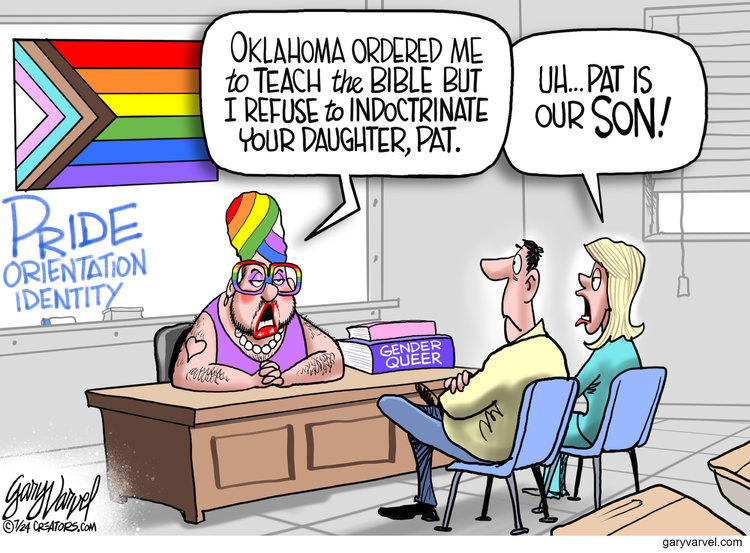
Without comment
Lighter fare

One movie is worth how many words?

The shocking decline of the city—driven by any number of factors, but most certainly liberal policies high among them—drove massive white flight and deindustrialization of the city. Vast numbers of New Yorkers moved to the suburbs in Long Island, New Jersey, or in enclaves in the outer boroughs.

(An interesting exercise is to look at the movies set in the Big Apple in the early sixties compared to those in the early 70s and you can see the suddenness of the decline. From Breakfast at Tiffanys, That Touch of Mink, and Barefoot in the Park_to _Death Wish, Taxi Driver, Dog Day Afternoon, and Serpico in about a decade.).

Jonah Goldberg

Past its sell-by date

MoveOn is the textbook example of an organization that has outlived its purpose. Founded more than a quarter-century ago to argue that the country needed to “move on” from Bill Clinton’s intern-diddling impeachment drama, it had two things that confer a very long life in American politics: office space and a good fundraising list. And so, while the country has moved on, MoveOn hasn’t. Which is weird, but this is America.

Kevin D. Williamson.

Frank Bruni’s beloved sentences this week

  • In The New Yorker, Susan B. Glasser reflected on a micro-tussle toward the end of last Thursday night’s presidential debate: “Is this how democracy dies, in a shouting match between two seniors about their golf game?” (Thanks to Mike Greenwald of Melville, N.Y., for nominating this.)
  • In The Connecticut Post, Colin McEnroe pondered the president’s proper course: “I’m guardedly a ‘replace him’ guy. Some of you may recall that in 2019, I compared Biden to a Subaru with 310,000 miles on the odometer … But Thursday night was 90 minutes of the ‘check engine’ light flashing desperately in the darkness.” (Holly Franquet, Fairfield, Conn.)
  • In The Atlantic, Caitlin Flanagan evaluated Americans’ attitudes toward NATO … NATO is the rotary phone of geopolitical alliances.” (Richard Reams, San Antonio)

Frank Bruni

Quickies

a matryoshka doll of mendacity

George Conway’s description of Trump, apropos of the New York records falsification case.

one of those financial doomsayers who has correctly predicted 10 of the last three recessions.

The Free Press

Slate, which, as we all know, employs lab monkeys escaped from federal cocaine experiments as fact-checkers

Kevin D. Williamson

An aphorism can never be the whole truth; it is either a half-truth or a truth-and-a-half

Karl Kraus

(Economist World in Brief)

Plaintiff Accused of Being “Litigious” Sues for Slander

Eugene Volokh

Male and female

This view would understand the division of man into male and female as, of course, a biological actuality; i.e., this is the way it is. It seems to be a necessity; it is at least a convenience; and it is certainly a delight.

Thomas Howard, Chance or the Dance?, written before gender ideology was a thing.


I suffer more from the humiliations inflicted by my country than from those inflicted on her.

Simone Weil, from a letter to Georges Bernanos.

I don’t do any of the major social media, but I have two sub-domains of the domain you’re currently reading: (a) You can read most of my reflexive stuff, especially political here. (b) I also post some things on the only social medium I frequent, because people there are quirky, pleasant and real.

Election 2024 (and beyond)

A soulless man does not care

Nobody actually admires Trump … The Republicans sucking up to him now will go down in history as suck-ups, whether they think so or not. It will be a blot on the record. Their biographers will have to work their way around it, like a conviction for embezzlement or marriage to a cousin.

In Minnesota we’ve come to the sad realization that corporations don’t have souls. Our beloved 3M has done wretched things and poisoned its own people and lied about it, which no human being you respect would do. Trump is a corporation, he is not a genuine human being. He is not vermin, he is apparently sensate and responds to commands, but he has conquered his own soul and a soulless man does not care. That is not a quality one seeks in a leader. A Shakespearean tale is unwinding and it does not appear to me to be a comedy.

Garrison Keillor

Presidential Immunity

Former President Trump over the weekend escalated his vows to prosecute his political opponents, circulating posts on his social media website invoking “televised military tribunals” and calling for the jailing of President Biden, Vice President Kamala Harris, Senators Mitch McConnell and Chuck Schumer and former Vice President Mike Pence, among other high-profile politicians. Mr. Trump, using his account on Truth Social on Sunday, promoted two posts from other users of the site that called for the jailing of his perceived political enemies. One post that he circulated on Sunday singled out Liz Cheney, the former Wyoming congresswoman who is a Republican critic of Mr. Trump’s, and called for her to be prosecuted by a type of military court reserved for enemy combatants and war criminals. “Elizabeth Lynne Cheney is guilty of treason,” the post said. “Retruth if you want televised military tribunals.” (Source: dnyuz.com)

John Ellis News Items. The Soviet Union had its Pravda; Trump has his Truth Social; the former probably had a higher proportion of truth.

Silver lining report: Donald Trump will find that yesterday’s Presidential immunity case will make it tough for him, if elected, to honor these vows.

Gotta look for that silver lining because what that soulless man in the Presidency likely will do with this decision come January 21 is pretty grim.


So: where did all my mockery of Trump go? Well, first, I resolved to stop harping on it. But then, I just moved it off to my reflexive blog, trying to keep this one relatively reflective.

I suffer more from the humiliations inflicted by my country than from those inflicted on her.

Simone Weil, from a letter to Georges Bernanos.

I don’t do any of the major social media, but I have two sub-domains of the domain you’re currently reading: (a) You can read most of my reflexive stuff, especially political here. (b) I also post some things on the only social medium I frequent, because people there are quirky, pleasant and real.

July already! Sheesh!

Steve Bannon

Last month, I shared Ross Douthat’s long interview with J.D. Vance. July 1, the Times published a long interview of Steve Bannon by David Brooks. I’m going out on a limb here with a wager that this is one of the ten most shareworthy I’ll read this month in the Times.

For my response, let’s just say I have a presumption against all revolutions; they seldom elevate, frequently immiserate. But they’ll happen when enough people think it couldn’t get any worse.

Bring back frank established religions?

Thoughts as we close out “Pride Month:”

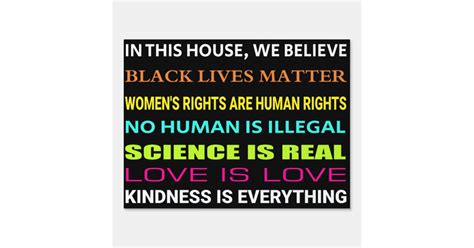
(In my house, we believe the Nicene Creed)

Instead of a naked public square, we see one festooned today with every imaginable image of the rainbow and associated symbology: from flags to backlighting, from crosswalks to entire murals on the sides of buildings. The public square went briefly from being a space where one might once have found images of the Ten Commandments or, during the holidays, a Christmas crèche, to one where the White House might be lit up by the rainbow celebrating a judicial fiat declaring a right to marriage of homosexuals in a constitution written in the 1780s, to public libraries where praise of cross-dressing, transexuality, and gay sex would become run-of-the-mill children’s programming.

When religion in any traditional or recognizable form is excluded from the public square, it does not mean that the public square is in fact naked. When recognizable religion is excluded, the vacuum will be filled by ersatz religion, by religion bootlegged into public space under other names.

The high priests of the new religion insist upon enthusiastic public expressions of support—especially during the holy month of June—lest one’s relative lack of fervency be taken as an indication of disbelief and grounds for being purged from the ranks of the elect. In nearly every respect, expressions of Pride are deployed in identical ways to traditional religious symbols and belief, in the eyes of many constituting a replacement religion. The inescapable, even overbearing presence of Pride symbology thus today bears all the unmistakable features of a “comprehensive doctrine,” the prevention of which earnest liberals of yesteryear insisted was their sole, modest aim.

Any war of “comprehensive doctrines” also brings attendant dangers. However, only someone not paying attention could believe that those dangers have been absent in recent years. My hope is that forthrightness about the terms of the debate may lead not to renewed “wars of religion,” but to a new settlement. A more pacific settlement might arise from acknowledgment that the actual “fact of pluralism” may require increased acceptance and acknowledgement of various state establishments. Such a settlement would return us to the original arrangement of the constitutional order, in which various religious traditions could coexist with robust internal unity amid relative proximate concord. California might thus retain its de facto established religion of Pride, and Alabama would establish some form of broadly nondenominational Protestant Christianity.

Patrick Deneen, inluding a prophetic insight of Richard John Neuhaus.

Comments:

  1. I think Deneen is correct that “Pride” has become a Rawlsian comprehensive doctrine — i.e., a de facto religion. (That doesn’t mean I think it will endure.)
  2. Deneen’s suggestion of permitted state establishments of religion is America’s original pattern (for what it’s worth). The First Amendment’s prohibition of Congress making any “law respecting an establishment of religion” was indeed a restriction on Congress, not the states. Massachusetts (of all places) had a state establishment until the 1830s and abandoned it voluntarily, not because some court declared it unconstitutional.
  3. I suspect I could formulate an argument that a state establishment of religion, unlike a limit on free exercise of religion, ought not be barred by the 14th Amendment “incorporation.” So long as a citizen is not coerced, I question whether their 14th Amendment “rights” are violated by an establishment.
  4. I’m under no illusion that I will like the religion established by any state: While I differ from him in details, I concur with Ross Douthat’s daring book title Bad Religion: How We Became a Nation of Heretics, and the best state establishment I could realistically hope for is mainstream Protestant (i.e., moralistic therapeutic deism).

Progressives verus liberals

You know you’ve touched a nerve with progressive activists when they tell you not just that you’re wrong but that you’re on the other side.

Such is the fate of any old-school liberal or mainstream Democrat who deviates from progressive dogma …

If this was just about our feelings, these denunciations could be easily brushed aside. But the goal and the effect is to narrow the focus of acceptable discourse by Democrats and their allies. If liberals are denounced for “punching left” when they express a reasonable difference of opinion, potentially winning ideas are banished.

In the run-up to a tight election with a weak Democratic candidate and a terrifying Republican opponent, pushing liberals and centrists out of the conversation not only exacerbates polarization, it’s also spectacularly counterproductive.

Those on the left who’ve been dumbstruck as Donald Trump has intimidated his most vociferous Republican critics (see: Chris Sununu, Nikki Haley) into falling in line might exert a little more self-awareness of similar moves by the left.

The goal of progressives may be solidarity, but their means of achieving it are by shutting alternative ideas down rather than modeling tolerance.

Pamela Paul, Who You Calling Conservative?

Note that I am not denying a similar Trumpist lock-step on the Right, nor does Ms. Paul.

Understanding the 2024 Roberts Court

If you really want to understand the conservative-dominated Supreme Court, it’s important to realize that all the Republican nominees who sit on it formed their legal philosophy and forged their legal reputations long before Donald Trump was elected president. This is no less true of Trump’s three nominees than of the three justices who were nominated by previous Republican presidents. Neil Gorsuch, Brett Kavanaugh and Amy Coney Barrett all possessed a robust legal identity and a considerable body of work before their selection to the high court. In fact, each has his or her own maverick streak, with Gorsuch perhaps most notable in his steadfast defense of Native Americans and the rights of criminal defendants.

When you understand this reality, what can seem to be a confounding, surprising Supreme Court term is actually predictable. The Trumpist right is lobbing a number of novel cases presenting aggressive legal theories to justices with pre-Trump legal philosophies, and the pre-Trump justices are rejecting them, repeatedly.

David French (emphasis added).

The Trumpist right is especially getting aggressive in Mississippi, Louisiana and Texas, part of the 5th Circuit U.S. Court of Appeals. The 5th Circuit has become where conservatives play out their fantasies to an obliging court as the 9th Circuit used to be the playground for progressives. You could say the 5th is the new 9th.

Republicans Pounce

A politically inconvenient rape and murder: Two migrants who’d crossed the border illegally have been charged with the rape and murder of 12-year-old Jocelyn Nungaray in Houston. The Associated Press managed to not once mention the status of the killers. The NYT eventually covered it, only in the context of how darned politically inconvenient it is: “The killing of Jocelyn Nungaray in Houston has become the latest crime seized on by Republicans to attack President Biden over his immigration policies.” Right. That 12-year-old, so rude of her to be murdered by the wrong type and letting Republicans “seize on” it. 

Nellie Bowles.

I’ll give the New York Times credit for disguising the usual formulation wherein the real story is “Republicans pounce” instead of what detestable thing they pounce on.

Tradition

Most of the things in our lives are not of our own making – they were given to us. Our language, our culture, the whole of our biology and the very gift of life itself is something that has been “handed down” to us. In that sense, we are all creatures of “tradition” (traditio=“to hand down”). Of course, these things that are not of our own making and are the least controllable are also those things that we take most for granted. We may hate our culture and our biology, but will still have to use our traditioned language (or someone’s traditioned language) to say so. Tradition is simply the most foundational, inescapable aspect of human existence.

Fr. Stephen Freeman, Things You Can’t Invent


So: where did all my mockery of Trump go? Well, first, I resolved to stop harping on it. But then, I just moved it off to my reflexive blog, trying to keep this one relatively reflective.

I suffer more from the humiliations inflicted by my country than from those inflicted on her.

Simone Weil, from a letter to Georges Bernanos.

I don’t do any of the major social media, but I have two sub-domains of the domain you’re currently reading: (a) You can read most of my reflexive stuff, especially political here. (b) I also post some things on the only social medium I frequent, because people there are quirky, pleasant and real.

Another notebook dump

Wisdom Generally

Willie Mays

The Say Hey Kid was that rarity who played a boy’s game with a boy’s joy and a man’s discipline and shrewdness.

National Review, The Week. That’s got to be the best “in a nutshell” on Mays. One consolation of being 75 most of this year is the memory of Willie Mays playing live, not just on highlight reels. You kids have no idea ….

Even the secularists have rituals

The “acme” of religious secularism in the West—Masonry—is made up almost entirely of highly elaborated ceremonies saturated with “symbolism.”

Alexander Schmemann, For the Life of the World

Apple acquiesces in reality

I became an “Apple guy” at home before retirement, though I still had to use Windows at work. Now our house is all Apple (or nearly so). (I confess to brief side-eyed looks at Linux, but it’s never stuck; I’ve just got my Apple gear set up to do what I want, quickly, so why change?)

Still, VisionPro was a bridge or two too far — way too much money for a novelty. Now:

Apple has told at least one supplier that it has suspended work on its next high-end Vision headset, an employee at a manufacturer that makes key components for the Vision Pro said. The pullback comes as analysts and supply chain partners have flagged slowing sales of the $3,500 device. The company is still working on releasing a more affordable Vision product with fewer features before the end of 2025. (Source: theinformation.com)

Via John Ellis

Freud

In his fanciful narrative, religion and the civilization that springs from it are reducible to a primordial event of psychosexual violence. … For Freud, at the dawn of human civilization a group of brothers, desiring sexual gratification with their mother, spontaneously rise up against their father and commit parricide. They then devour his body in a ritual act, joining incest to cannibalism. Because of their guilt, however, they internalize their absent father’s authority, which takes the place of a collective superego. From that moment on, human civilization has worked to suppress the libidinal will to power in men by repressing desire and transferring it to more “sublimated” activities. All religions—but especially Christianity with its doctrine of God the Father—are compensations for this primordial act of parricide. They can all be traced back to this scientifically formulated (and completely theoretical) act of original sin.

John Strickland, The Age of Nihilism

Essentially, Professor Crews came to regard Freud as a charlatan. In a debate with the psychoanalyst and author Susie Orbach in 2017, published in The Guardian, he maintained that Freud had “contradicted, discomfited and harangued his patients in the hope of breaking their ‘resistance’ to ideas of his own — ideas that he presumptuously declared to be lurking within the patients’ own unconscious minds.” In the process, he said, Freud created a myth about himself and his findings that failed to live up to empirical scrutiny.

His polemical broadsides vaulted him to the forefront of a group of revisionist skeptics loosely known as the Freud bashers.

“Freud: The Making of an Illusion” was his most ambitious attempt to debunk the myth of Freud as a pioneering genius, drawing on decades of research in scrutinizing Freud’s early career. Writing in The New York Times Book Review in 2017, George Prochnik found the book to be provocative if exhaustingly relentless: “Here we have Freud the liar, cheat, incestuous child molester, woman hater, money-worshiper, chronic plagiarizer and all-around nasty nut job. This Freud doesn’t really develop, he just builds a rap sheet.”

Obituary for Frederick Crews: “A literary critic, essayist and author, he was a leading voice among revisionist skeptics who saw Freud as a charlatan and psychoanalysis as a pseudoscience.”

It does not matter that the strictly scientific status of Freud’s theories is now methodologically and materially discredited. The central notion—that human beings are at core sexual and that that shapes our thinking and our behavior in profound, often unconscious, ways—is now a basic part of the modern social imaginary.

Carl R. Trueman, The Rise and Triumph of the Modern Self

Best and brightest besliming themselves

Cultural deregulation

Recent dustups over the supposedly racist implications of advocating marriage, thrift, and a good work ethic reveal the logic of cultural deregulation. The goal is to strip society of norms, leaving unsheltered those who cannot afford to live in well-appointed enclaves that covertly sustain modified bourgeois norms for the rich and their children. In the open culture, the lives of ordinary people become more disordered and less functional.

R. R. Reno, Return of the Strong Gods

Scientific consensus

[I]t has become increasingly obvious that science functions as much as an ideology as it does as a method of inquiry. The “scientific consensus” is now frequently invoked to settle not just scientific questions, but public-policy ones as well. Call this scientism. One of its most striking features is just how vacuous it is. Contemporary scientism doesn’t necessarily entail anything beyond uncritical deference to experts. This became clear enough over the course of the Covid pandemic. Within a month in early 2020, all right-thinking people went from ridiculing the idea that masks could stop the spread of a respiratory virus to believing it was of paramount importance to wear a mask at all times. This reversal wasn’t due to people weighing new evidence, but the empty assurance of the “scientific consensus.”

[U]nlike the creationists Wright might have been confronting a generation ago, proponents of “gender-affirming care” don’t appeal to sources of authority other than science. On the contrary, they point to the fact that major US medical institutions have endorsed these practices. The “scientific consensus,” then, has proved capable of giving public legitimacy to even the most outré belief systems.

[I]t’s clear by now that those who purport to speak in the name of science aren’t as neutral and objective as I once assumed. Often, science’s would-be spokesmen are bent on imposing their own dogmas. In hindsight, I should have been more concerned about scientism becoming an official state ideology. Science has many impressive discoveries to its credit, but we shouldn’t let it think and make political decisions on our behalf. Nor ought we to uncritically adopt the metaphysical views of the majority of scientists as our own. The question of God’s existence, for instance, remains as open today as at any other time in human history.

David Moulton, Two Cheers for ‘Intelligent Design’

At war with the human race

So it is that the gendered nature of the body is under attack, from the Left and Right, as is the connection between sex and babies. Left and Right alike resent the limitations of the human body. There’s just one small problem: sex does make babies and men and women are different. An ideology that cannot make room for the basic facts of human reproduction and sex differences is an ideology that will end up at war with the human body, with nature itself, and ultimately with the entire human race. In that war, it will go looking for allies where it can find them. It finds its most powerful, its indispensable, ally in the State.

Jennifer Roback Morse, The Sexual State.

By quoting, I’m not endorsing this book. I read it in preparation for a Symposium where the author was to be one of three keynote speakers. Based partly on the book, which did make a few points in a temperate register, I decided not to register for the symposium.

Self-delegitimation

As Harvard Law school professor Adrian Vermeule has said, liberal institutions “will have to become systematically undemocratic in order to remain liberal and, even where they do so, that will be but a stopgap measure in light of their systematic self-delegitimation.”

Rod Dreher in the European Conservative

Ruso-Ukrainian war

So: Why did Russia invade Ukraine?

WordPress unfortunately has been “improving” things again, so I cannot figure out how to embed a YouTube video, but I recommend the video at this link.

Theory 1: Putin is a revanchist, with many screws loose, who wants to rebuild the USSR in toto.
Theory 2: Putin would not tolerate NATO being extended to its very border with Ukraine (which the US promised it would not allow), kinda like our Monroe Doctrine.

Expats

“I hate Russia, for forcing me to leave her.”

It was an apt summary of what waves of émigrés from Russia and the Soviet Union since the early 20th century have felt: a sorrowful sense of loss for a motherland — what Russians call “toska po rodine” — coupled with resentment at the autocratic powers that forced them out. My grandparents were among the “White” Russians who fled the Revolution and moved to Paris in the 1920s. A second wave of emigrants left in World War II. The third, Soviet Jews, started leaving in the 1970s. Vladimir Putin has now created another wave of people fleeing Russia, and many of them may still believe, as my forebears did, that they will one day return to the homeland.

Most probably will not.

That is the tragic irony of Mr. Putin’s war. His attempt to “restore Russian greatness” through violence and hatred has tainted Russia’s real greatness for years to come ….

Serge Schmemann

Front lines of the LGBTTTIQA+, etc. revolution

Another bridge too far

One thing I think we can rule out right away is that the drop in support for same-sex marriage and acceptance of homosexuality is a function of religion. I’m aware of no evidence that the United States is undergoing a religious Great Awakening, at least when it comes institutional forms of worship handed down from the past. As sociologist Samuel Perry recently put it in a useful summary for Time magazine:

According to data from GallupPew, and PRRI, the percentage of Americans who identify with any religion is in steady decline, as are those who believe in God, the devil, Heaven, Hell, or angels; who say religion is a very important part of their life; maintain membership in a church or synagogue; or attend church regularly.

Why, then, might Republicans have begun turning against same-sex marriage and acceptance of homosexuality in the past two years?

This is just speculation, but I’d wager it has something to do with the way left-wing activists have taken up the cause of transgender rights as the next front in the now-decades-long cultural revolution. To be clear: I don’t think such a backlash, if there’s been one, has arisen over calls to protect the civil rights of the tiny number of transgender people in the country. Rather, the backlash would come from opposition to the ideology of transgenderism promulgated by the most militant activists on the left—and the extraordinary rapidity with which that ideology’s assumptions and assertions have come to be treated as conventional wisdom among many of those who run government bureaucracies, public and private schools and universities, medical institutions, and the business sector.

If I’m right that declining support for same-sex marriage and homosexual acceptance among Republicans derives (at least in part) from a backlash against transgender activism, that would likely mean that more conservative-minded Americans have concluded the gay-rights movement was a Trojan Horse for something far more extreme and destabilizing. It’s not inevitable that they would conclude this, since as Andrew Sullivan and other champions of gay rights have persuasively argued, the interests of homosexuals stand in considerable tension with those asserted by the most radical transgender activists. But the Activist and Donor Complex on the left has made it natural for the rest of the country to make the leap from one to the other by bundling the two movements together in an ever-expanding, alphabet-soup abbreviation: LGBTTTIQA+, etc.

Damon Linker

March of Dimes Syndrome

Why, last year, did the Human Rights Campaign declare a “national state of emergency” for LGBT people? Why was the election of the first black American president followed by the Black Lives Matter movement? Why have reports of “hate groups” risen during the same decades that racial prejudice has been plummeting? Why, during a long and steep decline in the incidence of sexual violence in America, did academics, federal officials, and the #MeToo movement discover a new “epidemic of sexual assault”?

These supposed crises are all examples of the March of Dimes syndrome, named after the organization founded in the 1930s to combat polio. The March helped fund the vaccines that eventually ended the polio epidemics—but not the organization, which, after polio’s eradication, changed its mission to preventing birth defects. Its leaders kept their group going by finding a new cause, just as antiwar activists did after achieving their goal of ending the Vietnam War. The Three Mile Island accident offered new fund-raising opportunities and a new platform for veterans of the antiwar movement such as Jane Fonda and her husband Tom Hayden, who both addressed the crowd at that first antinuke rally.

For career activists, success is a threat. They can never declare mission accomplished.

So activists have moved the goalposts once again. It is no longer enough for conservative Christians to tolerate same-sex marriage—now they must be legally required to bake cakes and design web pages for the weddings. It is no longer enough to protect gay students from harassment—now these students must have access in elementary school libraries to how-to manuals for anal sex. Public schools must encourage prepubescent students to explore the many possible gender identities without their parents’ knowledge. Biological males self-identifying as females must be allowed to compete against females in sports. These new causes have been wildly unpopular, arousing opposition from homosexuals as well as heterosexuals, and have led to a decline in public support for the gay rights movement. But however much the backlash has hurt the original cause, the controversies keep activists in business.

As the civil rights movement searched for new causes, no group shifted as adroitly as the Southern Poverty Law Center. The group launched in the 1970s to offer legal representation to individual victims of discrimination but then switched to filing lawsuits against chapters of the Ku Klux Klan. In 1986, the SPLC’s entire legal team resigned in protest—they’d signed up to help poor people, not sue an organization whose national membership barely eclipsed 10,000. But the Klan made an ideal villain for fund-raising appeals to northern liberals, and the SPLC prospered from the publicity about lawsuits that bankrupted chapters of the Klan.

By the 1990s, virtually nothing was left of the Klan to sue, so the SPLC pivoted again. It changed the name of its “Klanwatch” project to “Hatewatch,” and began issuing reports listing a growing number of “hate groups” and “extremists” across America. Scholars, journalists, and nonprofits have repeatedly denounced SPLC’s blacklists, noting that its tallies include many “hate groups” that don’t exist, or are harmless (such as a Confederate memorabilia shop that made the list), or are mainstream conservative and Christian organizations that simply oppose progressive policies. The SPLC’s lists of dangerous “extremists” have included respected conservatives such as Charles Murray, Rand Paul, and Ben Carson … The SPLC’s appeals to combat a “rising tide of hate” have brought in so much donor money that its endowment has soared above $600 million.

John Tierney, The March of Dimes Syndrome

Politics

Tribal conformity

I personally know progressives who are absolutely furious that GOP figures don’t speak out against Trump, but those same individuals are petrified of the intolerant elements of their own political tribe. They wouldn’t dream of speaking against the most-woke elements of the radical left. After all, their jobs are at stake. Their reputations hang in the balance. Remember the now-famous Vox essay, “I’m a liberal professor, and my liberal students terrify me”? I’ve heard that sentiment many times.

David French, Let’s Talk About Fear

The Donilon strategy: All About ‘Dat Coup

If the sudden prospect of electing the first president who is a convicted felon hasn’t put Americans off Trump, why would Joe Biden, Mike Donilon, or anyone else think that reminding them of his coup plot and the insurrection it led to will do so?

On the other hand, how can one run against Donald Trump and not make his authoritarian ambitions the centerpiece of the campaign? He’s not shy about expressing those ambitions; should he win in November, the next four years will in fact be defined by his attempts to subvert the constitutional order. The right’s hostility to Western liberalism is the elephant in the room of this election. How can the president resist making a spectacle of it?

I think his and Donilon’s strategy of making the race about democracy is simultaneously weak and quite possibly the strongest one available to them.

There’s another case for the Donilon strategy. Namely, it’s worked before. And I don’t just mean in 2020.

Five days before the 2022 midterms Biden delivered a speech warning Americans that, with so many Trump-backed post-liberal populist Republicans running for major offices, “democracy is on the ballot.” He called on voters to ask themselves this question when considering a candidate: “Will that person accept the legitimate will of the American people and the people voting in his district or her district? Will that person accept the outcome of the election, win or lose?”

Some pundits called the address “head-scratching” in light of polling that showed the economy, not democracy, dominating when voters were asked what the most important issue in the election was. Yet five days later Republicans ended up underperforming badly in a midterm in which the out-party typically cleans up. One Trump-endorsed MAGA acolyte after another fell short in key races, holding the GOP to modest gains in the House and helping Democrats gain a seat in the Senate.

For me, the great virtue of the Donilon strategy is that it’ll leave America with no excuses if Trump wins. An election framed around the economy or immigration that ends in Republican victory will let denialists about the country’s decline insist that things would have been different if only Biden had taken a different approach. “He should have emphasized the coup attempt and January 6,” they’ll say. “Surely Americans wouldn’t have reelected Trump if the election had been about that.”

I’m not sure of that at all, personally. I’d like to test the proposition. And if Trump is returned to power, I’d find comfort in knowing that we maximized our collective shame by approaching the race as a referendum on the constitutional order—and chose the other option. If we do this, let’s be clear-eyed about it. No excuses. Trump 2024: Maximum Shame.

Nick Catoggio

The Machiavelli IQ test

The first method for estimating the intelligence of a ruler is to look at the men he has around him.

Niccolo Machiavelli

After Trump’s guilty verdicts, the popular sports talk radio host Colin Cowherd, who’s not a usual Trump critic, treated his listeners to an inventory of the criminals around Trump: “His campaign chairman was a felon. So is his deputy campaign manager, his personal lawyer, his chief strategist, his national security adviser, his trade adviser, his foreign policy adviser, his campaign fixer and his company C.F.O. They’re all felons. Judged by the company you keep. It’s a cabal of convicts.”

Frank Bruni

We knew damn well he was a snake before we took him in.

Populism anticipated

For the success of our restoration it cannot be too often said that society and mass are contradictory terms and that those who seek to do things in the name of mass are the destroyers in our midst. If society is something which can be understood, it must have structure; if it has structure, it must have hierarchy; against this metaphysical truth the declamations of the Jacobins break in vain.

Richard M. Weaver, Ideas Have Consequences.

Past their “Sell By” Dates

Also Presented Without Comment

Former House Speaker Nancy Pelosi, asked by Anderson Cooper whether she has “confidence” in the Supreme Court: 

“No, I think they’ve gone rogue. It’s most unfortunate.”

Also Also Presented Without Comment

New York Post: Trump Camp Claims He Was ‘Tortured’ in Fulton County Jail—as It Peddles Coffee Cups With His Mugshot

Australia can have him

Julian Assange on his leaking of the names of hundreds of Afghan civilian informants into the hands of the Taliban: “Well, they’re informants. So, if they get killed, they’ve got it coming to them. They deserve it.”

Jim Ellis, News Items


I suffer more from the humiliations inflicted by my country than from those inflicted on her.

Simone Weil, from a letter to Georges Bernanos.

I don’t do any of the major social media, but I have two sub-domains of the domain you’re currently reading: (a) You can read most of my reflexive stuff, especially political here. (b) I also post some things on the only social medium I frequent, because people there are quirky, pleasant and real.

Friday, 6/7/24

Legalia

Musical rackets

Copyright law is just a big steaming mess. Whenever you think it can’t get crazier, it always does.

YouTube is the ultimate battlefield for copyright claims gone wild. Even when I do a short YouTube video about music, I can never play examples from actual recordings. (That’s why I’ve never given an online course on music history. Corporate lawyers would shut me down in a New York minute.)

Consider the case of the YouTuber whose video got demonetized because his “Samsung washing machine randomly chimed to signal a laundry cycle had finished while he was streaming.”

How is that even possible? But it gets even stranger.

Ashley Belanger reports in Ars Technica:

Apparently, YouTube had automatically scanned Albino’s video and detected the washing machine chime as a song called “Done”…[but it] actually comes from the song “Die Forelle” (“The Trout”) from Austrian composer Franz Schubert.

The song was composed in 1817 and is in the public domain. Samsung has used it to signal the end of a wash cycle for years.

I’m not sure what Schubert would make of all this. But I can assure you that none of his heirs will get a penny from this. That’s not the purpose of song copyrights anymore.

Ted Gioia, in a thoroughly disheartening chronicle of where AI appears to be taking us.

See also James O’Malley, Music Just Changed Forever

One crime with 34 cooties

I have added a P.S. to my recent post “34 Counts!”:

I don’t think I’ll dwell on the 34 counts any more, and regret having done so. The 34 counts were 34 bookkeeping entries. In most courts — and in best practice — this would have been charged as one crime, or so I’m told.

Politics

Sheep

Most Church leaders—conscious that to condemn Nazis for blasphemous kitsch might prove risky—opted to bite their tongues. Some, though, actively lent it their imprimatur. In 1933, the year that Hitler was appointed chancellor, Protestant churches across Germany marked the annual celebration of the Reformation by singing Wessel’s battle hymn. In Berlin Cathedral, a pastor shamelessly aped Goebbels. Wessel, he preached, had died just as Jesus had died. Then, just for good measure, he added that Hitler was ‘a man sent by God’.

Tom Holland, Dominion

I heard David French tell a story about masculinity today that was very David Frenchy in that it was based on a movie, American Assassin:

This is the story of Chris Kyle. And it was — I remember seeing it here in Tennessee. And you couldn’t find a parking spot in our theater. That movie was an absolute sensation.

And one of the most memorable parts of that movie is when Chris Kyle is involved in a playground fight, and his father goes through this sheepdog, sheep, wolf analogy. And that is there’s three kinds of people in this world. There’s the sheep, there are the wolves who prey on the sheep, and the sheepdogs who protect the sheep from the wolf.

And he says, I’m not raising any sheep in this household. So what are you? And at that point, Chris Kyle identifies himself as a sheep dog, as somebody who protects the weak against the wolf. OK? And so it’s a very anti-bullying sort of vision of male courage.

And then here comes Donald Trump, who fits to a T the definition of a wolf, of a bully. The story the right told about itself was that they would be inoculated against the wolf, against the bully, because they have this ethos of the sheepdog.

But then when the wolf arose and the bully arose, they went with the bully, the very person that a generation of young right-wing men were warned about. And so that’s what makes this, in many ways, so much more deeply disturbing even than it otherwise been (sic), because it called into question kind of the cultural enterprise that was happening before Trump.

On that same podcast, Jamelle Bouie, riffing on Trump’s first post-conviction public appearance being UFC (Universal Fight Club), quipped that “Professional wrestling is camp for straight men..”

Not a referendum on Trump?!

I believe I recently passed on an opinion that both Trump and Biden want this election to be a referendum on Trump. Now I pass along the opinion that it’s a referendum on Biden:

[Y]ou can just look at the polls in the US: 51 percent of Americans now support mass deportations of the kind Trump is proposing; including 42 percent of Democrats, and 45 percent of Hispanics. That was unthinkable four years ago — and it’s entirely on Biden. The revolt against this basic failure of governance is now strong even in big cities, run by Democrats, and among non-whites, who are moving toward Trump.

Joe Biden’s main campaign theme seems to be that he alone can defend liberal democracy from Donald Trump. What Biden has never understood is that restricting immigration is absolutely critical to defending liberal democracy. Everything else is just words, condescending words. If Trump triumphs in November, Biden will be responsible for simply ignoring basic political reality, alienating the very people he needs.

One person was responsible for Trump’s first term: Hillary Clinton. And one will be responsible for his second: Joe Biden.

I guess it’s worth reiterating at this point that I’m not anti-immigration. It remains the lifeblood of America, and immigration is vital for our future fiscal balance. I’m a proud immigrant myself — and America will always be able to integrate newcomers in ways European countries simply cannot. But, like a huge majority of Americans, I’m in favor of legal, orderly, controlled immigration — and not the chaos we now see everywhere in the West. This is not racism or xenophobia; it’s a recognition that borders and the rule of law matter; and that without secure borders, we risk losing the core reality of a nation-state; and without a better-paced influx, we risk delegitimizing immigration altogether, and balkanizing our societies.

Andrew Sullivan

Loser Trump

Trump’s base does not win elections outside of party primaries. It did not win the midterms for the Republican Party in 2018, it did not win re-election for the Trump in 2020, and it did not win a red wave for Republicans in 2022. The signature Republican victory of the last four years, the election of Glenn Youngkin over Terry McAuliffe in the 2021 Virginia race for governor, rested on an effort to marginalize the Trump base so that party leaders could engineer a nominee with the ability to distance himself from the former president and his movement.

Jamelle Bouie.

And true to form, the RNC’s Lara Trump has issued a fatwa against Larry Hogan, Republican candidate from U.S. Senate from Maryland, for saying the public should respect the process and the verdict in the Trump felony trial. Kiss that seat goodbye, GOP.

Chicken Littles of the Left

Some people reportedly (I haven’t met one outside of click-bait stories) are worked up that some Trump supporters want to ban IVF, contraception, and recreational sex. Though I know some arguments against each of those sacred cows, this strikes me as a reverse mirror-image of QAnon.

I would welcome more careful thought about IVF, but I’m an outlier. Anyone who thinks that a lame duck Donald Trump is going to pander to a very small group of ideologues who are seriously out of step with 90%+ of their countrymen needs to take a deep breath. Anyone who thinks that Donald Trump (who probably has frequent sperm donor perks at the fertility clinics of Manhattan) is personally opposed to IVF, contraception and recreational sex (“I never did anything that needed forgiveness” or something like that, he said) needs inpatient psych care.

Culture

Defining deviancy down … and up

When and why did American life become so coarse, amoral and ungovernable? In his classic 1993 essay, “Defining Deviancy Down”, the late Senator Daniel Patrick Moynihan offered a semantic explanation. He concluded that, as the amount of deviant behaviour increased beyond the levels the community can “afford to recognise”, we have been redefining deviancy so as to exempt conduct we used to stigmatise, while also quietly raising the “normal” level in categories where behaviour is now abnormal by any earlier standard. The reasons behind this, he said, were altruism, opportunism and denial — but the result was the same: an acceptance of mental pathology, broken families and crime as a fact of life.

In that same summer, Charles Krauthammer responded to Senator Moynihan with a speech at the American Enterprise Institute. He acknowledged Senator Moynihan’s point but said it was only one side of the story. Deviancy was defined down for one category of society: the lower classes and black communities. For the middle classes, who are overwhelmingly white and Christian, the opposite was true. Deviancy was in fact defined up, stigmatising and criminalising behaviour that was previously regarded as normal. In other words, there was a double standard at work.

Ayaan Hirsi Ali

Presented without express comment

A new poll from Ipsos has found that support for same-sex marriage among Americans has fallen to just 51% approval.

Following a years-long rise in support for gay marriage, a groundswell of anti-woke sentiment emerged around 2021, much of it directed at LGBT activism as parents gained a new window into their children’s curriculum when schooling went remote during the Covid-19 pandemic …

Gay rights have since been lumped in with trans rights in the popular imagination, which may have chipped away some public support for gay marriage at the margins. …

Bev Jackson, co-founder of the LGB Alliance, said the decline in support for same-sex marriage had causes on both the Left and the Right. “Blame for the fall in US support for gay marriage lies partly with the homophobic religious Right. But equally to blame are treacherous organisations like GLAAD and the ACLU which promote insane, deeply unpopular concepts such as gender self-ID and child ‘transition’,” she said. “Gender identity ideologues have been riding on LGB’s coattails for too long, and they’re helping to destroy support for the rights we fought for decades to win.”

Laurel Duggan

Junk info

Junk info is often false info, but it isn’t junk because it’s false. It’s junk because it has no practical use; it doesn’t make your life better, and it doesn’t improve your understanding. Even lies can be nourishing; the works of Dostoevsky are fiction, yet can teach you more about humans than any psychology textbook. Meanwhile, most verified facts do nothing to improve your life or understanding, and are, to paraphrase Nietzsche, as useful as knowledge of the chemical composition of water to someone who is drowning.

Gurwinder

Privileging victims, real and imagined

The intuitive moral structure of our modern social imaginary prioritizes victimhood, sees selfhood in psychological terms, regards traditional sexual codes as oppressive and life denying, and places a premium on the individual’s right to define his or her own existence.

Carl R. Trueman and Rod Dreher, The Rise and Triumph of the Modern Self

Safetyism today

They want revolutionary ends, but they want to hide behind establishment credibility.

Jonah Goldberg, describing the successor ideology, which has famously “march[ed] through the institutions.”

Tipsy the squish

I finally had to replace the color toner cartridges on my laser printer. I opened the red-and-white Canon box I’d ordered months ago. I found unfamiliar packaging of the cartridges and unfamiliar cartridge configuration. I figured out how to install them and then looked for the instructions on recycling them (back to Canon). It was nowhere to be found.

Having seen the word “compatible” a few times, I looked more closely at the box. Where the word Canon should have been, the word “Cartridge” appeared.

I remembered when I purchased them my shock at the low price, but I double- and triple-checked. I thought I was getting an inexplicable price on Canon goods. They still conned me with the Canon-looking box.

Now I’ve got three laser cartridges I can’t recycle, and it bothers me more than such a thing is supposed to bother a conservative.

Which reminds me again of how close “conservative” today is to “barbarian.” My gut-identification today remains “conservative,” but my considered identification is center-right.

Progress

Progress should be about improving the quality of life and human flourishing. We make a grave error when we assume this is the same as new tech and economic cost-squeezing.

Ted Gioia, I Ask Seven Heretical Questions About Progress

GD Misinformation

Mainstream coverage of this issue is a buffet of sanctimonious overclaiming. It says authoritatively that kids in the US can’t go on blockers or hormones prior to lengthy, in-depth assessment (false). That no one under 18 is getting surgery (false). That the worldwide rise in referrals to youth GD clinics is almost entirely the result of reduced stigmatization (no one knows). That GD, or the perception that one has GD, can’t spread through adolescent social networks (almost certainly false on the basis of anecdotal evidence and any familiarity with developmental psychology). That it’s a ‘myth’ that significant number of kids who believe themselves to be trans will later feel differently (false, according to all the existing data). That only a tiny percentage of people detransition (we have no data at all on this in the context of youth gender care in the States).

What the Media Gets Wrong on Gender Reassignment. This is from 2021 when the elites were uniformly purveying lies about Covid, gender dysphoria and who knows what all else. Things have gotten markedly better in recent months on adolescent gender dysphoria.

Capitalistic algorithmic ideological hairball

For many of our applicants—and this, of course, is what the program is about, what the humanities are about—learning has, or ought to have, an existential weight. Beneath their talk of education, of unplugging from technology, of having time for creativity and solitude, I detected a desire to be free of forces and agendas: the university’s agenda of ‘relevance,’ the professoriate’s agenda of political mobilization, the market’s agenda of productivity, the internet’s agenda of surveillance and addiction. In short, the whole capitalistic algorithmic ideological hairball of coerced homogeneity. The desire is to not be recruited, to not be instrumentalized, to remain (or become) an individual, to resist regression toward the mean, or meme.

William Deresiewicz, Deep Reading Will Save Your Soul H/T Frank Bruni (who led me to actually read a piece I’d only skimmed). Ted Gioia, My Lifetime Reading Plan, practiced it before Deresiewicz preached it.

Losers

The characteristic feature of the loser is to bemoan, in general terms, mankind’s flaws, biases, contradictions, and irrationality-without exploiting them for fun and profit.

Nassim Nicholas Taleb, The Bed of Procrustes


So: where did all my mockery of Trump go? Well, first, I resolved to stop harping on it. But then, I just moved it off to my reflexive blog, trying to keep this one relatively reflective.

I suffer more from the humiliations inflicted by my country than from those inflicted on her.

Simone Weil, from a letter to Georges Bernanos.

I don’t do any of the major social media, but I have two sub-domains of the domain you’re currently reading: (a) You can read most of my reflexive stuff, especially political here. (b) I also post some things on the only social medium I frequent, because people there are quirky, pleasant and real.

Georgia on my mind

“Georgians fear their country is becoming like Russia,” proclaims the Economist headline. It’s a bit confusing because most of the Georgians the article discusses actually seem more concerned, if only tacitly, about their country becoming like America. (Did the author hear explicit concerns about Americanization but didn’t report them?)

Witness:

By the Kura river in Georgia’s capital, Tbilisi, a group of old women wearing black clothes and headscarves had stopped on the pavement, clearly lost. They were trying to work out how to get to Rustaveli Avenue, the city’s main thoroughfare, where a large crowd was forming. It included Orthodox priests, people carrying framed icons, families with children waving small Georgian flags and teenagers from a dance school dressed in traditional clothing.

The throng was markedly different from the young, mainly English-speaking protesters who had massed on the tree-lined avenue a few days before. On Tuesday May 14th the government, led by the Georgian Dream party, passed a law that will force organisations that receive more than 20% of their funding from abroad to register as foreign agents. …

This gathering, on the Friday after the law was passed, was more subdued. It was in honour of Family Purity Day, a celebration of “traditional values” that the Georgian Orthodox church has held annually since 2014 (a riposte to the International Day against Homophobia, Biphobia and Transphobia). This year, Family Purity Day was a public holiday for the first time.

The Georgian Dream party claims that Orthodox Christian family values are threatened by a foreign “LGBT agenda”, and that rich foreigners fund NGOs in Georgia to promote this sinister plot. It’s a narrative copied almost word for word from Russia and Hungary, whose scaremongering leaders, Vladimir Putin and Viktor Orban, it has served well. Since pro-democracy and anti-corruption NGOs do indeed depend heavily on western philanthropy, labelling them “foreign agents”, which sounds a lot like “spies”, is a handy way to stifle scrutiny of ruling parties.

Bells rang out as we reached the cathedral. We stood outside, on a huge plaza with views across the city. Some of the people I met seemed sincerely committed to the cause. Other marchers’ motivations were less clear. Before I had a chance to ask them where they were from, several told me that they were locals and hadn’t been paid to be there. Clearly they were sensitive to the rumours that a recent pro-government rally had been populated by rent-a-crowds, bussed in from outside the city.

The Economist free-lancer is worried about where in Georgia the demonstrators for Family Purity Day came from, but strangely dismissive of their concerns. It doesn’t cross her mind that a concern shared by Russia, Hungary and Georgia just might possibly be valid; it’s just a cut-and-paste “narrative.”

Meanwhile, she’s utterly incurious about the bona fides of the “English-speaking protesters who had massed” on those streets days before, demonstrating in favor of unfettered foreign influence. In my admittedly limited experience it would be hard to assemble a “mass” of Anglophones from among the Georgian population. Where did they all come from?

If you read between the lines, even assuming the bona fides of the Anglophone protesters, Georgia is divided between people wanting to westernize and people wanting to maintain traditional values. Since Putin also purports to favor traditional values, it’s low-hanging fruit to draw analogies between traditionalist Georgians and Russia. That, too, is a convenient “narrative.”

It’s not just the Economist writing unself-aware critiques of Georgia, though. From Sunday’s New York Times:

America’s Foreign Agents Registration Act, or F.A.R.A., written in 1938 to combat Nazi propaganda and all but forgotten until Russia began meddling in American elections, basically requires persons or entities engaged in lobbying or advocacy for foreign governments to register with the Department of Justice. It has now become a major tool for exposing efforts by Russia, China and other autocratic states to manipulate the Western public through media, governmental or commercial outlets they control. The European Union is now working on a similar law.

On balance, a law that helps the public understand who is funding foreign influence operations is useful and needed at a time when foreign meddling in elections or other domestic processes is becoming more insidious and widespread. The fact that democratic countries have such legislation does not negate their obligation to speak and act against its perversion by governments and politicians seeking to destroy the very transparency that such laws are intended to provide.

Serge Schmemann, Do Not Allow Putin to Capture Another Pawn in Europe.

Schmemann is far more cosmopolitan than I, but here he sounds provincial. The logic seems to be “Our Foreign Agents Registration Act is directed against foreign subversion, but when they require that “foreign agents” self-identify, it is sinister, directed at NGOs that are all about sweetness and light and all that America currently stands for by gorry by jingo by gee by gosh by gum.” Ipse dixit.

Too many of us assume that the desire of the nations is the USA. But it’s not that simple. It’s really not that simple.

A cyber-friend who follows world affairs more closely than I do (and spends far more time in Georgia, too), weighs in not specifically on Georgia, but on the world more widely:

Yesterday I saw an interview with Tony Blinken. … [H]e said that, in talking with people from around the world, he finds that there is a real “thirst” for American leadership. If you think that is true, or even marginally so, then I predict that the next several decades are going to be disquieting ones for you. … I rather assiduously follow news on the five other inhabited continents, and with the exception of the British, I have found exactly no one “thirsting” for American leadership (and with the British, this is largely due to the fact that we are basically them with a twang.) 

If you were to compare, for instance, American global hegemony to a hotel, you would find most guests checking out of the Hotel Americano. The most attentive and independent have already left, while others are following suit-out at the curb, awaiting their taxis. Stragglers remain in their rooms, but packing or googling to find better accommodations. No one is staying other than a few hard-core residents, ensconced in their lounge chairs in the lobby asking What? What? That is what happens when Management becomes insufferable.

… The Cold War bloc mentality is how we still look at the world, and it saves us from having to confront real history, one in which we are complicit up to our eyeballs; one that includes just about everything that has happened since the Cold War actually ended, by negotiation, in 1989. …

… When we speak of American “values,” we still think it means something. Perhaps it does, but to the rest of the world it is not at all what we think it is. We have become a shambolic nation, stumbling blindly forward in the only way we know, impervious to warning signs and flashing lights.

The future is Multipolarity, which is the old Westphalian balance of power expanded globally; to-wit: BRICS. That should not scare us at all. Why should it?  Failure at unipolarity is actually, on a real level, success. We think we have to be “Great,” Number one, with all the power, making all the rules.  We even have a name for it: the rules-based international order. Who makes the rules? We do. What are the rules? Whatever we say they are at the time. 

We believe that if we are not on top, then we have lost.  That is true only if Power is your guiding principle (and to nearly all politicians, it is that.) If we even had the slightest and most tenuous attachment to the tenets of the Faith we supposedly espouse, then we would realize that that kind of thinking is of the Devil. If we were a schoolkid on the playground, would you want to play with us? 

Wouldn’t it be okay just to be a “good nation,” rather than a great one?  Frankly, the fact that we are not going to be leading the future world doesn’t bother me one whit.

Terry Cowan, The View from Seven Miles Up (emphasis added)

On Monday, not a holiday in Georgia, the veto override on the foreign agents law began. If I wait for the smoke to clear, I may never publish. So I’ll put a bow on it and send it out: Any Georgian who sees wisdom in staying on friendly terms with Russia has ample “Made in America” justification.


I fear the Greeks, especially bearing gifts.

Virgil, The Aeneid

Men will not accept truth at the hands of their enemies, and truth is seldom offered to them by their friends: for this reason I have spoken it.

Alexis de Tocqueville , Democracy in America

I suffer more from the humiliations inflicted by my country than from those inflicted on her.

Simone Weil, from a letter to Georges Bernanos.

I don’t do any of the major social media, but I have two sub-domains of the domain you’re currently reading: (a) You can read most of my cathartic venting, especially political here. (b) I also post some things on the only social medium I frequent, because people there are quirky, pleasant and real.

Public Affairs

On the one hand, I express no profound personal opinions here; on the other, I have some smart and provocative “takes” from others and some comments on them.

Stupid opinions on why a Trump conviction will be reversed

Any conviction obtained at the so-called “trial” of former President Donald Trump’s alleged alteration of financial records will be reversed on appeal, if necessary by the U.S. Supreme Court, because altering financial records is only a crime in New York if you do it to conceal some other crime. Paying Stormy Daniels money is NOT a crime. …

Steven Calabresi (emphasis added).

I would wager a substantial sum that the U.S. Supreme Court will not reverse a New York conviction of Trump at all, let alone on the basis that New York Courts misapplied New York law.

If the law is as Calabresi says, State appeal courts should reverse, but state Courts have the last word on what state law is.

Steven Calabresi is not a stupid man. This outburst was an example of motivated reasoning.

It’s still quite possible that the Manhattan jury will convict Trump on the 34 felony charges Bragg has brought. But there is no chance the conviction will withstand appeal, particularly given that it relies so heavily on Cohen’s testimony.

Eli Lake (emphasis added).

I would wager even more that a conviction will not be reversed because it relies too heavily on Michael Cohen’s testimony. No Courts will have any idea what the jury relied on. That’s not how jury trials work.

I cannot vouch for Elli Lake not being stupid on legal matters. It rather appears that he is.

Note: This is not to say that Courts won’t reverse because particular testimony of Cohen was admitted over timely objection. Nor am I saying that this prosecution is solid and will not be reversed. There’s a lot of non-dopey analysis that thinks if very shaky. I’m just faulting stupid arguments that mislead non-lawyer readers.

History Rhyming?

I’ve been surprised at the intensity of the electorate’s hostility to post-Roe restrictive abortion legislation. I thought public opinion was more closely divided.

As we think about why voters are so hostile, though, it may be illuminating to remember the Protestant landscape pre-Roe. For one common instance:

The great majority [of pre-Roe Southern Baptists] favored such “therapeutic” abortions, but a small minority objected that abortion was murder, and another small minority argued that it should be legal in all cases. The divide, however, did not fall along the usual conservative-moderate lines, but rather, it seems, along the spectrum of anti-Catholicism.

Frances FitzGerald, The Evangelicals. Voters may just be reverting to pre-Roe positions.

I care a bit about what the various states do. But I’m still committed to federalism, unconvinced that this is an appropriate topic for national legislation.

Commencement Addresses

It’s like the opening parable of David Foster Wallace’s Kenyon College commencement address: “There are these two young fish swimming along and they happen to meet an older fish swimming the other way, who nods at them and says ‘Morning, boys. How’s the water?’ And the two young fish swim on for a bit, and then eventually one of them looks over at the other and goes ‘What the hell is water?’”

James K. A. Smith, You Are What You Love

But what sort of use does it make of this freedom? Here again, the main concern is not to infringe the letter of the law. There is no true moral responsibility for deformation or disproportion. What sort of responsibility does a journalist or a newspaper have to his readers, or to his history — or to history? If they have misled public opinion or the government by inaccurate information or wrong conclusions, do we know of any cases of public recognition and rectification of such mistakes by the same journalist or the same newspaper? It hardly ever happens because it would damage sales. A nation may be the victim of such a mistake, but the journalist usually always gets away with it. One may — One may safely assume that he will start writing the opposite with renewed self-assurance.

Alexandr Solzhenitsyn, Harvard Commencement Address, 1978

Equality

In these powerfully written essays Oakeshott points to the damage done when politics is directed from above towards a goal – whether liberty, equality or fraternity – and where all policies and negotiations are formulated by reference to that goal.

Roger Scruton, Conservatism

We in the US are suffering from a putative commitment to the goal of equality, “where all policies and negotiations are formulated by reference to that goal.”

I say “putative” because we seem to have lost the ability to identify which things truly are alike, and so should be treated alike, the ability to recognize that not all discrimination is invidious. Sometimes “discrimination” is the necessary consequence of discernment.

If the preceding seems impenetrably opaque, think about the dogma “trans women are women.” If that makes perfect, incontestable sense to you, you probably are loving our present love affair with “equality.” If you hesitate or disagree with “trans women are women,” you may be on my wavelength.

Elites and normies

Elites require control over the information sphere because their policy obsessions—on immigration, gender, and climate, for example—are not popular with the normies. By necessity, progressive fantasies must be imposed on our mediated reality, even as dissenting opinions are cast out into the dark. The internal combustion engine will destroy the earth; windmills will save it. Trump is a wannabe dictator; Biden, the adult in the room. Antagonists are always “far right”; there’s no such thing as “far left.” The ambition to conquer the empirical world with words approaches magical thinking.

It rarely works. The chaos and contingencies of the digital age allow the normies and their chosen tribunes, the populists, too much room to maneuver. Trump’s rise in the opinion polls would otherwise be inexplicable.

Martin Gurri

Why the meritocracy is not viewed as a legitimate ruling class

Now comes the kicker. By the competition it unleashes, bourgeois society creates unprecedented wealth, but also unprecedented inequality of wealth. It does so even while proclaiming equality to be its great insight, innovation and foundation, an inalienable right of man. The contradiction of bourgeois society is such that “its development belies its principle, and its dynamic undercuts its legitimacy.”

In earlier societies, inequality held a legitimate status, assigned by nature, tradition, or providence. In bourgeois society, inequality is an idea that circulates sub rosa in contradiction with the way individuals view themselves; it nevertheless pervades the environment in which they live…. The bourgeoisie did not invent the division of society into classes, but by cloaking that division in an ideology that renders it illegitimate, they tinged it with suffering.

One result is that we are deprived of a fundamental requirement of any polity: a ruling class that will be perceived as legitimate.

At bottom, we see a refusal of the ruling class to take responsibility for its rule, preferring to LARP at the barricades.

Matthew B. Crawford, Why the meritocracy is not viewed as a legitimate ruling class

Why so few pro-Trump columnists

There aren’t many pro-Trump columnists at major papers because there aren’t many pro-Trump columnists anywhere.

In past years, it hardly seems possible that a major publication wouldn’t have a supporter of Ronald Reagan on George W. Bush on its staff. That is why in 2024, newspapers would love nothing more than to have an in-house columnist on Team Red Hat/Tie.

But Trumpism is a visual medium – it cannot withstand the scrutiny of a written column. Trump supporters can go on Fox News or Newsmax or OAN and say whatever they want in the moment without being fact-checked beforehand. But writing a column means having editors and fact checkers verify the claims you’re making.

And because no editor will rubber-stamp a claim like “the 2020 election was stolen,” someone who tries to argue Biden didn’t win the last election or that the Jan. 6 insurrectionists were “political prisoners” will never be able to make their way to a legacy print outlet. A columnist that wanted to say, for instance, Vice President Mike Pence had the ability to choose his own electors in 2020 would be like a columnist earnestly arguing a woman is safer if she encounters a bear rather than a human man in the woods.

This phenomenon is glaringly obvious any time Trump goes on a network like CNN for a town hall or a debate. The falsehoods come so fast out of his mouth, the moderator can’t keep up, leaving 90 percent of his claims unchallenged. If the reporter stopped Trump to correct him on every lie he told, the event would be more moderator than candidate.

That is because being a Trumper is based almost solely on emotion and doesn’t rely on facts. Trumpism is a clenched fist, not an argument. And newspapers print arguments.

Christian Schneider, Where Are All the Pro-Trump Newspaper Columnists? (emphasis added; H/T The Morning Dispatch)

I am predisposed to credit Schneider’s argument because of people like Eric Metaxas.

Metaxas, a Yale grad, is an intellectual of sorts. He writes books. He hosts high-tone “Socrates in the City” conversations. I have it on fairly good authority that he’s genial and fun to talk to.

But he’s bereft of arguments for his election denialism. He has rock-solid certainty. As a word guy, he makes reductio ad Hitlerum analogies. He may have had mystical visions. But he has zero evidence. (Did I mention the rock-solid certainty?)

Checking in on the further-right

Charlie Kirk is worked up. “The world is in flames, and Bidenomics is a complete and total disaster,” the conservative influencer said during a recent episode of his podcast The Charlie Kirk Show. “But it can’t and won’t ruin my day,” he continued. “Why? ’Cause I start my day with a hot America First cup of Blackout Coffee.” Liberals have brought about economic Armageddon, but first, coffee.

… “Rest assured knowing that you’re ready for whatever the globalists throw at us next,” Kirk said at the end of one ad for medical-emergency kits … The commercial breaks sounded like something from an alternate universe. The more I listened to them, the more I came to understand that that was the point.

Some of Kirk’s ads … sound a little jarring: “You are nine meals away from anarchy,” he said in one ad for buckets of food rations, from a website called MyPatriotSupply.com. Yet as the world of right-wing-coded products has expanded, so has the weirdness of ads for them. “For 10 years, Patriot Mobile has been America’s only Christian-conservative wireless provider,” started another ad. Switching to Patriot Mobile, Kirk explained, would mean that “you’re sending the message that you support free speech, religious liberty, the sanctity of life, the Second Amendment, our military veterans and first-responder heroes” while getting “the same coverage you’ve been accustomed to without funding the left.”

Ali Breland, Why Is Charlie Kirk Selling Me Food Rations?

Another Denialism

Just as the Bishop of Oxford refused to consider that he might be descended from an ape, so now are many in the West reluctant to contemplate that their values, and even their very lack of belief, might be traceable back to Christian origins.

Tom Holland, Dominion

Trust the science

The strong, as science had conclusively demonstrated, had both a duty and an obligation to eliminate the weak.

Tom Holland, Dominion


So: where did all my mockery of Trump go?

I suffer more from the humiliations inflicted by my country than from those inflicted on her.

Simone Weil, from a letter to Georges Bernanos.

I don’t do any of the major social media, but I have two sub-domains of the domain you’re currently reading: (a) You can read most of my cathartic venting, especially political here. (b) I also post some things on the only social medium I frequent, because people there are quirky, pleasant and real.

Culture

Made Men

I cannot remember the books I’ve read any more than the meals I have eaten; even so, they have made me.

Ralph Waldo Emerson

A perennial favorite for the internet age

I can take a virtual tour of the Forbidden City in Beijing, or of the deepest underwater caverns, nearly as easily as I glance across the room. Every foreign wonder, hidden place, and obscure subculture is immediately available to my idle curiosity; they are lumped together into a uniform distancelessness that revolves around me. But where am I? There doesn’t seem to be any nonarbitrary basis on which I can draw a horizon around myself—a zone of relevance—by which I might take my bearings and get oriented. When the axis of closer-to-me and farther-from-me is collapsed, I can be anywhere, and find that I am rarely in any place in particular.

Matthew Crawford, The World Beyond Your Head

Another oldie

To say that we and the Soviet Union are to be compared is the equivalent of saying that the man who pushes the old lady into the way of an oncoming bus, and the man who pushes the old lady out of the way of an oncoming bus, are both people who push old ladies around.

William F. Buckley via Douglas Murray

New Illustration for the Urban Dictionary

Cringe: It’s like this.

(H/T Nellie Bowles)

Owning the full weight of your worldview

One doesn’t see this sort of observation much any more:

Reason is an absolute … Yet those who ask me to believe this world picture also ask me to believe that Reason is simply the unforeseen and unintended by-product of mindless matter at one stage of its endless and aimless becoming. Here is flat contradiction. They ask me at the same moment to accept a conclusion and to discredit the only testimony on which that conclusion can be based. The difficulty is to me a fatal one; and the fact that when you put it to many scientists, far from having an answer, they seem not even to understand what the difficulty is, assures me that I have not found a mare’s nest but detected a radical disease in their whole mode of thought from the very beginning.

C.S. Lewis, Weight of Glory

Good Dad

Dad only had three stages in his day. He was either (1) drinking coffee, (2) had just finished drinking coffee, or (3) was brewing a fresh pot right now.

Ted Gioia, How Coffee Became a Joke. Unlike Ted, I rather like Starbucks, but the only frou-frou I ever ordered was one, and only ever one, Pumpkin Spice Latté, just to see what the buzz was about. Otherwise, I’m happy with whatever dark roast is on offer or even Pike Place if necessary.

Ruso-Ukraine war and NATO

Be it remembered:

Many sober voices warned that an expansion of NATO to Russia’s border would poke the Bear, leading to an inevitable war. As long ago as 1998, following the U.S. decision to expand NATO eastwards, George Kennan said the following to Thomas Friedman:

“I think it is the beginning of a new cold war. I think the Russians will gradually react quite adversely and it will affect their policies. I think it is a tragic mistake. There was no reason for this whatsoever. No one was threatening anybody else. This expansion would make the founding fathers of this country turn over in their graves.

“We have signed up to protect a whole series of countries, even though we have neither the resources nor the intention to do so in any serious way. [NATO expansion] was simply a lighthearted action by a Senate that has no real interest in foreign affairs. What bothers me is how superficial and ill informed the whole Senate debate was. I was particularly bothered by the references to Russia as a country dying to attack Western Europe.

Patrick J. Deneen, Russia, America, and the Danger of Political Gnosticism

And recently, we’ve had people in the know bragging that we are going to bring Ukraine itself into NATO, though “we have neither the resources nor the intention” of following through by vigorously defending, with troops, a new member that was already under attack when admitted to NATO.

Campus Protests

Coddled2

[S]ociety takes the attitudes and antics of the young far too seriously. In an era when we are reliably informed that adolescence persists well into the twenties, it is strange that we deem the views of anyone under the age of thirty to have any real significance or merit. Yet it seems to be an unspoken assumption that young people, especially young, angry, and opinionated people, are to be indulged as important … 

This exaltation of youth is simultaneously the exaltation of ignorance and incompetence. Early claims of Israeli occupation of Gaza and the continued sloppy use of the language of genocide, fueled by people at the U.N. who could benefit from using a dictionary, are two obvious examples of the former. As for the latter, when, for example, did adult revolutionaries hold hunger strikes lasting a whole twelve hours or seize buildings and then demand that the university authorities give them food and water? I have no affection for Che Guevara, but he did at least spend time in a Bolivian jungle while trying to foment revolution. I presume he never once considered whining to the Bolivian government about the harsh conditions of jungle life and had to find his own food and water. A cynic might say that even our revolutionaries are pathetic these days.

Carl R. Trueman, ‌What the Pro-Palestinian Campus Protests Are Really About

One of the voices on the Matter of Opinion podcast Friday likened Columbia University getting police to clear our an occupied hall to “calling the police on your own kids” because the University is in loco parentis. I think the voice belonged to someone named “Van Winkle.”

I was in college when students effectually abolished in loco parentis. They didn’t want anyone telling them what to do and what not to do. But, giving credit to Ms. Van Winkle, they did generally whistle a different tune when there was the threat of police being brought in.

I’ve long thought take your pick; you don’t deserve protective in loco parentis (“we’ll take care of this ourselves, officer”) if you’re not willing to live by university rules (“here’s the rules you’re expected to live by”).

Radical Revolutionaries on the cheap

And of course the protesters all want (and I’m sure will get) the arrests taken off their records. They want to be radical revolutionaries holding a radical protest. They also want the protest catered ASAP. And when it’s done for summer, they want good grades in all the classes and squeaky-clean records. McKinsey doesn’t staff itself!

Nellie Bowles.

Another thing I seem to remember is that civil disobedience includes taking the consequences for breaking an unjust law. Scott free for breaking a just law does not compute.

Forewarding illiberalism

As readers know, I’m deeply sympathetic to the argument that Israel has over-reached, over-bombed, and over-reacted in its near-unhinged overkill of Palestinian civilians, especially children, in the wake of 10/7’s horrors. It has been truly horrifying. I begrudge no one demonstrating passionately to protest this. But as I watch the rhetoric and tactics of many — but not all — of these students, I’m struck by how this humane concern is less prominent than the rank illiberalism and ideological extremism among many.

Preventing students from attending classes, taking exams, or even walking around their own campus freely is not a protest; it’s a crime. So is the destruction of property, and the use of physical intimidation and violence against dissenting students. The use of masks to conceal identity is reminiscent of the Klan, and antithetical to non-violent civil disobedience. It’s a way for outsiders to easily infiltrate and a way to escape responsibility for thuggishness. It’s menacing, ugly and cowardly.

It did not have to be this way. Imagine if students simply demonstrated peacefully for a cease-fire, placed the victims and hostages at the forefront of the narrative, and allowed themselves to be arrested proudly on camera and face legal consequences for their actions, as the civil rights movement did. Imagine if they were emphatically non-violent and always open to debate.

But they aren’t, because they are not the inheritors of the Christian, universalist civil rights movement but its illiberal, blood-and-soil nemesis, long curated in the Ivy League.

And they will help Trump get an Electoral College landslide, just as the new left handily elected Nixon in 1968 and 1972.

Andrew Sullivan

Politics

Life in the Stupid Party

(I don’t remember the source, but someone called our two major parties the Evil Party and the Stupid Party.)

The so-called hard right in the House is learning an old lesson: Life is hard, but it’s harder if you’re stupid.

Kevin D. Williamson

On Democrats’ promise to help defeat Marjorie Taylor Greene’s effort to oust Speaker Mike Johnson:

Republicans, rather than fume that Democrats have denied them a chance to self-destruct, should consider that perhaps this is the inevitable result of the mid-session motion-to-vacate game that has brought them to the brink of losing their majority without an intervening election. A conference that can’t bear to see any of its members lead the House will soon enough encounter a cure for that.

National Review, The Week email for 5/3/24.

Meanwhile, over at the Evil Party

Once someone determined Trump was so bad it was okay to lie about him, it set the precedent that the only thing that mattered was a subject’s politics.

Matt Taibbi via James Howard Kunstler


So: where did all my mockery of Trump go?

I suffer more from the humiliations inflicted by my country than from those inflicted on her.

Simone Weil, from a letter to Georges Bernanos.

You can read most of my more impromptu stuff here and here (both of them cathartic venting, especially political) and here (the only social medium I frequent, because people there are quirky, pleasant and real). All should work in your RSS aggregator, like Feedly or Reeder, should you want to make a habit of it.

April 27, 2024

Legalia

Non-competes

I’m glad the FTC banned non-competes. (The preceding sentence assumes that it had authority to ban them.)

My main beef with non-competetion clauses is summarized at the Dispatch:

In practice, the agreements are often sprung on workers after they’ve accepted a job and turned down other offers …

Here’s how that works (or, I hope, worked) in my fair state:

  • All employment is “at will” unless otherwise specified. That means your employer can fire you any time for almost any reason or no reason.
  • If your employer hires you and then springs a non-compete clause on you, your choice is to sign or, in all likelihood, be fired as an at will employee.
  • Aha! says the reader who remembers from a business law class that an enforceable contract must be supported by consideration on both sides. But your employer’s contractual “consideration” that makes the non-comp enforceable is forebearing from firing you, you miserable “at will” employee, on the spot. Gotcha!
  • Oh, yeah: Your employment is still “at will” after you sign.

I’d call that an “unfair or deceptive act or practice” of the sort the FTC is empowered to regulate.

There’s a Latin maxim: abusus non tollit usum. I have no little or problem with the usum of non-competition clauses freely bargained over up-front rather than sprung after the employee has burnt bridges. But I never saw a single one of those in my law practice, perhaps because employees who freely bargained for them were honorable enough not to complain about them later, when they pinched. It was the employees who got them sprung on them after hiring on who had legitimate beefs, but beefs that my fair state almost never recognized as legitimate despite ritual professions that non-competition clauses were “disfavored.”

So vastly do the abuses outweigh legitimate uses that I’m viscerally in the “burn them all down” camp. So kudos to the FTC, and may the Chamber of Commerce challenge crash and burn, too.

Presidential Immunity

Via the Wapo:

No lower court has determined whether the allegations in Trump’s indictment amount to official acts that could be shielded from liability or private conduct. But when the Supreme Court agreed to take the case, it rephrased the question it would consider as: “whether and if so to what extent does a former president enjoy presidential immunity from criminal prosecution for conduct alleged to involve official acts during his tenure in office.”

That means the high court’s ruling is likely to require lower courts to separate out Trump’s official acts from his private ones, as alleged in the indictment, before proceedings can restart in the election obstruction case. If the D.C. trial is stalled until after the election, and Trump returns to office, he could pressure his attorney general to drop the federal charges against him.

Here’s Judge Michael Luttig’s commentary on Thursday’s arguments (I’ve unrolled his Xitter thread):

As with the three-hour argument in Trump v. Anderson, a disconcertingly precious little of the two-hour argument today was even devoted to the specific and only question presented for decision.

The Court and the parties discussed everything but the specific question presented.

That question is simply whether a former President of the United States may be prosecuted for attempting to remain in power notwithstanding the election of his successor by the American People, thereby also depriving his lawfully elected successor of the powers of the presidency to which that successor became entitled upon his rightful election by the American People — and preventing the peaceful transfer of power for the first time in American history.

Charlie Sykes (Emphasis in Original)

Now don’t go cross-eyed on me. You can understand this: the court decided to consider “whether and if so to what extent does a former president enjoy presidential immunity from criminal prosecution for conduct alleged to involve official acts during his tenure in office.” I’m baffled that Judge Luttig could call his lurid-if-accurate paragraph as “the specific question presented.” I could accept “the question behind the question presented” or “the ultimate question,” but “question presented” is a term of art in Supreme Court practice, one that advocates abbreviate as “QP.” Woe to the advocate who bops in saying “Why ya’ kidding here? We all know that the “QP” isn’t the real question,” because the “real question” is what the Court says it is.

That said, Judge Luttig proceeds to lay out an interesting case against Trump on his tendentious version of the question presented. (You might want to get a prophylactic antibiotic shot before reading the comments to the Judge’s thread.)

Food for Thought

Earlier this month, the actor Jonathan Majors was sentenced to a year of domestic violence counseling after being found guilty of assaulting his ex-girlfriend. The response to the sentencing was muted. While there was plenty of social media chatter, some of it anguished, there were few thinkpieces to be found …

In general I didn’t hear much outrage. And I think that might be a sign of progress. Because while I certainly understand having mixed feelings about the sentence, it’s exactly the kind of alternative to prison that we need to solve mass incarceration. Prosecutors didn’t ask for jail time, the judge didn’t hand down any, and a first-time Black offender was diverted out of the penal system. That’s exactly what those of us who support comprehensive criminal justice reform have been calling for, these past years. Isn’t it?

When I spoke at MIT recently, I pulled a rhetorical move that I admit is a little cheap, but which does help to clarify things. I asked students if they thought that, from a social justice standpoint, a man should go to jail for punching someone in the face, once, as a first-time offender. They all seemed to feel that, no, such a person should not go to jail, that such a punishment is too extreme for the crime. That’s more or less how I feel, too. But then I asked them “What if that person is his wife?,” and watched the confusion spread. Their certainty about what was just suddenly deserted them. The anti-carceral instincts of many progressives are often complicated by “identity crimes,” in this way. There’s a generic sense that our justice system should be more lenient and more forgiving, except when it comes to crimes like domestic violence or sexual assault or hate crimes, in which case the punishments are immediately assumed to be too lenient and too forgiving.

Freddie deBoer

Pedantic point: What Jonathan Majors did presumably was battery, not assault.

Culture

You never enter the same stream twice

“We can’t ever go back to the old things or try to get ‘the old kick’ out of something or find things the way we remember them,” wrote Hemingway. “We have them as we remember them and they are fine and wonderful and we have to go on and have other things because the old things are nowhere except in our minds now.”

“Every time I came back to somewhere, I was disappointed, and I loved Michigan so much I didn’t want to be disappointed.”

John J. Miller, quoting Hemingway in Hemingway’s Michigan

This reminded me that I need to get some Hemingway books and (sigh!) get them into the queue of books that I’ll never finish reading before I die — hundreds of them, many on my shelves, or Kindle, or Apple Books.

I don’t know Petoskey as well as I know Traverse City, Glen Arbor, Leland, Suttons Bay, and Northport, but what I know, I love. And I have fond memories of lunches and dinners at City Park Grill.

But I don’t have a lot of photographs of these places. Somewhere along the line, I intuited that I experience most places more intensely if I don’t try to capture it on film (or film’s digital equivalents). Is this in the Hemingway spirit?

(But I seem to have made an exception for photos from the turnoffs along the Pierce Stocking Scenic Drive.)

Filtering out monoculture banality

Literary fiction in America has become a monoculture in which the writers and the editors are overwhelmingly products of the same few top-ranked universities and the same few top-ranked MFA programs … Such people tend also to live in the same tiny handful of places. And it is virtually impossible for anything really interesting, surprising, or provocative to emerge from an intellectual monoculture. 

With these facts in mind I have developed a three-strike system to help me decide whether to read contemporary fiction, with the following features: 

  • The book is set in Brooklyn: Three strikes, you’re out
  • The author lives in Brooklyn: Three strikes, you’re out
  • The book is set anywhere else in New York City: Two strikes
  • The book is set in San Francisco: Two strikes
  • The book’s protagonist is a writer or artist or would-be writer or would-be artist: Two strikes
  • The author attended an Ivy League or Ivy-adjacent university or college: Two strikes
  • The book is set in Los Angeles: One strike
  • The author lives in San Francisco: _One strik_e. 
  • The author has an MFA: One strike
  • The book is set in the present day: One strike

… It is vanishingly unlikely that a book that gets three strikes in my system will be worth reading, because any such book is overwhelmingly likely to reaffirm the views of its monoculture — to be a kind of comfort food for its readers.

Alan Jacobs

The coastals don’t get the heartlanders

[F]or me, the travel (specifically the travel into small towns) was the best part of the [documentary film] exercise. I always felt a lot wiser every time I returned to my Brooklyn coffee shop or neighborhood bookstore; I always felt like I wanted to start getting into arguments with everyone around me. It wasn’t that my politics were so different from my coastal brethren, but after even a few days in Decatur or Lubbock or Clovis or wherever I was, it would be clear to me that there was a great deal about the country that liberals and progressives—however well-intentioned they might be—were just missing.

Sam Kahn, A Reckoning Is Coming for the Democrats

Is Cultural Christianity a non-starter?

‘When one gives up the Christian faith, one pulls the right to Christian morality out from under one’s feet.’ Nietzsche’s loathing for those who imagined otherwise was intense. Philosophers he scorned as secret priests. Socialists, communists, democrats: all were equally deluded. ‘Naiveté: as if morality could survive when the God who sanctions it is missing!’

Tom Holland, Dominion. I’ve come, probably only within the last five years or so, to appreciate Nietzsche. He hated Christianity, but he hated it for the right reasons.

Machiavelli made points similar to Nietzsche’s, centuries earlier.

The roots of trans ideology

If you, like me, have wondered how society ever came to accept ideas like “a woman trapped in a man’s body,” you, like I, may find this UnHerd article helpful: Sarah Ditum, Who is to blame for gender theory?. Feminism of certain sorts played a role. From the introduction:

At some point in the Noughties, the idea that men and women were fundamentally alike in character and aptitude (if not in body) became the only acceptable thing to believe; and at some point shortly after that, the doctrine of transgenderism swept in and swept away every claim feminism had ever made. It’s a classic of the monkey’s paw genre: be careful what you wish for.

The burning of the Ivies is an inside job

The mounting chaos on Ivy League campuses in recent days is only the latest chapter in a longer story of America’s elite colleges sabotaging their hard-earned reputations. And now, some prospective students and parents are wondering: Are these really the best places to spend four years and hundreds of thousands of dollars? 

Some are taking Nate Silver’s advice.“Just go to a state school,” he tweeted Sunday. “The premium you’re paying for elite private colleges vs. the better public schools is for social clout and not the quality of the education. And that’s worth a lot less now that people have figured out that elite higher ed is cringe.” 

Other prospective students are heading south to colleges like the University of Miami, Clemson, Elon, and Georgia Tech, where the weather is nicer and campus life is more relaxed.

The Free Press

Subjective, but real

If we have a sense that there is something higher than our reason can explain to be found in the woods and the fields, and if this is the real reason our hearts break when the woods and the fields are bulldozed in the name of economics, then this sense, like our ability to love or to experience beauty or ugliness, is entirely ‘subjective’. But it is also entirely real.

Our culture stands in awe of science, and is repeatedly thrilled by what it can do, and understandably. But it is far less keen to talk about what it can’t do. We tend to allow the excitement generated by men in lab coats rebuilding frogs to blind us to the reality of what science is: simply a method of finding out how things work. This is hardly a small thing, but it is not as a great a thing as some of its public advocates would have us believe either. And neither is it, as some are very keen for us to believe, the basis of a new ethic.

Paul Kingsnorth, In the Black Chamber

Only the wild attracts

In literature it is only the wild that attracts us. Dullness is but another name for tameness. It is the uncivilised free and wild thinking in “Hamlet” and the “Iliad”, in all the Scriptures and Mythologies, not learned in the schools, that delights us.

Henry David Thoreau via Martin Shaw

Unfree and humiliated

To be subject to the sort of authority that asserts itself through a claim to knowledge is to risk being duped, and this is offensive not merely to one’s freedom but to one’s pride.

Matthew B. Crawford, The World Beyond Your Head

Not too Swift

I am too unfamiliar with her oeuvre to have an opinion worth sharing on Taylor Swift. I don’t mean to be dismissive; I’m a 75-year-old guy who feels cold breath on his neck and doesn’t have time to master the ins and outs of a young lady who (reportedly) sings a lot about bad relationships and break-ups.

Damon Linker says a little about her newest releases, but then turns to the subject of editing, which includes curation. If you’re interested in the arts or in writing, it’s worth your time — assuming, that is, that the cold on your neck is no colder than that on mine.

For Love of Sentences

  • In Esquire, Charles P. Pierce reflected on an emblematic American newspaper: “Ever since USA Today first darkened the doors of our rooms in various Marriott properties, we’ve all had fun mocking the way it served up the news in easily digestible nuggets (and also pie charts!). Of course, given the aerosolized way we get our news these days, the old USA Today looks like The Paris Review.” (Stephen Wertheimer, Boca Raton, Fla.)
  • Robin Givhan considered Donald Trump’s appearances in a Manhattan courtroom last week: “This is a trial that reminds us of the smallness of Trump even as the idea of him, the myth of him has become outsize.” (Betsy Snider, Acworth, N.H.)
  • And Karen Tumulty chronicled the Kennedy clan’s effort to quash the candidacy of Robert F. Kennedy Jr.: “In an election fueled by fear and resentment, there is no torch to be passed — except for the one that the Kennedys fear would be used to set fire to what’s left of the family’s name.” (Greg Howard, Vancouver, Wash.)

Frank Bruni

Politics

Mike Johnson

I strongly support the aid package while understanding the qualms about it, but its merits aren’t my focus here. Johnson’s principled course is. He made common cause with political adversaries. He potentially put his speakership in greater jeopardy than if he’d taken a different tack (though these matters are tricky and time will tell).

What impresses and encourages me most, though, are accounts of how he arrived at his backing of the bill: He educated himself. As Catie Edmondson reported in an article in The Times on Sunday, Johnson “attributed his turnabout in part to the intelligence briefings he received, a striking assertion from a leader of a party that has embraced former President Donald J. Trump’s deep mistrust of the intelligence community.”

Seeking more information. Not dismissing it out of hand because of its provenance. Humbly conceding that your prior understanding was faulty or incomplete. Encouraging others to look beyond their stubbornness to the possibility of enlightenment.

None of that should be exceptional. All of it is. May it be a model for the lawmakers around him, for all politicians, for the rest of us.

Frank Bruni

Don’t forget the RFKJr wild card

Kennedy hurting Trump more than Biden: Poor RFK Jr. First his family clubbed together to shoot an ad for his presidential opponent Joe Biden. Now a group of his former colleagues in the environmental movement have written to him urging him to drop out of the race. “In nothing more than a vanity candidacy, RFK Jr. has chosen to play the role of election spoiler to the benefit of Donald Trump—the single worst environmental president our country has ever had,” write his (former?) buddies.

But while the left turns the screws on Camelot’s wayward son, a new poll shows that it’s Trump, not Biden, suffering more from Kennedy’s presence in the race. A survey published by Marist yesterday showed Biden (51 percent) three points ahead of Trump (48 percent) in a two-way contest, but that extends to a five-point lead when other candidates are included. In a five-way contest, Biden is at 43 percent, Trump is at 38 percent, RFK Jr. is at 15 percent, and Cornel West and Jill Stein both register 2 percent.

The Free Press

I am mildly surprised. Before JFKJr. picked a billionaire far-lefty for his running mate, I thought he would hurt Trump more than Biden. Then I thought the VP choice flipped that.

Shows how much I know. Why are you even reading this?

The GOP division

Amid threats to oust House Speaker Mike Johnson for allowing a vote on aid to Ukraine, Rep. Tony Gonzales of Texas captured the party’s own divide between the good and the rest in colorful terms on CNN Sunday. “It’s my absolute honor to be in Congress,” he said, “but I serve with some real scumbags.”

Jonah Goldberg

You can’t make this stuff up

18 defendants in a nine-count indictment unsealed in Arizona on Wednesday that alleges they conspired “to prevent the lawful transfer of the presidency to keep Unindicted Coconspirator 1 in office against the will of Arizona’s voters.” … Two newbies to the indictment circuit are Trump adviser Boris Epshteyn and Christina Bobb, another former Trump campaign lawyer who was recently tapped to lead the Republican National Committee’s “election integrity” department.

The Morning Dispatch (bold added).

This, boys and girls, is why every morning since early 2020 I’ve prayed that God would “Thwart those who conspire to commit political fraud, intimidation, or otherwise to corrupt or overthrow our elections.” It was obvious early on that they intended to become the election officials who could, if anyone could, overthrow the will of the voters.

Mistaken identity

Pardon me: Your patience is wearing thin!? From my text app last night:

Maybe she mistook me for someone who cares about the thing that used to be the Republican Party.


So: where did all my mockery of Trump go?

I suffer more from the humiliations inflicted by my country than from those inflicted on her.

Simone Weil, from a letter to Georges Bernanos.

You can read most of my more impromptu stuff here and here (both of them cathartic venting, especially political) and here (the only social medium I frequent, because people there are quirky, pleasant and real). All should work in your RSS aggregator, like Feedly or Reeder, should you want to make a habit of it.

420 2024

I have to be reminded every year that “420” is a winky feast for weed afficianados.

Trans in the news

MSM largely ignores the voice of sanity on teen trans

A short note on the MSM coverage of last week’s publication of the Cass Report — the most comprehensive review of all the scientific evidence around the sex reassignment of children. There was barely any. Nada at CNN. Zippo by the Washington Post. NPR — surprise! — ignored it. So did NBC, which covers trans issues obsessively, and CBS.

The transqueer groups who’ve backed transing children with gender dysphoria — primarily HRC and GLAAD — have also said nothing on their websites. GLAAD was the group that brought a van with the words “The Science Is Settled” to intimidate the NYT into not covering the issue. You might think they’d say something, now that a definitive study has shown the science is anything but settled. But nah.

The New York Times ran a real story; so did the WSJ; David Brooks has a piece today praising the fairness and compassion of the Cass Repot; and the Washington Post, despite its news division, published a remarkable op-ed by a gay detransitioner, reflecting on how his own internalized homophobia had led him astray under the guidance of the trans industry. That’s the first time I’ve read in the MSM how transing children is putting countless gay kids at terrible risk — a vital point, deliberately obscured by formerly gay rights groups that have now gone fully trans. So there’s hope in the wilderness. But not much.

Andrew Sullivan (bold added)

“Protecting trans kids”

Being in favour of the sterilisation of autistic and gay children — or “protecting trans kids”, as it’s been known — has long been a way to advertise one’s right-side-of-history credentials.

Victoria Smith, Puberty blocker ruling won’t cure Scotland’s gender problem

If that quote makes no sense to you, have you considered

  • the prevalence of autism in gender dysphoric kids (a “co-morbidity”) and
  • the prevalence of homosexuality among kids who, once gender dysphoric, grow out of it?

(Surely you know that sterility is a side-effect of medical interventions via surgery or even just hormones.)

Culture

René Girard, call your office

Pierre Valentin … who authored the first French study of the woke phenomenon, described wokeness as “a spirit of sheer negation.” He insightfully observed that wokeness is an inversion of the traditional scapegoat mechanism. The scapegoat mechanism sacrifices the exception, the outsider, for the sake of preserving the whole. But in the woke paradigm, you sacrifice the whole to coddle the exception.

Rod Dreher, reporting from the National Conservatism Conference that Brussels’ mayor tried to cancel three times. A midnight court hearing turned back those efforts.

Liberalism’s trajectory

I’m kind of with those who say there’s a trajectory within classical liberalism toward where we are now because, you’ve got to just keep finding new groups to liberate, and new forms of oppression, and then the ever-increasing focus on the self and the sovereignty of choice. But that’s such a desert landscape.

… [W]e’re beginning to see some really frightening instances: people are so tired of wokeism and the exaggerated forms of liberalism that they want the absolute contrary as you take solace or consolation in something that’s a violent overthrow of that.

Catholic Bishop Robert Barron via Juicy Ecumenism

Meatspace

The greater the social value produced by a job, the less one is likely to be paid to do it.

David Graeber, Bullshit Jobs

These are the jobs done in meatspace, which jobs manifested their importance during the Covid pandemic.

Sleepwalking despite it all

Even after the terrorist attacks of September 11, 2001, that collapsed the twin towers of the World Trade Center and sliced through the Pentagon, America is are still sleepwalking into the future.

James Howard Kunstler, The Long Emergency

NPR

Wokeness is illiberal

The point I have been trying to make for years now is that wokeness is not some racier version of liberalism, merely seeking to be kinder and more inclusive. It is, in fact, directly hostile to liberal values; it subordinates truth to ideology; it judges people not by their ability but by their identity; and it regards ideological diversity as a mere dog-whistle for bigotry. [NPR CEO Katherine] Maher has publicly and repeatedly avowed support for this very illiberalism. If people with these views run liberal institutions, the institutions will not — cannot — remain liberal for very long. And they haven’t. Elite universities are turning into madrassas, and media is turning into propaganda.

Yes, Fox News is worse. The right-leaning media, apart from the WSJ, is woefully lacking in solid reporting and sober argument. But that’s why it matters that the big fish remain liberal. And it’s one thing when propaganda pervades private institutions, but at NPR, you and I are also subsidizing it with our tax dollars. I fail to see how that is in any way fair or sustainable — for its listeners or donors.

NPR’s biggest staff cuts since the Great Recession and its rapid decline in listenership — while radio and podcasts are booming everywhere else — are telling us something. It’s just something that the smug fanatics now running the place don’t want to hear.

Andrew Sullivan, Katherine Maher is not a Liberal

Relativist on facts, absolutist on morals

For [NPR CEO Katherine] Maher, authoritative platforms have a duty to control knowledge production and police the boundaries of speech, imposing formal relativism while writing the Good People’s moral precepts into the parameters of what is sayable and knowable. Meanwhile, the counter-melody of NPR’s staffers contesting [Uri] Berliner’s article reminds us that while we may not like Maher’s moral framework, she’s right about the politicisation of truth.

Maher would never put it so bluntly, but the difference between the free circulation of information in the print and the digital eras is gatekeeping, effectively on the basis of intelligence and wealth (via the proxies of reading ability and leisure to write).

Mary Harrington

Politics

Why Biden shouldn’t debate Trump

A consortium of television networks yesterday released a joint statement inviting President Joe Biden and his presumptive opponent, Donald Trump, to debate on their platforms: “There is simply no substitute for the candidates debating with each other, and before the American people, their visions for the future of our nation.”

President Biden’s spokesperson should answer like this: “The Constitution is not debatable. The president does not participate in forums with a person under criminal indictment for his attempt to overthrow the Constitution.”

Until tried and convicted, Trump must be regarded as innocent in the eyes of the law.

But the political system has eyes of its own. No doubt exists about what Trump did, or why, or what his actions meant. Trump lost an election, then incited a violent mob to attack the Capitol. He hoped that the insurrectionists would terrorize, kidnap, or even kill his own vice president in order to stop the ceremony to formalize the victory of Biden and his vice president, Kamala Harris. By disrupting the ceremony, Trump schemed to cast the election’s result to the House of Representatives, where Republican voting strength might proclaim him president in place of the lawful winner. Many people were badly injured by Trump’s violent plan, and some died as a result.

Imagine watching the debate with the sound off—what would you see? Two men, both identified as “president,” standing side by side, receiving equal deference from some of the most famous hosts and anchors on American television. The message: Violence to overthrow an election is not such a big deal. Some Americans disapprove of it; others have different opinions—that’s why we have debates. Coup d’état: tip of the hat? Or wag of the finger?

For Biden to refuse to rub elbows with Trump won’t make Trump go away, of course. The Confederacy did not go away when Abraham Lincoln refused to concede the title of president to Jefferson Davis. That’s not why Lincoln consistently denied Davis that title. Lincoln understood how demoralizing it would be to Union-loyal Americans if he accepted the claim that Davis was a president rather than a rebel and an insurrectionist. Biden should understand how demoralizing it would be to democracy-loyal Americans if he accepted the claim that Trump is more than a January 6 defendant.

David Frum

Ornamenting Orange Man

[H]is life with his family — his feelings about his family — are something we can’t see. And that blind spot is a significant part of what can make him seem so inhuman.

His predecessors in the White House had their own family dramas. Can we talk about Bill and Hill? But in President Clinton’s voice and eyes — when he spoke of Hillary, when he looked at Chelsea — there were genuine sorrow for the screw-ups and a whole riot of raw emotions. His lack of discipline wasn’t a lack of heart.

George W. Bush’s and Barack Obama’s interactions with their wives and daughters were suffused with a palpable tenderness.

But when Trump talks about Melania, Ivanka, Donald Jr.? Even as he praises them, he seems really to be complimenting himself. And he uses the same stock phrases, the same braggart’s diction, the same isn’t-my-life-enviable boilerplate with which he discusses his foreign policy, his economic record, his golf resorts, his crowds. It could be A.I.-generated: ChatDJT.

Are his family members’ meanings to him more ornamental than sentimental? … And Melania? How much does she matter to him, and vice versa?

Frank Bruni

Is this the understatement of the decade?

After Jan. 6, 2021, any future election involving Donald Trump was going to make a sizable bloc of Americans anxious about the state of U.S. democracy.

Thomas Shull

Erick’s got some ‘splainin’ to do

“There was no insurrection. That is a left/media talking point. It was a riot, yes. It was not an insurrection. Those who believe this don’t actually care about the truth though,” – Erick Erickson this week.

“This was insurrectionist, and it was inspired by the President of the United States — I don’t care about your damn feelings this morning. … [Trump] encouraged people to storm the United States Capitol to stop a democratic election after lying [about it] for two months” – Erickson on January 7, 2021.

Via Andrew Sullivan

Neville Chamberlain

Irritated by Rep. Marjorie Taylor Greene’s tireless dedication to serving Moscow’s interests, Democratic Rep. Jared Moskowitz offered an amendment to the Ukraine aid bill that would have renamed her office the “Neville Chamberlain Room.” It was an ugly, stupid, juvenile insult.

Say what you will about Marjorie Taylor Greene, she is no Neville Chamberlain.

Neville Chamberlain was an honorable and decent man …

What was Winston Churchill’s judgment? He eulogized his former rival in Parliament: 

It fell to Neville Chamberlain in one of the supreme crises of the world to be contradicted by events, to be disappointed in his hopes, and to be deceived and cheated by a wicked man. But what were these hopes in which he was disappointed? What were these wishes in which he was frustrated? What was that faith that was abused? They were surely among the most noble and benevolent instincts of the human heart—the love of peace, the toil for peace, the strife for peace, the pursuit of peace, even at great peril, and certainly to the utter disdain of popularity or clamour.

Neville Chamberlain made the wrong decision at the most important juncture of his public life. But he was an authentic statesman who put service over self, even at the cost of his reputation, personal fortune, and health. For most of the world—and particularly for Americans, who care so little for history—all that remains of Neville Chamberlain is his worst mistake. But he did what he thought was right, received very little thanks for it in the end, and never stopped working for his country until the last few weeks of his life, when he was physically unable to continue. He died, as he wished, plain Mr. Chamberlain.

Marjorie Taylor Greene is no Neville Chamberlain. Not on her best day.

Kevin D. Williamson.

I share this in equal parts to contemn MJT and to marvel at the rhetorical gifts of Winston Churchill, of whom and of which gifts I stand in awe.

Tell us what you really think, Kevin

The winner of the Democratic primary on April 23 will have the honor of almost certainly losing the R+8 district to House Freedom Caucus Chairman Scott Perry, the sycophantic cretin and half-assed QAnon cultist who helped to execute the legislative leg of Donald Trump’s failed coup d’état in early 2021. There must be something in the water down in Dillsburg.

Kevin D. Williamson


I suffer more from the humiliations inflicted by my country than from those inflicted on her.

Simone Weil, from a letter to Georges Bernanos.

You can read most of my more impromptu stuff here and here (both of them cathartic venting, especially political) and here (the only social medium I frequent, because people there are quirky, pleasant and real). All should work in your RSS aggregator, like Feedly or Reeder, should you want to make a habit of it.