Saturday politics

Convention and its dramatis personae

Convention tidbits

All political conventions are cringe-worthy idolatry fests. But even by those low standards, there was so much abject Trump flattery going on among his cultish speakers that if this had been Kim Jong-un’s convention, he’d have told his propagandists, “Hey, fellas, dial it back a little.”

Matt Labash

I do not take idolatry as a harmless pecadillo.

Trump made many false claims about immigration throughout his remarks, but the most absurd was: “You know who’s taking the jobs, the jobs that are created? One hundred and seven percent of those jobs are taken by illegal aliens.”

Katherine Mangu-Ward

How does one take that “seriously but not literally”?

Compared with Trump’s acceptance speeches in 2016 and 2020, which were unusual enough, this one was unrestrained, self-indulgent and undisciplined, radiating a sense of grievance. It was Trump untethered, which is the right way to understand what his second term would be. We can’t say we haven’t been warned.

Peter Wehner

Oh give him a break. He’s an old man who has a limited playlist.

60 seconds of unified tone

It was then that Trump struck the tone of national unity that he had teased in interviews leading up to the convention, promising to be a president for all Americans. “I am running to be president for all of America, not half of America, because there is no victory in winning for half of America,” he said. “I’m here tonight to lay out a vision for the whole nation, to every citizen. Whether you’re young or old, man or woman, Democrat, Republican, or independent, black or white, Asian or Hispanic—I extend to you a hand of loyalty and of friendship. Together, we will lead America to new heights of greatness like the world has never seen before.”

That unified tone last for about … a full 60 seconds. No, Trump went on to spend most of the more than 90-minute speech—the longest nomination acceptance speech in modern history—riffing on old motifs like, as Drucker put it on Dispatch Live late last night, the Grateful Dead at a jam: Same song, different flavor. Far from revealing a changed man, reformed by a near-death experience, Trump’s speech showed a man unchained and more-or-less as he’s ever been.

The Morning Dispatch

Hold onto your hat

We saw something epochal: the finalization and ratification of a change in the essential nature of one of the two major political parties of the world’s most powerful nation. It is now a populist, working-class, nationalist party. That is where its sympathies, identification and affiliation lie. There will be shifts, stops and accommodations in the future, no party ever has a clear line, history intervenes, but it is changed, and there will be no going back.

It should be added that it was creepy to see members of the Trump family dominating prime speaking slots all week. This was carelessly cultish, and in its carelessness insolent. Mr. Trump’s speech was surprisingly muted, scattered and low-energy. It lacked drama even though he was narrating what it is like to be shot.

A final point. We have, many of us, for some time—months, certainly the past few weeks—felt various degrees and kinds of horror. But oh these are exciting times. Things are moving, shifting. Again, this is big history. Hold on to your hat.

Peggy Noonan

Bootstrapping

Vance had a grandmother who encouraged him—and, perhaps equally important, discouraged him—in the right ways. And Vance did what poor white trash types who do not wish to remain poor white trash do: He got out, in his case by joining the Marine Corps, one of the great exemplars of American meritocracy. He went to a good state college and an Ivy League law school, he married a woman from an immigrant family with values superior to the ones exhibited by the Real Americans™ who brought him into the world, took a job that paid a lot of money, and made the kind of social and economic connections that give a man options in life. He rails against multinational corporations and “woke” colleges and then goes home to his wife, a lawyer whose clients have included the Walt Disney Co. and the University of California; he himself is a former Silicon Valley venture capitalist, not a small-town hardware-shop owner. He rails against self-interested billionaires while Peter Thiel scratches him behind the ear

One must respect the hustle. Even if one retches, just a little.

Kevin D. Williamson

But Kevin: Isn’t this pretty low-hanging fruit? Won’t any Presidential or Vice-Presidential nominee be, ipso facto, “privileged”? Does every up-from-poverty success per se disprove a populist “they’re screwing you” pitch to those still in poverty? Isn’t Biden screwing “the working man” by forgiving elites’ student loans? Have I left out any Latin shorthand?

Let’s try another language then. ¿Porque no los dos? Why can’t oppression be real yet surmountable for a few?

Absolution and a call for revenge

Vance talked about working-class white people the way liberal Democrats used to talk about Black communities in the early 1970s. At 39, he is too young to remember those days, but Republicans back then charged liberals with abetting the misery of Black communities by making excuses for their challenges. And they had a point: Half a century ago, some liberals did indulge in a kind of cringey, paternalistic excuse-making that depicted Black people as mindless victims, unable to control themselves when faced with the relentless forces of capitalism and consumerism.

Conservatives countered that the narrative of victimhood never serves anyone except the political leaders who reap votes from convincing people that they are merely hapless targets who need to be protected from a world full of sinister conspirators. Those who genuinely cared about the collapse of the cities (and there were more than a few who didn’t, to be sure) stressed the importance of personal choices and the power of individual responsibility. They refused to accept policies that led, in their view, to permanent dependence on the state. Perhaps most important, they sharply criticized the language of victimhood. And Vance, until recently, seemed to embrace those old-school, center-right views.

So it was particularly jarring to hear Vance talking down to Appalachians and working-class households in ways that he himself likely would have found insulting before ambition snuffed out his ability to feel shame. All his previous talk of responsibility and initiative was gone, replaced by images of a heartland full of victims, a Norman Rockwell world now inundated with fentanyl and cheap Chinese electronics by Washington’s scheming elites.

Through it all, you could almost hear the issuance of absolution and the call for revenge: It’s not your fault that your unemployed son lives at home, staring at screens and getting high all day. Biden and Beijing and Wall Street did that. We’ll settle the score somehow. It was a night of messages every bit as infantilizing and degrading as any Vance and the old GOP would have once castigated had they been offered by the old left.

Tom Nichols, Hillbilly Excuses

What jumped out at me here wasn’t “JD Vance is a phony” but “Republicans are now treating dysfunctional white people as Democrats once treated black people” (and unlike Vance, I’m old enough personally to remember those days).

In this, Tom Nichols is running on a track perfectly parallel to Kevin D. Williamson:

I’d been writing about lower-class, mainly white dysfunction for a few years at that point, and Vance had just published his famous book, which I had reviewed in Commentary. I admired his work tremendously—and, naturally, envied him some, too. We had a good conversation. 

Watching his descent into … whatever it is he has become … has been dispiriting. Have you ever had an acquaintance, someone you see only infrequently, who had a terrible problem with addiction or some sickness, and every time you saw them they were noticeably worse? I see Vance only in the news, but that is kind of what it is like. Or like visiting your hometown every few years and seeing it decline. 

Declining hometowns are a theme of Vance’s. It’s mostly bulls—t, of course. What’s true of much of Appalachia is true of much of the Rust Belt: Nothing happened to those communities. Eastern Kentucky isn’t poor because of NAFTA or the WTO—it was poor when Andrew Jackson was president, and it has been poor since.

(See more of this Williamson column above)

Second-hand synthesis

Synthesizing what I read of it, the GOP Convention was a big, cheerful, sexy, vulgar, idolatrous pagan bacchanalia.

Of course, when the line between enthusiasm and idolatry is crossed at a political convention can be subtle, but I’m in a Christian tradition oft-accused of idolatry for saying of the Theotokos and the Saints things less hyperbolic than were repeatedly said of Trump this week.

One silver lining: Zombie Reaganism is as good and truly dead as conservatism in GOP version 2024.

Twixt now and November

Still beatable?

After beginning his speech with calls for unity — “There is no victory in winning for half of America” — the former president turned the convention into a Trump rally, attacking “crazy Nancy Pelosi” and slamming Biden by name after Republicans said that he would rise above the insults and not mention the president.

He ripped into Democrats on Social Security, Medicare, the border and energy policy, saying America was “stupid” under Biden while ad-libbing about Hannibal Lecter and having the next Republican convention in Venezuela.

Trump was suddenly thin on the unity and heavy on the unhinged, as his speech became tiresome and stretched past midnight on the East Coast. Biden may have messed up the June debate, but Trump’s own cognitive functioning was messing up the July convention.

Patrick Healy, Trump Goes Off the Rails. This Guy Is Still Beatable

Where the Democratic opportunity lies

[T]he problem with MAGA — and here is where the Democratic opportunity lies — is that it emerges from a mode of consciousness that is very different from the traditional American consciousness.

The American consciousness has traditionally been an abundance consciousness …

Many foreign observers saw us, and we saw ourselves, as the dynamic nation par excellence. We didn’t have a common past, but we dreamed of a common future. Our sense of home was not rooted in blood-and-soil nationalism; our home was something we were building together. Through most of our history, we were not known for our profundity or culture but for living at full throttle.

MAGA, on the other hand, emerges from a scarcity consciousness, a zero-sum mentality: If we let in tons of immigrants they will take all our jobs; if America gets browner, “they” will replace “us.” MAGA is based on a series of victim stories: The elites are out to screw us. Our allies are freeloading off us. Secular America is oppressing Christian America.

Viewed from the traditional American abundance mind-set, MAGA looks less like an American brand of conservatism and more like a European brand of conservatism. It resembles all those generations of Russian chauvinists who argued that the Russian masses embody all that is good but they are threatened by aliens from the outside. MAGA looks like a kind of right-wing Marxism, which assumes that class struggle is the permanent defining feature of politics. MAGA is a fortress mentality, but America has traditionally been defined by a pioneering mentality. MAGA offers a strong shell, but not much in the way of wings needed to soar.

If Democrats are to thrive, they need to tap into America’s dynamic cultural roots and show how they can be applied to the 21st century ….

David Brooks, What Democrats Need to Do Now

On the other hand …

[C]anceling student loan debt would be a massive unforced error for the newly minted Biden administration. It would show that one of the new Democratic president’s highest priorities during a pandemic and a destabilizing economic shock is to provide a bailout to people who are overwhelmingly likely to end up as members of the upper-middle class. It would amount to a transfer payment from contractors and service workers to high-earning knowledge workers and other white-collar employees. As such, it would also accelerate trends in the Democratic Party that would leave it vulnerable to a Republican Party increasingly trying to rebrand itself as a champion of the working class.

As economist Thomas Piketty and others have pointed out in recent years, center-left political parties suffer at the ballot-box when they come to represent the interests of the upper-middle class at the expense of the working class, allowing the nationalist-populist right to make inroads with the latter. This has happened in a series of European countries in recent years, and it’s happening in the U.S. as well, with the Democrats enjoying surging support in inner-ring suburbs but losing ground in working-class, exurban, and rural areas. In the 2020 election, Democrats were able to defeat Donald Trump with this coalition, but they got tripped up down ballot, most likely falling short of a Senate majority, losing seats in the House, and failing to flip even a single state legislature.

Sixty-five percent of Americans haven’t graduated from a four-year college. Will that large majority really favor a multi-billion-dollar bailout for people who hold those degrees when their indebtedness was freely taken on and has granted them a credential that gives them a ticket to lifetime higher earnings?

Damon Linker, The Class Folly of Canceling Student Loans (11/18/2020)

I don’t know that Trump or Vance has spoken about this, but if I judge persuadable undecideds accurately, they should, because despite warnings from people like Linker, Biden pandered to the wealthy in this way and others.

Whence conspiracism?

When you don’t know how things work, everything looks like a conspiracy.

Jonah Goldberg


I suffer more from the humiliations inflicted by my country than from those inflicted on her.

Simone Weil, from a letter to Georges Bernanos.

I don’t do any of the major social media, but I have two sub-domains of the domain you’re currently reading: (a) You can read most of my reflexive stuff, especially political here. (b) I also post some things on the only social medium I frequent, because people there are quirky, pleasant and real.
Notebook dump 7/18/24

Politics prescinding the Convention

I have not watched one minute of the GOP convention, nor do I intend to. I have better things to do with multiple evening hours per day this week. But I do read analysis. Lots of analysis.

And there’s a lot more, over the same period, in my private Common Place Book than in this blog post, believe it or not.

Ross on a Roll

It feels as if Ross Douthat is publishing something new every day (as well as being on every NYT political panel), and every one of them captures something that keeps eluding my capture.

The latest (as I write):

He is a man of negligible intellectual curiosity who dominates all of his epoch’s popular media forms: gossip columns, cable news, reality television, social media. He’s a man who represents the shadow side of the American character — not the Lincolnian statesman but the hustler, the mountebank, the self-promoter, the tabloid celebrity — at a time when American power and American corruption are intermingled. And he’s a man graced, this past weekend especially but always, with incredible, preternatural good luck.

That last quality is understood by some of Trump’s religious supporters as proof of divine favor and a reason to support him absolutely. But this is a presumptuous interpretation. (Some notably sinister historical figures have enjoyed miraculous-seeming escapes from assassination.) The man of destiny might represent a test for his society, a form of chastisement, an exposure of weakness and decay — in which case your obligation is not to support him without question, but to try to recognize the historical role he’s playing and match your response to what’s being unsettled or unveiled.

Yeah. Ross is a big reason I continue a digital NYT subscription. David Brooks, David French, Bret Stephens and Frank Bruni are four others, but Ross has risen to the top.

Frankly, I don’t even look at the “news pages” most days; I go straight to opinion.

Philosophical Anthropology in Politics

The underlying irrationality of human nature, founded on such eternal verities as our longing for eternal life, … and by our flight from the certainty of death, presents political leaders with a mixed bag of tools that can be used to inspire, frighten, or cajole their fellow humans to come together and make decisions that might hopefully benefit the group, and perhaps actuate some greater idea of the good. Some version or another of the preceding vision has animated accounts of politics by philosophers, historians, poets, and novelists since the days of the Greeks.

There is another view of politics, of course. In that view, men are not irrational by nature. They are, by nature, calculating machinelike beings. In this view, which has been evolving steadily since the middle of the 19th century, politics is less of an art than a science, the rightful province not of storytellers and backslapping phonies and carnival barkers but of sober scientific experts whose job is to engineer outcomes that produce the greatest good for the greatest number of people, with special attention being paid by the enlightened men and women of our age to the historically disadvantaged and oppressed, in whose favor the arc of history inevitably bends.

The ideal of democratic governance for rationalist believers is as obvious to them as it seems false and repellent to followers of the Greeks. Presented with expert calculations about the necessary outcomes of certain decisions, properly functioning citizen-calculators use their software to calculate the likely benefit of desired outcomes to themselves as well as to others. Lesser calculators will put the benefits to themselves first, while more evolved beings will be moved more often by the greater good. Errors in the calculations that are presented to the public can be identified by well-credentialed experts, using agreed-upon rules and methods. While some believers in the above process may identify themselves as small-d democrats, others define themselves as socialists or communists, or as apolitical technocrats.

David Samuels, Donald Trump, Elon Musk, and the Portal Into American History

Will Butler, PA chasten The Donald?

After her dispatch for The Free Press on the attempt on Donald Trump’s life, Salena Zito snagged the first interview with the former president, who told her he is completely rewriting his convention speech. “This is a chance to bring the whole country, even the whole world, together. The speech will be a lot different, a lot different than it would’ve been two days ago,” he said. (Washington Examiner)

Oliver Wiseman, If You Love America, Turn Down the Temperature

Democracy’s relevance to Election 2024

The word “democracy” has been terribly abused. (H/T Yuval Levin).

We’re told, for instance, that Donald Trump “threatens democracy.” I’ll leave it to others to explain how that is true (without a bunch of slogans and hand-waving, I hope), but from my perspective, his threat is to American liberal democracy (constitutional democracy if you prefer), and the manner in which he threatens it is his intent to tear down the civil service and revive the spoils system. That, in my mind, would be an excess of raw democracy, constrained by one less counter-majoritarian guardrail.

Counter-majoritarian guardrails, starting with the Bill of Rights, have been a key part of our system, designed to be molasses in the gears of impetuous democratic majorities. The Civil Service system was added relatively recently, but it strikes me as particularly important because America has become a world super-power, if not hegemon, and violent swings of policy, empowered by cronies and unconstrained by careerists, would put the world on perpetual pins and needles — and ultimately undermine our power (for better and worse).

I’m aware of unitary executive theory, and of the likelihood of Presidential frustration with careerists (theoretically part of the executive branch, not a constitutionally independent fourth branch) slow-walking things. But precisely because I’m temperamentally conservative when it comes to rapid change, I’m against any ideology that would make us more purely democratic in this area.

Fundamentals

The democratic order rests on treating those with whom we disagree as opponents rather than enemies, on the belief that we share not just a continent but a country.

Peter Wehner, A Moment to Seek Our Better Angels

The Trump revolution, version 2024

Rooting for laundry

Conservatives in the party of Reagan often spoke of a three-legged stool of social conservatism, fiscal conservatism, and a hawkish foreign policy. But on Monday night, social conservatives in Trump’s party were expected to stomach a prime-time speaking appearance of internet personality Amber Rose, who has publicly praised “satanists” because they help women “get abortions in southern states” and publicly explained she tells her young children that her OnlyFans page is a positive thing. Fiscal conservatives were treated to a prime-time speech by Teamsters union President Sean O’Brien, who demagogically denounced big business: “Elites have no party, elites have no nation. Their loyalty is to the balance sheet and the stock price at the expense of the American worker.” And hawks were told by billionaire David Sacks that Vladimir Putin was “provoked, yes provoked” to launch a full-scale invasion of Ukraine by President Biden’s talk of expanding NATO.

The Dispatch

Along the same lines, from the Dispatch’s Nick Catoggio:

Everything you need to know about the new prince can be reduced to two sentences, elegantly stated by the Wall Street Journal’s Kyle Smith. “The pillars of conservatism are limited government, economic freedom, and the rule of law. J.D. Vance seems to have contempt for all three,” he wrote. Liz Cheney elaborated in a separate post: “J.D. Vance has pledged he would do what Mike Pence wouldn’t—overturn an election and illegally seize power. He says the president can ignore the rulings of our courts. He would capitulate to Russia and sacrifice the freedom of our allies in Ukraine.”

Jerry Seinfeld has a famous joke about how being a fan of a sports team is tantamount to “rooting for laundry.” Because your loyalty is to the franchise and not its personnel, you might cheer wildly for a player one season and give him the McConnell treatment the next, after he’s traded away. Ultimately you’re rooting for whoever wears the team’s uniform—for “laundry.”

Silly tribal allegiances are fine for silly diversions like sports, but rooting for laundry in politics is idiotic. If a party continues to command your loyalty by dint of the color of its jersey, it has no incentive to meet your policy demands. By stumping for a movement now led by Trump and J.D. Vance, Haley is telling conservatives that laundry is more important than the principles she and they purported to hold for the last 40 years.

I have not worn the Republican laundry since 2005, but these times are unsettling nonetheless.

JD Vance

Vance is whomever Trump needs him to be—the perfect would-be vice president, a quite green second banana. Vance can be anybody the day calls for.

Which is to say: He is nobody.

Kevin D. Williamson, The Infinitely Plastic J.D. Vance

In November 2022, after the Republicans’ lackluster showing in the midterms, I wrote a column titled “Donald Trump Is Finally Finished.” I keep a printed copy on my desk as a humbling reminder of how wrong I can be.

Bret Stephens

I pair these two with a suggestion that Williamson print out a copy of his piece for future desktop use.

America’s Hitler?

I go back and forth between thinking Trump is a cynical asshole like Nixon who wouldn’t be that bad (and might even prove useful) or that he’s America’s Hitler.

A fuller context for JD Vance’s former musing about Trump as “America’s Hitler,” via Zaid Jilani. Granted, neither alternative flatters Trump.

Also from Jilani:

For much of the left, analyzing Vance is simple: He once denounced Trump and now embraces him. Therefore, he is a cynic and a con man willing to do anything for power. But making compromises for power isn’t always malicious. In our political duopoly, you have to endorse one set of leaders or another in order to do anything constructive.

That paragraph forces me to think about my repudiation of both parties and my quixotic (and mostly notional) embrace of the American Solidarity Party. Maybe I’m not really trying “to do anything constructive,” although I do consider it constructive to remind people “Put not your trust in princes, in sons of men in whom there is no salvation.” (Psalm 145/146)

Alex Jones a truth-teller?

There seems to be an attack on JD Vance for his having said that Alex Jones was a teller of inconvenient truths. In one version I saw, a hyperlink led me to the context:

“If you listen to Rachel Maddow every night, the basic worldview that you have is that MAGA grandmas who have family dinners on Sunday and bake apple pies for their family are about to start a violent insurrection against this country,” Vance said. “But if you listen to Alex Jones every day, you would believe that a transnational financial elite controls things in our country, that they hate our society, and oh, by the way, a lot of them are probably sex perverts too.”

Vance went on, “Sorry, ladies and gentlemen, that’s actually a hell of a lot more true than Rachel Maddow’s view of society.”

You got a problem with that comparison? Really?

Political converts

Vance the “convert”

Vance set about building something—an ideological palace in which he could find a new home on the far side of the Rubicon his opportunism prompted him to cross. The Vance that emerged after 2021 is an aspirational right-populist who blends together staunch and unapologetic social conservatism, support for the kinds of economic regulations more often associated with progressives like Elizabeth Warren, and a desire for retrenchment in foreign policy, including the withdrawal of support for Ukraine in its conflict with Russia.

[H]is way of talking about right-populist ideas and ideology is more cogent and coherent than what one hears from other officeholders. Vance cares about ideas, and he has a mind capable of synthesizing them in a compelling way. There’s a reason Trump tapped him instead of Rubio, Hawley, or Utah Senator Mike Lee—because Vance thinks and talks like a true believer eager to preach a gospel and quote from a catechism he’s writing in real time.

Trumpism now has an ideological heir, leaving the Reaganism that’s been shunted to the side for the past eight years well and truly dead.

Damon Linker, The Convert

J Budziszewski changes his mind

I have much enjoyed J Budziszewski’s episodic blog (and a few of his books) over the years. He generally is a fairly rigorous thinker in the natural law tradition.

Over the last seven years or so, I’d say his rigor has slipped on the subject of politics — but then again I’m skeptical that syllogistic rigor is a sufficient guide to the decisions that voters must make.

So I think, rigorous or not, that his recent posting on the 2024 election warrants your attention. If nothing else, it may help you understand how a smart person can change his mind about Trump from unfavorable to favorable.

Excerpt:

I have written on several occasions that a certain kind of crudity and oafishness is considered lovable by the political classes, and not even recognized as oafish because it is their sort of oafishness. Another kind is considered lovable by those whom they disdain. Obama was a smooth rich fellow who flattered the elites. Biden is a coarse rich fellow who sneers at the common people in the same breath as he boasts of his humble origins. The elites think this kind of talk is merely telling it like it is.

Trump, though, is a coarse rich fellow who flatters the common people. Since he sneers at the elites and adopts a popular tone in doing so, it enrages them. Though all of these rulers claim to look out for the “little guy,” the difference is that Obama and Biden styled themselves as their patrons, and viewed the “little guys” as their clients. Trump styles himself as their benefactor, and views them as his constituents.

(I have not changed my mind, but I’ve experienced a dramatic increase in understanding Trump’s 2024 supporters.)

Changing his mind about Trump — with a twist

I’ve already acknowledged that I see Trump differently now than I do in 2016, and I’ll now acknowledge that that change in perception has only been further solidified in the wake of his shooting. Part of this change means that I no longer think it’s useful or meaningful to call him a charlatan, to insist that he’s “faking it”, that he’s actually a really bad businessman who only pretends to be a successful one on TV, that he’s a common low-end huckster of bad steaks and worthless paraphernalia. All of this implies that there are other actors on the world stage who, by contrast, are the real deal, and unlike in 2016 I just don’t believe that’s the case anymore. The only real grounds for such a distinction between the authentic statesman and the False Dmitri-like impostor is class habitus, and this is something of which, since 2016, I have learned to be very wary.

Justin Smith-Ruiu, World Spirit on Feedback

Apropos of the GOP anti-corporate shift (or is it mere rhetoric?)

A corporation, essentially, is a pile of money to which a number of persons have sold their moral allegiance. Unlike a person, a corporation does not age. It does not arrive, as most persons finally do, at a realization of the shortness and smallness of human lives; it does not come to see the future as the lifetime of the children and grandchildren of anybody in particular. It can experience no personal hope or remorse, no change of heart. It cannot humble itself. It goes about its business as if it were immortal, with the single purpose of becoming a bigger pile of money.

Mark Mitchell and Nathan Schlueter, The Humane Vision of Wendell Berry

Miscellany

A different kind of conservative

I don’t care much about national flags and vehemently oppose them in churches. I don’t recite the pledge of allegiance. I despise the military flyovers at NFL games. I could go on.

Despite all that, it bugs me when people mangle the national anthem (that, as far as I’m concerned, need not be sung at all.) Go figure.

Non-stochastic violence

After seeing a Pakistani protest on television, Khomeini issued an edict declaring the novel to be against Islam. He called on Muslims everywhere to murder Rushdie and anyone who had assisted in the book’s publication. In the ensuing eruption, dozens of people were killed, including the book’s Japanese translator, and many more were threatened. With Iran’s multimillion-dollar bounty on his head, Rushdie was forced into hiding, under guard, for nine years.

Jonathan Rauch, The Constitution of Knowledge


I suffer more from the humiliations inflicted by my country than from those inflicted on her.

Simone Weil, from a letter to Georges Bernanos.

I don’t do any of the major social media, but I have two sub-domains of the domain you’re currently reading: (a) You can read most of my reflexive stuff, especially political here. (b) I also post some things on the only social medium I frequent, because people there are quirky, pleasant and real.
Saturday, 7/13/24

Democrats’ “revealed preference”

[I]t’s always been clear that the Democratic Party in the age of Trump isn’t as NeverTrump as the truest NeverTrump believers, that it usually chooses “mundane imperatives” and self-interest over emergency measures geared to existential stakes.

Time and again, from 2016 to the present, the Democratic Party has treated Trumpism not as a “civic emergency” but as a political opportunity, a golden chance to win over moderate and right-leaning voters with the language of anti-authoritarianism while avoiding substantive concessions to these voters and actually moving farther to the left.

I’m not saying that you can’t find moments here and there where Democrats moderated on some issue or made a patriotic concession for the anti-Trump cause. But the overarching pattern is better represented by the various times when Democrats deliberately boosted MAGA candidates in Republican primaries on the theory that they’d be easier to beat — or for that matter by the fact that right now, as Biden teeters on the brink, his vice president and natural successor is a figure chosen entirely for the “mundane imperatives” of Democratic interest groups, rather for a scenario where she might be called upon to face Trump with democracy supposedly at stake.

The idea of an anti-Trump “coalition of all democratic forces” has been prominent in the media and the commentariat, and there you have seen big shifts and concessions. But these have mostly been made by anti-Trump conservatives and ex-conservatives moving leftward, not by the political coalition that they’re joining.

Ross Douthat

Douthat goes on to concede some ways in which the Democrats’ approach may not be cynical and deceptive, but I’ve quoted enough. For the rest, my link gets you past the paywall.

Smart people swapping stupid barbs?

It seems that for Roberts, the criminal prosecution of Donald Trump is so transgressive as to demand the immediate intervention of the Supreme Court.

Jamelle Bouie, proving that smart people with blind spots can write stupid things.

If only Bouie had written

It seems that for Roberts, the criminal prosecution of Donald Trump, combined with Trump’s pledge to prosecute Joe Biden and lower court rulings that President’s have no immunity from criminal prosecution, are so transgressive as to demand intervention of the Supreme Court

I wouldn’t have bothered writing my own stupid things.

Lies in service of “higher truths”

This past week, a Pennsylvania man was arrested for the murder and dismemberment of a 14-year-old boy. The man allegedly lured the boy to his death through Grindr, a gay hookup app. The boy’s last Snapchat image was posted at 2:30 in the morning, on a dark road, with the comment that he was just out for a late-night walk. Nobody ever heard from him again.

Several grim and (one would think) obvious lessons should immediately present themselves to all concerned adults here. However, it appears that the adults are determined not to learn them, because this particular boy believed he was a girl. Consequently, all their energy has been spent on making sure nobody “misgenders” him in death, using him as a mascot of “anti-trans” violence, and taking the opportunity to lobby for new “hate-crime” legislation.

[The Free Press sent Ben Kawaller to Laramie, Wyoming, to talk to people about Matthew Shepard, murdered there in 1998 and lionized ever since.]

One resistant young gay man asks Ben what’s to be gained by reassessing the crime. Ben asks whether he would agree that it’s worthwhile simply because the reassessment might be true. The young man pauses for a moment, then stutters a bit, casting about. “There’s a point when you as a person should look around and see, like…read the room. And what has happened, this is really important, the, the…understanding of what happened to Matthew means a lot to a lot of people. So just leave it alone.”

Notice that this young man isn’t even bothering to debate the history or discredit Jimenez. He is saying that even if Jimenez were right, it wouldn’t matter. The truth wouldn’t matter.

Bethel McGrew, What is Truth?

After careful consideration, I decided last fall not to sit out a performance of Considering Matthew Shepard by a chorus I’ve been in for more than two decades now.

Considering Matthew Shepard is a sort of cantata on the murder of young Shepard. I carefully scrutinized the libretto for any explicit perpetuation of the Matthew Shepard myth (i.e., that it was the quintessential anti-gay hate crime) and found none. I considered the feelings of my fellow-choristers and the Artistic Director who programmed it. I also considered the “meta” point that the piece never would have been composed (and nobody would attend if it had been composed) were it not for the prevalence of the myth, and that performing it probably perpetuates the myth tacitly. My decision to go ahead and sing may have been sub-optimal. I’m still not sure.

But I want people to know that there’s almost zero truth to the myth — the standard Matthew Shepard narrative that gave us the federal “Matthew Shepard Hate Crimes” law — and almost no poetry to the truth. If you want to know the grimier and better-substantiated counter-narrative, it’s readily available.


I suffer more from the humiliations inflicted by my country than from those inflicted on her.

Simone Weil, from a letter to Georges Bernanos.

I don’t do any of the major social media, but I have two sub-domains of the domain you’re currently reading: (a) You can read most of my reflexive stuff, especially political here. (b) I also post some things on the only social medium I frequent, because people there are quirky, pleasant and real.

Friday, 7/12/2

Culture

Anti-Christian, anti-religion, anti-tradition

The modern West is said to be Christian, but this is untrue: the modern outlook is anti-Christian, because it is essentially anti-religious; and it is anti-religious because, still more generally, it is anti-traditional; this is its distinguishing characteristic and this is what makes it what it is.

René Guénon Guénon, The Crisis of the Modern World.

Creepier than frank laxity

Just don’t do it again, promise? Remember those kids who got suspended from Harvard after setting up encampments on the lawn and then harassing other students? Well, the Harvard College Administrative Board has reversed the decision, a win for the “student intifada,” which I thought was slanderous but is actually just what they call themselves. And then over at Columbia, the administrators who texted each other vomit emojis during a panel discussing a rabbi’s op-ed about his fears for Jews on campus—they were fired, right? Well, actually they were just put on leave and will be assigned to different jobs later. And remember the Columbia students who were arrested after they occupied a campus building? Most of their charges were dropped. There’s something way creepier about punishing people in the moment only to reverse it as soon as the zeitgeist moves on to the next thing versus not punishing them at all.

Suzy Weiss

Prescient

This was not written of Team Biden, but it sure seems to fit:

The elites who manage the system no longer believe in a way forward. Stuck in the muck, they strive simply to endure: après moi le deluge.

Martin Gurri, The Revolt of the Public and the Crisis of Authority in the New Millennium

Not a flattering juxtaposition

  • In The Guardian, Marina Hyde: “It’s incredible to think that only a short while ago we thought we’d eradicated measles and Nigel Farage. Both have now been brought back, largely by the same people.”

Via Frank Bruni. (I didn’t call this “Politics” because it’s foreign politics.)

Enemies of Article III

Federal Court critics

Never forget, most commentary about the Supreme Court is performative. Critics have a vested interest in making the decisions seem so much worse than they really are.

Josh Blackman, Everyone Needs To Take A Deep Breath About Trump v. United States

AOC, ever-performative, is “trying” to impeach Justices Alito and Thomas — a kind of performative commentary uniquely available to congress-critters.

The Consumer Financial Protection Bureau, supported by left-wing interest groups, demanded that Judge Don Willett of the Fifth Circuit U.S. Court of Appeals recuse himself from a case challenging the CFPB’s rule on credit-card late fees. One of Judge Willett’s child college savings accounts held around $2,000 of stock in Citigroup, which wasn’t a party to the case.

Normally, parties to a lawsuit have a strong incentive not to provoke judges with baseless recusal demands. That makes it surprising the CFPB would join in such an unwarranted demand. But the bureau seems to be more an extension of certain Democratic politicians these days than a federal agency respectful of the rule of law. Several members of Congress, led by Sen. Elizabeth Warren, responded to the committee’s opinion with a hyperbolic letter declaring that the opinion and Judge Willett’s decision not to recuse himself “represent ongoing threats to the integrity of the judicial system.”

Recusal tactics have become more outrageous. Normally, only parties directly involved in the litigation can file a motion to recuse a judge for an alleged conflict of interest. But we now see coordinated campaigns to pressure recusals. Left-wing interest groups are submitting demands for recusal, coupled with press releases and press conferences. This practice should stop. There is no formal mechanism for outsiders to file such recusal demands, and for good reason. They clog courts with additional briefings and hearings, causing delays and distorting outcomes. Courts should refuse to entertain these ill-intended requests, and the lawyers and litigants responsible should be subjected to sanctions.

Theodore B. Olson, Proliferating Recusal Demands Threaten the Judiciary

Politics, more or less

What liberal democracy sounds like

In America, it can be easy to forget what liberal democracy sounds like. But it used to sound something like this:

Whilst he has been my political opponent, Sir Keir Starmer will shortly become our prime minister. In this job, his successes will be all of our successes and I wish him and his family well. Whatever our disagreements in this campaign, he is a decent public-spirited man who I respect. He and his family deserve the very best of our understanding as they make the huge transition to their new lives behind this door, and as he grapples with this most demanding of jobs in this increasingly unstable world.

Those are the words of former British prime minister Rishi Sunak in his farewell speech last week outside Number 10, Downing Street. This is how Keir Starmer responded:

I want to thank the outgoing Prime Minister Rishi Sunak, his achievement as the first British-Asian prime minister of our country. The extra effort that that will have required should not be underestimated by anyone, and we pay tribute to that today. And we also recognize the dedication and hard work he brought to his leadership.

He went on:

If you voted Labour yesterday, we will carry the responsibility of your trust as we rebuild our country. But whether you voted Labour or not, in fact, especially if you did not, I say to you directly, my government will serve you.

And, if you listen to them say these words, they even seemed to mean it. That’s what it takes to put a toxically divided country back on track toward liberal democracy, after a woundingly divisive period centered on Brexit.

No one claimed fraud. No one derided the lopsided unfairness of the parliamentary results, where Labour got 34 percent of the vote and a whopping 63 percent of the seats, and where the new rightist Reform Party won 14 percent of the vote and got only 5 seats. Those were the rules ahead of the game, and they were the rules everyone had agreed to.

There is one reason and one reason only why this kind of conciliatory exchange cannot happen any time soon in America, and that is Donald J. Trump ….

Andrew Sullivan, pitch-perfect.

I wish it were true that Trump is the whole problem, but he tapped into something that won’t go away just because he sheds this mortal coil.

Art of the Deal

  • “That the sheep are still on the air, dispensing undiminished certitudes, is evidence of two things. That — outside of a few bastions of meritocracy and accountability, such as professional sports — there is no penalty for failure in contemporary America. And that many prominent people have the scary strength that comes from being incapable of embarrassment.” (George Will on the Dem/MSM bunker)
  • “If Trump is elected again, Dems should get over it and try to do more deals with him like they did on the USMCA and First Step Act. Trump isn’t an ideologue and just has an enormous ego anyone can exploit,” – Zaid Jilani.
  • “Some will say now that I am calling America a Christian Nation. So I am. And some will say that I am advocating Christian Nationalism. And so I do,” – Josh Hawley.

Via Andrew Sullivan.

Comments:

  • Zaid Jilani’s advice is brilliant! We need more like that!
  • There is all kinds of play in the joints of “Christian Nationalism,” but any politician of Josh Hawley’s intelligence who demagogues the term is playing with fire and is going to find me unmoved when he tries to disambiguate it into something benign. Once a bright hope for the GOP, he’s gone shamelessly whoring after Trump.

You can have my delegates when you pry them from my cold, dead fingers

In his selfish desperation to retain control of his party, the president has resorted to political hostage-taking. His pitch to Democrats for sticking with him has nothing to do with sketching out a compelling plan to win or demonstrating his mental agility by holding numerous live events or even outlining a policy program for a second term. It’s simply this: The delegates he earned by winning this year’s primary (under false pretenses about his fitness) are pledged to him and he’s not giving them up.

Nick Catoggio, The Return of the Smoke-Filled Room

The window into Trump’s id

The best window into Trump’s ignorant and destructive id is often his Truth Social account. While normal Americans were making plans for Independence Day, an obsessive on Truth Social was declaring, “Elizabeth Lynne Cheney is guilty of treason. Retruth if you want televised military tribunals.” “Retruth,” in the idiom of Truth Social, means “to repost.” Trump of course retruthed. The former president also took time to retruth a post calling for Mike Pence, Mitch McConnell, Cheney, and a dozen prominent Democrats to be jailed because they saw fit to tell the American people the truth that the 2020 “elections were fair.” Republicans would be wise to remember that character is destiny and that Trump has never had any.

National Review, The Week


I suffer more from the humiliations inflicted by my country than from those inflicted on her.

Simone Weil, from a letter to Georges Bernanos.

I don’t do any of the major social media, but I have two sub-domains of the domain you’re currently reading: (a) You can read most of my reflexive stuff, especially political here. (b) I also post some things on the only social medium I frequent, because people there are quirky, pleasant and real.

Mostly political (sigh)

After the July 4 British election:

Conservatism has died, not from an assassin’s bullet, or even from old age or because it was run over by a bus. It has died because there is no call for it anymore. This isn’t to say that nobody wants it, but that nobody cares that we want it. The same thing has happened to most of the things I like, from the forgotten Aztec chocolate bar to railway restaurant cars, from woodland peace to proper funerals.

In fact, conservatism — not to be mistaken for its loud, overdressed cousin, the Conservative Party, which somehow lives on — will probably not even get a proper funeral. Its passing will not be marked by sonorous gloom and penitence, and stern dark poetry borne away on the wind at the muddy edge of a deep, sad grave. Nobody can stand that sort of thing now. It will get a cheerful informal send-off with jokes and applause …

… The other day I was asked to define the word, on Twitter, and came up with something like “Love of God, love of country, love of family, love of beauty, love of liberty and the rule of law, suspicion of needless change”. Given more room I’d have added all kinds of preferences for poetry and sylvan beauty over noise and concrete, for twilight over noonday, for autumn over summer and wind over calm, for the deep gleam of iron polished in use over the flashy sparkle of precious metal.

But you probably know what I mean. And all my life these things have been slipping away from me. I am using them as metaphors for conservatism in politics, in education, literature and music as well.

Peter Hitchens

US Politics

Trump’s first-term SCOTUS picks

[SCOTUS Justices] Gorsuch and Kavanaugh are not cut from the same block of wood as Barrett. Barrett was a piece of unfinished wood, and Justice Kagan is coating her with one layer of glossy lacquer after another.

I am also curious about this part: “[Barrett] spoke favorably of the work of Gorsuch and Kavanaugh.” A common swipe at Judge Ho and others is that they are “auditioning” for the Supreme Court with their opinions. I think that criticism is quite unfair for a host of reasons, but at least their so-called “auditions” are public and transparent. They are taking actions for all to see. I did a quick search of Judge Barrett’s 7th Circuit decisions, and the names “Kavanaugh” and “Gorsuch” appear nowhere. Barrett did not even cite any Kavanaugh’s decisions on the Second Amendment in Kanter. If she thought so favorably of their work, surely she could have found a chance to cite them. But she didn’t. She played it safe. But in private, she quietly praised those judges–a convenient thing to do when a Supreme Court seat is on the horizon. We need to retire this “auditioning” barb–it is what judicial nominees say in private that is auditioning. When they say things in public, they are doing their job.

Josh Blackman, The Goal Of The “Architects of the Supreme Court” Was Always Overruling Chevron, and not Overruling Roe

I’ve mentioned before, I’m pretty sure, that in 2002, I was given a red-pill I really didn’t want to swallow: that the GOP was playing pro-life voters for fools. I nevertheless left the GOP fewer than three years later and now think that my “doctor” was right in his diagnosis (although he had decided that the cranky “Constitution Party” was the cure).

Josh Blackman confirms in this article that we were being played (our votes were wanted, but Roe-reversal wasn’t) and that it was a miracle that Roe got reversed by Dobbs.

Leashing populism

Ross Douthat said in 2016 that both parties were like fully fueled jets sitting on the tarmac just waiting to be hijacked. Bernie Sanders almost succeeded. Trump pulled it off. I would argue, somewhat counter-intuitively, that Sanders failed where Trump succeeded in part because historically the Democratic Party is the more populist party. … [P]opulist economics has always been at the center of Democratic rhetoric (if not always policy). As a result, the Democrats developed mechanisms—political, psychological, and institutional—to channel populism effectively and, when necessary, to check it. It’s not a coincidence Democrats invented “super-delegates.” The GOP, for all of its efforts at tapping into the “silent majority,” never built safeguards like that. So when actual rightwing populism surged, it had no arguments or tools to check it. It is no coincidence, as the Marxists like to say, that as the GOP has gone populist it has moved leftward on economics. JD Vance, Marco Rubio, Josh Hawley, and all sorts of nominally “conservative” institutions are bending to the cruel logic of audience capture.

Jonah Golberg, in part 2 of an email dialog with Damon Linker.

This observation haunts me, a former Republican.

Nonsequiturs

The narrative the left appears to want is that EVERYTHING IS FINE with Biden and how dare we ask if everything is ok because, um, Trump.

Chris Cillizza

Biden must be fine “because, um, Trump”? It’s not possible that we’ve polarized ourselves into a no-win situation?

But there’s also something else going on: Since the evening of June 27, the Biden administration, many leading Democrats, and a swarm of the party’s online advocates have responded in the way you described, by attacking those rightly treating this as a massive story — and in terms that sound as cynical and contemptuous of truth as anything you’ll hear from a Trumpist Republican. We’re “bedwetters.” We’re indulging in “bad politics.” We don’t realize that the right way to respond to something like the June 27 debate is to admit Biden did poorly, wave away any broader concerns, and change the subject, moving on like nothing important happened. 

Pretend it was no big deal, and it will be no big deal.

Damon Linker replying to Cillizza

[T]ime and again I was told — by the White House, by Democratic readers etc. — that I was part of the problem: That Biden was old, sure, but that he was vigorous as hell and outworked even his youngest and spryest of aides.  Hell, do you remember the outrage by the White House and the online left when the Wall Street Journal published a story a month or two ago about Biden’s mental slippage behind the scenes? Lots and lots of people — including, I am sorry to say, plenty of “mainstream” reporters — insisted that the story was total bullshit and that it was deeply irresponsible that the Journal published it. They said it was Rupert Murdoch pushing his agenda!

Cillizza again

Checking the ruling class

In a democratic republic such as the United States, where the people elect leaders to govern on their behalf, the ballot box is the primary check on an unresponsive, incompetent or corrupt ruling class — or, as Democrats may be learning, a ruling class that insists on a candidate who voters no longer believe can lead. If those in power come to believe they are the only logical options, the people can always prove them wrong. For a frustrated populace, an anti-establishment outsider’s ability to wreak havoc is a feature rather than a bug. The elevation of such a candidate to high office should provoke immediate soul-searching and radical reform among the highly credentialed leaders across government, law, media, business, academia and so on — collectively, the elites.

The response to Mr. Trump’s success, unfortunately, has been the opposite. Seeing him elected once, faced with the reality that he may well win again, most elites have doubled down. We have not failed, the thinking goes; we have been failed, by the American people. In some tellings, grievance-filled Americans simply do not appreciate their prosperity. In others they are incapable of informed judgments, leaving them susceptible to demagoguery and foreign manipulation. Or perhaps they are just too racist to care — never mind that polling consistently suggests that most of Mr. Trump’s supporters are women and minorities, or that polling shows he is attracting far greater Black and Hispanic support than prior Republican leaders.

Mr. Trump is by no means an ideal tribune of the popular will, especially considering his own efforts to defy it after the 2020 presidential election. But the nation, given full opportunity to assess that conduct, seems to have decided it likes him more than ever, at least compared with the alternatives on offer. Somehow the response of elites to that humiliating indictment of their leadership is a redoubled obstinance: Democracy itself is at stake if the election does not go their way, they lecture, even as they pursue plainly anti-democratic strategies. How’s that going? One recent poll of swing-state voters found that most see “threats to democracy” as an extremely important issue in the coming election, and that they are more likely to believe Mr. Trump can handle the issue well.

Oren Cass

How to pick Zombie Joe’s replacement

Jonathan Chait … argues that “a small group of party leaders—say, Biden, Barack Obama, Nancy Pelosi, Chuck Schumer, Hakeem Jeffries, and Jen O’Malley Dillon—should decide on a new candidate over the next week.” Is it democratic? No. But hey, sometimes a smoke-filled room is just what you need. (New York)

The Free Press

I concur. Compared with what primary elections has given us (at taxpayer expense, and with high barriers to third parties), the old smoke-filled rooms of my youth look pretty good.

Unless the GOP abandons the primary system or comes up with an equivalent of the Democrats’ “Super Delegates” (the Democrats’ prescient protection against left-populism run amok), we’re in for a long run of right-populist GOP nominees.

Miscellany

On not liking the immunity decision

I don’t like the Supreme Court’s recent decision on presidential immunity. I don’t think it’s the disaster or outrage some people claim it is, but I also think … it was flawed …. But I mostly blame Donald Trump for putting us in this situation. I also blame Merrick Garland and Jack Smith to a lesser extent …. I think Chief Justice John Roberts believes Trump is a one-off, … and he doesn’t want to mess up the constitutional order by deciding a case based on the one guy … .

… 

This week’s immunity ruling sheds light on something that would have been better kept in the shadows: There’s nothing in our system that outright prevents a terrible man from doing terrible things if he gets in power and enough people want him in power. If you think every job applicant is going to be respectful of the unwritten rules, and if you think voters will only support such people, the need to write out rules against selling pardons or trying to steal an election by force and intimidation seems like a waste of time.

The people angriest at the Supreme Court think that the judicial system should do the job the voters are unwilling to do—stop Trump. Given that I think he’s guilty of many disqualifying crimes, that idea doesn’t bother me. What bothers me is the idea that the courts should deviate from the rules to do it. Charges should have been brought against Trump the day after impeachment (as Mitch McConnell suggested). It is not Chief Justice Roberts’ fault the Department of Justice waited too long and brought needlessly unconventional charges. It’s also not his fault that the Republican Party—elected officials and voters alike—failed in their moral and civic obligation to vomit him out like the poison he is.

I don’t particularly like Roberts’ answer to this dilemma, but he is not the real author of it. We are increasingly living in the worst-case scenario envisioned by John Adams: a society so unburdened by conventional morality or the willingness to demand it from our leaders that the system cannot function as designed.

The only reliable remedy to our political problems is a citizenry willing to do the right thing—and demand that their leaders follow their example.

Jonah Goldberg

Social Darwinism

One of Darwin’s most influential German publicists was Ernst Haeckel (Darwin actually endorsed him personally). He claimed the world was divided into multiple races that functioned almost as distinct species. One of these, the Caucasians, was superior to all others. This radical division of humanity by race led the German evolutionist to declare that science should assign to members of inferior races—“psychologically nearer to the mammals (apes and dogs) than civilized Europeans”—a “totally different value to their lives.”

John Strickland, The Age of Nihilism


So: where did all my mockery of Trump go? Well, first, I resolved to stop harping on it. But then, I just moved it off to my reflexive blog, trying to keep this one relatively reflective.

I suffer more from the humiliations inflicted by my country than from those inflicted on her.

Simone Weil, from a letter to Georges Bernanos.

I don’t do any of the major social media, but I have two sub-domains of the domain you’re currently reading: (a) You can read most of my reflexive stuff, especially political here. (b) I also post some things on the only social medium I frequent, because people there are quirky, pleasant and real.

Independence Day

Public Affairs

The Immunity Ruling

The mark of an iconic Supreme Court decision is timelessness. With every read, the opinion teaches new insights and provides new lessons on our Constitution. Each semester when I prepare a case like Marbury or McCulloch, I learn something new.

Opinions from Chief Justice Roberts, however, are just the opposite. They are best read once. After the first read, you will come away entirely persuaded that Roberts’s analysis was not only the best answer (to use the Loper Bright framing), but the only conceivable answer, as any contrary positions are unfounded. That’s the first read.

But when you read a Roberts decision a a second, a third, and a fourth time, all of the fancy veneers and window dressing start to come off ….

Josh Blackman.

On Trump v. United States, people I trust who’ve taken the time to work through the case (I was never a prosecutor, rarely a criminal defense attorney) say it’s going to be very hard to prosecute a President for anything. That is not the impression Justice Roberts created on first reading of his opinion.

That means, in essence, that “the President is not above the law” is substantially false now.

And that means that Trump may soon no longer be a convicted felon (because Judge Merchan admitted testimony of a sort that Justice Roberts dubiously says may not be admitted).

I guess we’ll just have to elect someone else. What crueler punishment for Trump than an emphatic electoral drubbing? (But what crueler punishment for the USA than to re-elect the zombie currently in the Oval Office?)

Some thoughts, though:

  1. I just about freaked out when, in law school, I learned that “immunity” was a thing. Lots of people are “above the law” in various circumstances, including crooked prosecutors, judges, policemen (“qualified immunity” in too many circumstances), trash-talking Congressmenpersons. I’ve even figured out why that’s often the lesser evil compared to no immunity. So get it out of your head that keening about “they made him above the law” communicates anything salient.
  2. This isn’t just about Trump. It’s about all Presidents. Good luck prosecuting Joe Biden, Cheeto Benito — or Mike Pence, or Barack Obama, for that matter.
  3. Do you really think that none of the Presidents in your lifetime until Trump has crimed — if only to protect the country from, for instance, terrorists whose location we knew?
  4. That we have an ex-President who is almost certainly guilty of vile, self-serving, delusional crimes is a very, very, very sorry commentary. That his crimes commend him to so many voters is even worse.
  5. Just about everyone agreed that the court would extend, and should extend, some measure of immunity from criminal prosecution to our Presidents. The decisions of the lower courts that Presidents have zero immunity were surprising (likelier, shocking) and unlikely to stand. But few expected the court to give Presidents the extensive practical immunity that emerges from the weeds when you get deeply enough into them.
  6. The lack of constitutional language making the President immune to criminal prosecution is barely interesting, let alone dispositive. There’s no “separation of powers” clause, either and for instance, but it’s fundamental to our system and implied by what is specified.
  7. If and when Trump issues a lawless order, the people he orders should consider refusing to carry it out because I don’t believe they’ll ride his immunity coat-tails. I can only hope that Project 2025 hasn’t vetted a full slate of Trumpist sociopaths who’ll never threaten mass walkouts.
  8. We need to get it through our heads that our Presidents are, pretty much, above the law and that we should try to elect people who aren’t, for instance, promising a retributive crime spree against their adversaries.
  9. When Trump crimes in his second term, I hope we’ll have a Congress willing to impeach, because the Senate will no longer have the excuse that the criminal justice system can deal with it.

I don’t mean to say it will all work out okay. We’re in unchartered territory with Zombie Joe v. Cheeto Benito and his merry band of Project 2025 vandals. I’ve been bearish on the USA for quite a while now, heaven help me — the cultural equivalent of “the financial doomsayers who has correctly predicted 10 of the last three recessions” (see below).

The Unitary Executive

Not unrelated to the matter of Presidential immunity is the “unitary executive” theory.

I thought I was fairly sophisticated on matters of Constitutional Law, but an article in the New York Times lays out with unusual clarity a sort of meta-battle going on in the legal ether above some recent SCOTUS decisions: Charlie Savage, Conservative Legal Movement’s Agenda Unites Court’s Rulings on Executive Power. That’s freebie “shared link,” by the way.

It leaves me feeling freshly conflicted about the independent regulatory agencies we have. They’re “a headless fourth branch of the U.S. government” as Justice Kavanaugh once put it in his pre-SCOTUS days. But the Project 2025 vandals are not at all conflicted; they want to domesticate all regulatory agencies. That would mean that we would have even wider swings in policy from Administration-to-Administration, as far fewer career civil servants would carry over, and far fewer good people would be willing to go into low-profile career governmental service.

I highly recommend the article, and plan to re-read it at least once in a few weeks.

UPDATE: A recommended companion read for Savage is from Josh Blackman again, The Goal Of The “Architects of the Supreme Court” Was Always Overruling Chevron, and not Overruling Roe.

Bare-faced lies

Earlier this year, New York Times columnist Paul Krugman was boasting of the personal time he spent with Biden, who he proclaimed to be “completely lucid and with excellent grasp of detail”. After the debate, Krugman called on Biden to step down. Senile dementia is a clever disease. Or maybe Krugman didn’t like the face he saw in the mirror the morning after Biden’s debate performance.

What astounded Krugman and his fellow bold-faced journalist types about Biden’s rotten debate performance wasn’t the obviousness of Biden’s mental decline, but the fear that they were now publicly shown to have been lying. Krugman’s fellow in-house NYT author of Soviet state propaganda, Thomas Friedman, who fancies himself an “old friend” of Biden’s, was writing fibs about Biden as late as last month while boasting of his long off-the-record conversations with the President about the future of the Middle East. It took Friedman less than 24 hours to proclaim that Biden’s debate performance had made him “weep”. Poor man — no doubt it did. David Remnick of The New Yorker, who authored a door-stopper-sized hagiography of Barack Obama during the President’s first year in office, was equally quick to go public with his discovery that Joe Biden was maybe not exactly up to sorting marbles by size or colour, just in time to become a virgin for the next election.

It’s hard to be revealed as a fibber — especially when your job is ostensibly to tell the truth. But the sight of journalistic worthies suddenly grabbing hand towels to cover their proximity to power was not by itself enough to explain the Night of the Journalistic Long Knives.

David Samuels

Whataboutism comes home

On the center-left, Mark Leibovich isn’t pulling his punches in a piece on the Democrats sticking with Biden: “Since President Joe Biden’s debate debacle on Thursday, I’ve learned two things for sure: first, that Republicans are not the only party being led by a geriatric egotist who puts himself before the country. And second, that Republicans are not the only party whose putative leaders have a toxic lemming mindset and are willing to lead American democracy off a cliff.” (The Atlantic)

The Free Press

History will, if necessary, judge between the harm wrought by the two geriatric egotists.

Without comment

Lighter fare

One movie is worth how many words?

The shocking decline of the city—driven by any number of factors, but most certainly liberal policies high among them—drove massive white flight and deindustrialization of the city. Vast numbers of New Yorkers moved to the suburbs in Long Island, New Jersey, or in enclaves in the outer boroughs.

(An interesting exercise is to look at the movies set in the Big Apple in the early sixties compared to those in the early 70s and you can see the suddenness of the decline. From Breakfast at Tiffanys, That Touch of Mink, and Barefoot in the Park_to _Death Wish, Taxi Driver, Dog Day Afternoon, and Serpico in about a decade.).

Jonah Goldberg

Past its sell-by date

MoveOn is the textbook example of an organization that has outlived its purpose. Founded more than a quarter-century ago to argue that the country needed to “move on” from Bill Clinton’s intern-diddling impeachment drama, it had two things that confer a very long life in American politics: office space and a good fundraising list. And so, while the country has moved on, MoveOn hasn’t. Which is weird, but this is America.

Kevin D. Williamson.

Frank Bruni’s beloved sentences this week

  • In The New Yorker, Susan B. Glasser reflected on a micro-tussle toward the end of last Thursday night’s presidential debate: “Is this how democracy dies, in a shouting match between two seniors about their golf game?” (Thanks to Mike Greenwald of Melville, N.Y., for nominating this.)
  • In The Connecticut Post, Colin McEnroe pondered the president’s proper course: “I’m guardedly a ‘replace him’ guy. Some of you may recall that in 2019, I compared Biden to a Subaru with 310,000 miles on the odometer … But Thursday night was 90 minutes of the ‘check engine’ light flashing desperately in the darkness.” (Holly Franquet, Fairfield, Conn.)
  • In The Atlantic, Caitlin Flanagan evaluated Americans’ attitudes toward NATO … NATO is the rotary phone of geopolitical alliances.” (Richard Reams, San Antonio)

Frank Bruni

Quickies

a matryoshka doll of mendacity

George Conway’s description of Trump, apropos of the New York records falsification case.

one of those financial doomsayers who has correctly predicted 10 of the last three recessions.

The Free Press

Slate, which, as we all know, employs lab monkeys escaped from federal cocaine experiments as fact-checkers

Kevin D. Williamson

An aphorism can never be the whole truth; it is either a half-truth or a truth-and-a-half

Karl Kraus

(Economist World in Brief)

Plaintiff Accused of Being “Litigious” Sues for Slander

Eugene Volokh

Male and female

This view would understand the division of man into male and female as, of course, a biological actuality; i.e., this is the way it is. It seems to be a necessity; it is at least a convenience; and it is certainly a delight.

Thomas Howard, Chance or the Dance?, written before gender ideology was a thing.


I suffer more from the humiliations inflicted by my country than from those inflicted on her.

Simone Weil, from a letter to Georges Bernanos.

I don’t do any of the major social media, but I have two sub-domains of the domain you’re currently reading: (a) You can read most of my reflexive stuff, especially political here. (b) I also post some things on the only social medium I frequent, because people there are quirky, pleasant and real.

Election 2024 (and beyond)

A soulless man does not care

Nobody actually admires Trump … The Republicans sucking up to him now will go down in history as suck-ups, whether they think so or not. It will be a blot on the record. Their biographers will have to work their way around it, like a conviction for embezzlement or marriage to a cousin.

In Minnesota we’ve come to the sad realization that corporations don’t have souls. Our beloved 3M has done wretched things and poisoned its own people and lied about it, which no human being you respect would do. Trump is a corporation, he is not a genuine human being. He is not vermin, he is apparently sensate and responds to commands, but he has conquered his own soul and a soulless man does not care. That is not a quality one seeks in a leader. A Shakespearean tale is unwinding and it does not appear to me to be a comedy.

Garrison Keillor

Presidential Immunity

Former President Trump over the weekend escalated his vows to prosecute his political opponents, circulating posts on his social media website invoking “televised military tribunals” and calling for the jailing of President Biden, Vice President Kamala Harris, Senators Mitch McConnell and Chuck Schumer and former Vice President Mike Pence, among other high-profile politicians. Mr. Trump, using his account on Truth Social on Sunday, promoted two posts from other users of the site that called for the jailing of his perceived political enemies. One post that he circulated on Sunday singled out Liz Cheney, the former Wyoming congresswoman who is a Republican critic of Mr. Trump’s, and called for her to be prosecuted by a type of military court reserved for enemy combatants and war criminals. “Elizabeth Lynne Cheney is guilty of treason,” the post said. “Retruth if you want televised military tribunals.” (Source: dnyuz.com)

John Ellis News Items. The Soviet Union had its Pravda; Trump has his Truth Social; the former probably had a higher proportion of truth.

Silver lining report: Donald Trump will find that yesterday’s Presidential immunity case will make it tough for him, if elected, to honor these vows.

Gotta look for that silver lining because what that soulless man in the Presidency likely will do with this decision come January 21 is pretty grim.


So: where did all my mockery of Trump go? Well, first, I resolved to stop harping on it. But then, I just moved it off to my reflexive blog, trying to keep this one relatively reflective.

I suffer more from the humiliations inflicted by my country than from those inflicted on her.

Simone Weil, from a letter to Georges Bernanos.

I don’t do any of the major social media, but I have two sub-domains of the domain you’re currently reading: (a) You can read most of my reflexive stuff, especially political here. (b) I also post some things on the only social medium I frequent, because people there are quirky, pleasant and real.

July already! Sheesh!

Steve Bannon

Last month, I shared Ross Douthat’s long interview with J.D. Vance. July 1, the Times published a long interview of Steve Bannon by David Brooks. I’m going out on a limb here with a wager that this is one of the ten most shareworthy I’ll read this month in the Times.

For my response, let’s just say I have a presumption against all revolutions; they seldom elevate, frequently immiserate. But they’ll happen when enough people think it couldn’t get any worse.

Bring back frank established religions?

Thoughts as we close out “Pride Month:”

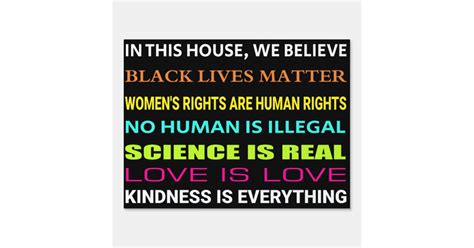
(In my house, we believe the Nicene Creed)

Instead of a naked public square, we see one festooned today with every imaginable image of the rainbow and associated symbology: from flags to backlighting, from crosswalks to entire murals on the sides of buildings. The public square went briefly from being a space where one might once have found images of the Ten Commandments or, during the holidays, a Christmas crèche, to one where the White House might be lit up by the rainbow celebrating a judicial fiat declaring a right to marriage of homosexuals in a constitution written in the 1780s, to public libraries where praise of cross-dressing, transexuality, and gay sex would become run-of-the-mill children’s programming.

When religion in any traditional or recognizable form is excluded from the public square, it does not mean that the public square is in fact naked. When recognizable religion is excluded, the vacuum will be filled by ersatz religion, by religion bootlegged into public space under other names.

The high priests of the new religion insist upon enthusiastic public expressions of support—especially during the holy month of June—lest one’s relative lack of fervency be taken as an indication of disbelief and grounds for being purged from the ranks of the elect. In nearly every respect, expressions of Pride are deployed in identical ways to traditional religious symbols and belief, in the eyes of many constituting a replacement religion. The inescapable, even overbearing presence of Pride symbology thus today bears all the unmistakable features of a “comprehensive doctrine,” the prevention of which earnest liberals of yesteryear insisted was their sole, modest aim.

Any war of “comprehensive doctrines” also brings attendant dangers. However, only someone not paying attention could believe that those dangers have been absent in recent years. My hope is that forthrightness about the terms of the debate may lead not to renewed “wars of religion,” but to a new settlement. A more pacific settlement might arise from acknowledgment that the actual “fact of pluralism” may require increased acceptance and acknowledgement of various state establishments. Such a settlement would return us to the original arrangement of the constitutional order, in which various religious traditions could coexist with robust internal unity amid relative proximate concord. California might thus retain its de facto established religion of Pride, and Alabama would establish some form of broadly nondenominational Protestant Christianity.

Patrick Deneen, inluding a prophetic insight of Richard John Neuhaus.

Comments:

  1. I think Deneen is correct that “Pride” has become a Rawlsian comprehensive doctrine — i.e., a de facto religion. (That doesn’t mean I think it will endure.)
  2. Deneen’s suggestion of permitted state establishments of religion is America’s original pattern (for what it’s worth). The First Amendment’s prohibition of Congress making any “law respecting an establishment of religion” was indeed a restriction on Congress, not the states. Massachusetts (of all places) had a state establishment until the 1830s and abandoned it voluntarily, not because some court declared it unconstitutional.
  3. I suspect I could formulate an argument that a state establishment of religion, unlike a limit on free exercise of religion, ought not be barred by the 14th Amendment “incorporation.” So long as a citizen is not coerced, I question whether their 14th Amendment “rights” are violated by an establishment.
  4. I’m under no illusion that I will like the religion established by any state: While I differ from him in details, I concur with Ross Douthat’s daring book title Bad Religion: How We Became a Nation of Heretics, and the best state establishment I could realistically hope for is mainstream Protestant (i.e., moralistic therapeutic deism).

Progressives verus liberals

You know you’ve touched a nerve with progressive activists when they tell you not just that you’re wrong but that you’re on the other side.

Such is the fate of any old-school liberal or mainstream Democrat who deviates from progressive dogma …

If this was just about our feelings, these denunciations could be easily brushed aside. But the goal and the effect is to narrow the focus of acceptable discourse by Democrats and their allies. If liberals are denounced for “punching left” when they express a reasonable difference of opinion, potentially winning ideas are banished.

In the run-up to a tight election with a weak Democratic candidate and a terrifying Republican opponent, pushing liberals and centrists out of the conversation not only exacerbates polarization, it’s also spectacularly counterproductive.

Those on the left who’ve been dumbstruck as Donald Trump has intimidated his most vociferous Republican critics (see: Chris Sununu, Nikki Haley) into falling in line might exert a little more self-awareness of similar moves by the left.

The goal of progressives may be solidarity, but their means of achieving it are by shutting alternative ideas down rather than modeling tolerance.

Pamela Paul, Who You Calling Conservative?

Note that I am not denying a similar Trumpist lock-step on the Right, nor does Ms. Paul.

Understanding the 2024 Roberts Court

If you really want to understand the conservative-dominated Supreme Court, it’s important to realize that all the Republican nominees who sit on it formed their legal philosophy and forged their legal reputations long before Donald Trump was elected president. This is no less true of Trump’s three nominees than of the three justices who were nominated by previous Republican presidents. Neil Gorsuch, Brett Kavanaugh and Amy Coney Barrett all possessed a robust legal identity and a considerable body of work before their selection to the high court. In fact, each has his or her own maverick streak, with Gorsuch perhaps most notable in his steadfast defense of Native Americans and the rights of criminal defendants.

When you understand this reality, what can seem to be a confounding, surprising Supreme Court term is actually predictable. The Trumpist right is lobbing a number of novel cases presenting aggressive legal theories to justices with pre-Trump legal philosophies, and the pre-Trump justices are rejecting them, repeatedly.

David French (emphasis added).

The Trumpist right is especially getting aggressive in Mississippi, Louisiana and Texas, part of the 5th Circuit U.S. Court of Appeals. The 5th Circuit has become where conservatives play out their fantasies to an obliging court as the 9th Circuit used to be the playground for progressives. You could say the 5th is the new 9th.

Republicans Pounce

A politically inconvenient rape and murder: Two migrants who’d crossed the border illegally have been charged with the rape and murder of 12-year-old Jocelyn Nungaray in Houston. The Associated Press managed to not once mention the status of the killers. The NYT eventually covered it, only in the context of how darned politically inconvenient it is: “The killing of Jocelyn Nungaray in Houston has become the latest crime seized on by Republicans to attack President Biden over his immigration policies.” Right. That 12-year-old, so rude of her to be murdered by the wrong type and letting Republicans “seize on” it. 

Nellie Bowles.

I’ll give the New York Times credit for disguising the usual formulation wherein the real story is “Republicans pounce” instead of what detestable thing they pounce on.

Tradition

Most of the things in our lives are not of our own making – they were given to us. Our language, our culture, the whole of our biology and the very gift of life itself is something that has been “handed down” to us. In that sense, we are all creatures of “tradition” (traditio=“to hand down”). Of course, these things that are not of our own making and are the least controllable are also those things that we take most for granted. We may hate our culture and our biology, but will still have to use our traditioned language (or someone’s traditioned language) to say so. Tradition is simply the most foundational, inescapable aspect of human existence.

Fr. Stephen Freeman, Things You Can’t Invent


So: where did all my mockery of Trump go? Well, first, I resolved to stop harping on it. But then, I just moved it off to my reflexive blog, trying to keep this one relatively reflective.

I suffer more from the humiliations inflicted by my country than from those inflicted on her.

Simone Weil, from a letter to Georges Bernanos.

I don’t do any of the major social media, but I have two sub-domains of the domain you’re currently reading: (a) You can read most of my reflexive stuff, especially political here. (b) I also post some things on the only social medium I frequent, because people there are quirky, pleasant and real.

Another notebook dump

Wisdom Generally

Willie Mays

The Say Hey Kid was that rarity who played a boy’s game with a boy’s joy and a man’s discipline and shrewdness.

National Review, The Week. That’s got to be the best “in a nutshell” on Mays. One consolation of being 75 most of this year is the memory of Willie Mays playing live, not just on highlight reels. You kids have no idea ….

Even the secularists have rituals

The “acme” of religious secularism in the West—Masonry—is made up almost entirely of highly elaborated ceremonies saturated with “symbolism.”

Alexander Schmemann, For the Life of the World

Apple acquiesces in reality

I became an “Apple guy” at home before retirement, though I still had to use Windows at work. Now our house is all Apple (or nearly so). (I confess to brief side-eyed looks at Linux, but it’s never stuck; I’ve just got my Apple gear set up to do what I want, quickly, so why change?)

Still, VisionPro was a bridge or two too far — way too much money for a novelty. Now:

Apple has told at least one supplier that it has suspended work on its next high-end Vision headset, an employee at a manufacturer that makes key components for the Vision Pro said. The pullback comes as analysts and supply chain partners have flagged slowing sales of the $3,500 device. The company is still working on releasing a more affordable Vision product with fewer features before the end of 2025. (Source: theinformation.com)

Via John Ellis

Freud

In his fanciful narrative, religion and the civilization that springs from it are reducible to a primordial event of psychosexual violence. … For Freud, at the dawn of human civilization a group of brothers, desiring sexual gratification with their mother, spontaneously rise up against their father and commit parricide. They then devour his body in a ritual act, joining incest to cannibalism. Because of their guilt, however, they internalize their absent father’s authority, which takes the place of a collective superego. From that moment on, human civilization has worked to suppress the libidinal will to power in men by repressing desire and transferring it to more “sublimated” activities. All religions—but especially Christianity with its doctrine of God the Father—are compensations for this primordial act of parricide. They can all be traced back to this scientifically formulated (and completely theoretical) act of original sin.

John Strickland, The Age of Nihilism

Essentially, Professor Crews came to regard Freud as a charlatan. In a debate with the psychoanalyst and author Susie Orbach in 2017, published in The Guardian, he maintained that Freud had “contradicted, discomfited and harangued his patients in the hope of breaking their ‘resistance’ to ideas of his own — ideas that he presumptuously declared to be lurking within the patients’ own unconscious minds.” In the process, he said, Freud created a myth about himself and his findings that failed to live up to empirical scrutiny.

His polemical broadsides vaulted him to the forefront of a group of revisionist skeptics loosely known as the Freud bashers.

“Freud: The Making of an Illusion” was his most ambitious attempt to debunk the myth of Freud as a pioneering genius, drawing on decades of research in scrutinizing Freud’s early career. Writing in The New York Times Book Review in 2017, George Prochnik found the book to be provocative if exhaustingly relentless: “Here we have Freud the liar, cheat, incestuous child molester, woman hater, money-worshiper, chronic plagiarizer and all-around nasty nut job. This Freud doesn’t really develop, he just builds a rap sheet.”

Obituary for Frederick Crews: “A literary critic, essayist and author, he was a leading voice among revisionist skeptics who saw Freud as a charlatan and psychoanalysis as a pseudoscience.”

It does not matter that the strictly scientific status of Freud’s theories is now methodologically and materially discredited. The central notion—that human beings are at core sexual and that that shapes our thinking and our behavior in profound, often unconscious, ways—is now a basic part of the modern social imaginary.

Carl R. Trueman, The Rise and Triumph of the Modern Self

Best and brightest besliming themselves

Cultural deregulation

Recent dustups over the supposedly racist implications of advocating marriage, thrift, and a good work ethic reveal the logic of cultural deregulation. The goal is to strip society of norms, leaving unsheltered those who cannot afford to live in well-appointed enclaves that covertly sustain modified bourgeois norms for the rich and their children. In the open culture, the lives of ordinary people become more disordered and less functional.

R. R. Reno, Return of the Strong Gods

Scientific consensus

[I]t has become increasingly obvious that science functions as much as an ideology as it does as a method of inquiry. The “scientific consensus” is now frequently invoked to settle not just scientific questions, but public-policy ones as well. Call this scientism. One of its most striking features is just how vacuous it is. Contemporary scientism doesn’t necessarily entail anything beyond uncritical deference to experts. This became clear enough over the course of the Covid pandemic. Within a month in early 2020, all right-thinking people went from ridiculing the idea that masks could stop the spread of a respiratory virus to believing it was of paramount importance to wear a mask at all times. This reversal wasn’t due to people weighing new evidence, but the empty assurance of the “scientific consensus.”

[U]nlike the creationists Wright might have been confronting a generation ago, proponents of “gender-affirming care” don’t appeal to sources of authority other than science. On the contrary, they point to the fact that major US medical institutions have endorsed these practices. The “scientific consensus,” then, has proved capable of giving public legitimacy to even the most outré belief systems.

[I]t’s clear by now that those who purport to speak in the name of science aren’t as neutral and objective as I once assumed. Often, science’s would-be spokesmen are bent on imposing their own dogmas. In hindsight, I should have been more concerned about scientism becoming an official state ideology. Science has many impressive discoveries to its credit, but we shouldn’t let it think and make political decisions on our behalf. Nor ought we to uncritically adopt the metaphysical views of the majority of scientists as our own. The question of God’s existence, for instance, remains as open today as at any other time in human history.

David Moulton, Two Cheers for ‘Intelligent Design’

At war with the human race

So it is that the gendered nature of the body is under attack, from the Left and Right, as is the connection between sex and babies. Left and Right alike resent the limitations of the human body. There’s just one small problem: sex does make babies and men and women are different. An ideology that cannot make room for the basic facts of human reproduction and sex differences is an ideology that will end up at war with the human body, with nature itself, and ultimately with the entire human race. In that war, it will go looking for allies where it can find them. It finds its most powerful, its indispensable, ally in the State.

Jennifer Roback Morse, The Sexual State.

By quoting, I’m not endorsing this book. I read it in preparation for a Symposium where the author was to be one of three keynote speakers. Based partly on the book, which did make a few points in a temperate register, I decided not to register for the symposium.

Self-delegitimation

As Harvard Law school professor Adrian Vermeule has said, liberal institutions “will have to become systematically undemocratic in order to remain liberal and, even where they do so, that will be but a stopgap measure in light of their systematic self-delegitimation.”

Rod Dreher in the European Conservative

Ruso-Ukrainian war

So: Why did Russia invade Ukraine?

WordPress unfortunately has been “improving” things again, so I cannot figure out how to embed a YouTube video, but I recommend the video at this link.

Theory 1: Putin is a revanchist, with many screws loose, who wants to rebuild the USSR in toto.
Theory 2: Putin would not tolerate NATO being extended to its very border with Ukraine (which the US promised it would not allow), kinda like our Monroe Doctrine.

Expats

“I hate Russia, for forcing me to leave her.”

It was an apt summary of what waves of émigrés from Russia and the Soviet Union since the early 20th century have felt: a sorrowful sense of loss for a motherland — what Russians call “toska po rodine” — coupled with resentment at the autocratic powers that forced them out. My grandparents were among the “White” Russians who fled the Revolution and moved to Paris in the 1920s. A second wave of emigrants left in World War II. The third, Soviet Jews, started leaving in the 1970s. Vladimir Putin has now created another wave of people fleeing Russia, and many of them may still believe, as my forebears did, that they will one day return to the homeland.

Most probably will not.

That is the tragic irony of Mr. Putin’s war. His attempt to “restore Russian greatness” through violence and hatred has tainted Russia’s real greatness for years to come ….

Serge Schmemann

Front lines of the LGBTTTIQA+, etc. revolution

Another bridge too far

One thing I think we can rule out right away is that the drop in support for same-sex marriage and acceptance of homosexuality is a function of religion. I’m aware of no evidence that the United States is undergoing a religious Great Awakening, at least when it comes institutional forms of worship handed down from the past. As sociologist Samuel Perry recently put it in a useful summary for Time magazine:

According to data from GallupPew, and PRRI, the percentage of Americans who identify with any religion is in steady decline, as are those who believe in God, the devil, Heaven, Hell, or angels; who say religion is a very important part of their life; maintain membership in a church or synagogue; or attend church regularly.

Why, then, might Republicans have begun turning against same-sex marriage and acceptance of homosexuality in the past two years?

This is just speculation, but I’d wager it has something to do with the way left-wing activists have taken up the cause of transgender rights as the next front in the now-decades-long cultural revolution. To be clear: I don’t think such a backlash, if there’s been one, has arisen over calls to protect the civil rights of the tiny number of transgender people in the country. Rather, the backlash would come from opposition to the ideology of transgenderism promulgated by the most militant activists on the left—and the extraordinary rapidity with which that ideology’s assumptions and assertions have come to be treated as conventional wisdom among many of those who run government bureaucracies, public and private schools and universities, medical institutions, and the business sector.

If I’m right that declining support for same-sex marriage and homosexual acceptance among Republicans derives (at least in part) from a backlash against transgender activism, that would likely mean that more conservative-minded Americans have concluded the gay-rights movement was a Trojan Horse for something far more extreme and destabilizing. It’s not inevitable that they would conclude this, since as Andrew Sullivan and other champions of gay rights have persuasively argued, the interests of homosexuals stand in considerable tension with those asserted by the most radical transgender activists. But the Activist and Donor Complex on the left has made it natural for the rest of the country to make the leap from one to the other by bundling the two movements together in an ever-expanding, alphabet-soup abbreviation: LGBTTTIQA+, etc.

Damon Linker

March of Dimes Syndrome

Why, last year, did the Human Rights Campaign declare a “national state of emergency” for LGBT people? Why was the election of the first black American president followed by the Black Lives Matter movement? Why have reports of “hate groups” risen during the same decades that racial prejudice has been plummeting? Why, during a long and steep decline in the incidence of sexual violence in America, did academics, federal officials, and the #MeToo movement discover a new “epidemic of sexual assault”?

These supposed crises are all examples of the March of Dimes syndrome, named after the organization founded in the 1930s to combat polio. The March helped fund the vaccines that eventually ended the polio epidemics—but not the organization, which, after polio’s eradication, changed its mission to preventing birth defects. Its leaders kept their group going by finding a new cause, just as antiwar activists did after achieving their goal of ending the Vietnam War. The Three Mile Island accident offered new fund-raising opportunities and a new platform for veterans of the antiwar movement such as Jane Fonda and her husband Tom Hayden, who both addressed the crowd at that first antinuke rally.

For career activists, success is a threat. They can never declare mission accomplished.

So activists have moved the goalposts once again. It is no longer enough for conservative Christians to tolerate same-sex marriage—now they must be legally required to bake cakes and design web pages for the weddings. It is no longer enough to protect gay students from harassment—now these students must have access in elementary school libraries to how-to manuals for anal sex. Public schools must encourage prepubescent students to explore the many possible gender identities without their parents’ knowledge. Biological males self-identifying as females must be allowed to compete against females in sports. These new causes have been wildly unpopular, arousing opposition from homosexuals as well as heterosexuals, and have led to a decline in public support for the gay rights movement. But however much the backlash has hurt the original cause, the controversies keep activists in business.

As the civil rights movement searched for new causes, no group shifted as adroitly as the Southern Poverty Law Center. The group launched in the 1970s to offer legal representation to individual victims of discrimination but then switched to filing lawsuits against chapters of the Ku Klux Klan. In 1986, the SPLC’s entire legal team resigned in protest—they’d signed up to help poor people, not sue an organization whose national membership barely eclipsed 10,000. But the Klan made an ideal villain for fund-raising appeals to northern liberals, and the SPLC prospered from the publicity about lawsuits that bankrupted chapters of the Klan.

By the 1990s, virtually nothing was left of the Klan to sue, so the SPLC pivoted again. It changed the name of its “Klanwatch” project to “Hatewatch,” and began issuing reports listing a growing number of “hate groups” and “extremists” across America. Scholars, journalists, and nonprofits have repeatedly denounced SPLC’s blacklists, noting that its tallies include many “hate groups” that don’t exist, or are harmless (such as a Confederate memorabilia shop that made the list), or are mainstream conservative and Christian organizations that simply oppose progressive policies. The SPLC’s lists of dangerous “extremists” have included respected conservatives such as Charles Murray, Rand Paul, and Ben Carson … The SPLC’s appeals to combat a “rising tide of hate” have brought in so much donor money that its endowment has soared above $600 million.

John Tierney, The March of Dimes Syndrome

Politics

Tribal conformity

I personally know progressives who are absolutely furious that GOP figures don’t speak out against Trump, but those same individuals are petrified of the intolerant elements of their own political tribe. They wouldn’t dream of speaking against the most-woke elements of the radical left. After all, their jobs are at stake. Their reputations hang in the balance. Remember the now-famous Vox essay, “I’m a liberal professor, and my liberal students terrify me”? I’ve heard that sentiment many times.

David French, Let’s Talk About Fear

The Donilon strategy: All About ‘Dat Coup

If the sudden prospect of electing the first president who is a convicted felon hasn’t put Americans off Trump, why would Joe Biden, Mike Donilon, or anyone else think that reminding them of his coup plot and the insurrection it led to will do so?

On the other hand, how can one run against Donald Trump and not make his authoritarian ambitions the centerpiece of the campaign? He’s not shy about expressing those ambitions; should he win in November, the next four years will in fact be defined by his attempts to subvert the constitutional order. The right’s hostility to Western liberalism is the elephant in the room of this election. How can the president resist making a spectacle of it?

I think his and Donilon’s strategy of making the race about democracy is simultaneously weak and quite possibly the strongest one available to them.

There’s another case for the Donilon strategy. Namely, it’s worked before. And I don’t just mean in 2020.

Five days before the 2022 midterms Biden delivered a speech warning Americans that, with so many Trump-backed post-liberal populist Republicans running for major offices, “democracy is on the ballot.” He called on voters to ask themselves this question when considering a candidate: “Will that person accept the legitimate will of the American people and the people voting in his district or her district? Will that person accept the outcome of the election, win or lose?”

Some pundits called the address “head-scratching” in light of polling that showed the economy, not democracy, dominating when voters were asked what the most important issue in the election was. Yet five days later Republicans ended up underperforming badly in a midterm in which the out-party typically cleans up. One Trump-endorsed MAGA acolyte after another fell short in key races, holding the GOP to modest gains in the House and helping Democrats gain a seat in the Senate.

For me, the great virtue of the Donilon strategy is that it’ll leave America with no excuses if Trump wins. An election framed around the economy or immigration that ends in Republican victory will let denialists about the country’s decline insist that things would have been different if only Biden had taken a different approach. “He should have emphasized the coup attempt and January 6,” they’ll say. “Surely Americans wouldn’t have reelected Trump if the election had been about that.”

I’m not sure of that at all, personally. I’d like to test the proposition. And if Trump is returned to power, I’d find comfort in knowing that we maximized our collective shame by approaching the race as a referendum on the constitutional order—and chose the other option. If we do this, let’s be clear-eyed about it. No excuses. Trump 2024: Maximum Shame.

Nick Catoggio

The Machiavelli IQ test

The first method for estimating the intelligence of a ruler is to look at the men he has around him.

Niccolo Machiavelli

After Trump’s guilty verdicts, the popular sports talk radio host Colin Cowherd, who’s not a usual Trump critic, treated his listeners to an inventory of the criminals around Trump: “His campaign chairman was a felon. So is his deputy campaign manager, his personal lawyer, his chief strategist, his national security adviser, his trade adviser, his foreign policy adviser, his campaign fixer and his company C.F.O. They’re all felons. Judged by the company you keep. It’s a cabal of convicts.”

Frank Bruni

We knew damn well he was a snake before we took him in.

Populism anticipated

For the success of our restoration it cannot be too often said that society and mass are contradictory terms and that those who seek to do things in the name of mass are the destroyers in our midst. If society is something which can be understood, it must have structure; if it has structure, it must have hierarchy; against this metaphysical truth the declamations of the Jacobins break in vain.

Richard M. Weaver, Ideas Have Consequences.

Past their “Sell By” Dates

Also Presented Without Comment

Former House Speaker Nancy Pelosi, asked by Anderson Cooper whether she has “confidence” in the Supreme Court: 

“No, I think they’ve gone rogue. It’s most unfortunate.”

Also Also Presented Without Comment

New York Post: Trump Camp Claims He Was ‘Tortured’ in Fulton County Jail—as It Peddles Coffee Cups With His Mugshot

Australia can have him

Julian Assange on his leaking of the names of hundreds of Afghan civilian informants into the hands of the Taliban: “Well, they’re informants. So, if they get killed, they’ve got it coming to them. They deserve it.”

Jim Ellis, News Items


I suffer more from the humiliations inflicted by my country than from those inflicted on her.

Simone Weil, from a letter to Georges Bernanos.

I don’t do any of the major social media, but I have two sub-domains of the domain you’re currently reading: (a) You can read most of my reflexive stuff, especially political here. (b) I also post some things on the only social medium I frequent, because people there are quirky, pleasant and real.

Friday, 6/7/24

Legalia

Musical rackets

Copyright law is just a big steaming mess. Whenever you think it can’t get crazier, it always does.

YouTube is the ultimate battlefield for copyright claims gone wild. Even when I do a short YouTube video about music, I can never play examples from actual recordings. (That’s why I’ve never given an online course on music history. Corporate lawyers would shut me down in a New York minute.)

Consider the case of the YouTuber whose video got demonetized because his “Samsung washing machine randomly chimed to signal a laundry cycle had finished while he was streaming.”

How is that even possible? But it gets even stranger.

Ashley Belanger reports in Ars Technica:

Apparently, YouTube had automatically scanned Albino’s video and detected the washing machine chime as a song called “Done”…[but it] actually comes from the song “Die Forelle” (“The Trout”) from Austrian composer Franz Schubert.

The song was composed in 1817 and is in the public domain. Samsung has used it to signal the end of a wash cycle for years.

I’m not sure what Schubert would make of all this. But I can assure you that none of his heirs will get a penny from this. That’s not the purpose of song copyrights anymore.

Ted Gioia, in a thoroughly disheartening chronicle of where AI appears to be taking us.

See also James O’Malley, Music Just Changed Forever

One crime with 34 cooties

I have added a P.S. to my recent post “34 Counts!”:

I don’t think I’ll dwell on the 34 counts any more, and regret having done so. The 34 counts were 34 bookkeeping entries. In most courts — and in best practice — this would have been charged as one crime, or so I’m told.

Politics

Sheep

Most Church leaders—conscious that to condemn Nazis for blasphemous kitsch might prove risky—opted to bite their tongues. Some, though, actively lent it their imprimatur. In 1933, the year that Hitler was appointed chancellor, Protestant churches across Germany marked the annual celebration of the Reformation by singing Wessel’s battle hymn. In Berlin Cathedral, a pastor shamelessly aped Goebbels. Wessel, he preached, had died just as Jesus had died. Then, just for good measure, he added that Hitler was ‘a man sent by God’.

Tom Holland, Dominion

I heard David French tell a story about masculinity today that was very David Frenchy in that it was based on a movie, American Assassin:

This is the story of Chris Kyle. And it was — I remember seeing it here in Tennessee. And you couldn’t find a parking spot in our theater. That movie was an absolute sensation.

And one of the most memorable parts of that movie is when Chris Kyle is involved in a playground fight, and his father goes through this sheepdog, sheep, wolf analogy. And that is there’s three kinds of people in this world. There’s the sheep, there are the wolves who prey on the sheep, and the sheepdogs who protect the sheep from the wolf.

And he says, I’m not raising any sheep in this household. So what are you? And at that point, Chris Kyle identifies himself as a sheep dog, as somebody who protects the weak against the wolf. OK? And so it’s a very anti-bullying sort of vision of male courage.

And then here comes Donald Trump, who fits to a T the definition of a wolf, of a bully. The story the right told about itself was that they would be inoculated against the wolf, against the bully, because they have this ethos of the sheepdog.

But then when the wolf arose and the bully arose, they went with the bully, the very person that a generation of young right-wing men were warned about. And so that’s what makes this, in many ways, so much more deeply disturbing even than it otherwise been (sic), because it called into question kind of the cultural enterprise that was happening before Trump.

On that same podcast, Jamelle Bouie, riffing on Trump’s first post-conviction public appearance being UFC (Universal Fight Club), quipped that “Professional wrestling is camp for straight men..”

Not a referendum on Trump?!

I believe I recently passed on an opinion that both Trump and Biden want this election to be a referendum on Trump. Now I pass along the opinion that it’s a referendum on Biden:

[Y]ou can just look at the polls in the US: 51 percent of Americans now support mass deportations of the kind Trump is proposing; including 42 percent of Democrats, and 45 percent of Hispanics. That was unthinkable four years ago — and it’s entirely on Biden. The revolt against this basic failure of governance is now strong even in big cities, run by Democrats, and among non-whites, who are moving toward Trump.

Joe Biden’s main campaign theme seems to be that he alone can defend liberal democracy from Donald Trump. What Biden has never understood is that restricting immigration is absolutely critical to defending liberal democracy. Everything else is just words, condescending words. If Trump triumphs in November, Biden will be responsible for simply ignoring basic political reality, alienating the very people he needs.

One person was responsible for Trump’s first term: Hillary Clinton. And one will be responsible for his second: Joe Biden.

I guess it’s worth reiterating at this point that I’m not anti-immigration. It remains the lifeblood of America, and immigration is vital for our future fiscal balance. I’m a proud immigrant myself — and America will always be able to integrate newcomers in ways European countries simply cannot. But, like a huge majority of Americans, I’m in favor of legal, orderly, controlled immigration — and not the chaos we now see everywhere in the West. This is not racism or xenophobia; it’s a recognition that borders and the rule of law matter; and that without secure borders, we risk losing the core reality of a nation-state; and without a better-paced influx, we risk delegitimizing immigration altogether, and balkanizing our societies.

Andrew Sullivan

Loser Trump

Trump’s base does not win elections outside of party primaries. It did not win the midterms for the Republican Party in 2018, it did not win re-election for the Trump in 2020, and it did not win a red wave for Republicans in 2022. The signature Republican victory of the last four years, the election of Glenn Youngkin over Terry McAuliffe in the 2021 Virginia race for governor, rested on an effort to marginalize the Trump base so that party leaders could engineer a nominee with the ability to distance himself from the former president and his movement.

Jamelle Bouie.

And true to form, the RNC’s Lara Trump has issued a fatwa against Larry Hogan, Republican candidate from U.S. Senate from Maryland, for saying the public should respect the process and the verdict in the Trump felony trial. Kiss that seat goodbye, GOP.

Chicken Littles of the Left

Some people reportedly (I haven’t met one outside of click-bait stories) are worked up that some Trump supporters want to ban IVF, contraception, and recreational sex. Though I know some arguments against each of those sacred cows, this strikes me as a reverse mirror-image of QAnon.

I would welcome more careful thought about IVF, but I’m an outlier. Anyone who thinks that a lame duck Donald Trump is going to pander to a very small group of ideologues who are seriously out of step with 90%+ of their countrymen needs to take a deep breath. Anyone who thinks that Donald Trump (who probably has frequent sperm donor perks at the fertility clinics of Manhattan) is personally opposed to IVF, contraception and recreational sex (“I never did anything that needed forgiveness” or something like that, he said) needs inpatient psych care.

Culture

Defining deviancy down … and up

When and why did American life become so coarse, amoral and ungovernable? In his classic 1993 essay, “Defining Deviancy Down”, the late Senator Daniel Patrick Moynihan offered a semantic explanation. He concluded that, as the amount of deviant behaviour increased beyond the levels the community can “afford to recognise”, we have been redefining deviancy so as to exempt conduct we used to stigmatise, while also quietly raising the “normal” level in categories where behaviour is now abnormal by any earlier standard. The reasons behind this, he said, were altruism, opportunism and denial — but the result was the same: an acceptance of mental pathology, broken families and crime as a fact of life.

In that same summer, Charles Krauthammer responded to Senator Moynihan with a speech at the American Enterprise Institute. He acknowledged Senator Moynihan’s point but said it was only one side of the story. Deviancy was defined down for one category of society: the lower classes and black communities. For the middle classes, who are overwhelmingly white and Christian, the opposite was true. Deviancy was in fact defined up, stigmatising and criminalising behaviour that was previously regarded as normal. In other words, there was a double standard at work.

Ayaan Hirsi Ali

Presented without express comment

A new poll from Ipsos has found that support for same-sex marriage among Americans has fallen to just 51% approval.

Following a years-long rise in support for gay marriage, a groundswell of anti-woke sentiment emerged around 2021, much of it directed at LGBT activism as parents gained a new window into their children’s curriculum when schooling went remote during the Covid-19 pandemic …

Gay rights have since been lumped in with trans rights in the popular imagination, which may have chipped away some public support for gay marriage at the margins. …

Bev Jackson, co-founder of the LGB Alliance, said the decline in support for same-sex marriage had causes on both the Left and the Right. “Blame for the fall in US support for gay marriage lies partly with the homophobic religious Right. But equally to blame are treacherous organisations like GLAAD and the ACLU which promote insane, deeply unpopular concepts such as gender self-ID and child ‘transition’,” she said. “Gender identity ideologues have been riding on LGB’s coattails for too long, and they’re helping to destroy support for the rights we fought for decades to win.”

Laurel Duggan

Junk info

Junk info is often false info, but it isn’t junk because it’s false. It’s junk because it has no practical use; it doesn’t make your life better, and it doesn’t improve your understanding. Even lies can be nourishing; the works of Dostoevsky are fiction, yet can teach you more about humans than any psychology textbook. Meanwhile, most verified facts do nothing to improve your life or understanding, and are, to paraphrase Nietzsche, as useful as knowledge of the chemical composition of water to someone who is drowning.

Gurwinder

Privileging victims, real and imagined

The intuitive moral structure of our modern social imaginary prioritizes victimhood, sees selfhood in psychological terms, regards traditional sexual codes as oppressive and life denying, and places a premium on the individual’s right to define his or her own existence.

Carl R. Trueman and Rod Dreher, The Rise and Triumph of the Modern Self

Safetyism today

They want revolutionary ends, but they want to hide behind establishment credibility.

Jonah Goldberg, describing the successor ideology, which has famously “march[ed] through the institutions.”

Tipsy the squish

I finally had to replace the color toner cartridges on my laser printer. I opened the red-and-white Canon box I’d ordered months ago. I found unfamiliar packaging of the cartridges and unfamiliar cartridge configuration. I figured out how to install them and then looked for the instructions on recycling them (back to Canon). It was nowhere to be found.

Having seen the word “compatible” a few times, I looked more closely at the box. Where the word Canon should have been, the word “Cartridge” appeared.

I remembered when I purchased them my shock at the low price, but I double- and triple-checked. I thought I was getting an inexplicable price on Canon goods. They still conned me with the Canon-looking box.

Now I’ve got three laser cartridges I can’t recycle, and it bothers me more than such a thing is supposed to bother a conservative.

Which reminds me again of how close “conservative” today is to “barbarian.” My gut-identification today remains “conservative,” but my considered identification is center-right.

Progress

Progress should be about improving the quality of life and human flourishing. We make a grave error when we assume this is the same as new tech and economic cost-squeezing.

Ted Gioia, I Ask Seven Heretical Questions About Progress

GD Misinformation

Mainstream coverage of this issue is a buffet of sanctimonious overclaiming. It says authoritatively that kids in the US can’t go on blockers or hormones prior to lengthy, in-depth assessment (false). That no one under 18 is getting surgery (false). That the worldwide rise in referrals to youth GD clinics is almost entirely the result of reduced stigmatization (no one knows). That GD, or the perception that one has GD, can’t spread through adolescent social networks (almost certainly false on the basis of anecdotal evidence and any familiarity with developmental psychology). That it’s a ‘myth’ that significant number of kids who believe themselves to be trans will later feel differently (false, according to all the existing data). That only a tiny percentage of people detransition (we have no data at all on this in the context of youth gender care in the States).

What the Media Gets Wrong on Gender Reassignment. This is from 2021 when the elites were uniformly purveying lies about Covid, gender dysphoria and who knows what all else. Things have gotten markedly better in recent months on adolescent gender dysphoria.

Capitalistic algorithmic ideological hairball

For many of our applicants—and this, of course, is what the program is about, what the humanities are about—learning has, or ought to have, an existential weight. Beneath their talk of education, of unplugging from technology, of having time for creativity and solitude, I detected a desire to be free of forces and agendas: the university’s agenda of ‘relevance,’ the professoriate’s agenda of political mobilization, the market’s agenda of productivity, the internet’s agenda of surveillance and addiction. In short, the whole capitalistic algorithmic ideological hairball of coerced homogeneity. The desire is to not be recruited, to not be instrumentalized, to remain (or become) an individual, to resist regression toward the mean, or meme.

William Deresiewicz, Deep Reading Will Save Your Soul H/T Frank Bruni (who led me to actually read a piece I’d only skimmed). Ted Gioia, My Lifetime Reading Plan, practiced it before Deresiewicz preached it.

Losers

The characteristic feature of the loser is to bemoan, in general terms, mankind’s flaws, biases, contradictions, and irrationality-without exploiting them for fun and profit.

Nassim Nicholas Taleb, The Bed of Procrustes


So: where did all my mockery of Trump go? Well, first, I resolved to stop harping on it. But then, I just moved it off to my reflexive blog, trying to keep this one relatively reflective.

I suffer more from the humiliations inflicted by my country than from those inflicted on her.

Simone Weil, from a letter to Georges Bernanos.

I don’t do any of the major social media, but I have two sub-domains of the domain you’re currently reading: (a) You can read most of my reflexive stuff, especially political here. (b) I also post some things on the only social medium I frequent, because people there are quirky, pleasant and real.