We’re home at last from a vacation overshadowed by car damage from road debris encountered on the way north to vacation. Every fix revealed yet another problem. Every new problem required a wait for Allstate to approve the added work. We finally just drove our rental car home yesterday and are currently planning how most easily to retrieve our car when they finally fix the final problem.
I have nothing more to say on that, lest I add myself to the luckiest victims in the world (see below).
Not very political
The huge history of a little bit of geography
The word Palestine always brought to my mind a vague suggestion of a country as large as the United States. I do not know why, but such was the case. I suppose it was because I could not conceive of a small country having so large a history. I think I was a little surprised to find that the grand Sultan of Turkey was a man of only ordinary size. I must try to reduce my ideas of Palestine to a more reasonable shape. One gets large impressions in boyhood, sometimes, which he has to fight against all his life.
Mark Twain, The Innocents Abroad
Epistemic idiocy
A man who murdered dozens of Muslims at two mosques in New Zealand was “steeped in the culture of the extreme-right internet,” … His manifesto explained that he had done research and developed his racist worldview on “the internet, of course. . . . You will not find the truth anywhere else.”6 The latter assertion involves, alas, a rather serious mistake about epistemic authority.
This is a flawed but important article I personally will revisit on the subject of legitimate epistemic authority. We’re not as adrift and it sometimes seems — or as the New Zealander fancied himself.
ProPublica
Having apparently run out of Supreme Court justices to attempt to drive from public life, the left-wing nonprofit journalistic outfit ProPublica has directed its attention to sullying one of their most notable achievements: the Dobbs decision, which returned the power to regulate abortion to the people and to the states. Georgia now has a heartbeat law, which outlaws abortion once a fetus has a detectable heartbeat (with exceptions for rape, incest, and maternal health). A recent ProPublica article blamed the law for the deaths of two women who had taken chemical-abortion drugs (whose riskiness goes unremarked upon). The drugs killed the children but failed to expel all of their remains. One woman unsuccessfully sought treatment in a hospital, and the other feared it—both, supposedly, results of the law. But as our former colleague Isaac Schorr pointed out at Mediaite, the law does not forbid the surgical removal of an already dead child. No reasonable person who read the plain text of the law would think otherwise, which may be why ProPublica did not include the relevant portion. Even the argument that the doctors’ uncertainty about the law prevented treatment is unsubstantiated. The ProPublica article eventually admits that “it is not clear” why doctors waited to perform the necessary procedure. Laws against abortion haven’t caused any deaths, but ProPublica is doing its part to raise the death toll.
National Review email newsletter
The luckiest victims on earth
[E]ven as you push back against ideological bias and discrimination, remember that as a university student you are one of the luckiest — most privileged — people on the planet. So do not think of yourself as a victim. You can assert and defend your rights without building an identity around grievances, however justified those grievances may be.
…
Remember that the criticism of a belief (or a practice, faith or lifestyle) is not a personal attack, though the natural human tendency to wrap our emotions tightly around our convictions can make it feel as if it is.
I don’t pin dreams on the rack of endless above-ground interpretation, but I do give them space and attention.
In myth, when you are facing a monster, look at its reflection on your shield, not the abyss of its face. That will quickly burn you to cinders. What is your shield? Well it’s something that shows you the general shape of your adversary but not to the degree it paralyses you.
The yearslong elevation of figures like [North Carolina Gubernatorial Candidate] Mark Robinson and the many other outrageous MAGA personalities, along with the devolution of people in MAGA’s inner orbit — JD Vance, Elon Musk, Lindsey Graham and so very many others — has established beyond doubt that Trump has changed the Republican Party and Republican Christians far more than they have changed him.
In nine years, countless Republican primary voters have moved from voting for Trump in spite of his transgressions to rejecting anyone who doesn’t transgress. If you’re not transgressive, you’re suspicious. Decency is countercultural in the Republican Party. It’s seen as a rebuke of Trump.
… I’ve compared the cultural power of a leader to setting the course of a river. Defying or contradicting the leader’s ethos is like swimming against the current — yes, you can do that for a time, but eventually you get exhausted and either have to swim to the bank and leave, or you’re swept downstream, just like everyone else.
In a similar vein, albeit from someone who hasn’t been Republican:
There is no place for dissenters in the contemporary Republican Party. That is going to remain true whether or not Donald Trump prevails in November. It’s long past time those who reject the right-populist takeover of the party to cut themselves loose and stop pretending they will have a meaningful say in building its future. They will not. It would be far better for them, and for the Democrats, if they joined the Donkey Party outright and began fortifying the Harris-Walz campaign’s move toward the ideological center-left.
In a strong post late last week, The Bulwark’s Jonathan Last took the occasion of the latest mind-boggling revelations about Mark Robinson, the Republican Party’s nominee for governor of North Carolina, to make the point that the GOP is a “failed state.” The image comes from a 2016 Slatecolumn by his Bulwark colleague Will Saletan. As Last explains, functional institutions “have power centers and interests. In a healthy institution, these power centers can unite to achieve shared interests, even in difficult moments which require sacrifice.” Over the last two decades, for example, Democratic Party has given us the following examples:
In 2008 Hillary Clinton was supposed to be the Democratic presidential nominee. But various Democratic power centers coordinated to elevate Barack Obama, who they believed was a better candidate.
In 2016, a democratic socialist tried to win the Democratic presidential nomination. The party coordinated to prevent him from doing so.
In 2020, the same democratic socialist made another attempt. The party coalesced around Joe Biden and got him elected president.
In 2023, as Republicans went through four nominees to find a speaker of the House, Democrats voted, unanimously, time after time, for Hakeem Jeffries.
And in 2024, when the Democratic Party realized that Joe Biden was compromised as a candidate by his health, they convinced him to step aside.
I want to underscore this: The Democratic Party was able to convince a sitting president to abandon his reelection attempt four months before November.
That’s a portrait of a party as an effective, functional institution.
The Republican Party, by way of sharpest contrast, cannot even get a man to step aside in a crucial statewide race when he’s caught (among other things) describing himself as a “Black Nazi” on a porn-focused chat forum. The party is being held hostage—by the candidate, yes, but his power is itself a function of his popularity among Republican voters in the state. They want him as their nominee, and the voters get whatever they want in the contemporary GOP. Which means the institution is a hollow shell—or the domestic equivalent of a failed state.
Sorry, Damon, but I’m not going to be in the vanguard of any GOP migration, partly because I’m not exactly in the GOP, partly because of a few deal-killer Democrat policies.
The Bennet Inversion
Our best hope is to hasten a change in culture that reverses this effect. Call it the Bennet Inversion, for Senator Michael Bennet, who campaigned for president promising to govern so boringly that voters would go weeks without thinking about him. He was so successful that no one remembers his campaign at all. Biden accomplished a miniature version of this, by executing a Fabian strategy and defeating Trump without ever facing him directly on the field of meme battle.
I don’t do any of the major social media, but I have two sub-domains of the domain you’re currently reading: (a) You can read most of my reflexive stuff, especially political here. (b) I also post some things on the only social medium I frequent, because people there are quirky, pleasant and real.
No, I didn’t watch. I thought I might. Then I thought I wouldn’t because it wouldn’t change my vote for “neither of the above.” Then I just plain forgot it was going to broadcast, picked up a book to make me smarter, and was asleep before the conclusion of the debate that would have made me dumber.
It can be said that Ms. Harris was well prepared in leading him astray. After blaming Mr. Trump for helping to tank a congressional border bill, Ms. Harris unboxed an attack line that seemed handcrafted by a team of Trumpologists to enrage him, distracting him with his own vanity.
“I’m going to actually do something really unusual,” she said, addressing the audience at home. “I’m going to invite you to attend one of Donald Trump’s rallies. Because it’s a really interesting thing to watch.”
Smirking, provoking, Ms. Harris ticked through some common Trump digressions, like windmills and the fictional killer Hannibal Lecter. Mr. Trump’s eyes narrowed, and his head cocked to the left.
“And what you will also notice,” she said, as Mr. Trump bobbed a bit, pendulum-like, “is that people start leaving his rallies early out of exhaustion and boredom.”
On those two nouns, Mr. Trump’s eyes shot up. Ms. Harris completed her thought: “The one thing you will not hear him talk about is you.”
Mr. Trump went on to say that the FBI’s crime statistics are “a fraud,” and the Bureau of Labor Statistics jobs numbers are “a fraud,” and the 2020 election was, yes, still a fraud, and “they should have sent it back to the legislatures.” About the Jan. 6, 2021, riot at the U.S. Capitol, he regrets nothing. Then World War III again. What of this is supposed to reassure suburbanites who worry that Mr. Trump is too erratic to put back in the Oval Office?
In Kamala Harris’s big general-election debate four years ago, she faced off against an opponent with a fly on his head.
In her immeasurably bigger debate on Tuesday night, she confronted an opponent with bats inside his.
And out they came, flapping and screeching, when he brought up cats and dogs.
He was talking about what he couldn’t stop talking about — the millions of migrants who, he insisted, were depraved criminals being dumped on us by cackling foreign leaders — and in his indiscriminate zest to describe an American hellscape, he repeated debunked stories that in Springfield, Ohio, these desperate newcomers were noshing on Fido and Whiskers.
“They’re eating the dogs. The people that came in — they’re eating the cats. They’re eating the pets of the people that live there,” he sputtered, red-faced …
…
And all that predebate chatter about his being a foot taller than she is and how that might visually diminish her? Most of the televised debate was a split screen of their two faces, and it was Trump who ended up looking small.
…
But while she was brilliant when discussing the damage done by what she shrewdly termed the “Trump abortion bans,” she was evasive when asked whether she supported any abortion restrictions. She was evasive, period, routinely answering questions by not answering them and pivoting to statements of principle, pitches for her policy proposals or indictments of Trump.
…
And Trump can be beaten. That was the clearest takeaway on Tuesday night.
Insufficiently prepared and demonstrably perturbed, he was reduced to insults and catcalls: Biden was a beach bum. Harris shirked important matters of state for a sorority reunion. And she had no real plan for the economy.
“It’s, like, four sentences,” Trump groused. “Run, Spot, run.”
Um, that’s three words. And isn’t Spot running so he doesn’t end up as charcuterie?
Trump cited his friendly relations with Putin and the praise he has gotten from Viktor Orban, both autocrats. Harris explained that they wanted him in power because they know “they can flatter you and manipulate you.” In one swoop, he showed how naïve, ignorant and dangerous he would be for American foreign policy.
Trump kept describing the United States as a failing nation. His candidacy remains the best evidence for that claim. The Republican candidate for president of the United States baldly asserted on national television that doctors are executing babies after birth. He said that immigrants are stealing and eating Americans’ pet dogs and cats. He defended the rioters who attacked the Capitol on Jan. 6. Even if he loses the election, this debate was a reminder — though, frankly, one we didn’t need — that our democracy has big problems.
Trump’s recapitulation of his running mate’s smears against Haitian immigrants in Ohio is a sign that the former president is marinating in a right-wing media ecosystem that, along with his own incapacities, renders him unable to perceive reality.
Trump’s inability to perceive reality is, in my estimation, an epiphenomenon of his narcissism, rather than the “right-wing media ecosystem” he marinates in. (But I’m quibbling; he so marinates because his narcissism can’t bear the criticism he’d see if he ventured outside his bubble.)
Even when Trump had the facts on his side, his answers were delivered in such disjointed staccato that his message was lost on the listener. Consider his response on Afghanistan. This should have been a layup, given the fact the Biden-Harris administration presided over a humiliating withdrawal that left our Afghan allies behind and culminated in a suicide bombing attack that killed 13 U.S. service personnel. But Trump, instead, rambled about the detailed sequence of the withdrawal in the agreement that his administration had originally negotiated, and then pivoted to complain about the $85 billion worth of “beautiful military equipment” left on the battlefield.
Vice President Kamala Harris walked onto the ABC News debate stage with a mission: trigger a Trump meltdown.
She succeeded.
Former President Donald Trump had a mission too: control yourself.
He failed.
Trump lost his cool over and over. Goaded by predictable provocations, he succumbed again and again.
Trump was pushed into broken-sentence monologues—and even an all-out attack on the 2020 election outcome. He repeated crazy stories about immigrants eating cats and dogs, and was backwards-looking, personal, emotional, defensive, and frequently incomprehensible.
Harris hit pain point after pain point: Trump’s bankruptcies, the disdain of generals who had served with him, the boredom and early exits of crowds at his shrinking rallies. Every hit was followed by an ouch. Trump’s counterpunches flailed and missed. Harris met them with smiling mockery and cool amusement. The debate was often a battle of eyelids: Harris’s opened wide, Trump’s squinting and tightening.
Harris’s debate prep seemed to have concentrated on psychology as much as on policy. She drove Trump and trapped him and baited him—and it worked every time.
Trump’s nondefense of his behavior on Jan. 6 was so ridiculous — he tried to change the subject to illegal immigration at one point, as if disgruntled Mexicans had invaded the Capitol at his behest — that even if Harris had stumbled out drunk and dribbled down her blouse, Trump still might have lost the debate for himself.
Moderators David Muir and Linsey Davis of ABC News made the controversial decision to perform fact checks of the candidates in real time. Not once did they check a claim from Harris. All four of the moderators’ live corrections were made against Trump, some of which were highly subjective.
Of course, that’s why many moderators — including Jake Tapper and Dana Bash in June — choose to trust that voters can check facts on their own. Campaigns are built on exaggerations. Nobody is happy about it, but it’s true of both Republicans and Democrats. While Trump is uniquely freewheeling, to say the very least, Harris provided plenty of openings for the moderators to offer just one easy correction.
I don’t do any of the major social media, but I have two sub-domains of the domain you’re currently reading: (a) You can read most of my reflexive stuff, especially political here. (b) I also post some things on the only social medium I frequent, because people there are quirky, pleasant and real.
For a few days this last week I started to believe that Kamala Harris and the Democrats could come from behind and beat Donald Trump. But then I started to hear Democrats patting themselves on the back for coming up with a great new label for Trump Republicans. They are “weird.”
I cannot think of a sillier, more playground, more foolish and more counterproductive political taunt for Democrats to seize on than calling Trump and his supporters “weird.”
But weird seems to be the word of the week. As this newspaper reported, in a potential audition to be Harris’s running mate, Gov. Tim Walz of Minnesota said over the weekend of Trump and his vice-presidential pick, Senator JD Vance of Ohio: “The fascists depend on us going back, but we’re not afraid of weird people. We’re a little bit creeped out, but we’re not afraid.” Just to make sure he got the point across, Walz added: “The nation found out what we’ve all known in Minnesota: These guys are just weird.”
As The Times reported, Harris, speaking at a weekend campaign event at a theater in the Berkshires, “leaned into a new Democratic attack on the former president and his running mate, Senator JD Vance of Ohio, saying that some of the swipes the men had taken against her were ‘just plain weird.’” The Times added: “Pete Buttigieg, the secretary of transportation, said Mr. Trump was getting ‘older and stranger’ while Senator Chuck Schumer, the majority leader, called Mr. Vance ‘weird’ and ‘erratic.’”
It is now a truism that if Democrats have any hope of carrying key swing states and overcoming Trump’s advantages in the Electoral College, they have to break through to white, working-class, non-college-educated men and women, who, if they have one thing in common, feel denigrated and humiliated by Democratic, liberal, college-educated elites. They hate the people who hate Trump more than they care about any Trump policies. Therefore, the dumbest message Democrats could seize on right now is to further humiliate them as “weird.”
“It is not only a flight from substance,” noted Prof. Michael J. Sandel of Harvard, author of “The Tyranny of Merit: Can We Find the Common Good?” “It allows Trump to tell his supporters that establishment elites look down on them, marginalize them and view them as ‘outsiders’ — people who are ‘weird.’ It plays right into Trump’s appeal to his followers that he is taking the slings and arrows of elites for them. It is a distraction from the big argument that Democrats should be running on: How we can renew the dignity of work and the dignity of working men and women.”
I don’t know what is sufficient for Harris to win, but I sure know what is necessary: a message that is dignity-affirming for working-class Americans, not dignity-destroying. If this campaign is descending into name-calling, no one beats Trump in that arena.
I’m not sure that calling Trump and his running mate J.D. Vance “weird” when you’re the party of gender fluidity will connect with voters.
Oliver Wiseman at the Free Press (cartoon from a separate source)
(N.B. Be it remembered that everyone reading this is probably WEIRD)
Self-sabotage
Decades ago, the lesbian cultural critic Camille Paglia warned her fellow homosexuals against reckless attacks on religion. Homosexuality only flourishes under conditions of advanced culture, she said—and like it or not, the church is a pillar of culture. Therefore, said Paglia, when gays “attack the institutions of culture (including religion), they are sabotaging their own future.”
In 2016, Paglia spoke at an ideas festival in Britain, saying that the West’s obsession with androgyny and transgenderism is a sign that “civilization is starting to unravel. You find it again and again and again in history.”
“People who live in such times feel that they’re very sophisticated, they’re very cosmopolitan,” Paglia said. In truth, she goes on, they give evidence of a culture that no longer believes in itself. This, in turn, calls forth “people who are convinced of the power of heroic masculinity”—in other words, barbarians.
Nobody will resist contemporary “barbarians” to defend a civilizational order that places the sexually disordered at its symbolic pinnacle. Ordinary Frenchmen might fight for the Blessed Virgin Mary, or for Marianne, the symbol of the Republic, or at least for Brigitte Bardot. But for Barbara Butch? Please.
“Vague and subjective policies pervade the financial industry,” Jeremy Tedesco told the Federalist Society group. He is the general counsel at Alliance Defending Freedom, which has itself been labeled an “extremist group” by the Southern Poverty Law Center. (ADF once was the institutional home of famously intolerant extremist David French.) “They’ll never tell the customer the real reason they are being debanked. Companies hide behind vague standards, just like government would do if it were regulating speech.”
Tedesco sees the issue as being essentially one of collusion: heavily regulated industries doing the dirty work of government officials who cannot engage in censorship themselves but who can lean on banks and insurance companies and make their lives miserable if they choose.
How many civil servants could a future President Trump try to fire using a reimplemented Schedule F? Estimates run to somewhere around 50,000. Fukuyama is worth quoting at length on the implications:
It is hard to describe the damage that will be done to American government if these plans are carried out. While there is a good case to be made for great flexibility in the hiring and firing of federal officials, the wholesale replacement of thousands of public servants with political cronies would take the nation back to the spoils system of the 19th century. Republicans think that they will be undermining the deep state, but they will simply be politicizing functions that should be carried out in an impartial way, and will destroy the ethic of neutral public service that animates much of the government. When they lose power, as they necessarily will, the other party will simply get rid of their partisans and replace them with Democratic loyalists in a way that undermines any continuity in government. Who will want a career in public service under these conditions? Only political hacks, opportunists, and those who see openings for personal enrichment in the bureaucracy.
I figure whoever walks away with Pennsylvania wins the deal; so come first Tuesday in November, I plan on staying up no later than the calling of that state. Either way, it will be a new regime, sending rats like Sullivan and Blinken and Kirby scurrying off to think tanks to plot their return to power. Meanwhile, nothing much will change, despite the label at the top; for weapons of death and destruction have to be shipped, genocide has to be upheld, and money has to be printed, no matter the administration.
Biden’s three-pronged proposal to reform the Supreme Court isn’t serious.
He didn’t consult with Congress before announcing it, as he would have if he were serious.
He proposed no language for the constitutional amendments that would be required were he serious.
A constitutional amendment to the effect that Presidents have no (little?) immunity isn’t a matter of Supreme Court reform at all — and will prove deucedly difficult to write if someone tries.
Biden probably is past the point of being able to achieve seriousness; all he’s got left is petulance.
(BTW: Term limits and a binding ethics code are not crazy ideas, but the devil’s in the details on how to “bind” SCOTUS.)
I suffer more from the humiliations inflicted by my country than from those inflicted on her.
I don’t do any of the major social media, but I have two sub-domains of the domain you’re currently reading: (a) You can read most of my reflexive stuff, especially political here. (b) I also post some things on the only social medium I frequent, because people there are quirky, pleasant and real.
[I]t is in fact impossible to combine Christian virtues, for example meekness or the search for spiritual salvation, with a satisfactory, stable, vigorous, strong society on earth. Consequently a man must choose. To choose to lead a Christian life is to condemn oneself to political impotence: to being used and crushed by powerful, ambitious, clever, unscrupulous men; if one wishes to build a glorious community like those of Athens or Rome at their best, then one must abandon Christian education and substitute one better suited to the purpose.
Jacobs adds:
I think Berlin is right about Machiavelli, and I think Machiavelli is right about Christianity too. The whole argument illustrates Berlin’s one great theme: the incompatibility of certain “Great Goods” with one another. The more I think about it, the more convinced I am that the inability to grasp this point is one of the greatest causes of personal unhappiness and social unrest. Millions of American Christians don’t see how it might be impossible to reconcile (a) being a disciple of Jesus Christ with (b) ruling over their fellow citizens and seeking retribution against them. Many students at Columbia University would be furious if you told them that they can’t simultaneously (a) participate in what they call protest and (b) fulfill the obligations they’ve taken on as students. They want both! They demand both!
Everybody wants everything, that’s all. They’re willing to settle for everything.
If you are fearful about condemning yourself “to political impotence: to being used and crushed by powerful, ambitious, clever, unscrupulous men,” David Brooks has some help to offer: Love in Harsh Times and Other Coping Mechanisms
America’s world mission
After Putin’s invasion of Ukraine, the Biden administration imposed “super sanctions,” promising that such measures would bring the Russian economy to its knees. These measures, and the confidence with which they were imposed, reflected the old consensus, which presupposed the end-of-history dream world. But the outcomes contradict that fantasy. Countries commanding nearly half of global GDP refused to join our sanctions regime, exposing the obvious fact that the “rules-based international order” is not international and never has been. It has always been an instrument of American power.
I’m reluctant to use the word “empire.” After the fall of the Berlin Wall, the United States did not establish colonies. But the term has become unavoidable. The international order was made in our image, an ersatz empire, as recent events have revealed. Faced with the prospect of Russian aggression, the demilitarized nations of Europe are forced to operate as American vassal states.
…
I’m not a foreign policy expert, but I venture to guess that the combined military firepower of Russia, China, North Korea, and Iran (and its proxies) is substantial, perhaps equal to any force that the United States and its allies can bring to bear on short notice. How is it that we have allowed such a coalition to emerge? The Journal reports this expert opinion: “Russia and the other nations have set aside historic frictions to collectively counter what they regard as a U.S.-dominated global system.” I marvel at the formulation, “what they regard.” In effect, our policymakers suggest that the Russia-China-Iran-North Korea alliance rests on a misconception. Putin and Xi need to wake up to the truth. The “global system” is not U.S. dominated but U.S. sponsored—for the sake of world peace, prosperity, and the triumph of abortion and gay rights . . . er, human rights. It is nothing so narrow and parochial as the imposition of America’s national interests or our activist ideologies.
Maybe the Great and the Good in Washington recognize reality, and they mouth the old pieties out of habit; or perhaps they sense (accurately) the political danger of being the first to break with established orthodoxies. Can you imagine the domestic furor that would be visited upon a Secretary of State who suggested (again, accurately) that a foreign policy promoting gay rights and other progressive causes is a virtue-signaling luxury we can’t afford in an era of great-power competition? But I worry that we are led by true believers. Some imagine that the United States has been ordained by God to defend “democracy.” Others think that we have a secular mission to promote “reproductive freedom” and LGBTQ rights around the world (the arc of history, and so on).
In 2023 Christopher Rufo exposed the fact that Texas Children’s Hospital was maiming minors in the service of transgender ideology. The Texas Legislature passed a bill prohibiting transgender medical procedures for minors. Now Rufo reports that the Texas Children’s Hospital has persisted in practicing “gender-affirming care,” committing Medicaid fraud in order to fund the prohibited procedures (“The Murky Business of Transgender Medicine,” City Journal). Federal officials have not stood idle. As the controversy became public in 2023, they were “busy assembling information.” The target? The whistleblowers! “A federal prosecutor, Tina Ansari, threatened the original whistleblower [Eithan] Haim with prosecution.” Then, in early June, “the stakes intensified. Three heavily armed federal agents knocked on Haim’s door and gave him a summons. According to the documents, he had been indicted on four felony counts of violating medical privacy laws. If convicted, Haim faces the possibility of ten years in federal prison.” A sadly familiar story. The rule of law turned into an ideological weapon.
Writing for the Washington Post, Megan McArdle explored the questions posed by the CrowdStrike IT meltdown. “It’s quite efficient for one firm to serve a large number of important customers, as CrowdStrike does,” she wrote. “In some ways, these concentrated players might provide greater reliability, because they develop a lot of expertise by serving many users, and they can invest more in R&D and security than Bob’s Friendly Local Software Co. can. But when outages happen, they happen to seemingly everyone, everywhere, all at once, leaving users no alternatives. How best to try to manage the trade-off between efficiency and redundancy is a hard question for another day. For the moment, the important thing is to recognize that it exists, and that there’s no easy way around it. We probably should have thought more about such trade-offs when the Great Efficiency Drive was underway. We’ll have to think even harder about them now.”
Training artificial intelligence (AI) models on AI-generated text quickly leads to the models churning out nonsense, a study has found. This cannibalistic phenomenon, termed model collapse, could halt the improvement of large language models (LLMs) as they run out of human-derived training data and as increasing amounts of AI-generated text pervade the Internet. “The message is, we have to be very careful about what ends up in our training data,” says co-author Zakhar Shumaylov, an AI researcher at the University of Cambridge, UK. Otherwise, “things will always, provably, go wrong”. he says.” The team used a mathematical analysis to show that the problem of model collapse is likely to be universal, affecting all sizes of language model that use uncurated data, as well as simple image generators and other types of AI. (Source: nature.com)
Young Rob Henderson has been deservedly dining out on his memoir Troubled and his coinage of “luxury beliefs.” But once you enter public debates, you not only attract crazies and trolls, but solid critics as well.
Yasha Mounk finds Henderson’s definition of luxury beliefs wanting:
Ideas and opinions that confer status on the affluent while often inflicting costs on the lower classes. And a core feature of a luxury belief is that the believer is sheltered from the consequences of his or her belief. There is this kind of element of duplicity, whether conscious or not.
He offers a substitute:
Luxury beliefs are ideas professed by people who would be much less likely to hold them if they were not insulated from, and had therefore failed seriously to consider, their negative effects.
The differences aren’t just semantic, and between the two of them, I agree with Mounk.
Now I await Mounk’s critics to further refine the definition.
Partisan politics
The Populist id weighs in on Harris
I’m not at all sure I agree with him on this, but Nick Catoggio has some pointed thoughts on GOP reactions to de facto Democrat nominee Kamala Harris:
I don’t believe the jabs about her being a “DEI hire” are part of a strategic calculus. I think they’re a matter of the populist id flaring at the thought of being governed by a black woman who’s not part of the ideological tribe.
It’s a preview of the next four years if Kamala Harris figures out a way to beat Trump this fall, I suspect. Unlike any presidency in my lifetime, her term would be wracked by obstruction, paralysis, and public disillusionment.
If you thought congressional Republicans were reluctant to compromise with Barack Obama, you ain’t seen nothing yet.
Gaslighted about the border
Remember when Joe Biden made Kamala Harris his border czar? Well, bunky, that’s no longer operative. All the cool kids agree that it never happened. Do you want to be know for cooties? C’mon, man!
At this stage of things, perhaps it’s not surprising that reporters aren’t scrutinizing Harris’s record with the same zeal with which they dove into “Russiagate,” but this marks a new low. We told you she was this thing that we’re now telling you she never was. What’s the word for that again? Right. Gaslighting.
…
We can be sure of this much: If the border was not a mess, if this was not a winning GOP issue, Kamala Harris would be running on it right now. And her media sock-puppet friends—who seem to believe in nothing except making sure she wins—would be celebrating “The Greatest Border Czar Who Ever Was.”
I understood — indeed, sympathized with — the desperation to keep Trump from the Presidency in 2016. But a lie is a lie, and they’re lying to us again.
It’s not that “they must think we’re stupid.” They do think that we’re stupid, and we give them grounds to think that day after day.
Is this half-apology better than none?
I am writing to offer an apology. The short version is this: I severely underestimated the threat posed by a Donald Trump presidency. The never-Trumpers—who never seemed to stop issuing their warnings and critiques—struck me as psychologically and emotionally weak people with porcelain-fragile sensibilities. It turns out their instincts were significantly better attuned than my own.
…
My judgment of colleagues and of various conservatives who opposed Trump was privately severe. On the surface, I fully granted the strength of their concerns. But in the confines of my mind, I concluded that they were moral free riders. They wouldn’t sully themselves by voting for Donald Trump, but they would benefit from many of his policies. I have been asked why I voted for him when I live in Tennessee where my vote was not necessary. I voted for him exactly because of my determination not to be a free rider. I would bear the weight of the decision.
…
I knew I was wrong as January 6 approached and the president started calling for Vice President Mike Pence to reject certification of the electoral college results. This, of course, was on top of his disturbing phone call to the Georgia Secretary of State urging him to “find” additional votes. At the same time, he encouraged Americans to mass at the Capitol to support his cause.
I do not suggest that the Americans who went to the Capitol, the great majority of them peaceful, bore ill intent, but I do think that the president intended to create a spectacle that would put pressure on Mike Pence to take a dramatic and extra-legal step that would fundamentally betray the American political order and its traditions.
This column is ever-so-timely again. I say that not to praise the de facto Democrat nominee, nor even to imply that she’s a “lesser evil.” I say it, first, as a call to repentance from the behavior that got us into this awful mess. Insanity, by one pop-definition, is doing what you’ve always done and expecting a different result.
For me, part of repentance is rejecting “lesser-of-two-evils” voting calculus. Two parties of some sort were (inadvertently?) in our national DNA from the start; if one must win a majority (not plurality) of electors to gain the Presidency, then third parties are overwhelmingly “spoilers” (though not quite inevitably). I nevertheless will spoil my heart out again this quadrennium — taking care not to despise those who make the “binary” choice.
For any Christian Trump voter in 2024 (I suspect Baker will be in that camp in a few months unless he’s changed a lot since 1/21/21, when his apology was dated) whose head or heart is not dead must extend a bit of grace to those who can’t bring themselves to vote for him.
Trump as media favorite
Be at remembered that the media gave Donald Trump so much Free Press in 2016 that they virtually elected him. And while they clearly wanted to be coded as anti-Trump (their “stated preference”), the attention they gave him smells like revealed preference to me. A lot of people do like to watch him — a preference I never understood from the day a friend of mine went gaga over The Art of the Deal.
Adiaphora
Dinosaur
I like technology. I was, for my generation, an early adopter of computers and I spend (too) many hours per day on my MacBook.
But after a few years on Facebook, I dropped it. I got on it to communicate among my high school classmates, but most of them weren’t on it. And it got kind of overwhelmed with commercialism. Maybe there were plugins or something to suppress all that, but I dropped it anyway.
I dropped my Twitter account, too, unable to bear a 1/100 signal-to-noise ratio. I eventually signed up again, for some incomprehensible reason, only to find that the ratio is now 1/10000. I haven’t logged on in months. Is there any more enervating activity in the world than doom-scrolling?
I thought those were two pretty solid decisions. But now I constantly hear things on podcasts like “You can find it on our Facebook page.” (Oof! No I cannot! Why don’t you have a page on the open web?) And yesterday, the President of the United States announced on Twitter/X that he’s ending his campaign for re-election. (Mercifully, professional doomscrollers quickly surface major news like this.)
I still think those were solid decisions, but they seem pretty tame compared friends flirting with stuff like this and repeating mêmes like “be the friction you want to see in the world.”
A blast from the Covid past
I am radically testing the limits of what it fundamentally means to be outdoors by erecting walls, putting a roof on top of those walls, and then insisting that it is still outdoors. This bold subversion of commonly accepted norms challenges and deconstructs “outdoorsness” as we know it. Moreover, by performing this act of deconstruction through a literal act of construction, I am illuminating the contradictory double nature of the mere act of existing. To this end, I search for the strange within the familiar, the indoors within the outdoors, the technically compliant within the clearly unsafe.
After half a century in politics, Senator Bob Menendez, found guilty of all 16 counts in his corruption trial, will resign, effective August 20. Why then? Well, as Katherine Tully-McManus notes, senators get paid on the 5th and 20th of each month. Trust old “Gold Bar Bob” to check out after payday. (Politico)
Technology will never end work (at least until we re-jigger our mimesis)
Futurists and their ilk keep predicting the elimination of work by technology, but it never arrives. By some reckonings, we’re working more than ever; we’re certainly not approaching zero work, not even asymptotically.
What gives? We give. We keep working because we want more. We want everything. (See Alan Jacobs, above)
Disciples of René Girard make careers out of analyzing such things, so I’ll dabbling lest I make a fool of myself.
I suffer more from the humiliations inflicted by my country than from those inflicted on her.
I don’t do any of the major social media, but I have two sub-domains of the domain you’re currently reading: (a) You can read most of my reflexive stuff, especially political here. (b) I also post some things on the only social medium I frequent, because people there are quirky, pleasant and real.
Conservatism has died, not from an assassin’s bullet, or even from old age or because it was run over by a bus. It has died because there is no call for it anymore. This isn’t to say that nobody wants it, but that nobody cares that we want it. The same thing has happened to most of the things I like, from the forgotten Aztec chocolate bar to railway restaurant cars, from woodland peace to proper funerals.
In fact, conservatism — not to be mistaken for its loud, overdressed cousin, the Conservative Party, which somehow lives on — will probably not even get a proper funeral. Its passing will not be marked by sonorous gloom and penitence, and stern dark poetry borne away on the wind at the muddy edge of a deep, sad grave. Nobody can stand that sort of thing now. It will get a cheerful informal send-off with jokes and applause …
… The other day I was asked to define the word, on Twitter, and came up with something like “Love of God, love of country, love of family, love of beauty, love of liberty and the rule of law, suspicion of needless change”. Given more room I’d have added all kinds of preferences for poetry and sylvan beauty over noise and concrete, for twilight over noonday, for autumn over summer and wind over calm, for the deep gleam of iron polished in use over the flashy sparkle of precious metal.
But you probably know what I mean. And all my life these things have been slipping away from me. I am using them as metaphors for conservatism in politics, in education, literature and music as well.
[SCOTUS Justices] Gorsuch and Kavanaugh are not cut from the same block of wood as Barrett. Barrett was a piece of unfinished wood, and Justice Kagan is coating her with one layer of glossy lacquer after another.
I am also curious about this part: “[Barrett] spoke favorably of the work of Gorsuch and Kavanaugh.” A common swipe at Judge Ho and others is that they are “auditioning” for the Supreme Court with their opinions. I think that criticism is quite unfair for a host of reasons, but at least their so-called “auditions” are public and transparent. They are taking actions for all to see. I did a quick search of Judge Barrett’s 7th Circuit decisions, and the names “Kavanaugh” and “Gorsuch” appear nowhere. Barrett did not even cite any Kavanaugh’s decisions on the Second Amendment in Kanter. If she thought so favorably of their work, surely she could have found a chance to cite them. But she didn’t. She played it safe. But in private, she quietly praised those judges–a convenient thing to do when a Supreme Court seat is on the horizon. We need to retire this “auditioning” barb–it is what judicial nominees say in private that is auditioning. When they say things in public, they are doing their job.
I’ve mentioned before, I’m pretty sure, that in 2002, I was given a red-pill I really didn’t want to swallow: that the GOP was playing pro-life voters for fools. I nevertheless left the GOP fewer than three years later and now think that my “doctor” was right in his diagnosis (although he had decided that the cranky “Constitution Party” was the cure).
Josh Blackman confirms in this article that we were being played (our votes were wanted, but Roe-reversal wasn’t) and that it was a miracle that Roe got reversed by Dobbs.
Leashing populism
Ross Douthat said in 2016 that both parties were like fully fueled jets sitting on the tarmac just waiting to be hijacked. Bernie Sanders almost succeeded. Trump pulled it off. I would argue, somewhat counter-intuitively, that Sanders failed where Trump succeeded in part because historically the Democratic Party is the more populist party. … [P]opulist economics has always been at the center of Democratic rhetoric (if not always policy). As a result, the Democrats developed mechanisms—political, psychological, and institutional—to channel populism effectively and, when necessary, to check it. It’s not a coincidence Democrats invented “super-delegates.” The GOP, for all of its efforts at tapping into the “silent majority,” never built safeguards like that. So when actual rightwing populism surged, it had no arguments or tools to check it. It is no coincidence, as the Marxists like to say, that as the GOP has gone populist it has moved leftward on economics. JD Vance, Marco Rubio, Josh Hawley, and all sorts of nominally “conservative” institutions are bending to the cruel logic of audience capture.
Biden must be fine “because, um, Trump”? It’s not possible that we’ve polarized ourselves into a no-win situation?
But there’s also something else going on: Since the evening of June 27, the Biden administration, many leading Democrats, and a swarm of the party’s online advocates have responded in the way you described, by attacking those rightly treating this as a massive story — and in terms that sound as cynical and contemptuous of truth as anything you’ll hear from a Trumpist Republican. We’re “bedwetters.” We’re indulging in “bad politics.” We don’t realize that the right way to respond to something like the June 27 debate is to admit Biden did poorly, wave away any broader concerns, and change the subject, moving on like nothing important happened.
Pretend it was no big deal, and it will be no big deal.
[T]ime and again I was told — by the White House, by Democratic readers etc. — that I was part of the problem: That Biden was old, sure, but that he was vigorous as hell and outworked even his youngest and spryest of aides. Hell, do you remember the outrage by the White House and the online left when the Wall Street Journal published a story a month or two ago about Biden’s mental slippage behind the scenes? Lots and lots of people — including, I am sorry to say, plenty of “mainstream” reporters — insisted that the story was total bullshit and that it was deeply irresponsible that the Journal published it. They said it was Rupert Murdoch pushing his agenda!
In a democratic republic such as the United States, where the people elect leaders to govern on their behalf, the ballot box is the primary check on an unresponsive, incompetent or corrupt ruling class — or, as Democrats may be learning, a ruling class that insists on a candidate who voters no longer believe can lead. If those in power come to believe they are the only logical options, the people can always prove them wrong. For a frustrated populace, an anti-establishment outsider’s ability to wreak havoc is a feature rather than a bug. The elevation of such a candidate to high office should provoke immediate soul-searching and radical reform among the highly credentialed leaders across government, law, media, business, academia and so on — collectively, the elites.
The response to Mr. Trump’s success, unfortunately, has been the opposite. Seeing him elected once, faced with the reality that he may well win again, most elites have doubled down. We have not failed, the thinking goes; we have been failed, by the American people. In some tellings, grievance-filled Americans simply do not appreciate their prosperity. In others they are incapable of informed judgments, leaving them susceptible to demagoguery and foreign manipulation. Or perhaps they are just too racist to care — never mind that polling consistently suggests that most of Mr. Trump’s supporters are women and minorities, or that polling shows he is attracting far greater Black and Hispanic support than prior Republican leaders.
Mr. Trump is by no means an ideal tribune of the popular will, especially considering his own efforts to defy it after the 2020 presidential election. But the nation, given full opportunity to assess that conduct, seems to have decided it likes him more than ever, at least compared with the alternatives on offer. Somehow the response of elites to that humiliating indictment of their leadership is a redoubled obstinance: Democracy itself is at stake if the election does not go their way, they lecture, even as they pursueplainlyanti-democratic strategies. How’s that going? One recent poll of swing-state voters found that most see “threats to democracy” as an extremely important issue in the coming election, and that they are more likely to believe Mr. Trump can handle the issue well.
Jonathan Chait … argues that “a small group of party leaders—say, Biden, Barack Obama, Nancy Pelosi, Chuck Schumer, Hakeem Jeffries, and Jen O’Malley Dillon—should decide on a new candidate over the next week.” Is it democratic? No. But hey, sometimes a smoke-filled room is just what you need. (New York)
I concur. Compared with what primary elections has given us (at taxpayer expense, and with high barriers to third parties), the old smoke-filled rooms of my youth look pretty good.
Unless the GOP abandons the primary system or comes up with an equivalent of the Democrats’ “Super Delegates” (the Democrats’ prescient protection against left-populism run amok), we’re in for a long run of right-populist GOP nominees.
Miscellany
On not liking the immunity decision
I don’t like the Supreme Court’s recent decision on presidential immunity. I don’t think it’s the disaster or outrage some people claim it is, but I also think … it was flawed …. But I mostly blame Donald Trump for putting us in this situation. I also blame Merrick Garland and Jack Smith to a lesser extent …. I think Chief Justice John Roberts believes Trump is a one-off, … and he doesn’t want to mess up the constitutional order by deciding a case based on the one guy … .
…
This week’s immunity ruling sheds light on something that would have been better kept in the shadows: There’s nothing in our system that outright prevents a terrible man from doing terrible things if he gets in power and enough people want him in power. If you think every job applicant is going to be respectful of the unwritten rules, and if you think voters will only support such people, the need to write out rules against selling pardons or trying to steal an election by force and intimidation seems like a waste of time.
The people angriest at the Supreme Court think that the judicial system should do the job the voters are unwilling to do—stop Trump. Given that I think he’s guilty of many disqualifying crimes, that idea doesn’t bother me. What bothers me is the idea that the courts should deviate from the rules to do it. Charges should have been brought against Trump the day after impeachment (as Mitch McConnell suggested). It is not Chief Justice Roberts’ fault the Department of Justice waited too long and brought needlessly unconventional charges. It’s also not his fault that the Republican Party—elected officials and voters alike—failed in their moral and civic obligation to vomit him out like the poison he is.
I don’t particularly like Roberts’ answer to this dilemma, but he is not the real author of it. We are increasingly living in the worst-case scenario envisioned by John Adams: a society so unburdened by conventional morality or the willingness to demand it from our leaders that the system cannot function as designed.
The only reliable remedy to our political problems is a citizenry willing to do the right thing—and demand that their leaders follow their example.
One of Darwin’s most influential German publicists was Ernst Haeckel (Darwin actually endorsed him personally). He claimed the world was divided into multiple races that functioned almost as distinct species. One of these, the Caucasians, was superior to all others. This radical division of humanity by race led the German evolutionist to declare that science should assign to members of inferior races—“psychologically nearer to the mammals (apes and dogs) than civilized Europeans”—a “totally different value to their lives.”
I don’t do any of the major social media, but I have two sub-domains of the domain you’re currently reading: (a) You can read most of my reflexive stuff, especially political here. (b) I also post some things on the only social medium I frequent, because people there are quirky, pleasant and real.
The mark of an iconic Supreme Court decision is timelessness. With every read, the opinion teaches new insights and provides new lessons on our Constitution. Each semester when I prepare a case like Marbury or McCulloch, I learn something new.
Opinions from Chief Justice Roberts, however, are just the opposite. They are best read once. After the first read, you will come away entirely persuaded that Roberts’s analysis was not only the best answer (to use the Loper Bright framing), but the only conceivable answer, as any contrary positions are unfounded. That’s the first read.
But when you read a Roberts decision a a second, a third, and a fourth time, all of the fancy veneers and window dressing start to come off ….
On Trump v. United States, people I trust who’ve taken the time to work through the case (I was never a prosecutor, rarely a criminal defense attorney) say it’s going to be very hard to prosecute a President for anything. That is not the impression Justice Roberts created on first reading of his opinion.
That means, in essence, that “the President is not above the law” is substantially false now.
And that means that Trump may soon no longer be a convicted felon (because Judge Merchan admitted testimony of a sort that Justice Roberts dubiously says may not be admitted).
I guess we’ll just have to elect someone else. What crueler punishment for Trump than an emphatic electoral drubbing? (But what crueler punishment for the USA than to re-elect the zombie currently in the Oval Office?)
Some thoughts, though:
I just about freaked out when, in law school, I learned that “immunity” was a thing. Lots of people are “above the law” in various circumstances, including crooked prosecutors, judges, policemen (“qualified immunity” in too many circumstances), trash-talking Congressmenpersons. I’ve even figured out why that’s often the lesser evil compared to no immunity. So get it out of your head that keening about “they made him above the law” communicates anything salient.
This isn’t just about Trump. It’s about all Presidents. Good luck prosecuting Joe Biden, Cheeto Benito — or Mike Pence, or Barack Obama, for that matter.
Do you really think that none of the Presidents in your lifetime until Trump has crimed — if only to protect the country from, for instance, terrorists whose location we knew?
That we have an ex-President who is almost certainly guilty of vile, self-serving, delusional crimes is a very, very, very sorry commentary. That his crimes commend him to so many voters is even worse.
Just about everyone agreed that the court would extend, and should extend, some measure of immunity from criminal prosecution to our Presidents. The decisions of the lower courts that Presidents have zero immunity were surprising (likelier, shocking) and unlikely to stand. But few expected the court to give Presidents the extensive practical immunity that emerges from the weeds when you get deeply enough into them.
The lack of constitutional language making the President immune to criminal prosecution is barely interesting, let alone dispositive. There’s no “separation of powers” clause, either and for instance, but it’s fundamental to our system and implied by what is specified.
If and when Trump issues a lawless order, the people he orders should consider refusing to carry it out because I don’t believe they’ll ride his immunity coat-tails. I can only hope that Project 2025 hasn’t vetted a full slate of Trumpist sociopaths who’ll never threaten mass walkouts.
We need to get it through our heads that our Presidents are, pretty much, above the law and that we should try to elect people who aren’t, for instance, promising a retributive crime spree against their adversaries.
When Trump crimes in his second term, I hope we’ll have a Congress willing to impeach, because the Senate will no longer have the excuse that the criminal justice system can deal with it.
I don’t mean to say it will all work out okay. We’re in unchartered territory with Zombie Joe v. Cheeto Benito and his merry band of Project 2025 vandals. I’ve been bearish on the USA for quite a while now, heaven help me — the cultural equivalent of “the financial doomsayers who has correctly predicted 10 of the last three recessions” (see below).
The Unitary Executive
Not unrelated to the matter of Presidential immunity is the “unitary executive” theory.
I thought I was fairly sophisticated on matters of Constitutional Law, but an article in the New York Times lays out with unusual clarity a sort of meta-battle going on in the legal ether above some recent SCOTUS decisions: Charlie Savage, Conservative Legal Movement’s Agenda Unites Court’s Rulings on Executive Power. That’s freebie “shared link,” by the way.
It leaves me feeling freshly conflicted about the independent regulatory agencies we have. They’re “a headless fourth branch of the U.S. government” as Justice Kavanaugh once put it in his pre-SCOTUS days. But the Project 2025 vandals are not at all conflicted; they want to domesticate all regulatory agencies. That would mean that we would have even wider swings in policy from Administration-to-Administration, as far fewer career civil servants would carry over, and far fewer good people would be willing to go into low-profile career governmental service.
I highly recommend the article, and plan to re-read it at least once in a few weeks.
Earlier this year, New York Times columnist Paul Krugman was boasting of the personal time he spent with Biden, who he proclaimed to be “completely lucid and with excellent grasp of detail”. After the debate, Krugman called on Biden to step down. Senile dementia is a clever disease. Or maybe Krugman didn’t like the face he saw in the mirror the morning after Biden’s debate performance.
What astounded Krugman and his fellow bold-faced journalist types about Biden’s rotten debate performance wasn’t the obviousness of Biden’s mental decline, but the fear that they were now publicly shown to have been lying. Krugman’s fellow in-house NYT author of Soviet state propaganda, Thomas Friedman, who fancies himself an “old friend” of Biden’s, was writing fibs about Biden as late as last month while boasting of his long off-the-record conversations with the President about the future of the Middle East. It took Friedman less than 24 hours to proclaim that Biden’s debate performance had made him “weep”. Poor man — no doubt it did. David Remnick of TheNew Yorker, who authored a door-stopper-sized hagiography of Barack Obama during the President’s first year in office, was equally quick to go public with his discovery that Joe Biden was maybe not exactly up to sorting marbles by size or colour, just in time to become a virgin for the next election.
It’s hard to be revealed as a fibber — especially when your job is ostensibly to tell the truth. But the sight of journalistic worthies suddenly grabbing hand towels to cover their proximity to power was not by itself enough to explain the Night of the Journalistic Long Knives.
On the center-left, Mark Leibovich isn’t pulling his punches in a piece on the Democrats sticking with Biden: “Since President Joe Biden’s debate debacle on Thursday, I’ve learned two things for sure: first, that Republicans are not the only party being led by a geriatric egotist who puts himself before the country. And second, that Republicans are not the only party whose putative leaders have a toxic lemming mindset and are willing to lead American democracy off a cliff.” (The Atlantic)
History will, if necessary, judge between the harm wrought by the two geriatric egotists.
Without comment
Lighter fare
One movie is worth how many words?
The shocking decline of the city—driven by any number of factors, but most certainly liberal policies high among them—drove massive white flight and deindustrialization of the city. Vast numbers of New Yorkers moved to the suburbs in Long Island, New Jersey, or in enclaves in the outer boroughs.
(An interesting exercise is to look at the movies set in the Big Apple in the early sixties compared to those in the early 70s and you can see the suddenness of the decline. From Breakfast at Tiffanys, That Touch of Mink, and Barefoot in the Park_to _Death Wish, Taxi Driver, Dog Day Afternoon, and Serpico in about a decade.).
MoveOn is the textbook example of an organization that has outlived its purpose. Founded more than a quarter-century ago to argue that the country needed to “move on” from Bill Clinton’s intern-diddling impeachment drama, it had two things that confer a very long life in American politics: office space and a good fundraising list. And so, while the country has moved on, MoveOn hasn’t. Which is weird, but this is America.
In The New Yorker, Susan B. Glasser reflected on a micro-tussle toward the end of last Thursday night’s presidential debate: “Is this how democracy dies, in a shouting match between two seniors about their golf game?” (Thanks to Mike Greenwald of Melville, N.Y., for nominating this.)
In The Connecticut Post, Colin McEnroe pondered the president’s proper course: “I’m guardedly a ‘replace him’ guy. Some of you may recall that in 2019, I compared Biden to a Subaru with 310,000 miles on the odometer … But Thursday night was 90 minutes of the ‘check engine’ light flashing desperately in the darkness.” (Holly Franquet, Fairfield, Conn.)
In The Atlantic, Caitlin Flanagan evaluated Americans’ attitudes toward NATO … NATO is the rotary phone of geopolitical alliances.” (Richard Reams, San Antonio)
This view would understand the division of man into male and female as, of course, a biological actuality; i.e., this is the way it is. It seems to be a necessity; it is at least a convenience; and it is certainly a delight.
Thomas Howard, Chance or the Dance?, written before gender ideology was a thing.
I suffer more from the humiliations inflicted by my country than from those inflicted on her.
I don’t do any of the major social media, but I have two sub-domains of the domain you’re currently reading: (a) You can read most of my reflexive stuff, especially political here. (b) I also post some things on the only social medium I frequent, because people there are quirky, pleasant and real.
“I have heard from a good number of people in the S.D.N.Y. who have said, ‘Why the heck would Todd [Blanche] do this — why would he ever take this case?’” Elie Honig, a CNN senior legal analyst who worked with Mr. Blanche at the Southern District of New York, said in a recent profile. “My response is, generally, when did we become pearl-clutchers about defense lawyers defending defendants?”
[W]e have to stop just seeing these [gender dysphoric] young people through the lens of their gender and see them as whole people, and address the much broader range of challenges that they have, sometimes with their mental health, sometimes with undiagnosed neurodiversity. It’s really about helping them to thrive, not just saying “How do we address the gender?” in isolation.
Ted Gioia, Why Creatives Will Win by Thinking Small pulls together a convincing case that “Even the gatekeepers are sick of dealing with gatekeepers” and are going independent and/or small to evade them. Taylor Swift and Substack are two examples, evading the gatekeepers of the sclerotic music and publishing industries respectively.
Maybe we could say that small is getting pretty big.
Ted Gioia’s got one of the best culture-analyzing Substacks going.
Living off inherited moral capital
“I wouldn’t call it a change of mind,” Will said of his transition from classical liberalism to traditionalist conservatism. “I would say that I had become much more sensitive to the problem that Gertrude Himmelfarb, her husband, Irving Kristol, and others were to cite. And that is: Does classic liberalism provide for its own continuation, or does it live off the moral capital of a different age?”
A female friend expressed outrage that Caitlin Clark would be paid a piddling $76,000 in her first year in the WNBA. (By comparison, the first pick in the 2023 NBA draft signed a four-year contract for $55 million.) I asked her what team drafted Clark. She did not know. I asked her whether she knew the name of New York’s WNBA team. She did not. The name of any team in the WNBA? Nope. A famous player in the WNBA? Again, no answer.
Staff at TheNew York Times are circulating a draft of a letter to their boss, executive editor Joe Kahn, criticizing him for saying that some young reporters are not fully committed to independent journalism. Pro tip: if you’re worried your boss thinks you’re all whiny activists, campaigning against him from within the newsroom is only proving his point. (Semafor)
[A]rena subsidies are a terrible use of finite government resources and a ridiculously egregious redistribution of wealth from regular Americans—fans and haters alike—to some of the wealthiest people and organizations on the planet. And, to top it all off, they’re a classic case of political malpractice—local officials delivering massive rents to various cronies by promising unwitting voters the world yet delivering far fewer—but still “seen”—economic and social benefits to their communities.
…
Maybe all this government support might be worth the costs if the subsidized facilities at issue produced even a fraction of the benefits that supporters promise, but they don’t. Instead, there are few positions on which more economists agree than the terribleness of sports arena subsidies.
The default position of American conservative Christians in this Fall’s Presidential Election should be to abstain or to vote for a Third-Party Candidate. Neither major party candidate is acceptable, so we should avoid complicity with both. It’s a painful situation, but not complicated.
My unspoken premise is that America is, and long has been, off course, and like all empires is waning, slowly, then all at once. (I could be wrong about the all-at-once part; that may come from the part of Evangelical apocalypticism that I did not avoid and have not fully recovered from. “Babylon the Great is fallen, is fallen” and all that.)
Neither major party has what it takes to fix that. Maybe no party does. Still, I intend to vote for Peter Sonski for President. That’s not just a protest vote. My values line up better with the American Solidarity Party than with either the Republicans or the Democrats.
Am I throwing my vote away? No. I’m telling both parties that they’re unacceptable. That’s a message well worth sending, not a waste. If enough people tell them that, they’ll change or fade into irrelevance. The first step toward changing our unsatisfactory two-party system, if it’s not entirely incorrigible, is to stop voting for lesser evils.
Am I voting for the other guy by not voting for your guy? No. I know how my home state is going to vote; my vote won’t be decisive — not in 2024, anyway. If polling was close enough that I thought it might make a difference, my correct decision would admittedly be harder emotionally. (I last voted for a “lesser evil” in, I believe, 2008.)
That’s it.
POTUS 2024
It was like he made you feel everything’s gonna be OK. The economy’s gonna get better; everybody’s freaking out about the border, but he’ll get it stopped.
Dee, a friend of Peggy Noonan, explaining why she’s voting for Trump.
Polls suggest that a felony conviction would lose him some votes ….
David Graham. What kind of world are we living in that a felony conviction wouldn’t be the death of a campaign?
Liberalism versus authoritarianism
I’ve tried to understand the appeal of Donald Trump. David Brooks gives it an oblique stab, and I thought there was a lot to like in his analysis, which is about liberalism versus authoritarianism, and the draw of the latter.
Now I understand how we keep electing bozos
As it happens, a new survey of registered voters was released last week from Navigator Research showing that a sizable number of Americans, incredibly enough, held Biden responsible for “the overturning of Roe v. Wade and the elimination of the federal right to an abortion.” That opinion was held by 34 percent of self-identified independents, 32 percent of Black voters, and 42 percent of Hispanic voters. It helps explain why the Biden campaign is devoting so much energy to connecting the dots between Trump’s Supreme Court appointments and the Dobbs decision. But it also suggests public perceptions of Trump are very hard to change, and that’s a big problem for Democrats.
Might there be, among those misinformed folks, people who give Biden credit for Dobbs as well as those who blame him? Or is ignorance a “pro-choice” exclusive?
Female success in Trumplandia
In The Los Angeles Times, Robin Abcarian noted that Noem, Marjorie Taylor Greene and Sarah Palin, among others, conform to a certain MAGA model for women leaders: “First, they want to prove how tough they are by shooting guns, preferably at animals, though occasionally at cars that Democrats drive. And second, they aspire to beauty standards set by Fox News anchors. Dental veneers. Cheek and lip fillers. Botox. Hair extensions. Performative cruelty and pouty lips are what it takes to succeed as a woman in the party of Trump.” (Judy Moise, Seattle)
In The Arizona Republic, Ed Masley appraised a recent Rolling Stones concert and wrote that Mick Jagger’s physicality “invites you to imagine Mikhail Baryshnikov raised by a family of overcaffeinated roosters.” (Paul Welch, Phoenix, and Dan Olson, Spokane, Wash., among others)
I have watched this play out powerfully since 2016.
De-polarizing maxims to live by
The people you think of as your enemies aren’t as wicked as you believe them to be.
If you believe that your ordinary political opponents are not merely mistaken, but are evil, you have ceased to do politics and begun to do heretical religion.
Putting things in perspective
In a gloomy mood about the state of the world, I was reminded that the big actors of today, Trump, Biden, Putin, etc. etc. will mostly be dead, and very soon. Thinking in terms of living so that our communities outlast the current commotions is important.
Leonard Woolf: “One of the most horrible things … was to listen on the wireless to the speeches of Hitler — the savage and insane ravings of a vindictive underdog who suddenly saw himself to be all-powerful. … One afternoon I was planting in the orchard under an apple-tree iris reticulata, those lovely violet flowers. … Suddenly I heard Virginia’s voice calling to me from the sitting room window: ‘Hitler is making a speech.’ I shouted back, ‘I shan’t come. I’m planting iris and they will be flowering long after he is dead.’”
You can read most of my more impromptu stuff here and here (both of them cathartic venting, especially political) and here (the only social medium I frequent, because people there are quirky, pleasant and real). All should work in your RSS aggregator, like Feedly or Reeder, should you want to make a habit of it.
I’m glad the FTC banned non-competes. (The preceding sentence assumes that it had authority to ban them.)
My main beef with non-competetion clauses is summarized at the Dispatch:
In practice, the agreements are often sprung on workers after they’ve accepted a job and turned down other offers …
Here’s how that works (or, I hope, worked) in my fair state:
All employment is “at will” unless otherwise specified. That means your employer can fire you any time for almost any reason or no reason.
If your employer hires you and then springs a non-compete clause on you, your choice is to sign or, in all likelihood, be fired as an at will employee.
Aha! says the reader who remembers from a business law class that an enforceable contract must be supported by consideration on both sides. But your employer’s contractual “consideration” that makes the non-comp enforceable is forebearing from firing you, you miserable “at will” employee, on the spot. Gotcha!
Oh, yeah: Your employment is still “at will” after you sign.
I’d call that an “unfair or deceptive act or practice” of the sort the FTC is empowered to regulate.
There’s a Latin maxim: abusus non tollit usum. I have no little or problem with the usum of non-competition clauses freely bargained over up-front rather than sprung after the employee has burnt bridges. But I never saw a single one of those in my law practice, perhaps because employees who freely bargained for them were honorable enough not to complain about them later, when they pinched. It was the employees who got them sprung on them after hiring on who had legitimate beefs, but beefs that my fair state almost never recognized as legitimate despite ritual professions that non-competition clauses were “disfavored.”
So vastly do the abuses outweigh legitimate uses that I’m viscerally in the “burn them all down” camp. So kudos to the FTC, and may the Chamber of Commerce challenge crash and burn, too.
No lower court has determined whether the allegations in Trump’s indictment amount to official acts that could be shielded from liability or private conduct. But when the Supreme Court agreed to take the case, it rephrased the question it would consider as: “whether and if so to what extent does a former president enjoy presidential immunity from criminal prosecution for conduct alleged to involve official acts during his tenure in office.”
That means the high court’s ruling is likely to require lower courts to separate out Trump’s official acts from his private ones, as alleged in the indictment, before proceedings can restart in the election obstruction case. If the D.C. trial is stalled until after the election, and Trump returns to office, he could pressure his attorney general to drop the federal charges against him.
As with the three-hour argument in Trump v. Anderson, a disconcertingly precious little of the two-hour argument today was even devoted to the specific and only question presented for decision.
The Court and the parties discussed everything but the specific question presented.
That question is simply whether a former President of the United States may be prosecuted for attempting to remain in power notwithstanding the election of his successor by the American People, thereby also depriving his lawfully elected successor of the powers of the presidency to which that successor became entitled upon his rightful election by the American People — and preventing the peaceful transfer of power for the first time in American history.
Now don’t go cross-eyed on me. You can understand this: the court decided to consider “whether and if so to what extent does a former president enjoy presidential immunity from criminal prosecution for conduct alleged to involve official acts during his tenure in office.” I’m baffled that Judge Luttig could call his lurid-if-accurate paragraph as “the specific question presented.” I could accept “the question behind the question presented” or “the ultimate question,” but “question presented” is a term of art in Supreme Court practice, one that advocates abbreviate as “QP.” Woe to the advocate who bops in saying “Why ya’ kidding here? We all know that the “QP” isn’t the real question,” because the “real question” is what the Court says it is.
That said, Judge Luttig proceeds to lay out an interesting case against Trump on his tendentious version of the question presented. (You might want to get a prophylactic antibiotic shot before reading the comments to the Judge’s thread.)
Food for Thought
Earlier this month, the actor Jonathan Majors was sentenced to a year of domestic violence counseling after being found guilty of assaulting his ex-girlfriend. The response to the sentencing was muted. While there was plenty of social media chatter, some of it anguished, there were few thinkpieces to be found …
In general I didn’t hear much outrage. And I think that might be a sign of progress. Because while I certainly understand having mixed feelings about the sentence, it’s exactly the kind of alternative to prison that we need to solve mass incarceration. Prosecutors didn’t ask for jail time, the judge didn’t hand down any, and a first-time Black offender was diverted out of the penal system. That’s exactly what those of us who support comprehensive criminal justice reform have been calling for, these past years. Isn’t it?
When I spoke at MIT recently, I pulled a rhetorical move that I admit is a little cheap, but which does help to clarify things. I asked students if they thought that, from a social justice standpoint, a man should go to jail for punching someone in the face, once, as a first-time offender. They all seemed to feel that, no, such a person should not go to jail, that such a punishment is too extreme for the crime. That’s more or less how I feel, too. But then I asked them “What if that person is his wife?,” and watched the confusion spread. Their certainty about what was just suddenly deserted them. The anti-carceral instincts of many progressives are often complicated by “identity crimes,” in this way. There’s a generic sense that our justice system should be more lenient and more forgiving, except when it comes to crimes like domestic violence or sexual assault or hate crimes, in which case the punishments are immediately assumed to be too lenient and too forgiving.
Pedantic point: What Jonathan Majors did presumably was battery, not assault.
Culture
You never enter the same stream twice
“We can’t ever go back to the old things or try to get ‘the old kick’ out of something or find things the way we remember them,” wrote Hemingway. “We have them as we remember them and they are fine and wonderful and we have to go on and have other things because the old things are nowhere except in our minds now.”
…
“Every time I came back to somewhere, I was disappointed, and I loved Michigan so much I didn’t want to be disappointed.”
This reminded me that I need to get some Hemingway books and (sigh!) get them into the queue of books that I’ll never finish reading before I die — hundreds of them, many on my shelves, or Kindle, or Apple Books.
I don’t know Petoskey as well as I know Traverse City, Glen Arbor, Leland, Suttons Bay, and Northport, but what I know, I love. And I have fond memories of lunches and dinners at City Park Grill.
But I don’t have a lot of photographs of these places. Somewhere along the line, I intuited that I experience most places more intensely if I don’t try to capture it on film (or film’s digital equivalents). Is this in the Hemingway spirit?
Literary fiction in America has become a monoculture in which the writers and the editors are overwhelmingly products of the same few top-ranked universities and the same few top-ranked MFA programs … Such people tend also to live in the same tiny handful of places. And it is virtually impossible for anything really interesting, surprising, or provocative to emerge from an intellectual monoculture.
With these facts in mind I have developed a three-strike system to help me decide whether to read contemporary fiction, with the following features:
The book is set in Brooklyn: Three strikes, you’re out.
The author lives in Brooklyn: Three strikes, you’re out.
The book is set anywhere else in New York City: Two strikes.
The book is set in San Francisco: Two strikes.
The book’s protagonist is a writer or artist or would-be writer or would-be artist: Two strikes.
The author attended an Ivy League or Ivy-adjacent university or college: Two strikes.
The book is set in Los Angeles: One strike.
The author lives in San Francisco: _One strik_e.
The author has an MFA: One strike.
The book is set in the present day: One strike.
… It is vanishingly unlikely that a book that gets three strikes in my system will be worth reading, because any such book is overwhelmingly likely to reaffirm the views of its monoculture — to be a kind of comfort food for its readers.
[F]or me, the travel (specifically the travel into small towns) was the best part of the [documentary film] exercise. I always felt a lot wiser every time I returned to my Brooklyn coffee shop or neighborhood bookstore; I always felt like I wanted to start getting into arguments with everyone around me. It wasn’t that my politics were so different from my coastal brethren, but after even a few days in Decatur or Lubbock or Clovis or wherever I was, it would be clear to me that there was a great deal about the country that liberals and progressives—however well-intentioned they might be—were just missing.
‘When one gives up the Christian faith, one pulls the right to Christian morality out from under one’s feet.’ Nietzsche’s loathing for those who imagined otherwise was intense. Philosophers he scorned as secret priests. Socialists, communists, democrats: all were equally deluded. ‘Naiveté: as if morality could survive when the God who sanctions it is missing!’
Tom Holland, Dominion. I’ve come, probably only within the last five years or so, to appreciate Nietzsche. He hated Christianity, but he hated it for the right reasons.
If you, like me, have wondered how society ever came to accept ideas like “a woman trapped in a man’s body,” you, like I, may find this UnHerd article helpful: Sarah Ditum, Who is to blame for gender theory?. Feminism of certain sorts played a role. From the introduction:
At some point in the Noughties, the idea that men and women were fundamentally alike in character and aptitude (if not in body) became the only acceptable thing to believe; and at some point shortly after that, the doctrine of transgenderism swept in and swept away every claim feminism had ever made. It’s a classic of the monkey’s paw genre: be careful what you wish for.
The burning of the Ivies is an inside job
The mounting chaos on Ivy League campuses in recent days is only the latest chapter in a longer story of America’s elite colleges sabotaging their hard-earned reputations. And now, some prospective students and parents are wondering: Are these really the best places to spend four years and hundreds of thousands of dollars?
Some are taking Nate Silver’s advice.“Just go to a state school,” he tweeted Sunday. “The premium you’re paying for elite private colleges vs. the better public schools is for social clout and not the quality of the education. And that’s worth a lot less now that people have figured out that elite higher ed is cringe.”
Other prospective students are heading south to colleges like the University of Miami, Clemson, Elon, and Georgia Tech, where the weather is nicer and campus life is more relaxed.
If we have a sense that there is something higher than our reason can explain to be found in the woods and the fields, and if this is the real reason our hearts break when the woods and the fields are bulldozed in the name of economics, then this sense, like our ability to love or to experience beauty or ugliness, is entirely ‘subjective’. But it is also entirely real.
Our culture stands in awe of science, and is repeatedly thrilled by what it can do, and understandably. But it is far less keen to talk about what it can’t do. We tend to allow the excitement generated by men in lab coats rebuilding frogs to blind us to the reality of what science is: simply a method of finding out how things work. This is hardly a small thing, but it is not as a great a thing as some of its public advocates would have us believe either. And neither is it, as some are very keen for us to believe, the basis of a new ethic.
Paul Kingsnorth, In the Black Chamber
Only the wild attracts
In literature it is only the wild that attracts us. Dullness is but another name for tameness. It is the uncivilised free and wild thinking in “Hamlet” and the “Iliad”, in all the Scriptures and Mythologies, not learned in the schools, that delights us.
To be subject to the sort of authority that asserts itself through a claim to knowledge is to risk being duped, and this is offensive not merely to one’s freedom but to one’s pride.
Matthew B. Crawford, The World Beyond Your Head
Not too Swift
I am too unfamiliar with her oeuvre to have an opinion worth sharing on Taylor Swift. I don’t mean to be dismissive; I’m a 75-year-old guy who feels cold breath on his neck and doesn’t have time to master the ins and outs of a young lady who (reportedly) sings a lot about bad relationships and break-ups.
In Esquire, Charles P. Pierce reflected on an emblematic American newspaper: “Ever since USA Today first darkened the doors of our rooms in various Marriott properties, we’ve all had fun mocking the way it served up the news in easily digestible nuggets (and also pie charts!). Of course, given the aerosolized way we get our news these days, the old USA Today looks like The Paris Review.” (Stephen Wertheimer, Boca Raton, Fla.)
Robin Givhan considered Donald Trump’s appearances in a Manhattan courtroom last week: “This is a trial that reminds us of the smallness of Trump even as the idea of him, the myth of him has become outsize.” (Betsy Snider, Acworth, N.H.)
And Karen Tumulty chronicled the Kennedy clan’s effort to quash the candidacy of Robert F. Kennedy Jr.: “In an election fueled by fear and resentment, there is no torch to be passed — except for the one that the Kennedys fear would be used to set fire to what’s left of the family’s name.” (Greg Howard, Vancouver, Wash.)
I strongly support the aid package while understanding the qualms about it, but its merits aren’t my focus here. Johnson’s principled course is. He made common cause with political adversaries. He potentially put his speakership in greater jeopardy than if he’d taken a different tack (though these matters are tricky and time will tell).
What impresses and encourages me most, though, are accounts of how he arrived at his backing of the bill: He educated himself. As Catie Edmondson reported in an article in The Times on Sunday, Johnson “attributed his turnabout in part to the intelligence briefings he received, a striking assertion from a leader of a party that has embraced former President Donald J. Trump’s deep mistrust of the intelligence community.”
Seeking more information. Not dismissing it out of hand because of its provenance. Humbly conceding that your prior understanding was faulty or incomplete. Encouraging others to look beyond their stubbornness to the possibility of enlightenment.
None of that should be exceptional. All of it is. May it be a model for the lawmakers around him, for all politicians, for the rest of us.
Kennedy hurting Trump more than Biden: Poor RFK Jr. First his family clubbed together to shoot an ad for his presidential opponent Joe Biden. Now a group of his former colleagues in the environmental movement have written to him urging him to drop out of the race. “In nothing more than a vanity candidacy, RFK Jr. has chosen to play the role of election spoiler to the benefit of Donald Trump—the single worst environmental president our country has ever had,” write his (former?) buddies.
But while the left turns the screws on Camelot’s wayward son, a new poll shows that it’s Trump, not Biden, suffering more from Kennedy’s presence in the race. A survey published by Marist yesterday showed Biden (51 percent) three points ahead of Trump (48 percent) in a two-way contest, but that extends to a five-point lead when other candidates are included. In a five-way contest, Biden is at 43 percent, Trump is at 38 percent, RFK Jr. is at 15 percent, and Cornel West and Jill Stein both register 2 percent.
I am mildly surprised. Before JFKJr. picked a billionaire far-lefty for his running mate, I thought he would hurt Trump more than Biden. Then I thought the VP choice flipped that.
Shows how much I know. Why are you even reading this?
The GOP division
Amid threats to oust House Speaker Mike Johnson for allowing a vote on aid to Ukraine, Rep. Tony Gonzales of Texas captured the party’s own divide between the good and the rest in colorful terms on CNN Sunday. “It’s my absolute honor to be in Congress,” he said, “but I serve with some real scumbags.”
18 defendants in a nine-count indictment unsealed in Arizona on Wednesday that alleges they conspired “to prevent the lawful transfer of the presidency to keep Unindicted Coconspirator 1 in office against the will of Arizona’s voters.” … Two newbies to the indictment circuit are Trump adviser Boris Epshteyn and Christina Bobb, another former Trump campaign lawyer who was recently tapped to lead the Republican National Committee’s “election integrity” department.
This, boys and girls, is why every morning since early 2020 I’ve prayed that God would “Thwart those who conspire to commit political fraud, intimidation, or otherwise to corrupt or overthrow our elections.” It was obvious early on that they intended to become the election officials who could, if anyone could, overthrow the will of the voters.
Mistaken identity
Pardon me: Your patience is wearing thin!? From my text app last night:
Maybe she mistook me for someone who cares about the thing that used to be the Republican Party.
You can read most of my more impromptu stuff here and here (both of them cathartic venting, especially political) and here (the only social medium I frequent, because people there are quirky, pleasant and real). All should work in your RSS aggregator, like Feedly or Reeder, should you want to make a habit of it.
MSM largely ignores the voice of sanity on teen trans
A short note on the MSM coverage of last week’s publication of the Cass Report — the most comprehensive review of all the scientific evidence around the sex reassignment of children. There was barely any. Nada at CNN. Zippo by the Washington Post. NPR — surprise! — ignored it. So did NBC, which covers trans issues obsessively, and CBS.
The transqueer groups who’ve backed transing children with gender dysphoria — primarily HRC and GLAAD — have also said nothing on their websites. GLAAD was the group that brought a van with the words “The Science Is Settled” to intimidate the NYT into not covering the issue. You might think they’d say something, now that a definitive study has shown the science is anything but settled. But nah.
The New York Times ran a real story; so did the WSJ; David Brooks has a piece today praising the fairness and compassion of the Cass Repot; and the Washington Post, despite its news division, published a remarkable op-ed by a gay detransitioner, reflecting on how his own internalized homophobia had led him astray under the guidance of the trans industry. That’s the first time I’ve read in the MSM how transing children is putting countless gay kids at terrible risk — a vital point, deliberately obscured by formerly gay rights groups that have now gone fully trans. So there’s hope in the wilderness. But not much.
Being in favour of the sterilisation of autistic and gay children — or “protecting trans kids”, as it’s been known — has long been a way to advertise one’s right-side-of-history credentials.
If that quote makes no sense to you, have you considered
the prevalence of autism in gender dysphoric kids (a “co-morbidity”) and
the prevalence of homosexuality among kids who, once gender dysphoric, grow out of it?
(Surely you know that sterility is a side-effect of medical interventions via surgery or even just hormones.)
Culture
René Girard, call your office
Pierre Valentin … who authored the first French study of the woke phenomenon, described wokeness as “a spirit of sheer negation.” He insightfully observed that wokeness is an inversion of the traditional scapegoat mechanism. The scapegoat mechanism sacrifices the exception, the outsider, for the sake of preserving the whole. But in the woke paradigm, you sacrifice the whole to coddle the exception.
Rod Dreher, reporting from the National Conservatism Conference that Brussels’ mayor tried to cancel three times. A midnight court hearing turned back those efforts.
Liberalism’s trajectory
I’m kind of with those who say there’s a trajectory within classical liberalism toward where we are now because, you’ve got to just keep finding new groups to liberate, and new forms of oppression, and then the ever-increasing focus on the self and the sovereignty of choice. But that’s such a desert landscape.
… [W]e’re beginning to see some really frightening instances: people are so tired of wokeism and the exaggerated forms of liberalism that they want the absolute contrary as you take solace or consolation in something that’s a violent overthrow of that.
The greater the social value produced by a job, the less one is likely to be paid to do it.
David Graeber, Bullshit Jobs
These are the jobs done in meatspace, which jobs manifested their importance during the Covid pandemic.
Sleepwalking despite it all
Even after the terrorist attacks of September 11, 2001, that collapsed the twin towers of the World Trade Center and sliced through the Pentagon, America is are still sleepwalking into the future.
James Howard Kunstler, The Long Emergency
NPR
Wokeness is illiberal
The point I have been trying to make for years now is that wokeness is not some racier version of liberalism, merely seeking to be kinder and more inclusive. It is, in fact, directly hostile to liberal values; it subordinates truth to ideology; it judges people not by their ability but by their identity; and it regards ideological diversity as a mere dog-whistle for bigotry. [NPR CEO Katherine] Maher has publicly and repeatedly avowed support for this very illiberalism. If people with these views run liberal institutions, the institutions will not — cannot — remain liberal for very long. And they haven’t. Elite universities are turning into madrassas, and media is turning into propaganda.
Yes, Fox News is worse. The right-leaning media, apart from the WSJ, is woefully lacking in solid reporting and sober argument. But that’s why it matters that the big fish remain liberal. And it’s one thing when propaganda pervades private institutions, but at NPR, you and I are also subsidizing it with our tax dollars. I fail to see how that is in any way fair or sustainable — for its listeners or donors.
NPR’s biggest staff cuts since the Great Recession and its rapid decline in listenership — while radio and podcasts are booming everywhere else — are telling us something. It’s just something that the smug fanatics now running the place don’t want to hear.
For [NPR CEO Katherine] Maher, authoritative platforms have a duty to control knowledge production and police the boundaries of speech, imposing formal relativism while writing the Good People’s moral precepts into the parameters of what is sayable and knowable. Meanwhile, the counter-melody of NPR’s staffers contesting [Uri] Berliner’s article reminds us that while we may not like Maher’s moral framework, she’s right about the politicisation of truth.
Maher would never put it so bluntly, but the difference between the free circulation of information in the print and the digital eras is gatekeeping, effectively on the basis of intelligence and wealth (via the proxies of reading ability and leisure to write).
A consortium of television networks yesterday released a joint statement inviting President Joe Biden and his presumptive opponent, Donald Trump, to debate on their platforms: “There is simply no substitute for the candidates debating with each other, and before the American people, their visions for the future of our nation.”
President Biden’s spokesperson should answer like this: “The Constitution is not debatable. The president does not participate in forums with a person under criminal indictment for his attempt to overthrow the Constitution.”
…
Until tried and convicted, Trump must be regarded as innocent in the eyes of the law.
But the political system has eyes of its own. No doubt exists about what Trump did, or why, or what his actions meant. Trump lost an election, then incited a violent mob to attack the Capitol. He hoped that the insurrectionists would terrorize, kidnap, or even kill his own vice president in order to stop the ceremony to formalize the victory of Biden and his vice president, Kamala Harris. By disrupting the ceremony, Trump schemed to cast the election’s result to the House of Representatives, where Republican voting strength might proclaim him president in place of the lawful winner. Many people were badly injured by Trump’s violent plan, and some died as a result.
…
Imagine watching the debate with the sound off—what would you see? Two men, both identified as “president,” standing side by side, receiving equal deference from some of the most famous hosts and anchors on American television. The message: Violence to overthrow an election is not such a big deal. Some Americans disapprove of it; others have different opinions—that’s why we have debates. Coup d’état: tip of the hat? Or wag of the finger?
For Biden to refuse to rub elbows with Trump won’t make Trump go away, of course. The Confederacy did not go away when Abraham Lincoln refused to concede the title of president to Jefferson Davis. That’s not why Lincoln consistently denied Davis that title. Lincoln understood how demoralizing it would be to Union-loyal Americans if he accepted the claim that Davis was a president rather than a rebel and an insurrectionist. Biden should understand how demoralizing it would be to democracy-loyal Americans if he accepted the claim that Trump is more than a January 6 defendant.
[H]is life with his family — his feelings about his family — are something we can’t see. And that blind spot is a significant part of what can make him seem so inhuman.
His predecessors in the White House had their own family dramas. Can we talk about Bill and Hill? But in President Clinton’s voice and eyes — when he spoke of Hillary, when he looked at Chelsea — there were genuine sorrow for the screw-ups and a whole riot of raw emotions. His lack of discipline wasn’t a lack of heart.
George W. Bush’s and Barack Obama’s interactions with their wives and daughters were suffused with a palpable tenderness.
But when Trump talks about Melania, Ivanka, Donald Jr.? Even as he praises them, he seems really to be complimenting himself. And he uses the same stock phrases, the same braggart’s diction, the same isn’t-my-life-enviable boilerplate with which he discusses his foreign policy, his economic record, his golf resorts, his crowds. It could be A.I.-generated: ChatDJT.
Are his family members’ meanings to him more ornamental than sentimental? … And Melania? How much does she matter to him, and vice versa?
After Jan. 6, 2021, any future election involving Donald Trump was going to make a sizable bloc of Americans anxious about the state of U.S. democracy.
“There was no insurrection. That is a left/media talking point. It was a riot, yes. It was not an insurrection. Those who believe this don’t actually care about the truth though,” – Erick Erickson this week.
“This was insurrectionist, and it was inspired by the President of the United States — I don’t care about your damn feelings this morning. … [Trump] encouraged people to storm the United States Capitol to stop a democratic election after lying [about it] for two months” – Erickson on January 7, 2021.
Irritated by Rep. Marjorie Taylor Greene’s tireless dedication to serving Moscow’s interests, Democratic Rep. Jared Moskowitz offered an amendment to the Ukraine aid bill that would have renamed her office the “Neville Chamberlain Room.” It was an ugly, stupid, juvenile insult.
Say what you will about Marjorie Taylor Greene, she is no Neville Chamberlain.
Neville Chamberlain was an honorable and decent man …
…
What was Winston Churchill’s judgment? He eulogized his former rival in Parliament:
It fell to Neville Chamberlain in one of the supreme crises of the world to be contradicted by events, to be disappointed in his hopes, and to be deceived and cheated by a wicked man. But what were these hopes in which he was disappointed? What were these wishes in which he was frustrated? What was that faith that was abused? They were surely among the most noble and benevolent instincts of the human heart—the love of peace, the toil for peace, the strife for peace, the pursuit of peace, even at great peril, and certainly to the utter disdain of popularity or clamour.
Neville Chamberlain made the wrong decision at the most important juncture of his public life. But he was an authentic statesman who put service over self, even at the cost of his reputation, personal fortune, and health. For most of the world—and particularly for Americans, who care so little for history—all that remains of Neville Chamberlain is his worst mistake. But he did what he thought was right, received very little thanks for it in the end, and never stopped working for his country until the last few weeks of his life, when he was physically unable to continue. He died, as he wished, plain Mr. Chamberlain.
Marjorie Taylor Greene is no Neville Chamberlain. Not on her best day.
You can read most of my more impromptu stuff here and here (both of them cathartic venting, especially political) and here (the only social medium I frequent, because people there are quirky, pleasant and real). All should work in your RSS aggregator, like Feedly or Reeder, should you want to make a habit of it.
In his classic 1993 essay, “Defining Deviancy Down”, the late Senator Daniel Patrick Moynihan offered a semantic explanation. He concluded that, as the amount of deviant behaviour increased beyond the levels the community can “afford to recognise”, we have been redefining deviancy so as to exempt conduct we used to stigmatise, while also quietly raising the “normal” level in categories where behaviour is now abnormal by any earlier standard. The reasons behind this, he said, were altruism, opportunism and denial — but the result was the same: an acceptance of mental pathology, broken families and crime as a fact of life.
In that same summer, Charles Krauthammer responded to Senator Moynihan with a speech at the American Enterprise Institute. He acknowledged Senator Moynihan’s point but said it was only one side of the story. Deviancy was defined down for one category of society: the lower classes and black communities. For the middle classes, who are overwhelmingly white and Christian, the opposite was true. Deviancy was in fact defined up, stigmatising and criminalising behaviour that was previously regarded as normal. In other words, there was a double standard at work.
… [T]he application of progressive moral double-standards is now seen at the level of geopolitics, most specifically over the ongoing Israel-Hamas war. We have produced a discourse in which deviancy is defined up for Jews and Israel, and down for Arabs and Muslims.
…
[E]very lowering of standards to appease extremist Arabs and Muslims is racism dressed up as compassion and disdain masquerading as kindness. It is moral confusion and it is dangerous — suicidally so.
The problem for the Times is that many of its own staffers do not want to investigate the sexual violence that occurred on October 7. They see it as a vulnerability to their own side in the information war about Gaza.
“There are a huge number of people at the Times who are activists, and it is their job to tell a particular story,” one Times reporter told The Free Press. “The precedent was set that this works. If it doesn’t work through one means, they will find another.”
No Victorian-era missionary could ever match the moralistic certainty displayed by left-wing Americans and Europeans, when it comes to instructing the savage Other about its failings. At least the missionaries understand that they have to behave with a modicum of intercultural respect to the natives …
Three years ago, the American ambassador to Niger raised the Pride flag at the embassy, in the heart of the conservative Islamic nation, and issued a public statement affirming the U.S. government’s dedication to LGBT rights. Why? How did that advance American interests in this strategically critical central African nation?
…
On Monday, Gallup released a poll showing that fewer Americans these days consider China and Russia to be their nation’s enemies. What’s more:
Additionally, 5 percent of Americans now say the U.S. was its own worst enemy, which is up 4 points from last year. Pollsters noted this is the highest percentage of Americans who said the U.S. is its own worst enemy since 2005. Eleven percent of independents said the U.S. was its top enemy, according to the new poll.
They have a point. Long gone are the days when America was the uncontested global hyperpower. Washington has squandered its material power on wars that made the world more dangerous, and also exposed the U.S. to accusations of hypocrisy. To many outside the U.S., American claims to defend democracy and advance human rights are little more than moralization justifying American cultural, economic, and military hegemony.
…
A retired U.S. military source close to the data confirmed recently what I had only been told anecdotally by armed forces veterans: that military families, long a main source of recruits for the all-volunteer army, have been so alienated by the Pentagon’s woke contempt for traditional American values that they have discouraged their sons and daughters from serving.
…
You can’t wage culture war on conservatives at home and in foreign lands, and expect those same people to show up for you when the shooting starts.
[W]hen it came time to make his final appeal to voters, candidate [Ronald] Reagan deflected attention away from himself. Instead, he targeted the spotlight directly at the incumbent president and the president’s record.
When Reagan spoke of himself, it was to present himself as a plausible replacement … Reagan understood that Reagan was not the issue in 1980. Jimmy Carter was the issue. Reagan’s job was to not scare anybody away.
…
But Trump won’t accept the classic approach to running a challenger’s campaign. He should want to make 2024 a simple referendum on the incumbent. But psychically, he needs to make the election a referendum on himself.
That need is self-sabotaging.
In two consecutive elections, 2016 and 2020, more Americans voted against Trump than for him. The only hope he has of changing that verdict in 2024 is by directing Americans’ attention away from himself and convincing them to like Biden even less than they like Trump. But that strategy would involve Trump mainly keeping his mouth shut and his face off television—and that, Trump cannot abide.
Trump cannot control himself. He cannot accept that the more Americans hear from Trump, the more they will prefer Biden.
…
In Raymond Chandler’s novel The Long Goodbye, the private eye Philip Marlowe breaks off a friendship with a searing farewell: “You talk too damn much and too damn much of it is about you.” When historians write their epitaphs for Trump’s 2024 campaign, that could well be their verdict.
People love people who have good stories and there is no good story without trouble so get into trouble while you’re still young and have time to climb out of the ditch. Don’t do things that can really hurt you like drugs you buy from strangers on the street, just fall in with lowlifes, fall for an obvious scam, say crazy things you know aren’t true, and the simplest way to accomplish that is to endorse the Florida Orange. Now.
Starting in January 2025, there’s going to be a market for Republican confessionals — a yuge market — the lecture circuit will have room for upright people admitting that they were hornswoggled by the most obvious conman to come down the pike since the guy who sold the mimeograph that prints fifties. Even Scientologists can see through him.
Last note on this: as America’s reporters were pretending they’d never used the term bloodbath to indicate a financial situation, Google’s activist engineers were working to back them up. Search “bloodbath definition” and the search giant once included the informal usage: Informal. A period of disastrous loss or reversal: A few mutual funds performed well in the general bloodbath of the stock market. But by Thursday, Google dropped that, and the only definition offered: an event or situation in which many people are killed in a violent manner.Weird!
Also, interestingly, in America, illegal migrants (undocumented, under-papered, citizen-questioning, whatever you want) can now legally own guns thanks to Obama-appointed Illinois federal judge Sharon Johnson Coleman, who just ruled as such. The extent to which gun control has fallen out of fashion cannot be overstated. As soon as people realized that gun control would have to be enforced by cops and not special gun fairies, everyone turned to policies that would make the old NRA blush.
[T]he ADL filed a federal complaint about Berkeley schools after allegations of, among other things, elementary school students being told by their teachers to write “stop bombing babies” on note cards and then to attach those cards to the door of the only Jewish teacher at the school.
Someone wrote to Andrew Sullivan objecting to his use of “changing sex” as a description of what some people so notoriously are having done to their bodies. Sullivan replied that “Sex reassignment is the most accurate term. No man will ever function as a woman and vice-versa.”
Sullivan’s solution is tempting in a go-along-to-get-along sort of way, but it tacitly concedes the “sex assigned at birth” Orwellianism.
I don’t like it. You may slip it by me, but I don’t believe it’s accurate.
What to call it, then? Since “gender” appears to be subjective (if not meaningless), “gender confirmation” seems the least bad option I know.
Surgery may be the least bad option in a few cases of an adult’s intractable gender dysphoria, but don’t ever ask me to affirm that there actually exists such a thing as a woman trapped in a man’s body or a man trapped in a woman’s body — or that surgery can actually change sex.
YEAH, PROBABLY POLITICS
Will this, finally, make him a kamikaze candidate?
Trump has added a much more disturbing project to his list of campaign promises: He intends to pardon all the people jailed for the attack on the Capitol during the January 6 insurrection.
Trump once held a maybe-sorta position on pardoning the insurrectionists. He is now, however, issuing full-throated vows to get them out of prison. On March 11, Trump declared on his Truth Social account: “My first acts as your next President will be to Close the Border, DRILL, BABY, DRILL, and Free the January 6 Hostages being wrongfully imprisoned!”
…
Trump is no longer flirting with this idea. The man whose constitutional duty as president would be to “take care that the laws be faithfully executed” is now promising to let hundreds of rioters and insurrectionists out of prison with full pardons. And eventually, he will make clear what he expects in return.
Donald Trump predicted a bloodbath if Joe Biden is re-elected. Conveniently lost in that description is that the “bloodbath” was a flooding of America’s auto market with Chinese cars, which he pledged to keep out with a 100% tariff.
But his defenders weren’t entirely up front, either:
What Trump defenders elide is that the former president has forfeited any presumption of good intentions. Trump winks at and even celebrates violence all the time. He fawns over authoritarians and insists that presidents, like rogue cops, should have complete immunity to commit crimes. When the Capitol was under siege by a mob acting on his behalf, he declined to intervene for hours. He even defended the mob’s chants of “Hang Mike Pence!”
Heck, Trump once again celebrated those “great patriots” of January 6 during the same rally Saturday, declaring those convicted of assault and other crimes “hostages.” If these convicted criminals are hostages, where are the ransom demands?
In short, Trump, who routinely distorts others’ statements and plays footsie with violence, doesn’t deserve the benefit of the doubt when he uses terms like “bloodbath.”
It’s an unusual leader who’s capable of committing high crimes or misdemeanors in two distinct genres of corruption. But Donald Trump is an unusual man.
His first impeachment was a case of extortion. Congress approved military aid for Ukraine, but instead of sending the funds overseas expeditiously, Trump withheld them while leaning on President Volodymyr Zelensky for a “favor” in the form of dirt on his likely opponent in the next presidential election.
His second impeachment was a case of fanaticism. Trump couldn’t cope with losing the election so he began howling that he had been a victim of fraud. He spun up his supporters about it so relentlessly that they ended up breaking into the Capitol on January 6 to try to halt the transfer of power.
His first high crime was a product of transactional logic, ice cold in nature. His second was a product of passionate radicalism, red hot by comparison. There may have been more corrupt public figures than him in America’s distant past but no one matches him for versatility.
— Republicans against Trump (@RpsAgainstTrump) March 15, 2024
Anyone who once vowed never to vote for Donald Trump and now finds himself willing to walk over broken glass for him after a coup attempt and assorted impeachments and indictments has either cashed in his soul or been brain-poisoned by his own populist propaganda.
That’s the story of the conservative movement since 2016, by and large. Unspeakable.
Even amid a difficult and costly war that he initiated, Putin remains firmly in control of Russia, despite a series of Western sanctions and wishful thinking in Washington that its military expertise, weapons, and enthusiasm for the war would loosen his grip on power. Blindfolded by ideology, Biden wants the candy of regime change, but Putin has proven to be an iron-clad piñata.
Like those who opposed the lockdowns, the masking of children, vaccine mandates, our southern border and immigration policy, or Woke racial intolerance, those of us who applied reasonable skepticism to pediatric gender transition were treated shabbily. The coercive tools of social ostracism and censorship were wielded against us with smug pride. Then, in 2023, our positions became conventional wisdom, but we were still unacceptable. It was all so obvious, suddenly, even to members of the MSM. They’d arrived where we’d long been, but seemed to think they’d discovered the land by dint of their own wisdom, preferring to ignore the grotesque inhabitants.
…
Were we supposed to wait patiently until the New York Times and The Atlantic lazily gathered the gumption to do their jobs? Or were we to speak up and stoically accept our due stigma? And now, after the foreseeable catastrophes have been laid bare, must conservatives pretend that no one could have seen it coming? Or worse, play cheerleader to liberals for finally—finally—waking up to a disaster that should have been easy for them to prevent?
…
Here is a humbling truth, which all conservatives must face: If you have been shouting anything from the rooftops for years, it is not to your credit that no one listened. That you did not change minds. That you did not form a winning alliance. That you instead earned attaboys online from the same crew who pledged you loyalty from the start. Bitterness is deeply unattractive; that may have been one reason the more rational side sometimes fails to win enough support.
You can read most of my more impromptu stuff here and here (both of them cathartic venting, especially political) and here (the only social medium I frequent, because people there are quirky, pleasant and real). All should work in your RSS aggregator, like Feedly or Reeder, should you want to make a habit of it.


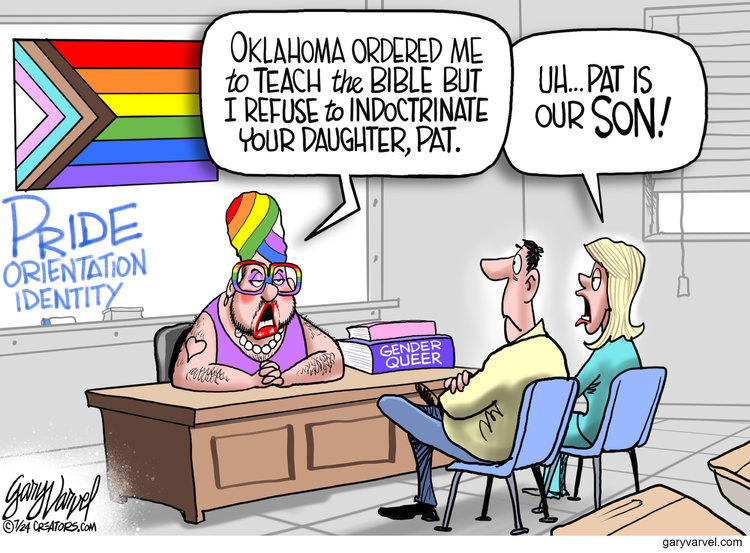

 Tipsy Teetotaler ن