Three days in a row! When did I last blog three days in a row?!
I have nothing to say about Israel, Hamas, Gaza, Lebanon, Iran, hostages and any piece I’ve left out, but I’m not oblivious to this anniversary.
Not politics
Tradition
Tradition refuses to submit to the small and arrogant oligarchy of those who merely happen to be walking about. All democrats object to men being disqualified by the accident of birth; tradition objects to their being disqualified by the accident of death.
G.K. Chesteron, Orthodoxy
Here is a quick and generally reliable rule to follow. If people have always said it, it is probably true; it is the distilled wisdom of the ages. If people have not always said it, but everybody is saying it now, it is probably a lie; it is the concentrated madness of the moment.
Anthony M. Esolen, Out of the Ashes
Sportsball
Gladwell, like many of us, seems to have unwittingly internalized the idea that when professional athletes do the thing they’re paid to do, they’re not acting according to the workaday necessity (like the rest of us) but rather are expressing with grace and energy their inmost competitive instincts, and doing so in a way that gives them delight. We need to believe that because much of our delight in watching them derives from our belief in their delight.
Alan Jacobs, How to Think
Dreaming is just about our only break from rationalism
The whole evolution of music as an academic discipline tends to destroy the most important reason to care about music in the first place.
Here’s one of my charts on the subject:
That’s why I started to write about sleeping.
No music writer talks about sleep more than me. And that’s because dreams happen when we sleep—and this is the one type of visionary experience everybody can still access.
We all become a little unhinged and crazy in those dreams. Even the most rationalistic STEM advocate.
…
Could something like this—dream therapy for creatives— exist in the current day?
I wondered about this for a long time. I finally decided to ask musicians about whether they had learned songs from their dreams.
Nothing prepared me for the response I got. I heard from hundreds of musicians—and learned that the gift of a song during a dream is quite common. And it’s usually a powerful song.
…
I note that many musicians have told me that they are reluctant to discuss their dream songs. The subject is just too strange and antithetical to our dominant rationalist paradigm.
And that reluctance is even greater if the artist has a hallucination or out-of-body experience or something else that ‘medical experts’ might want to treat.
My hunch is that these happen frequently to intensely creative people—even in an age of rationalism.
The world isn’t as neat and rigorously logical as you’ve been told. And the world of artistic inspiration is the least logical of all. There’s a good reason why the ancients believed that creative works were a gift from the muse.
…
I continue to research this subject, and I think about it all the time. Even more important, I try to open up my mind to realms of experience beyond the empirical. That’s where creativity comes from, and I don’t want to shut myself off from the source because of close-mindedness.
Above all, I don’t mock or dismiss artists who have these visions, or assume that in every instance they are suffering from mental illness. Some of them might be a lot wiser or healthier than the rest of us.
I can’t think of a solo-effort Substack that delivers more bang for the buck that Ted Gioia, The Honest Broker. And the guy is really smart about some things that interest me.
From the Department of Free-Association: Has Rod Dreher, once again, seized the moment to shape a coming conversation, as he did in Crunchy Cons, Benedict Option and Live Not By Lies?
Politics
Serious people earnestly disagreeing
Back in August I was watching the DNC with my old mom in California. Kamala and Tim and Michelle and Barack and all the others kept talking about our reasons for aiding Ukraine in its fight against the Russian occupation of its eastern territories. They consistently appealed to the apparently essentialized fact that the Ukrainians, like the Americans, “love freedom”, and that it is only natural and right to help other peoples who share this love with us. There was zero acknowledgment of the complexities of geopolitics and historical legacies, or of the situated perspective a Russian might non-crazily come to have, according to which parts of what is now Ukraine seem naturally and justly to fall more into the sphere of influence of the Russian Empire than of the North Atlantic one.
I know a lovely man in his 60s, an outstanding member of the vanishing breed of the Homo Sovieticus, whose father is Ukrainian and whose mother is Russian, and who grew up in Kazakhstan. He tells me his parents waited to get married so that the celebration would take place on the 300th anniversary of the 1654 Pereyaslav Agreement, in which the Cossack Hetmanate in control of much of Ukraine made a ceremonial pledge of loyalty to Moscow. This friend of mine is in exile, and is no admirer of Putin. He greatly regrets the 2022 invasion. But he could never make any sense of any claim to the effect that Ukraine rightly belongs to NATO and not to Russia in virtue of some mysterious essential trait of the Ukrainian people, that they “love freedom” while the Russians do not.
…
And here we arrive at what really gets me about the Democrats. If we are going to risk direct conflict with another nuclear-armed superpower, let us not be lulled into it by bullshit and platitudes. Why do the Democrats have to talk that way? It’s as if the Republican tactic of portraying “the libs” as effeminate hyper-woke safe-spacers has really only caused the Democrats themselves to double down with absurd displays of hawkish masculinity. We’re supposed to love Kamala because she’s a tough-on-crime prosecutor, and that therefore corrects for the slip-ups of the past years when some in the progressive wing of the party have suggested, on the contrary, that all cops are bastards. Tim Walz, meanwhile, seems to have been chosen primarily because he wears flannel shirts, and has been put on display in the most implausibly kayfabe campaign ads purportedly fixing his own pick-up truck. One almost expects them next to come out with an ad depicting Walz in the act of dressing a deer, looking every bit the caricature of the Minneapolis goy neighbor in the Coen Brothers’ A Serious Man (2009). He’s a hunter and a football coach, but he’s also a faculty advisor for the LGBTQIA+ club! What a model of enlightened masculinity! She’s a prosecutor and a foreign-policy hawk, but she’s a she and she brings “joy”! The problem is that none of the rest of the world cares about any of that childish stuff. They all know that for all the equally kayfabe retrograde masculinity of Trump, that man is an absolute pussy, and it is in fact the Democrats who represent the greatest threat to any hot-spot of resistance to the US’s arch-imperial ambitions throughout the world.
What are the odds that a world in which the American Empire is beaten into desperate retreat would be any sort of world our children and grandchildren might want to live in? … Trump, in a second term as president, is practically guaranteed to assume the role of overseer of American imperial retreat, in favor not of a global community of equals such as some naïve progressives might have hoped for in the early years of the League of Nations, but of nationalist isolation and at most pragmatic cooperation with other self-sequestering nation-states, somewhat along the lines of what Marine Le Pen envisions for Europe in the phrase “association des nations libres”. That phrase might sound innocent enough, but nations that are free to dispense with any idea of reciprocal obligations are unlikely to remain in a stable “association” for long, and Trump, at least, hardly gives any indications of knowing how to guide the ship of state as it weathers the inevitable storms that will whip up unstable waters in our years of decline. Far better, far surer, we believe, to have a party in power that understands and accepts the nature of the that power: imperial power, namely, which might aspire in the years ahead not only to face off with steely resolve in our current global showdown, but, eventually, to emerge as its undisputed champion. … Most of us on the Editorial Board, even the Americans among us, do not live in the United States, and from our respective vantages it is pretty hard to concentrate on any aspect of American political life that does not have to do with its role as a globe-spanning empire. Just manage your domestic affairs however you see fit, we are tempted to say; our overwhelming concern is with what you get up to beyond your borders. We therefore have rather little patience for that current of Democratic partisan discourse that would like for American politics to sound more or less like, say, Danish politics. Denmark, if we may be blunt, and all of the Scandinavian countries with such high marks on all the usual tests, is able to focus on maintaining its robust welfare state primarily because its defense is entirely outsourced to the American Empire. The American Democrats who fawn over European national health systems seldom realize that by seeing to the defense of other NATO members, the United States is at the same time freeing up European national budgets for other more humane uses. Americans pay for European defense rather than paying for their own welfare; Europeans get health care in turn, but only through de-facto vassalization.
We would like to see this arrangement continue, at least for now, at least until NATO can be expanded to include all of those states that currently set themselves up in opposition to it, a prospect even Russia’s own leaders in the early post-Soviet years were able to entertain with some seriousness.
You might think our reasons for voting for the Democrats are not good ones, or that we are merely “joking” when we give them. We can only reply that your reasons really do not matter. You might well imagine your are voting, for your part, for “decency”, or “joy”, or sane gun-control laws or a woman’s right to choose. But the only way to vote for any of these things is to cast a vote for American empire. That’s the bargain. We here at The Hinternet, minus our Founding Editor, believe this is a bargain worth accepting, but that is only because we believe it is the United States under Democratic leadership that offers us the single best shot at subduing all the planet’s lingering zones of discontent, and delivering us into a future of perpetual peace. This is what we at The Hinternet want. Do you?
These seem to be serious people having a serious disagreement, not just swapping bullshit and platitudes. It’s a habit most of us, myself included, could benefit by emulating.
Agreement on norms trumps disagreement on policy
Cheney’s argument for Harris is a classical liberal version of the GOP’s “Flight 93 election” reasoning from 2016. It’s a basic matter of proper prioritizing: Agreement on norms trumps disagreement on policy. If you hand power back to Trump, he’ll crash the constitutional order. The conservative thing to do under the circumstances is to storm the cockpit by backing Harris, who’ll at least keep the plane in the air.
(I wonder how Lisa Beamer feels about Flight 93 as a recurring political trope?)
Those conservative Democrats!
The truth, I think, is that the Democratic Party is drifting. Coasting. Dems are buoyed at the national level by Trump’s personal unpopularity but lacking in any kind of compelling vision for the future of the country. For the third cycle in a row, the Democrats have been freed up to run a mostly substanceless campaign that boils down to “Vote for us so Trump will lose.” But what besides that promise of negation does the party stand for? What does it hope to accomplish? Or does it just want to be empowered to manage for a little longer the well-functioning system of domestic and international institutions that already exists?
The answer, it would seem, is the latter. From what I can tell, the Democrats are proposing little beyond a defense of the status quo (or, in the case of abortion rights, a return to the status quo as of a few years ago) against all the unorthodox things their opponents aim to accomplish (including mass deportations, a revolution in how the executive branch is staffed, and the imposition of sweeping tariffs).
That means the Democrats have inadvertently become America’s conservative party, championing the views and interests of those Americans who are content with the country’s present and recent past. When that stance is combined with opposition to the widely loathed Trump, it can (just barely) deliver victory …
The term “conservative” has many meanings, but the most elementary one—the one associated with the man generally considered to be the first conservative writer and thinker, Edmund Burke—grows out of the name itself: To be conservative is to seek to conserve the present’s inheritance from the past: the accomplishments, authoritative institutions, norms, habits, policies, and traditions that have been handed down to us by previous generations.
That’s the meaning of Liz Cheney’s enthusiastic endorsement of the Harris/Walz ticket late last week. It’s not a signal that Harris will govern as a Republican from the era when Cheney’s father (who has also endorsed Harris) served as George W. Bush’s vice president. It’s an expression of Burkean conservatism against the disruptive-revolutionary impulses of the MAGA movement.
The American multiculturalists similarly reject their country’s cultural heritage. Instead of attempting to identify the United States with another civilization, however, they wish to create a country of many civilizations, which is to say a country not belonging to any civilization and lacking a cultural core. History shows that no country so constituted can long endure as a coherent society. A multicivilizational United States will not be the United States; it will be the United Nations.
Samuel P. Huntington, The Clash of Civilizations and the Remaking of World Order.
I was not a very good student of history, but I wonder what historic precedents Huntington has in mind when he says “History shows …”. Sincere question. Surely it’s not just that nobody has tried a multicivilizational nation before; that would not yield a verdict of history.
Please comment if you know. (Comments are moderated but not censored for viewpoint.)
We knew damn well he was a snake …
before we took him in.
I love editorial cartoons, and am fond of comic strips as well. As newspapers are dying, I mainline mine from here.
I suffer more from the humiliations inflicted by my country than from those inflicted on her.
I don’t do any of the major social media, but I have two sub-domains of the domain you’re currently reading: (a) You can read most of my reflexive stuff, especially political here. (b) I also post some things on the only social medium I frequent, because people there are quirky, pleasant and real.
You may be relieved to know there’s nothing today explicitly about the 2024 Election or any of the candidates in it, save for this one personal thing.
In a fit of righteous (I hope) indignation, I believe I recently wrote that if Indiana is in play come November 5, I would vote for Kamala Harris. Reminded of the centrality of permissive abortion to her campaign, and of the extremity of the national Democratic Party’s support for “transitioning” as its signature (and aggressive) response to adolescent gender dysphoria, I retract that ill-considered position. I could say more about why these two issues combined are deal-breakers, but I’d be borrowing heavily from J Budziszewski if I did (see also Concurring with Exemplary Clarity below).
Think about yard signs. The progressive ones read:
Black Lives Matter Women’s Rights = Human Rights No Human Is Illegal Science Is Real Love Is Love Diversity Makes Us Stronger Kindness Is Everything
What would ours say? There are “conservative” yard signs for sale. But they contain no moral vision, nothing to believe in, only an effort to “own the libs.”
Our cupboard is so bare that young men are filling auditoriums to hear Jordan Peterson tell them to clean their rooms.
In my weaker moments, I’ve been known to look for an “own the libs” yard sign in response to the mincing sentiments of the progressive sign quoted, but nothing I found (and I found very little) was anything I’d put up in my yard.
The Nicene Creed might fit on a sign, but it would illegible to passing drivers, and I would be taking God’s name in vain if I put it up in rainbow hues.
From Front Porch Republic’s Saturday recommendations
“Wendell Berry at 90.” Jonathon Van Maren reflects on why Wendell Berry means so much to so many of his readers: “Berry’s fiction is not only a record of rural life and the slow death of agricultural America, but also a record of the interior lives of Americans before we outsourced our thinking to digital devices and absorbed our worldviews from screens. His novels lack the frantic pace of so many of his contemporaries; reading them, I had to slow my own mind and detach from the mile-a-minute culture wars to match the pace of the men and women of Port William. Always, his stories left me feeling refreshed.”
“Why Christian Parents Should Resist School-Issued Screens.” Patrick Miller offers a set of arguments supported by research to help parents push back against the lure of progress. He draws from his own experience on a school board: “We were offered tens of thousands of dollars in grants to pay for one-to-one devices in our classrooms. Saying no felt like stealing something from students. It felt like resisting progress. But we said no anyway, because our pressing question wasn’t ‘How can we restructure our curriculum around new technology?’ but ‘What technologies are best suited to serve our educational mission?’ Technology wasn’t our master; it was the servant. And there wasn’t enough research to prove it was a good servant.”
“Life on Mars.” Grace Mackey pens a thoughtful review of Haidt’s book, The Anxious Generation: “As a member of Gen Z, this was not a light read. When you spend your teens owning a smartphone, you grow used to hearing your parents and teachers blame your problems on a phone— It gets tiresome. I understand the skepticism towards Haidt and the concern that he is a grumpy old man tired of watching the online world expand into something foreign to him. I had some of that skepticism. Regardless, I picked up his book because I was genuinely curious if he offered explanations of anxiety that I hadn’t heard before. This past year, I started therapy because I needed help managing my anxiety disorder. While reading, it didn’t take long for my skepticism to fade and alarm to set in. I was struck by how deeply I resonated with what Haidt described.”
“I was there” at the founding of Front Porch Republic, having followed several of the founding curmudgeons (e.g., Patrick Deneen, Jason Peters) before they coalesced. FPR has changed, but I still find it very much worth reading still — the Saturday curation of others’ articles especially.
Concurring with exemplary clarity
Earlier this year, the Supreme Court of Texas handed down a decision (Texas v. Loe) upholding that state’s law prohibiting medically irreversible and damaging transgender treatments for minors. The Court held that, in passing the statute, the Texas legislature employed its constitutionally legitimate power to promote the health and welfare of the state’s citizens. The law does not infringe upon the rights of parents to determine the medical care of their children or the rights of doctors to provide care.
Justice Jimmy Blacklock wrote a concurring opinion that laid out the issues at stake with exemplary clarity. He observed that the case turned on fundamental and mutually exclusive assumptions about what it means to be human.
Within the Traditional Vision, human males and females do not “identify” as men and women. We are men and women, irreducibly and inescapably, no matter how we feel. Proceeding from these moral and philosophical premises, the Traditional Vision naturally holds that medicinal or surgical interference with a child’s developing capacity for normal, healthy sexual reproduction is manifestly harmful to the child, an obvious injustice unworthy of the high label “medicine.”
Against this view, Blacklock ranges the alternative—“call it the Transgender Vision.” This view “holds that we all have a ‘sex assigned at birth,’” and thus assigned, it “may or may not correspond to our inwardly felt or outwardly expressed ‘gender identity.’” Under these assumptions, “the Transgender Vision holds that an adolescent child who feels out of place in a biologically normal body should in many cases take puberty-blocking drugs designed to retard or prevent the emergence of sexual characteristics out of line with the child’s gender identity.” It manifestly follows that parents and children have a right to this kind of treatment, just as they have a right to other medical procedures that promote well-being.
The Traditional and Transgender Visions “diverge at the most basic level.” The disagreement is metaphysical, as it were. Judges need to recognize that debates over medical procedures and disputes about empirical claims concerning the efficacy of transgender treatments “are merely the surface-level consequences of deep disagreement over the deepest questions about who we are.” The Traditional Vision sees the treatments as “self-evidently harmful to children,” whereas the Transgender Vision regards the same treatments as “necessary medical care.”
The constitutional question amounts to this: Does the Texas Legislature have the proper constitutional authority to legislate in accord with the Traditional Vision? Or does the Transgender Vision enjoy a special, privileged constitutional status, which the court must honor? Blacklock observes that it would be very strange for a judge to answer “no” and “yes.” How could anyone reasonably hold that the Traditional Vision, which has held sway from time immemorial, can’t serve as a rational basis for determining what accords with the health and welfare of citizens? And on what basis can a judge determine that the Transgender Vision enjoys privileged status, given the fact that it has never “obtained the consent of the People of Texas”?
A great deal of testimony in this case came from medical experts, who insisted that interventions to facilitate “transitioning” enjoy the approval of medical associations and other professional bodies. Blacklock notes that such testimony is irrelevant. “The Texas Constitution authorizes the Legislature to regulate ‘practitioners of medicine.’ It does not authorize practitioners of medicine to regulate the Legislature—no matter how many expert witnesses they bring to bear.” Quite right. Doctors and researchers are free to adopt metaphysical assumptions. But so are legislators. And when those assumptions conflict, those of elected legislators determine the law, not those of “experts.”
Blacklock gets to the nub of our debates about transgender ideology (and pinpoints the specious reasoning of the Supreme Court’s Bostock decision): Those urging transgender rights “claim that the Transgender Vision is an established matter of science, not a matter of belief.” But saying it does not make it so. “From the perspective of the Traditional Vision”—I would say, from the perspective of any clear-thinking person—“any such assertion is an inherent conflation of speculative philosophy and empirical science. Neither a philosophical proposition (‘gender identity is real’) nor a moral rule (‘gender identity should be affirmed’) can be proven with scientific method or the tools of medicine.”
Medical associations, academic journals, and universities have become captive to progressive ideologies, transgender ideology among them. They are certainly not trustworthy sources of moral wisdom. And they are increasingly untrustworthy sources of empirical truths. Kudos to Justice Blackwood for so clearly explaining why their distorted moral presumptions and perverted science should not be accorded transcendent legal authority.
Reno has steered First Things so far in a MAGA (and Roman Catholic) direction that I was resolved to drop it. Then came the October issue, with Oren Cass’ article, Constructing Conservatism, three erudite responses to it, and this item, which I had not seen elsewhere. I guess I’ll be in for another year, but it sure is a bleak landscape most months.
Effete aristocrats
The dirty secret of “content moderation” everywhere is that it’s a tiny sliver of the educated rich correcting everyone else. It’s telling people what fork to use, but you can get a degree in it.
…
In prerevolutionary France, even the most drunken, depraved, debauched libertine had to be prepared to back up an insolent act with a sword duel to the death. Our aristocrats pee themselves at the sight of mean tweets. They have no honor, no belief, no poetry, art, or humor, no patriotism, no loyalty, no dreams, and no accomplishments. They’re simultaneously illiterate and pretentious, which is very hard to pull off.
A: One plane flight a year cancels out a lot of “environmentalist” talk. B: I have been saying this for years. It’s even more true if CO2 emissions are all you care about; on those grounds alone you’re better off trading your Tesla for an F250 and canceling that trip to Europe. But airplanes are to one class what trucks are to another, and it’s the airplane class that runs things. Environmental policy, like everything else, is too often a matter of whose ox is being gored. C: The airplane class is definitely a thing–and boy how [do] they love to lecture the bumpkins.
I didn’t ask permission to identify the writers (none of which was me), but thought the “Airplane Class” was a useful construct.
I suffer more from the humiliations inflicted by my country than from those inflicted on her.
I don’t do any of the major social media, but I have two sub-domains of the domain you’re currently reading: (a) You can read most of my reflexive stuff, especially political here. (b) I also post some things on the only social medium I frequent, because people there are quirky, pleasant and real.
This is Purdue’s Homecoming weekend. They’re playing football — or pretending to. I’m looking forward to basketball season.
Miscellany
An odd job title, if you think about it
“Content Creator” is a title that inadvertently tells on itself. It’s a tacit admission that the nature of the “content“ is meaningless and it exists to fill space. Might as well call yourself “Stuff Maker” or “Thing Doer.”
“Poverty just doesn’t happen,” Rep. [Barbara] Lee, a California Democrat, declared at the launch of the “Children’s Budget,” a kind of progressive wish list, last week. “It’s a policy choice.” Rep. Lee has run up against a kind of metaphysical limit there: She is as wrong as it is possible for a human being to be.
As practically every serious thinker about the issue has understood for a few thousand years at least, poverty does just happen—it is, in fact, one of the few things that does just happen. Poverty is the natural state of the human animal. Do nothing, and you will have poverty. Thomas Hobbes knew it. Aristotle knew it 2,000 years before Hobbes. Hesiod knew it centuries before Aristotle. The authors of the Upanishads knew it centuries before Hesiod. “Throughout history, poverty is the normal condition of man,” the American sci-fi writer Robert Heinlein observed. Or, as Thomas Sowell spent a lifetime explaining to an apparently impenetrable public, poverty has no causes—the absence of poverty has causes. Rep. Lee’s error is not novel. Her mistake repeats—nearly verbatim—the error of Rep. Ayanna Pressley: “Poverty is not naturally occurring; it is a policy choice.”
In 2018, she appeared on a panel at the Conservative Political Action Conference. When asked about feminism, she attacked her own tribe, saying, “I’m disappointed in people on our side for being hypocrites on sexual harassers and abusers of women who are in our party, who are in the White House, who brag about their extramarital affairs, who brag about mistreating women. And because he happens to have an R after his name, we look the other way; we don’t complain.”
The crowd erupted in jeers and shouts of “Not true!” Charen had been a speechwriter for Nancy Reagan! This was CPAC, Republican prom! Security guards escorted her out for her own protection.
The incident didn’t seem to shake her. “There is nothing more freeing than telling the truth,” Charen later wrote in a New York Timesop-ed.
Decades ago, Mona Charen was one of my favorite conservative columnists. I rarely read her these days because, in the anti-Trump cosmos, I’m on planet Dispatch and find planet Bulwark a bit weird tedious. Thus has the black hole of Donald Trump disrupted the cosmos.
Yes, it’s a big, diverse electorate, but there are certain opinions we all share. Like this one: I can’t believe the party I hate isn’t getting clobbered in the polls.
From the Liz Cheney left to the Robert F. Kennedy Jr. right, ask any voter at random whether they’re surprised at how close this race is, and my guess is they’ll talk your ear off in exasperation.
Neither fear nor courage saves us. Unnatural vices Are fathered by our heroism. Virtues Are forced upon us by our impudent crimes. These tears are shaken from the wrath-bearing tree.
I can’t say what Vice President Kamala Harris’s favorite word is — the one time I met with her, I didn’t ask — but I’d put a big stack of chips on “context.” She said it not once, not twice, but three times in her signature May 2023 “coconut tree” riff, and I’ve heard it tumble from her lips on other occasions as well. It’s like some oratorical caftan, warming and comforting her.
That turns out to be apt. Her bid for the presidency is all about context.
Any realistic response to it hinges not on the policy details that she has or hasn’t provided, not on the fine points of her record over time, not on her interview with Stephanie Ruhle of MSNBC on Wednesday, not on her previous sit-down with CNN’s Dana Bash. It hinges on context. She cannot be sized up outside of or apart from the alternative, a man of such reprehensible character, limitless rage, disregard for truth, contempt for democracy, monumental selfishness and incoherent thinking that even discussing Harris’s virtues and vices feels ever so slightly beside the point. She’s not Donald Trump.
In the culture war, we know exactly what she is: an equity leftist, a strong believer in race and sex discrimination today to make up for past race and sex discrimination yesterday, and a politician who favors redefining womanhood to include biological men, and conducting medical experiments on gay, autistic and trans children, based entirely on self-diagnosis. These are her values, they are the values of every Dem special interest group, and she assures us they have not changed. I believe her.
…
I have yet to hear her say a single interesting or memorable thing in her entire career. Have you?
…
If a serious Republican candidate were up against her — even Nikki Haley — this election would not be even faintly close.
But we do not have a serious Republican candidate.
We have the most shameless charlatan in American political history — and there are plenty of competitors. He is unfit in every respect to be president of the United States …
Trump does not merely break norms. He has broken the norm, the indispensable norm for the continuation of the republic, the norm first set by George Washington when he retired from office, the norm that changed the entire world for the better: accepting the results of an election … I do not think this is even within his personal control. He is so genuinely psychologically warped that he has never and will never agree to the most basic requirement of public office: that you quit when you lose; and that the system is more important than any individual in it.
He is not lying when he insists that he won in 2016 and 2020 by massive landslides in the popular vote. He believes it. He believes he will win by a landslide in November, and there is no empirical evidence that could convince him otherwise. If he loses the election, he will call it a massive fraud one more time, and foment violence to protest it. We know this more certainly than we know anything about Kamala Harris. He tried to leverage mob violence to disrupt our democracy once. If that was not disqualifying, nothing is …
…
So I will vote for Harris, despite my profound reservations about her. Because I have no profound reservations about him. I know who he is and what he is. I know what forces he is conjuring and the extremes to which he will gladly take his own personal crusade. To abstain, though temptingly pure, is a cop-out. I vote not for Harris as such, but for a conservatism that can emerge once the demon is exorcized.
We have to guard that spirit. Let it always inspire us. Let it always be the source of our optimism, which is that spirit that is uniquely American. Let that then inspire us by helping us to be inspired to solve the problems.
Kamala Harris. I hate to belittle her, because her context is him, and he is everything that Bruni and Sullivan said. If Indiana is in play, I’ll vote for the sane-but-empty suit who’ll leave office in 2028 if defeated, leaving our political system intact.
Somebody apparently told Trump about, say, ProPublica attacking the Dobbs decision (substantially reversing Roe v. Wade). His over-the-top response, directionally right, was this:
When speaking to supporters from the swing state, where both Trump and Vice President Kamala Harris have doubled efforts to capture the election count in November, Trump lamented the criticism aimed at the Supreme Court‘s conservative supermajority and said it should be “illegal.”
“They were very brave, the Supreme Court. Very brave. And they take a lot of hits because of it,” said the former president. “It should be illegal, what happens. You know, you have these guys like playing the ref, like the great Bobby Knight. These people should be put in jail the way they talk about our judges and our justices, trying to … sway their vote, sway their decision”
So he also is profoundly ignorant of our most fundamental rights, including the right to say stupid things about any branch of government we care to kvetch about.
Some Nationalist, this
Donald Trump is a funny kind of patriot.
He loves America—except for the cities, the people who live in the cities, about half of the states, the universities, professional sports leagues, Hollywood, Silicon Valley, Wall Street, the legal system, immigrants, the culture. He thinks the Capitol Police are murderers and that the FBI is a gestapo, that the government is an illegitimate junta maintained through election fraud, that the January 6 rioters are political prisoners, that the nation is a ruin, that it is “failed.” And when it fell to him to explain to [a] debate audience why he should be president, he spent most of his time repeating the praise of Hungarian autocrat Viktor Orbán.
Trump’s enemies are all Americans, his friends are all foreign dictators, and his money lives in Dubai and Indonesia. Some nationalist.
Trump lives in a very strange little bubble: His world is Palm Beach, a handful of golf courses and hotels, and Fox News. The smallness of his frame of reference is a problem for him ….
Depending on how you count them, 19 or 26 or 67 women have accused Mr. Trump of sexual misconduct. Women who have said he “squeezed my butt,” “eyed me like a piece of meat,” “stuck his hand up my skirt,” “thrust his genitals,” “forced his tongue in my mouth,” was “rummaging around my vagina,” and so on.
Mr. Trump has denied any misconduct. He, in turn, has accused the women of being “political operatives,” plotting a “conspiracy against you, the American people,” looking for their “10 minutes of fame” and not being his “type.”
“It couldn’t have happened, it didn’t happen,” Mr. Trump sneered during a recent news conference, referring to Ms. Leeds, the one who accused him of assaulting her on an airplane. “And she would not have been the chosen one.”
I don’t do any of the major social media, but I have two sub-domains of the domain you’re currently reading: (a) You can read most of my reflexive stuff, especially political here. (b) I also post some things on the only social medium I frequent, because people there are quirky, pleasant and real.
We’re home at last from a vacation overshadowed by car damage from road debris encountered on the way north to vacation. Every fix revealed yet another problem. Every new problem required a wait for Allstate to approve the added work. We finally just drove our rental car home yesterday and are currently planning how most easily to retrieve our car when they finally fix the final problem.
I have nothing more to say on that, lest I add myself to the luckiest victims in the world (see below).
Not very political
The huge history of a little bit of geography
The word Palestine always brought to my mind a vague suggestion of a country as large as the United States. I do not know why, but such was the case. I suppose it was because I could not conceive of a small country having so large a history. I think I was a little surprised to find that the grand Sultan of Turkey was a man of only ordinary size. I must try to reduce my ideas of Palestine to a more reasonable shape. One gets large impressions in boyhood, sometimes, which he has to fight against all his life.
Mark Twain, The Innocents Abroad
Epistemic idiocy
A man who murdered dozens of Muslims at two mosques in New Zealand was “steeped in the culture of the extreme-right internet,” … His manifesto explained that he had done research and developed his racist worldview on “the internet, of course. . . . You will not find the truth anywhere else.”6 The latter assertion involves, alas, a rather serious mistake about epistemic authority.
This is a flawed but important article I personally will revisit on the subject of legitimate epistemic authority. We’re not as adrift and it sometimes seems — or as the New Zealander fancied himself.
ProPublica
Having apparently run out of Supreme Court justices to attempt to drive from public life, the left-wing nonprofit journalistic outfit ProPublica has directed its attention to sullying one of their most notable achievements: the Dobbs decision, which returned the power to regulate abortion to the people and to the states. Georgia now has a heartbeat law, which outlaws abortion once a fetus has a detectable heartbeat (with exceptions for rape, incest, and maternal health). A recent ProPublica article blamed the law for the deaths of two women who had taken chemical-abortion drugs (whose riskiness goes unremarked upon). The drugs killed the children but failed to expel all of their remains. One woman unsuccessfully sought treatment in a hospital, and the other feared it—both, supposedly, results of the law. But as our former colleague Isaac Schorr pointed out at Mediaite, the law does not forbid the surgical removal of an already dead child. No reasonable person who read the plain text of the law would think otherwise, which may be why ProPublica did not include the relevant portion. Even the argument that the doctors’ uncertainty about the law prevented treatment is unsubstantiated. The ProPublica article eventually admits that “it is not clear” why doctors waited to perform the necessary procedure. Laws against abortion haven’t caused any deaths, but ProPublica is doing its part to raise the death toll.
National Review email newsletter
The luckiest victims on earth
[E]ven as you push back against ideological bias and discrimination, remember that as a university student you are one of the luckiest — most privileged — people on the planet. So do not think of yourself as a victim. You can assert and defend your rights without building an identity around grievances, however justified those grievances may be.
…
Remember that the criticism of a belief (or a practice, faith or lifestyle) is not a personal attack, though the natural human tendency to wrap our emotions tightly around our convictions can make it feel as if it is.
I don’t pin dreams on the rack of endless above-ground interpretation, but I do give them space and attention.
In myth, when you are facing a monster, look at its reflection on your shield, not the abyss of its face. That will quickly burn you to cinders. What is your shield? Well it’s something that shows you the general shape of your adversary but not to the degree it paralyses you.
The yearslong elevation of figures like [North Carolina Gubernatorial Candidate] Mark Robinson and the many other outrageous MAGA personalities, along with the devolution of people in MAGA’s inner orbit — JD Vance, Elon Musk, Lindsey Graham and so very many others — has established beyond doubt that Trump has changed the Republican Party and Republican Christians far more than they have changed him.
In nine years, countless Republican primary voters have moved from voting for Trump in spite of his transgressions to rejecting anyone who doesn’t transgress. If you’re not transgressive, you’re suspicious. Decency is countercultural in the Republican Party. It’s seen as a rebuke of Trump.
… I’ve compared the cultural power of a leader to setting the course of a river. Defying or contradicting the leader’s ethos is like swimming against the current — yes, you can do that for a time, but eventually you get exhausted and either have to swim to the bank and leave, or you’re swept downstream, just like everyone else.
In a similar vein, albeit from someone who hasn’t been Republican:
There is no place for dissenters in the contemporary Republican Party. That is going to remain true whether or not Donald Trump prevails in November. It’s long past time those who reject the right-populist takeover of the party to cut themselves loose and stop pretending they will have a meaningful say in building its future. They will not. It would be far better for them, and for the Democrats, if they joined the Donkey Party outright and began fortifying the Harris-Walz campaign’s move toward the ideological center-left.
In a strong post late last week, The Bulwark’s Jonathan Last took the occasion of the latest mind-boggling revelations about Mark Robinson, the Republican Party’s nominee for governor of North Carolina, to make the point that the GOP is a “failed state.” The image comes from a 2016 Slatecolumn by his Bulwark colleague Will Saletan. As Last explains, functional institutions “have power centers and interests. In a healthy institution, these power centers can unite to achieve shared interests, even in difficult moments which require sacrifice.” Over the last two decades, for example, Democratic Party has given us the following examples:
In 2008 Hillary Clinton was supposed to be the Democratic presidential nominee. But various Democratic power centers coordinated to elevate Barack Obama, who they believed was a better candidate.
In 2016, a democratic socialist tried to win the Democratic presidential nomination. The party coordinated to prevent him from doing so.
In 2020, the same democratic socialist made another attempt. The party coalesced around Joe Biden and got him elected president.
In 2023, as Republicans went through four nominees to find a speaker of the House, Democrats voted, unanimously, time after time, for Hakeem Jeffries.
And in 2024, when the Democratic Party realized that Joe Biden was compromised as a candidate by his health, they convinced him to step aside.
I want to underscore this: The Democratic Party was able to convince a sitting president to abandon his reelection attempt four months before November.
That’s a portrait of a party as an effective, functional institution.
The Republican Party, by way of sharpest contrast, cannot even get a man to step aside in a crucial statewide race when he’s caught (among other things) describing himself as a “Black Nazi” on a porn-focused chat forum. The party is being held hostage—by the candidate, yes, but his power is itself a function of his popularity among Republican voters in the state. They want him as their nominee, and the voters get whatever they want in the contemporary GOP. Which means the institution is a hollow shell—or the domestic equivalent of a failed state.
Sorry, Damon, but I’m not going to be in the vanguard of any GOP migration, partly because I’m not exactly in the GOP, partly because of a few deal-killer Democrat policies.
The Bennet Inversion
Our best hope is to hasten a change in culture that reverses this effect. Call it the Bennet Inversion, for Senator Michael Bennet, who campaigned for president promising to govern so boringly that voters would go weeks without thinking about him. He was so successful that no one remembers his campaign at all. Biden accomplished a miniature version of this, by executing a Fabian strategy and defeating Trump without ever facing him directly on the field of meme battle.
I don’t do any of the major social media, but I have two sub-domains of the domain you’re currently reading: (a) You can read most of my reflexive stuff, especially political here. (b) I also post some things on the only social medium I frequent, because people there are quirky, pleasant and real.
I haven’t checked on whether today is actually the Autumnal equinox. I learned in school that it was September 21 and I’m stickin’ to it.
Springfield, OH
The accusation that Haitian immigrants in a small Ohio city are abducting and eating their neighbors’ cats and dogs relies not on one falsehood but on a web of them. The rhetoric evokes racist tropes about “savages” who do not conform to our civilized Western world. There’s also a religious angle: the idea that Haitian refugees are voodoo occultists who might be worshipping the devil. As an evangelical Christian who actually believes in the existence of Satan, I agree that we can indeed see the work of the devil at play here, only it’s not on the menu of the Haitian families but rather in the cruelty of those willing to lie about them.
There is little ambiguity about whether Springfield, Ohio, is a hellscape of raptured pets, held at the mercy of marauding refugees. Law enforcement has told the world that there’s no evidence of this behavior, and the mayor and governor have confirmed this. But in the social-media age, none of that matters against A friend I know there knew somebody who said that she knew somebody whose cat was gutted and hanging from a tree. Other conflict entrepreneurs, when asked to provide evidence, sound like a radical deconstructionist in a 1990s faculty lounge, appealing to the “larger reality” of immigrant crime that is so true that the facts of the particular case, even if shown to be untrue, are beside the point.
…
To sing praise songs in a church service while trafficking in the bearing of false witness against people who fled for their life, who seek to rebuild a life for their children after crushing poverty and persecution, is more than just cognitive dissonance. It’s modeling the devil himself, whom Jesus called “the father of lies” (Jn 8:44). That’s especially true when the lies harm another person. “Everyone who hates his brother is a murderer,” the apostle John wrote, “and you know that no murderer has eternal life abiding in him” (1 Jn 3:15).
The Tenth U.S. Circuit Court of Appeals upheld a ban on conversion therapy (attempts by licensed professionals to change the sexual orientation, and (perhaps) “gender identity”, of an adolescent patient):
Judge Rossman dissenting said in part:
The issue in this case is whether to recognize an exception to freedom of speech when the leaders of national professional organizations declare certain speech to be dangerous and demand deference to their views by all members of their professions, regardless of the relevance or strength of their purported supporting evidence. As I understand controlling Supreme Court precedent, the answer is clearly no….
In particular, a restriction on speech is not incidental to regulation of conduct when the restriction is imposed because of the expressive content of what is said. And that is the type of restriction imposed on Chiles….
The consensus view of organizations of mental-health professionals in this country is that only gender-affirming care (including the administration of drugs) should be provided to minors, and that attempts to change a minor’s intent to change gender identity are dangerous—significantly increasing suicidal tendencies and causing other psychological injuries. The organizations insist that this view reflects the results of peer-reviewed studies.
But outside this country there is substantial doubt about those studies. In the past few years there has been significant movement in Europe away from American orthodoxy…..
Related to the prior item is a generalized crisis of trust in experts because, among other things, experts have repeatedly beslimed themselves by spewing nonsense and claiming it was “science.” The American Academy of Pediatrics, which once innocently misled us on peanut allergies is now doubling down on nonsense about puberty blockers for adolescents who suspect they were born in the wrong sexed body.
I’m a broken record on this but to be clear, here are a few examples of misinformation that have been banned. From the top! Talking about whether Covid came from a lab; Hunter Biden’s laptop; anything to do with the various trans debates. Take basically any hot-button topic of the last decade, and whatever isn’t the progressive line is called misinformation.
I don’t do any of the major social media, but I have two sub-domains of the domain you’re currently reading: (a) You can read most of my reflexive stuff, especially political here. (b) I also post some things on the only social medium I frequent, because people there are quirky, pleasant and real.
Since the populist surge that gave us Brexit and the rise of Donald Trump, politics in the Western world has polarized into a distinctive stalemate — an inconclusive struggle between a credentialed elite that keeps failing at basic tasks of governing and a populist rebellion that’s too chaotic and paranoid to be trusted with authority instead.
The 2024 campaign in its waning days is a grim illustration of this deadlock. We just watched Kamala Harris, the avatar of the liberal establishment, smoothly out-debate Trump by goading him into expressing populism at its worst — grievance-obsessed, demagogic, nakedly unfit.
But her smoothness was itself an evasion of the actual record of the administration in which she serves. Harris offered herself as the turn-the-page candidate while sidestepping almost every question about what the supposed adults in the room have wrought across the last four years.
…
The “ask” of the Democratic Party in 2024 is not, as some anti-Trump writers would have it, to merely compromise one’s convictions on this issue or that issue, to accept a few policies you dislike in order to keep an indecent and unstable populist out of office.
Rather, the “ask” is to ratify a record of substantial policy failure and conspicuous ideological fanaticism, dressed up for the moment in a thin promise that we won’t make those mistakes again.
This is the constant pattern of the Western elite over the last generation. A form of aggressive groupthink takes hold among the best and brightest, ideology gets laundered into supposed expertise or consensus, and the result is post-9/11 debacles in Iraq and Afghanistan and Libya … or Davos-man naïveté about the downsides of globalization and the rise of China … or Eurocrat myopia about the wisdom of a common currency, the manageability of mass migration and the true cost of Russian energy … or the recent phase of progressive mania that closed schools, legalized hard drugs, wrecked educational standards and warped curriculums, licensed dubious medical experiments in the name of transgender rights and turned the U.S. immigration system into a disaster area.
Then the bill comes due, the elites backpedal and obfuscate and conveniently forget (What do you mean, Kamala Harris endorsed publicly funded gender reassignment surgery for illegal aliens? Sounds like Fox News nonsense!) and the unhappy swing voter is informed that no real price can be exacted for any of this folly, because the populist alternative isn’t fit for power.
When Trump repeated the ridiculous rumor that Haitian immigrants in Springfield were killing and eating household pets, he not only highlighted once again his own vulnerability to conspiracy theories, it put the immigrant community in Springfield in serious danger. Bomb threats have forced two consecutive days of school closings and some Haitian immigrants are now “scared for their lives.”
That’s dreadful. It’s inexcusable.
And it’s vintage Trump. He’s most himself when he’s spewing hatred.
French continues with Trump’s refusal to say he wants Ukraine to win the war waged on it by Russia. Much of French’s argument on that point leaves me cold, but this conclusion is evergreen:
When the stakes are highest — for the election, for the country or for the international order — Trump isn’t just thinking about himself, he’s thinking about himself in the most unstable of ways. He can’t perceive reality. After watching him up close for nine years, our adversaries and allies know this to be true. They know he is both gullible and impulsive.
Trump’s reluctance to say the plain truth — that a Ukrainian victory is in America’s national interest — demonstrates that he is still a prisoner to his own grievances, and there is no one left who can stop him from doing his worst.
(Emphasis added) I added that emphasis because the distortion of reality by narcissism has been at the core of my opposition to Trump since the run-up to the 2016 election, as reflected here.
Don’t blame Laura Loomer for Trump
The idea that but for Loomer’s baleful influence Trump would behave normally is a symptom of copium poisoning. This is the guy who while defending the National Enquirer’_s trial balloon about Ted Cruz’s dad assassinating JFK would refer to the tabloid as the news. This is the guy who _still thinks that Hillary Clinton used actual bleach on her server. He thinks all humans have a limited amount of energy in their batteries and therefore exercise is bad because it depletes your finite reserves.
He loves America—except for the cities, the people who live in the cities, about half of the states, the universities, professional sports leagues, Hollywood, Silicon Valley, Wall Street, the legal system, immigrants, the culture. He thinks the Capitol Police are murderers and that the FBI is a gestapo, that the government is an illegitimate junta maintained through election fraud, that the January 6 rioters are political prisoners, that the nation is a ruin, that it is “failed.” And when it fell to him to explain to Tuesday’s debate audience why he should be president, he spent most of his time repeating the praise of Hungarian autocrat Viktor Orbán.
Trump’s enemies are all Americans, his friends are all foreign dictators, and his money lives in Dubai and Indonesia. Some nationalist.
If I gave in to the Inquisitors, I should at least know what creed to profess. But even if I yelled out a credo when the Eugenists had me on the rack, I should not know what creed to yell. I might get an extra turn of the rack for confessing to the creed they confessed quite a week ago.
G.K. Chesterton. Substitute “wokesters” for “Eugenists” and this is fully up-to-date. For that matter, it works with MAGA, too.
I suffer more from the humiliations inflicted by my country than from those inflicted on her.
I don’t do any of the major social media, but I have two sub-domains of the domain you’re currently reading: (a) You can read most of my reflexive stuff, especially political here. (b) I also post some things on the only social medium I frequent, because people there are quirky, pleasant and real.
I’m on vacation, so I’m not going to take the time to sort these into topics.
Also, it’s a major Feast day in the Eastern Church. The Orthodox Church at my vacation destination appears to be postponing observance to tomorrow — an Orthodox oddity in my limited experience.
Selling hoi polloi a delusion
Those with a material interest in doing so have learned to speak autonomy talk, and to tap into the deep psychology of autonomy in ways that lead to its opposite.
Matthew Crawford, The World Beyond Your Head
Purposeful to a fault
Himmler quite aptly defined the SS member as the new type of man who under no circumstances will ever do “a thing for its own sake.”
Hannah Arendt, The Origins of Totalitarianism
Sit quietly with that one for a minute. Then consider Josef Pieper, Leisure, The Basis of Culture.
“Televangelists”
Fugitive Televangelist Wanted by F.B.I. Is Caught in the Philippines Weeks of tense standoff in the Philippines have ended in the capture of a pastor accused of leading an international ring of sex abuse and trafficking of young women and girls.
I don’t believe it would be fair to saddle any Christian tradition or denomination with this guy. From what the Times says about the idolatrous adulation he cultivated, he was plainly some kind of one-off cultist.
But I have no idea how many one-off cultists are abroad in the world, when this admonition currently being featured at the end of my Sunday blog posts:
Religious ideas have the fate of melodies, which, once set afloat in the world, are taken up by all sorts of instruments, some woefully coarse, feeble, or out of tune, until people are in danger of crying out that the melody itself is detestable.
George Elliot, Janet’s Repentance, via Alan Jacobs
Huge (if true)
Donald Trump runs no risk of going to prison in the middle of his campaign, thanks to Judge Juan Merchan’s decision Friday to postpone sentencing until Nov. 26. The delay gives his lawyers more time to prepare an appeal. Fortunately for Mr. Trump, his trial was overwhelmingly flawed, and a well-constructed appeal would ensure its ultimate reversal.
A central problem for the prosecution and Judge Merchan lies in Article VI of the U.S. Constitution, which makes federal law the “supreme law of the land.” That pre-empts state law when it conflicts with federal law, including by asserting jurisdiction over areas in which the federal government has exclusive authority.
Mr. Trump’s conviction violates this principle because it hinges on alleged violations of state election law governing campaign spending and contributions. The Federal Election Campaign Act pre-empts these laws as applied to federal campaigns. If it didn’t, there would be chaos. Partisan state and local prosecutors could interfere in federal elections by entangling candidates in litigation, devouring precious time and resources.
That hasn’t happened except in the Trump case, because the Justice Department has always guarded its exclusive jurisdiction even when states have pushed back, as has happened in recent decades over immigration enforcement.
The normal approach would have been for the Justice Department to inform District Attorney Alvin Bragg, who was contemplating charges against Mr. Trump, of the FECA pre-emption issue. If Mr. Bragg didn’t follow the department’s guidance, it would have intervened at the start of the case to have it dismissed. Instead the department allowed a state prosecutor to interfere with the electoral prospects of the chief political rival of President Biden, the attorney general’s boss.
In the summer of 2015, back when he was still talking to traitorous reporters like me, I spent extended stretches with Donald Trump. He was in the early phase of his first campaign for president, though he had quickly made himself the inescapable figure of that race—as he would in pretty much every Republican contest since. We would hop around his various clubs, buildings, holding rooms, limos, planes, golf carts, and mob scenes, Trump disgorging his usual bluster, slander, flattery, and obvious lies. The diatribes were exhausting and disjointed.
But I was struck by one theme that Trump kept pounding on over and over: that he was used to dealing with “brutal, vicious killers”—by which he meant his fellow ruthless operators in showbiz, real estate, casinos, and other big-boy industries. In contrast, he told me, politicians are saps and weaklings.
“I will roll over them,” he boasted, referring to the flaccid field of Republican challengers he was about to debate at the Ronald Reagan Presidential Library that September. They were “puppets,” “not strong people.” He welcomed their contempt, he told me, because that would make his turning them into supplicants all the more humiliating.
“They might speak badly about me now, but they won’t later,” Trump said. They like to say they are “public servants,” he added, his voice dripping with derision at the word servant. But they would eventually submit to him and fear him. They would “evolve,” as they say in politics. “It will be very easy; I can make them evolve,” Trump told me. “They will evolve.”
Like most people who’d been around politics for a while, I was dubious. And wrong. They evolved.
The eighteenth-century Humean slave of the passions is thus indistinguishable from the liberated, twentieth-century Sartrean individual living authentically.
Brad S. Gregory, The Unintended Reformation
All that matters is strength
Part of the reason Trump is less constrained on [the abortion] issue than his predecessors is that he’s transformed the Christian right just as he has the broader conservative movement, dethroning serious-seeming figures while promoting those once regarded as flamboyant cranks. In Republican politics, Steve Bannon and Alex Jones now have far more influence than erstwhile conservative stalwarts like Paul Ryan and Dick Cheney. Similarly, in the religious realm, the ex-president has elevated a class of faith healers, prosperity gospel preachers and roadshow revivalists over the kind of respectable evangelicals who clustered around George W. Bush. “Independent charismatic leaders, who 20 years ago would have been mocked by mainstream religious right leaders, are now frontline captains in the American culture wars,” writes the scholar Matthew D. Taylor in his fascinating new book, “The Violent Take It by Force: The Christian Movement That Is Threatening Our Democracy.”
The churches Taylor is writing about exist outside the structures and doctrines of denominations like the Southern Baptists. They’re led by flashy spiritual entrepreneurs who fashion themselves as modern apostles and prophets with supernatural spiritual gifts, and they represent one of the fastest-growing movements in American Christianity. Among many of these churches, Trump remains the anointed one, chosen by God to restore Christian rule to the United States. These Christians care a great deal about abortion, but they appear to care at least as much about Trump. Many of them see him as a modern-day version of the Persian emperor Cyrus, a heathen who, in the sixth century B.C.E., rescued God’s chosen people from Babylonian captivity. In this framework, Trump’s piety is irrelevant; all that matters is his strength.
I think Goldberg, no Christian, is right. And that means that it’s hard to say that MAGA and I share the Christian tradition; their religion seems from a darker source.
Ted Cruz is no dummie
Liz Cheney famously endorsed Kamala Harris over Donald Trump, and less famously endorsed Democratic U.S. Representative Colin Allred over Ted Cruz for Cruz’s Texas Senate seat.
So has she abandoned the GOP?
I can’t speak for Cheney, but I can tell you why I’m voting for Allred over Cruz—and it has nothing to do with policy or burning anything down.
Since January 6, the threshold question I ask when considering whether to vote for a Republican is how that candidate responded to Trump’s coup attempt. There’s a spectrum of behavior on that point, with Cheney and Kinzinger on one end, Trump himself on the other, and the mass of congressional Republicans somewhere in between.
At the two extremes of the spectrum, policy doesn’t matter to me. Policy debates are things you get to have when everyone agrees on the rules of the game. Rewarding those who defended democratic norms and punishing those who undermined them is more important.
I would vote for Cheney and every other Republican who voted to impeach or convict Trump following the insurrection in hopes that their victories would embolden others in the party to resist his power grabs in a second term. And I would vote against Trump and all of his co-conspirators for the opposite reason, in hopes that their defeats would convince others that civic crime, like trying to overturn an election on false pretenses, doesn’t pay.
Ted Cruz was Trump’s chief co-conspirator in the Senate after the 2020 election, initially agreeing to argue before the Supreme Court that the electoral votes of swing states won by Joe Biden should be thrown out. When the court declined to hear that case, Cruz switched to Plan B and ring-led a scheme on January 6 to stop Congress from certifying Biden’s victory by objecting to those swing-state electoral votes. Had he gotten his way, some sort of chaotic ad hoc election “commission” would have been thrown together before Inauguration Day to decide who the next president should be.
He did all of this knowing full well that Trump was and is a loon and that egging on Americans to doubt the fairness of their own elections will destabilize the country long-term. But he was willing to pay that price because he thought making himself useful to the coup would give him a leg up with Trump’s base when he runs for president again someday.
You don’t need to agree with Colin Allred on a single policy issue to grasp that a person like Ted Cruz cannot be trusted to defend the constitutional order. He was tested and failed grievously. If you believe that a second Trump presidency would create a “unique threat” to American government, as Liz Cheney and I do, it’s urgent that Trump’s most unethical enablers in Congress be replaced by people who won’t rubber-stamp anything he does.
Republicans in Texas had their chance to replace Cruz with a candidate like that in this year’s primary, just as Republicans nationally had their chance to replace Trump. They made their choice. Cheney and I have made ours.
It’s frankly amazing to me that so many conservatives have been left struggling to understand Cheney’s endorsement of Allred. To a certain sort of partisan, it seems, Trump is the only elected Republican who bears meaningful responsibility for the attempt to overturn the 2020 election. Ted Cruz, Mike Lee, the scores of House GOPers who voted to object on January 6—they’re all off the hook because, well, there are just too many of them to punish. Beating them at the polls would wipe out the party, and partisans won’t tolerate that. Even for just one election cycle, to teach their representatives a hard lesson about authoritarian bootlicking.
If you feel obliged to excuse Ted Cruz for his role in a coup plot because that’s what hating Democrats requires of you, you do you. But let’s please stop memory-holing his part in it by feigning confusion as to why Liz Cheney might want to drive him from politics. It’s pathetic.
Ted Cruz is no dummie. He’s whip-smart and cunning. He also is a contemptible human being with no core. His mentor, Princeton’s Robert P. George, must be deeply grieved.
Shanghaied
Few cities in Asia match Shanghai’s level of economic development. In the fanciest shopping streets in the city center you can go miles without leaving the realm of luxury stores, with a Hermes outlet abutting a Louis Vuitton outlet, which in turn abuts a Rolex outlet. At times, the city reminded me of an acquaintance’s semi-humorous observation that, in a hundred years, luxury brands may be all that remains of Europe’s once enormous influence on the world.
In Postwar, Tony Judt argues that in the 1960s, the restive mood of Europe’s young was in part fueled by the ugliness of the homes in which they had been raised and the new universities in which they were being educated. Comparisons between Europe sixty years ago and China today are certain to be wrong for any number of reasons, but my mind kept going back to Judt’s observation every time I drove past another island of identical, unadorned housing blocks.
Preferences about the next American president seem to be nearly as divided among Chinese intellectuals as they are among the American electorate. A senior scholar of international relations told me that Donald Trump would likely be more willing to cut deals with China but that he preferred Kamala Harris because of her greater predictability on the international stage. A senior economist told me that Kamala Harris might prove softer on tariffs but that she would prefer Donald Trump because of his greater predictability on economic policy. The only consistent refrain was the preference for perceived predictability: Chinese elites seem as discombobulated by the sense that it’s impossible to predict what Washington might do as they are by any specific action the next president might take.
The chief petty officers aboard the USS Manchester (LCS-14) were caught illicitly placing and using a Starlink satellite-internet antenna while the ship was under way. The conspiracy, involving all senior enlisted sailors attached to the littoral combat ship, came to light after months of use, when a civilian contractor came aboard and stumbled upon the bootleg setup. The ship’s command senior chief and ringleader of the operation was convicted at court-martial and reduced in rank from E-8 to E-7: an outrageously light penalty considering her repeated lies to her commanding officer, her background in Navy IT that ensures she was absolutely aware of her transgression, and the cover-up campaign that involved the intimidation and silencing of those below her. This betrayal of the ship’s whereabouts in service to movie-streaming, texting, and other forms of personal entertainment is especially egregious because of the role that chiefs have in preserving good order and discipline among the ranks while upholding Navy traditions. A bad chief is the ruin of a ship and its crew, and the legal equivalent of keelhauling the only correct recourse.
National Review’s The Week Friday email. See also the Navy Times.
Donald Trump after the debate
The Hill: Trump Floats Punishment For ABC After Debate
I mean, to be honest, they’re a news organization. They have to be licensed to do it. They ought to take away their license for the way they did that.
This response is fractally wrong. ABC doesn’t need a license to be a news organization (thank God and the First Amendment).
If they did have a license, it would be dictatorial to revoke it for displeasing the President or anyone else.
Trump once again exhibits his anti-democratic impulses, though once again it probably will deter no fans.
Lesser evils
“Sending migrants away, not allowing them to grow, not letting them have life is something wrong; it is cruelty,” Francis said in a news conference on the plane as he returned to Rome after his long trip to Southeast Asia and Oceania. “Sending a child away from the womb of the mother is murder because there is life. And we must speak clearly about these things.”
…
But when asked whether it would be morally admissible to vote for someone who favored the right to abortion, he responded: “One must vote. And one must choose the lesser evil. Which is the lesser evil? That lady or that gentleman? I don’t know. Each person must think and decide according to his or her own conscience.”
Donald Trump seemingly is Teflon-coated, but explicit Papal permission to vote for the (more) pro-abortion candidate could logically be a factor in this election.
Even WSJ is appalled
Ms. Loomer is usually described in the press as “far right,” but that’s unfair to the fever swamps. On Sunday she posted on X that if Ms. Harris wins the election, “the White House will smell like curry,” a gibe against Ms. Harris’s Indian heritage.
She added that Ms. Harris’s speeches “will be facilitated via a call center.” U.S. companies often farm out their information lines to Indian firms, get it? We wonder if JD Vance’s Indian-American wife thinks that’s funny.
In 2018 Ms. Loomer chained herself to Twitter’s New York headquarters after the platform banned her. She suggested that Casey DeSantis, the wife of Florida Gov. Ron DeSantis, might have lied about having breast cancer: “I’ve never seen the medical records.” This week she smeared Sen. Lindsey Graham after he criticized her association with Mr. Trump.
All of this would be ignorable, except that others close to Mr. Trump say he is listening to Ms. Loomer’s advice. People in the Trump campaign are trying to get her out of the former President’s entourage, to no avail. Even Rep. Marjorie Taylor Greene thinks Ms. Loomer is damaging the former President’s election chances.
As North Carolina Sen. Thom Tillis put it on Friday: “Laura Loomer is a crazy conspiracy theorist who regularly utters disgusting garbage intended to divide Republicans. A DNC plant couldn’t do a better job than she is doing to hurt President Trump’s chances of winning re-election. Enough.”
If anyone is looking for facts to support a vote for Trump despite loony Loomer (and everything else), these two graphs may be just the ticket. The Biden administration has not covered itself in glory on illegal immigration.
The yellow bar is illegal immigrants and those awaiting adjudication of asylum claims or other claims to remain.
Delta wants to know what I thought of my flight. Honda wants to know what I thought of my oil change. The company that inspects my HVAC system twice yearly wants to know what I thought of … the air filter replacements? The technician’s demeanor? I’m not sure because I’ve read only the subject lines of the emails, which keep coming, imploring me to reflect on the experience and charting some strange new territory where customer service and stalking overlap. It may be time for a restraining order. Or, minimally, a different kind of filter, the one that consigns certain senders’ electronic missives to the Spam or Trash folders.
I don’t do any of the major social media, but I have two sub-domains of the domain you’re currently reading: (a) You can read most of my reflexive stuff, especially political here. (b) I also post some things on the only social medium I frequent, because people there are quirky, pleasant and real.
No, I didn’t watch. I thought I might. Then I thought I wouldn’t because it wouldn’t change my vote for “neither of the above.” Then I just plain forgot it was going to broadcast, picked up a book to make me smarter, and was asleep before the conclusion of the debate that would have made me dumber.
It can be said that Ms. Harris was well prepared in leading him astray. After blaming Mr. Trump for helping to tank a congressional border bill, Ms. Harris unboxed an attack line that seemed handcrafted by a team of Trumpologists to enrage him, distracting him with his own vanity.
“I’m going to actually do something really unusual,” she said, addressing the audience at home. “I’m going to invite you to attend one of Donald Trump’s rallies. Because it’s a really interesting thing to watch.”
Smirking, provoking, Ms. Harris ticked through some common Trump digressions, like windmills and the fictional killer Hannibal Lecter. Mr. Trump’s eyes narrowed, and his head cocked to the left.
“And what you will also notice,” she said, as Mr. Trump bobbed a bit, pendulum-like, “is that people start leaving his rallies early out of exhaustion and boredom.”
On those two nouns, Mr. Trump’s eyes shot up. Ms. Harris completed her thought: “The one thing you will not hear him talk about is you.”
Mr. Trump went on to say that the FBI’s crime statistics are “a fraud,” and the Bureau of Labor Statistics jobs numbers are “a fraud,” and the 2020 election was, yes, still a fraud, and “they should have sent it back to the legislatures.” About the Jan. 6, 2021, riot at the U.S. Capitol, he regrets nothing. Then World War III again. What of this is supposed to reassure suburbanites who worry that Mr. Trump is too erratic to put back in the Oval Office?
In Kamala Harris’s big general-election debate four years ago, she faced off against an opponent with a fly on his head.
In her immeasurably bigger debate on Tuesday night, she confronted an opponent with bats inside his.
And out they came, flapping and screeching, when he brought up cats and dogs.
He was talking about what he couldn’t stop talking about — the millions of migrants who, he insisted, were depraved criminals being dumped on us by cackling foreign leaders — and in his indiscriminate zest to describe an American hellscape, he repeated debunked stories that in Springfield, Ohio, these desperate newcomers were noshing on Fido and Whiskers.
“They’re eating the dogs. The people that came in — they’re eating the cats. They’re eating the pets of the people that live there,” he sputtered, red-faced …
…
And all that predebate chatter about his being a foot taller than she is and how that might visually diminish her? Most of the televised debate was a split screen of their two faces, and it was Trump who ended up looking small.
…
But while she was brilliant when discussing the damage done by what she shrewdly termed the “Trump abortion bans,” she was evasive when asked whether she supported any abortion restrictions. She was evasive, period, routinely answering questions by not answering them and pivoting to statements of principle, pitches for her policy proposals or indictments of Trump.
…
And Trump can be beaten. That was the clearest takeaway on Tuesday night.
Insufficiently prepared and demonstrably perturbed, he was reduced to insults and catcalls: Biden was a beach bum. Harris shirked important matters of state for a sorority reunion. And she had no real plan for the economy.
“It’s, like, four sentences,” Trump groused. “Run, Spot, run.”
Um, that’s three words. And isn’t Spot running so he doesn’t end up as charcuterie?
Trump cited his friendly relations with Putin and the praise he has gotten from Viktor Orban, both autocrats. Harris explained that they wanted him in power because they know “they can flatter you and manipulate you.” In one swoop, he showed how naïve, ignorant and dangerous he would be for American foreign policy.
Trump kept describing the United States as a failing nation. His candidacy remains the best evidence for that claim. The Republican candidate for president of the United States baldly asserted on national television that doctors are executing babies after birth. He said that immigrants are stealing and eating Americans’ pet dogs and cats. He defended the rioters who attacked the Capitol on Jan. 6. Even if he loses the election, this debate was a reminder — though, frankly, one we didn’t need — that our democracy has big problems.
Trump’s recapitulation of his running mate’s smears against Haitian immigrants in Ohio is a sign that the former president is marinating in a right-wing media ecosystem that, along with his own incapacities, renders him unable to perceive reality.
Trump’s inability to perceive reality is, in my estimation, an epiphenomenon of his narcissism, rather than the “right-wing media ecosystem” he marinates in. (But I’m quibbling; he so marinates because his narcissism can’t bear the criticism he’d see if he ventured outside his bubble.)
Even when Trump had the facts on his side, his answers were delivered in such disjointed staccato that his message was lost on the listener. Consider his response on Afghanistan. This should have been a layup, given the fact the Biden-Harris administration presided over a humiliating withdrawal that left our Afghan allies behind and culminated in a suicide bombing attack that killed 13 U.S. service personnel. But Trump, instead, rambled about the detailed sequence of the withdrawal in the agreement that his administration had originally negotiated, and then pivoted to complain about the $85 billion worth of “beautiful military equipment” left on the battlefield.
Vice President Kamala Harris walked onto the ABC News debate stage with a mission: trigger a Trump meltdown.
She succeeded.
Former President Donald Trump had a mission too: control yourself.
He failed.
Trump lost his cool over and over. Goaded by predictable provocations, he succumbed again and again.
Trump was pushed into broken-sentence monologues—and even an all-out attack on the 2020 election outcome. He repeated crazy stories about immigrants eating cats and dogs, and was backwards-looking, personal, emotional, defensive, and frequently incomprehensible.
Harris hit pain point after pain point: Trump’s bankruptcies, the disdain of generals who had served with him, the boredom and early exits of crowds at his shrinking rallies. Every hit was followed by an ouch. Trump’s counterpunches flailed and missed. Harris met them with smiling mockery and cool amusement. The debate was often a battle of eyelids: Harris’s opened wide, Trump’s squinting and tightening.
Harris’s debate prep seemed to have concentrated on psychology as much as on policy. She drove Trump and trapped him and baited him—and it worked every time.
Trump’s nondefense of his behavior on Jan. 6 was so ridiculous — he tried to change the subject to illegal immigration at one point, as if disgruntled Mexicans had invaded the Capitol at his behest — that even if Harris had stumbled out drunk and dribbled down her blouse, Trump still might have lost the debate for himself.
Moderators David Muir and Linsey Davis of ABC News made the controversial decision to perform fact checks of the candidates in real time. Not once did they check a claim from Harris. All four of the moderators’ live corrections were made against Trump, some of which were highly subjective.
Of course, that’s why many moderators — including Jake Tapper and Dana Bash in June — choose to trust that voters can check facts on their own. Campaigns are built on exaggerations. Nobody is happy about it, but it’s true of both Republicans and Democrats. While Trump is uniquely freewheeling, to say the very least, Harris provided plenty of openings for the moderators to offer just one easy correction.
I don’t do any of the major social media, but I have two sub-domains of the domain you’re currently reading: (a) You can read most of my reflexive stuff, especially political here. (b) I also post some things on the only social medium I frequent, because people there are quirky, pleasant and real.
Tucker Carlson’s interview with some doofus named Darryl Cooper has gone viral in the world of Carlson-skepticism, which world I now whole-heartedly join, no looking back:
Some on the right found Carlson’s turn toward Holocaust skepticism surprising. “Didn’t expect Tucker Carlson to become an outlet for Nazi apologetics, but here we are,” Erick Erickson, the conservative radio host, wrote on X. But Carlson’s trajectory was entirely predictable. Nazi sympathy is the natural endpoint of a politics based on glib contrarianism, right-wing transgression and ethnic grievance.
There are few better trolls, after all, than Holocaust deniers, who love to pose as heterodox truth-seekers oppressed by Orwellian elites …
Obviously, not every red-pilled conservative ends up arguing, as Owens did, that Hitler gets a bad rap. But the weakening of the intellectual quarantine around Nazism — and the MAGA right’s fetish for ideas their enemies see as dangerous — makes it easier for influential conservatives to surrender to fascist impulses …
Ultimately, Holocaust denial isn’t really about history at all, but about what’s permissible in the present and imaginable in the future. If Hitler is no longer widely understood as the negation of our deepest values, America will be softened up for Donald Trump’s most authoritarian plans, including imprisoning masses of undocumented immigrants in vast detention camps.
Toward the end of their conversation, Carlson and Cooper discussed how the “postwar European order” has enabled mass immigration, which has, in Carlson’s telling, destroyed Western Europe. “So why not have a Nuremberg trial for the people who did that?” asked Carlson. “I don’t understand. I mean, that’s such a crime.”
Tucker Carlson—who spoke prominently at the Republican National Convention, advises Trump’s campaign, and is scheduled to appear on stage with J. D. Vance later this month—has made himself famous in recent years for “just asking questions.” Carlson hosted revisionist-history podcaster Darryl Cooper on his interview show on Twitter/X, saying he “may be the best and most honest popular historian” in America. Cooper went on to expound his view that Winston Churchill was the “chief villain” of the Second World War, primarily on the basis of the fact that Churchill rejected Adolf Hitler’s peace feelers and kept Britain fighting the Nazi tyranny even after the fall of France. And Churchill, wouldn’t you know, was motivated to fight Germany not to protect British liberty but because he was a “psychopath” and perhaps even bought off by Zionist financiers. After an uproar, Cooper doubled down in a long, rambling tweet storm in which he insisted that Hitler had only wanted peace with Britain and “an acceptable solution to the Jewish problem.” The interview has rocketed Cooper’s formerly obscure podcast to the top of the charts. Is Carlson off his rocker, seeking the viewership of those who are, or both? Just asking.
National Review’s weekly news summary email
Free speech update
→ Iranian writer sentenced to prison over dot: Hossein Shanbehzadeh, an Iranian writer and activist, has been sentenced to 12 years in prison by the Tehran Revolutionary Court after he tweeted a period at the Supreme Leader. Officially, NPR reports, “Shanbehzadeh was sentenced to five years for alleged pro-Israel propaganda activity, four years for insulting Islamic sanctities, two years for spreading lies online and an additional year for anti-regime propaganda.” Suspicious. . . this was my exact penalty in college for attending Shabbat services.
Shanbehzadeh’s one-character tweet, which was in response to a photo posted by Ayatollah Ali Khamenei of himself with the national volleyball team, received more likes than the Ayatollah’s post. He basically got 12 years for ratioing. Which, if that’s a crime, I guess I’ll be going in for twenty to life any day now.
→ Now, maybe you’re telling yourself:This could never happen in the U.S. Thank Allah and the Founding Fathers for the First Amendment! And you’re probably right: Tweeting a period at President Harris and/or Trump is unlikely to get you thrown in jail, and American citizens enjoy more speech protections than probably any other people on Earth. But don’t let your Bill of Rights throw pillow woo you into complacency. I mean, we’re not some tyrannical shit hole like the UK, where people are being charged for mean tweets, but government censorship does exist here. The last few years has seen huge surges in book banning and protest crackdowns, and just last week, Mark Zuckerberg admitted that Meta caved to Biden administration pressure to censor content posted by users on Facebook.
This week, Reasonreported on the case of a “citizen journalist” who goes by the name Lagordiloca, or “the fat, crazy lady” (catchy), who was arrested by police in Laredo, Texas, after she broke stories obtained by a confidential source from within that same department. And vice presidential hopeful Tim Walz said in a recently resurfaced interview that misinformation and hate speech aren’t protected by the First Amendment. Now, he’s wrong about that, which you’d think a former high school social studies teacher would know (you actually are allowed to be a prick and a liar in America, thank God), but it’s a troubling statement from someone who could soon occupy the little closet down the hall from the Oval Office where they stow the VP.
Speaking of things that could never happen here, in the US of A, Texas Attorney General Ken Paxton keeps making a liar of me for my “calm down, that will never happen” assurances about what conservatives want.
… is the kind of politician the Republican Party, or any party, should prize: bright, earnest, conscientious, etc. For seven years, he served as an intelligence officer in the Marine Corps. He was twice deployed to Iraq. A conservative Republican from Wisconsin, he served four terms in the U.S. House, or just short of that. He resigned in April. He had been the chairman of the Committee on the Chinese Communist Party, a committee devoted to an extremely important subject. He stayed in Congress just long enough to vote for aid to Ukraine, Israel, and Taiwan. He bowed out at age 39. Why? Gallagher has talked to David Ignatius of the Washington Post, in a series of interviews. The long and the short of it: the threat of violence—against him and his family—from people angered at his deviations from a Trump line. There is a sickness in our politics, one that the decisions to depart of Gallagher and his like will only worsen.
National Review’s weekly news summary email.
That MAGA is shading into extortion is yet another reason to vote against Trump.
As I continue to parse Kamala Harris’ contradictions, and rhetorical blather, and refusal to explain all her sudden alleged policy switches from four years ago, I don’t mean to elide the fact that her opponent is out of his mind.
…
Some are incensed that after (much delayed) scrutiny of Biden’s mental deterioration, Trump still gets a pass for what in anyone else would be regarded as utter derangement. The trouble with this argument — see Jim Fallows’ Twitter feed for the full huff-and-puff — is that Biden was clearly declining fast because of incipient dementia and physical frailty, which is a story; and Trump has always been nuts, is not appreciably nuttier than he ever was, and, in stark contrast with Biden, seems physically robust.
…
This deranged con-man was president for four years — with of all this plain to see — and is still the likeliest winner of this election. Half the country takes him seriously, and they think — despite overwhelming evidence to the contrary — that he is mentally fit to perform the most powerful job in the world.
It’s merely our job, as citizens and voters, to note that we have one mentally ill candidate in this race and one mediocre but sane one. And to vote accordingly.
I don’t do any of the major social media, but I have two sub-domains of the domain you’re currently reading: (a) You can read most of my reflexive stuff, especially political here. (b) I also post some things on the only social medium I frequent, because people there are quirky, pleasant and real.
One of the key moments in the creation of modernity occurs when production moves outside the household. So long as productive work occurs within the structure of households, it is easy and right to understand that work as part of the sustaining of the community of the household and of those wider forms of community which the household in turn sustains. As, and to the extent that, work moves outside the household and is put to the service of impersonal capital, the realm of work tends to become separated from everything but the service of biological survival and the reproduction of the labor force, on the one hand, and that of institutionalized acquisitiveness, on the other. Pleonexia, a vice in the Aristotelian scheme, is now the driving force of modern productive work.
Alasdair MacIntyre, After Virtue
Why essays?
Of all the literary genres, I am fondest of the essay, with its meandering course that (we hope) faithfully represents the meanderings of the human mind … certain images in advance and people will recur throughout this book, returning perhaps when you think we’re done with them. I write this way because none of the things that I care about most have ever proven susceptible to systematic exposition.
Alan Jacobs, Breaking Bread with the Dead (emphasis added)
Interrogating “Self-expression”
[A]lthough everything we do is self-expression, we normally describe an action as self-expression only to say “this is good.” Used that way, the term is powerful. For example, foul pictures and language weren’t formerly counted as free speech because they didn’t communicate ideas and arguments. Today, though, they are counted as free speech, just because we say they “express” the “self.” And of course, logically, they do. If I spout a stream of profanities, I may be expressing nothing more of myself than an urge to blow off steam. But I may also be divulging my desire for attention, my craving to sound tough, my enjoyment of filthiness, or even my inability to express a cogent argument.
But why should the term “self-expression” have such power to connect itself with our approval? Probably for at least two reasons. The first is that the idea of expressing ourselves validates our narcissism. The second is that it shields us from criticism.
Lending money where it’s needed is what the modern form of finance, for the most part, does not do. What modern finance does, for the most part, is gamble. It speculates on the movements of prices and makes bets on their direction. Here’s a way to think about it: you live in a community that is entirely self-sufficient but produces one cash crop a year, consisting of a hundred crates of mangoes. In advance of the harvest, because it’s helpful for you to get the money now and not later, you sell the future ownership of the mango crop to a broker, for a dollar a crate. The broker immediately sells the rights to the crop to a dealer who’s heard a rumour that thanks to bad weather mangoes are going to be scarce and therefore extra valuable, so he pays $1.10 a crate. A speculator on international commodity markets hears about the rumour and buys the future crop from him for $1.20. A specialist ‘momentum trader’, who picks up trends in markets and bets on their continuation (yes, they do exist), comes in and buys the mangoes for $1.30. A specialist contrarian trader (they exist too) picks up on the trend in prices, concludes that it’s unsustainable and short-sells the mangoes for $1.20. Other market participants pick up on the short-selling and bid the prices back down to $1.10 and then to $1. A further speculator hears that the weather this growing season is now predicted to be very favourable for mangoes, so the crop will be particularly abundant, and further shorts the price to 90 cents, at which point the original broker re-enters the market and buys back the mangoes, which causes their price to return to $1. At which point the mangoes are harvested and shipped off the island and sold on the retail market, where an actual customer buys the mangoes, say for $1.10 a crate.
Notice that the final transaction is the only one in which a real exchange takes place. You grew the mangoes and the customer bought them. Everything else was finance – speculation on the movement of prices. In between the time when they were your mangoes and the time when they became the customer’s mangoes, there were nine transactions. All of them amounted to a zero-sum activity. Some people made money and some lost it, and all of that cancelled out. No value was created in the process.
Definition: gobbling upTuckerCarlson other than for a detailed exposé. (Note that there are three hyperlinks in the preceding sentence.)
I don’t think Carlson has lost his mind, or at least no more so than anyone who’s been politically radicalized has. He’s been engaged in a coherent, if despicable, ideological project for years. As far back as 2017, he was airing segments in Fox News prime time on the gypsy infiltration of America. He surrounded himself at the network with white-nationalist chuds. He’s become a committed postliberal. It was inevitable that he’d start pulling his chin one day about the supposed moral complexity of World War II.
There’s nothing unusual about populists Nazi-pilling themselves with historical revisionism in search of their next contrarian high. What’s unusual about Tucker is that he’s maintained a degree of national popularity and even mainstream acceptance as he goes about trying to make the world unsafe for democracy.
How? He’s taking advantage of a leadership vacuum on the right.
…
Creeping fascism on the right has been a-creepin’ since at least 2016. If you’re shocked, shocked to find that there’s gambling going on in here in 2024, it can only be because you went out of your way for tribal reasons not to notice.
If there is a criticism I’ve gotten over the past several years it’s that I pay too much attention—and apply too much scrutiny—to the excesses of the illiberal left at the expense of the illiberal right. Wasn’t I ignoring the elephant and allowing myself to get distracted by the gnat?
My response to that is twofold.
The first is that there is no shortage of writers, reporters, and outlets focusing on the dangers of the far right. I saw the far left as conspicuously overlooked by people who otherwise take a great interest in political extremism. And I understand why they were averting their gaze: The social cost of noticing this subject is very high. Given that the job description of a journalist is to observe the world, uncover things in the public interest, and then tell the plain truth about it, choosing topics where others fall silent seems wise to me. It still does.
The second is that I have been concerned for years now that the illiberal ideology that has become increasingly mainstream on the political left—one that makes war on our common history, our common identity as Americans, and fundamentally, on the goodness of the American project—would inspire the mirror ideology on the right.
And that is exactly where we find ourselves, with an illiberal left that defaces Churchill statues—and an illiberal right that defaces Churchill’s legacy. With a left that insists 1619 was the year of the true founding of America—and a right that suggests the Greatest Generation was something closer to genociders. With a left that sympathizes with modern-day Nazis in the form of Hamas—and a right that sympathizes with the original ones.
[Adam] Kinzinger’s political stance—his willingness to criticize the most popular and feared figure in his party, when the overwhelming majority of his colleagues have either gone silent or defended the ex-president’s indefensible actions—can’t be understood apart from his military service.
“Because we ask [service members] to die for the country, we have to be willing to do the same thing. But”—here he turned incredulous—“we’re too scared to vote for impeachment, because we’re going to lose our job? Like, seriously?”
For most of Kinzinger’s colleagues, the answer is: Yes, seriously. When I asked Kinzinger how many Republican votes there would have been in favor of impeachment if it had been a secret ballot, he told me 150. Instead, there were only 10.
Tuesday, a bronze statue of Richard Lugar was unveiled in Indianapolis, with considerable ceremony including a speech by, appropriately, Condoleeza Rice.
I recall when I first was awed by Lugar. At our County’s Lincoln Day dinner (the closest I ever got to being a partisan activist) around 1982 or 1983, he was the featured speaker. He spoke for a very long time, without notes, mostly about his trip to the Phillipines, which had just ended. He shot straight, eschewing the B.S. about Ferdinand Marcos. One of the “conservative” talking points of the day was that Marcos’ only opponents were communists. “Don’t you believe it,” Lugar essentially said. “His only supporters are the oligarchs of the country. Small business, the Chamber of Commerce types, oppose him strongly.”
It all seemed to cohere. I couldn’t give such a speech even with notes. That he’d been a Rhodes Scholar showed.
Lugar was the kind of statesman who’d have voted to convict Trump on the Articles of Impeachment. If more Republicans had his balls, Trump would be behind us by now.
The Conservative Partnership Institute, a nerve center for incubating policies for a second Trump administration, co-sponsored a discussion in October 2022 about how to bring “peace in Ukraine” featuring Hungarian Minister of Foreign Affairs Peter Szijjarto.
Audience members included conservative policy and national security officials and GOP strategists, according to a person familiar with the meeting. Once seated, they were given pamphlets pushing unabashedly pro-Russia talking points.
“Russia has the will, strength, and patience to continue war,” warned the document, which was given to POLITICO by a participant. “U.S aid to Ukraine must be severely constricted and Ukrainian President Zelensky should be encouraged by U.S. leadership to seek armistice and concede Ukraine as a neutral country.”
“If the U.S. continues to enable war, it will result in the destruction of Ukraine and provoke further Russian aggression toward the West, with the potential for nuclear conflict,” it said.
You see what Politico is doing here? We are not supposed to evaluate these claims; we are supposed to reject them out of hand as “pro-Russian talking points.”
This is the same kind of manipulation the Blob used to manufacture consent of the American people to support the Iraq War. What, you think Arabs don’t deserve democracy? You want Iraq to create a mushroom cloud over an American city? You want the terrorists to win?!
The Orban government might be wrong in its analysis of the Ukraine war, but characterizing it as nothing more than “pro-Russian talking points” does a profound disservice to democratic publics in the US and Europe, who are financing NATO’s participation in this war. If Orban’s government is wrong, then explain how they’re wrong. Don’t talk to people like we’re morons.
Rod Dreher (who you can safely ignore because he just channels pro-Russian talking points).
The Best fall outcome, in the long-term, for the GOP
For the GOP, might the ingredient for long-term success be its defeat in the 2024 election? “The best possible outcome in November for the future of the Republican Party is for former President Donald Trump to lose and lose soundly,” Jonathan Martin wrote for Politico. “Trump will never concede defeat, no matter how thorough his loss. Yet the more decisively Vice President Kamala Harris wins the popular vote and electoral college the less political oxygen he’ll have to reprise his 2020 antics; and, importantly, the faster Republicans can begin building a post-Trump party,” Martin continued. “For most Republicans who’ve not converted to the Church of MAGA, this scenario is barely even provocative. In fact, asking around with Republicans last week, the most fervent private debate I came across in the party was how best to accelerate Trump’s exit to the 19th Hole. … Yes, moving past Trump in the aftermath of another defeat will hardly be easy. But it’s essential if Republicans want to become a viable national party once more.”
In 2019, well before the January 6 riot that ultimately led to President Trump’s Twitter ban, then–Senator Harris publicly and repeatedly called on Twitter to ban him. On October 1, 2019, in a letter to Dorsey, Senator Harris called Trump’s tweets “blatant threats,” and claimed that other users “have had their accounts suspended for less offensive behavior.” She tweeted at Twitter’s then-CEO Jack Dorsey, pleading with him “to do something about this.”
Apparently surprised by Harris’s casual use of her pulpit to call for Twitter to ban a sitting president, CNN’s Jake Tapper asked Harris in an interview: “How is that not a violation of free speech? The president has the same rights that you have, that I have. How would that not be a slippery slope to ban half the people on Twitter?”
Harris doubled down: “I’ve heard that argument, but here’s the thing, Jake. A corporation—which is what Twitter is—has obligations and in this case, they have terms of use policy. Their terms of use dictate who receives the privilege of speaking on that platform and who does not. And Donald Trump has clearly violated the terms of use, and there should be a consequence for that,” she said [emphasis mine]. “Not to mention the fact that he has used his platform, being the president of the United States, in a way that has been about inciting fear and potentially inciting harm against a witness to what might be a crime against our country and our democracy.”
In case Twitter had somehow failed to notice the directive, then–Senator Harris said: “And I am asking that Twitter does what it has done on previous occasions, which is revoke someone’s privilege because they have not lived up to the advantages of the privilege.”
Two weeks after the Tapper interview, at the Democratic primary debate on October 15, 2019, Harris repeated her call for Twitter to ban President Donald Trump from its platform. Harris claimed that the mass shooter at an El Paso Walmart had been “informed by how Donald Trump uses that platform.” She several times urged Elizabeth Warren, “Join me in saying his Twitter account should be shut down.” Even
Even Elizabeth Warren seemed appalled. She refused with a simple “No.” She is a law professor, after all.
After that debate, Harris told Tapper flatly: “The bottom line is you can’t say you have one rule for Facebook and another rule for Twitter. The same rule has to apply which is that there has to be a responsibility placed on social media sites to understand their power. They are directly speaking to millions of people without any level of oversight or regulation and that has to stop.” [empahsis mine]
Did you get that? It’s worth watching: Harris said social media sites should not be able to communicate information directly with the public without government oversight.
This item via Bari Weiss’s Free Press, as she does indeed cover what others don’t. (See above.)
Swing states
I don’t believe we have the luxury of writing in candidates’ names, particularly in swing states … As a conservative, as someone who believes in and cares about the Constitution, I have thought deeply about this and because of the danger that Donald Trump poses, not only am I not voting for Donald Trump, but I will be voting for Kamala Harris.
I have just one question: Is Wyoming really a swing state?
Trump’s off his game
I get the sense that the assassination attempt spooked him more than he’s willing to admit and also slowed him down. And yes, there are those niggling details about him being a nut, a narcissist, a boor, a bigot, a blowhard, a tornado of baloney — a man who, to borrow from an old joke, could commit suicide by leaping from his ego to his I.Q.
I don’t do any of the major social media, but I have two sub-domains of the domain you’re currently reading: (a) You can read most of my reflexive stuff, my primal screams, here. (b) I also post some things on the only social medium I frequent, because people there are quirky, pleasant and real.

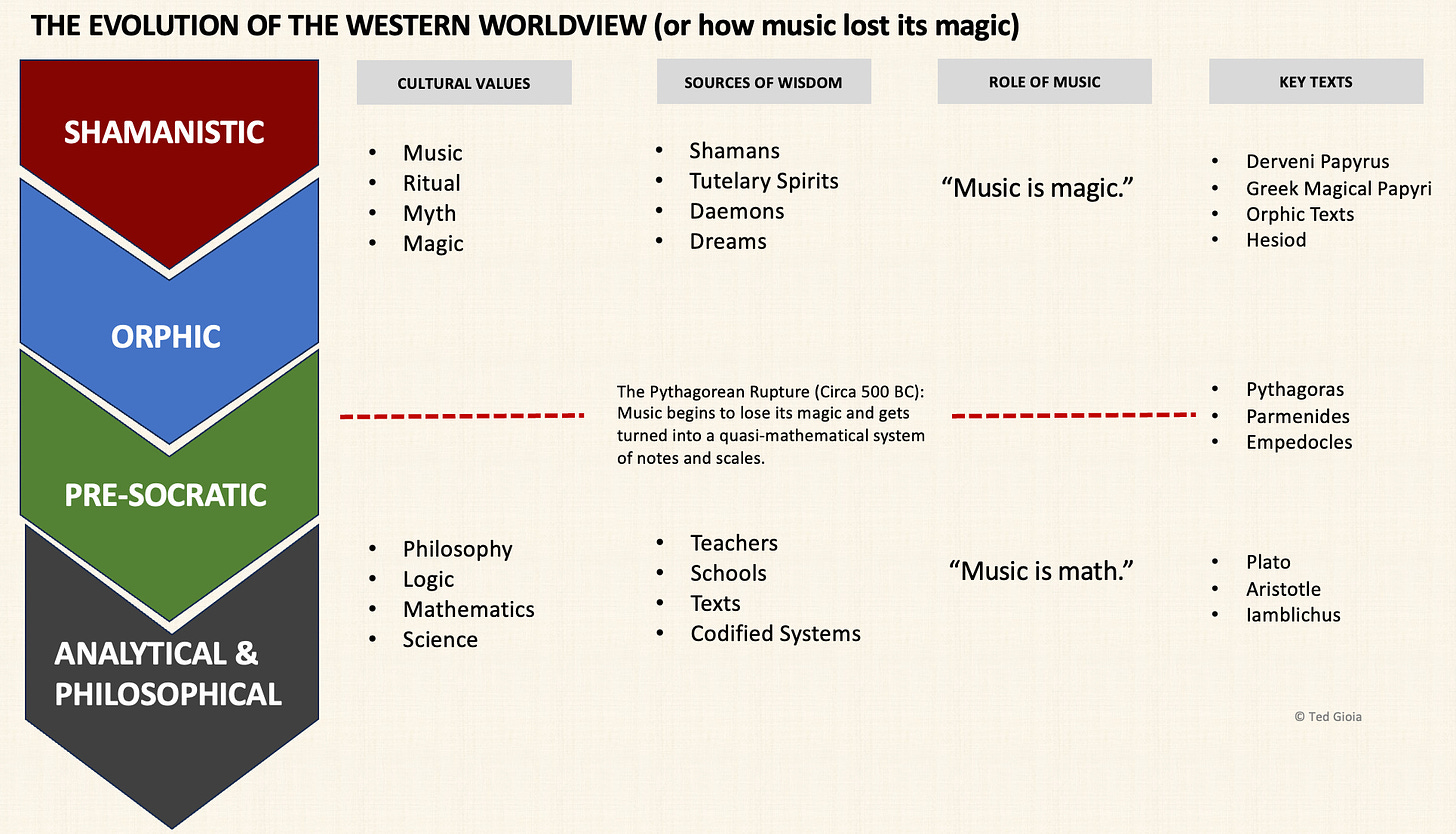




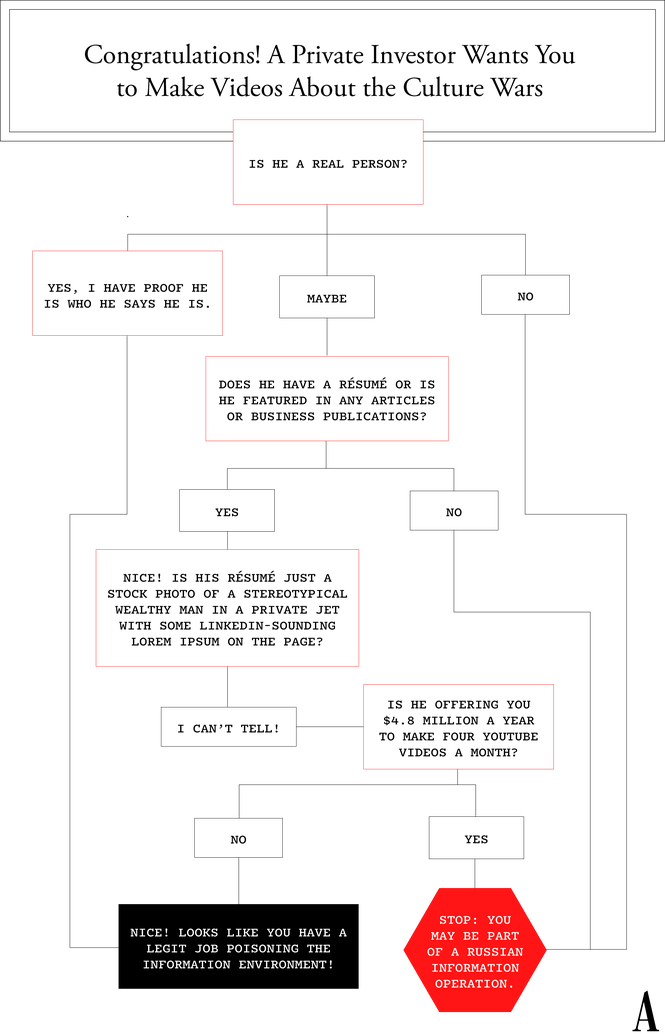
 Tipsy Teetotaler ن