This story strikes me as stupid, stupid, stupid. Here, through the voices of others, is why.
The chain was founded in 1969 — not 1776. It adopted the country branding because down-home cooking and folksy kitsch were trendy back then, not because they were trying to restore America to the Good Ole Days. Now, the market has moved on, and Cracker Barrel has been trying to adapt …
We have confused brands with moral values, and we demand to see our politics reflected everywhere, even in restaurant signage. We have also confused social media with social lives. And alone with our screens, too many of us have become addicted to rage, mashing the refresh button for the dopamine that rushes through us every time we discover that someone, somewhere, is wrong on the internet.
The addiction is so consuming that when no ready source of rage is available, we start cooking up our own out of whatever we can find in the cupboard. But if the cupboard is really this bare, I suggest people put down the phone and head to Cracker Barrel, rock themselves to serenity in the chairs on the porch, then head inside for a delicious helping of hashbrown casserole.
The Cracker Barrel farce … is the first case of “cancel culture” I’m aware of in which the accusers couldn’t articulate why the accused was being canceled.
Which was to their advantage, I think. An offender charged with a particular thoughtcrime can answer the charge but an offender charged with nothing in particular has little choice but to surrender. Which is what the company did on Tuesday.
…
Christopher Rufo, probably the New Right’s most influential culture warrior, admitted that he’s never set foot in the restaurant but declared war on it nonetheless in the name of making an example of any business “considering any move that might appear to be ‘wokification.’”
“The Barrel must be broken,” he announced with no apparent irony. If a progressive culture warrior had said something as clownishly imperious, self-important, and Stalinist as that 10 years ago, right-wingers would still be making scornful jokes about it today.
I expect no better from Rufo, frankly, but Hillsdale College has no excuse — and no more respect from me, though I thought very highly of it ten years ago when it was, like I was and am, conservative, not Trumpist. (Two Hillsdale alums, who became expats for a while, were cool on their alma mater well before I was. I guess they read the signs: Hillsdale becoming a caricature of anti-woke education.)
Television rights, National rites
They will never do it, because it’s too tacky to bear, and they don’t need the money, but here’s an interesting thought exercise for media dorks: What would the price be if Swift and Kelce were to sell the live rights to their wedding for television?
We know the NFL collects more than $110 million for a single playoff game—that’s what Peacock paid, and that was two whole years ago. Your standard live sports deal now hits 10 figures, easy. March Madness gets a billion annually to show college kids bricking 3-pointers. Paramount is set to pay more than $1 billion a year for humans pounding each other inside a steel cage.
A Swift-Kelce nuptial is bigger than all of that, mainly because of Swift, whose fame is vast and fierce, and if you don’t believe that, try criticizing one of her singles on Reddit sometime. There would be outrageous interest for both a live telecast and repeat viewing—you could do remixes, Taylor’s versions, on and on.
…
I think $500 million. That would be the absolute floor.
My better half wants a televised wedding opposite the State of the Union address, but that would reduce revenues quite a bit.
That is, I suppose it would reduce revenues. Who knows? I didn’t even know that Travis Kelce wasn’t a quarterback.
Nobel Laureate
FBI agents searched the Maryland home and Washington, D.C., office of former national security adviser John Bolton on Friday morning, reportedly as part of an investigation into his potential mishandling of classified documents. Bolton was not charged or detained during the operation. President Donald Trump—who revoked Bolton’s security clearance and Secret Service protection days into his second term—told reporters he had no prior knowledge of the searches but described Bolton, who has been a sharp critic of Trump in recent years, as “a real sort of a low life” and “not a smart guy.”
Congratulations, Mr. Bolton! Being described by Donald Trump as “a real sort of a low life” and “not a smart guy” is like winning a Nobel Prize for Integrity and Rectitude.
The fundamental structural problem of our government during the Trump administrations is this: our constitution assumed the George Washington was President. It assumed that our high officials would be men of high character, virtuous men. It assumed that of the American people as well.
So John Adams was dead right in this quote, the last sentences of which are fairly well-known:
While our country remains untainted with the principles and manners which are now producing desolation in so many parts of the world; while she continues sincere, and incapable of insidious and impious policy, we shall have the strongest reason to rejoice in the local destination assigned us by Providence. But should the people of America once become capable of that deep simulation towards one another, and towards foreign nations, which assumes the language of justice and moderation while it is practising iniquity and extravagance, and displays in the most captivating manner the charming pictures of candor, frankness, and sincerity, while it is rioting in rapine and insolence, this country will be the most miserable habitation in the world; because we have no government armed with power capable of contending with human passions unbridled by morality and religion. Avarice, ambition, revenge, or gallantry, would break the strongest cords of our Constitution as a whale goes through a net. Our Constitution was made only for a moral and religious people. It is wholly inadequate to the government of any other.
This President of the United States is not a virtuous man, but a vicious one. Empowered by shrewd and evil advisors (no more “adults in the room”) and motivated by avarice, ambition, and revenge, he is the whale breaking through the net, pushing the “unitary executive theory” (which wouldn’t be a problem were George Washington President) to the breaking point, turning the Department of Justice into the Department of Revenge and now trying to take over the Federal Reserve System – the better to blow a bubble from the bursting of which we may never recover.
I’m not going to resume lamenting what else bothers me about this administration (David French has some of the receipts), but I thought the fundamental problem, though it is not my original insight, might be helpful to pass along.
Do we have any reason to hope that men and women of high virtue will fill the Oval Office and Congress come 2029?
To be a conservative in 2025 …
To be a conservative in 2025 is to be politically homeless—but perhaps not entirely politically friendless.
…
At home, the party of Donald Trump—the party of J.D. Vance and Ted Cruz and Marco Rubio and Tucker Carlson, not to mention supposed normies such as Mike Pence, et al.—currently is engaged in answering a question I hadn’t thought anyone was asking: “What would national socialism look like if antisemitism were less of a political priority?”
Apropos of the first paragraph, the bulk of Williamson’s column is about how liberals-in-the-American-polarity-sense are starting to discover some timeless truths that just might allow conservatives to become allies if not intimates.
[A] critical mass of the American people … no longer want[s] to govern themselves, … are sick of this republic and no longer want to keep it if it means sharing power with those they despise.
I don’t do any of the major social media, but I have two sub-domains of the domain you’re currently reading: (a) You can read most of my reflexive stuff, especially political here. (b) I also post some things on my favorite social medium.
[Ted] Cruz was an intellectually serious politician of the kind who would quote Hayek and reference Milton Friedman off-the-cuff in private conversation until he discovered—and this is a thing with Texas politicians—that there was more juice to be had from pretending to be the good ol’ boy that he is not than in simply being the Ivy League lawyer he is. Cruz’s current position in American public life is that of a piteous and contemptible figure. … [F]or the moment, he is still a senator caught between the fringeward push of his radicalizing party and the centerward pull of his state’s urbanizing electorate.
Cruz is (or should be) smart enough to have figured out by now that he is never going to be president, and he ought to allow himself to be liberated by this and take on a new role—one that the genuine Ted Cruz, if there is anything left of him inside the chrysalis of grotesque opportunism and self-degradation in which he has enveloped himself, would be well-suited to undertake: defending the Constitution and the American order from a sustained assault that is coming from within his own party.
It would not take very much: “No, Mr. President, you may not willy-nilly create a new national sales-tax regime with rates based on how you’re feeling that day, even if you call it a tariff; no, you may not federalize the Philadelphia police department or deploy troops in U.S. cities based on whatever phony emergency pretext occurs to you in between social media posts; no, the states are not your ‘agents,’ and they most certainly do not have to do ‘whatever the president of the United States tells them’ to do, even if you put ‘FOR THE GOOD OF OUR COUNTRY’ in capital letters. And if you refuse to honor the constitutional limits on your office, then you can be removed from that office—with my vote, if necessary, though I would regret it and would probably lose my Senate seat as a result. But there are things more important than winning the next election.”
No, I do not think Cruz has it in him.
But he is starting to reach the stage of life when, to borrow David Brooks’ formulation, it is time to stop thinking about one’s résumé and start thinking about one’s eulogy.
Almost everything I knew about him, and particularly his professional accomplishments and opinions, made me think that Brett Kavanagh would be a good Supreme Court justice, and I haven’t been disappointed.
Why “almost”? It wasn’t really the Christine Ford Blasey accusations, but it was related to them: Brett Kavanaugh was an underage, binge-drinking party boy.
That was never in dispute. And I hate that. From him, there wasn’t so much as a “when I was young and foolish, I was young and foolish” acknowledgment. I don’t care if his parents winked at it or even bought the beer.
Now I don’t recall anyone else who was bothered enough even to shrug it off with “boys will be boys.” I seemingly stood alone in thinking underage binge drinking a blot on his character and fitness to uphold the law — all of it, including the parts that inconvenience him.
It’s not okay, and if that makes me a prig, so be it.
There is no possible religious neutrality in schools. So there!
Please let’s not blather about religious “neutrality.” So called secular education is not neutral, but reflects a bias against faith in favor of irreligion.
In fact, even that way of putting it is not precisely accurate. It isn’t that public schools have no god; in fact they place many gods before God. Superficial thinkers suppose that unconditional loyalties – whether of the “woke” or another variety — don’t count as religion just because they don’t use the word “god” for their gods. But the crux of the matter does not lie in the words they use.
I take a different minor issue with the first paragraph quoted than Budziszewski himself does. What “secular education” does is inculcate indifference. Purporting to teach children what they need to know without telling them anything about religion tacitly tells them that they need not know anything about it.
And this is not a straw man. The two-hundred-page course guide for Advanced Placement (AP) course in U.S. government and politics “doesn’t mention Christianity or the Bible—not once, even though it professes to cover ‘the intellectual traditions that animated our founding.’” (Mark Bauerlein)
But that’s not the same as teaching hostility toward religion (“irreligion”).
On the point about unconditional loyalties I couldn’t agree more. I just don’t know what we do about it. Deschooling Society?
DOGE
I have had a faint hope that we would discover that DOGE has begun modernization of software and strategic use of AI in the agencies they blitzkrieged immediately after our latest Presidential inauguration.
But they appears at this point to have been engaged in pure, nihilistic destruction — a style that, along with vengeance-destruction, appears to be what this 47th Presidency is all about.
Capitalist Economy
Pay no heed to the man in the management handcuffs
This person ran a legendary publishing house, and was also a jazz lover. He was a fan of my writing. We exchanged some emails, and then had a phone conversation.
“Ted, I love the book you’re writing,” he told me. “The sample chapters you sent are outstanding. You’re a special writer, and I’d love to sign you a contract. But…”
My head was already spinning. These people typically pay out big advances. I could finish the book and pay all my bills—no sweat! But before I could pursue these daydreams any further, this famous editor went on:
“I’d love to sign you to a contract. But I can’t.”
“Why not?” I asked—and even I could hear the plaintive note in my voice.
“Well, I’m sure your book would sell. But we evaluate books on their projected sales during the three years following release. If a book doesn’t have a three-year payback, we don’t do it.”
“I don’t think I understand this,” I whimpered in reply. “What are you saying?”
“It’s simple. Your book will probably sell for the next ten years or more. But I can only consider the first three years in making an offer—that’s why I have to turn you down.”
Okay, I understood discounted cash flow even better than this editor. I could give you a lecture on the Capital Asset Pricing Model in my sleep. In my early days, I made a living doing this kind of analysis.
But this way of thinking is wrong in the world of arts and culture.
…
When I tell editors that my books demonstrably sell for 25-50 years and longer, this is a turn-off. They actually hate it when I say it.
They won’t be around that long—editors constantly change jobs. They don’t give a hoot what sales will be like in the year 2050. They want something with cocktail party buzz for the six weeks following publication.
That’s the world they live in. But I don’t—and I refuse to move there.
There’s a lot more where that came from because Ted Gioia is a freakin’ polymath. His has become (probably) my favorite Substack that doesn’t focus on religious subjects.
Work-life balance
I’m 22 and I’ve built two companies that together are valued at more than $20 million. I’ve signed up my alma mater as a client, connected with billionaire mentors and secured deferred admission to Stanford’s M.B.A. program. When people ask how I did it, the answer isn’t what they expect—or want—to hear. I eliminated work-life balance entirely and just worked. When you front-load success early, you buy the luxury of choice for the rest of your life.
… I averaged 3½ hours of sleep a night and had about 12½ hours every day to focus on business. The physical and mental toll was brutal: I gained 80 pounds, lived on Red Bull and struggled with anxiety. But this level of intensity was the only way to build a multimillion-dollar company.
So that’s the world he lives in. I don’t, never have, and I refuse to move there — or to recommend it to anyone I care about.
Culture
Gay race communism
Now, Cracker Barrel is updating its décor and branding—slightly. The bulk of the update is a brighter, less cluttered interior design, but the “controversial” decision is to change its logo. The company removed the old white guy in overalls sitting by a barrel, and now just has a text-only sign that reads “Cracker Barrel.”
And people are losing their minds, claiming that it has gone “woke.” What seems to have sparked this brouhaha is a tweet saying that the store has “scrapped a beloved American aesthetic and replaced it with sterile, soulless branding.”
This prompted an outraged “WTF is wrong with @CrackerBarrel??!” tweet from Donald Trump Jr., that loyal guardian of all that is homey and traditional in American life. The very popular End Wokeness Twitter account proclaimed: “Cracker Barrel CEO Julie Masino should face charges for this crime against humanity.”
Chris Rufo then came out with a Cracker Barrel delenda Est pronunciamiento:
Alright, I’m hearing chatter from behind the scenes about the Cracker Barrel campaign and, on second thought: we must break the Barrel. It’s not about this particular restaurant chain—who cares—but about creating massive pressure against companies that are considering any move that might appear to be “wokification.” The implicit promise: Go woke, watch your stock price drop 20 percent, which is exactly what is happening now. I was wrong. The Barrel must be broken.
Now, it’s true that Cracker Barrel has done some LGBT marketing stuff, probably as a result of being criticized for alleged discriminatory policies in the 1990s. But maybe also because gay people—and people who aren’t particularly horrified by gay people—might like good, affordable breakfasts, too. They’ve also tried to cultivate Hispanic customers. I’m not sure this means they’ve been taken over by the Latinx reconquista.
I am also, shall we say, skeptical that a few old website screenshots of these efforts are proof that, in the words of Federalist co-founder Sean Davis, “Cracker Barrel’s CEO and leadership clearly hate the company’s customers and see their mission as re-educating them with the principles of gay race communism.”
Jonah Goldberg. It’s enough to make me want to try to remember that I keep forgetting to eat at Cracker Barrel.
What nihilists can’t believe
It’s hard enough to get people to believe something, but it’s really hard to get people to believe in belief — to persuade a nihilist that some things are true, beautiful and good.
I just can’t root for a guy who looks like Caligula
My libertarian and anti-state impulses incline me to be favorable toward Julian Assange, but I’ve never been able to shake how much he looks like John Hurt’s Caligula.
Technology
The technologies we use to try to “get on top of everything” always fail us, in the end, because they increase the size of the “everything” of which we’re trying to get on top.
Oliver Burkeman, Four Thousand Weeks
Brought to you by the letter “D”
Dust and decay, ditherers upon the doorstep of death itself; dried- up ghosts of daisy-chain days that were once dappled with dew and delight.
R.S. Thomas, Anybody’s Alphabet, Collected Later Poems 1988-2000.
The Los Alamos Sin
As Freeman Dyson put it, the “sin” of the scientists at Los Alamos was not that they made the bomb but that they enjoyed it so much.
Walker Percy, Lost in the Cosmos
I don’t do any of the major social media, but I have two sub-domains of the domain you’re currently reading: (a) You can read most of my reflexive stuff, especially political here. (b) I also post some things on my favorite social medium.
The Sleep Number bed is typical of smart home devices, as Harvard business school professor Shoshana Zuboff describes in The Age of Surveillance Capitalism. It comes with an app, of course, which you’ll need to install to get the full benefits. Benefits for whom? Well, to know that you would need to spend some time with the sixteen-page privacy policy that comes with the bed. There you’ll read about third-party sharing, analytics partners, targeted advertising, and much else. Meanwhile, the user agreement specifies that the company can share or exploit your personal information even “after you deactivate or cancel” your Sleep Number account. You are unilaterally informed that the firm does not honor “Do Not Track” notifications. By the way, its privacy policy once stated that the bed would also transmit “audio in your room.” (I am not making this up.)
The damages of our present agriculture all come from the determination to use the life of the soil as if it were an extractable resource like coal, to use living things as if they were machines, to impose scientific (that is, laboratory) exactitude upon living complexities that are ultimately mysterious.
Wendell Berry, The Unsettling of America
Touching politics
What’s remotely “risible” here?
Cyril Hovorun, a Ukrainian theologian … believes the Russian [Orthodox] church waded into Africa to spread propaganda and stoke hostility towards the West. The idea is less risible than it may at first seem. The Russian church’s favourite subject—“traditional values” and how the decadent West wants to pervert them—aligns with conservative religious views in Africa, where clerics tend to oppose homosexuality.
The idea did not at first seem risible to me, and it still does not.
Under the Biden administration, the U.S. had Ambassadors giving the middle finger to traditional lands by flying Pride flags at embassies and marching in gay rights parades (seehere and here). Are we so clueless that we don’t recognize that putting lightning-rod sexuality issues front-and-center in our foreign policy makes us vulnerable to adversary countries who aren’t yet out of their minds?
Money Quotes For The Week (excerpted from Andrew Sullivan)
“You know that scene in an action movie when the bad guy runs through the kitchen of a restaurant and pulls down all the pots and pans behind him to slow down his pursuers? We’re in that part of the Trump presidency,” – Jason Kander.
“So lemme get this straight: The Biden Admin (2021-2025) fabricated the Epstein Files before 2019 but did NOT release them before the 2024 election — instead expecting that Trump would demand their release only to do an about-face because Biden in fact made it all up. Got it,” – Daniel Goldman.
…
“People are mocking [Speaker Mike Johnson] but it’s important to realize the moral progress it represents for the GOP: less than 20 years ago the Republicans chose an actual pedophile, Denny Hastert, to be Speaker, whereas Johnson merely is running interference for pedophiles,” – Matt Sitman.
How it ends
The uproar over Jeffrey Epstein increasingly feels more like a simulacrum of a political scandal than an actual scandal.
…
[W]e all, and I do mean all, know how this will end.
Donald Trump is going to let Ghislaine Maxwell out of prison early in exchange for absolving him of wrongdoing related to Epstein.
For the record, I did not “know” that. I didn’t even suspect it. I’ve apparently been paying too little attention to the simulacrum.
But now that he mentions it, that denouement seems consistent with Trump’s overall shamelessness and abuse of the pardon power.
More:
I myself theorized four days ago that Team Maxwell had leaked the “bawdy” 2003 letter (allegedly) from Trump to the Wall Street Journal in the hopes of pressuring the president to make a deal with her. Lo and behold, today we find that the deputy attorney general wants to meet her. After six months of watching how postliberals operate, we’re all conspiracy theorists now. Take one look at this and try to imagine trusting this administration to behave on the up-and-up.
Events since Catoggio published this have swung me toward thinking he’s right about what’s it the works.
Despite it all, including my contempt for Trump, I would wager a moderate amount that Trump will not be shown to have partaken of Jeffrey Epstein’s adolescent delights. Do you really think the Biden DOJ wouldn’t have at least leaked it if he had (leaks could avoid unmasking Democrat ephebophiles)? (See Andrew Sullivan’s second quote of the week, above.)
I would not wager, though, that Trump didn’t know roughly what Epstein was up to.
Lest you think I’m being pedantic, by the way, I generally make it a point to distinguish ephebophilia from pedophilia because the latter always strikes me as more perverted, less understandable. Dennis Hastert, for instance, was an ephebophile, not a pedophile.
Apology accepted, sir.
I am writing to offer an apology. The short version is this: I severely underestimated the threat posed by a Donald Trump presidency. The never-Trumpers—who never seemed to stop issuing their warnings and critiques—struck me as psychologically and emotionally weak people with porcelain-fragile sensibilities. It turns out their instincts were significantly better attuned than my own.
… I, like many, took a transactional view of Trump. In the middle of a debate, he suddenly announced he had become pro-life (something Rudy Giuliani refused to do in 2008, which derailed his campaign). He also adopted a list of potential judicial nominees that accorded with constitutional conservatism. The author of The Art of the Deal drove the bargain that would take him to an unlikely presidency.
While some conservatives remained never-Trumpers, the rest, including me, made peace with Trump as the alternative to Hillary Clinton in a binary political system. Had we lived in a country with a multiparty system, we would have voted for the Christian Democrats and hoped for a part in a governing coalition, but that option didn’t exist.
I want to use this occasion to reiterate that I, a never-Trumper, have voted for America’s Christian Democrat party three quadrennia in a row. It is an option.
Unserious people governing an unserious people
Mediaite: Tulsi Gabbard Argues Obama Is Guilty of Treason Because ‘There Has to Be Peaceful Transition of Power’
On The Charlie Kirk Show, Kirk asked Gabbard to back up her “fighting words.”
“Can you make the case– can you present the arguments– the best bill you can with unclassified information and public information what makes you believe that this reaches that sort of threshold?” he asked.
Gabbard’s smoking gun? Obama — she claimed — disrupted the peaceful transfer of power.
“When we look at our Democratic Republic, Charlie, our system is built on the foundation of the American people casting their votes for who they want to be in office, to be our president and commander-in-chief.” said Gabbard. “In this system, there has to be a peaceful transfer of power.”
I’m pleasantly surprised that Charlie Kirk, himself something of a MAGA grifter, would challenge Gabbard on accusing Obama of treason.
I’m not surprised that Mediaite had to state the obvious because Kirk apparently didn’t pursue it:
Neither the Obama administration nor Obama himself ever claimed that Trump did not legitimately win the election. The former president never attempted to obstruct the certification of the election, he never told a news outlet that Clinton was the real winner, and he never encouraged supports to take matters into their own hands and attempt to stop the transition of power.
Gabbard’s boss, however, engaged in all of these actions repeatedly. President Trump claims, to this day, that he won the 2020 election. He actively fought against the certification of election results, and he was impeached for inciting an insurrection at the Capitol on Jan. 6.
Kirk, Gabbard and Mediaite all leave it to me, though, to point out that Trump “treasonously” interfered with Obama for eight freakin’ years through his birtherism BS. And that Obama has an airtight defense against treason.
And as long as I’m free-associating, what brainworm makes wing-nuts insist that the wives of politicians they don’t like are really men (not that the Macron marriage isn’t a little odd, mind you)?
A unified theory of Trump
Early the evening of the assassination attempt on candidate Trump, Peggy Noonan got a call from:
a friend … from California … He had been very close with Mr. Trump once, and was no longer. He asked my thoughts and I said wow, that was some kind of moment. He said that wasn’t spirit, it’s rage. I quote from memory: “He said ‘fight fight fight’ because he wants everyone fighting, because the game of dominance and defeat is everything to him.” That is him, my friend said, and the fight isn’t for something, it’s just what he likes.
…
In just the past week Mr. Trump accused one of his predecessors, Barack Obama, of treason. Not of a dereliction or mistake but actual treason—betraying his country and giving aid and comfort to its enemies. He told reporters in the Oval Office on Tuesday that, in National Intelligence Director Tulsi Gabbard’s recent report on Mr. Obama’s actions regarding Russia-gate, “It’s there, he’s guilty. This was treason.” “Obama was trying to lead a coup . . . This is the biggest scandal in the history of our country.”
You can say, “He’s just trying to distract from his Jeffrey Epstein problem” and yes, of course he is. But it’s also fight for the fight’s sake, and unthinkingly destructive. Is it good for young people, for instance, to hear one president accuse another of an act so wicked the penalty of conviction is death? It is not good for them.
Before the Journal last week broke the story of the Jeffrey Epstein bawdy birthday book with its letter bearing Mr. Trump’s signature, Mr. Trump threatened “I’m gonna sue the Wall Street Journal just like I sued everyone else.” He filed suit last Friday against the Journal and reporters Khadeeja Safdar and Joe Palazzolo.
An ardent Trump supporter might say, “Good, never let up.” Maybe Mr. Trump says that to himself. But it’s no good for the country for its president to attempt to muscle the press in this way, and it’s no good even for him. If and when the suit goes forward Mr. Trump will be forced to testify under oath on his history with Epstein. There is no way on earth that will be a net positive for him. Which surely he knows. He fights even when he will hurt himself, because the fight is all.
… He is like a strange general who can’t quietly establish camp or dig new fortifications. He shoots his cannon for no reason, just for the sound.
…
Of all his weaknesses that is one of his greatest, that he’d rather hurt himself than not fight. He’d rather hurt the country than not fight. The fight is all.
Your enemies are not demonic, and they are not all-powerful and the right hasn’t always lost and the left hasn’t always won. But if you convince yourself of that, you give yourselves all sorts of permission to do a lot of stupid and terrible things under the rubric of “Do you know what time it is?”
Trumpism can be seen as a giant attempt to amputate the highest aspirations of the human spirit and to reduce us to our most primitive, atavistic tendencies.
I don’t do any of the major social media, but I have two sub-domains of the domain you’re currently reading: (a) You can read most of my reflexive stuff, especially political here. (b) I also post some things on my favorite social medium.
If there’s a truly compelling reason not to normalize shaming as a global, always-on public spectator sport, it’s not that it degrades the humanity of the shamed; it’s not even the trite “who among us has not canoodled at a Coldplay concert with his sidepiece” justification. It’s simply this: When we take joy in the distress and ruination of other people, we make monsters of ourselves.
Apart from taking joy in distress and ruination, I have no reason to seek out the mêmes and other drollery about the ColdPlay kisscam. This, though, came to me unbidden:
Who’s killing the liberal arts?
An unpleasant truth has emerged in [the University of] Tulsa over the years. It’s not that traditional liberal learning is out of step with student demand. Instead, it’s out of step with the priorities, values and desires of a powerful board of trustees with no apparent commitment to liberal education, and an administrative class that won’t fight for the liberal arts even when it attracts both students and major financial gifts. The tragedy of the contemporary academy is that even when traditional liberal learning clearly wins with students and donors, it loses with those in power.
For those who do care to see liberal learning thrive on our campuses, the work my colleagues and I did at Tulsa should be a model. How did we do it? We created an intentional community where our students lived in the same dorm and studied the same texts. We shared wisdom, virtue and friendship as our goals. When a university education is truly rooted in the liberal arts, it can cultivate the interior habits of freedom that young people need to live well. Material success alone cannot help a person who lacks the ability to form a clear, informed vision of what is true, good and beautiful. But this vision is something our students both want and need.
When people justify their voting choice by its outcome, I always think of The Lord of the Rings. Tolkien emphasizes repeatedly that we cannot make decisions based on the hoped-for result. We can only control the means. If we validate our choice of voting for someone that may not be a good person in the hopes that he or she will use his power to our advantage, we succumb to the fallacy of Boromir, who assumed he too would use the Ring of Power for good. Power cannot be controlled; it enslaves you. To act freely is to acknowledge your limits, to see the journey as a long road that includes dozens of future elections, and to fight against the temptation for power.
I met Jessica some years ago at a conference where she was the Protestant keynoter. We spoke a bit because she was teaching at a University that I don’t even bother putting on my resumé despite spending three semesters there in the very late 60s. I dare say her scholarship was an order of magnitude higher than any of the mediocrities teaching when I was there.
Even the one prof to whom I owe a debt of gratitude earned that by a pretty banal observation that just happened to be what I needed at the moment — and I can’t even remember his name because at the time I didn’t realize how consequential that moment would prove to be.
Shorts
We’ve been telling kids for 15 years to code. Learn to code, we said. Yeah well, AI is coming for the coders. They’re not coming for the welders. (Mike Rowe)
I grew up in San Francisco, walking with my family by the Golden Gate Bridge. I still remember the thick and iconic chain railing that gave the place a sense of distinctiveness. Now the chains are gone, and they’ve been replaced by a soulless metal railing that’s colder than a hospital waiting room. … This is how a culture loses its charm: slowly, quietly. (David Perell).
The convoluted feelings behind the right to be killed
Let us first note that the demand for legal assisted suicide addresses not the legality of killing oneself, but the legality of assisting others to kill themselves. The suicidee (patient? victim?) is secondary. The primary object of the right-to-die movement is the living.
People may kill themselves at any time, without permission or even much pain. Even where it is not legally permitted, suicide, once accomplished, is beyond the reach of legal consequence.
… We must … focus on the desire for someone else to do the killing. Alongside fear of a botched attempt or leaving behind a mess for others, I suggest that the desire for assisted suicide is a perverse expression of the need for recognition. People who wish to kill themselves also want their choice to be socially approved.
… Its advocates say they wish to die with dignity, and then they ask to be euthanized like pets. … [T]he “right” to assisted suicide can only be the right not to be recognized as a human being.
When black Americans were struggling for civil and human rights—for the recognition of their humanity— they arrived at the profound conviction that it was dignified to risk death in that struggle. Assisted suicide represents a perverse inversion: a renunciation of dignity, the demand that one’s humanity go unrecognized. A society that honors that demand will not, in the end, recognize the humanity of anyone.
Earlier this month, 25-year-old George Retes was arriving for work at a Southern California marijuana farm when federal agents circled his vehicle, broke his window, and sprayed him with tear gas and pepper spray before taking him into custody. Retes, among the more than 360 people to be arrested in the large-scale immigration raid, went on to spend three days in a Los Angeles detention center.
The problem? Retes is a U.S. citizen and Army veteran, and was not charged with breaking any laws. “I want everyone to know what happened. This doesn’t just affect one person,” he told reporters following his release, sharing plans to sue for wrongful detention. “It doesn’t matter if you’re a veteran or you serve this country. They don’t care. They’re just there to fill a quota.”
…
It’s now been six months since President Donald Trump entered office with a promise to remove “the worst of the worst” from American soil. And indeed, arrests by Immigration and Customs Enforcement (ICE) have shot up as illegal border crossings—and, consequently, detentions by Customs and Border Protection—wane. Yet a significant portion of ICE detainees have no criminal record aside from being in the country illegally, with the Trump administration’s sweeping roundups seemingly targeting individuals on a more or less random basis.
I don’t particularly care if Trump deports everyone who is in the US illegally, though I doubt that any President will do that as long as we want people to do unattractive jobs for “dirt cheap” — including, I suspect, at Trump’s own Casinos and resorts. On the other hand, I’m not eager for him to do it.
What I definitely object to is the apparatus of terror, with masked ICE agents more-or-less indiscriminately grabbing and gassing people who just might help them meet quota. Or even doing that more discriminatingly, come to think of it.
Dreaming of Europe. And waking up.
Whenever I’m down; whenever I’m blue; whenever I think e.e. cummings retired the poet trophy with one poem; especially whenever I wonder whether it’s too late to become a naturalized Frenchman (or Italian, or …); I should by all means remember this: more Europeans die of heat death—largely due to lack of air-conditioning—than Americans die from gunshot wounds. (Factoid via Tyler Cowen)
I’m not so stupid as to think this is the ultimate answer to whether we’re the greatest country in the world. But even if it’s the best argument we’ve got, it’s not nothing.
It was and is ever so
You can take this to the bank: If the New York Times notices the Buddha, the enlightened one has already left town.
I thought at the time that he was uncharacteristically shrill, even if he was right. But I came across it again, and he was remarkably accurate.
The (In)Effective Executive
President Donald Trump has a couple of problems when it comes to being an effective executive, the top two being: 1) He is an ignoramus and 2) He insists on surrounding himself with yes-men who are too afraid to tell him that he is an ignoramus.
Your enemies are not demonic, and they are not all-powerful and the right hasn’t always lost and the left hasn’t always won. But if you convince yourself of that, you give yourselves all sorts of permission to do a lot of stupid and terrible things under the rubric of “Do you know what time it is?”
Trumpism can be seen as a giant attempt to amputate the highest aspirations of the human spirit and to reduce us to our most primitive, atavistic tendencies.
I don’t do any of the major social media, but I have two sub-domains of the domain you’re currently reading: (a) You can read most of my reflexive stuff, especially political here. (b) I also post some things on my favorite social medium.
Many catholic young people should have arrived at Chartres Tuesday or Wenesday, having averaged about 20 miles a day in pilgrimage since leaving St. Sulpice in Paris on Sunday:
I spoke with a 32-year-old American priest who was there with a group of teenage boys from his local high school. He talked about the appeal of the old mass, and Catholic tradition, to kids today. They had been earlier on a retreat at the traditionalist Benedictine abbey of Fontgombault, and he said these American boys had been blown away by what they had seen and done there. The priest predicted that they were going to be overwhelmed by the beauty of Chartres. He said that most American boys their age have already seen the worst of humanity in hardcore porn, before they have ever seen real beauty. So Chartres is going to be a revelation for them.
What a thought! There is precious little “real beauty” around us in the USA, especially real manmade beauty. But there’s plenty of rot.
A part of the American ethic
Take, for instance, when the doctors were asked whether they would go to court to override the parents’ wishes if the child did not have Down Syndrome. They responded unanimously that they would, and they gave the following rationale: “When a retarded (sic) child presents us with the same problem, a different value system comes in; and not only does the staff acquiesce in the parent’s decision to let the child die, but it’s probable that the courts would also. That is, there is a different standard. . . . There is this tendency to value life on the basis of intelligence. . . . [It’s] a part of the American ethic.”
Popular sites like What to Expect verify that some aspects of child development differ by gender, yet even such sites advise parents to try to equalize or neutralize the differences. We’re so influenced by the Gender Ideology that we don’t seem to consider the possibility of embracing the children’s own preferences for activities that are “stereotypically” male or female.
Jennifer Roback Morse, The Sexual State
I do not recommend this book. How little did I like it? Enough that having read it when considering a conference where the author was a keynote speaker, I forewent the conference.
But it’s hard to write a whole book without an observation or two that’s both accurate and temperately made.
I am also adamant that breaking sexual stereotypes is not a sign that one is “in the wrong body.”
Marriage today
… marriage American-style, an obligation easier to walk away from than student loans or credit card debt …
I’ve been watching enough BritBox to reflexively view Elon as in the driver’s seat.
AI
Yeah, everybody’s got to prattle about AI as the topic du jour for countless jours now. I’ll try not to be anodyne or banal.
The rule of Nobody
What with expectations that AI will become our new deity, coupled with the profit motive and AI hallucinations, Matthew Crawford returns to a variation on the theme that first made him famous 16 years ago:
In the year of our Lord 2025, getting things done often requires finding, not the recent hire who just reads through the prompts on his screen and is trapped in the same hall of mirrors as you, but the guy or the gal with enough institutional knowledge to be able to thwart the system.
AI will get rid of those people. What then? The dystopia I fear is not one in which superintelligent machines achieve self-awareness and wipe out the human race, it is the prospect of a tightening grid of dysfunction and paralysis, achieved through the final victory of “the rule of Nobody,” to borrow a phrase from Hannah Arendt. The Nobody cannot be addressed.
Oh sure, there will probably still be a counter you can walk up to, with a very charming robot-lady behind it. Detecting the emotional register of your voice, she will express empathy for your plight. “I understand this can be frustrating. Let me see what I can do.” But this will turn out to be just a creepier version of “your call is important to us,” which is Business English for “fuck off, we don’t want to talk to you.”
Your call is important to us…. This post was remarkably persuasive to me, with a dandy analogy from “work-to-rule slowdowns” in labor disputes.
Language no longer implies thinking
LLMs (the so-called AI process) are impressive probability gadgets that have been fed nearly the entire internet, and produce writing not by thinking but by making statistically informed guesses about which lexical item is likely to follow another …
People have trouble wrapping their heads around the nature of a machine that produces language and regurgitates knowledge without having humanlike intelligence. The authors observe that large language models take advantage of the brain’s tendency to associate language with thinking: “We encounter text that looks just like something a person might have said and reflexively interpret it, through our usual process of imagining a mind behind the text. But there is no mind there, and we need to be conscientious to let go of that imaginary mind we have constructed.”
…
Witness, too, how seamlessly Mark Zuckerberg went from selling the idea that Facebook would lead to a flourishing of human friendship to, now, selling the notion that Meta will provide you with AI friends to replace the human pals you have lost in our alienated social-media age.
The question with which to start my investigation is obviously this: Is there enough to go round? Immediately we encounter a serious difficulty: What is “enough”? Who can tell us? Certainly not the economist who pursues “economic growth” as the highest of all values, and therefore has no concept of “enough.” There are poor societies which have too little; but where is the rich society that says: “Halt! We have enough”? There is none.
E.F. Schumacher, Small Is Beautiful
Denying our Civil Religion
America has a civil religion that is the equal of any other religion. “Why something so obvious should have escaped serious analytical attention is in itself an interesting problem.” If American nationalism is so obviously a religion, in other words, why do we deny it? Bellah posits that conservative religious groups deny it because they believe that Christianity is, in fact, the national religion. As recently as the 1950s they proposed a constitutional amendment recognizing the sovereignty of Jesus Christ. Secularists deny that America has a civil religion because they do not believe the nation-state does or should have anything to do with religion.
William T. Cavanaugh, The Uses of Idolatry
Short-form social media
[W]hether on Twitter or Bluesky, there are five major varieties of short-form social-media post:
“Here is some information”
“Look at how funny I am”
“Look at how stupid my enemies are”
“Look at how smart my allies are for pointing out how stupid my enemies are”
“Hello total stranger! You’re an idiot”
Obviously, posts in the first category are useful; posts in the second can be enjoyable when the poster actually is funny; and the remaining three are poisonous.
Each of Henry II and Henry VIII had a Thomas, Becket and More respectively, who were martyred for their resistance to totalitarian pretentions:
Washington has passed a law requiring that Catholic [also Orthodox, I’m sure, though with progressives one never knows] priests report certain sexual crimes that might be communicated to them in the confessional …
What Henry II and Henry VIII could not live with was the idea that there were centers of power independent of the state—that the power of the king was limited. Americans supposedly cherish the notion of limited government and insist that we would abide no king, but we are in most things perfectly happy to let presidents behave as though they were Louis XIV—as long as they are doing what we want them to do, or at least as long as they are irritating and discomfiting those we regard as our rivals and enemies.
…
If you cleave to a political philosophy holding that there is nothing outside of the state, then you are a partisan, however well-meaning, of absolutism and totalitarianism. Not every totalitarian temptation indulged leads directly to 1984. … There are many stops, many way stations, and (one prays) many off-ramps along the road to serfdom. But allowing the state to shove its stupid snout into the confessional is a big step in the wrong direction. It is one that should be resisted not only by litigation but also through civil disobedience, if necessary.
You may have heard these famous lines from Cardinal Francis George, the late archbishop of Chicago, envisioning life under such totalitarian assumptions:
I expect to die in bed. My successor will die in prison. And his successor will die a martyr in the public square. His successor will pick up the shards of a ruined society and slowly help rebuild civilization, as the church has done so often in human history.
The cardinal’s words had more impact than he intended: “I was responding to a question and I never wrote down what I said,” he later said about his famous statement, “but the words were captured on somebody’s smartphone and have now gone viral.” But his views were no less dramatic when expressed in less dramatic language: “The greatest threat to world peace and international justice is the nation state gone bad, claiming an absolute power, deciding questions and making ‘laws’ beyond its competence,” he later wrote. And his actions bore out his convictions: When the state of Illinois insisted that funding for adoption and foster care providers would be restricted to those that agreed to provide services to same-sex couples, the cardinal, with regret, instructed Catholic Charities to refuse to comply, and the archdiocese eventually discontinued those services. That is the totalitarian tendency at work: The question wasn’t whether there would be 500 adoption agencies that serve same-sex couples but whether the 12.7 million people of Illinois could tolerate one that did not.
Elon Musk’s disinterest in learning the first thing about government, combined with his enthusiasm for performatively cutting the parts of it that irked him politically (in at least some cases because he has become a deranged conspiracy theorist), led him to eviscerate USAID, and to brag about it on Twitter:
We spent the weekend feeding USAID into the wood chipper.
Could gone [sic] to some great parties.
Did that instead.
This decision led and will continue to lead to a heartbreaking amount of suffering and death — to children and babies dying because they were cut off from access to, for example, U.S.-provided peanut paste (cost: $1 a day). One statistical model published by a Boston University public health researcher projects that Musk’s cuts will cause hundreds of thousands of child deaths. I have not looked closely into that model, but let’s say its estimate of 300,000 is off by a massive amount and Musk’s actions only led to 75,000 deaths. Was it worth it?
I don’t think Elon Musk woke up one day and decided to starve some Yemeni children to death. Rather, I think he couldn’t be arsed to learn the details of what he was doing, and instead succumbed to conspiracy theories about USAID (the drug use can’t have helped here), until he really did convince himself USAID was “a criminal organization” that needed to “die.”
Bro, you gave up a podcast. And you’re not divorced. Or separated.
It is easy to make fun of Dan Bongino, the emotionally incontinent former cop turned podcaster appointed for some inexplicable reason by Donald Trump to serve as deputy director of the FBI as a subordinate to Kash Patel, whose main qualification for the job was having been the author of … a children’s book about the Steele dossier, a fact that sounds totally made-up but that is totally not made-up.
And it is a good week for making fun of Bongino, who recently had a public emotional breakdown on Fox News—where else?—about how he “gave up everything” to take on a thankless job in public service. About which: Bro, you gave up a podcast. Bongino went on to say that the job was so hard that he was now divorced from his wife, only to realize that he didn’t exactly mean what he said. The bombastic mode of speech that is apparently obligatory in Trump’s orbit had served him poorly, and so he corrected himself: “separated.” But he didn’t mean “separated” the way it sounds when it is used in conjunction with “divorce.” He just meant that he’s spending a lot of time at the office away from his family.
Your enemies are not demonic, and they are not all-powerful and the right hasn’t always lost and the left hasn’t always won. But if you convince yourself of that, you give yourselves all sorts of permission to do a lot of stupid and terrible things under the rubric of “Do you know what time it is?”
Trumpism can be seen as a giant attempt to amputate the highest aspirations of the human spirit and to reduce us to our most primitive, atavistic tendencies.
I don’t do any of the major social media, but I have two sub-domains of the domain you’re currently reading: (a) You can read most of my reflexive stuff, especially political here. (b) I also post some things on my favorite social medium. I am now exploring Radiopaper.com as well.
[Jaron] Lanier agreed that it’s up to humans to protect the truth in the age of AI, but was less optimistic that we will do so: “The issue with AI is not the AI. It’s not the large language model. It’s the concentration of power and wealth around who owns it,” he said. “You have to look at the big system, including the people, the money, the business, the society, the psychology, the mythmaking, the politics.”
Codgers and technology go together like peanut butter and sardines.
Frank Bruni. Then this, merely via Frank Bruni, not from him:
In the quarterly journal Sapir, Bret Stephens made a kind of peace with the heavily partisan slant of so much cable television news: “To demand scrupulous impartiality on their broadcasts is like expecting fancy linens at a Motel 6.” (Naomi Lerner, West Orange, N.J.)
A non-tribal Democrat
Some of my subscribers dislike when I throw elbows to my left. They share my disdain for Donald Trump and his party, and my commitment to understanding them in light of political theory and history, but they are also devoted Democrats who have warm feelings for Joe Biden, were thrilled by the campaign of Kamala Harris and Tim Walz, and still seethe about Hillary Clinton’s loss in 2016.
That isn’t me. I vote for Democrats. I directionally agree with them on most issues. And I consider the Republican alternative thoroughly unacceptable. Yet I am not a devoted Democrat. A big part of the reason is that I’m not a joiner—of anything. I value my own independence too much and temperamentally resist deploying my talents to advance a cause—any cause, even a worthy one, and even one wrapped up, at this moment, with the fate of liberal democratic self-government in the United States.
But this way of thinking presumes that working to help the Democrats should take the form of deferring to and falling in line behind party leadership and elected officials, taking marching orders, rallying around candidates and nominees endorsed by the party bigwigs, and then maintaining message discipline to get them elected. That’s what I resist. But there’s another kind of devotion—one that expresses itself as tough love and a willingness to speak candidly, and even harshly, about faults.
…
… a Democratic researcher is quoted as saying that when she asks swing voters to liken the two parties to animals, they consistently describe Republicans as lions, tigers, and sharks—“apex predators” that “take what they want when they want”—but Democrats as tortoises, slugs, or sloths, creatures typically considered “slow, plodding, [and] passive.”
One of this crazy-making aspects of life in Trump 2.0 is that the media coverage of the administration’s antics focuses, mostly on the substance of what they are doing, ignoring the process, and the question of whether they have the authority to do it at all.
Such, I feared, was the infirmity of NPR and PBS Aren’t Entitled to Your Tax Dollars, a Free Press article by a serious Ivy league constitutional law professor. I slogged my way through it, agreeing with the author again and again, but frustrated that he was ignoring the elephant in the room. Finally, in literally the last paragraph, he mentioned the elephant almost as a throwaway line:
NPR also alleges in its complaint that the federal statute creating the Corporation for Public Broadcasting prohibits Trump from making this defunding decision. That’s a very different argument, which I’m not addressing here ….
I would venture a guess that nine out of ten people who read this column will come away with the impression that NPR and PBS are suffering from a liberal sense of entitlement to tax dollars, and miss the point about there being some limits to executive power.
In the end, it may not matter because this Congress is sufficiently servile that if Trump asks Congress to defund CPB, PBS and NPR (a longtime GOP talking point), it almost certainly will oblige him.
But process does matter, tremendously. Where the power to do something resides also matters.
This is all, for the record, a really excellent example of what we used to mean when we used the word ideology. Once upon a time, one wouldn’t say “My ideology is…” because ideology referred to the hidden, unexplored, unconscious politics that lay beneath the public, open, explicit politics. An ideology was those pre-political assumptions and beliefs which conditioned and limited political thought, which made the conscious political philosophy of any individual what it was. Ideology is the skeleton that hides unseen within the animal of politics but nevertheless determines the structure of that which is seen. Ideology exists in both the macro and the micro; this bizarre upper-caste antipathy towards ideology is a good example. If you asked leadership at these publications if they had any particular interest in leading a charge against the practice of adoption, they’d say no, of course not, what a weird question! If you were to show them just how repetitively this particular set of critiques and questions and hrm hrm hrm noises gets published in their pages, they’d swear to you that it reflects no underlying party line. And yet there it is, the evidence, in black and white. Something about the current constitution of the anxious educated urbanite liberal soul cries out inside of them: the real problem is adoption.
A well-regarded Evangelical pastor published this weeks before the 2020 Election.
[T]his is a long-overdue article attempting to explain why I remain baffled that so many Christians consider the sins of unrepentant sexual immorality (porneia), unrepentant boastfulness (alazoneia), unrepentant vulgarity (aischrologia), unrepentant factiousness (dichostasiai), and the like, to be only toxic for our nation, while policies that endorse baby-killing, sex-switching, freedom-limiting, and socialistic overreach are viewed as deadly.
…
I think it is a drastic mistake to think that the deadly influences of a leader come only through his policies and not also through his person.
This is true not only because flagrant boastfulness, vulgarity, immorality, and factiousness are self-incriminating, but also because they are nation-corrupting. They move out from centers of influence to infect whole cultures. The last five years bear vivid witness to this infection at almost every level of society.
…
Christians communicate a falsehood to unbelievers (who are also baffled!) when we act as if policies and laws that protect life and freedom are more precious than being a certain kind of person. The church is paying dearly, and will continue to pay, for our communicating this falsehood year after year.
The justifications for ranking the destructive effects of persons below the destructive effects of policies ring hollow.
I find it bewildering that Christians can be so sure that greater damage will be done by bad judges, bad laws, and bad policies than is being done by the culture-infecting spread of the gangrene of sinful self-exaltation, and boasting, and strife-stirring (eristikos).
…
I think it is baffling and presumptuous to assume that pro-abortion policies kill more people than a culture-saturating, pro-self pride.
When a leader models self-absorbed, self-exalting boastfulness, he models the most deadly behavior in the world. He points his nation to destruction. Destruction of more kinds than we can imagine.
It is naive to think that a man can be effectively pro-life and manifest consistently the character traits that lead to death — temporal and eternal.
Piper did not say who he was voting for. He did not name names. For that reason, I’m blogging this separately from pointed political material.
But I’m not going to deny that my heart soared to see that our current President had not captured and reduced to servility the entirety of one of America’s most prominent Christian traditions.
The right to know isn’t the whole story
To further clarify our situation, consider W. H. Auden’s discussion, which I’ve cited before, of the idea that, as he put it, “the right to know is absolute and unlimited.” “We are quite prepared,” Auden wrote,
“to admit that, while food and sex are good in themselves, an uncontrolled pursuit of either is not, but it is difficult for us to believe that intellectual curiosity is a desire like any other, and to recognize that correct knowledge and truth are not identical. To apply a categorical imperative to knowing, so that, instead of asking, ‘What can I know?’ we ask, ‘What, at this moment, am I meant to know?’ — to entertain the possibility that the only knowledge which can be true for us is the knowledge that we can live up to — that seems to all of us crazy and almost immoral.”
Harvard and the Trump administration have each finally met an adversary too big to push around. America’s richest university never really considered how much it depends on government policy, including lavish federal research funding, federal student aid, and a permissive immigration regime for the foreign students—who make up a third of the university’s student body and often subsidize the rest by paying more. Progressives also never thought through how the many tools they devised for using government leverage against private institutions—including threatening tax exemptions, as the Supreme Court allowed on dubious grounds in Bob Jones University v. United States (1983)—could be used against universities that engage in race discrimination for the “right” reasons, cultivate a political monoculture among the faculty, and permit campus mobs to terrorize minority groups who are out of progressive favor (Jews). Now, Trump is trying to strip Harvard of everything—tax exemption, federal funding, and visas for foreign students already enrolled. While the comeuppance for Harvard is admittedly delicious, the president is abusing powers he ought not to have, and Harvard has deep enough pockets to fight him in court.
National Review Weekly email.
Some cases don’t have valid arguments on both sides. That I find nothing “delicious” about Harvard’s “comeuppance” is an example of why I ignore National Review’s regular email invitations to resubscribe.
Can a car have a “catfish smile”?
“Behind that catfish smile, the company’s twin-turbo 4.0-liter DOHC V8 now discharges a drama-drenched 656 hp and 590 lb-ft—153 hp and 85 lb-ft more than the previous Vantage Roadster—thanks to larger turbochargers, revised camshaft profiles, optimized compression ratio and upgraded fueling and cooling.”
Kudos to Dan Neil for the spot-on “catfish smile.”
The car, by the way, is a 2025 Aston Martin Vantage Roadster, which will set you back $300,000 as equipped (this week’s ephemeral tariffs not included).
Credentials, good times, and genuine learning
Most young people today feel, with considerable justification, that they live in an economically precarious time. They therefore want the credential that will open doors that lead to a good job, either directly or (by getting them into good graduate programs) indirectly …
But those same young people also want to have a good time in college, a period of social experience and experimentation that they (rightly) think will be harder to come by when they enter that working world …
… Yes, students understand — they understand quite well, and vocally regret — that when they use chatbots they are not learning much, if anything. But the acquisition of knowledge is a third competing good, and if they pursue that one seriously they may well have to sacrifice one of the other two, or even both. Right now they can have two out of three, and as Meat Loaf taught us all long ago, two out of three ain’t bad.
After Trump held a crypto dinner last Thursday night, crypto moguls who paid to be there felt scammed that the president didn’t even stick around at the event they’d hoped to do their own scams at. I saw someone describe him as the apex scammer. Our Scammander in Chief.
In other Russia news, a new statue of Joseph Stalin in a Moscow metro station was unveiled this month. President Putin has called Stalin an “effective manager,” and has said that enemies of Russia use the “excessive demonization” of Stalin to attack “the Soviet Union and Russia.” Stalin is back, big time. Interesting that “effective manager” is being used here to describe a man who facilitated the death of millions—and not efficiently. But I’m not a businessman.
The continued reckoning: A postmortem on Kamala Harris’s campaign cited a “perception gap” as one of the reasons she lost, saying voters believed she held positions that she didn’t. “Over 80% of swing voters who chose Trump believed Harris held positions she didn’t campaign on in 2024, including supporting taxpayer funding for transgender surgeries for undocumented immigrants (83%), mandatory electric vehicles by 2035 (82%), decriminalizing border crossings (77%), and defunding the police (72%).” But Harris had, in fact, supported all of these positions. Like, she is on record supporting each of those positions (here, here, here, and here). So it’s not really a perception problem so much as a reception problem, like theseideas are not popular even though I support them. There’s a sense among Dems that people should simply ignore the things that are unpopular and that referencing them is fake news. Like, how dare you talk about the surge of migrants coming through our new open borders thanks to swift changes from the Biden admin. Yes, it’s technically true, but it’s disinformation-coded.
Leave Bruce alone: A bar in New Jersey canceled a performance by a Bruce Springsteen tribute band after the real Springsteen called Trump “corrupt, incompetent, and treasonous” while on tour in England. Citing the bar’s MAGA clientele, the bar owner said that a Springsteen cover band would be “too risky at the moment.” And: “Whenever the national anthem plays, my bar stands and is in total silence, that’s our clientele. Toms River is red and won’t stand for his bull—.” [But MAGA doesn’t have a violent streak. No way. That’s fake news.]
Things that are not antisemitism: The Democratic Socialists of America “Liberation Caucus” has announced its support for Elias Rodriguez, the suspect arrested for slaughtering two Israeli Embassy staffers outside D.C.’s Capital Jewish Museum last week. Here’s the statement signed by the DSA Liberation folks and a bunch of others: “As imperialism has made the entire world its battlefield, it is justified to fight it, by any means necessary, without regard for geography.” And: “[T]here must be consequences for genocidal [Z]ionist imperialism, and those consequences are righteous.”
The latest fitness craze is surely going to be Fake My Run. It fits perfectly with the national ethos whereby university students are already doing Fake My Education.
Your enemies are not demonic, and they are not all-powerful and the right hasn’t always lost and the left hasn’t always won. But if you convince yourself of that, you give yourselves all sorts of permission to do a lot of stupid and terrible things under the rubric of “Do you know what time it is?”
Trumpism can be seen as a giant attempt to amputate the highest aspirations of the human spirit and to reduce us to our most primitive, atavistic tendencies.
I don’t do any of the major social media, but I have two sub-domains of the domain you’re currently reading: (a) You can read most of my reflexive stuff, especially political here. (b) I also post some things on my favorite social medium. I am now exploring Radiopaper.com as well.
America continues divided into two groups. One thinks, “He is something that happened to us.” The tone is shocked, still, and bewildered: Did I live in this country all this time and not understand it? The other thinks, “He is something we did.” The tone is pride and, still, surprise: I didn’t know we could seize things back.
I’ve now listened to twopodcasts in which journalist Batya Ungar-Sargon defends Trump.
I don’t think she really believes it. Some verbal tics when challenged suggest she doesn’t really believe it (notably, her repeated retreats into “I’m just a journalist explaining why people like him” when that’s plainly false). I suspect she has just found a niche (Center-Left Journalist Becomes Ardent Trump Defender!) that gets attention.
But whether or not she believes it, most of it is gibberish, nonsense-on-stilts — and it ignores Trump’s norm-breaking, due process and other constitutional violations, focusing on the (supposed) policy goals which (refrain) 80% of voters want, so they’re entitled to it immediately.
Well no, they’re not necessarily entitled to it at all, let alone immediately. The Constitution of the United States is deliberately counter-majoritarian in several of its structural provisions (e.g., the Electoral College and the Senate) and even more of the Bill of Rights.
Even the “right” policy, if executed unconstitutionally, is wrong.
I’m resolved not to inflict Batya Ungar-Sargon on myself again. She’s a vexation to my soul. But I’m still waiting for a coherent defense of Trump. Surely I’m missing something.
Conservative critics of Trumpism
Perhaps the most frustrating thing about being a conservative critic of Trumpism is that you often start by agreeing with Trumpworld about ends while disagreeing about means.
This pleases nobody. The left, broadly speaking, considers the ends as illegitimate as the means, and the pro-Trump right thinks that if you’re against the means you really don’t desire the ends. I’m against the abuse of power, even for my own “side.”
When Amazon reportedly considered displaying the added cost of tariffs on the price of items, Trump was furious. Here’s what an official anonymously told CNN: “Of course he was pissed. Why should a multibillion-dollar company pass off costs to consumers?” Fascinating. This is like when socialists, during the pandemic inflation, were talking about how greedy grocery store owners were to let prices go up. This is so phenomenally economically illiterate. Their argument is that Amazon should absorb the cost of the tariffs? What they really want is for Amazon not to point the tariffs out.
So Trump called Jeff Bezos, perhaps threatening to use the full weight of the U.S. government to make his life miserable (though Trump later described him as a “good guy” and said that Bezos “solved the problem very quickly.”). Amazon then told CNN “this was never approved and [was] not going to happen.” Right. . . so we’re in a gangster government now. The White House will personally target you if you don’t comply with their harebrained schemes. That’s a nice logistics and web services company you got there, Jeff, would be a real shame if the U.S. government went after it. Even Jeff Bezos—a man who is flying ladies to space for fun—caved. Our gangster government means conservative values are whatever Trumpo says they are, capisce? And Trumpo says it’s tariffs—or your other option is to buy $MELANIA coin, do you hear me? [Knee digs deeper into neck.] Am I not being clear, Jeff? Do I gotta enunciate more, Jeff?
Speaking of gangsters, a new private club for MAGA has launched in D.C. It’s called Executive Branch, and the membership fee is $500,000. Well, do you want your corporate merger approved or not?
Of Trump’s TweetedTruthed declaration Sunday, declaring that foreign flicks are a National Security threat and authorizing institution of “a 100% Tariff on any and all Movies coming into our Country that are produced in Foreign Lands.” (Since when do we tariff national security threats, by the way!?)
Hollywood and its foreign counterparts are “reeling” today from Sunday’s post, with studio executives reportedly convening emergency calls to plot a way forward financially. Billions of dollars and countless jobs here and abroad will turn on a random thought that the president had, one which he may or may not lift a finger to follow through on … We’re all living in a demented baby boomer’s endless nostalgia trip.
What you will not find in the [Secretary of Education Linda] McMahon letter [to Harvard] is any mention of the original justification for the Trump administration’s ongoing assault on elite universities: anti-Semitism. As a legal pretext for trying to financially hobble the Ivy League, anti-Semitism had some strategic merit. Many students and faculty justifiably feel that these schools failed to take harassment of Jews seriously enough during the protests that erupted after the October 7, 2023, terrorist attack on Israel by Hamas. By centering its critique on that issue, the administration was cannily appropriating for its own ends one of the progressive left’s highest priorities: protecting a minority from hostile acts.
Now, however, the mask is off. Aside from one oblique reference to congressional hearings about anti-Semitism (“the great work of Congresswoman Elise Stefanik”), the letter is silent on the subject. The administration is no longer pretending that it is standing up for Jewish students. The project has been revealed for what it is: an effort to punish liberal institutions for the crime of being liberal.
Were I not already leery of cryptocurrency as a scam, Trump’s creation of a même-coin on the cusp of his second term, and the way it’s being openly used to buy access to him (putting untold millions of actual U.S. dollars into his pockets), would have made me leery.
Another impeachable offense (foreign emoluments clause, for instance), but I’m pissing into the wind to note that.
Congress’ default
Congress is not doing its job, and the vacuum that its dereliction has created is encouraging presidential and judicial overreach. Congress’s weakness is our deepest constitutional problem, because it is not a function of one man’s whims and won’t pass with one administration’s term. It is an institutional dynamic that has disordered our politics for a generation. It results from choices that members of Congress have made, and only those members can improve the situation. It is hard to imagine any meaningful constitutional renewal in America unless they do.
…
[Newt] Gingrich advanced an almost-parliamentary model of the House of Representatives. He empowered the speaker and majority leader at the expense of the policy-focused committees, and set in motion a process that robbed most members of the opportunity for meaningful legislative work. His moves dramatically accelerated what was by then a 20-year trend toward the centralization of authority in the hands of congressional leaders. House leaders of both parties have pushed further in that direction in this century, and the Senate has largely followed suit. These efforts were intended to make Congress more effective, but in practice, they rendered most legislators almost irrelevant.
As a result, many ambitious members of Congress have concluded that their path to prominence must run not through policy expertise and bargaining in committees but through political performance art on social media and punditry on cable news. Our broader political culture has pushed in the same direction, encouraging performative partisanship. And the narrowing of congressional majorities has put a premium on party loyalty, further empowering leaders, and leaving many members wary of the cross-partisan bargaining that is the essence of legislative work.
…
In his first 100 days, Donald Trump signed only five bills into law—fewer than any other modern president. In a period rife with constitutional conflict in Washington, the first branch has done essentially nothing.
Since Levin wrote this, Congress has gotten on the stick by passing the vital bill to rename the Gulf of Mexico. Marjorie Taylor Greene led the charge. And if that’s not serious enough for you, you’re probably out of luck.
Excerpts from Sully
“The Trump admin was about to send a former POLICE OFFICER to be imprisoned in El Salvador without trial because an ICE officer looked at his social media and said his ‘hand gestures’ meant he was a gang member,” – Aaron Reichlin-Melnick.
“It is of interest to note that [the patient’s family] were all reassured to discover that George was not a homosexual. The diagnosis of ‘transexual’ provided an explanation for his feminine behavior and was, especially for the parents, psychologically relieving,” – a 1970 report on teen transition..
Sports stadiums, data servers, and other boondoggles
Writing in Reason, Marc Oestreich explores what data server farms and new sports stadiums have in common. “The recent announcement that Microsoft is investing over a billion dollars into a vast new data center campus in La Porte, [ Indiana], is expected to be transformational for the town of 22,000 people. Microsoft was given a 40-year tax abatement on equipment, a renewable state sales tax exemption through 2068, and just $2.5 million of payments in lieu of taxes (PILOT) over four years—roughly 30 percent of what it would normally owe. After that? Nothing. Local utilities would cover the infrastructure.” For Oestreich, this sounds familiar. “Just 60 miles up the toll road sits Soldier Field, home of the Chicago Bears. The stadium’s 2002 post-modern renovation cost $587 million, $387 million of which was shouldered by taxpayers. Two decades and two dozen quarterbacks later, Chicago only has $640 million (thanks to $256 million in interest) left to pay,” Oestreich writes. “Today’s stadium boondoggle is a server farm … The sales pitch is nearly identical to the stadium era: ‘It’ll create jobs. It’ll put us on the map. It’s worth the investment.’”
A friend drew my attention to a January 21, 2025 article in the New York Times. The topic was the Trump administration’s effort to limit the scope of birthright citizenship, the constitutional provision that accords citizenship to anyone born in the United States. The article’s title: “Undocumented Women Ask: Will My Unborn Child be a Citizen?” When the issue is abortion, the New York Times would never dream of referring to an “unborn child.” Apparently, that editorial discretion falls away when illegal immigration is under discussion.
We have seen some of the most grotesque costumes, along the line of the railroad, that can be imagined. I am glad that no possible combination of words could describe them, for I might then be foolish enough to attempt it.
Mark Twain, The Innocents Abroad
Your enemies are not demonic, and they are not all-powerful and the right hasn’t always lost and the left hasn’t always won. But if you convince yourself of that, you give yourselves all sorts of permission to do a lot of stupid and terrible things under the rubric of “Do you know what time it is?”
Regarding said “lot of stupid and terrible things,” my failure to call out anything about the current regime does not mean I approve. There’s just too much, and on some of the apparent illegalities I don’t want to abuse my credentials without thinking it through.
I don’t do any of the major social media, but I have two sub-domains of the domain you’re currently reading: (a) You can read most of my reflexive stuff, especially political here. (b) I also post some things on the only social medium I frequent, because people there are quirky, pleasant and real.
The normative approach to learning draws the analytical after it, whereas the analytical approach repels the normative. The fragmentation of arts and letters into academic disciplines (literature, history, philosophy, religion, social studies, and so forth) answers an analytical need that pushes normative inquiry into the interstices between disciplines. This is the strongest argument for reuniting the arts and letters.
A capitalist society required not just capitalist practices among urban elites, but a demographically widespread social acceptance among Christians of the counter-biblical notion that the good life was the goods life.
Brad S. Gregory, The Unintended Reformation
Empty gestures
Playing the “The Star-Spangled Banner” at sporting events has become an empty gesture of patriotism—so empty that, when the NBA’s Dallas Mavericks quietly began skipping the ritual, 13 preseason and regular-season games passed before anyone noticed. On Tuesday, The Athletic reported that the Mavericks had abandoned the national anthem, making them the first team in the recent history of major professional sports to take such a stance. The next day, the National Basketball Association issued a statement declaring that every team must play the song, in accordance with league rules. Inevitably, the Mavericks reversed course.
Over the past decade a new, and very revealing, locution has drifted from our universities into the media mainstream: Speaking as an X . . . This is not an anodyne phrase. It tells the listener that I am speaking from a privileged position on this matter. (One never says, Speaking as a gay Asian, I feel incompetent to judge this matter.) It sets up a wall against questions, which by definition come from a non-X perspective. And it turns the encounter into a power relation: the winner of the argument will be whoever has invoked the morally superior identity and expressed the most outrage at being questioned.
Mark Lilla, The Once and Future Liberal
MAGA-lite
“Sad to agree [that] the Free Press (for which I had high hopes) has ‘descended into MAGA-lite.’ Yes, PC-SJW-Critical-Woke-Intersectionality is bad, but some perspective, please: Blowing up the international order, sucking up to autocrats, wrecking the world economy, sowing doubt about vaccines, spreading medical quackery, strangling lifesaving foreign aid, pardoning violent rioters, preventing data collection, spewing nonstop lies, & extorting the press, law firms, and universities is worse,” – Steven Pinker.
I haven’t cancelled yet, but it’s getting close. Part of it is the MAGA-lite vibe, but another part is that it’s trying to be too much like a full-blown newspaper, right down to the culture vultures fluff.
On the other hand, it’s not terribly expensive — if one excludes the “cost” of wading through some of it.
My visit to the Xitter
I wanted to communicate something positive to a restaurant chain, and couldn’t find a way to do it other than @ing them on X.com:
@Wendys Your Panko fish sandwich is easily the best in the fast food biz. Could you find in your hearts to have it all year, not just in Lent?
Then I made the mistake of looking around, finding tons of tacit confirmation of Fr. Stephen Freeman’s advice:
Quit arguing about politics as though the political realm were the answer to the world’s problems. It gives it power that is not legitimate and enables a project that is anti-God.
I’m not going to get more specific than that advice because that would be like the kid at the table who says “Mom! Joey had his eyes open while Dad was praying!”: You can’t fault someone for anti-God politics without arguing about politics.
Political
To see ourselves as others see us
4. The US needs to “stop whining” about being a victim after “taking a free ride on the globalization train”, China’s official state media said, as the trade war between the two countries continued to spiral. Last week’s tit-for-tat tariff rises appear to have paused, but the conflict between the two biggest economies is showing no signs of letting up. On Tuesday evening, China Daily, the ruling Chinese Communist party’s (CCP) English-language mouthpiece, published an editorial saying Donald Trump’s frequent claims of the US being “ripped off” were “hoodwinking the US public”. “The US is not getting ripped off by anybody,” it said. “The problem is the US has been living beyond its means for decades. It consumes more than it produces. It has outsourced its manufacturing and borrowed money in order to have a higher standard of living than it’s entitled to based on its productivity. Rather than being ‘cheated’, the US has been taking a free ride on the globalization train.” (Source: theguardian.com)
Religious populism, reflecting the passions of ordinary people and the charisma of democratic movement-builders, remains among the oldest and deepest impulses in American life.
4. The US needs to “stop whining” about being a victim after “taking a free ride on the globalization train”, China’s official state media said, as the trade war between the two countries continued to spiral. Last week’s tit-for-tat tariff rises appear to have paused, but the conflict between the two biggest economies is showing no signs of letting up. On Tuesday evening, China Daily, the ruling Chinese Communist party’s (CCP) English-language mouthpiece, published an editorial saying Donald Trump’s frequent claims of the US being “ripped off” were “hoodwinking the US public”. “The US is not getting ripped off by anybody,” it said. “The problem is the US has been living beyond its means for decades. It consumes more than it produces. It has outsourced its manufacturing and borrowed money in order to have a higher standard of living than it’s entitled to based on its productivity. Rather than being ‘cheated’, the US has been taking a free ride on the globalization train.” (Source: theguardian.com)
Political persecution this, political persecution that: The Trump administration is seeking criminal charges against New York attorney general Letitia James, Trump’s public enemy number one. Federal Housing Finance Agency head William Pulte accused James of mortgage fraud, saying she misrepresented her building to get a better loan deal. He also accused James of claiming a Virginia property as her primary residence while she was New York’s AG in order to secure a lower interest rate on a loan.
You’ll recall that Letitia James literally campaigned for attorney general on a platform of prosecuting Trump on anything she could. Here she was back in 2018: “We will use every area of the law to investigate President Trump and his business transactions, and that of his family as well.” But now, with the shoe on the other foot, James is accusing Trump of politically persecuting her. Her team said that Trump was weaponizing “the federal government against the rule of law and the Constitution.” Such are the consequences of lawfare: always in litigation, always filing briefs, never settling, never quite winning.
It is difficult in some cases to get to the very heart of the matter. But in this case, it is not hard at all. The government is asserting a right to stash away residents of this country in foreign prisons without the semblance of due process that is the foundation of our constitutional order. Further, it claims in essence that because it has rid itself of custody that there is nothing that can be done.
This should be shocking not only to judges, but to the intuitive sense of liberty that Americans far removed from courthouses still hold dear.
…
The Executive possesses enormous powers to prosecute and to deport, but with powers come restraints. If today the Executive claims the right to deport without due process and in disregard of court orders, what assurance will there be tomorrow that it will not deport American citizens and then disclaim responsibility to bring them home? {See, e.g., Michelle Stoddart, ‘Homegrowns are Next’: Trump Doubles Down on Sending American ‘Criminals’ to Foreign Prisons, ABC News (Apr. 14, 2025); David Rutz, Trump Open to Sending Violent American Criminals to El Salvador Prisons, Fox News (Apr. 15, 2025).}
And what assurance shall there be that the Executive will not train its broad discretionary powers upon its political enemies? The threat, even if not the actuality, would always be present, and the Executive’s obligation to “take Care that the Laws be faithfully executed” would lose its meaning.
…
The basic differences between the branches mandate a serious effort at mutual respect. The respect that courts must accord the Executive must be reciprocated by the Executive’s respect for the courts. Too often today this has not been the case, as calls for impeachment of judges for decisions the Executive disfavors and exhortations to disregard court orders sadly illustrate.
It is in this atmosphere that we are reminded of President Eisenhower’s sage example. Putting his “personal opinions” aside, President Eisenhower honored his “inescapable” duty to enforce the Supreme Court’s decision in Brown v. Board of Education II to desegregate schools “with all deliberate speed.” Address by the President of the United States (Sept. 24, 1957). This great man expressed his unflagging belief that “[t]he very basis of our individual rights and freedoms is the certainty that the President and the Executive Branch of Government will support and [e]nsure the carrying out of the decisions of the Federal Courts.” Indeed, in our late Executive’s own words, “[u]nless the President did so, anarchy would result.”
Now the branches come too close to grinding irrevocably against one another in a conflict that promises to diminish both.
Judge J. Harvie Wilkinson, conservative icon Reagan appointee, mincing no words. Via Eugene Volokh.
This is true. Blackman’s Trump-era meta-theme seems to be that federal courts are getting out of their proper constitutional lane trying to solve ills wrought by Velveeta Voldemort.
The reality that the Bill of Rights is deliberately counter-majoritarian doesn’t always mean that the courts can beat back “populist” majoritarian idiocies. In the political process, it has pleased the sovereign will of the American people to well and truly screw the pooch.
On the other hand …
Perhaps the federal courts are incited to action by the pugilistic stance this Administration takes in the lower courts, its demands for impeachment of judges who rule against it, and its murmurs about maybe defying the courts:
Yesterday Justice Alito published a fiery statement explaining his dissent from the Supreme Court’s early Saturday morning order directing the U.S. government “not to remove any member of the putative class of detainees [subject to Alien Enemy Act removal] from the United States until further order.”
Alito’s statement highlighted the rushed and unusual nature of the Court’s order. What it neglected to mention was that the Court probably acted so quickly because the U.S. government cannot be trusted to comply in good faith with the Court’s April 7 order that the “AEA detainees must receive notice . . . within a reasonable time and in such a manner as will allow them to actually seek habeas relief in the proper venue before such removal occurs.”
I’m trying to keep our contemptible President out of this blog. If you want to see what I’m reading (and thinking) about him, I’m keeping them here.)
But I’ve got to call attention to his Easter Greeting. (Trigger warning: blasphemy) “Christian” Trumpists take note.
NEW!
Your enemies are not demonic, and they are not all-powerful and the right hasn’t always lost and the left hasn’t always won. But if you convince yourself of that, you give yourselves all sorts of permission to do a lot of stupid and terrible things under the rubric of “Do you know what time it is?”
I don’t do any of the major social media, but I have two sub-domains of the domain you’re currently reading: (a) You can read most of my reflexive stuff, especially political here. (b) I also post some things on the only social medium I frequent, because people there are quirky, pleasant and real.
Much of what Illich had to say to those bright-eyed students preparing to spend their summer volunteering in Mexico are summed up in these early lines:
“I do have deep faith in the enormous good will of the U.S. volunteer. However, his good faith can usually be explained only by an abysmal lack of intuitive delicacy. By definition, you cannot help being ultimately vacationing salesmen for the middle-class ‘American Way of Life,’ since that is really the only life you know.”
Illich recognized that “development” work, as it was happening in the 1960s, was, in fact, a vehicle by which a whole complex nexus of values and systems was being exported to and imposed upon the “under-developed” world, and ultimately in such a way that the recipients of this aid would be subjected to new forms of poverty and dependence—“modernized poverty,” as Illich called it elsewhere.
…
Illich tells his audience that “next to money and guns, the third largest North American export is the U.S. idealist, who turns up in every theater of the world: the teacher, the volunteer, the missionary, the community organizer, the economic developer, and the vacationing do-gooders”—to which list, of course, we can add the tech evangelist. It is then that he drops this devastating line:
Perhaps this is the moment to instead bring home to the people of the U.S. the knowledge that the way of life they have chosen simply is not alive enough to be shared.
‘Young man,’ he said, ‘don’t you know you can’t go home again?’ And he went on to speak of the advantages, for a young writer, of living in New York among the writers and the editors and the publishers.
The conversation that followed was a persistence of politeness in the face of impossibility. I knew as well as Wolfe that there is a certain metaphorical sense in which you can’t go home again – that is, the past is lost to the extent that it cannot be lived in again. I knew perfectly well that I could not return home and be a child, or recover the secure pleasures of childhood.
But I knew also that as the sentence was spoken to me it bore a self-dramatizing sentimentality that was absurd. Home – the place, the countryside – was still there, still pretty much as I left it, and there was no reason I could not go back to it if I wanted to.
Wendell Berry, The World-Ending Fire
More from the same source:
Our model citizen is a sophisticate who before puberty understands how to produce a baby, but who at the age of thirty will not know how to produce a potato.
Extremisms
Knee-jerk whataboutism—citing left-wing extremism to brush away concerns of right-wing extremism—is a way of saying, effectively, “I don’t actually care about right-wing extremism. Left-wing extremism is so overwhelmingly bad it’s okay to turn a blind eye to the conspiracy theorists, thugs, and terrorists on my side.”
Slavery was never less than a statement about the sovereignty of capital, and its rights, in relation to human rights. In the South, economic restrictions on religious organization by black Christians was part and parcel of the racial system undergirding slavery and the marginalization of free African Americans.
Mark A. Noll, America’s God
Terribly prophetic
When you have attention, you have power, and some people will try and succeed in getting huge amounts of attention, and they would not use it in equal or positive ways.
The big tech platform debates about online censorship and content moderation? Those are ultimately debates about amplification and attention. Same with the crisis of disinformation. It’s impossible to understand the rise of Donald Trump and the MAGA wing of the far right or, really, modern American politics without understanding attention hijacking and how it is used to wield power … the attempted Capitol insurrection in January [2021] was the result of thousands of influencers and news outlets that, in an attempt to gain fortune and fame and attention, trotted out increasingly dangerous conspiracy theories on platforms optimized to amplify outrage.
Unlike cynicism, hopefulness is hard-earned, makes demands upon us, and can often feel like the most indefensible and lonely place on Earth. Hopefulness is not a neutral position either. It is adversarial. It is the warrior emotion that can lay waste to cynicism.
I don’t do any of the major social media, but I have two sub-domains of the domain you’re currently reading: (a) You can read most of my reflexive stuff, especially political here. (b) I also post some things on the only social medium I frequent, because people there are quirky, pleasant and real.
Raphael Glucksmann, a member of the European Parliament, feels that America has reneged on the values that led to the statue being gifted. “We’re going to say to the Americans who have chosen to side with the tyrants, to the Americans who fired researchers for demanding scientific freedom: “Give us back the Statue of Liberty,” he said at a convention of his center-left party, Place Publique, Sunday. “We gave it to you as a gift, but apparently you despise it. So it will be just fine here at home,” Glucksmann added.
The Harvard Law School chapter of the Federalist Society was taken over last week by “Common Good Constitutionalism” disciples of Professor Adrian Vermeule (i.e., wokesters of the Right). The chapter’s former president, Sarah Isgur, has some thoughts about the incel Integralists and their pyrrhic victory:
Freedom is turned on its head. Individual freedom does not exist if it does not enhance the general welfare (again, defined by them). To break it down: Speech that is good is protected. Speech that is bad is not. And the government gets to define what is good.
But they misunderstand Fed Soc’s strength. So let me explain: It came from its size and its diversity of thought. When you shrink it down to only those people who agree with you on outcomes, you have stripped it of its source of power.
The Vikings can be resentful that we didn’t let them into our club. They can even burn down the club. But they still won’t be in the club. They’ll just be standing over its ashes, still sad, and confused, and angry, and without clerkships, and without girlfriends.
History is littered with the stories of young men who are frustrated and can’t get chicks. They’re called “Jacobins.”
Trigger warning: Do not read the following with your mouth full of scrambled eggs or hot coffee. I speak from experience.
In Oedipus Tex, the mathematician-composer P.D.Q. Bach’s 1990 comedic answer to Stravinsky’s tragic oratorio, the titular hero discovers the truth of his situation—that he has married his mother, Billy-Jo Costa, Queen of the Rodeo—and, fulfilling the requirements of tragedy, he takes the rhinestone-covered barrettes out of her hair and gouges out his eyes. At which point the chorus sings:
“And immediately after he’d put out both his eyes, he … kind of wished he hadn’t.”
Everybody has regrets. Nations and their governments do, too. When things are upside down in the state, you end up with Oedipus Rex, Macbeth, or the Trump administration.
Mahmoud Khalil is a Palestinian activist involved in the Columbia protests who was arrested in a Keystone Kops-level caper launched by Marco Rubio’s incompetent State Department, which proposed to revoke a student visa that Khalil doesn’t have. Khalil is, in fact, the holder of a green card, meaning that he has been given permanent resident status in the United States by the U.S. government. Which is to say, Khalil is in this country as a permanent resident thanks to a decision of the U.S. government, which, after looking back on what it had done, kind of wished it hadn’t.
My regret is that I cannot read Kevin D. Williamson or Nick Catoggio more regularly without breaking my promise to myself not to wallow in politics during the Trumposcene, but rather to enjoy the inumerable things that humans can enjoy even under the governance of jackasses or jackboots.
In a democracy private citizens see a man of their own rank in life who rises from that obscure position in a few years to riches and power; the spectacle excites their surprise and their envy, and they are led to inquire how the person who was yesterday their equal is today their ruler. To attribute his rise to his talents or his virtues is unpleasant, for it is tacitly to acknowledge that they are themselves less virtuous or less talented than he was. They are therefore led, and often rightly, to impute his success mainly to some of his vices; and an odious connection is thus formed between the ideas of turpitude and power, unworthiness and success, utility and dishonor.
Tocqueville’s concern was that if citizens in a democracy saw that unethical and corrupt behavior led to “riches and power,” this would not only normalize such behavior; it would validate and even valorize it. The “odious connection” between immoral behavior and worldly success would be first made by the public, which would then emulate that behavior.
That is the great civic danger posed by Donald Trump, that the habits of his heart become the habits of our hearts; that his code of conduct becomes ours. That we delight in mistreating others almost as much as he does. That vengeance becomes nearly as important to us as it is to him. That dehumanization becomes de rigueur.
David French, reflecting on his (supportive) relationship to the Tea Party movement and cautioning Democrats against trying to reproduce it in the Democrat party:
But it all turned bad, and the reasons it turned bad are directly relevant to Democrats today.
Republicans built a movement around both anger and ideology. My mistake was in believing that the ideology was more important than the anger, but it was the anger that gave the Tea Party its political momentum, and that anger eventually swallowed the ideology. Rage is now the defining characteristic of Trump’s Republican Party.
…
My first interpretation of Tea Party anger was precisely that it was in service of higher values, specifically a return to founding constitutional principles and an embrace of free markets and fiscal responsibility. But that was wrong. The ideology mattered only if it could serve the anger.
Another way of putting it is that Tea Party members embraced constitutional conservatism and libertarianism as a tactic, not as a principle, and the instant that a different, Trumpist ideology emerged — a better vehicle for the party’s raw rage — they welcomed it with open arms.
What’s your hurry?
Could this be the meta-explanation of what the ochre emperor is doing?:
DOGE is in a race with the courts. From the first days of the administration it was all shock and awe. Take an agency everyone knows is a problem, such as USAID, and kill it. Tell employees to go home, put a guard outside and lock the door, cover the agency’s name in gaffer’s tape, have a functionary send an email terminating employment, then disable email accounts. Staffers can’t reach each other, can’t find the reporter’s address—confusion kills the will to resist. Other agencies watch, and it puts the fear of God into them.
It’s all a race to get as much accomplished now as possible. Once something goes to the Supreme Court, there will be clear limits. Until then, maybe months, maybe a year, get it done.
Here I confess my conservative lizard brain likes seeing unhelpful and destructive parts of any organism, very much including government, cut and sometimes obliterated, and for the usual reasons. But the non-lizard parts—those that are analytical, involve experience, and have observed human nature and seen who’s doing the cutting, and at what size and speed—recoil, and see great danger ahead.
Judiciary 101
“The good news here is, we did put 235 judges, progressive judges, judges not under the control of Trump, last year on the bench, and they are ruling against Trump time after time after time,” Senate Minority Leader Chuck Schumer said a few days ago.
You do the judiciary no favors talking like that, Sen. Schumer.
“[C]onservative judges, judges (supposedly) under the control of Trump,” are ruling against him, too — just as they did with his b*llsh*t 2020-21 election challenges.
No federal judge is “under the control” of the President who appointed him or her. That’s kinda the point of life tenure on good behavior.
Miscellany
“If you weren’t outraged that the law and due process weren’t followed when Biden let 10+ million people into the country, don’t expect voters to be outraged by accusations Trump isn’t following due process when he deports them,” – Mark Hemingway.
“I still can’t get over the power of negative polarization where liberals genuinely convinced themselves that the lab leak was the racist theory of Covid origins, but the ‘it’s just the disgusting hygiene and superstition of Chinese wet market customers’ was the non-racist theory,” – Michael Brendan Dougherty.
Colin Wright: “‘Christ Is King’ Is the Woke Right’s ‘Black Lives Matter.’”
Sullivan’s main essay is on how Anthony Fauci intentionally misled us about the origins of Covid.
Why on earth would panicked scientists believe that Covid was probably a lab leak and then write a landmark paper “trying to disprove” it? It’s the essential question. One obvious answer is that Fauci realized that if his beloved gain-of-function research had led to the death of millions in a plague, he might not go down in history as a medical saint.
I have no need of any other hypothesis.
I suffer more from the humiliations inflicted by my country than from those inflicted on her.
I don’t do any of the major social media, but I have two sub-domains of the domain you’re currently reading: (a) You can read most of my reflexive stuff, especially political here. (b) I also post some things on the only social medium I frequent, because people there are quirky, pleasant and real.



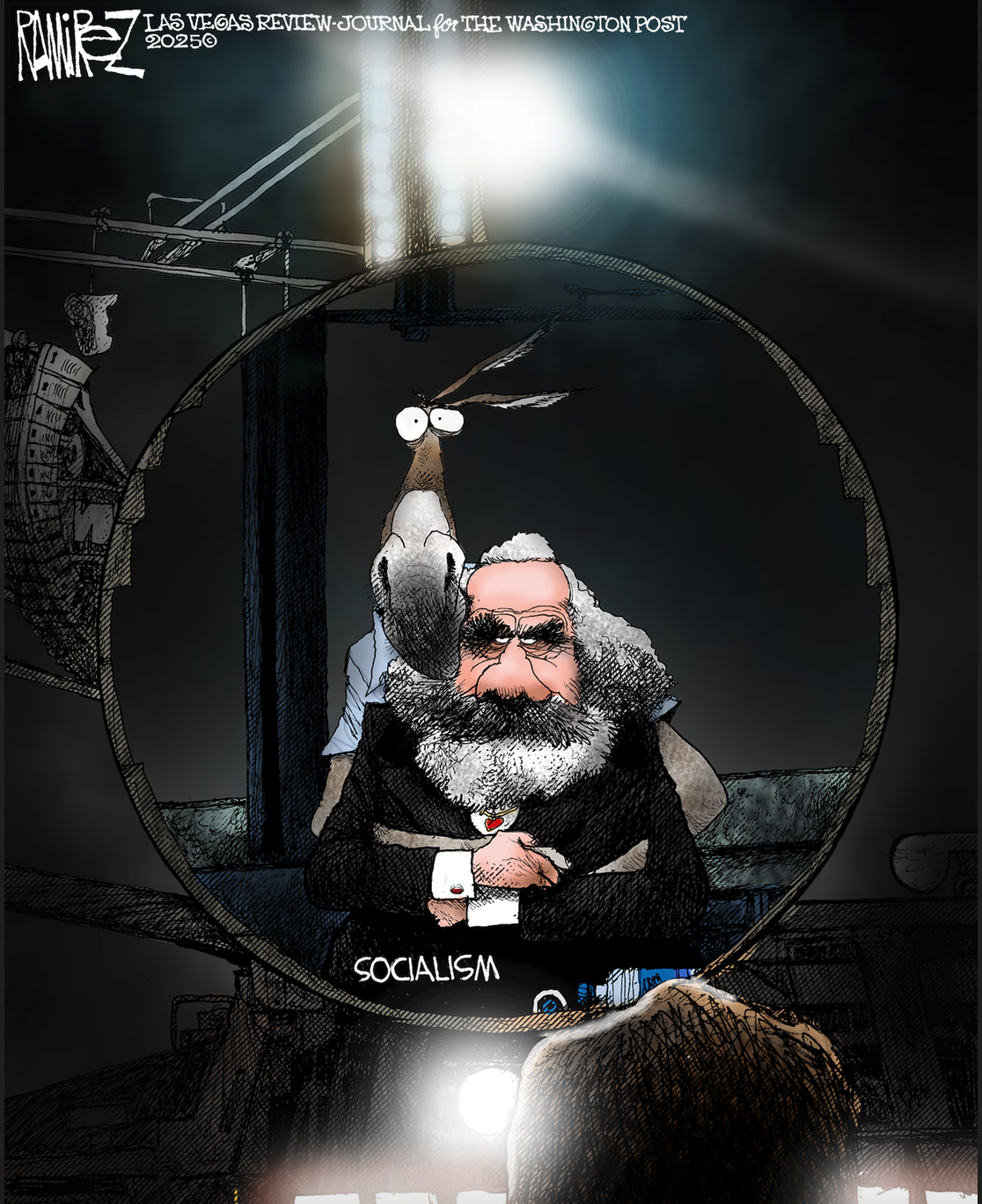


 Tipsy Teetotaler ن