Sunday Potpourri

Consider the following question. What is closer to the original Easter: January 3, 1975, or Easter Sunday 2023? According to human reason, we would say that January 3, 1975, is forty-eight years closer to the original Easter (or “Pascha,” as I prefer to call it) than Easter Sunday 2023. But that is a secular way of approaching time. With our thinking informed by a Judeo-Christian worldview, we understand that Easter Sunday is actually closer to the events of Christ’s Resurrection, though on a different axis from secular time.

Robin Phillips and Fr. Stephen DeYoung, Rediscovering the Goodness of Creation


The modern West is said to be Christian, but this is untrue: the modern outlook is anti-Christian, because it is essentially anti-religious; and it is anti-religious because, still more generally, it is anti-traditional; this is its distinguishing characteristic and this is what makes it what it is.

René Guénon Guénon, The Crisis of the Modern Age


If it be true (as it certainly is) that a man can feel exquisite happiness in skinning a cat, then the religious philosopher can only draw one of two deductions. He must either deny the existence of God, as all atheists do; or he must deny the present union between God and man, as all Christians do.

G.K. Chesterton, Orthodoxy


The nation that spends more on its military than the next ten largest militaries combined bases its group identity on violence.

William T. Cavanaugh, The Uses of Idolatry


Because we are confident in the Church, we do not replace its teachings and guidance with our own individual opinions. That itself is part of the phronema.

Dr. Eugenia Scarvelis Constantinou, Thinking Orthodox


Religious ideas have the fate of melodies, which, once set afloat in the world, are taken up by all sorts of instruments, some woefully coarse, feeble, or out of tune, until people are in danger of crying out that the melody itself is detestable.

George Elliot, Janet’s Repentance, via Alan Jacobs

You can read most of my more impromptu stuff here and here (both of them cathartic venting, especially political) and here (the only social medium I frequent, because people there are quirky, pleasant and real). All should work in your RSS aggregator, like Feedly or Reeder, should you want to make a habit of it.
July already! Sheesh!

Steve Bannon

Last month, I shared Ross Douthat’s long interview with J.D. Vance. July 1, the Times published a long interview of Steve Bannon by David Brooks. I’m going out on a limb here with a wager that this is one of the ten most shareworthy I’ll read this month in the Times.

For my response, let’s just say I have a presumption against all revolutions; they seldom elevate, frequently immiserate. But they’ll happen when enough people think it couldn’t get any worse.

Bring back frank established religions?

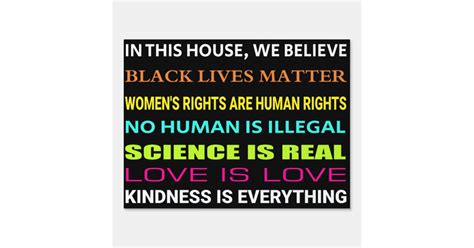
Thoughts as we close out “Pride Month:”

(In my house, we believe the Nicene Creed)

Instead of a naked public square, we see one festooned today with every imaginable image of the rainbow and associated symbology: from flags to backlighting, from crosswalks to entire murals on the sides of buildings. The public square went briefly from being a space where one might once have found images of the Ten Commandments or, during the holidays, a Christmas crèche, to one where the White House might be lit up by the rainbow celebrating a judicial fiat declaring a right to marriage of homosexuals in a constitution written in the 1780s, to public libraries where praise of cross-dressing, transexuality, and gay sex would become run-of-the-mill children’s programming.

When religion in any traditional or recognizable form is excluded from the public square, it does not mean that the public square is in fact naked. When recognizable religion is excluded, the vacuum will be filled by ersatz religion, by religion bootlegged into public space under other names.

The high priests of the new religion insist upon enthusiastic public expressions of support—especially during the holy month of June—lest one’s relative lack of fervency be taken as an indication of disbelief and grounds for being purged from the ranks of the elect. In nearly every respect, expressions of Pride are deployed in identical ways to traditional religious symbols and belief, in the eyes of many constituting a replacement religion. The inescapable, even overbearing presence of Pride symbology thus today bears all the unmistakable features of a “comprehensive doctrine,” the prevention of which earnest liberals of yesteryear insisted was their sole, modest aim.

Any war of “comprehensive doctrines” also brings attendant dangers. However, only someone not paying attention could believe that those dangers have been absent in recent years. My hope is that forthrightness about the terms of the debate may lead not to renewed “wars of religion,” but to a new settlement. A more pacific settlement might arise from acknowledgment that the actual “fact of pluralism” may require increased acceptance and acknowledgement of various state establishments. Such a settlement would return us to the original arrangement of the constitutional order, in which various religious traditions could coexist with robust internal unity amid relative proximate concord. California might thus retain its de facto established religion of Pride, and Alabama would establish some form of broadly nondenominational Protestant Christianity.

Patrick Deneen, inluding a prophetic insight of Richard John Neuhaus.

Comments:

  1. I think Deneen is correct that “Pride” has become a Rawlsian comprehensive doctrine — i.e., a de facto religion. (That doesn’t mean I think it will endure.)
  2. Deneen’s suggestion of permitted state establishments of religion is America’s original pattern (for what it’s worth). The First Amendment’s prohibition of Congress making any “law respecting an establishment of religion” was indeed a restriction on Congress, not the states. Massachusetts (of all places) had a state establishment until the 1830s and abandoned it voluntarily, not because some court declared it unconstitutional.
  3. I suspect I could formulate an argument that a state establishment of religion, unlike a limit on free exercise of religion, ought not be barred by the 14th Amendment “incorporation.” So long as a citizen is not coerced, I question whether their 14th Amendment “rights” are violated by an establishment.
  4. I’m under no illusion that I will like the religion established by any state: While I differ from him in details, I concur with Ross Douthat’s daring book title Bad Religion: How We Became a Nation of Heretics, and the best state establishment I could realistically hope for is mainstream Protestant (i.e., moralistic therapeutic deism).

Progressives verus liberals

You know you’ve touched a nerve with progressive activists when they tell you not just that you’re wrong but that you’re on the other side.

Such is the fate of any old-school liberal or mainstream Democrat who deviates from progressive dogma …

If this was just about our feelings, these denunciations could be easily brushed aside. But the goal and the effect is to narrow the focus of acceptable discourse by Democrats and their allies. If liberals are denounced for “punching left” when they express a reasonable difference of opinion, potentially winning ideas are banished.

In the run-up to a tight election with a weak Democratic candidate and a terrifying Republican opponent, pushing liberals and centrists out of the conversation not only exacerbates polarization, it’s also spectacularly counterproductive.

Those on the left who’ve been dumbstruck as Donald Trump has intimidated his most vociferous Republican critics (see: Chris Sununu, Nikki Haley) into falling in line might exert a little more self-awareness of similar moves by the left.

The goal of progressives may be solidarity, but their means of achieving it are by shutting alternative ideas down rather than modeling tolerance.

Pamela Paul, Who You Calling Conservative?

Note that I am not denying a similar Trumpist lock-step on the Right, nor does Ms. Paul.

Understanding the 2024 Roberts Court

If you really want to understand the conservative-dominated Supreme Court, it’s important to realize that all the Republican nominees who sit on it formed their legal philosophy and forged their legal reputations long before Donald Trump was elected president. This is no less true of Trump’s three nominees than of the three justices who were nominated by previous Republican presidents. Neil Gorsuch, Brett Kavanaugh and Amy Coney Barrett all possessed a robust legal identity and a considerable body of work before their selection to the high court. In fact, each has his or her own maverick streak, with Gorsuch perhaps most notable in his steadfast defense of Native Americans and the rights of criminal defendants.

When you understand this reality, what can seem to be a confounding, surprising Supreme Court term is actually predictable. The Trumpist right is lobbing a number of novel cases presenting aggressive legal theories to justices with pre-Trump legal philosophies, and the pre-Trump justices are rejecting them, repeatedly.

David French (emphasis added).

The Trumpist right is especially getting aggressive in Mississippi, Louisiana and Texas, part of the 5th Circuit U.S. Court of Appeals. The 5th Circuit has become where conservatives play out their fantasies to an obliging court as the 9th Circuit used to be the playground for progressives. You could say the 5th is the new 9th.

Republicans Pounce

A politically inconvenient rape and murder: Two migrants who’d crossed the border illegally have been charged with the rape and murder of 12-year-old Jocelyn Nungaray in Houston. The Associated Press managed to not once mention the status of the killers. The NYT eventually covered it, only in the context of how darned politically inconvenient it is: “The killing of Jocelyn Nungaray in Houston has become the latest crime seized on by Republicans to attack President Biden over his immigration policies.” Right. That 12-year-old, so rude of her to be murdered by the wrong type and letting Republicans “seize on” it. 

Nellie Bowles.

I’ll give the New York Times credit for disguising the usual formulation wherein the real story is “Republicans pounce” instead of what detestable thing they pounce on.

Tradition

Most of the things in our lives are not of our own making – they were given to us. Our language, our culture, the whole of our biology and the very gift of life itself is something that has been “handed down” to us. In that sense, we are all creatures of “tradition” (traditio=“to hand down”). Of course, these things that are not of our own making and are the least controllable are also those things that we take most for granted. We may hate our culture and our biology, but will still have to use our traditioned language (or someone’s traditioned language) to say so. Tradition is simply the most foundational, inescapable aspect of human existence.

Fr. Stephen Freeman, Things You Can’t Invent


So: where did all my mockery of Trump go? Well, first, I resolved to stop harping on it. But then, I just moved it off to my reflexive blog, trying to keep this one relatively reflective.

I suffer more from the humiliations inflicted by my country than from those inflicted on her.

Simone Weil, from a letter to Georges Bernanos.

I don’t do any of the major social media, but I have two sub-domains of the domain you’re currently reading: (a) You can read most of my reflexive stuff, especially political here. (b) I also post some things on the only social medium I frequent, because people there are quirky, pleasant and real.

St. John Climacus

Today we commemorate St. John Climacus, author of The Ladder of Divine Ascent.

I’m a religion skeptic

I have had the good fortune of presenting portions of this work to audiences who have pondered this difficult question with me. On one of those occasions, the historian Edwin Judge suggested a three-step procedure to follow when one encounters the word “religion” in a translation of an ancient text. First, cross out the word whenever it occurs. Next, find a copy of the text in question in its original language and see what word (if any) is being translated as “religion.” Third, come up with a different translation: “It almost doesn’t matter what. Anything besides ‘religion’!” According to Judge, simply allowing “religion” to stand in an ancient text leads to a kind of “miasma of thought” that prevents one from seeing how ancient people might have organized their worlds.

Brent Nongbri , Before Religion

Miasma or not, so deeply embedded is “religion” in our vocabulary and thought-patterns that it’s hard to avoid it.

Faithfulness precedes understanding

Only a Christian who stands in the service of his faith can understand Christian theology and only he can enter into the religious meaning of the Bible.

Michael Polanyi, Personal Knowledge

But what if knowledge does not require certainty? Indeed, what if knowledge is incompatible with certainty?

Jonathan Rauch, The Constitution of Knowledge

Mind and heart

Unlike the mind, which is acquisitive, aggressive, critical, and competitive, the heart is receptive, open, pliable. It is an organ to be filled, a thing to be ignited. The mind receives on its own terms, filtering, discriminating, judging, but the heart is patient; it waits, watches, listens, makes space for what it is to receive. The heart delights not in cleverness but in the presence of the beloved. The work of prayer is the tutoring of the heart, a quite different thing from the training of the mind.

Robert Louis Wilken Praying the Psalms.

That “the work of prayer is the tutoring of the heart” also means that it’s not cajoling The Almighty into giving us stuff.

Like receiving the gift of tongues

I’ve probably shared this before:

“We have effectively communicated to young people that sincerely following Jesus is synonymous with being ‘fired up’ for Jesus, with being excited for Jesus, as if discipleship were synonymous with fostering an exuberant, perky, cheerful, hurray-for-Jesus disposition like what we might find in the glee club or at a pep rally,” Smith wrote. “For those young people who are either scared or suspicious of happy-clappy versions of youth group Christianity, ancient Christian disciplines and historic Christian worship can be received as a life-giving gift. When you have only seen forms of piety that value spontaneous expression and clichéd sincerity, to be given the cadences and rhythms of the Book of Common Prayer can be like receiving the gift of tongues.”

Jon Ward, Testimony

That’s not my story: I was well beyond the youth group stuff when I left Evangelicalism, and I didn’t immediately find the truly ancient pastures, sojourning instead for decades in Reformational Protestantism that often felt Evangelical-adjacent. But it’s close enough to my story to ring very true. Substitute Liturgy of St. John Chrysostom for Book of Common Prayer and it gets even closer to my story.

Last of the Fathers

Anselm of Canterbury (d. 1109) … made formative contributions to scholasticism while still at the French monastery of Bec. It is true that as a monk (rather than professor) he bucked the trend toward professional theology. The university system was only in its infancy, and there was little question of him participating in it. He has been called the last of the fathers and the first of the scholastics.

John Strickland , The Age of Division


… that Christ may dwell in your hearts through faith; that you, being rooted and grounded in love, may be able to comprehend with all the saints what is the width and length and depth and height — to know the love of Christ which passes knowledge; that you may be filled with all the fullness of God.

Ephesians 3:17-19 (NKJV)

You can read most of my more impromptu stuff here and here (both of them cathartic venting, especially political) and here (the only social medium I frequent, because people there are quirky, pleasant and real). All should work in your RSS aggregator, like Feedly or Reeder, should you want to make a habit of it.

Saturday, 4/6/24

Today is that day the Purdue Boilermaker Men advance to the NCAA Championship game by ending the fairy tale run of DJ Burns and NC State. Remember, you read it here first. (Caveat: I have no money riding on any games and you certainly shouldn’t put money on my prediction.)

Meta

America the experiment

America as an experiment is genuinely important to the world not because of the accidents of history that made us the most powerful nation on Earth, but because America is the first real experiment in building a large, multiethnic, multicultural democracy. And we don’t know yet if that can hold. There haven’t been enough of them around for long enough to say for certain that it’s going to work,

Barack Obama

No sheaf of papers can protect us

Joseph de Maistre. Writing in 1809, he scoffed at the idea that any document written by mortal hands could ever design and establish genuinely new foundational laws. The spirit of any such laws was invariably already written on the hearts of those men who attempted to crudely reduce them to mere lines on a piece of paper. “Precisely what is most fundamental and most essentially constitutional in the laws of a nation cannot be written,” he wrote. The true constitution of a strong and functional nation was always “that admirable, unique, and infallible public spirit, beyond all praise, which directs everything, which protects everything. What is written is nothing.”

What is America’s implicit constitution today? Naturally, it’s never been fully captured in writing, though some authors, such as Christopher Caldwell, have variously attempted to nail it down here and there. If pressed to summarise, I might say it is one that values safety and security over freedom; top-down control over self-governance; empty egalitarian posturing over excellence; material comfort over virtue; entitlement over responsibility; bureaucracy over accountability; narcissistic emotivism over duty; fantasy over reality; global ambitions over national loyalty; dreams of progress over eternal and transcendent truths — in short, the same spirit that animates our out-of-control managerial regime. It’s the spirit which saw that regime not hesitate to impose Covid lockdowns, or trash the rule of law and attempt to jail political opponents (and for half the country to view this as acceptable or even admirable); it’s what has produced Supreme Court justices who fret free speech would undermine the security state.

N.S. Lyons, at UnHerd

Luxury beliefs before 2019

The neologism “luxury beliefs” is only five years old, but what it describes was noted decades ago (if not earlier):

Harlem itself, and every individual Negro in it, is a living condemnation of our so-called “culture.” Harlem is there by way of a divine indictment against New York City and the people who live downtown and make their money downtown. The brothels of Harlem, and all its prostitution, and its dope-rings, and all the rest are the mirror of the polite divorces and the manifold cultured adulteries of Park Avenue: they are God’s commentary on the whole of our society.

Thomas Merton, The Seven Story Mountain

And again I say, “Beauty Will Save the World”

At my shows, I like to have the audience sing, just for the sensuous warmth of it. We sing “My country, ’tis of thee” and in the South we can sing a hymn or two a cappella and it’s amazing to observe this from the stage, people who are surprised and delighted and moved by the beauty of their voices mingled with the others. They learned this as Baptist kids and then (I imagine) lapsed into secular humanism and went through doctrine therapy and devoted themselves to vintage wines and dark coffees and French baking, and now, as I sing “When peace like a river attendeth my way and sorrows like sea billows roll,” the words come back to them and they sing like risen saints at the Sunday camp meeting and they dab at their eyes with a hanky.

Garrison Keillor

Rackets

EVs

With their heavy weight and quick acceleration, EVs tend to burn through tires about 20% faster than internal combustion vehicles do, according to consultancy firm AlixPartners. And the tires cost about 50% more.

Via Dense Discovery Issue 282

Trump looting the GOP

One might assume that a presidential nominee who generates as much devotion as Mr. Trump would be a financial boon to his party. One would be wrong. With Mr. Trump, everything is about Mr. Trump … While the Republican base may be smitten with Mr. Trump, plenty of big-money donors are skittish about bankrolling his nonsense. The former president has been scrambling to close the gap, leering at potential funders as if they were contestants at the Miss Universe pageant.

Michelle Cottle, Trump Is Financially Ruining the Republican Party

I haven’t seen gullibility like today’s GOP since Harlem stood by its man Adam Clayton Powell.

Has Leonard Leo turned mercenary?

Formerly friendly, I’m now a little leery of Leonard Leo.

Leonard Leo (not the Federalist Society) provided Donald Trump with the list of outstanding conservative prospective Supreme Court Nominees that Trump ran on in 2016 and that probably made the difference in the Election. Kudos to him for that. I didn’t believe Trump would keep his promise to nominate from that list, and for that and other reasons, I didn’t vote for him.

But about the time Leo got on the Trump train, his life appears to have take a dramatic turn:

The Campaign for Accountability’s complaint alleges that “Leo-affiliated nonprofits” paid BH Group and CRC Advisors a total of $50.3 million between 2016 and 2020.

During this period, according to the complaint, Leo’s lifestyle changed:

In August 2018, he paid off the 30-year mortgage on the Mclean, Va. home, most of which was still outstanding on the payoff date. Later that same year, Leonard Leo bought a $3.3 million summer home with 11 bedrooms in Mount Desert, an affluent seaside village on the coast of Maine, using, in part, a 20-year mortgage of $2,310,000. Leonard Leo paid off the entire balance of that mortgage just one year later in July 2019. In September 2021, Leonard Leo bought a second home in Mount Desert for $1.65 million.

The complaint was based in part on a March 2023 Politico story by Heidi Przybyla. She wrote that her “investigation, based on dozens of financial, property and public records dating from 2000 to 2021, found that Leo’s lifestyle took a lavish turn beginning in 2016,” citing Leo’s purchases of the Maine properties along with “four new cars, private school tuition for his children, hundreds of thousands of dollars in donations to Catholic causes and a wine locker at Morton’s Steakhouse.”

Thomas B. Edsall, Trump’s Backers Are Determined Not to Blow It This Time Around

Part of my leeriness is probably because I’m smack dab in the middle of reading Timothy Egan’s A Fever in the Heartland: The Ku Klux Klan’s Plot to Take Over America, and the Woman Who Stopped Them, which describes Indiana Grand Dragon D.C. Stevenson’s extremely profitable financial con in his promotion of the 1920s Klan. The story is full of MAGA-like personalities (right down to the rapes) and profiteering.

Trump’s second term, with Leonard Leo’s help, is shaping up to be a nightmare for true conservatism and a repudiation of much of the excellent work Leo’s judicial list did in the first Trump term. Truly Donald Trump has a reverse Midas touch.

Just asking questions

I’m no longer a Ben Shapiro fan, but when he’s right, he’s right.

Election 2024

Political Therapeutic Deism

Political Therapeutic Deism is a system of beliefs which invoke religious terms for the purposes of affirming one’s politics. It includes beliefs like:

  1. God is on my political party’s side.
  2. My views on political issues are a leading indicator that I am a true Christian.
  3. My actions in politics are justified in light of God’s general approval of my politics.
  4. I do not understand how other “Christians” could vote for my candidate’s opponent.
  5. It is clear and obvious which political issues are most important to God.

Political Therapeutic Deism makes sense of why we’re seeing sorting in churches by politics, over and above theology or other factors. It makes sense of why we’ve seen steep declines of religious affiliation among Democrats over the last several decades, and why growing numbers of Trump supporters identify as evangelical, even if they don’t share evangelicals’ theological beliefs. …

Political Therapeutic Deism has the benefit of making clear what we are seeing is the misappropriation of religious language and symbols for political ends. It also harkens to a term (Moral Therapeutic Deism) which has been thoroughly rejected by some of the very kind of people “Christian nationalists” seek to persuade to their way of thinking. They want to equate opposition to their political proposals as opposition to Christianity itself. Why would we help them?

Michael Wear

Until a better term comes along, I expect to use political therapeutic deism for the faux-evangelical Trumpists that MSM calls “white Christian nationalist.”

“But the judges” no longer applies

For many legal conservatives, a two-word incantation—“but judges”—defined the Trump era. It began as an exhortation or, perhaps, a justification. Later it became a coping device, edging into gallows humor. As the shadows lengthened in the last days of a desperate and increasingly lawless presidency, it became a rueful question. A mob, incited by the president who refused to accept a lawful election, sacked the Capitol, assaulted police officers, interrupted the electoral count, and hunted down officeholders—“But … judges?”

Conservatives who had wagered the Trump gambit worth the risk got the upside of their bargain. Trump nominated many excellent men and women to the judiciary. A confident conservative majority, grounded in originalism and textualism, now controls the Supreme Court. The white whale of Roe v. Wade—long emblematic of lawless usurpation of policymaking by the Court—fell. 

Contrary to the fears of liberals and the misplaced hopes of Trump, conservative judicial appointees upheld the principle of judicial independence. They refused to serve as reliable partisans and handed Trump and his administration important legal defeats. Crucially, Trump’s nominees rejected his baseless claims of a stolen election.

But these advances in jurisprudence came at a deep civic cost. The president with whom legal conservatives allied themselves used his office to denigrate the rule of law, mock the integrity of the justice system, attack American institutions, and undermine public faith in democracy. Beyond the rhetoric, he abused emergency powers, manipulated appropriated funds for personal political ends, and played fast and loose with the appointments clause, all at the cost of core congressional powers. 

Republicans in Congress barely resisted these actions and increasingly behaved more like courtiers than members of a co-equal branch of government.

Partisans promise that Trump in a second term would nominate judges more loyal to the president while Trump-friendly, post-liberal thinkers develop theories like “common-good constitutionalism” in which conservative judges would abandon originalism in favor of promoting certain ends. Adrian Vermeule, the leading academic proponent of the latter view, has argued that “originalism has now outlived its utility, and has become an obstacle to the development of a robust, substantively conservative approach to constitutional law and interpretation.” It would be deeply ironic, and the ultimate failure of the movement, if the “but judges” bargain were to end with purportedly “conservative” judges legislating from the bench.

Gregg T. Nunziata, The Conservative Legal Movement Got Everything It Wanted. It Could Lose It All

Anyone who says “but the judges” to justify voting for Trump in 2024 is seriously misguided. He’s disappointed with his first-term SCOTUS nominees in particular, as they’ve not been the kinds of toadies he wants. Next time, he’ll nominate toadies, not excellent jurists, and since the Senate is going to flip (11 Republicans are up for re-election, 23 Democrats) he’ll get them confirmed.

Good advice, since abandoned

Listen to me. Listen. If the twentieth century tells us anything, it’s that whenever you hear anyone standing before a crowd, winding them up about the cause of creating utopia on earth, you had better run.

Rod Dreher, December 12, 2020. I’m sorry to say that he has since reconciled himself to a supposed necessity to vote for Trump.

Miscellany

Rowling throws down the gauntlet

Scotland has a new hate speech law that criminalizes “stirring up hatred” against a series of “protected characteristics,” including race, age, religion, disability, and “transgender identity.” J.K. Rowling threw down the gauntlet:

On Monday, the day the law came into effect, the Harry Potter author posted a dare on X. In it, she named 10 transgender women, called them all men, and said: “If what I’ve written here qualifies as an offense under the terms of the new act, I look forward to being arrested.” … “If they go after any woman for simply calling a man a man, I’ll repeat that woman’s words and they can charge us both at once.”

The Free Press

Bomb-thrower

Responding to an Emma Green New Yorker article on classical education:

I am a fan of almost anything that disrupts the hegemony of this fatuously self-righteous and profoundly anti-intellectual educational establishment, which exists not to lift up the marginalized and excluded but rather to soothe the consciences of the ruling class. May the forces of disruption flourish.

Alan Jacobs, against the factory of unreason

Nellie snippets

  • Trump Media lost $58 million and brought in $4 million in revenue last year. Yet, the market is valuing DJT at $6.4 billion. That there’s a meme stock. (I could have pulled this for “Rackets,” above.)
  • It is odd that Trump got the reputation of being The End of the American Press, when Biden is really the one who hates questions and shuns journalists. Remember Trump? How he would actually never stop talking? How he’d sit and antagonize reporters endlessly? But oh, he’d talk. It was alarming, often described as “rambling.” But at least we all knew exactly what was going through his mind (chaos, tangents, rage, pettiness, pretty good jokes, Rosie O’Donnell, more Rosie O’Donnell, why was it always Rosie O’Donnell).
  • [S]tudent loan relief is the wrong approach. Colleges should simply not cost this much. Solution: eliminate 90 percent of university administrator roles, since at least that many are fully fake. Offer incentives for kids to enroll in trade schools or community colleges. Boom, loan crisis solved, you’re welcome. Next topic.
  • From Reuters
  • America’s leading women’s rights group of yesteryear is still arguing that it’s white supremacy to maintain girls’ sports. Here’s NOW, the National Organization of Women: “Repeat after us: Weaponizing womanhood against other women is white supremacist patriarchy at work. Making people believe there isn’t enough space for trans women in sports is white supremacist patriarchy at work.” Yes, it’s white supremacist patriarchy to argue. . . that someone who’s gone through male puberty might have an unfair advantage in, let’s say, rugby. Interesting. Fascinating. I will repeat until I am clean.

Nellie Bowles

I’m that guy

When I think of the consciousness that generates the circular sorrow of “Ifs eternally,” or the one trying to find the one thing that will unify all the disparate experiences of one life, I think of a man—almost always a man, though there are notable exceptions—sitting alone in a room and doggedly trying to figure it all out.

Christian Wiman, Zero at the Bone

St. John Climacus Saturday

Culture

Elite or not?

A 2023 account of these car dealers by Slate’s Alexander Sammon recounts the awesome scale of their collective wealth and influence on Republican politics: “Auto dealers are one of the five most common professions among the top 0.1%” while making up “a majority of the country’s 140,000 Americans who earn more than $1.58 million per year”; members of the industry association donate to Republicans “at a rate of 6-to-1”, through which they have worked “to write and rewrite laws to protect dealers and sponsor sympathetic politicians in all 50 states”. Such figures help to make sense of Moreno’s and his fellow car dealers’ status as the cream of the crop among America’s local elites.

Michael Cuenco, Car dealers will decide America’s future.

Cuenco seems to overlook the difference between wealth and prestige.

Sportsball

Being in politics is like being a football coach. You have to be smart enough to understand the game, and dumb enough to think it’s important.

Eugene McCarthy, via the Economist’s World in Brief

Dictator or not?

On the drive into Budapest from the airport, travelers can see billboards erected by the Hungarian political opposition, featuring a photo of Prime Minister Viktor Orban with the slogan “God? Homeland? Pedophilia!” It’s a reference to the recent scandal involving a presidential pardon of a politically connected man who had been convicted of aiding in a pedophilia cover-up. The scandal cost the ruling Fidesz party its top two female politicians: President Katalin Novak and former Justice Minister Judit Varga.

Associating the prime minister, who apparently did not know about the pardon until the media reported it, and who quickly called for resignations of these top allies, is a low blow. But that’s how it goes in Hungary. Fidesz is not above similar tactics. If you expect Magyar politics to be a tea party, you are going to be disappointed.

Still, bearing in mind how the U.S. president recently denounced Orban as a “dictator”—a slur widely repeated in Western media and public discourse—you have to wonder what kind of strongman would allow himself to be publicly criticized as a promoter of pedophilia. If Orban really were a dictator, wouldn’t these billboards have been banned? Wouldn’t those who paid for them be eating goulash in a gulag now? 

… Hungary, which supposedly groans under the burden of the Orban dictatorship, enjoys far more freedom of expression than countries whose media and whose leaders condemn it as repressive. You have to wonder why.

Rod Dreher in the European Conservative (no paywall).

Eugenics for the age of The Machine

Servility

Will we reach the point where nobody thinks they could start their own little business?

Political

Meet the new boss, Trumpier than the old boss

Washington Post: Was the 2020 Election Stolen? Job Interviews at RNC Take an Unusual Turn.

Those seeking employment at the Republican National Committee after a Donald Trump-backed purge of the committee this month have been asked in job interviews if they believe the 2020 election was stolen, according to people familiar with the interviews, making the false claim a litmus test of sorts for hiring.

The Morning Dispatch

Trump’s faith

The closest I get to liking Donald Trump is when he evinces contempt for those who idolize him.

I feel guilty about that, as one shouldn’t sympathize with con artists. But you know how it is with scams: At a certain point of extreme gullibility, the mark starts to seem more contemptible than the person preying on them. If you’re still falling for “Nigerian prince” emails in 2024, the problem lies chiefly with you, not with the flimflam man responsible.

The sheer laziness with which Trump has courted evangelical voters since 2015 has always betrayed a degree of sincere disdain for them that’s unusual in a man not otherwise known for honesty. It would have been trivially easy for him to brush up on Christian dogma after he entered politics in the name of convincing the Republican base that he’d seen the light after a dissolute adulthood. But … he couldn’t be bothered to do so.

He’s never cared enough about the faith espoused by most of his supporters to even pretend to take it seriously.

That’s how we ended up with him once famously rendering “2 Corinthians” as “Two Corinthians” rather than “Second Corinthians.” And listing “an eye for an eye” as his favorite Bible verse instead of something from the Gospels. And admitting at an evangelical forum that he couldn’t recall ever having asked for God’s forgiveness.

A man who lies like he breathes somehow can’t get motivated to lie persuasively about being pious, even as a gesture of minimal respect for his own fans. That’s remarkable. And insofar as most evangelicals have shrugged it off and rolled over for him anyway, my sympathies lie more with him. He’s been sending them the political equivalent of “Nigerian prince” emails for nine years; if they haven’t wised up yet, that’s a problem with them more so than with Trump.

His first political priority, even above maximizing his chances of reelection, is purging the Republican Party of anyone who would question his right to rule. He doesn’t want independent-minded Christians in the GOP any more than he wants the traditional conservatives who preferred Nikki Haley in the primary. He’ll win without them—and if he can’t, he’ll at least have consolidated his power over one-half of America’s political establishment in the process.

In that context, whether by design or by happenstance, the “Trump Bible” operates as a sort of litmus test for evangelicals who have stuck with him this far through thick and thin. You won’t abandon me if I make a mockery of your faith, will you? No, of course you won’t.

The devolution of evangelicalism in the Trump era is itself an interesting mix of radicalism and transactionalism, mirroring Trump’s personality. Many Christians made a cynical bargain with him in 2016, suppressing their moral discomfort and offering him their votes in exchange for guarantees that he’d enact their agenda, starting with limits on abortion. Insofar as his poor character and irreligiosity troubled them, some may have idly hoped that their influence over him, and the influence of figures like Mike Pence, would turn his heart toward God in time. He might be remade in Christianity’s image.

That transaction didn’t pan out the way they’d hoped. For many, Christianity has been remade in his image.

Nick Catoggio, The True Faith

How to reach Republicans with the anti-Trump Gospel

Carville has been sounding an alarm about progressives getting too censorious since he advised Hillary Clinton in 2016. He disparaged liberals’ snooty, elitist “faculty lounge” attitudes long before he blew off the faculty lounge himself. He complained that “woke stuff is killing us,” that the left was talking in a language that ordinary Americans did not understand, using terms like “Latinx” and “communities of color,” and with a tone many Americans found sneering, as in Hillary’s infamous phrase “basket of deplorables.”

“There are a lot of people on the left that would rather lose and be pure because it makes them feel good, it makes them feel superior,” Carville said. And that, he said, is how you end up with Dobbs.

He thinks Donald Trump’s voters see him as akin to King Cyrus or King David in the Bible, a flawed messenger, so it’s best to use a biblical narrative about betrayal.

“If you say, ‘You dumb son of a bitch, how can you ever think that this fat, slimy, rapist, criminal, racist should be president?’ they’re going to recoil,” he said. “I think Democrats should say: ‘Look, you believed in him. You felt like you weren’t being seen, you were being culturally excluded. But he betrayed you. You thought he was going to be for you and helping you, but he was really for TikTok and tax cuts to the rich.’”

James Carville profile by Maureen Dowd

What’s behind “Lawfare”?

I submit that what changed when Trump entered the political arena on the highest levels isn’t that he gained powerful enemies who resolved to take him down by any means possible, nefarious or otherwise. What changed is that he was now a magnet for all kinds of scrutiny—journalistic as well legal …

Isn’t this the most obvious thing in the world? What is the first thing that anyone entertaining a run for the White House is asked by anyone who understands the process? Do you have any skeletons in the closet? Better get them out in the open now, because they will be discovered during the course of the campaign, and they will sink you, especially if you seek to cover it up.

Because Trump’s alleged crimes and misdeeds were extremely complex and deeply embedded in his sprawling business empire—and because the wheels of justice (rightly) grind extremely slowly—it’s taken many years for numerous lines of investigation to culminate in several trials all at roughly the same time, just as Trump is gearing up for a third attempt to win the White House. That’s not great. But as Jonathan Chait has argued quite cogently, the reason why it’s happening is that Donald Trump is a crook! If he wanted to continue getting away with being a crook, he could have decided not to run for president! Instead, he launched a campaign, won, lost, and is now running again. That’s nearly nine years (and counting) of ensuring the Klieg lights of public scrutiny are trained on every aspect of his life and business. What did he expect?

Since Trump trends toward imbecility, he may be surprised and outraged about this. But his defenders really should know better.

Damon Linker, Seven More Months of … This?

Ronna McDaniels’ excellent NBC adventure

Jonah Goldberg on NBC’s difficulty finding commentators to defend Trumpy positions:

I’ve said it a million times on here: When we were all growing up, […] the word “RINO” meant someone who was squishy on abortion, or taxes, or foreign policy, or something like that. It was about issues. Now, by Trump’s own admission, RINO only refers to people insufficiently loyal to Donald Trump. And so you get this weird kind of thing where you have to find people who are supposedly intelligent conservatives who are also willing to talk about Donald Trump as if he’s comrade Stalin. And that’s a really tiny universe of people because it almost demands that you have no integrity or that you lie. And that’s how Ronna McDaniel starts to look attractive.

Wordplay

Tina Brown assessed King Charles: “Even with the best prognosis for his cancer, he has been left with a rueful rump of a reign.” (Ann Madonia Casey, Fairview, Texas)

Jesse Green reviewed a new Broadway production: “Romantic musicals are as personal as romance itself. What makes you sigh and weep may leave the person next to you bored and stony. At ‘The Notebook,’ I was the person next to you.” (Christopher Flores, San Antonio)

And Bret Stephens, conversing with Gail Collins, skewered the social media site affiliated with Donald Trump: “I take it you’re referring to Truth Social, which in an honest world would be renamed Lies Sociopathic.” (Ross Payne, Windermere, Fla.)

Clipped from Frank Bruni

Sunday after Theophany

Mythbusting I

Despite sociological evidence to the contrary, it remains to all appearances virtually axiomatic that the acquisition of consumer goods is the presumptive means to human happiness-and the more and better the goods, the better one’s life and the happier one will be.

Brad S. Gregory, The Unintended Reformation

Paradox

The quest for unity that drove people to discard formal theology for the Scriptures drove them further asunder.

Nathan O. Hatch, The Democratization of American Christianity

“Every theological vagabond and peddler may drive here his bungling trade, without passport or license, and sell his false ware at pleasure.”

Frances FitzGerald, The Evangelicals, quoting Nathan O. Hatch, The Democratization of American Christianity, who in turn is quoting a mainstream Protestant pastor’s lament about the new sects.

Conversion

“There is no point in converting people to Christ if they do not convert their vision of the world and of life, since Christ then becomes merely a symbol for all that we love and want already –without Him. This kind of Christianity is more terrifying than agnosticism or hedonism.”

Rod Dreher, Schmemann and Social Justice (quoting Fr. Alexander Schmemann)

Listening to that other voice

[T]he real problem of the Christian life comes where people do not usually look for it. It comes the very moment you wake up each morning. All your wishes and hopes for the day rush at you like wild animals. And the first job each morning consists simply in shoving them all back; in listening to that other voice, taking that other point of view, letting that other larger, stronger, quieter life come flowing in. And so on, all day.  Standing back from all your natural fussings and frettings; coming in out of the wind.

We can only do it for moments at first.  But from those moments the new sort of life will be spreading through our system: because now we are letting Him work at the right part of us.  It is the difference between paint, which is merely laid on the surface, and a dye or stain which soaks right through.  He never talked vague, idealistic gas.  When he said, “Be perfect,” He meant it.  He meant that we must go in for the full treatment.

C. S. Lewis, Mere Christianity, via J Budziszewski

Sin or regrettable failure

In Orthodoxy, you won’t commit mortal sin for missing liturgy. There is no concept of “mortal sin”. That’s just not how the Orthodox “model” works. You are supposed to be at liturgy, not because you fear punishment, but because being present at liturgy is an aid to theosis. It draws you closer and closer to unity with God. On the occasion I miss liturgy, I regret it, and if I don’t have a good reason (traveling, or sick), I confess it when I next go to confession. But I don’t lie there fearing for my everlasting soul.

Rod Dreher

The power of repentance

The demons are still with us, but they have lost. They and their chief, the devil, are still trying to draw us into damnation with them, but they will never again wield the power they once did. All they have left to them is deception. Against their deceptions we have humility in repentance, and the reason that weapon is so powerful is because by humbling ourselves we join ourselves to Jesus Christ, who in His humility threw down that great dragon and banished him forever at the point of the swords of the archangels, angels, and all the saints.

Andrew Stephen Damick and Stephen De Young, The Lord of Spirits (book, not podcast)

Without comment

It’s dangerous to try analyzing a Christian tradition that’s not, and never has been, one’s own — though I’ve probably done so repeatedly. This time, I’ll leave Catholic commentary to a card-carrying Catholic, author of the authorized biography of John Paul II:

To make matters worse from a journalistic standpoint, the only witnesses cited in defense of today’s papal autocracy were such acolytes of the pontificate as Austen Ivereigh, David Gibson, and Massimo Faggioli—the functional equivalent of Tucker Carlson writing a piece entitled, “Donald Trump takes on unprecedented attacks from his opponents” and sourcing it with quotes from Marjorie Taylor Greene, Matt Gaetz, and Lauren Boebert. This isn’t journalism; it’s blatant advocacy. And it should be named as such.

George Weigel, The MAD Magazine Caricature of U.S. Catholicism

Father or Fathers?

Western Christian theology is founded on the phronema of Augustine. The East did not acquire the mind of one Father, but the mind of the Fathers.

Dr. Eugenia Scarvelis Constantinou, Thinking Orthodox

There’s a tremendous amount distilled there. You can’t read Augustine’s Confessions and easily deny that he was a saint. But he was peerless in the West and was not in serious dialog with the many Greek-speaking Fathers in the East, so he went awry in ways that have ramified mightily in the West and that accordingly lead us in the East to keep him at arm’s length.

Seems about right

The collapse of U.S. Mainline Protestantism also included a collapse in Protestant confidence, intellectual life, and public influence. Modern Evangelicalism lacked the institutions and traditions of centuries-old Mainline groups. They typically could not compete directly with vigorous Catholic intellectual life. And so rising Evangelicalism often relied on Catholic intellectual resources to make needed public arguments.

Mark Tooley

Mythbusting II

Looking for a news hook? Duke’s latest report in 2021 (.pdf here) showed evangelicals to be the nation’s least politicized Christian grouping. Only 43% of local evangelical congregations participated in even one of the 12 types of political involvements that were surveyed, compared with the more liberal “mainline” Protestants (at 52%), Catholics (81%) and Black Protestants (82%) or (not part of this study) the well-known activism at Jewish synagogues and Muslim mosques.

The Guy takes the savvy author to task on one detail, the tic of applying words like “Christian” or “church” while referring only to white evangelicals. We’re told that these past few years the radicals “seemed poised to capture the controls inside of the American Church.” True for Catholicism? For Black Protestantism? How about for mainstream evangelical denominations and parachurch groups?

Latest dissection of Trump-Era evangelicalism offers one dose of insider savvy — GetReligion.

“Tic.” I like that and should remember it.


… that Christ may dwell in your hearts through faith; that you, being rooted and grounded in love, may be able to comprehend with all the saints what is the width and length and depth and height — to know the love of Christ which passes knowledge; that you may be filled with all the fullness of God.

Ephesians 3:17-19 (NKJV)

You can read most of my more impromptu stuff here (cathartic venting) and here (the only social medium I frequent, because people there are quirky, pleasant and real). Both should work in your RSS aggregator, like Feedly or Reeder, should you want to make a habit of it.

Sunday, 12/17/23

As we close in on the Feast, artifacts of Western Christendom loom larger. I’ll spend this morning singing in my Orthodox Church, this afternoon singing two more-or-less traditional Lessons & Carols. (I’ll spend this evening and tomorrow resting my voice.)

Too obvious

Two young fish are swimming along when they are passed by an older fish. He says, “Good morning, boys. How’s the water?” And one of the younger fishes asks the other, “What’s water?”

Most famously attributed to David Foster Wallace

Exceedingly sad is the blindness of the sons of men, who do not see the power and glory of the Lord. A bird lives in the forest, and does not see the forest. A fish swims in the water, and does not see the water. A mole lives in the earth, and does not see the earth. In truth, the similarity of man to birds, fish, and moles is exceedingly sad.

People, like animals, do not pay attention to what exists in excessive abundance, but only open their eyes before what is rare or exceptional.

There is too much of You, O Lord, my breath, therefore people do not see You. You are too obvious, O Lord, my sighing, therefore the attention of people is diverted from You and directed toward polar bears, toward rarities in the distance.

St. Nikolai Velimirovich, Prayers by the Lake

Endless doctrinal controversies and formidable erudition

Most competing Protestant protagonists in the sixteenth century did not draw from their disagreements the conclusion that the Reformation’s foundational principle or its adjuncts were themselves the source of the new problem. (Those who did so tended to return to the Roman church. Rather, they usually reasserted—and argued, in endless doctrinal controversies and sometimes with formidable erudition—that they were right and their rivals wrong.

Brad S. Gregory, The Unintended Reformation

Why do people go to Church?

If there’s one thing I learned in all my research on religious enchantment, it’s that mankind’s religions emerge from a primal experience of awe; everything else is commentary. A highly intellectualized religion diminishes the experience of awe, and turns it into a moral and ethical system. Don’t misunderstand: morality and ethics are important, and should not be set in opposition to primal religious experience. But the point of religion is the encounter with God; anything less than that is a diminution of true religion. The way we in the West approach religion since the Enlightenment is an outlier on human experience — and, as we now see everywhere around us, a dead end.

A new Protestant friend here in Hungary asked to go with me to the Orthodox liturgy recently … He told me that after a lifetime in Protestantism, he has grown weary of church-as-academic-lecture. He explained that he appreciates the intelligence and the teaching of the kind of sermons he has become used to, but as he gets older, his soul craves “enchantment” (the word he used) in faith. A learned discussion of theology and morality leave him thirsting for more — which is why he approached me to ask me about Orthodoxy.

Rod Dreher, Why Do People Go to Church?

How do we measure what’s good?

In medieval England, just prior to the Reformation, there were between 40 and 50 days of the calendar (apart from Sundays) that were feasts of the Church on which little to no work was done … By the end of the Reformation period, such days had largely disappeared, with Christmas, Easter, and Pentecost (Whitsunday), alone remaining – with only Christmas being a possible weekday celebration …

It is possible to think about this shift in Christian thought in economic terms. Fifty days in the year on which work is interrupted can have an enormous impact on productivity and efficiency … The shift itself can be seen in the very use of economics to measure what is good and salutary in a society. … Strictly speaking, the modern world has not been disenchanted. Rather, it is now enchanted with money and the “invisible hand” of the market.

Fr. Stephen Freeman (emphasis added)

Conservation of energy

Religious energy once so animated cultures that massive wars were fought over interpretations of holy writ. Where did this energy go? I might get annoyed with excesses of other faiths, but I’m mostly in the “you do you” camp. Perhaps the energy has been sublimated into other areas, other arenas of focused attention. Its apparent dissipation must be accounted for.  

This energy has found a home in sports and politics 

These are the arenas in which we wage holy war. The war has jumped out of the arena and entered the stands. We are caught in our symbols, our totems, our liturgies. Can these energies be tamed and contained?

Kale Zelden


So walk on air against your better judgement

(Seamus Heaney)

You can read most of my more impromptu stuff here (cathartic venting) and here (the only social medium I frequent, because people there are quirky, pleasant and real). Both should work in your RSS aggregator, like Feedly or Reeder, should you want to make a habit of it.

Sunday, 12/4/22

What is Religion?

In the next few chapters, I am inevitably going to have to use some much debated terms, such as the Renaissance, the Enlightenment, and Romanticism. To the left hemisphere these look like categories that should be definable; to the right hemisphere they are the products of experience of loose constellations of phenomena, which have a family resemblance.

Iain McGillchrist, The Master and His Emissary, Chapter 9 (The Renaissance and the Reformation).

I remember a cartoon in a youth-oriented Christian magazine 50 years or so ago, wherein an “educated” person was claiming that “All religions are fundamentally alike under their superficial differences. I’ll show you: just name any two religions.” The response was “Micronesian frog worship and Christian Science.”

I have been, and remain, a bit skeptical of the term “religion,” but I suppose major religions might fall into the category of “loose constellations of phenomena, which have a family resemblance.”

There are even mutually exclusive Christianities

There is a Christianity that tells us God plans to save us from our sins: To heal our passions, conform our character to His, and make us capable of union with Him. And there is a Christianity that tells us God wants you to be happy in this life. These two Christianities are mutually exclusive.

There are certainly times of happiness for the disciple of Christ – and at least seeds of joy which can be brought to bloom through the practice of gratefulness, humility, and love. But in 21st-century America, perhaps Christianity’s most counter-cultural message is that God isn’t really interested in making you happy; the Gospel is about the Kingdom of God, not about you, and Christ unconditionally promises His people, “In this world you will have tribulation.” (Jn 16:33)

Fr Silouan Thompson, Your Best Life?. (H/T John Brady)

In our post-Christian Christendom, though, ghosts live on, not merely between salvation Christianity and happiness Christianity, but in how people prattle about Christianity.

A pet peeve example is people mis-identifying important peripheral matters as the core of Christianity. Phillip Rieff captures what’s wrong, and what’s almost right, about a major example:

Rightly ordered sexuality is not at the core of Christianity, but as Rieff saw, it’s so near to the center that to lose the Bible’s clear teaching on this matter is to risk losing the fundamental integrity of the faith.

Rod Dreher, The Benedict Option

It drives me batty when people prattle that sexuality (or variants thereof) are “the very core of Christianity” (or variants thereof). It tells me that the prattler is merely a culturally Christian conservative, or that he has a very tenuous connection between brain and the various organs of expression (mouth, fingertips, etc.).

But I had forgotten this quoted sentence, which I think is a much more accurate formulation, and gives the prattler’s at least a little bit of cover.

Cremation and Christianity

I went to a funeral home visitation of a friend recently, and what quickly struck me was that there was no casket, only an urn, presumably with the “cremains” of my friend.

Cremation hits me like a gut punch, and that reaction is getting worse. It wasn’t always so, even though I never, even in my giddiest infatuation was all things modern in my youth, thought I’d like cremation.

And it’s not just that Orthodox Christianity is dead-set against cremation. I know full well that not all Christians are Orthodox. But I’d like them actually to be Christian, and to have a Christian anthropology.

Part of my reaction to this most recent visitation, I’m pretty sure, was that everything about my friend’s obituary and visitation bespoke that she and her spouse had ceased observing any form of the Christian faith they professed when I first got to know them. They became nice, comfortable, and secular.

But earlier this year, I went to a visitation for another friend whose body likewise wasn’t present in his big-box, bare-black-wall warehouse church. So why did that bother me?

I mentioned my visceral reaction to my Protestant wife, whose parents also chose cremation. She repeated a fairly standard defense of cremation, though neither of us will be cremated: that God is capable of resurrecting a cremated body (fair enough; of course God can do that), and that cremation today is not an effort to defy God and avoid resurrected condemnation (probably true, but only because a lot of Christians believe in the resurrection of something than yucky old bodies).

Cremation says “Our bodies don’t matter, and maybe even are evil. (Insert prooftext, like maybe Romans 7:18.) We’re really spirits.” You can see that same attitude in the way moderns and postmoderns almost all speak about death as being a liberation from the body.

I do not believe that. Death indeed separates soul and body, but we’re not meant to be disembodied, and the resurrection restores the body-soul unity that God intends. The separation of soul and body is not a liberation, but a violent insult, wanting redress. When the resurrected Lord Jesus Christ ascended to His Father, he ascended in the body and His glorified, incarnate body is seated at His Father’s right hand. That should bring us up short if we discount our bodies.

For that reason, the dead body should be treated with respect, treated as part of the person who has died, not as an apartment they’ve vacated, and laid to rest intact — not because God cannot resurrect a body from ashes, but because cremation symbolically reinforces a sub-Christian doctrine of man, one that is rampant in our culture and even in many of our Churches. It’s as much for the living as from respect for the dead that we treat bodies with due respect, not as trash.

Maybe I’ll fret my way to a clearer articulation of a feeling that’s pre-verbal, but that can do for now.

Salvation? (Yawn!)

Salvation is constantly associated with palms, crowns, white robes, thrones, and splendour like the sun and stars. All this makes no immediate appeal to me at all, and in that respect I fancy I am a typical modern.

C.S. Lewis, The Weight of Glory

One reason for epistemic humility is that we are all, to some extent, creatures of our age, and our age will one day (here or hereafter) be recognized as full of errors.

The words of Judas

I grieve deeply when I hear the modern sentiment directed towards a beautiful Church “that money should have been given to the poor.” These are the words of Judas. And those who say such things rarely give anything themselves. Beauty is not a contradiction of generosity. The movement towards Beauty is a movement towards Goodness (which contains generosity at its core).

Fr. Stephen Freeman, The Erotic Language of Prayer

Barbarians capture Wheaton, but a few escape

The real problem at Wheaton College runs deeper than culture-war effervescence: Few students care about or even understand the mission of Christian intellectual formation. At Wheaton, when students pick up a book for a course, they usually ask only two questions: “Will this help me get a prestigious job?” and “Will this further my personal relationship with my savior?” Wheaton students tend to focus on practical career training and individual spirituality, giving little thought to how liberal learning can enhance one’s spiritual life or the importance of intellectual formation in the Christian tradition.

[E]ven humanities students get caught up in the careerist mindset, talking about their education as if it was merely one consumer preference among many. Though these students enjoy their studies, they do not see intrinsic value in learning and passing down Christian culture across the ages. The humanities can be an edifying hobby, but non-professional intellectual formation has no claim to any special, protected, or elevated status for many humanities students at Wheaton.

Wheaton’s culture of ahistoricism is even more pronounced than its careerism. On the surface, there seems to be little appetite for experiencing one’s faith as an inheritance transmitted through thousands of years of Christian civilization. But the fact that many evangelical students who enter Wheaton denominationally indifferent end up leaving as converts to Anglicanism, Catholicism, or Eastern Orthodoxy suggests that such an appetite is not whetted through the college. Its administration and trustees would do well to remember that the body of Christ isn’t merely alive in the present but transcends time and space. Full participation in the body of Christ requires knowledge of one’s place in that living chain.

James Diddams, The Real Problem at Wheaton College.

Of the many Wheaton students who leave as Anglicans, Catholics or Orthodox, I’d draw the opposite conclusion that Wheaton does, however inadvertently, however inadvertently, whet the appetite for what Richard John Neuhaus called “ecclesial Christianity,” defined as that Christianity in which faith in Christ and faith in Christ’s Church is one act of faith, not two.

The ephemeral pleasure of the in crowd

By the very act of admitting you it has lost its magic. Once the first novelty is worn off, the members of this circle will be no more interesting than your old friends. Why should they be? You were not looking for virtue or kindness or loyalty or humour or learning or wit or any of the things that can be really enjoyed. You merely wanted to be “in.”

C.S. Lewis, The Inner Ring, an essay in The Weight of Glory

Myth and epiphany

To the considerable extent that questions of value, of right and wrong, of justice and of beauty cannot be experimentally or rationally resolved, myth allows many individuals to share an epiphany, a vision of truth granting them a basis for accepting certain normative standards for which there are no clear or convincing proof … [M]yth assures mankind that certain values transcend reason to give human existence meaning within an unchanging frame of reference, while ensuring unity among the members of the community concerning these values. This unity of values is the hallmark of culture. Without this unity regarding the imponderables, civilized actions become impossible, and man is cast upon the shabby mythology of his own random dream-world and is at the mercy of state and natural religions.

David V. Hicks, Norms and Nobility

Conversion from paganism was a really big deal

When a gentile convert stood in the baptistery on Easter’s eve and, before descending naked into the waters, turned to the West to renounce the devil and the devil’s ministers, he was rejecting, and in fact reviling, the gods in bondage to whom he had languished all his life; and when he turned to the East to confess Christ, he was entrusting himself to the invincible hero who had plundered hell of its captives, overthrown death, subdued the powers of the air, and been raised the Lord of history. Life, for the early Church, was spiritual warfare; and no baptized Christian could doubt how great a transformation—of the self and the world—it was to consent to serve no other god than Him whom Christ revealed.

David Bentley Hart, Christ and Nothing, via Rod Dreher (emphasis added by Rod).

Dreher, touring Southeast Turkey, including ancient Ephesus, continues:

I had … prickly discussion with one of the members of our group, an American Christian who said he didn’t understand wars of religion, and religious conflict. He described religious difference as an unimportant matter of personal preference — and did this in a way that is very familiar in 21st century American life. He seemed to think that the pagans of Ephesus had no reason to fear the Christians, and were mean to them for no reason. I politely challenged him, but after a few barbed exchanges, we dropped the subject. For the early church in Ephesus, this wasn’t a potayto-potahto issue.

That other American could use a bit of epistemic humility, no?


[S]ubordinating truth to politics is a game which tyrants and bullies always win.

Jonathan Rauch, The Constitution of Knowledge

To believe that wealth is the only significant measure of the worth of an individual, a family, or a community is to reject the teaching of nearly every religion and wisdom tradition that ever was.

Mark Mitchell and Nathan Schlueter, The Humane Vision of Wendell Berry

The Orthodox "phronema" [roughly, mind-set] cannot be programmitized or reduced to shibboleths.

Fr. Jonathan Tobias

You can read most of my more impromptu stuff here (cathartic venting) and here (the only social medium I frequent, because people there are quirky, pleasant and real). Both should work in your RSS aggregator, like Feedly or Reeder, should you want to make a habit of it.

Mostly tales of decline

Czech conservatives are worried about us

Rod Dreher speaking with Czech friends in Prague:

They all follow us closely. It is hard to overstate the prestige the US has long had here, because of our opposition to Soviet communism. My experience is only anecdotal, of course, but it was disconcerting to see the pained puzzlement in the faces of my Czech friends. They really do fear that America is tearing itself apart. What could I tell them? I think so too. The transgender thing, I find, is the most mystifying to Central Europeans. They struggle to understand it as a phenomenon, and really struggle to understand why a society like America’s would celebrate this disorder, and even privilege it.

… I was sharing this yesterday with a Czech friend back in the US, a man who hated Communism so much he fled to America when he was young. This man said, “We live an a patently evil world and at the end it was the US — not the USSR — who made it possible.”

If he were a standard leftist saying that, it would be one thing. But he’s not. He’s a fierce conservative and Christian who really did think America was a land of hope. He married and had kids in America. He is living through disillusionment now, but knows that he doesn’t have the luxury of despair. He is preparing for very hard times ahead, and reminds me from time to time that he’s actually more pessimistic than I am. It’s probably because he lived through Communism, knows what it’s like, and knows that the ideological madness that has America in its grip is going to play out in similar ways. In fact, he was a nominal Christian until the Great Awokening made him aware that the only way through what is here, and what is to come, is through a deeply committed, sacrificial relationship to God.

Weimar America

Strauss was himself a conservative revolutionary in his youth, supporting the antiliberal right during the era of Germany’s Weimar Republic. When the most extreme of the right-wing parties — Adolf Hitler’s virulently anti-Semitic National Socialists — rose to power, Strauss (a Jew) fled the country, first to France, then to England, and finally to the United States …

That is a lesson that Strauss’ devotees at the Claremont Institute, who delight in pouring rhetorical gasoline on the country’s many smoldering civic conflicts, have actively unlearned. Unless they failed to grasp the point in the first place. Either way, they’ve ended up where Strauss’s quest for wisdom began, knee-deep in the pestilential swamps of the radical right, as Laura Field’s masterful essay amply documents.

Damon Linker, commenting on Laura K. Field, What the Hell Happened to the Claremont Institute? (The Bulwark). The devolution of the Claremont Institute into a bunch of low-down, lying Trumpist trolls is really tragic, but with "conservative" intellectuals giving up on our system and vowing to smash it, we may not have seen the worst yet.

I initially wondered what the Bulwark would do with Trump voted out of office, but so many Trumpistas remain enthralled that I don’t think the folks there need to be sending out resumés.

Priorities

A majority of American fourth- and eighth-graders can’t read or do math at grade level, according to the Education Department. And that assessment is from 2019, before the learning losses from pandemic school closures.

Recently, the nation’s two largest teachers’ unions, the National Education Association and the American Federation of Teachers, announced that they had jumped on the bandwagon. At its annual meeting earlier this month, the NEA adopted a proposal stating that it is “reasonable and appropriate for curriculum to be informed by academic frameworks for understanding and interpreting the impact of the past on current society, including critical race theory.” More, the organization pledged to “fight back against anti-CRT rhetoric” and issue a study that “critiques empire, white supremacy, anti-Blackness, anti-Indigeneity, racism, patriarchy, cisheteropatriarchy, capitalism, ableism, anthropocentrism, and other forms of power and oppression at the intersections of our society.” There was no proposal vowing to improve math and reading test scores, alas.

Jason L. Riley, Critical Race Theory Is a Hustle

Culture war over fault for the culture wars

I channeled Andrew Sullivan claiming that the Left is more responsible for the culture wars than is the Right, but I have come to realize that it’s a complicated question — not that I (or Sullivan) was wrong (he is outstanding and you should read him), but that there’s more to it.

Thomas Edsall first cast the scales from my eyes. His column links to all four columns (Drum, Linker, Noonan and Sullivan) that had previously toyed masterfully with my confirmation bias.

Tim Miller of the Bulwark had me chuckling enough that I thought I was reading Jonah Goldberg, but Goldberg actually refuted Miller.

Your answer probably will depend in large part on whether you re-frame "who started the culture wars" as "who most zestfully prosecutes the culture wars?"

I’ve long known a witticism I should have recognized as the key from the beginning: Cet animal est tres mechant; quand on l’attaque, il se defend. Or as Goldberg puts it:

It’s called a culture war for a reason. Just as culture is about more than the aggregate opinions of voters, it’s also about more than the shenanigans of politicians. And I don’t think any reasonable observer of our culture can dispute that the majority of people and institutions that control the commanding heights of the culture are well to the left of the average American (and even the Democratic Party) … One reason Democrats seem more reasonable in their cultural warfare is precisely because they have the wind at their back. The media, academia, and Hollywood all provide cover for Democrats in myriad ways.

Burden of proof

In science you can be as perfunctory as you like as long as you are saying what everyone else is saying, but if you are saying something different, you need, reasonably enough, to be as explicit about your evidence and as empirically based as possible. That way you are open to challenge, and that is how science progresses.

Iain McGilchrist, The Master and His Emissary

Exploiters versus nurturers

The exploiter is a specialist, an expert; the nurturer is not. The standard of the exploiter is efficiency; the standard of the nurturer is care. . . . The exploiter wishes to earn as much as possible by as little work as possible; the nurturer expects, certainly, to have a decent living from his work, but his characteristic wish is to work as well as possible.

Mark Mitchell and Nathan Schlueter, The Humane Vision of Wendell Berry

"Religion"

I am in the camp that sees fundamentally religious impulses behind ultimate commitments and even civic pieties. That means I don’t think it’s possible for a nation to be truly neutral unless it’s truly adrift, bereft of any sense of mission (and probably dying as a result).

As Marty uses it in this case, the term “religion” refers not to ritually putting one’s hand over one’s heart and reciting a pledge of allegiance to a piece of cloth endowed with totemic powers. The term religion applies only to the Jehovah’s Witnesses’ refusal to do so. And yet the violence against the Jehovah’s Witnesses is exhibit A in Marty’s warning about the violent tendencies of religion.

William T. Kavanaugh, The Myth of Religious Violence

For the first 40 years of my life, opposing commies was more or less our national religion. I’ve faulted the Republicans for not finding any inspiring replacement for that, but the recent illiberal ejaculations from that party’s luminaries kind of makes me long for when they were adrift rather than powering toward crypto-fascist shores.

Adiaphora

Billionaires in Space

Just about the only thing I find cool about billionaires racing each other to "space" is that Purdue-trained astronauts — women, actually — were one-third of the actual astronauts for Richard Branson. The worst part is our inability to leave the billionaires up there.

Feckless conservatives: Aw Shucks versus Chest-beaters

Conservatives were handed a political gift they did not win and do not deserve—the disaster of the Left’s ascent. The activist Left’s policy agenda is widely disliked. Its positions veer between unreasonable (Defund the Police), unlivable (indulge looters, larcenists, and vandals), unsustainable (open the borders), and untenable (transwomen are women). Almost no one actually agrees with any of this. But rather than find common cause with moderates who would join the fight, Chest-Beating Conservatives would rather heap contempt on moderates, score points for Team Red, and sully themselves in rudeness.

The Aw Shucks Conservatives meet the Left reluctantly and meekly, praying like hell the other side will forfeit. (It won’t.) They allow themselves to be convinced that the current madness will burn itself out, or that they could not possibly respond to even the most outlandish of Woke claims—like whether biological men’s participation is healthy for women’s sports—without a PhD in kinesiology. They dream that America will come to its senses.

The Chest-Beating Conservatives at least do not underestimate the task at hand. But they lack discipline and restraint and occasionally even seem to revel in ignorance. They find their personification in Marjorie Taylor Greene, the greatest thing to happen to the Left since Roy Moore.

Abigail Schrier, Want to Save America? Don’t Act Like a Conservative

(She said it so well. I wish I could agree unequivocally.)

The Diversity Industry

Almost Four Decades After Its Birth, The Diversity Industry Thrives on Its Own Failures

With a title like that, I’m not altogether certain I need to read the article.

What 007’s creator thinks of him

“I have a rule of never looking back,” Ian Fleming said. “Otherwise I’d wonder, ‘How could I write such piffle?’”

The Failures That Made Ian Fleming via Arts & Letters Daily

Woke illusionists

Is is just me, or do the most woke corporations share the least common denominator of making their stuff with Chinese labor? D’ya think they’re trying to distract us?

"Human Infrastructure" sickens me

Apart from “human infrastructure” being a political coinage to make the Democrat/Progressive wish list more palatable, I find its implication that we mostly matter for economic production to about as pretty toxic as calling someone "a vegetable."

Oil

“Oil is the lifeblood of modern civilization.” I would like to rephrase that sentence to this: “Nothing about modern civilization is normal, ever, in human history, because it runs on oil.”

Joel Salatin, Folks, This Ain’t Normal

Stories

I had lunch today in Budapest with a visiting anthropologist who told me that the older he gets, the more he realizes how little that we can actually know — which is another way of saying how mysterious life is. He also said that he is increasingly frustrated by academic thought that believes it can pin everything down — and if something can’t be pinned down, it can’t be said to have existence. This is not true, said the anthropologist (who is not a religious man, he told me), but scientists and academics don’t have the humility to admit it.

In Prague, Kamila Bendova told me that she read Tolkien in communist times to her children, “because we knew that Mordor was real.” We should tell the story of the Golem of Prague because in the same sense, we know that golems — things we arrogantly create to serve us that end up seeking to destroy us — are real. Science won’t tell us that; myth will.

Rod Dreher, The Golem of Prague

Updates

  • A premier sociologist of religion is not buying that mainline Protestants now outnumber Evangelicals. He explains why here.
  • I was reading along and nodding vigorously at Abigail Schrier’s latest (see above) when I realized that she wasn’t saying anything fundamentally different than Aaron Renn’s "liberals play to win and conservatives should, too." So I’ve re-subsubribed to Renn’s Masculinist podcast, making a mental note to suppress my annoyance with the way he presents some things — but also to keep my guard up.

You can read most of my more impromptu stuff at here. It should work in your RSS aggregator, like Feedly, should you want to make a habit of it.

Modern Ironies

Two of the ironies of our era:

  • Newspapers unmistakably designed for people who can’t or don’t want to read.
  • Churches unmistakably designed for people who can’t or don’t want to worship.

(H/T Terry Mattingly in a talk from several years ago.)

It’s thus no coincidence that 20% of Americans now identify as religiously unaffiliated. If worship is merely a second-rate rock or smooth jazz show with a moralistic therapeutic deist “be nice now” admonition (or political exhortation) thrown in, then to hell with it. Homo adorans needs more.

That 20% unaffiliation makes us, by the ironic way, more irreligious that our old atheist nemesis Russia, where believers of one sort or another are 88%. Might it have something to do with the dominant religion there being famous for the profundity and beauty of its worship?

* * * * *

Some succinct standing advice on recurring themes.