June 11, 2025

Culture

Beauty

Many catholic young people should have arrived at Chartres Tuesday or Wenesday, having averaged about 20 miles a day in pilgrimage since leaving St. Sulpice in Paris on Sunday:

I spoke with a 32-year-old American priest who was there with a group of teenage boys from his local high school. He talked about the appeal of the old mass, and Catholic tradition, to kids today. They had been earlier on a retreat at the traditionalist Benedictine abbey of Fontgombault, and he said these American boys had been blown away by what they had seen and done there. The priest predicted that they were going to be overwhelmed by the beauty of Chartres. He said that most American boys their age have already seen the worst of humanity in hardcore porn, before they have ever seen real beauty. So Chartres is going to be a revelation for them.

Rod Dreher, Surprising Hope in the Streets of Paris (bold added)

What a thought! There is precious little “real beauty” around us in the USA, especially real manmade beauty. But there’s plenty of rot.

A part of the American ethic

Take, for instance, when the doctors were asked whether they would go to court to override the parents’ wishes if the child did not have Down Syndrome. They responded unanimously that they would, and they gave the following rationale: “When a retarded (sic) child presents us with the same problem, a different value system comes in; and not only does the staff acquiesce in the parent’s decision to let the child die, but it’s probable that the courts would also. That is, there is a different standard. . . . There is this tendency to value life on the basis of intelligence. . . . [It’s] a part of the American ethic.”

Justin Hawkins, Dignity Beyond Accomplishment – Mere Orthodoxy (bold added)

Sexual stereotypes

Popular sites like What to Expect verify that some aspects of child development differ by gender, yet even such sites advise parents to try to equalize or neutralize the differences. We’re so influenced by the Gender Ideology that we don’t seem to consider the possibility of embracing the children’s own preferences for activities that are “stereotypically” male or female.

Jennifer Roback Morse, The Sexual State

I do not recommend this book. How little did I like it? Enough that having read it when considering a conference where the author was a keynote speaker, I forewent the conference.

But it’s hard to write a whole book without an observation or two that’s both accurate and temperately made.

I am also adamant that breaking sexual stereotypes is not a sign that one is “in the wrong body.”

Marriage today

… marriage American-style, an obligation easier to walk away from than student loans or credit card debt …

Kevin D. Williamson, Husbandry Matters

Custom
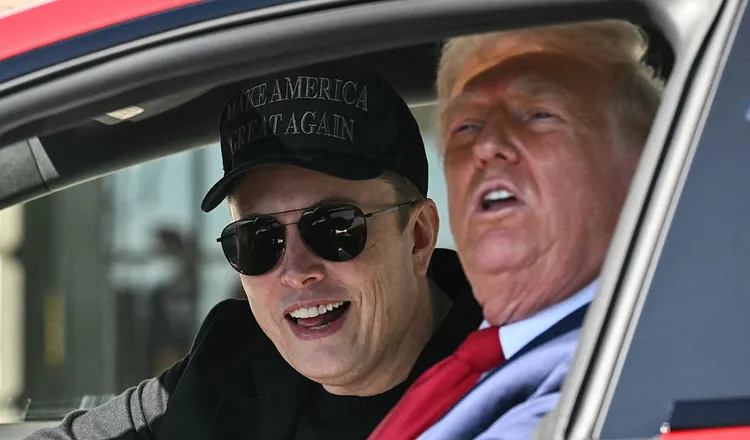
I’ve been watching enough BritBox to reflexively view Elon as in the driver’s seat.

AI

Yeah, everybody’s got to prattle about AI as the topic du jour for countless jours now. I’ll try not to be anodyne or banal.

The rule of Nobody

What with expectations that AI will become our new deity, coupled with the profit motive and AI hallucinations, Matthew Crawford returns to a variation on the theme that first made him famous 16 years ago:

In the year of our Lord 2025, getting things done often requires finding, not the recent hire who just reads through the prompts on his screen and is trapped in the same hall of mirrors as you, but the guy or the gal with enough institutional knowledge to be able to thwart the system.

AI will get rid of those people. What then? The dystopia I fear is not one in which superintelligent machines achieve self-awareness and wipe out the human race, it is the prospect of a tightening grid of dysfunction and paralysis, achieved through the final victory of “the rule of Nobody,” to borrow a phrase from Hannah Arendt. The Nobody cannot be addressed.

Oh sure, there will probably still be a counter you can walk up to, with a very charming robot-lady behind it. Detecting the emotional register of your voice, she will express empathy for your plight. “I understand this can be frustrating. Let me see what I can do.” But this will turn out to be just a creepier version of “your call is important to us,” which is Business English for “fuck off, we don’t want to talk to you.”

Your call is important to us…. This post was remarkably persuasive to me, with a dandy analogy from “work-to-rule slowdowns” in labor disputes.

Language no longer implies thinking

LLMs (the so-called AI process) are impressive probability gadgets that have been fed nearly the entire internet, and produce writing not by thinking but by making statistically informed guesses about which lexical item is likely to follow another …

People have trouble wrapping their heads around the nature of a machine that produces language and regurgitates knowledge without having humanlike intelligence. The authors observe that large language models take advantage of the brain’s tendency to associate language with thinking: “We encounter text that looks just like something a person might have said and reflexively interpret it, through our usual process of imagining a mind behind the text. But there is no mind there, and we need to be conscientious to let go of that imaginary mind we have constructed.”

Witness, too, how seamlessly Mark Zuckerberg went from selling the idea that Facebook would lead to a flourishing of human friendship to, now, selling the notion that Meta will provide you with AI friends to replace the human pals you have lost in our alienated social-media age.

Tyler Austin Harper, What Happens When People Don’t Understand How AI Works

Enough

The question with which to start my investigation is obviously this: Is there enough to go round? Immediately we encounter a serious difficulty: What is “enough”? Who can tell us? Certainly not the economist who pursues “economic growth” as the highest of all values, and therefore has no concept of “enough.” There are poor societies which have too little; but where is the rich society that says: “Halt! We have enough”? There is none.

E.F. Schumacher, Small Is Beautiful

Denying our Civil Religion

America has a civil religion that is the equal of any other religion. “Why something so obvious should have escaped serious analytical attention is in itself an interesting problem.” If American nationalism is so obviously a religion, in other words, why do we deny it? Bellah posits that conservative religious groups deny it because they believe that Christianity is, in fact, the national religion. As recently as the 1950s they proposed a constitutional amendment recognizing the sovereignty of Jesus Christ. Secularists deny that America has a civil religion because they do not believe the nation-state does or should have anything to do with religion.

William T. Cavanaugh, The Uses of Idolatry

Short-form social media

[W]hether on Twitter or Bluesky, there are five major varieties of short-form social-media post:

  • “Here is some information”
  • “Look at how funny I am”
  • “Look at how stupid my enemies are”
  • “Look at how smart my allies are for pointing out how stupid my enemies are”
  • “Hello total stranger! You’re an idiot”

Obviously, posts in the first category are useful; posts in the second can be enjoyable when the poster actually is funny; and the remaining three are poisonous.

(Alan Jacobs)

Sorta political

Henry and Thomas

Each of Henry II and Henry VIII had a Thomas, Becket and More respectively, who were martyred for their resistance to totalitarian pretentions:

Washington has passed a law requiring that Catholic [also Orthodox, I’m sure, though with progressives one never knows] priests report certain sexual crimes that might be communicated to them in the confessional …

What Henry II and Henry VIII could not live with was the idea that there were centers of power independent of the state—that the power of the king was limited. Americans supposedly cherish the notion of limited government and insist that we would abide no king, but we are in most things perfectly happy to let presidents behave as though they were Louis XIV—as long as they are doing what we want them to do, or at least as long as they are irritating and discomfiting those we regard as our rivals and enemies.

If you cleave to a political philosophy holding that there is nothing outside of the state, then you are a partisan, however well-meaning, of absolutism and totalitarianism. Not every totalitarian temptation indulged leads directly to 1984. … There are many stops, many way stations, and (one prays) many off-ramps along the road to serfdom. But allowing the state to shove its stupid snout into the confessional is a big step in the wrong direction. It is one that should be resisted not only by litigation but also through civil disobedience, if necessary.

You may have heard these famous lines from Cardinal Francis George, the late archbishop of Chicago, envisioning life under such totalitarian assumptions:

I expect to die in bed. My successor will die in prison. And his successor will die a martyr in the public square. His successor will pick up the shards of a ruined society and slowly help rebuild civilization, as the church has done so often in human history.

The cardinal’s words had more impact than he intended: “I was responding to a question and I never wrote down what I said,” he later said about his famous statement, “but the words were captured on somebody’s smartphone and have now gone viral.” But his views were no less dramatic when expressed in less dramatic language: “The greatest threat to world peace and international justice is the nation state gone bad, claiming an absolute power, deciding questions and making ‘laws’ beyond its competence,” he later wrote. And his actions bore out his convictions: When the state of Illinois insisted that funding for adoption and foster care providers would be restricted to those that agreed to provide services to same-sex couples, the cardinal, with regret, instructed Catholic Charities to refuse to comply, and the archdiocese eventually discontinued those services. That is the totalitarian tendency at work: The question wasn’t whether there would be 500 adoption agencies that serve same-sex couples but whether the 12.7 million people of Illinois could tolerate one that did not.

Kevin D. Williamson, The Totalitarian Tendency and the Confessional

For what it’s worth: How do the bien pensants of Washington expect that a violation of this law will ever be discovered?

Department of Justice crashes

The Administration’s bad faith comes home to roost already.

Can’t be bothered to learn

Elon Musk’s disinterest in learning the first thing about government, combined with his enthusiasm for performatively cutting the parts of it that irked him politically (in at least some cases because he has become a deranged conspiracy theorist), led him to eviscerate USAID, and to brag about it on Twitter:

We spent the weekend feeding USAID into the wood chipper.

Could gone [sic] to some great parties.

Did that instead.

This decision led and will continue to lead to a heartbreaking amount of suffering and death — to children and babies dying because they were cut off from access to, for example, U.S.-provided peanut paste (cost: $1 a day). One statistical model published by a Boston University public health researcher projects that Musk’s cuts will cause hundreds of thousands of child deaths. I have not looked closely into that model, but let’s say its estimate of 300,000 is off by a massive amount and Musk’s actions only led to 75,000 deaths. Was it worth it?

I don’t think Elon Musk woke up one day and decided to starve some Yemeni children to death. Rather, I think he couldn’t be arsed to learn the details of what he was doing, and instead succumbed to conspiracy theories about USAID (the drug use can’t have helped here), until he really did convince himself USAID was “a criminal organization” that needed to “die.”

Jesse Singal

Bro, you gave up a podcast. And you’re not divorced. Or separated.

It is easy to make fun of Dan Bongino, the emotionally incontinent former cop turned podcaster appointed for some inexplicable reason by Donald Trump to serve as deputy director of the FBI as a subordinate to Kash Patel, whose main qualification for the job was having been the author of … a children’s book about the Steele dossier, a fact that sounds totally made-up but that is totally not made-up.

And it is a good week for making fun of Bongino, who recently had a public emotional breakdown on Fox News—where else?—about how he “gave up everything” to take on a thankless job in public service. About which: Bro, you gave up a podcast. Bongino went on to say that the job was so hard that he was now divorced from his wife, only to realize that he didn’t exactly mean what he said. The bombastic mode of speech that is apparently obligatory in Trump’s orbit had served him poorly, and so he corrected himself: “separated.” But he didn’t mean “separated” the way it sounds when it is used in conjunction with “divorce.” He just meant that he’s spending a lot of time at the office away from his family.

Kevin D. Williamson


Your enemies are not demonic, and they are not all-powerful and the right hasn’t always lost and the left hasn’t always won. But if you convince yourself of that, you give yourselves all sorts of permission to do a lot of stupid and terrible things under the rubric of “Do you know what time it is?”

Jonah Goldberg.

Trumpism can be seen as a giant attempt to amputate the highest aspirations of the human spirit and to reduce us to our most primitive, atavistic tendencies.

David Brooks)

I don’t do any of the major social media, but I have two sub-domains of the domain you’re currently reading: (a) You can read most of my reflexive stuff, especially political here. (b) I also post some things on my favorite social medium. I am now exploring Radiopaper.com as well.

Pope Leo XIV

I didn’t anticipate blogging much about the new American Pope, but I’ve come across several surprisingly good and insightful (i.e., they fit my biases) commentaries.

Nick Catoggio

Nick Catoggio doesn’t entirely fall into the fallacy of reducing religion to crypto-politics (see Ross Douthat, below), but he does write for a politically-oriented Dispatch. So it’s no surprise to see him muse about political implications among other things:

The last thing Leo wants for his papacy, I’m sure, is to see it sucked into the sleazy reality show that is Trump-era American politics, a black hole of shame and nihilism from which no dignity can escape.

In fact, my guess is that he’s less likely to comment on policy in the United States than the other candidates to succeed Francis would have been. Doing so might tempt Catholics here to choose between their loyalty to an American-led church and their loyalty to Trumpism, and not all would choose the church. It would also demean the pontificate, as surely the Holy Father has more exalted business to attend to than serving as the president’s latest foil in America’s degenerate “politics as pro wrestling” populist spectacle.

Most of all, it would show a world that’s been dominated by the United States for 80 years that even the papacy can’t prevent an American from parochially and narcissistically prioritizing his own country’s affairs. In an age of “America First,” where Uncle Sam unapologetically cares only about himself, the so-called Ugly American has never looked uglier. If Leo really does mean to prove that he “cares about the entire world,” the easiest way to do it is to reject that narcissism by ignoring the United States as completely as possible.

Jonathan Last

Catoggio pointed me to another article that’s spicier than his summary:

I expected to see an African pope in my lifetime. I never expected to see an American pope.

Why?

Because the Vatican is dominated by Europeans and they are deeply suspicious of America and American Catholics. To them, we are toddlers with shotguns.

Earlier this week, Bishop Robert Barron explained to a reporter from CBS why the next pope wouldn’t be American:

Cardinal George of Chicago, of happy memory, was one of my great mentors, and he said: ‘Look, until America goes into political decline, there won’t be an American pope.’ And his point was, if America is kind of running the world politically, culturally, economically, they don’t want America running the world religiously. So, I think there’s some truth to that, that we’re such a superpower and so dominant, they don’t wanna give us, also, control over the church.

Barron is one of America’s MAGA priests, so naturally he could not imagine that anyone else in the world might view America as being in decline.

But we are and it’s obvious.

It’s obvious to the people of Canada, who just elected a prime minister exclusively on the grounds that the American century was over.

It’s obvious to the Chinese, who are planning to step into the vacuum and establish their own world order.

It’s obvious to our European allies, who are now making plans for a future in which America is toothless, lazy, and impotent.

And maybe—just maybe—this reality was obvious the College of Cardinals, too.

Maybe they looked at America and realized that it was no longer a colossus bestriding the globe. No longer exceptional. Not just in decline, but deluded about its reality.

Maybe Robert Prevost was elected pope because the Church realized they no longer needed to be concerned about America power.

Jonathan V. Last, MAGA and the American Pope

Ross Douthat

I hoped that someone who doesn’t focus on the crypto-politics of religions would write about Pope Leo.

Ross Douthat stepped up: What the World Needs From Pope Leo (shared link). If I could put it in a nutshell, I wouldn’t share the link, but this jumped out at me:

This is a much weirder landscape than the one in which liberal and conservative Catholics clashed over contraception or gay marriage, and it’s likely to get weirder still as we move deeper into a digital and virtual and artificial-intelligence-mediated existence.

Catholicism has had little of note to say thus far about what it means to be Christian and human under these conditions or how Catholics should think morally and spiritually about their relationships to these technologies. But if Leo XIV reigns as long as Leo XIII did, no issue may be more important to the faithful — or the world.

Why should I care?

My fascination with the Pope (and his precedessors since John Paul II) has a couple of sources:

  • He is seen as the very Vicar of Christ by 1.4 billion of my separated brethren.
  • He is one of a handful of distilled symbols of Christianity for my countrymen. (The MAGA response confirms that MAGA hates any remotely authentic Christianity because there’s too little hate in it. “Men loved darkness rather than light” and all that.)
  • UPDATE: Therefore, the only way to be an inconsequential Pope is to die quickly after elevation.
  • What he cannot yet undo are barriers to healing the Great Schism, but Popes can undermine (and have undermined) those barriers so that they may someday collapse.

Religious ideas have the fate of melodies, which, once set afloat in the world, are taken up by all sorts of instruments, some woefully coarse, feeble, or out of tune, until people are in danger of crying out that the melody itself is detestable.

George Elliot, Janet’s Repentance, via Alan Jacobs

[N]one of the things that I care about most have ever proven susceptible to systematic exposition.

Alan Jacobs, Breaking Bread With the Dead

You can read most of my more impromptu stuff here and here (both of them cathartic venting, especially political) and here (the only social medium I frequent, because people there are quirky, pleasant and real). All should work in your RSS aggregator, like Feedly or Reeder, should you want to make a habit of it.

Sunday April 6

Perennial favorite

I believe that I am not mistaken in saying that Christianity is a demanding and serious religion. When it is delivered as easy and amusing, it is another kind of religion altogether.

Neil Postman, Amusing Ourselves to Death

Religion I

In the pre-modern era in the West, as in much of the world today still, there was no such thing as ‘religion’. The Christian story was the basis of peoples’ understanding of reality itself: it was widely assumed that it represented the truth about existence, and that no part of life could therefore be outside of it. There was no ‘religion’, because there was no notion that this truth was somehow optional or partial, any more than we today might assume that gravity or the roundness of the Earth were facts we could choose to engage with only on Sunday mornings.

Paul Kingsnorth, The Migration of the Holy

Religion II

Another book, less exhaustive but both more enjoyable and more useful to me, is Before Religion: A History of a Modern Concept by Brent Nongbri. He begins by recounting a conversation with his father in India, asking what word in their own Khasi language corresponded to the English word “religion.” The answer was a loan-word from Bengali, meaning simply “customs.” They had no word of their own for the category of action English-speakers thought of as religion.

Father Silouan Thompson, Why I’m Religious, and Not Spiritual.

Morality

The nature of true morality does not consist in our sentiments – how we feel or imagine ourselves to think about right and wrong. It does not even consist in how we act. Rather, true morality consists in who we are. Another way of describing this is to understand true morality as the acquisition of virtue, the forming and shaping of our character in the image and likeness of Christ. Mere moral rules and norms in the hands of a person whose character is flawed is similar to a child with an AK-47. The outcome is always predictable.

Fr. Stephen Freeman

Is “Evangelical” a useful word?

I am still a newcomer to the world of Artificial Intelligence, but I’ve found that it’s kind of useful for giving me the broad contours of an issue.

This week, I posed the following question to three of the leading AI services:

Summarize, with hyperlinks, the discussions among American Evangelicals (and Evangelical-adjacent) on whether the label “evangelical” has any remaining utility.

I believe the following should be shareable links to the results:

What prompted my question was the seeming incoherence of using the same label to describe, for instance, prosperity gospel flake Paula White Kane and Tim Keller. Gemini was the only service that flagged the identity issue (the definition of “Evangelical”) explicitly.

Mind-bender

Our salvation doesn’t depend on our opinions. That’s hard to grasp. at least for someone formed as I was. I believe it, but don’t fully grasp it.

There have been orthodox Saints who spent their lives in heretical churches because the bishop in their area was a heretic. Today, I think “we” would tell them to leave and start an orthodox church. Their ecclesiology was stronger than ours.

I think this sort of thing ramifies more widely than I’ve yet grasped.

Grow up!

The man who denies his relationship with God, who refuses to be His son, is not a real man but a man stunted, the unfinished plan of a man.

Father Alexander Elchaninov, Diary of a Russian Priest


Religious ideas have the fate of melodies, which, once set afloat in the world, are taken up by all sorts of instruments, some woefully coarse, feeble, or out of tune, until people are in danger of crying out that the melody itself is detestable.

George Elliot, Janet’s Repentance, via Alan Jacobs

[N]one of the things that I care about most have ever proven susceptible to systematic exposition.

Alan Jacobs, Breaking Bread With the Dead

You can read most of my more impromptu stuff here and here (both of them cathartic venting, especially political) and here (the only social medium I frequent, because people there are quirky, pleasant and real). All should work in your RSS aggregator, like Feedly or Reeder, should you want to make a habit of it.

Sunday, 3/9/25

Superpower

Contentment in our current world is a superpower. Contentment sets you free.

Contentment isn’t having all your desires fulfilled, but being at peace with having unfulfilled desires.

Contentment is something we need to practice, like patience. And because of the way our society is organized, when you try to practice contentment, nobody will understand it. You’ll be called unambitious, unmotivated, lazy. But the people who say that are the ones that are still enslaved.

(Fr. Stephen De Young), paraphrased and slightly glossed.

Another thought, from the same podcast and again paraphrased and glossed:

Kennth Hagen, Benny Hinn, Paula White Cain and their ilk are not Christians. Their preaching is not Christian. Instead of repentance and faithfulness to Christ, they preach that you can speak things into reality. That’s sorcery, not Christianity. And it usually doesn’t work (the Deceiver, like a casino, knows how to addict people with random reinforcement).

And when people’s pocket have been emptied, and the riches they tried to speak into reality have not materialized (of course, it’s their own fault: their faith was too feeble), they’ll have no interest in real Christianity because they’ve been told that’s what they’re currently practicing.

I’m not poor. Far from it. But even apart from my advancing age, I’d stay content with much less if the price of more was a millstone around my neck like these prosperity preachers have donned.

Religion

“Religion” is not easy to define. Here’s an attempt by Fr. Stephen De Young again:

Religion is a way of being in the world that encompasses all levels of reality and expresses itself in practices.

Lord of Spirits Podcast, Bible, the Prequel.

This is a singular, or at least unusual, hyperlink right to the relevant part of the YouTube version of this podcast.

Marx, Nietzsche, Freud and other Protestants

Paul Tillich has frequently paid tribute to Nietzsche’s influence on his own thought, actually hailing Marx, Nietzsche, and Freud as the greatest modern “Protestants.”

Basic Writings of Nietzsche, (Walter Kaufmann, Translator). Hyperlink added because I’m getting old enough that some readers may not remember him.


Religious ideas have the fate of melodies, which, once set afloat in the world, are taken up by all sorts of instruments, some woefully coarse, feeble, or out of tune, until people are in danger of crying out that the melody itself is detestable.

George Elliot, Janet’s Repentance, via Alan Jacobs

[N]one of the things that I care about most have ever proven susceptible to systematic exposition.

Alan Jacobs, Breaking Bread With the Dead

You can read most of my more impromptu stuff here and here (both of them cathartic venting, especially political) and here (the only social medium I frequent, because people there are quirky, pleasant and real). All should work in your RSS aggregator, like Feedly or Reeder, should you want to make a habit of it.

Can this be happening here?

Denial at its most alluring

My Experience of Trump 2.0 so far

Some Zen Buddhists hold that the entirety of human suffering can be boiled down to this effort to resist paying full attention to the way things are going, because we wish they were going differently (“This shouldn’t be happening!”), or because we wish we felt more in control of the process.

Oliver Burkeman, Four Thousand Weeks

See also On Minding What Happens (Or Not)

Phase-shift

I realized suddenly on Wednesday morning that I could not bear listening to Trump — not even short sound clips from his address to Congress as part of a critical story.

Every other word Trump utters is a lie, and the words come in Tsunami waves. Some people apparently don’t care about the lies because letting those waves roll over them feels good.

They don’t make me feel good, and I don’t have the bandwidth or patience to filter out the lies. Hate-listening is spiritually sick even outside of Lent, so better not to listen at all.

It can’t be happening here

The extent to which the United States is embroiled in a major political crisis would be obvious and apparent if these events were unfolding in another country. Unfortunately, the sheer depth of American exceptionalism is such that this country’s political, media and economic elites have a difficult time believing that anything can fundamentally change for the worse. But that, in fact, is what’s happening right now.

Jamelle Bouie, There Is No Going Back

Antichrist

It’s typical political rhetoric to say you “stand with Israel” or that you “stand with Jewish Americans against antisemitism.” Trump offers a different claim: If you fail to support him, you hate your own religion. Trump wants to judge religion in light of his political interest, but detests a religious judgment on him or his politics. Politicians have long appealed to religious voters, but Trump wants religious voters to appeal to and accommodate him.

Have you noticed that the term “values voters” is essentially absent from national political discourse since Trump solidified his hold on the GOP? It’s not because the media is more progressive or antagonistic toward social conservatives now than they were pre-Trump. It’s because Trump’s case was not based on shared values. George W. Bush said at a presidential debate that his favorite philosopher was Jesus Christ. Donald Trump told a crowd of Christian conservatives that he does not need God’s forgiveness. He rejected Jesus’ teaching to love your enemies at the National Prayer Breakfast. He does and says these things all while insisting on his audience’s religious obligation to support him. In so doing, Trump fundamentally disrupted the typical understanding of what large, influential swaths of religious voters were looking for in a politician, and how a politician must approach them. It’s hard to sustain the moniker “values voters” when the candidate receiving the support of those voters regularly disregards, or even flagrantly undermines, those values.

… It took an extra four years, but with Trump’s second administration underway, the leader of GOP—the party that has been viewed as more “friendly to religion”—is casting aspersions on the very idea of religious organizations receiving federal money, and openly attacking the credibility and sincerity of the Catholic Church regarding work it has done for centuries.

Not even the pope provokes magnanimity or respect from Trump and his White House. When asked about Pope Francis’ letter to American bishops regarding God’s care for migrants and the dignity of the human person, Trump’s border czar, Tom Homan, responded: “I got harsh words for the pope: the pope ought to fix the Catholic Church … and focus on his work, and leave border enforcement to us.”

Trump’s new paradigm doesn’t have to be what replaces the old one. The paradigm Trump offers requires a set of circumstances, real and perceived, that make it plausible. To seek a protector, you must feel you need—and therefore prioritize—protection. To cut a deal, you must feel sufficient anxiety about the future without one. To seek refuge with someone who will make light of what you believe, you must feel that discomfort to be more desirable than the alternatives on offer.

What Trump promises is a future for Christianity, while claiming that the future he is promising is the only one on offer. Eric Trump claimed his father “literally saved Christianity.” During the last presidential campaign, Donald Trump told a gathering of Christians that “in four years, you don’t have to vote again. We’ll have it fixed so good, you’re not going to have to vote.”

Michael Reneau and Michael Wear, The New Era of Religion and Politics

To borrow from Josh Barro (about the Democrat base, below), “These people don’t have good intentions; they have a worldview that is wrong, and they need to be stopped.” I’m feeling very affirmed in rejecting both major parties in the last three election cycles. And I’m blessed not to be in a cult that cheerfully votes en masse for an Antichrist.

TDS is dead (because it’s now totally rational)

Trump 2.0 is what you get when you take Trump 1.0 and subtract nearly every element of accountability. Since his first term in office, the president has gained a considerable degree of legal impunity from the Supreme Court, almost limitless political impunity from his supporters and the cowards in Congress who represent them, absolute administrative impunity from the slavish cronies with whom he’s staffed his government, and electoral impunity from the fact that, one way or another, he’ll never face voters again.

If there ever were such a thing as irrational “Trump Derangement Syndrome,” it died in the Oval Office on Friday.

Nick Catoggio

Sometimes Buttegieg is spot-on

At the University of Chicago’s Institute of Politics last week, former Transportation Secretary Pete Buttigieg was nearly apoplectic about the diversity spectacles at the recent Democratic National Committee meeting

Yet Buttigieg pulled his punches, emphasizing the good “intentions” of the people who have led Democrats down this road of being off-putting and unpopular.

These people don’t have good intentions; they have a worldview that is wrong, and they need to be stopped.

Josh Barro, Democrats Need to Clean House


I suffer more from the humiliations inflicted by my country than from those inflicted on her.

Simone Weil, from a letter to Georges Bernanos.

[N]one of the things that I care about most have ever proven susceptible to systematic exposition.

Alan Jacobs, Breaking Bread With the Dead

I don’t do any of the major social media, but I have two sub-domains of the domain you’re currently reading: (a) You can read most of my reflexive stuff, especially political here. (b) I also post some things on the only social medium I frequent, because people there are quirky, pleasant and real.

Presentation in the Temple

Today, the Orthodox Christian world celebrates Christ’s presentation in the Temple on the 40th day after His birth. And after 76 years on earth, I notice for the first time that “the righteous Simeon” who received Him and prayed the Nunc dimittis was not a priest in the Temple, but a righteous man who was there frequently and was led there by the spirit that day.

UPDATE: One of the hymns in Matins calls him a Priest, though that fact doesn’t appear in Luke 2. So I stand corrected.

Nondenominationalism and crypto-baptists

I stand corrected: not every non-denominational church is functionally Baptist.

Oh, I could quibble and say the LARPing Anglicanism without a bishop is sort of Baptist-adjacent. But when it includes an organized vestry and infant baptism, I wave the white flag.

Dechurching

[T]here are more people who dechurch into a kind of right-wing political religion than into a left-wing political religion.

Jake Meador, The Rise of the Right-Wing Exvangelical, citing The Great Dechurching

Race and the Bible

The problem with race and the Bible was far more profound than the interpretation of any one text. It was a problem brought about by the intuitive character of the reigning American hermeneutic. This hermeneutic merged three positions: (1) The Bible was a plain book whose meanings could be reliably ascertained through the exercise of an ordinary person’s intelligence; (2) a main reason for trusting the Bible as true was an intuitive sense, sealed by the Holy Spirit; (3) the same intelligence that through ordinary means and intuitions could trust the Bible as true also gained much additional truth about the world through intuitive processes that were also deliverances of universal common sense. The first position was a traditional Protestant teaching intensified by the American environment; the second was historically Protestant and Reformed; the third was simply a function of the American hermeneutic.

Mark A. Noll, America’s God

“Religion”

Just as colonial officials and missionaries, travelling to India, had imposed the concept of ‘religion’ on the societies they found there, so did agnostics colonise the past in similar manner. The ancient Egyptians, and Babylonians, and Romans: all were assumed to have had a ‘religion’. Some peoples—most notably the Greeks—were also assumed to have had ‘science’. It was this that had enabled their civilisation to serve as the wellspring of progress. Philosophers had been the prototypes of scientists. The library of Alexandria had been ‘the birthplace of modern science’.26 Only Christians, with their fanatical hatred of reason and their determination to eradicate pagan learning, had prevented the ancient world from being set on a path towards steam engines and cotton mills.

Tom Holland, Dominion

Belonging nowhere

Yesterday my family and I went to a wedding in Dublin. We got up in the dark, lit the candles, heated water on a gas stove I’d set up in the garden and washed in a plastic tub in the bath. Then we put our best duds on and drove out of the darkness. [They were in a storm-caused power outage of several days’ duration.] There was light in the city, of course. The wedding was beautiful. I’d never been to an Orthodox wedding before. Our friend, the groom, was lit up from within.

After the ceremony I got talking to another guest, a Romanian woman now living in Ireland. ‘When I go home now’, she said, ‘I feel like a stranger. It doesn’t feel like home, really. But I am not Irish either. I don’t belong anywhere.’ It could have been the familiar lament of the immigrant, but it was not that. ‘Except here,’ she went on, gesturing about her. ‘In the Church, there are people from all sorts of countries, but we all come together and everything makes sense. Nothing seems to make sense outside it any more.’

I nodded my head and agreed. I feel the same these days. My secular friends, my atheist relatives: I love them, but some of them think I’ve gone mad, or already was. This journey of prayer takes you away from the world, lifts your feet slightly above the ground, away from the electric spectacle, with its currents that drag you down. They can’t see that. How could they? It can’t be accessed through argument. It’s nobody’s fault, but the river that runs between us is real.

Later, my wife and I got talking to a priest we know around the dinner table. Here we were, an English Christian convert to the Eastern Church, a British-Indian Sikh, a Romanian Orthodox priest, all of us talking about religion in the capital of Ireland, and all of us agreeing on one thing: that we could understand and connect much better, on some deep level, with each other, and with other religious people, whatever their faith, than we could with people from our own culture who had no religion at all.

The English, said the priest, seem to be a very irreligious people. I told him he was right. It makes me sad, but there it is. I could talk more easily now, I think, to an African Christian, an Indonesian Muslim or an Indian Hindu than I could to a secular British atheist immersed in what passes for culture in my homeland. I’m not judging. I’m just laying it out.

You can aim towards God, I think now, or you can aim somewhere else. You can open up all of your inner rooms and say, come on in, Father, clear out all the crap I have stored in here, and fill these rooms with light. You can say that in a lot of different languages, in a lot of different dialects, with a lot of different approaches. Or you can keep the doors closed.

Paul Kingsnorth

We shall not cease from exploration

“We are all atheists about most of the gods that humanity has ever believed in,” Richard Dawkins has argued. “Some of us just go one god further.” The idea behind this aphorism is that every serious religious worldview is a closed system and that to really practice and believe in one is to necessarily reject all the rest as incredible and false.

Dawkins is simply wrong about the requirement for believers to disbelieve in every other faith. The bookstore of all religions isn’t necessarily a library of total falsehoods with one lonely truth hidden somewhere on the shelves, and embracing one revelation doesn’t require believing that every other religion is made up.

Consider the story of religious pilgrimage offered recently by the British novelist Paul Kingsnorth. Raised to experience his isle’s Christianity as a hopeless antiquarianism, he found that spiritual interests grew naturally out of his environmentalism, which led into a commitment to Zen Buddhism, which lasted years but felt insufficient, lacking (he felt) a mode of true worship.

He found that worship in actual paganism, and he went so far as to become a priest of Wicca, a practitioner of what he took to be white magic. At which point, and only at that point, he began to feel impelled toward Christianity — by coincidence and dreams, ideas and arguments and some stark mystical experiences as well.

But it would have been unimaginable to him at the start of the journey that the Christian faith imparted to him weakly in his childhood — that “ancient, tired religion” as he put it — could have possibly been his destination in the end. Only the act of questing delivered him back to the initial place, no longer old and tired but fresh and new.

“We shall not cease from exploration,” wrote T.S. Eliot in “Four Quartets.” “And the end of all our exploring / Will be to arrive where we started / And know the place for the first time.” That’s a nice encapsulation for Kingsnorth’s journey. But for the general obligation imposed upon us all, as time-bound creatures in a world shot through with intimations of transcendence, a different Eliot line is apt: “For us, there is only the trying. The rest is not our business.”

Ross Douthat, excerpted from his forthcoming book Believe: Why Everyone Should Be Religious.


Religious ideas have the fate of melodies, which, once set afloat in the world, are taken up by all sorts of instruments, some woefully coarse, feeble, or out of tune, until people are in danger of crying out that the melody itself is detestable.

George Elliot, Janet’s Repentance, via Alan Jacobs

[N]one of the things that I care about most have ever proven susceptible to systematic exposition.

Alan Jacobs, Breaking Bread With the Dead

You can read most of my more impromptu stuff here and here (both of them cathartic venting, especially political) and here (the only social medium I frequent, because people there are quirky, pleasant and real). All should work in your RSS aggregator, like Feedly or Reeder, should you want to make a habit of it.

Bishops, cynics, and sundries

Fearing for their lives?

Andrew Sullivan nails it:

As for Bishop Budde, she said:

There are gay, lesbian and transgender children in Democratic, Republican and Independent families, some who fear for their lives.

But why should any gay, lesbian, or trans child be afraid for their lives? Who is trying to kill them? No one. The only reason some kids are scared is because the adults who have been brainwashing them in critical gender theory are scaring them, and Budde is joining in. If anything, a pause on medical experiments on children should be a cause for relief, not fear. And fear-mongering, in any case, is not a Christian message.

The spirit of Voltaire lives!

Voltaire, according to whom “the people is between man and beast,” wrote that “I want my attorney, my tailor, my servants, even my wife to believe in God, and I think that I shall then be robbed and cuckolded less often.

Brad S. Gregory, The Unintended Reformation

Political sundries

  • Here is House Minority Leader Hakeem Jeffries this week with a Braveheart cry for DEI initiatives: “Diversity, equity, and inclusion are American values. . . . Never surrender.” Right. Never surrender. Technically, you didn’t surrender, you just lost every major election and the popular vote. But I guess we can blame Liz Cheney, which, fair.
  • Meanwhile, the Lincoln Project guys are still just going on about January 6: “What happened to the Republicans? They once stood for law and order. But today, the party has taken their position: standing with violent insurrectionists over the people who keep us safe from them.” Please, I beg you, move on from January 6. It’s been done! Democrats see themselves as the January 6 Remembrance Party. And I’m telling you, that’s cool, but it can’t be the whole thing. You have to have one other thing! Many people (me) want to be proud Dems. Just give us one policy. Do one infrastructure bill. And no, it cannot be January 6–related.
  • New York mag crops out all the black MAGA folks: New York magazine covered MAGA inauguration parties and mentioned more than once that almost everyone at the party was white. And I’m sure that’s true-ish, truth-adjacent. But to get that to be Fully True, the magazine cropped out all the black attendees from their own picture of one of the parties, and the magazine neglected to mention the host of the party was black. There’s certainly a neo-racist, neo-Nazi scene coming up on the right, but when you’re trying to say an event was a white supremacy rally, well, you gotta shoot to kill.

Nellie Bowles

Sundry sundries

  • We try in vain to teach our children love of the true, the good and the beautiful if our actions reward bullshit, transgression and power.
  • Weird things: the little homily before protestant baptisms explaining to people that baptism doesn’t actually do anything.
  • Political fundamentals: don’t run on boutique issues in a Walmart nation
  • Trying to define yourself is like trying to bite your own teeth. (Allan Watts)
  • What if they gave a war and nobody came? (A favorite bumper sticker from my youth.)
  • The difference between stupidity and genius is that genius has its limits. (Mis-attributed to Albert Einstein; probably from a French equivalent by Alexandre Dumas)
  • It is certain, in any case, that ignorance, allied with power, is the most ferocious enemy justice can have. (James Baldwin)
  • The only interesting answers are those which destroy the questions. (Susan Sontag via The Economist)
  • You truly possess only what you cannot lose in a shipwreck.(Sufi saying via Pico Iyer)
  • The Episcopal Church used to be “the Republican Party at Prayer.” Now it’s NPR at Prayer.
  • The further a society drifts from truth the more it will hate those who speak it. (George Orwell)
  • Ridicule is the only honourable weapon we have left. (Muriel Spark via the Economist)

I suffer more from the humiliations inflicted by my country than from those inflicted on her.

Simone Weil, from a letter to Georges Bernanos.

[N]one of the things that I care about most have ever proven susceptible to systematic exposition.

Alan Jacobs, Breaking Bread With the Dead

I don’t do any of the major social media, but I have two sub-domains of the domain you’re currently reading: (a) You can read most of my reflexive stuff, especially political here. (b) I also post some things on the only social medium I frequent, because people there are quirky, pleasant and real.

Thursday, 1/16/25

American Meritocracy

For most of my professional career, I’ve been a skeptic of the American meritocracy. Not a skeptic of the basic idea that competent and intelligent people should fill positions requiring competence and intelligence, but a skeptic of the idea that a system of frantic adolescent hoop-jumping and résumé-building, designed to skim the smartest kids from every region and segregate them from the rest of society for college and beyond, has actually created an elite that’s more responsible, effective, morally grounded and genuinely cosmopolitan than the more quasi-aristocratic upper class that it displaced.

Ross Douthat

NAR

I’ve spent most of my life thinking that I was well-informed on the American religious scene — especially Evangelicalism. For a long time, that self-regard may have been warranted.

No more. I recently passed the 27th anniversary of my reception into the Orthodox Christian faith. And it may be time to admit that I’ve lost track of what’s going on in the American Evangelical world.

Stephanie McCrummen of the Atlantic has recently published two articles on the New Apostolic Reformation (NAR) and those who share its outlook with or without conscious acknowledgement of NAR.

I’ve had my eyes on NAR for a few years, but here’s where McCrummen floored me:

What was happening in the barn in Lancaster County did not represent some fringe of American Christianity, but rather what much of the faith is becoming. A shift is under way, one that scholars have been tracking for years and that has become startlingly visible with the rise of Trumpism. At this point, tens of millions of believers—about 40 percent of American Christians, including Catholics, according to a recent Denison University survey—are embracing an alluring, charismatic movement that has little use for religious pluralism, individual rights, or constitutional democracy.

What she’s describing in NAR That 40% figure got my back up as absurd until I realized that I was basing it on the typical doctrinal commitments of Evangelicalism more than 27 years ago. In fact, it’s been 45 years since I unequivocally identified as Evangelical, being for 18 subsequent years (before my Orthodox reception) only Evangelical-adjacent.

So I can’t say she’s wrong. I also can’t say she’s right, but if she’s right, it would go fairly far in explaining the great Evangelical murmuration from “character matters” (Bill Clinton) to, in effect, “he may be a rapist sonofabitch but he’s our rapist sonofabitch.” So the NAR “prophets” have spoken.

Metaphors: Choose Wisely

Metaphors matter. They can elucidate, but they can also elide and confuse. For a long time, the conservative metaphor for the Left’s tactics has been “slippery slope.” It’s a bad metaphor. It suggests that radical efforts to harm American families are all just the result of the gravitational pull of the earth, or the inevitability of logical progression. That isn’t the case. The tactics used against American families are far more clever. And they invariably involve a “Bait and Switch.” Sell the American people on a principle we can all agree on: “inclusivity,” “tolerance” and “anti-bullying.” Then, smuggle in an entirely different program under its name. That is how gender ideology ended up part of the mandatory “anti-bullying” curriculum, as opposed to the “sex education curriculum,” which is subject to parental opt out.

Abigail Shrier

Greenland, Canada and the Canal

When an authoritarian-minded leader poised to control the world’s most powerful military begins overt saber-rattling against neighbors, the most obvious and important question to ask is whether he intends to follow through. That question, unfortunately, is difficult to answer. On the one hand, Trump almost certainly has no plan, or even concepts of a plan, to launch a hemispheric war. Seizing the uncontrolled edges of the North American continent makes sense in the board game Risk, but it has very little logic in any real-world scenario.

On the other hand, Trump constantly generated wild ideas during his first term, only for the traditional Republicans in his orbit to distract or foil him, with the result that the world never found out how serious he was about them. This time around, one of his highest priorities has been to make sure his incoming administration is free of officials whose professionalism or loyalty to the Constitution would put them at risk of violating their loyalty to Trump. We cannot simply assume that Trump’s most harebrained schemes will fizzle.

An easier question to answer is why Trump keeps uttering these threats. One reason is that he seems to sincerely believe that strong countries have the right to bully weaker ones. Trump has long insisted that the United States should seize smaller countries’ natural resources, and that American allies should be paying us protection money, as if they were shopkeepers and America were a mob boss.

Jonathan Chait, Donald Trump’s Performative Imperialism

We’ll know he’s a Christian by his blasphemy

So let’s run the race marked out for us. Let’s fix our eyes on Old Glory and all she represents. Let’s fix our eyes on this land of heroes and let their courage inspire. And let’s fix our eyes on the author and perfecter of our faith and our freedom and never forget that where the spirit of the Lord is, there is freedom. That means freedom always wins.

Mike Pence, at the 2020 Republican National Convention, via William T. Cavanaugh, The Uses of Idolatry. Compare this the Hebrews 12:1-2 and ask yourself “just how low is the bar for being considered a devout Christian Republican?”

Cui bono?

Cui bono? Whom did this new story serve? Who benefits from a world of consequence-free sex, weak ties, the putting off of childbearing and family? Today, the pharmaceutical and medical industries benefit, by selling decades-long prescriptions for contraceptives, and then various attempts at ART [Assisted Reproductive Technology] later on. Corporations and employers benefit: they gain a new labor force unsaddled by commitments to family, place, or other less-than-profitable concerns.

Christine Emba quoted by Alan Jacobs

Pathetic wankers get their day at SCOTUS

On Wednesday America’s Supreme Court examined a Texas law mandating age verification for websites where a third or more of the material is “sexual” and “harmful to minors”. A district judge blocked the law, which is similar to measures recently passed by 18 other states, but an appeals court reinstated it last year.

A trade association of adult entertainers, known as the Free Speech Coalition, is arguing that the law restricts adult Texans’ access to protected speech and violates the First Amendment. The Supreme Court struck down a similar law (the federal Child Online Protection Act) in 2004, the plaintiffs point out. Texas’s defence relies on a high-court ruling from 1968 that upheld a law banning erotic bookstores from selling their wares to children. But online commerce, the plaintiffs retort, is a world apart: adults may be reluctant to reveal their identities to porn sites because they worry about “identity thieves and extortionists”.

Economist World News in Brief for 1/15/25.

That last sentence should be a real eye-opener. Paraphrasing: “We’re such pathetic wankers that we do business with identity thieves and extortionists. We have a right to be pathetic wankers, so to hell with the kids who get exposed.”

That’s not the whole case the “Free Speech Coalition” could make against the Texas law (and about the logic of the 5th U.S. Circuit Court of Appeals) but it’s got to be among the most risible.

Glimmers

Woke retreat

Recently, [Mark] Zuckerberg ordered tampon machines to be taken out of men’s bathrooms in all of Meta’s offices. Commenter Richard Hanania said,

This is like pulling down the statue of Saddam. Now you know wokeness is dead.

… Nobody could have imagined that a vulgar, orange billionaire from New York and an anti-woke South African immigrant in Silicon Valley might be the champions Europe needs to find its own courage and Make Europe Great Again. But then again, despite the false faith of the left-wing ideologues and their bureaucracies, the march of history follows no predictable path.

Rod Dreher

Cabinet of the Cancelled

[F]or those of us who have run afoul of the Left’s dogma, particularly in public, it’s harder to worry over the Trump cabinet’s failure to harmonize with the views of credentialed bureaucrats.

Abigail Shrier, Trump’s ‘Cabinet of the Cancelled’

Devouring one another

Look no further than MAGA mega-toady Steve Bannon declaring war on MAGA mega-toady Elon Musk.

Bannon has had a bee in his bonnet about Musk for the better part of a month, ever since Elon went to the mat in support of H-1B visas for highly skilled immigrants. “He is a truly evil guy, a very bad guy. I made it my personal thing to take this guy down,” he told an Italian newspaper recently, vowing to have Musk “run out of here by Inauguration Day.” Turning to Silicon Valley’s habit of hiring migrants instead of Americans, Bannon took the gloves off—and sounded a little, well, woke in the process:

“No blacks or Hispanics have any of these jobs or any access to these jobs,” Bannon said.

“Peter Thiel, David Sachs, Elon Musk, are all white South Africans,” Bannon observed. “He should go back to South Africa. Why do we have South Africans, the most racist people on earth, white South Africans, we have them making any comments at all on what goes on in the United States?”

Well then.

Pity poor Elon, who spent Christmas week defending Indian engineers from Groypers calling them sewage-drinking subhumans only to have Groyper-adjacent nationalist Steve Bannon turn around and accuse him of being racist. The rift over immigration policy developing between red-pilled tech bros, color-blind nativist ideologues, and gutter white supremacists will be a fun one to follow over the next four years.

But it won’t be the only one. There are numerous rifts opening on the right as Donald Trump prepares to take office. The GOP caught the proverbial car on Election Day and now each of its factions wants to drive; watching them tear each other apart will be one of the small silver linings of a second Trump presidency.

Nick Catoggio


I suffer more from the humiliations inflicted by my country than from those inflicted on her.

Simone Weil, from a letter to Georges Bernanos.

[N]one of the things that I care about most have ever proven susceptible to systematic exposition.

Alan Jacobs, Breaking Bread With the Dead

I don’t do any of the major social media, but I have two sub-domains of the domain you’re currently reading: (a) You can read most of my reflexive stuff, especially political here. (b) I also post some things on the only social medium I frequent, because people there are quirky, pleasant and real.

Wednesday, 10/9/24

Two preliminary matters:

(1) this is all political, but not full of vitriol toward DJT;

(2) I am in a “family situation” and may be silent for a while. Or I may not; I’ve not been through something like this before.

Bias versus propaganda

Trying to convince Fox watchers that they’re being misled is like trying to convince fish that they’re wet … Tell them that they’re more likely to find the truth about the election in the New York Times than on Fox and they’ll look at you cockeyed and say, “But the New York Times is biased!”

And they’re right …

The Times is biased. But there’s a difference between bias and propaganda.

Bias is having a rooting interest in a dispute. Propaganda is allowing your rooting interest to define your understanding of reality.

If Trump wins, the Times will overflow with thoughtful analysis about how he did it—turning out low-propensity voters, winning over union members, mobilizing young men, making inroads with working-class blacks and Latinos. There’ll be endless doomsaying about the outcome in the paper’s opinion section and many ominous (and justified) “news” pieces wondering how dark the next four years might get, but the reality of what happened won’t be challenged.

If Harris wins, right-wing media will overflow with conspiracy theories about how she did it—ballot stuffing, vote-machine tinkering, turning out illegal immigrants by the millions to vote fraudulently and, somehow, undetectably. The daytime hosts at Fox will engage seriously with the exit polls, as will legacy conservative publications like National Review. But across the broader industry, denying the reality of what happened will be treated as a supreme litmus test of tribal loyalty.

Most mainstream media is biased; most right-wing media is propaganda.

Conservative media began as a check on left-wing bias in mainstream outlets …

… It went from draining the media swamp of bias to “flooding the zone with sh-t.”

Nick Catoggio

I hope you know Catoggio is right.

Ass-backward “policing”

[L]et’s go back to 2015, the year Trump announced his run for the presidency. At that time, traditional evangelical elites were steadfastly against Trump. For example, the Christian newsmagazine World polled 103 evangelical leaders and influencers throughout the 2016 primary season (I was one of the people polled), and we resolutely and consistently rejected Trump. Marco Rubio won the poll month after month.

And yet, grass-roots evangelical voters preferred Trump. Even as early as August 2015, when a dozen other Republican challengers were still in the race, he enjoyed plurality support from evangelicals, and there was one category of Christian leaders that seemed more drawn to him than others: Pentecostals and charismatics.

Trump’s victory created an “entirely new incentive structure.” Hundreds of prophets and hundreds of prophecies began to flood Christian media outlets, not just the Victory Channel but also networks like Daystar, Trinity Broadcasting Network, and the Christian Broadcasting Network.

“The chorus of prophets,” Taylor said, “create a sense of certainty and irrefutability.” In other words, as the 2020 election approached, countless Christians were not only certain that Trump would win, they were certain that Trump was divinely appointed to save the United States of America, either as King Cyrus figure (a pagan ruler who helped save the people of Israel) or as a King David figure (a flawed king, but still God’s anointed ruler).

Any dissent from that idea was met with ruthless opposition. While there is relatively little theological policing within Pentecostal America, political policing has become rampant. Taylor compared it to a “mafia dynamic.” If you “get out of line on politics,” Taylor said, “you’ll feel it.”

David French (emphasis added).

Part of JD Vance’s assignment is to suck up to the followers of Lance Wallnau and his fellow theocrat wannabes. Mercifully, he has not been required to profess their twisted faith.

Exhaustion

Before Trump took his golden escalator ride, life was different. Then, even if I thought a candidate would make a terrible office holder, I rarely thought he or she was objectively a bad person. Even LBJ, and he was pretty bad on a personal level, or Nixon, who was pretty bad as a leader. One consequence was that was, while I might have considered the folks who supported “the other guy” naive or misguided, I didn’t think of them as bad. But Trump by any measure is actually a bad, bad man. And he’s bad in many, many ways. So, that makes my response to his supporters quite a problem. In my life, there are folks I love who definitely will vote for that bad, bad man. I know those folks are not themselves irredeemably bad. But I cannot help but wonder, “What is wrong with them?”

And that is one important reason this is all so exhausting.

Benign Old Lizard (a social medium acquaintance)


I suffer more from the humiliations inflicted by my country than from those inflicted on her.

Simone Weil, from a letter to Georges Bernanos.

I don’t do any of the major social media, but I have two sub-domains of the domain you’re currently reading: (a) You can read most of my reflexive stuff, especially political here. (b) I also post some things on the only social medium I frequent, because people there are quirky, pleasant and real.

Sundays are joyful days, but there’s a little cloud on this one: 26 years ago, my father died, quite unexpectedly.

His was a quick and apparently painless death — what we think of as a good death these days. But I’m not so sure. Meeting God face-to-face is a serious business. I’m inclined to think a slow and painful death, with lots of time to face the reality and to set aright things that are our of kilter, has its own advantages.

We brought nothing into this world

Modernity equates liberty with the freedom to decide and choose, to define ourselves and the world around us. In the words of Justice Anthony Kennedy (Planned Parenthood vs. Casey, 1992):

At the heart of liberty is the right to define one’s own concept of existence, of meaning, of the universe, and of the mystery of human life.

We relish this concept of unfettered freedom. But, of course, it is absurd, even for a secularist. For whether we choose to admit it or not, we “brought nothing into this world” (1 Tim. 6:7). Everything in our lives is derived and gifted. We are not the inventors of the world nor of our lives. And though we struggle to understand and even master our own DNA, it remains a primary component of our destiny, a genetic memory of the history of our coming into being across the ages. To be told that we have some portion of DNA contributed by Neanderthals reminds us that even such obscure ancestors are “selves we have received” through our genetically traditioned existence.

Fr. Stephen Freeman

There has never been a “Positive World”

I was a casual follower of Aaron Renn until Alan Jacobs demolished Renn’s famous February 2022 piece, The Three Worlds of Evangelicalism.

Without defining Christianity, Renn says the world used to be positive toward it. You can read Renn for yourself, and Jacobs, too (and you really should read Jacobs if you think Renn is onto something important), but here’s the gist (via Jacobs) of why there was never a “positive world” for thoroughgoing Christianity:

Professing Christianity is what Renn calls a “status-enhancer” when and only when the Christianity one professes is in step with what your society already and without reference to Christian teaching describes as “being an upstanding citizen.” If you don’t believe me, try getting up on stage in an evangelical megachurch and reckoning seriously with Jesus’s teaching on wealth and poverty. Even a sermon on loving your enemies, like Ruby Bridges, and blessing those who curse you, can be a hard sell — as many pastors since 2016 have discovered. News flash: if you make a point of never saying anything that would make people doubt your commitment to their preferred social order, they’ll probably think you an upstanding citizen. (Who knew?)

There are pretty much always some elements of Christian teaching that you can get away with publicly affirming; but you can never get away with affirming them all. If American Christians sixty years ago felt fully at home in their social world, that’s because they quietly set aside, or simply managed to avoid thinking about, all the biblical commandments that would render them no longer at ease in the American dispensation. Any Christians who have ever felt completely comfortable in their culture have already edited out of their lives the elements of Christianity that would generate social friction. And no culture that exists, or has ever existed, or ever will exist, is receptive to the whole Gospel. 

Renn is Evangelical or Evangelical-adjacent (PCA Presbyterian). I was once very friendly toward the PCA, so I think I can say that it’s not a church that rocked the social order (at least until Orgasms for All! became the unofficially established religion of the USA).

The bloom is entirely off my Renn Rose. I deeply discount articles that take his “three worlds” model as their premise.

A Christian Is An Outlaw

Apropos of “negative world”:

It would be honour in modernity for a Christian to be called such an outlaw, for surely they do not conform to the laws of this world.

Martin Shaw, A Christian Is An Outlaw

God in a box

There’s a brilliant episode of King of the Hill where Bobby, the thirteen-year-old boy, gets really into Christian rock. At the end of the episode his dad, Hank, shows him a box where he keeps tokens from all the different phases he has gone through. There’s a Beanie Baby, a Tamagotchi, a Teenage Mutant Ninja Turtle… Bobby cringes—and that’s the point. “I know you think the stuff you’re doing now is cool,” says Hank to his son, “but in a few years, you’re going to think it’s lame. And I don’t want the Lord to end up in this box.”

Theophan Davis, How Not to Be a Saint

This Orthodox novice’s section on prayer (“Play to your weakness”) was also very good.

Sufficiently Rawlsian?

I might appeal to the second chapter of Genesis when speaking about the fundamental importance of male–female complementarity. But I do so because the biblical witness so succinctly and powerful states a fundamental truth that every civilization has honored.

R. R. Reno, responding to a transcribed speech of Oren Cass on how to construct a secular conservatism.

Would John Rawls accept this as public reasoning?

Sola Scriptura

Even as they claimed to rely on the Bible alone, antebellum Protestants frequently turned to Christian saints, exegetical traditions, the practices of Christians past, and official church teachings, employing these sources to complement or clarify what they took the Bible to mean. Perhaps this betrays a deeper sense that the Bible was not as self-interpreting as many Protestants hoped. At the very least, it shows the inescapability of tradition. American Protestants never read, or argued over, the Bible alone.

Paul J. Gutacker, The Old Faith in a New Nation

What the heck is a Carpatho-Rusyn?

In the last decades of the nineteenth century, Byzantine Rite Christians from the Carpathian mountain region began to arrive in America. It is difficult to label these people: they came from an area that today is divided among Poland, Slovakia, Hungary, Moldova, Belarus, and Ukraine, and they were known by a great variety of names, including Carpatho-Russians, Rusyns, Ruthenians, Galicians, and others. Their ancestors were originally Orthodox Christians, but in the sixteenth and seventeenth centuries they submitted to the pope of Rome through a series of “unions,” which is why they have long been known to the Orthodox as “Uniates.” Despite their subordination to the pope, they retained most of the external forms of Orthodox worship and practice, including allowing married men to become priests.

Matthew Namee, Lost Histories.

These people are the historic core of my diocese. And my parish’s Patron Saint, Alexis Toth, led multitudes back to the Orthodox faith, after he was spurned by Archbishop John Ireland.


Religious ideas have the fate of melodies, which, once set afloat in the world, are taken up by all sorts of instruments, some woefully coarse, feeble, or out of tune, until people are in danger of crying out that the melody itself is detestable.

George Elliot, Janet’s Repentance, via Alan Jacobs

You can read most of my more impromptu stuff here and here (both of them cathartic venting, especially political) and here (the only social medium I frequent, because people there are quirky, pleasant and real). All should work in your RSS aggregator, like Feedly or Reeder, should you want to make a habit of it.