
Category: Life political issues
Thursday, August 2, 2012
Wednesday, August 1, 2012
Saturday, 7/28/12
- Citizens United.
- Chick-fil-A Appreciation Day (and invisible Christians).
- I bet my life on that.
- What will embarrass you in 20 years?
- Same-sex attraction as “Eucatastrophe.”
- Reed Heustis was half right.

I’m not a fan of the Citizens United SCOTUS decision, but it does produce some interesting humor (“With polls this week showing the race between Barack Obama and Mitt Romney tightening even further, a growing number of political experts have declared this year’s election will almost certainly be decided by a small handful of swing corporations”) and it’s not easy to get rid of without really bad consequences or fresh Constitutional violations.
In support of Chick-fil-A and of the traditional Christian conception of marriage (you know the one: the odious, indefensible, homophobic view that President Obama officially held as recently as 6 months ago, before the Overton Window shifted), former Presidential candidate and Baptist Minister Mike (“Gosh! He’s Lost A Ton!”) Huckabee and CatholicVote are encouraging everyone to go eat at Chick-fil-A on Chick-fil-A Appreciation Day, Wednesday, August 1 — a day on which the most traditional Christians will be fasting from meat, poultry and other things because (a) it’s Wednesday and (b) the first day of a major Fast for those on the Gregorian (“new”) calendar.
A campaign to “end AIDS” is in the news lately.
AIDS is only one disease acquired (mostly) by reckless behavior, and we treat diseases whatever the cause, from Pepto Bismol (remember “I can’t believe I ate the whole thing”?) to surgery, radiation, chemo and whatever for cigarette-induced lung cancer. But it’s an enduring annoyance to me that our public health approach to AIDS is condoms rather than chastity. Would we congratulate ourselves on promoting the great health benefit of filters on cigarettes without encouraging people simply to stop?
A sexually faithful couple does not need condoms. I bet my life on that.
I’ll give him credit for not comparing it to black civil rights, but I think Michael Kinsley may be trying consciously to create a halo effect over same-sex marriage by associating it with future, not past, social reform movements:
- Prisons. We incarcerate more of our population than any country in the world. Jokes about prison rape are staples of American comedy. In 20 years, we may look back in amazement that people would think this was funny.
- Industrial farming. The longstanding discussion of the conditions under which animals are grown for food is turning into a discussion of the morality of using other animals for food at all.
- The elderly. Baby boomers already feel guilty about how their parents spend their last years. Just wait until it’s the boomers’ turn.
- Greenery. Environmental degradation is a debt to our children that parallels the debt to our parents.
- My own favorite nominee will win me no friends: high school football.
I agree that all of these are scandals waiting to be perceived broadly, though I don’t think that vegetarianism is the logical and necessary consequence of opposition to industrial farming. I cite in support unrepentant carnivore Joel Salatin.
And on the same-sex marriage subject, I’ve weighed in enough times that I’ll take a pass this time. I may be shouted down, but I expect to be saying it’s a bad idea in 20 years just as now.
I am fascinated in these latitudinarian times with the stories of faithful Christians who struggle with, rather than capitulate to, same-sex attraction. The latest installment coming to my attention is from a man involved in the arts in the midwest who does not call himself a “gay Christian”:
I do not identify as “gay.” Rather, I say that “I live with same-sex attraction.” Like “consubstantial,” it is an awkward phrase, nearly absent from common usage. I refuse to identify myself as gay because the label “gay” does not accurately describe who (or what) I am. More fundamentally, I refuse to use that label because I desire to be faithful to the theological anthropology of the Church.
In 1986, as head of the Congregation for the Doctrine of the Faith, Joseph Cardinal Ratzinger wrote the “Pastoral Letter on the Care of the Homosexual Person.” In it, we read:
The human person, made in the image and likeness of God, can hardly be adequately described by a reductionist reference to his or her sexual orientation. Every one living on the face of the earth has personal problems and difficulties, but challenges to growth, strengths, talents and gifts as well. Today, the Church provides a badly needed context for the care of the human person when she refuses to consider the person as a “heterosexual” or a “homosexual” and insists that every person has a fundamental Identity: the creature of God, and by grace, his child and heir to eternal life.
With confidence in the Church, I embrace this teaching about my identity in the same way that I have accepted the word “consubstantial” in the Creed. I accept all of the words of the Catechism concerning who I am in nature and in grace. I take no umbrage at the phrase “objectively disordered” and feel no shame that it truthfully describes my sexual desires. I view my same-sex attraction as a disability, in some ways similar to blindness, or deafness, and I view it with the same hope communicated by Jesus about the man born blind: It has been allowed in my life, so that God’s work would be made manifest in me (cf. John 9:3). In the words of Tolkein, I view it as my personal “Eucatastrophe.”
In an age that’s forgotten that sex is optional, such voices need to be heard. I’ve subscribed to his blog.
In 2002, I made the acquaintance of a California Attorney, Reed R. Heustis, Jr., under Religious Right auspices the details of which aren’t relevant. We remained in a sort of contact via e-mail or listserv for some years thereafter, and I became quite annoyed when he began lambasting the GOP as worthless and insincere on issues that mutually concerned us, and pledged his support to the Constitution Party.
I eventually dropped out, and have mostly stayed out, of the Culture Wars, though my sympathies, subject to several qualifications, generally remain with the Right side of those wars. But the last time I glanced at the Constitution Party platform, my blood ran a bit cold. The goal to “restore American jurisprudence to its Biblical foundations,” for instance, is one that I’m disinclined to entrust for implementation to a “Reformed Baptist” like Heustis.
So although the Constitution Party is, I think, the wrong cure, I now agree with Heustis’ diagnosis of the GOP, and if he’s reading this (fat chance) or has a Google alert set for his distinctive name (likelier), I thought I’d give him his due on that.
* * * * *
Saturday Potpourri 7/21/12
Daily Potpourri 7/14/12
The Real HHS Issues: A Personal Account
I’m quite frustrated at the public discussion of the HHS mandate: that all employers, with a few narrow exceptions, if they offer health insurance to employees at all, provide coverage for abortifacients Plan B and Ella (and, yes, contraceptives and sterilization), with no deductible or copay.
I’m frustrated in part because of the avoidance not only of what I consider the “real issue,” but of anything close to the real issue. Today’s newspaper, for crying out loud, was full of reactions to Rush Limbaugh’s latest, and possible most-odious-ever, remarks. What does that have to do with anything? We’re distracting ourselves to death.
I’m frustrated, too, because the simple facts of the mandate are so little covered that I can only hope that my understanding, described above, is accurate. (Yes, you might want to put “contraception” first, but I acknowledge that it’s there.)
So I’m going to take a shot at discussing the real issues. I don’t claim this is comprehensive. An integrated law that revolutionizes one-sixth of the national economy is much bigger than this blogger.
1. Abortion
First, the top issue, for me as an employer, is the coverage of abortifacients without deductible or copay. I’d never qualify for any likely religious exemption. So I’m going to find myself, soon, in a position where I must drop employee health insurance or prepay quite directly for something that I strongly object to – not as a violation of cultic spiritual taboos by employees who aren’t part of the cultus, but as public policy for the common good. (There’s a glimmer of hope, though, for me as an employer: “The requirements to cover recommended preventive services without any cost-sharing do not apply to grandfathered health plans.” I’m not sure if our plan qualifies as “grandfathered,” and what tweaks might end that qualification.)
Group insurance plans without that coverage will not be available (save possibly through some guerilla “insurers” running scams through church bulletins).
I don’t even think I’d balk so much if all FDA-approved prescriptions were covered subject to a deductible. We have provided a high-deductible plan to our employees, and they can fund Health Savings Accounts (HSAs) for a tax-deductible pot from which to pay routine medical expenses. I’m a couple of steps removed from approval of abortifacients under this plan. But that’s coming to an end.
This is a very big deal for me. In Catholic Social Thought (by which I am consciously informed although I’m not Roman Catholic), HHS seems to be requiring “material cooperation” from me in an intrinsic evil. I’m still working through the moral ramifications, with help from essays like this.
2. Restricting “Religion”
Second, I’m sympathetic to the argument that any law that requires a religious exemption for political viability is too intrusive almost by definition. Obviously, from what precedes, I’m feeling that intrusion.
But putting that aside, what reliable meaning does “religious freedom” have, for purposes of a religious exemption, if the government arbitrarily decides what qualifies as “religious”?
[F]or purposes of this policy, a religious employer is one that:
(1) Has the inculcation of religious values as its purpose;
(2) primarily employs persons who share its religious tenets;
(3) primarily serves persons who share its religious tenets; and
(4) is a non-profit organization under section 6033(a)(1) and section 6033(a)(3)(A)(i) or (iii) of the Code.Section 6033(a)(3)(A)(i) and (iii) refer to churches, their integrated auxiliaries, and conventions or associations of churches, as well as to the exclusively religious activities of any religious order.
So much for Catholic Charities, which
(1) Has service to the poor as its purpose;
(2) employs people who share its purpose, regardless of their religious tenets;
(3) serves anyone who’s poor and probably serves anyone plausibly pretending to be poor.
The Catholic Church, though, is merely the most prominent. Many other Churches have a similar capacious view of their mission.
In a regime of strict separation of Church and state, or anything close to it, Church gets smaller as state gets bigger, all else being equal. HHS’s stingy definition of religion could serve as Exhibit A.
On the mandate’s application to Catholic Charities and similar entities, I think the Obama administration is going to get another 9-0 Supreme Court smackdown, just as it did in its statist position in the Hosanna Tabor case.
Even if they don’t get smacked down, it’s hard for me to avoid the feeling that the Administration consciously set out to bring religious individuals and institutions to heel, as part of an odious statist scheme. I think Obama may consciously be playing a “long game,” driving the result toward single payer/socialized medicine/national health insurance.
I have the precedents of Eleazar and St. Polycarp to inspire not coming to heel.
3. The Mandate Isn’t About Insurance
I alluded to the high-deductible plan my employees get. It took the extreme inflation in health insurance costs to wake us up that we had in effect been providing not insurance, but prepayment of routine expenses subject to a pretty nominal deductible – maybe $500 per year (a figure sensible people routinely exceed for preventive maintenance of the human body). We got out close to the cutting edge of health care reform by putting our employees back in touch with the costs of both their insurance and the routine care they get.
John H. Cochrane in The Real Problem With The Birth-Control Mandate spells out many of the levels on which the mandate is perverse as a supposed part of an Affordable Care Act, since it will fuel inflation in health costs.
I put “insurance” in quotes for a reason. Insurance is supposed to mean a contract, by which a company pays for large, unanticipated expenses in return for a premium: expenses like your house burning down, your car getting stolen or a big medical bill.
Insurance is a bad idea for small, regular and predictable expenses. There are good reasons that your car insurance company doesn’t add $100 per year to your premium and then cover oil changes, and that your health insurance doesn’t charge $50 more per year and cover toothpaste. You’d have to fill out mountains of paperwork, the oil-change and toothpaste markets would become much less competitive, and you’d end up spending more.
It’s well worth reading if you’d like to start thinking outside the box of employer-provided health insurance.
But we lost that battle politically. HHS didn’t invent no-deductible, no copay preventive care. That’s in the law.
Section 2713 of the PHS Act, as added by the Affordable Care Act and incorporated under section 715(a)(1) of ERISA and section 9815(a)(1) of the Code, specifies that a group health plan and a health insurance issuer offering group or individual health insurance coverage provide benefits for and prohibit the imposition of cost-sharing with respect to:
Evidence-based items or services that have in effect arating of A or B in the current recommendations of the United States Preventive Services Task Force (Task Force) with respect to the individual involved.
…
With respect to women, preventive care and screening provided for in comprehensive guidelines supported by HRSA (not otherwise addressed by the recommendations of the Task Force), which will be commonly known as HRSA’s Women’s Preventive Services: Required Health Plan Coverage Guidelines.
4. Gratuitous Coverage of Controversial Items
What Obama’s team seems to have added to the law, though, is a stacked-deck process to ensure inclusion of contraception, early chemical abortions and self-mutilating sterilization as “preventive health services.”
The law obviously left some details up to a “task force” and to “HRSA” (Health Resources and Services Administration). And those entities, presumably with the connivance of the Administration, were arguably quite biased.
So what? Elections have consequences, right? Councils and Task Forces and bureaucracies under Republicans aren’t straight up the middle either, right?
Yeah, but much of the controversy over the Affordable Care Act involved “life issues” (remember the “Death Panel” même?), and Obama essentially promised us that the ACA wasn’t going to push an abortion or euthanasia agenda.
HHS could have passed on inclusion of “contraceptives” whose operation prevents, or disrupts, implantation of a nascent human life.
* * *
On Items 2 and 4 especially, I have to fault the Obama Administration, toward which I have been pretty restrained in my criticisms over the past 3 years. But as in the Hosanna Tabor case, Obama has shown himself to be a statist, glad to let the state try to usher in the eschaton and to shove the Church aside in the process. He may be a Christian of sorts – of that I have no real doubt – but he’s a Caesaropapist. That is an automatic disqualifier for me. It is hard to imagine a field of opponents to Obama whose shortcomings would be worse that that, and so, once again, I can’t imagine voting for re-election of our historic first “African-American” President.
On Item 3, I can only say it’s obvious that we’re not yet serious about actual reform that will contain costs, as we’re deeply unserious about almost every other aspect of our unnatural and doomed economy.
And on that happy note, I’m through.
* * * * *
View this in a browser instead of an RSS feeder to see Tweets at upper right, or subscribe on Twitter.
Tofu Tidbits* 11/25/11
* Temporarily renamed in honor of the Nativity Fast, about which Mystagogy has some more information.
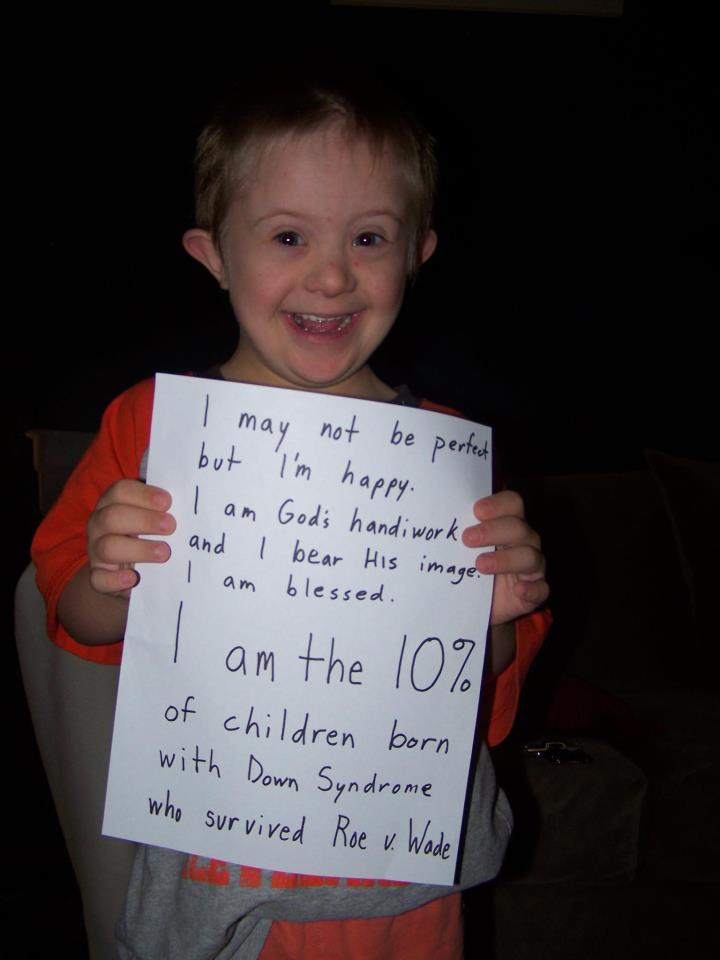
The 10%
Tasty Tidbits 10/15/11
- Occupying Lafayette.
- A Secular Case for Distributism.
- “Screw each other and everybody gets rich.”
- Bishop and Diocese Indicted for not reporting child abuse suspicions.
- T o w e r o f B a b e l.
- More Anti-Mormon Extralegal Religious Tests.
- Ron Paul’s pro-life ad (and cagey substance).
- St. Basil on Theft.
 Tipsy Teetotaler ن