I hesitate to share this, but not knowing who my readers are, I can’t know that somebody doesn’t need this as a wake-up call:
Writing for Christianity Today, Russell Moore unpacked how the evangelical subculture rejected virtue, “driven specifically by the very same white evangelical subculture that once insisted that personal character—virtue, to use a now distant-sounding word the American founders knew well—matters.” He continued: “Part of the vulgarization of the Right is due to the Barstool Sports/Joe Rogan secularization of the base, in which Kid Rock is an avatar more than Lee Greenwood or Michael W. Smith. But much more alarmingly, the coarsening and character-debasing is happening among politicized professing Christians. The member of Congress joking at a prayer breakfast about turning her fiancé down for sex to get there was there to talk about her faith and the importance of religious faith and values for America. The member of Congress telling a reporter to ‘f— off’ is a self-described ‘Christian nationalist.’ We’ve seen ‘Let’s Go Brandon’—a euphemism for a profanity that once would have resulted in church discipline—chanted in churches. If we are hated for attempted Christlikeness, let’s count it all joy. But if we are hated for our cruelty, our sexual hypocrisy, our quarrelsomeness, our hatefulness, and our vulgarity, then maybe we should ask what happened to our witness. Character matters. It is not the only thing that matters. But without character, nothing matters.”
[W]ere he to emerge today, [Ned] Flanders would face withering mockery for his moral scruples—but more likely by his white evangelical co-religionists than by his beer-swilling secular cartoon neighbors.
On the other hand …
This makes sense to me. Evangelical Christianity emphasizes the personal relationship with Christ. It puts more emphasis on what Kierkegaard said was the core Christian way of responding to the Gospel: as something to be lived out actively, requiring personal conversion, not just a social habit.
It is, as they say, ironic. Evangelical theology is almost antinomian in terms of salvation having anything to do with what you do, versus the notions in your head (what you “believe”).
But there they are, bless their hearts, in Church oftener than not.
But I just discovered that one of my favorite Orthodox bloggers, Fr. Stephen Freeman, has noticed the same democratizing theme:
[I]n contemporary Christianity, it is said that “every man is a Pope.” Whereas a few generations ago, people asserted that the Bible alone had authority, today, that, too, has been overthrown. Each person is his own authority. And I will add, that if every person is his own authority, then there is no authority.
…
I am fully sympathetic with the political place of democracy …
I am, however, deeply interested in the spiritual disease that accompanies the interiorizing of the democratic project. We have not only structured our political world in a “democratic” manner, we have spiritualized the concept and made of it a description for how the world truly is and how it should be. The assumptions of democracy have become the assumptions of modern morality and the matrix of our worldview …
…
Much of what today passes for Protestantism is nothing of the sort. Rather, it is a thinly veiled cloak for the democratic spirit at “prayer.” “Salvation by grace through faith” is a slogan for individualism, a Christianity “by right.” There are no works, no requirements, only a “grace-filled” entitlement. For the ultimate form of democracy is the person who needs no one else: no Church, no priest, no sacrament, only the God of my understanding who saves me by grace and guarantees that I can do it alone.
…
It is a great spiritual accomplishment to not be “conformed to this world.” The ideas and assumptions of modern consumer democracies permeate almost every aspect of our culture. They become an unavoidable part of our inner landscape. Only by examining such assumptions in the light of the larger Christian tradition can we hope to remain faithful to Christ in the truth. Those who insist on the absence of spiritual authority, or demand that nothing mediate grace will discover that their lives serve the most cruel master of all – the spirit of the age.
Nevin and Schaff also discerned certain common intellectual patterns and reflexes beneath the rampant pluralism of American Protestantism. They attributed the breakdown of theological coherence to attitudes that American Christians had assumed. These two felt that a radical Bible-centeredness was the reigning theory among Protestant sects. After surveying the statements of belief of fifty-three American denominations, Nevin surmised that the principle “no creed but the Bible” was the distinctive feature of American religion.
Nathan O. Hatch, The Democratization of American Christianity
Fifty-three denominations that just follow the Bible but cannot agree on what it means. What’s wrong with this picture?
Christianity generally
A constant temptation
Christianity in this instance is no longer even a worldview—or what John Rawls calls a “fully comprehensive doctrine”—much less an institutionalized worldview. It is conceived as one wedge in the pie of an individual life, a matter not of shared obedience to the Word incarnate with eternal life in the balance, but of preferred inclination toward the “company or conversation of those whose Customs and Humours, whose Talk and Disposition they like best.”
Brad S. Gregory, The Unintended Reformation
An article I keep coming back to
This is an article I’ve been revisiting and wrestling with regularly:
There is a reason why so many evangelical and Protestant graduate students in theology move toward “higher church” traditions. Intellectually, they discover thinkers and writings their own “lower church” traditions either ignore or lack; liturgically, they discover practices handed down century after century that function like a lifeline in a storm. Reading Saint Ignatius or Saint Justin or Saint Irenaeus or Saint Augustine, it occurs to them that they don’t have to imagine what the church’s ancient liturgy looked and felt like; they can simply visit a church down the street.
…
It isn’t strange to learn that Prestigious Scholar X on the law/econ/poli-sci faculty at Ivy League School Y is Roman Catholic. It is a bit of a surprise to learn that he’s an evangelical. The moment you hear it, though, you wonder (or ask) whether he’s an evangelical Anglican or some such.
For those whose churches don’t have formal confession, understand that we confess our sins without suggesting that they were justified by our neighbor’s provocation. It sounds so easy, but not being able to self-justify, not even a eensy-weensy bit, can be surprisingly hard.
East and West
I don’t think his focus was Christianity, but Guenon was (inadvertently?) not wrong about the relative emphasis in Western versus Eastern Christianity.
… that Christ may dwell in your hearts through faith; that you, being rooted and grounded in love, may be able to comprehend with all the saints what is the width and length and depth and height — to know the love of Christ which passes knowledge; that you may be filled with all the fullness of God.
You can read most of my more impromptu stuff here and here (both of them cathartic venting, especially political) and here (the only social medium I frequent, because people there are quirky, pleasant and real). All should work in your RSS aggregator, like Feedly or Reeder, should you want to make a habit of it.
Grushenka, a character in Dostoevsky’s The Brothers Karamazov, relates a now-famous fable about an old woman:
Once upon a time there was a woman, and she was wicked as wicked could be, and she died. And not one good deed was left behind her. The devils took her and threw her into the lake of fire. And her guardian angel stood thinking: what good deed of hers can I remember to tell God? Then he remembered and said to God: once she pulled up an onion and gave it to a beggar woman. And God answered: now take that same onion, hold it out to her in the lake, let her take hold of it, and pull, and if you pull her out of the lake, she can go to paradise, but if the onion breaks, she can stay where she is. The angel ran to the woman and held out the onion to her: here, woman, he said, take hold of it and I’ll pull. And he began pulling carefully, and had almost pulled her all the way out, when other sinners in the lake saw her being pulled out and all began holding on to her so as to be pulled out with her. But the woman was wicked as wicked could be, and she began to kick them with her feet: ‘It’s me who’s getting pulled out, not you; it’s my onion, not yours.’ No sooner did she say it than the onion broke. And the woman fell back into the lake and is burning there to this day. And the angel wept and went away.
It reminds me of a small scene in CS Lewis’ The Great Divorce. Angels are trying to help a soul make the journey from hell to heaven. One, a woman, seems mostly to a grumbler. Lewis’ soul has this conversation with his own guide:
‘I am troubled, Sir,’ said I, ‘because that unhappy creature doesn’t seem to me to be the sort of soul that ought to be even in danger of damnation. She isn’t wicked: she’s only a silly, garrulous old woman who has got into a habit of grumbling, and feels that a little kindness, and rest, and change would due her all right.’ ‘That is what she once was. That is maybe what she still is. If so, she certainly will be cured. But the whole question is whether she is now a grumbler.’ ‘I should have thought there was no doubt about that!’ ‘Aye, but ye misunderstand me. The question is whether she is a grumbler, or only a grumble. If there is a real woman— even the least trace of one— still there inside the grumbling, it can be brought to life again. If there’s one wee spark under all those ashes, we’ll blow it till the whole pile is red and clear. But if there’s nothing but ashes we’ll not go on blowing them in our own eyes forever. They must be swept up.’
Both stories have in common a tiny, insignificant thing: an onion, a grumble. There is in Scripture a similar “tiny thing,” a single moment that serves as a hinge in a human life. The exchange between the “Good Thief” and Christ on the Cross is hymned during Holy Week with the words, “The Wise Thief entered Paradise in a single moment…” It is a remembrance of the extreme measure of God’s grace.
The story of the Old Woman and the Onion is a parable stated in the extreme manner of absurdity. I was first drawn to it by the simple fact of its willingness to ascribe such mercy to God. A single, rotten onion, given as charity would be sufficient to get you out of hell! It was the imaginative force of such a thing that shook my soul when I first read it. In my childhood, there could never have been such a Christian mercy. Hell is hell is hell.
He’s not wrong about that, and I now think that the Grushenka story is truer than “hell is hell is hell.”
Ecclesial Christians
I’m pretty sure it was the late Richard John Neuhaus who described “ecclesial Christians” as “Christians for whom faith in Christ and faith in His Church is one act of faith, not two.”
I like that very much and my experience as a former non-ecclesial Christian who became ecclesial 26+ years ago, it rings true.
IYKYK, as the kids say
A distinction that may be of interest
For the Roman Catholic prayer, said by the priest after the penitent confesses, states, “I absolve you,” whereas in the Orthodox Church the wording reflects the original understanding: “May God forgive you, through me, a sinner.”
The Divine Liturgy is rightly understood as a theophany – an appearance of God (Christ) in our midst. We stand in the place of Moses, and wrestle in the place of Jacob. We gaze with Ezekiel and the fiery wheels with the Son of Man in their midst. We stand with St. John the Theologian and the vast crowds of heaven before the Lamb-slain-from-the-foundation upon the altar with the four beasts and angels surrounding Him.
…
This is profoundly significant. Our culture has trained people to become an audience. A theater performance, a concert, and a Church service are all of a piece. Worse than this, we are trained to be an audience that expects to be entertained ….
Photographers have long had an uneasy relationship with the sacred. There is the age-old anxiety that a photograph can steal a soul. And last week, more than 900 wedding photographers signed a petition complaining that “problematic vicars” can be “rude, humiliating, aggressive and abusive”. The fact is, the sacred has a deep and visceral distrust of the whole business of taking photos, which — in our Instagram-addled age — has resulted in a colossal culture clash.
One photographer, Rachel Roberts, who launched the petition, took a pop at problematic vicars. “They basically forget the fact that two people are getting married, and it’s the most important day of their lives. They put their own objectives and their own rules first and forget the reason why we’re all actually here.” Talk about getting things the wrong way round. The reason we are all there is for two people to enter into holy matrimony, not for wandering photographers to get the best angle for the album.
The problem is that photographs don’t just record reality — they change it. Quantum physicists talk of the observer effect: the very act of observing reality causes a disturbance within it, and thus changes it. Something similar is true of wedding photography. We pose for photographs. We behave differently when we are being captured on film …
So when the photographer turns up 10 minutes before the service and tells me how it’s going to be, that this is how the bride wants it, it makes little difference. They will stay behind the pillar and take photographs from the back, and not follow the bride down the aisle as if this were some catwalk show. They hate it, of course. But you don’t just walk into the house of God and expect the place to bend to your needs. The fact that this space is different, reflects different values, is precisely why people choose to be married here.
A seed was planted today in my head, and I don’t know where it will go. It is the possibility, even the likelihood, that a lot of people we call “Protestants” are not unequivocally Protestant because they’re not rooted in or in continuity with the classical Protestantism of the Reformation.
That’s all the speaker said, but already I’m thinking about the many denominations that grew out of the American revivalism of the late 18th and early 19th centuries, much of which was explicitly in rebellion against the Reformed/Calvinist stream of Reformation thought.
We probably call them “Protestants” because we don’t have a term for “not Roman Catholic, not Orthodox, not unequivocally Protestant, but calling themselves Christians.”
“Protecting” God, stripping away all meaning
[Jonathan] Edwards sought to intensify God’s control of creation. Yet ironically, Edwards ended up colluding with the Gnostic denigration of the material world to the degree that his entire philosophical project aimed at guarding God from the perceived threat posed by materiality. For God to truly be glorified, things in the world cannot have distinct natures or identities; rather, God must impose all meaning externally through will-acts that remain, in the final analysis, purely arbitrary. There is no actual meaning within the realm of space and time because the cosmos is simply a passive instrument of divine control.
Margaret Sanger specifically drove the Evangelical Protestants into the pro-birth control column. She used the ever-reliable anti-Catholic sentiment of this group to overcome their natural aversion to birth control and to the Progressive Social Gospel Mainline. Thanks to Sanger’s efforts, by the time of the Griswold v. Connecticut decision, the entire country considered opposition to birth control to be a uniquely Catholic position.
… that Christ may dwell in your hearts through faith; that you, being rooted and grounded in love, may be able to comprehend with all the saints what is the width and length and depth and height — to know the love of Christ which passes knowledge; that you may be filled with all the fullness of God.
You can read most of my more impromptu stuff here and here (both of them cathartic venting, especially political) and here (the only social medium I frequent, because people there are quirky, pleasant and real). All should work in your RSS aggregator, like Feedly or Reeder, should you want to make a habit of it.
Of course, that’s not on the Liturgical Calendar. And FWIW, I won’t be partaking. I. Am. So. Over. American football.
Sins, transgressions, infirmities
“If only I had known…”
These are, not infrequently, the words of an apology. They are also an explanation of why we are sometimes the way we are. Ignorance is, in the mind of the Fathers, a major cause of sin. Of course, if sin is understood in a legal/forensic framework, then ignorance would be nothing more than a form of innocence. Not knowing is excusable in most cases. But the teaching of the Church does not describe the world in legal/forensic terms. The world is not about who and what is right or wrong. It’s about what truly exists and what does not. Existence and being (ontology) are what matter, not what is legally correct. …
The door to true knowledge is repentance. Of course, for most people, repentance itself belongs to the category of legal and forensic things. It means not doing bad things, promising not to repeat the ones I have done, and, perhaps, feeling sorry. This is both inadequate and misleading. The Greek word used for repentance is metanoia, literally a “change of mind (nous).” It can be described as a movement from one form of knowledge to another (true knowledge).
The path to such knowledge passes through humility. And the path to humility involves shame (yes, I’m writing again about shame). Shame is more than a significant emotion (painful at best). It is described by the Elder Sophrony as “the Way of the Lord.” It is at the very heart of repentance. Shame has to do with “who we are.” Guilt is about “what I have done.” It is important to understand the distinction.
For some time before I became Orthodox, I was aware that most of the harm I caused, most of the chaos I cast onto those around me, was not the result of malice or a desire to harm, but of ignorance, of epistemic insufficiency if you will. I knew that my finitude often made me an agent of mischief in the world even when I thought I was doing the right thing.
But I was in a Christian tradition that understood sin in a legal/forensic framework, a framework focused on deliberate malfeasance. In this framework, to at least a degree, the proverbial Bull In The China Shop isn’t really a problem because he meant no harm. That was not true to the whole of my experience; I couldn’t help but feel responsible somehow for all the broken china around me (and, worse, the crushing knowledge that there doubtless was more, elsewhere, that I wasn’t even aware of).
When I stumbled into Orthodoxy, I immediately noticed, from the ubiquitous Trisagion (Thrice-Holy) prayers, pretty solid proof that Orthodoxy gets that:
Lord, cleanse us of our sins. Master, pardon our transgressions. Holy One, visit and heal our infirmities.
There are apparently (at least) three problematic categories, and only one of them calls for “pardon.” The others need “cleansing” or “healing.” (Prayers for forgiveness from sins committed “in knowledge or in ignorance” reinforced that.)
Now that was true to the whole of my experience.
Positive World, Neutral World, Negative World
I apparently was too gullible in accepting Aaron Renn’s tidy positive world, neutral world, negative world taxonomy as a very useful insight. Patrick Miller, whose church figured in Renn’s account, has now written a very helpful corrective (not really a rebuttal) to Renn: What Happened When My Church Encountered Negative World:
[T]he negativity of the post-2015 negative world is most keenly felt by those who, in the pre-2014 world, had easier access to power and influence: middle class, college-educated, non-coastal evangelicals. I’m not doing identity politics, I’m just observing that if you lived on the coasts as an evangelical before 2014, you didn’t feel like you lived in a “neutral world.” You were an outsider who spent the last few decades with divergent views on sex/sexuality. But middle class, midwestern and southern evangelicals enjoyed a sense of being normal. Many were insiders who had access to power denied to those of lower social strata, and (often) different skin color.
For example, it’s hard to imagine black or white Christians teaching orthodox views of race in Selma, Alabama in 1964 calling it a “positive world.” So-called “Christian” segregation academies, like Bob Jones University, didn’t desegregate until 1971, and didn’t lift their ban on interracial dating until 2000. They were reflective of the negative world of the south throughout the so-called “positive world” era.
…
We experience today as a particularly negative world—as compared to 10 years ago—for the same reasons non-evangelicals like Andrew Sullivan and J.K. Rowling do.
This is why former enemies of evangelicalism, like the new atheists, have become co-belligerents. Sam Harris, James Lindsay, and Peter Boghossian all live in a negative world, too. Likewise, non-evangelical free speech advocates who once coded left, like Johnathan Haidt, Bari Weiss, and Greg Lukianoff, also find themselves in a negative world.
Evangelicals experience the negativity as resistance to their faith, the New Atheists as resistance to reason, and the free speech advocates as resistance to the First Amendment. In many ways it’s all of these things and none of them in particular. The negative world that Renn describes results from the recent ascension of an imperialistic ideology—the successor ideology, the identity synthesis, wokeism—that has taken control of major American institutions, and is unafraid to forcefully remove and shame anyone and everyone who resists assimilation.
So let me be clear: We do live in a negative world and we are not alone.
…
While our story, certainly fits with [Renn’s] narrow thesis, it also shows what his framework ignores: 1) The negativity non-coastal evangelicals experience today does not come exclusively from progressives, but just as forcefully from far-rightidealogues. 2) The pre-2014 era wasn’t neutral. It, too, was a negative world. Put differently, Renn’s framework doesn’t actually make sense of the church that, in his introduction, epitomized it.
…
[As an example of negativity from both sides, I’ve had] many strange experiences. In a single day, someone publicly called me a CRT cultural marxist and someone else called me a white supremacist. In a single week, one family left the church because we weren’t pro-BLM and a different family life because they said we supported CRT. We took hard hits publicly for critiquing the January 6 rioters and critiquing our school district for bringing children to a drag performance without parental permission.
…
I had people whom I counseled through marital distress, catastrophic loss, and awful sickness who turned against me because I wouldn’t affirm a right-wing conspiracy theory or stop teaching about ethnic reconciliation (which is hard to do if you teach through Ephesians, Galatians, Romans, Luke, Revelation, etc.).
…
When you strip away all the globalizing abstractions—like journalism, Hollywood, government, and big business—and focus instead on the on-the-ground experience of local institutional leaders, you will discover that their “negative world” is caused both by a left-wing progressive movement and a right-wing populist movement.
There are some things in life of which it’s apt to say “I can’t un-see this.” I hope this gentle take-down of a taxonomy I’d bought into will be one of them.
The starkest of contrasts
An American legacy that lingers:
Taking seriously the mandate of liberty and equality, the Christians espoused reform in three areas. First, they called for a revolution within the church to place laity and clergy on an equal footing and to exalt the conscience of the individual over the collective will of any congregation or church organization. Second, they rejected the traditions of learned theology altogether and called for a new view of history that welcomed inquiry and innovation. Finally, they called for a populist hermeneutic premised on the inalienable right of every person to understand the New Testament for him- or herself.
A deeper historic legacy that swims against the modern American stream:
For this reason, attempting to interpret the New Testament apart from the Church and Tradition is quite unnatural and will fail to uncover the true purpose and meaning of the text. Christ did not establish Scriptures, but a Church. The Church existed before the New Testament, and the apostolic Tradition, preserved by Orthodoxy as a sacred treasure, is the only context in which the Scriptures are correctly understood.
I worry that there is some sense in which “evangelicalism” is a) mostly a sociological identifier devoid of theological content, and b) mostly a vague network of conferences, podcasts, and other online platforms.
In both cases, there simply isn’t any mechanism for handling theological error well, let alone the often far more arduous task of determining when a theological error has been made.
…
What worries me is that these controversies are effectively tried via social media, which as Blake Callens noted, is often more of an industry than a ministry. So the primary rules of the game are inherently the rules of media public relations rather than anything discernibly Christian. This means that even when a controversy works itself out in mostly unobjectionable ways, there isn’t really any institutional or procedural factor accounting for that. It’s merely the broken clock that is right twice a day. But the larger issue is the lack of rootedness in local churches which are governed by confessions, procedural norms, and so on.
Does a Muslim checking the box next to “born-again or evangelical” actually tell us something about how their view themselves in social, political, and religious space? I think the answer to that question is “yes” and I don’t just believe it’s an issue of measurement error or poor survey design. Instead, it also tells us something deeply profound about what terms like “evangelical” mean to a Muslim (or really any non-Protestant identifier) over the last decade.
Looking for a church in [City], [State] that loves Jesus, has Holy Communion every week, has at least a few other young families, and isn’t infected with white Christian nationalism. Not interested in “concert and a TED talk.” Any recommendations?
An Anglican cyber-friend reaching out on our shared social medium.
I of course offered a link to an Orthodox Cathedral in [City], [State]. It clearly fit the bill.
But it seems there was an additional, initially unspoken, desiderata: he wanted the Anglican practice of open communion — “offering Holy Communion to all baptized followers of Jesus.”
To that I had nothing to say for fear of (1) starting an argument on (2) a topic where I was out of my depth. Theological arguments on the internet are near the top of the futility heap even when both sides are well-equipped — a fortiori when one side really has no more to say that “sorry, that’s not how we do it” but then augments that with ersatz rationales.
… that Christ may dwell in your hearts through faith; that you, being rooted and grounded in love, may be able to comprehend with all the saints what is the width and length and depth and height — to know the love of Christ which passes knowledge; that you may be filled with all the fullness of God.
You can read most of my more impromptu stuff here (cathartic venting) and here (the only social medium I frequent, because people there are quirky, pleasant and real). Both should work in your RSS aggregator, like Feedly or Reeder, should you want to make a habit of it.
I’ve very frequently been quite harsh toward Evangelical Christians — “Why can’t you stupid people see that you need to be Orthodox!!!” has been the gist. So to anyone who has felt hectored, I apologize. If you’re still here, forgive me — and thanks for bearing with me in my chronic (26 year) convertitis.
I should know from my own experience that it’s not illegitimate to settle into a religious tradition and not be looking for the location of the exits immediately; that was my demeanor toward Calvinism for 20 years or so, and toward Evangelicalism for nearly 30 years before that. Both times, I was sort of blind-sided into recognizing the need to change.
Further, phenomenology and theology sometimes co-exist awkwardly. For instance, I now thoroughly believe that Baptism is not just a symbol, but is one’s initiation in the Church — a very important matter (theology). But I can’t help but feel that my Christian life began, in a non-trivial sense, 12 or so years before my Baptism when I realized (after being caught in flagrante delicto) that beating up on my brother to take away a toy was disappointing to Jesus and I needed Him to forgive me — and to “come into my heart,” as my then-tribe put it (phenomenology).
Bereft though they were of sacrament, Liturgy, incense, Church Fathers, icons, beauty and so forth, that realization and my response were important. But I’ve concluded that Evangelical Is Not Enough.
But I’ve tried to hector others into recognizing that it’s not enough. I wouldn’t have put it that way, but that’s what it amounted to.
I could say more about why I felt driven to hectoring people, but for reasons I need not share, I won’t.
Anyway: I need to reconcile myself to the reality of divided Christianity — that not all sincere Christians have entered the Ark, the one holy catholic and apostolic church of the Nicene Creed, and almost certainly some never will. The most I can do under my own power is to produce discontent with where they are — unholy discontent, which could lead them out of Christianity entirely. I don’t intend that.
But if you ever do feel any holy discontent, be sure to give Orthodoxy a look.
And I’ll probably be unable to completely eliminate critiques because Orthodoxy and Evangelicalism differ in important regards (more about that below), and where they do differ, I believe Orthodoxly.
The Main Act
Two kinds of believers
I sometimes think that the modern world’s true cultural divide is not between believers and unbelievers but between those who think life is a puzzle that is capable of being solved and those who believe it’s a mystery that ought to be approached by way of silence and humility. I am a problem solver by disposition, but in my heart I am strongly on the side of the mysterians.
…
It’s a mistake to treat [the tradition of Meister Eckhart, Teresa of Avila, John of the Cross, and Karl Rahner] as a watered-down version of the more certain expressions of faith typically associated with organized religion. The most sincere believers I’ve known have also been the most humble, the most perplexed. It may be that those who feel most powerfully the presence of God in their lives likewise feel most powerfully the impossibility of adequately capturing that presence in words. And it may be that those for whom God is not a symbol or a cudgel but a lived reality find this reality most mysterious.
I’m with Beha: “I am a problem solver by disposition, but in my heart I am strongly on the side of the mysterians.” I’ve been trying to solve the puzzle for many decades now, and I probably see more open questions than when I started.
So I now plan, after some fear that it was being over-hyped, to read Jon Fosse’s Septology.
This is not unrelated to the preceding item.
Why intellectuals don’t convert to Evangelical Christianity
But there’s one area that Brad doesn’t mention. And I think this reason keeps many intellectuals away from many Protestant traditions. Catholicism and Orthodoxy don’t have crazies. There may be a few here or there, but when you hear about a Christian group making fools of themselves publicly, you can be fairly certain that they are Protestant—and probably evangelical. Our low-church, anti-institutional biases breed these types. If you are an intellectual considering Christianity, you will not naturally move toward Christian groups that oppose science or higher education. But evangelical Protestants have groups that oppose both.
Kyle has distilled this aspect better than I ever had.
Certainty, Ferocity and Solidarity
[T]he true distinction between fundamentalism and mainstream beliefs isn’t what fundamentalists believe but how fundamentalists believe. As Richard Land, a former president of the Southern Baptist Convention’s Ethics & Religious Liberty Commission, once told me, “Fundamentalism is far more a psychology than a theology.”
…
I’ve never encountered a fundamentalist culture that didn’t combine three key traits: certainty, ferocity and solidarity.
Certainty is the key building block. The fundamentalist mind isn’t clouded by doubt. In fact, when people are fully captured by the fundamentalist mind-set, they often can’t even conceive of good-faith disagreement …
That certainty breeds ferocity. Indeed, ferocity — not piety — is a principal trait of every truly fundamentalist movement I’ve ever encountered. Ferocity is so valuable to fundamentalism that it can cover a multitude of conventional Christian sins. Defending Trump in 2016, Robert Jeffress, the pastor of First Baptist Dallas, an evangelical megachurch, explained, “Frankly, I want the meanest, toughest son of a gun I can find. And I think that’s the feeling of a lot of evangelicals.”
…
Yet certainty and ferocity are nothing without solidarity … I’m reminded of an infamous quote by Mike Huckabee, a former Baptist pastor, regarding the necessity of loyalty. Explaining Trump’s hostility toward Ron DeSantis, Huckabee said, “I think there are two virtues — loyalty and confidentiality. Be loyal to the people who helped you and learn how to keep your mouth shut.”
I appreciate this dissection of what makes “fundamentalism” fundamentalist, and it rings true to my 75 years’ experience. That’s even more interesting to me than why fundamentalists love Florida Man.
Note three things, though:
So described, fundamentalism is not merely distinct from “mainstream” beliefs, if by mainstream one means the Seven Sisters of American Protestantism, but also distinguishes it from non-fundamentalist evangelicalism. Indeed, there’s no major difference between Christian evangelicals and fundamentalists in theology (see J.I. Packer, ”Fundamentalism” and the Word of God), but there are evangelicals who are blessedly low on certainty, ferocity and solidarity.
So described, it becomes clearer how there can be Islamic as well as Christian fundamentalists — even Orthodox Christian fundamentalists (though I strongly believe that such Orthodox fundamentalism is not very good Orthodoxy).
[Fundamentalists] “can have a steamrolling effect in institutions because their opponents — almost by definition — have less certainty, less ferocity and less solidarity” (French again).
Not a Freudian slip
Victor I. Masters, the head of Home Missions from 1909 to 1921, reflected and influenced denominational thinking when he argued that the North had lost its religion to Romanism and rationalism, and that the SBC’s divine mission was to spread “the Anglo-Saxon evangelical faith.”
Quantum physics: Electrons moving, but photographing them affects path and speed. Why? How? Quantum theology: God’s mind doesn’t change, but he tells us to pray, and somehow our prayers affect the outcome.
The classic Orthodox definition of a theologian is well known and frequently repeated in Orthodox circles: “A true theologian is one who prays,” or “One who prays is a true theologian.” This legendary saying reflects the Orthodox phronema and stands in stark contrast to the Western Christian phronema, which strongly emphasizes use of the mind for comprehension of theological truths and rational deduction as a theological method.
I am a millionaire. My bedroom is full of gold light, of the sun’s jewellery. What shall I do with this wealth? Buy happiness, buy gladness, the wisdom that grows with the giving of thanks?
Orthodox Teaching does not merely differ from Western Christianity in content, but the reason for the difference is equally important. After reading this book, Western Christians still may not understand our mentality, but perhaps they will begin to realize that the difference between Orthodoxy and Western Christianity is significant and more far-reaching than a few doctrines, ancient rituals, and a refusal to submit to the pope. The variance is deeper than appears on the surface, extending to how theology is conceived, conceptualized, taught, and approached. To complicate matters, often the same terminology is used in East and West, but basic terms or concepts do not have the same meaning at all. What is sin? What is salvation? What is forgiveness?
You can read most of my more impromptu stuff here (cathartic venting) and here (the only social medium I frequent, because people there are quirky, pleasant and real). Both should work in your RSS aggregator, like Feedly or Reeder, should you want to make a habit of it.
“We have effectively communicated to young people that sincerely following Jesus is synonymous with being ‘fired up’ for Jesus, with being excited for Jesus, as if discipleship were synonymous with fostering an exuberant, perky, cheerful, hurray-for-Jesus disposition like what we might find in the glee club or at a pep rally,” Smith wrote. “For those young people who are either scared or suspicious of happy-clappy versions of youth group Christianity, ancient Christian disciplines and historic Christian worship can be received as a life-giving gift. When you have only seen forms of piety that value spontaneous expression and clichéd sincerity, to be given the cadences and rhythms of the Book of Common Prayer can be like receiving the gift of tongues.”
For some reason, this way of being Christian never appealed to me, though it was in many ways my millieu for a long time in my formative years. I never took the Book of Common Prayer (Episcopalian/Anglican) route, but took a twenty-some-year detour through a Calvinism that, God be thanked, wasn’t very friendly to the second option:
The Hate Option
I’d never heard of the book The Boniface Option, and with any luck I’ll never hear of it again. Its premise (mediated to me by the reviewer) seems to be that following Jesus is synonymous with being pissed off at all the bad people and ideas around us.
But Rod Dreher fears it will fall into the hands of angry, Christianish young men who’ll take it as gospel. He also knows, from his own life experience and continuing propensities, how dangerous it is:
The Boniface Option is a strange book. I’d say eighty percent of it already appeared in The Benedict Option (I’m certainly not accusing author Andrew Isker of plagiarism; I’m simply saying that the ideas are not new). But this book is just over half as long, and the ideas have been re-imagined here as pugnacious and resentful. If you had ever wondered how The Benedict Option would have been if its author were a late-millennial Calvinist Memelord Of Moscow, Idaho, well, now you have your answer.
…
[I]f you aren’t angry at what this world has become, you aren’t paying attention. Who can live on that, though? Who should want to live on it? I’ve noticed over the years, watching how disciples of Douglas Wilson operate rhetorically, that they typically lead with a quarrelsome overstatement, and take strong negative reaction to it as a sign that they’ve really hit the mark with their criticism. Sometime that’s true, I suppose, but more often than not, it’s because they have been nasty for the sake of being nasty, or petulant because they think that shows strength. I once knew a nice young man who had been trained by Wilson, who leaned into being verbally obnoxious in public discussions, because he genuinely believed this was how one advanced the Kingdom. He truly thought that this was manly. He ended up mostly making people feel sorry for him, if they didn’t outright dislike him for what they took to be his arrogance.
…
Another Protestant pastor, of an earlier generation, wrote:
There’s another reason why you should love your enemies, and that is because hate distorts the personality of the hater. We usually think of what hate does for the individual hated or the individuals hated or the groups hated. But it is even more tragic, it is even more ruinous and injurious to the individual who hates…. For the person who hates, the true becomes false and the false becomes true. That’s what hate does.
Those are the words of Martin Luther King, Jr., commenting on the command of Our Lord to love those who hate us, and to pray for those who persecute us.
…
As a conservative Catholic in 2002, I took the Boniface Option in tearing into the corrupt clerics, rotten institutions, and hideous complacency in the Catholic Church, as revealed by the abuse scandal. I hated half-measures, and scorned fellow Catholics who hemmed and hawed about how it wasn’t as bad as all that. And you know what? To this day, seventeen years after I burned out and lost my Catholic faith, I believe I was far more right than wrong. Many of those people really were cowards. Some of those who encouraged me from behind to keep flailing away with my axe against the crooks and the cretins in the Church, while taking no risks themselves to do the same, were also among the first to criticize me when, spiritually exhausted, my faith collapsed.
My error was thinking I was strong enough to take down a tree as formidable as the evil one that had grown within the garden of the Catholic Church. I believed then that the only brave option was taking on the idol with the axe that was my pen, and chopping like a berserker. I lacked prudence, but more to the point, I did not have the internal spiritual resources necessary to see me through the fight. You readers know my story about how Father Tom Doyle warned me early on that I would be going to places darker than I could imagine, and that I would need to be ready for it. He was right — and I wasn’t ready.
This is the risk that Isker and his followers face.
This is the sort of Christianity that says “Yeah, yeah, yeah! ‘Turn the other cheek.’ Look at what that‘s got us!”
Bible Jesus Option
Bruce Cockburn was once an angry young man, but age may be softening him:
The just, the merciful, the cruel The stumbling well-intentioned fool The deft, the oaf, the witless pawn The golden one life smiles upon The squalling infant in mid-squall The neighbors fighting down the hall The list is long – as I recall Our orders said to love them all
The cynic and the crooked priest The woman wise, the sullen beast The enemy outside the gate The friend who leaves it all to fate The drunk who tags the bathroom stall The proud boy headed to his fall, The list is long – as I recall Our orders said to love them all
The pastor preaching shades of hate The self-inflating head of state The black and blue, the starved for bread The dread, the red, the better dead The sweet, the vile, the small, the tall The one who rises to the call The list is long – as I recall Our orders said to love them all
The one who lets his demons win The one we think we’re better than A challenge great – as I recall Our orders said to love them all
Orders, from Bruce Cockburn’s recent album O Sun O Moon
What secularism rejects
A modern secularist quite often accepts the idea of God. What, however, he emphatically negates is precisely the sacramentality of man and world.
Then, throughout the entirety of Matthew 23, Jesus launched into a series of “Woes” and denunciations. He explained to one and all and to the Scribes and Pharisees to their face exactly why they were unable to understand the Kingdom, why they couldn’t recognize the Truth of it even though that Truth was standing and speaking and miraculously working right in front of them, just like He did with the Roman procurator in John 18.37, although Pilate was probably much more amenable.
The problem was simply hypocrisy. In the New Testament, hypocrisy is not inconsistency. That is a modern misunderstanding of the term.
Hypocrisy, rather, is existential schizophrenia. There is an exterior claim of piety, religiosity, and a prideful (but false) confidence of knowing the Kingdom. But on the inside, it’s all lies. There is a complete failure to love. There is a putrid cesspool of avarice and lust, pride and anger. And there is a demonic willingness to engage in domination, power, and violence, an enthusiasm for putting people in bondage and daring, horribly, to dress up their wickedness in religious clothing.
I was (am?) a culture warring evangelical. But, like so many, I’ve seen what that has gotten us. And I’ve seen what we’ve lost, too. So as much as I still very much identify as evangelical and want to recover whatever in it that is good, I also lament what we have gotten wrong.
Pope Leo III ordered his northern allies and erstwhile protectors to desist immediately from using the filioque in the Creed. The fact that they had been doing so for generations, he observed, was irrelevant insofar as it was a violation of universal church order. Then, to teach the Franks a lesson and make his continued allegiance to the Byzantine East clear, the very pope who had crowned Charlemagne in Saint Peter’s Basilica commissioned an elaborate pair of silver shields to be forged. He ordered engraved upon their faces—in Latin and in Greek—the Nicene Creed without the filioque. Leo then had these “shields of faith” mounted inside Saint Peter’s Basilica, the most prominent church in Rome, on the tomb of the Apostle Peter—the most prominent place in that church ….
I believe the silver shields are still there, but the Western Church continues to violate universal church order by reciting the creed with the filioque.
Anselm’s atonement
The broad acceptance of Anselm’s logic speaks to the extreme legalism and the radical departure from apostolic Tradition that had developed in the medieval West. It is ironic that Anselm’s conclusion was so readily accepted in the West. The Catholic Church affirms the development of doctrine and holds that medieval and scholastic theologians understood the faith and expressed its concepts in a manner superior to that of the Fathers. And yet Anselm’s theology is crude, faulty, shallow, simplistic, and manifestly inferior to the understanding of salvation among the Church Fathers. It can hardly be considered superior to or an improvement on their work.
Dr. Eugenia Scarvelis Constantinou, Thinking Orthodox. I’m pretty sure that she had Anselm of Canterbury’s Cur Deus Homo in mind.
Chastity
And what about chastity? It’s a basic truth of Christian discipleship. And it does not mean, “Sorry, no sex for you.” Rather, God asks us to live our sexuality virtuously according to our calling. For some this means celibacy, setting aside marriage for love of the larger family of the Church and a different form of fertility in service. For most people, though, in most times, it means sexual intimacy within marriage.
A fundamental reality of human existence is that vice often leaves virtue with few good options. Evil men can attach catastrophic risks to virtually any course of action, however admirable.
You can read most of my more impromptu stuff here (cathartic venting) and here (the only social medium I frequent, because people there are quirky, pleasant and real). Both should work in your RSS aggregator, like Feedly or Reeder, should you want to make a habit of it.
This may well seem too personal and of low interest, but my life has been lived in and around the church to a great extent. These nine churches are important, not incidental, to my life story. (Minor updates since first posted.)
My parents, after conscious adult decisions for Christ, got their own Christian formation at a fundamentalist Baptist Church in Bloomington, Indiana as my dad finished law school after World War II. But for some reason, they settled us, as dad began his law practice, in the much more moderate Evangelical Covenant Church, part of a denomination rooted in Swedish pietism, and with an evangelical rather than fundamentalist identity.
My parents remained members there until death. While this was our family church, I made my very young “decision for Christ,” which I still count, in a sense, as the beginning of my “Christian life.”
The denomination was relatively broad. If parents wanted a baby baptized, the church would baptize by sprinkling. If parents, like my own, believed in “believers baptism,” the church would go so far as to baptize in a creek if one wanted immersion. They were not dispenationalist prophecy fanatics, but they had a few of those as members. They used the Apostles Creed; I don’t believe I ever heard the Nicene Creed there.
I attended two years of “confirmation class” on Saturday mornings in 7th and 8th grade; I remember no substance from them, and I did not get baptized and join the church at confirmation class conclusion. That’s probably on me or on the very idea of catechizing middle-schoolers. Maybe the theory is that kids can’t handle paradoxes like the Trinity until that age.
So far as I know, no other males in my age cohort still attends any church faithfully, though somewhere between one and three females did (one loses track). The main thing I got at ECC, consciously, was a taste for coffee, black, beginning at about age 12.
The current building is the third in my memory. The first was a different, old, building on this land. The second, where I took those confirmation classes, is now one of two Reformed Presbyterian Churches in town. I have never been regular at the third building.
This is where I was baptized on a winter’s night at age 17. I began attending while in boarding school nearby. We were bussed into town Sunday morning and the busses would make stops at (unofficially?) approved churches. I fell in love with pipe organ here. I heard good preaching and had good enough Sunday School classes here. I had a girlfriend who went here. I eventually attended here with my wife, who is not that former girlfriend, and its pastor did our wedding service (at a more intimate Evangelical Covenant Church in town, which church was without a pastor and could use the fee, I assume).
Today, if forced to attend WBC in its current incarnation or the Lutheran Church that now occupies WBC’s old building, I’d probably choose the latter: the Bible Church has gone happy-clappy megachurch, though they retain a “traditional service” in one of their “worship spaces.”
This is the church I attended during my terminal undergrad years, and my wife and I walked half a block here as newlyweds as well (while she finished her undergrad degree). Again, the pipe organ, music, and erudite preaching were the draw, but a plus was our InterVarsity Christian Fellowship faculty sponsor’s membership there.
I saw some things there that in retrospect were just flat wrong, such as the junior pastor’s involvement in a “clergy network” for abortion referrals before Roe v. Wade. I wonder now how Christian was the erudite preaching that so pleased me.
Occasionally I attended a larger, more evangelical and obsessively anti-Catholic Presbyterian Church in Peoria. But the obsession was too much even for me, though I, too, was hostile to Rome.
When we arrived in Dallas on an employment assignment, we went next door the first Sunday to a Missouri Synod Lutheran Church. I think it was the first time I’d seen a more-or-less historical Christian liturgy, and I was having none of it. “Too Catholic” for me, was my thought.
So the second Sunday we walked past it to this church, which at the time was, oxymoronically, an “Independent Presbyterian Church.” They were independent, I think, because the available Presbyterian denominations were too hot or too cold, too soft or too hard. We rather liked it.
During our stay in Dallas, I had need (more than I knew) for a little pastoral correction. Rev. John Pyles pulled button-holed me and did it. I thank him.
During our too-short time there, it was approaching the new Presbyterian Church in America (PCA) for affiliation. I was in favor.
I had a 15- or 16-month, eventful job assignment to the municipal hospital in this small Oklahoma town. We had a terrible time finding a Church that we considered minimally acceptable, so we defined acceptable downward.
I believe, but would not bet anything I couldn’t afford to lose, that this is where we settled. I believe it was part of the Disciples of Christ denomination.
I don’t think it’s the same building (but it appears to be in the right neighborhood, so it could be an expansion and remodel). There was nothing memorable about the music, but I believe that the preaching included an “altar call” every Sunday.
While we were in Watonga, our son was born (albeit at a hospital in Enid — long story).
After Watonga, I left my employer and became a small-business proprietor in the mountains of Arizona. For some reason, I thought it was important that we be members of a church, not mere faithful attenders. After a visit here, we chose this church because it was large, the preaching was pretty good, and the young adult Sunday School was outstanding (Harold Waters, if you’re still living, thank you!). My wife’s baptism was deemed inadequate (sprinkling, and before she made a personal commitment to Christ) so she had to be baptized again — one of several things I’d do over if I had the chance.
In fact, if I had it to over, we probably would have attended the uninvitingly-named Church of All Christian Faiths which, unbeknownst to me before we committed to the Baptist Church, was becoming a PCA Presbyterian Church under Pastor Charles Turner. He and I talked quite a bit.
First Baptist was affiliated with the Conservative Baptist Conference (or Convention, or something), with a seminary in Denver.
It was during my time in Prescott that my reading took me from Evangelical to Calvinist. It was also during that time that I encountered Col. R.B. Thieme, Jr. Sadly, he had many fans at First Baptist Church, and I followed along for a week of meetings in a gym at a local college.
Col. Thieme was the rare dispensationalist whose other heresies and peculiarities were even more serious than his eschatological errors. Samples: Did you know that God loves nothing more than “doctrine in the frontal lobe”? Did you know that the ovum is the only human structure untainted by Original Sin? I learned both of those things during my distressing week of auditing his faux-erudite talks. I don’t recall if I was a Calvinist before he came to town, but I was not taken in by any of that, and it rather lowered my esteem for his followers in our church.
After, I ended up teaching a breakoff younger-adult Sunday School class, which of course had to be on the book of Revelation initially because … reasons … unhealthy obsessions. (Fun fact: Revelation is part of the Orthodox canon, but has zero appointed readings in Orthodox services. Having seen Evangelicals act as if it’s the centralmost book of the Bible, I appreciate that very much.) I told the Church leaders that I could no longer in good conscience teach dispensational premillennialism, which didn’t bar my Church membership but I thought would disqualify me to teach. I was wrong. So I picked fights with young dispensationalist students for a while before selling my business and heading for law school, my hometown in sight longer-term.
This was an intimate, warm, evangelical Church (the pastor was a Wheaton College graduate) where we easily settled during law school. I was too busy with studying law to have deep involvement, and even may have missed a Sunday or two here and there.
After law school, returned to my hometown but not to my childhood church. I wanted a Calvinist Church as a permanent home, but the non-instrumental Reformed Presbyerian approach to worship left me cold (remember: I was a pipe organ fan).
This is where we comfortably settled. I served both as deacon and elder, and on the Pastoral Search Committee — twice, I think. During the second search, and after about fifteen years here, I discovered Orthodox Christianity and was emotionally committed to it before the pastor we called had arrived.
The Christian Reformed Church requires elders to sign a “Form of Subscription,” which basically says “I believe what the CRC teaches and if I develop doubts, I’ll pursue them only through proper channels, not stirring things up openly.” (I think that’s a pretty good idea, by the way.) So when I left this Church, it was a surprise to everyone but my wife and the pastor. I no doubt appeared impetuous — a cross to bear in the “first world problems” sense.
Our home website is badly outdated: we have many more icons on the walls of the altar area; Subdeacon Gregory has moved on to a job out of state. This has now been my “church home” for more than 25 years.
Having decided to make the most momentous religious change of my life, I realized I should look at Roman Catholicism, which by then I considered the only serious contender to Orthodoxy. I had occasionally seen and admired “little old ladies” kneeling in prayer in Catholic churches at random times during the week. But when I looked with fresh eyes, it did not draw me; I probably had already absorbed the Orthodox version of the Great Schism (including that the sack of Constantinople by Latin Crusaders was the last straw in a 150-year rift). I’ve never regretted my decision, though I was something of a fan of Benedict XVI and even of John Paul II.
Throughline
There were occasional compromises, because no better Church was available (see Watonga) or because a church offered some recompense (see Prescott), but two common threads, through the parts of this ecclesial meandering that I freely chose, was a quest to worship God worthily, particularly in hymnody, and to be in historic continuity with my spiritual forefathers. I don’t expect I’ll ever need to move again. A picture of me about my Sunday business is here.
Tao Teh Ching
It is also not surprising that so many are turning to the profound and enigmatic work of pre-Christian China, the Tao Teh Ching. In reading Lao Tzu, they sent the spirit similar to that of Jesus Christ. They see a poetic glimpse of Christ in Lao Tzu — a reflection that is faint but somehow still pure. And to them, this faint but pure image is better than the more vivid but tarnished image of Him that they encounter in much of what now passes for Christianity.
In the traditions of ancient China, the western spiritual seeker can learn the basics of spiritual life which the churches failed to teach him: how to be free of compulsive thinking and acquire stillness of thoughts, how to cut off desires and addictions, and how to conquer negative emotions.
I would venture to say that most of us have already adopted parts of these secular visions of fullness. To take the most personally convicting example, many of us who profess faith in Christ actually find most of our existential justification in romance or career success or intelligence or beauty or popularity, and we find our meaning in a secular telos of achievement.
If in a hundred years, Christians are identified as the people who don’t kill their children or kill their elders, we will have done well.
Stanley Hauerwas on MAiD, Canada’s euthanasia program, via the epigram here.
Taking Rites comparatively
I can’t feel smug about this because I didn’t fashion the Byzantine Rite (used in Orthodox Churches) — and if I had fashioned it, much of the basis for smugness would vanish.
My Orthodox friend John Brady has pointed out that even the Traditional Latin Mass had dropped the Epiclesis in favor of a supposed “consecration”, which this chart does not reflect.
A caution to culture warriors
No man can concentrate his attention upon evil, or even upon the idea of evil, and remain unaffected. To be more against the devil than for God is exceedingly dangerous. Every crusader is apt to go mad. He is haunted by the wickedness which he attributes to his enemies; it becomes in some sort a part of him.
Possession is more often secular than supernatural. Men are possessed by their thoughts of a hated person, a hated class, race or nation. At the present time the destinies of the world are in the hands of self-made demoniacs – of men who are possessed by, and who manifest, the evil they have chose to see in others. They do not believe in devils; but they have tried their hardest to be possessed – have tried and been triumphantly successful. And since they believe even less in God than in the devil, seems very unlikely that they will ever be able to cure themselves of their possession. Concentrating his attention upon the idea of a supernatural uncommon among secular demoniacs. But his idea of good was also supernatural and metaphysical, and in the end it saved him.
A writer I long greatly admired has seemingly fallen into the maw of focusing on evils. I will continue to pray for him, but I rarely can bear to read what he writes any more.
Religion is not a domesticated animal
Church and state would not be such a difficult subject if religion were, as the Court apparently thinks it to be, some purely personal avocation that can be indulged entirely in secret, like pornography, in the privacy of one’s room. For most believers it is not that, and has never been.
Apparently, some self-styled Christian Nationalists have been taking refuge in a quote from St. Augustine:
[S]ince you cannot do good to all, you are to pay special regard to those who, by the accidents of time, or place, or circumstance, are brought into closer connection with you.
Our countrymen are closer than foreigners. Therefore, piss on everyone but our countrymen. Q.E.D.
The end of the world as we know it is not the end of the world.
You can read most of my more impromptu stuff here (cathartic venting) and here (the only social medium I frequent, because people there are quirky, pleasant and real). Both should work in your RSS aggregator, like Feedly or Reeder, should you want to make a habit of it. I’m even playing around a bit here, but uncertain whether I’ll persist.
A major Protestant pastor has died at age 72, yet I’m surprised how many people have never heard of him. I left Protestantism roughly 26 years ago, but Tim Keller (who I doubt I’d heard of while still Protestant — everybody was talking about Bill Hybels or, if they were more intellectual, Ravi Zacharias) — once he came onto my radar, seemed a thoroughly admirable man.
In the measure of the world, Tim Keller wasn’t a newsworthy mover or shaker because he stayed away from partisan politics. If I were still Protestant, I hope I’d be a Tim Keller kind of Protestant:
Christianity’s unsurpassed offers — a meaning that suffering cannot remove, a satisfaction not based on circumstances, a freedom that does not hurt but rather enhances love, an identity that does not crush you or exclude others, a moral compass that does not turn you into an oppressor, and a hope that can face anything, even death.
A few other things I’ve read about Keller upon his death:
“Fifty years from now,” the journal Christianity Today wrote in 2006, “if evangelical Christians are widely known for their love of cities, their commitment to mercy and justice, and their love of their neighbors, Tim Keller will be remembered as a pioneer of the new urban Christians.” (New York Times obituary)
He defined a fully formed Christian as “somebody who finds Christianity both rationally and intellectually credible, but also emotionally and existentially true and satisfying.” (New York Times obituary)
In 2022, he began speaking of the six social marks of evangelicalism, which he essentially equated with fundamentalism. These were moralism over gracious engagement, individualism over social reform, dualism over a comprehensive vision of life, anti-intellectualism over scholarship, anti-institutionalism over accountability, and enculturation over cultural reflection. (Dale Coulter)
He focused on grace because he believed that most people understand how broken they are. (Dale Coulter)
In 2017 Princeton University awarded him a prestigious prize named for Dutch theologian and statesman Abraham Kuyper. But the once proudly Christian institution rescinded the award after intrepid critics discovered, to their chagrin, that Keller, like Kuyper, took the Bible’s teachings on sexuality seriously.** Yet the New York pastor was also known for his warmth and gentleness, even toward those with whom he disagreed. **When Princeton withdrew his prize, Keller went and delivered lectures associated with the award anyway, a magnanimous gesture that belied (sic) his generous spirit. (Daniel Darling)
He wasn’t embarrassed to be associated with Jesus, nor was he embarrassed to be associated with Jesus’ followers. (Daniel Darling)
That last one almost felt accusatory.
Faux Christianity
I believe that I am not mistaken in saying that Christianity is a demanding and serious religion. When it is delivered as easy and amusing, it is another kind of religion altogether.
Even when Fundamentalists set out to defend the truth, their temptation was to rally large constituencies to the cause rather than to prepare for scholarly exchange.
I sadly cannot recommend Rod Dreher’s recent writing, and my subscription to his Substack is set to expire, not renew. But I owe him a debt of gratitude for much of what he has written in the past, which I’ve followed non-stop since Crunchy Cons.
I strongly suspect that Rod would defend his recent turn by saying the world has changed, and so must his writing if it’s to remain relevant and true. My response would be, I think, that human nature has not fundamentally changed, and that ephemeral things appeal less to me than constant things. That’s my first draft outline of my imaginary conversation with him, at least.
Meanwhile, this Dreher excerpt was particularly frank and, frankly, is true of me and probably of many others:
I have to tell you, spending time with the Bruderhof folks caused an unsettling reaction within me. I was glad that theological differences would keep me from considering living in a Bruderhof — glad because to be honest, I know that I’m too much of a coward to surrender so much autonomy to live in close community. For me, this was a real moment of painful honesty. The Bruderhof communities have some of the things I desire, but they have them because people have voluntarily given up a degree of liberty and autonomy that we all take for granted. I felt like the Rich Young Ruler of the Gospel — the one who wants what Jesus offers, but won’t surrender everything to get it. I talk a good game about community built on religious belief and mutual obligation, but if there were an Orthodox Bruderhof, would I join?
You can read most of my more impromptu stuff here (cathartic venting) and here (the only social medium I frequent, because people there are quirky, pleasant and real). Both should work in your RSS aggregator, like Feedly or Reeder, should you want to make a habit of it.
November 16 is the 25th anniversary of my reception into Orthodox Christianity, from a background of Calvinism (proximate) and generic evangelicalism (20 years remote).
This post isn’t meant as an apologetic, though if it convicts someone that they should give Orthodoxy a look, I’d be glad. It’s also not intended to be a comprehensive story of why I didn’t, say, become Roman Catholic, or how all the little things, not just a few big things, pointed toward Orthodoxy. Something closer to a comprehensive story, or at least a complement to this post, is here.
The first made conversion fairly “thinkable.” The second familiarized me with Orthodoxy at a basic level. The monograph disenthralled me of sola scriptura, the battle cry and foundation of the Protestant Reformation. When pondering why I remain Orthodox, I think of this monograph and say “there are some things you just can’t un-see.”
For some reason, I too rarely mention C.S. Lewis’s The Great Divorce, which played what feels like a very important (if idiosyncratic) role as well — perhaps because it was not a direct apologetic for Orthodoxy.
If you’re not familiar with The Great Divorce, you can fix that in one evening. Summarizing, many in Lewis’s tale of a day trip from hell to heaven, where they were given the option of staying, found that heaven was just a bit too real, or too little about them, or too inhospitable to their petty grudges, and so got back on the bus for hell.
Re-reading it a bit more than 25 years ago, I for the first time saw in myself hellion habits that could lead me back onto that bus, though I was offered heaven and had thought my salvation eternally secure. I asked myself: “What are you doing to become the kind of person who would stay in the hyper-real place, who wouldn’t get back on the bus to the grey city? Are you certain that some post-death miracle is going to eradicate a lifetime of cherished vices and self-regard? Shouldn’t you be starting a bit of self-mortification now?”
So what does that have to do with Orthodoxy? Orthodoxy is, so far as I know, uniquely urgent about the necessity of cooperating with God in our salvation (synergy). Most Protestant traditions I know seem utterly unable to distinguish cooperation with God from “earning salvation,” which they rightly believe is impossible. So they have nothing to offer one who wants to know how merely to cooperate.
It helps that Orthodox worship is distinctively “not about me” — if not uniquely, then at least counter-culturally. Decades before I found Orthodoxy, I was dissatisfied with most of the music we sang (in the whole succession of Churches I attended in my very mobile younger year), the gist of which was how God makes me feel — i.e., they weren’t really about God.
But “[w]e are homo adorans, creatures capable of self-transcendence through worship. Without this ability and capacity for worship, we are not fully human; even in our pomp we are like the beasts that perish (Psalm 49:20).” (Fr. Lawrence Farley)
Not even fully human without worship. That rings so very true to me! Whatever my faults, and they are many, inconstancy in Sunday church attendance has never been one of them. Because I need it — need to worship, and (I now recognize) need this stiff and willful stuff called “me” to be molded into a godlier likeness.
More than rejection of any particular Protestant doctrine, the awareness of the need — in this present life — to grow toward God, to become more Christlike, to work out my salvation with fear and trembling, has guided my past 25 years.
For some reason, I thought you might want to know that.
One more thing, not at all unrelated:
I believe the greatest heresy of all is the belief of some Christians that they are “saved.” If we believe we are categorically and without question already saved, it is a good sign that we have been dominated by demonic pride. St. Paul’s statement, “If you confess with your mouth the Lord Jesus and believe in your heart that God has raised Him from the dead, you will be saved” (Rom. 10:9), must be read in the context of Christ’s words: “Not everyone who says to me, ‘Lord, Lord,’ will enter the kingdom of heaven, but only the one who does the will of my Father who is in heaven.
You can read most of my more impromptu stuff here (cathartic venting) and here (the only social medium I frequent, because people there are quirky, pleasant and real). Both should work in your RSS aggregator, like Feedly or Reeder, should you want to make a habit of it.
“Let’s assume that we wish to investigate a natural phenomenon. As you very well know, in order to do so we need to employ the appropriate scientific methods … Everything must be explored through a method appropriate to the subject under investigation. If we, therefore, wish to explore and get to know God, it would be a gross error to do so through our senses or with telescopes, seeking Him out in outer space. That would be utterly naïve, don’t you think?”
“Yes, if you put it this way,” I replied. “Can we then conclude that for modern, rational human being, metaphysical philosophy like that of Plato and Aristotle or rational theology is the appropriate method?” As I raised the question I thought I knew what father Maximos’s answer would be.
“It would be equally foolish and naïve to seek God with our logic and intellect. But we have talked about this before, have we not?”
…
“… We can and must study God, and we can reach God and get to know him.”
“But how?” I persisted.
Father Maximos paused for a few seconds. “Christ himself revealed to us the method. He told us that not only are we capable of exploring God but we can also live with Him, become one with Him. And the organ by which we can achieve that is neither are senses nor logic but our hearts.”
… “This is the meaning, feather Maximos argued, of Christ’s beatitude, ‘Blessed be the pure in heart for they shall see God.’”
…
Then in the more serious tone I asked: “are we to assume that the philosophical quest for God, one of the central passions of the western mind from Plato to Immanuel Kant and the great philosophers of the nineteenth and twentieth centuries has in reality been off its mark?”
It is indeed one of the grave errors of religious anti-secularism that it does not see that secularism is made up of verites chretiennes devenues folles, of Christian truths that “went mad,” and that in simply rejecting secularism, it in fact rejects with it certain fundamentally Christian aspirations and hopes.
Quite a bit of time has passed since Fr. Alexander wrote this. What are today’s "Christian truths gone mad"?
Mennonites
More than a year ago, this writer reviewed an excellent defense of opposite-sex only monogamy by a pastor in the Mennonite Church U.S.A., Darrin W. Synder Belousek, who offered a Biblical defense of opposite-sex only monogamy independent of the Biblical condemnations of homosexuality. Synder Belousek was concerned about the drift of his denomination toward the acceptance of same-sex marriage. Earlier the denomination’s largest conference, the Lancaster Mennonite Conference, had left the denomination, concerned about the increasing acceptance of homosexuality.
Late this spring, as was reported at the beginning of last month, the Mennonite Church U.S.A. formally accepted same-sex marriage, and signaled an utter rejection of Christian sexual morality in effectively apologizing for its previous Biblical standard, calling for repentance from it. Typical of the current homosexual/transgender apologetic, it effectively claims that the pain and humiliation Biblical morality causes is sufficient to establish that it is oppressive, setting aside God’s absolute authority, and Jesus’ call to accept the painful, narrow gate to life.
The Mennonites apparently want to be the left bookend of evangelicalism, whereas Christian Reformed and Presbyterian Church in America resolutions this summer are the right bookends. (All three might question the label "evangelical;" I don’t know any more.)
I wonder how Myron Augsberger, the Mennonite with whom I had most contact (and who I’m surprised to see is still living at age 92), received this news?
Dogs don’t understand pointing
I have tried to stress throughout the inevitableness of the error made about every transposition by one who approaches it from the lower medium only. The strength of such a critic lies in the words “merely” or “nothing but.” He sees all the facts but not the meaning. Quite truly, therefore, he claims to have seen all the facts. There is nothing else there; except the meaning. He is therefore, as regards the matter in hand, in the position of an animal. You will have noticed that most dogs cannot understand pointing. You point to a bit of food on the floor; the dog, instead of looking at the floor, sniffs at your finger. A finger is a finger to him, and that is all.
If people have always said it, it is probably true; it is the distilled wisdom of the ages. If people have not always said it, but everybody is saying it now, it is probably a lie; it is the concentrated madness of the moment.
You can read most of my more impromptu stuff here (cathartic venting) and here (the only social medium I frequent, because people there are quirky, pleasant and real). Both should work in your RSS aggregator, like Feedly or Reeder, should you want to make a habit of it.
I have long said that when a denomination forms a committee to study whether they’ve been wrong about something that puts them at odds with the culture (and in recent years that almost always involves homosexuality), it invariably leads the denomination to capitulate to the culture.
I was wrong. Wrong about "invariably." Such studies are usually charades, but not, apparently, always.
The Christian Reformed Church in North America (the denomination in which I was an Elder until I left to become Orthodox, and in which my wife so far remains) studied sexuality from 2016 until last week. Then it "voted Wednesday at its annual synod to codify its opposition to homosexual sex by elevating it to the status of confession, or declaration of faith."
The vote, after two long days of debate, approves a list of what the denomination calls sexual immorality it won’t tolerate, including “adultery, premarital sex, extra-marital sex, polyamory, pornography, and homosexual sex.”
Note that homosexual sex is not singled out, though it leaps out on its own to everyone who knows what specific sexuality triggered the six-year study.
The reactions from the dissenters so far have run along predictable lines, which I resist critiquing except to say "It is not compassionate to affirm people’s sins." If you think "homosexual sex" is not a sin, and should be affirmed, then we do not agree.
(I do not mean by "sin" what most western people mean by "sin." Sin is "missing the mark." Deciding on the eternal consequences of particular sins, including the sin of the dissenters from the CRC synod’s decision, is infinitely above my pay-grade.)
The heaviest price the CRC will pay will almost certainly be at its highly-regarded Calvin University, a third of whose faculty publicly voiced opposition to the report from which the synod’s decision flowed:
What’s going to happen to Calvin? It’s going to lose its rock star faculty. But it’s probably going to remain Christian. These liberal faculty are going to go on to greater things, professionally, and be able to dine out on how they were badly treated by the homo-hating fundagelicals at Calvin. But the CRC has taken a brave and unpopular stand for the Gospel. God sees.
Rod Dreher. Most gay-affirming faculty will leave because they will no longer be able to subscribe (literally, as in "sign below" — I signed something analogous as an Elder) the denomination’s fortified faith statement; it would mark them as not among the cool kids to relent now by subscribing The Loathsome Thing, especially if they earlier subscribed the pre-emptive dissent.
Rod’s reader Andrew S. comments:
The momentary rush of conservative enthusiasm for this move will please Rod’s readers, but the fury of the left will be in full force over the next several weeks and months. Any university board contemplating a similar move better should study what will likely happen, and plan accordingly for a media siege of their institution. Watch for the following:
a sudden drop in college rankings, unattributable to any objective criterion currently used by the major ranking media;
a tsunami of requests, using already existing anonymous online reporting portals, for Biden’s Department of Education to open Title IX investigations at the universities in question;
calls by social media talking heads to blacklist graduates of the schools;
a sudden mysterious dearth of available federal and private grant money for faculty at these schools, along with the denial of conference platforms for faculty members.
Financial pressures are such that many if not most religiously-affiliated schools will quickly develop new “insights” into the Bible that permit them to cave in to the left, if they haven’t already. Board members sticking to Christian principles better raise prodigious sums of cash to plow into their endowments and strengthen ties with allied Christian schools to bolster their financial self-sufficiency. Woke winter is coming, and Calvin will provide an example of what other colleges should expect.
Do you doubt this? This manifests the "soft tyranny" that a few on the center-right ridicule, but which I take quite seriously, as recently as Tuesday morning:
It has now become indisputable that the liberal order not only uses a variety of quasi coercive legal instruments such as bureaucratic guidances, selective funding of NGOs, and so forth, but it also exploits the liberal version of the public-private distinction to full advantage. It deploys selective enforcement of the law against “private violence” and takes political advantage of background conditions of economic necessity (“the market”) and of the radical conformity of public opinion under liberalism, instigated by the media. It controls its subjects with mobs both virtual and real, threats of ostracism, loss of employment, and a sort of reputational death (the dreaded state of being “out of the mainstream,” enforced politically by a cordon sanitaire).
I have said at least once before and will say it again: the Christian Reformed Church was a very good place from which to come to Orthodoxy. It never dove into the zaniness of broader evangelicalism (thought many parishes and individuals have dipped their toes, or even waded in up to the knees). Rather, from my earliest arrival struck me as sober and serious-minded.
Yet I expected it to cave in, because I do not trust Protestantism over the long haul to interpret their touchstone, their scriptures, in any seriously countercultural way.
I’m heartened that this was not the CRC’s year to swallow the zeitgeist. And they set such a firm precedent that it will be hard to backslide very soon. By then, the zeitgeist may have moved on, as zeitgeists are wont to do.
Why the rule remains generally valid
We are not in a post-Christian age, but in a post-Enlightenment age. The reason why these Christianities are collapsing is that they were rationalized.
Calvinism ("the Reformed faith") is surely among the most rationalized. Its system fails, in my opinion, not for lack of rationality, but for lack of humanity: it’s hard to see daylight between Reformed predestination and simple fatalism, hard to see room for meaningful human agency.
Denialisms
I can have an argument with you about what to do about climate change. I can even accept somebody making an argument that, based on what I know about human nature, it’s too late to do anything serious about this—the Chinese aren’t going to do it, the Indians aren’t going to do it—and that the best we can do is adapt. I disagree with that, but I accept that it’s a coherent argument. I don’t know what to say if you simply say, “This is a hoax that the liberals have cooked up, and the scientists are cooking the books. And that footage of glaciers dropping off the shelves of Antarctica and Greenland are all phony.” Where do I start trying to figure out where to do something?
You can swap "climate change" with a lot of other issues, most famously Alex Jones’ claim that Sandy Hook was a hoax, the bereaved parents "crisis actors." On second thought, "the Democrats stole the 2020 Election" may be more famous.
Hard words
A. G. Sertillanges wrote in The Intellectual Life: “The mind is dulled, not fed, by inordinate reading, it is made gradually incapable of reflection and concentration, and therefore of production…. Never read when you can reflect; read only, except in moments of recreation, what concerns the purpose you are pursuing; and read little, so as not to eat up your interior silence.”
Another excellent article read, on the perils of too much reading.
Babylon, not Israel
[S]ome see America as a new Israel, God’s chosen country that’s now being taken over by His enemies, rather than a new Babylon in which Jesus-followers are mixed in with many others.
The cities lie. Their radical chic is stretched tight over the bare lust for money. Their cosmopolitan diversity hides the uniformity of clawing ambition. Their youth is stolen from elsewhere, used for a time, and discarded when its looks and gullibility begin to fade. They grow little food and make fewer objects every year. They offer only services no one needs and knowledge no one believes. A blustering businessman sinks deeper into debt; but, risking it all again and again, he’ll keep up his pretence until the bailiffs arrive. That is the soul of the city.
FFatalism, The dishonest land The whole short posting was excellent in a bleak sort of way.
And, God help me, I love cities anyway.
Dad theory
My kids—if I can even use the possessive—are a part of me, but I cannot see them if I reduce them to my own reflection. Parenthood entails limitless closeness; all parents see more of their very young children than their kids can see of themselves. Being a dad, though, means perceiving this intimacy from a distance and working to make it outwardly manifest through awkward, conscious effort. This dialectical relationship resembles good thinking, which brings us to the first moment of Dad Theory. Dads guard against losing themselves in particularity, on one hand, and losing themselves in abstraction, on the other. Being a dad means being neither too attached to one’s own concerns to see things clearly, nor too impressed by speculation to see the messiness of real life. To practice Dad Theory is to negotiate with the known unknowns—and to trust that love is a stable point you can use to navigate through ambiguity to reach something solid and sure.
The American Conservative‘s Peter Van Buren looks at January 6 and concludes that the coup attempt was so stupid and so deficient in his post-hoc markers of coup attempts (he sets a remarkably high bar) that it couldn’t possibly have been a coup attempt at all.
I’m so glad he cleared that up. It will be a relief when my subscription expires and I no longer feel duty-bound to rummage through such garbage in search of nourishment.
Word of the day:
Portent. Since portents don’t come with Divinely-inscribed subtitles, I’ll leave it to you to decide what this means.
But if you want to call it "mere coincidence," note that your case is no stronger than mine for "portent."
To the woke, discernment is discrimination and boundaries are oppression.
Richard Abbot, who I don’t know from Adam but who responded to this.
You can read most of my more impromptu stuff here (cathartic venting) and here (the only social medium I frequent, because people there are quirky, pleasant and real). Both should work in your RSS aggregator, like Feedly or Reeder, should you want to make a habit of it.

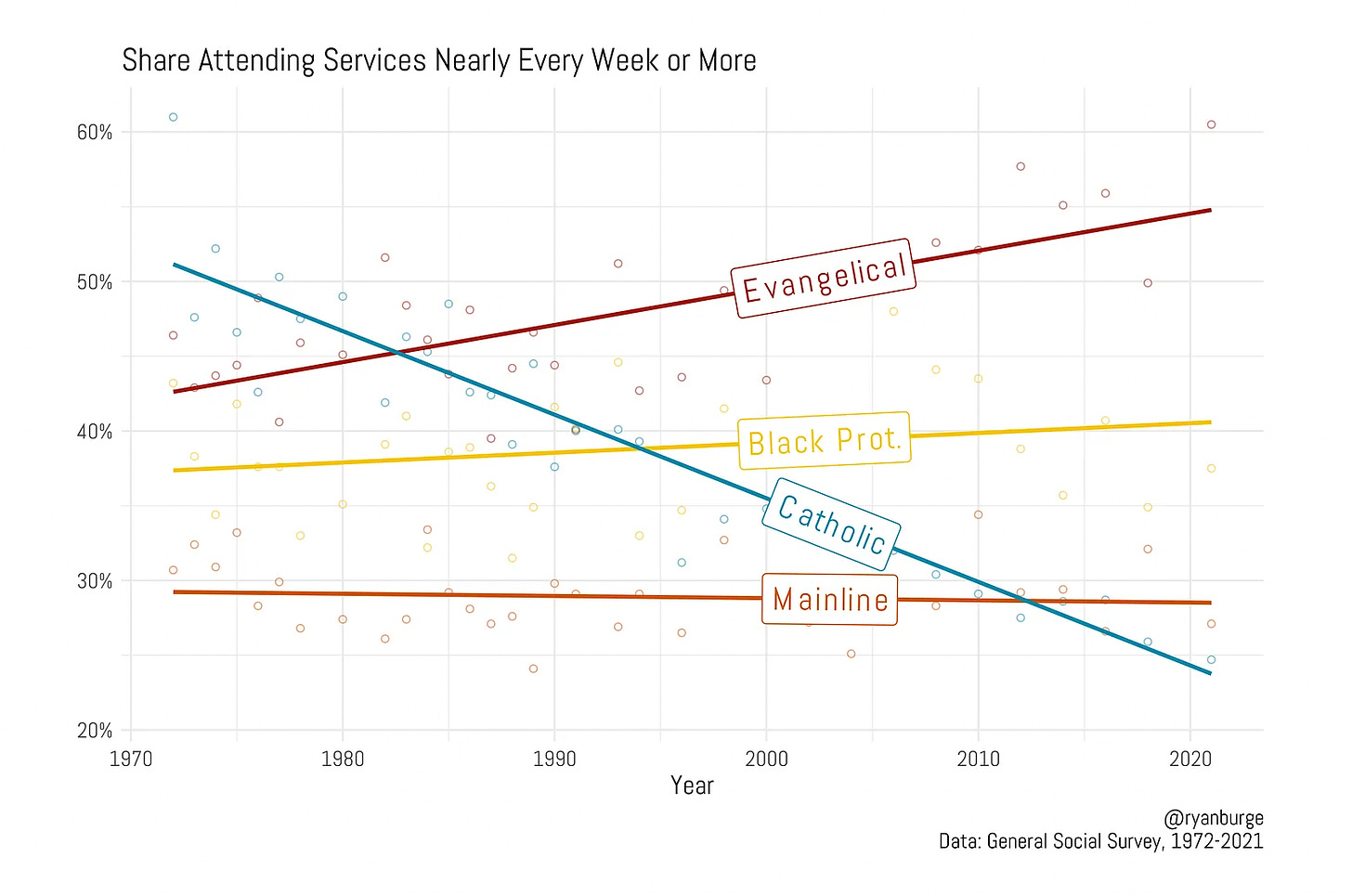


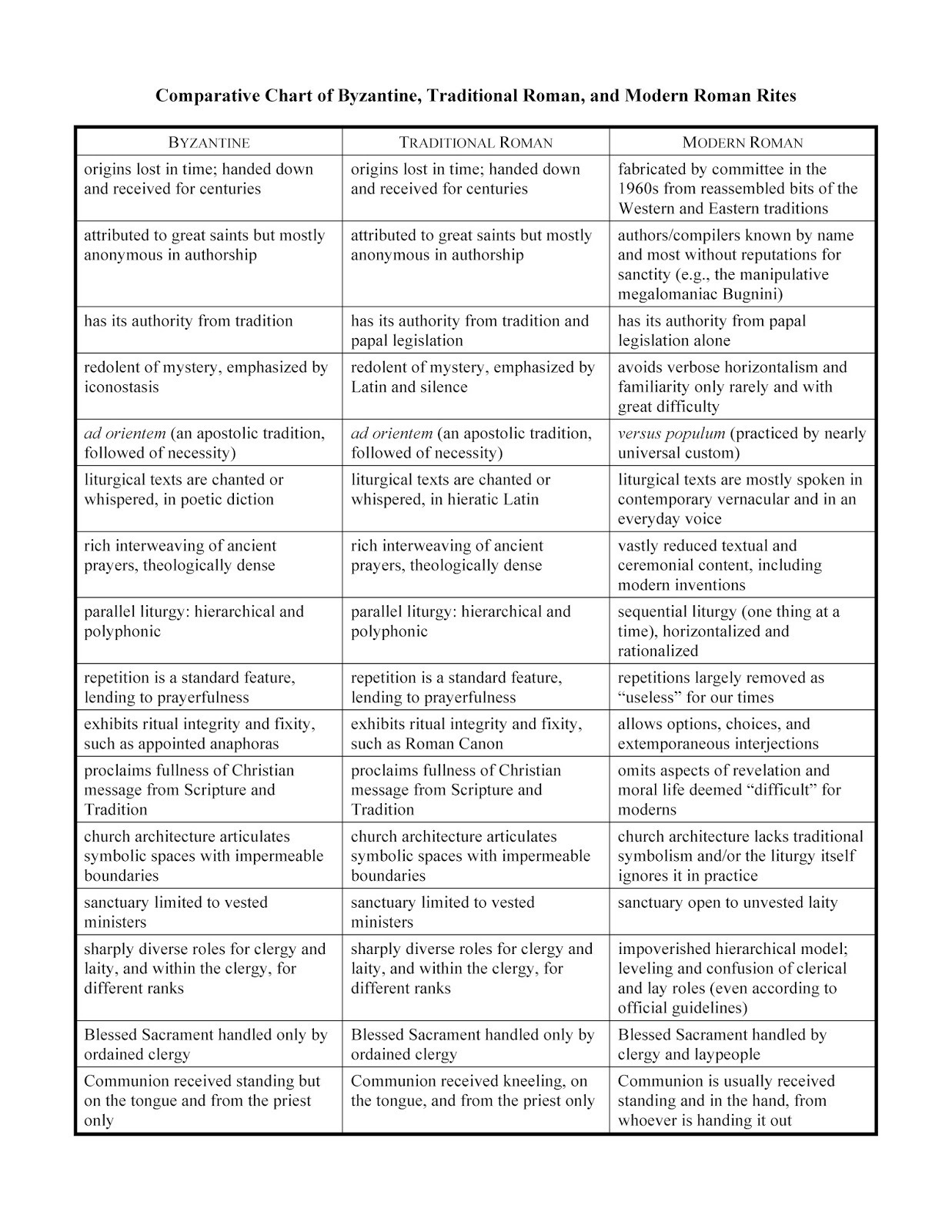
 Tipsy Teetotaler ن